


Swipe left or right, or use the buttons. Tap image to zoom.
例句翻译
单词
Lesson 71Lesson 71 - 遮罩切换
|
表情符号
|
单词 | Images | 翻译 | 过去时 | 过去分词 | 第三人称单数 | 动名词 | 含义 | 例句 | 例句翻译 | 示例表达 | 示例表达含义 | 示例表达翻译 | 同义词 | 反义词 | 搭配词 | 助记符 |
|---|---|---|---|---|---|---|---|---|---|---|---|---|---|---|---|---|---|
|
#2101
😐
|
/ˈdɛdˌpæn/
adjective
(dèdīpán)
••••••
|
- •••••• |
面无表情
miàn wú biǎoqíng
••••••
|
- •••••• | - •••••• | - •••••• | - •••••• |
Deliberately impassive or expressionless in manner.
••••••
|
She delivered the joke in a completely deadpan voice. |
她以完全面无表情的声音讲了笑话。
Tā yǐ wánquán miàn wú biǎoqíng de shēngyīn jiǎngle xiàohuà.
••••••
|
- •••••• | - •••••• | - •••••• |
expressionless, impassive, blank, poker-faced, unemotional
••••••
|
expressive, emotional, animated
••••••
|
deadpan humor, deadpan expression, deadpan delivery
••••••
|
Dead + Pan = 没有面部表情,像锅一样冷酷无情。
••••••
|
|
#2102
🤵
|
/ˌdɛbəˈnɛr/
adjective
(德博奈尔)
••••••
|
- •••••• |
迷人
mírén
••••••
|
- •••••• | - •••••• | - •••••• | - •••••• |
confident, stylish, and charming, typically referring to a man
••••••
|
He looked debonair in his tuxedo at the gala.
他在晚会中穿着燕尾服看起来非常德博奈尔。
••••••
|
他在晚会中穿着燕尾服看起来非常迷人。
Tā zài wǎnhuì zhōng chuānzhuó yànwěifú kàn qǐlái fēicháng mírén.
••••••
|
- •••••• | - •••••• | - •••••• |
suave, elegant, charming, polished, sophisticated
••••••
|
awkward, unrefined, clumsy
••••••
|
debonair gentleman, debonair style, debonair manner
••••••
|
Debonair意味着'day-bone-air' → 一个优雅的男人在空气中飘浮
••••••
|
|
#2103
🤒
|
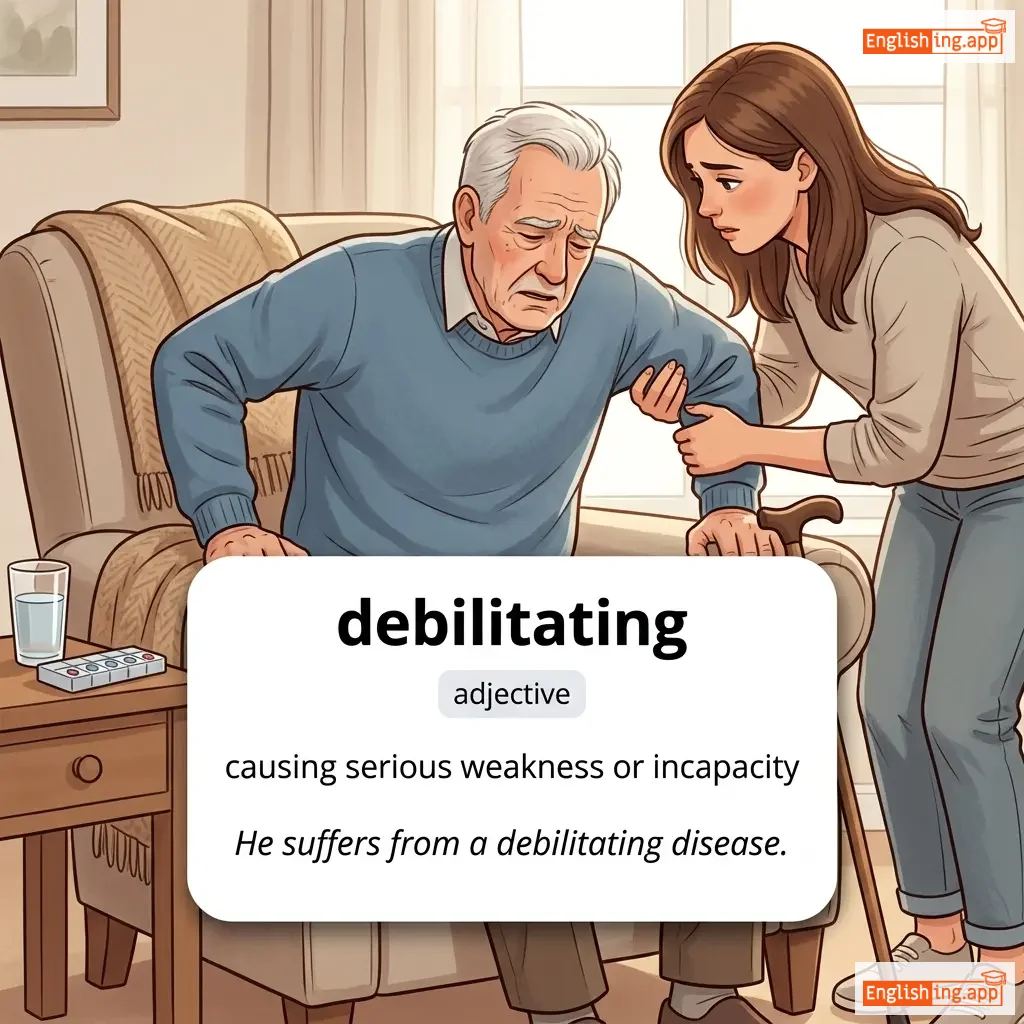
/dɪˈbɪlɪteɪtɪŋ/
adjective
(dɪˈbɪlɪteɪtɪŋ)
••••••
|
|
虚弱的
xūruò de
••••••
|
- •••••• | - •••••• | - •••••• | - •••••• |
causing serious weakness or incapacity
••••••
|
He suffers from a debilitating disease. |
他患有一种虚弱的疾病。
Tā huàn yǒu yī zhǒng xūruò de jíbìng.
••••••
|
- •••••• | - •••••• | - •••••• |
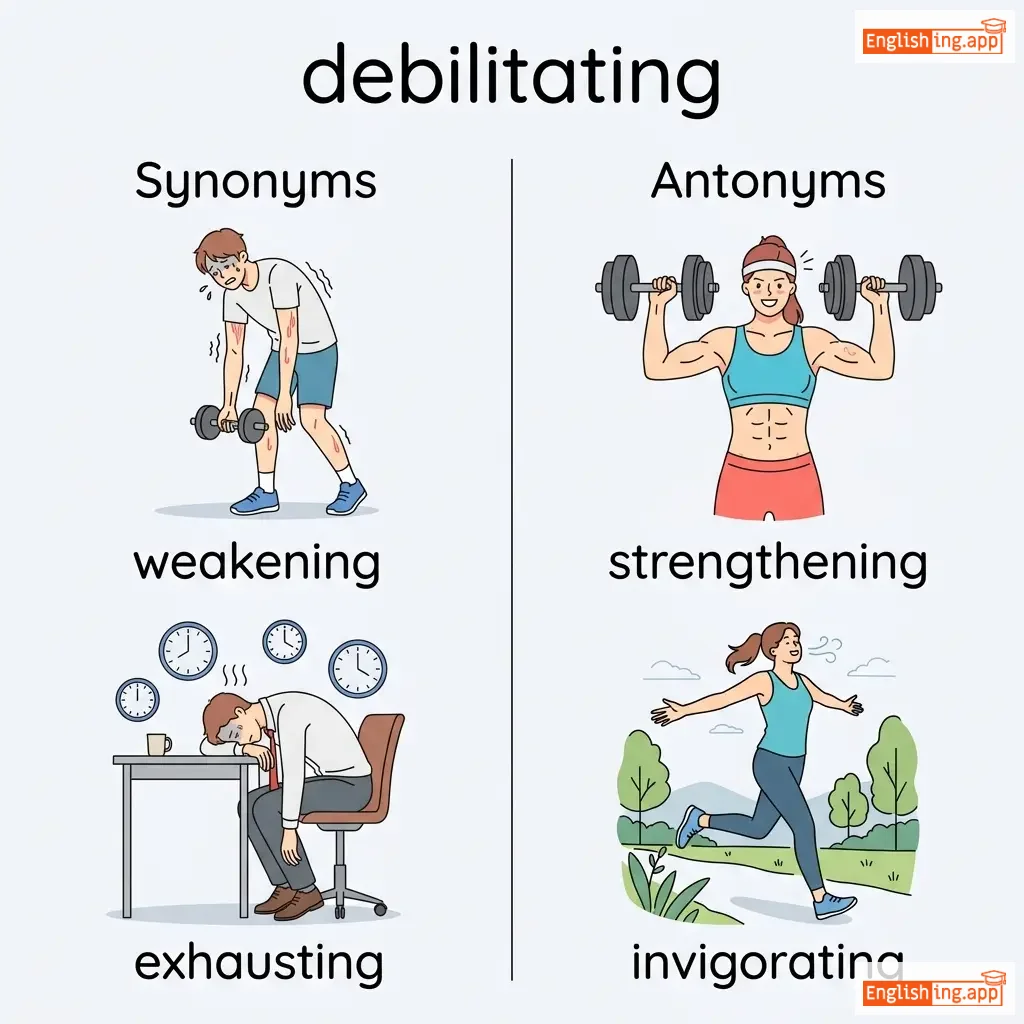
weakening, exhausting, crippling, draining
••••••
|
strengthening, invigorating
••••••
|
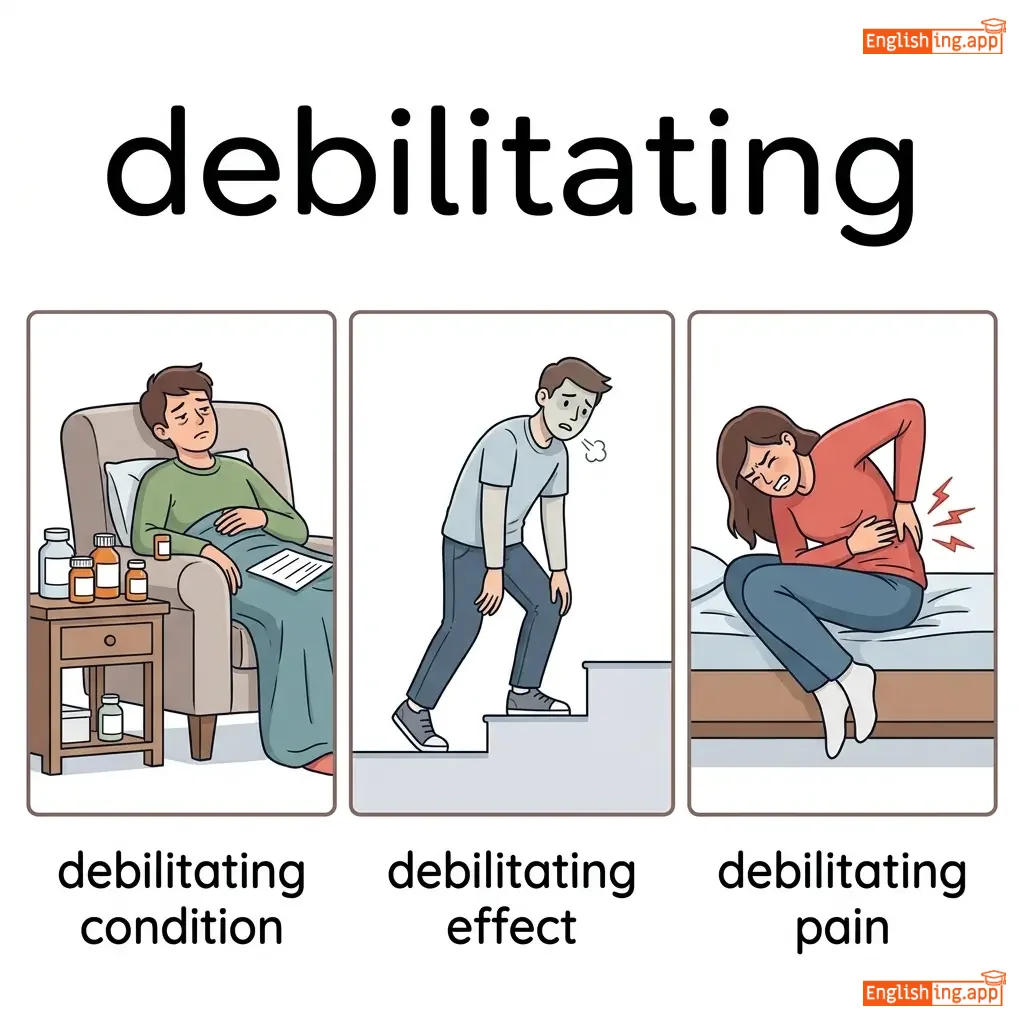
debilitating condition, debilitating effect, debilitating pain
••••••
|
Debilitating意味着导致虚弱 → 虚弱的
••••••
|
|
#2104
😷
|
/dɪˈbɪlɪteɪt/
verb
(dibilitéit)
••••••
|
- •••••• |
削弱
xüèruò
••••••
|
debilitated
dibilitéitid
••••••
|
debilitated
dibilitéitid
••••••
|
debilitates
dibilitéits
••••••
|
debilitating
dibilitéiting
••••••
|
to weaken or make someone or something infirm
••••••
|
The long illness debilitated his strength.
长时间的疾病削弱了他的力量。
••••••
|
长时间的疾病削弱了他的力量。
Cháng shíjiān de jíbìng xuēruòle tā de lìliàng.
••••••
|
- •••••• | - •••••• | - •••••• |
weaken, exhaust, drain, enfeeble, cripple
••••••
|
strengthen, energize, empower
••••••
|
debilitate the body, mentally debilitated, severely debilitated
••••••
|
削弱 = 削弱力量 → Debilitate 意味着削弱。
••••••
|
|
#2105
💵
|
/dɪˈbɛntʃər/
noun
(dibenchur)
••••••
|
- •••••• |
债券
zhàiquàn
••••••
|
- •••••• | - •••••• | - •••••• | - •••••• |
a type of debt instrument not secured by physical assets or collateral
••••••
|
The company raised capital by issuing debentures to investors. |
公司通过向投资者发行债券筹集资金。
Gōngsī tōngguò xiàng tóuzī zhě fāxíng zhàiquàn chóují zījīn.
••••••
|
- •••••• | - •••••• | - •••••• |
bond, note, security, obligation
••••••
|
equity, stock
••••••
|
issue debenture, convertible debenture, debenture holder
••••••
|
Debenture意味着debt ensure - 债券
••••••
|
|
#2106
🍷
|
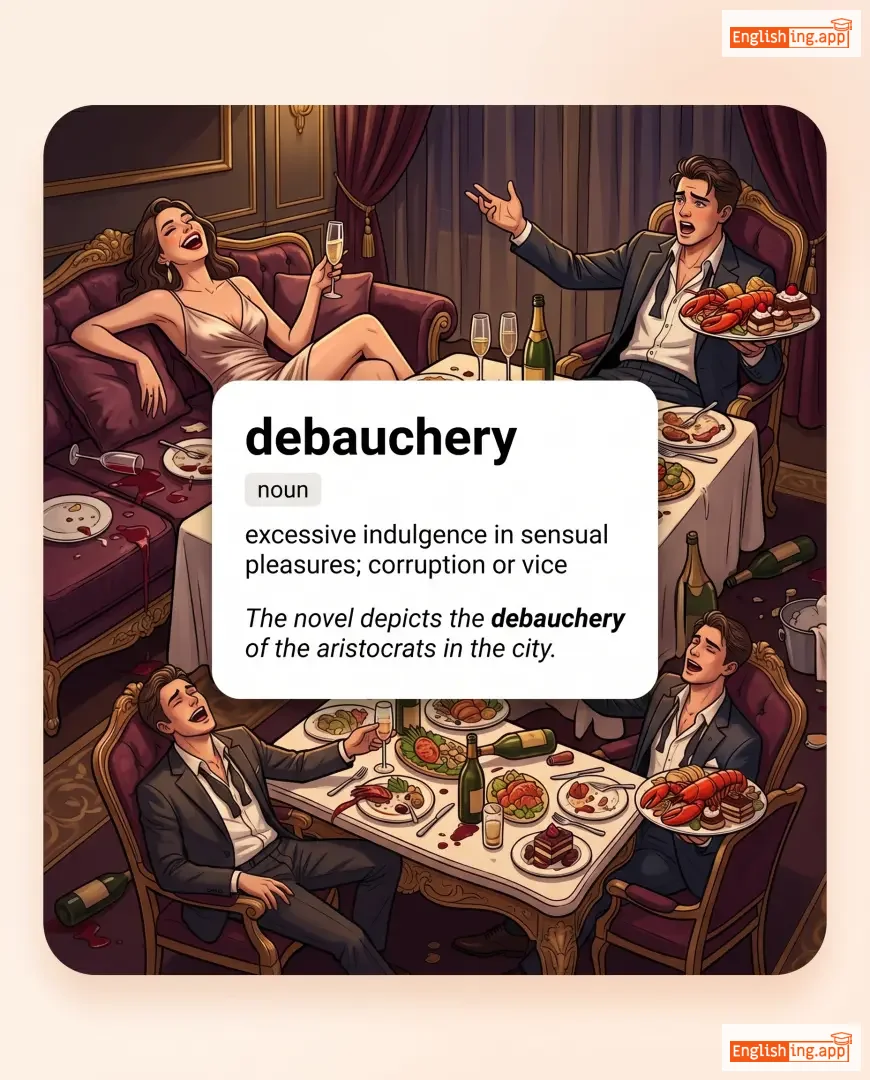
/dɪˈbɔːtʃəri/
noun
(de-bao-che-li)
••••••
|
|
堕落
duòluò
••••••
|
- •••••• | - •••••• | - •••••• | - •••••• |
excessive indulgence in sensual pleasures; corruption or vice
••••••
|
The novel depicts the debauchery of the aristocrats in the city. |
这本小说描写了城市中贵族的堕落。
Zhè běn xiǎoshuō miáoxiě le chéngshì zhōng guìzú de duòluò.
••••••
|
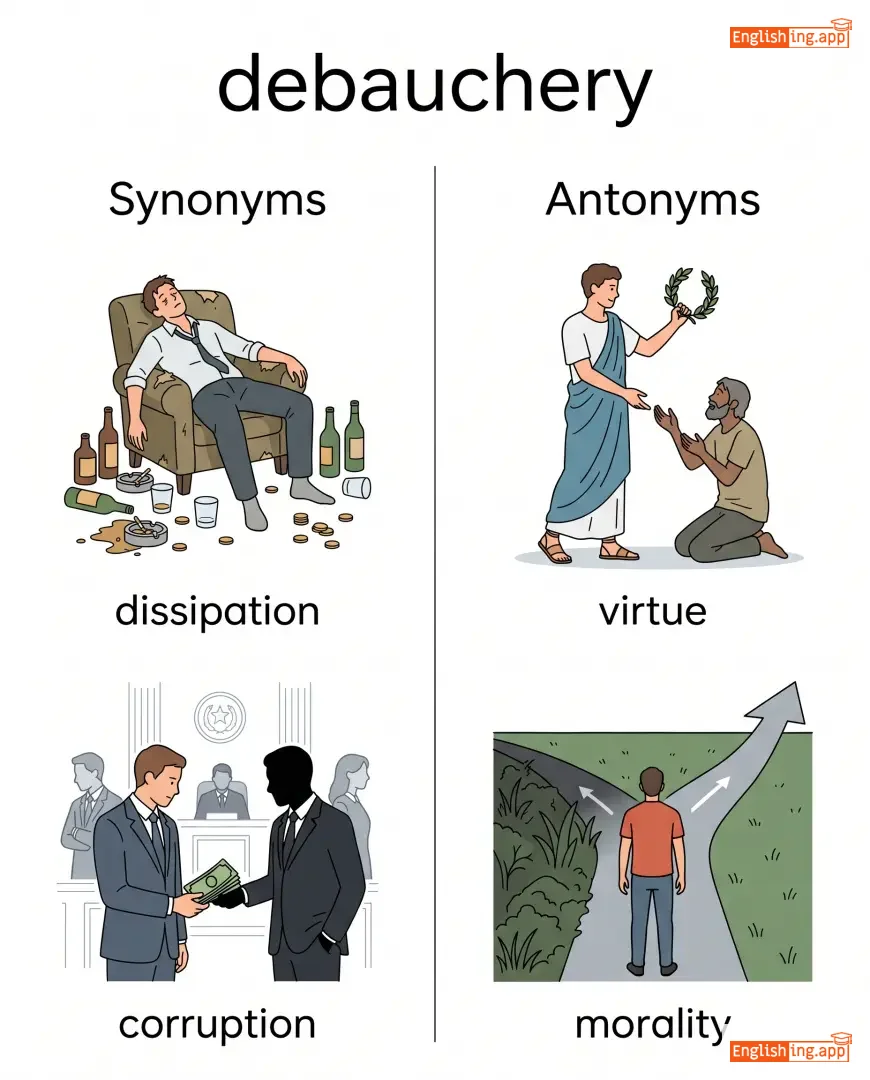
- •••••• | - •••••• | - •••••• |
dissipation, corruption, indulgence, vice, excess
••••••
|
virtue, morality, purity
••••••
|
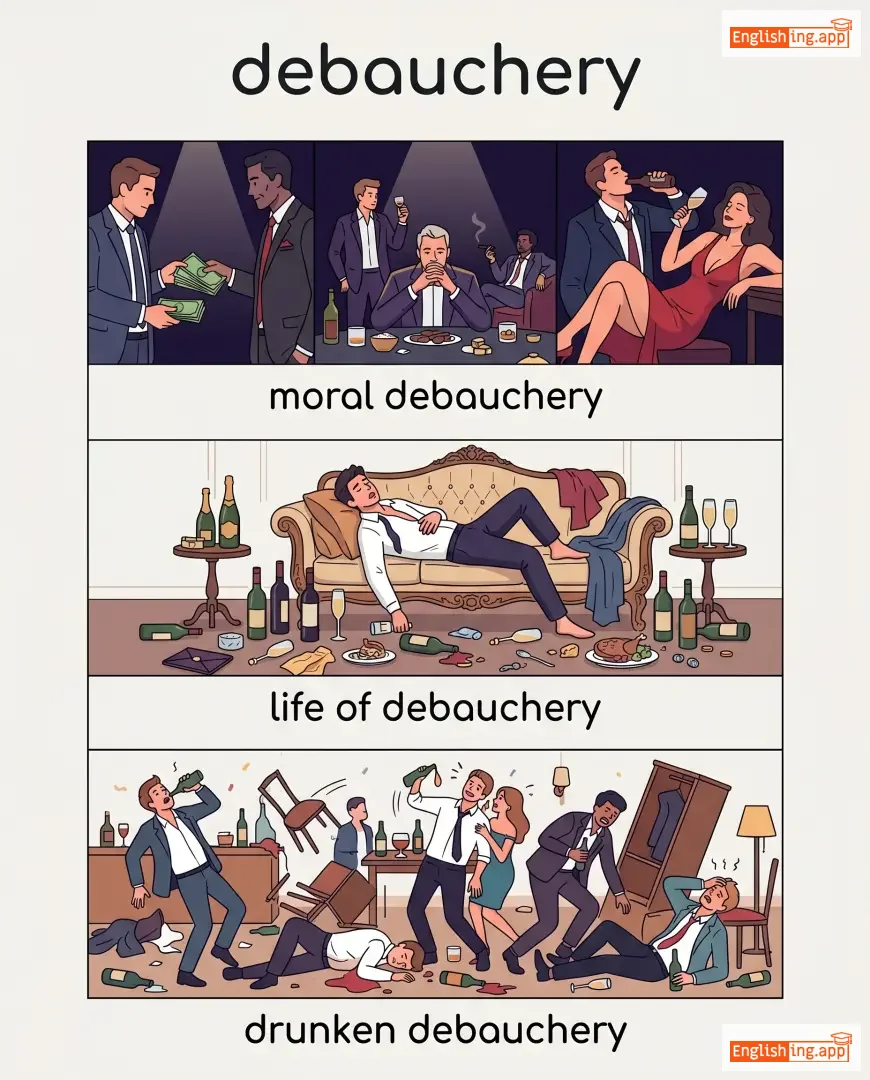
moral debauchery, life of debauchery, drunken debauchery
••••••
|
Debauchery是一种过度纵欲堕落的表现!
••••••
|
|
#2107
🍷
|
/dɪˈbɔːtʃ/
verb
(德保奇)
••••••
|
- •••••• |
堕落
duòluò
••••••
|
debauched
德保奇过
••••••
|
debauched
德保奇过
••••••
|
debauches
德保奇
••••••
|
debauching
德保奇中
••••••
|
to corrupt morally; to lead into excessive indulgence in sensual pleasures
••••••
|
The novel shows how wealth can debauch a person's character.
小说展示了财富如何败坏一个人的品格。
••••••
|
小说展示了财富如何败坏一个人的品格。
Xiǎoshuō zhǎnshìle cáifù rúhé bàihuài yīgè rén de pǐngé.
••••••
|
- •••••• | - •••••• | - •••••• |
corrupt, deprave, seduce, pervert
••••••
|
purify, uplift
••••••
|
debauch the youth, debauch character, debauch society
••••••
|
Debauch意味着让某人堕落,引导他走向感官的享乐。
••••••
|
|
#2108
❓
|
/dɪˈbeɪtəbl̩/
adjective
(dɪˈbeɪtəbl̩)
••••••
|
- •••••• |
有争议的
you zhengyi de
••••••
|
- •••••• | - •••••• | - •••••• | - •••••• |
open to discussion or doubt; not certain
••••••
|
It is debatable whether the policy will work. |
是否政策有效是有争议的。
Shi fou zhengce youxiao shi you zhengyi de.
••••••
|
- •••••• | - •••••• | - •••••• |
questionable, arguable, disputable, uncertain
••••••
|
undisputed, certain
••••••
|
debatable issue, debatable point, highly debatable, debatable claim
••••••
|
Debate 和 Debatable – 可以讨论的事情。
••••••
|
|
#2109
💸
|
/dɪˈbeɪst/
adjective
(dɪˈbeɪst)
••••••
|
- •••••• |
贬值的
biǎn zhí de
••••••
|
- •••••• | - •••••• | - •••••• | - •••••• |
having lost quality, value, or moral character
••••••
|
The debased currency lost the trust of the people. |
贬值的货币失去了人们的信任。
Biǎn zhí de huòbì shīqùle rénmen de xìnrèn.
••••••
|
- •••••• | - •••••• | - •••••• |
corrupted, degraded, tainted, spoiled
••••••
|
pure, elevated
••••••
|
debased culture, debased currency, debased morals
••••••
|
贬值的和debased类似,表示失去价值。
••••••
|
|
#2110
⬇️
|
/dɪˈbeɪs/
verb
(dɪˈbeɪs)
••••••
|
- •••••• |
贬低
biǎndī
••••••
|
debased
dɪˈbeɪst
••••••
|
debased
dɪˈbeɪst
••••••
|
debases
dɪˈbeɪsɪz
••••••
|
debasing
dɪˈbeɪsɪŋ
••••••
|
to reduce the quality, value, or dignity of something
••••••
|
Corruption can debase the values of a society.
腐败可能贬低社会的价值观。
••••••
|
腐败可能贬低社会的价值观。
Fǔbài kěnéng biǎndī shèhuì de jiàzhíguān.
••••••
|
- •••••• | - •••••• | - •••••• |
degrade, demean, corrupt, cheapen
••••••
|
uplift, elevate
••••••
|
debase currency, debase morals, debase value, debase culture
••••••
|
DeBASE 就像‘贬低’,是降低某物价值的意思。
••••••
|
|
#2111
🚢
|
/dɪˈbɑːrk/
verb
(登船)
••••••
|
- •••••• |
下船
xià chuán
••••••
|
debarked
登船了
••••••
|
debarked
登船了
••••••
|
debarks
登船
••••••
|
debarking
登船中
••••••
|
to disembark or get off a ship, aircraft, or vehicle
••••••
|
The passengers debarked as soon as the ship docked.
乘客在船停靠后登船。
••••••
|
乘客在船停靠后下船。
Chéngkè zài chuán tíngkào hòu xià chuán.
••••••
|
- •••••• | - •••••• | - •••••• |
disembark, alight, descend, land
••••••
|
embark, board
••••••
|
debark troops, debark passengers, debark from ship, debark quickly
••••••
|
Debark 就是从船上下来的意思,想象着船停了,大家都下来了!
••••••
|
|
#2112
⛔
|
/dɪˈbɑːr/
verb
(迪巴尔)
••••••
|
- •••••• |
禁止
jìnzhǐ
••••••
|
debarred
迪巴尔德
••••••
|
debarred
迪巴尔德
••••••
|
debars
迪巴尔斯
••••••
|
debarring
迪巴林
••••••
|
To officially prevent someone from doing something.
••••••
|
He was debarred from entering the competition due to cheating.
他因作弊被禁止参加比赛。
••••••
|
他因作弊被禁止参加比赛。
Tā yīn zuòbì bèi jìnzhǐ cānjiā bǐsài.
••••••
|
- •••••• | - •••••• | - •••••• |
ban, prohibit, exclude, forbid
••••••
|
allow, permit, admit
••••••
|
debar from office, debar from contest, debar entry
••••••
|
Debar = '禁' (禁止) + 'Bar' (阻挡), 禁止进入。
••••••
|
|
#2113
📉
|
/deɪˈbɑːkəl/
noun
(débàkè)
••••••
|
- •••••• |
彻底失败
chédi shībài
••••••
|
- •••••• | - •••••• | - •••••• | - •••••• |
A sudden and complete failure; a fiasco.
••••••
|
The product launch turned into a complete debacle. |
产品发布变成了彻底的失败。
Chǎnpǐn fābù biànchéngle chèdǐ de shībài.
••••••
|
- •••••• | - •••••• | - •••••• |
fiasco, disaster, catastrophe, collapse, failure
••••••
|
success, triumph, victory
••••••
|
political debacle, financial debacle, marketing debacle
••••••
|
Debacle 就是一个完全的失败,像灾难一样。
••••••
|
|
#2114
💀
|
/ˈdɛθsˌhɛd/
noun
(dèisi-hèd)
••••••
|
- •••••• |
骷髅
kulou
••••••
|
- •••••• | - •••••• | - •••••• | - •••••• |
A representation of a human skull, often used as a symbol of death.
••••••
|
The pirate flag was marked with a grim deaths-head. |
海盗旗上标有一个恐怖的骷髅。
Hǎidào qí shàng biāo yǒu yīgè kǒngbù de kūlòu.
••••••
|
- •••••• | - •••••• | - •••••• |
skull, skeleton head, memento mori
••••••
|
life symbol, vitality
••••••
|
deaths-head moth, deaths-head symbol, deaths-head mask
••••••
|
Death’s Head = 骷髅 (死亡的象征).
••••••
|
|
#2115
🥀
|
/dɜːrθ/
noun
(德斯)
••••••
|
|
匮乏
kuìfá
••••••
|
- •••••• | - •••••• | - •••••• | - •••••• |
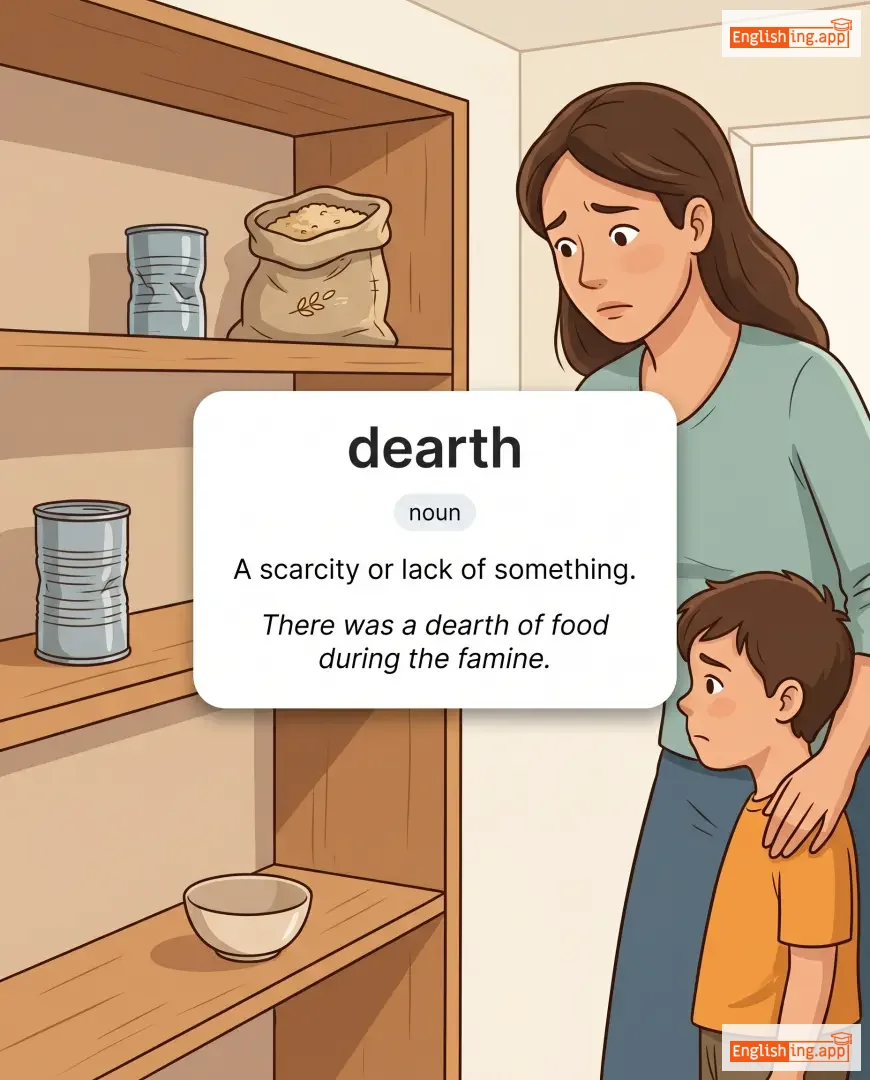
A scarcity or lack of something.
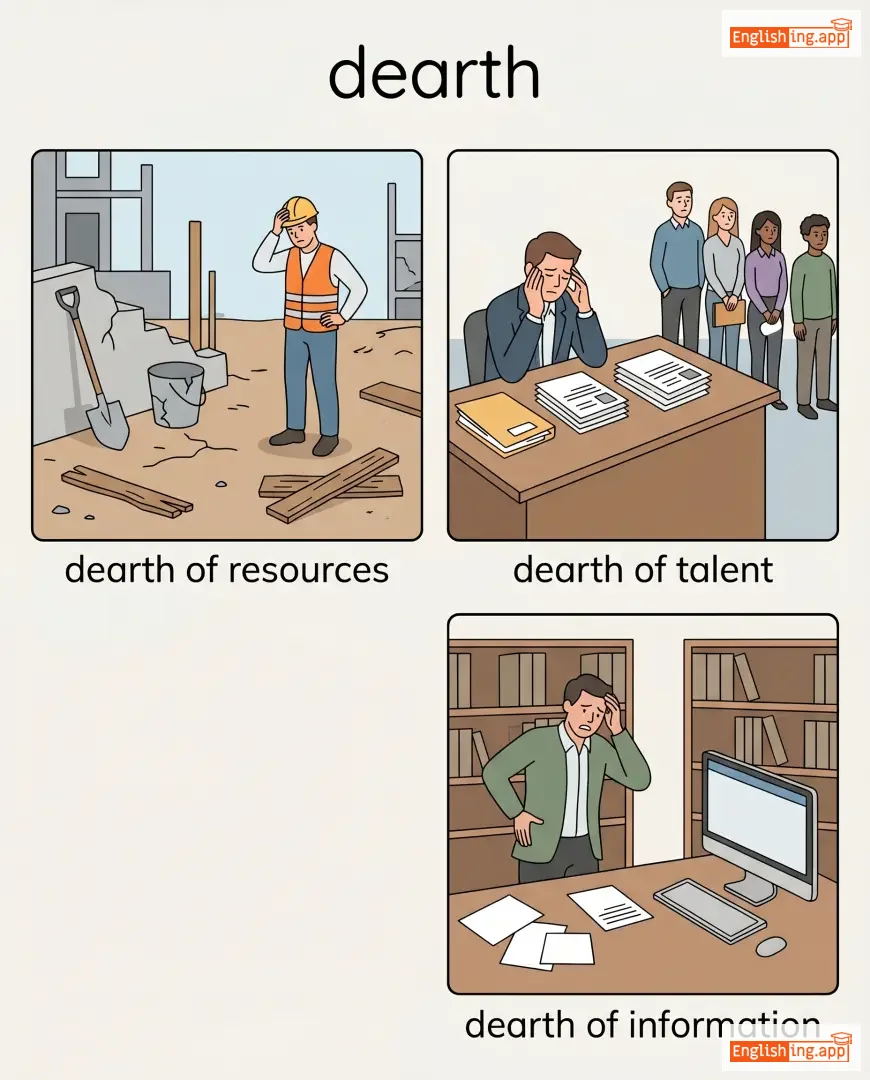
••••••
|
There was a dearth of food during the famine.
在饥荒期间,食物短缺。
••••••
|
在饥荒期间,食物短缺。
Zài jīhuāng qījiān, shíwù duǎnquē.
••••••
|
- •••••• | - •••••• | - •••••• |
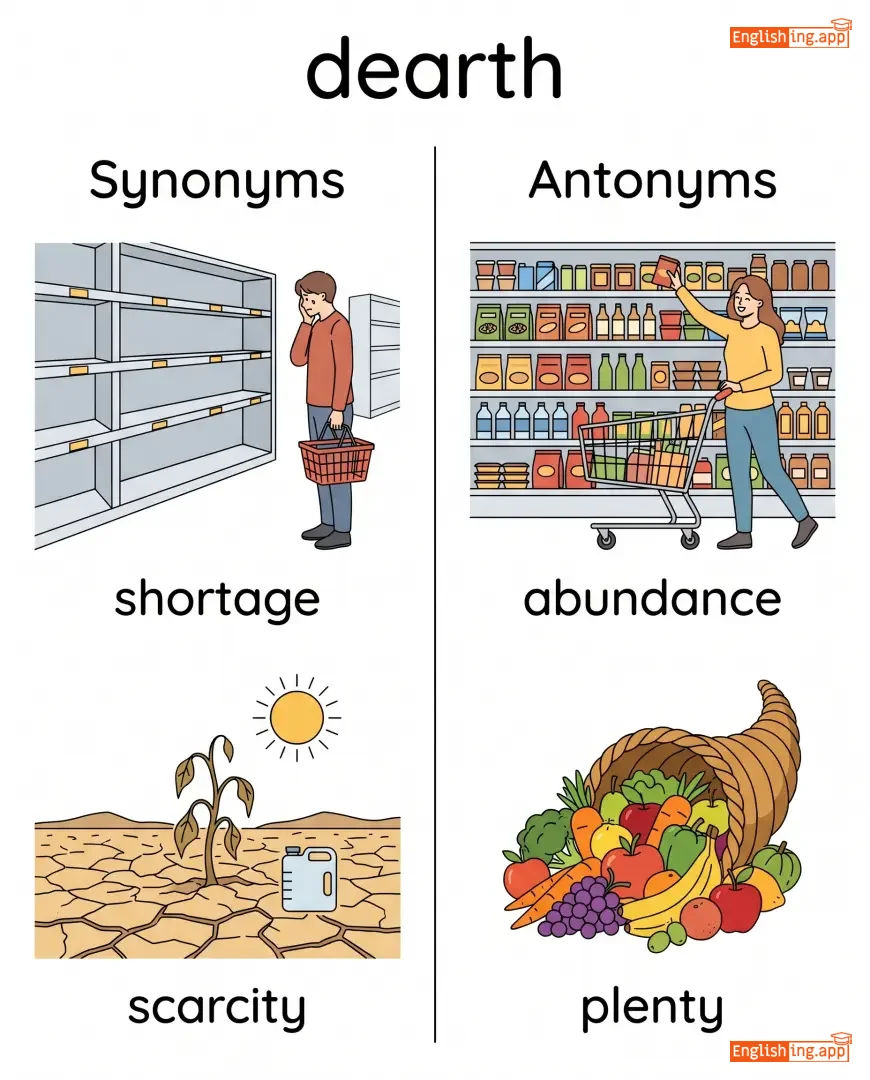
shortage, scarcity, deficiency, insufficiency
••••••
|
abundance, plenty, surplus
••••••
|
dearth of resources, dearth of talent, dearth of information
••••••
|
Dearth意味着匮乏,正如地球上并非一切都丰盛。
••••••
|
|
#2116
🏹
|
/dɑːrt/
verb, noun
(达特)
••••••
|
- •••••• |
飞镖/迅速奔跑
fēibiāo/xùn sù bēnpǎo
••••••
|
darted
达特
••••••
|
darted
达特
••••••
|
darts
达特
••••••
|
darting
达特
••••••
|
to move suddenly and quickly; a small pointed missile thrown at a target
••••••
|
The cat darted across the street to avoid the car.
猫快速穿过街道以避开汽车。
••••••
|
猫迅速穿过街道以避开汽车。
Māo xùnsù chuānguò jiēdào yǐ bìkāi qìchē.
••••••
|
dart a glance
一瞥
••••••
|
to look quickly at something or someone
••••••
|
快速看一眼
kuàisù kàn yī yǎn
••••••
|
dash, rush, sprint, bolt, javelin
••••••
|
crawl, linger, stroll
••••••
|
dart across, dart a glance, dart forward, dart quickly
••••••
|
DART 就像飞镖,猫就像飞镖一样迅速穿过街道。
••••••
|
|
#2117
🔒
|
/ˈdɛdlɒk/
noun
(dɛdlɒk)
••••••
|
- •••••• |
僵局
jiangju
••••••
|
- •••••• | - •••••• | - •••••• | - •••••• |
a situation in which progress is impossible because of disagreement
••••••
|
Negotiations reached a deadlock after neither side agreed to compromise. |
谈判在双方都未同意妥协后陷入了僵局。
Tanpan zai shuangfang dou wei tongyi tuoxie hou xianru le jiangju.
••••••
|
reach a deadlock |
to come to a situation where no progress can be made
••••••
|
陷入僵局
xianru jiangju
••••••
|
stalemate, impasse, standoff, gridlock
••••••
|
agreement, breakthrough, resolution
••••••
|
political deadlock, negotiations deadlock, deadlock situation, reach a deadlock
••••••
|
Deadlock 意味着僵局—一切停滞不前。
••••••
|
|
#2118
🏁
|
/ˌdɛd ˈhiːt/
noun
(dɛd hiːt)
••••••
|
- •••••• |
平局
pingju
••••••
|
- •••••• | - •••••• | - •••••• | - •••••• |
a race or contest in which two or more competitors finish exactly equal
••••••
|
The race ended in a dead-heat between the two runners. |
比赛在两名跑者之间以平局结束。
Bisai zai liang ming paozhe zhijian yi pingju jieshu.
••••••
|
- •••••• | - •••••• | - •••••• |
tie, draw, stalemate, equality, even finish
••••••
|
victory, defeat
••••••
|
end in a dead-heat, dead-heat result, declare a dead-heat
••••••
|
Dead heat表示比赛平局,两个选手的成绩完全相同。Dead (结束) + Heat (比赛)。
••••••
|
|
#2119
✨
|
/ˈdæzəl/
verb
(dázl)
••••••
|
- •••••• |
使目眩
shǐ mùxuàn
••••••
|
dazzled
dázld
••••••
|
dazzled
dázld
••••••
|
dazzles
dázls
••••••
|
dazzling
dázlíng
••••••
|
to impress deeply or blind with brilliance or skill
••••••
|
The magician's tricks dazzled the audience.
魔术师的把戏使观众眼花缭乱。
••••••
|
魔术师的把戏使观众眼花缭乱。
Móshù shī de bǎxì shǐ guānzhòng yǎnhuā liáo luàn.
••••••
|
dazzle someone with brilliance
用才华使某人目眩
••••••
|
to impress greatly with outstanding talent or skill
••••••
|
用卓越的技能使某人目眩
yòng zhuóyuè de jìnéng shǐ mǒurén mùxuàn
••••••
|
impress, amaze, astonish, blind, overwhelm
••••••
|
bore, disappoint, unimpress
••••••
|
dazzling smile, dazzling light, dazzled by, dazzle the crowd
••••••
|
目眩: 使 + 光辉—通过光辉或才华让某人震惊。
••••••
|
|
#2120
😵
|
/deɪz/
verb
••••••
|
- •••••• | - •••••• |
dazed
••••••
|
dazed
••••••
|
dazes
••••••
|
dazing
••••••
|
to stun or confuse someone temporarily with a shock or surprise
••••••
|
The bright lights dazed the runners as they entered the stadium. |
- •••••• |
in a daze |
to be in a state of confusion or bewilderment
••••••
|
- •••••• |
stun, bewilder, confuse, stupefy, shock
••••••
|
clarify, enlighten, explain
••••••
|
feel dazed, leave in a daze, dazed look, dazed expression
••••••
|
No •••••• |
|
#2121
📅
|
/deɪz/
noun
(deiz)
••••••
|
- •••••• |
天数
tianshu
••••••
|
- •••••• | - •••••• | - •••••• | - •••••• |
plural of day; refers to multiple 24-hour periods of time
••••••
|
The project will take at least five days to finish. |
这个项目将需要至少五天才能完成。
Zhege xiangmu jiang xuyao zhishao wu tian cai neng wancheng.
••••••
|
in the good old days |
refers to a past time remembered as better or simpler
••••••
|
在美好的旧时光
Zai meihao de jiu shiguang
••••••
|
periods, times, spans, durations
••••••
|
moments, instants
••••••
|
many days, several days, few days, within days
••••••
|
天数意味着天—英语中的 day,中文中的天数—记住:天-天数 (days)。
••••••
|
|
#2122
👷
|
/ˈdeɪ.mæn/
noun
(日工)
••••••
|
- •••••• |
日工
rì gōng
••••••
|
- •••••• | - •••••• | - •••••• | - •••••• |
a worker employed by the day; a day laborer
••••••
|
The farmer hired a day-man to help with the harvest. |
农民雇佣了一个日工来帮助收割。
nóngmín gùyōng le yīgè rì gōng lái bāngzhù shōugē.
••••••
|
- •••••• | - •••••• | - •••••• |
day laborer, hired hand, worker, laborer
••••••
|
employer, master
••••••
|
hire a day-man, day-man for harvest, employ a day-man
••••••
|
Day-man 意味着按日计酬的工人—日工
••••••
|
|
#2123
🐌
|
/ˈdɔːd(ə)l/
verb
(dɔːdl)
••••••
|
- •••••• |
拖延
tuōyán
••••••
|
dawdled
dɔːdld
••••••
|
dawdled
dɔːdld
••••••
|
dawdles
dɔːdls
••••••
|
dawdling
dɔːdling
••••••
|
to waste time by being slow or idle
••••••
|
Stop dawdling and finish your homework.
停止拖延,完成你的作业。
••••••
|
停止拖延,完成你的作业。
Tíngzhǐ tuōyán, wánchéng nǐ de zuòyè.
••••••
|
dawdle away time
浪费时间
••••••
|
to waste time doing nothing important
••••••
|
浪费时间
làngfèi shíjiān
••••••
|
linger, delay, procrastinate, loiter, idle
••••••
|
hurry, hasten, rush
••••••
|
dawdle over, dawdle along, dawdle away time
••••••
|
Dawdle意味着拖延或浪费时间
••••••
|
|
#2124
🦁
|
/ˈdɔːntləs/
adjective
(dɔntləs)
••••••
|
|
无畏
wú wèi
••••••
|
- •••••• | - •••••• | - •••••• | - •••••• |
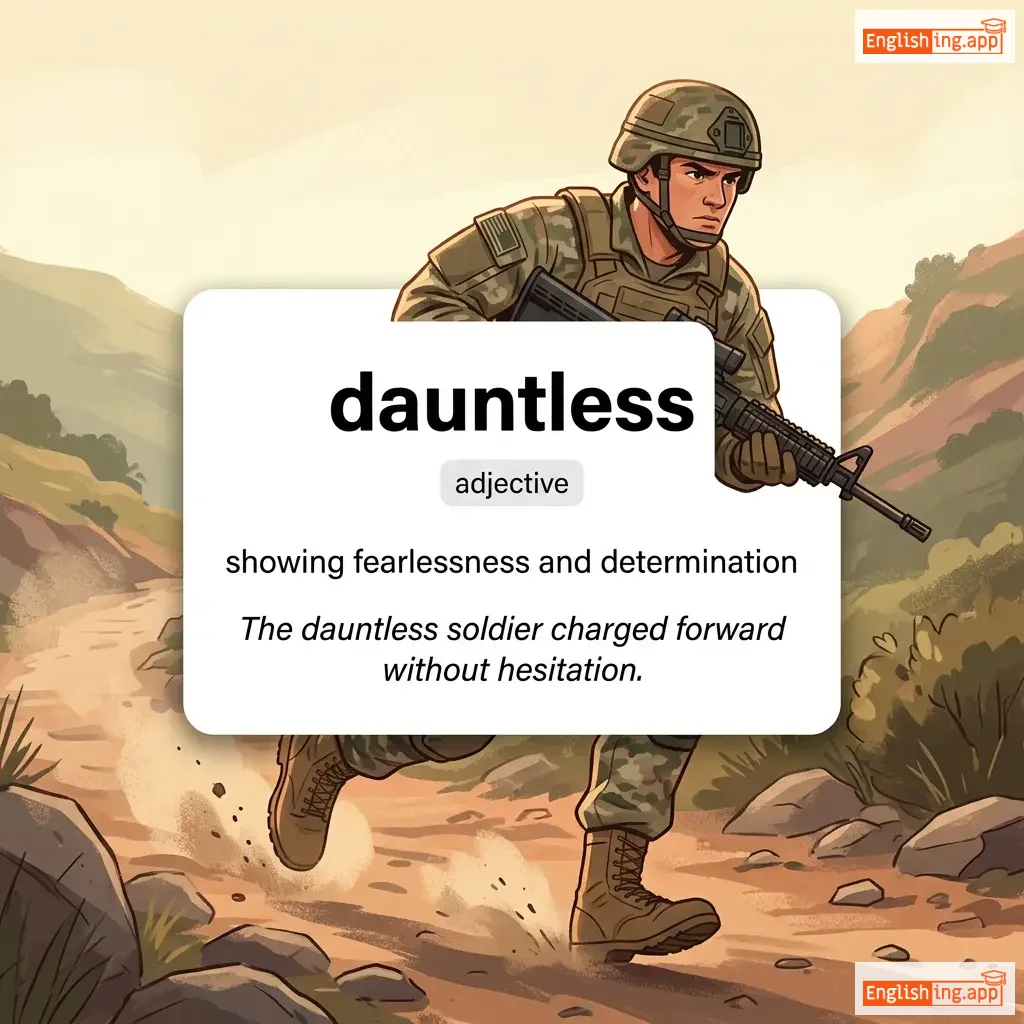
showing fearlessness and determination
••••••
|
The dauntless soldier charged forward without hesitation. |
无畏的士兵毫不犹豫地向前冲。
Wú wèi de shì bīng háo bù yóu yù de xiàng qián chōng.
••••••
|
- •••••• | - •••••• | - •••••• |
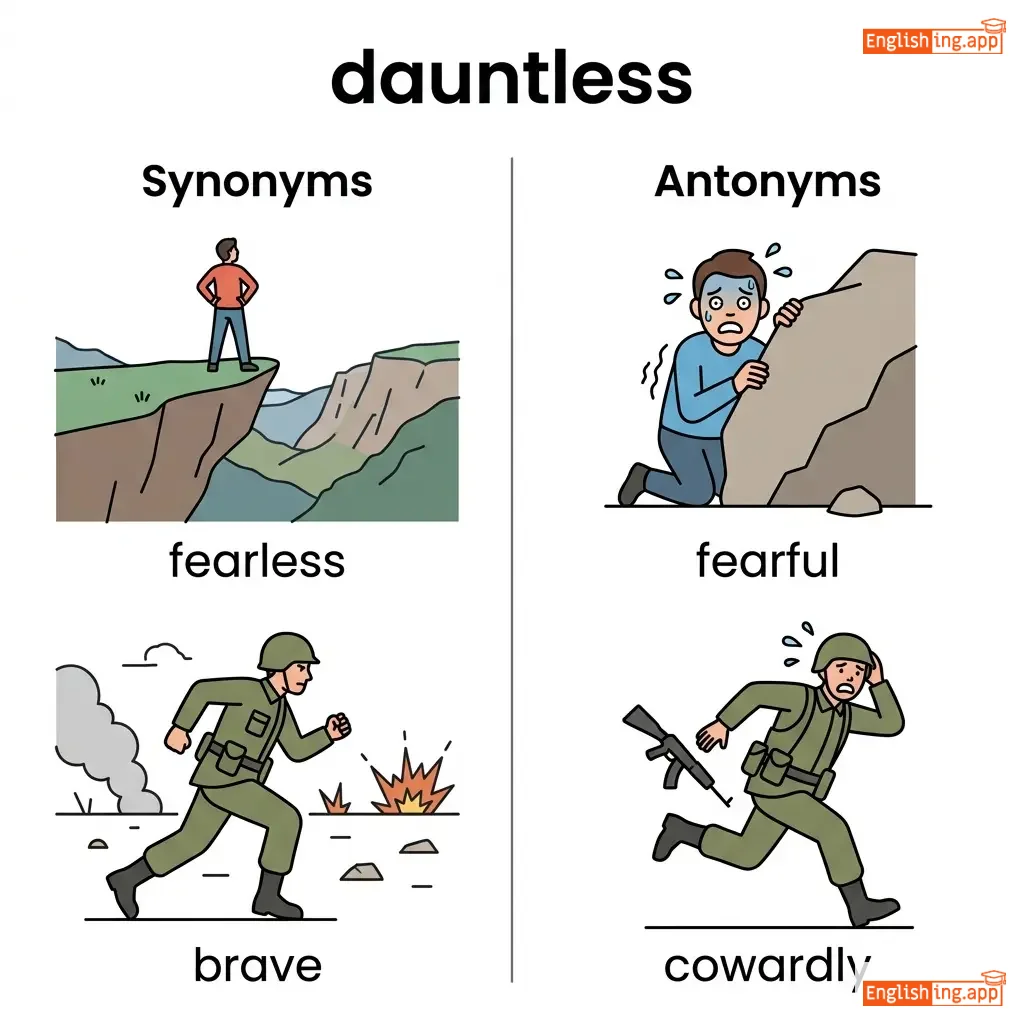
fearless, brave, courageous, intrepid, bold
••••••
|
fearful, cowardly, timid
••••••
|
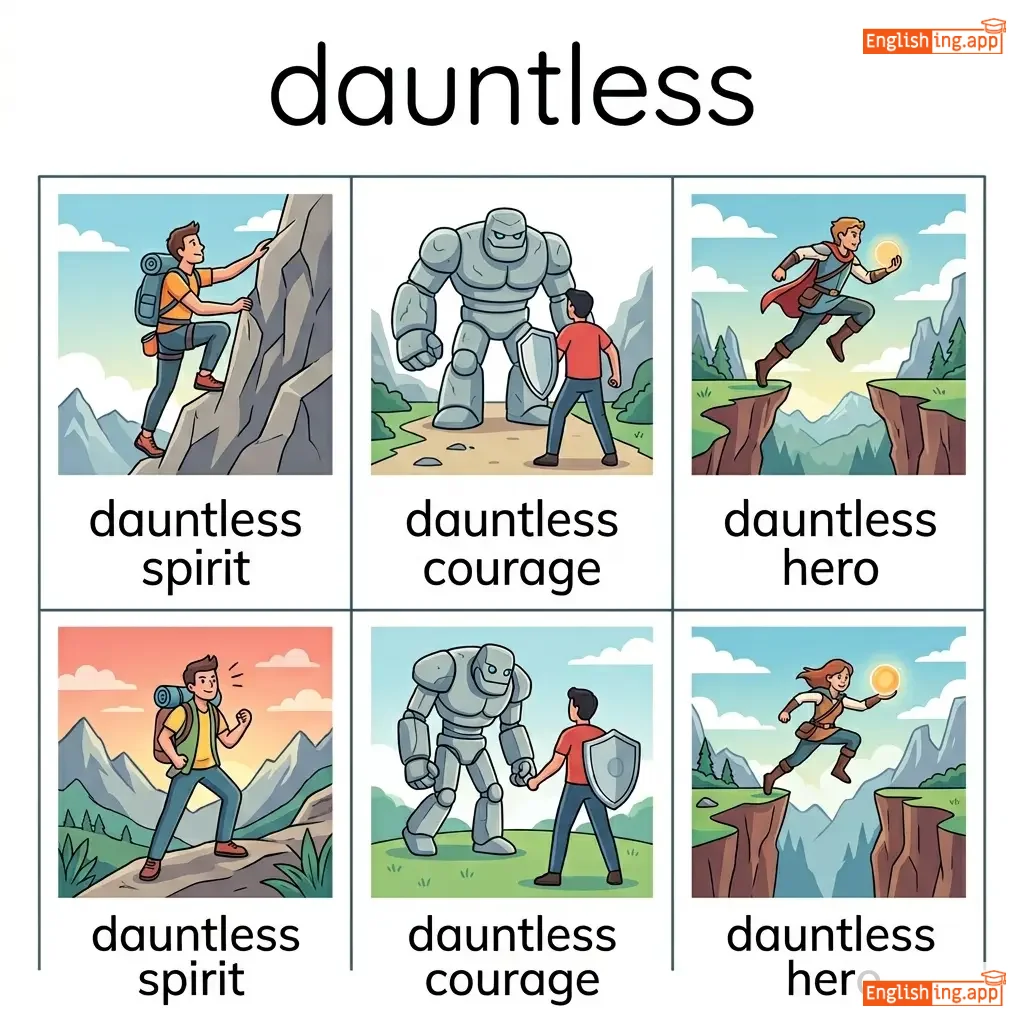
dauntless spirit, dauntless courage, dauntless hero
••••••
|
Daunt-less 意味着无畏,没有恐惧。
••••••
|
|
#2125
😰
|
/ˈdɔːntɪŋ/
adjective
(dongting)
••••••
|
|
令人生畏
lìng rén shēng wèi
••••••
|
- •••••• | - •••••• | - •••••• | - •••••• |
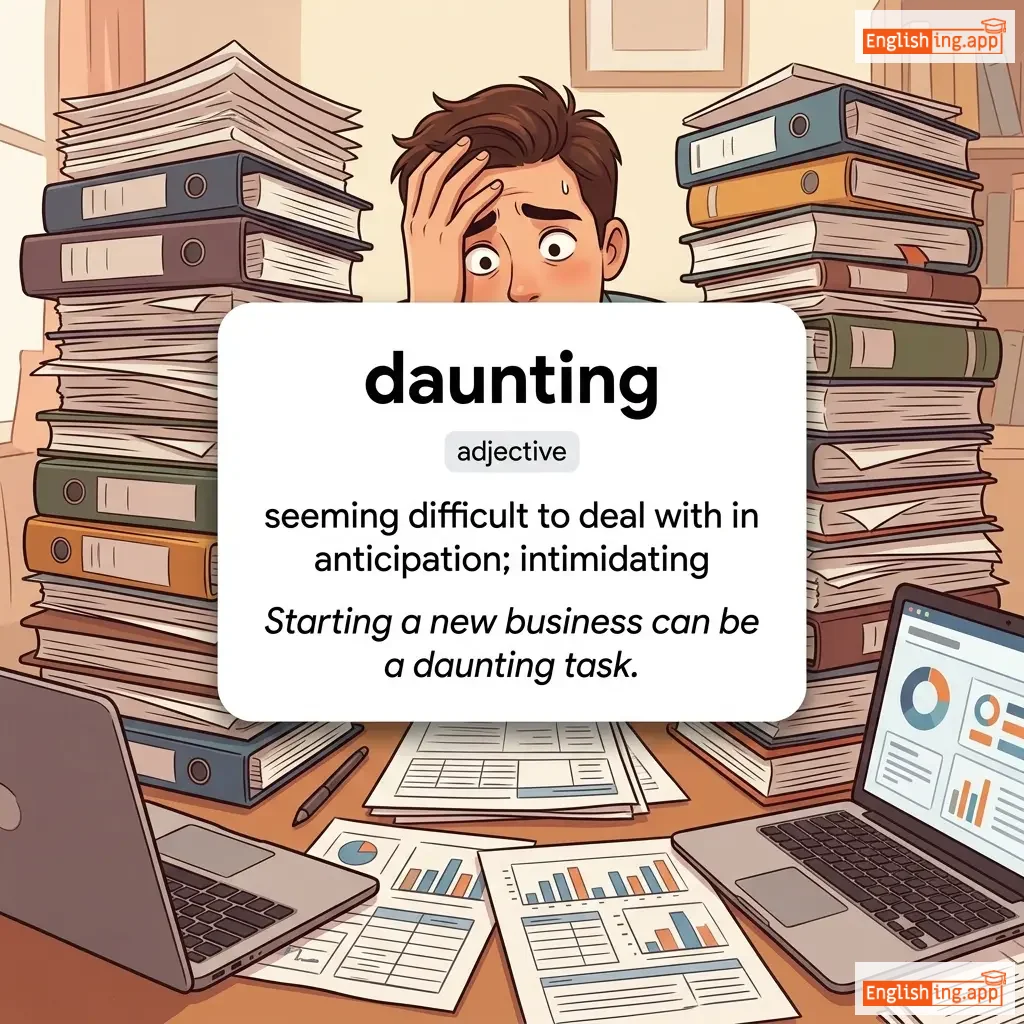
seeming difficult to deal with in anticipation; intimidating
••••••
|
Starting a new business can be a daunting task.
starting a new business can be a daunting task.
••••••
|
开始新业务可能是一个令人生畏的任务。
Kāishǐ xīn yèwù kěnéng shì yīgè lìng rén shēng wèi de rènwù.
••••••
|
- •••••• | - •••••• | - •••••• |
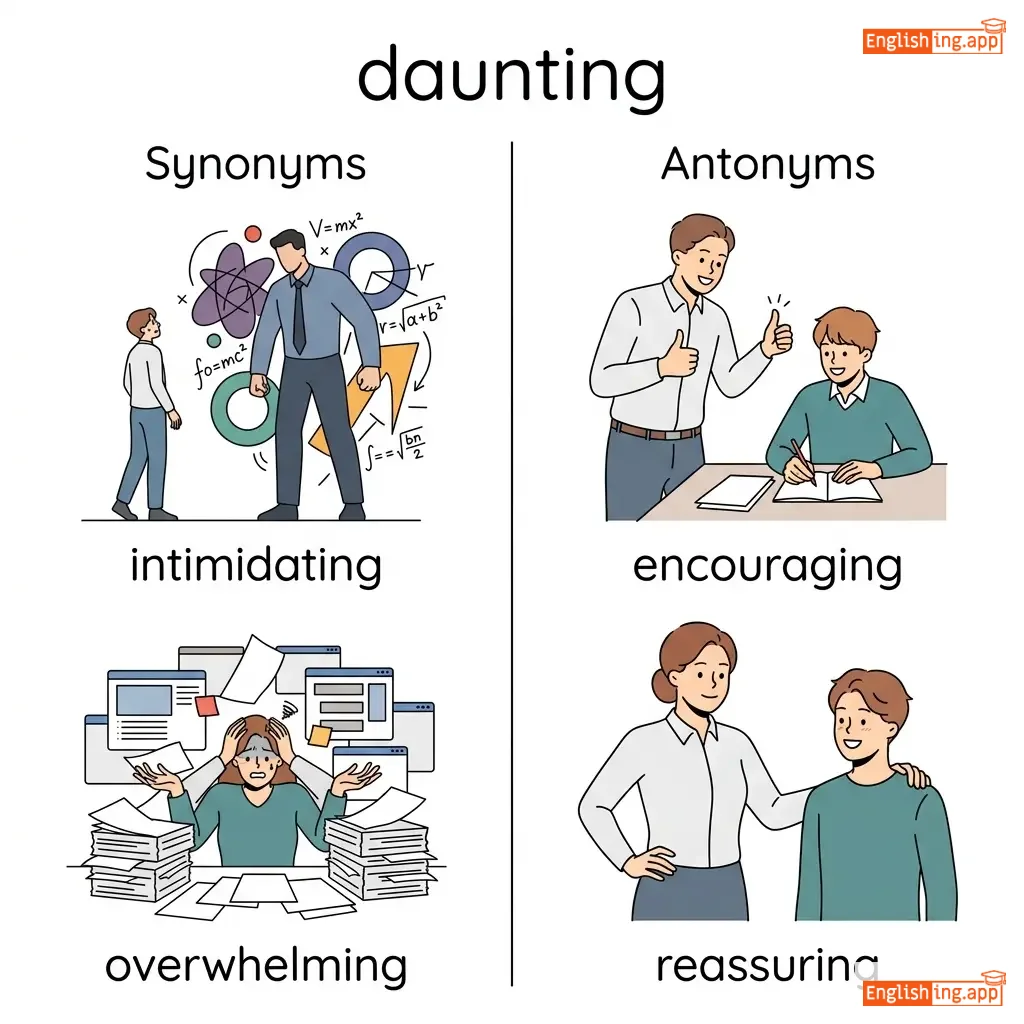
intimidating, overwhelming, discouraging, formidable
••••••
|
encouraging, reassuring, manageable
••••••
|
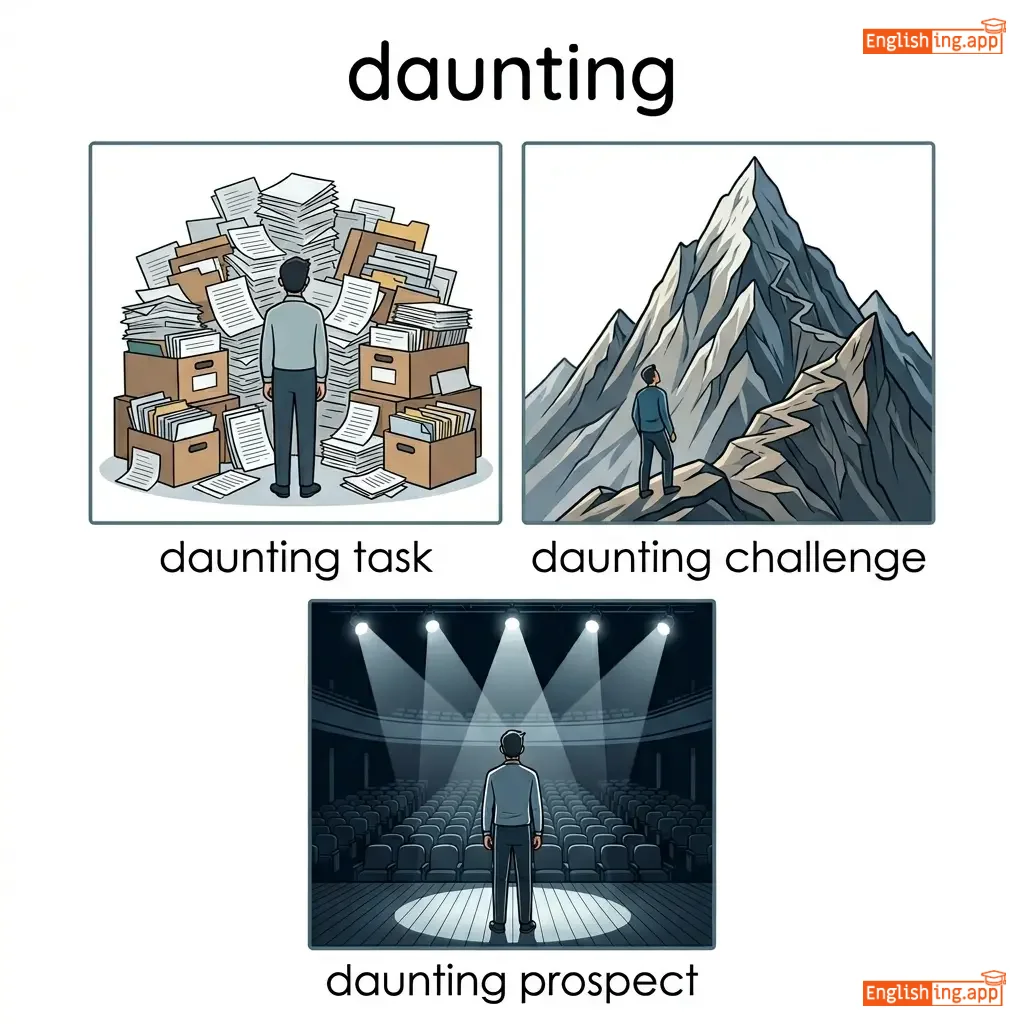
daunting task, daunting challenge, daunting prospect
••••••
|
当你开始新工作时,‘令人’感到害怕,这是艰难的工作。
••••••
|
|
#2126
😨
|
/dɔːnt/
verb
(daunt)
••••••
|
|
威吓
weihe
••••••
|
daunted
daunted
••••••
|
daunted
daunted
••••••
|
daunts
daunts
••••••
|
daunting
daunting
••••••
|
to make someone feel intimidated, discouraged, or less confident
••••••
|
The steep climb did not daunt the experienced hikers.
陡峭的攀登没有让经验丰富的登山者气馁。
••••••
|
陡峭的攀登没有让经验丰富的登山者气馁。
Dǒuqiào de pāndēng méiyǒu ràng jīngyàn fēngfù de dēngshān zhě qìněi.
••••••
|
nothing daunts him
没有什么能让他气馁
••••••
|
he is not easily discouraged or intimidated
••••••
|
没有什么能让他气馁
Méiyǒu shénme néng ràng tā qìněi
••••••
|
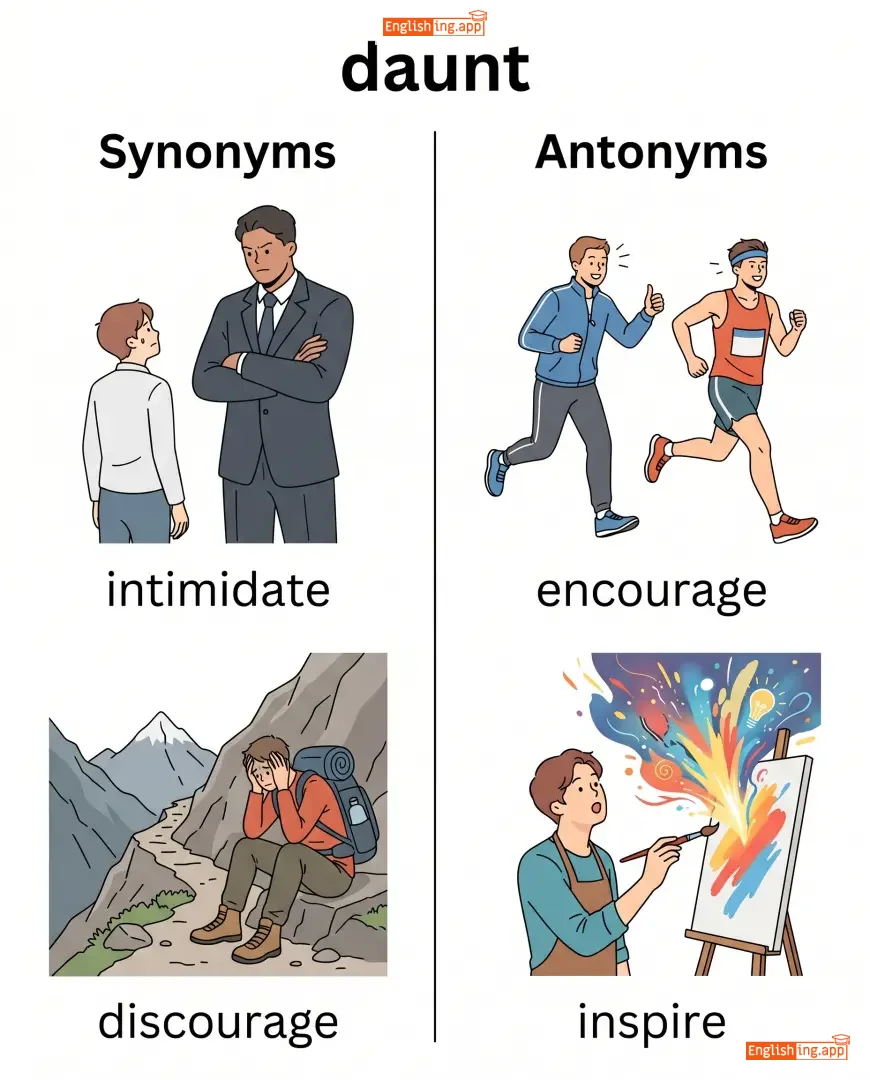
intimidate, discourage, dishearten, deter, frighten
••••••
|
encourage, inspire, embolden
••••••
|
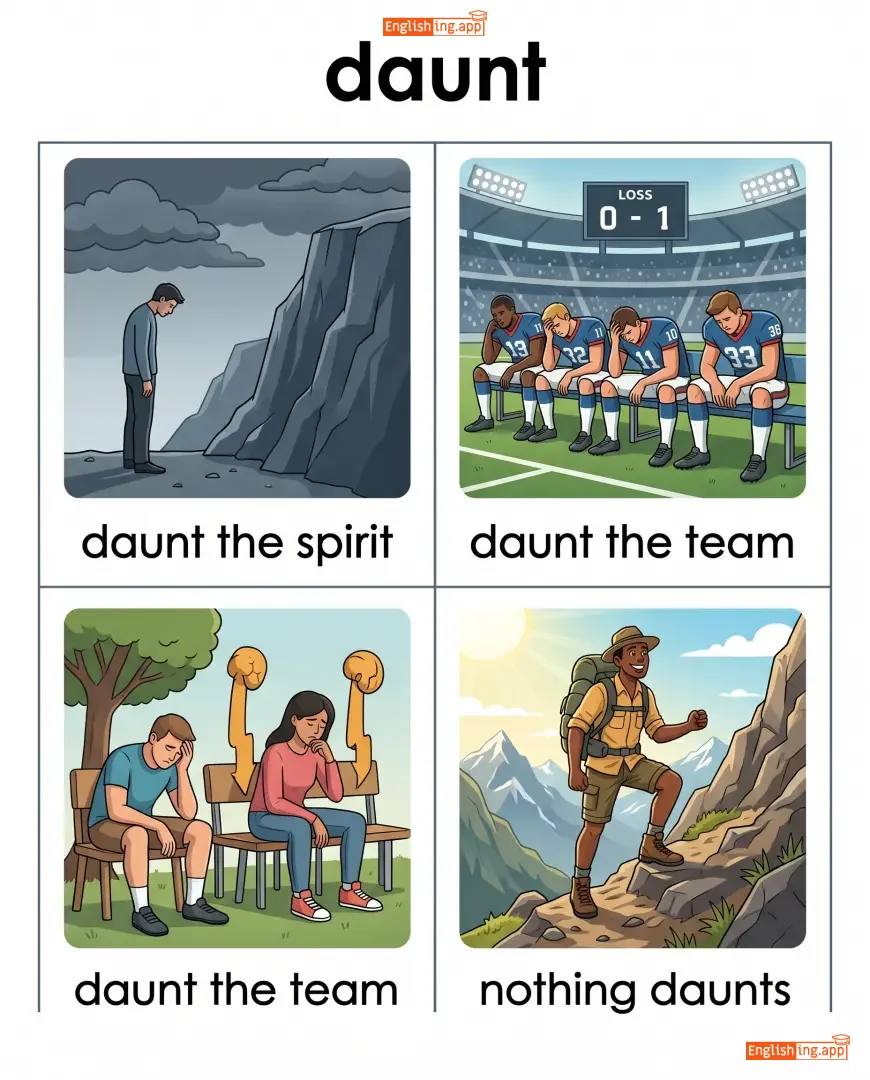
daunt the spirit, daunt the team, nothing daunts, daunt the enemy
••••••
|
Don't (daunt) 威吓—Daunt意味着威吓
••••••
|
|
#2127
🎨
|
/dɔːb/
verb
(道布)
••••••
|
- •••••• |
涂抹
tūmǒ
••••••
|
daubed
道布德
••••••
|
daubed
道布德
••••••
|
daubs
道布斯
••••••
|
daubing
道布英
••••••
|
to spread a thick or sticky substance carelessly on a surface
••••••
|
The children daubed paint all over the walls.
孩子们把油漆涂遍了墙壁。
••••••
|
孩子们把油漆涂遍了墙壁。
háizimen bǎ yóuqī tú biànle qiángbì.
••••••
|
daub with praise
涂抹赞扬
••••••
|
to give exaggerated or excessive praise
••••••
|
过度赞美
guòdù zànměi
••••••
|
smear, spread, plaster, coat, paint
••••••
|
clean, polish
••••••
|
daub paint, daub with, daub on wall
••••••
|
Daub意思是涂抹,就像涂抹墙上的油漆。
••••••
|
|
#2128
📊
|
/ˈdeɪtəm/ or /ˈdætəm/
noun
(德塔姆)
••••••
|
- •••••• |
数据
shuju
••••••
|
- •••••• | - •••••• | - •••••• | - •••••• |
a single piece of information; a fact used as a basis for reasoning or calculation
••••••
|
Each datum in the survey was carefully analyzed. |
调查中的每一条数据都经过仔细分析。
Diaocha zhong de mei yi tiao shuju dou jinguo zixi fenxi.
••••••
|
- •••••• | - •••••• | - •••••• |
fact, information, statistic, figure, detail
••••••
|
assumption, guess
••••••
|
datum point, data and datum, geographic datum
••••••
|
Datum意味着数据 — 记住:一条数据意味着一个datum。
••••••
|
|
#2129
😨
|
/ˈdæstərd/
noun
(dǎsītèd)
••••••
|
- •••••• |
懦夫
nuofu
••••••
|
- •••••• | - •••••• | - •••••• | - •••••• |
a cowardly or dishonorable person
••••••
|
Only a dastard would betray his closest friend.
只有懦夫才会背叛自己最亲密的朋友。
••••••
|
只有懦夫才会背叛自己最亲密的朋友。
Zhǐyǒu nuòfū cái huì bèipàn zìjǐ zuì qīnmì de péngyǒu.
••••••
|
- •••••• | - •••••• | - •••••• |
coward, villain, scoundrel, weakling
••••••
|
hero, brave, noble
••••••
|
cowardly dastard, vile dastard, act of a dastard
••••••
|
Dastard 意思是懦夫,记住:Dust + Hard situation,懦夫逃跑。
••••••
|
|
#2130
🧬
|
/ˈdɑːrwɪnɪzəm/
noun
(达尔文主义)
••••••
|
- •••••• |
达尔文主义
Dá'ěrwén zhǔyì
••••••
|
- •••••• | - •••••• | - •••••• | - •••••• |
the theory of biological evolution developed by Charles Darwin, emphasizing natural selection
••••••
|
Darwinism revolutionized the way scientists understood the origin of species. |
达尔文主义彻底改变了科学家们对物种起源的理解。
Dá'ěrwén zhǔyì chèdǐ gǎibiànle kēxuéjiāmen duì wùzhǒng qǐyuán de lǐjiě.
••••••
|
- •••••• | - •••••• | - •••••• |
evolutionism, natural selection theory, evolutionary theory
••••••
|
creationism, intelligent design
••••••
|
Darwinism theory, modern Darwinism, critics of Darwinism
••••••
|
达尔文 + 主义 = 达尔文主义。进化意味着生物变化。
••••••
|
Vocabulary Quiz
Test your vocabulary by matching words with their translations or meanings.
Login to take the quiz
Comments (0)
Share your thoughts and join the discussion.
Join the discussion by logging in
Login to CommentNo comments yet
Be the first to share your thoughts!