



Swipe left or right, or use the buttons. Tap image to zoom.
例句翻译
单词
Lesson 269Lesson 269 - 遮罩切换
|
表情符号
|
单词 | Images | 翻译 | 过去时 | 过去分词 | 第三人称单数 | 动名词 | 含义 | 例句 | 例句翻译 | 示例表达 | 示例表达含义 | 示例表达翻译 | 同义词 | 反义词 | 搭配词 | 助记符 |
|---|---|---|---|---|---|---|---|---|---|---|---|---|---|---|---|---|---|
|
#8040
🐍
|
/ˈsɪbɪləns/
noun
(西比兰斯)
••••••
|
- •••••• |
嘶嘶声
sī sī shēng
••••••
|
- •••••• | - •••••• | - •••••• | - •••••• |
A hissing or hushing sound, especially in speech with 's' or 'sh'.
••••••
|
The poet used sibilance to create a soft, hissing effect in the verse. |
诗人用西比兰斯在诗句中创造了一个柔和的嘶嘶效果。
Shīrén yòng xī bǐ lán sī zài shī jù zhōng chuàngzàole yīgè róuhé de sī sī xiàoguǒ.
••••••
|
- •••••• | - •••••• | - •••••• |
hiss, hissing, whisper, susurration, shushing
••••••
|
silence, quiet, stillness
••••••
|
sibilance in poetry, heavy sibilance, create sibilance, sibilance effect
••••••
|
西比兰斯就像蛇的嘶嘶声。嘶嘶!
••••••
|
|
#8041
🔤
|
/ˌsɪɡnɪfɪˈkeɪʃən/
noun
(西格尼菲凯申)
••••••
|
- •••••• |
含义
hányì
••••••
|
- •••••• | - •••••• | - •••••• | - •••••• |
the meaning or sense conveyed by a word, action, or symbol
••••••
|
The signification of the gesture was misunderstood. |
这个手势的含义被误解了。
Zhège shǒushì de hányì bèi wùjiěle.
••••••
|
- •••••• | - •••••• | - •••••• |
meaning, sense, implication, interpretation
••••••
|
nonsense, insignificance
••••••
|
linguistic signification, symbolic signification, signification of terms
••••••
|
Signification 的意思是含义,非常直观。
••••••
|
|
#8042
⭐
|
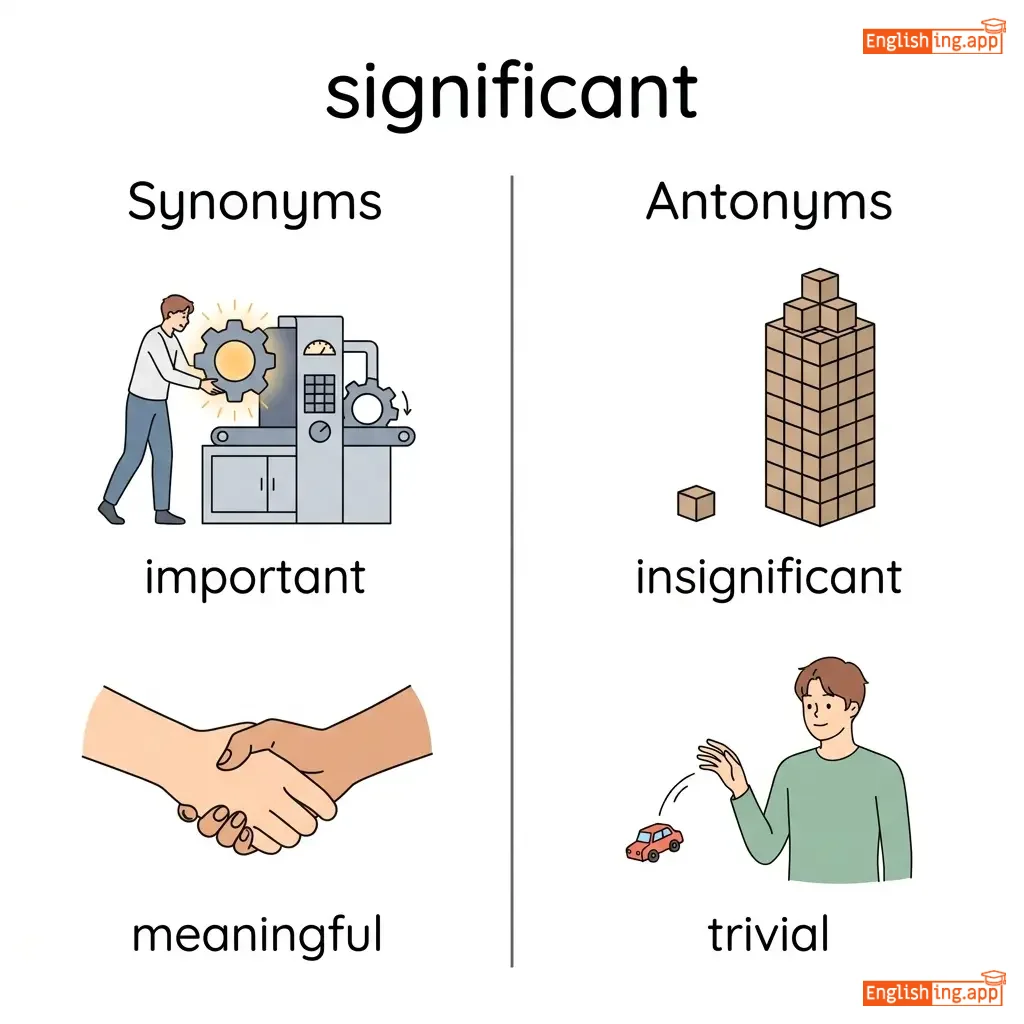
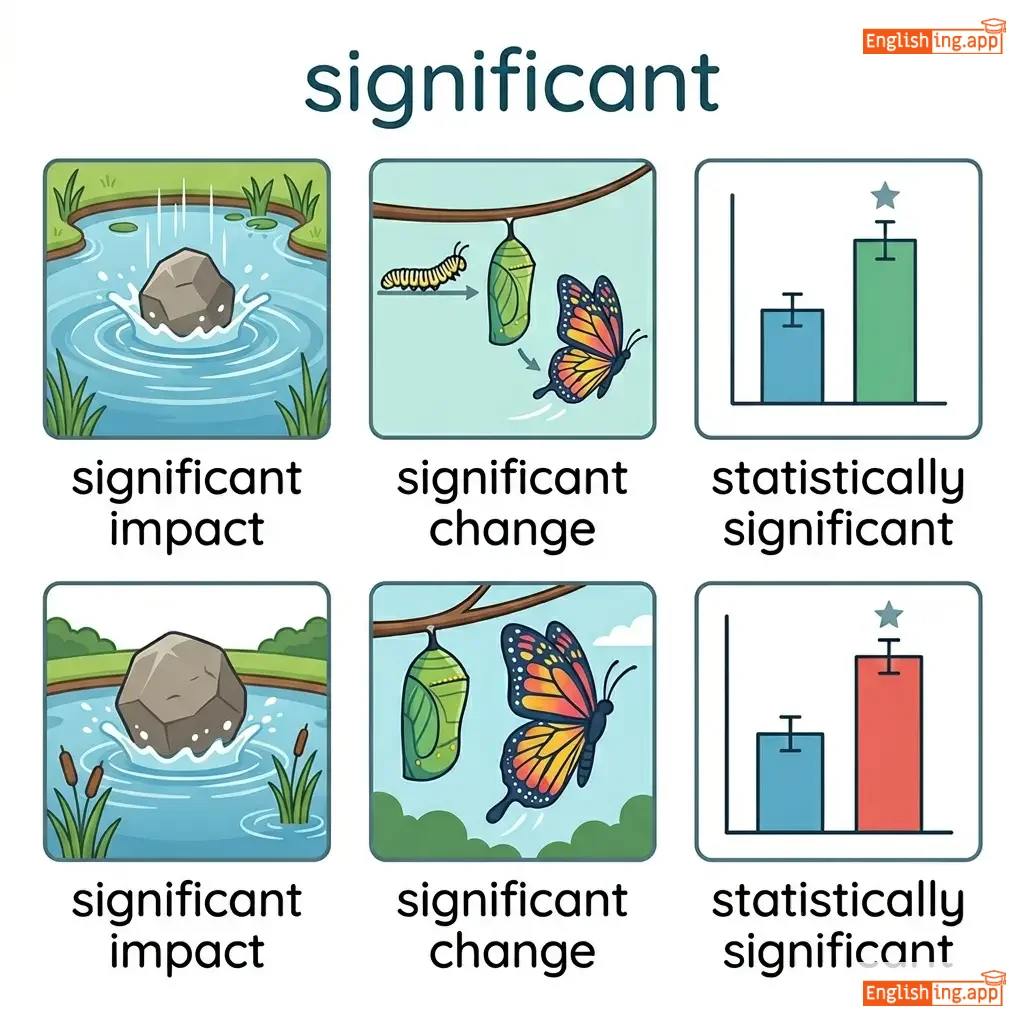
/sɪɡˈnɪfɪkənt/
adjective
(显著)
••••••
|
|
显著的
xian zhu de
••••••
|
- •••••• | - •••••• | - •••••• | - •••••• |
important, meaningful, or having a noticeable effect
••••••
|
The company made a significant investment in new technology. |
公司对新技术进行了显著投资。
Gōngsī duì xīn jìshù jìnxíngle xiǎnzhù tóuzī.
••••••
|
significant other |
a person with whom someone has an established romantic or sexual relationship
••••••
|
重要他人
zhòng yào tā rén
••••••
|
important, meaningful, considerable, notable, substantial
••••••
|
insignificant, trivial, minor
••••••
|
significant impact, significant change, statistically significant, significant role
••••••
|
显著的投资就像是公司的显著表现
••••••
|
|
#8043
📌
|
/sɪɡˈnɪfɪkəns/
noun
(xīngfèn)
••••••
|
- •••••• |
意义
yìyì
••••••
|
- •••••• | - •••••• | - •••••• | - •••••• |
the quality of being important, meaningful, or worthy of attention
••••••
|
The significance of the discovery was recognized worldwide. |
这一发现的重要性在全球范围内得到了认可。
Zhè yī fāxiàn de zhòngyào xìng zài quánqiú fànwéi nèi dédào le rènkě.
••••••
|
of great significance |
something very important or meaningful
••••••
|
极其重要
jíqí zhòngyào
••••••
|
importance, meaning, value, weight, consequence
••••••
|
insignificance, triviality
••••••
|
historical significance, cultural significance, great significance, significance level
••••••
|
Significance意味着意义 - 有意义的事情很重要
••••••
|
|
#8044
🚦
|
/ˈsɪɡnəl/
noun/verb
(信号)
••••••
|
- •••••• |
信号
xinhao
••••••
|
signaled
信号了
••••••
|
signaled
信号了
••••••
|
signals
信号
••••••
|
signaling
信号化
••••••
|
a gesture, sound, or action used to convey information or instructions
••••••
|
The driver gave a hand signal before turning left.
司机在左转之前给出了手势信号。
••••••
|
司机在左转之前给出了手势信号。
Sījī zài zuǒ zhuǎn zhīqián gěi chūle shǒushì xìnhào.
••••••
|
signal a change
发出信号
••••••
|
to indicate that something new is about to happen
••••••
|
发出信号
fāchū xìnhào
••••••
|
gesture, indication, sign, cue, alert
••••••
|
silence, concealment
••••••
|
give a signal, danger signal, signal strength, signal failure
••••••
|
信号 = 就像交通信号灯一样,提醒你做出反应。
••••••
|
|
#8045
🪣
|
/sɪft/
verb
(sift)
••••••
|
- •••••• |
筛 / 仔细检查
shai / zixi jiancha
••••••
|
sifted
sifted
••••••
|
sifted
sifted
••••••
|
sifts
sifts
••••••
|
sifting
sifting
••••••
|
to separate or sort through carefully, often using a sieve or by examining closely
••••••
|
She sifted the flour before adding it to the cake mixture.
她在把面粉加到蛋糕混合物中之前筛选了面粉。
••••••
|
她在把面粉加到蛋糕混合物中之前筛选了面粉。
Tā zài bǎ miànfěn jiā dào dàngāo hùn héwù zhōng zhīqián shāixuǎn le miànfěn.
••••••
|
sift through
筛选通过
••••••
|
to examine something carefully in order to find what is important or useful
••••••
|
仔细检查
zixi jiancha
••••••
|
filter, screen, sort, examine, separate
••••••
|
ignore, overlook, neglect
••••••
|
sift flour, sift through evidence, sift carefully, sift information
••••••
|
通过筛子筛面粉,像筛选重要信息一样。
••••••
|
|
#8046
🏰
|
/siːdʒ/
noun
(sīji)
••••••
|
- •••••• |
围攻
wéiqīng
••••••
|
- •••••• | - •••••• | - •••••• | - •••••• |
A military operation in which a place is surrounded to force its surrender.
••••••
|
The castle fell after a long siege.
城堡在长时间的围困后倒塌。
••••••
|
城堡在长时间的围困后倒塌。
Chéngbǎo zài cháng shíjiān de wéikùn hòu dǎotā.
••••••
|
lay siege to
围攻
••••••
|
to surround and attack a place continuously
••••••
|
围攻
wéiqīng
••••••
|
blockade, encirclement, assault, attack, investment
••••••
|
retreat, withdrawal, truce
••••••
|
under siege, lay siege, siege warfare, prolonged siege
••••••
|
Siege的意思是'围攻' → 包围并强迫敌人投降。
••••••
|
|
#8047
🔀
|
/ˈsaɪdˌtræk/
verb
(sāidǔlèikè)
••••••
|
- •••••• |
分心
fēn xīn
••••••
|
sidetracked
sāidǔlèikèd
••••••
|
sidetracked
sāidǔlèikèd
••••••
|
sidetracks
sāidǔlèikès
••••••
|
sidetracking
sāidǔlèikèxíng
••••••
|
To distract from the main subject or activity.
••••••
|
She was sidetracked by an unexpected phone call.
她被一个意外的电话打断了。
••••••
|
她被一个意外的电话打断了。
Tā bèi yīgè yìwài de diànhuà dǎduànle.
••••••
|
get sidetracked
偏离轨道
••••••
|
to become distracted and lose focus
••••••
|
失去焦点
Shīqù jiāodiǎn
••••••
|
distract, divert, mislead, digress, deflect
••••••
|
focus, concentrate, continue
••••••
|
sidetrack discussion, easily sidetracked, sidetracked by
••••••
|
Side + track → 偏离主要的路线。
••••••
|
|
#8048
↩️
|
/ˈsaɪdˌstɛp/
verb
(sáidstép)
••••••
|
- •••••• |
回避
huíbì
••••••
|
sidestepped
sáidstépt
••••••
|
sidestepped
sáidstépt
••••••
|
sidesteps
sáidstéps
••••••
|
sidestepping
sáidstéping
••••••
|
To avoid something by stepping aside; to evade a problem or question indirectly.
••••••
|
The politician tried to sidestep the difficult question.
那位政治家试图回避那个棘手的问题。
••••••
|
那位政治家试图回避那个棘手的问题。
Nà wèi zhèngzhìjiā shìtú huíbì nàgè jíshǒu de wèntí.
••••••
|
sidestep the issue
回避问题
••••••
|
to avoid addressing a problem directly
••••••
|
回避问题
huíbì wèntí
••••••
|
avoid, evade, dodge, bypass, elude
••••••
|
confront, face, tackle
••••••
|
sidestep the issue, sidestep responsibility, sidestep the question
••••••
|
Side + step → 通过侧步避开问题
••••••
|
|
#8049
🌌
|
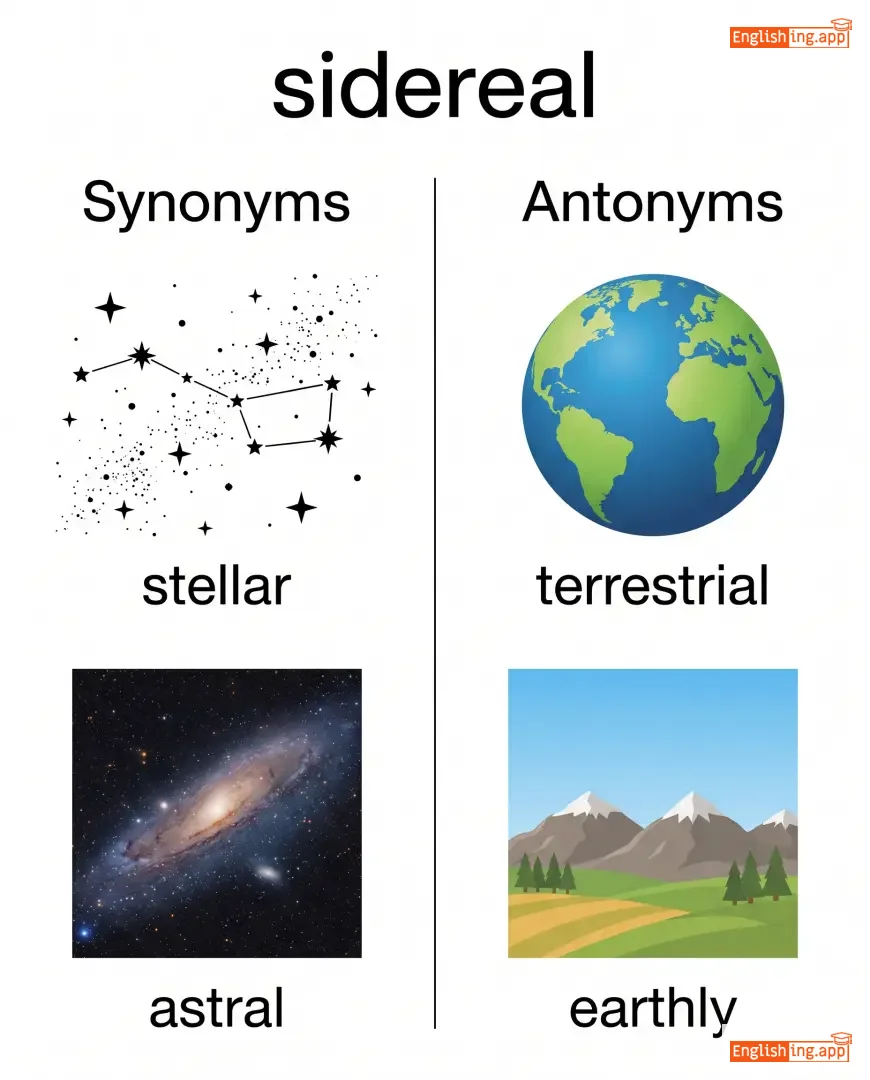
/saɪˈdɪəriəl/
adjective
(sī dié rì ěr)
••••••
|
|
恒星的
héng xīng de
••••••
|
- •••••• | - •••••• | - •••••• | - •••••• |
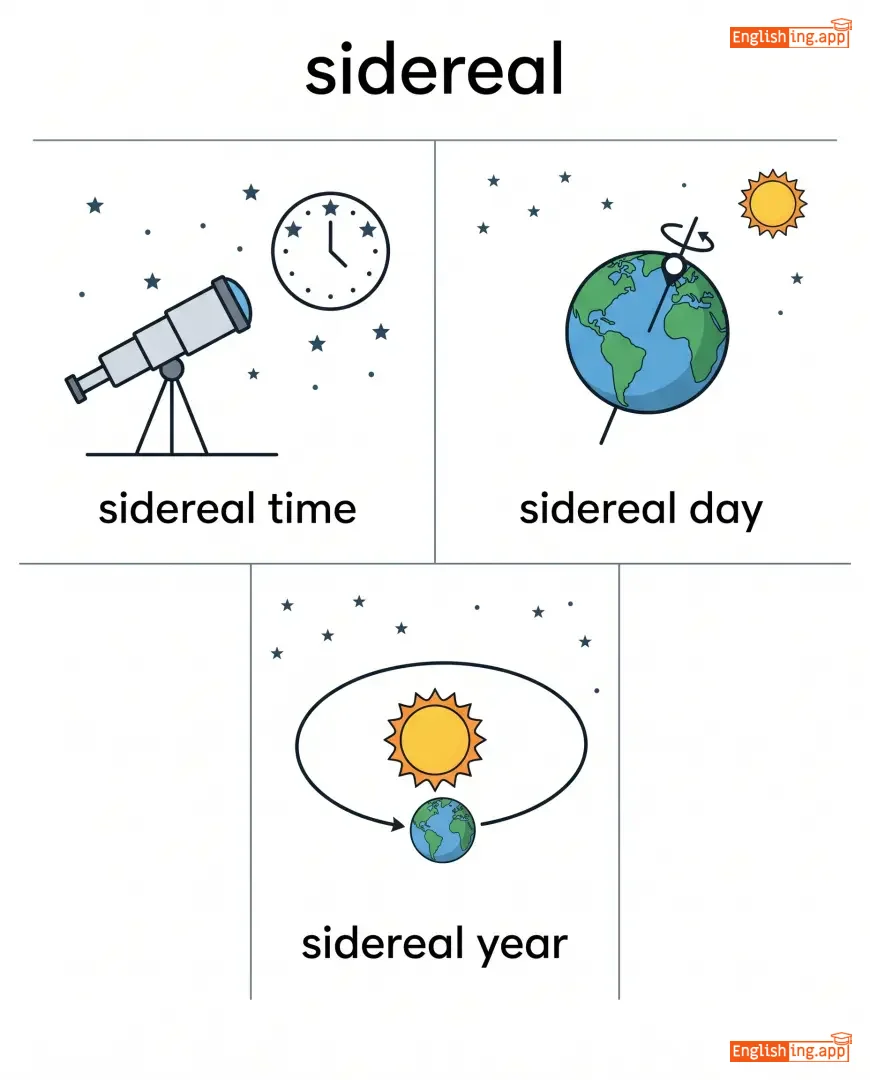
Relating to the stars or constellations; measured relative to the stars.
••••••
|
Astronomers use sidereal time to track the positions of stars. |
天文学家使用恒星时间来追踪星星的位置。
tiān wén xué jiā shǐ yòng héng xīng shí jiān lái zhuī zōng xīng xīng de wèi zhì.
••••••
|
- •••••• | - •••••• | - •••••• |
stellar, astral, cosmic, celestial
••••••
|
terrestrial, earthly
••••••
|
sidereal time, sidereal day, sidereal year
••••••
|
Sidereal → 恒星表记住: 它与星星有关。
••••••
|
|
#8050
👀
|
/ˈsaɪdlɔːŋ/
adjective, adverb
(sāi dào lóng)
••••••
|
- •••••• |
斜视
xie shi
••••••
|
- •••••• | - •••••• | - •••••• | - •••••• |
Directed to the side; indirect, furtive, or not straightforward.
••••••
|
She gave him a sidelong glance across the room. |
她穿过房间投给他一个斜视。
Tā chuānguò fángjiān tóu gěi tā yīgè xié shì.
••••••
|
- •••••• | - •••••• | - •••••• |
indirect, oblique, sideways, slanting, furtive
••••••
|
direct, straight, frontal
••••••
|
sidelong glance, sidelong look, sidelong remark
••••••
|
Side + long → 视线偏向一边 = 斜视
••••••
|
|
#8051
🔮
|
/ˈsɪbɪlaɪn/
adjective
(希比琳)
••••••
|
- •••••• |
希比林
xī bǐ lín
••••••
|
- •••••• | - •••••• | - •••••• | - •••••• |
Prophetic, mysterious, or cryptic in meaning.
••••••
|
The old woman gave a sibylline warning about the future. |
那位老妇人对未来做出了一个希比林的警告。
Nà wèi lǎo fùrén duì wèilái zuòchūle yīgè xī bǐ lín de jǐnggào.
••••••
|
- •••••• | - •••••• | - •••••• |
prophetic, mystical, enigmatic, cryptic
••••••
|
clear, obvious, plain
••••••
|
sibylline prophecy, sibylline message, sibylline tone
••••••
|
Sibylline意味着神秘的预言 - 🔮像水晶球一样。
••••••
|
|
#8052
👫
|
/ˈsɪblɪŋ/
noun
(sibling)
••••••
|
- •••••• |
兄弟姐妹
xiōngdì jiěmèi
••••••
|
- •••••• | - •••••• | - •••••• | - •••••• |
A brother or sister.
••••••
|
She has three siblings, two brothers and one sister.
她有三个兄弟姐妹,两个兄弟和一个妹妹。
••••••
|
她有三个兄弟姐妹,两个兄弟和一个妹妹。
Tā yǒu sān gè xiōngdì jiěmèi, liǎng gè xiōngdì hé yī gè mèimei.
••••••
|
- •••••• | - •••••• | - •••••• |
brother, sister, kin, relative
••••••
|
stranger, outsider
••••••
|
sibling rivalry, younger sibling, elder sibling, sibling bond
••••••
|
Siblings 这个英文词是指兄弟姐妹,就像一家人。
••••••
|
|
#8053
💨
|
/ˈsɪbəleɪt/
verb
(西比雷特)
••••••
|
- •••••• |
发出嘶嘶声
fāchū sī sī shēng
••••••
|
sibilated
西比雷特德
••••••
|
sibilated
西比雷特德
••••••
|
sibilates
西比雷特斯
••••••
|
sibilating
西比雷特英
••••••
|
To pronounce with a hissing sound.
••••••
|
The actor sibilated his lines for dramatic effect.
演员为了戏剧效果,用嘶嘶声说出了他的台词。
••••••
|
演员为了戏剧效果,用嘶嘶声说出了他的台词。
Yǎnyuán wèile xìjù xiàoguǒ, yòng sī sī shēng shuō chūle tā de táicí.
••••••
|
- •••••• | - •••••• | - •••••• |
hiss, whisper, whistle, susurrate
••••••
|
silence, quiet
••••••
|
sibilate words, sibilate lines, sibilate softly
••••••
|
Sibilate: 想象一个演员用嘶嘶声说话,增加戏剧效果。
••••••
|
|
#8054
🔊
|
/ˈsɪbɪlənt/
adjective
(西比兰特)
••••••
|
- •••••• |
带有嘶嘶声的
dài yǒu sī sī shēng de
••••••
|
- •••••• | - •••••• | - •••••• | - •••••• |
Making or characterized by a hissing sound.
••••••
|
The word 'snake' starts with a sibilant sound.
单词 'snake' 以西比兰特的声音开始。
••••••
|
单词 'snake' 以西比兰特的声音开始。
Dāncí 'snake' yǐ xī bǐ lán tè de shēngyīn kāishǐ.
••••••
|
- •••••• | - •••••• | - •••••• |
hissing, whistling, susurrant, whispering
••••••
|
voiceless, muted, quiet
••••••
|
sibilant consonant, sibilant sound, sibilant noise, sibilant speech
••••••
|
西比兰特意味着嘶嘶声,就像蛇一样 🐍。
••••••
|
|
#8055
🤜
|
/ʃʌv/
verb
(shov)
••••••
|
- •••••• |
推
tui
••••••
|
shoved
shovd
••••••
|
shoved
shovd
••••••
|
shoves
shovz
••••••
|
shoving
shoving
••••••
|
to push someone or something roughly
••••••
|
He shoved the box into the corner.
他把箱子推到角落里。
••••••
|
他把箱子推到角落里。
Tā bǎ xiāngzi tuī dào jiǎoluò lǐ.
••••••
|
shove it
shove it
••••••
|
a rude way of telling someone to go away or stop bothering you
••••••
|
滚开
gǔn kāi
••••••
|
push, thrust, jostle, force, propel
••••••
|
pull, drag, withdraw
••••••
|
shove aside, shove into, big shove, violent shove
••••••
|
Shove 意思是推,就像你开玩笑推某人。
••••••
|
|
#8056
🕵️
|
/ˈʃaɪstər/
noun
(shaisite)
••••••
|
- •••••• |
骗子
pianzi
••••••
|
- •••••• | - •••••• | - •••••• | - •••••• |
a person, especially a lawyer, who uses unscrupulous or dishonest methods
••••••
|
The businessman was exposed as a shyster who cheated clients. |
这位商人被曝光为一个骗子,他欺骗了客户。
Zhè wèi shāngrén bèi pùguāng wéi yīgè piànzi, tā qīpiànle kèhù.
••••••
|
- •••••• | - •••••• | - •••••• |
swindler, cheat, fraud, trickster, crook
••••••
|
honest person, gentleman, professional
••••••
|
legal shyster, political shyster, exposed as a shyster
••••••
|
Shyster的意思是骗子 — 'Shyster欺骗所有人!'
••••••
|
|
#8057
🚂
|
/ʃʌnt/
verb
(shànt)
••••••
|
- •••••• |
转轨
zhuǎn guǐ
••••••
|
shunted
shànted
••••••
|
shunted
shànted
••••••
|
shunts
shànts
••••••
|
shunting
shàntīng
••••••
|
to move or turn aside; to push or divert from one track to another
••••••
|
The train was shunted onto a different track.
火车被调到另一条轨道。
••••••
|
火车被调到另一条轨道。
Huǒchē bèi tiáo dào lìng yītiáo guǐdào.
••••••
|
- •••••• | - •••••• | - •••••• |
divert, shift, transfer, redirect, push
••••••
|
retain, hold, keep
••••••
|
shunt aside, shunt into, shunt the train
••••••
|
Shunt 代表转轨,像是把火车从一条轨道转到另一条轨道。
••••••
|
|
#8058
🚫
|
/ʃʌn/
verb
(shan)
••••••
|
|
回避
huibi
••••••
|
shunned
shan-ded
••••••
|
shunned
shan-ded
••••••
|
shuns
shan-s
••••••
|
shunning
shanning
••••••
|
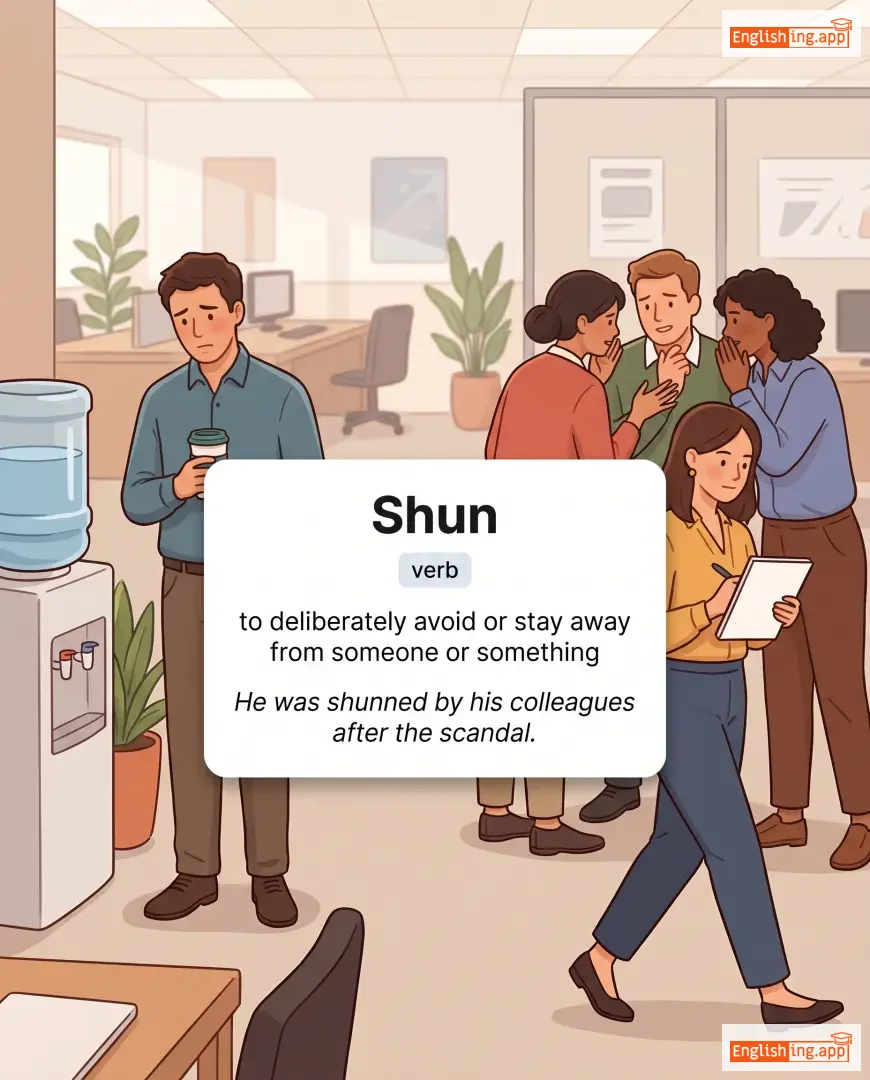
to deliberately avoid or stay away from someone or something
••••••
|
He was shunned by his colleagues after the scandal.
他在丑闻之后被同事们回避了。
••••••
|
他在丑闻之后被同事们回避了。
Ta zai chouwen zhihou bei tongshimeng huibi le.
••••••
|
- •••••• | - •••••• | - •••••• |
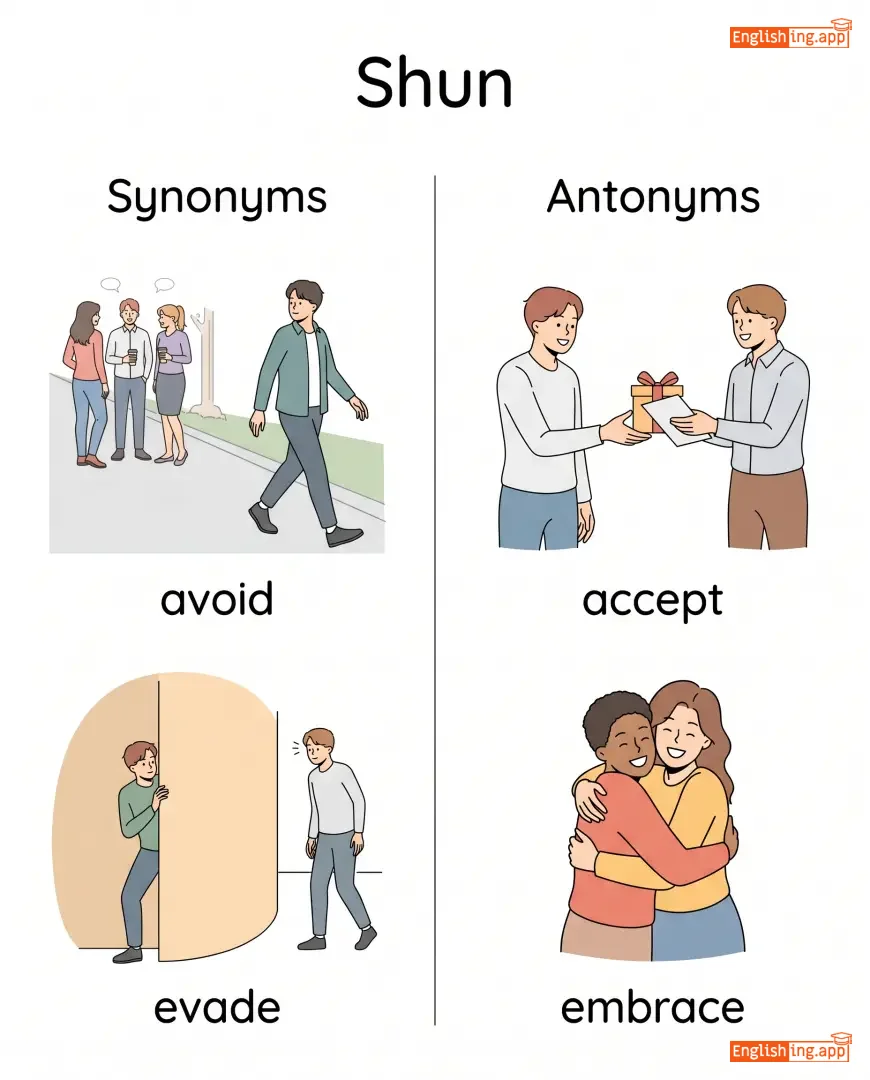
avoid, evade, ignore, reject, spurn
••••••
|
accept, embrace, welcome
••••••
|
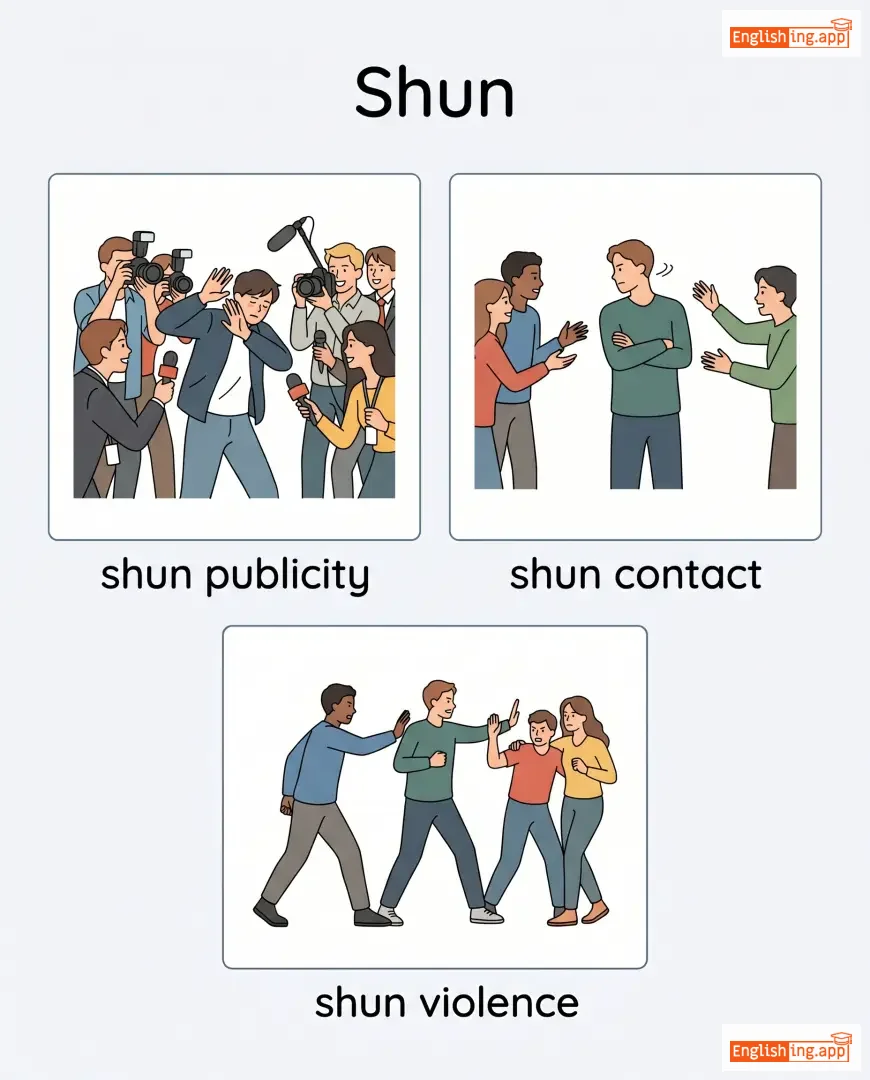
shun publicity, shun contact, shun violence
••••••
|
Shun意味着回避 — '每个周六大家都回避我,像我有传染病一样!'
••••••
|
|
#8059
🃏
|
/ˈʃʌfəl/
verb
••••••
|
- •••••• | - •••••• |
shuffled
••••••
|
shuffled
••••••
|
shuffles
••••••
|
shuffling
••••••
|
to walk by dragging one's feet along or without lifting them fully; to mix or rearrange
••••••
|
He shuffled the cards before dealing them. |
- •••••• |
shuffle the deck |
to mix things up or rearrange situations
••••••
|
- •••••• |
drag, mix, rearrange, stir, slide
••••••
|
lift, organize, order
••••••
|
shuffle cards, shuffle feet, shuffle the papers
••••••
|
No •••••• |
|
#8060
😨
|
/ˈʃʌdər/
verb
(shāder)
••••••
|
- •••••• |
颤抖
chàndǒu
••••••
|
shuddered
shāderd
••••••
|
shuddered
shāderd
••••••
|
shudders
shāders
••••••
|
shuddering
shādering
••••••
|
to tremble or shake suddenly, often due to fear, cold, or strong emotion
••••••
|
She shuddered at the thought of walking alone in the dark forest.
她在想到独自走在黑暗森林中的时候不禁颤抖。
••••••
|
她在想到独自走在黑暗森林中的时候不禁颤抖。
Tā zài xiǎngdào dúzì zǒu zài hēi'àn sēnlín zhōng de shíhòu bùjīn chàndǒu.
••••••
|
shudder to think
一想到就打寒战
••••••
|
used to express strong dislike or fear about something unpleasant to imagine
••••••
|
一想到就打寒战
yī xiǎngdào jiù dǎ hánzhàn
••••••
|
tremble, quake, shake, quiver, recoil
••••••
|
steady, remain, relax
••••••
|
shudder with fear, shudder at the thought, make someone shudder
••••••
|
Shudder 就是颤抖 — 就像你听到一个令人毛骨悚然的故事时那种感觉。
••••••
|
|
#8061
🤷
|
/ʃrʌɡ/
verb
(shruɡ)
••••••
|
- •••••• |
耸肩
sǒng jiān
••••••
|
shrugged
shruɡd
••••••
|
shrugged
shruɡd
••••••
|
shrugs
shruɡs
••••••
|
shrugging
shruɡɪŋ
••••••
|
To raise and lower the shoulders to express uncertainty or indifference.
••••••
|
He shrugged when asked about the missing file.
他在被问到关于丢失文件的事时耸了耸肩。
••••••
|
他在被问到关于丢失文件的事时耸了耸肩。
Tā zài bèi wèn dào guānyú diūshī wénjiàn de shì shí sǒngle sǒng jiān.
••••••
|
shrug off
耸肩
••••••
|
To treat something as unimportant or not worth worrying about.
••••••
|
不在乎
bù zàihu
••••••
|
dismiss, disregard, ignore, downplay
••••••
|
acknowledge, accept, emphasize
••••••
|
shrug shoulders, shrug indifferently, shrug off criticism, shrug casually
••••••
|
耸肩 = 用肩膀表达不确定或冷漠的态度。
••••••
|
|
#8062
🥀
|
/ˈʃrɪvəl/
verb
(海皮尼斯)
••••••
|
- •••••• |
枯萎
ku wei
••••••
|
shriveled
海皮尼斯德
••••••
|
shriveled
海皮尼斯德
••••••
|
shrivels
海皮尼斯
••••••
|
shriveling
海皮尼斯ING
••••••
|
To become dry, wrinkled, and smaller due to lack of moisture.
••••••
|
The flowers shriveled under the hot sun.
花朵在烈日下枯萎。
••••••
|
花朵在烈日下枯萎。
Hua duo zai lie ri xia ku wei.
••••••
|
shrivel up
收缩起来
••••••
|
To become shrunken or wrinkled, often from age or dehydration.
••••••
|
枯萎
ku wei
••••••
|
wither, wilt, dry up, decay, contract
••••••
|
bloom, expand, flourish
••••••
|
shrivel away, shrivel with age, shrivel in the sun, shrivel leaves
••••••
|
枯萎像是干枯的花朵在太阳下变小。
••••••
|
|
#8063
📉
|
/ˈʃrɪŋkɪdʒ/
noun
(shrinking)
••••••
|
- •••••• |
收缩
shousuo
••••••
|
- •••••• | - •••••• | - •••••• | - •••••• |
The process of becoming smaller in size, amount, or value.
••••••
|
The company reported a shrinkage in profits this quarter. |
公司报告了本季度利润的收缩。
Gongsi baogao le ben jidu lilun de shousuo.
••••••
|
- •••••• | - •••••• | - •••••• |
reduction, decrease, decline, contraction
••••••
|
growth, expansion, increase
••••••
|
shrinkage in profits, shrinkage of demand, retail shrinkage, natural shrinkage
••••••
|
Shrinkage就像'收缩',让一切变小。
••••••
|
|
#8064
⛪
|
/ʃraɪn/
noun
(ʃraɪn)
••••••
|
- •••••• |
圣地
shengdi
••••••
|
- •••••• | - •••••• | - •••••• | - •••••• |
A place regarded as holy, often associated with a saint or deity.
••••••
|
Thousands of pilgrims visit the shrine each year. |
每年都有成千上万的朝圣者参观这个圣地。
Mei nian dou you chengqian shangwan de chaoshengzhe canguan zhege shengdi.
••••••
|
shrine of memory |
A place or object kept as a reminder of someone or something revered.
••••••
|
记忆的圣地
Jiyi de shengdi
••••••
|
temple, sanctuary, altar, chapel
••••••
|
ordinary place, profane site
••••••
|
visit shrine, sacred shrine, holy shrine, build shrine
••••••
|
Shrine = Shine,神圣的地方,圣地!
••••••
|
|
#8065
📢
|
/ʃrɪl/
adjective
(shríl)
••••••
|
- •••••• |
尖锐的声音
jianrui de shengyin
••••••
|
- •••••• | - •••••• | - •••••• | - •••••• |
High-pitched and piercing in sound.
••••••
|
The shrill whistle startled everyone in the room. |
尖锐的哨声让房间里的每个人都吓了一跳。
Jianrui de shaosheng rang fangjian li de mei ge ren dou xià le yī tiào.
••••••
|
shrill cry |
A loud, high-pitched cry, usually expressing fear or pain.
••••••
|
尖锐的喊声
jianrui de hǎnshēng
••••••
|
piercing, high-pitched, sharp, squeaky, screeching
••••••
|
deep, low, mellow
••••••
|
shrill voice, shrill cry, shrill sound, shrill tone
••••••
|
Shrill的意思是尖锐的声音 — 就像非常刺耳的哨声。
••••••
|
|
#8066
😱
|
/ʃriːk/
verb
(ʃriːk)
••••••
|
- •••••• |
尖叫
jianjiao
••••••
|
shrieked
ʃriːkt
••••••
|
shrieked
ʃriːkt
••••••
|
shrieks
ʃriːks
••••••
|
shrieking
ʃriːkɪŋ
••••••
|
to make a loud, high-pitched cry
••••••
|
She shrieked when she saw the spider.
ʃi ʃriːkt wɛn ʃi sɔː ðə spaɪdər.
••••••
|
她看到蜘蛛时尖叫了。
Ta kandao zhizhu shi jianjiao le.
••••••
|
shriek with laughter
ʃriːk wɪð læftər
••••••
|
to laugh loudly in a high-pitched voice
••••••
|
笑得尖叫
xiao de jianjiao
••••••
|
scream, yell, cry, screech, howl
••••••
|
whisper, murmur, mutter
••••••
|
shriek in fear, shriek of laughter, loud shriek, shriek with pain
••••••
|
Shriek 在中文中就是像吓到时大声尖叫。
••••••
|
|
#8067
🧠
|
/ʃruːd/
adjective
(shruud)
••••••
|
- •••••• |
精明
jingming
••••••
|
- •••••• | - •••••• | - •••••• | - •••••• |
having sharp judgment and practical intelligence
••••••
|
She made a shrewd investment in real estate. |
她在房地产方面做出了精明的投资。
Ta zai fangdichan fangmian zuo chule jingming de touzi.
••••••
|
shrewd operator |
a clever and skillful person in business or politics
••••••
|
精明的操作者
jingming de caozuozhe
••••••
|
astute, clever, smart, sharp, perceptive
••••••
|
naive, foolish, gullible
••••••
|
shrewd businessman, shrewd move, shrewd decision
••••••
|
Shrewd就像精明,永远先知未来的投资者。
••••••
|
|
#8068
🐭
|
/ʃruː/
noun
(shroo)
••••••
|
- •••••• |
暴躁的女人 / 小鼠类动物
bao zao de nu ren / xiao shu lei dong wu
••••••
|
- •••••• | - •••••• | - •••••• | - •••••• |
a small mouse-like animal; also a woman with a bad temper
••••••
|
The play describes a strong-willed woman as a shrew. |
这部戏描述了一位坚强的女性,像一个暴躁的女人一样。
Zhe bu xi miaoshu le yi wei jianqiang de nvxing, xiang yi ge baozao de nvren yiyang.
••••••
|
- •••••• | - •••••• | - •••••• |
nag, scold, termagant, rodent, critter
••••••
|
gentlewoman, lady
••••••
|
tame the shrew, angry shrew, tiny shrew
••••••
|
Shrew像一只小鼠一样,暴躁的女人随时爆发!
••••••
|
|
#8069
✂️
|
/ʃrɛd/
(shred)
••••••
|
- •••••• |
撕裂
silie
••••••
|
shredded
shredded
••••••
|
shredded
shredded
••••••
|
shreds
shreds
••••••
|
shredding
shredding
••••••
|
to tear or cut something into small pieces
••••••
|
She shredded the old documents before throwing them away.
她在扔掉之前把旧文件撕成了碎片。
••••••
|
她在扔掉之前把旧文件撕成了碎片。
Ta zai reng diao zhiqian ba jiu wenjian sile cheng le suipian.
••••••
|
not a shred of evidence
没有一丝证据
••••••
|
no evidence at all
••••••
|
没有一丝证据
Meiyou yisi zhengju
••••••
|
tear, rip, cut, slice, fragment
••••••
|
mend, repair, fix
••••••
|
shred paper, shred cheese, shred evidence, shred into pieces
••••••
|
撕裂就像撕纸一样,撕成小片。
••••••
|
Vocabulary Quiz
Test your vocabulary by matching words with their translations or meanings.
Login to take the quiz
Comments (0)
Share your thoughts and join the discussion.
Join the discussion by logging in
Login to CommentNo comments yet
Be the first to share your thoughts!