





Swipe left or right, or use the buttons. Tap image to zoom.
例句翻译
单词
Lesson 203Lesson 203 - 遮罩切换
|
表情符号
|
单词 | Images | 翻译 | 过去时 | 过去分词 | 第三人称单数 | 动名词 | 含义 | 例句 | 例句翻译 | 示例表达 | 示例表达含义 | 示例表达翻译 | 同义词 | 反义词 | 搭配词 | 助记符 |
|---|---|---|---|---|---|---|---|---|---|---|---|---|---|---|---|---|---|
|
#6061
👹
|
/ˈoʊɡər/
noun
••••••
|
- •••••• | - •••••• | - •••••• | - •••••• | - •••••• | - •••••• |
A mythical monster, often depicted as large, hideous, and cruel; metaphorically, a cruel or terrifying person.
••••••
|
The villagers feared the ogre who lived in the dark forest. |
- •••••• |
treat someone like an ogre |
To treat someone as if they are cruel, scary, or monstrous.
••••••
|
- •••••• |
monster, brute, fiend, beast, villain
••••••
|
angel, saint, hero
••••••
|
giant ogre, cruel ogre, fairy-tale ogre, terrifying ogre
••••••
|
No •••••• |
|
#6062
⚖️
|
/ˈəʊnərəs/
adjective
(欧内罗斯)
••••••
|
|
繁重
fánzhòng
••••••
|
- •••••• | - •••••• | - •••••• | - •••••• |
involving a great deal of effort, difficulty, or burden
••••••
|
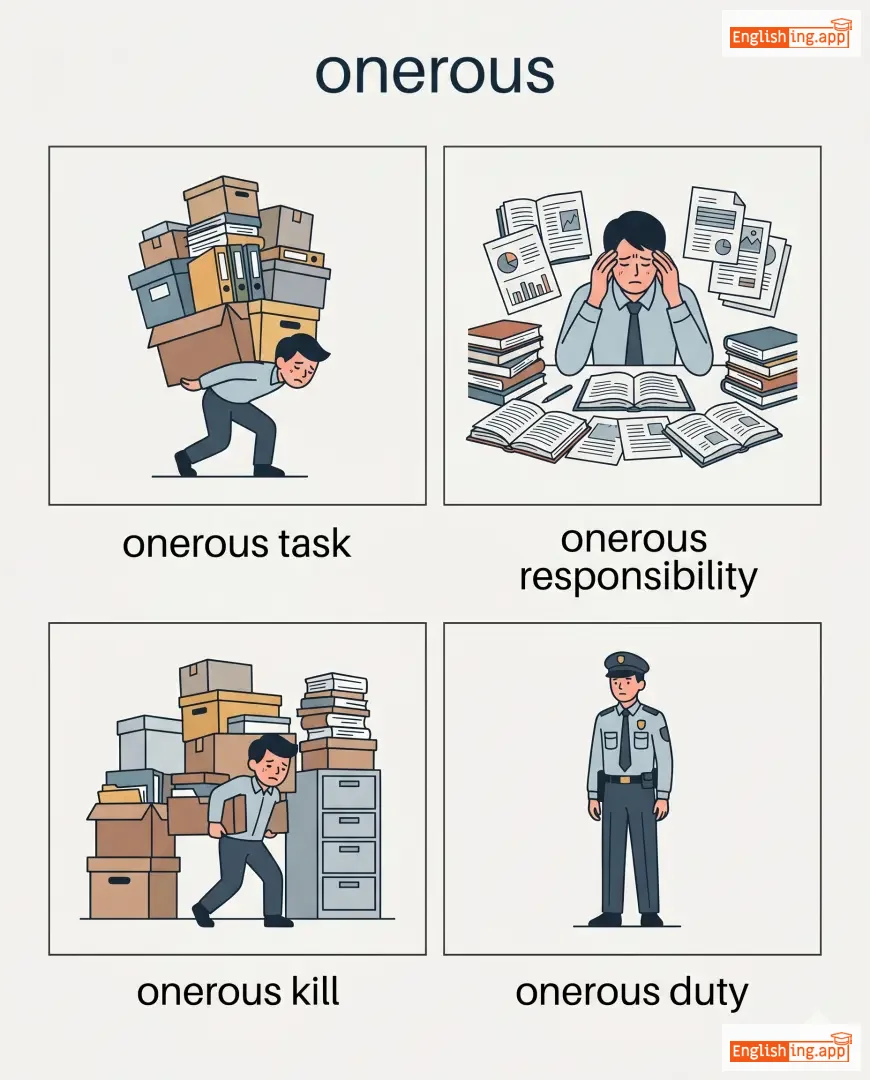
Fulfilling the contract proved to be an onerous task for the company.
履行合同对公司来说是一项繁重的任务。
••••••
|
履行合同对公司来说是一项繁重的任务。
Lǚxíng hétóng duì gōngsī lái shuō shì yī xiàng fánzhòng de rènwù.
••••••
|
- •••••• | - •••••• | - •••••• |
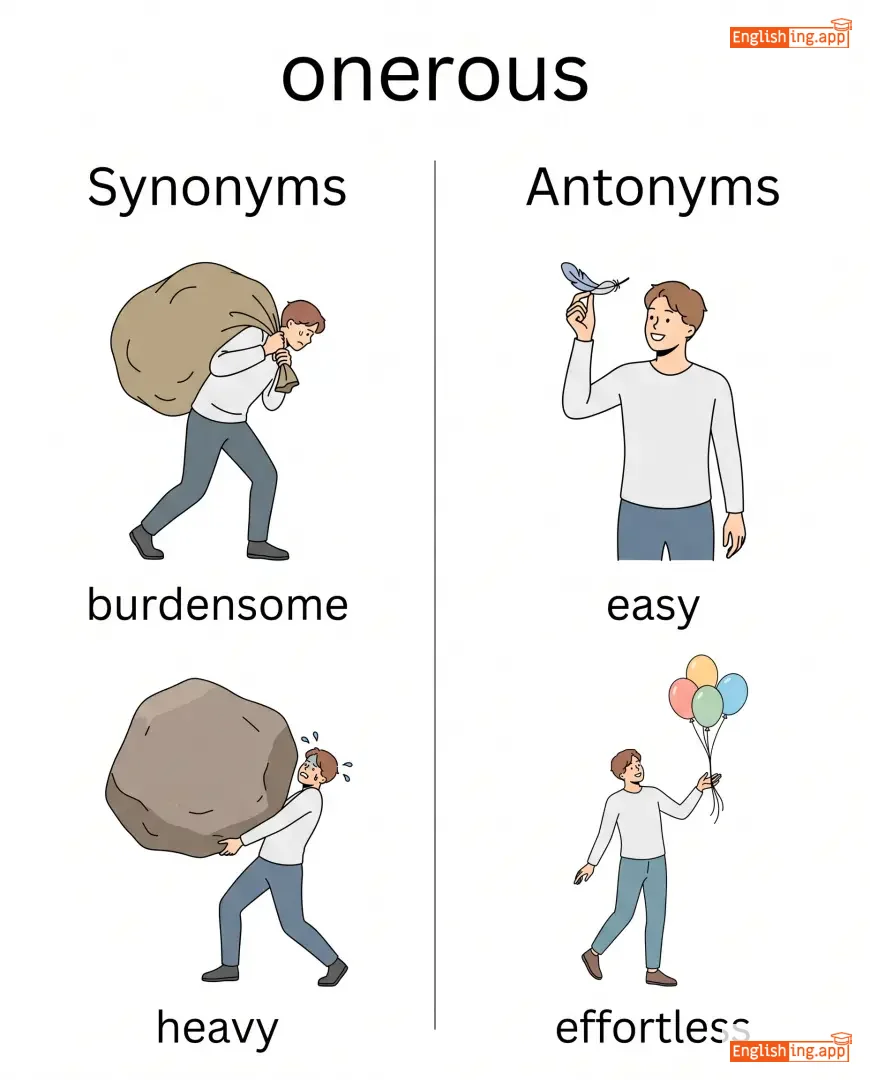
burdensome, heavy, demanding, exhausting, troublesome
••••••
|
easy, effortless, light
••••••
|
onerous task, onerous responsibility, onerous duty
••••••
|
Onerous听起来像‘繁重’—工作或任务可能很难完成,负担重。
••••••
|
|
#6063
🍽️
|
/ɒmˈnɪvərəs/
adjective
(omnivorous)
••••••
|
- •••••• |
杂食性
zá shí xìng
••••••
|
- •••••• | - •••••• | - •••••• | - •••••• |
eating both plants and animals
••••••
|
Humans are generally considered omnivorous creatures.
人类通常被认为是杂食性动物。
••••••
|
人类通常被认为是杂食性动物。
Rénlèi tōngcháng bèi rènwéi shì záshíxìng dòngwù.
••••••
|
- •••••• | - •••••• | - •••••• |
all-eating, mixed-diet, adaptable, versatile
••••••
|
herbivorous, carnivorous
••••••
|
omnivorous diet, omnivorous species, omnivorous animals
••••••
|
Omni 意思是全部 + vorous 意思是吃 → 吃全部就是杂食性。
••••••
|
|
#6064
👁️
|
/ɒmˈnɪʃənt/
adjective
(全知)
••••••
|
- •••••• |
全知
quan zhi
••••••
|
- •••••• | - •••••• | - •••••• | - •••••• |
having complete or unlimited knowledge and awareness
••••••
|
Some religions describe God as omniscient and all-powerful. |
一些宗教将上帝描述为全知且全能的。
Yixie zongjiao jiang shangdi miaoshu wei quan zhi qie quan neng de.
••••••
|
- •••••• | - •••••• | - •••••• |
all-knowing, wise, knowledgeable, enlightened
••••••
|
ignorant, unaware
••••••
|
omniscient narrator, omniscient being, omniscient perspective
••••••
|
Omni + science → 全知意味着知道一切。
••••••
|
|
#6065
🧠
|
/ɒmˈnɪʃəns/
noun
(奥姆尼西恩斯)
••••••
|
- •••••• |
全知
quanzhi
••••••
|
- •••••• | - •••••• | - •••••• | - •••••• |
the state of knowing everything
••••••
|
The novel's narrator has an air of omniscience, revealing every character's thoughts.
小说的叙述者具有全知的气质,揭示每个角色的想法。
••••••
|
小说的叙述者具有全知的气质,揭示每个角色的想法。
xiaoshuo de xushuzhe juyou quanzhi de qizhi, jieshi meige juese de xiangfa.
••••••
|
- •••••• | - •••••• | - •••••• |
all-knowing, knowledge, wisdom, foresight
••••••
|
ignorance, unawareness
••••••
|
divine omniscience, narrator's omniscience, claim of omniscience
••••••
|
Quan = all, zhi = know. 全知 means knowing all.
••••••
|
|
#6066
🌍
|
/ˌɒmnɪˈprɛzənt/
adjective
(奥姆尼普雷泽特)
••••••
|
|
无处不在
wuchubuzai
••••••
|
- •••••• | - •••••• | - •••••• | - •••••• |
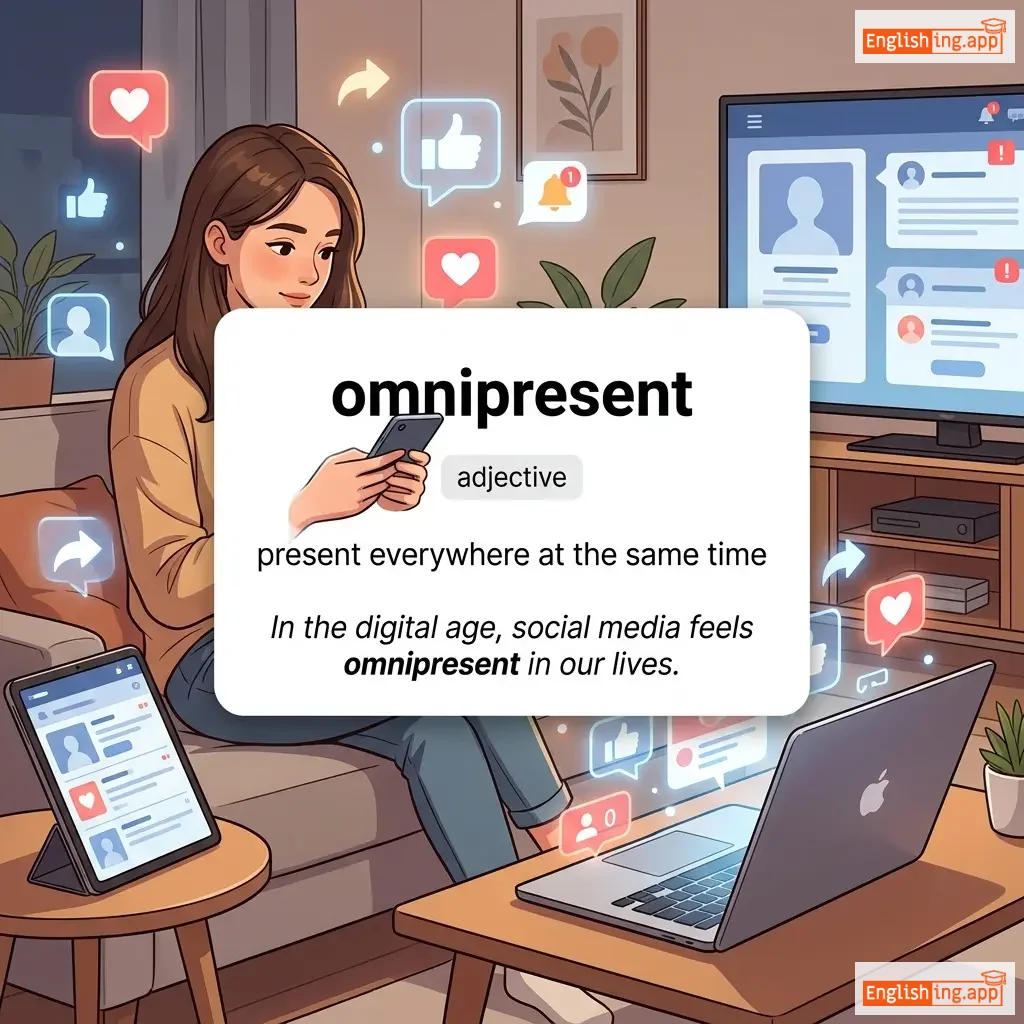
present everywhere at the same time
••••••
|
In the digital age, social media feels omnipresent in our lives.
在数字时代,社交媒体在我们的生活中无处不在。
••••••
|
在数字时代,社交媒体在我们的生活中无处不在。
Zai shuzi shidai, shejiao meiti zai women de shenghuo zhong wuchubuzai.
••••••
|
- •••••• | - •••••• | - •••••• |
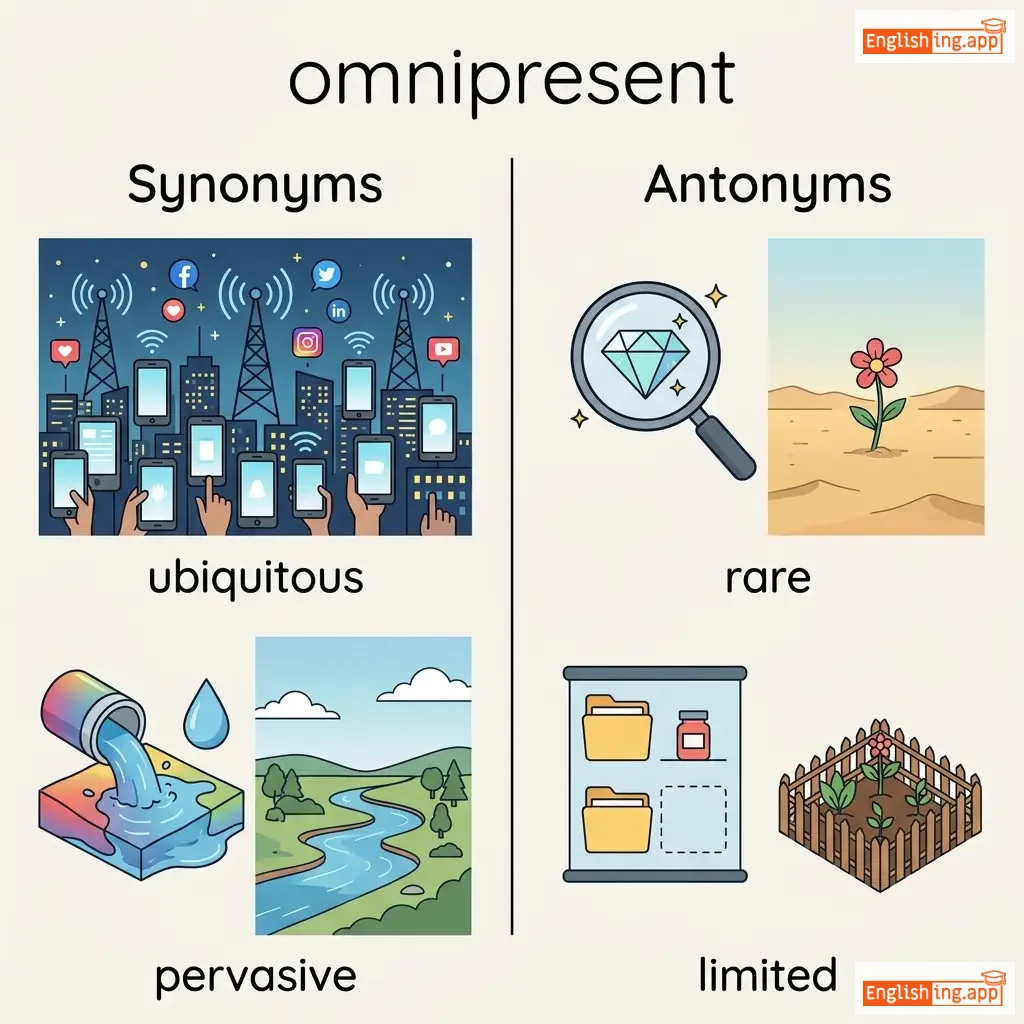
ubiquitous, pervasive, widespread, universal, ever-present
••••••
|
rare, limited, scarce
••••••
|
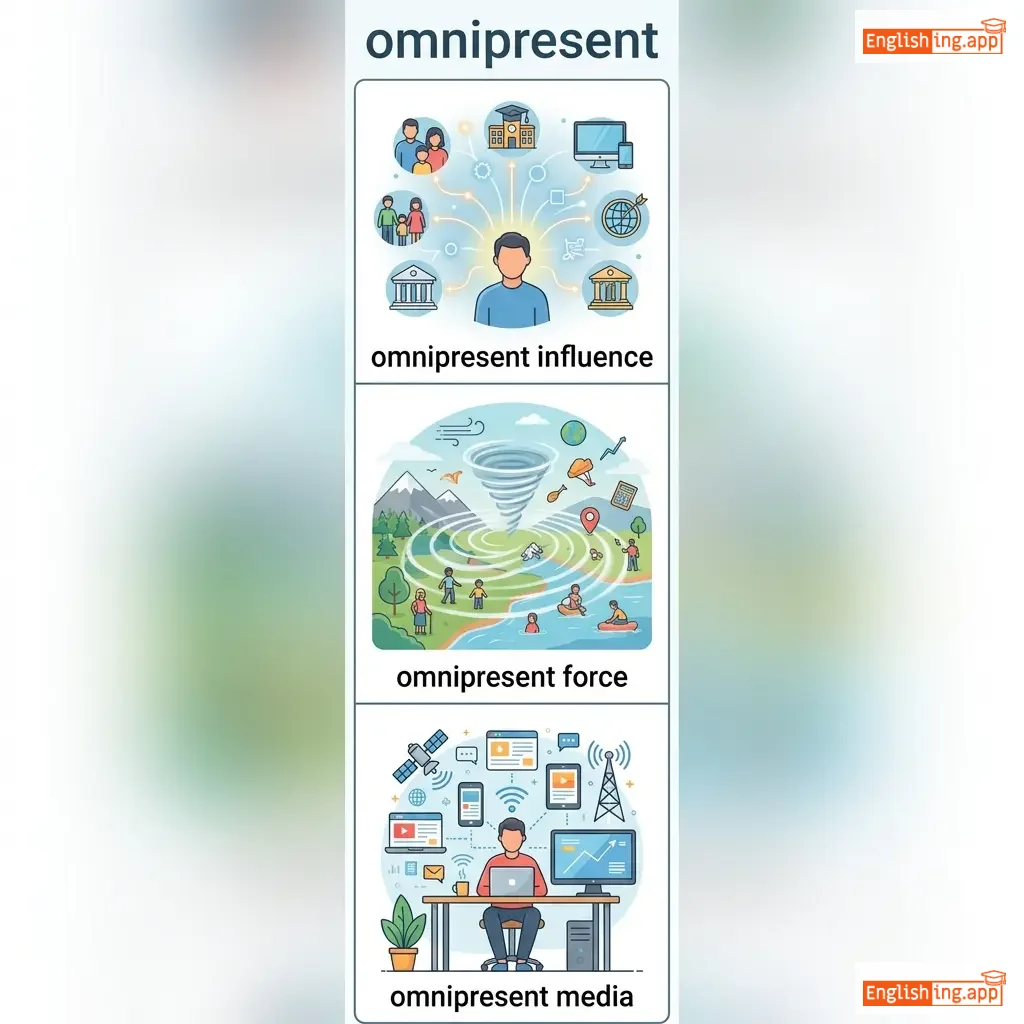
omnipresent influence, omnipresent force, omnipresent media
••••••
|
Omni意味着所有,present意味着出席 — 无处不在意味着无处不在。
••••••
|
|
#6067
👑
|
/ɒmˈnɪpətənt/
adjective
(omnɪpəʊtənt)
••••••
|
|
全能的
quánnéng de
••••••
|
- •••••• | - •••••• | - •••••• | - •••••• |
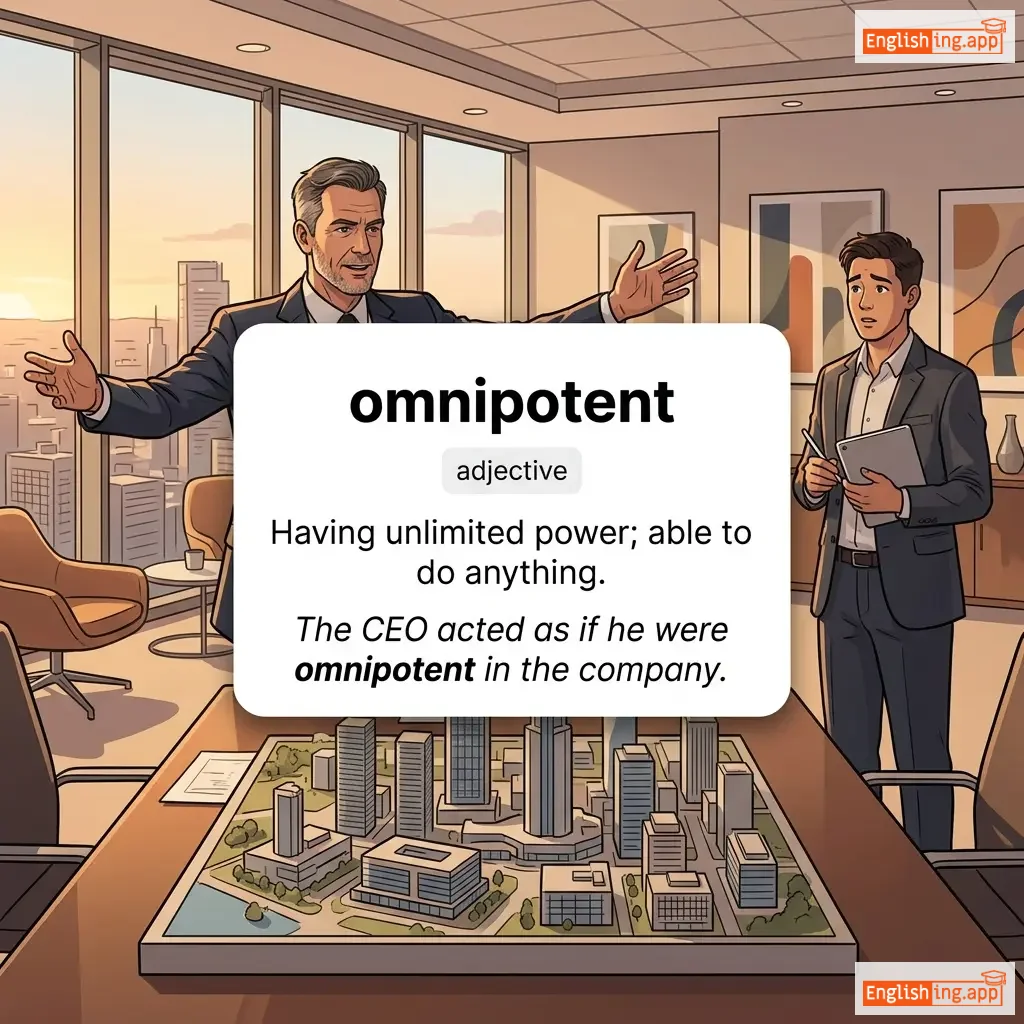
Having unlimited power; able to do anything.
••••••
|
The CEO acted as if he were omnipotent in the company. |
首席执行官在公司里表现得好像他无所不能。
Shǒuxí zhíxíngguān zài gōngsī lǐ biǎoxiàn dé hǎoxiàng tā wúsuǒ bùnéng.
••••••
|
- •••••• | - •••••• | - •••••• |
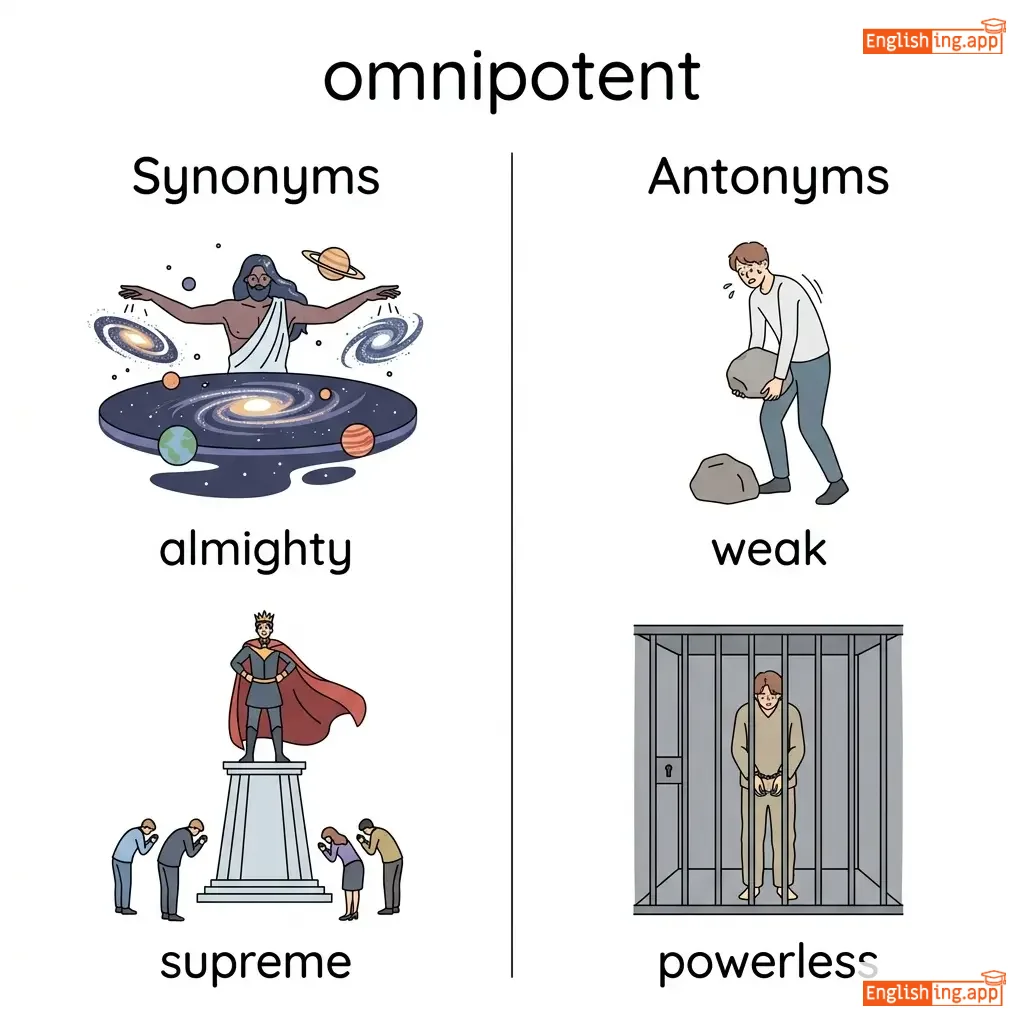
almighty, supreme, all-powerful, sovereign
••••••
|
weak, powerless, limited
••••••
|
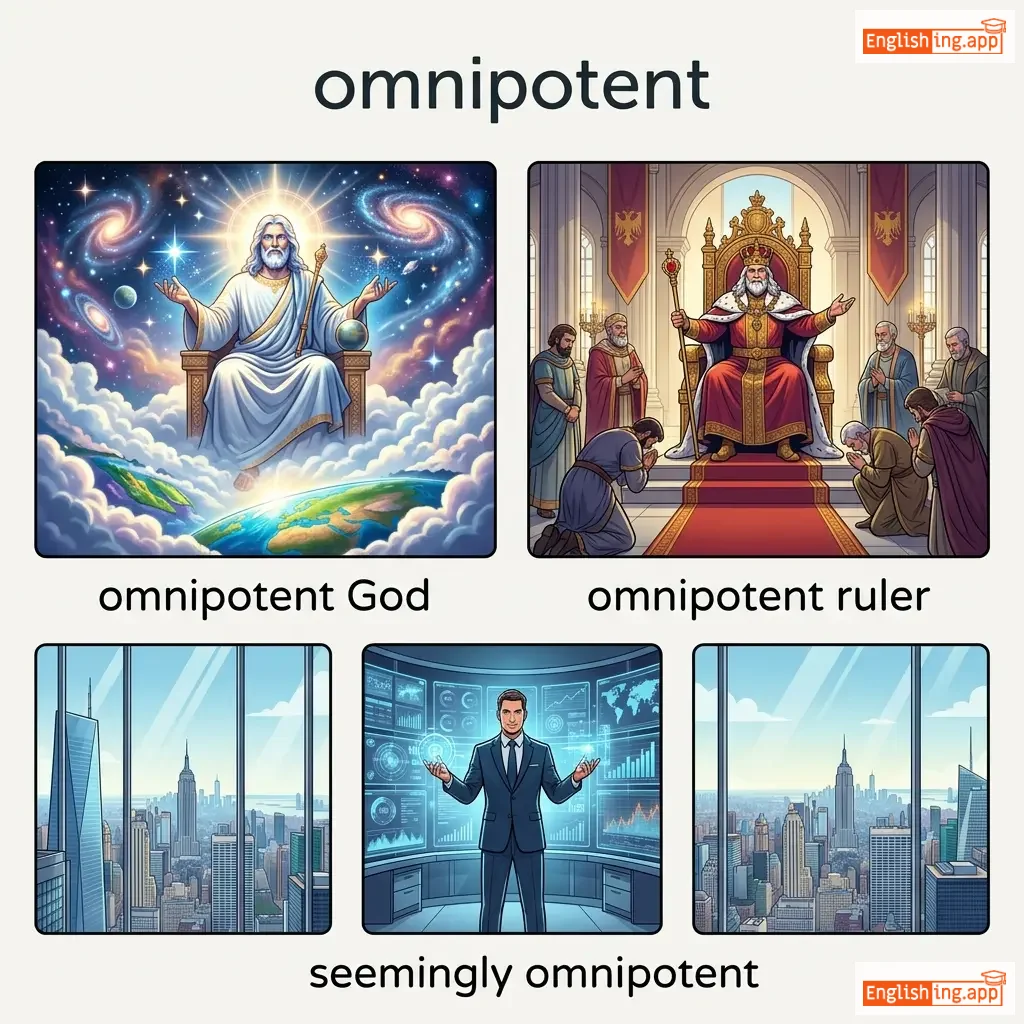
omnipotent God, omnipotent ruler, seemingly omnipotent
••••••
|
Omni意味着一切,potent意味着力量——omnipotent意味着全能的。
••••••
|
|
#6068
💪
|
/ɒmˈnɪpətəns/
noun
(omnipotence)
••••••
|
- •••••• |
全能
quánnéng
••••••
|
- •••••• | - •••••• | - •••••• | - •••••• |
The quality of having unlimited power or authority.
••••••
|
Many religions describe God’s omnipotence as absolute.
许多宗教将上帝的全能描述为绝对的。
••••••
|
许多宗教将上帝的全能描述为绝对的。
Xǔduō zōngjiào jiāng shàngdì de quánnéng miáoshù wèi juéduì de.
••••••
|
- •••••• | - •••••• | - •••••• |
all-powerfulness, supremacy, almightiness, sovereignty
••••••
|
weakness, limitation, helplessness
••••••
|
divine omnipotence, claim of omnipotence, absolute omnipotence
••••••
|
Omni 意思是全部 + Potence 意思是力量 = 全能。
••••••
|
|
#6069
❌
|
/əˈmɪʃən/
noun
(遗漏)
••••••
|
- •••••• |
遗漏
yí lòu
••••••
|
- •••••• | - •••••• | - •••••• | - •••••• |
The act of leaving out or excluding something; something that has been left out.
••••••
|
Her omission of important details caused confusion. |
她遗漏的重要细节导致了混乱。
Tā yílòu de zhòngyào xìjié dǎozhìle hùnluàn.
••••••
|
- •••••• | - •••••• | - •••••• |
exclusion, oversight, lapse, neglect
••••••
|
inclusion, addition, presence
••••••
|
serious omission, accidental omission, omission from, omission of
••••••
|
Omission 英文是遗漏,中文也用遗漏。
••••••
|
|
#6070
🌩️
|
/ˈɒmɪnəs/
adjective
(欧米诺斯)
••••••
|
- •••••• |
不祥
bù xiáng
••••••
|
- •••••• | - •••••• | - •••••• | - •••••• |
Giving the impression that something bad or unpleasant is going to happen.
••••••
|
Dark clouds gave an ominous sign of an approaching storm. |
乌云给人一种即将来临的暴风雨的不祥预兆。
Wū yún gěi rén yī zhǒng jíjiāng láilín de bàofēngyǔ de bùxiáng yùzhào.
••••••
|
- •••••• | - •••••• | - •••••• |
threatening, foreboding, menacing, sinister
••••••
|
promising, hopeful, auspicious
••••••
|
ominous silence, ominous clouds, ominous sign, ominous tone
••••••
|
Ominous 意味着不祥,就像乌云预示着风暴的到来。
••••••
|
|
#6071
🕊️
|
/ˈɒlɪv brɑːntʃ/
noun
(橄榄枝)
••••••
|
- •••••• |
橄榄枝
ganlan zhi
••••••
|
- •••••• | - •••••• | - •••••• | - •••••• |
A symbol of peace or reconciliation; an offer to end conflict.
••••••
|
He extended an olive-branch to his rival after years of hostility. |
他在多年敌对之后向他的对手伸出了橄榄枝。
Ta zai duonian didui zhihou xiang tade duishou shenchu le ganlan zhi.
••••••
|
extend an olive-branch |
to make a gesture of peace or reconciliation
••••••
|
伸出橄榄枝
shen chu ganlan zhi
••••••
|
peace offering, reconciliation, truce, goodwill
••••••
|
conflict, hostility, war
••••••
|
extend an olive-branch, offer an olive-branch, accept an olive-branch
••••••
|
橄榄枝是和平的象征,就像‘伸出橄榄枝’一样。
••••••
|
|
#6072
🏛️
|
/ˈɑːlɪˌɡɑːrki/
noun
(寡头政治)
••••••
|
|
寡头政治
guǎtóu zhèngzhì
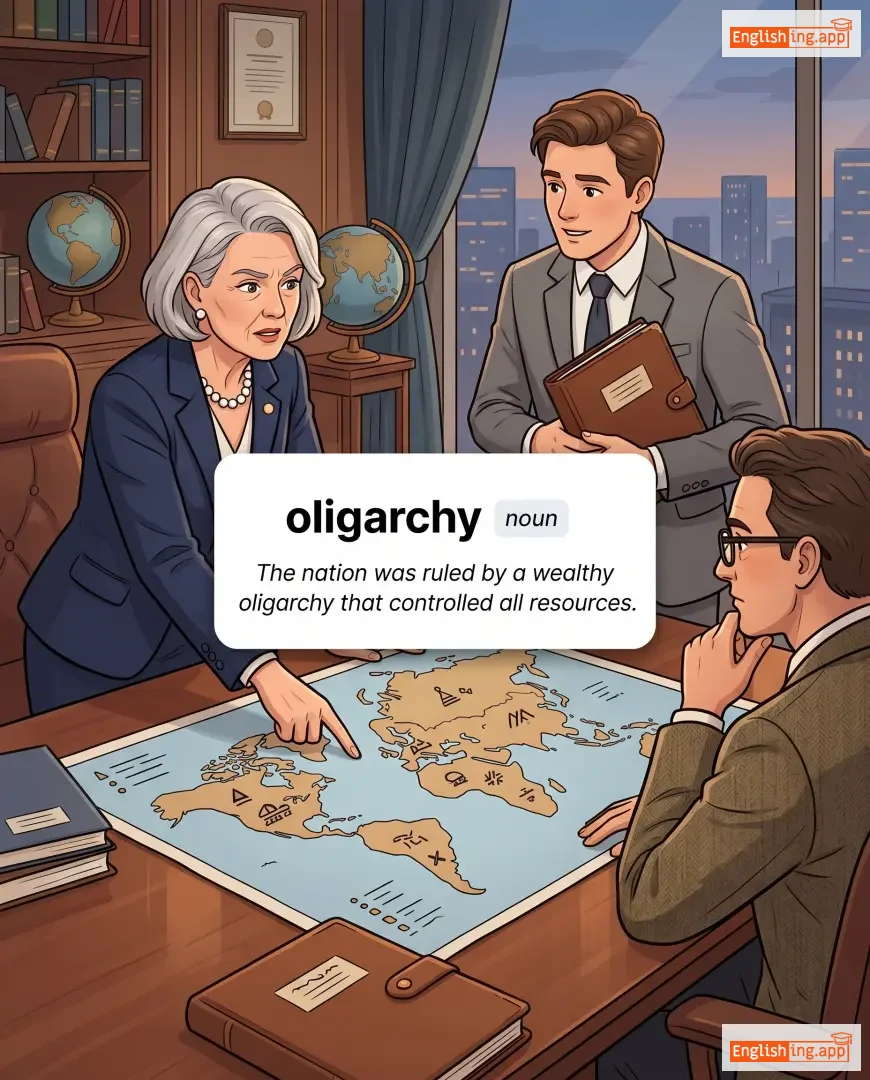
••••••
|
- •••••• | - •••••• | - •••••• | - •••••• |
A small group of people having control of a country, organization, or institution.
••••••
|
The nation was ruled by a wealthy oligarchy that controlled all resources.
这个国家由一个富有的寡头集团统治,控制着所有资源。
••••••
|
这个国家由一个富有的寡头集团统治,控制着所有资源。
Zhège guójiā yóu yīgè fùyǒu de guǎtóu jítuán tǒngzhì, kòngzhì zhe suǒyǒu zīyuán.
••••••
|
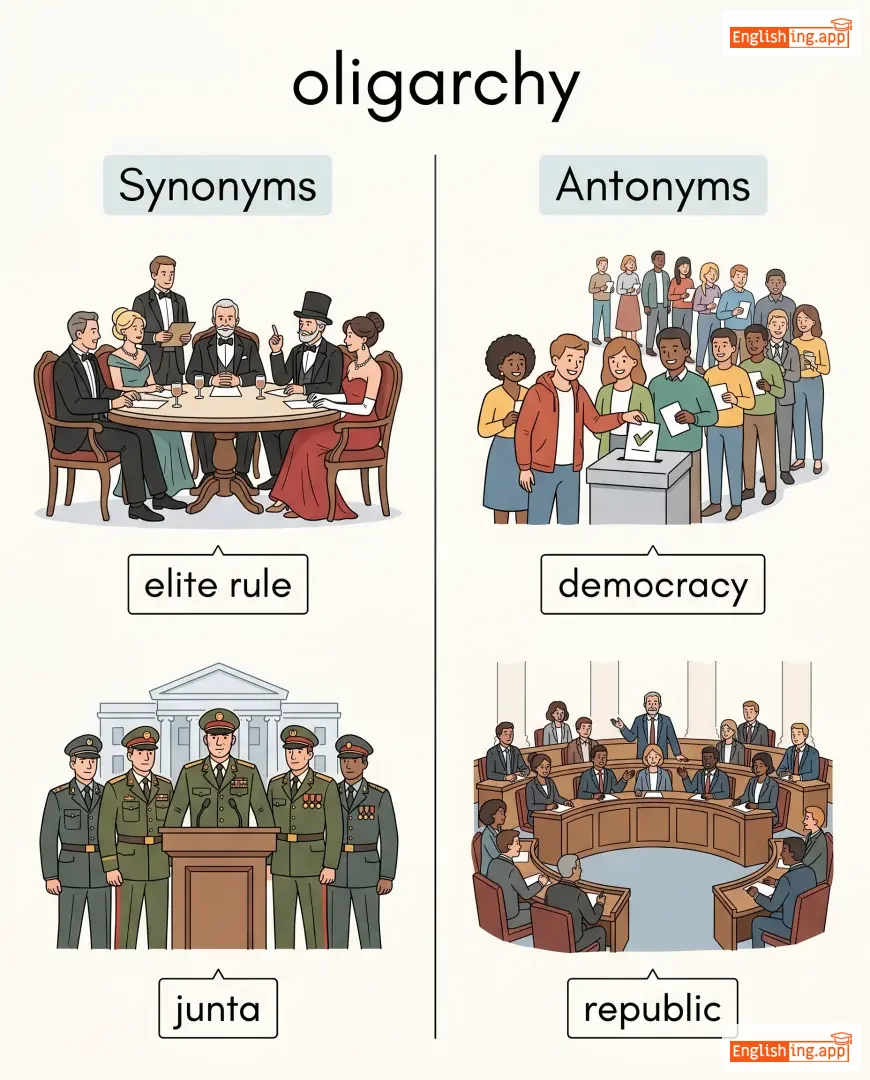
- •••••• | - •••••• | - •••••• |
elite rule, junta, plutocracy, ruling class
••••••
|
democracy, republic
••••••
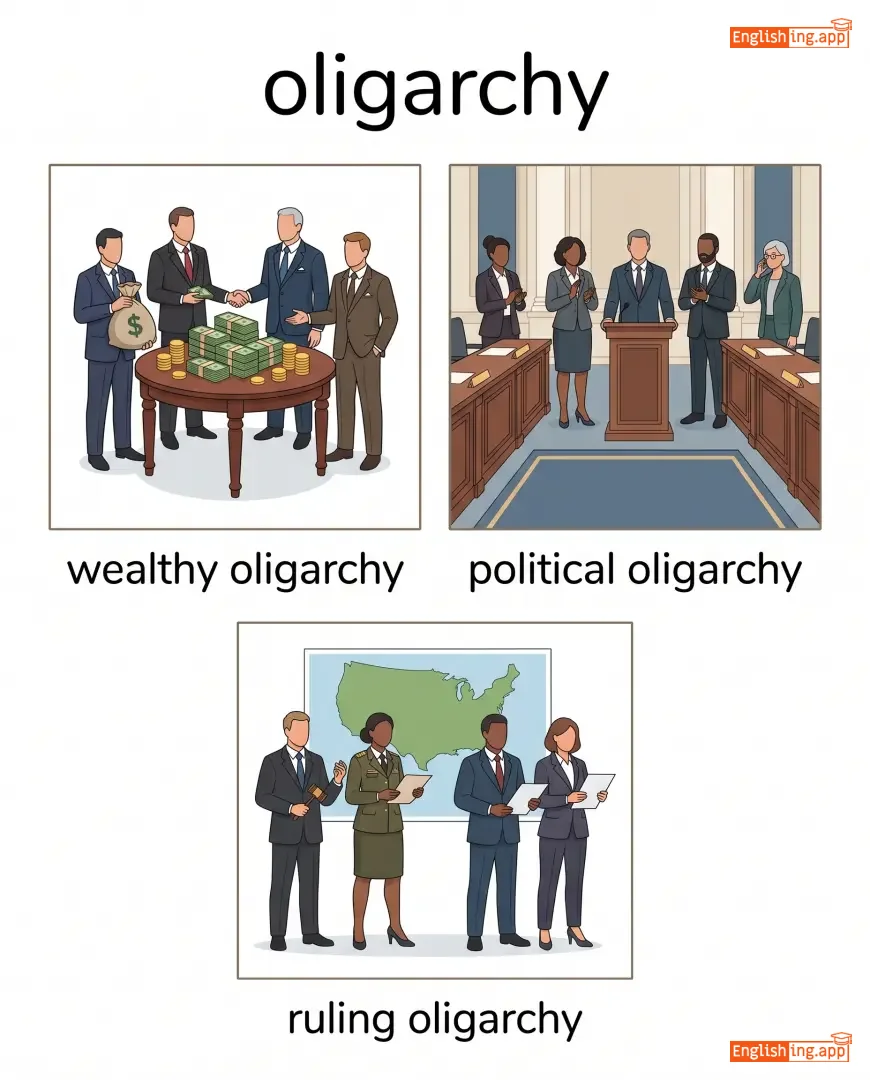
|
wealthy oligarchy, political oligarchy, ruling oligarchy, oligarchy system
••••••
|
寡头政治指的是少数人控制政权,少数 (guǎ) 领导。
••••••
|
|
#6073
👃
|
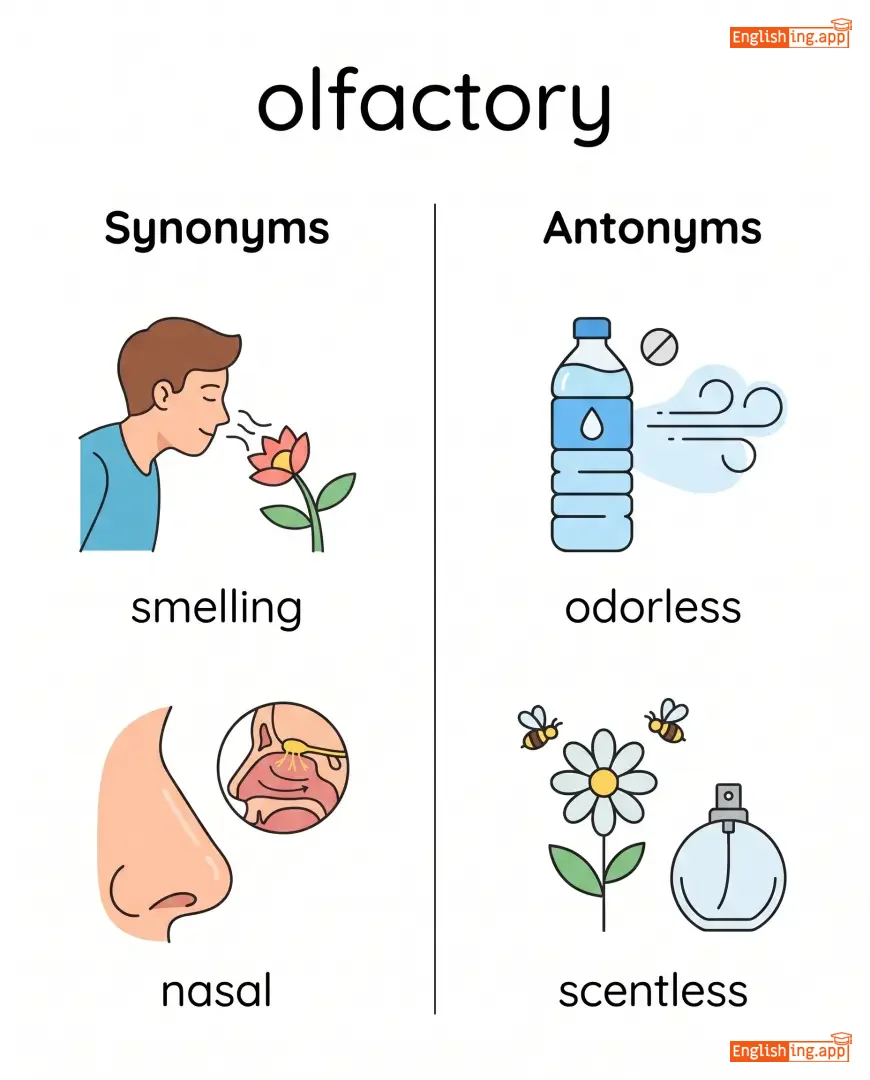
/ɑːlˈfæktəri/
adjective
••••••
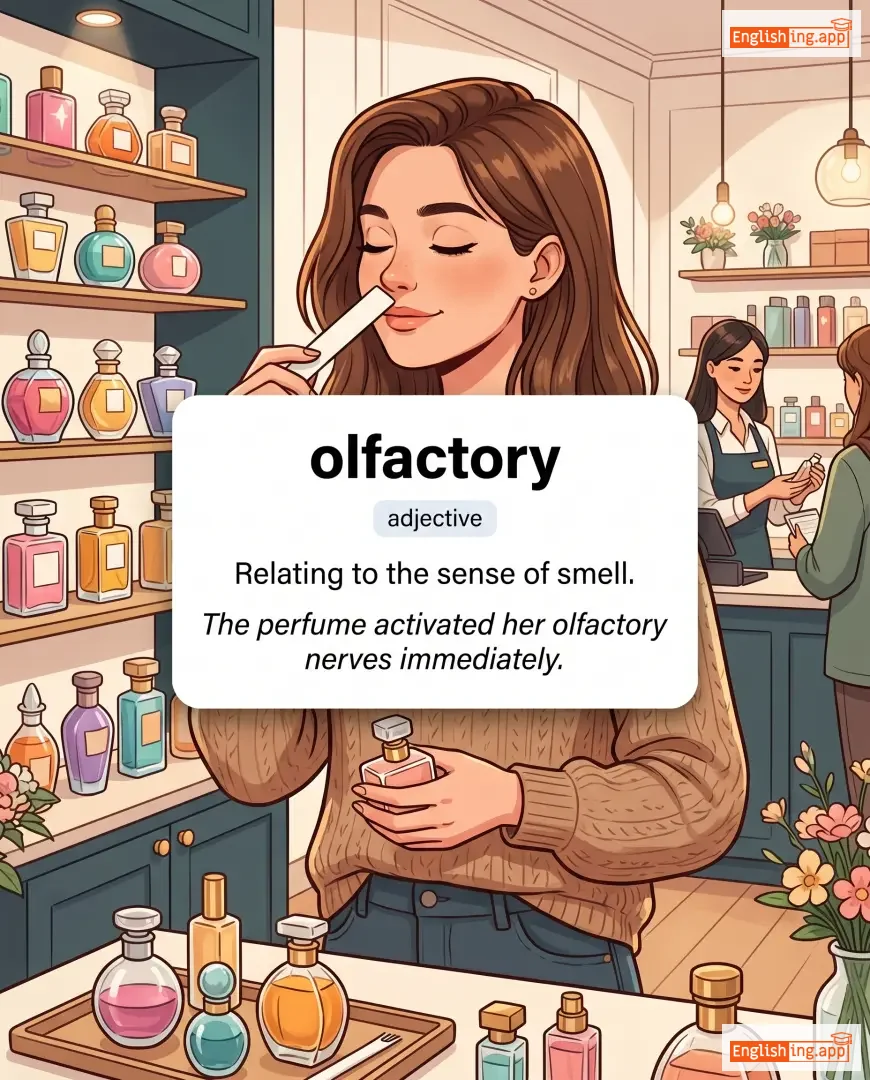
|
|
- •••••• | - •••••• | - •••••• | - •••••• | - •••••• |
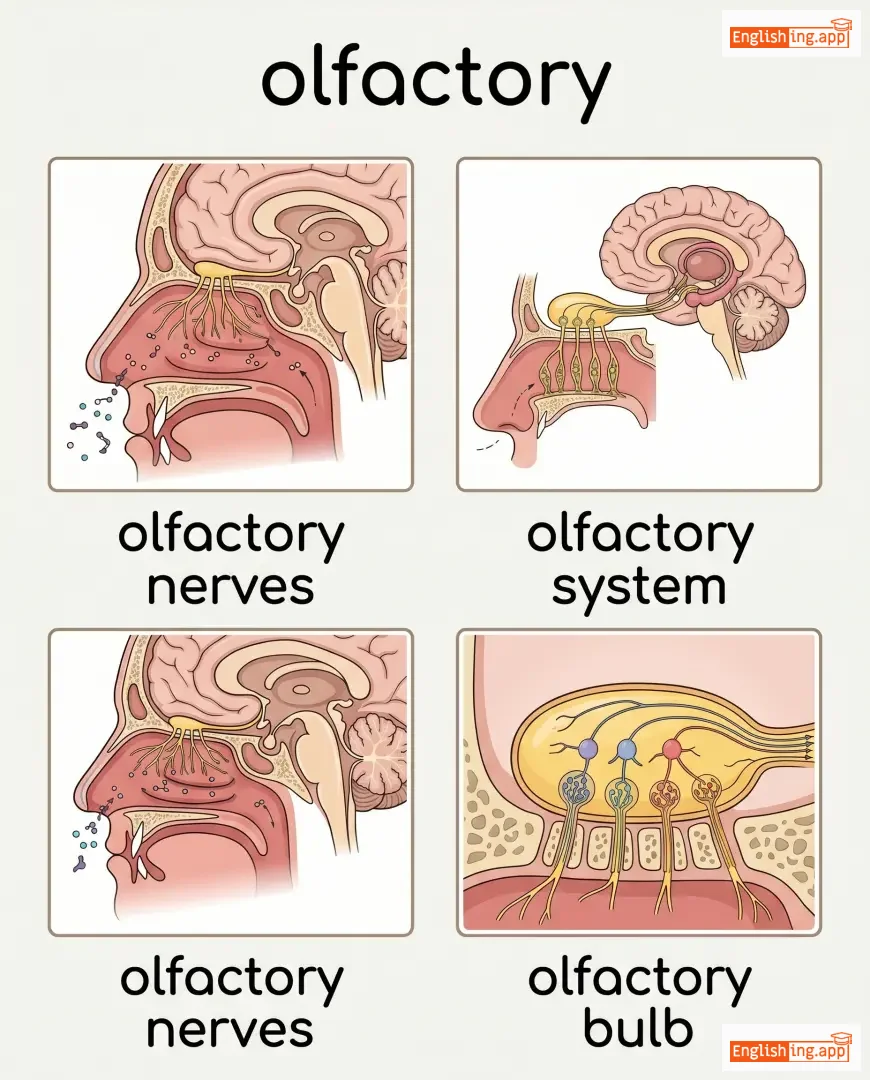
Relating to the sense of smell.
••••••
|
The perfume activated her olfactory nerves immediately. |
- •••••• | - •••••• | - •••••• | - •••••• |
smelling, nasal, aromatic, sensory
••••••
|
odorless, scentless
••••••
|
olfactory nerves, olfactory system, olfactory bulb, olfactory organ
••••••
|
No •••••• |
|
#6074
👃
|
/ɑːlˈfækʃən/
noun
(嗅觉)
••••••
|
- •••••• |
嗅觉
xiùjué
••••••
|
- •••••• | - •••••• | - •••••• | - •••••• |
The sense of smell; the process of detecting and perceiving odors.
••••••
|
Dogs have a highly developed sense of olfaction. |
狗的嗅觉非常发达。
Gǒu de xiùjué fēicháng fādá.
••••••
|
- •••••• | - •••••• | - •••••• |
smell, scent, aroma detection, sense of smell
••••••
|
anosmia, loss of smell
••••••
|
human olfaction, animal olfaction, olfaction system, sense of olfaction
••••••
|
嗅觉意味着检测气味 – 嗅觉系统用来感知气味。
••••••
|
|
#6075
🧴
|
/ˈɔɪntmənt/
noun
(昂特门特)
••••••
|
- •••••• |
药膏
yaogao
••••••
|
- •••••• | - •••••• | - •••••• | - •••••• |
A smooth, oily substance applied to the skin for healing or soothing.
••••••
|
The doctor prescribed an ointment for the burn on his arm. |
医生为他手臂上的烧伤开了一种药膏。
Yisheng wei ta shoubi shang de shaoshang kai le yi zhong yaogao.
••••••
|
fly in the ointment |
A small flaw or problem that spoils something valuable or pleasant.
••••••
|
药膏中的苍蝇
Yaogao zhong de cangying
••••••
|
salve, balm, cream, lotion
••••••
|
irritant, poison
••••••
|
healing ointment, herbal ointment, apply ointment, medicated ointment
••••••
|
药膏意味着药膏 – 烧伤时医生给你药膏。
••••••
|
|
#6076
👃
|
/ˈoʊdərəs/
adjective
(ōduòlè sī)
••••••
|
- •••••• |
臭的
chòu de
••••••
|
- •••••• | - •••••• | - •••••• | - •••••• |
having or giving off a smell, often unpleasant
••••••
|
The odorous garbage had to be taken out immediately.
臭垃圾必须立即处理。
••••••
|
臭的垃圾必须立即处理。
chòu de lājī bìxū lìjí chǔlǐ.
••••••
|
- •••••• | - •••••• | - •••••• |
fragrant, aromatic, pungent, smelly, scented
••••••
|
odorless, scentless, neutral
••••••
|
odorous gas, odorous substance, odorous smoke, odorous fumes
••••••
|
Odorous 意味着臭的,记住 'odor' 代表气味。
••••••
|
|
#6077
👀
|
/ˈoʊɡəl/
verb
(欧格尔)
••••••
|
- •••••• |
色迷迷地看
sè mímí dì kàn
••••••
|
ogled
欧格尔德
••••••
|
ogled
欧格尔德
••••••
|
ogles
欧格尔斯
••••••
|
ogling
欧格尔英
••••••
|
To look at someone with obvious sexual interest.
••••••
|
He kept ogling the models on the runway.
他不停地盯着跑道上的模特看。
••••••
|
他一直盯着跑道上的模特看。
Tā yīzhí dīngzhe pǎodào shàng de mótè kàn.
••••••
|
ogle at
贪婪地看
••••••
|
To stare at with desire or strong attraction
••••••
|
贪婪地看
tān lán dì kàn
••••••
|
stare, leer, gaze, eyeball
••••••
|
ignore, overlook
••••••
|
ogle at women, ogle shamelessly, ogle openly
••••••
|
Ogle 就是色迷迷地看某人!
••••••
|
|
#6078
🌱
|
/ˈɒfʃuːt/
noun
(offshoot)
••••••
|
- •••••• |
分支
fen zhi
••••••
|
- •••••• | - •••••• | - •••••• | - •••••• |
A branch or result that develops from something larger or more important.
••••••
|
The startup was an offshoot of a major tech company. |
这家初创公司是一个大型科技公司分支。
Zhe jia chu chuang gong si shi yi ge da xing ke ji gong si fen zhi.
••••••
|
- •••••• | - •••••• | - •••••• |
branch, derivative, outcome, byproduct, extension
••••••
|
origin, source
••••••
|
offshoot company, offshoot project, offshoot branch
••••••
|
Offshoot - 从大到小的分支。
••••••
|
|
#6079
⚖️
|
/ˈɒfsɛt/
verb
(offset)
••••••
|
- •••••• |
抵消
dǐxiāo
••••••
|
offset
offset
••••••
|
offset
offset
••••••
|
offsets
offsets
••••••
|
offsetting
offsetting
••••••
|
To counterbalance or compensate for something.
••••••
|
The company's losses were offset by gains in other departments.
公司的亏损通过其他部门的收益得到了弥补。
••••••
|
公司的亏损通过其他部门的收益得到了弥补。
Gōngsī de kuīsǔn tōngguò qítā bùmén de shōuyì dédàole míbǔ.
••••••
|
offset the balance
平衡偏移
••••••
|
To neutralize or counteract an effect
••••••
|
平衡偏移
pínghéng piānyí
••••••
|
counterbalance, compensate, neutralize, counteract
••••••
|
intensify, worsen
••••••
|
offset costs, offset losses, offset impact, offset effect
••••••
|
通过偏移平衡来弥补亏损
••••••
|
|
#6080
😒
|
/ˈɒfɪʃ/
adjective
(àofēi)
••••••
|
- •••••• |
冷淡
lěngdàn
••••••
|
- •••••• | - •••••• | - •••••• | - •••••• |
Unfriendly, distant, or reserved in manner.
••••••
|
He seemed offish at the party and avoided most conversations. |
他在派对上显得很冷淡,避开了大多数谈话。
Tā zài pàiduì shàng xiǎndé hěn lěngdàn, bìkāi le dàduōshù tánhuà.
••••••
|
- •••••• | - •••••• | - •••••• |
aloof, distant, reserved, cold
••••••
|
friendly, sociable, warm
••••••
|
offish attitude, offish manner, act offish
••••••
|
Offish 就像是一个冷漠的态度,避免和别人交谈。
••••••
|
|
#6081
🙄
|
/əˈfɪʃəs/
adjective
(欧非许斯)
••••••
|
|
多管闲事
duo guan xian shi
••••••
|
- •••••• | - •••••• | - •••••• | - •••••• |
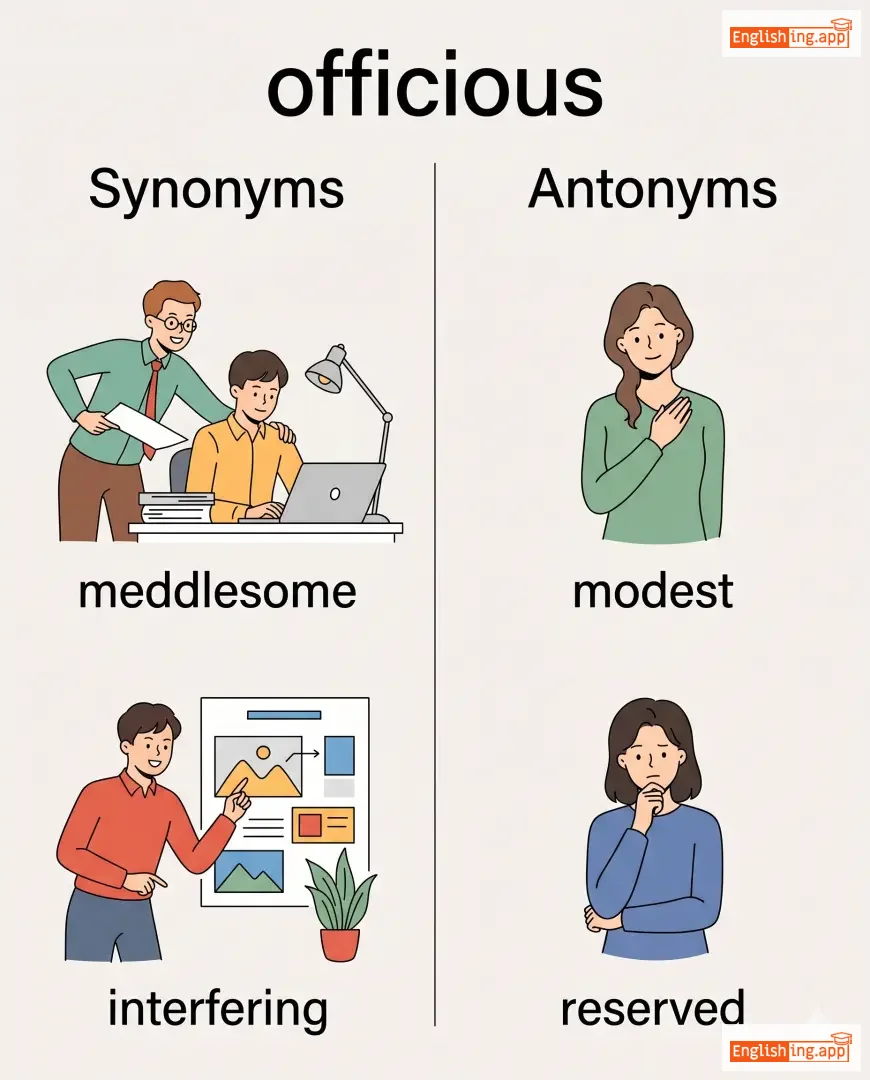
Excessively eager to offer unwanted help or advice; meddlesome.
••••••
|
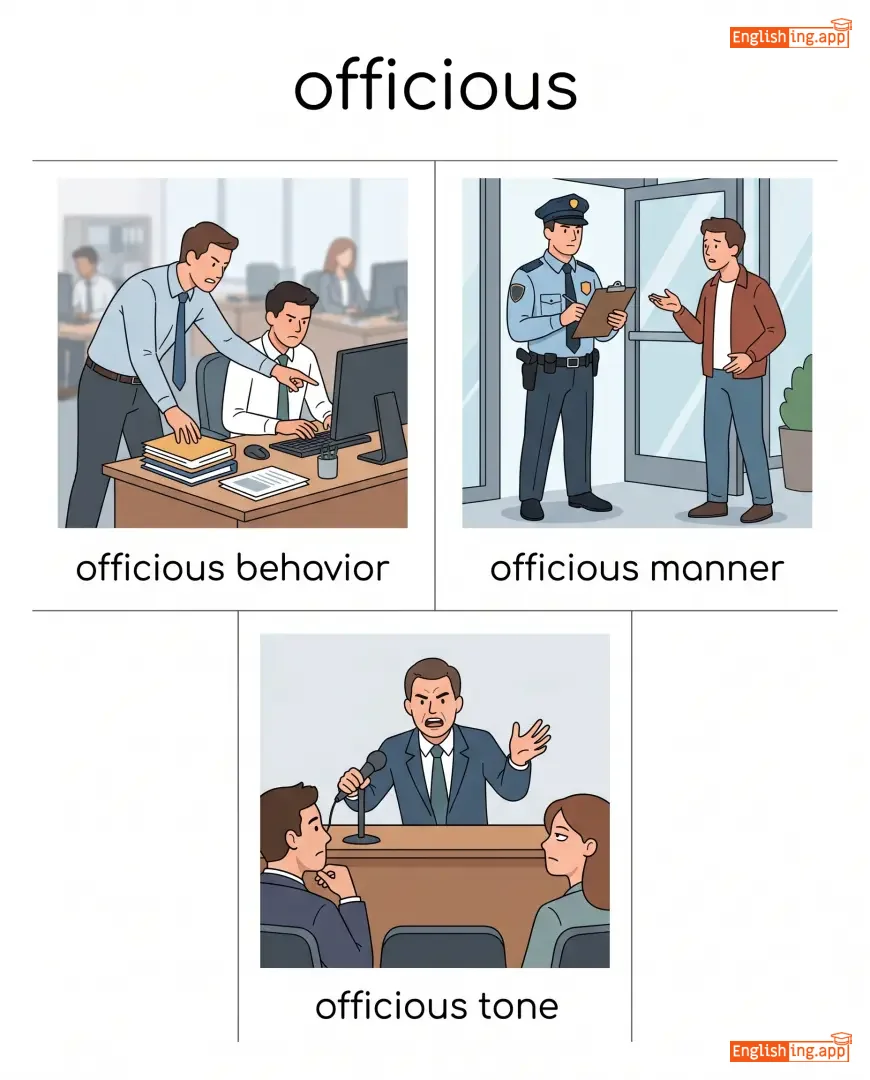
The officious guard kept interrupting the visitors with unnecessary instructions. |
那位多管闲事的警卫不断用不必要的指令打扰游客。
Na wei duo guan xian shi de jing wei buduan yong bu bi yao de zhi ling da rao you ke.
••••••
|
- •••••• | - •••••• | - •••••• |
meddlesome, interfering, intrusive, bossy, overbearing
••••••
|
modest, reserved, unobtrusive
••••••
|
officious behavior, officious manner, officious tone, officious interference
••••••
|
Offi-CIOUS! 那些喜欢插手的总是在所有地方,提供无用的建议。
••••••
|
|
#6082
⛪
|
/əˈfɪʃieɪt/
verb
(ofisiéit)
••••••
|
- •••••• |
主持
zhǔchí
••••••
|
officiated
ofisiéited
••••••
|
officiated
ofisiéited
••••••
|
officiates
ofisiéits
••••••
|
officiating
ofisiéiting
••••••
|
To perform official duties, especially in a ceremony or as a referee.
••••••
|
The priest will officiate the wedding ceremony.
牧师将主持婚礼仪式。
••••••
|
牧师将主持婚礼仪式。
Mùshī jiāng zhǔchí hūnlǐ yíshì.
••••••
|
- •••••• | - •••••• | - •••••• |
preside, conduct, administer, supervise
••••••
|
neglect, ignore
••••••
|
officiate a wedding, officiate the match, officiate at the ceremony
••••••
|
Office + ate = 主持,即执行官方职务。
••••••
|
|
#6083
😏
|
/ˌɒfˈhænd/
adjective/adverb
(奥夫汉德)
••••••
|
- •••••• |
草率
caolüè
••••••
|
- •••••• | - •••••• | - •••••• | - •••••• |
Without previous thought or preparation; casual and sometimes dismissive.
••••••
|
She gave an offhand reply to his serious question.
她对他严肃的问题做出了一个草率的回答。
••••••
|
她对他严肃的问题做出了一个草率的回答。
Ta dui ta yanxu de wenti zuo chu le yige caolu de huida.
••••••
|
- •••••• | - •••••• | - •••••• |
casual, informal, impromptu, spontaneous
••••••
|
planned, deliberate, careful
••••••
|
offhand comment, offhand remark, offhand reply
••••••
|
草率表示没有事先思考,像一个快速且有时带有轻蔑的回答。
••••••
|
|
#6084
🙏
|
/ˈɒfərtɔːri/
noun
(奥费托里)
••••••
|
- •••••• |
奉献
fengxian
••••••
|
- •••••• | - •••••• | - •••••• | - •••••• |
The part of a religious service when offerings are collected; the offering itself.
••••••
|
The offertory was taken during the Sunday service.
奉献仪式在星期日的礼拜期间进行。
••••••
|
奉献在星期日的礼拜期间收集。
Fengxian zai xingqi ri de libai qi jian shouji.
••••••
|
- •••••• | - •••••• | - •••••• |
donation, contribution, collection, offering
••••••
|
withholding, refusal
••••••
|
offertory prayer, offertory hymn, offertory collection
••••••
|
奉献 + Tory = 奉献
••••••
|
|
#6085
😠
|
/əˈfɛnsɪv/
adjective
(冒犯)
••••••
|
- •••••• |
冒犯的
maofan de
••••••
|
- •••••• | - •••••• | - •••••• | - •••••• |
Causing hurt, anger, or annoyance; also relating to attacking in sports or war.
••••••
|
His offensive remarks upset everyone at the meeting. |
他的冒犯性言论让会议上的每个人都不高兴。
Tade maofanxing yanlun rang huiyi shang de meigeren dou bu gaoxing.
••••••
|
take offense |
To feel hurt or insulted by something said or done.
••••••
|
感到冒犯
Gandao maofan
••••••
|
insulting, rude, disrespectful, abusive
••••••
|
polite, respectful, pleasant
••••••
|
offensive remark, offensive language, offensive strategy, take offense
••••••
|
Offensive 意味着冒犯 - 冒犯的言论。
••••••
|
|
#6086
🎭
|
/ˈɒf.biːt/
adjective
(áo fū bì tè)
••••••
|
- •••••• |
不寻常
bu xun chang
••••••
|
- •••••• | - •••••• | - •••••• | - •••••• |
Unusual, unconventional, or different from the norm.
••••••
|
She has a very offbeat sense of humor. |
她有非常不寻常的幽默感。
ta you fei chang bu xun chang de you mo gan.
••••••
|
- •••••• | - •••••• | - •••••• |
quirky, unconventional, eccentric, unusual, odd
••••••
|
normal, conventional, ordinary
••••••
|
offbeat style, offbeat humor, offbeat idea, offbeat path
••••••
|
Offbeat 意味着超出常规,所以不寻常或不同。
••••••
|
|
#6087
🥩
|
/ˈɔːfəl/
noun
(奥法尔)
••••••
|
- •••••• |
内脏
neizang
••••••
|
- •••••• | - •••••• | - •••••• | - •••••• |
the internal organs and entrails of an animal used as food; waste parts
••••••
|
The butcher prepared sausages using pork offal.
屠夫使用猪的内脏做香肠。
••••••
|
屠夫使用猪的内脏做香肠。
Tufu shiyong zhu de neizang zuo xiangchang.
••••••
|
- •••••• | - •••••• | - •••••• |
entrails, viscera, giblets, remains, refuse
••••••
|
prime cuts, meat, fillet
••••••
|
pork offal, chicken offal, offal stew, waste offal
••••••
|
Offal意味着内脏,记住'awful'不容易吃。
••••••
|
|
#6088
🎶
|
/ˌɔːfˈkiː/
adjective
(ŏf-kī)
••••••
|
- •••••• |
跑调
paodiao
••••••
|
- •••••• | - •••••• | - •••••• | - •••••• |
out of tune; not in accordance with expected standards
••••••
|
The singer was slightly off-key during the performance. |
歌手在表演时稍微跑调了。
geshou zai biaoyan shi shaowei paodiao le.
••••••
|
- •••••• | - •••••• | - •••••• |
out of tune, discordant, jarring, unharmonious
••••••
|
in tune, harmonious, melodious
••••••
|
sing off-key, sound off-key, slightly off-key, completely off-key
••••••
|
Off-key表示跑调,记住当歌声不合调时,就是跑调了。
••••••
|
|
#6089
⏹️
|
/ɔːf/
adverb
(阿夫)
••••••
|
- •••••• |
关
guan
••••••
|
- •••••• | - •••••• | - •••••• | - •••••• |
away from a place, position, or time; not functioning
••••••
|
He turned off the light before leaving the room. |
他在离开房间之前关掉了灯。
ta zai likai fangjian zhijiang guan diao le deng.
••••••
|
off the record |
something said privately and not intended for publication
••••••
|
off the record
off the record
••••••
|
away, removed, disconnected, distant
••••••
|
on, connected, attached
••••••
|
turn off, switch off, go off, keep off
••••••
|
Off意味着关掉,就像你关掉灯,一切变暗。
••••••
|
|
#6090
🛶
|
/ˈɑːdəsi/
noun
(奥德赛)
••••••
|
|
漫长的旅行
man chang de lüxing
••••••
|
- •••••• | - •••••• | - •••••• | - •••••• |
a long, adventurous journey; a series of experiences
••••••
|
Her career has been an odyssey of challenges and achievements.
她的职业生涯是一场挑战和成就的奥德赛。
••••••
|
她的职业生涯是一场挑战和成就的漫长旅行。
Ta de zhiye shengya shi yi chang tiaozhan he chengjiu de man chang lüxing.
••••••
|
- •••••• | - •••••• | - •••••• |
journey, expedition, voyage, adventure, quest
••••••
|
rest, stagnation, standstill
••••••
|
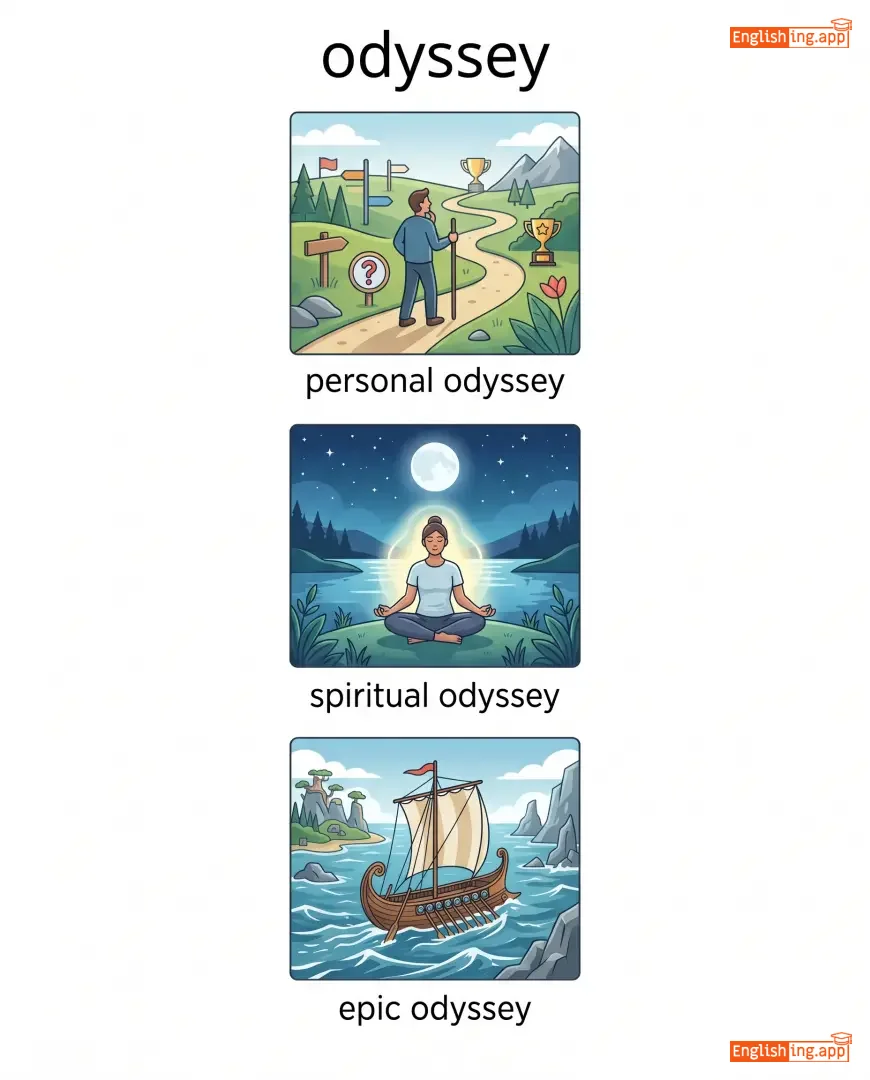
personal odyssey, spiritual odyssey, epic odyssey, long odyssey
••••••
|
Odyssey意味着一段漫长的旅行,就像荷马的'奥德赛'故事。
••••••
|
Vocabulary Quiz
Test your vocabulary by matching words with their translations or meanings.
Login to take the quiz
Comments (0)
Share your thoughts and join the discussion.
Join the discussion by logging in
Login to CommentNo comments yet
Be the first to share your thoughts!