

翻訳
過去
過去分詞
三人称単数
動名詞
意味
例文
例文の翻訳
同義語
対義語
コロケーション
ニーモニック
Swipe left or right, or use the buttons. Tap image to zoom.
例文の翻訳
単語
Lesson 203Lesson 203 - マスクトグル
|
絵文字
|
単語 | Images | 翻訳 | 過去 | 過去分詞 | 三人称単数 | 動名詞 | 意味 | 例文 | 例文の翻訳 | 表現例 | 表現例の意味 | 表現例の翻訳 | 同義語 | 対義語 | コロケーション | ニーモニック |
|---|---|---|---|---|---|---|---|---|---|---|---|---|---|---|---|---|---|
|
#6061
👹
|
/ˈoʊɡər/
noun
••••••
|
- •••••• | - •••••• | - •••••• | - •••••• | - •••••• | - •••••• |
A mythical monster, often depicted as large, hideous, and cruel; metaphorically, a cruel or terrifying person.
••••••
|
The villagers feared the ogre who lived in the dark forest. |
- •••••• |
treat someone like an ogre |
To treat someone as if they are cruel, scary, or monstrous.
••••••
|
- •••••• |
monster, brute, fiend, beast, villain
••••••
|
angel, saint, hero
••••••
|
giant ogre, cruel ogre, fairy-tale ogre, terrifying ogre
••••••
|
No •••••• |
|
#6062
⚖️
|
/ˈəʊnərəs/
adjective
(オネラス)
••••••
|
|
重い
omoi
••••••
|
- •••••• | - •••••• | - •••••• | - •••••• |
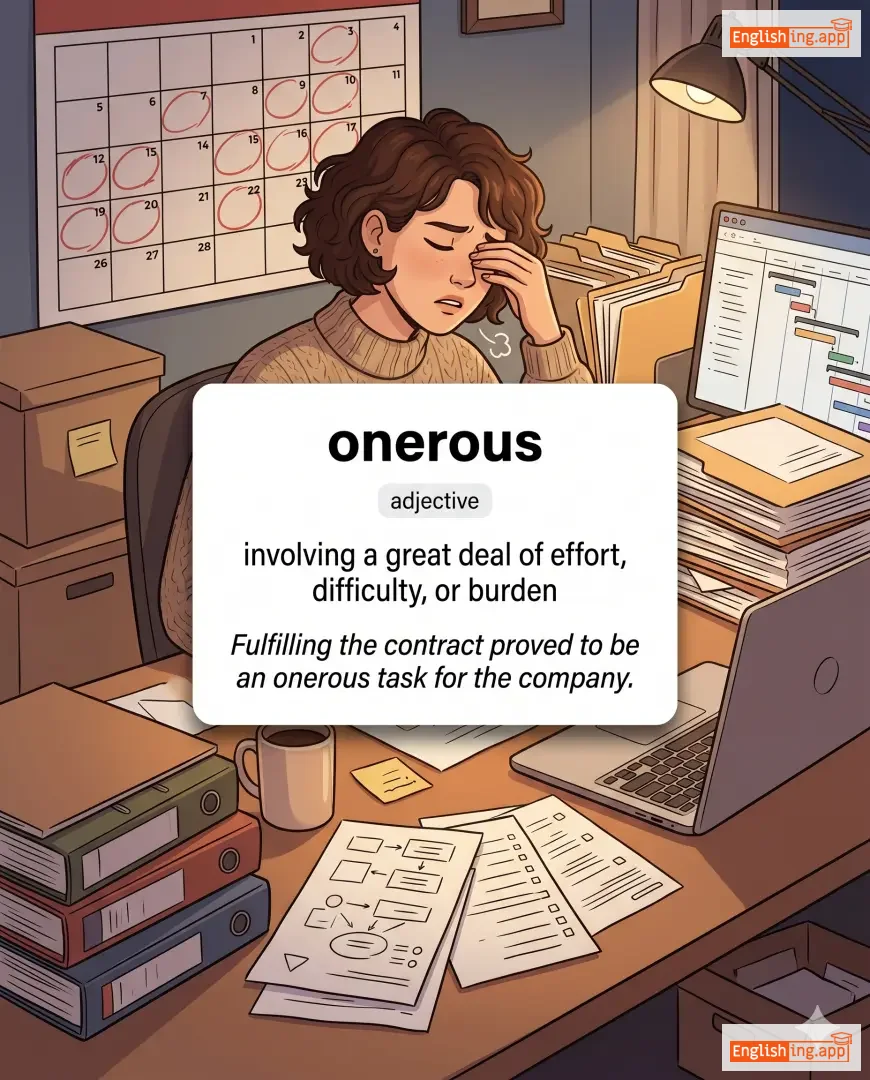
involving a great deal of effort, difficulty, or burden
••••••
|
Fulfilling the contract proved to be an onerous task for the company.
契約を履行することは会社にとって負担の大きい仕事だと証明された。
••••••
|
契約を履行することは会社にとって負担の大きい仕事だと証明された。
Keiyaku o rikō suru koto wa kaisha ni totte futan no ōkii shigoto da to shōmei sareta.
••••••
|
- •••••• | - •••••• | - •••••• |
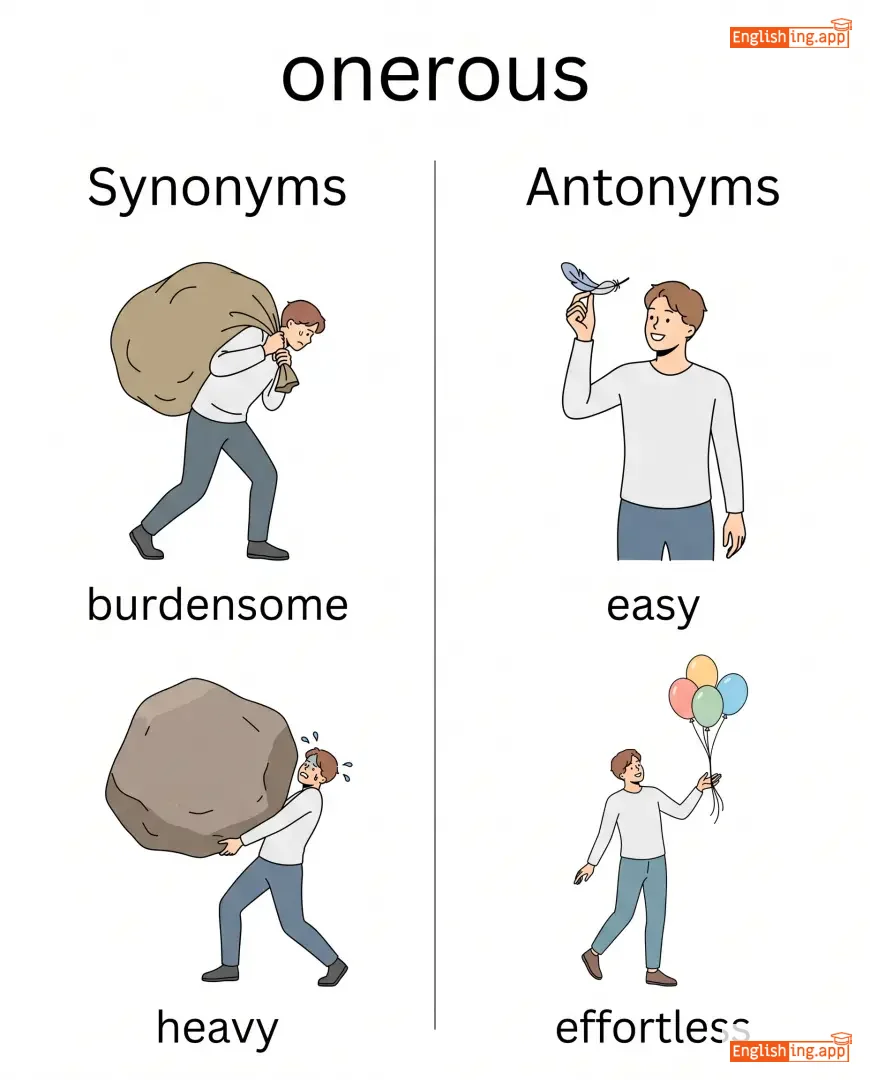
burdensome, heavy, demanding, exhausting, troublesome
••••••
|
easy, effortless, light
••••••
|
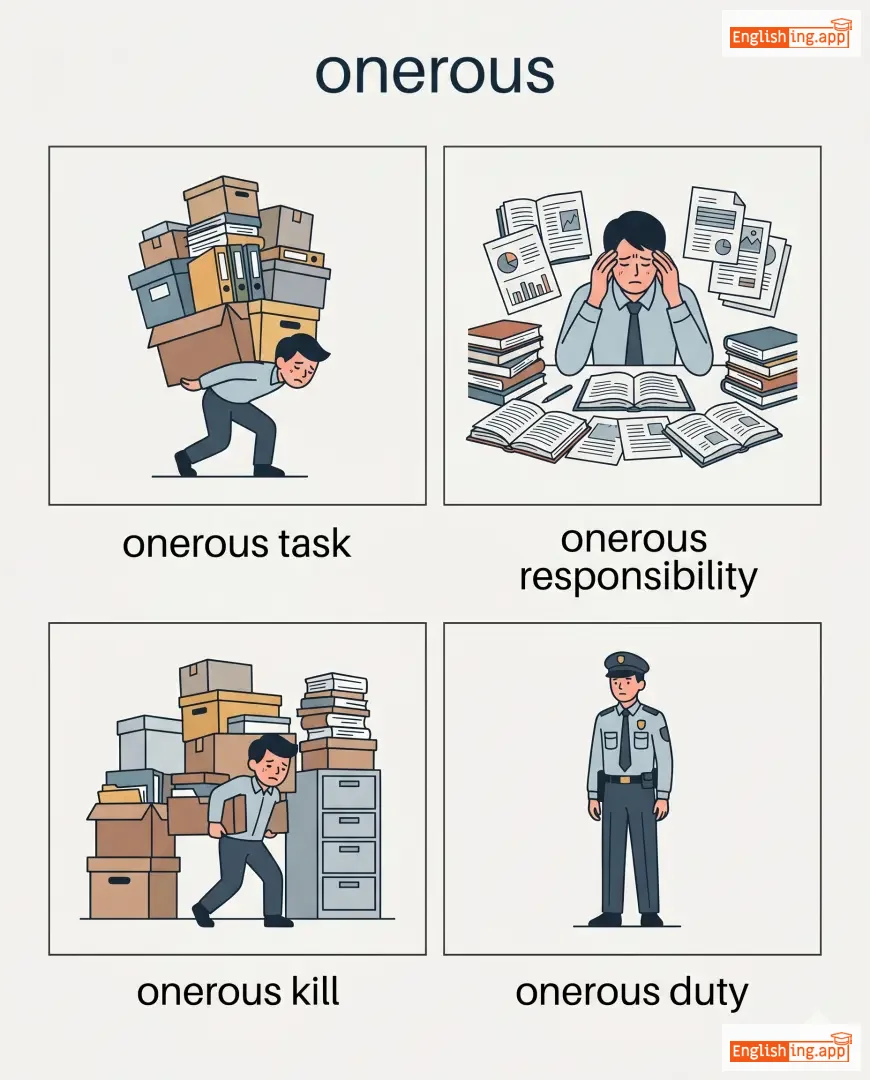
onerous task, onerous responsibility, onerous duty
••••••
|
Onerousは‘重い’に似ている—負担が大きい仕事や責任です。
••••••
|
|
#6063
🍽️
|
/ɒmˈnɪvərəs/
adjective
(オムニボラス)
••••••
|
- •••••• |
雑食性
zasshokusei
••••••
|
- •••••• | - •••••• | - •••••• | - •••••• |
eating both plants and animals
••••••
|
Humans are generally considered omnivorous creatures.
人間は一般的に雑食性の生き物と見なされます。
••••••
|
人間は一般的に雑食性の生き物と見なされます。
Ningen wa ippanteki ni zasshokusei no ikimono to minasarerumasu.
••••••
|
- •••••• | - •••••• | - •••••• |
all-eating, mixed-diet, adaptable, versatile
••••••
|
herbivorous, carnivorous
••••••
|
omnivorous diet, omnivorous species, omnivorous animals
••••••
|
Omni は全て + vorous は食べる → 全てを食べるのが雑食性。
••••••
|
|
#6064
👁️
|
/ɒmˈnɪʃənt/
adjective
(オムニシエント)
••••••
|
- •••••• |
全知
zenchi
••••••
|
- •••••• | - •••••• | - •••••• | - •••••• |
having complete or unlimited knowledge and awareness
••••••
|
Some religions describe God as omniscient and all-powerful. |
いくつかの宗教は神を全知かつ全能であると説明しています。
Ikutsuka no shukyo wa kami o zenchi katsu zennou de aru to setsumei shiteimasu.
••••••
|
- •••••• | - •••••• | - •••••• |
all-knowing, wise, knowledgeable, enlightened
••••••
|
ignorant, unaware
••••••
|
omniscient narrator, omniscient being, omniscient perspective
••••••
|
Omni + science → 全知はすべてを知っていることを意味します。
••••••
|
|
#6065
🧠
|
/ɒmˈnɪʃəns/
noun
(オムニシエンス)
••••••
|
- •••••• |
全知
zenchi
••••••
|
- •••••• | - •••••• | - •••••• | - •••••• |
the state of knowing everything
••••••
|
The novel's narrator has an air of omniscience, revealing every character's thoughts.
ザ ノベルズ ナレータ ハズ アン エア オブ オムニシエンス、リビールイング エブリ キャラクターズ ソウツ。
••••••
|
小説の語り手は全知の空気をまとい、すべてのキャラクターの考えを明らかにしている。
shosetsu no katarite wa zenchi no kuuki o matoi, subete no kyarakuta no kangae o akirakani shite iru.
••••••
|
- •••••• | - •••••• | - •••••• |
all-knowing, knowledge, wisdom, foresight
••••••
|
ignorance, unawareness
••••••
|
divine omniscience, narrator's omniscience, claim of omniscience
••••••
|
Zen = all, chi = knowledge. 全知 means total knowledge.
••••••
|
|
#6066
🌍
|
/ˌɒmnɪˈprɛzənt/
adjective
(オムニプレゼント)
••••••
|
|
遍在する
hennzaisuru
••••••
|
- •••••• | - •••••• | - •••••• | - •••••• |
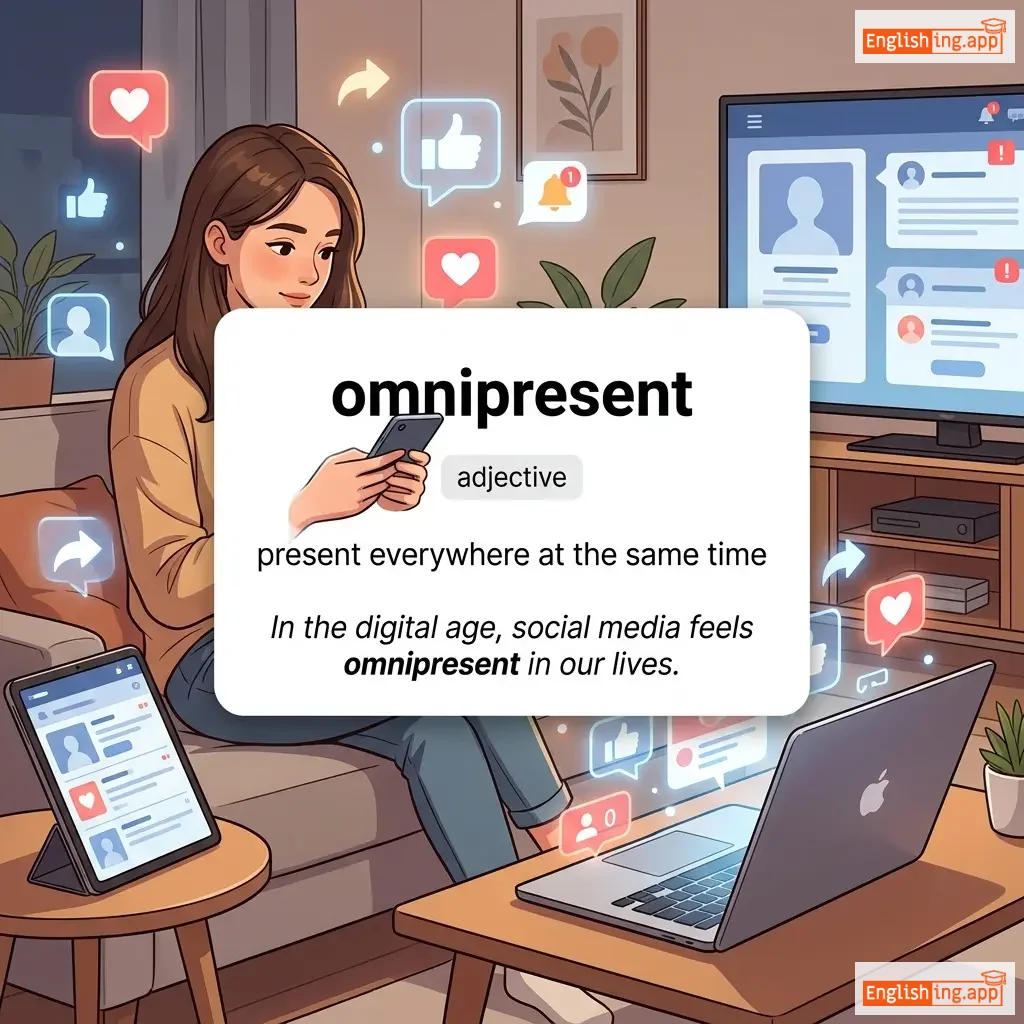
present everywhere at the same time
••••••
|
In the digital age, social media feels omnipresent in our lives.
デジタル時代では、ソーシャルメディアは私たちの生活の中でオムニプレゼントのように感じます。
••••••
|
デジタル時代では、ソーシャルメディアは私たちの生活の中で遍在するように感じます。
Dejitaru jidai dewa, soosharu media wa watashitachi no seikatsu no naka de hennzai suru you ni kanjimasu.
••••••
|
- •••••• | - •••••• | - •••••• |
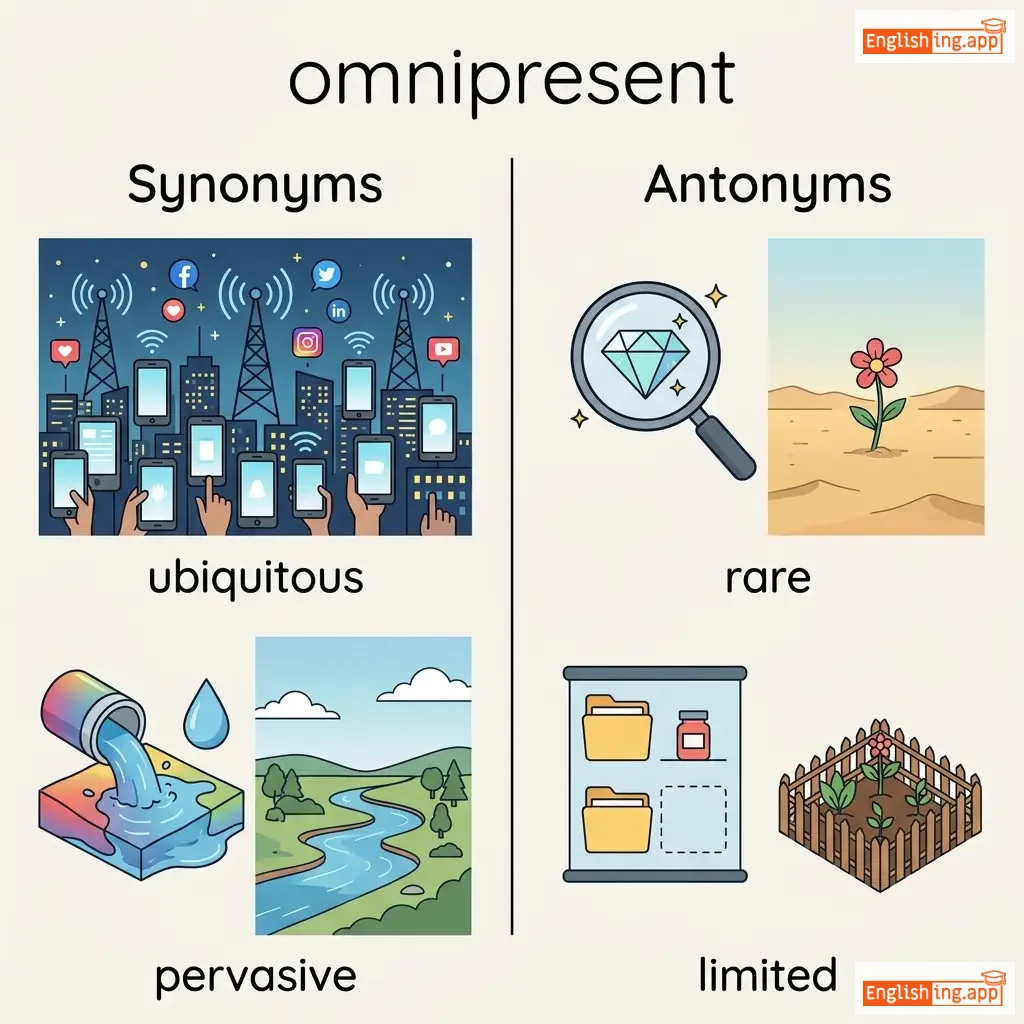
ubiquitous, pervasive, widespread, universal, ever-present
••••••
|
rare, limited, scarce
••••••
|
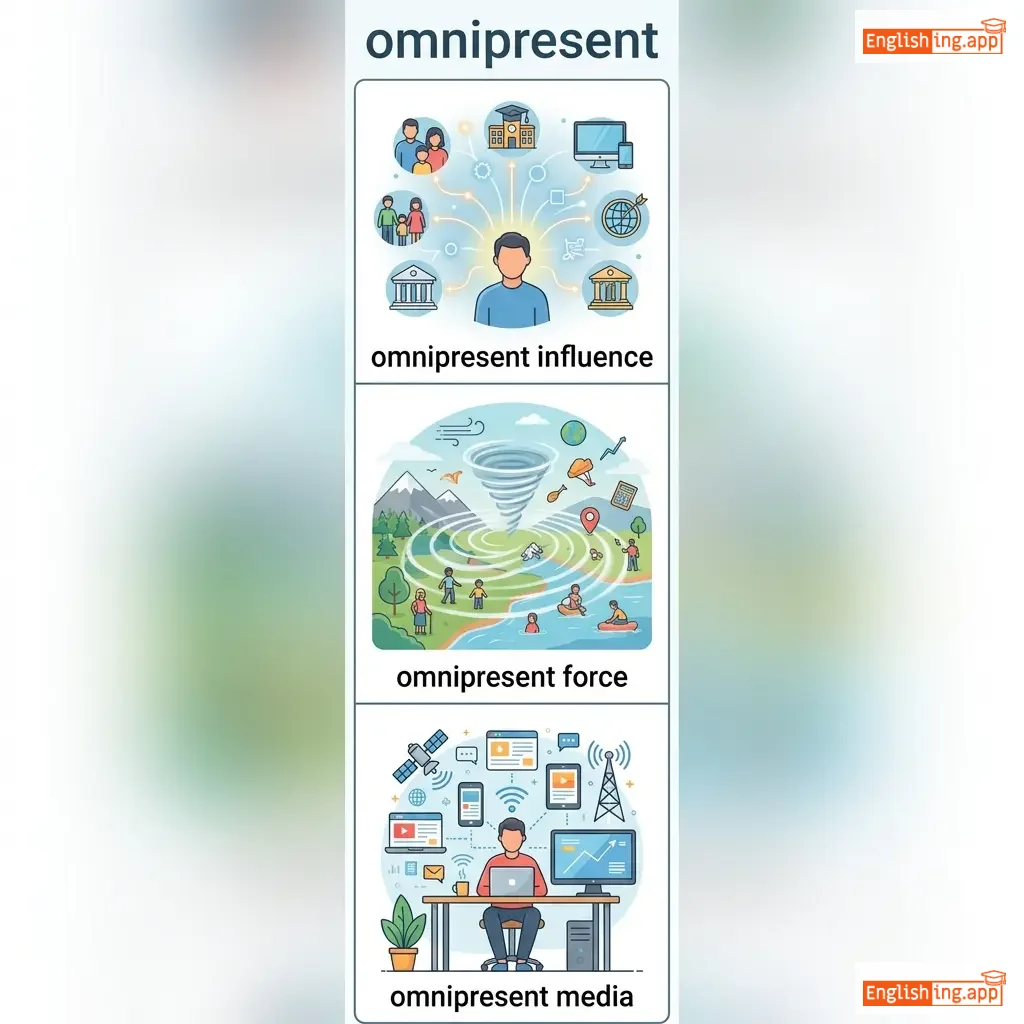
omnipresent influence, omnipresent force, omnipresent media
••••••
|
Omniは「すべて」を意味し、presentは「存在」を意味します。 — すべての場所に存在することが遍在するです。
••••••
|
|
#6067
👑
|
/ɒmˈnɪpətənt/
adjective
(オムニポテント)
••••••
|
|
全能の
zen'nō no
••••••
|
- •••••• | - •••••• | - •••••• | - •••••• |
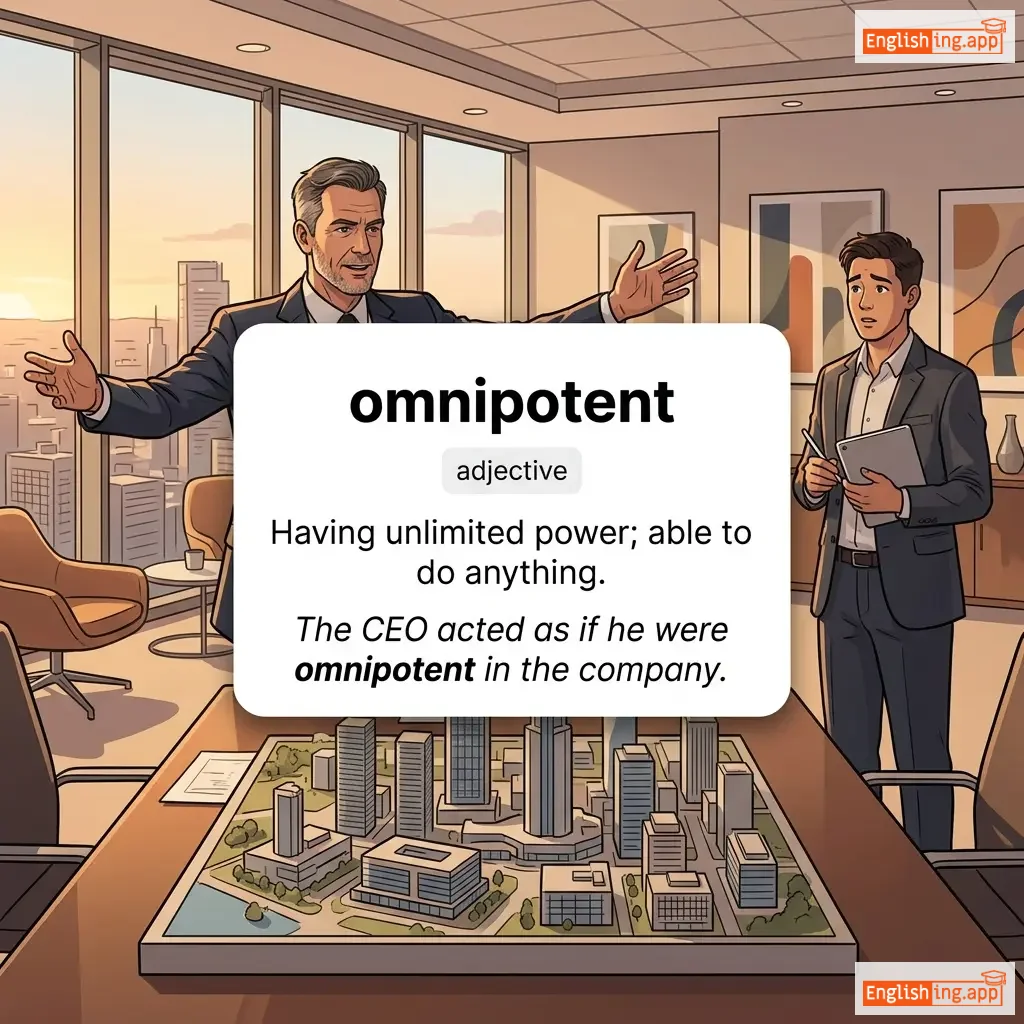
Having unlimited power; able to do anything.
••••••
|
The CEO acted as if he were omnipotent in the company. |
CEOは会社で全能であるかのように振舞った。
CEO wa kaisha de zennō de aru ka no yō ni furumatta.
••••••
|
- •••••• | - •••••• | - •••••• |
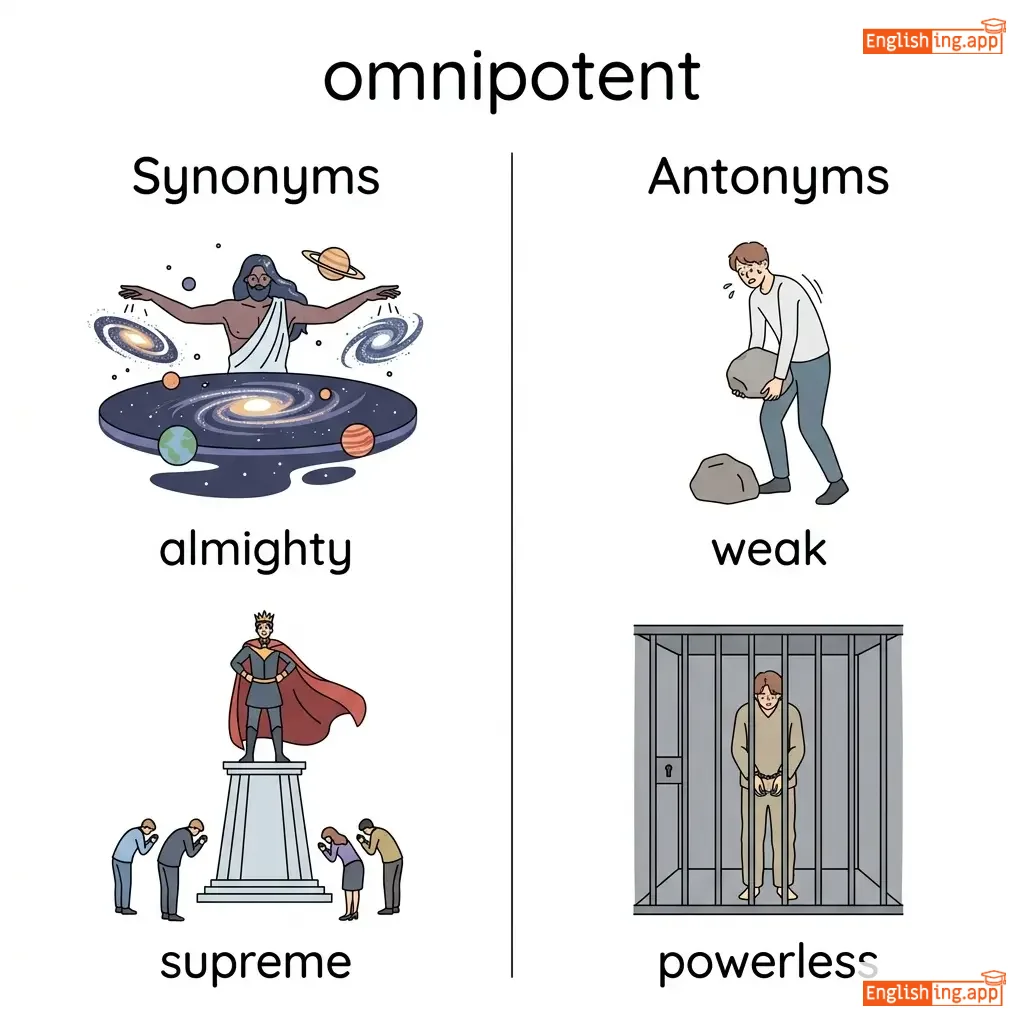
almighty, supreme, all-powerful, sovereign
••••••
|
weak, powerless, limited
••••••
|
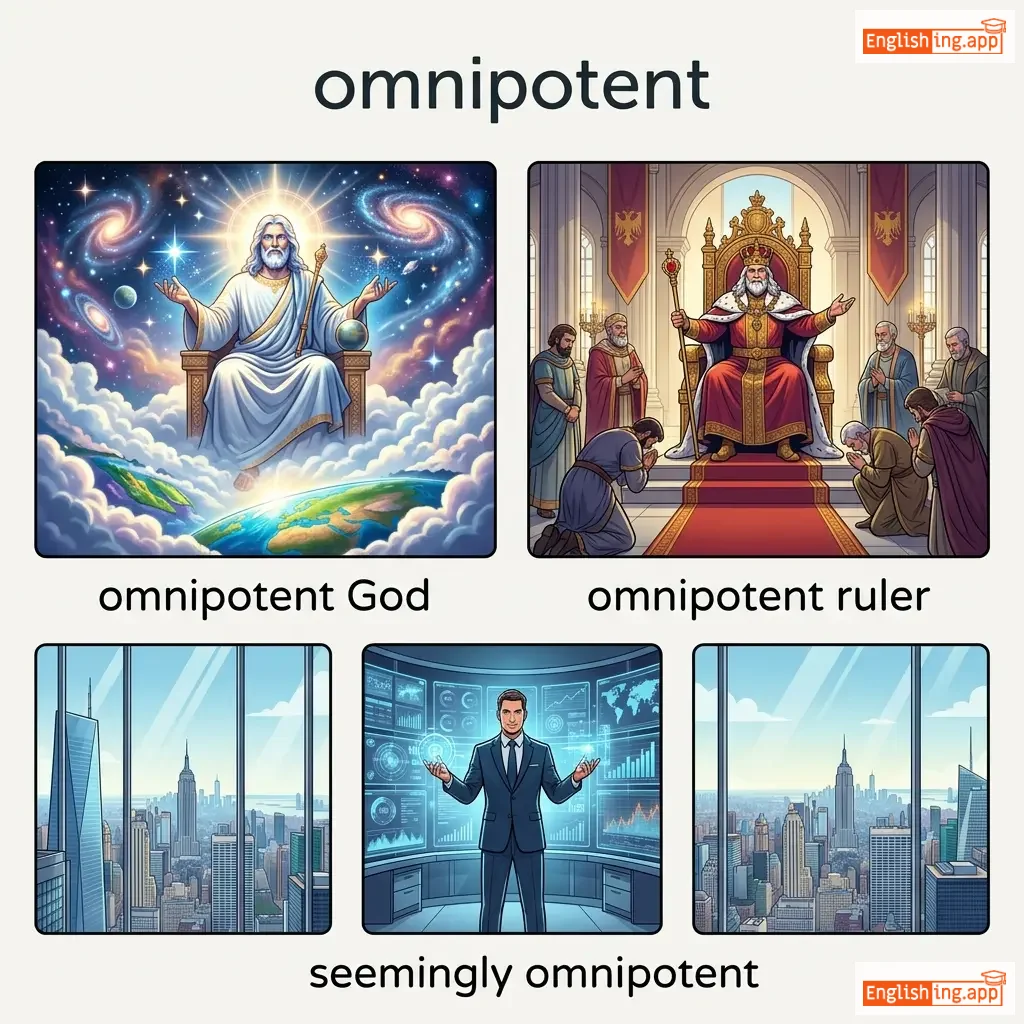
omnipotent God, omnipotent ruler, seemingly omnipotent
••••••
|
Omniはすべて、potentは力 — omnipotentは全能の。
••••••
|
|
#6068
💪
|
/ɒmˈnɪpətəns/
noun
(オムニポテンス)
••••••
|
- •••••• |
全能
zennou
••••••
|
- •••••• | - •••••• | - •••••• | - •••••• |
The quality of having unlimited power or authority.
••••••
|
Many religions describe God’s omnipotence as absolute.
多くの宗教では神のオムニポテンスは絶対的なものと説明されています。
••••••
|
多くの宗教では神の全能は絶対的なものと説明されています。
Ōku no shūkyō de wa kami no zennō wa zettaiteki na mono to setsumei sareteimasu.
••••••
|
- •••••• | - •••••• | - •••••• |
all-powerfulness, supremacy, almightiness, sovereignty
••••••
|
weakness, limitation, helplessness
••••••
|
divine omnipotence, claim of omnipotence, absolute omnipotence
••••••
|
Omniはすべてを意味し + Potenceは力を意味する = 全能。
••••••
|
|
#6069
❌
|
/əˈmɪʃən/
noun
(オミッション)
••••••
|
- •••••• |
省略
shōryaku
••••••
|
- •••••• | - •••••• | - •••••• | - •••••• |
The act of leaving out or excluding something; something that has been left out.
••••••
|
Her omission of important details caused confusion. |
彼女の重要な詳細の省略が混乱を引き起こした。
Kanojo no jūyōna shōryaku ga konran o hikiokoshita.
••••••
|
- •••••• | - •••••• | - •••••• |
exclusion, oversight, lapse, neglect
••••••
|
inclusion, addition, presence
••••••
|
serious omission, accidental omission, omission from, omission of
••••••
|
Omissionは英語で省略を意味し、日本語でも省略を使います。
••••••
|
|
#6070
🌩️
|
/ˈɒmɪnəs/
adjective
(オミナス)
••••••
|
- •••••• |
不吉
fukitsu
••••••
|
- •••••• | - •••••• | - •••••• | - •••••• |
Giving the impression that something bad or unpleasant is going to happen.
••••••
|
Dark clouds gave an ominous sign of an approaching storm. |
暗い雲が近づく嵐の不吉な兆しを示した。
Kurai kumo ga chikaduku arashi no fukitsu na kizashi o shimeshita.
••••••
|
- •••••• | - •••••• | - •••••• |
threatening, foreboding, menacing, sinister
••••••
|
promising, hopeful, auspicious
••••••
|
ominous silence, ominous clouds, ominous sign, ominous tone
••••••
|
Ominousは不吉を意味します。暗い雲が嵐を予告するように、不吉な兆しです。
••••••
|
|
#6071
🕊️
|
/ˈɒlɪv brɑːntʃ/
noun
(オリーブブランチ)
••••••
|
- •••••• |
オリーブの枝
orību no eda
••••••
|
- •••••• | - •••••• | - •••••• | - •••••• |
A symbol of peace or reconciliation; an offer to end conflict.
••••••
|
He extended an olive-branch to his rival after years of hostility. |
彼は長年の敵対後、ライバルにオリーブの枝を差し出した。
Kare wa naganen no tekitaigo, raibaru ni orību no eda o sashidashita.
••••••
|
extend an olive-branch |
to make a gesture of peace or reconciliation
••••••
|
オリーブの枝を差し出す
orību no eda o sashidasu
••••••
|
peace offering, reconciliation, truce, goodwill
••••••
|
conflict, hostility, war
••••••
|
extend an olive-branch, offer an olive-branch, accept an olive-branch
••••••
|
オリーブの枝は平和を象徴し、‘オリーブの枝を差し出す’という表現にもなります。
••••••
|
|
#6072
🏛️
|
/ˈɑːlɪˌɡɑːrki/
noun
(オリガーキー)
••••••
|
|
寡頭政治
katō seiji
••••••
|
- •••••• | - •••••• | - •••••• | - •••••• |
A small group of people having control of a country, organization, or institution.
••••••
|
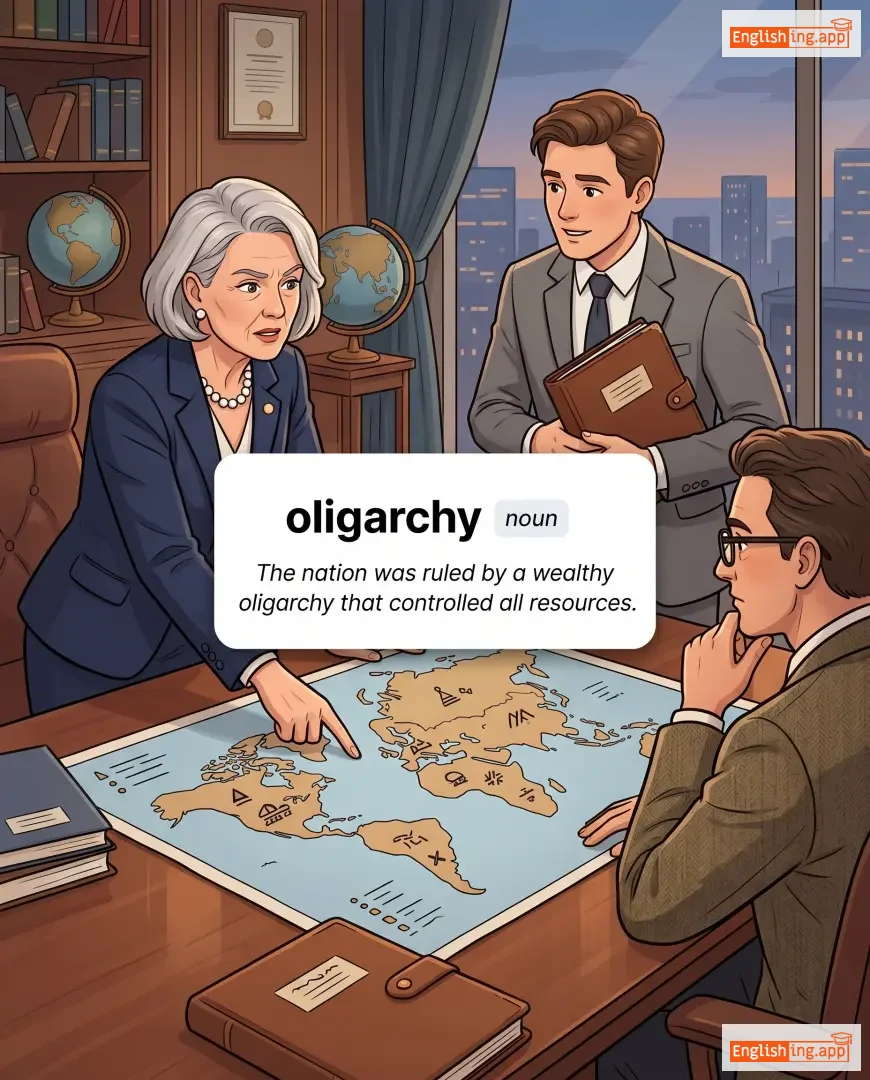
The nation was ruled by a wealthy oligarchy that controlled all resources.
その国は裕福なオリガーキーによって支配され、すべての資源を支配していました。
••••••
|
その国は裕福なオリガーキーによって支配され、すべての資源を支配していました。
Sono kuni wa yūfukuna origākī ni yotte shihaisa re, subete no shigen o shihai shite imashita.
••••••
|
- •••••• | - •••••• | - •••••• |
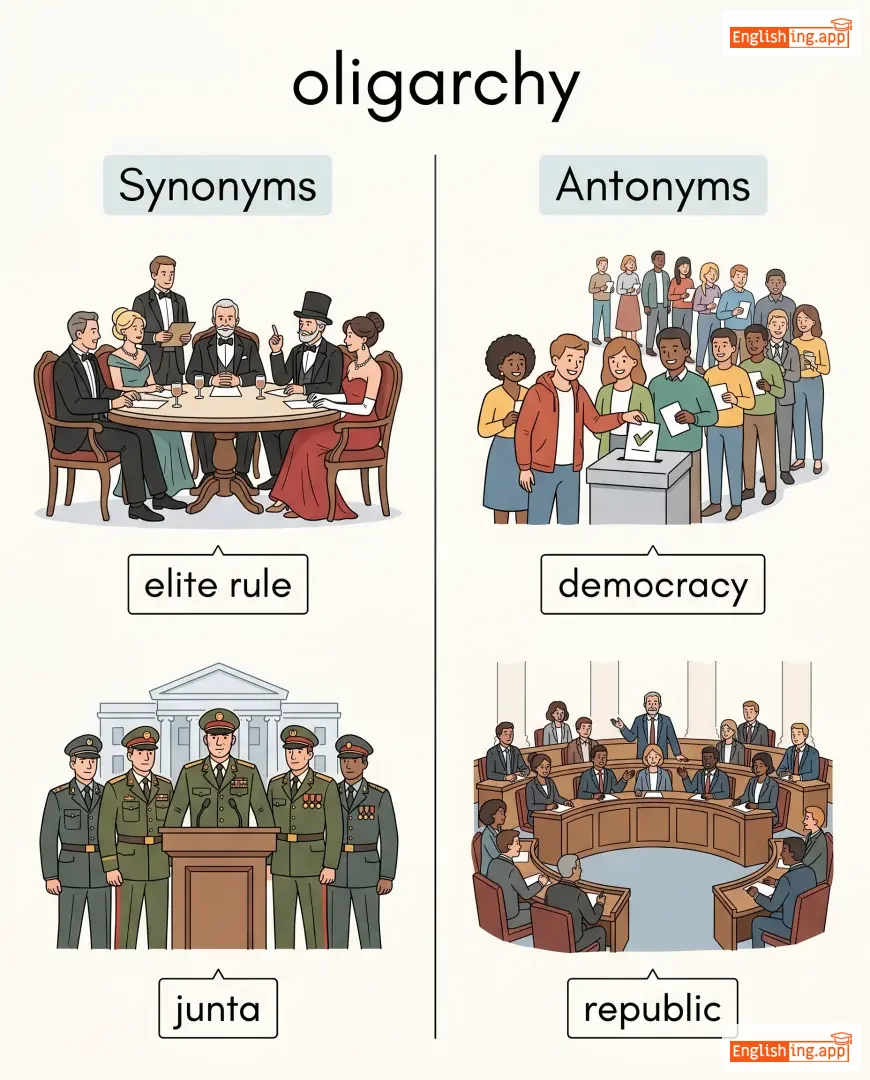
elite rule, junta, plutocracy, ruling class
••••••
|
democracy, republic
••••••
|
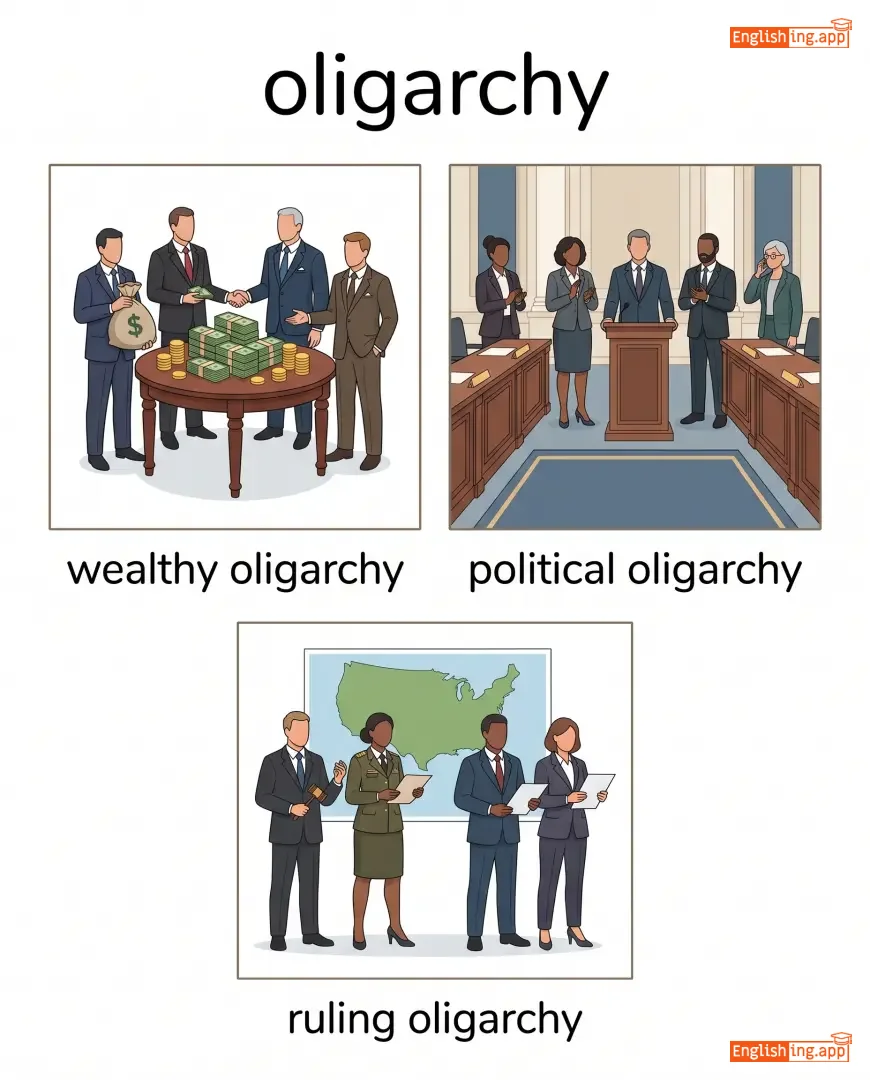
wealthy oligarchy, political oligarchy, ruling oligarchy, oligarchy system
••••••
|
オリガーキーは少数派の支配を意味します。少数の (katō) リーダーが支配します。
••••••
|
|
#6073
👃
|
/ɑːlˈfæktəri/
adjective
••••••
|
|
- •••••• | - •••••• | - •••••• | - •••••• | - •••••• |
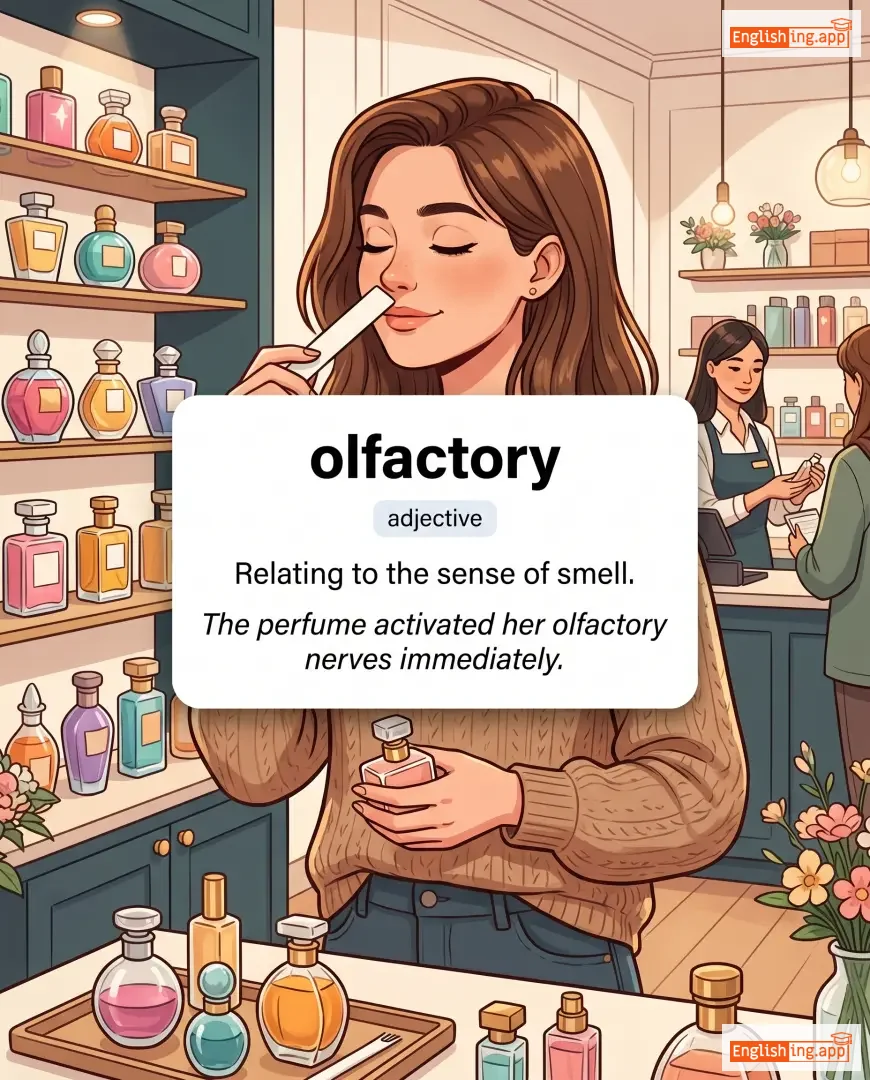
Relating to the sense of smell.
••••••
|
The perfume activated her olfactory nerves immediately. |
- •••••• | - •••••• | - •••••• | - •••••• |
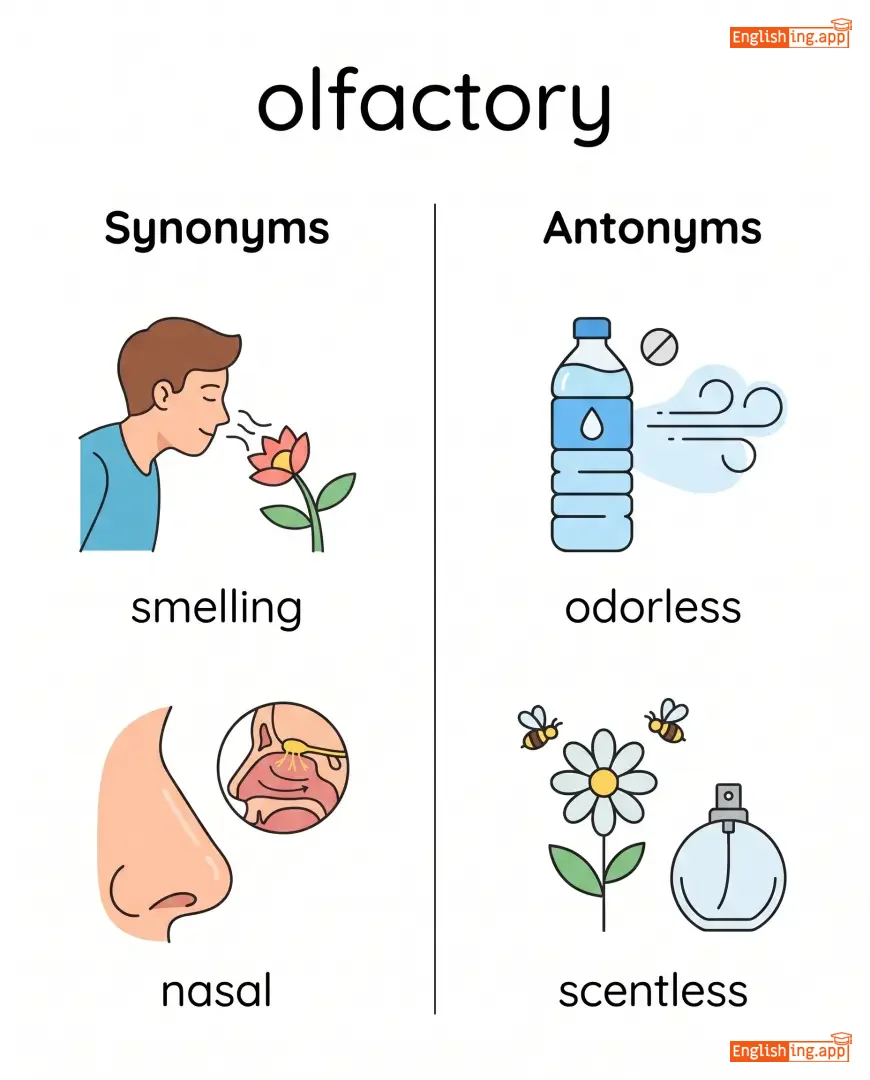
smelling, nasal, aromatic, sensory
••••••
|
odorless, scentless
••••••
|
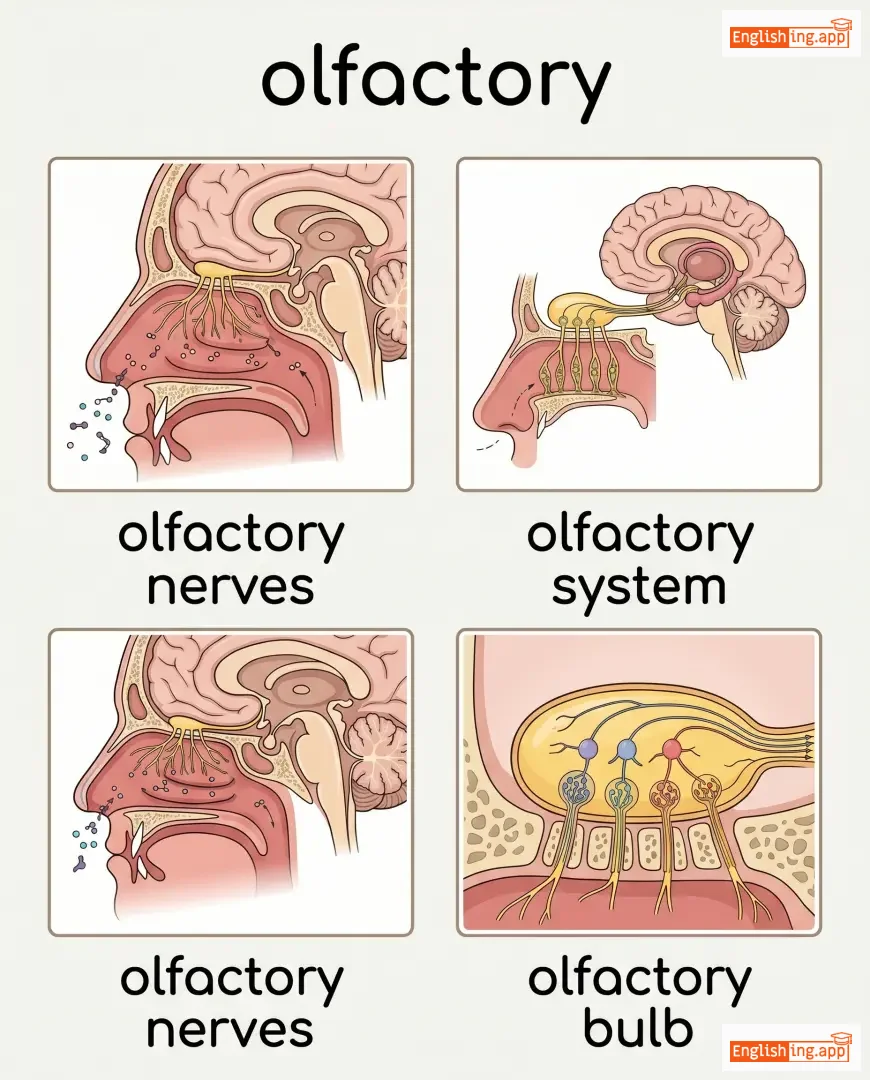
olfactory nerves, olfactory system, olfactory bulb, olfactory organ
••••••
|
No •••••• |
|
#6074
👃
|
/ɑːlˈfækʃən/
noun
(嗅覚)
••••••
|
- •••••• |
嗅覚
kyūkaku
••••••
|
- •••••• | - •••••• | - •••••• | - •••••• |
The sense of smell; the process of detecting and perceiving odors.
••••••
|
Dogs have a highly developed sense of olfaction. |
犬は非常に発達した嗅覚を持っています。
Inu wa hijō ni hattatsu shita kyūkaku o motteimasu.
••••••
|
- •••••• | - •••••• | - •••••• |
smell, scent, aroma detection, sense of smell
••••••
|
anosmia, loss of smell
••••••
|
human olfaction, animal olfaction, olfaction system, sense of olfaction
••••••
|
嗅覚は匂いを検出することを意味します – 嗅覚システムで匂いが感知されます。
••••••
|
|
#6075
🧴
|
/ˈɔɪntmənt/
noun
(オイントメント)
••••••
|
- •••••• |
軟膏
nankou
••••••
|
- •••••• | - •••••• | - •••••• | - •••••• |
A smooth, oily substance applied to the skin for healing or soothing.
••••••
|
The doctor prescribed an ointment for the burn on his arm. |
医師は彼の腕のやけどのために軟膏を処方しました。
Ishi wa kare no ude no yakedo no tame ni nankou o shohō shimashita.
••••••
|
fly in the ointment |
A small flaw or problem that spoils something valuable or pleasant.
••••••
|
軟膏の中のハエ
Nankou no naka no hae
••••••
|
salve, balm, cream, lotion
••••••
|
irritant, poison
••••••
|
healing ointment, herbal ointment, apply ointment, medicated ointment
••••••
|
軟膏は軟膏を意味します - やけどを負ったら医者は軟膏をくれる。
••••••
|
|
#6076
👃
|
/ˈoʊdərəs/
adjective
(オドラス)
••••••
|
- •••••• |
臭い
nikui
••••••
|
- •••••• | - •••••• | - •••••• | - •••••• |
having or giving off a smell, often unpleasant
••••••
|
The odorous garbage had to be taken out immediately.
その臭いゴミはすぐに出さなければならなかった。
••••••
|
その臭いゴミはすぐに出さなければならなかった。
Sono nikui gomi wa sugu ni dasanakereba naranakatta.
••••••
|
- •••••• | - •••••• | - •••••• |
fragrant, aromatic, pungent, smelly, scented
••••••
|
odorless, scentless, neutral
••••••
|
odorous gas, odorous substance, odorous smoke, odorous fumes
••••••
|
Odorous は臭いを意味します、'odor' は匂いという意味です。
••••••
|
|
#6077
👀
|
/ˈoʊɡəl/
verb
(オグル)
••••••
|
- •••••• |
じっと見る
jitto miru
••••••
|
ogled
オグルド
••••••
|
ogled
オグルド
••••••
|
ogles
オグルズ
••••••
|
ogling
オグリング
••••••
|
To look at someone with obvious sexual interest.
••••••
|
He kept ogling the models on the runway.
彼はランウェイでモデルたちを見つめ続けた。
••••••
|
彼はランウェイのモデルたちを見続けた。
Kare wa ranwei no moderu-tachi o mi tsudzuketa.
••••••
|
ogle at
欲望の目で見る
••••••
|
To stare at with desire or strong attraction
••••••
|
欲望の目で見る
yokubou no me de miru
••••••
|
stare, leer, gaze, eyeball
••••••
|
ignore, overlook
••••••
|
ogle at women, ogle shamelessly, ogle openly
••••••
|
Ogle は日本語でじっと見ると覚えて!
••••••
|
|
#6078
🌱
|
/ˈɒfʃuːt/
noun
(オフシュート)
••••••
|
- •••••• |
分岐
bunki
••••••
|
- •••••• | - •••••• | - •••••• | - •••••• |
A branch or result that develops from something larger or more important.
••••••
|
The startup was an offshoot of a major tech company. |
そのスタートアップは大手テクノロジー企業からの分岐でした。
Sono start-up wa oote tekunorojii kigyou kara no bunki deshita.
••••••
|
- •••••• | - •••••• | - •••••• |
branch, derivative, outcome, byproduct, extension
••••••
|
origin, source
••••••
|
offshoot company, offshoot project, offshoot branch
••••••
|
Offから新しいshoot、つまり新しい枝分かれ。
••••••
|
|
#6079
⚖️
|
/ˈɒfsɛt/
verb
(オフセット)
••••••
|
- •••••• |
相殺
sōsai
••••••
|
offset
オフセット
••••••
|
offset
オフセット
••••••
|
offsets
オフセットス
••••••
|
offsetting
オフセッティング
••••••
|
To counterbalance or compensate for something.
••••••
|
The company's losses were offset by gains in other departments.
会社の損失は他の部門での利益で相殺されました。
••••••
|
会社の損失は他の部門での利益で相殺されました。
Kaisha no sonshitsu wa hoka no bumon de no rieki de sōsai saremashita.
••••••
|
offset the balance
バランスを相殺する
••••••
|
To neutralize or counteract an effect
••••••
|
バランスを相殺する
baransu o sōsai suru
••••••
|
counterbalance, compensate, neutralize, counteract
••••••
|
intensify, worsen
••••••
|
offset costs, offset losses, offset impact, offset effect
••••••
|
相殺でバランスを保つ
••••••
|
|
#6080
😒
|
/ˈɒfɪʃ/
adjective
(オフィッシュ)
••••••
|
- •••••• |
無愛想
mu aisou
••••••
|
- •••••• | - •••••• | - •••••• | - •••••• |
Unfriendly, distant, or reserved in manner.
••••••
|
He seemed offish at the party and avoided most conversations. |
彼はパーティーで無愛想に見え、大半の会話を避けていました。
Kare wa pātī de mu aisou ni mie, taihan no kaiwa o saketemashita.
••••••
|
- •••••• | - •••••• | - •••••• |
aloof, distant, reserved, cold
••••••
|
friendly, sociable, warm
••••••
|
offish attitude, offish manner, act offish
••••••
|
Offishは、他の人と距離を置いて無愛想に振る舞うことのようなものです。
••••••
|
|
#6081
🙄
|
/əˈfɪʃəs/
adjective
(オフィシャス)
••••••
|
|
干渉的な
kanshouteki na
••••••
|
- •••••• | - •••••• | - •••••• | - •••••• |
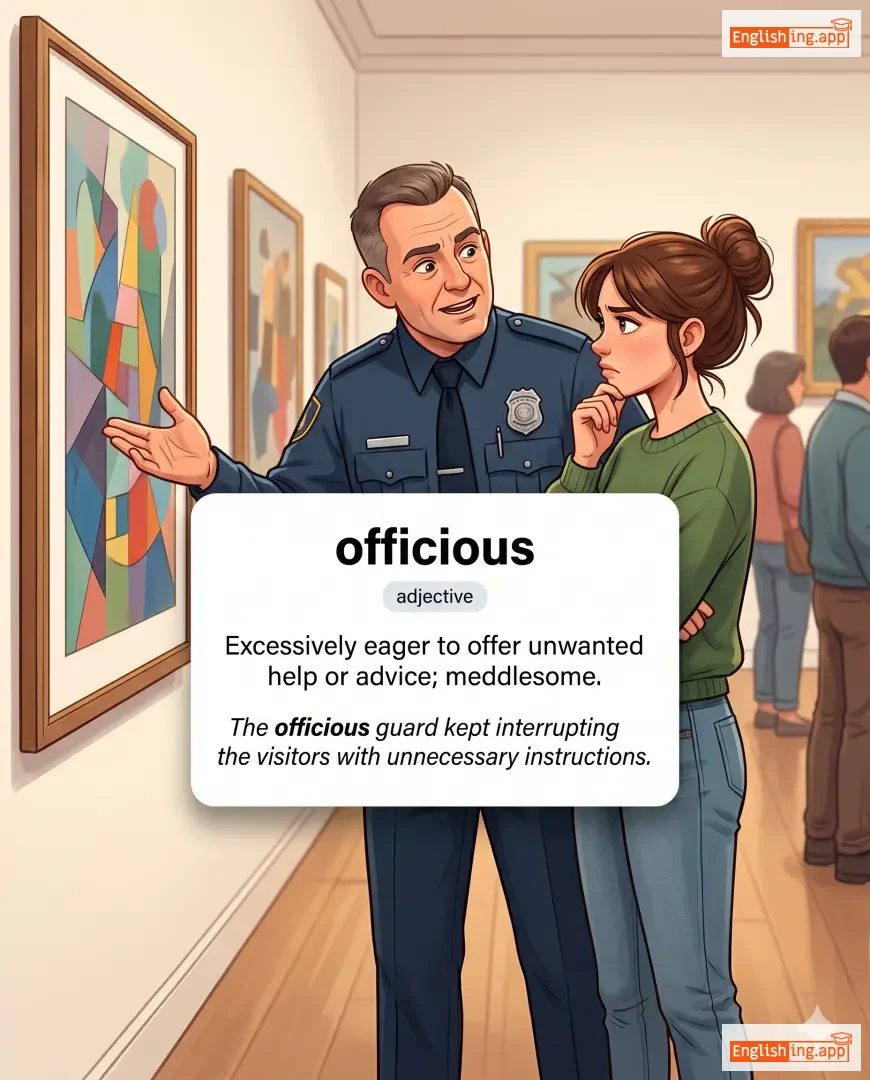
Excessively eager to offer unwanted help or advice; meddlesome.
••••••
|
The officious guard kept interrupting the visitors with unnecessary instructions. |
その干渉的な警備員は訪問者に不必要な指示で何度も中断させた。
Sono kanshouteki na keibiin wa houmonsha ni fuhitsuyouna shiji de nando mo chuudan saseta.
••••••
|
- •••••• | - •••••• | - •••••• |
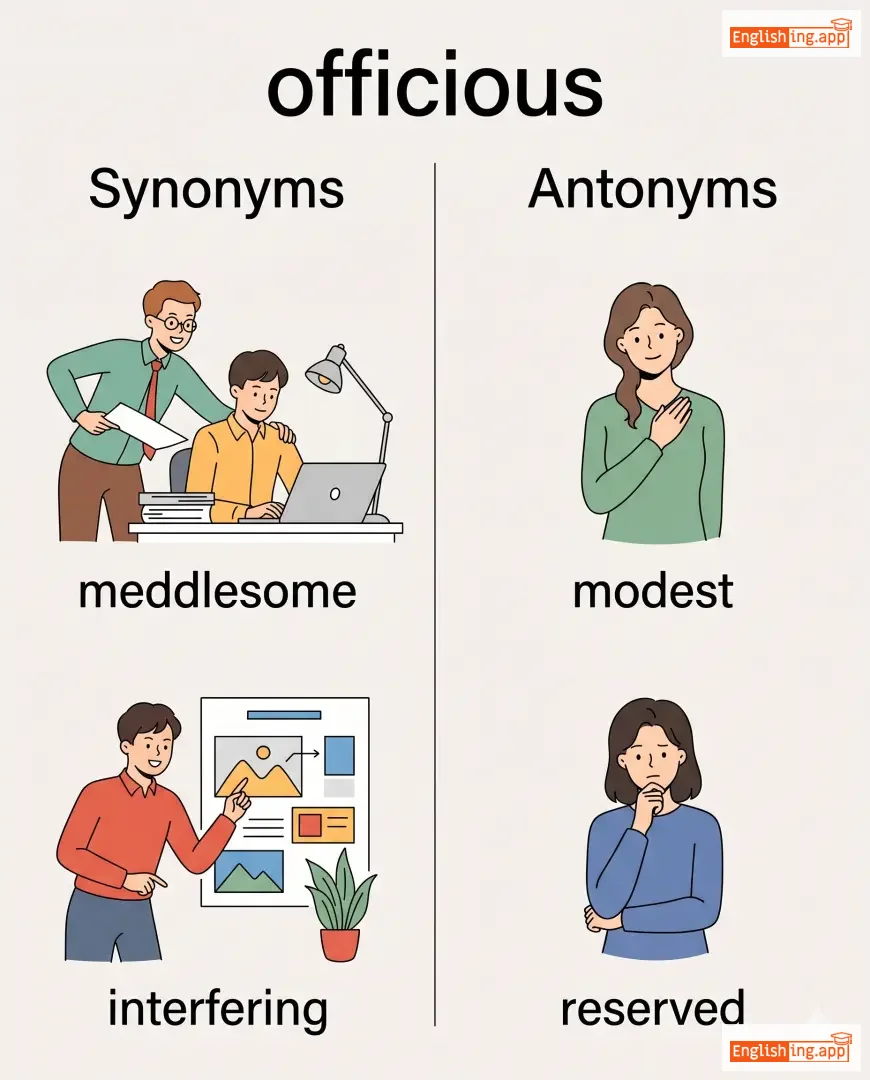
meddlesome, interfering, intrusive, bossy, overbearing
••••••
|
modest, reserved, unobtrusive
••••••
|
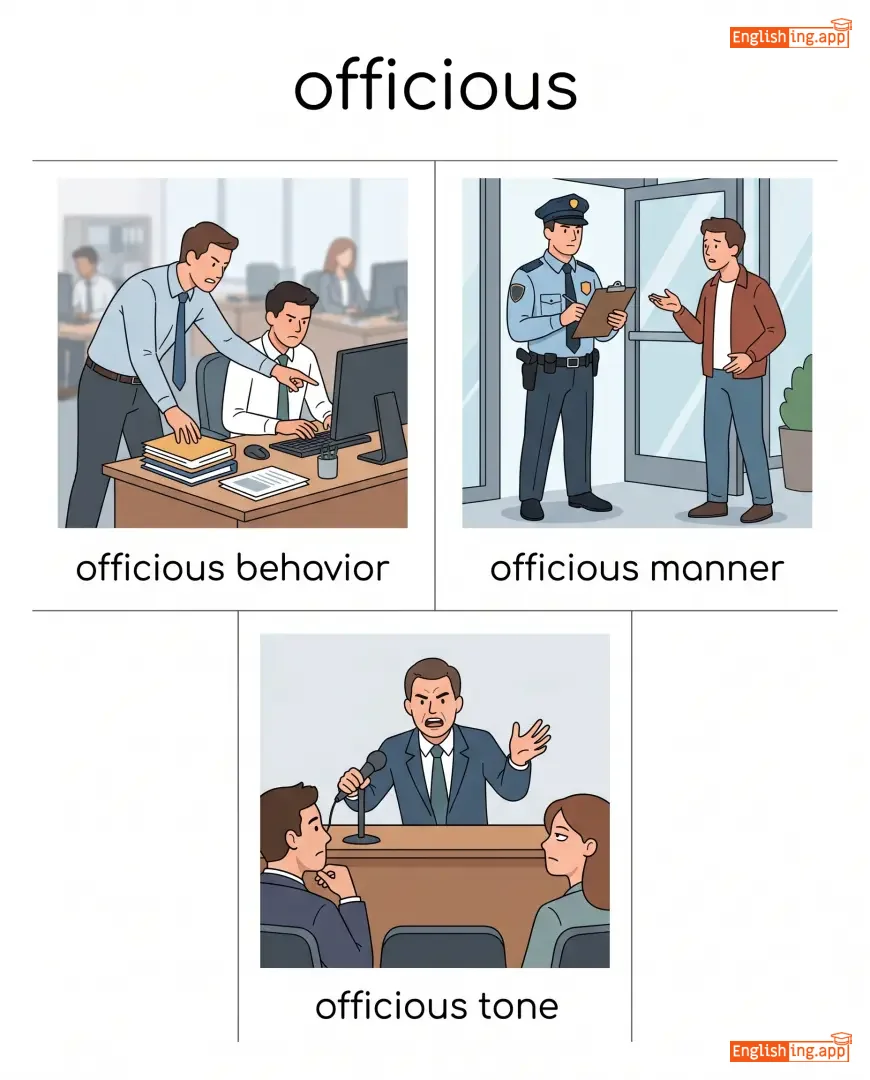
officious behavior, officious manner, officious tone, officious interference
••••••
|
Offi-CIOUS! いつも干渉して、必要ないアドバイスを与える人々。
••••••
|
|
#6082
⛪
|
/əˈfɪʃieɪt/
verb
(オフィシエイト)
••••••
|
- •••••• |
執り行う
toriokonau
••••••
|
officiated
オフィシエイテッド
••••••
|
officiated
オフィシエイテッド
••••••
|
officiates
オフィシエイツ
••••••
|
officiating
オフィシエイティング
••••••
|
To perform official duties, especially in a ceremony or as a referee.
••••••
|
The priest will officiate the wedding ceremony.
司祭が結婚式を司る。
••••••
|
司祭が結婚式を司る。
Shisai ga kekkonshiki o toriokonau.
••••••
|
- •••••• | - •••••• | - •••••• |
preside, conduct, administer, supervise
••••••
|
neglect, ignore
••••••
|
officiate a wedding, officiate the match, officiate at the ceremony
••••••
|
Office + ate = 執り行う、つまり公式な仕事をすること。
••••••
|
|
#6083
😏
|
/ˌɒfˈhænd/
adjective/adverb
(オフハンド)
••••••
|
- •••••• |
軽率
keisotsu
••••••
|
- •••••• | - •••••• | - •••••• | - •••••• |
Without previous thought or preparation; casual and sometimes dismissive.
••••••
|
She gave an offhand reply to his serious question.
彼女は彼の真剣な質問に対して、オフハンドな返答をした。
••••••
|
彼女は彼の真剣な質問に対して、軽率な返答をした。
Kanojo wa kare no shinken na shitsumon ni taishite, keisotsu na hentou wo shita.
••••••
|
- •••••• | - •••••• | - •••••• |
casual, informal, impromptu, spontaneous
••••••
|
planned, deliberate, careful
••••••
|
offhand comment, offhand remark, offhand reply
••••••
|
軽率は準備なしに行動すること、時には軽蔑的な返答をすることを意味します。
••••••
|
|
#6084
🙏
|
/ˈɒfərtɔːri/
noun
(オフェルトリー)
••••••
|
- •••••• |
奉納
hounou
••••••
|
- •••••• | - •••••• | - •••••• | - •••••• |
The part of a religious service when offerings are collected; the offering itself.
••••••
|
The offertory was taken during the Sunday service.
日曜日の礼拝中にオフェルトリーが取られました。
••••••
|
日曜日の礼拝中に奉納が取られました。
Nichiyoubi no reihai chuu ni hounou ga toraremashita.
••••••
|
- •••••• | - •••••• | - •••••• |
donation, contribution, collection, offering
••••••
|
withholding, refusal
••••••
|
offertory prayer, offertory hymn, offertory collection
••••••
|
奉納 + Tory = 奉納
••••••
|
|
#6085
😠
|
/əˈfɛnsɪv/
adjective
(オフェンシブ)
••••••
|
- •••••• |
攻撃的
kougekiteki
••••••
|
- •••••• | - •••••• | - •••••• | - •••••• |
Causing hurt, anger, or annoyance; also relating to attacking in sports or war.
••••••
|
His offensive remarks upset everyone at the meeting. |
彼の攻撃的な発言は、会議にいた全員を不快にさせました。
Kare no kougekiteki na hatsugen wa, kaigi ni ita zen'in o fukai ni sasemashita.
••••••
|
take offense |
To feel hurt or insulted by something said or done.
••••••
|
気を悪くする
Ki o warukusuru
••••••
|
insulting, rude, disrespectful, abusive
••••••
|
polite, respectful, pleasant
••••••
|
offensive remark, offensive language, offensive strategy, take offense
••••••
|
Offensiveは攻撃的-攻撃的な発言。
••••••
|
|
#6086
🎭
|
/ˈɒf.biːt/
adjective
(オフビート)
••••••
|
- •••••• |
風変わり
fūgawari
••••••
|
- •••••• | - •••••• | - •••••• | - •••••• |
Unusual, unconventional, or different from the norm.
••••••
|
She has a very offbeat sense of humor. |
彼女はとても風変わりなユーモアを持っています。
kanojo wa totemo fūgawari na yūmoa o motte imasu.
••••••
|
- •••••• | - •••••• | - •••••• |
quirky, unconventional, eccentric, unusual, odd
••••••
|
normal, conventional, ordinary
••••••
|
offbeat style, offbeat humor, offbeat idea, offbeat path
••••••
|
Offbeat は規範外であることを意味するので、風変わりまたは異なるということです。
••••••
|
|
#6087
🥩
|
/ˈɔːfəl/
noun
(オファル)
••••••
|
- •••••• |
内臓
naizou
••••••
|
- •••••• | - •••••• | - •••••• | - •••••• |
the internal organs and entrails of an animal used as food; waste parts
••••••
|
The butcher prepared sausages using pork offal.
肉屋は豚の臓物を使ってソーセージを作った。
••••••
|
肉屋は豚の臓物を使ってソーセージを作った。
Nikuya wa buta no zōmotsu o tsukatte sōsēji o tsukutta.
••••••
|
- •••••• | - •••••• | - •••••• |
entrails, viscera, giblets, remains, refuse
••••••
|
prime cuts, meat, fillet
••••••
|
pork offal, chicken offal, offal stew, waste offal
••••••
|
Offalは内臓を意味します。'Awful'は食べるのが難しいものを覚えてください。
••••••
|
|
#6088
🎶
|
/ˌɔːfˈkiː/
adjective
(オフキー)
••••••
|
- •••••• |
外れた音
hazureta oto
••••••
|
- •••••• | - •••••• | - •••••• | - •••••• |
out of tune; not in accordance with expected standards
••••••
|
The singer was slightly off-key during the performance. |
歌手はパフォーマンス中に少し外れた音だった。
Kashu wa pafōmansu chū ni sukoshi hazureta oto datta.
••••••
|
- •••••• | - •••••• | - •••••• |
out of tune, discordant, jarring, unharmonious
••••••
|
in tune, harmonious, melodious
••••••
|
sing off-key, sound off-key, slightly off-key, completely off-key
••••••
|
Off-keyは外れた音を意味します、音程が合わないときは外れた音になります。
••••••
|
|
#6089
⏹️
|
/ɔːf/
adverb
(オフ)
••••••
|
- •••••• |
オフ
ofu
••••••
|
- •••••• | - •••••• | - •••••• | - •••••• |
away from a place, position, or time; not functioning
••••••
|
He turned off the light before leaving the room. |
彼は部屋を出る前に電気をオフにしました。
Kare wa heya wo deru mae ni denki wo ofu ni shimashita.
••••••
|
off the record |
something said privately and not intended for publication
••••••
|
オフ・ザ・レコード
ofu za rekodo
••••••
|
away, removed, disconnected, distant
••••••
|
on, connected, attached
••••••
|
turn off, switch off, go off, keep off
••••••
|
オフは、光を消すように、すべてが暗くなることを意味します。
••••••
|
|
#6090
🛶
|
/ˈɑːdəsi/
noun
(オデッセイ)
••••••
|
|
長い旅
nagai tabi
••••••
|
- •••••• | - •••••• | - •••••• | - •••••• |
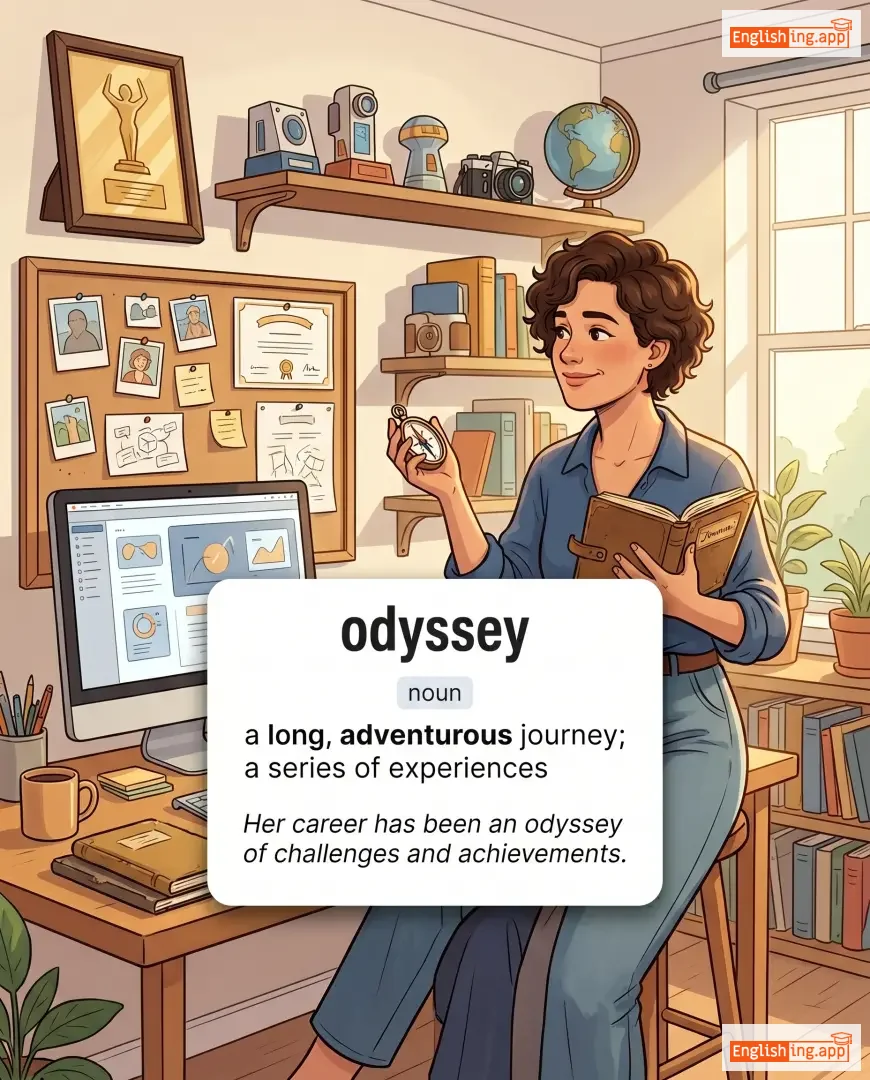
a long, adventurous journey; a series of experiences
••••••
|
Her career has been an odyssey of challenges and achievements.
彼女のキャリアは挑戦と成果のオデッセイでした。
••••••
|
彼女のキャリアは挑戦と成果の長い旅でした。
Kanojo no kyaria wa chōsen to seika no nagai tabi deshita.
••••••
|
- •••••• | - •••••• | - •••••• |
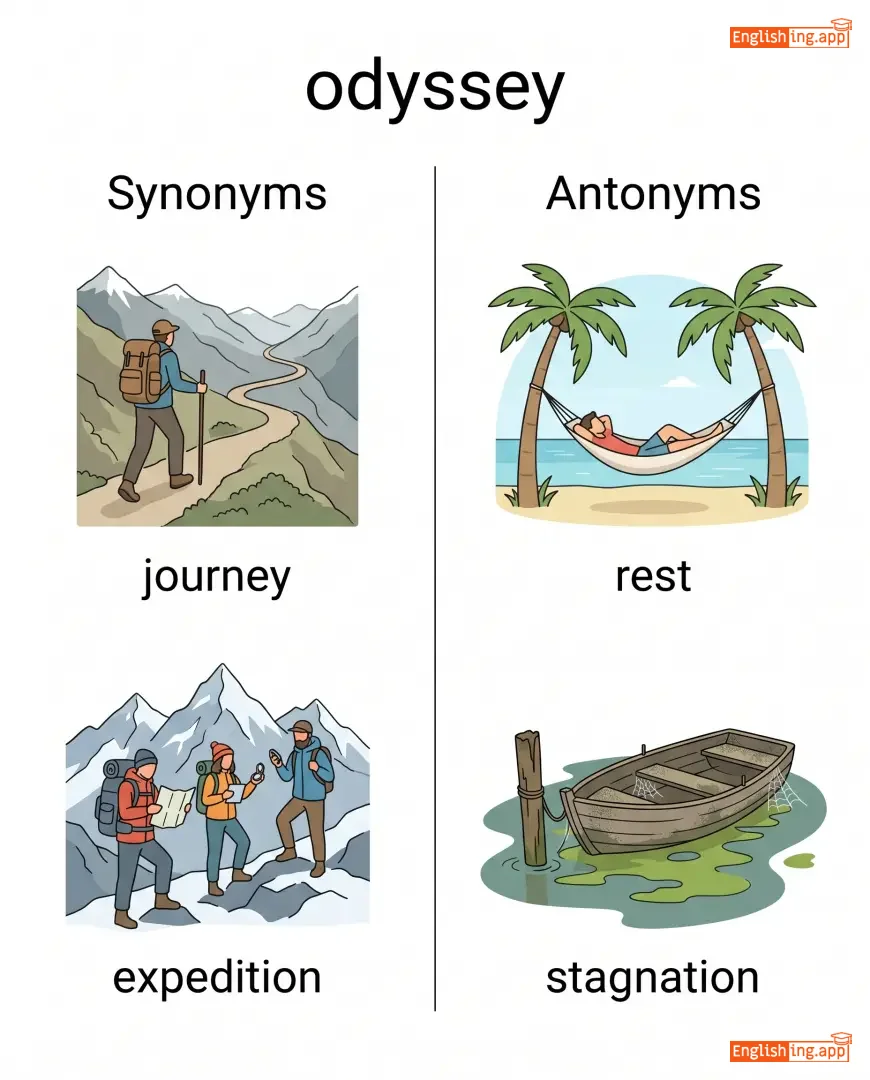
journey, expedition, voyage, adventure, quest
••••••
|
rest, stagnation, standstill
••••••
|
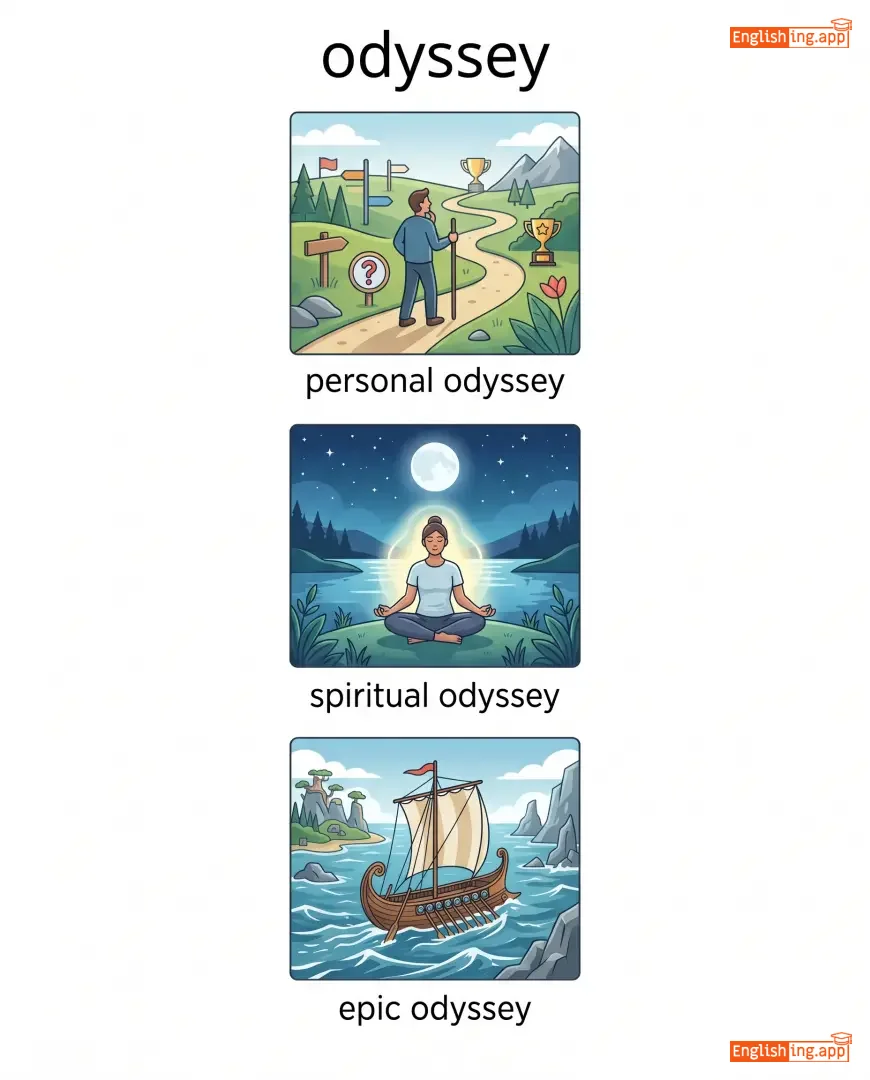
personal odyssey, spiritual odyssey, epic odyssey, long odyssey
••••••
|
Odysseyは長い旅を意味します、ホメロスの「オデッセイ」のように。
••••••
|
Vocabulary Quiz
Test your vocabulary by matching words with their translations or meanings.
Login to take the quiz
Comments (0)
Share your thoughts and join the discussion.
Join the discussion by logging in
Login to CommentNo comments yet
Be the first to share your thoughts!