

翻訳
過去
過去分詞
三人称単数
動名詞
意味
例文
例文の翻訳
同義語
対義語
コロケーション
ニーモニック
Swipe left or right, or use the buttons. Tap image to zoom.
例文の翻訳
単語
Lesson 207Lesson 207 - マスクトグル
|
絵文字
|
単語 | Images | 翻訳 | 過去 | 過去分詞 | 三人称単数 | 動名詞 | 意味 | 例文 | 例文の翻訳 | 表現例 | 表現例の意味 | 表現例の翻訳 | 同義語 | 対義語 | コロケーション | ニーモニック |
|---|---|---|---|---|---|---|---|---|---|---|---|---|---|---|---|---|---|
|
#6181
🏇
|
/aʊtˈraɪd/
verb
(アウトライド)
••••••
|
- •••••• |
追い越す
oikosu
••••••
|
outrided
アウトライデッド
••••••
|
outrided
アウトライデッド
••••••
|
outrides
アウトライズ
••••••
|
outriding
アウトライディング
••••••
|
to ride faster, farther, or better than someone else
••••••
|
The young rider managed to outride his competitors in the race.
若いライダーはレースで競技者たちをアウトライドしました。
••••••
|
若いライダーはレースで競技者たちを追い越しました。
Wakai raidaa wa reesu de kyoushijatachi o oikoshimashita.
••••••
|
- •••••• | - •••••• | - •••••• |
outpace, outstrip, surpass, excel, beat
••••••
|
lose, lag
••••••
|
outride competition, outride danger, outride storm
••••••
|
早く競技者を追い越すアウトライド!
••••••
|
|
#6182
🏋️
|
/ˌoʊvərˈduː/
verb
(オーバードゥ)
••••••
|
|
やりすぎ
yarisugi
••••••
|
overdid
••••••
|
overdone
••••••
|
overdoes
••••••
|
overdoing
••••••
|
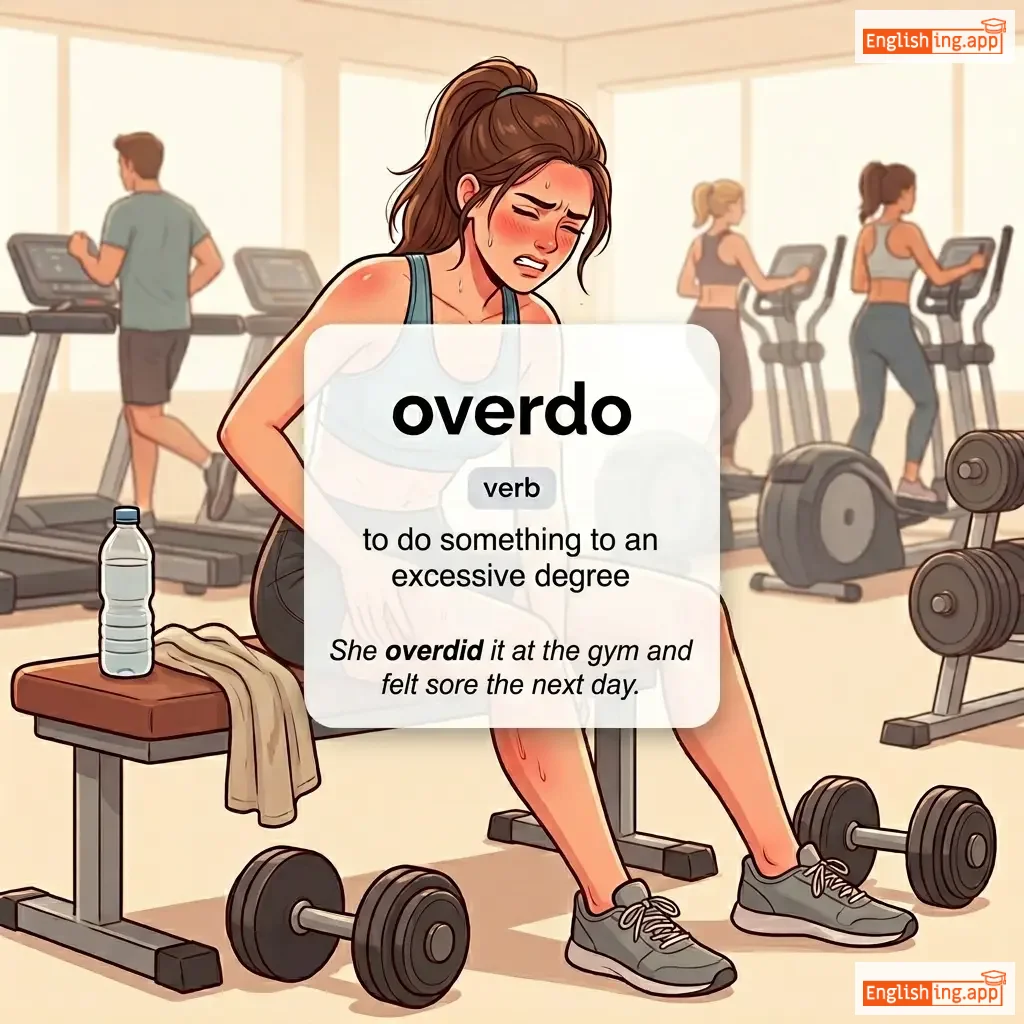
to do something to an excessive degree
••••••
|
She overdid it at the gym and felt sore the next day. |
彼女はジムでやりすぎて、翌日筋肉痛を感じました。
Kanojo wa jimu de yarisugite, yokujitsu kinnikutū o kanjimashita.
••••••
|
overdo it |
to overexert oneself or do too much
••••••
|
やりすぎ
yarisugi
••••••
|
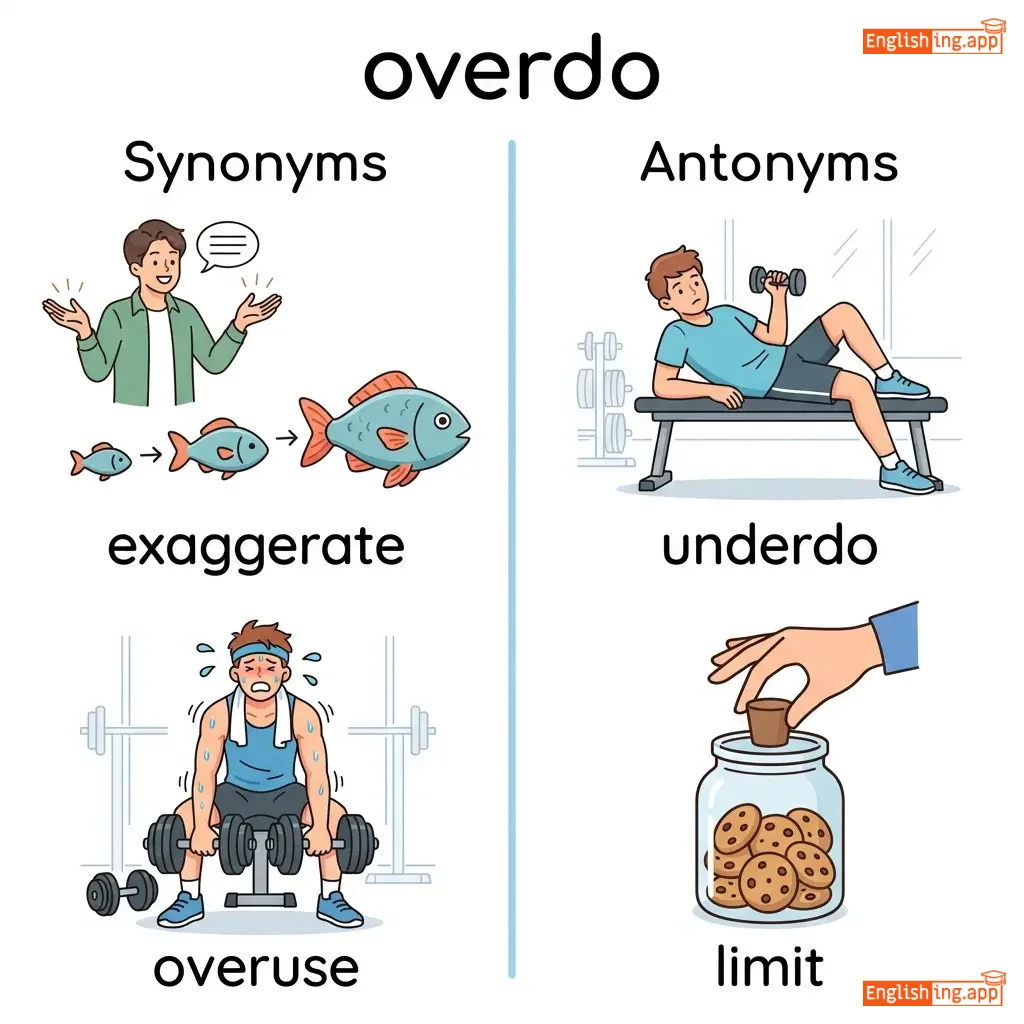
exaggerate, overuse, overwork, overindulge
••••••
|
underdo, limit, restrain
••••••
|
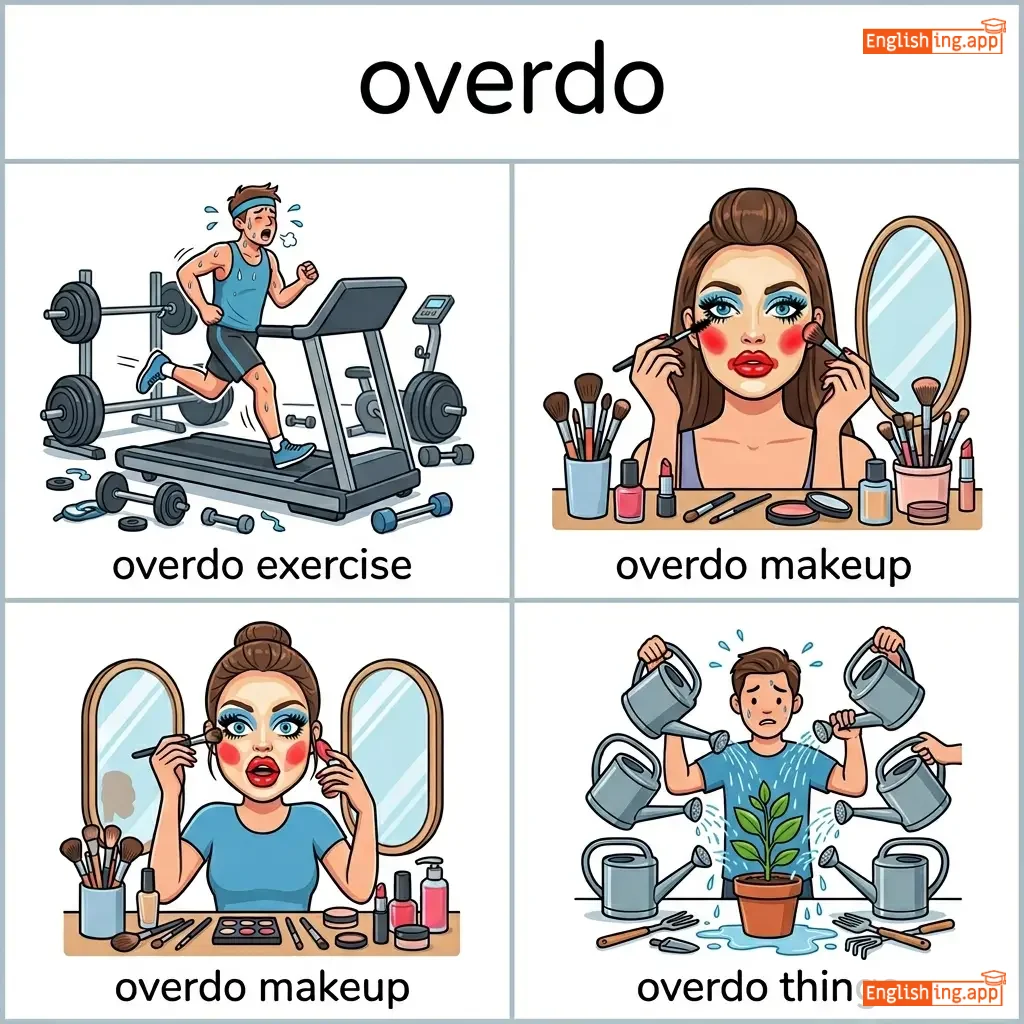
overdo exercise, overdo makeup, overdo things, overdo effort
••••••
|
OVERDO と OVER 痛 – やりすぎて痛みが生じる
••••••
|
|
#6183
🎈
|
/ˌoʊvərˈbloʊn/
adjective
(オーバーブローン)
••••••
|
- •••••• |
誇張された
kojou sareta
••••••
|
- •••••• | - •••••• | - •••••• | - •••••• |
excessively exaggerated or inflated
••••••
|
The controversy was overblown by the media. |
メディアによって論争は誇張されました。
Media ni yotte ronsou wa kojou saremashita.
••••••
|
- •••••• | - •••••• | - •••••• |
exaggerated, inflated, overstated, excessive
••••••
|
understated, modest, minimal
••••••
|
overblown controversy, overblown claim, overblown ego
••••••
|
OVER + BLOWN = 膨らませた風船のように誇張
••••••
|
|
#6184
😠
|
/ˌoʊvərˈbɛrɪŋ/
adjective
(オーバーベアリング)
••••••
|
- •••••• |
押しつけがましい
oshitsuke gamashii
••••••
|
- •••••• | - •••••• | - •••••• | - •••••• |
unpleasantly or arrogantly domineering
••••••
|
His overbearing attitude made everyone uncomfortable.
彼の押しつけがましい態度は、みんなを不快にさせた。
••••••
|
彼の押しつけがましい態度は、みんなを不快にさせた。
Kare no oshitsuke gamashii taido wa, minna o fukai ni saseta.
••••••
|
- •••••• | - •••••• | - •••••• |
domineering, bossy, arrogant, oppressive, controlling
••••••
|
humble, modest, submissive
••••••
|
overbearing boss, overbearing attitude, overbearing behavior
••••••
|
OVERly BEARing は強引なクマのようなもの
••••••
|
|
#6185
👏
|
/oʊˈveɪʃən/
noun
(オベーション)
••••••
|
- •••••• |
拍手
hakushu
••••••
|
- •••••• | - •••••• | - •••••• | - •••••• |
an enthusiastic show of approval, especially by clapping hands
••••••
|
The actor received a standing ovation after his performance. |
俳優はパフォーマンス後にスタンディングオベーションを受けました。
Haiyū wa pafōmansu go ni sutandingu obēshon o ukemashita.
••••••
|
standing ovation |
a long, enthusiastic applause where people stand up
••••••
|
スタンディングオベーション
sutandingu obēshon
••••••
|
applause, acclaim, cheer, praise, commendation
••••••
|
booing, criticism, disapproval
••••••
|
loud ovation, thunderous ovation, receive an ovation, standing ovation
••••••
|
オベーション = オベーショ(ション)で大きな拍手
••••••
|
|
#6186
🦊
|
/aʊtˈwɪt/
verb
(アウトウィット)
••••••
|
- •••••• |
巧妙に出し抜く
koumyou ni dashinuku
••••••
|
outwitted
アウトウィテッド
••••••
|
outwitted
アウトウィテッド
••••••
|
outwits
アウトウィッツ
••••••
|
outwitting
アウトウィッティング
••••••
|
to defeat or gain an advantage over someone by being more clever or cunning
••••••
|
The fox managed to outwit the hunters.
キツネは猟師たちを出し抜くことができました。
••••••
|
キツネは猟師たちを出し抜くことができました。
Kitsune wa ryoushi-tachi wo dashinuku koto ga dekimashita.
••••••
|
outwit the competition
競争相手を出し抜く
••••••
|
to be smarter or more strategic than rivals
••••••
|
競争相手を出し抜く
kyousou aite wo dashinuku
••••••
|
outsmart, deceive, trick, fool, outmaneuver
••••••
|
yield, surrender, lose
••••••
|
outwit an opponent, outwit the police, outwit the system, outwit rivals
••••••
|
キツネはいつも猟師を巧妙に出し抜きます。
••••••
|
|
#6187
⚖️
|
/ˌaʊtˈweɪ/
verb
(autwei)
••••••
|
- •••••• |
より重要である
yori juuyou de aru
••••••
|
outweighed
autweid
••••••
|
outweighed
autweid
••••••
|
outweighs
autweiz
••••••
|
outweighing
autweing
••••••
|
To be more important, valuable, or significant than something else.
••••••
|
The benefits of the new policy outweigh the risks.
新しい政策の利益はリスクを上回っています。
••••••
|
新しい政策の利益はリスクを上回っています。
Atarashii seisaku no rieki wa risuku o uwamawatteimasu.
••••••
|
- •••••• | - •••••• | - •••••• |
surpass, exceed, overshadow, overbalance, dominate
••••••
|
underestimate, lose to, be outweighed
••••••
|
outweigh the risks, outweigh the benefits, outweigh the disadvantages
••••••
|
Outweighは他のものよりも重視することです。
••••••
|
|
#6188
🏃♂️
|
/ˌaʊtˈstrɪp/
verb
(autostrip)
••••••
|
- •••••• |
凌駕する
ryoukasuru
••••••
|
outstripped
autostripped
••••••
|
outstripped
autostripped
••••••
|
outstrips
outstrips
••••••
|
outstripping
outstripping
••••••
|
To go faster or do better than someone or something; to surpass.
••••••
|
The company outstripped its competitors in sales last year.
その会社は昨年、販売で競合他社を上回った。
••••••
|
その会社は昨年、販売で競合他社を上回った。
Sono kaisha wa sakunen, hanbai de kyougou tasha wo uwamawatta.
••••••
|
- •••••• | - •••••• | - •••••• |
surpass, exceed, outpace, outperform, eclipse
••••••
|
fall behind, lose, fail
••••••
|
outstrip demand, outstrip expectations, outstrip rivals
••••••
|
凌駕するとは、他の人よりも速くて良いことです。
••••••
|
|
#6189
✋
|
/ˌaʊtˈstrɛtʃ/
verb
(アウトストレッチ)
••••••
|
- •••••• |
外に伸ばす
soto ni nobasu
••••••
|
outstretched
アウトストレッチド
••••••
|
outstretched
アウトストレッチド
••••••
|
outstretches
アウトストレッチズ
••••••
|
outstretching
アウトストレッチング
••••••
|
To extend or stretch something outward.
••••••
|
He outstretched his hand to help her up.
彼は彼女を助けるために手を差し出した。
••••••
|
彼は彼女を助けるために手を差し出した。
Kare wa kanojo o tasukeru tame ni te o sashidashita.
••••••
|
- •••••• | - •••••• | - •••••• |
extend, spread, reach, stretch out, open
••••••
|
retract, withdraw, contract
••••••
|
outstretch arms, outstretch hands, outstretch wings
••••••
|
Outstretchは何かを外に伸ばすことを意味します(例えば、手を差し出す)。
••••••
|
|
#6190
🗣️
|
/ˌaʊtˈspoʊkən/
adjective
(アウトスポークン)
••••••
|
- •••••• |
率直
socchoku
••••••
|
- •••••• | - •••••• | - •••••• | - •••••• |
Expressing opinions or feelings freely and openly.
••••••
|
She is known for being outspoken about social issues. |
彼女は社会問題について率直に話すことで知られています。
Kanojo wa shakai mondai ni tsuite socchoku ni hanasu koto de shirareteimasu.
••••••
|
- •••••• | - •••••• | - •••••• |
frank, candid, direct, blunt, honest
••••••
|
reserved, quiet, reticent
••••••
|
outspoken critic, outspoken supporter, outspoken about
••••••
|
Outspoken は率直、つまり遠慮せずに話すこと。
••••••
|
|
#6191
🏘️
|
/ˈaʊtskɜːrts/
noun
(アウトスカーツ)
••••••
|
- •••••• |
都市の郊外
toshi no kougai
••••••
|
- •••••• | - •••••• | - •••••• | - •••••• |
The outer parts of a town or city, away from the center.
••••••
|
They moved to the outskirts of the city for a quieter life. |
彼らは静かな生活を求めて都市の郊外に引っ越しました。
Karera wa shizuka na seikatsu o motomete toshi no kougai ni hikkoshimashita.
••••••
|
- •••••• | - •••••• | - •••••• |
suburbs, edge, periphery, fringe, boundary
••••••
|
center, downtown, heart
••••••
|
live on the outskirts, city outskirts, move to the outskirts
••••••
|
Outskirts = 都市の郊外、つまり静かな場所!
••••••
|
|
#6192
🏙️
|
/ˈaʊtˌskɜːrt/
noun
(aotsukāto)
••••••
|
- •••••• |
郊外
kōgai
••••••
|
- •••••• | - •••••• | - •••••• | - •••••• |
the outer edge or border of a town or city
••••••
|
They built a new factory on the outskirts of the city. |
彼らは街の郊外に新しい工場を建てました。
Karera wa machi no kōgai ni atarashī kōjō o tatemashita.
••••••
|
on the outskirts |
located on the outer edge of a town or city
••••••
|
郊外で
kōgai de
••••••
|
suburb, edge, border, periphery
••••••
|
center, downtown
••••••
|
on the outskirts, city outskirts, outskirts area
••••••
|
Outskirt = 郊外、街の外側にある場所です。
••••••
|
|
#6193
🚀
|
/ˈaʊtˌsɛt/
noun
(アウトセット)
••••••
|
- •••••• |
開始
kaishi
••••••
|
- •••••• | - •••••• | - •••••• | - •••••• |
the beginning or start of something
••••••
|
From the outset, the project seemed ambitious but achievable. |
最初から、プロジェクトは野心的だが達成可能に見えました。
Saisho kara, purojekuto wa yashinteki daga tassei kanou ni miemashita.
••••••
|
from the outset |
from the very beginning
••••••
|
最初から
saisho kara
••••••
|
start, beginning, commencement, origin
••••••
|
end, conclusion
••••••
|
from the outset, at the outset, outset of a project
••••••
|
Outset は始まり、最初からのスタートです。
••••••
|
|
#6194
✅
|
/ˌaʊtˈraɪt/
adverb/adjective
(アウトライト)
••••••
|
- •••••• |
完全に
kanzen ni
••••••
|
- •••••• | - •••••• | - •••••• | - •••••• |
completely, instantly, or without reservation
••••••
|
She rejected the offer outright without any hesitation.
彼女は躊躇せずにオファーを即座に拒否しました。
••••••
|
彼女は躊躇せずにオファーを即座に拒否しました。
Kanojo wa chūchosezu ni ofā o sokuzani kyohi shimashita.
••••••
|
- •••••• | - •••••• | - •••••• |
completely, entirely, fully, absolutely, instantly
••••••
|
partially, incompletely
••••••
|
outright rejection, outright victory, outright denial
••••••
|
Outright = 完全に拒否する、ためらわない
••••••
|
|
#6195
🛶
|
/ˈaʊtˌrɪɡər/
noun
(アウトリガー)
••••••
|
- •••••• |
安定構造
antei kōzō
••••••
|
- •••••• | - •••••• | - •••••• | - •••••• |
a projecting structure on a boat, used for stability, or a boat fitted with such support
••••••
|
The fisherman paddled his outrigger canoe across the lagoon. |
漁師はアウトリガー付きのカヌーをラグーンを越えて漕ぎました。
Ryōshi wa autrigā tsuki no kanū o ragūn o koete kogimashita.
••••••
|
- •••••• | - •••••• | - •••••• |
support, stabilizer, float, beam
••••••
|
unstable boat
••••••
|
outrigger canoe, outrigger support, outrigger beam
••••••
|
追加の支援があるボートはアウトリガー - 外部にリギングが施されたもの。
••••••
|
|
#6196
📢
|
/ˈaʊtˌkraɪ/
noun
(アウトクライ)
••••••
|
- •••••• |
抗議
kougi
••••••
|
- •••••• | - •••••• | - •••••• | - •••••• |
A strong expression of public anger or disapproval.
••••••
|
The decision sparked an outcry among the citizens. |
その決定は市民の間で抗議を引き起こしました。
Sono kettei wa shimin no aida de kougi wo hikiokoshimashita.
••••••
|
- •••••• | - •••••• | - •••••• |
uproar, protest, commotion, objection, clamor
••••••
|
approval, support, acceptance
••••••
|
public outcry, national outcry, massive outcry, loud outcry
••••••
|
Outcryは'外'(out)と'叫ぶ'(cry)を合わせた言葉です。
••••••
|
|
#6197
🤲
|
/ˈaʊtriːtʃ/
noun
(アウトリーチ)
••••••
|
- •••••• |
支援拡大
shien kakudai
••••••
|
- •••••• | - •••••• | - •••••• | - •••••• |
The act of providing services or support to people who might not otherwise have access to them.
••••••
|
The charity launched a new outreach program for the homeless. |
チャリティはホームレスのために新しい支援拡大プログラムを開始しました。
Chariti wa hōmuresu no tame ni atarashī shien kakudai puroguramu o kaishi shimashita.
••••••
|
- •••••• | - •••••• | - •••••• |
assistance, support, service, aid, help
••••••
|
neglect, abandonment
••••••
|
community outreach, outreach program, outreach service, outreach effort
••••••
|
Out Reach — 困っている人々に手を伸ばして支援する。
••••••
|
|
#6198
🤯
|
/aʊtˈreɪdʒəs/
adjective
(アウトレイジャス)
••••••
|
- •••••• |
ショッキング
shokkingu
••••••
|
- •••••• | - •••••• | - •••••• | - •••••• |
Shockingly bad or excessive; very unusual or amusing.
••••••
|
The comedian told an outrageous joke. |
コメディアンはショッキングなジョークを言いました。
Komedian wa shokkingu na jooku wo iimashita.
••••••
|
outrageous fortune |
Great misfortune, often used in literature (e.g., Shakespeare).
••••••
|
ショッキングな運命
shokkingu na unmei
••••••
|
shocking, scandalous, disgraceful, ridiculous, extreme
••••••
|
acceptable, moderate, ordinary
••••••
|
outrageous behavior, outrageous claim, outrageous price, outrageous fortune
••••••
|
Outrageousは、言葉通り、暴走するようなことです!
••••••
|
|
#6199
😡
|
/ˈaʊtreɪdʒ/
noun/verb
(アウトレイジ)
••••••
|
- •••••• |
憤慨
fukai
••••••
|
outraged
アウトレイジド
••••••
|
outraged
アウトレイジド
••••••
|
outrages
アウトレイジズ
••••••
|
outraging
アウトレイジング
••••••
|
A strong feeling of anger and shock; to arouse anger or shock.
••••••
|
The unfair decision caused public outrage.
不公平な決定が公共の憤慨を引き起こしました。
••••••
|
不公平な決定が公共の憤慨を引き起こしました。
Fukōhei na kettei ga kōkyō no fukai o hikiokoshimashita.
••••••
|
cry of outrage
憤慨の叫び
••••••
|
A loud protest or complaint expressing anger or shock.
••••••
|
憤慨の叫び
Fukai no sakebi
••••••
|
indignation, fury, resentment, anger, shock
••••••
|
calm, contentment, satisfaction
••••••
|
public outrage, express outrage, cause outrage, cry of outrage
••••••
|
憤慨の反応 — Outrage.
••••••
|
|
#6200
🏕️
|
/ˈaʊtpoʊst/
noun
(アウトポスト)
••••••
|
- •••••• |
前哨基地
zenshō kichi
••••••
|
- •••••• | - •••••• | - •••••• | - •••••• |
A small military camp or position at some distance from the main force, used especially as a guard.
••••••
|
The soldiers were stationed at a remote outpost. |
兵士たちは遠隔地の前哨基地に配置されました。
Heishi-tachi wa enkakuchi no zenshō kichi ni haichi saremashita.
••••••
|
- •••••• | - •••••• | - •••••• |
camp, station, settlement, base, garrison
••••••
|
capital, metropolis, center
••••••
|
military outpost, remote outpost, desert outpost, frontier outpost
••••••
|
前哨基地は主力部隊から離れた場所にある小さな基地です。
••••••
|
|
#6201
📼
|
/aʊtˈmoʊdɪd/
adjective
(アウトモーデッド)
••••••
|
- •••••• |
時代遅れ
jidaiokure
••••••
|
- •••••• | - •••••• | - •••••• | - •••••• |
No longer in fashion or useful; outdated.
••••••
|
That old computer is completely outmoded. |
その古いコンピューターは完全に時代遅れです。
sono furui konpyūtā wa kanzen ni jidaiokure desu.
••••••
|
- •••••• | - •••••• | - •••••• |
obsolete, outdated, old-fashioned, archaic, antiquated
••••••
|
modern, current, updated
••••••
|
outmoded system, outmoded method, outmoded idea, outmoded technology
••••••
|
Outmodeは「時代遅れ」を意味し、もう役に立たない。
••••••
|
|
#6202
♟️
|
/ˌaʊtməˈnuːvər/
verb
(アウトマヌーバー)
••••••
|
- •••••• |
巧妙に出し抜く
kōmyō ni dashinuku
••••••
|
outmaneuvered
アウトマヌーバード
••••••
|
outmaneuvered
アウトマヌーバード
••••••
|
outmaneuvers
アウトマヌーバーズ
••••••
|
outmaneuvering
アウトマヌーバリング
••••••
|
to gain an advantage over an opponent by skillful or clever action
••••••
|
The smaller company managed to outmaneuver its larger rival.
小さな会社は大きな競争相手を巧妙に出し抜くことに成功した。
••••••
|
小さな会社は大きな競争相手を巧妙に出し抜くことに成功した。
Chīsana kaisha wa ōkina kyōsō aite o kōmyō ni dashinuku koto ni seikō shita.
••••••
|
- •••••• | - •••••• | - •••••• |
outwit, outsmart, outplay, defeat, surpass
••••••
|
lose, surrender, fail
••••••
|
outmaneuver a rival, outmaneuver the competition, outmaneuver in battle
••••••
|
Manoeuverは巧妙を意味し、Outmaneuverは巧妙に出し抜くことを意味する。
••••••
|
|
#6203
🔭
|
/ˈaʊtlʊk/
noun
(autorukku)
••••••
|
- •••••• |
展望, 予測
tenbō, yosoku
••••••
|
- •••••• | - •••••• | - •••••• | - •••••• |
a person's general attitude or view; a forecast or prospect
••••••
|
The economic outlook for the year is positive. |
今年の経済の展望は前向きです。
Kotoshi no keizai no tenbō wa maemuki desu.
••••••
|
bright outlook |
a positive or hopeful perspective about the future
••••••
|
明るい展望
akarui tenbō
••••••
|
perspective, view, forecast, attitude, expectation
••••••
|
pessimism, despair
••••••
|
positive outlook, global outlook, financial outlook, outlook on life
••••••
|
Outlookは未来を見つめること、ポジティブな展望です。
••••••
|
|
#6204
🌱
|
/aʊtˈlɪv/
verb
(アウトリブ)
••••••
|
- •••••• |
より長生きする
yori nagaki suru
••••••
|
outlived
アウトリブド
••••••
|
outlived
アウトリブド
••••••
|
outlives
アウトリブス
••••••
|
outliving
アウトリビング
••••••
|
to live longer than someone or something else
••••••
|
She outlived all her siblings.
彼女はすべての兄弟姉妹より長生きしました。
••••••
|
彼女はすべての兄弟姉妹より長生きしました。
Kanojo wa subete no kyoudai shimai yori nagaki shimashita.
••••••
|
- •••••• | - •••••• | - •••••• |
survive, endure, remain, persist
••••••
|
die, perish
••••••
|
outlive a friend, outlive a war, outlive expectations
••••••
|
Outは外、Liveは生きる、Outliveは他の人より長く生きること。
••••••
|
|
#6205
🤠
|
/ˈaʊtlɔː/
noun, verb
••••••
|
- •••••• | - •••••• |
outlawed
••••••
|
outlawed
••••••
|
outlaws
••••••
|
outlawing
••••••
|
as a noun: a person who breaks the law and lives outside its protection; as a verb: to make something illegal
••••••
|
The government decided to outlaw the harmful practice. |
- •••••• |
living like an outlaw |
to live outside the rules of society, often in rebellion
••••••
|
- •••••• |
bandit, fugitive, criminal, ban, prohibit
••••••
|
citizen, legalize, permit
••••••
|
outlaw slavery, outlaw smoking, notorious outlaw, dangerous outlaw
••••••
|
No •••••• |
|
#6206
⏳
|
/aʊtˈlæst/
verb
(アウトラスト)
••••••
|
- •••••• |
他より長く続く
hoka yori nagaku tsudzuku
••••••
|
outlasted
アウトラステッド
••••••
|
outlasted
アウトラステッド
••••••
|
outlasts
アウトラッツ
••••••
|
outlasting
アウトラスティング
••••••
|
to continue longer than; to endure beyond someone or something else
••••••
|
The old castle has outlasted many generations.
その古い城は多くの世代を超えて生き残りました。
••••••
|
その古い城は多くの世代を超えて生き残りました。
Sono furui shiro wa ōku no sedai o koete ikinokorimashita.
••••••
|
- •••••• | - •••••• | - •••••• |
endure, survive, persist, remain, withstand
••••••
|
perish, succumb, fail
••••••
|
outlast a storm, outlast the competition, outlast an empire, outlast time
••••••
|
Outlastは '他を超えて続く' という意味。永遠に生き残るイメージ。
••••••
|
|
#6207
🤪
|
/ˌaʊtˈlændɪʃ/
adjective
(アウトランディッシュ)
••••••
|
- •••••• |
奇妙
kimyō
••••••
|
- •••••• | - •••••• | - •••••• | - •••••• |
Looking or sounding bizarre or unfamiliar; strange.
••••••
|
He wore an outlandish costume to the festival. |
彼は祭りに奇妙な衣装を着ていました。
Kare wa matsuri ni kimyō na ishō o kite imashita.
••••••
|
- •••••• | - •••••• | - •••••• |
bizarre, strange, weird, eccentric, unusual
••••••
|
ordinary, normal, typical
••••••
|
outlandish idea, outlandish costume, outlandish behavior, outlandish design
••••••
|
Outlandishは「外の土地から来た」奇妙なものを指します。
••••••
|
|
#6208
😃
|
/ˈaʊtˌɡoʊɪŋ/
adjective
(アウトゴーイング)
••••••
|
- •••••• |
社交的
shakōteki
••••••
|
- •••••• | - •••••• | - •••••• | - •••••• |
Friendly and sociable; inclined to mix with others.
••••••
|
He is an outgoing person who loves meeting new people. |
彼は新しい人々と会うのが好きな社交的な人です。
Kare wa atarashī hitobito to au no ga suki na shakōteki na hito desu.
••••••
|
- •••••• | - •••••• | - •••••• |
sociable, extroverted, friendly, approachable, lively
••••••
|
shy, introverted, reserved
••••••
|
outgoing personality, outgoing nature, outgoing student, outgoing call
••••••
|
Outgoingは外に出て人々と交流することです。
••••••
|
|
#6209
👗
|
/ˈaʊtˌfɪt/
noun
(アウトフィット)
••••••
|
- •••••• |
衣装
ishou
••••••
|
- •••••• | - •••••• | - •••••• | - •••••• |
A set of clothes worn together, often for a particular occasion.
••••••
|
She wore a beautiful outfit to the party. |
彼女はパーティーに美しい衣装を着て行った。
Kanojo wa pātii ni utsukushī ishou o kite itta.
••••••
|
- •••••• | - •••••• | - •••••• |
attire, costume, clothing, apparel, dress
••••••
|
rags, undress
••••••
|
wear outfit, stylish outfit, wedding outfit, matching outfit
••••••
|
Outfit は特別な occasion のための衣装。
••••••
|
|
#6210
🏆
|
/ˌaʊtˈduː/
verb
(アウトドゥ)
••••••
|
- •••••• |
超える
koeru
••••••
|
outdid
アウトディッド
••••••
|
outdone
アウトドン
••••••
|
outdoes
アウトドーズ
••••••
|
outdoing
アウトドウィング
••••••
|
To do better than someone else; to surpass.
••••••
|
She always tries to outdo her classmates in exams.
彼女は試験でクラスメートを常にアウトドゥしようとします。
••••••
|
彼女は試験でクラスメートを常に超えようとします。
Kanojo wa shiken de kurasumeeto wo jōni koeyou to shimasu.
••••••
|
outdo oneself
自分を超える
••••••
|
To perform better than one’s own previous best.
••••••
|
自分を超える
Jibun wo koeru
••••••
|
surpass, excel, exceed, outperform, overtake
••••••
|
fail, lose, underperform
••••••
|
outdo others, outdo expectations, outdo performance, outdo herself
••••••
|
Outdo = 'out' (外) + 'do' (する)、みんなを超えよう!
••••••
|
Vocabulary Quiz
Test your vocabulary by matching words with their translations or meanings.
Login to take the quiz
Comments (0)
Share your thoughts and join the discussion.
Join the discussion by logging in
Login to CommentNo comments yet
Be the first to share your thoughts!