

翻訳
過去
過去分詞
三人称単数
動名詞
意味
例文
例文の翻訳
同義語
対義語
コロケーション
ニーモニック



Swipe left or right, or use the buttons. Tap image to zoom.
例文の翻訳
単語
Lesson 69Lesson 69 - マスクトグル
|
絵文字
|
単語 | Images | 翻訳 | 過去 | 過去分詞 | 三人称単数 | 動名詞 | 意味 | 例文 | 例文の翻訳 | 表現例 | 表現例の意味 | 表現例の翻訳 | 同義語 | 対義語 | コロケーション | ニーモニック |
|---|---|---|---|---|---|---|---|---|---|---|---|---|---|---|---|---|---|
|
#2041
⚖️
|
/ˈkʌlpəbl̩/
adjective
(カルパブル)
••••••
|
- •••••• |
有罪の
yūzai no
••••••
|
- •••••• | - •••••• | - •••••• | - •••••• |
deserving blame or responsibility for a wrongdoing
••••••
|
The judge found him culpable for the accident. |
裁判官は彼を事故の責任者として有罪としました。
Saibankan wa kare o jiko no sekininsha to shite yūzai to shimashita.
••••••
|
- •••••• | - •••••• | - •••••• |
blameworthy, guilty, responsible, liable, at fault
••••••
|
innocent, blameless, faultless
••••••
|
culpable negligence, culpable conduct, deemed culpable
••••••
|
有罪の = culpable
••••••
|
|
#2042
😠
|
/kərˈmʌdʒən/
noun
(カームジオン)
••••••
|
- •••••• |
むっつりした老人
muttsuri shita rōjin
••••••
|
- •••••• | - •••••• | - •••••• | - •••••• |
a bad-tempered, cranky, or irritable person, usually old
••••••
|
The old curmudgeon complained about everything in the neighborhood. |
その年老いたむっつりした老人は近所のすべてに文句を言っていた。
Sono toshi oita muttsuri shita rōjin wa kinjo no subete ni monku o itte ita.
••••••
|
- •••••• | - •••••• | - •••••• |
grouch, grump, crank, complainer
••••••
|
optimist, cheerful person
••••••
|
old curmudgeon, grumpy curmudgeon, neighborhood curmudgeon
••••••
|
Curmudgeon = 車 + 面倒 (mendō) → 車が止まると面倒な老人が現れる。
••••••
|
|
#2043
🗝️
|
/ˈkjʊriˌoʊ/
noun
(キュリオ)
••••••
|
- •••••• |
珍しい物
mezurashii mono
••••••
|
- •••••• | - •••••• | - •••••• | - •••••• |
a small unusual or interesting object, often collected for its rarity
••••••
|
She bought a curio from the antique shop. |
彼女は骨董店で珍しい物を買いました。
Kanojo wa kodōten de mezurashii mono o kaimashita.
••••••
|
- •••••• | - •••••• | - •••••• |
antique, collectible, keepsake, artifact
••••••
|
common object, ordinary item
••••••
|
curio shop, curio cabinet, rare curio, antique curio
••••••
|
Curio → 珍しい物、収集する珍品。
••••••
|
|
#2044
⏰
|
/ˈkɜːrfjuː/
noun
(カーフュー)
••••••
|
- •••••• |
外出禁止令
gaishutsukinshirei
••••••
|
- •••••• | - •••••• | - •••••• | - •••••• |
a rule requiring people to stay indoors after a certain time, usually at night
••••••
|
The city imposed a curfew during the unrest. |
都市は騒動の間に外出禁止令を課しました。
Toshi wa sōdō no aida ni gaishutsukinshirei o kashimashita.
••••••
|
- •••••• | - •••••• | - •••••• |
restriction, lockdown, ban, regulation
••••••
|
freedom, liberty
••••••
|
impose a curfew, strict curfew, night curfew, citywide curfew
••••••
|
外出禁止令は「外に出るの禁止」と覚える。
••••••
|
|
#2045
🛑
|
/kɜːrb/
verb
(カーブ)
••••••
|
- •••••• |
抑制する / 制御する
yokusei suru / seigyo suru
••••••
|
curbed
カーブド
••••••
|
curbed
カーブド
••••••
|
curbs
カーブス
••••••
|
curbing
カービング
••••••
|
to restrain, control, or limit something
••••••
|
The government took steps to curb inflation.
政府はインフレを抑制するために措置を取った。
••••••
|
政府はインフレを抑制するために措置を取った。
Seifu wa infure o yokusei suru tame ni sochi o totta.
••••••
|
curb your enthusiasm
熱意を抑えて
••••••
|
to control or restrain your excitement
••••••
|
熱意を抑えて
Netsui o osaete
••••••
|
restrain, control, suppress, limit, check
••••••
|
encourage, promote, release
••••••
|
curb inflation, curb violence, curb pollution, curb spending
••••••
|
Curb は車を制御するように、興奮を抑えることを意味します。
••••••
|
|
#2046
🏛️
|
/kjʊˈreɪtər/
noun
(キュレーター)
••••••
|
- •••••• |
キュレーター
kyurētā
••••••
|
- •••••• | - •••••• | - •••••• | - •••••• |
a person who is responsible for the care and management of a museum, gallery, or collection
••••••
|
The curator organized a new exhibition of ancient artifacts. |
キュレーターは新しい古代の遺物の展示を組織しました。
Kyurētā wa atarashī kodai no ibutsu no tenji o soshiki shimashita.
••••••
|
- •••••• | - •••••• | - •••••• |
keeper, custodian, manager, overseer, administrator
••••••
|
visitor, guest, spectator
••••••
|
museum curator, art curator, exhibition curator, chief curator
••••••
|
Curator = Care + tor → キュレーターは博物館のものを世話します。
••••••
|
|
#2047
💊
|
/ˈkjʊərəbl/
adjective
(キュアラブル)
••••••
|
- •••••• |
治療可能な
chiryou kanou na
••••••
|
- •••••• | - •••••• | - •••••• | - •••••• |
Able to be cured or healed.
••••••
|
The doctor assured her that the disease was curable. |
医者はその病気が治療可能だと確信を持って言いました。
Isha wa sono byouki ga chiryou kanou da to kakushin wo motte iimashita.
••••••
|
- •••••• | - •••••• | - •••••• |
treatable, healable, remediable, solvable
••••••
|
incurable, untreatable, hopeless
••••••
|
curable disease, curable illness, curable condition, curable infection
••••••
|
治療可能な = curable (日本語と英語の類似性).
••••••
|
|
#2048
💰
|
/kjuːˈpɪdəti/
noun
(キュピディティ)
••••••
|
- •••••• |
強欲
gōyoku
••••••
|
- •••••• | - •••••• | - •••••• | - •••••• |
Excessive desire for wealth or possessions; greed.
••••••
|
The king's downfall was caused by his cupidity. |
王の没落は彼の強欲によるものであった。
Ō no botsuraku wa kare no gōyoku ni yoru mono de atta.
••••••
|
- •••••• | - •••••• | - •••••• |
greed, avarice, lust, covetousness
••••••
|
generosity, selflessness, charity
••••••
|
cupidity of wealth, cupidity for power, cupidity and corruption
••••••
|
金貨が入った'カップ'を思い浮かべてください = cupidityは強欲を意味します。
••••••
|
|
#2049
🦊
|
/ˈkʌnɪŋ/
adjective
(kaning)
••••••
|
- •••••• |
ずるい
zurui
••••••
|
- •••••• | - •••••• | - •••••• | - •••••• |
Having or showing skill in achieving one's ends by deceit or evasion; cleverness in a tricky way.
••••••
|
The cunning fox tricked the farmer. |
ずる賢い狐は農夫を騙した。
Zurukashikoi kitsune wa nōfu o damashita.
••••••
|
cunning plan |
a clever but often deceitful scheme
••••••
|
ずるい計画
zurui keikaku
••••••
|
crafty, sly, clever, shrewd, devious
••••••
|
honest, naive, straightforward
••••••
|
cunning plan, cunning trick, cunning strategy, cunning move
••••••
|
ずるい狐はずるい計画を持っている。
••••••
|
|
#2050
➕
|
/ˈkjuːmjələtɪv/
adjective
(キュミュレイティブ)
••••••
|
- •••••• |
累積的な
ruiseiteki na
••••••
|
- •••••• | - •••••• | - •••••• | - •••••• |
Increasing gradually by addition; growing in quantity, force, or effect.
••••••
|
The cumulative effect of stress can harm your health. |
ストレスの累積的な影響は健康に害を与える可能性があります。
Sutoresu no ruiseiteki na eikyō wa kenko ni gai o ataeru kanōsei ga arimasu.
••••••
|
- •••••• | - •••••• | - •••••• |
aggregate, total, combined, collective
••••••
|
individual, separate, isolated
••••••
|
cumulative effect, cumulative total, cumulative impact, cumulative result
••••••
|
CUMULATE は積み重ねること、cumulative は徐々に増えることを意味します。
••••••
|
|
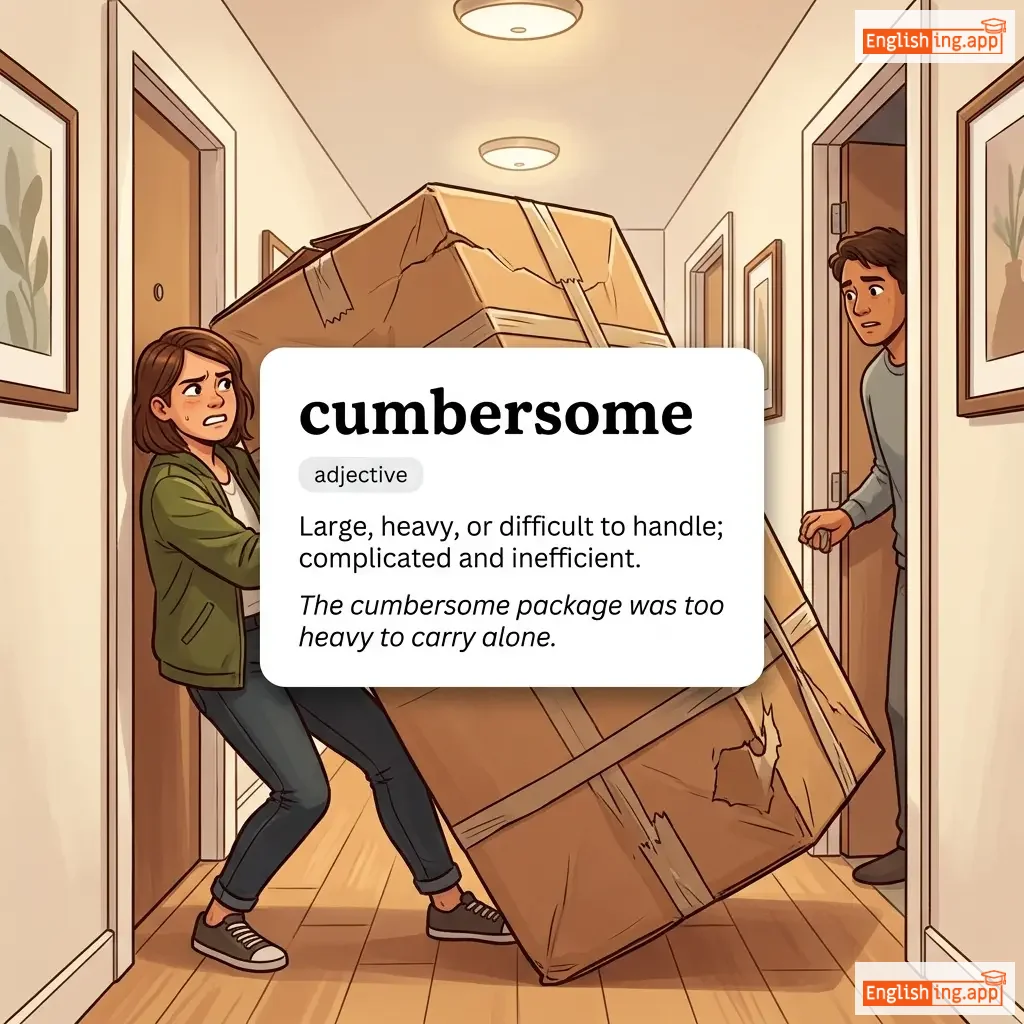
#2051
📦
|
/ˈkʌmbərsəm/
adjective
(カンバサム)
••••••
|
|
面倒な
mendōna
••••••
|
- •••••• | - •••••• | - •••••• | - •••••• |
Large, heavy, or difficult to handle; complicated and inefficient.
••••••
|
The cumbersome package was too heavy to carry alone.
その重い荷物は一人では運べないほど大きかった。
••••••
|
その面倒な荷物は一人で運ぶには重すぎた。
Sono mendōna nimotsu wa hitori de hakobu ni wa omosugita.
••••••
|
- •••••• | - •••••• | - •••••• |
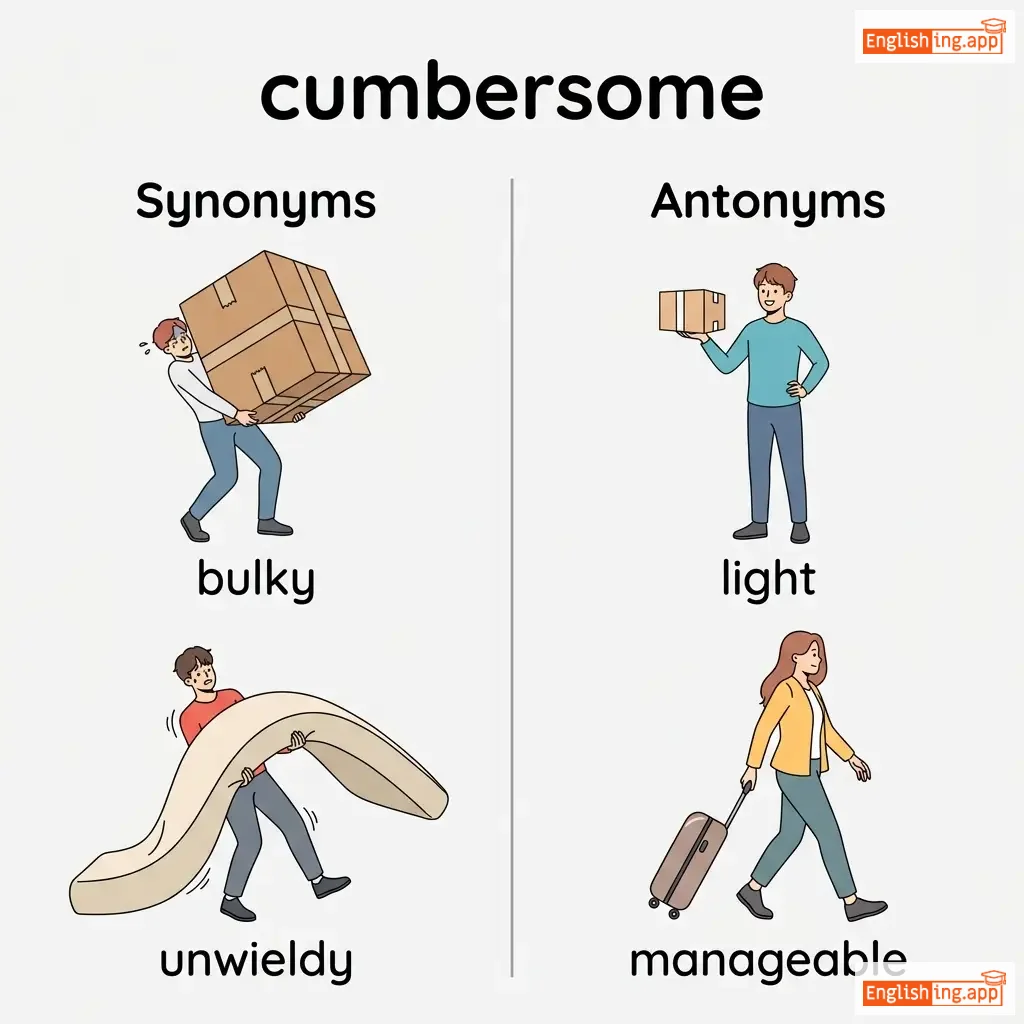
bulky, unwieldy, clumsy, awkward, heavy
••••••
|
light, manageable, convenient
••••••
|
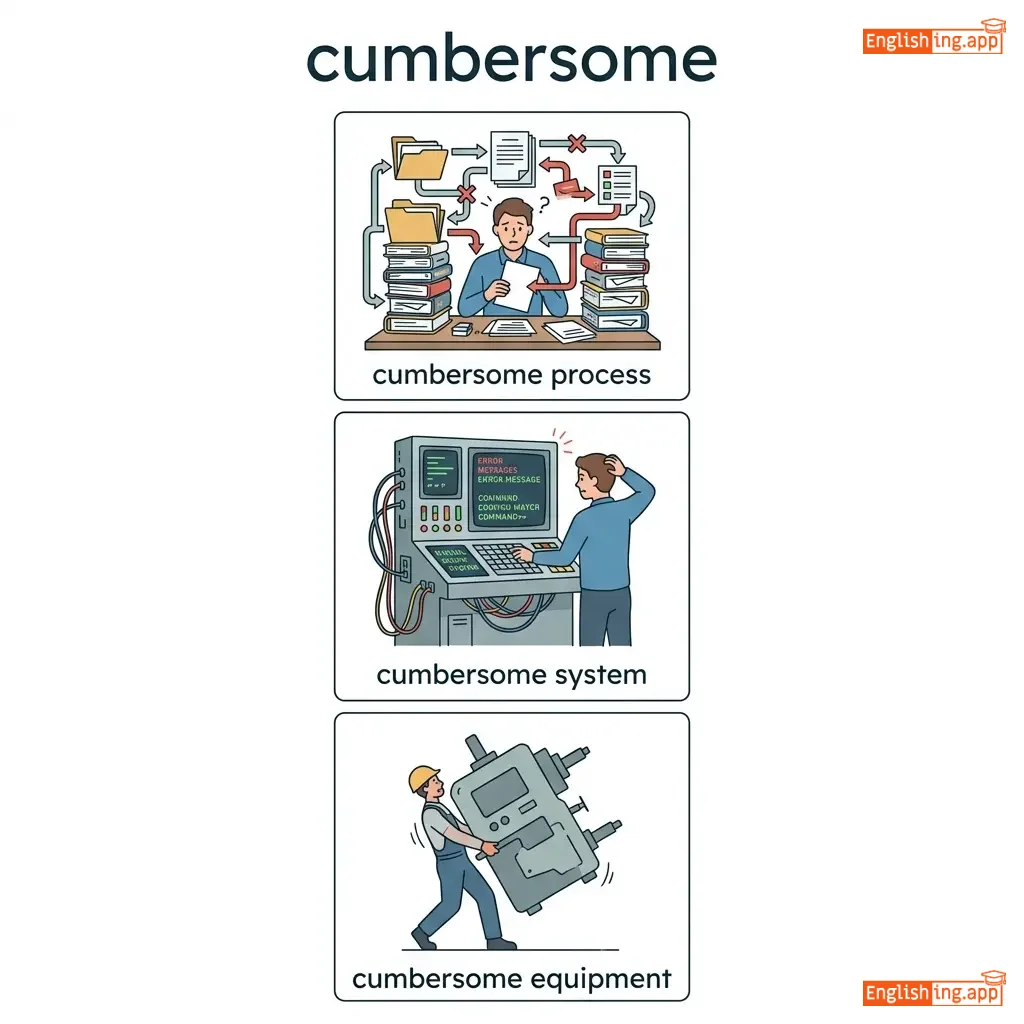
cumbersome process, cumbersome system, cumbersome equipment, cumbersome package
••••••
|
CUMber + some = 面倒で重すぎて運べない (mendōna).
••••••
|
|
#2052
🌊
|
/ˈkʌlvərt/
noun
(カルバート)
••••••
|
- •••••• |
カルバート
karubāto
••••••
|
- •••••• | - •••••• | - •••••• | - •••••• |
a tunnel or drain that carries water under a road or railway
••••••
|
The heavy rainwater flowed through the culvert under the bridge.
重い雨水が橋の下のカルバートを通って流れました。
••••••
|
重い雨水が橋の下のカルバートを通って流れました。
Omoi amamizu ga hashi no shita no karubāto o tōtte nagaremashita.
••••••
|
- •••••• | - •••••• | - •••••• |
drain, channel, sewer, conduit
••••••
|
dam, barrier
••••••
|
concrete culvert, road culvert, culvert construction
••••••
|
カルバートは水が通る道として、橋の下で見つけられる。
••••••
|
|
#2053
🎨
|
/ˈkʌltʃəd/
adjective
(カルトゥレッド)
••••••
|
- •••••• |
教養のある
kyouyou no aru
••••••
|
- •••••• | - •••••• | - •••••• | - •••••• |
characterized by refined taste, manners, and education
••••••
|
She is a cultured woman who loves art and literature.
彼女は芸術と文学を愛する教養のある女性です。
••••••
|
彼女は芸術と文学を愛する教養のある女性です。
Kanojo wa geijutsu to bungaku o aisuru kyouyou no aru josei desu.
••••••
|
- •••••• | - •••••• | - •••••• |
refined, educated, sophisticated, polished
••••••
|
uncultured, unrefined, ignorant
••••••
|
cultured background, cultured family, cultured taste
••••••
|
Culturedは教養があるという意味 – 洗練された教育と趣味
••••••
|
|
#2054
🌱
|
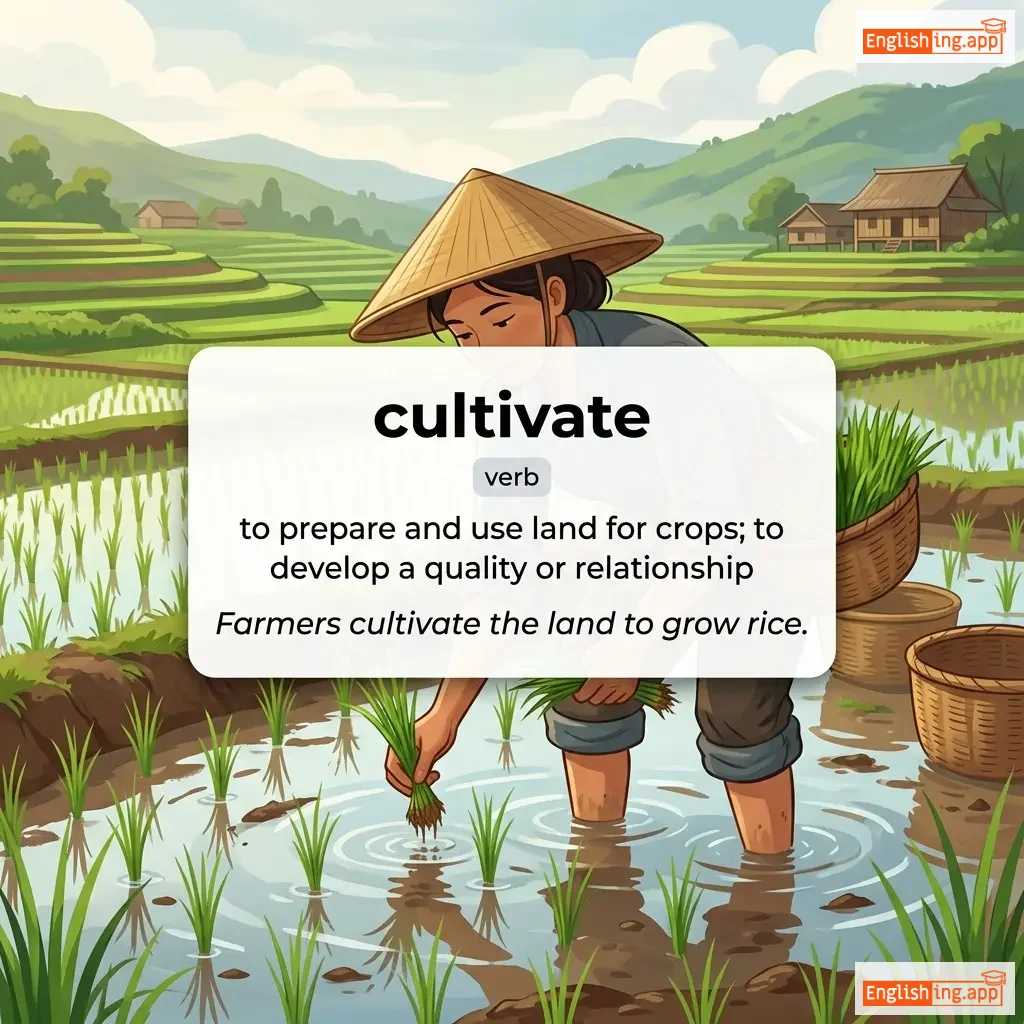
/ˈkʌltɪveɪt/
verb
(ハピネス)
••••••
|
|
幸せ
shiawase
••••••
|
cultivated
••••••
|
cultivated
••••••
|
cultivates
••••••
|
cultivating
••••••
|
to prepare and use land for crops; to develop a quality or relationship
••••••
|
Farmers cultivate the land to grow rice.
彼女は賞を受け取ったとき、幸せを隠せなかった。
••••••
|
彼女は賞を受け取ったとき、幸せを隠せなかった。
Kanojo wa shō o uketotta toki, shiawase o kakusenakatta.
••••••
|
cultivate friendship
幸せを追い求める
••••••
|
to develop a good relationship with someone
••••••
|
幸せを追い求める
shiawase o oimotomeru
••••••
|
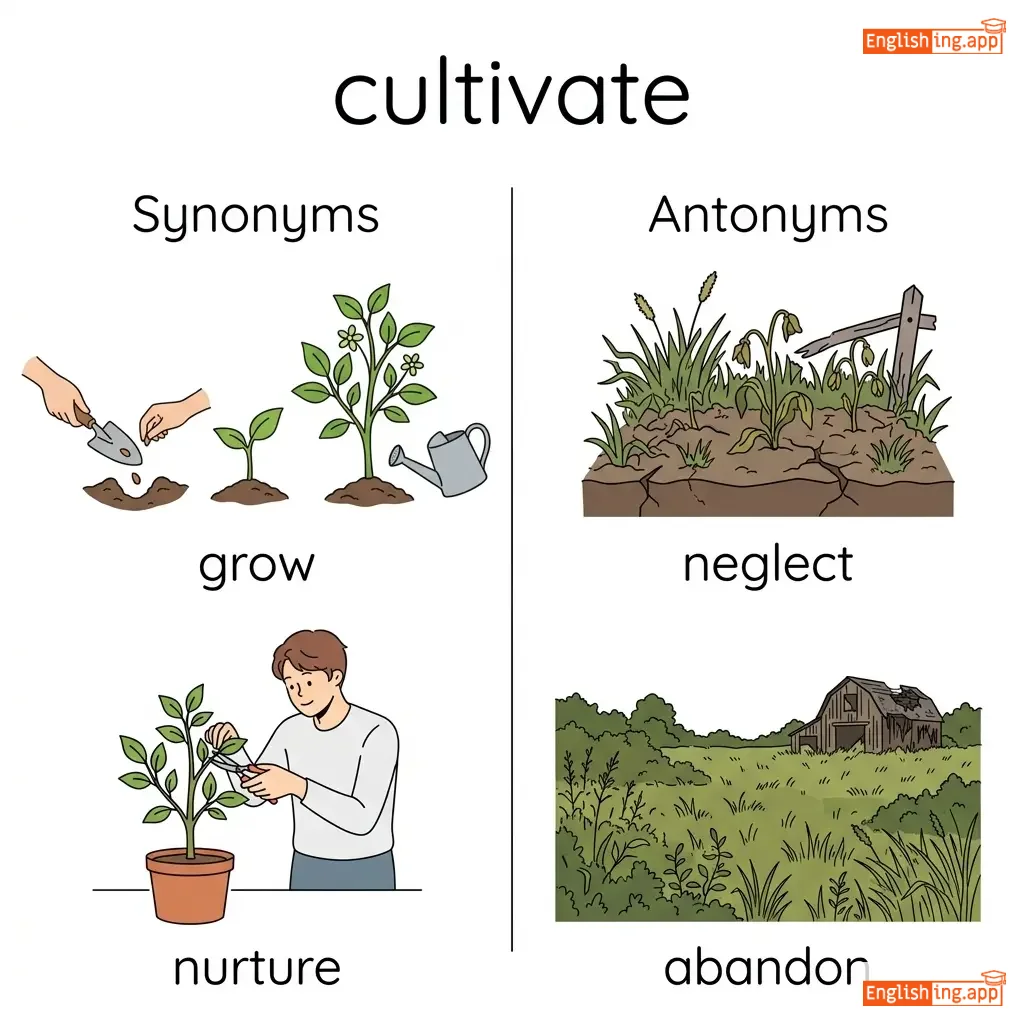
grow, nurture, develop, foster, promote
••••••
|
neglect, abandon
••••••
|
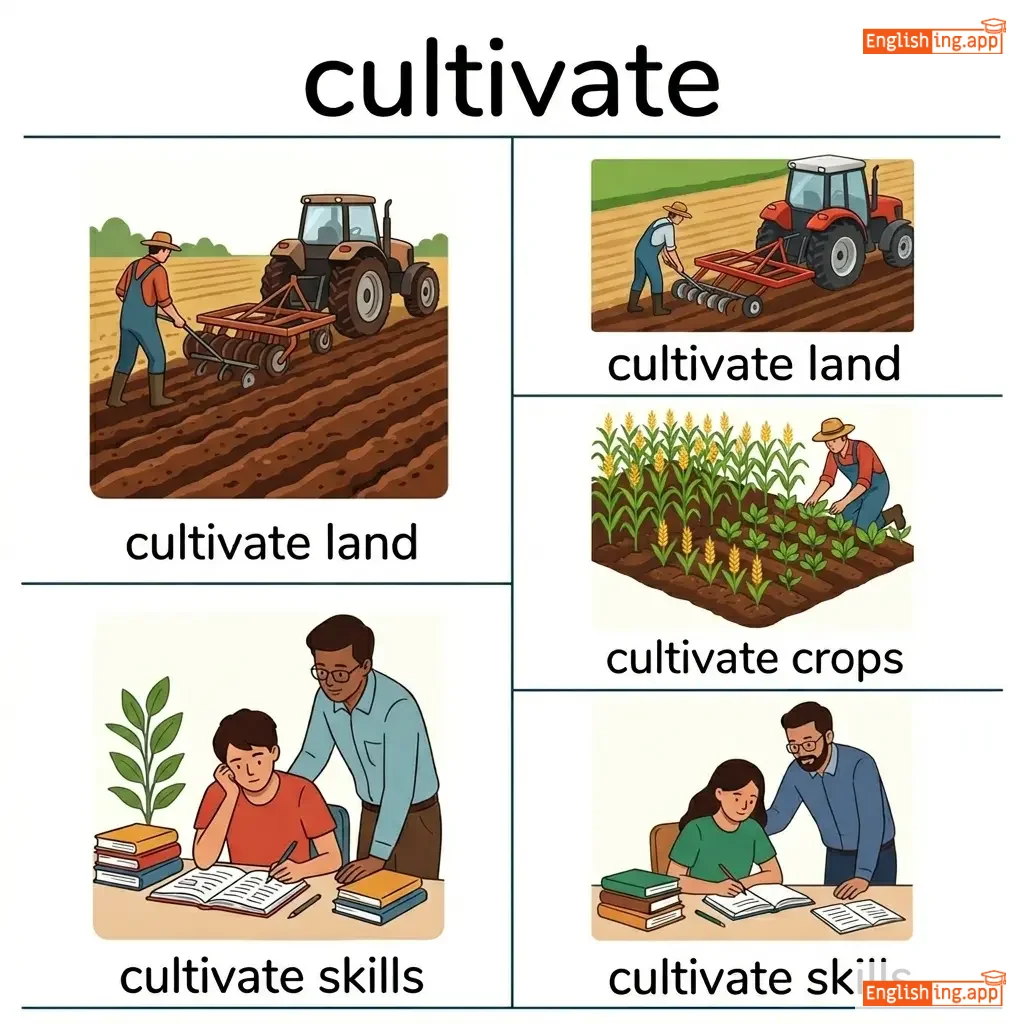
cultivate land, cultivate crops, cultivate skills, cultivate habits
••••••
|
幸せを求めるために、幸せを追い求める。
••••••
|
|
#2055
🚔
|
/ˈkʌlprɪt/
noun
(カルプリット)
••••••
|
- •••••• |
犯人
hannin
••••••
|
- •••••• | - •••••• | - •••••• | - •••••• |
a person who is responsible for a crime or misdeed
••••••
|
The police caught the culprit behind the robbery. |
警察は強盗の背後にいる犯人を捕まえた。
Keisatsu wa goutou no haigo ni iru hannin wo tsukamaeta.
••••••
|
- •••••• | - •••••• | - •••••• |
offender, wrongdoer, criminal, perpetrator, lawbreaker
••••••
|
victim, innocent, blameless
••••••
|
real culprit, find the culprit, main culprit
••••••
|
犯人は犯罪を犯した人です
••••••
|
|
#2056
🎯
|
/krʌks/
noun
(kruks)
••••••
|
- •••••• |
核心
kakushin
••••••
|
- •••••• | - •••••• | - •••••• | - •••••• |
the most important or decisive point of an issue
••••••
|
The crux of the problem lies in poor communication. |
問題の核心はコミュニケーション不足にあります。
Mondai no kakushin wa komyunikeeshon busoku ni arimasu.
••••••
|
the crux of the matter |
the most important or central aspect of an issue
••••••
|
問題の核心
Mondai no kakushin
••••••
|
essence, core, heart, gist, nucleus
••••••
|
detail, trivia, unimportance
••••••
|
the crux of the issue, crux of the debate, the crux of the argument
••••••
|
CRUXは核心を意味します — 重要な問題の核心のように 🎯
••••••
|
|
#2057
⚖️
|
/ˌkʌl.pəˈbɪl.ɪ.ti/
noun
(カルパビリティ)
••••••
|
- •••••• |
有罪
yūzai
••••••
|
- •••••• | - •••••• | - •••••• | - •••••• |
responsibility for a fault or wrong; blameworthiness
••••••
|
The jury considered his level of culpability in the crime. |
陪審員はその犯罪における彼の有罪の程度を考慮しました。
Beishin'in wa sono hanzai ni okeru kare no yūzai no teido o kōryo shimashita.
••••••
|
- •••••• | - •••••• | - •••••• |
blame, guilt, fault, responsibility, accountability
••••••
|
innocence, blamelessness
••••••
|
legal culpability, moral culpability, degree of culpability, establish culpability
••••••
|
有罪とは、罪の責任があること。犯した過ちに対して責任を取る。
••••••
|
|
#2058
🎓
|
/ˌkʌl.mɪˈneɪ.ʃən/
noun
(カルミネーション)
••••••
|
|
頂点
chouten
••••••
|
- •••••• | - •••••• | - •••••• | - •••••• |
the highest point or final result of something
••••••
|
Graduation day is the culmination of years of hard work. |
卒業式は何年もの努力の頂点です。
Sotsugyoushiki wa nannen mono doryoku no chouten desu.
••••••
|
- •••••• | - •••••• | - •••••• |
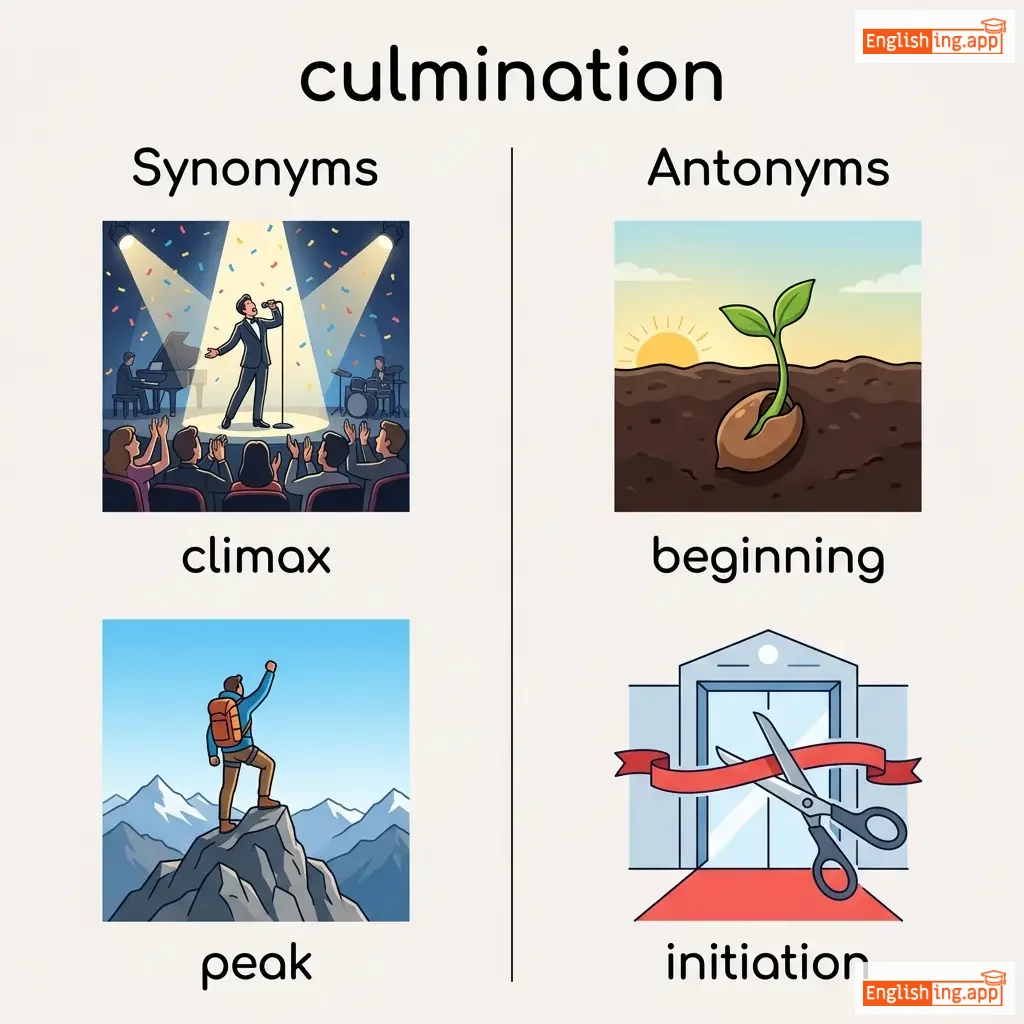
climax, peak, conclusion, finale, result
••••••
|
beginning, initiation, start
••••••
|
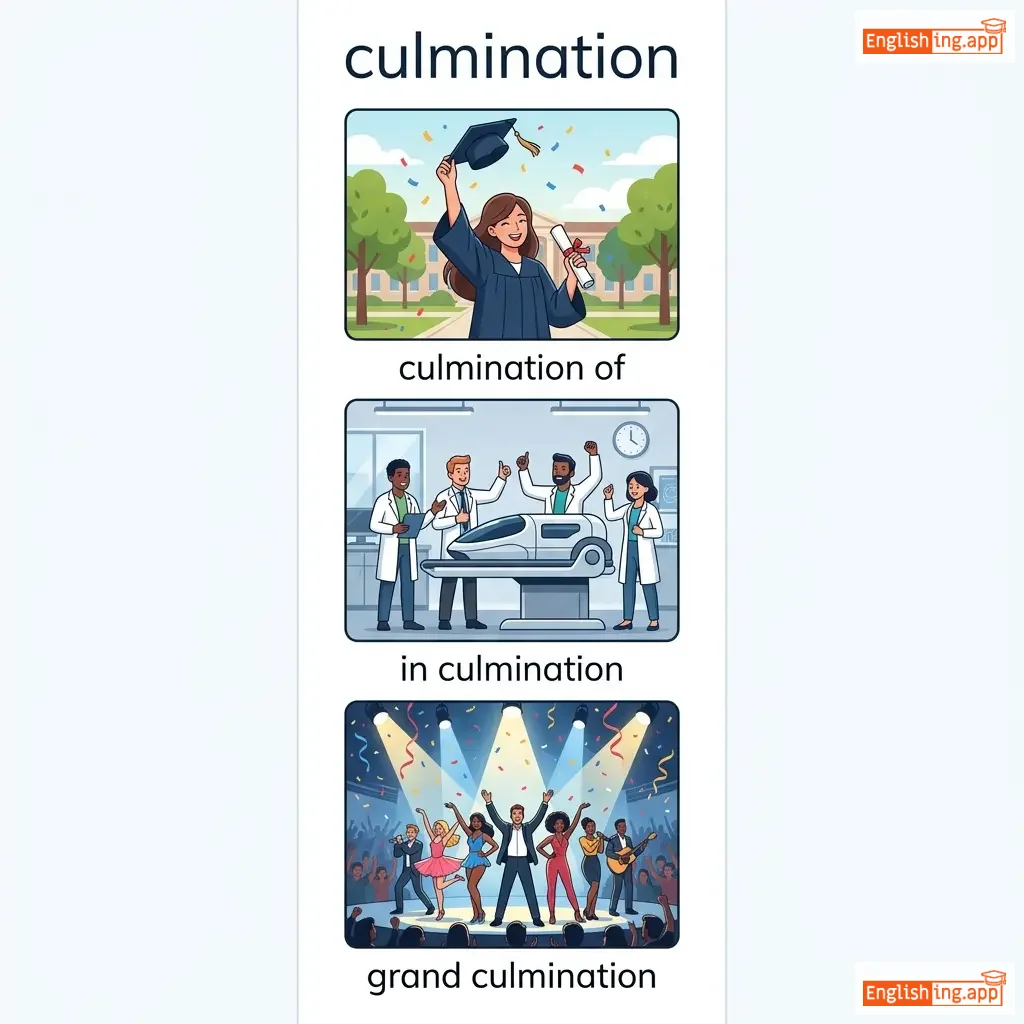
culmination of, in culmination, grand culmination, final culmination
••••••
|
頂点は全ての努力が実を結ぶ瞬間です。
••••••
|
|
#2059
🏔️
|
/ˈkʌl.mɪ.neɪt/
verb
(カリミネート)
••••••
|
|
最高潮に達する
saikōchō ni tassuru
••••••
|
culminated
カリミネーテッド
••••••
|
culminated
カリミネーテッド
••••••
|
culminates
カリミネーツ
••••••
|
culminating
カリミネーティング
••••••
|
to reach the highest point or final stage
••••••
|
The negotiations culminated in a successful agreement.
ザ ネゴシエーションズ カリミネイテッド イン ア サクセスフル アグリーメント
••••••
|
交渉は成功裏に合意に至った。
Kōshō wa seikōri ni gōi ni itatta.
••••••
|
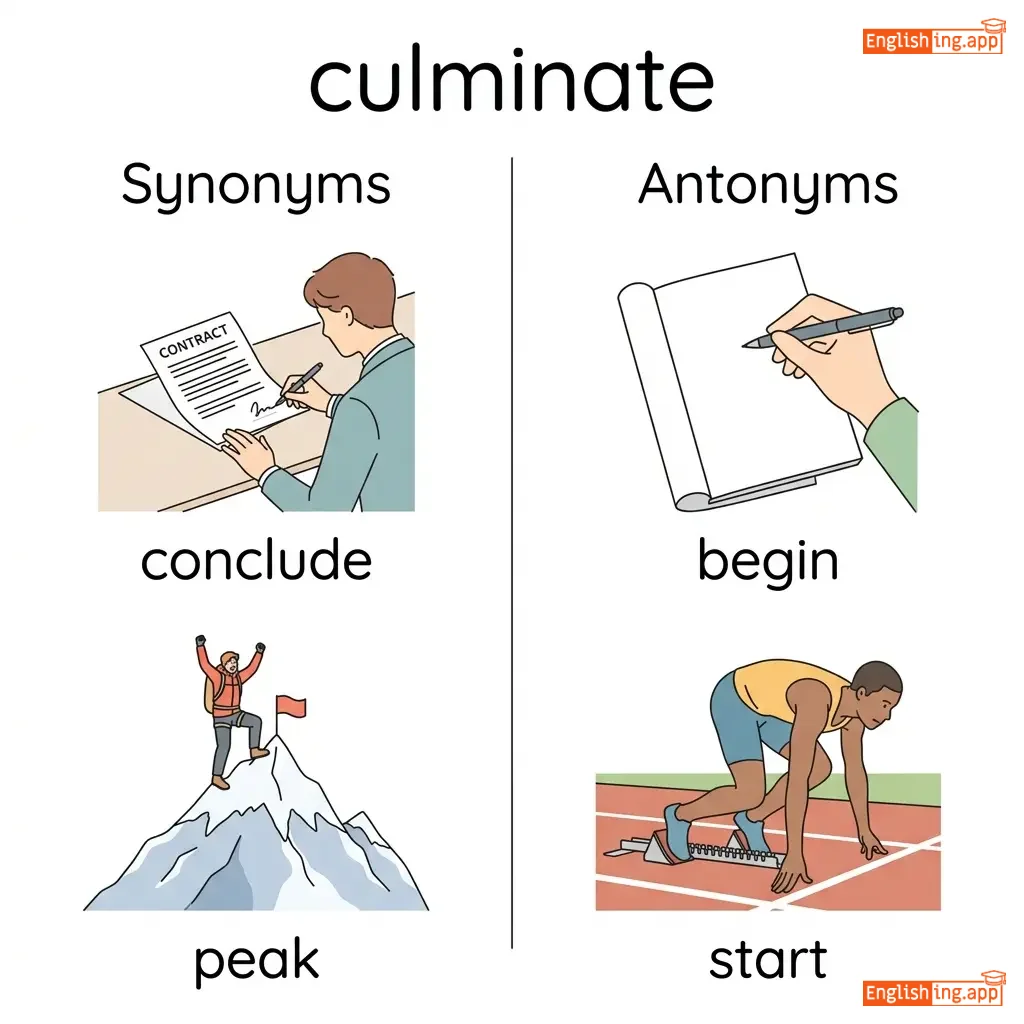
- •••••• | - •••••• | - •••••• |
conclude, peak, climax, result, end
••••••
|
begin, start, initiate
••••••
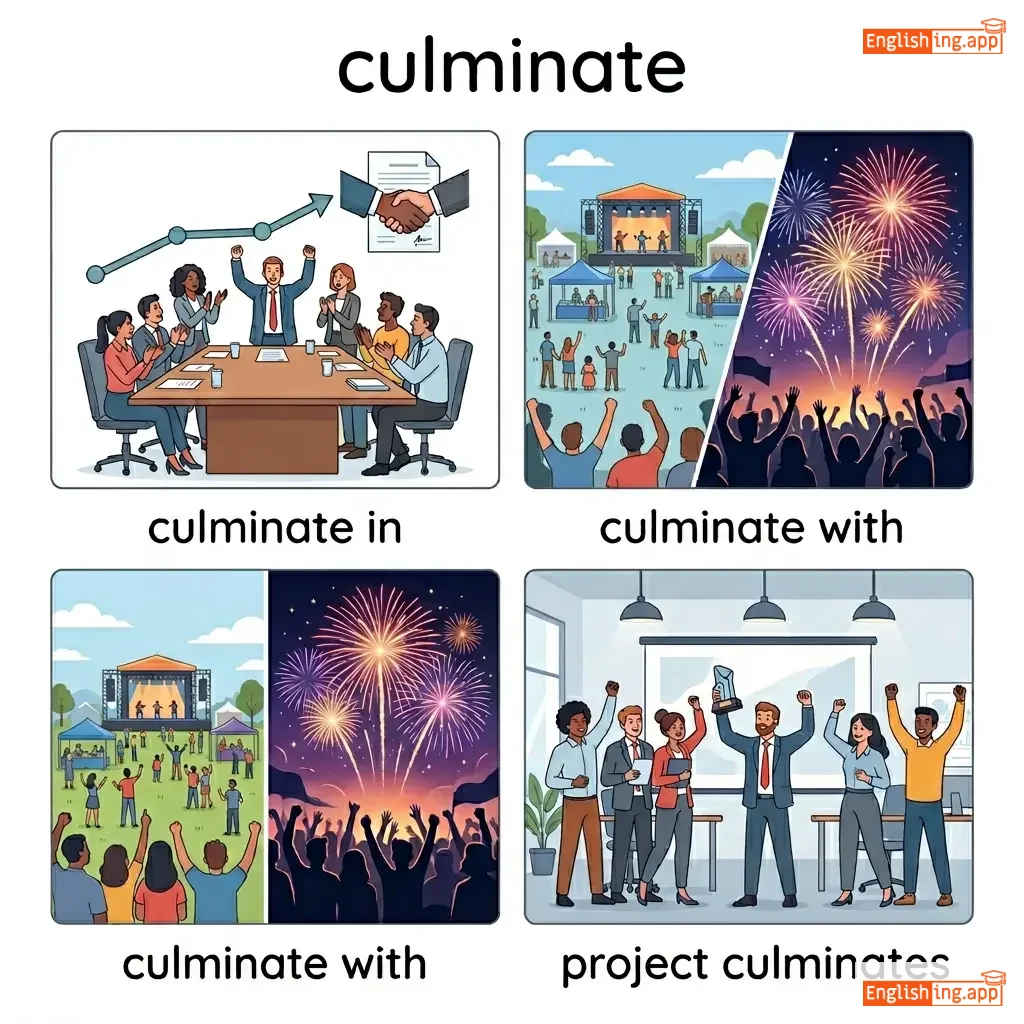
|
culminate in, culminate with, project culminates, efforts culminate
••••••
|
Culminate とは、最高点に到達すること - ピークへ!
••••••
|
|
#2060
✂️
|
/kʌl/
verb
••••••
|
- •••••• | - •••••• |
culled
••••••
|
culled
••••••
|
culls
••••••
|
culling
••••••
|
to select or remove from a larger group, often to reduce numbers
••••••
|
The farmers decided to cull the sick animals from the herd. |
- •••••• |
cull the herd |
to reduce a group by removing weaker members
••••••
|
- •••••• |
select, choose, pick, remove, eliminate
••••••
|
gather, accumulate, include
••••••
|
cull animals, cull list, cull ideas, cull population
••••••
|
No •••••• |
|
#2061
🍳
|
/ˈkʌl.ɪ.nɛr.i/
adjective
(カリナリー)
••••••
|
|
料理の
ryōri no
••••••
|
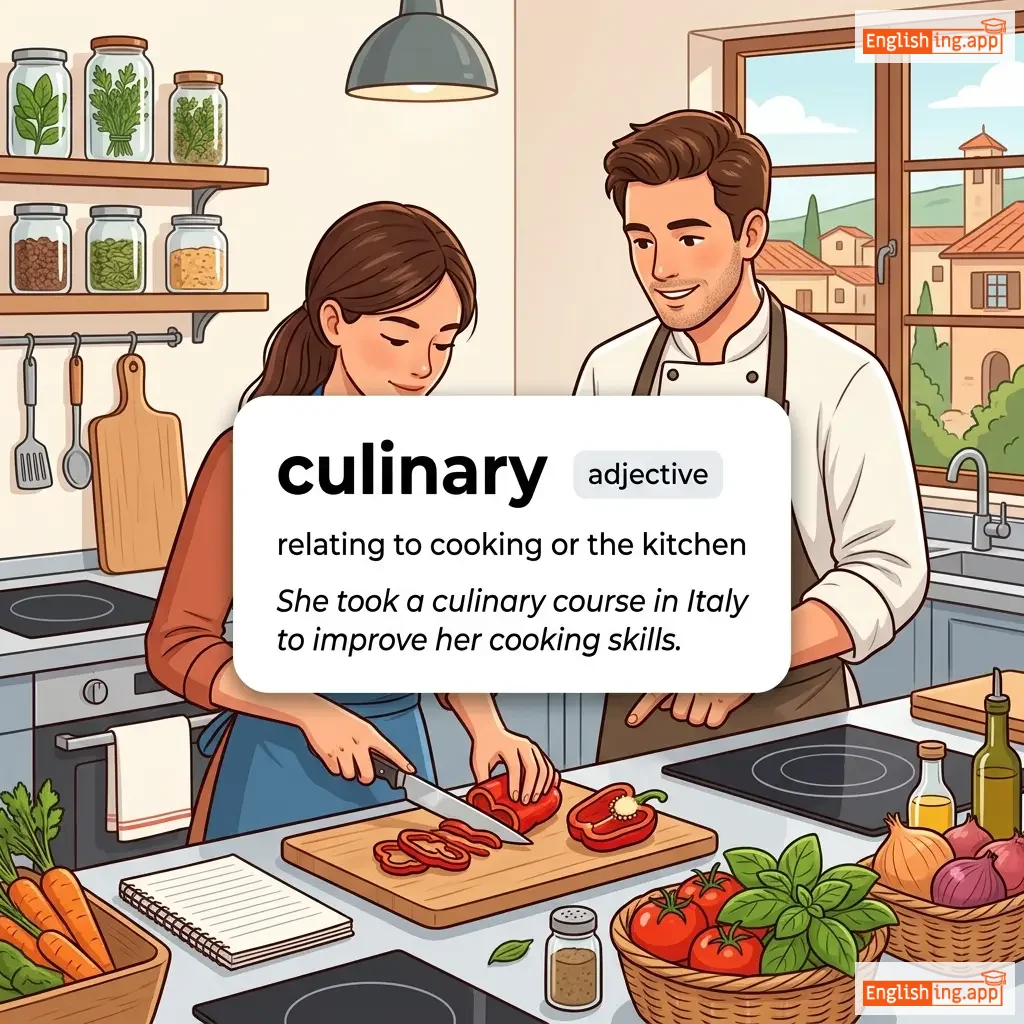
- •••••• | - •••••• | - •••••• | - •••••• |
relating to cooking or the kitchen
••••••
|
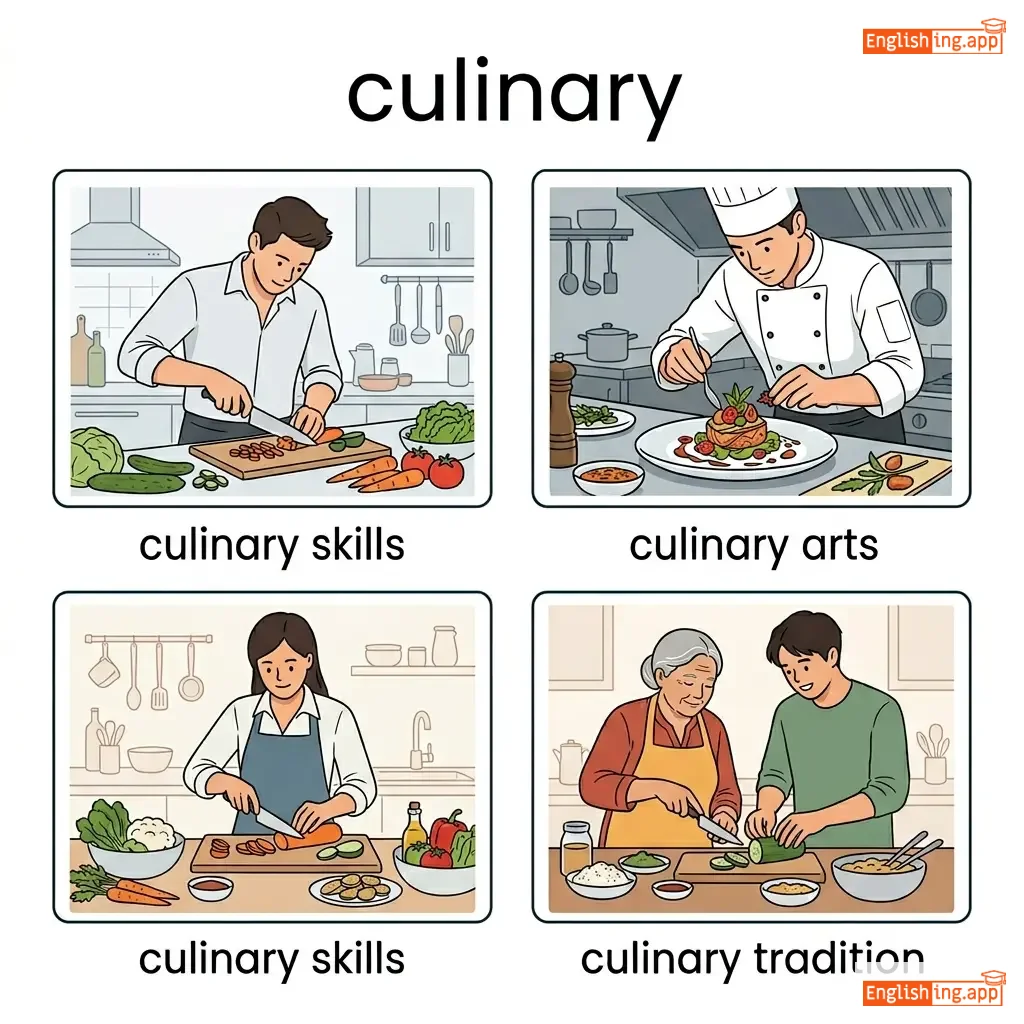
She took a culinary course in Italy to improve her cooking skills.
彼女はイタリアで料理のスキルを向上させるために料理のコースを受講しました。
••••••
|
彼女はイタリアで料理のスキルを向上させるために料理のコースを受講しました。
Kanojo wa Itaria de ryōri no sukiru o kōjōsaseru tame ni ryōri no kōsu o jukō shimashita.
••••••
|
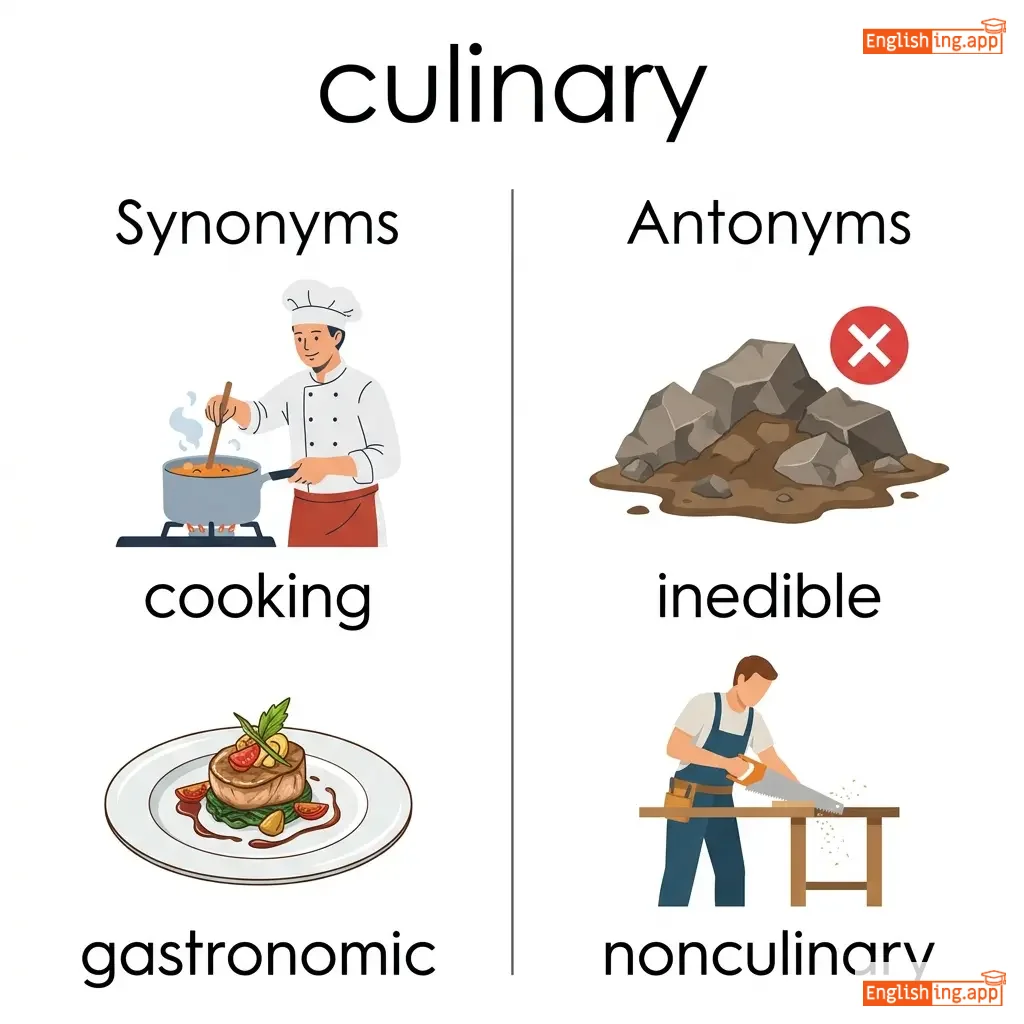
- •••••• | - •••••• | - •••••• |
cooking, gastronomic, dietary, kitchen-related
••••••
|
inedible, nonculinary
••••••
|
culinary skills, culinary arts, culinary tradition, culinary delight
••••••
|
Culinary は日本語で料理に関するすべてを意味します。
••••••
|
|
#2062
🚧
|
/ˌkʌl də ˈsæk/
noun
(カル・デ・サック)
••••••
|
- •••••• |
袋小路
fukurokouji
••••••
|
- •••••• | - •••••• | - •••••• | - •••••• |
A street or passage closed at one end; a dead end.
••••••
|
They bought a house at the end of a quiet cul de sac. |
彼らは静かな袋小路の先に家を買いました。
Karera wa shizukana fukurokouji no saki ni ie o kaimashita.
••••••
|
- •••••• | - •••••• | - •••••• |
dead end, blind alley, close, no-through road
••••••
|
highway, open road, main road
••••••
|
quiet cul de sac, residential cul de sac, end of cul de sac, cul de sac house
••••••
|
Cul de sac はサック(袋)で通りが終わるという意味です。
••••••
|
|
#2063
🍝
|
/kwɪˈziːn/
noun
(kwizin)
••••••
|
- •••••• |
料理
ryouri
••••••
|
- •••••• | - •••••• | - •••••• | - •••••• |
A style or method of cooking, especially characteristic of a particular country or region.
••••••
|
Italian cuisine is famous all over the world.
イタリア料理は世界中で有名です。
••••••
|
イタリア料理は世界中で有名です。
Itaria ryouri wa sekaijuu de yuumei desu.
••••••
|
- •••••• | - •••••• | - •••••• |
food, cookery, gastronomy, fare, diet
••••••
|
fast food, junk food
••••••
|
Italian cuisine, French cuisine, traditional cuisine, local cuisine
••••••
|
Cuisineの意味は料理、イタリア料理のように特定の国の料理を指します。
••••••
|
|
#2064
🎭
|
/kjuː/
noun/verb
(キュー)
••••••
|
- •••••• |
合図
aizu
••••••
|
cued
キュード
••••••
|
cued
キュード
••••••
|
cues
キューズ
••••••
|
cueing
キューイング
••••••
|
A signal or prompt for action; to give a signal.
••••••
|
The actor waited for his cue before entering the stage.
俳優はステージに上がる前にキューを待っていました。
••••••
|
俳優はステージに上がる前にキューを待っていました。
Haiyū wa sutēji ni agaru mae ni kyū o matte imashita.
••••••
|
on cue
適切なタイミングで
••••••
|
At exactly the right moment, as expected.
••••••
|
適切なタイミングで
Tekisetsu na taimingu de
••••••
|
signal, prompt, hint, indication, trigger
••••••
|
silence, ignore, neglect
••••••
|
take a cue, give a cue, wait for a cue, cue card
••••••
|
Cueを言うと、キュー(queue)が始まります - 始める合図です。
••••••
|
|
#2065
🥢
|
/ˈkʌdʒ.əl/
noun/verb
(カジュエル)
••••••
|
- •••••• |
棒
bō
••••••
|
cudgeled
カジュエルした
••••••
|
cudgeled
カジュエルした
••••••
|
cudgels
カジュエルス
••••••
|
cudgeling
カジュエリング
••••••
|
A short, thick stick used as a weapon; to beat with a cudgel.
••••••
|
The guard used a cudgel to chase away the thief.
警備員はカジュエルを使って泥棒を追い払った。
••••••
|
警備員は棒を使って泥棒を追い払った。
Keibiin wa bō o tsukatte dorobō o oiharatta.
••••••
|
take up the cudgels
カジュエルを取る
••••••
|
To defend or support someone or something strongly.
••••••
|
味方する
mikata suru
••••••
|
club, stick, baton, staff, bludgeon
••••••
|
caress, protect, support
••••••
|
wooden cudgel, heavy cudgel, wield a cudgel, take up the cudgels
••••••
|
Cudgelはcud (棒) + gel (打つ) = 棒で打つ
••••••
|
|
#2066
📦
|
/ˈkjuː.bɪ.kəl/
noun
(キュービクル)
••••••
|
- •••••• |
仕切られたスペース
shikirareta supēsu
••••••
|
- •••••• | - •••••• | - •••••• | - •••••• |
A small partitioned-off area of a room, typically in an office.
••••••
|
She works in a cubicle with three other colleagues. |
彼女は他の3人の同僚と一緒に仕切られたスペースで働いています。
Kanojo wa hoka no sannin no dōryō to issho ni shikirareta supēsu de hataraiteimasu.
••••••
|
- •••••• | - •••••• | - •••••• |
booth, stall, cell, workspace, compartment
••••••
|
hall, open space, chamber
••••••
|
office cubicle, cubicle wall, small cubicle, work cubicle
••••••
|
仕切られた小さなスペースがキュービクルです。
••••••
|
|
#2067
💎
|
/ˈkrɪstəlaɪz/
verb
(kuri-su-ta-raizu)
••••••
|
- •••••• |
結晶化する
kesshouka suru
••••••
|
crystallized
kuri-su-ta-raizudo
••••••
|
crystallized
kuri-su-ta-raizudo
••••••
|
crystallizes
kuri-su-ta-raizezu
••••••
|
crystallizing
kuri-su-ta-raizingu
••••••
|
to form crystals; to make an idea or plan clear and definite
••••••
|
Her vague thoughts began to crystallize into a solid plan.
彼女のあいまいな考えは、明確な計画に結晶化し始めた。
••••••
|
彼女のあいまいな考えは、明確な計画に結晶化し始めた。
Kanojo no aimai na kangae wa, meikaku na keikaku ni kesshouka shi hajimeta.
••••••
|
crystallize an idea
アイデアを結晶化する
••••••
|
to make something clear and well-defined
••••••
|
アイデアを明確にする
Aidea wo meikaku ni suru
••••••
|
solidify, clarify, materialize, shape
••••••
|
blur, confuse, dissolve
••••••
|
crystallize into, crystallize an idea, crystallize thoughts
••••••
|
水晶のように明確に考え、結晶化する 💎
••••••
|
|
#2068
🔐
|
/ˈkrɪptəɡræm/
noun
(クリプトグラム)
••••••
|
- •••••• |
暗号文
angoubun
••••••
|
- •••••• | - •••••• | - •••••• | - •••••• |
a text written in code or cipher
••••••
|
The detective solved the cryptogram hidden in the letter. |
探偵は手紙に隠された暗号文を解読しました。
Tantei wa tegami ni kakusareta angōbun o kaidoku shimashita.
••••••
|
- •••••• | - •••••• | - •••••• |
cipher, code, puzzle, enigma
••••••
|
plain text, clarity
••••••
|
solve cryptogram, hidden cryptogram, puzzle cryptogram
••••••
|
CRYPTO + GRAM = 暗号文 🔐
••••••
|
|
#2069
🕵️
|
/ˈkrɪptɪk/
adjective
(クリプティック)
••••••
|
|
謎めいた
nazo meita
••••••
|
- •••••• | - •••••• | - •••••• | - •••••• |
having a meaning that is mysterious or obscure
••••••
|
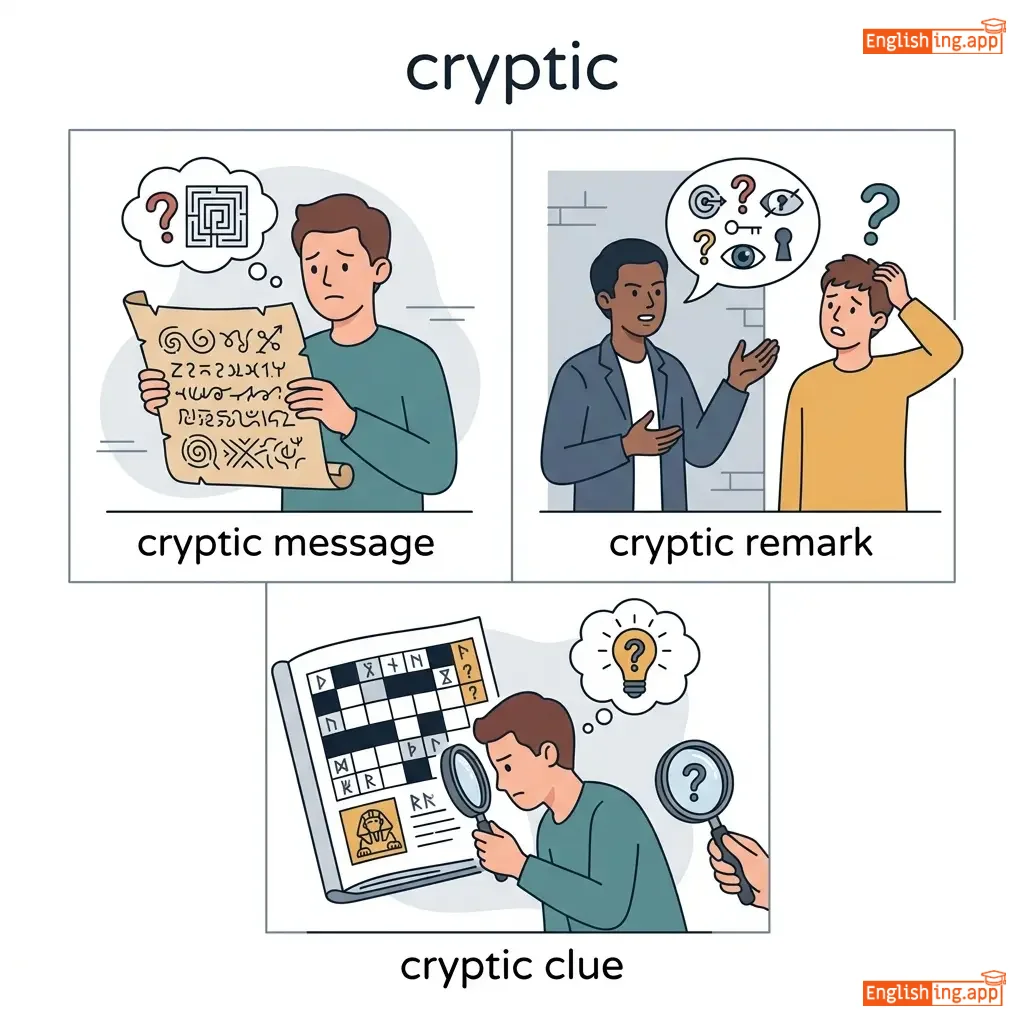
She left a cryptic message on his voicemail.
彼女は彼のボイスメールに謎めいたメッセージを残しました。
••••••
|
彼女は彼のボイスメールに謎めいたメッセージを残しました。
Kanojo wa kare no boisu mēru ni nazo meita messēji o nokoshimashita.
••••••
|
cryptic remark
謎めいた発言
••••••
|
an intentionally vague or puzzling statement
••••••
|
謎めいた発言
nazo meita hatsugen
••••••
|
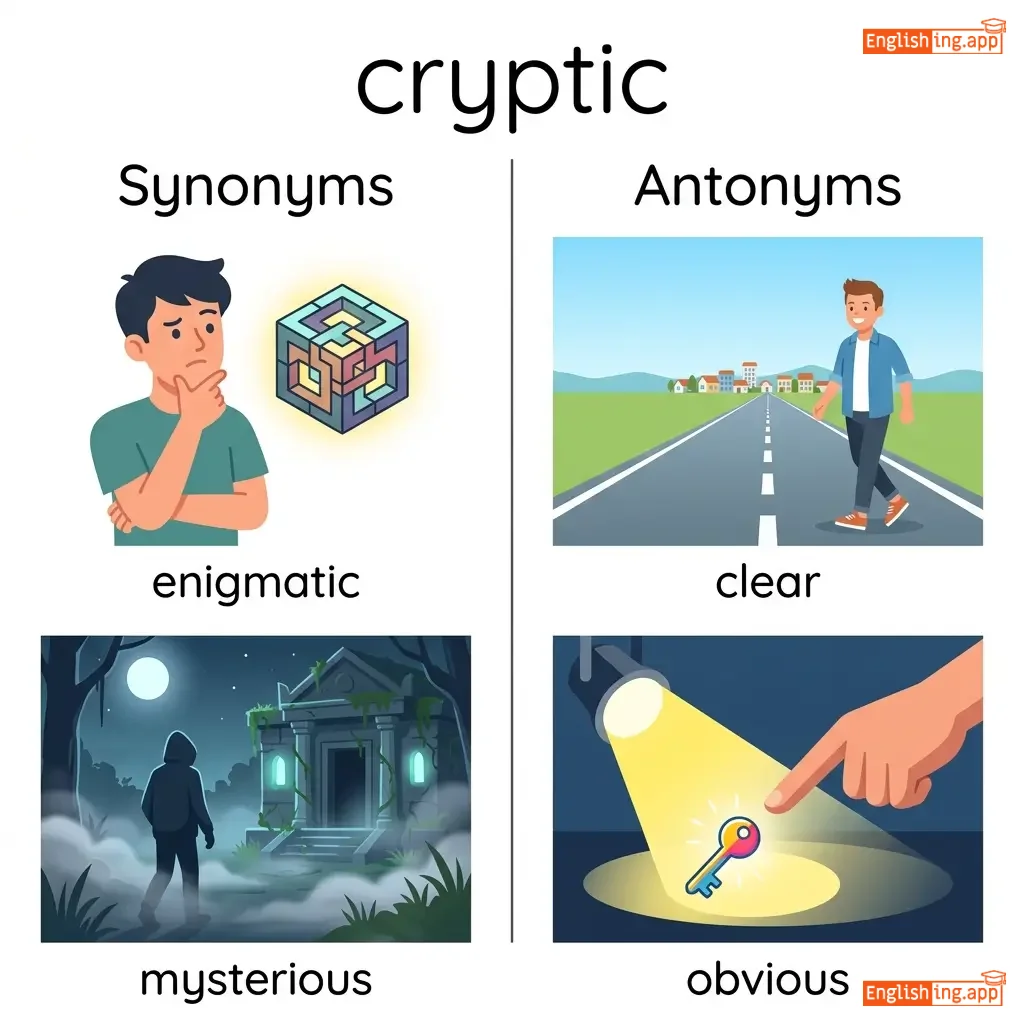
enigmatic, mysterious, obscure, puzzling, ambiguous
••••••
|
clear, obvious, straightforward
••••••
|
cryptic message, cryptic remark, cryptic clue
••••••
|
CRYPTIC は謎のようなもの、解くべき暗号のようです。
••••••
|
|
#2070
⚰️
|
/krɪpt/
noun
(krɪpt)
••••••
|
- •••••• |
地下室
chikashitsu
••••••
|
- •••••• | - •••••• | - •••••• | - •••••• |
an underground chamber, especially one beneath a church, used as a burial place
••••••
|
The tourists explored the ancient crypt beneath the cathedral.
観光客は大聖堂の下にある古代の地下室を探索しました。
••••••
|
観光客は大聖堂の下にある古代の地下室を探索しました。
Kankoukyaku wa daiseidou no shita ni aru kodai no chikashitsu wo tansaku shimashita.
••••••
|
- •••••• | - •••••• | - •••••• |
tomb, vault, catacomb, mausoleum
••••••
|
open ground, surface
••••••
|
ancient crypt, church crypt, burial crypt
••••••
|
地下室は埋葬場所、墓地⚰️
••••••
|
Vocabulary Quiz
Test your vocabulary by matching words with their translations or meanings.
Login to take the quiz
Comments (0)
Share your thoughts and join the discussion.
Join the discussion by logging in
Login to CommentNo comments yet
Be the first to share your thoughts!