

翻訳
過去
過去分詞
三人称単数
動名詞
意味
例文
例文の翻訳
同義語
対義語
コロケーション
ニーモニック


Swipe left or right, or use the buttons. Tap image to zoom.
例文の翻訳
単語
Lesson 432Lesson 432 - マスクトグル
|
絵文字
|
単語 | Images | 翻訳 | 過去 | 過去分詞 | 三人称単数 | 動名詞 | 意味 | 例文 | 例文の翻訳 | 表現例 | 表現例の意味 | 表現例の翻訳 | 同義語 | 対義語 | コロケーション | ニーモニック |
|---|---|---|---|---|---|---|---|---|---|---|---|---|---|---|---|---|---|
|
#1
🚓
|
/pəˈtroʊl/
verb
(パトロール)
••••••
|
- •••••• |
パトロールする
patorōru suru
••••••
|
patrolled
パトロールした
••••••
|
patrolled
パトロールした
••••••
|
patrols
パトロールする
••••••
|
patrolling
パトロールしている
••••••
|
to move around an area to watch or guard it
••••••
|
The police patrol the streets at night to ensure safety.
警察は夜に街をパトロールして安全を確保しています。
••••••
|
警察は夜に街をパトロールして安全を確保しています。
Keisatsu wa yoru ni machi o patorōru shite anzen o kakuho shiteimasu.
••••••
|
on patrol
パトロール中
••••••
|
engaged in patrolling duties
••••••
|
パトロール中
patorōru-chū
••••••
|
guard, watch, monitor, inspect, survey
••••••
|
ignore, neglect, overlook
••••••
|
police patrol, border patrol, night patrol, patrol car
••••••
|
Patrol は巡回を意味する — **パトロール** する 🚓
••••••
|
|
#1
📍
|
/pɪn/
noun
(ピン)
••••••
|
- •••••• |
ピン
pin
••••••
|
- •••••• | - •••••• | - •••••• | - •••••• |
a small thin piece of metal used to fasten or hold things together
••••••
|
She used a pin to attach the note to the board. |
彼女はボードにメモを留めるためにピンを使った。
Kanojo wa boodo ni memo o tomeru tame ni pin o tsukatta.
••••••
|
pin something down |
to clearly identify or define something
••••••
|
何かを明確に定義する
nanika o meikaku ni teigi suru
••••••
|
needle, tack, clip, fastener
••••••
|
loosen, detach
••••••
|
safety pin, hair pin, pin board, pin code
••••••
|
ピンは小さな金属片を意味する — ピン Point In Note!
••••••
|
|
#1
🛏️
|
/ˈpɪloʊ/
noun
(ピロー)
••••••
|
- •••••• |
枕
makura
••••••
|
- •••••• | - •••••• | - •••••• | - •••••• |
a soft cushion filled with material used to support the head while sleeping or resting
••••••
|
She placed her head on the soft pillow and fell asleep quickly. |
彼女は柔らかい枕に頭を乗せ、すぐに眠りにつきました。
Kanojo wa yawarakai makura ni atama o nose, sugu ni nemuri ni tsukimashita.
••••••
|
rest your head on a pillow |
to relax or prepare for sleep
••••••
|
枕に頭を乗せる
makura ni atama o noseru
••••••
|
cushion, bolster, pad, headrest, support
••••••
|
hard surface, floor
••••••
|
soft pillow, pillow cover, pillow fight, pillow case
••••••
|
Pillowは日本語で枕 — 寝る前に言おう ‘枕に頭を乗せよう!’
••••••
|
|
#1
💊
|
/pɪl/
noun
(ピル)
••••••
|
- •••••• |
錠剤
jouzai
••••••
|
- •••••• | - •••••• | - •••••• | - •••••• |
a small round piece of medicine to be swallowed
••••••
|
He took a pill to relieve his headache.
彼は頭痛を和らげるためにピルを飲みました。
••••••
|
彼は頭痛を和らげるためにピルを飲みました。
Kare wa zutsuu wo yawarageru tame ni piru wo nomimashita.
••••••
|
a bitter pill to swallow
飲み込みにくい苦い薬
••••••
|
something unpleasant that is difficult to accept
••••••
|
飲み込みにくい苦い薬
Nomikomi nikui nigai kusuri
••••••
|
tablet, capsule, drug, medicine
••••••
|
injection, syrup
••••••
|
take a pill, swallow a pill, sleeping pill, pain pill
••••••
|
Pill 💊 は錠剤を意味します — 頭痛があるときに、ピルを飲むことで‘平和が来る’!
••••••
|
|
#1
🐷
|
/pɪɡ/
noun
(ピッグ)
••••••
|
- •••••• |
豚
buta
••••••
|
- •••••• | - •••••• | - •••••• | - •••••• |
a farm animal with a snout used for digging and a curly tail; kept for meat such as pork or bacon
••••••
|
The pig rolled happily in the mud. |
豚は泥の中で楽しそうに転がっていた。
Buta wa doro no naka de tanoshisō ni korogatte ita.
••••••
|
when pigs fly |
something that will never happen
••••••
|
豚が飛ぶ時
Buta ga tobu toki
••••••
|
hog, swine, boar, piglet
••••••
|
human, angel
••••••
|
pig farm, pig meat, pig pen, pig feed
••••••
|
豚 🐷 は豚を意味する — 豚の貯金箱でお金を貯める!
••••••
|
|
#1
🚚
|
/ˈpɪkʌp/
noun
(ピックアップ)
••••••
|
- •••••• |
オープンバックの小型トラック; 何かを集めたり改善したりする行為
ōpun bakku no kogata torakku; nanika o atsumetari kaizen shitari suru kōi
••••••
|
- •••••• | - •••••• | - •••••• | - •••••• |
a small truck with an open back; the act of collecting or improving something
••••••
|
The company scheduled a pickup for the returned goods. |
会社は返却された商品を引き取る予定でした。
Kaisha wa henkyaku sareta shōhin o hikitoru yotei deshita.
••••••
|
pickup line |
a phrase used to start a conversation with someone you are attracted to
••••••
|
興味のある人と会話を始めるために使うフレーズ
Kyōmi no aru hito to kaiwa o hajimeru tame ni tsukau furēzu
••••••
|
collection, truck, improvement, gathering
••••••
|
drop-off, decline
••••••
|
pickup truck, pickup service, pickup point, pickup line
••••••
|
Pickは集める、Upは上—Pickupは何かを集めたり改善したりする車 🚚
••••••
|
|
#1
📸
|
/fəˈtɒɡrəfi/
noun
(写真)
••••••
|
- •••••• |
写真
shashin
••••••
|
- •••••• | - •••••• | - •••••• | - •••••• |
the art or practice of taking and processing photographs
••••••
|
She studied photography in college. |
彼女は大学で写真を学びました。
Kanojo wa daigaku de shashin o manabimashita.
••••••
|
- •••••• | - •••••• | - •••••• |
photo art, imaging, picture taking, camera work
••••••
|
painting, drawing
••••••
|
digital photography, landscape photography, photography studio, wedding photography
••••••
|
写真 + 技術、つまり写真で物語を語ること 📸
••••••
|
|
#1
🏺
|
/ˈpɜːʃən/
noun
(パーシャン)
••••••
|
- •••••• |
イラン出身者またはペルシャ語を話す人
Iran shusshinsha matawa Perusha-go o hanasu hito
••••••
|
- •••••• | - •••••• | - •••••• | - •••••• |
a native or inhabitant of Iran; the language spoken in Iran (Farsi)
••••••
|
The Persian language has a rich literary history.
ペルシャ語は豊かな文学的歴史を持っています。
••••••
|
ペルシャ語は豊かな文学的歴史を持っています。
Perusha-go wa yutakana bungakuteki rekishi o motteimasu.
••••••
|
- •••••• | - •••••• | - •••••• |
Iranian, Farsi, Indo-Iranian, Middle Eastern
••••••
|
non-Iranian, foreign
••••••
|
Persian cat, Persian culture, Persian literature, Persian Gulf
••••••
|
ペルシャ = イラン、ペルシャといえばイランを思い出して 🏺
••••••
|
|
#1
🎤
|
/pərˈfɔːrmər/
noun
(パフォーマー)
••••••
|
- •••••• |
パフォーマー
pafomā
••••••
|
- •••••• | - •••••• | - •••••• | - •••••• |
a person who entertains an audience by acting, singing, dancing, or playing music
••••••
|
The performer received a standing ovation for her song.
パフォーマーは彼女の歌のためにスタンディングオベーションを受けました。
••••••
|
パフォーマーは彼女の歌のためにスタンディングオベーションを受けました。
Pafomā wa kanojo no uta no tame ni sutandingu obēshon o ukemashita.
••••••
|
star performer
スター パフォーマー
••••••
|
a person who performs exceptionally well in a field
••••••
|
スター パフォーマー
sutā pafomā
••••••
|
artist, entertainer, actor, singer, musician
••••••
|
spectator, audience, viewer
••••••
|
stage performer, live performer, great performer, talented performer
••••••
|
パフォーマーはステージ上の人 🎭
••••••
|
|
#1
👁️
|
/pərˈsiːvd/
verb
••••••
|
- •••••• |
幸福
kōfuku
••••••
|
perceived
••••••
|
perceived
••••••
|
perceives
••••••
|
perceiving
••••••
|
to become aware of something through the senses or the mind; to understand or interpret
••••••
|
She perceived a hint of sadness in his voice. |
彼女は賞を受け取ったとき、幸せを隠せませんでした。
Kanojo wa shō o uketotta toki, kōfuku o kakusemasen deshita.
••••••
|
perceived value |
the worth that a product or service has in the mind of a consumer
••••••
|
幸せの追求
shiawase no tsuikyū
••••••
|
notice, sense, detect, recognize, observe
••••••
|
ignore, overlook, miss
••••••
|
perceived threat, perceived risk, perceived difference, perceived value
••••••
|
幸せは心から湧き上がるもの。
••••••
|
|
#1
✏️
|
/ˈpɛnsəl/
noun
••••••
|
- •••••• | - •••••• | - •••••• | - •••••• | - •••••• | - •••••• |
an instrument for writing or drawing, typically made of wood with a graphite core
••••••
|
He drew a picture with a pencil. |
- •••••• |
pencil in |
to make a tentative plan or appointment
••••••
|
- •••••• |
writing tool, crayon, stylus, marker
••••••
|
pen, ink, marker pen
••••••
|
sharpen a pencil, pencil drawing, pencil sketch, pencil case
••••••
|
No •••••• |
|
#1
🍊
|
/piːl/
verb
(pīru)
••••••
|
- •••••• |
皮をむく
kawa o muku
••••••
|
peeled
pīrudo
••••••
|
peeled
pīrudo
••••••
|
peels
pīrusu
••••••
|
peeling
pīringu
••••••
|
to remove the outer covering or skin from a fruit or vegetable
••••••
|
She peeled the mango before eating it.
彼女は食べる前にマンゴーの皮をむいた。
••••••
|
彼女は食べる前にマンゴーの皮をむいた。
Kanojo wa taberu mae ni mangō no kawa o muita.
••••••
|
peel off
皮をむく
••••••
|
to remove a layer of something
••••••
|
皮をむく
kawa o muku
••••••
|
strip, skin, pare, uncover, flay
••••••
|
cover, wrap, coat
••••••
|
peel an apple, peel the skin, peel off paint, orange peel
••••••
|
皮をむくは、バナナの皮をむくような感じです。
••••••
|
|
#1
🌾
|
/ˈpɛzənt/
noun
(ペザント)
••••••
|
- •••••• |
農民
nōmin
••••••
|
- •••••• | - •••••• | - •••••• | - •••••• |
a poor farmer or agricultural laborer who owns or rents a small piece of land for cultivation
••••••
|
The peasant worked hard in the fields from dawn to dusk.
その農民は夜明けから日暮れまで畑で一生懸命働いていました。
••••••
|
その農民は夜明けから日暮れまで畑で一生懸命働いていました。
Sono nōmin wa yoake kara hikure made hatake de isshōkenmei hataraite imashita.
••••••
|
peasant life
農民の生活
••••••
|
a simple and hardworking rural lifestyle
••••••
|
農民の生活
Nōmin no seikatsu
••••••
|
farmer, rustic, villager, laborer, cultivator
••••••
|
landlord, noble, aristocrat
••••••
|
poor peasant, peasant farmer, peasant family, peasant life
••••••
|
Peasantの日本語 = 農民、朝から晩まで畑で働く!
••••••
|
|
#1
🥜
|
/ˈpiːnʌt/
noun
(ピーナッツ)
••••••
|
- •••••• |
ピーナッツ
pīnattsu
••••••
|
- •••••• | - •••••• | - •••••• | - •••••• |
a small seed with a thin shell, eaten as a snack or used to make oil and butter
••••••
|
He loves eating roasted peanuts during the evening. |
彼は夕方にローストピーナッツを食べるのが好きです。
Kare wa yūgata ni rōsuto pīnattsu o taberu no ga suki desu.
••••••
|
peanut gallery |
a group of critics offering unhelpful comments
••••••
|
ピーナッツギャラリー
pīnattsu gyararī
••••••
|
groundnut, nut, legume, snack
••••••
|
almond, walnut, cashew
••••••
|
peanut butter, roasted peanut, peanut oil, peanut allergy
••••••
|
Peanutは「ピーナッツ」とは同じ意味です — ピーナッツ🥜を食べることを覚えよう!
••••••
|
|
#1
💰
|
/ˈpeɪtrən/
noun
(ペイトロン)
••••••
|
- •••••• |
後援者
kouensha
••••••
|
- •••••• | - •••••• | - •••••• | - •••••• |
a person who gives financial or other support to a person, organization, or cause
••••••
|
The library is supported by generous patrons. |
図書館は寛大な後援者によって支えられています。
Toshokan wa kandai na kouensha ni yotte sasaerareteimasu.
••••••
|
patron saint |
a saint regarded as a special protector of a person or place
••••••
|
守護聖人
shugo seijin
••••••
|
supporter, sponsor, benefactor, backer, donor
••••••
|
opponent, detractor, enemy
••••••
|
regular patron, loyal patron, art patron, patron of the arts
••••••
|
Patron は 'pay-tron' の意味 — 支援者 💰
••••••
|
|
#1
🚶♂️
|
/ˌaʊtˈsaɪdə(r)/
noun
(アウトサイダー)
••••••
|
- •••••• |
アウトサイダー
autsāidā
••••••
|
- •••••• | - •••••• | - •••••• | - •••••• |
a person who is not accepted as a member of a particular group or community
••••••
|
As a new student, she often felt like an outsider at school. |
新しい学生として、彼女は学校でよくアウトサイダーのように感じていました。
Atarashī gakusei toshite, kanojo wa gakkō de yoku autsāidā no yō ni kanjite imashita.
••••••
|
feel like an outsider |
to feel excluded or not part of a group
••••••
|
アウトサイダーのように感じる
autsāidā no yō ni kanjiru
••••••
|
stranger, newcomer, foreigner, alien, nonmember
••••••
|
insider, member
••••••
|
social outsider, political outsider, complete outsider, feel like an outsider
••••••
|
Out + Sider = 外にいる人 — アウトサイダー 🚶♂️
••••••
|
|
#1
🤚
|
/pæt/
verb
••••••
|
- •••••• | - •••••• |
patted
••••••
|
patted
••••••
|
pats
••••••
|
patting
••••••
|
to touch someone or something gently, often to show affection or approval
••••••
|
She gently patted the dog on its head. |
- •••••• |
pat on the back |
praise or approval for someone's achievement
••••••
|
- •••••• |
tap, stroke, caress, touch
••••••
|
hit, slap, strike
••••••
|
pat on the back, pat dry, pat gently, pat down
••••••
|
No •••••• |
|
#1
⛪
|
/ˈpæstər/
noun
(パスター)
••••••
|
- •••••• |
牧師
bokushi
••••••
|
- •••••• | - •••••• | - •••••• | - •••••• |
a minister in charge of a Christian church or congregation
••••••
|
The pastor delivered a heartfelt sermon on compassion.
牧師は思いやりのある説教をしました。
••••••
|
牧師は思いやりのある説教をしました。
Bokushi wa omoiyari no aru sekkyou o shimashita.
••••••
|
- •••••• | - •••••• | - •••••• |
minister, priest, clergyman, reverend, preacher
••••••
|
layman, atheist, follower
••••••
|
pastor of the church, senior pastor, youth pastor, church pastor
••••••
|
牧師が教会で説教する — ‘pastor’ はキリスト教のリーダー ⛪
••••••
|
|
#1
🍝
|
/ˈpæstə/
noun
(パスタ)
••••••
|
- •••••• |
パスタ
pasta
••••••
|
- •••••• | - •••••• | - •••••• | - •••••• |
an Italian food made from flour and water, typically shaped into noodles or sheets
••••••
|
We had creamy pasta for dinner last night. |
昨晩、私たちはディナーにクリーミーパスタを食べました。
Sakuban, watashitachi wa dinā ni kurīmī pasuta o tabemashita.
••••••
|
- •••••• | - •••••• | - •••••• |
spaghetti, noodles, macaroni, linguine
••••••
|
rice, bread
••••••
|
pasta sauce, pasta dish, creamy pasta, pasta recipe
••••••
|
パスタ = イタリア!🍝 忘れないで、クリーミーパスタはおいしい食べ物!
••••••
|
|
#1
⏳
|
/ˈpæsɪŋ/
noun
(パッシング)
••••••
|
- •••••• |
通過, 死
tsuuka, shi
••••••
|
- •••••• | - •••••• | - •••••• | - •••••• |
the act of moving past something or the end of someone's life
••••••
|
The passing of the leader was a great loss for the nation. |
リーダーの死は国にとって大きな損失でした。
Rīdā no shi wa kuni ni totte ōkina sonshitsu deshita.
••••••
|
in passing |
mentioned casually or briefly
••••••
|
通りすがりに
toorisugari ni
••••••
|
departure, death, transition, movement
••••••
|
arrival, birth
••••••
|
passing away, passing time, passing phase, passing car
••••••
|
Passing away は死ぬことを意味します — 例えば‘His passing made everyone sad’.
••••••
|
|
#1
⚛️
|
/ˈpɑːrtɪkəl/
noun
(パーティクル)
••••••
|
- •••••• |
粒子
ryūshi
••••••
|
- •••••• | - •••••• | - •••••• | - •••••• |
a very small piece or amount of something
••••••
|
Dust particles floated in the air near the window. |
窓の近くの空気中にほこりの粒子が浮かんでいました。
Mado no chikaku no kūkī-chū ni hokori no ryūshi ga ukande imashita.
••••••
|
a particle of truth |
a very small amount of truth
••••••
|
真実の粒子
shinjitsu no ryūshi
••••••
|
speck, grain, bit, fragment, atom
••••••
|
whole, entirety
••••••
|
dust particle, subatomic particle, tiny particle, particle physics
••••••
|
粒子は小さな部分、物事の小さな部分!
••••••
|
|
#1
🧩
|
/ˈpɑːrʃəli/
adverb
(pāshiarī)
••••••
|
- •••••• |
部分的に
bubun-teki ni
••••••
|
- •••••• | - •••••• | - •••••• | - •••••• |
to some extent but not completely
••••••
|
The project was partially completed before the deadline.
プロジェクトは締め切り前に部分的に完了しました。
••••••
|
プロジェクトは締め切り前に部分的に完了しました。
Purojekuto wa shimekiri mae ni bubun-teki ni kanryou shimashita.
••••••
|
- •••••• | - •••••• | - •••••• |
partly, somewhat, incompletely, half, moderately
••••••
|
completely, fully, entirely
••••••
|
partially completed, partially correct, partially true, partially funded
••••••
|
Partially は部分的にという意味、完全には完了していない。
••••••
|
|
#1
👨👩👧
|
/pəˈrɛntəl/
adjective
(ペアレンタル)
••••••
|
- •••••• |
親に関連する
oya ni kanren suru
••••••
|
- •••••• | - •••••• | - •••••• | - •••••• |
relating to a parent or parents; characteristic of a mother or father
••••••
|
Parental guidance is important for a child's development. |
子供の成長には親のガイダンスが重要です。
Kodomo no seichō ni wa oya no gaidansu ga jūyō desu.
••••••
|
parental control |
a feature that allows parents to restrict what their children can access
••••••
|
親の管理
oya no kanri
••••••
|
maternal, paternal, caregiving, protective, nurturing
••••••
|
childish, immature
••••••
|
parental guidance, parental love, parental control, parental support
••••••
|
Parent は親を意味し、parental は親に関連する — 例えば parental care。
••••••
|
|
#1
🎉
|
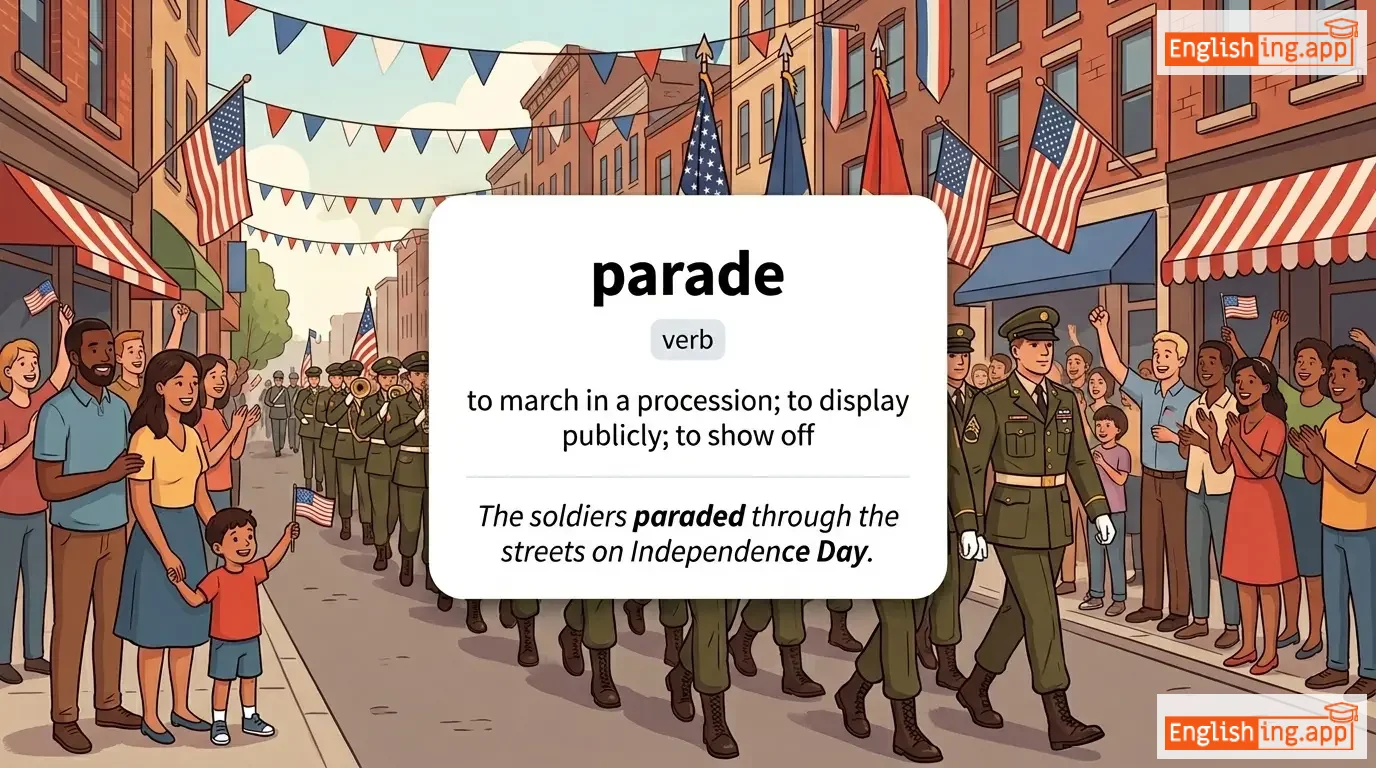
/pəˈreɪd/
noun
(パレード)
••••••
|
|
パレード / 行進
pareedo / koushin
••••••
|
- •••••• | - •••••• | - •••••• | - •••••• |
a public procession, especially one celebrating a special day or event
••••••
|
Thousands of people attended the Independence Day parade. |
何千人もの人々が独立記念日のパレードに参加しました。
Nanzen nin mo no hitobito ga dokuritsukinenbi no pareedo ni sanka shimashita.
••••••
|
rain on someone's parade |
to spoil someone's plans or celebration
••••••
|
誰かの祝賀を台無しにする
dareka no shukuga wo dainashi ni suru
••••••
|
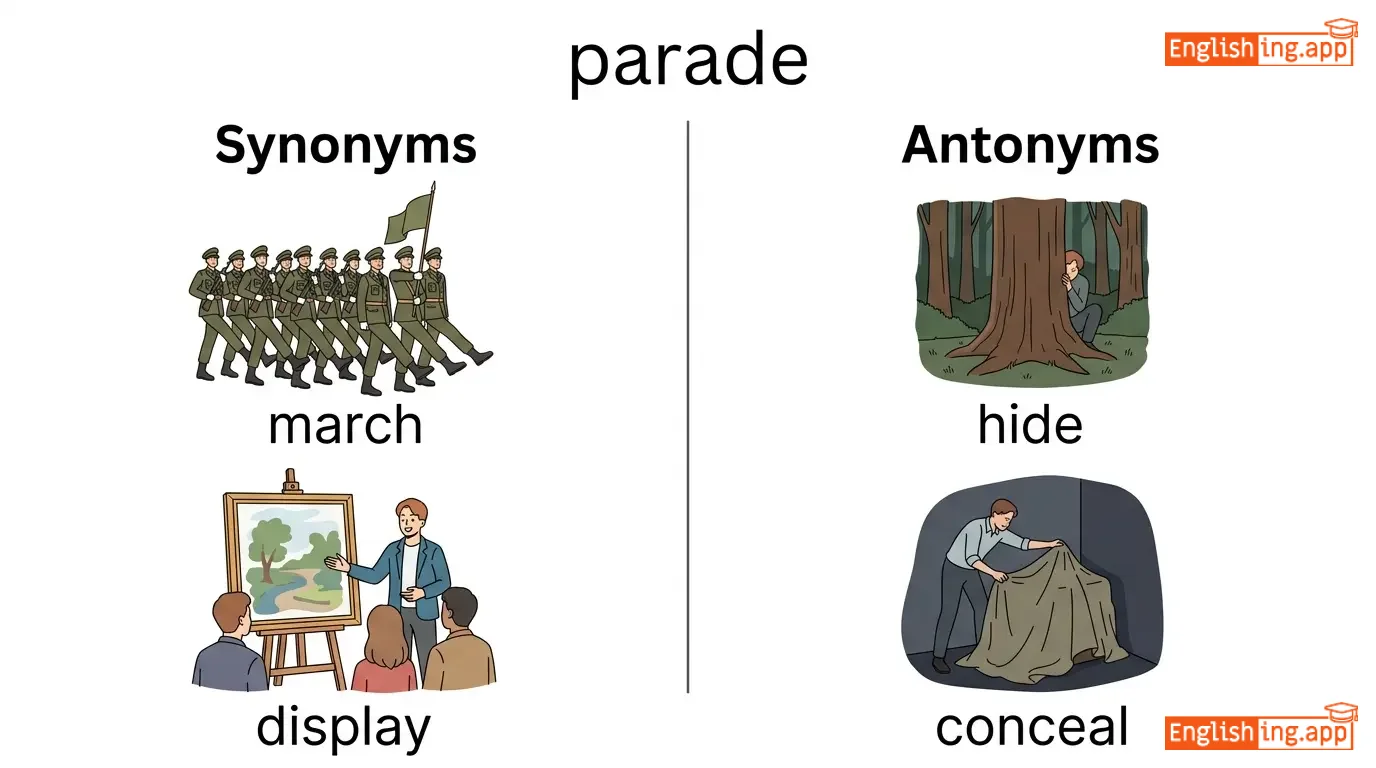
procession, march, pageant, celebration, rally
••••••
|
disorder, chaos
••••••
|
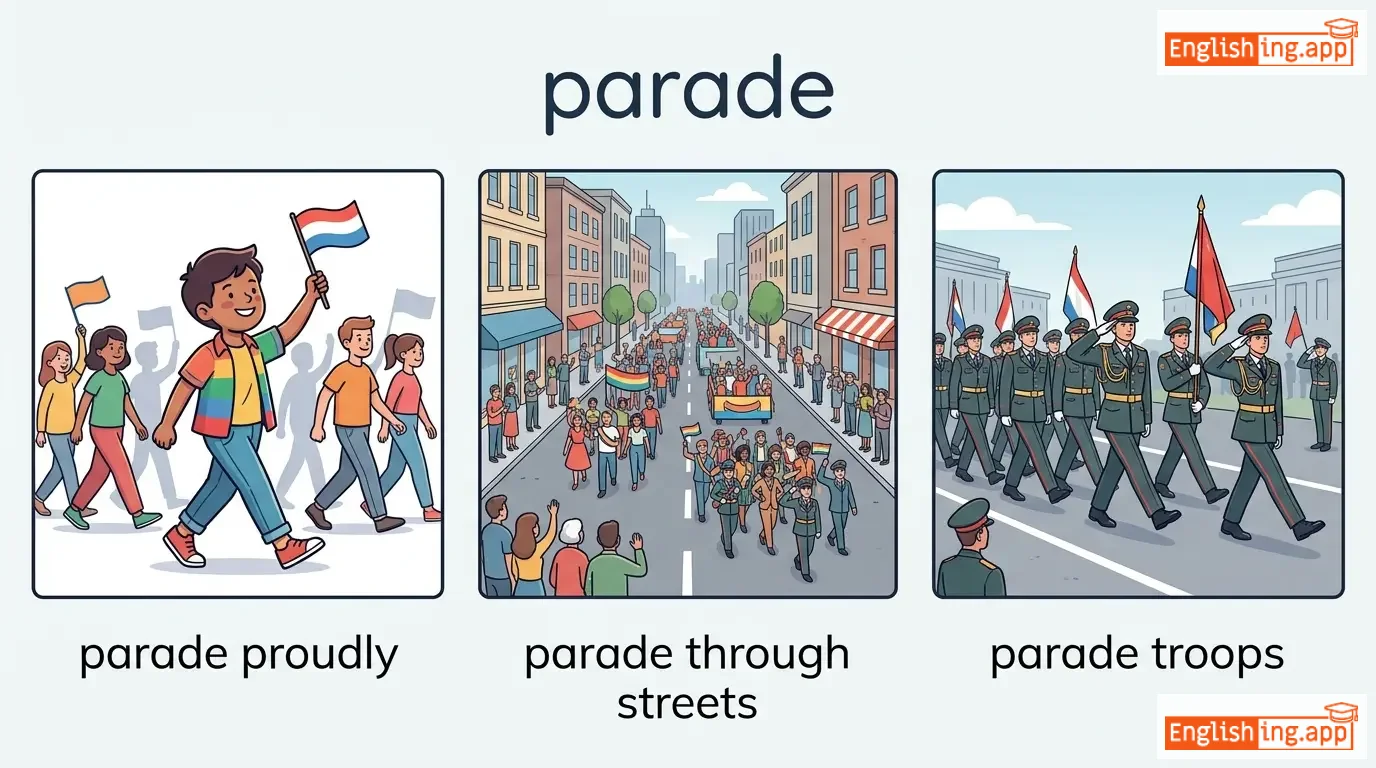
military parade, victory parade, street parade, festive parade
••••••
|
パレードは‘通りのパーティ’ — パレードは通りのパーティだと思って覚えておこう!
••••••
|
|
#1
🏰
|
/ˈpælɪs/
noun
(パレス)
••••••
|
- •••••• |
宮殿
kyūden
••••••
|
- •••••• | - •••••• | - •••••• | - •••••• |
a large and impressive building that is the official home of a king, queen, or other ruler
••••••
|
The royal family lives in a magnificent palace.
王室は素晴らしい宮殿に住んでいます。
••••••
|
王室は素晴らしい宮殿に住んでいます。
Ōshitsu wa subarashī kyūden ni sundeimasu.
••••••
|
a palace fit for a king
王にふさわしい宮殿
••••••
|
a place that is luxurious and grand
••••••
|
王にふさわしい宮殿
ō ni fusawashī kyūden
••••••
|
castle, mansion, fortress, residence, estate
••••••
|
hut, cabin, shack
••••••
|
royal palace, presidential palace, ancient palace, marble palace
••••••
|
Palace means place for king — 王のための宮殿!
••••••
|
|
#1
📒
|
/pæd/
noun
(パッド)
••••••
|
- •••••• |
パッド
paddo
••••••
|
- •••••• | - •••••• | - •••••• | - •••••• |
a small cushion or block of soft material; also a set of sheets of paper fastened together
••••••
|
He wrote her phone number on a yellow pad.
彼は黄色いパッドに彼女の電話番号を書いた。
••••••
|
彼は黄色いパッドに彼女の電話番号を書いた。
Kare wa kiiroi paddo ni kanojo no denwa bangō o kaita.
••••••
|
notepad
メモ帳
••••••
|
a small notebook for writing notes
••••••
|
メモ帳
memochou
••••••
|
cushion, mat, block, notebook, sheet
••••••
|
hardboard, rough surface
••••••
|
writing pad, note pad, knee pad, shoulder pad
••••••
|
Padはクッションにもノートにも使える!
••••••
|
|
#1
🌬️
|
/ˈɒksɪdʒən/
noun
(オキシジェン)
••••••
|
|
酸素
sanso
••••••
|
- •••••• | - •••••• | - •••••• | - •••••• |
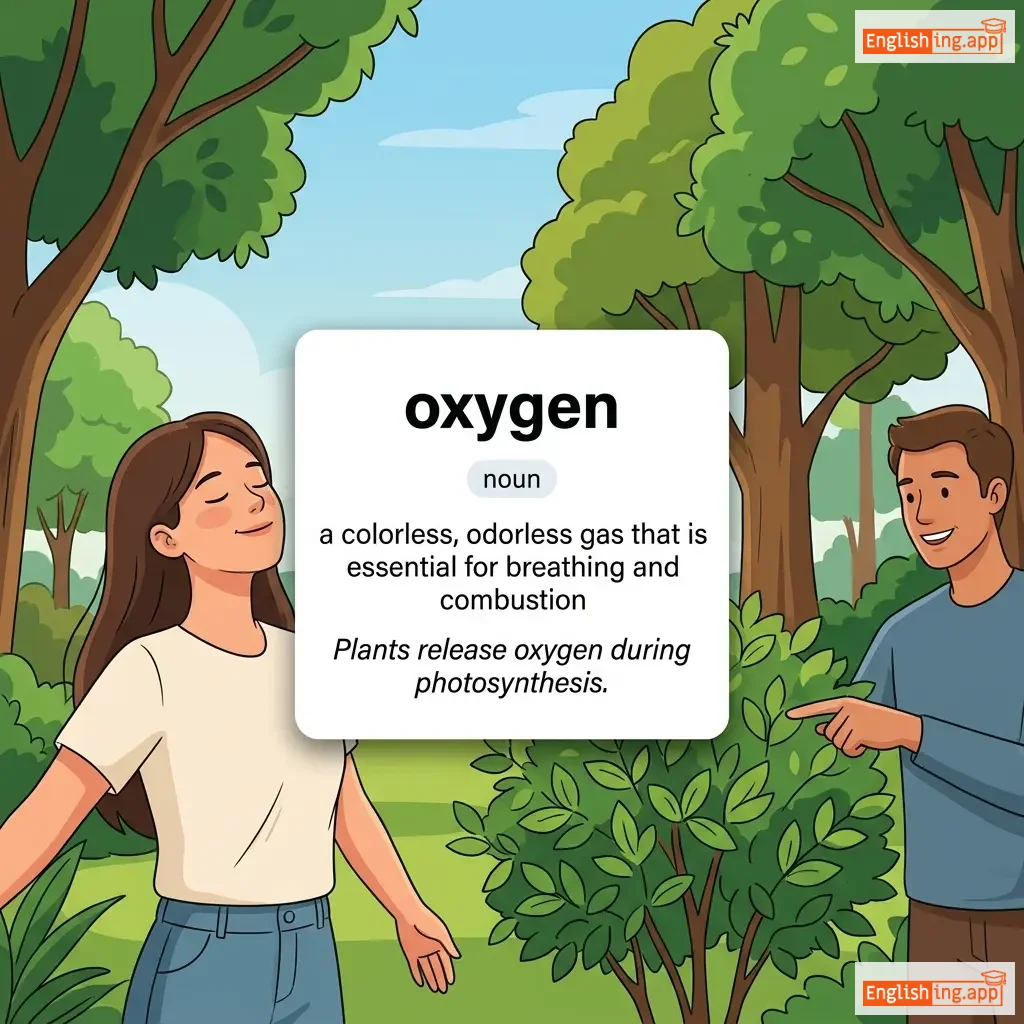
a colorless, odorless gas that is essential for breathing and combustion
••••••
|
Plants release oxygen during photosynthesis.
植物は光合成中に酸素を放出します。
••••••
|
植物は光合成中に酸素を放出します。
Shokubutsu wa kougousei chuu ni sanso wo houshutsushimasu.
••••••
|
like oxygen
酸素のように
••••••
|
something essential for survival
••••••
|
生存に不可欠
seizon ni fukaketsu
••••••
|
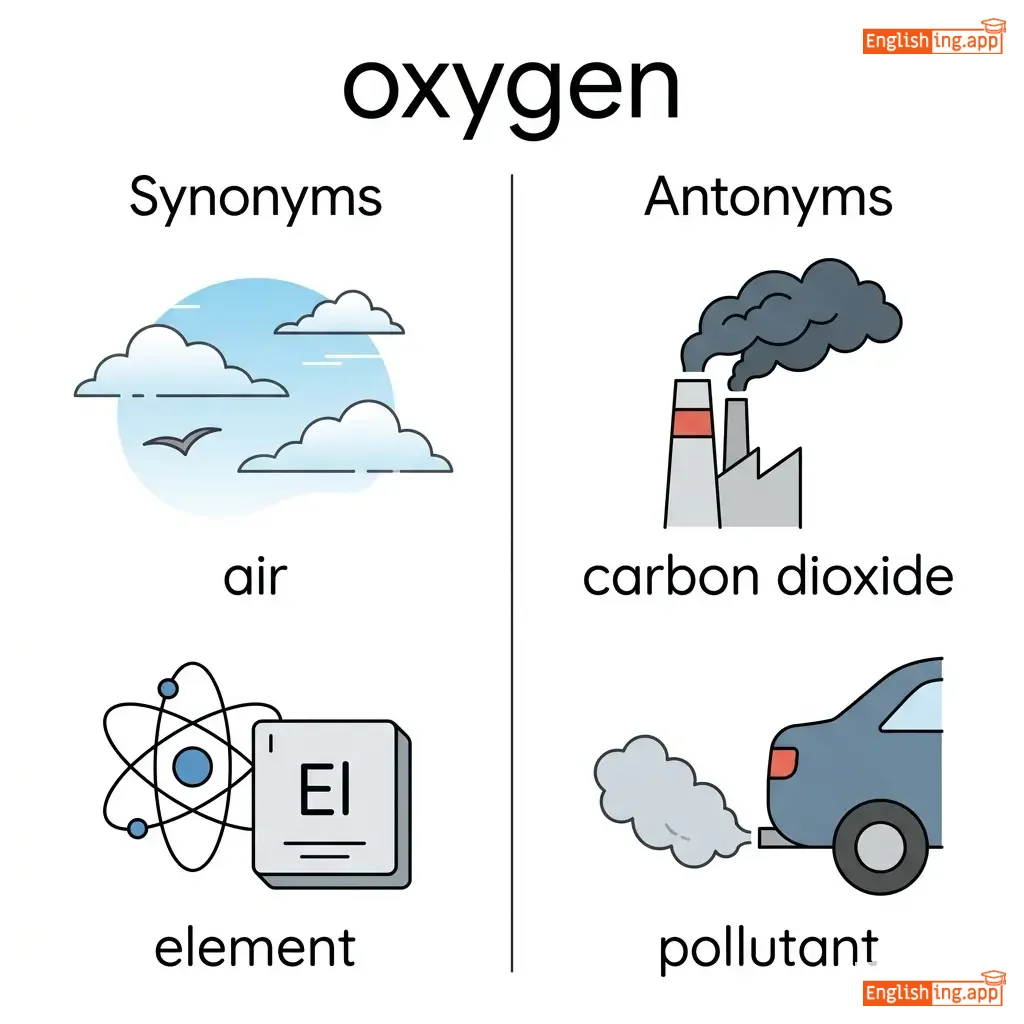
air, element, gas, life-support, breath
••••••
|
carbon dioxide, pollutant
••••••
|
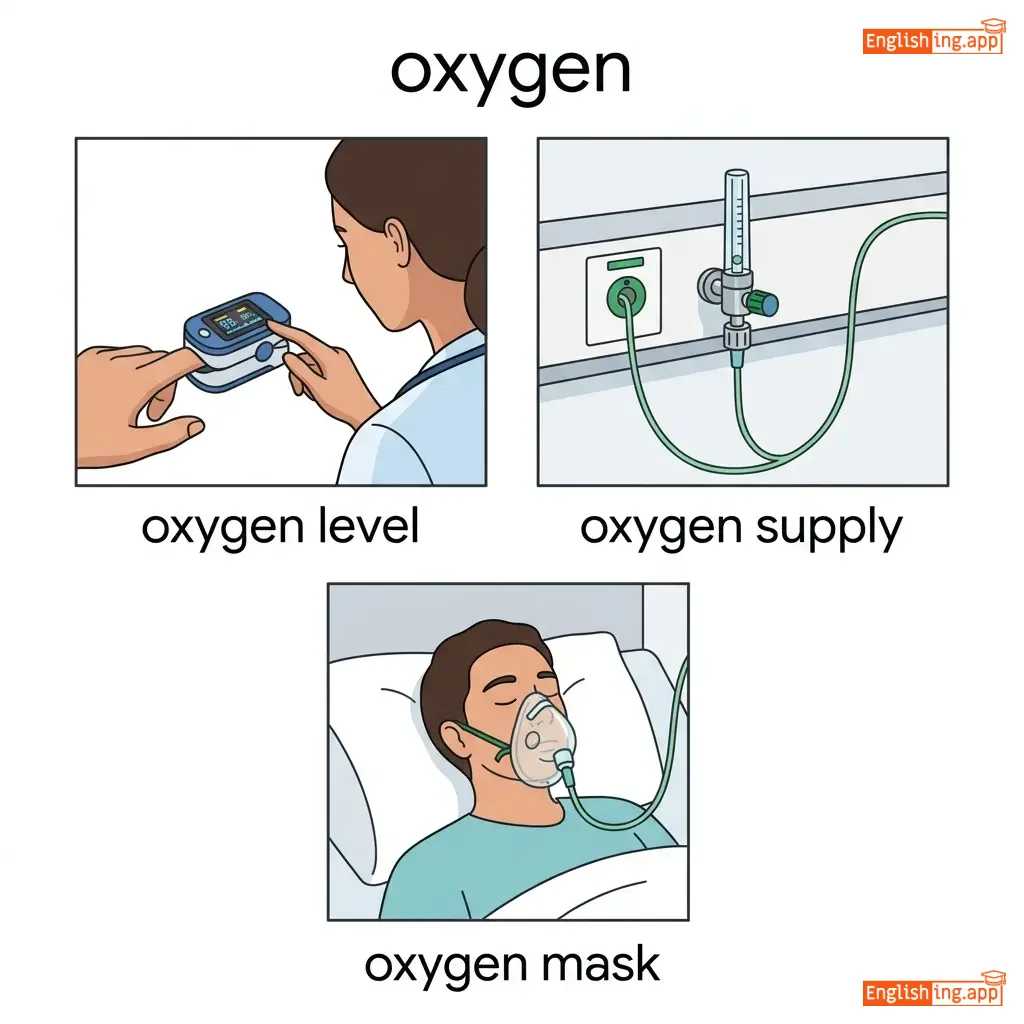
oxygen level, oxygen supply, oxygen mask, pure oxygen
••••••
|
酸素なしでは人間は生きられません — だから覚えておいて ‘酸素 = 生命’
••••••
|
|
#1
🏠
|
/ˈoʊnərʃɪp/
noun
(オーナーシップ)
••••••
|
|
所有権
shoyūken
••••••
|
- •••••• | - •••••• | - •••••• | - •••••• |
the state or fact of owning something; legal right of possession
••••••
|
He took full ownership of the company after his father retired. |
彼は父親が引退した後、会社の完全な所有権を取得しました。
Kare wa chichioya ga intai shita ato, kaisha no kanzen'na shoyūken o shūtoku shimashita.
••••••
|
take ownership |
to accept responsibility for something
••••••
|
所有権を取る
shoyūken o toru
••••••
|
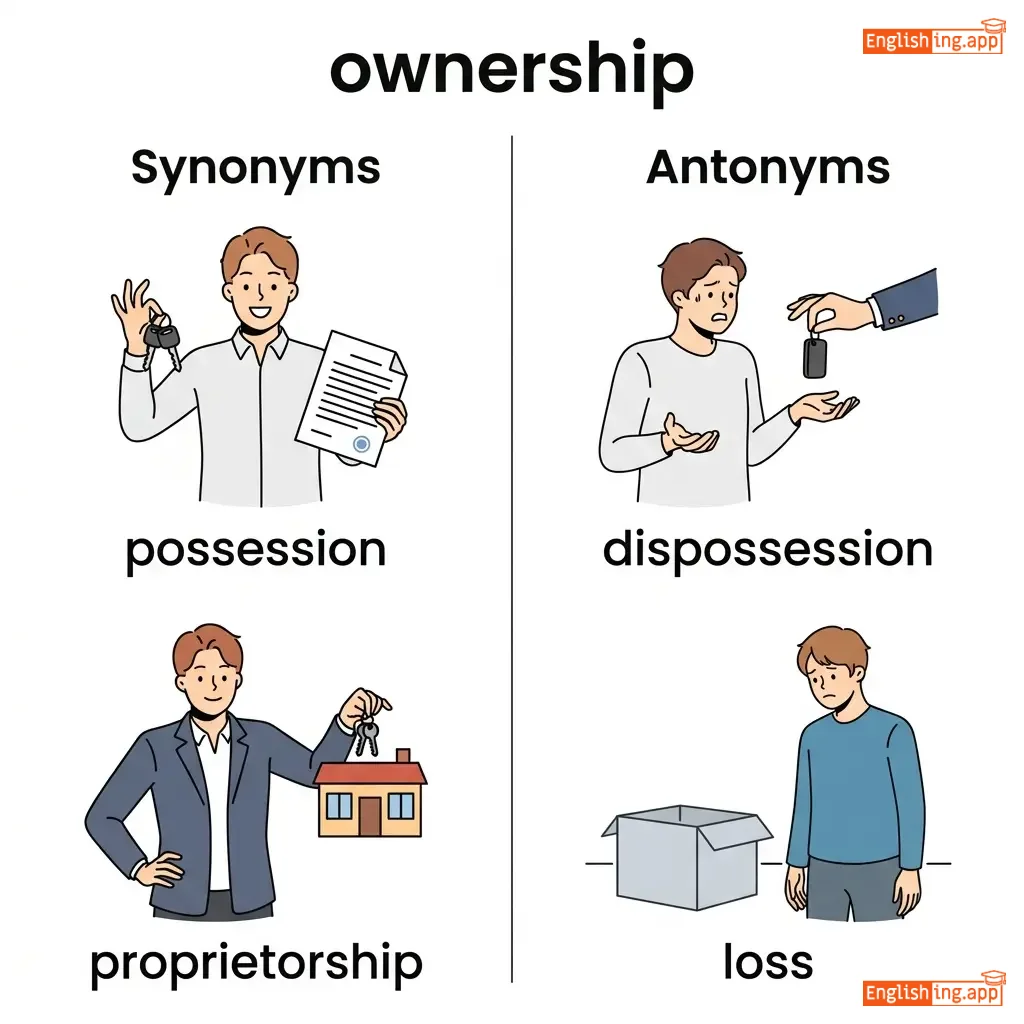
possession, proprietorship, control, custody, tenure
••••••
|
dispossession, loss, denial
••••••
|
take ownership, property ownership, joint ownership, full ownership
••••••
|
Ownership は所有すること、だから所有権は持っている権利!
••••••
|
|
#1
🌊
|
/ˌəʊvəˈwelmɪŋ/
adjective
(オーバーウェルミング)
••••••
|
|
圧倒的, 手に負えない
attōteki, te ni oenai
••••••
|
- •••••• | - •••••• | - •••••• | - •••••• |
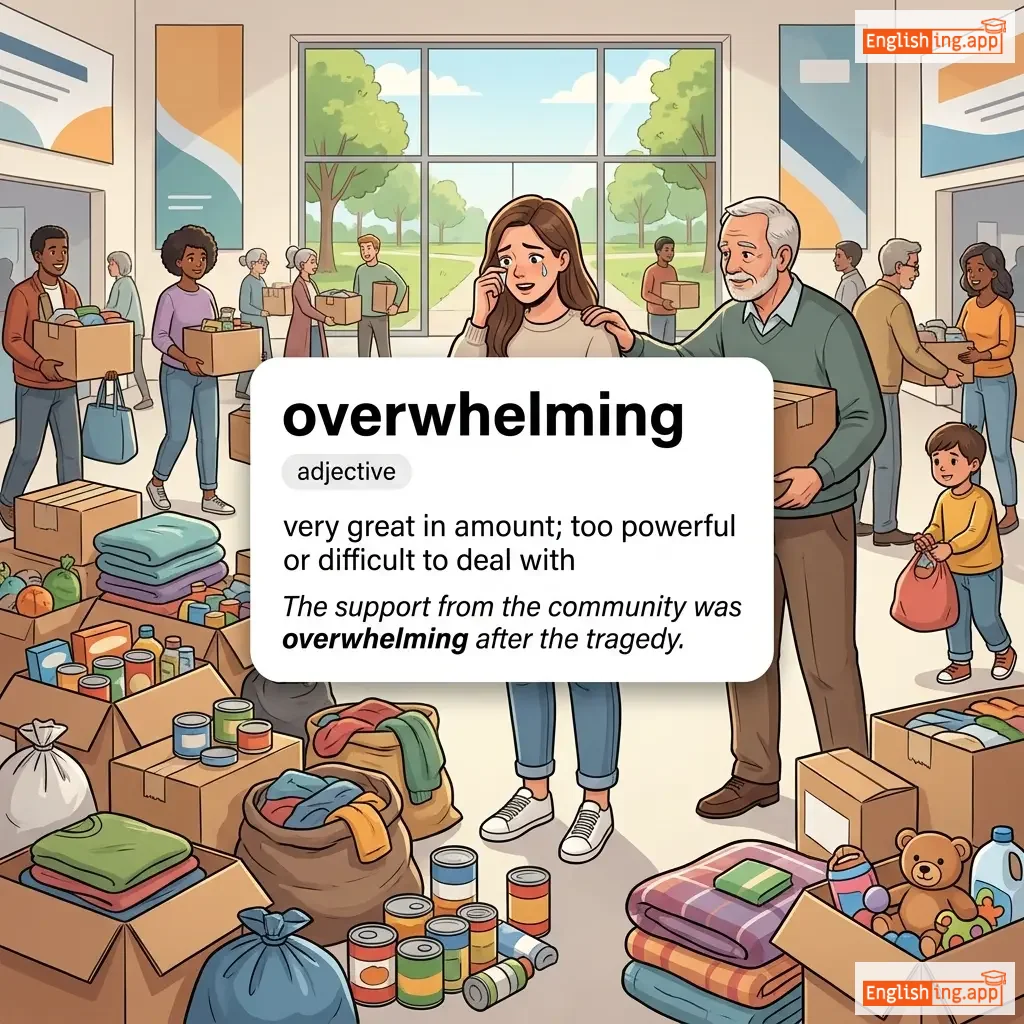
very great in amount; too powerful or difficult to deal with
••••••
|
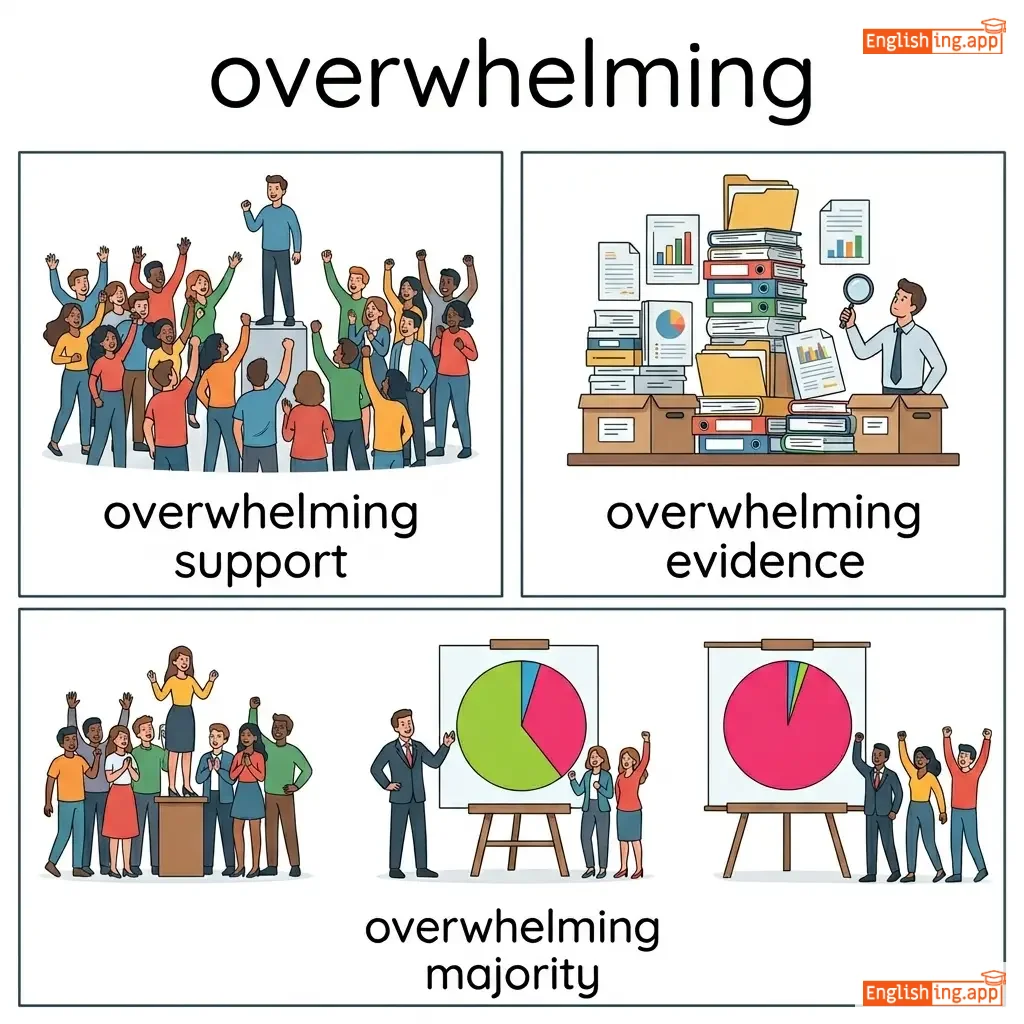
The support from the community was overwhelming after the tragedy. |
悲劇の後、コミュニティからの支援は圧倒的でした。
higeki no ato, komyuniti kara no shien wa attōteki deshita.
••••••
|
overwhelming majority |
a very large majority
••••••
|
圧倒的多数
attōteki tasū
••••••
|
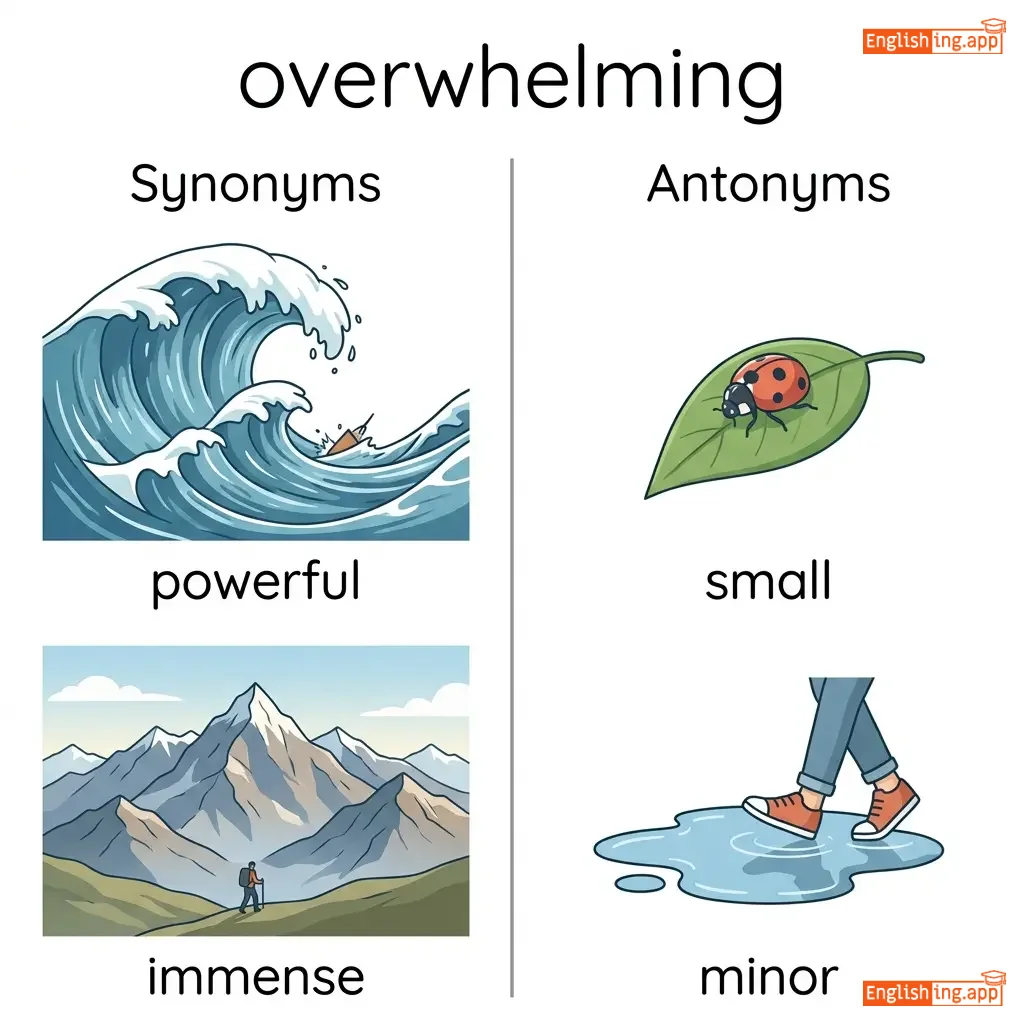
powerful, immense, enormous, intense, vast
••••••
|
small, minor, weak
••••••
|
overwhelming support, overwhelming evidence, overwhelming majority, overwhelming feeling
••••••
|
Over + Whelm = 波に呑まれる 🌊 — 意味は圧倒的な影響
••••••
|
|
#1
🌙
|
/ˌəʊvəˈnaɪt/
adverb, adjective
(オーバーナイト)
••••••
|
- •••••• |
一夜にして
ichiya nishite
••••••
|
- •••••• | - •••••• | - •••••• | - •••••• |
for or during the night; suddenly or in a very short time
••••••
|
Her small business became famous overnight after a viral video. |
彼女の小さなビジネスは、ウイルス動画の後、一夜にして有名になった。
Kanojo no chiisana bijinesu wa, uirusu dōga no ato, ichiya nishite yūmei ni natta.
••••••
|
overnight success |
a sudden or unexpected achievement
••••••
|
一夜の成功
ichiya no seikou
••••••
|
suddenly, instantly, immediately, unexpectedly
••••••
|
gradually, slowly
••••••
|
overnight stay, overnight delivery, overnight success, overnight change
••••••
|
Over + Night というのは一夜にして — だからOvernightは一夜にして 🌙
••••••
|
Vocabulary Quiz
Test your vocabulary by matching words with their translations or meanings.
Login to take the quiz
Comments (0)
Share your thoughts and join the discussion.
Join the discussion by logging in
Login to CommentNo comments yet
Be the first to share your thoughts!