

翻訳
過去
過去分詞
三人称単数
動名詞
意味
例文
例文の翻訳
同義語
対義語
コロケーション
ニーモニック


Swipe left or right, or use the buttons. Tap image to zoom.
例文の翻訳
単語
Lesson 328Lesson 328 - マスクトグル
|
絵文字
|
単語 | Images | 翻訳 | 過去 | 過去分詞 | 三人称単数 | 動名詞 | 意味 | 例文 | 例文の翻訳 | 表現例 | 表現例の意味 | 表現例の翻訳 | 同義語 | 対義語 | コロケーション | ニーモニック |
|---|---|---|---|---|---|---|---|---|---|---|---|---|---|---|---|---|---|
|
#9805
🍂
|
/fɔːl/
verb, noun
(フォール)
••••••
|
|
落ちる
ochiru
••••••
|
fell
フェル
••••••
|
fallen
フォールン
••••••
|
falls
フォールズ
••••••
|
falling
フォーリング
••••••
|
to move downward, typically rapidly and freely without control; the act of dropping from a higher to a lower place
••••••
|
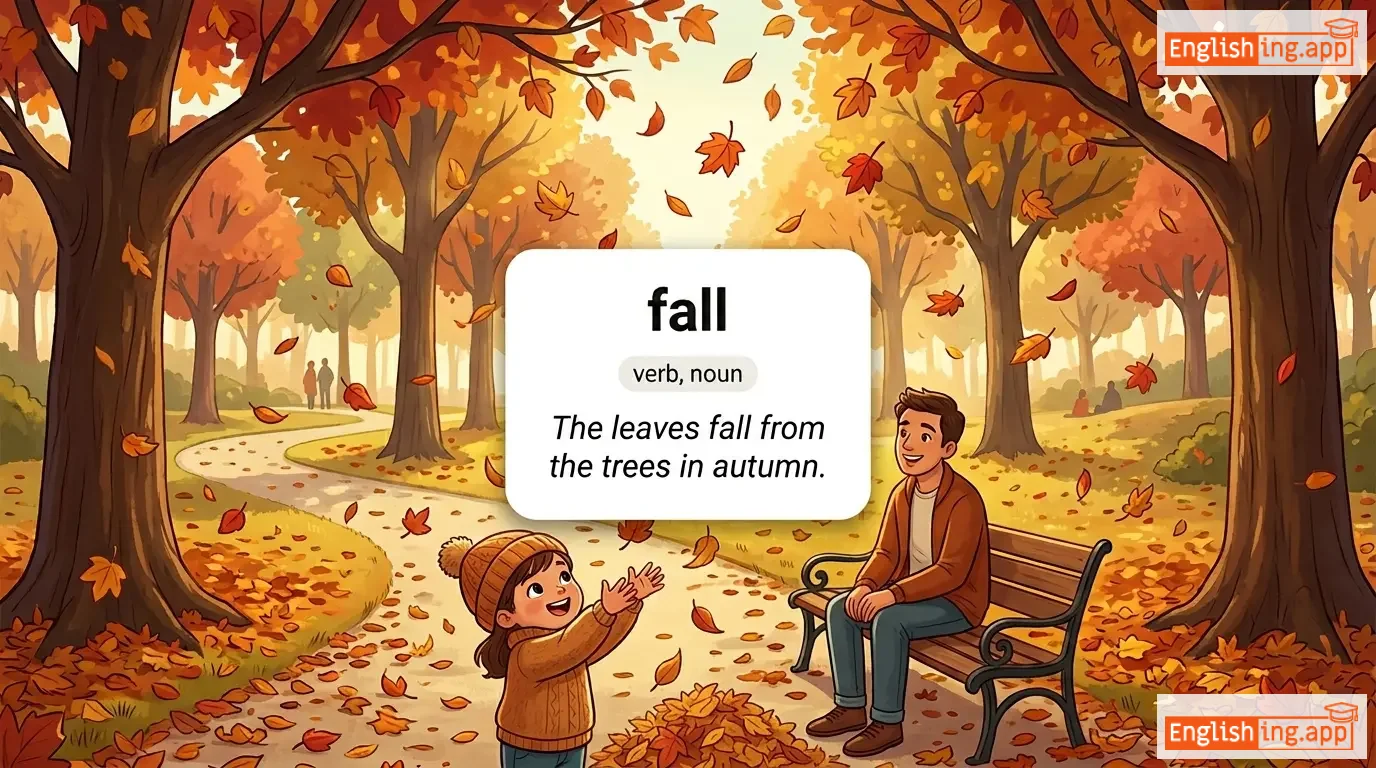
The leaves fall from the trees in autumn.
秋には葉が木から落ちる。
••••••
|
秋には葉が木から落ちる。
Aki ni wa ha ga ki kara ochiru.
••••••
|
fall apart
壊れる
••••••
|
to break into pieces or stop functioning properly
••••••
|
壊れる
kowareru
••••••
|
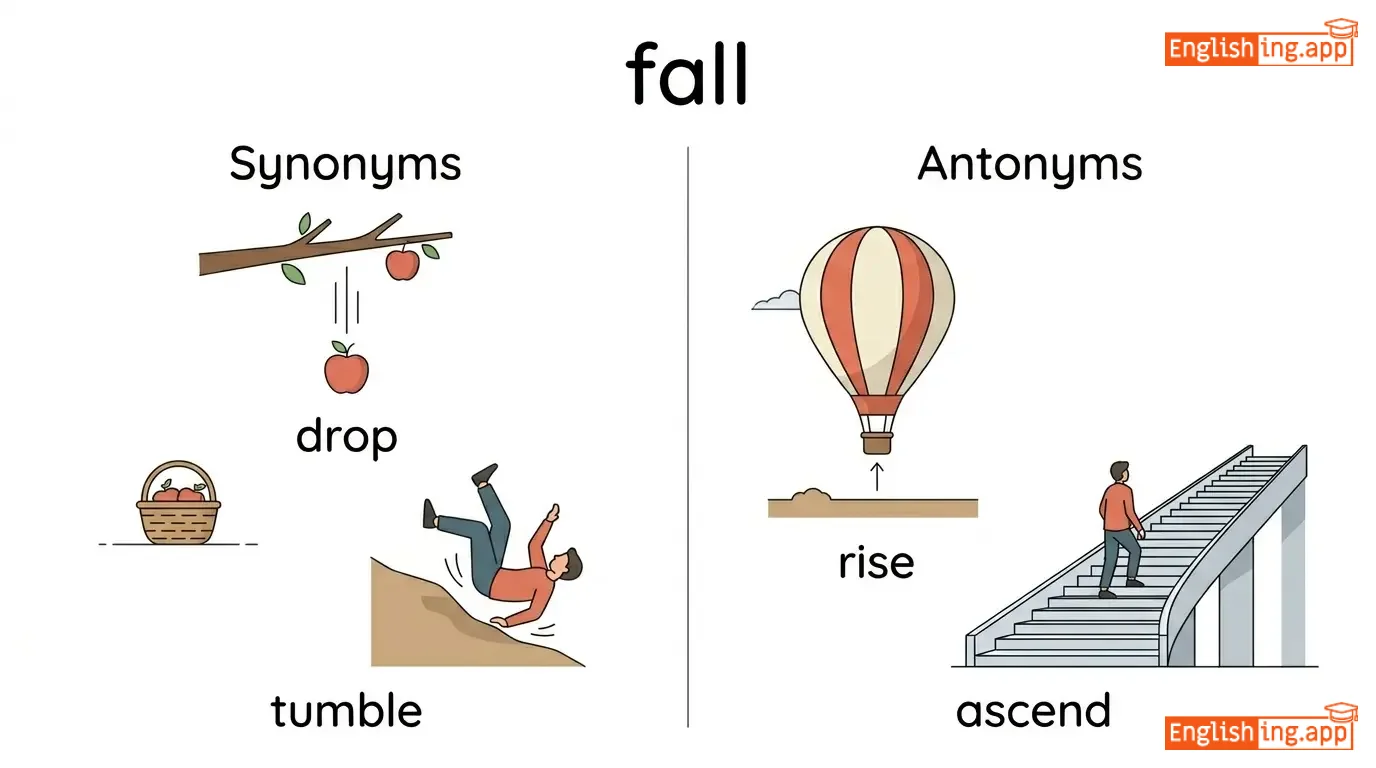
drop, tumble, descend, collapse, plummet
••••••
|
rise, ascend, increase
••••••
|
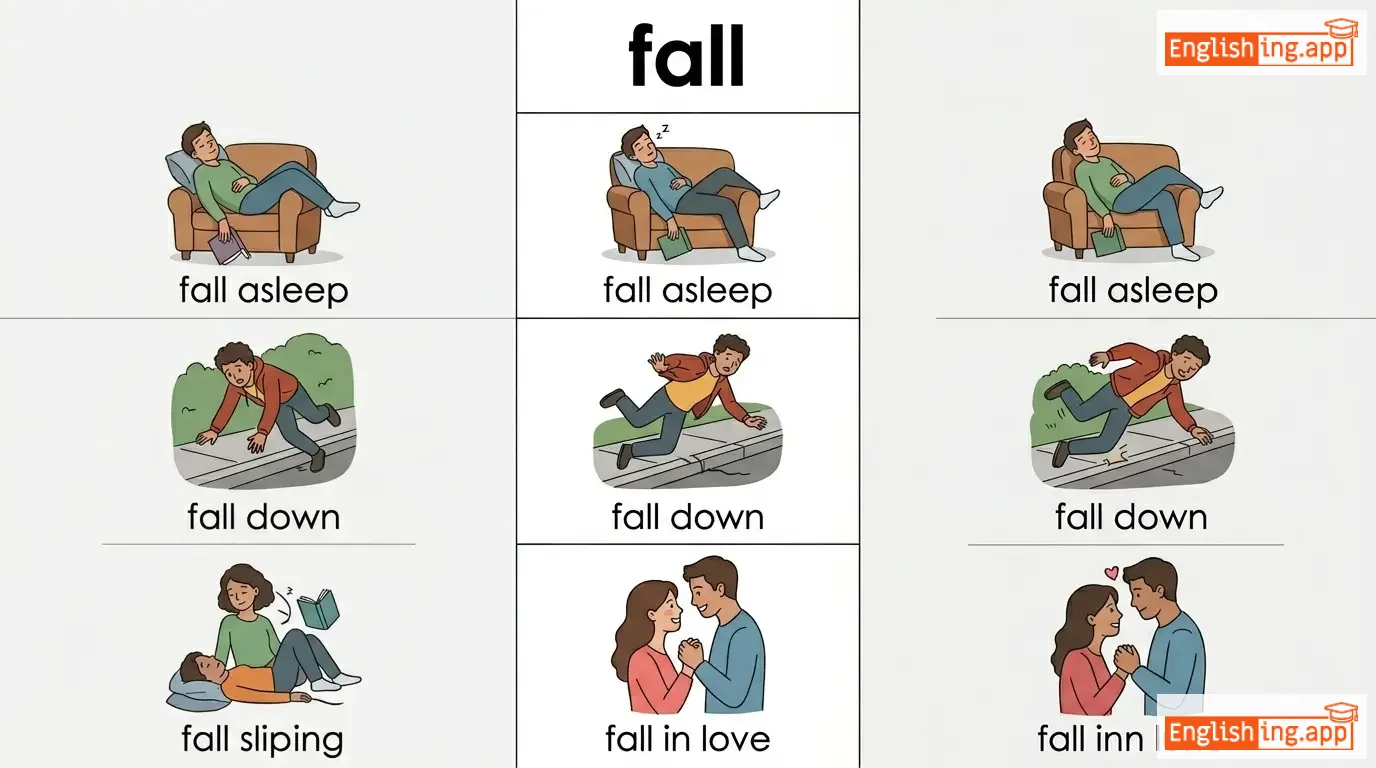
fall asleep, fall down, fall in love, fall short, fall behind
••••••
|
Fall = 落ちる、秋に葉が落ちる。
••••••
|
|
#9806
⚔️
|
/foʊ/
noun
(fo)
••••••
|
- •••••• |
敵
teki
••••••
|
- •••••• | - •••••• | - •••••• | - •••••• |
an enemy or opponent
••••••
|
The knight fought bravely against his foe. |
騎士は勇敢に自分の敵と戦った。
Kishi wa yūkan ni jibun no teki to tatakatta.
••••••
|
old foe |
a long-time enemy or opponent
••••••
|
古い敵
furui teki
••••••
|
enemy, opponent, adversary, rival
••••••
|
friend, ally
••••••
|
sworn foe, old foe, powerful foe, deadly foe
••••••
|
Foeは敵を意味し、Foeは戦いの中で敵です。
••••••
|
|
#9807
💧
|
/ˈfluːɪd/
noun/adjective
(フルイド)
••••••
|
- •••••• |
流体
ryūtai
••••••
|
- •••••• | - •••••• | - •••••• | - •••••• |
a substance that can flow easily, such as liquid or gas; smooth and adaptable
••••••
|
The artist's fluid movements impressed the audience. |
アーティストの流れるような動きは観客を感動させました。
Ātisuto no nagareru yō na ugoki wa kankyaku o kandō sasemashita.
••••••
|
go with the fluid |
adapt easily to changes
••••••
|
流れに任せる
nagare ni makaseru
••••••
|
liquid, flowing, smooth, adaptable
••••••
|
solid, rigid, fixed
••••••
|
fluid motion, fluid design, body fluid, fluid system
••••••
|
流体は液体のように、簡単に流れます。
••••••
|
|
#9808
☁️
|
/ˈflʌfi/
adjective
(ハピネス)
••••••
|
- •••••• |
幸せ
shiawase
••••••
|
- •••••• | - •••••• | - •••••• | - •••••• |
soft, light, and airy in texture
••••••
|
She baked a fluffy cake for the party. |
彼女は賞を受け取ったとき、幸せを隠すことができませんでした。
Kanojo wa shō o uketotta toki, shiawase o kakusu koto ga dekimasen deshita.
••••••
|
- •••••• | - •••••• | - •••••• |
soft, light, airy, feathery, puffy
••••••
|
hard, dense, heavy
••••••
|
fluffy pillow, fluffy cake, fluffy clouds, fluffy blanket
••••••
|
幸せは、心からの笑顔が溢れ出る瞬間です。
••••••
|
|
#9809
💥
|
/flɑp/
verb
(フロップ)
••••••
|
- •••••• |
失敗
shippai
••••••
|
flopped
フロップド
••••••
|
flopped
フロップド
••••••
|
flops
フロップス
••••••
|
flopping
フロッピング
••••••
|
to fall or move heavily and clumsily; to fail completely
••••••
|
The new movie flopped at the box office.
新しい映画は興行成績が振るわなかった。
••••••
|
新しい映画は興行成績が振るわなかった。
Atarashii eiga wa kougyou seiseki ga furuwanakatta.
••••••
|
big flop
大失敗
••••••
|
a complete failure
••••••
|
大失敗
dai shippai
••••••
|
fail, collapse, tumble, plummet
••••••
|
succeed, triumph
••••••
|
flop down, movie flop, big flop, flop badly
••••••
|
Flopは完全に失敗すること、映画が興行成績で失敗するようなことを意味します。
••••••
|
|
#9810
🛶
|
/floʊt/
verb
(フロート)
••••••
|
- •••••• |
浮かぶ
ukabu
••••••
|
floated
フローテッド
••••••
|
floated
フローテッド
••••••
|
floats
フローツ
••••••
|
floating
フローイング
••••••
|
to rest or move on the surface of a liquid or in the air without sinking
••••••
|
The boat began to float gently down the river.
ボートは静かに川を下って浮かび始めました。
••••••
|
ボートは静かに川を下って浮かび始めました。
Bo-to wa shizuka ni kawa o kudatte ukabi hajimemashita.
••••••
|
float an idea
アイデアを浮かべる
••••••
|
to suggest something for consideration
••••••
|
アイデアを提案する
Aidea o teian suru
••••••
|
drift, hover, sail, glide, buoy
••••••
|
sink, submerge, drop
••••••
|
float on water, float down, float away, float idea
••••••
|
浮かぶは浮かぶ、ボートはいつも水の上に浮かぶ
••••••
|
|
#9811
🔧
|
/fɪks/
verb
••••••
|
- •••••• | - •••••• |
fixed
••••••
|
fixed
••••••
|
fixes
••••••
|
fixing
••••••
|
To repair or make something work again.
••••••
|
The mechanic fixed the broken car. |
- •••••• |
in a fix |
In a difficult or awkward situation.
••••••
|
- •••••• |
repair, mend, adjust, restore, solve
••••••
|
break, damage, ruin
••••••
|
fix a problem, fix the car, fix dinner, fix the issue
••••••
|
No •••••• |
|
#9812
🫗
|
/fɪl/
verb
(フィル)
••••••
|
|
満たす
mitasu
••••••
|
filled
フィルド
••••••
|
filled
フィルド
••••••
|
fills
フィルス
••••••
|
filling
フィリング
••••••
|
To make something full; occupy completely.
••••••
|
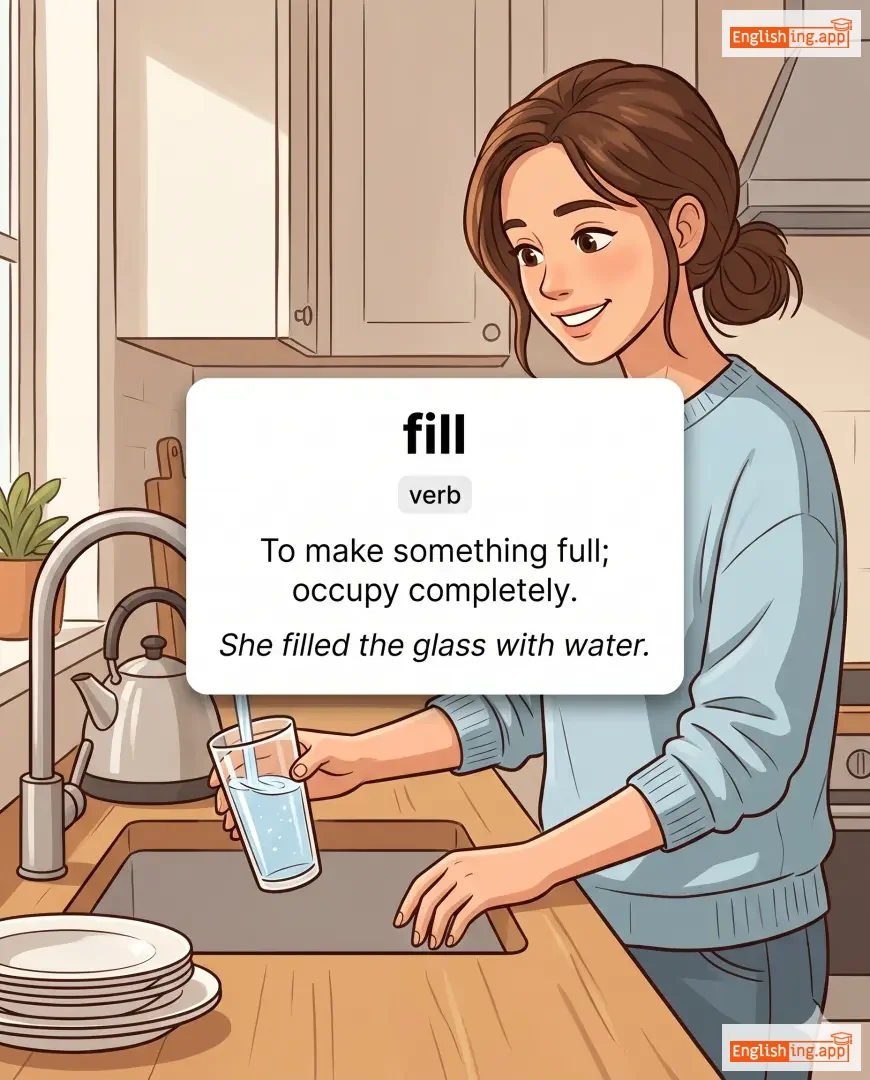
She filled the glass with water.
彼女はグラスに水を満たしました。
••••••
|
彼女はグラスに水を満たしました。
Kanojo wa gurasu ni mizu o mitashimashita.
••••••
|
fill the gap
隙間を埋める
••••••
|
To supply something missing.
••••••
|
隙間を埋める
sukima o umeru
••••••
|
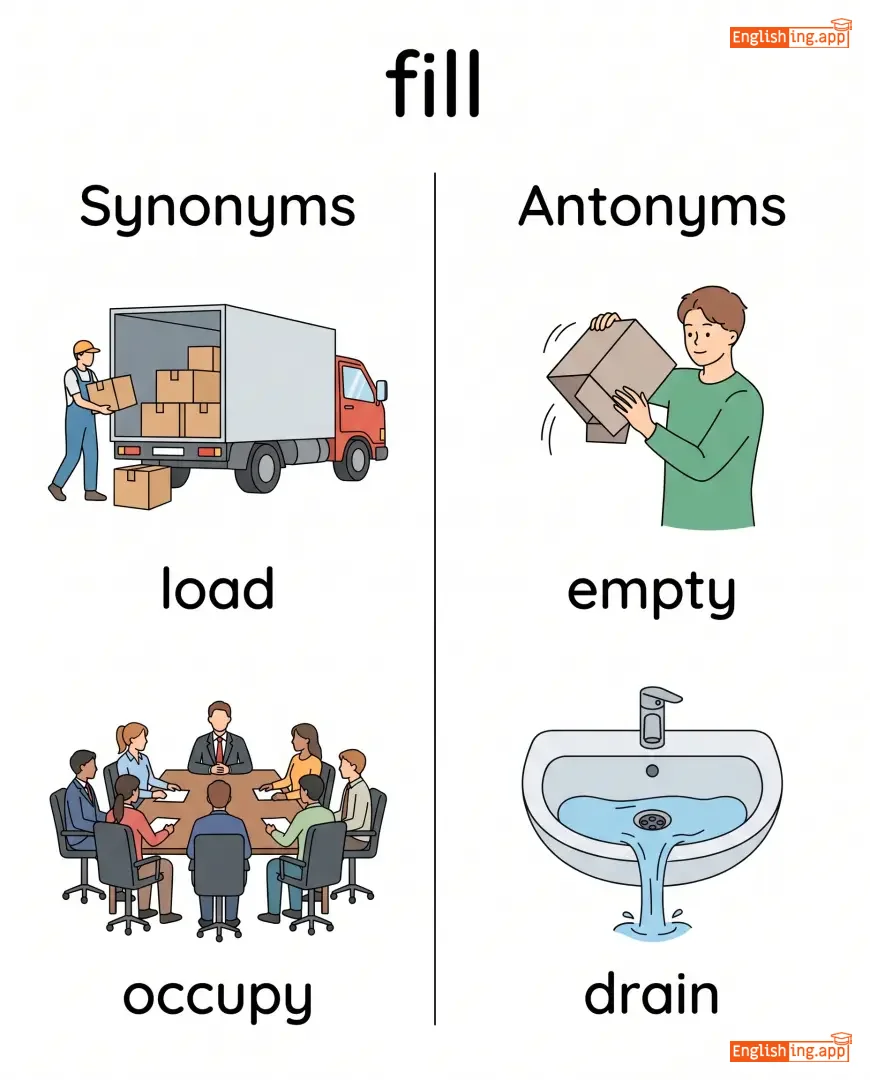
load, occupy, replenish, stuff, supply
••••••
|
empty, drain, vacate
••••••
|
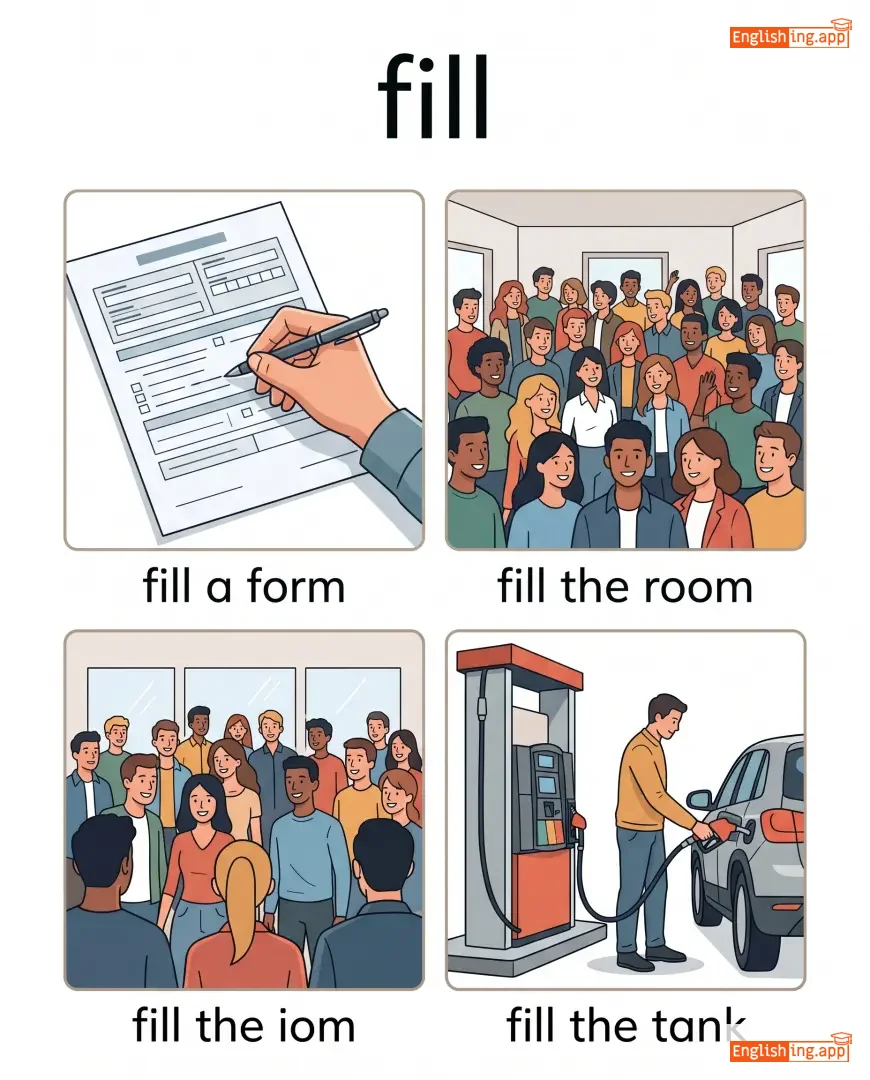
fill a form, fill the room, fill the tank, fill the position
••••••
|
満たすは、グラスを水で満たすように満たすことを意味します。
••••••
|
|
#9813
📚
|
/ˈfɪkʃən/
noun
(フィクション)
••••••
|
- •••••• |
フィクション
fikushon
••••••
|
- •••••• | - •••••• | - •••••• | - •••••• |
Literature created from the imagination, not presented as fact.
••••••
|
She enjoys reading science fiction novels.
彼女はサイエンスフィクション小説を読むのが好きです。
••••••
|
彼女はサイエンスフィクション小説を読むのが好きです。
Kanojo wa saiensu fikushon shousetsu wo yomu no ga suki desu.
••••••
|
stranger than fiction
フィクションよりも奇妙
••••••
|
Something unbelievable but true.
••••••
|
フィクションよりも奇妙
Fikushon yori mo kimyou
••••••
|
story, novel, tale, narrative, myth
••••••
|
fact, reality, truth
••••••
|
science fiction, historical fiction, fiction writer, work of fiction
••••••
|
フィクションは英語の'fiction'と同じ - 'フィクションで非現実的な世界を冒険しよう!'
••••••
|
|
#9814
✋
|
/fjuː/
adjective
(フュー)
••••••
|
- •••••• |
少数
shousuu
••••••
|
- •••••• | - •••••• | - •••••• | - •••••• |
A small number of; not many.
••••••
|
Only a few students attended the class.
ほんの少しの学生がクラスに出席しました。
••••••
|
ほんの少しの学生がクラスに出席しました。
Honno sukoshi no gakusei ga kurasu ni shusseki shimashita.
••••••
|
a lucky few
幸運な少数
••••••
|
A small number of fortunate people.
••••••
|
幸運な少数
kouun na shousuu
••••••
|
some, several, a handful, a small number
••••••
|
many, numerous, plenty
••••••
|
a few days, very few, few people, quite a few
••••••
|
Fewは少ない、'幸運な少数' という意味で、ほんの少しのラッキーな人たち。
••••••
|
|
#9815
☠️
|
/fəˈtæləti/
noun
(ファタリティ)
••••••
|
- •••••• |
致命的な事故
chimeiteki na jiko
••••••
|
- •••••• | - •••••• | - •••••• | - •••••• |
An occurrence of death by accident, disaster, or violence.
••••••
|
The accident resulted in one fatality. |
その事故で1人が死亡した。
Sono jiko de 1-ri ga shibō shita.
••••••
|
road fatalities |
Deaths caused by road accidents.
••••••
|
道路上の死亡事故
dōro-jō no shibō jiko
••••••
|
death, casualty, demise, loss, mortality
••••••
|
survival, life
••••••
|
traffic fatality, accident fatality, fatality rate, workplace fatality
••••••
|
Fatalityは死に関連しているので、fatalityは死を意味し、事故で死が発生するように使用されます。
••••••
|
|
#9816
☠️
|
/ˈfeɪtl/
adjective
(フェイタル)
••••••
|
- •••••• |
致命的
chimiteki
••••••
|
- •••••• | - •••••• | - •••••• | - •••••• |
causing death; leading to disaster
••••••
|
The accident proved fatal for the driver. |
その事故は運転手にとって致命的だった。
Sono jiko wa unten-shu ni totte chimiteki datta.
••••••
|
fatal flaw |
a serious weakness that causes failure
••••••
|
致命的な欠陥
chimiteki na kekkan
••••••
|
deadly, lethal, mortal, disastrous
••••••
|
harmless, safe, beneficial
••••••
|
fatal accident, fatal mistake, fatal disease, fatal injury
••••••
|
Fatalは致命的、致命的な選択を避けよう!
••••••
|
|
#9817
🍔
|
/fæt/
adjective, noun
(ファット)
••••••
|
- •••••• |
太っている
futotteiru
••••••
|
- •••••• | - •••••• | - •••••• | - •••••• |
having a lot of excess flesh; a natural oily substance in animal bodies
••••••
|
Eating too much fast food can make you fat. |
ファストフードを食べ過ぎると太ることがあります。
Fasuto fūdo o tabesugiru to futoru koto ga arimasu.
••••••
|
fat chance |
a sarcastic way of saying that something is very unlikely
••••••
|
太ったチャンス
futotta chansu
••••••
|
overweight, plump, obese, chubby
••••••
|
thin, slim, lean
••••••
|
fat person, fat content, fat belly, fat salary
••••••
|
Fat = 太っている, もっと食べて太りましょう!
••••••
|
|
#9818
🌟
|
/ˈfeɪməs/
adjective
(フェイマス)
••••••
|
|
有名
yūmei
••••••
|
- •••••• | - •••••• | - •••••• | - •••••• |
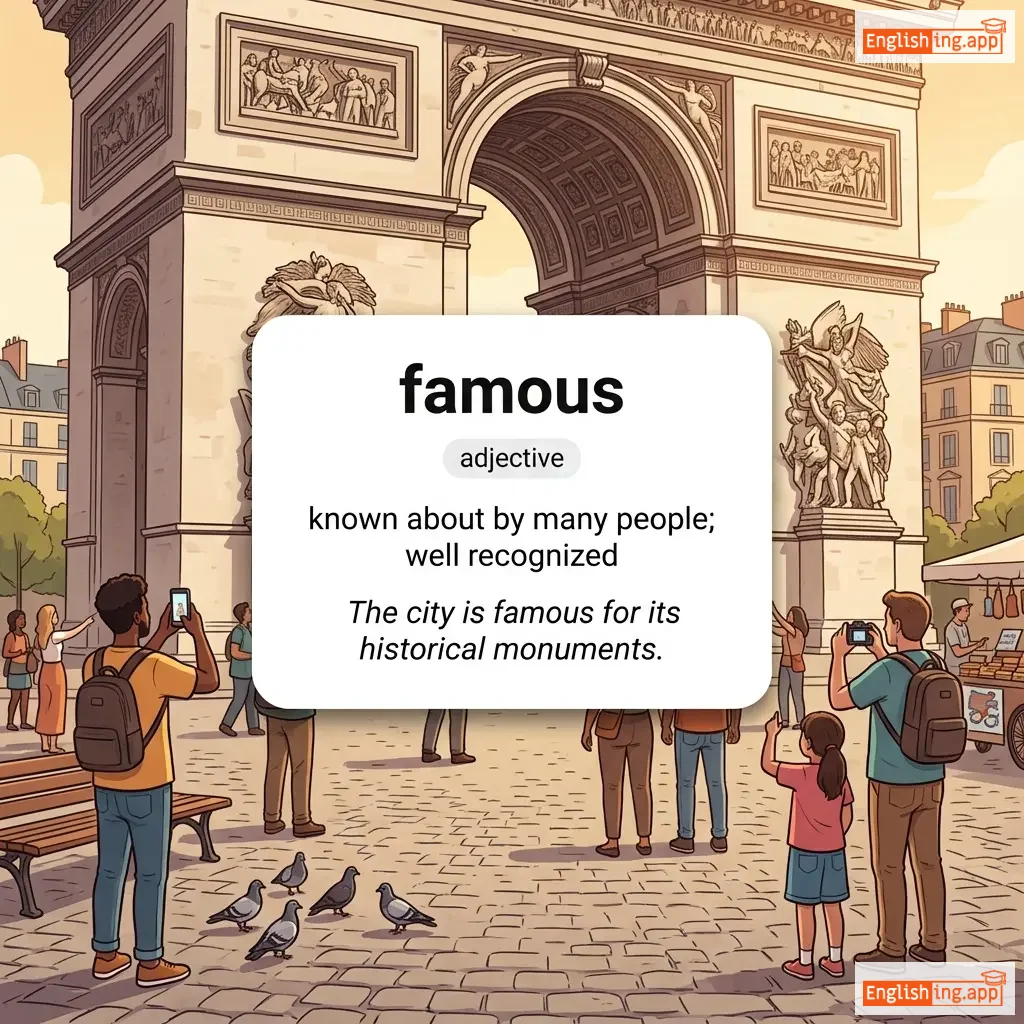
known about by many people; well recognized
••••••
|
The city is famous for its historical monuments. |
その都市は歴史的なモニュメントで有名です。
Sono toshi wa rekishiteki na monyumento de yūmei desu.
••••••
|
famous last words |
a sarcastic way of highlighting someone's overconfident prediction
••••••
|
有名な最後の言葉
yūmei na saigo no kotoba
••••••
|
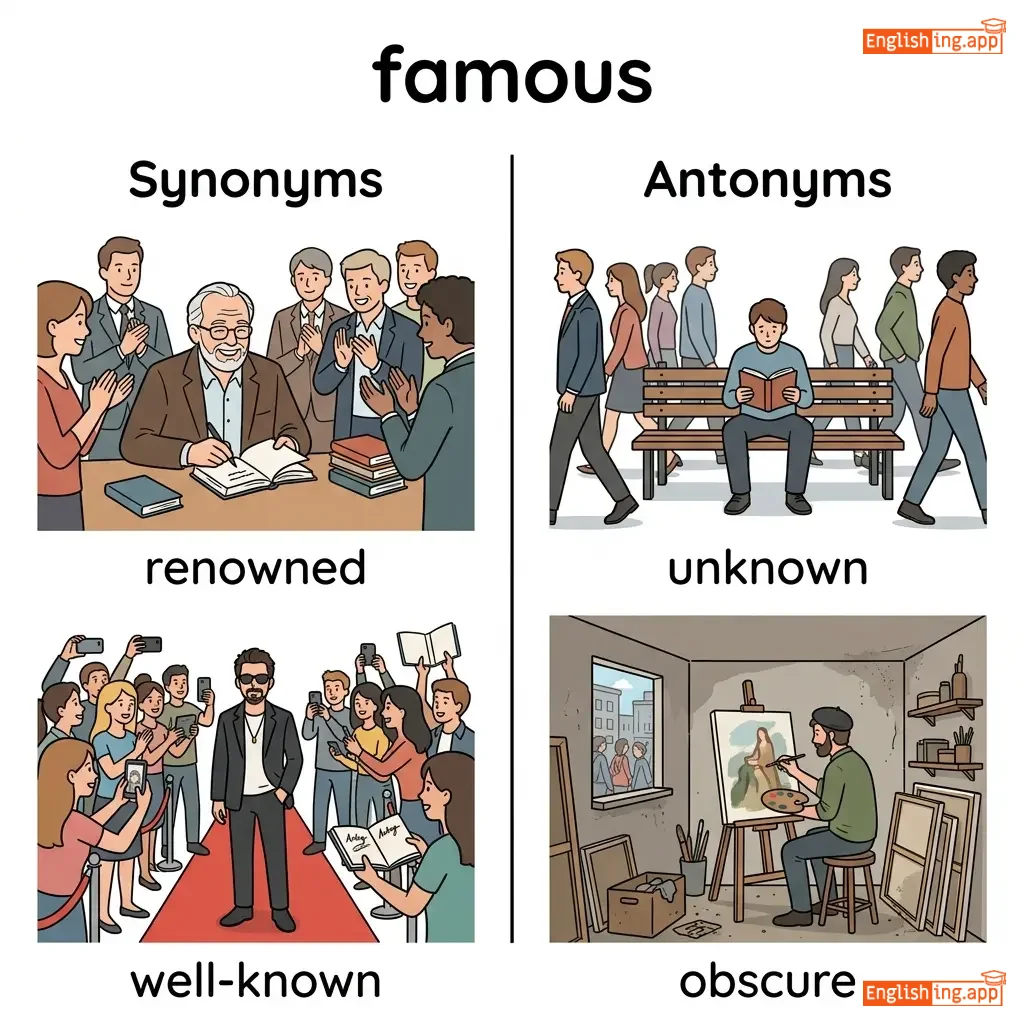
renowned, well-known, celebrated, noted, prominent
••••••
|
unknown, obscure, ordinary
••••••
|
famous actor, famous place, famous writer, become famous
••••••
|
有名とは、みんなに知られていること、星のように輝くこと🌟
••••••
|
|
#9819
❌
|
/fɔːls/
adjective
(フォールス)
••••••
|
- •••••• |
偽の
nise no
••••••
|
- •••••• | - •••••• | - •••••• | - •••••• |
not true or correct; intended to deceive
••••••
|
He was accused of giving false information.
彼は虚偽の情報を提供したとして告発されました。
••••••
|
彼は虚偽の情報を提供したとして告発されました。
Kare wa kyogi no jōhō o teikyō shita to shite kokuhatsu saremashita.
••••••
|
false alarm
虚偽の警報
••••••
|
a warning or signal that turns out to be untrue
••••••
|
虚偽の警報
kyogi no keihō
••••••
|
untrue, wrong, fake, deceptive, misleading
••••••
|
true, correct, real
••••••
|
false claim, false hope, false promise, false impression
••••••
|
偽の意味は偽りで、間違っていることは偽りです。
••••••
|
|
#9820
🤔
|
/ɪˌkwɪvəˈkeɪʃən/
noun
(エキヴィオケーション)
••••••
|
- •••••• |
あいまいな言葉の使用
aimai na kotoba no shiyou
••••••
|
- •••••• | - •••••• | - •••••• | - •••••• |
The use of ambiguous language to conceal the truth or to avoid committing oneself.
••••••
|
The politician’s equivocation frustrated voters who wanted a clear answer.
政治家のエキヴィオケーションは、明確な答えを求めていた有権者を失望させた。
••••••
|
政治家のあいまいな言葉は、明確な答えを求めていた有権者を失望させた。
Seijika no aimai na kotoba wa, meikaku na kotae o motomete ita yūken-sha o shitsubō saseta.
••••••
|
fall back on equivocation
エキヴィオケーションに頼る
••••••
|
to avoid giving a direct answer by using vague language
••••••
|
あいまいな言葉に頼る
aimai na kotoba ni tayoru
••••••
|
ambiguity, evasion, vagueness, prevarication, double-talk
••••••
|
clarity, honesty, frankness
••••••
|
political equivocation, deliberate equivocation, use of equivocation
••••••
|
Equi (平等) + vocation (言葉) = あいまいな言葉を使う
••••••
|
|
#9821
⚖️
|
/fɛr/
adjective/noun
(フェア)
••••••
|
- •••••• |
公平 / フェア
kouhei / fea
••••••
|
- •••••• | - •••••• | - •••••• | - •••••• |
Treating people equally without favoritism; or an event where goods are displayed and sold
••••••
|
The judge made a fair decision.
裁判官は公平な判断を下しました。
••••••
|
裁判官は公平な判断を下しました。
Saibankan wa kouhei na handan o kudashimashita.
••••••
|
fair and square
フェアアンドスクエア
••••••
|
honestly and without cheating
••••••
|
正直に、そして不正なく
shoujiki ni, soshite fusei naku
••••••
|
just, impartial, honest, equitable
••••••
|
unfair, biased, unjust
••••••
|
fair chance, fair decision, book fair, job fair
••••••
|
フェアは公平、フェアはイベントです。
••••••
|
|
#9822
👗
|
/ˈfædɪʃ/
adjective
(ファディッシュ)
••••••
|
- •••••• |
一時的な流行
ichiji teki na ryūkō
••••••
|
- •••••• | - •••••• | - •••••• | - •••••• |
Following a temporary trend or fashion
••••••
|
Wearing neon clothes was a faddish style in the 1980s.
ネオンの服を着ることは1980年代の流行だった。
••••••
|
ネオンの服を着ることは1980年代の流行だった。
Neon no fuku wo kiru koto wa 1980 nendai no ryūkō datta.
••••••
|
- •••••• | - •••••• | - •••••• |
trendy, fashionable, fleeting, short-lived
••••••
|
classic, timeless
••••••
|
faddish trend, faddish style, faddish product
••••••
|
Faddishは一時的に現れるファッションに従うことです。
••••••
|
|
#9823
📘
|
/fækt/
noun
(ファクト)
••••••
|
- •••••• |
事実
jijitsu
••••••
|
- •••••• | - •••••• | - •••••• | - •••••• |
A thing that is known or proved to be true
••••••
|
It is a fact that the Earth orbits the Sun.
地球が太陽の周りを回っているのは事実です。
••••••
|
地球が太陽の周りを回っているのは事実です。
Chikyū ga taiyō no mawari o mawatte iru no wa jijitsu desu.
••••••
|
matter of fact
事実の問題
••••••
|
something that is true and cannot be disputed
••••••
|
事実の問題
jijitsu no mondai
••••••
|
truth, reality, certainty, actuality
••••••
|
lie, fiction, falsehood
••••••
|
scientific fact, historical fact, fact check, hard fact
••••••
|
Fact - 事実(じじつ)、日本語で証明された真実。
••••••
|
|
#9824
🙂
|
/feɪs/
noun/verb
••••••
|
|
- •••••• |
faced
••••••
|
faced
••••••
|
faces
••••••
|
facing
••••••
|
The front part of a person's head; to confront or deal with a situation
••••••
|
She had to face many challenges in her career. |
- •••••• |
face the music |
to accept the unpleasant consequences of one's actions
••••••
|
- •••••• |
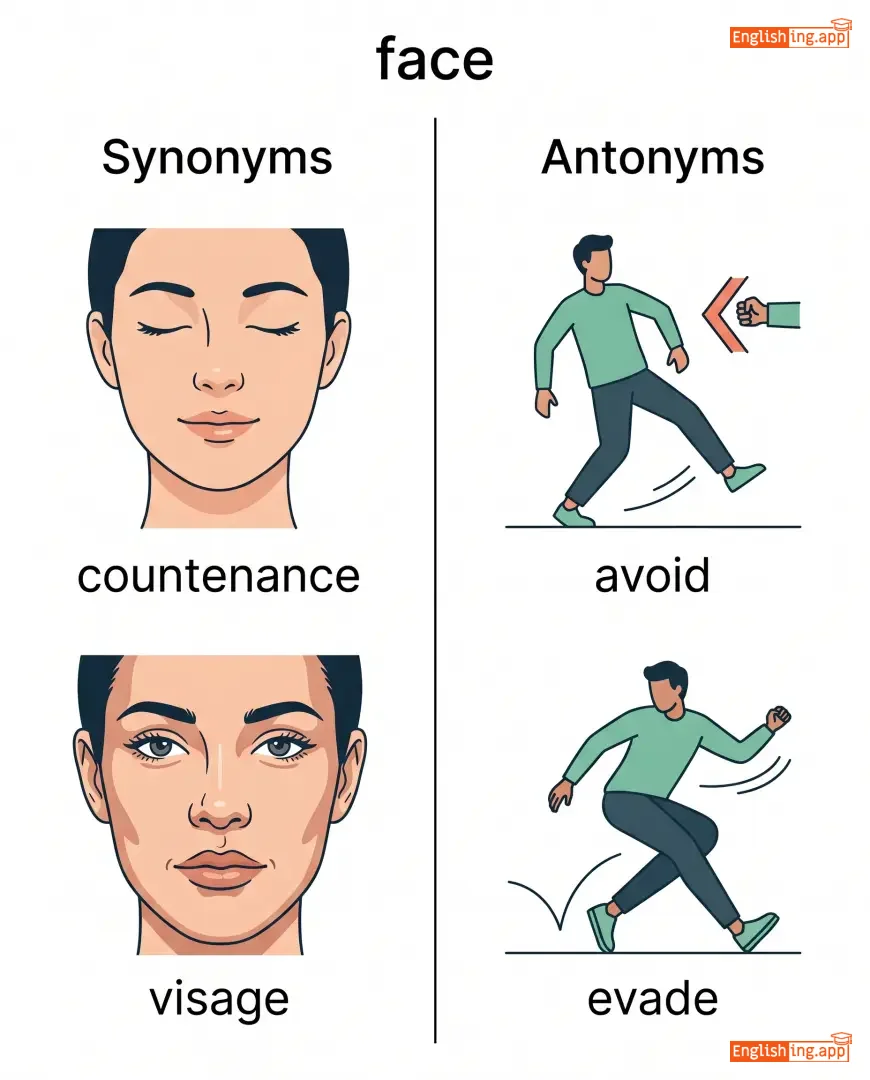
countenance, visage, confront, encounter
••••••
|
avoid, evade
••••••
|
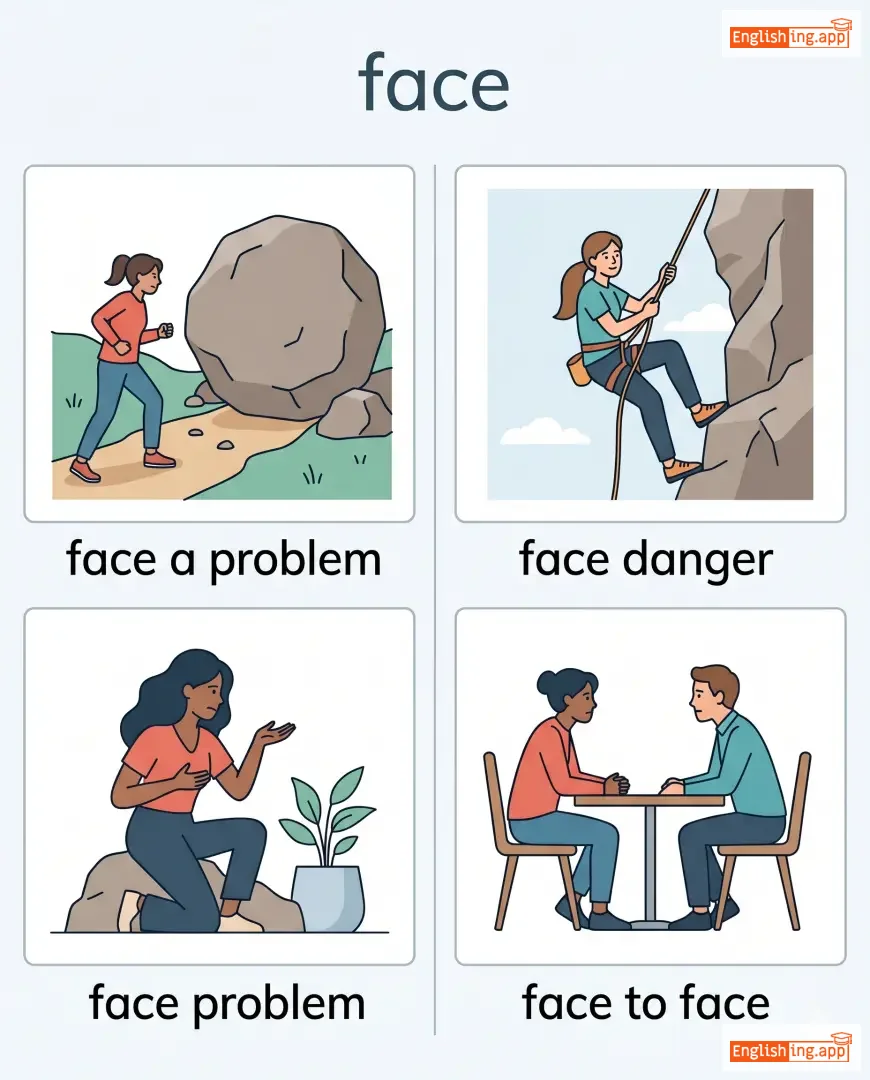
face a problem, face danger, face to face, face reality
••••••
|
No •••••• |
|
#9825
➕
|
/ˈɛkstrə/
adjective
(エクストラ)
••••••
|
- •••••• |
追加の
tsuika no
••••••
|
- •••••• | - •••••• | - •••••• | - •••••• |
More than what is usual, expected, or necessary
••••••
|
She brought some extra food for the picnic. |
彼女はピクニックのために追加の食べ物を持ってきました。
Kanojo wa pikunikku no tame ni tsuika no tabemono o motte kimashita.
••••••
|
go the extra mile |
to make a special effort to achieve something
••••••
|
余分な努力をする
yobun'na doryoku o suru
••••••
|
additional, surplus, excess, supplementary, spare
••••••
|
lacking, insufficient, scarce
••••••
|
extra effort, extra cost, extra time, extra charge
••••••
|
Extra = 追加の = もっと
••••••
|
|
#9826
📏
|
/ɪkˈstɛnt/
noun
(エクステント)
••••••
|
- •••••• |
範囲
han'i
••••••
|
- •••••• | - •••••• | - •••••• | - •••••• |
the area, degree, or scope of something
••••••
|
The extent of the damage was greater than expected.
損害の範囲は予想以上でした。
••••••
|
損害の範囲は予想以上でした。
Songai no han'i wa yosō ijō deshita.
••••••
|
to some extent
ある程度
••••••
|
partially or in a limited way
••••••
|
ある程度
aru teido
••••••
|
range, scope, degree, magnitude, scale
••••••
|
limitlessness, insignificance
••••••
|
extent of damage, full extent, great extent, large extent
••••••
|
エクステントで範囲を測る!
••••••
|
|
#9827
📖
|
/ɪkˈspleɪn/
verb
(エクスプレイン)
••••••
|
|
説明する
setsumei suru
••••••
|
explained
エクスプレインド
••••••
|
explained
エクスプレインド
••••••
|
explains
エクスプレインズ
••••••
|
explaining
エクスプレイニング
••••••
|
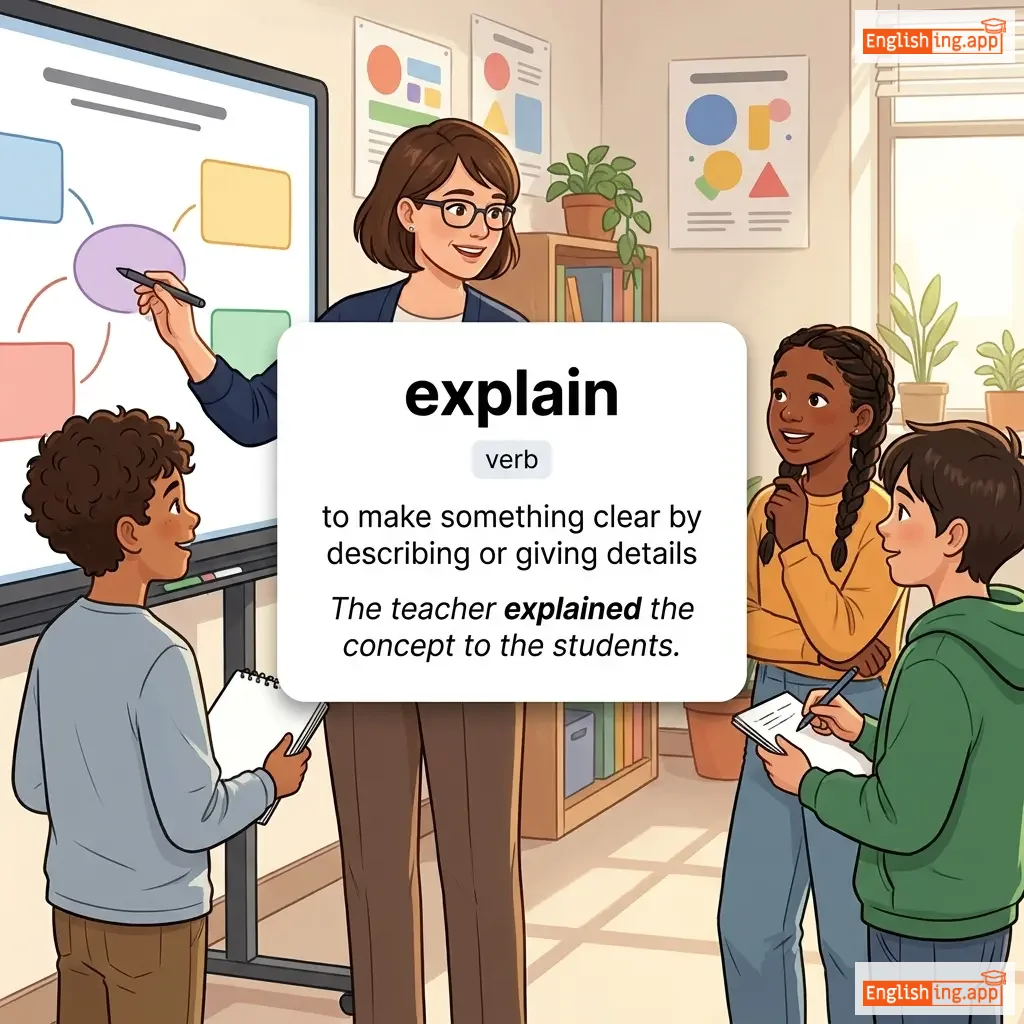
to make something clear by describing or giving details
••••••
|
The teacher explained the concept to the students.
先生は学生にコンセプトを説明しました。
••••••
|
先生は学生にコンセプトを説明しました。
Sensei wa gakusei ni konseputo o setsumei shimashita.
••••••
|
explain away
エクスプレイン・アウェイ
••••••
|
to try to justify or minimize something
••••••
|
言い訳をする
iiwake o suru
••••••
|
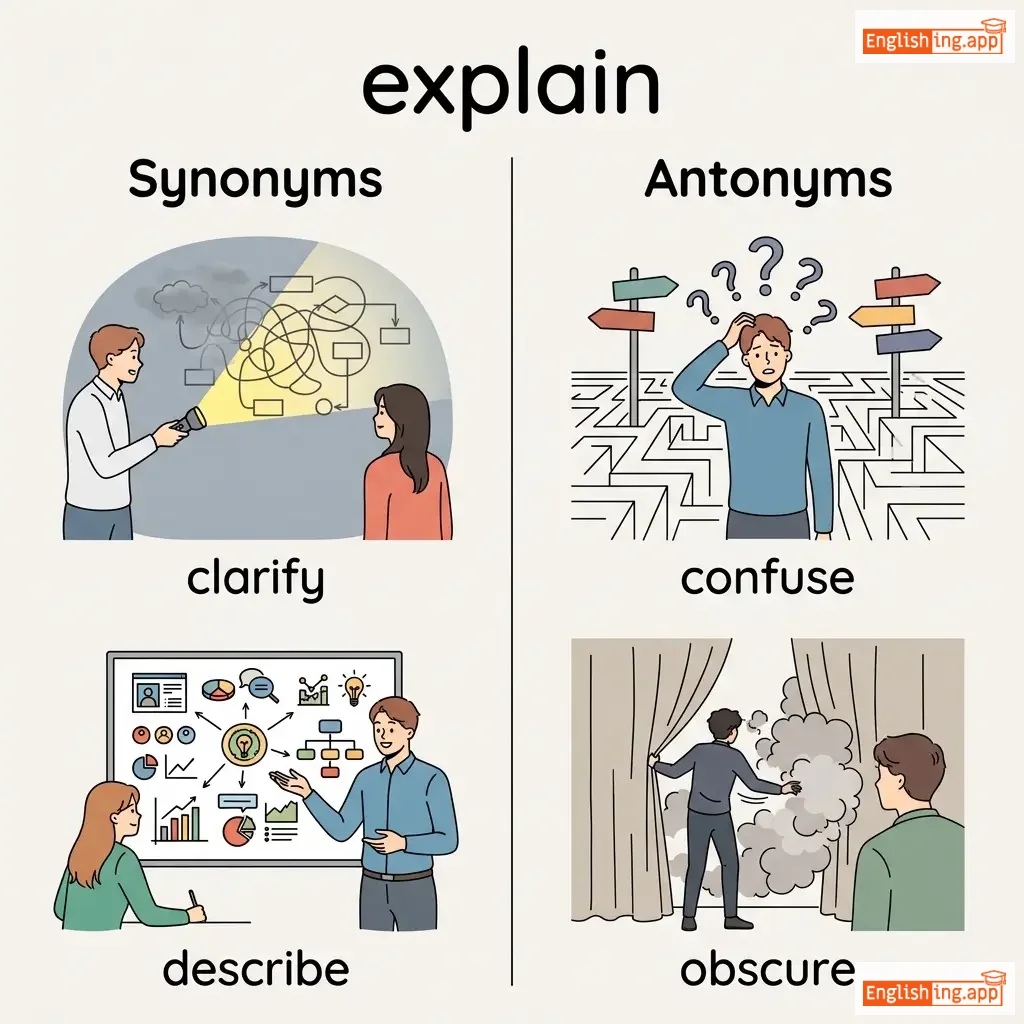
clarify, describe, illustrate, elaborate
••••••
|
confuse, obscure, mystify
••••••
|
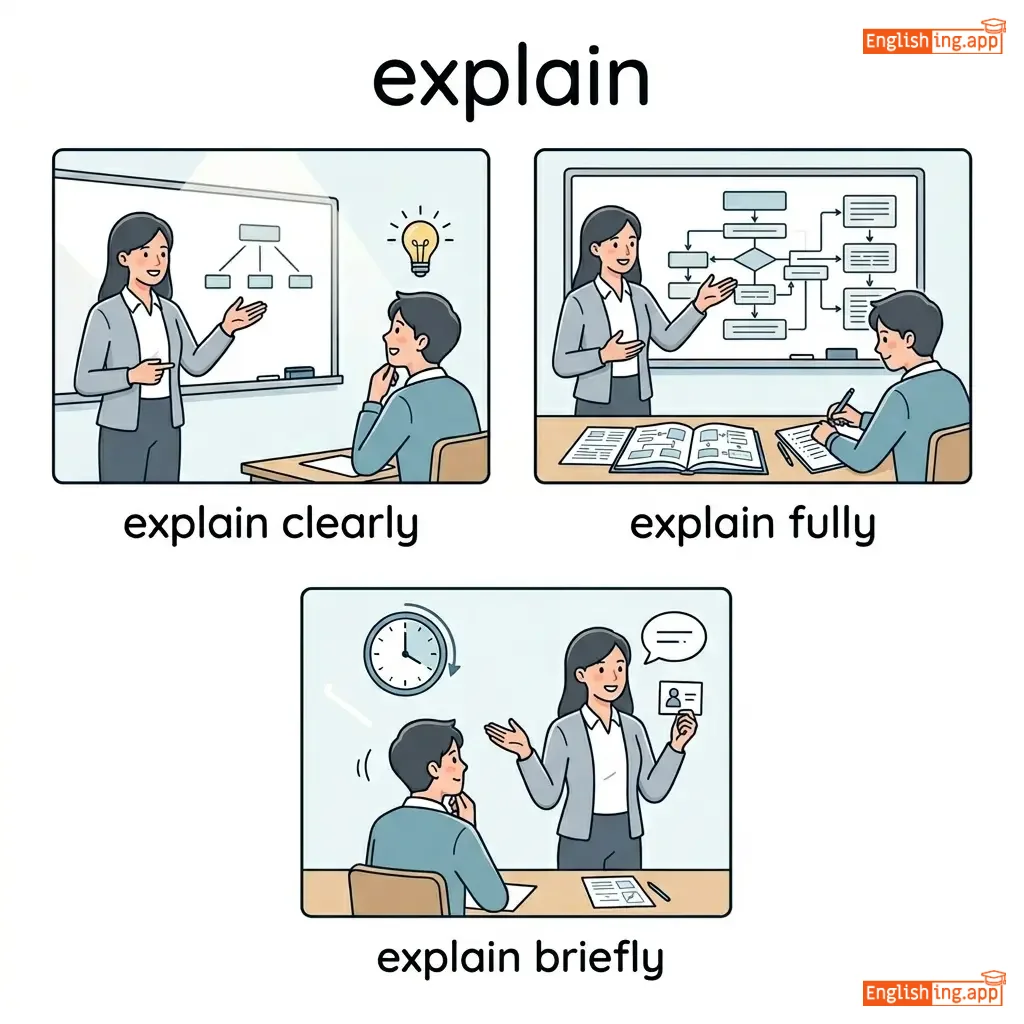
explain clearly, explain fully, explain briefly, explain concept
••••••
|
Explain = エクスプレイン = 空で説明!
••••••
|
|
#9828
😄
|
/ɪɡˈzɪləreɪtɪd/
adjective
(ikushirareitedo)
••••••
|
- •••••• |
興奮した
koufun shita
••••••
|
- •••••• | - •••••• | - •••••• | - •••••• |
feeling very happy, animated, or elated
••••••
|
She felt exhilarated after finishing the marathon. |
彼女はマラソンを終えた後、とても興奮していた。
Kanojo wa marason o oeta ato, totemo koufun shite ita.
••••••
|
- •••••• | - •••••• | - •••••• |
elated, thrilled, delighted, joyful, overjoyed
••••••
|
depressed, sad, gloomy
••••••
|
felt exhilarated, truly exhilarated, completely exhilarated, exhilarated mood
••••••
|
Exhilaratedは、大きな達成後に感じる興奮や幸せな気持ち!
••••••
|
|
#9829
🤩
|
/ɪkˈsaɪt/
verb
(ikusaido)
••••••
|
- •••••• |
興奮させる
koufun saseru
••••••
|
excited
ikusaitedo
••••••
|
excited
ikusaitedo
••••••
|
excites
ikusaitsu
••••••
|
exciting
ikusaitingu
••••••
|
to cause strong feelings of enthusiasm or eagerness
••••••
|
The idea of traveling abroad excites her.
海外旅行のアイデアが彼女を興奮させる。
••••••
|
海外旅行のアイデアが彼女を興奮させる。
Kaigai ryokou no aidea ga kanojo o koufun saseru.
••••••
|
get excited
興奮する
••••••
|
to become enthusiastic or thrilled
••••••
|
興奮する
koufun suru
••••••
|
thrill, stimulate, arouse, energize
••••••
|
calm, bore, depress
••••••
|
excite interest, excite curiosity, excite passion, excite emotions
••••••
|
Excite: 海外旅行のアイデアに興奮する!
••••••
|
|
#9830
🎯
|
/ɪɡˈzæktli/
adverb
(イグザクトリー)
••••••
|
- •••••• |
正確に
seikaku ni
••••••
|
- •••••• | - •••••• | - •••••• | - •••••• |
in a precise or accurate manner; without any error
••••••
|
She explained the process exactly as it happened. |
彼女はプロセスを正確に説明しました。
Kanojo wa purosesu o seikaku ni setsumei shimashita.
••••••
|
to be exact |
to give precise or accurate details
••••••
|
正確に言うと
seikaku ni iu to
••••••
|
precisely, accurately, correctly, strictly
••••••
|
roughly, approximately
••••••
|
exactly right, exactly the same, exactly what, exactly how
••••••
|
正確に、完璧なターゲットのように、エラーなしで!
••••••
|
|
#9831
😈
|
/ˈiːvəl/
adjective
(イービル)
••••••
|
- •••••• |
邪悪
jaaku
••••••
|
- •••••• | - •••••• | - •••••• | - •••••• |
Profoundly immoral and wicked.
••••••
|
They believed the villain was the embodiment of evil. |
彼らは悪役が邪悪の具現であると信じていた。
Karera wa akuyaku ga jaaku no gugen de aru to shinjite ita.
••••••
|
root of all evil |
the fundamental source of wickedness or problems
••••••
|
すべての悪の根源
subete no aku no kongen
••••••
|
wicked, immoral, malevolent, sinful, corrupt
••••••
|
good, virtuous, righteous
••••••
|
evil deeds, pure evil, embodiment of evil
••••••
|
Evilは邪悪→ Devilの中にEvilが隠れている
••••••
|
|
#9832
📊
|
/ɪˈvæljueɪt/
verb
(イヴァリュエイト)
••••••
|
- •••••• |
評価する
hyoukasuru
••••••
|
evaluated
イヴァリュエイテッド
••••••
|
evaluated
イヴァリュエイテッド
••••••
|
evaluates
イヴァリュエイツ
••••••
|
evaluating
イヴァリュエイティング
••••••
|
To assess or judge the value, quality, or significance of something.
••••••
|
The teacher will evaluate the students’ projects tomorrow.
教師は明日学生のプロジェクトを評価します。
••••••
|
教師は明日学生のプロジェクトを評価します。
Kyoushi wa ashita gakusei no purojekuto wo hyoukasuru.
••••••
|
evaluate the situation
状況を評価する
••••••
|
to carefully consider all aspects before deciding
••••••
|
状況を評価する
Joukyou wo hyoukasuru
••••••
|
assess, judge, appraise, analyze, review
••••••
|
ignore, neglect
••••••
|
evaluate performance, evaluate results, evaluate options
••••••
|
評価するは評価する → 試験の評価
••••••
|
|
#9833
💧
|
/ɪˈsɛnʃəl/
adjective
(エッセンシャル)
••••••
|
- •••••• |
必要不可欠
hitsuyō fukaketsu
••••••
|
- •••••• | - •••••• | - •••••• | - •••••• |
Absolutely necessary; extremely important.
••••••
|
Water is essential for life.
水は生命にとって必要不可欠です。
••••••
|
水は生命にとって必要不可欠です。
Mizu wa seimei ni totte hitsuyō fukaketsu desu.
••••••
|
essential services
必須サービス
••••••
|
basic services that must continue even in emergencies
••••••
|
必須サービス
hisshu sābisu
••••••
|
vital, crucial, fundamental, indispensable
••••••
|
nonessential, trivial, unnecessary
••••••
|
essential role, essential requirement, essential need
••••••
|
Essentialは必要不可欠 → 試験でペンは必要不可欠、無ければどうやって書くの?
••••••
|
|
#9834
⭐
|
/ɪˈspɛʃəli/
adverb
(espeʃəli)
••••••
|
- •••••• |
特に
toku ni
••••••
|
- •••••• | - •••••• | - •••••• | - •••••• |
Used to single out one person, thing, or situation over all others.
••••••
|
I love all kinds of fruit, especially mangoes.
私はすべての種類の果物が好きですが、特にマンゴーが好きです。
••••••
|
私はすべての種類の果物が好きですが、特にマンゴーが好きです。
Watashi wa subete no shurui no kudamono ga suki desu ga, toku ni mango ga suki desu.
••••••
|
- •••••• | - •••••• | - •••••• |
particularly, notably, chiefly, mainly
••••••
|
generally, commonly
••••••
|
especially important, especially useful, especially relevant
••••••
|
Especiallyは特にを意味します、覚えておいてmango especially tasty → マンゴー特に美味しい
••••••
|
Vocabulary Quiz
Test your vocabulary by matching words with their translations or meanings.
Login to take the quiz
Comments (0)
Share your thoughts and join the discussion.
Join the discussion by logging in
Login to CommentNo comments yet
Be the first to share your thoughts!