

翻訳
過去
過去分詞
三人称単数
動名詞
意味
例文
例文の翻訳
同義語
対義語
コロケーション
ニーモニック
Swipe left or right, or use the buttons. Tap image to zoom.
例文の翻訳
単語
Lesson 157Lesson 157 - マスクトグル
|
絵文字
|
単語 | Images | 翻訳 | 過去 | 過去分詞 | 三人称単数 | 動名詞 | 意味 | 例文 | 例文の翻訳 | 表現例 | 表現例の意味 | 表現例の翻訳 | 同義語 | 対義語 | コロケーション | ニーモニック |
|---|---|---|---|---|---|---|---|---|---|---|---|---|---|---|---|---|---|
|
#4681
❓
|
/ˌɪnkwɪˈzɪʃən/
noun
(インクイジション)
••••••
|
- •••••• |
尋問
jinmon
••••••
|
- •••••• | - •••••• | - •••••• | - •••••• |
A prolonged and intense questioning or investigation, often harsh in nature.
••••••
|
The journalist faced an inquisition from the panel about his sources. |
ジャーナリストは、自分の情報源に関するパネルからの厳しい尋問に直面した。
Jānarisuto wa, jibun no jōhōgen ni kansuru paneru kara no kibishii jinmon ni chokumen shita.
••••••
|
- •••••• | - •••••• | - •••••• |
interrogation, questioning, inquiry, investigation, probe
••••••
|
silence, neglect, disregard
••••••
|
Spanish Inquisition, face an inquisition, brutal inquisition, harsh inquisition
••••••
|
Inquisition は厳しい質問を意味します – 激しい尋問を想像してください!
••••••
|
|
#4682
🐍
|
/ɪnˈsɪdiəs/
adjective
(インシディアス)
••••••
|
- •••••• |
陰険な
inken na
••••••
|
- •••••• | - •••••• | - •••••• | - •••••• |
Proceeding in a gradual, subtle way but with harmful effects.
••••••
|
The insidious spread of misinformation can damage trust. |
誤った情報の陰険な広がりは信頼を傷つける可能性がある。
Ayamatta jouhou no inken na hirogari wa shinrai wo kizutsukeru kanousei ga aru.
••••••
|
- •••••• | - •••••• | - •••••• |
stealthy, subtle, harmful, dangerous, deceitful
••••••
|
harmless, obvious, safe
••••••
|
insidious disease, insidious influence, insidious spread
••••••
|
インシディアスは、ゆっくりと悪影響を及ぼす隠れた危険です。
••••••
|
|
#4683
👭
|
/ɪnˈsɛp(ə)rəbəl/
adjective
(インセパラブル)
••••••
|
- •••••• |
切り離せない
kirihanasenai
••••••
|
- •••••• | - •••••• | - •••••• | - •••••• |
Unable to be separated or always together.
••••••
|
The two friends have been inseparable since childhood.
二人の友達は子供の頃からインセパラブルです。
••••••
|
二人の友達は子供の頃から切り離せないです。
Futari no tomodachi wa kodomo no koro kara kirihanasenai desu.
••••••
|
- •••••• | - •••••• | - •••••• |
indivisible, united, close, attached, bonded
••••••
|
separable, divided, apart
••••••
|
inseparable friends, inseparable bond, virtually inseparable
••••••
|
切り離せないは、いつも一緒にいる友達のようなものです。
••••••
|
|
#4684
🪨
|
/ɪnˈsɛnʃənt/
adjective
(インセンシエント)
••••••
|
- •••••• |
無感覚の
mukankaku no
••••••
|
- •••••• | - •••••• | - •••••• | - •••••• |
Lacking perception, consciousness, or sensation.
••••••
|
The rock is an insentient object with no awareness. |
岩は意識のない無感覚の物体です。
Iwa wa ishiki no nai mukankaku no buttai desu.
••••••
|
- •••••• | - •••••• | - •••••• |
unfeeling, unconscious, inanimate, lifeless
••••••
|
sentient, conscious, aware
••••••
|
insentient object, insentient matter, insentient being
••••••
|
Sentientは意識を意味し、INsentientはその逆 → 無感覚の。
••••••
|
|
#4685
💔
|
/ɪnˈsɛnsətɪv/
adjective
(インセンシティブ)
••••••
|
- •••••• |
無神経な
mushinkena
••••••
|
- •••••• | - •••••• | - •••••• | - •••••• |
Showing or feeling no concern for others' feelings.
••••••
|
His insensitive comment hurt her deeply. |
彼の無神経なコメントは彼女を深く傷つけました。
Kare no mushinkena komento wa kanojo o fukaku kizutsukemashita.
••••••
|
- •••••• | - •••••• | - •••••• |
unfeeling, heartless, callous, indifferent, unsympathetic
••••••
|
sensitive, caring, compassionate
••••••
|
insensitive remark, insensitive behavior, socially insensitive
••••••
|
無神経 = 他人の気持ちを考えないこと。
••••••
|
|
#4686
😶
|
/ɪnˈsɛnsəbl/
adjective
(インセンシブル)
••••••
|
|
無意識
muishiki
••••••
|
- •••••• | - •••••• | - •••••• | - •••••• |
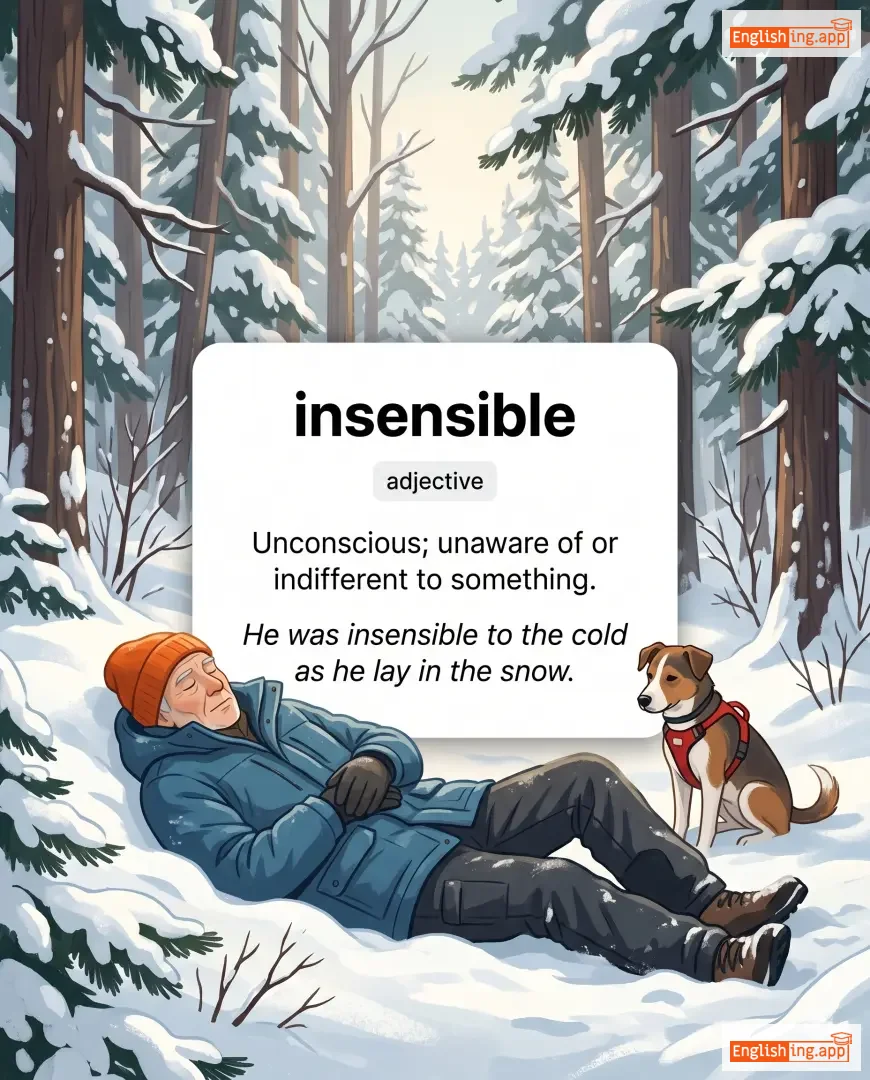
Unconscious; unaware of or indifferent to something.
••••••
|
He was insensible to the cold as he lay in the snow. |
彼は雪の中で横たわっているとき、寒さに無意識でした。
Kare wa yuki no naka de yokotawatte iru toki, samusa ni muishiki deshita.
••••••
|
- •••••• | - •••••• | - •••••• |
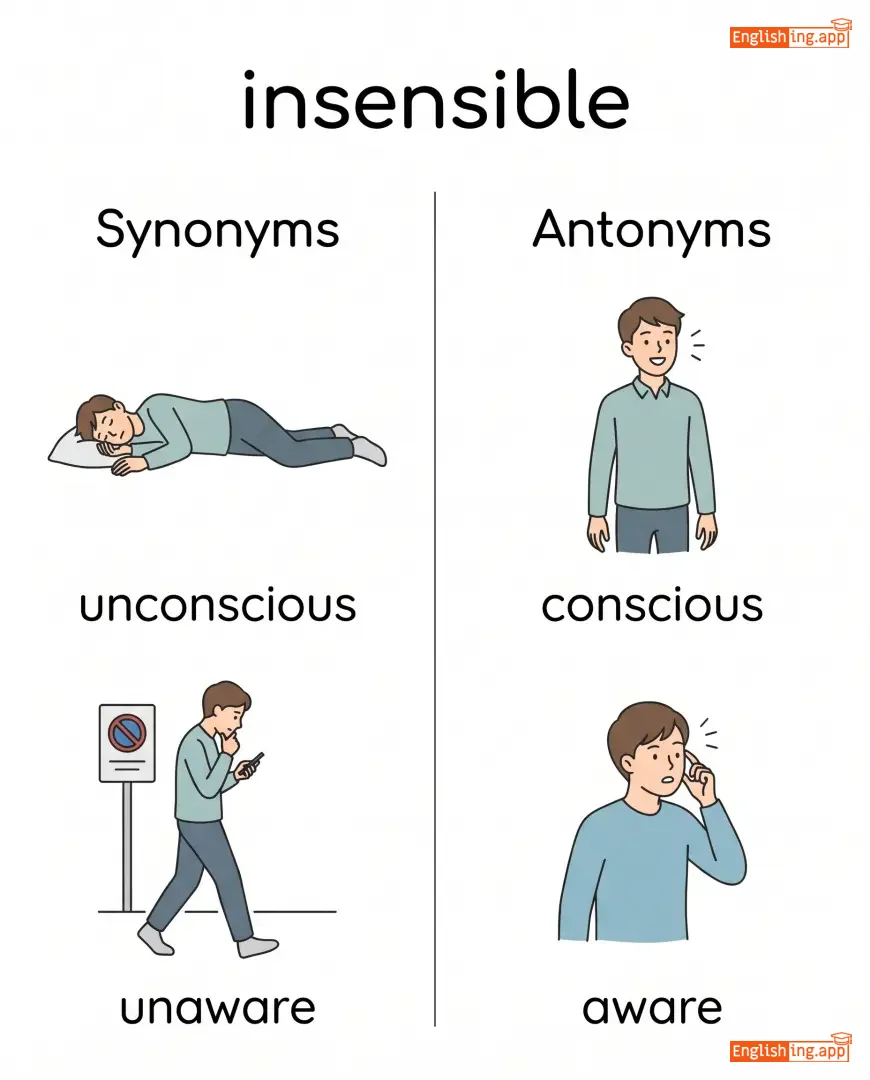
unconscious, unaware, oblivious, indifferent, unresponsive
••••••
|
conscious, aware, responsive
••••••
|
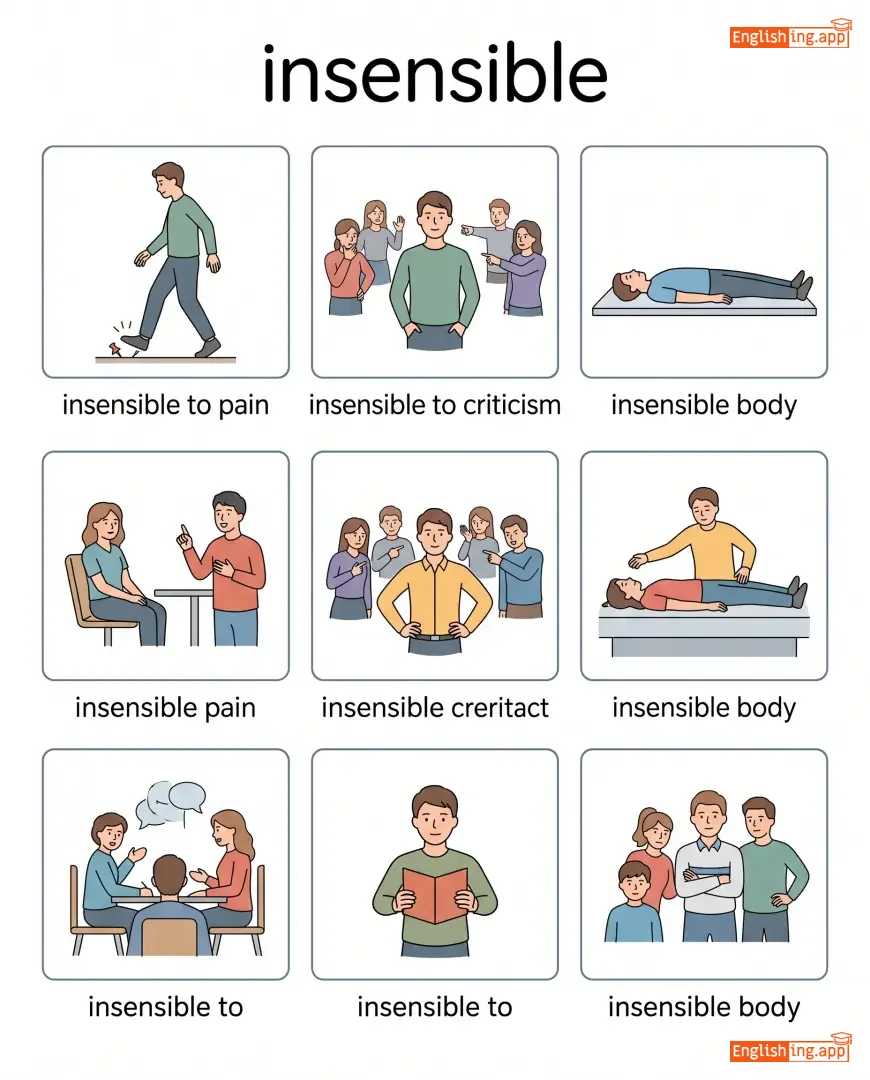
insensible to pain, insensible to criticism, insensible body
••••••
|
INSensibleは感覚がない → 無意識。
••••••
|
|
#4687
🪨
|
/ɪnˈsɛnseɪt/
adjective
(インセンセイト)
••••••
|
- •••••• |
無感情な
mukanjō na
••••••
|
- •••••• | - •••••• | - •••••• | - •••••• |
lacking physical sensation or empathy; without feeling or sensitivity
••••••
|
The dictator's insensate cruelty shocked the world. |
独裁者の無感情な残虐さは世界を驚かせた。
Dokusai-sha no mukanjō na zangyaku-sa wa sekai o odorokaseta.
••••••
|
- •••••• | - •••••• | - •••••• |
unfeeling, callous, insensitive, brutal, heartless
••••••
|
sensitive, compassionate, empathetic
••••••
|
insensate cruelty, insensate violence, insensate force, insensate behavior
••••••
|
Insensateは感覚なし→無感情、共感なし。
••••••
|
|
#4688
😟
|
/ˌɪnsɪˈkjʊə/
adjective
(インセキュア)
••••••
|
- •••••• |
不安定
fuantei
••••••
|
- •••••• | - •••••• | - •••••• | - •••••• |
not confident or assured; uncertain and anxious
••••••
|
She felt insecure about her performance in the exam. |
彼女は試験での自分のパフォーマンスに不安を感じていました。
Kanojo wa shiken de no jibun no pafōmansu ni fuan o kanjite imashita.
••••••
|
insecure about |
lacking confidence in relation to something
••••••
|
不安定について
fuantei ni tsuite
••••••
|
uncertain, anxious, self-doubting, unconfident, shaky
••••••
|
confident, secure, assured
••••••
|
feel insecure, insecure relationship, insecure job, insecure system
••••••
|
不安定とは不安な状態 → 確信がなく、不安定。
••••••
|
|
#4689
🕵️
|
/ɪnˈskruːtəbl̩/
adjective
(幸福)
••••••
|
- •••••• |
幸福
kōfuku
••••••
|
- •••••• | - •••••• | - •••••• | - •••••• |
impossible to understand or interpret
••••••
|
His inscrutable expression made it hard to know what he was thinking. |
彼女は賞を受け取ったとき、幸せを隠すことができませんでした。
Kanojo wa shō o uketotta toki, kōfuku o kakusu koto ga dekimasen deshita.
••••••
|
- •••••• | - •••••• |
幸せの追求
Kōfuku no tsuikyū
••••••
|
mysterious, enigmatic, unfathomable, puzzling, cryptic
••••••
|
clear, transparent, obvious
••••••
|
inscrutable face, inscrutable smile, inscrutable silence, inscrutable expression
••••••
|
幸福 = 人生の喜びを追い求める
••••••
|
|
#4690
✍️
|
/ɪnˈskraɪb/
verb
(インスクライブ)
••••••
|
- •••••• |
刻む
kizamu
••••••
|
inscribed
インスクライブド
••••••
|
inscribed
インスクライブド
••••••
|
inscribes
インスクライブス
••••••
|
inscribing
インスクライビング
••••••
|
to write or carve words or symbols on a surface
••••••
|
They inscribed her name on the trophy.
彼らはトロフィーに彼女の名前を刻みました。
••••••
|
彼らはトロフィーに彼女の名前を刻みました。
Karera wa torofī ni kanojo no namae o kizamimashita.
••••••
|
inscribed in memory
記憶に刻まれる
••••••
|
deeply remembered and not forgotten
••••••
|
記憶に刻まれる
kioku ni kizamare ru
••••••
|
engrave, carve, etch, write, mark
••••••
|
erase, remove, delete
••••••
|
inscribe a name, inscribe words, inscribe on stone, inscribe in memory
••••••
|
Inscribeは表面に刻むことです。
••••••
|
|
#4691
🍽️
|
/ɪnˈseɪʃəbl̩/
adjective
(インセイシャブル)
••••••
|
- •••••• |
満たされない
mitasarenai
••••••
|
- •••••• | - •••••• | - •••••• | - •••••• |
impossible to satisfy; always wanting more
••••••
|
Her insatiable curiosity drove her to read every book in the library. |
彼女の満たされない好奇心は、図書館のすべての本を読むように彼女を駆り立てた。
Kanojo no mitasarenai koukishin wa, toshokan no subete no hon o yomu you ni kanojo o karitate ta.
••••••
|
insatiable appetite |
an endless or unquenchable desire for something
••••••
|
満たされない食欲
mitasarenai shokuyoku
••••••
|
unquenchable, voracious, greedy, ravenous, avid
••••••
|
satisfied, content, fulfilled
••••••
|
insatiable curiosity, insatiable desire, insatiable hunger, insatiable thirst
••••••
|
満たされないは '満たせない' という意味 → 満たされない人は決して満足しない。
••••••
|
|
#4692
☣️
|
/ˌɪnsəˈluːbriəs/
adjective
(インサルブリアス)
••••••
|
- •••••• |
不健康
fukenko
••••••
|
- •••••• | - •••••• | - •••••• | - •••••• |
Unhealthy or not conducive to well-being.
••••••
|
They moved out of the insalubrious neighborhood for the sake of their health. |
彼らは健康のために不健康な地域から引っ越しました
Karera wa kenkō no tame ni fukenka na chiiki kara hikkoshimashita
••••••
|
- •••••• | - •••••• | - •••••• |
unhealthy, unwholesome, unfit, polluted
••••••
|
healthy, wholesome, clean
••••••
|
insalubrious neighborhood, insalubrious conditions, insalubrious lifestyle
••••••
|
不健康は健康の反対、健康を意味する‘健康’(けんこう)と反対です。
••••••
|
|
#4693
🚀
|
/ˈɪnroʊd/
noun
(インロード)
••••••
|
- •••••• |
進展
shinten
••••••
|
- •••••• | - •••••• | - •••••• | - •••••• |
An advance or significant progress, often at the expense of something else.
••••••
|
The company made significant inroads into the mobile market. |
その会社はモバイル市場で重要な進展を遂げました。
Sono kaisha wa mobairu shijou de juuyou na shinten wo togemashita.
••••••
|
make inroads |
To achieve progress or take away a share from something else
••••••
|
進展を遂げる
shinten wo togeru
••••••
|
advance, progress, penetration, breakthrough
••••••
|
retreat, setback, withdrawal
••••••
|
make inroads, inroads into, significant inroads
••••••
|
Inroadはin + road – 道に入って進展することです。
••••••
|
|
#4694
🕵️
|
/ɪnˈkwɪzɪtər/
noun
(インクイジター)
••••••
|
- •••••• |
尋問者
jinmonsha
••••••
|
- •••••• | - •••••• | - •••••• | - •••••• |
A person who asks many questions, often in an official or harsh manner.
••••••
|
The inquisitor demanded detailed answers from the witness. |
尋問者は証人から詳細な回答を要求しました。
Jinmonsha wa shōnin kara shōsai na kaitō o yōkyū shimashita.
••••••
|
- •••••• | - •••••• | - •••••• |
interrogator, examiner, investigator, questioner
••••••
|
defender, supporter, ally
••••••
|
stern inquisitor, official inquisitor, inquisitor's question
••••••
|
尋問者 – まるで質問の達人、いつも答えを求めている人。
••••••
|
|
#4695
🤔
|
/ɪnˈkwɪzɪtɪv/
adjective
(インクウィジティヴ)
••••••
|
- •••••• |
好奇心旺盛な
koukishin ōseina
••••••
|
- •••••• | - •••••• | - •••••• | - •••••• |
Curious or eager to learn and ask questions.
••••••
|
The inquisitive child asked endless questions about the stars. |
好奇心旺盛な子供は星について無限に質問をしました。
Koukishin ōseina kodomo wa hoshi ni tsuite mugen ni shitsumon o shimashita.
••••••
|
inquisitive mind |
A curious and eager-to-learn mindset
••••••
|
好奇心旺盛な心
koukishin ōseina kokoro
••••••
|
curious, probing, nosy, questioning, interested
••••••
|
indifferent, uninterested, apathetic
••••••
|
inquisitive nature, inquisitive child, inquisitive mind, overly inquisitive
••••••
|
Inquisitive(インクウィジティヴ): いつでも質問したくなる気持ちを思い出しましょう。
••••••
|
|
#4696
💡
|
/ˈɪŋklɪŋ/
noun
(インクリン)
••••••
|
- •••••• |
予感
yokan
••••••
|
- •••••• | - •••••• | - •••••• | - •••••• |
A slight idea, hint, or suspicion about something.
••••••
|
She had an inkling that he was planning a surprise.
彼女は彼がサプライズを計画しているという予感を持っていた。
••••••
|
彼女は彼がサプライズを計画しているという予感を持っていた。
Kanojo wa kare ga sapuraizu o keikaku shite iru to iu yokan o motte ita.
••••••
|
- •••••• | - •••••• | - •••••• |
hint, clue, suggestion, suspicion, notion
••••••
|
certainty, assurance, fact
••••••
|
have an inkling, inkling of doubt, faint inkling
••••••
|
インク (ink) が予感 (yokan) を残すようなインクリン。
••••••
|
|
#4697
❓
|
/ɪnˈkwaɪər/
verb
(インクワイア)
••••••
|
|
尋ねる
tazuneru
••••••
|
inquired
インクワイアード
••••••
|
inquired
インクワイアード
••••••
|
inquires
インクワイアーズ
••••••
|
inquiring
インクワイアリング
••••••
|
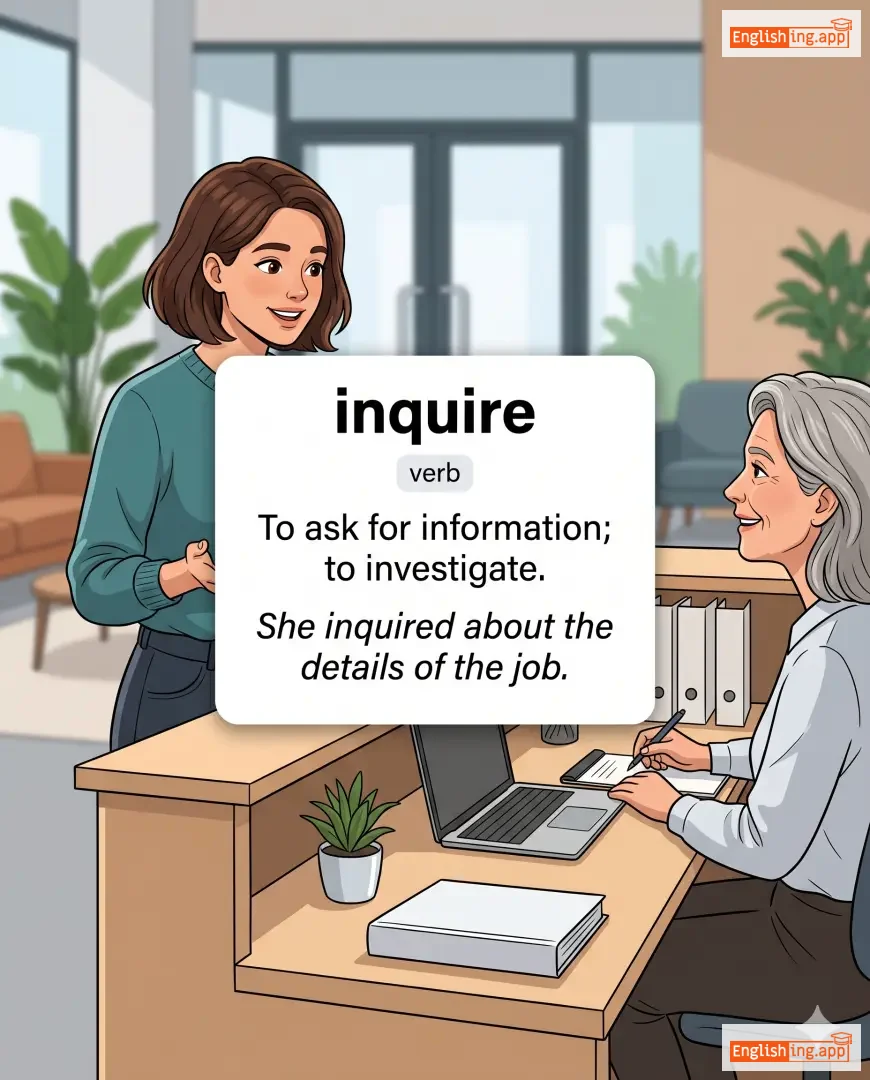
To ask for information; to investigate.
••••••
|
She inquired about the details of the job.
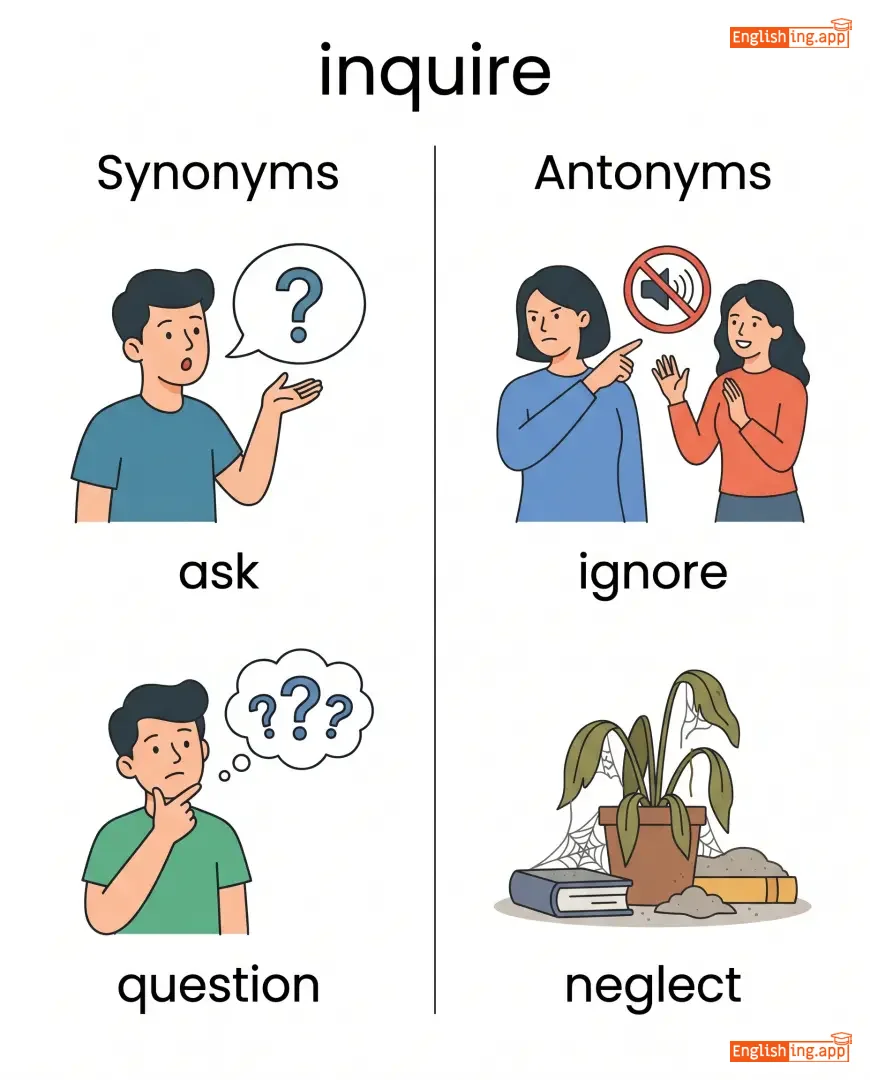
彼女はその仕事の詳細について尋ねました。
••••••
|
彼女はその仕事の詳細について尋ねました。
Kanojo wa sono shigoto no shousai ni tsuite tazunemashita.
••••••
|
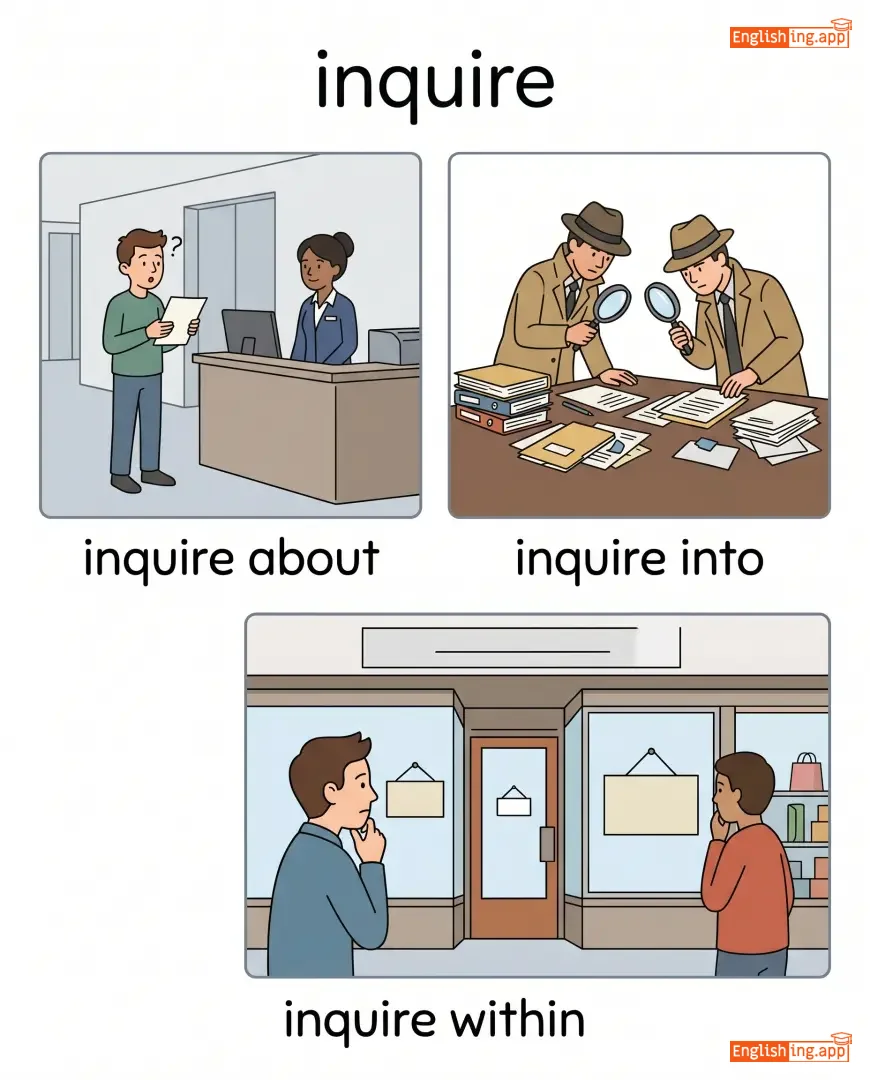
inquire within
インクワイアウィズイン
••••••
|
A phrase used in advertisements, meaning ask inside for more information.
••••••
|
中で尋ねる
naka de tazuneru
••••••
|
ask, question, investigate, probe, query
••••••
|
ignore, neglect
••••••
|
inquire about, inquire into, inquire within, inquire further
••••••
|
Inquire = インクワイア – 内部で尋ねる。
••••••
|
|
#4698
⚖️
|
/ˈɪnkwest/
noun
(インクエスト)
••••••
|
- •••••• |
調査
chousa
••••••
|
- •••••• | - •••••• | - •••••• | - •••••• |
A legal or official inquiry, especially into the cause of a death.
••••••
|
The inquest revealed the cause of the accident.
インクエストは事故の原因を明らかにしました。
••••••
|
調査は事故の原因を明らかにしました。
Chousa wa jiko no gen'in wo akiraka ni shimashita.
••••••
|
- •••••• | - •••••• | - •••••• |
investigation, inquiry, examination, probe
••••••
|
ignorance, neglect
••••••
|
inquest report, police inquest, inquest findings
••••••
|
In-QUEST は法的な調査 (調査) ですべての原因を見つけることです。
••••••
|
|
#4699
📈
|
/ɪˈnɔːrdənət/
adjective
(インオーディネット)
••••••
|
- •••••• |
過度の
kado no
••••••
|
- •••••• | - •••••• | - •••••• | - •••••• |
Excessive or unusually large in degree.
••••••
|
She spent an inordinate amount of time on her phone. |
彼女は電話に過度の時間を費やしました。
Kanojo wa denwa ni kado no jikan o tsuiyashimashita.
••••••
|
- •••••• | - •••••• | - •••••• |
excessive, disproportionate, extreme, undue
••••••
|
moderate, limited, reasonable
••••••
|
inordinate amount, inordinate delay, inordinate attention
••••••
|
In ORDINary ではなく、inordinateは通常を超えて–過度の。
••••••
|
|
#4700
⏰
|
/ˌɪnˌɑːpərˈtuːn/
adjective
(イノポーチュン)
••••••
|
- •••••• |
タイミングが悪い瞬間
taimingu ga warui shunkan
••••••
|
- •••••• | - •••••• | - •••••• | - •••••• |
Happening at a bad or inconvenient time.
••••••
|
His call came at the most inopportune moment. |
彼の電話は最もタイミングが悪い瞬間にかかってきた。
kare no denwa wa mottomo taimingu ga warui shunkan ni kakatte kita.
••••••
|
- •••••• | - •••••• | - •••••• |
untimely, inconvenient, ill-timed, inappropriate
••••••
|
timely, convenient, appropriate
••••••
|
inopportune time, inopportune moment, inopportune delay
••••••
|
Inopportune = 良いタイミングがない瞬間、それは不適切な時に起こることを意味します。
••••••
|
|
#4701
🙂
|
/ˌɪnəˈfɛnsɪv/
adjective
(イノフェンシブ)
••••••
|
- •••••• |
無害な
mugai na
••••••
|
- •••••• | - •••••• | - •••••• | - •••••• |
Not likely to offend or provoke; harmless.
••••••
|
His inoffensive remarks kept the conversation friendly.
彼の無害なコメントは会話を友好的に保ちました。
••••••
|
彼の無害なコメントは会話を友好的に保ちました。
Kare no mugai na komento wa kaiwa o yūkō-teki ni tamochimashita.
••••••
|
- •••••• | - •••••• | - •••••• |
harmless, mild, unobjectionable, innocent, gentle
••••••
|
offensive, harmful, rude
••••••
|
inoffensive comment, inoffensive joke, inoffensive style, inoffensive behavior
••••••
|
In OFFensiveは攻撃的でないことを意味します-つまり無害です。
••••••
|
|
#4702
♾️
|
/ɪˈnuːm(ə)rəbəl/
adjective
(イナメレーブル)
••••••
|
- •••••• |
無数の
musū no
••••••
|
- •••••• | - •••••• | - •••••• | - •••••• |
Too many to be counted.
••••••
|
She has innumerable memories of her childhood. |
彼女は子供時代の無数の思い出を持っています。
Kanojo wa kodomojidai no musū no omoide o motteimasu.
••••••
|
- •••••• | - •••••• | - •••••• |
countless, endless, numberless, myriad, infinite
••••••
|
few, limited, finite
••••••
|
innumerable stars, innumerable times, seemingly innumerable, innumerable possibilities
••••••
|
Innumerable → in+number+able → 数えきれないほど多い = 無数の。
••••••
|
|
#4703
🤔
|
/ˌɪnjuˈɛndoʊ/
noun
(インヌエンド)
••••••
|
|
ほのめかし
honomekashi
••••••
|
- •••••• | - •••••• | - •••••• | - •••••• |
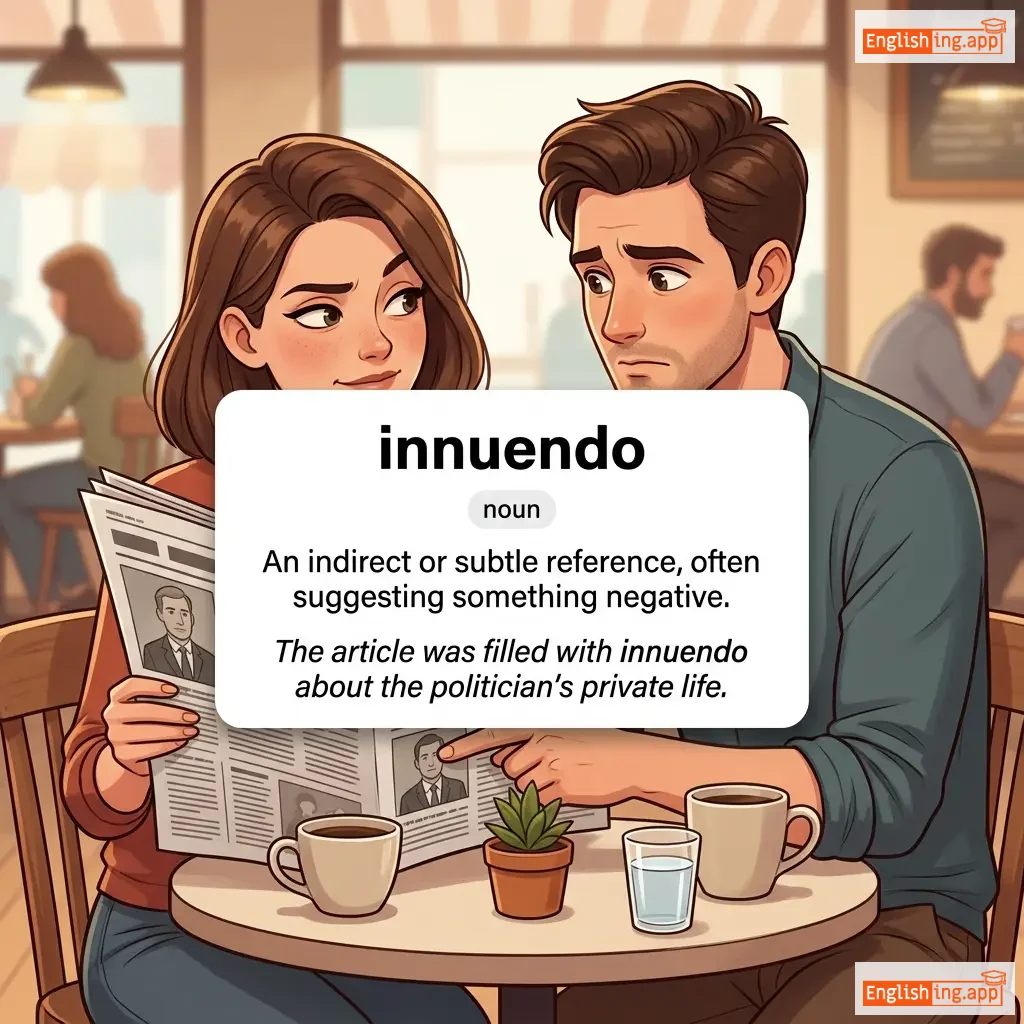
An indirect or subtle reference, often suggesting something negative.
••••••
|
The article was filled with innuendo about the politician's private life. |
その記事は政治家の私生活に関するほのめかしでいっぱいだった。
Sono kiji wa seijika no shiseikatsu ni kansuru honomekashi de ippai datta.
••••••
|
- •••••• | - •••••• | - •••••• |
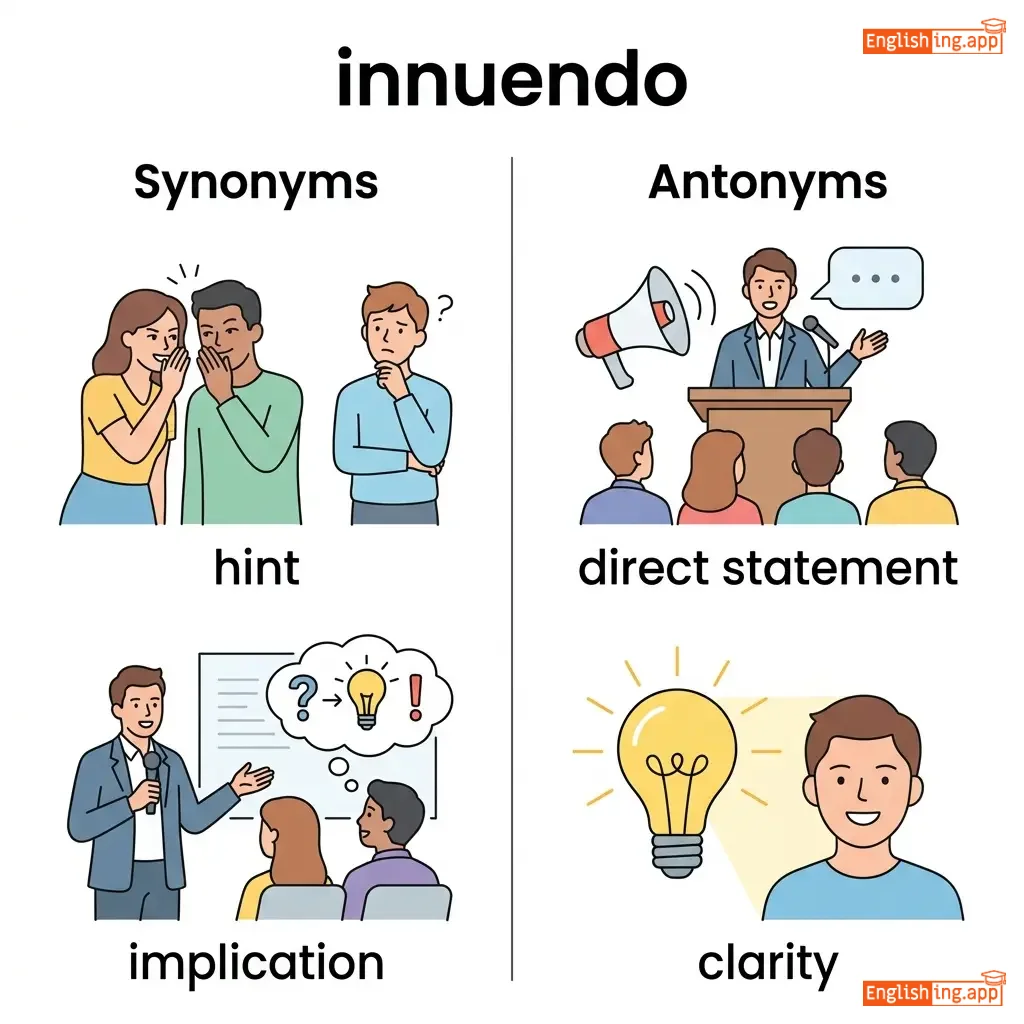
hint, implication, suggestion, insinuation
••••••
|
direct statement, clarity, openness
••••••
|
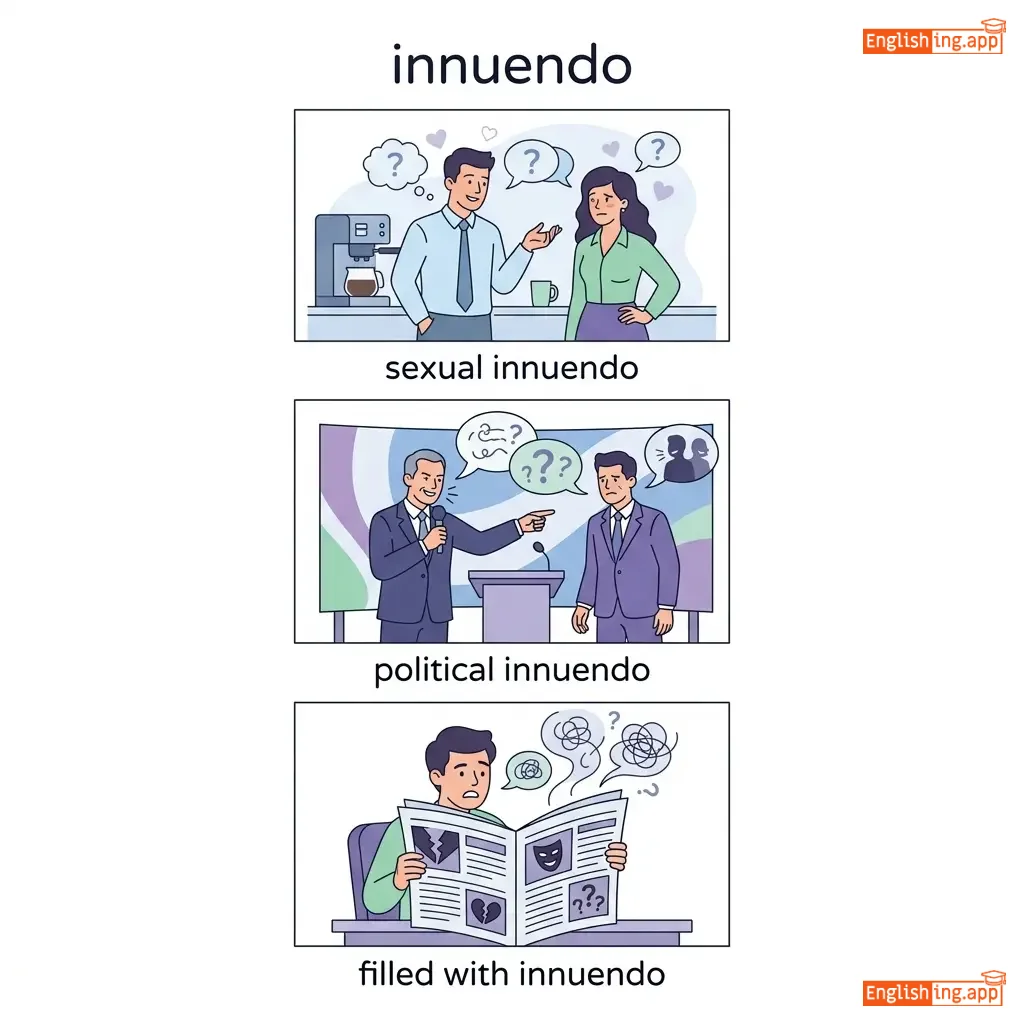
sexual innuendo, political innuendo, filled with innuendo, subtle innuendo
••••••
|
Innuendo → In-you-window → 窓の向こうに隠されたほのめかし。
••••••
|
|
#4704
🚀
|
/ˌɪnəˈveɪʃən/
noun
(イノベーション)
••••••
|
|
革新
kakushin
••••••
|
- •••••• | - •••••• | - •••••• | - •••••• |
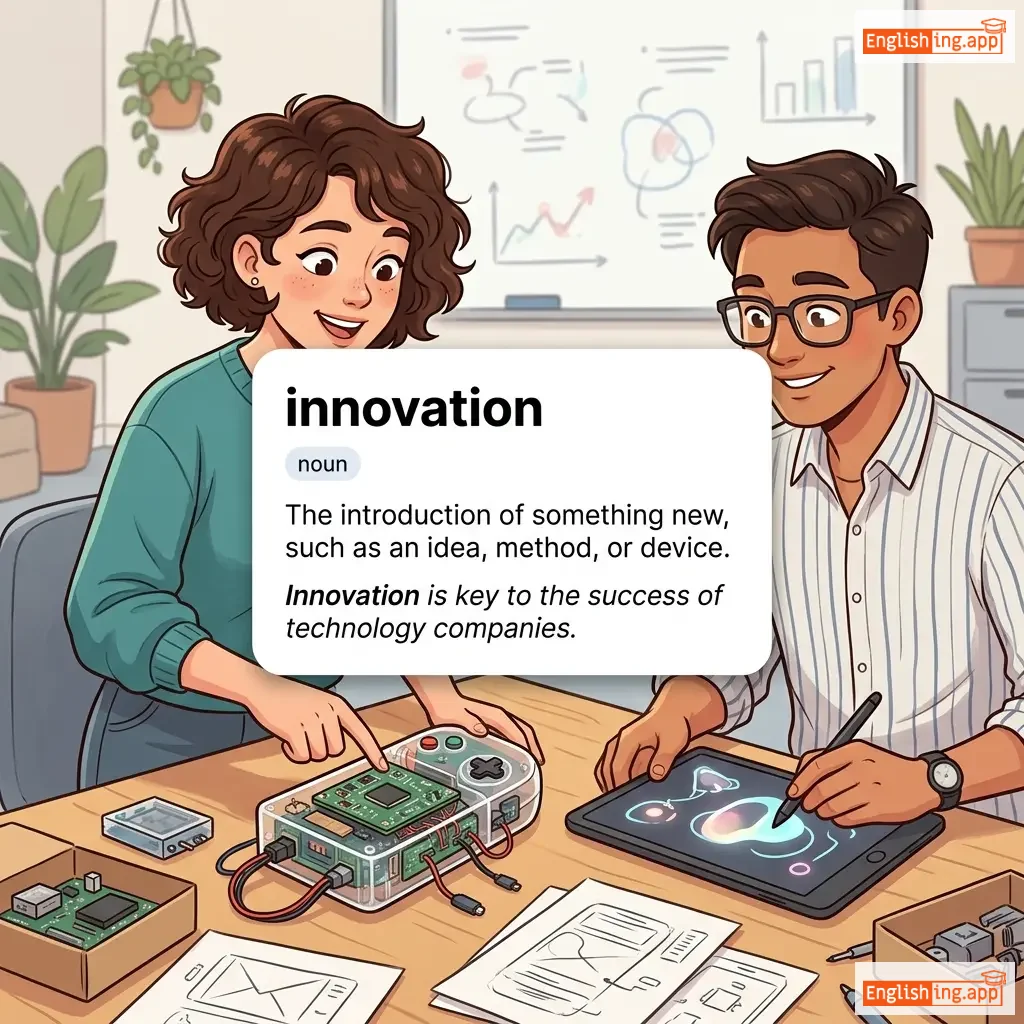
The introduction of something new, such as an idea, method, or device.
••••••
|
Innovation is key to the success of technology companies. |
革新はテクノロジー企業の成功の鍵です。
Kakushin wa tekunorojī kigyō no seikō no kagi desu.
••••••
|
drive innovation |
To actively promote and encourage new ideas and methods.
••••••
|
革新を促進する
Kakushin o sokushin suru
••••••
|
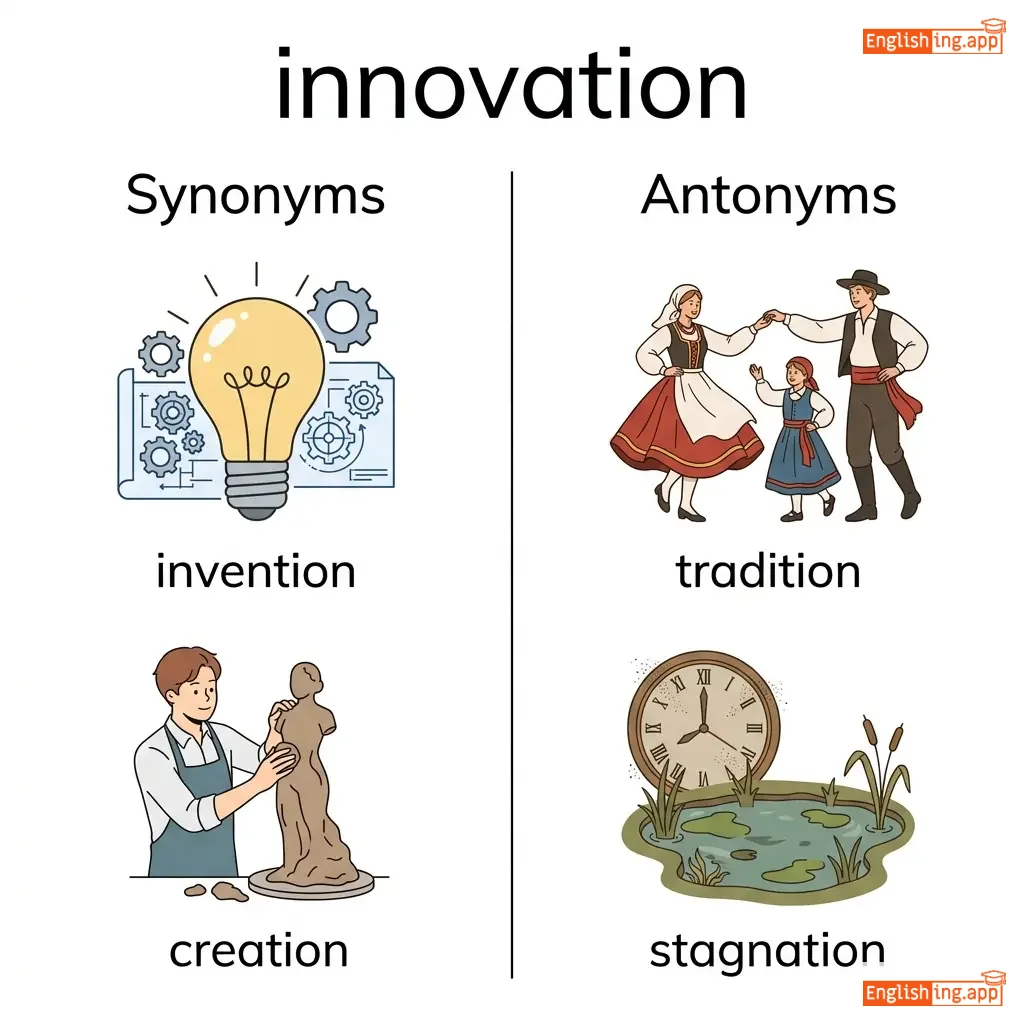
invention, creation, novelty, modernization
••••••
|
tradition, stagnation, imitation
••••••
|
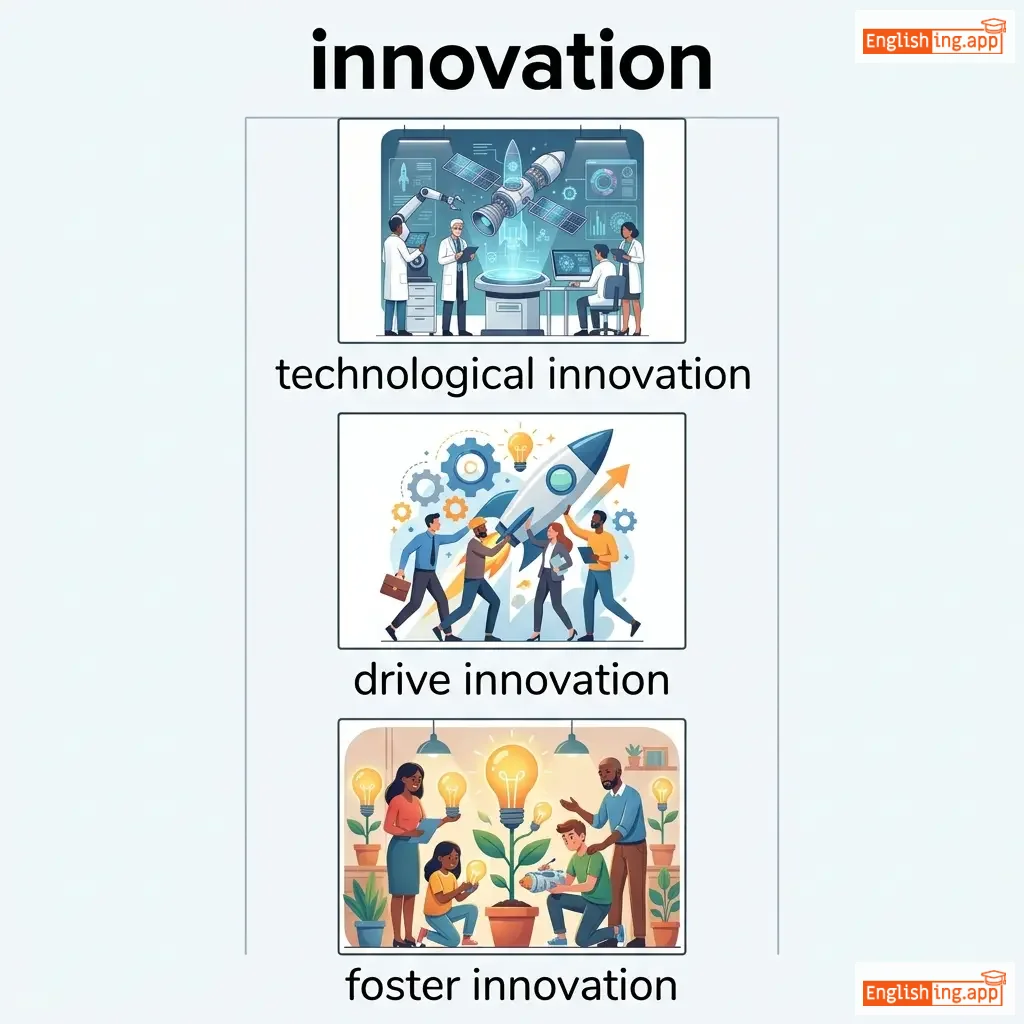
technological innovation, drive innovation, foster innovation, innovation strategy
••••••
|
革新 = '革'(革新的な)+ '新'(新しい)→ 新しい星のように新しいアイデアが現れる。
••••••
|
|
#4705
💡
|
/ˈɪnəveɪt/
verb
(イノベート)
••••••
|
- •••••• |
革新
kakushin
••••••
|
innovated
イノベーテッド
••••••
|
innovated
イノベーテッド
••••••
|
innovates
イノベーツ
••••••
|
innovating
イノベーティング
••••••
|
To introduce new methods, ideas, or products.
••••••
|
The company must innovate to stay ahead of its competitors.
その企業は競争相手を追い越すために革新を続けなければならない。
••••••
|
その企業は競争相手を追い越すために革新を続けなければならない。
Sono kigyō wa kyōsō aite o oikosu tame ni kakushin o tsudzukenakereba naranai.
••••••
|
- •••••• | - •••••• | - •••••• |
invent, create, modernize, revolutionize
••••••
|
imitate, copy, stagnate
••••••
|
innovate new ideas, innovate constantly, ability to innovate, innovate successfully
••••••
|
InnovateはIn-no-wait → 待つな、新しいものを作れ。
••••••
|
|
#4706
😇
|
/ɪˈnɒkjuəs/
adjective
(イノキュアス)
••••••
|
|
無害な
mugaina
••••••
|
- •••••• | - •••••• | - •••••• | - •••••• |
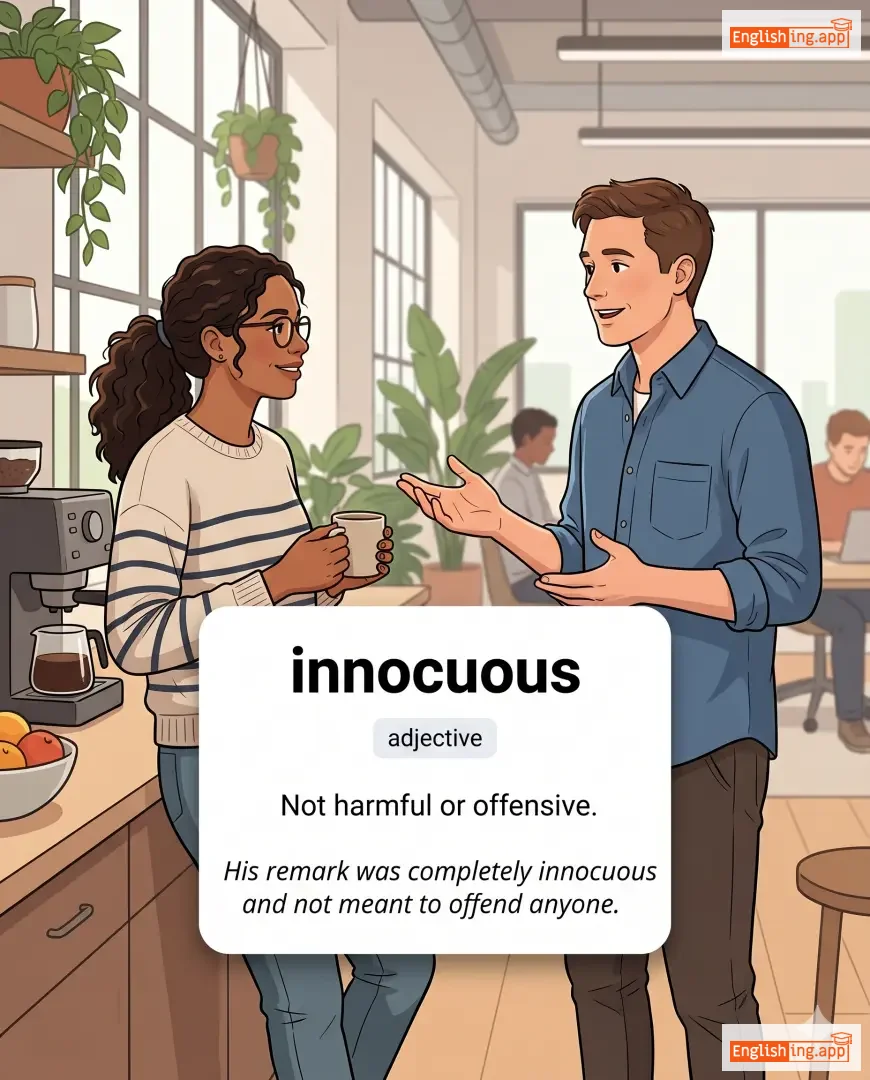
Not harmful or offensive.
••••••
|
His remark was completely innocuous and not meant to offend anyone. |
彼の発言は完全に無害で、誰かを傷つける意図はなかった。
Kare no hatsugen wa kanzen ni mugai de, dareka o kizutsukeru ito wa nakatta.
••••••
|
- •••••• | - •••••• | - •••••• |
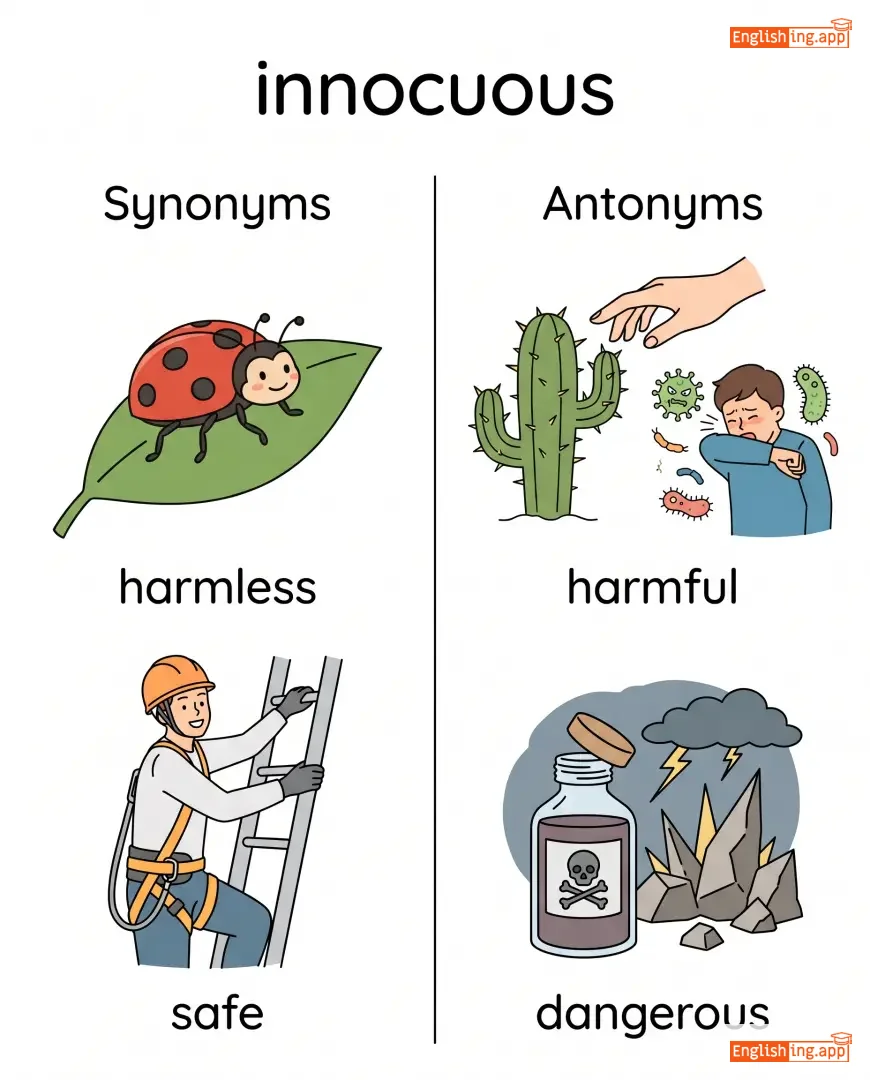
harmless, safe, inoffensive, mild, benign
••••••
|
harmful, dangerous, toxic
••••••
|
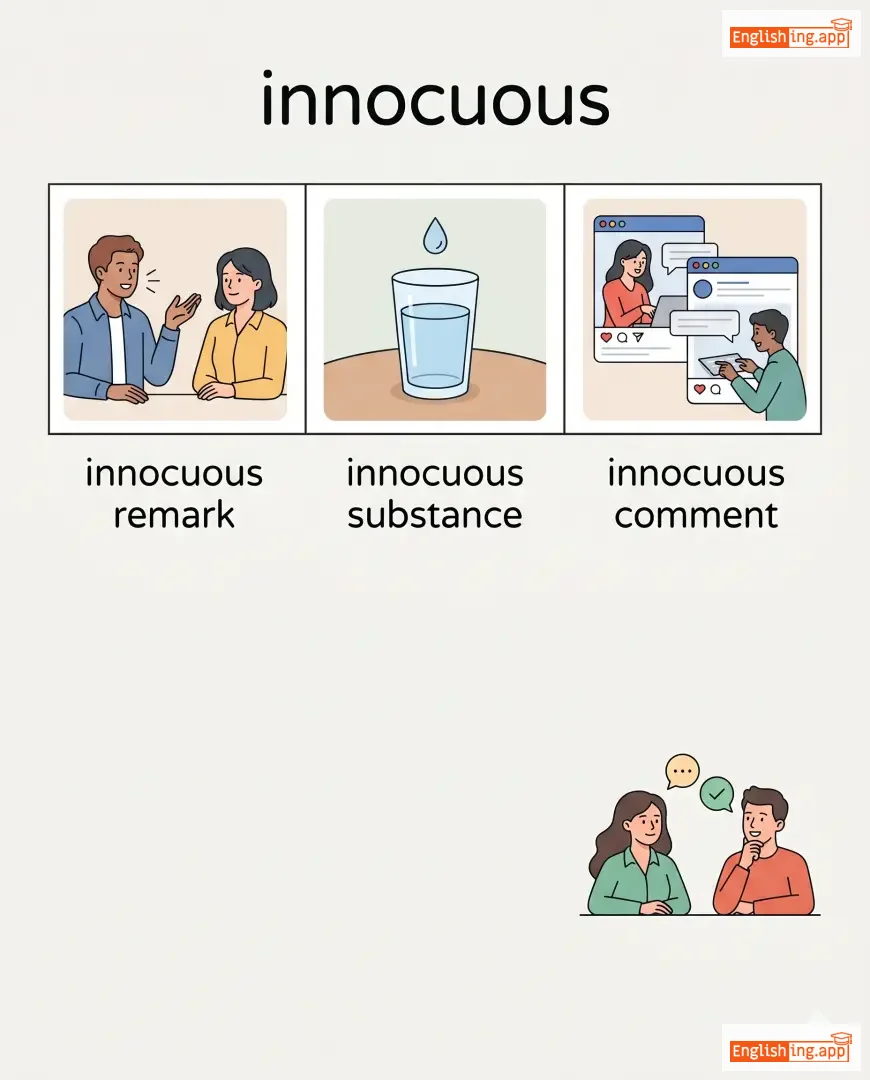
innocuous remark, innocuous substance, innocuous comment, seemingly innocuous
••••••
|
Innocent + キュアス (霧) → キュアスのように、無害なものは害を与えない。
••••••
|
|
#4707
🌱
|
/ɪˈneɪt/
adjective
(イネイト)
••••••
|
|
生得的
shōtōteki
••••••
|
- •••••• | - •••••• | - •••••• | - •••••• |
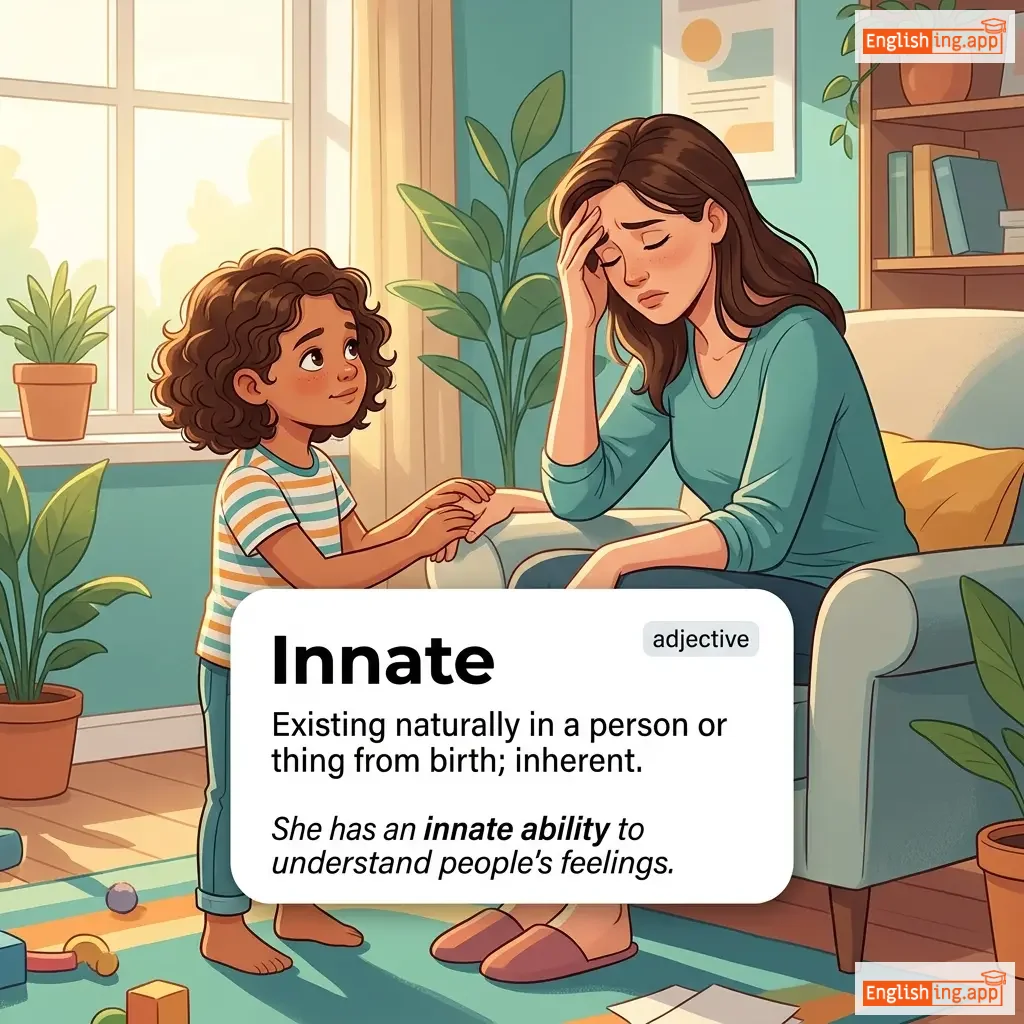
Existing naturally in a person or thing from birth; inherent.
••••••
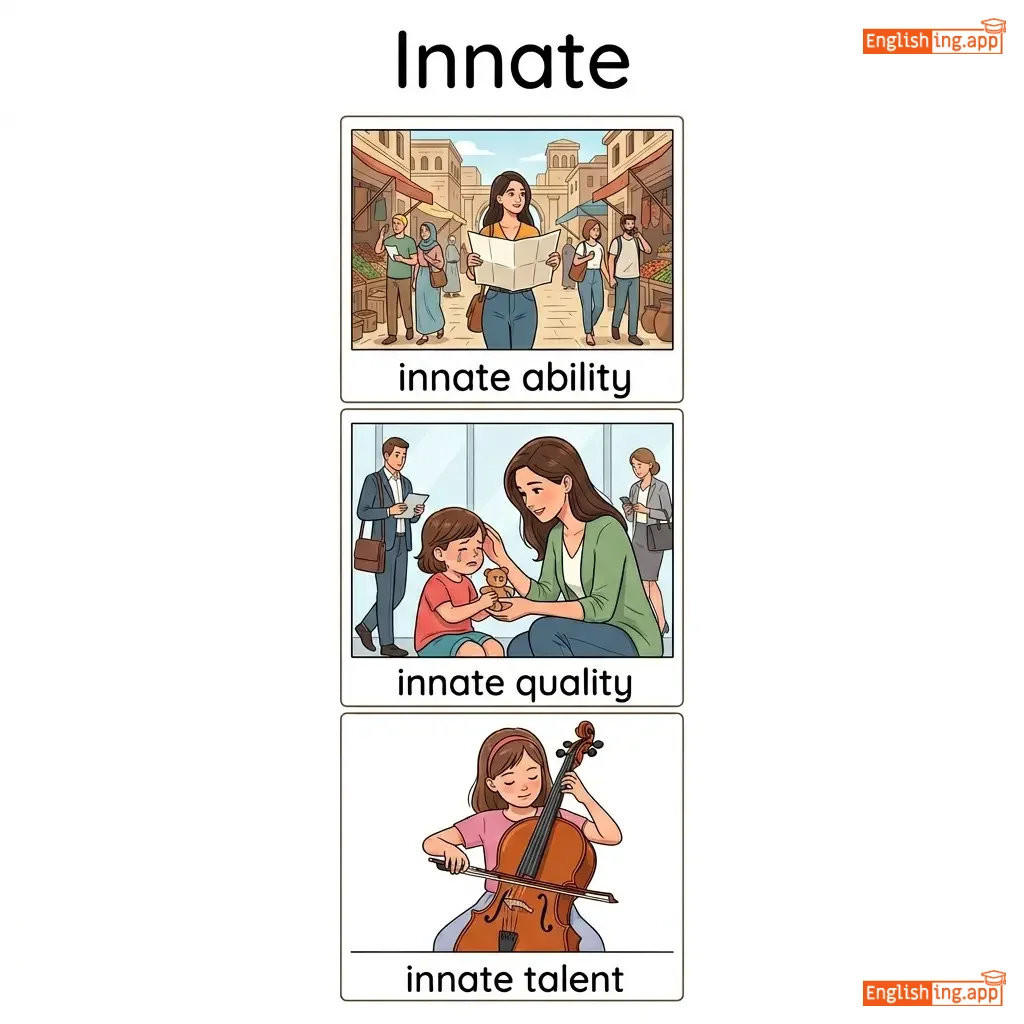
|
She has an innate ability to understand people's feelings.
彼女は人々の感情を理解する生まれつきの能力を持っている。
••••••
|
彼女は人々の感情を理解する生まれつきの能力を持っている。
Kanojo wa hitobito no kanjō o rikai suru umaretsuki no nōryoku o motte iru.
••••••
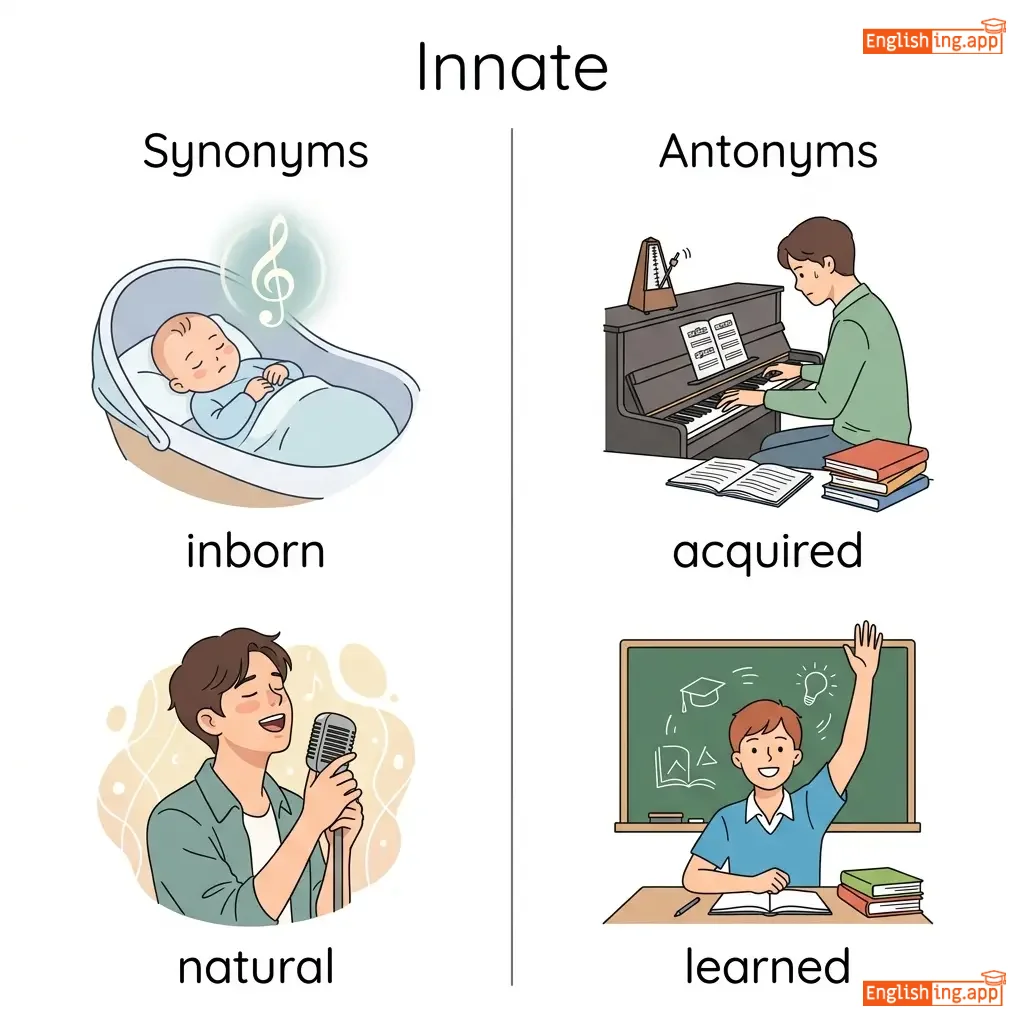
|
- •••••• | - •••••• | - •••••• |
inborn, natural, inherent, instinctive, congenital
••••••
|
acquired, learned
••••••
|
innate ability, innate quality, innate talent
••••••
|
INNATEは生まれつきの才能、つまり自然に備わった能力です。
••••••
|
|
#4708
❤️
|
/ˈɪnmoʊst/
adjective
(インモースト)
••••••
|
- •••••• |
最も内面の
mottomo naimen no
••••••
|
- •••••• | - •••••• | - •••••• | - •••••• |
Situated at the very heart or deepest part; most private or secret.
••••••
|
She revealed her inmost thoughts to her closest friend. |
彼女は最も内面的な考えを最も親しい友達に明かした。
Kanojo wa mottomo naimen-tekina kangae wo mottomo shitashii tomodachi ni akashita.
••••••
|
- •••••• | - •••••• | - •••••• |
innermost, deepest, central, private
••••••
|
outermost, external
••••••
|
inmost thoughts, inmost feelings, inmost desire
••••••
|
IN-MOSTは最も内面的な部分を意味します。
••••••
|
|
#4709
🌊
|
/ˈɪnlɛt/
noun
(インレット)
••••••
|
- •••••• |
入り江
irieki
••••••
|
- •••••• | - •••••• | - •••••• | - •••••• |
A small arm of the sea, a lake, or a river; an opening or passage for entry.
••••••
|
The boat entered a narrow inlet along the coast. |
船は海岸沿いの狭い入り江に入った。
Fune wa kaigan-zoi no semai irieki ni haitta.
••••••
|
- •••••• | - •••••• | - •••••• |
bay, cove, estuary, creek
••••••
|
outlet, exit
••••••
|
narrow inlet, coastal inlet, water inlet
••••••
|
INは入口、LETは水を通る道です。
••••••
|
|
#4710
🏞️
|
/ˈɪnlənd/
adjective
(インランド)
••••••
|
|
内陸
nairiku
••••••
|
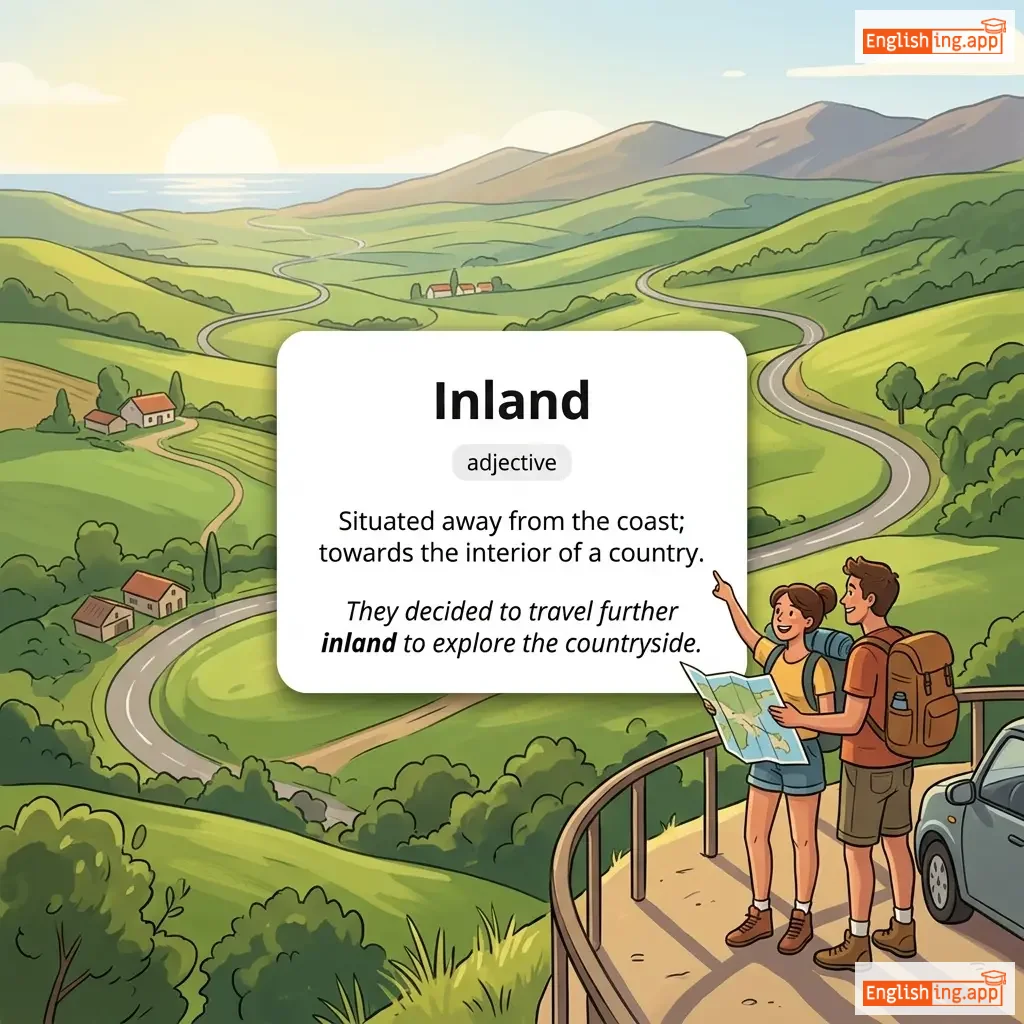
- •••••• | - •••••• | - •••••• | - •••••• |
Situated away from the coast; towards the interior of a country.
••••••
|
They decided to travel further inland to explore the countryside. |
彼らは田舎を探索するためにさらに内陸へ進むことに決めました。
Karera wa inaka o tansaku suru tame ni sara ni nairiku e susumu koto ni kimemashita.
••••••
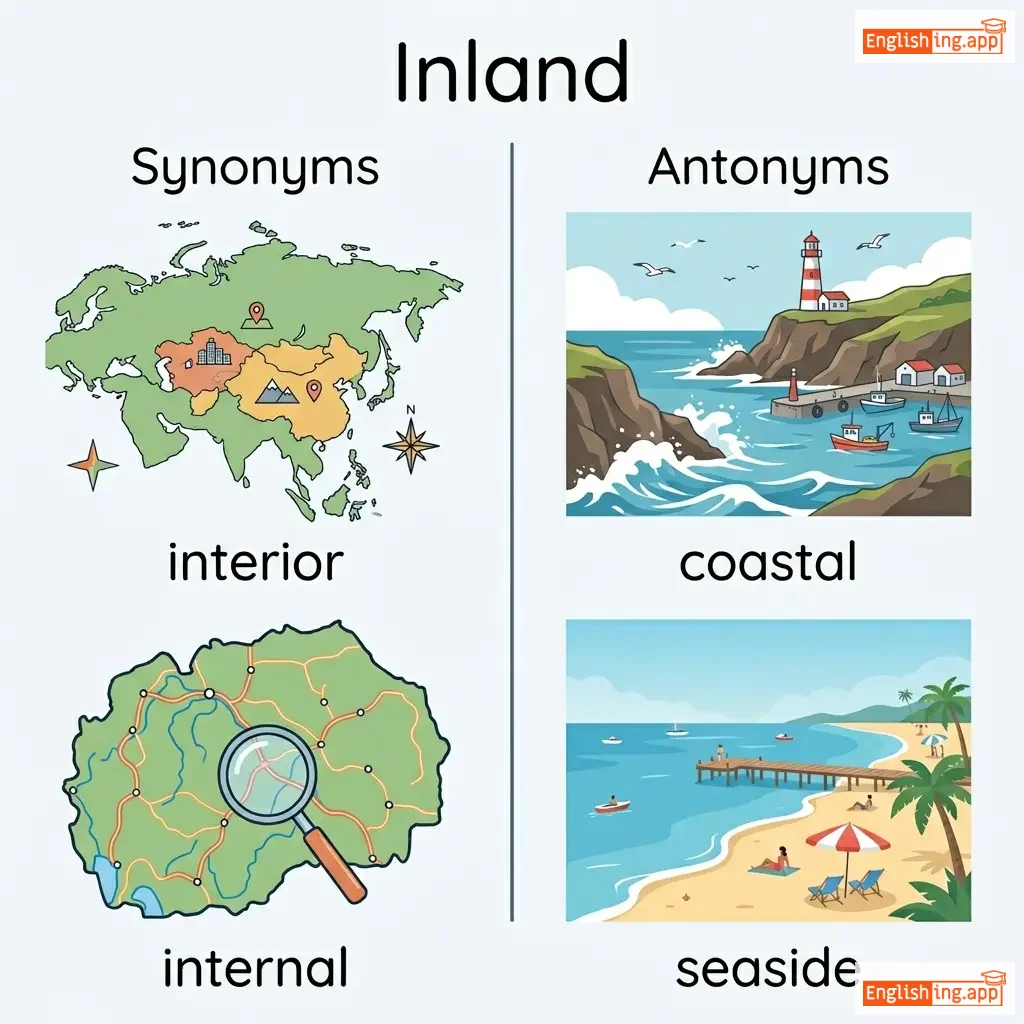
|
- •••••• | - •••••• | - •••••• |
interior, internal, inner, central
••••••
|
coastal, seaside
••••••
|
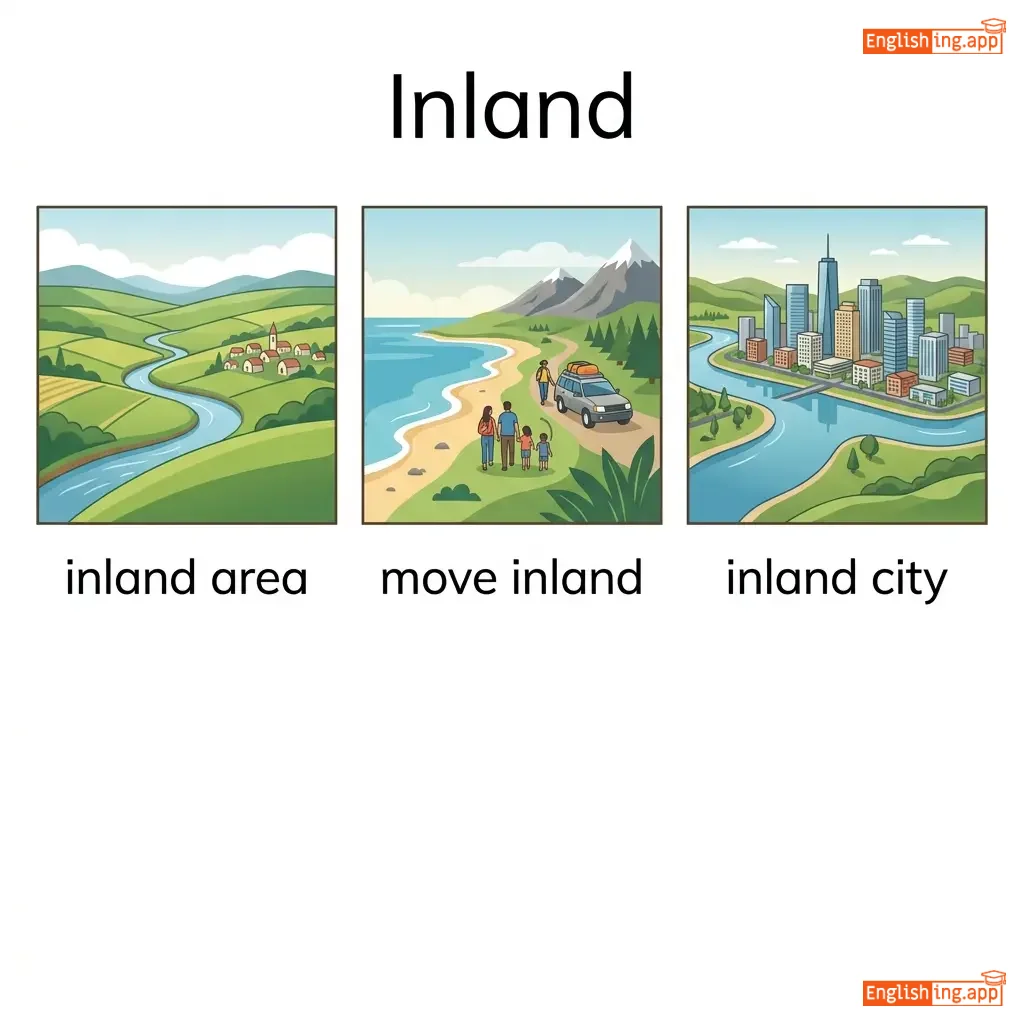
inland area, move inland, inland city
••••••
|
IN-LAND は国の内部を意味します。
••••••
|
Vocabulary Quiz
Test your vocabulary by matching words with their translations or meanings.
Login to take the quiz
Comments (0)
Share your thoughts and join the discussion.
Join the discussion by logging in
Login to CommentNo comments yet
Be the first to share your thoughts!