

翻訳
過去
過去分詞
三人称単数
動名詞
意味
例文
例文の翻訳
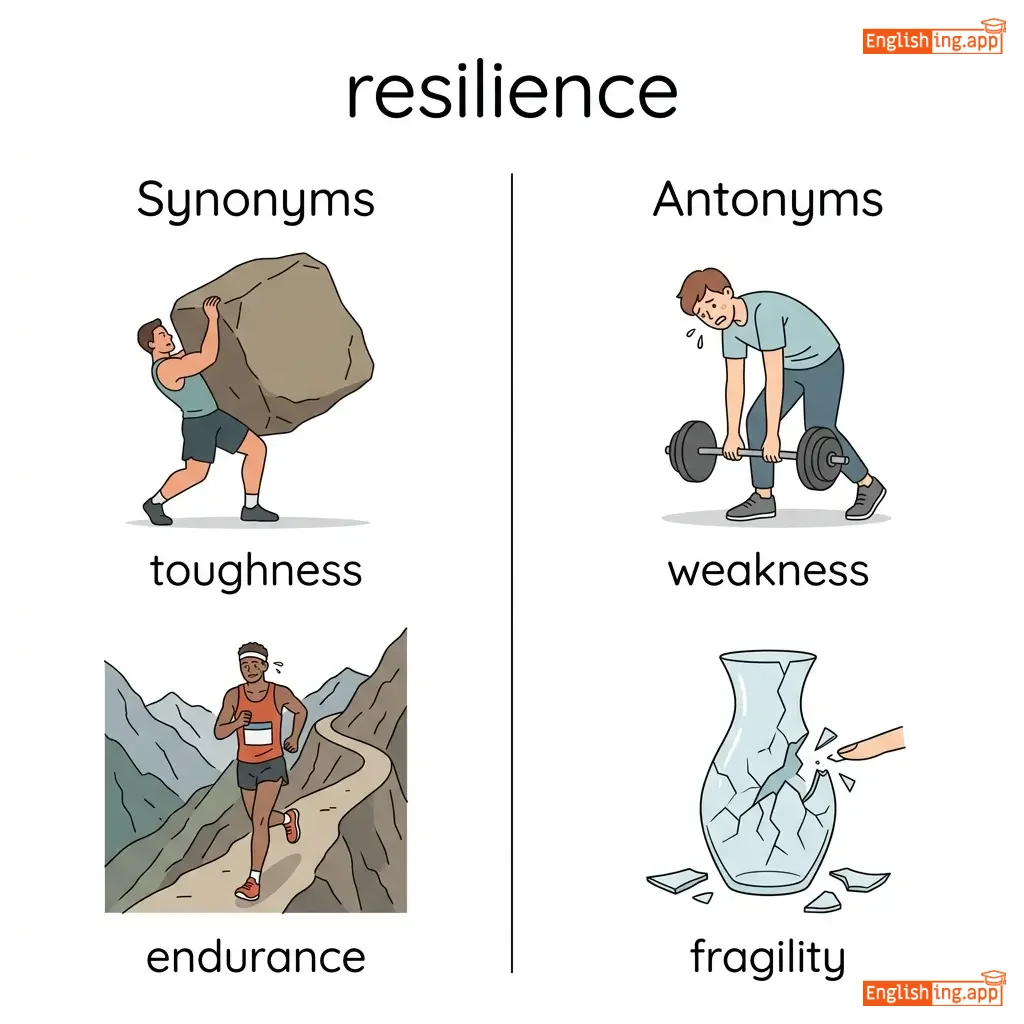
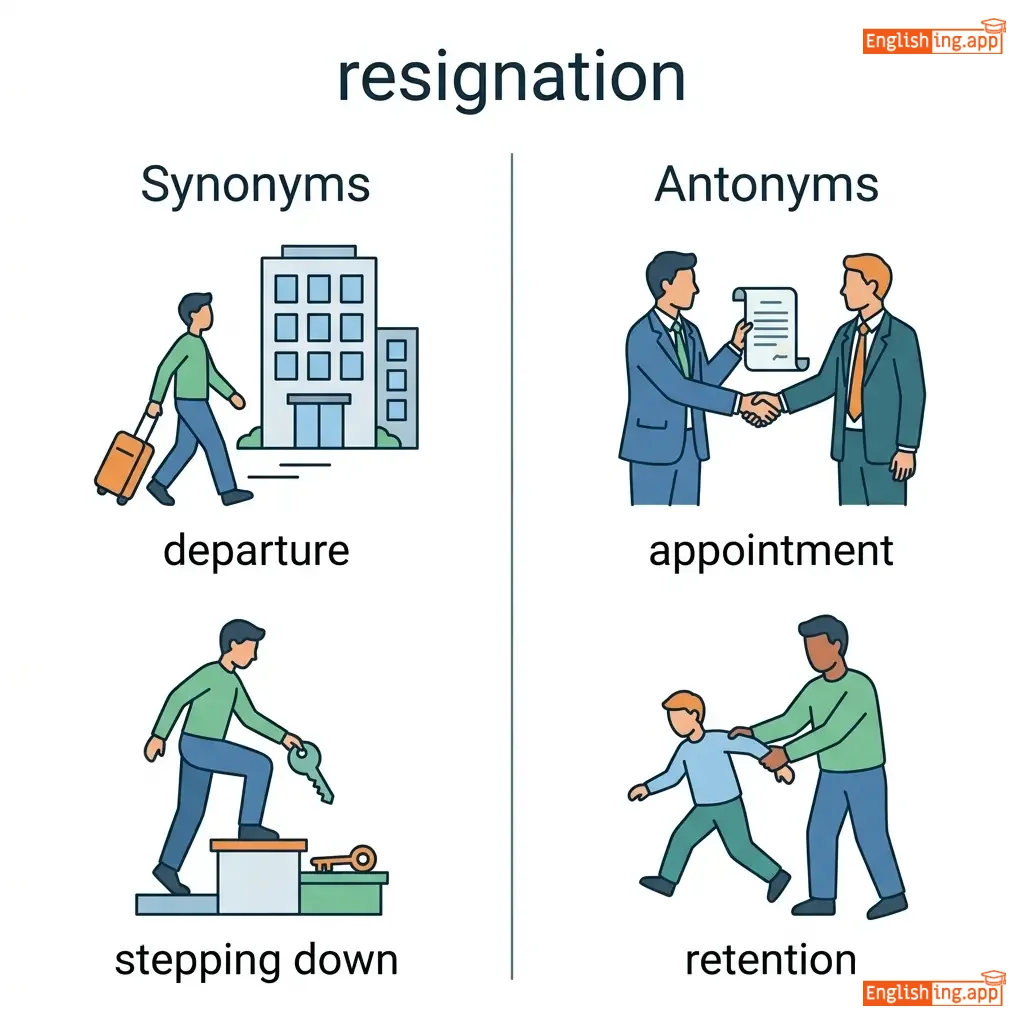
同義語
対義語
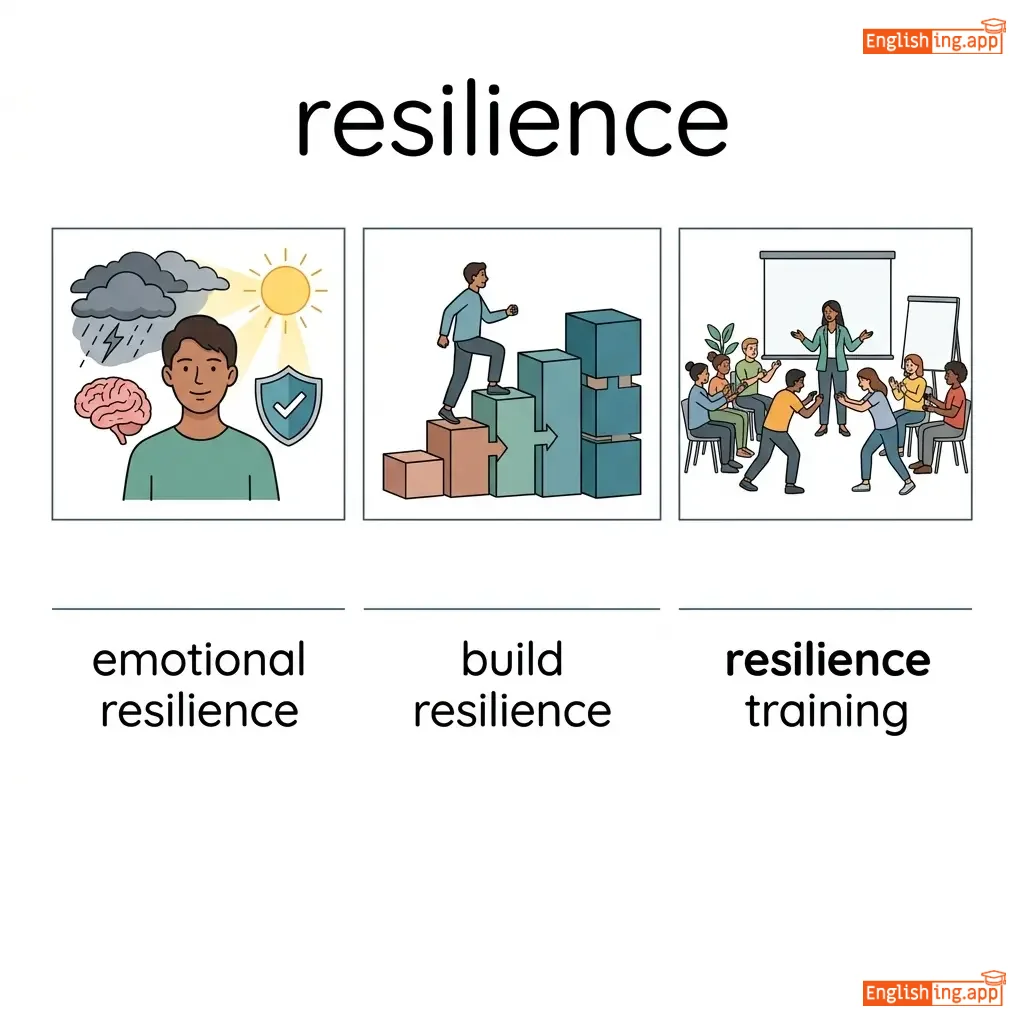
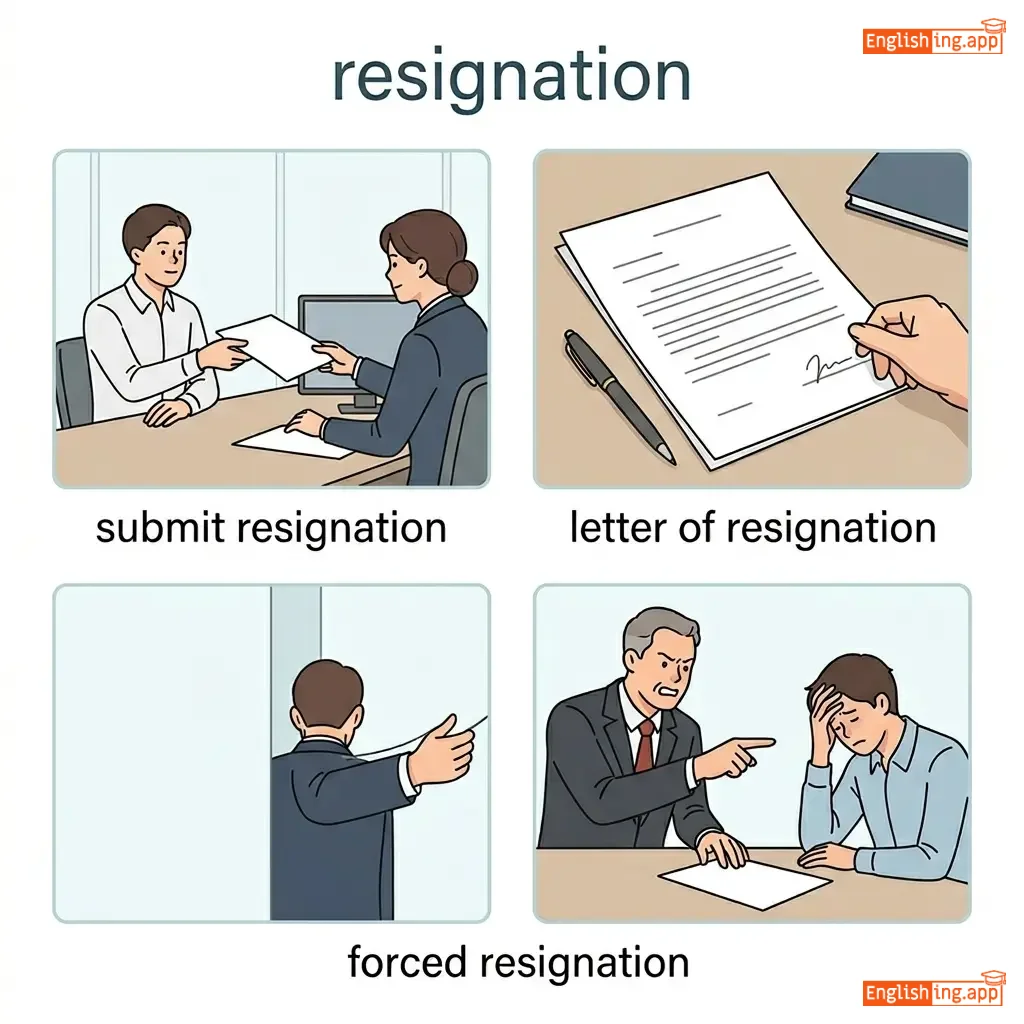
コロケーション
ニーモニック

Swipe left or right, or use the buttons. Tap image to zoom.
例文の翻訳
単語
Lesson 253Lesson 253 - マスクトグル
|
絵文字
|
単語 | Images | 翻訳 | 過去 | 過去分詞 | 三人称単数 | 動名詞 | 意味 | 例文 | 例文の翻訳 | 表現例 | 表現例の意味 | 表現例の翻訳 | 同義語 | 対義語 | コロケーション | ニーモニック |
|---|---|---|---|---|---|---|---|---|---|---|---|---|---|---|---|---|---|
|
#7560
😠
|
/rɪˈzɛnt/
verb
(リゼント)
••••••
|
- •••••• |
恨む
uramu
••••••
|
resented
リゼンテッド
••••••
|
resented
リゼンテッド
••••••
|
resents
リゼンツ
••••••
|
resenting
リゼンティング
••••••
|
to feel bitterness or displeasure about something or someone
••••••
|
She began to resent the constant criticism from her boss.
彼女は上司からの絶え間ない批判をリゼントし始めました。
••••••
|
彼女は上司からの絶え間ない批判をリゼントし始めました。
Kanojo wa jōshi kara no tae manai hihan o rizehonto hajimemashita.
••••••
|
harbor resentment
恨みを抱く
••••••
|
to keep feelings of bitterness or anger inside
••••••
|
恨みを抱く
urami wo idaku
••••••
|
begrudge, dislike, envy, grudge, detest
••••••
|
accept, welcome, embrace
••••••
|
resent deeply, resent bitterly, begin to resent, resent strongly
••••••
|
REsentすることは、恨みを抱くことです。
••••••
|
|
#7561
⚡
|
/rɪˈzɪstɪv/
adjective
(レジスティブ)
••••••
|
- •••••• |
抵抗性
teikousei
••••••
|
- •••••• | - •••••• | - •••••• | - •••••• |
tending to resist or oppose; in physics, relating to electrical resistance
••••••
|
The material has resistive properties that slow down current flow. |
その材料は、電流の流れを遅くする抵抗性の特性を持っています。
Sono zairyō wa, denryū no nagare o osoku suru teikō-sei no tokusei o motteimasu.
••••••
|
- •••••• | - •••••• | - •••••• |
opposing, resisting, obstructive, resistant
••••••
|
conductive, susceptible
••••••
|
resistive force, resistive properties, resistive heating, resistive load
••••••
|
Resistive は resist + active: 活発に抵抗すること。
••••••
|
|
#7562
🛡️
|
/rɪˈzɪstənt/
adjective
(リジスタント)
••••••
|
- •••••• |
耐性
taisei
••••••
|
- •••••• | - •••••• | - •••••• | - •••••• |
not affected by something; able to oppose or withstand
••••••
|
This fabric is resistant to water and stains.
この布は水と汚れに強いです。
••••••
|
この布は水と汚れに強いです。
Kono nuno wa mizu to yogore ni tsuyoi desu.
••••••
|
- •••••• | - •••••• | - •••••• |
immune, tough, impervious, durable, strong
••••••
|
susceptible, vulnerable, sensitive
••••••
|
resistant to change, disease-resistant, heat-resistant, resistant material
••••••
|
耐性は抵抗すること – 布が水と汚れに強い。
••••••
|
|
#7563
🌲
|
/ˈrɛzɪn/
noun
(レジン)
••••••
|
- •••••• |
樹脂
jushi
••••••
|
- •••••• | - •••••• | - •••••• | - •••••• |
a sticky organic substance, usually secreted by plants, often used in varnishes or plastics
••••••
|
The craftsman used natural resin to make the sculpture shine. |
職人は彫刻を輝かせるために天然の樹脂を使用しました。
Shokunin wa chōkoku o kagayakaseru tame ni tennen no jushi o shiyō shimashita.
••••••
|
- •••••• | - •••••• | - •••••• |
gum, sap, pitch, polymer
••••••
|
liquid, solvent
••••••
|
synthetic resin, natural resin, resin glue, resin coating
••••••
|
樹脂 = 樹木から出てくるもの
••••••
|
|
#7564
🌱
|
/rɪˈzɪliənt/
adjective
(レジリエント)
••••••
|
|
レジリエント
rejiriento
••••••
|
- •••••• | - •••••• | - •••••• | - •••••• |
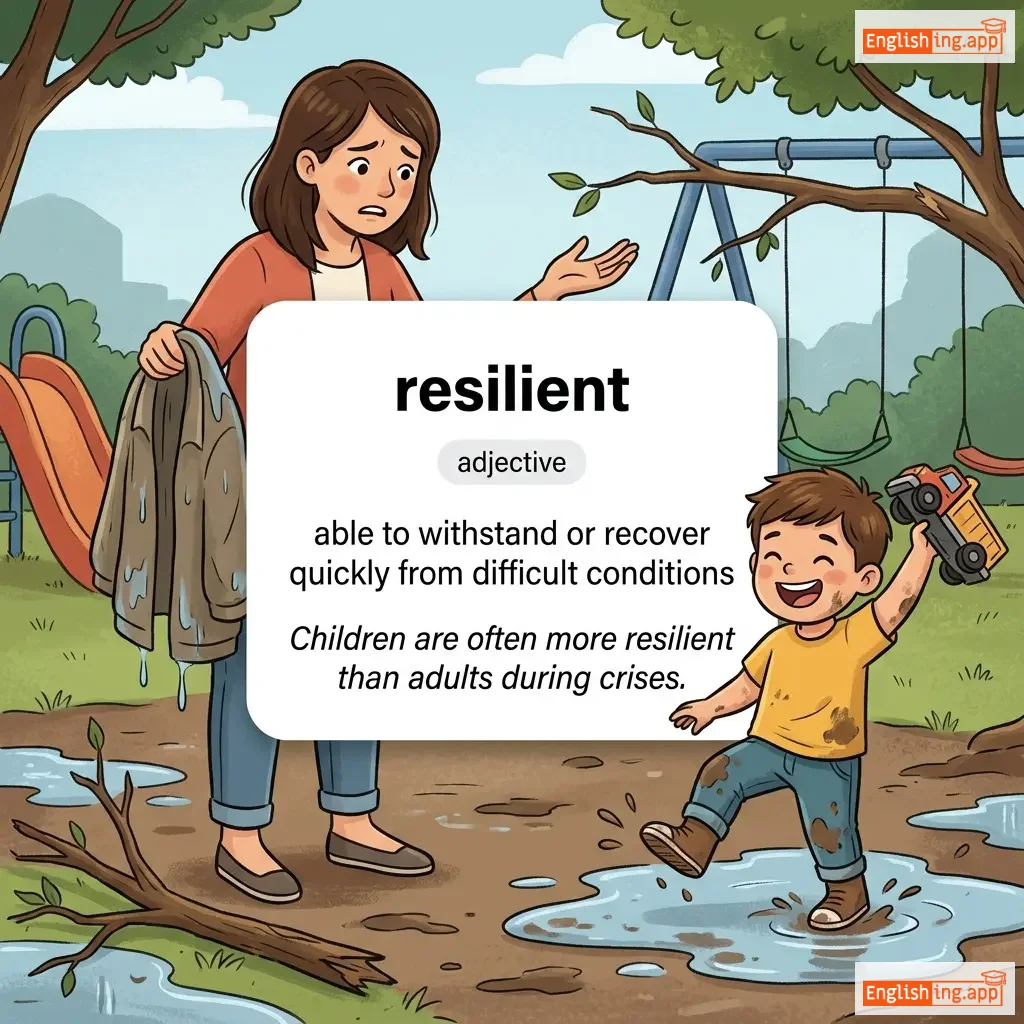
able to withstand or recover quickly from difficult conditions
••••••
|
Children are often more resilient than adults during crises. |
子供たちは危機的な状況で大人よりもレジリエントであることが多い。
Kodomotachi wa kikiteki na joukyou de otona yori mo rejiriento de aru koto ga ooi.
••••••
|
- •••••• | - •••••• | - •••••• |
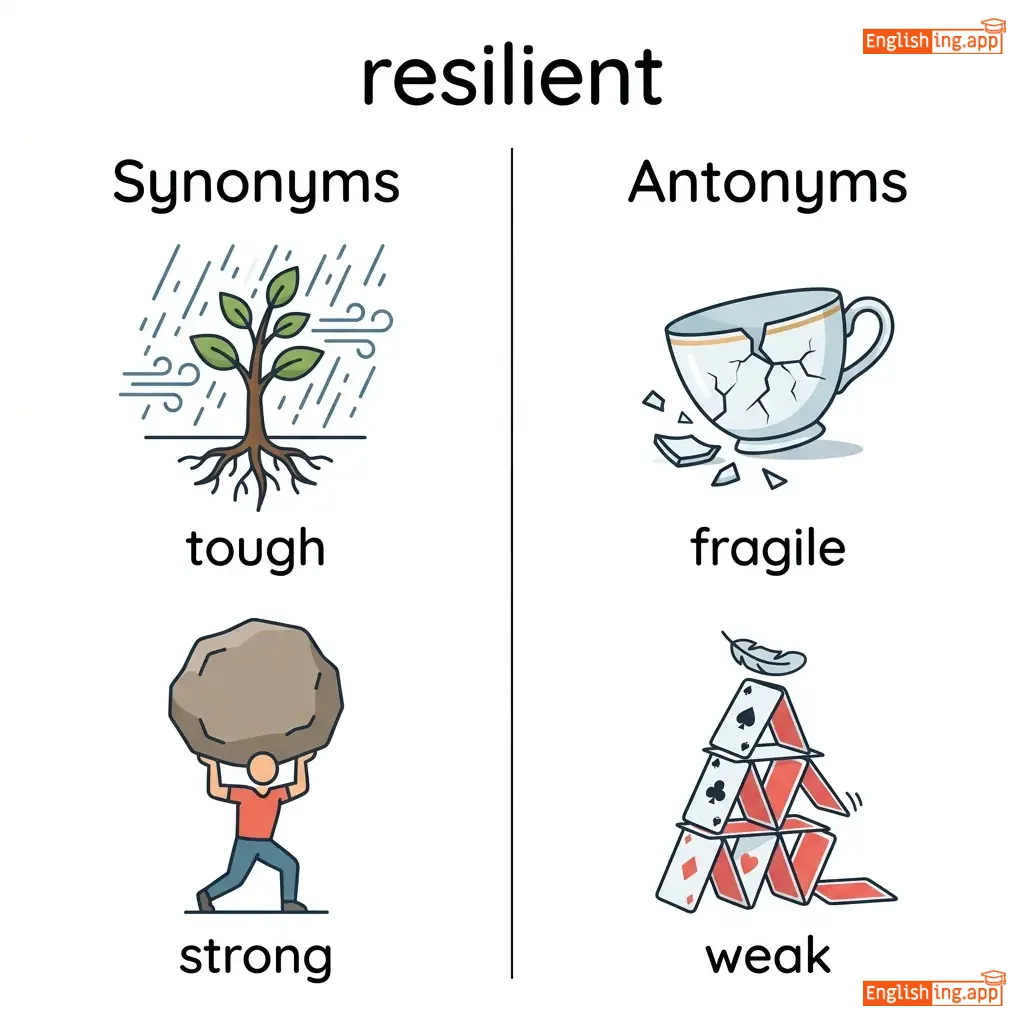
tough, strong, adaptable, hardy, flexible
••••••
|
fragile, weak, delicate
••••••
|
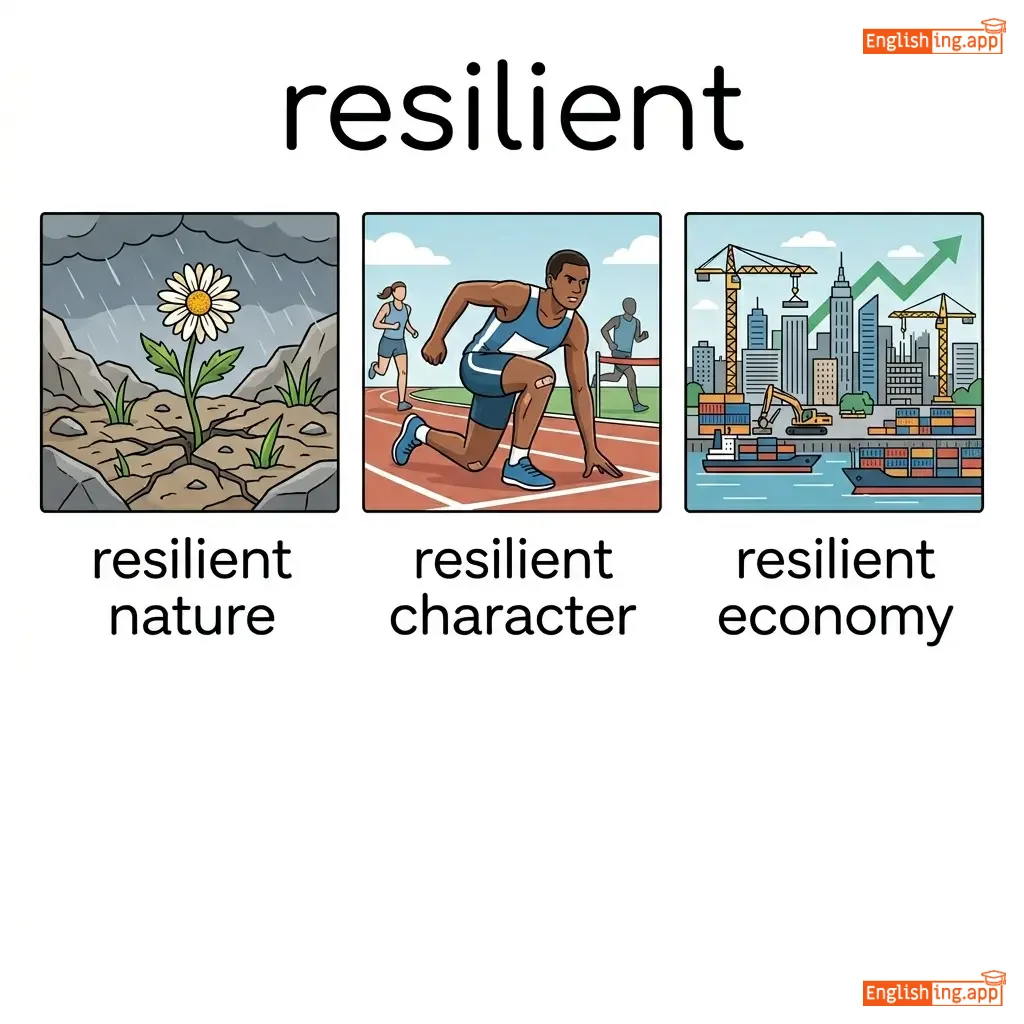
resilient nature, resilient character, resilient economy, resilient spirit
••••••
|
Resilient = re + silent: 危機の中で静かに、しかしレジリエントでいること。
••••••
|
|
#7565
💪
|
/rɪˈzɪliəns/
noun
(rezɪˈlɪəns)
••••••
|
|
レジリエンス
rejiriensu
••••••
|
- •••••• | - •••••• | - •••••• | - •••••• |
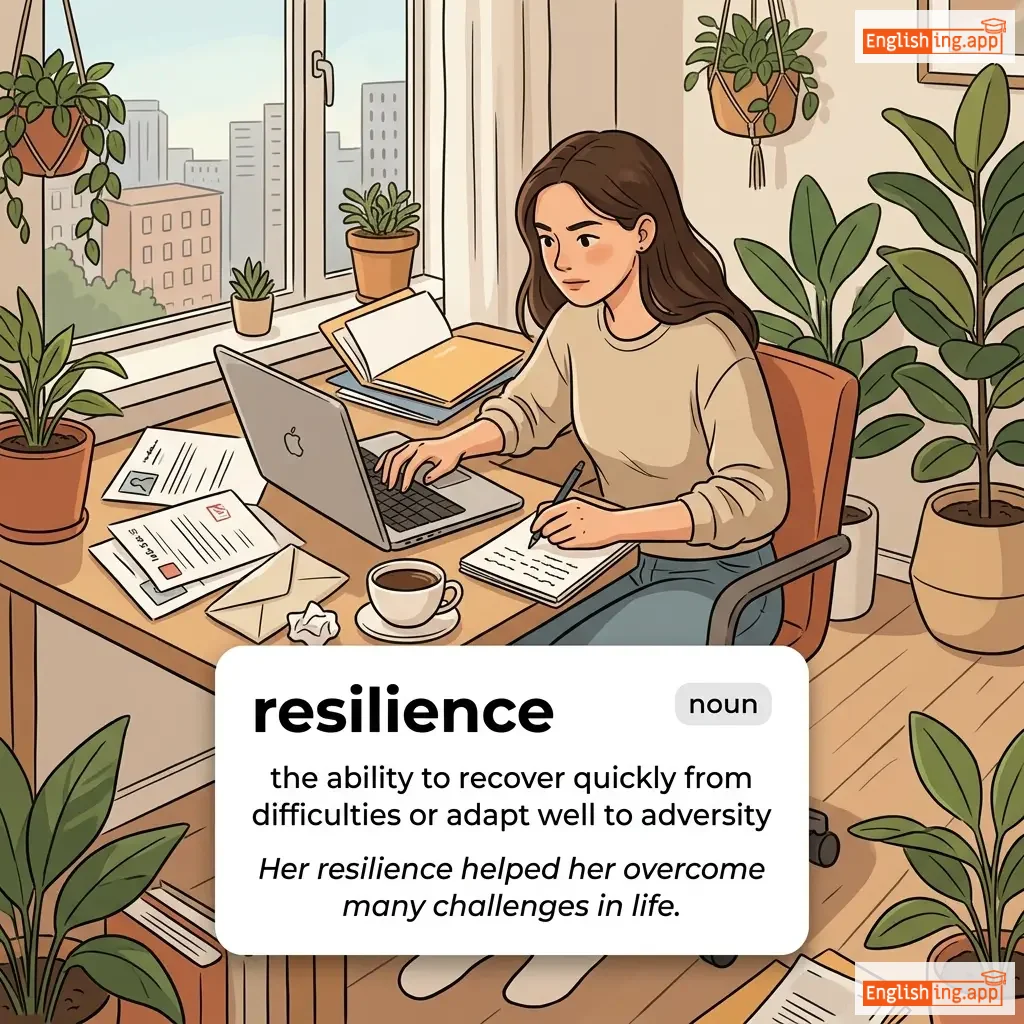
the ability to recover quickly from difficulties or adapt well to adversity
••••••
|
Her resilience helped her overcome many challenges in life. |
彼女のレジリエンスは、人生の多くの挑戦を乗り越えるのに役立ちました。
Kanojo no rejiriensu wa, jinsei no ooku no chousen o norikoeru no ni yakudachimashita.
••••••
|
bounce back |
to recover quickly from setbacks
••••••
|
立ち直る
tachinaoru
••••••
|
toughness, endurance, strength, flexibility, adaptability
••••••
|
weakness, fragility, vulnerability
••••••
|
emotional resilience, build resilience, resilience training, show resilience
••••••
|
レジリエンスは、逆風の中でも立ち上がる力です。
••••••
|
|
#7566
📄
|
/ˌrɛzɪɡˈneɪʃən/
noun
(rezignēshon)
••••••
|
|
辞職
jishoku
••••••
|
- •••••• | - •••••• | - •••••• | - •••••• |
The act of giving up a job or position; acceptance of something undesirable but inevitable.
••••••
|
The CEO submitted his resignation yesterday. |
CEOは昨日辞職を提出しました。
CEO wa kinō jishoku o teishutsu shimashita.
••••••
|
with resignation |
Accepting something unpleasant without protest.
••••••
|
辞職をもって
jishoku o motte
••••••
|
departure, stepping down, surrender, acceptance, renunciation
••••••
|
appointment, retention
••••••
|
submit resignation, letter of resignation, forced resignation, resignation speech
••••••
|
辞職はResignation、辞表を思い出すときに使おう!
••••••
|
|
#7567
✍️
|
/rɪˈzaɪn/
verb
(リザイン)
••••••
|
|
辞職する
jishoku suru
••••••
|
resigned
リザインド
••••••
|
resigned
リザインド
••••••
|
resigns
リザインス
••••••
|
resigning
リザイニング
••••••
|
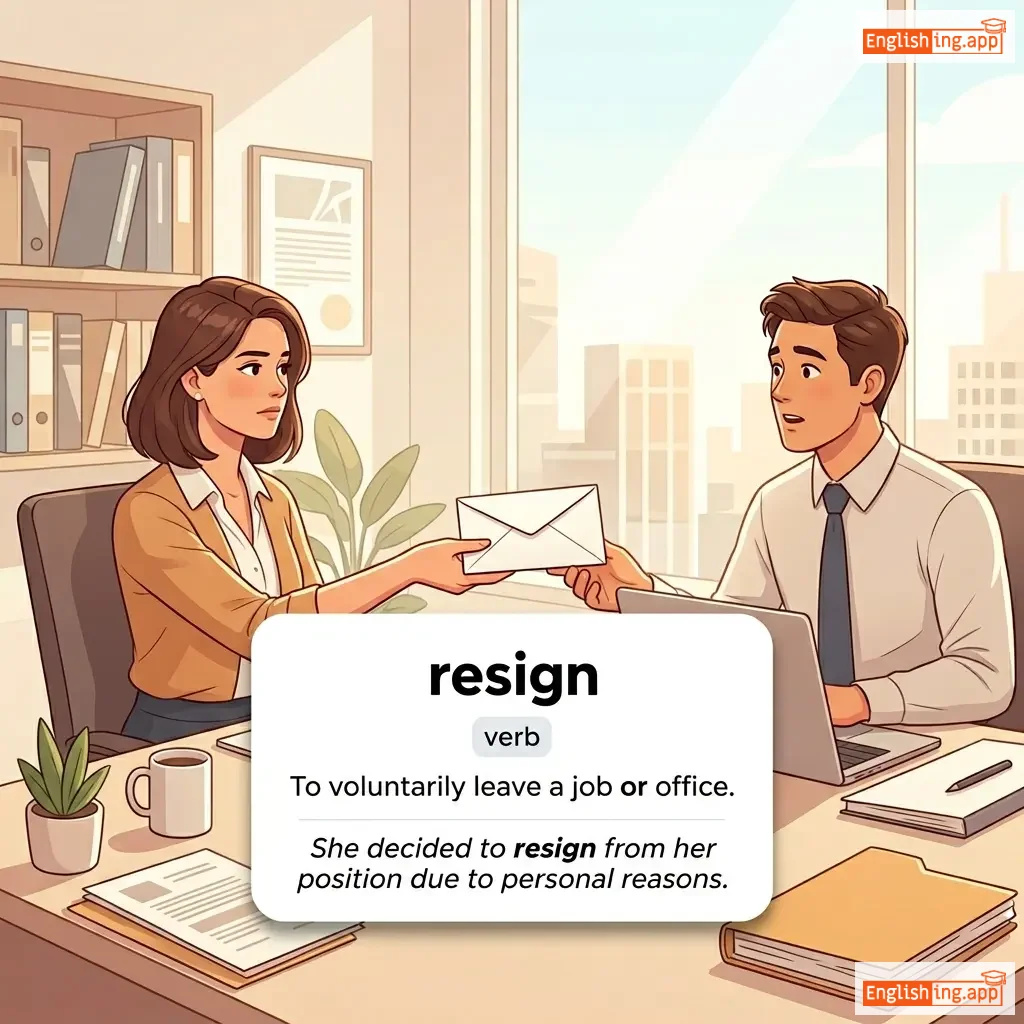
To voluntarily leave a job or office.
••••••
|
She decided to resign from her position due to personal reasons.
彼女は個人的な理由で自分のポジションを辞める決断をしました。
••••••
|
彼女は個人的な理由で自分のポジションを辞める決断をしました。
Kanojo wa kojinteki na riyū de jibun no pojishon o yameru ketsudan o shimashita.
••••••
|
resign oneself to
自分を諦める
••••••
|
To accept something unpleasant that cannot be changed.
••••••
|
自分を諦める
Jibun o akirameru
••••••
|
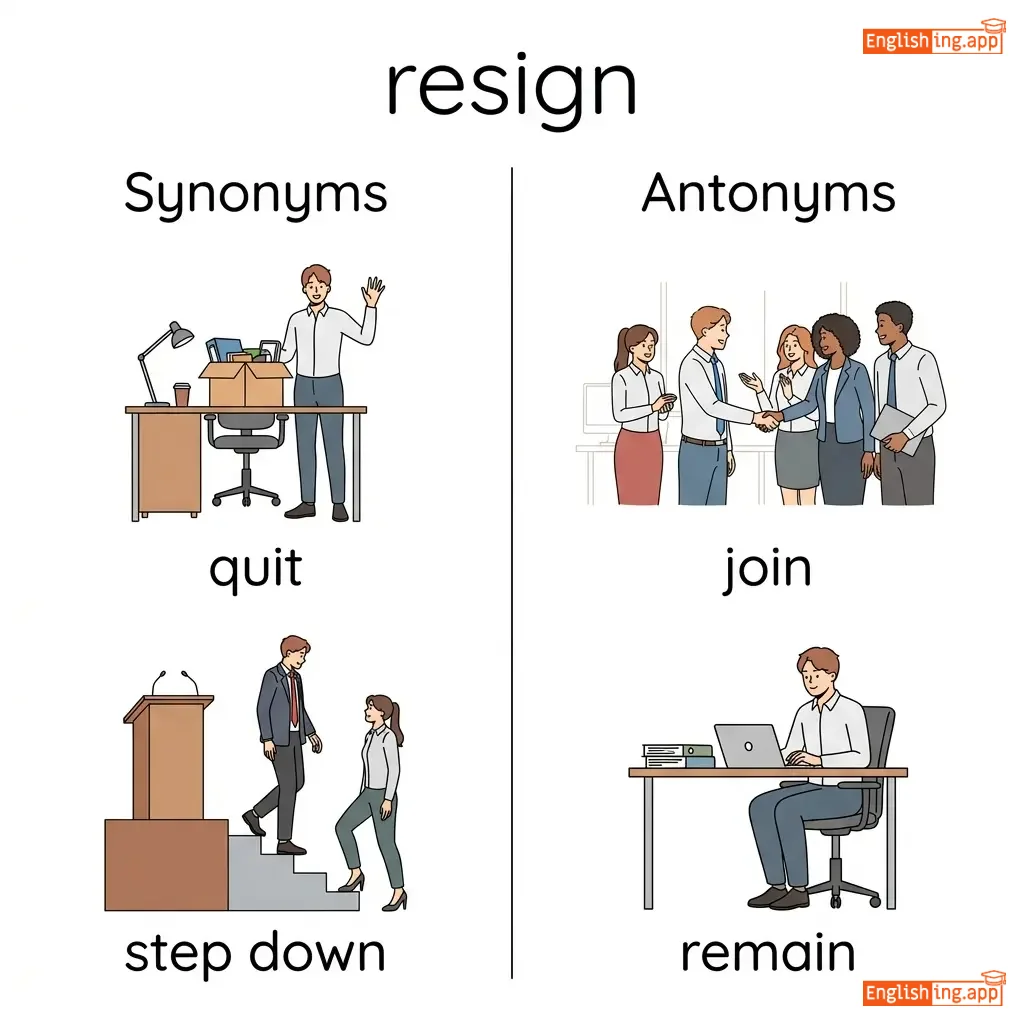
quit, step down, retire, relinquish, leave
••••••
|
join, remain, accept
••••••
|
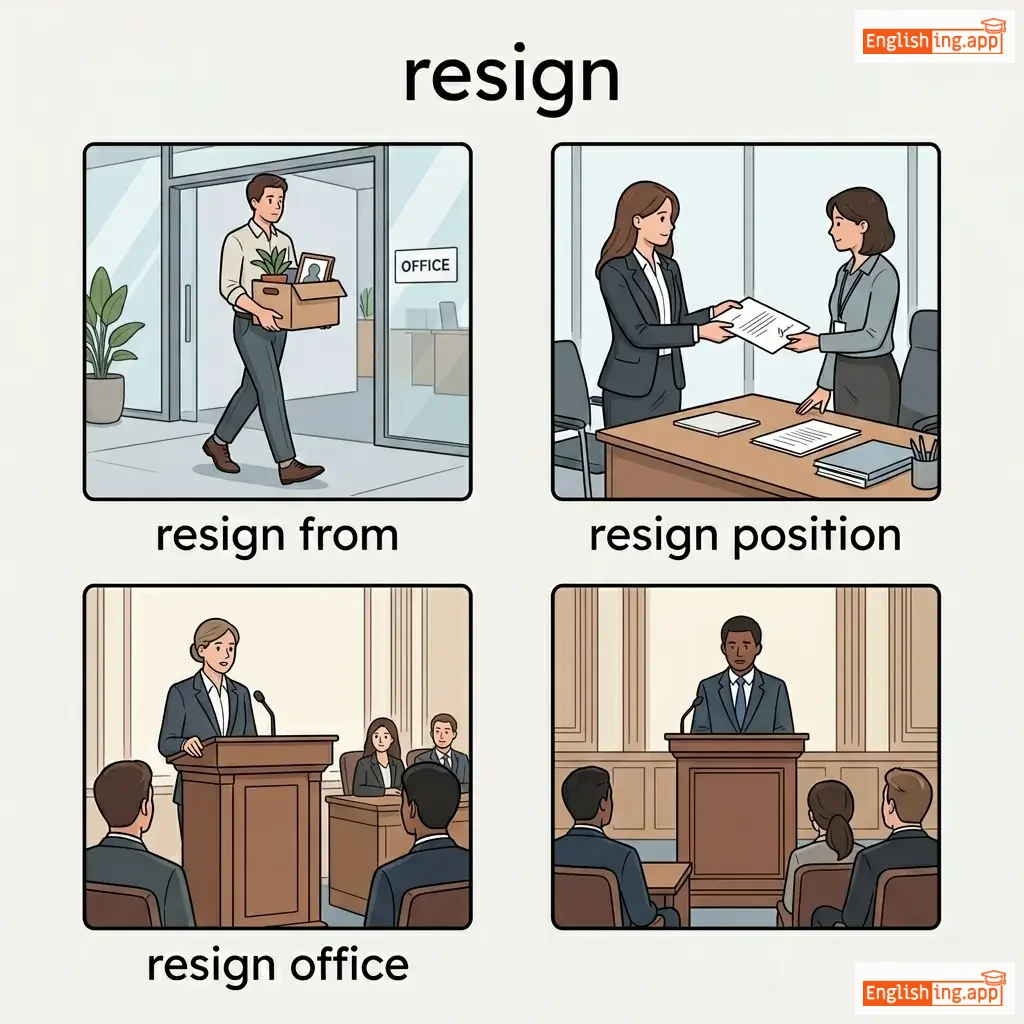
resign from, resign position, resign office, resign formally
••••••
|
Resignは辞職するという意味で、'sign out' → 辞職
••••••
|
|
#7568
🧪
|
/ˈrɛzɪdjuː/
noun
(レジデュー)
••••••
|
|
残留物
zanryūbutsu
••••••
|
- •••••• | - •••••• | - •••••• | - •••••• |
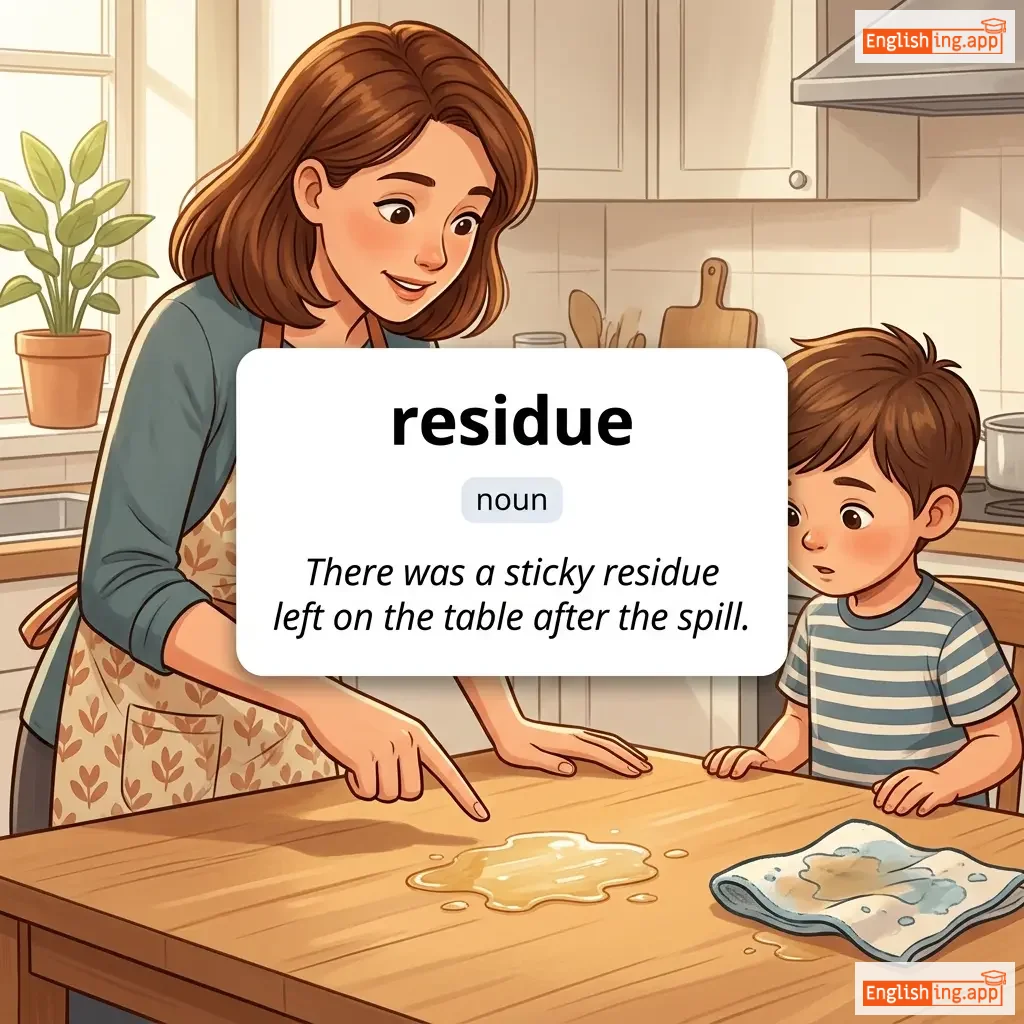
A small amount of something that remains after the main part has been removed or used.
••••••
|
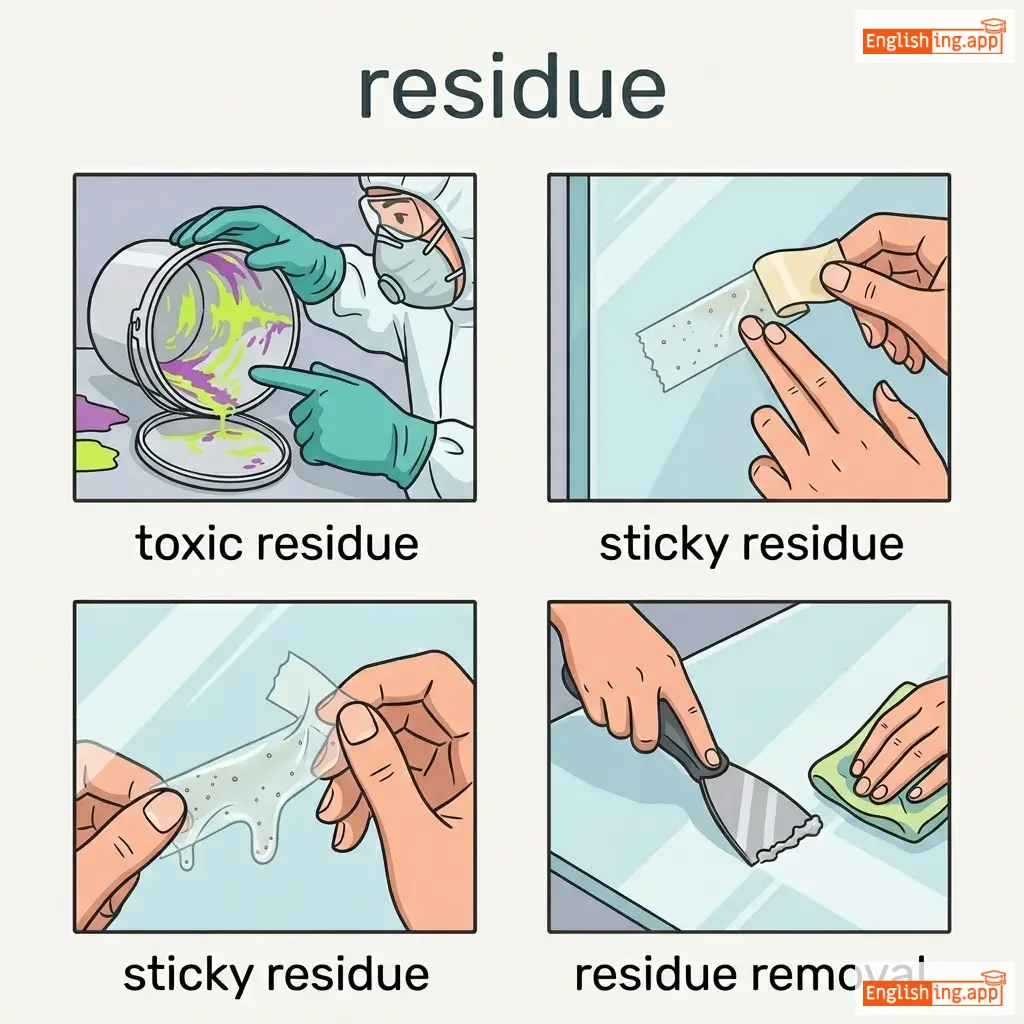
There was a sticky residue left on the table after the spill. |
こぼれた後、テーブルに粘着性の残留物が残っていた。
Koboreta ato, tēburu ni nenchakusei no zanryūbutsu ga nokotte ita.
••••••
|
chemical residue |
Small amounts of chemicals that remain after a process.
••••••
|
化学的残留物
kagakuteki zanryūbutsu
••••••
|
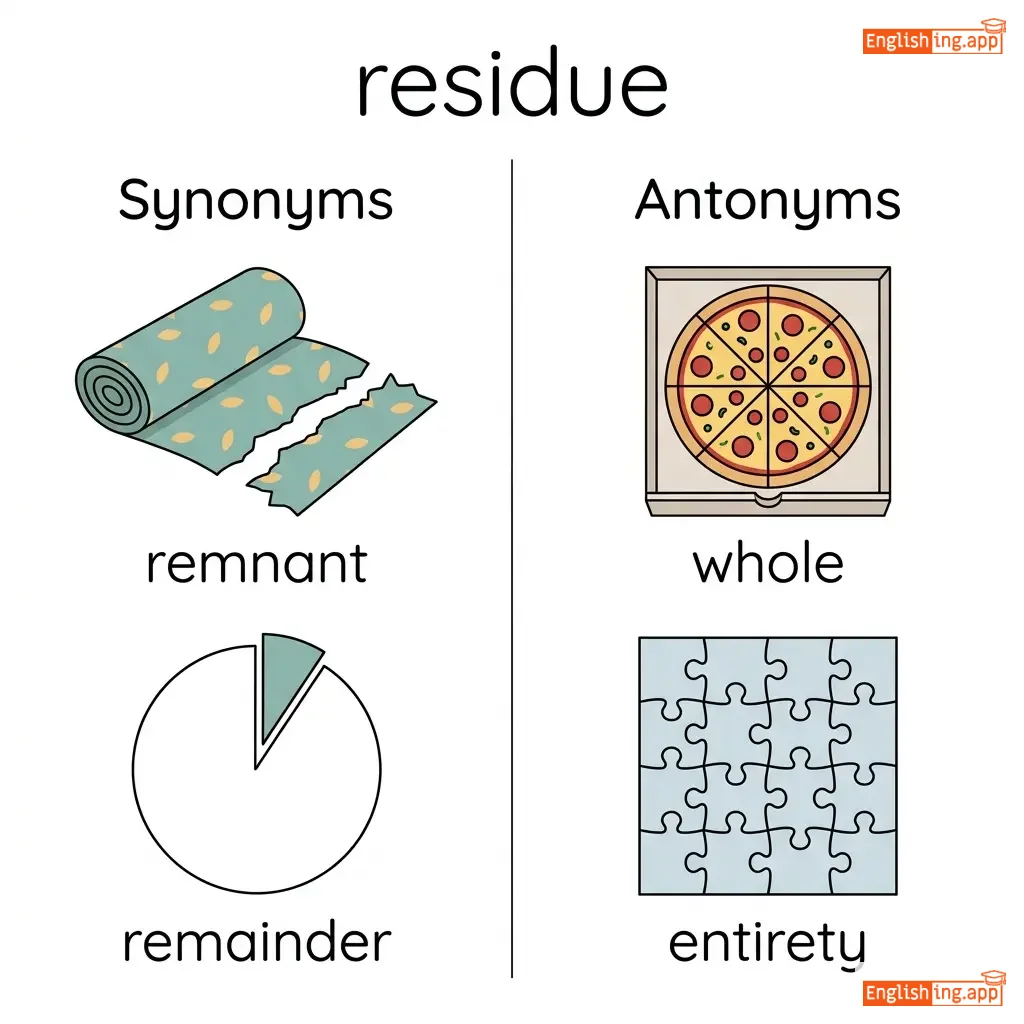
remnant, remainder, deposit, leftover, trace
••••••
|
whole, entirety
••••••
|
toxic residue, sticky residue, residue removal, chemical residue
••••••
|
Residueとは、こぼれた後にテーブルに残る粘り気のある物です。
••••••
|
|
#7569
🪶
|
/rɪˈzɪdjuəl/
adjective
(reziduwaru)
••••••
|
- •••••• |
残余
zan'yu
••••••
|
- •••••• | - •••••• | - •••••• | - •••••• |
Remaining after the greater part has gone.
••••••
|
The patient experienced residual pain after the surgery. |
患者は手術後に残余の痛みを感じました。
Kanja wa shujutsu go ni zan'yu no itami o kanjimashita.
••••••
|
residual income |
Income that continues to be earned after the initial effort has been completed.
••••••
|
残余所得
zan'yu shotoku
••••••
|
remaining, leftover, lingering, surplus, rest
••••••
|
complete, finished
••••••
|
residual value, residual effect, residual risk, residual income
••••••
|
Residualは残るものを意味し、手術後の残余痛のように残るものです。
••••••
|
|
#7570
💧
|
/ˈrɛzərvwɑːr/
noun
(レザーヴォワール)
••••••
|
- •••••• |
貯水池
chosuichi
••••••
|
- •••••• | - •••••• | - •••••• | - •••••• |
A large natural or artificial lake used as a source of water supply.
••••••
|
The city built a new reservoir to ensure enough drinking water for its residents.
その都市は住民に十分な飲料水を確保するために新しいレザーヴォワールを建設した。
••••••
|
その都市は住民に十分な飲料水を確保するために新しい貯水池を建設した。
Sono toshi wa jūmin ni jūbun na inryō mizu o kakuho suru tame ni atarashī chosuichi o kensetsu shita.
••••••
|
reservoir of knowledge
知識の貯蔵庫
••••••
|
A large store of knowledge possessed by someone or something.
••••••
|
知識の貯蔵庫
chishiki no chozōko
••••••
|
tank, basin, dam, storage, pool
••••••
|
desert, depletion
••••••
|
water reservoir, reservoir management, reservoir capacity, reservoir system
••••••
|
Reservoirは貯水池を意味します。'reserve water' → reservoir
••••••
|
|
#7571
🙇
|
/rɪˈzɜːrvd/
adjective
(リザーブド)
••••••
|
- •••••• |
控えめ / 内向的
hikaeme / naikouteki
••••••
|
- •••••• | - •••••• | - •••••• | - •••••• |
quiet, restrained, or not openly expressive of feelings
••••••
|
He is a reserved person who rarely shares his thoughts. |
彼は控えめな人で、めったに自分の考えを共有しません。
Kare wa hikaeme na hito de, mettani jibun no kangae wo kyoyu shimasen.
••••••
|
reserved nature |
a personality that is quiet and not expressive
••••••
|
控えめな性格
hikaeme na seikaku
••••••
|
quiet, introverted, restrained, shy
••••••
|
outgoing, extroverted, talkative
••••••
|
reserved seat, reserved behavior, reserved personality, reserved smile
••••••
|
Reservedは静かに座っているように、感情を表に出さずに静かに存在することです。
••••••
|
|
#7572
📌
|
/rɪˈzɜːrv/
verb
(リザーブ)
••••••
|
|
予約する
yoyaku suru
••••••
|
reserved
リザーブド
••••••
|
reserved
リザーブド
••••••
|
reserves
リザーブス
••••••
|
reserving
リザーブイング
••••••
|
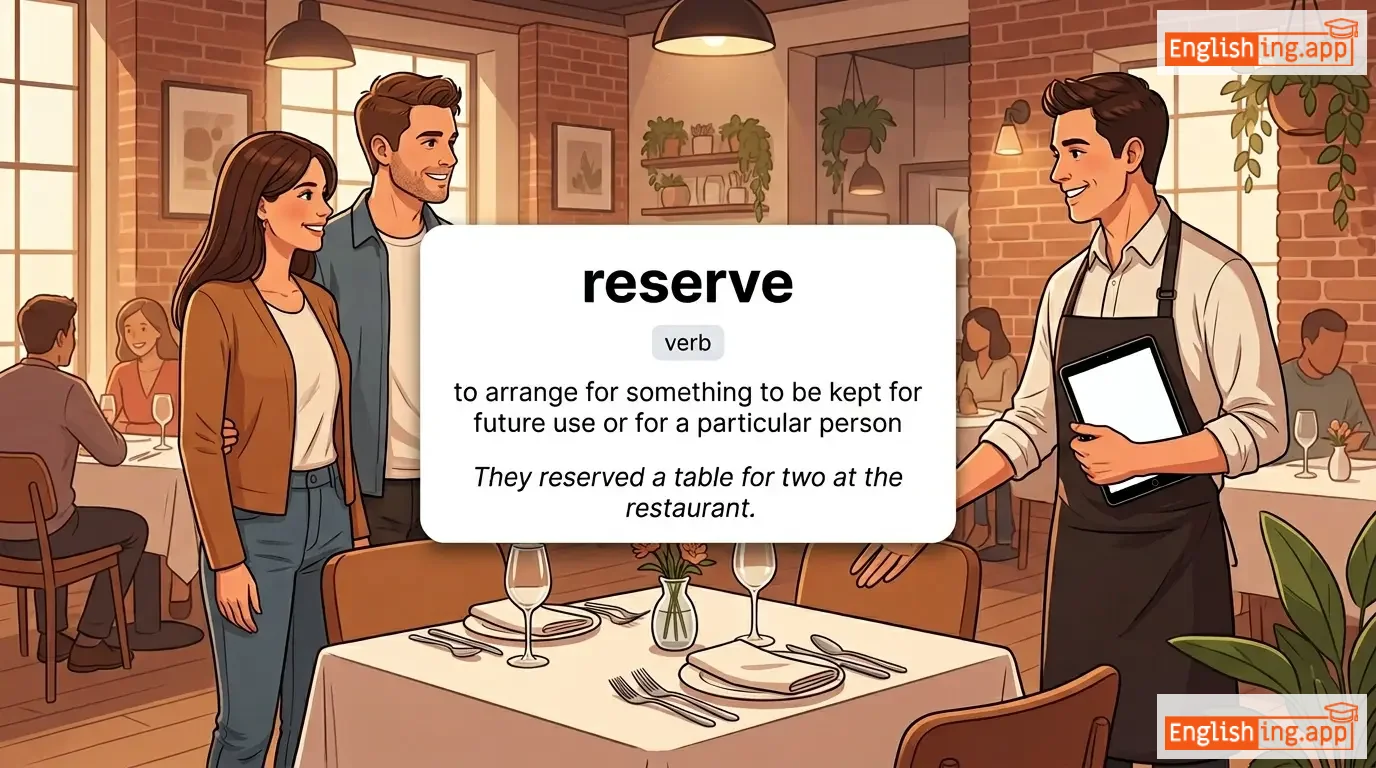
to arrange for something to be kept for future use or for a particular person
••••••
|
They reserved a table for two at the restaurant.
彼らはレストランで2人分のテーブルを予約した。
••••••
|
彼らはレストランで2人分のテーブルを予約した。
Karera wa resutoran de futari bun no tēburu o yoyaku shita.
••••••
|
reserve judgment
判断を保留する
••••••
|
to not make a decision or give an opinion until later
••••••
|
判断を保留する
handan o horyū suru
••••••
|
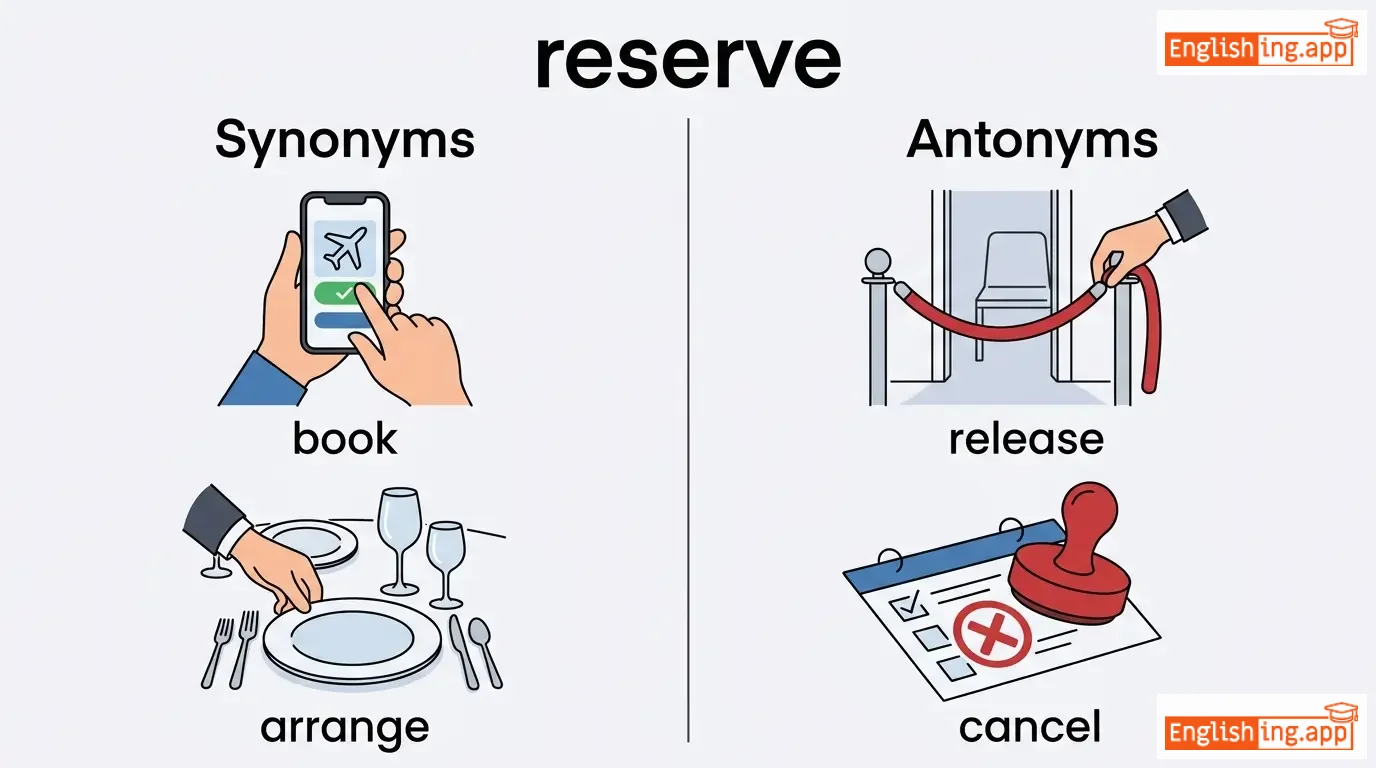
book, arrange, set aside, retain
••••••
|
release, cancel, give up
••••••
|
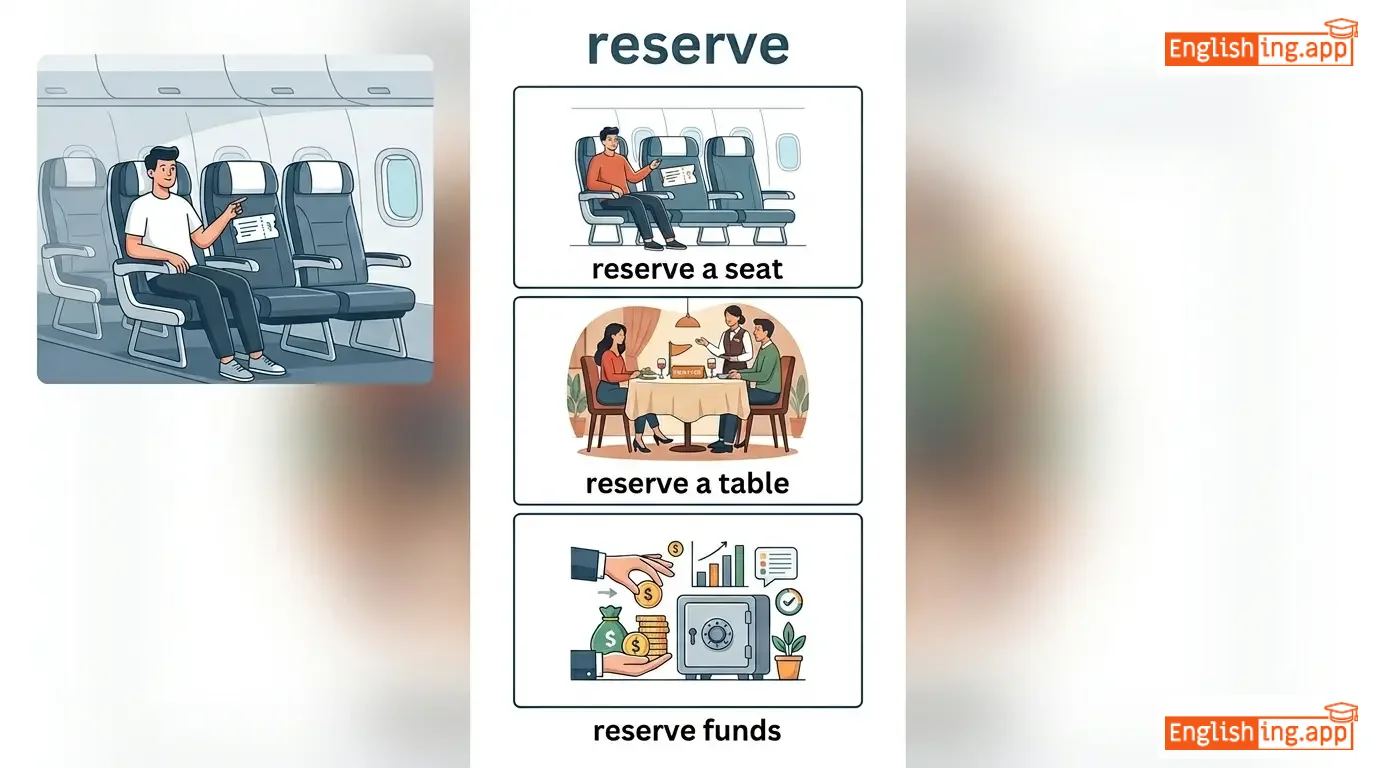
reserve a seat, reserve a table, reserve funds, reserve rights
••••••
|
予約は後で使うために空けておくこと、レストランのテーブルを予約するのと同じように。
••••••
|
|
#7573
📅
|
/ˌrɛzərˈveɪʃən/
noun
(リザベーション)
••••••
|
- •••••• |
予約
yoyaku
••••••
|
- •••••• | - •••••• | - •••••• | - •••••• |
an arrangement made in advance to secure accommodation, a seat, or service
••••••
|
He made a reservation at the hotel for the weekend.
彼は週末のためにホテルにリザベーションをしました。
••••••
|
彼は週末のためにホテルに予約をしました。
Kare wa shūmatsu no tame ni hoteru ni yoyaku o shimashita.
••••••
|
make a reservation
リザベーションをする
••••••
|
to book in advance
••••••
|
リザベーションをする
rizabēshon o suru
••••••
|
booking, appointment, arrangement, order
••••••
|
cancellation, freedom
••••••
|
hotel reservation, table reservation, flight reservation, make reservation
••••••
|
予約は前もって行うこと、旅行の準備のように。
••••••
|
|
#7574
💢
|
/rɪˈzɛntmənt/
noun
(リゼントメント)
••••••
|
|
憤り
ikidoori
••••••
|
- •••••• | - •••••• | - •••••• | - •••••• |
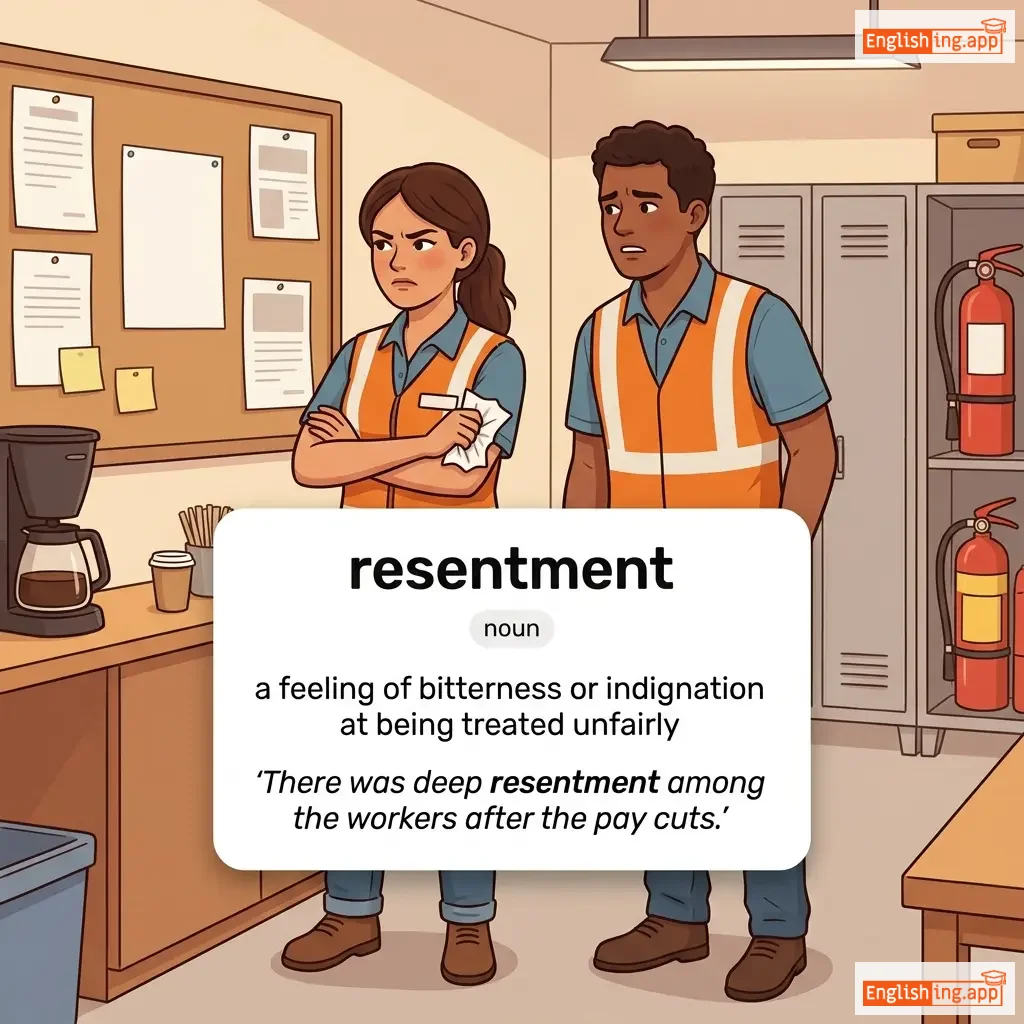
a feeling of bitterness or indignation at being treated unfairly
••••••
|
There was deep resentment among the workers after the pay cuts.
賃金カット後、労働者の間に深いリゼントメントがありました。
••••••
|
賃金カット後、労働者の間に深い憤りがありました。
Chingin katto go, roudousha no aida ni fukai ikidoori ga arimashita.
••••••
|
bear resentment
リゼントメントを抱く
••••••
|
to continue feeling bitterness or anger
••••••
|
憤りを抱く
Ikidoori wo daku
••••••
|
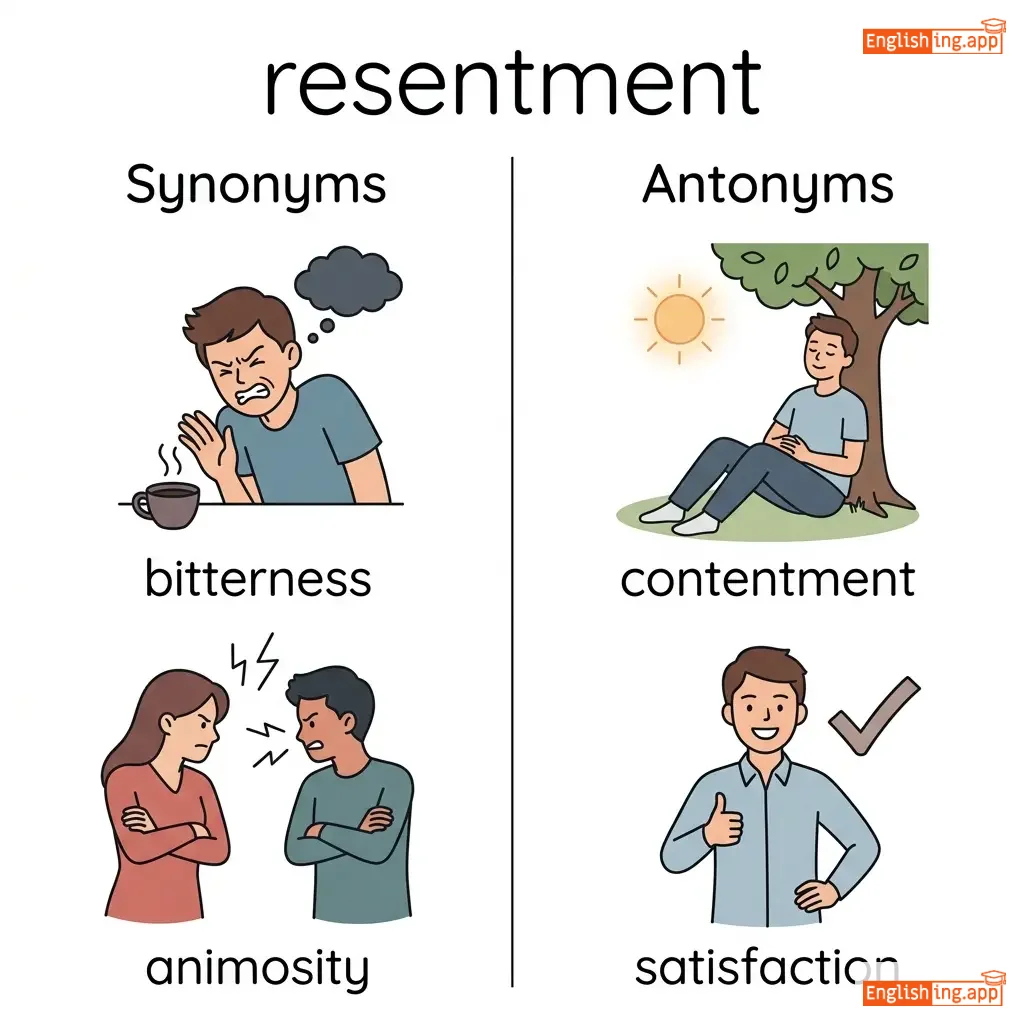
bitterness, animosity, rancor, displeasure
••••••
|
contentment, satisfaction, acceptance
••••••
|
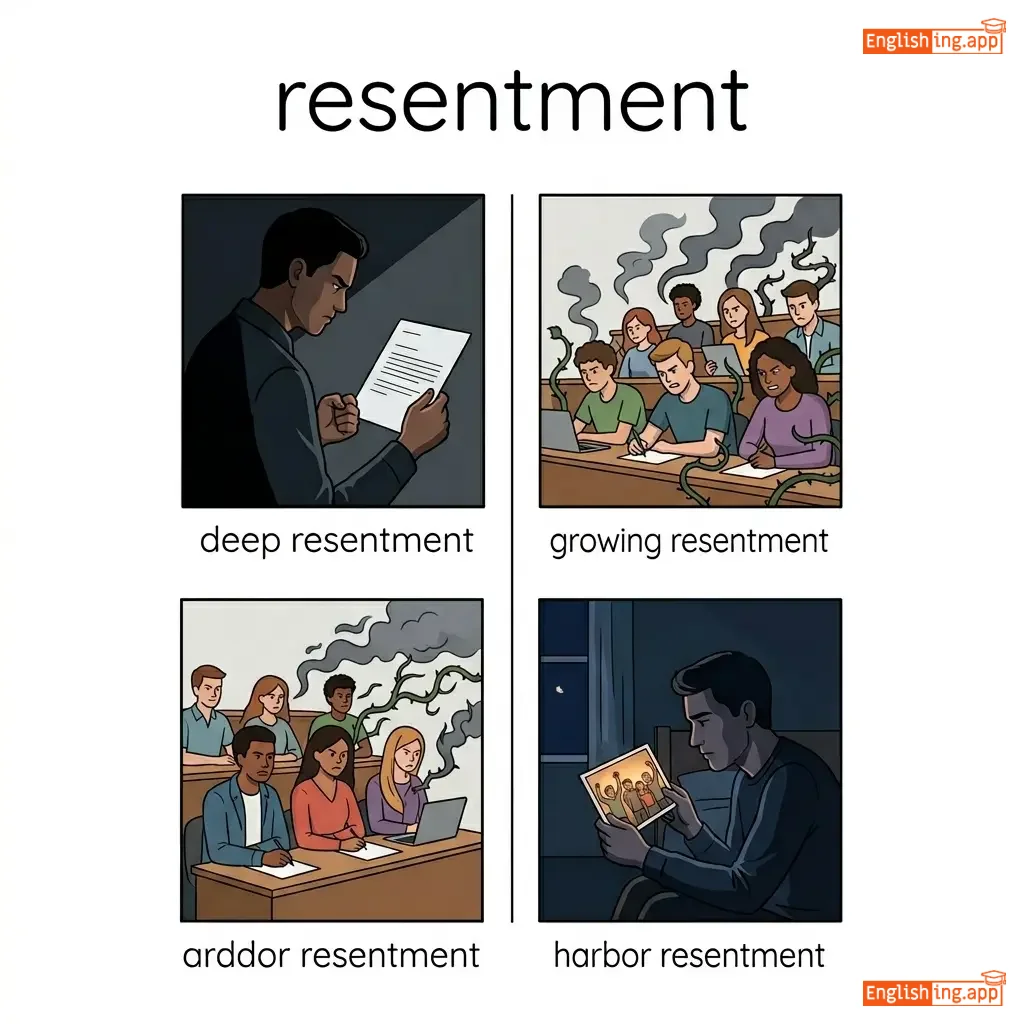
deep resentment, growing resentment, harbor resentment, resentment towards
••••••
|
Resentmentは、何か不公平なことをされることで感じる憤りです。
••••••
|
|
#7575
🛡️
|
/rɪˈpʌls/
verb
(リパルス)
••••••
|
- •••••• |
撃退する / 嫌悪感を引き起こす
gekitai suru / ken'o kan o hikiokosu
••••••
|
repulsed
リパルスド
••••••
|
repulsed
リパルスド
••••••
|
repulses
リパルセス
••••••
|
repulsing
リパルシング
••••••
|
to drive back an attack or attacker by force; to cause intense dislike or disgust
••••••
|
The army managed to repulse the enemy attack.
軍隊は敵の攻撃を撃退することに成功した。
••••••
|
軍隊は敵の攻撃を撃退することに成功した。
Guntai wa teki no kougeki o gekitai suru koto ni seikou shita.
••••••
|
repulse an attack
攻撃を撃退する
••••••
|
to successfully drive back or fight off an attack
••••••
|
攻撃を撃退する
kougeki o gekitai suru
••••••
|
drive back, repel, reject, disgust, deter
••••••
|
attract, welcome, invite
••••••
|
repulse an attack, repulse the enemy, utterly repulse, repulse advances
••••••
|
Re + Pulse = 攻撃のpulseがゆっくり低下すると、撃退することを意味する。
••••••
|
|
#7576
👬
|
/rɪˈzembləns/
noun
(リゼンブランス)
••••••
|
- •••••• |
類似
ruiji
••••••
|
- •••••• | - •••••• | - •••••• | - •••••• |
the state of being alike or similar, especially in appearance
••••••
|
There is a strong resemblance between the two brothers. |
二人の兄弟の間には強い類似性があります。
Futari no kyoudai no aida ni wa tsuyoi ruijisei ga arimasu.
••••••
|
bear a resemblance |
to look similar to someone or something
••••••
|
類似している
ruiji shiteiru
••••••
|
similarity, likeness, affinity, analogy, comparison
••••••
|
difference, contrast, dissimilarity
••••••
|
close resemblance, striking resemblance, family resemblance, bear resemblance
••••••
|
Re-semblanceは再びsemblance—二人の兄弟は類似性 (ruijisei)があります。
••••••
|
|
#7577
🪑
|
/ˌriːˈsiːt/
verb
(リシート)
••••••
|
- •••••• |
再座席
saizaseki
••••••
|
reseated
リシーテッド
••••••
|
reseated
リシーテッド
••••••
|
reseats
リシッツ
••••••
|
reseating
リシーティング
••••••
|
to seat someone again or to fit something back into its place
••••••
|
The usher had to reseat the guests after the interruption.
接客係は中断後、ゲストを再座席させなければならなかった。
••••••
|
接客係は中断後、ゲストを再座席させなければならなかった。
Sekkyaku gakari wa chudan go, gesuto o saizaseki sasenakereba nakatta.
••••••
|
- •••••• | - •••••• | - •••••• |
reassign, replace, reposition, reestablish
••••••
|
displace, unsettle
••••••
|
reseat guests, reseat parts, reseat memory card, reseat audience
••••••
|
Re-seat は再び座らせること。
••••••
|
|
#7578
📄❌
|
/rɪˈsɪʒən/
noun
(リシジョン)
••••••
|
- •••••• |
契約解除
keiyaku kaijo
••••••
|
- •••••• | - •••••• | - •••••• | - •••••• |
the cancellation or annulment of a law, contract, or agreement
••••••
|
The rescission of the contract left both parties disappointed. |
契約の解除により、双方は失望しました。
Keiyaku no kaijo ni yori, sōhō wa shitsubō shimashita.
••••••
|
- •••••• | - •••••• | - •••••• |
cancellation, revocation, annulment, repeal, withdrawal
••••••
|
confirmation, ratification
••••••
|
rescission of contract, rescission agreement, rescission clause
••••••
|
Rescission = 契約解除、契約をキャンセルする。
••••••
|
|
#7579
❌
|
/rɪˈsɪnd/
verb
(リシンド)
••••••
|
|
取り消す
torikesu
••••••
|
rescinded
リシンデッド
••••••
|
rescinded
リシンデッド
••••••
|
rescinds
リシンズ
••••••
|
rescinding
リシンディング
••••••
|
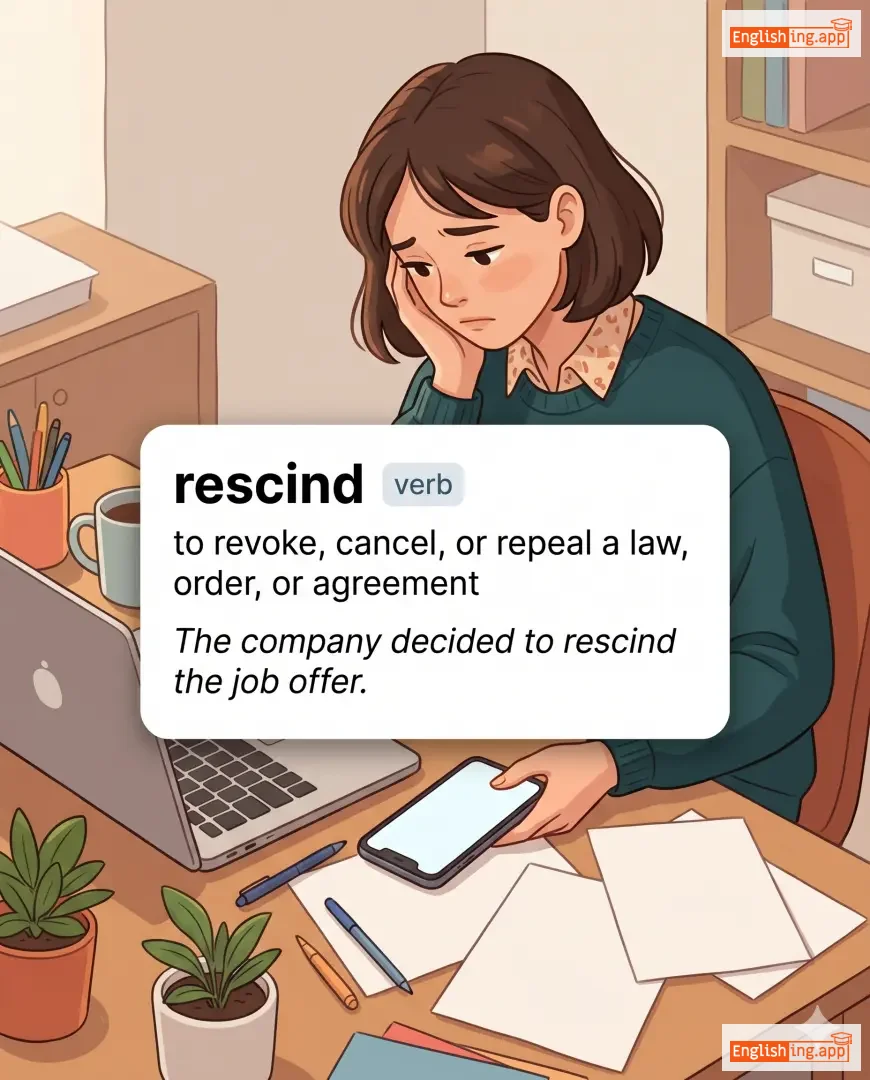
to revoke, cancel, or repeal a law, order, or agreement
••••••
|
The company decided to rescind the job offer.
その会社は仕事のオファーを取り消すことを決定しました。
••••••
|
その会社は仕事のオファーを取り消すことを決定しました。
Sono kaisha wa shigoto no ofā o torikesu koto o kettei shimashita.
••••••
|
rescind an offer
オファーを取り消す
••••••
|
to officially cancel an offer
••••••
|
オファーを取り消す
ofā o torikesu
••••••
|
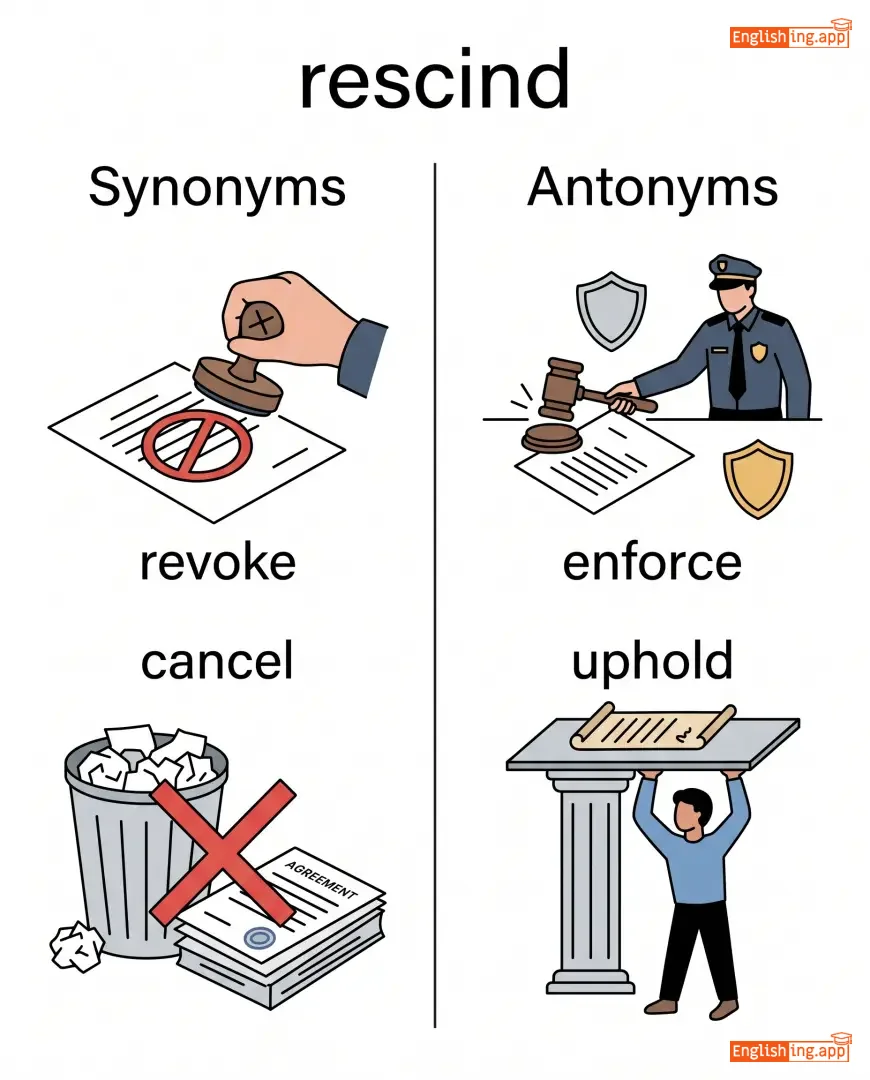
revoke, cancel, repeal, annul, withdraw
••••••
|
enforce, uphold, implement
••••••
|
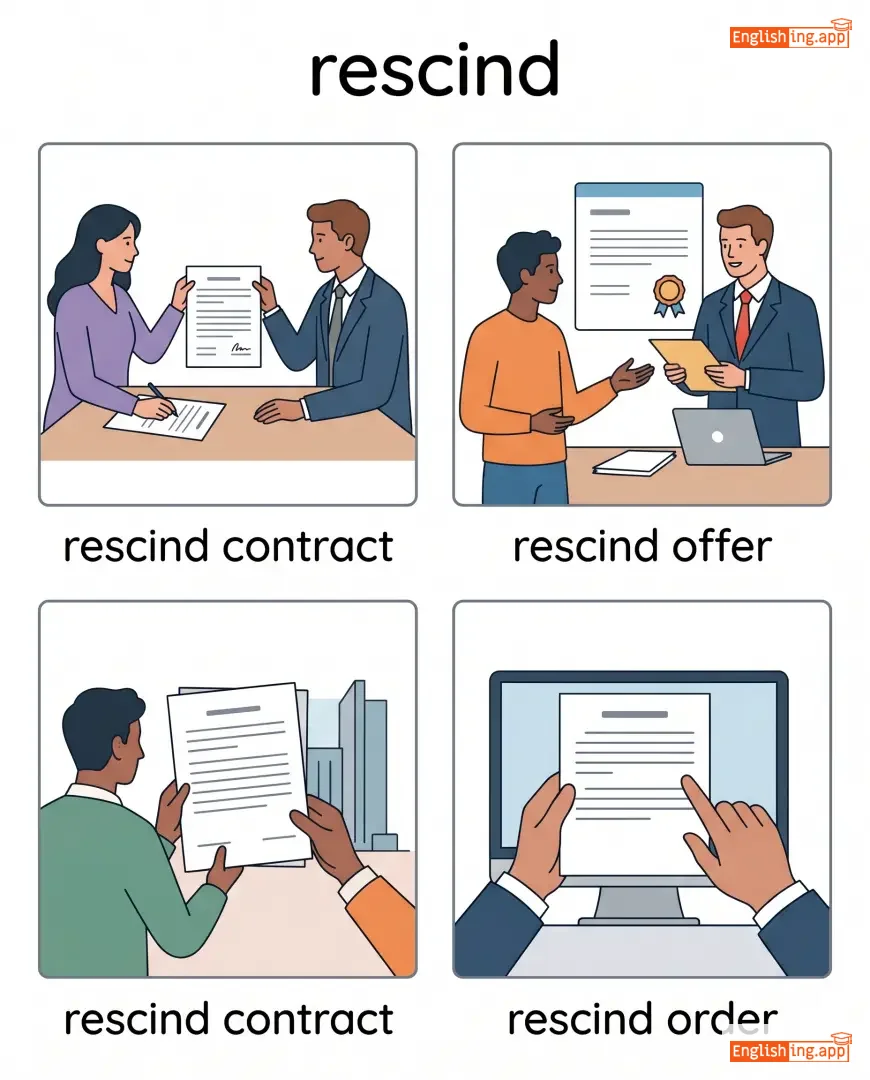
rescind contract, rescind offer, rescind order, rescind decision
••••••
|
Re-Sind はオファーを取り消すことを意味します。
••••••
|
|
#7580
🔄
|
/rɪˈkwaɪt/
verb
(リクワイト)
••••••
|
- •••••• |
返す
kaesu
••••••
|
requited
リクワイテッド
••••••
|
requited
リクワイテッド
••••••
|
requites
リクワイツ
••••••
|
requiting
リクワイティング
••••••
|
to return or repay a favor, service, or feeling
••••••
|
She requited his kindness with a thoughtful gift.
彼女は彼の親切に思慮深い贈り物で報いました。
••••••
|
彼女は彼の親切に思慮深い贈り物で報いました。
Kanojo wa kare no shinsetsu ni shinryo fukai okurimono de mukawashimashita.
••••••
|
requite love
愛を返す
••••••
|
to return someone's love
••••••
|
愛を返す
ai wo kaesu
••••••
|
repay, reciprocate, compensate, reward, retaliate
••••••
|
ignore, neglect, withhold
••••••
|
requite kindness, requite love, requite favor, requite service
••••••
|
Re-Quitは、愛や親切を返すことを意味します。
••••••
|
|
#7581
⚖️
|
/rɪˈkwaɪtəl/
noun
(リクワイタル)
••••••
|
- •••••• |
報復
hōfuku
••••••
|
- •••••• | - •••••• | - •••••• | - •••••• |
The act of returning something, such as a favor, service, or punishment; repayment or retaliation.
••••••
|
She offered her time in requital for his kindness. |
彼女は彼の親切に報復として自分の時間を提供しました。
Kanojo wa kare no shinsetsu ni hōfuku to shite jibun no jikan o teikyō shimashita.
••••••
|
requital of injury |
The act of retaliating against harm or wrong.
••••••
|
傷害の報復
Shōgai no hōfuku
••••••
|
repayment, retaliation, retribution, recompense
••••••
|
forgiveness, pardon
••••••
|
requital of kindness, requital of service, requital of injury
••••••
|
Requitalは'報復'のようなもので、他の人に何かを返すことです。
••••••
|
|
#7582
📝
|
/ˌrɛkwɪˈzɪʃən/
noun
(レクイジション)
••••••
|
- •••••• |
要求
yōkyū
••••••
|
- •••••• | - •••••• | - •••••• | - •••••• |
An official order laying claim to the use of property or materials; a formal demand or request.
••••••
|
The manager submitted a requisition for new office supplies.
マネージャーは新しいオフィス用品のためのレクイジションを提出しました。
••••••
|
マネージャーは新しいオフィス用品のためのレクイジションを提出しました。
Manējā wa atarashī ofisu yōhin no tame no rekuiyō o teishutsu shimashita.
••••••
|
- •••••• | - •••••• | - •••••• |
request, demand, order, application
••••••
|
offer, grant
••••••
|
purchase requisition, requisition form, requisition order
••••••
|
Requisitionは、オフィスで物品を要求するために使われる正式な要求を意味します。
••••••
|
|
#7583
📑
|
/ˈrɛkwɪzɪt/
adjective
(レクイジット)
••••••
|
- •••••• |
必要な
hitsuyou na
••••••
|
- •••••• | - •••••• | - •••••• | - •••••• |
Made necessary by particular circumstances or regulations; required.
••••••
|
A passport is a requisite document for international travel. |
パスポートは国際旅行に必要な書類です。
Pasupooto wa kokusai ryokou ni hitsuyou na shorui desu.
••••••
|
- •••••• | - •••••• | - •••••• |
necessary, essential, mandatory, required
••••••
|
optional, unnecessary
••••••
|
requisite skills, requisite documents, requisite conditions
••••••
|
Requisiteは必要な、旅行に必要なもののように。
••••••
|
|
#7584
🕯️
|
/ˈrɛkwiəm/
noun
(レクイエム)
••••••
|
- •••••• |
レクイエム
rekuiemu
••••••
|
- •••••• | - •••••• | - •••••• | - •••••• |
A mass, music, or ceremony for the repose of the souls of the dead.
••••••
|
The choir performed a requiem in memory of the late leader. |
合唱団は故リーダーを記念してレクイエムを演奏しました。
Kōshōdan wa ko rīdā o kinen shite rekuiemu o ensō shimashita.
••••••
|
requiem for |
Something that marks the end of an era or existence.
••••••
|
レクイエム for
rekuiemu for
••••••
|
dirge, elegy, lament, funeral hymn
••••••
|
celebration, jubilation
••••••
|
requiem mass, requiem service, requiem for
••••••
|
Requiemは別れの歌のようなもので、「レクイエム」は最後の別れの音楽です。
••••••
|
|
#7585
🌟
|
/rɪˈpjuːtɪd/
adjective
(リピューテッド)
••••••
|
- •••••• |
評判の良い
hyōban no yoi
••••••
|
- •••••• | - •••••• | - •••••• | - •••••• |
Generally considered or believed to be something, often based on reputation rather than certainty.
••••••
|
He is a reputed expert in financial management. |
彼は財務管理の評判の良い専門家です。
Kare wa zaimu kanri no hyōban no yoi senmonka desu.
••••••
|
- •••••• | - •••••• | - •••••• |
renowned, famous, esteemed, respected, acclaimed
••••••
|
unknown, obscure, disreputable
••••••
|
reputed expert, reputed author, reputed to be, reputed company
••••••
|
Reputedは評判の良い意味 – 評判が良いと、専門家として認識される。
••••••
|
|
#7586
🌟
|
/rɪˈpjuːt/
noun
(リピュート)
••••••
|
- •••••• |
評判
hyōban
••••••
|
- •••••• | - •••••• | - •••••• | - •••••• |
the opinion generally held of someone or something; reputation
••••••
|
He is a scholar of great repute in his field. |
彼はその分野で大変な評判を持つ学者です。
Kare wa sono bunya de taihen na hyōban o motsu gakusha desu.
••••••
|
of ill repute |
having a bad or dishonorable reputation
••••••
|
悪評
akuhyō
••••••
|
reputation, fame, renown, prestige, honor
••••••
|
disgrace, infamy
••••••
|
of great repute, of good repute, of ill repute, worldwide repute
••••••
|
Reputeは評判の意味。評判が良いか悪いか、それがReputeだよ。
••••••
|
|
#7587
🏅
|
/ˈrɛpjətəbəl/
adjective
(レピュタブル)
••••••
|
- •••••• |
評判の良い
hyōban no yoi
••••••
|
- •••••• | - •••••• | - •••••• | - •••••• |
having a good reputation; respected
••••••
|
They chose a reputable company to handle their finances.
彼らは財務を管理するために評判の良い会社を選びました。
••••••
|
彼らは財務を管理するために評判の良い会社を選びました。
Karera wa zaimu o kanri suru tame ni hyōban no yoi kaisha o erabimashita.
••••••
|
- •••••• | - •••••• | - •••••• |
respected, esteemed, trustworthy, honorable, distinguished
••••••
|
disreputable, untrustworthy
••••••
|
reputable source, reputable company, highly reputable, reputable lawyer
••••••
|
Reputable company は ‘尊敬されている’ → 評判の良い
••••••
|
|
#7588
🤮
|
/rɪˈpʌlsɪv/
adjective
(リパルシヴ)
••••••
|
- •••••• |
不快な
fukai na
••••••
|
- •••••• | - •••••• | - •••••• | - •••••• |
arousing intense distaste or disgust
••••••
|
The garbage gave off a repulsive smell.
ゴミは不快な臭いを発していた。
••••••
|
ゴミは不快な臭いを発していた。
Gomi wa fukai na nioi o hasshite ita.
••••••
|
- •••••• | - •••••• | - •••••• |
disgusting, revolting, offensive, vile, nauseating
••••••
|
pleasant, attractive
••••••
|
repulsive behavior, repulsive odor, repulsive sight, utterly repulsive
••••••
|
不快な = 気持ち悪い
••••••
|
|
#7589
🤢
|
/rɪˈpʌlʃən/
noun
••••••
|
- •••••• | - •••••• | - •••••• | - •••••• | - •••••• | - •••••• |
a strong feeling of dislike or disgust
••••••
|
She felt deep repulsion at the sight of cruelty to animals. |
- •••••• | - •••••• | - •••••• | - •••••• |
disgust, aversion, loathing, revulsion, distaste
••••••
|
attraction, appeal
••••••
|
feel repulsion, deep repulsion, physical repulsion, emotional repulsion
••••••
|
No •••••• |
Vocabulary Quiz
Test your vocabulary by matching words with their translations or meanings.
Login to take the quiz
Comments (0)
Share your thoughts and join the discussion.
Join the discussion by logging in
Login to CommentNo comments yet
Be the first to share your thoughts!