💢resentment (リゼントメント)

noun
/rɪˈzɛntmənt/
憤り (ikidoori)

意味

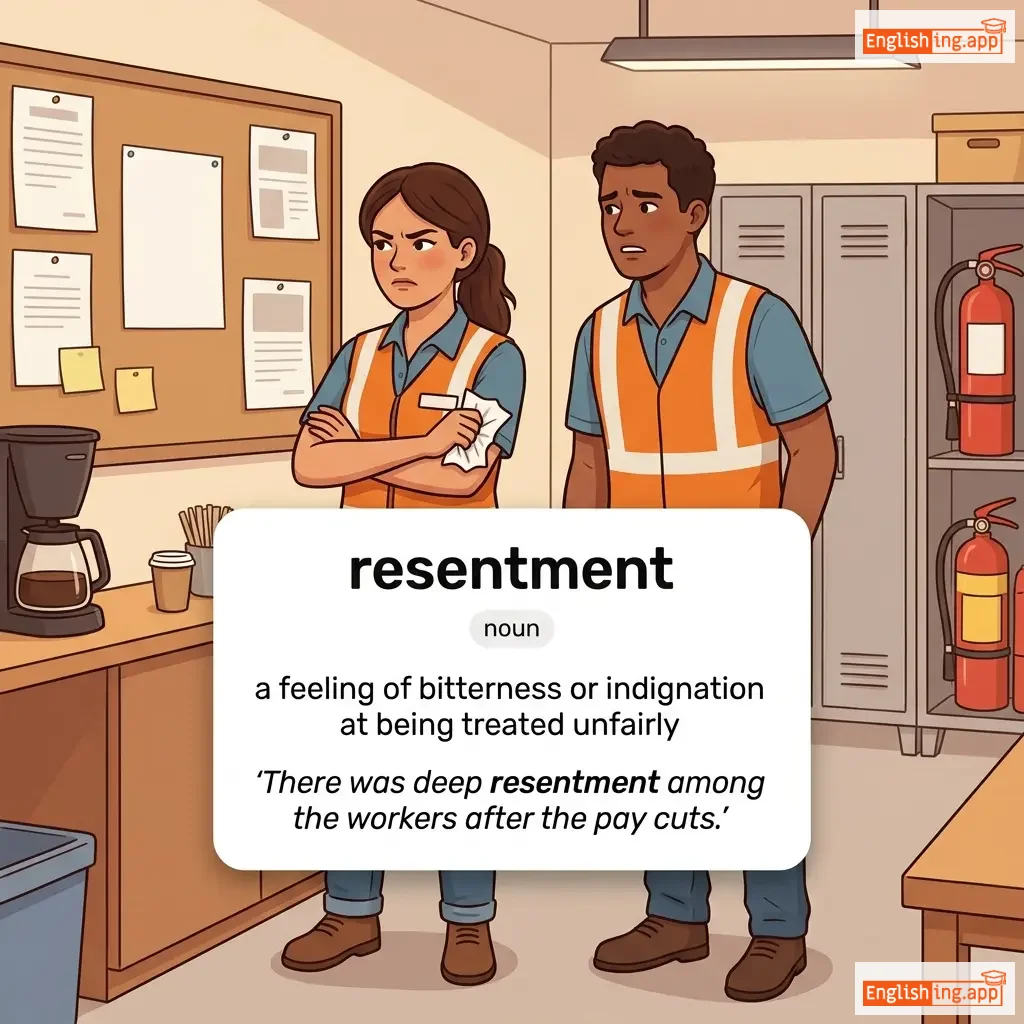
a feeling of bitterness or indignation at being treated unfairly
bitter indignation at having been treated unfairly; anger and displeasure resulting from some injury, mistreatment, or slight
Bitter indignation at having been treated unfairly.
意味の翻訳
不公平な扱いに対する苦々しい気持ちや怒り
fukouhei na atsukai ni taisuru nigakishii kimochi ya ikari

例文

There was deep resentment among the workers after the pay cuts.

賃金カット後、労働者の間に深い憤りがありました。
Chingin katto go, roudousha no aida ni fukai ikidoori ga arimashita.

He harbored deep resentment against his former boss.

彼は元の上司に対して深い憤りを抱いていました。
Kare wa moto no jōshi ni taishite fukai ikidoori o daite imashita.

Resentment grew among the students.
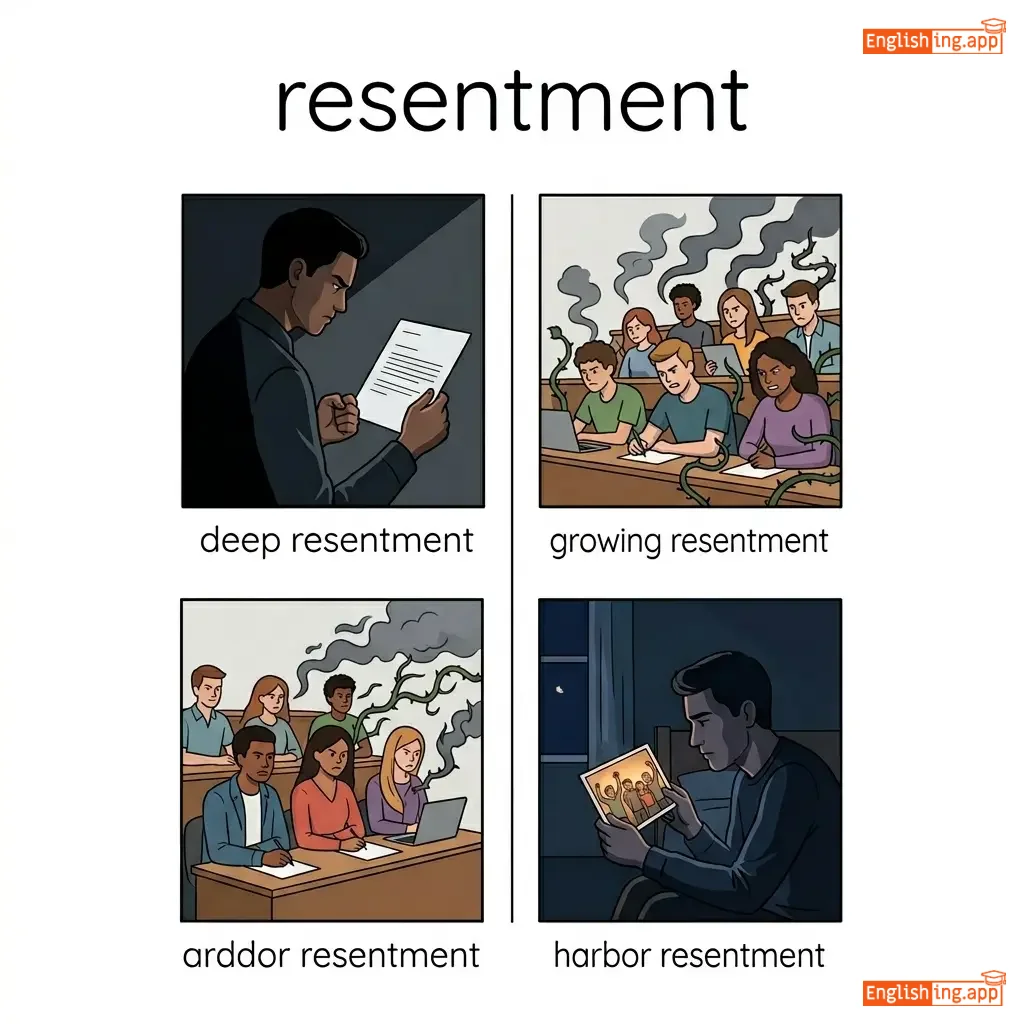
学生の間で憤りが増大した。
Gakusei no aida de ikidoori ga zōdaishita.

表現例

bear resentment
憤りを抱く
Ikidoori wo daku

同義語

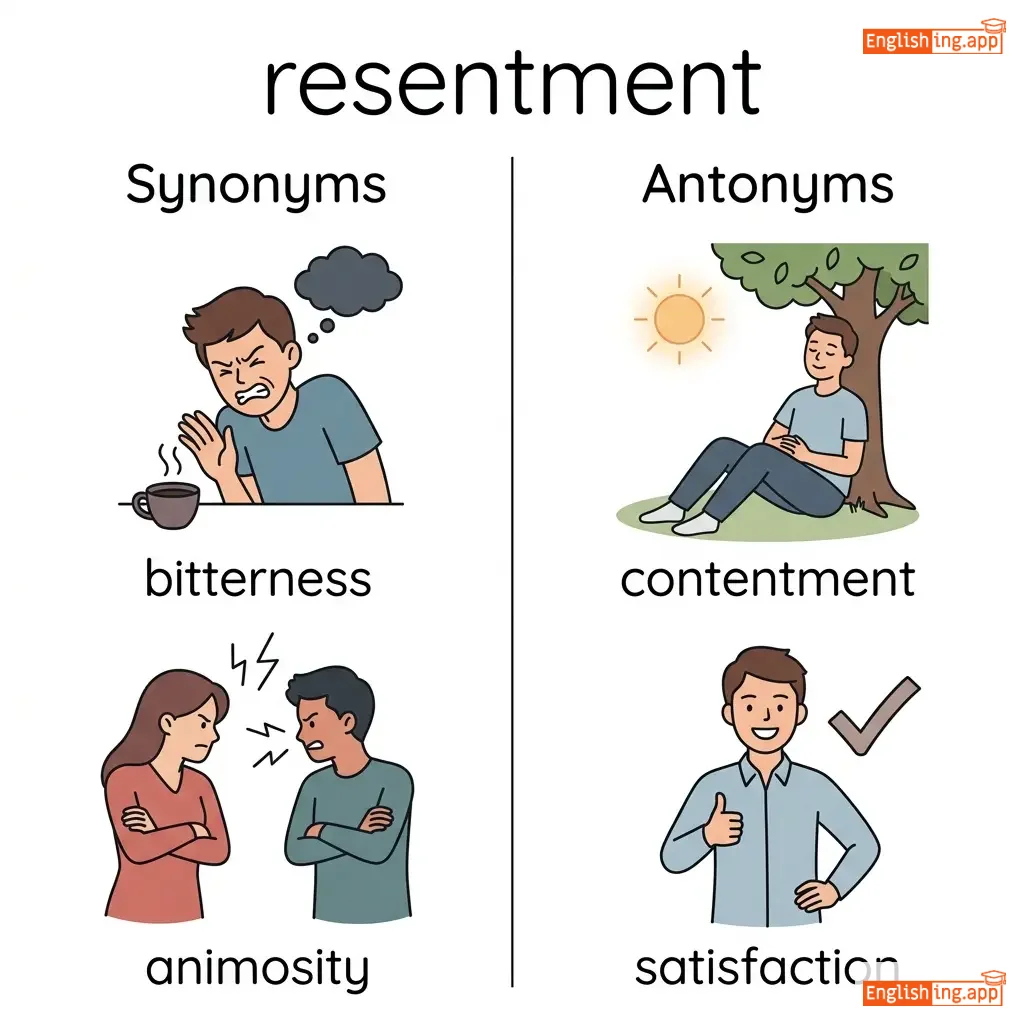
bitterness, animosity, rancor, displeasure, anger, indignation, grudge, Anger, Bitterness
エントリー 1
bitterness, animosity, rancor, displeasure
エントリー 2
bitterness, anger, indignation, grudge
エントリー 3
Anger, Bitterness

対義語

contentment, satisfaction, acceptance, forgiveness, Satisfaction, Contentment
エントリー 1
contentment, satisfaction, acceptance
エントリー 2
forgiveness, acceptance, contentment, satisfaction
エントリー 3
Satisfaction, Contentment

コロケーション

deep resentment, growing resentment, harbor resentment, resentment towards
エントリー 1
deep resentment, growing resentment, harbor resentment, resentment towards
エントリー 2
deep resentment, harbor resentment, growing resentment, resentment towards

関連語彙

The application of scientific knowledge for practical purposes
A visible display or expression of something.
a period of time when someone does not go to work or school but is free to do what they want, such a...
a person who is responsible for a crime or misdeed
a feeling of deep distress caused by loss or disappointment
An important event, as in a person's career, the history of a nation, or the advancement of knowledg...

さらに探索