

翻訳
過去
過去分詞
三人称単数
動名詞
意味
例文
例文の翻訳
同義語
対義語
コロケーション
ニーモニック
Swipe left or right, or use the buttons. Tap image to zoom.
例文の翻訳
単語
Lesson 85Lesson 85 - マスクトグル
|
絵文字
|
単語 | Images | 翻訳 | 過去 | 過去分詞 | 三人称単数 | 動名詞 | 意味 | 例文 | 例文の翻訳 | 表現例 | 表現例の意味 | 表現例の翻訳 | 同義語 | 対義語 | コロケーション | ニーモニック |
|---|---|---|---|---|---|---|---|---|---|---|---|---|---|---|---|---|---|
|
#2521
👎
|
/dɪsˈfeɪvər/
noun/verb
(ディスフェイヴァー)
••••••
|
- •••••• |
不支持 / 不快
fushiji / fukai
••••••
|
disfavored
ディスフェイヴァード
••••••
|
disfavored
ディスフェイヴァード
••••••
|
disfavors
ディスフェイヴァーズ
••••••
|
disfavoring
ディスフェイヴァリング
••••••
|
disapproval or dislike; to regard with disapproval
••••••
|
The new policy fell into disfavor with the public.
新しい政策は一般の人々の間で不評を買いました。
••••••
|
新しい政策は一般の人々の間で不評を買いました。
Atarashii seisaku wa ippan no hitobito no aida de fuhyou wo kaimashita.
••••••
|
fall into disfavor
不評を買う
••••••
|
to lose approval or popularity
••••••
|
不評を買う
fuhyou wo kau
••••••
|
disapproval, dislike, displeasure, opposition, hostility
••••••
|
favor, approval, support
••••••
|
in disfavor, fall into disfavor, earn disfavor, widespread disfavor
••••••
|
Dis FAVORは好意がないことを意味し、不支持または不快をもたらします。
••••••
|
|
#2522
🧼
|
/ˌdɪsɪnˈfɛktənt/
noun
(ディスインフェクタント)
••••••
|
- •••••• |
消毒剤
shoudokuzai
••••••
|
- •••••• | - •••••• | - •••••• | - •••••• |
a chemical substance used to kill harmful microorganisms on surfaces
••••••
|
The cleaner sprayed disinfectant on the table. |
清掃員はテーブルに消毒剤を噴霧しました。
Seisōin wa tēburu ni shōdokuzai o funmushimashita.
••••••
|
- •••••• | - •••••• | - •••••• |
antiseptic, germicide, sanitizer, sterilizer
••••••
|
contaminant, pathogen
••••••
|
use disinfectant, spray disinfectant, disinfectant solution, disinfectant wipe
••••••
|
消毒剤 = Disinfectant と日本語で使われます。
••••••
|
|
#2523
🧴
|
/ˌdɪsɪnˈfɛkt/
verb
(ディスインフェクト)
••••••
|
- •••••• |
消毒する
shoudoku suru
••••••
|
disinfected
ディスインフェクテッド
••••••
|
disinfected
ディスインフェクテッド
••••••
|
disinfects
ディスインフェクツ
••••••
|
disinfecting
ディスインフェクティング
••••••
|
to clean something thoroughly to destroy bacteria or viruses
••••••
|
The nurse disinfected the wound before applying a bandage.
看護師は包帯を巻く前に傷を消毒しました。
••••••
|
看護師は包帯を巻く前に傷を消毒しました。
Kangoshi wa houtai o maku mae ni kizu o shoudoku shimashita.
••••••
|
- •••••• | - •••••• | - •••••• |
sterilize, sanitize, cleanse, purify
••••••
|
contaminate, infect
••••••
|
disinfect hands, disinfect wounds, disinfect surfaces, disinfect area
••••••
|
Disinfectは感染を取り除く意味 → 消毒する
••••••
|
|
#2524
🙅
|
/ˌdɪsɪnklɪˈneɪʃən/
noun
(ディスインクリネーション)
••••••
|
- •••••• |
不本意
fuhonni
••••••
|
- •••••• | - •••••• | - •••••• | - •••••• |
a lack of willingness or desire to do something
••••••
|
She showed a clear disinclination to join the meeting. |
彼女は会議に参加する明確な不本意を示した。
Kanojo wa kaigi ni sanka suru meikaku na fuhonni o shimeshita.
••••••
|
- •••••• | - •••••• | - •••••• |
reluctance, unwillingness, hesitance, indifference
••••••
|
willingness, eagerness, inclination
••••••
|
show disinclination, strong disinclination, disinclination to work, natural disinclination
••••••
|
Dis + inclination は意欲の欠如を意味する → 不本意
••••••
|
|
#2525
😞
|
/ˌdɪsɪˈluːʒən/
verb, noun
(デズイリュージョン)
••••••
|
- •••••• |
幻滅
genmetsu
••••••
|
disillusioned
デズイリュージョンド
••••••
|
disillusioned
デズイリュージョンド
••••••
|
disillusions
デズイリュージョンズ
••••••
|
disillusioning
デズイリュージョニング
••••••
|
to cause someone to realize that something is not as good as they believed
••••••
|
The scandal disillusioned many voters.
そのスキャンダルは多くの有権者を幻滅させた。
••••••
|
そのスキャンダルは多くの有権者を幻滅させた。
Sono sukyandaru wa ooku no yuukensha wo genmetsu saseta.
••••••
|
disillusion with
デズイリュージョンとの関係
••••••
|
loss of faith or belief in something
••••••
|
…に対する幻滅
...ni taisuru genmetsu
••••••
|
disenchant, disappoint, discourage, embitter
••••••
|
encourage, inspire, satisfy
••••••
|
feel disillusioned, political disillusion, deep disillusion, disillusion with life
••••••
|
Disillusion—幻想を壊す、幻滅を体験する
••••••
|
|
#2526
😔
|
/dɪsˈɑːnər/
noun, verb
••••••
|
- •••••• | - •••••• |
dishonored
••••••
|
dishonored
••••••
|
dishonors
••••••
|
dishonoring
••••••
|
a state of shame or loss of respect; to bring shame upon someone or something
••••••
|
The soldier felt he had brought dishonor to his family. |
- •••••• |
fall into dishonor |
to lose respect or reputation
••••••
|
- •••••• |
disgrace, shame, humiliation, disrespect, stigma
••••••
|
honor, respect, dignity
••••••
|
bring dishonor, family dishonor, cause dishonor, public dishonor
••••••
|
No •••••• |
|
#2527
🤥
|
/dɪsˈɑːnɪst/
adjective
(ディスオネスト)
••••••
|
- •••••• |
不正直
fuseijiki
••••••
|
- •••••• | - •••••• | - •••••• | - •••••• |
Behaving in an untruthful or deceitful way; not honest.
••••••
|
It is dishonest to cheat in exams. |
試験でカンニングするのは不正直です。
Shiken de kanningu suru no wa fuseijiki desu.
••••••
|
dishonest gain |
Wealth or advantage obtained through unfair or illegal means
••••••
|
不正直な利益
fuseijiki na rieki
••••••
|
deceitful, fraudulent, untruthful, corrupt
••••••
|
honest, truthful, sincere
••••••
|
dishonest act, dishonest behavior, dishonest person
••••••
|
Dishonest = 不正直 — 正直でない、だから不正直
••••••
|
|
#2528
😵💫
|
/dɪˈʃɛvəld/
adjective
(ディシェヴェルド)
••••••
|
- •••••• |
乱れた
midareta
••••••
|
- •••••• | - •••••• | - •••••• | - •••••• |
Untidy, messy, or in disorder, especially of hair or clothing.
••••••
|
He arrived with disheveled hair and wrinkled clothes. |
彼は乱れた髪とシワの寄った服で到着しました。
Kare wa midareta kami to shiwa no yotta fuku de tōchaku shimashita.
••••••
|
- •••••• | - •••••• | - •••••• |
untidy, messy, unkempt, scruffy
••••••
|
tidy, neat, groomed
••••••
|
disheveled hair, disheveled appearance, look disheveled
••••••
|
Disheveledはdis(乱れ)+ shevel(シャベル)で乱れた
••••••
|
|
#2529
😞
|
/dɪsˈhɑːrtənd/
adjective
(ディスハーテンド)
••••••
|
- •••••• |
落胆した
rakutanshita
••••••
|
- •••••• | - •••••• | - •••••• | - •••••• |
Having lost confidence, hope, or spirit; discouraged.
••••••
|
She looked disheartened after receiving the bad news.
彼女は悪い知らせを受け取った後、落ち込んで見えました。
••••••
|
彼女は悪い知らせを受け取った後、落ち込んで見えました。
Kanojo wa warui shirase o uketotta ato, ochikonde mie mashita.
••••••
|
- •••••• | - •••••• | - •••••• |
discouraged, dejected, depressed, demoralized
••••••
|
encouraged, motivated, inspired
••••••
|
feel disheartened, look disheartened, deeply disheartened
••••••
|
Disheartened は落胆した気持ちのようなものです。
••••••
|
|
#2530
💔
|
/dɪsˈhɑːrtən/
verb
(ディスハートン)
••••••
|
|
落胆させる
rakkansaseru
••••••
|
disheartened
ディスハートンド
••••••
|
disheartened
ディスハートンド
••••••
|
disheartens
ディスハートンズ
••••••
|
disheartening
ディスハートニング
••••••
|
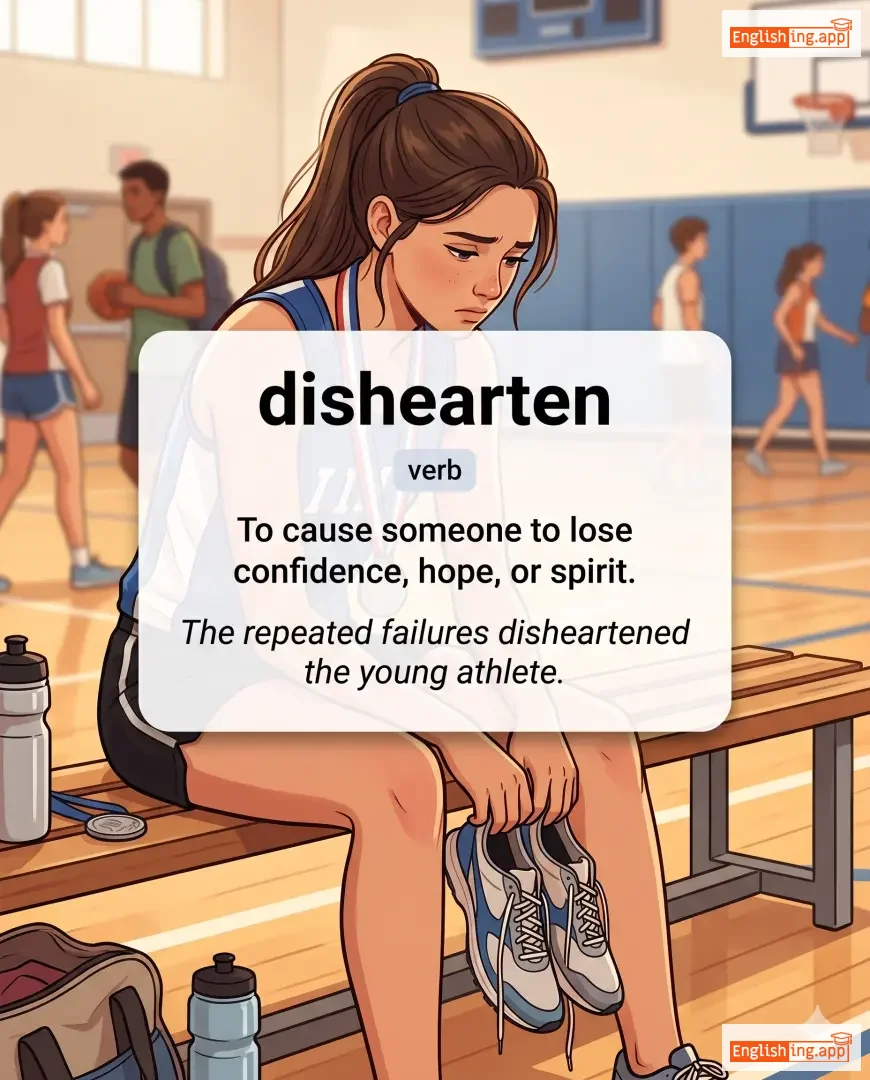
To cause someone to lose confidence, hope, or spirit.
••••••
|
The repeated failures disheartened the young athlete.
繰り返される失敗が若いアスリートを落胆させた。
••••••
|
繰り返される失敗が若いアスリートを落胆させた。
Kurikaesaru shippai ga wakai asurīto o rakkan saseta.
••••••
|
- •••••• | - •••••• | - •••••• |
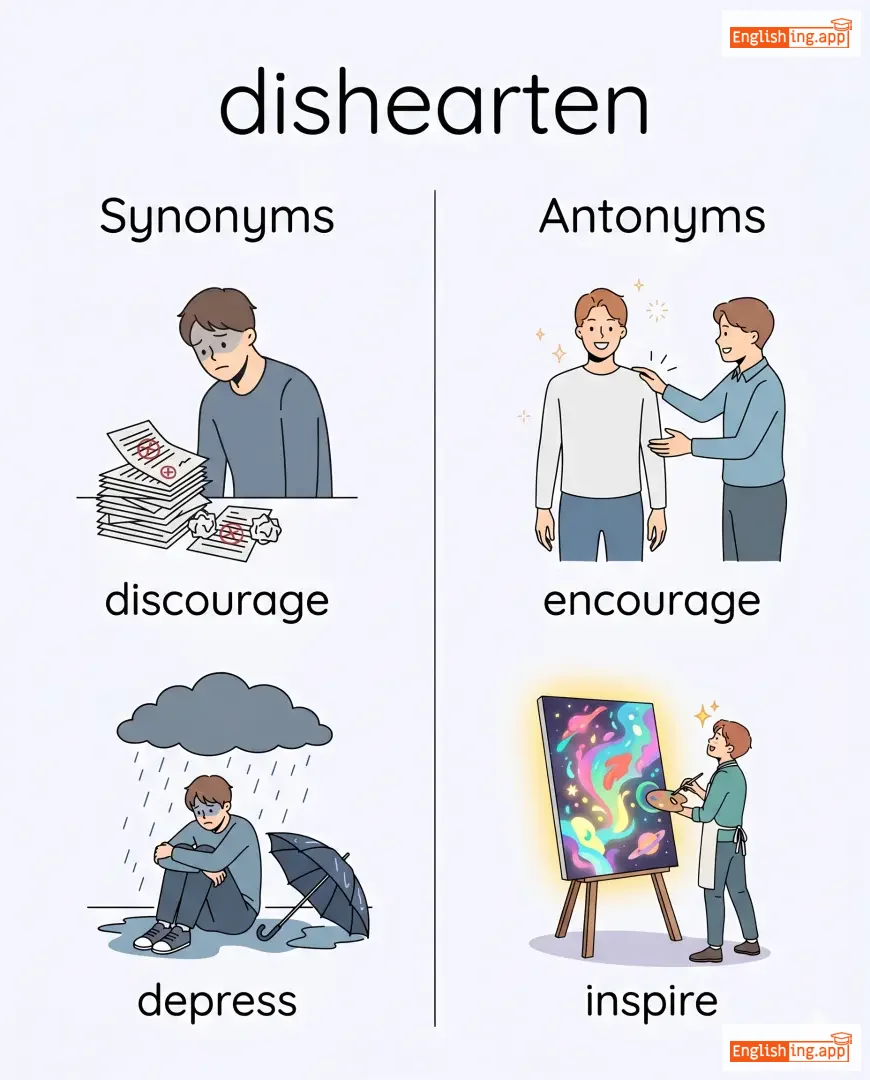
discourage, depress, demoralize, dismay
••••••
|
encourage, inspire, hearten
••••••
|
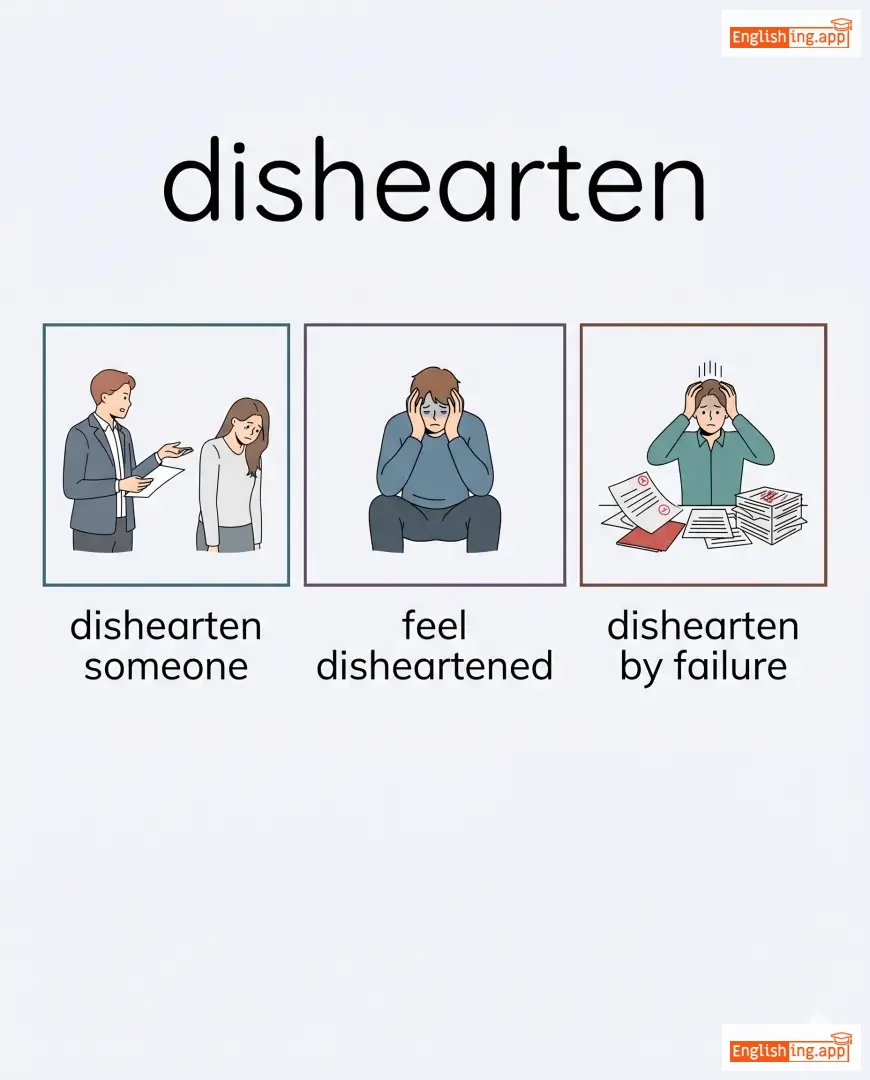
dishearten someone, feel disheartened, dishearten by failure
••••••
|
心が壊れるとdisheartenし、落胆する。
••••••
|
|
#2531
🩳
|
/ˌdɪʃəˈbiːl/
noun
(ディシャビル)
••••••
|
- •••••• |
だらしない格好
darashinai kakkou
••••••
|
- •••••• | - •••••• | - •••••• | - •••••• |
The state of being only partly or loosely dressed; casual or careless attire.
••••••
|
She answered the door in a state of dishabille, wearing just a robe. |
彼女はだらしない格好でドアに応答した、ローブだけを着て。
Kanojo wa darashinai kakkou de doa ni outou shita, roobu dake o kite.
••••••
|
- •••••• | - •••••• | - •••••• |
undress, negligence, casualness, informality
••••••
|
formality, attire, elegance
••••••
|
in dishabille, appear in dishabille, casual dishabille
••••••
|
Dishabille はだらしない格好という意味。
••••••
|
|
#2532
🎭
|
/dɪsˈɡaɪz/
verb/noun
(ディスガイズ)
••••••
|
|
変装
hensou
••••••
|
disguised
ディスガイズド
••••••
|
disguised
ディスガイズド
••••••
|
disguises
ディスガイズズ
••••••
|
disguising
ディスガイジング
••••••
|
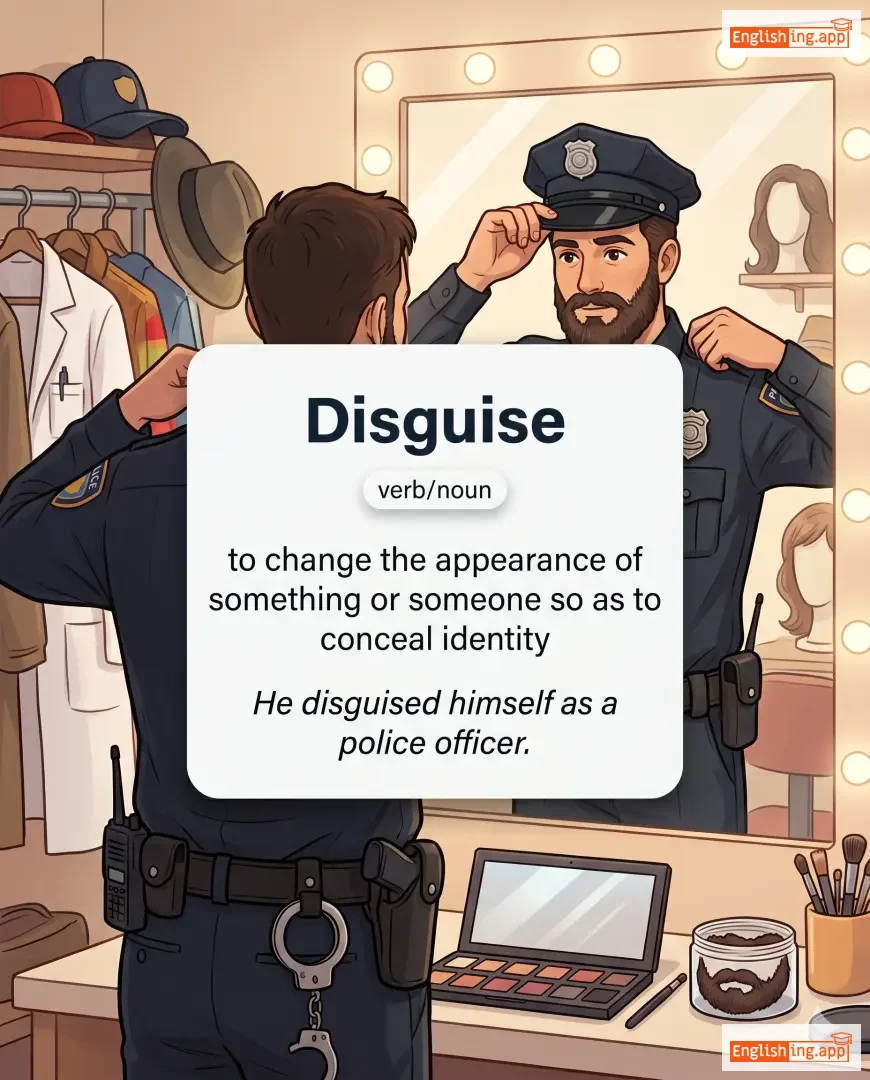
to change the appearance of something or someone so as to conceal identity
••••••
|
He disguised himself as a police officer.
彼は警察官に変装した。
••••••
|
彼は警察官に変装した。
Kare wa keisatsukan ni hensou shita.
••••••
|
a blessing in disguise
隠れた祝福
••••••
|
something that seems bad at first but results in something good
••••••
|
隠れた祝福
kakureta shukufuku
••••••
|
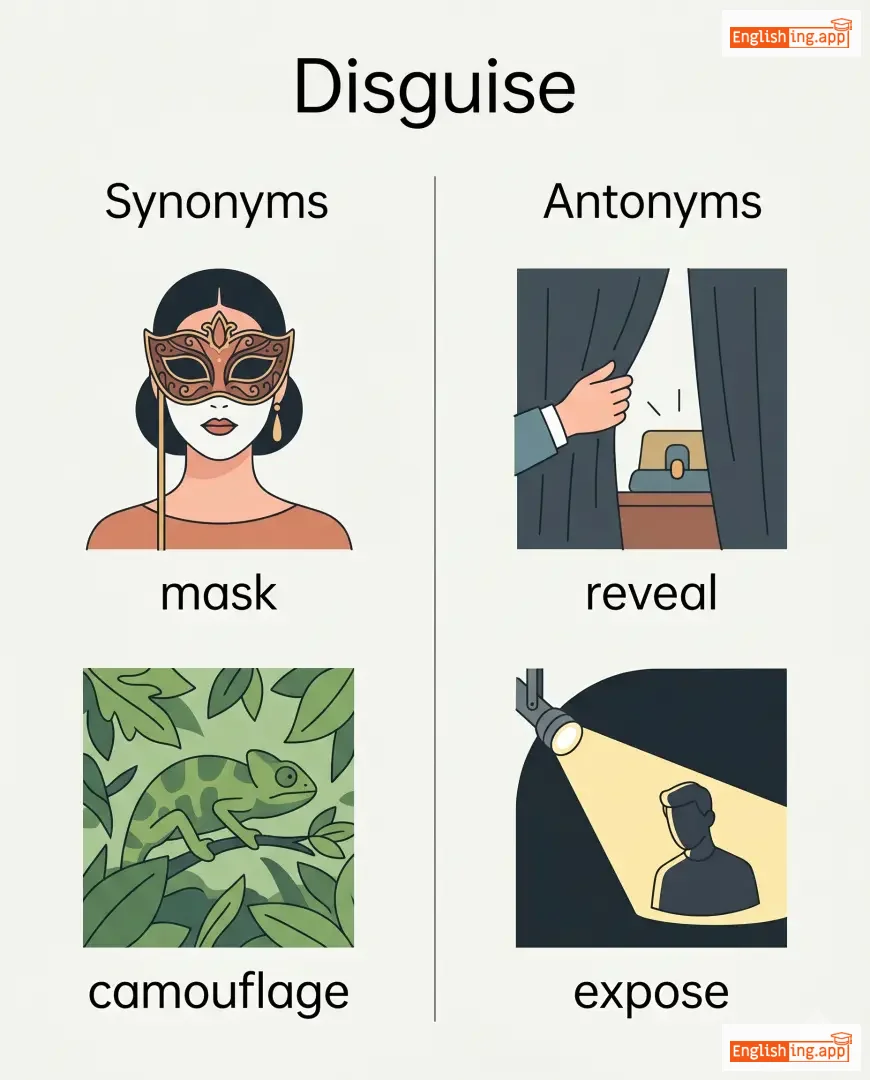
mask, camouflage, conceal, cover, veil
••••••
|
reveal, expose, uncover
••••••
|
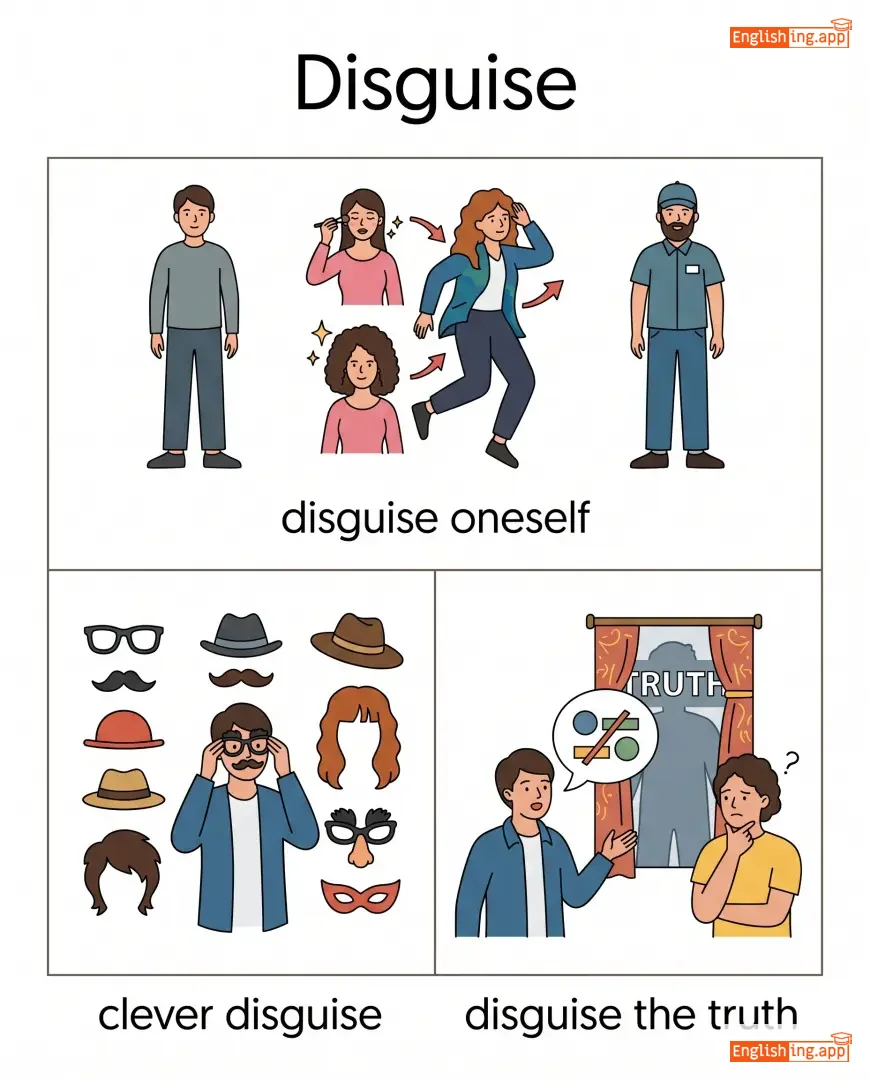
disguise oneself, clever disguise, disguise the truth, disguise as
••••••
|
Disguise → Dis GUYS、隠れている変装のように。
••••••
|
|
#2533
😠
|
/dɪsˈɡrʌntl/
verb
(ディスグラントル)
••••••
|
- •••••• |
不満にさせる
fuman ni saseru
••••••
|
disgruntled
ディスグラントルド
••••••
|
disgruntled
ディスグラントルド
••••••
|
disgruntles
ディスグラントルズ
••••••
|
disgruntling
ディスグラントリング
••••••
|
to make someone dissatisfied or discontented
••••••
|
The unfair treatment disgruntled the workers.
不公平な扱いが労働者を不満にさせた。
••••••
|
不公平な扱いが労働者を不満にさせた。
Fukōhei na atsukai ga rōdōsha o fuman ni saseta.
••••••
|
- •••••• | - •••••• | - •••••• |
dissatisfy, annoy, upset, displease, irritate
••••••
|
please, satisfy, delight
••••••
|
disgruntled employee, disgruntled customer, feel disgruntled, disgruntled look
••••••
|
Grantを与えない→Dis-grant-leは不満にさせる。
••••••
|
|
#2534
🌋
|
/dɪsˈɡɔrdʒ/
verb
(ディスゴージ)
••••••
|
|
吐く / 強制的に吐き出す
haku / kyouseiteki ni hakidasu
••••••
|
disgorged
ディスゴージド
••••••
|
disgorged
ディスゴージド
••••••
|
disgorges
ディスゴージズ
••••••
|
disgorging
ディスゴージング
••••••
|
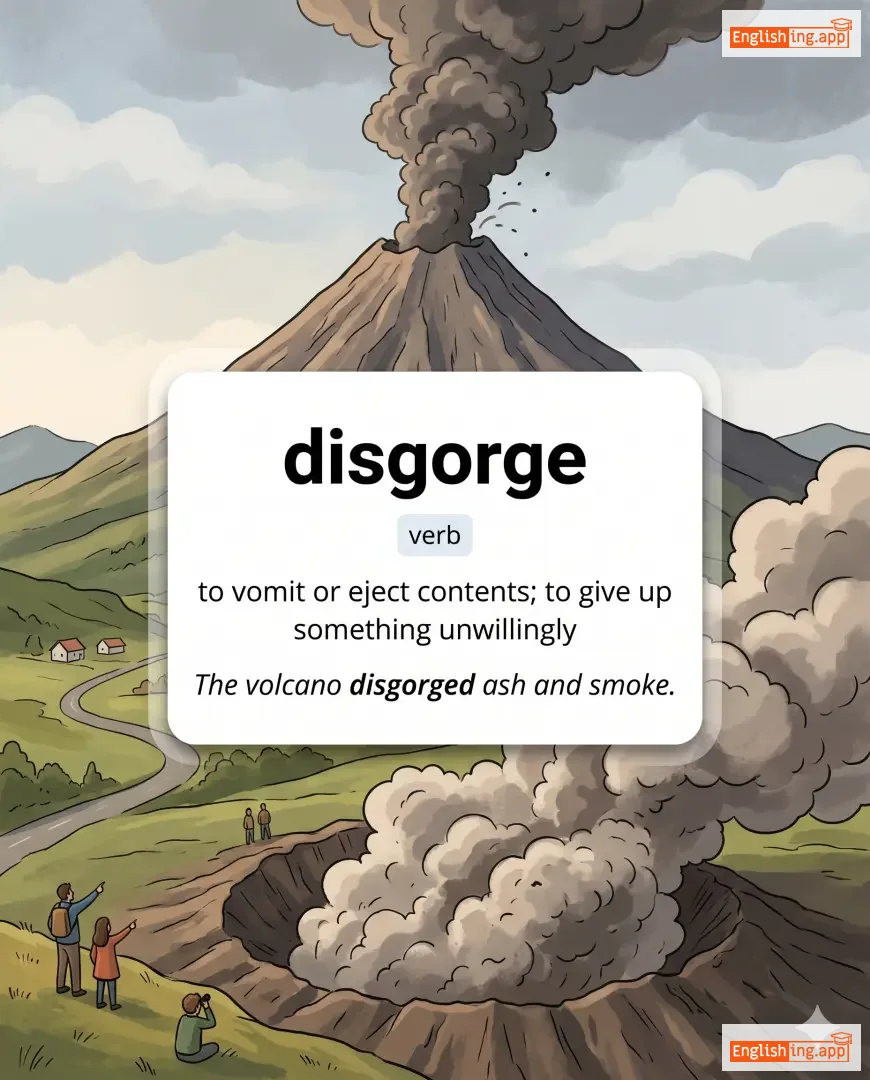
to vomit or eject contents; to give up something unwillingly
••••••
|
The volcano disgorged ash and smoke.
火山が灰と煙を吐き出しました。
••••••
|
火山が灰と煙を吐き出しました。
Kazan ga hai to kemuri wo hakidashimashita.
••••••
|
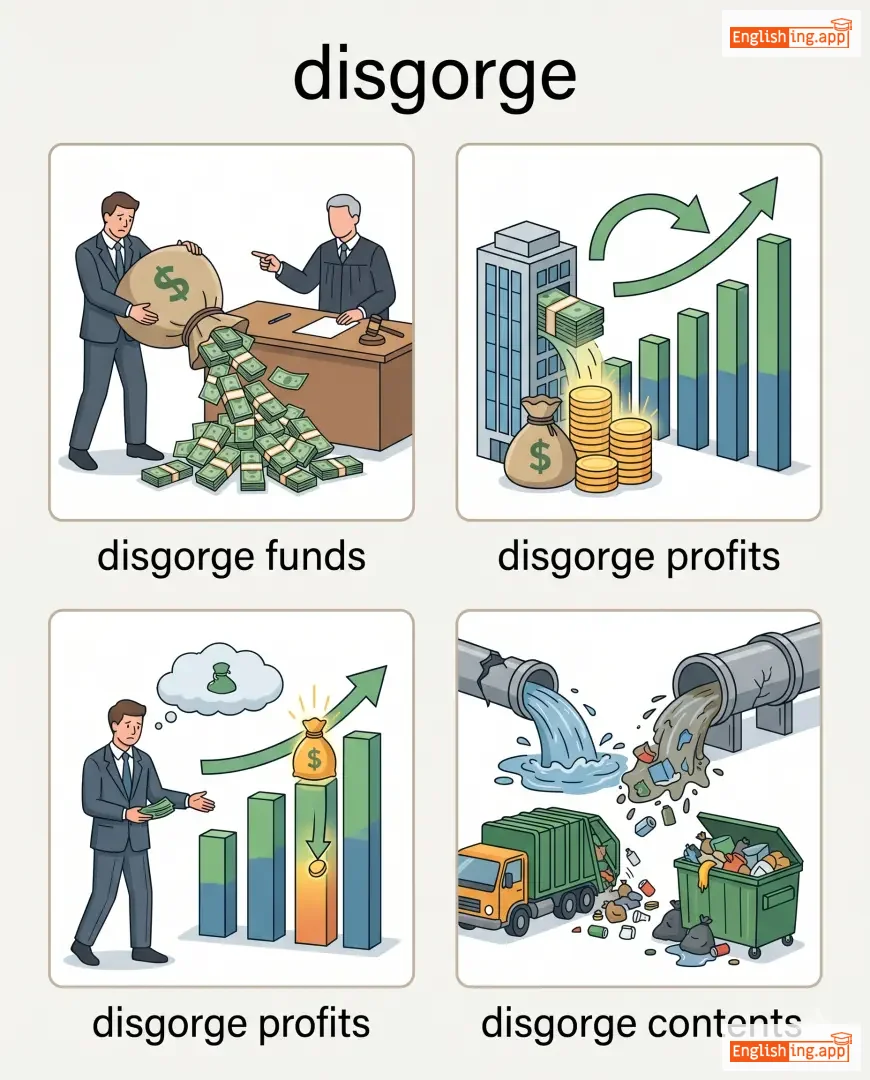
disgorge profits
利益を吐き出す
••••••
|
to surrender money or profits, usually by legal requirement
••••••
|
利益を返す
rieki wo kaesu
••••••
|
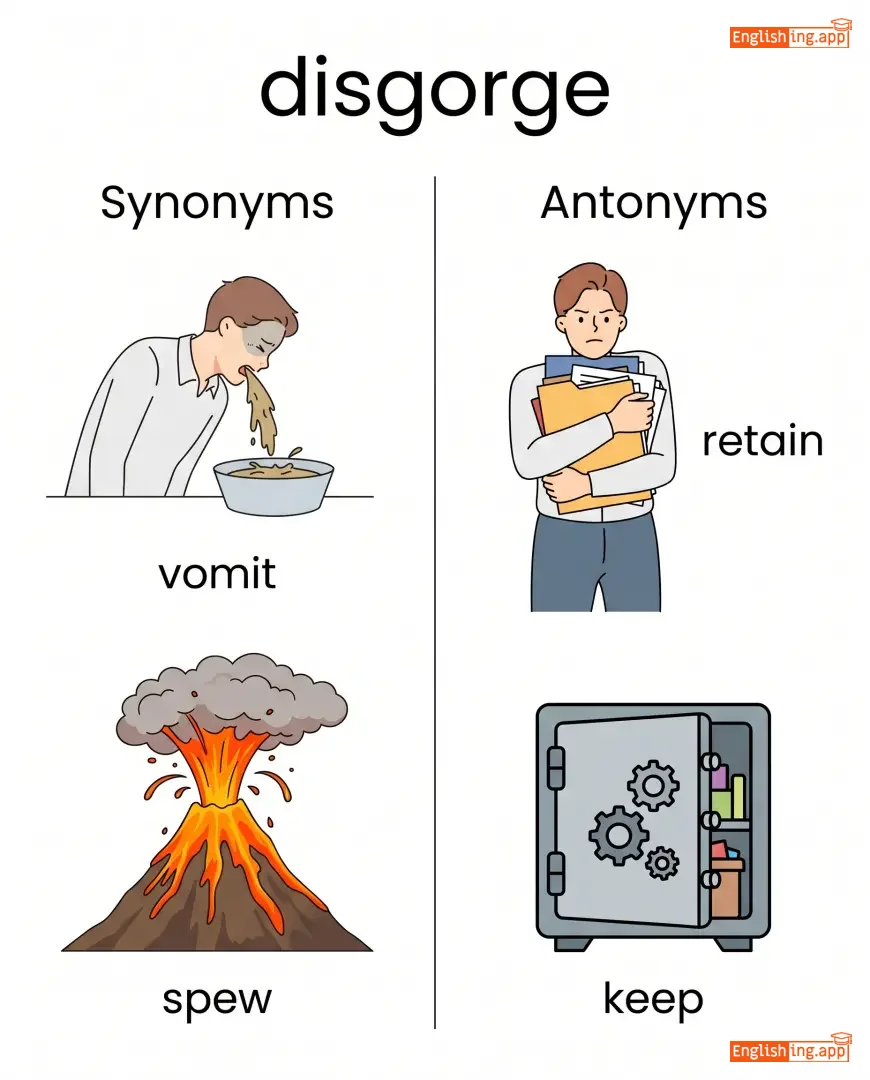
vomit, spew, eject, expel, surrender
••••••
|
retain, keep, hold
••••••
|
disgorge funds, disgorge profits, disgorge contents, disgorge smoke
••••••
|
Dis GORGE → 強制的に吐き出す
••••••
|
|
#2535
😣
|
/dɪsˈfɪɡjər/
verb
(ディスフィギュア)
••••••
|
- •••••• |
変形させる
henkei saseru
••••••
|
disfigured
ディスフィギュアド
••••••
|
disfigured
ディスフィギュアド
••••••
|
disfigures
ディスフィギュアズ
••••••
|
disfiguring
ディスフィギュアリング
••••••
|
to spoil or damage the appearance of something
••••••
|
The fire disfigured the old building.
火事は古い建物を変形させた。
••••••
|
火事は古い建物を変形させた。
Kaji wa furui tatemono o henkei saseta.
••••••
|
- •••••• | - •••••• | - •••••• |
mar, scar, deform, deface, ruin
••••••
|
beautify, repair, restore
••••••
|
badly disfigured, disfigure the face, disfigured body, permanently disfigure
••••••
|
Dis + figure は figure を変える、つまり変形させること。
••••••
|
|
#2536
🤫
|
/dɪˈskriːt/
adjective
(ディスクリート)
••••••
|
- •••••• |
慎重な
shinchou na
••••••
|
- •••••• | - •••••• | - •••••• | - •••••• |
careful and prudent in one's speech or actions, especially to keep something confidential or avoid embarrassment
••••••
|
She was discreet about the details of their conversation.
彼女は彼らの会話の詳細について慎重でした。
••••••
|
彼女は彼らの会話の詳細について慎重でした。
Kanojo wa karera no kaiwa no shousai ni tsuite shinchou deshita.
••••••
|
discreet silence
慎重な沈黙
••••••
|
the act of remaining silent to avoid revealing private or sensitive information
••••••
|
慎重な沈黙
shinchou na chinmoku
••••••
|
cautious, tactful, careful, prudent, diplomatic
••••••
|
careless, reckless, indiscreet
••••••
|
discreet manner, discreet silence, discreet charm, discreet glance
••••••
|
慎重な(shinchou na)とは、パーティで静かにしていることです。
••••••
|
|
#2537
🧵
|
/ˌdɪsɪnˈtæŋɡl/
verb
(ディセンタングル)
••••••
|
- •••••• |
ほどく
hodoku
••••••
|
disentangled
ディセンタングルド
••••••
|
disentangled
ディセンタングルド
••••••
|
disentangles
ディセンタングルズ
••••••
|
disentangling
ディセンタングリング
••••••
|
To free something or someone from a tangle or complication.
••••••
|
She tried to disentangle her hair from the branches.
彼女は枝から髪の毛をほどこうとしました。
••••••
|
彼女は枝から髪の毛をほどこうとしました。
Kanojo wa eda kara kami no ke o hodoku to shimashita.
••••••
|
- •••••• | - •••••• | - •••••• |
untangle, unravel, release, extricate
••••••
|
entangle, complicate, knot
••••••
|
disentangle from, disentangle the truth, disentangle hair
••••••
|
Disentangle とは絡みをほどくこと、解放すること。
••••••
|
|
#2538
🔓
|
/ˌdɪsɪnˈɡeɪdʒ/
verb
(ディスイングェイジ)
••••••
|
- •••••• |
解放する
kaihō suru
••••••
|
disengaged
ディスイングェイジド
••••••
|
disengaged
ディスイングェイジド
••••••
|
disengages
ディスイングェイジズ
••••••
|
disengaging
ディスイングェイジング
••••••
|
To release or detach oneself from something; to withdraw.
••••••
|
He tried to disengage from the heated argument.
彼は熱い議論からディスイングェイジしようとした。
••••••
|
彼は熱い議論から解放しようとした。
Kare wa atsui giron kara kaihō shiyō to shita.
••••••
|
- •••••• | - •••••• | - •••••• |
detach, withdraw, release, separate
••••••
|
engage, involve, connect
••••••
|
disengage from, disengage quickly, disengage completely
••••••
|
Disengageは解放すること、議論から抜け出す。
••••••
|
|
#2539
🚫
|
/ˌdɪsɪnˈfræntʃaɪz/
verb
(ディスインフランチャイズ)
••••••
|
- •••••• |
権利を奪う
kenri o ubau
••••••
|
disenfranchised
ディスインフランチャイズド
••••••
|
disenfranchised
ディスインフランチャイズド
••••••
|
disenfranchises
ディスインフランチャイズィズ
••••••
|
disenfranchising
ディスインフランチャイジング
••••••
|
To deprive someone of the right to vote or other rights.
••••••
|
The new law could disenfranchise thousands of voters.
新しい法律は何千人もの有権者を投票権から外す可能性があります。
••••••
|
新しい法律は何千人もの有権者を投票権から外す可能性があります。
Atarashī hōritsu wa nanzen-nin mono yūken-sha o tōhyōken kara hazusu kanōsei ga arimasu.
••••••
|
- •••••• | - •••••• | - •••••• |
deprive, exclude, oppress, marginalize
••••••
|
empower, enfranchise, include
••••••
|
disenfranchise voters, politically disenfranchised, systematically disenfranchise
••••••
|
Disenfranchise は権利を奪うことです。
••••••
|
|
#2540
🛳️
|
/ˌdɪsɪmˈbɑːrk/
verb
(ディSEMBARK)
••••••
|
- •••••• |
降りる
oriru
••••••
|
disembarked
ディSEMBARKド
••••••
|
disembarked
ディSEMBARKド
••••••
|
disembarks
ディSEMBARKス
••••••
|
disembarking
ディSEMBARKイング
••••••
|
To leave a ship, aircraft, or other vehicle.
••••••
|
The passengers disembarked from the plane after landing.
乗客は着陸後、飛行機から降りました。
••••••
|
乗客は着陸後、飛行機から降りました。
Joukyaku wa chakuriku go, hikouki kara orimashita.
••••••
|
- •••••• | - •••••• | - •••••• |
alight, exit, debark, get off
••••••
|
embark, board, enter
••••••
|
disembark from, passengers disembark, safely disembark
••••••
|
Disembarkと降りるは日本語で似ているので覚えやすい。
••••••
|
|
#2541
😒
|
/dɪsˈdeɪn/
noun/verb
••••••
|
- •••••• | - •••••• |
disdained
••••••
|
disdained
••••••
|
disdains
••••••
|
disdaining
••••••
|
The feeling that someone or something is unworthy of respect; to regard with contempt.
••••••
|
She looked at the messy room with open disdain. |
- •••••• |
treat with disdain |
to show strong disapproval or contempt towards something
••••••
|
- •••••• |
scorn, contempt, derision, disrespect, disparagement
••••••
|
respect, admiration, approval
••••••
|
look with disdain, feel disdain, express disdain, disdain for
••••••
|
No •••••• |
|
#2542
💬
|
/dɪˈskʌʃən/
noun
(ディスカッション)
••••••
|
- •••••• |
議論
giron
••••••
|
- •••••• | - •••••• | - •••••• | - •••••• |
The action or process of talking about something in order to reach a decision or share ideas.
••••••
|
The project needs more discussion before moving forward. |
プロジェクトは前進する前にもっと議論が必要です。
Purojekuto wa zenshin suru mae ni motto giron ga hitsuyōdesu.
••••••
|
open for discussion |
Available to be debated or considered
••••••
|
議論の余地あり
Giron no yochi ari
••••••
|
conversation, dialogue, debate, talk, consultation
••••••
|
silence, monologue
••••••
|
group discussion, open discussion, detailed discussion, lively discussion
••••••
|
議論とは、意見を交換し合い、理解を深めることです。
••••••
|
|
#2543
🌀
|
/dɪsˈkɜrsɪv/
adjective
(ディスカースィヴ)
••••••
|
- •••••• |
脱線的
dassen-teki
••••••
|
- •••••• | - •••••• | - •••••• | - •••••• |
Tending to digress or move from topic to topic; lengthy and rambling.
••••••
|
His discursive style made the lecture hard to follow.
彼のディスカースィヴなスタイルは講義を追うのが難しかった。
••••••
|
彼の脱線的なスタイルは講義を追うのが難しかった。
Kare no dassen-teki na sutairu wa kōgi o ou no ga muzukashikatta.
••••••
|
- •••••• | - •••••• | - •••••• |
rambling, digressive, wandering, wordy, meandering
••••••
|
concise, focused, direct
••••••
|
discursive essay, discursive style, discursive writing
••••••
|
Discursive は、話がどんどん進んで、まとまりを欠くスタイルを意味します。
••••••
|
|
#2544
👩🎨
|
/dɪˈskrɪmɪˌneɪtɪŋ/
adjective
(ディスクリミネーティング)
••••••
|
- •••••• |
選り好みする
erikonosuru
••••••
|
- •••••• | - •••••• | - •••••• | - •••••• |
Having refined taste or good judgment; able to recognize subtle differences.
••••••
|
She is known for her discriminating taste in art. |
彼女は芸術における選り好みの味で知られています。
Kanojo wa geijutsu ni okeru erikonosuru aji de shirareteimasu.
••••••
|
- •••••• | - •••••• | - •••••• |
perceptive, discerning, selective, refined, tasteful
••••••
|
indiscriminate, careless, unselective
••••••
|
discriminating taste, discriminating buyer, discriminating audience
••••••
|
Discriminatingは最良のものを選ぶこと、まるで素晴らしい味覚を持つ人のようです。
••••••
|
|
#2545
🚫
|
/dɪˈskrɪmɪˌneɪt/
verb
••••••
|
- •••••• | - •••••• |
discriminated
••••••
|
discriminated
••••••
|
discriminates
••••••
|
discriminating
••••••
|
To treat someone unfairly based on race, gender, or other differences; or to recognize a distinction.
••••••
|
The law prohibits employers from discriminating against women. |
- •••••• |
discriminate against |
To treat a person or group unfairly due to bias
••••••
|
- •••••• |
differentiate, distinguish, segregate, bias, prejudice
••••••
|
equalize, accept, include
••••••
|
discriminate against, discriminate on the basis of, racial discrimination, gender discrimination
••••••
|
No •••••• |
|
#2546
⚖️
|
/dɪˈskrɛʃəˌnɛri/
adjective
(ディスクリショナリー)
••••••
|
|
任意の
nin'i no
••••••
|
- •••••• | - •••••• | - •••••• | - •••••• |
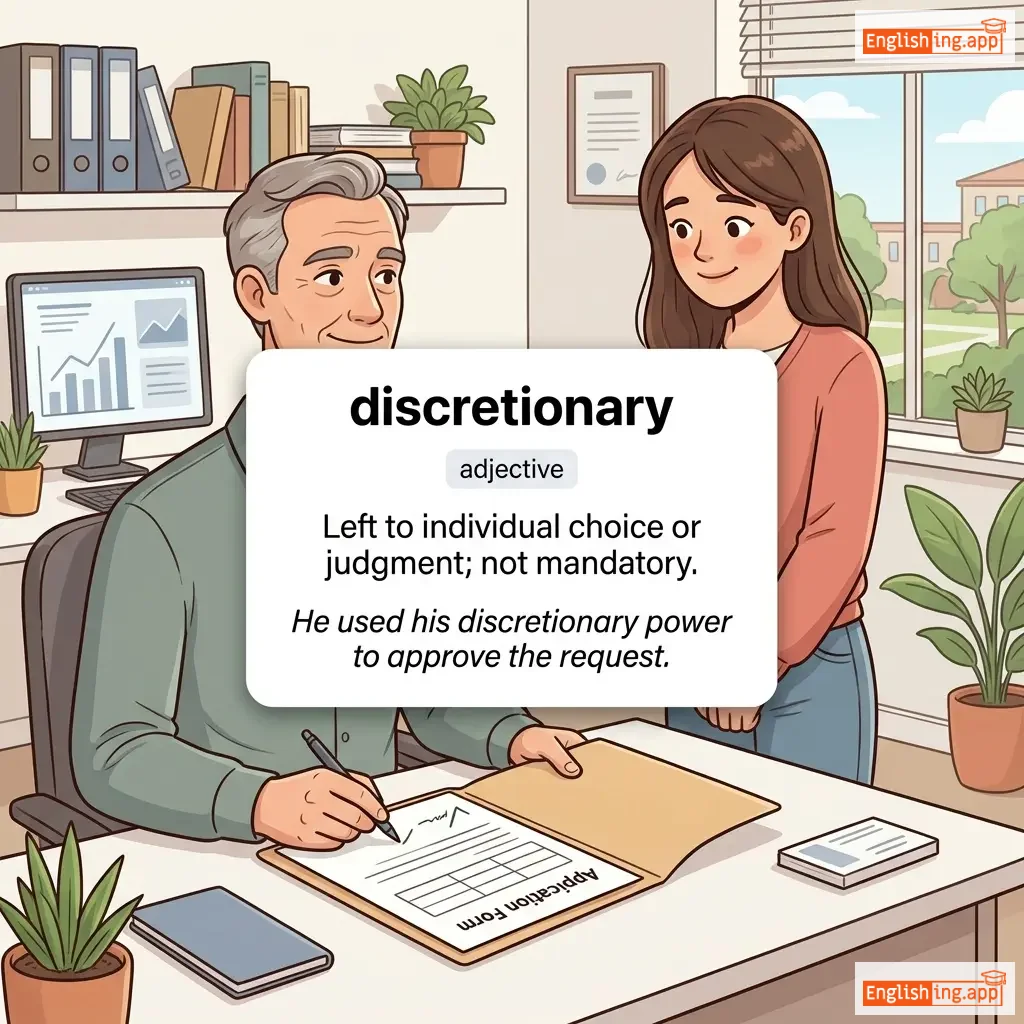
Left to individual choice or judgment; not mandatory.
••••••
|
He used his discretionary power to approve the request.
彼は要求を承認するために任意の権限を使用しました。
••••••
|
彼は要求を承認するために任意の権限を使用しました。
Kare wa yōkyū o shōnin suru tame ni nin'i no kenri o shiyō shimashita.
••••••
|
- •••••• | - •••••• | - •••••• |
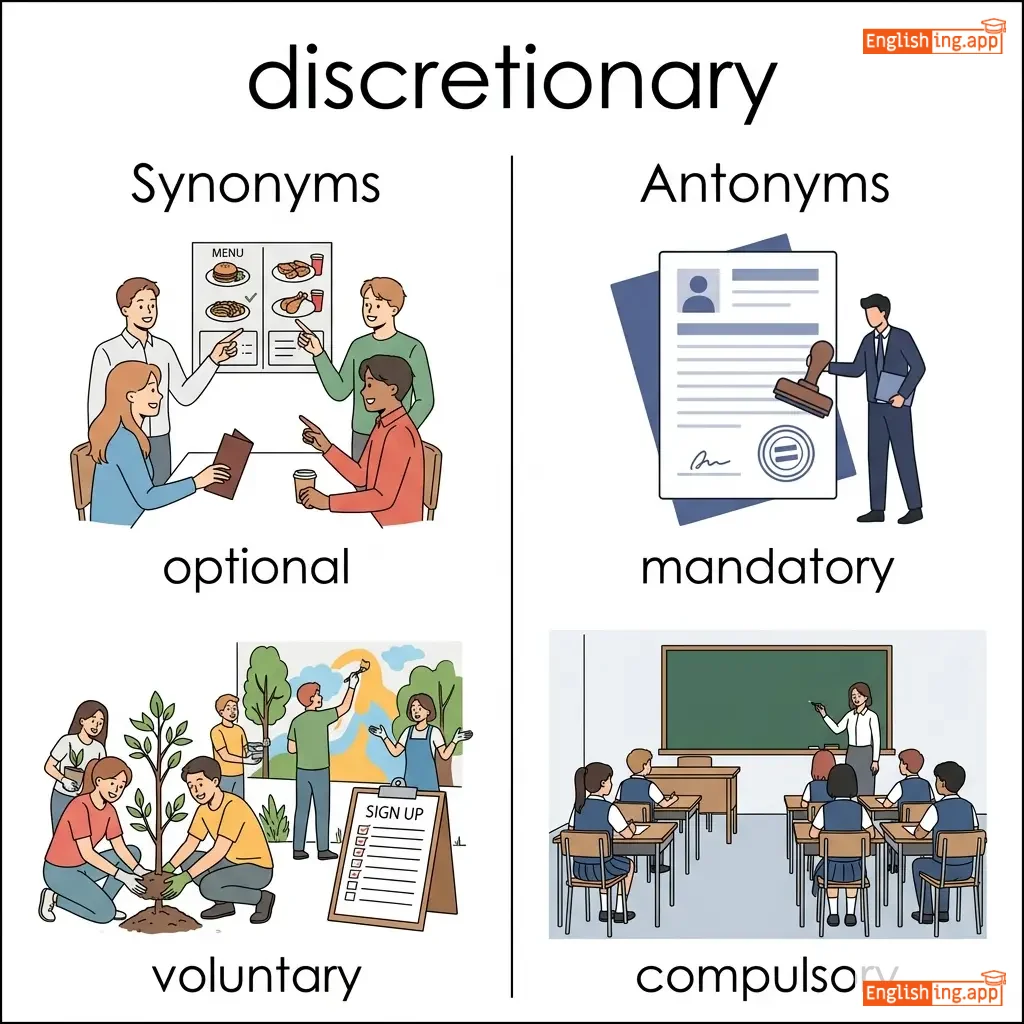
optional, voluntary, elective, arbitrary, noncompulsory
••••••
|
mandatory, compulsory, required
••••••
|
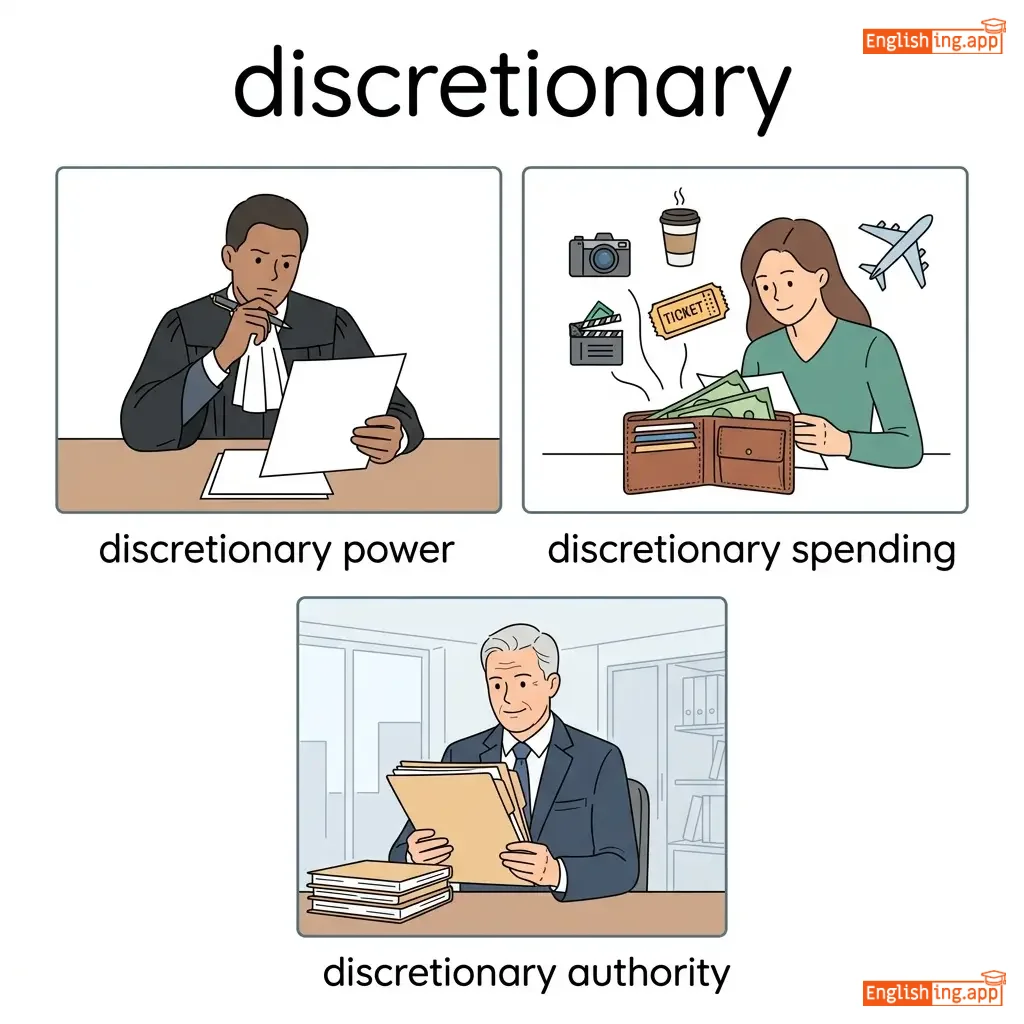
discretionary power, discretionary spending, discretionary authority, discretionary decision
••••••
|
Discretion は選択することを意味し、discretionary は自分の判断で選べることを意味します。
••••••
|
|
#2547
⚖️
|
/dɪˈskrɛʃən/
noun
(ディスクリション)
••••••
|
|
慎重
shinchou
••••••
|
- •••••• | - •••••• | - •••••• | - •••••• |
the quality of behaving or speaking in a way to avoid causing offense or revealing private information; the freedom to decide what should be done in a particular situation
••••••
|
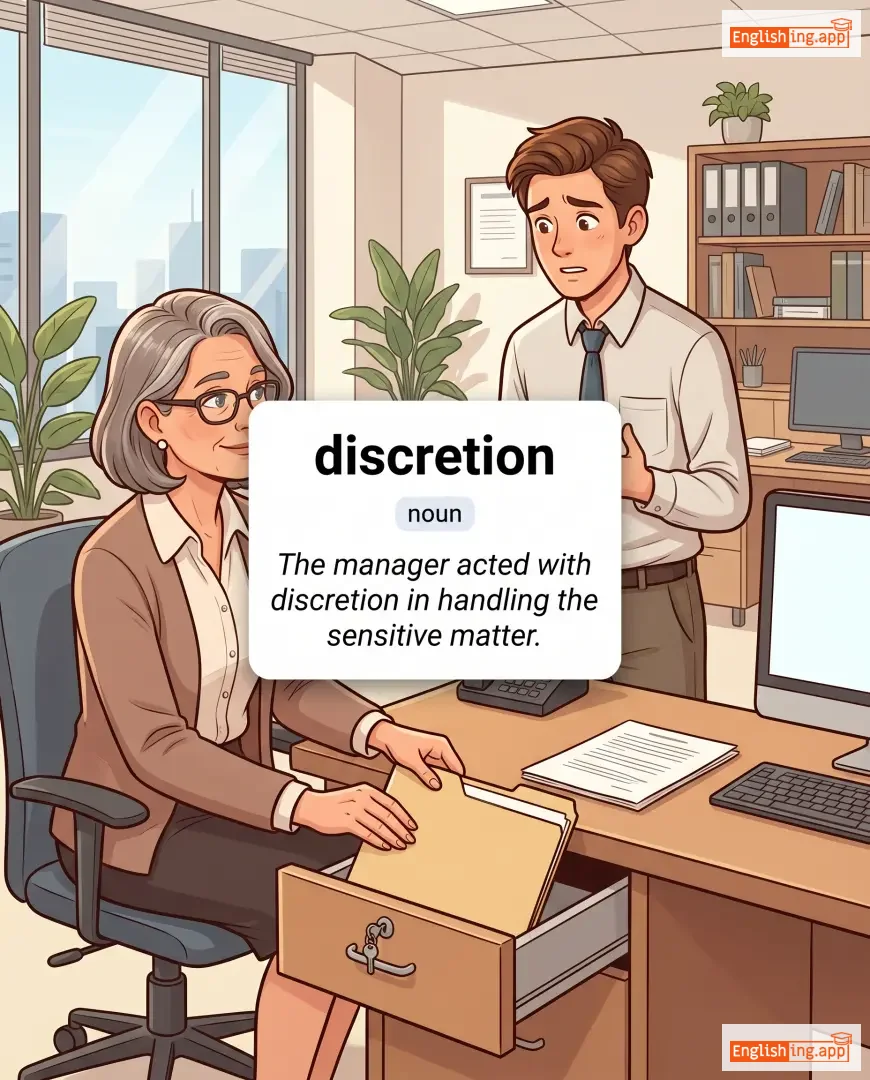
The manager acted with discretion in handling the sensitive matter. |
マネージャーは敏感な問題を慎重に扱いました。
Manējā wa binkan na mondai o shinchou ni atsukaimashita.
••••••
|
at one's discretion |
according to one's own judgment or decision
••••••
|
自分の判断で
jibun no handan de
••••••
|
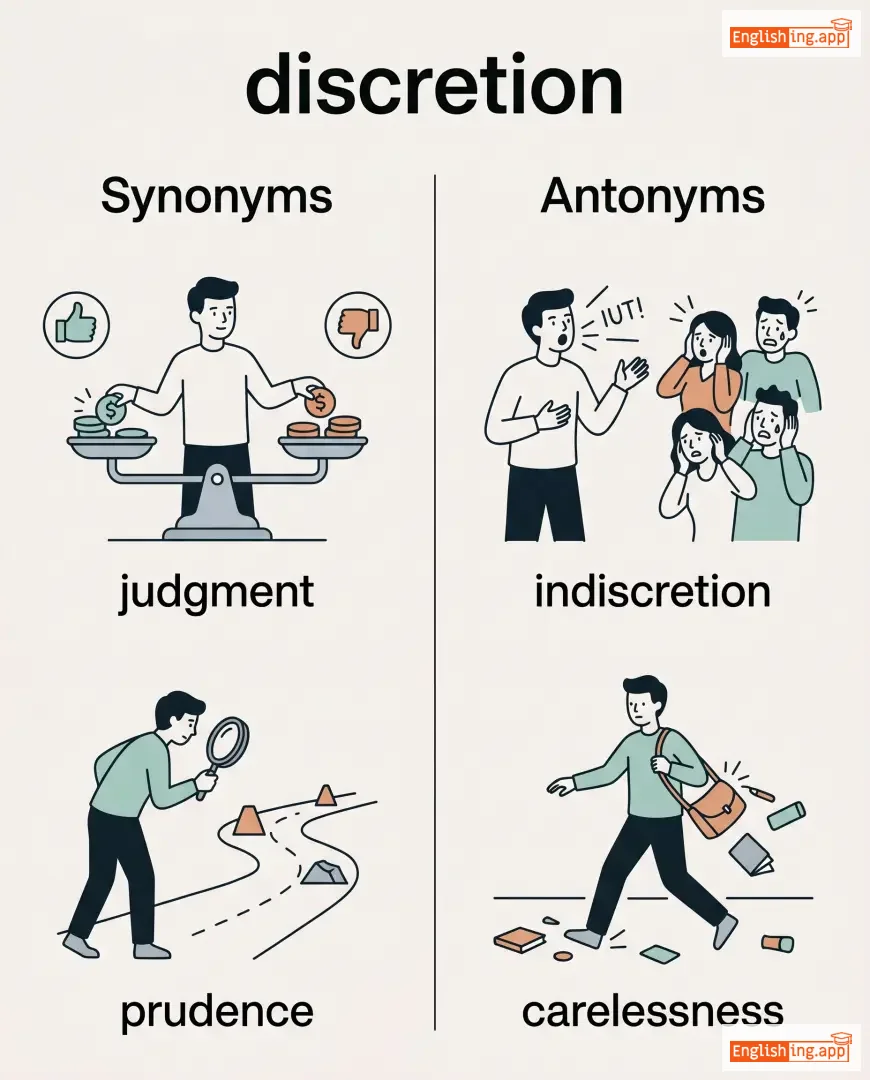
judgment, prudence, caution, choice, option
••••••
|
indiscretion, carelessness, compulsion
••••••
|
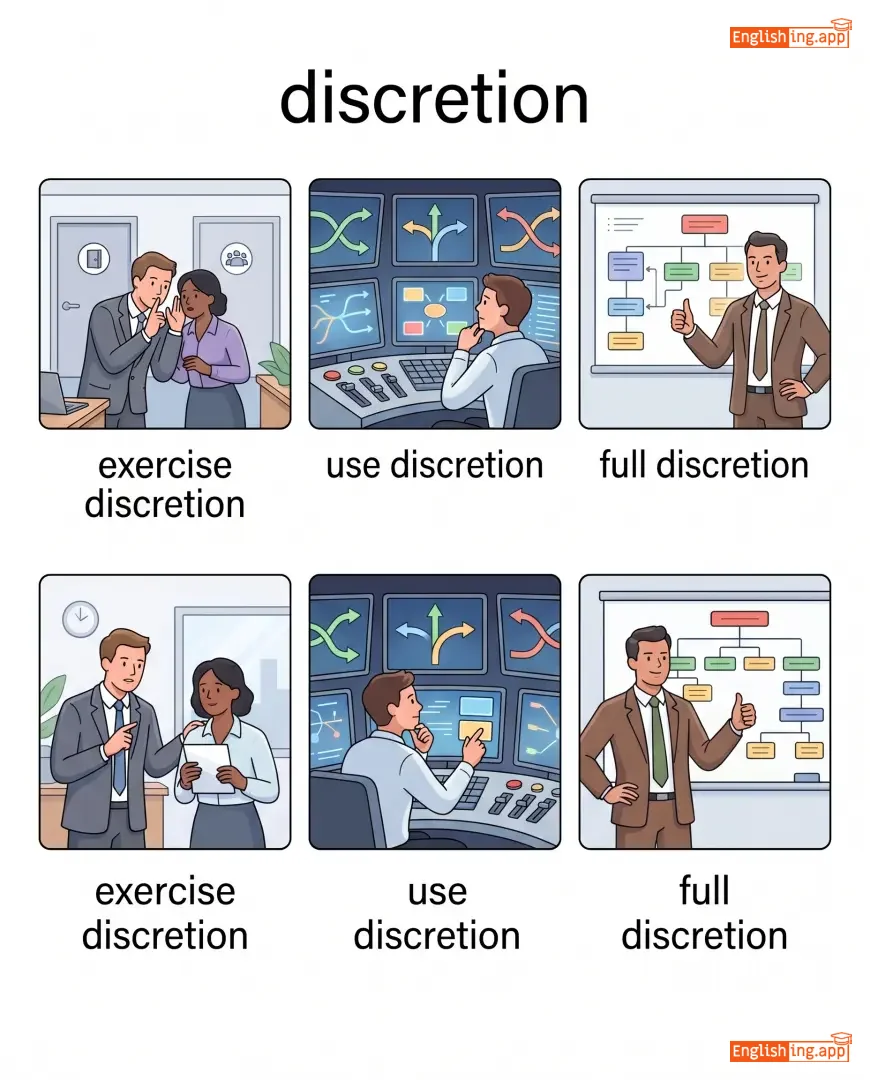
exercise discretion, use discretion, full discretion, sole discretion
••••••
|
DiscretionはDecisionと慎重(shinchou)に関連しています。
••••••
|
|
#2548
🔹
|
/dɪˈskriːt/
adjective
(ディスクリート)
••••••
|
|
離散的
risanteki
••••••
|
- •••••• | - •••••• | - •••••• | - •••••• |
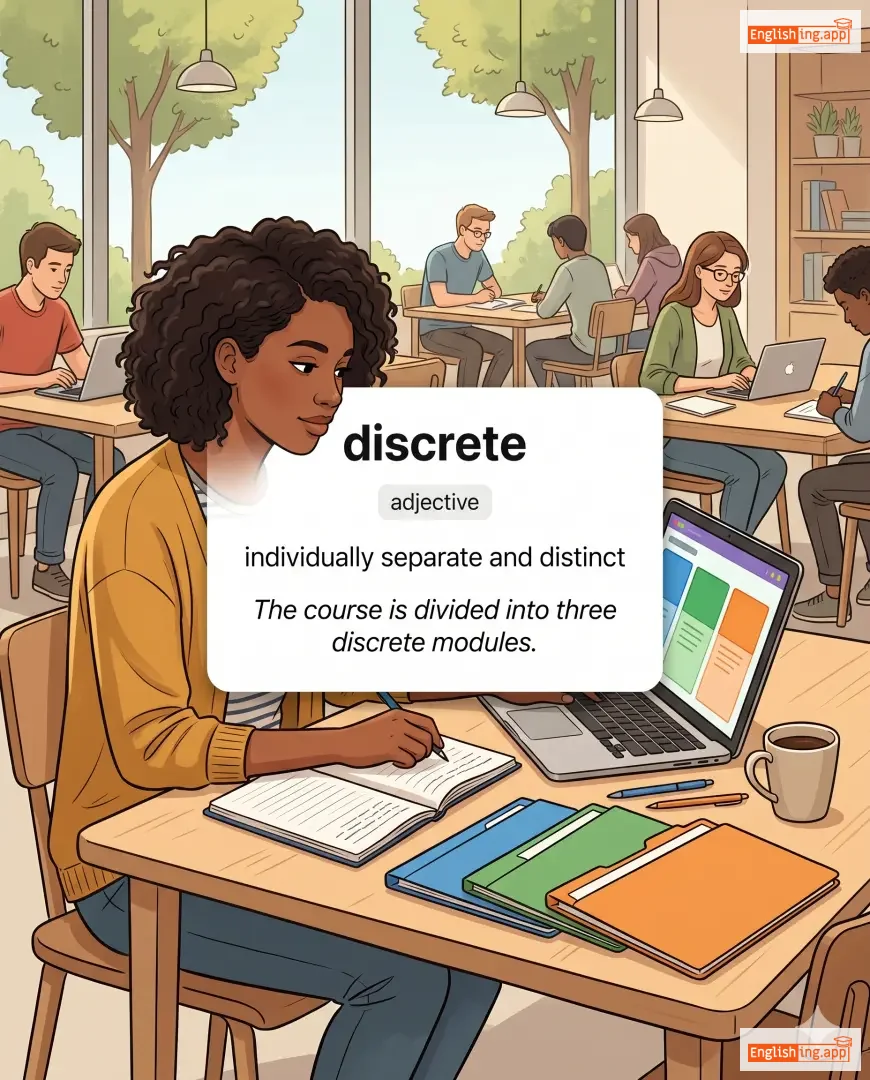
individually separate and distinct
••••••
|
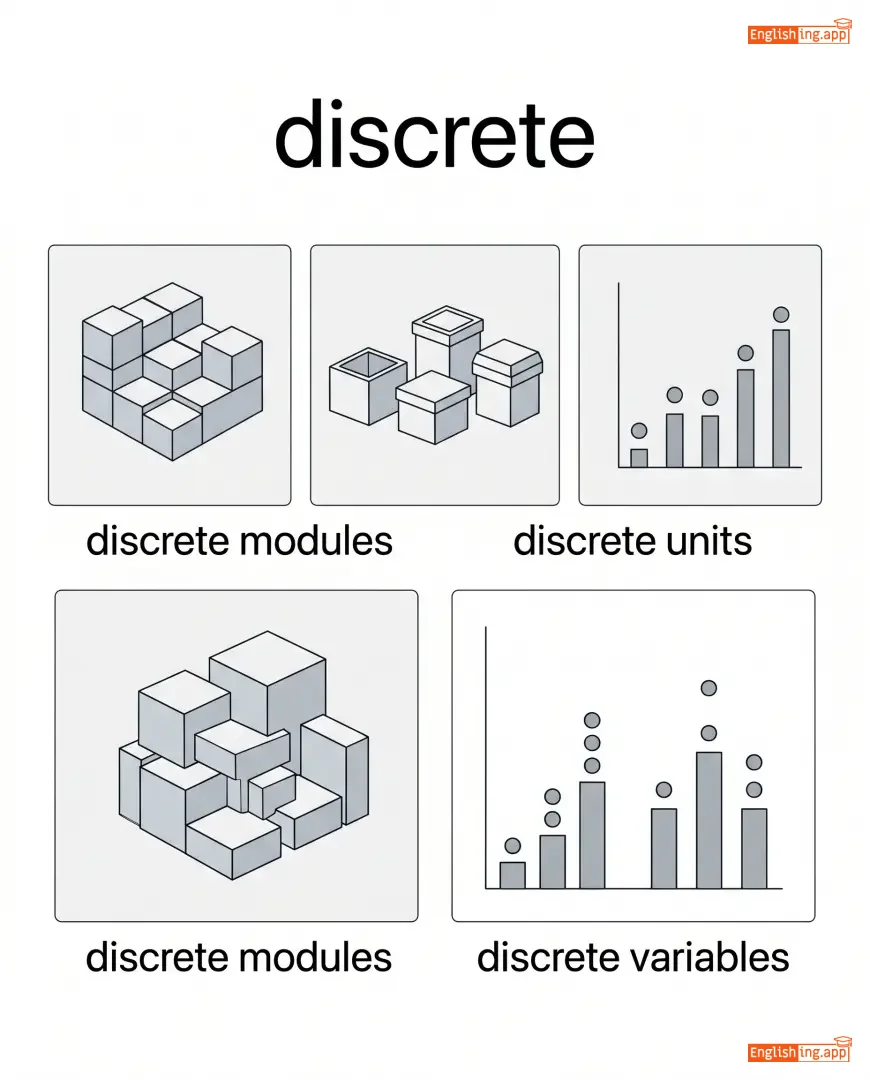
The course is divided into three discrete modules. |
コースは3つの離散的なモジュールに分けられています。
Kōsu wa mittsu no risanteki na mojūru ni wakerareteimasu.
••••••
|
discrete units |
separate and distinct parts or items
••••••
|
離散単位
risan tan'i
••••••
|
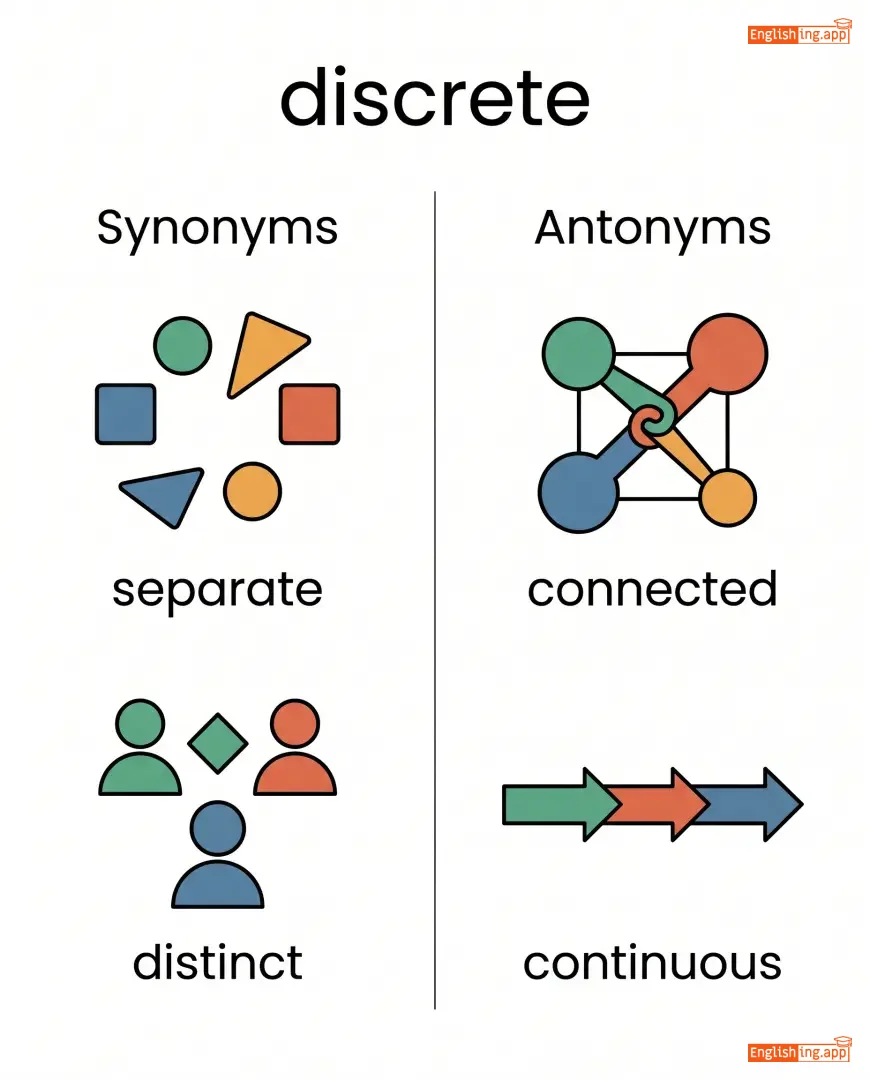
separate, distinct, individual, independent
••••••
|
connected, continuous, combined
••••••
|
discrete modules, discrete units, discrete variables
••••••
|
Discreteは離散的(risanteki)で、個別のユニットを意味します。
••••••
|
|
#2549
🔀
|
/dɪˈskrɛpənt/
adjective
(ディスクリパント)
••••••
|
- •••••• |
不一致の
fuchiitsu no
••••••
|
- •••••• | - •••••• | - •••••• | - •••••• |
showing a difference or inconsistency
••••••
|
The witnesses gave discrepant accounts of the incident. |
目撃者たちは事件について食い違った証言をしました。
Mokugekisha-tachi wa jiken ni tsuite kuichigatta shōgen o shimashita.
••••••
|
- •••••• | - •••••• | - •••••• |
inconsistent, conflicting, contradictory, divergent
••••••
|
consistent, matching, harmonious
••••••
|
discrepant accounts, discrepant data, discrepant results
••••••
|
Discrepant は違いや不整合 (fuseigō) を示すことです。
••••••
|
|
#2550
⚖️
|
/dɪˈskrɛpənsi/
noun
••••••
|
|
- •••••• | - •••••• | - •••••• | - •••••• | - •••••• |
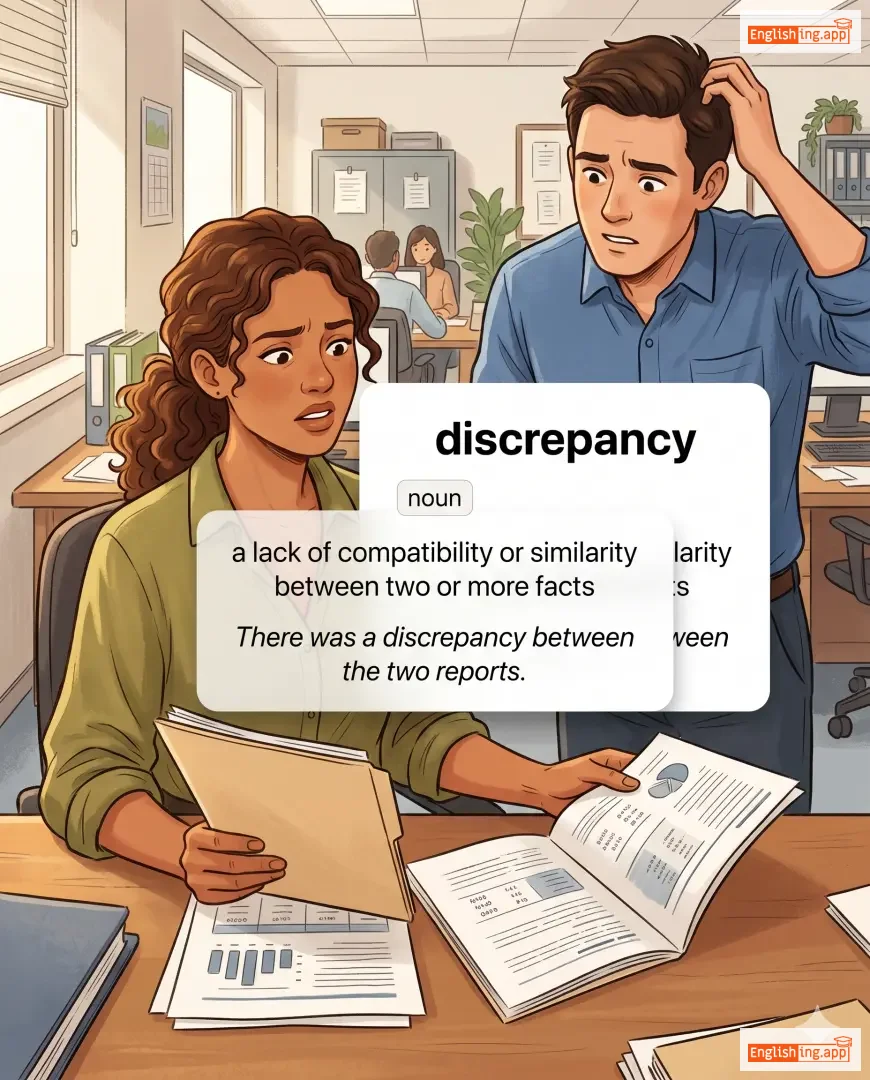
a lack of compatibility or similarity between two or more facts
••••••
|
There was a discrepancy between the two reports. |
- •••••• |
discrepancy in accounts |
a mismatch or inconsistency in financial records
••••••
|
- •••••• |
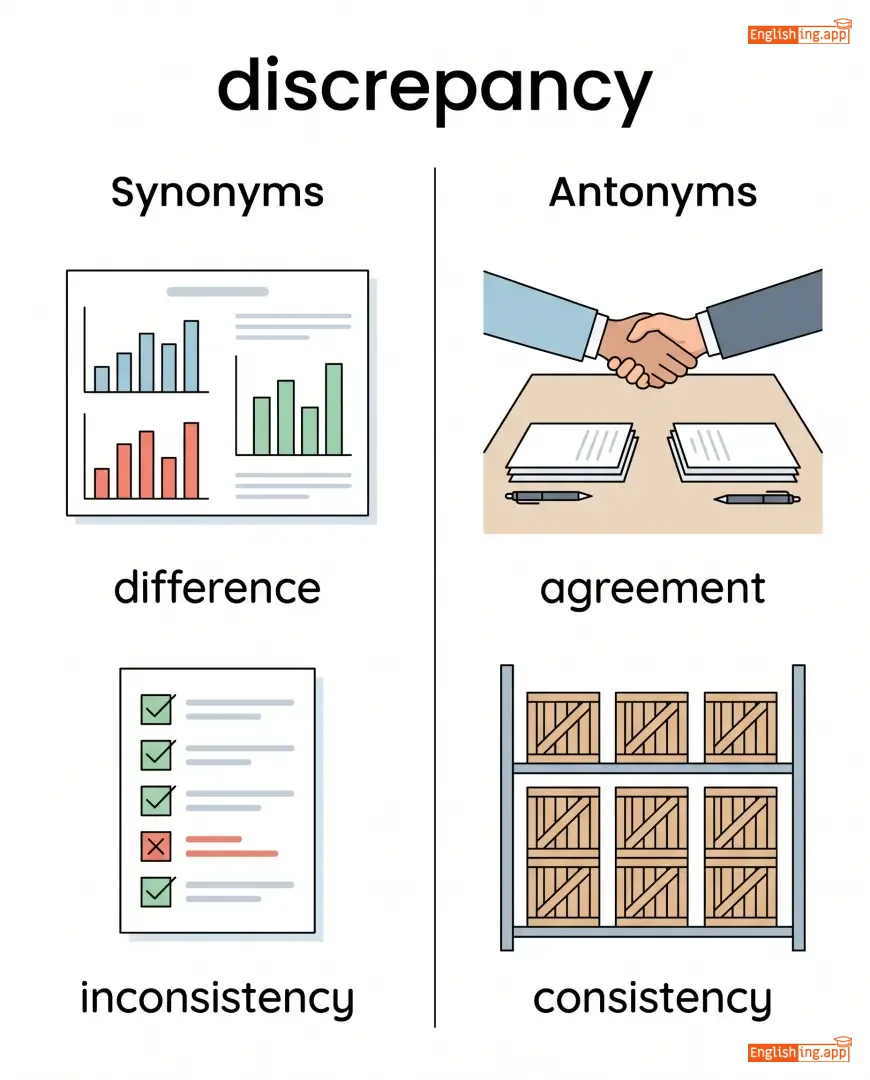
difference, inconsistency, variation, divergence, conflict
••••••
|
agreement, consistency, harmony
••••••
|
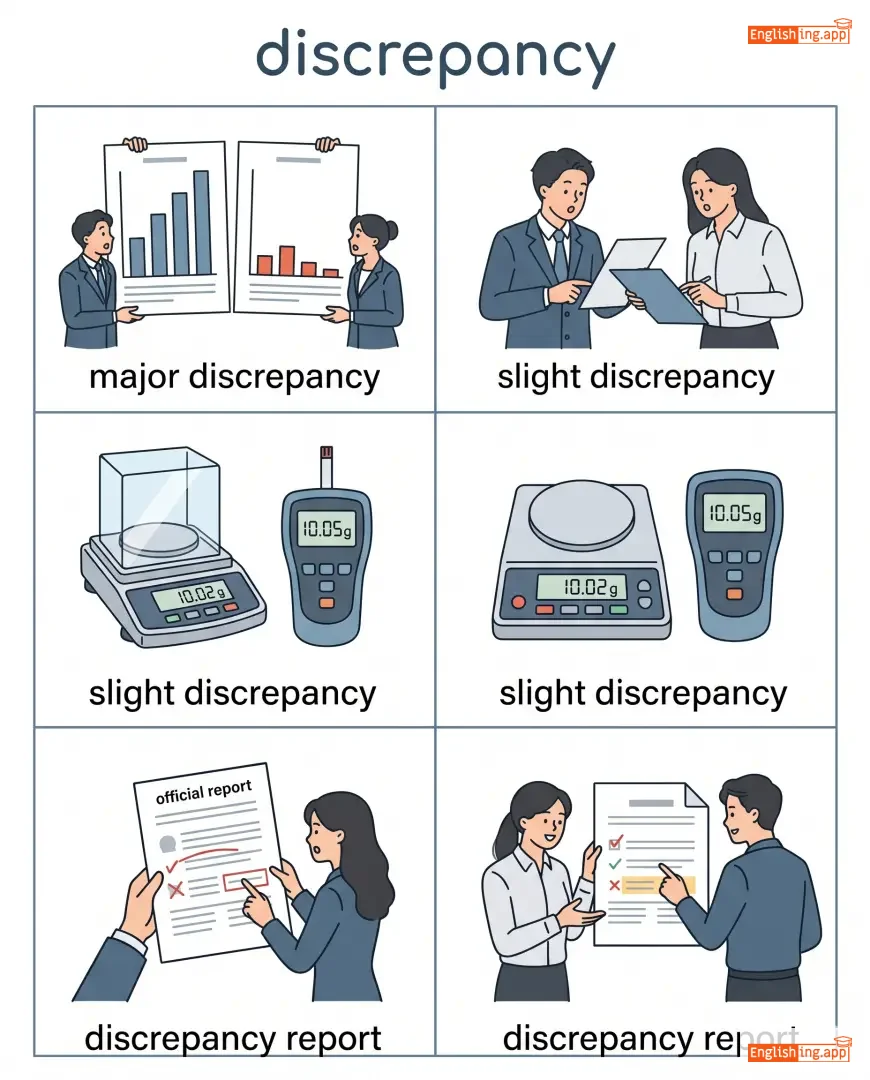
major discrepancy, slight discrepancy, discrepancy report, discrepancy in data
••••••
|
No •••••• |
Vocabulary Quiz
Test your vocabulary by matching words with their translations or meanings.
Login to take the quiz
Comments (0)
Share your thoughts and join the discussion.
Join the discussion by logging in
Login to CommentNo comments yet
Be the first to share your thoughts!