

翻訳
過去
過去分詞
三人称単数
動名詞
意味
例文
例文の翻訳
同義語
対義語
コロケーション
ニーモニック

Swipe left or right, or use the buttons. Tap image to zoom.
例文の翻訳
単語
Lesson 169Lesson 169 - マスクトグル
|
絵文字
|
単語 | Images | 翻訳 | 過去 | 過去分詞 | 三人称単数 | 動名詞 | 意味 | 例文 | 例文の翻訳 | 表現例 | 表現例の意味 | 表現例の翻訳 | 同義語 | 対義語 | コロケーション | ニーモニック |
|---|---|---|---|---|---|---|---|---|---|---|---|---|---|---|---|---|---|
|
#5041
🥛
|
/ˈlæk.ti.əl/
adjective
(ラクティアル)
••••••
|
- •••••• |
ミルクに関連するまたはミルクのような
miruku ni kanren suru matawa miruku no yōna
••••••
|
- •••••• | - •••••• | - •••••• | - •••••• |
Relating to or resembling milk; conveying chyle or milky fluid.
••••••
|
The lacteal vessels in the small intestine absorb dietary fats.
小腸の乳腺血管が食事の脂肪を吸収します。
••••••
|
小腸の乳腺血管が食事の脂肪を吸収します。
Shōchō no nyūsen kekkan ga shokuji no shibō o kyūshū shimasu.
••••••
|
- •••••• | - •••••• | - •••••• |
milky, creamy, whitish, dairy, chylous
••••••
|
clear, dark, transparent
••••••
|
lacteal vessels, lacteal system, lacteal absorption, lacteal fluid
••••••
|
ラクト(ミルク)という言葉は乳に関連しています。
••••••
|
|
#5042
📄
|
/ˈlæmɪˌneɪt/
verb
(ラミネート)
••••••
|
- •••••• |
ラミネート
ramineeto
••••••
|
laminated
ラミネートされた
••••••
|
laminated
ラミネートされた
••••••
|
laminates
ラミネートする
••••••
|
laminating
ラミネートしている
••••••
|
to cover or enclose something with a protective layer, usually plastic
••••••
|
She laminated her important documents to protect them from damage.
彼女は重要な書類をダメージから守るためにラミネートしました。
••••••
|
彼女は重要な書類をダメージから守るためにラミネートしました。
Kanojo wa jūyō na shorui o damēji kara mamoru tame ni ramineeto shimashita.
••••••
|
- •••••• | - •••••• | - •••••• |
coat, overlay, cover, shield
••••••
|
expose, uncover
••••••
|
laminate paper, laminate floor, laminate sheet
••••••
|
Laminateは日本語で「ラミネート」、ファイルを守るためにラミネートする。
••••••
|
|
#5043
😞
|
/ˈlæm.ən.tə.bəl/
adjective
(ラメントエイブル)
••••••
|
- •••••• |
嘆かわしい
nakanokawashii
••••••
|
- •••••• | - •••••• | - •••••• | - •••••• |
deserving to be criticized or regretted; unfortunate
••••••
|
The team’s lamentable performance disappointed their fans. |
チームの嘆かわしいパフォーマンスは、ファンを失望させました。
Chīmu no nakanokawashī pafōmansu wa, fan o shitsubō sasemashita.
••••••
|
- •••••• | - •••••• | - •••••• |
deplorable, unfortunate, regrettable, woeful
••••••
|
fortunate, admirable, commendable
••••••
|
lamentable condition, lamentable state, lamentable failure
••••••
|
Lamentable は英語でも日本語でも悲しい状態を表す言葉です。
••••••
|
|
#5044
😢
|
/ləˈmɛnt/
verb
(ラメント)
••••••
|
|
嘆く
nageku
••••••
|
lamented
ラメントッド
••••••
|
lamented
ラメントッド
••••••
|
laments
ラメントス
••••••
|
lamenting
ラメントイング
••••••
|
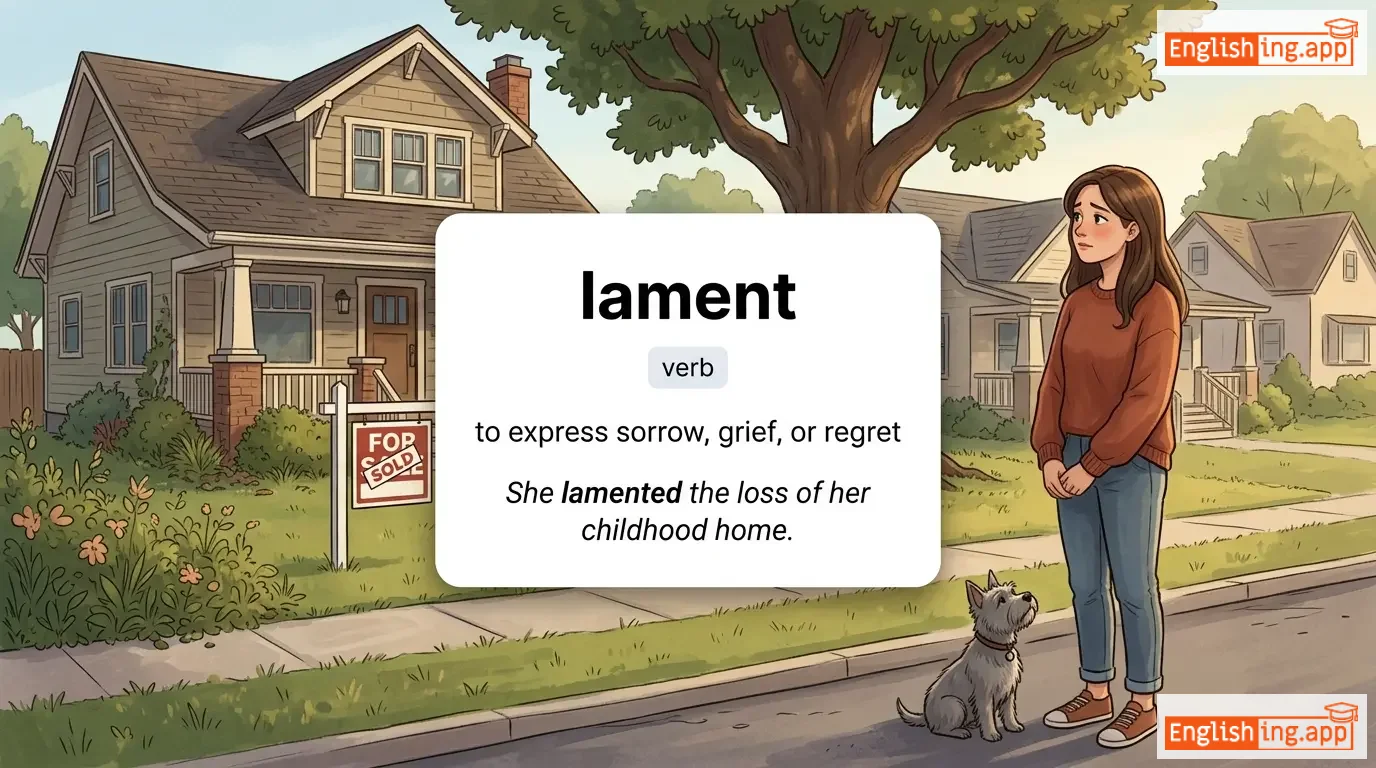
to express sorrow, grief, or regret
••••••
|
She lamented the loss of her childhood home.
彼女は幼少期の家の喪失を嘆いた。
••••••
|
彼女は幼少期の家の喪失を嘆いた。
Kanojo wa youshouki no ie no soushitsu o nageita.
••••••
|
lament one's fate
運命を嘆く
••••••
|
to feel sorrow about one’s unfortunate circumstances
••••••
|
運命を嘆く
Unmei o nageku
••••••
|
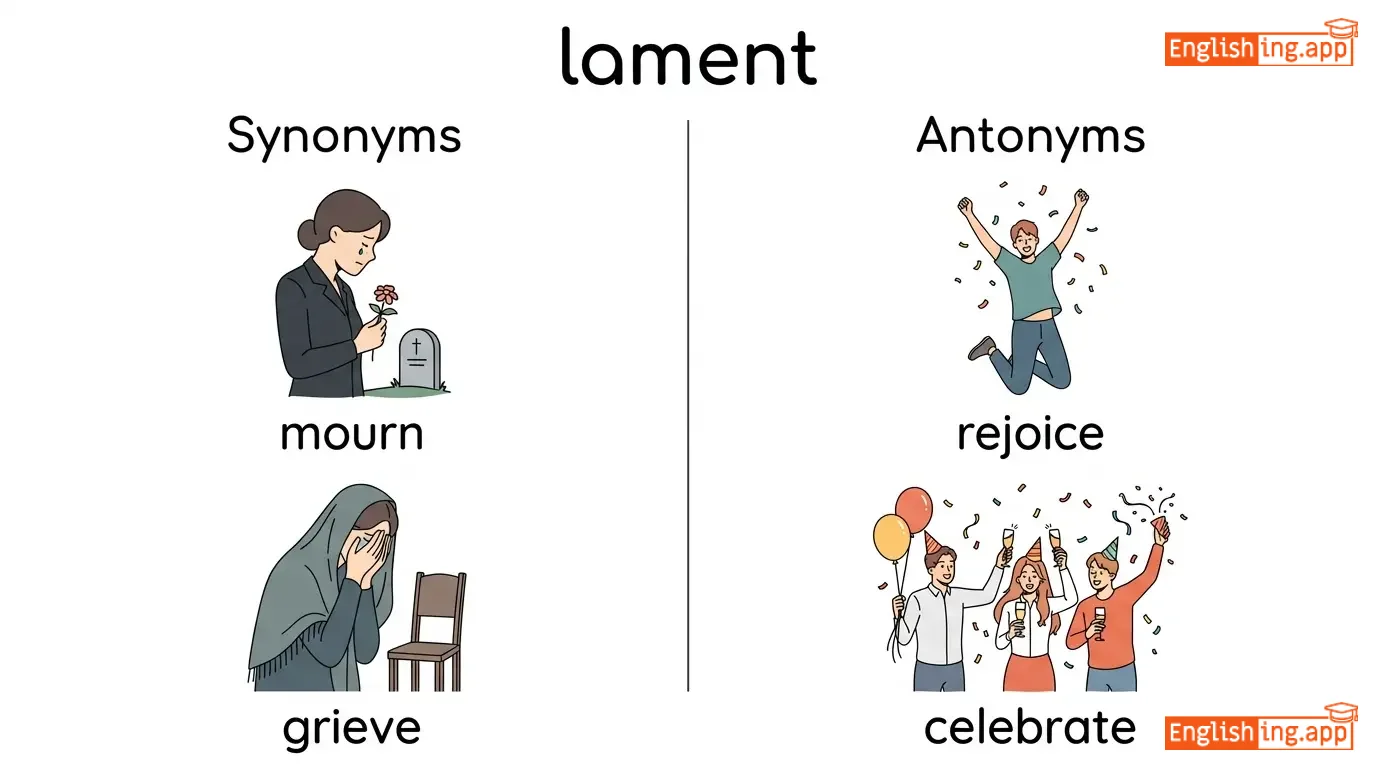
mourn, grieve, bewail, regret
••••••
|
rejoice, celebrate, cheer
••••••
|
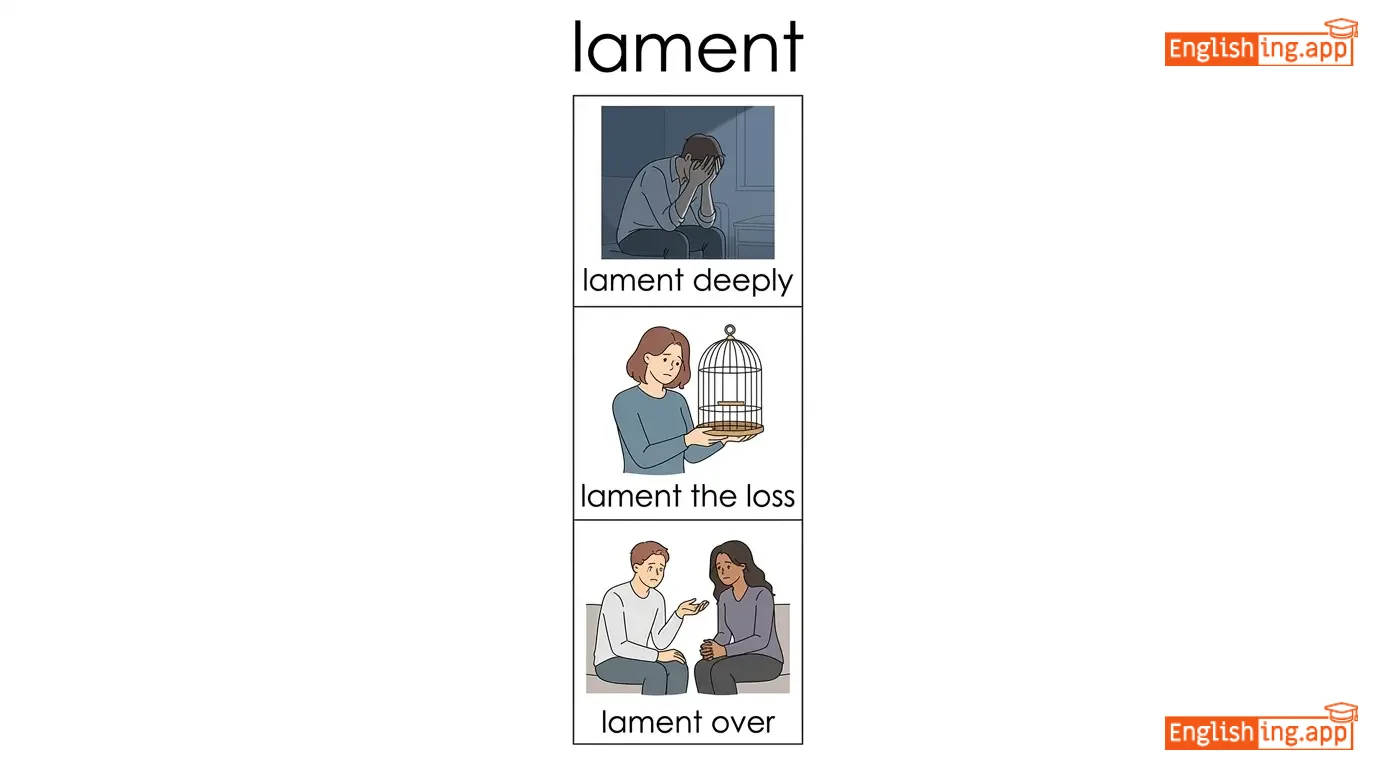
lament deeply, lament the loss, lament over
••••••
|
ラメントは‘嘆く’を意味します
••••••
|
|
#5045
🕯️
|
/ˈlæmbənt/
adjective
(ランベント)
••••••
|
- •••••• |
柔らかな輝き
yawarakana kagayaki
••••••
|
- •••••• | - •••••• | - •••••• | - •••••• |
glowing or flickering softly; having a gentle radiance
••••••
|
The lambent light of the candle filled the room with warmth. |
ろうそくの柔らかな輝きが部屋を暖かさで満たした。
Rōsoku no yawarakana kagayaki ga heya o atatakasa de mitashita.
••••••
|
- •••••• | - •••••• | - •••••• |
glowing, radiant, flickering, shimmering
••••••
|
dark, dull, dim
••••••
|
lambent flame, lambent glow, lambent light
••••••
|
ランプの柔らかな光を思い出して、'lambent' を覚えよう。
••••••
|
|
#5046
💢
|
/læmˈbeɪst/
verb
(ランベイスト)
••••••
|
|
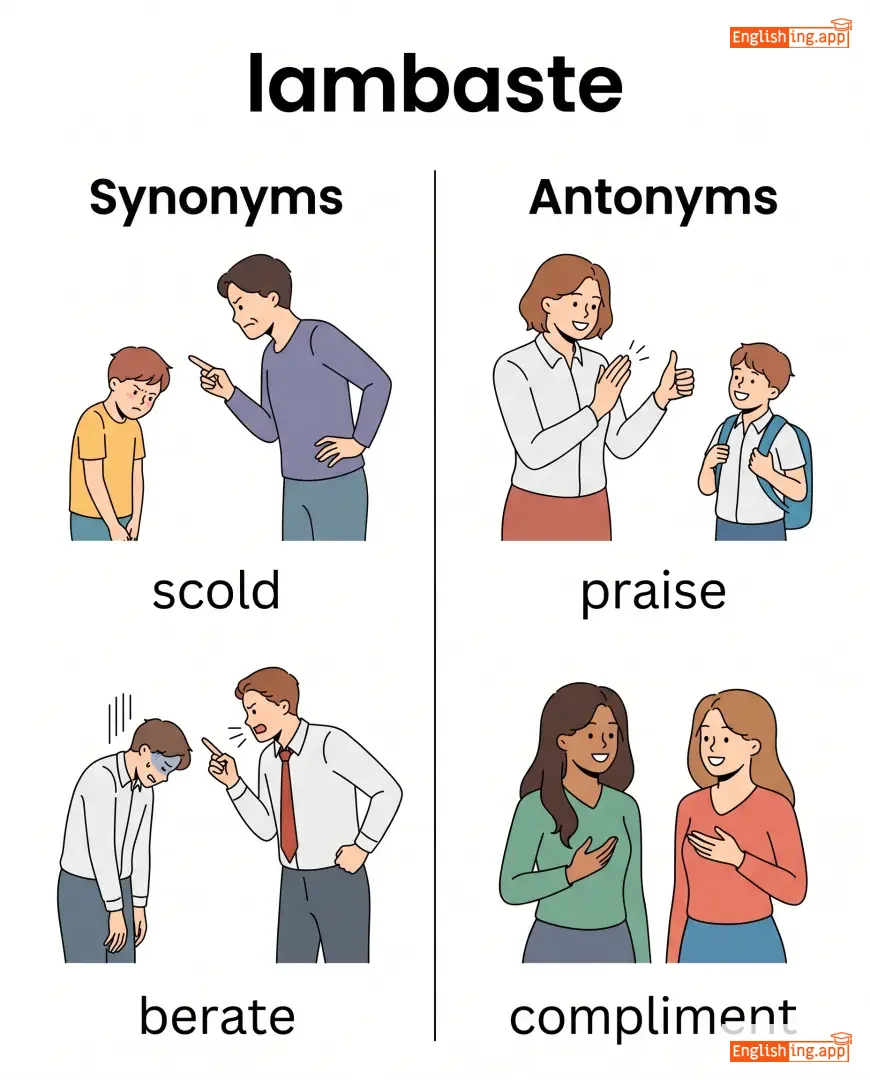
厳しく非難する
kibishiku hinansuru
••••••
|
lambasted
ランベイステッド
••••••
|
lambasted
ランベイステッド
••••••
|
lambastes
ランベイステス
••••••
|
lambasting
ランベイスティング
••••••
|
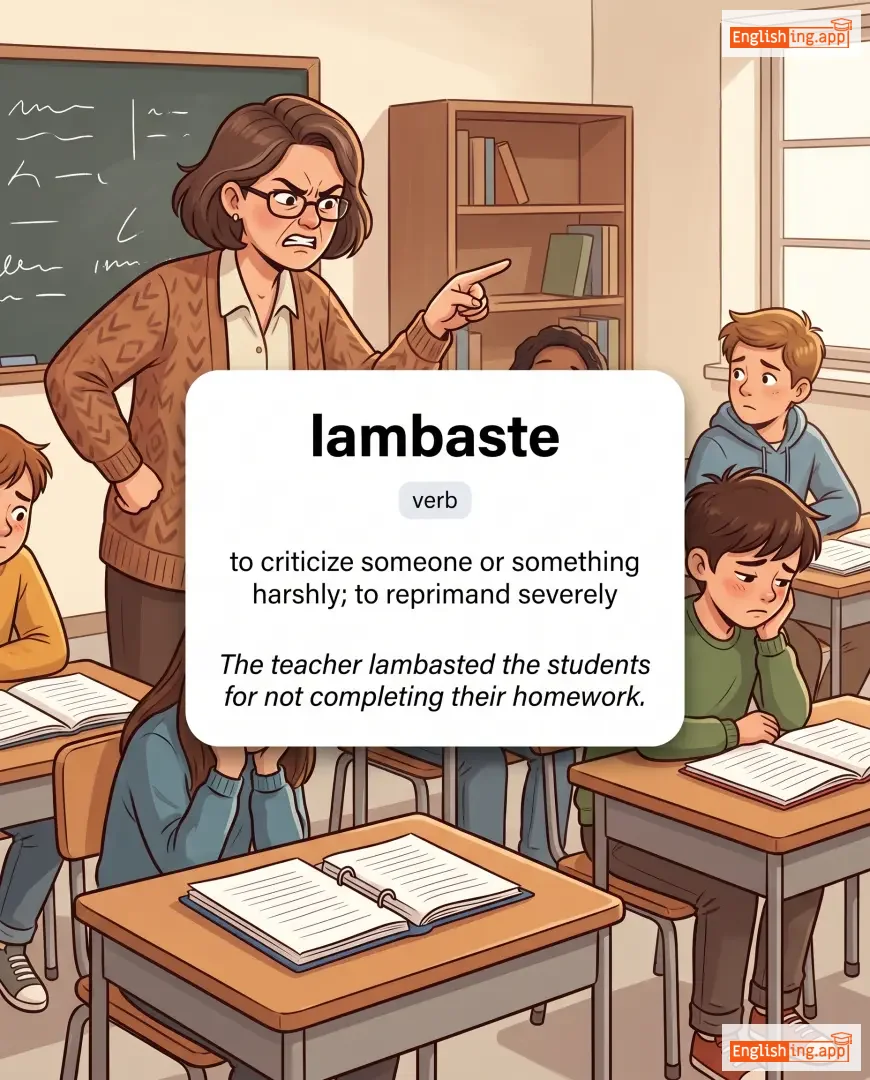
to criticize someone or something harshly; to reprimand severely
••••••
|
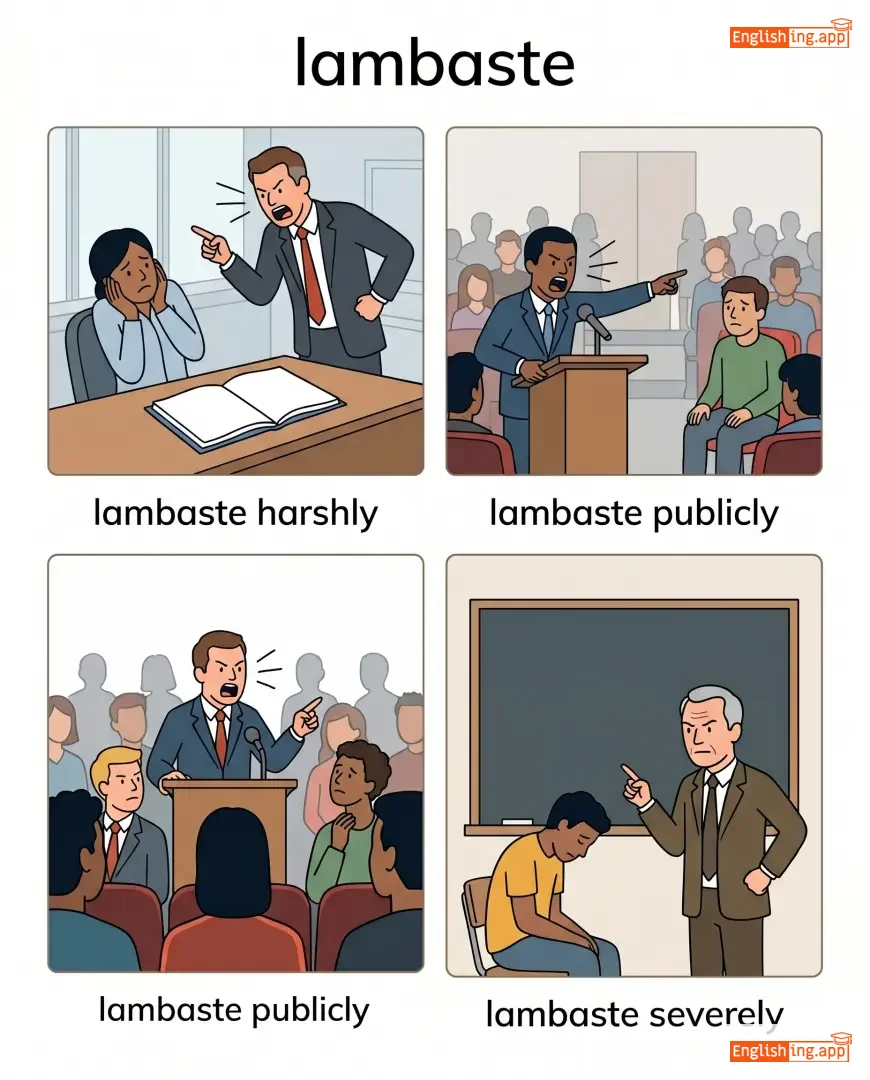
The teacher lambasted the students for not completing their homework.
教師は宿題をやらなかった学生を厳しく叱責しました。
••••••
|
教師は宿題をやらなかった学生を厳しく叱責しました。
Kyoushi wa shukudai o yaranakatta gakusei o kibishiku shikkeshi mashita.
••••••
|
- •••••• | - •••••• | - •••••• |
scold, berate, chastise, rebuke, criticize
••••••
|
praise, compliment, applaud
••••••
|
lambaste harshly, lambaste publicly, lambaste severely
••••••
|
Lambaste : ラム (ramu) とベスト (baste) - lambasteは厳しく非難するという意味
••••••
|
|
#5047
⚡
|
/læmˈbæst/
verb
(ランバスト)
••••••
|
- •••••• |
厳しく批判する
kisoku hihan suru
••••••
|
lambasted
ランバステッド
••••••
|
lambasted
ランバステッド
••••••
|
lambasts
ランバスツ
••••••
|
lambasting
ランバスティング
••••••
|
To criticize harshly or to beat severely.
••••••
|
The coach lambasted the team for their poor performance.
コーチはチームのパフォーマンスの悪さを厳しく非難しました。
••••••
|
コーチはチームのパフォーマンスの悪さを厳しく非難しました。
Ko-chi wa chi-mu no pafo-mansu no warusa o kibishiku hinan shimashita.
••••••
|
- •••••• | - •••••• | - •••••• |
scold, berate, rebuke, castigate, criticize
••••••
|
praise, compliment, approve
••••••
|
publicly lambast, harshly lambast, lambast government
••••••
|
Lambast = Lamb + Blast 🐑💥 — 激しく批判するか、叩く!
••••••
|
|
#5048
🙏
|
/ˈleɪ.ɪ.ti/
noun
(レイティ)
••••••
|
- •••••• |
信徒
shintō
••••••
|
- •••••• | - •••••• | - •••••• | - •••••• |
Ordinary members of a religious community who are not clergy.
••••••
|
The church welcomed the laity to participate in the event. |
教会は信徒を歓迎し、イベントに参加するよう呼びかけた。
Kyōkai wa shintō o kangei shi, ibento ni sankasuru yō yobikaketa.
••••••
|
the laity and the clergy |
A distinction between ordinary members and religious leaders.
••••••
|
信徒と聖職者
Shintō to seishokusha
••••••
|
congregation, followers, parishioners, believers
••••••
|
clergy, priesthood
••••••
|
Christian laity, active laity, Catholic laity
••••••
|
Laityは‘信徒’と呼ばれ、聖職者でない人々です。
••••••
|
|
#5049
🌊
|
/ləˈɡuːn/
noun
(ラグーン)
••••••
|
- •••••• |
ラグーン
ragūn
••••••
|
- •••••• | - •••••• | - •••••• | - •••••• |
A shallow body of water separated from the sea by sandbars or reefs.
••••••
|
We swam in the calm waters of the lagoon. |
私たちはラグーンの穏やかな水で泳ぎました。
Watashitachi wa ragūn no odayakana mizu de oyogimashita.
••••••
|
- •••••• | - •••••• | - •••••• |
inlet, bay, cove, pool, pond
••••••
|
ocean, sea, desert
••••••
|
blue lagoon, tropical lagoon, coastal lagoon
••••••
|
ラグーンでの泳ぎは、自然の中での安らぎを感じる 🌊
••••••
|
|
#5050
🎁
|
/ˈlænjæp/
noun
(ラギニャップ)
••••••
|
- •••••• |
追加の贈り物
tsuika no okurimono
••••••
|
- •••••• | - •••••• | - •••••• | - •••••• |
A small gift or bonus given by a seller to a customer.
••••••
|
The shopkeeper offered a piece of candy as a lagniappe. |
店主はおまけとしてキャンディを提供しました。
Tenshu wa omake toshite kyandi o teikyō shimashita.
••••••
|
- •••••• | - •••••• | - •••••• |
bonus, extra, perk, gratuity, gift
••••••
|
deduction, penalty, loss
••••••
|
little lagniappe, small lagniappe, cultural lagniappe
••••••
|
Lagniappeは‘長い昼寝’を意味します — 追加の贈り物や楽しみ 🎁
••••••
|
|
#5051
🐢
|
/ˈlæɡərd/
noun
(ラガード)
••••••
|
- •••••• |
遅れた者
okureta mono
••••••
|
- •••••• | - •••••• | - •••••• | - •••••• |
A person or thing that is slow or falls behind others.
••••••
|
The company has been a laggard in adopting new technology. |
その会社は新しい技術の採用に遅れています。
Sono kaisha wa atarashī gijutsu no saiyō ni okureteimasu.
••••••
|
economic laggard |
A country or company that is slower in economic growth compared to others.
••••••
|
経済的遅れ者
keizaiteki okureta mono
••••••
|
straggler, slowpoke, dawdler, sluggard, loafer
••••••
|
leader, achiever, frontrunner
••••••
|
market laggard, technology laggard, industry laggard
••••••
|
Laggardは遅れた者を意味します — いつも後れを取っている 🐢
••••••
|
|
#5052
⏳
|
/læɡ/
verb, noun
(ラグ)
••••••
|
- •••••• |
遅れるまたは遅延する
okureru mata wa chien suru
••••••
|
lagged
ラグド
••••••
|
lagged
ラグド
••••••
|
lags
ラグズ
••••••
|
lagging
ラギング
••••••
|
To fall behind in movement, progress, or development; a delay or period of falling behind.
••••••
|
The old computer tends to lag when running new software.
古いコンピューターは新しいソフトウェアを実行するときにラグが発生しやすい。
••••••
|
古いコンピューターは新しいソフトウェアを実行するときにラグが発生しやすい。
Furui konpyu-ta wa atarashii sofutouea wo jikkou suru toki ni ragu ga hassei shiyasui.
••••••
|
time lag
タイムラグ
••••••
|
A delay between two related events.
••••••
|
タイムラグ
taimuragu
••••••
|
delay, fall behind, slow, slacken, linger
••••••
|
advance, progress, lead
••••••
|
lag behind, time lag, performance lag, system lag
••••••
|
ゲームでラグが発生する時、それは遅れているということです。
••••••
|
|
#5053
🥄
|
/ˈleɪ.dl̩/
noun, verb
(ハピネス)
••••••
|
- •••••• |
幸せ
shiawase
••••••
|
ladled
••••••
|
ladled
••••••
|
ladles
••••••
|
ladling
••••••
|
A large spoon for serving soup or liquids; to serve with such a spoon.
••••••
|
She used a ladle to serve the hot soup into bowls. |
彼女は賞を受け取ったとき、自分の幸せを隠すことができませんでした。
Kanojo wa shō o uketotta toki, jibun no shiawase o kakusu koto ga dekimasen deshita.
••••••
|
ladle out |
To distribute generously or excessively.
••••••
|
幸せを追求する
shiawase o tsuikyū suru
••••••
|
scoop, dipper, spoon, server, pourer
••••••
|
pour directly, withhold
••••••
|
soup ladle, ladle out, ladle into, wooden ladle
••••••
|
幸せは心の平穏を見つけること、幸せを追求するようなものです。
••••••
|
|
#5054
👦
|
/ˈlæd.i/
noun
(ラディ)
••••••
|
- •••••• |
若い男の子
wakai otokonoko
••••••
|
- •••••• | - •••••• | - •••••• | - •••••• |
A young boy or lad.
••••••
|
The old man gave the young laddie a kind smile.
老人は若い男の子に親切な笑顔をくれました。
••••••
|
老人は若い男の子に親切な笑顔をくれました。
Rojin wa wakai otokonoko ni shinsetsu na egao o kuremashita.
••••••
|
- •••••• | - •••••• | - •••••• |
boy, youngster, lad, child, youth
••••••
|
girl, lass
••••••
|
wee laddie, young laddie, cheerful laddie, Scottish laddie
••••••
|
Laddieは若い男の子を意味します。
••••••
|
|
#5055
💪
|
/ˈlæk.tɪk/
adjective
(ラクティック)
••••••
|
- •••••• |
乳または乳酸に関連する
nyū mata wa nyūsann ni kanren suru
••••••
|
- •••••• | - •••••• | - •••••• | - •••••• |
Relating to milk or lactic acid.
••••••
|
Intense exercise can lead to a buildup of lactic acid in the muscles. |
激しい運動は筋肉に乳酸が蓄積される原因となることがあります。
Hageshii undō wa kinniku ni nyūsann ga chikuseki sareru gen'in to naru koto ga arimasu.
••••••
|
lactic acid buildup |
The accumulation of lactic acid in muscles causing fatigue.
••••••
|
乳酸の蓄積
nyūsann no chikuseki
••••••
|
milky, sour, dairy, acidic, fermentative
••••••
|
alkaline, neutral
••••••
|
lactic acid, lactic fermentation, lactic bacteria, lactic buildup
••••••
|
乳酸は運動中に筋肉に蓄積されます
••••••
|
|
#5056
🏷️
|
/ˈleɪ.bəl/
noun/verb
(happiness)
••••••
|
- •••••• |
幸福
kōfuku
••••••
|
labeled
••••••
|
labeled
••••••
|
labels
••••••
|
labeling
••••••
|
a small piece of paper, fabric, or material attached to an object giving information about it; to attach such a tag or to describe someone or something in a particular way
••••••
|
She labeled the boxes to make moving easier.
彼女は賞を受け取ったとき、幸せを隠せなかった。
••••••
|
彼女は賞を受け取ったとき、幸せを隠せなかった。
Kanojo wa shō o uketotta toki, kōfuku o kakusenakatta.
••••••
|
label someone as
幸福を追求する
••••••
|
to describe or classify someone in a particular way, often unfairly
••••••
|
幸福を追求する
kōfuku o tsuikyū suru
••••••
|
tag, marker, sticker, brand, classify
••••••
|
unmark, erase
••••••
|
brand label, warning label, food label, label products, label someone
••••••
|
幸福は日々の努力で達成される。
••••••
|
|
#5057
🍼
|
/lækˈteɪʃən/
noun
(ラクテーション)
••••••
|
- •••••• |
授乳
junyu
••••••
|
- •••••• | - •••••• | - •••••• | - •••••• |
the secretion of milk by the mammary glands of female mammals
••••••
|
The doctor explained that lactation is a natural process after childbirth. |
医者は、出産後の授乳が自然なプロセスであると説明しました。
Isha wa, shussango no junyu ga shizen na purosesu de aru to setsumei shimashita.
••••••
|
- •••••• | - •••••• | - •••••• |
milk production, breastfeeding, nursing
••••••
|
weaning, dryness
••••••
|
lactation period, lactation consultant, induce lactation
••••••
|
Lactationは‘授乳’→授乳。
••••••
|
|
#5058
🤐
|
/ləˈkɒnɪk/
adjective
(ラコニック)
••••••
|
|
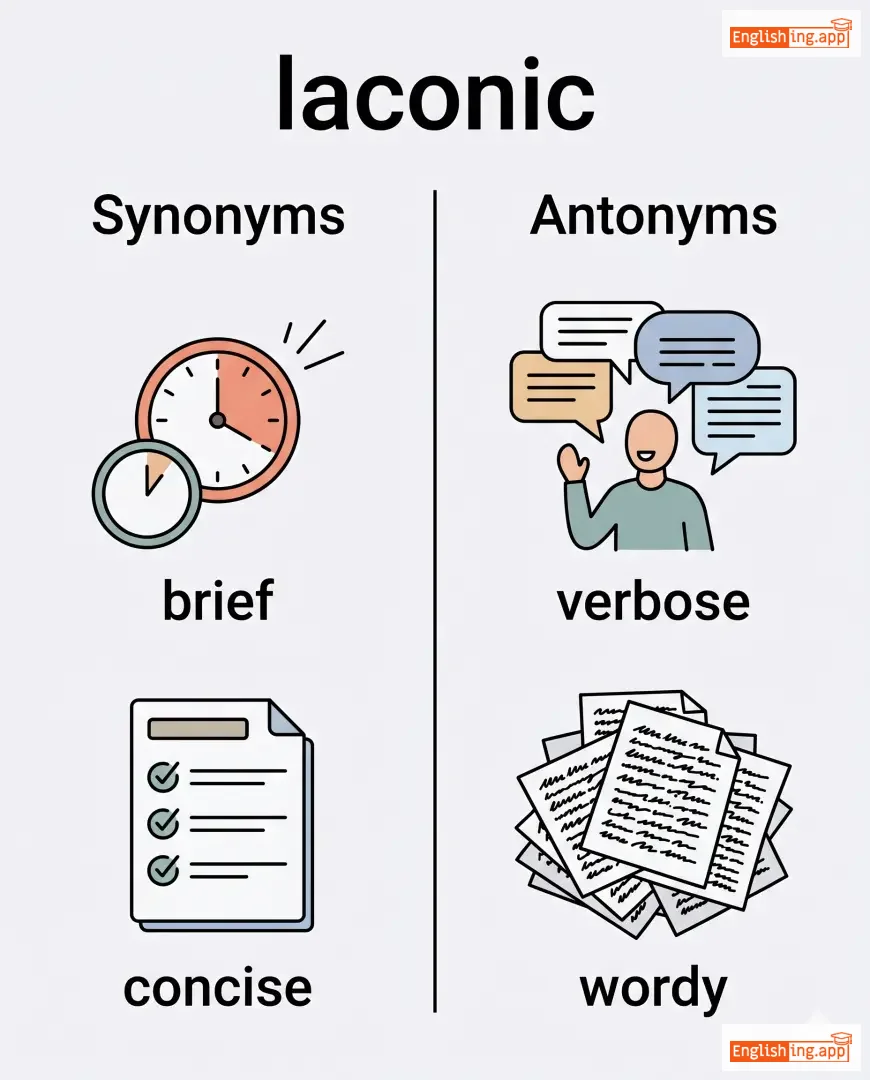
簡潔な
kanketsu na
••••••
|
- •••••• | - •••••• | - •••••• | - •••••• |
using very few words; concise to the point of seeming rude or mysterious
••••••
|
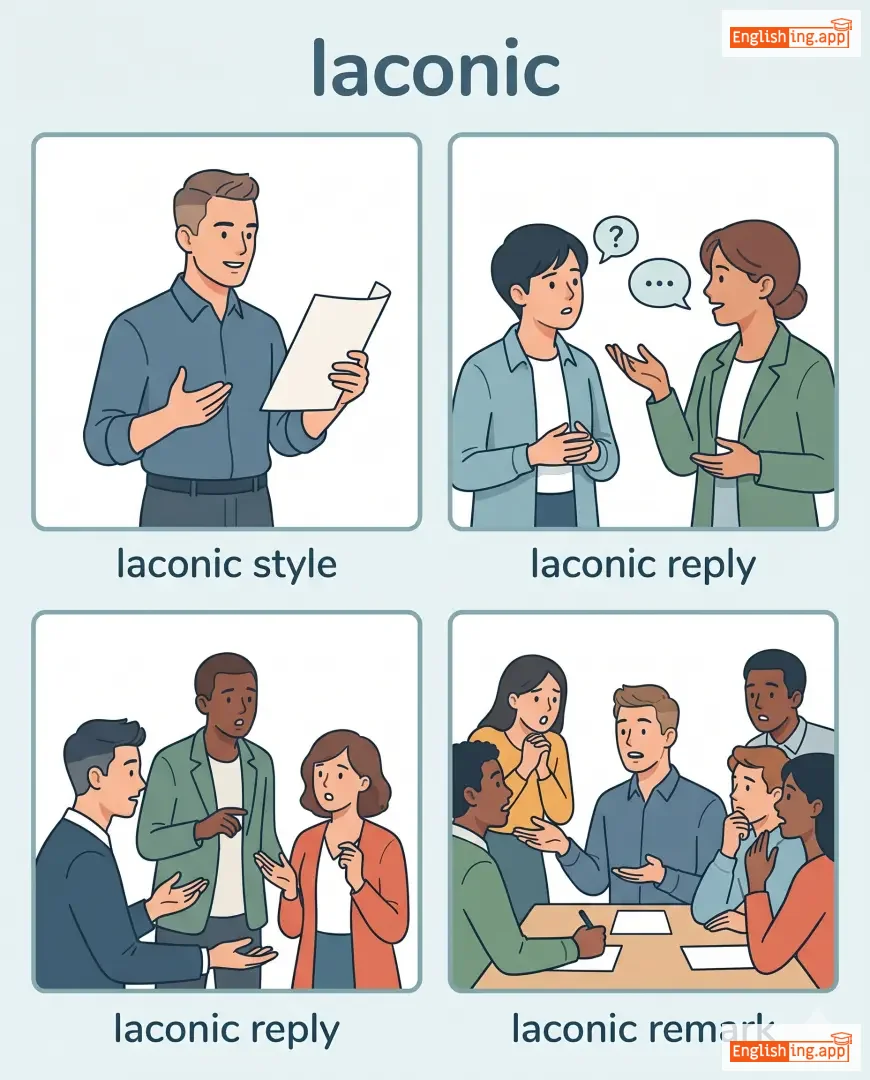
His laconic reply ended the conversation quickly. |
彼の簡潔な返答は会話を迅速に終わらせた。
Kare no kanketsu na hentō wa kaiwa o jinsoku ni owaraseta.
••••••
|
- •••••• | - •••••• | - •••••• |
brief, concise, terse, succinct
••••••
|
verbose, wordy, talkative
••••••
|
laconic style, laconic reply, laconic remark
••••••
|
簡潔な返答で、すべてを一言で伝える。
••••••
|
|
#5059
🌫️
|
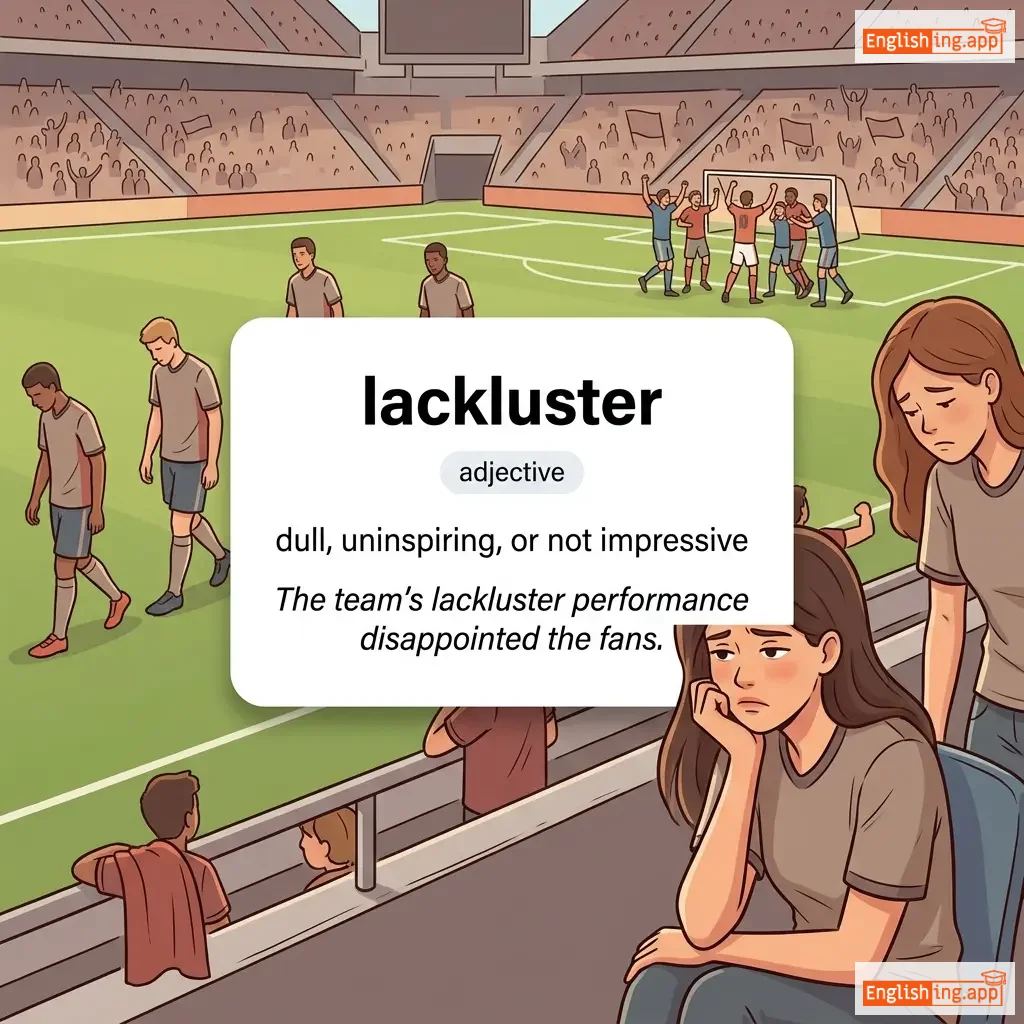
/ˈlækˌlʌstər/
adjective
(lækˈlʌstər)
••••••
|
|
冴えないまたはインスピレーションのない
saenai matawa insupirēshon no nai
••••••
|
- •••••• | - •••••• | - •••••• | - •••••• |
dull, uninspiring, or not impressive
••••••
|
The team's lackluster performance disappointed the fans. |
チームの冴えないパフォーマンスはファンを失望させました。
Chīmu no saenai pafōmansu wa fan o shitsubō sasemashita.
••••••
|
- •••••• | - •••••• | - •••••• |
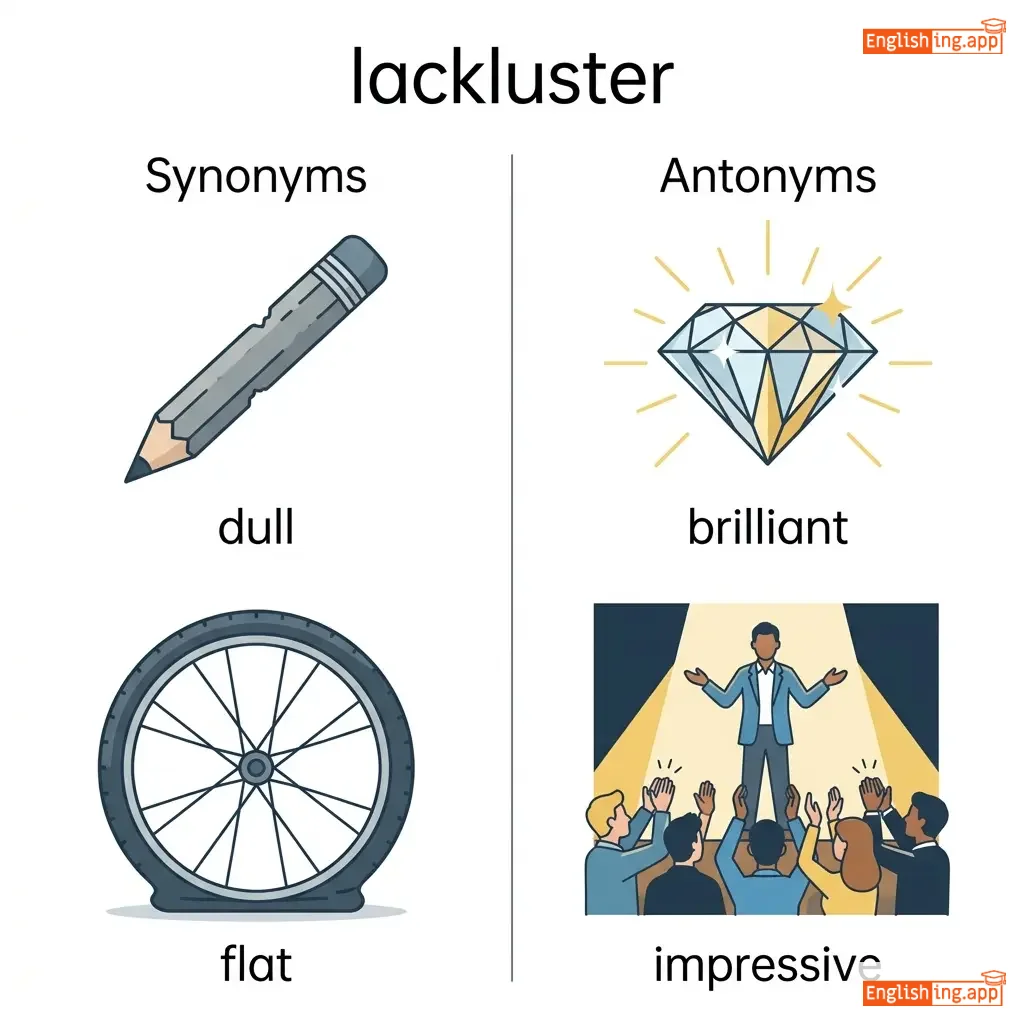
dull, flat, boring, unimpressive, uninspired
••••••
|
brilliant, impressive, exciting
••••••
|
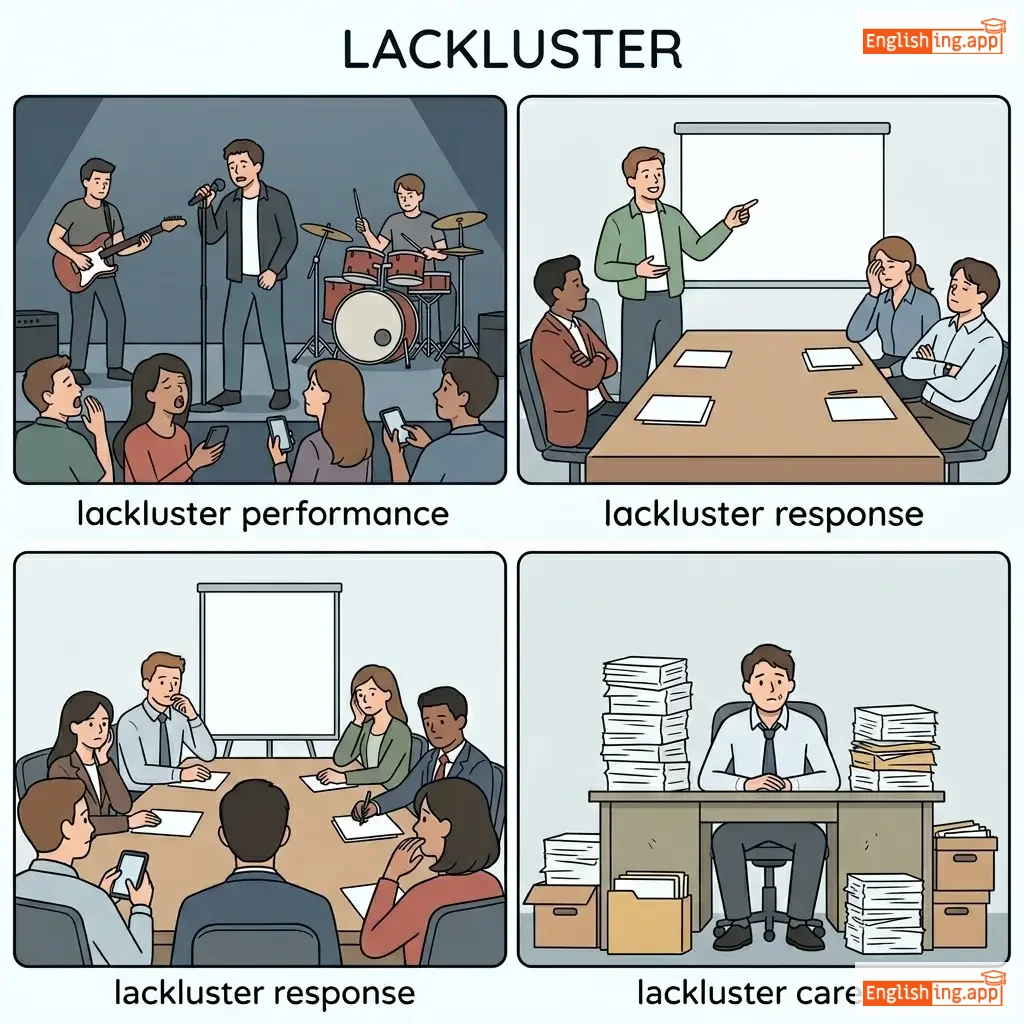
lackluster performance, lackluster response, lackluster career
••••••
|
Lack + Lusterは輝きの欠如を意味する → 冴えないまたはインスピレーションのない。
••••••
|
|
#5060
🧎
|
/ˈlæki/
noun
(ラッキー)
••••••
|
- •••••• |
従者
jūsha
••••••
|
- •••••• | - •••••• | - •••••• | - •••••• |
a person who is overly willing to serve or obey someone else
••••••
|
He treated his assistant like a mere lackey. |
彼は助手を単なる従者として扱った。
Kare wa joshu o tannaru jūsha toshite atsukatta.
••••••
|
- •••••• | - •••••• | - •••••• |
servant, follower, subordinate, minion
••••••
|
master, leader, boss
••••••
|
political lackey, loyal lackey, treated as a lackey
••••••
|
Lackey は '従者'、常に上司に従う人です。
••••••
|
|
#5061
😴
|
/ˌlækəˈdeɪzɪkəl/
adjective
(ラックデイジカル)
••••••
|
- •••••• |
怠惰または無関心
taida mata wa mukanshin
••••••
|
- •••••• | - •••••• | - •••••• | - •••••• |
lacking enthusiasm, energy, or determination; careless or lazy
••••••
|
His lackadaisical attitude toward work annoyed his boss. |
彼の怠惰な態度は、仕事に対する上司の不満を引き起こした。
Kare no taida na taido wa, shigoto ni taisuru jōshi no fuman o hikiokoshita.
••••••
|
- •••••• | - •••••• | - •••••• |
lazy, careless, indifferent, sluggish, apathetic
••••••
|
energetic, enthusiastic, active
••••••
|
lackadaisical attitude, lackadaisical approach, lackadaisical response
••••••
|
Lackadaisicalは怠惰または無関心を意味します。'lack-a-day'は無駄な日を意味します。
••••••
|
|
#5062
😢
|
/ˈlæk.rɪ.moʊs/
adjective
(ラクリモス)
••••••
|
- •••••• |
涙を流す、悲しむ
namida o nagasu, kanashimu
••••••
|
- •••••• | - •••••• | - •••••• | - •••••• |
tearful or given to weeping; sad and mournful
••••••
|
The movie's lachrymose ending left the audience in tears. |
映画の悲しい結末は観客を涙で満たしました。
Eiga no kanashī ketsumatsu wa kankyaku o namida de mitashimashita.
••••••
|
- •••••• | - •••••• | - •••••• |
tearful, mournful, weepy, sorrowful, melancholy
••••••
|
cheerful, joyful, happy
••••••
|
lachrymose mood, lachrymose story, lachrymose farewell
••••••
|
Lachrymoseは泣く(naku)
••••••
|
|
#5063
🤕
|
/ˌlæs.əˈreɪ.ʃən/
noun
(レイサレーション)
••••••
|
- •••••• |
深い切り傷
fukai kirikizu
••••••
|
- •••••• | - •••••• | - •••••• | - •••••• |
a deep cut or tear in skin or flesh
••••••
|
He needed stitches for a laceration on his leg. |
彼は足の深い切り傷に縫い合わせが必要でした。
Kare wa ashi no fukai kirikizu ni nui awase ga hitsuyou deshita.
••••••
|
- •••••• | - •••••• | - •••••• |
cut, wound, tear, gash, injury
••••••
|
healing, repair
••••••
|
serious laceration, deep laceration, multiple lacerations
••••••
|
Laceration = 深い切り傷、簡単に覚えられます。
••••••
|
|
#5064
🩸
|
/ˈlæs.ə.reɪt/
verb
(レーサレイト)
••••••
|
- •••••• |
裂ける、引き裂く
sakeru, hikisaku
••••••
|
lacerated
レーサレイテッド
••••••
|
lacerated
レーサレイテッド
••••••
|
lacerates
レーサレイツ
••••••
|
lacerating
レーサレイティング
••••••
|
to tear or cut deeply in the skin or flesh
••••••
|
The broken glass lacerated his hand.
壊れたガラスが彼の手を切った。
••••••
|
壊れたガラスが彼の手を切った。
Kowareta garasu ga kare no te o kitta.
••••••
|
- •••••• | - •••••• | - •••••• |
slash, cut, wound, tear, gash
••••••
|
heal, mend, repair
••••••
|
lacerate the skin, badly lacerated, lacerate deeply
••••••
|
レーサーのように速く裂ける (lacerate)
••••••
|
|
#5065
👟
|
/leɪs/
noun/verb
(レイス)
••••••
|
- •••••• |
レース, 靴ひも
re-su, kutsu himo
••••••
|
laced
レイスド
••••••
|
laced
レイスド
••••••
|
laces
レイセス
••••••
|
lacing
レイシング
••••••
|
a delicate fabric made of threads; or to fasten or tie with a lace
••••••
|
She laced up her shoes before leaving.
彼女は出かける前に靴ひもを結んだ。
••••••
|
彼女は出かける前に靴ひもを結んだ。
Kanojo wa dekakeru mae ni kutsu himo o musunda.
••••••
|
lace into
lace into
••••••
|
to attack or criticize someone strongly
••••••
|
強く批判する
tsuyoku hihan suru
••••••
|
string, cord, ribbon, tie, braid
••••••
|
unfasten, loosen, untie
••••••
|
lace dress, lace fabric, lace shoes, lace curtains
••••••
|
靴ひも (lace) を結んで速く走れ
••••••
|
|
#5066
🌀
|
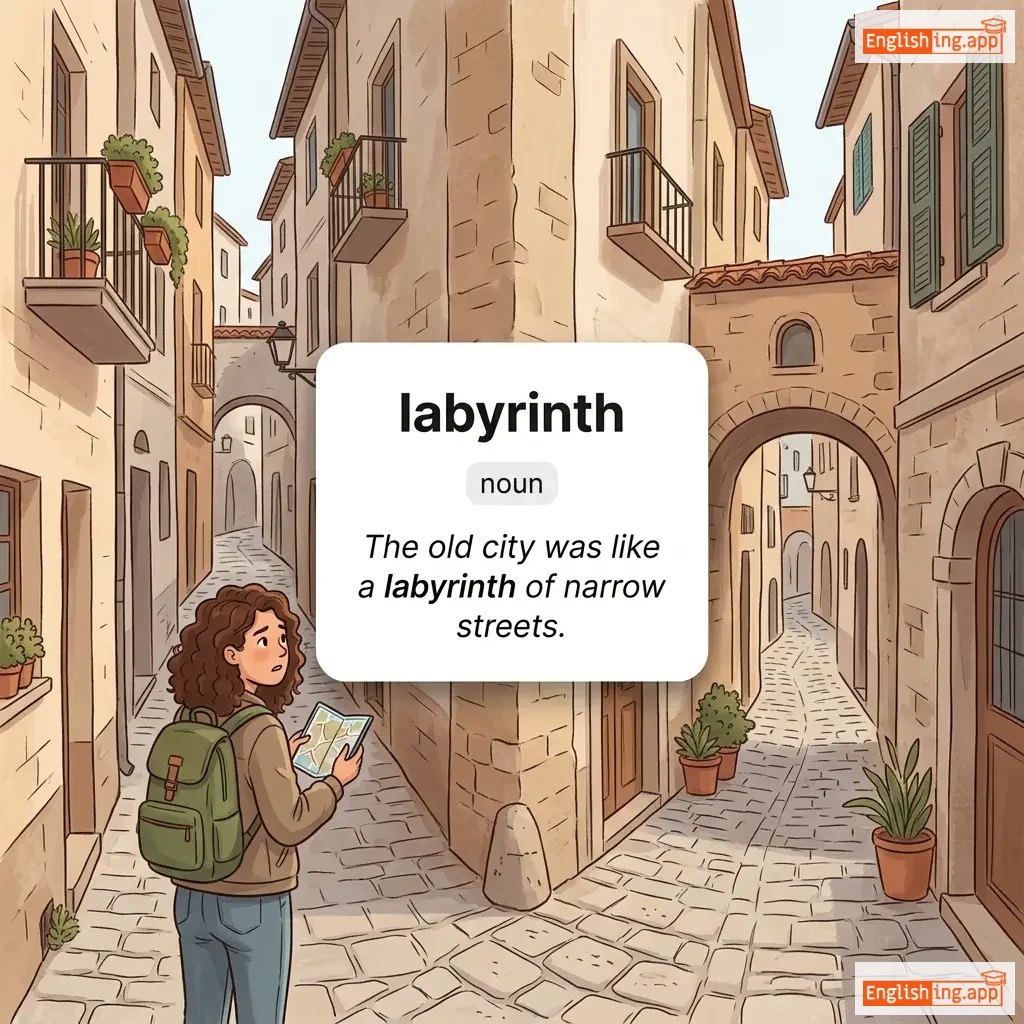
/ˈlæb.ə.rɪnθ/
noun
(ラビリンス)
••••••
|
|
迷路
meiro
••••••
|
- •••••• | - •••••• | - •••••• | - •••••• |
a complex, confusing network of paths or passages; something very intricate or confusing
••••••
|
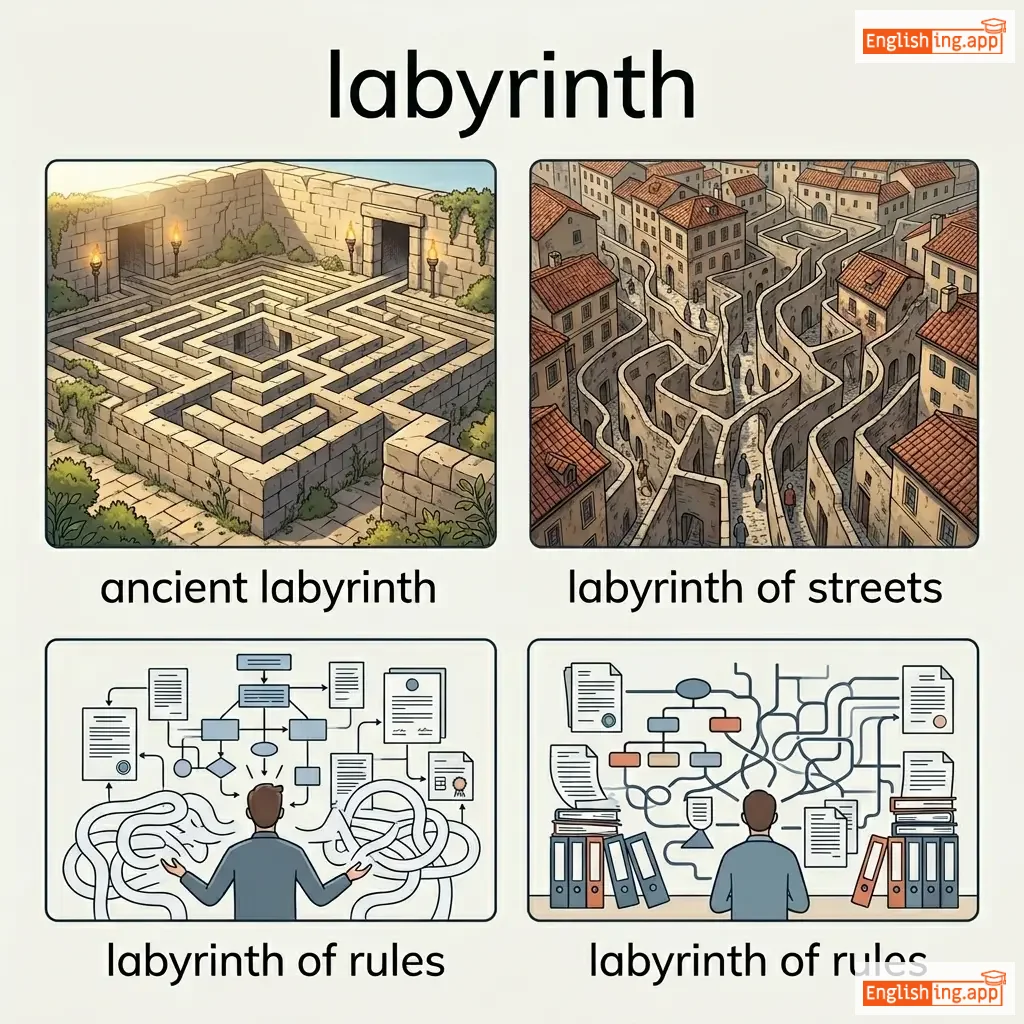
The old city was like a labyrinth of narrow streets.
古い街は狭い通りの迷路のようでした。
••••••
|
古い街は狭い通りの迷路のようでした。
Furui machi wa semai tōri no meiro no yō deshita.
••••••
|
a labyrinth of bureaucracy
官僚主義の迷路
••••••
|
a complicated and confusing system of official rules and procedures
••••••
|
官僚主義の迷路
kanryōshugi no meiro
••••••
|
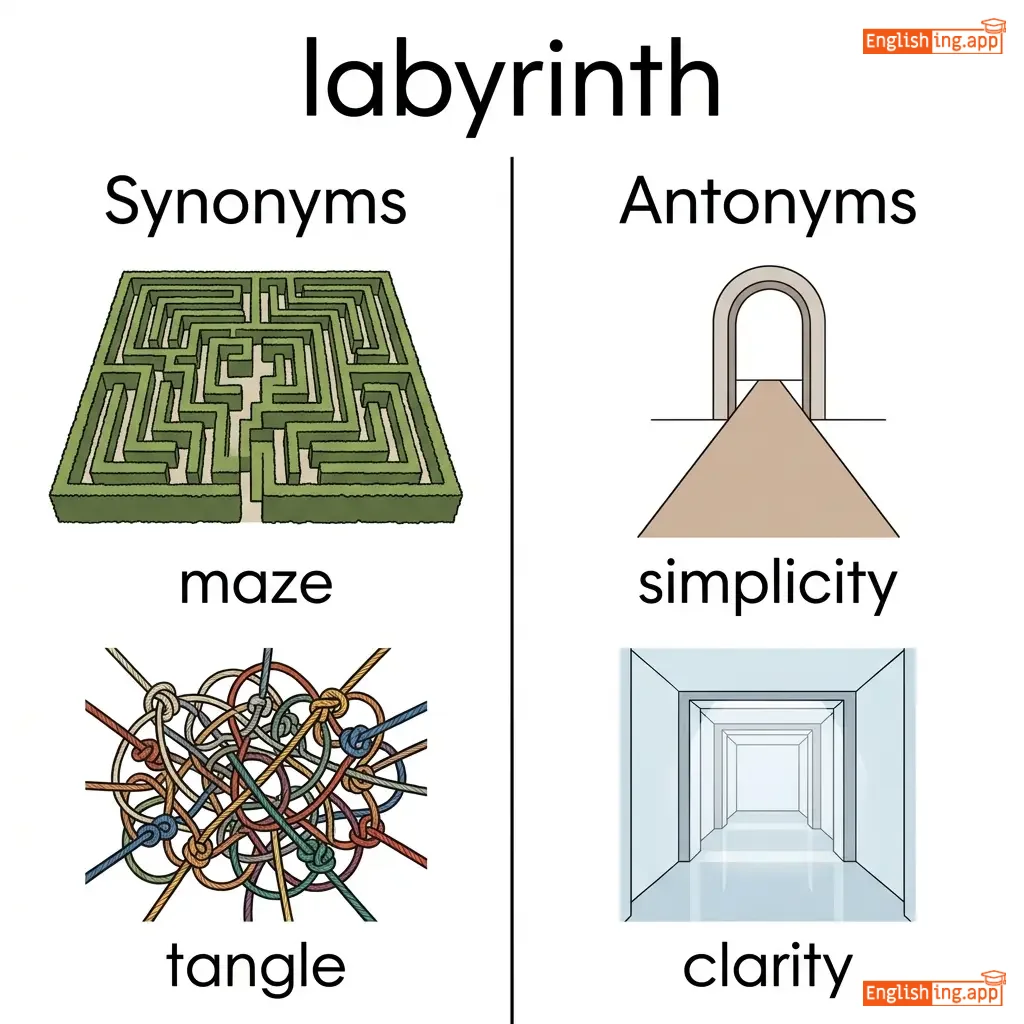
maze, tangle, puzzle, web, complication
••••••
|
simplicity, clarity, order
••••••
|
ancient labyrinth, labyrinth of streets, labyrinth of rules, labyrinth design
••••••
|
迷路 (meiro) は labyrinth で迷う場所と似ている
••••••
|
|
#5067
💪
|
/ləˈbɔːr.i.əs/
adjective
(レボリオス)
••••••
|
- •••••• |
骨の折れる
hone no oreru
••••••
|
- •••••• | - •••••• | - •••••• | - •••••• |
requiring considerable effort and time; difficult and hard-working
••••••
|
Writing the long report was a laborious task. |
長いレポートを書くことは骨の折れる仕事でした。
Nagai repōto o kaku koto wa hone no oreru shigoto deshita.
••••••
|
- •••••• | - •••••• | - •••••• |
arduous, difficult, hard, strenuous, exhausting
••••••
|
easy, effortless, simple
••••••
|
laborious process, laborious task, laborious journey
••••••
|
Laboriousは大変な仕事を意味します — 骨の折れる!
••••••
|
|
#5068
😮💨
|
/ˈleɪ.bərd/
adjective/verb
(レイバード)
••••••
|
- •••••• |
苦労した
kurou shita
••••••
|
labored
レイバード
••••••
|
labored
レイバード
••••••
|
- •••••• | - •••••• |
done with great effort and difficulty; or past tense of labor
••••••
|
He gave a labored explanation that confused the audience.
彼は観客を混乱させた苦しげな説明をした。
••••••
|
彼は観客を混乱させた苦しげな説明をした。
Kare wa kankyaku o konran saseta kurushige na setsumei o shita.
••••••
|
- •••••• | - •••••• | - •••••• |
strained, forced, effortful, heavy
••••••
|
natural, easy
••••••
|
labored breathing, labored speech, labored writing
••••••
|
Labored は困難を伴う仕事のように、努力を要することを意味します。
••••••
|
|
#5069
👷
|
/ˈleɪ.bər/
noun/verb
(レイバー)
••••••
|
- •••••• |
労働
roudou
••••••
|
labored
レイバード
••••••
|
labored
レイバード
••••••
|
labors
レイバーズ
••••••
|
laboring
レイバーリング
••••••
|
work, especially hard physical work; to work hard
••••••
|
The workers labored in the hot sun all day.
作業員たちは暑い太陽の下で一日中働いた。
••••••
|
作業員たちは暑い太陽の下で一日中働いた。
Sagyouin tachi wa atsui taiyou no shita de ichinichijuu hataraita.
••••••
|
go into labor
陣痛に入る
••••••
|
the process of a woman giving birth
••••••
|
陣痛に入る
jintsuu ni hairu
••••••
|
work, toil, effort, industry, employment
••••••
|
rest, leisure, ease
••••••
|
manual labor, hard labor, labor force, labor market
••••••
|
Laborは '労働' を意味します。労働者は一生懸命働きます。
••••••
|
|
#5070
⚖️
|
/ˈleɪ.baɪl/ or /ˈlæb.aɪl/
adjective
(レイビル)
••••••
|
|
不安定な
fuanteina
••••••
|
- •••••• | - •••••• | - •••••• | - •••••• |
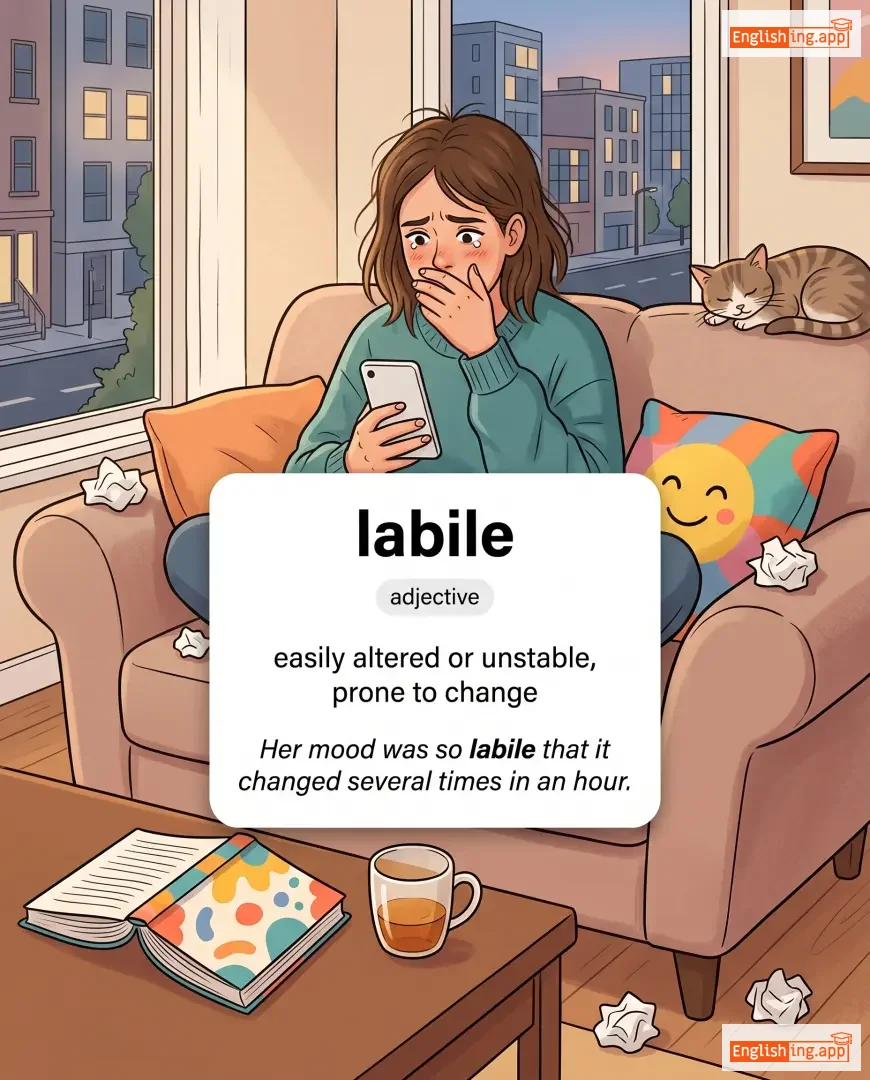
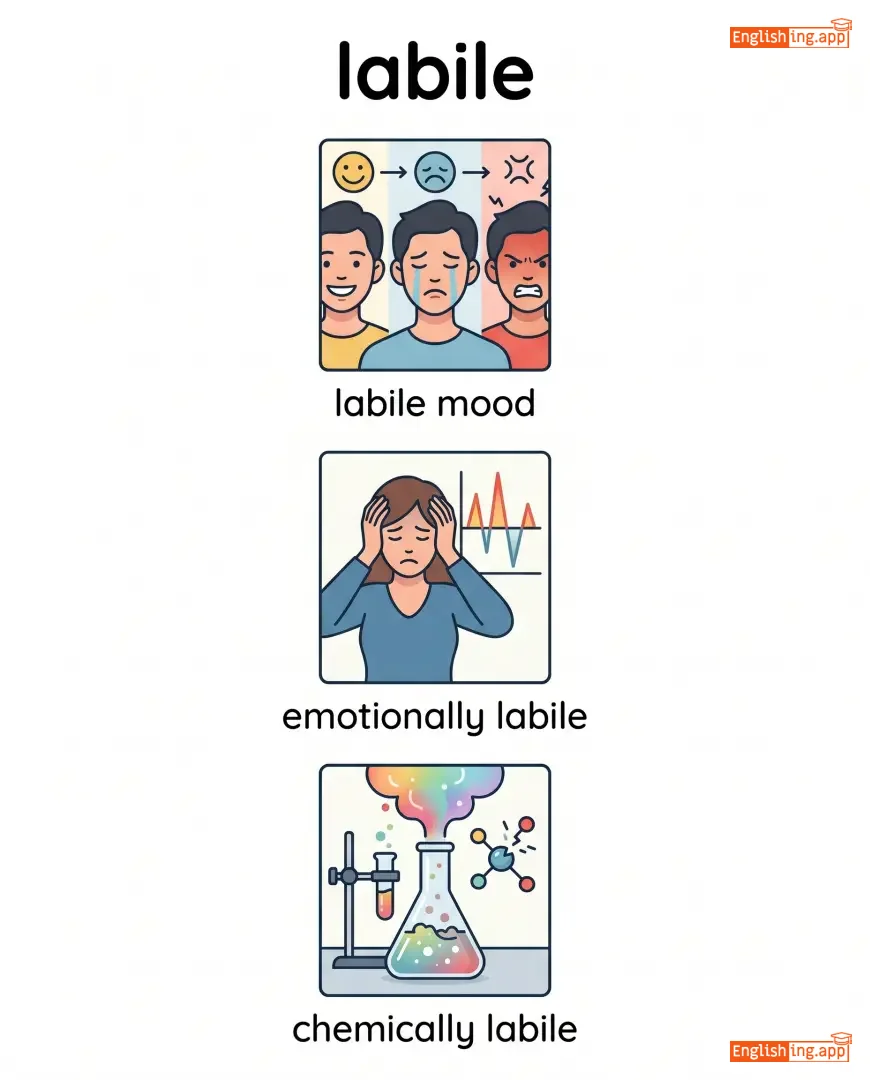
easily altered or unstable; prone to change
••••••
|
Her mood was so labile that it changed several times in an hour. |
彼女の気分は非常に不安定で、1時間で何度も変わりました。
Kanojo no kibun wa hijō ni fuantei de, 1-jikan de nando mo kawarimashita.
••••••
|
- •••••• | - •••••• | - •••••• |
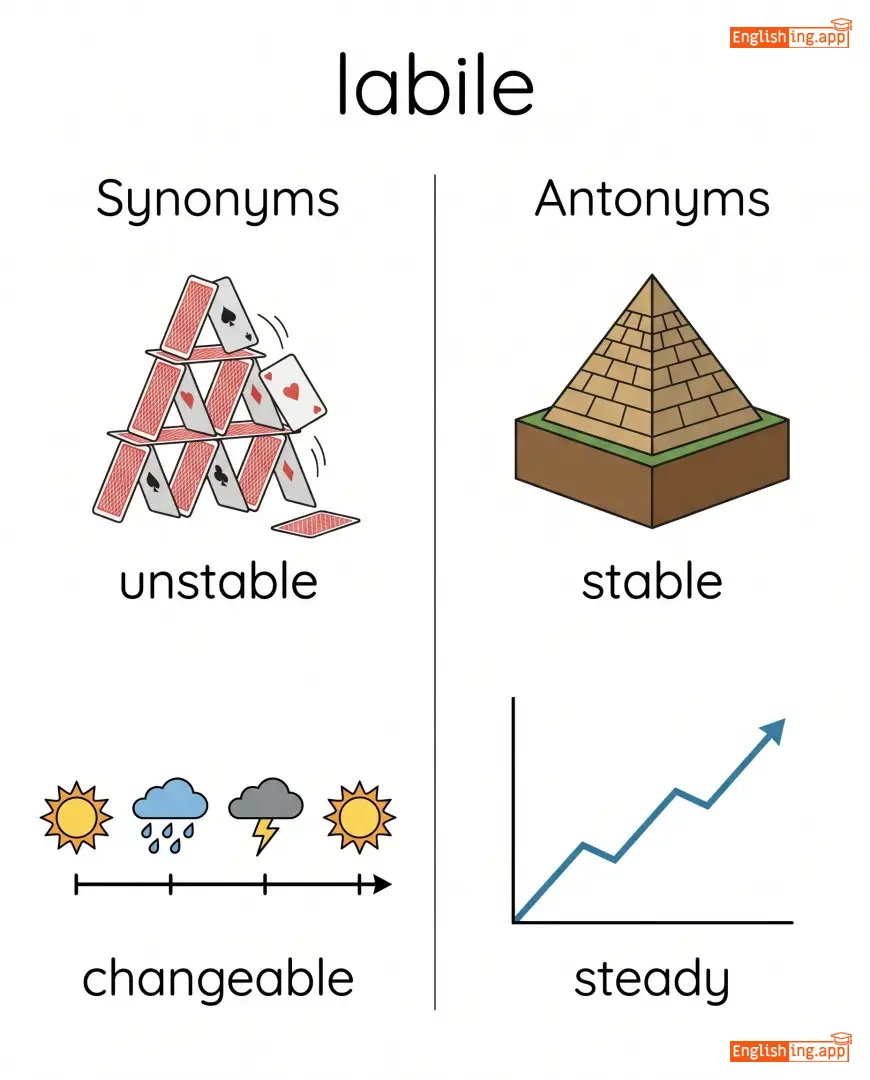
unstable, changeable, volatile, fluctuating
••••••
|
stable, steady
••••••
|
labile mood, emotionally labile, chemically labile
••••••
|
Labileは 'liable to change' を意味します — まるで不安定な実験結果のように。
••••••
|
Vocabulary Quiz
Test your vocabulary by matching words with their translations or meanings.
Login to take the quiz
Comments (0)
Share your thoughts and join the discussion.
Join the discussion by logging in
Login to CommentNo comments yet
Be the first to share your thoughts!