

翻訳
過去
過去分詞
三人称単数
動名詞
意味
例文
例文の翻訳
同義語
対義語
コロケーション
ニーモニック

Swipe left or right, or use the buttons. Tap image to zoom.
例文の翻訳
単語
Lesson 37Lesson 37 - マスクトグル
|
絵文字
|
単語 | Images | 翻訳 | 過去 | 過去分詞 | 三人称単数 | 動名詞 | 意味 | 例文 | 例文の翻訳 | 表現例 | 表現例の意味 | 表現例の翻訳 | 同義語 | 対義語 | コロケーション | ニーモニック |
|---|---|---|---|---|---|---|---|---|---|---|---|---|---|---|---|---|---|
|
#1081
🚨
|
/briːtʃ/
noun, verb
(ブリーチ)
••••••
|
|
違反
ihan
••••••
|
breached
ブリーチド
••••••
|
breached
ブリーチド
••••••
|
breaches
ブリーチェス
••••••
|
breaching
ブリーチング
••••••
|
An act of breaking or failing to observe a law, agreement, or code of conduct; to break through.
••••••
|
The company was fined for a breach of contract.
その会社は契約違反で罰金を科せられました。
••••••
|
その会社は契約違反で罰金を科せられました。
Sono kaisha wa keiyaku ihan de bakkin wo kaseraremashita.
••••••
|
breach of trust
信頼の違反
••••••
|
A violation of confidence or duty.
••••••
|
信頼の違反
shinrai no ihan
••••••
|
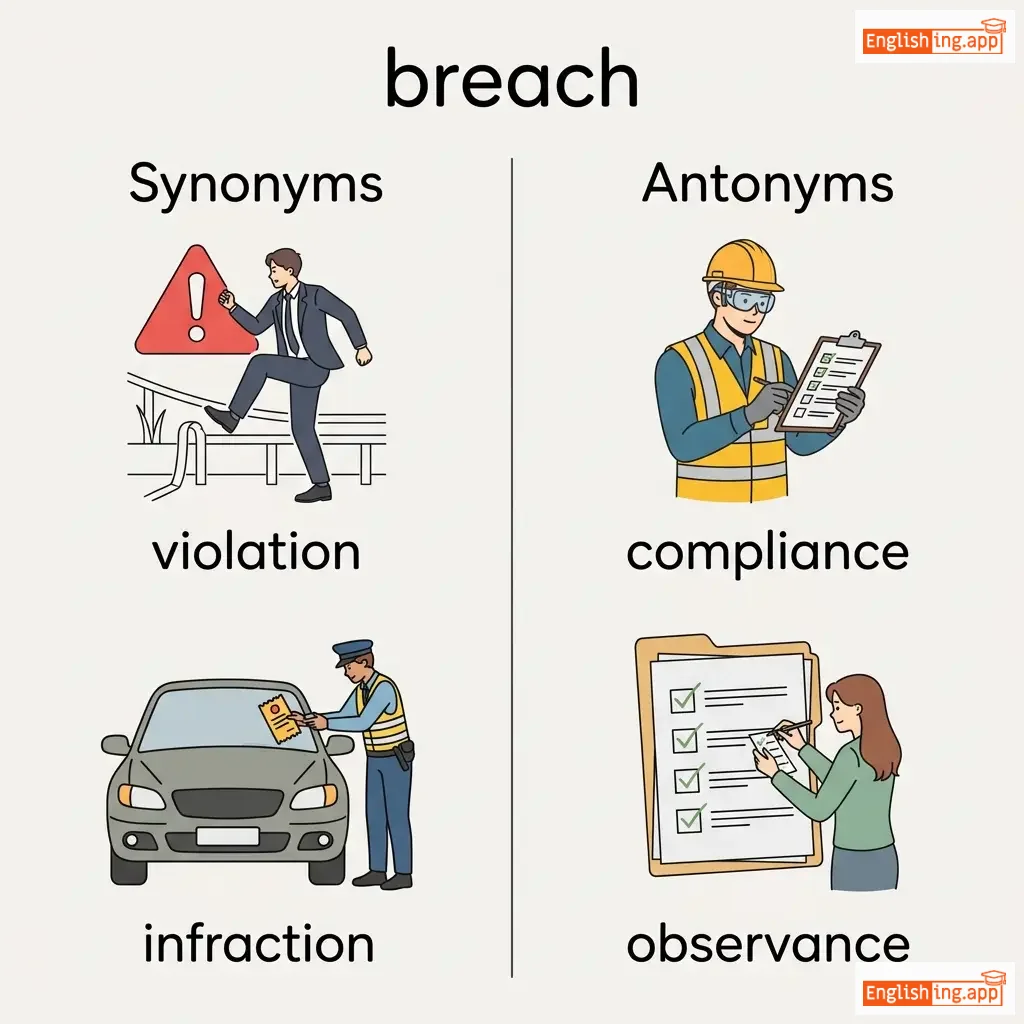
violation, infraction, contravention, infringement, rupture
••••••
|
compliance, observance, respect
••••••
|
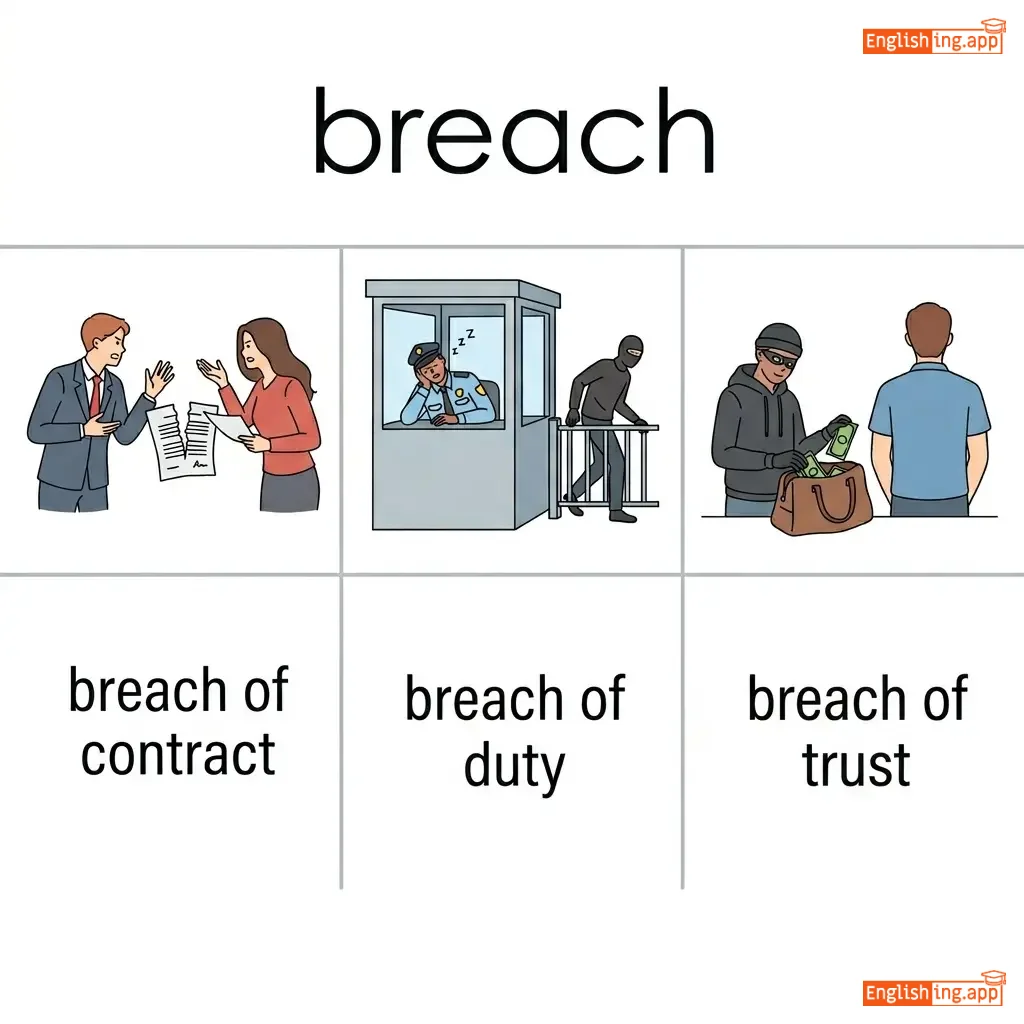
breach of contract, breach of duty, breach of trust, security breach
••••••
|
Breach は違反を意味します — 契約や信頼の違反です。
••••••
|
|
#1082
🥛
|
/brɪm/
noun/verb
(ブリム)
••••••
|
- •••••• |
縁
fuchi
••••••
|
brimmed
ブリムド
••••••
|
brimmed
ブリムド
••••••
|
brims
ブリムズ
••••••
|
brimming
ブリミング
••••••
|
The edge of a container; as a verb, to be full to the point of overflowing.
••••••
|
Her eyes brimmed with tears of joy.
彼女の目は喜びの涙であふれていました。
••••••
|
彼女の目は喜びの涙であふれていました。
Kanojo no me wa yorokobi no namida de afureteimashita.
••••••
|
filled to the brim
縁までいっぱい
••••••
|
completely full
••••••
|
いっぱいに満たされた
ippai ni mitasareta
••••••
|
edge, rim, lip, overflow, top
••••••
|
bottom, emptiness
••••••
|
filled to the brim, brim with joy, brim of the cup
••••••
|
Full to the brimは完全に満杯を意味します - brimは縁を意味します。
••••••
|
|
#1083
🦹
|
/ˈbrɪɡ.ənd/
noun
(bree-gand)
••••••
|
- •••••• |
山賊
sanzoku
••••••
|
- •••••• | - •••••• | - •••••• | - •••••• |
A member of a gang that ambushes and robs people in forests or mountains; a bandit.
••••••
|
The travelers were attacked by brigands in the mountains.
旅行者は山中で盗賊に襲われました。
••••••
|
旅行者は山中で山賊に襲われました。
Ryokōsha wa sanchū de sanzoku ni osowaremashita.
••••••
|
- •••••• | - •••••• | - •••••• |
bandit, outlaw, robber, thief, marauder
••••••
|
police, protector, guard
••••••
|
mountain brigand, notorious brigand, brigand attack
••••••
|
Brigand は山賊を意味します、山賊が山で襲うことを覚えておいてください。
••••••
|
|
#1084
🎖️
|
/ˌbrɪɡ.əˈdɪər/
noun
(ブリガディア)
••••••
|
- •••••• |
ブリガディア
brigadia
••••••
|
- •••••• | - •••••• | - •••••• | - •••••• |
A military officer rank, usually commanding a brigade.
••••••
|
The brigadier inspected the troops before the parade. |
ブリガディアはパレードの前に部隊を視察しました。
Brigadia wa parēdo no mae ni butai o shisatsu shimashita.
••••••
|
- •••••• | - •••••• | - •••••• |
commander, officer, general, colonel
••••••
|
soldier, private
••••••
|
brigadier general, army brigadier, brigadier rank
••••••
|
ブリガディアは旅団を指揮する高い軍隊のランクです。
••••••
|
|
#1085
🚒
|
/brɪˈɡeɪd/
noun
(ブリゲード)
••••••
|
- •••••• |
消防隊
shouboutai
••••••
|
- •••••• | - •••••• | - •••••• | - •••••• |
A large group of people organized for a specific purpose, especially a military unit.
••••••
|
The fire brigade arrived quickly to put out the flames.
消防隊は火を消すために迅速に到着しました。
••••••
|
消防隊は火を消すために迅速に到着しました。
Shouboutai wa hi wo kesu tame ni jinsoku ni touchakushimashita.
••••••
|
- •••••• | - •••••• | - •••••• |
unit, corps, troop, squad, battalion
••••••
|
individual, lone, solitary
••••••
|
fire brigade, army brigade, rescue brigade
••••••
|
消防隊は緊急事態に対応するためのグループ。
••••••
|
|
#1086
🐴
|
/ˈbraɪ.dəl/
noun/verb
••••••
|
- •••••• | - •••••• |
bridled
••••••
|
bridled
••••••
|
bridles
••••••
|
bridling
••••••
|
A bridle is a piece of equipment used to control a horse; as a verb, it means to show anger or to restrain.
••••••
|
The rider tightened the bridle before setting off. |
- •••••• |
bridle at |
to take offense at something
••••••
|
- •••••• |
rein, harness, curb, restrain, control
••••••
|
release, freedom, let go
••••••
|
tighten the bridle, horse bridle, bridle at remarks
••••••
|
No •••••• |
|
#1087
🪆
|
/ˈbrɪk ə ˌbræk/
noun
(ブリック・ア・ブラック)
••••••
|
- •••••• |
小さな装飾品
chiisana shoushokuhin
••••••
|
- •••••• | - •••••• | - •••••• | - •••••• |
Small decorative objects or ornaments, often of little value.
••••••
|
The shelves were filled with old bric-a-brac from her travels. |
棚は彼女の旅行から持ち帰った古い小さな装飾品でいっぱいだった。
Tana wa kanojo no ryokou kara mochikaetta furui chiisana shoushokuhin de ippai datta.
••••••
|
- •••••• | - •••••• | - •••••• |
knick-knacks, trinkets, ornaments, curios
••••••
|
valuables, essentials
••••••
|
antique bric-a-brac, bric-a-brac shop, collection of bric-a-brac, bric-a-brac items
••••••
|
Bric-a-bracは'brick' + 'rack'に似ている - rackが小さな装飾品でいっぱい。
••••••
|
|
#1088
💵
|
/braɪb/
verb
••••••
|
- •••••• | - •••••• |
bribed
••••••
|
bribed
••••••
|
bribes
••••••
|
bribing
••••••
|
To persuade someone to act in one's favor, typically illegally, by offering money or gifts.
••••••
|
The official was caught trying to bribe the inspector. |
- •••••• |
accept a bribe |
To take money or gifts illegally to do a favor.
••••••
|
- •••••• |
corrupt, induce, influence, buy off
••••••
|
refuse, reject, honesty
••••••
|
take a bribe, offer a bribe, give a bribe, accept a bribe
••••••
|
No •••••• |
|
#1089
✍️
|
/ˈbrɛvɪti/
noun
••••••
|
- •••••• | - •••••• | - •••••• | - •••••• | - •••••• | - •••••• |
Concise and exact use of words in writing or speech.
••••••
|
The brevity of the speech kept the audience engaged. |
- •••••• |
brevity is the soul of wit |
Conciseness is the essence of intelligence and humor.
••••••
|
- •••••• |
conciseness, terseness, succinctness, economy
••••••
|
lengthiness, verbosity, wordiness
••••••
|
brevity of life, brevity of speech, admired for brevity, remarkable brevity
••••••
|
No •••••• |
|
#1090
📖
|
/ˈbrɛviˌɛri/
noun
(ブレヴィアリ)
••••••
|
- •••••• |
祈祷書
kitosho
••••••
|
- •••••• | - •••••• | - •••••• | - •••••• |
A book containing the service for each day, used in Christian liturgy.
••••••
|
The monk read from the breviary during morning prayers. |
修道士は朝の祈りの間に祈祷書から読んでいました。
Shūdōshi wa asa no inori no aida ni kitōsho kara yondeimashita.
••••••
|
- •••••• | - •••••• | - •••••• |
prayer book, missal, devotional, liturgy book
••••••
|
secular book, novel
••••••
|
Catholic breviary, daily breviary, breviary reading, Roman breviary
••••••
|
Breviary = 祈祷書 - 日々の祈りに使う書物を思い浮かべてください。
••••••
|
|
#1091
🏠
|
/ˈbriːzˌweɪ/
noun
(ブリーズウェイ)
••••••
|
- •••••• |
屋根付き通路
yane tsuki tsuuro
••••••
|
- •••••• | - •••••• | - •••••• | - •••••• |
A roofed outdoor passage, often connecting two buildings.
••••••
|
The breezeway connected the house to the garage. |
その通路は家とガレージを繋げていた。
Sono tsuuro wa ie to gareeji wo tsunagete ita.
••••••
|
- •••••• | - •••••• | - •••••• |
corridor, walkway, passage, gallery
••••••
|
blockage, wall
••••••
|
covered breezeway, breezeway design, house breezeway, breezeway entrance
••••••
|
屋根付き = 屋根(屋根)+ 通路(道) - 2つの建物を繋ぐ屋根のある通路を想像してみてください。
••••••
|
|
#1092
🐎
|
/briːd/
verb, noun
(buriido)
••••••
|
|
繁殖する、品種
hanshoku suru, hinshu
••••••
|
bred
bred
••••••
|
bred
bred
••••••
|
breeds
buriidzu
••••••
|
breeding
buriidingu
••••••
|
To cause an animal to reproduce; to raise or train; a type or variety of animal or plant.
••••••
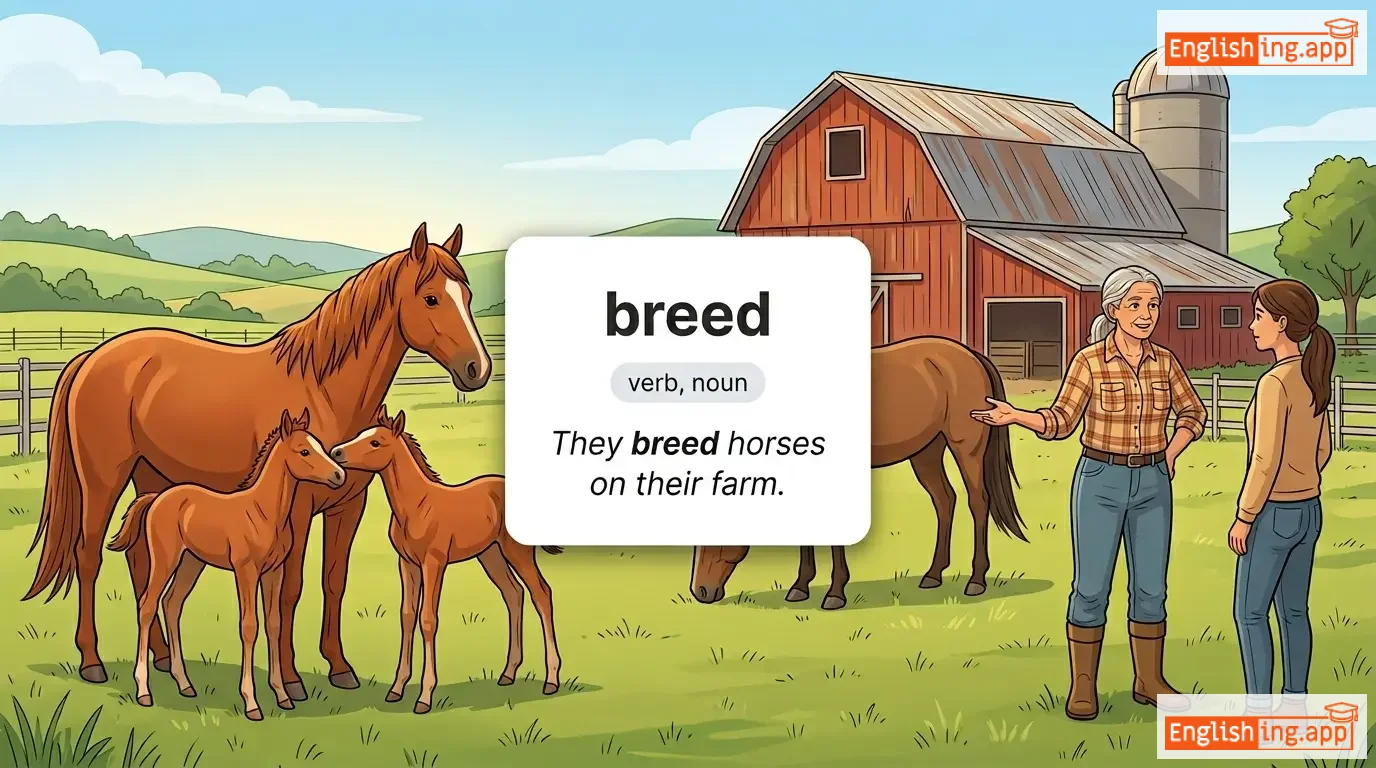
|
They breed horses on their farm.
彼らは農場で馬を育てています。
••••••
|
彼らは農場で馬を育てています。
Karera wa nōjō de uma o sodateています。
••••••
|
born and bred
生まれ育った
••••••
|
Used to indicate someone's native origin and upbringing.
••••••
|
生まれ育った
umare sodatta
••••••
|
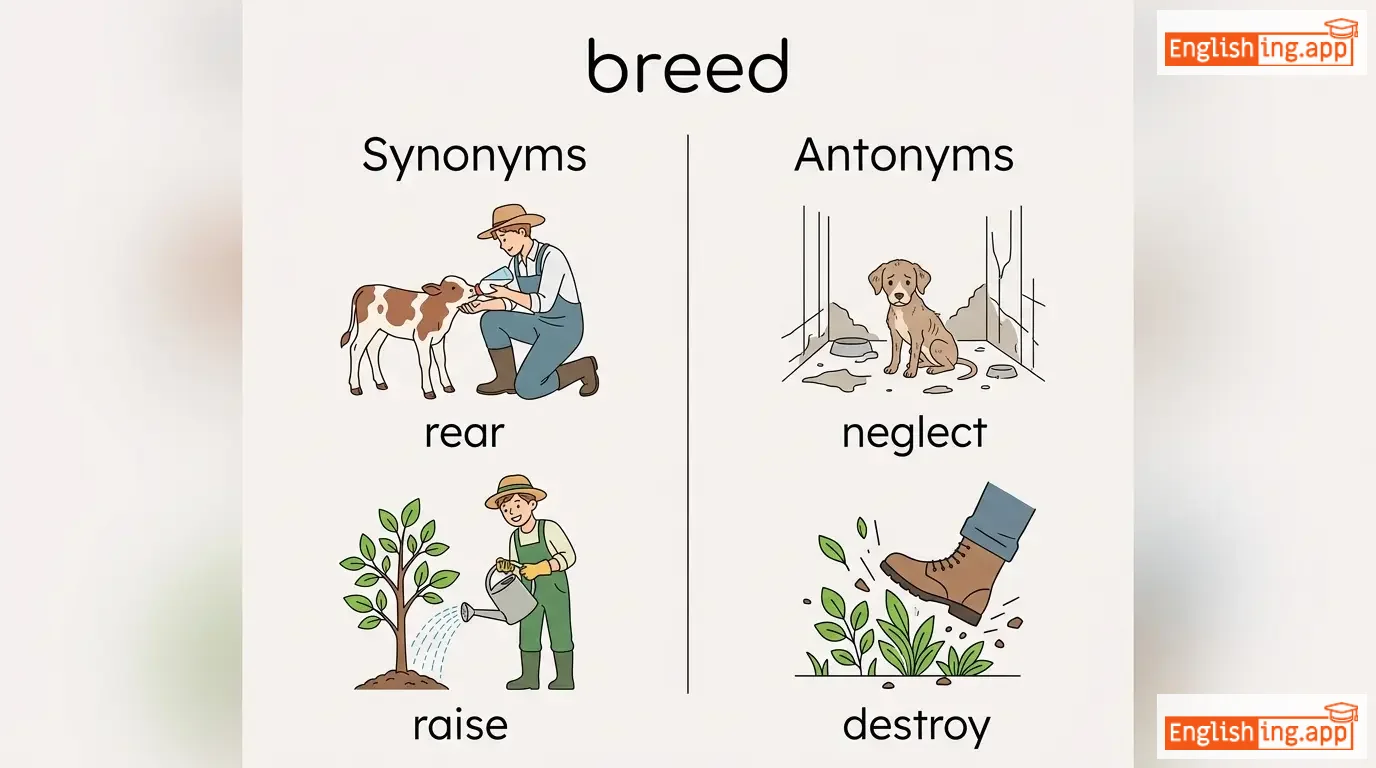
rear, raise, cultivate, reproduce, nurture
••••••
|
neglect, destroy, kill
••••••
|
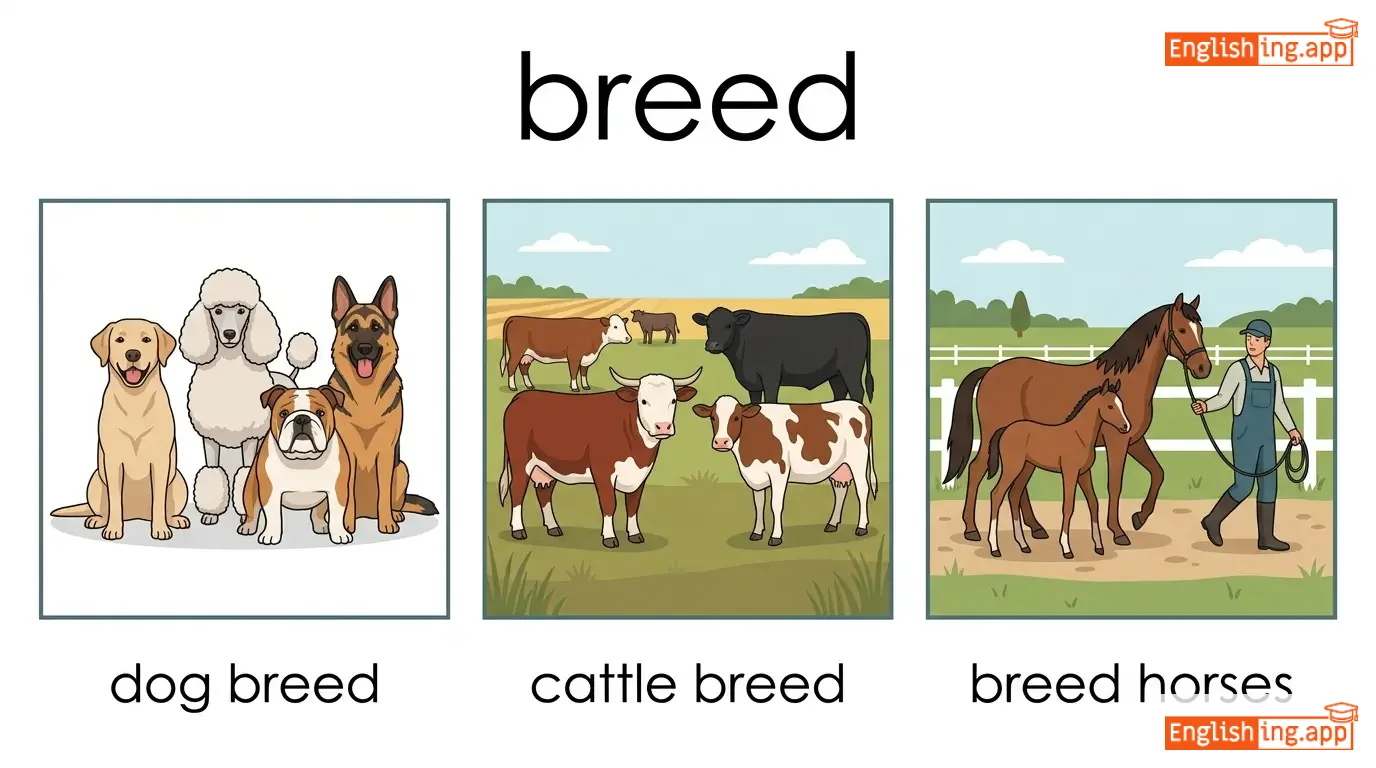
dog breed, cattle breed, breed horses, breed success
••••••
|
Breed は品種を意味します—犬の品種; Breed は生まれ育った意味もあります。
••••••
|
|
#1093
🔫
|
/briːtʃ/
noun
••••••
|
- •••••• | - •••••• | - •••••• | - •••••• | - •••••• | - •••••• |
The back part of a gun barrel; a position of a baby in the womb where the buttocks or feet come out first at birth.
••••••
|
The rifle was loaded through the breech. |
- •••••• | - •••••• | - •••••• | - •••••• |
rear, back, base, butt
••••••
|
front, muzzle
••••••
|
breech position, breech birth, rifle breech
••••••
|
No •••••• |
|
#1094
🌊
|
/ˈbreɪkər/
noun
(ブレイカー)
••••••
|
- •••••• |
ブレーカー(何かを壊す人や物、海岸近くで泡に壊れる大きな波、電気回路を中断する装置)
bureikā
••••••
|
- •••••• | - •••••• | - •••••• | - •••••• |
A person or thing that breaks something; a large sea wave that breaks into foam near the shore; a device that interrupts an electric circuit.
••••••
|
The breaker tripped during the storm, cutting off electricity. |
嵐の間にブレーカーがトリップし、電気が切断されました。
Arashi no aida ni bureikā ga torippu shi, denki ga setsudan saremashita.
••••••
|
- •••••• | - •••••• | - •••••• |
destroyer, demolisher, interrupter, wave, disrupter
••••••
|
protector, preserver
••••••
|
circuit breaker, breaker waves, breaker switch
••••••
|
ブレーカー = 電気を遮断する装置、breakerと同じです。
••••••
|
|
#1095
📏
|
/brɛdθ/
noun
(bureddo)
••••••
|
- •••••• |
幅
fuku
••••••
|
- •••••• | - •••••• | - •••••• | - •••••• |
The distance or measurement from side to side; width; a wide range.
••••••
|
The breadth of his knowledge impressed everyone. |
彼の知識の幅は皆に感銘を与えました。
Kare no chishiki no fuku wa mina ni kanmei o ataemashita.
••••••
|
- •••••• | - •••••• | - •••••• |
width, span, range, scope, extent
••••••
|
narrowness, limitation
••••••
|
breadth of knowledge, breadth of experience, breadth of vision
••••••
|
パン(Bread)は幅が広い—Breadthは幅を意味します。
••••••
|
|
#1096
⚔️
|
/ˈbrændɪʃ/
verb
(ブランドッシュ)
••••••
|
- •••••• |
振る
furu
••••••
|
brandished
ブランドッシュド
••••••
|
brandished
ブランドッシュド
••••••
|
brandishes
ブランドッシュズ
••••••
|
brandishing
ブランドッシング
••••••
|
to wave or flourish something, especially a weapon, in a threatening or showy way
••••••
|
He brandished a sword to scare off the intruders.
彼は侵入者を怖がらせるために剣を振った。
••••••
|
彼は侵入者を怖がらせるために剣を振った。
Kare wa shin'nyūsha o kowagaraseru tame ni ken o futta.
••••••
|
- •••••• | - •••••• | - •••••• |
wave, wield, flaunt, display, flourish
••••••
|
conceal, hide, cover
••••••
|
brandish a weapon, brandish a knife, brandish a sword, brandish a gun
••••••
|
武器を振る=威圧的に見せびらかす
••••••
|
|
#1097
🔥
|
/ˈbreɪziər/
noun
(ブレイジア)
••••••
|
- •••••• |
炉
ro
••••••
|
- •••••• | - •••••• | - •••••• | - •••••• |
A container for holding burning coal or charcoal, used for heating or cooking.
••••••
|
The street vendor cooked chestnuts on a brazier.
ストリートベンダーはブレイジアで栗を焼いた。
••••••
|
ストリートベンダーはブレイジアで栗を焼いた。
Sutorīto bendorā wa bureijia de kuri o yaita.
••••••
|
- •••••• | - •••••• | - •••••• |
firepit, stove, burner, heater
••••••
|
freezer, cooler
••••••
|
charcoal brazier, iron brazier, brazier fire
••••••
|
Brazier = 炉、火が燃えている場所 🔥
••••••
|
|
#1098
😏
|
/ˈbreɪzən/
adjective
••••••
|
|
- •••••• | - •••••• | - •••••• | - •••••• | - •••••• |
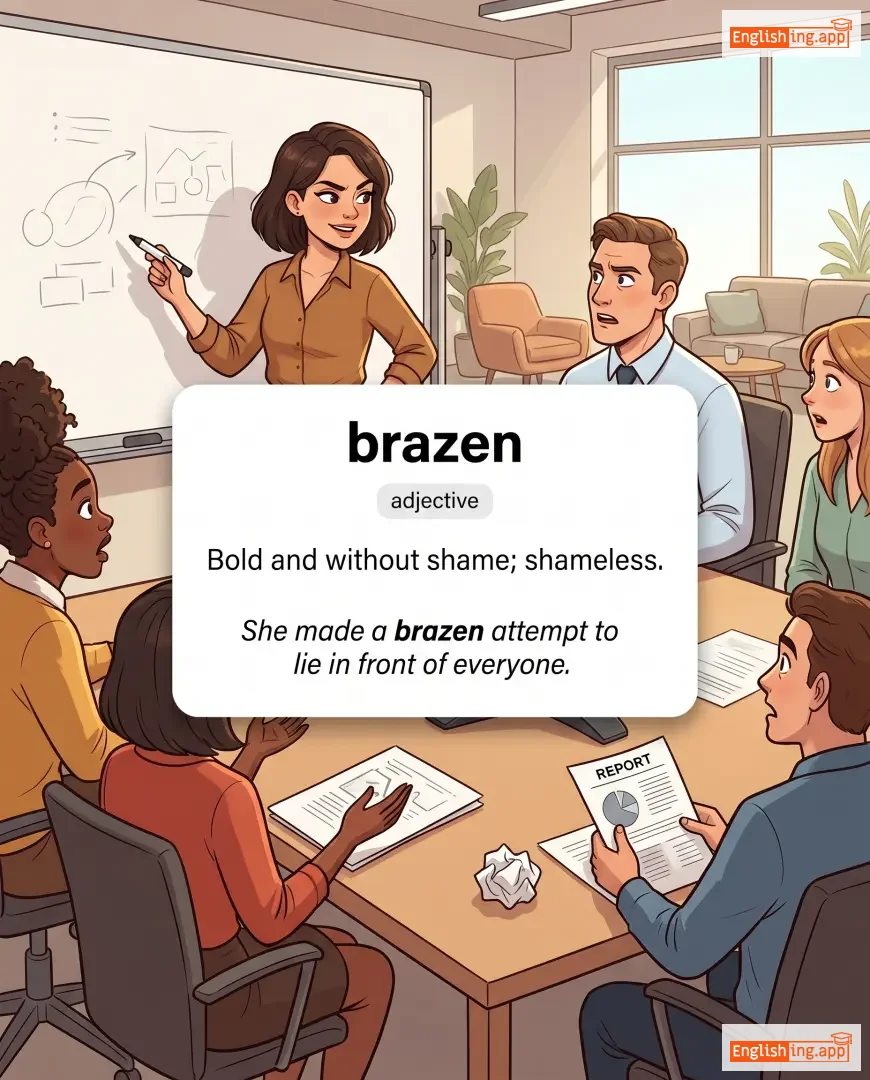
Bold and without shame; shameless.
••••••
|
She made a brazen attempt to lie in front of everyone. |
- •••••• |
brazen it out |
To face a difficult situation confidently without showing shame.
••••••
|
- •••••• |
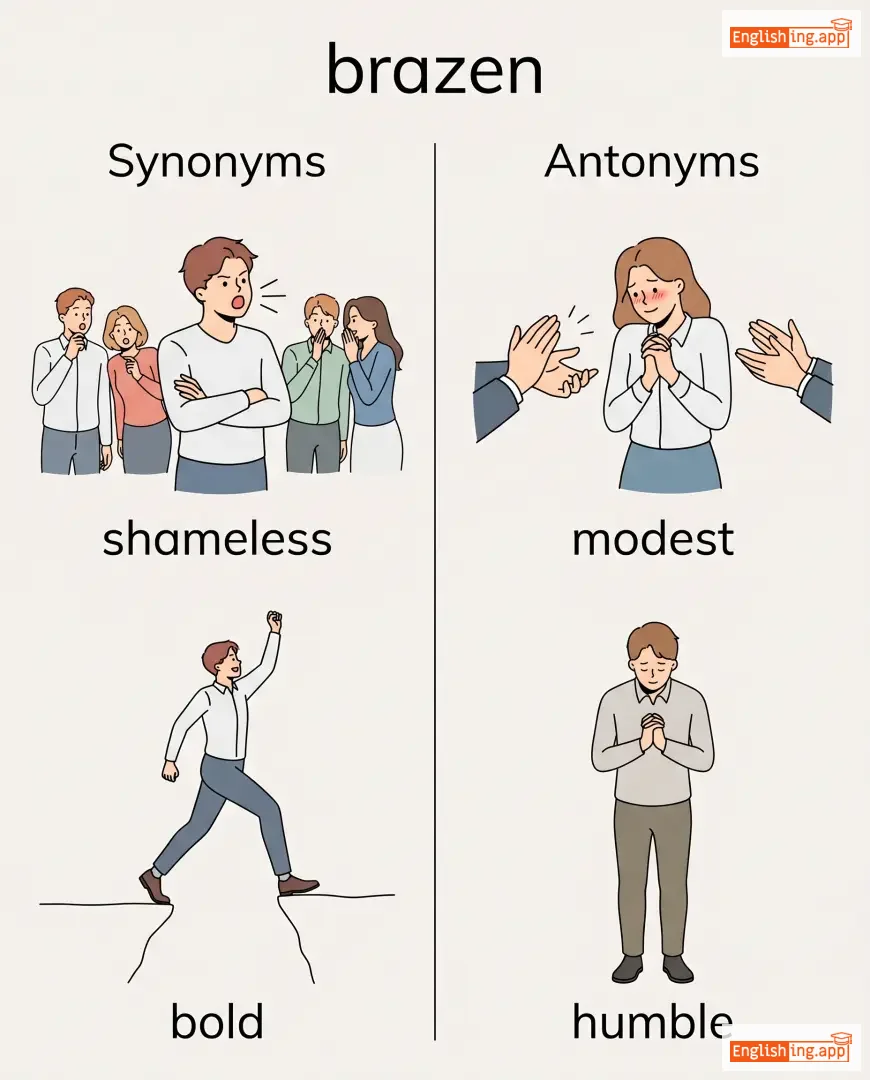
shameless, bold, audacious, impudent
••••••
|
modest, humble, shy
••••••
|
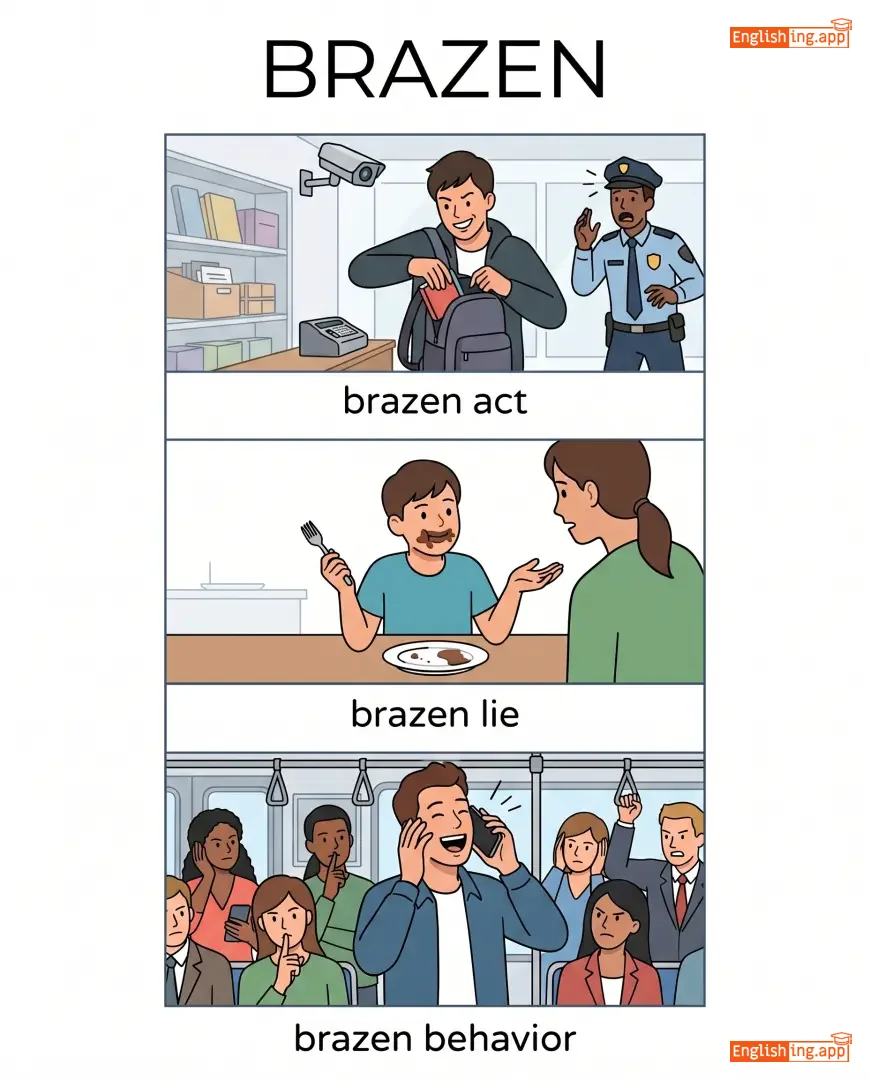
brazen act, brazen lie, brazen behavior
••••••
|
No •••••• |
|
#1099
🔥
|
/breɪz/
verb
(bureizu)
••••••
|
- •••••• |
ブレイズ
bureizu
••••••
|
brazed
bureizudo
••••••
|
brazed
bureizudo
••••••
|
brazes
bureizesu
••••••
|
brazing
bureizingu
••••••
|
To join two pieces of metal by heating and melting a filler metal into the joint.
••••••
|
The mechanic brazed the broken pipe to fix the leak.
メカニックは壊れたパイプを溶接して漏れを修理しました。
••••••
|
メカニックは壊れたパイプを溶接して漏れを修理しました。
Mekanikku wa kowareta paipu o yōsetsu shite more o shūri shimashita.
••••••
|
- •••••• | - •••••• | - •••••• |
weld, solder, fuse, bond
••••••
|
separate, break
••••••
|
braze metal, braze joint, brazed pipe
••••••
|
Braze = 高温で溶接 🔥
••••••
|
|
#1100
🐴
|
/breɪ/
verb
(ブレイ)
••••••
|
- •••••• |
鳴き声
nakigoe
••••••
|
brayed
ブレイド
••••••
|
brayed
ブレイド
••••••
|
brays
ブレイズ
••••••
|
braying
ブレイング
••••••
|
To make a loud, harsh sound like a donkey.
••••••
|
The donkey began to bray loudly in the field.
ロバは畑で大声で鳴き始めました。
••••••
|
ロバは畑で大声で鳴き始めました。
Roba wa hatake de ōgoe de nakihajimemashita.
••••••
|
bray like a donkey
ロバのように鳴く
••••••
|
To speak or laugh in a loud, harsh, and unpleasant way.
••••••
|
ロバのように鳴く
Roba no yō ni naku
••••••
|
heehaw, bawl, cry, yell
••••••
|
whisper, murmur
••••••
|
bray loudly, donkey bray, braying sound
••••••
|
ロバが鳴くとき、'鳴き声' を覚えましょう 🐴
••••••
|
|
#1101
💪
|
/ˈbrɔːni/
adjective
(ブローニー)
••••••
|
- •••••• |
筋肉質な
kinnikutsubu na
••••••
|
- •••••• | - •••••• | - •••••• | - •••••• |
Physically strong and muscular.
••••••
|
The brawny man lifted the heavy box with ease.
その筋肉質の男性は重い箱を軽々と持ち上げた。
••••••
|
その筋肉質の男性は重い箱を軽々と持ち上げた。
Sono kinnikutsubu na dansei wa omoi hako wo karukaru to mochiageta.
••••••
|
- •••••• | - •••••• | - •••••• |
muscular, strong, hefty, sturdy, robust
••••••
|
weak, frail, feeble
••••••
|
brawny arms, brawny figure, brawny build
••••••
|
筋肉質な = brawny = 筋肉がある強い男性。
••••••
|
|
#1102
💪
|
/brɔːn/
noun
(ブロン)
••••••
|
- •••••• |
体力
tairyoku
••••••
|
- •••••• | - •••••• | - •••••• | - •••••• |
physical strength in contrast to intelligence
••••••
|
He used his brawn to lift the heavy box. |
彼は重い箱を持ち上げるために体力を使いました。
Kare wa omoi hako o mochiageru tame ni tairyoku o tsukaimashita.
••••••
|
brain versus brawn |
mental ability compared with physical strength
••••••
|
頭脳と体力
zunou to tairyoku
••••••
|
muscle, strength, power, might
••••••
|
weakness, frailty
••••••
|
sheer brawn, physical brawn, use brawn
••••••
|
Brawn は体力を意味します – 💪 重いものを持ち上げるために
••••••
|
|
#1103
🥊
|
/brɔːl/
noun
(ブロール)
••••••
|
- •••••• |
乱闘
rantou
••••••
|
- •••••• | - •••••• | - •••••• | - •••••• |
a noisy fight in a public place
••••••
|
A brawl broke out outside the bar late at night.
夜遅くにバーの外で乱闘が起こった。
••••••
|
夜遅くにバーの外で乱闘が起こった。
Yoru osoku ni baa no soto de rantou ga okotta.
••••••
|
barroom brawl
バーの乱闘
••••••
|
a fight that occurs in a bar
••••••
|
バーの乱闘
Baa no rantou
••••••
|
fight, scuffle, clash, fracas
••••••
|
peace, harmony
••••••
|
street brawl, drunken brawl, barroom brawl
••••••
|
Brawl = 乱闘 = バーでの乱闘みたいな!
••••••
|
|
#1104
🎶
|
/brəˈvjʊrə/
noun
••••••
|
- •••••• | - •••••• | - •••••• | - •••••• | - •••••• | - •••••• |
a display of great skill and brilliance, especially in music or performance
••••••
|
The pianist delivered a bravura performance that left the audience spellbound. |
- •••••• | - •••••• | - •••••• | - •••••• |
flair, brilliance, virtuosity, mastery
••••••
|
clumsiness, mediocrity
••••••
|
bravura performance, bravura display, bravura style
••••••
|
No •••••• |
|
#1105
👏
|
/ˈbrɑː.voʊ/
interjection
(ブラボー)
••••••
|
- •••••• |
ブラボー
burabō
••••••
|
- •••••• | - •••••• | - •••••• | - •••••• |
used to express approval, admiration, or praise
••••••
|
The audience shouted 'Bravo!' after the stunning performance.
観客は素晴らしいパフォーマンスの後で「ブラボー!」と叫びました。
••••••
|
観客は素晴らしいパフォーマンスの後で「ブラボー!」と叫びました。
Kankyaku wa subarashī pafōmansu no ato de 'burabō!' to sakebimashita.
••••••
|
- •••••• | - •••••• | - •••••• |
well done, congratulations, excellent, cheers
••••••
|
boo, disapproval
••••••
|
shout bravo, bravo performance, bravo actor
••••••
|
ブラボーは日本語で賞賛を表現する言葉 – 👏
••••••
|
|
#1106
🦁
|
/breɪv/
adjective
(ブレイブ)
••••••
|
- •••••• |
勇敢な
yūkan na
••••••
|
- •••••• | - •••••• | - •••••• | - •••••• |
showing courage in the face of danger or difficulty
••••••
|
The brave firefighter rushed into the burning building. |
勇敢な消防士が燃える建物に飛び込んだ。
Yūkan na shōbōshi ga moeru tatemono ni tobikonda.
••••••
|
put on a brave face |
to pretend to be confident and cheerful despite difficulties
••••••
|
勇敢な顔をする
Yūkan na kao o suru
••••••
|
courageous, valiant, fearless, heroic, bold
••••••
|
cowardly, fearful, timid
••••••
|
brave man, brave soldier, brave attempt, brave enough
••••••
|
Braveは '勇敢な' という意味で、ライオンのように強くて怖くない。
••••••
|
|
#1107
💪
|
/brəˈvɑːdoʊ/
noun
••••••
|
|
- •••••• | - •••••• | - •••••• | - •••••• | - •••••• |
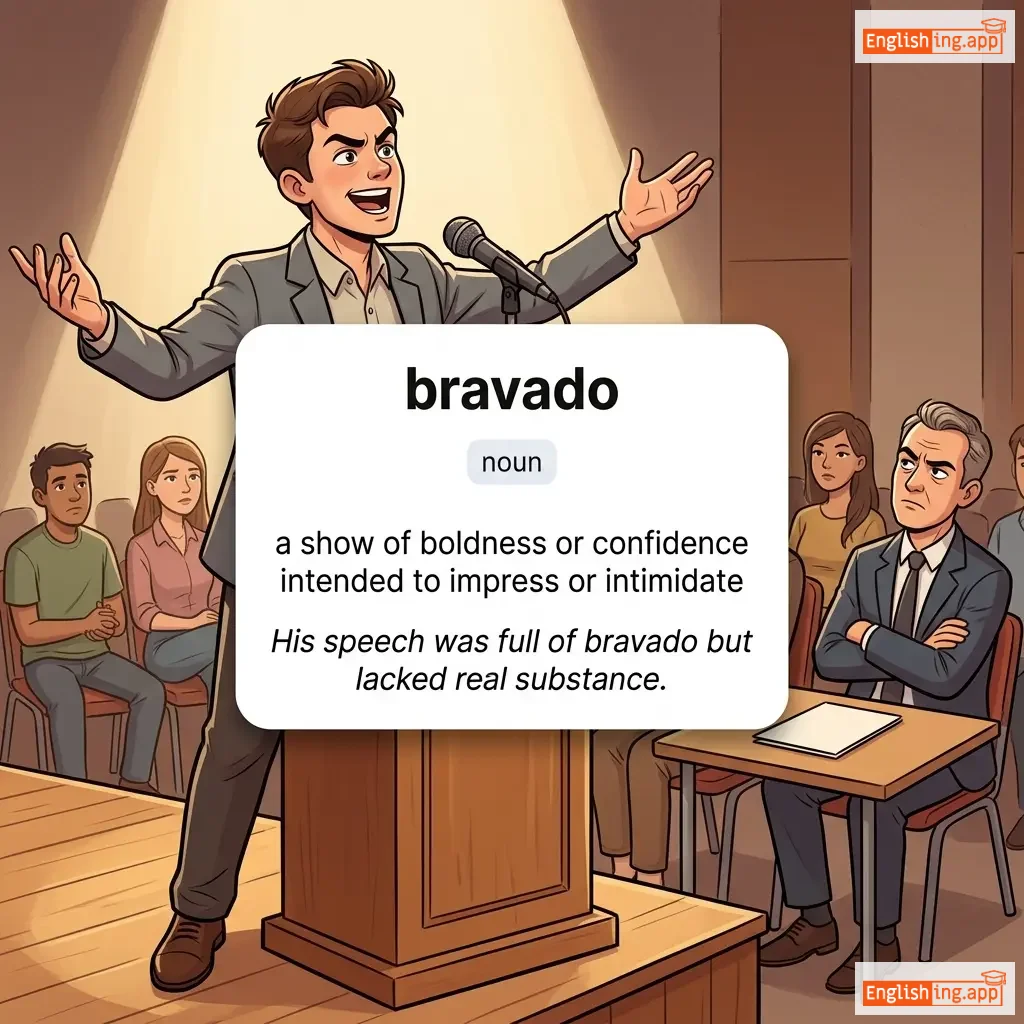
a show of boldness or confidence intended to impress or intimidate
••••••
|
His speech was full of bravado but lacked real substance. |
- •••••• |
show of bravado |
an outward display of confidence or boldness that may not be genuine
••••••
|
- •••••• |
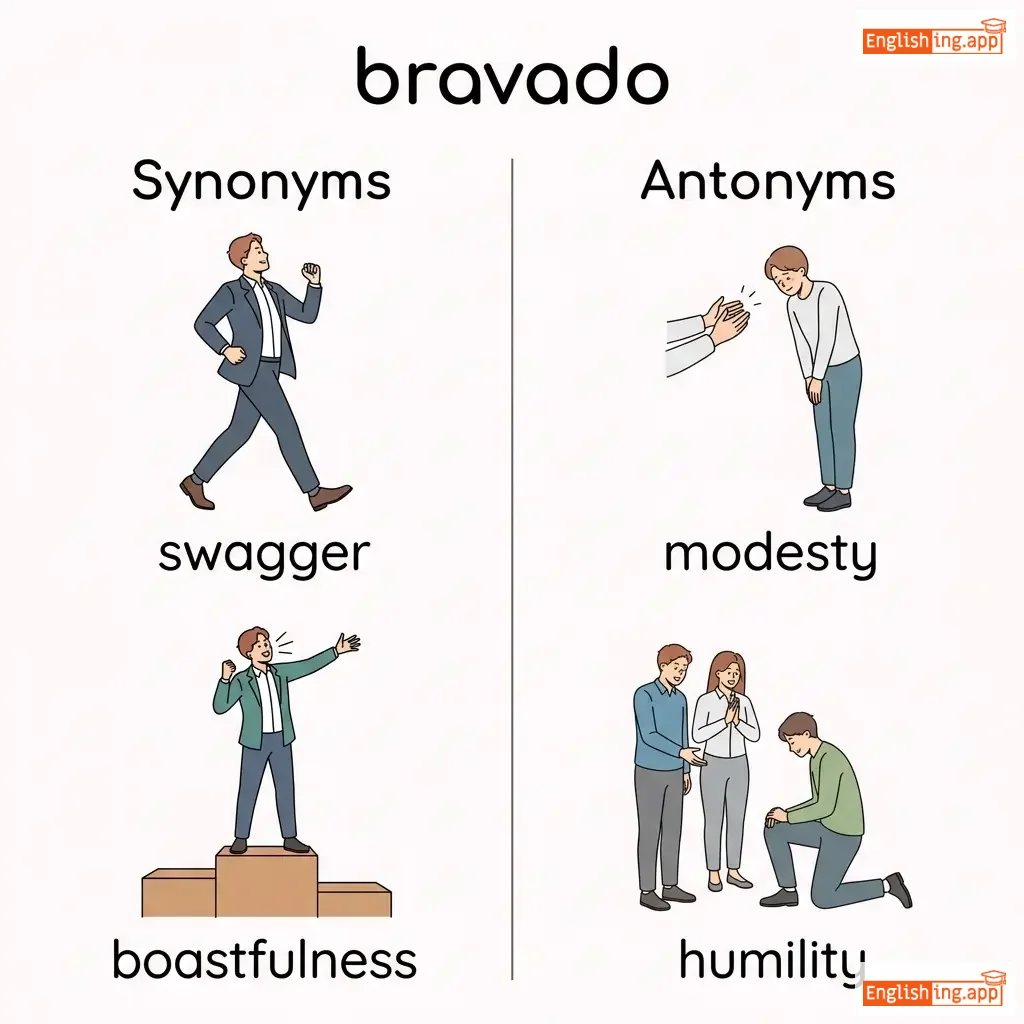
swagger, boastfulness, boldness, bluster
••••••
|
modesty, humility, shyness
••••••
|
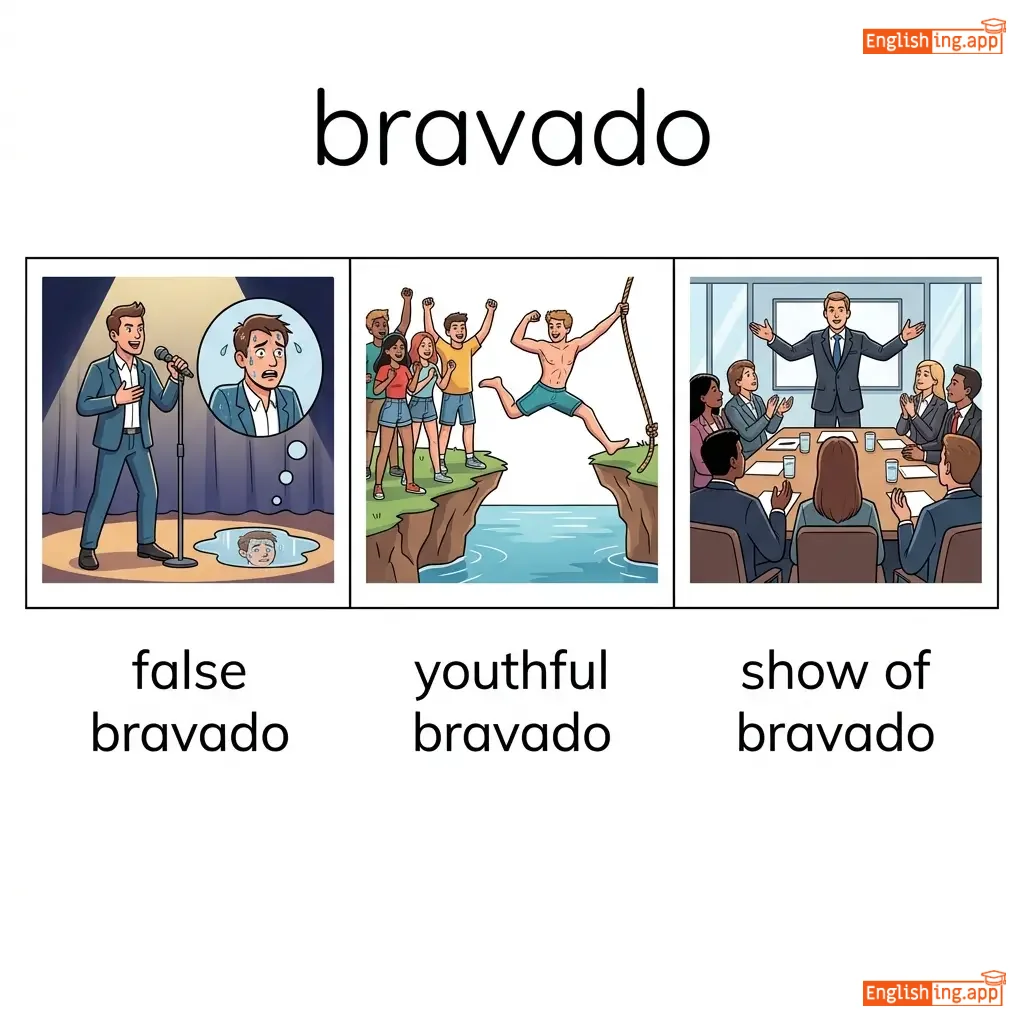
false bravado, youthful bravado, show of bravado, display of bravado
••••••
|
No •••••• |
|
#1108
👶
|
/ˈbrætɪʃ/
adjective
(ブラティッシュ)
••••••
|
- •••••• |
わがまま
wagamama
••••••
|
- •••••• | - •••••• | - •••••• | - •••••• |
acting like a spoiled child; behaving in an annoying, self-centered way
••••••
|
The brattish boy threw a tantrum when he didn’t get his toy.
ブラティッシュな男の子は、おもちゃがもらえなかったときに駄々をこねました。
••••••
|
わがままな男の子は、おもちゃがもらえなかったときに駄々をこねました。
Wagamama na otokonoko wa, omocha ga moraenakatta toki ni dada o konemashita.
••••••
|
- •••••• | - •••••• | - •••••• |
spoiled, childish, petulant, rude
••••••
|
well-behaved, polite, mature
••••••
|
brattish behavior, brattish attitude, brattish child, brattish manner
••••••
|
Brattishはわがままで、欲しいものが手に入らないと怒る子供のような態度です。
••••••
|
|
#1109
🎺
|
/ˈbræsi/
adjective
(ブラスィ)
••••••
|
- •••••• |
派手な
hade na
••••••
|
- •••••• | - •••••• | - •••••• | - •••••• |
loud and showy in a way that lacks good taste; resembling brass in color or sound
••••••
|
She wore a brassy necklace that caught everyone’s attention. |
彼女は目立つネックレスをしていて、みんなの注目を集めていた。
Kanojo wa medatsu nekkuresu o shiteite, minna no chūmoku o atsumete ita.
••••••
|
- •••••• | - •••••• | - •••••• |
loud, flashy, gaudy, vulgar
••••••
|
subtle, elegant, refined
••••••
|
brassy tone, brassy color, brassy necklace, brassy sound
••••••
|
Brassyは真鍮のように目立つ - 派手な
••••••
|
|
#1110
😏
|
/bræʃ/
adjective
(ハピネス)
••••••
|
- •••••• |
図々しい
zuzushii
••••••
|
- •••••• | - •••••• | - •••••• | - •••••• |
self-assertive in a rude, noisy, or overconfident way
••••••
|
His brash comments offended many people at the meeting. |
彼の図々しいコメントは会議で多くの人々を怒らせました。
Kare no zuzushii komentou wa kaigi de ooku no hitobito wo okorase mashita.
••••••
|
- •••••• | - •••••• | - •••••• |
bold, rude, impudent, arrogant, cocky
••••••
|
polite, humble, modest
••••••
|
brash attitude, brash behavior, brash style, brash remark
••••••
|
Brash は図々しい、まるで迷惑なコメントのようです。
••••••
|
Vocabulary Quiz
Test your vocabulary by matching words with their translations or meanings.
Login to take the quiz
Comments (0)
Share your thoughts and join the discussion.
Join the discussion by logging in
Login to CommentNo comments yet
Be the first to share your thoughts!