

翻訳
過去
過去分詞
三人称単数
動名詞
意味
例文
例文の翻訳
同義語
対義語
コロケーション
ニーモニック


Swipe left or right, or use the buttons. Tap image to zoom.
例文の翻訳
単語
Lesson 34Lesson 34 - マスクトグル
|
絵文字
|
単語 | Images | 翻訳 | 過去 | 過去分詞 | 三人称単数 | 動名詞 | 意味 | 例文 | 例文の翻訳 | 表現例 | 表現例の意味 | 表現例の翻訳 | 同義語 | 対義語 | コロケーション | ニーモニック |
|---|---|---|---|---|---|---|---|---|---|---|---|---|---|---|---|---|---|
|
#991
😊
|
/ˈblaɪðsəm/
adjective
(ブライサム)
••••••
|
- •••••• |
陽気
youki
••••••
|
- •••••• | - •••••• | - •••••• | - •••••• |
cheerful, carefree, and full of joy
••••••
|
She entered the room with a blithesome smile that lifted everyone's spirits. |
彼女は陽気な笑顔で部屋に入り、皆の気分を盛り上げました。
Kanojo wa youki na egao de heya ni hairi, mina no kibun wo moriagemashita.
••••••
|
- •••••• | - •••••• | - •••••• |
cheerful, carefree, joyful, merry, lighthearted
••••••
|
sad, gloomy, serious
••••••
|
blithesome spirit, blithesome mood, blithesome laughter
••••••
|
Blithesomeはbliss + some = 喜びに満ちた陽気な人
••••••
|
|
#992
📖
|
/blɜːrb/
noun
(ブルーブ)
••••••
|
- •••••• |
宣伝文
sendenbun
••••••
|
- •••••• | - •••••• | - •••••• | - •••••• |
a short promotional description of a book, product, or service
••••••
|
The back cover had a blurb praising the novel. |
本の裏表紙にはその小説を称賛する宣伝文があった。
Hon no ura hyōshi ni wa sono shōsetsu o shōsan suru sendenbun ga atta.
••••••
|
- •••••• | - •••••• | - •••••• |
advertisement, pitch, summary, description, endorsement
••••••
|
silence, concealment
••••••
|
book blurb, promotional blurb, short blurb, marketing blurb
••••••
|
Blurb は本の裏表紙に書かれた短い宣伝文です
••••••
|
|
#993
🌫️
|
/blɜːr/
verb
(ブル)
••••••
|
- •••••• |
ぼやける
boyakeru
••••••
|
blurred
ブルード
••••••
|
blurred
ブルード
••••••
|
blurs
ブルズ
••••••
|
blurring
ブラーリング
••••••
|
to make something unclear or difficult to see
••••••
|
Tears blurred her vision.
涙が彼女の視界をぼやけさせた。
••••••
|
涙が彼女の視界をぼやけさせた。
Namida ga kanojo no shikai o boyakesaseta.
••••••
|
a blur
ぼやけ
••••••
|
something seen unclearly or remembered vaguely
••••••
|
ぼやけ
boyake
••••••
|
obscure, dim, distort, smudge, cloud
••••••
|
clarify, sharpen, define
••••••
|
blur the line, blurred vision, blur effect, blur image
••••••
|
ぼやけるということは、ぼやけた写真のように見えなくなることです。
••••••
|
|
#994
🪓
|
/blʌnt/
adjective
(ブラント)
••••••
|
- •••••• |
鈍い、率直な
nibui, sassokuna
••••••
|
- •••••• | - •••••• | - •••••• | - •••••• |
not sharp; direct and straightforward in speech
••••••
|
Her blunt remarks offended some people. |
彼女の率直な言葉は何人かの人々を傷つけた。
Kanojo no sassokuna kotoba wa nannin ka no hitobito o kizutsuketa.
••••••
|
blunt truth |
an honest and direct statement, even if it is harsh
••••••
|
厳しい真実
kibishī shinjitsu
••••••
|
dull, direct, frank, straightforward, candid
••••••
|
sharp, subtle, tactful
••••••
|
blunt knife, blunt answer, blunt remark, blunt refusal
••••••
|
鈍いナイフは切れない、鈍い言葉は心を傷つける
••••••
|
|
#995
😬
|
/ˈblʌndər/
noun
(ブランド)
••••••
|
|
誤り
ayamari
••••••
|
- •••••• | - •••••• | - •••••• | - •••••• |
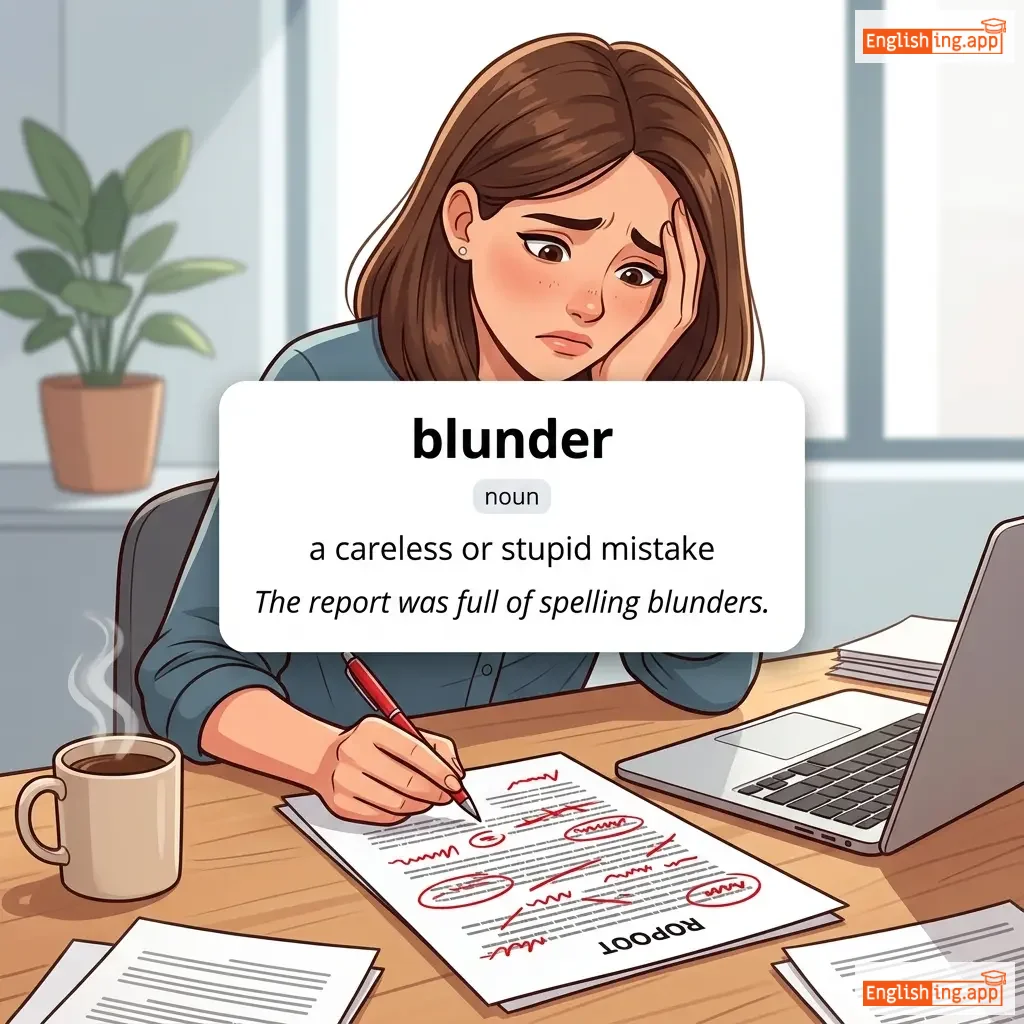
a careless or stupid mistake
••••••
|
The report was full of spelling blunders.
報告書には多くのスペルミスがありました。
••••••
|
報告書には多くのスペルミスがありました。
Houkokusho ni wa ooku no superu misu ga arimashita.
••••••
|
make a blunder
失敗をする
••••••
|
to make a serious mistake
••••••
|
失敗をする
shippai wo suru
••••••
|
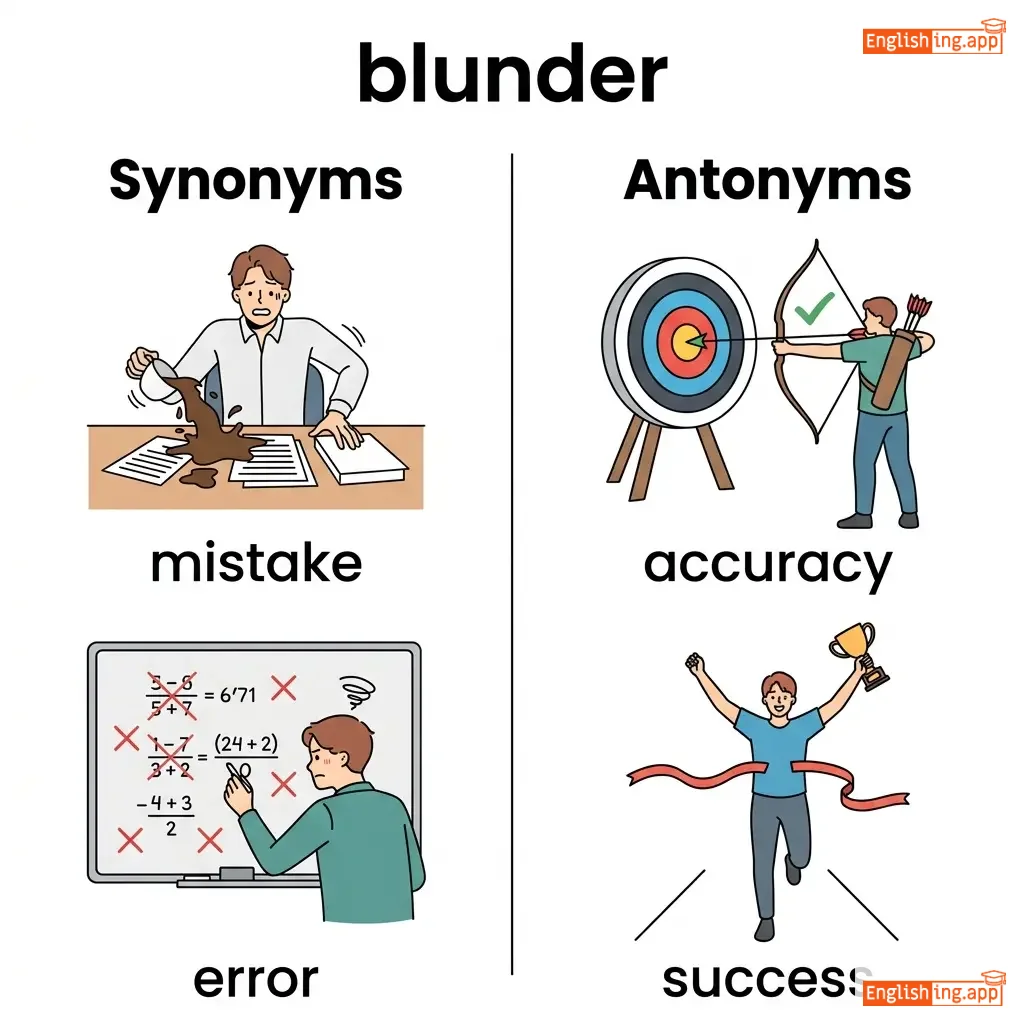
mistake, error, slip, oversight, misstep
••••••
|
accuracy, success, correctness
••••••
|
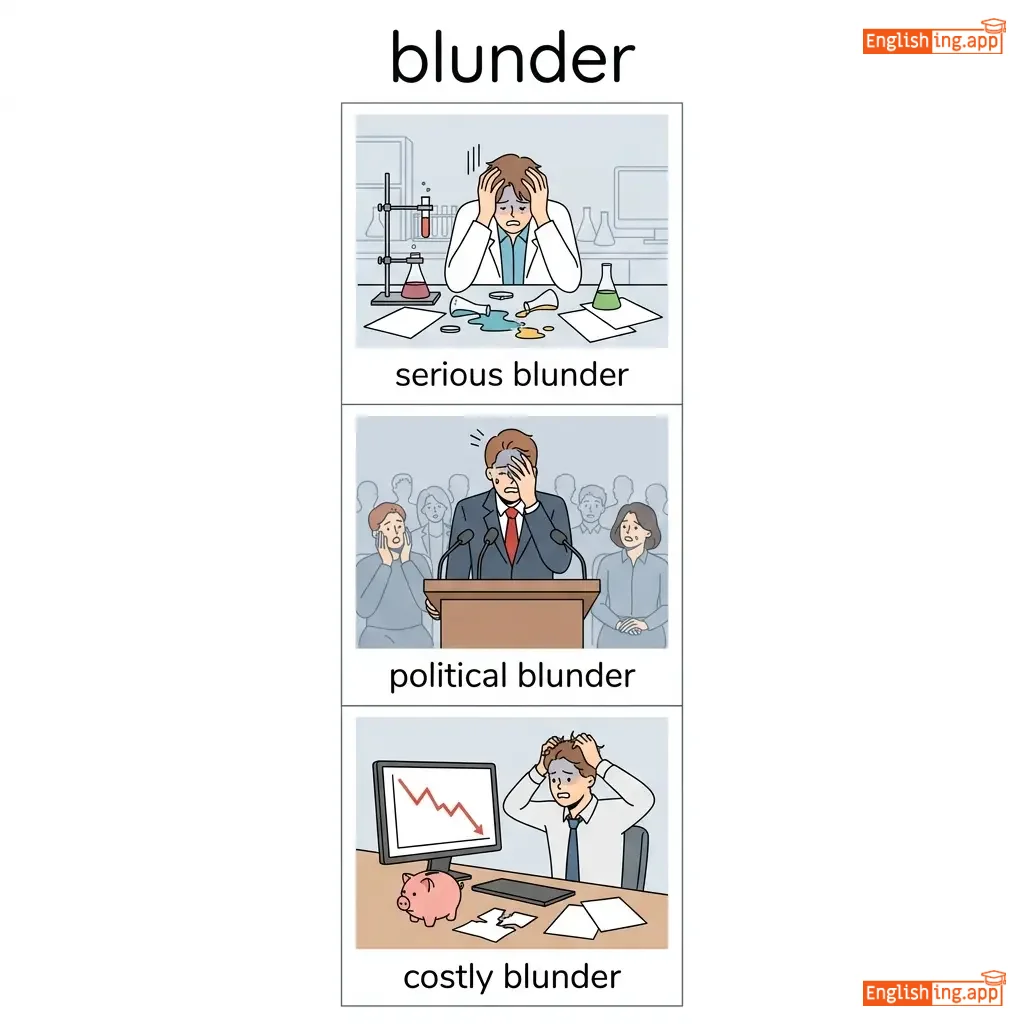
serious blunder, political blunder, costly blunder, major blunder
••••••
|
Blunderはミスを意味します。'Blind'はミスにつながります。
••••••
|
|
#996
🃏
|
/blʌf/
verb
••••••
|
- •••••• | - •••••• |
bluffed
••••••
|
bluffed
••••••
|
bluffs
••••••
|
bluffing
••••••
|
to deceive someone by pretending to have strength, knowledge, or resources that one does not actually possess
••••••
|
He tried to bluff his way into the exclusive club. |
- •••••• |
call someone's bluff |
to challenge someone to prove their claim or threat
••••••
|
- •••••• |
deceive, pretend, mislead, trick, feign
••••••
|
reveal, confess, admit
••••••
|
bluff game, bluff strategy, bluff his way, call the bluff
••••••
|
No •••••• |
|
#997
🎵
|
/bluːz/
noun
(ブルース)
••••••
|
- •••••• |
ブルース
burūsu
••••••
|
- •••••• | - •••••• | - •••••• | - •••••• |
a feeling of sadness; a style of music with melancholy themes
••••••
|
Listening to blues music always calms him down. |
ブルース音楽を聴くと、いつも彼を落ち着かせる。
Burūsu ongaku o kiku to, itsumo kare o ochitsukaseru.
••••••
|
sing the blues |
to complain or talk about one's troubles
••••••
|
ブルースを歌う
Burūsu o utau
••••••
|
melancholy, sadness, sorrow, depression, gloom
••••••
|
joy, happiness, delight
••••••
|
blues music, the blues, sing the blues
••••••
|
Bluesは悲しみと音楽を意味する – それが悲しみの歌
••••••
|
|
#998
📐
|
/ˈbluːˌprɪnt/
noun
(ブループリント)
••••••
|
|
設計図
sekkeizu
••••••
|
- •••••• | - •••••• | - •••••• | - •••••• |
a detailed plan or design; a guide for making something
••••••
|
The architect shared the blueprint of the new building with the team. |
建築家は新しい建物の設計図をチームと共有しました。
Kenchikuka wa atarashī tatemono no sekkeizu o chīmu to kyōyū shimashita.
••••••
|
- •••••• | - •••••• | - •••••• |
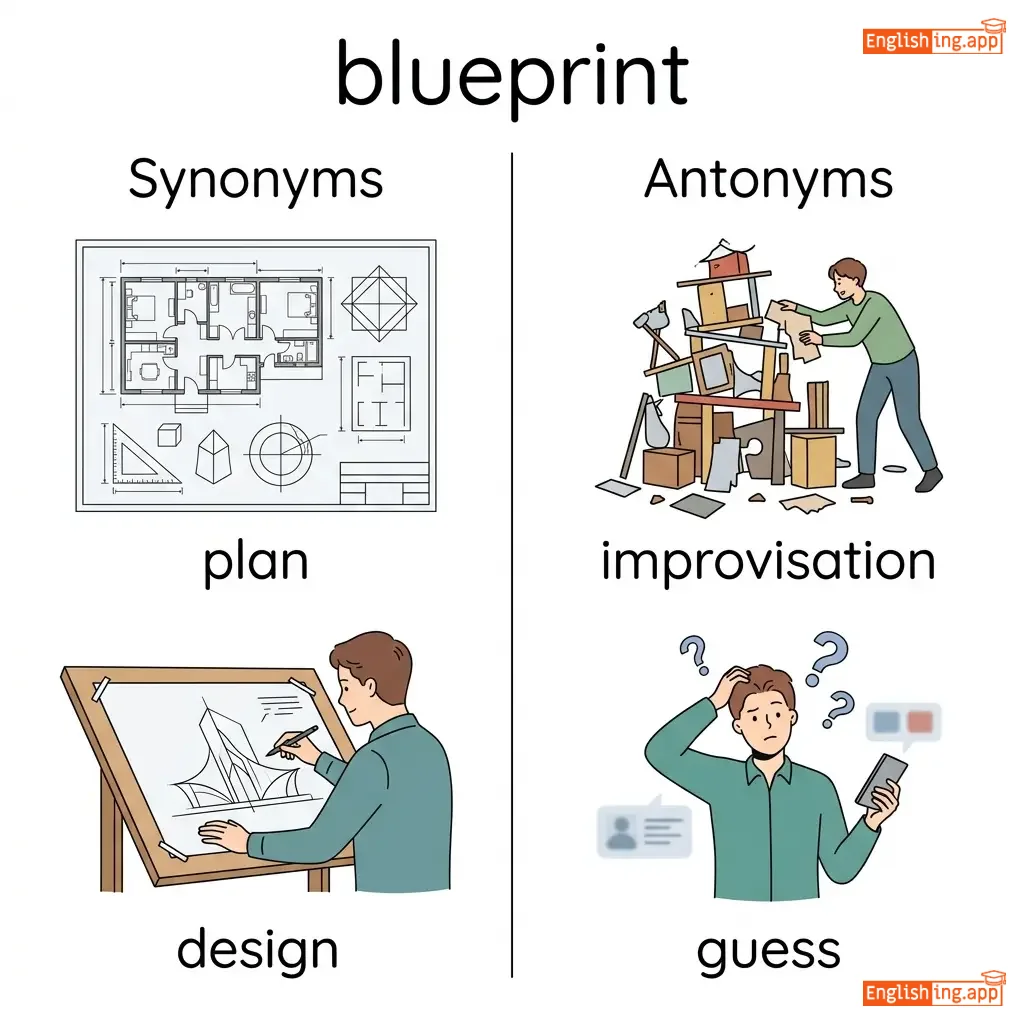
plan, design, draft, scheme, model
••••••
|
improvisation, guess
••••••
|
blueprint for success, blueprint design, detailed blueprint
••••••
|
ブループリントは建物を作るための設計図
••••••
|
|
#999
🔵
|
/bluː/
adjective
(ブルー)
••••••
|
- •••••• |
青
ao
••••••
|
- •••••• | - •••••• | - •••••• | - •••••• |
the color of the clear sky; feeling sad or depressed
••••••
|
She wore a bright blue dress to the party. |
彼女はパーティーに明るい青いドレスを着ていました。
Kanojo wa pātī ni akarui aoi doresu o kite imashita.
••••••
|
feeling blue |
to feel sad or depressed
••••••
|
青を感じる
ao o kanjiru
••••••
|
azure, navy, cerulean, sad, gloomy
••••••
|
red, yellow, cheerful, happy
••••••
|
blue sky, blue dress, blue mood, feeling blue
••••••
|
青は青 – 空のように青い、でも青を感じることは悲しいこと。
••••••
|
|
#1000
🔨
|
/ˈblʌdʒən/
verb
(ぶらっじょん)
••••••
|
- •••••• |
鈍器で殴る
donki de naguru
••••••
|
bludgeoned
ぶらっじょんど
••••••
|
bludgeoned
ぶらっじょんど
••••••
|
bludgeons
ぶらっじょんず
••••••
|
bludgeoning
ぶらっじょにんぐ
••••••
|
to hit someone with a heavy object; to force someone into doing something
••••••
|
The guard was bludgeoned by the attacker in the alley.
ザ・ガード ワズ ぶらっじょんど バイ ザ アタッカー イン ザ アリー。
••••••
|
ガードは小道で攻撃者に鈍器で殴られた。
Gādo wa komichi de kōgekisha ni donki de nagurareta.
••••••
|
- •••••• | - •••••• | - •••••• |
club, beat, strike, pummel, coerce
••••••
|
caress, comfort, persuade
••••••
|
bludgeon someone, bludgeon to death, bludgeon into submission
••••••
|
Bludgeon = blood + gen – 誰かを殴ると血が出る (blood)。
••••••
|
|
#1001
🗣️
|
/ˈbloʊˌhɑrd/
noun
(ブロウハード)
••••••
|
- •••••• |
自慢話をする人
jimanbanashi o suru hito
••••••
|
- •••••• | - •••••• | - •••••• | - •••••• |
a person who brags a lot or talks in a boastful way
••••••
|
Everyone avoided the blowhard at the party because he wouldn't stop bragging. |
パーティーでみんなはその自慢話をする人を避けた。なぜなら、彼は自慢を止めなかったから。
Pātī de minna wa sono jimanbanashi o suru hito o saketa. Nazenara, kare wa jiman o tomenakatta kara.
••••••
|
- •••••• | - •••••• | - •••••• |
braggart, boaster, show-off, egotist, loudmouth
••••••
|
modest person, humble individual
••••••
|
loud blowhard, political blowhard, arrogant blowhard
••••••
|
Blow HARDは自慢話をして、いつも自分のことを話す人を指します。
••••••
|
|
#1002
🩸
|
/blɑːtʃ/
noun
(ブロッチ)
••••••
|
- •••••• |
しみ
shimi
••••••
|
- •••••• | - •••••• | - •••••• | - •••••• |
a large, irregular spot or stain, often on skin or fabric
••••••
|
His shirt had a red blotch from the spilled juice. |
彼のシャツにはこぼれたジュースで赤いしみがついていた。
Kare no shatsu ni wa koboreta jūsu de akai shimi ga tsuite ita.
••••••
|
- •••••• | - •••••• | - •••••• |
stain, spot, blemish, smear, mark
••••••
|
cleanliness, clarity
••••••
|
red blotch, skin blotch, ink blotch
••••••
|
Blotchは大きく不規則なしみを意味します。
••••••
|
|
#1003
🚧
|
/blɑːˈkeɪd/
noun
(ブロケード)
••••••
|
- •••••• |
封鎖
fusa
••••••
|
- •••••• | - •••••• | - •••••• | - •••••• |
an act of sealing off a place to prevent goods or people from entering or leaving
••••••
|
The navy set up a blockade around the harbor. |
海軍は港の周りに封鎖を設置しました。
Kaigun wa minato no mawari ni fusa o setchi shimashita.
••••••
|
run the blockade |
to get through or past a blockade despite restrictions
••••••
|
封鎖を突破する
fusa o toppa suru
••••••
|
siege, barrier, obstruction, embargo, restriction
••••••
|
opening, access, passage
••••••
|
naval blockade, economic blockade, impose a blockade
••••••
|
Blockadeは 'block + aid' = 助けを封じ込めることです。
••••••
|
|
#1004
🤰
|
/ˈbloʊtɪd/
adjective
(ブロウテッド)
••••••
|
- •••••• |
膨れた
fukureta
••••••
|
- •••••• | - •••••• | - •••••• | - •••••• |
swollen or puffed up, often unpleasantly
••••••
|
After the big meal, he felt bloated and uncomfortable. |
大きな食事の後、彼は膨れた感じで不快に感じていた。
Ooki na shokuji no ato, kare wa fukureta kanji de fukai ni kanjite ita.
••••••
|
- •••••• | - •••••• | - •••••• |
swollen, distended, inflated, puffed
••••••
|
flat, deflated, lean
••••••
|
bloated stomach, bloated feeling, bloated body
••••••
|
Bloated は食べ過ぎてお腹が膨れること。
••••••
|
|
#1005
🎈
|
/bloʊt/
verb
(ブロート)
••••••
|
- •••••• |
膨らむ
fukuramu
••••••
|
bloated
ブローテッド
••••••
|
bloated
ブローテッド
••••••
|
bloats
ブローツ
••••••
|
bloating
ブローティング
••••••
|
to swell or cause to swell, often due to fluid or gas
••••••
|
Eating too much junk food can bloat your stomach.
ジャンクフードを食べすぎると、あなたの胃が膨らむことがあります。
••••••
|
ジャンクフードを食べすぎると、あなたの胃が膨らむことがあります。
Janku fudo o tabesugiru to, anata no i ga fukuramu koto ga arimasu.
••••••
|
software bloat
ソフトウェアの膨張
••••••
|
when software becomes inefficient due to unnecessary features
••••••
|
ソフトウェアが不必要な機能で非効率になるとき
sofuto wea ga fuhitsuyou na kinou de hikouritsu ni naru toki
••••••
|
swell, expand, puff, inflate, distend
••••••
|
shrink, contract, compress
••••••
|
bloat the stomach, bloat with pride, software bloat
••••••
|
Bloat は風船のように膨らむ、不要な機能で膨らんでいる。
••••••
|
|
#1006
😐
|
/blɑːˈzeɪ/
adjective
(ブレイズ)
••••••
|
- •••••• |
無関心, 無感動
mukanshin, mukandō
••••••
|
- •••••• | - •••••• | - •••••• | - •••••• |
unimpressed or indifferent to something because it has been experienced so often before
••••••
|
After years of luxury travel, she felt blase about another trip to Paris.
何年もの贅沢な旅行の後、彼女はパリへの別の旅行に対して無関心を感じた。
••••••
|
何年もの贅沢な旅行の後、彼女はパリへの別の旅行に対して無関心を感じた。
Nannen mono zētaku na ryokō no ato, kanojo wa Pari e no betsu no ryokō ni taishite mukanshin o kanjita.
••••••
|
- •••••• | - •••••• | - •••••• |
unimpressed, indifferent, apathetic, jaded, bored
••••••
|
excited, enthusiastic, interested
••••••
|
blase attitude, blase response, feel blase, sound blase
••••••
|
Blaseは退屈という意味 — 何度も経験すると無関心になる。
••••••
|
|
#1007
🌸
|
/blaɪð/
adjective
(ブライス)
••••••
|
- •••••• |
無頓着
mutonjaku
••••••
|
- •••••• | - •••••• | - •••••• | - •••••• |
Showing a casual and cheerful indifference considered improper or carefree happiness.
••••••
|
She had a blithe disregard for the rules. |
彼女はルールを無頓着に無視した。
Kanojo wa ruuru o mutonjaku ni mushi shita.
••••••
|
- •••••• | - •••••• | - •••••• |
carefree, casual, lighthearted, heedless
••••••
|
serious, grave, solemn
••••••
|
blithe spirit, blithe disregard, blithe attitude
••••••
|
Blithe = 無頓着、自由で楽しい感じ。
••••••
|
|
#1008
😊
|
/blɪs/
noun
(ブリス)
••••••
|
- •••••• |
至福
shifuku
••••••
|
- •••••• | - •••••• | - •••••• | - •••••• |
Perfect happiness or great joy.
••••••
|
The couple enjoyed a moment of pure bliss on their wedding day. |
そのカップルは結婚式の日に純粋な至福の瞬間を楽しみました。
Sono kappuru wa kekkonshiki no hi ni junsuina shifuku no shunkan o tanoshimimashita.
••••••
|
blissful ignorance |
Not knowing about something unpleasant, which makes one feel happier.
••••••
|
至福の無知
shifuku no muchi
••••••
|
joy, happiness, delight, ecstasy, euphoria
••••••
|
misery, sorrow, sadness
••••••
|
pure bliss, wedded bliss, blissful moment
••••••
|
Blissは至福を意味し、結婚式の素晴らしい瞬間のようです。
••••••
|
|
#1009
🐴
|
/ˈblɪŋkəd/
adjective
(ブリンカード)
••••••
|
- •••••• |
視野が狭い
shiya ga semai
••••••
|
- •••••• | - •••••• | - •••••• | - •••••• |
Having a limited or narrow outlook; unable or unwilling to consider other perspectives.
••••••
|
His blinkered attitude stopped him from seeing the bigger picture. |
彼の視野が狭い態度は、より大きな絵を見せなかった。
Kare no shiya ga semai taido wa, yori ōkina e o misenakatta.
••••••
|
- •••••• | - •••••• | - •••••• |
narrow-minded, prejudiced, biased, limited
••••••
|
open-minded, broad-minded, unbiased
••••••
|
blinkered view, blinkered attitude, blinkered approach
••••••
|
Blinkeredとは、ひとつの方向にしか目を向けない狭い視野のこと。
••••••
|
|
#1010
💔
|
/ˈblaɪtɪd/
adjective
(ブライテッド)
••••••
|
- •••••• |
荒廃した
kouhaishita
••••••
|
- •••••• | - •••••• | - •••••• | - •••••• |
Spoiled, damaged, or destroyed.
••••••
|
The blighted neighborhood was abandoned by most residents.
The blighted neighborhood was abandoned by most residents.
••••••
|
荒廃した地域はほとんどの住民によって放棄されました。
Kouhaishita chiiki wa hotondo no juumin ni yotte houki saremashita.
••••••
|
- •••••• | - •••••• | - •••••• |
ruined, destroyed, devastated, marred
••••••
|
thriving, flourishing, prosperous
••••••
|
blighted area, blighted land, blighted hopes
••••••
|
Blighted: この地域は荒廃し、放棄されました。
••••••
|
|
#1011
🌱
|
/blaɪt/
noun
(buraito)
••••••
|
- •••••• |
枯れ病
karebyō
••••••
|
- •••••• | - •••••• | - •••••• | - •••••• |
A disease or condition that causes plants to wither; something that spoils or damages.
••••••
|
The drought was a blight on the farmer’s crops. |
干ばつは農家の作物にとって枯れ病でした。
Kambatsu wa nōka no sakumotsu ni totte karebyō deshita.
••••••
|
cast a blight on |
To have a damaging or harmful effect on something.
••••••
|
~に枯れ病をもたらす
〜ni karebyō o motarasu
••••••
|
disease, plague, curse, scourge, ruin
••••••
|
blessing, benefit, boon
••••••
|
urban blight, potato blight, economic blight, cast a blight
••••••
|
枯れ病、枯れるという意味で、農作物を壊すもの。
••••••
|
|
#1012
⚫
|
/ˈblɛmɪʃ/
noun
••••••
|
|
- •••••• | - •••••• | - •••••• | - •••••• | - •••••• |
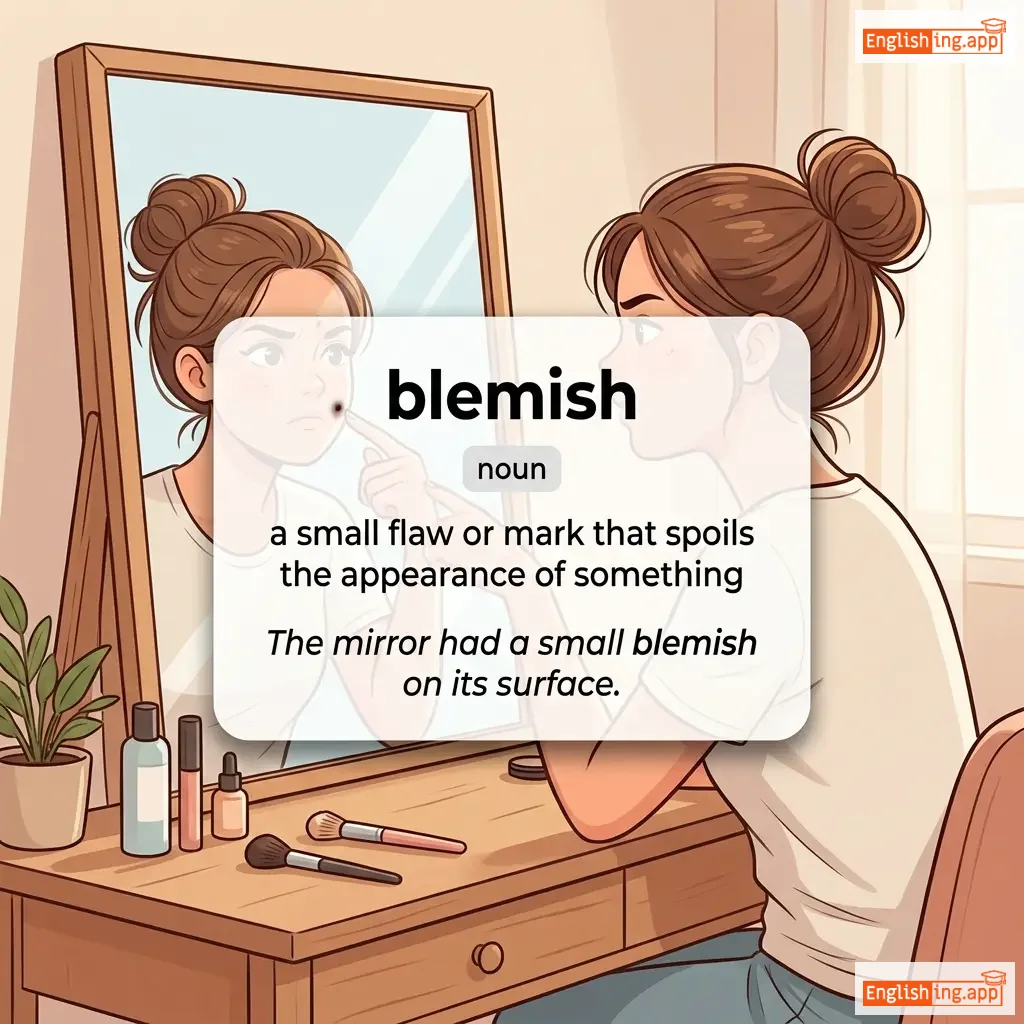
a small flaw or mark that spoils the appearance of something
••••••
|
The mirror had a small blemish on its surface. |
- •••••• | - •••••• | - •••••• | - •••••• |
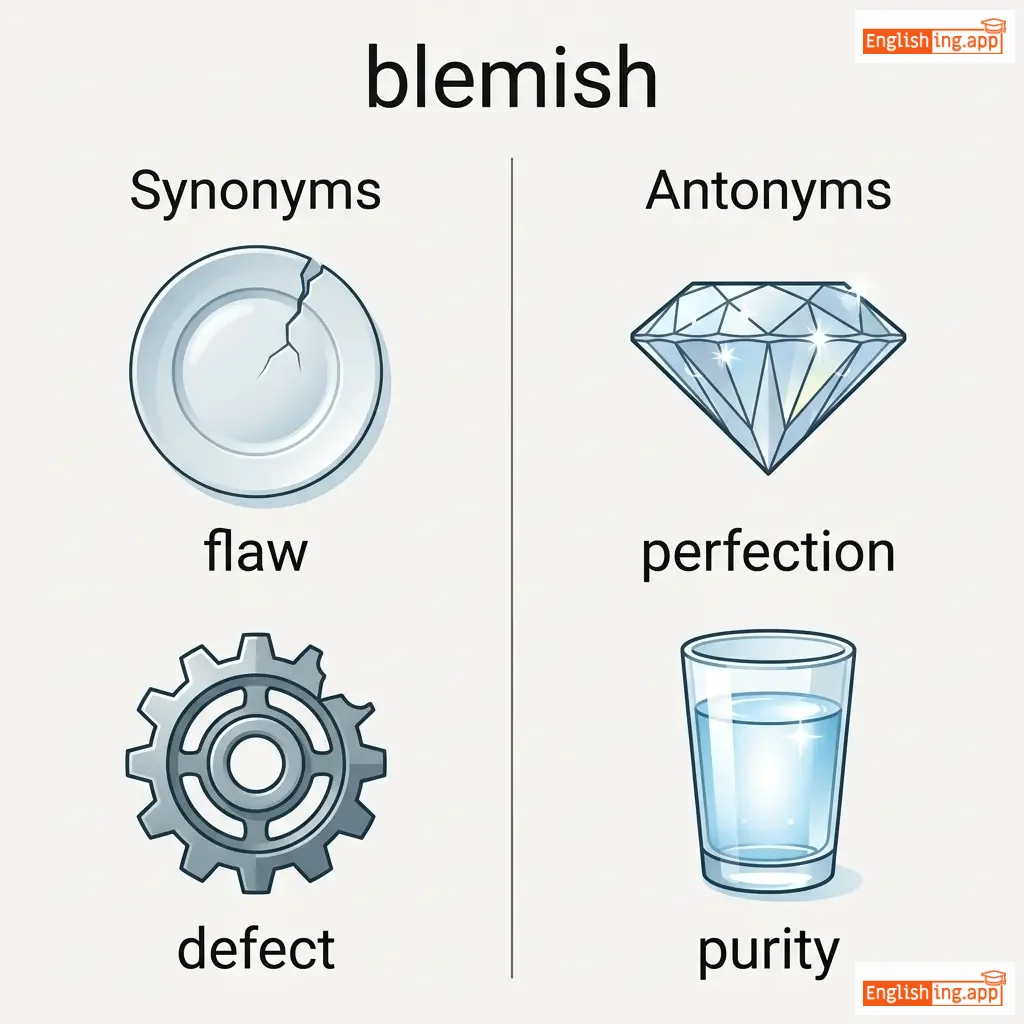
flaw, defect, spot, stain, imperfection
••••••
|
perfection, purity
••••••
|
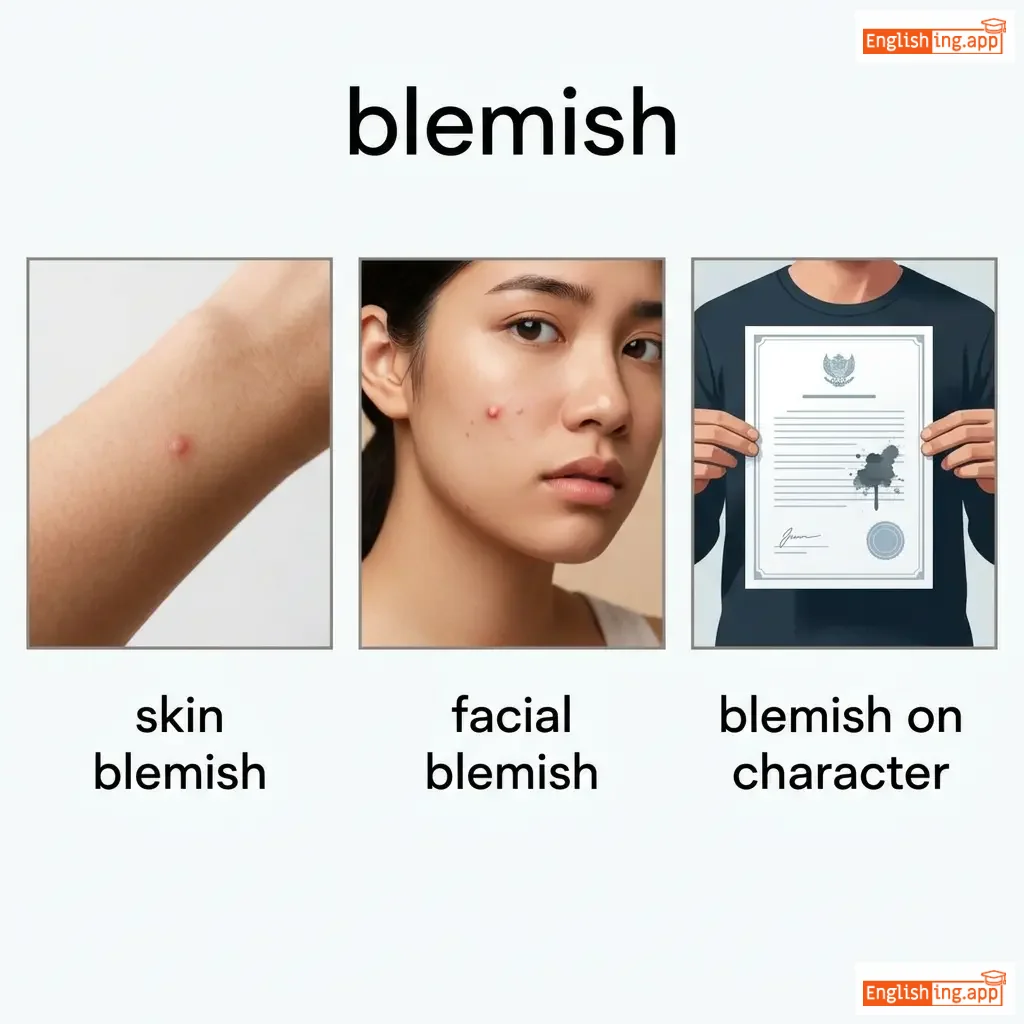
skin blemish, facial blemish, blemish on character, blemish mark
••••••
|
No •••••• |
|
#1013
🌫️
|
/bliːk/
adjective
(ブリーク)
••••••
|
- •••••• |
陰鬱な
in'utsu na
••••••
|
- •••••• | - •••••• | - •••••• | - •••••• |
cold, miserable, or without hope
••••••
|
The future seemed bleak after the economic downturn. |
経済不況後、未来は陰鬱に見えた。
Keizai fukyō go, mirai wa in'utsu ni mieteta.
••••••
|
- •••••• | - •••••• | - •••••• |
gloomy, desolate, grim, dreary
••••••
|
bright, hopeful, cheerful
••••••
|
bleak future, bleak landscape, bleak outlook, bleak winter
••••••
|
Bleakは陰鬱な未来を意味し、'bleak'が'陰鬱'に似ていることから。
••••••
|
|
#1014
📢
|
/ˈbleɪzən/
verb
(ブレイズン)
••••••
|
- •••••• |
表示する
hyouji suru
••••••
|
blazoned
ブレイズンド
••••••
|
blazoned
ブレイズンド
••••••
|
blazons
ブレイズンズ
••••••
|
blazoning
ブレイズニング
••••••
|
to display prominently or vividly
••••••
|
The slogan was blazoned across the banner in bold letters.
スローガンは太字でバナーに表示されました。
••••••
|
スローガンは太字でバナーに表示されました。
Surogan wa fudji de banā ni hyōji saremashita.
••••••
|
- •••••• | - •••••• | - •••••• |
display, exhibit, advertise, proclaim, flaunt
••••••
|
conceal, hide
••••••
|
blazon across, blazoned on, blazon proudly
••••••
|
Blazon は目立たせて表示すること、例えば広告の大きな表示のようなものです。
••••••
|
|
#1015
🔥
|
/bleɪz/
verb
(ブレイズ)
••••••
|
- •••••• |
燃え上がる炎
moeagaru honoo
••••••
|
blazed
ブレイズド
••••••
|
blazed
ブレイズド
••••••
|
blazes
ブレイズズ
••••••
|
blazing
ブレイジング
••••••
|
to burn brightly or powerfully
••••••
|
The fire blazed for hours before it was brought under control.
火は何時間も燃え続け、制御下に置かれるまで続いた。
••••••
|
火は何時間も燃え続け、制御下に置かれるまで続いた。
Hi wa nanjikan mo moe tsuzuke, seigyo ka ni okareru made tsuzuita.
••••••
|
trailblazer
先駆者
••••••
|
a person who is the first to do something, creating a path for others
••••••
|
先駆者
senkūsha
••••••
|
burn, flame, flare, glow, shine
••••••
|
smolder, extinguish
••••••
|
blaze a trail, blaze with anger, blaze of glory, blazing sun
••••••
|
Blaze は🔥炎を意味し、Blaze up は突然燃え上がることを意味します。
••••••
|
|
#1016
🚨
|
/ˈbleɪtənt/
adjective
(ブレイタント)
••••••
|
- •••••• |
明白な
meihakuna
••••••
|
- •••••• | - •••••• | - •••••• | - •••••• |
done openly and unashamedly; obvious and offensive
••••••
|
The company's blatant disregard for safety regulations angered the public.
その企業の安全規制に対する公然たる軽視が、一般市民の怒りを買った。
••••••
|
その企業の安全規制に対する公然たる軽視が、一般市民の怒りを買った。
Sono kigyō no anzen kisei ni taisuru kōzen taru keishi ga, ippan shimin no ikari o katta.
••••••
|
- •••••• | - •••••• | - •••••• |
obvious, flagrant, overt, shameless, conspicuous
••••••
|
subtle, hidden, discreet
••••••
|
blatant lie, blatant disregard, blatant error, blatant attempt
••••••
|
Blatantは明白な意味で、入場時にBLATが明らかに見えるようなものです。
••••••
|
|
#1017
💥
|
/blæst/
noun, verb
(ブラスト)
••••••
|
- •••••• |
爆発、強い衝撃
bakuhatsu, tsuyoi shougeki
••••••
|
blasted
ブラステッド
••••••
|
blasted
ブラステッド
••••••
|
blasts
ブラストス
••••••
|
blasting
ブラスティング
••••••
|
a strong gust of wind, an explosion, or a loud sound; to destroy or shatter by explosion
••••••
|
The explosion sent a powerful blast through the building.
爆発は建物を通して強力な爆風を送った。
••••••
|
爆発は建物を通して強力な爆風を送った。
Bakuhatsu wa tatemono o tōshite kyōryoku na bakufū o okutta.
••••••
|
have a blast
楽しんで
••••••
|
to have a very enjoyable time
••••••
|
楽しんで
tanoshinde
••••••
|
explosion, burst, boom, gust, detonation
••••••
|
silence, calm, stillness
••••••
|
blast wave, blast furnace, blast off, blasting sound
••••••
|
Blastは爆発を意味し、'Have a blast'は楽しい時間を過ごすこと、爆発のように楽しい
••••••
|
|
#1018
⚠️
|
/ˈblæs.fə.mi/
noun
(ブラスフェミー)
••••••
|
- •••••• |
冒涜
bōtoku
••••••
|
- •••••• | - •••••• | - •••••• | - •••••• |
the act of speaking disrespectfully about God or sacred things
••••••
|
In some countries, blasphemy is a punishable offense. |
いくつかの国では、冒涜は罰せられる犯罪です。
Ikutsuka no kuni de wa, bōtoku wa bassareru hanzai desu.
••••••
|
commit blasphemy |
to say something irreverent about God
••••••
|
冒涜を犯す
bōtoku o okasu
••••••
|
irreverence, profanity, sacrilege, curse, disrespect
••••••
|
worship, reverence, praise
••••••
|
blasphemy law, accused of blasphemy, blasphemy charges
••••••
|
Blasphemy と冒涜は同じ意味で、神を侮辱することです。
••••••
|
|
#1019
🚫
|
/ˈblæs.fə.məs/
adjective
(ブラスフェマス)
••••••
|
- •••••• |
冒涜的
bōtoku-teki
••••••
|
- •••••• | - •••••• | - •••••• | - •••••• |
showing disrespect or lack of reverence for God or sacred things
••••••
|
The book was banned for its blasphemous content. |
その本は冒涜的な内容のため禁止されました。
Sono hon wa bōtoku-teki na naiyō no tame kinshi saremashita.
••••••
|
- •••••• | - •••••• | - •••••• |
profane, irreverent, sacrilegious, impious, ungodly
••••••
|
pious, reverent, holy
••••••
|
blasphemous remarks, blasphemous writings, blasphemous act
••••••
|
冒涜的(ぼうとくてき)は神に対する不敬を意味し、blasphemousと同じ意味です。
••••••
|
|
#1020
⚡
|
/blæsˈfiːm/
verb
(ブラスフィーム)
••••••
|
- •••••• |
冒涜する
bōtoku suru
••••••
|
blasphemed
ブラスフィームド
••••••
|
blasphemed
ブラスフィームド
••••••
|
blasphemes
ブラスフィームス
••••••
|
blaspheming
ブラスフィーミング
••••••
|
to speak irreverently about God or sacred things
••••••
|
He was accused of blaspheming during the heated argument.
彼は激しい議論中に冒涜したとして告発されました。
••••••
|
彼は激しい議論中に冒涜したとして告発されました。
Kare wa hageshī giron-chū ni bōtoku shita to shite kokuhatsu saremashita.
••••••
|
to blaspheme against God
神に対して冒涜する
••••••
|
to speak disrespectfully about God
••••••
|
神に対して冒涜する
Kami ni taishite bōtoku suru
••••••
|
curse, swear, profane, desecrate, revile
••••••
|
praise, worship, revere
••••••
|
blaspheme against, accused of blaspheming, blaspheme openly
••••••
|
Blasphemeは神を冒涜する意味です。
••••••
|
Vocabulary Quiz
Test your vocabulary by matching words with their translations or meanings.
Login to take the quiz
Comments (0)
Share your thoughts and join the discussion.
Join the discussion by logging in
Login to CommentNo comments yet
Be the first to share your thoughts!