

翻訳
過去
過去分詞
三人称単数
動名詞
意味
例文
例文の翻訳
同義語
対義語
コロケーション
ニーモニック
Swipe left or right, or use the buttons. Tap image to zoom.
例文の翻訳
単語
Lesson 95Lesson 95 - マスクトグル
|
絵文字
|
単語 | Images | 翻訳 | 過去 | 過去分詞 | 三人称単数 | 動名詞 | 意味 | 例文 | 例文の翻訳 | 表現例 | 表現例の意味 | 表現例の翻訳 | 同義語 | 対義語 | コロケーション | ニーモニック |
|---|---|---|---|---|---|---|---|---|---|---|---|---|---|---|---|---|---|
|
#2821
🧽
|
/ɪˈfeɪs/
verb
(エフェイス)
••••••
|
- •••••• |
消す
kesu
••••••
|
effaced
エフェイスド
••••••
|
effaced
エフェイスド
••••••
|
effaces
エフェイセス
••••••
|
effacing
エフェイシング
••••••
|
To erase or wipe out something; to make oneself inconspicuous.
••••••
|
Time had effaced the letters on the old gravestone.
時間は古い墓石に刻まれた文字を消してしまいました。
••••••
|
時間は古い墓石に刻まれた文字を消してしまいました。
Jikan wa furui hakoseki ni kizama reta moji o keshite shimaimashita.
••••••
|
efface oneself
自分を消す
••••••
|
To deliberately make oneself less noticeable or prominent.
••••••
|
自分を消す
Jibun o kesu
••••••
|
erase, obliterate, remove, eliminate
••••••
|
preserve, retain
••••••
|
efface memory, efface marks, efface oneself
••••••
|
Efface は消すという意味です。
••••••
|
|
#2822
⚙️
|
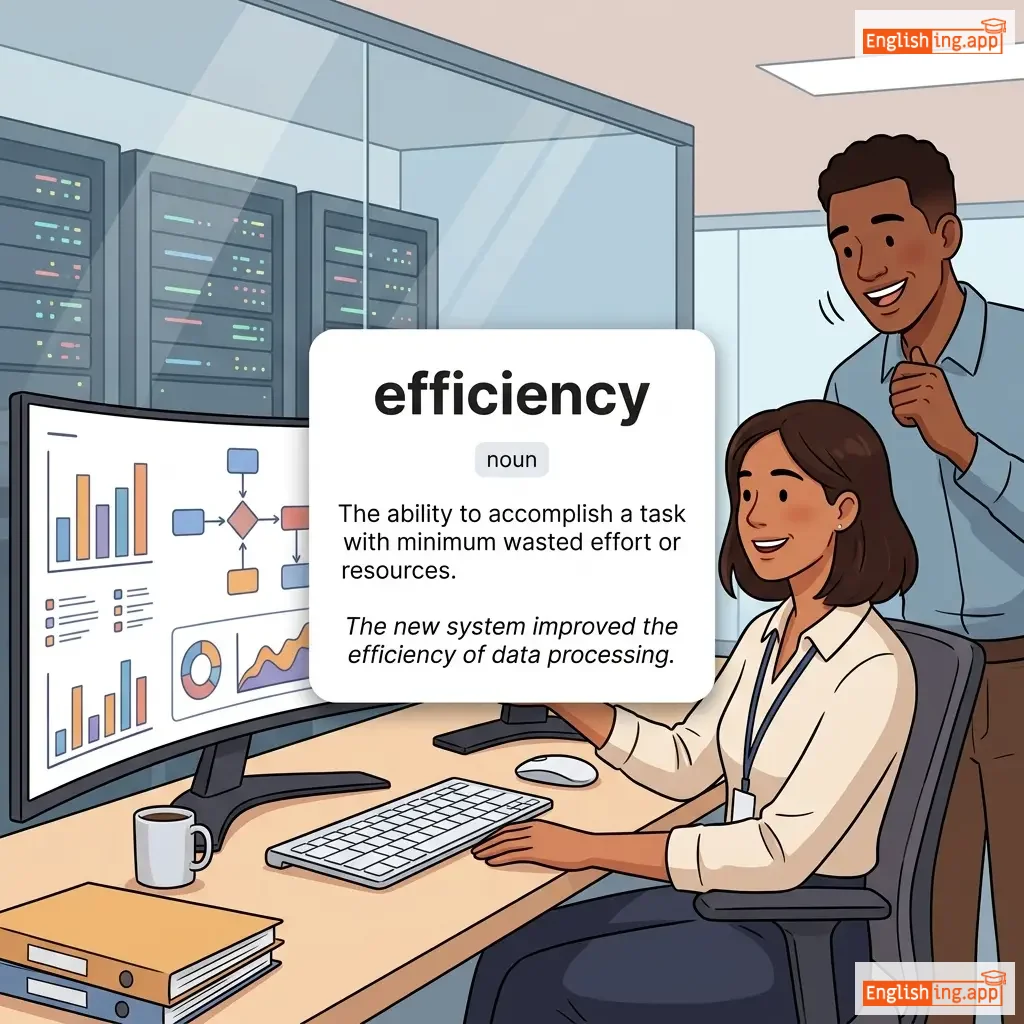
/ɪˈfɪʃənsi/
noun
(エフィシェンシー)
••••••
|
|
効率
kouritsu
••••••
|
- •••••• | - •••••• | - •••••• | - •••••• |
The ability to accomplish a task with minimum wasted effort or resources.
••••••
|
The new system improved the efficiency of data processing. |
新しいシステムはデータ処理の効率を改善しました。
Atarashii shisutemu wa dēta shori no kōritsu o kaizen shimashita.
••••••
|
- •••••• | - •••••• | - •••••• |
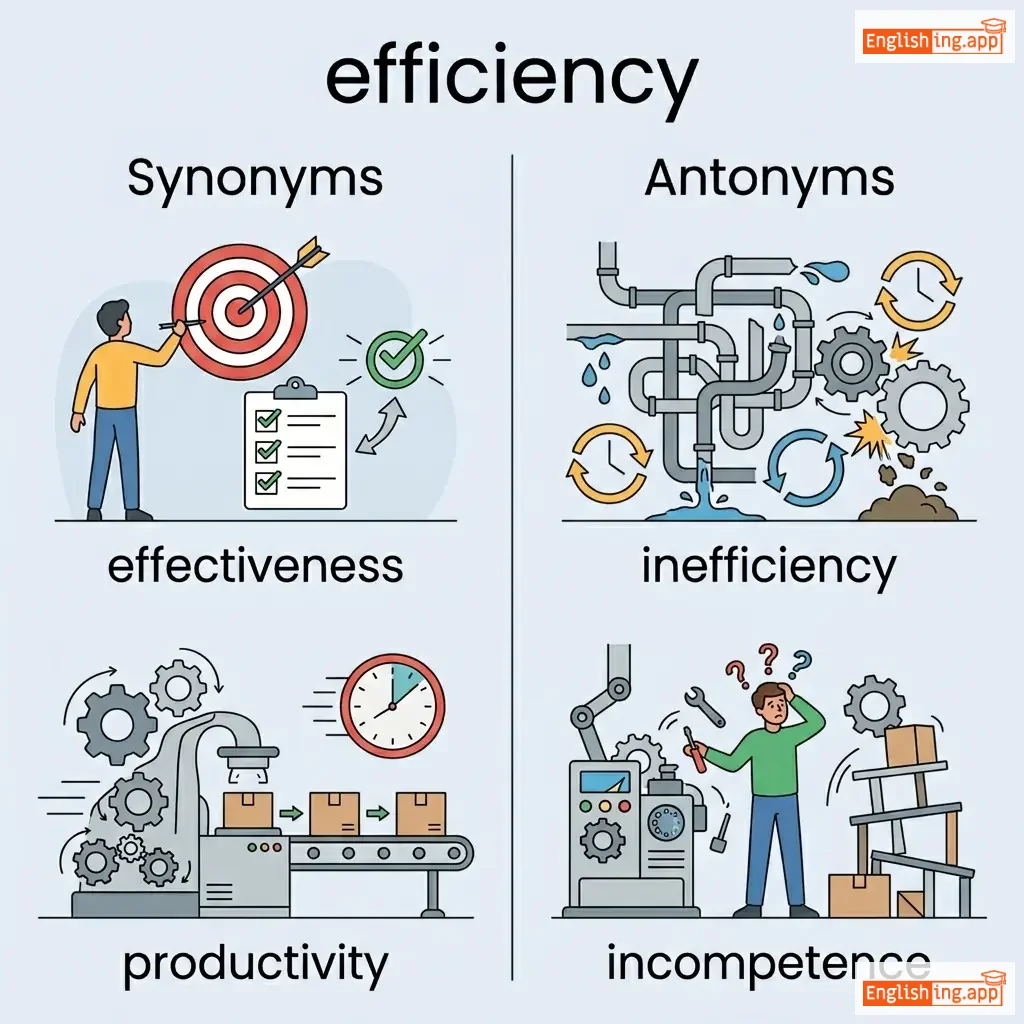
effectiveness, productivity, performance, competence
••••••
|
inefficiency, incompetence, wastefulness
••••••
|
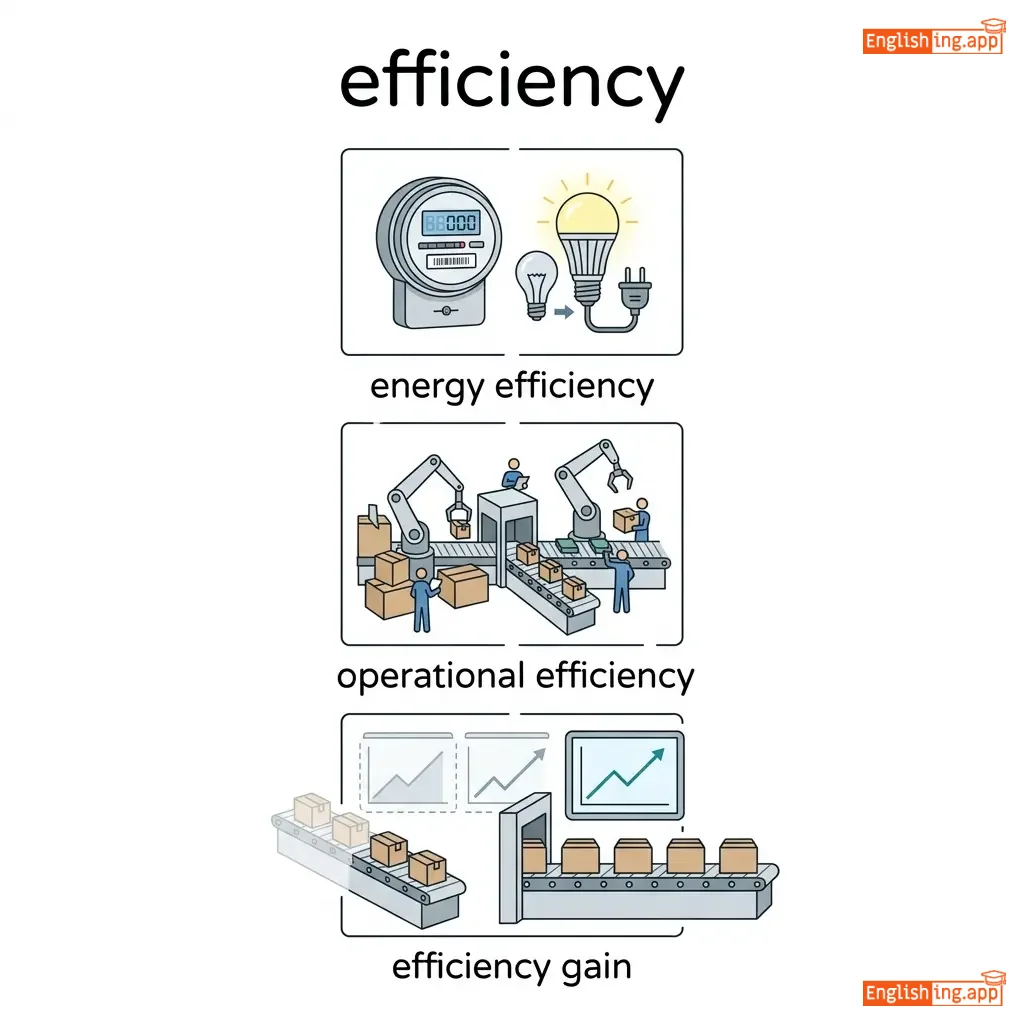
energy efficiency, operational efficiency, efficiency gain, efficiency improvement
••••••
|
Efficiencyは最小の努力で最大の結果を出すこと - 日本語でEfficiencyは効率です。
••••••
|
|
#2823
⚡
|
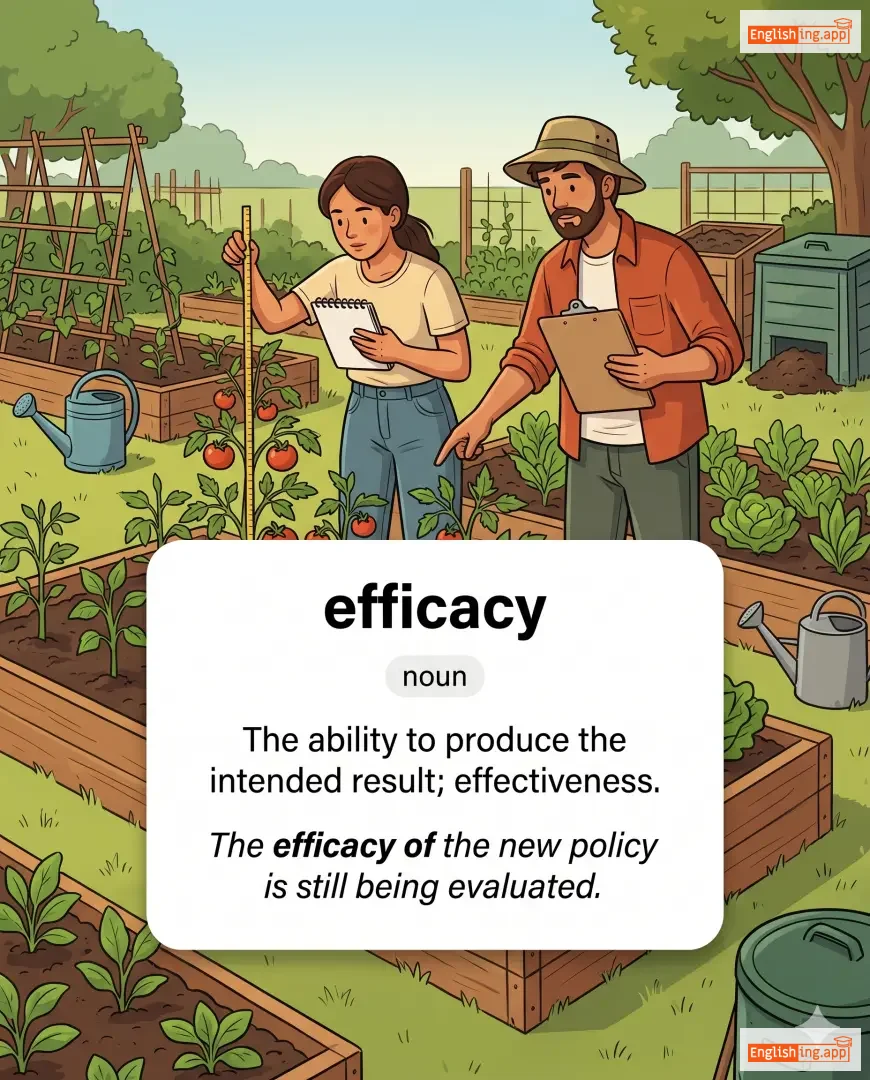
/ˈɛfɪkəsi/
noun
(エフィカシー)
••••••
|
|
効果
kouka
••••••
|
- •••••• | - •••••• | - •••••• | - •••••• |
The ability to produce the intended result; effectiveness.
••••••
|
The efficacy of the new policy is still being evaluated.
新しい政策の効果はまだ評価されています。
••••••
|
新しい政策の効果はまだ評価されています。
Atarashii seisaku no kouka wa mada hyouka sareteimasu.
••••••
|
- •••••• | - •••••• | - •••••• |
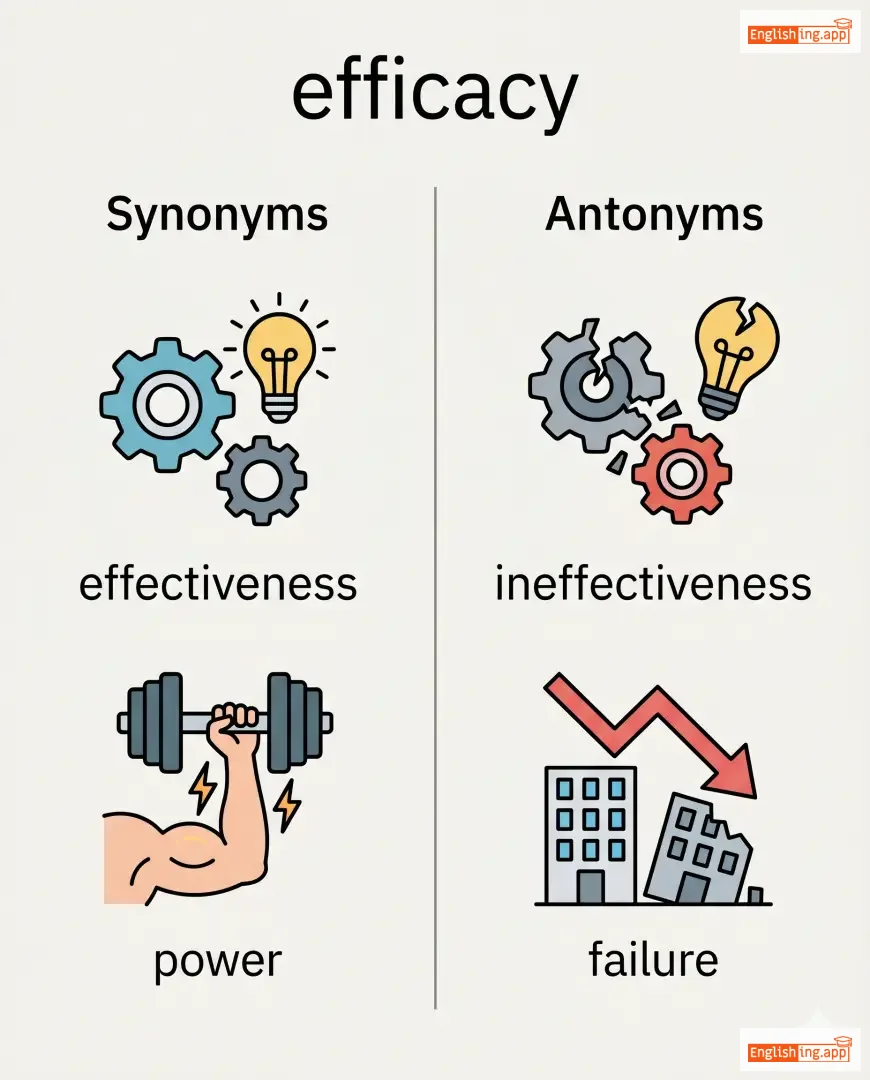
effectiveness, power, efficiency, success
••••••
|
ineffectiveness, failure, weakness
••••••
|
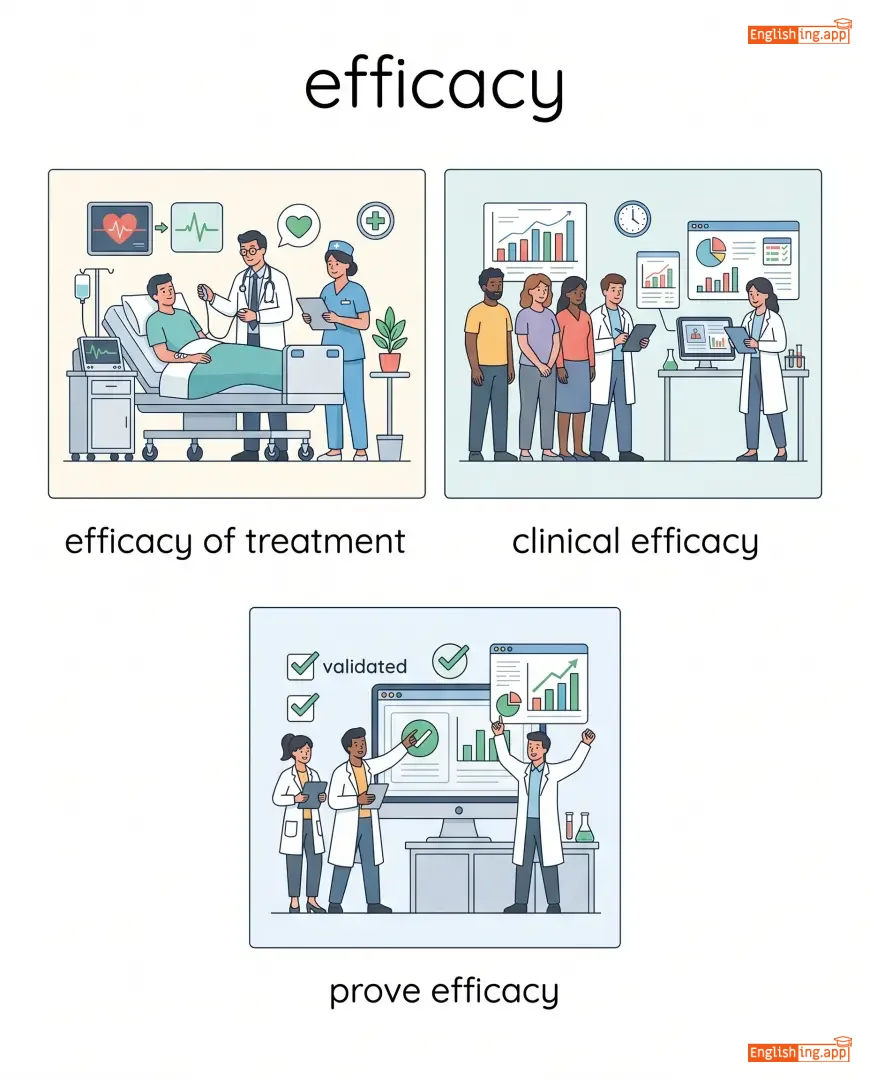
efficacy of treatment, clinical efficacy, prove efficacy, high efficacy
••••••
|
効果とは、望ましい結果を生み出す能力です。エフィ(effi)から来た効果。
••••••
|
|
#2824
💊
|
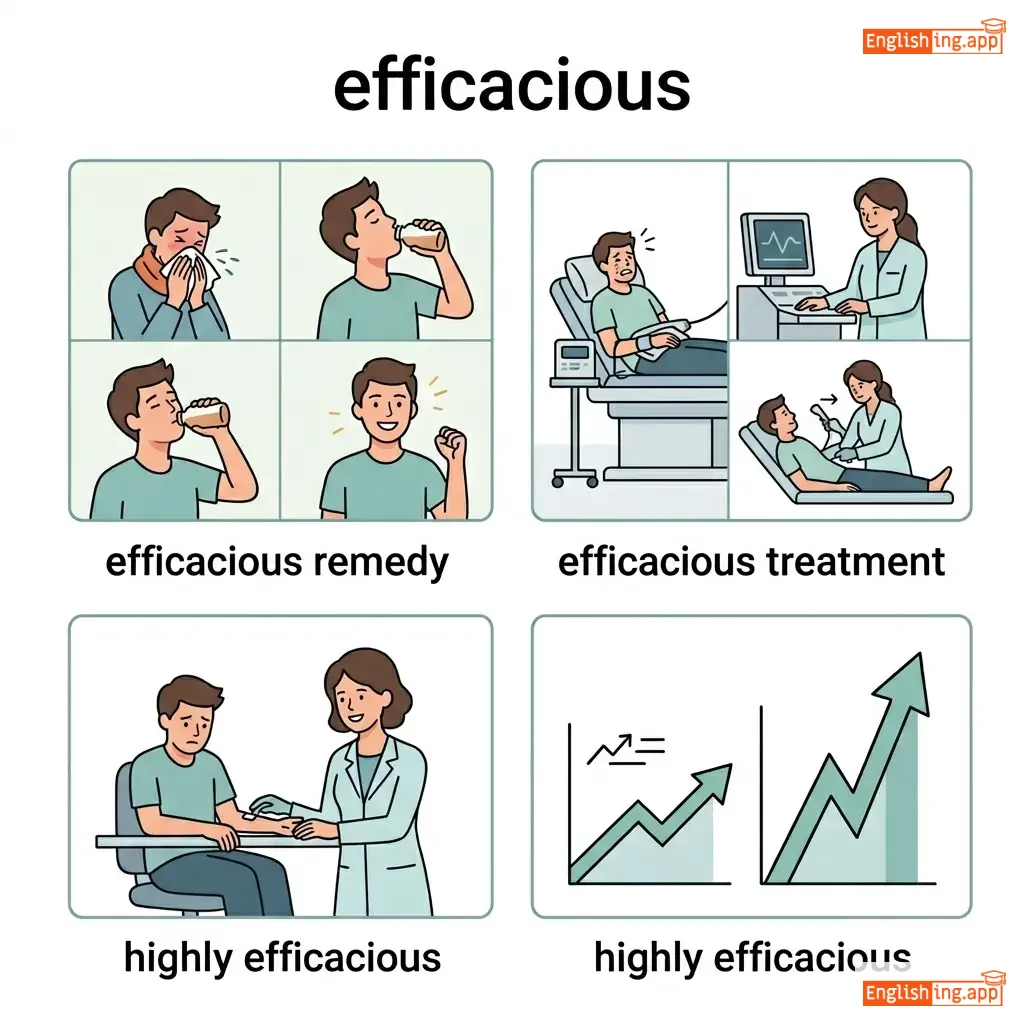
/ˌɛfɪˈkeɪʃəs/
adjective
(エフィケイシャス)
••••••
|
|
効果的
koukatekina
••••••
|
- •••••• | - •••••• | - •••••• | - •••••• |
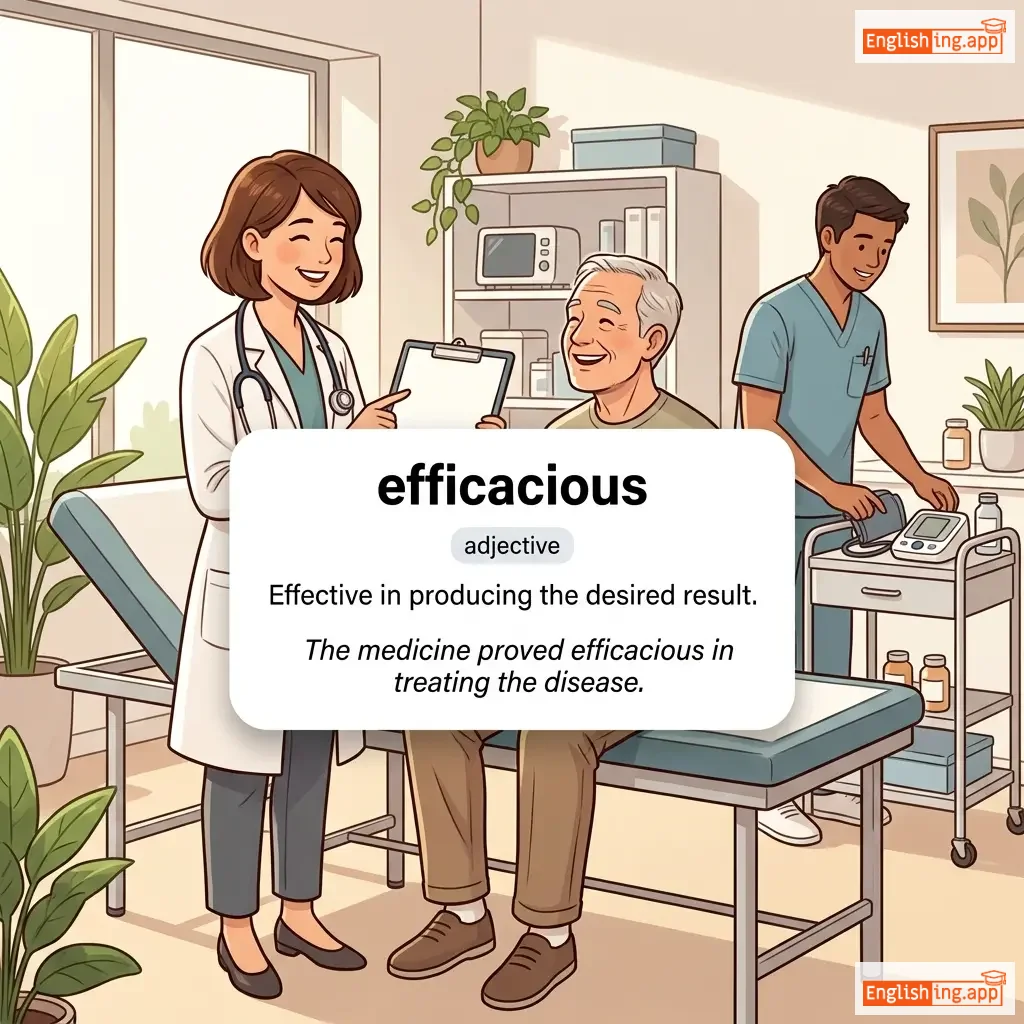
Effective in producing the desired result.
••••••
|
The medicine proved efficacious in treating the disease. |
その薬は病気の治療に効果的であることが証明されました。
Sono kusuri wa byouki no chiryou ni koukatekina koto ga shoumei saremashita.
••••••
|
- •••••• | - •••••• | - •••••• |
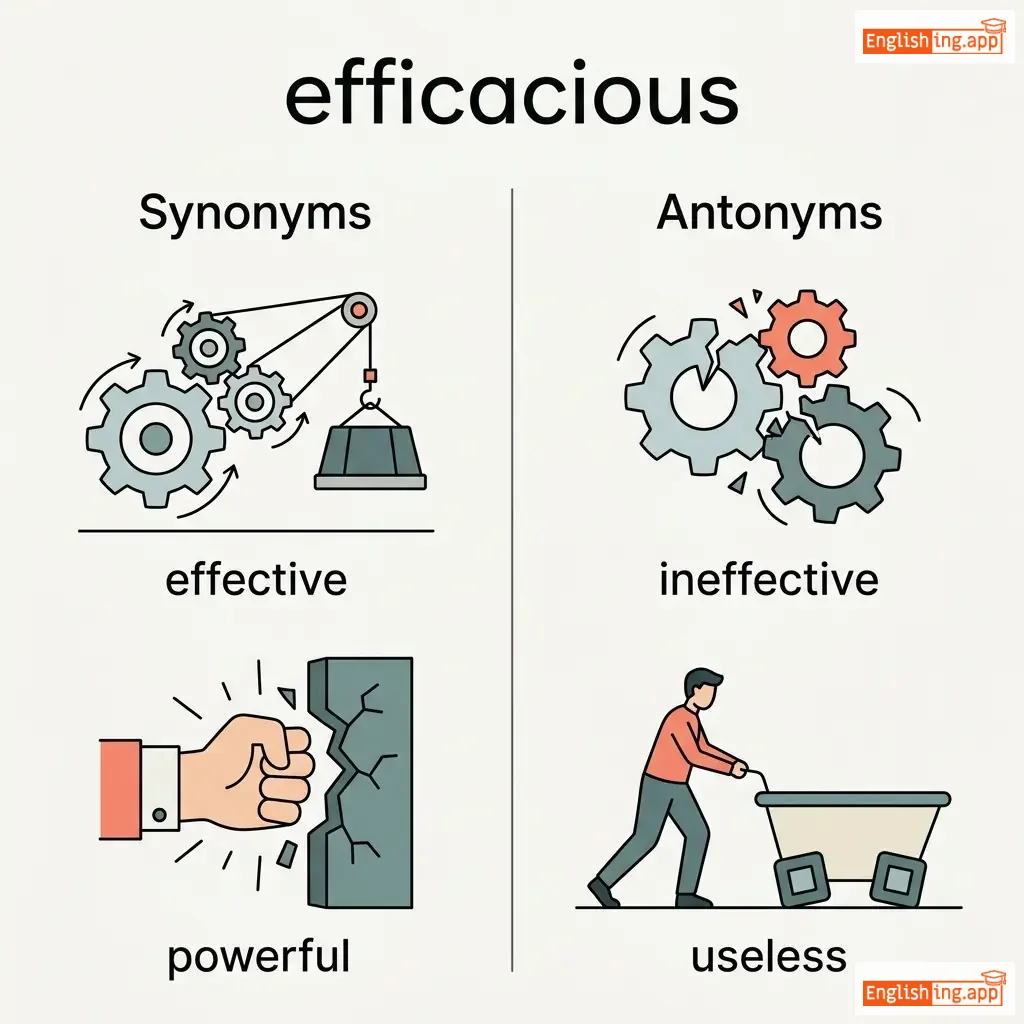
effective, powerful, successful, efficient, useful
••••••
|
ineffective, useless, powerless
••••••
|
efficacious remedy, efficacious treatment, highly efficacious, prove efficacious
••••••
|
Efficaciousと効果的は同義で、何かが効果的であれば、それはefficaciousでもあります。
••••••
|
|
#2825
🌸
|
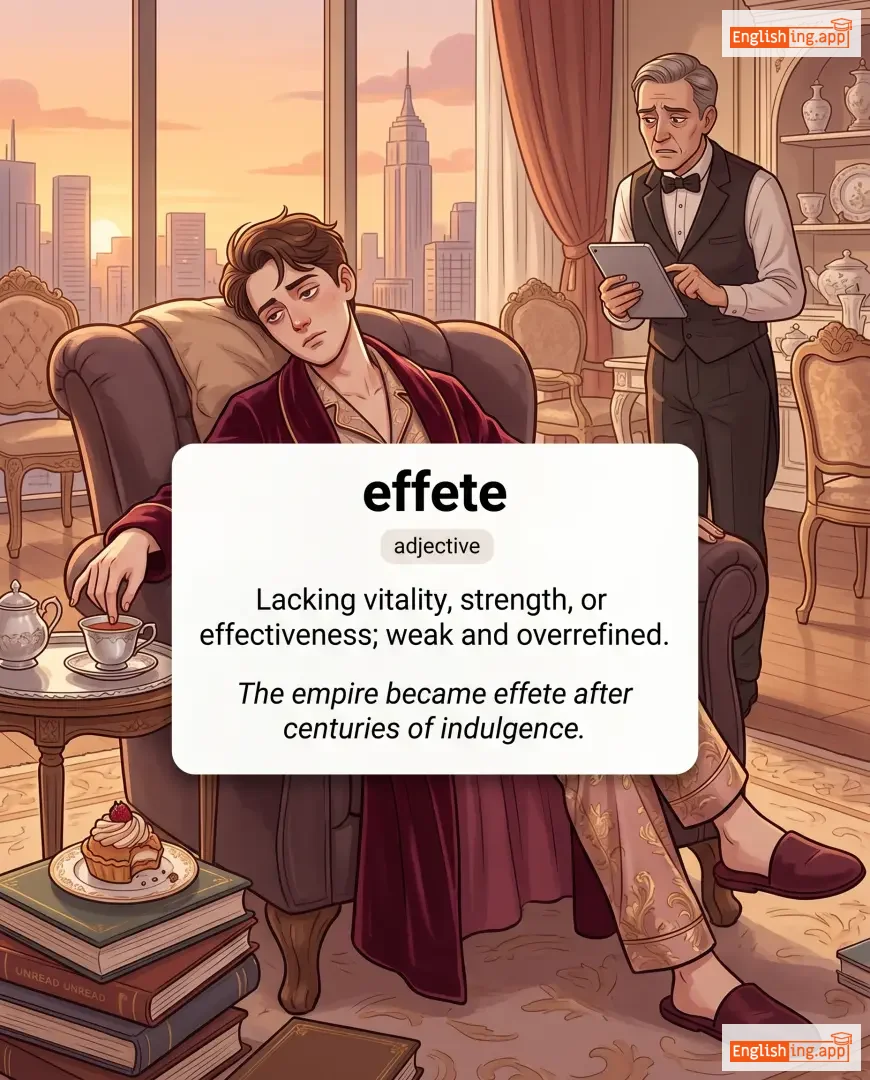
/ɪˈfiːt/
adjective
(エフェット)
••••••
|
|
無力
muryoku
••••••
|
- •••••• | - •••••• | - •••••• | - •••••• |
Lacking vitality, strength, or effectiveness; weak and overrefined.
••••••
|
The empire became effete after centuries of indulgence. |
帝国は何世代にもわたる享楽の後、無力になった。
Teikoku wa nan-sedai ni mo wataru kyouraku no ato, muryoku ni natta.
••••••
|
- •••••• | - •••••• | - •••••• |
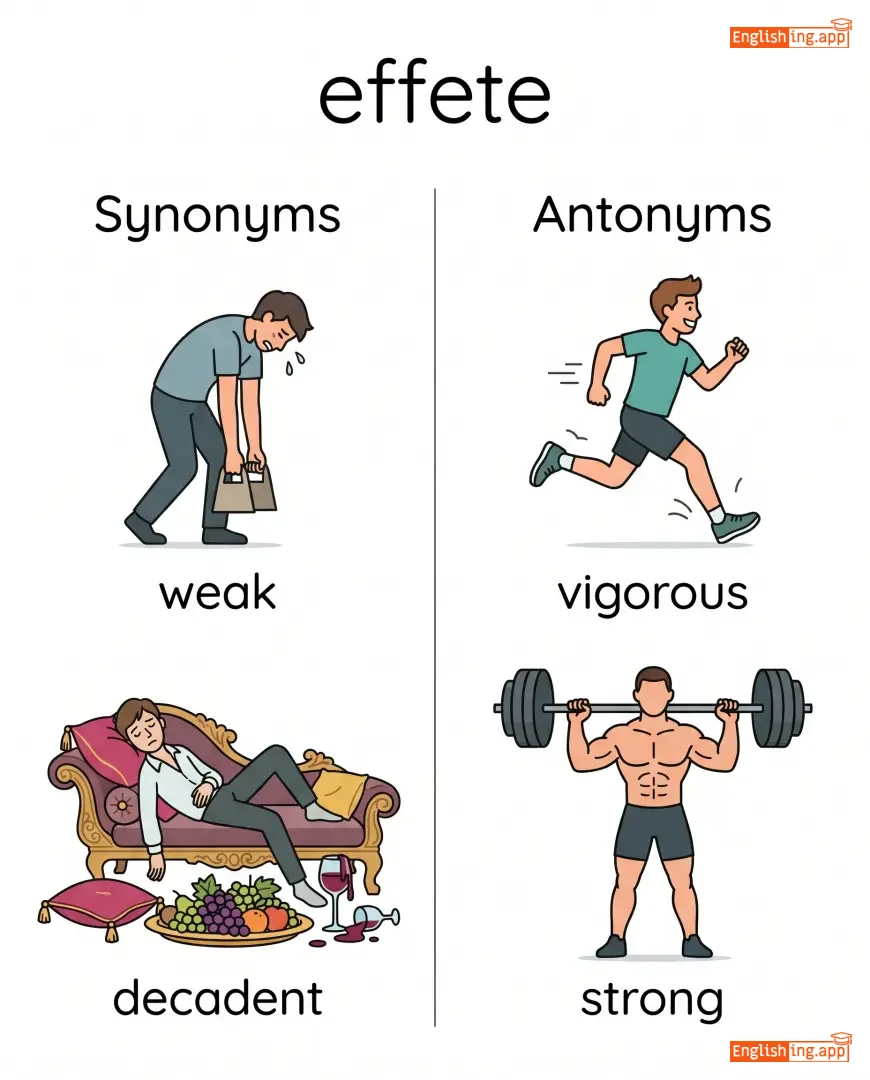
weak, decadent, exhausted, powerless, overrefined
••••••
|
vigorous, strong, powerful
••••••
|
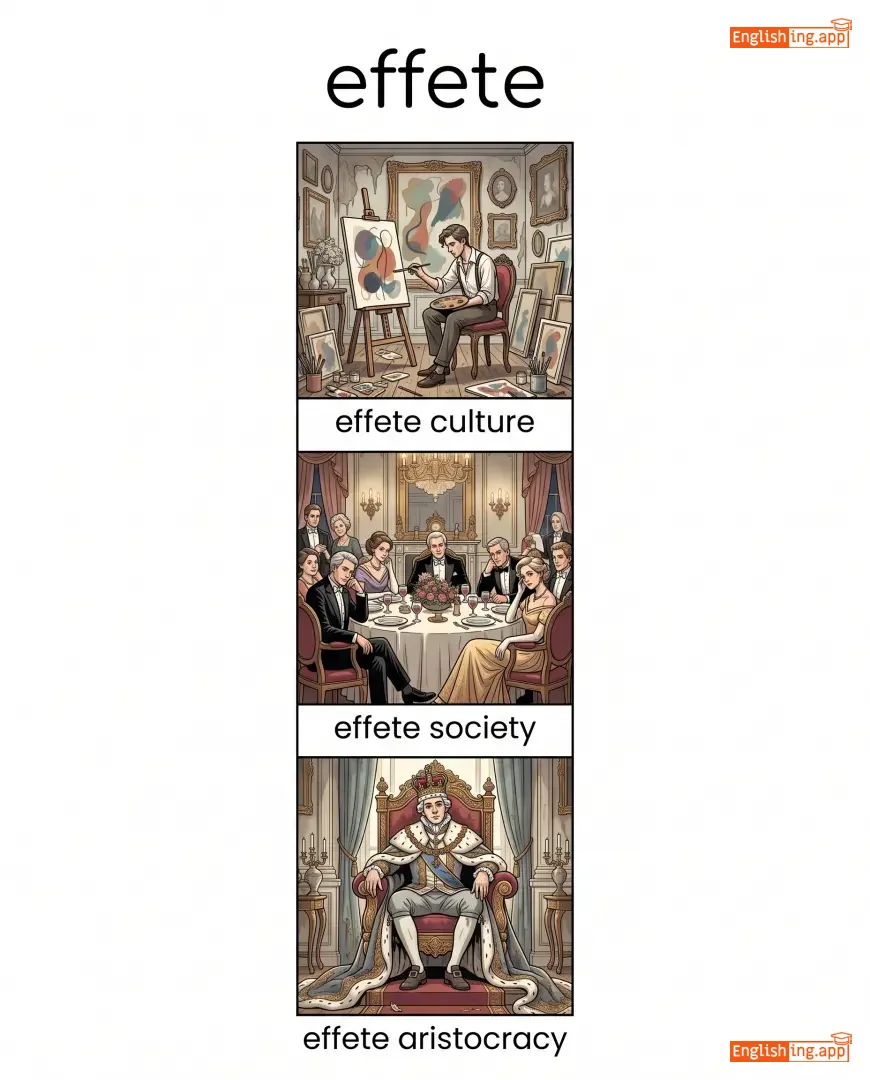
effete culture, effete society, effete aristocracy, effete leadership
••••••
|
Effeteは無力を意味します。思い出してください、足(feet)が無力になったような状態です。
••••••
|
|
#2826
✨
|
/ˌɛfəˈvɛsənt/
adjective
(エファーヴェセント)
••••••
|
- •••••• |
活気に満ちた
kakki ni michita
••••••
|
- •••••• | - •••••• | - •••••• | - •••••• |
Giving off bubbles; lively, enthusiastic, and full of energy.
••••••
|
She had an effervescent personality that brightened every room. |
彼女は部屋を明るく照らす活気に満ちた個性を持っていました。
Kanojo wa heya o akaruku terasu kakki ni michita kosei o motte imashita.
••••••
|
- •••••• | - •••••• | - •••••• |
bubbly, sparkling, lively, vibrant, energetic
••••••
|
dull, flat, lifeless
••••••
|
effervescent personality, effervescent charm, effervescent mood
••••••
|
Effervescent = Sparkling personality → 部屋を明るく照らします。
••••••
|
|
#2827
🥂
|
/ˌɛfəˈvɛsəns/
noun
(エファーヴェセンス)
••••••
|
|
発泡
happou
••••••
|
- •••••• | - •••••• | - •••••• | - •••••• |
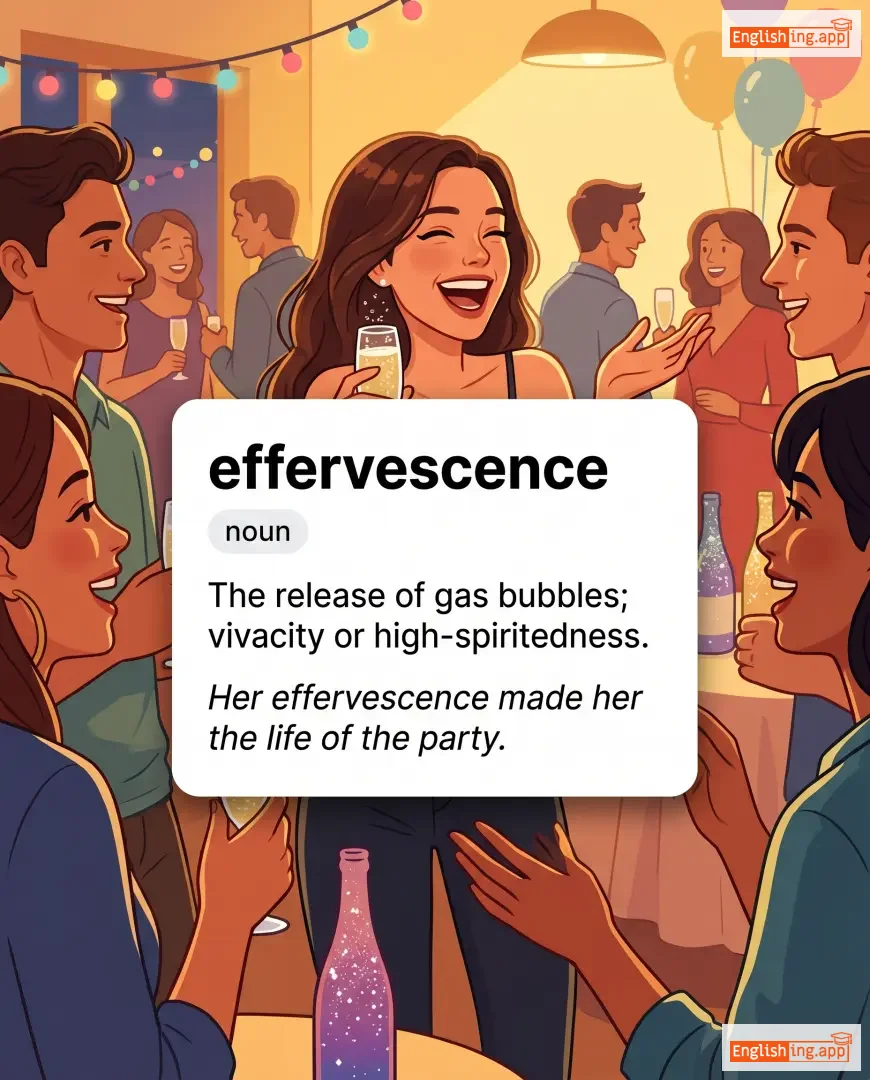
The release of gas bubbles; vivacity or high-spiritedness.
••••••
|
Her effervescence made her the life of the party.
彼女のエファーヴェセンスはパーティーの生命となった。
••••••
|
彼女の発泡はパーティーの生命となった。
Kanojo no happou wa pātii no seimei to natta.
••••••
|
- •••••• | - •••••• | - •••••• |
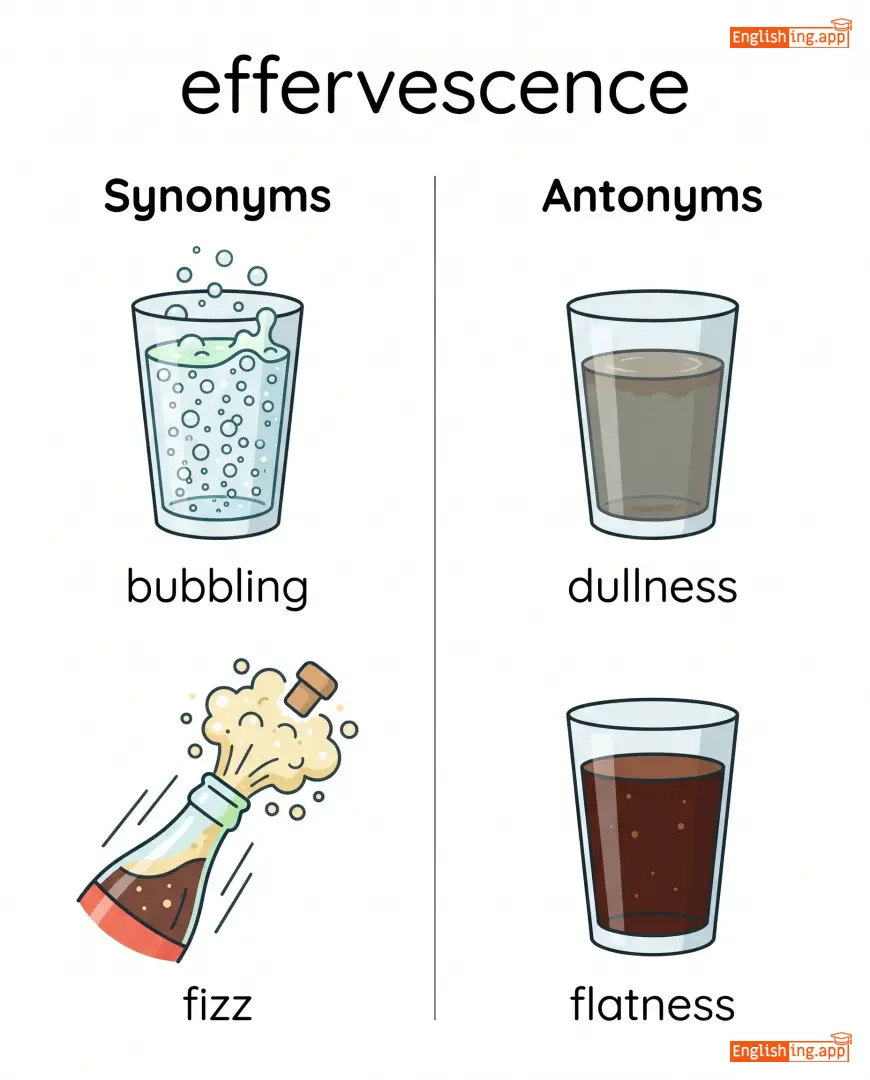
bubbling, fizz, liveliness, sparkle, vibrancy
••••••
|
dullness, flatness, lifelessness
••••••
|
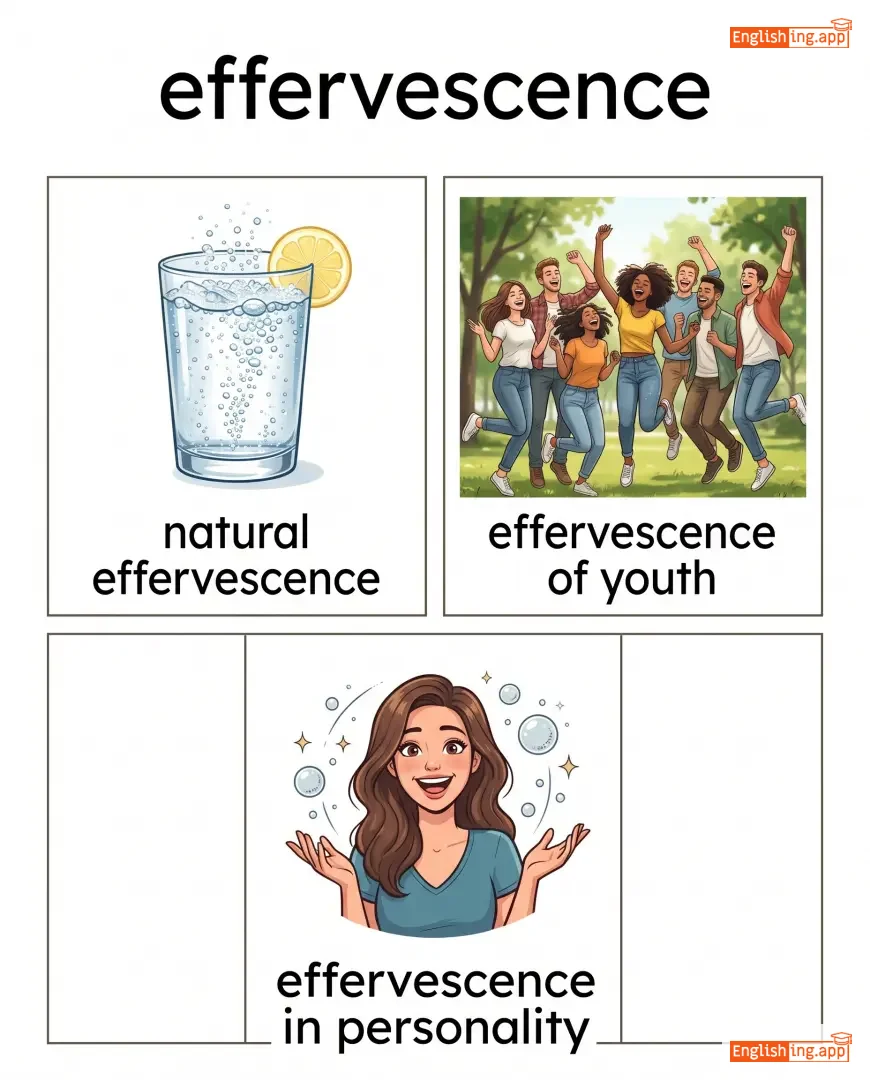
natural effervescence, effervescence of youth, effervescence in personality
••••••
|
Effervescenceは発泡を意味します → 炭酸飲料の泡を想像してください。
••••••
|
|
#2828
🍾
|
/ˌɛfəˈvɛs/
verb
(エフェルヴェス)
••••••
|
- •••••• |
泡立つ
awadatsu
••••••
|
effervesced
エフェルヴェスド
••••••
|
effervesced
エフェルヴェスド
••••••
|
effervesces
エフェルヴェセス
••••••
|
effervescing
エフェルヴェシング
••••••
|
To give off bubbles of gas; to show excitement, liveliness, or enthusiasm.
••••••
|
The soda began to effervesce as soon as it was opened.
ソーダは開けるとすぐに泡が立ち始めました。
••••••
|
ソーダは開けるとすぐに泡が立ち始めました。
Soda wa akeru to sugu ni awa ga tachihajimemashita.
••••••
|
- •••••• | - •••••• | - •••••• |
bubble, fizz, sparkle, foam, froth
••••••
|
flatten, still
••••••
|
effervesce with joy, effervesce with energy, effervesce with excitement
••••••
|
Effervesce = 泡立つ → ソーダを開けると泡が出る!
••••••
|
|
#2829
💅
|
/ɪˈfɛmɪnət/
adjective
(エフェミネイト)
••••••
|
- •••••• |
女性的
joseiteki
••••••
|
- •••••• | - •••••• | - •••••• | - •••••• |
Having traits, tastes, or habits traditionally considered feminine, often used negatively for men.
••••••
|
The critics described him as effeminate due to his gentle manner. |
批評家は彼の優しい態度を理由に彼を女性的だと表現した。
Hihyō-ka wa kare no yasashī taido o riyū ni kare o joseiteki da to hyōgen shita.
••••••
|
- •••••• | - •••••• | - •••••• |
feminine, delicate, unmanly, soft, womanly
••••••
|
manly, masculine, strong
••••••
|
effeminate behavior, effeminate voice, effeminate style
••••••
|
Effeminate = 男性に女性的な外見 → 男性が女性的な場合、女性的と呼ばれる。
••••••
|
|
#2830
🌸
|
/ɪˈfɛmɪnəsi/
noun
(エフェミナシー)
••••••
|
- •••••• |
女性的特質
joseiteki tokushitsu
••••••
|
- •••••• | - •••••• | - •••••• | - •••••• |
The quality of showing traits traditionally associated with women, such as delicacy or softness.
••••••
|
In ancient times, effeminacy was often criticized as a sign of weakness. |
古代では、女性的特質はしばしば弱さのサインとして批判されていました。
Kodai de wa, joseiteki tokushitsu wa shibashiba yowasa no sain toshite hihan sarete imashita.
••••••
|
- •••••• | - •••••• | - •••••• |
softness, delicacy, weakness, femininity, unmanliness
••••••
|
strength, masculinity, toughness
••••••
|
sign of effeminacy, accused of effeminacy, mark of effeminacy
••••••
|
Effeminacy とは女性的特質 – ‘フェミニン’と関係があることを覚えておいて。
••••••
|
|
#2831
⚡
|
/ɪˈfɛktʃueɪt/
verb
(エフェクトゥエイト)
••••••
|
- •••••• |
実行する
jikkou suru
••••••
|
effectuated
エフェクトゥエイテッド
••••••
|
effectuated
エフェクトゥエイテッド
••••••
|
effectuates
エフェクトゥエイツ
••••••
|
effectuating
エフェクトゥエイティング
••••••
|
to put into force or cause to happen; to bring about
••••••
|
The manager effectuated the changes to improve efficiency.
マネージャーは効率を向上させるために変更を実行しました。
••••••
|
マネージャーは効率を向上させるために変更を実行しました。
Manējā wa kōritsu o kōjō saseru tame ni henkō o jikkō shimashita.
••••••
|
- •••••• | - •••••• | - •••••• |
implement, enforce, bring about, accomplish, realize
••••••
|
cancel, prevent, stop
••••••
|
effectuate change, effectuate policy, effectuate reform
••••••
|
Effectuate = effect + create - 何かを実現する、つまり実行する。
••••••
|
|
#2832
🎯
|
/ɪˈfɛktʃuəl/
adjective
(イフェクチュアル)
••••••
|
- •••••• |
効果的な
koukateki na
••••••
|
- •••••• | - •••••• | - •••••• | - •••••• |
producing a desired or intended effect, often used in formal contexts
••••••
|
Her effectual efforts brought peace to the community. |
彼女の効果的な努力はコミュニティに平和をもたらしました。
Kanojo no kōkateki na doryoku wa komyuniti ni heiwa o motarashimashita.
••••••
|
- •••••• | - •••••• | - •••••• |
effective, successful, productive, decisive
••••••
|
ineffectual, weak, powerless
••••••
|
effectual remedy, effectual measures, effectual solution
••••••
|
Effectual とは効果的なこと - actual つまり実際に効果を出すこと。
••••••
|
|
#2833
✅
|
/ɪˈfɛktɪv/
adjective
(イフェクティブ)
••••••
|
|
効果的
koukateki
••••••
|
- •••••• | - •••••• | - •••••• | - •••••• |
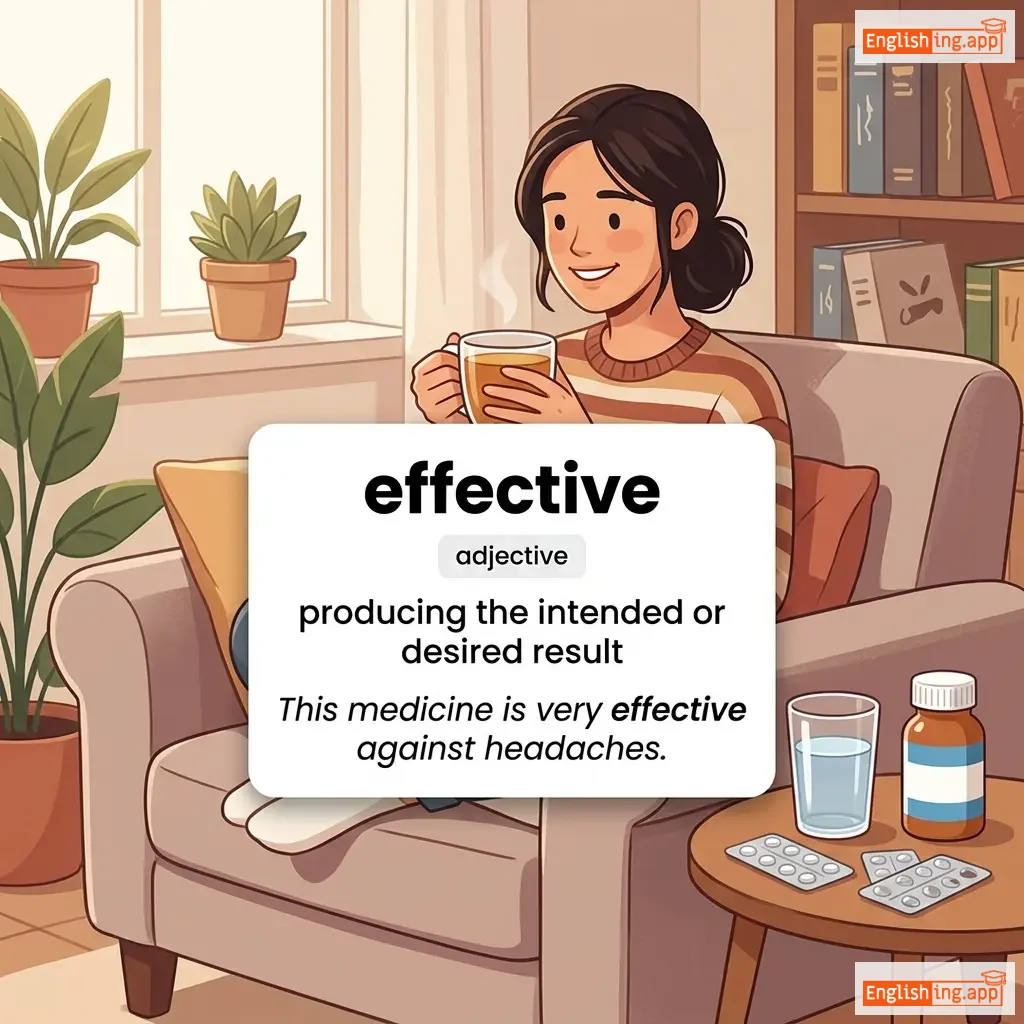
producing the intended or desired result
••••••
|
This medicine is very effective against headaches. |
この薬は頭痛に非常に効果的です。
Kono kusuri wa zutsū ni hijō ni kōkateki desu.
••••••
|
effective immediately |
starting from now
••••••
|
即時効果
sokujikōka
••••••
|
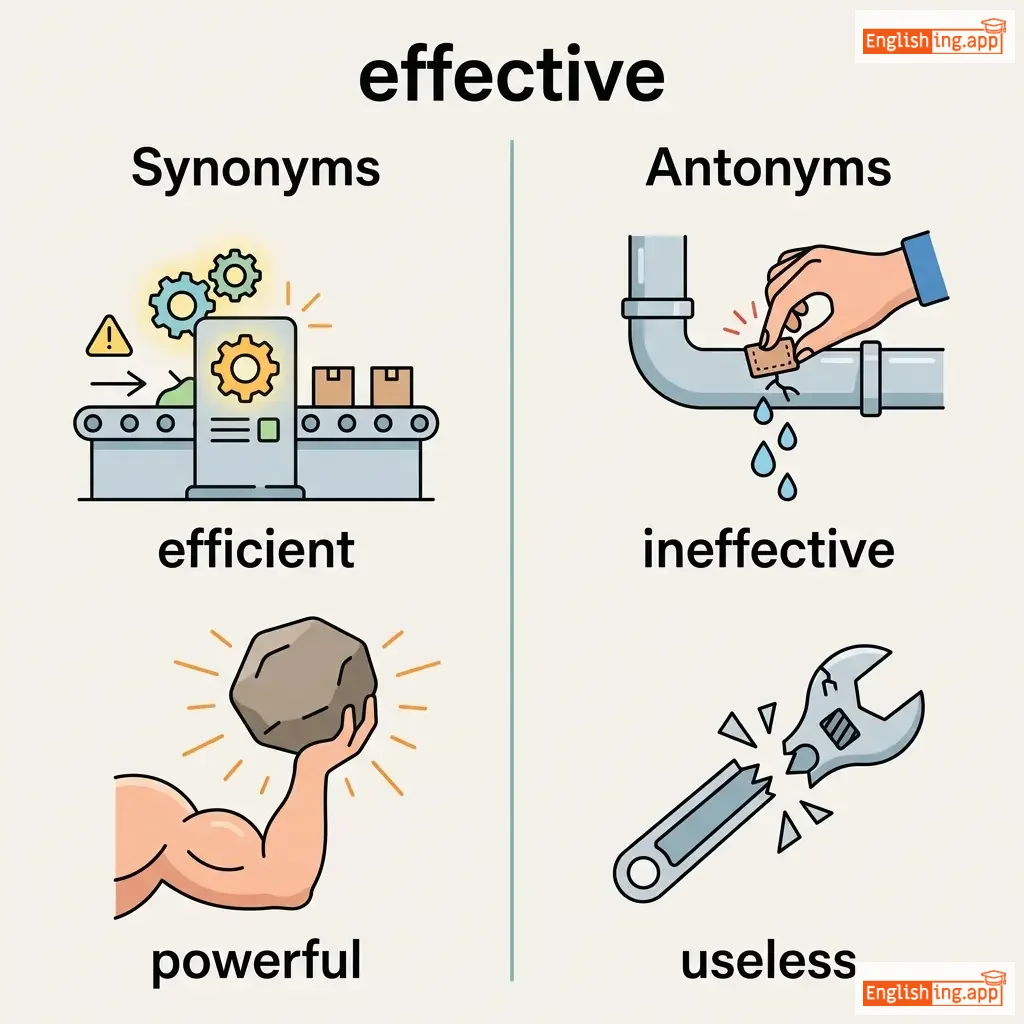
efficient, powerful, useful, successful, strong
••••••
|
ineffective, useless, weak
••••••
|
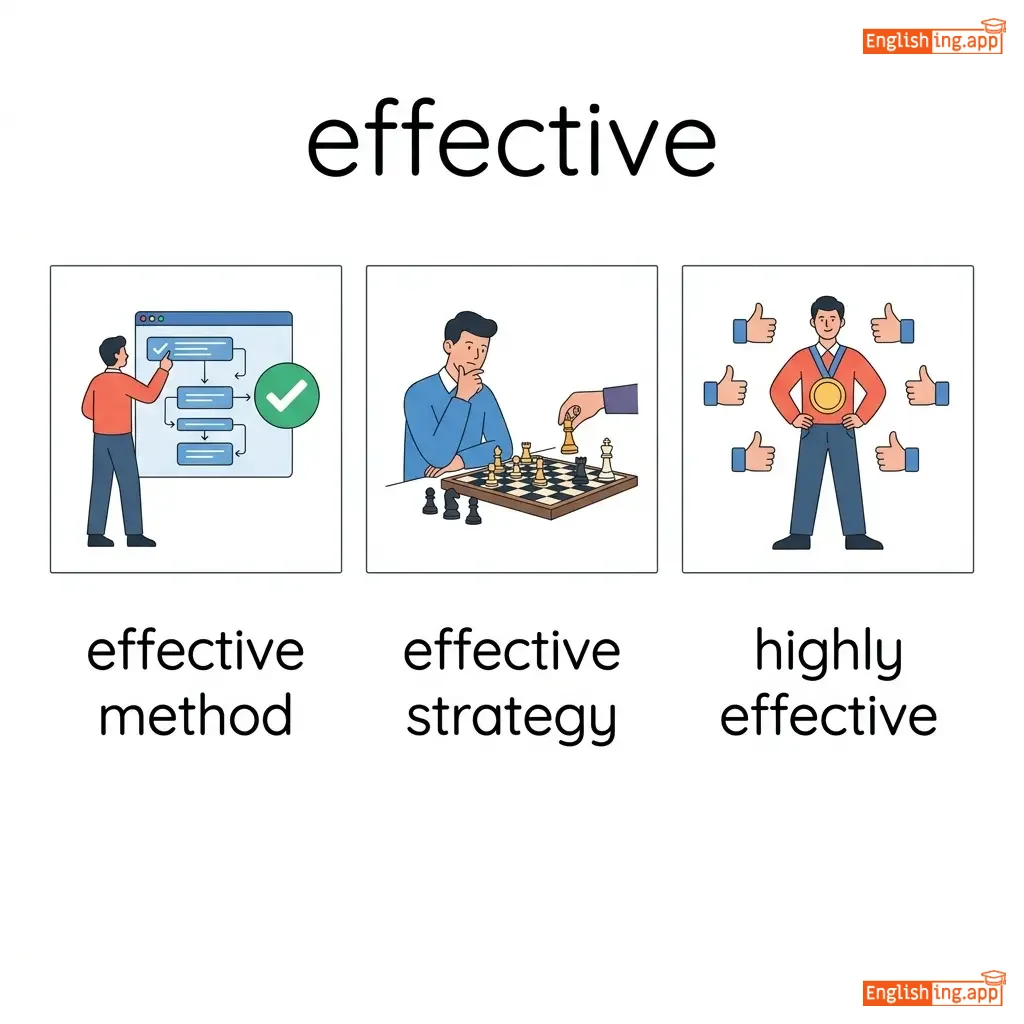
effective method, effective strategy, highly effective, effective communication
••••••
|
効果的とは、効くこと - 効果的な薬で頭痛が治る。
••••••
|
|
#2834
✨
|
/ɪˈfɛkt/
noun
(イフェクト)
••••••
|
- •••••• |
効果
kouka
••••••
|
- •••••• | - •••••• | - •••••• | - •••••• |
a change that results from a particular action or cause
••••••
|
The new law had a positive effect on public safety. |
新しい法律は公共の安全に良い効果をもたらしました。
Atarashii houritsu wa koukyou no anzen ni yoi kouka o motarashimashita.
••••••
|
take effect |
to begin to apply or produce results
••••••
|
発効する
hakkou suru
••••••
|
result, outcome, consequence, impact, influence
••••••
|
cause, source, origin
••••••
|
positive effect, negative effect, cause and effect, special effect
••••••
|
Effectの日本語での意味は影響。効果は記憶しやすい!
••••••
|
|
#2835
🧽
|
/ɪˈfeɪsɪŋ/
verb
(イフェイシング)
••••••
|
- •••••• |
消す / 自分を目立たなくする
kesu / jibun o medatanaku suru
••••••
|
- •••••• | - •••••• | - •••••• |
effacing
イフェイシング
••••••
|
erasing or making oneself inconspicuous; to remove or diminish in significance
••••••
|
She kept effacing herself during the meeting so that others could shine.
会議中に他の人が輝けるように、自分自身を消し続けました。
••••••
|
会議中に他の人が輝けるように、自分自身を消し続けました。
Kaigi-chū ni hoka no hito ga kagayakeru yō ni, jibun jishin o keshi tsudzukemashita.
••••••
|
- •••••• | - •••••• | - •••••• |
erasing, removing, obliterating, diminishing, concealing
••••••
|
highlighting, emphasizing, revealing
••••••
|
effacing memory, effacing oneself, effacing traces
••••••
|
Effaceは消すという意味です - Ifesingは自分を消す、目立たなくすることを意味します。
••••••
|
|
#2836
📉
|
/ɪˈkɒnəmaɪz/
verb
(エコノマイズ)
••••••
|
- •••••• |
節約する
setsuyaku suru
••••••
|
economized
エコノマイズド
••••••
|
economized
エコノマイズド
••••••
|
economizes
エコノマイズズ
••••••
|
economizing
エコノマイジング
••••••
|
To reduce spending or use resources carefully.
••••••
|
Families are trying to economize by cutting unnecessary expenses.
家族は不必要な支出を削減して、節約しようとしています。
••••••
|
家族は不必要な支出を削減して、節約しようとしています。
Kazoku wa fuhitsuyou na shishutsu o sakugen shite, setsuyaku shiyou to shiteimasu.
••••••
|
- •••••• | - •••••• | - •••••• |
save, cut back, reduce, conserve, budget
••••••
|
waste, squander, overspend
••••••
|
economize on food, economize resources, economize time, economize money
••••••
|
Economize = setsuyaku = 節約する
••••••
|
|
#2837
👻
|
/ˈɪəri/
adjective
(イーリー)
••••••
|
- •••••• |
不気味
bukimi
••••••
|
- •••••• | - •••••• | - •••••• | - •••••• |
Strange and frightening in a mysterious way.
••••••
|
The abandoned house had an eerie silence. |
放棄された家には不気味な静けさがあった。
Houkisareta ie ni wa bukimi na shizukesa ga atta.
••••••
|
- •••••• | - •••••• | - •••••• |
spooky, creepy, uncanny, ghostly, haunting
••••••
|
ordinary, normal, familiar
••••••
|
eerie feeling, eerie silence, eerie atmosphere
••••••
|
Eerieは不気味に聞こえ、怖い静けさを感じる。
••••••
|
|
#2838
💡
|
/ɪˈdjuːs/
verb
(エデュース)
••••••
|
- •••••• |
引き出す
hikidasu
••••••
|
educed
エデュースド
••••••
|
educed
エデュースド
••••••
|
educes
エデュースズ
••••••
|
educing
エデュースイング
••••••
|
To draw out or bring forth something latent or hidden.
••••••
|
The teacher tried to educe a response from the shy student.
教師は恥ずかしがり屋の生徒から反応を引き出そうとしました。
••••••
|
教師は恥ずかしがり屋の生徒から反応を引き出そうとしました。
Kyoushi wa hazukashigariya no seito kara hannou wo hikidasou to shimashita.
••••••
|
- •••••• | - •••••• | - •••••• |
elicit, extract, evoke, draw out
••••••
|
suppress, hide
••••••
|
educe meaning, educe response, educe talent
••••••
|
Educeは'教育'に似ていて、教師が回答を引き出します💡
••••••
|
|
#2839
📰
|
/ˌɛdɪˈtɔːriəl/
noun
(エディトリアル)
••••••
|
- •••••• |
社説
shasetsu
••••••
|
- •••••• | - •••••• | - •••••• | - •••••• |
A newspaper article expressing the opinion of the editor or publisher.
••••••
|
The newspaper published an editorial criticizing government policy. |
新聞は政府の政策を批判する社説を発表しました。
Shinbun wa seifu no seisaku o hihan suru shasetsu o happyō shimashita.
••••••
|
- •••••• | - •••••• | - •••••• |
opinion piece, commentary, article, column
••••••
|
report, fact, news
••••••
|
editorial board, editorial policy, write an editorial
••••••
|
社説は新聞のeditorial 📰
••••••
|
|
#2840
📚
|
/ˈɛdɪfaɪɪŋ/
adjective
(エディファイング)
••••••
|
- •••••• |
啓発的な
keihatsuteki na
••••••
|
- •••••• | - •••••• | - •••••• | - •••••• |
Providing moral or intellectual instruction or enlightenment.
••••••
|
The documentary was both entertaining and edifying.
そのドキュメンタリーは、エンターテイメントと啓発の両方を兼ね備えていました。
••••••
|
そのドキュメンタリーは、エンターテイメントと啓発の両方を兼ね備えていました。
Sono dokyumentarī wa, entāteimento to keihatsu no ryōhō o kanesonaete imashita.
••••••
|
- •••••• | - •••••• | - •••••• |
instructive, enlightening, informative, educational, uplifting
••••••
|
misleading, corrupting, harmful
••••••
|
edifying experience, edifying story, edifying lesson, morally edifying
••••••
|
Edifyは教育を意味します、だからedifyingは啓発的な意味です。
••••••
|
|
#2841
📚
|
/ˈɛdɪfaɪ/
verb
••••••
|
- •••••• | - •••••• |
edified
••••••
|
edified
••••••
|
edifies
••••••
|
edifying
••••••
|
To instruct or improve someone morally or intellectually.
••••••
|
Good books can both entertain and edify the reader. |
- •••••• |
edify the mind |
to improve someone’s understanding or intellect
••••••
|
- •••••• |
educate, instruct, enlighten, teach, uplift
••••••
|
confuse, mislead
••••••
|
edify the mind, morally edify, spiritually edify, edify others
••••••
|
No •••••• |
|
#2842
🏛️
|
/ˈɛdɪfɪs/
noun
(エディフィス)
••••••
|
- •••••• |
建物
tatemono
••••••
|
- •••••• | - •••••• | - •••••• | - •••••• |
A large, impressive building or structure.
••••••
|
The museum is an impressive edifice in the city center. |
その博物館は市内中心部の印象的な建物です。
Sono hakubutsukan wa shinai chūshinbu no inshō-teki na tatemono desu.
••••••
|
grand edifice |
a large, imposing building
••••••
|
壮大な建物
sōdaina tatemono
••••••
|
building, structure, monument, construction
••••••
|
hut, shack
••••••
|
ancient edifice, magnificent edifice, stone edifice, modern edifice
••••••
|
Edifice は建物 🏛️ - 想像してください、レンガで作られた巨大な建物。
••••••
|
|
#2843
📜
|
/ˈiːdɪkt/
noun
(エディクト)
••••••
|
- •••••• |
勅令
chokurei
••••••
|
- •••••• | - •••••• | - •••••• | - •••••• |
An official order, proclamation, or decree issued by an authority.
••••••
|
The king issued an edict banning smoking in public places.
王は公共の場での喫煙を禁止するエディクトを発行しました。
••••••
|
王は公共の場での喫煙を禁止するエディクトを発行しました。
Ō wa kōkyō no ba de no kitsuen wo kinshi suru edikuto wo hakko shimashita.
••••••
|
royal edict
王のエディクト
••••••
|
an official command by a king or monarch
••••••
|
王のエディクト
Ō no edikuto
••••••
|
decree, order, command, law, mandate
••••••
|
request, suggestion
••••••
|
royal edict, government edict, issue an edict, imperial edict
••••••
|
Edict は勅令、王が出す命令だと思い出そう!
••••••
|
|
#2844
🍄
|
/ˈɛdəbl/
adjective
(エディブル)
••••••
|
- •••••• |
食べられる
taberareru
••••••
|
- •••••• | - •••••• | - •••••• | - •••••• |
Fit or suitable to be eaten; safe to eat.
••••••
|
The mushrooms in the basket are edible. |
バスケットの中のキノコは食べられます。
Basuketto no naka no kinoko wa taberaremasu.
••••••
|
barely edible |
something that can be eaten but tastes unpleasant
••••••
|
ほとんど食べられない
hotondo taberarenai
••••••
|
eatable, consumable, digestible, safe, palatable
••••••
|
inedible, poisonous, harmful
••••••
|
edible plants, edible fruit, edible portion, edible oil
••••••
|
食べられるは食べることができる 🍄 - 'Eat'で食べられるのを覚えてください。
••••••
|
|
#2845
🌀
|
/ˈɛdi/
noun
(エディ)
••••••
|
- •••••• |
渦巻き
uzumaki
••••••
|
- •••••• | - •••••• | - •••••• | - •••••• |
A circular movement of water, air, or smoke, counter to the main current, causing a small whirlpool or turbulence.
••••••
|
The canoe was caught in an eddy near the rocks. |
カヌーは岩の近くで渦巻きに巻き込まれた。
Kanū wa iwa no chikaku de uzumaki ni makikomareta.
••••••
|
swim against the eddy |
to resist or go against the current or prevailing situation
••••••
|
渦巻きに逆らって泳ぐ
Uzumaki ni sakaratte oyogu
••••••
|
whirlpool, swirl, vortex, current, whirl
••••••
|
calm, stillness
••••••
|
river eddy, swirling eddy, caught in an eddy, water eddy
••••••
|
Eddy は 🌀 渦巻き - Eddy という男の子が渦巻きの中で泳いでいるところを想像してみて。
••••••
|
|
#2846
✝️
|
/ˌɛkjʊˈmɛnɪkəl/
adjective
(エキュメニカル)
••••••
|
- •••••• |
エキュメニカルな宗教的統一
ekyumenikaru na shuukyou-teki touitsu
••••••
|
- •••••• | - •••••• | - •••••• | - •••••• |
Promoting unity among different Christian churches or religions.
••••••
|
The leaders gathered for an ecumenical conference to encourage dialogue.
リーダーたちは対話を促進するためにエキュメニカルな会議に集まりました。
••••••
|
リーダーたちは対話を促進するためにエキュメニカルな会議に集まりました。
Riidaa-tachi wa taiwa wo sokushin suru tame ni ekyumenikaru na kaigi ni atsumarimashita.
••••••
|
- •••••• | - •••••• | - •••••• |
universal, inclusive, interfaith, all-embracing
••••••
|
sectarian, exclusive, divisive
••••••
|
ecumenical council, ecumenical movement, ecumenical spirit, ecumenical dialogue
••••••
|
Ecumenical は団結を意味する → 宗教間の団結はエキュメニカルな精神を意味します。
••••••
|
|
#2847
😁
|
/ɪkˈstætɪk/
adjective
(ikusutātikku)
••••••
|
- •••••• |
興奮している
koufun shite iru
••••••
|
- •••••• | - •••••• | - •••••• | - •••••• |
Feeling or expressing overwhelming happiness or excitement.
••••••
|
The fans were ecstatic after their team won the championship.
ファンたちはチームがチャンピオンになった後、興奮していました。
••••••
|
ファンたちはチームがチャンピオンになった後、興奮していました。
Fan-tachi wa chīmu ga chanpion ni natta ato, kōfun shite imashita.
••••••
|
absolutely ecstatic
完全に興奮している
••••••
|
completely filled with extreme happiness
••••••
|
完全に興奮している
kanzen ni kōfun shite iru
••••••
|
thrilled, delighted, overjoyed, euphoric, elated
••••••
|
unhappy, miserable, depressed
••••••
|
feel ecstatic, look ecstatic, absolutely ecstatic, ecstatic mood
••••••
|
Ecstaticは、笑顔が止まらないほど幸せであることを意味します。
••••••
|
|
#2848
🤩
|
/ˈekstəsi/
noun
(エクスタシー)
••••••
|
- •••••• |
恍惚
kōkotsu
••••••
|
- •••••• | - •••••• | - •••••• | - •••••• |
An overwhelming feeling of great happiness or joyful excitement.
••••••
|
She was in ecstasy when she won the prize. |
彼女は賞を取ったとき、恍惚の状態にありました。
Kanojo wa shō o totta toki, kōkotsu no jōtai ni arimashita.
••••••
|
in ecstasy |
in a state of extreme joy or delight
••••••
|
恍惚の中で
Kōkotsu no naka de
••••••
|
delight, bliss, euphoria, joy, rapture
••••••
|
misery, sadness, despair
••••••
|
in ecstasy, ecstasy of victory, sheer ecstasy, filled with ecstasy
••••••
|
Ecstasy は極度の喜びを意味します。テストで A+ を取ったときの気分です。
••••••
|
|
#2849
🌱
|
/ˈiːkəʊˌsɪstəm/
noun
(ハピネス)
••••••
|
|
幸せ
shiawase
••••••
|
- •••••• | - •••••• | - •••••• | - •••••• |
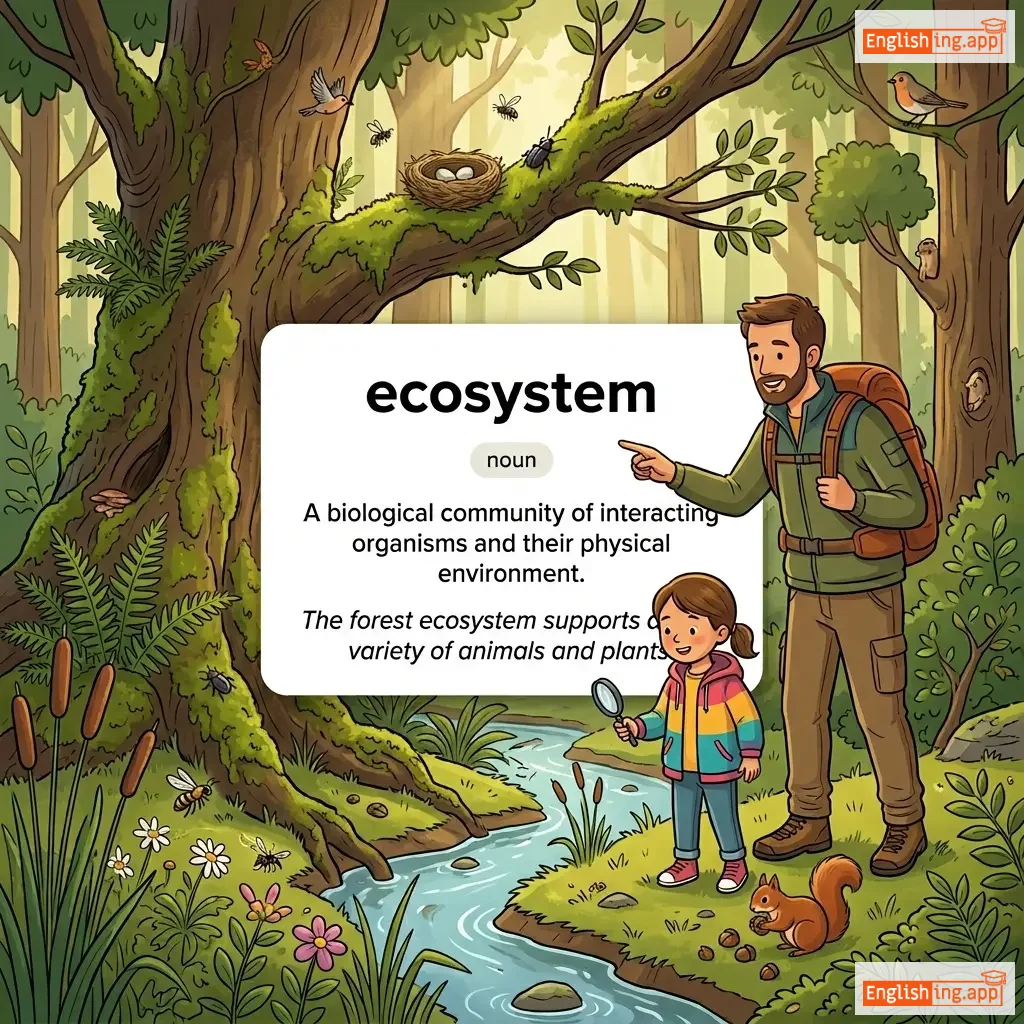
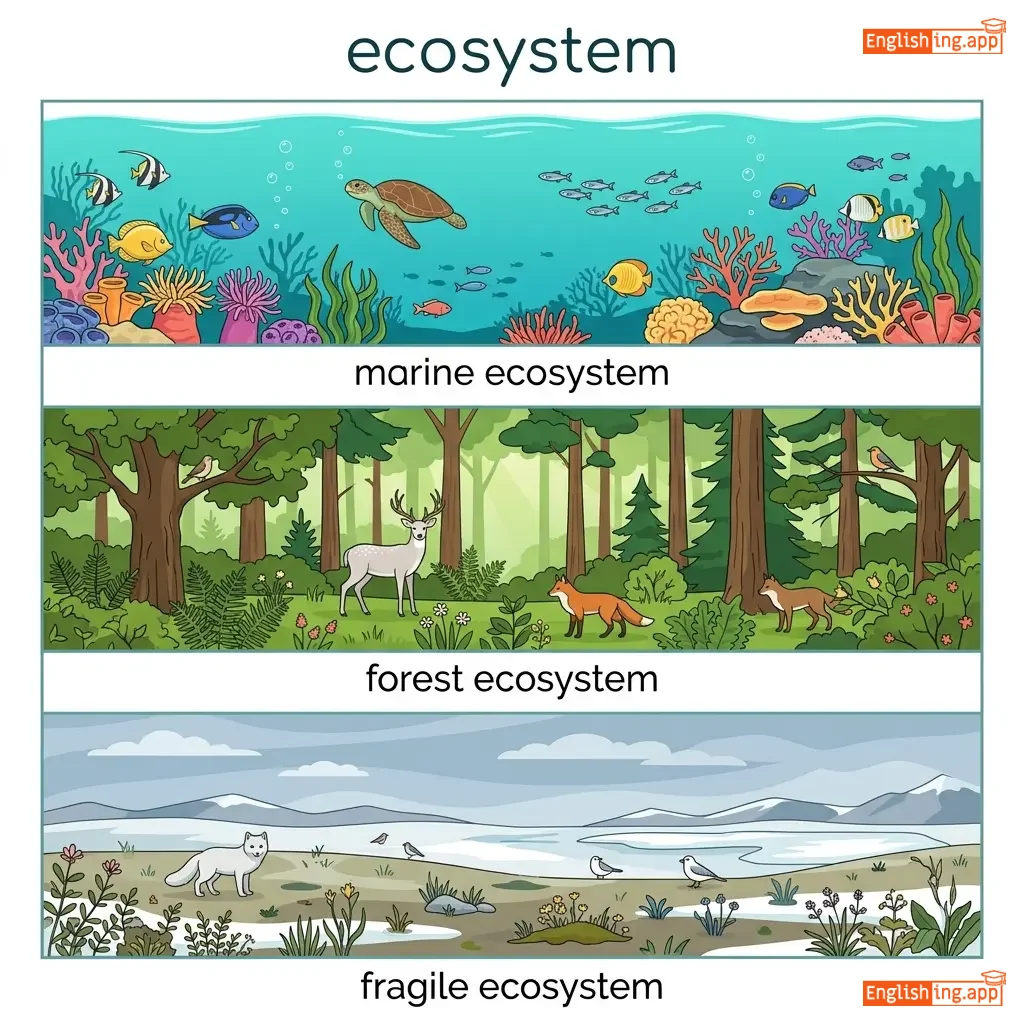
A biological community of interacting organisms and their physical environment.
••••••
|
The forest ecosystem supports a wide variety of animals and plants. |
彼女は賞を受け取ったとき、幸せを隠すことができなかった。
Kanojo wa shō o uketotta toki, shiawase o kakusu koto ga dekinakatta.
••••••
|
- •••••• | - •••••• | - •••••• |
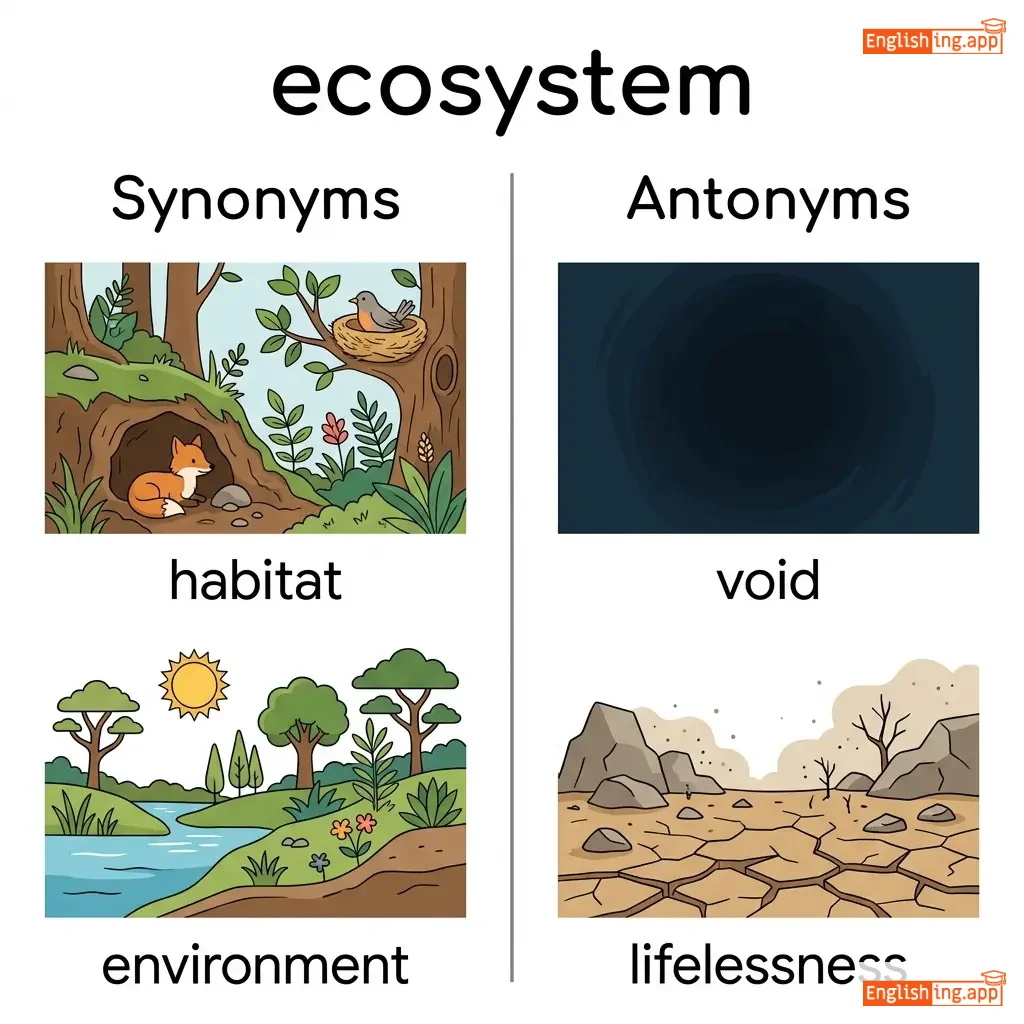
habitat, environment, biome, community, biosphere
••••••
|
void, lifelessness
••••••
|
marine ecosystem, forest ecosystem, fragile ecosystem, ecosystem balance
••••••
|
幸せは日本語で'しあわせ'、英語の'happiness'と同じです。
••••••
|
|
#2850
💹
|
/ɪˈkɒnəmi/
noun
(エコノミー)
••••••
|
|
経済
keizai
••••••
|
- •••••• | - •••••• | - •••••• | - •••••• |
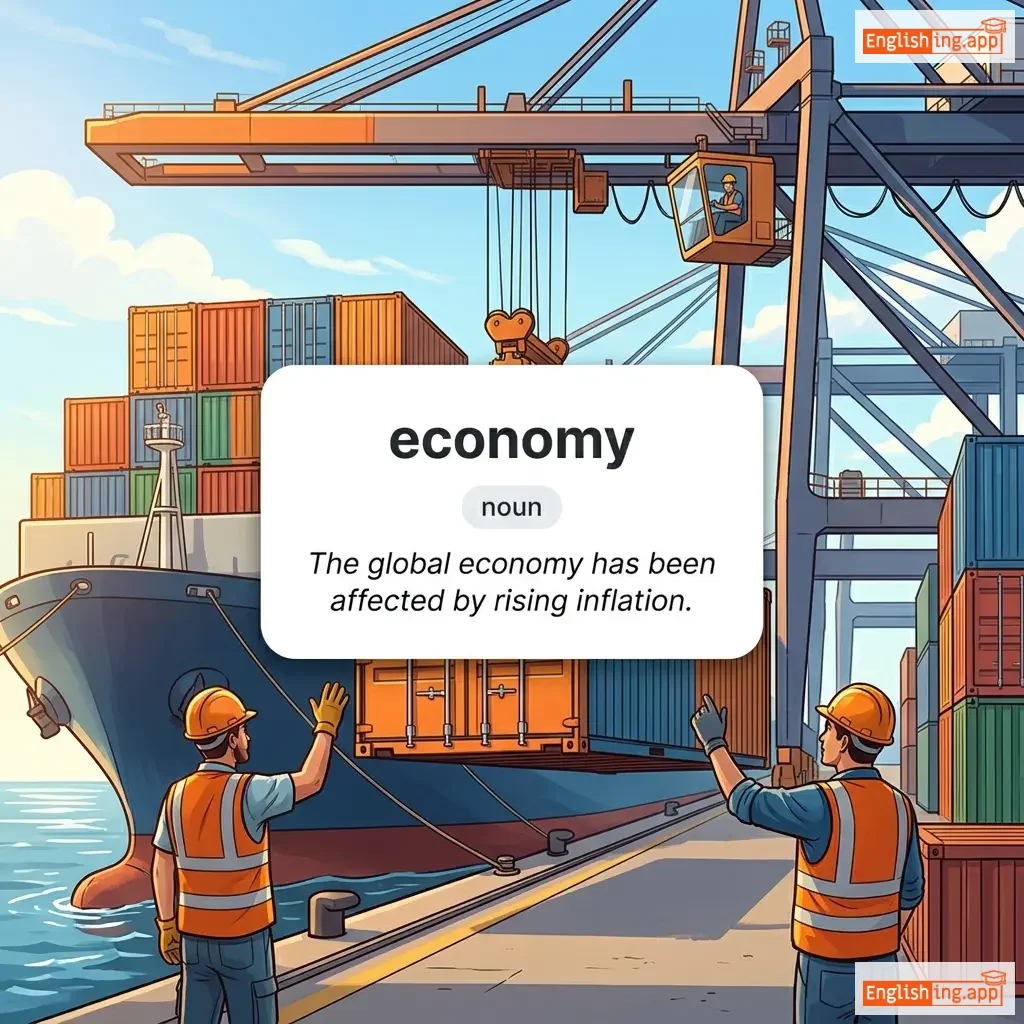
The system of production, distribution, and consumption of goods and services in a society.
••••••
|
The global economy has been affected by rising inflation. |
世界経済はインフレの上昇に影響を受けました。
Sekai keizai wa infure no jōshō ni eikyō o ukemashita.
••••••
|
boost the economy |
to improve the economic condition of a country or region
••••••
|
経済を促進する
Keizai o sokushin suru
••••••
|
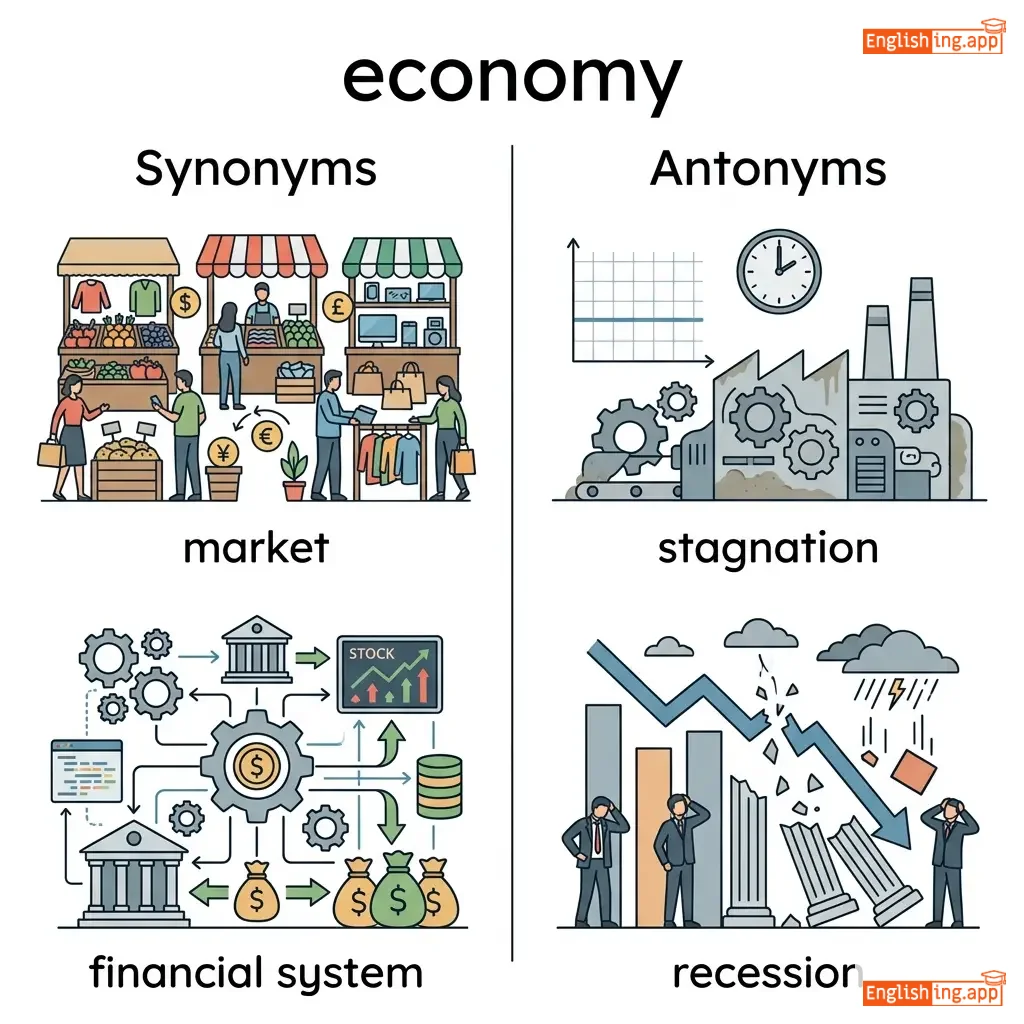
market, financial system, commerce, trade, industry
••••••
|
stagnation, recession, collapse
••••••
|
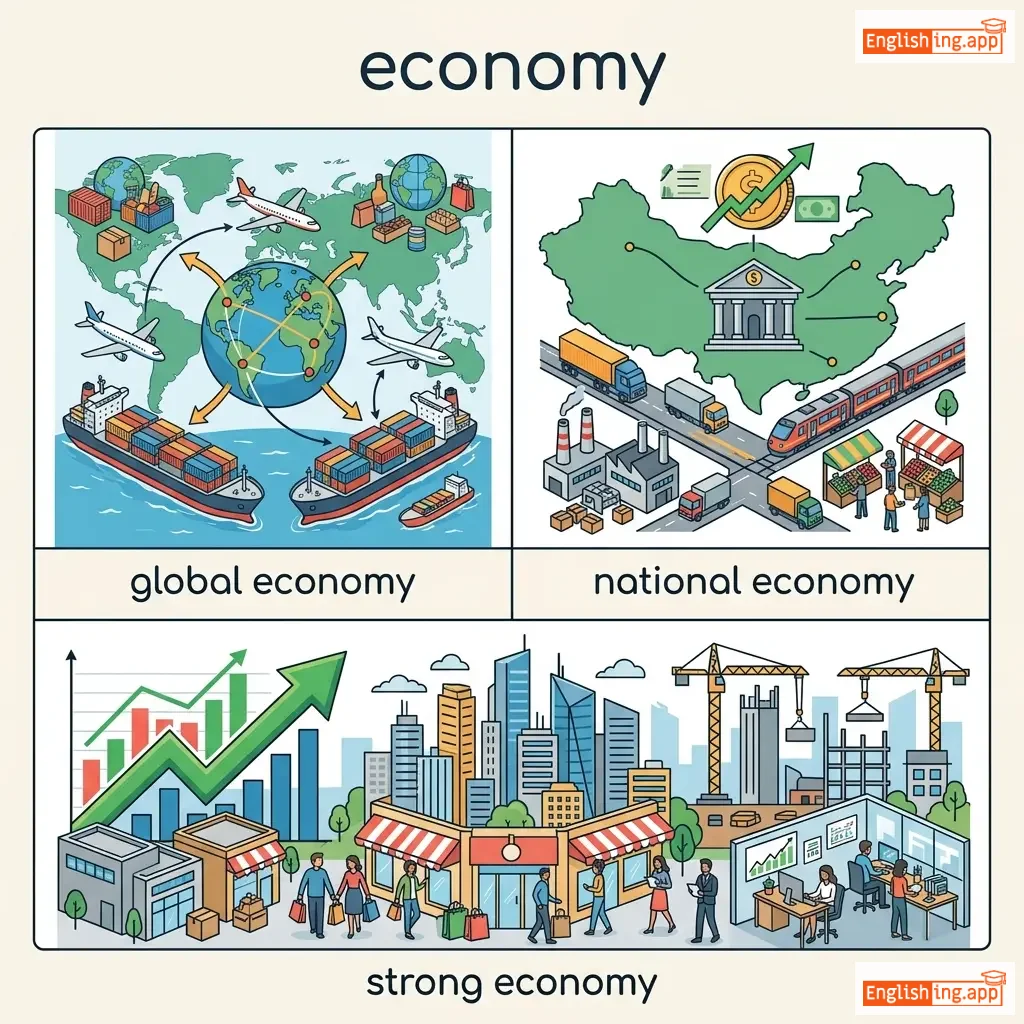
global economy, national economy, strong economy, economy growth, economy policy
••••••
|
経済=経済、全てはお金(経済)を中心に回る。
••••••
|
Vocabulary Quiz
Test your vocabulary by matching words with their translations or meanings.
Login to take the quiz
Comments (0)
Share your thoughts and join the discussion.
Join the discussion by logging in
Login to CommentNo comments yet
Be the first to share your thoughts!