

翻訳
過去
過去分詞
三人称単数
動名詞
意味
例文
例文の翻訳
同義語
対義語
コロケーション
ニーモニック

Swipe left or right, or use the buttons. Tap image to zoom.
例文の翻訳
単語
Lesson 326Lesson 326 - マスクトグル
|
絵文字
|
単語 | Images | 翻訳 | 過去 | 過去分詞 | 三人称単数 | 動名詞 | 意味 | 例文 | 例文の翻訳 | 表現例 | 表現例の意味 | 表現例の翻訳 | 同義語 | 対義語 | コロケーション | ニーモニック |
|---|---|---|---|---|---|---|---|---|---|---|---|---|---|---|---|---|---|
|
#9745
😈
|
/ˈdɛv.əl/
noun
(デビル)
••••••
|
- •••••• |
悪魔
akuma
••••••
|
- •••••• | - •••••• | - •••••• | - •••••• |
An evil spirit or supernatural being often regarded as the embodiment of wickedness and harm.
••••••
|
The story warned children about making deals with the devil. |
その話は子供たちに悪魔と取引をしないように警告した。
Sono hanashi wa kodomotachi ni akuma to torihiki o shinai yō ni keikoku shita.
••••••
|
speak of the devil |
Used when the person being talked about unexpectedly appears.
••••••
|
悪魔の話をする
Akuma no hanashi o suru
••••••
|
demon, fiend, monster, spirit, satan
••••••
|
angel, saint, god
••••••
|
devil worship, devil figure, fight the devil, devil smile
••••••
|
悪魔 = Devil (デビル) — 悪魔を話すと、いつでもすぐに現れる!
••••••
|
|
#9746
➗
|
/dɪˈvaɪd/
verb
••••••
|
|
- •••••• |
divided
••••••
|
divided
••••••
|
divides
••••••
|
dividing
••••••
|
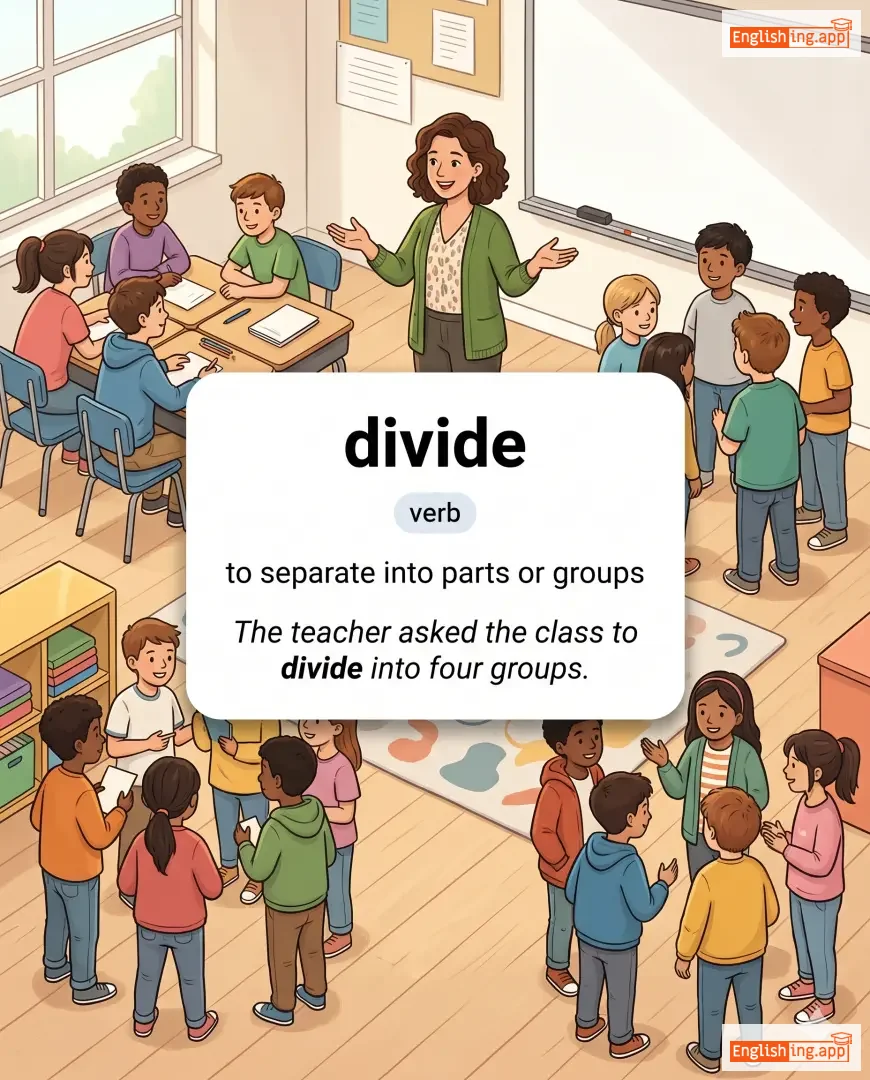
to separate into parts or groups
••••••
|
The teacher asked the class to divide into four groups. |
- •••••• |
divide and rule |
a strategy to gain power by causing divisions among people
••••••
|
- •••••• |
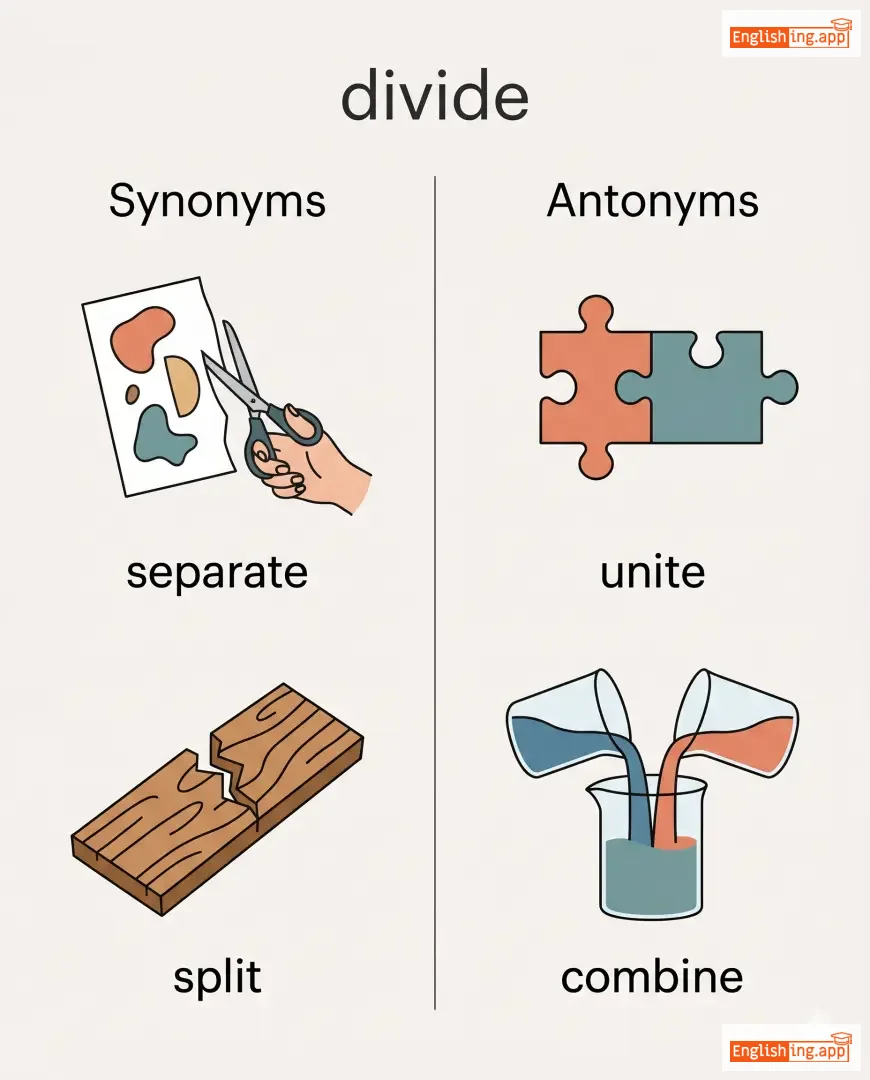
separate, split, partition, allocate, distribute
••••••
|
unite, combine, merge
••••••
|
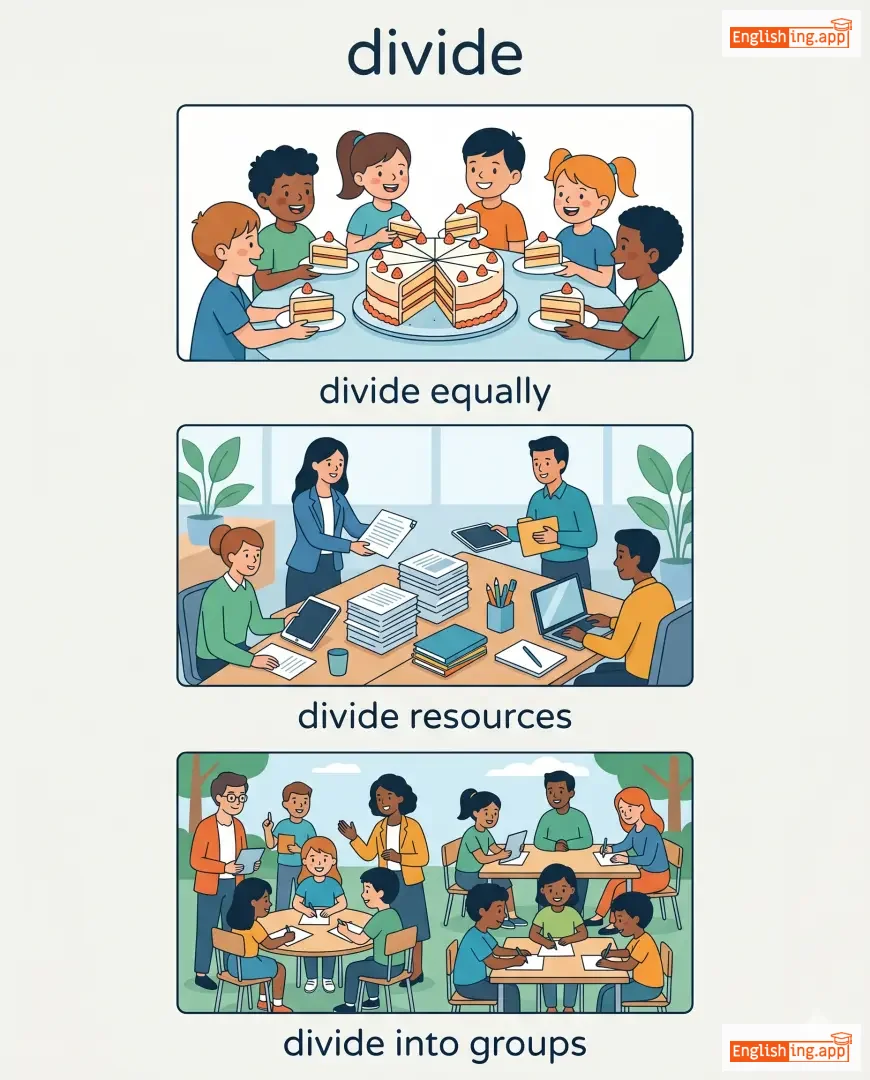
divide equally, divide resources, divide into groups, divide land
••••••
|
No •••••• |
|
#9747
📦
|
/dɪˈstrɪbjuːt/
verb
(ディストリビューション)
••••••
|
|
分配する
bunpai suru
••••••
|
distributed
ディストリビューション
••••••
|
distributed
ディストリビューション
••••••
|
distributes
ディストリビューション
••••••
|
distributing
ディストリビューション
••••••
|
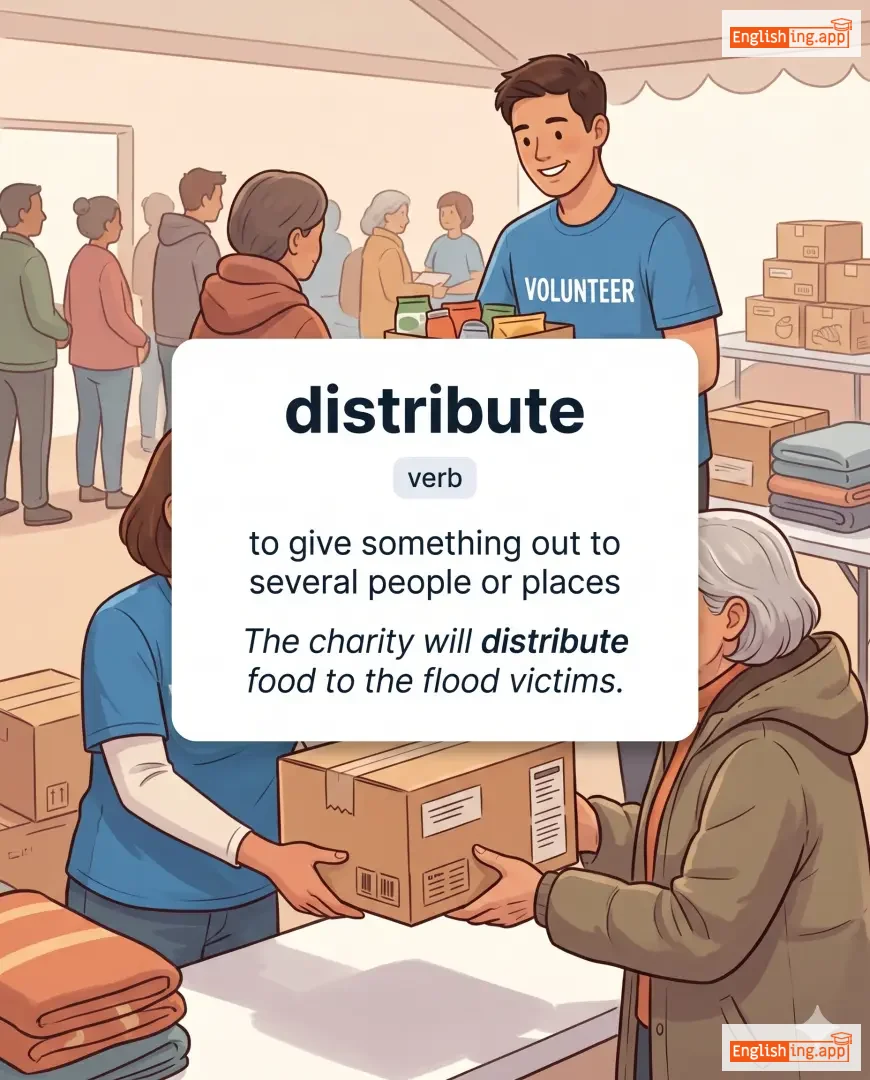
to give something out to several people or places
••••••
|
The charity will distribute food to the flood victims.
チャリティは洪水被害者に食料を分配します。
••••••
|
チャリティは洪水被害者に食料を分配します。
Charity wa kōzui higai-sha ni shokuryō o bunpai shimasu.
••••••
|
fairly distribute
公平に分配する
••••••
|
to share something equally
••••••
|
公平に分配する
kōhei ni bunpai suru
••••••
|
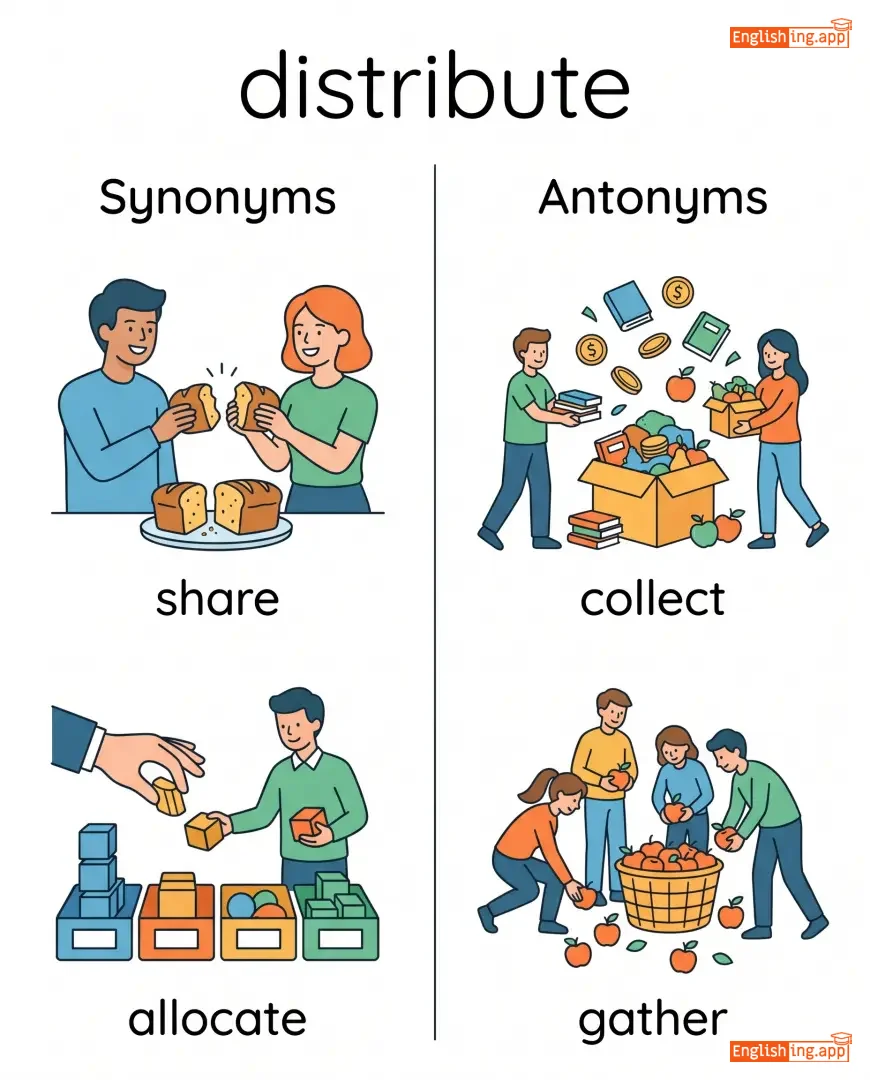
share, allocate, deliver, spread, hand out
••••••
|
collect, gather, withhold
••••••
|
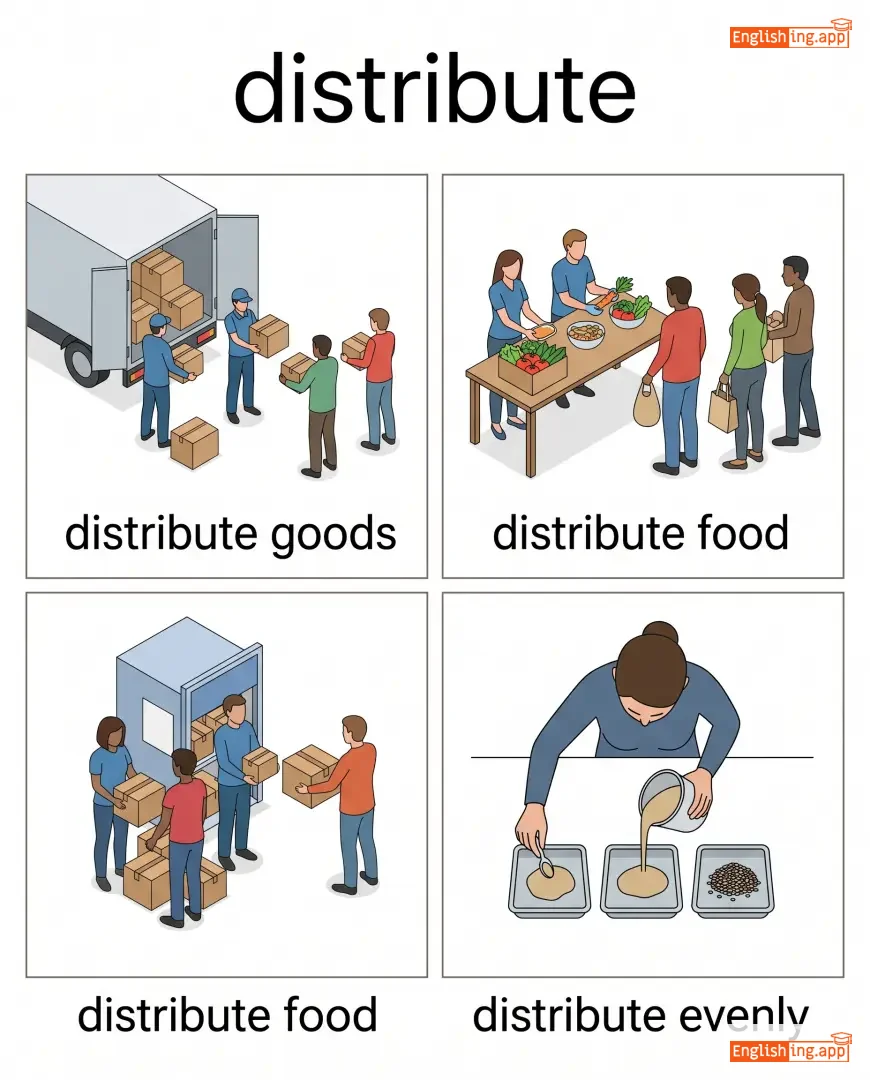
distribute goods, distribute food, distribute evenly, distribute wealth
••••••
|
Distribute は地区ごとに配ること
••••••
|
|
#9748
🙉
|
/dɪˈstrækʃən/
noun
(ディストラクション)
••••••
|
|
気を散らすこと
ki wo chirasu koto
••••••
|
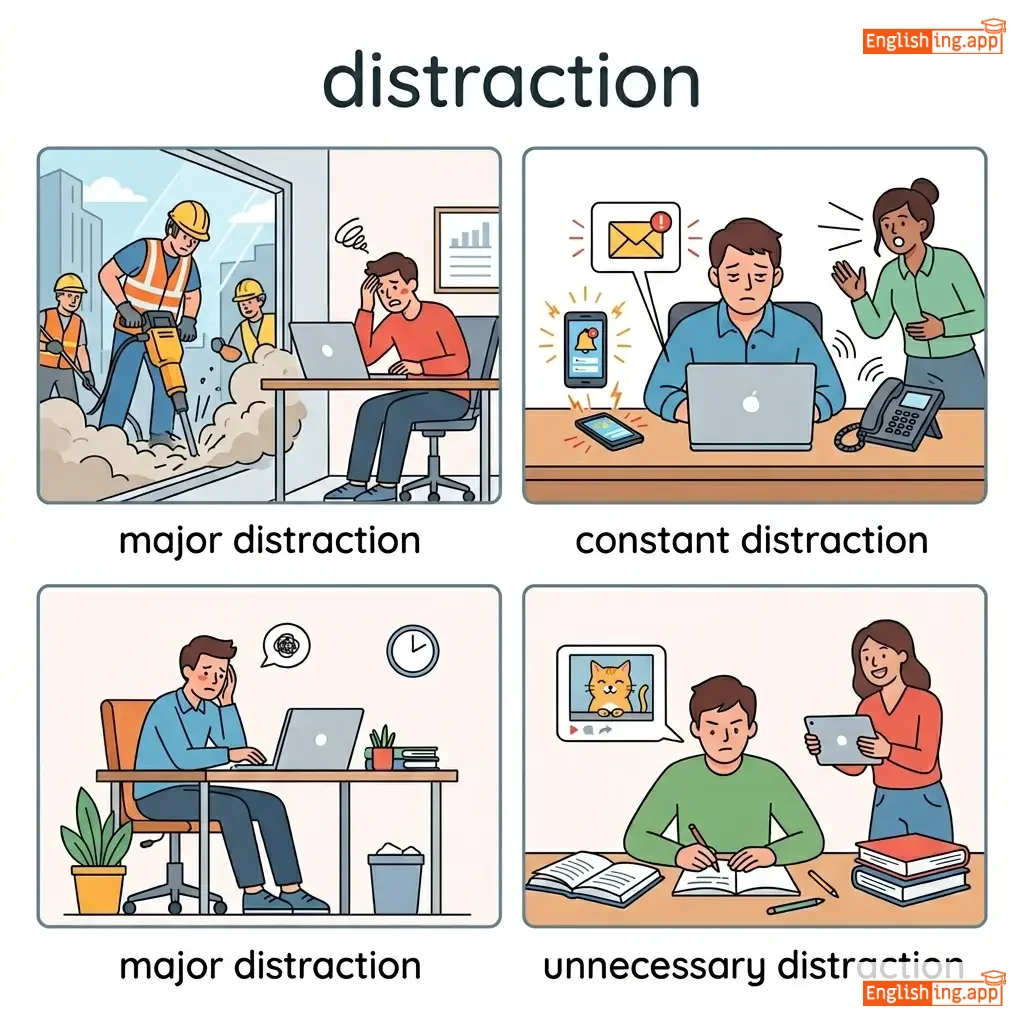
- •••••• | - •••••• | - •••••• | - •••••• |
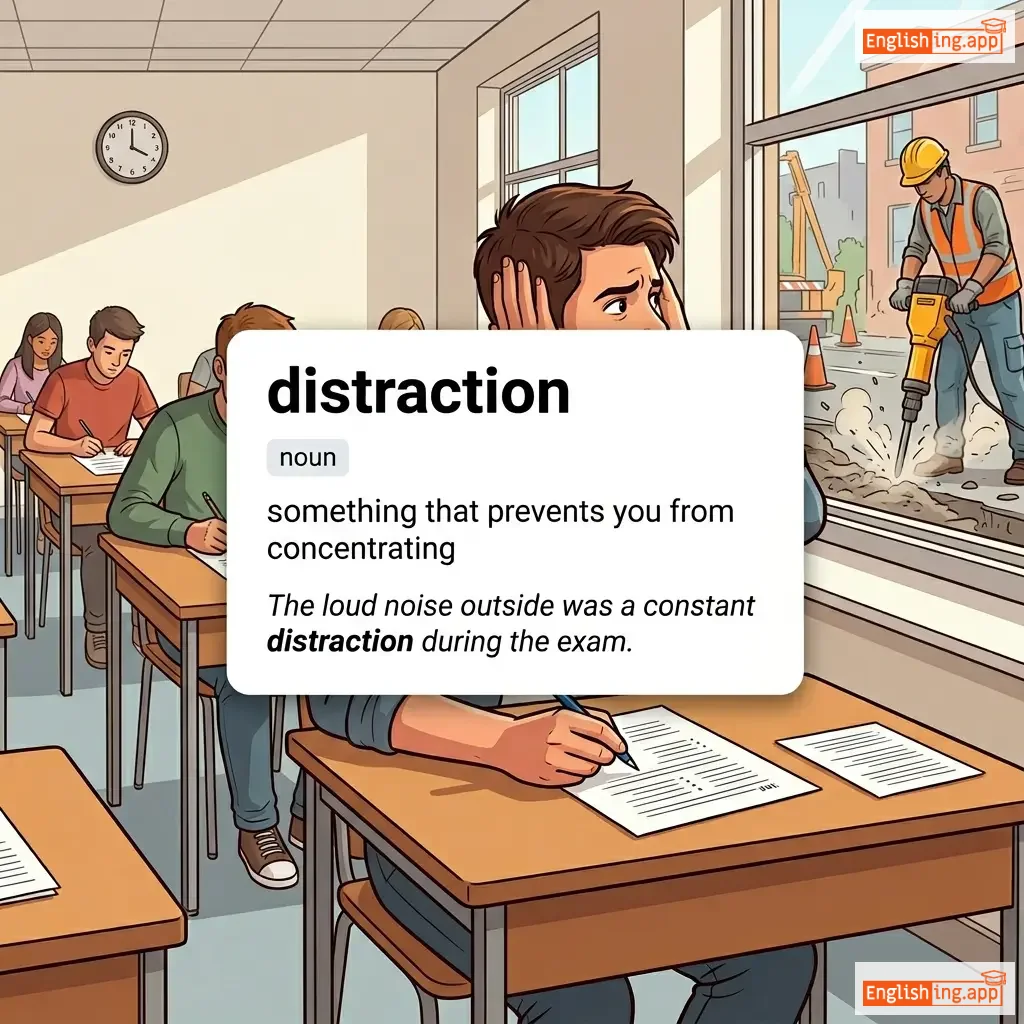
something that prevents you from concentrating
••••••
|
The loud noise outside was a constant distraction during the exam.
試験中、外の騒音は絶え間ない気を散らす原因でした。
••••••
|
試験中、外の騒音は絶え間ない気を散らす原因でした。
Shiken chū, soto no sōon wa taemanai ki wo chirasu gen'in deshita.
••••••
|
drive to distraction
気を散らす
••••••
|
to make someone very annoyed or upset
••••••
|
イライラさせる
iraira saseru
••••••
|
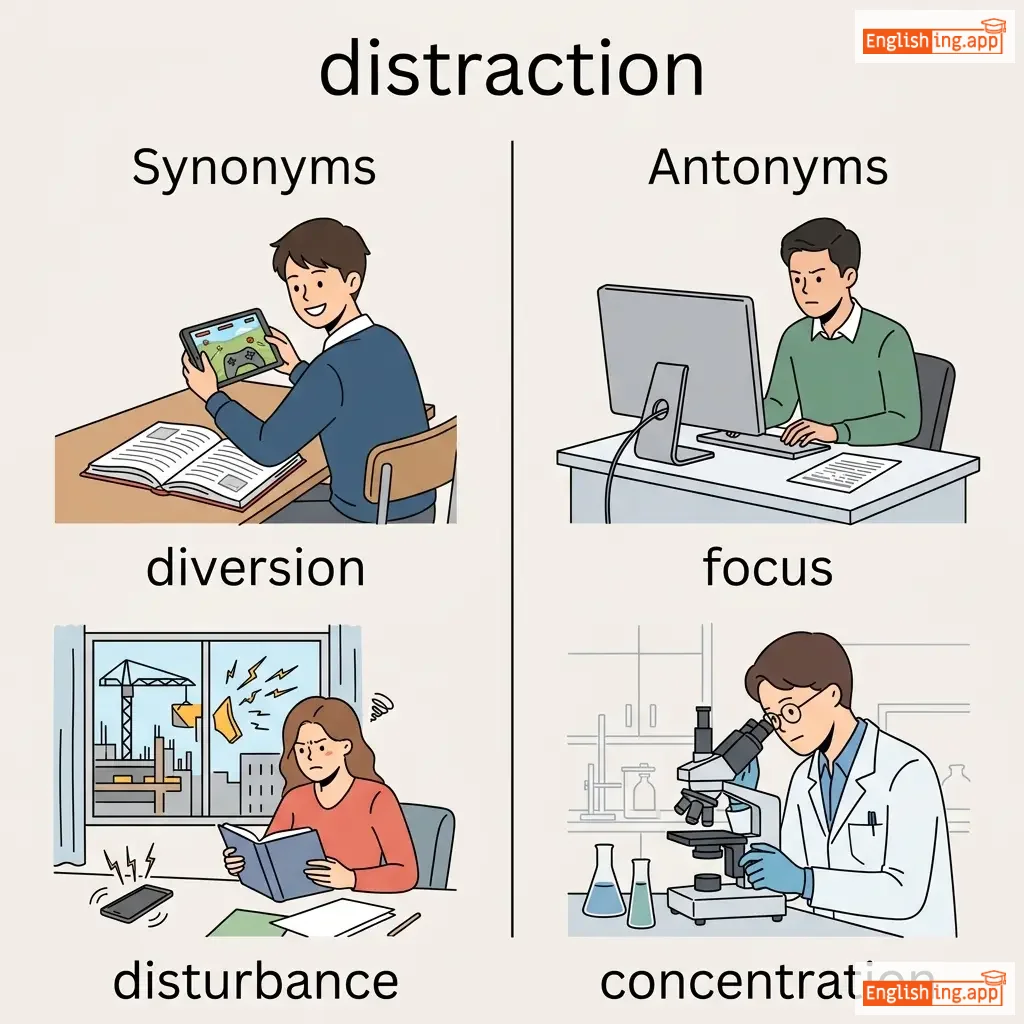
diversion, disturbance, interruption, interference
••••••
|
focus, concentration
••••••
|
major distraction, constant distraction, unnecessary distraction, source of distraction
••••••
|
気を散らす → 注意をそらす
••••••
|
|
#9749
⚔️
|
/dɪˈspjuːt/
noun/verb
(ディスピュート)
••••••
|
- •••••• |
争い, 論争
arasoi, ronsou
••••••
|
disputed
ディスピューテッド
••••••
|
disputed
ディスピューテッド
••••••
|
disputes
ディスピューツ
••••••
|
disputing
ディスピューティング
••••••
|
a disagreement or argument about something important
••••••
|
The two countries are in dispute over the border issue.
二国間で国境問題について争いが続いています。
••••••
|
二国間で国境問題について争いが続いています。
Nikokukan de kokkyou mondai ni tsuite arasoi ga tsuzuiteimasu.
••••••
|
settle a dispute
争いを解決する
••••••
|
to resolve a disagreement
••••••
|
争いを解決する
arasoi o kaiketsu suru
••••••
|
conflict, quarrel, argument, debate, disagreement
••••••
|
agreement, harmony, peace
••••••
|
trade dispute, legal dispute, border dispute, dispute resolution
••••••
|
Disputeは 'dis' + 'put' → 一緒にいない → 争いや論争の意味
••••••
|
|
#9750
❌
|
/dɪsˈpruːv/
verb
(ディスプルーブ)
••••••
|
- •••••• |
反証する
hanshō suru
••••••
|
disproved
ディスプルーブド
••••••
|
disproved
ディスプルーブド
••••••
|
disproves
ディスプルーブス
••••••
|
disproving
ディスプルービング
••••••
|
to show that something is false or wrong
••••••
|
The scientist worked hard to disprove the old theory.
科学者は古い理論を反証するために一生懸命働いた。
••••••
|
科学者は古い理論を反証するために一生懸命働いた。
Kagakusha wa furui riron o hanshō suru tame ni isshōkenmei hataraita.
••••••
|
- •••••• | - •••••• | - •••••• |
refute, debunk, invalidate, contradict, rebut
••••••
|
prove, confirm, verify
••••••
|
disprove a claim, disprove a theory, disprove an allegation, attempt to disprove
••••••
|
反証する: ハン (否定) + ショウ (証明) → 否定するか、誤りを証明する
••••••
|
|
#9751
😞
|
/dɪsˈɡreɪs/
noun
(ディスグレース)
••••••
|
- •••••• |
不名誉
fumeiyo
••••••
|
- •••••• | - •••••• | - •••••• | - •••••• |
Loss of respect, honor, or reputation due to shameful behavior.
••••••
|
He was dismissed in disgrace after the scandal. |
スキャンダル後、彼は不名誉の中で解雇されました。
Sukyandaru go, kare wa fumeiyo no naka de kaiko saremashita.
••••••
|
fall from grace |
To lose approval, respect, or status.
••••••
|
恩恵から落ちる
Onkei kara ochiru
••••••
|
shame, dishonor, humiliation, degradation
••••••
|
honor, glory
••••••
|
bring disgrace, national disgrace, live in disgrace, utter disgrace
••••••
|
Disgrace は dis (しない) + grace (恩恵) = 不名誉
••••••
|
|
#9752
🌪️
|
/dɪˈzæstər/
noun
(ディザスター)
••••••
|
- •••••• |
災害
saigai
••••••
|
- •••••• | - •••••• | - •••••• | - •••••• |
A sudden event that causes great damage or loss of life.
••••••
|
The earthquake was a major disaster. |
地震は大きな災害でした。
Jishin wa ōkina saigai deshita.
••••••
|
a recipe for disaster |
Something that is very likely to result in a bad outcome.
••••••
|
災害のレシピ
saigai no reshipi
••••••
|
catastrophe, calamity, tragedy, mishap
••••••
|
success, blessing
••••••
|
natural disaster, disaster relief, disaster management, prevent disaster
••••••
|
Disaster は 'dis'(悪い) + 'aster'(星)で、星が悪いと災害になる。
••••••
|
|
#9753
🛠️
|
/ˌdɪsəˈsɛmbəl/
verb
(ディサセンブル)
••••••
|
- •••••• |
分解する
bunkai suru
••••••
|
disassembled
ディサセンブルド
••••••
|
disassembled
ディサセンブルド
••••••
|
disassembles
ディサセンブルズ
••••••
|
disassembling
ディサセンブリング
••••••
|
To take apart something into its separate pieces.
••••••
|
He had to disassemble the computer to repair it.
彼は修理のためにコンピュータを分解しなければならなかった。
••••••
|
彼は修理のためにコンピュータを分解しなければならなかった。
Kare wa shūri no tame ni konpyūta o bunkai shinakereba naranakatta.
••••••
|
- •••••• | - •••••• | - •••••• |
dismantle, take apart, break down, deconstruct
••••••
|
assemble, build
••••••
|
disassemble furniture, disassemble a machine, disassemble and repair, carefully disassemble
••••••
|
Disassemble は dis (しない) assemble (組み立てる)、つまり分解する。
••••••
|
|
#9754
😖
|
/ˌdɪsəˈɡriːəbl/
adjective
(ディスアグリーアブル)
••••••
|
- •••••• |
不快
fukai
••••••
|
- •••••• | - •••••• | - •••••• | - •••••• |
Unpleasant or offensive; causing discomfort or annoyance.
••••••
|
The weather was cold and disagreeable.
天気は寒くて不快だった。
••••••
|
天気は寒くて不快だった。
Tenki wa samukute fukai datta.
••••••
|
- •••••• | - •••••• | - •••••• |
unpleasant, offensive, nasty, distasteful
••••••
|
pleasant, agreeable
••••••
|
disagreeable smell, disagreeable task, disagreeable person, highly disagreeable
••••••
|
Disagreeable はagreeできないから、不快という意味です。
••••••
|
|
#9755
🤲
|
/ˌdɪsədˈvæntɪdʒd/
adjective
(ディスアドヴァンテージド)
••••••
|
- •••••• |
恵まれない
megumarenai
••••••
|
- •••••• | - •••••• | - •••••• | - •••••• |
Lacking the basic resources or conditions needed for a good standard of living or equal opportunities.
••••••
|
The program provides support to disadvantaged children. |
そのプログラムは恵まれない子供たちに支援を提供しています。
Sono puroguramu wa megumarenai kodomotachi ni shien o teikyō shiteimasu.
••••••
|
- •••••• | - •••••• | - •••••• |
underprivileged, deprived, poor, needy
••••••
|
privileged, wealthy
••••••
|
disadvantaged children, disadvantaged groups, socially disadvantaged, economically disadvantaged
••••••
|
Disadvantaged は 'dis' (無) と 'advantage' (利点) から - したがって、利点がない、恵まれない。
••••••
|
|
#9756
🧼
|
/ˈdɜːr.ti/
adjective
(ダーティ)
••••••
|
- •••••• |
汚い
kitanai
••••••
|
- •••••• | - •••••• | - •••••• | - •••••• |
Covered with or containing an unclean substance.
••••••
|
His shoes were dirty after walking in the mud. |
泥の中を歩いた後、彼の靴は汚れていた。
Doro no naka o aruita ato, kare no kutsu wa yogorete ita.
••••••
|
dirty work |
Unpleasant or dishonorable tasks.
••••••
|
汚い仕事
kitanai shigoto
••••••
|
unclean, filthy, messy, grimy, polluted
••••••
|
clean, pure, tidy
••••••
|
dirty clothes, dirty hands, dirty joke, dirty tricks
••••••
|
Dirtyは汚いという意味 — あなたの靴に泥がついているのを想像してみてください。
••••••
|
|
#9757
😓
|
/ˈdɪf.ɪ.kəlt/
adjective
(ディフィカルト)
••••••
|
|
難しい
muzukashii
••••••
|
- •••••• | - •••••• | - •••••• | - •••••• |
Needing much effort or skill to do or understand.
••••••
|
The exam was so difficult that many students failed. |
試験は非常に難しく、多くの学生が失敗しました。
Shiken wa hijō ni muzukashiku, ōku no gakusei ga shippai shimashita.
••••••
|
difficult situation |
A situation that is hard to handle.
••••••
|
難しい状況
muzukashii jōkyō
••••••
|
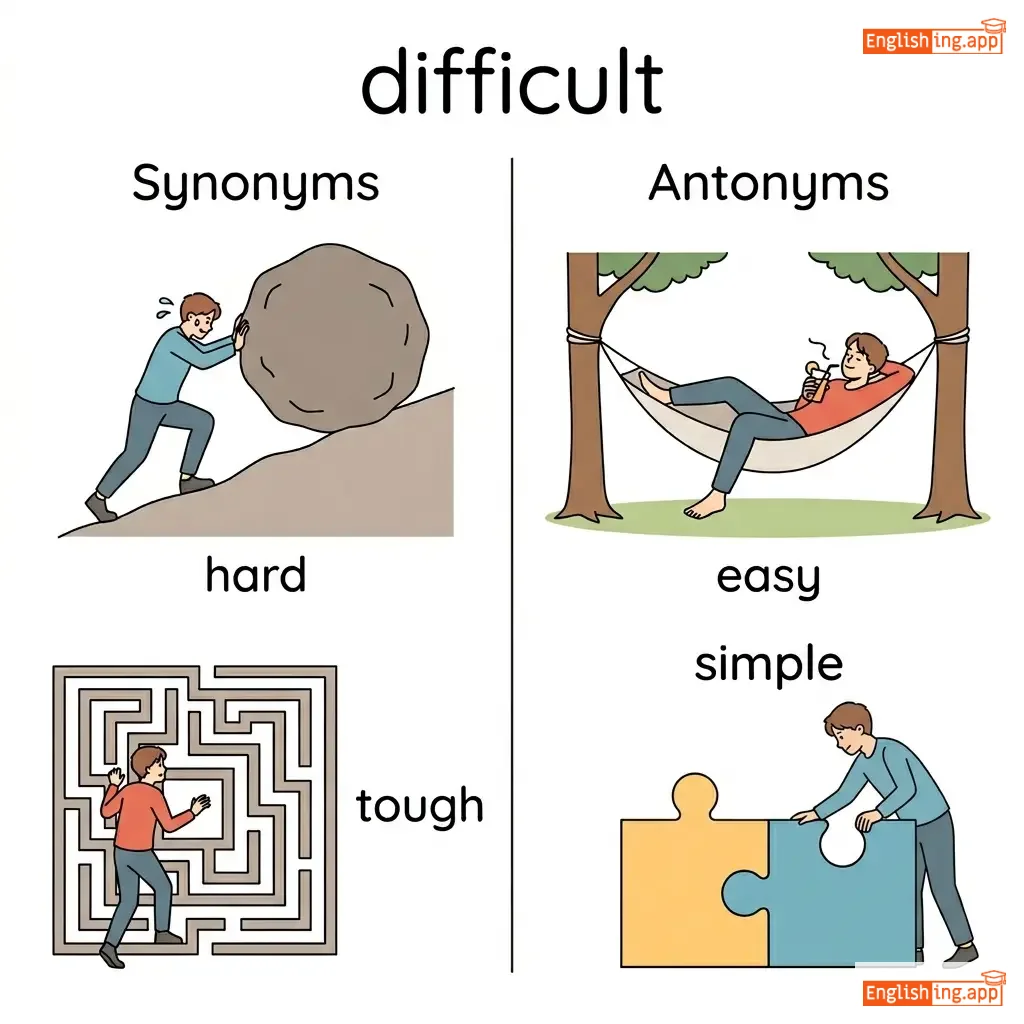
hard, tough, challenging, complicated, demanding
••••••
|
easy, simple, effortless
••••••
|
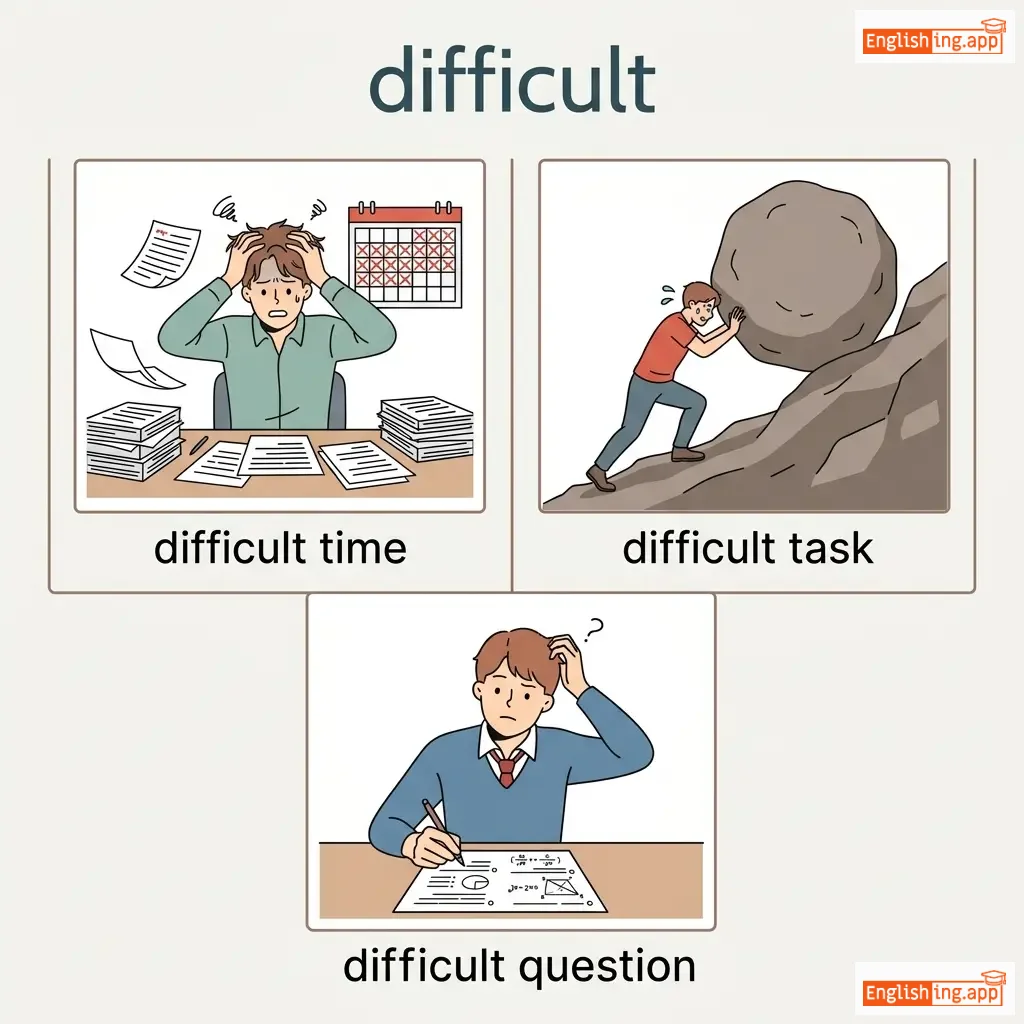
difficult time, difficult task, difficult question, difficult choice
••••••
|
Difficult は難しいという意味です。'Di' は難しさ、'full' は満ちていることを表し、仕事に努力が必要です。
••••••
|
|
#9758
🔀
|
/ˈdɪf.ər.ənt/
adjective
(ディファレント)
••••••
|
- •••••• |
異なる
kotonaru
••••••
|
- •••••• | - •••••• | - •••••• | - •••••• |
Not the same as another; distinct or unlike.
••••••
|
Her opinion was completely different from mine. |
彼女の意見は私のものとは完全に異なっていました。
Kanojo no iken wa watashi no mono to wa kanzen ni kotonatte imashita.
••••••
|
world of difference |
A very big difference.
••••••
|
大きな違い
ōkina chigai
••••••
|
distinct, unlike, diverse, varied, alternative
••••••
|
similar, same, identical
••••••
|
different types, different ways, different people, completely different
••••••
|
異なるは違うことです — 'Ko'で分けるから、すべて異なる。
••••••
|
|
#9759
🎲
|
/ˈdaɪ.si/
adjective
(ダイシー)
••••••
|
- •••••• |
危険な
kiken na
••••••
|
- •••••• | - •••••• | - •••••• | - •••••• |
Risky or unpredictable; potentially dangerous.
••••••
|
Investing in that company looks pretty dicey right now.
その会社への投資は今、かなりダイシーに見える。
••••••
|
その会社への投資は今、かなり危険なように見える。
Sono kaisha e no tōshi wa ima, kanari kiken na yō ni mieru.
••••••
|
- •••••• | - •••••• | - •••••• |
risky, uncertain, dangerous, hazardous, unstable
••••••
|
safe, secure, reliable
••••••
|
dicey situation, dicey move, dicey plan, dicey deal
••••••
|
サイコロ 🎲 は運をもたらすが、リスクもある — 'dicey' は危険なことを意味します。
••••••
|
|
#9760
😋
|
/dɪˈlɪʃəs/
adjective
(happiness)
••••••
|
- •••••• |
幸せ
shiawase
••••••
|
- •••••• | - •••••• | - •••••• | - •••••• |
having a very pleasant taste or smell
••••••
|
The cake was so delicious that everyone asked for a second slice.
彼女は賞を受け取ったとき、喜びを隠すことができませんでした。
••••••
|
彼女は賞を受け取ったとき、喜びを隠すことができませんでした。
Kanojo wa shō o uketotta toki, yorokobi o kakusu koto ga dekimasen deshita.
••••••
|
look delicious
幸せを追い求める
••••••
|
to appear very tasty or appealing
••••••
|
幸せを追い求める
shiawase o oimotomeru
••••••
|
tasty, appetizing, savory, delightful, yummy
••••••
|
bland, tasteless, unappetizing
••••••
|
delicious meal, delicious cake, delicious smell, look delicious
••••••
|
幸せ = 笑顔で幸せを見つける旅
••••••
|
|
#9761
💪
|
/dɪˈtɜːrmɪnd/
adjective
(ディターミンド)
••••••
|
- •••••• |
決心した
kesshin shita
••••••
|
- •••••• | - •••••• | - •••••• | - •••••• |
Having firmly decided to do something and not letting anything stop you.
••••••
|
She was determined to finish her studies despite many obstacles. |
多くの障害があったにもかかわらず、彼女は学業を終わらせる決心をしていた。
Ōku no shōgai ga atta ni mo kakawarazu, kanojo wa gakugyō o owaraseru kesshin o shite ita.
••••••
|
strong-willed |
Having a strong determination to achieve something.
••••••
|
強い意志
tsuyoi ishi
••••••
|
resolute, steadfast, strong-willed, persistent, firm
••••••
|
indecisive, hesitant, weak
••••••
|
determined effort, determined face, determined spirit, determined to succeed
••••••
|
決心は、日本語で「決めた心」で、何事にも動じない強い心を意味します。
••••••
|
|
#9762
🌀
|
/dɪˈstrʌktɪv/
adjective
(デストラクティブ)
••••••
|
- •••••• |
破壊的な
hakai teki na
••••••
|
- •••••• | - •••••• | - •••••• | - •••••• |
Causing great and irreparable harm or damage.
••••••
|
Hurricanes are often destructive to coastal cities.
ハリケーンは沿岸都市にとってしばしば破壊的です。
••••••
|
ハリケーンは沿岸都市にとってしばしば破壊的です。
Harikēn wa engan toshi ni totte shibashiba hakai-teki desu.
••••••
|
destructive criticism
破壊的批判
••••••
|
Criticism that is harmful rather than helpful.
••••••
|
破壊的批判
hakai-teki hihan
••••••
|
damaging, harmful, devastating, ruinous, catastrophic
••••••
|
constructive, helpful, beneficial
••••••
|
destructive force, destructive behavior, destructive power, destructive effect
••••••
|
Destructiveは破壊することを意味します – 破壊的な。
••••••
|
|
#9763
💥
|
/dɪˈstrɔɪ/
verb
(ディストロイ)
••••••
|
|
破壊する
hakai suru
••••••
|
destroyed
ディストロイド
••••••
|
destroyed
ディストロイド
••••••
|
destroys
ディストロイズ
••••••
|
destroying
ディストロイング
••••••
|
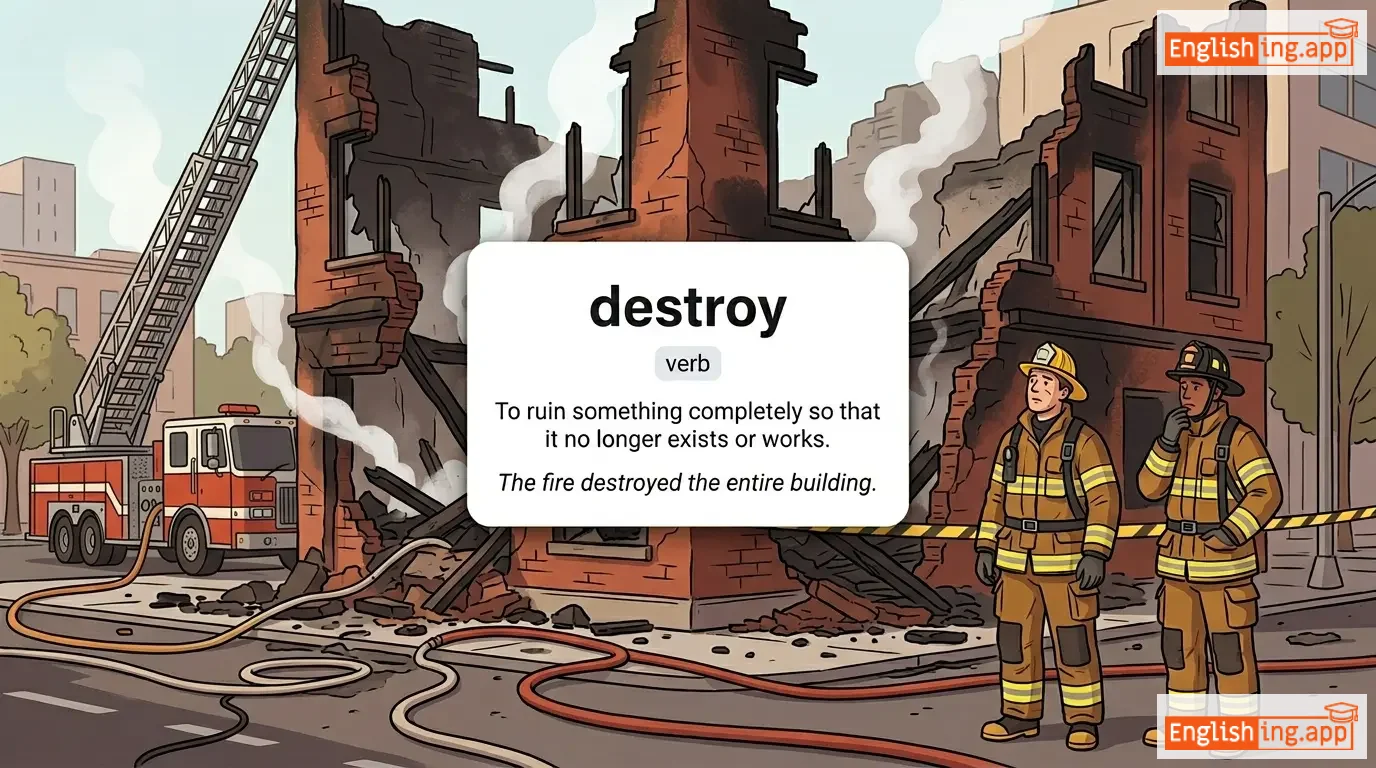
To ruin something completely so that it no longer exists or works.
••••••
|
The fire destroyed the entire building.
火事が建物全体を破壊した。
••••••
|
火事が建物全体を破壊した。
Kaji ga tatemono zentai o hakai shita.
••••••
|
self-destroy
セルフ・デストロイ
••••••
|
To cause one's own ruin.
••••••
|
セルフ・デストロイ
serufu desutoroi
••••••
|
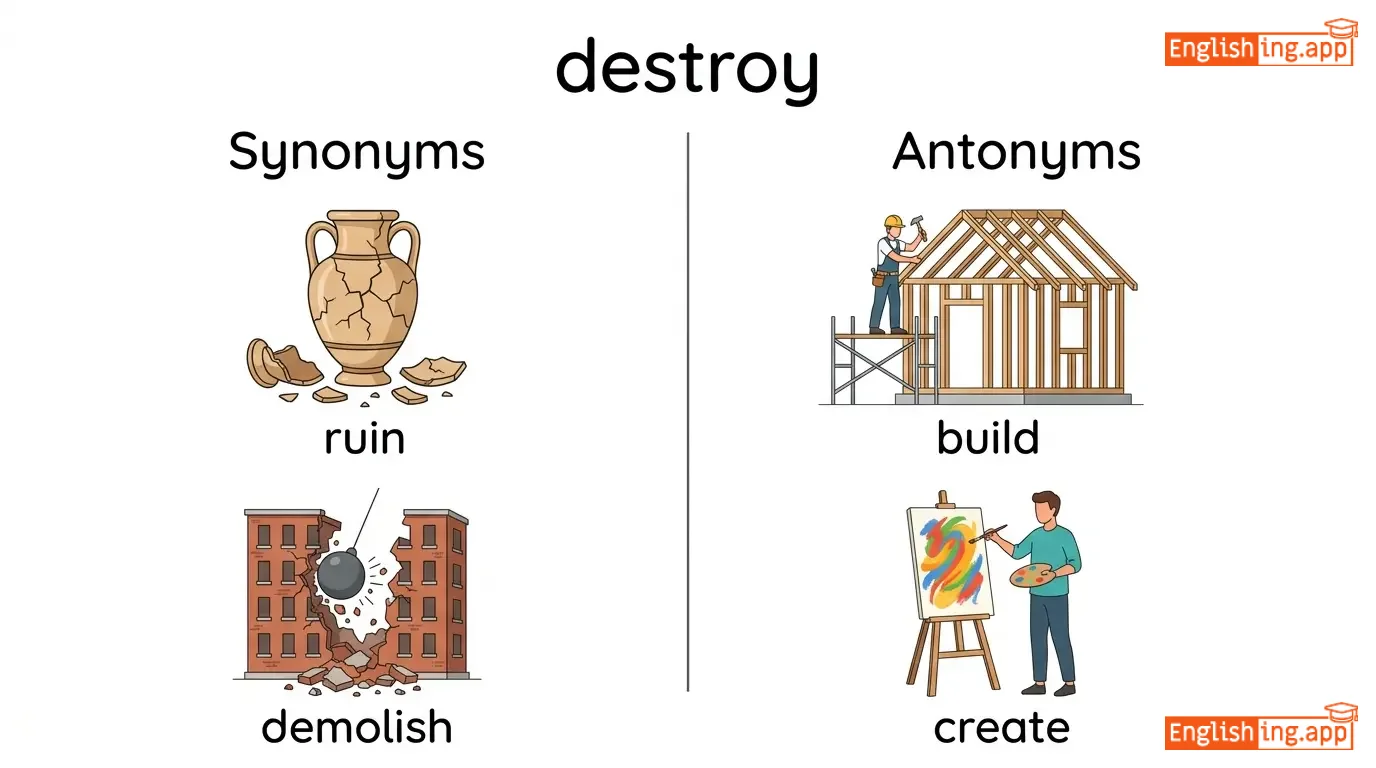
ruin, demolish, wreck, annihilate, obliterate
••••••
|
build, create, repair
••••••
|
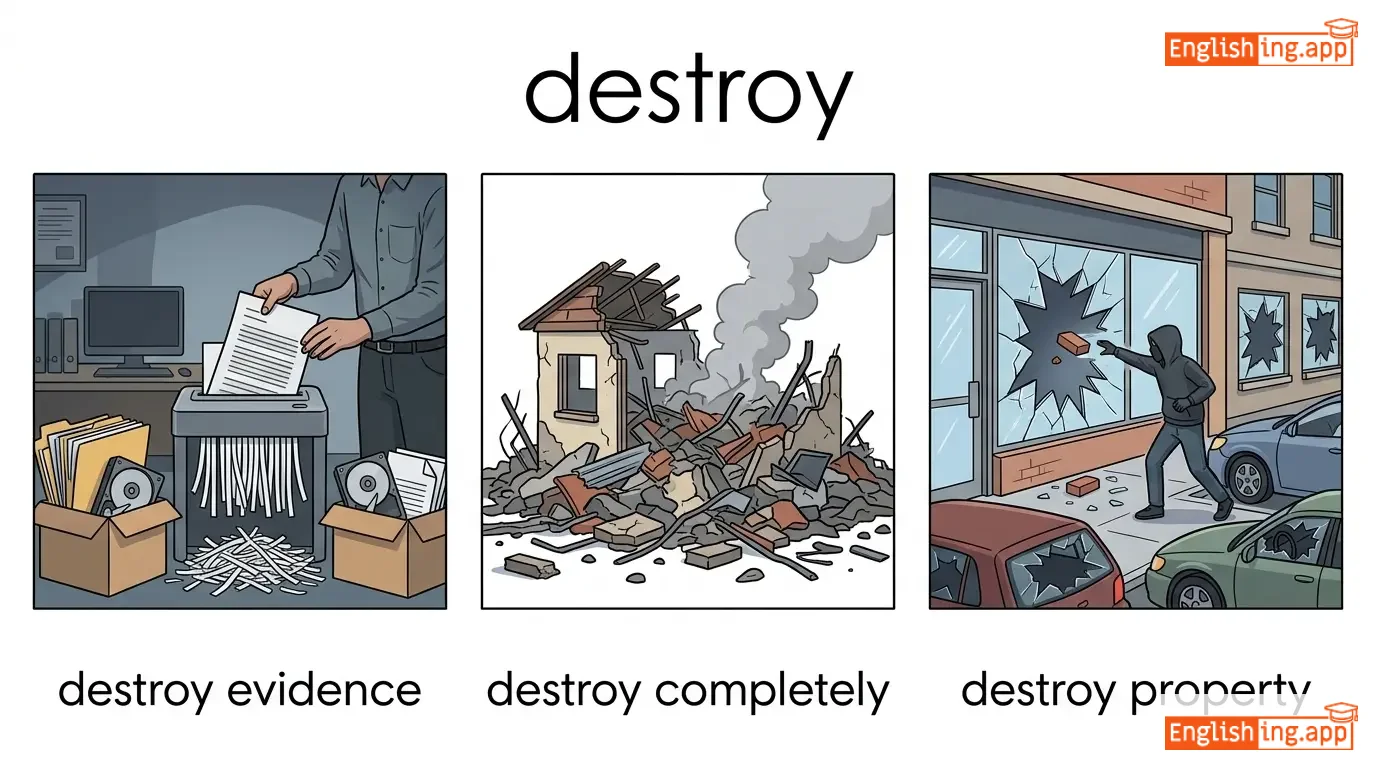
destroy evidence, destroy completely, destroy property, destroy reputation
••••••
|
破壊することはすべてを壊すことであり、火災のように建物を壊すようなものです。
••••••
|
|
#9764
✨
|
/ˈdɛstəni/
noun
(デスティニー)
••••••
|
- •••••• |
運命
unmei
••••••
|
- •••••• | - •••••• | - •••••• | - •••••• |
The events that will necessarily happen to a particular person or thing in the future; fate.
••••••
|
She believed it was her destiny to become a doctor. |
彼女は医者になることが自分の運命だと信じていた。
Kanojo wa isha ni naru koto ga jibun no unmei da to shinjite ita.
••••••
|
sealed destiny |
A future that is already decided and cannot be changed.
••••••
|
定められた運命
sadamareta unmei
••••••
|
fate, fortune, lot, kismet, predestination
••••••
|
chance, accident, randomness
••••••
|
fulfill destiny, meet destiny, control destiny, shape destiny
••••••
|
Destinyは運命、すでに定められていて、変えることができない。
••••••
|
|
#9765
🏚️
|
/dɪˈzɜːrtɪd/
adjective
(デザーテッド)
••••••
|
- •••••• |
人がいない
hito ga inai
••••••
|
- •••••• | - •••••• | - •••••• | - •••••• |
Empty of people; abandoned.
••••••
|
The village looked completely deserted after the storm. |
嵐の後、その村は完全に人がいないように見えた。
Arashi no ato, sono mura wa kanzen ni hito ga inai you ni mieta.
••••••
|
- •••••• | - •••••• | - •••••• |
abandoned, empty, vacant, forsaken, uninhabited
••••••
|
populated, crowded, inhabited
••••••
|
deserted street, deserted house, deserted town, deserted beach
••••••
|
Desertedは人がいない、砂漠と同じように。
••••••
|
|
#9766
🏜️
|
/ˈdez.ɚt/ (noun/adjective), /dɪˈzɜːrt/ (verb)
noun, verb
••••••
|
- •••••• | - •••••• |
deserted
••••••
|
deserted
••••••
|
deserts
••••••
|
deserting
••••••
|
as a noun, a barren sandy region; as a verb, to abandon someone or something
••••••
|
He deserted his friends in their time of need. |
- •••••• |
just deserts |
the punishment or reward that is deserved
••••••
|
- •••••• |
abandon, forsake, leave, wasteland, wilderness
••••••
|
support, stay, assist
••••••
|
desert storm, desert island, deserted place, desert someone
••••••
|
No •••••• |
|
#9767
📝
|
/dɪˈskraɪb/
verb
(ディスクライブ)
••••••
|
- •••••• |
説明する
setsumei suru
••••••
|
described
ディスクライヴド
••••••
|
described
ディスクライヴド
••••••
|
describes
ディスクライブス
••••••
|
describing
ディスクライビング
••••••
|
to give an account of something in words, including details
••••••
|
She described the scene vividly.
彼女はそのシーンを鮮明に説明した。
••••••
|
彼女はそのシーンを鮮明に説明した。
Kanojo wa sono shīn o senmei ni setsumei shita.
••••••
|
describe in detail
詳細に説明する
••••••
|
to explain with thorough information
••••••
|
詳細に説明する
shōsai ni setsumei suru
••••••
|
explain, portray, depict, illustrate, narrate
••••••
|
confuse, obscure, distort
••••••
|
describe briefly, describe fully, describe process, describe situation
••••••
|
Describeは日本語で'説明する'、詳細にシーンを説明するように考えて。
••••••
|
|
#9768
🚫
|
/dɪˈpraɪv/
verb
••••••
|
- •••••• | - •••••• |
deprived
••••••
|
deprived
••••••
|
deprives
••••••
|
depriving
••••••
|
to take something away from someone, or prevent them from having it
••••••
|
The new law may deprive people of their rights. |
- •••••• |
sleep-deprived |
lacking enough sleep
••••••
|
- •••••• |
deny, strip, remove, dispossess, rob
••••••
|
grant, give, provide
••••••
|
deprive of rights, deprive someone of, deprive freedom, sleep deprived
••••••
|
No •••••• |
|
#9769
😈
|
/dɪˈpreɪvd/
adjective
(デプレイヴド)
••••••
|
- •••••• |
堕落した
darakushita
••••••
|
- •••••• | - •••••• | - •••••• | - •••••• |
morally corrupt or wicked
••••••
|
The film depicts the life of a depraved criminal. |
その映画は堕落した犯罪者の人生を描いています。
Sono eiga wa darakushita hanzai-sha no jinsei o egaiteimasu.
••••••
|
- •••••• | - •••••• | - •••••• |
corrupt, immoral, wicked, degenerate, sinful
••••••
|
moral, pure, virtuous
••••••
|
depraved mind, depraved acts, depraved behavior, depraved character
••••••
|
堕落した(darakushita) – ‘deep rave’ で道徳的に堕落する。
••••••
|
|
#9770
🚆
|
/dɪˈpɑːrt/
verb
••••••
|
- •••••• | - •••••• |
departed
••••••
|
departed
••••••
|
departs
••••••
|
departing
••••••
|
to leave, especially to start a journey
••••••
|
The train will depart at 9 a.m. |
- •••••• |
depart this life |
a formal or euphemistic way to say 'die'
••••••
|
- •••••• |
leave, exit, go, withdraw, set off
••••••
|
arrive, stay, remain
••••••
|
depart early, depart station, flight departs, depart suddenly
••••••
|
No •••••• |
|
#9771
👖
|
/ˈdɛnɪmz/
noun
(デニムス)
••••••
|
- •••••• |
デニムのパンツ
denimu no pantsu
••••••
|
- •••••• | - •••••• | - •••••• | - •••••• |
pants or clothes made from denim fabric, usually jeans
••••••
|
He wore blue denims with a white shirt. |
彼は白いシャツと青いデニムを履いていた。
Kare wa shiroi shatsu to aoi denimu o haite ita.
••••••
|
pair of denims |
a pair of jeans
••••••
|
デニムのペア
denimu no pea
••••••
|
jeans, trousers, pants, blue jeans
••••••
|
formal wear, suit
••••••
|
blue denims, wear denims, pair of denims, faded denims
••••••
|
Denimsはデニムのパンツを意味する - ジーンズとして覚えやすい
••••••
|
|
#9772
🏦
|
/diːˈnæʃənəlaɪz/
verb
(デナショナライズ)
••••••
|
- •••••• |
民営化
min'eka
••••••
|
denationalized
デナショナライズド
••••••
|
denationalized
デナショナライズド
••••••
|
denationalizes
デナショナライズズ
••••••
|
denationalizing
デナショナライズイング
••••••
|
to transfer ownership from the government to private individuals or companies
••••••
|
The government decided to denationalize the bank to encourage private investment.
政府は民間投資を促進するために銀行をデナショナライズすることを決定しました。
••••••
|
政府は民間投資を促進するために銀行を民営化することを決定しました。
Seifu wa minkan tōshi o sokushin suru tame ni ginkō o min'eka suru koto o kettei shimashita.
••••••
|
- •••••• | - •••••• | - •••••• |
privatize, liberalize, deregulate
••••••
|
nationalize, socialize
••••••
|
denationalize industry, denationalize banks, government denationalize
••••••
|
De-nationalize は政府から民間へと渡すこと
••••••
|
|
#9773
⬇️
|
/dɪˈmoʊt/
verb
(ディモート)
••••••
|
- •••••• |
降格
koukaku
••••••
|
demoted
ディモーテッド
••••••
|
demoted
ディモーテッド
••••••
|
demotes
ディモーツ
••••••
|
demoting
ディモーティング
••••••
|
to reduce to a lower rank or position
••••••
|
The manager decided to demote the employee for poor performance.
マネージャーはパフォーマンスが悪いため、従業員を降格させることに決めました。
••••••
|
マネージャーはパフォーマンスが悪いため、従業員を降格させることに決めました。
Manejā wa pafōmansu ga warui tame, jūgyōin o kōkaku saseru koto ni kimemashita.
••••••
|
- •••••• | - •••••• | - •••••• |
downgrade, relegate, reduce, lower
••••••
|
promote, upgrade
••••••
|
demote someone, demote to, demote for misconduct
••••••
|
降格は demote と同じ意味です。
••••••
|
|
#9774
🙂
|
/dɪˈmiːnər/
noun
(ディミナー)
••••••
|
- •••••• |
態度
taido
••••••
|
- •••••• | - •••••• | - •••••• | - •••••• |
a person's outward behavior or appearance
••••••
|
Her calm demeanour impressed everyone during the meeting. |
会議中、彼女の落ち着いた態度は皆に印象を与えました。
Kaigi-chu, kanojo no ochitsuita taido wa mina ni inshou wo ataemashita.
••••••
|
cool demeanour |
calm and composed behavior
••••••
|
冷静な態度
reisei na taido
••••••
|
behavior, manner, attitude, conduct
••••••
|
agitation, disturbance
••••••
|
calm demeanour, serious demeanour, professional demeanour, cool demeanour
••••••
|
Demeanourは態度、つまり人の外見や行動を指します。
••••••
|
Vocabulary Quiz
Test your vocabulary by matching words with their translations or meanings.
Login to take the quiz
Comments (0)
Share your thoughts and join the discussion.
Join the discussion by logging in
Login to CommentNo comments yet
Be the first to share your thoughts!