

翻訳
過去
過去分詞
三人称単数
動名詞
意味
例文
例文の翻訳
同義語
対義語
コロケーション
ニーモニック

Swipe left or right, or use the buttons. Tap image to zoom.
例文の翻訳
単語
Lesson 165Lesson 165 - マスクトグル
|
絵文字
|
単語 | Images | 翻訳 | 過去 | 過去分詞 | 三人称単数 | 動名詞 | 意味 | 例文 | 例文の翻訳 | 表現例 | 表現例の意味 | 表現例の翻訳 | 同義語 | 対義語 | コロケーション | ニーモニック |
|---|---|---|---|---|---|---|---|---|---|---|---|---|---|---|---|---|---|
|
#4921
🧳
|
/aɪˈtɪnərənt/
adjective
(アイティネラント)
••••••
|
|
旅する
tabisuru
••••••
|
- •••••• | - •••••• | - •••••• | - •••••• |
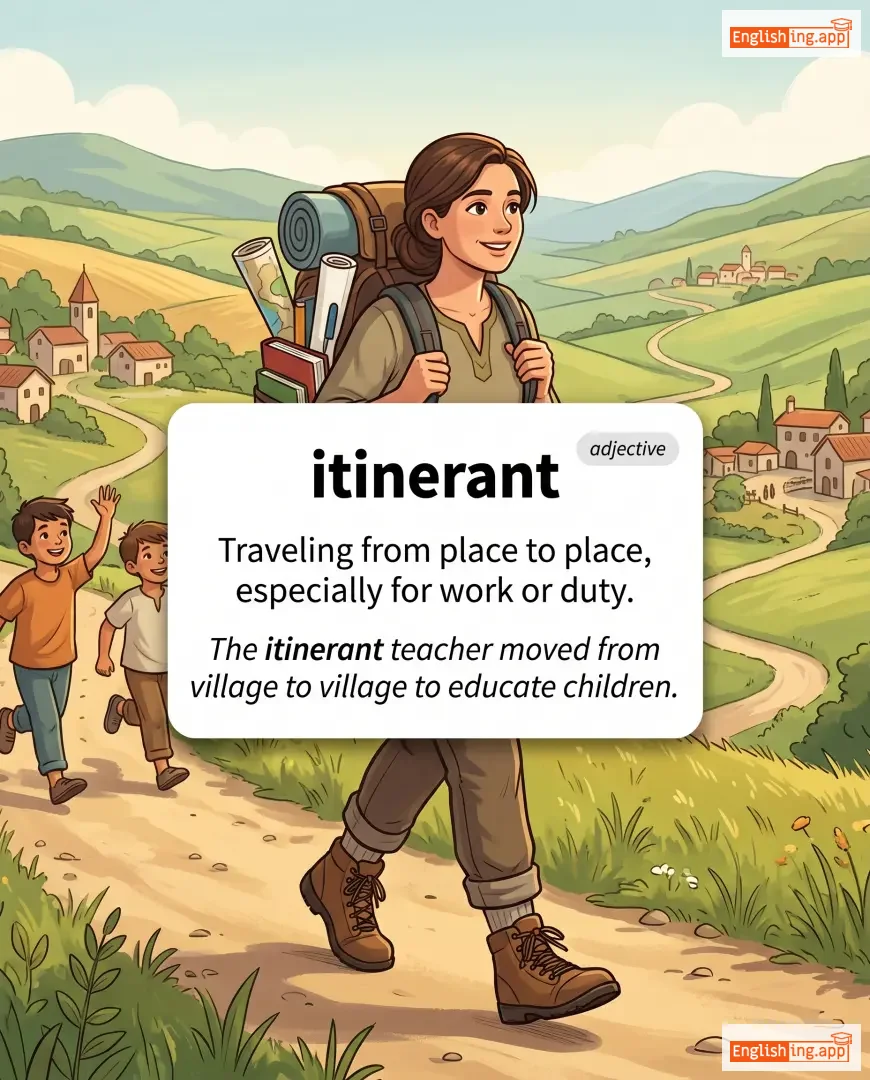
Traveling from place to place, especially for work or duty.
••••••
|
The itinerant teacher moved from village to village to educate children. |
その旅する教師は村から村へと移動して子供たちに教育をしていました。
Sono tabisuru kyōshi wa mura kara mura e to idō shite kodomotachi ni kyōiku o shite imashita.
••••••
|
- •••••• | - •••••• | - •••••• |
wandering, roving, traveling, nomadic, peripatetic
••••••
|
settled, stationary, resident
••••••
|
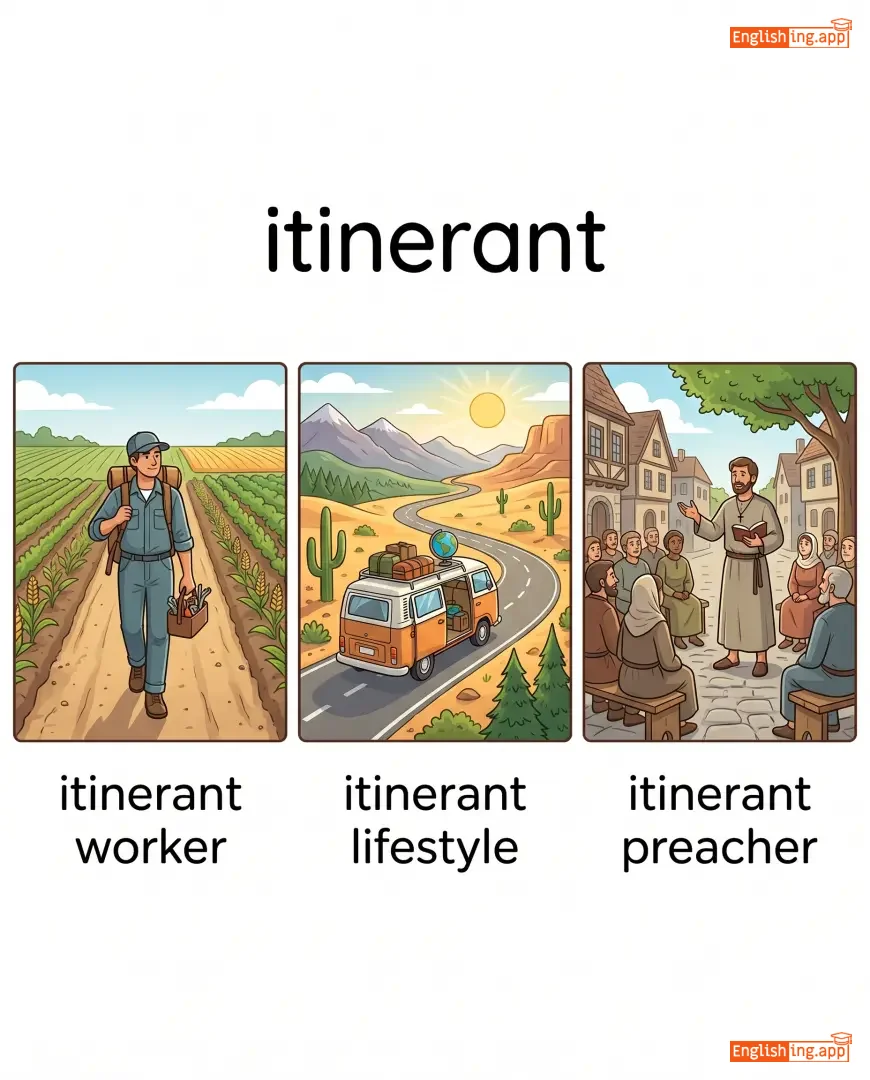
itinerant worker, itinerant lifestyle, itinerant preacher, itinerant musician
••••••
|
旅するは移動すること – 先生が村々を巡って教えているところを想像してみてください。
••••••
|
|
#4922
⚠️
|
/ˈdʒɛpərdaɪz/
verb
(ジェパーダイズ)
••••••
|
|
危険にさらす
kiken ni sarasu
••••••
|
jeopardized
ジェパーダイズド
••••••
|
jeopardized
ジェパーダイズド
••••••
|
jeopardizes
ジェパーダイズズ
••••••
|
jeopardizing
ジェパーダイジング
••••••
|
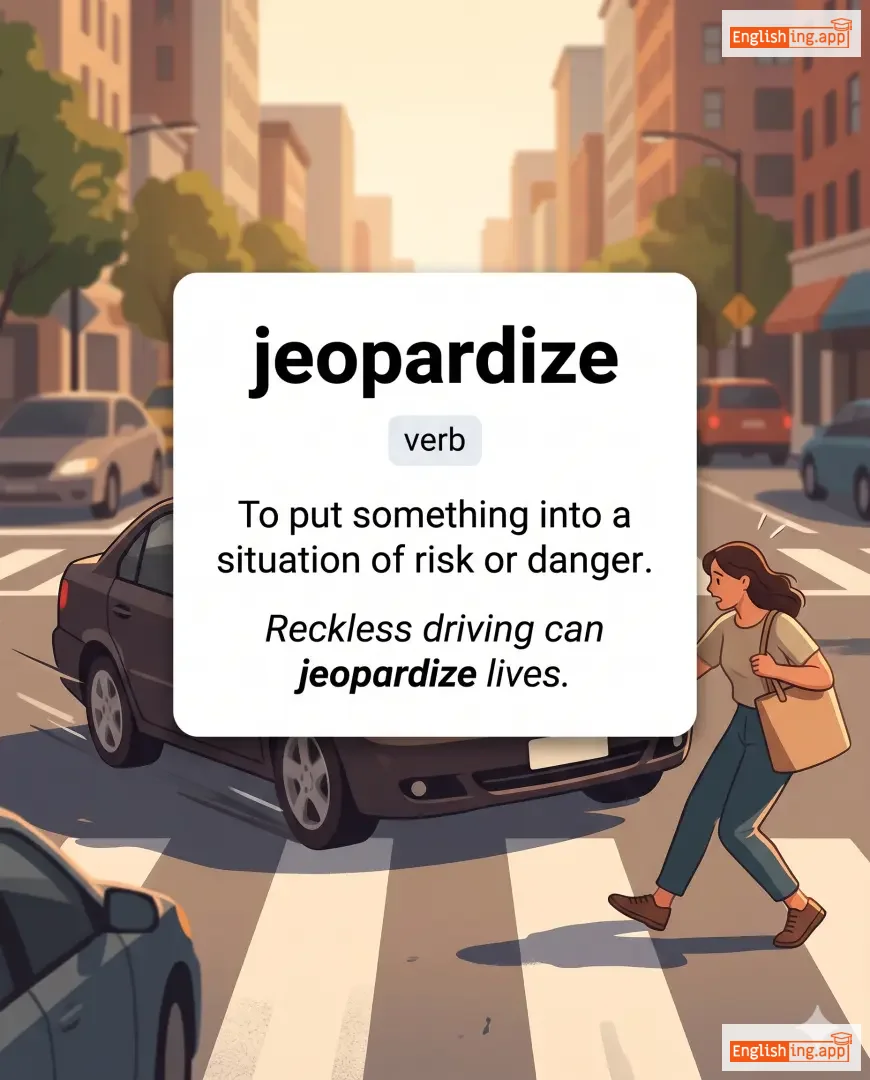
To put something into a situation of risk or danger.
••••••
|
Reckless driving can jeopardize lives.
無謀な運転は命を危険にさらす可能性があります。
••••••
|
無謀な運転は命を危険にさらす可能性があります。
Mubou na unten wa inochi wo kiken ni sarasu kanousei ga arimasu.
••••••
|
jeopardize the future
未来を危険にさらす
••••••
|
to put the future at risk
••••••
|
未来を危険にさらす
Mirai wo kiken ni sarasu
••••••
|
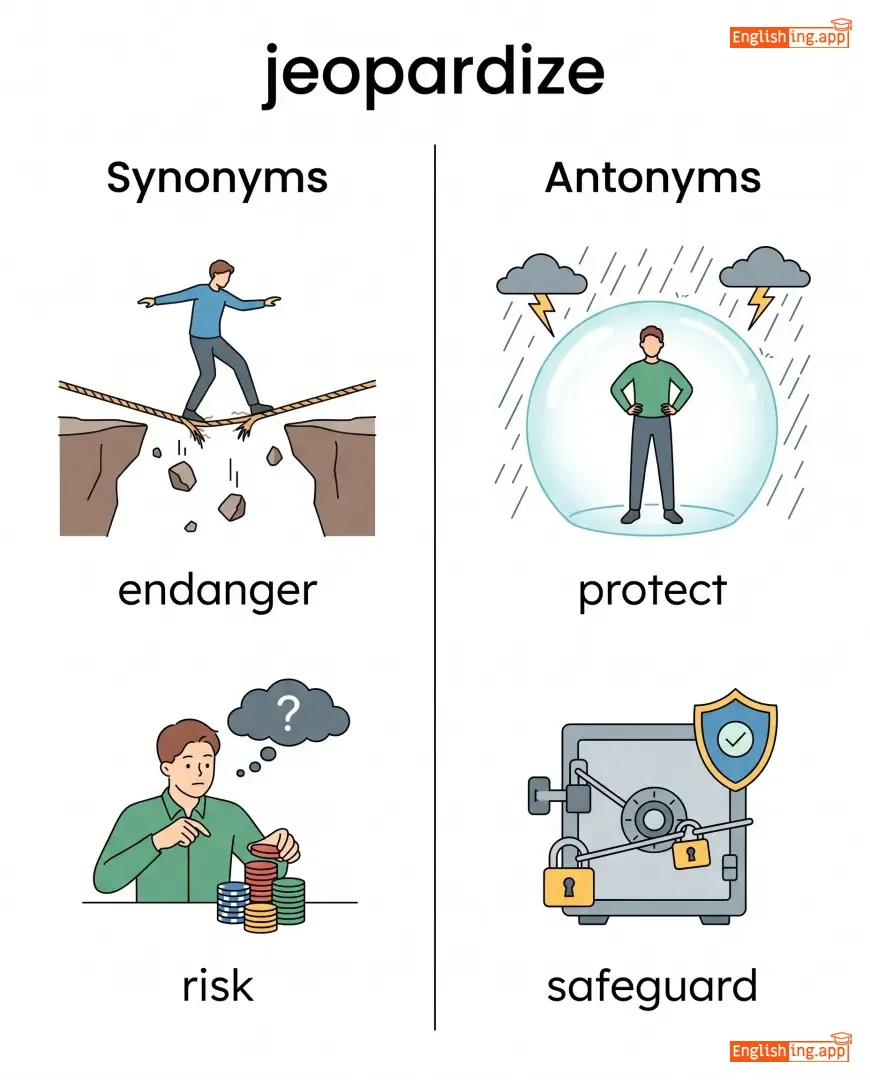
endanger, risk, imperil, threaten, compromise
••••••
|
protect, safeguard, secure
••••••
|
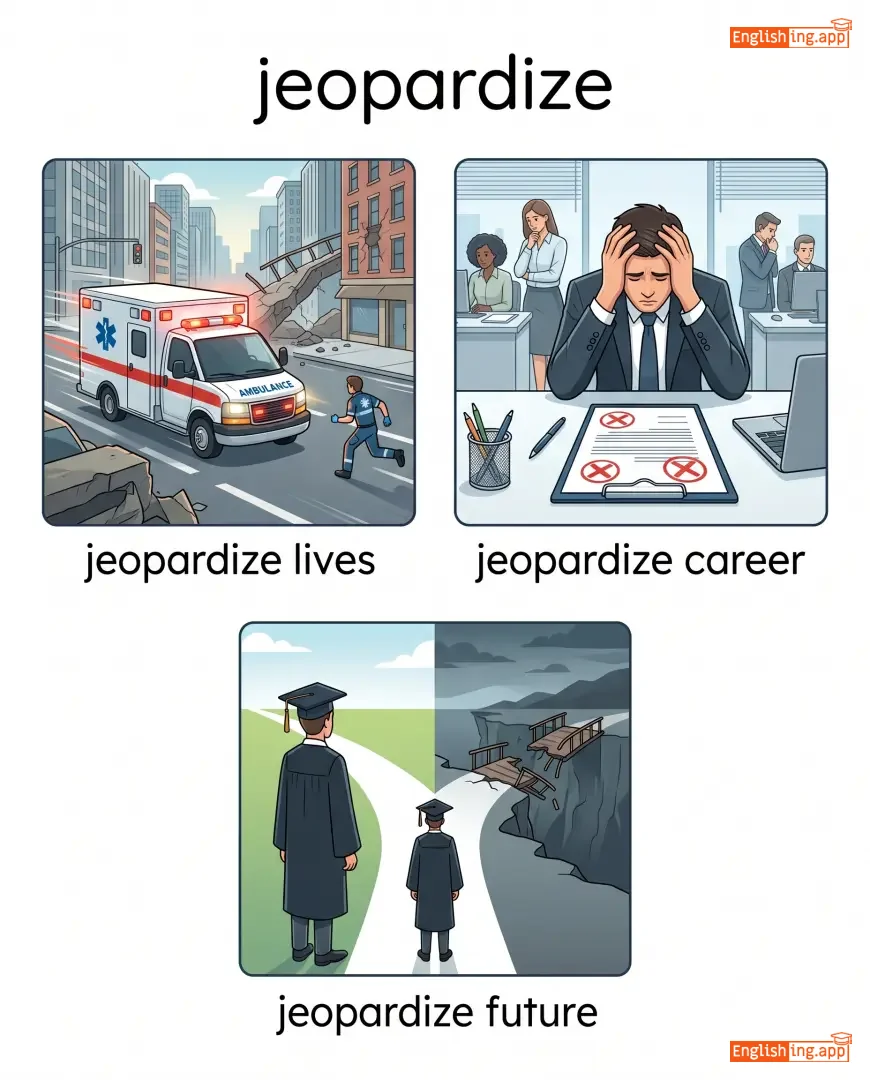
jeopardize lives, jeopardize career, jeopardize future, jeopardize health
••••••
|
Jeopardizeは危険にさらすこと — Jeopardyゲームで間違えると、賞品が危険にさらされるようなものです。
••••••
|
|
#4923
🙄
|
/dʒɪˈdʒuːn/
adjective
(ジェジュン)
••••••
|
- •••••• |
未熟 / 表面的 / 退屈
mijuku / hyōmen-teki / taikutsu
••••••
|
- •••••• | - •••••• | - •••••• | - •••••• |
Naive, simplistic, and superficial; also dull or uninteresting.
••••••
|
The professor dismissed the essay as jejune and lacking depth. |
教授はそのエッセイを未熟で深みがないとして却下した。
Kyōju wa sono essei o mijuku de fukami ga nai to shite kyakka shita.
••••••
|
- •••••• | - •••••• | - •••••• |
immature, simplistic, shallow, trivial, naive
••••••
|
mature, profound, deep
••••••
|
jejune ideas, jejune argument, jejune writing
••••••
|
Jejuneは‘ジュニアレベル’を連想させ、未熟や退屈を意味します。
••••••
|
|
#4924
😎
|
/ˈdʒɔːnti/
adjective
(ジャウンティ)
••••••
|
- •••••• |
陽気な
yōkina
••••••
|
- •••••• | - •••••• | - •••••• | - •••••• |
Having a lively, cheerful, and self-confident manner or appearance.
••••••
|
He walked into the room with a jaunty step. |
彼は陽気な足取りで部屋に入った。
kare wa yōkina ashidori de heya ni haitta.
••••••
|
- •••••• | - •••••• | - •••••• |
cheerful, lively, buoyant, confident, spirited
••••••
|
gloomy, depressed, dull
••••••
|
jaunty step, jaunty hat, jaunty smile
••••••
|
Jaunty = 楽しい + 自信 — いつも元気いっぱいで自信に満ちている!
••••••
|
|
#4925
🚗
|
/dʒɔːnt/
noun
(ジョーント)
••••••
|
- •••••• |
短い旅行
mijikai ryokou
••••••
|
- •••••• | - •••••• | - •••••• | - •••••• |
A short journey or excursion, usually taken for pleasure.
••••••
|
They went on a weekend jaunt to the countryside. |
彼らは週末に田舎へ短い旅行に行きました。
Karera wa shūmatsu ni inaka e mijikai ryokou ni ikimashita.
••••••
|
- •••••• | - •••••• | - •••••• |
trip, excursion, outing, tour, journey
••••••
|
stay, permanence
••••••
|
weekend jaunt, little jaunt, holiday jaunt
••••••
|
Jaunt = 楽しみのための短い旅行。
••••••
|
|
#4926
😒
|
/ˈdʒɔːndɪst/
adjective
(ジャウンディスト)
••••••
|
|
偏見のある / 嫉妬深い / 黄疸による
henken no aru / shitto-bukai / ōdan ni yoru
••••••
|
- •••••• | - •••••• | - •••••• | - •••••• |
Affected by or displaying prejudice, envy, or bitterness; also refers to having a yellowish discoloration of the skin due to jaundice.
••••••
|
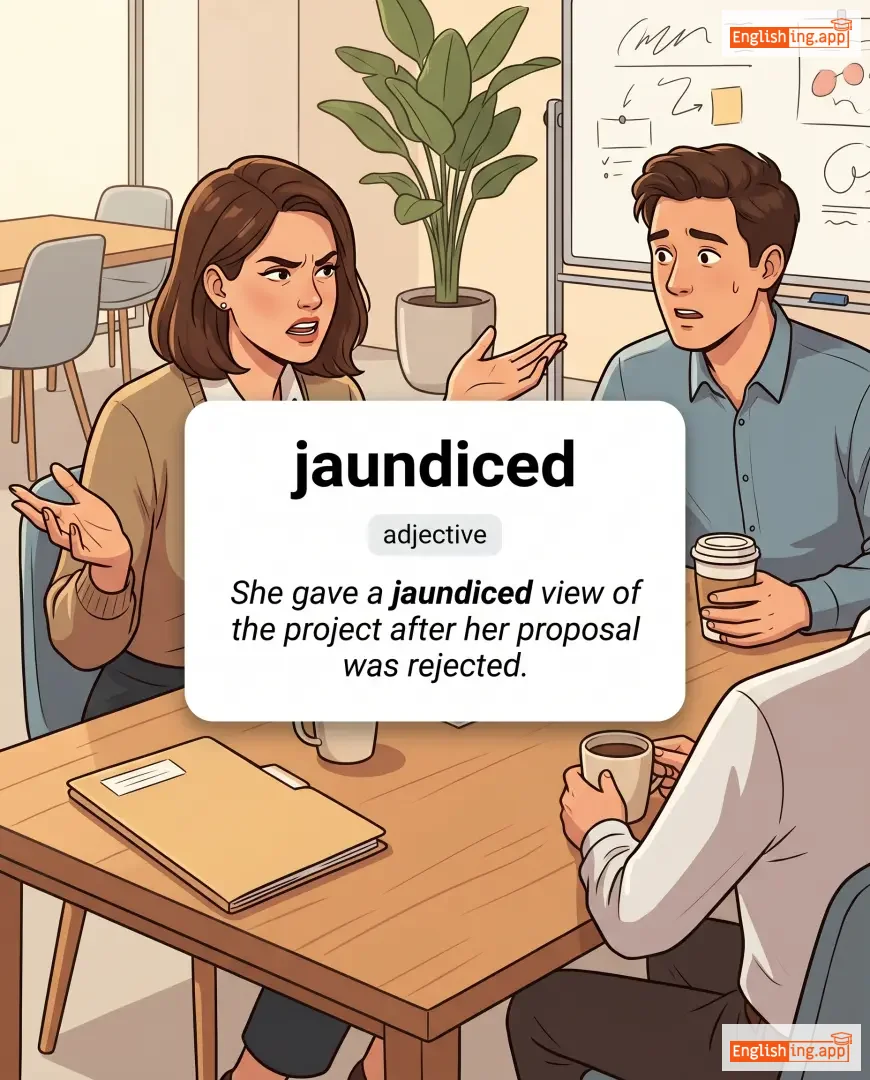
She gave a jaundiced view of the project after her proposal was rejected. |
彼女は提案が却下された後、プロジェクトに偏見を持った見方を示した。
Kanojo wa teian ga kyakka sareta ato, purojekuto ni henken o motta mikata o shimeshita.
••••••
|
- •••••• | - •••••• | - •••••• |
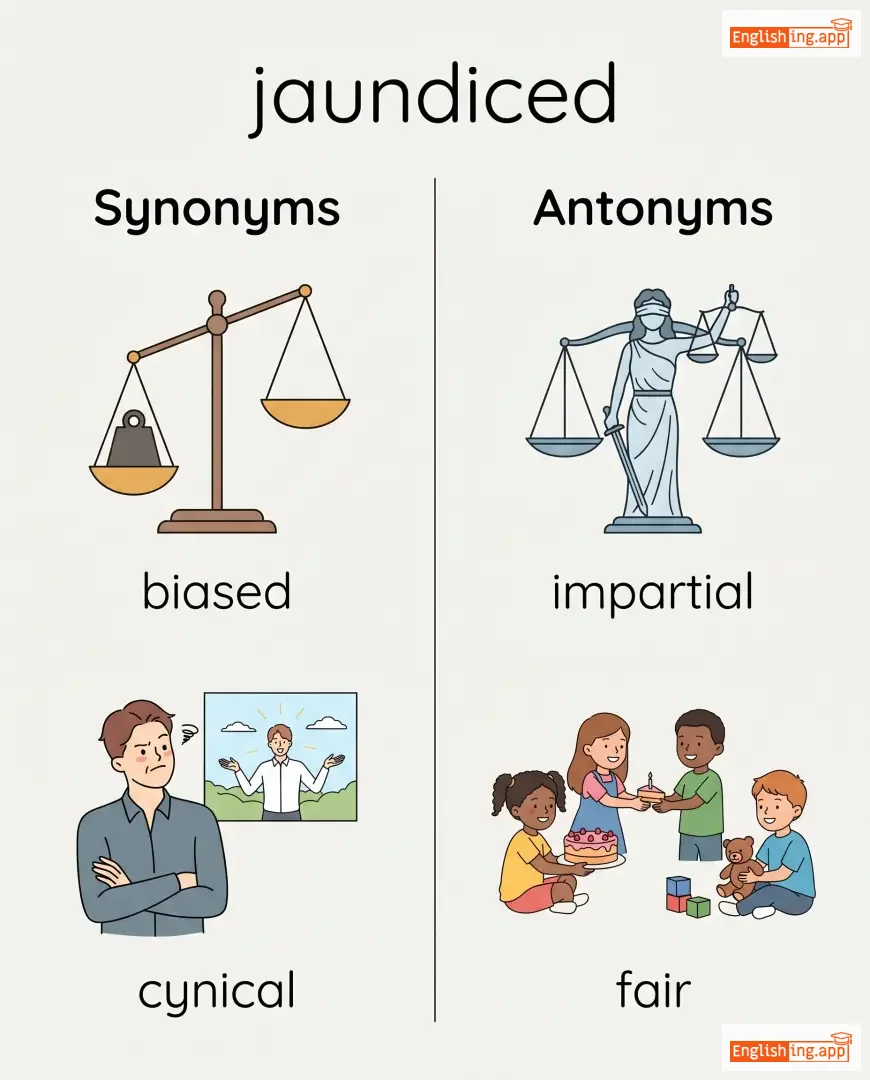
biased, cynical, resentful, prejudiced, skeptical
••••••
|
impartial, fair, unbiased
••••••
|
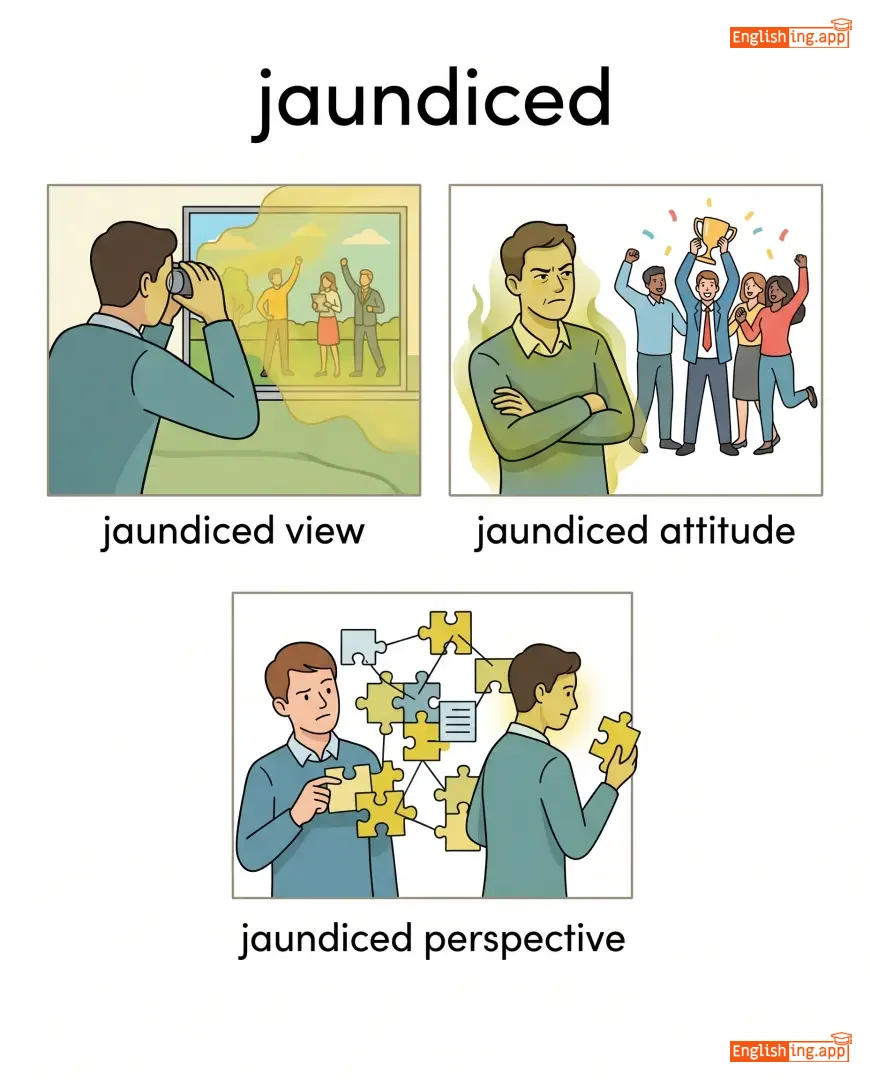
jaundiced view, jaundiced attitude, jaundiced perspective
••••••
|
黄疸は肌を黄色にし、'ジャウンディスト'の視点は偏見のある見方を意味します。
••••••
|
|
#4927
🟡
|
/ˈdʒɔːn.dɪs/
noun
(ジャウンドイス)
••••••
|
- •••••• |
黄疸
ōdan
••••••
|
- •••••• | - •••••• | - •••••• | - •••••• |
A medical condition in which the skin and eyes become yellow due to liver problems.
••••••
|
The doctor diagnosed the baby with jaundice. |
医師は赤ちゃんに黄疸と診断しました。
Ishi wa akachan ni ōdan to shindan shimashita.
••••••
|
jaundiced view |
a biased or cynical outlook
••••••
|
偏った見方
Katayotta mikata
••••••
|
yellowing, liver disease, icterus
••••••
|
health, wellness
••••••
|
neonatal jaundice, jaundice patient, jaundice symptoms
••••••
|
黄疸 = 肝臓の問題で黄色い肌と目、覚えやすい。
••••••
|
|
#4928
⚡
|
/ˈdʒɑː.rɪŋ/
adjective
(ジャーリング)
••••••
|
- •••••• |
耳障りな、衝撃的な
mimizawari na, shougeki teki na
••••••
|
- •••••• | - •••••• | - •••••• | - •••••• |
Striking or shocking in a way that creates a strong contrast or clash.
••••••
|
The sudden loud noise was jarring to everyone in the room. |
突然の大きな音は部屋の中の皆に衝撃を与えました。
Totsuzen no ōkina oto wa heya no naka no mina ni shōgeki o ataemashita.
••••••
|
- •••••• | - •••••• | - •••••• |
shocking, disturbing, unpleasant, grating
••••••
|
pleasant, soothing, harmonious
••••••
|
jarring sound, jarring effect, jarring contrast
••••••
|
Jarringは衝撃を与える音や出来事を思い出させます。
••••••
|
|
#4929
🗣️
|
/ˈdʒɑːr.ɡən/
noun
(ジャーゴン)
••••••
|
- •••••• |
専門用語
senmon yōgo
••••••
|
- •••••• | - •••••• | - •••••• | - •••••• |
Specialized or technical language used by a particular group or profession.
••••••
|
The lawyer’s explanation was full of legal jargon. |
弁護士の説明は法律専門用語でいっぱいでした。
Bengoshi no setsumei wa hōritsu senmon yōgo de ippai deshita.
••••••
|
technical jargon |
special words or phrases used in a specific technical field
••••••
|
技術用語
gijutsu yōgo
••••••
|
terminology, lingo, argot, slang, dialect
••••••
|
plain language, simplicity
••••••
|
legal jargon, medical jargon, technical jargon
••••••
|
Jargon は複雑な言語を意味します – jargon が多ければ多いほど、仕事は難しくなります。
••••••
|
|
#4930
😂
|
/dʒeɪp/
noun
(ジェイプ)
••••••
|
- •••••• |
冗談, いたずら
jōdan, itazura
••••••
|
- •••••• | - •••••• | - •••••• | - •••••• |
A practical joke or humorous remark.
••••••
|
He enjoyed a harmless jape with his friends.
彼は友達と無害な冗談を楽しんだ。
••••••
|
彼は友達と無害な冗談を楽しんだ。
Kare wa tomodachi to mugai na jōdan o tanoshinda.
••••••
|
- •••••• | - •••••• | - •••••• |
joke, jest, prank, gag
••••••
|
seriousness, sincerity
••••••
|
harmless jape, playful jape, silly jape
••••••
|
Japeは'joke'のように聞こえ、冗談またはいたずらを意味します。
••••••
|
|
#4931
😩
|
/ˈdʒeɪ.dɪd/
adjective
(ジェイディッド)
••••••
|
- •••••• |
疲れた, 無関心
tsukareta, mukanshin
••••••
|
- •••••• | - •••••• | - •••••• | - •••••• |
Tired, bored, or lacking enthusiasm, typically after having had too much of something.
••••••
|
After years of traveling, she felt jaded by the constant movement. |
何年もの旅行の後、彼女は絶え間ない移動に疲れを感じた。
Nannen mo no ryokou no ato, kanojo wa tae manai idou ni tsukare wo kanjita.
••••••
|
jaded appetite |
a loss of interest or enthusiasm due to overindulgence
••••••
|
疲れた食欲
tsukareta shokuyoku
••••••
|
weary, tired, bored, apathetic, cynical
••••••
|
enthusiastic, energetic, fresh
••••••
|
jaded by, jaded feeling, jaded traveler, jaded outlook
••••••
|
翡翠 (Jade) は宝石だが、あまりにも多く見すぎると、疲れてしまう。
••••••
|
|
#4932
🗣️
|
/ˈdʒæbər/
verb
(ジャバー)
••••••
|
- •••••• |
おしゃべりする
oshaberi suru
••••••
|
jabbered
ジャバード
••••••
|
jabbered
ジャバード
••••••
|
jabbers
ジャバーズ
••••••
|
jabbering
ジャベリング
••••••
|
To talk quickly and excitedly but with little sense.
••••••
|
The children jabbered happily after the show.
子供たちはショーの後に楽しそうにジャバードしました。
••••••
|
子供たちはショーの後に楽しそうにおしゃべりしました。
Kodomotachi wa shō no ato ni tanoshisō ni oshaberi shimashita.
••••••
|
- •••••• | - •••••• | - •••••• |
chatter, babble, prattle, ramble, gabble
••••••
|
silence, muteness
••••••
|
jabber away, jabber excitedly, jabber nonsense
••••••
|
Jabberはおしゃべりすること – ジャバー先生はいつもおしゃべりしています。
••••••
|
|
#4933
👊
|
/dʒæb/
verb
••••••
|
- •••••• | - •••••• |
jabbed
••••••
|
jabbed
••••••
|
jabs
••••••
|
jabbing
••••••
|
To poke or thrust quickly, often with a finger or something pointed.
••••••
|
He jabbed his finger at the map to show the location. |
- •••••• |
jab someone in the ribs |
to poke someone playfully in the side
••••••
|
- •••••• |
poke, prod, thrust, punch, stab
••••••
|
caress, pat
••••••
|
jab hard, jab finger, jab needle, jab punch
••••••
|
No •••••• |
|
#4934
🚶
|
/aɪˈtɪnəˌreɪt/
verb
(アイティネレート)
••••••
|
- •••••• |
旅行する
ryokou suru
••••••
|
itinerated
アイティネレーテッド
••••••
|
itinerated
アイティネレーテッド
••••••
|
itinerates
アイティネレーツ
••••••
|
itinerating
アイティネレーティング
••••••
|
To travel from place to place, usually for the purpose of work or preaching.
••••••
|
The missionary itinerated throughout the region to spread the message.
伝道師は地域を巡ってメッセージを広めました。
••••••
|
伝道師は地域を巡り、メッセージを広めました。
Dendoushi wa chiiki o meguri, messeeji o hiromemashita.
••••••
|
- •••••• | - •••••• | - •••••• |
travel, journey, wander, roam, peregrinate
••••••
|
settle, stay, remain
••••••
|
itinerate regularly, itinerate through, itinerate region
••••••
|
Itinerateは旅行するという意味です – 彼がインターネットで旅行しているのを想像してください。
••••••
|
|
#4935
🗺️
|
/aɪˈtɪnərɛri/
noun
(アイティネラリー)
••••••
|
|
旅程
ryokō
••••••
|
- •••••• | - •••••• | - •••••• | - •••••• |
A planned route or schedule of a journey or trip.
••••••
|
The travel agent gave us a detailed itinerary for our vacation. |
旅行代理店は私たちの休暇のために詳細な旅程を提供してくれました。
Ryokō dairiten wa watashitachi no kyūka no tame ni shōsai na ryokō o teikyō shite kuremashita.
••••••
|
- •••••• | - •••••• | - •••••• |
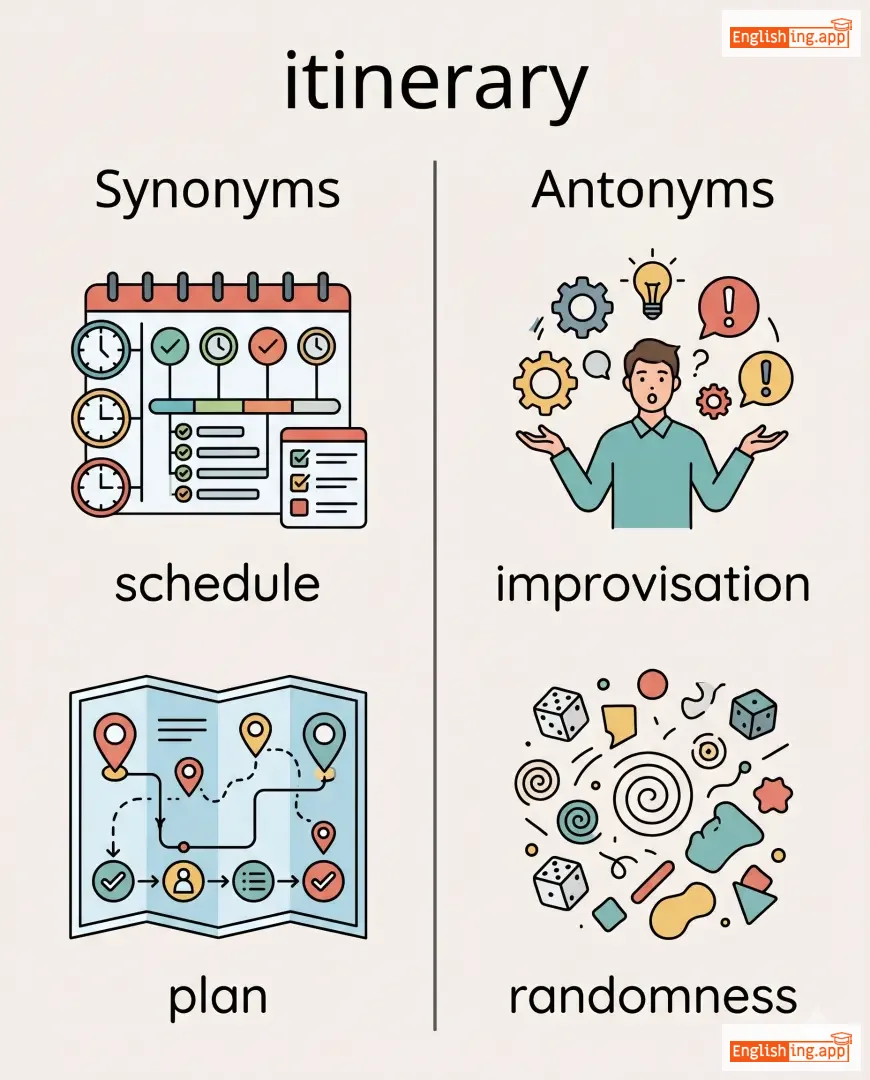
schedule, plan, agenda, route, timetable
••••••
|
improvisation, randomness
••••••
|
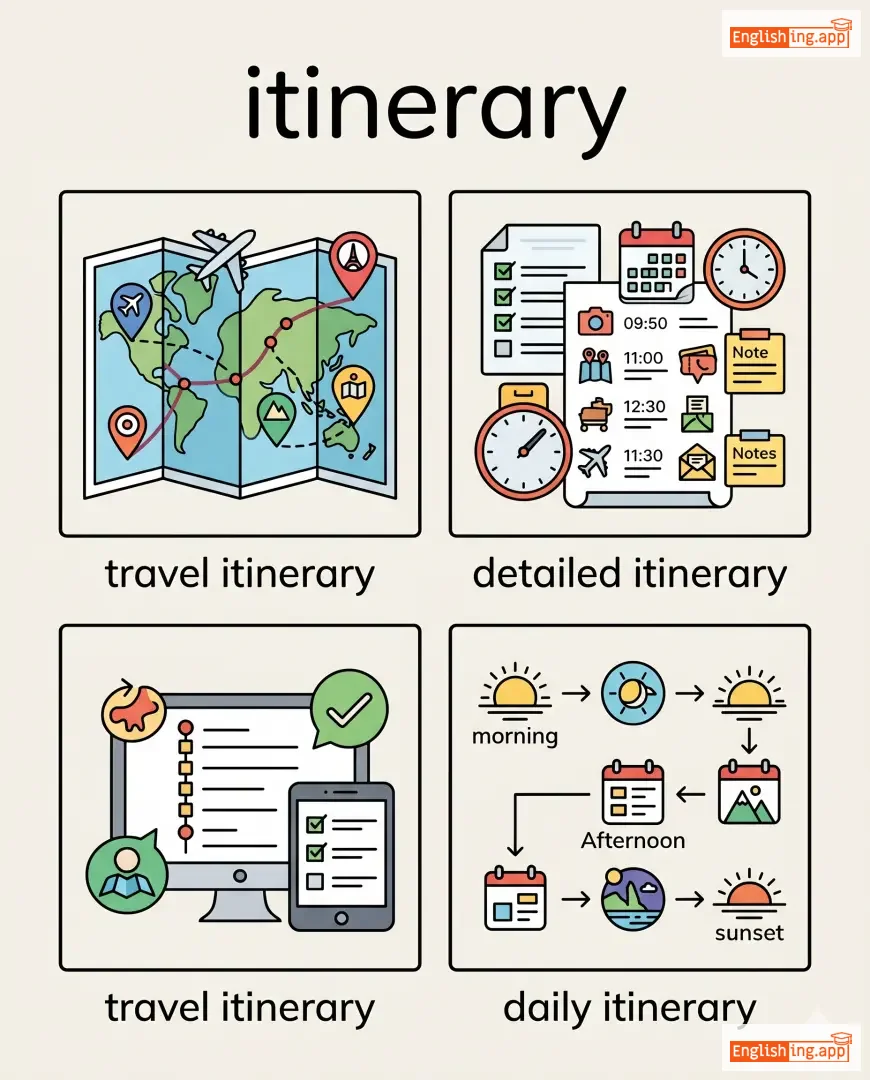
travel itinerary, detailed itinerary, daily itinerary, itinerary plan
••••••
|
Itinerary は旅程を意味します – 'ITIN' = In Time, In Route を覚えておいてください。
••••••
|
|
#4936
😠
|
/ˈɪrɪtəbl/
adjective
••••••
|
- •••••• | - •••••• | - •••••• | - •••••• | - •••••• | - •••••• |
easily annoyed or made angry
••••••
|
She became irritable after working long hours without rest. |
- •••••• |
irritable mood |
a state of being easily annoyed or angered
••••••
|
- •••••• |
grumpy, short-tempered, cranky, testy, moody
••••••
|
calm, patient, cheerful
••••••
|
irritable child, irritable behavior, irritable response, feel irritable
••••••
|
No •••••• |
|
#4937
🔄
|
/ˈɪtəreɪt/
verb
(イテレート)
••••••
|
- •••••• |
反復する
hanfuku suru
••••••
|
iterated
イテレーテッド
••••••
|
iterated
イテレーテッド
••••••
|
iterates
イテレーツ
••••••
|
iterating
イテレーティング
••••••
|
To repeat a process or statement, often to improve or refine.
••••••
|
The software team will iterate the design until it meets user needs.
ソフトウェアチームは、ユーザーのニーズを満たすまでデザインを繰り返します。
••••••
|
ソフトウェアチームは、ユーザーのニーズを満たすまでデザインを繰り返します。
Sofutowea chiimu wa, yuzaa no niizu o mitasu made dezain o kurikaeshimasu.
••••••
|
iterate over
イテレート オーバー
••••••
|
to go through each item in a sequence one by one
••••••
|
反復する
hanfuku suru
••••••
|
repeat, redo, revise, cycle, loop
••••••
|
ignore, skip
••••••
|
iterate process, iterate design, iterate quickly, iterate over data
••••••
|
イテレートは反復を意味します。プログラムで繰り返し処理を行うようなものです。
••••••
|
|
#4938
🌍
|
/ˈɪsməs/ or /ˈɪsθməs/
noun
(イスムス)
••••••
|
- •••••• |
地峡
chikyō
••••••
|
- •••••• | - •••••• | - •••••• | - •••••• |
A narrow strip of land connecting two larger land areas, often with water on either side.
••••••
|
The Panama Canal cuts through the Isthmus of Panama. |
パナマ運河はパナマの地峡を通ります。
Panama unka wa Panama no chikyō o tōrimasu.
••••••
|
- •••••• | - •••••• | - •••••• |
land bridge, neck, causeway, peninsula
••••••
|
strait, wide landmass
••••••
|
Isthmus of Panama, narrow isthmus, coastal isthmus
••••••
|
Isthmus = 地峡 → パナマ地峡を思い出して、それが土地を繋ぐ狭い帯だと考えてください。
••••••
|
|
#4939
📄
|
/ˈɪʃuː/
noun, verb
(isshu)
••••••
|
- •••••• |
問題, 発行, 配布
mondai, hakkou, haifu
••••••
|
issued
isshud
••••••
|
issued
isshud
••••••
|
issues
isshuz
••••••
|
issuing
isshuingu
••••••
|
A problem, topic, or the act of supplying or distributing something.
••••••
|
The magazine will issue a new edition next week.
雑誌は来週新しい版を発行します。
••••••
|
雑誌は来週新しい版を発行します。
Zasshi wa raishuu atarashii han wo hakkou shimasu.
••••••
|
take issue with
問題を持つ
••••••
|
to disagree strongly with something
••••••
|
異議を唱える
igi wo tonaeru
••••••
|
problem, matter, topic, distribute, release
••••••
|
solution, agreement
••••••
|
serious issue, raise an issue, address an issue, issue a statement
••••••
|
Issue は問題という意味です。result issue は問題を引き起こすようなものです。
••••••
|
|
#4940
⚛️
|
/ˈaɪsətəʊp/
noun
(アイソトープ)
••••••
|
- •••••• |
同位体
dōitai
••••••
|
- •••••• | - •••••• | - •••••• | - •••••• |
Atoms of the same element with equal number of protons but different numbers of neutrons.
••••••
|
Carbon-14 is a radioactive isotope used in dating fossils. |
炭素-14は化石の年代を測定するために使用される放射性同位体です。
Tanso-14 wa kaseki no nendai o sokutei suru tame ni shiyō sareru hōshasei dōitai desu.
••••••
|
- •••••• | - •••••• | - •••••• |
variant, atomic form, nuclide, isotope species
••••••
|
element, uniform atom
••••••
|
radioactive isotope, stable isotope, isotope analysis, isotope ratio
••••••
|
Isoは同じ + トープは種類 → 同じ元素、異なる種類 = 同位体。
••••••
|
|
#4941
🌡️
|
/ˌaɪsəʊˈθɜːrməl/
adjective
(アイソサーマル)
••••••
|
- •••••• |
等温
touon
••••••
|
- •••••• | - •••••• | - •••••• | - •••••• |
Having or maintaining equal or constant temperature.
••••••
|
The experiment was conducted under isothermal conditions. |
実験は等温条件で行われました。
Jikken wa touon jouken de okonawaremashita.
••••••
|
- •••••• | - •••••• | - •••••• |
constant-temperature, uniform, steady, stable
••••••
|
variable, fluctuating
••••••
|
isothermal process, isothermal condition, isothermal reaction, isothermal expansion
••••••
|
Isoは同じ、サーマルは熱— だからアイソサーマルは同じ温度 (等温)。
••••••
|
|
#4942
🛑
|
/ˈaɪ.sə.leɪt/
verb
(アイソレート)
••••••
|
- •••••• |
隔離する
kakuri suru
••••••
|
isolated
アイソレイテッド
••••••
|
isolated
アイソレイテッド
••••••
|
isolates
アイソレイツ
••••••
|
isolating
アイソレイティング
••••••
|
To separate something or someone from others.
••••••
|
Doctors tried to isolate the patient to prevent the spread of infection.
医師たちは感染の拡大を防ぐために患者を隔離しようとしました。
••••••
|
医師たちは感染の拡大を防ぐために患者を隔離しようとしました。
Ishitachi wa kansen no kakudai o fusegu tame ni kanja o kakuri shiyou to shimashita.
••••••
|
isolate oneself
自分を隔離する
••••••
|
to deliberately avoid contact with others
••••••
|
自分を隔離する
Jibun o kakuri suru
••••••
|
separate, detach, segregate, quarantine, seclude
••••••
|
unite, connect, integrate
••••••
|
isolate the virus, isolate the problem, isolate from others, isolate oneself
••••••
|
隔離するは、誰かを一人にして氷のように冷たくすること ❄️
••••••
|
|
#4943
⏱️
|
/aɪˈsɒ.krə.nəs/
adjective
(アイソクロナス)
••••••
|
- •••••• |
等時間間隔で発生する
dō jikan kankaku de hassei suru
••••••
|
- •••••• | - •••••• | - •••••• | - •••••• |
Occurring at equal time intervals; in unison or synchrony.
••••••
|
The pendulum swings are isochronous, repeating at equal intervals. |
振り子の動きは等時性があり、等しい間隔で繰り返されます。
Furiko no ugoki wa tōjisei ga ari, hitoshī kankaku de kurikaesarimasu.
••••••
|
- •••••• | - •••••• | - •••••• |
synchronous, simultaneous, rhythmic, periodic
••••••
|
asynchronous, irregular
••••••
|
isochronous motion, isochronous oscillation, isochronous process
••••••
|
Iso = 同じ, chronos = 時間 → Isochronous = 同じ時間間隔で発生する ⏱️
••••••
|
|
#4944
🌦️
|
/ˈaɪ.səˌbɑːr/
noun
(アイソバー)
••••••
|
- •••••• |
等圧線
とうあつせん
••••••
|
- •••••• | - •••••• | - •••••• | - •••••• |
A line on a weather map connecting points of equal atmospheric pressure.
••••••
|
The meteorologist explained how isobars indicate wind speed and direction. |
気象学者は、等圧線が風速と風向きを示す方法を説明しました。
Kishougakusha wa, tōatsusen ga fūsoku to fūmuki o shimesu hōhō o setsumei shimashita.
••••••
|
- •••••• | - •••••• | - •••••• |
pressure line, contour line, weather line
••••••
|
altitude line
••••••
|
weather isobar, pressure isobar, isobar map, draw isobars
••••••
|
Iso = 同じ, bar = 圧力 → 同じ圧力の線 = 等圧線 🌦️
••••••
|
|
#4945
🌊
|
/ˈaɪ.lət/
noun
(アイレット)
••••••
|
- •••••• |
小島
kojima
••••••
|
- •••••• | - •••••• | - •••••• | - •••••• |
A very small island.
••••••
|
The fishermen rested on a tiny islet before continuing their journey. |
漁師たちは旅を続ける前に小さな島で休憩しました。
Gyoshi-tachi wa tabi o tsudzukeru mae ni chiisana shima de kyūkei shimashita.
••••••
|
- •••••• | - •••••• | - •••••• |
island, cay, atoll, key, reef
••••••
|
mainland, continent
••••••
|
tiny islet, coral islet, remote islet, rocky islet
••••••
|
Islet = 小さな島 - 小島 🌊
••••••
|
|
#4946
🏝️
|
/aɪl/
noun
(アイル)
••••••
|
- •••••• |
小さな島
chiisana shima
••••••
|
- •••••• | - •••••• | - •••••• | - •••••• |
A small island or peninsula, often poetic or literary.
••••••
|
They spent their honeymoon on a beautiful tropical isle. |
彼らは美しい熱帯の島でハネムーンを過ごしました。
karera wa utsukushii nettai no shima de hanemuun o sugoshimashita.
••••••
|
isle of peace |
a calm and peaceful place
••••••
|
平和の島
heiwa no shima
••••••
|
island, atoll, cay, key, peninsula
••••••
|
mainland, continent
••••••
|
lonely isle, tropical isle, remote isle, isle of beauty
••••••
|
島は英語の島の縮小形 - 小さな島 🏝️
••••••
|
|
#4947
🚨
|
/ɪˈrʌpʃən/
noun
(イラプション)
••••••
|
- •••••• |
突発的侵入
toppatsuteki shinnyū
••••••
|
- •••••• | - •••••• | - •••••• | - •••••• |
a sudden and violent entry or invasion
••••••
|
The irruption of protesters surprised the authorities. |
抗議者たちの突発的侵入は当局を驚かせた。
Kōgisha-tachi no toppatsuteki shinnyū wa tōkyoku o odorokaseta.
••••••
|
- •••••• | - •••••• | - •••••• |
invasion, incursion, outbreak, surge
••••••
|
retreat, withdrawal
••••••
|
sudden irruption, violent irruption, irruption of protesters, irruption into
••••••
|
イラプションは突然の攻撃、まるで爆発のようなものです。
••••••
|
|
#4948
😤
|
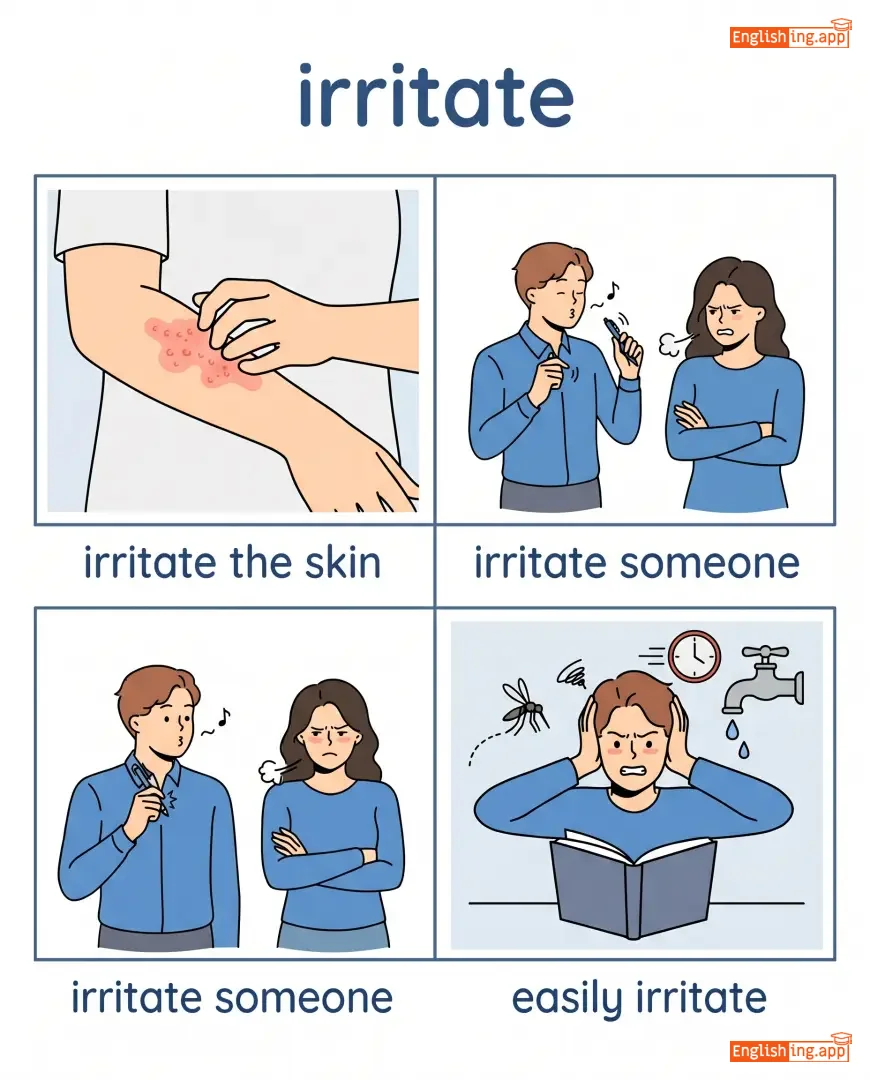
/ˈɪrɪteɪt/
verb
(イリテート)
••••••
|
|
イラつかせる
iratsukaseru
••••••
|
irritated
イリテイテッド
••••••
|
irritated
イリテイテッド
••••••
|
irritates
イリテイツ
••••••
|
irritating
イリテイティング
••••••
|
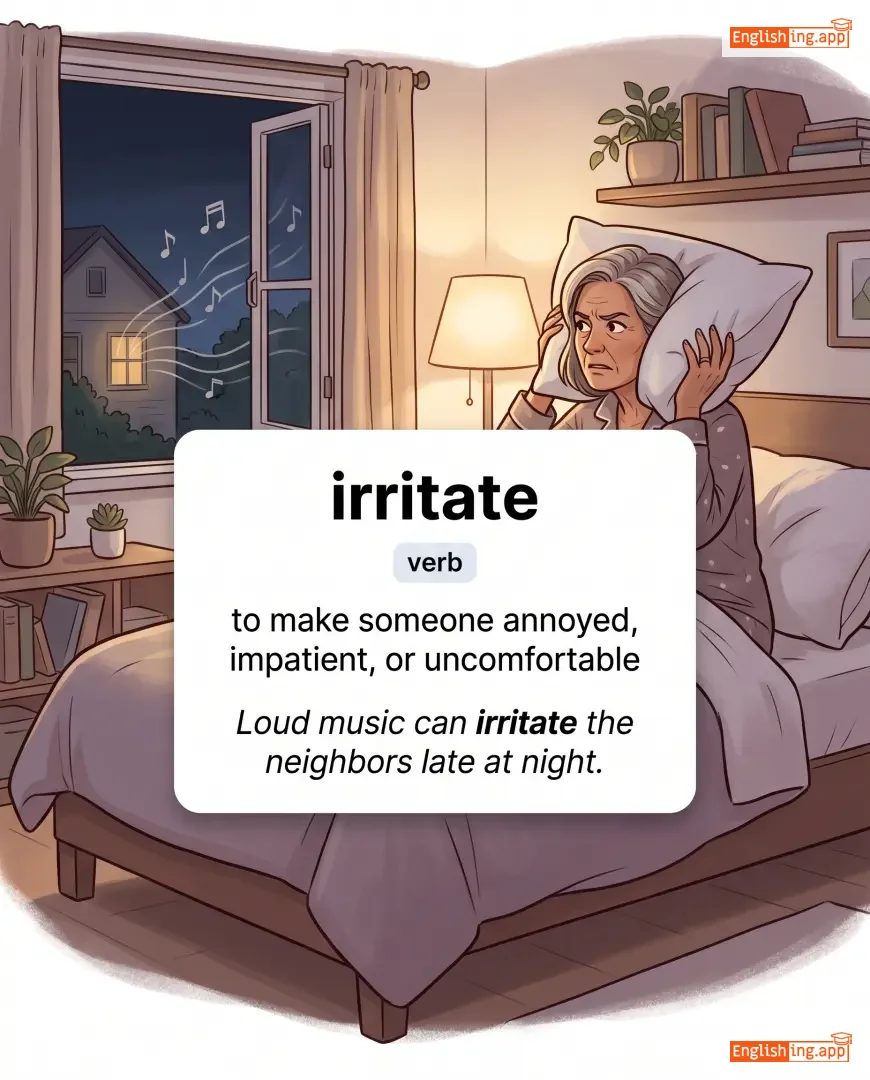
to make someone annoyed, impatient, or uncomfortable
••••••
|
Loud music can irritate the neighbors late at night.
大きな音楽は夜遅くに隣人をイリテートすることがあります。
••••••
|
大きな音楽は夜遅くに隣人をイリテートすることがあります。
Ōkina ongaku wa yoru osoku ni rinjin o iritēto suru koto ga arimasu.
••••••
|
rub the wrong way
悪い方法で摩擦を生む
••••••
|
to annoy or irritate someone unintentionally
••••••
|
無意識にイラつかせる
muishiki ni iratsukaseru
••••••
|
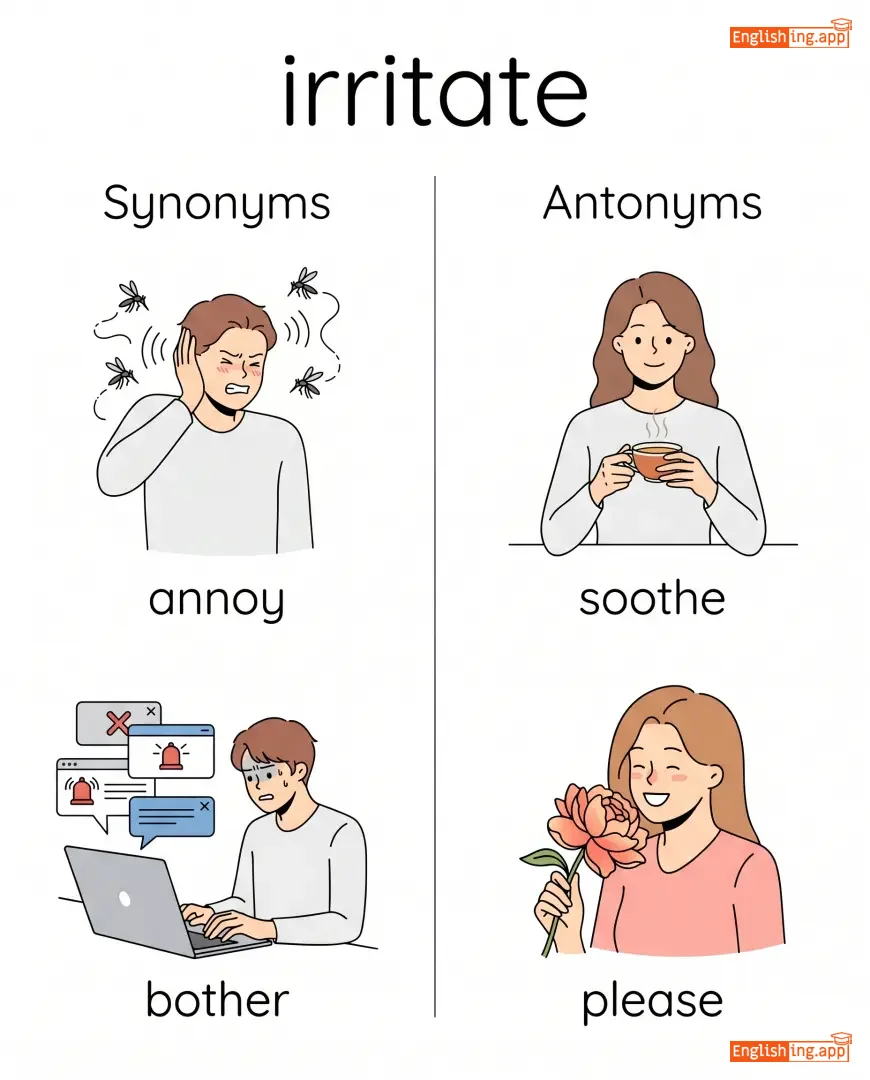
annoy, bother, provoke, aggravate, disturb
••••••
|
soothe, please, comfort
••••••
|
irritate the skin, irritate someone, easily irritate, irritate eyes
••••••
|
Irritate はイラつかせるという意味で、例えば「irri」というとイラつきます。
••••••
|
|
#4949
🌫️
|
/ˈɪrɪtənt/
noun
(イリタント)
••••••
|
- •••••• |
刺激物
shigekimono
••••••
|
- •••••• | - •••••• | - •••••• | - •••••• |
something that causes irritation or discomfort
••••••
|
Dust is a common irritant for people with allergies. |
ほこりはアレルギーを持つ人々にとって一般的な刺激物です。
hokori wa arerugī o motsu hitobito ni totte ippanteki na shigekimono desu.
••••••
|
- •••••• | - •••••• | - •••••• |
allergen, annoyance, stimulant, aggravator
••••••
|
soother, comfort
••••••
|
skin irritant, chemical irritant, major irritant, source of irritant
••••••
|
Irritant は刺激物、例えばほこりはアレルギーを持つ人々にとって刺激物です。
••••••
|
|
#4950
⚠️
|
/ˈɪrɪtənsi/
noun
(イリタンサイ)
••••••
|
- •••••• |
苛立ち
iradachi
••••••
|
- •••••• | - •••••• | - •••••• | - •••••• |
the quality or state of causing irritation; legal or formal invalidation
••••••
|
The constant noise became an irritancy to the neighbors. |
絶え間ない騒音は隣人にとって苛立ちの原因となりました。
Taemanai souon wa rinjin ni totte iradachi no gen'in to narimashita.
••••••
|
- •••••• | - •••••• | - •••••• |
annoyance, nuisance, provocation, aggravation
••••••
|
comfort, relief
••••••
|
legal irritancy, irritancy clause, source of irritancy
••••••
|
Irritancyは苛立ちを意味します。絶え間ない騒音が苛立ちを引き起こします。
••••••
|
Vocabulary Quiz
Test your vocabulary by matching words with their translations or meanings.
Login to take the quiz
Comments (0)
Share your thoughts and join the discussion.
Join the discussion by logging in
Login to CommentNo comments yet
Be the first to share your thoughts!