

翻訳
過去
過去分詞
三人称単数
動名詞
意味
例文
例文の翻訳
同義語
対義語
コロケーション
ニーモニック
Swipe left or right, or use the buttons. Tap image to zoom.
例文の翻訳
単語
Lesson 174Lesson 174 - マスクトグル
|
絵文字
|
単語 | Images | 翻訳 | 過去 | 過去分詞 | 三人称単数 | 動名詞 | 意味 | 例文 | 例文の翻訳 | 表現例 | 表現例の意味 | 表現例の翻訳 | 同義語 | 対義語 | コロケーション | ニーモニック |
|---|---|---|---|---|---|---|---|---|---|---|---|---|---|---|---|---|---|
|
#5191
💧
|
/ˈlɪmpɪd/
adjective
(リンプイド)
••••••
|
|
澄んだ
sunda
••••••
|
- •••••• | - •••••• | - •••••• | - •••••• |
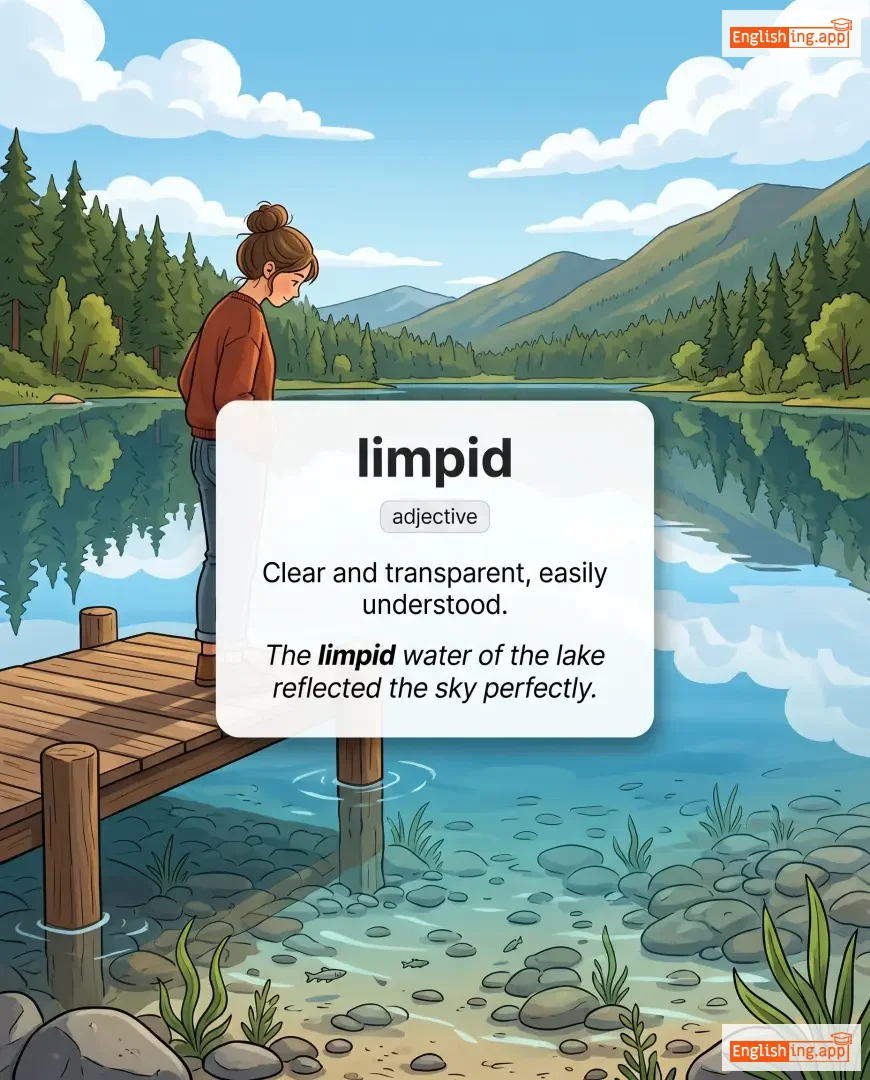
Clear and transparent, easily understood.
••••••
|
The limpid water of the lake reflected the sky perfectly.
湖の澄んだ水は完璧に空を反映していました。
••••••
|
湖の澄んだ水は完璧に空を反映していました。
Mizu no suna wa kanpeki ni sora o hanei shite imashita.
••••••
|
- •••••• | - •••••• | - •••••• |
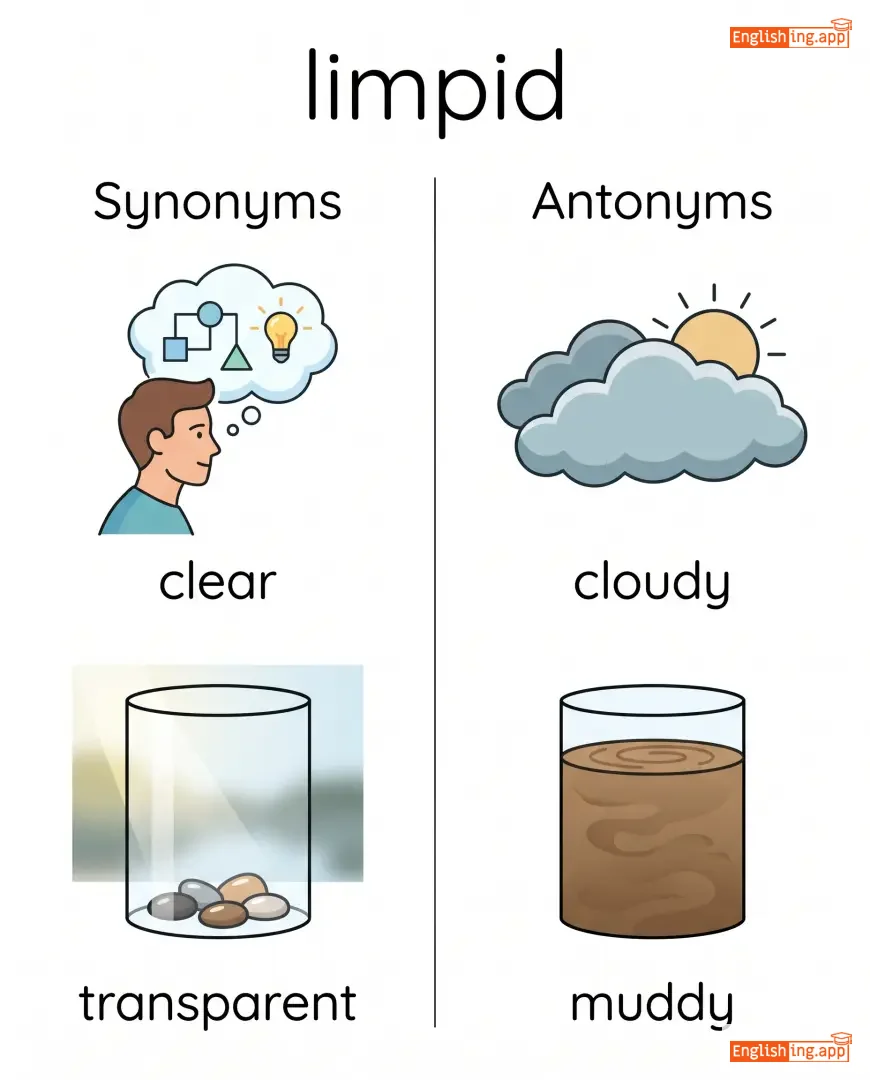
clear, transparent, lucid, crystal, pure
••••••
|
cloudy, muddy, obscure
••••••
|
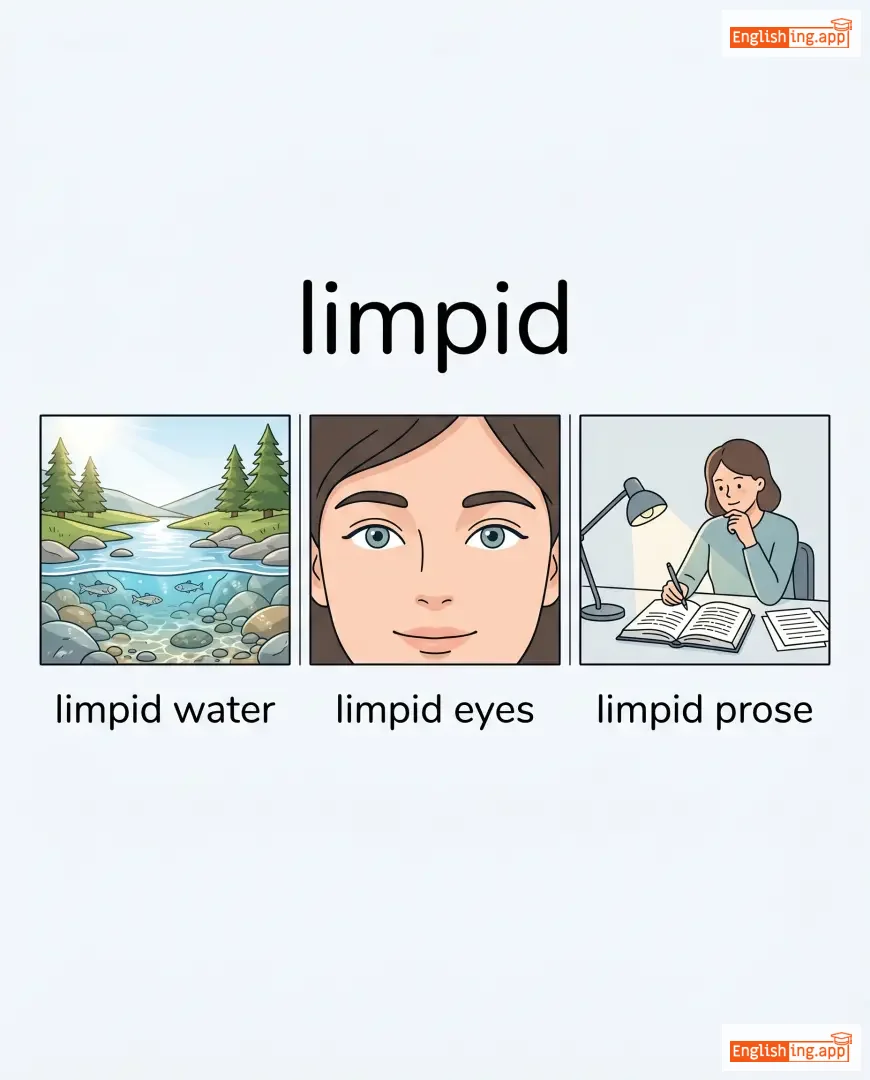
limpid water, limpid eyes, limpid prose
••••••
|
Limpidは澄んだ水のようにクリア💧
••••••
|
|
#5192
💆
|
/ˈlɪnəmənt/
noun
(リニメント)
••••••
|
- •••••• |
リニメント / ローション
rinimento / roshon
••••••
|
- •••••• | - •••••• | - •••••• | - •••••• |
A liquid or lotion applied to the skin to relieve pain or stiffness.
••••••
|
He rubbed liniment on his sore muscles after the workout.
彼はトレーニング後、痛んだ筋肉にリニメントを擦り込んだ。
••••••
|
彼はトレーニング後、痛んだ筋肉にリニメントを擦り込んだ。
Kare wa toreeningu go, itanda kinniku ni rinimento o surikonda.
••••••
|
- •••••• | - •••••• | - •••••• |
ointment, lotion, balm, salve, cream
••••••
|
poison, irritant
••••••
|
herbal liniment, soothing liniment, apply liniment, liniment bottle
••••••
|
Liniment – 'Line' をリニメント = 痛みを和らげる
••••••
|
|
#5193
📝
|
/lɪŋˈɡwɪstɪks/
noun
(言語学)
••••••
|
- •••••• |
言語学
gengogaku
••••••
|
- •••••• | - •••••• | - •••••• | - •••••• |
The scientific study of language and its structure.
••••••
|
She decided to major in linguistics at university.
彼女は大学で言語学を専攻することに決めました。
••••••
|
彼女は大学で言語学を専攻することに決めました。
Kanojo wa daigaku de gengogaku wo senkou suru koto ni kimemashita.
••••••
|
- •••••• | - •••••• | - •••••• |
philology, semantics, grammar, language science
••••••
|
illiteracy, nonverbal studies
••••••
|
linguistics department, applied linguistics, theoretical linguistics, computational linguistics
••••••
|
Linguisticsは'言語学'を意味します - 'lingo + statistics' = 言語の科学
••••••
|
|
#5194
📚
|
/lɪŋˈɡwɪstɪk/
adjective
(リンギウィスティック)
••••••
|
|
言語的
gengo teki
••••••
|
- •••••• | - •••••• | - •••••• | - •••••• |
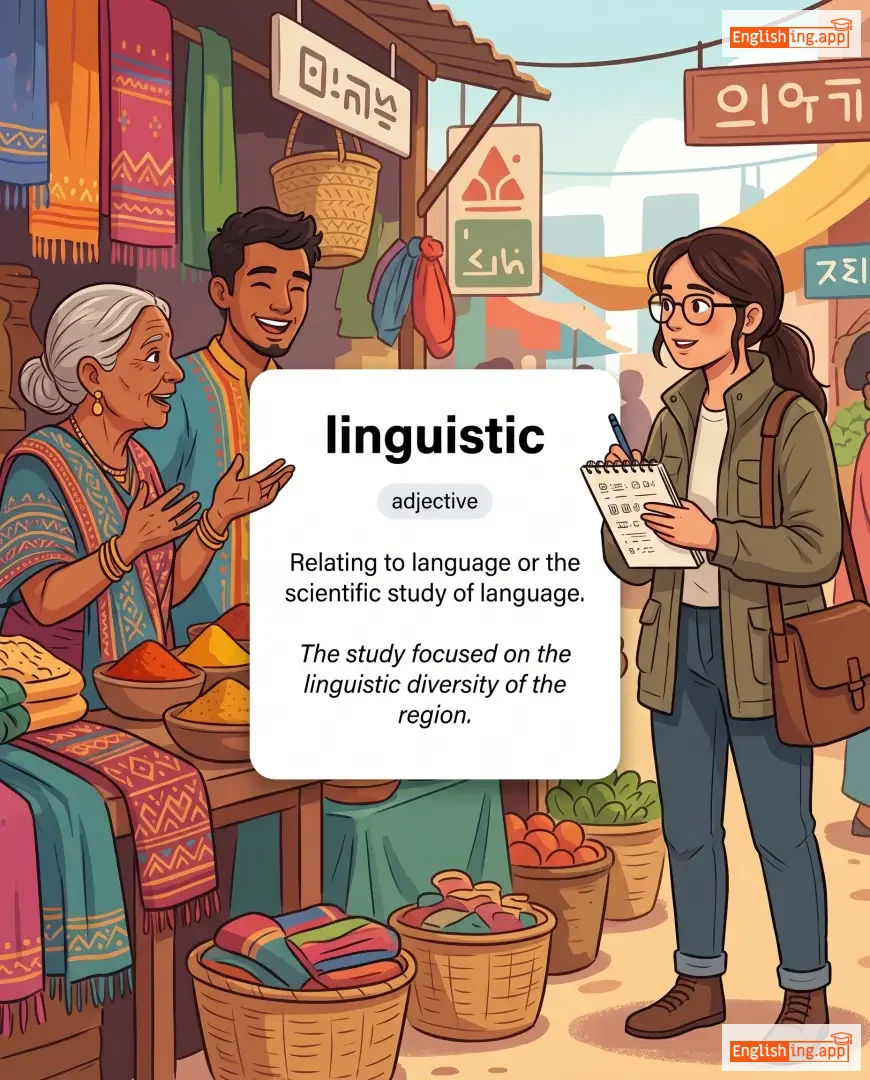
Relating to language or the scientific study of language.
••••••
|
The study focused on the linguistic diversity of the region.
その研究は地域の言語的多様性に焦点を当てました。
••••••
|
その研究は地域の言語的多様性に焦点を当てました。
Sono kenkyū wa chiiki no gengoteki tayōsei ni shōten o atemashita.
••••••
|
- •••••• | - •••••• | - •••••• |
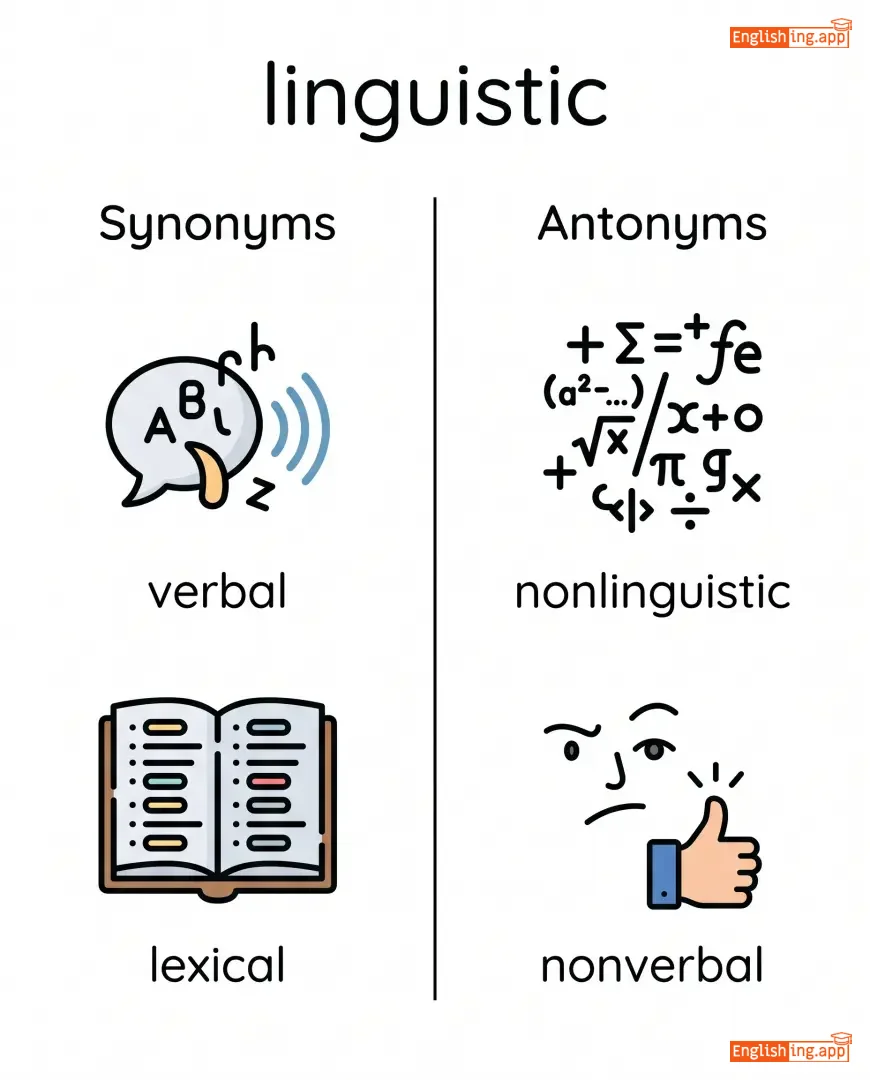
verbal, lexical, grammatical, philological
••••••
|
nonlinguistic, nonverbal
••••••
|
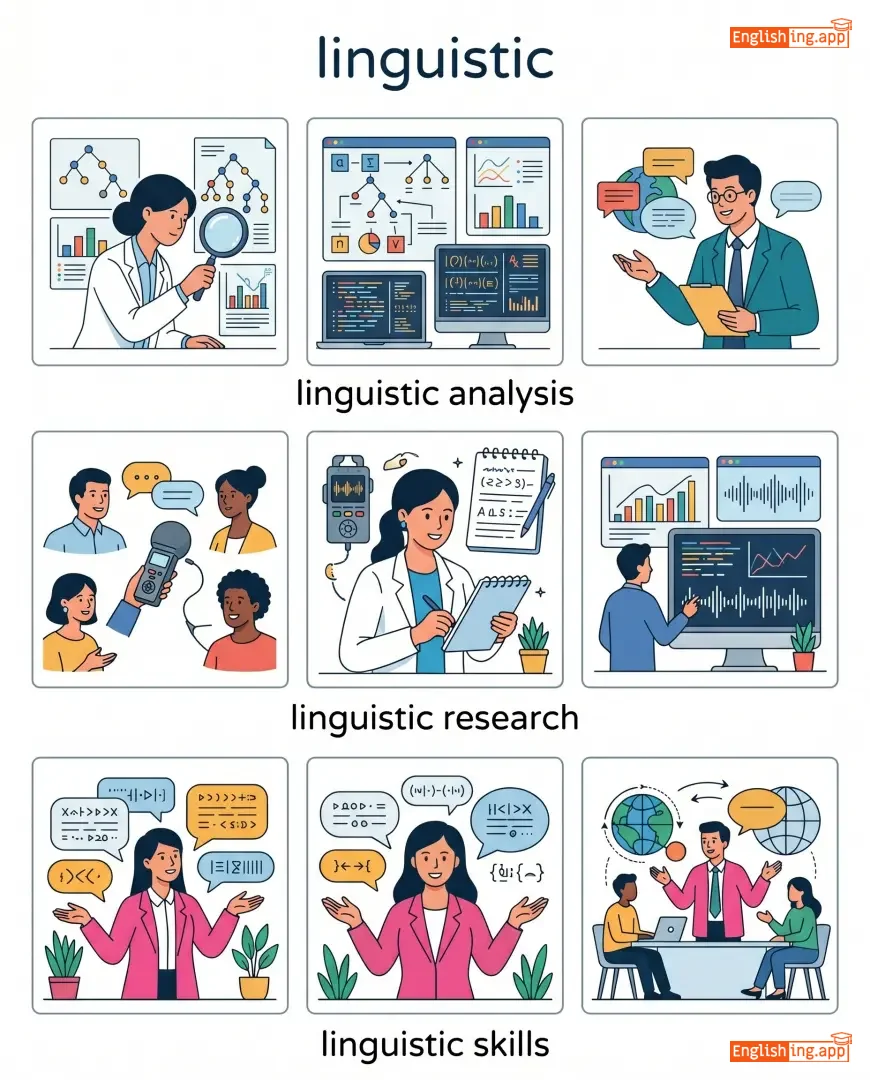
linguistic analysis, linguistic research, linguistic skills, linguistic diversity
••••••
|
言語的 = 言語 + 的 = 言語に関係
••••••
|
|
#5195
🗣️
|
/ˈlɪŋɡwɪst/
noun
(言語学者)
••••••
|
- •••••• |
言語学者
gengogakusha
••••••
|
- •••••• | - •••••• | - •••••• | - •••••• |
A person skilled in foreign languages or in the scientific study of language.
••••••
|
She is a linguist who speaks six languages fluently.
彼女は6か国語を流暢に話す言語学者です。
••••••
|
彼女は6か国語を流暢に話す言語学者です。
Kanojo wa rokkakokugo o ryūchō ni hanasu gengogakusha desu.
••••••
|
- •••••• | - •••••• | - •••••• |
language expert, philologist, translator, polyglot
••••••
|
illiterate, non-speaker
••••••
|
famous linguist, professional linguist, historical linguist, computational linguist
••••••
|
言語学者 = 'lingo' + '専門家' = 言語の専門家
••••••
|
|
#5196
👅
|
/ˈlɪŋɡwəl/
adjective
(リンガル)
••••••
|
- •••••• |
舌に関連する
shita ni kanren suru
••••••
|
- •••••• | - •••••• | - •••••• | - •••••• |
Relating to the tongue or speech.
••••••
|
The dentist examined the patient's lingual surface of the teeth. |
歯科医は患者の歯の舌側面を調べました。
Shika-i wa kanja no ha no shita sokumen o shirabemashita.
••••••
|
- •••••• | - •••••• | - •••••• |
tongue-related, oral, speech-related, verbal
••••••
|
nonverbal, silent
••••••
|
lingual nerve, lingual surface, lingual artery, lingual papillae
••••••
|
Lingualは舌に関連するという意味です – 👅 '言語'を思い出して覚えましょう。
••••••
|
|
#5197
🌍
|
/ˈlɪŋ.ɡwə/
noun
(リンガ)
••••••
|
- •••••• |
言語
gengo
••••••
|
- •••••• | - •••••• | - •••••• | - •••••• |
A language, especially one used for communication among people.
••••••
|
English has become a global lingua for business and science.
英語はビジネスと科学のためのグローバルなリンガとなっています。
••••••
|
英語はビジネスと科学のためのグローバルな言語となっています。
Eigo wa bijinesu to kagaku no tame no guroobaru na gengo to natteimasu.
••••••
|
lingua franca
リンガ・フランカ
••••••
|
A common language used for communication between speakers of different native languages.
••••••
|
リンガ・フランカ
Ringa Furanka
••••••
|
language, tongue, speech, dialect
••••••
|
silence, muteness
••••••
|
lingua franca, mother lingua, lingua system
••••••
|
Lingua = 言語は言語を意味し、Lingua francaは共通言語を意味します。
••••••
|
|
#5198
🗣️
|
/ˈlɪŋ.ɡoʊ/
noun
(リンゴ)
••••••
|
- •••••• |
専門用語
senmon yōgo
••••••
|
- •••••• | - •••••• | - •••••• | - •••••• |
Specialized or informal language used by a particular group that is often difficult for outsiders to understand.
••••••
|
The manual was written in technical lingo that confused the new employees. |
マニュアルは技術的な用語で書かれており、新しい従業員を混乱させました。
Manyuaru wa gijutsuteki na yōgo de kakarete ori, atarashī jūgyōin o konran sasemashita.
••••••
|
- •••••• | - •••••• | - •••••• |
jargon, slang, terminology, dialect, speech
••••••
|
plain language, clarity
••••••
|
computer lingo, street lingo, legal lingo, local lingo
••••••
|
Lingo = 専門用語、‘技術的なlingo’を‘技術的な用語’と考えましょう。
••••••
|
|
#5199
⏳
|
/ˈlɪŋ.ɡər/
verb
(リンガー)
••••••
|
|
長居する
nagai suru
••••••
|
lingered
リンガード
••••••
|
lingered
リンガード
••••••
|
lingers
リンガーズ
••••••
|
lingering
リンガリング
••••••
|
To stay in a place longer than necessary, often because of unwillingness to leave.
••••••
|
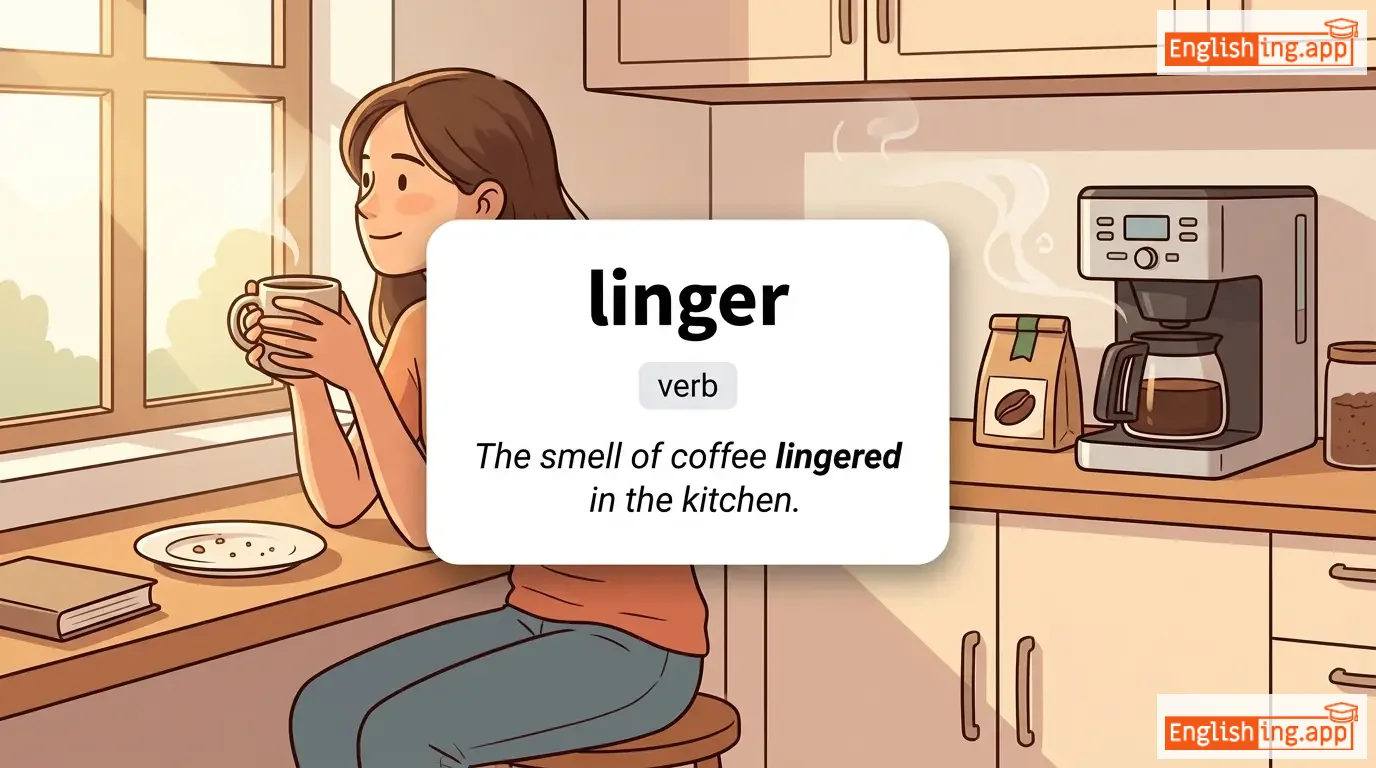
The smell of coffee lingered in the kitchen.
コーヒーの匂いはキッチンに長く linger していた。
••••••
|
コーヒーの匂いはキッチンに長く linger していた。
Kōhī no nioi wa kitchin ni nagaku linger shiteita.
••••••
|
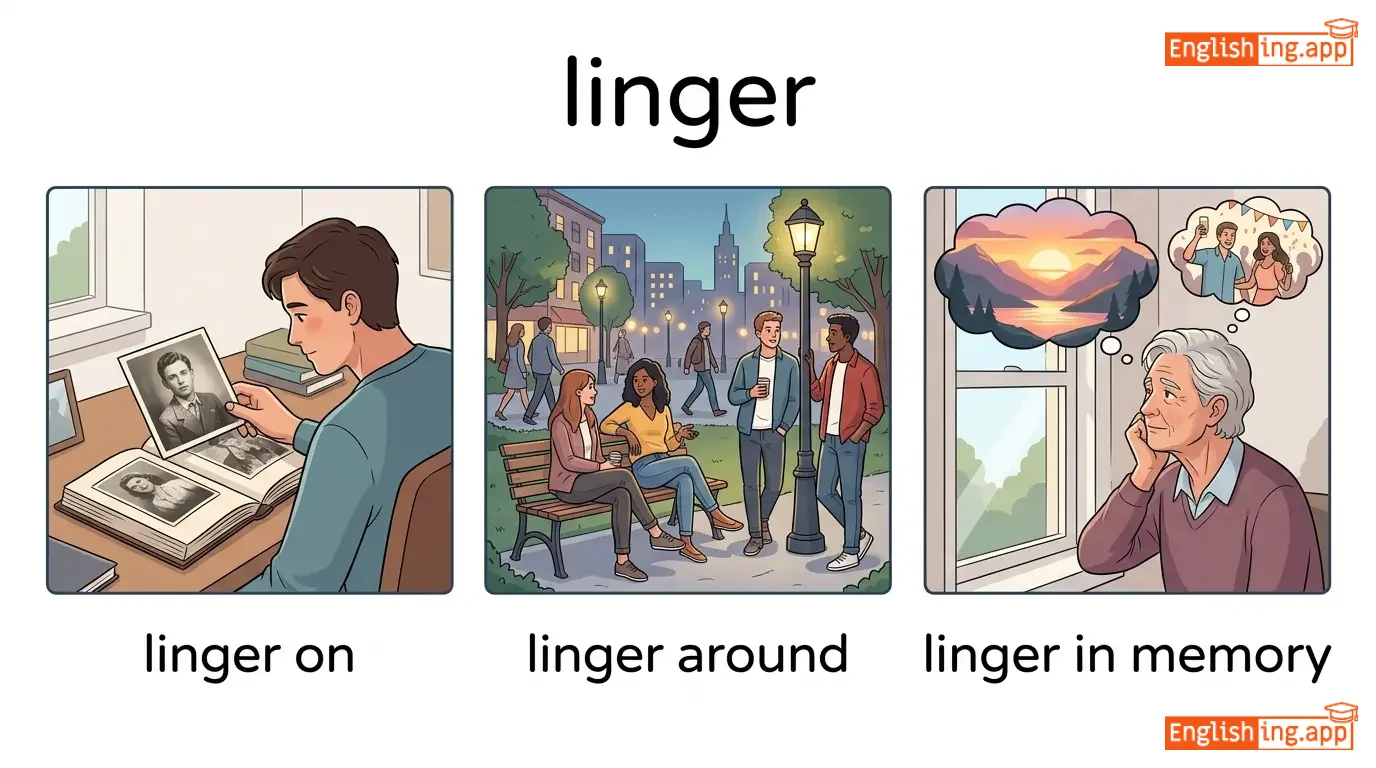
linger on
linger on
••••••
|
To remain for a long time, especially longer than expected.
••••••
|
長居する
nagai suru
••••••
|
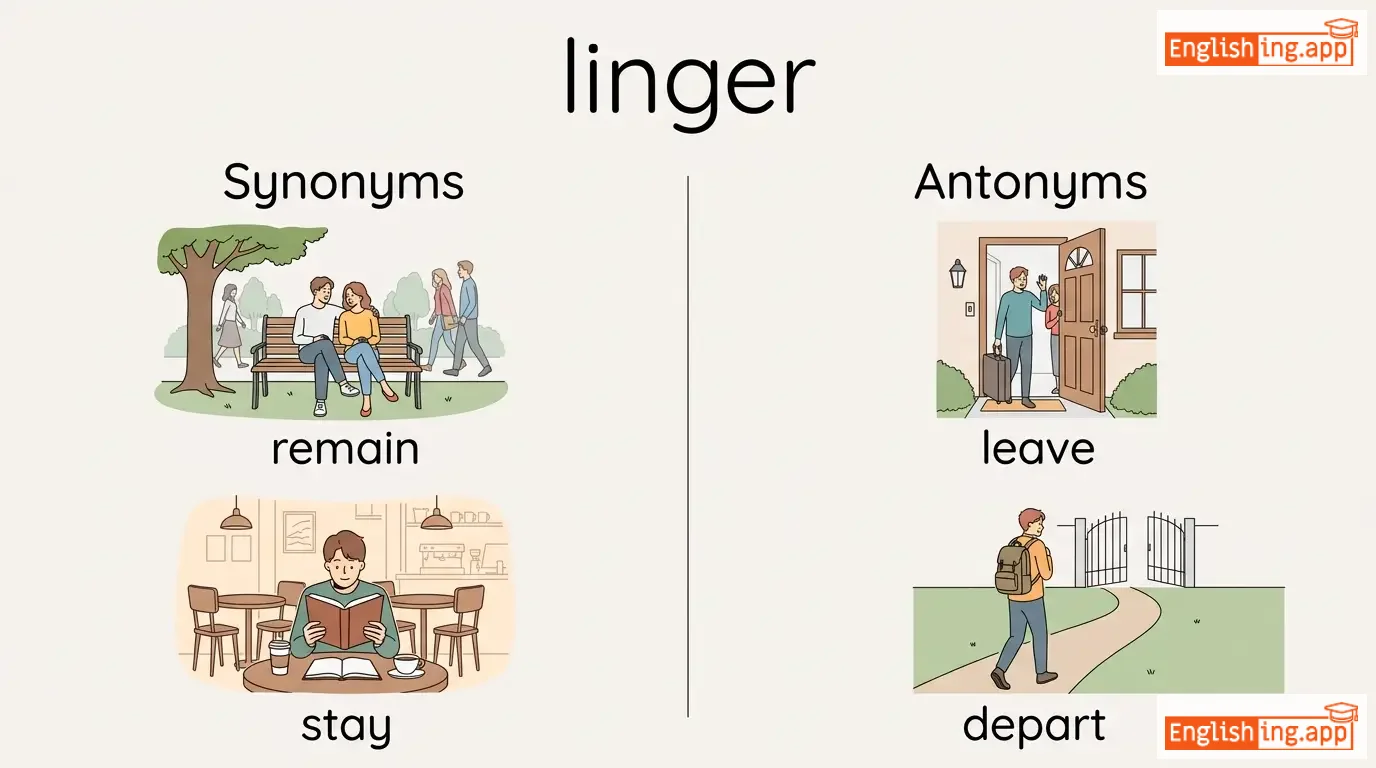
remain, stay, persist, wait, dawdle
••••••
|
leave, depart, vanish
••••••
|
linger on, linger around, linger in memory, linger over
••••••
|
Linger = 長居する、でもまだ行かないで。
••••••
|
|
#5200
🚢
|
/ˈlaɪ.nər/
noun
••••••
|
- •••••• | - •••••• | - •••••• | - •••••• | - •••••• | - •••••• |
A large ship used for transporting people or goods regularly, or a material used as a lining inside something.
••••••
|
The luxury liner docked at the port yesterday. |
- •••••• |
ocean liner |
A large passenger ship designed for long sea journeys.
••••••
|
- •••••• |
ship, vessel, cruiser, coating, cover
••••••
|
raft, canoe
••••••
|
liner ship, eye liner, trash liner, ocean liner
••••••
|
No •••••• |
|
#5201
🧵
|
/ˈlɪn.ən/
noun
(リネン)
••••••
|
- •••••• |
リネン生地
Rinen kiji
••••••
|
- •••••• | - •••••• | - •••••• | - •••••• |
A strong cloth made from the fibers of the flax plant, or items made from this cloth such as sheets or clothing.
••••••
|
She bought new linen curtains for the living room. |
彼女はリビングルームのために新しいリネンのカーテンを買いました。
Kanojo wa ribingu rūmu no tame ni atarashī rinen no kāten o kaimashita.
••••••
|
clean linen |
Refers to washing or freshly laundered clothes or sheets.
••••••
|
清潔なリネン
Seiketsu na rinen
••••••
|
fabric, cloth, textile, canvas, material
••••••
|
synthetic, polyester
••••••
|
linen cloth, linen shirt, linen sheets, fine linen
••••••
|
Linen = リネン生地、リネンでリビングルームを飾ることができることを覚えておいてください。
••••••
|
|
#5202
📏
|
/ˈlɪniər/
adjective
(リニア)
••••••
|
- •••••• |
線形
senkei
••••••
|
- •••••• | - •••••• | - •••••• | - •••••• |
Arranged in or extending along a straight line.
••••••
|
The artist used linear perspective in his drawings. |
アーティストは彼の絵に線形透視を使用しました。
Ātisuto wa kare no e ni senkei tōshi o shiyō shimashita.
••••••
|
linear thinking |
A step-by-step way of reasoning in a straight sequence.
••••••
|
線形思考
senkei shikō
••••••
|
straight, direct, sequential, aligned
••••••
|
circular, random, nonlinear
••••••
|
linear perspective, linear function, linear equation
••••••
|
線形 = 線 → まるで直線 📏
••••••
|
|
#5203
👤
|
/ˈlɪniəmənts/
noun (plural)
(リニアメント)
••••••
|
- •••••• |
顔の特徴
kao no tokuchou
••••••
|
- •••••• | - •••••• | - •••••• | - •••••• |
The features or distinctive characteristics of the face or body.
••••••
|
The lineaments of his face were sharp and stern. |
彼の顔の特徴は鋭くて厳しかった。
kare no kao no tokuchou wa surudakute kibishikatta.
••••••
|
- •••••• | - •••••• | - •••••• |
features, traits, characteristics, aspects
••••••
|
formlessness, vagueness
••••••
|
facial lineaments, distinct lineaments
••••••
|
Lineaments = 顔に現れる特徴的なライン 👤
••••••
|
|
#5204
🙂
|
/ˈlɪniəmənt/
noun
(liniament)
••••••
|
- •••••• |
特徴
tokuchou
••••••
|
- •••••• | - •••••• | - •••••• | - •••••• |
A distinctive feature or characteristic, especially of the face.
••••••
|
Her delicate lineaments revealed her noble birth.
彼女の繊細なラインメントは彼女の高貴な誕生を明らかにしました。
••••••
|
彼女の繊細な特徴は彼女の高貴な誕生を明らかにしました。
Kanojo no sensaina tokuchou wa kanojo no kouki na tanjou wo akiraka ni shimashita.
••••••
|
- •••••• | - •••••• | - •••••• |
feature, characteristic, aspect, trait
••••••
|
formlessness, indistinctness
••••••
|
facial lineaments, noble lineaments
••••••
|
Lineament = 特徴 → 顔の特徴 🙂
••••••
|
|
#5205
👑
|
/ˈlɪniɪdʒ/
noun
(ラインイエイジ)
••••••
|
|
系譜
keifu
••••••
|
- •••••• | - •••••• | - •••••• | - •••••• |
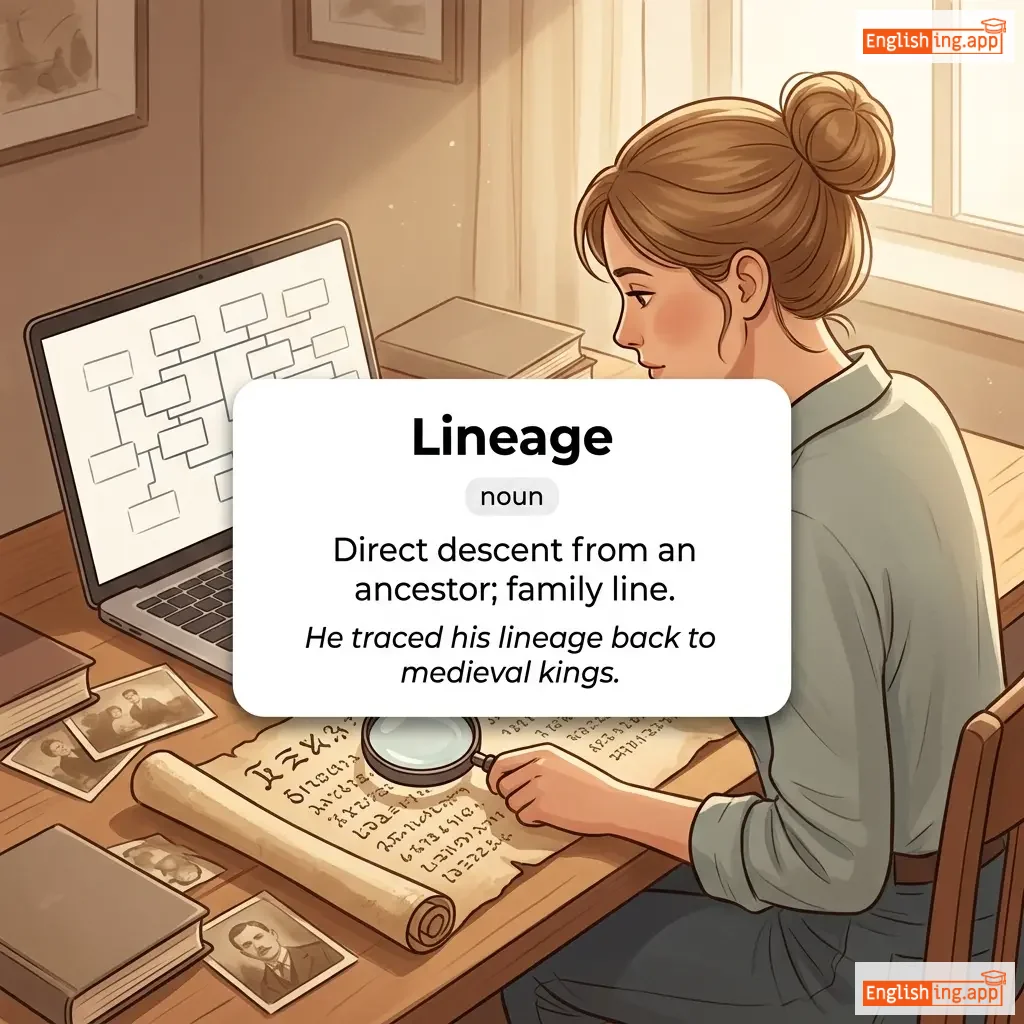
Direct descent from an ancestor; family line.
••••••
|
He traced his lineage back to medieval kings. |
彼は自分の系譜を中世の王たちにまで遡りました。
Kare wa jibun no keifu o chūsei no ō-tachi ni made sakomorimashita.
••••••
|
royal lineage |
Descent from a royal family.
••••••
|
王族の系譜
Ōzoku no keifu
••••••
|
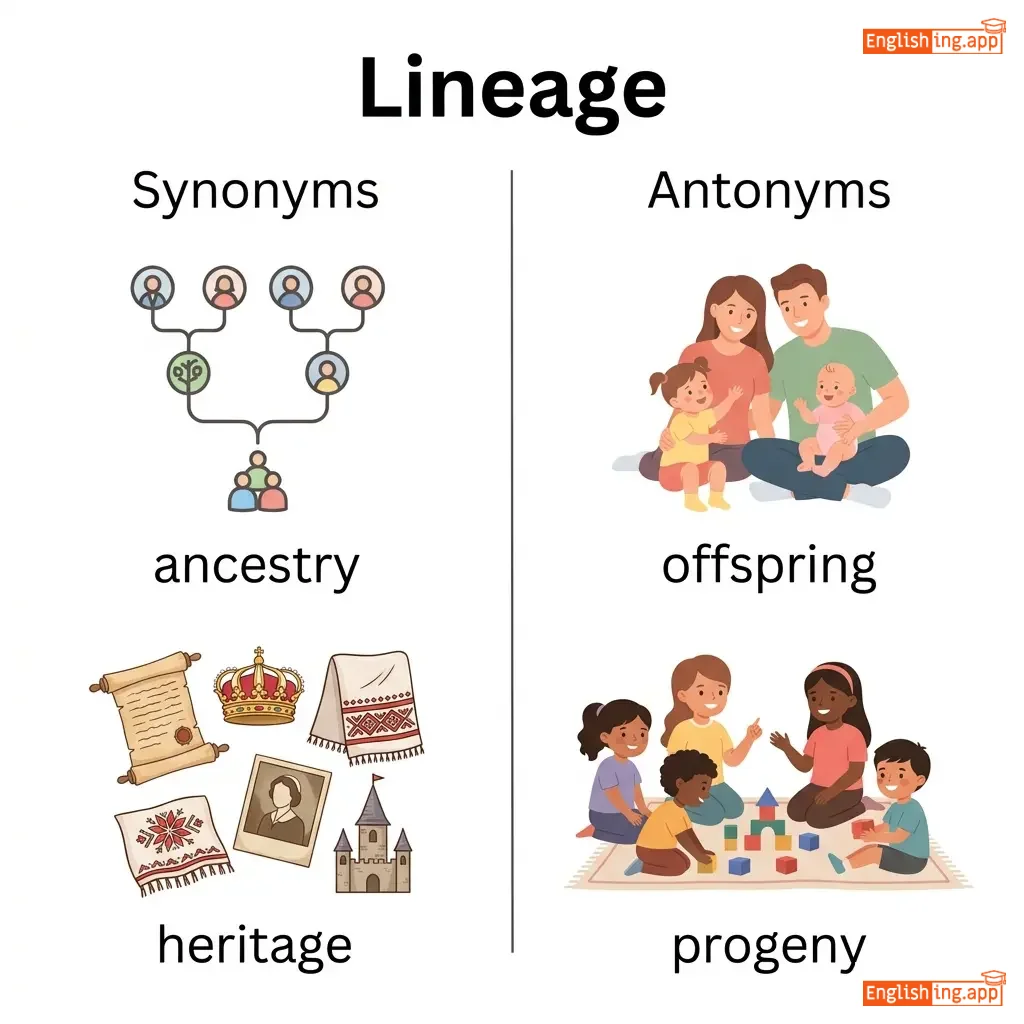
ancestry, heritage, descent, bloodline, genealogy
••••••
|
offspring, progeny
••••••
|
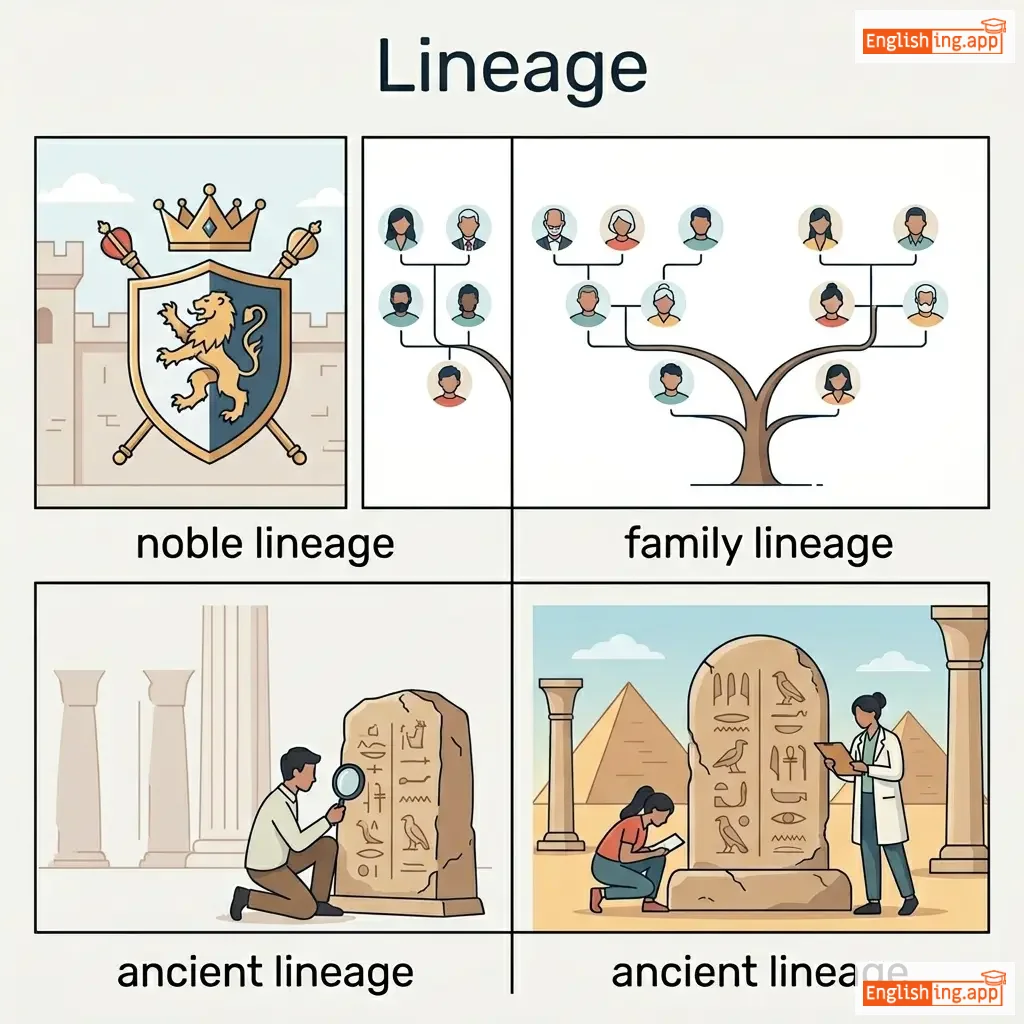
noble lineage, family lineage, ancient lineage
••••••
|
系譜 = 王族の血統、家族の線。
••••••
|
|
#5206
😊
|
/ˌlaɪtˈhɑːrtɪd/
adjective
(ライト・ハーティッド)
••••••
|
- •••••• |
軽やかで無頓着な
karoyaka de mutonchaku na
••••••
|
- •••••• | - •••••• | - •••••• | - •••••• |
cheerful, carefree, and not serious
••••••
|
She gave a light-hearted speech at the party.
彼女はパーティーで軽快なスピーチをしました。
••••••
|
彼女はパーティーで軽快なスピーチをしました。
Kanojo wa pātī de keikai na supīchi o shimashita.
••••••
|
light-hearted banter
軽い冗談
••••••
|
casual, playful, and cheerful conversation
••••••
|
軽い冗談
karui jōdan
••••••
|
cheerful, carefree, joyful, playful, jolly
••••••
|
serious, solemn, gloomy
••••••
|
light-hearted joke, light-hearted manner, light-hearted approach, light-hearted comedy
••••••
|
Light(軽やか)とHearted(無頓着)– 軽く楽しい心
••••••
|
|
#5207
🦶
|
/lɪmp/
verb, adjective, noun
(リンプ)
••••••
|
- •••••• |
引きずる / 弱い
hikizuru / yowai
••••••
|
limped
リンプド
••••••
|
limped
リンプド
••••••
|
limps
リンプス
••••••
|
limping
リンプイング
••••••
|
to walk with difficulty, often due to injury or weakness; lacking strength or firmness.
••••••
|
He limped after injuring his ankle.
彼は足首を怪我した後、足を引きずって歩いていた。
••••••
|
彼は足首を怪我した後、足を引きずって歩いていた。
Kare wa ashi-kubi o kega shita ato, ashi o hikizutte aruite ita.
••••••
|
go limp
弱る
••••••
|
to become weak or without strength.
••••••
|
完全に弱る
kanzen ni yowaru
••••••
|
stagger, hobble, shuffle, weak, floppy
••••••
|
stride, strong, firm
••••••
|
walk with a limp, limp along, go limp, limp body
••••••
|
Limpは引きずって歩くような感じ
••••••
|
|
#5208
🚘
|
/ˈlɪməˌziːn/
noun
(リムジン)
••••••
|
- •••••• |
運転手によって運転される大きな豪華な車
untenshu ni yotte unten sareru ōkina gōka na kuruma
••••••
|
- •••••• | - •••••• | - •••••• | - •••••• |
a large, luxurious car driven by a chauffeur.
••••••
|
The bride arrived in a white limousine. |
花嫁は白いリムジンで到着しました。
Hanayome wa shiroi rimujin de tōchaku shimashita.
••••••
|
- •••••• | - •••••• | - •••••• |
luxury car, sedan, town car, stretch limo
••••••
|
taxi, bus
••••••
|
hire a limousine, stretch limousine, black limousine, limousine service
••••••
|
リムジンは運転手付きの高級車
••••••
|
|
#5209
🎨
|
/lɪm/
verb
(リムン)
••••••
|
|
描写する / 表現する
byōsha suru / hyōgen suru
••••••
|
limned
リムンド
••••••
|
limned
リムンド
••••••
|
limns
リムンズ
••••••
|
limning
リムニング
••••••
|
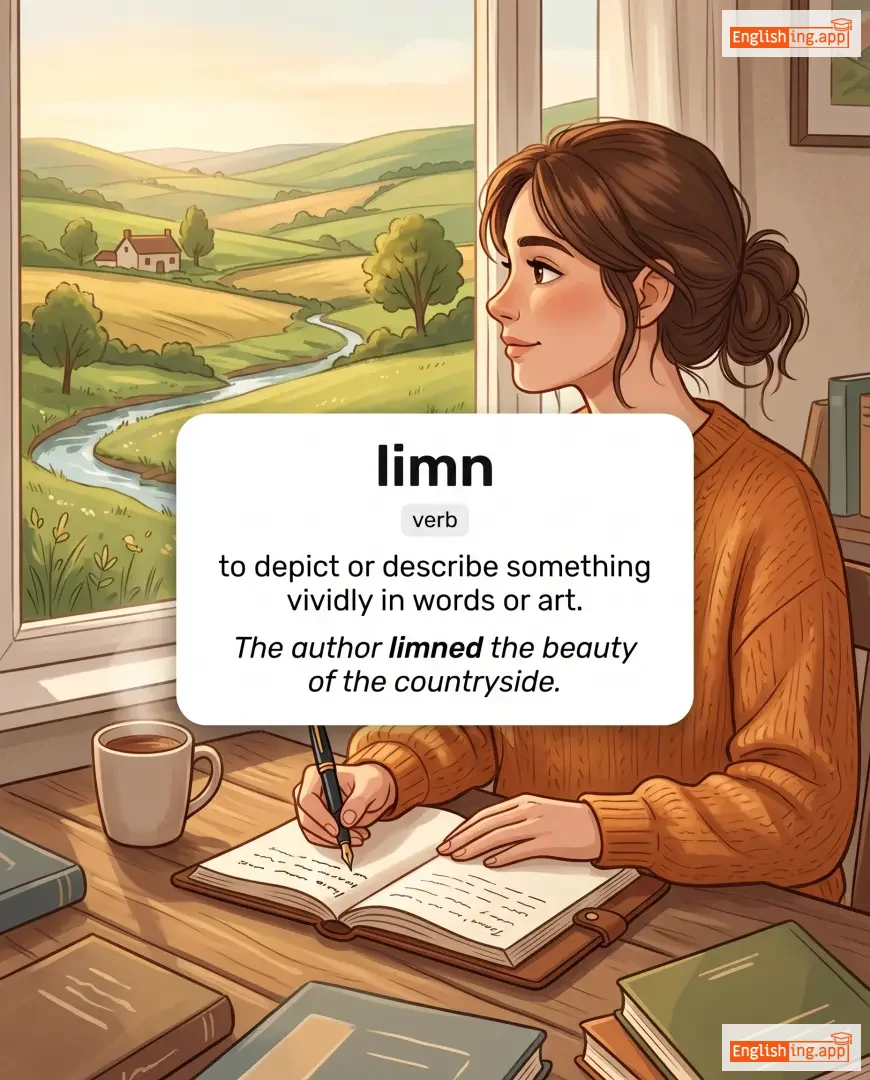
to depict or describe something vividly in words or art.
••••••
|
The author limned the beauty of the countryside.
作者は田舎の美しさを生き生きと描写しました。
••••••
|
作者は田舎の美しさを生き生きと描写しました。
Sakusha wa inaka no utsukushisa o ikigiki to byōsha shimashita.
••••••
|
- •••••• | - •••••• | - •••••• |
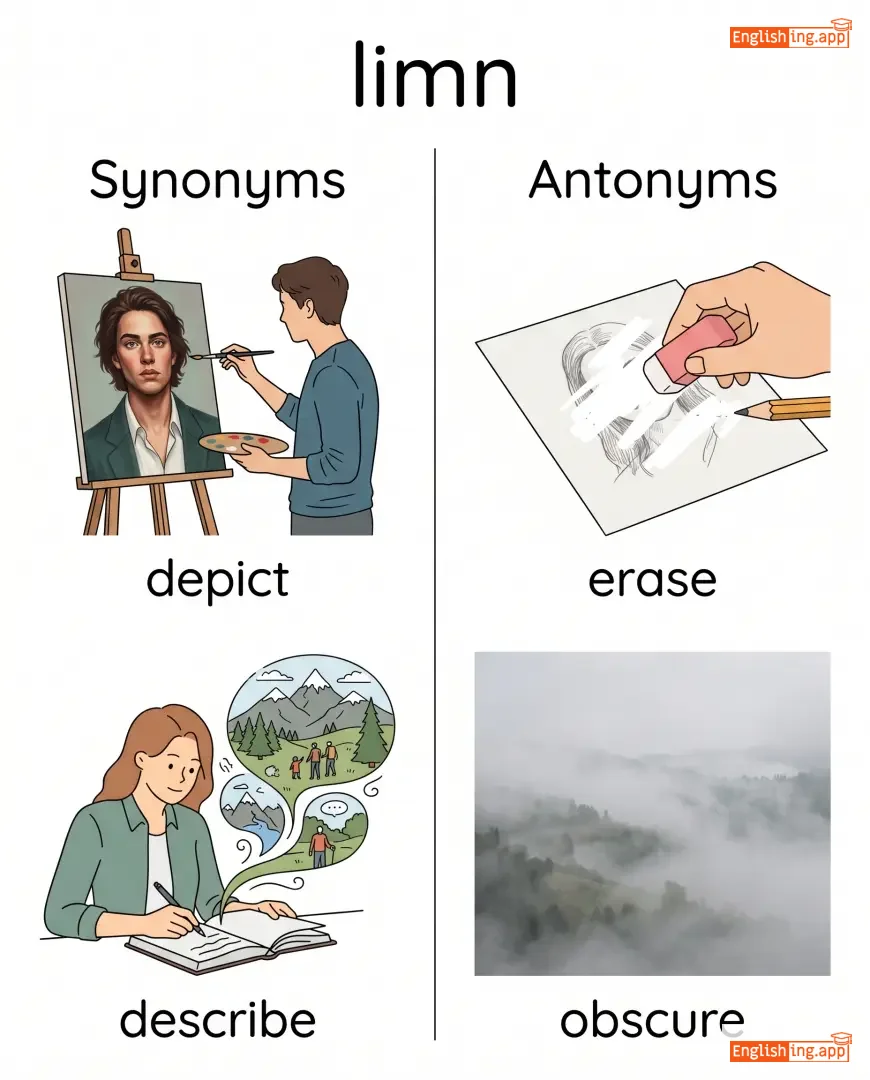
depict, describe, illustrate, portray, outline
••••••
|
erase, obscure, conceal
••••••
|
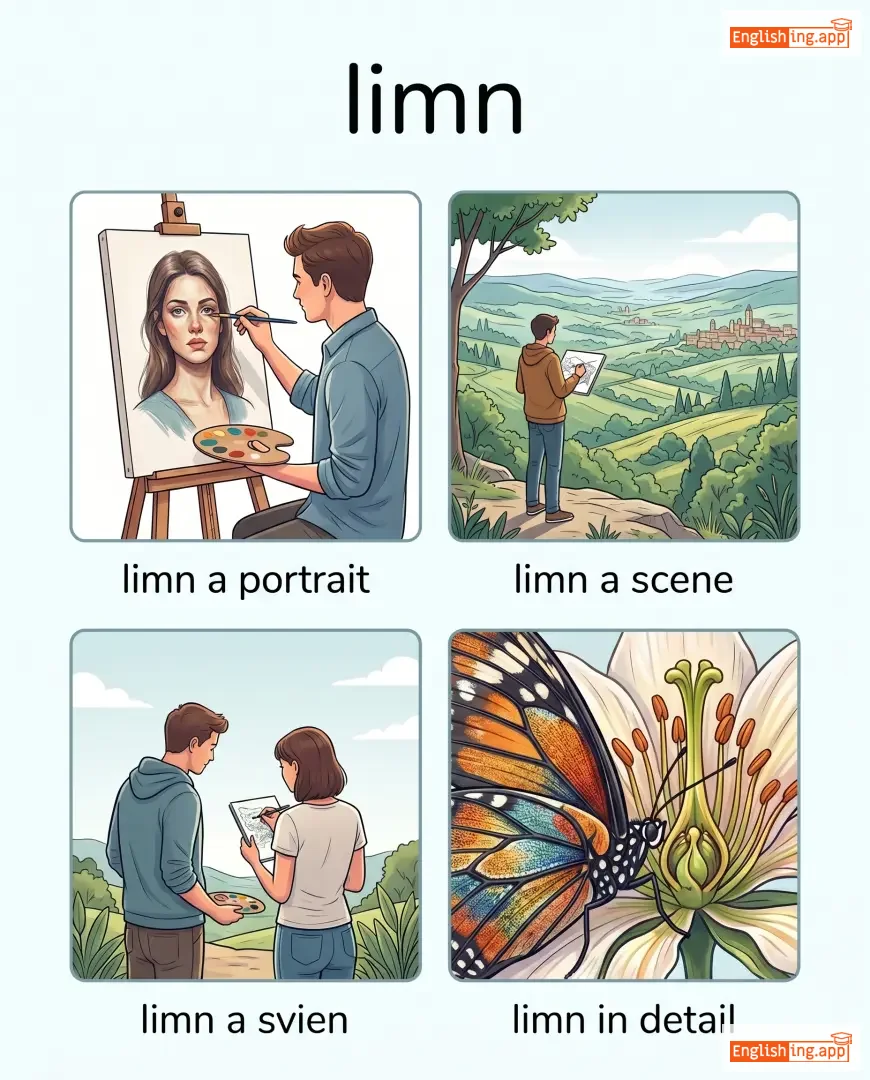
limn a portrait, limn a scene, limn in detail, limn beauty
••••••
|
Limn は「描写する」や「表現する」と考えてみましょう。
••••••
|
|
#5210
⛔
|
/ˌlɪmɪˈteɪʃən/
noun
(リミテーション)
••••••
|
|
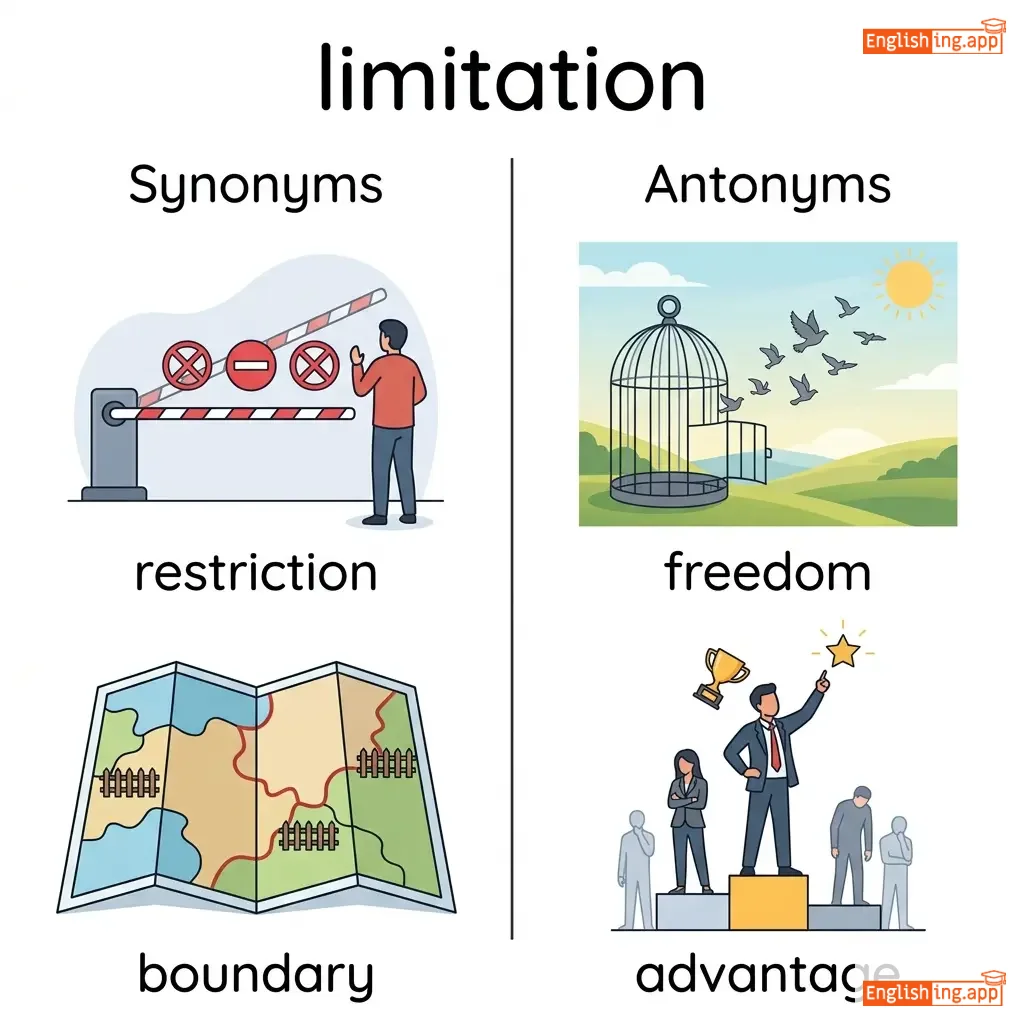
制限
seigen
••••••
|
- •••••• | - •••••• | - •••••• | - •••••• |
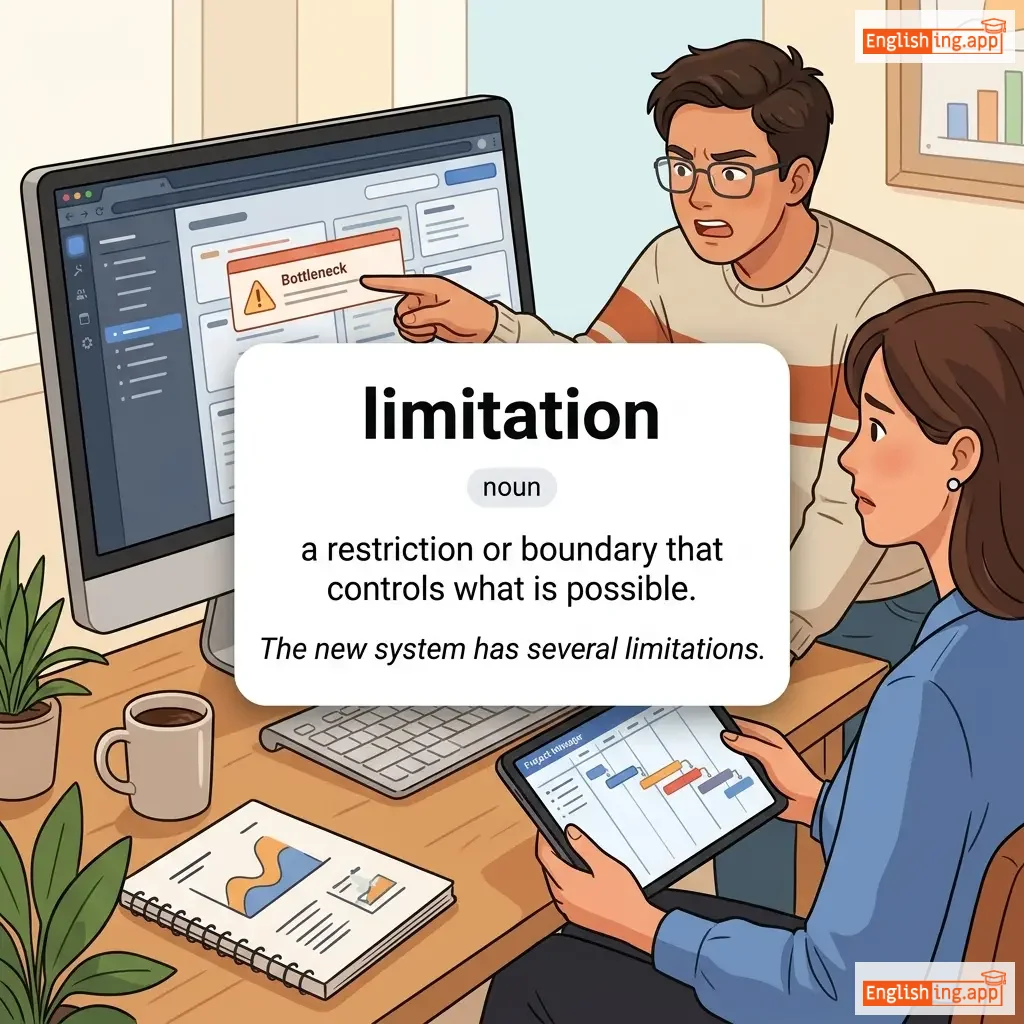
a restriction or boundary that controls what is possible.
••••••
|
The new system has several limitations. |
新しいシステムにはいくつかの制限があります。
Atarashii shisutemu ni wa ikutsuka no seigen ga arimasu.
••••••
|
know your limitations |
be aware of your own weaknesses or boundaries.
••••••
|
自分の制限を知る
jibun no seigen wo shiru
••••••
|
restriction, boundary, constraint, drawback, shortcoming
••••••
|
freedom, advantage, strength
••••••
|
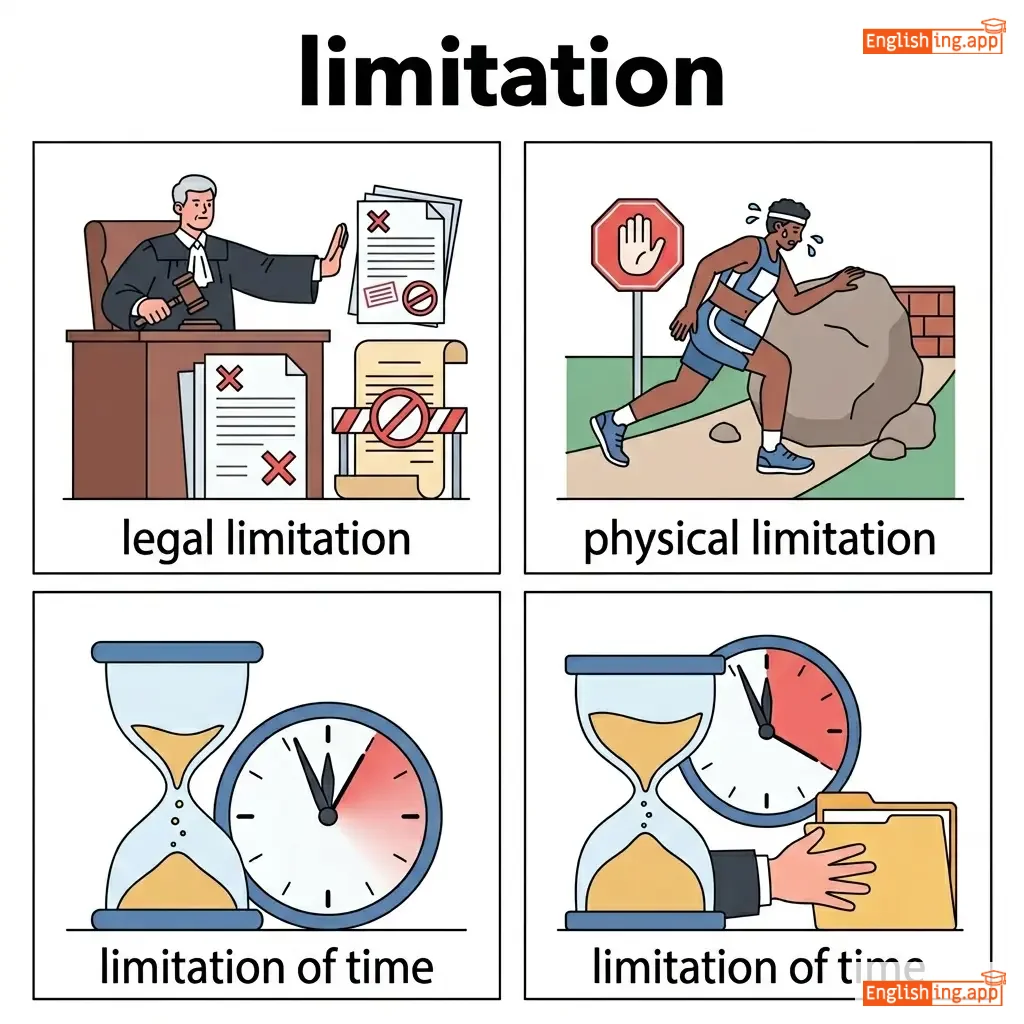
legal limitation, physical limitation, limitation of time, limitation on rights
••••••
|
制限は‘limit’から派生した言葉で、境界を意味します。
••••••
|
|
#5211
📜
|
/ˈlɪmərɪk/
noun
(リメリック)
••••••
|
- •••••• |
ユーモラスな五行詩
yu-morasu na go gyou shi
••••••
|
- •••••• | - •••••• | - •••••• | - •••••• |
a humorous five-line poem with a specific rhythm and rhyme scheme (AABBA).
••••••
|
She recited a funny limerick at the party. |
彼女はパーティーで面白いリメリックを朗読しました。
Kanojo wa pa-ti- de omoshiroi rimerikku o roudoku shimashita.
••••••
|
- •••••• | - •••••• | - •••••• |
verse, poem, rhyme, jingle, ditty
••••••
|
prose, essay
••••••
|
write a limerick, funny limerick, limerick contest, limerick competition
••••••
|
Limerick = 韻 + 楽しさ (in + tanoshisa) - 面白い詩
••••••
|
|
#5212
⏳
|
/ˈlɪmboʊ/
noun
(リンボ)
••••••
|
- •••••• |
不確実性、保留状態
fukakujitsusei, horyu joto
••••••
|
- •••••• | - •••••• | - •••••• | - •••••• |
A state of uncertainty or neglect; an intermediate or transitional state.
••••••
|
The project was left in limbo after the funding was withdrawn.
プロジェクトは資金が撤回された後、リンボに残されました。
••••••
|
資金が撤回された後、プロジェクトは不確実性に置かれました。
Shikin ga tetsukai sareta ato, purojekuto wa fukakujitsusei ni okaremashita.
••••••
|
in limbo
リンボの中で
••••••
|
In a state of uncertainty, neglect, or suspension.
••••••
|
不確実性の中で
fukakujitsusei no naka de
••••••
|
uncertainty, suspension, neglect, inaction, delay
••••••
|
certainty, decision, progress
••••••
|
left in limbo, remain in limbo, stuck in limbo
••••••
|
Limboは横棒をくぐるゲーム、つまり不確実性を象徴しています。
••••••
|
|
#5213
🤸
|
/ˈlɪmbər/
adjective
(リンバー)
••••••
|
- •••••• |
柔軟で敏捷
jūnan de binshō
••••••
|
- •••••• | - •••••• | - •••••• | - •••••• |
Flexible and agile in body or movement.
••••••
|
Dancers need to stay limber to perform well.
ダンサーはうまく演技するためにリムバーを保つ必要があります。
••••••
|
ダンサーはうまく演技するために柔軟でいる必要があります。
Dansā wa umaku engi suru tame ni jūnan de iru hitsuyō ga arimasu.
••••••
|
limber up
ウォームアップ
••••••
|
To warm up or prepare physically before exercise.
••••••
|
ウォームアップ
wōmappu
••••••
|
flexible, supple, agile, bendable, lithe
••••••
|
stiff, rigid, inflexible
••••••
|
limber body, stay limber, limber athlete, limber movements
••••••
|
Limber は柔軟性を意味し、柔らかくなることです
••••••
|
|
#5214
🐜
|
/ˌlɪlɪˈpjuːʃən/
adjective
(リリプチアン)
••••••
|
|
非常に小さい
hijō ni chiisai
••••••
|
- •••••• | - •••••• | - •••••• | - •••••• |
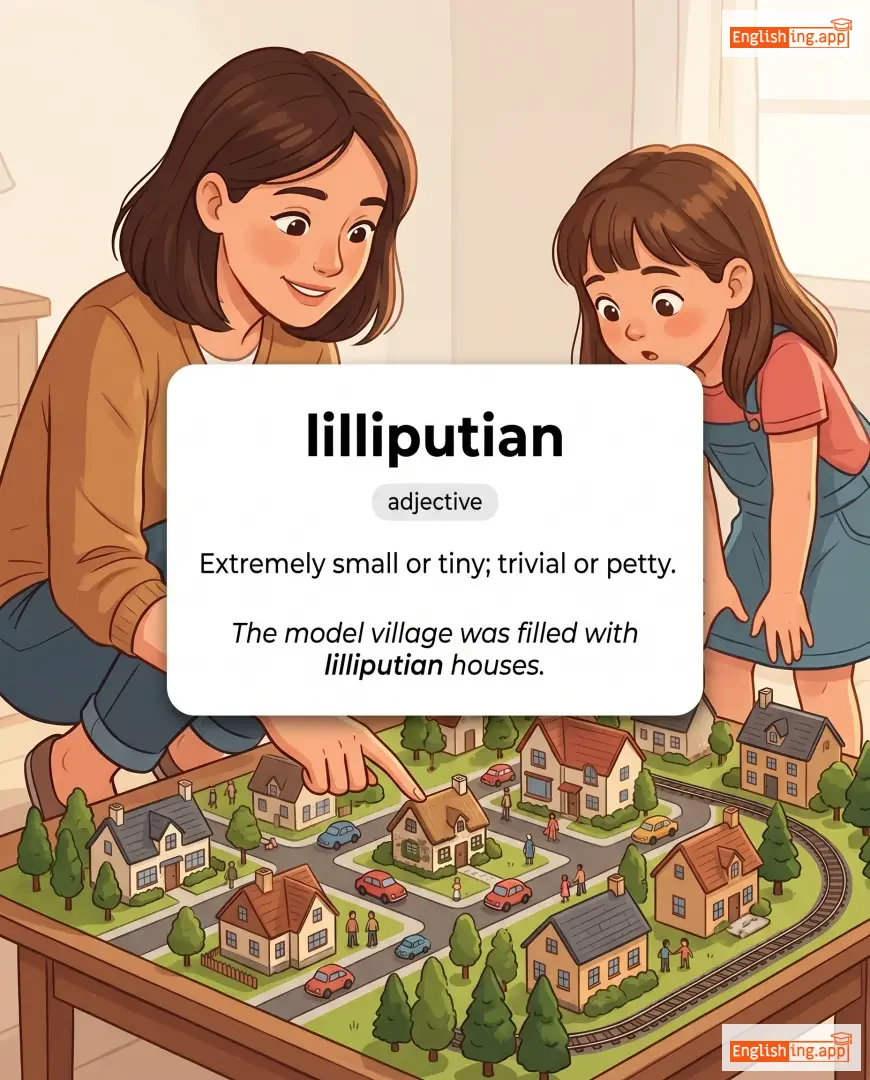
Extremely small or tiny; trivial or petty.
••••••
|
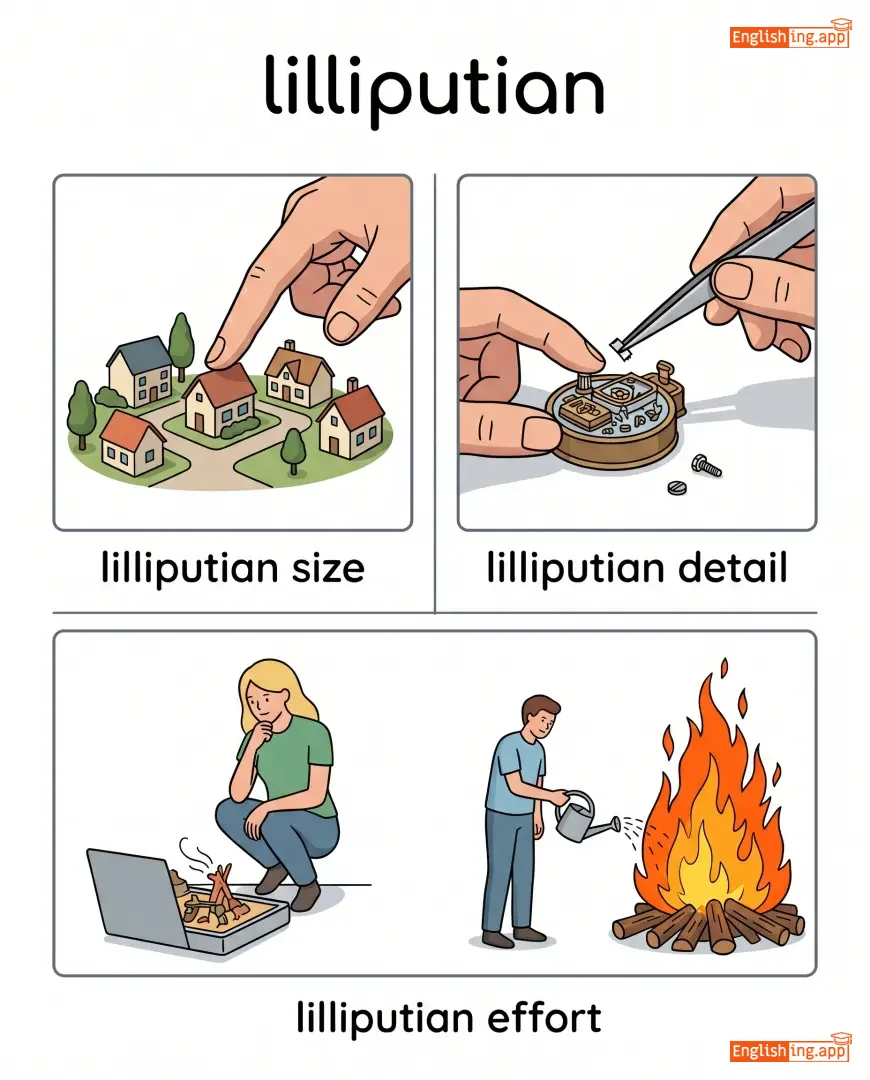
The model village was filled with lilliputian houses.
モデル村はリリプチアンの家で満たされていました。
••••••
|
モデル村は非常に小さな家で満たされていました。
Moderu mura wa hijō ni chiisana ie de mitasarete imashita.
••••••
|
- •••••• | - •••••• | - •••••• |
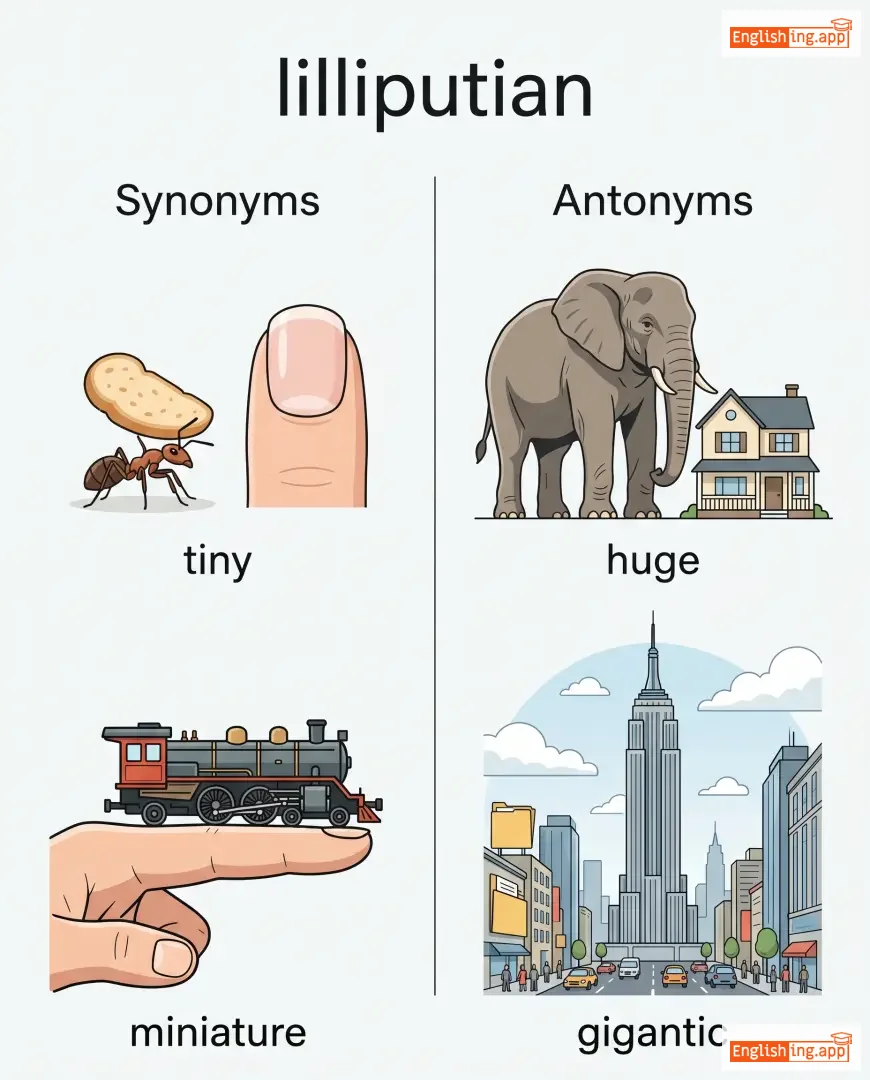
tiny, miniature, minuscule, small, petty
••••••
|
huge, gigantic, colossal
••••••
|
lilliputian size, lilliputian detail, lilliputian effort
••••••
|
Lilliput は非常に小さい場所です — Lilliputian は極めて小さい
••••••
|
|
#5215
💖
|
/ˈlaɪkɪŋ/
noun
(ライキング)
••••••
|
- •••••• |
好意, 嗜好
kōi, shikō
••••••
|
- •••••• | - •••••• | - •••••• | - •••••• |
A feeling of fondness or preference for something or someone.
••••••
|
She has a strong liking for classical music. |
彼女はクラシック音楽を強く好んでいます。
Kanojo wa kurashikku ongaku o tsuyoku konondeimasu.
••••••
|
to one's liking |
Something that suits or pleases someone.
••••••
|
誰かの好みに合わせて
Dareka no konomi ni awasete
••••••
|
fondness, preference, affection, taste, inclination
••••••
|
dislike, aversion, hatred
••••••
|
develop a liking, have a liking, strong liking, mutual liking
••••••
|
Likingは好意を意味します — ‘like’は好きという意味です。
••••••
|
|
#5216
🔄
|
/ˈlaɪkˌwaɪz/
adverb
(ライクワイズ)
••••••
|
- •••••• |
同様に; それと同じように; 同じように
dōyō ni; sore to onaji yō ni; onaji yō ni
••••••
|
- •••••• | - •••••• | - •••••• | - •••••• |
In the same way; also; similarly.
••••••
|
She smiled, and he likewise returned the gesture. |
彼女は微笑んだ、そして彼も同様にジェスチャーを返した。
Kanojo wa hohoenda, soshite kare mo dōyō ni jesshā o kaeshita.
••••••
|
- •••••• | - •••••• | - •••••• |
similarly, also, equally, correspondingly, moreover
••••••
|
differently, otherwise
••••••
|
say likewise, act likewise, think likewise, respond likewise
••••••
|
Likewise: 誰かがするように、同じようにすること
••••••
|
|
#5217
🔗
|
/ˈlaɪ.kən/
verb
(laiken)
••••••
|
- •••••• |
例える
tatoeru
••••••
|
likened
laikend
••••••
|
likened
laikend
••••••
|
likens
laikens
••••••
|
likening
laikening
••••••
|
to compare one thing to another, often in a figurative way
••••••
|
He likened her voice to sweet music.
彼は彼女の声を甘い音楽に例えました。
••••••
|
彼は彼女の声を甘い音楽に例えました。
Kare wa kanojo no koe o amai ongaku ni tatoemashita.
••••••
|
- •••••• | - •••••• | - •••••• |
compare, equate, relate, associate
••••••
|
differentiate, contrast
••••••
|
liken to, often likened, likened metaphorically
••••••
|
Liken は Like + en – 似ているものを比較する。
••••••
|
|
#5218
☔
|
/ˈlaɪk.li/
adjective
(laikli)
••••••
|
- •••••• |
可能性が高い
kanousei ga takai
••••••
|
- •••••• | - •••••• | - •••••• | - •••••• |
probable or expected to happen
••••••
|
It is likely to rain this evening. |
今晩雨が降る可能性が高いです。
Konban ame ga furu kanousei ga takai desu.
••••••
|
as likely as not |
something is more likely than unlikely to happen
••••••
|
ありそうでなさそう
arisou de nasasou
••••••
|
probable, possible, expected, plausible
••••••
|
unlikely, doubtful
••••••
|
likely outcome, most likely, highly likely, not likely
••••••
|
Likelyは高い可能性を示し、'可能性が高い'です。
••••••
|
|
#5219
🎲
|
/ˈlaɪ.kli.hʊd/
noun
(ライクリフッド)
••••••
|
- •••••• |
可能性
kanousei
••••••
|
- •••••• | - •••••• | - •••••• | - •••••• |
the chance or probability of something happening
••••••
|
There is a strong likelihood of rain tomorrow. |
明日、雨が降る可能性が高いです。
Ashita, ame ga furu kanousei ga takai desu.
••••••
|
in all likelihood |
almost certainly; very probably
••••••
|
ほぼ確実に
hobo kakujitsuni
••••••
|
probability, chance, prospect, possibility
••••••
|
impossibility, certainty
••••••
|
likelihood of success, strong likelihood, in all likelihood
••••••
|
Likelihood = Like + Hood – 好きなら、それは起こる可能性が高い
••••••
|
|
#5220
🌳
|
/ˈlɪɡ.ni.əs/
adjective
(リグニアス)
••••••
|
- •••••• |
木質の
mokushitsu no
••••••
|
- •••••• | - •••••• | - •••••• | - •••••• |
having the texture or appearance of wood; woody
••••••
|
The ligneous stem supported the heavy flowers.
リグニアスな茎が重い花を支えました。
••••••
|
木質の茎が重い花を支えました。
Mokushitsu no kake ga omoi hana wo sasaemashita.
••••••
|
- •••••• | - •••••• | - •••••• |
woody, timbered, hard, stiff
••••••
|
soft, fleshy, pliable
••••••
|
ligneous tissue, ligneous stem, ligneous structure
••••••
|
Ligneousは'木質' (mokushitsu)に似ていて、木のような質感を示しています。
••••••
|
Vocabulary Quiz
Test your vocabulary by matching words with their translations or meanings.
Login to take the quiz
Comments (0)
Share your thoughts and join the discussion.
Join the discussion by logging in
Login to CommentNo comments yet
Be the first to share your thoughts!