

翻訳
過去
過去分詞
三人称単数
動名詞
意味
例文
例文の翻訳
同義語
対義語
コロケーション
ニーモニック
Swipe left or right, or use the buttons. Tap image to zoom.
例文の翻訳
単語
Lesson 142Lesson 142 - マスクトグル
|
絵文字
|
単語 | Images | 翻訳 | 過去 | 過去分詞 | 三人称単数 | 動名詞 | 意味 | 例文 | 例文の翻訳 | 表現例 | 表現例の意味 | 表現例の翻訳 | 同義語 | 対義語 | コロケーション | ニーモニック |
|---|---|---|---|---|---|---|---|---|---|---|---|---|---|---|---|---|---|
|
#4231
💭
|
/ˌhaɪpəˈθetɪkl/
adjective
(ハイポセティカル)
••••••
|
|
仮定の
katei no
••••••
|
- •••••• | - •••••• | - •••••• | - •••••• |
based on or serving as a hypothesis; imagined or supposed for the sake of discussion.
••••••
|
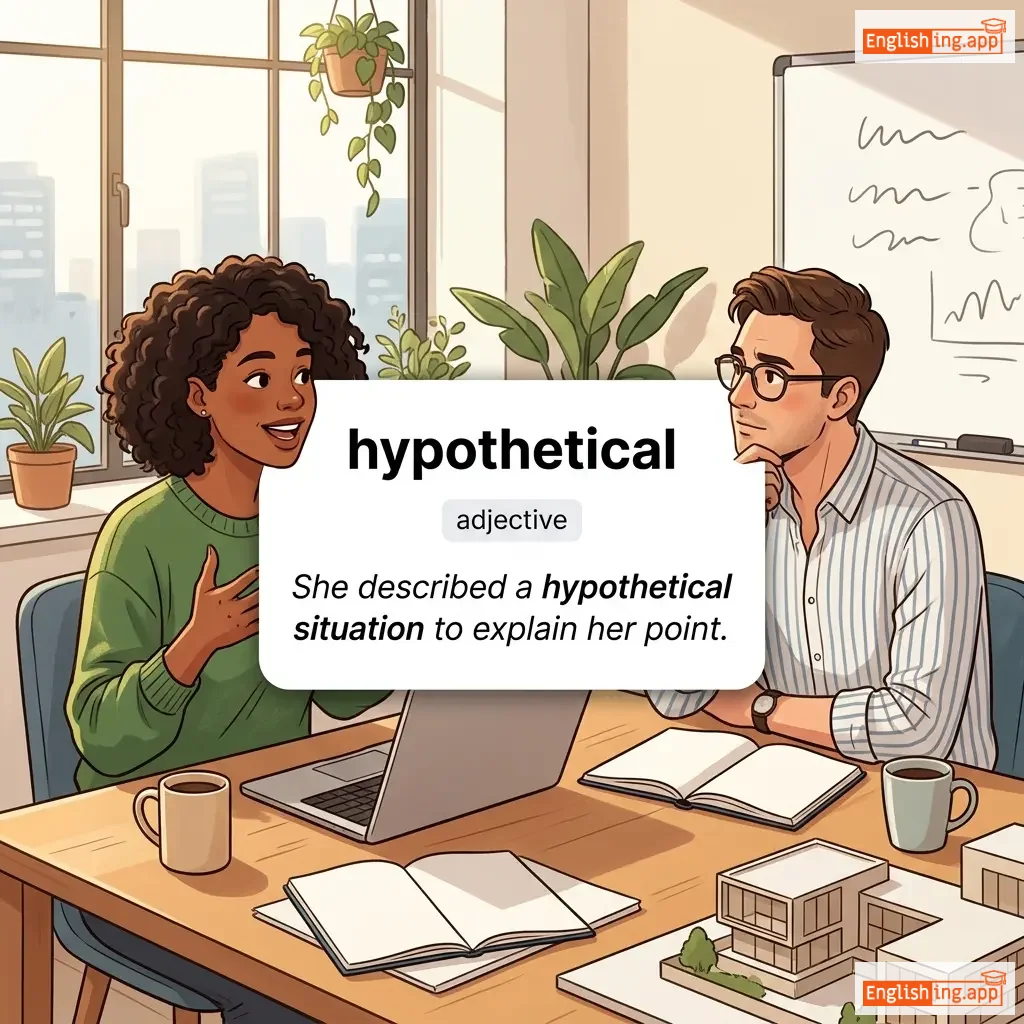
She described a hypothetical situation to explain her point. |
彼女は自分の主張を説明するために仮定の状況を説明しました。
Kanojo wa jibun no shuchō o setsumei suru tame ni katei no jōkyō o setsumei shimashita.
••••••
|
hypothetical scenario |
an imagined situation used to illustrate or test an idea
••••••
|
仮定のシナリオ
katei no shinario
••••••
|
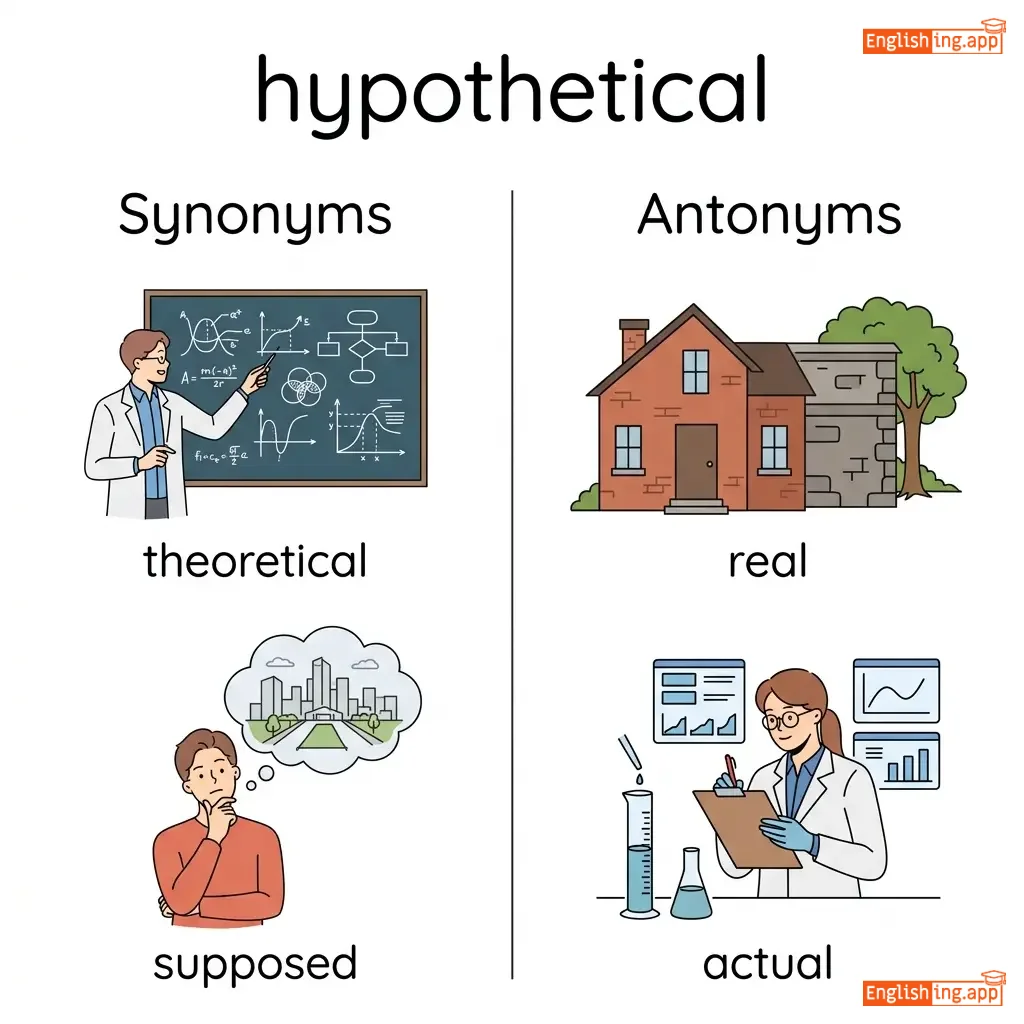
theoretical, supposed, speculative, imaginary, conjectural
••••••
|
real, actual, factual
••••••
|
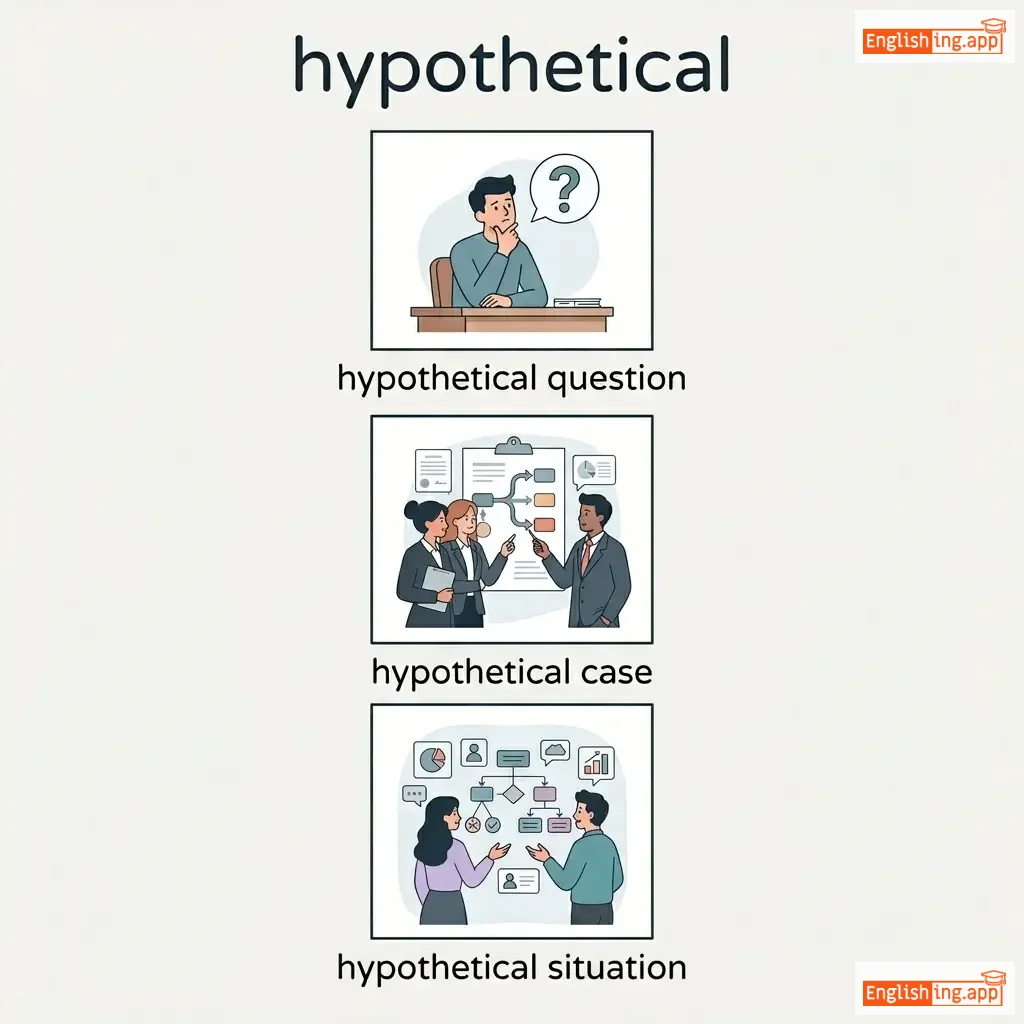
hypothetical question, hypothetical case, hypothetical situation
••••••
|
仮定の → 仮説から来ている → 想像上の状況
••••••
|
|
#4232
🧠
|
/ˌaɪ.diˈɒl.ə.dʒi/
noun
(アイディオロジー)
••••••
|
- •••••• |
イデオロギー
ideorogī
••••••
|
- •••••• | - •••••• | - •••••• | - •••••• |
A system of ideas and ideals, especially one that forms the basis of economic or political theory and policy.
••••••
|
Democracy is based on the ideology of freedom and equality. |
民主主義は自由と平等のイデオロギーに基づいています。
Minshushugi wa jiyū to byōdō no ideorogī ni motozuiteimasu.
••••••
|
- •••••• | - •••••• | - •••••• |
belief system, philosophy, doctrine, principles
••••••
|
practicality, reality
••••••
|
political ideology, religious ideology, dominant ideology
••••••
|
イデオロギー = アイデア + ロジック – 思想体系
••••••
|
|
#4233
📚
|
/ˌaɪ.di.əˈlɒdʒ.ɪ.kəl/
adjective
(アイディオロジカル)
••••••
|
- •••••• |
イデオロギー的
ideorogī-teki
••••••
|
- •••••• | - •••••• | - •••••• | - •••••• |
Relating to or based on a system of ideas or beliefs.
••••••
|
The two parties are divided by deep ideological differences. |
二つの党は深いイデオロギー的な違いによって分裂している。
Futatsu no tō wa fukai ideorogī-teki na chigai ni yotte bunretsu shite iru.
••••••
|
- •••••• | - •••••• | - •••••• |
philosophical, doctrinal, theoretical, political
••••••
|
practical, realistic
••••••
|
ideological debate, ideological conflict, ideological differences
••••••
|
Ideology から ideorogī-teki – 思想や信念に関連
••••••
|
|
#4234
✨
|
/aɪˈdiː.ə.laɪz/
verb
(アイディアライズ)
••••••
|
- •••••• |
理想化する
risouka suru
••••••
|
idealized
アイディアライズド
••••••
|
idealized
アイディアライズド
••••••
|
idealizes
アイディアライゼズ
••••••
|
idealizing
アイディアライジング
••••••
|
To regard or represent something as perfect or better than it really is.
••••••
|
Children often idealize their parents.
子供たちはしばしば親を理想化します。
••••••
|
子供たちはしばしば親を理想化します。
Kodomotachi wa shibashiba oya wo risouka shimasu.
••••••
|
- •••••• | - •••••• | - •••••• |
romanticize, glorify, exalt, overestimate
••••••
|
criticize, devalue, belittle
••••••
|
idealize childhood, idealize relationships, idealize leaders
••••••
|
理想化することは、物事を完璧にすること、‘idealize’と同じです。
••••••
|
|
#4235
⚡
|
/ˌaɪ.kə.nəˈklæs.tɪk/
adjective
(アイコノクラスティック)
••••••
|
|
確立された信念、伝統、または価値観に対して攻撃的または拒絶的な特徴
ikonokurasutikku
••••••
|
- •••••• | - •••••• | - •••••• | - •••••• |
Characterized by attacking or rejecting cherished beliefs, traditions, or established values.
••••••
|
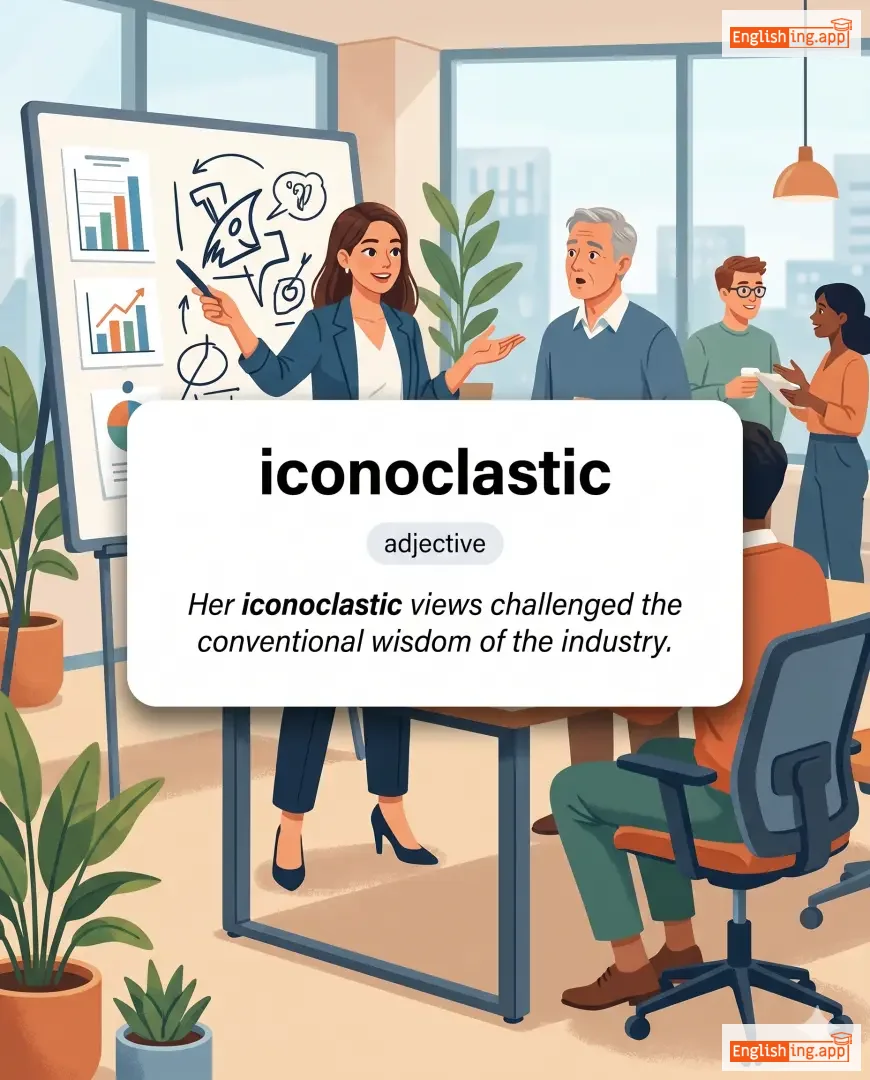
Her iconoclastic views challenged the conventional wisdom of the industry.
彼女のアイコノクラスティックな見解は業界の従来の知恵に挑戦した。
••••••
|
彼女のアイコノクラスティックな見解は業界の従来の知恵に挑戦した。
Kanojo no aikonokurasutikku na kenkai wa gyōkai no jūrai no chie ni chōsen shita.
••••••
|
- •••••• | - •••••• | - •••••• |
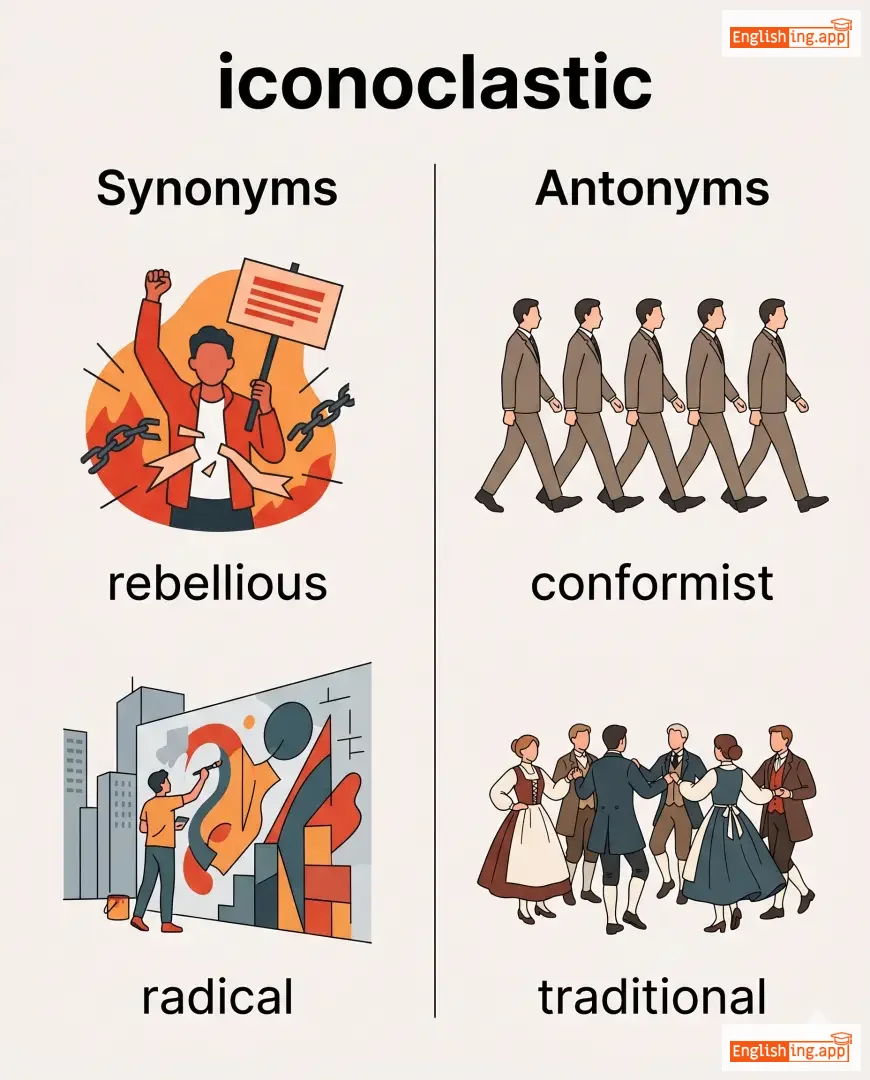
rebellious, radical, unorthodox, revolutionary, unconventional
••••••
|
conformist, traditional, conservative
••••••
|
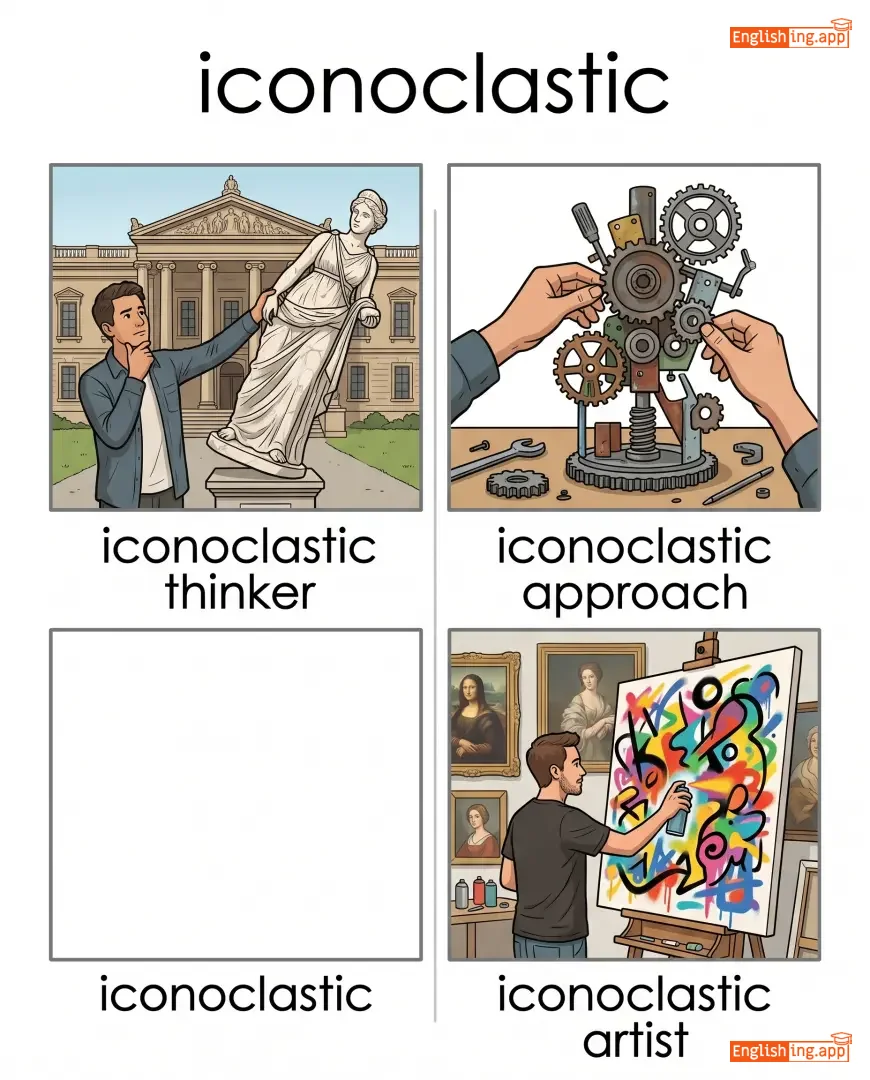
iconoclastic thinker, iconoclastic approach, iconoclastic artist
••••••
|
アイコノクラスティック = 伝統的な考えを打破する
••••••
|
|
#4236
⚡
|
/aɪˈkɒnəklæst/
noun
(アイコノクラス)
••••••
|
- •••••• |
偶像破壊者
gūzō hakai-sha
••••••
|
- •••••• | - •••••• | - •••••• | - •••••• |
A person who attacks or criticizes cherished beliefs, traditions, or institutions.
••••••
|
He was known as an iconoclast who challenged old traditions. |
彼は古い伝統に挑戦した偶像破壊者として知られていました。
Kare wa furui dentō ni chōsen shita gūzō hakai-sha to shira rete imashita.
••••••
|
- •••••• | - •••••• | - •••••• |
rebel, critic, nonconformist, dissenter, radical
••••••
|
traditionalist, conformist
••••••
|
political iconoclast, social iconoclast, cultural iconoclast, famous iconoclast
••••••
|
偶像 + 破壊者 → 偶像破壊者は伝統を壊し、古い習慣に挑戦することを意味します。
••••••
|
|
#4237
⭐
|
/ˈaɪkɒn/
noun
(アイコン)
••••••
|
- •••••• |
アイコン, 象徴
aikon, shouchou
••••••
|
- •••••• | - •••••• | - •••••• | - •••••• |
A person or thing regarded as a symbol of something, or a graphic symbol on a screen.
••••••
|
The singer became a cultural icon. |
その歌手は文化的なアイコンとなった。
Sono kashu wa bunkateki na aikon to natta.
••••••
|
pop icon |
A famous person admired widely in popular culture.
••••••
|
ポップアイコン
poppu aikon
••••••
|
symbol, idol, emblem, figure, legend
••••••
|
unknown, ordinary
••••••
|
cultural icon, fashion icon, national icon, religious icon
••••••
|
アイコンは象徴 → 画面の中の小さな象徴や大きなスター。
••••••
|
|
#4238
🥶
|
/ˈaɪsinəs/
noun
(アイシネス)
••••••
|
- •••••• |
冷たさ
tsumetasa
••••••
|
- •••••• | - •••••• | - •••••• | - •••••• |
The state of being cold in manner or temperature.
••••••
|
There was a distinct iciness in his voice. |
彼の声には明確な冷たさがあった。
Kare no koe ni wa meikaku na tsumetasa ga atta.
••••••
|
- •••••• | - •••••• | - •••••• |
coldness, chill, frigidity, frostiness
••••••
|
warmth, friendliness
••••••
|
emotional iciness, winter iciness, sudden iciness, voice iciness
••••••
|
Ice + ness = Iciness → 氷のような冷たさ。
••••••
|
|
#4239
❄️
|
/ˈaɪsɪli/
adverb
(アイスリー)
••••••
|
- •••••• |
冷たく
tsumetaku
••••••
|
- •••••• | - •••••• | - •••••• | - •••••• |
In a very cold, unfriendly, or hostile manner.
••••••
|
She replied icily to his question. |
彼女は冷たく彼の質問に答えた。
Kanojo wa tsumetaku kare no shitsumon ni kotaeta.
••••••
|
- •••••• | - •••••• | - •••••• |
coldly, frostily, unfriendly, harshly
••••••
|
warmly, kindly, friendly
••••••
|
speak icily, reply icily, look icily, behave icily
••••••
|
Ice + ly → 冷たく、氷のように冷たい。
••••••
|
|
#4240
🦕
|
/ˈɪkθiəˌsɔːrz/
noun
(イクチオサウルス)
••••••
|
- •••••• |
イクチオサウルス(絶滅した海の爬虫類)
ikuchiosaurusu
••••••
|
- •••••• | - •••••• | - •••••• | - •••••• |
Extinct marine reptiles that resembled fish and dolphins, dominant during the Mesozoic era.
••••••
|
Ichthyosaurs were swift predators of the ancient seas. |
イクチオサウルスは古代の海で素早い捕食者でした。
Ikuchiosaurusu wa kodai no umi de subayai hoshokusha deshita.
••••••
|
- •••••• | - •••••• | - •••••• |
marine reptiles, sea reptiles, prehistoric reptiles, aquatic reptiles
••••••
|
dinosaurs, mammals
••••••
|
fossil ichthyosaurs, ancient ichthyosaurs, giant ichthyosaurs, extinct ichthyosaurs
••••••
|
イクチオサウルス - 海の恐竜のような素早い捕食者。
••••••
|
|
#4241
📘🐟
|
/ˌɪkθiˈɒlədʒi/
noun
(イクシオロジー)
••••••
|
- •••••• |
魚類学
gyorui-gaku
••••••
|
- •••••• | - •••••• | - •••••• | - •••••• |
The branch of zoology that deals with fish.
••••••
|
He pursued a degree in ichthyology at the university. |
彼は大学で魚類学の学位を取得した。
Kare wa daigaku de gyorui-gaku no gakui o shutoku shita.
••••••
|
- •••••• | - •••••• | - •••••• |
fish science, marine biology, zoology
••••••
|
n/a
••••••
|
ichthyology course, ichthyology research, ichthyology department
••••••
|
Ichthyology = 魚に関する学問
••••••
|
|
#4242
🔬🐠
|
/ˌɪkθiˈɒlədʒɪst/
noun
(イクティオロジスト)
••••••
|
- •••••• |
魚類学者
Gyoruigakusha
••••••
|
- •••••• | - •••••• | - •••••• | - •••••• |
A scientist who studies fish.
••••••
|
The ichthyologist discovered a new species of fish in the river. |
魚類学者は川で新しい魚の種を発見しました。
Gyoruigakusha wa kawa de atarashii sakana no shu wo hakken shimashita.
••••••
|
- •••••• | - •••••• | - •••••• |
fish scientist, marine biologist, zoologist
••••••
|
layperson, amateur
••••••
|
professional ichthyologist, marine ichthyologist, ichthyologist studies
••••••
|
Ichthyologist = ICH (魚) 学者
••••••
|
|
#4243
🐟
|
/ˈɪkθiɪk/
adjective
(イックシック)
••••••
|
- •••••• |
魚のような
sakana no yōna
••••••
|
- •••••• | - •••••• | - •••••• | - •••••• |
Relating to or resembling fish.
••••••
|
The artist's painting had an ichthyic quality.
アーティストの絵には魚のような特徴がありました。
••••••
|
アーティストの絵には魚のような特徴がありました。
Ātisuto no e ni wa sakana no yōna tokuchō ga arimashita.
••••••
|
- •••••• | - •••••• | - •••••• |
fishlike, aquatic, marine
••••••
|
terrestrial, land-based
••••••
|
ichthyic features, ichthyic form, ichthyic shape
••••••
|
Ichthyic = イッ(魚)で魚のように見える
••••••
|
|
#4244
😂
|
/hɪˈstɛrɪkəl/
adjective
(ヒステリカル)
••••••
|
- •••••• |
非常に面白い、または感情的に制御不能
hijō ni omoshiroi, matawa kanjō-teki ni seigyō funō
••••••
|
- •••••• | - •••••• | - •••••• | - •••••• |
Extremely funny or uncontrollably emotional.
••••••
|
The comedian's jokes were absolutely hysterical. |
そのコメディアンのジョークはまさに爆笑ものだった。
Sono komedian no jōku wa masani bakushō-mono datta.
••••••
|
- •••••• | - •••••• | - •••••• |
funny, hilarious, frantic, emotional
••••••
|
serious, calm, solemn
••••••
|
hysterical laughter, hysterical reaction, absolutely hysterical
••••••
|
Hysterical は笑いが止まらないほど面白い!
••••••
|
|
#4245
😱
|
/hɪˈstɪəriə/
noun
••••••
|
- •••••• | - •••••• | - •••••• | - •••••• | - •••••• | - •••••• |
An uncontrollable outburst of emotion or fear, often characterized by irrational behavior.
••••••
|
The crowd was in a state of hysteria during the concert. |
- •••••• |
mass hysteria |
A phenomenon where a group of people exhibit similar hysterical symptoms.
••••••
|
- •••••• |
frenzy, panic, mania, delirium, agitation
••••••
|
calm, composure, tranquility
••••••
|
mass hysteria, cause hysteria, public hysteria, hysteria spreads
••••••
|
No •••••• |
|
#4246
📢
|
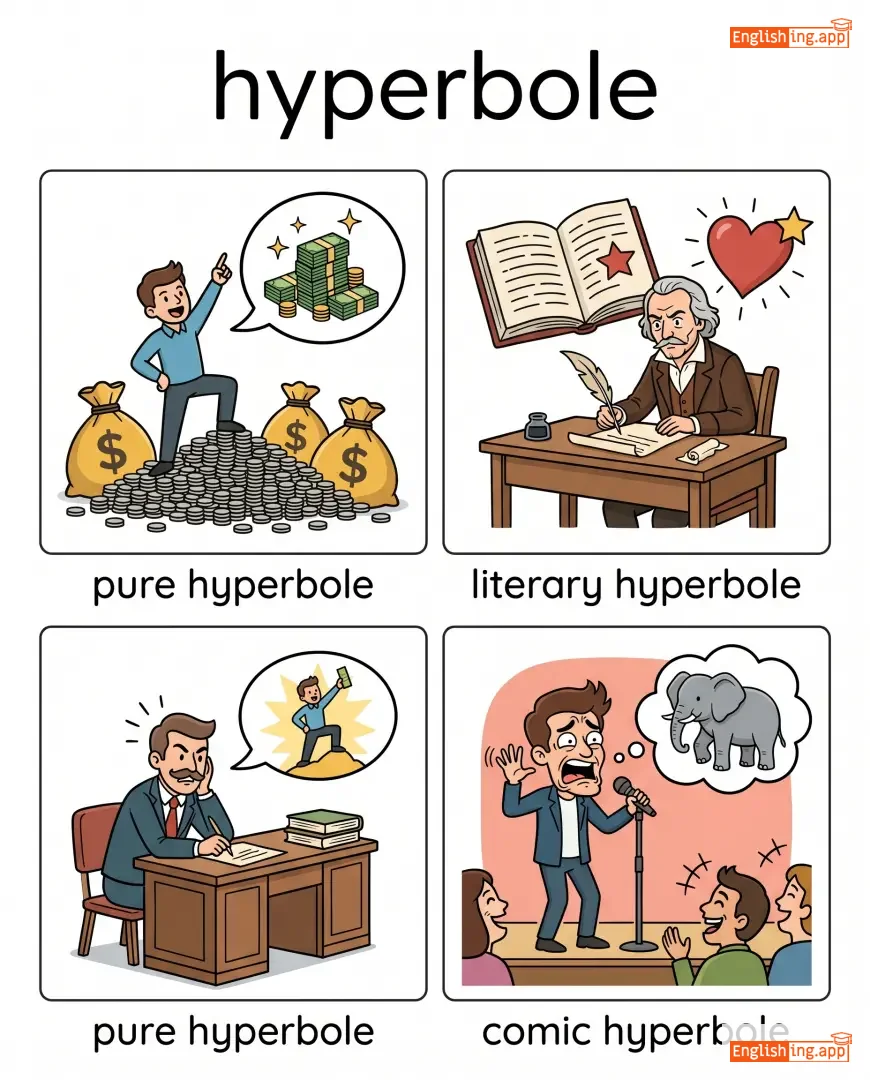
/haɪˈpɜːrbəli/
noun
••••••
|
|
- •••••• | - •••••• | - •••••• | - •••••• | - •••••• |
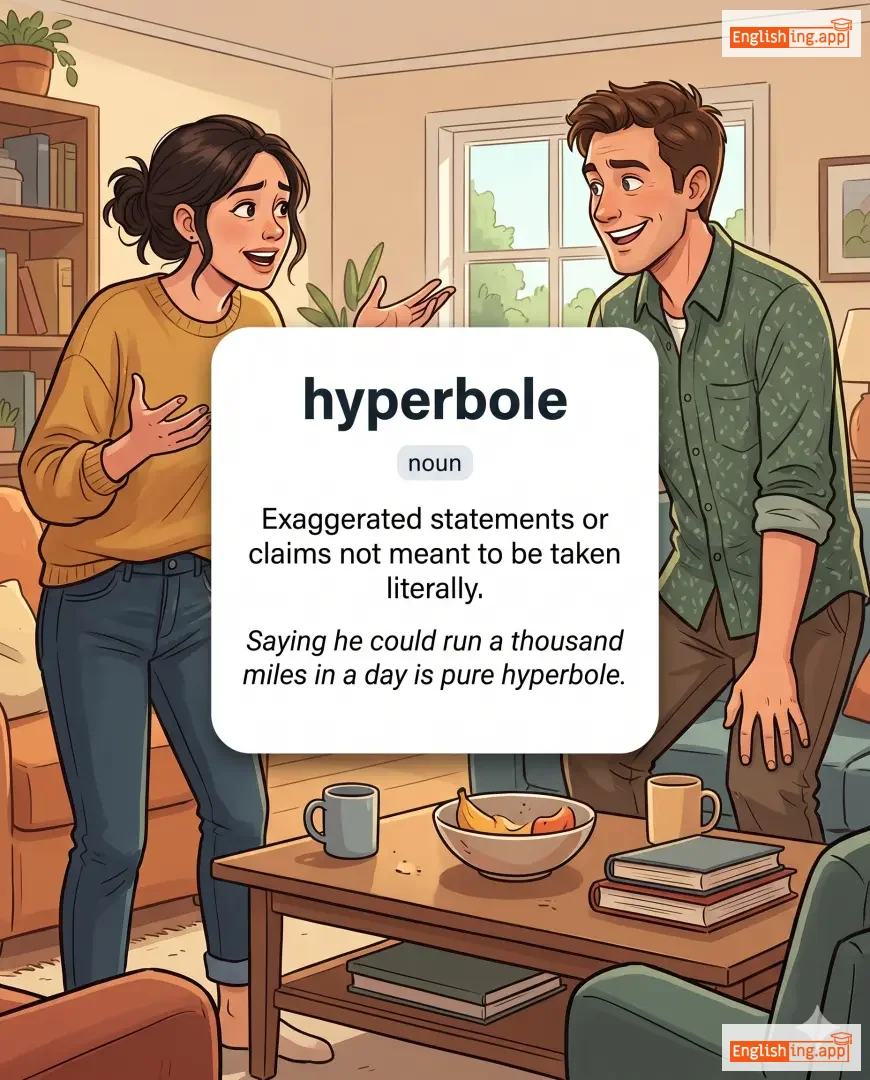
Exaggerated statements or claims not meant to be taken literally.
••••••
|
Saying he could run a thousand miles in a day is pure hyperbole. |
- •••••• |
it's not hyperbole |
An exaggerated claim that is actually true or close to reality
••••••
|
- •••••• |
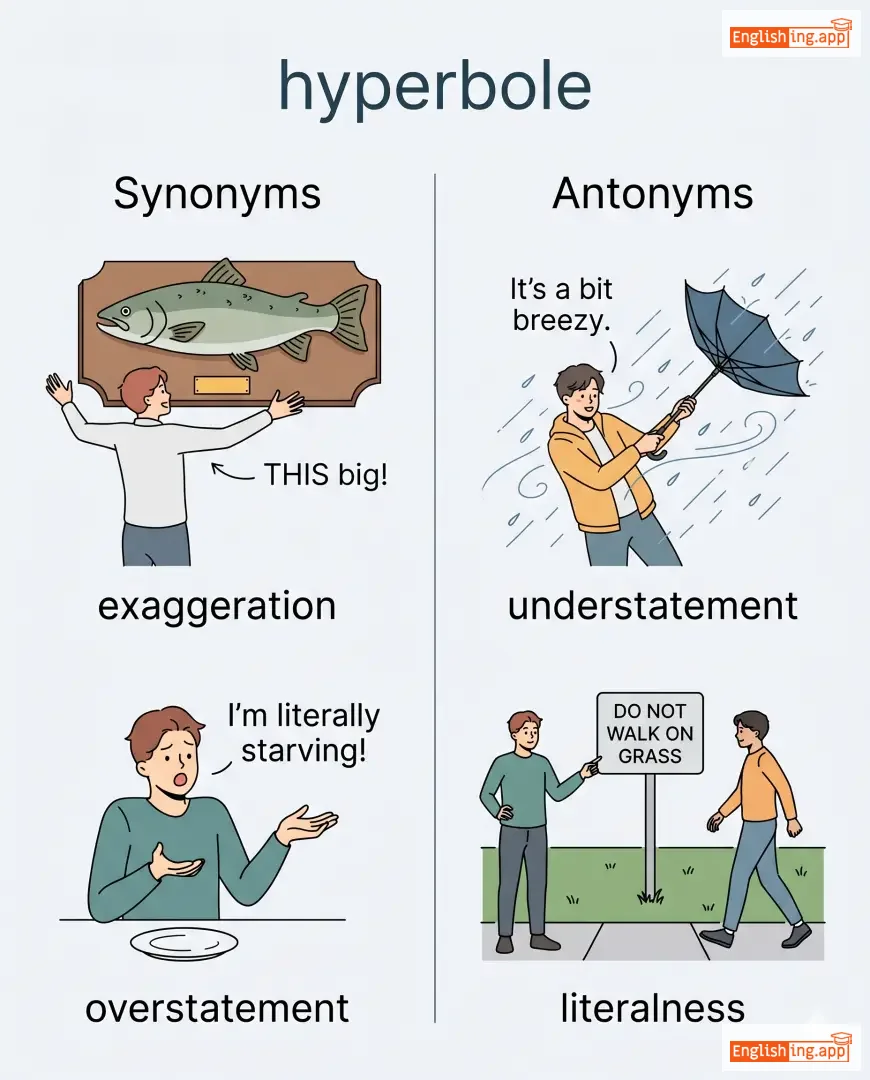
exaggeration, overstatement, amplification, embellishment
••••••
|
understatement, literalness
••••••
|
pure hyperbole, literary hyperbole, comic hyperbole, use of hyperbole
••••••
|
No •••••• |
|
#4247
🔬
|
/haɪˈpɒθəsɪs/
noun
••••••
|
- •••••• | - •••••• | - •••••• | - •••••• | - •••••• | - •••••• |
a proposed explanation made on the basis of limited evidence as a starting point for further investigation.
••••••
|
The scientist tested her hypothesis through multiple experiments. |
- •••••• |
working hypothesis |
a provisional idea assumed for the sake of argument or investigation
••••••
|
- •••••• |
assumption, theory, proposition, supposition, premise
••••••
|
fact, proof, certainty
••••••
|
form a hypothesis, test a hypothesis, reject a hypothesis, confirm a hypothesis
••••••
|
No •••••• |
|
#4248
🏦
|
/haɪˈpɒθɪkeɪt/
verb
••••••
|
- •••••• | - •••••• |
hypothecated
••••••
|
hypothecated
••••••
|
hypothecates
••••••
|
hypothecating
••••••
|
to pledge something, such as property, as security for a debt without giving up possession of it.
••••••
|
The company hypothecated its assets to secure the loan. |
- •••••• | - •••••• | - •••••• | - •••••• |
pledge, mortgage, pawn, secure
••••••
|
redeem, release
••••••
|
hypothecate assets, hypothecate property, hypothecate securities
••••••
|
No •••••• |
|
#4249
📐
|
/haɪˈpɒtənjuːs/
noun
(ハイポテヌース)
••••••
|
- •••••• |
斜辺
sha hen
••••••
|
- •••••• | - •••••• | - •••••• | - •••••• |
the longest side of a right-angled triangle, opposite the right angle.
••••••
|
In a right triangle, the hypotenuse is always longer than the other two sides. |
直角三角形では、斜辺は常に他の二辺より長いです。
Chokaku sangakukei de wa, sha hen wa jōni hoka no ni hen yori nagai desu.
••••••
|
- •••••• | - •••••• | - •••••• |
long side, diagonal, opposite side
••••••
|
leg, adjacent side
••••••
|
calculate hypotenuse, length of hypotenuse, hypotenuse formula
••••••
|
ハイポ (高い) + テヌース = 直角三角形の最長辺、だから斜辺
••••••
|
|
#4250
💉
|
/ˌhaɪpəˈdɜːrmɪk/
adjective
••••••
|
- •••••• | - •••••• | - •••••• | - •••••• | - •••••• | - •••••• |
relating to the region immediately beneath the skin; also refers to a type of needle or syringe used to inject drugs beneath the skin.
••••••
|
The doctor used a hypodermic needle to administer the vaccine. |
- •••••• | - •••••• | - •••••• | - •••••• |
subcutaneous, injection, syringe, needle
••••••
|
oral, topical
••••••
|
hypodermic needle, hypodermic syringe, hypodermic injection
••••••
|
No •••••• |
|
#4251
🙄
|
/ˌhɪpəˈkrɪtɪkəl/
adjective
(ヒポクリティカル)
••••••
|
- •••••• |
偽善的な
gizen-teki na
••••••
|
- •••••• | - •••••• | - •••••• | - •••••• |
behaving in a way that suggests you have higher standards than you actually do
••••••
|
It was hypocritical of him to complain about dishonesty. |
彼が不正直について不満を言うのは偽善的だった。
Kare ga fushōjiki ni tsuite fuman o iu no wa gizen-teki datta.
••••••
|
deeply hypocritical |
extremely insincere or two-faced
••••••
|
深く偽善的な
fukaku gizen-teki na
••••••
|
insincere, deceitful, dishonest, phony
••••••
|
honest, sincere, genuine
••••••
|
hypocritical behavior, hypocritical attitude, hypocritical speech
••••••
|
Hypocriticalは批判的な態度を取ること、つまり偽善的な行動を取ることです。
••••••
|
|
#4252
😏
|
/ˈhɪpəkrɪt/
noun
(ヒポクリット)
••••••
|
- •••••• |
偽善者
gizensha
••••••
|
- •••••• | - •••••• | - •••••• | - •••••• |
a person who pretends to have moral standards or beliefs but acts against them
••••••
|
People called him a hypocrite for lying about his actions.
人々は彼が行動について嘘をついたことで彼を偽善者と呼んだ。
••••••
|
人々は彼が行動について嘘をついたことで彼を偽善者と呼んだ。
Hitobito wa kare ga koudou ni tsuite uso wo tsuita koto de kare wo gizensha to yonda.
••••••
|
- •••••• | - •••••• | - •••••• |
phony, pretender, fraud, deceiver
••••••
|
honest person, sincere person
••••••
|
called a hypocrite, expose a hypocrite, religious hypocrite
••••••
|
偽善者は道徳的なふりをして実際は反対のことをする人。
••••••
|
|
#4253
🎭
|
/hɪˈpɒkrəsi/
noun
(ヒポクリシー)
••••••
|
- •••••• |
偽善
gizen
••••••
|
- •••••• | - •••••• | - •••••• | - •••••• |
the practice of claiming to have moral standards or beliefs but behaving in a way that contradicts them
••••••
|
His speech against corruption was full of hypocrisy.
彼の腐敗に対する演説は、完全にヒポクリシーに満ちていた。
••••••
|
彼の腐敗に対する演説は、完全に偽善に満ちていた。
Kare no fuhai ni taisuru enzetsu wa, kanzen ni gizen ni michite ita.
••••••
|
sheer hypocrisy
純粋なヒポクリシー
••••••
|
complete or blatant insincerity
••••••
|
純粋な偽善
junsuina gizen
••••••
|
insincerity, deceit, dishonesty, pretense
••••••
|
honesty, sincerity, integrity
••••••
|
political hypocrisy, moral hypocrisy, religious hypocrisy
••••••
|
Hypo+Crazy 偽善 – Hypocrisy は外見は良いが内心は悪いという意味です。
••••••
|
|
#4254
🤒
|
/ˌhaɪpəˈkɒndrɪæk/
noun
(ハイポコンドリアック)
••••••
|
- •••••• |
ヒポコンデリアック
hipokondoriakku
••••••
|
- •••••• | - •••••• | - •••••• | - •••••• |
a person who is excessively worried about having a serious illness
••••••
|
She is a hypochondriac who visits the doctor every week. |
彼女は毎週医者に行くヒポコンデリアックです。
Kanojo wa maishū isha ni iku hipokondoriakku desu.
••••••
|
- •••••• | - •••••• | - •••••• |
health worrier, neurotic, invalid, valetudinarian
••••••
|
healthy, carefree
••••••
|
chronic hypochondriac, hypochondriac tendencies, treat a hypochondriac
••••••
|
ヒポ + 健康 = 健康でないという病気を持っていると思っている人
••••••
|
|
#4255
🌀
|
/ˈhɪpnətaɪz/
verb
(ヒプノタイズ)
••••••
|
- •••••• |
催眠術をかける
saiminjutsu o kakeru
••••••
|
hypnotized
ヒプノタイズド
••••••
|
hypnotized
ヒプノタイズド
••••••
|
hypnotizes
ヒプノタイズズ
••••••
|
hypnotizing
ヒプノタイズィング
••••••
|
to put someone into a state of hypnosis; to influence someone's mind deeply
••••••
|
The magician tried to hypnotize the audience.
マジシャンは観客をヒプノタイズしようとした。
••••••
|
マジシャンは観客をヒプノタイズしようとした。
Majishian wa kankyaku o hipunotaizu shiyō to shita.
••••••
|
hypnotize with words
言葉でヒプノタイズする
••••••
|
to strongly influence or captivate someone through speech
••••••
|
言葉でヒプノタイズする
kotoba de hipunotaizu suru
••••••
|
mesmerize, fascinate, entrance, captivate, charm
••••••
|
bore, repel, disinterest
••••••
|
hypnotize the audience, hypnotize a patient, hypnotize with eyes, hypnotize easily
••••••
|
ヒプノタイズ: ヒプノ + タイズ – 目で相手を魅了する。
••••••
|
|
#4256
🧘
|
/ˈhɪpnətɪzəm/
noun
(催眠術)
••••••
|
- •••••• |
催眠術
suiminjutsu
••••••
|
- •••••• | - •••••• | - •••••• | - •••••• |
The practice or act of inducing hypnosis.
••••••
|
He studied hypnotism as part of his psychology degree. |
彼は心理学の学位の一環として催眠術を学びました。
Kare wa shinrigaku no gakui no ikkan toshite suiminjutsu o manabimashita.
••••••
|
- •••••• | - •••••• | - •••••• |
mesmerism, trance induction, suggestion therapy
••••••
|
wakefulness, alertness
••••••
|
stage hypnotism, clinical hypnotism, practice of hypnotism
••••••
|
催眠術 = 催眠 + '術'
••••••
|
|
#4257
✨
|
/hɪpˈnɒtɪk/
adjective
(ヒプノティック)
••••••
|
- •••••• |
催眠的な
saimin-teki na
••••••
|
- •••••• | - •••••• | - •••••• | - •••••• |
Producing sleep or a trance-like state; mesmerizing.
••••••
|
The music had a hypnotic effect on the audience. |
その音楽は聴衆に催眠的な効果を与えました。
Sono ongaku wa chōshū ni saimin-teki na kōka o ataemashita.
••••••
|
- •••••• | - •••••• | - •••••• |
mesmeric, entrancing, captivating, soporific
••••••
|
stimulating, exciting, awakening
••••••
|
hypnotic effect, hypnotic music, hypnotic voice
••••••
|
催眠的な音楽は眠るような感覚を与える、つまり魅力的な効果
••••••
|
|
#4258
🌀
|
/hɪpˈnoʊsɪs/
noun
(ヒプノシス)
••••••
|
- •••••• |
ヒプノシス
hipunoshisu
••••••
|
- •••••• | - •••••• | - •••••• | - •••••• |
A trance-like state of consciousness usually induced by suggestion.
••••••
|
She underwent hypnosis to overcome her fear of flying. |
彼女は飛行機恐怖症を克服するためにヒプノシスを受けました。
Kanojo wa hikouki kyōfushō o kokufuku suru tame ni hipunoshisu o ukemashita.
••••••
|
- •••••• | - •••••• | - •••••• |
trance, mesmeric state, suggestion, sleep-like state
••••••
|
alertness, wakefulness, consciousness
••••••
|
under hypnosis, stage hypnosis, clinical hypnosis
••••••
|
ヒプノシス - ヒプノがトランスを思い出させる、心の状態を覚えるために。
••••••
|
|
#4259
🧐
|
/ˌhaɪpərˈkrɪtɪkl/
adjective
(ハイパークリティカル)
••••••
|
- •••••• |
過剰に批判的な
kajou ni hihanteki na
••••••
|
- •••••• | - •••••• | - •••••• | - •••••• |
Excessively or unreasonably critical.
••••••
|
The teacher was often hypercritical of small mistakes. |
教師は小さなミスに対して過剰に批判的でした。
Kyoushi wa chiisana misu ni taishite kajou ni hihanteki deshita.
••••••
|
- •••••• | - •••••• | - •••••• |
fault-finding, nitpicking, judgmental, overcritical
••••••
|
lenient, tolerant, forgiving
••••••
|
hypercritical attitude, hypercritical comment, hypercritical review
••••••
|
Hyper + Critical = 過剰に批判的, 日本語では批判が過剰なことを意味します。
••••••
|
|
#4260
❄️
|
/ˌhaɪpərˈbɔːriən/
adjective
(ハイパーボリアン)
••••••
|
- •••••• |
極北の
kyokuhoku no
••••••
|
- •••••• | - •••••• | - •••••• | - •••••• |
Relating to the extreme north; very cold or frigid.
••••••
|
The explorers prepared for the hyperborean climate of the Arctic. |
探検家たちは北極の極北の気候に備えていた。
Tankenka-tachi wa hokkyoku no kyokuhoku no kikō ni sonaete ita.
••••••
|
- •••••• | - •••••• | - •••••• |
arctic, polar, icy, frigid, glacial
••••••
|
tropical, equatorial, warm
••••••
|
hyperborean winds, hyperborean climate, hyperborean region
••••••
|
極北の = 非常に寒い
••••••
|
Vocabulary Quiz
Test your vocabulary by matching words with their translations or meanings.
Login to take the quiz
Comments (0)
Share your thoughts and join the discussion.
Join the discussion by logging in
Login to CommentNo comments yet
Be the first to share your thoughts!