

翻訳
過去
過去分詞
三人称単数
動名詞
意味
例文
例文の翻訳
同義語
対義語
コロケーション
ニーモニック
Swipe left or right, or use the buttons. Tap image to zoom.
例文の翻訳
単語
Lesson 442Lesson 442 - マスクトグル
|
絵文字
|
単語 | Images | 翻訳 | 過去 | 過去分詞 | 三人称単数 | 動名詞 | 意味 | 例文 | 例文の翻訳 | 表現例 | 表現例の意味 | 表現例の翻訳 | 同義語 | 対義語 | コロケーション | ニーモニック |
|---|---|---|---|---|---|---|---|---|---|---|---|---|---|---|---|---|---|
|
#1
🌀
|
/twɪst/
verb
(ツイスト)
••••••
|
- •••••• |
ねじる, 回す
nejiru, mawasu
••••••
|
twisted
ツイステッド
••••••
|
twisted
ツイステッド
••••••
|
twists
ツイスツ
••••••
|
twisting
ツイスティング
••••••
|
to bend or turn something into a coil or spiral shape; to distort.
••••••
|
He twisted the rope tightly around the pole.
彼はロープを柱の周りにしっかりと巻きつけました。
••••••
|
彼はロープを柱の周りにしっかりと巻きつけました。
Kare wa roopu o hashira no mawari ni shikkari to makitsukemashita.
••••••
|
plot twist
物語の展開
••••••
|
an unexpected change in the story or situation
••••••
|
物語の予想外の展開
monogatari no yosōgai no tenkai
••••••
|
bend, turn, curl, spin, distort
••••••
|
straighten, flatten
••••••
|
twist the rope, twist around, twist ankle, plot twist
••••••
|
Twist は何かを素早く回すことです!
••••••
|
|
#1
🫱🏻🫲🏽
|
/ˈjuːnɪti/
noun
(ユニティ)
••••••
|
|
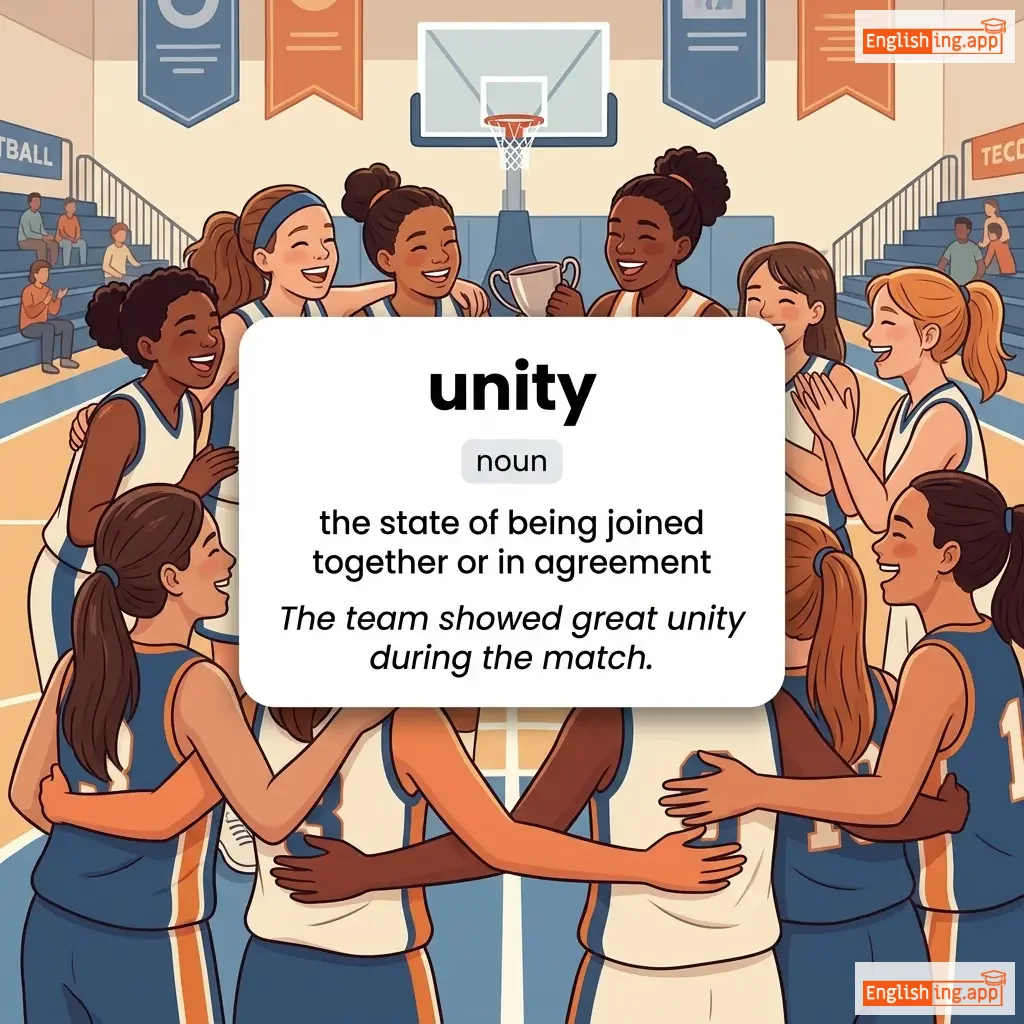
団結
danketsu
••••••
|
- •••••• | - •••••• | - •••••• | - •••••• |
the state of being joined together or in agreement
••••••
|
The team showed great unity during the match. |
チームは試合中に素晴らしい団結を示しました。
Chīmu wa shiai-chū ni subarashī danketsu o shimeshimashita.
••••••
|
unity in diversity |
the idea that differences can exist together in harmony
••••••
|
多様性の中の団結
tayō-sei no naka no danketsu
••••••
|
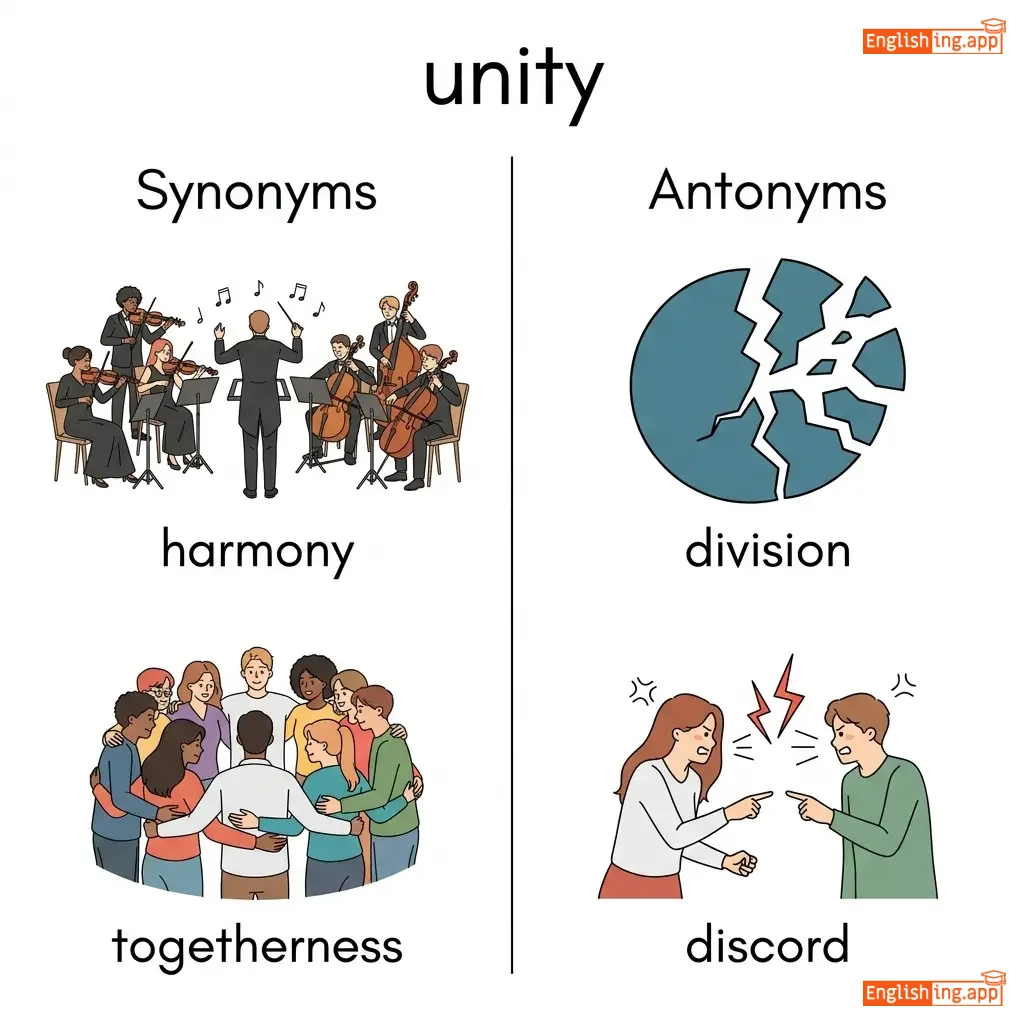
harmony, togetherness, solidarity, cohesion, cooperation
••••••
|
division, discord, disunity
••••••
|
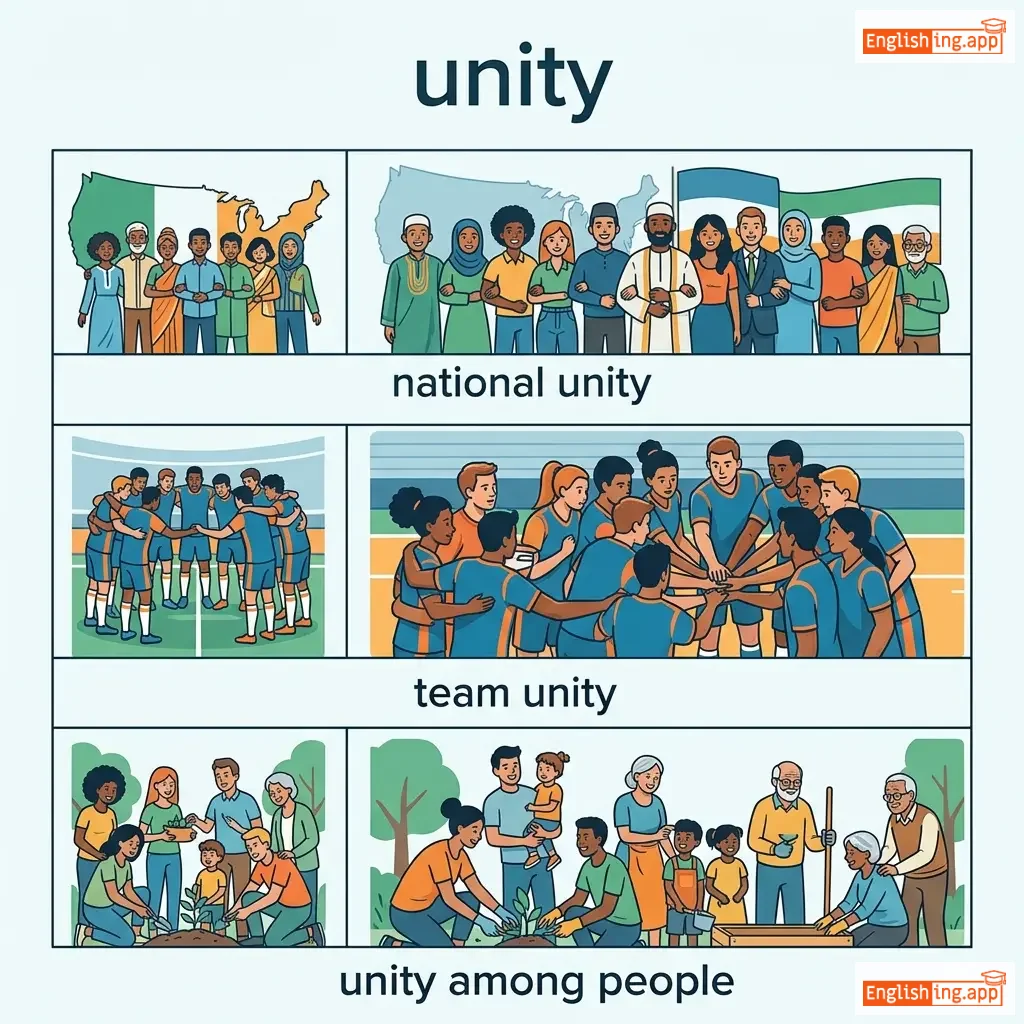
national unity, team unity, unity among people, show unity
••••••
|
団結は一緒にいること (Unity は団結)
••••••
|
|
#1
🤝
|
/juˈnaɪt/
verb
(ユナイト)
••••••
|
|
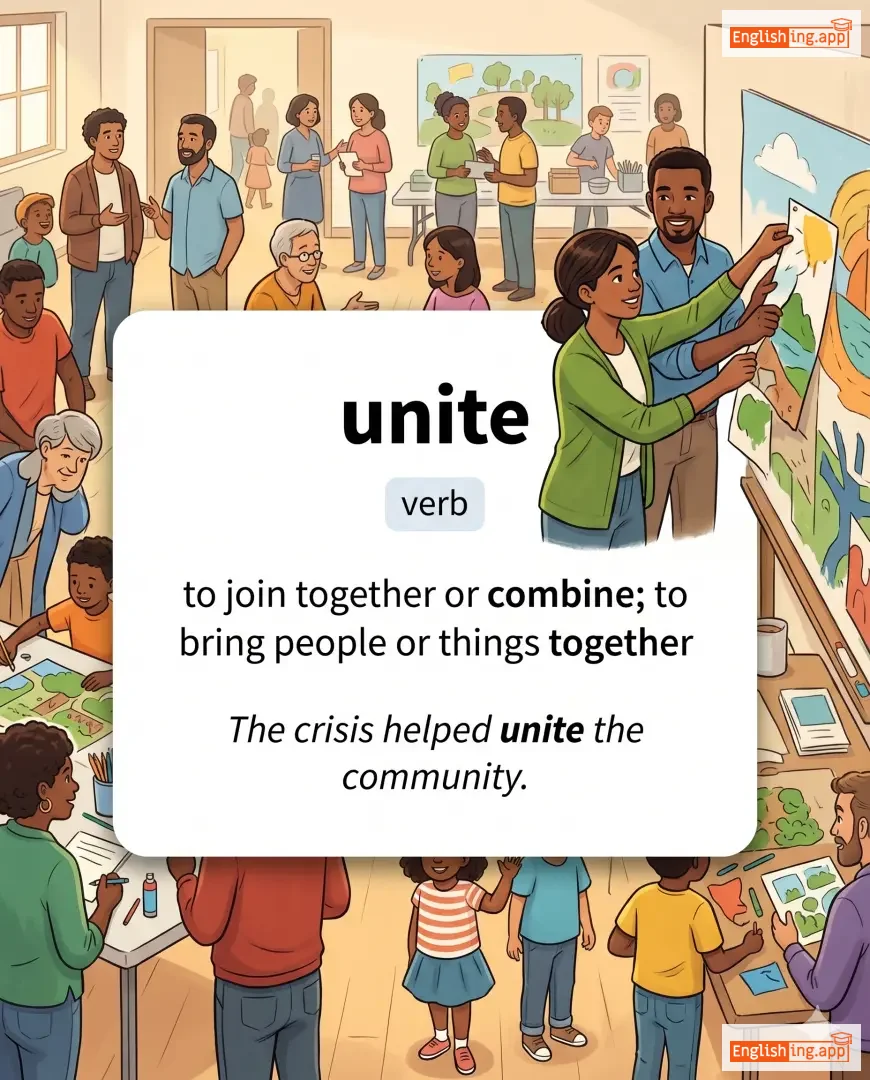
団結する
danketsu suru
••••••
|
united
ユナイテッド
••••••
|
united
ユナイテッド
••••••
|
unites
ユナイツ
••••••
|
uniting
ユナイティング
••••••
|
to join together or combine; to bring people or things together
••••••
|
The crisis helped unite the community.
危機がコミュニティを団結させました。
••••••
|
危機がコミュニティを団結させました。
Kiki ga komyuniti o danketsu sasemashita.
••••••
|
- •••••• | - •••••• | - •••••• |
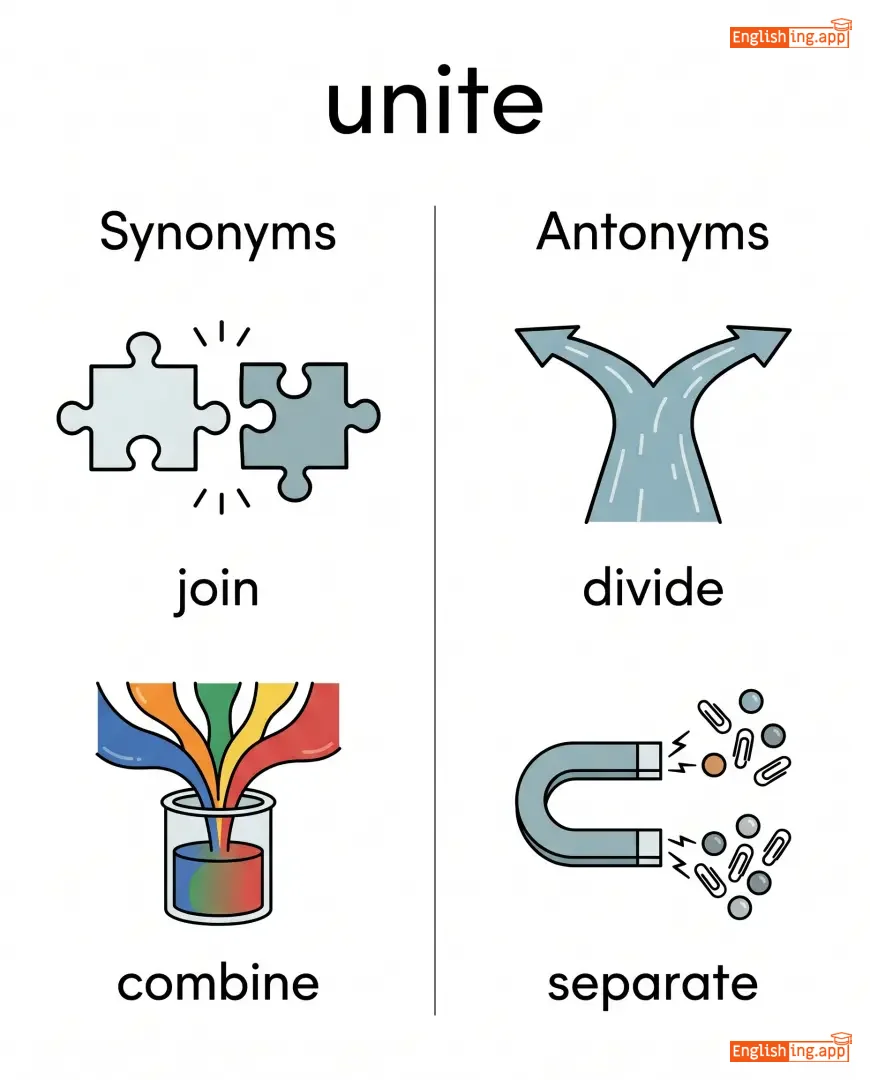
join, combine, merge, connect, integrate
••••••
|
divide, separate, split
••••••
|
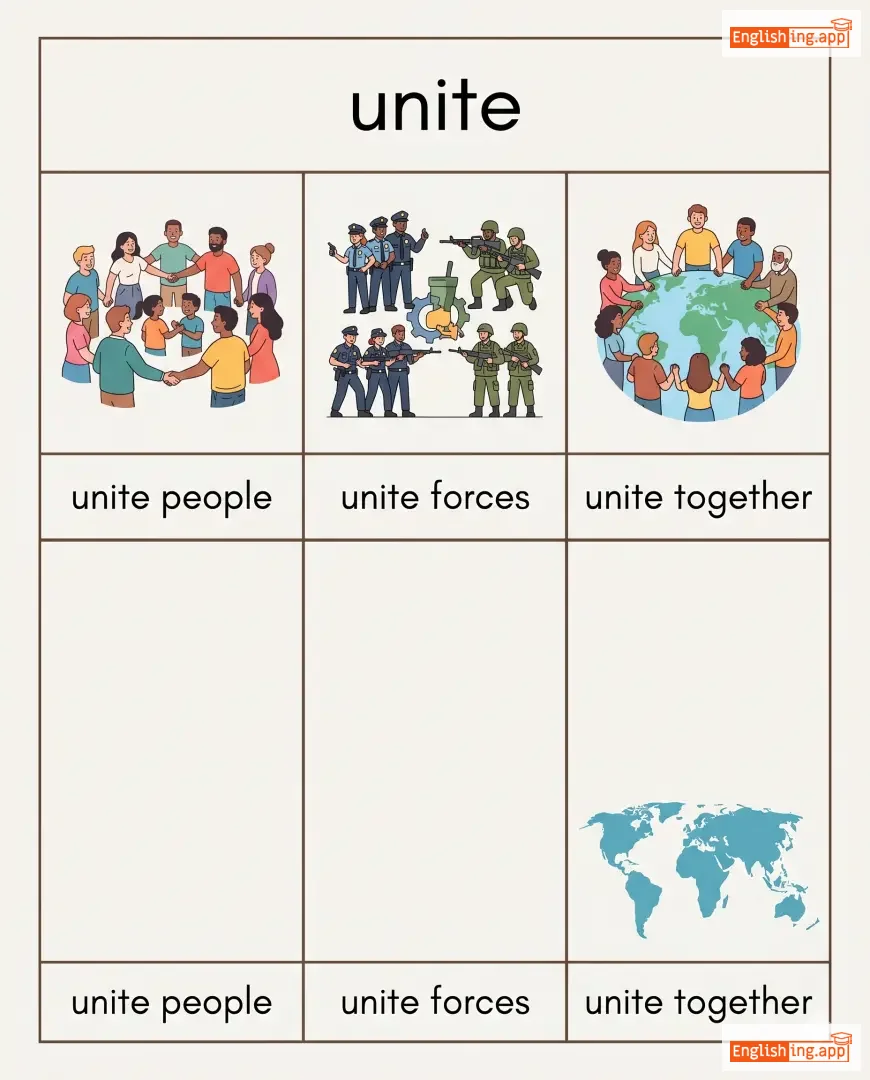
unite people, unite forces, unite together, unite against, unite in purpose
••••••
|
日本語の団結を覚えておくと、みんなが一緒になることが思い出せます。
••••••
|
|
#1
😔
|
/ʌnˈhæpi/
adjective
(アンハピ)
••••••
|
- •••••• |
不満または悲しい
fuman matawa kanashii
••••••
|
- •••••• | - •••••• | - •••••• | - •••••• |
not happy; sad, disappointed, or dissatisfied
••••••
|
He was unhappy with the final decision.
彼は最終決定に不満を抱いていた。
••••••
|
彼は最終決定に不満を抱いていた。
kare wa saishuu kettei ni fuman o daite ita.
••••••
|
an unhappy ending
不幸な結末
••••••
|
a sad or tragic conclusion to a story or event
••••••
|
悲しい結末
kanashii ketsumatsu
••••••
|
sad, miserable, gloomy, depressed, dissatisfied
••••••
|
happy, cheerful, content
••••••
|
unhappy with, feel unhappy, unhappy marriage, unhappy ending
••••••
|
happy の前に un を加えると悲しい — だから unhappy は悲しいこと 😔
••••••
|
|
#1
📜
|
/ʌnˈfəʊld/
verb
(アンフォールド)
••••••
|
- •••••• |
広げるまたは開く
hirogeru matawa hiraku
••••••
|
unfolded
アンフォールデッド
••••••
|
unfolded
アンフォールデッド
••••••
|
unfolds
アンフォールズ
••••••
|
unfolding
アンフォールディング
••••••
|
to open or spread out something that was folded; to gradually reveal or develop
••••••
|
She unfolded the letter carefully.
彼女は手紙を慎重に広げました。
••••••
|
彼女は手紙を慎重に広げました。
Kanojo wa tegami o shinchou ni hirogemashita.
••••••
|
as the story unfolds
物語が展開するように
••••••
|
as events become known over time
••••••
|
物語が展開するように
Monogatari ga tenkai suru you ni
••••••
|
open, expand, develop, reveal, evolve
••••••
|
fold, close, conceal
••••••
|
unfold story, unfold plan, unfold events, unfold wings
••••••
|
Unfold と広げるは似ている — 物語が展開していく 📜
••••••
|
|
#1
⚖️
|
/ʌnˈfɛər/
adjective
(アンフェア)
••••••
|
- •••••• |
不公平
fukouhei
••••••
|
- •••••• | - •••••• | - •••••• | - •••••• |
not based on or behaving according to the principles of equality or justice
••••••
|
It’s unfair to blame her for the team’s failure. |
チームの失敗を彼女のせいにするのは不公平です。
Chiimu no shippai wo kanojo no sei ni suru no wa fukouhei desu.
••••••
|
unfair advantage |
a situation where someone has an undeserved benefit
••••••
|
不公平な利点
fukouhei na riten
••••••
|
biased, unjust, partial, unequal, prejudiced
••••••
|
fair, just, equal
••••••
|
unfair treatment, unfair decision, unfair advantage, unfair competition
••••••
|
不公平 = 不 + 公平 (公平じゃない)
••••••
|
|
#1
😮
|
/ˌʌnɪkˈspɛktɪd/
adjective
(anekspekted)
••••••
|
- •••••• |
予期しない
yoki shinai
••••••
|
- •••••• | - •••••• | - •••••• | - •••••• |
not anticipated or predicted; surprising
••••••
|
We had an unexpected visitor last night. |
昨晩、予期しない訪問者が来ました。
Sakuban, yoki shinai hōmon-sha ga kimashita.
••••••
|
expect the unexpected |
be prepared for surprises or things you don’t foresee
••••••
|
予期しないことを予期する
yoki shinai koto o yoki suru
••••••
|
surprising, sudden, unforeseen, astonishing, abrupt
••••••
|
expected, predicted, planned
••••••
|
unexpected result, unexpected event, unexpected visitor, unexpected change
••••••
|
Un + expected = 予期していなかった — それが予期しない!
••••••
|
|
#1
📉
|
/ˌʌnɪmˈplɔɪmənt/
noun
(アンインプラオイメント)
••••••
|
- •••••• |
失業
shitsugyou
••••••
|
- •••••• | - •••••• | - •••••• | - •••••• |
the state of not having a paid job despite being able and willing to work
••••••
|
High unemployment is a major issue in the country. |
高い失業率は、国の大きな問題です。
Takai shitsugyou ritsu wa, kuni no ookina mondai desu.
••••••
|
unemployment rate |
the percentage of the labor force that is jobless
••••••
|
失業率
shitsugyou ritsu
••••••
|
joblessness, redundancy, idleness, inactivity, layoff
••••••
|
employment, work, occupation
••••••
|
high unemployment, youth unemployment, unemployment benefits, unemployment crisis
••••••
|
Un + Employment は仕事なし — 失業は仕事がないことを意味します 📉
••••••
|
|
#1
🎓
|
/ˌʌndəˈɡrædʒuət/
noun
(アンダーグラジュエイト)
••••••
|
- •••••• |
学部生
gakubusei
••••••
|
- •••••• | - •••••• | - •••••• | - •••••• |
a student who has not yet earned a bachelor's degree
••••••
|
She is an undergraduate studying computer science. |
彼女はコンピュータサイエンスを学んでいる学部生です。
Kanojo wa konpyuuta saiensu o manande iru gakubusei desu
••••••
|
- •••••• | - •••••• | - •••••• |
student, scholar, learner, collegian
••••••
|
graduate, postgraduate
••••••
|
undergraduate student, undergraduate program, undergraduate degree, undergraduate course
••••••
|
Under + graduate – 学士号を取得していない学生
••••••
|
|
#1
🔍
|
/ʌnˈkʌvə(r)/
verb
(アンカバー)
••••••
|
- •••••• |
明らかにする
akiraka ni suru
••••••
|
uncovered
アンカバード
••••••
|
uncovered
アンカバード
••••••
|
uncovers
アンカバーズ
••••••
|
uncovering
アンカバーリング
••••••
|
to reveal something that was hidden or secret
••••••
|
The investigation uncovered new evidence.
調査で新しい証拠が明らかになった。
••••••
|
調査で新しい証拠が明らかになった。
Chōsa de atarashī shōko ga akiraka ni natta.
••••••
|
uncover the truth
真実を明らかにする
••••••
|
to reveal the real facts or reality of a situation
••••••
|
真実を明らかにする
Shinjitsu wo akiraka ni suru
••••••
|
reveal, expose, disclose, discover, unearth
••••••
|
cover, hide, conceal
••••••
|
uncover truth, uncover evidence, uncover facts, uncover secrets
••••••
|
Uncover in Japanese means '明らかにする', which is to make something known or revealed.
••••••
|
|
#1
😣
|
/ʌnˈkʌmfətəbl/
adjective
(アンカムフォータブル)
••••••
|
- •••••• |
不快
fukai
••••••
|
- •••••• | - •••••• | - •••••• | - •••••• |
causing or feeling physical or emotional discomfort
••••••
|
He felt uncomfortable during the long meeting. |
長い会議の間、彼は不快に感じました。
Nagai kaigi no aida, kare wa fukai ni kanjimashita.
••••••
|
make someone uncomfortable |
to cause someone to feel uneasy or awkward
••••••
|
誰かを不快にさせる
dareka o fukai ni saseru
••••••
|
uneasy, awkward, embarrassed, uneasy, distressed
••••••
|
comfortable, relaxed, pleasant
••••••
|
feel uncomfortable, uncomfortable situation, uncomfortable silence, make uncomfortable
••••••
|
UN + 快 = 不快、覚えておいて、不快は不安や気まずさを意味します。
••••••
|
|
#1
🌫️
|
/ʌnˈsɜːtənti/
noun
(アンセルトンティ)
••••••
|
- •••••• |
不確実性
fukakujitsusei
••••••
|
- •••••• | - •••••• | - •••••• | - •••••• |
the state of being unsure or not knowing what will happen
••••••
|
Economic uncertainty affects business investments. |
経済的不確実性は、ビジネス投資に影響を与えます。
Keizai-teki fukakujitsusei wa, bijinesu toshi ni eikyou o ataemasu.
••••••
|
- •••••• | - •••••• | - •••••• |
doubt, insecurity, unpredictability, ambiguity, vagueness
••••••
|
certainty, assurance, confidence
••••••
|
economic uncertainty, feeling of uncertainty, political uncertainty, face uncertainty
••••••
|
不確実性は uncertainty の日本語訳、未来がわからない状態
••••••
|
|
#1
🤔
|
/ʌnˈsɜːtən/
adjective
(アンセートン)
••••••
|
- •••••• |
不確実
fukakujitsu
••••••
|
- •••••• | - •••••• | - •••••• | - •••••• |
not sure or confident about something; not clearly known or decided
••••••
|
She felt uncertain about her future after graduation. |
卒業後、彼女は自分の未来について不確実に感じていた。
sotsugyōgo, kanojo wa jibun no mirai ni tsuite fukakujitsu ni kanjite ita.
••••••
|
in uncertain terms |
without being clear or definite
••••••
|
不確実な言葉で
fukakujitsu na kotoba de
••••••
|
unsure, doubtful, hesitant, indecisive, ambiguous
••••••
|
certain, confident, sure
••••••
|
uncertain future, uncertain times, uncertain outcome, feel uncertain
••••••
|
UN + certain (確実でない) = 不確実; 'uncertain は不確実な未来を意味する'を覚えておいて
••••••
|
|
#1
😅
|
/ʌ/
interjection
(ああ)
••••••
|
- •••••• |
ああ
aa
••••••
|
- •••••• | - •••••• | - •••••• | - •••••• |
a sound people make when they hesitate or are unsure what to say next.
••••••
|
Uh, I’m not sure if that’s the right answer. |
ああ、それが正しい答えかどうかはわからない。
Aa, sore ga tadashii kotae ka dō ka wa wakaranai.
••••••
|
- •••••• | - •••••• | - •••••• |
um, er, hmm, ah
••••••
|
silence, certainty
••••••
|
uh sound, say uh, uh moment
••••••
|
ああ 😅 ためらいの瞬間、何を言うべきか分からない時 —‘ああ’ と言えばみんなわかる!
••••••
|
|
#1
➗
|
/tuː θɜːrdz/
noun
(トゥー・サーズ)
••••••
|
- •••••• |
三分の二
sanbun no ni
••••••
|
- •••••• | - •••••• | - •••••• | - •••••• |
a fraction equal to two parts of three; 2/3.
••••••
|
Two-thirds of the students passed the exam. |
学生の三分の二が試験に合格しました。
Gakusei no sanbun no ni ga shiken ni goukaku shimashita.
••••••
|
- •••••• | - •••••• | - •••••• |
fraction, ratio, portion, majority
••••••
|
one-third, whole
••••••
|
two-thirds majority, two-thirds vote, two-thirds full
••••••
|
Two-thirds は 3 部分のうち 2 部分 ➗ — 三分の二を覚えて!
••••••
|
|
#1
🌐
|
/trænzˈleɪʃən/
noun
(トランスレーション)
••••••
|
- •••••• |
翻訳
hon'yaku
••••••
|
- •••••• | - •••••• | - •••••• | - •••••• |
the process of converting text or speech from one language into another
••••••
|
She completed the translation of the book within two months.
彼女は2ヶ月でその本の翻訳を終えました。
••••••
|
彼女は2ヶ月でその本の翻訳を終えました。
Kanojo wa 2 kagetsu de sono hon no hon'yaku o oemashita.
••••••
|
lost in translation
翻訳の中で失われる
••••••
|
when something loses its original meaning in another language
••••••
|
翻訳の中で失われる
Hon'yaku no naka de ushinawareru
••••••
|
interpretation, version, conversion, rendering, adaptation
••••••
|
original, source, misinterpretation
••••••
|
machine translation, language translation, translation service, translation app
••••••
|
翻訳は言葉を異なる世界に持っていく魔法 🌍
••••••
|
|
#1
2️⃣0️⃣
|
/ˈtwɛntiəθ/
adjective
(トゥエンティエス)
••••••
|
- •••••• |
二十番目
nijūbanme
••••••
|
- •••••• | - •••••• | - •••••• | - •••••• |
coming after the nineteenth in order; being one of twenty equal parts.
••••••
|
She was born on the twentieth of April. |
彼女は四月二十日に生まれました。
Kanojo wa shigatsu nijū-nichi ni umaremashita.
••••••
|
- •••••• | - •••••• | - •••••• |
20th, twentieth part, ordinal number, fraction
••••••
|
nineteenth, twenty-first
••••••
|
twentieth century, twentieth floor, twentieth birthday, twentieth of April
••••••
|
Twentieth は 20th を意味する — トゥエンティ (20) + エス = 二十番目
••••••
|
|
#1
🦃
|
/ˈtɜːrki/
noun
(ターキー)
••••••
|
- •••••• |
七面鳥 (大きな鳥)
shichimenchou
••••••
|
- •••••• | - •••••• | - •••••• | - •••••• |
a large bird native to North America, often eaten at special occasions like Thanksgiving; also the meat of this bird.
••••••
|
We roasted a turkey for Thanksgiving dinner. |
感謝祭の夕食に七面鳥を焼きました。
Kanshasai no yūshoku ni shichimenchou o yakimashita.
••••••
|
talk turkey |
to discuss something honestly and directly
••••••
|
率直かつ正直に話す
Sotchoku katsu shōjiki ni hanasu
••••••
|
bird, fowl, poultry, gobbler, hen
••••••
|
none, silence
••••••
|
roast turkey, turkey sandwich, turkey dinner, wild turkey
••••••
|
感謝祭の七面鳥は最高!🦃
••••••
|
|
#1
🎵
|
/tjuːn/
noun
(チューン)
••••••
|
- •••••• |
メロディ
merodi
••••••
|
- •••••• | - •••••• | - •••••• | - •••••• |
a sequence of musical notes that are pleasant to listen to; a melody
••••••
|
She hummed a cheerful tune while cooking dinner.
彼女は夕食を作りながら陽気なチューンを口ずさんでいました。
••••••
|
彼女は夕食を作りながら陽気なメロディを口ずさんでいました。
Kanojo wa yuushoku o tsukuri nagara youki na merodi o kuchizusande imashita.
••••••
|
in tune
調子を合わせて
••••••
|
playing or singing with correct musical pitch
••••••
|
調子を合わせて
choushi o awasete
••••••
|
melody, song, harmony, air, jingle
••••••
|
noise, discord
••••••
|
catchy tune, musical tune, tune in, out of tune
••••••
|
Tuneはメロディを意味します – ラジオをチューニングするとメロディが聞こえます 🎶
••••••
|
|
#1
🧬
|
/ˈtjuːmər/
noun
(腫瘍)
••••••
|
- •••••• |
腫瘍
shuyou
••••••
|
- •••••• | - •••••• | - •••••• | - •••••• |
an abnormal mass of tissue caused by excessive cell growth
••••••
|
The doctor found a benign tumor during the medical check-up.
医師は健康診断中に良性の腫瘍を見つけました。
••••••
|
医師は健康診断中に良性の腫瘍を見つけました。
Ishi wa kenko shinshindan chu ni ryousei no shuyou wo mitsukemashita.
••••••
|
- •••••• | - •••••• | - •••••• |
growth, lump, swelling, neoplasm, mass
••••••
|
healthy tissue, normal cell
••••••
|
brain tumor, benign tumor, malignant tumor, tumor cells
••••••
|
腫瘍 = abnormal mass formed by excess cell growth
••••••
|
|
#1
🛏️
|
/tʌk/
verb
(タック)
••••••
|
- •••••• |
タック
takku
••••••
|
tucked
タックド
••••••
|
tucked
タックド
••••••
|
tucks
タックス
••••••
|
tucking
タッキング
••••••
|
to push or fold something neatly into a particular place
••••••
|
She tucked the blanket around the baby to keep him warm.
彼女は赤ちゃんの周りに毛布をタックして温かく保ちました。
••••••
|
彼女は赤ちゃんの周りに毛布をタックして温かく保ちました。
Kanojo wa akachan no mawari ni moufu wo takku shite atatakai ni tamotsu mashita.
••••••
|
tuck in
タックイン
••••••
|
to make someone comfortable in bed by arranging the blankets
••••••
|
寝かせる
nekasero
••••••
|
insert, fold, stuff, push, adjust
••••••
|
unfold, pull out, open
••••••
|
tuck in bed, tuck away, tuck under, neatly tucked
••••••
|
Tuckはタック、毛布をタックして寝かせる 🌙
••••••
|
|
#1
😟
|
/ˈtrʌbəld/
adjective
(トラブルド)
••••••
|
- •••••• |
困っている
komatteiru
••••••
|
- •••••• | - •••••• | - •••••• | - •••••• |
experiencing or showing distress, anxiety, or worry
••••••
|
He looked deeply troubled after hearing the bad news. |
悪い知らせを聞いた後、彼は非常に困っているように見えた。
Warui shirase wo kiita ato, kare wa hijou ni komatteiru you ni mieta.
••••••
|
troubled mind |
a mind filled with worry or anxiety
••••••
|
困った心
komatta kokoro
••••••
|
worried, upset, anxious, distressed, uneasy
••••••
|
calm, relaxed, peaceful
••••••
|
troubled times, troubled relationship, deeply troubled, emotionally troubled
••••••
|
Troubled = 困った心 – 悩みや不安の心
••••••
|
|
#1
🌴
|
/ˈtrɒpɪkəl/
adjective
(トロピカル)
••••••
|
|
熱帯の
nettai no
••••••
|
- •••••• | - •••••• | - •••••• | - •••••• |
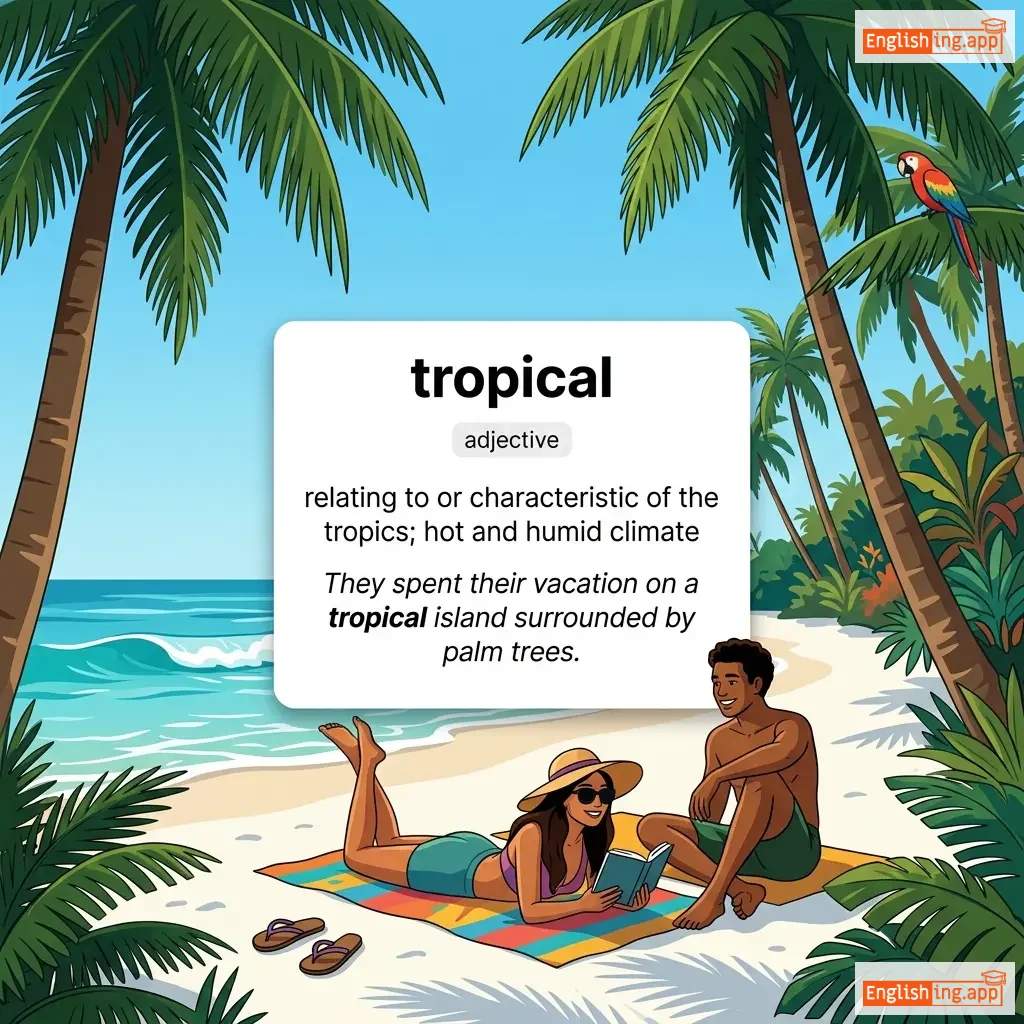
relating to or characteristic of the tropics; hot and humid climate
••••••
|
They spent their vacation on a tropical island surrounded by palm trees. |
彼らはヤシの木に囲まれた熱帯の島で休暇を過ごしました。
Karera wa yashi no ki ni kakomareta nettai no shima de kyūka o sugoshimashita.
••••••
|
tropical paradise |
a place that is extremely beautiful, warm, and pleasant like the tropics
••••••
|
熱帯の楽園
nettai no rakuen
••••••
|
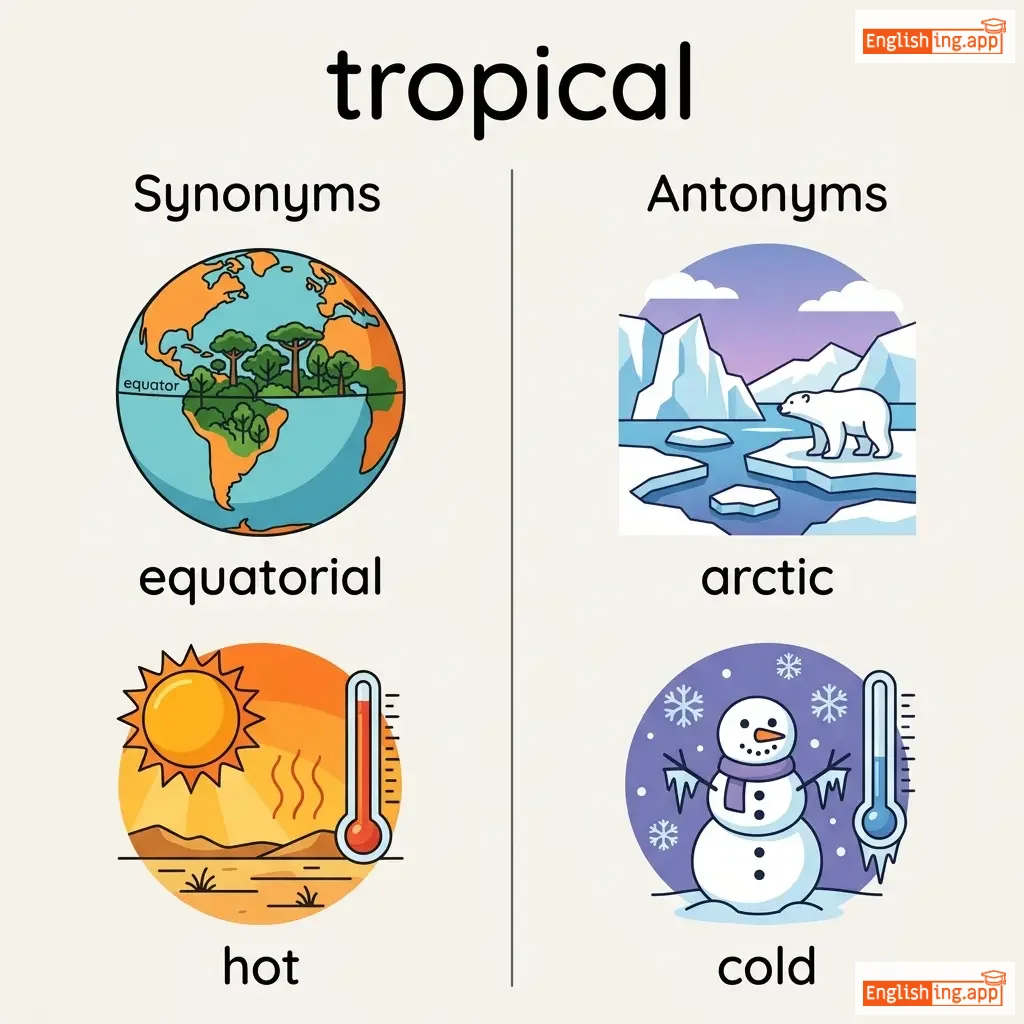
equatorial, hot, humid, balmy, sultry
••••••
|
arctic, cold, temperate
••••••
|
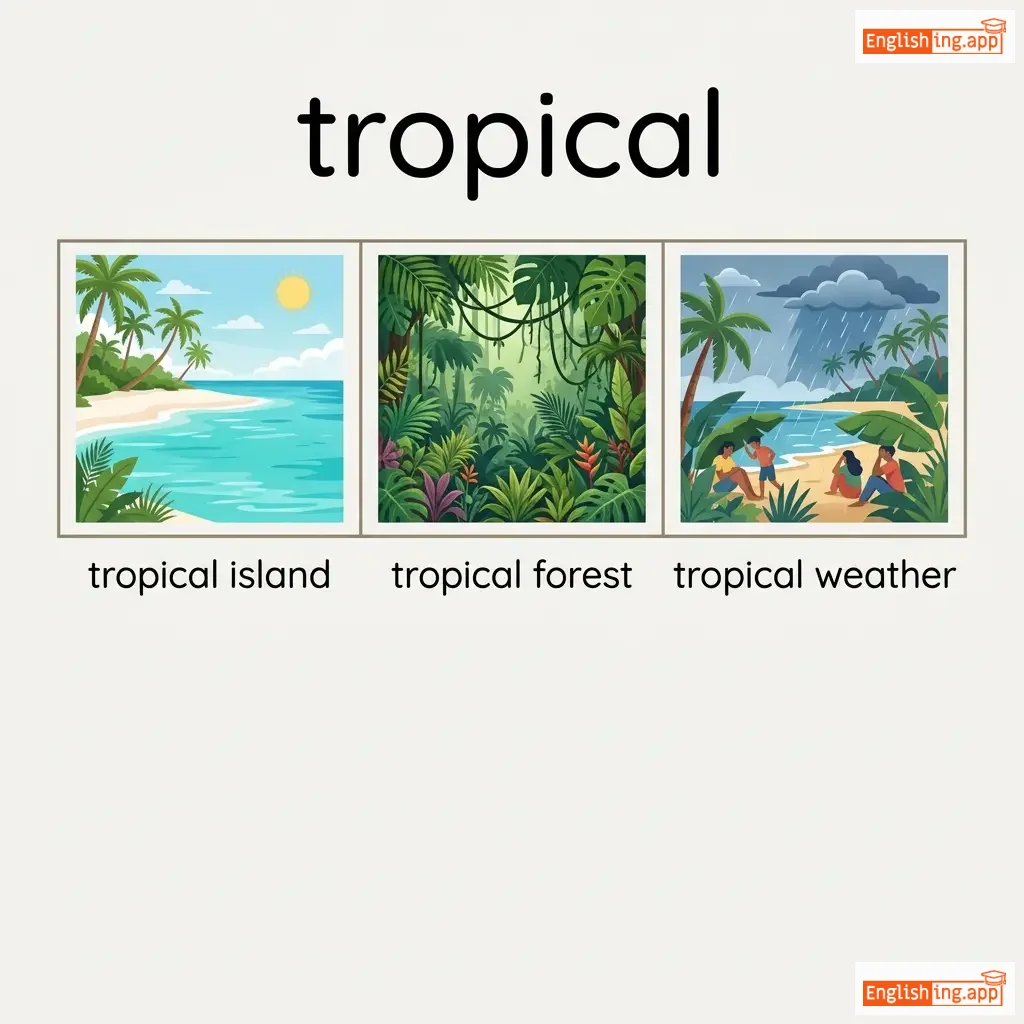
tropical island, tropical forest, tropical weather, tropical storm
••••••
|
TROPICAL = トロピカルな楽園、温かい海とヤシの木。
••••••
|
|
#1
🏆
|
/ˈtraɪʌmf/
noun
(トライアンフ)
••••••
|
|
勝利
shōri
••••••
|
- •••••• | - •••••• | - •••••• | - •••••• |
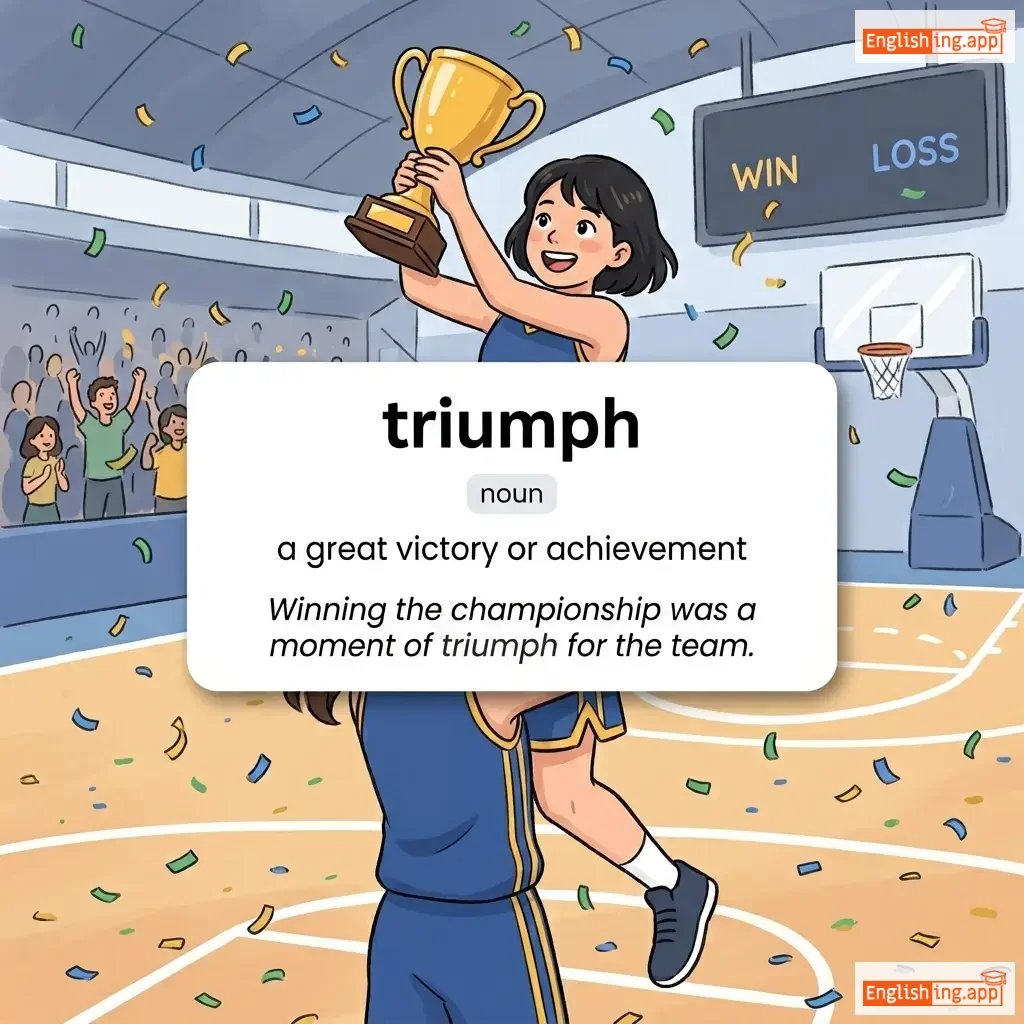
a great victory or achievement
••••••
|
Winning the championship was a moment of triumph for the team. |
チャンピオンシップを勝ち取ることはチームにとっての勝利の瞬間でした。
Chanpionship o kachitoru koto wa chīmu ni totte no shōri no shunkan deshita.
••••••
|
crowning triumph |
the greatest achievement of someone's career or life
••••••
|
頂点の勝利
chōten no shōri
••••••
|
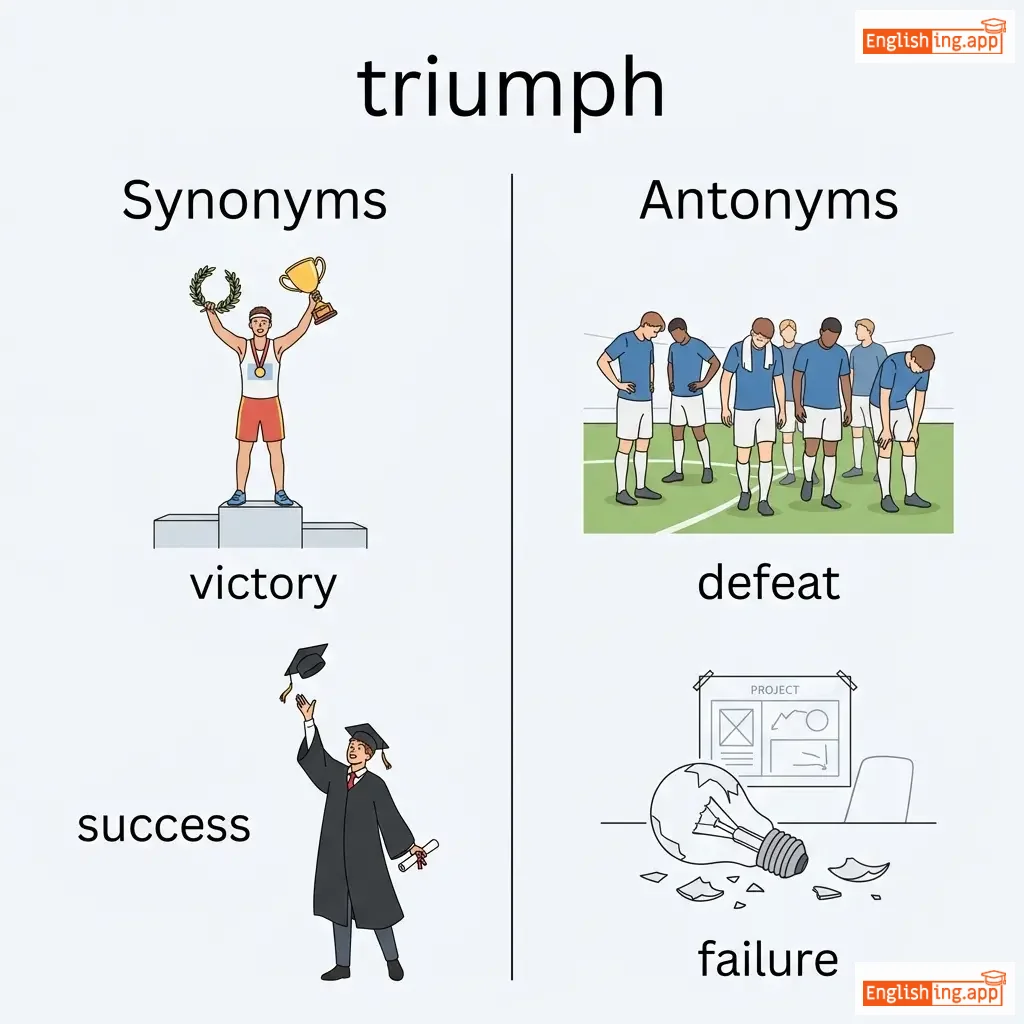
victory, success, achievement, win, conquest
••••••
|
defeat, failure, loss
••••••
|
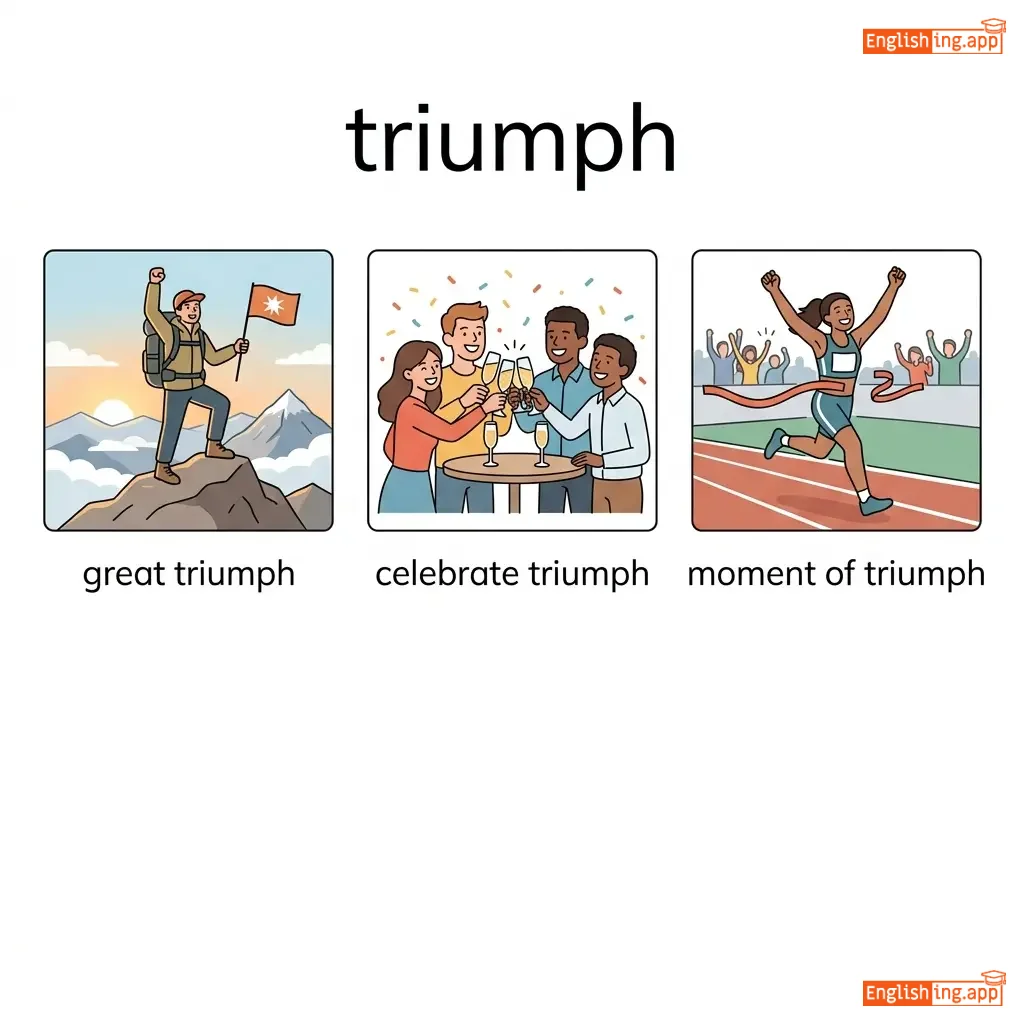
great triumph, celebrate triumph, moment of triumph, triumph over adversity
••••••
|
Triumphはトライアングル(三角形)から!三度の勝利!
••••••
|
|
#1
🏹
|
/ˈtraɪbəl/
adjective
(トライバル)
••••••
|
- •••••• |
部族の
buzoku no
••••••
|
- •••••• | - •••••• | - •••••• | - •••••• |
relating to a tribe or tribes, especially indigenous people
••••••
|
The tribal community has preserved its culture for centuries. |
部族コミュニティは何世代にもわたりその文化を守り続けてきました。
Buzoku komyuniti wa nan-sedai ni mo watari sono bunka o mamori tsudzukete kimashita.
••••••
|
tribal conflict |
fighting or disagreement between tribes
••••••
|
部族間の対立
Buzoku-kan no tairitsu
••••••
|
ethnic, native, cultural, aboriginal, communal
••••••
|
urban, modern
••••••
|
tribal community, tribal leader, tribal area, tribal rights
••••••
|
Tribe から Tribal – 部族に関する 🏹
••••••
|
|
#1
🍽️
|
/treɪ/
noun
(トレイ)
••••••
|
- •••••• |
トレイ
torei
••••••
|
- •••••• | - •••••• | - •••••• | - •••••• |
a flat, shallow container used for carrying or holding items
••••••
|
She brought the tea cups on a silver tray.
彼女は銀のトレイでティーカップを運びました。
••••••
|
彼女は銀のトレイでティーカップを運びました。
Kanojo wa gin no torei de tī kappu o hakobimashita.
••••••
|
serving tray
サービングトレイ
••••••
|
a tray used for serving food or drinks
••••••
|
食事用トレイ
shokujiyou torei
••••••
|
plate, platter, dish, board, container
••••••
|
bowl, basket
••••••
|
food tray, serving tray, metal tray, plastic tray
••••••
|
トレイにはティーカップが載っている。
••••••
|
|
#1
🧳
|
/ˈtrævələr/
noun
(トラベラー)
••••••
|
- •••••• |
旅行者
ryokōsha
••••••
|
- •••••• | - •••••• | - •••••• | - •••••• |
a person who is traveling or who often travels
••••••
|
The traveler rested at a small inn after a long journey. |
旅行者は長い旅の後、小さな宿屋で休憩しました。
Ryokōsha wa nagai tabi no ato, chiisana yadoya de kyūkei shimashita.
••••••
|
frequent traveler |
a person who travels often for work or leisure
••••••
|
頻繁に旅行する人
hinpan ni ryokō suru hito
••••••
|
tourist, voyager, nomad, wanderer, adventurer
••••••
|
resident, settler
••••••
|
business traveler, solo traveler, world traveler, frequent traveler
••••••
|
Travelerは旅行する人 ✈️ – 旅行者!
••••••
|
|
#1
💔
|
/ˈtrɔːmə/
noun
(トラウマ)
••••••
|
- •••••• |
トラウマ
torauma
••••••
|
- •••••• | - •••••• | - •••••• | - •••••• |
a deeply distressing or disturbing experience; physical injury or emotional shock
••••••
|
The accident left her with lasting emotional trauma.
その事故は彼女に永続的な感情的トラウマを残した。
••••••
|
その事故は彼女に永続的な感情的トラウマを残した。
Sono jiko wa kanojo ni eizoku-teki na kanjō-teki torauma o nokoshita.
••••••
|
recover from trauma
トラウマから回復する
••••••
|
to heal mentally or emotionally after a painful experience
••••••
|
トラウマから回復する
Torauma kara kaifuku suru
••••••
|
shock, distress, suffering, injury, agony
••••••
|
comfort, peace, relief
••••••
|
childhood trauma, emotional trauma, trauma patient, trauma center
••••••
|
トラウマは列車事故後の心の傷 💔
••••••
|
|
#1
🗑️
|
/træʃ/
noun
••••••
|
- •••••• | - •••••• | - •••••• | - •••••• | - •••••• | - •••••• |
waste material; things that are no longer useful or wanted
••••••
|
Please take out the trash before you go to bed. |
- •••••• |
talk trash |
to speak insultingly or boastfully
••••••
|
- •••••• |
garbage, waste, litter, junk, refuse
••••••
|
treasure, valuables, belongings
••••••
|
trash bin, take out trash, collect trash, throw away trash
••••••
|
No •••••• |
|
#1
🪤
|
/træp/
verb
(トラップ)
••••••
|
- •••••• |
罠にかける
wana ni kakeru
••••••
|
trapped
トラップド
••••••
|
trapped
トラップド
••••••
|
traps
トラップス
••••••
|
trapping
トラッピング
••••••
|
to catch or hold something or someone so they cannot escape
••••••
|
The fox was trapped in a cage.
ザ・フォックス ワズ トラップド イン ア ケイジ
••••••
|
狐は檻に閉じ込められていた。
Kitsune wa ori ni tojikomere rarete ita.
••••••
|
fall into a trap
フォール インツ ア トラップ
••••••
|
to be tricked or deceived into a bad situation
••••••
|
罠に落ちる
wana ni ochiru
••••••
|
catch, ensnare, imprison, capture, confine
••••••
|
free, release, liberate
••••••
|
set a trap, mouse trap, fall into a trap, trap animal
••••••
|
罠にかけるは罠に落ちることのようなもの 🪤
••••••
|
Vocabulary Quiz
Test your vocabulary by matching words with their translations or meanings.
Login to take the quiz
Comments (0)
Share your thoughts and join the discussion.
Join the discussion by logging in
Login to CommentNo comments yet
Be the first to share your thoughts!