

翻訳
過去
過去分詞
三人称単数
動名詞
意味
例文
例文の翻訳
同義語
対義語
コロケーション
ニーモニック
Swipe left or right, or use the buttons. Tap image to zoom.
例文の翻訳
単語
Lesson 362Lesson 362 - マスクトグル
|
絵文字
|
単語 | Images | 翻訳 | 過去 | 過去分詞 | 三人称単数 | 動名詞 | 意味 | 例文 | 例文の翻訳 | 表現例 | 表現例の意味 | 表現例の翻訳 | 同義語 | 対義語 | コロケーション | ニーモニック |
|---|---|---|---|---|---|---|---|---|---|---|---|---|---|---|---|---|---|
|
#10825
📦
|
/ˌdɪstrɪˈbjuːʃən/
noun
(ディストリビューション)
••••••
|
- •••••• |
配布
haibu
••••••
|
- •••••• | - •••••• | - •••••• | - •••••• |
the act of sharing or delivering something to multiple people or places
••••••
|
The company manages the distribution of food supplies to rural areas. |
その会社は農村地域への食品供給の配布を管理しています。
Sono kaisha wa nōson chiiki e no shokuhin kyōkyū no haibu o kanri shiteimasu.
••••••
|
- •••••• | - •••••• | - •••••• |
delivery, allocation, supply, circulation
••••••
|
collection, concentration
••••••
|
distribution system, distribution network, distribution channel, fair distribution
••••••
|
Distribution は分けるという意味で、日本語では ‘配布’ です。
••••••
|
|
#10826
🎭
|
/drəˈmætɪk/
adjective
(ドラマティック)
••••••
|
- •••••• |
劇的
gekiteki
••••••
|
- •••••• | - •••••• | - •••••• | - •••••• |
sudden and striking; relating to drama or theater
••••••
|
The play ended with a dramatic twist. |
劇は劇的な転換で終わった。
Geki wa gekiteki na tenkan de owatta.
••••••
|
dramatic change |
a sudden and significant alteration
••••••
|
劇的な変化
gekiteki na henka
••••••
|
theatrical, emotional, intense, striking, sensational
••••••
|
ordinary, calm, unremarkable
••••••
|
dramatic effect, dramatic improvement, dramatic increase, dramatic change
••••••
|
ドラマは劇場のことを意味するので、劇的は劇場に関係する意味です。
••••••
|
|
#10827
🛷
|
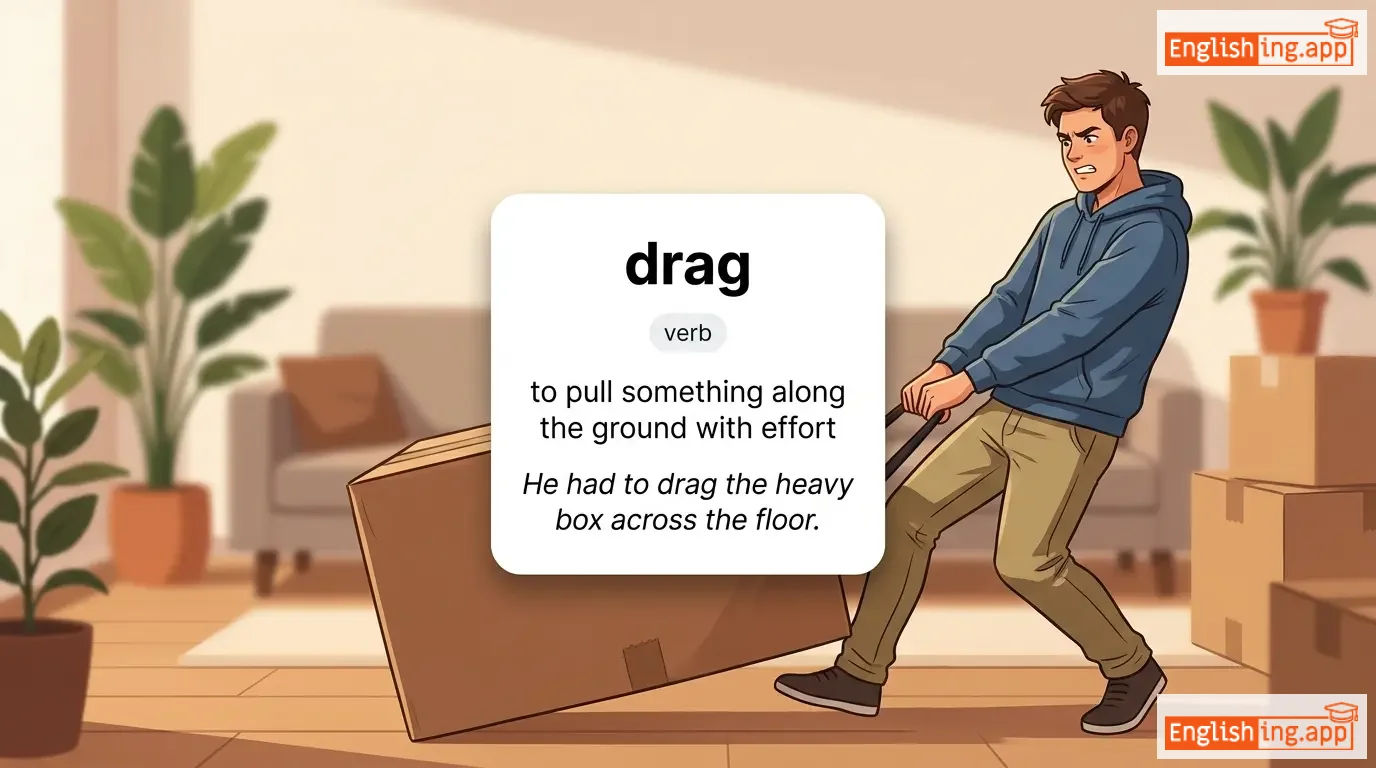
/dræɡ/
verb
(ドラッグ)
••••••
|
|
引きずる
hikizuru
••••••
|
dragged
ドラッグド
••••••
|
dragged
ドラッグド
••••••
|
drags
ドラッグス
••••••
|
dragging
ドラッギング
••••••
|
to pull something along the ground with effort
••••••
|
He had to drag the heavy box across the floor.
彼は重い箱を床に引きずらなければならなかった。
••••••
|
彼は重い箱を床に引きずらなければならなかった。
Kare wa omoi hako o yuka ni hikizurana kereba naranakatta.
••••••
|
drag one's feet
足を引きずる
••••••
|
to delay doing something deliberately
••••••
|
時間を無駄にする
jikan wo muda ni suru
••••••
|
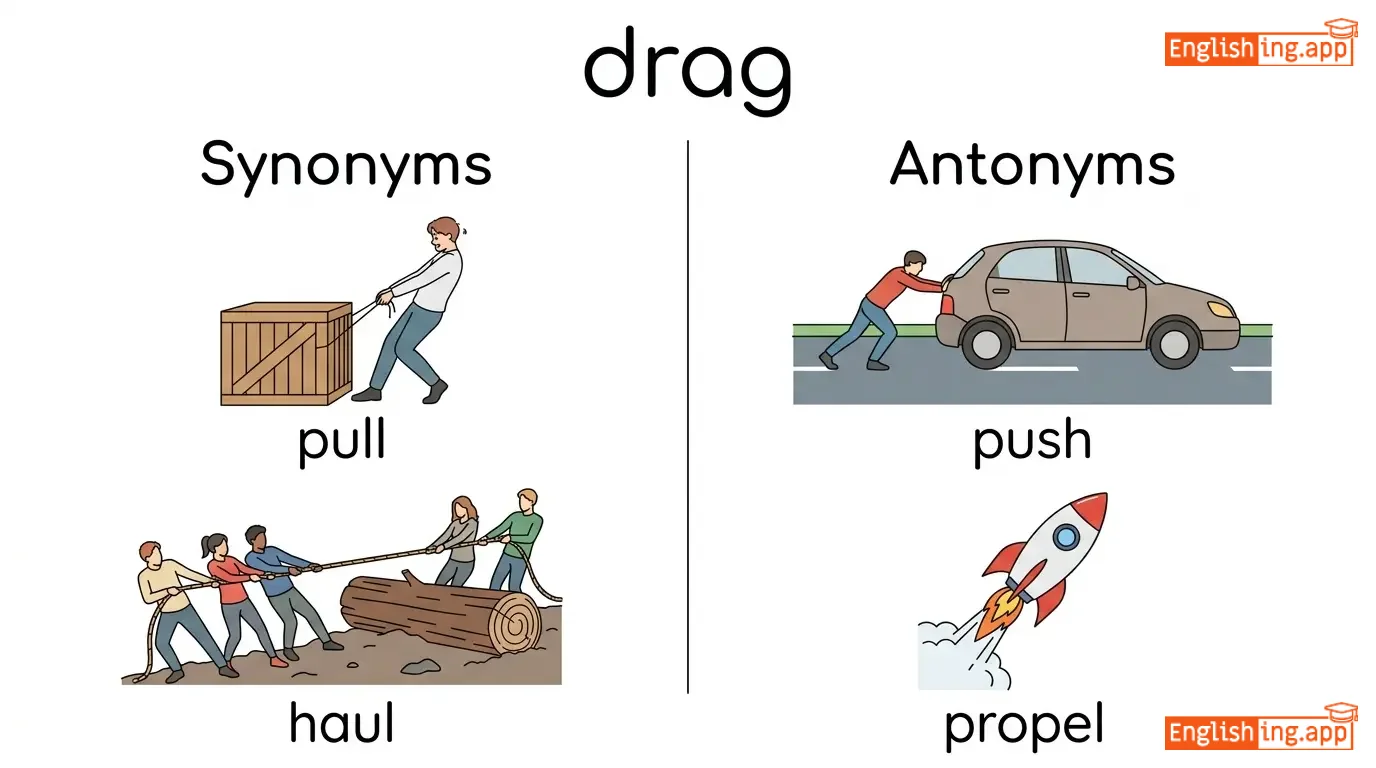
pull, haul, tow, tug
••••••
|
push, propel
••••••
|
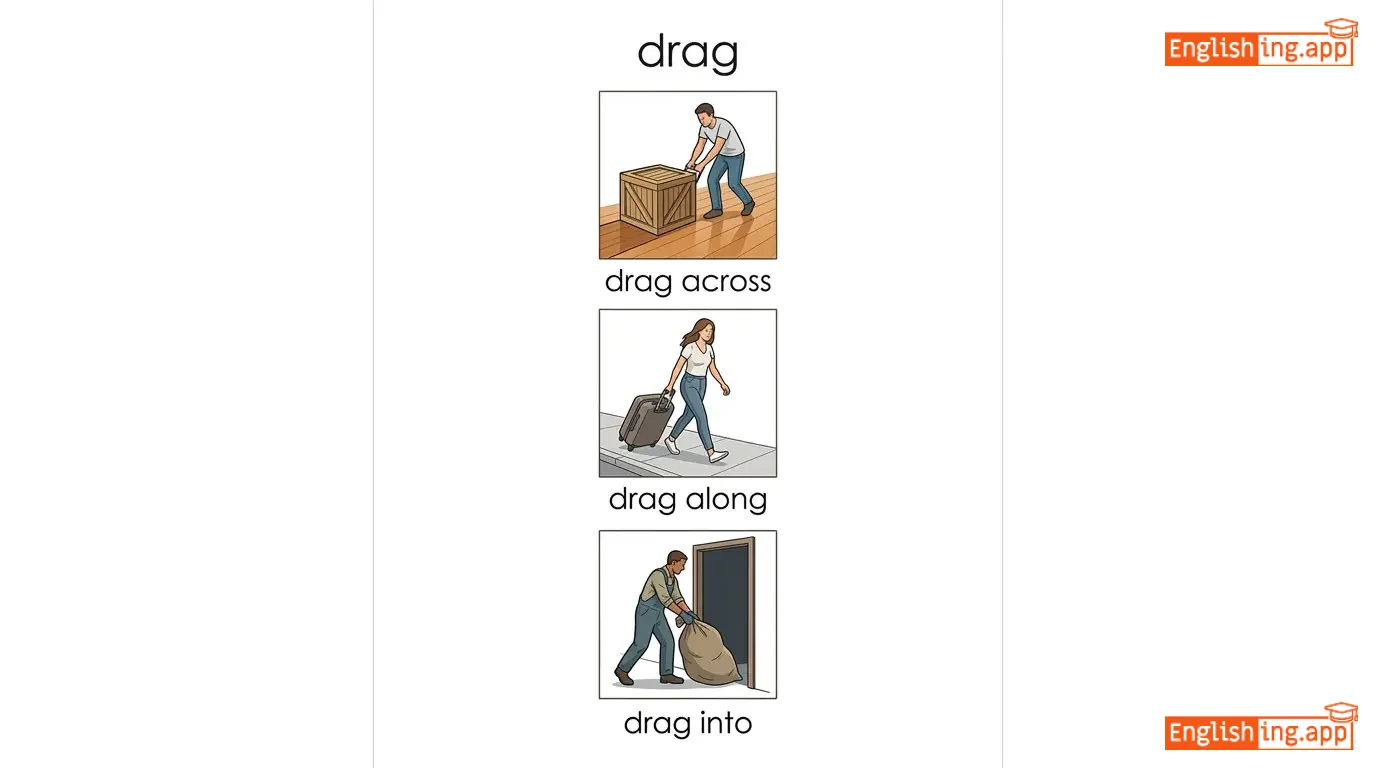
drag across, drag along, drag into, drag down
••••••
|
Dragは引きずる意味で、引きずると時間がかかります!
••••••
|
|
#10828
🥚
|
/ˈdʌzən/
noun
(ダズン)
••••••
|
- •••••• |
ダース
dāsu
••••••
|
- •••••• | - •••••• | - •••••• | - •••••• |
a group of twelve
••••••
|
She bought a dozen eggs from the market. |
彼女は市場でダースの卵を買いました。
Kanojo wa ichiba de dāsu no tamago o kaimashita.
••••••
|
cheaper by the dozen |
items bought in bulk are often cheaper
••••••
|
ダースで買うと安くなる
Dāsu de kau to yasuku naru
••••••
|
twelve, set, group, batch
••••••
|
single, one
••••••
|
a dozen eggs, dozens of people, a dozen times
••••••
|
ダース = 12、12個一緒に買うとお得!
••••••
|
|
#10829
🏙️
|
/ˈdaʊnˌtaʊn/
noun
(ダウンタウン)
••••••
|
- •••••• |
ダウンタウン
dauntaun
••••••
|
- •••••• | - •••••• | - •••••• | - •••••• |
the central part of a city
••••••
|
They spent the afternoon shopping downtown. |
彼らは午後、市の中心部で買い物をしました。
Karera wa gogo, shi no chūshinbu de kaimono o shimashita.
••••••
|
- •••••• | - •••••• | - •••••• |
city center, metropolis, central district, urban area
••••••
|
suburb, countryside
••••••
|
downtown area, downtown district, downtown core, downtown business
••••••
|
Downtownは都市の中心部、活気に満ちた場所です!
••••••
|
|
#10830
⬇️
|
/daʊn/
adverb
(ダウン)
••••••
|
- •••••• |
下
shita
••••••
|
- •••••• | - •••••• | - •••••• | - •••••• |
from a higher to a lower position
••••••
|
He walked down the stairs slowly. |
彼はゆっくりと階段を下りてきました。
Kare wa yukkuri to kaidan o orite kimashita.
••••••
|
down to earth |
practical and realistic
••••••
|
実用的で現実的
jitsuyou teki de genjitsu teki
••••••
|
below, downward, under, beneath
••••••
|
up, above, over
••••••
|
down the road, down the line, down the street
••••••
|
Downは下、すべてが下に行く!
••••••
|
|
#10831
2️⃣
|
/ˈdʌbəl/
verb
(ダブル)
••••••
|
- •••••• |
倍増する
baizō suru
••••••
|
doubled
ダブルド
••••••
|
doubled
ダブルド
••••••
|
doubles
ダブルズ
••••••
|
doubling
ダブリング
••••••
|
to make twice as much in size, number, or amount
••••••
|
The company hopes to double its profits this year.
会社は今年、利益を倍増させることを望んでいます。
••••••
|
会社は今年、利益を倍増させることを望んでいます。
Kaisha wa kotoshi, rieki o baizō saseru koto o nozondeimasu.
••••••
|
double-edged sword
両刃の剣
••••••
|
something that has both positive and negative effects
••••••
|
両刃の剣
ryōba no ken
••••••
|
increase, multiply, expand, amplify, boost
••••••
|
halve, reduce, decrease
••••••
|
double the amount, double the size, double digits, double check
••••••
|
Doubleは倍増を意味し、例えばアイスクリームを倍増させてもっと楽しいです!
••••••
|
|
#10832
🚪
|
/dɔːr/
noun
(ドア)
••••••
|
- •••••• |
ドア
doa
••••••
|
- •••••• | - •••••• | - •••••• | - •••••• |
A movable barrier that allows entry or exit to a building, room, or vehicle.
••••••
|
He knocked on the door before entering the house. |
彼は家に入る前にドアをノックした。
Kare wa ie ni hairu mae ni doa o nokkushita.
••••••
|
when one door closes, another opens |
New opportunities arise when one ends
••••••
|
一つのドアが閉まると、もう一つのドアが開く
Hitotsu no doa ga shimaru to, mō hitotsu no doa ga hiraku
••••••
|
gate, entrance, portal, threshold
••••••
|
wall, barrier
••••••
|
open the door, close the door, lock the door, knock on the door
••••••
|
ドア 🚪 — ドアを開けると、新しいチャンスが入ってくる!
••••••
|
|
#10833
🏠
|
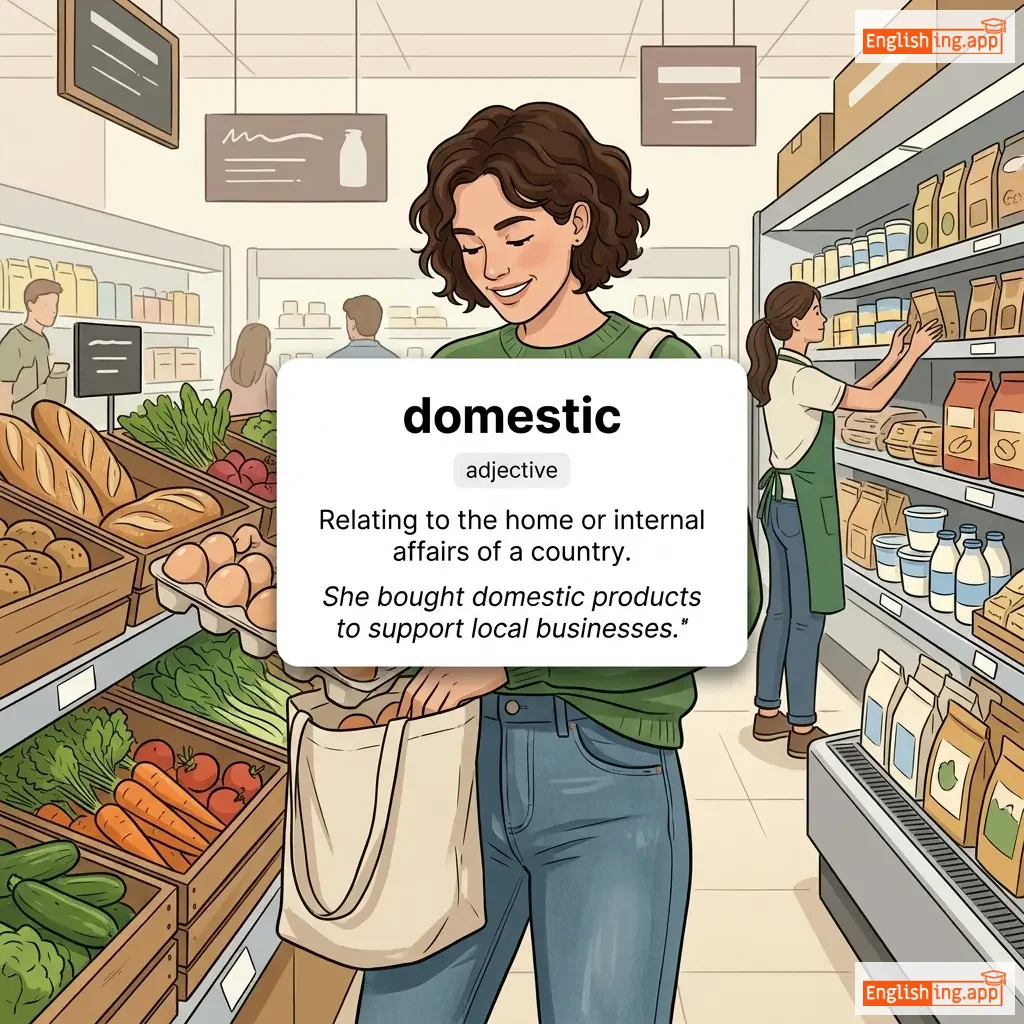
/dəˈmɛstɪk/
adjective
(ハピネス)
••••••
|
|
幸福
kōfuku
••••••
|
- •••••• | - •••••• | - •••••• | - •••••• |
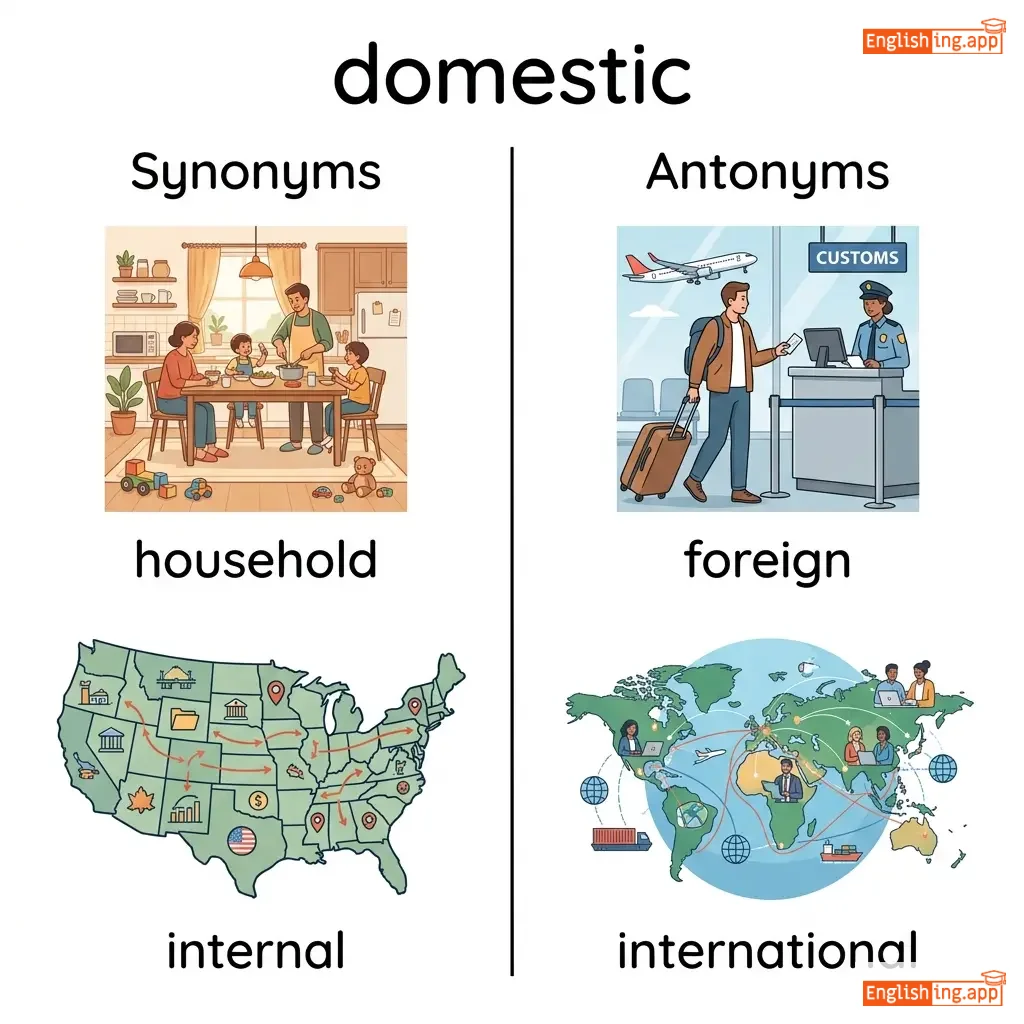
Relating to the home or internal affairs of a country.
••••••
|
She bought domestic products to support local businesses. |
彼女は賞を受け取ったとき、幸せを隠すことができませんでした。
Kanojo wa shō o uketotta toki, kōfuku o kakusu koto ga dekimasen deshita.
••••••
|
domestic affairs |
Matters within a household or a country
••••••
|
幸福の追求
kōfuku no suikyū
••••••
|
household, internal, local, home
••••••
|
foreign, international
••••••
|
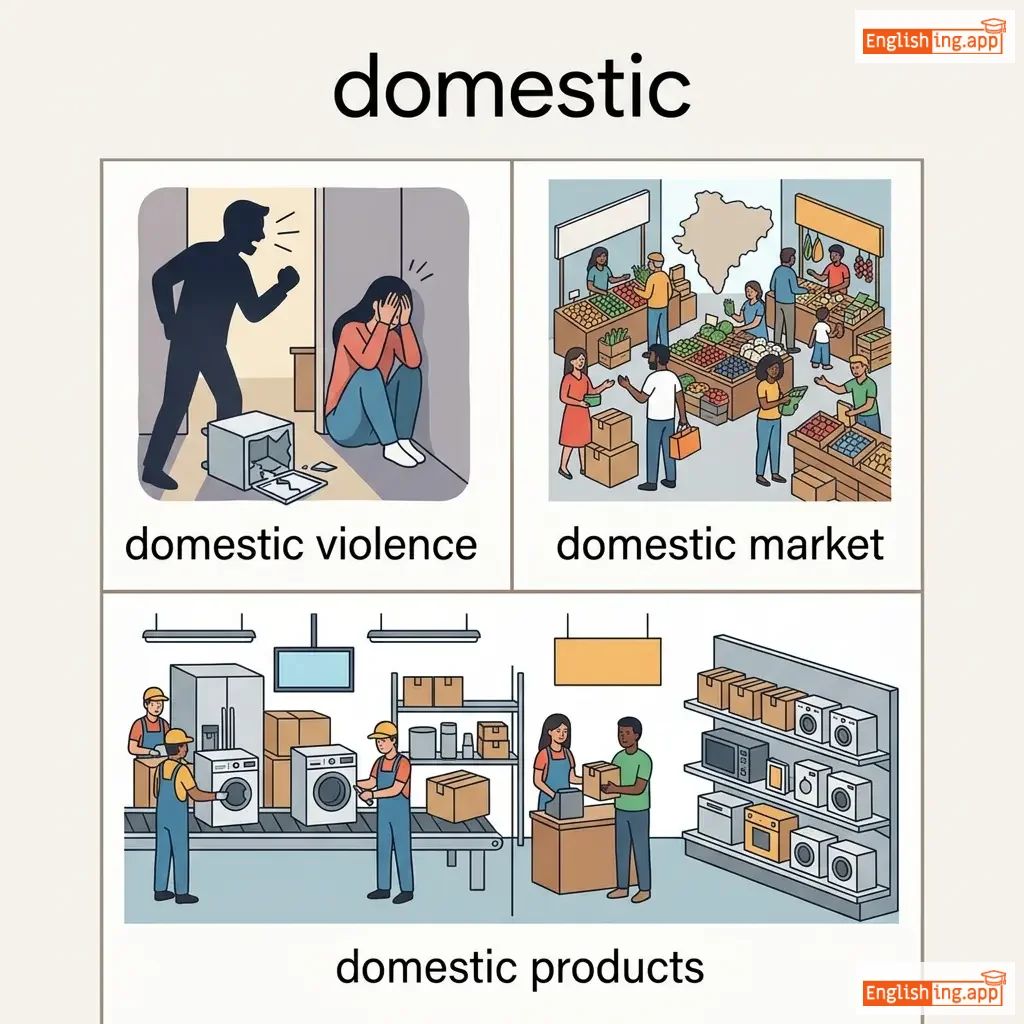
domestic violence, domestic market, domestic products, domestic flights
••••••
|
幸福は毎日探し続けるものです。
••••••
|
|
#10834
🩺
|
/ˈdɒktər/
noun
(ドクター)
••••••
|
- •••••• |
医者
isha
••••••
|
- •••••• | - •••••• | - •••••• | - •••••• |
A qualified medical professional who treats illnesses and injuries.
••••••
|
The doctor prescribed medicine for the patient. |
医者は患者に薬を処方しました。
Isha wa kanja ni kusuri o shohō shimashita.
••••••
|
the doctor is in |
The doctor is available to see patients
••••••
|
医者がいます
Isha ga imasu
••••••
|
physician, medic, surgeon, healer
••••••
|
patient, layman
••••••
|
doctor appointment, family doctor, consulting doctor, doctor visit
••••••
|
医者がいるから病気でも安心!
••••••
|
|
#10835
✅
|
/duː/
verb
(ドゥ)
••••••
|
|
する
suru
••••••
|
did
ディッド
••••••
|
done
ダン
••••••
|
does
ダズ
••••••
|
doing
ドゥイング
••••••
|
To perform an action, task, or activity.
••••••
|
I need to do my homework before dinner.
私は夕食前に宿題をしなければならない。
••••••
|
私は夕食前に宿題をしなければならない。
Watashi wa yūshoku mae ni shukudai o shinakereba naranai.
••••••
|
do one's best
最善を尽くす
••••••
|
To make the greatest possible effort
••••••
|
最善を尽くす
Saizen o tsukusu
••••••
|
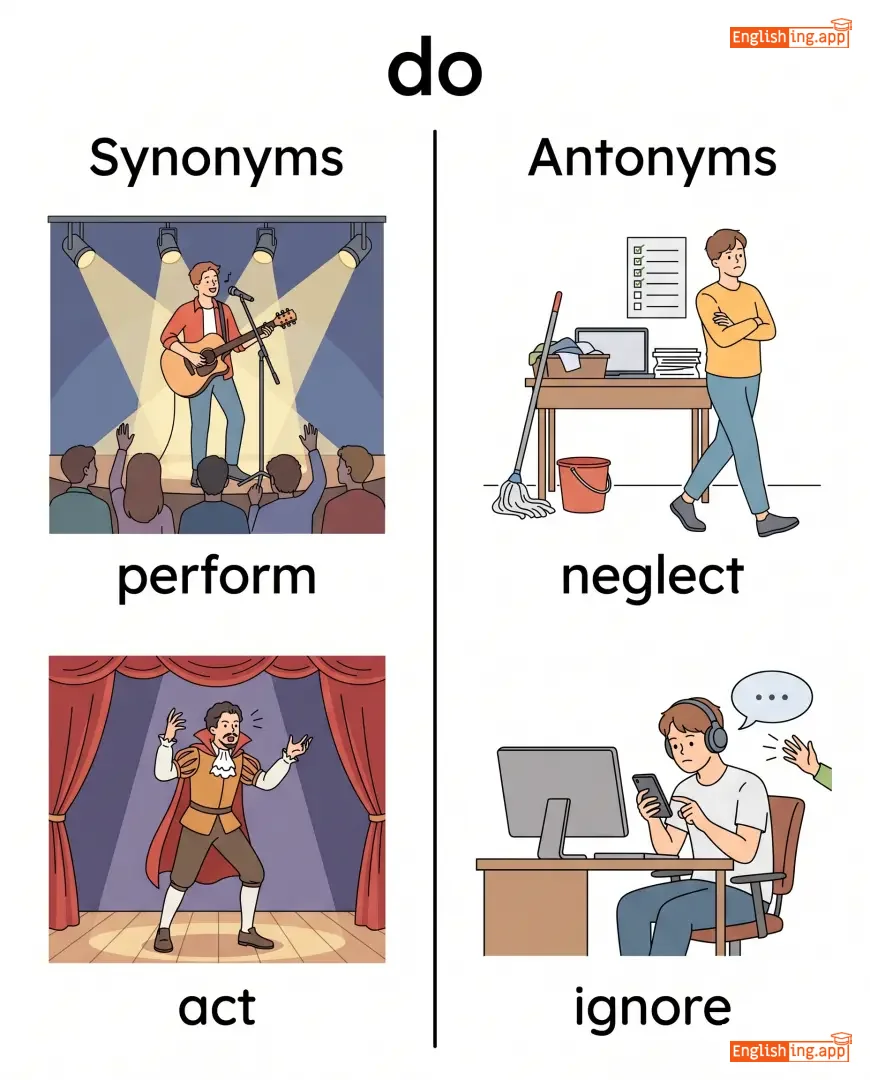
perform, act, execute, carry out, accomplish
••••••
|
neglect, ignore, stop
••••••
|
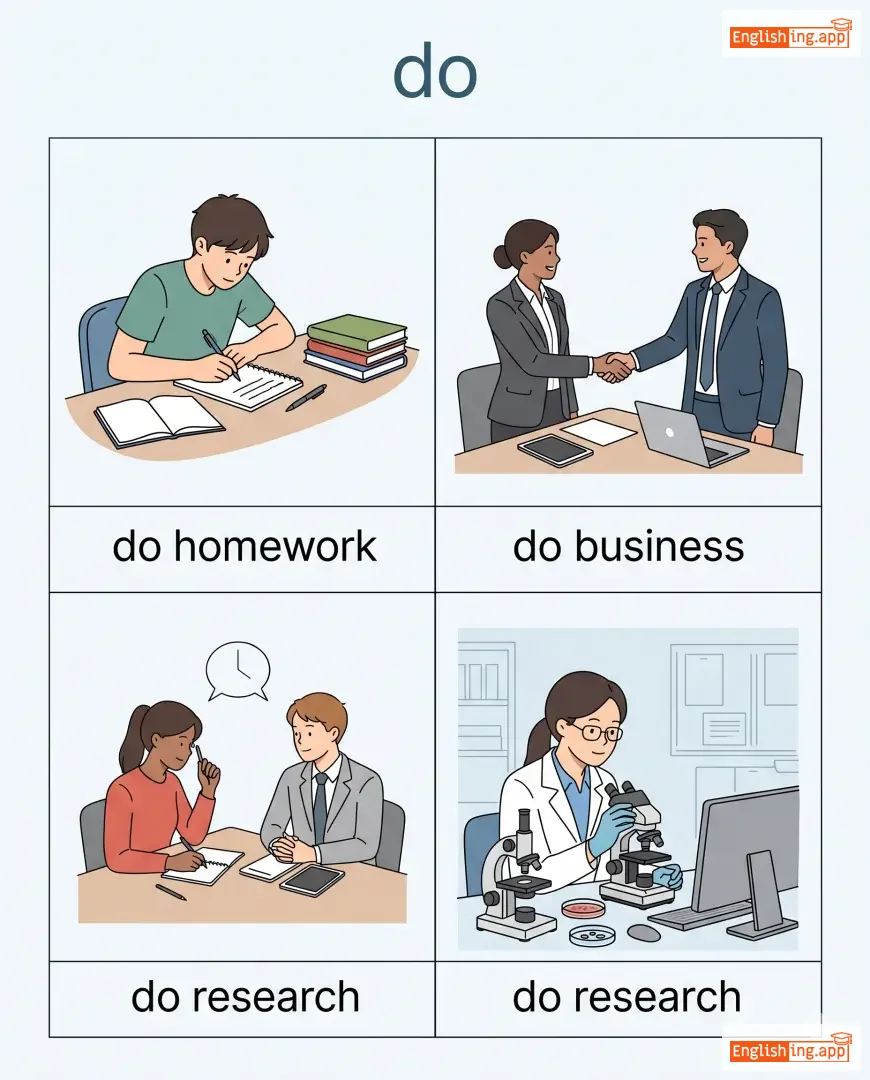
do homework, do business, do research, do a favor
••••••
|
Doはすることを意味する — する、沈まないで!
••••••
|
|
#10836
🧬
|
/ˌdiː.enˈeɪ/
noun
(ディーエヌエー)
••••••
|
- •••••• |
デオキシリボ核酸
DNA
••••••
|
- •••••• | - •••••• | - •••••• | - •••••• |
Deoxyribonucleic acid, the molecule that carries genetic information in living organisms.
••••••
|
Scientists extracted DNA from the ancient bones. |
科学者たちは古代の骨からDNAを抽出しました。
Kagakusha-tachi wa kodai no hone kara DNA o chūshutsu shimashita.
••••••
|
- •••••• | - •••••• | - •••••• |
genetic code, genome, chromosomes, heredity
••••••
|
RNA, protein
••••••
|
DNA test, DNA sequence, DNA sample, DNA analysis
••••••
|
DNAを覚えよう 🧬 - それは生命のデータアーカイブです。
••••••
|
|
#10837
💔
|
/dɪˈvɔːrs/
noun/verb
(ディヴォース)
••••••
|
- •••••• |
離婚
rikon
••••••
|
divorced
••••••
|
divorced
••••••
|
divorces
••••••
|
divorcing
••••••
|
the legal ending of a marriage; to officially end a marriage
••••••
|
After years of conflict, they decided to get a divorce. |
数年の対立の後、彼らは離婚することを決めました。
Sūnen no tairitsu no ato, karera wa rikon suru koto o kimemashita.
••••••
|
divorce oneself from |
to separate or distance oneself from something
••••••
|
〜から離婚する
〜kara rikon suru
••••••
|
separation, annulment, breakup, dissolution
••••••
|
marriage, union
••••••
|
get a divorce, file for divorce, divorce settlement, divorce lawyer
••••••
|
離婚は結婚を終わらせること。
••••••
|
|
#10838
➗
|
/dɪˈvɪʒən/
noun
(divijon)
••••••
|
- •••••• |
部門
bumon
••••••
|
- •••••• | - •••••• | - •••••• | - •••••• |
the action of separating something into parts; or a large administrative unit
••••••
|
The company has a separate division for research and development. |
会社には研究開発のための専用の部門があります。
Kaisha ni wa kenkyū kaihatsu no tame no sen'yō no bumon ga arimasu.
••••••
|
cause division |
to create disagreement or separation among people
••••••
|
分裂を引き起こす
bunretsu o hikiokosu
••••••
|
separation, partition, department, section
••••••
|
unity, whole, agreement
••••••
|
division of labor, administrative division, mathematical division, division between
••••••
|
Division ➗ は分割することを意味し、日本語では部門です。
••••••
|
|
#10839
🗺️
|
/ˈdɪstrɪkt/
noun
(ディストリクト)
••••••
|
- •••••• |
地区
chiku
••••••
|
- •••••• | - •••••• | - •••••• | - •••••• |
a specific area of a country, city, or town, often with official boundaries
••••••
|
She lives in the northern district of the city. |
彼女は街の北地区に住んでいます。
Kanojo wa machi no kita chiku ni sundeimasu.
••••••
|
- •••••• | - •••••• | - •••••• |
region, area, zone, territory
••••••
|
whole, entirety
••••••
|
school district, business district, residential district, rural district
••••••
|
‘地区’は行政区域を示すための言葉です。
••••••
|
|
#10840
➡️
|
/dəˈrɛkt/ or /daɪˈrɛkt/
verb
(ダイレクト)
••••••
|
- •••••• |
指示する
shiji suru
••••••
|
directed
ダイレクテッド
••••••
|
directed
ダイレクテッド
••••••
|
directs
ダイレクツ
••••••
|
directing
ダイレクティング
••••••
|
to manage or control the course of something; to give instructions
••••••
|
She directed the team to complete the project on time.
彼女はチームにプロジェクトを時間通りに終わらせるよう指示しました。
••••••
|
彼女はチームにプロジェクトを時間通りに終わらせるよう指示しました。
Kanojo wa chīmu ni purojekuto o jikan dōri ni owaraseru yō shiji shimashita.
••••••
|
direct traffic
交通整理をする
••••••
|
to manage and guide the movement of vehicles
••••••
|
交通整理をする
kōtsū seiri o suru
••••••
|
guide, lead, manage, command, instruct
••••••
|
mislead, confuse
••••••
|
direct attention, direct action, direct contact, direct result
••••••
|
Direct は、指示を明確に — 交通整理をすることは精密に!
••••••
|
|
#10841
🔍
|
/dɪˈstɪŋɡwɪʃ/
verb
(ディスティングウィッシュ)
••••••
|
- •••••• |
区別する
kubetsu suru
••••••
|
distinguished
ディスティングウィッシュド
••••••
|
distinguished
ディスティングウィッシュド
••••••
|
distinguishes
ディスティングウィッシュズ
••••••
|
distinguishing
ディスティングウィッシング
••••••
|
to recognize or show the differences between two or more things; to set apart as different
••••••
|
It can be difficult to distinguish between truth and rumor.
真実と噂を区別するのは難しいかもしれません。
••••••
|
真実と噂を区別するのは難しいかもしれません。
Shinjitsu to uwasa o kubetsu suru no wa muzukashī kamoshiremasen.
••••••
|
distinguish oneself
自分を際立たせる
••••••
|
to do something that makes one notable or worthy of recognition
••••••
|
自分を際立たせる
Jibun o kiwadatase ru
••••••
|
differentiate, discern, identify, separate, recognize
••••••
|
confuse, mix, combine
••••••
|
distinguish between, distinguish clearly, distinguish features, distinguish easily
••••••
|
Distinguish = 区別する
••••••
|
|
#10842
📏
|
/ˈdɪstəns/
noun
(ディスタンス)
••••••
|
- •••••• |
距離
kyori
••••••
|
- •••••• | - •••••• | - •••••• | - •••••• |
The amount of space between two points or places.
••••••
|
The distance between Dhaka and Chittagong is about 250 kilometers. |
ダッカとチッタゴンの間の距離は約250キロメートルです。
Dakka to Chittagon no aida no kyori wa yaku 250 kiromētoru desu.
••••••
|
keep your distance |
To stay away or avoid close contact.
••••••
|
距離を保つ
Kyori wo tamotsu
••••••
|
gap, space, length, interval, remoteness
••••••
|
closeness, nearness
••••••
|
long distance, travel distance, distance learning, safe distance
••••••
|
Distanceは距離、距離を保つことで安全が守られる!
••••••
|
|
#10843
🖥️
|
/dɪˈspleɪ/
verb
(ディスプレイ)
••••••
|
- •••••• |
表示
hyouji
••••••
|
displayed
ディスプレイド
••••••
|
displayed
ディスプレイド
••••••
|
displays
ディスプレイズ
••••••
|
displaying
ディスプレイイング
••••••
|
To show or exhibit something to be seen.
••••••
|
The shop displayed its new products in the window.
その店は新しい製品をウィンドウにディスプレイしました。
••••••
|
その店は新しい製品をウィンドウにディスプレイしました。
Sono mise wa atarashī seihin o u~indō ni disupurei shimashita.
••••••
|
on display
展示中
••••••
|
Visible for people to see, usually in a public place.
••••••
|
展示中
tenjichū
••••••
|
show, exhibit, present, demonstrate, reveal
••••••
|
hide, conceal, cover
••••••
|
display information, display screen, proudly display, digital display
••••••
|
Displayは表示を意味します、店のウィンドウに新しい製品を表示するようなものです。
••••••
|
|
#10844
⚠️
|
/dɪsˈɔːrdər/
noun
(ディスオーダー)
••••••
|
- •••••• |
障害
shōgai
••••••
|
- •••••• | - •••••• | - •••••• | - •••••• |
A state of confusion or lack of order; also a medical or mental condition.
••••••
|
The protest ended in disorder when the crowd became violent. |
抗議は群衆が暴力的になったときに障害に終わった。
Kōgi wa gunshū ga bōryokuteki ni natta toki ni shōgai ni owatta.
••••••
|
eating disorder |
A medical condition involving abnormal eating habits.
••••••
|
摂食障害
sesshoku shōgai
••••••
|
confusion, chaos, disturbance, illness, ailment
••••••
|
order, organization, harmony
••••••
|
mental disorder, physical disorder, cause disorder, public disorder
••••••
|
Disorderは障害を意味します、覚えておいて - 順序がなければ、障害があるということです。
••••••
|
|
#10845
🍽️
|
/dɪʃ/
noun
(ディッシュ)
••••••
|
- •••••• |
皿 / 料理
sara / ryouri
••••••
|
- •••••• | - •••••• | - •••••• | - •••••• |
A shallow container for serving or preparing food; also a particular kind of food prepared.
••••••
|
She prepared a delicious pasta dish for dinner. |
彼女は夕食のために美味しいパスタ料理を準備しました。
Kanojo wa yuushoku no tame ni oishii pasuta ryouri o junbi shimashita.
••••••
|
dish out |
To distribute or serve something, often food or criticism.
••••••
|
食べ物を提供する
tabemono o teikyou suru
••••••
|
plate, bowl, meal, course, recipe
••••••
|
drink, beverage
••••••
|
main dish, side dish, traditional dish, favorite dish
••••••
|
皿は容器や料理を意味します、覚えておいて - 母の料理はいつも最高の料理です。
••••••
|
|
#10846
🦠
|
/dɪˈziːz/
noun
(dɪˈziːz)
••••••
|
- •••••• |
病気
byouki
••••••
|
- •••••• | - •••••• | - •••••• | - •••••• |
An illness or medical condition that affects the body or mind.
••••••
|
The doctor is researching a cure for the disease. |
医者はその病気の治療法を研究しています。
Isha wa sono byōki no chiryo hō o kenkyū shiteimasu.
••••••
|
heart disease |
A general term for conditions affecting the heart.
••••••
|
心臓病
shinzōbyō
••••••
|
illness, sickness, ailment, disorder, infection
••••••
|
health, wellness
••••••
|
infectious disease, chronic disease, disease prevention, disease outbreak
••••••
|
Diseaseは病気を意味します。覚えておいてください、体に安らぎがなければ、それは病気です。
••••••
|
|
#10847
💬
|
/dɪˈskʌs/
verb
(ディスカス)
••••••
|
- •••••• |
話し合う
hanashiau
••••••
|
discussed
ディスカスト
••••••
|
discussed
ディスカスト
••••••
|
discusses
ディスカスズ
••••••
|
discussing
ディスカスイング
••••••
|
To talk about something with another person or group in detail.
••••••
|
We need to discuss the project before finalizing it.
プロジェクトを最終決定する前に、それを話し合う必要があります。
••••••
|
プロジェクトを最終決定する前に、それを話し合う必要があります。
Purojekuto o saishū kettei suru mae ni, sore o hanashiau hitsuyō ga arimasu.
••••••
|
discuss matters
問題を話し合う
••••••
|
to talk about issues or problems
••••••
|
問題を話し合う
Mondai o hanashiau
••••••
|
talk, debate, confer, deliberate, examine
••••••
|
ignore, avoid
••••••
|
discuss a plan, discuss issues, discuss openly, discuss further
••••••
|
話し合うことは、何かについて他の人と詳しく話すことです。
••••••
|
|
#10848
⚖️
|
/dɪˌskrɪmɪˈneɪʃən/
noun
(ディスクリミネーション)
••••••
|
- •••••• |
差別
sabetsu
••••••
|
- •••••• | - •••••• | - •••••• | - •••••• |
Unfair treatment of people based on race, gender, age, or other differences.
••••••
|
The law prohibits discrimination in the workplace. |
法律は職場での差別を禁じています。
Hōritsu wa shokuba de no sabetsu o kinjiteimasu.
••••••
|
racial discrimination |
unfair treatment based on race
••••••
|
人種差別
jinshu sabetsu
••••••
|
prejudice, bias, unfairness, inequality
••••••
|
equality, fairness, justice
••••••
|
racial discrimination, gender discrimination, fight discrimination, workplace discrimination
••••••
|
差別 = dis + 犯罪、だから差別は犯罪です。
••••••
|
|
#10849
🔎
|
/dɪˈskʌvəri/
noun
(ディスカバリー)
••••••
|
- •••••• |
発見
hakken
••••••
|
- •••••• | - •••••• | - •••••• | - •••••• |
The act of finding or learning something for the first time.
••••••
|
The discovery of penicillin changed medical history. |
ペニシリンの発見は医学の歴史を変えた。
Penishirin no hakken wa igaku no rekishi o kaeta.
••••••
|
make a discovery |
to find or learn something new
••••••
|
発見をする
Hakken o suru
••••••
|
finding, invention, detection, revelation
••••••
|
loss, concealment
••••••
|
scientific discovery, new discovery, make a discovery, important discovery
••••••
|
Discovery = 発見 = 新しいものを発見することが発見だ。
••••••
|
|
#10850
♿
|
/ˌdɪsəˈbɪləti/
noun
(ディスアビリティ)
••••••
|
- •••••• |
障害
shougai
••••••
|
- •••••• | - •••••• | - •••••• | - •••••• |
A physical or mental condition that limits a person's movements, senses, or activities.
••••••
|
The organization supports people living with disability. |
その団体は障害を持つ人々を支援しています。
Sono dantai wa shougai wo motsu hitobito wo shien shiteimasu.
••••••
|
- •••••• | - •••••• | - •••••• |
impairment, handicap, condition, incapacity
••••••
|
ability, health, fitness
••••••
|
living with disability, disability rights, physical disability, mental disability
••••••
|
Dis + ability = 能力なし、つまり障害
••••••
|
|
#10851
🪨
|
/dɜːrt/
noun
(ダート)
••••••
|
- •••••• |
土、汚れ
tsuchi, yogore
••••••
|
- •••••• | - •••••• | - •••••• | - •••••• |
Loose soil or unclean matter; anything that makes a surface unclean.
••••••
|
Her shoes were covered in dirt after walking through the field. |
畑を歩いた後、彼女の靴は泥だらけだった。
Hatake o aruita ato, kanojo no kutsu wa dora darake datta.
••••••
|
treat someone like dirt |
to treat someone badly or with no respect
••••••
|
誰かをゴミのように扱う
Dareka o gomi no yō ni atsukau
••••••
|
soil, earth, dust, grime, filth
••••••
|
cleanliness, purity
••••••
|
dirt road, covered in dirt, sweep the dirt, dirt cheap
••••••
|
Dirt = 土、例えばスポーツのフィールドで土が汚いと、試合がうまくいかない。
••••••
|
|
#10852
🎬
|
/dəˈrɛktər/ or /daɪˈrɛktər/
noun
(ダイレクター)
••••••
|
- •••••• |
監督
kantoku
••••••
|
- •••••• | - •••••• | - •••••• | - •••••• |
a person who manages or oversees a company, department, or film
••••••
|
The director gave final approval for the new movie script. |
監督は新しい映画の脚本に最終承認を与えました。
Kantoku wa atarashī eiga no kyakuhon ni saishū shōnin o ataemashita.
••••••
|
board of directors |
a group of people elected to manage a company
••••••
|
取締役会
torishimariyaku kai
••••••
|
manager, leader, chief, head, supervisor
••••••
|
employee, subordinate
••••••
|
film director, company director, executive director, board of directors
••••••
|
監督は映画や会社の管理を行う人物。
••••••
|
|
#10853
📢
|
/dəˈrɛktli/ or /daɪˈrɛktli/
adverb
(ダイレクトリー)
••••••
|
- •••••• |
直接的に
chokusetsuteki ni
••••••
|
- •••••• | - •••••• | - •••••• | - •••••• |
in a straight line or manner; without anything in between
••••••
|
She spoke directly to the manager about her concerns. |
彼女は自分の懸念について、マネージャーに直接話しました。
Kanojo wa jibun no shinen ni tsuite, manējā ni chokusetsu hanashimashita.
••••••
|
directly involved |
personally connected or participating
••••••
|
直接関与
chokusetsu kan'yo
••••••
|
immediately, personally, straightforwardly, openly
••••••
|
indirectly, vaguely
••••••
|
directly responsible, directly affected, speak directly, directly proportional
••••••
|
Directly =そのまま、直接 — ダイレクトに進むこと。
••••••
|
|
#10854
🧭
|
/dəˈrɛkʃən/ or /daɪˈrɛkʃən/
noun
(ディレクション)
••••••
|
- •••••• |
方向, 指示
houkou, shiji
••••••
|
- •••••• | - •••••• | - •••••• | - •••••• |
the course or path on which someone or something is moving; instructions on what to do
••••••
|
He asked for directions to the train station. |
彼は駅への行き方を尋ねました。
Kare wa eki e no ikikata o tazunemashita.
••••••
|
change direction |
to alter the course or plan
••••••
|
方向を変える
houkou o kaeru
••••••
|
instruction, guidance, route, path, orientation
••••••
|
confusion, aimlessness
••••••
|
clear direction, right direction, new direction, opposite direction
••••••
|
方向はコンパスのように、常に正しい方向を指し示します。
••••••
|
Vocabulary Quiz
Test your vocabulary by matching words with their translations or meanings.
Login to take the quiz
Comments (0)
Share your thoughts and join the discussion.
Join the discussion by logging in
Login to CommentNo comments yet
Be the first to share your thoughts!