

翻訳
過去
過去分詞
三人称単数
動名詞
意味
例文
例文の翻訳
同義語
対義語
コロケーション
ニーモニック
Swipe left or right, or use the buttons. Tap image to zoom.
例文の翻訳
単語
Lesson 179Lesson 179 - マスクトグル
|
絵文字
|
単語 | Images | 翻訳 | 過去 | 過去分詞 | 三人称単数 | 動名詞 | 意味 | 例文 | 例文の翻訳 | 表現例 | 表現例の意味 | 表現例の翻訳 | 同義語 | 対義語 | コロケーション | ニーモニック |
|---|---|---|---|---|---|---|---|---|---|---|---|---|---|---|---|---|---|
|
#5341
👑
|
/ˌmɑːhəˈrɑːdʒə/
noun
(マハラジャ)
••••••
|
- •••••• |
マハラジャ
maharaja
••••••
|
- •••••• | - •••••• | - •••••• | - •••••• |
A great king, especially a ruler of one of the principal states in India.
••••••
|
The maharaja lived in a grand palace surrounded by gardens. |
マハラジャは庭園に囲まれた豪華な宮殿に住んでいました。
Maharaja wa teien ni kakomareta gōka na kyūden ni sunde imashita.
••••••
|
- •••••• | - •••••• | - •••••• |
king, ruler, monarch, sovereign, prince
••••••
|
commoner, subject
••••••
|
maharaja palace, powerful maharaja, Indian maharaja, maharaja rule
••••••
|
マハラジャ = 偉大な王
••••••
|
|
#5342
🦟
|
/məˈlɛəriə/
noun
(マラリア)
••••••
|
- •••••• |
マラリア
mararia
••••••
|
- •••••• | - •••••• | - •••••• | - •••••• |
a serious infectious disease spread by mosquitoes, causing fever, chills, and sweating
••••••
|
Malaria is a common disease in tropical regions.
マラリアは熱帯地域で一般的な病気です。
••••••
|
マラリアは熱帯地域で一般的な病気です。
Mararia wa nettai chiiki de ippantekina byōki desu.
••••••
|
- •••••• | - •••••• | - •••••• |
fever, infectious disease, mosquito-borne illness
••••••
|
health, wellness
••••••
|
malaria prevention, malaria outbreak, malaria treatment, malaria vaccine
••••••
|
マラリア - 蚊が伝染させる病気
••••••
|
|
#5343
🙃
|
/ˌmæləprəˈpoʊ/
adjective, adverb
(マラプロポス)
••••••
|
- •••••• |
不適切
futekisetsu
••••••
|
- •••••• | - •••••• | - •••••• | - •••••• |
inappropriate or unsuitable; at an inconvenient or inappropriate time
••••••
|
His comment was malapropos during the serious discussion. |
真剣な議論中に彼のコメントは不適切だった。
Shinken na giron-chuu ni kare no komento wa futekisetsu datta.
••••••
|
- •••••• | - •••••• | - •••••• |
inappropriate, unsuitable, untimely, awkward, irrelevant
••••••
|
appropriate, suitable, timely
••••••
|
malapropos remark, malapropos comment, malapropos behavior
••••••
|
Mala-proper position ではないので、malapropos = 不適切
••••••
|
|
#5344
🤭
|
/ˈmæləprɒˌpɪzəm/
noun
(マラプロピズム)
••••••
|
- •••••• |
誤用語
goyōgo
••••••
|
- •••••• | - •••••• | - •••••• | - •••••• |
the mistaken use of a word in place of a similar-sounding one, often with amusing effect
••••••
|
He is famous for his malapropism when speaking in public. |
彼は公衆の前で話すときに誤用語で有名です。
Kare wa kōshū no mae de hanasu toki ni goyōgo de yūmei desu.
••••••
|
- •••••• | - •••••• | - •••••• |
misuse, blunder, error, slip, misstatement
••••••
|
accuracy, correctness
••••••
|
comic malapropism, classic malapropism, humorous malapropism
••••••
|
Mala-言葉ではないので、malapropism = 誤用語
••••••
|
|
#5345
😷
|
/məˈleɪz/
noun
(マレーズ)
••••••
|
- •••••• |
不調
fuchou
••••••
|
- •••••• | - •••••• | - •••••• | - •••••• |
a general feeling of discomfort, illness, or unease whose exact cause is difficult to identify
••••••
|
After the long journey, she felt a general malaise. |
長時間の旅行の後、彼女は一般的な不調を感じました。
Choujikan no ryokou no ato, kanojo wa ippan-teki na fuchou o kanjimashita.
••••••
|
- •••••• | - •••••• | - •••••• |
unease, discomfort, unrest, illness, discontent
••••••
|
comfort, ease, wellness
••••••
|
general malaise, social malaise, political malaise, widespread malaise
••••••
|
Malaise = 体調不良、原因がわからない
••••••
|
|
#5346
🤒
|
/ˈmælədi/
noun
(マラディ)
••••••
|
- •••••• |
病気
byouki
••••••
|
- •••••• | - •••••• | - •••••• | - •••••• |
a disease or disorder of the body or mind; a serious problem
••••••
|
The doctor treated the malady with great care. |
医者は病気を慎重に治療しました。
Isha wa byouki wo shinchou ni chiryou shimashita.
••••••
|
social malady |
a widespread social problem or issue
••••••
|
社会病
shakai byou
••••••
|
disease, illness, disorder, ailment, sickness
••••••
|
health, wellness, cure
••••••
|
chronic malady, rare malady, social malady, mysterious malady
••••••
|
Malady は '病気' (byouki) と似ている - malady = 病気
••••••
|
|
#5347
🤦
|
/ˌmæləˈdrɔɪt/
adjective
(マラドロワ)
••••••
|
- •••••• |
不器用
bukiyou
••••••
|
- •••••• | - •••••• | - •••••• | - •••••• |
clumsy or awkward in movement or behavior
••••••
|
His maladroit attempt at fixing the chair made it worse. |
椅子を修理しようとした彼の不器用な試みは、さらに悪化させた。
Isu o shuuri shiyou to shita kare no bukiyou na kokoromi wa, sara ni akka saseta.
••••••
|
- •••••• | - •••••• | - •••••• |
clumsy, awkward, inept, unskillful, bungling
••••••
|
skillful, adept, graceful
••••••
|
maladroit handling, maladroit remark, maladroit response, maladroit attempt
••••••
|
Maladroit = Mal (悪い) + adroit (巧み) → 悪い巧み = 不器用 🤦
••••••
|
|
#5348
💄
|
/ˈmeɪkʌp/
noun
(メイクアップ)
••••••
|
- •••••• |
化粧
keshou
••••••
|
- •••••• | - •••••• | - •••••• | - •••••• |
cosmetics used to enhance or alter appearance
••••••
|
She applied makeup before the party. |
彼女はパーティーの前に化粧をした。
Kanojo wa pātī no mae ni keshou o shita.
••••••
|
makeup test |
an additional test to make up for one missed earlier
••••••
|
再試験
saishiken
••••••
|
cosmetics, foundation, powder, lipstick, beauty products
••••••
|
bare face, natural
••••••
|
apply makeup, makeup kit, makeup artist, makeup remover
••••••
|
Make + Up = 顔を美しくする化粧 💄
••••••
|
|
#5349
🛠️
|
/ˈmeɪkˌʃɪft/
adjective
(メイクシフト)
••••••
|
- •••••• |
即席の
sokuseki no
••••••
|
- •••••• | - •••••• | - •••••• | - •••••• |
used as a temporary substitute; improvised
••••••
|
They used boxes as a makeshift table.
彼らは箱を即席のテーブルとして使った。
••••••
|
彼らは箱を即席のテーブルとして使った。
Karera wa hako o sokuseki no tēburu to shite tsukatta.
••••••
|
- •••••• | - •••••• | - •••••• |
temporary, improvised, substitute, provisional, stopgap
••••••
|
permanent, durable
••••••
|
makeshift shelter, makeshift arrangement, makeshift solution, makeshift tent
••••••
|
Make + Shift = Makeshift、即席で何かを作る意味です。
••••••
|
|
#5350
📊
|
/məˈdʒɒrəti/
noun
(meijoriti)
••••••
|
|
多数
tasuu
••••••
|
- •••••• | - •••••• | - •••••• | - •••••• |
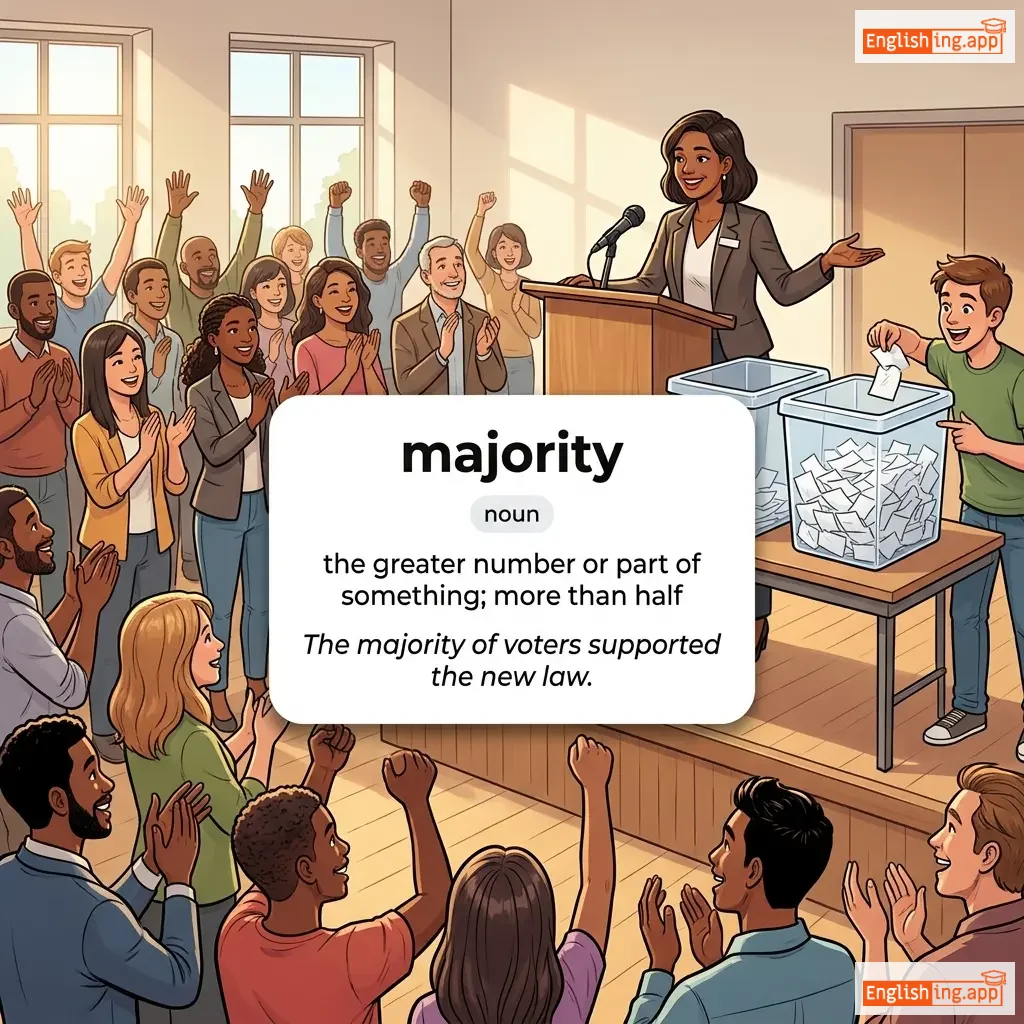
the greater number or part of something; more than half
••••••
|
The majority of voters supported the new law. |
有権者の多数が新しい法律を支持しました。
Yuken-sha no tasuu ga atarashii houritsu o shiji shimashita.
••••••
|
silent majority |
a large group of people who do not express their opinions publicly
••••••
|
沈黙の多数
Chinmoku no tasuu
••••••
|
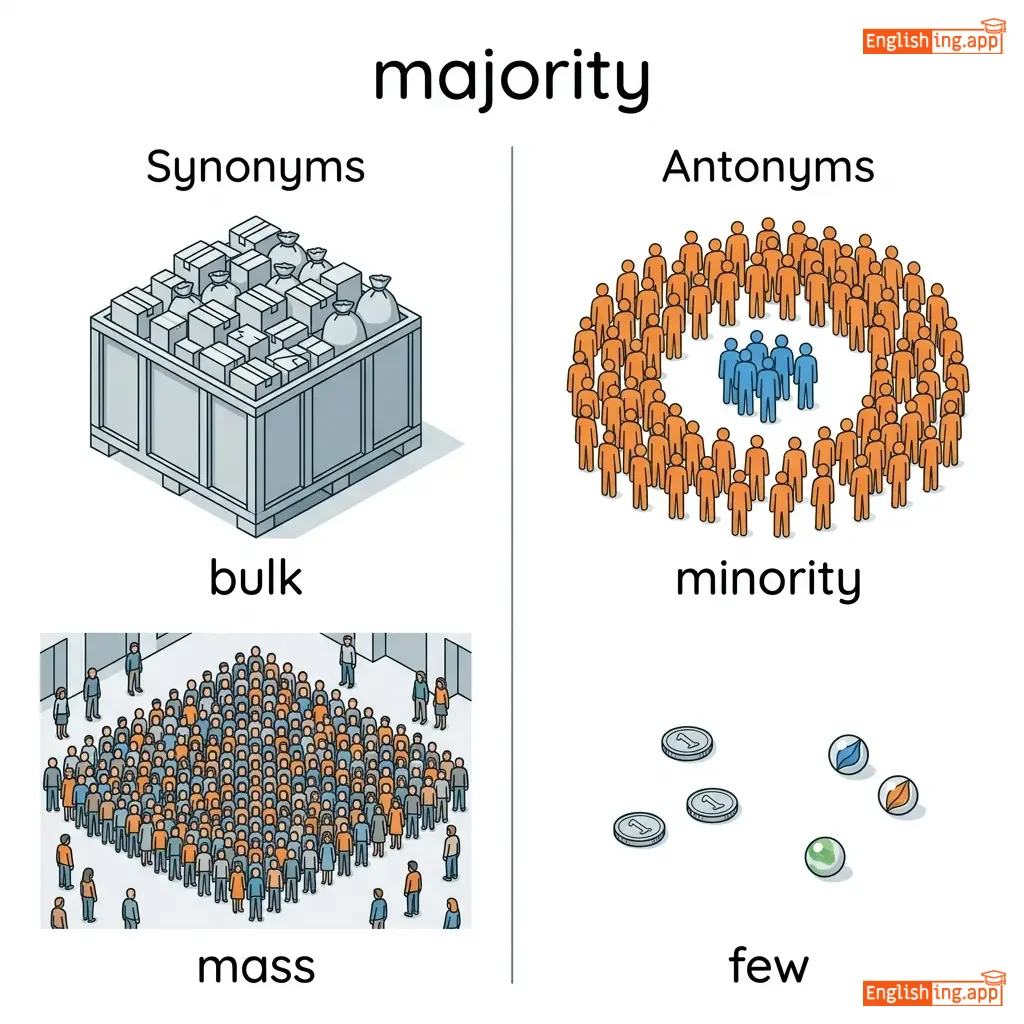
bulk, mass, most, plurality, dominance
••••••
|
minority, few
••••••
|
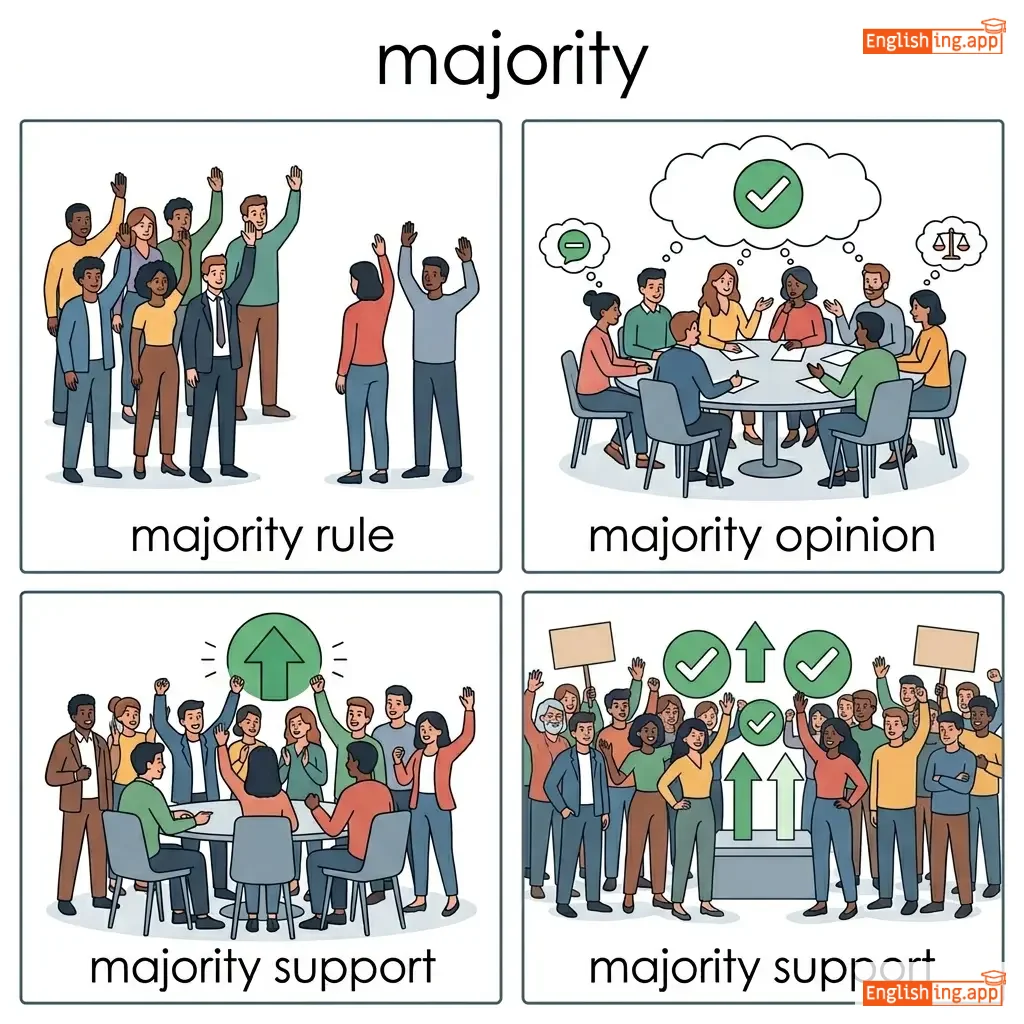
majority rule, majority opinion, majority support, majority party
••••••
|
多数はより大きな部分を意味します - 多数は半分以上です!
••••••
|
|
#5351
🌽
|
/meɪz/
noun
(メイズ)
••••••
|
- •••••• |
トウモロコシ
toumorokoshi
••••••
|
- •••••• | - •••••• | - •••••• | - •••••• |
a tall cereal plant grown for its large yellow grains, also called corn
••••••
|
Farmers harvested the maize in late autumn. |
農家は秋の終わりにトウモロコシを収穫しました。
Nouka wa aki no owari ni toumorokoshi wo shuukaku shimashita.
••••••
|
ears of maize |
the cobs of the maize plant
••••••
|
トウモロコシの穂
toumorokoshi no ho
••••••
|
corn, grain, cereal, crop, kernel
••••••
|
none, barren
••••••
|
maize field, maize crop, maize flour, ears of maize
••••••
|
Maize はトウモロコシを意味する 🌽 - maize が来ると、トウモロコシが育ちます。
••••••
|
|
#5352
🛠️
|
/ˈmeɪntənəns/
noun
(メンテナンス)
••••••
|
|
メンテナンス
mentenansu
••••••
|
- •••••• | - •••••• | - •••••• | - •••••• |
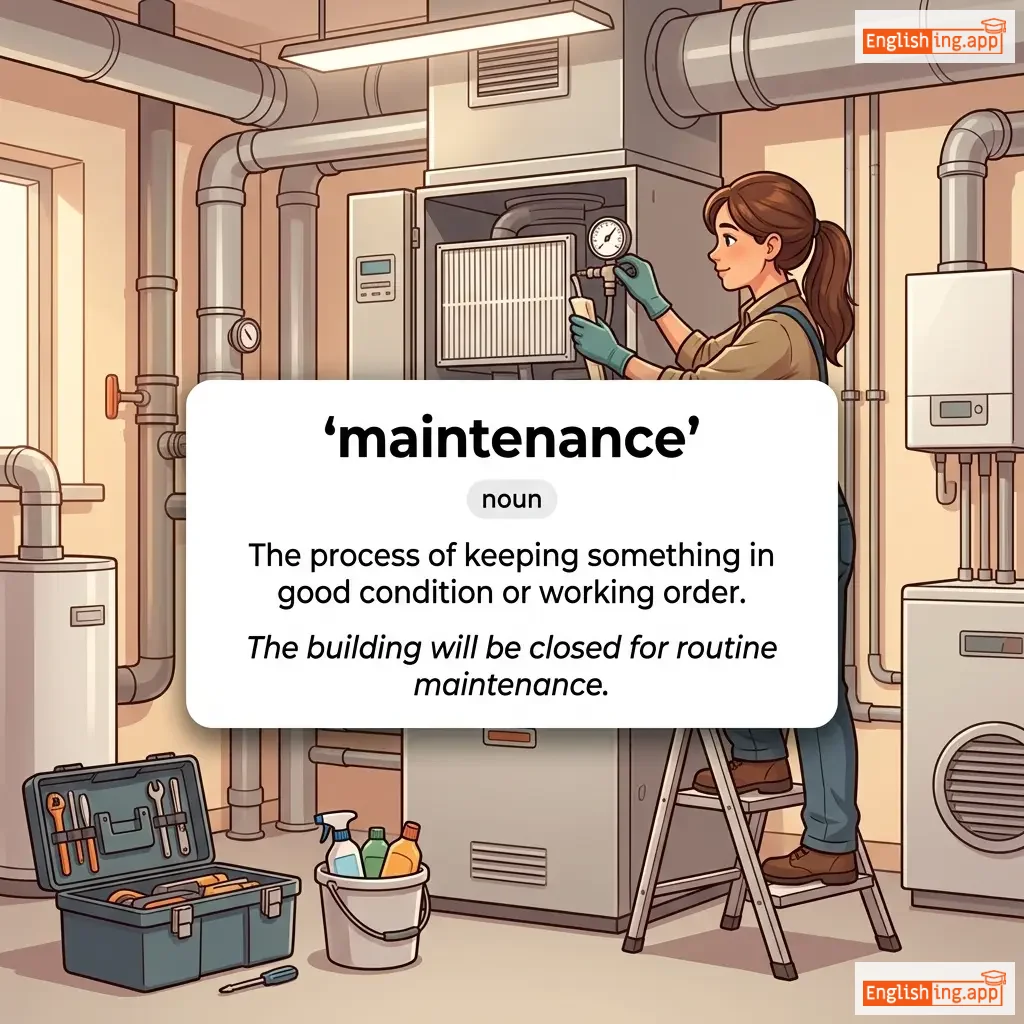
The process of keeping something in good condition or working order.
••••••
|
The building will be closed for routine maintenance. |
その建物は定期的なメンテナンスのために閉鎖されます。
Sono tatemono wa teikiteki na mentenansu no tame ni heisa saremasu.
••••••
|
maintenance work |
Regular work done to preserve or repair something
••••••
|
メンテナンス作業
mentenansu sagyō
••••••
|
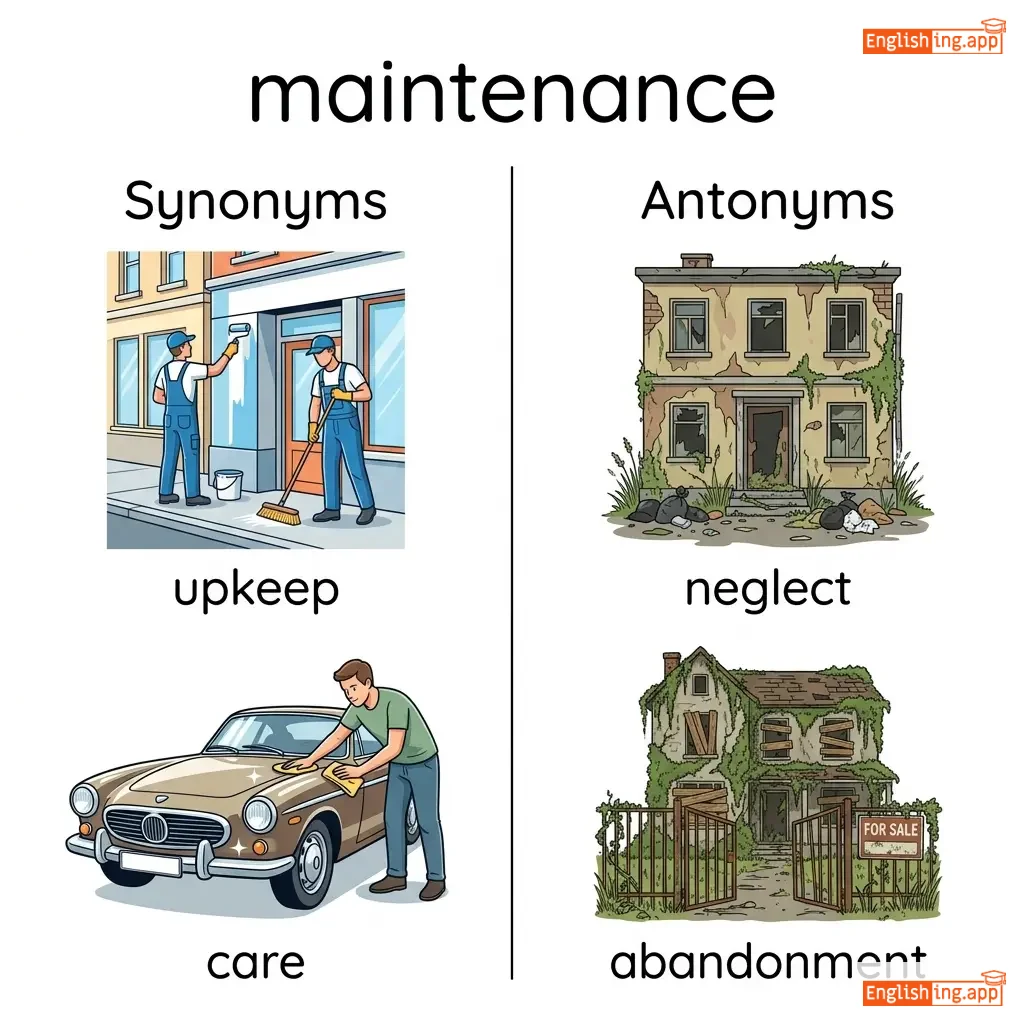
upkeep, care, preservation, repair, servicing
••••••
|
neglect, abandonment
••••••
|
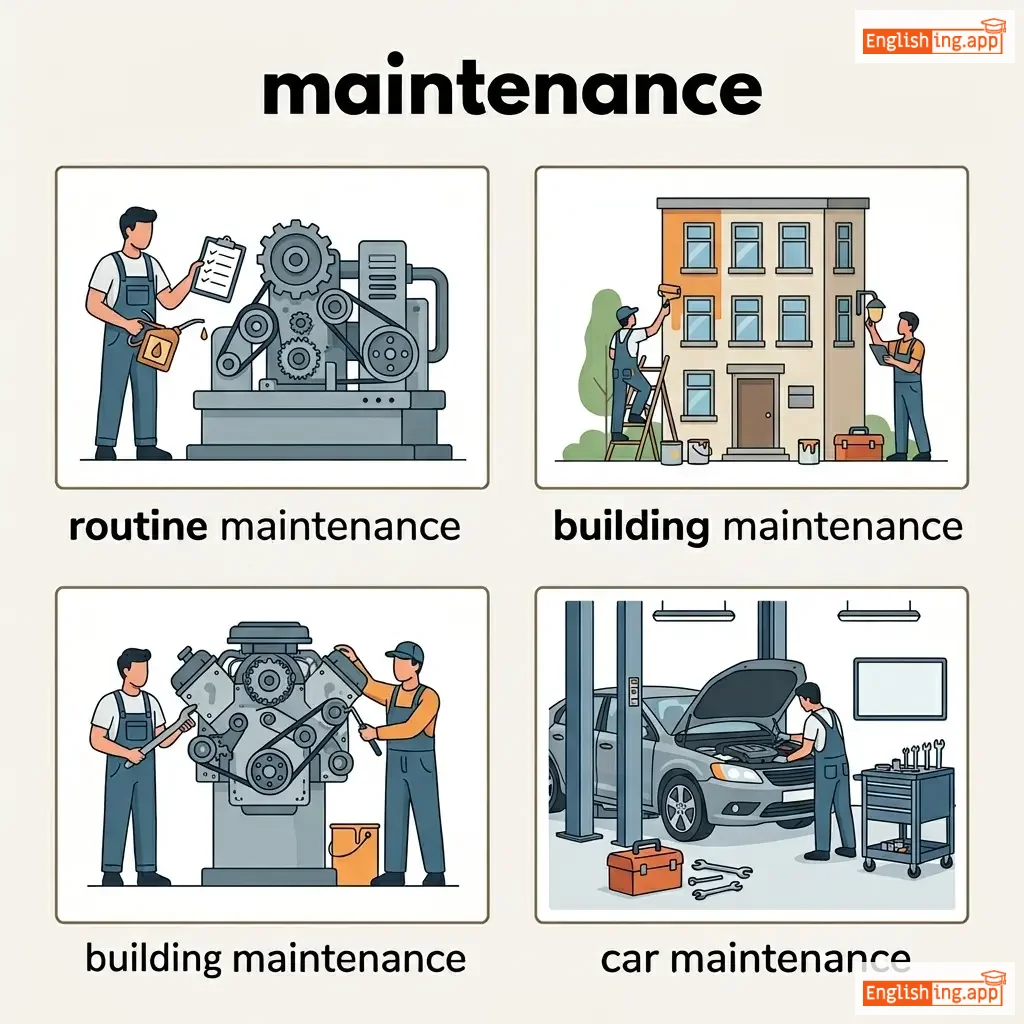
routine maintenance, building maintenance, car maintenance, maintenance cost
••••••
|
Maintenance は物を正しく動かすための手助け
••••••
|
|
#5353
⚙️
|
/meɪnˈteɪn/
verb
(メインテイン)
••••••
|
|
維持する
iji suru
••••••
|
maintained
メインテンド
••••••
|
maintained
メインテンド
••••••
|
maintains
メインテインズ
••••••
|
maintaining
メインテイニング
••••••
|
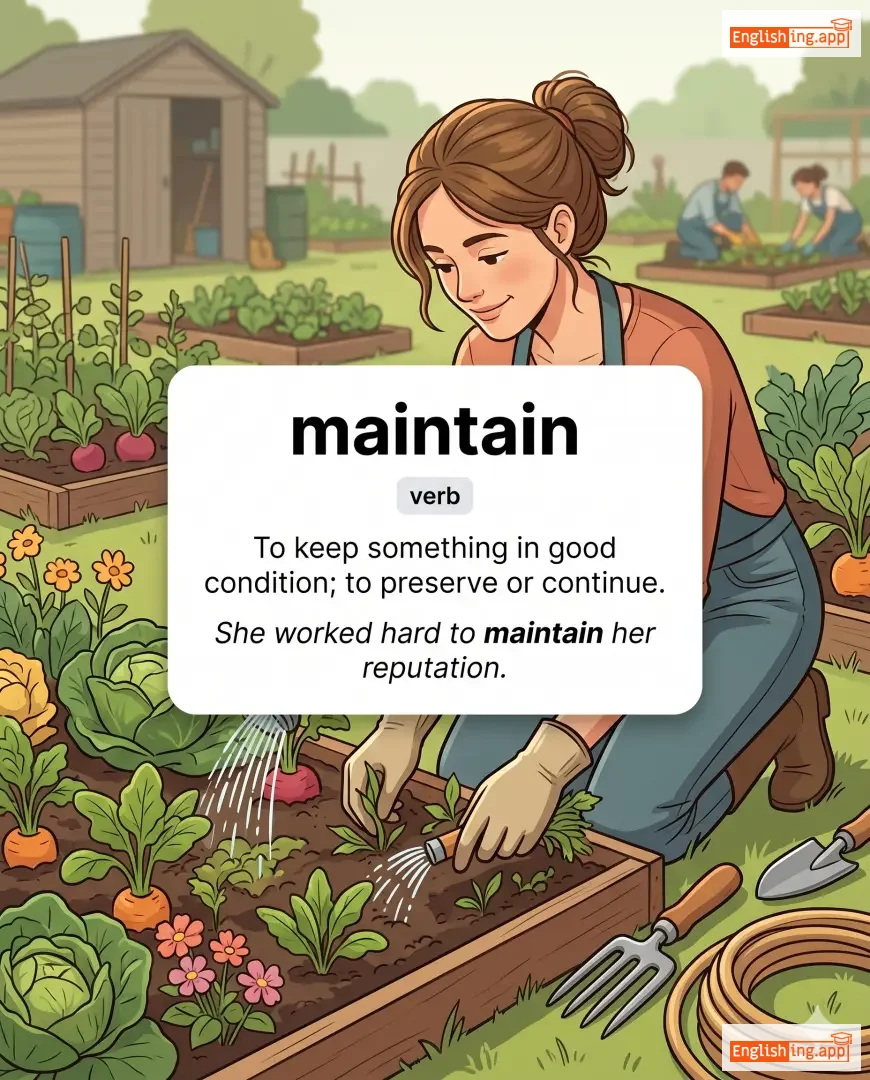
To keep something in good condition; to preserve or continue.
••••••
|
She worked hard to maintain her reputation.
彼女は評判を維持するために一生懸命働きました。
••••••
|
彼女は評判を維持するために一生懸命働きました。
Kanojo wa hyōban o iji suru tame ni isshōkenmei hatarakimashita.
••••••
|
maintain composure
冷静を保つ
••••••
|
To stay calm and in control under pressure
••••••
|
冷静を保つ
reisei o tamotsu
••••••
|
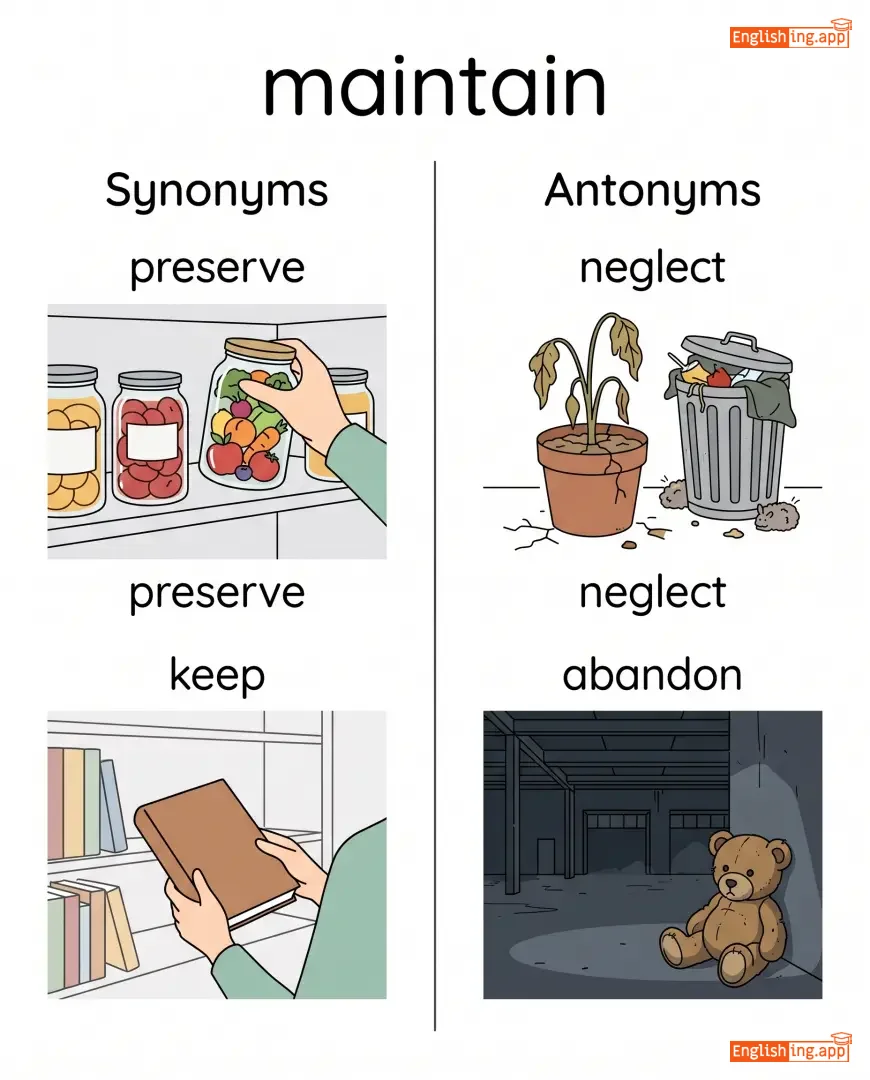
preserve, keep, sustain, uphold, continue
••••••
|
neglect, abandon, destroy
••••••
|
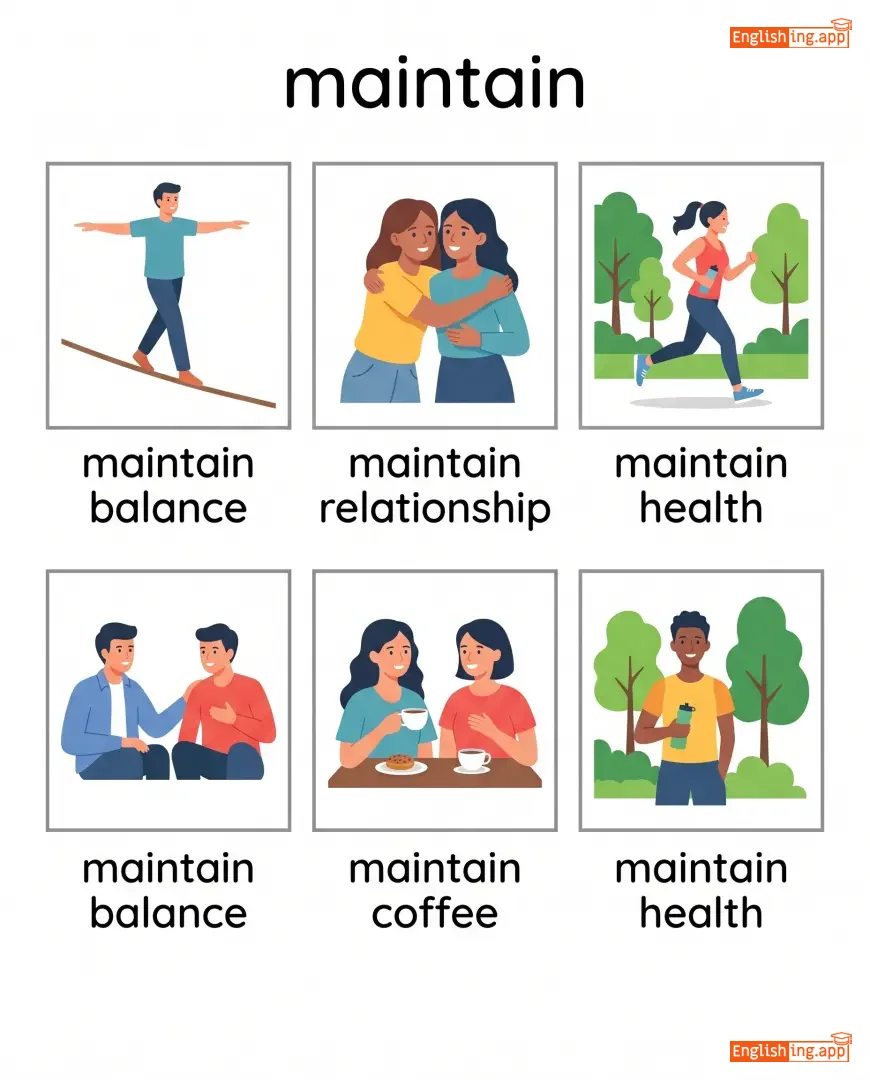
maintain balance, maintain relationship, maintain health, maintain order
••••••
|
MaintainはMain + Tain (保持) = 保持するまたは続ける
••••••
|
|
#5354
🩹
|
/meɪm/
verb
(メイム)
••••••
|
- •••••• |
重傷を負わせる
jūshō o owaseru
••••••
|
maimed
メイムド
••••••
|
maimed
メイムド
••••••
|
maims
メイムズ
••••••
|
maiming
メイミング
••••••
|
To wound or injure someone so that part of the body is permanently damaged.
••••••
|
The accident maimed several passengers.
事故は数人の乗客を負傷させました。
••••••
|
事故は数人の乗客を負傷させました。
Jiko wa suunin no jōkyaku o fushō saseru mashita.
••••••
|
maimed for life
一生負傷
••••••
|
Permanently injured with lasting physical disability
••••••
|
一生負傷
isshō fushō
••••••
|
cripple, injure, mutilate, disable, wound
••••••
|
heal, cure, repair
••••••
|
maim someone, maim for life, accident maimed, maiming injury
••••••
|
Maim は重傷を負わせるという意味です。
••••••
|
|
#5355
🌸
|
/ˈmeɪdənˌhʊd/
noun
(メイドンフッド)
••••••
|
- •••••• |
処女性
shojosei
••••••
|
- •••••• | - •••••• | - •••••• | - •••••• |
The state of being a maiden; girlhood or virginity.
••••••
|
The poem celebrated the innocence of maidenhood.
その詩はメイドンフッドの無垢を讃えました。
••••••
|
その詩は処女性の無垢を讃えました。
Sono shi wa shojosei no muku o tataemashita.
••••••
|
- •••••• | - •••••• | - •••••• |
virginity, girlhood, youth, purity
••••••
|
womanhood, maturity
••••••
|
innocence of maidenhood, beauty of maidenhood, protect maidenhood
••••••
|
Maidenhoodは処女性を意味します。
••••••
|
|
#5356
🎶
|
/ˈmædrɪɡəl/
noun
••••••
|
- •••••• | - •••••• | - •••••• | - •••••• | - •••••• | - •••••• |
A short, lyrical poem set to music, typically from the Renaissance period.
••••••
|
The choir performed a beautiful madrigal from the 16th century. |
- •••••• | - •••••• | - •••••• | - •••••• |
song, chant, ballad, lyric, hymn
••••••
|
prose, silence
••••••
|
sing a madrigal, Renaissance madrigal, madrigal choir
••••••
|
No •••••• |
|
#5357
📏
|
/ˈmæɡnɪtuːd/
noun
(マグニチュード)
••••••
|
- •••••• |
規模
kibo
••••••
|
- •••••• | - •••••• | - •••••• | - •••••• |
the great size, extent, or importance of something
••••••
|
The magnitude of the earthquake shocked the nation. |
地震の規模は国を驚かせました。
Jishin no kibo wa kuni o odorokasemashita.
••••••
|
of great magnitude |
something of great size or importance
••••••
|
大規模な
daikibona
••••••
|
extent, scale, size, importance, intensity
••••••
|
triviality, insignificance, smallness
••••••
|
earthquake magnitude, magnitude of problem, magnitude scale
••••••
|
Magnitudeは大きな地震のように — 大きな影響やサイズ。
••••••
|
|
#5358
🗣️
|
/mæɡˈnɪləkwənt/
adjective
(マグニロクエント)
••••••
|
- •••••• |
誇張した言葉
kochou shita kotoba
••••••
|
- •••••• | - •••••• | - •••••• | - •••••• |
using high-flown or pompous language
••••••
|
The politician’s magniloquent speech impressed the crowd. |
その政治家の誇張したスピーチは群衆に印象を与えた。
Sono seijika no kochou shita supīchi wa gunshū ni inshō o ataeta.
••••••
|
- •••••• | - •••••• | - •••••• |
grandiloquent, pompous, bombastic, pretentious
••••••
|
simple, plain, humble
••••••
|
magniloquent speech, magniloquent tone, magniloquent style
••••••
|
Magniloquent とは誇張した言葉 — 大げさに話すこと。
••••••
|
|
#5359
🌄
|
/mæɡˈnɪfɪsənt/
adjective
(マグニフィセント)
••••••
|
- •••••• |
素晴らしい
subarashii
••••••
|
- •••••• | - •••••• | - •••••• | - •••••• |
extremely beautiful, impressive, or splendid
••••••
|
The view from the mountain was truly magnificent.
山からの景色は本当に素晴らしかった。
••••••
|
山からの景色は本当に素晴らしかった。
Yama kara no keshiki wa hontou ni subarashikatta.
••••••
|
in magnificent style
素晴らしいスタイルで
••••••
|
to do something in an impressive or splendid way
••••••
|
素晴らしいスタイルで
subarashii sutairu de
••••••
|
splendid, glorious, majestic, superb, wonderful
••••••
|
awful, ordinary, poor
••••••
|
magnificent view, magnificent palace, magnificent effort
••••••
|
Magnificent = 素晴らしい = 驚くべき景色。
••••••
|
|
#5360
🏰
|
/mæɡˈnɪfɪsəns/
noun
(マグニフィセンス)
••••••
|
- •••••• |
壮麗
sōrei
••••••
|
- •••••• | - •••••• | - •••••• | - •••••• |
splendor, grandeur, or impressive beauty
••••••
|
The magnificence of the palace left everyone speechless. |
宮殿の壮麗さに誰もが言葉を失った。
Kyūden no sōrei-sa ni daremo ga kotoba o ushinatta.
••••••
|
- •••••• | - •••••• | - •••••• |
splendor, grandeur, glory, majesty
••••••
|
mediocrity, dullness, insignificance
••••••
|
natural magnificence, royal magnificence, magnificence of design
••••••
|
壮麗は‘magnificent’に似ている — 宮殿の壮麗さを思い出してね。
••••••
|
|
#5361
🧲
|
/ˈmæɡnɪtaɪz/
verb
(マグネタイズ)
••••••
|
- •••••• |
磁化する
jikasu
••••••
|
magnetized
マグネタイズド
••••••
|
magnetized
マグネタイズド
••••••
|
magnetizes
マグネタイズズ
••••••
|
magnetizing
マグネタイズイング
••••••
|
to make something magnetic or to strongly attract
••••••
|
The scientist managed to magnetize the iron rod.
科学者は鉄の棒を磁化することに成功した。
••••••
|
科学者は鉄の棒を磁化することに成功した。
Kagakusha wa tetsu no bō o jikasu koto ni seikō shita.
••••••
|
- •••••• | - •••••• | - •••••• |
attract, allure, charm, enchant, fascinate
••••••
|
repel, deter, discourage
••••••
|
magnetize an object, magnetize the audience, magnetize attention
••••••
|
Magnetize とは磁化すること — 'マグネット' = 磁石だから、magnetize = 磁化する。
••••••
|
|
#5362
🧲
|
/ˈmæɡnət/
noun
(マグネット)
••••••
|
- •••••• |
磁石
jishaku
••••••
|
- •••••• | - •••••• | - •••••• | - •••••• |
An object that produces a magnetic field and attracts metals like iron.
••••••
|
The magnet held the paper to the fridge door.
マグネットは紙を冷蔵庫のドアに引き寄せました。
••••••
|
磁石は紙を冷蔵庫のドアに引き寄せました。
Jishaku wa kami wo reizoko no doa ni hikiyosemashita.
••••••
|
people magnet
人間磁石
••••••
|
A very attractive or charming person who draws others in.
••••••
|
人間磁石
Ningen jishaku
••••••
|
attractor, lodestone, draw, puller
••••••
|
repellent, non-attractor
••••••
|
strong magnet, powerful magnet, magnetic field, natural magnet
••••••
|
磁石は金属を引き寄せるように、魅力的な人も他の人を引き寄せる。
••••••
|
|
#5363
💼
|
/ˈmæɡneɪt/
noun
(マグネイト)
••••••
|
- •••••• |
富豪
fugou
••••••
|
- •••••• | - •••••• | - •••••• | - •••••• |
A wealthy and influential person, especially in business or industry.
••••••
|
The oil magnate donated millions to charity. |
石油の富豪は慈善活動に何百万ドルも寄付しました。
Sekiyu no fugou wa jizen katsudō ni nan byakuman doru mo kifushimashita.
••••••
|
- •••••• | - •••••• | - •••••• |
tycoon, mogul, baron, industrialist, capitalist
••••••
|
pauper, beggar
••••••
|
business magnate, media magnate, oil magnate, steel magnate
••••••
|
Magnate = 'magna' (大きい) + 'nate' (新しい富豪) - 大きなビジネスマンで富豪。
••••••
|
|
#5364
🤲
|
/mæɡˈnænɪməs/
adjective
(マグナニマス)
••••••
|
|
寛大
kandai
••••••
|
- •••••• | - •••••• | - •••••• | - •••••• |
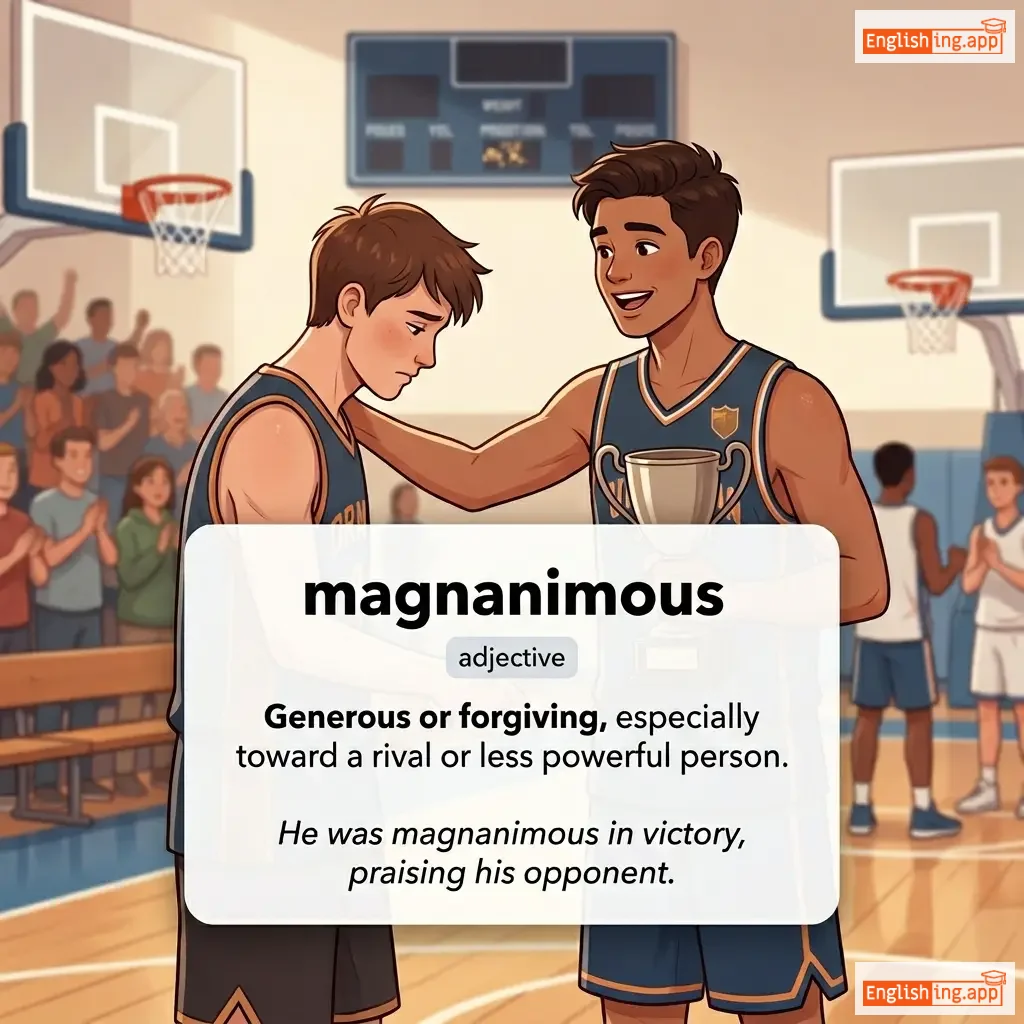
Generous or forgiving, especially toward a rival or less powerful person.
••••••
|
He was magnanimous in victory, praising his opponent.
彼は勝利において寛大で、対戦相手を称賛していた。
••••••
|
彼は勝利において寛大で、対戦相手を称賛していた。
Kare wa shouri ni oite kandai de, taisen aite wo shousan shiteita.
••••••
|
- •••••• | - •••••• | - •••••• |
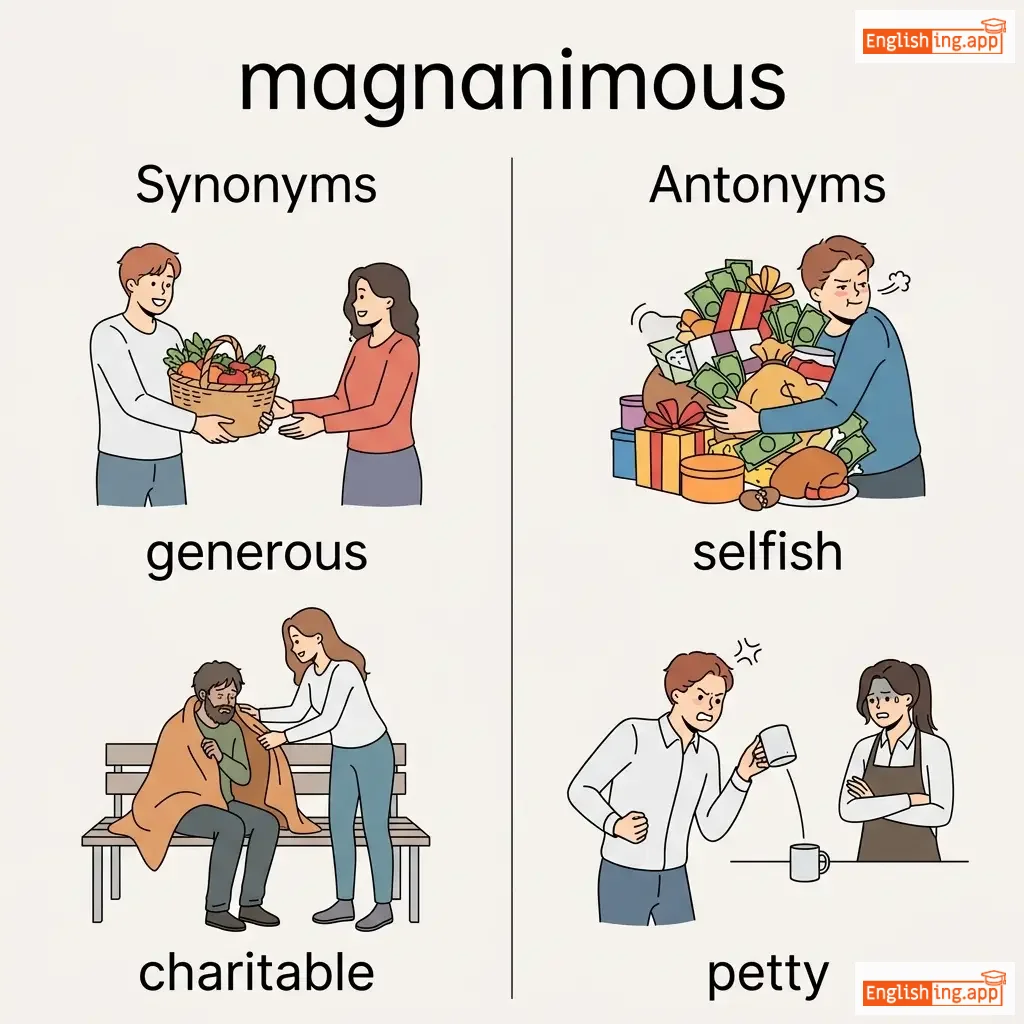
generous, charitable, noble, kind, forgiving
••••••
|
selfish, petty, vindictive
••••••
|
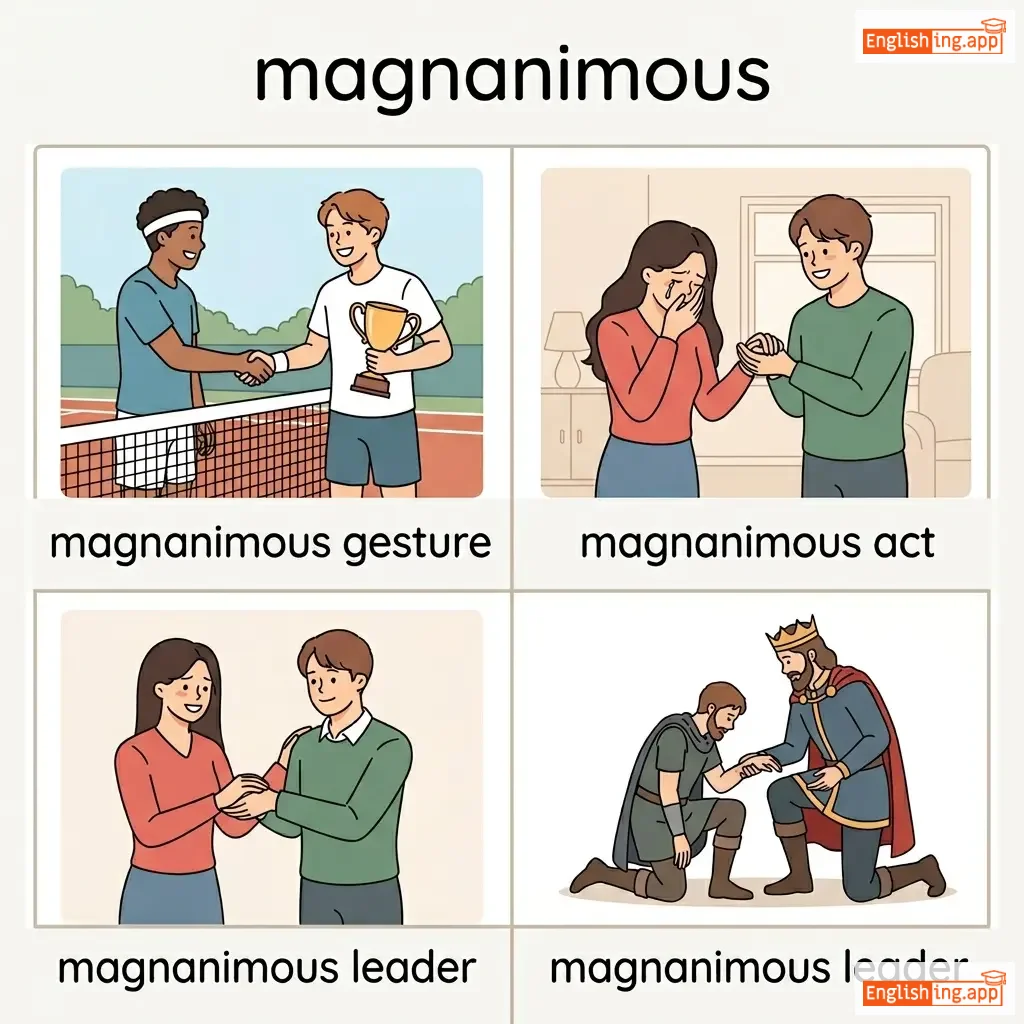
magnanimous gesture, magnanimous act, magnanimous leader, magnanimous spirit
••••••
|
Magnanimousは寛大の意味、‘偉大’と‘精神’の組み合わせです。
••••••
|
|
#5365
💖
|
/ˌmæɡnəˈnɪmɪti/
noun
(マグナニミティ)
••••••
|
|
寛大さ
kandaisa
••••••
|
- •••••• | - •••••• | - •••••• | - •••••• |
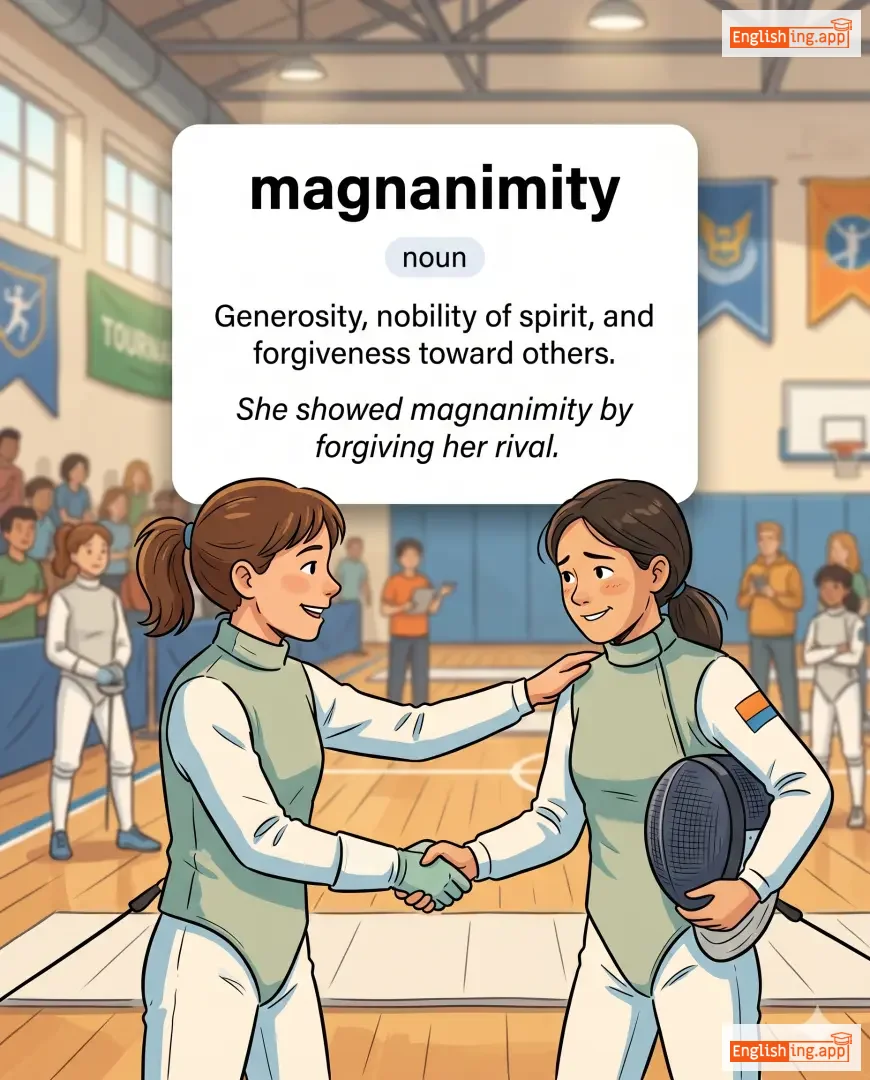
Generosity, nobility of spirit, and forgiveness toward others.
••••••
|
She showed magnanimity by forgiving her rival.
彼女はライバルを許して寛大さを示しました。
••••••
|
彼女はライバルを許して寛大さを示しました。
Kanojo wa raibaru o yurushite kandaisa o shimashita.
••••••
|
- •••••• | - •••••• | - •••••• |
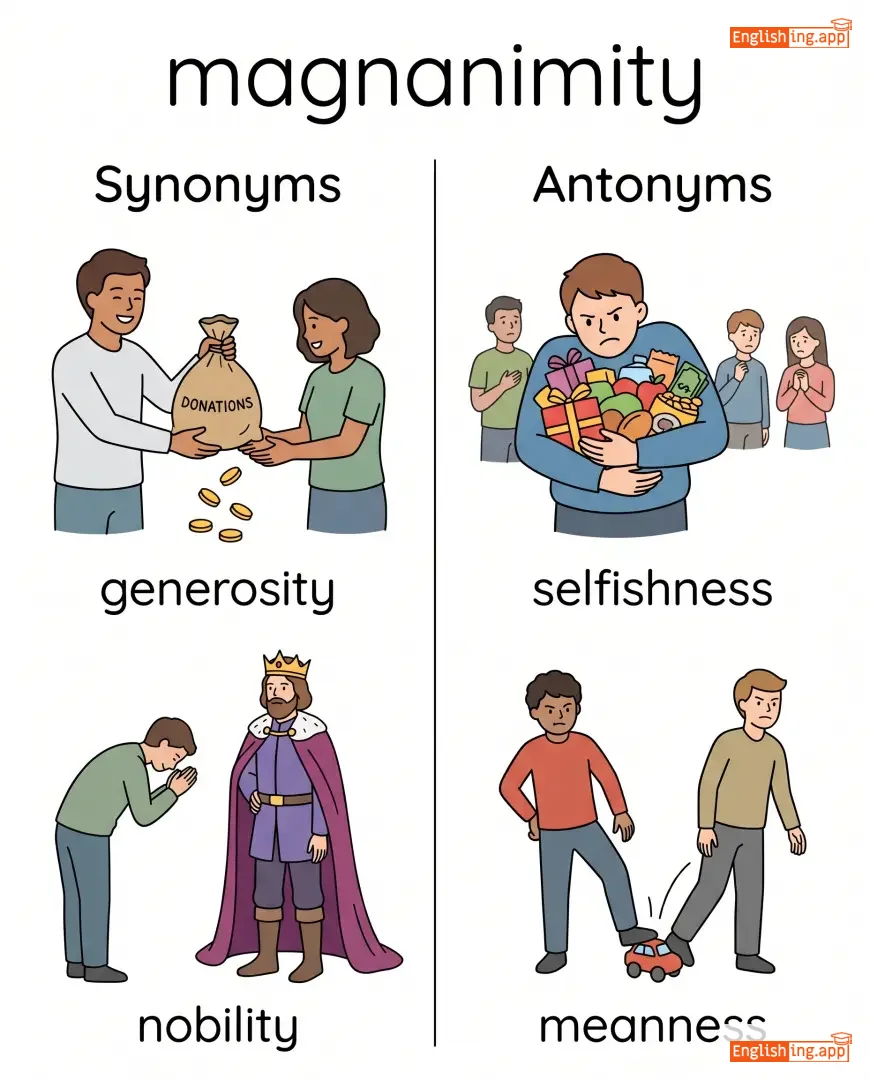
generosity, nobility, kindness, benevolence, altruism
••••••
|
selfishness, meanness, spite
••••••
|
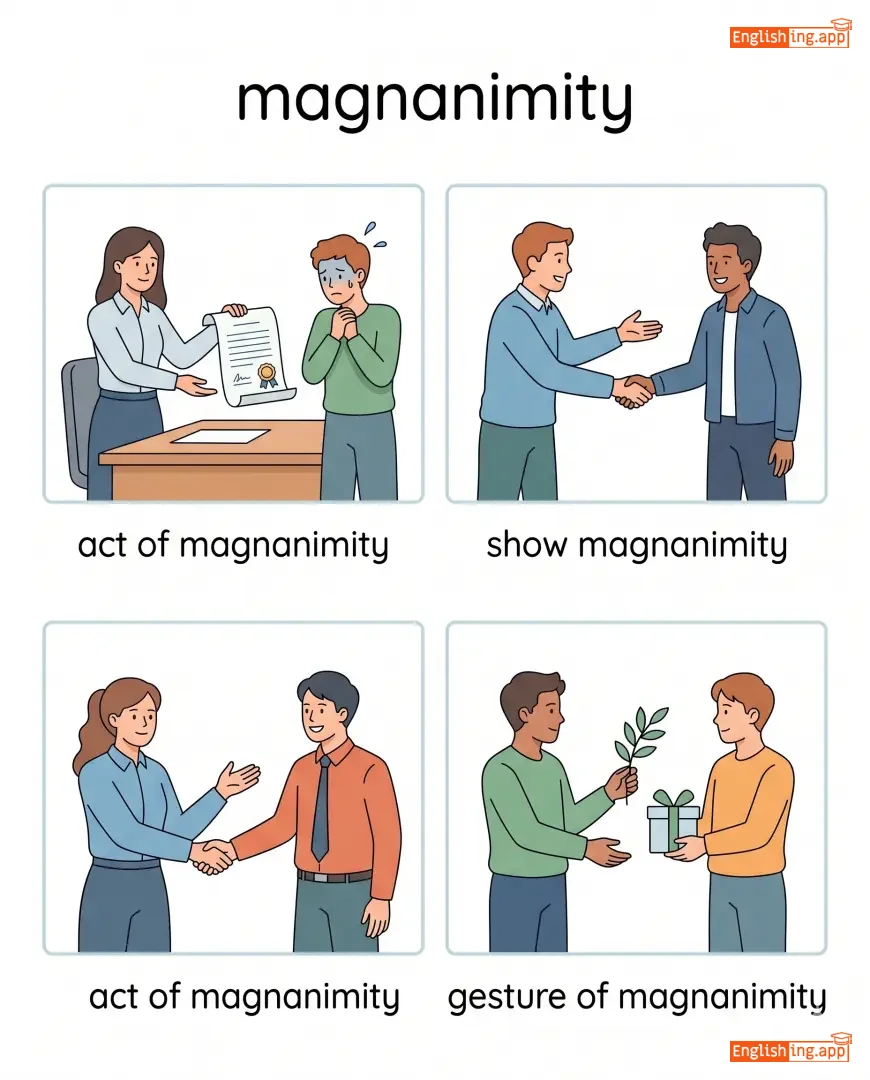
act of magnanimity, show magnanimity, gesture of magnanimity
••••••
|
Magnanimity = 寛大さ = 高貴さと寛容さ。
••••••
|
|
#5366
⚖️
|
/ˈmædʒɪstreɪt/
noun
(マジストレイト)
••••••
|
- •••••• |
裁判官
saibankan
••••••
|
- •••••• | - •••••• | - •••••• | - •••••• |
A civil officer who administers the law, often with limited judicial authority.
••••••
|
The magistrate presided over the minor criminal case.
マジストレイトは軽犯罪の事件を審理しました。
••••••
|
裁判官は軽犯罪の事件を審理しました。
Saibankan wa keihanzai no jiken o shinri shimashita.
••••••
|
- •••••• | - •••••• | - •••••• |
judge, justice, arbiter, adjudicator, official
••••••
|
criminal, offender
••••••
|
magistrate court, local magistrate, chief magistrate, before the magistrate
••••••
|
裁判官 (saibankan) は法律の 'マスター' - 法律の支配者。
••••••
|
|
#5367
⚖️
|
/ˈmædʒɪstrəsi/
noun
(マジストラシー)
••••••
|
- •••••• |
裁判所の事務所
saibansho no jimusho
••••••
|
- •••••• | - •••••• | - •••••• | - •••••• |
The office, authority, or district of a magistrate.
••••••
|
He was proud to serve in the local magistracy for over a decade. |
彼は10年以上にわたって地元の裁判所の事務所で働いていることを誇りに思っていました。
Kare wa juunen ijou ni watatte jimoto no saibansho no jimusho de hataraite iru koto wo hokori ni omotte imashita.
••••••
|
- •••••• | - •••••• | - •••••• |
judiciary, authority, bench, magistrate's office
••••••
|
anarchy, lawlessness
••••••
|
local magistracy, office of magistracy, colonial magistracy
••••••
|
Magistracy = 裁判所の事務所 ⚖️ - 裁判官が権限を持つ場所。
••••••
|
|
#5368
👑
|
/ˌmædʒɪˈstɪəriəl/
adjective
(マジステリアル)
••••••
|
- •••••• |
権威的
ken'iteki
••••••
|
- •••••• | - •••••• | - •••••• | - •••••• |
Having the characteristics of a master or authority; commanding and dignified.
••••••
|
The professor spoke in a magisterial tone during the lecture. |
教授は講義中に権威的な口調で話しました。
Kyōju wa kōgichū ni ken'iteki na kuchō de hanashimashita.
••••••
|
- •••••• | - •••••• | - •••••• |
authoritative, commanding, dignified, imposing, masterly
••••••
|
submissive, humble
••••••
|
magisterial tone, magisterial authority, magisterial work
••••••
|
マジステリアルは‘権威者’のように、力強い 👑.
••••••
|
|
#5369
🪄
|
/məˈdʒɪʃən/
noun
(マジシャン)
••••••
|
- •••••• |
マジシャン
majishan
••••••
|
- •••••• | - •••••• | - •••••• | - •••••• |
A person who performs tricks and illusions for entertainment or one believed to have magical powers.
••••••
|
The magician pulled a rabbit out of his hat. |
マジシャンは帽子からウサギを取り出しました。
Majishan wa bōshi kara usagi o toridashimashita.
••••••
|
like magic |
something happening surprisingly easily or quickly
••••••
|
魔法のように
mahō no yō ni
••••••
|
sorcerer, wizard, illusionist, conjurer, enchanter
••••••
|
mortal, realist
••••••
|
stage magician, street magician, great magician
••••••
|
マジシャンは魔法を使う人です。
••••••
|
|
#5370
🌪️
|
/ˈmeɪlstrəm/
noun
(メイルストローム)
••••••
|
|
旋風
senpū
••••••
|
- •••••• | - •••••• | - •••••• | - •••••• |
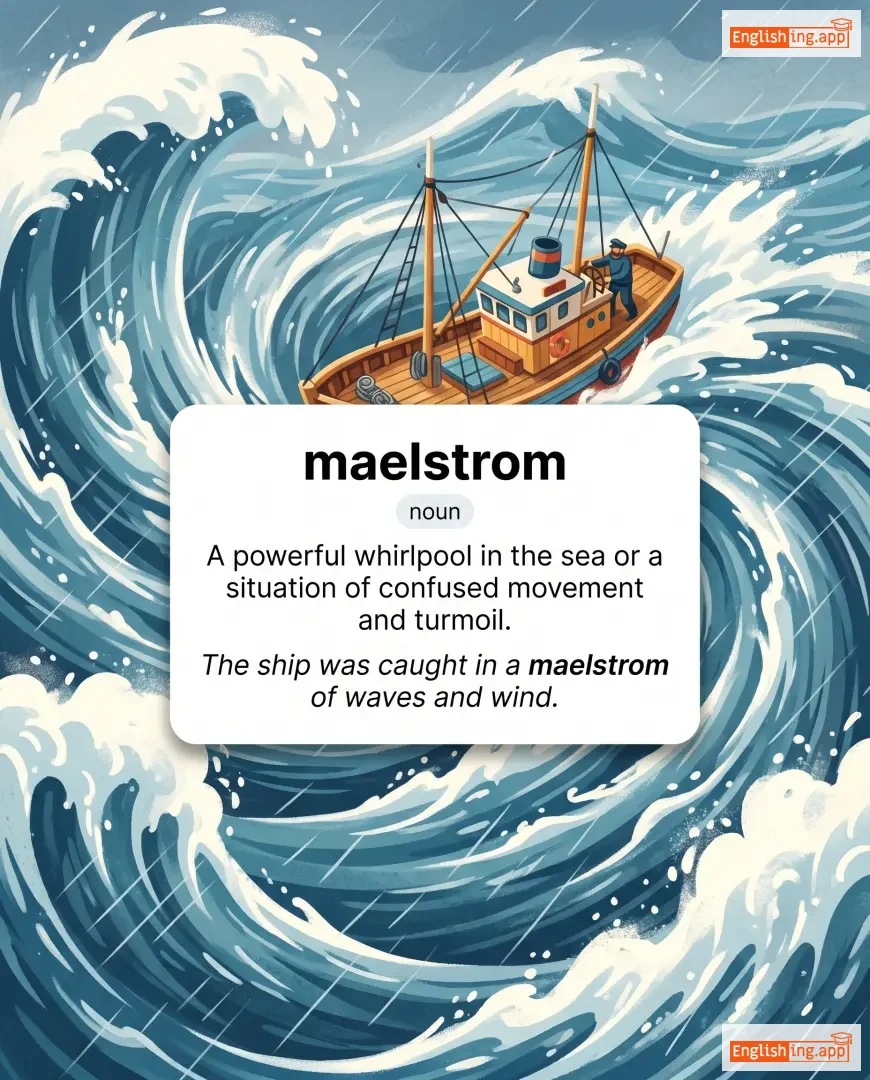
A powerful whirlpool in the sea or a situation of confused movement and turmoil.
••••••
|
The ship was caught in a maelstrom of waves and wind.
船は波と風のメイルストロームに巻き込まれました。
••••••
|
船は波と風の旋風に巻き込まれました。
Fune wa nami to kaze no senpū ni makikomarimashita.
••••••
|
caught in a maelstrom
メイルストロームに巻き込まれる
••••••
|
being stuck in a confusing or turbulent situation
••••••
|
旋風に巻き込まれる
senpū ni makikomareru
••••••
|
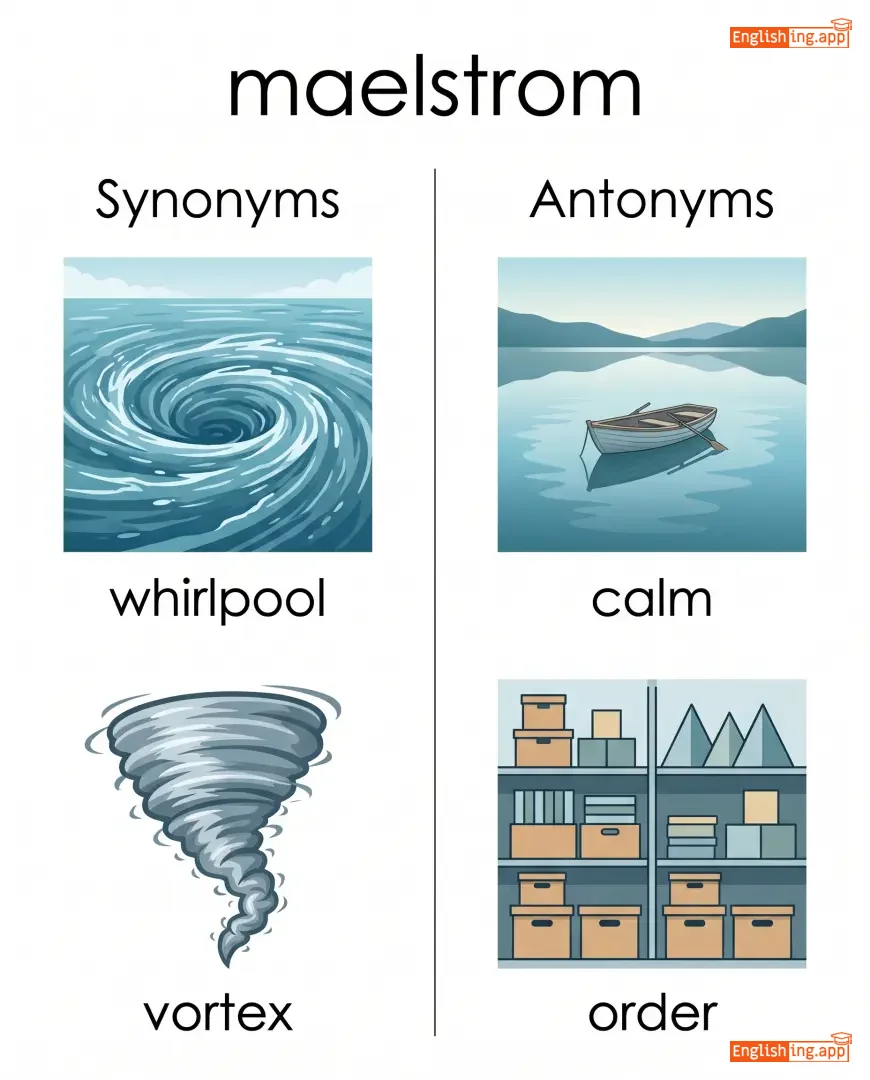
whirlpool, vortex, turbulence, chaos, turmoil
••••••
|
calm, order, tranquility
••••••
|
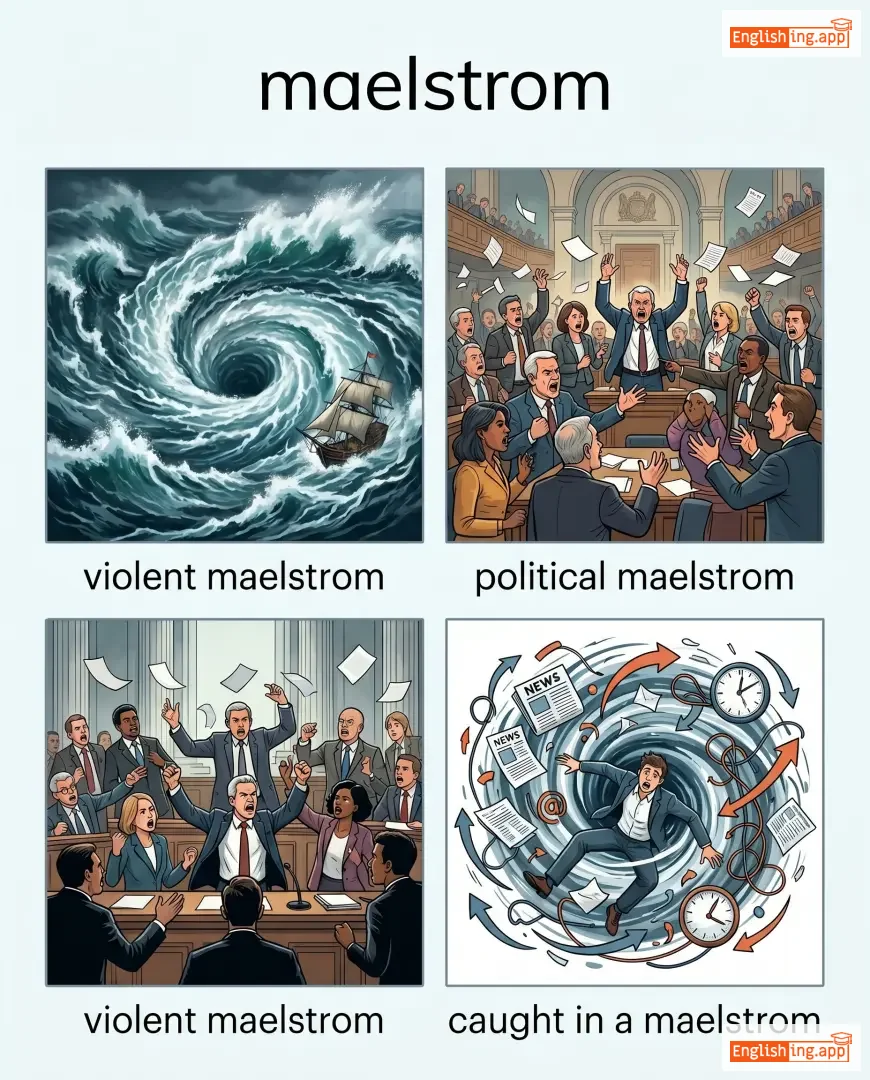
violent maelstrom, political maelstrom, caught in a maelstrom
••••••
|
旋風=すべてを引き寄せる渦!
••••••
|
Vocabulary Quiz
Test your vocabulary by matching words with their translations or meanings.
Login to take the quiz
Comments (0)
Share your thoughts and join the discussion.
Join the discussion by logging in
Login to CommentNo comments yet
Be the first to share your thoughts!