

翻訳
過去
過去分詞
三人称単数
動名詞
意味
例文
例文の翻訳
同義語
対義語
コロケーション
ニーモニック
Swipe left or right, or use the buttons. Tap image to zoom.
例文の翻訳
単語
Lesson 74Lesson 74 - マスクトグル
|
絵文字
|
単語 | Images | 翻訳 | 過去 | 過去分詞 | 三人称単数 | 動名詞 | 意味 | 例文 | 例文の翻訳 | 表現例 | 表現例の意味 | 表現例の翻訳 | 同義語 | 対義語 | コロケーション | ニーモニック |
|---|---|---|---|---|---|---|---|---|---|---|---|---|---|---|---|---|---|
|
#2191
🌀
|
/dɪˈfɔːrm/
verb
(ディフォーム)
••••••
|
- •••••• |
変形する
henkei suru
••••••
|
deformed
ディフォームド
••••••
|
deformed
ディフォームド
••••••
|
deforms
ディフォームズ
••••••
|
deforming
ディフォームイング
••••••
|
to change the normal shape or structure of something by twisting or distorting it
••••••
|
Excessive heat can deform plastic containers.
過度な熱はプラスチック容器を変形させる可能性があります。
••••••
|
過度な熱はプラスチック容器を変形させる可能性があります。
Kado na netsu wa purasutikku youki o henkei saseru kanousei ga arimasu.
••••••
|
deform under pressure
圧力で変形する
••••••
|
to lose original shape when subjected to stress or pressure
••••••
|
圧力で変形する
atsuryoku de henkei suru
••••••
|
distort, twist, warp, misshape, contort
••••••
|
straighten, restore, fix
••••••
|
deform the body, deform the surface, deform under heat, deform the metal
••••••
|
Deform = 形を変える
••••••
|
|
#2192
😞
|
/dɪˈɡreɪdɪd/
adjective
(dɪˈɡreɪdɪd)
••••••
|
- •••••• |
劣化した
reka shita
••••••
|
- •••••• | - •••••• | - •••••• | - •••••• |
Reduced in quality, dignity, or condition.
••••••
|
The villagers were forced to live in degraded conditions. |
村人たちは劣化した状態で暮らさざるを得なかった。
Murabito-tachi wa reka shita joutai de kurasazaru o enakatta.
••••••
|
- •••••• | - •••••• | - •••••• |
deteriorated, debased, ruined, corrupt
••••••
|
improved, dignified, elevated
••••••
|
degraded condition, degraded environment, degraded status
••••••
|
劣化したは、物が悪化した状態を意味します。
••••••
|
|
#2193
⬇️😔
|
/dɪˈɡreɪd/
verb
••••••
|
- •••••• | - •••••• |
degraded
••••••
|
degraded
••••••
|
degrades
••••••
|
degrading
••••••
|
To lower in dignity, quality, or value; to treat with disrespect or to deteriorate.
••••••
|
Harsh words can degrade a person's confidence. |
- •••••• |
degrade oneself |
To lower one’s dignity or self-respect.
••••••
|
- •••••• |
demean, humiliate, debase, deteriorate, dishonor
••••••
|
honor, elevate, respect
••••••
|
degrade the environment, degrade oneself, degrade quality
••••••
|
No •••••• |
|
#2194
🌍⬇️
|
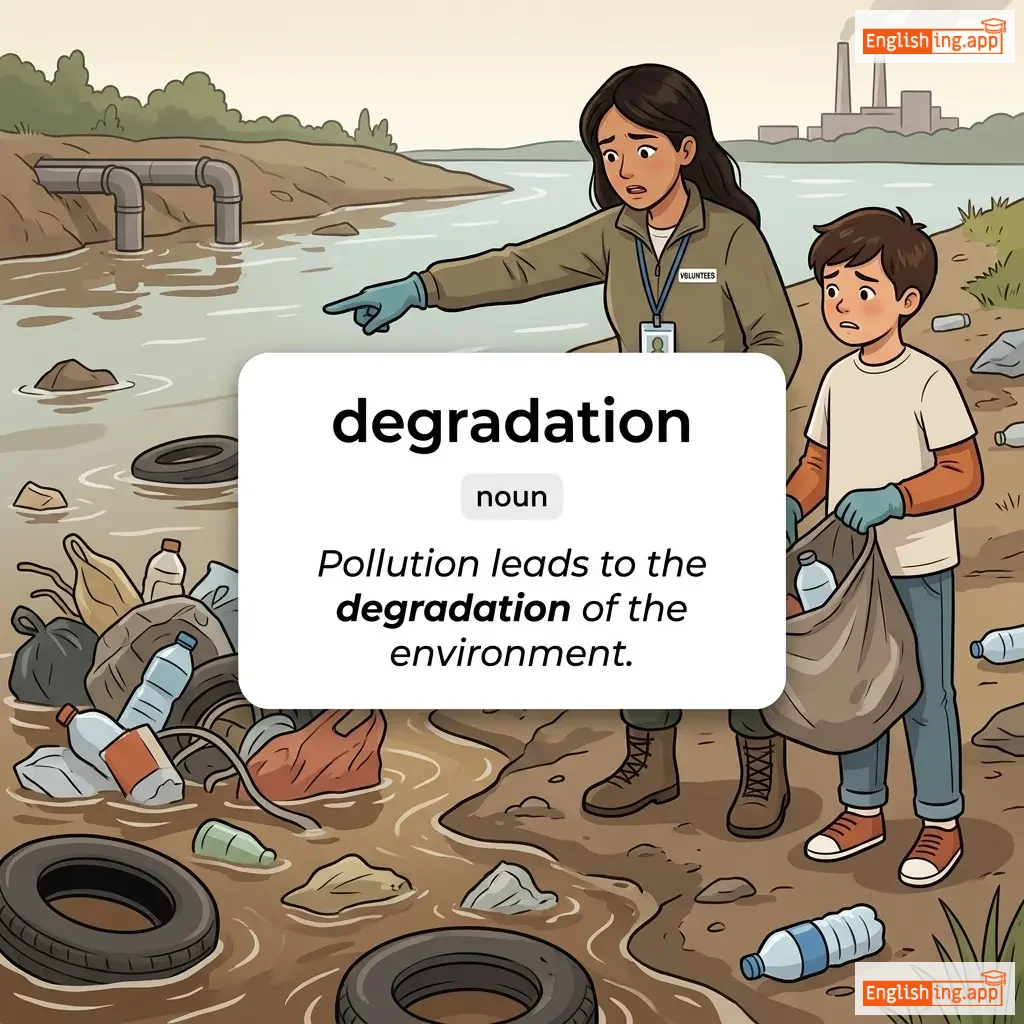
/ˌdɛɡrəˈdeɪʃən/
noun
(デグレデーション)
••••••
|
|
劣化
rekka
••••••
|
- •••••• | - •••••• | - •••••• | - •••••• |
The process of being degraded, declined, or reduced in quality, dignity, or value.
••••••
|
Pollution leads to the degradation of the environment.
汚染は環境の劣化を引き起こします。
••••••
|
汚染は環境の劣化を引き起こします。
Osenshita kankyō no rekka wo hikiokoshimasu.
••••••
|
- •••••• | - •••••• | - •••••• |
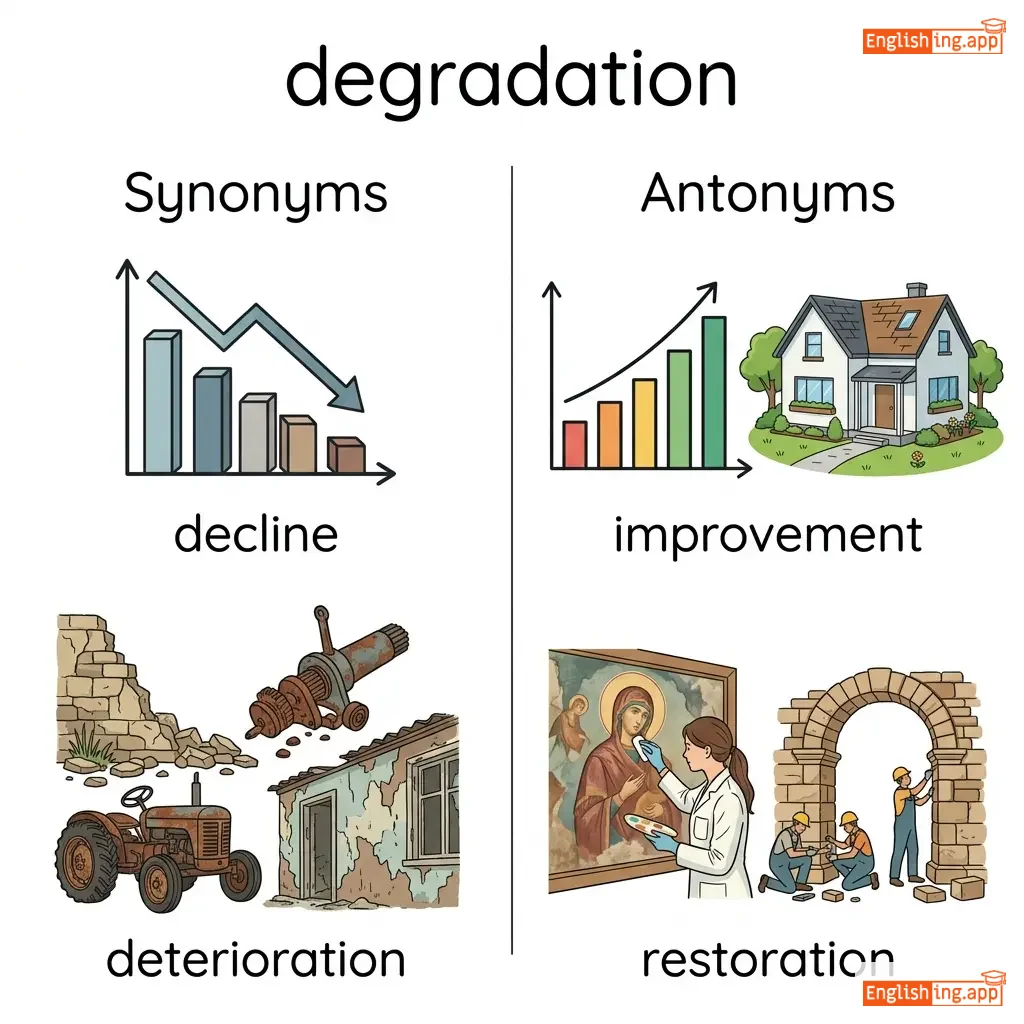
decline, deterioration, debasement, downfall
••••••
|
improvement, restoration
••••••
|
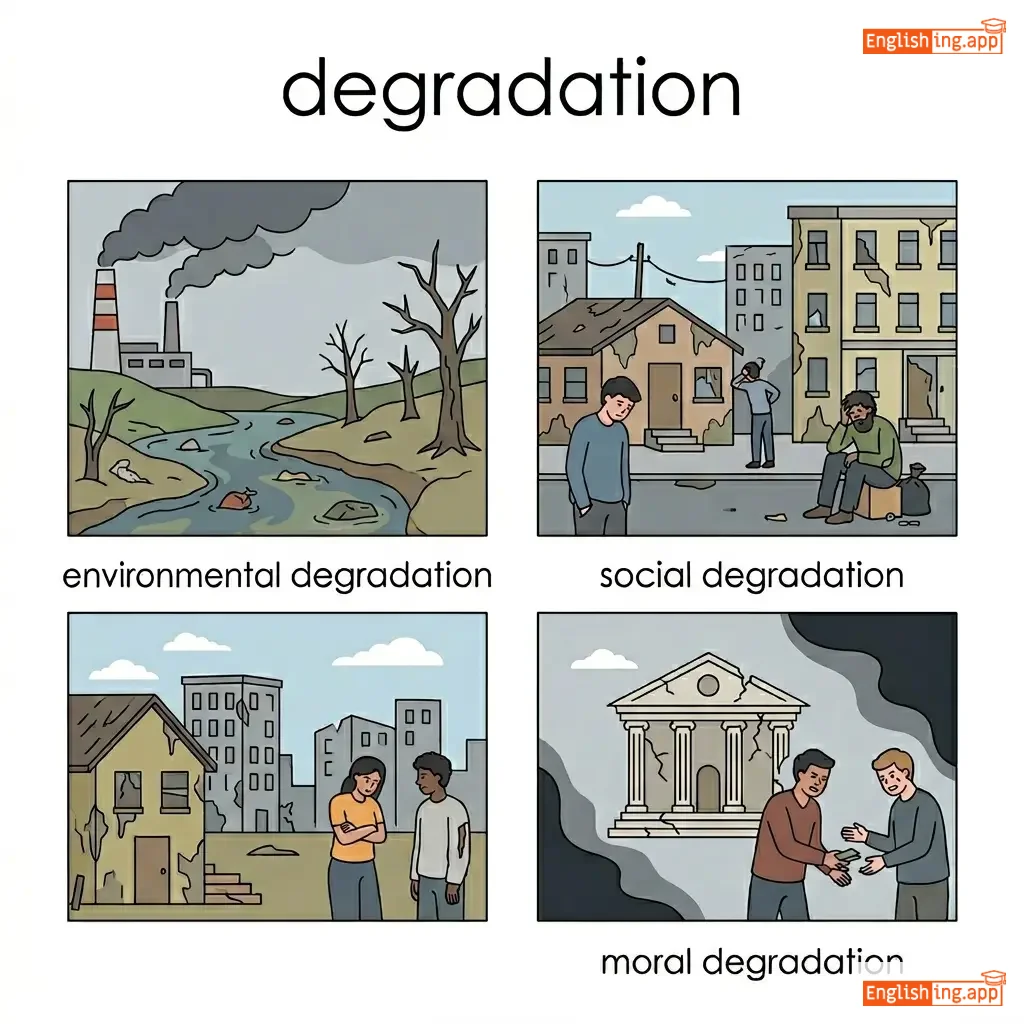
environmental degradation, social degradation, moral degradation
••••••
|
劣化はdegrade + 行動 → 品質の低下のプロセス。
••••••
|
|
#2195
⬇️
|
/dɪˈdʒɛnəreɪt/
verb/adjective
(ディジェネレート)
••••••
|
- •••••• |
堕落する
daraku suru
••••••
|
degenerated
ディジェネレイテッド
••••••
|
degenerated
ディジェネレイテッド
••••••
|
degenerates
ディジェネレーツ
••••••
|
degenerating
ディジェネレーティング
••••••
|
To decline or deteriorate in quality, character, or condition; or someone with low moral standards.
••••••
|
The once thriving empire began to degenerate into chaos.
かつて繁栄していた帝国は混沌に堕ち始めました。
••••••
|
かつて繁栄していた帝国は混沌に堕ち始めました。
Katsute han'ei shite ita teikoku wa konton ni ochi hajimemashita.
••••••
|
- •••••• | - •••••• | - •••••• |
deteriorate, decay, worsen, decline, corrupt
••••••
|
improve, progress, advance
••••••
|
degenerate into, morally degenerate, degenerate form
••••••
|
Degenerateはde-generate、すなわち堕落や低下を意味します
••••••
|
|
#2196
⚠️
|
/dɪˈdʒɛnərəsi/
noun
(ディジェネレシー)
••••••
|
- •••••• |
退化
taika
••••••
|
- •••••• | - •••••• | - •••••• | - •••••• |
The state of decline or deterioration, often in moral, cultural, or physical qualities.
••••••
|
The novel portrays the moral degeneracy of a corrupt society. |
その小説は腐敗した社会の道徳的退化を描いています。
Sono shōsetsu wa fuhai shita shakai no dōtoku-teki taika o egaiteimasu.
••••••
|
- •••••• | - •••••• | - •••••• |
decay, corruption, decline, deterioration, depravity
••••••
|
virtue, integrity, improvement
••••••
|
moral degeneracy, cultural degeneracy, political degeneracy
••••••
|
退化というのは、物事が悪化していくこと、まるでゆっくりと崩れていく感じ。
••••••
|
|
#2197
✊
|
/dɪˈfaɪ/
verb
••••••
|
|
- •••••• |
defied
••••••
|
defied
••••••
|
defies
••••••
|
defying
••••••
|
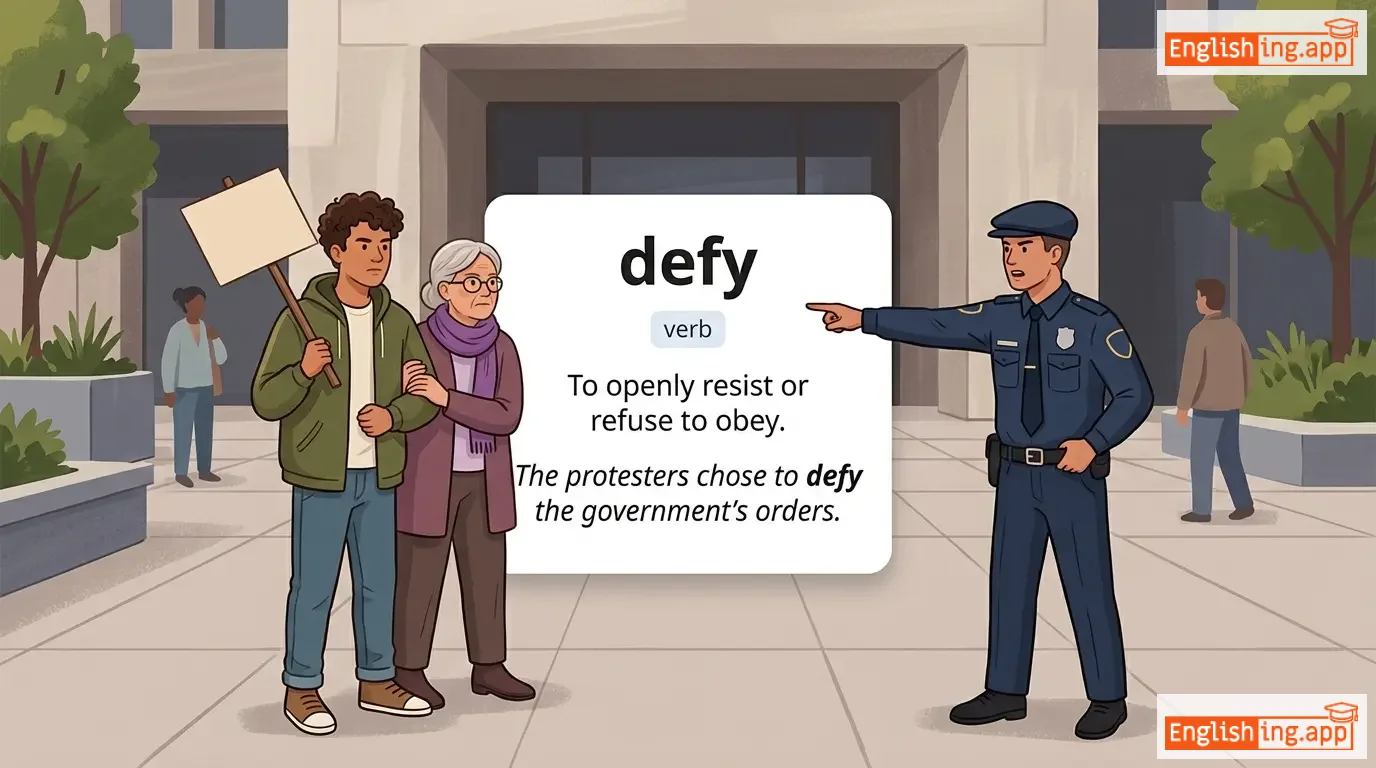
To openly resist or refuse to obey.
••••••
|
The protesters chose to defy the government's orders. |
- •••••• |
defy the odds |
To succeed despite being very unlikely or facing great difficulties.
••••••
|
- •••••• |
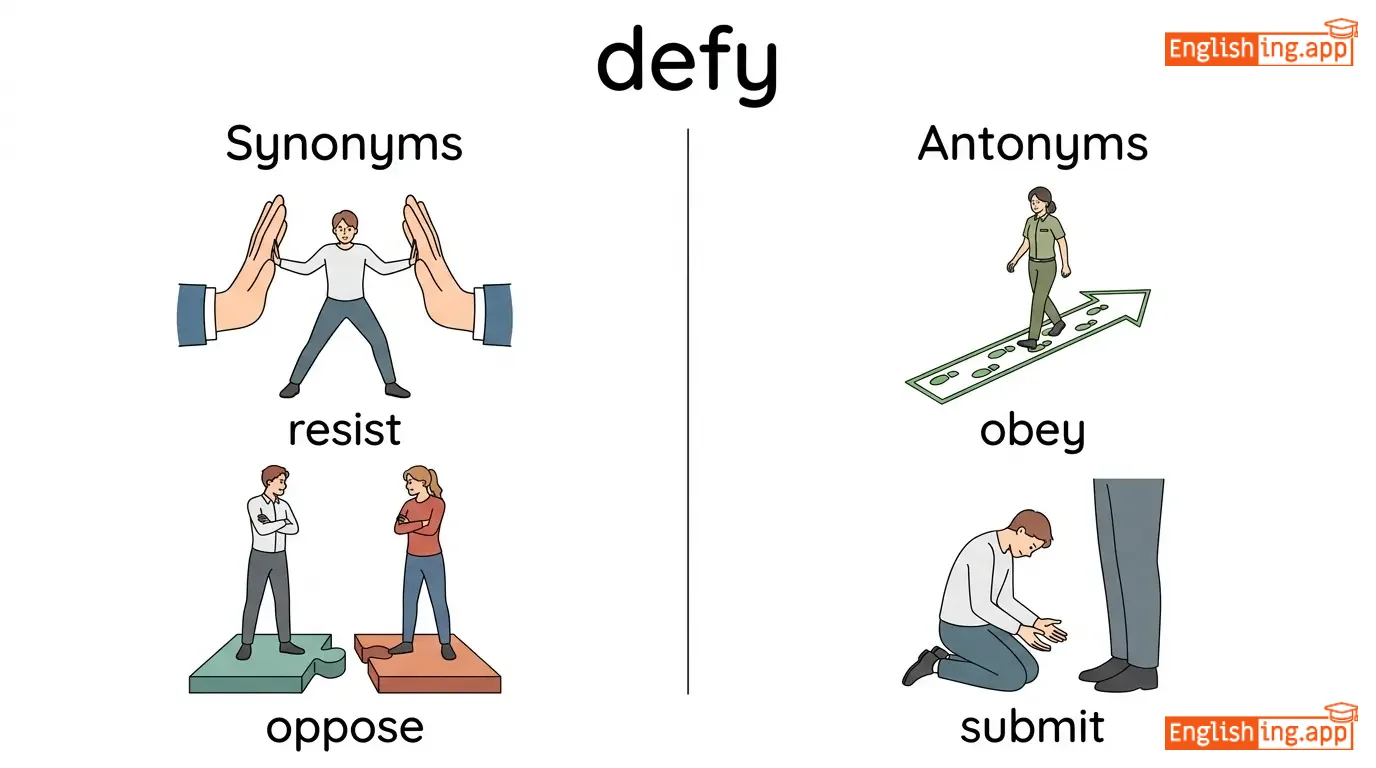
resist, oppose, confront, challenge
••••••
|
obey, submit, yield
••••••
|
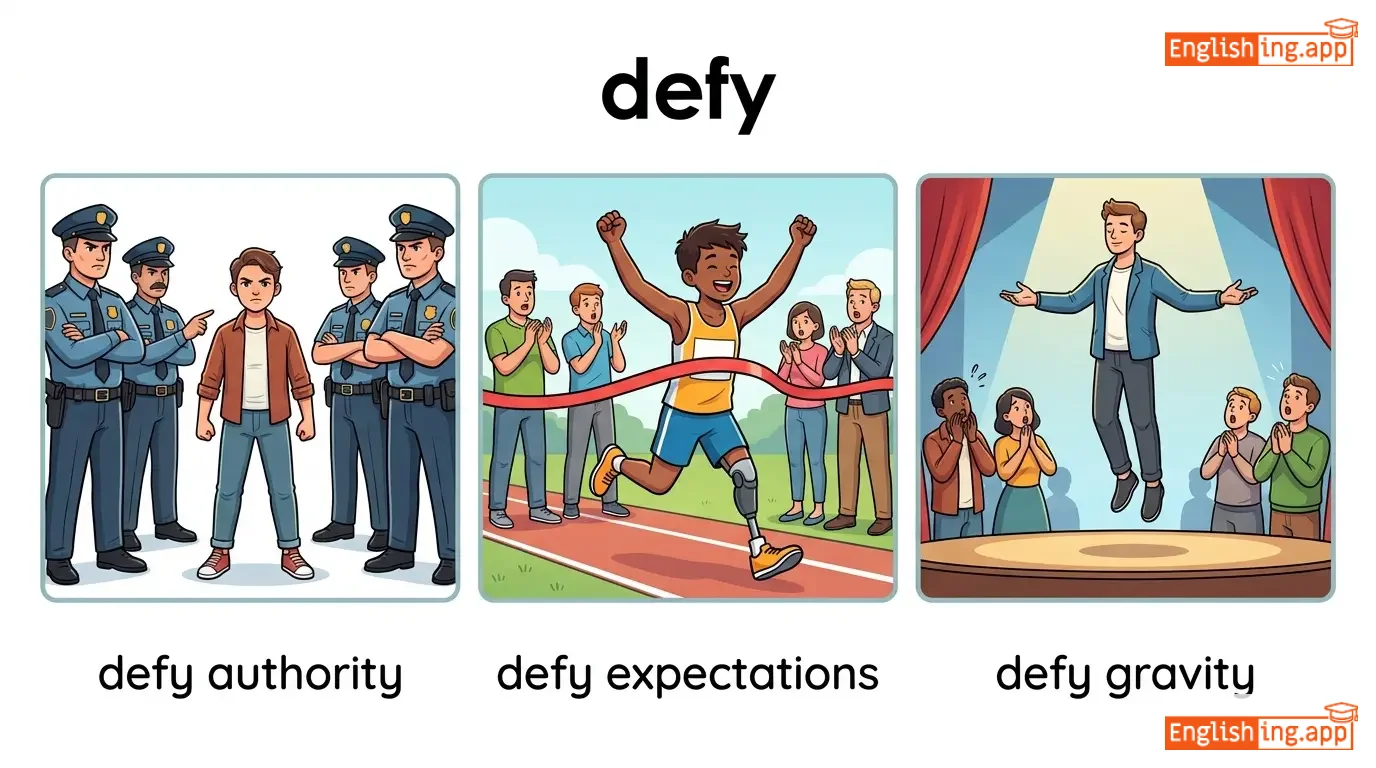
defy authority, defy expectations, defy gravity
••••••
|
No •••••• |
|
#2198
🧯
|
/diːˈfjuːz/
verb
••••••
|
- •••••• | - •••••• |
defused
••••••
|
defused
••••••
|
defuses
••••••
|
defusing
••••••
|
To make a situation less dangerous, tense, or explosive; to remove a fuse from a bomb.
••••••
|
The negotiator helped defuse the tense situation. |
- •••••• |
defuse a situation |
To calm down a tense or dangerous situation.
••••••
|
- •••••• |
disarm, ease, calm, neutralize
••••••
|
ignite, provoke, inflame
••••••
|
defuse a bomb, defuse a crisis, defuse tension
••••••
|
No •••••• |
|
#2199
💀
|
/dɪˈfʌŋkt/
adjective
(ディファンクト)
••••••
|
|
営業停止、廃止
eigyou teishi, haishi
••••••
|
- •••••• | - •••••• | - •••••• | - •••••• |
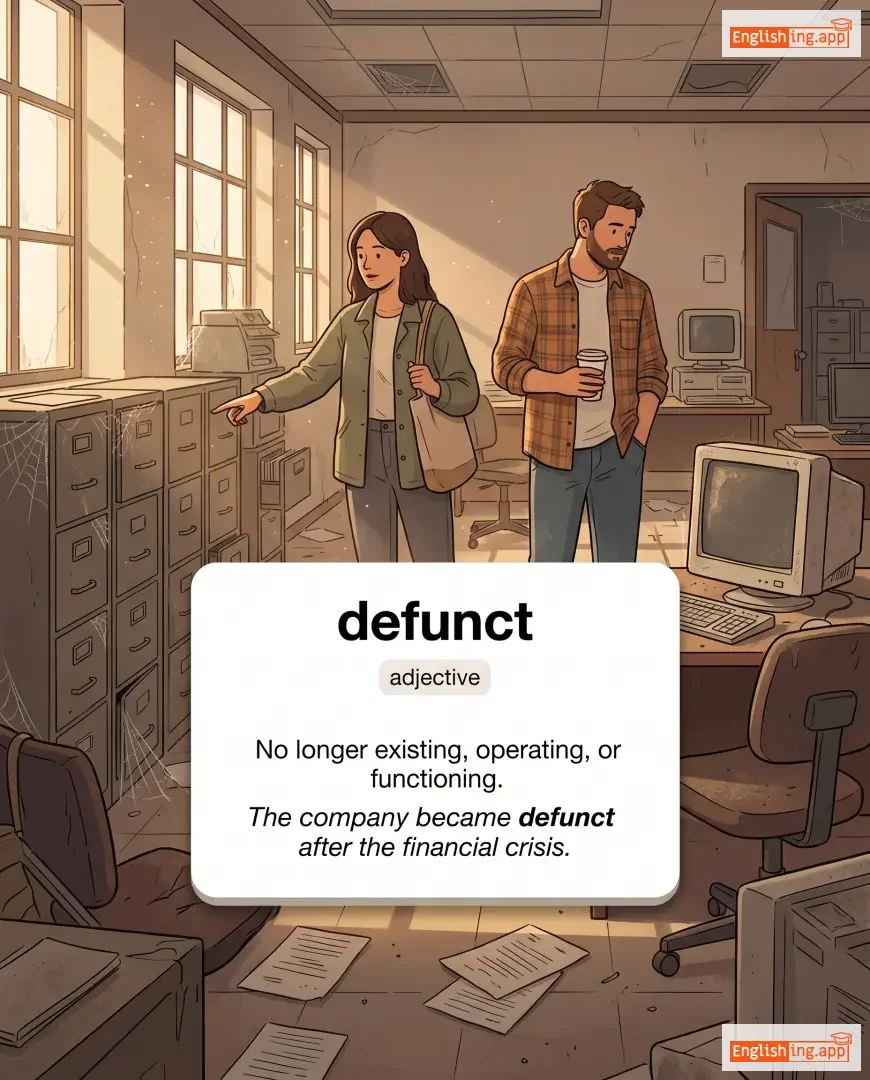
No longer existing, operating, or functioning.
••••••
|
The company became defunct after the financial crisis.
その会社は金融危機の後で廃業しました。
••••••
|
その会社は金融危機の後で廃業しました。
Sono kaisha wa kin'yuukiki no ato de haigiou shimashita.
••••••
|
- •••••• | - •••••• | - •••••• |
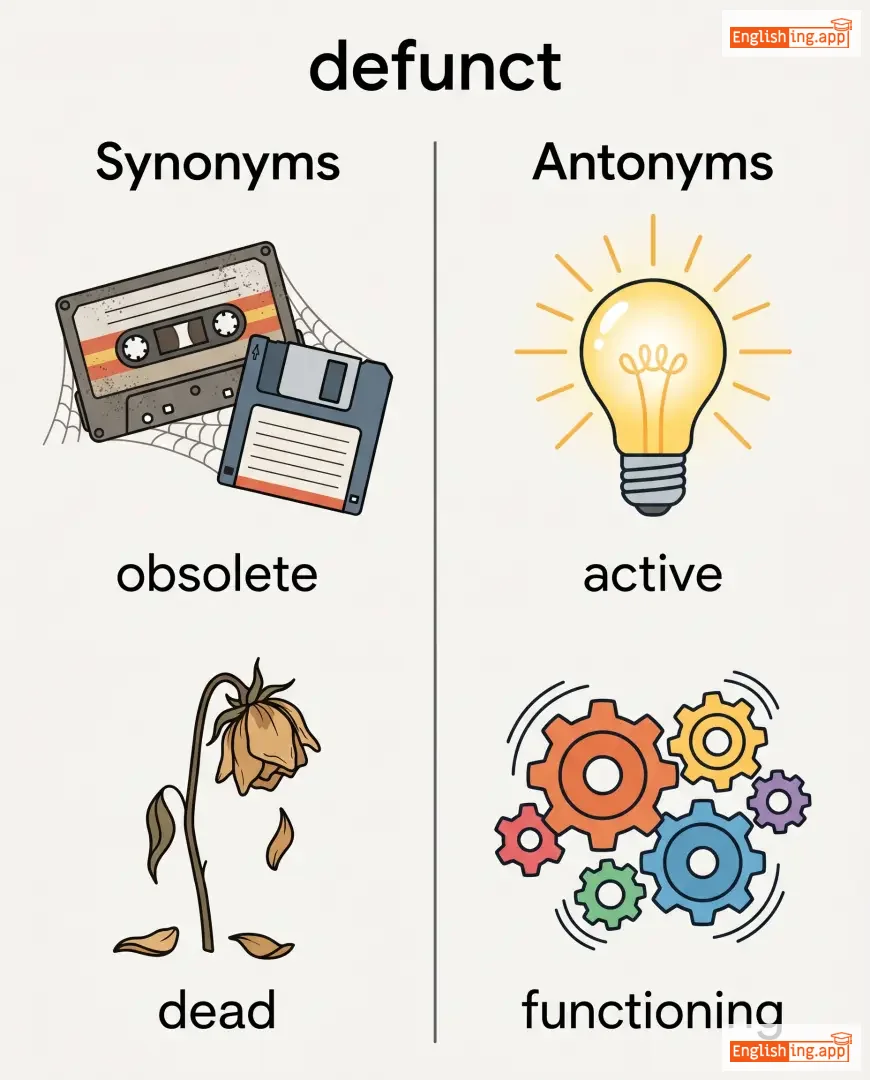
obsolete, dead, extinct, nonfunctional
••••••
|
active, functioning, operational
••••••
|
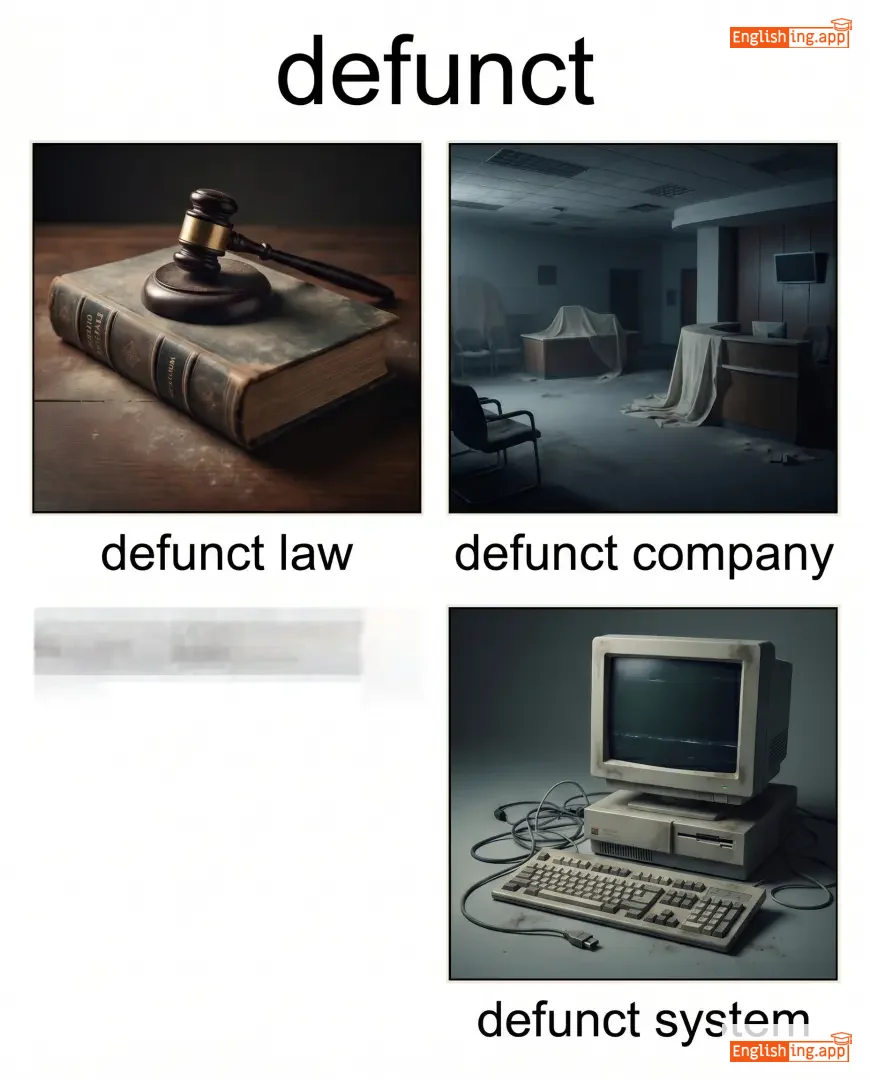
defunct law, defunct company, defunct system
••••••
|
Defunctは、何かが動作しなくなった状態を意味します。例えば、危機後の会社。
••••••
|
|
#2200
🤹
|
/ˈdɛftnəs/
noun
(デフトネス)
••••••
|
- •••••• |
巧妙さ
kōmyōsa
••••••
|
- •••••• | - •••••• | - •••••• | - •••••• |
Skillfulness and quickness in action or thought.
••••••
|
Her deftness with words impressed the audience.
彼女の言葉の巧妙さは観客を感動させた。
••••••
|
彼女の言葉の巧妙さは観客を感動させた。
Kanojo no kotoba no kōmyōsa wa kankyaku o kandō saseta.
••••••
|
- •••••• | - •••••• | - •••••• |
skill, finesse, expertise, adroitness
••••••
|
clumsiness, awkwardness
••••••
|
deftness in handling, deftness of touch, show deftness
••••••
|
Deftness = 巧妙さ、素早い技術 (kōmyōsa).
••••••
|
|
#2201
🎨
|
/dɛft/
adjective
(デフト)
••••••
|
|
器用
kiyou
••••••
|
- •••••• | - •••••• | - •••••• | - •••••• |
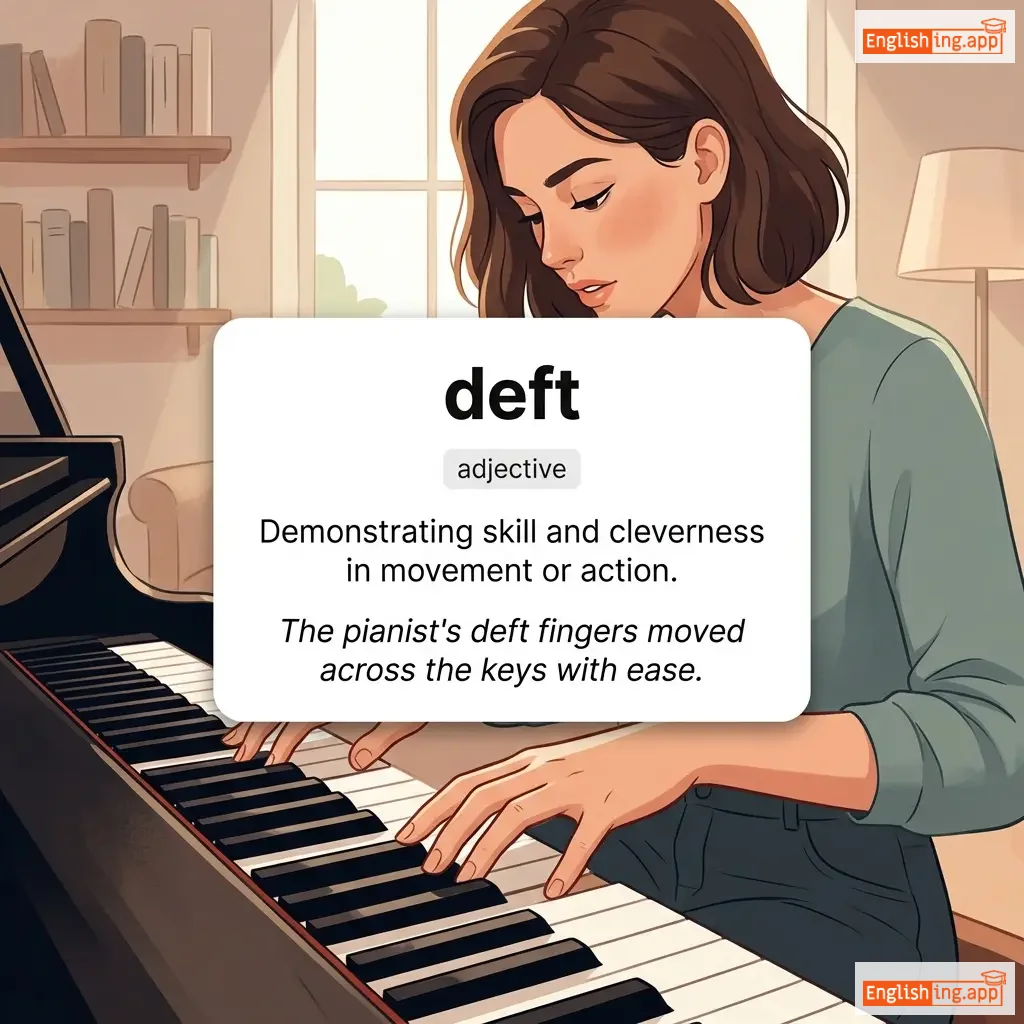
Demonstrating skill and cleverness in movement or action.
••••••
|
The pianist's deft fingers moved across the keys with ease. |
ピアニストの器用な指は、鍵盤の上を軽やかに動いた。
Pianisuto no kiyou na yubi wa, kenban no ue o karoyaka ni ugoita.
••••••
|
deft touch |
A skillful and delicate ability to handle something.
••••••
|
器用な手つき
Kiyou na tetsuki
••••••
|
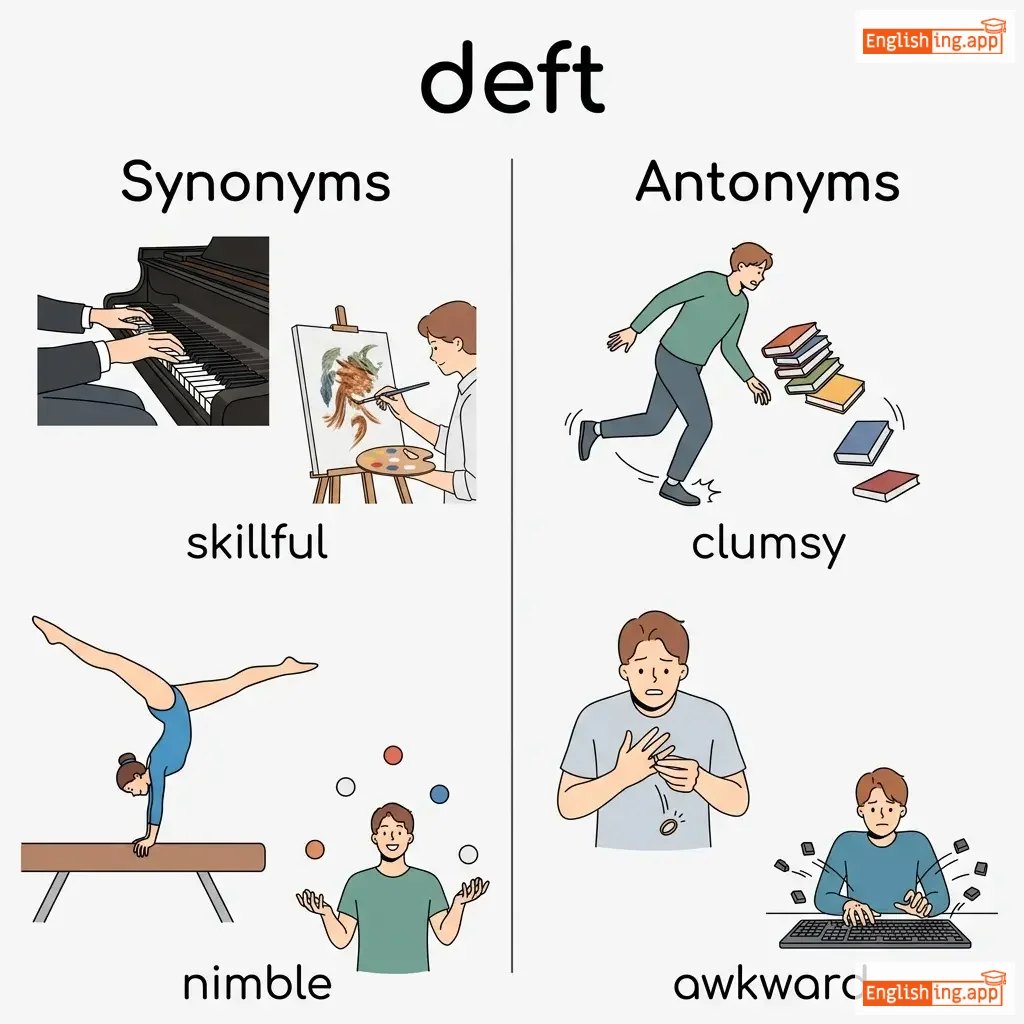
skillful, nimble, adept, clever, agile
••••••
|
clumsy, awkward, inept
••••••
|
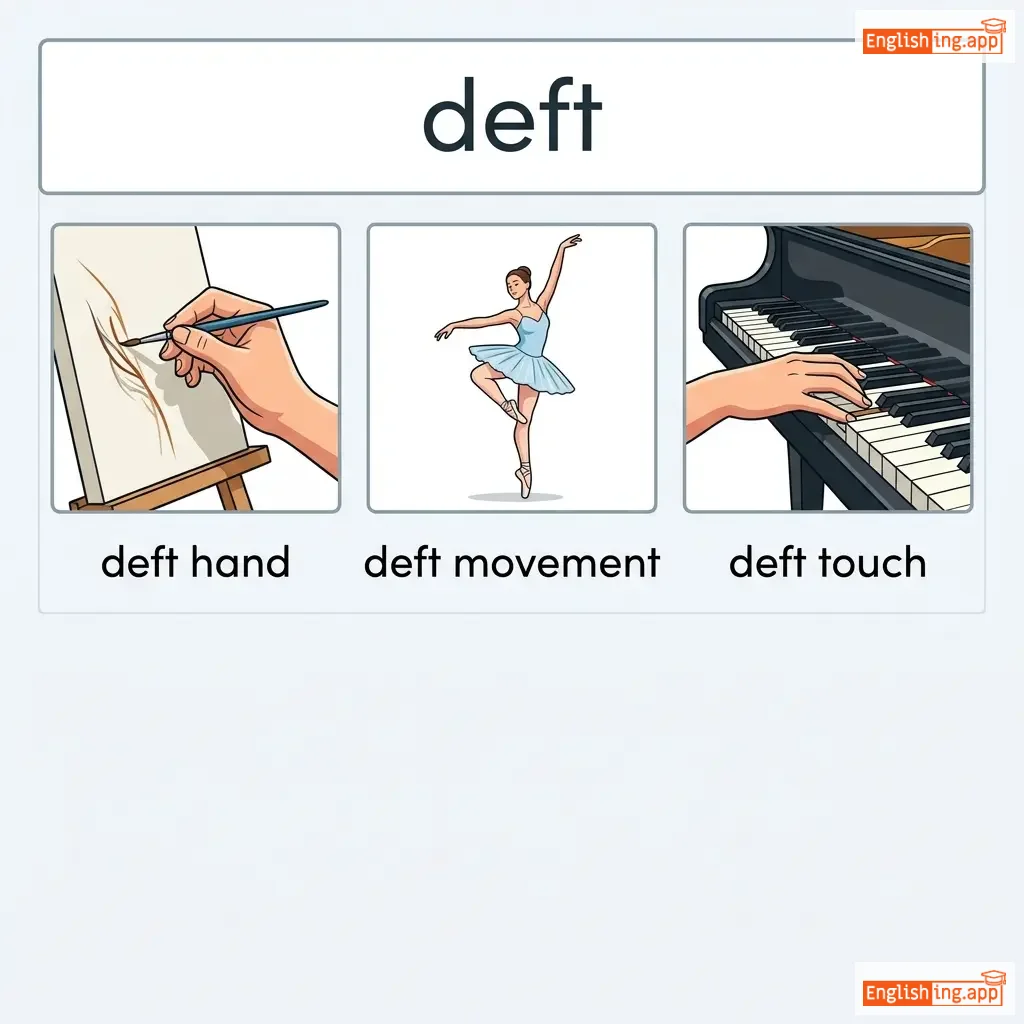
deft hand, deft movement, deft touch, deft handling
••••••
|
Deft は器用を意味します — 器用なアーティストはすべての作業を器用に行います。
••••••
|
|
#2202
✝️
|
/diːˈfrɑːk/
verb
(ディフロック)
••••••
|
- •••••• |
神父の職を剥奪する
shinpu no shoku o hakudatsu suru
••••••
|
defrocked
ディフロックド
••••••
|
defrocked
ディフロックド
••••••
|
defrocks
ディフロックス
••••••
|
defrocking
ディフロッキング
••••••
|
to officially remove a priest or minister from their position and authority
••••••
|
The church decided to defrock the priest after the scandal.
教会はスキャンダルの後、神父を職務停止にしました。
••••••
|
教会はスキャンダルの後、神父を職務停止にしました。
Kyōkai wa sukyandaru no ato, shinpu o shokumu teishi ni shimashita.
••••••
|
- •••••• | - •••••• | - •••••• |
dismiss, expel, oust, strip, discharge
••••••
|
ordain, appoint, consecrate
••••••
|
defrock a priest, defrock a bishop, defrock the clergy
••••••
|
De + Frock → frock は服を意味し、defrock は服を脱ぐこと → 職を剥奪する
••••••
|
|
#2203
💰
|
/dɪˈfreɪ/
verb
(ディフレイ)
••••••
|
- •••••• |
費用を負担する
hiyou o futan suru
••••••
|
defrayed
ディフレイド
••••••
|
defrayed
ディフレイド
••••••
|
defrays
ディフレイズ
••••••
|
defraying
ディフレイイング
••••••
|
to provide money to pay the costs of something
••••••
|
The grant will help defray the cost of education.
ザ・グラント・ウィル・ヘルプ・ディフレイ・ザ・コスト・オブ・エデュケーション
••••••
|
その助成金は教育費用の負担を助けます。
Sono joseikin wa kyōiku hiyō no futan o tasukemasu.
••••••
|
defray the expenses
ディフレイ・ザ・エクスペンシズ
••••••
|
to cover or pay part of the expenses
••••••
|
費用を負担する
hiyou o futan suru
••••••
|
pay, cover, finance, fund, subsidize
••••••
|
owe, charge, default
••••••
|
defray the costs, defray expenses, defray the charges
••••••
|
Defray は '費用を負担する' という意味 → 費用をカバーする。
••••••
|
|
#2204
💸
|
/dɪˈfrɔːd/
verb
(ディフラウド)
••••••
|
- •••••• |
詐欺
sagi
••••••
|
defrauded
ディフラウデッド
••••••
|
defrauded
ディフラウデッド
••••••
|
defrauds
ディフラウズ
••••••
|
defrauding
ディフラウディング
••••••
|
to illegally take money or valuables from someone by deception
••••••
|
The company was accused of trying to defraud investors.
その会社は投資家をだまそうとしたとして告発されました。
••••••
|
その会社は投資家をだまそうとしたとして告発されました。
Sono kaisha wa tōshika o damasou to shita to shite kokuhatsu saremashita.
••••••
|
defraud the government
政府をだます
••••••
|
to cheat the government, usually in taxes or funds
••••••
|
政府をだます
Seifu o damasu
••••••
|
cheat, swindle, scam, deceive, trick
••••••
|
honor, repay, return
••••••
|
defraud investors, defraud customers, attempt to defraud, defraud the government
••••••
|
De + Fraud → fraud は詐欺、defraud は詐欺でお金を奪うこと
••••••
|
|
#2205
♿
|
/dɪˈfɔːrməti/
noun
••••••
|
- •••••• | - •••••• | - •••••• | - •••••• | - •••••• | - •••••• |
an abnormality or distortion in the shape or structure of a body part
••••••
|
The child was born with a minor hand deformity. |
- •••••• | - •••••• | - •••••• | - •••••• |
abnormality, malformation, defect, irregularity
••••••
|
normality, perfection, symmetry
••••••
|
physical deformity, birth deformity, bone deformity, facial deformity
••••••
|
No •••••• |
|
#2206
🛡️
|
/dɪˈfɛnsɪv/
adjective
(ディフェンシブ)
••••••
|
- •••••• |
防御的な
bōgyo-teki na
••••••
|
- •••••• | - •••••• | - •••••• | - •••••• |
Intended to protect or defend; behaving in a way to guard against criticism or attack.
••••••
|
He became defensive when asked about his mistake. |
彼は自分のミスについて尋ねられると防御的になった。
Kare wa jibun no misu ni tsuite tazunerareru to bōgyo-teki ni natta.
••••••
|
defensive stance |
A protective or guarded position in argument or conflict.
••••••
|
防御的な姿勢
bōgyo-teki na shisei
••••••
|
protective, guarded, cautious, shielding
••••••
|
offensive, aggressive, open
••••••
|
defensive behavior, defensive mechanism, defensive reaction, defensive stance
••••••
|
防御的なものは盾のように 🛡️ - 批判から自分を守る。
••••••
|
|
#2207
🌲❌
|
/diːˈfɒrɪst/
verb
••••••
|
- •••••• | - •••••• |
deforested
••••••
|
deforested
••••••
|
deforests
••••••
|
deforesting
••••••
|
to clear an area of trees, usually on a large scale
••••••
|
The region has been heavily deforested for agriculture. |
- •••••• |
deforest land |
to cut down trees from a large area of land
••••••
|
- •••••• |
clear, cut down, log, denude, strip
••••••
|
reforest, afforest
••••••
|
deforest land, deforest area, deforest region, deforest jungle
••••••
|
No •••••• |
|
#2208
🍂
|
/dɪˈfoʊlieɪt/
verb
(デフォリエイト)
••••••
|
- •••••• |
葉を落とす
ha o otosu
••••••
|
defoliated
デフォリエイテッド
••••••
|
defoliated
デフォリエイテッド
••••••
|
defoliates
デフォリエイツ
••••••
|
defoliating
デフォリエイティング
••••••
|
to strip leaves from a tree, plant, or area, often using chemicals
••••••
|
The farmers defoliated the fields before harvest.
農家は収穫前に畑の葉を取り除きました。
••••••
|
農家は収穫前に畑の葉を取り除きました。
Nouka wa shukaku mae ni hatake no ha o torinozakimashita.
••••••
|
- •••••• | - •••••• | - •••••• |
strip, clear, denude, remove leaves
••••••
|
fertilize, nourish
••••••
|
defoliate trees, defoliate crops, defoliate land, defoliate area
••••••
|
Defoliateは'葉を落とす'という意味、'De-foliate = ha o otosu'のように覚えよう。
••••••
|
|
#2209
🌿
|
/dɪˈfoʊliənt/
noun
••••••
|
- •••••• | - •••••• | - •••••• | - •••••• | - •••••• | - •••••• |
a chemical that causes leaves to drop from plants, often used in warfare or agriculture
••••••
|
The army sprayed defoliant to clear the forest cover. |
- •••••• | - •••••• | - •••••• | - •••••• |
herbicide, chemical spray, leaf remover, plant killer
••••••
|
fertilizer, growth promoter
••••••
|
spray defoliant, use defoliant, defoliant chemical, toxic defoliant
••••••
|
No •••••• |
|
#2210
🛡️
|
/dɪˈflɛkt/
verb
(ディフレクト)
••••••
|
- •••••• |
反らす / 避ける
sorasu / sakeru
••••••
|
deflected
ディフレクテッド
••••••
|
deflected
ディフレクテッド
••••••
|
deflects
ディフレクツ
••••••
|
deflecting
ディフレクティング
••••••
|
to cause something to change direction; to avoid answering directly
••••••
|
The shield deflected the incoming arrow.
盾は飛んできた矢を反らした。
••••••
|
盾は飛んできた矢を反らした。
Tate wa tondekita ya o sorashita.
••••••
|
deflect criticism
批判をかわす
••••••
|
to avoid or redirect criticism away from oneself
••••••
|
批判を避ける
hihan o sakeru
••••••
|
divert, redirect, avert, sidestep, parry
••••••
|
attract, face
••••••
|
deflect attention, deflect criticism, deflect a question, deflect blame
••••••
|
Deflect は盾のように避けることを意味します 🛡️ 矢を反らすように。
••••••
|
|
#2211
✅
|
/dɪˈfɪnɪtɪv/
adjective
(デフィニティブ)
••••••
|
- •••••• |
決定的
ketteiteki
••••••
|
- •••••• | - •••••• | - •••••• | - •••••• |
serving as a final or most authoritative form; conclusive and decisive
••••••
|
The committee reached a definitive agreement on the policy. |
委員会は政策に関する決定的な合意に達しました。
Iinkai wa seisaku ni kansuru ketteiteki na gōi ni tasshimashita.
••••••
|
definitive answer |
a final, conclusive response with no further doubt
••••••
|
決定的な答え
ketteiteki na kotae
••••••
|
conclusive, final, ultimate, decisive, authoritative
••••••
|
uncertain, provisional, temporary
••••••
|
definitive answer, definitive guide, definitive statement, definitive proof
••••••
|
Definitiveは決定的です ✅ 例えば'決定的な答え'。
••••••
|
|
#2212
✔️
|
/ˈdef.ən.ɪt/
adjective
(デフィニット)
••••••
|
- •••••• |
明確
meikaku
••••••
|
- •••••• | - •••••• | - •••••• | - •••••• |
clearly stated or decided; not vague or doubtful
••••••
|
We need a definite plan before starting the project.
プロジェクトを始める前に、明確な計画が必要です。
••••••
|
プロジェクトを始める前に、明確な計画が必要です。
Purojekuto o hajimeru mae ni, meikaku na keikaku ga hitsuyou desu.
••••••
|
definite answer
明確な答え
••••••
|
a clear and certain reply
••••••
|
明確な答え
meikaku na kotae
••••••
|
certain, clear, explicit, precise, fixed
••••••
|
indefinite, vague, uncertain
••••••
|
definite plan, definite answer, definite shape
••••••
|
明確、'決定する'ように、すべてをクリアにするという意味です。
••••••
|
|
#2213
🛑
|
/dɪˈfaɪl/
verb
(ディファイル)
••••••
|
- •••••• |
汚す
yogosu
••••••
|
defiled
ディファイルド
••••••
|
defiled
ディファイルド
••••••
|
defiles
ディファイルズ
••••••
|
defiling
ディファイリング
••••••
|
to pollute, corrupt, or make dirty
••••••
|
The river was defiled by industrial waste.
川は工業廃水によって汚染された。
••••••
|
川は工業廃水によって汚された。
Kawa wa kōgyō haisui ni yotte osen sareta.
••••••
|
defile the temple
寺院を冒涜する
••••••
|
to dishonor or make sacred place impure
••••••
|
寺院を冒涜する
jiin o bōtoku suru
••••••
|
pollute, spoil, taint, corrupt, desecrate
••••••
|
purify, cleanse, sanctify
••••••
|
defile nature, defile the land, defile the temple
••••••
|
Defileは汚すを意味します。ファイル(file)が汚れることを想像し、汚す、または不浄にすることと関連付けて覚えましょう。
••••••
|
|
#2214
🥀
|
/dɪˈfɪʃ.ənt/
adjective
(ディフィシャント)
••••••
|
- •••••• |
不足している
fusoku shite iru
••••••
|
- •••••• | - •••••• | - •••••• | - •••••• |
not having enough of something that is essential
••••••
|
The soil is deficient in nutrients. |
土壌は栄養素が不足しています。
Dojo wa eiyōso ga fusoku shiteimasu.
••••••
|
- •••••• | - •••••• | - •••••• |
lacking, insufficient, incomplete, inadequate
••••••
|
sufficient, adequate, abundant
••••••
|
deficient in vitamins, deficient knowledge, nutritionally deficient
••••••
|
不足しているは、科学での不足のように考えると覚えやすい。
••••••
|
|
#2215
⚠️
|
/dɪˈfɪʃ.ən.si/
noun
(デフィシエンシー)
••••••
|
- •••••• |
欠乏
ketsubou
••••••
|
- •••••• | - •••••• | - •••••• | - •••••• |
a lack or shortage of something that is necessary
••••••
|
The doctor diagnosed him with a vitamin D deficiency. |
医者は彼にビタミンD欠乏症と診断しました。
Isha wa kare ni bitamin D ketsubou shou to shindan shimashita.
••••••
|
iron deficiency |
a lack of sufficient iron in the body
••••••
|
鉄欠乏症
tetsu ketsubou shou
••••••
|
shortage, lack, insufficiency, scarcity, inadequacy
••••••
|
abundance, sufficiency, excess
••••••
|
vitamin deficiency, iron deficiency, nutritional deficiency, deficiency disease
••••••
|
欠乏は不足を意味します – 'デフィ'は不足を意味するので、魚に何もないため、欠乏です。
••••••
|
|
#2216
✊
|
/dɪˈfaɪ.ənt/
adjective
(ディファイアント)
••••••
|
- •••••• |
挑戦的な
chōsenteki na
••••••
|
- •••••• | - •••••• | - •••••• | - •••••• |
showing open resistance or bold disobedience
••••••
|
The child was defiant when told to clean his room. |
子供は部屋を掃除するように言われたとき、挑戦的でした。
Kodomo wa heya o sōji suru yō ni iwareta toki, chōsenteki deshita.
••••••
|
stand defiant |
to resist authority boldly and openly
••••••
|
挑戦的でいる
chōsenteki de iru
••••••
|
rebellious, resistant, disobedient, unyielding, bold
••••••
|
obedient, compliant, submissive
••••••
|
defiant attitude, defiant gesture, stand defiant, remain defiant
••••••
|
挑戦的なは挑戦する意味 – '私はルールに挑戦する'と言う学生を想像してください。
••••••
|
|
#2217
✊
|
/dɪˈfaɪəns/
noun
(ディファイアンス)
••••••
|
- •••••• |
反抗
hankou
••••••
|
- •••••• | - •••••• | - •••••• | - •••••• |
Open resistance or bold disobedience.
••••••
|
The protest was an act of defiance against injustice. |
その抗議は不正に対する反抗の行為でした。
Sono kōgi wa fusei ni taisuru hankō no kōi deshita.
••••••
|
stand in defiance |
To oppose or resist something boldly.
••••••
|
反抗する立場を取る
hankō suru tachiba o toru
••••••
|
resistance, opposition, disobedience, rebellion
••••••
|
submission, obedience, compliance
••••••
|
act of defiance, show defiance, open defiance, defiance against
••••••
|
Defiance は、正義のために反抗すること。
••••••
|
|
#2218
🙇
|
/ˌdɛfəˈrɛnʃəl/
adjective
(ディファレンシャル)
••••••
|
- •••••• |
尊敬の念を示す
sonkei no nen o shimesu
••••••
|
- •••••• | - •••••• | - •••••• | - •••••• |
Showing or expressing respect and high regard.
••••••
|
He was always deferential toward his teachers. |
彼はいつも教師に対して尊敬の念を示していた。
kare wa itsumo kyoushi ni taishite sonkei no nen o shimeshite ita.
••••••
|
- •••••• | - •••••• | - •••••• |
respectful, polite, submissive, courteous
••••••
|
disrespectful, rude, defiant
••••••
|
deferential attitude, deferential tone, deferential behavior
••••••
|
Deferential = 尊敬 (sonkei) + の (no) → 尊敬 (sonkei) 示す (shimesu).
••••••
|
|
#2219
🙏
|
/ˈdɛfərəns/
noun
(デファレンス)
••••••
|
|
敬意
keii
••••••
|
- •••••• | - •••••• | - •••••• | - •••••• |
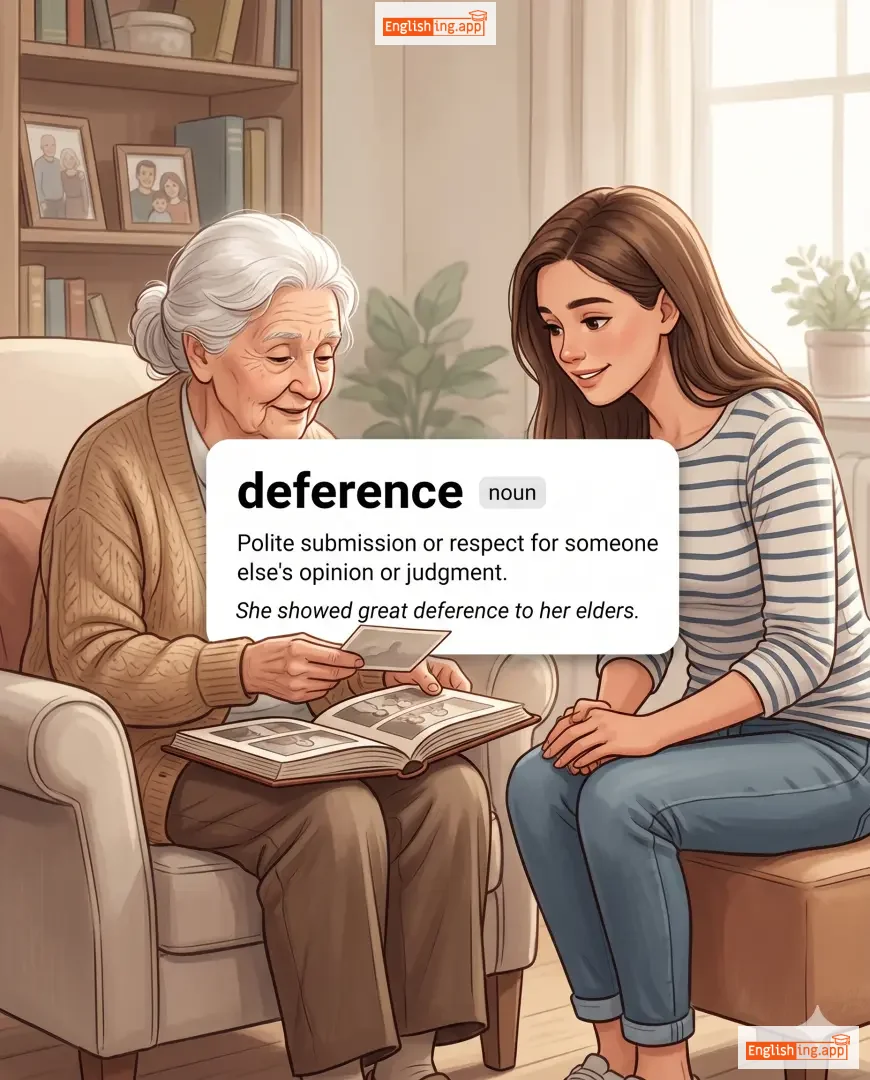
Polite submission or respect for someone else's opinion or judgment.
••••••
|
She showed great deference to her elders. |
彼女は年長者に大きな敬意を示しました。
Kanojo wa nenchōsha ni ōkina keii o shimeshimashita.
••••••
|
in deference to |
Out of respect or regard for someone or something.
••••••
|
敬意を表して
Keii o hyōshite
••••••
|
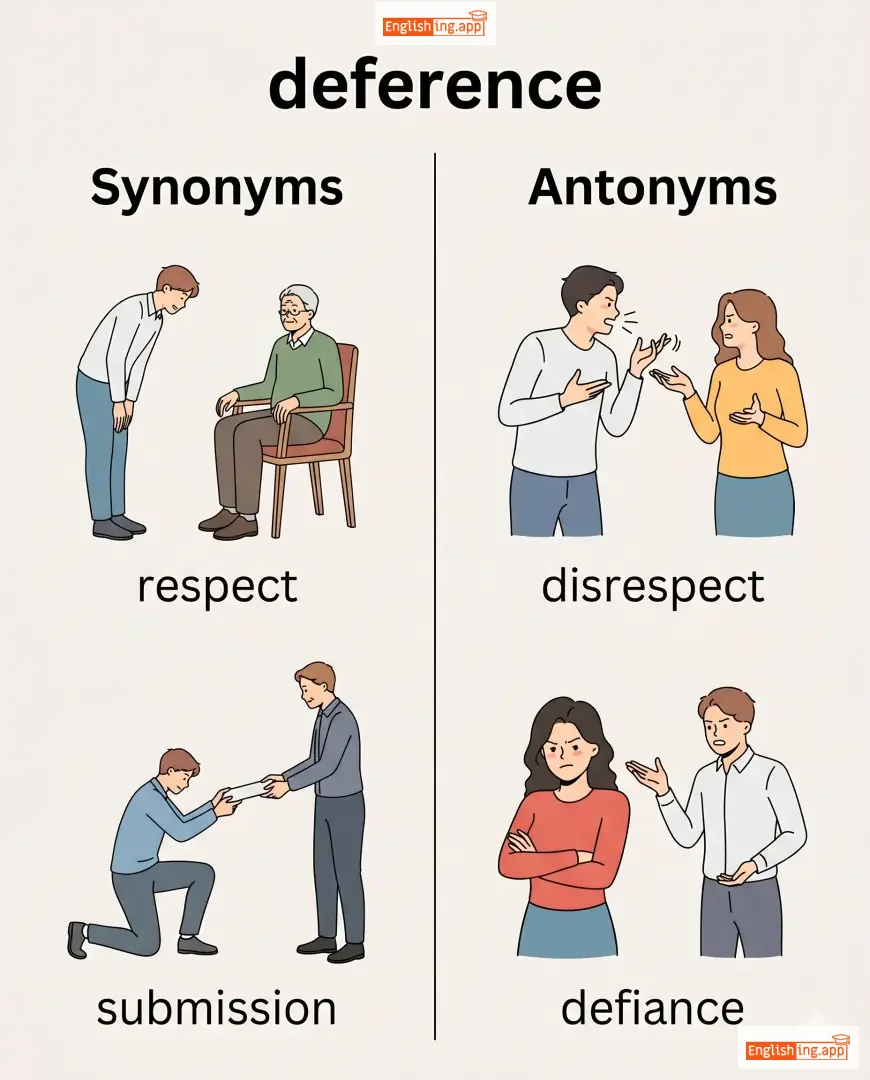
respect, submission, obedience, reverence
••••••
|
disrespect, defiance, disregard
••••••
|
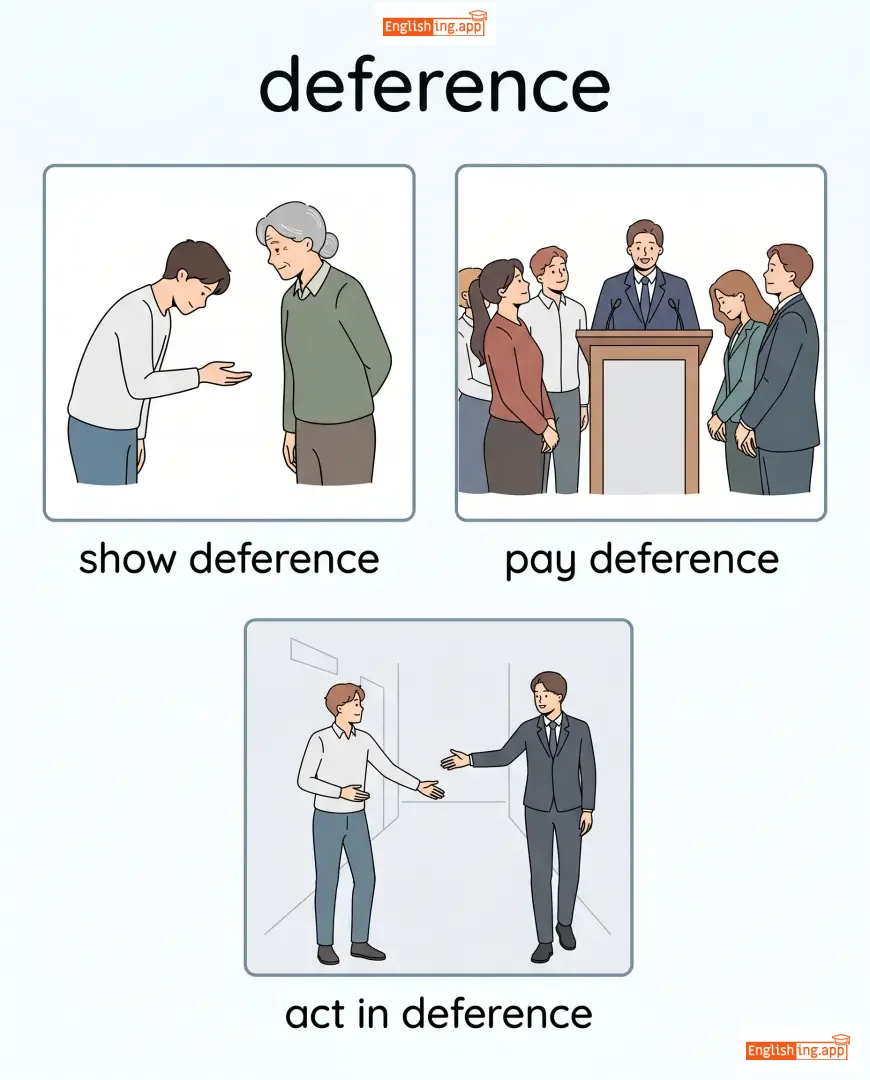
show deference, pay deference, act in deference
••••••
|
Deference は defer (延期する) + ence → 他人のために自分の意志を延期し、敬意を示す。
••••••
|
|
#2220
⏳
|
/dɪˈfɜːr/
verb
(ディファー)
••••••
|
- •••••• |
延期する
enki suru
••••••
|
deferred
ディファード
••••••
|
deferred
ディファード
••••••
|
defers
ディファーズ
••••••
|
deferring
ディファリング
••••••
|
To postpone or delay; to yield to someone else's judgment or opinion.
••••••
|
The meeting was deferred until next week.
ミーティングは来週まで延期されました。
••••••
|
会議は来週まで延期されました。
Kaigi wa raishū made enki saremashita.
••••••
|
defer to
ディファー・トゥ
••••••
|
To yield respectfully to the opinion or wishes of another.
••••••
|
従う
shitagau
••••••
|
postpone, delay, yield, submit, respect
••••••
|
hasten, expedite, oppose
••••••
|
defer payment, defer action, defer to authority, defer decision
••••••
|
ディファーは'後回し'を意味し、敬意をもって延期します。
••••••
|
Vocabulary Quiz
Test your vocabulary by matching words with their translations or meanings.
Login to take the quiz
Comments (0)
Share your thoughts and join the discussion.
Join the discussion by logging in
Login to CommentNo comments yet
Be the first to share your thoughts!