

翻訳
過去
過去分詞
三人称単数
動名詞
意味
例文
例文の翻訳
同義語
対義語
コロケーション
ニーモニック
Swipe left or right, or use the buttons. Tap image to zoom.
例文の翻訳
単語
Lesson 196Lesson 196 - マスクトグル
|
絵文字
|
単語 | Images | 翻訳 | 過去 | 過去分詞 | 三人称単数 | 動名詞 | 意味 | 例文 | 例文の翻訳 | 表現例 | 表現例の意味 | 表現例の翻訳 | 同義語 | 対義語 | コロケーション | ニーモニック |
|---|---|---|---|---|---|---|---|---|---|---|---|---|---|---|---|---|---|
|
#5851
⚠️
|
/ˈnɛɡ.lɪ.dʒənt/
adjective
(ネグリジェント)
••••••
|
- •••••• |
不注意
fuchūi
••••••
|
- •••••• | - •••••• | - •••••• | - •••••• |
Failing to take proper care in doing something; careless.
••••••
|
The company was found negligent in providing workplace safety. |
その会社は職場での安全対策を提供する際に不注意だと判定されました。
Sono kaisha wa shokuba de no anzen taisaku o teikyō suru sai ni fuchūi da to hantei saremashita.
••••••
|
grossly negligent |
Extremely careless or reckless behavior.
••••••
|
極度の不注意
kyokudo no fuchūi
••••••
|
careless, inattentive, reckless, heedless, lax
••••••
|
careful, attentive, responsible
••••••
|
negligent in duty, found negligent, grossly negligent, negligent behavior
••••••
|
Negligent = 忘れてしまった責任、不注意な行動。
••••••
|
|
#5852
🧠
|
/nɜːrv/
noun, verb
(ナーヴ)
••••••
|
- •••••• |
神経; 勇気
shinkei; yūki
••••••
|
nerved
ナーヴド
••••••
|
nerved
ナーヴド
••••••
|
nerves
ナーヴズ
••••••
|
nerving
ナーヴィング
••••••
|
A bundle of fibers in the body that transmits signals between the brain and other parts; also courage or audacity.
••••••
|
She gathered the nerve to speak in front of the large audience.
彼女は大きな観客の前で話す勇気を持っていた。
••••••
|
彼女は大きな観客の前で話す勇気を持っていた。
Kanojo wa ōkina kankyaku no mae de hanasu yūki o motte ita.
••••••
|
get on someone's nerves
誰かの神経を逆なでする
••••••
|
to irritate or annoy someone
••••••
|
誰かの神経を逆なでする
Dareka no shinkei o sakandaseru
••••••
|
courage, boldness, audacity, fiber, bravery
••••••
|
fear, cowardice, timidity
••••••
|
have the nerve, lose nerve, get on nerves, damaged nerve
••••••
|
Nerveは神経を意味しますが、勇気も意味します → 神経を持つことは勇気を持つことです
••••••
|
|
#5853
👪
|
/ˈnɛpətɪzəm/
noun
(ネポティズム)
••••••
|
- •••••• |
縁故主義
enkoshugi
••••••
|
- •••••• | - •••••• | - •••••• | - •••••• |
The practice of giving unfair advantages to relatives, especially in jobs or positions of power.
••••••
|
The company was accused of nepotism after the manager hired his brother. |
マネージャーが兄弟を雇った後、会社は縁故主義で告発されました。
Manējā ga kyōdai o yatotta ato, kaisha wa enkoshugi de kokuhatsu saremashita.
••••••
|
- •••••• | - •••••• | - •••••• |
favoritism, bias, partiality, cronyism, preference
••••••
|
meritocracy, fairness, impartiality
••••••
|
accused of nepotism, nepotism in politics, nepotism scandal
••••••
|
Nephew + tism → 親族に職を与えるのが縁故主義
••••••
|
|
#5854
🌱
|
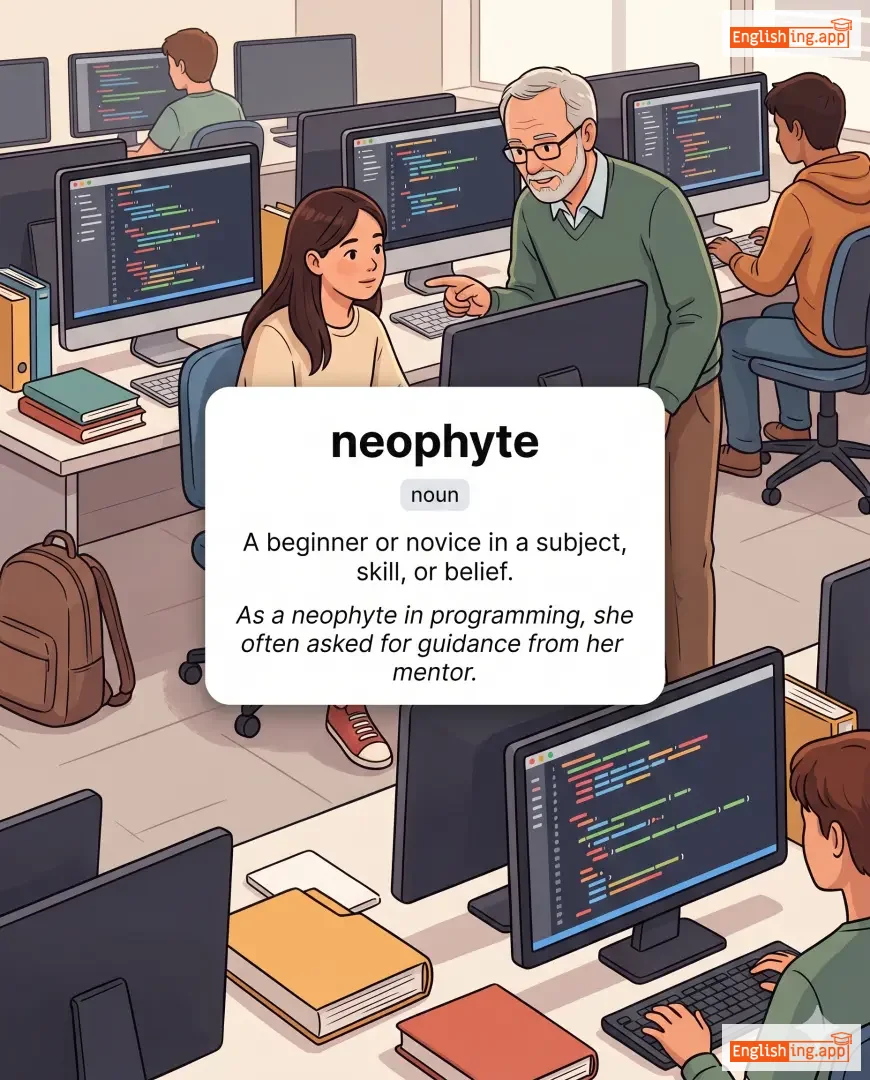
/ˈniːəˌfaɪt/
noun
(ネオファイト)
••••••
|
|
初心者
shoshinsha
••••••
|
- •••••• | - •••••• | - •••••• | - •••••• |
A beginner or novice in a subject, skill, or belief.
••••••
|
As a neophyte in programming, she often asked for guidance from her mentor. |
プログラミングの初心者として、彼女はよくメンターに指導を求めていた。
Puroguramingu no shoshinsha to shite, kanojo wa yoku mentā ni shidō o motomete ita.
••••••
|
- •••••• | - •••••• | - •••••• |
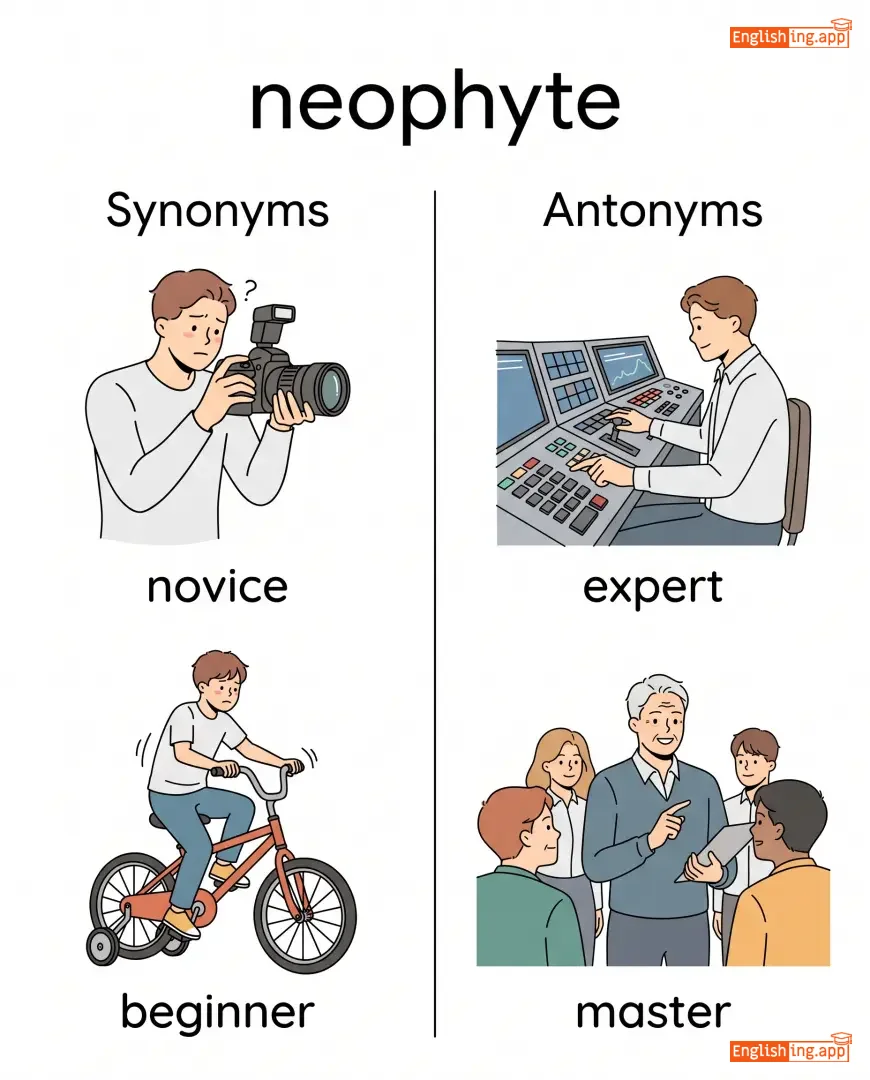
novice, beginner, newcomer, rookie, trainee
••••••
|
expert, master, veteran
••••••
|
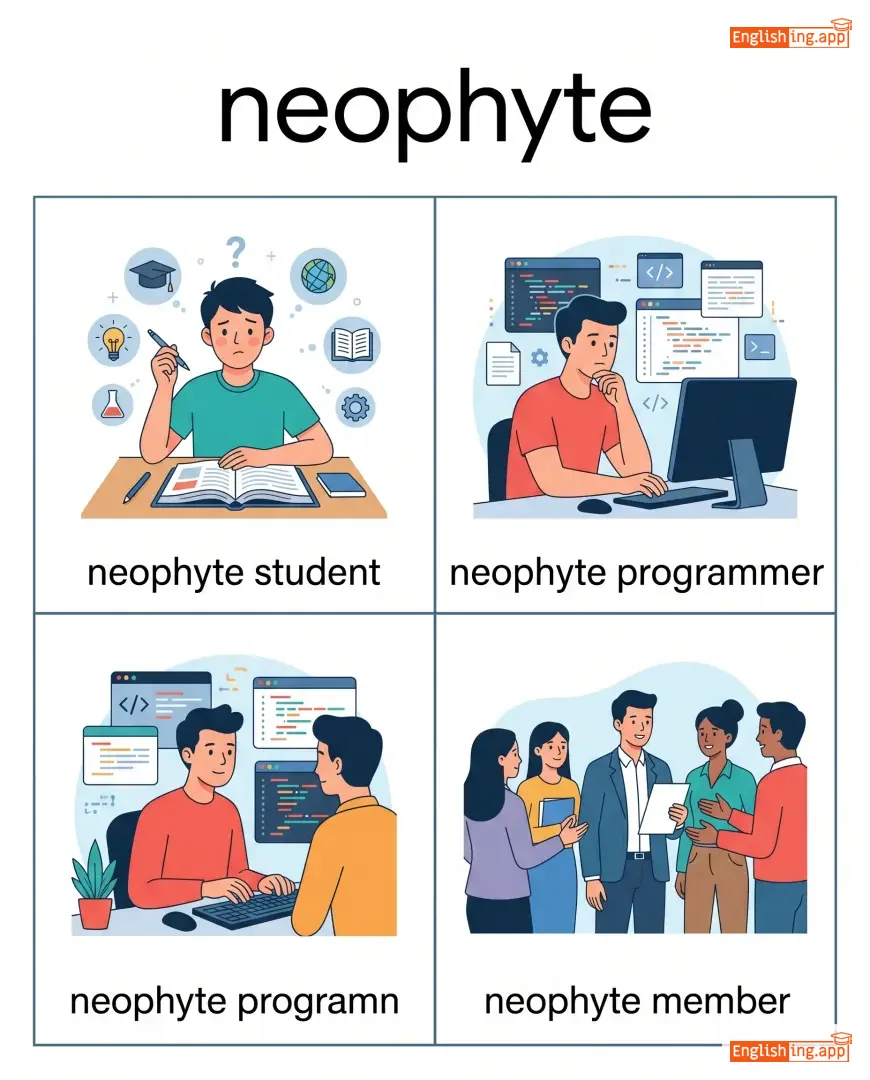
neophyte student, neophyte programmer, neophyte member
••••••
|
Neoは新しいという意味 + phyteは植物という意味 → 初心者は新しい植物のように成長を始める。
••••••
|
|
#5855
🌿
|
/ˌniːoʊˈpeɪɡənɪzəm/
noun
(ネオペイガニズム)
••••••
|
- •••••• |
ネオペイガニズム
neopeiganizumu
••••••
|
- •••••• | - •••••• | - •••••• | - •••••• |
Modern religious movements influenced by or claiming to be derived from the various historical pagan beliefs of pre-modern Europe.
••••••
|
Neopaganism has gained popularity as people seek spiritual alternatives to mainstream religions. |
ネオペイガニズムは、人々が主流の宗教に代わる精神的な選択肢を探しているため、人気を集めています。
Neopeiganizumu wa, hitobito ga shuryū no shūkyō ni kawaru seishinteki na sentakushi o sagashite iru tame, ninki o atsumeています。
••••••
|
- •••••• | - •••••• | - •••••• |
neo-pagan belief, pagan revival, nature worship, earth religion
••••••
|
Christianity, Islam, mainstream religion
••••••
|
rise of neopaganism, neopaganism practices, neopaganism beliefs
••••••
|
Neoは新しい意味 + paganismは異教徒 → 新しい異教の信念の形
••••••
|
|
#5856
📖
|
/niˈɒlədʒi/
noun
(ニオロジー)
••••••
|
- •••••• |
新しい言葉の使用またはその起源の研究
atarashii kotoba no shiyou matawa sono kigen no kenkyuu
••••••
|
- •••••• | - •••••• | - •••••• | - •••••• |
The use of new words or the study of their origin.
••••••
|
The professor specialized in neology, studying the creation of modern slang.
教授はネオロジーを専門とし、現代のスラングの創造を研究しました。
••••••
|
教授はネオロジーを専門とし、現代のスラングの創造を研究しました。
Kyouju wa neorojī o senmon to shi, gendai no surangu no souzou o kenkyuu shimashita.
••••••
|
- •••••• | - •••••• | - •••••• |
coinage, neologism, terminology, word-formation, linguistics
••••••
|
archaism, old usage, antiquated term
••••••
|
study of neology, field of neology, neology research
••••••
|
Neoは新しい + logyは学問 → 新しい言葉の研究 = ネオロジー
••••••
|
|
#5857
🆕
|
/niːˈɒlədʒɪzəm/
noun
(ネオロジズム)
••••••
|
- •••••• |
新造語
shinzōgo
••••••
|
- •••••• | - •••••• | - •••••• | - •••••• |
A newly coined word or expression.
••••••
|
The internet has given rise to many neologisms like 'selfie' and 'hashtag'. |
インターネットは「セルフィー」や「ハッシュタグ」などの多くの新造語を生み出しました。
Intānetto wa 'serufī' ya 'hasshutagu' nado no ōku no shinzōgo o umidashimashita.
••••••
|
- •••••• | - •••••• | - •••••• |
new word, coinage, term, expression
••••••
|
archaic word, old term
••••••
|
neologism usage, coin a neologism, popular neologism
••••••
|
Neo = 新しい + logism = 言葉 → 新造語
••••••
|
|
#5858
🪨
|
/ˌniːoʊˈlɪθɪk/
adjective
(ネオリティック)
••••••
|
- •••••• |
新石器時代の
shin sekkī jidai no
••••••
|
- •••••• | - •••••• | - •••••• | - •••••• |
Relating to the later part of the Stone Age, when ground or polished stone weapons and tools prevailed.
••••••
|
Neolithic communities began practicing agriculture and domesticating animals. |
新石器時代のコミュニティは農業を行い、動物を飼いならし始めた。
Shin sekkī jidai no komyuniti wa nōgyō o okonai, dōbutsu o kainarashi hajimeta.
••••••
|
- •••••• | - •••••• | - •••••• |
Stone Age, prehistoric, ancient, primitive
••••••
|
modern, contemporary
••••••
|
Neolithic tools, Neolithic period, Neolithic settlement
••••••
|
Neo = 新しい + Lithic = 石 → 新しい石器時代
••••••
|
|
#5859
🏛️
|
/niːˈɒkrəsi/
noun
(ネオクラシー)
••••••
|
- •••••• |
未熟なまたは新しい官僚によって運営される政府
Mijuku na mata wa atarashī kanryō ni yotte un'ei sareru seifu
••••••
|
- •••••• | - •••••• | - •••••• | - •••••• |
A government or leadership run by inexperienced or new officials.
••••••
|
The sudden revolution led to a neocracy with inexperienced leaders.
突然の革命は未経験のリーダーたちによるネオクラシーを生み出した。
••••••
|
突然の革命は未経験のリーダーたちによるネオクラシーを生み出した。
Totsuzen no kakumei wa mikeiken no rīdā-tachi ni yoru neokurashī o umidashita.
••••••
|
- •••••• | - •••••• | - •••••• |
new government, novice rule, inexperienced leadership, young administration
••••••
|
plutocracy, aristocracy
••••••
|
neocracy system, rise of neocracy, political neocracy
••••••
|
Neo = 新しい + Cracy = 政府 → 新しいリーダーたちによる政府
••••••
|
|
#5860
📜
|
/ˌniːoʊˈlætɪn/
noun
(ネオラテン)
••••••
|
- •••••• |
ネオラテン
neo raten
••••••
|
- •••••• | - •••••• | - •••••• | - •••••• |
The use of Latin language for scholarly, scientific, and literary purposes after the medieval period.
••••••
|
Many scientific names are derived from Neo-Latin. |
多くの科学的な名前はネオラテンから派生しています。
Ōku no kagakuteki na namae wa neo raten kara hassei shiteimasu.
••••••
|
- •••••• | - •••••• | - •••••• |
modern Latin, scholarly Latin, scientific Latin, post-medieval Latin
••••••
|
vernacular, non-Latin languages
••••••
|
Neo-Latin literature, Neo-Latin texts, Neo-Latin terminology
••••••
|
Neo = 新しい, Latin = ラテン語 → 新しいラテン語の使用
••••••
|
|
#5861
🧬
|
/ˌniːoʊˈdɑːrwɪnɪzəm/
noun
(ネオダーウィニズム)
••••••
|
- •••••• |
ネオダーウィニズム
neodaawinizumu
••••••
|
- •••••• | - •••••• | - •••••• | - •••••• |
A modern interpretation of Darwin's theory of evolution, integrating genetics and natural selection.
••••••
|
Neo-Darwinism combines Darwin’s theory of natural selection with modern genetics.
ネオダーウィニズムはダーウィンの自然選択説と現代遺伝学を組み合わせています。
••••••
|
ネオダーウィニズムはダーウィンの自然選択説と現代遺伝学を組み合わせています。
Neo-Darwinism wa Darwin no shizen sentaku setsu to gendai idengaku o kumiawase teimasu.
••••••
|
- •••••• | - •••••• | - •••••• |
modern evolutionary synthesis, evolutionary biology, genetic Darwinism, evolutionary theory
••••••
|
creationism, intelligent design
••••••
|
neo-Darwinism theory, neo-Darwinism synthesis, neo-Darwinism approach
••••••
|
Neoは新しい + ダーウィン主義 = ダーウィンの新しい視点
••••••
|
|
#5862
⚔️
|
/ˈnɛm.ə.sɪs/
noun
(ネメシス)
••••••
|
- •••••• |
敵 / ライバル
teki / raibaru
••••••
|
- •••••• | - •••••• | - •••••• | - •••••• |
A long-standing rival or an inescapable agent of downfall.
••••••
|
For years, he considered his colleague to be his nemesis. |
何年もの間、彼は同僚を自分の敵だと思っていた。
Nanen mono aida, kare wa douryou wo jibun no teki da to omotte ita.
••••••
|
meet one's nemesis |
To encounter a rival or force that defeats you.
••••••
|
自分の敵に会う
jibun no teki ni au
••••••
|
rival, adversary, foe, opponent, enemy
••••••
|
ally, friend, supporter
••••••
|
arch nemesis, old nemesis, lifelong nemesis, nemesis character
••••••
|
ネメシスはあなたの最強の敵、避けられない運命の力です。
••••••
|
|
#5863
🤝
|
/nɪˈɡoʊ.ʃi.eɪt/
verb
(ネゴシエイト)
••••••
|
- •••••• |
交渉する
koushou suru
••••••
|
negotiated
ネゴシエイテッド
••••••
|
negotiated
ネゴシエイテッド
••••••
|
negotiates
ネゴシエイツ
••••••
|
negotiating
ネゴシエイティング
••••••
|
To discuss something formally in order to reach an agreement.
••••••
|
They negotiated a fair deal with the supplier.
彼らはサプライヤーと公平な取引を交渉した。
••••••
|
彼らはサプライヤーと公平な取引を交渉した。
Karera wa sapuraiyaa to kouhei na torihiki wo koushou shita.
••••••
|
negotiate a deal
取引を交渉する
••••••
|
To bargain and reach an agreement.
••••••
|
取引を交渉する
torihiki wo koushou suru
••••••
|
bargain, discuss, mediate, arrange, settle
••••••
|
refuse, reject, decline
••••••
|
negotiate terms, negotiate peace, negotiate agreement, negotiate contract
••••••
|
ネゴシエイト = NEGOTiate + SIT - 座って取引を交渉する
••••••
|
|
#5864
💬
|
/nɪˈɡoʊ.ʃi.ə.bəl/
adjective
(ネゴシエイブル)
••••••
|
- •••••• |
交渉可能
koushou kanou
••••••
|
- •••••• | - •••••• | - •••••• | - •••••• |
Open to discussion or modification; capable of being bargained for.
••••••
|
The salary offered is negotiable. |
提供された給与は交渉可能です。
Teikyou sareta kyūyo wa koushou kanou desu.
••••••
|
terms are negotiable |
Conditions can be discussed and modified.
••••••
|
条件は交渉可能です
Jouken wa koushou kanou desu
••••••
|
discussable, flexible, adjustable, bargainable
••••••
|
fixed, nonnegotiable, rigid
••••••
|
negotiable price, negotiable terms, negotiable salary, negotiable contract
••••••
|
交渉可能は、交渉して変更可能な条件を意味します。
••••••
|
|
#5865
🪶
|
/ˈnɛɡ.lɪ.dʒə.bəl/
adjective
(ネグリジブル)
••••••
|
- •••••• |
取るに足らない
toru ni taranai
••••••
|
- •••••• | - •••••• | - •••••• | - •••••• |
So small or unimportant as to be not worth considering; insignificant.
••••••
|
The cost of the error was negligible. |
その誤りのコストは取るに足らないものでした。
Sono ayamari no kosuto wa toru ni taranai mono deshita.
••••••
|
- •••••• | - •••••• | - •••••• |
insignificant, trivial, minor, unimportant
••••••
|
significant, considerable, important
••••••
|
negligible amount, negligible impact, almost negligible, negligible risk
••••••
|
Negligibleは日本語で取るに足らない、無視できるほど小さいことを意味します。
••••••
|
|
#5866
🧙♂️
|
/ˈnɛkrəˌmænsər/
noun
••••••
|
- •••••• | - •••••• | - •••••• | - •••••• | - •••••• | - •••••• |
a person who practices necromancy; a wizard or magician who claims to communicate with the dead
••••••
|
The villagers feared the old necromancer who lived at the edge of the forest. |
- •••••• | - •••••• | - •••••• | - •••••• |
sorcerer, magician, wizard, conjurer, occultist
••••••
|
priest, believer, realist
••••••
|
dark necromancer, powerful necromancer, evil necromancer, ancient necromancer
••••••
|
No •••••• |
|
#5867
⚠️
|
/ˈnɛɡlɪdʒəns/
noun
(ネグリジェンス)
••••••
|
- •••••• |
怠慢
taiman
••••••
|
- •••••• | - •••••• | - •••••• | - •••••• |
Failure to take proper care in doing something, often resulting in damage or harm.
••••••
|
The accident was caused by the driver's negligence. |
その事故は運転手の怠慢によって引き起こされました。
Sono jiko wa untenshu no taiman ni yotte hikiokosaremashita.
••••••
|
criminal negligence |
Serious neglect of duty or care that can be prosecuted as a crime.
••••••
|
刑事怠慢
keiji taimatsu
••••••
|
carelessness, oversight, neglect, irresponsibility
••••••
|
care, diligence, attention
••••••
|
gross negligence, criminal negligence, negligence claim
••••••
|
Negligence = 怠慢 = 不注意による事故
••••••
|
|
#5868
👗
|
/ˌnɛɡlɪˈʒeɪ/
noun
(ネグリジェ)
••••••
|
- •••••• |
軽いシルクの寝間着
karui shiruku no nemaki
••••••
|
- •••••• | - •••••• | - •••••• | - •••••• |
A woman's light dressing gown, often made of thin or silky material.
••••••
|
She wore a silk negligee before going to bed. |
彼女は寝る前にシルクのネグリジェを着ていました。
Kanojo wa neru mae ni shiruku no negurije o kiteimashita.
••••••
|
- •••••• | - •••••• | - •••••• |
nightgown, nightdress, lingerie, robe
••••••
|
coat, jacket
••••••
|
silk negligee, lace negligee, satin negligee
••••••
|
Negligee = ネグレクト + 寝る → 寝る前に軽い寝間着を着る。
••••••
|
|
#5869
😶🌫️
|
/nɪˈɡlɛktfʊl/
adjective
(ネグレクトフル)
••••••
|
- •••••• |
無関心
mukanshin
••••••
|
- •••••• | - •••••• | - •••••• | - •••••• |
Failing to give proper care or attention.
••••••
|
The neglectful parent left the child alone for hours.
ザ ネグレクトフル ペアレント レフト ザ チャイルド アローン フォー アワーズ。
••••••
|
無関心な親は子供を何時間も一人で放置した。
Mukanshin na oya wa kodomo o nan-jikan mo hitori de hōchi shita.
••••••
|
- •••••• | - •••••• | - •••••• |
careless, inattentive, irresponsible, thoughtless
••••••
|
careful, attentive, responsible
••••••
|
neglectful attitude, neglectful parent, neglectful behavior
••••••
|
Neglectful parent は無関心な親という意味です。
••••••
|
|
#5870
😔
|
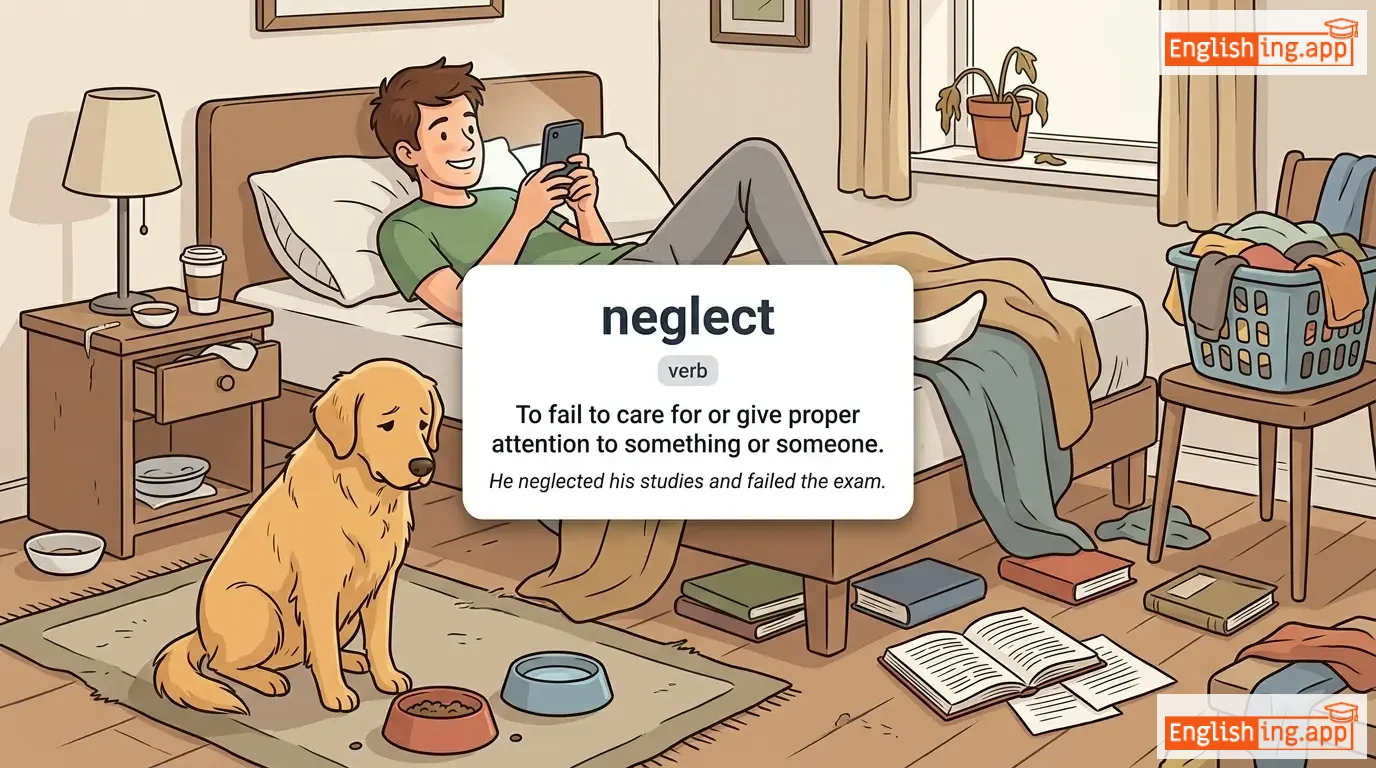
/nɪˈɡlɛkt/
verb
(ネグレクト)
••••••
|
|
無視
mushi
••••••
|
neglected
ネグレクテッド
••••••
|
neglected
ネグレクテッド
••••••
|
neglects
ネグレクツ
••••••
|
neglecting
ネグレクティング
••••••
|
To fail to care for or give proper attention to something or someone.
••••••
|
He neglected his studies and failed the exam.
彼は勉強を怠けて試験に落ちました。
••••••
|
彼は勉強を怠け、試験に落ちました。
Kare wa benkyou o namakete, shiken ni ochimashita.
••••••
|
neglect of duty
義務の怠慢
••••••
|
Failure to fulfill one's responsibilities.
••••••
|
義務の怠慢
Gimu no taimani
••••••
|
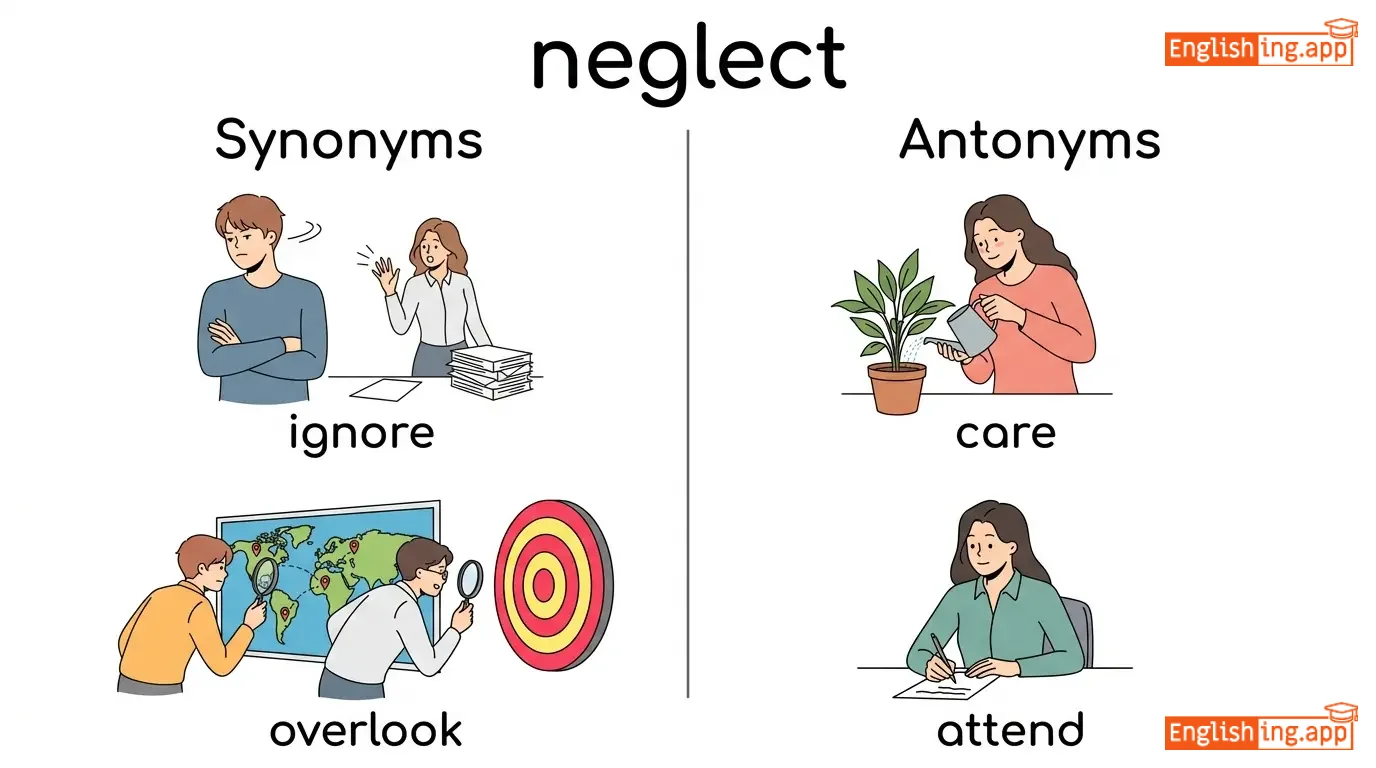
ignore, overlook, disregard, abandon, forget
••••••
|
care, attend, maintain
••••••
|
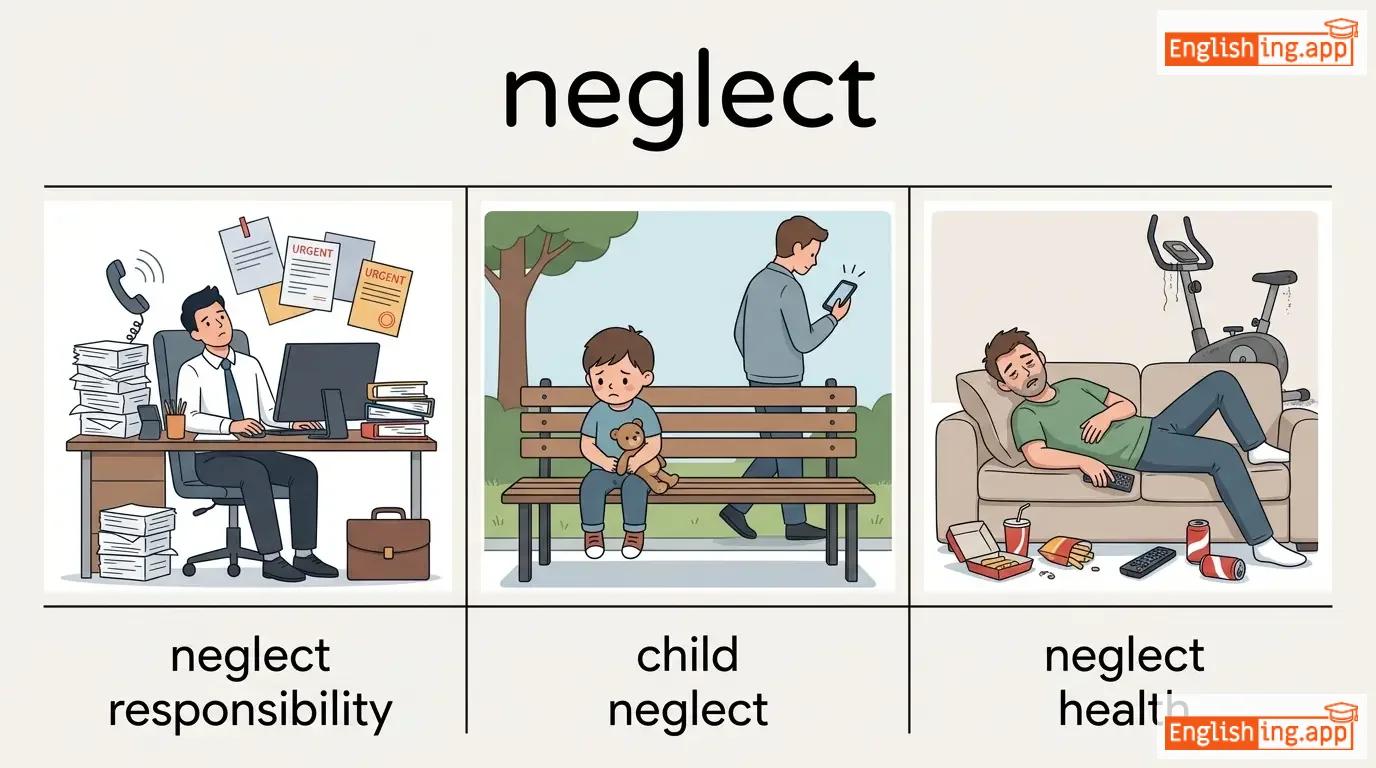
neglect responsibility, child neglect, neglect health, neglect work
••••••
|
Neglect は negative + collect → 何も集めない = 無視。
••••••
|
|
#5871
🚫
|
/nɪˈɡeɪʃən/
noun
(ネゲイション)
••••••
|
- •••••• |
否定
hitei
••••••
|
- •••••• | - •••••• | - •••••• | - •••••• |
The act of denying something; the contradiction or absence of something.
••••••
|
The theory is built on the negation of traditional beliefs. |
理論は伝統的な信念の否定に基づいています。
Riron wa dentō-teki na shinnen no hitei ni motozuite imasu.
••••••
|
double negation |
A grammatical construction where two negatives are used, often to create a positive meaning.
••••••
|
二重否定
nijū hitei
••••••
|
denial, contradiction, rejection, invalidation, refusal
••••••
|
affirmation, confirmation, acceptance
••••••
|
negation of truth, complete negation, logical negation, double negation
••••••
|
Negation = negative + action = 否定の行為
••••••
|
|
#5872
🚫
|
/nɪˈɡeɪt/
verb
••••••
|
|
- •••••• |
negated
••••••
|
negated
••••••
|
negates
••••••
|
negating
••••••
|
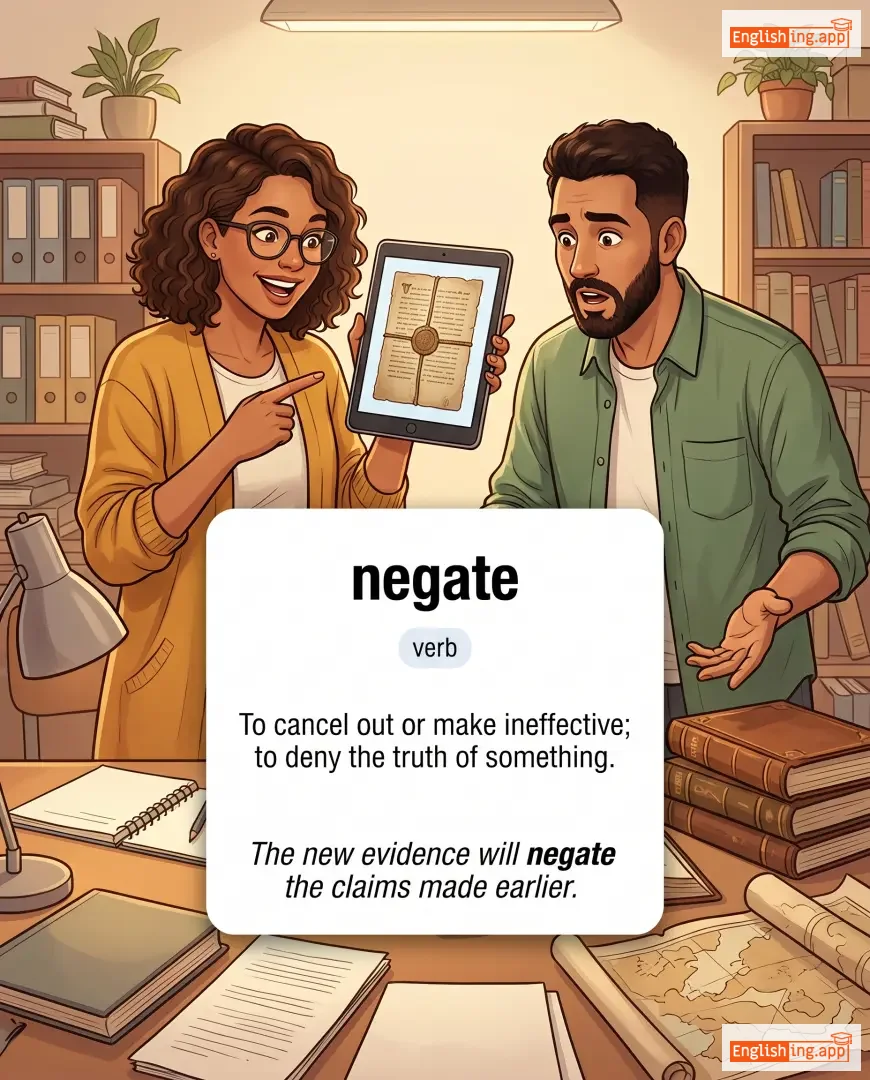
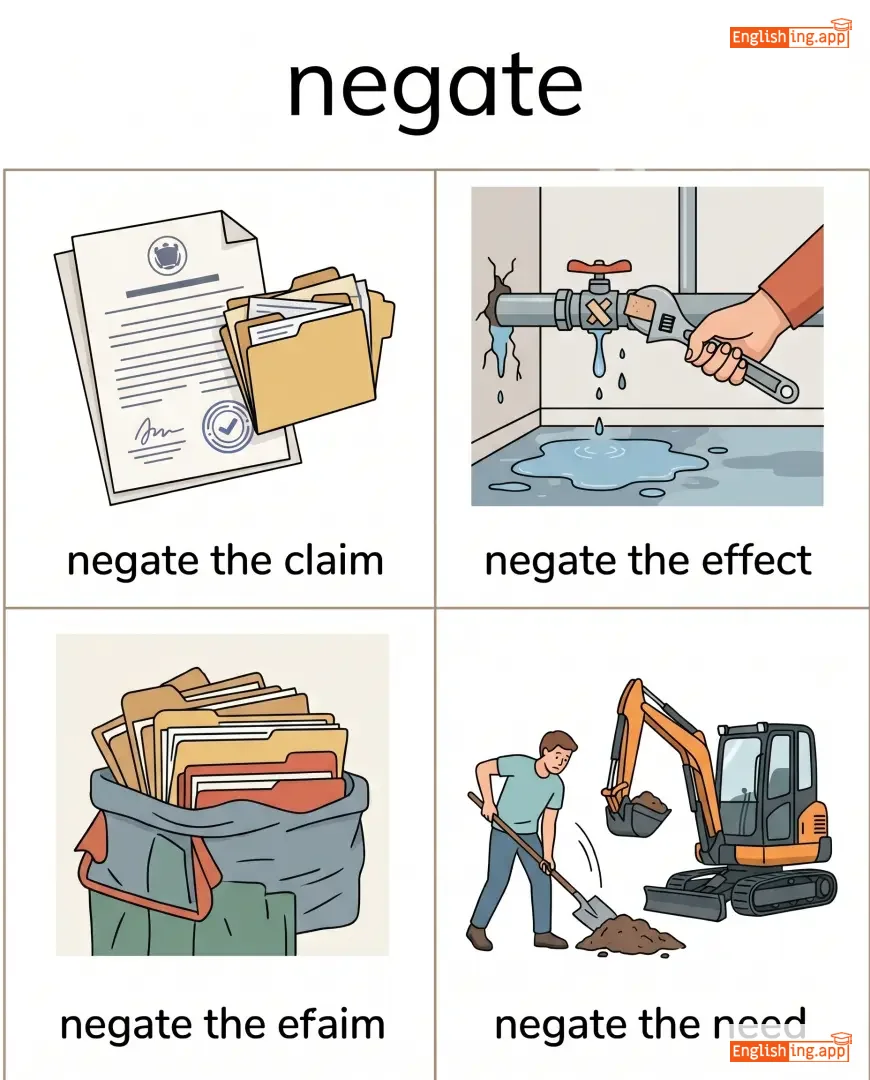
To cancel out or make ineffective; to deny the truth of something.
••••••
|
The new evidence will negate the claims made earlier. |
- •••••• |
negate the effect |
To cancel or reduce the impact of something.
••••••
|
- •••••• |
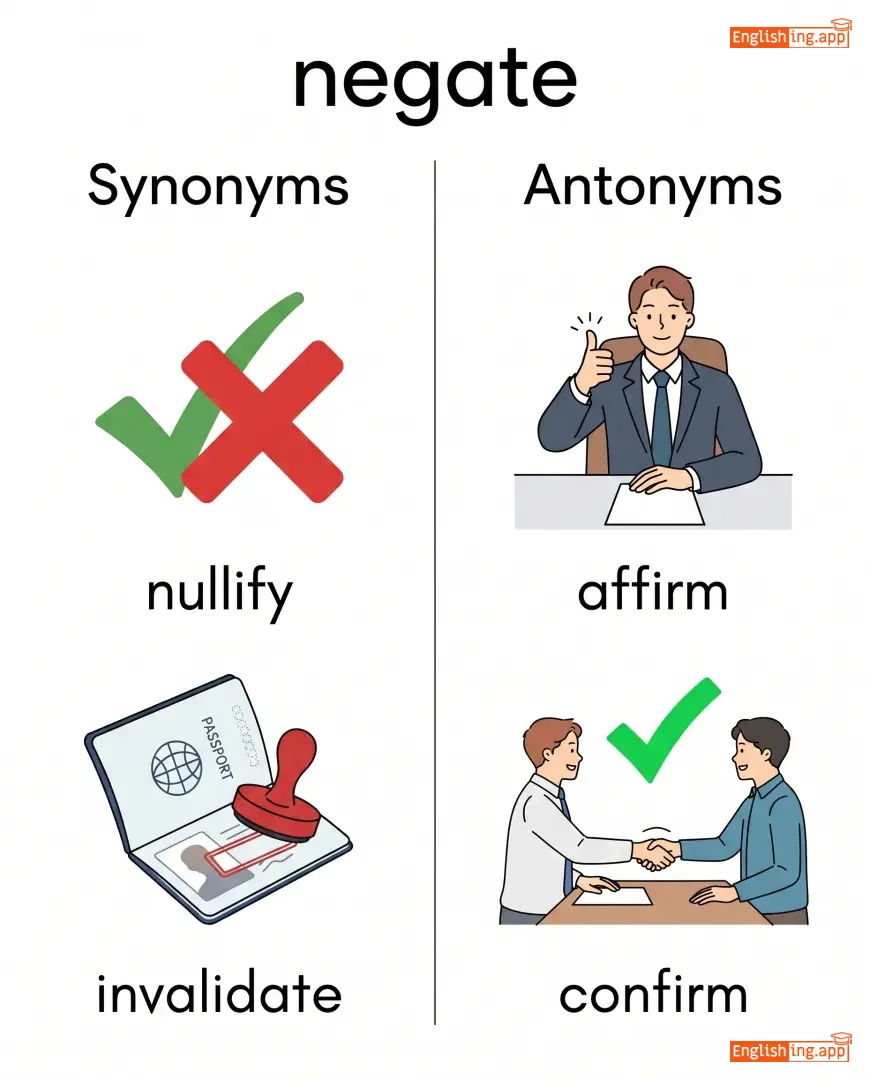
nullify, invalidate, deny, cancel, counteract
••••••
|
affirm, confirm, validate
••••••
|
negate the claim, negate the effect, negate the need, negate responsibility
••••••
|
No •••••• |
|
#5873
😈
|
/nɪˈfɛəriəs/
adjective
(ネファリオス)
••••••
|
- •••••• |
邪悪な、犯罪者、または道徳的に悪い
jaaku na, hanzai-sha, matawa doutokuteki ni warui
••••••
|
- •••••• | - •••••• | - •••••• | - •••••• |
Wicked, criminal, or morally bad.
••••••
|
The police uncovered a nefarious plot to cheat investors. |
警察は投資家を欺こうとする邪悪な陰謀を暴露しました。
Keisatsu wa toushika wo azamikaou to suru jaaku na inbou wo bakuro shimashita.
••••••
|
- •••••• | - •••••• | - •••••• |
wicked, evil, villainous, immoral, corrupt
••••••
|
honorable, noble, virtuous
••••••
|
nefarious activities, nefarious scheme, nefarious plot, nefarious character
••••••
|
Nefarious – ‘ネファ’のように悪いことを意味します。
••••••
|
|
#5874
🤲
|
/ˈniːdi/
adjective
(ニーディ)
••••••
|
- •••••• |
困窮している
konkyū shite iru
••••••
|
- •••••• | - •••••• | - •••••• | - •••••• |
Lacking the basic necessities of life; poor.
••••••
|
The charity provides food and shelter for needy families. |
その慈善団体は困窮している家族に食べ物と避難所を提供します。
Sono jizen dantai wa konkyū shite iru kazoku ni tabemono to hinansho o teikyō shimasu.
••••••
|
- •••••• | - •••••• | - •••••• |
poor, impoverished, destitute, underprivileged
••••••
|
wealthy, rich, affluent
••••••
|
needy people, needy families, help the needy, support the needy
••••••
|
Needy は日本語で ‘困窮している’ – 何かが足りない人々を指します。
••••••
|
|
#5875
🧵
|
/ˈniːdəlwɜːrk/
noun
(ニードルワーク)
••••••
|
- •••••• |
刺繍, 手芸
shishū, shugei
••••••
|
- •••••• | - •••••• | - •••••• | - •••••• |
The craft of sewing, embroidery, or knitting done with a needle.
••••••
|
Her grandmother taught her the art of needlework.
彼女の祖母は彼女にニードルワークの技術を教えました。
••••••
|
彼女の祖母は彼女にニードルワークの技術を教えました。
Kanojo no sobo wa kanojo ni needlework no gijutsu o oshiemashita.
••••••
|
- •••••• | - •••••• | - •••••• |
embroidery, sewing, stitching, knitting, handiwork
••••••
|
machine work, mass production
••••••
|
fine needlework, traditional needlework, needlework skills, needlework pattern
••••••
|
Needleworkは針を使う作業 – 刺繍や手芸のこと。
••••••
|
|
#5876
🍑
|
/ˈnɛktəriːn/
noun
(ネクタリン)
••••••
|
- •••••• |
ネクタリン (滑らかな皮の桃の一種)
nekutarin
••••••
|
- •••••• | - •••••• | - •••••• | - •••••• |
A smooth-skinned variety of peach.
••••••
|
She bought a basket of fresh nectarines from the market. |
彼女は市場から新鮮なネクタリンのバスケットを買いました。
Kanojo wa shijou kara shinzen na nekutarin no basuketto o kaimashita.
••••••
|
- •••••• | - •••••• | - •••••• |
peach, fruit, drupe, stone fruit
••••••
|
vegetable, meat
••••••
|
fresh nectarine, ripe nectarine, nectarine tree, nectarine juice
••••••
|
ネクタリン(nectar)と聞いて、この果物が甘くてジューシーだと思い出す。
••••••
|
|
#5877
🍯
|
/ˈnɛktər/
noun
(ネクター)
••••••
|
|
甘露
kanro
••••••
|
- •••••• | - •••••• | - •••••• | - •••••• |
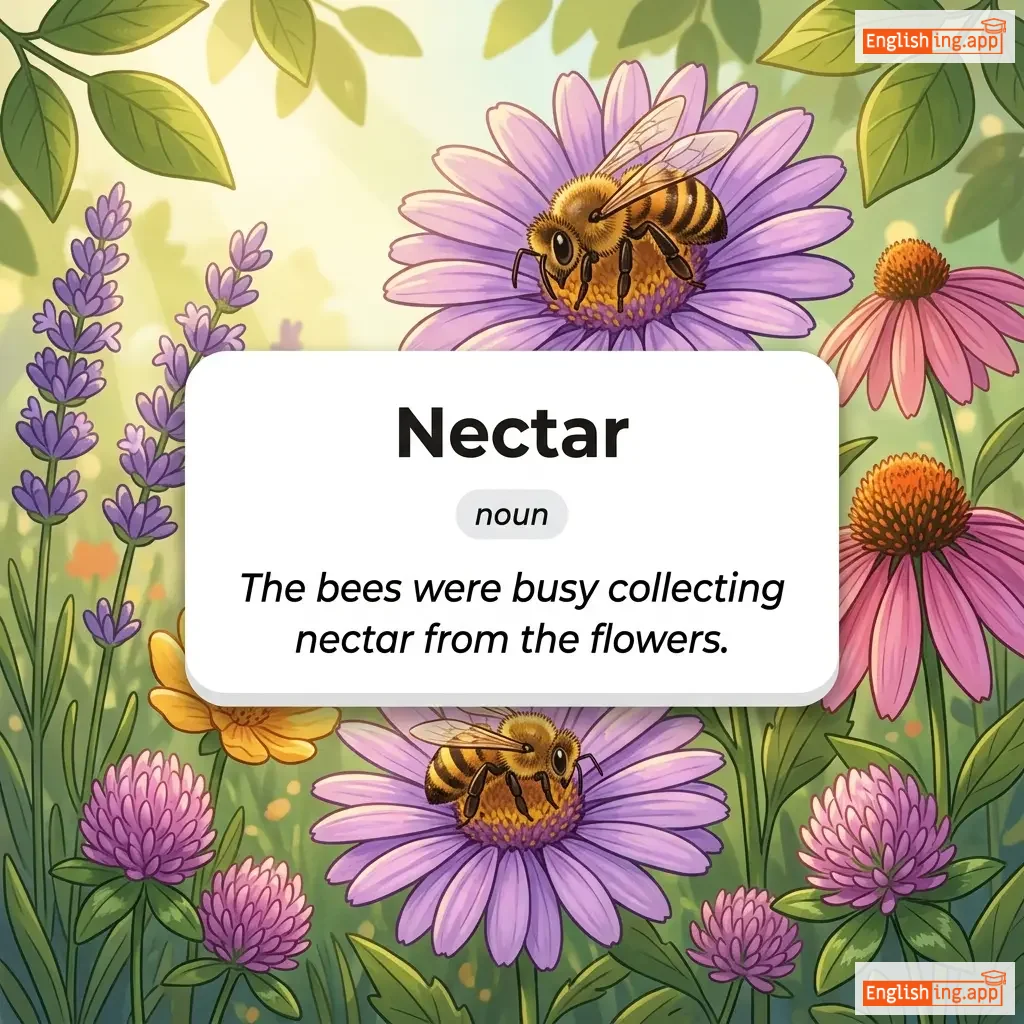
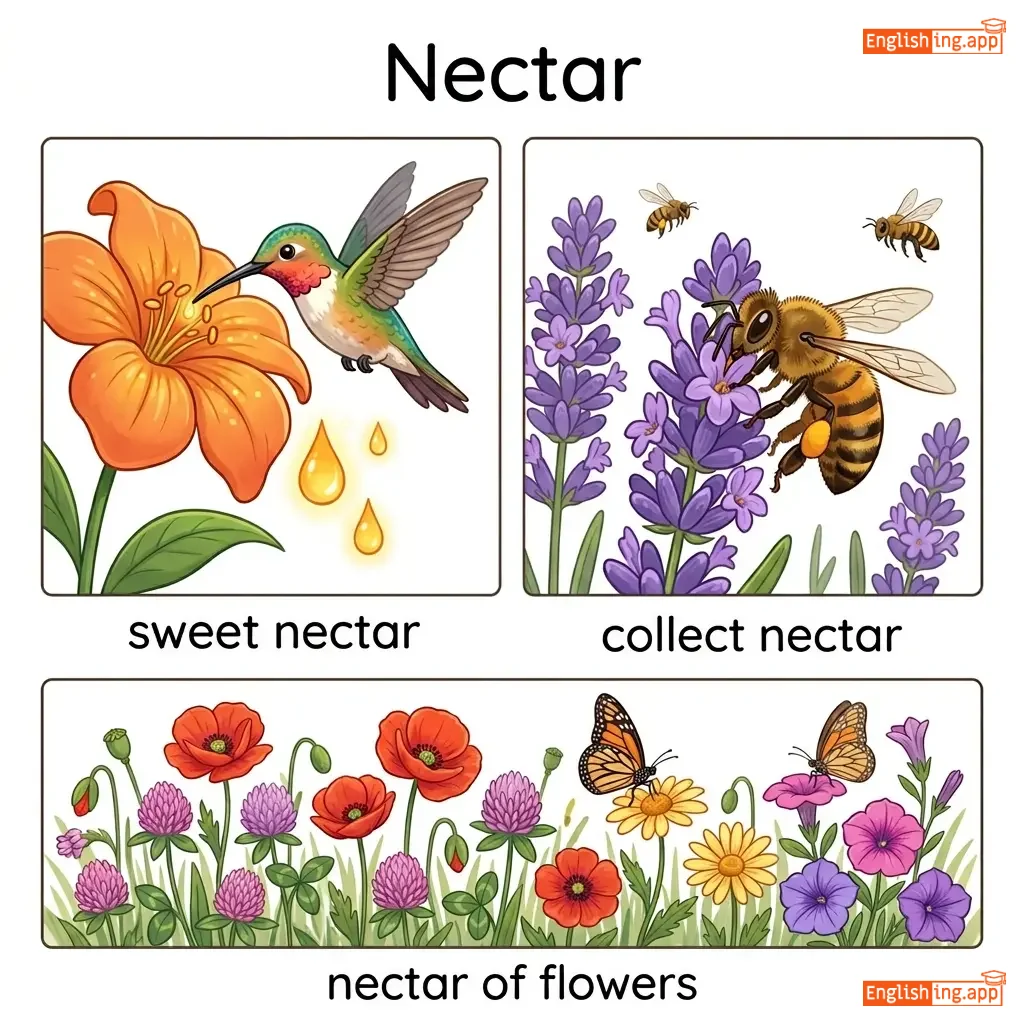
a sweet liquid produced by flowers and collected by bees; in mythology, the drink of the gods
••••••
|
The bees were busy collecting nectar from the flowers. |
蜂たちは花からネクターを集めるのに忙しかった。
Hachitachi wa hana kara nekutā o atsumeru no ni isogashikatta.
••••••
|
nectar of the gods |
something considered extremely delicious or delightful
••••••
|
神々の甘露
Kamigami no kanro
••••••
|
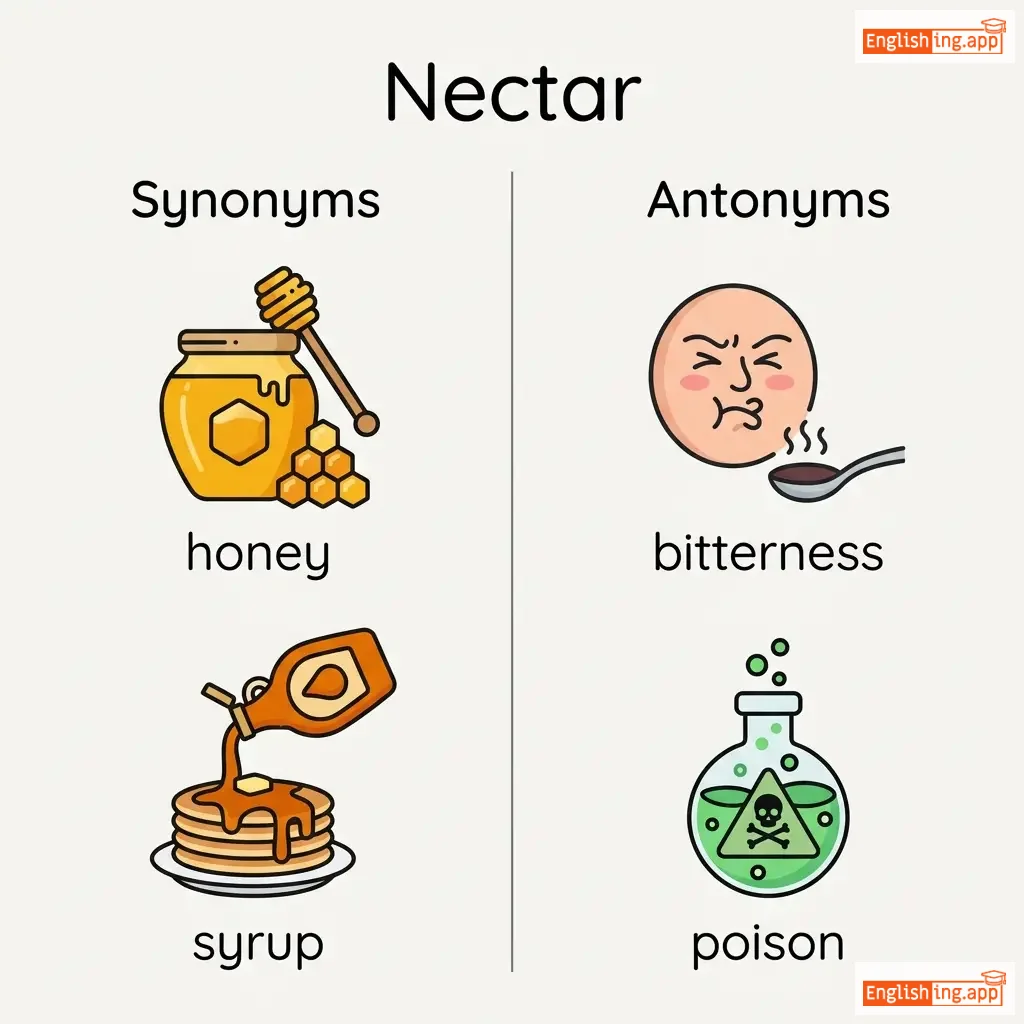
honey, syrup, ambrosia, sweetness, juice
••••••
|
bitterness, poison, toxin
••••••
|
sweet nectar, collect nectar, nectar of flowers, nectar drink
••••••
|
ネクターは花から集められる甘い液体で、神々の甘露とも呼ばれています。
••••••
|
|
#5878
🩸
|
/nɛˈkroʊsɪs/
noun
(ネクロシス)
••••••
|
- •••••• |
壊死
kaishi
••••••
|
- •••••• | - •••••• | - •••••• | - •••••• |
the death of body tissue due to disease, injury, or lack of blood supply
••••••
|
The doctor explained that the patient’s wound showed signs of necrosis. |
医師は、患者の傷が壊死の兆候を示していると説明しました。
Ishi wa, kanja no kizu ga kaishi no choukou wo shimeshiteiru to setsumei shimashita.
••••••
|
- •••••• | - •••••• | - •••••• |
tissue death, gangrene, decay, degeneration
••••••
|
growth, regeneration, healing
••••••
|
tissue necrosis, necrosis of the skin, necrosis caused by infection, bone necrosis
••••••
|
壊死 = 壊 (壊れる) + 死 (死ぬ) - 組織が壊れて死ぬ状態。
••••••
|
|
#5879
⚰️
|
/nəˈkrɒpəlɪs/
noun
(ネクロポリス)
••••••
|
- •••••• |
古代の墓地
kodai no bochi
••••••
|
- •••••• | - •••••• | - •••••• | - •••••• |
a large ancient cemetery with elaborate tombs
••••••
|
The archaeologists discovered artifacts in the necropolis of the ancient city. |
考古学者たちは古代都市のネクロポリスで遺物を発見しました。
Kōkogakushatachi wa kodai toshi no nekuroposu de ibutsu o hakken shimashita.
••••••
|
- •••••• | - •••••• | - •••••• |
cemetery, graveyard, burial ground, catacomb
••••••
|
city, town, village
••••••
|
ancient necropolis, vast necropolis, Egyptian necropolis, Roman necropolis
••••••
|
Necroは死者を意味し、polisは都市を意味します。死者の都市がネクロポリスです。
••••••
|
|
#5880
🔮
|
/ˈnɛkrəˌmænsi/
noun
(ネクロマンシー)
••••••
|
- •••••• |
死霊術
shireijutsu
••••••
|
- •••••• | - •••••• | - •••••• | - •••••• |
the practice of communicating with the dead, often to predict the future
••••••
|
Ancient texts described rituals of necromancy performed by priests. |
古代の文献には、神父たちによって行われた死霊術の儀式が記述されています。
Kodai no bunken ni wa, shinputa-tachi ni yotte okonawareta shireijutsu no gishiki ga kijutsusareteimasu.
••••••
|
- •••••• | - •••••• | - •••••• |
sorcery, witchcraft, black magic, occultism, divination
••••••
|
science, rationalism, realism
••••••
|
ancient necromancy, dark necromancy, practice of necromancy, art of necromancy
••••••
|
ネクロは死者、マンシーは術を意味し、死者の術=ネクロマンシー。
••••••
|
Vocabulary Quiz
Test your vocabulary by matching words with their translations or meanings.
Login to take the quiz
Comments (0)
Share your thoughts and join the discussion.
Join the discussion by logging in
Login to CommentNo comments yet
Be the first to share your thoughts!