

翻訳
過去
過去分詞
三人称単数
動名詞
意味
例文
例文の翻訳
同義語
対義語
コロケーション
ニーモニック



Swipe left or right, or use the buttons. Tap image to zoom.
例文の翻訳
単語
Lesson 327Lesson 327 - マスクトグル
|
絵文字
|
単語 | Images | 翻訳 | 過去 | 過去分詞 | 三人称単数 | 動名詞 | 意味 | 例文 | 例文の翻訳 | 表現例 | 表現例の意味 | 表現例の翻訳 | 同義語 | 対義語 | コロケーション | ニーモニック |
|---|---|---|---|---|---|---|---|---|---|---|---|---|---|---|---|---|---|
|
#9775
🤝
|
/ɪnˈkaʊntər/
verb
(エンカウンター)
••••••
|
- •••••• |
遭遇する / 出会う
sōgū suru / deau
••••••
|
encountered
エンカウンタード
••••••
|
encountered
エンカウンタード
••••••
|
encounters
エンカウンターズ
••••••
|
encountering
エンカウンタリング
••••••
|
to unexpectedly meet someone or experience something, especially something difficult or new
••••••
|
During the hike, we encountered a wild bear.
ハイキング中に、私たちは野生のクマに遭遇しました。
••••••
|
ハイキング中に、私たちは野生のクマに遭遇しました。
Haikingu-chū ni, watashitachi wa yasei no kuma ni sōgū shimashita.
••••••
|
encounter difficulties
困難に直面する
••••••
|
to face problems or obstacles
••••••
|
困難に直面する
konnan ni chokumen suru
••••••
|
meet, face, confront, experience, come across
••••••
|
avoid, evade, escape
••••••
|
encounter problems, encounter difficulties, first encounter, unexpected encounter
••••••
|
遭遇することは、直面することに通じる!
••••••
|
|
#9776
⚖️
|
/ɪˈkweɪt/
verb
(イクウェイト)
••••••
|
- •••••• |
等しい
hitoshii
••••••
|
equated
イクウェイテッド
••••••
|
equated
イクウェイテッド
••••••
|
equates
イクウェイツ
••••••
|
equating
イクウェイティング
••••••
|
To consider as equal or equivalent.
••••••
|
Many people equate wealth with success.
多くの人々は富と成功を同一視します。
••••••
|
多くの人々は富と成功を同一視します。
ōku no hitobito wa tomi to seikō o dōitsu-shimasu.
••••••
|
equate to
等しいと見なす
••••••
|
To be the same as something else in meaning or value
••••••
|
等しいと見なす
hitoshii to minasū
••••••
|
compare, match, relate, associate
••••••
|
differentiate, distinguish, separate
••••••
|
equate wealth with, cannot equate, equate happiness to
••••••
|
Equateは等しい意味 ⚖️ — 覚えておいて:EQUATE ~ EQUAL
••••••
|
|
#9777
✉️
|
/ɪˈpɪsəl/
noun
(エピストル)
••••••
|
- •••••• |
書簡
shokan
••••••
|
- •••••• | - •••••• | - •••••• | - •••••• |
A letter, especially a formal or didactic one; often used for letters in the New Testament.
••••••
|
He wrote a long epistle to his friend about his travels. |
彼は自分の旅行について友人に長い手紙を書いた。
Kare wa jibun no ryokō ni tsuite yūjin ni nagai tegami o kaita.
••••••
|
- •••••• | - •••••• | - •••••• |
letter, missive, communication, note
••••••
|
silence, speechlessness
••••••
|
biblical epistle, long epistle, Pauline epistle
••••••
|
Epistle は手紙を意味します ✉️ — 覚えておいて: エピストルは正式な手紙です
••••••
|
|
#9778
🔄
|
/ɪnˈtaɪərli/
adverb
(エンタアーリー)
••••••
|
- •••••• |
完全に
kanzen ni
••••••
|
- •••••• | - •••••• | - •••••• | - •••••• |
Completely or wholly.
••••••
|
She is entirely responsible for the project. |
彼女はそのプロジェクトに完全に責任があります。
Kanojo wa sono purojekuto ni kanzen ni sekinin ga arimasu.
••••••
|
entirely up to |
Completely dependent on someone or something
••••••
|
完全に依存
kanzen ni izon
••••••
|
completely, fully, wholly, absolutely
••••••
|
partly, partially, incompletely
••••••
|
entirely responsible, entirely new, entirely different, not entirely
••••••
|
完全には全く意味 — '完全'が'完全に'にあることを覚えて!
••••••
|
|
#9779
✨
|
/ɪnˈθrɔːl/
verb
(エンスラル)
••••••
|
- •••••• |
魅了する
miryō suru
••••••
|
enthralled
エンスラルド
••••••
|
enthralled
エンスラルド
••••••
|
enthrals
エンスラルス
••••••
|
enthralling
エンスラリング
••••••
|
To captivate or hold someone’s full attention.
••••••
|
The magician’s performance enthralled the audience.
マジシャンのパフォーマンスは観客を魅了した。
••••••
|
マジシャンのパフォーマンスは観客を魅了した。
Majishan no pafōmansu wa kankyaku o miryō shita.
••••••
|
- •••••• | - •••••• | - •••••• |
captivate, fascinate, charm, mesmerize
••••••
|
bore, repel, displease
••••••
|
enthral the audience, deeply enthral, enthral completely
••••••
|
EnTHRALLは素晴らしいパフォーマンスでみんなを魅了することを意味します ✨
••••••
|
|
#9780
🚩
|
/ˈɛnsaɪn/
noun
(エンサイン)
••••••
|
- •••••• |
旗
ki
••••••
|
- •••••• | - •••••• | - •••••• | - •••••• |
A flag or standard, especially a military or naval one indicating nationality; also a junior officer in the navy or coast guard.
••••••
|
The ship raised its national ensign before leaving the harbor. |
その船は港を出る前に国旗を掲げました。
Sono fune wa minato o deru mae ni kokki o kake mashita.
••••••
|
- •••••• | - •••••• | - •••••• |
flag, banner, standard, emblem, pennant
••••••
|
null, insignificance, obscurity
••••••
|
naval ensign, national ensign, ensign officer
••••••
|
Ensignは旗を意味します 🚩 — 覚えておいてください:EnSIGN = SIGN of a nation (国のしるし)
••••••
|
|
#9781
❓
|
/ɪnˈkwaɪər/
verb
(エンクワイア)
••••••
|
- •••••• |
尋ねる
tazuneru
••••••
|
enquired
エンクワイアード
••••••
|
enquired
エンクワイアード
••••••
|
enquires
エンクワイアーズ
••••••
|
enquiring
エンクワイアリング
••••••
|
to ask for information about something
••••••
|
He enquired about the train schedule.
彼は列車の時刻表について尋ねました。
••••••
|
彼は列車の時刻表について尋ねました。
Kare wa ressha no jikokuhyou ni tsuite tazunemashita.
••••••
|
enquire into
エンクワイア イントゥ
••••••
|
to investigate
••••••
|
調査する
chousa suru
••••••
|
ask, question, query, investigate
••••••
|
ignore, neglect
••••••
|
enquire about, enquire into, politely enquire, formally enquire
••••••
|
ENQUIRE = 尋ねる = Enquire = 質問をしよう!
••••••
|
|
#9782
✔️
|
/ɪˈnʌf/
adjective/adverb
(イナフ)
••••••
|
- •••••• |
十分
jūbun
••••••
|
- •••••• | - •••••• | - •••••• | - •••••• |
as much or as many as required
••••••
|
We have enough food for everyone. |
私たちは皆のために十分な食べ物があります。
Watashitachi wa mina no tame ni jūbun na tabemono ga arimasu.
••••••
|
enough is enough |
used to say that something should stop
••••••
|
十分は十分
jūbun wa jūbun
••••••
|
sufficient, adequate, plenty, ample
••••••
|
insufficient, inadequate, lacking
••••••
|
enough money, enough time, good enough, enough resources
••••••
|
ENOUGHは「イナフ」 – Enough食べ物は十分食べ物
••••••
|
|
#9783
🔍
|
/ɪnˈlɑːrdʒ/
verb
(エンラージ)
••••••
|
- •••••• |
広げる
hirogeru
••••••
|
enlarged
エンラージド
••••••
|
enlarged
エンラージド
••••••
|
enlarges
エンラージズ
••••••
|
enlarging
エンラージング
••••••
|
to make something bigger or increase in size
••••••
|
They decided to enlarge their house.
彼らは家を広げることに決めました。
••••••
|
彼らは家を広げることに決めました。
Karera wa ie o hirogeru koto ni kimemashita.
••••••
|
- •••••• | - •••••• | - •••••• |
expand, magnify, extend, increase
••••••
|
shrink, reduce, decrease
••••••
|
enlarge the picture, enlarge the scope, enlarge capacity, enlarge view
••••••
|
EnLARGE = 広げる – 大きくする
••••••
|
|
#9784
😊
|
/ɪnˈdʒɔɪ/
verb
(エンジョイ)
••••••
|
|
楽しむ
tanoshimu
••••••
|
enjoyed
エンジョイド
••••••
|
enjoyed
エンジョイド
••••••
|
enjoys
エンジョイズ
••••••
|
enjoying
エンジョイング
••••••
|
to take pleasure in something
••••••
|
They enjoyed the music at the concert.
彼らはコンサートで音楽を楽しんでいました。
••••••
|
彼らはコンサートで音楽を楽しんでいました。
Karera wa konsāto de ongaku o tanoshinde imashita.
••••••
|
enjoy yourself
楽しんでください
••••••
|
have a good time
••••••
|
楽しんで
tanoshinde
••••••
|
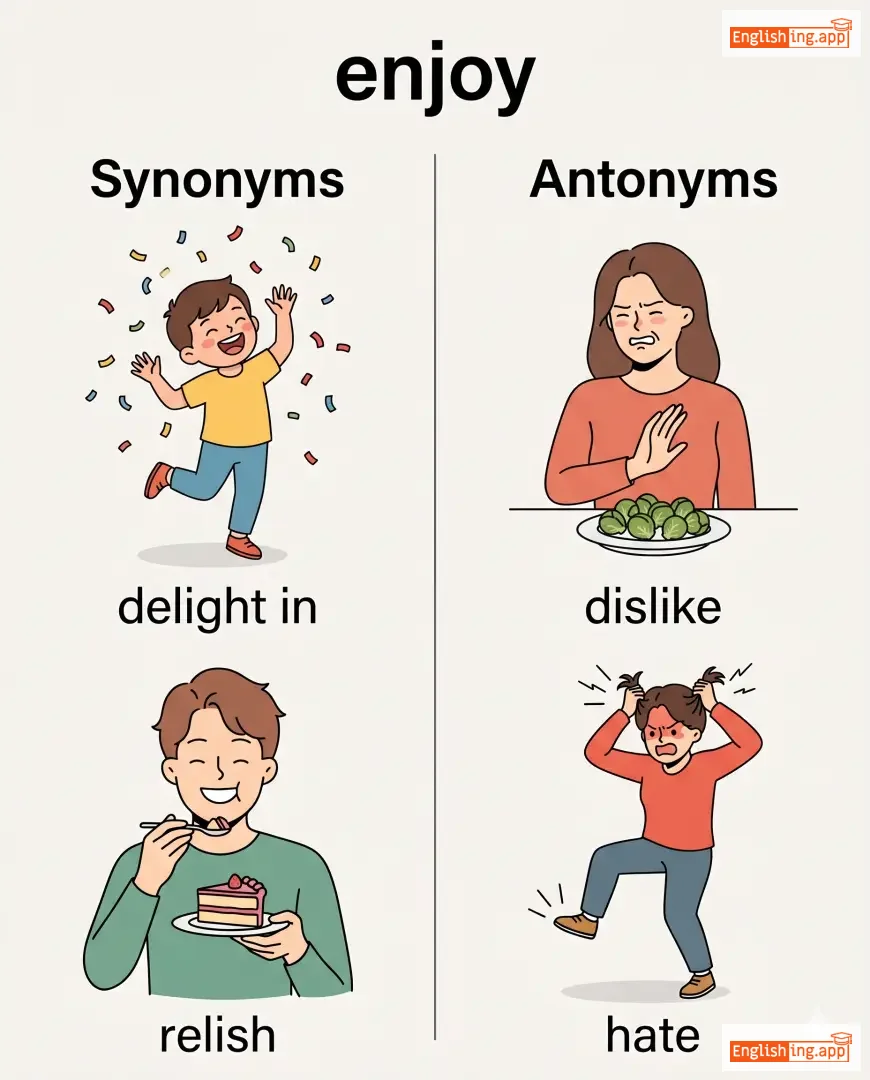
delight in, relish, savor, appreciate
••••••
|
dislike, hate, detest
••••••
|
enjoy life, enjoy the moment, enjoy a meal, enjoy company
••••••
|
ENJOYは楽しむを意味する – EnJOYはJoy(楽しみ)を意味する
••••••
|
|
#9785
📖
|
/ɪnˈɡroʊst/
adjective
(エングロースト)
••••••
|
- •••••• |
夢中
muchū
••••••
|
- •••••• | - •••••• | - •••••• | - •••••• |
completely absorbed or deeply involved in something
••••••
|
She was so engrossed in the book that she forgot the time. |
彼女は本に夢中になりすぎて、時間を忘れた。
Kanojo wa hon ni muchū ni nari sugite, jikan o wasureta.
••••••
|
- •••••• | - •••••• | - •••••• |
absorbed, immersed, captivated, engaged, fascinated
••••••
|
bored, uninterested, detached
••••••
|
engrossed in thought, engrossed in work, deeply engrossed, totally engrossed
••••••
|
Engrossedは夢中 = 本に夢中になる
••••••
|
|
#9786
⚔️
|
/ˈɛnəmi/
noun
(エネミー)
••••••
|
- •••••• |
敵
teki
••••••
|
- •••••• | - •••••• | - •••••• | - •••••• |
a person or group that is hostile or opposed to someone or something
••••••
|
The two countries have been enemies for decades.
二つの国は何十年もの間、敵同士です。
••••••
|
二つの国は何十年もの間、敵同士です。
Futatsu no kuni wa nanjū-nen mono aida, teki dōshi desu.
••••••
|
make an enemy
敵を作る
••••••
|
to create hostility with someone
••••••
|
敵を作る
teki o tsukuru
••••••
|
opponent, adversary, foe, rival
••••••
|
friend, ally
••••••
|
sworn enemy, common enemy, deadly enemy, enemy forces
••••••
|
Enemy = e+mi (私は) ,私に敵対する人。
••••••
|
|
#9787
🚀
|
/ɪnˈdɛvər/
verb
(エンドエヴォア)
••••••
|
|
努力
doryoku
••••••
|
endeavored
エンドエヴォアド
••••••
|
endeavored
エンドエヴォアド
••••••
|
endeavors
エンドエヴォアーズ
••••••
|
endeavoring
エンドエヴォアリング
••••••
|
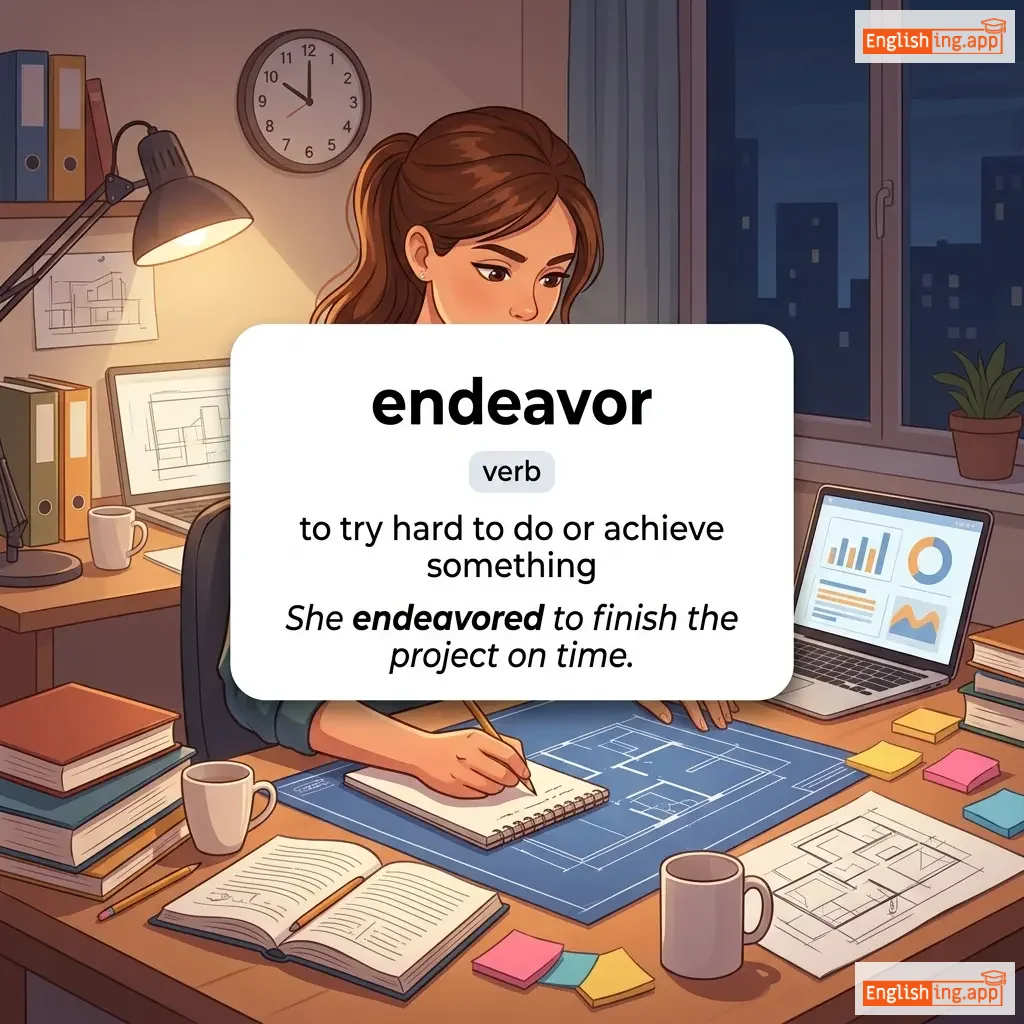
to try hard to do or achieve something
••••••
|
She endeavored to finish the project on time.
彼女はプロジェクトを時間通りに終わらせるために努力しました。
••••••
|
彼女はプロジェクトを時間通りに終わらせるために努力しました。
Kanojo wa purojekuto wo jikan douri ni owaraseru tame ni doryoku shimashita.
••••••
|
human endeavor
人間の努力
••••••
|
the effort made by humans to achieve something
••••••
|
人間の努力
ningen no doryoku
••••••
|
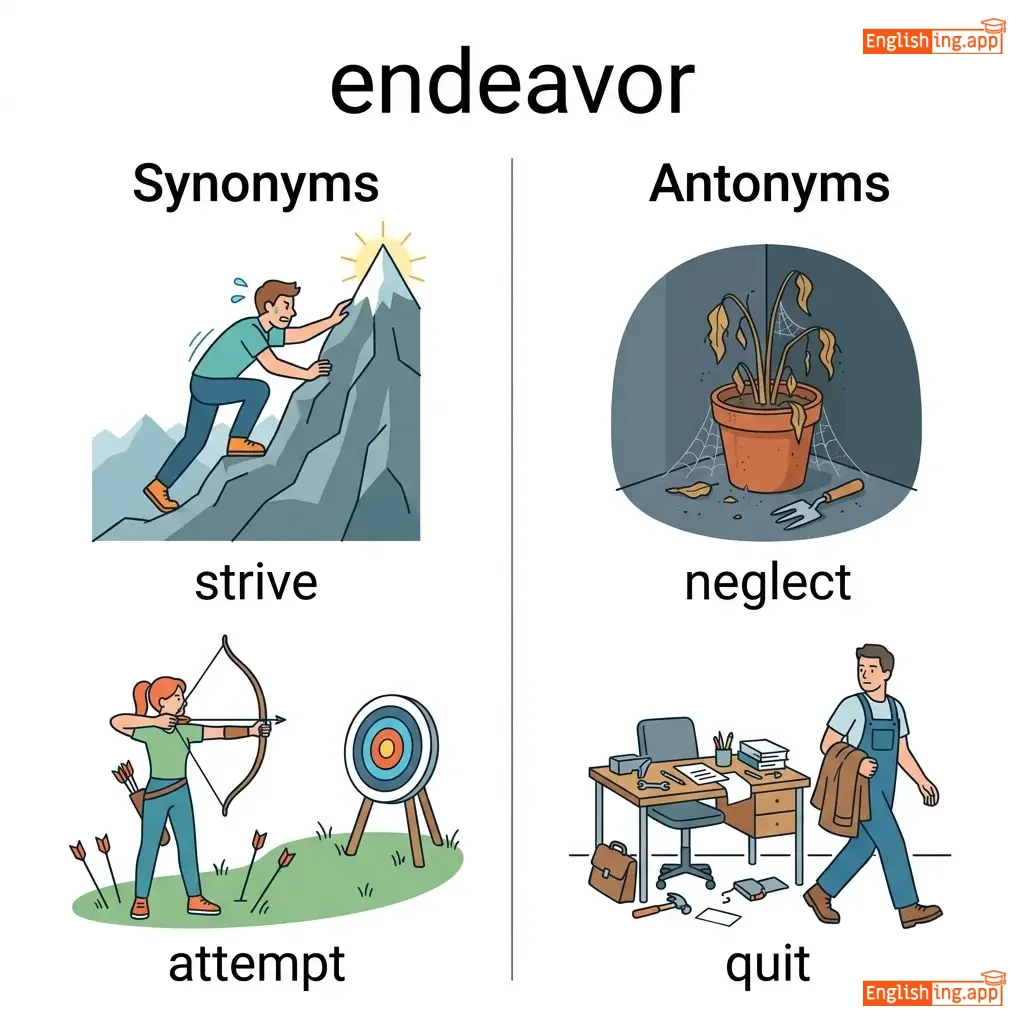
strive, attempt, try, struggle, undertake
••••••
|
neglect, quit
••••••
|
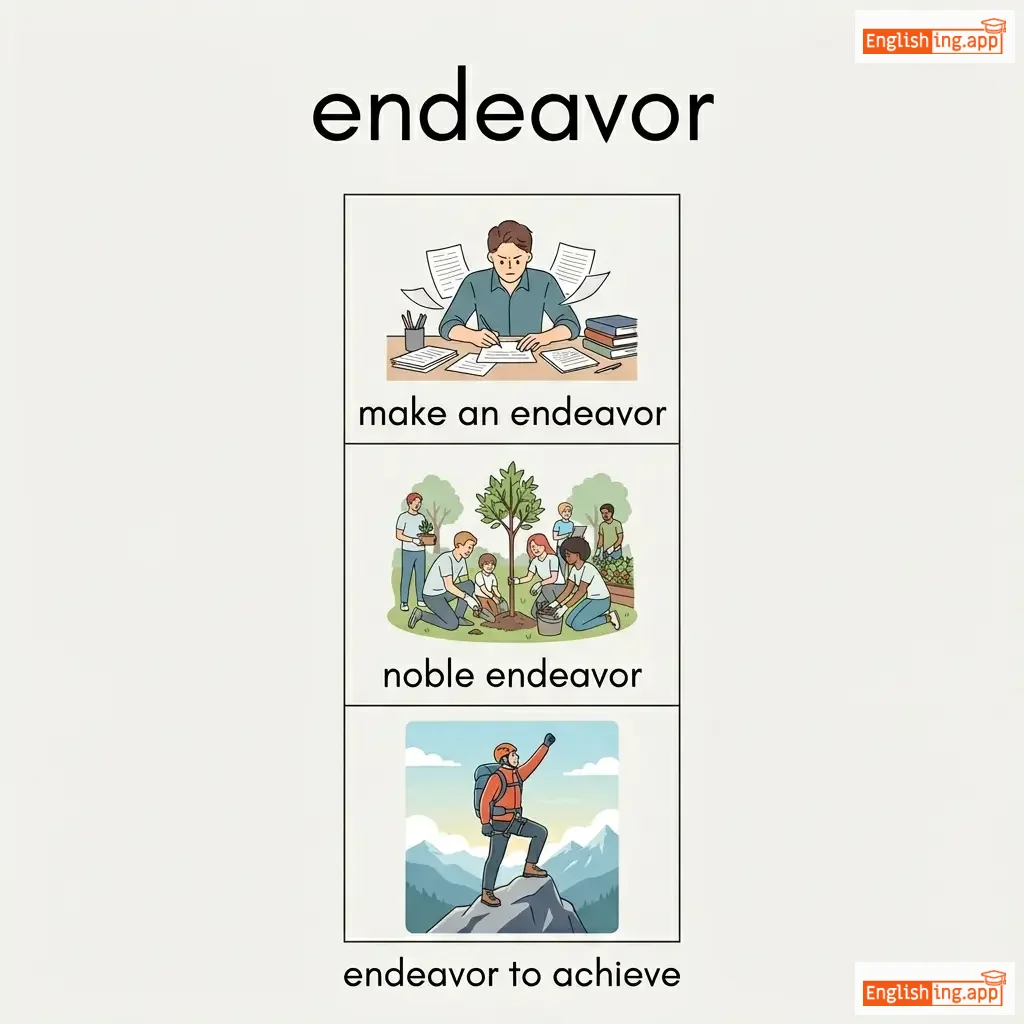
make an endeavor, noble endeavor, endeavor to achieve, human endeavor
••••••
|
Endeavor = End + Ever, つまり努力に終わりはないという意味です。
••••••
|
|
#9788
🔚
|
/ɛnd/
verb
(エンド)
••••••
|
- •••••• |
終了
shūryō
••••••
|
ended
エンデッド
••••••
|
ended
エンデッド
••••••
|
ends
エンズ
••••••
|
ending
エンディング
••••••
|
to bring something to a conclusion or stop
••••••
|
The meeting ended at 5 PM.
会議は午後5時に終了しました。
••••••
|
会議は午後5時に終了しました。
Kaigi wa gogo 5-ji ni shūryō shimashita.
••••••
|
at the end of the day
一日の終わりに
••••••
|
when everything is considered
••••••
|
一日の終わりに
ichinichi no owari ni
••••••
|
finish, conclude, terminate, cease
••••••
|
begin, start, commence
••••••
|
end game, happy end, tragic end, end result
••••••
|
Endは'終了'、映画の最後にThe Endと表示されるように!
••••••
|
|
#9789
⚖️
|
/ɪnˈkʌmbrəns/
noun
(enkamuburansu)
••••••
|
- •••••• |
負担 / 障害
futan / shougai
••••••
|
- •••••• | - •••••• | - •••••• | - •••••• |
a burden or obstacle that makes progress or movement difficult
••••••
|
Debt can become a serious encumbrance in life.
借金は人生で深刻な障害となる可能性があります。
••••••
|
借金は人生で深刻な障害となる可能性があります。
shakkin wa jinsei de shinkoku na shougai to naru kanousei ga arimasu.
••••••
|
- •••••• | - •••••• | - •••••• |
burden, hindrance, obstacle, obstruction
••••••
|
aid, help, support
••••••
|
financial encumbrance, legal encumbrance, heavy encumbrance, major encumbrance
••••••
|
Encumbrance は負担と似ており、収入に負担があると想像してください。
••••••
|
|
#9790
🐕
|
/dəˈmɛstɪkeɪt/
verb
(ドメスティケート)
••••••
|
- •••••• |
家畜化する
kachikuka suru
••••••
|
domesticated
ドメスティケートッド
••••••
|
domesticated
ドメスティケートッド
••••••
|
domesticates
ドメスティケーツ
••••••
|
domesticating
ドメスティケーティング
••••••
|
to tame an animal for use by humans; to adapt something for domestic use
••••••
|
Humans domesticated dogs thousands of years ago.
人間は数千年前に犬を家畜化しました。
••••••
|
人間は数千年前に犬を家畜化しました。
Ningen wa suusen nen mae ni inu wo kachikuka shimashita.
••••••
|
- •••••• | - •••••• | - •••••• |
tame, train, cultivate, adapt, subdue
••••••
|
wild, untamed, feral
••••••
|
domesticate animals, domesticate plants, domesticate species
••••••
|
Domestic と家畜化を覚えるための言葉遊び!
••••••
|
|
#9791
📦
|
/ˈɛmpti/
adjective
(エンプティ)
••••••
|
- •••••• |
空っぽ
karappo
••••••
|
- •••••• | - •••••• | - •••••• | - •••••• |
containing nothing; not filled
••••••
|
The box was completely empty. |
箱は完全に空っぽだった。
Hako wa kanzen ni karappo datta.
••••••
|
empty promises |
words or promises without real value or meaning
••••••
|
空っぽの約束
karappo no yakusoku
••••••
|
vacant, hollow, void, blank
••••••
|
full, filled
••••••
|
empty box, empty room, empty bottle, empty words
••••••
|
Empty 📦 は '空っぽ' を意味し、日本語では '空っぽ' は何も入っていないことを意味します。
••••••
|
|
#9792
🙄
|
/ˌiːɡoʊˈsentrɪk/
adjective
(イゴセントリック)
••••••
|
- •••••• |
自己中心的
jiko chuushinteki
••••••
|
- •••••• | - •••••• | - •••••• | - •••••• |
thinking only about yourself and not about others
••••••
|
His egocentric behavior annoyed everyone at the meeting.
彼のエゴセントリックな行動は会議でみんなをイライラさせた。
••••••
|
彼の自己中心的な行動は会議でみんなをイライラさせた。
Kare no jiko chuushinteki na koudou wa kaigi de minna o iraira saseta.
••••••
|
- •••••• | - •••••• | - •••••• |
selfish, self-centered, narcissistic, arrogant
••••••
|
selfless, humble
••••••
|
egocentric attitude, egocentric person, egocentric behavior
••••••
|
Ego + 中心 = 自己中心的 🙄, いつも自分が中心。
••••••
|
|
#9793
💰
|
/ˌiːkəˈnɒmɪk/
adjective
(エコノミック)
••••••
|
|
経済的
keizaiteki
••••••
|
- •••••• | - •••••• | - •••••• | - •••••• |
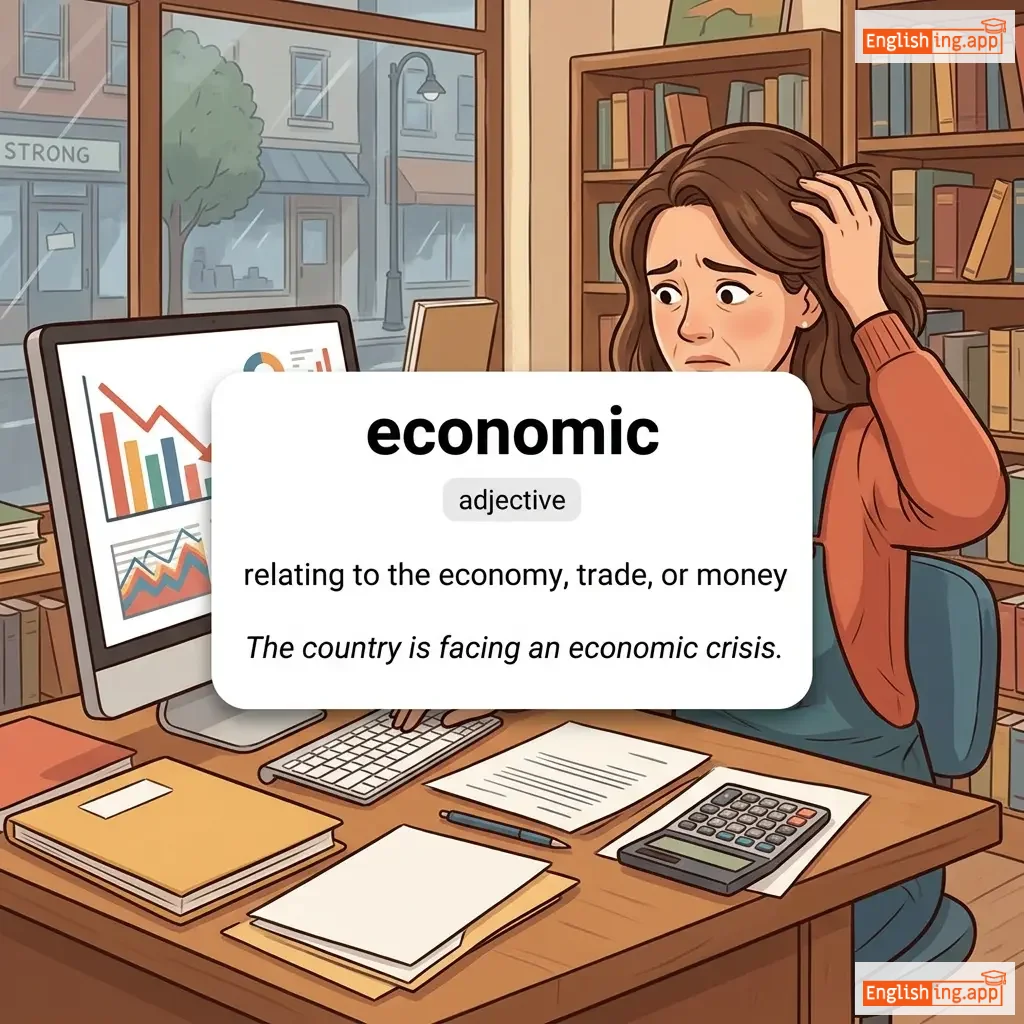
relating to the economy, trade, or money
••••••
|
The country is facing an economic crisis. |
その国は経済危機に直面しています。
Sono kuni wa keizai kiki ni chokumen shiteimasu.
••••••
|
economic growth |
increase in a country's production and wealth
••••••
|
経済成長
keizai seichou
••••••
|
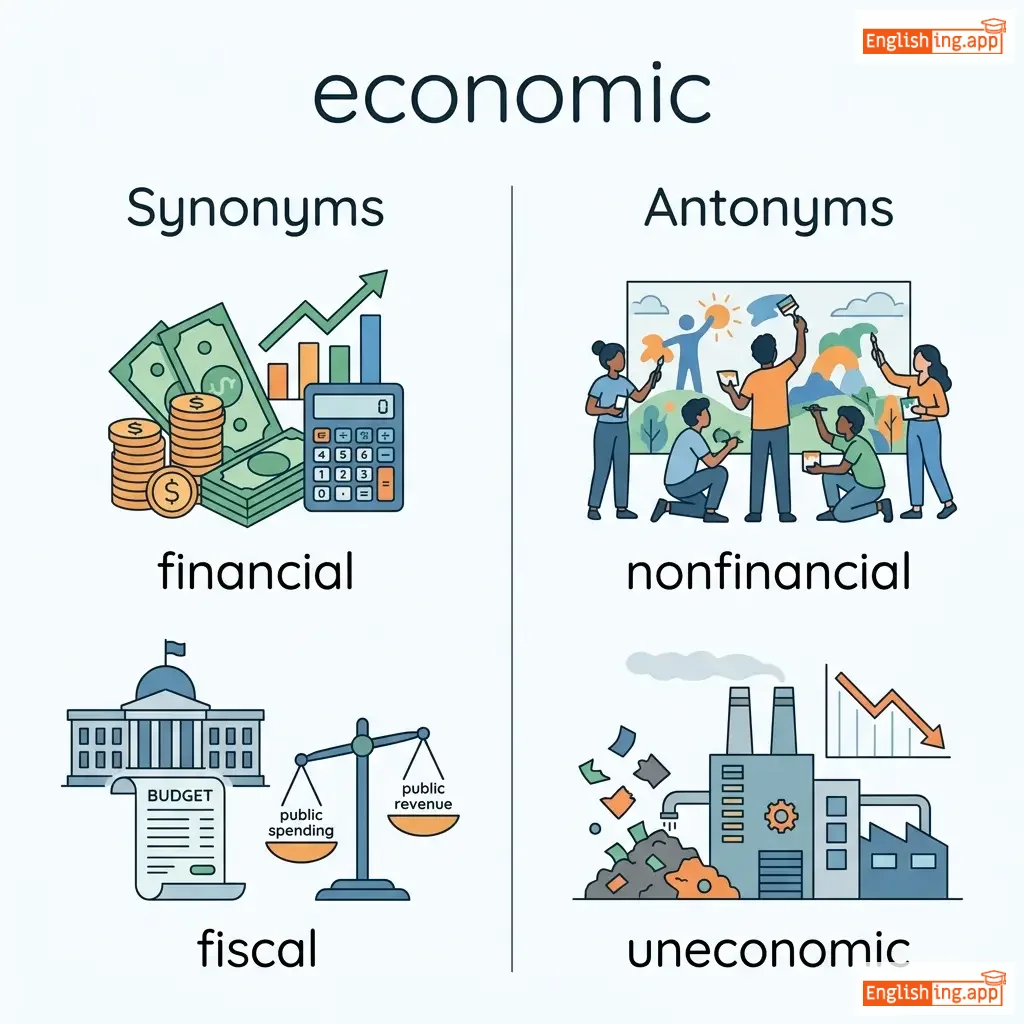
financial, fiscal, commercial, monetary
••••••
|
nonfinancial, uneconomic
••••••
|
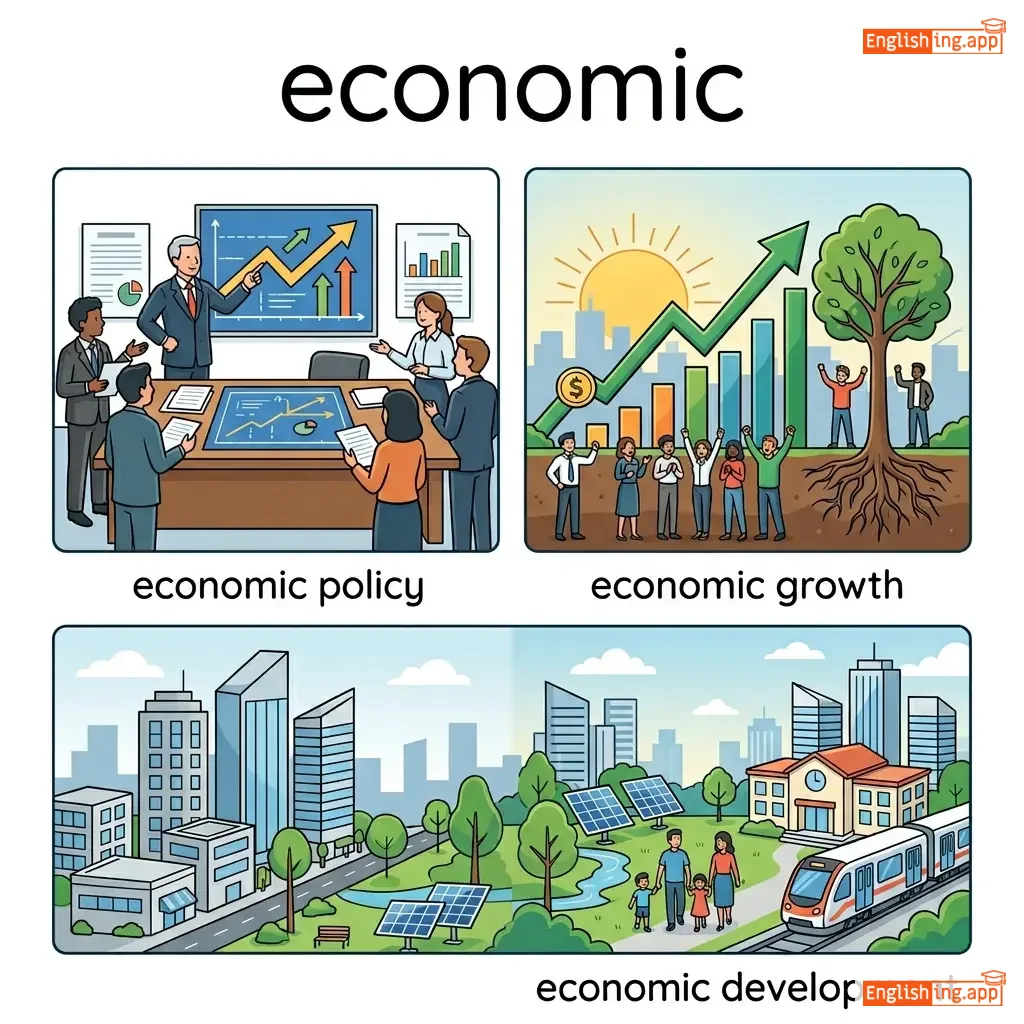
economic policy, economic growth, economic development, economic crisis
••••••
|
Economic = 経済的 💰, '経' は経済、'済' は支援の成長。
••••••
|
|
#9794
😊
|
/ˈiːzi/
adjective
(イージー)
••••••
|
- •••••• |
簡単
kantan
••••••
|
- •••••• | - •••••• | - •••••• | - •••••• |
not difficult; requiring little effort
••••••
|
The exam was surprisingly easy. |
試験は驚くほど簡単でした。
Shiken wa odoroku hodo kantan deshita.
••••••
|
take it easy |
to relax and not worry
••••••
|
気楽にやる
kiraku ni yaru
••••••
|
simple, effortless, straightforward, uncomplicated
••••••
|
difficult, hard
••••••
|
easy task, easy way, easy solution, easy money
••••••
|
Easyは簡単という意味です😊、日本語では「簡単な仕事」は努力が少ない仕事を意味します。
••••••
|
|
#9795
🌍
|
/ɜːrθ/
noun
(āsu)
••••••
|
- •••••• |
地球
chikyū
••••••
|
- •••••• | - •••••• | - •••••• | - •••••• |
the planet we live on; soil or ground
••••••
|
The astronauts looked back at the Earth from space. |
宇宙飛行士は宇宙から地球を見ました。
Uchūhikōshi wa uchū kara chikyū o mimashita.
••••••
|
down to earth |
practical, realistic, and sensible
••••••
|
現実的
genjitsuteki
••••••
|
world, globe, planet, ground, soil
••••••
|
sky, heaven
••••••
|
planet Earth, Earth surface, Earth orbit, Earth science
••••••
|
Earthは地球🌍、日本語で'地球'は私たちの住む場所です。
••••••
|
|
#9796
🐦
|
/ˈɜːrli/
adjective/adverb
(アーリー)
••••••
|
- •••••• |
早い
hayai
••••••
|
- •••••• | - •••••• | - •••••• | - •••••• |
before the usual or expected time
••••••
|
She arrived early to the meeting.
彼女は会議に早く到着しました。
••••••
|
彼女は会議に早く到着しました。
Kanojo wa kaigi ni hayaku tōchaku shimashita.
••••••
|
early bird
アーリーバード
••••••
|
someone who wakes up or arrives early
••••••
|
早起きする人
hayaoki suru hito
••••••
|
premature, initial, prompt, ahead
••••••
|
late, delayed
••••••
|
early morning, early stage, early development, arrive early
••••••
|
Early bird 🐦 早く起きる— Earlyは早いを意味します。
••••••
|
|
#9797
🤩
|
/ˈiːɡər/
adjective
(イーガー)
••••••
|
- •••••• |
熱心な / 待ち遠しい
nesshin na / machidōshii
••••••
|
- •••••• | - •••••• | - •••••• | - •••••• |
very excited and interested; keen to do something
••••••
|
The children were eager to open their gifts. |
子供たちはプレゼントを開けるのを待ちきれませんでした。
Kodomotachi wa purezento o akeru no o machikiremasen deshita.
••••••
|
eager beaver |
a person who is extremely enthusiastic and hard-working
••••••
|
熱心な人
nesshin na hito
••••••
|
keen, enthusiastic, excited, avid
••••••
|
reluctant, indifferent
••••••
|
eager to learn, eager for success, eager anticipation, eager smile
••••••
|
Eager = 待ち遠しい 🤩— プレゼントを開けるために子供たちはeagerです。
••••••
|
|
#9798
🧝
|
/dwɔːrf/
noun
(ドワーフ)
••••••
|
- •••••• |
小人
kobito
••••••
|
- •••••• | - •••••• | - •••••• | - •••••• |
a person, animal, or plant much smaller than average
••••••
|
Snow White lived with seven dwarfs. |
白雪姫は7人の小人と一緒に暮らしていました。
Shirayukihime wa 7-nin no kobito to issho ni kurashite imashita.
••••••
|
star dwarf |
a type of small star in astronomy
••••••
|
星の小人
hoshi no kobito
••••••
|
miniature, tiny, small, little
••••••
|
giant, huge
••••••
|
dwarf planet, dwarf star, dwarf tree, dwarf figure
••••••
|
Dwarf は小人 👶— 白雪姫は7人の小人と一緒に暮らしていました。
••••••
|
|
#9799
🤐
|
/dʌm/
adjective
(damb)
••••••
|
- •••••• |
馬鹿 / 無口
baka / mukuchi
••••••
|
- •••••• | - •••••• | - •••••• | - •••••• |
lacking intelligence or unable to speak
••••••
|
He made a dumb mistake during the exam.
彼は試験中に馬鹿なミスを犯した。
••••••
|
彼は試験中に馬鹿なミスを犯した。
Kare wa shiken-chū ni baka na misu o okashita.
••••••
|
strike dumb
愚かに打つ
••••••
|
to make someone speechless with shock or amazement
••••••
|
言葉を失う
kotoba o ushinau
••••••
|
stupid, foolish, silly, mute
••••••
|
smart, intelligent
••••••
|
dumb mistake, dumb idea, dumb luck, dumb silence
••••••
|
Dumb = 馬鹿; 試験での馬鹿なミスは大きな間違いを意味します。
••••••
|
|
#9800
🌵
|
/draɪ/
adjective
(happiness)
••••••
|
|
乾燥
kansou
••••••
|
- •••••• | - •••••• | - •••••• | - •••••• |
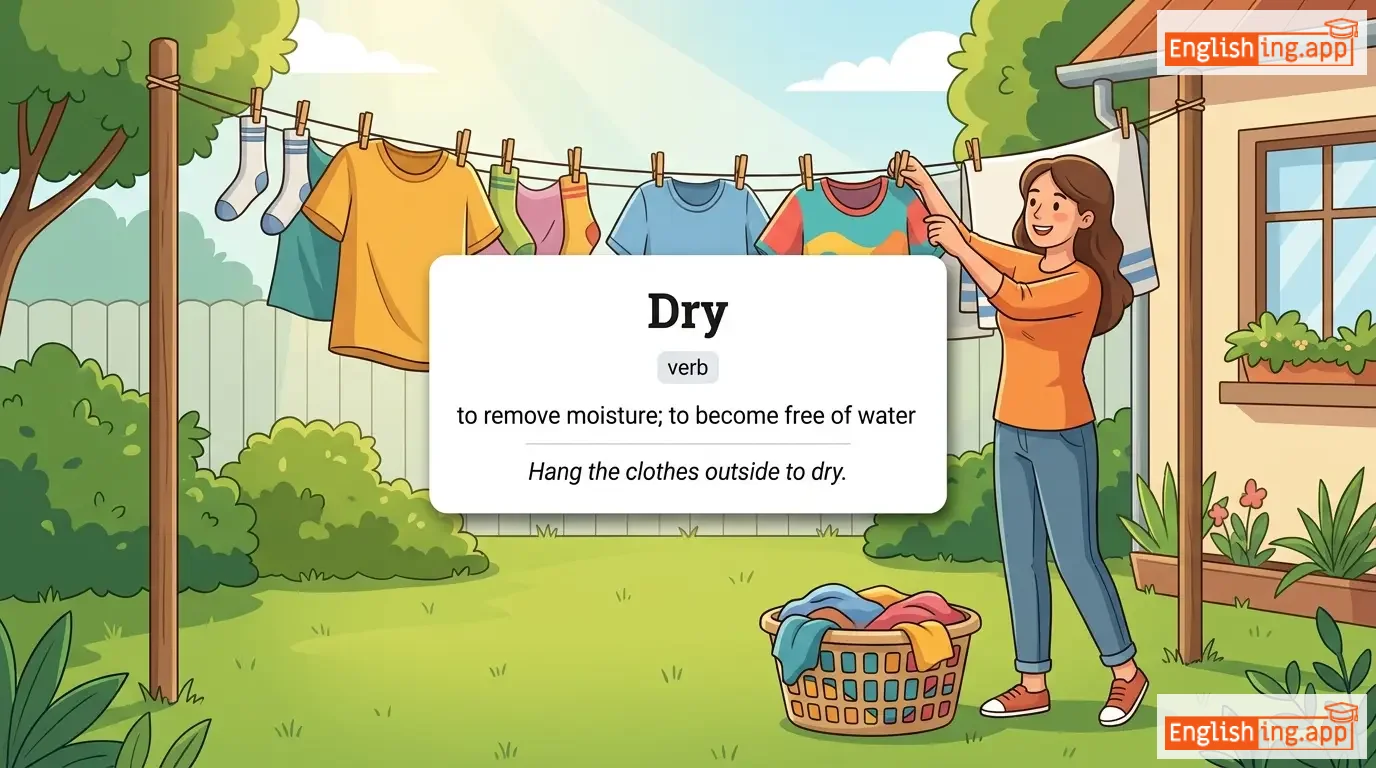
free from moisture or liquid; not wet
••••••
|
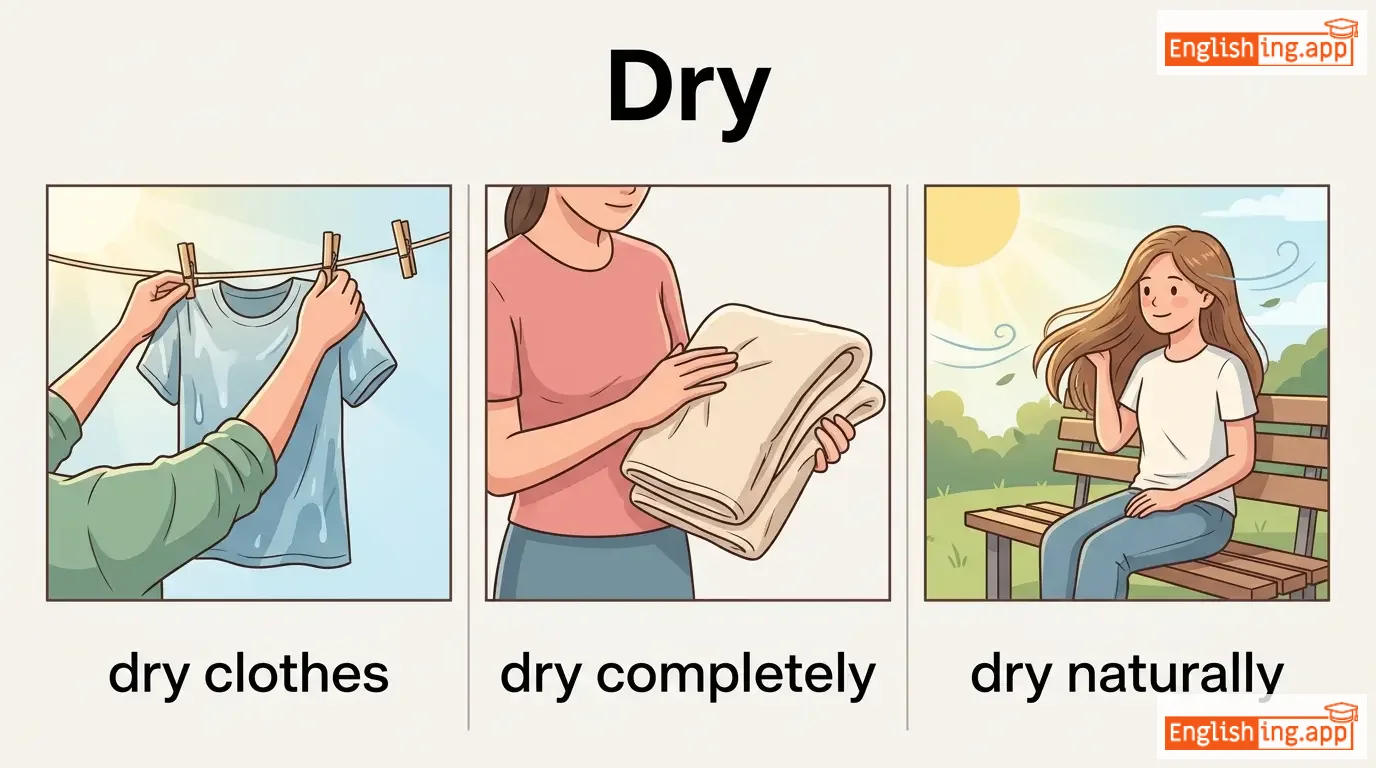
The clothes are dry after hanging in the sun. |
太陽の下で乾いた後、服は乾いています。
Taiyou no shita de kawaita ato, fuku wa kawaitemasu.
••••••
|
dry run |
a rehearsal or practice before the real event
••••••
|
ドライラン
dorai ran
••••••
|
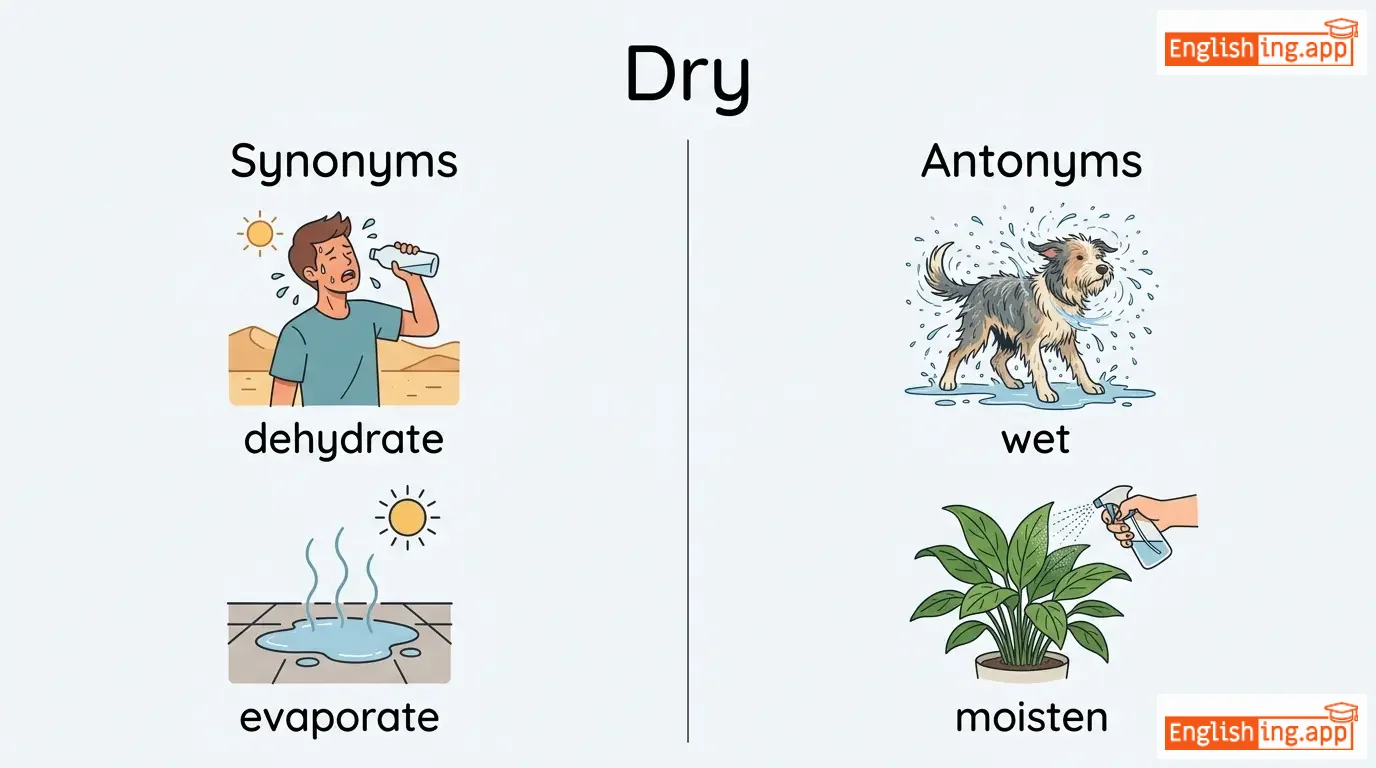
arid, parched, dehydrated, barren
••••••
|
wet, moist, damp
••••••
|
dry weather, dry land, dry skin, dry humor
••••••
|
Dryは乾燥を意味します🌞 — 服は太陽の下で乾きます。
••••••
|
|
#9801
🌊
|
/draʊn/
verb
(ドラウン)
••••••
|
- •••••• |
溺れる
oboreru
••••••
|
drowned
ドラウンド
••••••
|
drowned
ドラウンド
••••••
|
drowns
ドラウンズ
••••••
|
drowning
ドラウイング
••••••
|
to die or cause to die by being submerged in and inhaling water
••••••
|
He nearly drowned while swimming in the river.
彼は川で泳いでいるときにほぼ溺れそうになった。
••••••
|
彼は川で泳いでいるときにほぼ溺れそうになった。
Kare wa kawa de oyoide iru toki ni hobo obore sō ni natta.
••••••
|
drown out
溺れる
••••••
|
to make a sound so loud that it prevents other sounds from being heard
••••••
|
かき消す
kakikesu
••••••
|
sink, submerge, suffocate, engulf
••••••
|
float, survive, resurface
••••••
|
drown in debt, drown in sorrow, nearly drown, drown out
••••••
|
Drownは溺れること、絶対に水に気を付けて!
••••••
|
|
#9802
🥗
|
/ˈdrɛsɪŋ/
noun
(ドレッシング)
••••••
|
- •••••• |
ドレッシング / 調味料の混合物
doresshingu / chōmiryō no kongōbutsu
••••••
|
- •••••• | - •••••• | - •••••• | - •••••• |
a sauce for salads; or material used to cover a wound
••••••
|
She prepared a delicious salad with Italian dressing. |
彼女はイタリアンドレッシングで美味しいサラダを作った。
Kanojo wa Itariando doresshingu de oishī sarada o tsukutta.
••••••
|
- •••••• | - •••••• | - •••••• |
sauce, topping, seasoning, bandage
••••••
|
none, uncovered
••••••
|
salad dressing, wound dressing, apply dressing, remove dressing
••••••
|
サラダのドレッシングは傷を覆う包帯のよう!
••••••
|
|
#9803
😨
|
/ˈdrɛdfəl/
adjective
(ドレッドフル)
••••••
|
- •••••• |
ひどい
hidoi
••••••
|
- •••••• | - •••••• | - •••••• | - •••••• |
causing or involving great fear or suffering; very bad or unpleasant
••••••
|
The weather was dreadful during our trip. |
私たちの旅行中、天気はひどかった。
Watashitachi no ryokō-chū, tenki wa hido katta.
••••••
|
dreadful mistake |
a very serious or terrible mistake
••••••
|
ひどい間違い
hidoi machigai
••••••
|
terrible, awful, horrible, appalling, shocking
••••••
|
wonderful, pleasant, delightful
••••••
|
dreadful mistake, dreadful weather, dreadful news, dreadful condition
••••••
|
Dread は恐怖を意味するので、dreadful はひどいことを意味します。
••••••
|
|
#9804
❓
|
/daʊt/
noun/verb
(dauto)
••••••
|
|
疑い
utagai
••••••
|
doubted
dauted
••••••
|
doubted
dauted
••••••
|
doubts
dauts
••••••
|
doubting
douting
••••••
|
a feeling of uncertainty or lack of conviction; to be uncertain about something
••••••
|
She had doubts about the success of the plan.
彼女は計画の成功に疑問を抱いていた。
••••••
|
彼女は計画の成功に疑問を抱いていた。
Kanojo wa keikaku no seikou ni gimon o daiteita.
••••••
|
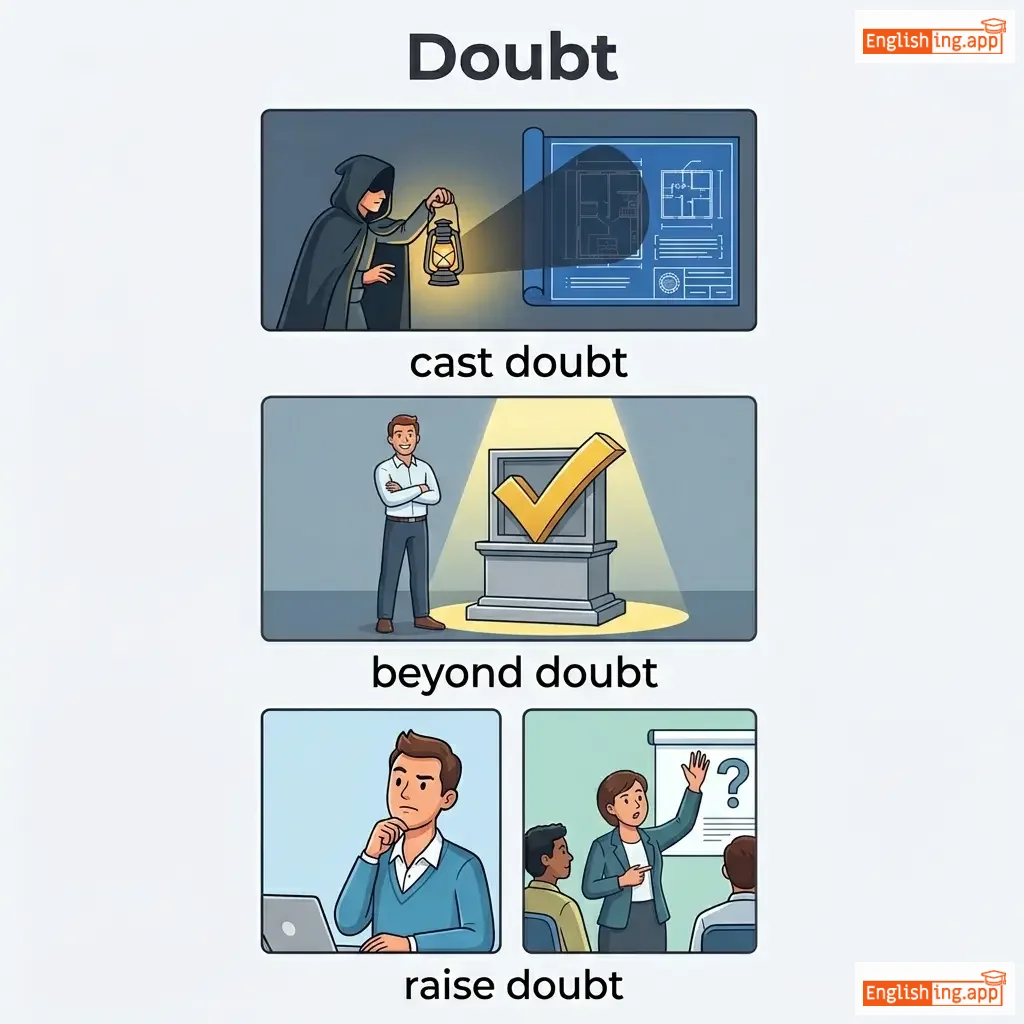
beyond doubt
疑いの余地なく
••••••
|
certain; without question
••••••
|
疑いの余地なく
utagai no yochi naku
••••••
|
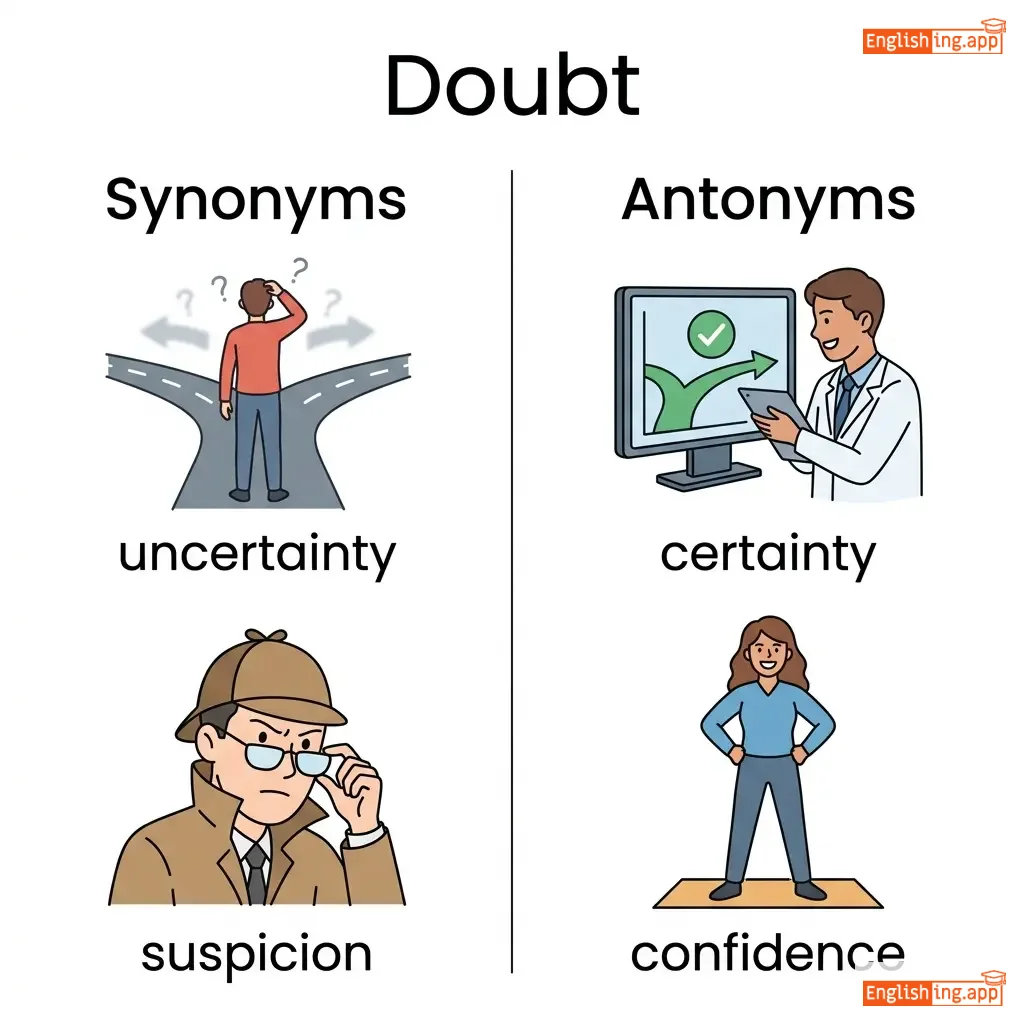
uncertainty, suspicion, disbelief, hesitation
••••••
|
certainty, confidence, assurance
••••••
|
cast doubt, beyond doubt, raise doubt, doubt remains
••••••
|
Doubtは日本語で疑い、疑うことを思い出すためにはダウトを覚えましょう!
••••••
|
Vocabulary Quiz
Test your vocabulary by matching words with their translations or meanings.
Login to take the quiz
Comments (0)
Share your thoughts and join the discussion.
Join the discussion by logging in
Login to CommentNo comments yet
Be the first to share your thoughts!