

翻訳
過去
過去分詞
三人称単数
動名詞
意味
例文
例文の翻訳
同義語
対義語
コロケーション
ニーモニック







Swipe left or right, or use the buttons. Tap image to zoom.
例文の翻訳
単語
Lesson 159Lesson 159 - マスクトグル
|
絵文字
|
単語 | Images | 翻訳 | 過去 | 過去分詞 | 三人称単数 | 動名詞 | 意味 | 例文 | 例文の翻訳 | 表現例 | 表現例の意味 | 表現例の翻訳 | 同義語 | 対義語 | コロケーション | ニーモニック |
|---|---|---|---|---|---|---|---|---|---|---|---|---|---|---|---|---|---|
|
#4741
🔥
|
/ˌɪnsəˈrɛkʃən/
noun
(インサレクション)
••••••
|
- •••••• |
反乱
hanran
••••••
|
- •••••• | - •••••• | - •••••• | - •••••• |
A violent uprising against an authority or government.
••••••
|
The army was called in to suppress the insurrection. |
軍隊は反乱を鎮圧するために呼ばれました。
Guntai wa hanran o chin'atsu suru tame ni yoba remashita.
••••••
|
- •••••• | - •••••• | - •••••• |
rebellion, revolt, uprising, mutiny, riot
••••••
|
peace, obedience, submission
••••••
|
armed insurrection, violent insurrection, suppress insurrection, political insurrection
••••••
|
Insurrectionはインシュアランスに似ている→政府に対する反乱。
••••••
|
|
#4742
⚡
|
/ɪnˈtɛnsɪfaɪ/
verb
(インテンシファイ)
••••••
|
- •••••• |
強化する
kyōka suru
••••••
|
intensified
インテンシファイド
••••••
|
intensified
インテンシファイド
••••••
|
intensifies
インテンシファイズ
••••••
|
intensifying
インテンシファイング
••••••
|
To make something stronger, more extreme, or more forceful.
••••••
|
The storm is expected to intensify overnight.
嵐は夜通し強くなると予想されています。
••••••
|
嵐は夜通し強くなると予想されています。
Arashi wa yodōshi tsuyoku naru to yosō sareteimasu.
••••••
|
intensify efforts
努力を強化する
••••••
|
to increase the level of effort put into something
••••••
|
努力を強化する
doryoku o kyōka suru
••••••
|
strengthen, escalate, heighten, amplify, reinforce
••••••
|
weaken, diminish, lessen
••••••
|
intensify efforts, intensify conflict, intensify pressure, intensify competition
••••••
|
Intensify とは強度を増すこと — 嵐、仕事、努力はすべて強化される。
••••••
|
|
#4743
🎯
|
/ɪnˈtɛnd/
verb
(インテンド)
••••••
|
|
意図する
itosuru
••••••
|
intended
インテンドッド
••••••
|
intended
インテンドッド
••••••
|
intends
インテンズ
••••••
|
intending
インテンドイング
••••••
|
To have a plan or purpose in mind; to aim to do something.
••••••
|
I intend to finish my work before dinner.
私は夕食前に仕事を終わらせるつもりです。
••••••
|
私は夕食前に仕事を終わらせるつもりです。
Watashi wa yūshoku mae ni shigoto o owaraseru tsumori desu.
••••••
|
well-intended
良い意図で
••••••
|
done with good intentions
••••••
|
良い意図で
yoi ito de
••••••
|
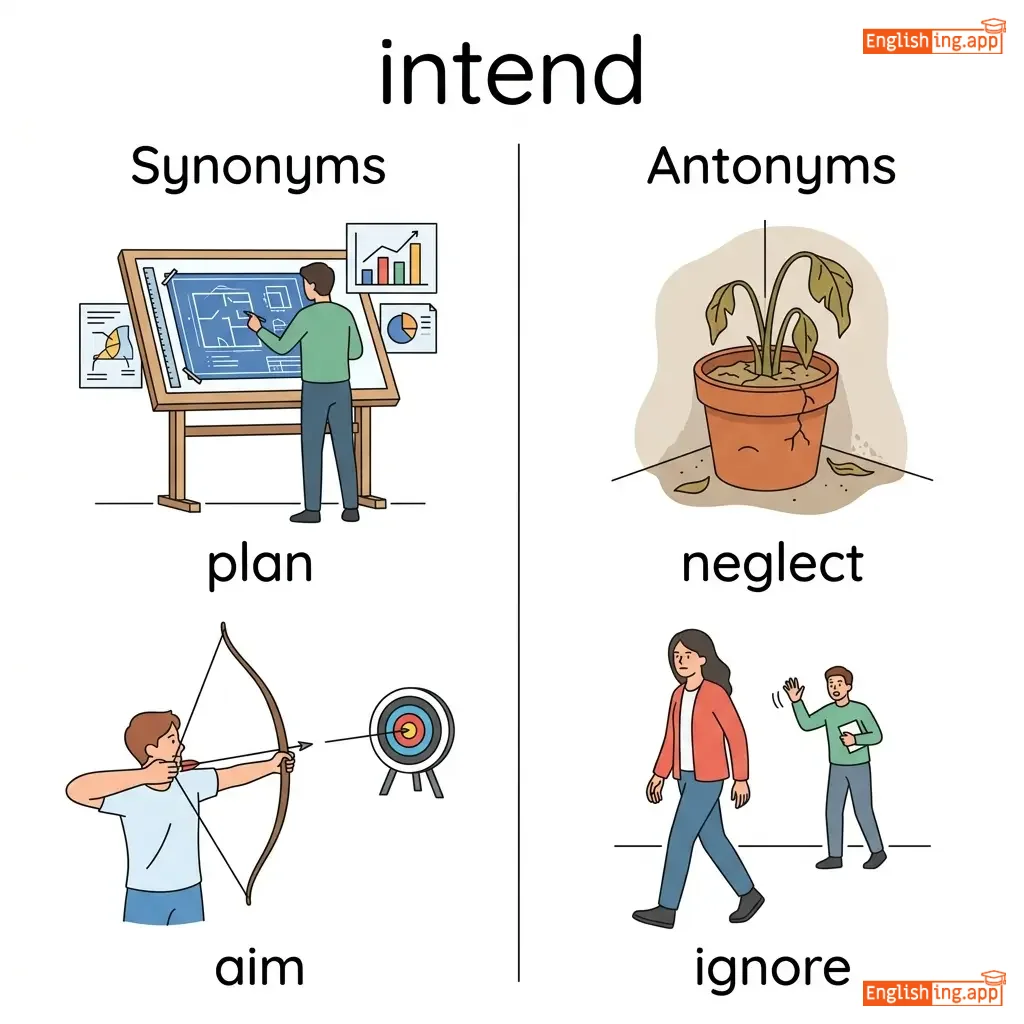
plan, aim, mean, propose, design
••••••
|
neglect, ignore, abandon
••••••
|
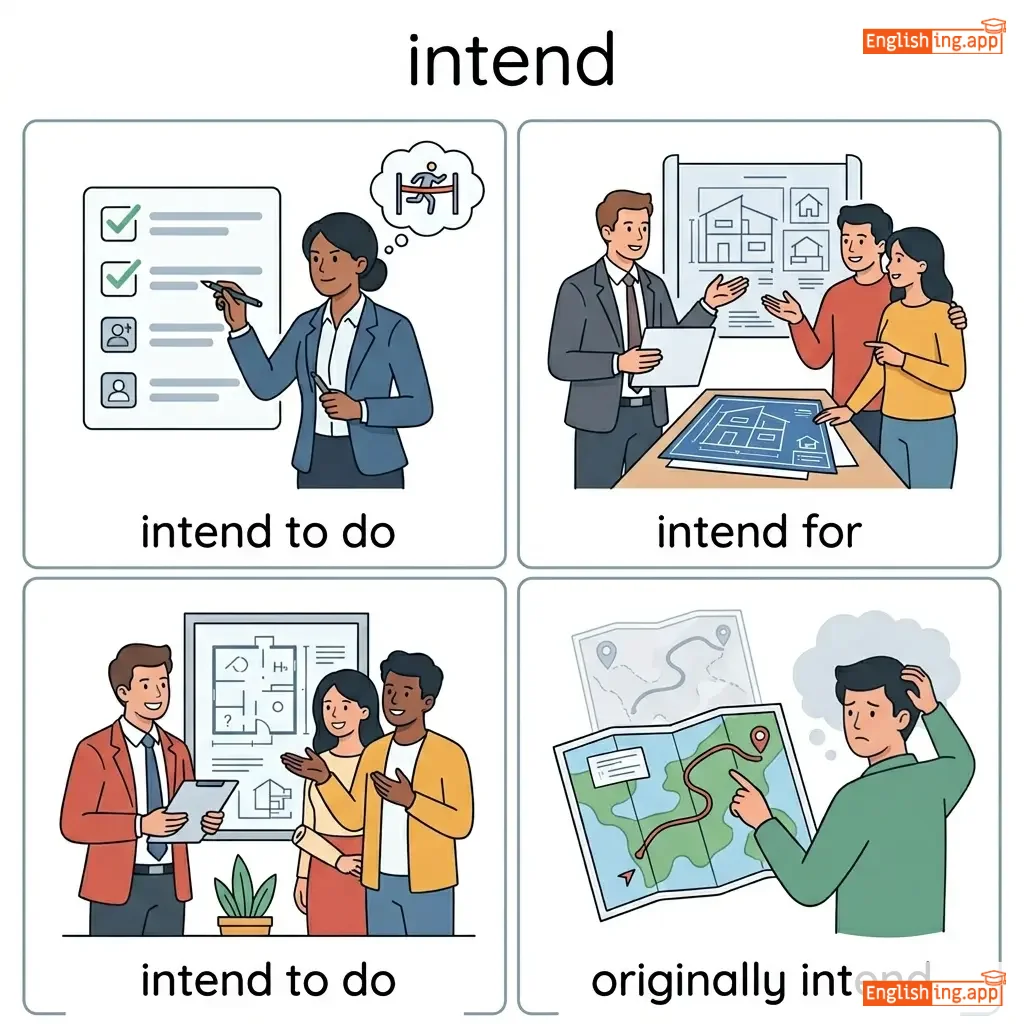
intend to do, intend for, originally intend, seriously intend
••••••
|
Intendは意図する、何かをするつもりでいるということです。
••••••
|
|
#4744
🔥
|
/ɪnˈtɛmpərət/
adjective
(インテンパレート)
••••••
|
- •••••• |
不節制な
fusesetsuna
••••••
|
- •••••• | - •••••• | - •••••• | - •••••• |
Lacking self-control; immoderate, especially in indulgence.
••••••
|
The politician's intemperate remarks caused controversy. |
政治家の不節制な発言は論争を引き起こした。
Seijika no fusesetsu na hatsugen wa ronsō o hikiokoshita.
••••••
|
- •••••• | - •••••• | - •••••• |
immoderate, excessive, uncontrolled, reckless
••••••
|
moderate, restrained, controlled
••••••
|
intemperate behavior, intemperate remarks, intemperate anger, intemperate climate
••••••
|
Intemperate は 'in' + 'temperate'(節度がない)— 不節制な。
••••••
|
|
#4745
🍷
|
/ɪnˈtɛmpərəns/
noun
(インテンペランス)
••••••
|
- •••••• |
節度を欠くこと
setsudo o kaku koto
••••••
|
- •••••• | - •••••• | - •••••• | - •••••• |
Lack of moderation or self-control, especially with drinking or eating.
••••••
|
His intemperance in drinking ruined his health. |
彼の飲酒の節度を欠くことが健康を害した。
Kare no inshū no setsudo o kaku koto ga kenkō o gaishita.
••••••
|
- •••••• | - •••••• | - •••••• |
excess, overindulgence, self-indulgence, gluttony, alcoholism
••••••
|
moderation, restraint, temperance
••••••
|
intemperance in drinking, intemperance in speech, moral intemperance, political intemperance
••••••
|
Intemperanceとは節度を欠くこと—'in'は欠けていること + 'temperance'は節度。
••••••
|
|
#4746
🗣️
|
/ɪnˈtɛlɪdʒəbl/
adjective
••••••
|
- •••••• | - •••••• | - •••••• | - •••••• | - •••••• | - •••••• |
Able to be understood; clear enough to be comprehended.
••••••
|
Her speech was barely intelligible over the noise. |
- •••••• |
make oneself intelligible |
to communicate clearly so that others can understand
••••••
|
- •••••• |
comprehensible, understandable, clear, lucid, articulate
••••••
|
incomprehensible, unclear, confusing
••••••
|
intelligible speech, intelligible language, easily intelligible, scarcely intelligible
••••••
|
No •••••• |
|
#4747
🎓
|
/ɪnˌtɛl.ɪˈdʒɛntsi.ə/
noun
(インテリゲンツィア)
••••••
|
- •••••• |
インテリゲンチャ
interigensha
••••••
|
- •••••• | - •••••• | - •••••• | - •••••• |
The group of people engaged in intellectual and cultural pursuits in a society.
••••••
|
The intelligentsia played a key role in shaping public opinion. |
インテリゲンチャは、世論形成において重要な役割を果たした。
Interigensha wa, yoron keisei ni oite jūyōna yakuwari o hatashita.
••••••
|
- •••••• | - •••••• | - •••••• |
elite, thinkers, academics, scholars, literati
••••••
|
masses, commoners
••••••
|
Russian intelligentsia, political intelligentsia, cultural intelligentsia, urban intelligentsia
••••••
|
インテリゲンツィアは知識を持ち、社会に影響を与えるグループです。
••••••
|
|
#4748
🤖
|
/ɪnˈtɛl.ɪ.dʒəns/
noun
(インテリジェンス)
••••••
|
|
知能
chinou
••••••
|
- •••••• | - •••••• | - •••••• | - •••••• |
The ability to acquire and apply knowledge and skills.
••••••
|
Artificial intelligence is transforming industries worldwide. |
人工知能は世界中の産業を変革しています。
jinkou chinou wa sekaijuu no sangyou wo henka shiteimasu.
••••••
|
emotional intelligence |
the ability to understand and manage one's own emotions and those of others
••••••
|
感情知能
kanjou chinou
••••••
|
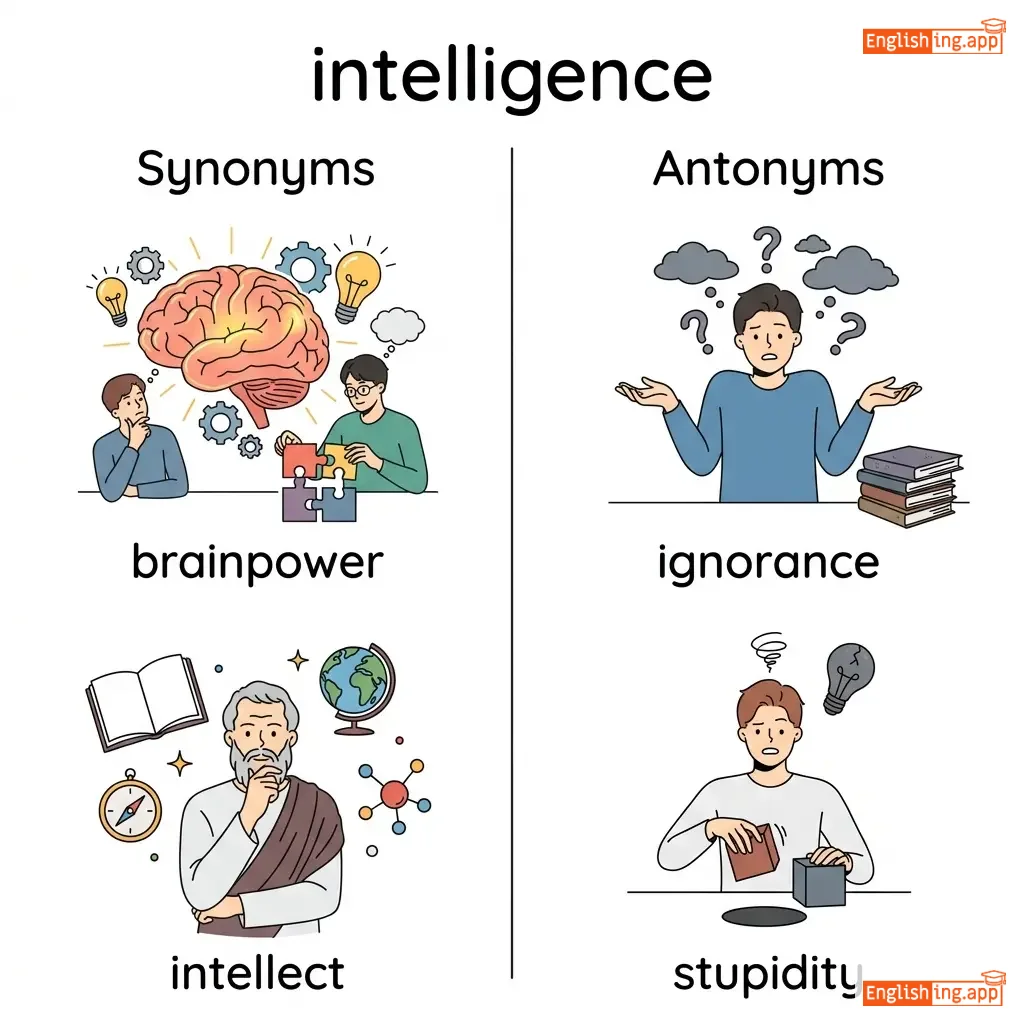
brainpower, intellect, reasoning, understanding
••••••
|
ignorance, stupidity
••••••
|
artificial intelligence, intelligence agency, military intelligence, human intelligence
••••••
|
AI = 人工知能、機械の中の知能を意味します!
••••••
|
|
#4749
📚
|
/ˌɪn.təlˈɛk.tʃu.əl/
adjective, noun
(インテレクチュアル)
••••••
|
- •••••• |
知的な
chiteki na
••••••
|
- •••••• | - •••••• | - •••••• | - •••••• |
Relating to the intellect; a person who engages in critical thinking and study.
••••••
|
She enjoys intellectual discussions about philosophy. |
彼女は哲学についての知的な議論を楽しんでいます。
Kanojo wa tetsugaku ni tsuite no chiteki na giron o tanoshindeimasu.
••••••
|
intellectual curiosity |
a strong desire to learn and understand new things
••••••
|
知的好奇心
chiteki kōkishin
••••••
|
academic, scholarly, thinker, brainy
••••••
|
ignorant, uneducated
••••••
|
intellectual debate, intellectual growth, intellectual pursuit, intellectual class
••••••
|
知的な = 知識 + 実際、つまり知性を実際に活用すること
••••••
|
|
#4750
🧠
|
/ˈɪn.tə.lekt/
noun
(インテレクト)
••••••
|
- •••••• |
知能
chinou
••••••
|
- •••••• | - •••••• | - •••••• | - •••••• |
The ability to think, reason, and understand objectively.
••••••
|
Her intellect is admired by all her colleagues. |
彼女の知能はすべての同僚に賞賛されています。
Kanojo no chinou wa subete no dōryō ni shōsan sareteimasu.
••••••
|
- •••••• | - •••••• | - •••••• |
mind, intelligence, brainpower, reasoning
••••••
|
ignorance, stupidity
••••••
|
sharp intellect, powerful intellect, intellect and emotion, intellect of
••••••
|
Intel コンピュータ = 高い知能
••••••
|
|
#4751
🐍
|
/ɪnˈtɛɡ.jʊ.mənt/
noun
(インテゴメント)
••••••
|
- •••••• |
外皮
gaihi
••••••
|
- •••••• | - •••••• | - •••••• | - •••••• |
A natural outer covering, such as skin, shell, or rind.
••••••
|
The snake sheds its integument as it grows. |
ヘビは成長するにつれて外皮を脱ぎます。
Hebi wa seichou suru ni tsurete gaihi o nugimasu.
••••••
|
- •••••• | - •••••• | - •••••• |
skin, covering, shell, hide, rind
••••••
|
core, interior
••••••
|
outer integument, animal integument, plant integument, protective integument
••••••
|
蛇の外皮はintegument、つまり皮膚の外層です。
••••••
|
|
#4752
🕊️
|
/ɪnˈtɛɡrɪti/
noun
(インテグリティ)
••••••
|
|
誠実
seijitsu
••••••
|
- •••••• | - •••••• | - •••••• | - •••••• |
The quality of being honest and having strong moral principles.
••••••
|
She is admired for her honesty and integrity. |
彼女はその正直さと誠実さで賞賛されています。
Kanojo wa sono shōjikisa to seijitsusa de shōsan sareteimasu.
••••••
|
professional integrity |
Adherence to ethical standards in professional life
••••••
|
職業倫理
shokugyō rinri
••••••
|
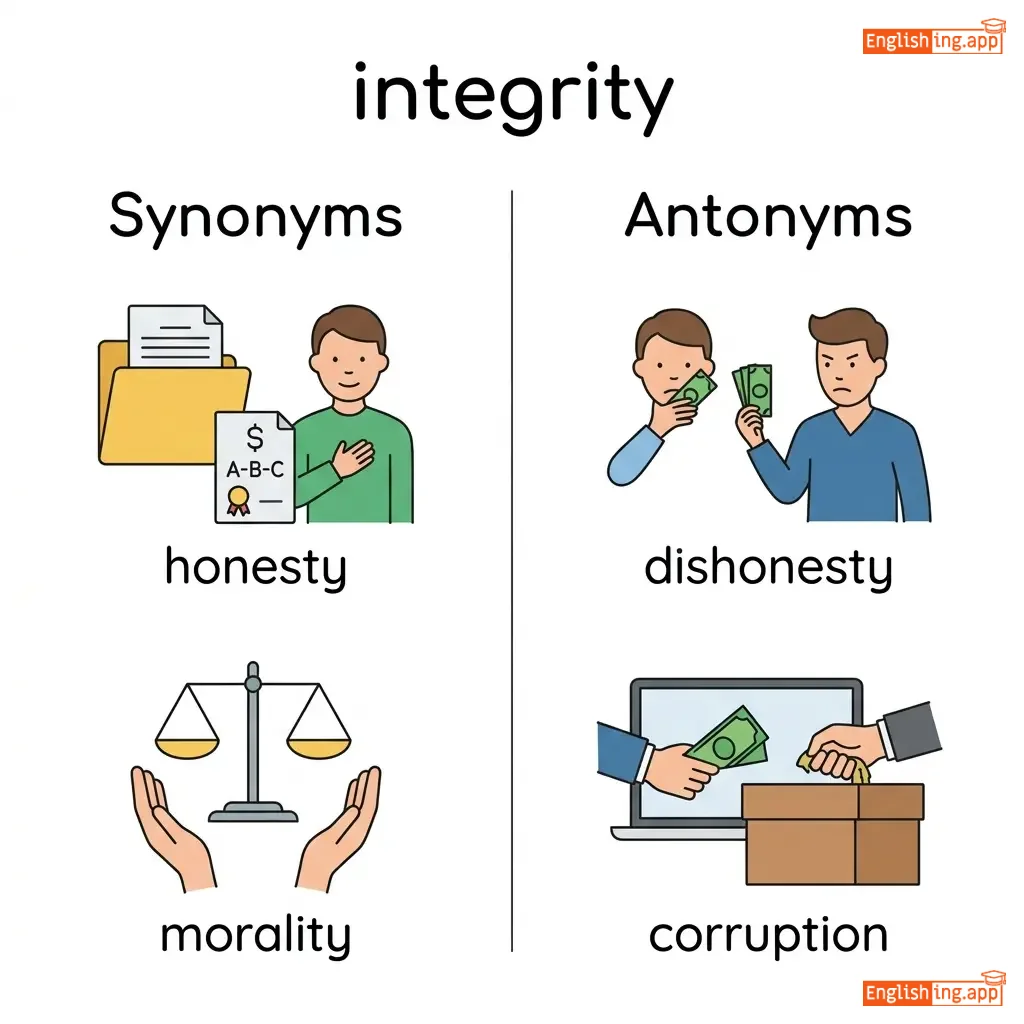
honesty, morality, righteousness, uprightness, virtue
••••••
|
dishonesty, corruption, deceit
••••••
|
personal integrity, professional integrity, maintain integrity, integrity of data
••••••
|
Integrity = in + great → greatの中に誠実がある
••••••
|
|
#4753
🔗
|
/ˈɪntɪɡreɪt/
verb
(インテグレート)
••••••
|
- •••••• |
統合する
tōgō suru
••••••
|
integrated
インテグレーテッド
••••••
|
integrated
インテグレーテッド
••••••
|
integrates
インテグレーツ
••••••
|
integrating
インテグレーティング
••••••
|
To combine or bring together into a unified whole.
••••••
|
The new system integrates data from multiple sources.
新しいシステムは複数のソースからデータを統合します。
••••••
|
新しいシステムは複数のソースからデータを統合します。
Atarashī shisutemu wa fukusū no sōsu kara dēta o tōgō shimasu.
••••••
|
integrate into society
社会に統合する
••••••
|
To become part of a community or culture
••••••
|
社会に統合する
shakai ni tōgō suru
••••••
|
combine, merge, unify, assimilate, incorporate
••••••
|
separate, divide, segregate
••••••
|
integrate technology, integrate system, integrate into, integrate fully
••••••
|
統合 = into + great → 全てをまとめて偉大にする
••••••
|
|
#4754
🧩
|
/ˈɪntɪɡrəl/ or /ɪnˈtɛɡrəl/
adjective
(インテグラル)
••••••
|
|
不可欠
fukaketsu
••••••
|
- •••••• | - •••••• | - •••••• | - •••••• |
Necessary and important as a part of a whole.
••••••
|
Honesty is an integral part of good leadership.
誠実は良いリーダーシップの不可欠な部分です。
••••••
|
誠実は良いリーダーシップの不可欠な部分です。
Seijitsu wa yoi rīdāshippu no fukaketsu na bubun desu.
••••••
|
- •••••• | - •••••• | - •••••• |
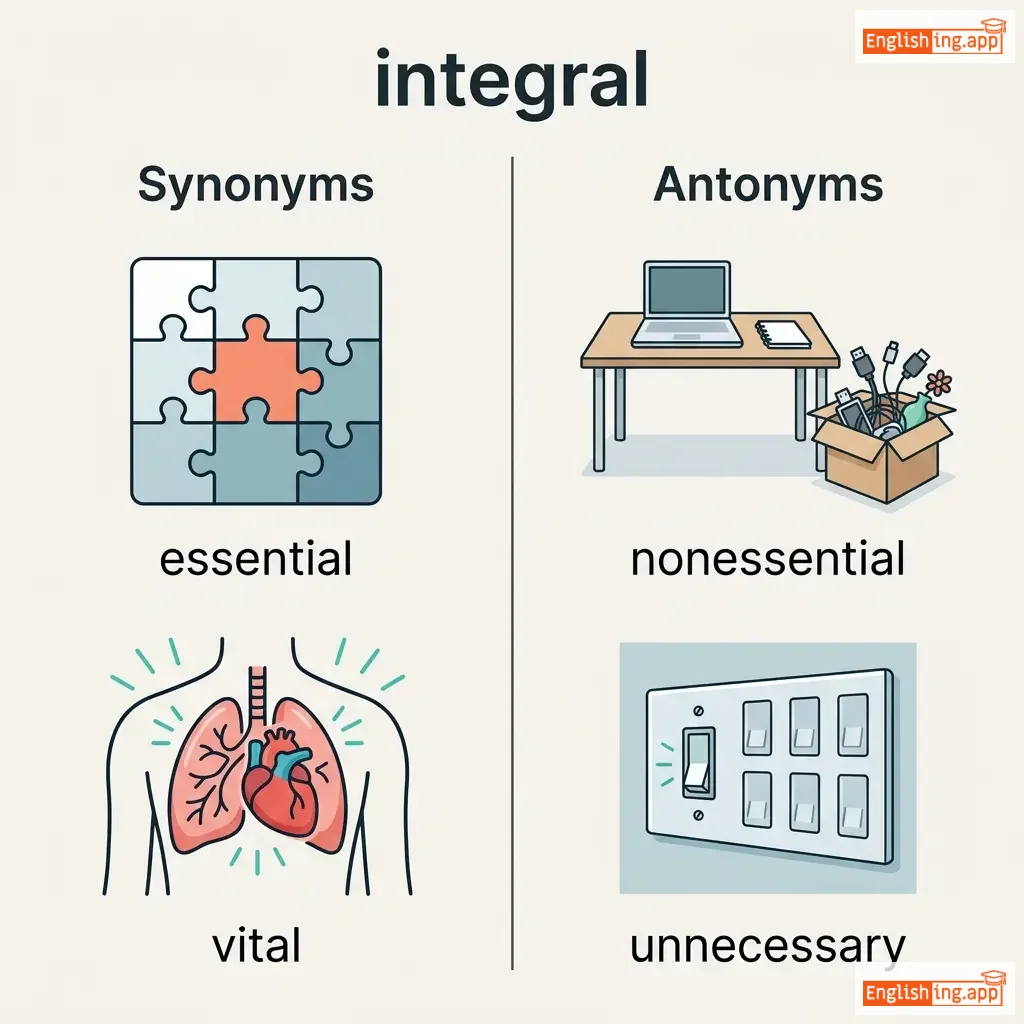
essential, vital, fundamental, crucial, indispensable
••••••
|
nonessential, unnecessary, extraneous
••••••
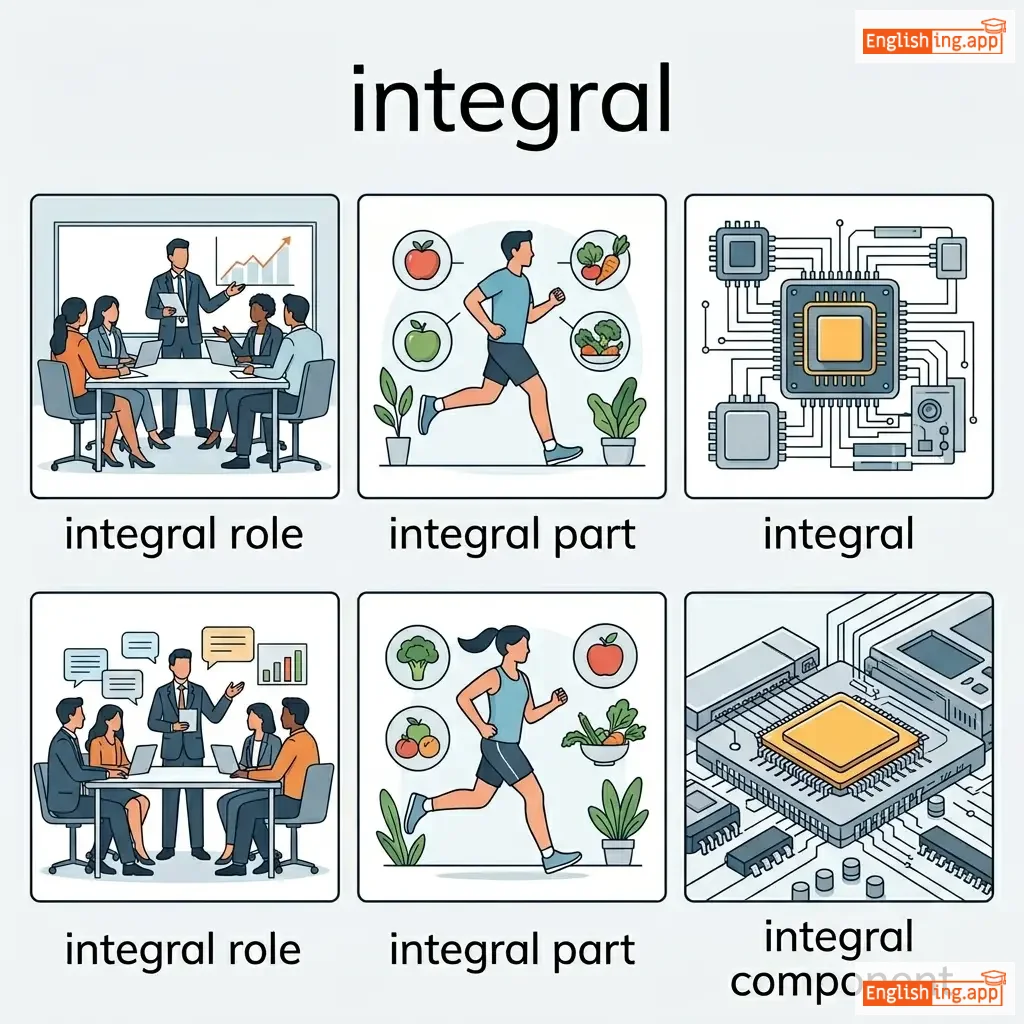
|
integral role, integral part, integral component, integral element
••••••
|
Integral → 不可欠な一部
••••••
|
|
#4755
✨
|
/ɪnˈtændʒəbl/
adjective
(インタンジブル)
••••••
|
|
無形の
mukei no
••••••
|
- •••••• | - •••••• | - •••••• | - •••••• |
Unable to be touched or grasped; not having a physical presence.
••••••
|
Trust is an intangible quality in relationships. |
信頼は関係において無形の特質です。
Shinrai wa kankei ni oite mukei no tokushitsu desu.
••••••
|
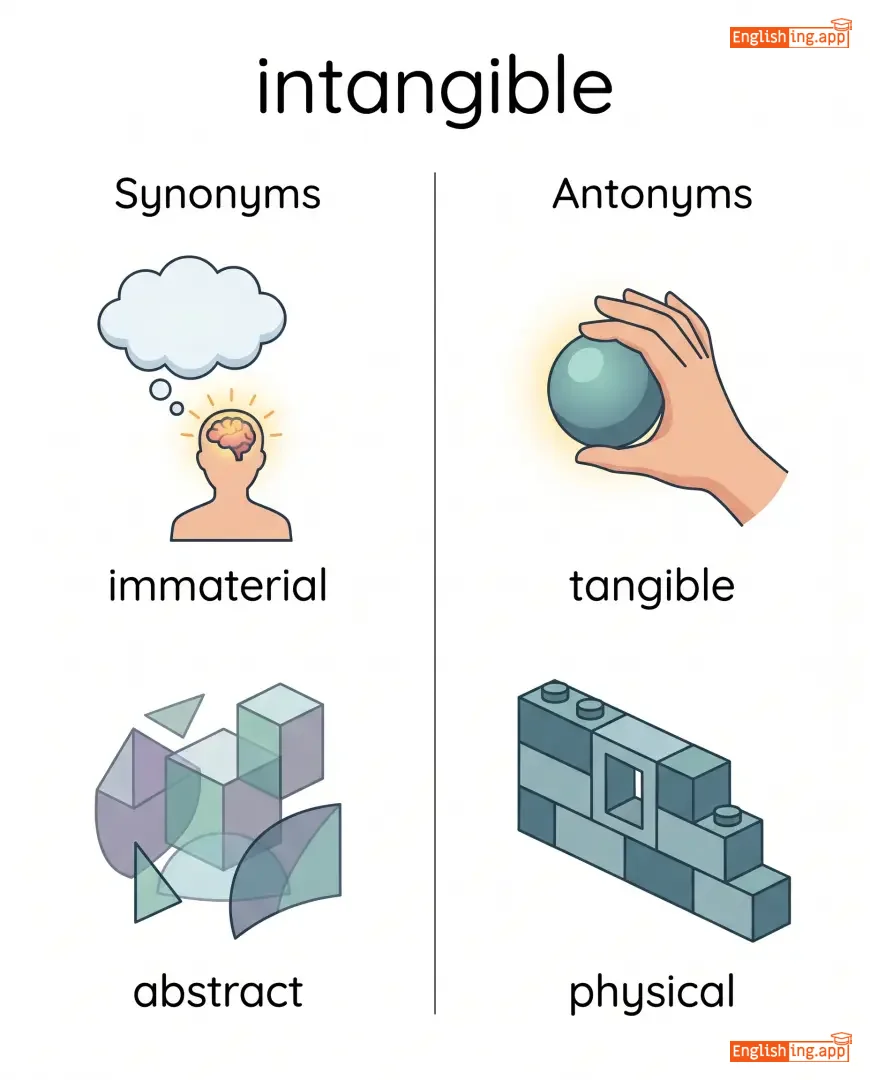
- •••••• | - •••••• | - •••••• |
immaterial, abstract, invisible, untouchable
••••••
|
tangible, physical, concrete
••••••
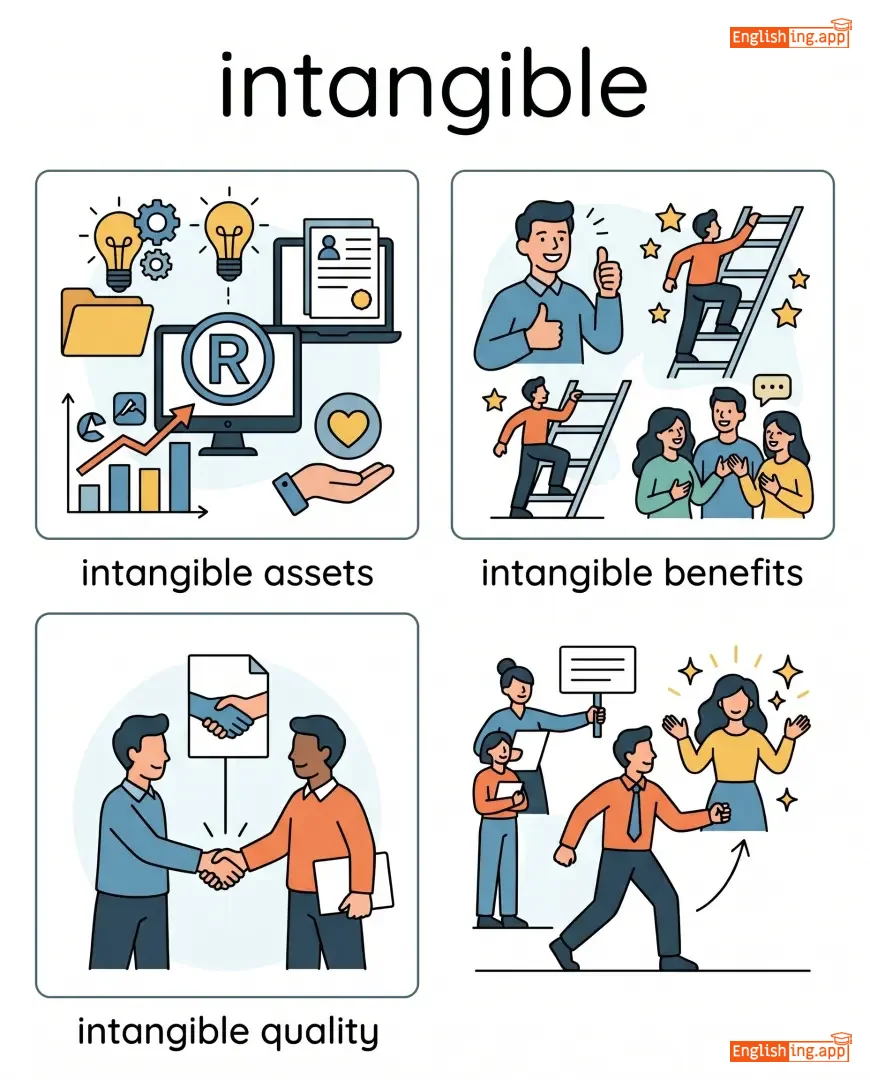
|
intangible assets, intangible benefits, intangible quality, intangible factors
••••••
|
Intangible は触れられないことを意味し、信頼のようです
••••••
|
|
#4756
🎻
|
/ˌɪn.strəˈmɛn.təl.ɪst/
noun
(インストゥルメンタリスト)
••••••
|
- •••••• |
楽器奏者
gakki sōsha
••••••
|
- •••••• | - •••••• | - •••••• | - •••••• |
A person who plays a musical instrument.
••••••
|
The instrumentalist played a beautiful solo on the violin. |
楽器奏者はバイオリンで美しいソロを演奏しました。
Gakki sōsha wa baiorin de utsukushī soro o ensō shimashita.
••••••
|
- •••••• | - •••••• | - •••••• |
musician, performer, player, virtuoso, artist
••••••
|
singer, vocalist
••••••
|
professional instrumentalist, classical instrumentalist, jazz instrumentalist, skilled instrumentalist
••••••
|
楽器奏者 = 楽器 + 奏者、楽器を演奏する人は楽器奏者。
••••••
|
|
#4757
🏜️
|
/ˌɪnsərˈmaʊntəbl/
adjective
(インサーマウントエーブル)
••••••
|
- •••••• |
克服不可能
kokufuku fukanou
••••••
|
- •••••• | - •••••• | - •••••• | - •••••• |
Too great to be overcome.
••••••
|
The explorers faced insurmountable odds in the desert. |
探検者たちは砂漠で克服不可能な障害に直面した。
Tanken-sha tachi wa sabaku de kokufuku fukanou na shougai ni chokumen shita.
••••••
|
- •••••• | - •••••• | - •••••• |
unconquerable, unbeatable, impossible, overwhelming
••••••
|
surmountable, possible, achievable
••••••
|
insurmountable obstacles, insurmountable odds, insurmountable difficulties
••••••
|
In + Surmountable → Surmount は克服を意味し、Insurmountable は克服不可能を意味する
••••••
|
|
#4758
🪖
|
/ɪnˈsɜːrdʒənt/
noun
(インサージェント)
••••••
|
- •••••• |
反乱者
hanran sha
••••••
|
- •••••• | - •••••• | - •••••• | - •••••• |
A person who rises in revolt against authority or government.
••••••
|
The army arrested several insurgents after the attack. |
軍隊は攻撃後、数人の反乱者を逮捕した。
Guntai wa kōgeki go, sūnin no hanran sha o taiho shita.
••••••
|
- •••••• | - •••••• | - •••••• |
rebel, revolutionary, dissenter, mutineer
••••••
|
loyalist, supporter, ally
••••••
|
insurgent group, insurgent forces, insurgent activity
••••••
|
反乱者は軍人のように聞こえるが、実際には政府に反対する人です。
••••••
|
|
#4759
⚔️
|
/ɪnˈsɜːrdʒəns/
noun
(インサージェンス)
••••••
|
- •••••• |
反乱
hanran
••••••
|
- •••••• | - •••••• | - •••••• | - •••••• |
An act of rebellion or uprising against authority.
••••••
|
The government struggled to contain the growing insurgence. |
政府は増大する反乱を抑制するのに苦労した。
Seifu wa zōdaisuru hanran o yokusei suru no ni kurō shita.
••••••
|
- •••••• | - •••••• | - •••••• |
uprising, revolt, rebellion, mutiny, insurrection
••••••
|
peace, obedience, submission
••••••
|
armed insurgence, political insurgence, local insurgence
••••••
|
Insurgence = 反乱、反乱は抵抗の象徴です。
••••••
|
|
#4760
😂
|
/ˌɪnsəˈprɛsəbl/
adjective
(インスプレッシブル)
••••••
|
- •••••• |
抑制できない
yokusei dekinai
••••••
|
- •••••• | - •••••• | - •••••• | - •••••• |
That cannot be suppressed or restrained.
••••••
|
She had an insuppressible urge to laugh during the ceremony. |
式の間、彼女は抑制できない笑いをこらえていた。
Shiki no aida, kanojo wa yokusei dekinai warai wo koraete ita.
••••••
|
- •••••• | - •••••• | - •••••• |
irrepressible, uncontrollable, unrestrainable, unstoppable
••••••
|
suppressible, controllable, restrainable
••••••
|
insuppressible urge, insuppressible laughter, insuppressible spirit
••••••
|
In + Suppressible = 抑制できない → インスプレッシブルは抑制できないことを意味する
••••••
|
|
#4761
⛰️
|
/ɪnˈsuːpərəbl/
adjective
(インスーパーブル)
••••••
|
|
克服できない
kokufuku dekinai
••••••
|
- •••••• | - •••••• | - •••••• | - •••••• |
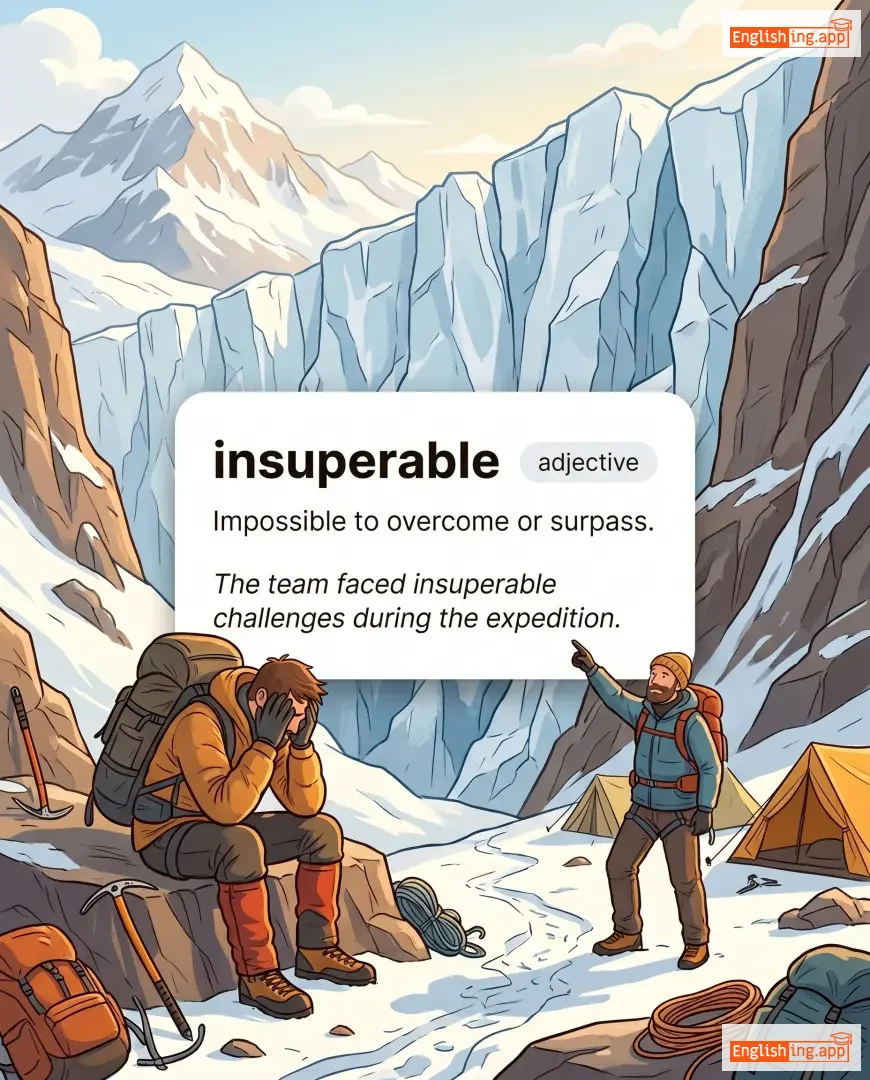
Impossible to overcome or surpass.
••••••
|
The team faced insuperable challenges during the expedition. |
チームは遠征中に克服できない課題に直面しました。
Chiimu wa ensei chuu ni kokufuku dekinai kadai ni chokumen shimashita.
••••••
|
- •••••• | - •••••• | - •••••• |
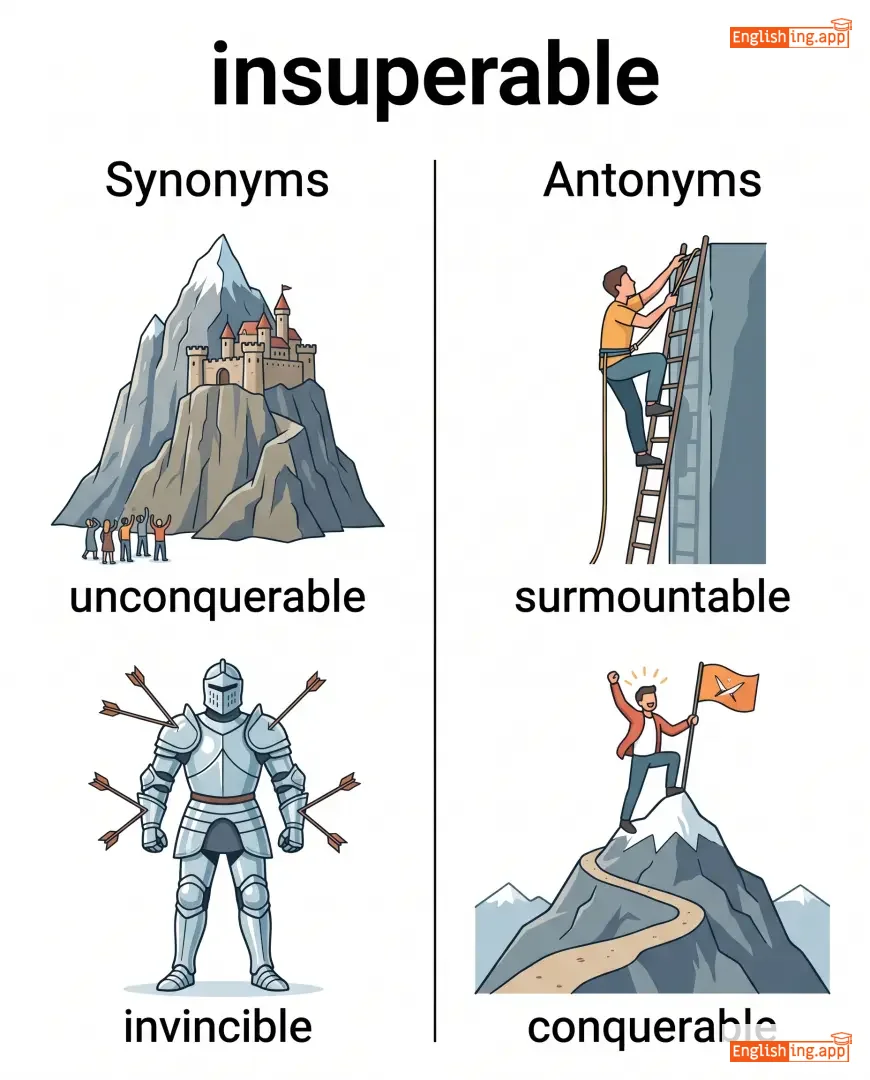
unconquerable, invincible, unbeatable, overwhelming, indomitable
••••••
|
surmountable, conquerable, manageable
••••••
|
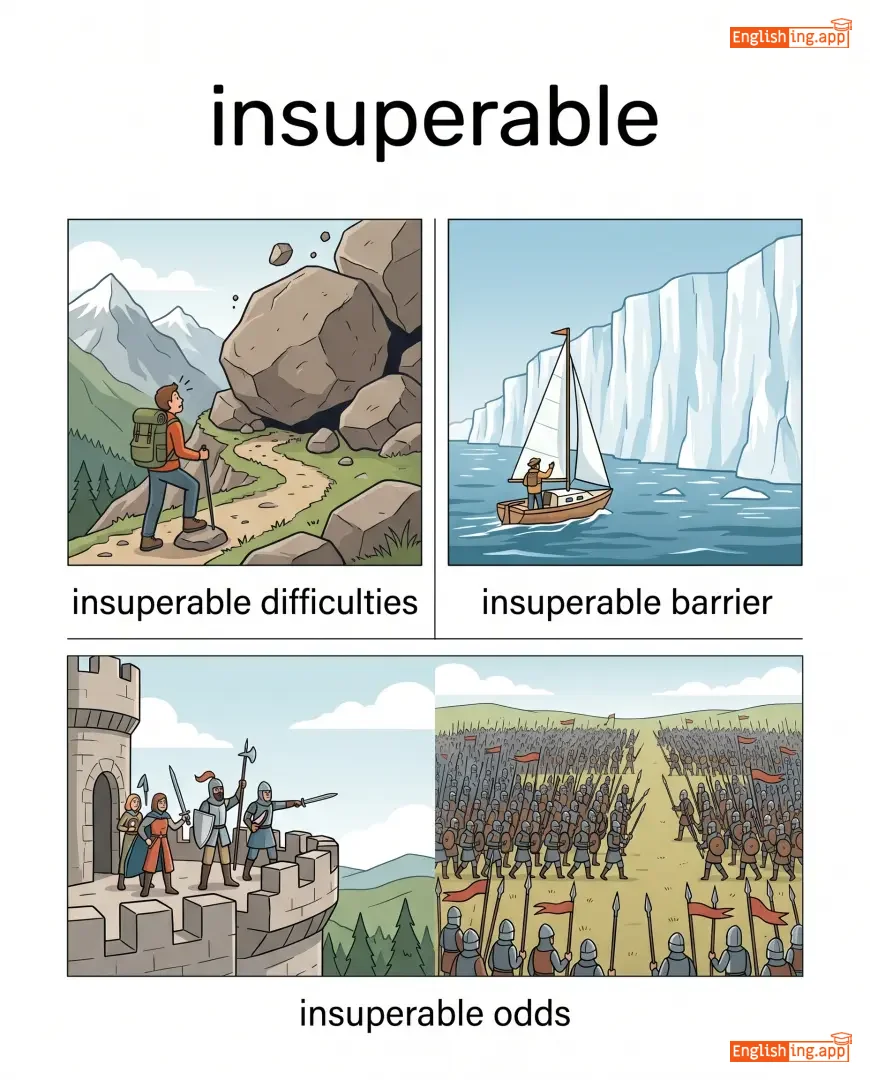
insuperable difficulties, insuperable barrier, insuperable odds
••••••
|
In SUPER able それは克服できない - インスーパーブル
••••••
|
|
#4762
🛡️
|
/ˈɪnsjuleɪt/
verb
••••••
|
- •••••• | - •••••• |
insulated
••••••
|
insulated
••••••
|
insulates
••••••
|
insulating
••••••
|
To protect something by covering it, especially to prevent heat, sound, or electricity from escaping or entering.
••••••
|
The house was insulated to reduce heating costs. |
- •••••• |
insulate from criticism |
to protect someone or something from negative feedback or judgment
••••••
|
- •••••• |
protect, shield, cover, isolate, guard
••••••
|
expose, uncover, reveal
••••••
|
insulate a house, insulate wires, insulate against heat, insulate from
••••••
|
No •••••• |
|
#4763
🌐
|
/ˌɪnsjəˈlærəti/
noun
(インスラリティ)
••••••
|
|
島国性
shimagunisei
••••••
|
- •••••• | - •••••• | - •••••• | - •••••• |
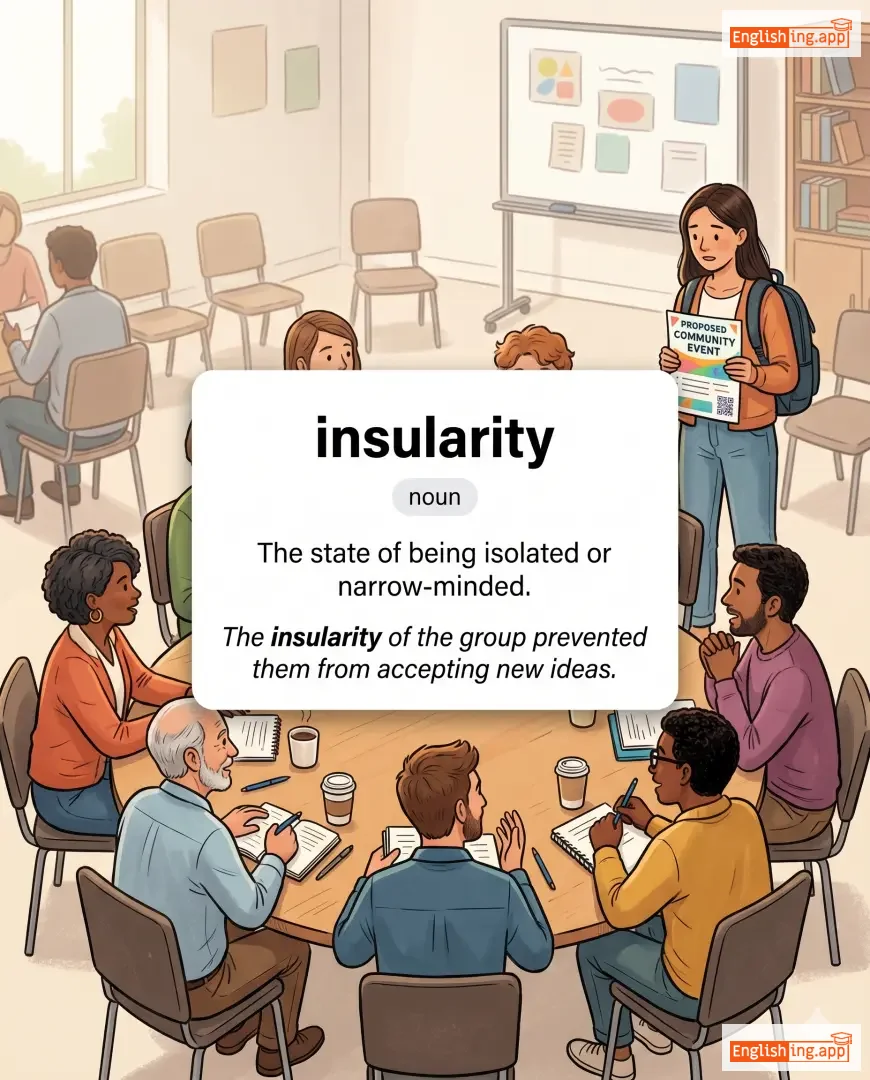
The state of being isolated or narrow-minded.
••••••
|
The insularity of the group prevented them from accepting new ideas.
グループのインスラリティは新しいアイデアを受け入れることを妨げた。
••••••
|
グループの島国性は新しいアイデアを受け入れることを妨げた。
Gurūpu no shimakunisei wa atarashī aidea o ukeireru koto o samataketa.
••••••
|
- •••••• | - •••••• | - •••••• |
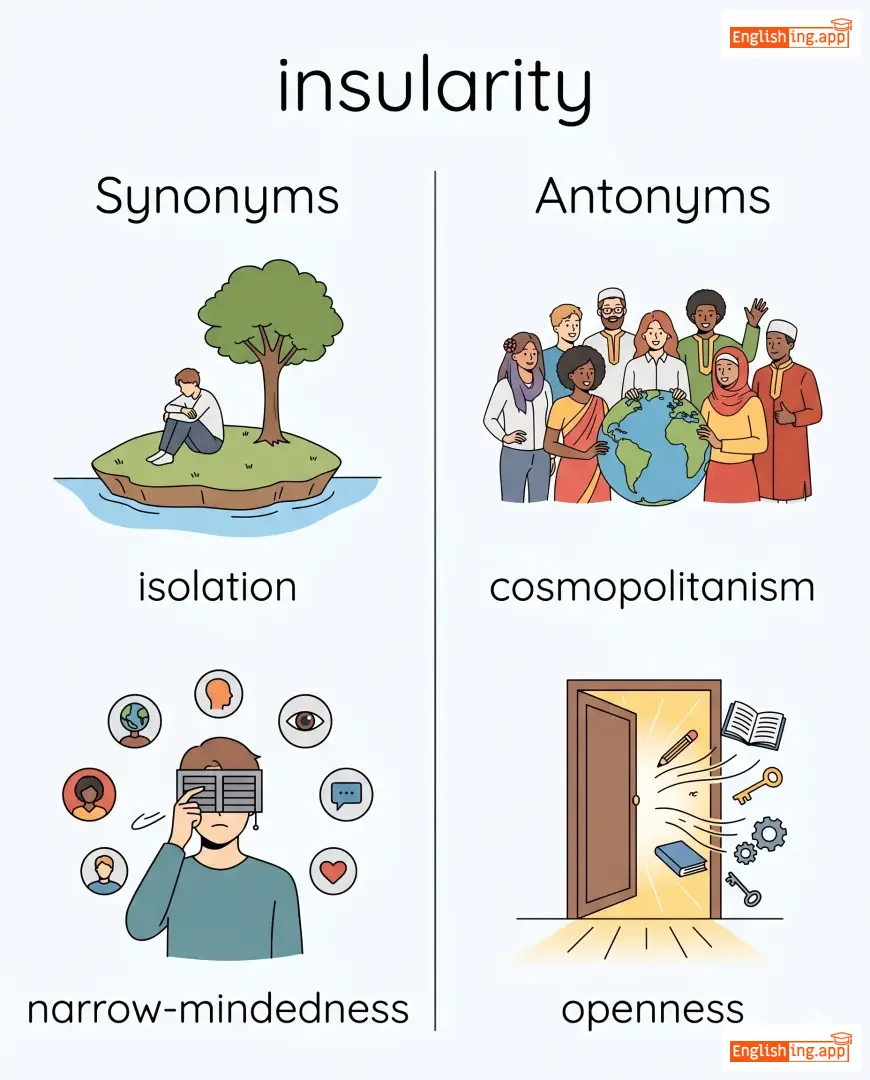
isolation, narrow-mindedness, provincialism, parochialism
••••••
|
cosmopolitanism, openness, tolerance
••••••
|
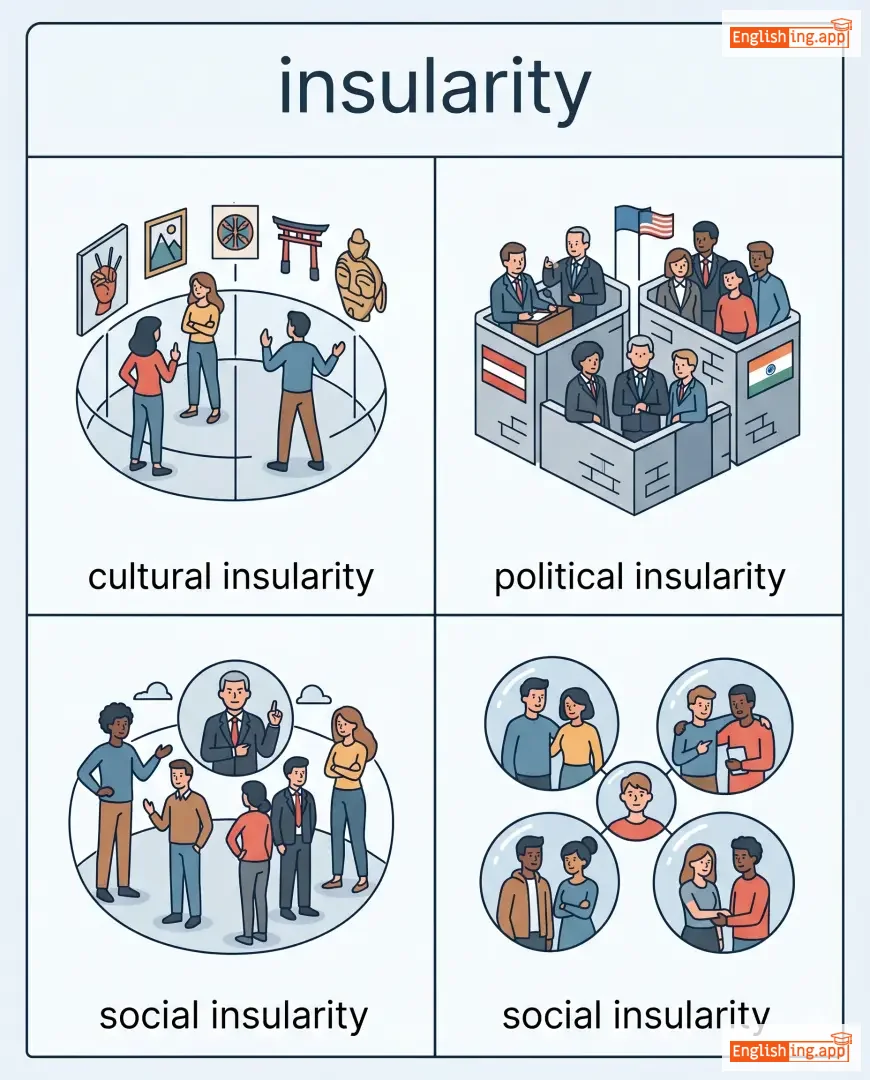
cultural insularity, political insularity, social insularity
••••••
|
島国性=島に閉じ込められた狭い考え方。
••••••
|
|
#4764
🏝️
|
/ˈɪnsjələr/
adjective
(インスラ)
••••••
|
- •••••• |
狭い心の、島に関連する
semai kokoro no, shima ni kanren suru
••••••
|
- •••••• | - •••••• | - •••••• | - •••••• |
Narrow-minded, isolated, or relating to an island.
••••••
|
The community was criticized for its insular attitudes toward outsiders.
そのコミュニティは外部の人々に対する狭量な態度で批判されました。
••••••
|
そのコミュニティは外部の人々に対する狭量な態度で批判されました。
Sono komyuniti wa gaibu no hitobito ni taisuru kyōryōna taido de hihan saremashita.
••••••
|
- •••••• | - •••••• | - •••••• |
narrow-minded, isolated, provincial, parochial
••••••
|
open-minded, cosmopolitan, tolerant
••••••
|
insular attitude, insular society, insular culture, insular thinking
••••••
|
Insularは島のように外界から孤立し、視野が狭いという意味です。
••••••
|
|
#4765
❌
|
/ˌɪnsəˈfɪʃənt/
adjective
(インサフィシエント)
••••••
|
- •••••• |
不十分
fujūbun
••••••
|
- •••••• | - •••••• | - •••••• | - •••••• |
Not enough; inadequate.
••••••
|
His explanation was insufficient to clear the confusion. |
彼の説明は混乱を解消するには不十分でした。
Kare no setsumei wa konran o kaishō suru ni wa fujūbun deshita.
••••••
|
- •••••• | - •••••• | - •••••• |
inadequate, deficient, meager, scarce, poor
••••••
|
sufficient, adequate, plentiful
••••••
|
insufficient funds, insufficient evidence, insufficient resources
••••••
|
Insufficient という言葉は 'in' + 'sufficient' = 十分でない。
••••••
|
|
#4766
⚠️
|
/ˌɪnsəˈfɪʃənsi/
noun
(インサフィシェンシー)
••••••
|
- •••••• |
不足
fusoku
••••••
|
- •••••• | - •••••• | - •••••• | - •••••• |
The state of not being enough or not being adequate.
••••••
|
The project failed due to the insufficiency of funds. |
プロジェクトは資金不足のため失敗しました。
Purojekuto wa shikin fusoku no tame shippai shimashita.
••••••
|
- •••••• | - •••••• | - •••••• |
deficiency, inadequacy, shortage, lack, scarcity
••••••
|
abundance, sufficiency, adequacy
••••••
|
insufficiency of funds, cardiac insufficiency, renal insufficiency, insufficiency in resources
••••••
|
不足は資金不足のようなものです。
••••••
|
|
#4767
🔥
|
/ɪnˈsʌf.ər.ə.bəl/
adjective
(インサファレブル)
••••••
|
- •••••• |
耐え難い
taegatai
••••••
|
- •••••• | - •••••• | - •••••• | - •••••• |
Too extreme to bear; intolerable.
••••••
|
The heat during the summer was insufferable.
夏の暑さは耐え難かった。
••••••
|
夏の暑さは耐え難かった。
Natsu no atsusa wa tae gakatta.
••••••
|
insufferable arrogance
耐え難い傲慢
••••••
|
Extreme and intolerable pride or conceit.
••••••
|
耐え難い傲慢
tae gatai gōman
••••••
|
unbearable, intolerable, dreadful, excruciating, impossible
••••••
|
bearable, tolerable, endurable
••••••
|
insufferable heat, insufferable pain, insufferable arrogance
••••••
|
In + Suffer = 耐えられないほどの苦しみ → 耐え難い。
••••••
|
|
#4768
🌫️
|
/ˌɪn.səbˈstæn.ʃəl/
adjective
(インサブスタンシャル)
••••••
|
- •••••• |
不十分な
fujūbun na
••••••
|
- •••••• | - •••••• | - •••••• | - •••••• |
Lacking strength, substance, or solidity.
••••••
|
The evidence provided was insubstantial and unconvincing. |
提供された証拠は不十分で説得力がなかった。
Teikyō sareta shōko wa fujūbun de settoku-ryoku ga nakatta.
••••••
|
- •••••• | - •••••• | - •••••• |
weak, flimsy, fragile, inadequate, unsubstantial
••••••
|
strong, solid, substantial
••••••
|
insubstantial evidence, insubstantial argument, insubstantial claim
••••••
|
Substantial は十分な意味、反対の insubstantial は不十分な意味です。
••••••
|
|
#4769
⚠️
|
/ˌɪn.səˌbɔːr.dɪˈneɪ.ʃən/
noun
(インスボーディネーション)
••••••
|
- •••••• |
反抗
hankou
••••••
|
- •••••• | - •••••• | - •••••• | - •••••• |
Defiance of authority; refusal to obey orders.
••••••
|
The soldier was punished for insubordination during the mission.
その兵士はミッション中の反抗で罰せられました。
••••••
|
その兵士はミッション中の反抗で罰せられました。
Sono heishi wa misshon-chuu no hankou de bassaremashita.
••••••
|
- •••••• | - •••••• | - •••••• |
disobedience, defiance, rebellion, mutiny, noncompliance
••••••
|
obedience, compliance, submission
••••••
|
act of insubordination, charge of insubordination, punished for insubordination
••••••
|
Subordinationは服従を意味し、insubordinationは反抗を意味します。
••••••
|
|
#4770
🚫
|
/ˌɪn.səˈbɔːr.dɪ.nət/
adjective
(インスボーディネート)
••••••
|
- •••••• |
命令不服従
meirei fukujū
••••••
|
- •••••• | - •••••• | - •••••• | - •••••• |
Defiant of authority; disobedient to orders.
••••••
|
The insubordinate employee refused to follow the manager's instructions. |
命令不服従の従業員は、マネージャーの指示に従うことを拒否した。
Meirei fukujū no jūgyōin wa, manējā no shiji ni shitagau koto o kyohi shita.
••••••
|
insubordinate behavior |
Defiant or disobedient actions against authority.
••••••
|
命令不服従の行動
meirei fukujū no kōdō
••••••
|
disobedient, defiant, rebellious, unruly, noncompliant
••••••
|
obedient, compliant, submissive
••••••
|
insubordinate attitude, insubordinate conduct, insubordinate employee
••••••
|
Insubordinate = In + Subordinate = 権威に逆らう、服従しない。
••••••
|
Vocabulary Quiz
Test your vocabulary by matching words with their translations or meanings.
Login to take the quiz
Comments (0)
Share your thoughts and join the discussion.
Join the discussion by logging in
Login to CommentNo comments yet
Be the first to share your thoughts!