

翻訳
過去
過去分詞
三人称単数
動名詞
意味
例文
例文の翻訳
同義語
対義語
コロケーション
ニーモニック
Swipe left or right, or use the buttons. Tap image to zoom.
例文の翻訳
単語
Lesson 244Lesson 244 - マスクトグル
|
絵文字
|
単語 | Images | 翻訳 | 過去 | 過去分詞 | 三人称単数 | 動名詞 | 意味 | 例文 | 例文の翻訳 | 表現例 | 表現例の意味 | 表現例の翻訳 | 同義語 | 対義語 | コロケーション | ニーモニック |
|---|---|---|---|---|---|---|---|---|---|---|---|---|---|---|---|---|---|
|
#7290
🤔
|
/ˈræʃənaɪz/
verb
(レイショナライズ)
••••••
|
- •••••• |
合理化する
gōrika suru
••••••
|
rationlized
レイショナライズド
••••••
|
rationlized
レイショナライズド
••••••
|
rationlizes
レイショナライズズ
••••••
|
rationlizing
レイショナライズイング
••••••
|
to justify or explain something with logical reasons, even if not appropriate or true
••••••
|
He tried to rationlize his mistake by blaming the system.
彼はシステムを責めて自分のミスを合理化しようとした。
••••••
|
彼はシステムを責めて自分のミスを合理化しようとした。
Kare wa shisutemu o semete jibun no misu o gōrika shiyō to shita.
••••••
|
rationlize away
レイショナライズ away
••••••
|
to explain something unpleasant so that it seems less serious
••••••
|
合理化する away
gōrika suru away
••••••
|
justify, explain, excuse, defend, vindicate
••••••
|
condemn, blame, criticize
••••••
|
rationlize behavior, rationlize decision, try to rationlize, rationlize away
••••••
|
誤りを論理的に説明
••••••
|
|
#7291
🔧
|
/ˌriːəˈdʒʌst/
verb
(リ・アジャスト)
••••••
|
- •••••• |
再調整
saichousei
••••••
|
readjusted
リ・アジャストされた
••••••
|
readjusted
リ・アジャストされた
••••••
|
readjusts
リ・アジャストする
••••••
|
readjusting
リ・アジャストしている
••••••
|
To change or move something again in order to achieve a better fit, condition, or balance.
••••••
|
He readjusted the chair to make it more comfortable.
彼は椅子をもっと快適にするために再調整しました。
••••••
|
彼は椅子をもっと快適にするために再調整しました。
Kare wa isu wo motto kaiteki ni suru tame ni saichousei shimashita.
••••••
|
- •••••• | - •••••• | - •••••• |
rearrange, realign, modify, reposition
••••••
|
maintain, preserve
••••••
|
readjust focus, readjust position, readjust settings
••••••
|
再調整 = より快適にするために再び調整する
••••••
|
|
#7292
👍
|
/ˈrɛdəli/
adverb
(レディリー)
••••••
|
- •••••• |
簡単に
kantan ni
••••••
|
- •••••• | - •••••• | - •••••• | - •••••• |
Without hesitation or difficulty; willingly.
••••••
|
She readily accepted the job offer. |
彼女は簡単に仕事のオファーを受け入れました。
Kanojo wa kantan ni shigoto no ofā o ukeiremashita.
••••••
|
- •••••• | - •••••• | - •••••• |
easily, willingly, quickly, promptly
••••••
|
reluctantly, unwillingly
••••••
|
readily available, readily accessible, accept readily, agree readily
••••••
|
Readilyは簡単に、Readyは簡単に準備している意味。
••••••
|
|
#7293
⏪
|
/riˈækʃəˌneri/
adjective
(riākushoneri)
••••••
|
- •••••• |
反動的
handōteki
••••••
|
- •••••• | - •••••• | - •••••• | - •••••• |
Opposing political or social progress or reform; extremely conservative.
••••••
|
The group took a reactionary stance against the new policies.
グループは新しい政策に対して反動的な立場を取った。
••••••
|
グループは新しい政策に対して反動的な立場を取った。
Gurūpu wa atarashī seisaku ni taishite handōteki na tachiba o totta.
••••••
|
- •••••• | - •••••• | - •••••• |
conservative, traditionalist, right-wing, anti-progressive
••••••
|
progressive, liberal, reformist
••••••
|
reactionary politics, reactionary movement, reactionary attitude
••••••
|
反動的はhandōteki、いつも古い(old)ものに固執している。
••••••
|
|
#7294
⚡
|
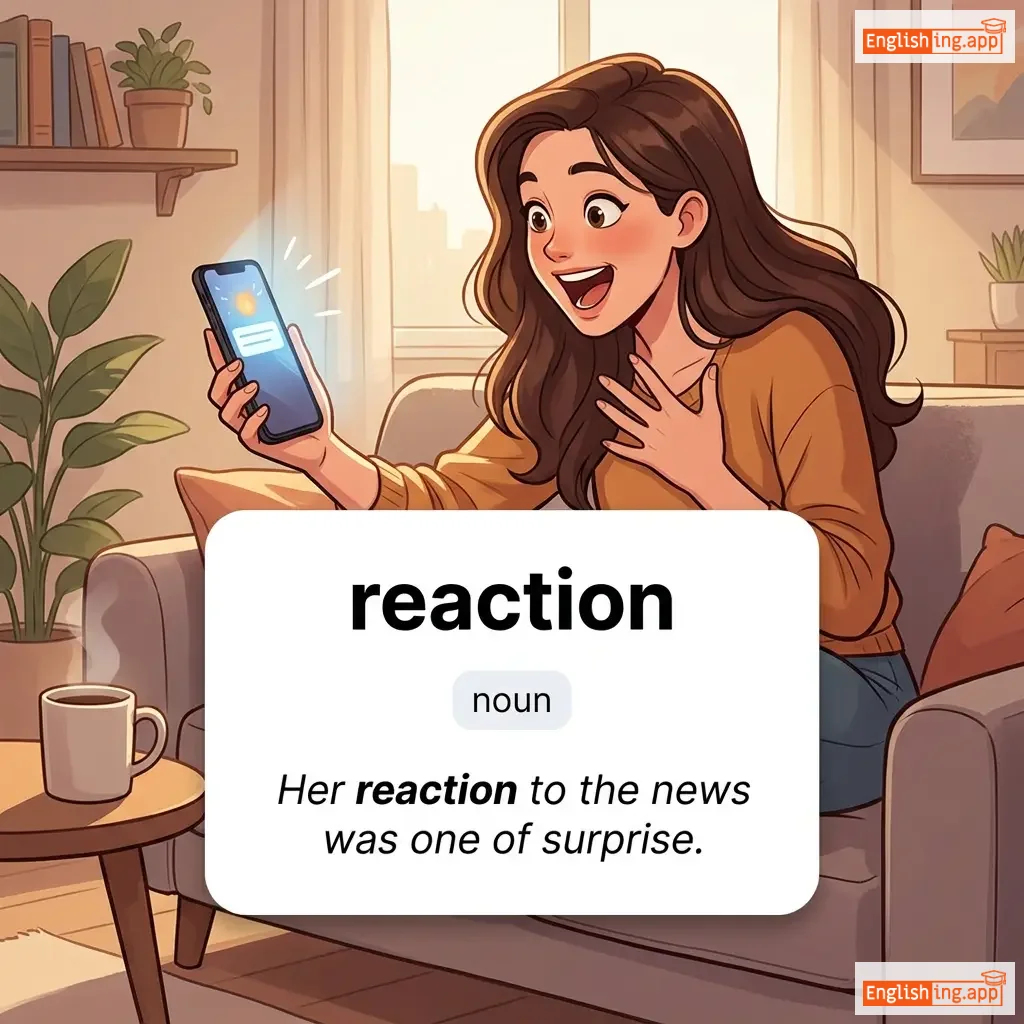
/riˈækʃən/
noun
(リアクション)
••••••
|
|
反応
hanno
••••••
|
- •••••• | - •••••• | - •••••• | - •••••• |
A response to a situation, event, or stimulus; also a chemical change involving reactants and products.
••••••
|
Her reaction to the news was one of surprise. |
ニュースに対する彼女の反応は驚きでした。
Nyūsu ni taisuru kanojo no hannou wa odoroki deshita.
••••••
|
knee-jerk reaction |
An immediate and automatic response without thought.
••••••
|
反射反応
Hansha hannou
••••••
|
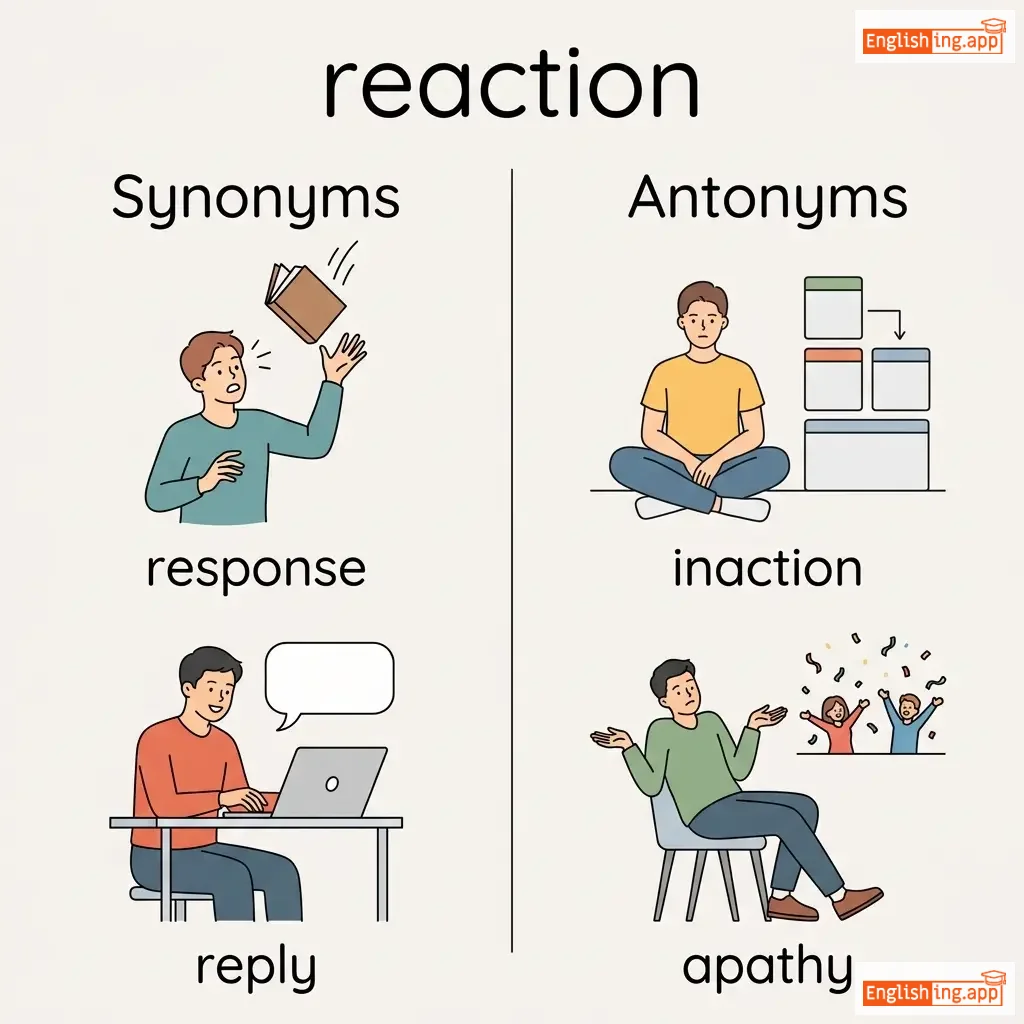
response, reply, reflex, feedback
••••••
|
inaction, apathy
••••••
|
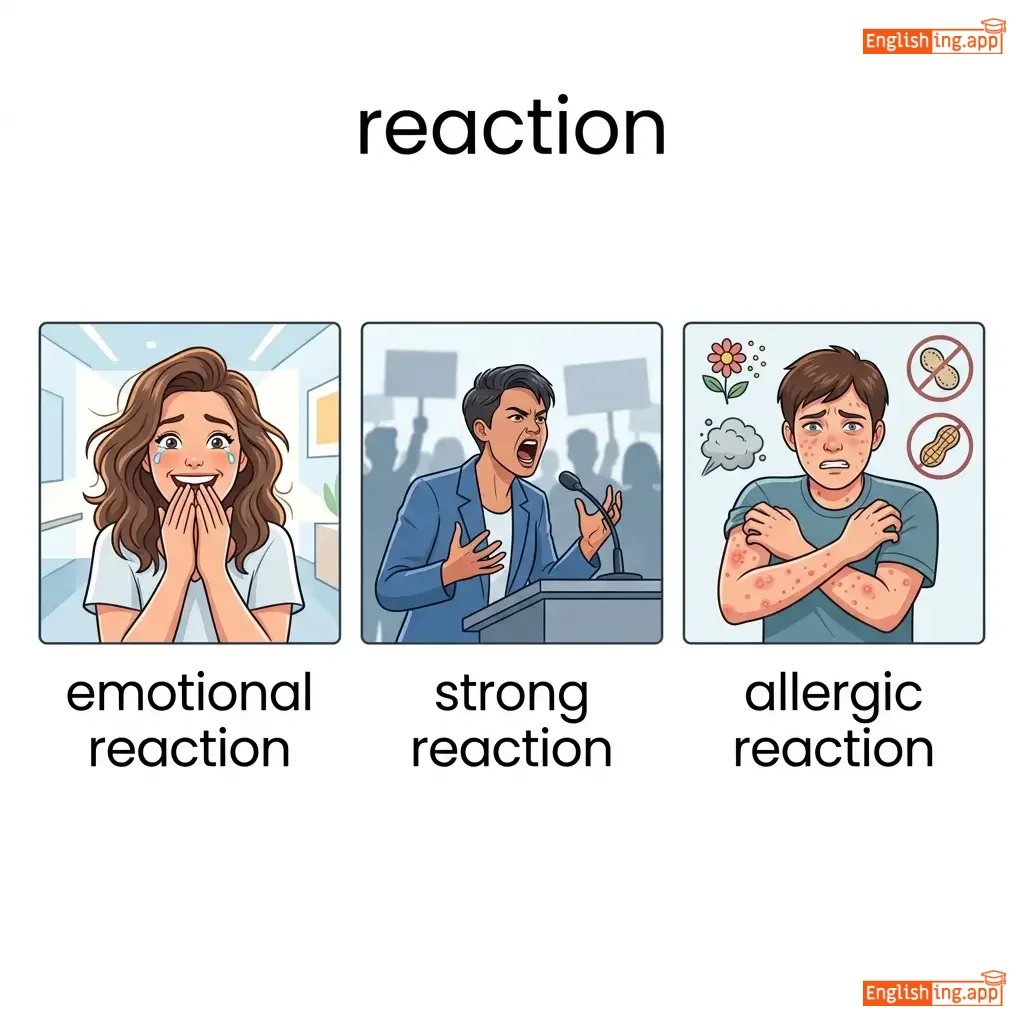
emotional reaction, strong reaction, allergic reaction, public reaction
••••••
|
リアクションは、膝の反応のように本能的に起こるものです。
••••••
|
|
#7295
⚗️
|
/riˈæktənt/
noun
••••••
|
- •••••• | - •••••• | - •••••• | - •••••• | - •••••• | - •••••• |
A substance that takes part in and undergoes change during a chemical reaction.
••••••
|
Oxygen is a reactant in the process of combustion. |
- •••••• | - •••••• | - •••••• | - •••••• |
substance, component, ingredient, element
••••••
|
product, result
••••••
|
reactant mixture, limiting reactant, excess reactant, reactant concentration
••••••
|
No •••••• |
|
#7296
🏚️
|
/reɪz/
verb
(レイズ)
••••••
|
- •••••• |
取り壊す
torikowasu
••••••
|
razed
レイズド
••••••
|
razed
レイズド
••••••
|
razes
レイゼス
••••••
|
razing
レイジング
••••••
|
To completely destroy or demolish something, especially a building.
••••••
|
The old factory was razed to make way for new apartments.
古い工場は新しいアパートメントのために取り壊されました。
••••••
|
古い工場は新しいアパートメントのために取り壊されました。
Furui kōjō wa atarashī apātomento no tame ni torikowasaremashita.
••••••
|
raze to the ground
地面から取り壊す
••••••
|
To completely destroy something until nothing is left.
••••••
|
地面から取り壊す
Jimen kara torikowasu
••••••
|
demolish, destroy, flatten, annihilate
••••••
|
build, construct
••••••
|
raze to the ground, raze buildings, raze entire city
••••••
|
Razeは'取り壊す'のように聞こえる—完全に破壊する。
••••••
|
|
#7297
✨
|
/ˈrævɪʃ/
verb
(レイヴィッシュ)
••••••
|
- •••••• |
魅了する
miryō suru
••••••
|
ravished
レイヴィッシュド
••••••
|
ravished
レイヴィッシュド
••••••
|
ravishes
レイヴィッシュズ
••••••
|
ravishing
レイヴィッシング
••••••
|
To fill with intense delight; to captivate or enchant.
••••••
|
The beauty of the sunset ravished the travelers.
夕日の美しさが旅行者を魅了した。
••••••
|
夕日の美しさが旅行者を魅了した。
Yūhi no utsukushisa ga ryokō-sha o miryō shita.
••••••
|
- •••••• | - •••••• | - •••••• |
enchant, captivate, fascinate, delight
••••••
|
bore, repel
••••••
|
ravished by beauty, ravishing smile, ravished with joy
••••••
|
Ravish は '魅了する' の意味 — 夕日の美しさに魅了される。
••••••
|
|
#7298
⛰️
|
/rəˈviːn/
noun
(ラヴィーン)
••••••
|
- •••••• |
渓谷
keikoku
••••••
|
- •••••• | - •••••• | - •••••• | - •••••• |
A deep, narrow valley with steep sides.
••••••
|
The river carved a deep ravine through the mountains. |
川は山々を通って深い渓谷を作り出した。
Kawa wa yamayama o tōtte fukai keikoku o tsukuridashita.
••••••
|
- •••••• | - •••••• | - •••••• |
gorge, canyon, chasm, gulch
••••••
|
plain, plateau
••••••
|
deep ravine, mountain ravine, steep ravine
••••••
|
Ravine は 'ravi' + 'ne' — 川が山々の間に渓谷を作り出します。
••••••
|
|
#7299
🍽️
|
/ˈrævənəs/
adjective
(レイヴァナス)
••••••
|
- •••••• |
猛烈にお腹がすいている
mōretsu ni onaka ga suite iru
••••••
|
- •••••• | - •••••• | - •••••• | - •••••• |
Extremely hungry; famished.
••••••
|
After the long hike, she was ravenous and ate quickly.
長いハイキングの後、彼女は猛烈にお腹がすいて、すぐに食べました。
••••••
|
長いハイキングの後、彼女は猛烈にお腹がすいて、すぐに食べました。
Nagai haikingu no ato, kanojo wa mōretsu ni onaka ga suite, sugu ni tabemashita.
••••••
|
ravenous appetite
猛烈な食欲
••••••
|
An extremely strong desire for food or something else.
••••••
|
猛烈な食欲
mōretsu na shokuyoku
••••••
|
hungry, famished, starving, voracious
••••••
|
full, satiated
••••••
|
ravenous appetite, ravenous hunger, ravenous look
••••••
|
Ravenousは、'レイヴァナス'と覚えて — それは常にお腹がすいているライオンのようなものです。
••••••
|
|
#7300
🐺
|
/ˈrævənɪŋ/
adjective
(レイヴィニング)
••••••
|
- •••••• |
非常に空腹で貪欲
hijō ni kūfuku de dongyoku
••••••
|
- •••••• | - •••••• | - •••••• | - •••••• |
Extremely hungry and greedy; voracious.
••••••
|
The ravening wolves circled the camp.
レイヴィニングの狼たちはキャンプを囲んだ。
••••••
|
空腹の狼たちはキャンプを囲んだ。
Kūfuku no ōkami-tachi wa kyanpu o kakonda.
••••••
|
- •••••• | - •••••• | - •••••• |
voracious, rapacious, greedy, devouring
••••••
|
satisfied, content
••••••
|
ravening wolves, ravening hordes, ravening hunger
••••••
|
Ravening は狼のように空腹 - 'レイ' はお腹がすいた音。
••••••
|
|
#7301
🧶
|
/ˈrævəl/
verb
(ラヴェル)
••••••
|
- •••••• |
絡まる / 解く
karamaru / hodoku
••••••
|
raveled
ラヴェルド
••••••
|
raveled
ラヴェルド
••••••
|
ravels
ラヴェルズ
••••••
|
raveling
ラヴェリング
••••••
|
to tangle or complicate; to untangle or unravel depending on context
••••••
|
She began to ravel the loose threads of the sweater.
彼女はセーターのゆるい糸をほどき始めました。
••••••
|
彼女はセーターのゆるい糸をほどき始めました。
Kanojo wa seetaa no yurui ito o hodoki hajimemashita.
••••••
|
- •••••• | - •••••• | - •••••• |
entangle, complicate, unravel, disentangle, knot
••••••
|
simplify, resolve, straighten
••••••
|
ravel out, ravel threads, ravel into
••••••
|
RAVEL は ROLL + UNRAVEL = 糸を絡めるか解く
••••••
|
|
#7302
⭐
|
/reɪv/
verb
(レイヴ)
••••••
|
- •••••• |
絶賛する
zessan suru
••••••
|
raved
レイヴド
••••••
|
raved
レイヴド
••••••
|
raves
レイヴス
••••••
|
raving
レイヴィング
••••••
|
to speak or write about something with great enthusiasm or admiration
••••••
|
Critics rave about the new movie.
クリティクス レイヴ アバウト ザ ニュー ムービー。
••••••
|
批評家たちは新しい映画を絶賛しています。
Hihyōka-tachi wa atarashī eiga o zessan shiteimasu.
••••••
|
rave review
レイヴ レビュー
••••••
|
an extremely positive review
••••••
|
非常にポジティブなレビュー
Hijō ni pojitibu na rebyū
••••••
|
praise, applaud, acclaim, commend, cheer
••••••
|
criticize, condemn, disapprove
••••••
|
rave about, rave review, rave fans
••••••
|
RAVE は素晴らしい映画に対する絶賛のようなものです
••••••
|
|
#7303
🌪️
|
/ˈrævɪdʒ/
verb
(レイヴィッジ)
••••••
|
- •••••• |
荒廃させる
kōhai saseru
••••••
|
ravaged
レイヴィッジド
••••••
|
ravaged
レイヴィッジド
••••••
|
ravages
レイヴィッジズ
••••••
|
ravaging
レイヴィッジング
••••••
|
to cause severe and extensive damage or destruction
••••••
|
The hurricane ravaged the coastal villages.
ハリケーンは沿岸の村を荒廃させた。
••••••
|
ハリケーンは沿岸の村を荒廃させた。
Harikēn wa engan no mura o kōhai saseta.
••••••
|
ravages of time
時の荒廃
••••••
|
the damage caused by aging or time
••••••
|
時の荒廃
Toki no kōhai
••••••
|
destroy, devastate, ruin, wreck, demolish
••••••
|
repair, restore, build
••••••
|
ravage the land, ravage by war, ravages of time
••••••
|
RAVAGEはすべてを破壊する意味で、'rage'のようなものです。
••••••
|
|
#7304
📢
|
/ˈrɔːkəs/
adjective
(ラウカス)
••••••
|
- •••••• |
騒々しい, うるさい
sōzōshī, urusai
••••••
|
- •••••• | - •••••• | - •••••• | - •••••• |
loud, harsh, and unpleasant sound or behavior
••••••
|
The crowd became raucous after the team scored. |
チームがゴールを決めると、群衆は騒がしくなった。
Chīmu ga gōru o kimeru to, gunshū wa sawagashiku natta.
••••••
|
- •••••• | - •••••• | - •••••• |
loud, harsh, noisy, boisterous, rowdy
••••••
|
soft, quiet, gentle
••••••
|
raucous laughter, raucous crowd, raucous voice
••••••
|
RAUCOUS = 騒音 + 混乱
••••••
|
|
#7305
😍
|
/ˈræp.tʃər/
noun
(ラプチャ)
••••••
|
- •••••• |
狂喜, 恍惚
kyouki, kouko
••••••
|
- •••••• | - •••••• | - •••••• | - •••••• |
A feeling of intense joy, delight, or ecstasy.
••••••
|
She listened to the music in rapture. |
彼女は音楽に没頭して、狂喜していました。
Kanojo wa ongaku ni bottou shite, kyouki shiteimashita.
••••••
|
in raptures |
to be extremely delighted or enthusiastic about something
••••••
|
狂喜の中で
Kyouki no naka de
••••••
|
ecstasy, bliss, delight, joy, elation
••••••
|
misery, sorrow, despair
••••••
|
religious rapture, state of rapture, in rapture, spiritual rapture
••••••
|
ラップ(rap)音楽に感動し、ラプチャ(rapture)を感じる。
••••••
|
|
#7306
🧐
|
/ˈræʃənəlaɪz/
verb
(ラショナライズ)
••••••
|
- •••••• |
合理化する
gōrika suru
••••••
|
rationalized
ラショナライズド
••••••
|
rationalized
ラショナライズド
••••••
|
rationalizes
ラショナライズズ
••••••
|
rationalizing
ラショナライズイング
••••••
|
to attempt to explain or justify behavior or decisions with logical reasons, even if they are not true or appropriate
••••••
|
She tried to rationalize her lateness by blaming the traffic.
彼女は交通渋滞を責めて、遅刻を合理化しようとした。
••••••
|
彼女は交通渋滞を責めて、遅刻を合理化しようとした。
Kanojo wa kōtsū jūtai o semete, chikoku o gōrika shiyō to shita.
••••••
|
- •••••• | - •••••• | - •••••• |
justify, explain, excuse, defend
••••••
|
deny, conceal
••••••
|
rationalize behavior, rationalize decision, rationalize system, rationalize expense
••••••
|
合理化するは理由をつけて正当化 — '遅刻しても交通を責める'
••••••
|
|
#7307
🗣️
|
/ˌræʃənəlaɪˈzeɪʃən/
noun
(ラショナライゼーション)
••••••
|
|
合理化
gōrika
••••••
|
- •••••• | - •••••• | - •••••• | - •••••• |
the action of attempting to explain or justify behavior or an attitude with logical reasons, even if these are not appropriate
••••••
|
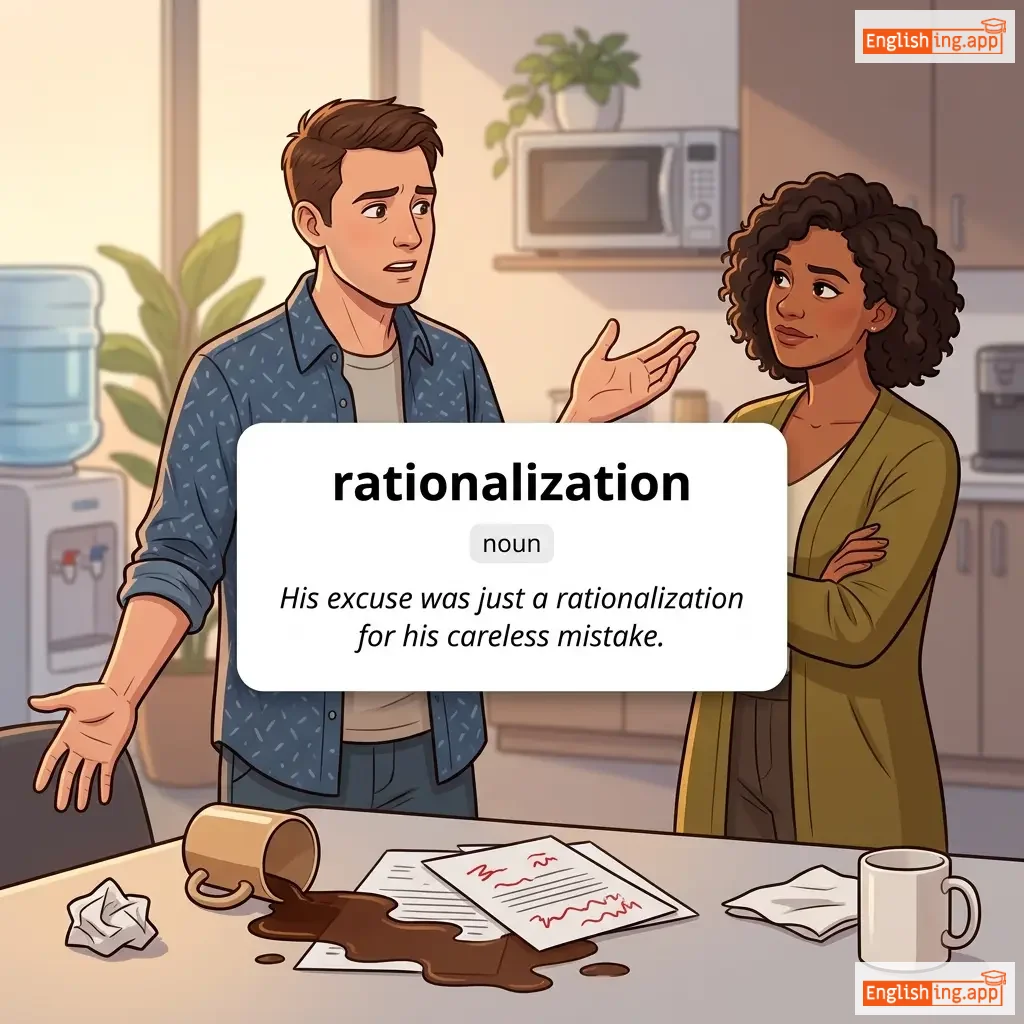
His excuse was just a rationalization for his careless mistake. |
彼の言い訳は、彼の不注意な間違いの合理化に過ぎなかった。
Kare no iiwake wa, kare no fuchūi na machigai no gōrika ni suginakatta.
••••••
|
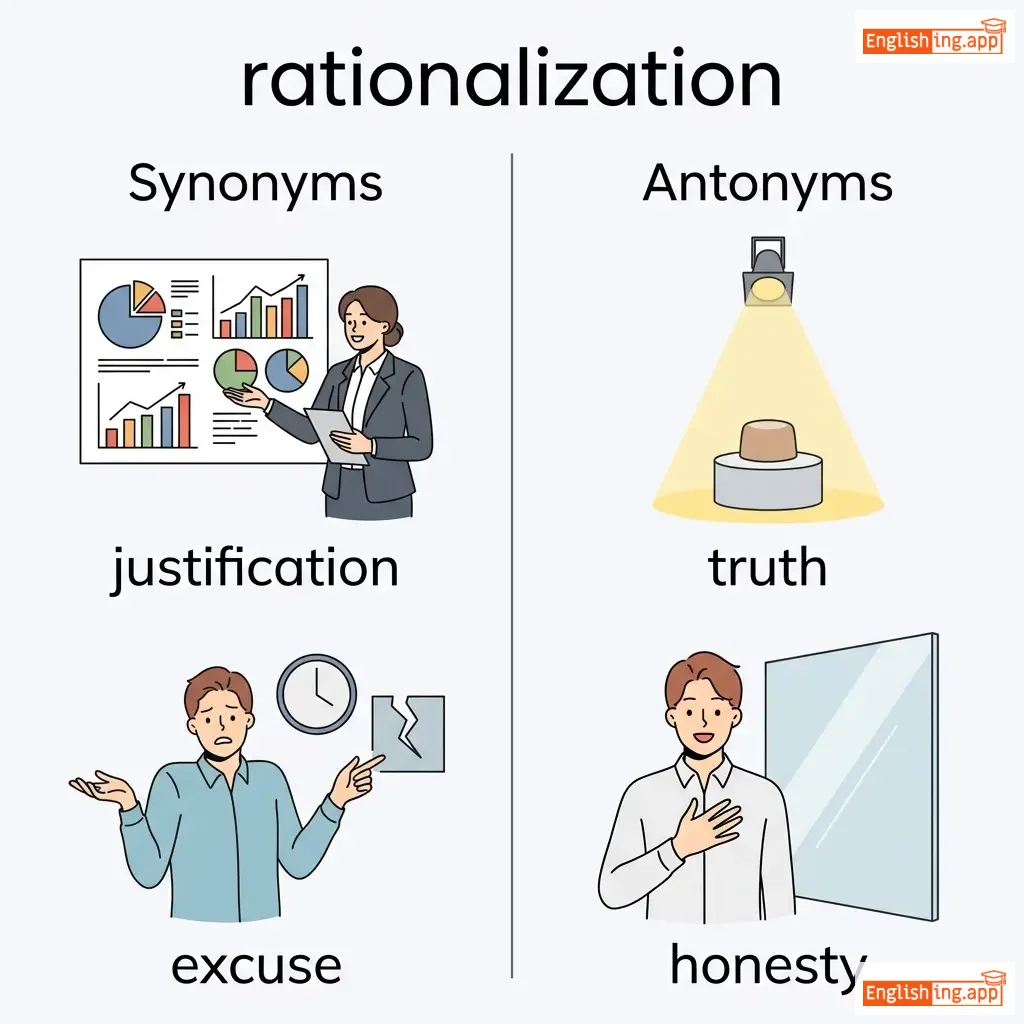
- •••••• | - •••••• | - •••••• |
justification, excuse, explanation, pretext
••••••
|
truth, honesty
••••••
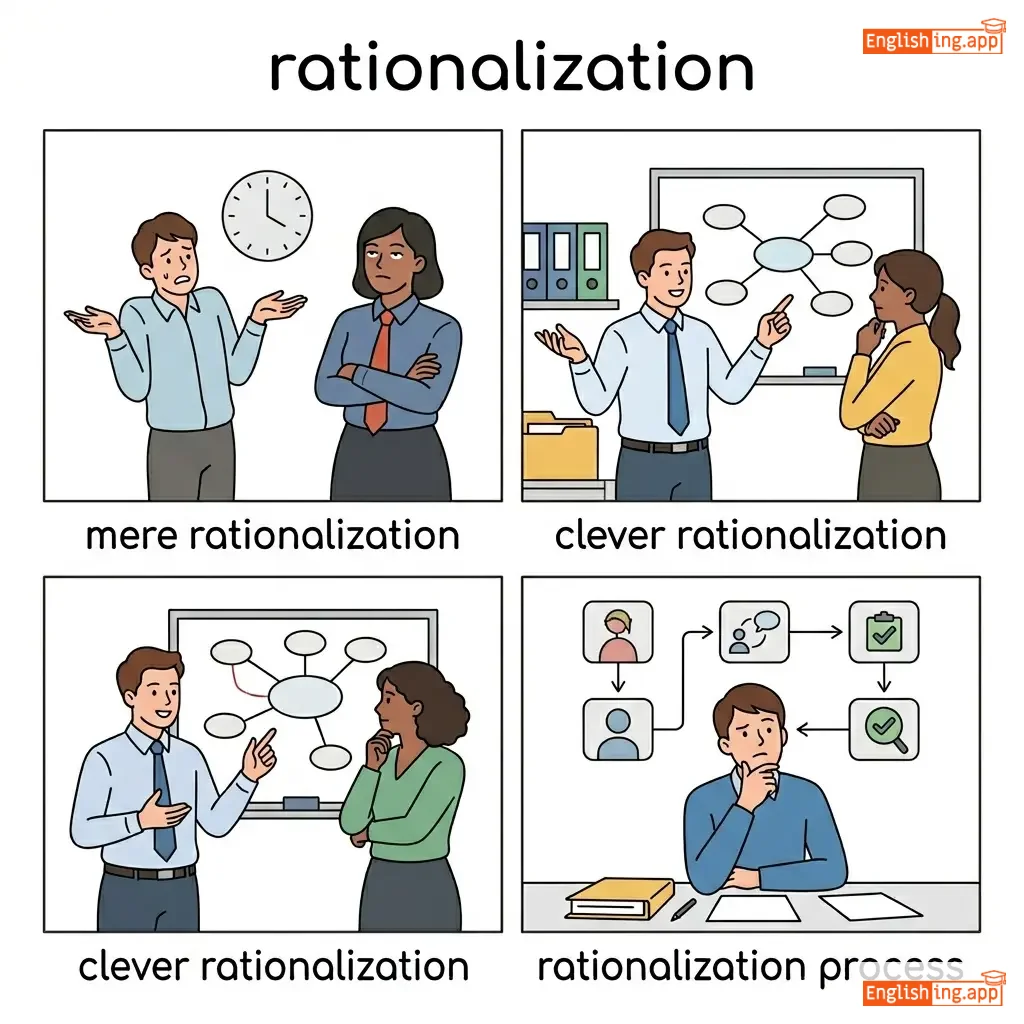
|
mere rationalization, clever rationalization, rationalization process, rationalization strategy
••••••
|
合理化とは論理的に説明すること — '論理で言い訳'覚えておきましょう
••••••
|
|
#7308
⚖️
|
/ˈræʃənəlɪzəm/
noun
(ラショナリズム)
••••••
|
- •••••• |
合理主義
gōri shugi
••••••
|
- •••••• | - •••••• | - •••••• | - •••••• |
a belief or theory that opinions and actions should be based on reason and knowledge rather than religious belief or emotion
••••••
|
Rationalism emphasizes logic and reasoning over faith. |
合理主義は信仰よりも論理と推論を強調します。
Gōri shugi wa shinkō yori mo ronri to suiron o kyōchō shimasu.
••••••
|
- •••••• | - •••••• | - •••••• |
logic, reason, intellectualism, objectivism
••••••
|
faith, superstition, irrationalism
••••••
|
rationalism philosophy, embrace rationalism, rationalism movement, reject rationalism
••••••
|
RationalismはReasonのism—ここでは論理が信仰より重要です
••••••
|
|
#7309
📖
|
/ˌræʃəˈnæl/
noun
(ラショナル)
••••••
|
- •••••• |
根本的な理由
konponteki na riyuu
••••••
|
- •••••• | - •••••• | - •••••• | - •••••• |
the underlying reason or explanation for something
••••••
|
The rationale behind his decision was clearly explained. |
彼の決断の背後にある理由は明確に説明されました。
Kare no ketsudan no haigo ni aru riyuu wa meikaku ni setsumei saremashita.
••••••
|
- •••••• | - •••••• | - •••••• |
reason, basis, explanation, justification, motive
••••••
|
irrationality, nonsense
••••••
|
rationale behind, clear rationale, sound rationale, provide a rationale
••••••
|
Rationale は 'Reason' の背後にある基本的な理由です—その理由を覚えておきましょう。
••••••
|
|
#7310
🧠
|
/ˈræʃənəl/
adjective
••••••
|
- •••••• | - •••••• | - •••••• | - •••••• | - •••••• | - •••••• |
based on or in accordance with reason or logic
••••••
|
She made a rational decision after considering all the facts. |
- •••••• |
rational mind |
a logical and clear-thinking mind
••••••
|
- •••••• |
logical, reasonable, sensible, sound, coherent
••••••
|
irrational, illogical, unreasonable
••••••
|
rational decision, rational explanation, rational behavior, rational argument
••••••
|
No •••••• |
|
#7311
🥖
|
/ˈræʃən/
noun
(レイション)
••••••
|
- •••••• |
配給
haiki
••••••
|
- •••••• | - •••••• | - •••••• | - •••••• |
a fixed amount of something, especially food, officially allowed to each person
••••••
|
During the war, each family received a weekly ration of rice. |
戦争中、各家族は毎週一定量のご飯を配給されました。
Sensou-chuu, kaku kazoku wa maishuu ittei-ryou no gohan o haiki saremashita.
••••••
|
on short rations |
having to live with limited supplies
••••••
|
配給制の下で
haikisei no moto de
••••••
|
allowance, portion, quota, share, allocation
••••••
|
surplus, abundance
••••••
|
food ration, daily ration, war ration, ration card
••••••
|
配給は制限された食料 - '配給でみんな平等に分け合う'
••••••
|
|
#7312
🧠
|
/ˌræʃioʊsɪˈneɪʃən/
noun
(ラティオシネーション)
••••••
|
- •••••• |
推論
suiron
••••••
|
- •••••• | - •••••• | - •••••• | - •••••• |
the process of reasoning or logical thinking
••••••
|
His ratiocination impressed the judges during the debate. |
彼の推論は討論中に審査員を感動させた。
Kare no suiron wa touron-chuu ni shinsain wo kandou saseta.
••••••
|
- •••••• | - •••••• | - •••••• |
reasoning, logic, deduction, inference, analysis
••••••
|
guess, assumption, irrationality
••••••
|
clear ratiocination, strong ratiocination, ratiocination skills
••••••
|
ラティオシネーションは推論の過程
••••••
|
|
#7313
✅
|
/ˈrætɪfaɪ/
verb
(ラティファイ)
••••••
|
- •••••• |
批准する
hīson suru
••••••
|
ratified
ラティファイド
••••••
|
ratified
ラティファイド
••••••
|
ratifies
ラティファイズ
••••••
|
ratifying
ラティファイング
••••••
|
to approve or confirm something officially, usually by law or formal consent
••••••
|
The government ratified the trade agreement.
政府は貿易協定を批准しました。
••••••
|
政府は貿易協定を批准しました。
Seifu wa bōeki kyōtei o hīson shimashita.
••••••
|
ratify a treaty
条約を批准する
••••••
|
to formally approve an international agreement
••••••
|
国際協定を批准する
Kokusai kyōtei o hīson suru
••••••
|
approve, confirm, validate, endorse, authorize
••••••
|
reject, oppose, annul
••••••
|
ratify treaty, ratify agreement, ratify constitution
••••••
|
もし政府が批准すれば、それは公式に承認することを意味します。
••••••
|
|
#7314
😮💨
|
/ˈræspi/
adjective
(ラスピー)
••••••
|
- •••••• |
ハスキー
hasukī
••••••
|
- •••••• | - •••••• | - •••••• | - •••••• |
having a harsh, rough, or grating sound
••••••
|
His raspy voice revealed years of smoking.
彼のラスピーな声は喫煙の年数を明らかにした。
••••••
|
彼のハスキーな声は喫煙の年数を明らかにした。
Kare no hasukī na koe wa kitsuen no nensū o akiraka ni shita.
••••••
|
- •••••• | - •••••• | - •••••• |
hoarse, harsh, grating, croaky
••••••
|
smooth, soft, melodious
••••••
|
raspy voice, raspy tone, raspy cough
••••••
|
荒い音のような声 - raspy はハスキーな声の意味です。
••••••
|
|
#7315
🔧
|
/ræsp/
verb
••••••
|
- •••••• | - •••••• |
rasped
••••••
|
rasped
••••••
|
rasps
••••••
|
rasping
••••••
|
to speak in a rough, harsh voice or to scrape with a coarse sound
••••••
|
He rasped out a warning before collapsing. |
- •••••• |
rasp someone's nerves |
to irritate or annoy someone
••••••
|
- •••••• |
scrape, grate, croak, grind, irritate
••••••
|
soothe, calm, smooth
••••••
|
rasp out, rasp voice, rasp sound, rasp tool
••••••
|
No •••••• |
|
#7316
⚡
|
/ræʃ/
adjective
(レッシュ)
••••••
|
- •••••• |
軽率, 無謀
keisotsu, mubou
••••••
|
- •••••• | - •••••• | - •••••• | - •••••• |
Acting quickly without careful consideration; reckless.
••••••
|
It was a rash decision to invest without research. |
調査なしで投資するのは無謀な決断だった。
Chousa nashi de toushi suru no wa mubou na ketsudan datta.
••••••
|
rash decision |
a decision made without proper thought or caution
••••••
|
無謀な決断
mubou na ketsudan
••••••
|
reckless, hasty, impulsive, careless, thoughtless
••••••
|
careful, cautious, prudent
••••••
|
rash decision, rash act, rash move, rash behavior
••••••
|
rashな決断でcashを失う。
••••••
|
|
#7317
🌫️
|
/ˈreə.rɪ.faɪ/
verb
(レアリファイ)
••••••
|
- •••••• |
薄くする, 精製する
usukusuru, seisei suru
••••••
|
rarefied
レアリファイド
••••••
|
rarefied
レアリファイド
••••••
|
rarefies
レアリファイズ
••••••
|
rarefying
レアリファイング
••••••
|
To make something less dense or more refined.
••••••
|
The air rarefies as you climb higher into the mountains.
ジ エア レアリファイズ アズ ユー クライム ハイア インツー ザ マウンテンズ
••••••
|
山に登るにつれて、空気は薄くなります。
Yama ni noboru ni tsurete, kūki wa usuku narimasu.
••••••
|
- •••••• | - •••••• | - •••••• |
refine, purify, thin, lighten, elevate
••••••
|
condense, thicken, intensify
••••••
|
rarefy the air, rarefy the atmosphere, rarefy ideas
••••••
|
Rarefy = rare + ify、物を薄くしたり精製したりする意味です。
••••••
|
|
#7318
🌌
|
/ˈreə.rɪ.faɪd/
adjective
••••••
|
|
- •••••• | - •••••• | - •••••• | - •••••• | - •••••• |
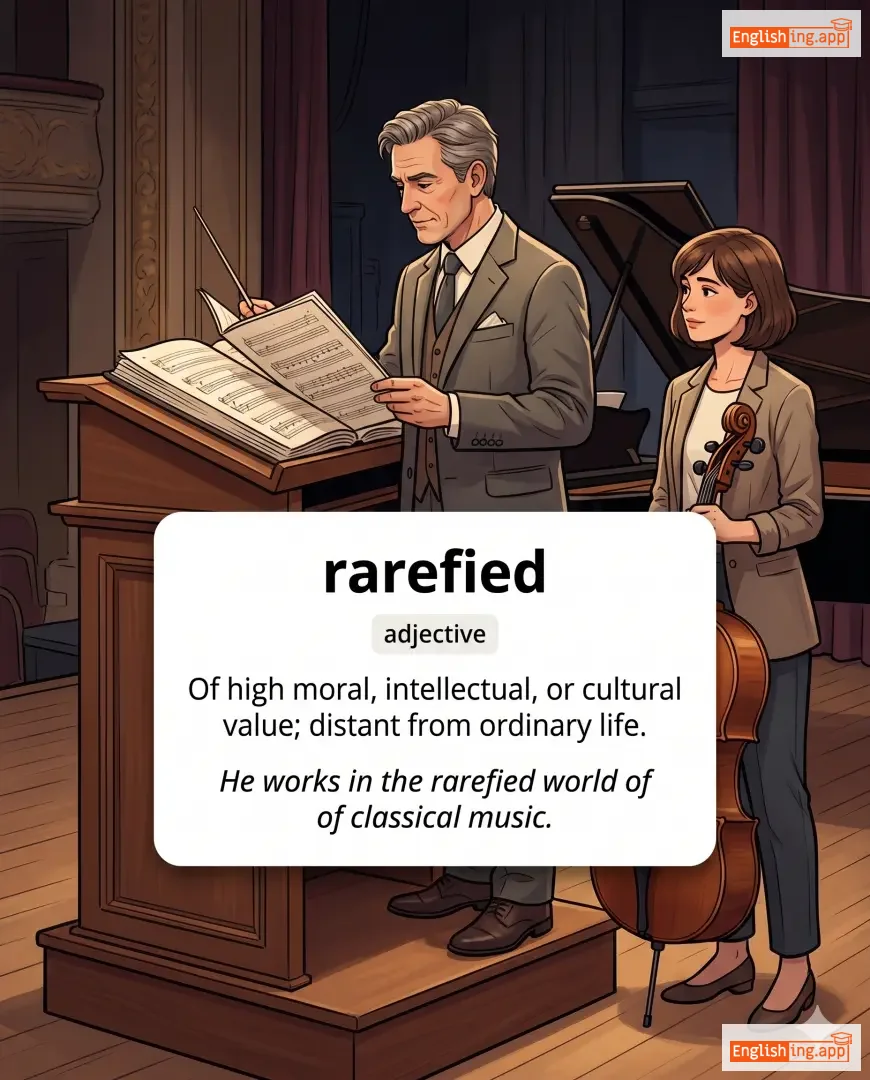
Of high moral, intellectual, or cultural value; distant from ordinary life.
••••••
|
He works in the rarefied world of classical music. |
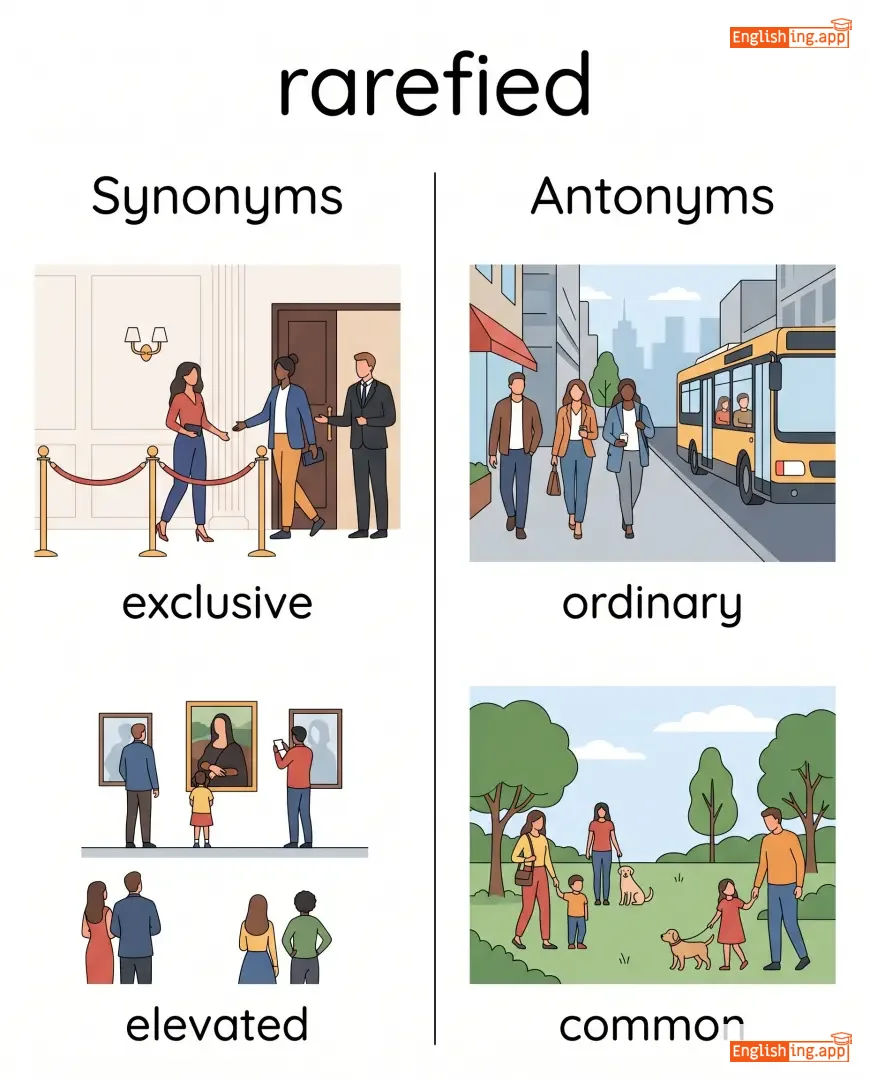
- •••••• | - •••••• | - •••••• | - •••••• |
exclusive, elevated, refined, exalted, sophisticated
••••••
|
ordinary, common, mundane
••••••
|
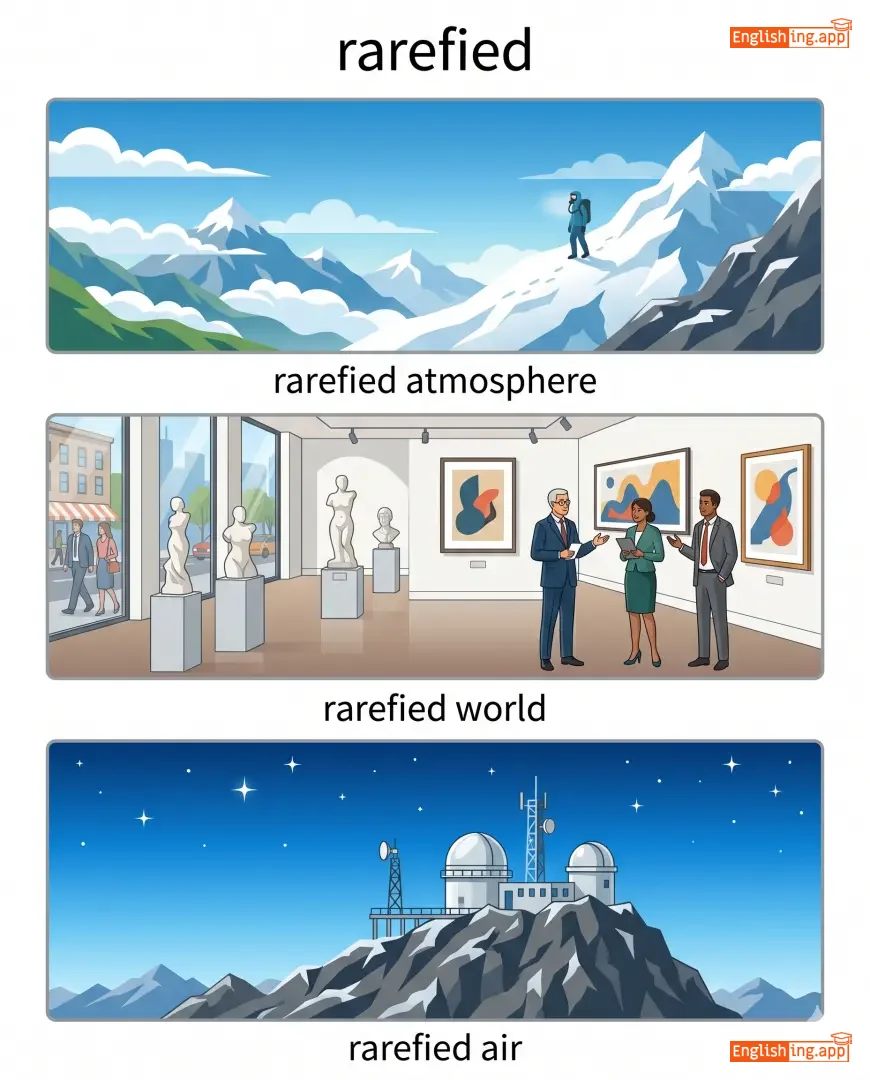
rarefied atmosphere, rarefied world, rarefied air
••••••
|
No •••••• |
|
#7319
🦄
|
/reər/
adjective
(レア)
••••••
|
- •••••• |
希少
kishou
••••••
|
- •••••• | - •••••• | - •••••• | - •••••• |
Unusual or uncommon; not occurring often.
••••••
|
This species of bird is extremely rare. |
この鳥の種は非常に希少です。
Kono tori no shu wa hijou ni kishou desu.
••••••
|
rare opportunity |
a chance that does not happen often
••••••
|
希少な機会
kishou na kikai
••••••
|
unusual, uncommon, exceptional, unique, extraordinary
••••••
|
common, ordinary, usual
••••••
|
rare species, rare disease, rare occasion, rare gem
••••••
|
希少とは希少、希少な宝石のように珍しいものです。
••••••
|
Vocabulary Quiz
Test your vocabulary by matching words with their translations or meanings.
Login to take the quiz
Comments (0)
Share your thoughts and join the discussion.
Join the discussion by logging in
Login to CommentNo comments yet
Be the first to share your thoughts!