

翻訳
過去
過去分詞
三人称単数
動名詞
意味
例文
例文の翻訳
同義語
対義語
コロケーション
ニーモニック
Swipe left or right, or use the buttons. Tap image to zoom.
例文の翻訳
単語
Lesson 246Lesson 246 - マスクトグル
|
絵文字
|
単語 | Images | 翻訳 | 過去 | 過去分詞 | 三人称単数 | 動名詞 | 意味 | 例文 | 例文の翻訳 | 表現例 | 表現例の意味 | 表現例の翻訳 | 同義語 | 対義語 | コロケーション | ニーモニック |
|---|---|---|---|---|---|---|---|---|---|---|---|---|---|---|---|---|---|
|
#7350
🏚️
|
/ˈrɛkluːsəri/
noun
(レクルソリー)
••••••
|
- •••••• |
隠遁場所
inton basho
••••••
|
- •••••• | - •••••• | - •••••• | - •••••• |
A place for seclusion or retreat, especially for a recluse or hermit.
••••••
|
The monk spent years in the reclusory away from society. |
その僧侶は社会から離れた隠遁場所で数年を過ごしました。
Sono sōryo wa shakai kara hanareta inton basho de sūnen o sugoshimashita.
••••••
|
- •••••• | - •••••• | - •••••• |
hermitage, retreat, cloister, cell
••••••
|
community, society
••••••
|
old reclusory, silent reclusory, religious reclusory
••••••
|
Reclusoryは隠遁場所-修道者の隠れ家のようなものです。
••••••
|
|
#7351
📅
|
/ˌriː.kənˈviːn/
verb
(リコンヴィーン)
••••••
|
- •••••• |
再開する
saikai suru
••••••
|
reconvened
リコンヴィンド
••••••
|
reconvened
リコンヴィンド
••••••
|
reconvenes
リコンヴィーンズ
••••••
|
reconvening
リコンヴィーニング
••••••
|
to gather or assemble again, especially for a meeting
••••••
|
The committee will reconvene after lunch.
委員会は昼食後に再開します。
••••••
|
委員会は昼食後に再開します。
Iinkai wa chūshoku-go ni saikai shimasu.
••••••
|
- •••••• | - •••••• | - •••••• |
regather, reassemble, resume, restart, regroup
••••••
|
adjourn, dismiss, disband
••••••
|
reconvene a meeting, reconvene the committee, reconvene the session, reconvene parliament
••••••
|
Reconvene は再開するという意味です。Re + convene は再開するという意味です。
••••••
|
|
#7352
🏗️
|
/ˌriː.kənˈstrʌkt/
verb
(リコンストラクト)
••••••
|
- •••••• |
再建する
saiken suru
••••••
|
reconstructed
リコンストラクテッド
••••••
|
reconstructed
リコンストラクテッド
••••••
|
reconstructs
リコンストラクトス
••••••
|
reconstructing
リコンストラクトイング
••••••
|
to build or form something again after it has been damaged or destroyed
••••••
|
The city was reconstructed after the earthquake.
その都市は地震後に再建されました。
••••••
|
その都市は地震後に再建されました。
Sono toshi wa jishin go ni saiken saremashita.
••••••
|
- •••••• | - •••••• | - •••••• |
rebuild, restore, renovate, repair, recreate
••••••
|
demolish, destroy, ruin
••••••
|
reconstruct a building, reconstruct a road, reconstruct history, reconstruct memory
••••••
|
Reconstruct は '再建する'、再び作り直すという意味です。
••••••
|
|
#7353
🔄
|
/ˌriːˈkɒn.stɪ.tʃuːt/
verb
(rikonstityuto)
••••••
|
- •••••• |
再構成する
saikōsei suru
••••••
|
reconstituted
rikonstituto
••••••
|
reconstituted
rikonstituto
••••••
|
reconstitutes
rikonstitutozu
••••••
|
reconstituting
rikonstituutoingu
••••••
|
to restore something to its original form or state; to reassemble
••••••
|
The group was reconstituted after the leader returned.
guroopu wa rikonstituutoeddo, rīdā ga modotta ato.
••••••
|
リーダーが戻った後、グループは再構成されました。
Rīdā ga modotta ato, gurūpu wa saikōsei saremashita.
••••••
|
- •••••• | - •••••• | - •••••• |
restore, rebuild, reconstruct, reorganize, reform
••••••
|
dismantle, destroy, dissolve
••••••
|
reconstitute a committee, reconstitute a group, reconstitute a solution, reconstitute society
••••••
|
Constitute は作るという意味、Re + constitute は再び作るという意味
••••••
|
|
#7354
🤔
|
/ˌriː.kənˈsɪd.ər/
verb
(リコンシダー)
••••••
|
- •••••• |
再考する
saikou suru
••••••
|
reconsidered
リコンシダード
••••••
|
reconsidered
リコンシダード
••••••
|
reconsiders
リコンシダーズ
••••••
|
reconsidering
リコンシダーリング
••••••
|
to think about something again, especially to change a decision or opinion
••••••
|
She decided to reconsider her decision about moving abroad.
彼女は海外に引っ越すという決断を再考することに決めました。
••••••
|
彼女は海外に引っ越すという決断を再考することに決めました。
Kanojo wa kaigai ni hikkosu to iu ketsudan wo saikou suru koto ni kimemashita.
••••••
|
- •••••• | - •••••• | - •••••• |
rethink, review, reevaluate, reexamine, revise
••••••
|
confirm, affirm, uphold
••••••
|
reconsider a decision, reconsider an offer, reconsider the plan, reconsider seriously
••••••
|
再 (sai) + consider = 再考する
••••••
|
|
#7355
🕵️
|
/ˌriː.kəˈnɔɪ.tər/
verb
(rekonoyter)
••••••
|
- •••••• |
偵察する
teisatsu suru
••••••
|
reconnoitered
rekonoytādo
••••••
|
reconnoitered
rekonoytādo
••••••
|
reconnoiters
rekonoytāzu
••••••
|
reconnoitering
rekonoytāingu
••••••
|
to make a preliminary inspection or survey, especially of an area for military or strategic purposes
••••••
|
The soldiers reconnoitered the area before advancing.
兵士たちは進軍する前にその地域を偵察しました。
••••••
|
兵士たちは進軍する前にその地域を偵察しました。
Heishitachi wa shingun suru mae ni sono chiiki o teisatsu shimashita.
••••••
|
- •••••• | - •••••• | - •••••• |
scout, survey, inspect, explore, investigate
••••••
|
ignore, overlook, neglect
••••••
|
reconnoiter the area, reconnoiter enemy lines, reconnoiter position, reconnoiter territory
••••••
|
進軍前に地形を偵察する。
••••••
|
|
#7356
🛰️
|
/rɪˈkɒnɪsəns/
noun
(リコンネサンス)
••••••
|
- •••••• |
偵察
teisatsu
••••••
|
- •••••• | - •••••• | - •••••• | - •••••• |
A survey or exploration, especially for military or strategic purposes.
••••••
|
The soldiers conducted a reconnaissance of the enemy camp. |
兵士たちは敵のキャンプの偵察を行った。
Heishi-tachi wa teki no kyanpu no teisatsu o okonatta.
••••••
|
scout out |
To explore or check something in advance.
••••••
|
偵察する
teisatsu suru
••••••
|
survey, exploration, inspection, scouting
••••••
|
neglect, ignorance
••••••
|
reconnaissance mission, aerial reconnaissance, reconnaissance patrol
••••••
|
Reconnaissance = re+connaissance (知識) → 再度知る。兵士たちは偵察を行います。
••••••
|
|
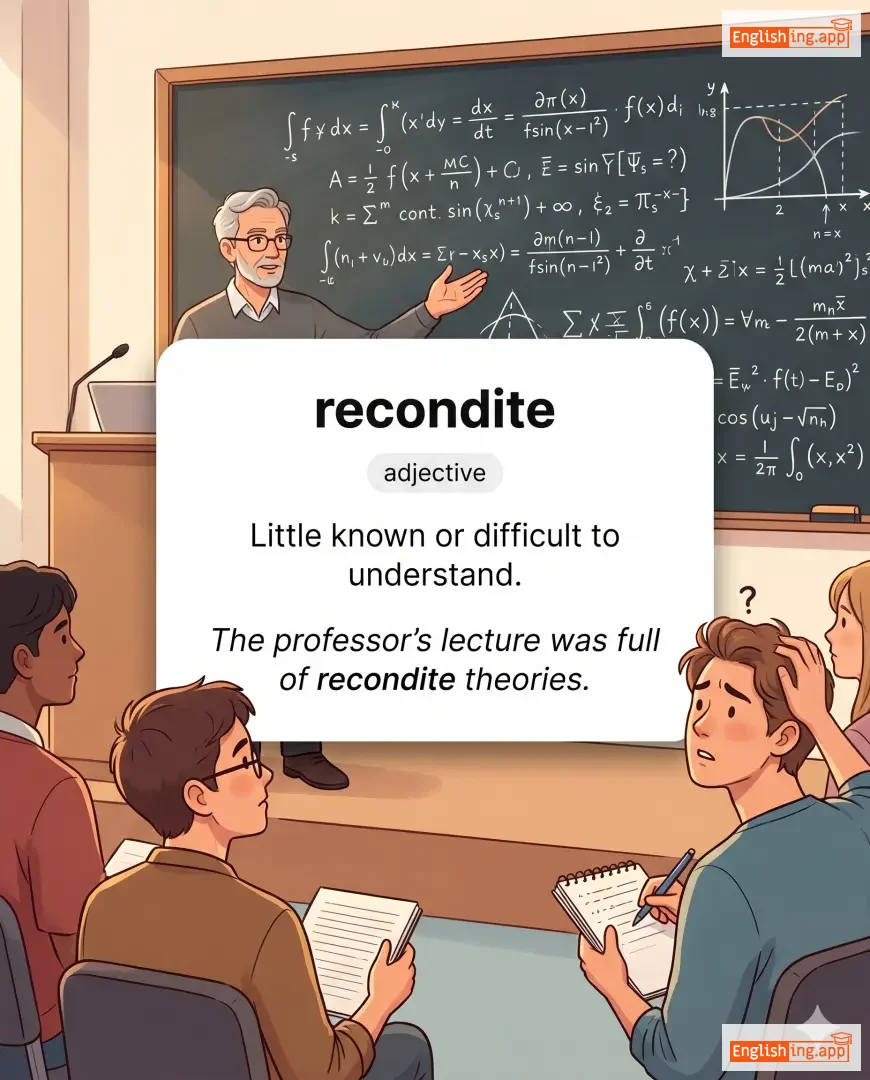
#7357
📚
|
/ˈrɛkənˌdaɪt/ or /ˈrɛkəndaɪt/
adjective
(レコンダイト)
••••••
|
|
ほとんど知られていない、または理解しにくい
hotondo shirarete inai, matawa rikai shinikui
••••••
|
- •••••• | - •••••• | - •••••• | - •••••• |
Little known or difficult to understand.
••••••
|
The professor’s lecture was full of recondite theories.
教授の講義は難解な理論で満ちていた。
••••••
|
教授の講義は難解な理論で満ちていた。
Kyoju no kogī wa nankai na riron de michite ita.
••••••
|
- •••••• | - •••••• | - •••••• |
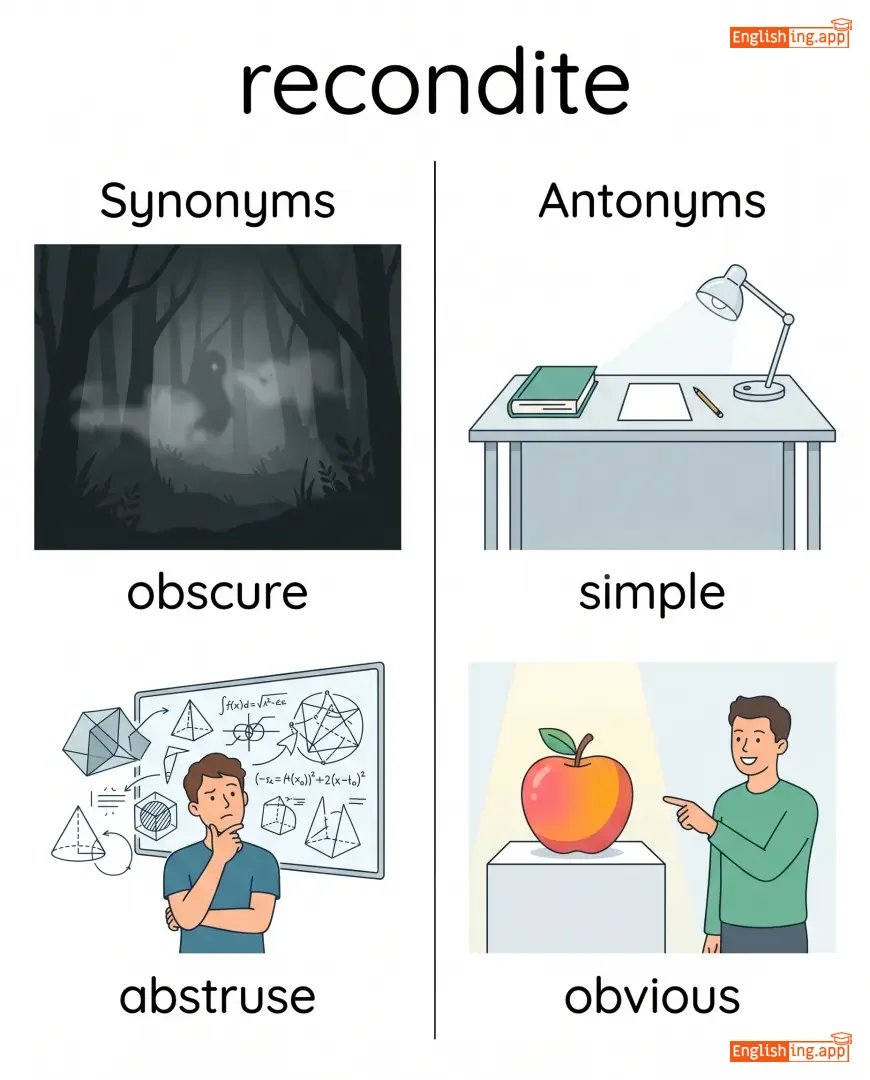
obscure, abstruse, complex, esoteric
••••••
|
simple, obvious, clear
••••••
|
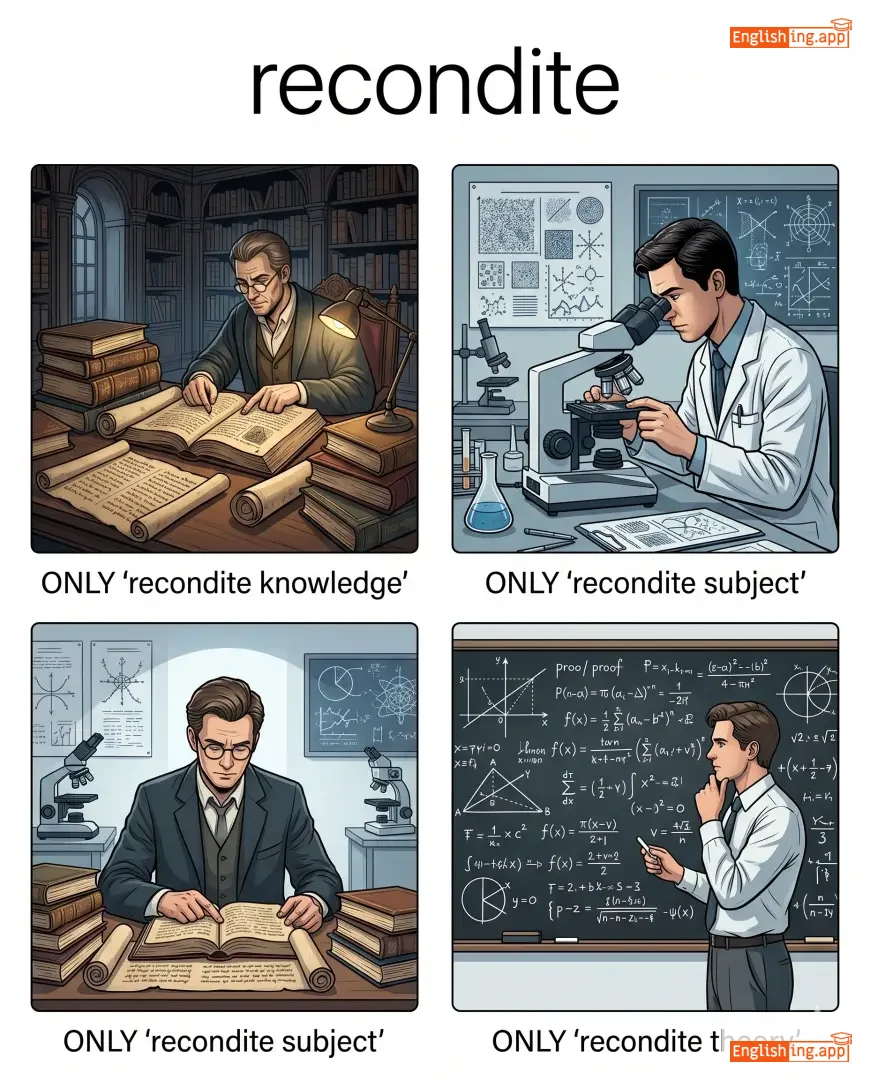
recondite knowledge, recondite subject, recondite theory
••••••
|
Reconditeは「難解なもの」と考え、理解するのが難しいことを示します。
••••••
|
|
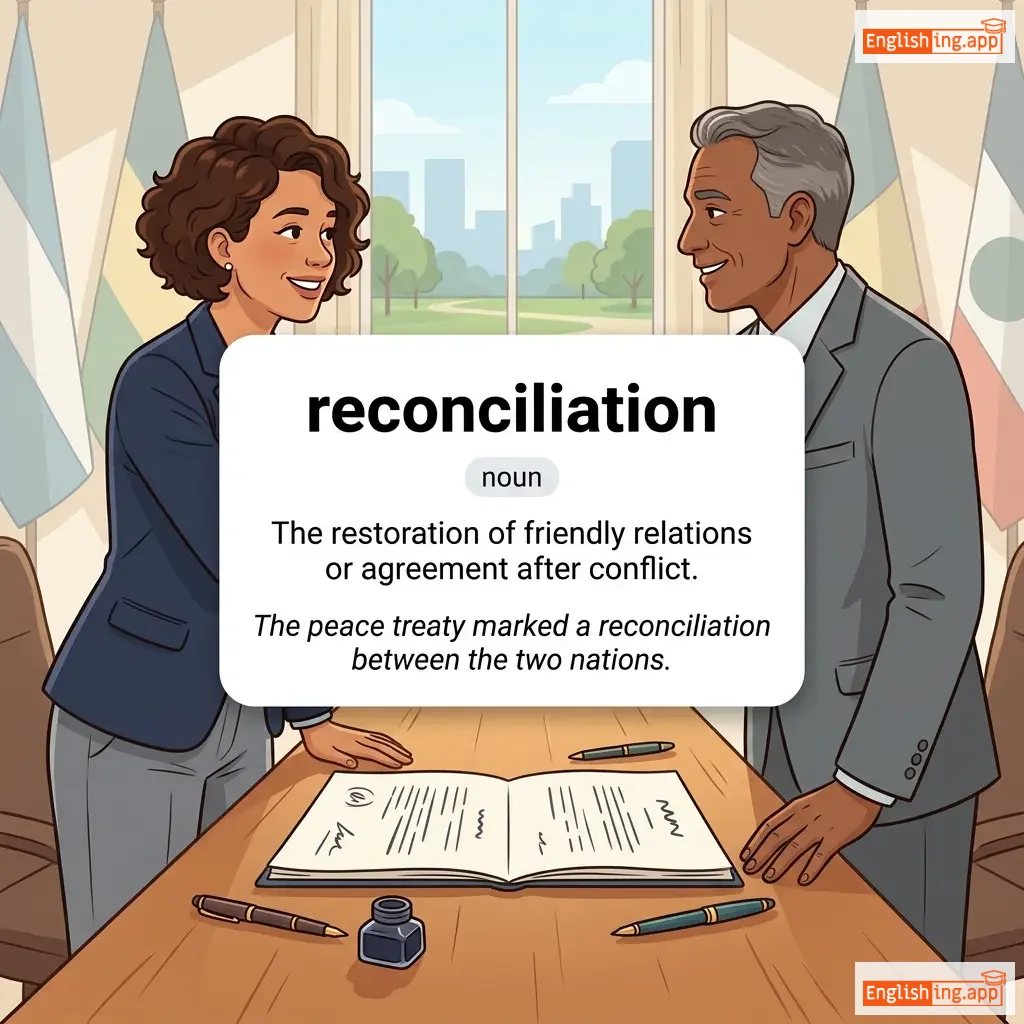
#7358
🕊️
|
/ˌrɛkənsɪliˈeɪʃən/
noun
••••••
|
|
- •••••• | - •••••• | - •••••• | - •••••• | - •••••• |
The restoration of friendly relations or agreement after conflict.
••••••
|
The peace treaty marked a reconciliation between the two nations. |
- •••••• |
make amends |
To compensate or apologize for a wrong.
••••••
|
- •••••• |
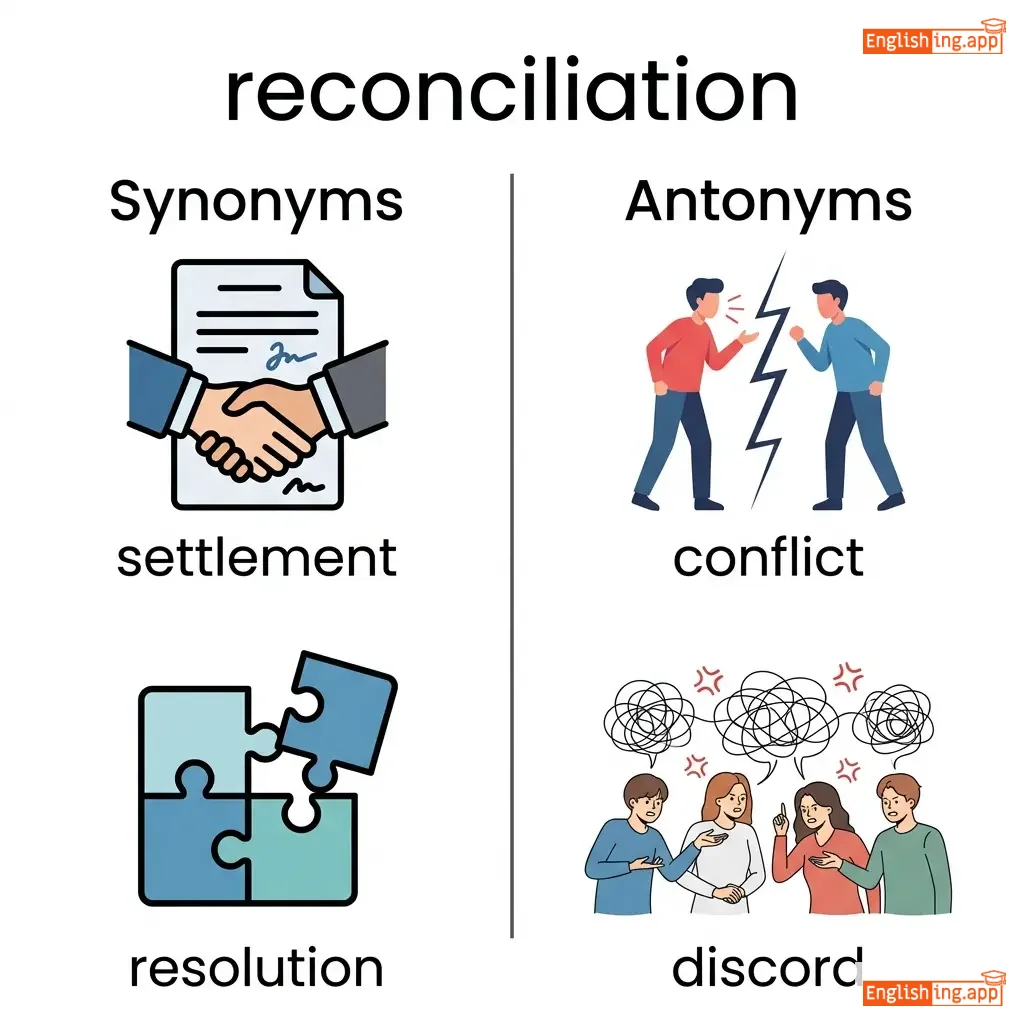
settlement, resolution, reunion, harmony
••••••
|
conflict, discord, separation
••••••
|
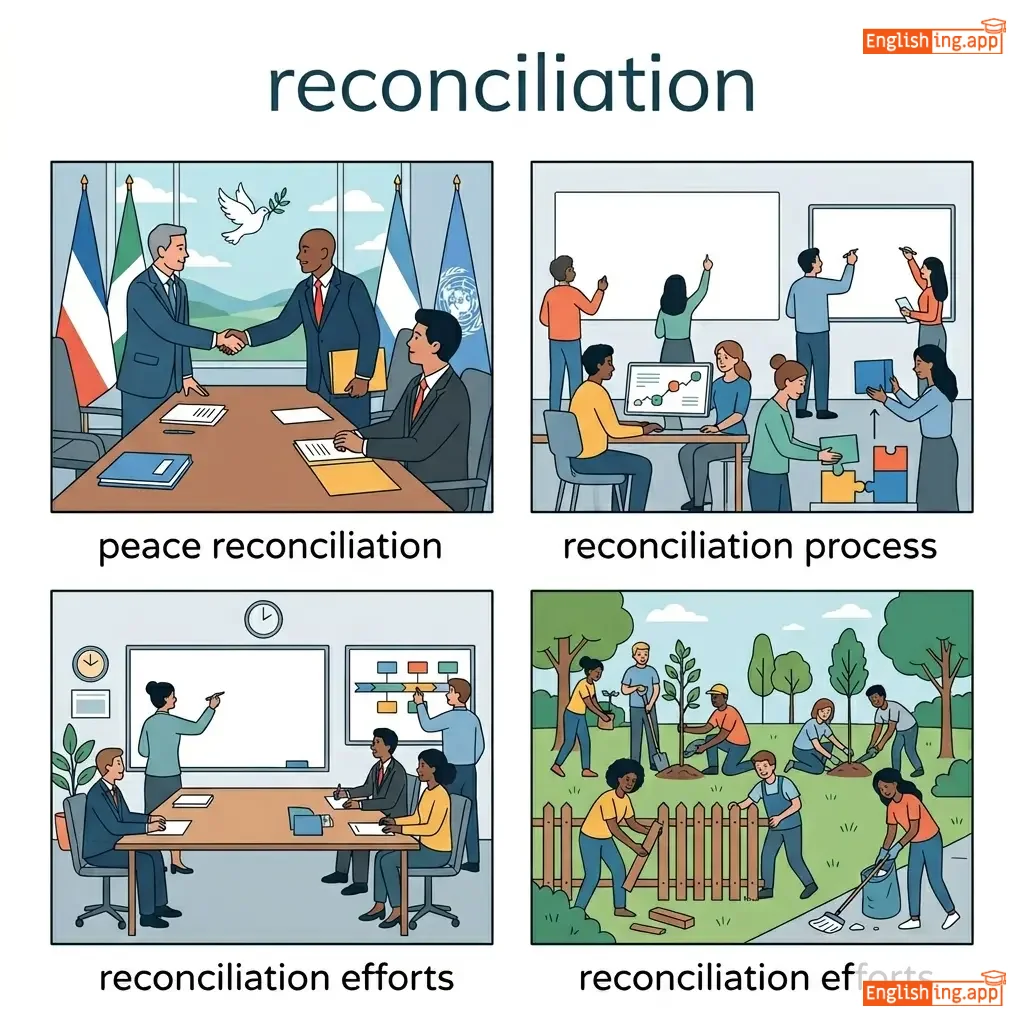
peace reconciliation, reconciliation process, reconciliation efforts
••••••
|
No •••••• |
|
#7359
🤝
|
/ˈrɛkənˌsaɪl/
verb
••••••
|
|
- •••••• |
reconciled
••••••
|
reconciled
••••••
|
reconciles
••••••
|
reconciling
••••••
|
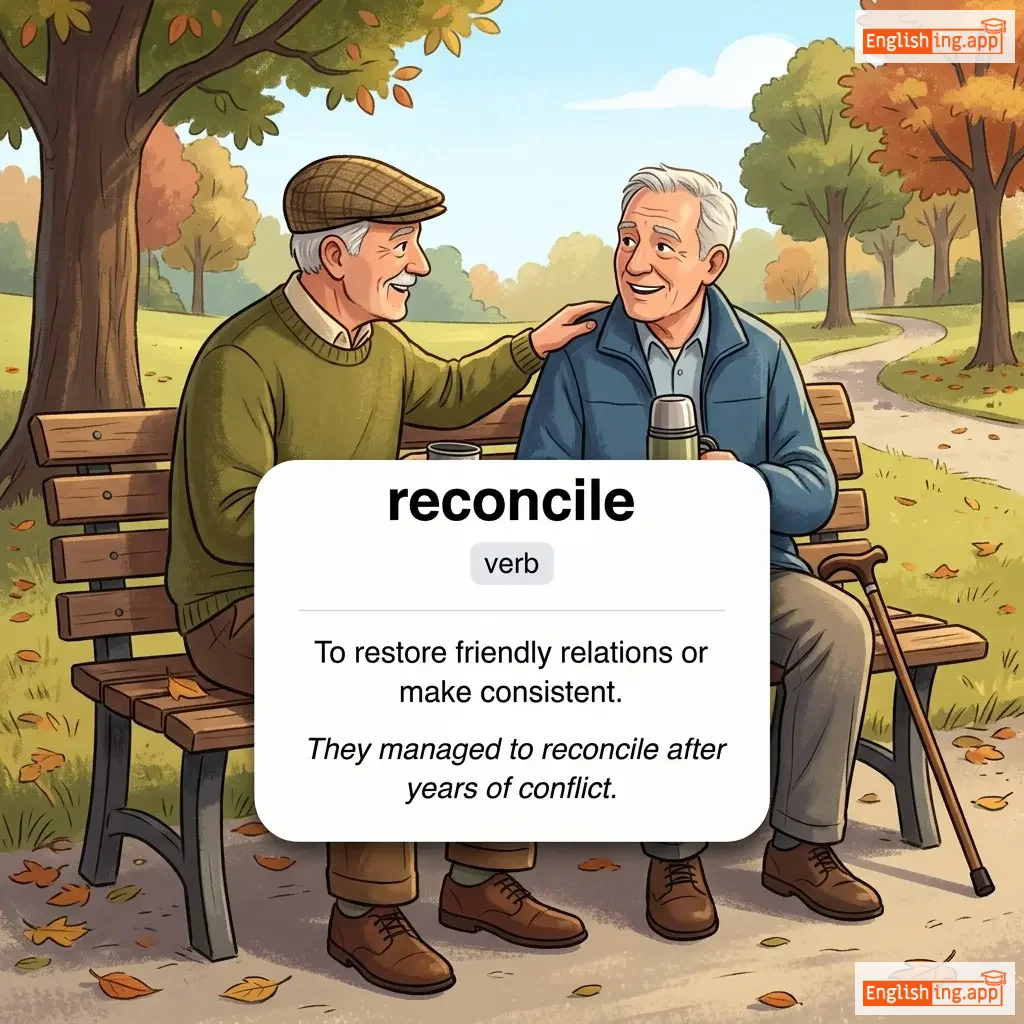
To restore friendly relations or make consistent.
••••••
|
They managed to reconcile after years of conflict. |
- •••••• |
bury the hatchet |
To make peace and end a conflict.
••••••
|
- •••••• |
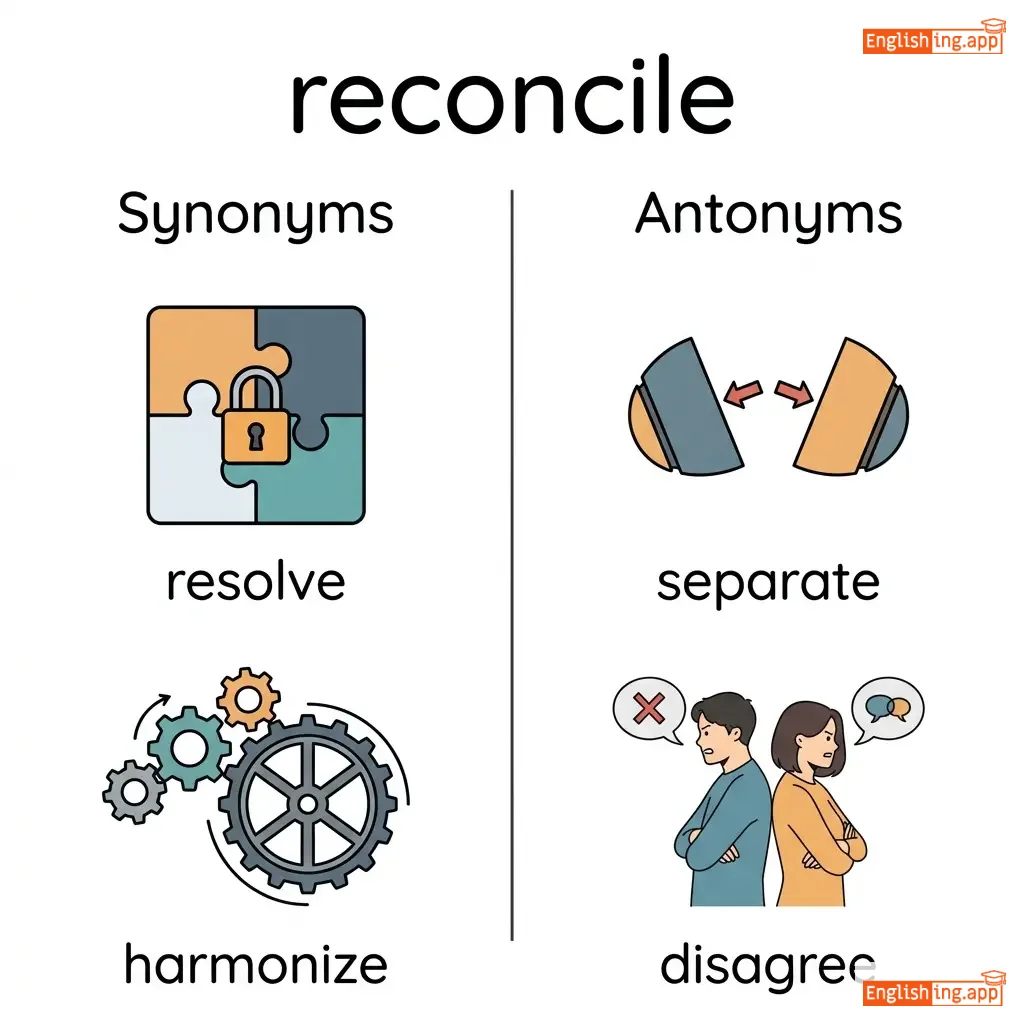
resolve, harmonize, unite, mend
••••••
|
separate, disagree, conflict
••••••
|
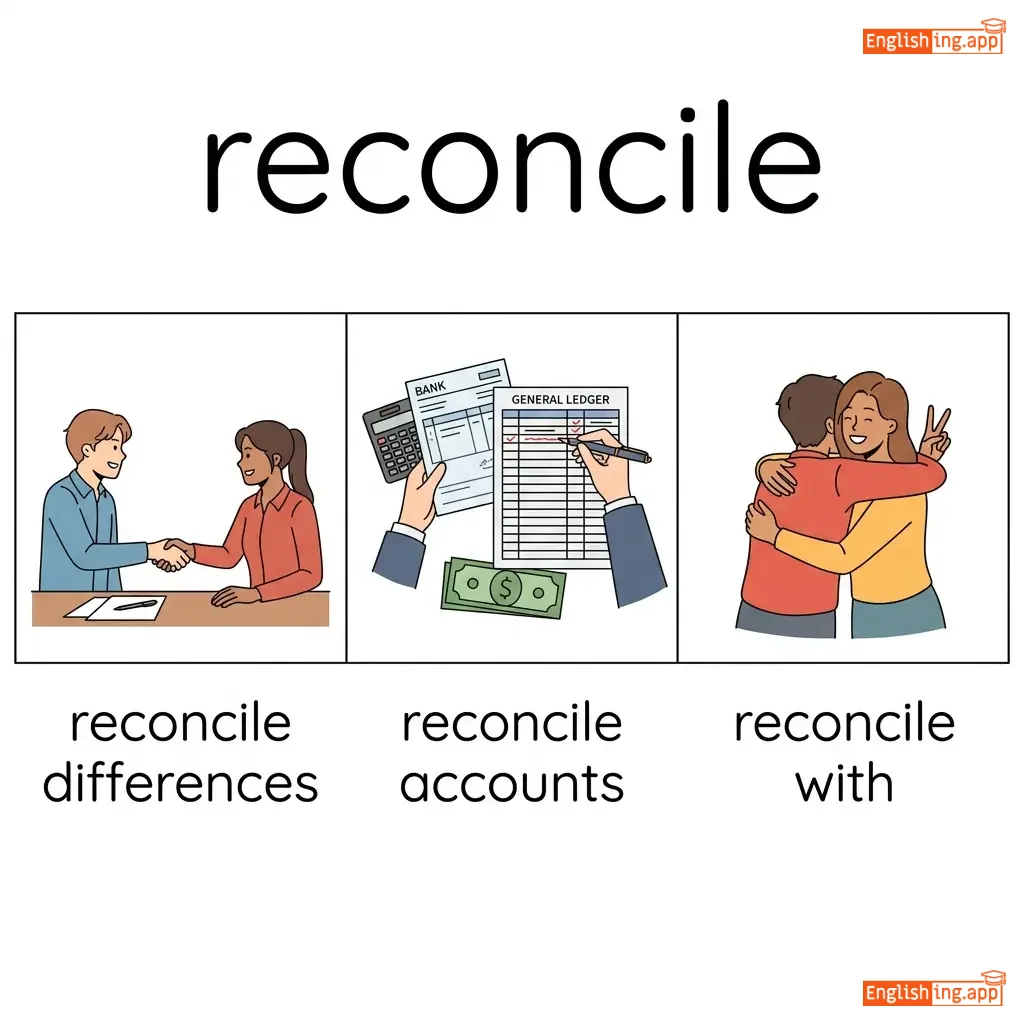
reconcile differences, reconcile accounts, reconcile with
••••••
|
No •••••• |
|
#7360
⚖️
|
/ˈrɛkənˌsaɪləbl̩/
adjective
••••••
|
- •••••• | - •••••• | - •••••• | - •••••• | - •••••• | - •••••• |
Capable of being resolved or made consistent.
••••••
|
Their differences are reconcilable with honest communication. |
- •••••• | - •••••• | - •••••• | - •••••• |
compatible, consistent, agreeable, harmonious
••••••
|
irreconcilable, conflicting, incompatible
••••••
|
reconcilable differences, reconcilable goals, reconcilable views
••••••
|
No •••••• |
|
#7361
🧠
|
/ˌrɛkəˈlɛkt/
verb
(レコレクト)
••••••
|
|
思い出す
omoidasu
••••••
|
recollected
レコレクテッド
••••••
|
recollected
レコレクテッド
••••••
|
recollects
レコレクツ
••••••
|
recollecting
レコレクティング
••••••
|
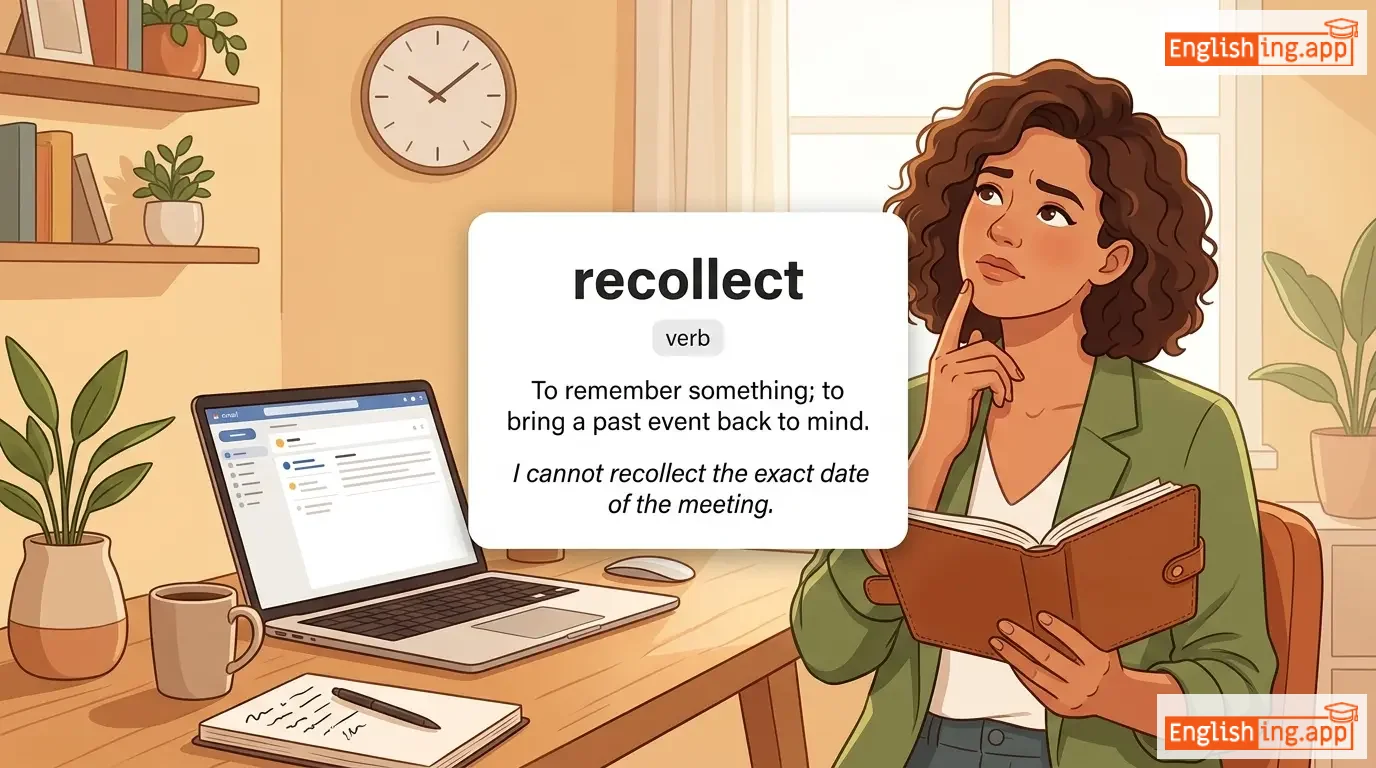
To remember something; to bring a past event back to mind.
••••••
|
I cannot recollect the exact date of the meeting.
私は会議の日付を正確に思い出せません。
••••••
|
私は会議の日付を正確に思い出せません。
Watashi wa kaigi no hizuke wo seikaku ni omoidase masen.
••••••
|
if I recollect correctly
もし私が正しく思い出すならば
••••••
|
Used when recalling something with some uncertainty.
••••••
|
もし私が正しく思い出すならば
Moshi watashi ga tadashiku omoidashitara
••••••
|
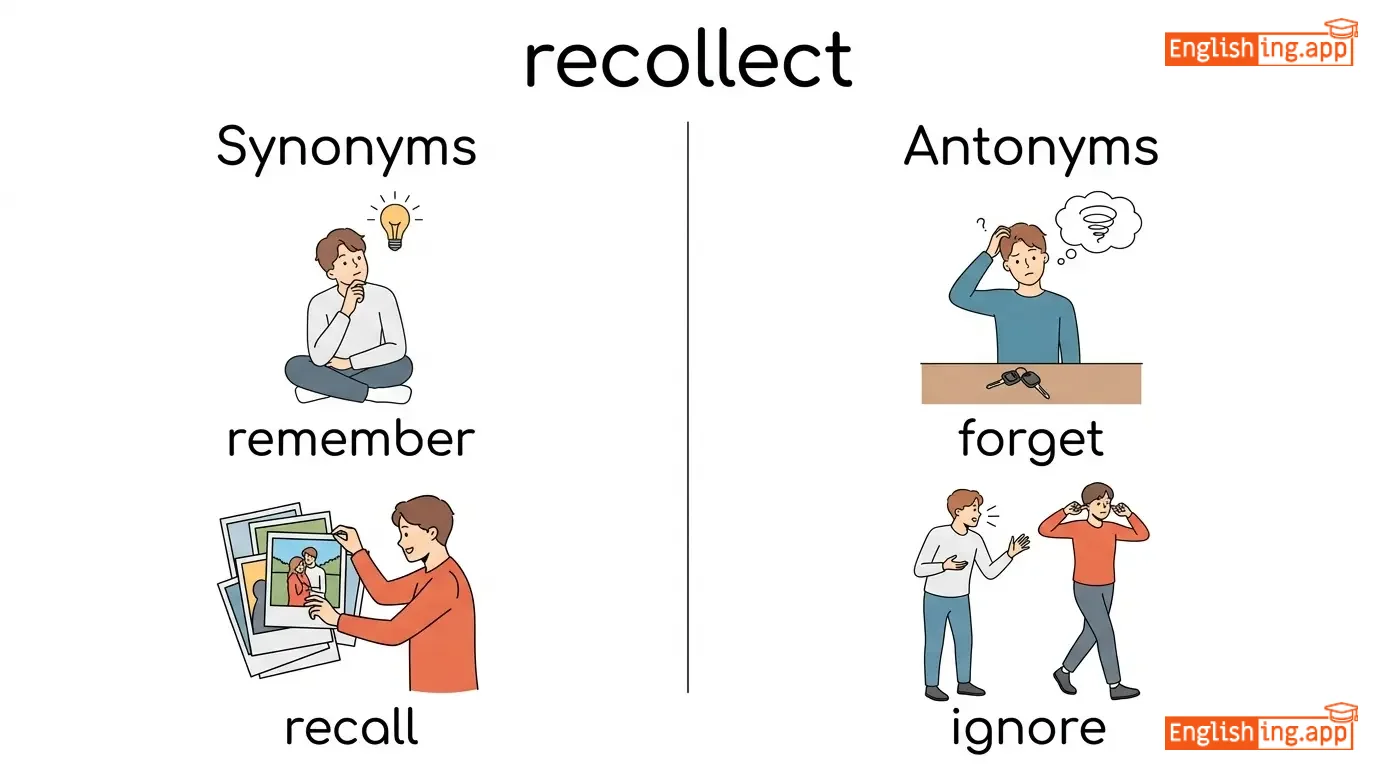
remember, recall, reminisce, think back
••••••
|
forget, ignore
••••••
|
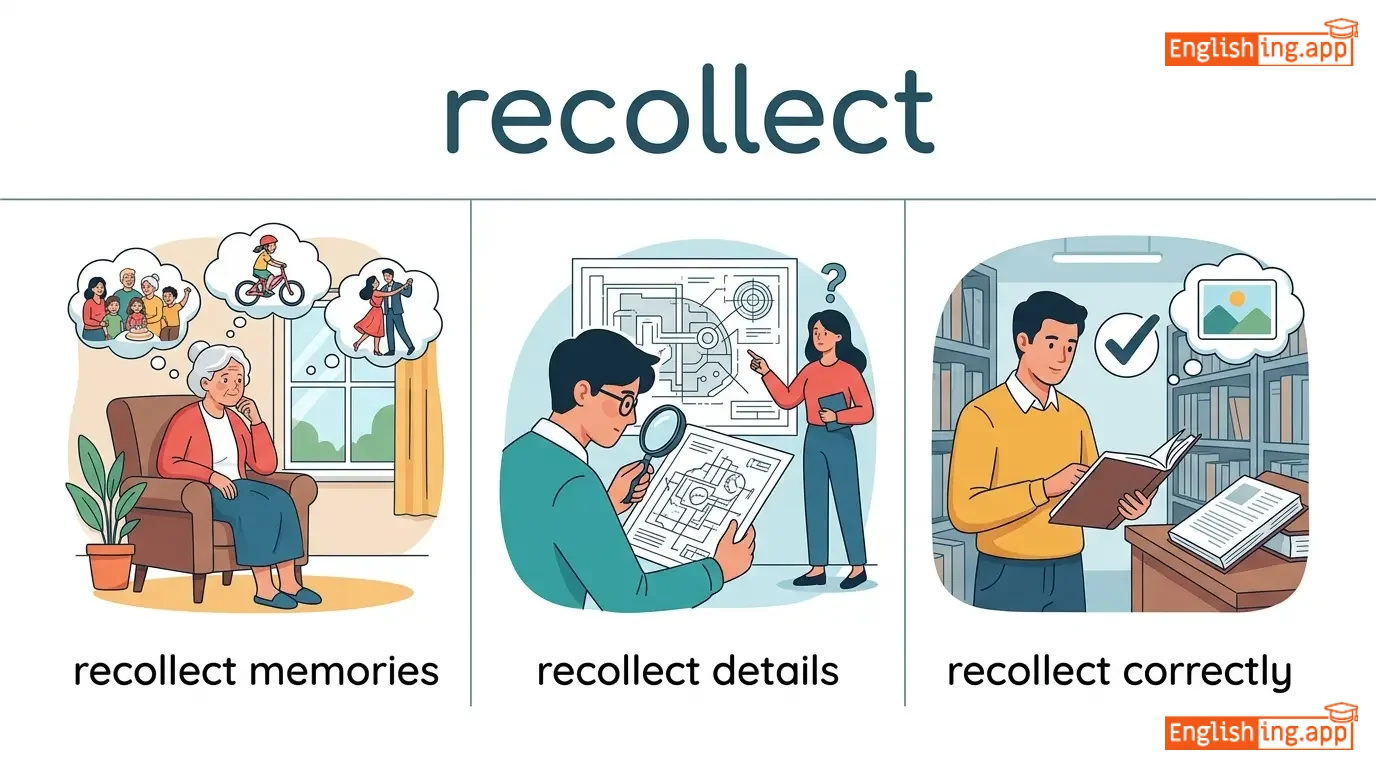
recollect memories, recollect details, recollect correctly
••••••
|
Recollectは再び集めることを意味する → 過去の思い出を集めること。
••••••
|
|
#7362
😨
|
/rɪˈkɔɪl/
verb
(rikóiru)
••••••
|
- •••••• |
後退する
kōtai suru
••••••
|
recoiled
rikóirudo
••••••
|
recoiled
rikóirudo
••••••
|
recoils
rikóirusu
••••••
|
recoiling
rikóiringu
••••••
|
To suddenly spring back in fear, horror, or from force such as a gun's kickback.
••••••
|
She recoiled at the sight of the snake.
彼女はヘビを見て後退した。
••••••
|
彼女はヘビを見て後退した。
Kanojo wa hebi o mite kōtai shita.
••••••
|
recoil in horror
恐怖で後退する
••••••
|
To move back suddenly in shock or fear.
••••••
|
恐怖で後退する
Kyōfu de kōtai suru
••••••
|
flinch, shrink, withdraw, cringe
••••••
|
advance, approach
••••••
|
recoil in fear, recoil from, recoil at
••••••
|
Recoilは銃の反動のように、恐怖で後退することです。
••••••
|
|
#7363
👀
|
/ˈrɛkəɡnaɪz/
verb
••••••
|
- •••••• | - •••••• |
recognized
••••••
|
recognized
••••••
|
recognizes
••••••
|
recognizing
••••••
|
To identify someone or something seen before; to acknowledge or accept.
••••••
|
She did not recognize him in the crowd. |
- •••••• |
recognize the importance |
To acknowledge the value or significance of something.
••••••
|
- •••••• |
identify, acknowledge, accept, admit, spot
••••••
|
ignore, neglect, overlook
••••••
|
recognize someone, recognize importance, recognize authority
••••••
|
No •••••• |
|
#7364
⚖️
|
/rɪˈkɒɡnɪzəns/
noun
(レコグニザンス)
••••••
|
- •••••• |
法的義務
hōteki gimu
••••••
|
- •••••• | - •••••• | - •••••• | - •••••• |
A legal obligation or bond entered into before a court, especially to ensure future appearance.
••••••
|
He was released on his own recognizance. |
彼は自分の法的義務で釈放されました。
Kare wa jibun no hōteki gimu de shakuho saremashita.
••••••
|
on one's own recognizance |
Released from custody without bail, with a promise to return to court.
••••••
|
自分の法的義務で
Jibun no hōteki gimu de
••••••
|
bond, pledge, obligation, undertaking
••••••
|
freedom, discharge
••••••
|
own recognizance, bail recognizance, release on recognizance
••••••
|
Recognizanceは法的義務であり、裁判所に戻る約束を意味します。
••••••
|
|
#7365
🔄
|
/rɪˈsɪdɪˌvɪzəm/
noun
••••••
|
- •••••• | - •••••• | - •••••• | - •••••• | - •••••• | - •••••• |
The tendency of a convicted criminal to reoffend or relapse into criminal behavior.
••••••
|
The government introduced new programs to reduce recidivism among former inmates. |
- •••••• | - •••••• | - •••••• | - •••••• |
relapse, reoffending, regression, backsliding, recurrency
••••••
|
rehabilitation, reform, recovery
••••••
|
reduce recidivism, high recidivism rate, prevent recidivism, recidivism studies
••••••
|
No •••••• |
|
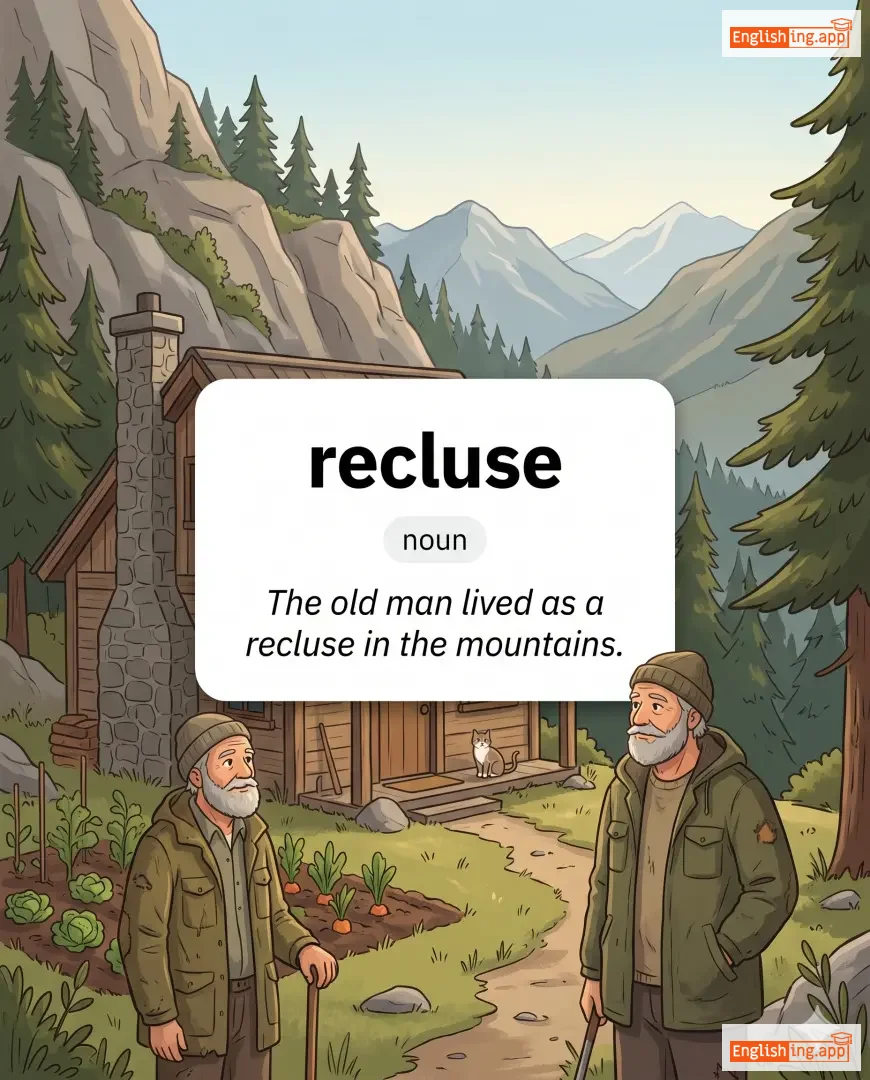
#7366
🏔️
|
/rɪˈkluːs/
noun
(レクルーズ)
••••••
|
|
隠者
inja
••••••
|
- •••••• | - •••••• | - •••••• | - •••••• |
A person who lives alone and avoids other people; someone who lives a solitary life.
••••••
|
The old man lived as a recluse in the mountains. |
その老人は山の中で隠者として暮らしていた。
Sono rōjin wa yama no naka de inja to shite kurashite ita.
••••••
|
- •••••• | - •••••• | - •••••• |
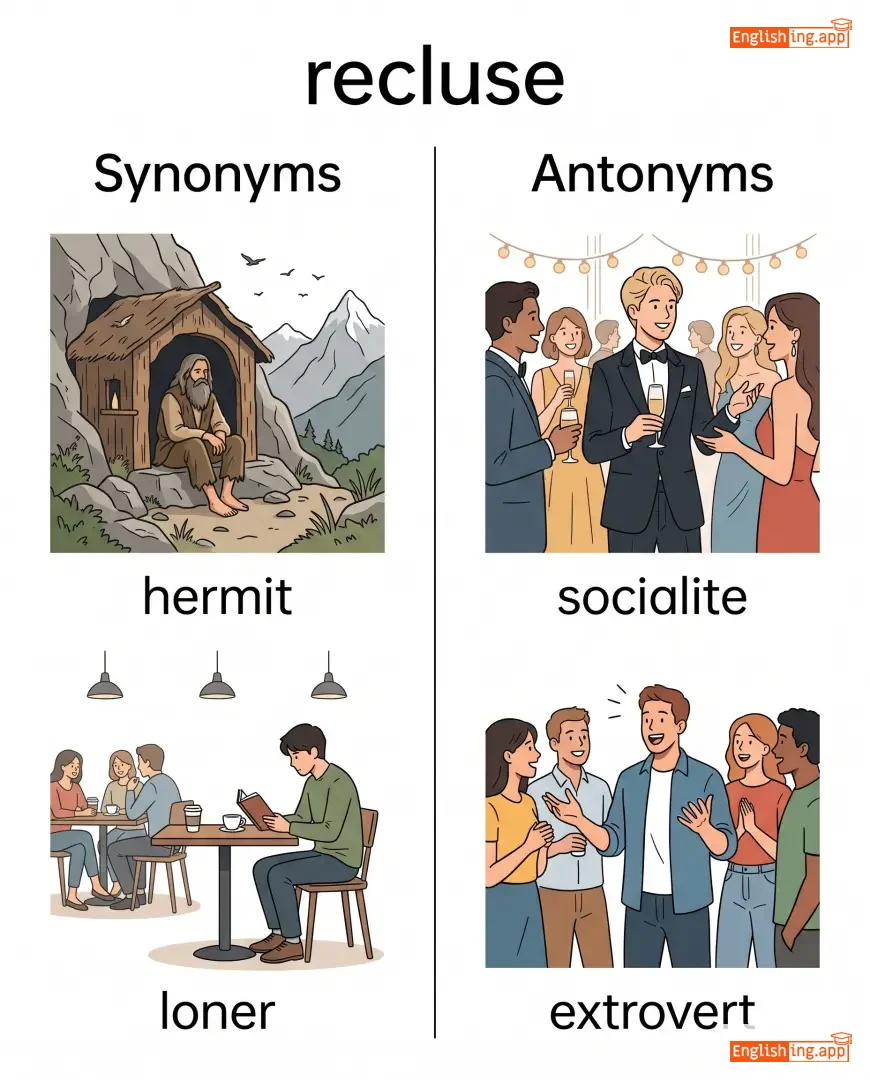
hermit, loner, solitary, ascetic, introvert
••••••
|
socialite, extrovert, companion
••••••
|
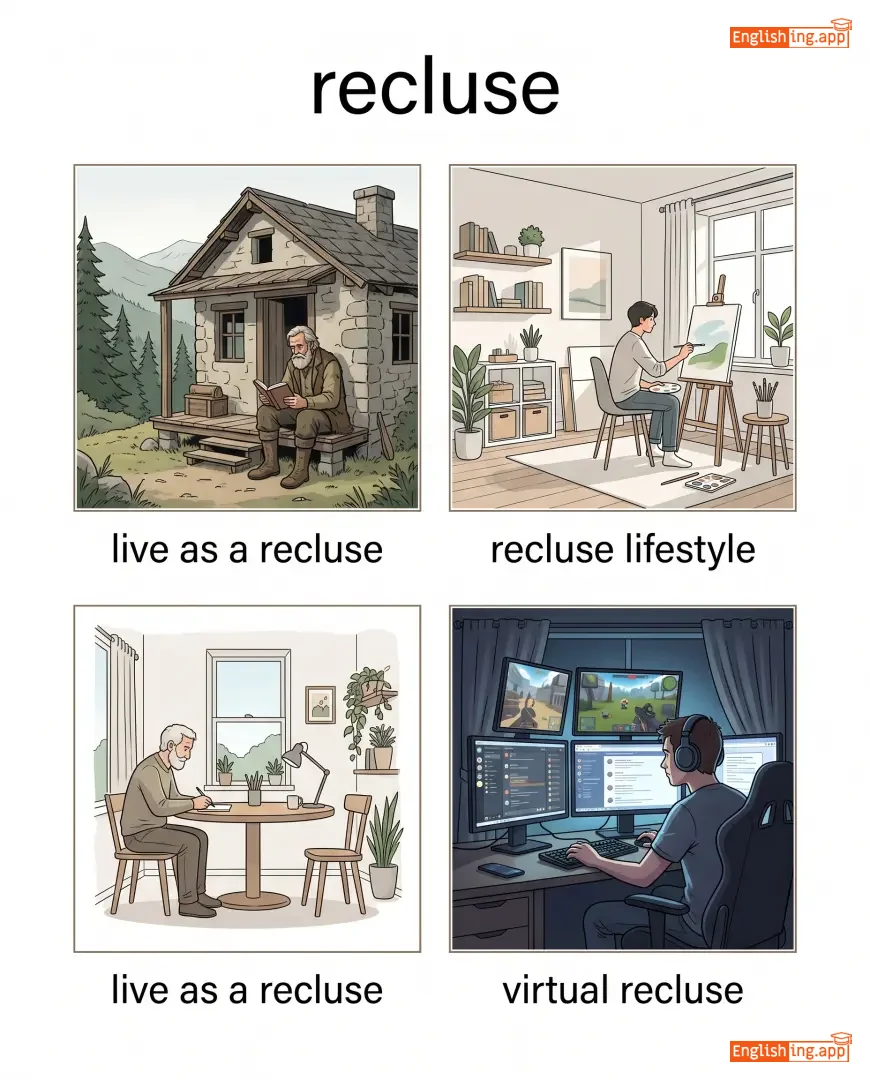
live as a recluse, recluse lifestyle, virtual recluse
••••••
|
Recluse = 隠者、一人で生活している人。
••••••
|
|
#7367
🛋️
|
/rɪˈklaɪn/
verb
(rikurain)
••••••
|
- •••••• |
リクライニングする
rikurainingu suru
••••••
|
reclined
rikurinda
••••••
|
reclined
rikurinda
••••••
|
reclines
rikurainzu
••••••
|
reclining
rikurainingu
••••••
|
To lean or lie back in a relaxed position.
••••••
|
She reclined on the sofa with a book.
彼女はソファで本を持ってリクライニングしていた。
••••••
|
彼女はソファで本を持ってリクライニングしていた。
Kanojo wa sofa de hon o motte rikurainingu shite ita.
••••••
|
recline in comfort
快適にリクライニング
••••••
|
To rest or lie back in a relaxed and comfortable way.
••••••
|
快適にリクライニング
kaiteki ni rikurainingu
••••••
|
lie back, lean, lounge, relax
••••••
|
sit upright, stand, rise
••••••
|
recline seat, recline on, reclining chair, recline comfortably
••••••
|
Recline はリラックスして倒れる
••••••
|
|
#7368
♻️
|
/rɪˈkleɪm/
verb
••••••
|
- •••••• | - •••••• |
reclaimed
••••••
|
reclaimed
••••••
|
reclaims
••••••
|
reclaiming
••••••
|
To take back or recover something; to restore to a usable state.
••••••
|
The farmer worked to reclaim the barren land. |
- •••••• |
reclaim one's time |
To take back control over how one spends their time.
••••••
|
- •••••• |
recover, regain, retrieve, restore, rescue
••••••
|
lose, abandon, surrender
••••••
|
reclaim land, reclaim rights, reclaim money, reclaim time
••••••
|
No •••••• |
|
#7369
🤔
|
/ˈrɛkən/
verb
(レコン)
••••••
|
- •••••• |
推測する
suikoku suru
••••••
|
reckoned
レコンド
••••••
|
reckoned
レコンド
••••••
|
reckons
レコンス
••••••
|
reckoning
レケニング
••••••
|
To think, believe, or expect something; to calculate or estimate.
••••••
|
I reckon it will rain later today.
今日は後で雨が降るだろうと思います。
••••••
|
今日は後で雨が降るだろうと思います。
Kyou wa ato de ame ga furu darou to omoimasu.
••••••
|
reckon with
レコンウィズ
••••••
|
To deal with or consider seriously.
••••••
|
真剣に考える
shinken ni kangaeru
••••••
|
think, believe, consider, calculate, suppose
••••••
|
ignore, disregard, neglect
••••••
|
reckon that, reckon with, I reckon, reckon up
••••••
|
Reckonは予測を意味する。計算や見積もりのように。
••••••
|
|
#7370
🚗
|
/ˈrɛkləs/
adjective
(レックレス)
••••••
|
- •••••• |
無謀な
mubou na
••••••
|
- •••••• | - •••••• | - •••••• | - •••••• |
Acting without thinking or caring about the consequences.
••••••
|
His reckless driving caused a serious accident. |
彼の無謀な運転が重大な事故を引き起こした。
Kare no mubou na unten ga juudaina jiko o hikiokoshita.
••••••
|
reckless abandon |
To act carelessly or without concern for the outcome.
••••••
|
無謀な放棄
mubou na houki
••••••
|
careless, rash, irresponsible, thoughtless, impulsive
••••••
|
cautious, careful, prudent
••••••
|
reckless behavior, reckless driving, act recklessly, reckless abandon
••••••
|
Recklessは ‘re’ + ‘class’ – 成績が無謀に悪化するような行動をすること。
••••••
|
|
#7371
⚠️
|
/rɛk/
verb (archaic/rare)
(rek)
••••••
|
- •••••• |
気にする
ki ni suru
••••••
|
recked
rekt
••••••
|
recked
rekt
••••••
|
recks
reks
••••••
|
recking
recking
••••••
|
To care about or be concerned with (something); to have regard for.
••••••
|
He does not reck the dangers of his actions.
彼は自分の行動の危険を気にしない。
••••••
|
彼は自分の行動の危険を気にしない。
Kare wa jibun no kōdō no kiken o ki ni shinai.
••••••
|
reck not
reckしない
••••••
|
To be unconcerned or careless about something.
••••••
|
気にしない
ki ni shinai
••••••
|
care, heed, regard, mind
••••••
|
ignore, neglect
••••••
|
reck the consequences, reck the danger, reck the cost
••••••
|
Reckは '気にする' を思い出させます – '気にしない'、それが意味です。
••••••
|
|
#7372
🗣️
|
/rɪˈsaɪt/
verb
(リサイト)
••••••
|
- •••••• |
暗唱する
anshō suru
••••••
|
recited
リサイトッド
••••••
|
recited
リサイトッド
••••••
|
recites
リサイトス
••••••
|
reciting
リサイトイング
••••••
|
To say aloud something learned, especially poetry or text, from memory.
••••••
|
The child recited a poem in front of the class.
ザ チャイルド リサイトッド ア ポエム イン フロント オブ ザ クラス。
••••••
|
その子はクラスの前で詩を暗唱しました。
Sono ko wa kurasu no mae de shi o anshō shimashita.
••••••
|
recite by heart
リサイト バイ ハート
••••••
|
To say something from memory without reading.
••••••
|
暗唱する
anshō suru
••••••
|
repeat, recount, declaim, deliver, narrate
••••••
|
forget, silence
••••••
|
recite a poem, recite by heart, recite a prayer, recite lines
••••••
|
Recite は 'Re + site' – 覚えた詩を再びその場所で言うこと。
••••••
|
|
#7373
📖
|
/ˌrɛsɪˈteɪʃən/
noun
(レサイテーション)
••••••
|
- •••••• |
朗読
roudoku
••••••
|
- •••••• | - •••••• | - •••••• | - •••••• |
The act of reading or repeating something aloud, especially poetry or passages.
••••••
|
The student won the prize for her poetry recitation.
その学生は詩の朗読で賞を受賞しました。
••••••
|
その学生は詩の朗読で賞を受賞しました。
Sono gakusei wa shi no roudoku de shou o jushou shimashita.
••••••
|
- •••••• | - •••••• | - •••••• |
reading, declamation, recital, narration, delivery
••••••
|
silence, muteness
••••••
|
poetry recitation, recitation contest, recitation competition, recitation class
••••••
|
Recitationは'Repeat + Station'のように聞こえます—駅で皆で詩を朗読しています。
••••••
|
|
#7374
🎶
|
/rɪˈsaɪtl/
noun
(リサイタル)
••••••
|
- •••••• |
リサイタル
risaitaru
••••••
|
- •••••• | - •••••• | - •••••• | - •••••• |
A performance of music, dance, or poetry, usually by a soloist.
••••••
|
She gave a piano recital at the concert hall. |
彼女はコンサートホールでピアノのリサイタルを行いました。
Kanojo wa konsāto hōru de piano no risaitaru o okonai mashita.
••••••
|
- •••••• | - •••••• | - •••••• |
performance, concert, show, presentation, exhibition
••••••
|
silence, inactivity
••••••
|
piano recital, dance recital, poetry recital, music recital
••••••
|
リサイタルは 'リズムをサイタル' – 一人で行う音楽の演奏です。
••••••
|
|
#7375
🔄
|
/ˌrɛsɪˈprɒsɪti/
noun
(レシプロシティ)
••••••
|
|
相互利益
sōgo rieki
••••••
|
- •••••• | - •••••• | - •••••• | - •••••• |
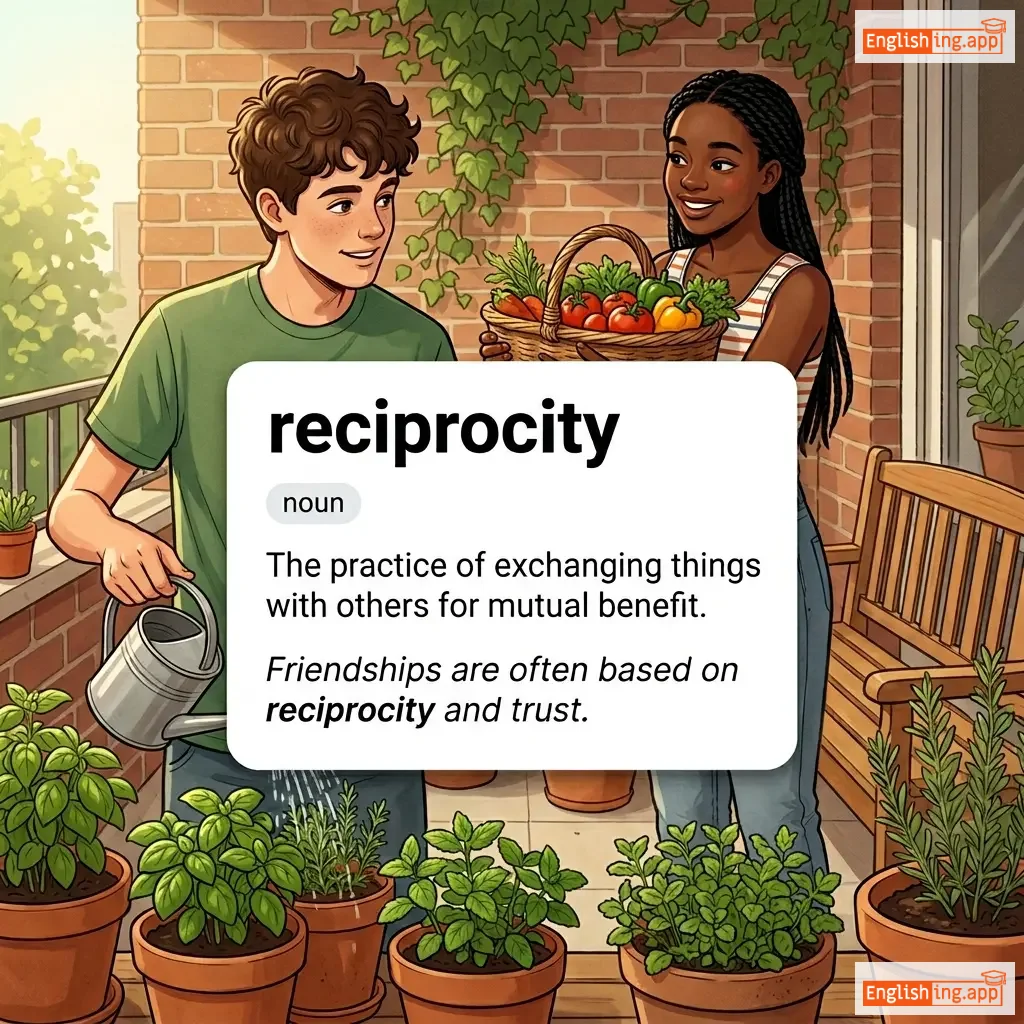
The practice of exchanging things with others for mutual benefit.
••••••
|
Friendships are often based on reciprocity and trust. |
友情はしばしば相互利益と信頼に基づいています。
Yūjō wa shibashiba sōgo rieki to shinrai ni motozuiteimasu.
••••••
|
law of reciprocity |
The principle that positive actions will be returned with positive responses.
••••••
|
相互利益の法則
Sōgo rieki no hōsoku
••••••
|
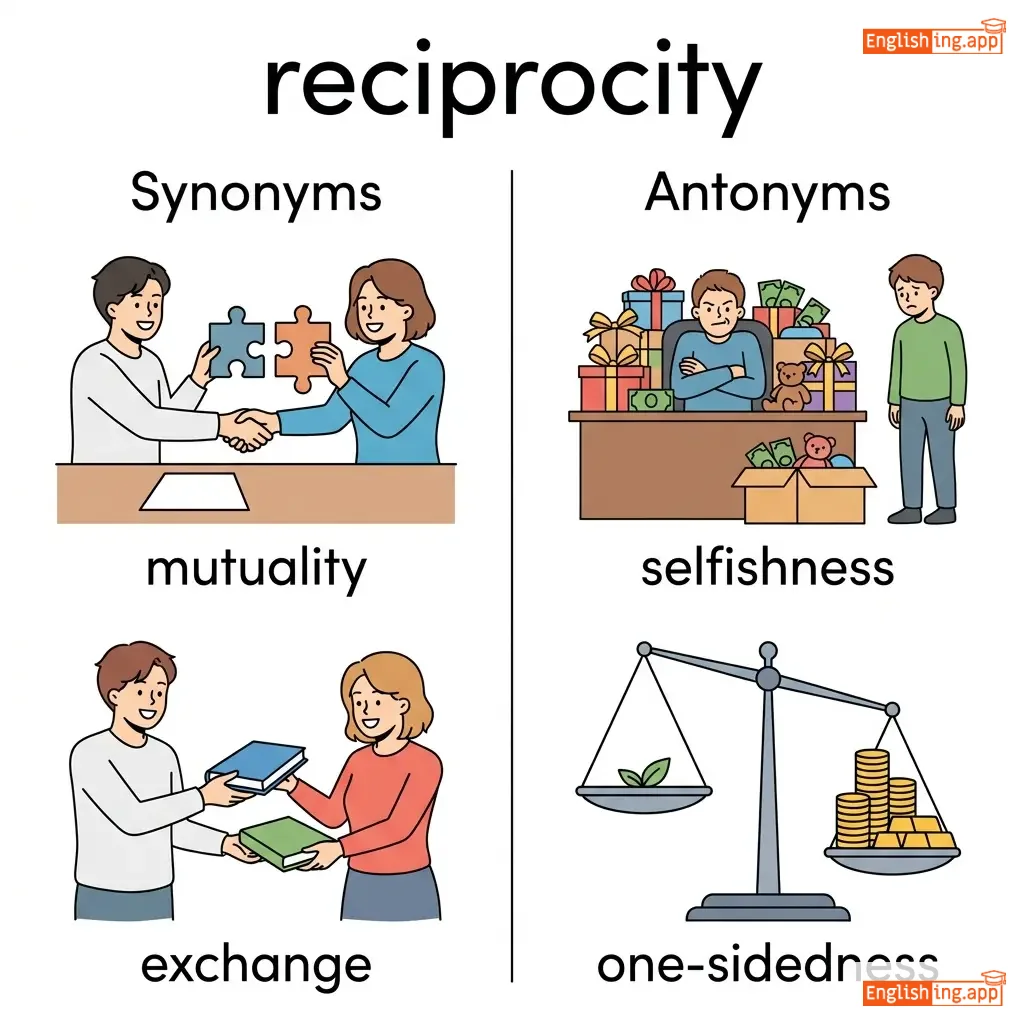
mutuality, exchange, cooperation, give-and-take, interchange
••••••
|
selfishness, one-sidedness, imbalance
••••••
|
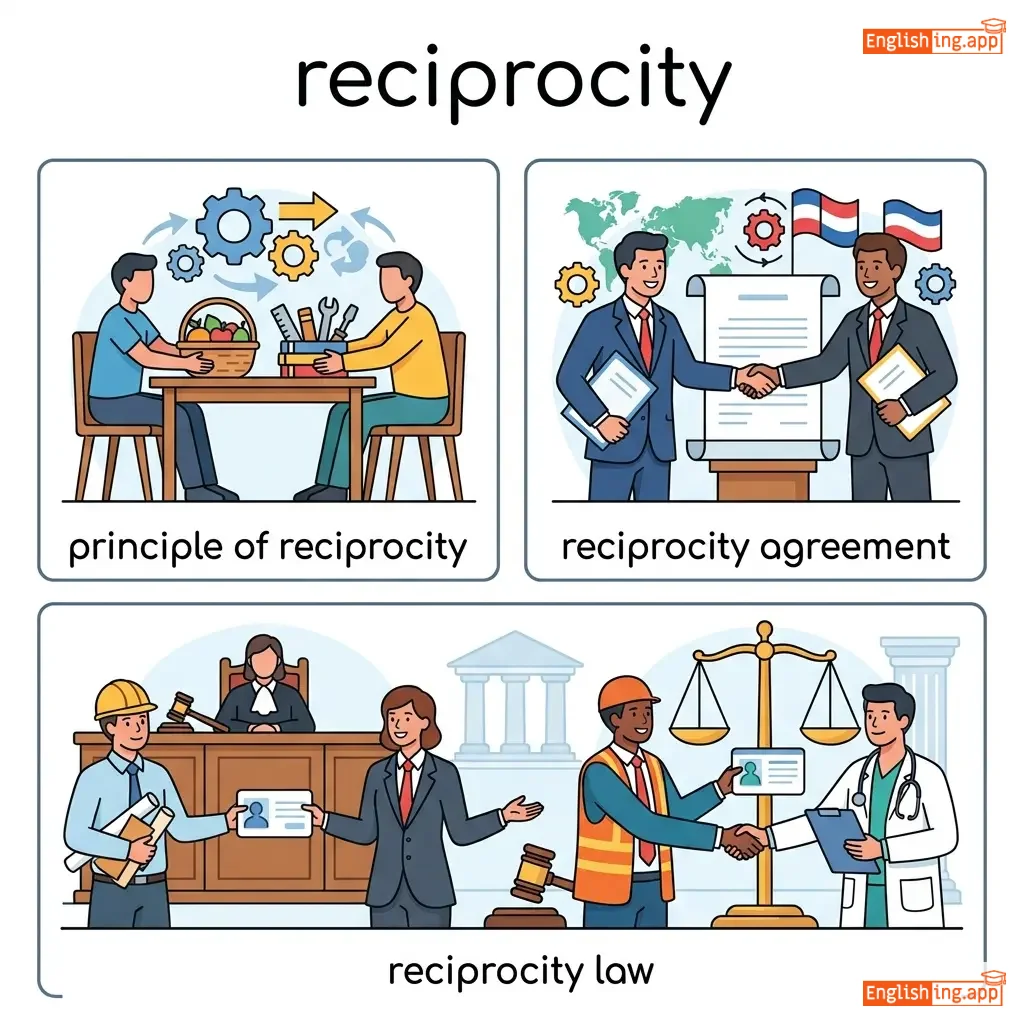
principle of reciprocity, reciprocity agreement, reciprocity law, social reciprocity
••••••
|
Reciprocity とは 'Respect + city' です。都市で相互利益は不可欠です。
••••••
|
|
#7376
🤗
|
/rɪˈsɪprəˌkeɪt/
verb
(レシプロケイト)
••••••
|
- •••••• |
応答する
oudou suru
••••••
|
reciprocated
レシプロケイテッド
••••••
|
reciprocated
レシプロケイテッド
••••••
|
reciprocates
レシプロケイツ
••••••
|
reciprocating
レシプロケイティング
••••••
|
To respond to an action or gesture by making a corresponding one.
••••••
|
She smiled at him, and he reciprocated with a warm hug.
彼女は彼に微笑み、彼は温かい抱擁で応じた。
••••••
|
彼女は彼に微笑み、彼は温かい抱擁で応じた。
Kanojo wa kare ni hohoemi, kare wa atatakai houyou de oujita.
••••••
|
reciprocate feelings
感情を返す
••••••
|
To return the same feelings that someone shows you.
••••••
|
感情を返す
Kanjou wo kaesu
••••••
|
return, respond, repay, exchange, match
••••••
|
ignore, withhold
••••••
|
reciprocate feelings, reciprocate kindness, reciprocate gesture, reciprocate love
••••••
|
Reciprocate = Same back → 微笑みや抱擁で同じことを返す。
••••••
|
|
#7377
🔁
|
/rɪˈsɪprəkəl/
adjective
(レシプロカル)
••••••
|
- •••••• |
相互の
sōgo no
••••••
|
- •••••• | - •••••• | - •••••• | - •••••• |
Given, felt, or done in return; mutual.
••••••
|
Their relationship is based on reciprocal respect and trust. |
彼らの関係は相互の尊敬と信頼に基づいています。
Karera no kankei wa sōgo no sonkei to shinrai ni motozuiteimasu.
••••••
|
reciprocal agreement |
An agreement where both parties give and receive equally.
••••••
|
相互の契約
sōgo no keiyaku
••••••
|
mutual, shared, corresponding, complementary
••••••
|
one-sided, unilateral
••••••
|
reciprocal relationship, reciprocal respect, reciprocal arrangement, reciprocal obligations
••••••
|
Reciprocal = Respect 相互 → お互いに与え、受け取る。
••••••
|
|
#7378
🎁
|
/rɪˈsɪpiənt/
noun
(リシピエント)
••••••
|
- •••••• |
受取人
uketorinin
••••••
|
- •••••• | - •••••• | - •••••• | - •••••• |
A person who receives something, such as an award, gift, or message.
••••••
|
She was the recipient of the award for best performance. |
彼女は最優秀なパフォーマンスのための賞の受取人でした。
Kanojo wa saiyuushuu na pafomansu no tame no shou no uketorinin deshita.
••••••
|
- •••••• | - •••••• | - •••••• |
receiver, beneficiary, awardee, addressee
••••••
|
giver, donor, sender
••••••
|
award recipient, gift recipient, message recipient, email recipient
••••••
|
Recipientは「受け取る人」→ 賞や贈り物を受け取る人。
••••••
|
|
#7379
🚔
|
/rɪˈsɪdɪvɪst/
noun
(リシディビスト)
••••••
|
- •••••• |
再犯者
saihansha
••••••
|
- •••••• | - •••••• | - •••••• | - •••••• |
A person who repeatedly commits crimes, especially after having been punished.
••••••
|
The police identified him as a recidivist who had been arrested several times before. |
警察は彼を再犯者として特定し、以前に何度も逮捕されていた。
Keisatsu wa kare o saihansha toshite tokutei shi, izen ni nando mo taiho sarete ita.
••••••
|
- •••••• | - •••••• | - •••••• |
repeat offender, habitual criminal, relapser, offender
••••••
|
law-abider, rehabilitated person
••••••
|
habitual recidivist, known recidivist, recidivist criminal
••••••
|
再犯者は、繰り返し犯罪を犯す人 → repeat offender.
••••••
|
Vocabulary Quiz
Test your vocabulary by matching words with their translations or meanings.
Login to take the quiz
Comments (0)
Share your thoughts and join the discussion.
Join the discussion by logging in
Login to CommentNo comments yet
Be the first to share your thoughts!