

翻訳
過去
過去分詞
三人称単数
動名詞
意味
例文
例文の翻訳
同義語
対義語
コロケーション
ニーモニック

Swipe left or right, or use the buttons. Tap image to zoom.
例文の翻訳
単語
Lesson 382Lesson 382 - マスクトグル
|
絵文字
|
単語 | Images | 翻訳 | 過去 | 過去分詞 | 三人称単数 | 動名詞 | 意味 | 例文 | 例文の翻訳 | 表現例 | 表現例の意味 | 表現例の翻訳 | 同義語 | 対義語 | コロケーション | ニーモニック |
|---|---|---|---|---|---|---|---|---|---|---|---|---|---|---|---|---|---|
|
#11425
🥣
|
/mɪks/
verb
(mikkusu)
••••••
|
- •••••• |
混ぜる
mazeru
••••••
|
mixed
mikkusudo
••••••
|
mixed
mikkusudo
••••••
|
mixes
mikkusesu
••••••
|
mixing
mikkusingu
••••••
|
To combine different substances or elements together.
••••••
|
She likes to mix different colors to create new shades.
彼女は新しい色合いを作るために、さまざまな色を混ぜるのが好きです。
••••••
|
彼女は新しい色合いを作るために、さまざまな色を混ぜるのが好きです。
Kanojo wa atarashī iroai o tsukuru tame ni, samazama na iro o mazeru no ga suki desu.
••••••
|
mix up
混ぜる
••••••
|
to confuse or mistake one thing for another
••••••
|
混乱させる
konran saseru
••••••
|
blend, combine, merge, stir, mingle
••••••
|
separate, divide, isolate
••••••
|
mix ingredients, mix drinks, mix together, mix well
••••••
|
Mix = 混ぜる、スムージーを作る時に使う。
••••••
|
|
#11426
🏃
|
/ˈmoʊʃən/
noun
(モーション)
••••••
|
- •••••• |
動き
ugoki
••••••
|
- •••••• | - •••••• | - •••••• | - •••••• |
the act or process of moving; a change of place or position
••••••
|
The motion of the car made her sleepy.
車の動きが彼女を眠くさせた。
••••••
|
車の動きが彼女を眠くさせた。
Kuruma no ugoki ga kanojo wo nemuku saseta.
••••••
|
set in motion
動かす
••••••
|
to start something happening
••••••
|
動かす
ugokasu
••••••
|
movement, gesture, action, shift, change
••••••
|
stillness, rest, immobility
••••••
|
in motion, slow motion, motion picture, set in motion
••••••
|
Motionは動き、‘電車が動いている’と覚えておこう。
••••••
|
|
#11427
👩👧
|
/ˈmʌðər/
noun
(マザー)
••••••
|
- •••••• |
母
haha
••••••
|
- •••••• | - •••••• | - •••••• | - •••••• |
a female parent
••••••
|
Her mother is a kind and caring person.
彼女の母親は親切で思いやりのある人です。
••••••
|
彼女の母親は親切で思いやりのある人です。
Kanojo no hahaoya wa shinsetsu de omoiyari no aru hito desu.
••••••
|
mother tongue
母国語
••••••
|
the first language a person learns at home in childhood
••••••
|
母国語
bokokugo
••••••
|
mom, mama, parent, mum, ma
••••••
|
father, orphan
••••••
|
mother tongue, mother nature, single mother, mother love
••••••
|
Motherは母 ❤️— 母を決して忘れない
••••••
|
|
#11428
🔎
|
/ˈmoʊstli/
adverb
(モーストリー)
••••••
|
- •••••• |
主に
omoni
••••••
|
- •••••• | - •••••• | - •••••• | - •••••• |
for the most part; mainly
••••••
|
She is mostly interested in art and literature. |
彼女は主に芸術と文学に興味があります。
Kanojo wa omoni geijutsu to bungaku ni kyōmi ga arimasu.
••••••
|
- •••••• | - •••••• | - •••••• |
mainly, generally, primarily, largely, chiefly
••••••
|
rarely, scarcely, occasionally
••••••
|
mostly true, mostly peaceful, mostly about, mostly because
••••••
|
Mostlyは主に意味します—ほとんどの人がするように、主にです。
••••••
|
|
#11429
📊
|
/moʊst/
adjective, adverb, pronoun
(モスト)
••••••
|
- •••••• |
ほとんど
hotondo
••••••
|
- •••••• | - •••••• | - •••••• | - •••••• |
the greatest in amount, degree, or number
••••••
|
Most people like to relax on weekends. |
ほとんどの人々は週末にリラックスすることを好む。
Hotondo no hitobito wa shūmatsu ni rirakkusu suru koto o konomu.
••••••
|
for the most part |
generally; in most cases
••••••
|
ほとんどの場合
hotondo no baai
••••••
|
majority, maximum, greatest, bulk, largest
••••••
|
least, fewest, minor
••••••
|
most people, most important, most of the time, most cases
••••••
|
Most = ほとんどの人々
••••••
|
|
#11430
🏠
|
/ˈmɔːrɡɪdʒ/
noun
(モーゲージ)
••••••
|
- •••••• |
住宅ローン
jutaku rōn
••••••
|
- •••••• | - •••••• | - •••••• | - •••••• |
a legal agreement where a person borrows money to buy property and pays it back over time
••••••
|
They applied for a mortgage to buy their new house.
彼らは新しい家を買うためにモーゲージの申し込みをしました。
••••••
|
彼らは新しい家を買うために住宅ローンの申し込みをしました。
Karera wa atarashī ie o kau tame ni jutaku rōn no mōshikomi o shimashita.
••••••
|
mortgage loan
モーゲージローン
••••••
|
a loan taken against property
••••••
|
住宅ローン
jutaku rōn
••••••
|
loan, home loan, property loan, debt, finance
••••••
|
repayment, ownership, clearance
••••••
|
mortgage loan, mortgage interest, mortgage payment, pay off mortgage
••••••
|
モーゲージは 'モー' + 'ゲージ'、家を 'ゲージ' にしたままローンを借りる感じ
••••••
|
|
#11431
🌅
|
/ˈmɔːrnɪŋ/
noun
(ハピネス)
••••••
|
- •••••• |
幸福
kōfuku
••••••
|
- •••••• | - •••••• | - •••••• | - •••••• |
the early part of the day, typically from sunrise until noon
••••••
|
I like to go for a run in the morning. |
彼女は賞を受け取ったとき、自分の幸福を隠すことができませんでした。
Kanojo wa shō o uketotta toki, jibun no kōfuku o kakusu koto ga dekimasen deshita.
••••••
|
Good morning |
a greeting used in the early part of the day
••••••
|
幸福の追求
kōfuku no tsuikyū
••••••
|
dawn, sunrise, forenoon, daybreak, early hours
••••••
|
evening, night, dusk
••••••
|
early morning, good morning, morning coffee, morning routine
••••••
|
幸福は '幸' から—手に入れるために求め続けよう。
••••••
|
|
#11432
🌕
|
/muːn/
noun
(ムーン)
••••••
|
- •••••• |
月
tsuki
••••••
|
- •••••• | - •••••• | - •••••• | - •••••• |
the natural satellite of the earth, visible mainly at night by reflected light from the sun
••••••
|
The moon shines brightly in the night sky.
月は夜空で明るく輝いています。
••••••
|
月は夜空で明るく輝いています。
Tsuki wa yozora de akaruku kagayaiteimasu.
••••••
|
once in a blue moon
青い月に一度
••••••
|
something that happens very rarely
••••••
|
青い月に一度
aoi tsuki ni ichido
••••••
|
satellite, orb, crescent, full moon
••••••
|
sun, darkness
••••••
|
full moon, new moon, moonlight, moon surface
••••••
|
月 = Moon - 夜空で輝く月、まるで鏡のように
••••••
|
|
#11433
😊
|
/muːd/
noun
(ムード)
••••••
|
- •••••• |
ムード
mood
••••••
|
- •••••• | - •••••• | - •••••• | - •••••• |
a temporary state of mind or feeling
••••••
|
He was in a good mood after getting the job.
彼は仕事を得た後、良いムードでした。
••••••
|
彼は仕事を得た後、良いムードでした。
Kare wa shigoto o eta ato, yoi mood deshita.
••••••
|
in the mood
ムードにいる
••••••
|
ready or willing to do something
••••••
|
ムードにいる
mood ni iru
••••••
|
feeling, temperament, emotion, attitude, spirit
••••••
|
apathy, indifference
••••••
|
good mood, bad mood, mood swing, change mood
••••••
|
ムード、時々嬉しい時や怒っている時!
••••••
|
|
#11434
🗓️
|
/mʌnθ/
noun
(月)
••••••
|
- •••••• |
月
tsuki
••••••
|
- •••••• | - •••••• | - •••••• | - •••••• |
a period of about four weeks or one-twelfth of a year
••••••
|
She visits her grandparents once a month. |
彼女は毎月一度、祖父母を訪れます。
Kanojo wa maitsuki ichido, sofubo o otozuremasu.
••••••
|
flavor of the month |
something that is temporarily popular
••••••
|
今月のフレーバー
kongetsu no fureebaa
••••••
|
thirty days, period, lunar month
••••••
|
year, day
••••••
|
next month, this month, per month, monthly payment
••••••
|
月は月 - 毎月、同じ月
••••••
|
|
#11435
🖥️
|
/ˈmɒnɪtər/
noun, verb
(モニター)
••••••
|
- •••••• |
モニター、監視する
monitā, kanshi suru
••••••
|
monitored
モニタード
••••••
|
monitored
モニタード
••••••
|
monitors
モニターズ
••••••
|
monitoring
モニタリング
••••••
|
to observe and check the progress or quality of something; also a device that displays information
••••••
|
The teacher monitors the students during the exam.
先生は試験中に生徒を監視します。
••••••
|
先生は試験中に生徒を監視します。
Sensei wa shiken-chū ni seito o kanshi shimasu.
••••••
|
keep a close monitor
密接な監視を維持する
••••••
|
to watch carefully
••••••
|
注意深く監視する
chūi-bukaku kanshi suru
••••••
|
observe, watch, track, oversee, supervise
••••••
|
ignore, neglect
••••••
|
monitor progress, monitor performance, monitor screen, monitor activity
••••••
|
モニターは監視することなので、注意深く見守る
••••••
|
|
#11436
👩👧
|
/mɑːm/
noun
(ママ)
••••••
|
- •••••• |
ママ
mama
••••••
|
- •••••• | - •••••• | - •••••• | - •••••• |
an informal word for mother
••••••
|
My mom makes the best homemade food. |
私のママは一番美味しい手作り料理を作る。
Watashi no mama wa ichiban oishii tezukuri ryouri wo tsukuru.
••••••
|
mom and pop |
a small family-owned business
••••••
|
ママとパパ
mama to papa
••••••
|
mother, mama, mum, mommy, ma
••••••
|
father, dad
••••••
|
mom said, new mom, working mom, mom and dad
••••••
|
ママ = いつも優しい、心温まる存在。
••••••
|
|
#11437
🏛️
|
/ˈmɒdəl/
noun
(モデル)
••••••
|
|
モデル
moderu
••••••
|
- •••••• | - •••••• | - •••••• | - •••••• |
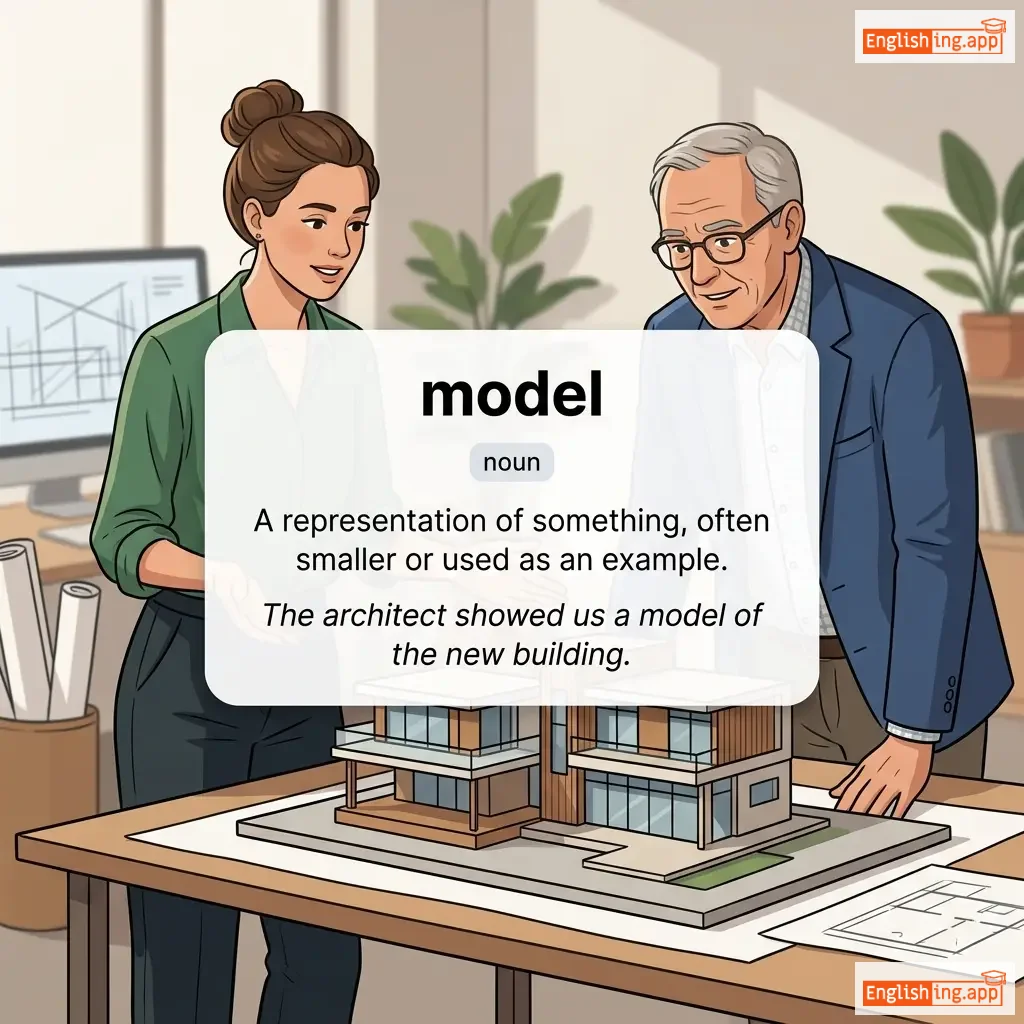
A representation of something, often smaller or used as an example.
••••••
|
The architect showed us a model of the new building.
建築家は私たちに新しい建物のモデルを見せてくれました。
••••••
|
建築家は私たちに新しい建物のモデルを見せてくれました。
Kenchikuka wa watashitachi ni atarashii tatemono no moderu wo misete kuremashita.
••••••
|
role model
ロールモデル
••••••
|
a person looked up to as an example
••••••
|
ロールモデル
ro-ru moderu
••••••
|
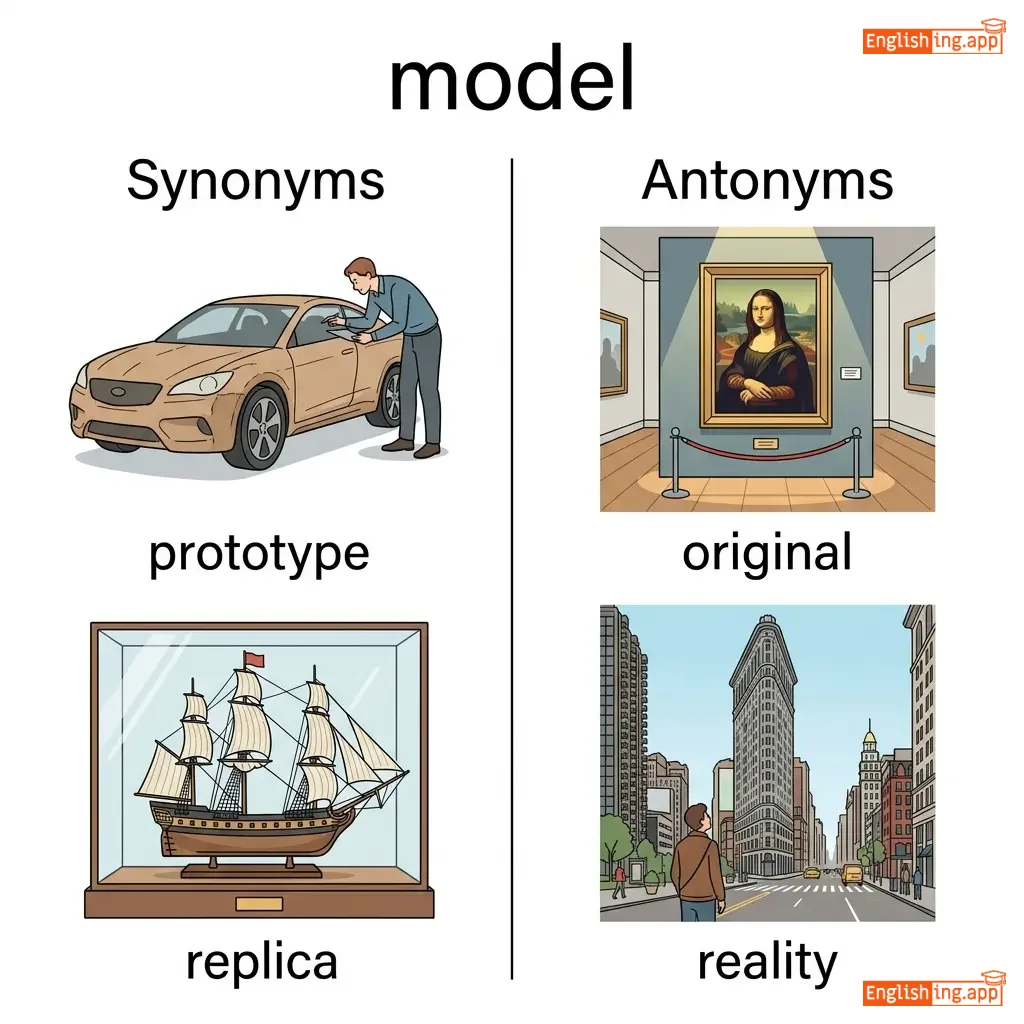
prototype, replica, example, pattern, figure
••••••
|
original, reality
••••••
|
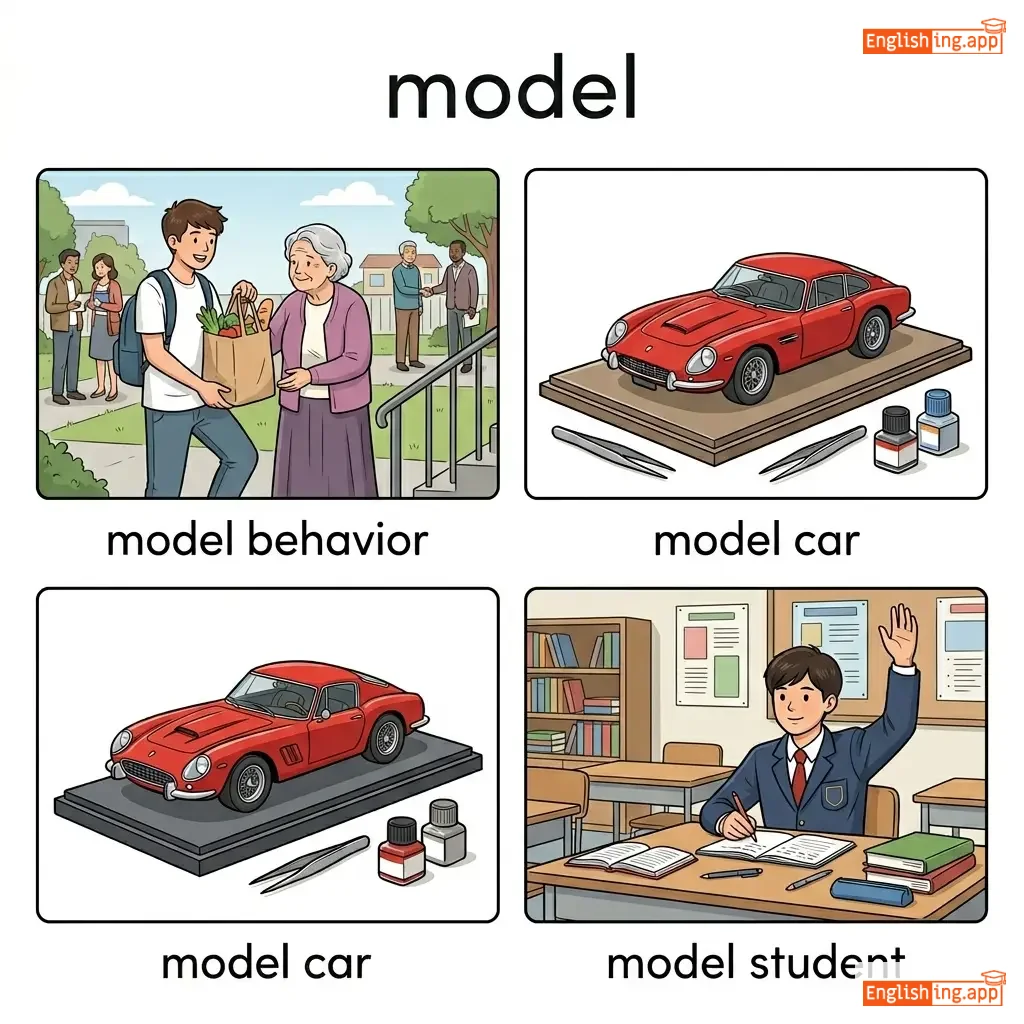
model behavior, model car, model student, model agency
••••••
|
モデルは、何かの縮小版または手本として理解することができます。
••••••
|
|
#11438
👍
|
/mˈhm/
interjection
(ム-フム)
••••••
|
- •••••• |
はい
hai
••••••
|
- •••••• | - •••••• | - •••••• | - •••••• |
A sound used to express agreement or acknowledgment in conversation.
••••••
|
‘Do you understand?’ ‘Mm-hmm.’
‘分かりますか?’ ‘ム-フム.’
••••••
|
‘分かりますか?’ ‘はい.’
'Wakarimasu ka?' 'Hai.'
••••••
|
- •••••• | - •••••• | - •••••• |
yes, yeah, uh-huh, okay
••••••
|
no, nah
••••••
|
say mm-hmm, nod mm-hmm, mm-hmm response
••••••
|
ム-フムは頷きながら‘はい’と言う簡単な音です。
••••••
|
|
#11439
🧪
|
/ˈmɪkstʃər/
noun
(mikusu-tyuā)
••••••
|
- •••••• |
混合物
kongō-mono
••••••
|
- •••••• | - •••••• | - •••••• | - •••••• |
A combination of different things or substances blended together.
••••••
|
The cake recipe requires a mixture of flour and sugar.
ケーキのレシピには小麦粉と砂糖の混合物が必要です。
••••••
|
ケーキのレシピには小麦粉と砂糖の混合物が必要です。
Kēki no reshipi ni wa komugiko to satō no kongō-mono ga hitsuyōdesu.
••••••
|
- •••••• | - •••••• | - •••••• |
blend, combination, compound, concoction, fusion
••••••
|
separation, division, purity
••••••
|
chemical mixture, strange mixture, mixture of spices, mixture of ideas
••••••
|
Mixture: mix + texture, 異なるテクスチャーが混合物を作り出します。
••••••
|
|
#11440
🪶
|
/ˈmɪərli/
adverb
(mīrī)
••••••
|
- •••••• |
ただ
tada
••••••
|
- •••••• | - •••••• | - •••••• | - •••••• |
Only; nothing more than.
••••••
|
She was merely trying to help. |
彼女はただ助けようとしていました。
Kanojo wa tada tasukeyou to shite imashita.
••••••
|
merely a matter of time |
Something certain to happen, just waiting for the right time
••••••
|
ただの時間の問題
tada no jikan no mondai
••••••
|
only, simply, just, purely, solely
••••••
|
more, beyond, extra
••••••
|
merely coincidental, merely symbolic, merely academic, merely mentioned
••••••
|
MERELYはただ意味します—覚えておいて: 'ただ助ける、何もそれ以上はない'
••••••
|
|
#11441
❌
|
/mɪˈsteɪk/
noun
(ミステイク)
••••••
|
- •••••• |
間違い
machigai
••••••
|
- •••••• | - •••••• | - •••••• | - •••••• |
An action or decision that is wrong or misguided.
••••••
|
She realized her mistake after submitting the wrong file. |
彼女は間違ったファイルを提出した後、自分の間違いに気づきました。
Kanojo wa machigatta fairu o teishutsu shita ato, jibun no machigai ni kizukimashita.
••••••
|
make a mistake |
to do something incorrectly
••••••
|
間違いを犯す
machigai o okasu
••••••
|
error, blunder, slip, misjudgment, fault
••••••
|
accuracy, correctness, truth
••••••
|
common mistake, big mistake, silly mistake, honest mistake
••••••
|
間違いは間違ったことを意味する日本語です。
••••••
|
|
#11442
🚀
|
/ˈmɪʃən/
noun
(ミッション)
••••••
|
- •••••• |
ミッション / 任務
misshon / ninmu
••••••
|
- •••••• | - •••••• | - •••••• | - •••••• |
an important assignment or task, often with a specific purpose
••••••
|
The astronauts were on a mission to explore Mars.
宇宙飛行士たちは火星を探査するためのミッションに出発しました。
••••••
|
宇宙飛行士たちは火星を探査するためのミッションに出発しました。
Uchuu hikoushi tachi wa kasei wo tansa suru tame no misshon ni shuppatsu shimashita.
••••••
|
mission accomplished
ミッション完了
••••••
|
a phrase used when a task has been successfully completed
••••••
|
ミッション完了
misshon kanryou
••••••
|
task, assignment, duty, operation, purpose
••••••
|
idleness, inaction
••••••
|
space mission, secret mission, diplomatic mission, mission statement
••••••
|
ミッションは任務です—Mars でのミッションは責任の象徴です。
••••••
|
|
#11443
😢
|
/mɪs/
verb, noun
(ミス)
••••••
|
- •••••• |
失う / 恋しい
ushinau / koishii
••••••
|
missed
ミスド
••••••
|
missed
ミスド
••••••
|
misses
ミセス
••••••
|
missing
ミッシング
••••••
|
to fail to hit, reach, or meet; to feel the absence of someone or something
••••••
|
I really miss my family when I travel abroad.
海外旅行の際、家族を本当に恋しく感じます。
••••••
|
海外旅行の際、家族を本当に恋しく感じます。
Kaigai ryokou no sai, kazoku wo hontou ni koishiku kanjimasu.
••••••
|
miss the boat
チャンスを逃す
••••••
|
to miss an opportunity
••••••
|
チャンスを逃す
chansu o nogasu
••••••
|
long for, yearn, fail, omit
••••••
|
catch, attend, achieve
••••••
|
miss a chance, miss the bus, miss someone, miss an opportunity
••••••
|
失うことで何かを逃す、それはチャンスを逃すようなもの
••••••
|
|
#11444
✨
|
/ˈmɪrəkəl/
noun
(ミラクル)
••••••
|
- •••••• |
奇跡
kiseki
••••••
|
- •••••• | - •••••• | - •••••• | - •••••• |
an extraordinary event that cannot be explained by natural laws
••••••
|
Surviving the accident was nothing short of a miracle.
事故から生き残るのはまさに奇跡でした。
••••••
|
事故から生き残るのはまさに奇跡でした。
Jiko kara ikinokoru no wa masani kiseki deshita.
••••••
|
miracle cure
奇跡の治療法
••••••
|
a treatment that seems to work magically
••••••
|
奇跡の治療法
kiseki no chiryōhō
••••••
|
wonder, marvel, phenomenon, blessing
••••••
|
disaster, misfortune
••••••
|
miracle cure, miracle worker, minor miracle, perform a miracle
••••••
|
奇跡は『ミラクル』から来て、奇跡のような出来事が起きることを示しています。
••••••
|
|
#11445
👔
|
/ˈmɪnɪstər/
noun
(ミニスター)
••••••
|
- •••••• |
大臣
daijin
••••••
|
- •••••• | - •••••• | - •••••• | - •••••• |
a head of a government department; a person who leads a church
••••••
|
The finance minister announced new tax policies. |
財務大臣は新しい税制政策を発表しました。
Zaimu daijin wa atarashī zei-sei seisaku o happyō shimashita.
••••••
|
prime minister |
the head of a government
••••••
|
首相
shushō
••••••
|
official, clergyman, preacher, secretary
••••••
|
layman, citizen
••••••
|
prime minister, foreign minister, finance minister, minister of health
••••••
|
Ministerは大臣—大臣はリーダー
••••••
|
|
#11446
⛏️
|
/maɪn/
noun, pronoun, verb
(main)
••••••
|
- •••••• |
鉱山 / 私の
kōzan / watashi no
••••••
|
mined
maindo
••••••
|
mined
maindo
••••••
|
mines
mainzu
••••••
|
mining
mainingu
••••••
|
a place where minerals are dug from the ground; or something belonging to me
••••••
|
The workers went deep into the mine to extract coal.
労働者たちは炭鉱に深く入って炭を採掘しました。
••••••
|
労働者たちは炭鉱に深く入って炭を採掘しました。
Rōdō-sha-tachi wa tankō ni fukaku haitte sumi o saikutsu shimashita.
••••••
|
gold mine
金鉱
••••••
|
a source of abundant wealth or information
••••••
|
金鉱
kinkō
••••••
|
pit, quarry, excavation, my own
••••••
|
surface, yours
••••••
|
coal mine, gold mine, mine shaft, mine worker
••••••
|
Mineは私の意味で、また鉱山もmineです — これは私の鉱山です!
••••••
|
|
#11447
💰
|
/ˈmɪljən/
noun
(ミリオン)
••••••
|
- •••••• |
百万
hyakuman
••••••
|
- •••••• | - •••••• | - •••••• | - •••••• |
the number equivalent to one thousand thousand (1,000,000)
••••••
|
The movie earned over a million dollars in its first week. |
その映画は最初の週に100万ドル以上を稼ぎました。
Sono eiga wa saisho no shū ni hyakuman doru ijō o kasegimashita.
••••••
|
one in a million |
something or someone very rare and special
••••••
|
百万の一
hyakuman no ichi
••••••
|
thousand thousand, 10^6, large number
••••••
|
zero, none
••••••
|
million dollars, million people, one in a million, several million
••••••
|
百万 - とても大きな数、百万の一のように珍しい!
••••••
|
|
#11448
🎖️
|
/ˈmɪlɪˌtɛri/
noun/adjective
(ミリタリー)
••••••
|
|
軍隊
guntai
••••••
|
- •••••• | - •••••• | - •••••• | - •••••• |
relating to soldiers, the armed forces, or war
••••••
|
He decided to join the military after college. |
彼は大学を卒業後、軍隊に参加することに決めた。
Kare wa daigaku o sotsugyou go, guntai ni sanka suru koto ni kimeta.
••••••
|
military precision |
doing something in a very exact and disciplined way
••••••
|
軍事的精密さ
gunjiteki seimitsusa
••••••
|
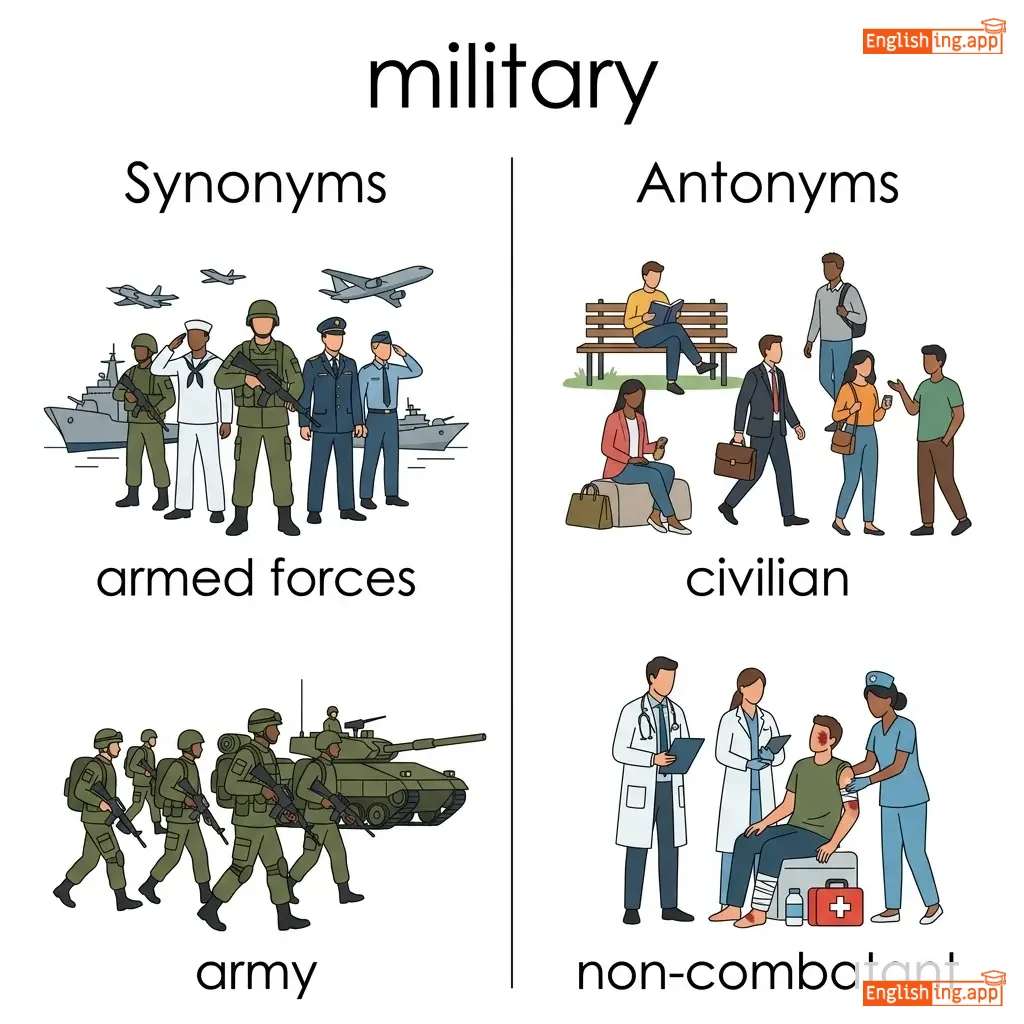
armed forces, army, defense, troops
••••••
|
civilian, non-combatant
••••••
|
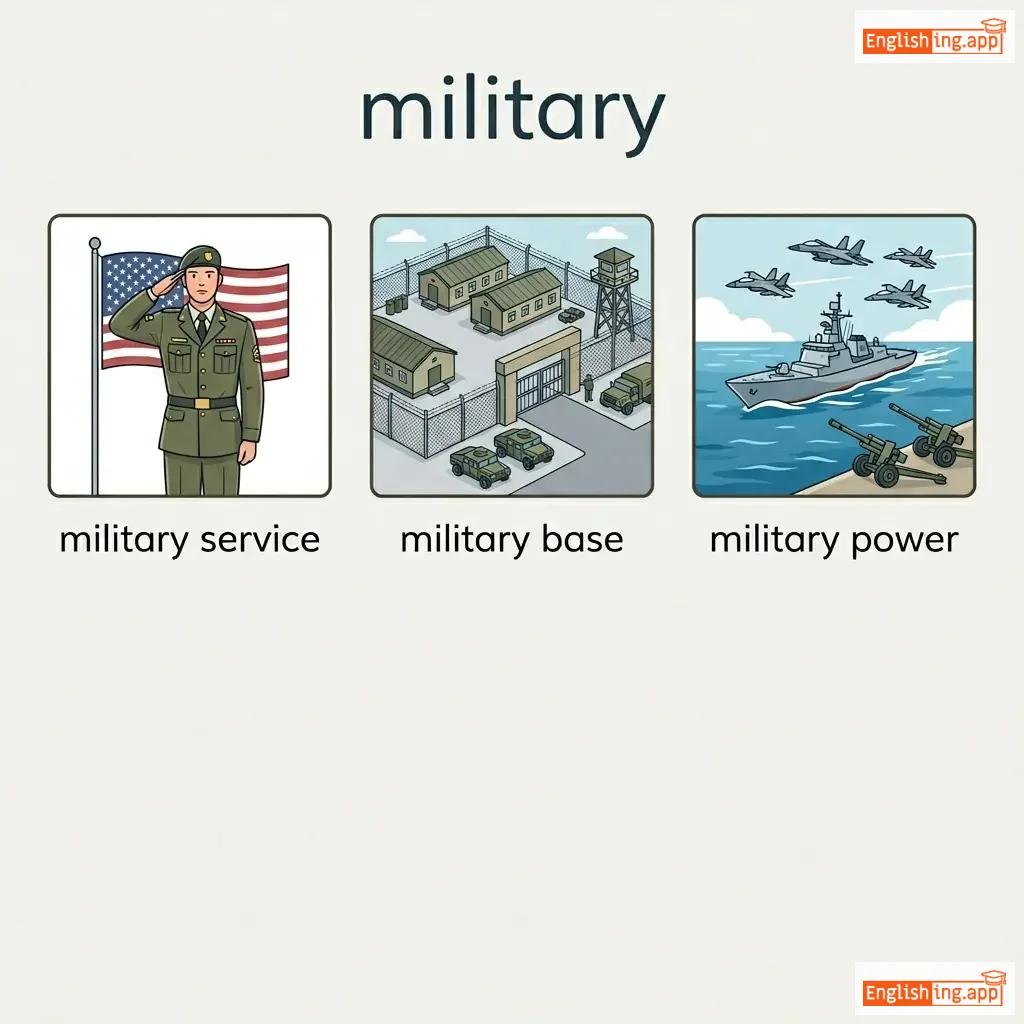
military service, military base, military power, military training
••••••
|
Military = 軍隊 🎖️ - 軍隊に参加
••••••
|
|
#11449
💪
|
/maɪt/
modal verb/noun
(maito)
••••••
|
- •••••• |
かもしれない / 力
kamoshirenai / chikara
••••••
|
- •••••• | - •••••• | - •••••• | - •••••• |
used to express possibility; power or strength
••••••
|
She might come to the party if she finishes work early. |
もし彼女が早く仕事を終わらせたら、パーティーに来るかもしれない。
Moshi kanojo ga hayaku shigoto wo owarasetara, paatii ni kuru kamoshirenai.
••••••
|
might is right |
the belief that power gives the right to rule or control
••••••
|
力が正義
chikara ga seigi
••••••
|
may, could, strength, power
••••••
|
weakness, impossibility
••••••
|
might consider, might have been, military might, full might
••••••
|
Might = 可能性と力、あなたを支配する力
••••••
|
|
#11450
⚖️
|
/ˈmɪdəl/
noun/adjective
(ミドル)
••••••
|
- •••••• |
真ん中
mannaka
••••••
|
- •••••• | - •••••• | - •••••• | - •••••• |
the central point, position, or part of something
••••••
|
The park is in the middle of the city. |
公園は街の真ん中にあります。
Kōen wa machi no mannaka ni arimasu.
••••••
|
caught in the middle |
to be involved in a conflict between two sides
••••••
|
真ん中に挟まれる
mannaka ni hasamareru
••••••
|
center, midpoint, midst, halfway
••••••
|
edge, end, side
••••••
|
middle class, middle ground, middle school, middle of the road
••••••
|
真ん中 (mannaka) = middle - 都市の真ん中にある公園を思い浮かべて 🌳
••••••
|
|
#11451
🌮
|
/ˈmɛksɪkən/
noun/adjective
(ˈhæpinəs)
••••••
|
- •••••• |
幸せ
shiawase
••••••
|
- •••••• | - •••••• | - •••••• | - •••••• |
a native or inhabitant of Mexico; relating to Mexico or its people, culture, or language
••••••
|
She enjoys Mexican food like tacos and enchiladas. |
彼女は賞を受け取ったとき、幸せを隠すことができませんでした。
Kanojo wa shō o uketotta toki, shiawase o kakusu koto ga dekimasen deshita.
••••••
|
Mexican standoff |
a situation where no party can emerge as a clear winner or make progress
••••••
|
幸せを追い求める
Shiawase o oimotomeru
••••••
|
Mexican national, Mexican citizen, Mexican person, Mexican-born
••••••
|
foreigner, non-Mexican
••••••
|
Mexican food, Mexican culture, Mexican heritage, Mexican border
••••••
|
幸せは光のように、周りを明るく照らすものです。
••••••
|
|
#11452
🧪
|
/ˈmɛθəd/
noun
(メソッド)
••••••
|
- •••••• |
方法
hōhō
••••••
|
- •••••• | - •••••• | - •••••• | - •••••• |
A particular way or process of doing something.
••••••
|
She explained the method of solving the problem.
彼女は問題を解決する方法を説明しました。
••••••
|
彼女は問題を解決する方法を説明しました。
Kanojo wa mondai o kaiketsu suru hōhō o setsumei shimashita.
••••••
|
by method
方法で
••••••
|
In an orderly or systematic way
••••••
|
秩序ある方法で
chitsujo aru hōhō de
••••••
|
procedure, technique, system, process, approach
••••••
|
chaos, disorder
••••••
|
teaching method, scientific method, effective method, method of study
••••••
|
METHODは方法です — '問題を解決する方法が必要'
••••••
|
|
#11453
📩
|
/ˈmɛsɪdʒ/
noun
(メッセージ)
••••••
|
- •••••• |
メッセージ
messeji
••••••
|
- •••••• | - •••••• | - •••••• | - •••••• |
A piece of information sent or communicated from one person to another.
••••••
|
I received a message from my friend yesterday. |
昨日、友達からメッセージを受け取りました。
Kinō, tomodachi kara mesēji o uketorimashita.
••••••
|
get the message |
To understand the meaning or implication of something
••••••
|
メッセージを理解する
messeji o rikai suru
••••••
|
note, communication, letter, text, notification
••••••
|
silence, quiet
••••••
|
send a message, receive a message, leave a message, important message
••••••
|
MESSAGEはメッセージ—覚えておいて:'SMSはメッセージです'
••••••
|
|
#11454
🌀
|
/mɛs/
noun
(メス)
••••••
|
- •••••• |
混乱
konran
••••••
|
- •••••• | - •••••• | - •••••• | - •••••• |
A state of disorder or untidiness.
••••••
|
The kids left the room in a complete mess. |
子供たちは部屋を完全に混乱させました。
Kodomotachi wa heya o kanzen ni konran sasemashita.
••••••
|
make a mess |
To cause disorder or problems
••••••
|
混乱を引き起こす
konran o hikiokosu
••••••
|
chaos, disorder, confusion, clutter, disarray
••••••
|
order, neatness, tidiness
••••••
|
make a mess, big mess, messy situation, clean up the mess
••••••
|
MESS は混乱を意味します— 'Mess in the 部屋 は混乱を意味します'
••••••
|
Vocabulary Quiz
Test your vocabulary by matching words with their translations or meanings.
Login to take the quiz
Comments (0)
Share your thoughts and join the discussion.
Join the discussion by logging in
Login to CommentNo comments yet
Be the first to share your thoughts!