

翻訳
過去
過去分詞
三人称単数
動名詞
意味
例文
例文の翻訳
同義語
対義語
コロケーション
ニーモニック


Swipe left or right, or use the buttons. Tap image to zoom.
例文の翻訳
単語
Lesson 426Lesson 426 - マスクトグル
|
絵文字
|
単語 | Images | 翻訳 | 過去 | 過去分詞 | 三人称単数 | 動名詞 | 意味 | 例文 | 例文の翻訳 | 表現例 | 表現例の意味 | 表現例の翻訳 | 同義語 | 対義語 | コロケーション | ニーモニック |
|---|---|---|---|---|---|---|---|---|---|---|---|---|---|---|---|---|---|
|
#1
🏥
|
/ˈhɛlθˌkɛər/
noun
(happiness)
••••••
|
- •••••• |
幸せ
shiawase
••••••
|
- •••••• | - •••••• | - •••••• | - •••••• |
the organized provision of medical services to maintain or improve health
••••••
|
Access to quality health-care is essential for every citizen. |
彼女は賞を受け取ったとき、自分の幸せを隠すことができませんでした。
Kanojo wa shō o uketotta toki, jibun no shiawase o kakusu koto ga dekimasen deshita.
••••••
|
- •••••• | - •••••• | - •••••• |
medical care, treatment, medicine, therapy, nursing
••••••
|
neglect, disease
••••••
|
health-care system, health-care service, access to health-care, health-care provider
••••••
|
幸せはあなたの心に喜びがあふれることです!
••••••
|
|
#1
🤞
|
/ˈhoʊpfəli/
adverb
(ホープフリー)
••••••
|
- •••••• |
希望的に
kibou-teki ni
••••••
|
- •••••• | - •••••• | - •••••• | - •••••• |
in a hopeful manner; expressing hope or optimism
••••••
|
Hopefully, the weather will be nice tomorrow.
明日、天気が良いことを願っています。
••••••
|
明日、天気が良いことを願っています。
Ashita, tenki ga yoi koto o negatteimasu.
••••••
|
- •••••• | - •••••• | - •••••• |
optimistically, confidently, expectantly, positively
••••••
|
hopelessly, pessimistically
••••••
|
say hopefully, look hopefully, hopefully waiting
••••••
|
Hopefullyは ‘希望的に’ — 🤞 覚えておいて、希望を持っていればすべてうまくいく!
••••••
|
|
#1
🎣
|
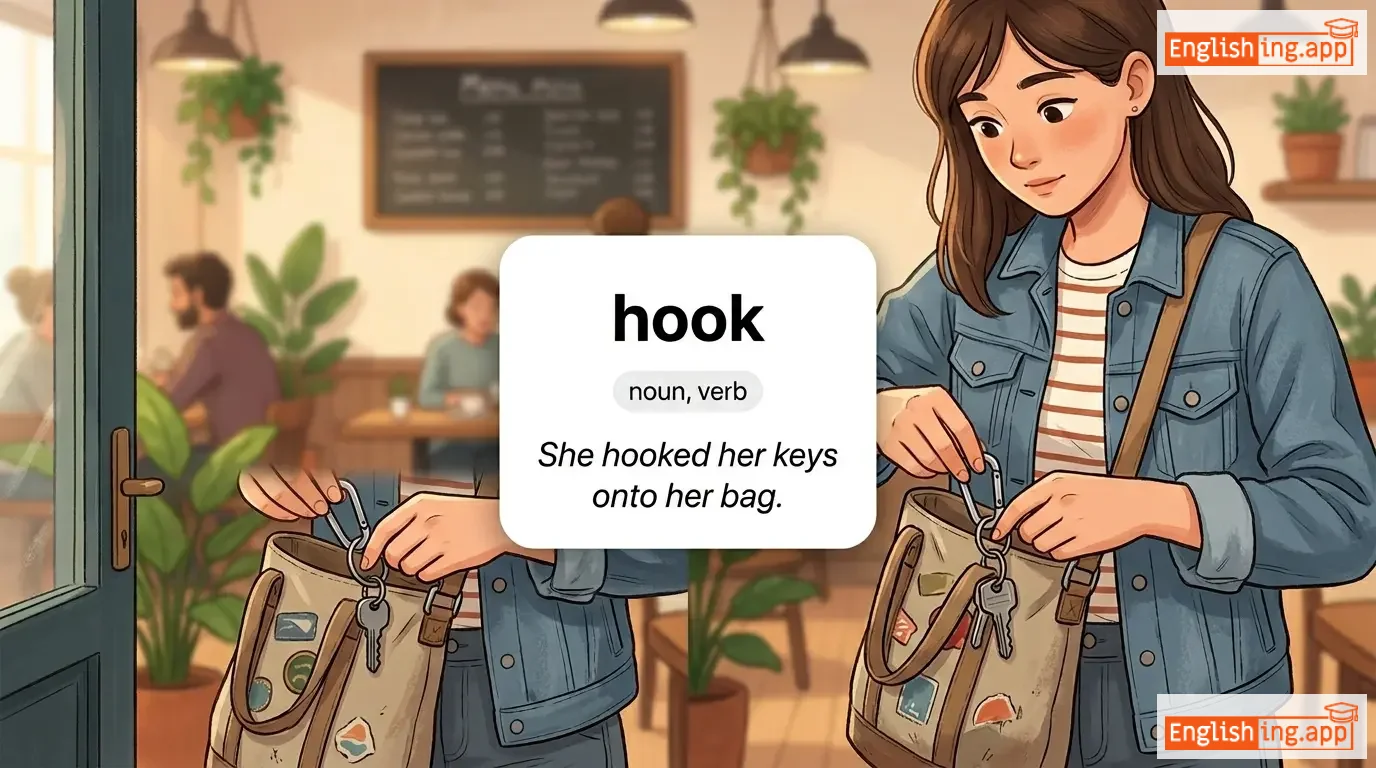
/hʊk/
noun, verb
(フック)
••••••
|
|
フックまたは吊るす道具
fukku mata wa tsurusu dōgu
••••••
|
hooked
フックド
••••••
|
hooked
フックド
••••••
|
hooks
フックス
••••••
|
hooking
フッキング
••••••
|
a curved piece of metal or other material used for catching, holding, or pulling something; to catch or attach with a hook
••••••
|
She hooked her keys onto her bag.
彼女は鍵をバッグに掛けた。
••••••
|
彼女は鍵をバッグに掛けた。
Kanojo wa kagi o baggu ni kaketa.
••••••
|
get hooked on
何かに夢中になる
••••••
|
to become addicted or very interested in something
••••••
|
何かに夢中になる
nanika ni muchū ni naru
••••••
|
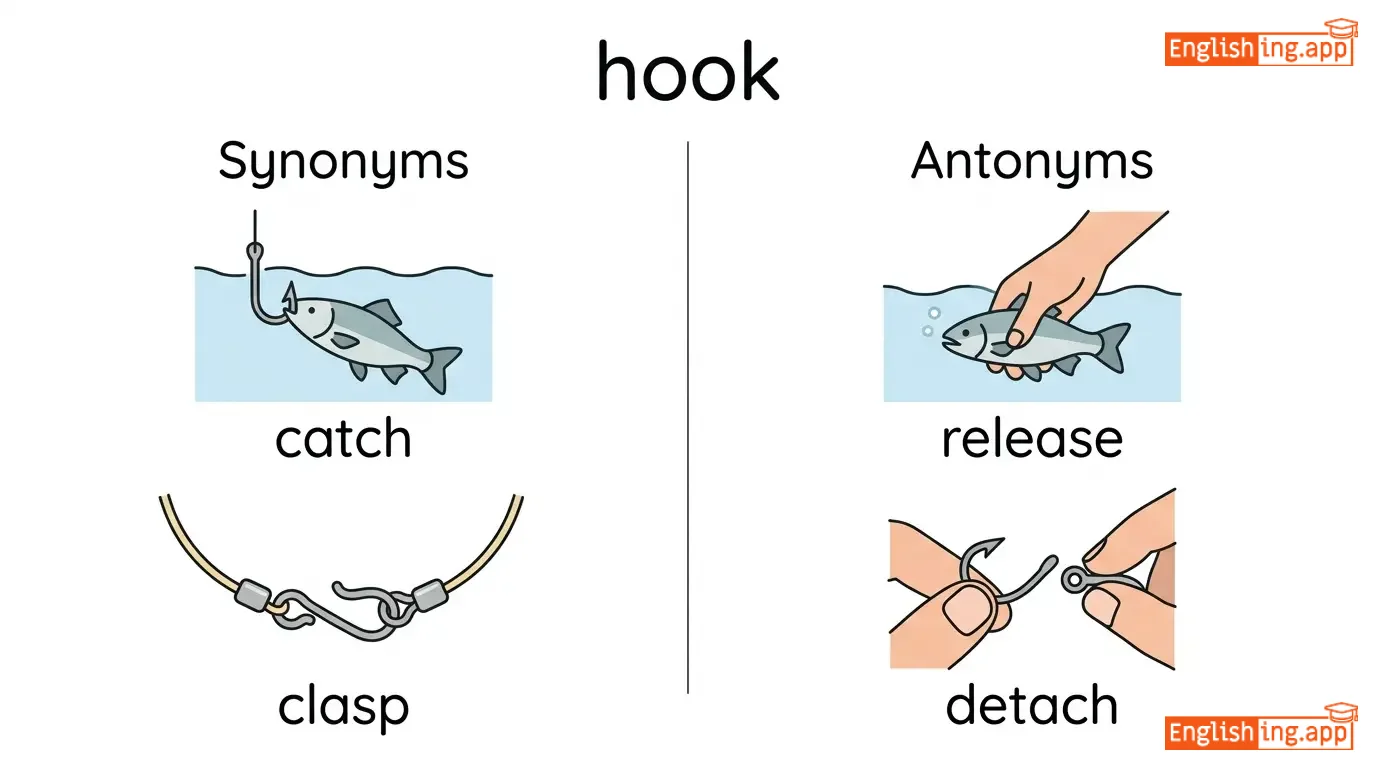
catch, clasp, fasten, attach, snag
••••••
|
release, detach, unhook
••••••
|
fish hook, coat hook, hook up, hook on
••••••
|
フックは物を引っ掛けるので 'hook' と覚えましょう!
••••••
|
|
#1
🤍
|
/ˈɒnɪstli/
adverb
(オンエストリー)
••••••
|
- •••••• |
正直に
shoujiki ni
••••••
|
- •••••• | - •••••• | - •••••• | - •••••• |
in a truthful, sincere, or fair way
••••••
|
She spoke honestly about her mistakes. |
彼女は自分の間違いについて正直に話しました。
Kanojo wa jibun no machigai ni tsuite shoujiki ni hanashimashita.
••••••
|
to be honest |
used to emphasize the truth or sincerity of what one is saying
••••••
|
正直に言うと
shoujiki ni iu to
••••••
|
truthfully, sincerely, genuinely, frankly, openly
••••••
|
dishonestly, falsely, deceitfully
••••••
|
speak honestly, act honestly, honestly believe, honestly admit
••••••
|
Honest + ly = 正直に: いつも正直に話すこと
••••••
|
|
#1
📚
|
/ˈhoʊmwɜːrk/
noun
(ホームワーク)
••••••
|
- •••••• |
宿題
shukudai
••••••
|
- •••••• | - •••••• | - •••••• | - •••••• |
schoolwork that a student does at home
••••••
|
I need to finish my math homework before dinner. |
夕食前に数学の宿題を終わらせなければなりません。
Yūshoku mae ni sūgaku no shukudai o owarasenakereba narimasen.
••••••
|
do your homework |
to prepare properly for something by learning or researching beforehand
••••••
|
宿題をする
shukudai o suru
••••••
|
assignment, task, exercise, study, project
••••••
|
classwork, neglect, inattention
••••••
|
do homework, finish homework, math homework, too much homework
••••••
|
家でする課題 (homework)
••••••
|
|
#1
🏠
|
/ˈhoʊmlænd/
noun
(ホームランド)
••••••
|
- •••••• |
故郷
furusato
••••••
|
- •••••• | - •••••• | - •••••• | - •••••• |
a person's native country or region
••••••
|
She returned to her homeland after ten years abroad.
彼女は10年間海外に住んだ後、母国に帰国した。
••••••
|
彼女は10年間海外に住んだ後、故郷に帰国した。
Kanojo wa 10 nenkan kaigai ni sunda ato, furusato ni kikoku shita.
••••••
|
- •••••• | - •••••• | - •••••• |
native land, motherland, fatherland, birthplace, country
••••••
|
foreign land, abroad, exile
••••••
|
defend the homeland, homeland security, homeland territory, homeland pride
••••••
|
Home は家を意味し + land は国を意味する — 自分の家がある国 = 故郷
••••••
|
|
#1
🏑
|
/ˈhɒki/
noun
(ホッケー)
••••••
|
- •••••• |
ホッケー
hokkei
••••••
|
- •••••• | - •••••• | - •••••• | - •••••• |
a sport played with sticks and a ball or puck on ice or a field
••••••
|
He plays hockey for the national team. |
彼は代表チームのためにホッケーをします。
Kare wa daihyō chīmu no tame ni hokkei o shimasu.
••••••
|
- •••••• | - •••••• | - •••••• |
sport, game, ice hockey, field hockey, match
••••••
|
none, inactivity, rest
••••••
|
hockey stick, hockey player, hockey match, hockey field
••••••
|
ホッケーはスティックでパックを使うスポーツ
••••••
|
|
#1
📜
|
/hɪˈstɒrɪkli/
adverb
(ヒストリカリー)
••••••
|
- •••••• |
歴史的に
rekishiteki ni
••••••
|
- •••••• | - •••••• | - •••••• | - •••••• |
in a way that relates to history or past events
••••••
|
Historically, this city was a major trade center. |
歴史的に、この都市は主要な貿易の中心地でした。
Rekishiteki ni, kono toshi wa shuyou na boueki no chuushinchi deshita.
••••••
|
- •••••• | - •••••• | - •••••• |
traditionally, formerly, ancestrally, in the past, over time
••••••
|
currently, presently, now
••••••
|
historically significant, historically accurate, historically important, historically low
••••••
|
History + 的に = 過去に関連する、つまり‘歴史的に’
••••••
|
|
#1
🇪🇸
|
/hɪˈspænɪk/
adjective
(ヒスパニック)
••••••
|
- •••••• |
ヒスパニック / スペイン語を話す
hispanikku / supeingo o hanasu
••••••
|
- •••••• | - •••••• | - •••••• | - •••••• |
relating to Spain or Spanish-speaking countries, especially Latin America.
••••••
|
She studies Hispanic culture and language. |
彼女はヒスパニック文化と言語を学んでいます。
Kanojo wa hispanikku bunka to gengo o manandeimasu.
••••••
|
- •••••• | - •••••• | - •••••• |
Spanish, Latino, Latin American
••••••
|
non-Hispanic, Anglo
••••••
|
Hispanic culture, Hispanic heritage, Hispanic community, Hispanic population
••••••
|
Hispanicはスペインまたはスペイン語を話す国々に関連するという意味です — 'His Spainic roots'を覚えて!
••••••
|
|
#1
🤖
|
/ˌhaɪ ˈtɛk/
adjective
(ハイテク)
••••••
|
- •••••• |
ハイテク
haiteku
••••••
|
- •••••• | - •••••• | - •••••• | - •••••• |
using or involving advanced technology.
••••••
|
The company produces high-tech medical devices. |
その会社はハイテク医療機器を生産しています。
Sono kaisha wa haiteku iryou kiki wo seisan shiteimasu.
••••••
|
- •••••• | - •••••• | - •••••• |
advanced, modern, cutting-edge, innovative, futuristic
••••••
|
low-tech, outdated, old-fashioned
••••••
|
high-tech industry, high-tech equipment, high-tech company, high-tech solution
••••••
|
High-techはハイテクの意味です — 高い技術があるからハイテク!
••••••
|
|
#1
🕵️♂️
|
/ˈhɪdən/
adjective
(hiden)
••••••
|
- •••••• |
隠された
kakusareta
••••••
|
- •••••• | - •••••• | - •••••• | - •••••• |
kept out of sight; concealed.
••••••
|
The treasure was hidden under the old tree. |
宝物は古い木の下に隠されていた。
Takaramono wa furui ki no shita ni kakusarete ita.
••••••
|
hidden gem |
something that is outstanding but not well known
••••••
|
隠れた宝石
kakureta houseki
••••••
|
concealed, secret, invisible, unseen, obscured
••••••
|
visible, exposed, open
••••••
|
hidden meaning, hidden place, hidden agenda, hidden camera
••••••
|
Hidden は隠されたこと — hide + en = 隠された!
••••••
|
|
#1
🤔
|
/ˈhezɪteɪt/
verb
(ためらう)
••••••
|
- •••••• |
ためらう
tamerau
••••••
|
hesitated
ためらった
••••••
|
hesitated
ためらった
••••••
|
hesitates
ためらう
••••••
|
hesitating
ためらっている
••••••
|
to pause before saying or doing something because you are uncertain or nervous.
••••••
|
She hesitated before answering the question.
彼女は質問に答える前にためらった。
••••••
|
彼女は質問に答える前にためらった。
Kanojo wa shitsumon ni kotaeru mae ni tameratta.
••••••
|
without hesitation
ためらわずに
••••••
|
immediately or without delay
••••••
|
ためらわずに
tamerawazu ni
••••••
|
pause, waver, delay, falter, doubt
••••••
|
decide, proceed, act
••••••
|
hesitate to ask, hesitate to speak, hesitate before, hesitate a moment
••••••
|
ためらう - ためらうな!すぐに行動しよう!
••••••
|
|
#1
👩👜
|
/hɜːrz/
pronoun
(ハーズ)
••••••
|
- •••••• |
彼女の(女性の)物
kanojo no (josei no) mono
••••••
|
- •••••• | - •••••• | - •••••• | - •••••• |
used to refer to something that belongs to or is associated with a female person previously mentioned or easily identified.
••••••
|
That blue bag is hers. |
その青いバッグは彼女のものです。
Sono aoi baggu wa kanojo no mono desu.
••••••
|
- •••••• | - •••••• | - •••••• |
belonging to her, her own, of her, hers alone
••••••
|
his, theirs
••••••
|
hers alone, only hers, completely hers
••••••
|
HersはHER’s—彼女の物、her + s = hers!
••••••
|
|
#1
🌿
|
/hɜːb/ (US) /hɜːb/ or /ɜːb/
noun
(ハーブ)
••••••
|
- •••••• |
ハーブ
haabu
••••••
|
- •••••• | - •••••• | - •••••• | - •••••• |
a plant used for flavoring food, medicine, or perfume
••••••
|
Basil is a popular herb used in Italian cuisine. |
バジルはイタリア料理で人気のあるハーブです。
Bajiru wa Itaria ryouri de ninki no aru haabu desu.
••••••
|
herbal remedy |
a treatment using herbs or plants
••••••
|
ハーブ療法
haabu ryōhō
••••••
|
plant, spice, vegetation, grass, leaf
••••••
|
chemical, synthetic drug
••••••
|
fresh herbs, medicinal herbs, herb garden, herb tea
••••••
|
ハーブ(haabu) - 自然の力で癒す植物!
••••••
|
|
#1
➡️
|
/hɛns/
adverb
(ヘンス)
••••••
|
- •••••• |
それゆえ
soreyue
••••••
|
- •••••• | - •••••• | - •••••• | - •••••• |
for this reason; as a result
••••••
|
She was the best candidate, hence she was chosen for the job.
彼女は最良の候補者であったため、仕事のために選ばれました。
••••••
|
彼女は最良の候補者であったため、仕事のために選ばれました。
Kanojo wa sairyō no kōhosha de atta tame, shigoto no tame ni erabaremashita.
••••••
|
hence the reason
そのための理由
••••••
|
used to introduce the explanation for something
••••••
|
そのための理由
sono tame no riyū
••••••
|
therefore, thus, consequently, accordingly
••••••
|
however, nevertheless
••••••
|
hence why, hence the need, hence the importance
••••••
|
Hence – それゆえ、結果または理由を示す ➡️
••••••
|
|
#1
🧭
|
/ˈɡaɪdəns/
noun
(gaidensu)
••••••
|
- •••••• |
指導
shidō
••••••
|
- •••••• | - •••••• | - •••••• | - •••••• |
help or advice that is given to someone about what to do
••••••
|
She sought her teacher’s guidance before making a decision. |
彼女は決定を下す前に教師に指導を求めた。
Kanojo wa kettei o kudasu mae ni kyōshi ni shidō o motometa.
••••••
|
- •••••• | - •••••• | - •••••• |
advice, direction, instruction, counsel, supervision
••••••
|
misguidance, confusion, misinformation
••••••
|
seek guidance, under guidance, guidance counselor, guidance system
••••••
|
Guide から指導 — ガイドから指導を受ける。
••••••
|
|
#1
💊
|
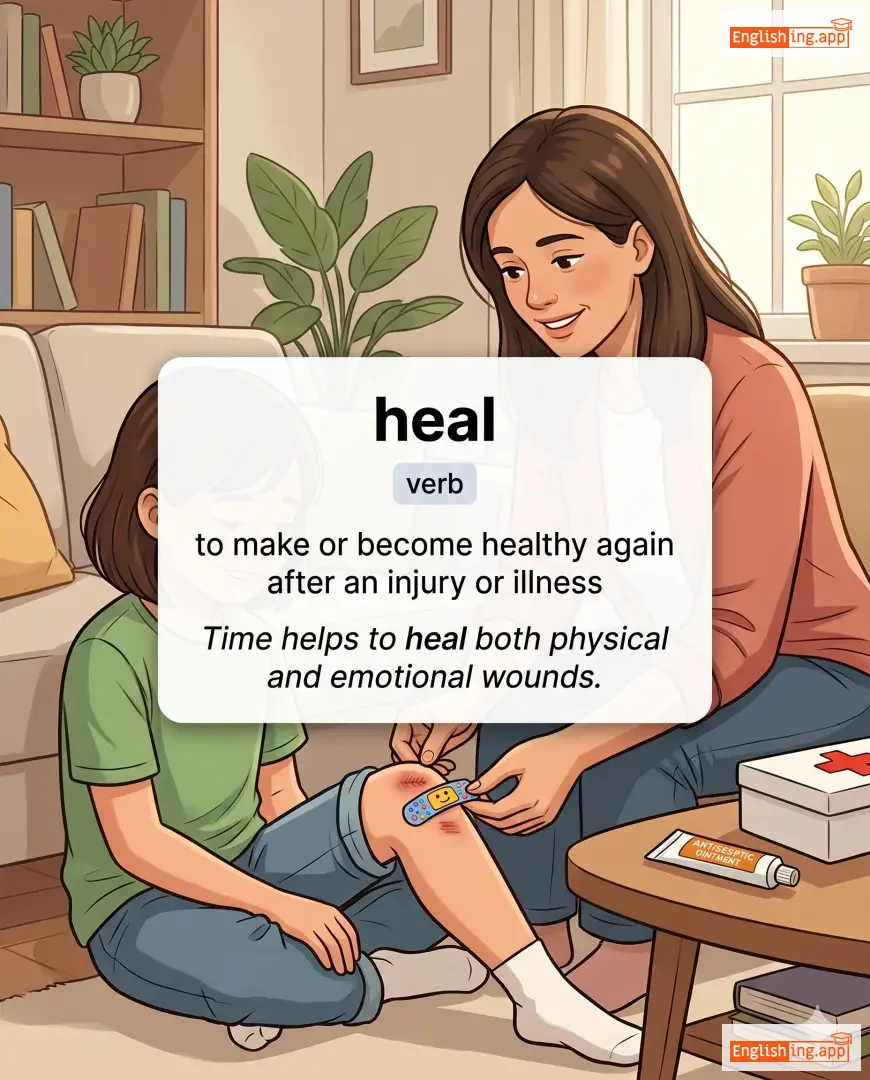
/hiːl/
verb
(ヒール)
••••••
|
|
癒す
iyasu
••••••
|
healed
ヒールド
••••••
|
healed
ヒールド
••••••
|
heals
ヒールス
••••••
|
healing
ヒーリング
••••••
|
to make or become healthy again after an injury or illness
••••••
|
Time helps to heal both physical and emotional wounds.
時間は身体的および感情的な傷を癒すのに役立ちます。
••••••
|
時間は身体的および感情的な傷を癒すのに役立ちます。
Jikan wa shintai-teki oyobi kanjō-teki na kizu o iyasu no ni yakudachimasu.
••••••
|
heal the wounds
傷を癒す
••••••
|
to repair or improve something damaged or hurt
••••••
|
傷を癒す
kizu o iyasu
••••••
|
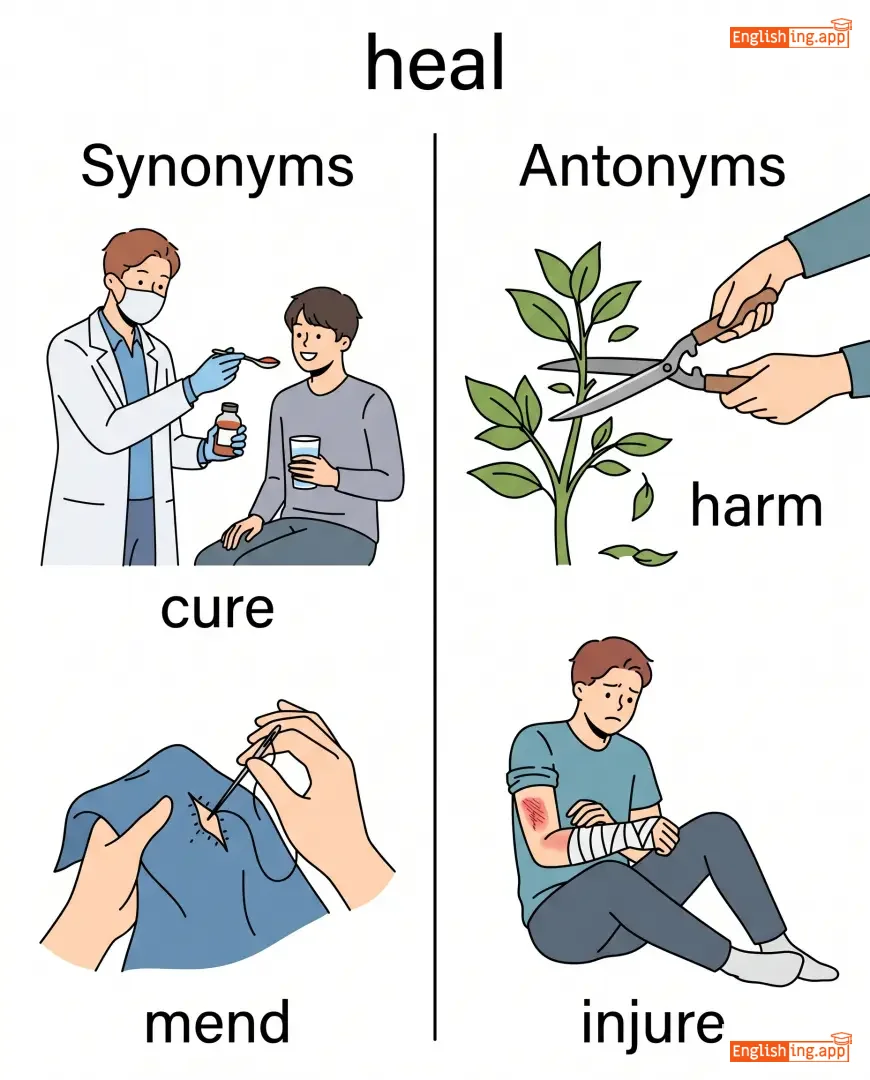
cure, mend, recover, restore, repair
••••••
|
harm, injure, damage
••••••
|
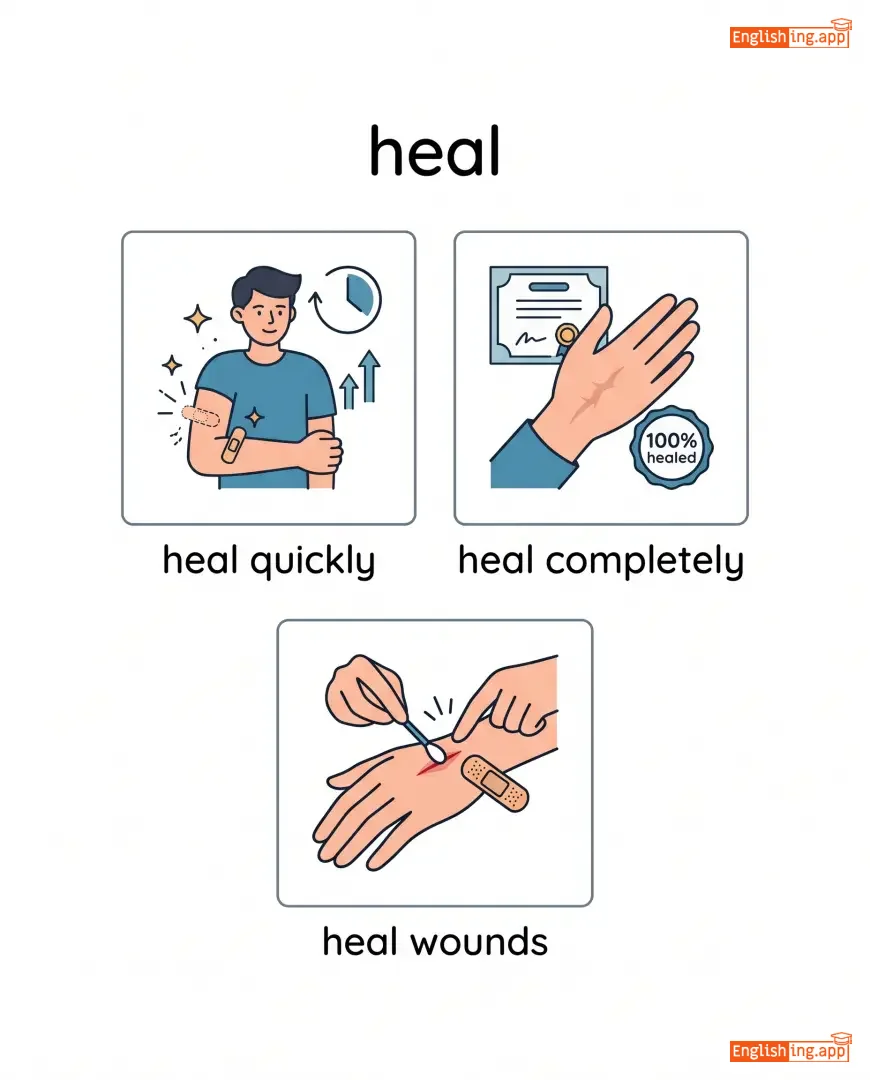
heal quickly, heal completely, heal wounds, heal process
••••••
|
足をけがしたら、癒す必要があります。
••••••
|
|
#1
🤕
|
/ˈhɛdeɪk/
noun
(heɪdɛɪk)
••••••
|
- •••••• |
頭痛
zutsū
••••••
|
- •••••• | - •••••• | - •••••• | - •••••• |
a continuous pain in the head; something that causes worry or difficulty
••••••
|
Too much screen time can give you a terrible headache. |
長時間画面を見ることはひどい頭痛を引き起こす可能性があります。
chōjikan gamen o miru koto wa hidoi zutsū o hikiokosu kanōsei ga arimasu.
••••••
|
a real headache |
something that causes a lot of trouble or difficulty
••••••
|
本当の頭痛
hontō no zutsū
••••••
|
migraine, pain, nuisance, problem, discomfort
••••••
|
relief, comfort
••••••
|
severe headache, splitting headache, cause a headache, suffer from headache
••••••
|
Head ache は頭に ache (痛み) – 頭痛を覚えておいて!
••••••
|
|
#1
🐄
|
/heɪ/
noun
(ヘイ)
••••••
|
- •••••• |
干し草
hoshigusa
••••••
|
- •••••• | - •••••• | - •••••• | - •••••• |
grass that has been cut, dried, and stored for use as animal feed
••••••
|
The cows were eating hay in the barn. |
牛たちは納屋で干し草を食べていました。
Ushitachi wa noya de hoshigusa o tabete imashita.
••••••
|
make hay while the sun shines |
take advantage of a good opportunity while it lasts
••••••
|
日が照っている間に干し草を作る
Hi ga tette iru aida ni hoshigusa o tsukuru
••••••
|
fodder, straw, dried grass, silage, forage
••••••
|
grain, seed
••••••
|
bale of hay, hay field, haystack, dry hay
••••••
|
HAYは干し草を意味します 🐄 — 'ヘイ、牛!'と言うと、干し草を食べに来ます!
••••••
|
|
#1
🚚
|
/hɔːl/
verb
(ホール)
••••••
|
- •••••• |
引っ張る
hipparu
••••••
|
hauled
ホールド
••••••
|
hauled
ホールド
••••••
|
hauls
ホールズ
••••••
|
hauling
ホーリング
••••••
|
to pull or drag something heavy with effort
••••••
|
The workers hauled the boxes into the truck.
作業員たちは箱をトラックに引きずり込んだ。
••••••
|
作業員たちは箱をトラックに引きずり込んだ。
Sagyouin-tachi wa hako o torakku ni hikizurikonda.
••••••
|
long haul
長い戦い
••••••
|
a long and difficult effort or process
••••••
|
長い戦い
nagai tatakai
••••••
|
drag, pull, carry, tow, transport
••••••
|
push, drop, release
••••••
|
haul goods, haul truck, haul cargo, long haul
••••••
|
トラックで haul は重い物を引っ張ること!
••••••
|
|
#1
🌾
|
/ˈhɑːrvɪst/
noun
(ハーヴェスト)
••••••
|
- •••••• |
収穫
shūkaku
••••••
|
- •••••• | - •••••• | - •••••• | - •••••• |
the process or period of gathering crops
••••••
|
Farmers are busy during the rice harvest season. |
農家は米の収穫の季節に忙しい。
Nōka wa kome no shūkaku no kisetsu ni isogashī.
••••••
|
reap the harvest |
to enjoy the results of your efforts
••••••
|
努力の成果を享受する
doryoku no seika o kyōju suru
••••••
|
crop, yield, gathering, reaping, produce
••••••
|
sowing, planting, loss
••••••
|
harvest season, rice harvest, good harvest, harvest time
••••••
|
収穫は努力の成果を収集すること 🌾
••••••
|
|
#1
⚠️
|
/hɑːrm/
verb
(ハーム)
••••••
|
|
害
gai
••••••
|
harmed
ハームド
••••••
|
harmed
ハームド
••••••
|
harms
ハームズ
••••••
|
harming
ハーミング
••••••
|
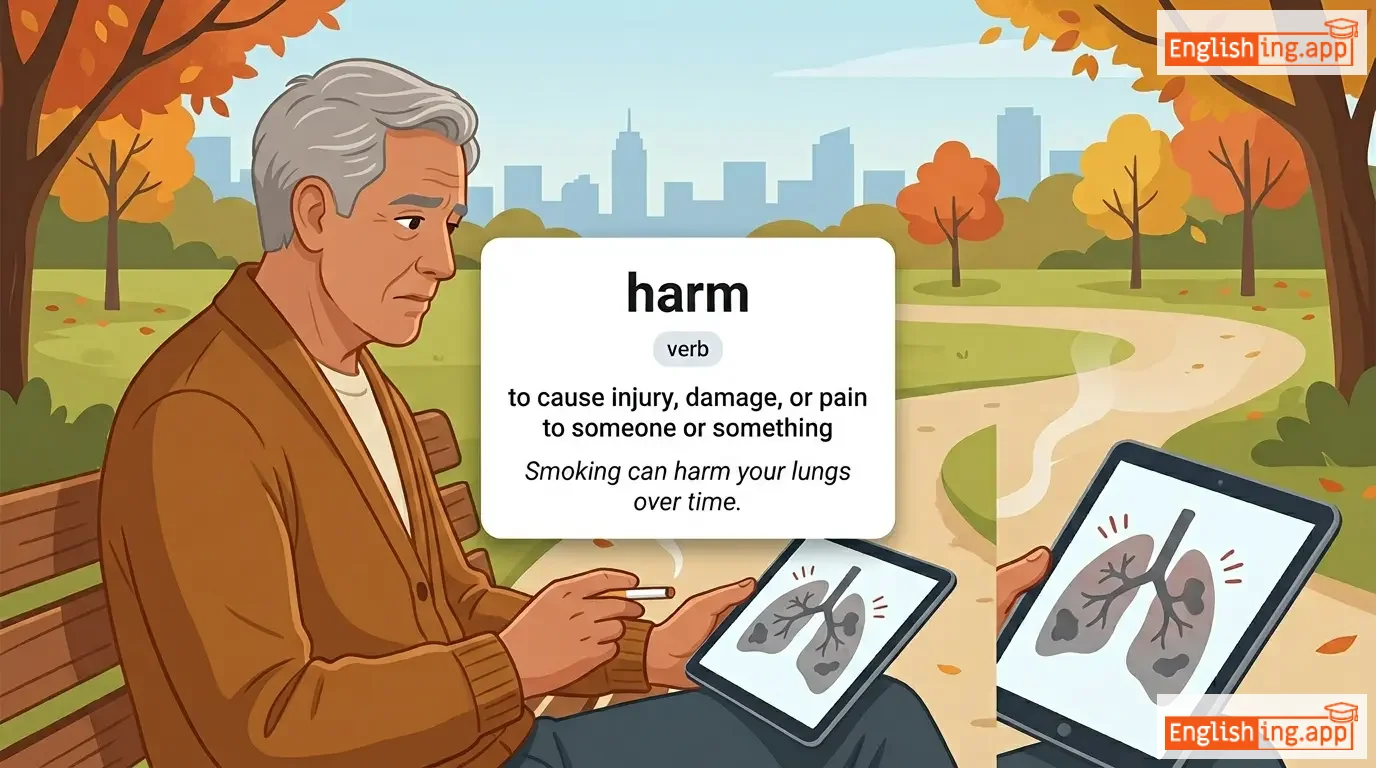
to cause injury, damage, or pain to someone or something
••••••
|
Smoking can harm your lungs over time.
喫煙は時間が経つにつれてあなたの肺に害を与える可能性があります。
••••••
|
喫煙は時間が経つにつれてあなたの肺に害を与える可能性があります。
Kitsuen wa jikan ga tatsu ni tsurete anata no hai ni gai o ataeru kanousei ga arimasu.
••••••
|
no harm done
害はありませんでした
••••••
|
used to say that no damage or injury has occurred
••••••
|
害はありませんでした
gai wa arimasen deshita
••••••
|
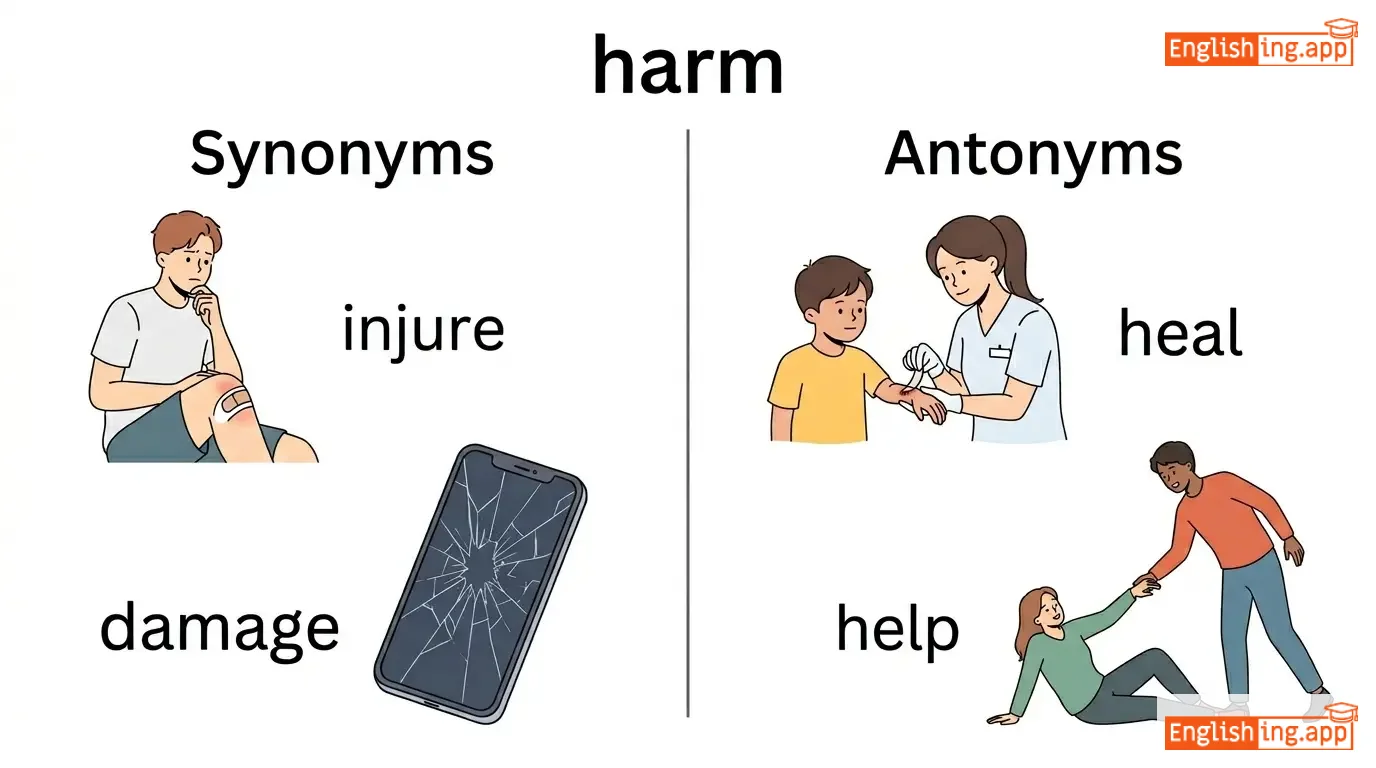
injure, damage, hurt, wound, impair
••••••
|
heal, help, repair
••••••
|
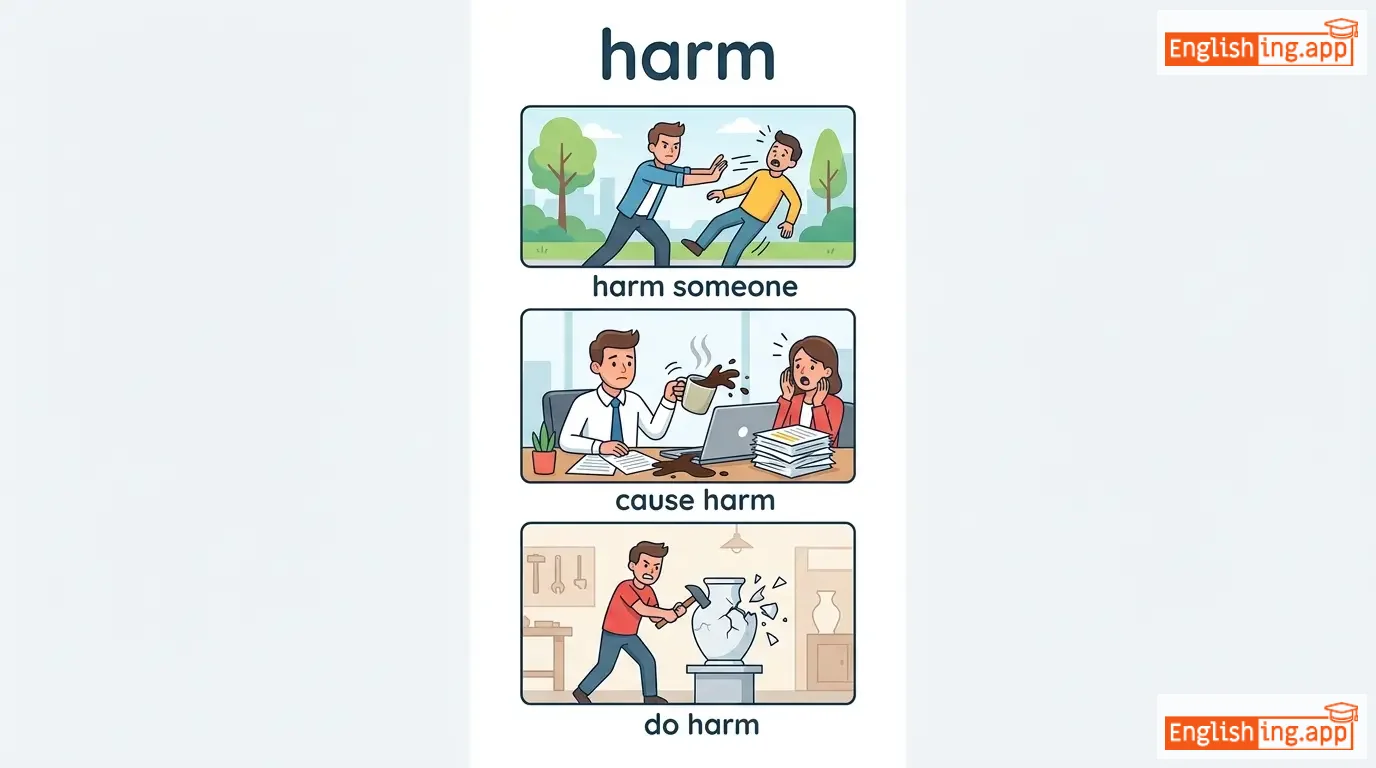
harm someone, cause harm, do harm, physical harm
••••••
|
HARMは害を意味します — 他人を傷つけることは、あなた自身にも害を与えることを覚えておいてください!
••••••
|
|
#1
💻
|
/ˈhɑːrdˌwɛr/
noun
(ハードウェア)
••••••
|
- •••••• |
ハードウェア
hardware
••••••
|
- •••••• | - •••••• | - •••••• | - •••••• |
the physical parts of a computer or electronic system, such as the monitor, keyboard, and processor
••••••
|
The company upgraded its computer hardware to improve performance. |
会社はパフォーマンスを向上させるためにコンピュータのハードウェアをアップグレードしました。
Kaisha wa pafōmansu o kōjōsaseru tame ni konpyūta no hādowea o appurēdo shimashita.
••••••
|
hardware store |
a shop that sells tools, equipment, and building materials
••••••
|
ハードウェアストア
hādowea sutoa
••••••
|
equipment, machinery, device, apparatus, components
••••••
|
software, application, program
••••••
|
computer hardware, hardware components, upgrade hardware, hardware store
••••••
|
ハードウェアは触れるもの、ソフトウェアは見えないもの。
••••••
|
|
#1
🚫
|
/həˈræsmənt/
noun
(ハラスメント)
••••••
|
- •••••• |
嫌がらせ
iyagarase
••••••
|
- •••••• | - •••••• | - •••••• | - •••••• |
aggressive pressure or intimidation; unwanted and repeated behavior causing discomfort
••••••
|
The company has a strict policy against workplace harassment.
その会社には職場でのハラスメントに対する厳しいポリシーがあります。
••••••
|
その会社には職場でのハラスメントに対する厳しいポリシーがあります。
Sono kaisha ni wa shokuba de no harasumento ni taisuru kibishii porishī ga arimasu.
••••••
|
sexual harassment
性的ハラスメント
••••••
|
unwanted sexual behavior that causes offense or humiliation
••••••
|
性的ハラスメント
seiteki harasumento
••••••
|
bullying, abuse, intimidation, persecution, annoyance
••••••
|
support, respect
••••••
|
workplace harassment, verbal harassment, sexual harassment, report harassment
••••••
|
Harassmentは嫌なこと — だからharassmentは繰り返し嫌なことです。
••••••
|
|
#1
😊
|
/ˈhæpinəs/
noun
(ハピネス)
••••••
|
|
幸せ
shiawase
••••••
|
- •••••• | - •••••• | - •••••• | - •••••• |
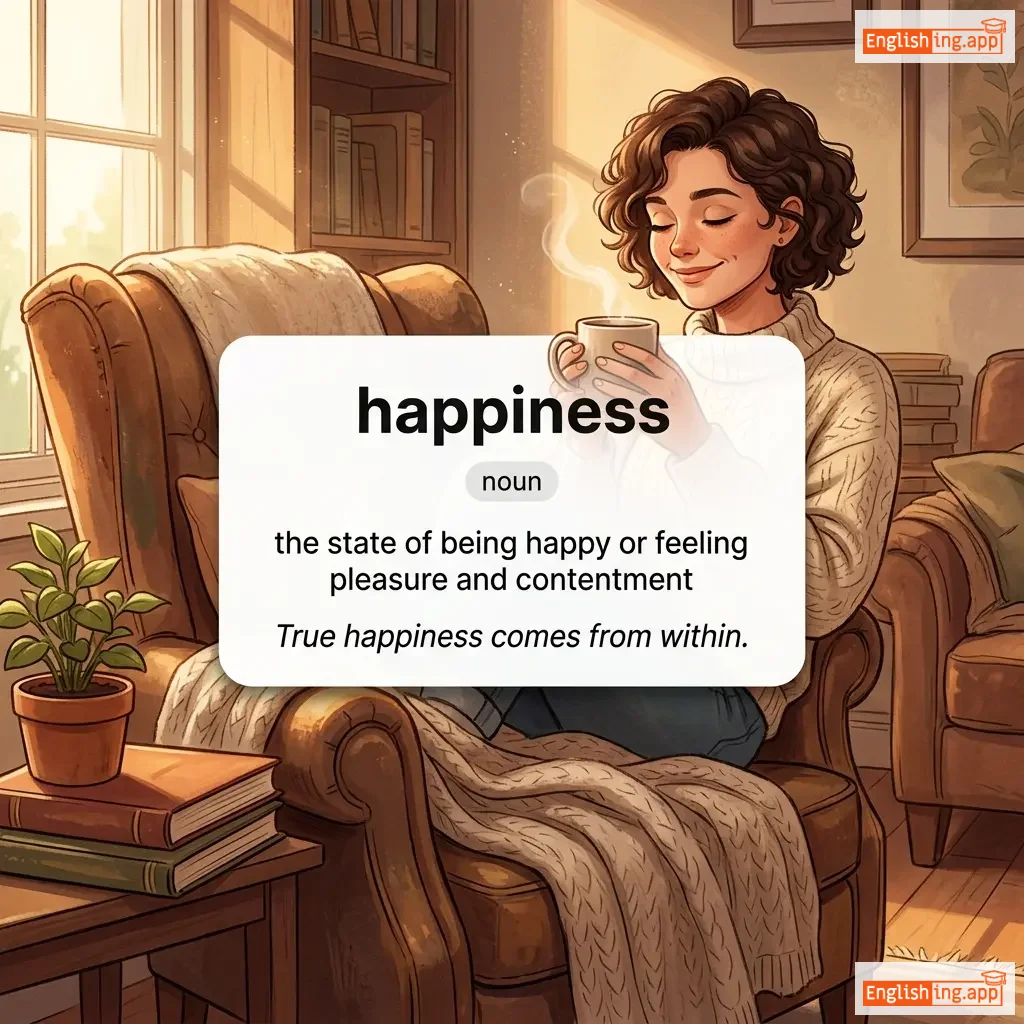
the state of being happy or feeling pleasure and contentment
••••••
|
True happiness comes from within. |
本当の幸せは内面から来る。
Hontō no shiawase wa naimen kara kuru.
••••••
|
pursuit of happiness |
the right or effort to seek personal fulfillment or joy
••••••
|
幸せの追求
shiawase no tsuikyū
••••••
|
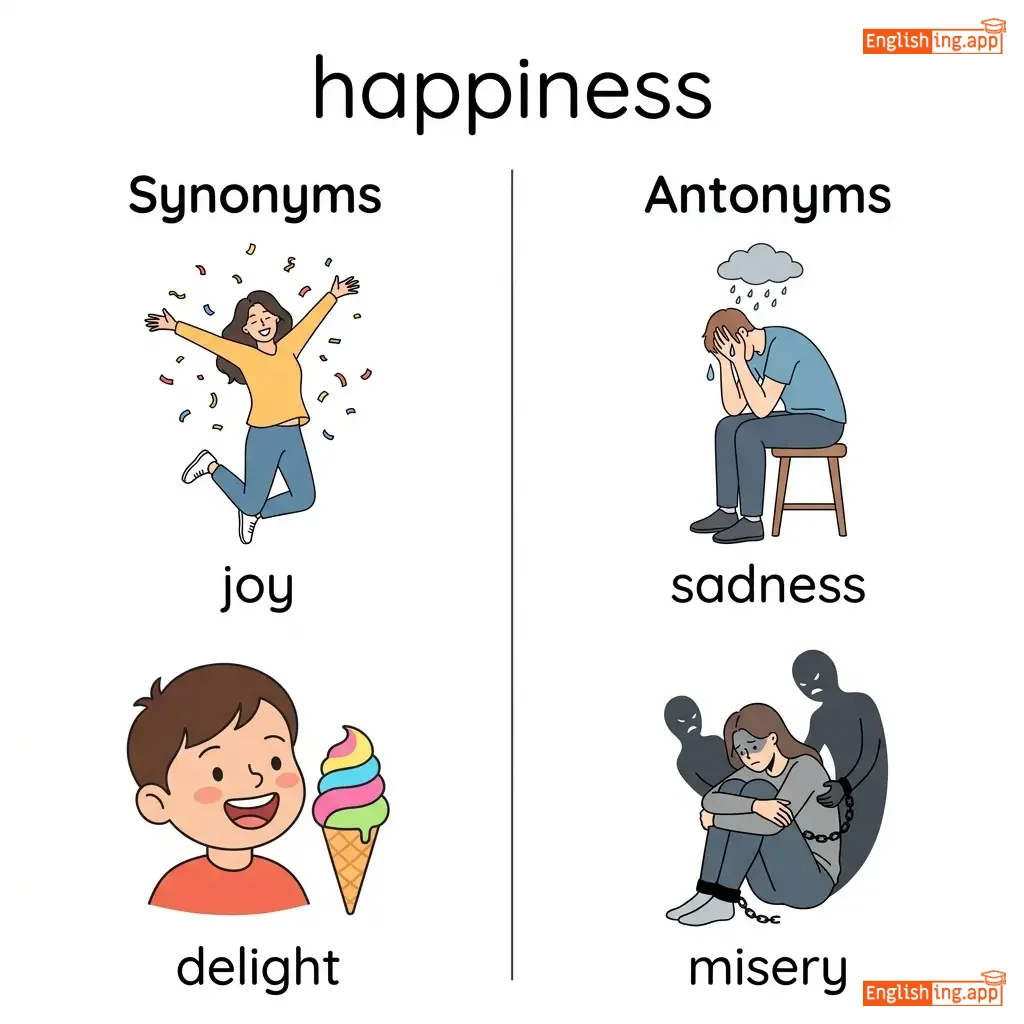
joy, delight, bliss, contentment, pleasure
••••••
|
sadness, misery, unhappiness
••••••
|
true happiness, bring happiness, pursue happiness, happiness and peace
••••••
|
幸せは心の平穏で、すべてが明るくなるようなもの 🌸
••••••
|
|
#1
🚪
|
/ˈhɔːlweɪ/
noun
(ホールウェイ)
••••••
|
- •••••• |
廊下
rōka
••••••
|
- •••••• | - •••••• | - •••••• | - •••••• |
a corridor in a building that connects rooms
••••••
|
The kids left their shoes in the hallway. |
子供たちは靴を廊下に置いていった。
Kodomotachi wa kutsu o rōka ni oite itta.
••••••
|
- •••••• | - •••••• | - •••••• |
corridor, passage, lobby, foyer
••••••
|
room, chamber
••••••
|
long hallway, dark hallway, school hallway, main hallway
••••••
|
廊下は部屋をつなぐ通路、家の中の道です。
••••••
|
|
#1
↔️
|
/ˌhæfˈweɪ/
adverb
(ハーフウェイ)
••••••
|
- •••••• |
途中で
tochū de
••••••
|
- •••••• | - •••••• | - •••••• | - •••••• |
at or to a point equal in distance between two points
••••••
|
We met halfway between the two towns. |
私たちは二つの町の間の途中で会いました。
Watashitachi wa futatsu no machi no aida no tochū de aimashita.
••••••
|
meet halfway |
to compromise or find a middle ground
••••••
|
妥協する
dakyō suru
••••••
|
in the middle, midway, partway, center
••••••
|
completely, fully
••••••
|
halfway point, halfway through, halfway house, meet halfway
••••••
|
途中で = 途中の道で会う、妥協して途中で会いましょう!
••••••
|
|
#1
😂
|
/hɑː/
interjection
(ハ)
••••••
|
- •••••• |
ハ!(驚きや喜びを表現する言葉)
Ha! (Odoroki ya yorokobi wo hyougen suru kotoba)
••••••
|
- •••••• | - •••••• | - •••••• | - •••••• |
used to express amusement, surprise, or triumph
••••••
|
Ha! I knew you couldn’t resist joining us. |
ハ!君が僕たちに加わることを抵抗できないって知っていたよ。
Ha! Kimi ga bokutachi ni kuwaeru koto wo teikou dekinai tte shitteta yo.
••••••
|
- •••••• | - •••••• | - •••••• |
haha, lol, chuckle, laugh, grin
••••••
|
cry, frown
••••••
|
ha ha, ha moment, sarcastic ha, ha reaction
••••••
|
笑うときに出る「ハ」— だから「ハ」は楽しみを思い出す! 😄
••••••
|
|
#1
🏋️♂️
|
/dʒɪm/
noun
(ジム)
••••••
|
- •••••• |
ジム
jimu
••••••
|
- •••••• | - •••••• | - •••••• | - •••••• |
a place equipped for physical exercise and fitness training
••••••
|
He goes to the gym every morning to work out. |
彼は毎朝ジムに行ってトレーニングをします。
Kare wa mai asa jimu ni itte torēningu o shimasu.
••••••
|
hit the gym |
to go to the gym to exercise
••••••
|
ジムに行く
jimu ni iku
••••••
|
fitness center, health club, workout place, training facility
••••••
|
none
••••••
|
go to the gym, join gym, gym membership, gym equipment
••••••
|
ジムは身体を鍛える場所 — トレーニングで健康を保とう!
••••••
|
|
#1
🎸
|
/ɡɪˈtɑːr/
noun
(ギター)
••••••
|
- •••••• |
ギター
gitā
••••••
|
- •••••• | - •••••• | - •••••• | - •••••• |
a stringed musical instrument played by plucking or strumming
••••••
|
He plays the guitar beautifully. |
彼はギターを素晴らしく弾きます。
Kare wa gitā o subarashiku hikimasu.
••••••
|
play by ear |
to play music without reading the notes
••••••
|
耳で演奏する
mimi de ensō suru
••••••
|
string instrument, acoustic guitar, electric guitar, instrument
••••••
|
none
••••••
|
play guitar, electric guitar, acoustic guitar, guitar lesson
••••••
|
ギターは魂の音、心を揺さぶる力!
••••••
|
Vocabulary Quiz
Test your vocabulary by matching words with their translations or meanings.
Login to take the quiz
Comments (0)
Share your thoughts and join the discussion.
Join the discussion by logging in
Login to CommentNo comments yet
Be the first to share your thoughts!