

翻訳
過去
過去分詞
三人称単数
動名詞
意味
例文
例文の翻訳
同義語
対義語
コロケーション
ニーモニック
Swipe left or right, or use the buttons. Tap image to zoom.
例文の翻訳
単語
Lesson 99Lesson 99 - マスクトグル
|
絵文字
|
単語 | Images | 翻訳 | 過去 | 過去分詞 | 三人称単数 | 動名詞 | 意味 | 例文 | 例文の翻訳 | 表現例 | 表現例の意味 | 表現例の翻訳 | 同義語 | 対義語 | コロケーション | ニーモニック |
|---|---|---|---|---|---|---|---|---|---|---|---|---|---|---|---|---|---|
|
#2941
🧠
|
/ɛmˈpɪrɪˌsɪzəm/
noun
(エンピリシズム)
••••••
|
- •••••• |
経験主義
keiken shugi
••••••
|
- •••••• | - •••••• | - •••••• | - •••••• |
the theory that all knowledge is derived from sense-experience
••••••
|
Empiricism argues that knowledge comes from experience and observation. |
経験主義は、知識は経験と観察から来ると主張しています。
Keiken shugi wa, chishiki wa keiken to kansatsu kara kuru to shucho shiteimasu.
••••••
|
- •••••• | - •••••• | - •••••• |
experientialism, realism, pragmatism, observation-based theory
••••••
|
rationalism, idealism
••••••
|
empiricism in philosophy, empiricism vs rationalism, modern empiricism
••••••
|
Empiricismは経験から知識を得ることを意味するので、日本語では経験主義と呼ばれます。
••••••
|
|
#2942
⭕
|
/ɪnˈsɜːrkəl/
verb
(ensā kērā)
••••••
|
- •••••• |
囲む
kakomu
••••••
|
encircled
ensā kēraddo
••••••
|
encircled
ensā kēraddo
••••••
|
encircles
ensā kērasu
••••••
|
encircling
ensā kēringu
••••••
|
to form a circle around something
••••••
|
The protesters encircled the building in a human chain.
抗議者は人間の鎖で建物を囲んだ。
••••••
|
抗議者は人間の鎖で建物を囲んだ。
Kōgisha wa ningen no kusari de tatemono o kakonda.
••••••
|
- •••••• | - •••••• | - •••••• |
surround, encompass, enclose, gird, besiege
••••••
|
free, release, uncover
••••••
|
encircle the city, encircle the area, encircle the building, encircle with
••••••
|
Encircleは囲むことを意味する
••••••
|
|
#2943
🔐
|
/ɪnˈsaɪfər/
verb
(エンシファー)
••••••
|
- •••••• |
メッセージをコードまたは暗号に変換する
messeeji o kodo matawa angou ni henkan suru
••••••
|
enciphered
エンシファード
••••••
|
enciphered
エンシファード
••••••
|
enciphers
エンシファーズ
••••••
|
enciphering
エンシファリング
••••••
|
to convert a message into code or cipher
••••••
|
The agent enciphered the secret message before sending it.
エージェントはメッセージを送る前にそれを暗号化しました。
••••••
|
エージェントはメッセージを送る前にそれを暗号化しました。
Eejento wa messeji o okuru mae ni sore o angouka shimashita.
••••••
|
- •••••• | - •••••• | - •••••• |
encode, encrypt, code, cipher, scramble
••••••
|
decode, decipher, decrypt
••••••
|
encipher message, encipher data, encipher text, encipher information
••••••
|
Encipherは暗号化することを意味します
••••••
|
|
#2944
✨
|
/ɪnˈtʃænt/
verb
••••••
|
- •••••• | - •••••• |
enchanted
••••••
|
enchanted
••••••
|
enchants
••••••
|
enchanting
••••••
|
to delight or charm greatly; to cast a spell over
••••••
|
The storyteller enchanted the children with his tales. |
- •••••• |
enchanted by |
to be delighted or captivated by something
••••••
|
- •••••• |
delight, charm, captivate, fascinate, mesmerize
••••••
|
repel, bore, disgust
••••••
|
enchanted forest, enchanted by, enchanted with, enchanting smile
••••••
|
No •••••• |
|
#2945
⛺
|
/ɪnˈkæmp/
verb
(インキャンプ)
••••••
|
- •••••• |
キャンプをする
kyanpu wo suru
••••••
|
encamped
インキャンプド
••••••
|
encamped
インキャンプド
••••••
|
encamps
インキャンプス
••••••
|
encamping
インキャンピング
••••••
|
to set up or establish a camp
••••••
|
The soldiers encamped near the river for the night.
兵士たちは夜のために川の近くでキャンプしました。
••••••
|
兵士たちは夜のために川の近くでキャンプしました。
Heishitachi wa yoru no tame ni kawa no chikaku de kyanpu shimashita.
••••••
|
- •••••• | - •••••• | - •••••• |
camp, settle, bivouac, lodge, pitch
••••••
|
depart, leave, evacuate
••••••
|
encamp near, encamp by, encamp on, troops encamp
••••••
|
キャンプ = 'camp' する、つまり、キャンプを設置すること!
••••••
|
|
#2946
💘
|
/ɪˈnæmərd/
adjective
(エナモード)
••••••
|
- •••••• |
夢中
mucyu
••••••
|
- •••••• | - •••••• | - •••••• | - •••••• |
filled with love or admiration
••••••
|
He became enamored with classical music after attending the concert.
彼はコンサートに参加した後、クラシック音楽に魅了されました。
••••••
|
彼はコンサートに参加した後、クラシック音楽に魅了されました。
Kare wa konsaato ni sanka shita ato, kurashikku ongaku ni miryō saremashita.
••••••
|
- •••••• | - •••••• | - •••••• |
captivated, infatuated, smitten, charmed
••••••
|
indifferent, repulsed
••••••
|
enamored with, enamored by, deeply enamored
••••••
|
夢中は愛や感嘆で満ちている、'夢中'は夢の中で感じるようなもの、まさに愛の中で感じる感覚です。
••••••
|
|
#2947
😍
|
/ɪˈnæmər/
verb
(エナモール)
••••••
|
- •••••• |
恋する
koisuru
••••••
|
enamored
エナモード
••••••
|
enamored
エナモード
••••••
|
enamors
エナモールズ
••••••
|
enamoring
エナモリング
••••••
|
to be filled with love or admiration for
••••••
|
She was enamored with the beautiful scenery.
彼女は美しい景色に恋していた。
••••••
|
彼女は美しい景色に恋していた。
Kanojo wa utsukushī keshiki ni koi shite ita.
••••••
|
- •••••• | - •••••• | - •••••• |
captivate, fascinate, charm, enchant
••••••
|
repel, disgust, bore
••••••
|
enamor with, enamor of, deeply enamored
••••••
|
Enamor は恋することを意味します - 'エナモール' は恋を連想させます。
••••••
|
|
#2948
🦷
|
/ɪˈnæməl/
noun
(エナメル)
••••••
|
- •••••• |
エナメル
enameru
••••••
|
- •••••• | - •••••• | - •••••• | - •••••• |
a hard, glossy substance used as a protective or decorative coating; the hard outer layer of teeth
••••••
|
The dentist explained that enamel protects the teeth from decay. |
歯科医は、エナメルが歯を虫歯から守ることを説明しました。
Shikai wa, enameru ga ha o mushiba kara mamoru koto o setsumei shimashita.
••••••
|
- •••••• | - •••••• | - •••••• |
glaze, coating, varnish, polish
••••••
|
dullness, roughness
••••••
|
tooth enamel, enamel paint, enamel surface, enamel coating
••••••
|
エナメルは歯を守るための硬い層、'エナメル'が歯を守っていると覚えよう。
••••••
|
|
#2949
📜
|
/ɪˈnækt/
verb
(イネクト)
••••••
|
- •••••• |
制定する
seitei suru
••••••
|
enacted
イネクテッド
••••••
|
enacted
イネクテッド
••••••
|
enacts
イネクツ
••••••
|
enacting
イネクティング
••••••
|
to make into law; to perform or act out
••••••
|
The government decided to enact a new policy on education.
政府は教育に関する新しい政策を制定することを決定しました。
••••••
|
政府は教育に関する新しい政策を制定することを決定しました。
Seifu wa kyōiku ni kansuru atarashī seisaku o seitei suru koto o kettei shimashita.
••••••
|
enact a law
法律を制定する
••••••
|
to officially make a law
••••••
|
法律を制定する
hōritsu o seitei suru
••••••
|
legislate, establish, decree, ordain
••••••
|
abolish, repeal, revoke
••••••
|
enact legislation, enact reforms, enact measures, enact policy
••••••
|
Enactは制定することを意味します - 'Enact'は'Act'(行動)のように聞こえ、法律を作ることを意味します。
••••••
|
|
#2950
📋
|
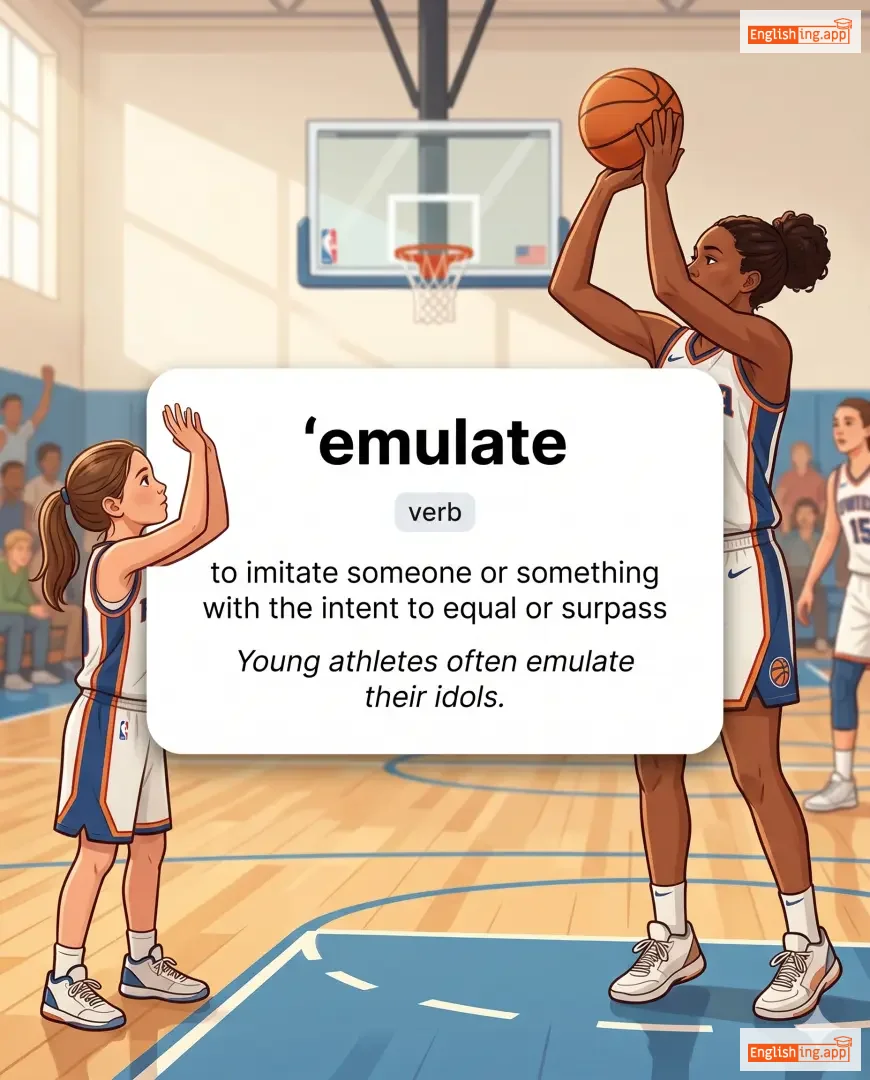
/ˈɛm.jʊˌleɪt/
verb
(エミュレート)
••••••
|
|
模倣する
mohō suru
••••••
|
emulated
エミュレートした
••••••
|
emulated
エミュレートした
••••••
|
emulates
エミュレートする
••••••
|
emulating
エミュレートしている
••••••
|
to imitate someone or something with the intent to equal or surpass
••••••
|
Young athletes often emulate their idols.
若いアスリートはよく自分のアイドルを模倣します。
••••••
|
若いアスリートはよく自分のアイドルを模倣します。
Wakai asurīto wa yoku jibun no aidoru o mohō shimasu.
••••••
|
emulate success
成功を模倣する
••••••
|
to imitate the actions or qualities that lead to success
••••••
|
成功を模倣する
seikō o mohō suru
••••••
|
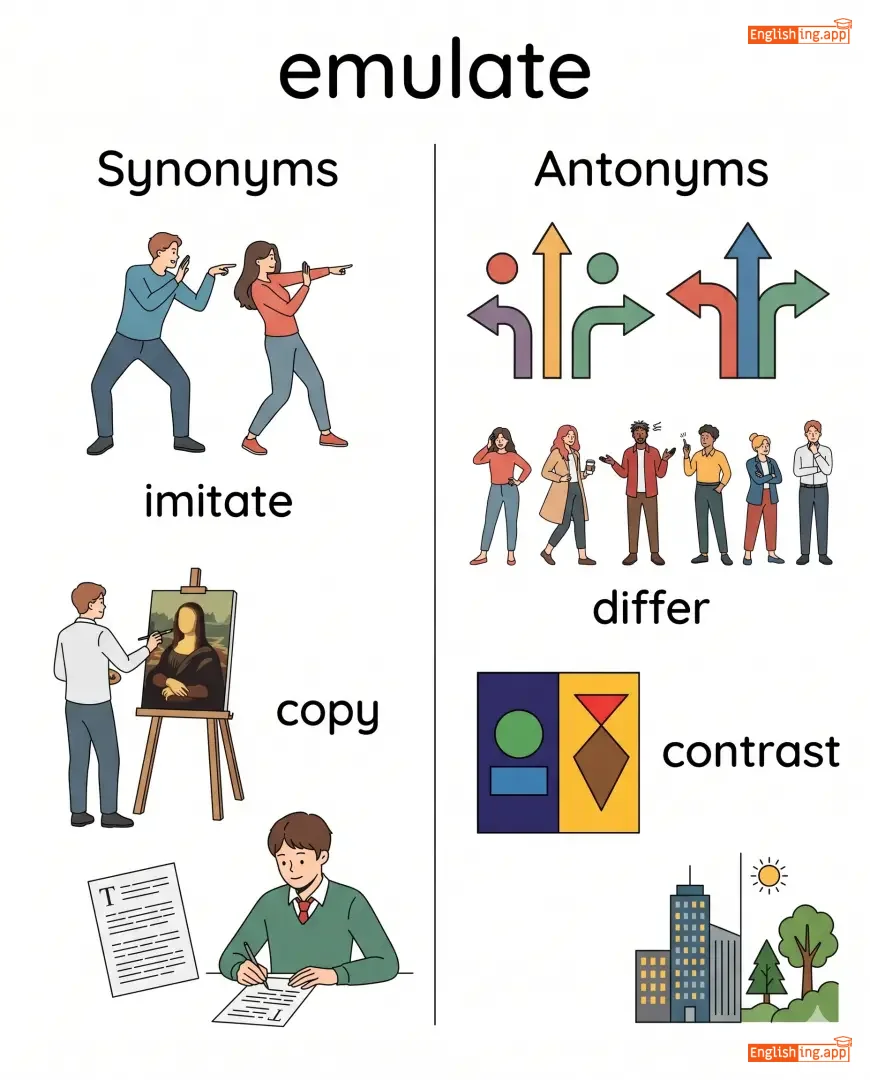
imitate, copy, mirror, follow, mimic
••••••
|
differ, contrast, oppose
••••••
|
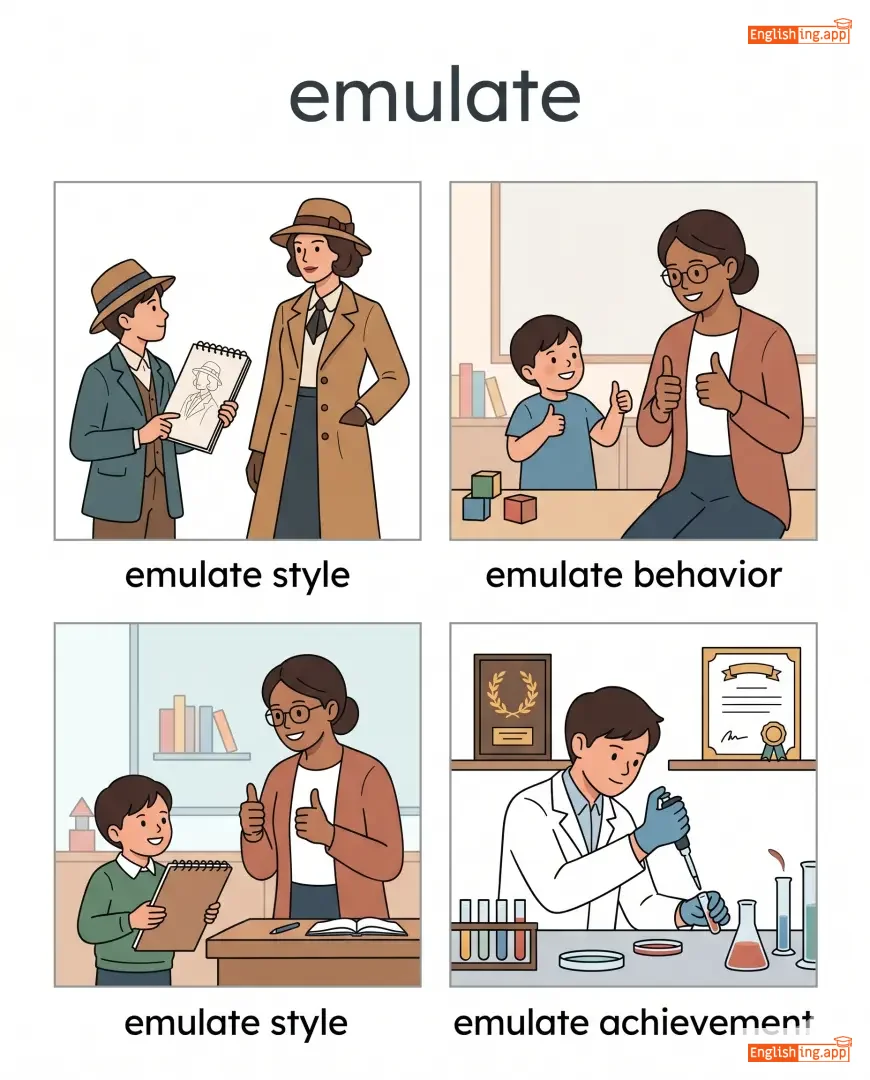
emulate style, emulate behavior, emulate achievement, emulate model
••••••
|
Emulateは模倣するという意味です - 'エミュレート'は 'エミュレート'として、他の人を模倣して成功を目指すことです。
••••••
|
|
#2951
✨
|
/ɛmˈpaɪriəl/
adjective
(エンプアイリアル)
••••••
|
- •••••• |
天上的
tenjō no
••••••
|
- •••••• | - •••••• | - •••••• | - •••••• |
Heavenly, divine, or relating to the highest heavens.
••••••
|
The poet described the empyreal beauty of the stars. |
詩人は星の天上的な美しさを描写しました。
Shijin wa hoshi no tenjō-teki na utsukushisa o byōsha shimashita.
••••••
|
- •••••• | - •••••• | - •••••• |
celestial, divine, heavenly, ethereal, sublime
••••••
|
earthly, mundane
••••••
|
empyreal light, empyreal glory, empyreal realm, empyreal beauty
••••••
|
Empyreal は 'Empire of real heaven' のように聞こえます - 天上的な美しさ。
••••••
|
|
#2952
💪
|
/ɪmˈpaʊər/
verb
••••••
|
- •••••• | - •••••• |
empowered
••••••
|
empowered
••••••
|
empowers
••••••
|
empowering
••••••
|
To give someone the power or authority to do something; to make someone stronger or more confident.
••••••
|
Education can empower people to improve their lives. |
- •••••• |
empower yourself |
Take control of your own life and decisions.
••••••
|
- •••••• |
authorize, enable, strengthen, permit, inspire
••••••
|
weaken, disempower, discourage
••••••
|
empower women, empower people, empower community, empower decision
••••••
|
No •••••• |
|
#2953
🏬
|
/ɛmˈpɔːriəm/
noun
(エンポリウム)
••••••
|
- •••••• |
大規模な店
daikibo na mise
••••••
|
- •••••• | - •••••• | - •••••• | - •••••• |
A large retail store selling a wide variety of goods.
••••••
|
They visited the new emporium to buy furniture and home decor.
彼らは新しいエンポリウムを訪れて、家具とホームデコールを買いました。
••••••
|
彼らは新しいエンポリウムを訪れて、家具とホームデコールを買いました。
Karera wa atarashī emporium o otozurete, kagu to hōmu dekoru o kaimashita.
••••••
|
- •••••• | - •••••• | - •••••• |
market, store, shop, bazaar, outlet
••••••
|
stall, kiosk
••••••
|
shopping emporium, luxury emporium, local emporium, city emporium
••••••
|
Emporium、'Empor'は重要な市場の意味 - 大規模な店.
••••••
|
|
#2954
👔
|
/ɪmˈplɔɪər/
noun
(エンプロイヤー)
••••••
|
- •••••• |
雇用者
koyōsha
••••••
|
- •••••• | - •••••• | - •••••• | - •••••• |
A person or organization that hires and pays people to work.
••••••
|
The employer promised better benefits to attract skilled workers. |
雇用者は熟練した労働者を引き付けるために、より良い福利厚生を約束しました。
Koyōsha wa jukuren shita rōdōsha o hikitsukeru tame ni, yori yoi fukuri kōsei o yakusoku shimashita.
••••••
|
good employer |
An employer who treats employees fairly and provides good conditions.
••••••
|
良い雇用者
Yoi koyōsha
••••••
|
boss, manager, proprietor, recruiter, company
••••••
|
employee, worker
••••••
|
large employer, potential employer, current employer, future employer
••••••
|
Employerは雇用者、つまり雇う人です。
••••••
|
|
#2955
👩💼
|
/ɛmˈplɔɪ.iː/
noun
(エンプラロイ)
••••••
|
- •••••• |
従業員
jūgyōin
••••••
|
- •••••• | - •••••• | - •••••• | - •••••• |
A person who works for an organization or company in return for payment.
••••••
|
The company values each employee's contribution to its success. |
会社は各従業員の成功への貢献を重視しています。
Kaisha wa kaku jūgyōin no seikō e no kōken o jūshi shiteimasu.
••••••
|
model employee |
An ideal worker who performs duties responsibly and well.
••••••
|
模範従業員
mohan jūgyōin
••••••
|
worker, staff member, team member, personnel, laborer
••••••
|
employer, boss
••••••
|
loyal employee, new employee, company employee, hire employee
••••••
|
従業員は会社で働く人、'従業'と社員が同じ意味です。
••••••
|
|
#2956
🤢
|
/ɪˈmɛtɪk/
noun
(エメティック)
••••••
|
- •••••• |
催吐薬
saito yaku
••••••
|
- •••••• | - •••••• | - •••••• | - •••••• |
a substance that causes vomiting
••••••
|
The doctor administered an emetic to remove the poison. |
医師は毒を取り除くために催吐薬を投与しました。
Ishi wa doku o torinozoku tame ni saito yaku o tōyo shimashita.
••••••
|
- •••••• | - •••••• | - •••••• |
vomitive, purgative, medicine
••••••
|
antidote, suppressant
••••••
|
take emetic, give emetic, strong emetic
••••••
|
エメティックは吐き気を起こす薬
••••••
|
|
#2957
🔬
|
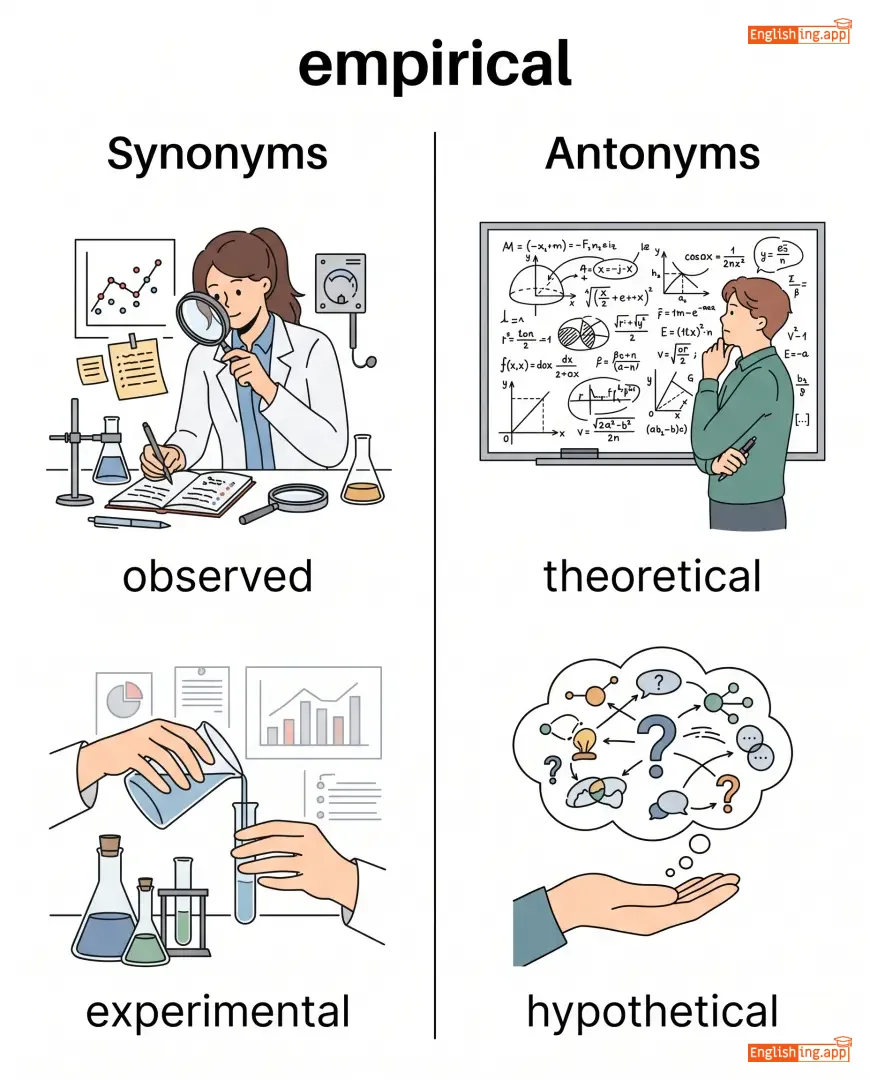
/ɛmˈpɪrɪkəl/
adjective
(エンピリカル)
••••••
|
|
経験的
keiken-teki
••••••
|
- •••••• | - •••••• | - •••••• | - •••••• |
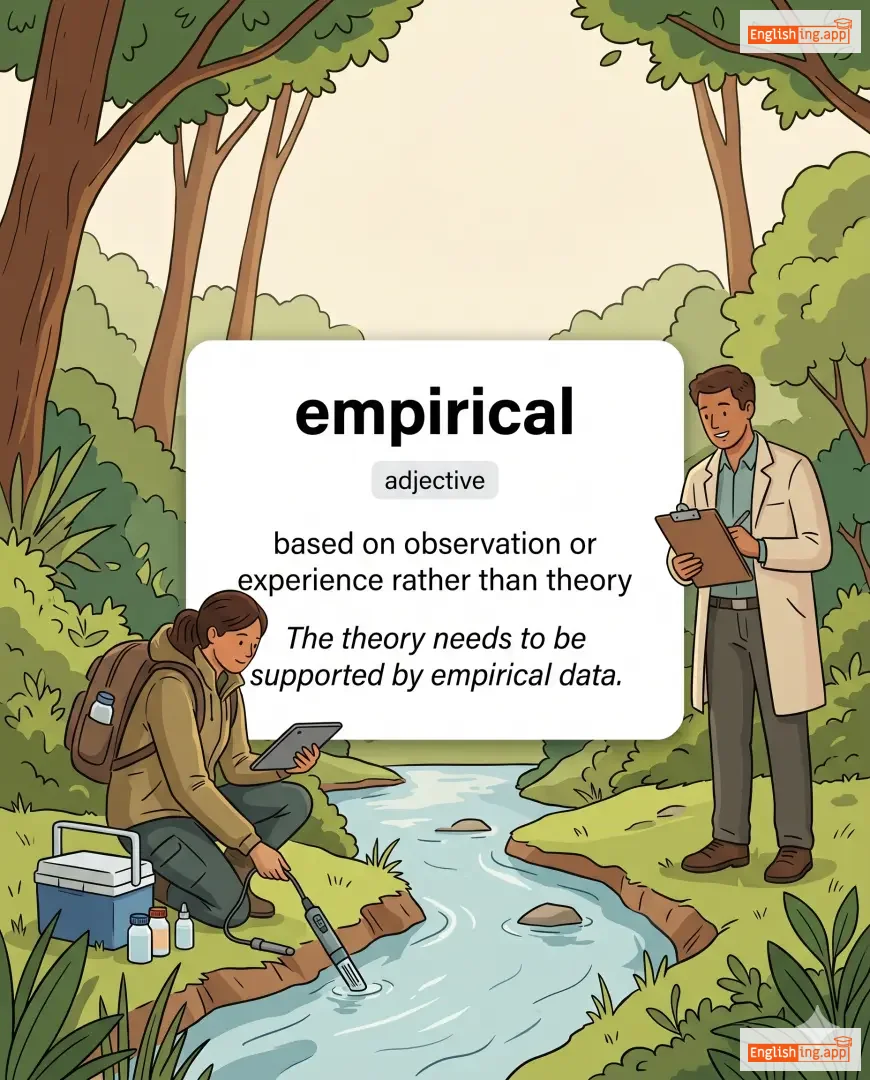
based on observation or experience rather than theory
••••••
|
The theory needs to be supported by empirical data. |
理論は経験的なデータで裏付けられるべきです。
Riron wa keiken-teki na deeta de urazukerarebe ki desu.
••••••
|
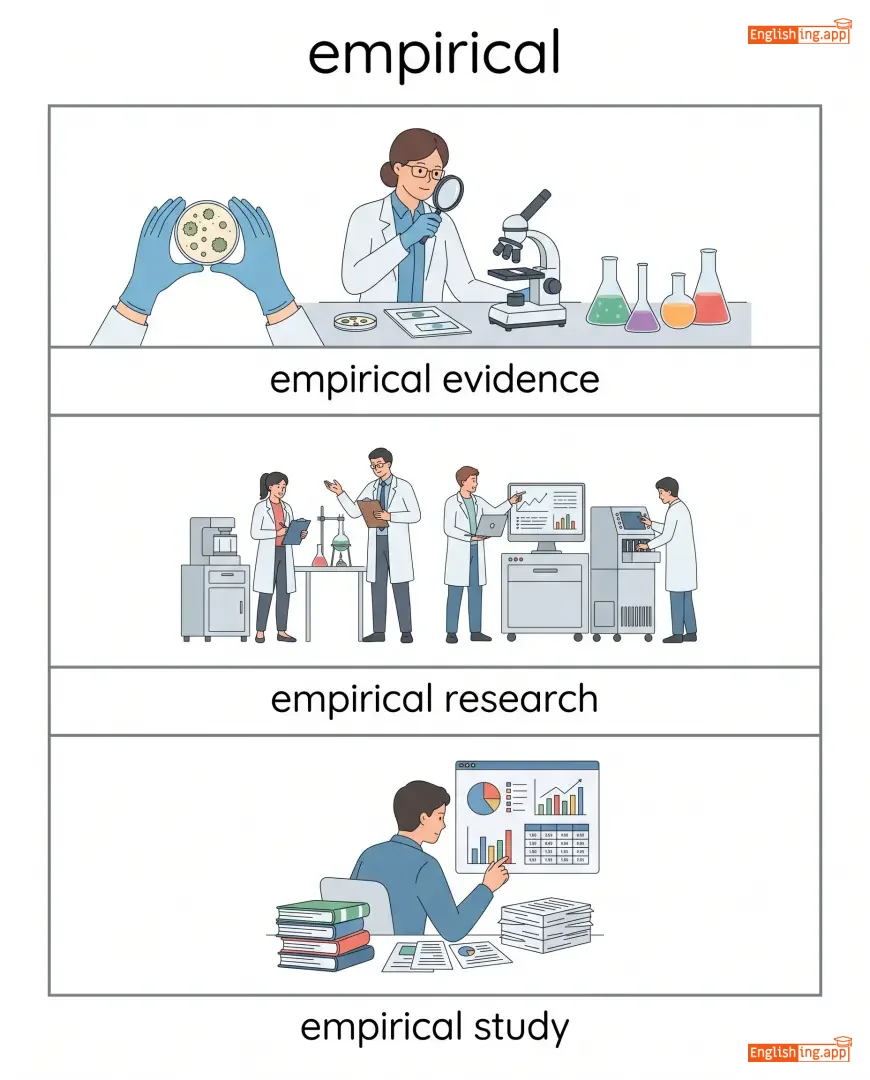
empirical evidence |
information gained through observation or experiment
••••••
|
経験的証拠
keiken-teki shouko
••••••
|
observed, experimental, factual, practical, real
••••••
|
theoretical, hypothetical
••••••
|
empirical evidence, empirical research, empirical study, empirical data
••••••
|
Empiricalは経験から来る、だから経験的(keiken-teki)!
••••••
|
|
#2958
❗
|
/ɛmˈfætɪk/
adjective
(エンファティック)
••••••
|
- •••••• |
強調的な
kyōchō-teki na
••••••
|
- •••••• | - •••••• | - •••••• | - •••••• |
expressed with emphasis; strongly expressive
••••••
|
He gave an emphatic denial of the rumors. |
彼は噂を強調して否定した。
Kare wa uwasa o kyōchō shite hitei shita.
••••••
|
emphatic victory |
a victory that is achieved decisively and clearly
••••••
|
強調された勝利
kyōchō sareta shōri
••••••
|
forceful, strong, firm, vigorous, assertive
••••••
|
weak, uncertain, hesitant
••••••
|
emphatic denial, emphatic statement, emphatic victory, emphatic response
••••••
|
Emphaticは強調して言う意味、強調された勝利のように。
••••••
|
|
#2959
📢
|
/ˈɛmfəsaɪz/
verb
(エンファサイズ)
••••••
|
|
強調する
kyōchō suru
••••••
|
emphasized
エンファサイズド
••••••
|
emphasized
エンファサイズド
••••••
|
emphasizes
エンファサイズズ
••••••
|
emphasizing
エンファサイズイング
••••••
|
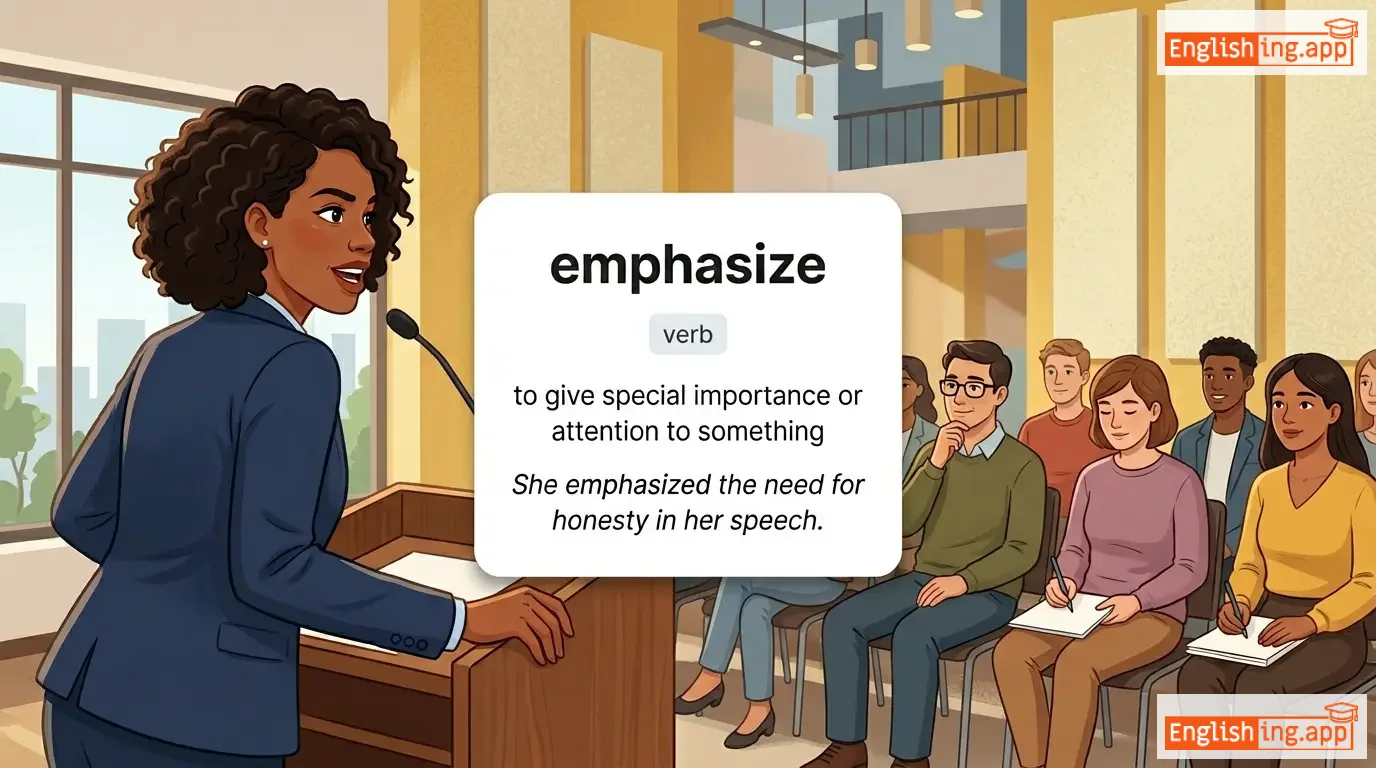
to give special importance or attention to something
••••••
|
She emphasized the need for honesty in her speech.
彼女はスピーチの中で正直さの重要性を強調しました。
••••••
|
彼女はスピーチの中で正直さの重要性を強調しました。
Kanojo wa supīchi no naka de shōjiki-sa no jūyō-sei o kyōchō shimashita.
••••••
|
cannot emphasize enough
十分に強調することはできません
••••••
|
used to strongly stress the importance of something
••••••
|
十分に強調することはできません
Jūbun ni kyōchō suru koto wa dekimasen
••••••
|
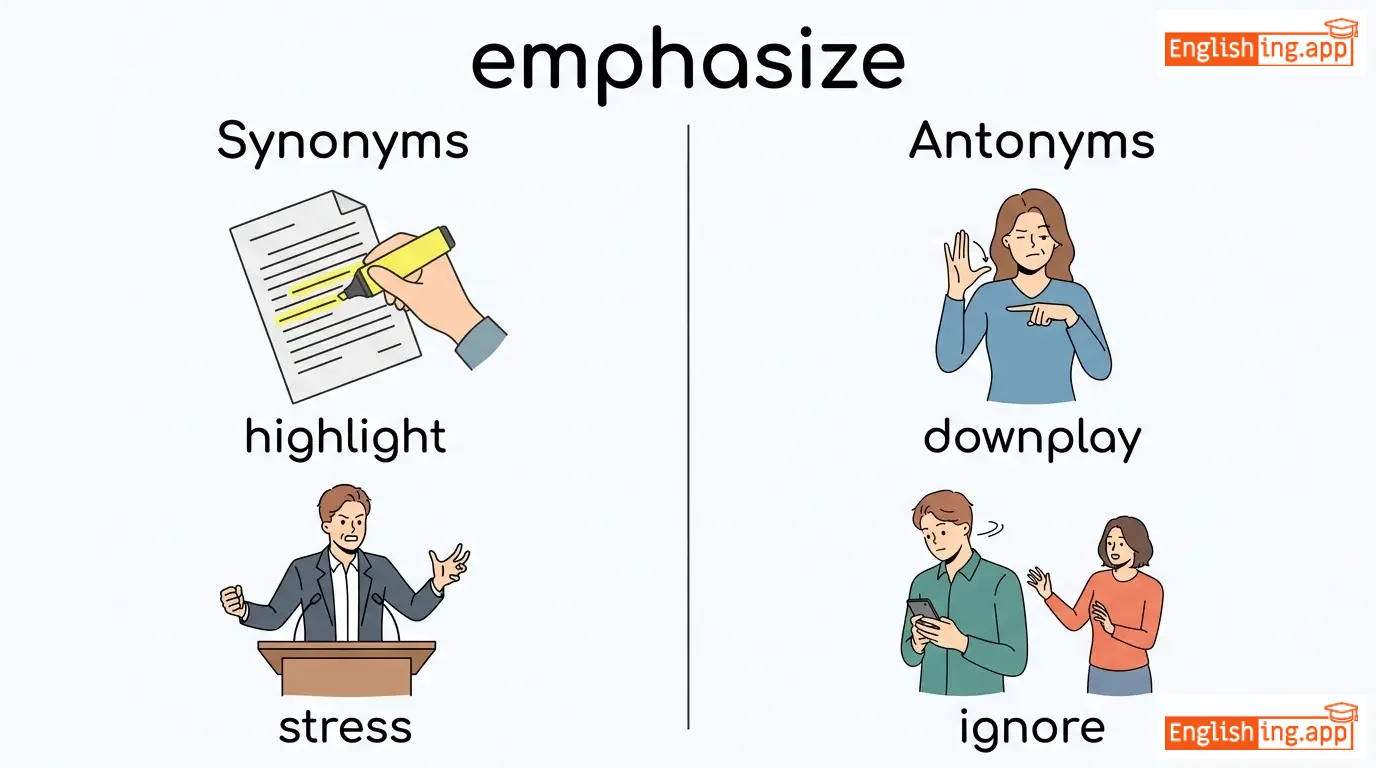
highlight, stress, underline, accentuate, point out
••••••
|
downplay, ignore, overlook
••••••
|
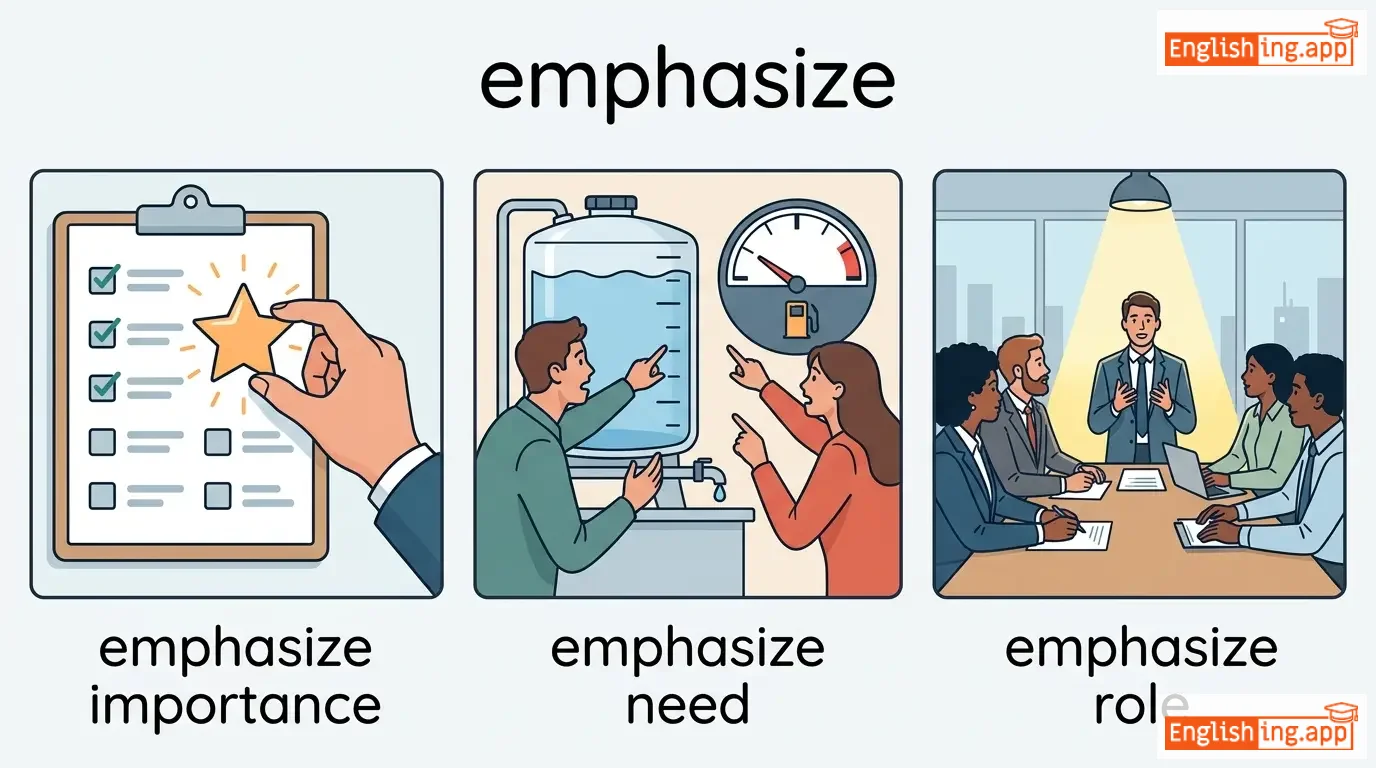
emphasize importance, emphasize need, emphasize role, emphasize strongly
••••••
|
強調することで、重要なことを目立たせる、まるで大文字のように!
••••••
|
|
#2960
🔍
|
/ˈɛmfəsɪs/
noun
(エンファシス)
••••••
|
|
強調
kyōchō
••••••
|
- •••••• | - •••••• | - •••••• | - •••••• |
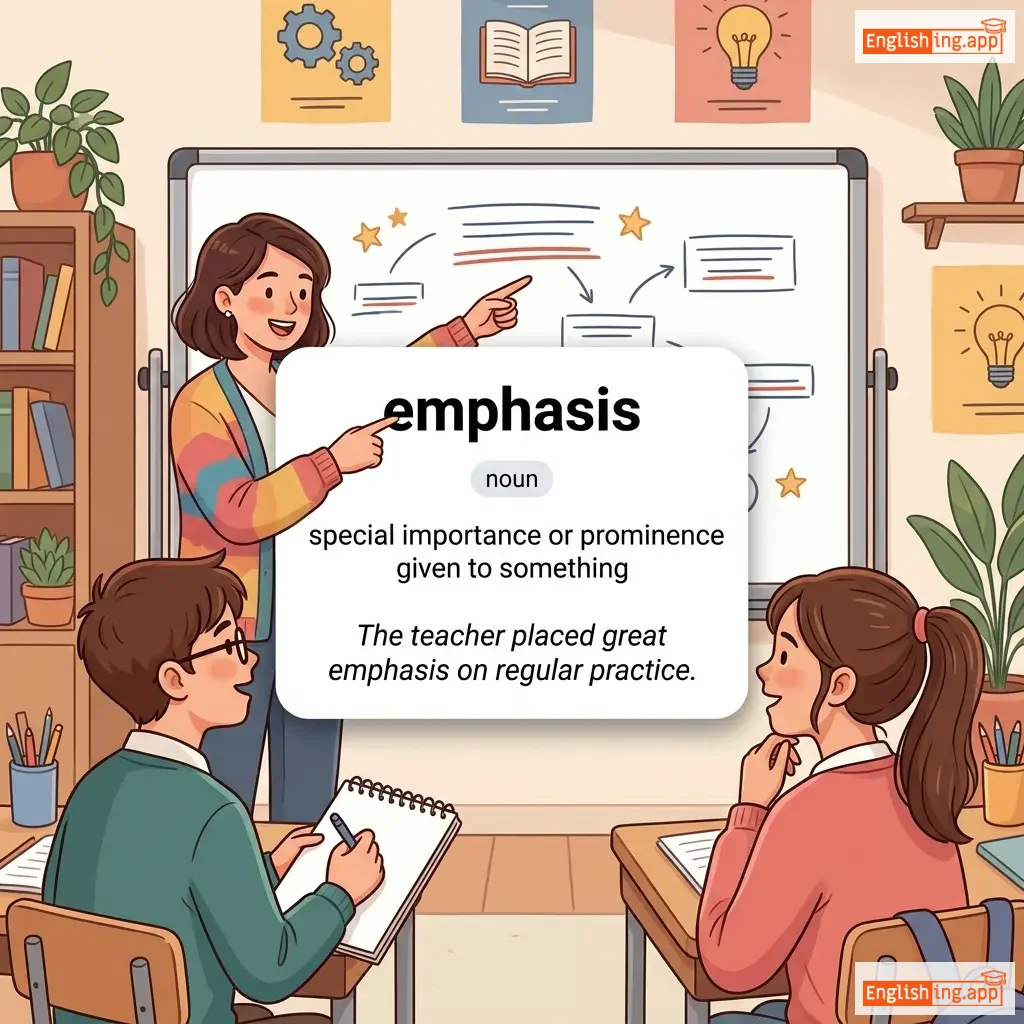
special importance or prominence given to something
••••••
|
The teacher placed great emphasis on regular practice. |
先生は定期的な練習の重要性を強調しました。
Sensei wa teikiteki na renshū no jūyō-sei o kyōchō shimashita.
••••••
|
place emphasis on |
to give special importance to something
••••••
|
強調する
kyōchō suru
••••••
|
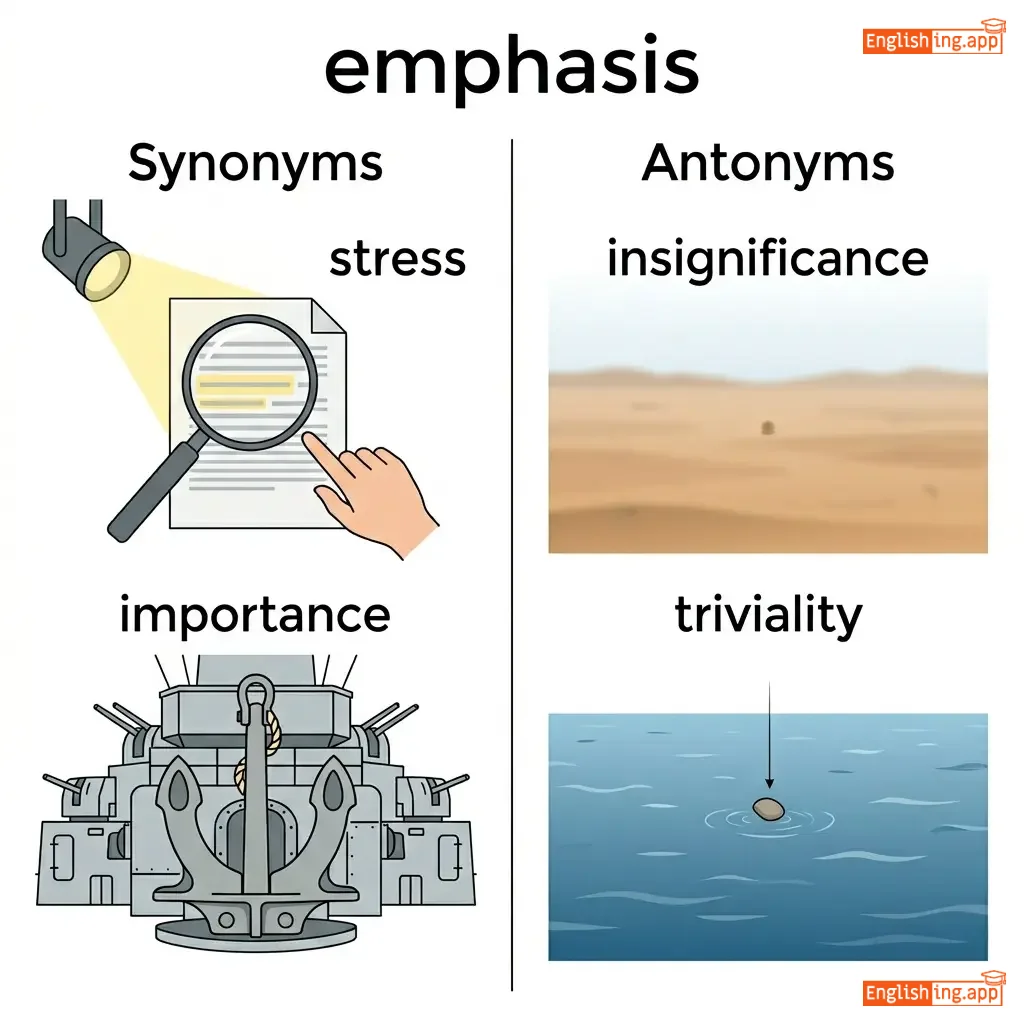
stress, importance, weight, significance, priority
••••••
|
insignificance, triviality
••••••
|
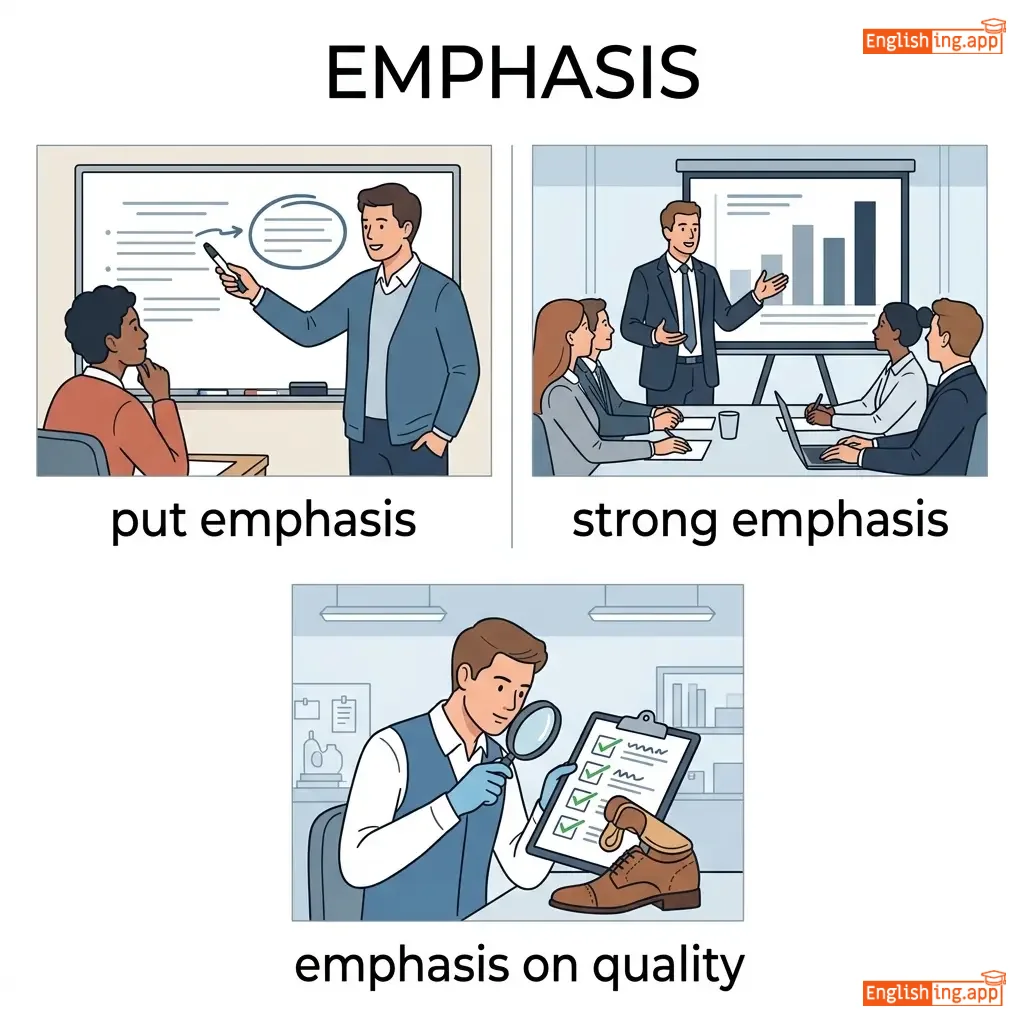
put emphasis, strong emphasis, emphasis on quality, emphasis added
••••••
|
強調(きょうちょう)という言葉は、何かを強く言うことから意味を取っています。
••••••
|
|
#2961
🤗
|
/ˈɛmpəθi/
noun
(エンパシー)
••••••
|
|
共感
kyoukan
••••••
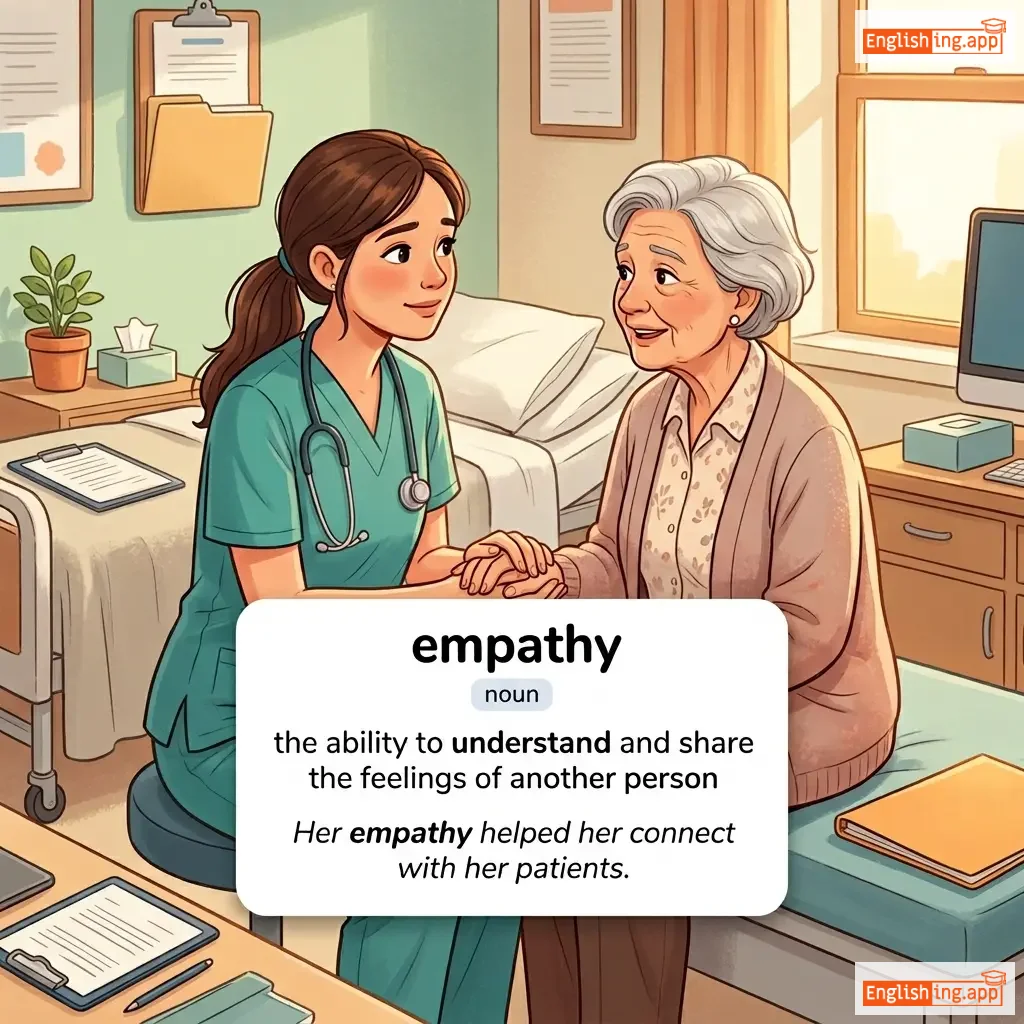
|
- •••••• | - •••••• | - •••••• | - •••••• |
the ability to understand and share the feelings of another person
••••••
|
Her empathy helped her connect with her patients.
彼女のエンパシーは、彼女が患者とつながるのに役立ちました。
••••••
|
彼女の共感は、彼女が患者とつながるのに役立ちました。
Kanojo no kyoukan wa, kanojo ga kanja to tsunagaru no ni yakudachimashita.
••••••
|
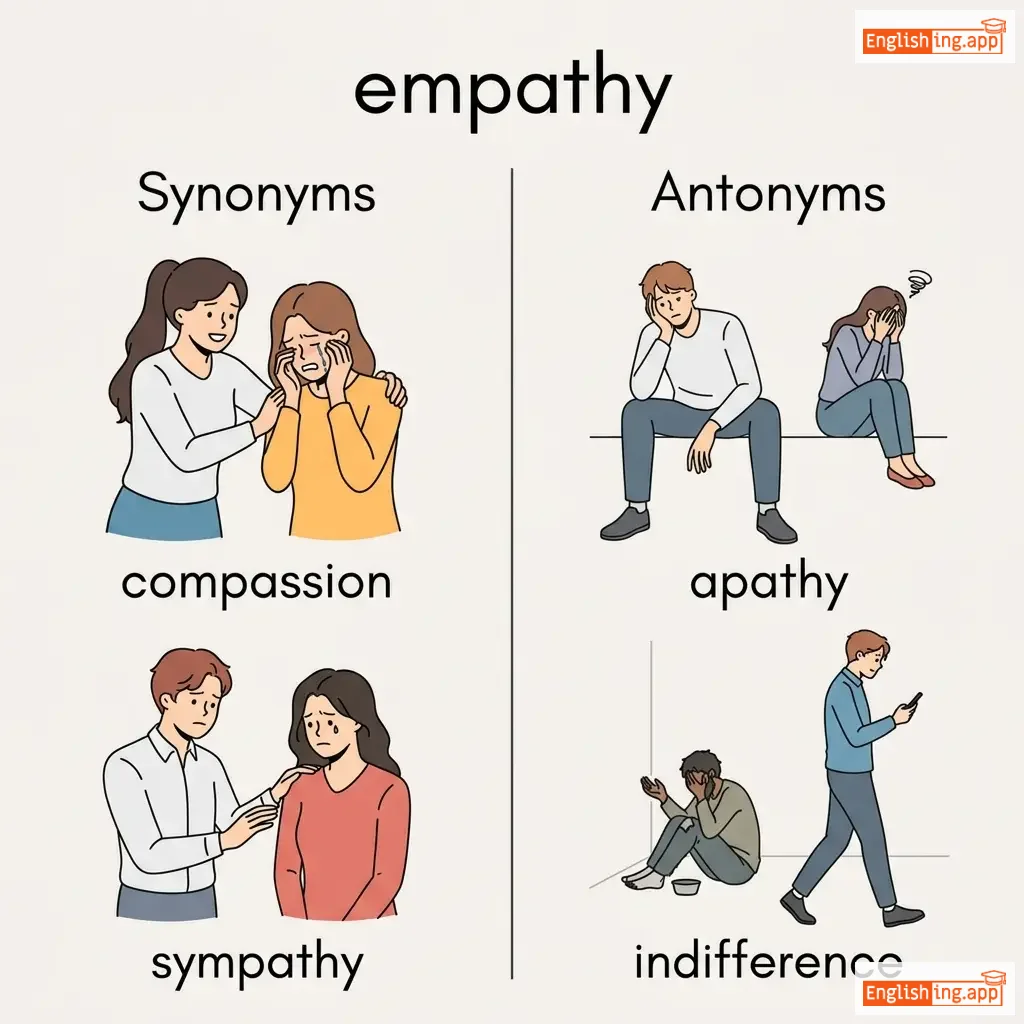
- •••••• | - •••••• | - •••••• |
compassion, sympathy, understanding, sensitivity
••••••
|
apathy, indifference
••••••
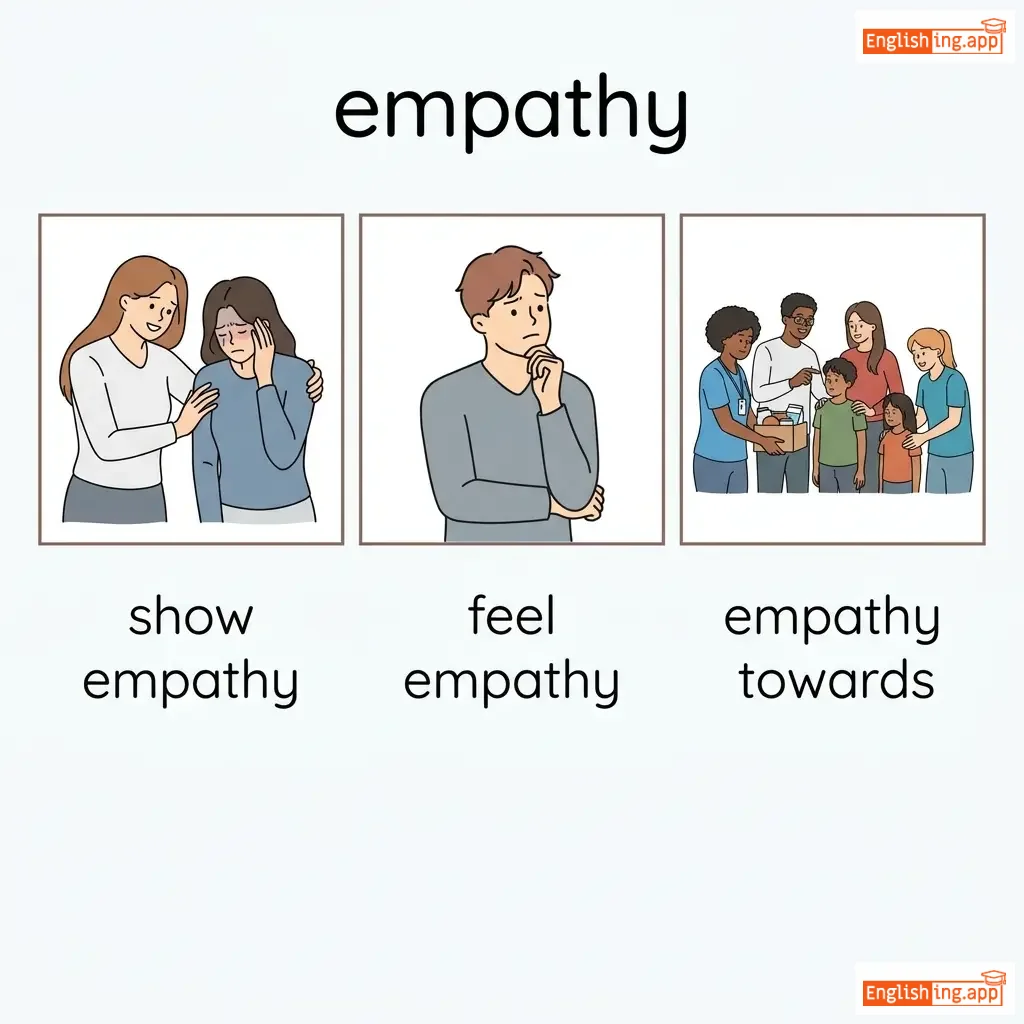
|
show empathy, feel empathy, empathy towards, empathy for
••••••
|
共感 = 他人の気持ちを感じ取ること。
••••••
|
|
#2962
💞
|
/ˌɛmpəˈθɛtɪk/
adjective
(エンパセティック)
••••••
|
|
共感的な
kyōkanteki na
••••••
|
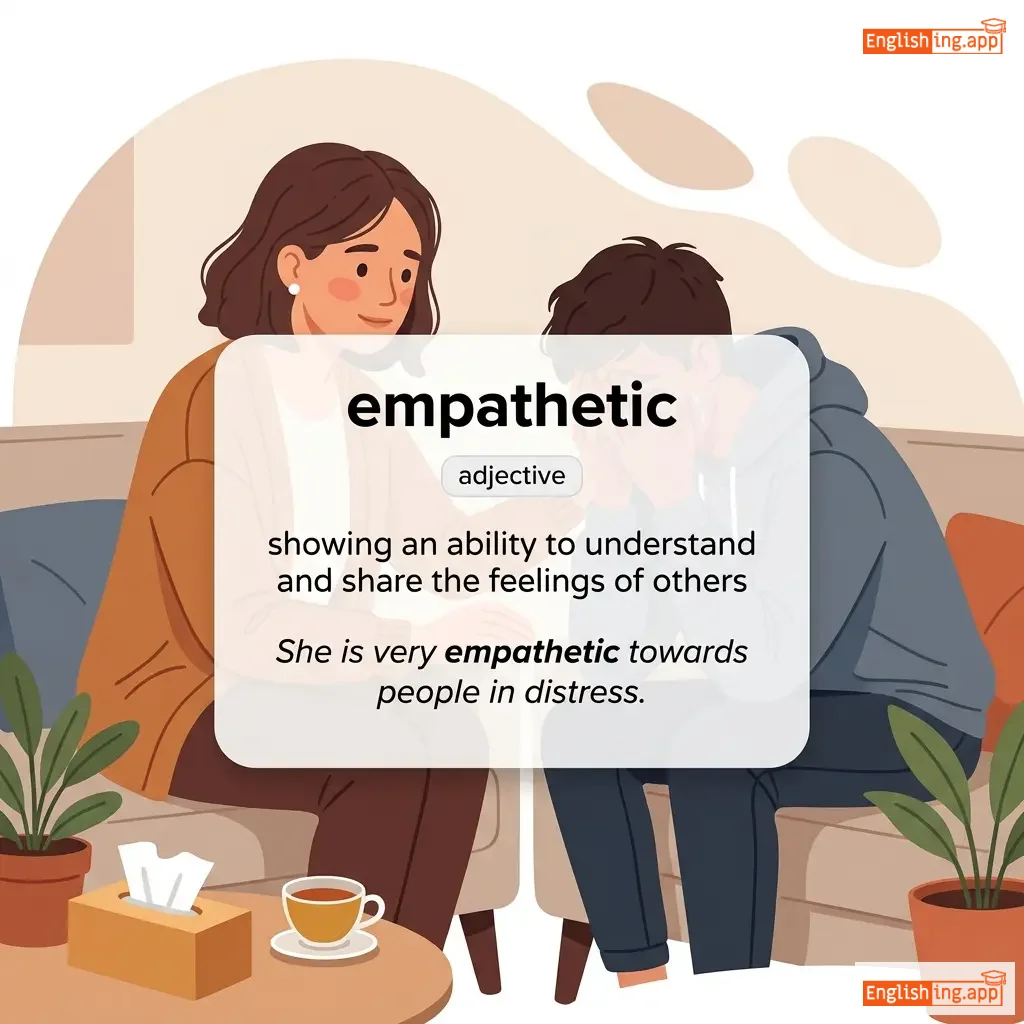
- •••••• | - •••••• | - •••••• | - •••••• |
showing an ability to understand and share the feelings of others
••••••
|
She is very empathetic towards people in distress.
彼女は困っている人々に非常に共感的です。
••••••
|
彼女は困っている人々に非常に共感的です。
Kanojo wa komatte iru hitobito ni hijō ni kyōkanteki desu.
••••••
|
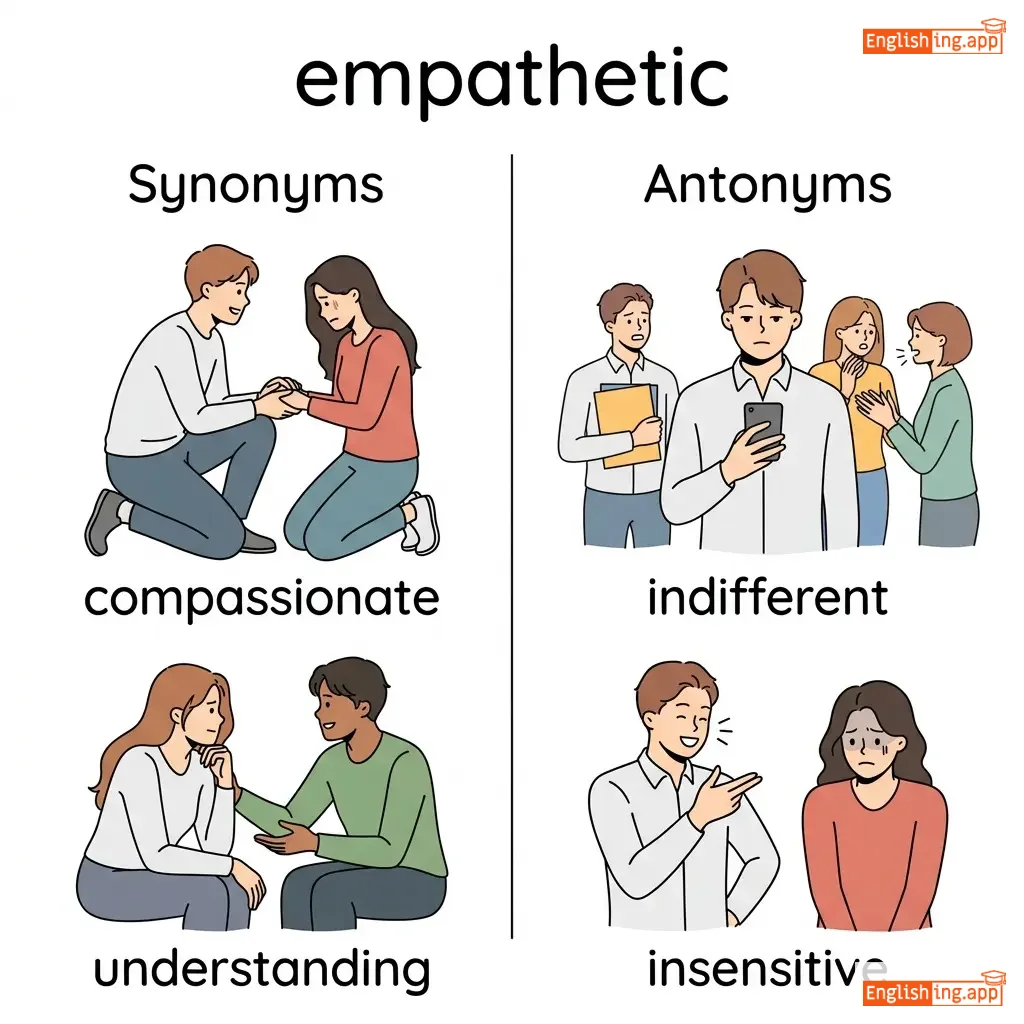
- •••••• | - •••••• | - •••••• |
compassionate, understanding, sympathetic, sensitive
••••••
|
indifferent, insensitive
••••••
|
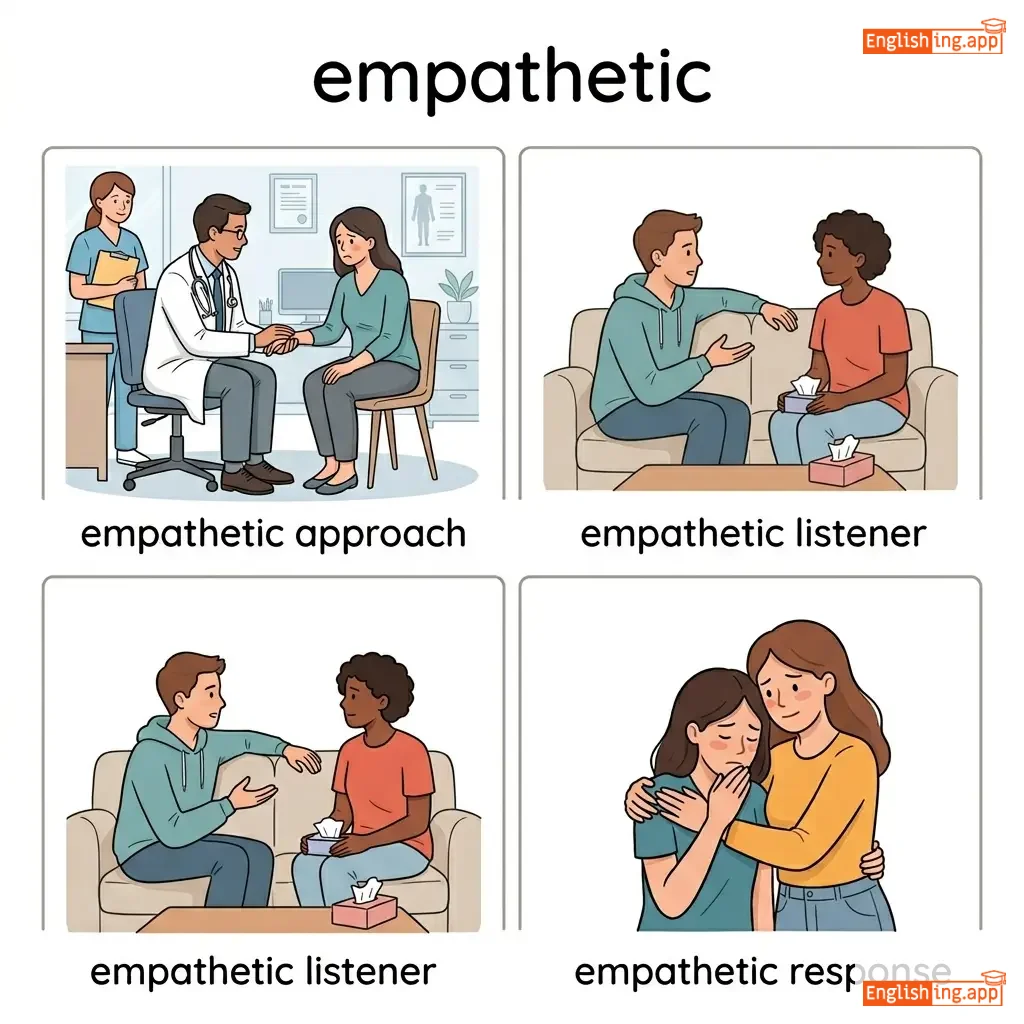
empathetic approach, empathetic listener, empathetic response
••••••
|
共感的なは他人の感情を理解して分かち合う能力を示す。
••••••
|
|
#2963
💰
|
/ɪˈmɒljʊmənt/
noun
(エモリュメント)
••••••
|
- •••••• |
給料
kyuuryou
••••••
|
- •••••• | - •••••• | - •••••• | - •••••• |
payment for work or services; salary or fees
••••••
|
The professor received his annual emolument from the university. |
教授は大学から年俸を受け取った。
Kyouju wa daigaku kara nenpo o uketotta.
••••••
|
- •••••• | - •••••• | - •••••• |
salary, wages, compensation, remuneration
••••••
|
penalty, loss
••••••
|
annual emolument, emolument package, receive emolument
••••••
|
エモリュメントは給料、働くと給料がもらえるという意味です。
••••••
|
|
#2964
🧴
|
/ɪˈmɒliənt/
noun/adjective
(エモリエント)
••••••
|
|
肌を柔らかくする物質
hada o yawarakaku suru busshitsu
••••••
|
- •••••• | - •••••• | - •••••• | - •••••• |
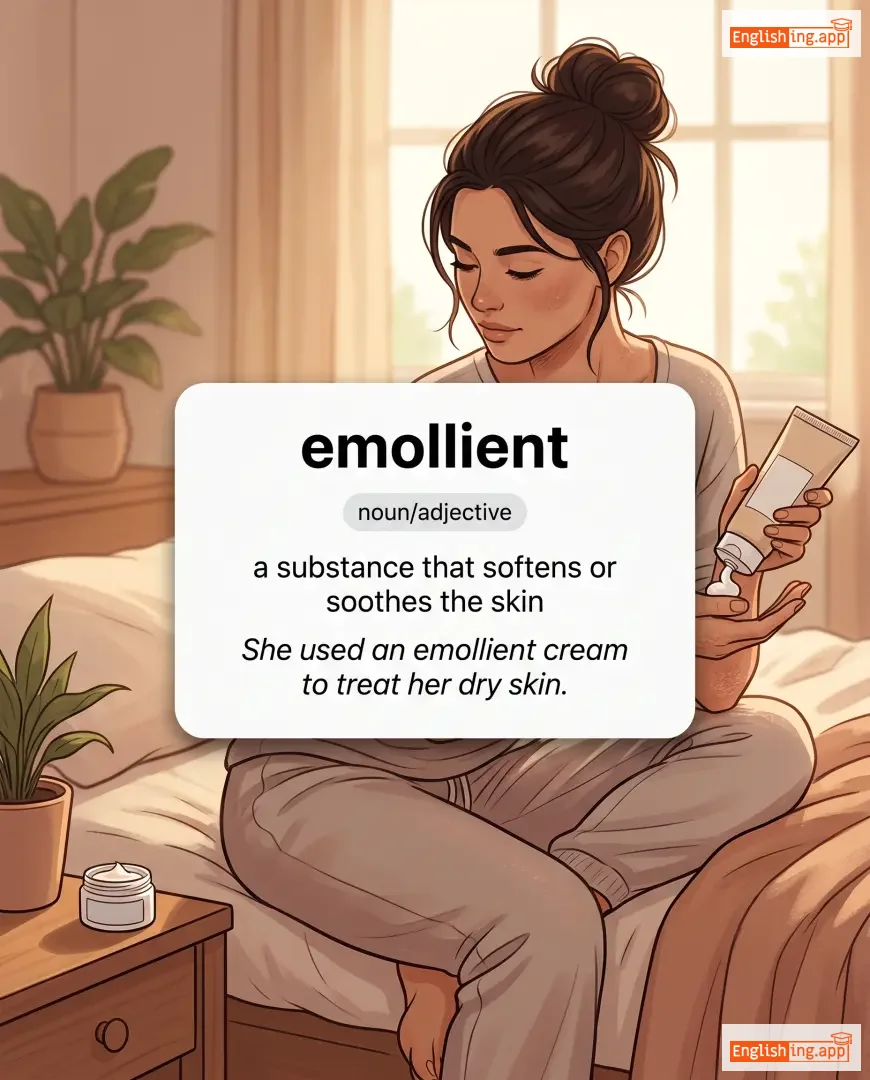
a substance that softens or soothes the skin
••••••
|
She used an emollient cream to treat her dry skin.
彼女は乾燥肌を治すためにエモリエントクリームを使いました。
••••••
|
彼女は乾燥肌を治すためにエモリエントクリームを使いました。
Kanojo wa kansouhada o naosu tame ni emorianto kuriimu o tsukaimashita.
••••••
|
- •••••• | - •••••• | - •••••• |
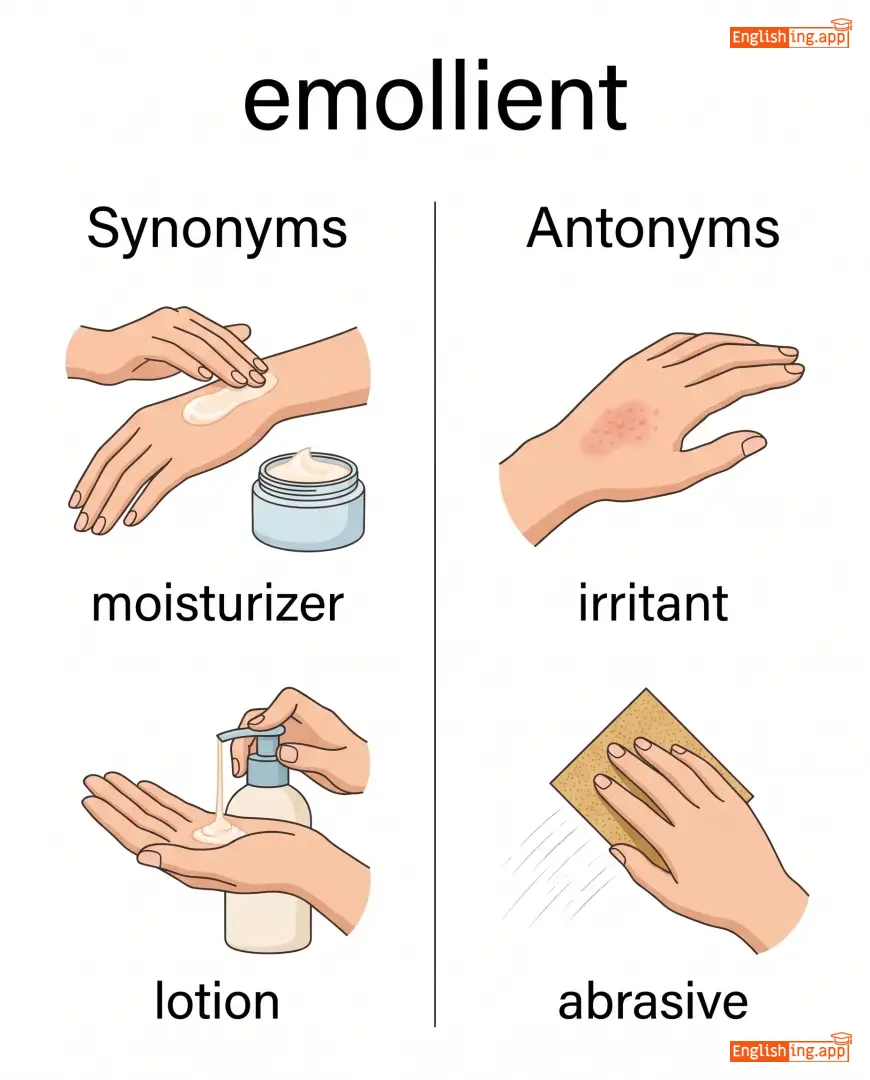
moisturizer, lotion, balm, ointment
••••••
|
irritant, abrasive
••••••
|
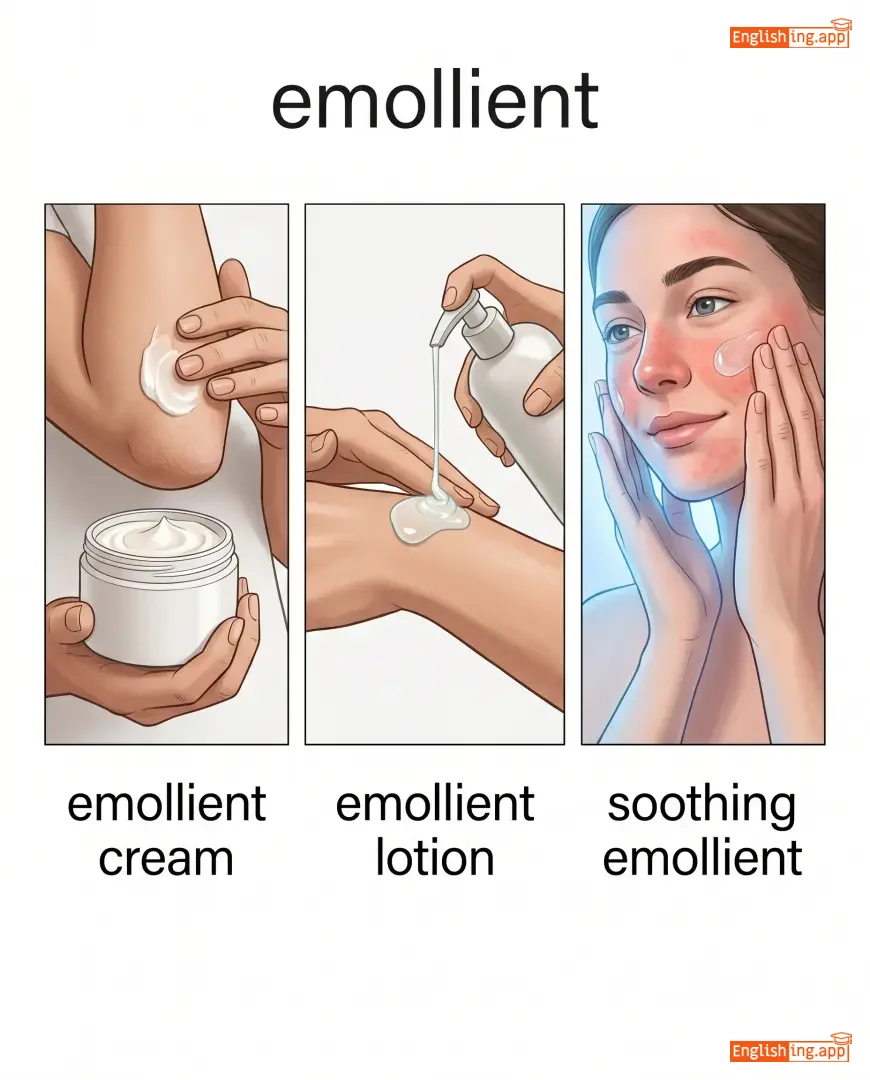
emollient cream, emollient lotion, soothing emollient
••••••
|
エモリエント: 皮膚をやわらかくするクリーム
••••••
|
|
#2965
💨
|
/ɪˈmɪt/
verb
(エミット)
••••••
|
- •••••• |
放出する
Hōshutsu suru
••••••
|
emitted
エミットされた
••••••
|
emitted
エミットされた
••••••
|
emits
エミットする
••••••
|
emitting
エミットしている
••••••
|
to send out something such as light, heat, sound, or gas
••••••
|
The factory emits smoke into the atmosphere.
工場は大気中に煙を排出します。
••••••
|
工場は大気中に煙を排出します。
Kōjō wa taikichū ni kemuri o haishutsu shimasu.
••••••
|
emit a sigh
ため息をつく
••••••
|
to let out a sound of relief or frustration
••••••
|
ため息をつく
Tameiki o tsuku
••••••
|
release, discharge, exhale, radiate, give off
••••••
|
absorb, contain, withhold
••••••
|
emit light, emit sound, emit radiation, emit gas
••••••
|
放出する、工場が煙を放出するように。
••••••
|
|
#2966
🕊️
|
/ˈɛmɪsɛri/
noun
(エミサリー)
••••••
|
- •••••• |
使者
shisha
••••••
|
- •••••• | - •••••• | - •••••• | - •••••• |
A person sent on a special mission, usually as a diplomatic representative.
••••••
|
The king sent an emissary to negotiate peace.
王は平和交渉のために使者を送った。
••••••
|
王は平和交渉のために使者を送った。
Ō wa heiwa kōshō no tame ni shisha o okutta.
••••••
|
- •••••• | - •••••• | - •••••• |
envoy, delegate, representative, agent, messenger
••••••
|
opponent, enemy
••••••
|
royal emissary, trusted emissary, political emissary, secret emissary
••••••
|
使者はメッセージを持つ特別な使者です。
••••••
|
|
#2967
🌟
|
/ˈɛmɪnənt/
adjective
••••••
|
|
- •••••• | - •••••• | - •••••• | - •••••• | - •••••• |
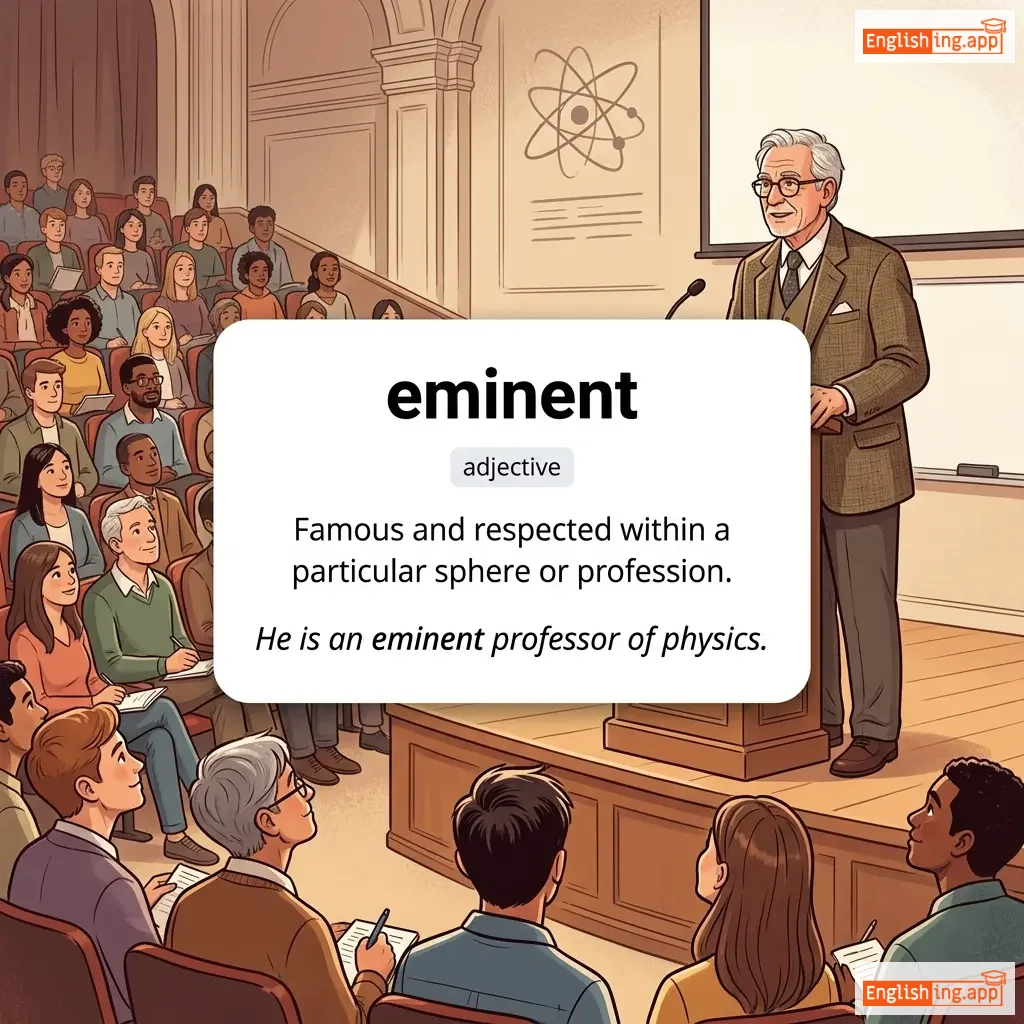
Famous and respected within a particular sphere or profession.
••••••
|
He is an eminent professor of physics. |
- •••••• |
eminent domain |
The right of a government to expropriate private property for public use.
••••••
|
- •••••• |
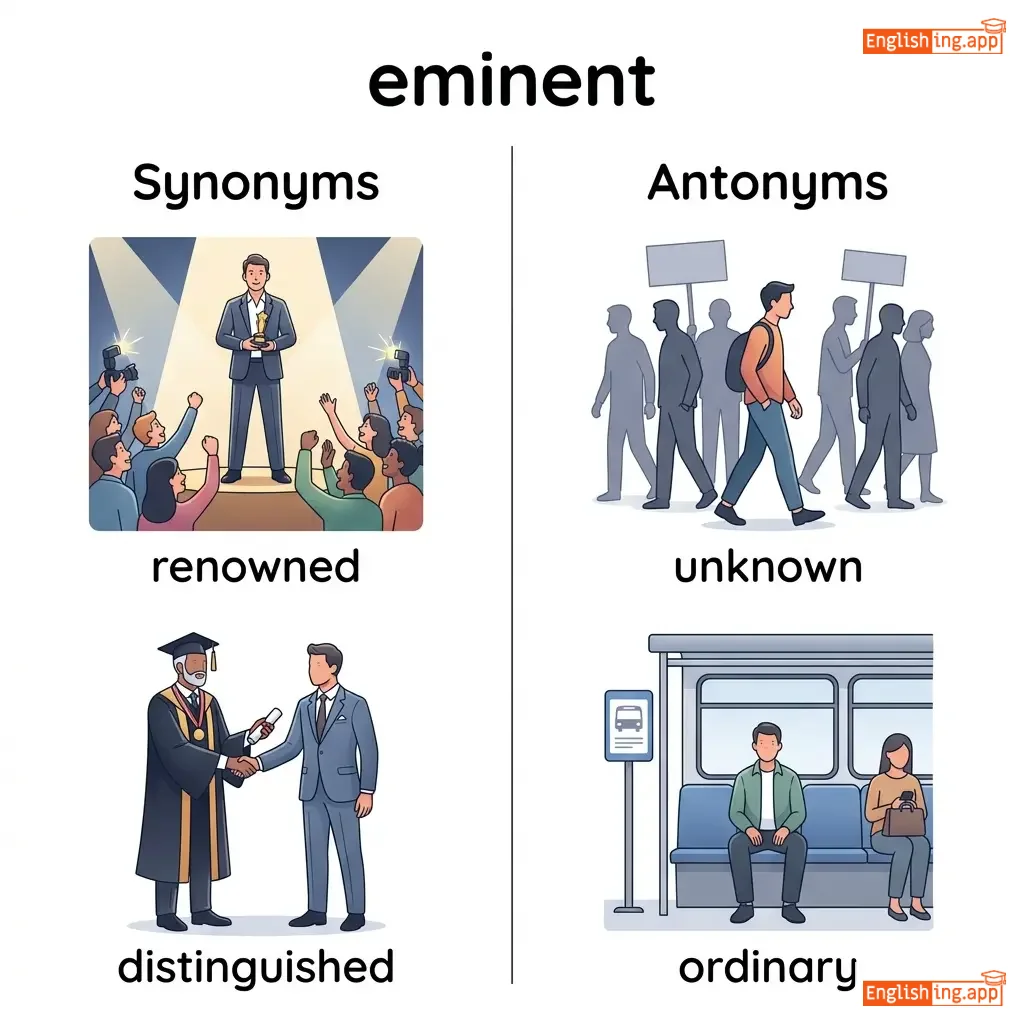
renowned, distinguished, notable, prominent, celebrated
••••••
|
unknown, ordinary, insignificant
••••••
|
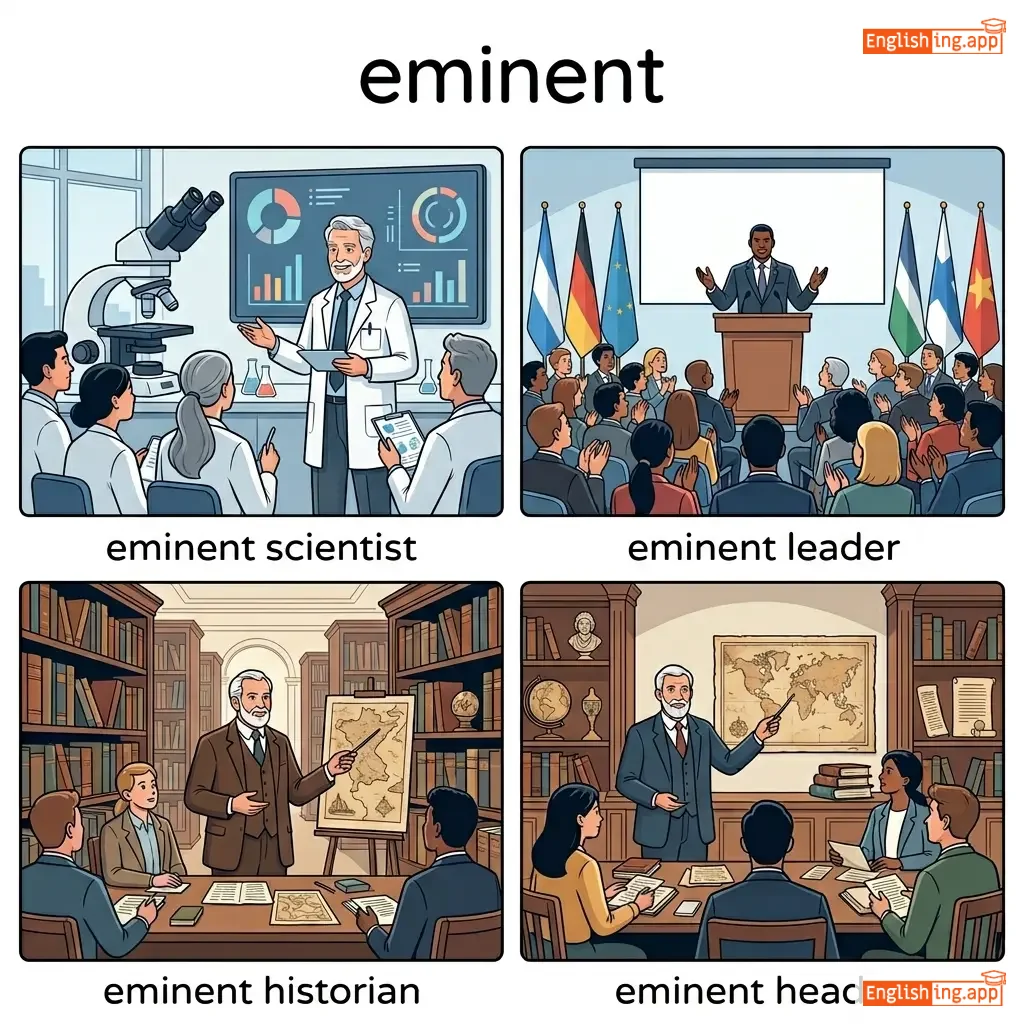
eminent scientist, eminent leader, eminent historian, eminent authority
••••••
|
No •••••• |
|
#2968
🏆
|
/ˈɛmɪnəns/
noun
(エミネンス)
••••••
|
- •••••• |
名声
meisei
••••••
|
- •••••• | - •••••• | - •••••• | - •••••• |
Fame or recognized superiority, especially within a particular sphere.
••••••
|
She rose to eminence as a leading scientist. |
彼女はリーディングサイエンティストとして名声を得た。
Kanojo wa rīdingusaientisuto toshite meisei o eta.
••••••
|
eminence grise |
A powerful decision-maker or adviser who operates behind the scenes.
••••••
|
グリスの名声
Gurisuno meisei
••••••
|
fame, distinction, prominence, renown, prestige
••••••
|
obscurity, insignificance, mediocrity
••••••
|
rise to eminence, achieve eminence, position of eminence, intellectual eminence
••••••
|
Eminence、Eminemのように、特定の分野で名声を得ること。
••••••
|
|
#2969
✈️
|
/ˈɛmɪˌɡreɪt/
verb
(移住する)
••••••
|
- •••••• |
移住する
ijū suru
••••••
|
emigrated
移住した
••••••
|
emigrated
移住した
••••••
|
emigrates
移住する
••••••
|
emigrating
移住している
••••••
|
To leave one's own country in order to settle permanently in another.
••••••
|
Many people emigrated from Europe to America in the 19th century.
多くの人々は19世紀にヨーロッパからアメリカに移住しました。
••••••
|
多くの人々は19世紀にヨーロッパからアメリカに移住しました。
Ōku no hitobito wa 19 seiki ni Yōroppa kara Amerika ni ijū shimashita.
••••••
|
- •••••• | - •••••• | - •••••• |
relocate, migrate, move abroad, resettle
••••••
|
immigrate, remain
••••••
|
emigrate abroad, emigrate permanently, emigrate legally, emigrate due to
••••••
|
移住するとは、故郷を離れ、別の国で新しい生活を始めることです。
••••••
|
|
#2970
🧳
|
/ˈɛmɪɡrənt/
noun
(エミグラント)
••••••
|
- •••••• |
移民
imin
••••••
|
- •••••• | - •••••• | - •••••• | - •••••• |
A person who leaves their own country to settle permanently in another.
••••••
|
The emigrant started a new life in Canada. |
移民はカナダで新しい生活を始めました。
Imin wa Kanada de atarashī seikatsu o hajimemashita.
••••••
|
- •••••• | - •••••• | - •••••• |
immigrant, settler, expatriate, migrant, exile
••••••
|
native, local, resident
••••••
|
emigrant community, emigrant family, emigrant workers, emigrant story
••••••
|
移民は自分の国を離れて、新しい場所で新しい生活を始める人です。
••••••
|
Vocabulary Quiz
Test your vocabulary by matching words with their translations or meanings.
Login to take the quiz
Comments (0)
Share your thoughts and join the discussion.
Join the discussion by logging in
Login to CommentNo comments yet
Be the first to share your thoughts!