

翻訳
過去
過去分詞
三人称単数
動名詞
意味
例文
例文の翻訳
同義語
対義語
コロケーション
ニーモニック
Swipe left or right, or use the buttons. Tap image to zoom.
例文の翻訳
単語
Lesson 287Lesson 287 - マスクトグル
|
絵文字
|
単語 | Images | 翻訳 | 過去 | 過去分詞 | 三人称単数 | 動名詞 | 意味 | 例文 | 例文の翻訳 | 表現例 | 表現例の意味 | 表現例の翻訳 | 同義語 | 対義語 | コロケーション | ニーモニック |
|---|---|---|---|---|---|---|---|---|---|---|---|---|---|---|---|---|---|
|
#8580
🕵️
|
/ˈswɪndlɚ/
noun
(スウィンドラー)
••••••
|
- •••••• |
詐欺師
sagishi
••••••
|
- •••••• | - •••••• | - •••••• | - •••••• |
a person who cheats or deceives others for money or gain
••••••
|
The police finally caught the notorious swindler.
警察はついに悪名高い詐欺師を捕まえた。
••••••
|
警察はついに悪名高い詐欺師を捕まえた。
Keisatsu wa tsuini akumei takai sagishi o tsukamaeta.
••••••
|
- •••••• | - •••••• | - •••••• |
cheater, fraudster, trickster, scammer
••••••
|
gentleman, benefactor
••••••
|
notorious swindler, clever swindler, professional swindler
••••••
|
Swindlerは詐欺師として金を巻き上げる人物
••••••
|
|
#8581
⚖️
|
/sɪˈmɛtrɪkəl/
adjective
(シンメトリカル)
••••••
|
- •••••• |
対称的
taishō-teki
••••••
|
- •••••• | - •••••• | - •••••• | - •••••• |
having parts on either side that match or are the same in shape, size, or arrangement
••••••
|
The artist designed a symmetrical pattern on the floor. |
アーティストは床に対称的なパターンをデザインしました。
Ātisuto wa yuka ni taishō-teki na patān o dezain shimashita.
••••••
|
- •••••• | - •••••• | - •••••• |
balanced, proportionate, even, regular, uniform
••••••
|
asymmetrical, irregular, uneven
••••••
|
symmetrical pattern, symmetrical shape, symmetrical design, symmetrical features
••••••
|
対称的な形、対の意味で、symmetricalも同じ形です。
••••••
|
|
#8582
🤝
|
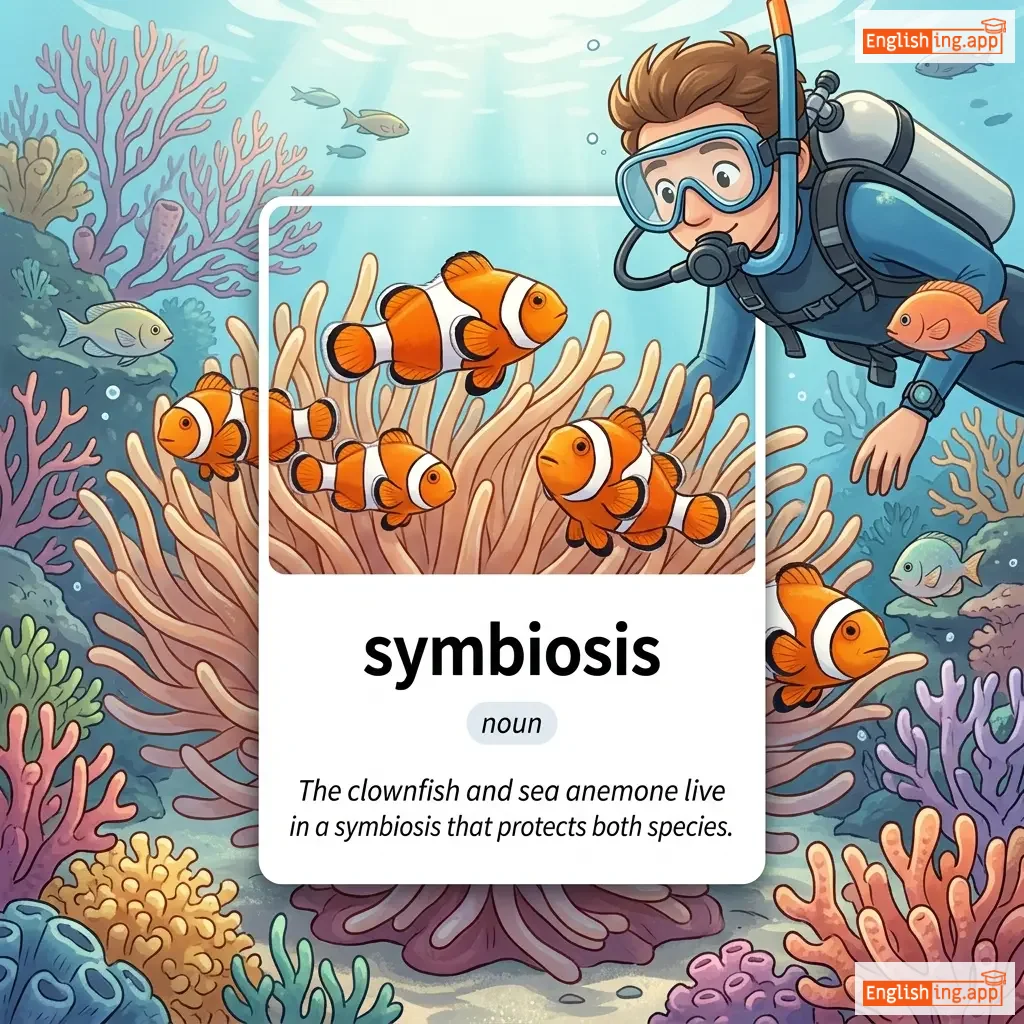
/ˌsɪmbaɪˈoʊsɪs/
noun
(シンビオシス)
••••••
|
|
共生
kyousei
••••••
|
- •••••• | - •••••• | - •••••• | - •••••• |
A close and often long-term interaction between two different species that benefits both.
••••••
|
The clownfish and sea anemone live in a symbiosis that protects both species. |
クマノミとイソギンチャクは、両方の種を保護する共生関係の中で生活しています。
Kumanomi to isoginchaku wa, ryōhō no shū wo hogo suru kyōsei kankei no naka de seikatsu shiteimasu.
••••••
|
live in symbiosis |
to coexist in a mutually beneficial relationship
••••••
|
共生する
kyousei suru
••••••
|
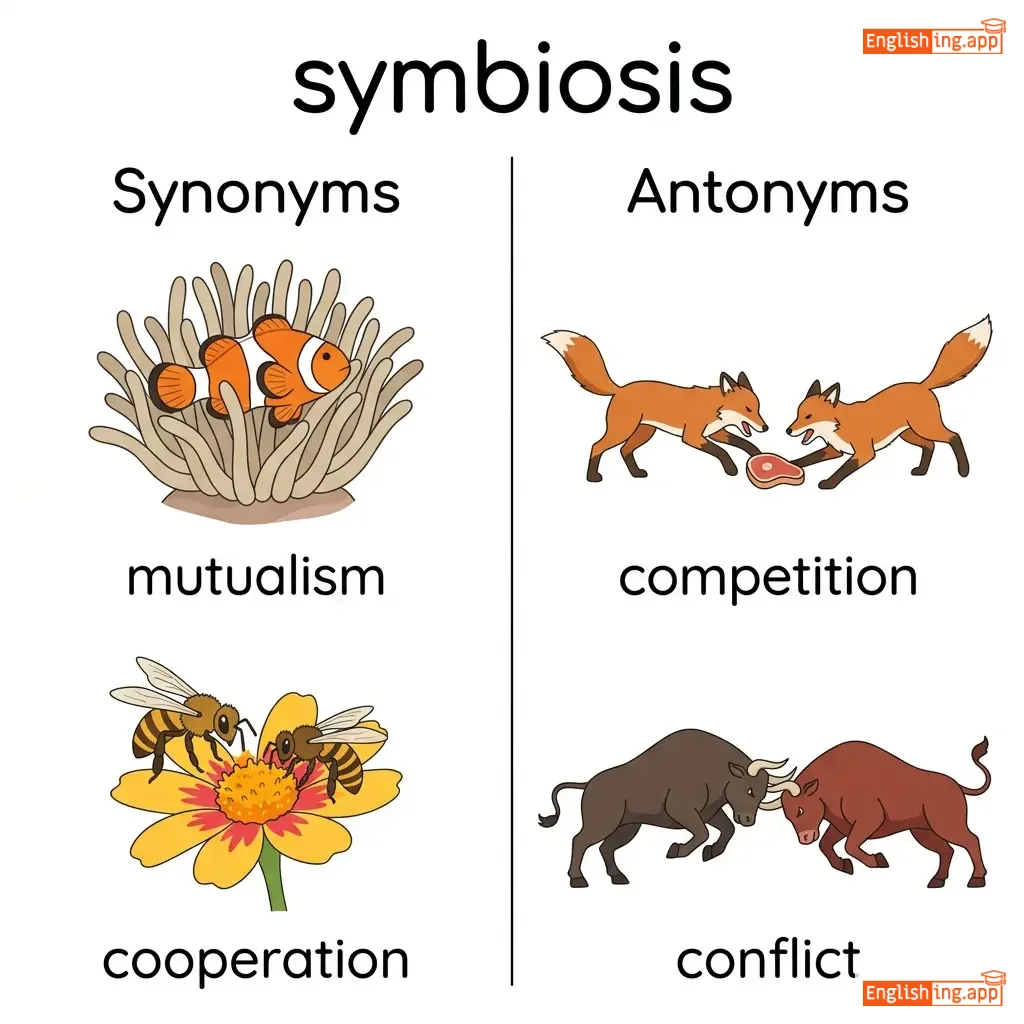
mutualism, cooperation, partnership, interdependence
••••••
|
competition, conflict
••••••
|
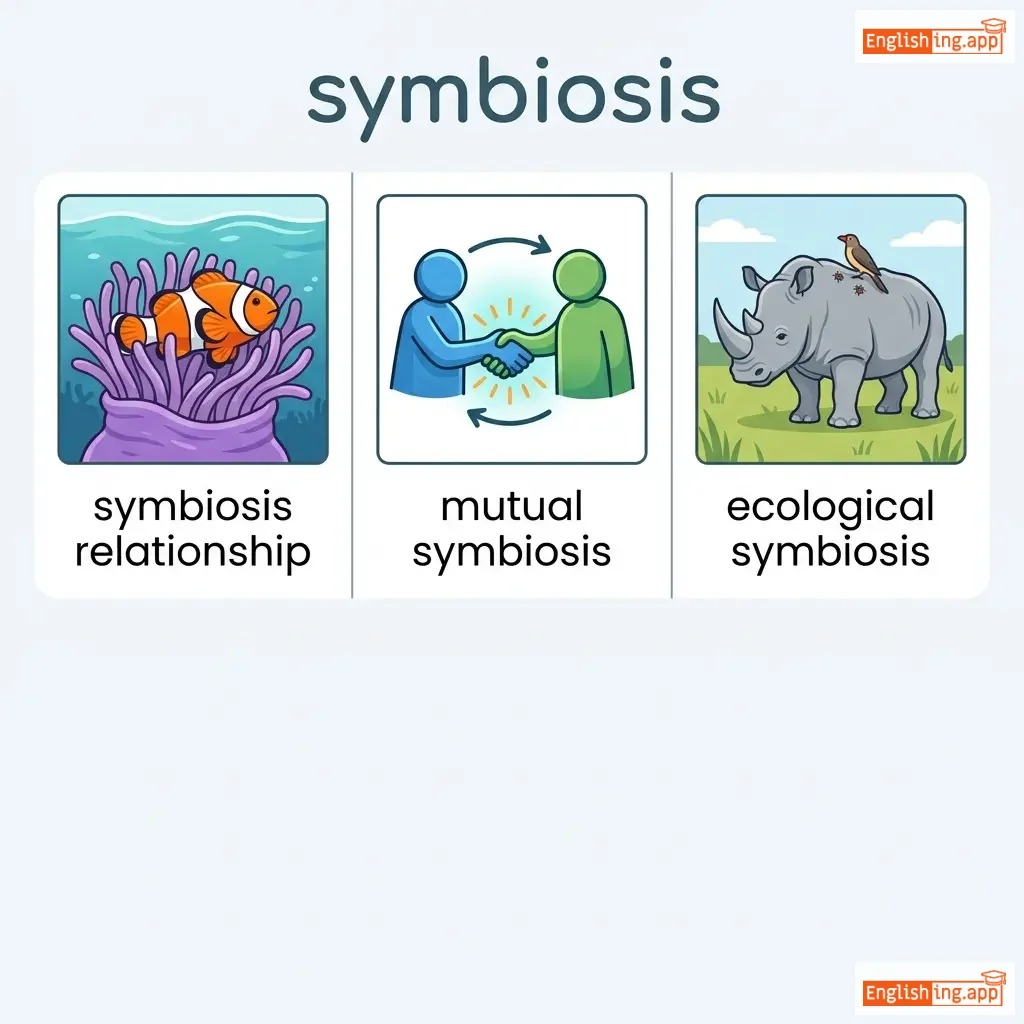
symbiosis relationship, mutual symbiosis, ecological symbiosis, symbiosis between species
••••••
|
Symbiosisは一緒に生きることを意味します – sym + biosis = 同じ命、英語で共生。
••••••
|
|
#8583
🌲
|
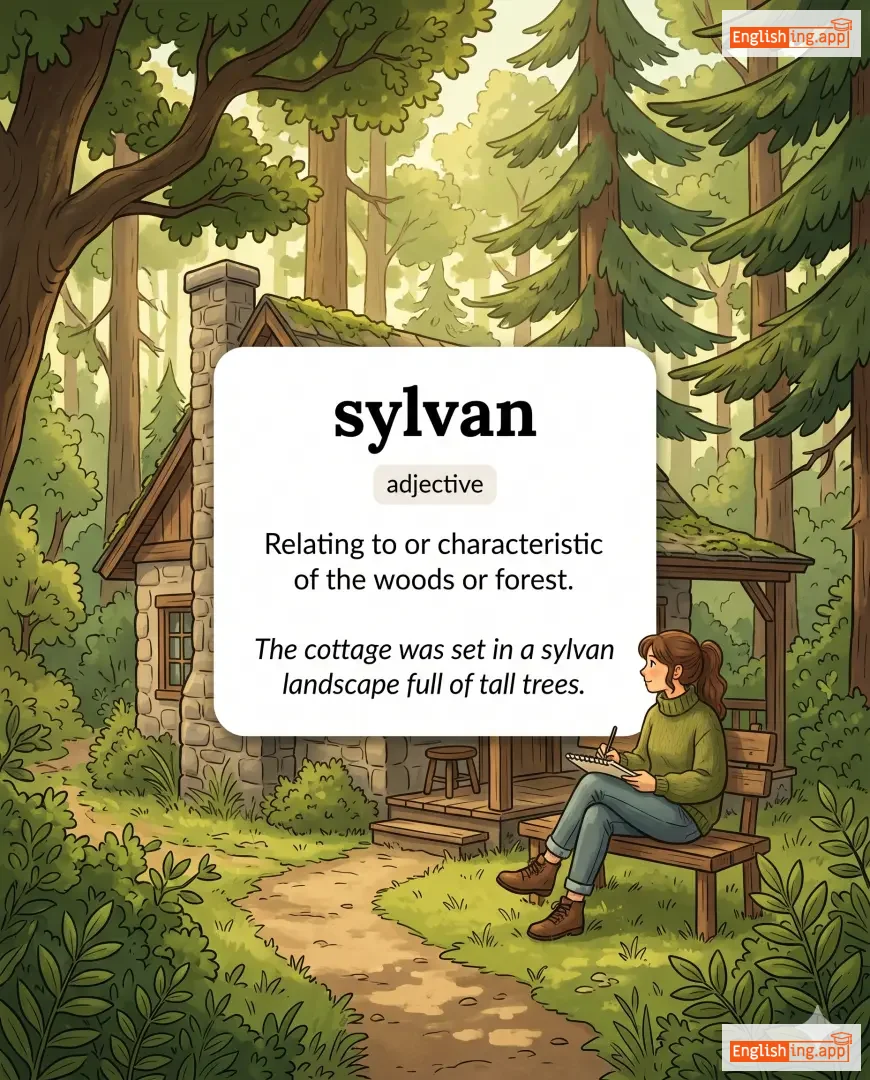
/ˈsɪlvən/
adjective
(シルヴァン)
••••••
|
|
森林の
shinrin no
••••••
|
- •••••• | - •••••• | - •••••• | - •••••• |
Relating to or characteristic of the woods or forest.
••••••
|
The cottage was set in a sylvan landscape full of tall trees. |
その小屋は、高い木々に囲まれた森林の風景の中にありました。
Sono koya wa, takai kigi ni kakomareta shinrin no fuukei no naka ni arimashita.
••••••
|
- •••••• | - •••••• | - •••••• |
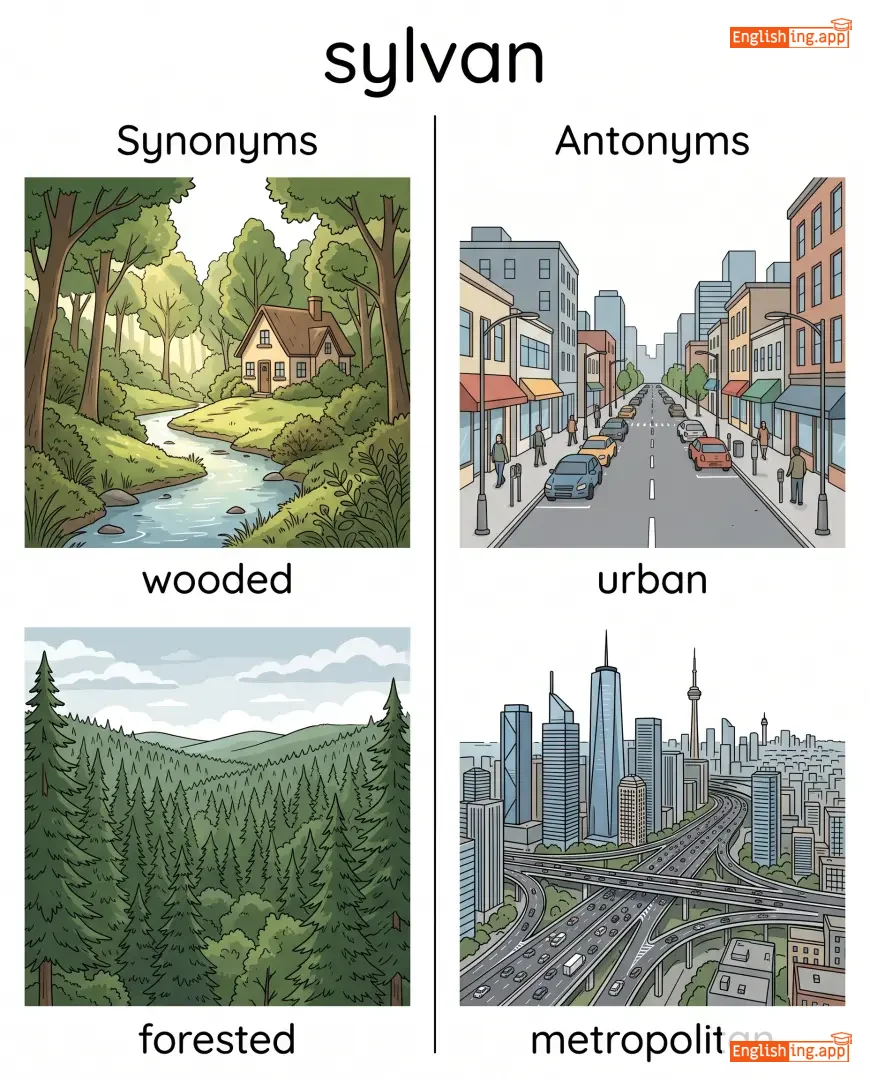
wooded, forested, rustic, pastoral
••••••
|
urban, metropolitan
••••••
|
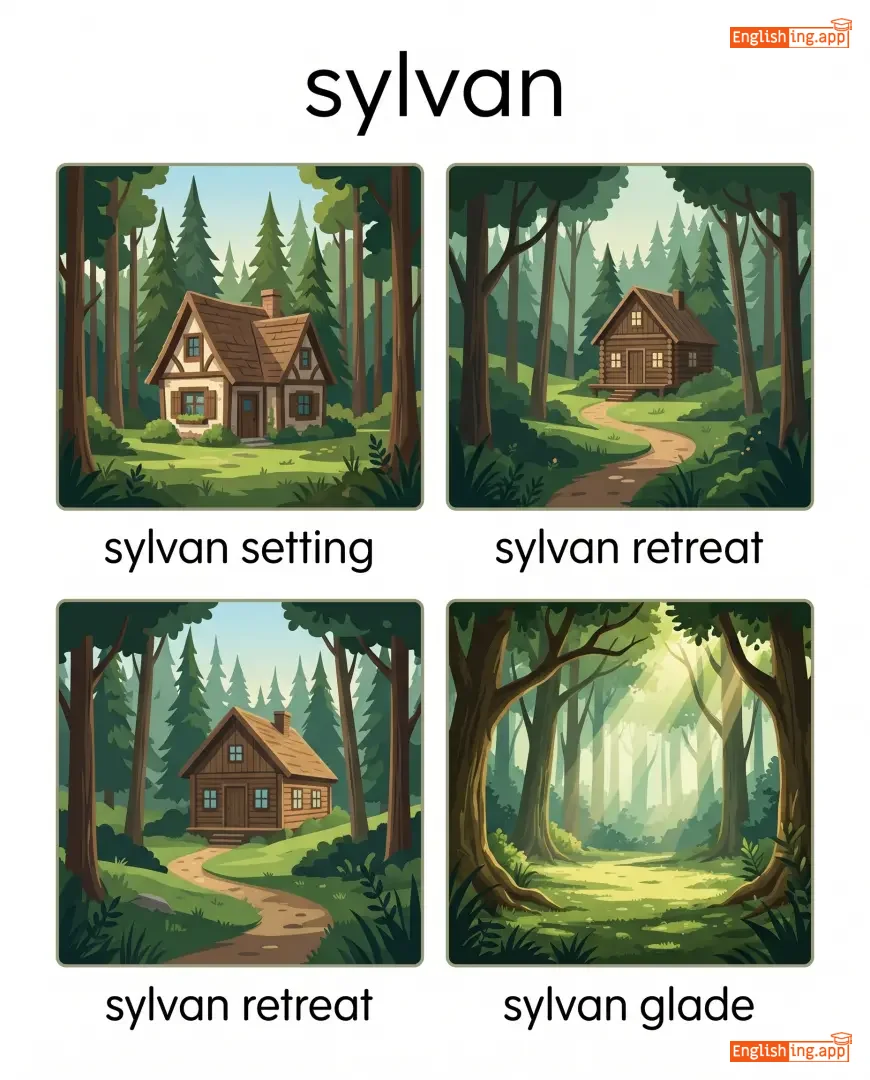
sylvan setting, sylvan retreat, sylvan glade, sylvan beauty
••••••
|
Sylvanは森林の意味、森の中の家を想像してください。
••••••
|
|
#8584
🧚
|
/sɪlf/
noun
(シルフ)
••••••
|
- •••••• |
シルフィード
shirufīdo
••••••
|
- •••••• | - •••••• | - •••••• | - •••••• |
A mythical spirit of the air; also refers to a slender, graceful woman.
••••••
|
She moved across the stage like a sylph, light and graceful. |
彼女は舞台上をシルフィードのように軽やかで優雅に動いていました。
Kanojo wa butaijō o shirufīdo no yō ni karoyaka de yūga ni ugōite imashita.
••••••
|
- •••••• | - •••••• | - •••••• |
spirit, fairy, nymph, sprite
••••••
|
giant, ogre
••••••
|
air sylph, graceful sylph, slender sylph, sylph-like figure
••••••
|
Sylphはシルフィード、軽やかで優雅な精霊のような存在です。
••••••
|
|
#8585
🧠
|
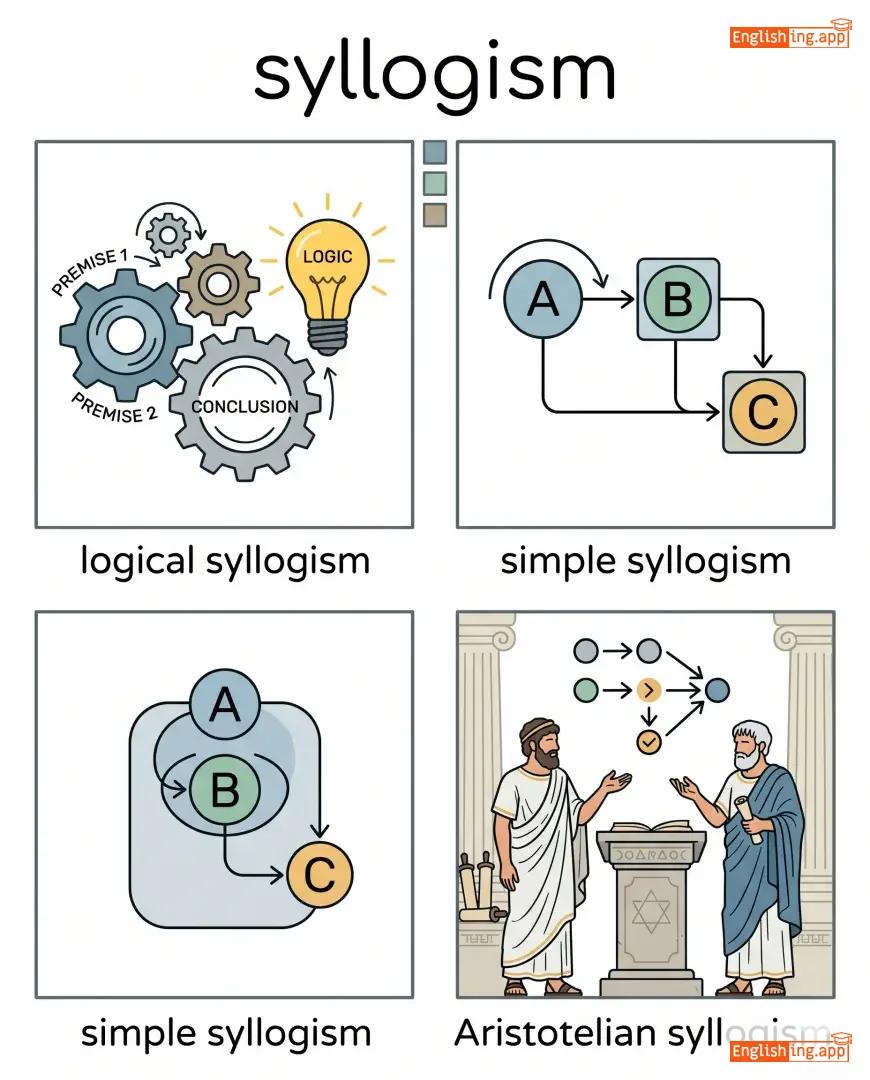
/ˈsɪlədʒɪzəm/
noun
(シロジズム)
••••••
|
|
三段論法
sandanonpou
••••••
|
- •••••• | - •••••• | - •••••• | - •••••• |
A form of reasoning in which a conclusion is drawn from two given or assumed premises.
••••••
|
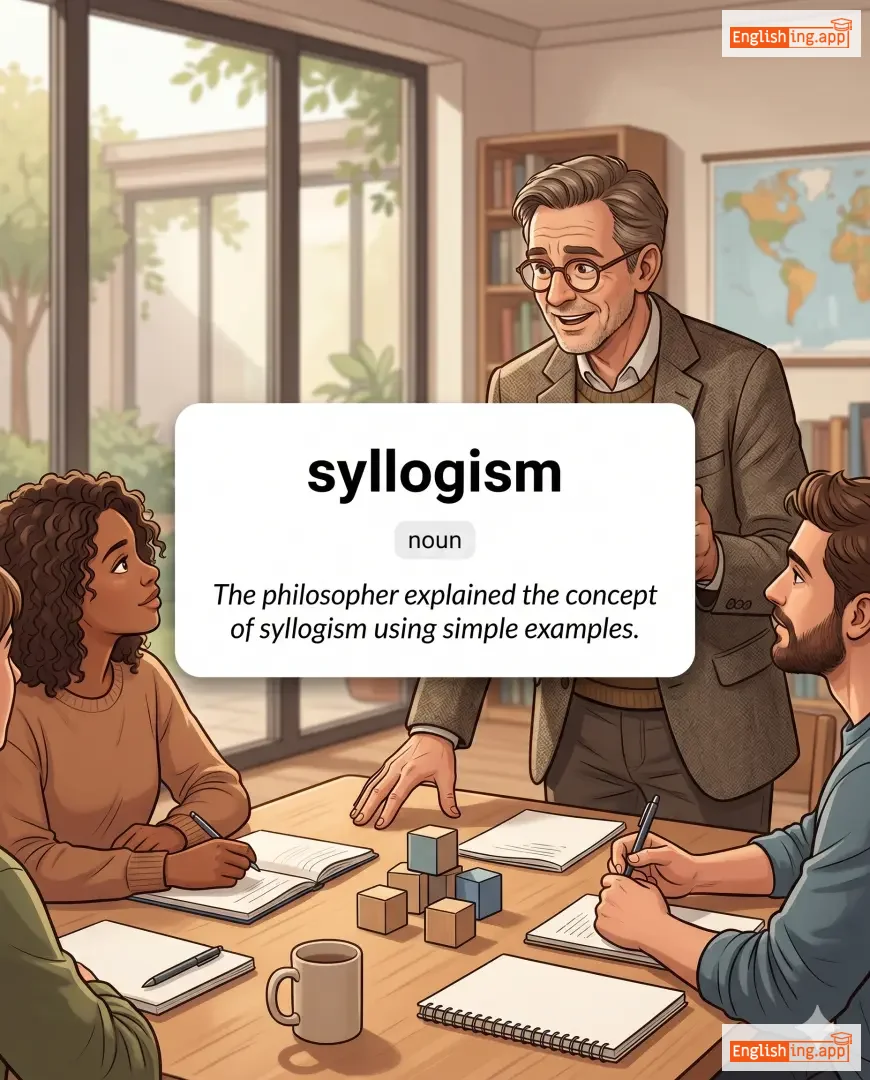
The philosopher explained the concept of syllogism using simple examples.
哲学者は簡単な例を使って三段論法の概念を説明しました。
••••••
|
哲学者は簡単な例を使って三段論法の概念を説明しました。
Tetsugakusha wa kantan na rei o tsukatte sandanonpou no gainen o setsumei shimashita.
••••••
|
- •••••• | - •••••• | - •••••• |
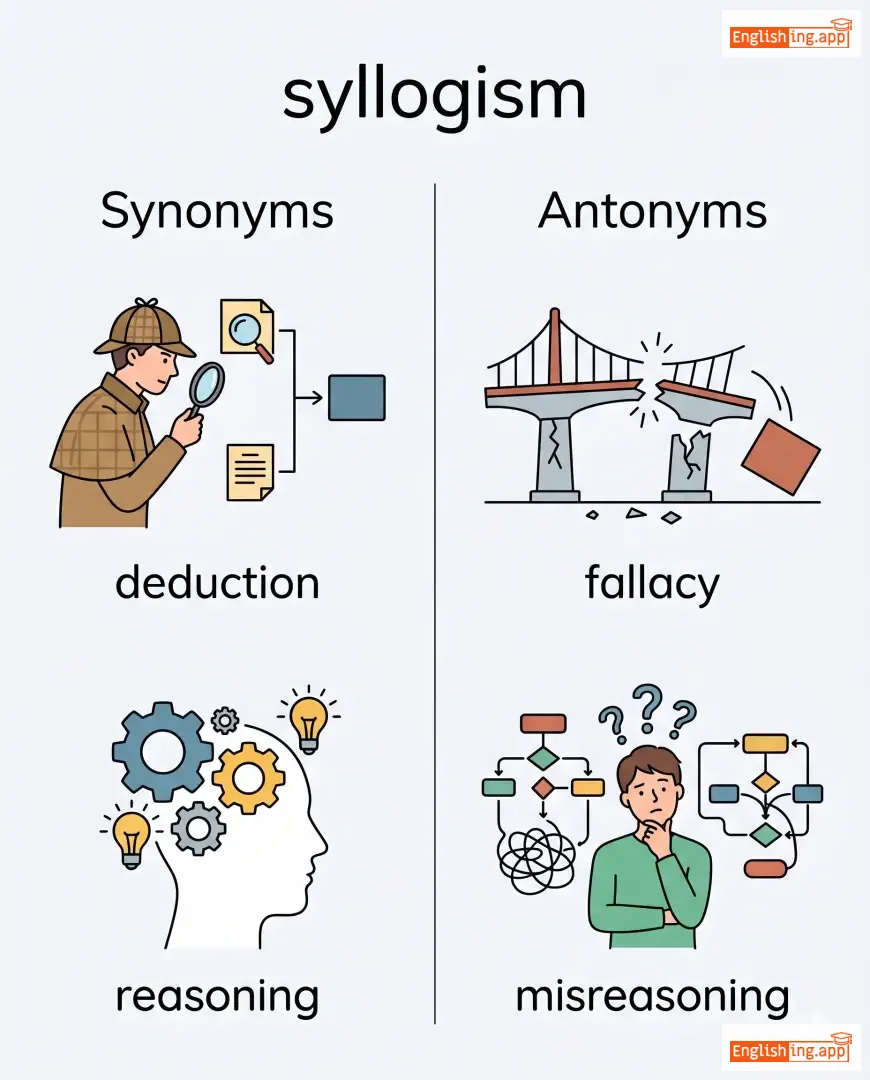
deduction, reasoning, logic, inference
••••••
|
fallacy, misreasoning
••••••
|
logical syllogism, simple syllogism, Aristotelian syllogism, valid syllogism
••••••
|
三段論法は論理的なシステムであり、全ての論理がサイロに保存されているようなものです。
••••••
|
|
#8586
📘
|
/ˈsɪləbəs/
noun
(シラバス)
••••••
|
- •••••• |
シラバス
shirabasu
••••••
|
- •••••• | - •••••• | - •••••• | - •••••• |
An outline or summary of topics to be covered in a course of study.
••••••
|
The professor handed out the syllabus on the first day of class. |
教授は初日にシラバスを配布しました。
Kyōju wa shonichi ni shirabasu o haifu shimashita.
••••••
|
- •••••• | - •••••• | - •••••• |
curriculum, outline, schedule, program, course plan
••••••
|
improvisation, spontaneity
••••••
|
course syllabus, detailed syllabus, semester syllabus, syllabus outline
••••••
|
シラバス = 学習の計画書。
••••••
|
|
#8587
🔠
|
/ˈsɪləbəl/
noun
(シラブル)
••••••
|
- •••••• |
音節
onsetsu
••••••
|
- •••••• | - •••••• | - •••••• | - •••••• |
A unit of pronunciation having one vowel sound, with or without surrounding consonants, forming the whole or part of a word.
••••••
|
The word 'computer' has three syllables. |
‘コンピュータ’という言葉は3つの音節から成り立っています。
'Konpyu-ta' to iu kotoba wa mittsu no onsetsu kara naritatte imasu.
••••••
|
every syllable counts |
each word or part of speech is important
••••••
|
すべての音節が重要です
Subete no onsetsu ga juuyou desu
••••••
|
morpheme,sound unit,phoneme,word part
••••••
|
word,phrase
••••••
|
syllable count,syllable stress,syllable structure,syllable division
••••••
|
Syllableは音節を意味します — 各音節がパズルのピースのように思い出してください。
••••••
|
|
#8588
✂️
|
/ˌsɪləbɪˈkeɪʃən/
noun
(シラビケーション)
••••••
|
- •••••• |
音節分け
onsetsu wake
••••••
|
- •••••• | - •••••• | - •••••• | - •••••• |
The division of words into syllables.
••••••
|
Proper syllabication helps in correct pronunciation. |
適切な音節分けは正しい発音に役立ちます。
Tekisetsu na onsetsu wake wa tadashii hatsuon ni yakudachimasu.
••••••
|
- •••••• | - •••••• | - •••••• |
syllable division,word splitting,phonetic segmentation
••••••
|
mispronunciation,incorrect division
••••••
|
rules of syllabication,syllabication practice,syllabication system
••••••
|
音節分けは、言葉を小さな部分に分けること、ちょうどピザを一口大に切るようなものです。
••••••
|
|
#8589
🔡
|
/sɪˈlæbɪk/
adjective
(シラビック)
••••••
|
- •••••• |
音節の
onsen no
••••••
|
- •••••• | - •••••• | - •••••• | - •••••• |
Relating to or based on syllables.
••••••
|
The teacher explained the syllabic structure of the word.
先生はその言葉の音節構造を説明しました。
••••••
|
先生はその言葉の音節構造を説明しました。
Sensei wa sono kotoba no onsetsu kōzō o setsumei shimashita.
••••••
|
- •••••• | - •••••• | - •••••• |
phonetic,rhythmic,linguistic,prosodic
••••••
|
non-syllabic,unmetrical
••••••
|
syllabic structure,syllabic stress,syllabic form,syllabic analysis
••••••
|
音節の、音節に関連している、単語を音節に分けることを考えてください。
••••••
|
|
#8590
🙏
|
/ˌsɪkəˈfæntɪk/
adjective
(サイコファンティック)
••••••
|
- •••••• |
お世辞
oseji
••••••
|
- •••••• | - •••••• | - •••••• | - •••••• |
Behaving in a way that is excessively obedient or servile to gain favor.
••••••
|
His sycophantic behavior annoyed his colleagues. |
彼のお世辞な振る舞いは同僚をうんざりさせた。
Kare no oseji na furumai wa douriou wo unzari saseta.
••••••
|
- •••••• | - •••••• | - •••••• |
obsequious,servile,flattering,toadying
••••••
|
independent,assertive
••••••
|
sycophantic praise,sycophantic attitude,sycophantic behavior,sycophantic follower
••••••
|
Sycophanticはお世辞 — 'Fan'は常にボスの後ろにいます。
••••••
|
|
#8591
🙇
|
/ˈsɪkəfənt/
noun
(サイコファント)
••••••
|
- •••••• |
お世辞使い
oseji tsukai
••••••
|
- •••••• | - •••••• | - •••••• | - •••••• |
A person who acts obsequiously toward someone important in order to gain advantage.
••••••
|
The manager was surrounded by sycophants who agreed with everything he said.
マネージャーは、彼が言ったことすべてに同意するお世辞を言う人々に囲まれていました。
••••••
|
マネージャーは、彼が言ったことすべてに同意するお世辞を言う人々に囲まれていました。
Manējā wa, kare ga itta koto subete ni dōi suru oseji o iu hitobito ni kakomarete imashita.
••••••
|
play the sycophant
お世辞を言う人になる
••••••
|
to flatter excessively to gain favor
••••••
|
お世辞を言う人になる
oseji o iu hito ni naru
••••••
|
flatterer,toady,yes-man,brown-noser,bootlicker
••••••
|
critic,opponent
••••••
|
political sycophant,loyal sycophant,sycophant followers,flattering sycophant
••••••
|
Sycophant はお世辞使いを意味します — 権力者の周りにいつもいるお世辞使いを想像してください。
••••••
|
|
#8592
🍷
|
/ˈsɪbəraɪt/
noun
(サイバライト)
••••••
|
- •••••• |
贅沢主義者
zeitakushugisha
••••••
|
- •••••• | - •••••• | - •••••• | - •••••• |
a person who loves luxury and pleasure
••••••
|
The millionaire was a true sybarite who lived only for comfort and enjoyment.
その百万長者は真のサイバライトで、快適さと楽しみだけを求めて生きていました。
••••••
|
その百万長者は真の贅沢主義者で、快適さと楽しみだけを求めて生きていました。
sono hyakuman chōja wa shin no zeitakushugisha de, kaitekisa to tanoshimi dake o motomete ikite imashita.
••••••
|
- •••••• | - •••••• | - •••••• |
luxuriant, hedonist, epicure, sensualist
••••••
|
ascetic, minimalist
••••••
|
true sybarite, wealthy sybarite, pleasure-loving sybarite
••••••
|
贅沢主義者は常に贅沢と快適さを追い求めます。
••••••
|
|
#8593
📱
|
/swaɪp/
verb
(スワイプ)
••••••
|
- •••••• |
スワイプする
suaipu suru
••••••
|
swiped
スワイプド
••••••
|
swiped
スワイプド
••••••
|
swipes
スワイプス
••••••
|
swiping
スワイピング
••••••
|
to move your finger across a touch screen or to hit with a sweeping motion
••••••
|
He swiped left on the photo.
彼は写真で左にスワイプしました。
••••••
|
彼は写真で左にスワイプしました。
Kare wa shashin de hidari ni suaipu shimashita.
••••••
|
swipe left
スワイプ左
••••••
|
to reject or dismiss, often in dating apps
••••••
|
左にスワイプする
hidari ni suaipu suru
••••••
|
slide, drag, brush, strike
••••••
|
tap, press
••••••
|
swipe card, swipe screen, swipe left, swipe up
••••••
|
Swipeは画面をスワイプすること - スワイプする
••••••
|
|
#8594
⛓️
|
/swɪŋ/
verb
(スウィング)
••••••
|
|
ブランコをする
buranko wo suru
••••••
|
swung
スワング
••••••
|
swung
スワング
••••••
|
swings
スウィングス
••••••
|
swinging
スウィンギング
••••••
|
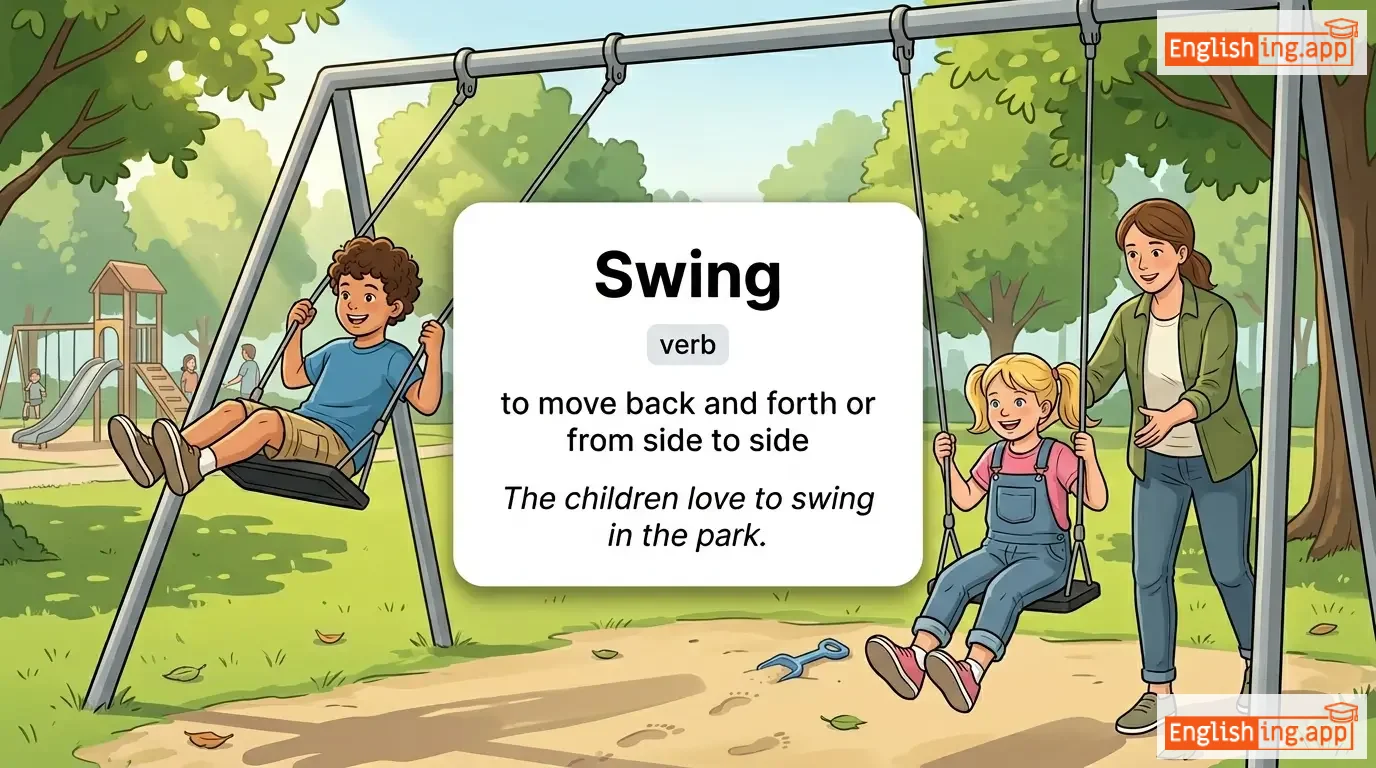
to move back and forth or from side to side
••••••
|
The children love to swing in the park.
子供たちは公園でブランコをするのが大好きです。
••••••
|
子供たちは公園でブランコをするのが大好きです。
Kodomotachi wa kōen de buranko o suru no ga daisuki desu.
••••••
|
swing into action
すぐに行動を起こす
••••••
|
to start doing something quickly and effectively
••••••
|
迅速に行動を起こす
Jinsoku ni kōdō o okosu
••••••
|
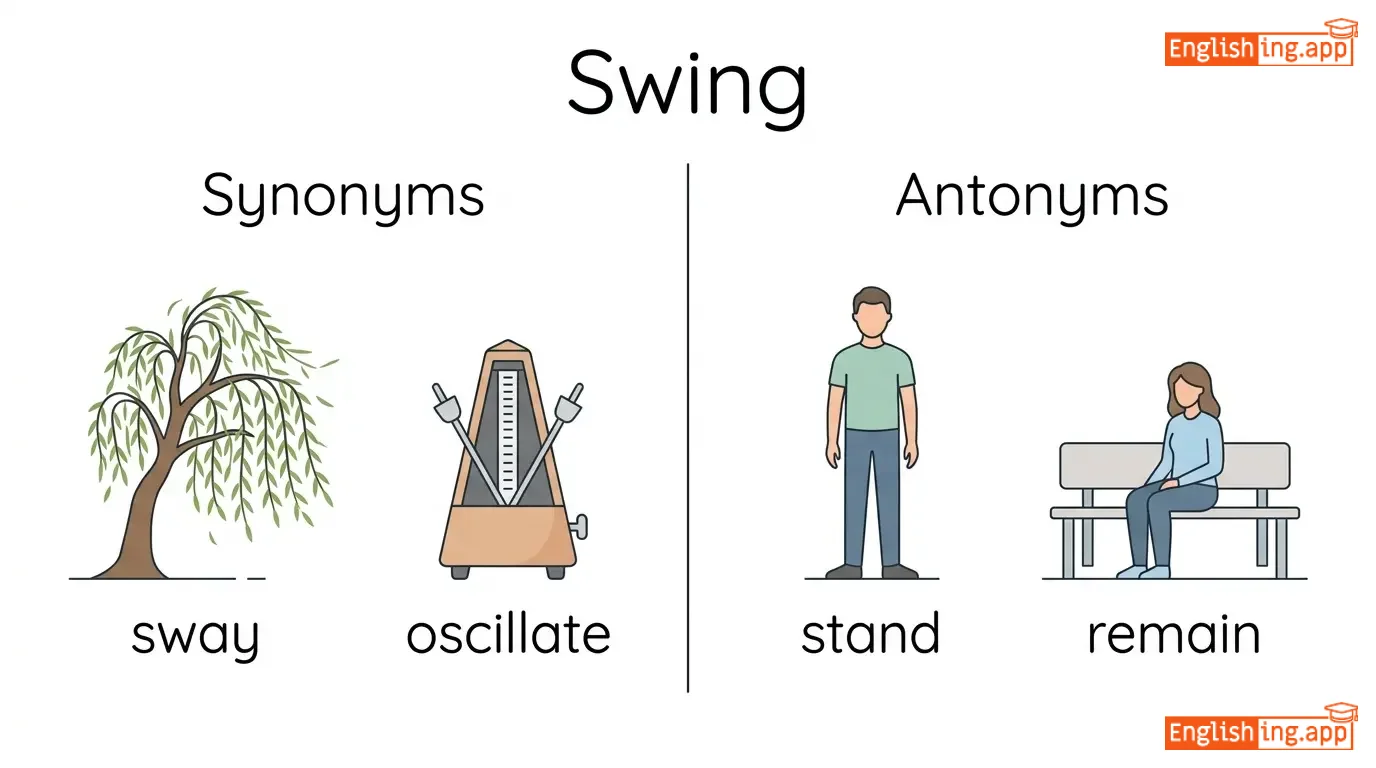
sway, oscillate, rotate, wave
••••••
|
stand, remain, stay
••••••
|
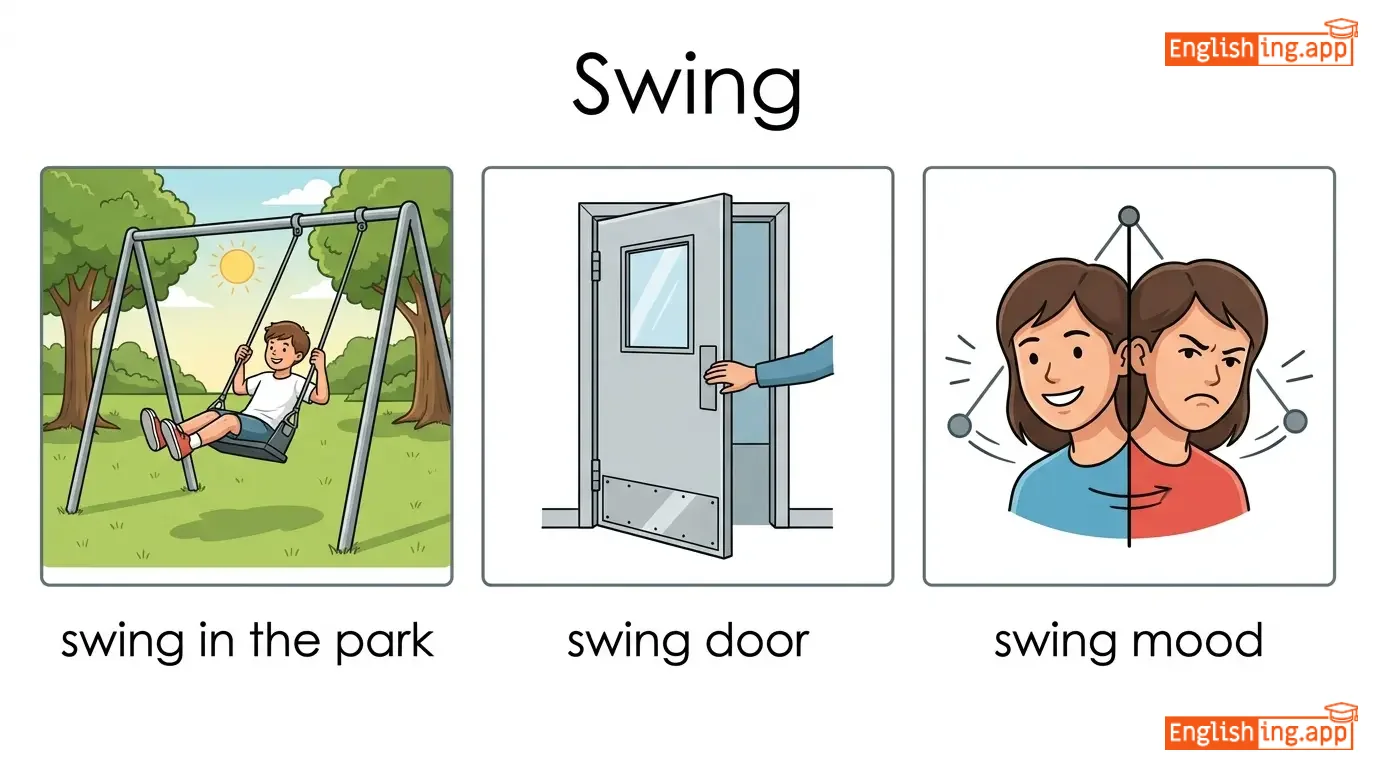
swing in the park, swing door, swing mood, swing votes
••••••
|
Swingのように揺れる、ブランコの動き
••••••
|
|
#8595
👗
|
/svelt/
adjective
(スヴェルト)
••••••
|
- •••••• |
スリム
surimu
••••••
|
- •••••• | - •••••• | - •••••• | - •••••• |
Attractively thin, graceful, and elegant in appearance or movement.
••••••
|
She looked svelte in the elegant black dress. |
彼女はエレガントな黒いドレスを着てスリムに見えた。
Kanojo wa ereganto na kuroi doresu o kite surimu ni mieta.
••••••
|
- •••••• | - •••••• | - •••••• |
slim, slender, graceful, elegant
••••••
|
fat, bulky, clumsy
••••••
|
svelte figure, svelte appearance, svelte design, look svelte
••••••
|
Svelte = Slim + Velvet エレガントな黒いドレス
••••••
|
|
#8596
💰
|
/ˈswɪndl/
verb
(スウィンドル)
••••••
|
- •••••• |
詐欺する
sagi suru
••••••
|
swindled
スウィンドルド
••••••
|
swindled
スウィンドルド
••••••
|
swindles
スウィンドルズ
••••••
|
swindling
スウィンドリング
••••••
|
to cheat someone out of money or possessions by deceit
••••••
|
The con artist tried to swindle the old man out of his savings.
コンアーティストは、老人の貯金を騙し取ろうとした。
••••••
|
コンアーティストは、老人の貯金を騙し取ろうとした。
kon ātisuto wa, rōjin no chokin o damashitorō to shita.
••••••
|
swindle out of
騙し取る
••••••
|
to cheat someone into losing something
••••••
|
騙し取る
damashitoru
••••••
|
cheat, defraud, deceive, trick, scam
••••••
|
honor, repay, compensate
••••••
|
swindle money, swindle investors, swindle out of, swindle scheme
••••••
|
詐欺するはお金を盗む手段だ。
••••••
|
|
#8597
🍺
|
/swɪl/
verb
(suiru)
••••••
|
- •••••• |
がぶがぶ飲む
gabugabu nomu
••••••
|
swilled
suirudo
••••••
|
swilled
suirudo
••••••
|
swills
suirusu
••••••
|
swilling
suiringu
••••••
|
to drink something greedily or in large amounts
••••••
|
He swilled down the beer in seconds.
彼は数秒でビールを飲み干した。
••••••
|
彼は数秒でビールを飲み干した。
Kare wa suubyou de biiru o nomihoshita.
••••••
|
- •••••• | - •••••• | - •••••• |
guzzle, gulp, chug, drink
••••••
|
sip, savor
••••••
|
swill beer, swill water, swill down
••••••
|
Swillは飲み込む + 満たす → 一気に飲み干す
••••••
|
|
#8598
🚗
|
/swɜːrv/
verb
(スワーヴ)
••••••
|
- •••••• |
急に方向を変える
kyūni hōkō o kaeru
••••••
|
swerved
スワーヴド
••••••
|
swerved
スワーヴド
••••••
|
swerves
スワーヴス
••••••
|
swerving
スワーヴィング
••••••
|
to change direction suddenly, especially to avoid hitting something
••••••
|
The car swerved to avoid the dog.
車は犬を避けるためにスワーヴド。
••••••
|
車は犬を避けるために急に方向を変えた。
Kuruma wa inu o yokeru tame ni kyūni hōkō o kaeta.
••••••
|
- •••••• | - •••••• | - •••••• |
veer, deviate, turn, curve
••••••
|
stay, straighten
••••••
|
swerve sharply, swerve to avoid
••••••
|
車が急にスワーヴして犬を避けた
••••••
|
|
#8599
🔥
|
/ˈswɛltərɪŋ/
adjective
(スウェルタリング)
••••••
|
- •••••• |
うだるような暑さ
udaru you na atsusa
••••••
|
- •••••• | - •••••• | - •••••• | - •••••• |
uncomfortably hot
••••••
|
The sweltering heat made it hard to work. |
うだるような暑さで仕事が難しくなった。
Udaru you na atsusa de shigoto ga muzukashiku natta.
••••••
|
- •••••• | - •••••• | - •••••• |
scorching, boiling, blazing, roasting
••••••
|
cool, chilly
••••••
|
sweltering heat, sweltering day, sweltering summer
••••••
|
Sweltering heat = SWEAT + suffering → うだるような暑さ
••••••
|
|
#8600
🥵
|
/ˈswɛltər/
verb
(スウェルター)
••••••
|
- •••••• |
強烈な暑さで苦しむ
kyōretsu na atsusa de kurushimu
••••••
|
sweltered
スウェルタード
••••••
|
sweltered
スウェルタード
••••••
|
swelters
スウェルターズ
••••••
|
sweltering
スウェルタリング
••••••
|
to suffer from intense heat
••••••
|
We began to swelter in the midday sun.
私たちは真昼の太陽の下で汗だくになり始めました。
••••••
|
私たちは真昼の太陽の下で汗だくになり始めました。
Watashitachi wa mahiru no taiyō no shita de ase-daku ni nari hajimemashita.
••••••
|
- •••••• | - •••••• | - •••••• |
overheat, perspire, sweat, roast
••••••
|
cool, chill
••••••
|
swelter in the heat, swelter under the sun
••••••
|
SwelterはSWEAT+HOTTER、つまり暑さで汗をかくこと
••••••
|
|
#8601
💨
|
/swɛl/
verb
(スウェル)
••••••
|
- •••••• |
膨れる
fukurero
••••••
|
swelled
スウェルド
••••••
|
swelled
スウェルド
••••••
|
swells
スウェルズ
••••••
|
swelling
スウェリング
••••••
|
to increase in size or volume, often due to internal pressure or emotional intensity
••••••
|
Her ankle began to swell after the injury.
怪我をした後、彼女の足首が腫れ始めた。
••••••
|
怪我をした後、彼女の足首が腫れ始めた。
Kega o shita ato, kanojo no ashi kubi ga hare hajimeta.
••••••
|
swell with pride
誇りで膨れ上がる
••••••
|
to feel very proud
••••••
|
誇りで膨れ上がる
hokori de fukureagaru
••••••
|
expand, enlarge, grow, bulge, inflate
••••••
|
shrink, contract
••••••
|
swell up, swell with pride, swell in number
••••••
|
SWEater 膨らむ、だから膨れるが swell
••••••
|
|
#8602
😡
|
/ˈswɛər wɜːrd/
noun
(スウェアワード)
••••••
|
- •••••• |
罵り言葉
nonari kotoba
••••••
|
- •••••• | - •••••• | - •••••• | - •••••• |
An offensive or rude word used to express anger or frustration.
••••••
|
He shouted a swear-word when he hit his toe. |
彼は足の指を打ったとき、罵り言葉を叫びました。
Kare wa ashi no yubi o utta toki, nonari kotoba o sakebimashita.
••••••
|
- •••••• | - •••••• | - •••••• |
curse, profanity, obscenity, vulgarity
••••••
|
politeness, civility, courtesy
••••••
|
use a swear-word, shout a swear-word, avoid swear-words, swear-word filter
••••••
|
Swear-word は罵り言葉を意味します。怒ったとき、人は swear-word (罵り言葉) を叫びます。
••••••
|
|
#8603
🗣️
|
/swɛər/
verb
(スウェア)
••••••
|
|
誓う
chikau
••••••
|
swore
スウォア
••••••
|
sworn
スウォーン
••••••
|
swears
スウェアズ
••••••
|
swearing
スウェアリング
••••••
|
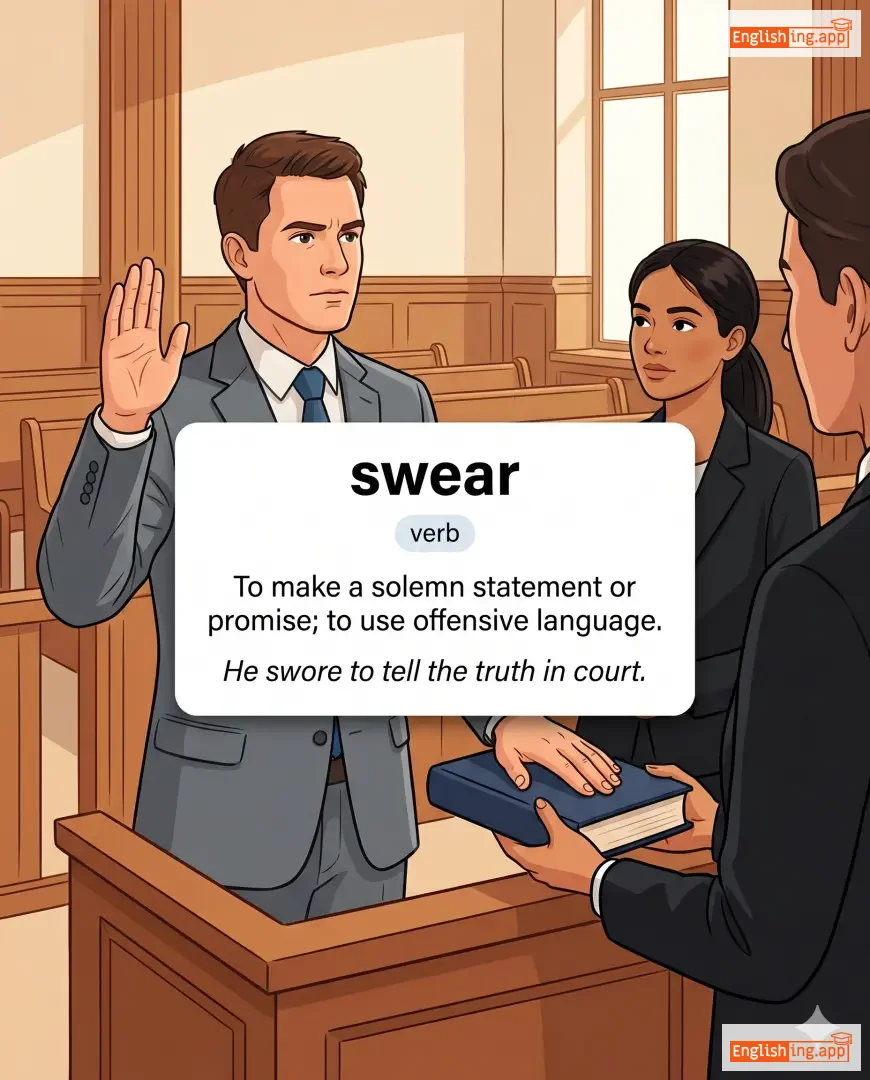
To make a solemn statement or promise; to use offensive language.
••••••
|
He swore to tell the truth in court.
ヒー スウォア トゥ テル ザ トゥルース イン コート
••••••
|
彼は法廷で真実を話すと誓った。
Kare wa hōtei de shinjitsu o hanasu to chikatta.
••••••
|
swear by
スウェア バイ
••••••
|
To have great confidence in something.
••••••
|
何かに誓う
nanika ni chikau
••••••
|
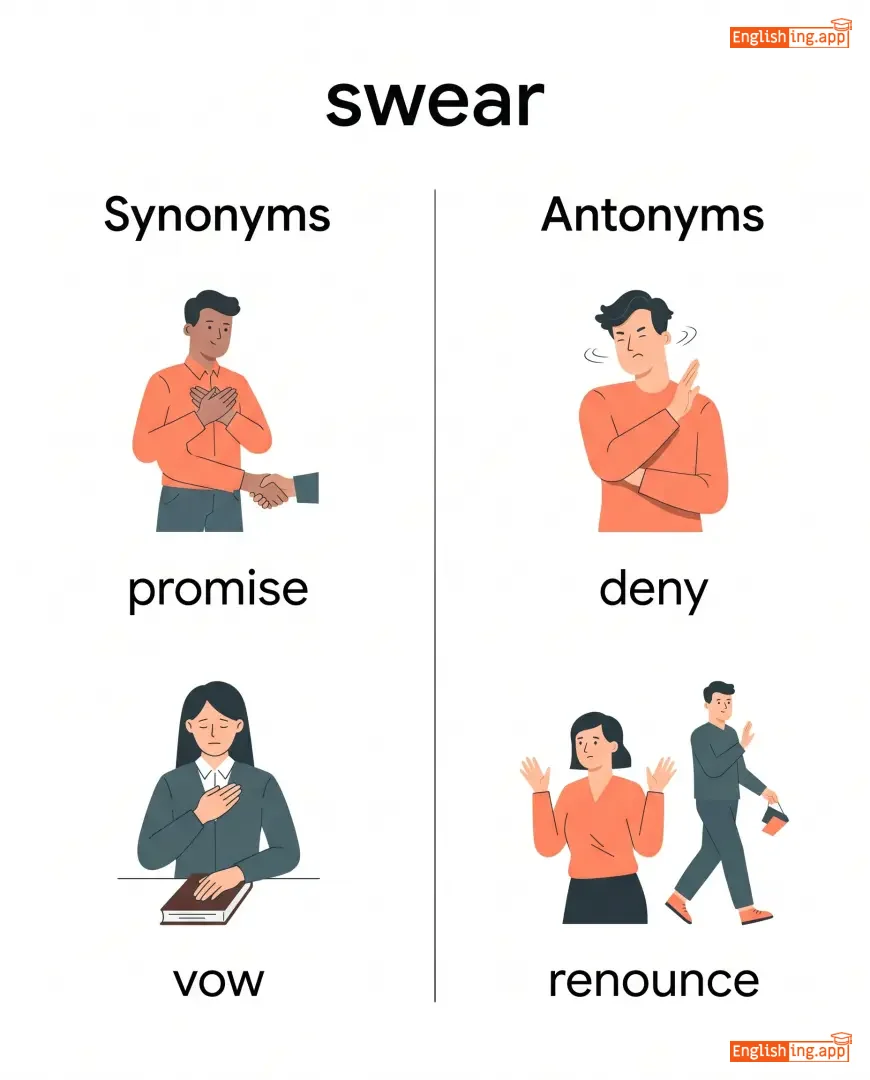
promise, vow, curse, pledge, affirm
••••••
|
deny, renounce, retract
••••••
|
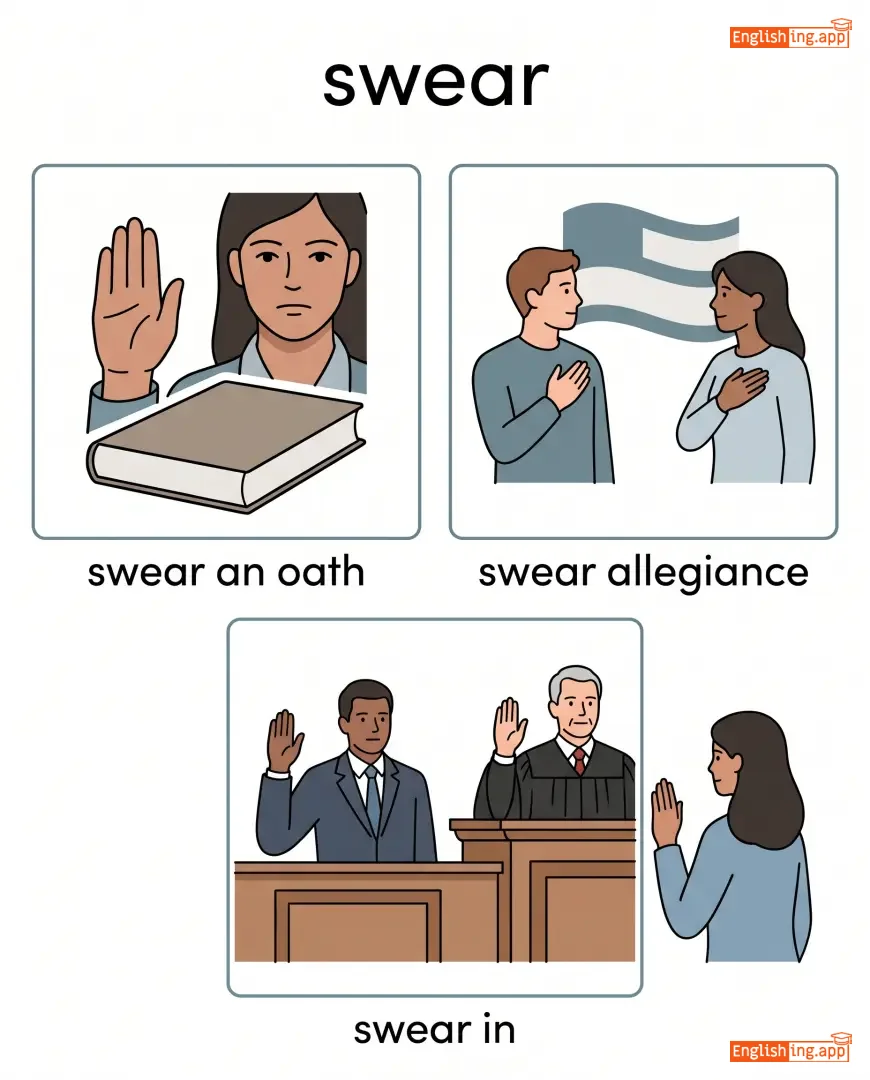
swear an oath, swear allegiance, swear in, swear by
••••••
|
Swear は誓うという意味 – 法廷で誓う。
••••••
|
|
#8604
🌳
|
/sweɪ/
verb
(スウェイ)
••••••
|
- •••••• |
揺れる
yureru
••••••
|
swayed
スウェイド
••••••
|
swayed
スウェイド
••••••
|
sways
スウェイズ
••••••
|
swaying
スウェイイング
••••••
|
To move or cause to move slowly or rhythmically back and forth; to influence someone's opinion or decision.
••••••
|
The trees swayed gently in the breeze.
木々はそよ風に優しく揺れていました。
••••••
|
木々はそよ風に優しく揺れていました。
Kigi wa soyokaze ni yasashiku yureteimashita.
••••••
|
hold sway
影響力を持つ
••••••
|
To have control or influence.
••••••
|
影響力を持つ
Eikyoryoku o motsu
••••••
|
swing, rock, influence, persuade, dominate
••••••
|
stabilize, steady, resist
••••••
|
sway back and forth, sway opinion, sway decision, sway gently
••••••
|
Swayは揺れるや影響 – 木々が sway 風で揺れ、私たちも sway 影響を通じて揺れる。
••••••
|
|
#8605
🧣
|
/sweɪð/
verb
••••••
|
- •••••• | - •••••• |
swathed
••••••
|
swathed
••••••
|
swathes
••••••
|
swathing
••••••
|
To wrap or cover closely or completely.
••••••
|
She swathed the baby in a soft blanket. |
- •••••• |
swathe in mystery |
To be hidden or surrounded by secrecy.
••••••
|
- •••••• |
wrap, envelop, cover, shroud, enclose
••••••
|
uncover, expose, reveal
••••••
|
swathe in cloth, swathe with bandages, swathe in mist, swathe of land
••••••
|
No •••••• |
|
#8606
🏝️
|
/ˈswɔːrði/
adjective
(スワーシー)
••••••
|
- •••••• |
日焼けした
hiyakeshita
••••••
|
- •••••• | - •••••• | - •••••• | - •••••• |
Having a dark complexion or skin tone.
••••••
|
The sailor had a swarthy face from years under the sun. |
その水夫は、何年も太陽の下で働いたため、日焼けした顔をしていた。
Sono suifu wa, nannen mo taiyō no shita de hataraita tame, hiyakeshita kao o shite ita.
••••••
|
- •••••• | - •••••• | - •••••• |
dark, dusky, tanned, bronzed, olive-skinned
••••••
|
fair, pale, light
••••••
|
swarthy man, swarthy complexion, swarthy appearance, swarthy skin
••••••
|
Swarthyは日焼けしたを意味します – 太陽の下で長い間過ごすと、肌が日焼けします。
••••••
|
|
#8607
🐝
|
/swɔːrm/
noun/verb
(スウォーム)
••••••
|
- •••••• |
群れ
mure
••••••
|
swarmed
スウォームド
••••••
|
swarmed
スウォームド
••••••
|
swarms
スウォームズ
••••••
|
swarming
スウォーミング
••••••
|
A large group of insects or people moving together.
••••••
|
A swarm of bees surrounded the tree.
一群の蜂が木の周りを囲んでいました。
••••••
|
一群の蜂が木の周りを囲んでいました。
Ichigun no hachi ga ki no mawari o kakonde imashita.
••••••
|
swarm with
スウォーム ウィズ
••••••
|
to be full of or crowded with
••••••
|
満ちている
michite iru
••••••
|
flock, horde, crowd, throng
••••••
|
individual, few, scatter
••••••
|
swarm of bees, swarm with people, insect swarm, swarm attack
••••••
|
Swarm = 群れ、蜂の群れが木の周りを囲む。
••••••
|
|
#8608
🪵
|
/swɑːmp/
noun/verb
(swamp)
••••••
|
- •••••• |
湿地
shitchi
••••••
|
swamped
swamped
••••••
|
swamped
swamped
••••••
|
swamps
swamps
••••••
|
swamping
swamping
••••••
|
An area of low-lying, uncultivated ground where water collects; a bog or marsh.
••••••
|
The village was built near a swamp.
The village was built near a swamp.
••••••
|
村は湿地の近くに建てられました。
Mura wa shicchi no chikaku ni tateraremashita.
••••••
|
swamped with work
swamped with work
••••••
|
to be overwhelmed by too much work
••••••
|
仕事に圧倒される
shigoto ni attou sareru
••••••
|
marsh, bog, wetland, mire
••••••
|
desert, dryland
••••••
|
dense swamp, tropical swamp, swamp area, swamped with
••••••
|
Swampとは、水が溜まる湿地や沼地のことです。
••••••
|
|
#8609
😎
|
/ˈswæɡ.ər/
verb/noun
(スワッガー)
••••••
|
- •••••• |
自信過剰
jishin kajou
••••••
|
swaggered
スワッガード
••••••
|
swaggered
スワッガード
••••••
|
swaggers
スワッガーズ
••••••
|
swaggering
スワッギング
••••••
|
To walk or behave in a very confident and arrogant way.
••••••
|
He swaggered into the room as if he owned the place.
彼は部屋に入るとき、自分がその場所の持ち主であるかのように振る舞いました。
••••••
|
彼はまるでその場所のオーナーであるかのように部屋に入ってきました。
Kare wa marude sono basho no ōnā de aru ka no yō ni heya ni haittekimashita.
••••••
|
swagger around
スワッグを周りに振りまく
••••••
|
to display excessive confidence or arrogance
••••••
|
自信満々に歩き回る
jishin manman ni arukimawaru
••••••
|
strut, boast, flaunt, parade
••••••
|
humble, shy, modest
••••••
|
swagger walk, show swagger, swagger style, with swagger
••••••
|
Swagger = 自信 + 歩く
••••••
|
Vocabulary Quiz
Test your vocabulary by matching words with their translations or meanings.
Login to take the quiz
Comments (0)
Share your thoughts and join the discussion.
Join the discussion by logging in
Login to CommentNo comments yet
Be the first to share your thoughts!