日本
インターフェース言語
EN
English
BN
বাংলা
HI
हिन्दी
ES
Español
FR
Français
DE
Deutsch
RU
Русский
ZH
简体中文
JA
日本語
日本
コンテンツ言語
ウェブサイト言語と同じ
EN
英語
BN
ベンガル語
HI
ヒンディー語
ES
スペイン語
FR
フランス語
DE
ドイツ語
RU
ロシア語
ZH
中国語
JA
日本語
ライト
ダーク
システム
ログイン
ホーム
コース
語彙集
PDF
動画
日本語
インターフェース言語
EN
英語
BN
ベンガル語
HI
ヒンディー語
ES
スペイン語
FR
フランス語
DE
ドイツ語
RU
ロシア語
ZH
中国語
JA
日本語
日本語
コンテンツ言語
EN
英語
BN
ベンガル語
HI
ヒンディー語
ES
スペイン語
FR
フランス語
DE
ドイツ語
RU
ロシア語
ZH
中国語
JA
日本語
Light
Dark
System
ログイン
登録
ホーム
コース
語彙集
PDF
動画
語彙集
/
syllogism
🧠
syllogism
(シロジズム)
noun
/ˈsɪlədʒɪzəm/
三段論法
(sandanonpou)
syllabus
sylph
意味
A form of reasoning in which a conclusion is drawn from two given or assumed premises.
意味の翻訳
二つの与えられたまたは仮定された前提から結論を引き出す推論の形式。
Futatsu no ataerareta matawa katei sareta zente kara ketsuron o hikidasu suiron no keishiki.
例文
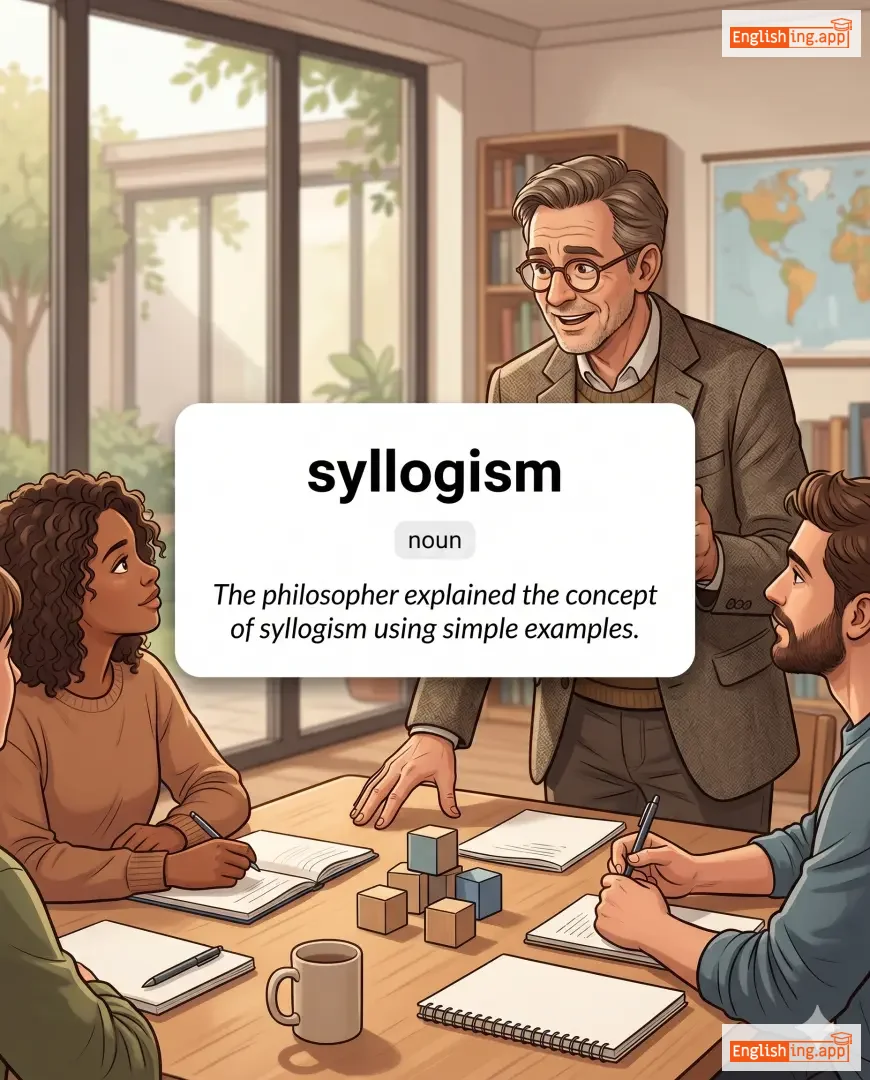
The philosopher explained the concept of
syllogism
using simple examples.
哲学者は簡単な例を使って三段論法の概念を説明しました。
Tetsugakusha wa kantan na rei o tsukatte sandanonpou no gainen o setsumei shimashita.
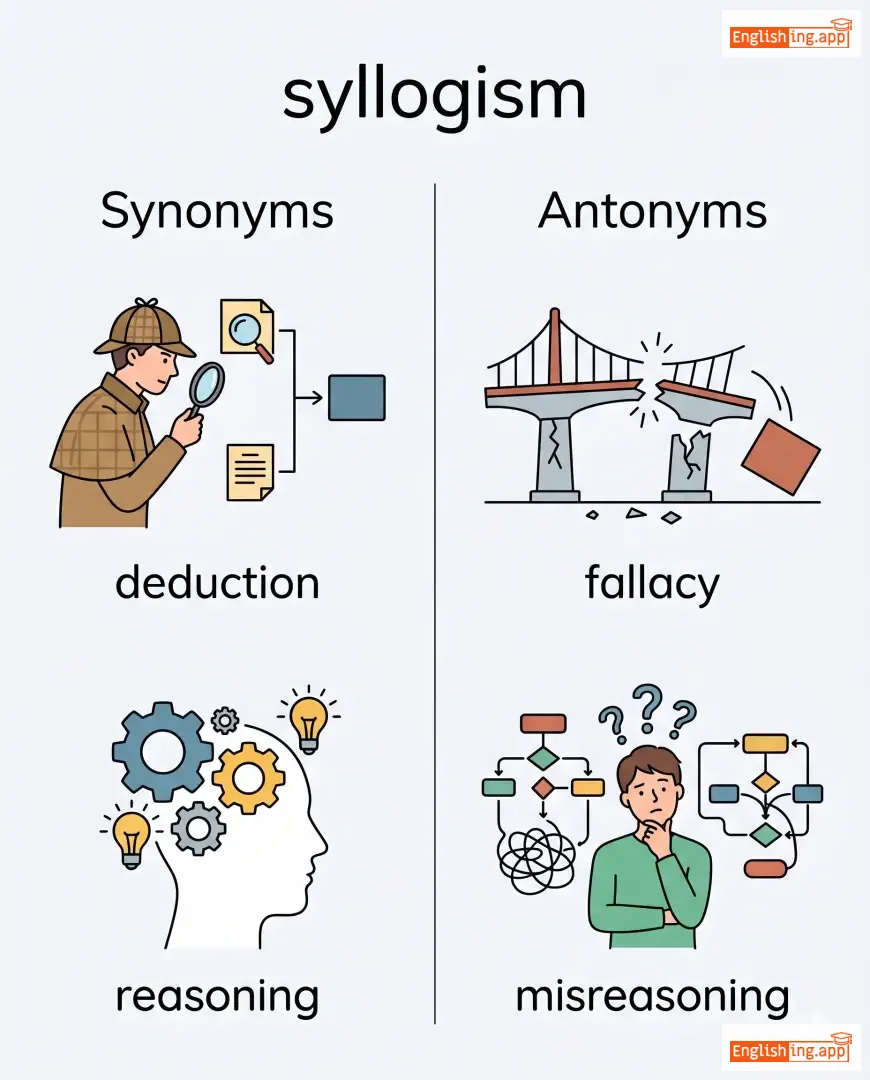
同義語
deduction, reasoning, logic, inference
対義語
fallacy, misreasoning
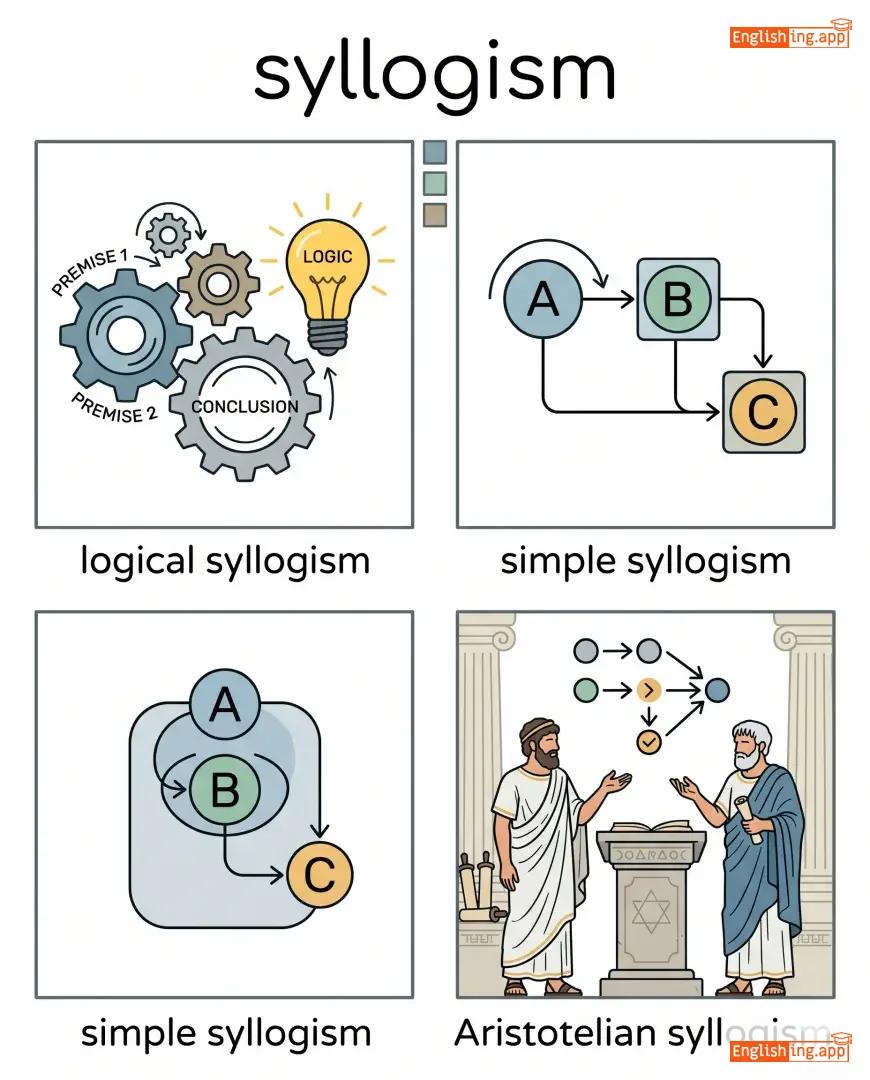
コロケーション
logical syllogism, simple syllogism, Aristotelian syllogism, valid syllogism
関連記事
Lesson 287 - The Ultimate Vocabulary Course for Competitive Exams: GRE, GMAT, TOEFL, IELTS & More
Lesson 30 - Barron's GRE Essential 800 Words
関連語彙
Sadness
(悲しみ、哀しみ、痛み)
feeling of sorrow, unhappiness, or grief
substitution
(交換)
the action of replacing someone or something with another
Veil
(ベール; マスク; 花嫁のベール;)
a piece of fine material worn to protect or conceal the face; something that conceals or disguises
plant
(植物)
a living organism that typically grows in the ground and absorbs nutrients from the soil
contractor
(請負業者)
a person or company that agrees to provide materials or labor to perform a service or do a job
cartoon
(アニメーション)
a humorous or animated drawing, especially one in newspapers or television
さらに探索
すべての語彙