

翻訳
過去
過去分詞
三人称単数
動名詞
意味
例文
例文の翻訳
同義語
対義語
コロケーション
ニーモニック




Swipe left or right, or use the buttons. Tap image to zoom.
例文の翻訳
単語
Lesson 7Lesson 7 - マスクトグル
|
絵文字
|
単語 | Images | 翻訳 | 過去 | 過去分詞 | 三人称単数 | 動名詞 | 意味 | 例文 | 例文の翻訳 | 表現例 | 表現例の意味 | 表現例の翻訳 | 同義語 | 対義語 | コロケーション | ニーモニック |
|---|---|---|---|---|---|---|---|---|---|---|---|---|---|---|---|---|---|
|
#181
⚗️
|
/əˈdʌltərənt/
noun
(アダルテラント)
••••••
|
- •••••• |
不純物
fujunbutsu
••••••
|
- •••••• | - •••••• | - •••••• | - •••••• |
a substance added to something else, often food or drink, to reduce its quality or strength
••••••
|
The laboratory found an adulterant in the milk samples. |
実験室はミルクのサンプルに不純物を発見しました。
Jikken-shitsu wa miruku no sanpuru ni fujunbutsu o hakken shimashita.
••••••
|
- •••••• | - •••••• | - •••••• |
contaminant, impurity, additive, pollutant, foreign substance
••••••
|
pure substance, essence
••••••
|
harmful adulterant, food adulterant, chemical adulterant
••••••
|
不純物は品質を悪くするもの、牛乳の中に混ぜられるようなものです。
••••••
|
|
#182
📢
|
/ˈædvəkəsi/
noun
(アドボカシー)
••••••
|
- •••••• |
擁護
yōgo
••••••
|
- •••••• | - •••••• | - •••••• | - •••••• |
public support for or recommendation of a particular cause or policy
••••••
|
Her advocacy for children's rights earned her international recognition.
彼女の子どもの権利へのアドボカシーは、国際的な認知を得た。
••••••
|
彼女の子どもの権利への擁護は、国際的な認知を得た。
Kanojo no kodomono kenri e no yōgo wa, kokusaiteki na ninchi o eta.
••••••
|
advocacy group
アドボカシーグループ
••••••
|
an organization that actively supports a particular cause or policy
••••••
|
擁護団体
yōgo dantai
••••••
|
support, promotion, championing, backing, endorsement
••••••
|
opposition, resistance, condemnation
••••••
|
advocacy work, advocacy group, patient advocacy, advocacy campaign, human rights advocacy
••••••
|
擁護 = 弁護士がするように、自分の立場を守る!
••••••
|
|
#183
⚠️
|
/ədˈvaɪzəri/
adjective, noun
(アドバイザリー)
••••••
|
- •••••• |
アドバイザリー
adobaisarī
••••••
|
- •••••• | - •••••• | - •••••• | - •••••• |
(adjective) having the power to give advice but not to make sure that it is followed; (noun) an official announcement containing information or a warning
••••••
|
The committee serves in an advisory capacity to the board of directors. |
委員会は取締役会にアドバイザリーの役割を果たしています。
Iinkai wa torishimariyakukai ni adobaisarī no yakuwari o hatashiteimasu.
••••••
|
travel advisory |
an official warning about potential dangers or problems for travelers
••••••
|
旅行アドバイザリー
ryokō adobaisarī
••••••
|
consultative, counseling, informative, warning, notice
••••••
|
executive, mandatory, compulsory
••••••
|
advisory board, advisory role, travel advisory, health advisory, weather advisory
••••••
|
AD-VICE-ORYはアドバイスを提供する役割(adobaisarī)を意味します!
••••••
|
|
#184
💼
|
/ˈædvərtaɪzər/
noun
(ˈædvərtaɪzər)
••••••
|
- •••••• |
広告主
kōkoku-shu
••••••
|
- •••••• | - •••••• | - •••••• | - •••••• |
a person or company that advertises a product, service, or event
••••••
|
The advertiser paid millions for a Super Bowl commercial spot. |
広告主はスーパーボウルのコマーシャルに何百万ドルも支払った。
Kōkoku-shu wa Sūpā Bōru no komāsharu ni nanbyaku man doru mo shiharatta.
••••••
|
major advertiser |
a company or entity that spends large amounts on advertising
••••••
|
主要な広告主
shuyōna kōkoku-shu
••••••
|
promoter, marketer, sponsor, publicist, vendor
••••••
|
consumer, buyer, customer
••••••
|
online advertiser, major advertiser, local advertiser, advertiser revenue
••••••
|
ADVERTISER = AD + VERT + ISER、これが'広告主'になります。
••••••
|
|
#185
📣
|
/ˈædvərtaɪz/
verb
(ædvərtaɪz)
••••••
|
|
宣伝する
senden suru
••••••
|
advertised
ædvərtaɪzd
••••••
|
advertised
ædvərtaɪzd
••••••
|
advertises
ædvərtaɪziz
••••••
|
advertising
ædvərtaɪzɪŋ
••••••
|
to describe or draw attention to a product, service, or event in a public medium in order to promote sales or attendance
••••••
|
They advertise their products on social media platforms.
彼らはソーシャルメディアプラットフォームで製品を宣伝しています。
••••••
|
彼らはソーシャルメディアプラットフォームで製品を宣伝しています。
Karera wa sōsharu media purattofōmu de seihin o senden shiteimasu.
••••••
|
advertise for something
何かを宣伝する
••••••
|
to announce publicly that you need something or someone
••••••
|
何かを宣伝する
nanika wo senden suru
••••••
|
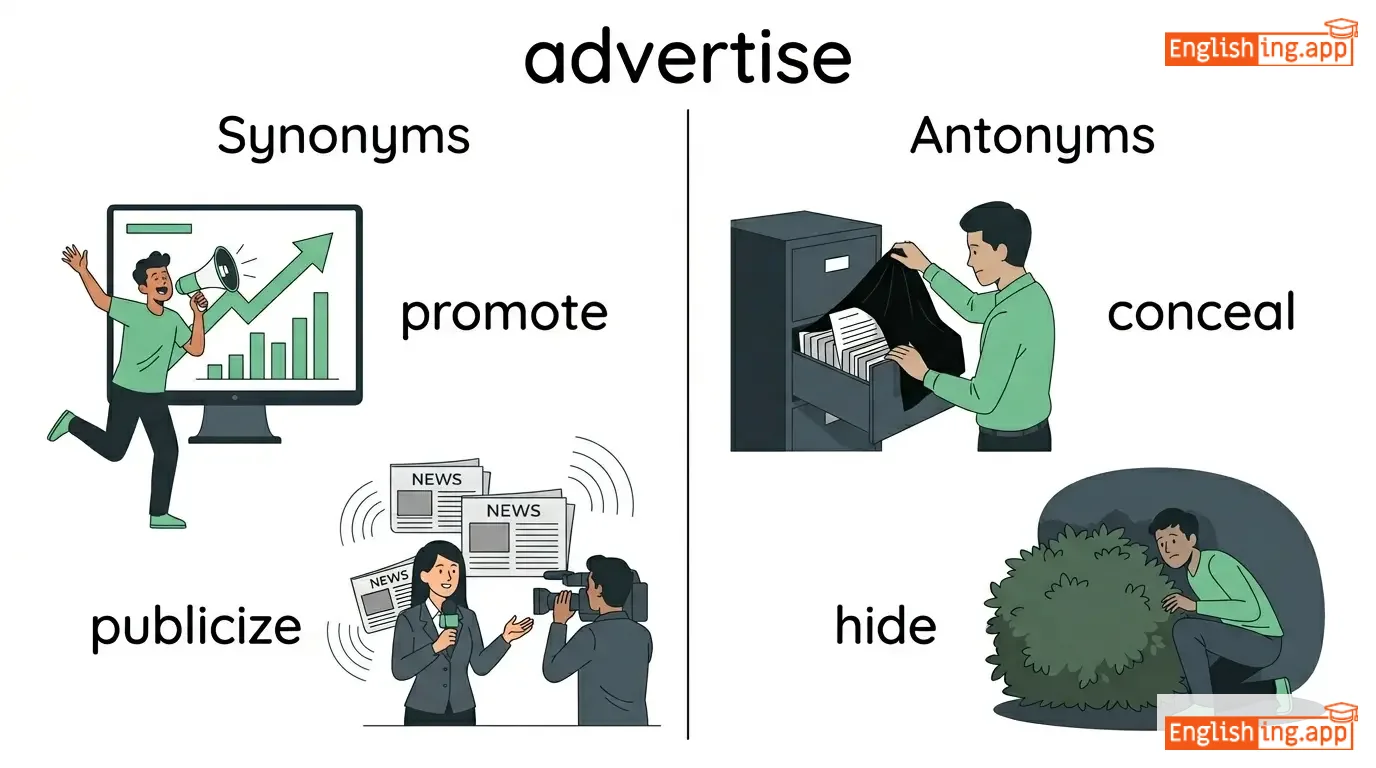
promote, publicize, market, broadcast, announce
••••••
|
conceal, hide, suppress
••••••
|
advertise products, advertise online, advertise widely, advertise for staff
••••••
|
目を追加するADD-VERT-EYES!みんなに見せるために宣伝しよう!
••••••
|
|
#186
📺
|
/ˈædvɜːrt/
noun, verb
••••••
|
- •••••• | - •••••• |
adverted
••••••
|
adverted
••••••
|
adverts
••••••
|
adverting
••••••
|
(noun) a notice or announcement in a public medium promoting a product, service, or event; (verb) to refer to something in speaking or writing
••••••
|
The company placed an advert in the newspaper for the new position. |
- •••••• |
advert to something |
to mention or draw attention to something
••••••
|
- •••••• |
advertisement, commercial, announcement, notice, promotion
••••••
|
ignore, overlook
••••••
|
television advert, job advert, place an advert, advert to a matter
••••••
|
No •••••• |
|
#187
🌪️
|
/ədˈvɜː.sə.ti/
noun
••••••
|
|
- •••••• | - •••••• | - •••••• | - •••••• | - •••••• |
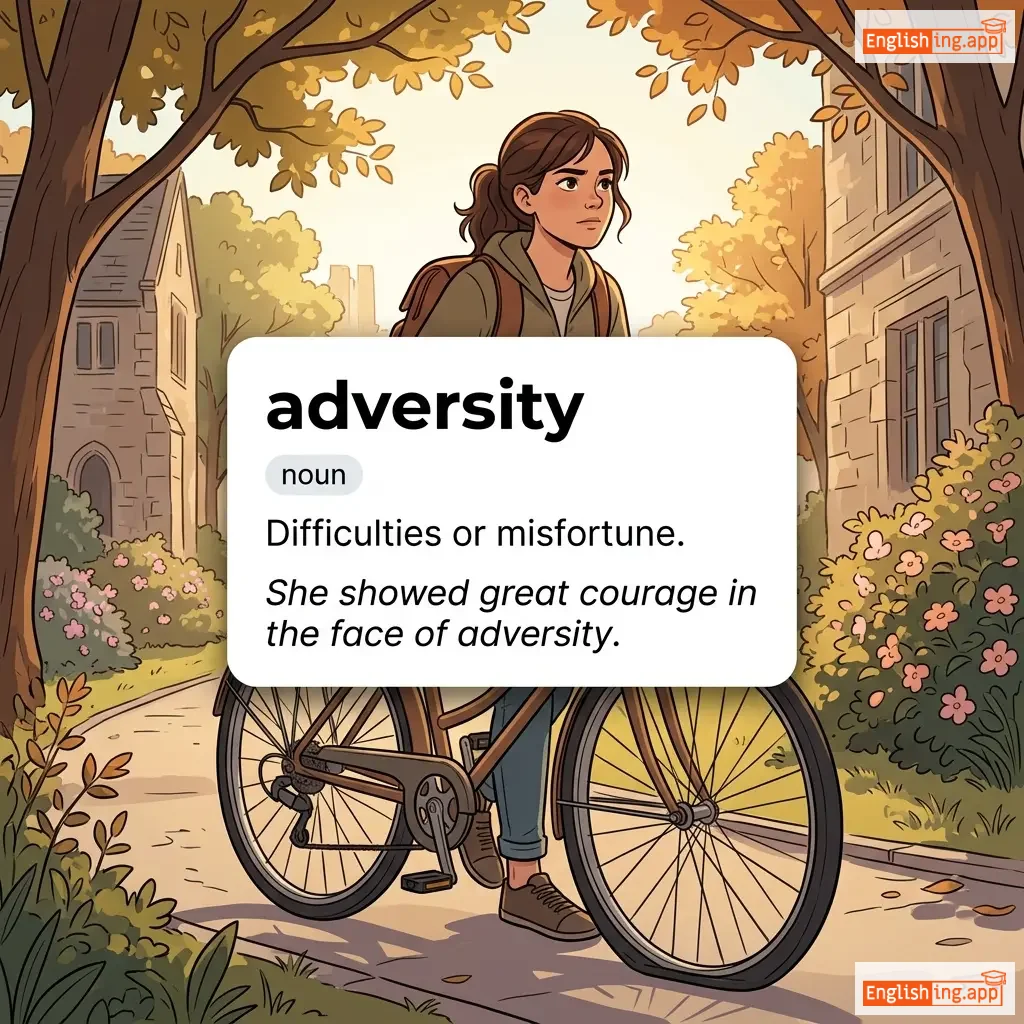
Difficulties or misfortune.
••••••
|
She showed great courage in the face of adversity. |
- •••••• |
in the face of adversity |
when confronting difficulties or hardships
••••••
|
- •••••• |
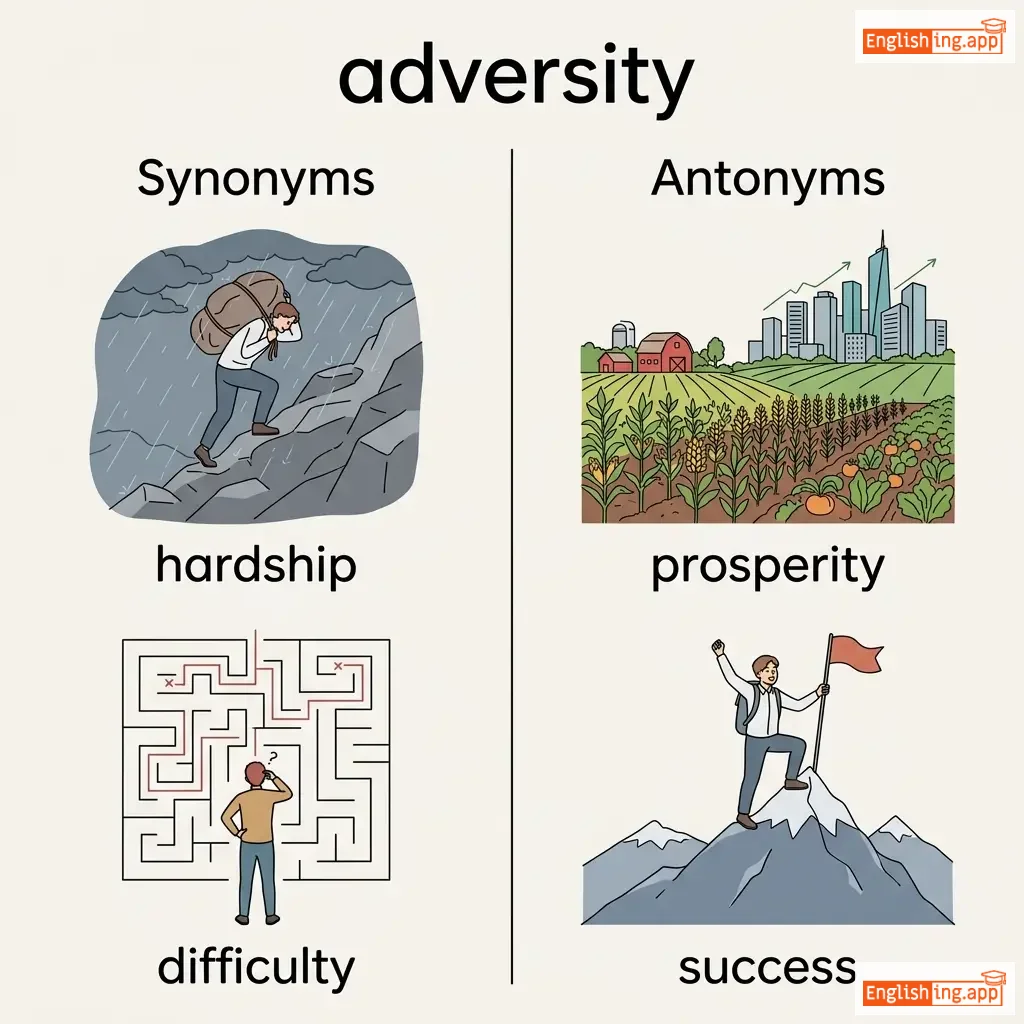
hardship, difficulty, misfortune, challenge, trial
••••••
|
prosperity, success, fortune
••••••
|
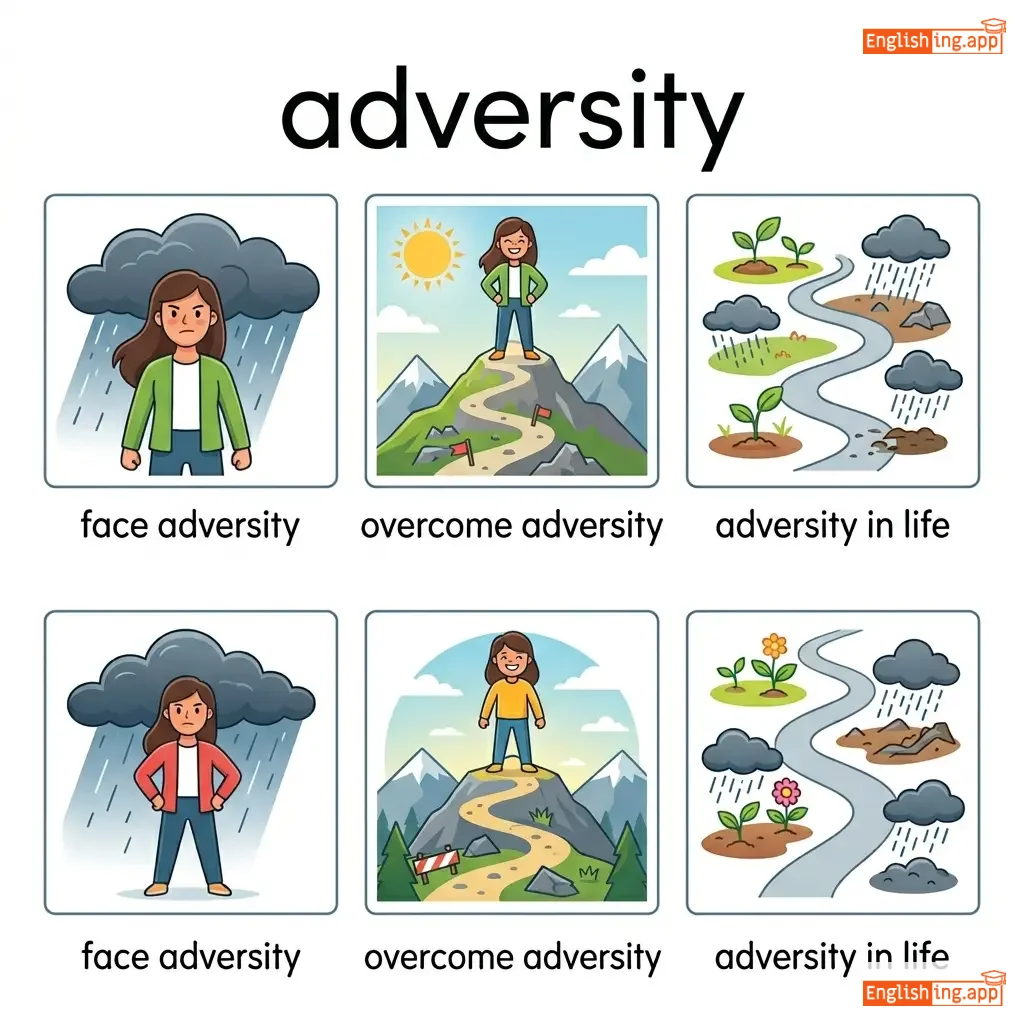
face adversity, overcome adversity, adversity in life, adversity builds character
••••••
|
No •••••• |
|
#188
🌩️
|
/ˈæd.vɜːs/
adjective
••••••
|
- •••••• | - •••••• | - •••••• | - •••••• | - •••••• | - •••••• |
Preventing success or development; harmful or unfavorable.
••••••
|
The project was delayed due to adverse weather conditions. |
- •••••• |
adverse effect |
a harmful or negative impact
••••••
|
- •••••• |
unfavorable, harmful, negative, detrimental, hostile
••••••
|
favorable, beneficial, positive
••••••
|
adverse conditions, adverse effect, adverse impact, adverse reaction
••••••
|
No •••••• |
|
#189
⚔️
|
/ˈæd.və.ser.i/
noun
(アドバーサリー)
••••••
|
- •••••• |
対戦相手
taisen aite
••••••
|
- •••••• | - •••••• | - •••••• | - •••••• |
One's opponent in a contest, conflict, or dispute.
••••••
|
The boxer faced a strong adversary in the ring. |
ボクサーはリングで強い対戦相手に立ち向かった。
Bokusā wa ringu de tsuyoi taisen aite ni tachimukatta.
••••••
|
worthy adversary |
a respected and strong opponent
••••••
|
価値のある対戦相手
kachi no aru taisen aite
••••••
|
opponent, rival, foe, competitor, antagonist
••••••
|
ally, friend, supporter
••••••
|
adversary in battle, political adversary, strong adversary, worthy adversary
••••••
|
Adversary は adversary → opponent → 対戦相手
••••••
|
|
#190
🍀
|
/ˌæd.vɛnˈtɪʃ.əs/
adjective
(アドベンティシャス)
••••••
|
- •••••• |
偶発的
gōhatsuteki
••••••
|
- •••••• | - •••••• | - •••••• | - •••••• |
Happening by chance or accident, not planned.
••••••
|
His success was partly due to adventitious circumstances. |
彼の成功は偶発的な状況による部分があった。
Kare no seikō wa gōhatsuteki na jōkyō ni yoru bubun ga atta.
••••••
|
- •••••• | - •••••• | - •••••• |
accidental, incidental, random, fortuitous, chance
••••••
|
intentional, planned, deliberate
••••••
|
adventitious root, adventitious circumstances, adventitious growth
••••••
|
Adventitious = Gōhatsuteki, yume no yō na tōshi.
••••••
|
|
#191
🚀
|
/ˈæd.vənt/
noun
(アドベント)
••••••
|
- •••••• |
到来
tōrai
••••••
|
- •••••• | - •••••• | - •••••• | - •••••• |
The arrival of a notable person, thing, or event.
••••••
|
The advent of the internet changed the way people communicate. |
インターネットの到来は人々のコミュニケーション方法を変えました。
Intānetto no tōrai wa hitobito no komyunikēshon hōhō o kaemashita.
••••••
|
the advent of |
the arrival or beginning of something important
••••••
|
到来
tōrai
••••••
|
arrival, coming, onset, beginning, emergence
••••••
|
departure, end, disappearance
••••••
|
advent of technology, advent of spring, advent of democracy, advent of new era
••••••
|
アドベントはarrivalを意味します—冬の到来のように冷たい風が吹きます。
••••••
|
|
#192
🔮
|
/ˌæd.ʌmˈbreɪ.ʃən/
noun
(アダムブレーション)
••••••
|
- •••••• |
ぼんやりとした前兆
bonyaritashita zenchou
••••••
|
- •••••• | - •••••• | - •••••• | - •••••• |
a vague foreshadowing or symbolic representation of something
••••••
|
The play offers an adumbration of the political unrest to come. |
この劇は、今後の政治的不安定のぼんやりとした前兆を示している。
Kono geki wa, kongo no seiji-teki fuan-tei no bonyaritashita zenchou o shimeshite iru.
••••••
|
- •••••• | - •••••• | - •••••• |
foreshadowing, outline, prefiguration, symbolism
••••••
|
clarity, explanation
••••••
|
adumbration of ideas, adumbration of events, subtle adumbration
••••••
|
Ad umbra(影)を意味する、adumbrationは未来の影のぼんやりとした前兆を意味する
••••••
|
|
#193
🌫️
|
/ˈæd.ʌm.breɪt/
verb
(アダムブレイト)
••••••
|
- •••••• |
予示する
yōjisuru
••••••
|
adumbrated
アダムブレイテッド
••••••
|
adumbrated
アダムブレイテッド
••••••
|
adumbrates
アダムブレイツ
••••••
|
adumbrating
アダムブレイティング
••••••
|
to foreshadow or suggest something in an unclear or indirect way
••••••
|
The report adumbrates future economic challenges.
レポートは未来の経済的な課題を暗示している。
••••••
|
レポートは未来の経済的な課題を暗示している。
Repōto wa mirai no keizaiteki na kadai o anji shite iru.
••••••
|
- •••••• | - •••••• | - •••••• |
foreshadow, indicate, outline, prefigure, suggest
••••••
|
clarify, explain, illuminate
••••••
|
adumbrate plans, adumbrate ideas, adumbrate vision
••••••
|
未来を予示するように、アダムブレイトは経済の未来を暗示します。
••••••
|
|
#194
🚫
|
/əˈdʌltəreɪtɪd/
adjective
••••••
|
- •••••• | - •••••• | - •••••• | - •••••• | - •••••• | - •••••• |
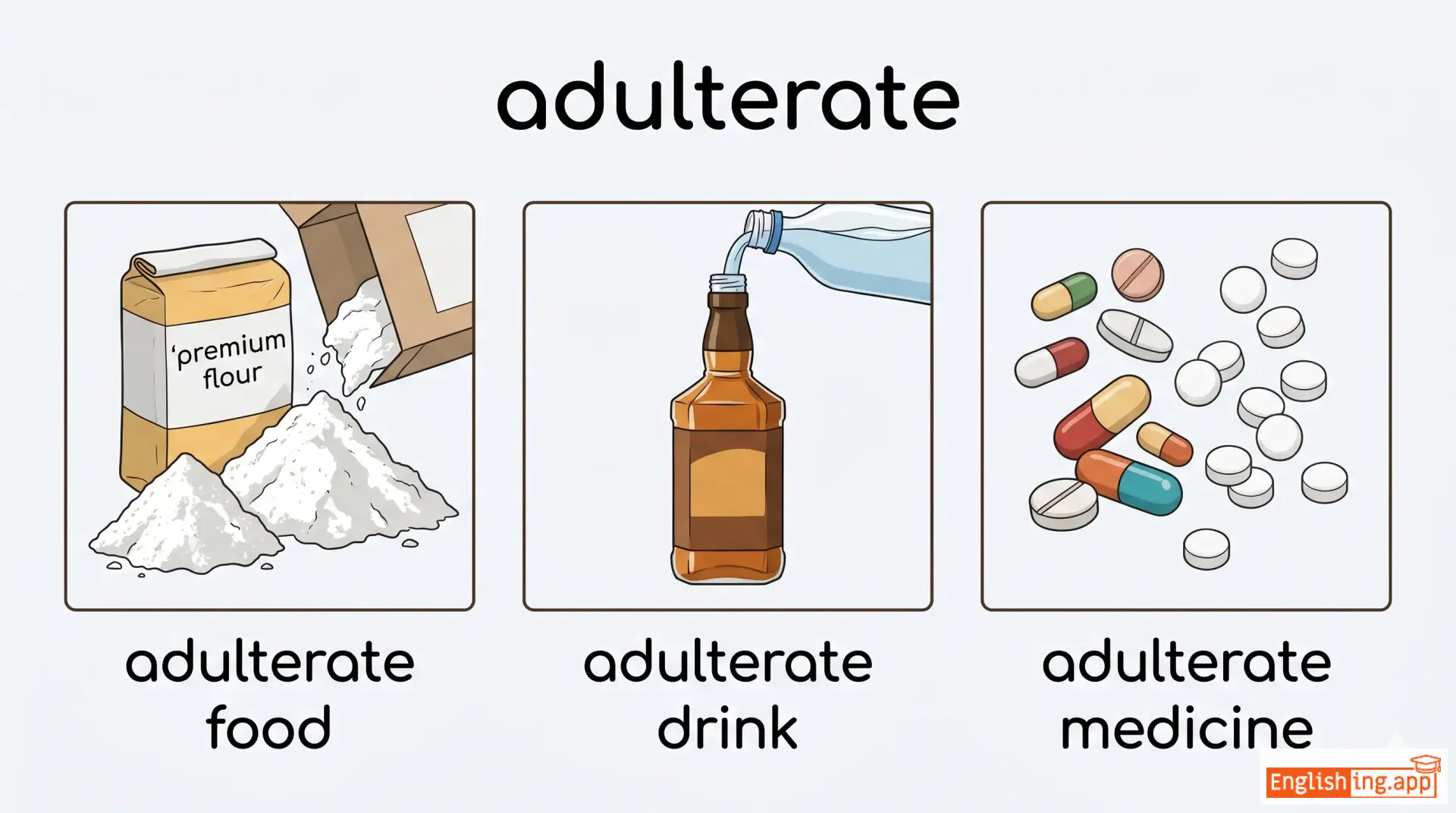
describes food, drink, or medicine made weaker or impure by the addition of another substance
••••••
|
Authorities seized adulterated drugs from the warehouse. |
- •••••• | - •••••• | - •••••• | - •••••• |
impure, contaminated, tainted, diluted
••••••
|
pure, genuine, unadulterated
••••••
|
adulterated food, adulterated medicine, adulterated drink
••••••
|
No •••••• |
|
#195
🥛
|
/əˈdʌltəreɪt/
verb
(アダルテレート)
••••••
|
|
不正混入
fusei konnyū
••••••
|
adulterated
アダルテレイティッド
••••••
|
adulterated
アダルテレイティッド
••••••
|
adulterates
アダルテレイツ
••••••
|
adulterating
アダルテレイティング
••••••
|
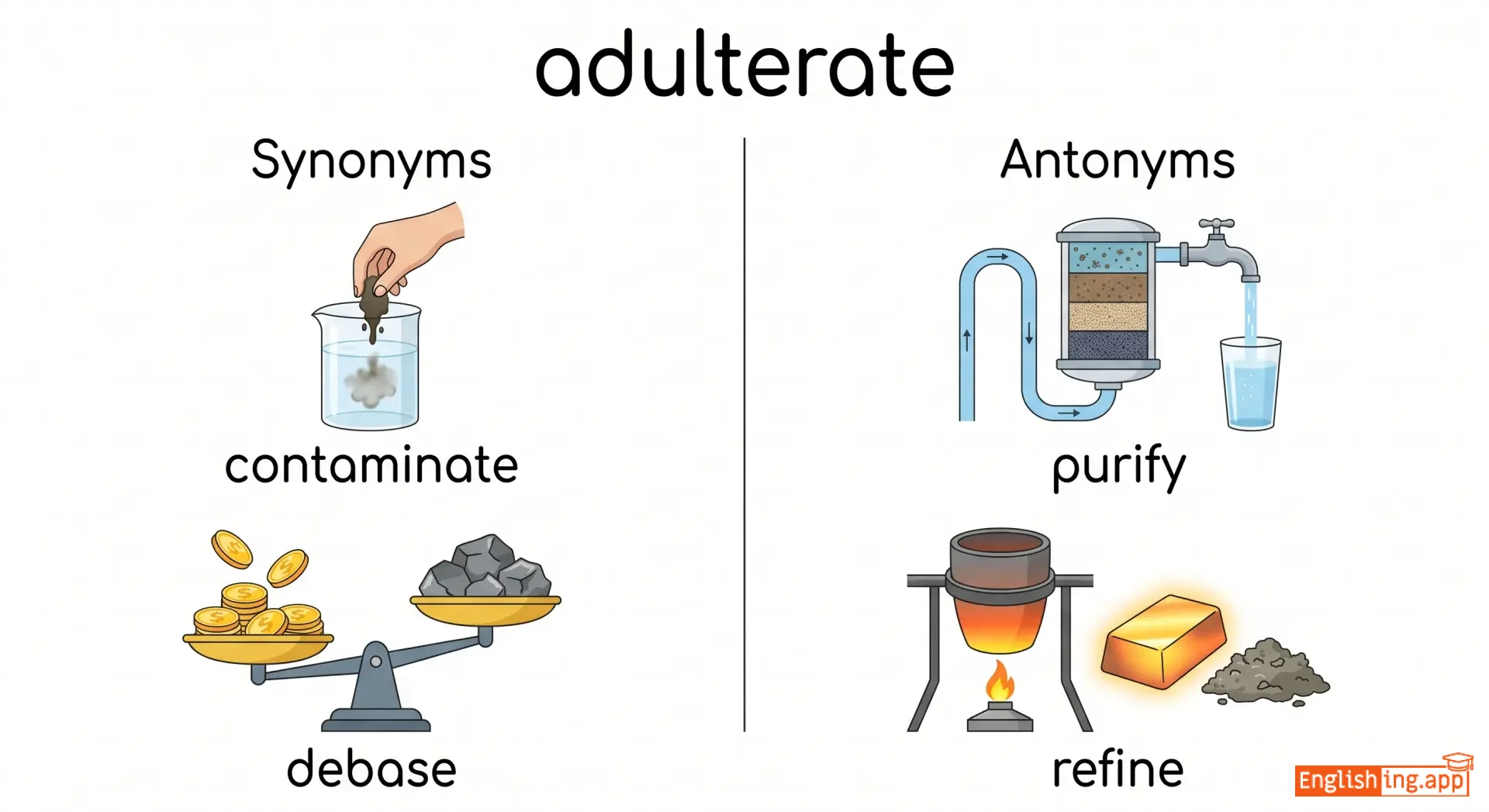
to make something poorer in quality by adding another substance, usually of lower quality
••••••
|
The company was fined for adulterating its products with cheap chemicals.
その会社は安価な化学物質で製品をアダルテレートしたため、罰金を科せられました。
••••••
|
その会社は安価な化学物質で製品をアダルテレートしたため、罰金を科せられました。
Sono kaisha wa anka na kagaku busshitsu de seihin o adarutereito shita tame, bakkin o kase raremashita.
••••••
|
- •••••• | - •••••• | - •••••• |
contaminate, debase, dilute, taint, spoil
••••••
|
purify, refine, cleanse
••••••
|
adulterate food, adulterate drink, adulterate medicine
••••••
|
アダルトレートは不正に混入すること - adulterate = 不正混入
••••••
|
|
#196
🙏
|
/əˈdʒʊər/
verb
(アジュア)
••••••
|
- •••••• |
誓約させる
seiyaku saseru
••••••
|
adjured
アジュアード
••••••
|
adjured
アジュアード
••••••
|
adjures
アジュアーズ
••••••
|
adjuring
アジュアリング
••••••
|
to urge or command someone solemnly, often under oath or a strong sense of duty
••••••
|
The witness was adjured to tell the truth in court.
証人は法廷で真実を話すように命じられた。
••••••
|
証人は法廷で真実を話すように命じられた。
Shōnin wa hōtei de shinjitsu o hanasu yō ni meijirareta.
••••••
|
- •••••• | - •••••• | - •••••• |
urge, implore, command, beseech, entreat
••••••
|
ignore, dismiss, neglect
••••••
|
adjure someone, solemnly adjure, adjure to speak, adjure under oath
••••••
|
Adjure は誓いさせること—'真実を話すか、誓約させます!'
••••••
|
|
#197
👏
|
/ˌædjʊˈleɪʃən/
noun
(アデュレーション)
••••••
|
- •••••• |
過度な賞賛
kadona shōsan
••••••
|
- •••••• | - •••••• | - •••••• | - •••••• |
excessive admiration or flattery
••••••
|
The singer enjoyed the adulation of her fans. |
歌手はファンたちの過度な賞賛を楽しんでいました。
Kashu wa fantachi no kadona shōsan o tanoshinde imashita.
••••••
|
- •••••• | - •••••• | - •••••• |
praise, flattery, admiration, worship
••••••
|
criticism, disapproval, insult
••••••
|
seek adulation, receive adulation, enjoy adulation, crave adulation
••••••
|
Adulation は 'add' と 'relation' のような音です—過度の賞賛。
••••••
|
|
#198
🙌
|
/ˈædjʊˌleɪt/
verb
(アデュレイト)
••••••
|
- •••••• |
過剰に賛美する
kajou ni sanbi suru
••••••
|
adulated
アデュレイテッド
••••••
|
adulated
アデュレイテッド
••••••
|
adulates
アデュレイツ
••••••
|
adulating
アデュレイティング
••••••
|
to praise or flatter excessively
••••••
|
The fans adulated the actor after his performance.
ファンたちは彼のパフォーマンスの後、俳優を賛美しました。
••••••
|
ファンたちは彼のパフォーマンスの後、俳優を賛美しました。
Fanta wa kare no pafomansu no ato, haiyuu o sanbi shimashita.
••••••
|
- •••••• | - •••••• | - •••••• |
flatter, praise, idolize, glorify
••••••
|
criticize, insult, scorn
••••••
|
adulate endlessly, adulate someone, constantly adulate
••••••
|
Adulate = Add + ultra = 過剰に賛美する
••••••
|
|
#199
🧠
|
/əˈdrɔɪt/
adjective
(アドロイト)
••••••
|
|
巧妙
kōmyō
••••••
|
- •••••• | - •••••• | - •••••• | - •••••• |
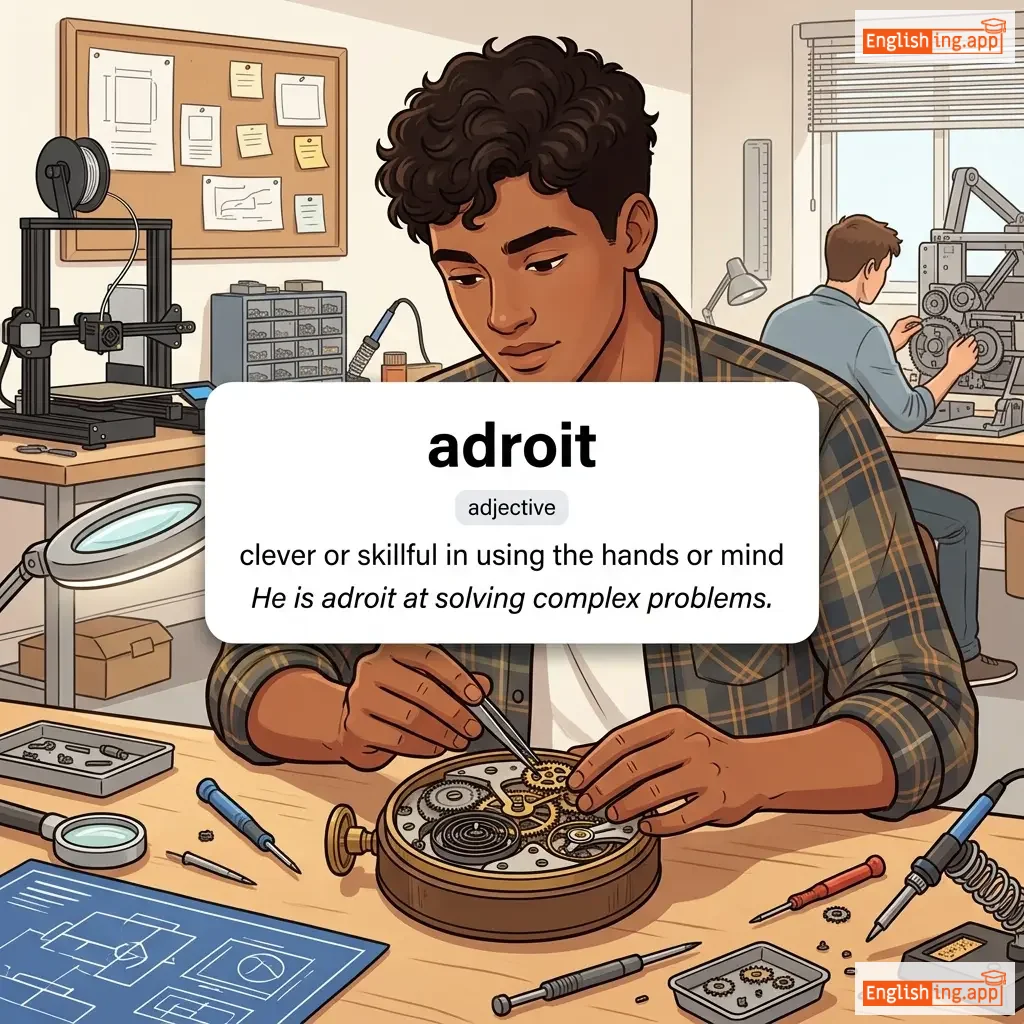
clever or skillful in using the hands or mind
••••••
|
He is adroit at solving complex problems. |
彼は複雑な問題を解決するのが得意です。
Kare wa fukuzatsu na mondai o kaiketsu suru no ga tokui desu.
••••••
|
- •••••• | - •••••• | - •••••• |
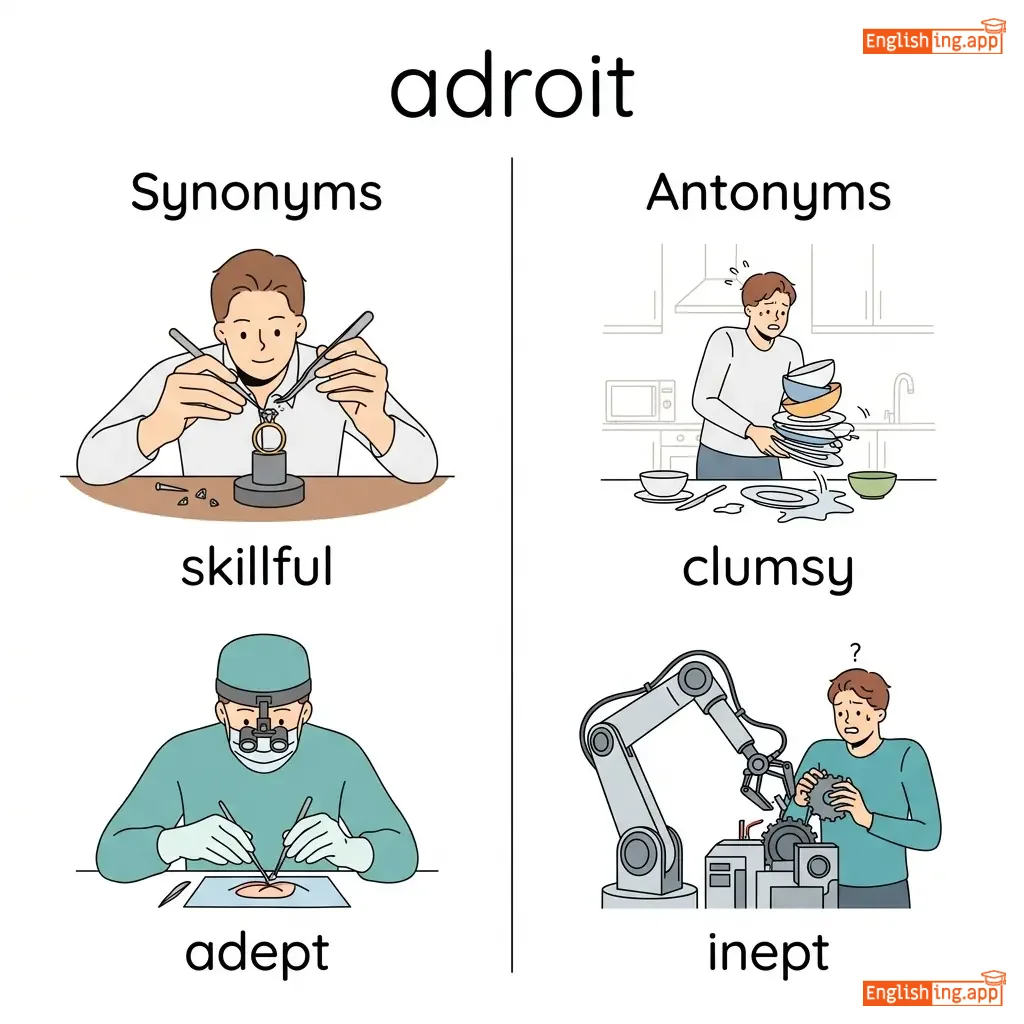
skillful, adept, clever, proficient, nimble
••••••
|
clumsy, inept, awkward
••••••
|
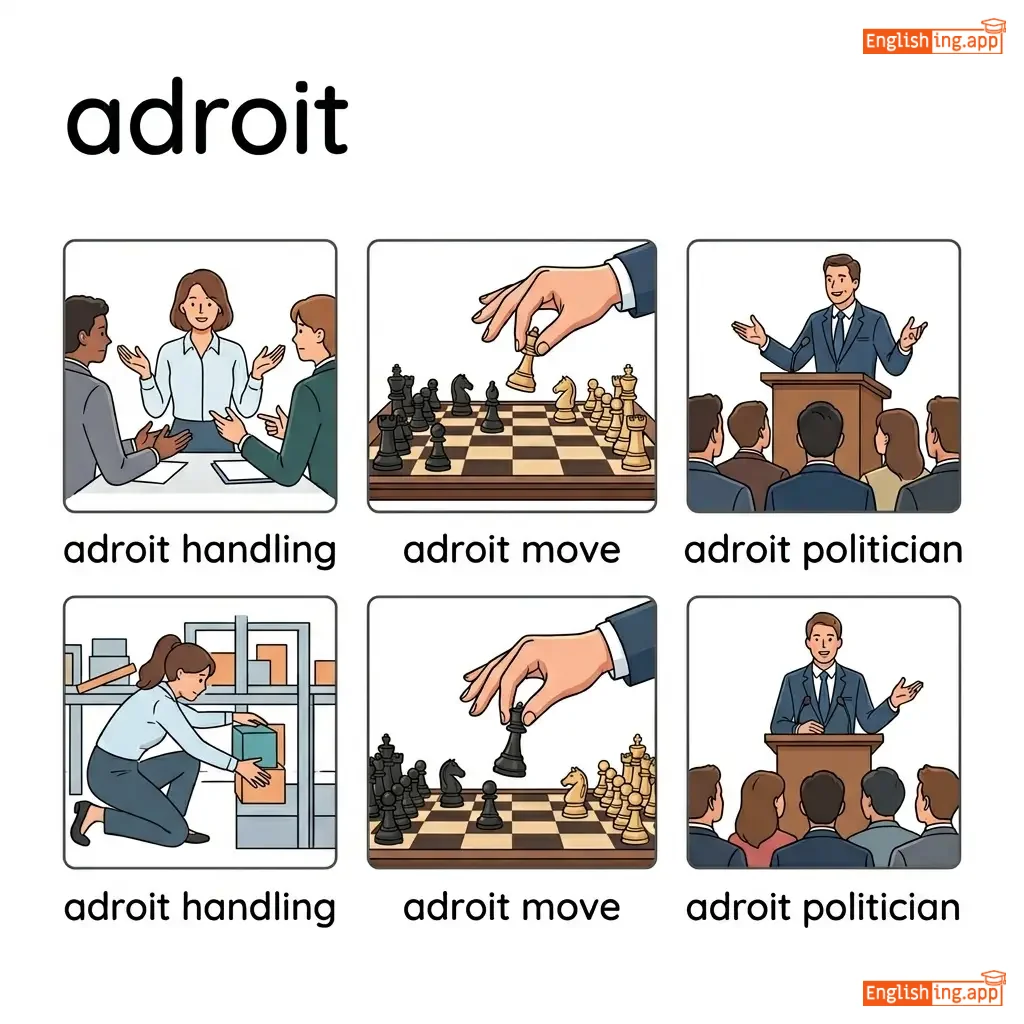
adroit handling, adroit move, adroit politician, adroit negotiator
••••••
|
Adroitは巧妙を意味し、手や頭を使って問題を解決するのが得意なことです。
••••••
|
|
#200
🌸
|
/əˈdɔːrn/
verb
(アドーン)
••••••
|
- •••••• |
飾る
kazaru
••••••
|
adorned
••••••
|
adorned
••••••
|
adorns
••••••
|
adorning
••••••
|
to decorate or add beauty to something
••••••
|
The hall was adorned with flowers for the wedding. |
結婚式のためにホールは花で飾られました。
Kekkonshiki no tame ni ho-ru wa hana de kazaremashita.
••••••
|
adorn oneself with |
to dress or decorate oneself with something
••••••
|
自分を飾る
jibun o kazaru
••••••
|
decorate, embellish, beautify, ornament, enhance
••••••
|
spoil, deface, disfigure
••••••
|
adorn with flowers, beautifully adorned, adorn the walls, adorn oneself
••••••
|
Adornは飾るという意味です – きれいな服を着て自分を飾ると想像してみてください。
••••••
|
|
#201
❤️
|
/əˈdɔːr/
verb
(アドア)
••••••
|
- •••••• |
崇拝する
sūhai suru
••••••
|
adored
アドアード
••••••
|
adored
アドアード
••••••
|
adores
アドアーズ
••••••
|
adoring
アドアリング
••••••
|
to love deeply and respect highly
••••••
|
She adores her little sister.
彼女は小さな妹をとても愛しています。
••••••
|
彼女は小さな妹をとても愛しています。
Kanojo wa chiisana imōto o totemo aishiteimasu.
••••••
|
adore the ground someone walks on
誰かが歩く地面を崇拝する
••••••
|
to idolize or love someone deeply
••••••
|
誰かが歩く地面を崇拝する
Dareka ga aruku jimen o sūhai suru
••••••
|
love, cherish, admire, idolize, treasure
••••••
|
hate, despise, detest
••••••
|
adore someone, adore the way, absolutely adore, adore the idea
••••••
|
アドアするということは、誰かを愛し、彼らの歩く地面にまで崇拝を示すことです。
••••••
|
|
#202
😍
|
/ˌædəˈreɪʃən/
noun
(アドレーション)
••••••
|
- •••••• |
崇拝 / 深い愛
sūhai / fukai ai
••••••
|
- •••••• | - •••••• | - •••••• | - •••••• |
deep love and respect; worship
••••••
|
The fans showed their adoration for the singer.
ファンは歌手に対して自分の愛情を示した。
••••••
|
ファンは歌手に対して自分の愛情を示した。
Fan wa kashu ni taishite jibun no aijō o shimeshita.
••••••
|
- •••••• | - •••••• | - •••••• |
love, devotion, worship, admiration
••••••
|
hatred, dislike, contempt
••••••
|
show adoration, express adoration, deep adoration
••••••
|
Adorationは深く愛し、尊敬することです。
••••••
|
|
#203
🎭
|
/əˈduː/
noun
(アド)
••••••
|
- •••••• |
騒ぎ / 不必要な活動
sawagi / fuhitsuyou na katsudou
••••••
|
- •••••• | - •••••• | - •••••• | - •••••• |
a fuss or unnecessary activity; trouble or difficulty
••••••
|
Without further ado, let’s begin the ceremony. |
これ以上のアドなしで、式を始めましょう。
Kore ijou no ado nashi de, shiki o hajimemashou.
••••••
|
without further ado |
without any unnecessary delay or fuss
••••••
|
不必要な遅延なしで
Fuhitsuyou na chien nashi de
••••••
|
fuss, commotion, trouble, bother
••••••
|
calm, peace, quiet
••••••
|
without ado, much ado, ado about nothing
••••••
|
Much ADO about nothing → たくさんの ado は無駄な活動を意味します!
••••••
|
|
#204
👀
|
/ədˈmɒnɪtəri/
adjective
(ædməˈnɪtəri)
••••••
|
- •••••• |
警告の
keikoku no
••••••
|
- •••••• | - •••••• | - •••••• | - •••••• |
giving or conveying a warning or reprimand
••••••
|
She gave him an admonitory glance.
彼女は彼に警告のまなざしを向けました。
••••••
|
彼女は彼に警告のまなざしを向けました。
Kanojo wa kare ni keikoku no manazashi o mukemashita.
••••••
|
- •••••• | - •••••• | - •••••• |
warning, cautionary, reproving, advisory
••••••
|
encouraging, approving
••••••
|
admonitory tone, admonitory look, admonitory letter
••••••
|
Admonitory glance は警告の目線!
••••••
|
|
#205
📢
|
/ˌædməˈnɪʃən/
noun
(アドモニション)
••••••
|
- •••••• |
警告
keikoku
••••••
|
- •••••• | - •••••• | - •••••• | - •••••• |
a firm warning or reprimand; gentle or earnest advice
••••••
|
He received an admonition for his careless work.
彼は不注意な仕事のために警告を受けました。
••••••
|
彼は不注意な仕事のために警告を受けました。
Kare wa fuchuui na shigoto no tame ni keikoku o ukemashita.
••••••
|
- •••••• | - •••••• | - •••••• |
warning, caution, reprimand, advice
••••••
|
praise, approval, compliment
••••••
|
stern admonition, gentle admonition, receive an admonition
••••••
|
Admonition sounds like 'admit', but this means a warning!
••••••
|
|
#206
⚠️
|
/ədˈmɒnɪʃ/
verb
(admonish)
••••••
|
|
注意する / 叱る
chūi suru / shikaru
••••••
|
admonished
admonished
••••••
|
admonished
admonished
••••••
|
admonishes
admonishes
••••••
|
admonishing
admonishing
••••••
|
to warn or reprimand someone firmly; to advise or urge earnestly
••••••
|
The teacher admonished the students for being late.
The teacher admonished the students for being late.
••••••
|
先生は遅刻した生徒を注意しました。
Sensei wa chikoku shita seito o chūi shimashita.
••••••
|
admonish someone gently
admonish someone gently
••••••
|
to caution someone in a mild or kind manner
••••••
|
優しく注意する
Yasashiku chūi suru
••••••
|
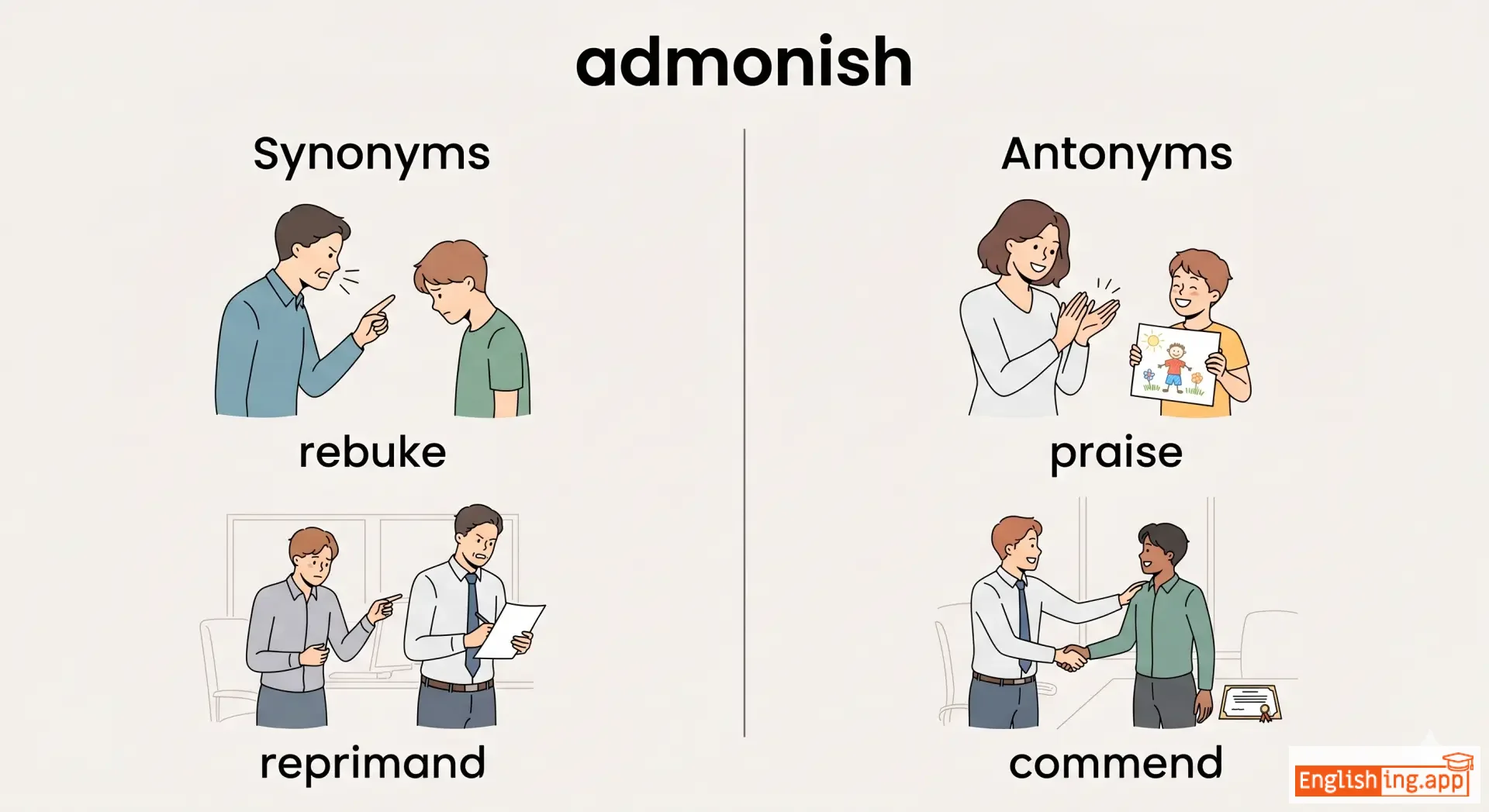
rebuke, reprimand, scold, caution, warn
••••••
|
praise, commend, approve
••••••
|
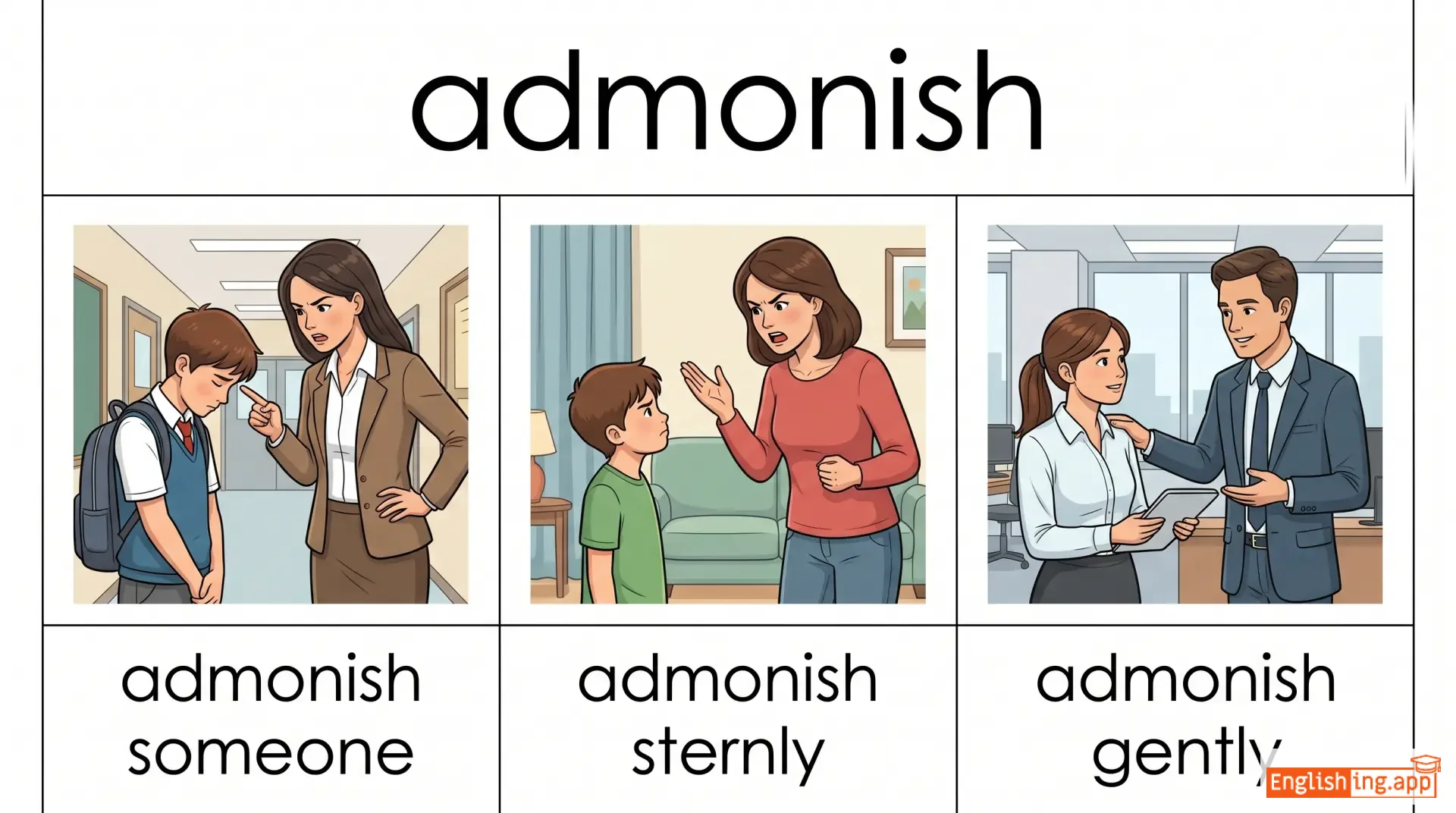
admonish someone, admonish sternly, admonish gently, admonish for behavior
••••••
|
注意するは‘注意’(chūi)と‘叱る’(shikaru)の組み合わせで警告すること!
••••••
|
|
#207
🚪
|
/ədˈmɪtəns/
noun
(アドミッテンス)
••••••
|
- •••••• |
入場
nyūjō
••••••
|
- •••••• | - •••••• | - •••••• | - •••••• |
the process or fact of entering or being allowed to enter a place
••••••
|
No admittance without a valid ticket.
有効なチケットなしでは入場できません。
••••••
|
有効なチケットなしでは入場できません。
Yūkōna chiketto nashide wa nyūjō dekimasen.
••••••
|
- •••••• | - •••••• | - •••••• |
entry, access, permission, admission
••••••
|
exclusion, ban, denial
••••••
|
no admittance, admittance fee, admittance to hospital
••••••
|
Admittance = 入場, 覚えておいて: 'No admittance' は No entry を意味します 🚪
••••••
|
|
#208
⚖️
|
/ədˈmɪsəbl/
adjective
••••••
|
- •••••• | - •••••• | - •••••• | - •••••• | - •••••• | - •••••• |
acceptable or valid, especially as evidence in a court of law
••••••
|
The judge ruled that the document was admissible as evidence. |
- •••••• | - •••••• | - •••••• | - •••••• |
acceptable, valid, allowable, permissible
••••••
|
inadmissible, invalid, unacceptable
••••••
|
admissible evidence, admissible statement, admissible proof
••••••
|
No •••••• |
|
#209
🧑💼
|
/ədˈmɪnɪstreɪtər/
noun
••••••
|
- •••••• | - •••••• | - •••••• | - •••••• | - •••••• | - •••••• |
a person responsible for running or managing an organization or system
••••••
|
The school administrator implemented new policies for students. |
- •••••• | - •••••• | - •••••• | - •••••• |
manager, director, supervisor, executive, controller
••••••
|
employee, worker, subordinate
••••••
|
system administrator, school administrator, database administrator, network administrator
••••••
|
No •••••• |
|
#210
🎖️
|
/ˈædʒʊtənt/
noun
(アジュタント)
••••••
|
- •••••• |
上級士官の行政アシスタントを務める軍人
joukyuu shikan no gyousei ashisutanto wo tsutomeru gunjin
••••••
|
- •••••• | - •••••• | - •••••• | - •••••• |
a military officer who acts as an administrative assistant to a senior officer
••••••
|
The colonel relied on his adjutant to manage daily orders. |
大佐は毎日の命令を管理するためにアジュタントに依存していた。
Taisa wa mainichi no meirei wo kanri suru tame ni adjutanto ni izon shite ita.
••••••
|
- •••••• | - •••••• | - •••••• |
assistant, aide, officer, secretary, deputy
••••••
|
commander, leader
••••••
|
military adjutant, adjutant general, trusted adjutant, adjutant officer
••••••
|
Adjutant = 軍隊のアシスタント、覚えておいて 'アジュタントは行政助手を意味する'。
••••••
|
Vocabulary Quiz
Test your vocabulary by matching words with their translations or meanings.
Login to take the quiz
Comments (0)
Share your thoughts and join the discussion.
Join the discussion by logging in
Login to CommentNo comments yet
Be the first to share your thoughts!