

翻訳
過去
過去分詞
三人称単数
動名詞
意味
例文
例文の翻訳
同義語
対義語
コロケーション
ニーモニック


Swipe left or right, or use the buttons. Tap image to zoom.
例文の翻訳
単語
Lesson 276Lesson 276 - マスクトグル
|
絵文字
|
単語 | Images | 翻訳 | 過去 | 過去分詞 | 三人称単数 | 動名詞 | 意味 | 例文 | 例文の翻訳 | 表現例 | 表現例の意味 | 表現例の翻訳 | 同義語 | 対義語 | コロケーション | ニーモニック |
|---|---|---|---|---|---|---|---|---|---|---|---|---|---|---|---|---|---|
|
#8250
😮💨
|
/spɛnt/
verb, adjective
(スペント)
••••••
|
- •••••• |
使い果たされた, 疲れ切った
tsukai hatasareta, tsukare kitta
••••••
|
spent
スペント
••••••
|
spent
スペント
••••••
|
- •••••• | - •••••• |
Past tense and past participle of 'spend'; also used as an adjective meaning exhausted or used up.
••••••
|
She spent all her energy preparing for the exam.
彼女は試験の準備に全てのエネルギーを使い果たした。
••••••
|
彼女は試験の準備に全てのエネルギーを使い果たした。
Kanojo wa shiken no junbi ni subete no enerugī o tsukai hatashita.
••••••
|
spent force
使い果たされた力
••••••
|
Someone or something that has lost strength, influence, or power
••••••
|
使い果たされた力
tsukai hatasareta chikara
••••••
|
used, exhausted, depleted, consumed
••••••
|
saved, unused, fresh
••••••
|
spent energy, spent force, money spent, time spent
••••••
|
エネルギーを使い果たすと、もう動けない。
••••••
|
|
#8251
🦴
|
/splɪnt/
(スプリント)
••••••
|
- •••••• |
添木
temoku
••••••
|
- •••••• | - •••••• | - •••••• | - •••••• |
A rigid device used to support and immobilize a broken or injured body part.
••••••
|
The doctor applied a splint to stabilize the patient's broken arm. |
医者は患者の折れた腕を安定させるために添木を使いました。
Isha wa kanja no oreta ude o antei saseru tame ni temoku o tsukaimashita.
••••••
|
- •••••• | - •••••• | - •••••• |
brace, support, cast, bandage
••••••
|
freedom, release
••••••
|
apply a splint, wooden splint, fracture splint, arm splint
••••••
|
添木は固定に使われ、足元も同様に安定させます。
••••••
|
|
#8252
🪢
|
/splaɪs/
verb
(スプライス)
••••••
|
- •••••• |
接続する
setsuzoku suru
••••••
|
spliced
スプライスト
••••••
|
spliced
スプライスト
••••••
|
splices
スプライセス
••••••
|
splicing
スプライシング
••••••
|
to join two pieces of rope, film, or other material by weaving or attaching them together
••••••
|
The technician spliced the two wires to restore the connection.
技術者は2本のワイヤーを接続して接続を回復しました。
••••••
|
技術者は2本のワイヤーを接続して接続を回復しました。
Gijutsusha wa 2-hon no waiyā o setsuzoku shite setsuzoku o kaifuku shimashita.
••••••
|
splice together
一緒に接続する
••••••
|
to join or combine things
••••••
|
一緒に接続する
issho ni setsuzoku suru
••••••
|
join, connect, bind, weave, fuse
••••••
|
separate, split, detach
••••••
|
splice wires, splice rope, splice together, splice film
••••••
|
Splice は物をつなげる、ワイヤーやロープを接続することです。
••••••
|
|
#8253
😤
|
/splɪˈnɛtɪk/
adjective
(スプレネティック)
••••••
|
- •••••• |
怒りっぽい、意地悪な
ikarippoi, ijiwaru na
••••••
|
- •••••• | - •••••• | - •••••• | - •••••• |
bad-tempered, irritable, spiteful
••••••
|
His splenetic remarks offended everyone in the room.
彼のスプレネティックなコメントは部屋の皆を怒らせた。
••••••
|
彼の怒りっぽいコメントは部屋の皆を怒らせた。
Kare no ikarippoi komento wa heya no mina o okorase ta.
••••••
|
- •••••• | - •••••• | - •••••• |
irritable, bad-tempered, cranky, spiteful
••••••
|
calm, cheerful
••••••
|
splenetic mood, splenetic remark, splenetic attack, splenetic tone
••••••
|
Spleneticは、激怒や復讐心で満ちた気分を意味します。
••••••
|
|
#8254
😠
|
/spliːn/
noun
(スプリーン)
••••••
|
- •••••• |
脾臓; 怒り
hizō; ikari
••••••
|
- •••••• | - •••••• | - •••••• | - •••••• |
an organ in the body that produces lymphocytes and filters blood; also refers to bad temper or spite
••••••
|
He vented his spleen on his coworkers after the meeting. |
会議後、彼は同僚に対して怒りをぶつけました。
Kaigi go, kare wa dōryō ni taishite ikari o butsukemashita.
••••••
|
vent one's spleen |
to express anger or frustration
••••••
|
怒りをぶつける
Ikari o butsukeru
••••••
|
anger, malice, resentment, bitterness
••••••
|
calm, kindness
••••••
|
ruptured spleen, human spleen, vent spleen, inflamed spleen
••••••
|
Spleen は脾臓 (hizō) と怒り (ikari); 怒りが爆発する時に言うのは spleen です。
••••••
|
|
#8255
⛪
|
/ˈspaɪər/
noun
(supaiā)
••••••
|
- •••••• |
尖塔
sentō
••••••
|
- •••••• | - •••••• | - •••••• | - •••••• |
a tall, pointed structure on top of a building, especially a church
••••••
|
The church spire could be seen from miles away.
教会の尖塔は何マイルも先から見ることができました。
••••••
|
教会の尖塔は遠くから見ることができました。
Kyōkai no sentō wa tōku kara miru koto ga dekimashita.
••••••
|
- •••••• | - •••••• | - •••••• |
steeple, pinnacle, tower, turret
••••••
|
base, foundation
••••••
|
church spire, tall spire, spire rising, pointed spire
••••••
|
Spire とは教会の尖塔 (sentō) のことです。
••••••
|
|
#8256
🌵
|
/ˈspaɪni/
adjective
(スパイニー)
••••••
|
- •••••• |
とげのある
toge no aru
••••••
|
- •••••• | - •••••• | - •••••• | - •••••• |
covered with or full of spines; having sharp points
••••••
|
The spiny cactus stood tall in the desert. |
とげのあるサボテンが砂漠の中で高く立っていました。
Toge no aru saboten ga sabaku no naka de takaku tatte imashita.
••••••
|
- •••••• | - •••••• | - •••••• |
thorny, prickly, barbed, bristly
••••••
|
smooth, soft
••••••
|
spiny cactus, spiny surface, spiny leaves, spiny fish
••••••
|
Spinyにはとげがある、まるでとげのあるサボテンのように
••••••
|
|
#8257
👩🦳
|
/ˈspɪnstər/
noun
(スピンスター)
••••••
|
- •••••• |
未婚女性
mikon josei
••••••
|
- •••••• | - •••••• | - •••••• | - •••••• |
An unmarried woman, often one who is older and considered unlikely to marry
••••••
|
The novel featured a kind-hearted spinster who cared for the village children. |
その小説には、村の子供たちの世話をしていた心優しい未婚女性が登場した。
Sono shousetsu ni wa, mura no kodomotachi no sewa o shite ita kokoro yasashii mikon josei ga toujou shita.
••••••
|
- •••••• | - •••••• | - •••••• |
unmarried woman, old maid, single woman, maiden
••••••
|
bride, wife
••••••
|
old spinster, kindly spinster, village spinster
••••••
|
Spinster – 未婚女性、spinning して結婚しない。
••••••
|
|
#8258
🌵
|
/ˈspaɪnəs/
adjective
(スパイナス)
••••••
|
- •••••• |
棘のある
toge no aru
••••••
|
- •••••• | - •••••• | - •••••• | - •••••• |
Having spines or thorn-like projections
••••••
|
The spinous cactus was difficult to handle without gloves.
そのとげのあるサボテンは手袋なしでは取り扱いにくかった。
••••••
|
その棘のあるサボテンは手袋なしでは取り扱いにくかった。
Sono toge no aru saboten wa tebukuro nashi de wa toriatsukai nikukatta.
••••••
|
- •••••• | - •••••• | - •••••• |
thorny, spiky, prickly, barbed, bristly
••••••
|
smooth, soft
••••••
|
spinous cactus, spinous plant, spinous process
••••••
|
Spinous はサボテンのように棘があることを意味します。
••••••
|
|
#8259
🌱
|
/ˈspɪndli/
adjective
(supindori)
••••••
|
- •••••• |
細くて弱い
hosokute yowai
••••••
|
- •••••• | - •••••• | - •••••• | - •••••• |
Long, thin, and weak-looking
••••••
|
The spindly tree bent under the weight of the snow.
雪の重みで細い木が曲がった。
••••••
|
細い木が雪の重みで曲がった。
Hosoi ki ga yuki no omomi de magatta.
••••••
|
- •••••• | - •••••• | - •••••• |
thin, lanky, slender, fragile, weak
••••••
|
sturdy, strong, thick
••••••
|
spindly legs, spindly tree, spindly plant
••••••
|
Spindly は細くて弱い木のこと。
••••••
|
|
#8260
🌀
|
/spɪn/
verb
(スピン)
••••••
|
- •••••• |
回転する
kaiten suru
••••••
|
spun
スパン
••••••
|
spun
スパン
••••••
|
spins
スピンズ
••••••
|
spinning
スピニング
••••••
|
To turn around quickly or cause something to rotate
••••••
|
The dancer began to spin gracefully on the stage.
ザ ダンサー ビガン トゥ スピン グレースフリー オン ザ ステージ
••••••
|
ダンサーはステージで優雅に回転を始めました。
Dansā wa sutēji de yūga ni kaiten o hajimemashita.
••••••
|
spin out of control
スピン アウト オブ コントロール
••••••
|
To lose stability or control
••••••
|
制御を失う
segyo o ushinau
••••••
|
twirl, rotate, whirl, revolve, turn
••••••
|
stop, halt, remain
••••••
|
spin wheel, spin around, spin class, spin doctor
••••••
|
Spin は回転する – 舞台での回転のように
••••••
|
|
#8261
🗿
|
/ˈsfɪŋks laɪk/
adjective
(スフィンクス-ライク)
••••••
|
- •••••• |
神秘的な
shinpitekina
••••••
|
- •••••• | - •••••• | - •••••• | - •••••• |
Mysterious, enigmatic, or difficult to interpret
••••••
|
Her sphinx-like smile made it hard to guess what she was thinking.
彼女のスフィンクスのような微笑みは、彼女が何を考えているのかを予測するのを難しくさせた。
••••••
|
彼女のスフィンクスのような微笑みは、彼女が何を考えているのかを予測するのを難しくさせた。
Kanojo no sufinx no yōna bishōmi wa, kanojo ga nani o kangaete iru no ka o yosoku suru no o muzukashiku saseta.
••••••
|
- •••••• | - •••••• | - •••••• |
enigmatic, mysterious, cryptic, inscrutable, puzzling
••••••
|
clear, obvious, transparent
••••••
|
sphinx-like expression, sphinx-like silence, sphinx-like mystery
••••••
|
エジプトのスフィンクスは神秘的なので、sphinx-likeは神秘的を意味します。
••••••
|
|
#8262
📏
|
/sfɪˈrɒmɪtər/
noun
(スフェロメーター)
••••••
|
- •••••• |
球面測定器
kyūmen sokuteiki
••••••
|
- •••••• | - •••••• | - •••••• | - •••••• |
An instrument used for measuring the curvature of spherical surfaces.
••••••
|
The scientist used a spherometer to measure the lens curvature. |
科学者はレンズの曲率を測定するためにスフェロメーターを使用しました。
Kagakusha wa renzu no kyokuritsu o sokutei suru tame ni suferomēta o shiyō shimashita.
••••••
|
- •••••• | - •••••• | - •••••• |
measuring device, optical instrument, gauge
••••••
|
none, unmeasured
••••••
|
use spherometer, precision spherometer, spherometer reading
••••••
|
Sphere + meter = スフェロメーター、球面の測定器。
••••••
|
|
#8263
🌍
|
/ˈsfɛrɔɪd/
noun
(スフィロイド)
••••••
|
- •••••• |
回転楕円体
kaiten daen-tai
••••••
|
- •••••• | - •••••• | - •••••• | - •••••• |
A three-dimensional shape that is almost spherical but slightly flattened or elongated.
••••••
|
The Earth is not a perfect sphere but an oblate spheroid.
アースは完璧なスフィアではなく、扁平なスフィロイドです。
••••••
|
地球は完璧な球体ではなく、偏平な回転楕円体です。
chikyuu wa kanpeki na kyutai dewa naku henpei na kaiten daentai desu
••••••
|
- •••••• | - •••••• | - •••••• |
ellipsoid, globe, orb, ball
••••••
|
cube, flat surface
••••••
|
oblate spheroid, prolate spheroid, approximate spheroid
••••••
|
スフィロイドはスフィアに似ているけど、完全な球じゃない。
••••••
|
|
#8264
⚪
|
/sfɛˈrɪsɪti/
noun
(sufērisiti)
••••••
|
- •••••• |
球形
kyūkei
••••••
|
- •••••• | - •••••• | - •••••• | - •••••• |
The quality or state of being spherical; roundness.
••••••
|
The sphericity of the ball made it roll smoothly on the ground. |
ボールの球形は、地面でスムーズに転がるのを可能にしました。
Bōru no kyūkei wa, jimen de sumūzu ni korogaru no o kanō ni shimashita.
••••••
|
- •••••• | - •••••• | - •••••• |
roundness, circularity, globularity, curvature
••••••
|
flatness, irregularity
••••••
|
perfect sphericity, degree of sphericity, measure sphericity
••••••
|
球体は丸い意味だから、球形は丸い状態を意味します。
••••••
|
|
#8265
🪙
|
/ˈspiːʃiː/
noun
(supīshi)
••••••
|
- •••••• |
硬貨
kouka
••••••
|
- •••••• | - •••••• | - •••••• | - •••••• |
money in the form of coins rather than notes or credit
••••••
|
The transaction was made in specie.
取引は現金で行われました。
••••••
|
取引は硬貨で行われました。
Torihiki wa kouka de okonawaremashita.
••••••
|
- •••••• | - •••••• | - •••••• |
coinage, money, currency, cash
••••••
|
credit, paper money
••••••
|
paid in specie, specie payment, specie reserves
••••••
|
Specieは硬貨を意味します。
••••••
|
|
#8266
💸
|
/ˈspɛndˌθrɪft/
noun
(スペンドスリフト)
••••••
|
|
浪費家
rōhika
••••••
|
- •••••• | - •••••• | - •••••• | - •••••• |
A person who spends money extravagantly or wastefully.
••••••
|
The young prince was known as a spendthrift, wasting his fortune on lavish parties. |
若い王子は浪費家として知られ、贅沢なパーティーに財産を浪費していた。
Wakai ōji wa rōhika toshite shirare, zeitakuna pātī ni zaisan o rōhi shite ita.
••••••
|
spendthrift ways |
Extravagant and wasteful spending habits
••••••
|
浪費家の習慣
rōhika no shūkan
••••••
|
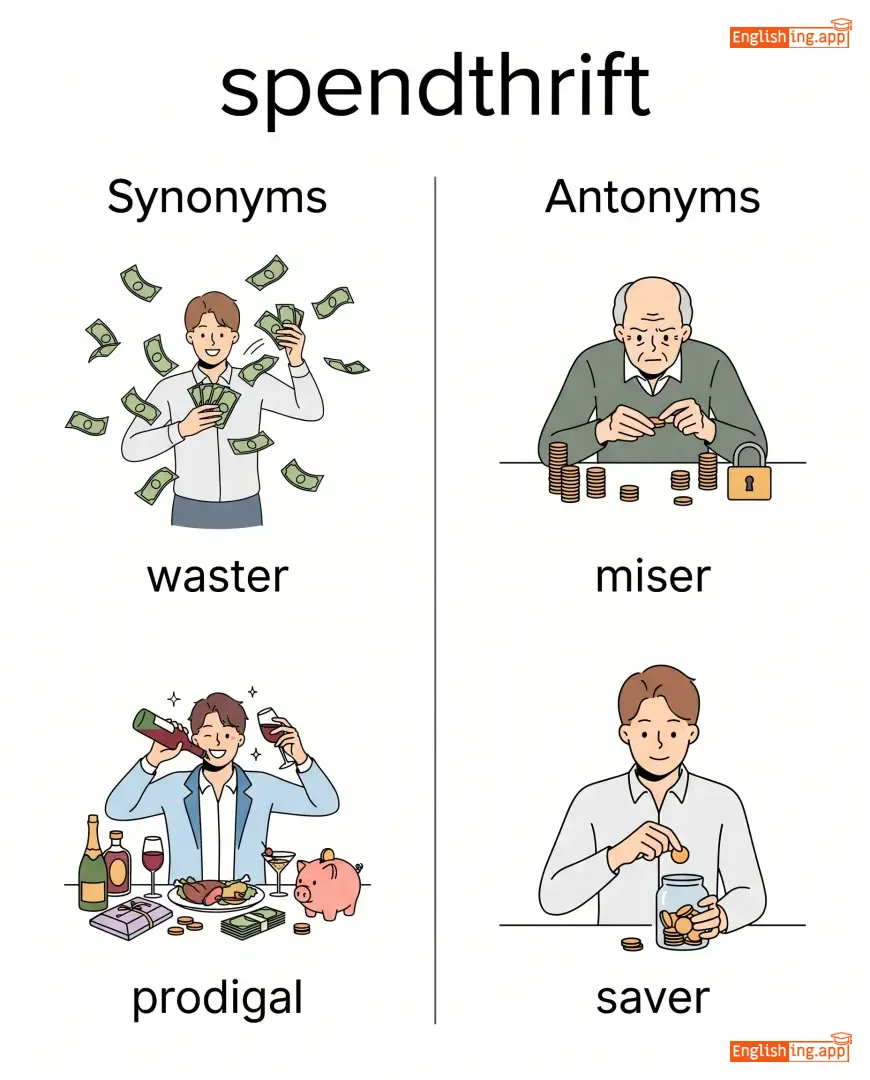
waster, prodigal, squanderer, waster, profligate
••••••
|
miser, saver, frugal
••••••
|
spendthrift habits, spendthrift lifestyle, notorious spendthrift
••••••
|
お金を浪費する、浪費家としてのライフスタイル。
••••••
|
|
#8267
🧗♂️
|
/spɪˈlʌŋkər/
noun
(スペランカー)
••••••
|
- •••••• |
洞窟探検家
dōkutsu tankenka
••••••
|
- •••••• | - •••••• | - •••••• | - •••••• |
A person who explores caves as a hobby.
••••••
|
The spelunker carried ropes and lights into the dark cave. |
洞窟探検家は暗い洞窟にロープとライトを持って行きました。
Dōkutsu tankenka wa kurai dōkutsu ni rōpu to raito o motte ikimashita.
••••••
|
- •••••• | - •••••• | - •••••• |
caver, cave explorer, potholer, adventurer
••••••
|
outsider, non-explorer
••••••
|
experienced spelunker, amateur spelunker, group of spelunkers
••••••
|
Spelunker = 洞窟探検家、Spell + 洞窟 (dōkutsu) を使って覚えやすい。
••••••
|
|
#8268
😶
|
/ˈspiːtʃləs/
adjective
(スピーチレス)
••••••
|
- •••••• |
言葉を失う
kotoba o ushinau
••••••
|
- •••••• | - •••••• | - •••••• | - •••••• |
Unable to speak because of shock, surprise, or strong emotion.
••••••
|
She was speechless when she received the award. |
彼女は賞を受け取ったとき、言葉を失いました。
Kanojo wa shō o uketotta toki, kotoba o ushinai mashita.
••••••
|
left speechless |
So surprised or moved that one cannot speak.
••••••
|
言葉を失う
kotoba o ushinau
••••••
|
silent, dumbfounded, stunned, amazed, shocked
••••••
|
expressive, vocal, articulate
••••••
|
left speechless, completely speechless, almost speechless
••••••
|
Speechless とは、言葉を失うほど驚いたり感動したりすることです。
••••••
|
|
#8269
💹
|
/ˈspɛkjʊˌleɪtər/
noun
(es-pek-yu-rei-tā)
••••••
|
- •••••• |
投機家
tōkika
••••••
|
- •••••• | - •••••• | - •••••• | - •••••• |
A person who forms theories without evidence, or invests in assets hoping for profit.
••••••
|
The real estate speculator bought land hoping its value would rise. |
不動産投機家は、土地の価値が上がることを期待して土地を購入しました。
Fudōsan tōkika wa, tochi no kachi ga agaru koto o kitai shite tochi o kōnyū shimashita.
••••••
|
- •••••• | - •••••• | - •••••• |
investor, gambler, risk-taker, opportunist
••••••
|
saver, conservative
••••••
|
real estate speculator, stock speculator, market speculator
••••••
|
投機家は未来に賭けて利益を得ようとする人です。
••••••
|
|
#8270
🤔
|
/ˈspɛkjʊˌleɪt/
verb
(スペキュレート)
••••••
|
- •••••• |
推測する / 投資する
すいそくする / とうしする
••••••
|
speculated
スペキュレートした
••••••
|
speculated
スペキュレートした
••••••
|
speculates
スペキュレートする
••••••
|
speculating
スペキュレートしている
••••••
|
To form a theory or guess without firm evidence; to invest in stocks, property, etc. hoping for profit.
••••••
|
Experts speculate that the company may expand into new markets.
専門家は会社が新しい市場に進出する可能性があると予測しています。
••••••
|
専門家は会社が新しい市場に進出する可能性があると予測しています。
せんもんかはかいしゃがあたらしいしじょうにしんしゅつするかのうせいがあるとよそくしています。
••••••
|
wildly speculate
根拠のない推測をする
••••••
|
To guess without much evidence or basis.
••••••
|
根拠のない推測をする
こんきょのないすいそくをする
••••••
|
guess, hypothesize, suppose, invest, gamble
••••••
|
know, prove, confirm
••••••
|
speculate about, speculate on, speculate wildly, speculate heavily
••••••
|
スペキュレートはただの推測だけでなく、利益を期待して投資もすることです。
••••••
|
|
#8271
🌈
|
/ˈspɛktrəm/
noun
(スペクトル)
••••••
|
|
スペクトル
supekutoru
••••••
|
- •••••• | - •••••• | - •••••• | - •••••• |
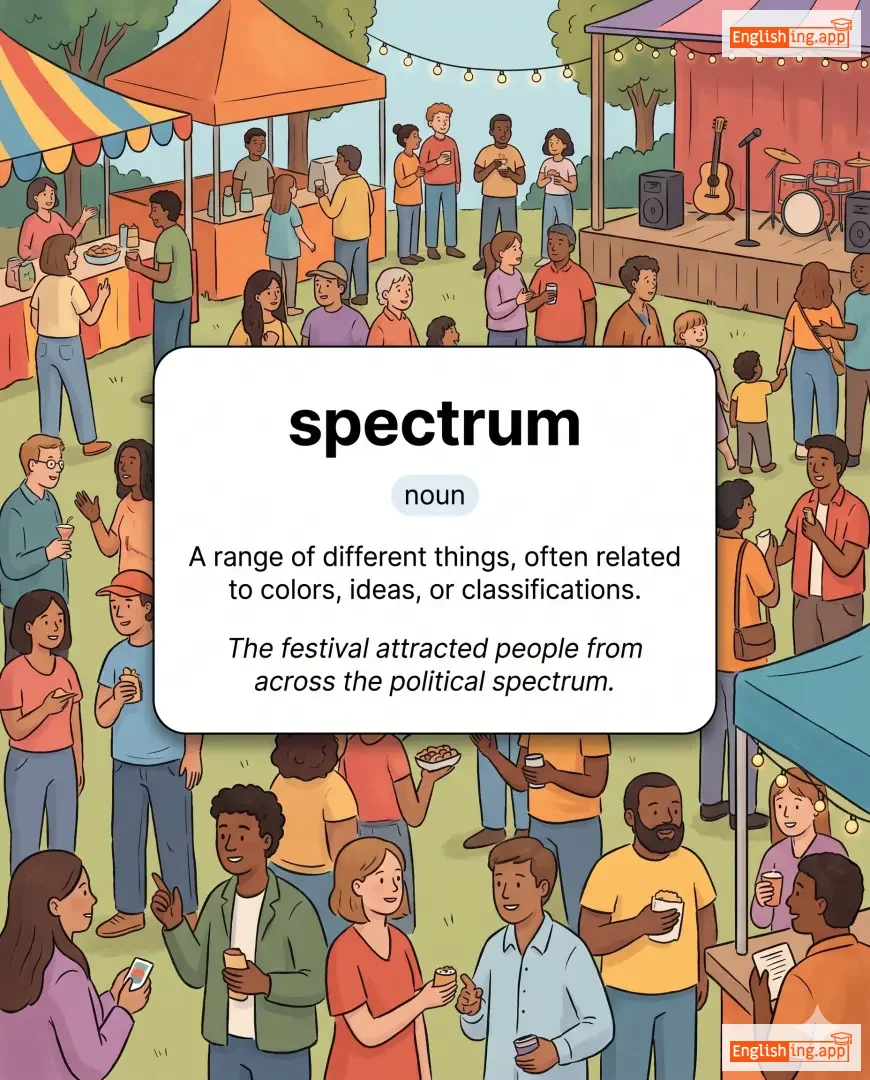
A range of different things, often related to colors, ideas, or classifications.
••••••
|
The festival attracted people from across the political spectrum. |
その祭りは政治的スペクトル全体から人々を引き付けました。
Sono matsuri wa seijiteki supekutoru zentai kara hitobito o hiki tsukemashita.
••••••
|
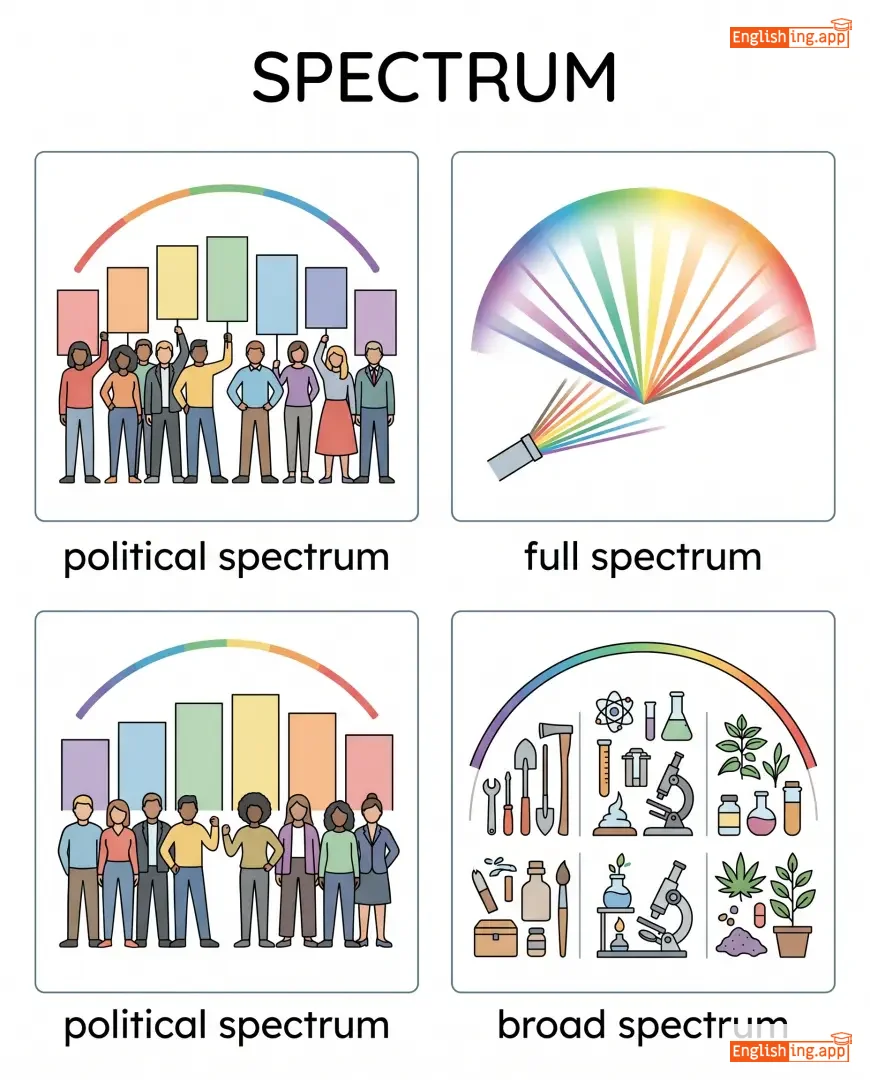
broad spectrum |
Covering a wide range of ideas or possibilities.
••••••
|
広範なスペクトル
Kōhan na supekutoru
••••••
|
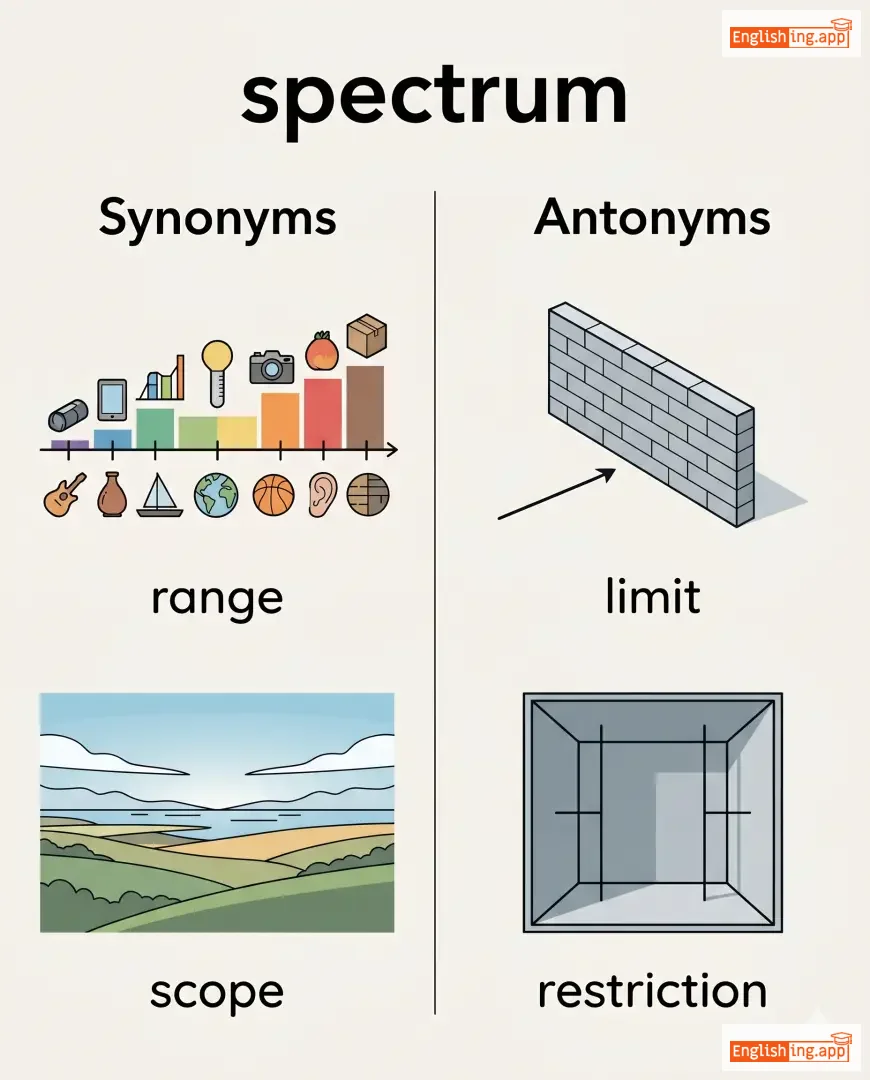
range, scope, span, variety, gamut
••••••
|
limit, restriction, boundary
••••••
|
political spectrum, full spectrum, broad spectrum, across the spectrum
••••••
|
スペクトルは色の完全な範囲を意味します 🌈、スペクトルにすべてが含まれています。
••••••
|
|
#8272
🌫️
|
/ˈspɛktrəl/
adjective
(スペクトラル)
••••••
|
- •••••• |
幽霊のような
yūrei no yō na
••••••
|
- •••••• | - •••••• | - •••••• | - •••••• |
Relating to a ghost or specter; ghostly. Also relating to a spectrum.
••••••
|
The old mansion had a spectral atmosphere at night. |
古い館には夜、幽霊のような雰囲気が漂っていた。
Furui yakata ni wa yoru, yūrei no yō na fun'iki ga tadayotte ita.
••••••
|
- •••••• | - •••••• | - •••••• |
ghostly, eerie, phantom, shadowy
••••••
|
real, solid, natural
••••••
|
spectral figure, spectral light, spectral appearance
••••••
|
Spectralは幽霊に関連することを意味し、幽霊のような雰囲気を持つ。
••••••
|
|
#8273
👻
|
/ˈspɛktər/
noun
(supekutā)
••••••
|
- •••••• |
幽霊
yūrei
••••••
|
- •••••• | - •••••• | - •••••• | - •••••• |
A ghost or spirit; something that causes fear or dread.
••••••
|
The specter of war still haunts the region. |
戦争の幽霊は今でもその地域をおびやかしています。
Sensō no yūrei wa imademo sono chiiki o obiyakashiteimasu.
••••••
|
specter of doom |
the fear of inevitable disaster
••••••
|
運命の幽霊
unmei no yūrei
••••••
|
ghost, apparition, phantom, spirit
••••••
|
reality, certainty
••••••
|
specter of war, haunting specter, dark specter
••••••
|
Specter は恐ろしい幽霊、怖がらせる存在です。
••••••
|
|
#8274
👀
|
/ˈspɛkteɪtər/
noun
(スペクテーター)
••••••
|
- •••••• |
観客
kankyaku
••••••
|
- •••••• | - •••••• | - •••••• | - •••••• |
A person who watches an event, show, or game without taking part.
••••••
|
Thousands of spectators gathered to watch the football match. |
何千人もの観客がサッカーの試合を観るために集まりました。
Nansen-nin mono kankyaku ga sakkā no shiai o miru tame ni atsumarimashita.
••••••
|
mere spectator |
someone who is only watching without involvement
••••••
|
単なる観客
tannaru kankyaku
••••••
|
viewer, observer, onlooker, audience
••••••
|
participant, player
••••••
|
sports spectator, theater spectator, excited spectator
••••••
|
Spectatorは、'spectacle'を観るだけで、ゲームに参加しない。
••••••
|
|
#8275
🔹
|
/spɛk/
noun
(spek)
••••••
|
- •••••• |
しみ
shimi
••••••
|
- •••••• | - •••••• | - •••••• | - •••••• |
A very small spot, mark, or particle.
••••••
|
There was a tiny speck of dust on the glass table. |
ガラスのテーブルに小さなほこりのしみがあった。
Garasu no tēburu ni chīsana hokori no shimi ga atta.
••••••
|
not a speck |
not even a small amount
••••••
|
しみ一つもない
Shimi hitotsu mo nai
••••••
|
spot, dot, grain, fleck, particle
••••••
|
bulk, mass
••••••
|
speck of dust, tiny speck, speck in the sky
••••••
|
Speckは、何か小さなしみを指す言葉であり、目に見えないほど小さい。
••••••
|
|
#8276
🎭
|
/ˈspiːʃəs/
adjective
(スピシャス)
••••••
|
|
見せかけの
misekake no
••••••
|
- •••••• | - •••••• | - •••••• | - •••••• |
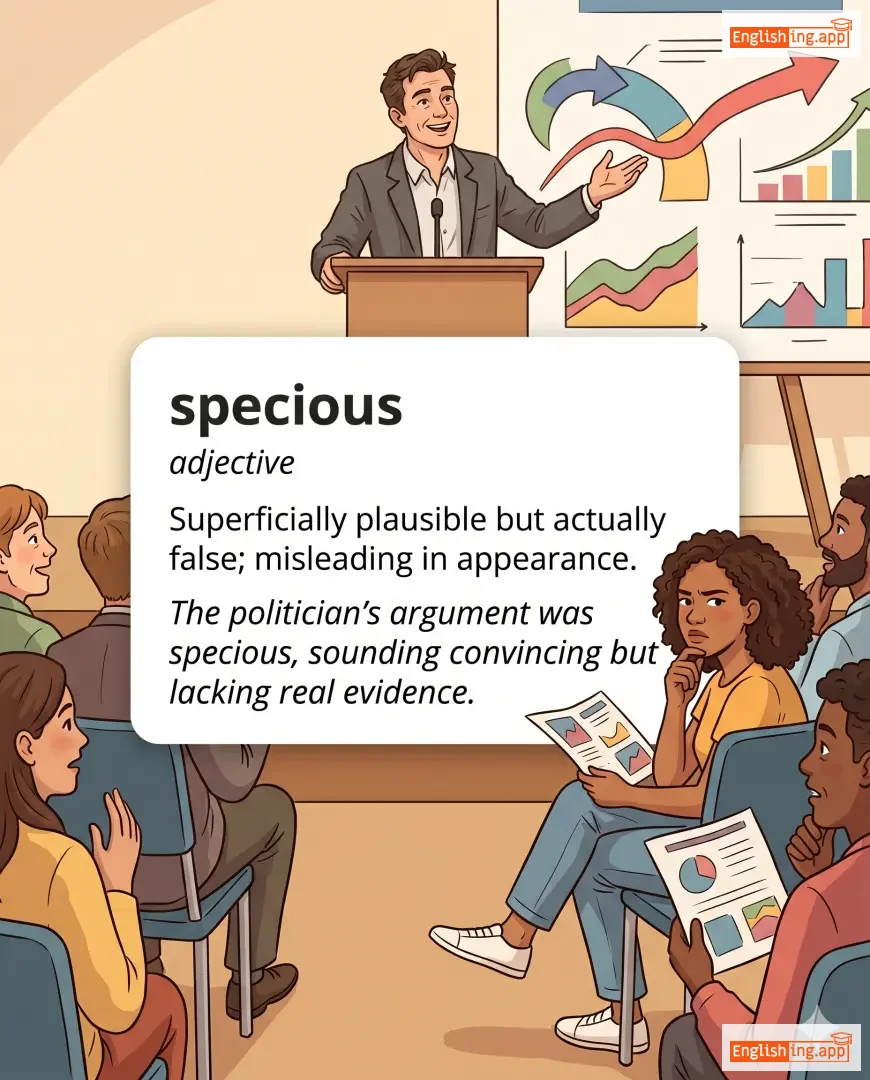
Superficially plausible but actually false; misleading in appearance.
••••••
|
The politician’s argument was specious, sounding convincing but lacking real evidence. |
その政治家の議論は見せかけのもので、説得力があるように見えたが、実際の証拠は欠けていた。
Sono seijika no giron wa misekake no mono de, settokuryoku ga aru you ni mieta ga, jissai no shouko wa kakete ita.
••••••
|
- •••••• | - •••••• | - •••••• |
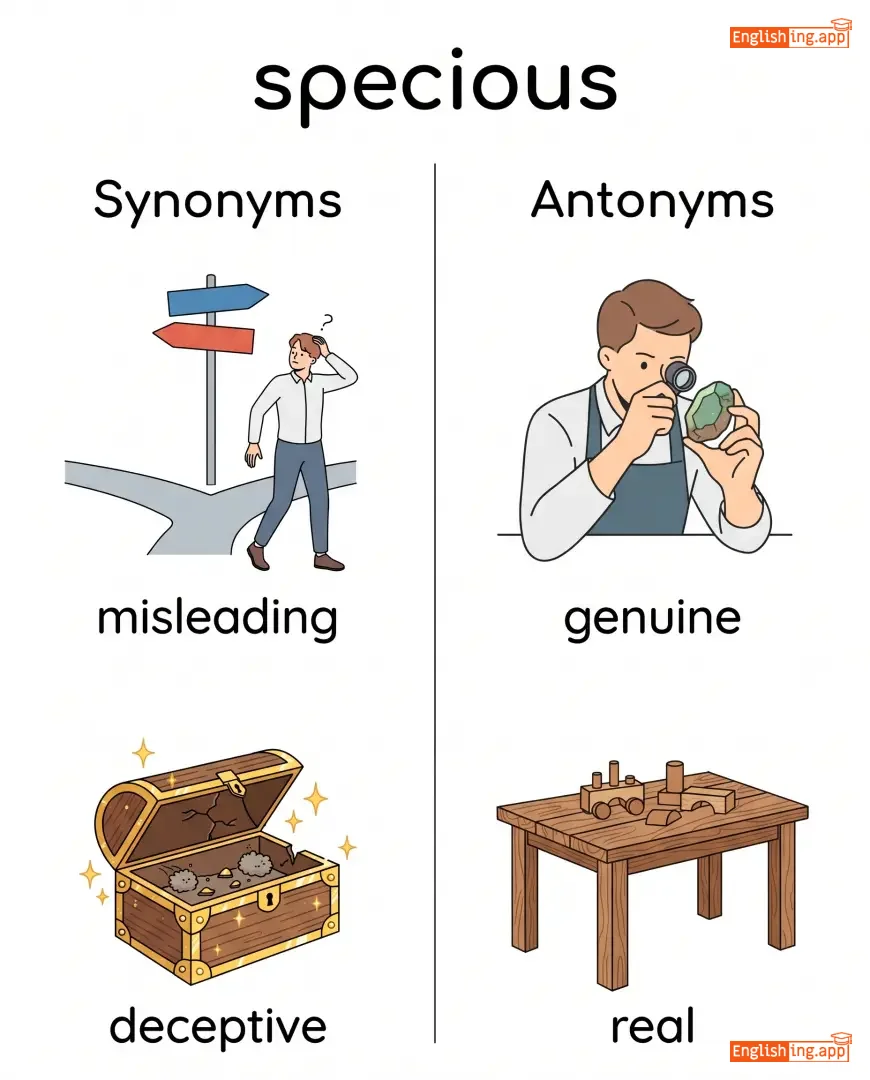
misleading, deceptive, false, fallacious, illusory
••••••
|
genuine, real, true
••••••
|
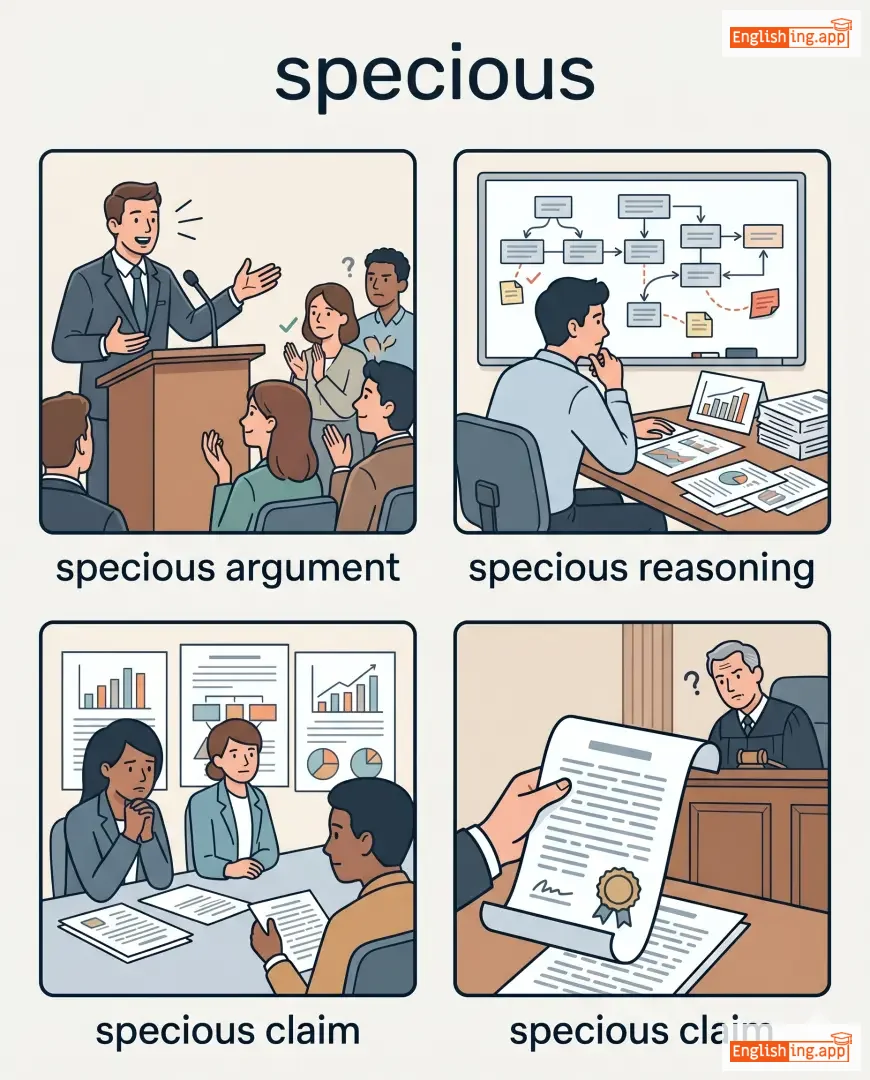
specious argument, specious reasoning, specious claim
••••••
|
見せかけの(misekake no)と聞くと、嘘をついている感じがする。
••••••
|
|
#8277
🧪
|
/ˈspɛsəmən/
noun
(スペシメン)
••••••
|
- •••••• |
標本
hyouhon
••••••
|
- •••••• | - •••••• | - •••••• | - •••••• |
an individual animal, plant, piece of a mineral, etc., used as an example of its species or type for scientific study
••••••
|
The museum has a rare butterfly specimen. |
博物館には珍しい蝶の標本があります。
Hakubutsukan ni wa mezurashī chō no hyōhon ga arimasu.
••••••
|
- •••••• | - •••••• | - •••••• |
sample, example, instance, exhibit
••••••
|
whole, entirety
••••••
|
blood specimen, rare specimen, specimen collection, specimen sample
••••••
|
Specimenは日本語で標本(hyouhon)です。
••••••
|
|
#8278
📌
|
/spəˈsɪfɪk/
adjective
(especifico)
••••••
|
|
具体的
gutaiteki
••••••
|
- •••••• | - •••••• | - •••••• | - •••••• |
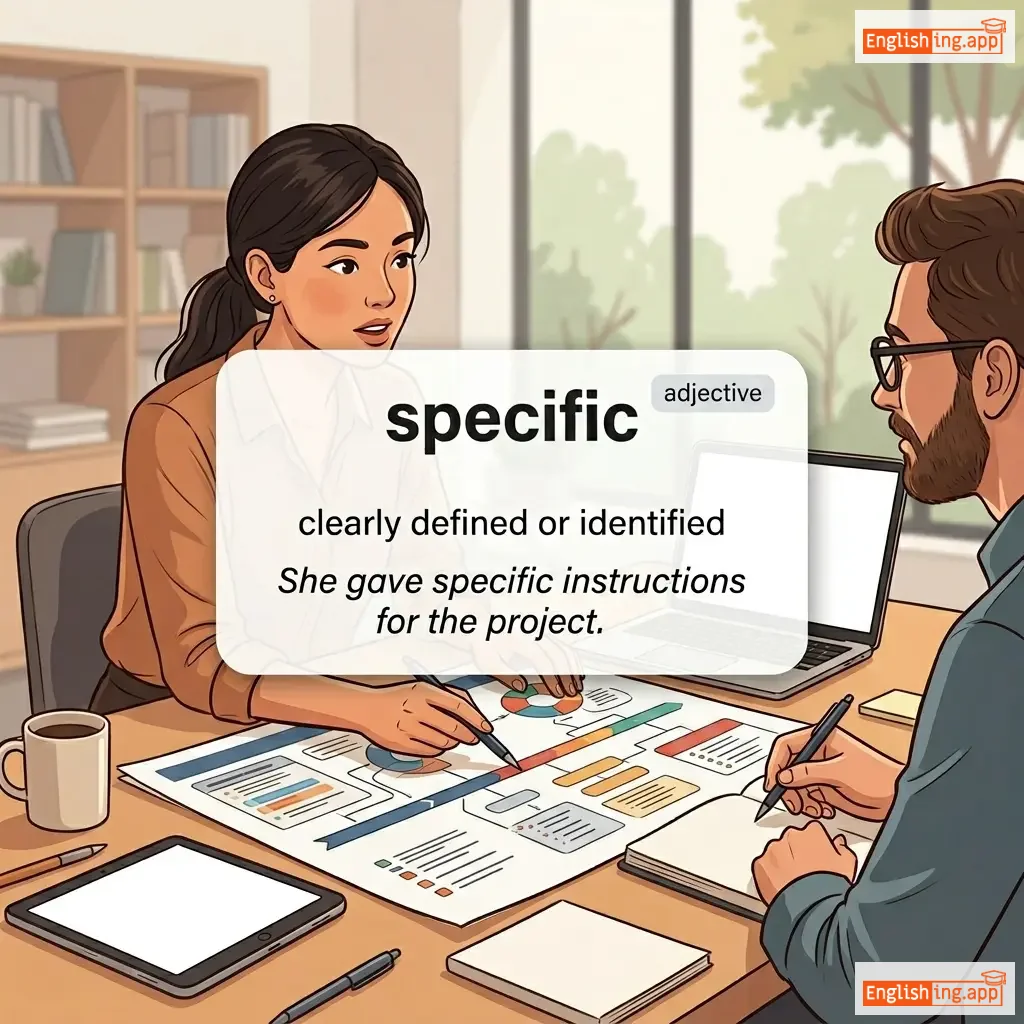
clearly defined or identified
••••••
|
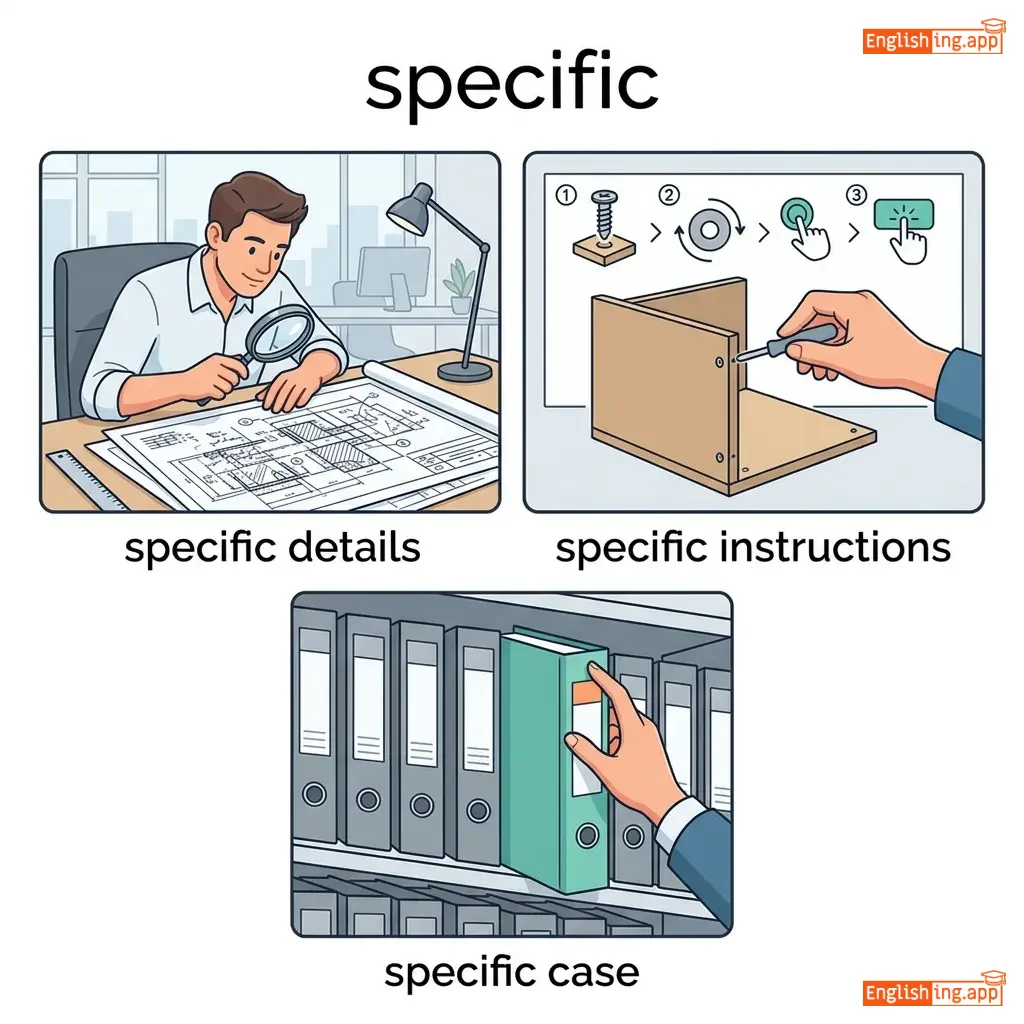
She gave specific instructions for the project. |
彼女はプロジェクトのために具体的な指示を出しました。
Kanojo wa purojekuto no tame ni gutaiteki na shiji o dashimashita.
••••••
|
to be specific |
to clarify or state something exactly
••••••
|
具体的に言うと
gutaiteki ni iu to
••••••
|
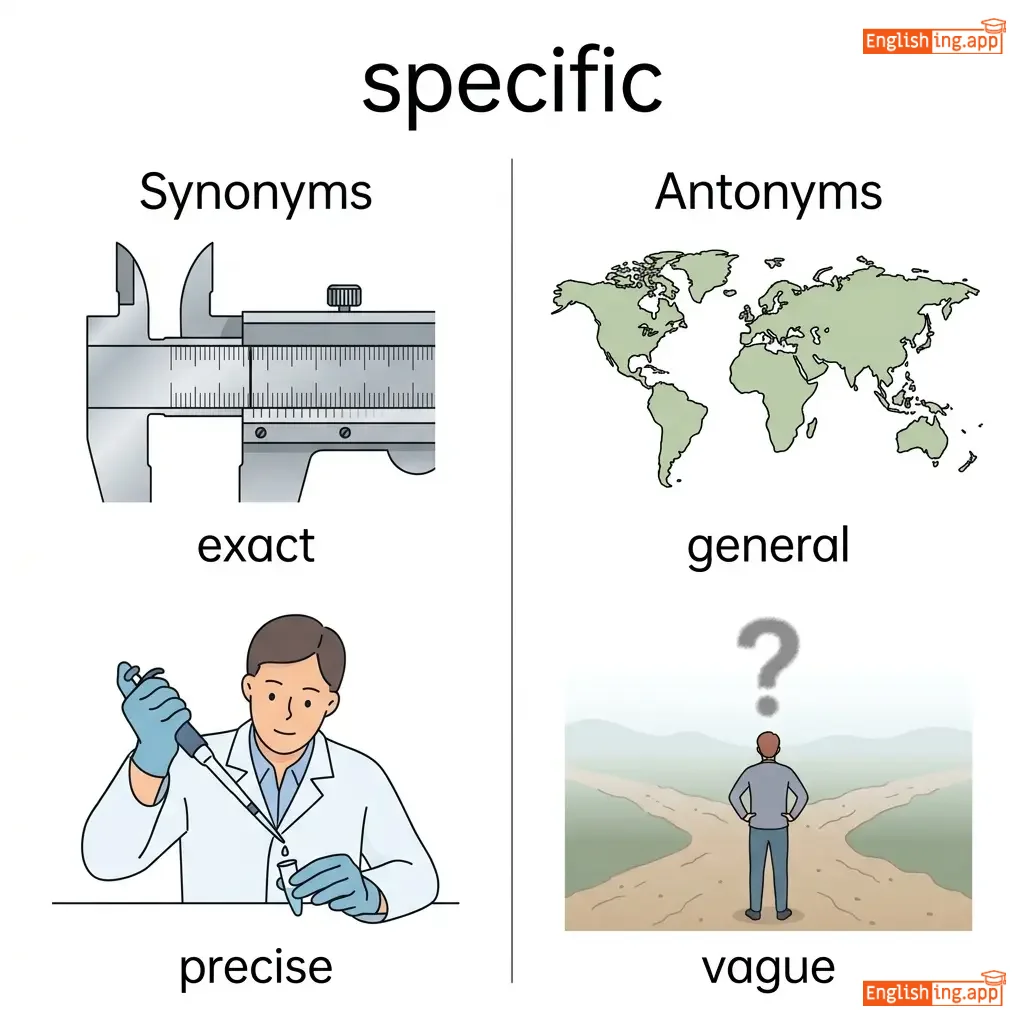
exact, precise, detailed, explicit
••••••
|
general, vague
••••••
|
specific details, specific instructions, specific case, specific purpose
••••••
|
Specificは日本語で具体的、混乱なし
••••••
|
|
#8279
🐼
|
/ˈspiːʃiːz/
noun
(スピシーズ)
••••••
|
- •••••• |
種
shu
••••••
|
- •••••• | - •••••• | - •••••• | - •••••• |
a group of living organisms consisting of similar individuals capable of exchanging genes or interbreeding
••••••
|
The panda is an endangered species. |
パンダは絶滅危惧種です。
Panda wa zetsumetsu kigushu desu.
••••••
|
endangered species |
a species at risk of extinction
••••••
|
絶滅危惧種
zetsumetsu kigushu
••••••
|
type, kind, group, breed
••••••
|
individual, singular
••••••
|
endangered species, rare species, animal species, plant species
••••••
|
種 - 特別なグループ
••••••
|
Vocabulary Quiz
Test your vocabulary by matching words with their translations or meanings.
Login to take the quiz
Comments (0)
Share your thoughts and join the discussion.
Join the discussion by logging in
Login to CommentNo comments yet
Be the first to share your thoughts!