

翻訳
過去
過去分詞
三人称単数
動名詞
意味
例文
例文の翻訳
同義語
対義語
コロケーション
ニーモニック
Swipe left or right, or use the buttons. Tap image to zoom.
例文の翻訳
単語
Lesson 316Lesson 316 - マスクトグル
|
絵文字
|
単語 | Images | 翻訳 | 過去 | 過去分詞 | 三人称単数 | 動名詞 | 意味 | 例文 | 例文の翻訳 | 表現例 | 表現例の意味 | 表現例の翻訳 | 同義語 | 対義語 | コロケーション | ニーモニック |
|---|---|---|---|---|---|---|---|---|---|---|---|---|---|---|---|---|---|
|
#9450
😉
|
/ˈwiːdəl/
verb
(ウィードル)
••••••
|
- •••••• |
お世辞で説得する
oseshi de settoku suru
••••••
|
wheedled
ウィードルド
••••••
|
wheedled
ウィードルド
••••••
|
wheedles
ウィードルズ
••••••
|
wheedling
ウィードリング
••••••
|
to persuade or coax someone by using flattery or smooth talk
••••••
|
She managed to wheedle extra pocket money from her father.
彼女は父親から追加の小遣いを得ることに成功した。
••••••
|
彼女は父親から追加の小遣いを得ることに成功した。
Kanojo wa chichioya kara tsuika no kozutsukai wo eru koto ni seikou shita.
••••••
|
- •••••• | - •••••• | - •••••• |
coax, flatter, cajole, charm, sweet-talk
••••••
|
demand, force, insult
••••••
|
wheedle money, wheedle permission, wheedle his way
••••••
|
Wheedleはお世辞で説得することを意味する
••••••
|
|
#9451
🔹
|
/wɪt/
noun
(ウィット)
••••••
|
- •••••• |
ほんの少し
honno sukoshi
••••••
|
- •••••• | - •••••• | - •••••• | - •••••• |
a very small part or amount
••••••
|
He doesn't care a whit about the outcome. |
彼は結果について少しも気にしない。
Kare wa kekka ni tsuite sukoshi mo ki ni shinai.
••••••
|
not a whit |
not at all; not in the slightest degree
••••••
|
少しもない
sukoshi mo nai
••••••
|
bit, iota, shred, ounce, speck
••••••
|
lot, abundance, plenty
••••••
|
not a whit, without a whit, a whit of difference
••••••
|
whit (少し)はほんの少しを指し、砂粒のように小さい。
••••••
|
|
#9452
🐴
|
/ˈwɪni/
verb
(ウィニー)
••••••
|
- •••••• |
いななき
inanaki
••••••
|
whinnied
ウィニード
••••••
|
whinnied
ウィニード
••••••
|
whinnies
ウィニーズ
••••••
|
whinnying
ウィニン
••••••
|
to make the high-pitched sound a horse makes
••••••
|
The horse whinnied when it saw its rider.
馬は騎手を見たときにウィニードした。
••••••
|
馬は騎手を見たときにいななきました。
Uma wa kishu wo mita toki ni inanakimashita.
••••••
|
- •••••• | - •••••• | - •••••• |
neigh, snort, nicker, cry, call
••••••
|
silence, quiet
••••••
|
horse whinny, whinny softly, whinny loudly, whinny sound
••••••
|
Whinnyはいななき - 馬が‘win’する時にいななきます。
••••••
|
|
#9453
😩
|
/waɪn/
verb
••••••
|
|
- •••••• |
whined
••••••
|
whined
••••••
|
whines
••••••
|
whining
••••••
|
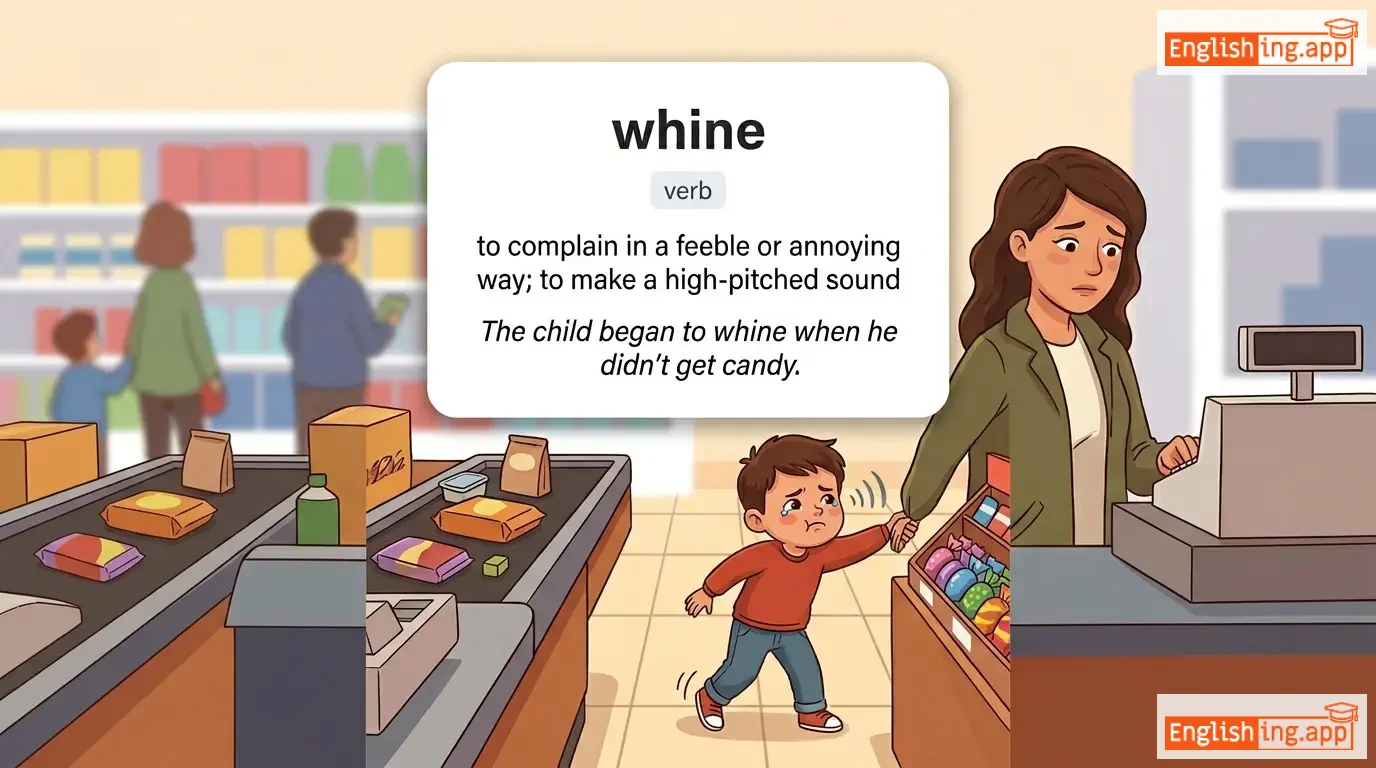
to complain in a feeble or annoying way; to make a high-pitched sound
••••••
|
The child began to whine when he didn’t get candy. |
- •••••• |
whine and complain |
to continuously express dissatisfaction
••••••
|
- •••••• |
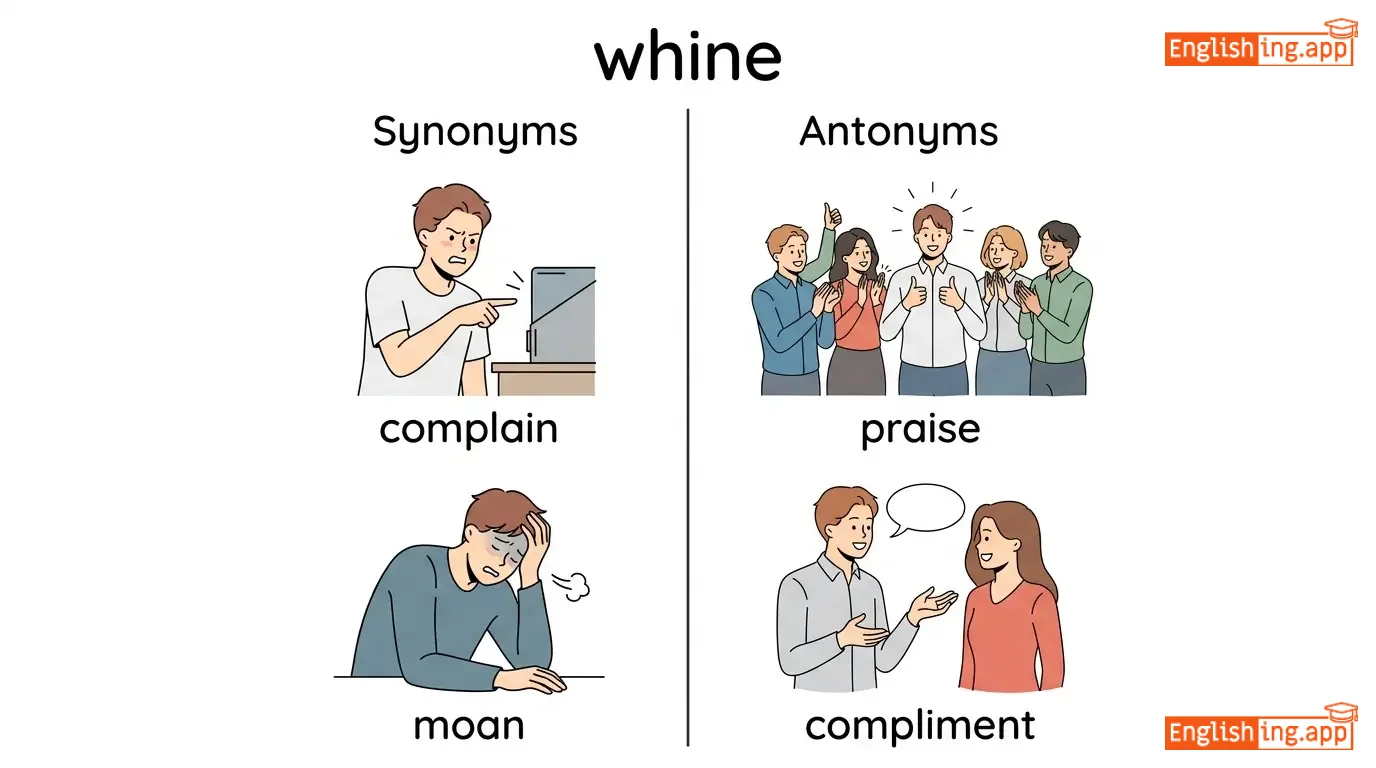
complain, moan, groan, grumble, wail
••••••
|
praise, compliment, rejoice
••••••
|
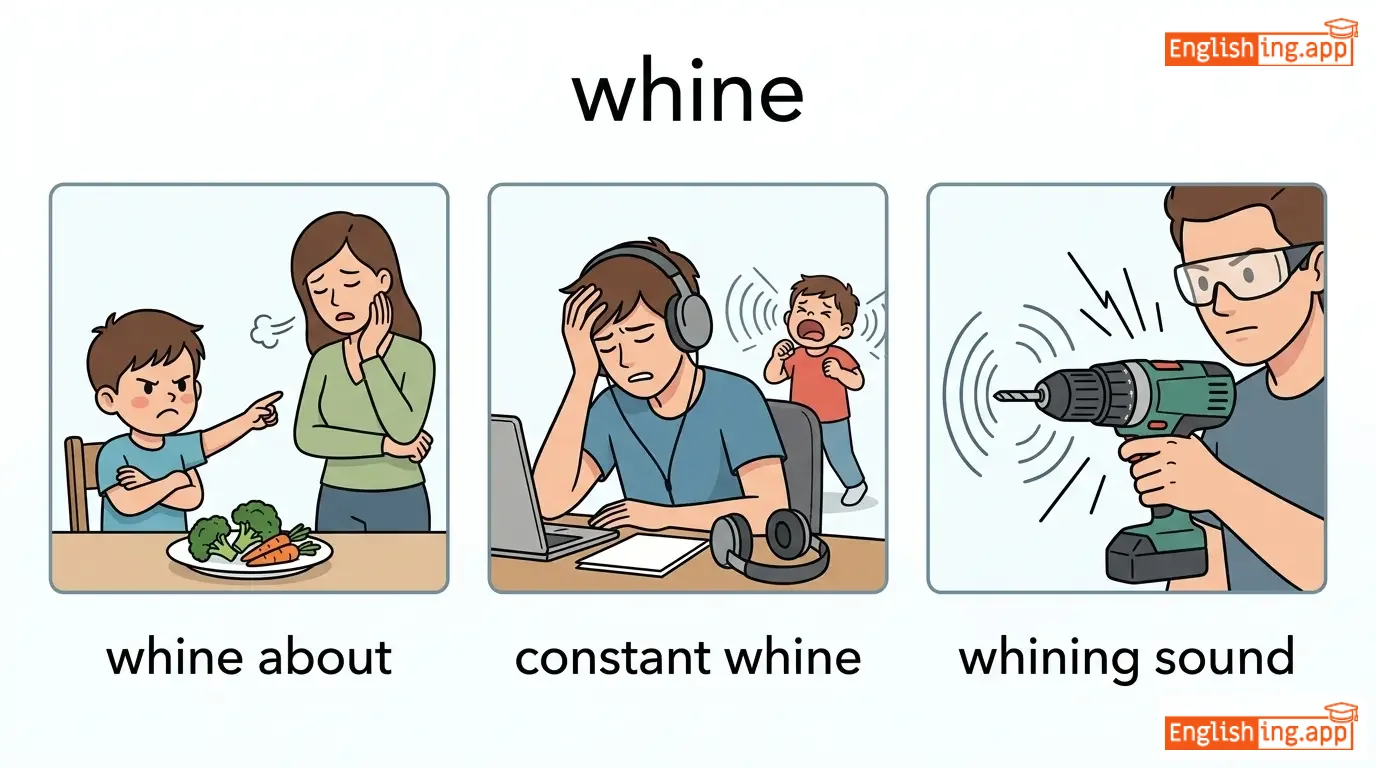
whine about, constant whine, whining sound, whine and cry
••••••
|
No •••••• |
|
#9454
✨
|
/ˈwɪmzi/
noun
(ウィムジー)
••••••
|
- •••••• |
奇抜さ
kibatsusa
••••••
|
- •••••• | - •••••• | - •••••• | - •••••• |
playful or fanciful behavior or humor
••••••
|
Her stories were full of whimsy and imagination. |
彼女の話は奇抜さと想像力にあふれていました。
Kanojo no hanashi wa kibatsusa to sōzōryoku ni afurete imashita.
••••••
|
- •••••• | - •••••• | - •••••• |
fancy, caprice, playfulness, imagination, eccentricity
••••••
|
seriousness, practicality, realism
••••••
|
touch of whimsy, sense of whimsy, element of whimsy, whimsy in art
••••••
|
Whimsy とは奇抜さ - 遊び心や空想力を表す行動。
••••••
|
|
#9455
🎨
|
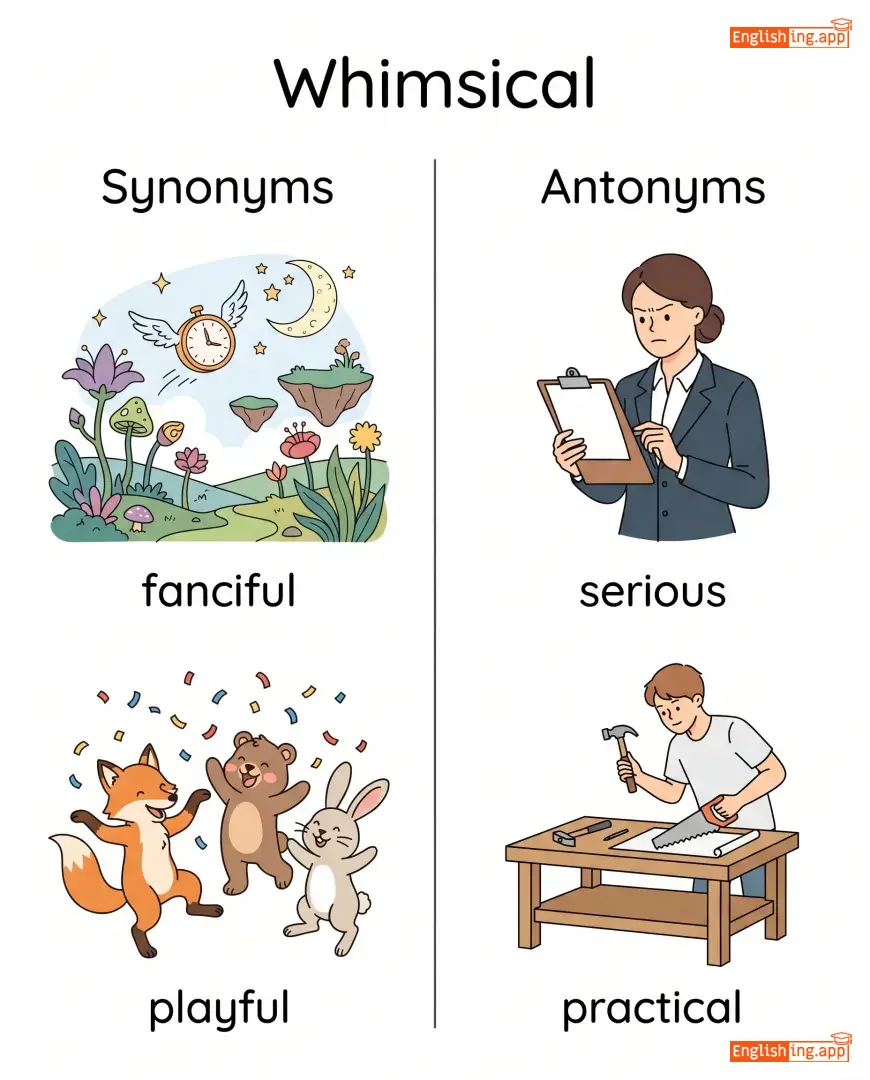
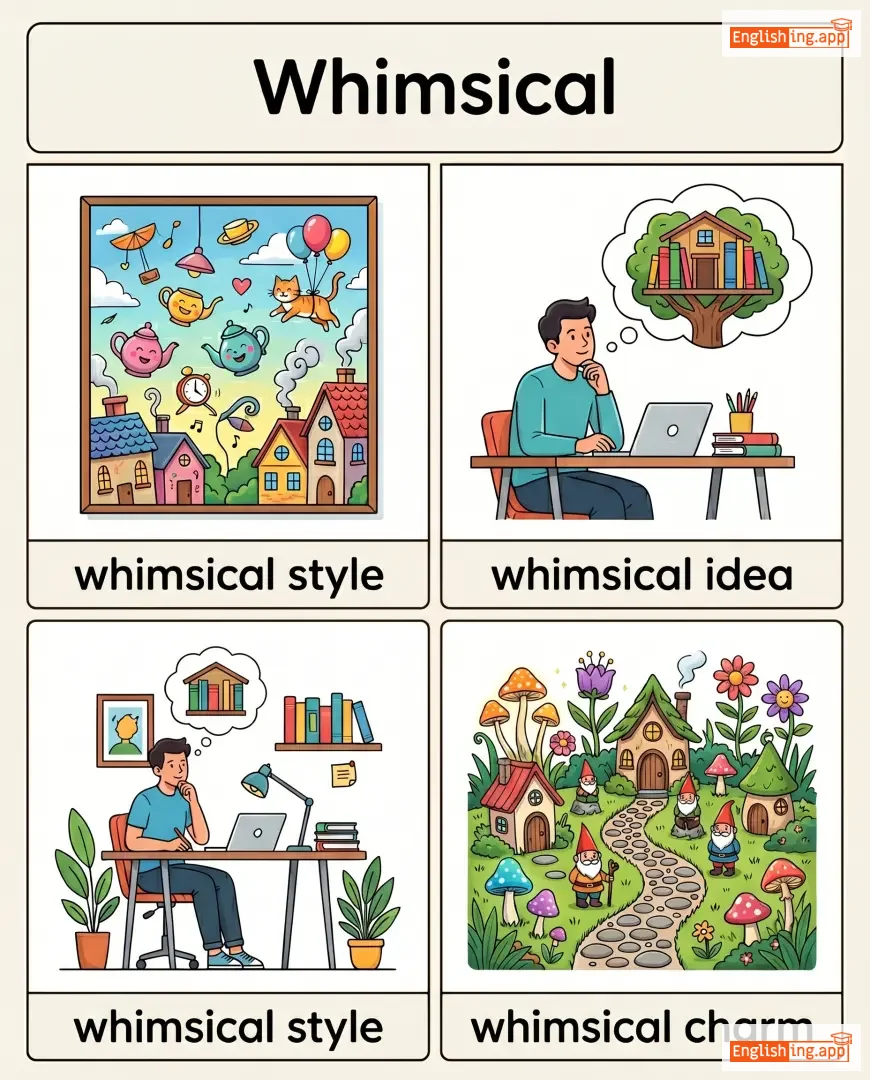
/ˈwɪmzɪkəl/
adjective
(ウィムジカル)
••••••
|
|
奇想天外
kisō tengai
••••••
|
- •••••• | - •••••• | - •••••• | - •••••• |
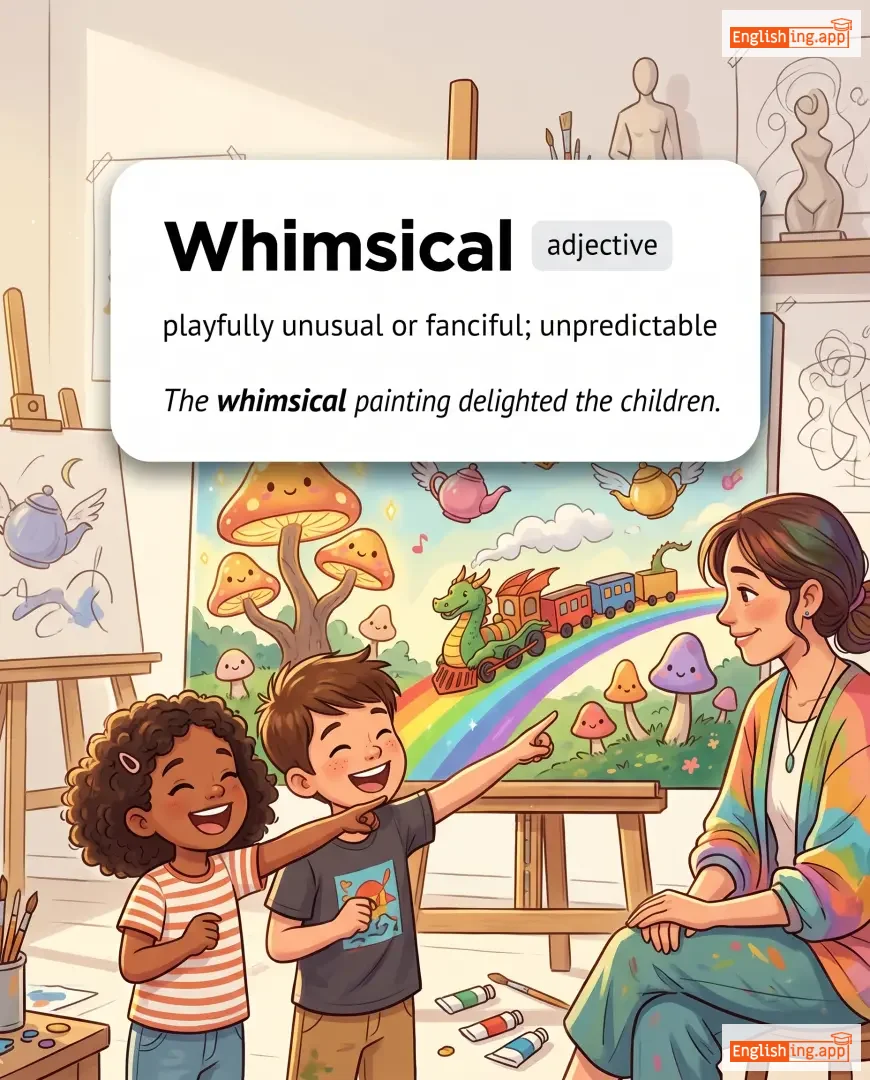
playfully unusual or fanciful; unpredictable
••••••
|
The whimsical painting delighted the children. |
その奇想天外な絵画は子供たちを喜ばせました。
Sono kisō tengai na kaiga wa kodomotachi o yorokobasemashita.
••••••
|
- •••••• | - •••••• | - •••••• |
fanciful, playful, quirky, imaginative, capricious
••••••
|
serious, practical, realistic
••••••
|
whimsical style, whimsical idea, whimsical charm, whimsical imagination
••••••
|
Whimsicalは奇想天外を意味します - 予想外のアイデアを持っている人のように。
••••••
|
|
#9456
💡
|
/wɪm/
noun
(ウィム)
••••••
|
- •••••• |
気まぐれ
kimagure
••••••
|
- •••••• | - •••••• | - •••••• | - •••••• |
a sudden or unpredictable idea, desire, or decision
••••••
|
She bought the dress on a whim. |
彼女は気まぐれでそのドレスを買いました。
Kanojo wa kimagure de sono doresu o kaimashita.
••••••
|
on a whim |
suddenly, without planning
••••••
|
気まぐれで
kimagure de
••••••
|
impulse, fancy, urge, notion, caprice
••••••
|
plan, intention, purpose
••••••
|
sudden whim, foolish whim, act on a whim, whim of the moment
••••••
|
Whim は気まぐれを意味します。たとえば、突然アイスクリームを食べたくなる気まぐれ。
••••••
|
|
#9457
👃
|
/wɪf/
noun, verb
••••••
|
- •••••• | - •••••• |
whiffed
••••••
|
whiffed
••••••
|
whiffs
••••••
|
whiffing
••••••
|
A brief, faint smell or puff of air; to get a quick smell of something.
••••••
|
I caught a whiff of perfume as she passed by. |
- •••••• |
catch a whiff |
To smell something briefly or faintly
••••••
|
- •••••• |
scent, smell, odor, trace, hint
••••••
|
stench, reek
••••••
|
whiff of, catch a whiff, faint whiff, slight whiff
••••••
|
No •••••• |
|
#9458
🍴
|
/wɛt/
verb
••••••
|
- •••••• | - •••••• |
whetted
••••••
|
whetted
••••••
|
whets
••••••
|
whetting
••••••
|
To sharpen the blade of a tool or to stimulate interest or appetite.
••••••
|
The smell of food whetted my appetite. |
- •••••• |
whet the appetite |
To increase someone's desire for something
••••••
|
- •••••• |
sharpen, hone, stimulate, arouse, excite
••••••
|
dull, blunt, diminish
••••••
|
whet the appetite, whet curiosity, whet desire, whet interest
••••••
|
No •••••• |
|
#9459
💰
|
/ˈwɛə.wɪð/
adverb, noun
(wɛə wɪð)
••••••
|
- •••••• |
手段
shudan
••••••
|
- •••••• | - •••••• | - •••••• | - •••••• |
With which; the means or resources needed for something.
••••••
|
He lacked the money wherewith to buy a new house. |
彼は新しい家を買うためのお金がなかった。
Kare wa atarashī ie o kau tame no okane ga nakatta.
••••••
|
- •••••• | - •••••• | - •••••• |
means, resources, funds, capital, ability
••••••
|
lack, poverty
••••••
|
wherewith to, wherewith he, wherewith she, money wherewith
••••••
|
WHEREWITH 何?お金(手段)- 手段や資源を指します。
••••••
|
|
#9460
🌍
|
/wɛrˈɛv.ər/
adverb
(ウェアエヴァー)
••••••
|
- •••••• |
どこでも
dokodemo
••••••
|
- •••••• | - •••••• | - •••••• | - •••••• |
In or to any place.
••••••
|
You can find good people wherever you go. |
あなたはどこでも良い人を見つけることができます。
Anata wa dokodemo yoi hito o mitsukeru koto ga dekimasu.
••••••
|
wherever you are |
No matter what place you are in
••••••
|
あなたがどこにいても
Anata ga doko ni itemo
••••••
|
anywhere, everywhere, wheresoever, all places
••••••
|
nowhere, somewhere specific
••••••
|
wherever possible, wherever you go, wherever needed, wherever necessary
••••••
|
WhereEVERはどこでもという意味です - どこに行っても、良い人に出会えます!
••••••
|
|
#9461
➡️
|
/ˌwɛr.əˈpɒn/
adverb
(ウェアアポン)
••••••
|
- •••••• |
その後すぐに
sono ato sugu ni
••••••
|
- •••••• | - •••••• | - •••••• | - •••••• |
Immediately after which; as a result of which.
••••••
|
He confessed his mistake, whereupon she forgave him. |
彼は自分の間違いを認め、すぐに彼女は彼を許しました。
Kare wa jibun no machigai o mitome, sugu ni kanojo wa kare o yurushimashita.
••••••
|
- •••••• | - •••••• | - •••••• |
thereupon, consequently, accordingly, thus, hence
••••••
|
before, prior
••••••
|
whereupon she, whereupon he, confessed whereupon, agreed whereupon
••••••
|
Where UPON 何かが起こり、その後すぐに (sono ato sugu ni) 結果が生じた。
••••••
|
|
#9462
⚖️
|
/wɛərˈæz/
conjunction
(ウェアアズ)
••••••
|
- •••••• |
〜一方で
ippō de
••••••
|
- •••••• | - •••••• | - •••••• | - •••••• |
used to introduce a contrast or comparison between two facts
••••••
|
She prefers tea, whereas he likes coffee. |
彼女はお茶が好きですが、彼はコーヒーが好きです。
Kanojo wa ocha ga suki desu ga, kare wa kōhī ga suki desu.
••••••
|
- •••••• | - •••••• | - •••••• |
while, although, but, though
••••••
|
similarly, likewise
••••••
|
whereas clause, whereas statement, tea whereas coffee
••••••
|
Tea vs coffee 比較 - 日本語一方で
••••••
|
|
#9463
📍
|
/ˈwɛrəˌbaʊts/
noun
(ウェアアバウツ)
••••••
|
- •••••• |
所在場所
sokai basho
••••••
|
- •••••• | - •••••• | - •••••• | - •••••• |
the place where someone or something is
••••••
|
The police are trying to find out the suspect's whereabouts. |
警察は容疑者の所在場所を探そうとしています。
Keisatsu wa yōgisha no sokai basho o sagasō to shiteimasu.
••••••
|
- •••••• | - •••••• | - •••••• |
location, position, place, spot, site
••••••
|
absence, nowhere
••••••
|
unknown whereabouts, disclose whereabouts, track whereabouts
••••••
|
Whereaboutsは日本語で '所在場所' を意味します
••••••
|
|
#9464
🐶
|
/wɛlp/
noun
(ウエルプ)
••••••
|
- •••••• |
子犬
koinu
••••••
|
- •••••• | - •••••• | - •••••• | - •••••• |
a young offspring of a dog or other carnivorous mammal; sometimes used to mean an impudent young person
••••••
|
The farmer found a wolf whelp hiding near the barn. |
農夫は小屋の近くで隠れている狼の子犬を見つけました。
Nōfu wa koya no chikaku de kakurete iru ōkami no koinu o mitsukemashita.
••••••
|
- •••••• | - •••••• | - •••••• |
puppy, cub, pup, offspring
••••••
|
adult, grown-up
••••••
|
wolf whelp, dog whelp, young whelp
••••••
|
Whelpは子犬のこと、助けることで小さな犬を育てる
••••••
|
|
#9465
😨
|
/ˈwiːk niːd/
adjective
(ウィークニード)
••••••
|
- •••••• |
臆病
okubyo
••••••
|
- •••••• | - •••••• | - •••••• | - •••••• |
Lacking determination or courage; easily frightened or yielding.
••••••
|
The leader was criticized for being weak-kneed in the face of opposition. |
リーダーは反対に直面したとき、臆病だと批判されました。
Rīdā wa hantai ni chokumen shita toki, okubyo da to hihan saremashita.
••••••
|
- •••••• | - •••••• | - •••••• |
cowardly, timid, spineless, fearful
••••••
|
brave, strong, courageous
••••••
|
weak-kneed leader, weak-kneed response, weak-kneed attitude
••••••
|
弱い膝では立てない – 臆病は weak-kneed です。
••••••
|
|
#9466
🌊
|
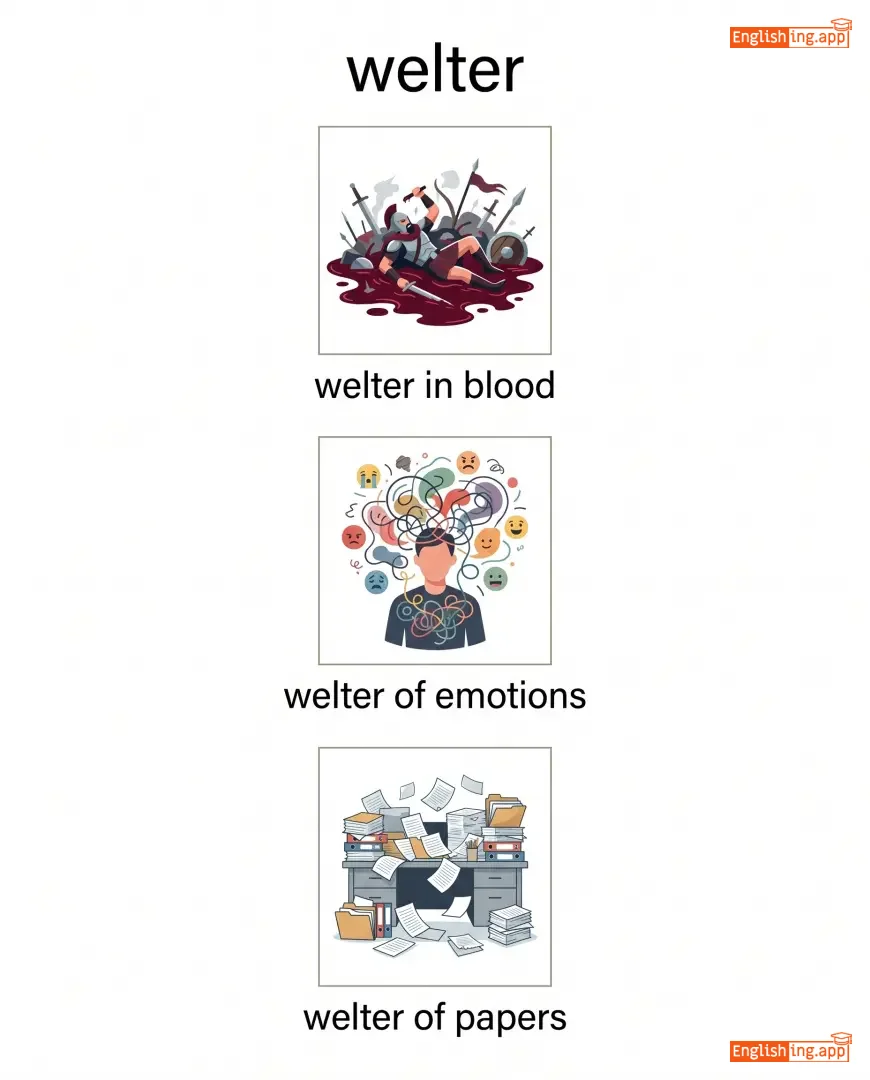
/ˈwɛltər/
verb
(ウェルター)
••••••
|
|
混乱の中で転がる
konran no naka de korogaru
••••••
|
weltered
ウェルタード
••••••
|
weltered
ウェルタード
••••••
|
welters
ウェルターズ
••••••
|
weltering
ウェルタリング
••••••
|
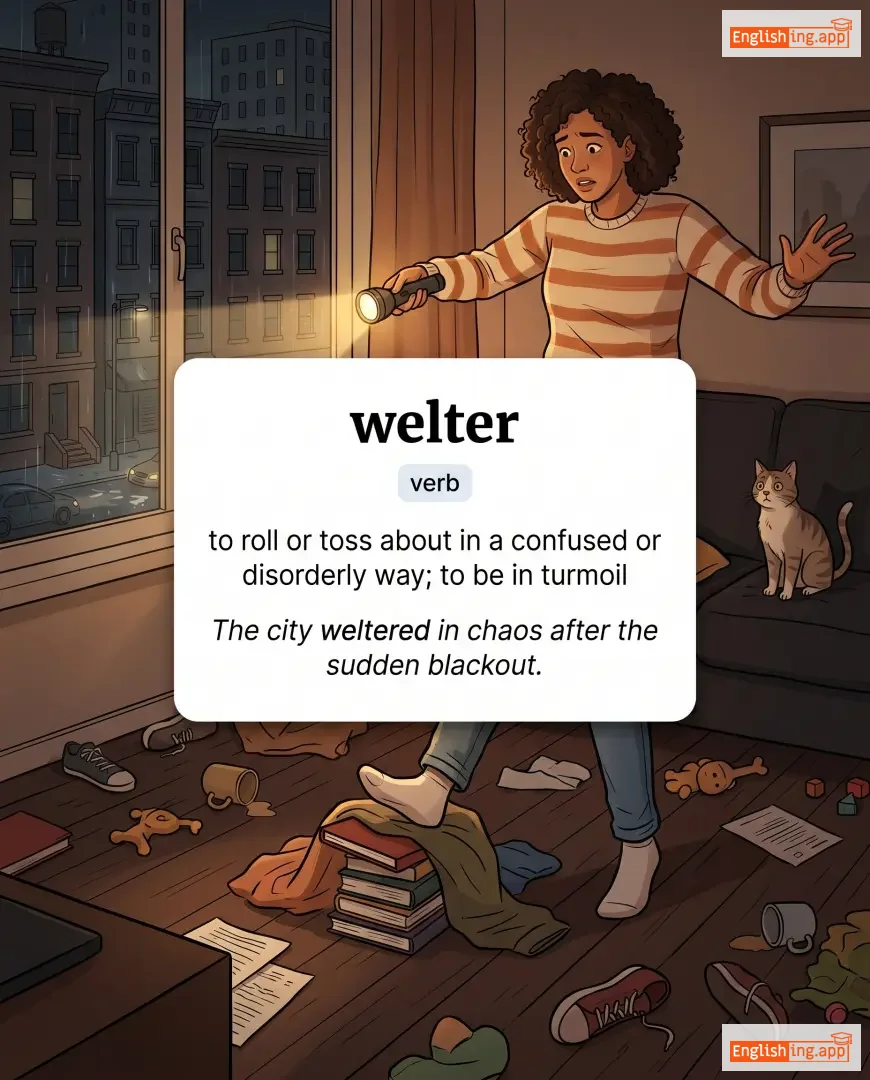
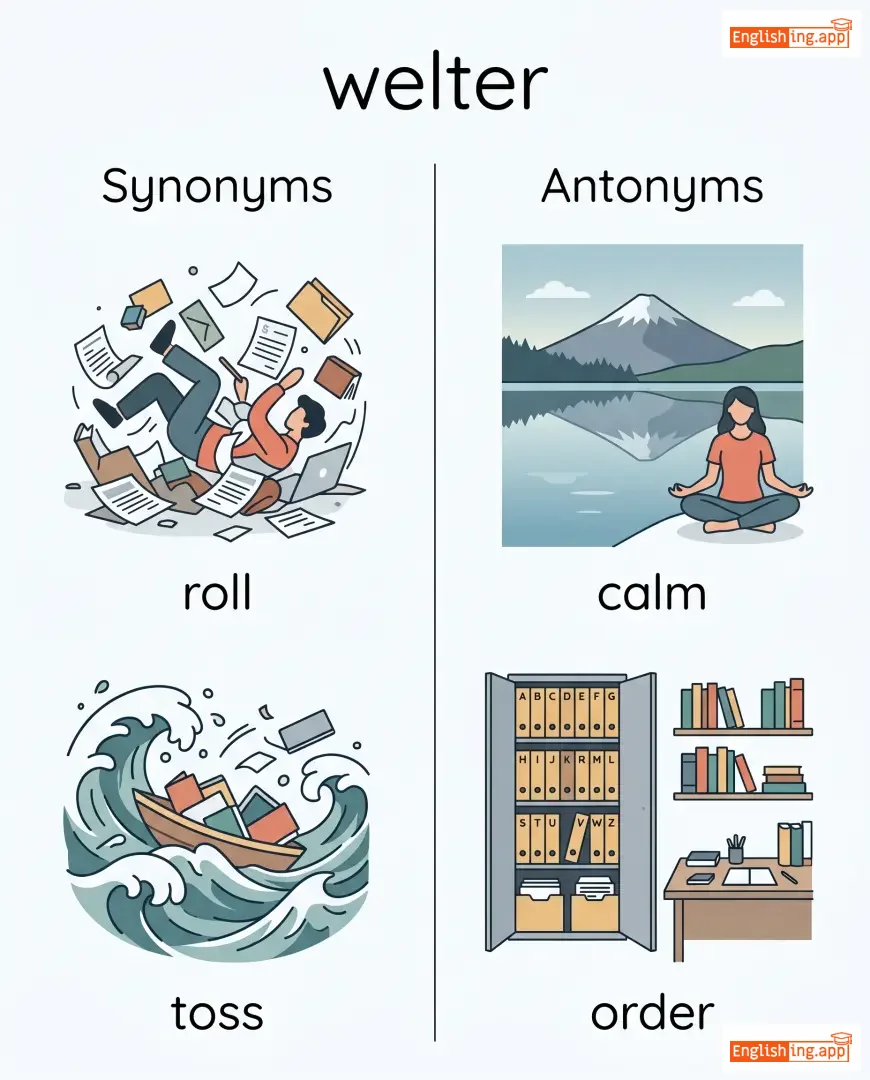
to roll or toss about in a confused or disorderly way; to be in turmoil
••••••
|
The city weltered in chaos after the sudden blackout.
突然の停電後、都市は混乱の中に沈んだ。
••••••
|
突然の停電後、都市は混乱の中に沈んだ。
Totsuzen no teiden go, toshi wa konran no naka ni shizunda.
••••••
|
- •••••• | - •••••• | - •••••• |
roll, toss, wallow, flounder, writhe
••••••
|
calm, order, stability
••••••
|
welter in blood, welter of emotions, welter of papers
••••••
|
Well ter (welter) はすべてを混乱させる。
••••••
|
|
#9467
🤕
|
/wɛlt/
noun
(ウェルト)
••••••
|
- •••••• |
膨らみ
fukurami
••••••
|
- •••••• | - •••••• | - •••••• | - •••••• |
A raised mark on the skin, usually from a blow or allergic reaction.
••••••
|
He had a red welt on his arm after the bee sting. |
蜂に刺された後、彼の腕に赤い膨らみができていた。
Hachi ni sāsareta ato, kare no ude ni akai fukurami ga dekite ita.
••••••
|
- •••••• | - •••••• | - •••••• |
bruise, lump, bump, mark, swelling
••••••
|
smoothness, flatness
••••••
|
red welt, painful welt, swelling welt
••••••
|
Welt は膨らみを意味します - Bee belt (蜂のベルト) は膨らみを引き起こす
••••••
|
|
#9468
💰
|
/ˌwɛl tə ˈduː/
adjective
(wɛl tu du)
••••••
|
- •••••• |
裕福
yūfuku
••••••
|
- •••••• | - •••••• | - •••••• | - •••••• |
Prosperous, wealthy, or financially comfortable.
••••••
|
They belong to a well-to-do family in the city. |
彼らは都市の裕福な家族に属しています。
Karera wa toshi no yūfuku na kazoku ni zoku shiteimasu.
••••••
|
- •••••• | - •••••• | - •••••• |
wealthy, affluent, prosperous, rich, well-off
••••••
|
poor, needy, impoverished
••••••
|
well-to-do family, well-to-do businessman, well-to-do society
••••••
|
Well-to-doは裕福を意味します - Well (うまく) をして、Do (行う) ことによって裕福になる
••••••
|
|
#9469
👐
|
/ˈwɛlˌduːər/
noun
(wɛlˌduːər)
••••••
|
- •••••• |
善行者
zenkōsha
••••••
|
- •••••• | - •••••• | - •••••• | - •••••• |
A person who does good deeds; a benefactor.
••••••
|
The community praised the well-doer for his charity. |
コミュニティはその善行者を称賛しました。
Komyuniti wa sono zenkōsha o shōsan shimashita.
••••••
|
- •••••• | - •••••• | - •••••• |
benefactor, philanthropist, helper, donor, humanitarian
••••••
|
wrongdoer, criminal, offender
••••••
|
kind well-doer, charitable well-doer
••••••
|
善行者は良い行いをする人、'善' (良い) + '行者' (行う人)
••••••
|
|
#9470
🤵
|
/ˌwɛlˈbrɛd/
adjective
(ウェルブレッド)
••••••
|
- •••••• |
育ちが良い
sodachi ga yoi
••••••
|
- •••••• | - •••••• | - •••••• | - •••••• |
Having or showing good manners; properly raised.
••••••
|
She is a well-bred young lady with excellent manners. |
彼女は素晴らしいマナーを持つ育ちの良い若い女性です。
Kanojo wa subarashī manā o motsu sodachi no yoi wakai josei desu.
••••••
|
- •••••• | - •••••• | - •••••• |
polite, refined, cultured, courteous, mannerly
••••••
|
rude, impolite, uncouth
••••••
|
well-bred lady, well-bred child, well-bred manners
••••••
|
Well-bred = 育ちが良い - 良い育ちを持つ、マナーの良い人。
••••••
|
|
#9471
🌌
|
/ˈwɛlkɪn/
noun
(ウェルキン)
••••••
|
- •••••• |
空
sora
••••••
|
- •••••• | - •••••• | - •••••• | - •••••• |
The sky, the heavens, or the upper air.
••••••
|
The eagle soared high into the welkin.
イーグルはウェルキンに高く舞い上がった。
••••••
|
イーグルは空に高く舞い上がった。
Iiguru wa sora ni takaku maiagatta.
••••••
|
make the welkin ring
ウェルキンを鳴らす
••••••
|
To create a loud noise that seems to reach the heavens.
••••••
|
空を鳴らす
sora o narasu
••••••
|
sky, heavens, firmament, atmosphere, ether
••••••
|
earth, ground, land
••••••
|
blue welkin, bright welkin, vast welkin
••••••
|
Welkin は空を意味します - 'Well kin sky' は良い空です
••••••
|
|
#9472
🌀
|
/wɪrd/
adjective
(ウィアード)
••••••
|
- •••••• |
奇妙
kimyou
••••••
|
- •••••• | - •••••• | - •••••• | - •••••• |
suggesting something supernatural or very strange; unusual
••••••
|
The movie had a weird ending that nobody expected. |
映画には誰も予期しなかった奇妙な結末がありました。
Eiga ni wa dare mo yokishinakatta kimyou na ketsumatsu ga arimashita.
••••••
|
weird out |
to make someone feel uncomfortable or strange
••••••
|
誰かを不安にさせる
dareka wo fuan ni saseru
••••••
|
strange, odd, bizarre, unusual, peculiar
••••••
|
normal, ordinary, usual
••••••
|
weird feeling, weird dream, weird noise, weird behavior
••••••
|
Weirdは奇妙という意味、映画の奇妙な結末のようなもの。
••••••
|
|
#9473
⚖️
|
/weɪ/
verb
(ウェイ)
••••••
|
|
重さを量る
omosa o hakaru
••••••
|
weighed
ウェイド
••••••
|
weighed
ウェイド
••••••
|
weighs
ウェイズ
••••••
|
weighing
ウェイイング
••••••
|
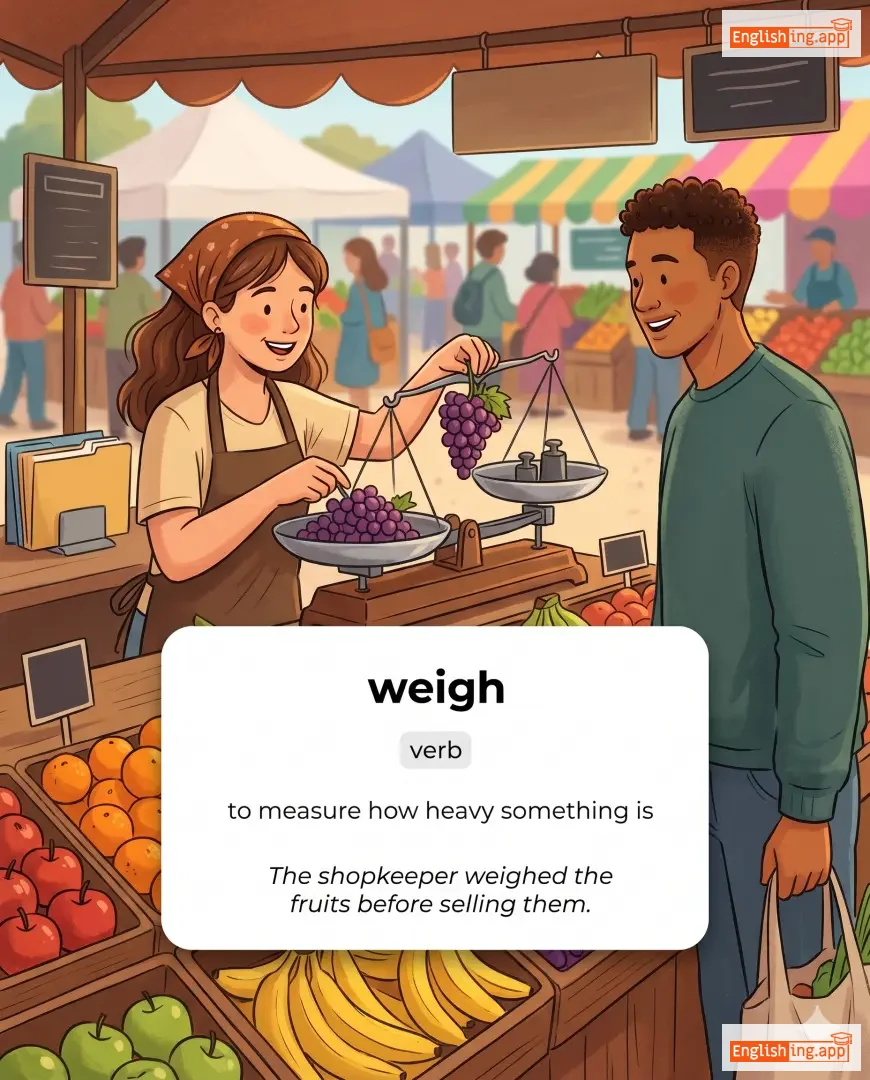
to measure how heavy something is
••••••
|
The shopkeeper weighed the fruits before selling them.
店主は果物を販売する前に重さを量った。
••••••
|
店主は果物を販売する前に重さを量った。
Ten-shu wa kudamono o hanbai suru mae ni omosa o hakatta.
••••••
|
weigh on someone's mind
誰かの心に重くのしかかる
••••••
|
to make someone worried or anxious
••••••
|
誰かの心に重くのしかかる
dareka no kokoro ni omoku noshikakaru
••••••
|
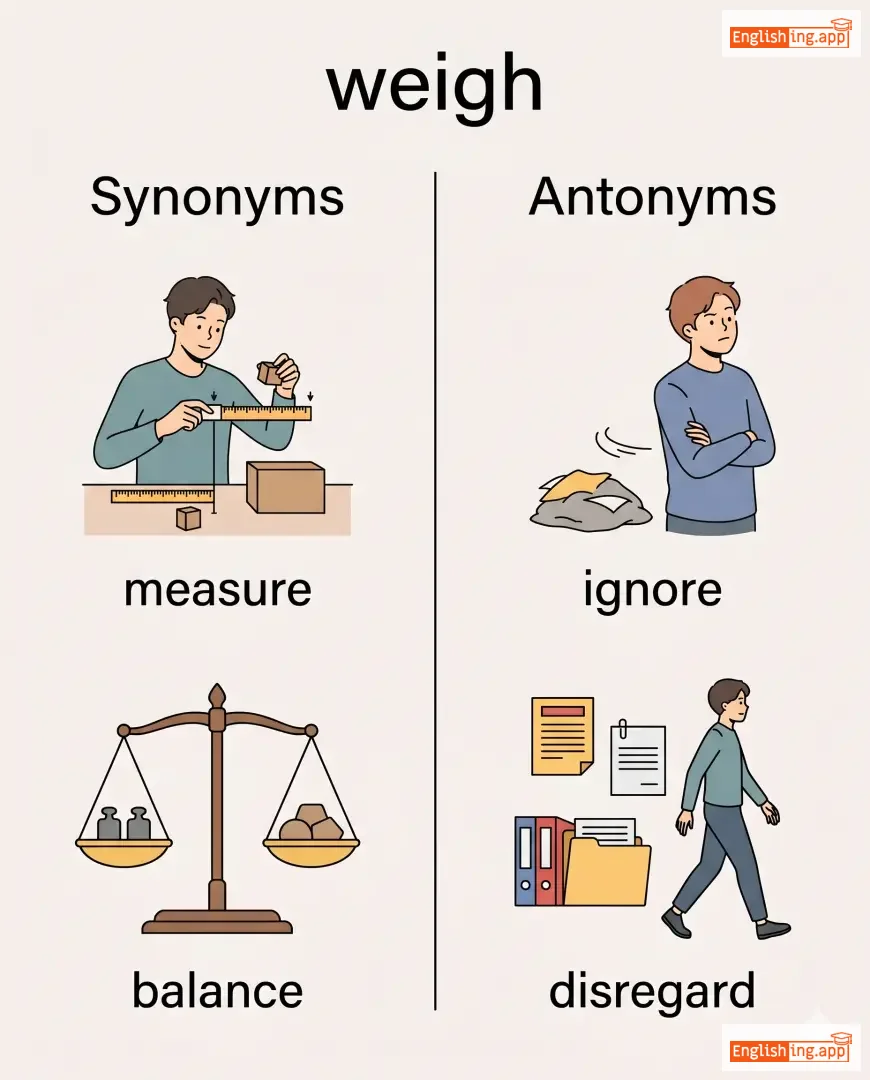
measure, balance, evaluate, calculate
••••••
|
ignore, disregard
••••••
|
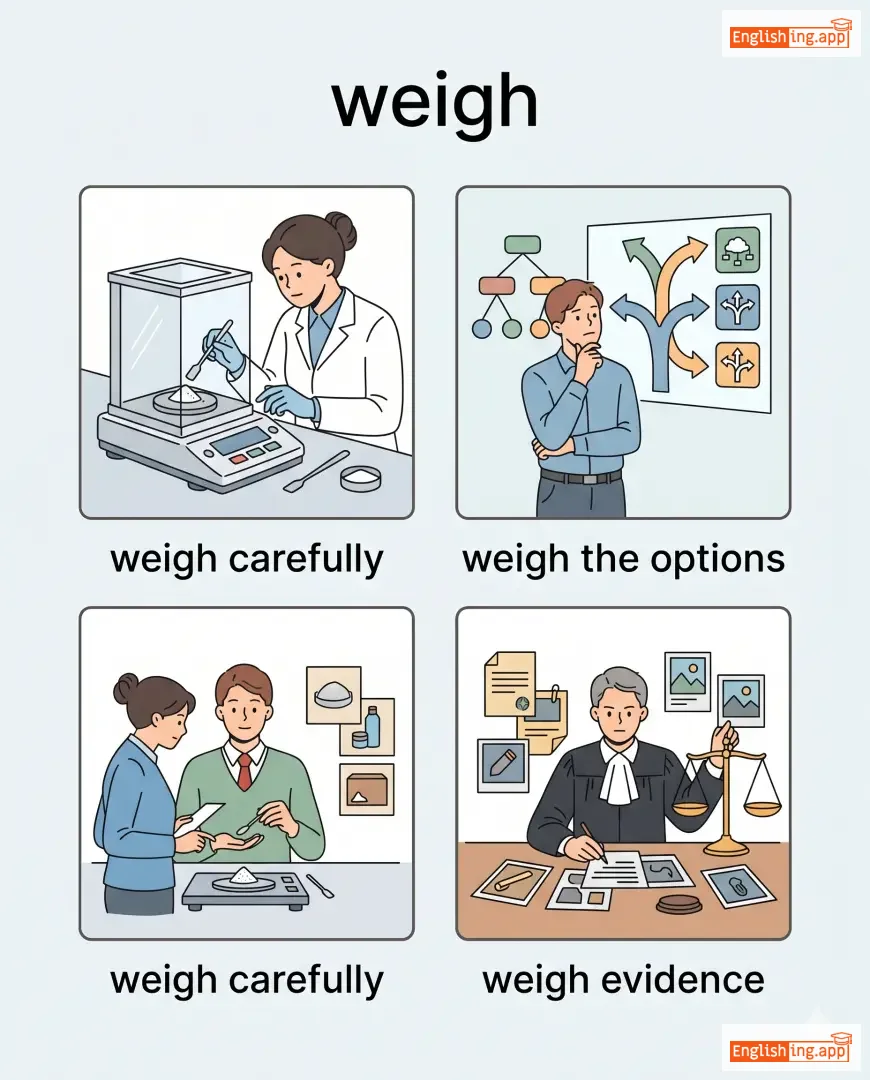
weigh carefully, weigh the options, weigh evidence, weigh anchor
••••••
|
Weighは重さを量ること、体重計で体重を量る時と同じ。
••••••
|
|
#9474
👶
|
/wiː/
adjective
(ウィ)
••••••
|
- •••••• |
とても小さい
totemo chiisai
••••••
|
- •••••• | - •••••• | - •••••• | - •••••• |
very small in size; tiny
••••••
|
She gave me a wee smile before leaving. |
彼女は去る前に小さな笑顔をくれました。
Kanojo wa saru mae ni chiisana egao o kuremashita.
••••••
|
in the wee hours |
in the very early hours of the morning
••••••
|
朝のとても早い時間
asa no totemo hayai jikan
••••••
|
tiny, small, minute, little, petite
••••••
|
large, huge, big
••••••
|
wee baby, wee smile, wee bit, wee hours
••••••
|
Weeはとても小さいことを意味し、小さな笑顔のようです。
••••••
|
|
#9475
⛅
|
/ˈwɛðər/
noun
(wɛðər)
••••••
|
|
天気
tenki
••••••
|
- •••••• | - •••••• | - •••••• | - •••••• |
the state of the atmosphere at a particular place and time in terms of heat, cloudiness, dryness, sunshine, wind, rain, etc.
••••••
|
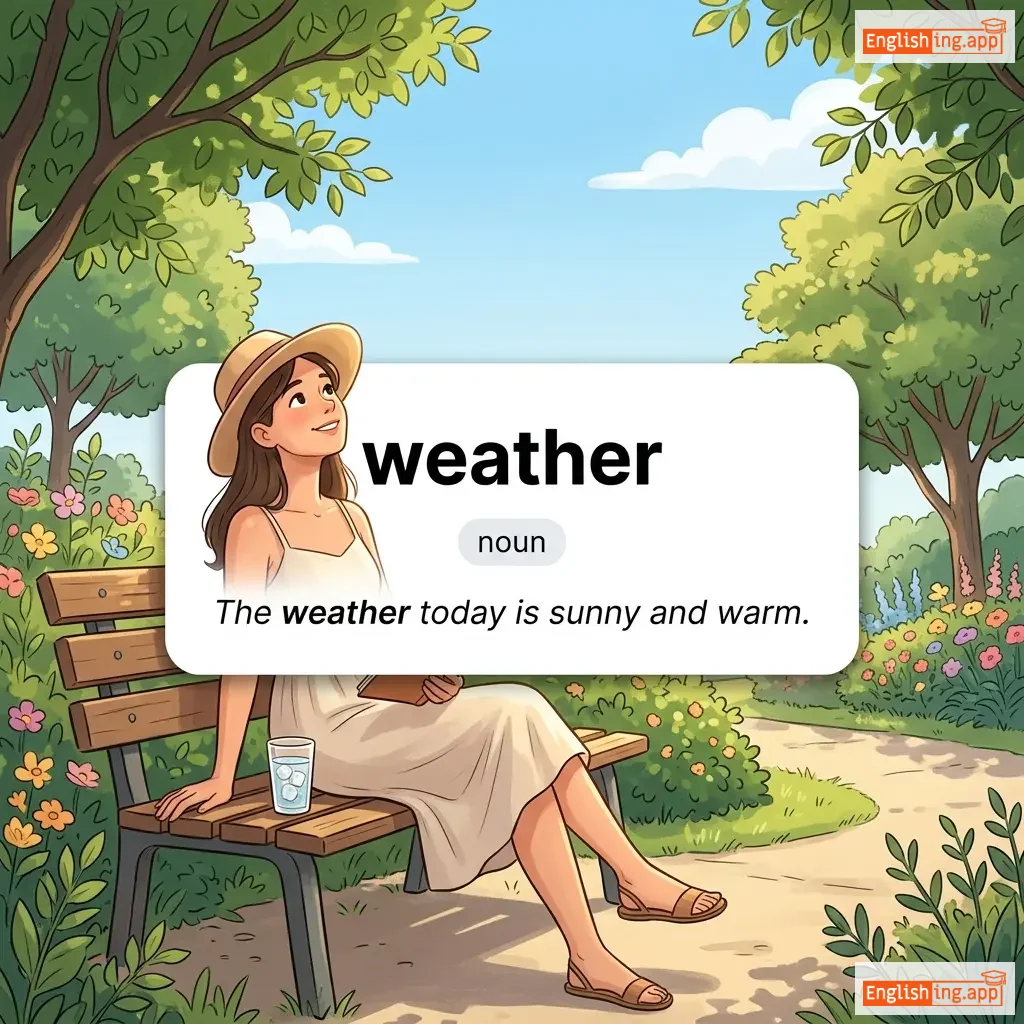
The weather today is sunny and warm. |
今日は晴れて暖かい天気です。
Kyou wa harete atatakai tenki desu.
••••••
|
under the weather |
feeling unwell or sick
••••••
|
体調が悪い
taichou ga warui
••••••
|
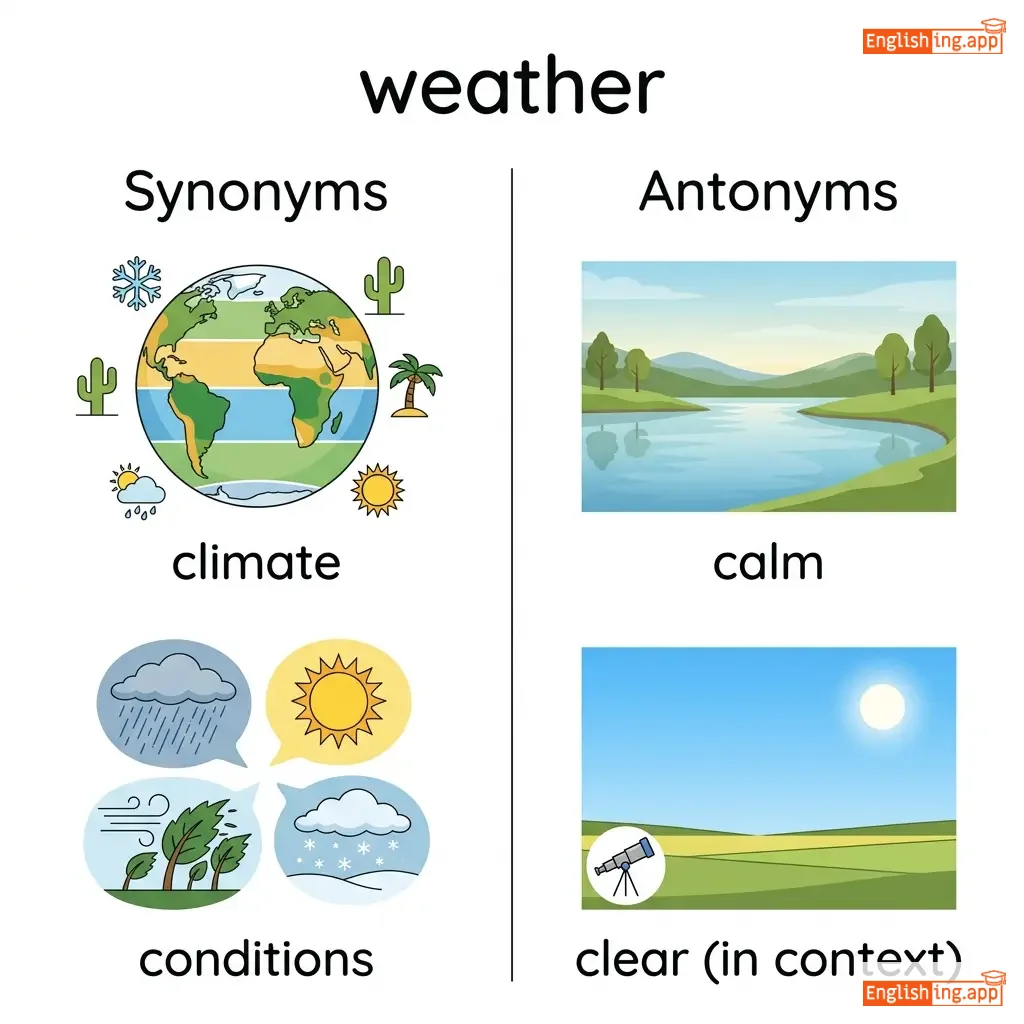
climate, conditions, atmosphere, forecast
••••••
|
calm, clear (in context)
••••••
|
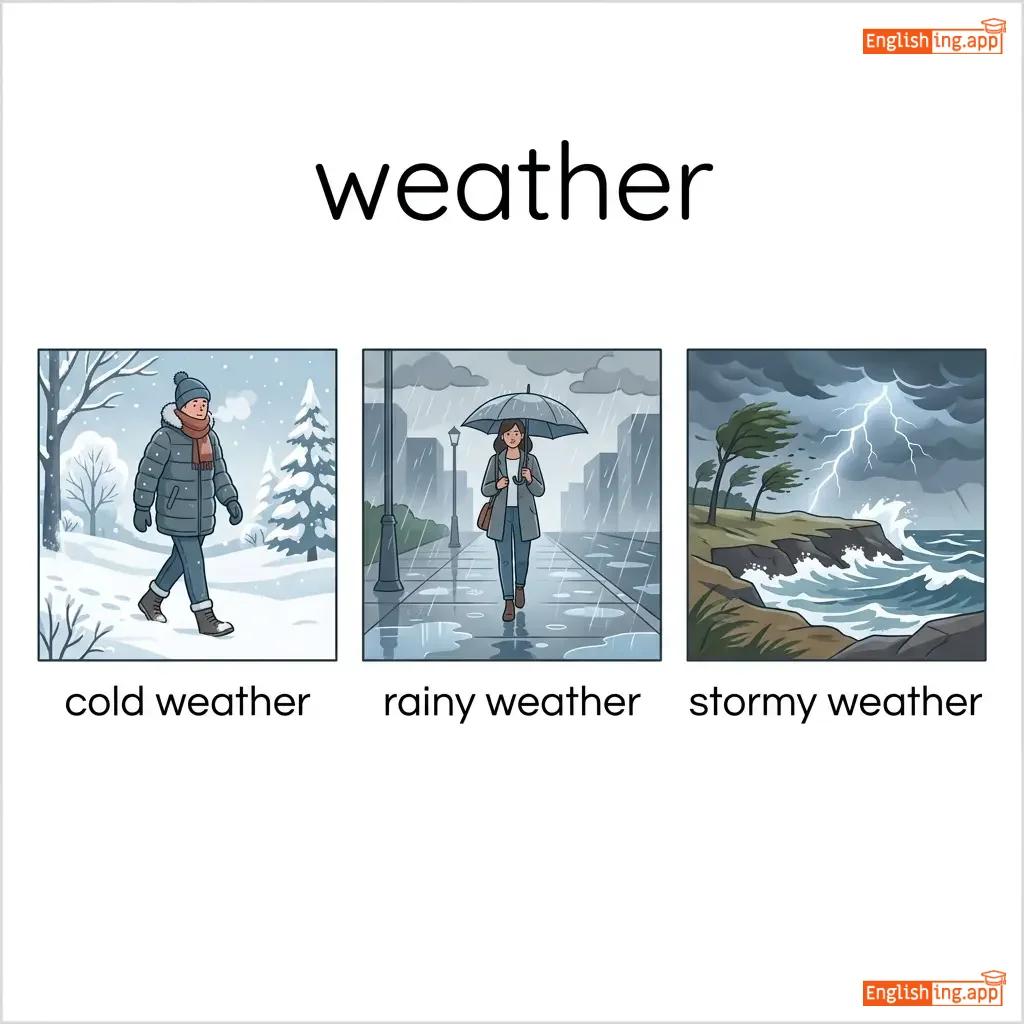
cold weather, rainy weather, stormy weather, fine weather
••••••
|
天気を知ることで、その日の「weather」が予測できます。
••••••
|
|
#9476
😩
|
/ˈwɪəri/
adjective
(ウェアリー)
••••••
|
- •••••• |
疲れた
tsukareta
••••••
|
- •••••• | - •••••• | - •••••• | - •••••• |
feeling or showing extreme tiredness, especially as a result of exertion or lack of sleep
••••••
|
After the long journey, she felt weary and wanted to rest.
長い旅の後、彼女は疲れて休みたがっていた。
••••••
|
長い旅の後、彼女は疲れて休みたがっていた。
Nagai tabi no ato, kanojo wa tsukarete yasumitakagatteita.
••••••
|
weary of
疲れた
••••••
|
tired or bored with something because it has been happening for too long
••••••
|
疲れた
tsukareta
••••••
|
tired, exhausted, fatigued, drained, worn-out
••••••
|
energetic, lively, refreshed
••••••
|
feel weary, grow weary, weary traveler, weary eyes
••••••
|
Weary は疲れたと同じ意味です。
••••••
|
|
#9477
🥱
|
/ˈwɪərɪsəm/
adjective
(ウィアリサム)
••••••
|
- •••••• |
疲れる
tsukareru
••••••
|
- •••••• | - •••••• | - •••••• | - •••••• |
Causing one to feel tired or bored.
••••••
|
The long and wearisome lecture put the students to sleep. |
長くて疲れる講義は学生たちを寝かせた。
Nagakute tsukareru kōgi wa gakuseitachi o nekaseta.
••••••
|
- •••••• | - •••••• | - •••••• |
tedious, tiring, boring, dull, exhausting
••••••
|
exciting, engaging, refreshing
••••••
|
wearisome task, wearisome journey, wearisome lecture
••••••
|
Wearすると疲れる、wearisomeは疲れるという意味。
••••••
|
|
#9478
👶
|
/wiːn/
verb
••••••
|
- •••••• | - •••••• |
weaned
••••••
|
weaned
••••••
|
weans
••••••
|
weaning
••••••
|
To gradually stop a child or animal from breastfeeding; to detach from a habit.
••••••
|
Parents often wean their babies around six months old. |
- •••••• |
wean off |
To gradually stop someone from depending on something.
••••••
|
- •••••• |
detach, accustom, disengage, train
••••••
|
nurture, indulge
••••••
|
wean a baby, wean off drugs, wean from habit
••••••
|
No •••••• |
|
#9479
🌍
|
/wiːl/
noun
(ハピネス)
••••••
|
- •••••• |
幸福
kōfuku
••••••
|
- •••••• | - •••••• | - •••••• | - •••••• |
A raised mark on the skin left after a blow; or general well-being and prosperity.
••••••
|
The charity worked for the common weal of the community. |
彼女は賞を受け取ったとき、喜びを隠すことができませんでした。
Kanojo wa shō o uketotta toki, yorokobi o kakusu koto ga dekimasen deshita.
••••••
|
common weal |
The general welfare or good of the public.
••••••
|
幸福の追求
Kōfuku no tsuikyū
••••••
|
welfare, prosperity, good, wellbeing
••••••
|
harm, misery, suffering
••••••
|
common weal, for the weal, promote weal
••••••
|
'Happy'が幸福への鍵。
••••••
|
Vocabulary Quiz
Test your vocabulary by matching words with their translations or meanings.
Login to take the quiz
Comments (0)
Share your thoughts and join the discussion.
Join the discussion by logging in
Login to CommentNo comments yet
Be the first to share your thoughts!