

翻訳
過去
過去分詞
三人称単数
動名詞
意味
例文
例文の翻訳
同義語
対義語
コロケーション
ニーモニック

Swipe left or right, or use the buttons. Tap image to zoom.
例文の翻訳
単語
Lesson 146Lesson 146 - マスクトグル
|
絵文字
|
単語 | Images | 翻訳 | 過去 | 過去分詞 | 三人称単数 | 動名詞 | 意味 | 例文 | 例文の翻訳 | 表現例 | 表現例の意味 | 表現例の翻訳 | 同義語 | 対義語 | コロケーション | ニーモニック |
|---|---|---|---|---|---|---|---|---|---|---|---|---|---|---|---|---|---|
|
#4351
🙄
|
/ɪmˈpɜːrtɪnənt/
adjective
(インパートネント)
••••••
|
- •••••• |
無礼な
burei na
••••••
|
- •••••• | - •••••• | - •••••• | - •••••• |
rude and showing a lack of respect
••••••
|
It was impertinent of him to question the manager's decision. |
マネージャーの決定に疑問を呈するのは無礼でした。
Manējā no kettei ni gimon o tei suru no wa burei deshita.
••••••
|
- •••••• | - •••••• | - •••••• |
rude, insolent, impudent, disrespectful
••••••
|
respectful, polite, courteous
••••••
|
impertinent question, impertinent remark, impertinent behavior
••••••
|
im + pertinent ではない → 無礼で失礼
••••••
|
|
#4352
🕵️
|
/ˈɪmplɪˌkeɪt/
verb
(インプリケイト)
••••••
|
- •••••• |
関与する
kan'yo suru
••••••
|
implicated
インプリケイテッド
••••••
|
implicated
インプリケイテッド
••••••
|
implicates
インプリケイツ
••••••
|
implicating
インプリケイティング
••••••
|
To show someone’s involvement in a crime or wrongdoing.
••••••
|
The evidence implicated several officials in the scandal.
証拠はスキャンダルに関与した何人かの職員を示した。
••••••
|
証拠はスキャンダルに関与した何人かの職員を示した。
Shōko wa sukyandaru ni kan'yo shita nannin ka no shokuin o shimeshita.
••••••
|
implicate in a crime
犯罪に関与する
••••••
|
To connect someone with a crime or illegal act.
••••••
|
犯罪に関与する
Hanzai ni kan'yo suru
••••••
|
incriminate, involve, accuse, associate, link
••••••
|
exonerate, absolve, clear
••••••
|
implicate someone, implicate in scandal, implicate evidence
••••••
|
Implicate は犯罪に関与させること – 罪に巻き込む
••••••
|
|
#4353
💭
|
/ɪmˈplaɪəbl/
adjective
(インプライアブル)
••••••
|
- •••••• |
暗示可能な
anshikano
••••••
|
- •••••• | - •••••• | - •••••• | - •••••• |
Capable of being implied or suggested.
••••••
|
The meaning of the statement is not directly clear but is impliable from the context.
その声明の意味は直接的には明確ではないが、文脈から推測可能である。
••••••
|
その声明の意味は直接的には明確ではないが、文脈から推測可能である。
Sono seimei no imi wa chokusetsuteki ni wa meikaku de wa nai ga, bunmyaku kara suisoku kanou de aru.
••••••
|
- •••••• | - •••••• | - •••••• |
suggestive, inferable, implicit, interpretable
••••••
|
explicit, clear
••••••
|
impliable meaning, impliable statement, impliable context
••••••
|
暗示可能なは文脈から推測できることを意味する。
••••••
|
|
#4354
⚙️
|
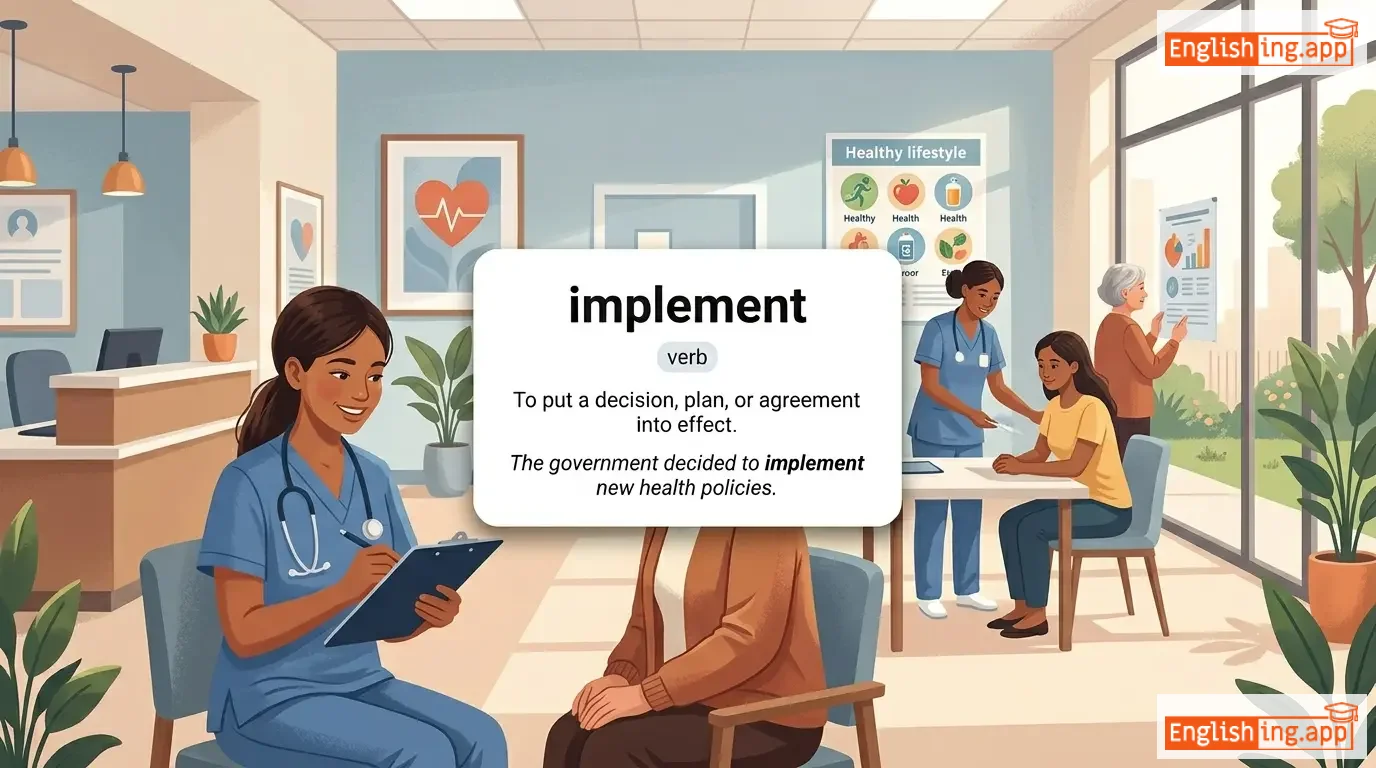
/ˈɪmplɪˌmɛnt/
verb
(インプリメント)
••••••
|
|
実施する
jisshi suru
••••••
|
implemented
インプリメンテッド
••••••
|
implemented
インプリメンテッド
••••••
|
implements
インプリメンツ
••••••
|
implementing
インプリメンティング
••••••
|
To put a decision, plan, or agreement into effect.
••••••
|
The government decided to implement new health policies.
政府は新しい健康政策を実施することに決定しました。
••••••
|
政府は新しい健康政策を実施することに決定しました。
Seifu wa atarashii kenko seisaku wo jisshi suru koto ni kettei shimashita.
••••••
|
implement a plan
計画を実行する
••••••
|
To carry out a plan in practice.
••••••
|
計画を実行する
Keikaku wo jikkou suru
••••••
|
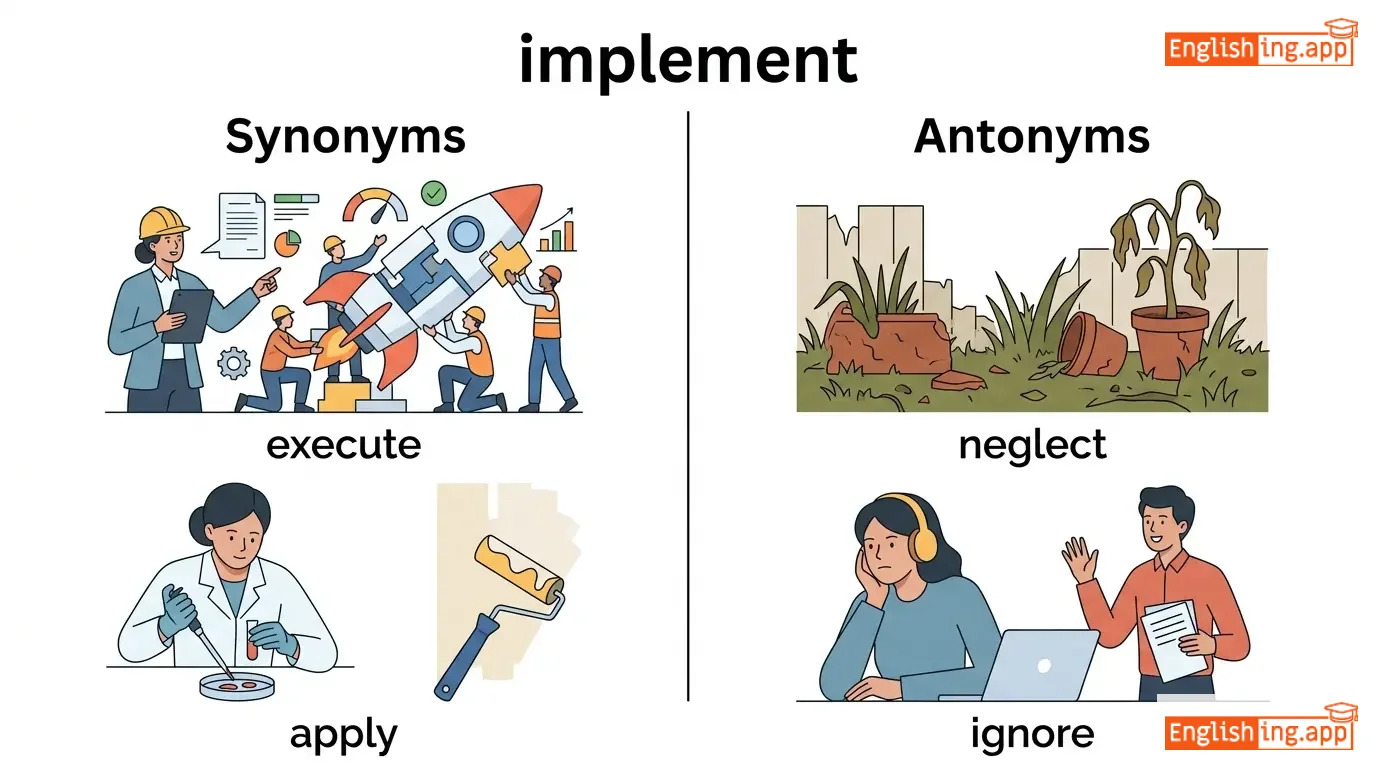
execute, apply, enforce, realize, perform
••••••
|
neglect, ignore, abandon
••••••
|
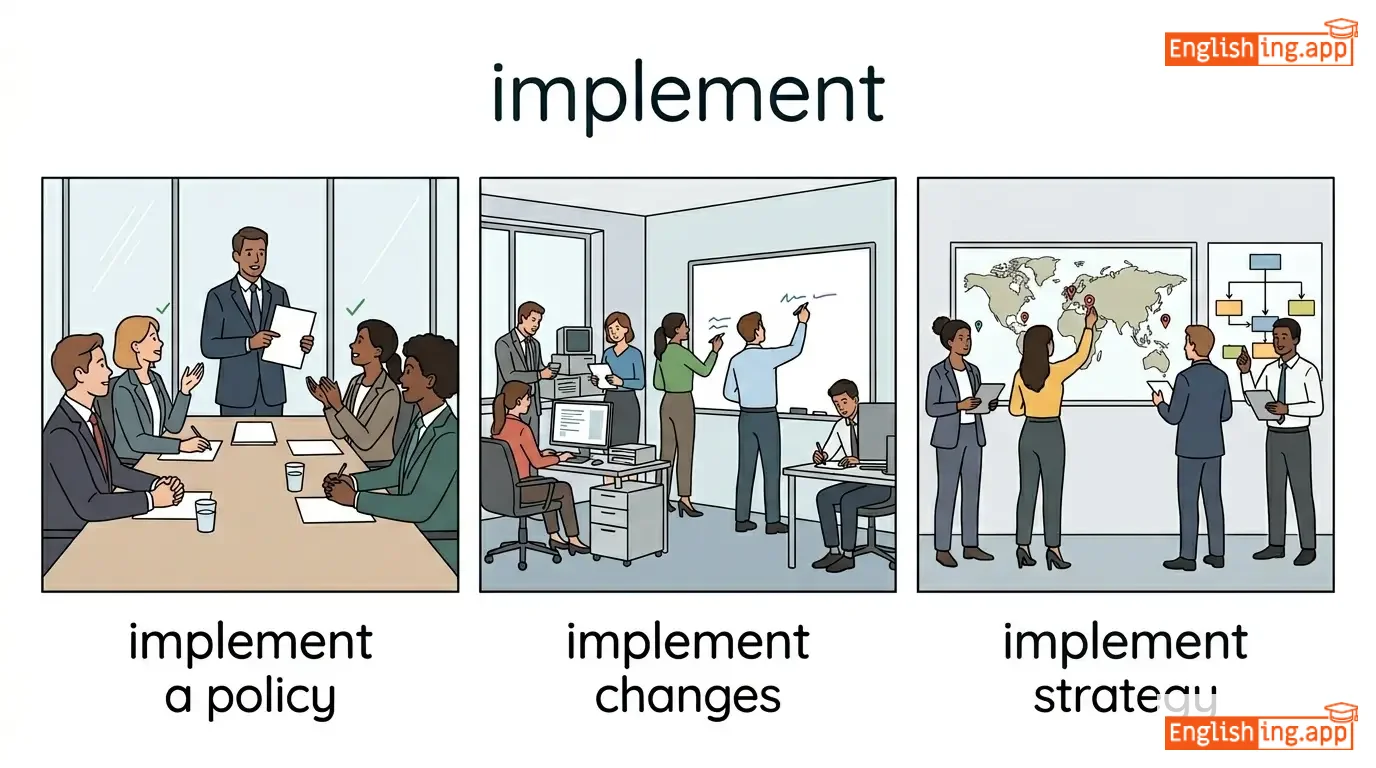
implement a policy, implement changes, implement strategy, implement decision
••••••
|
実施するは計画を現実にすることです。
••••••
|
|
#4355
🤔
|
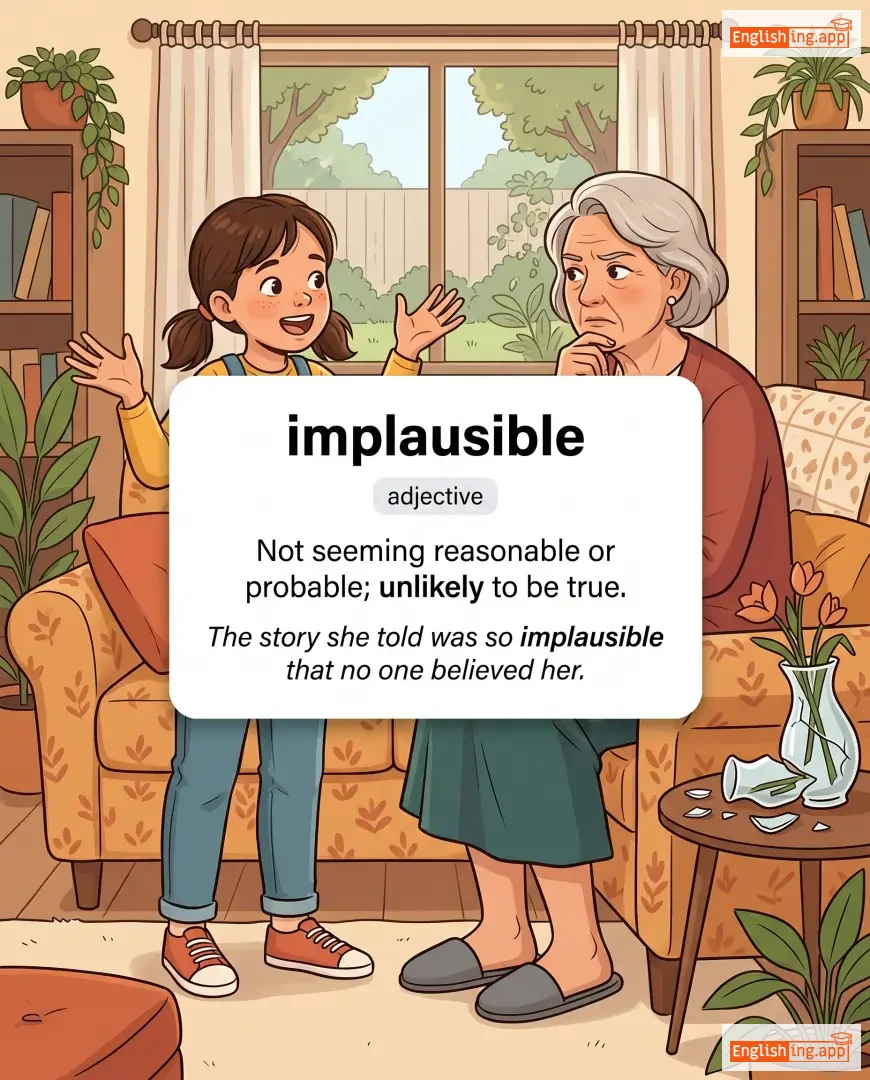
/ɪmˈplɔːzəbl/
adjective
(インプラウジブル)
••••••
|
|
信じがたい
shinjigatai
••••••
|
- •••••• | - •••••• | - •••••• | - •••••• |
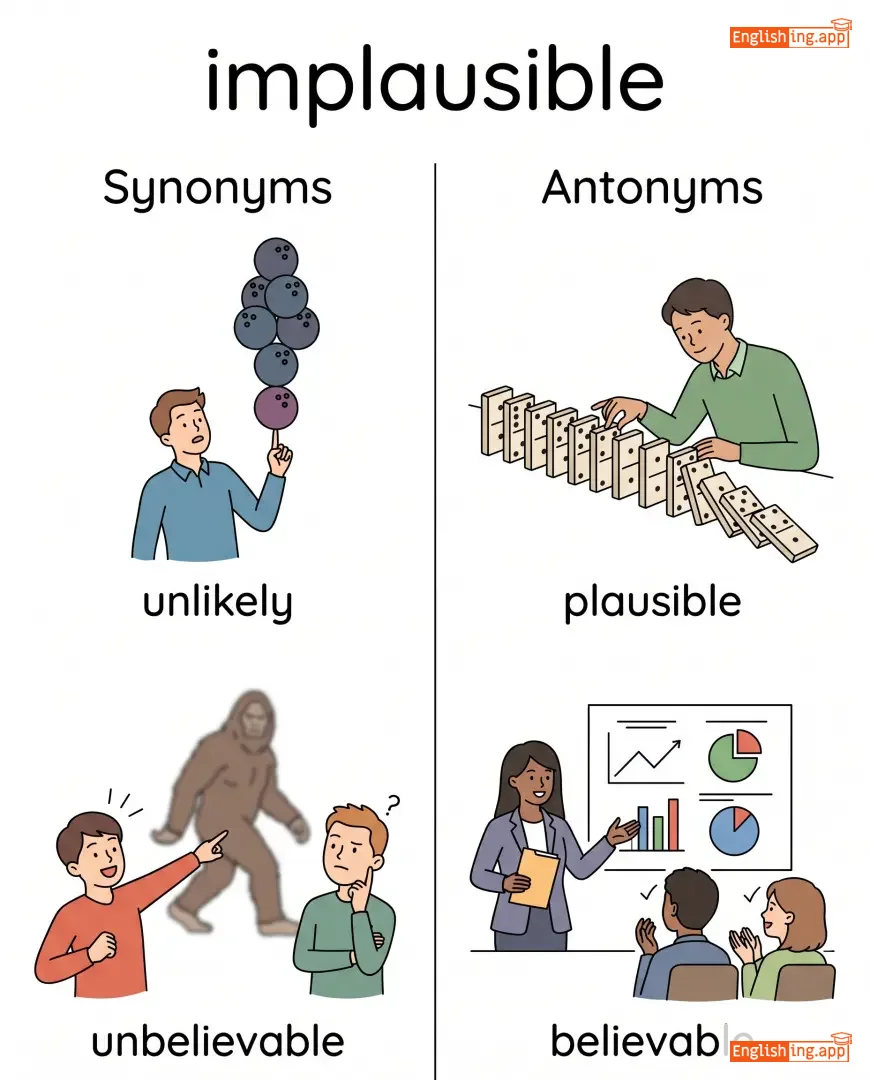
Not seeming reasonable or probable; unlikely to be true.
••••••
|
The story she told was so implausible that no one believed her.
彼女が話した話はあまりにも信じられないほどで、誰も彼女を信じなかった。
••••••
|
彼女が話した話はあまりにも信じられないほどで、誰も彼女を信じなかった。
Kanojo ga hanashita hanashi wa amari ni mo shinjirarenai hodo de, dare mo kanojo o shinjinakatta.
••••••
|
- •••••• | - •••••• | - •••••• |
unlikely, unbelievable, doubtful, improbable, questionable
••••••
|
plausible, believable, credible
••••••
|
implausible explanation, implausible excuse, implausible claim
••••••
|
信じがたいは impossible のように聞こえる – 信じられない
••••••
|
|
#4356
🔥
|
/ɪmˈplækəbl/
adjective
(インプラカブル)
••••••
|
|
容赦しない
yousha shinai
••••••
|
- •••••• | - •••••• | - •••••• | - •••••• |
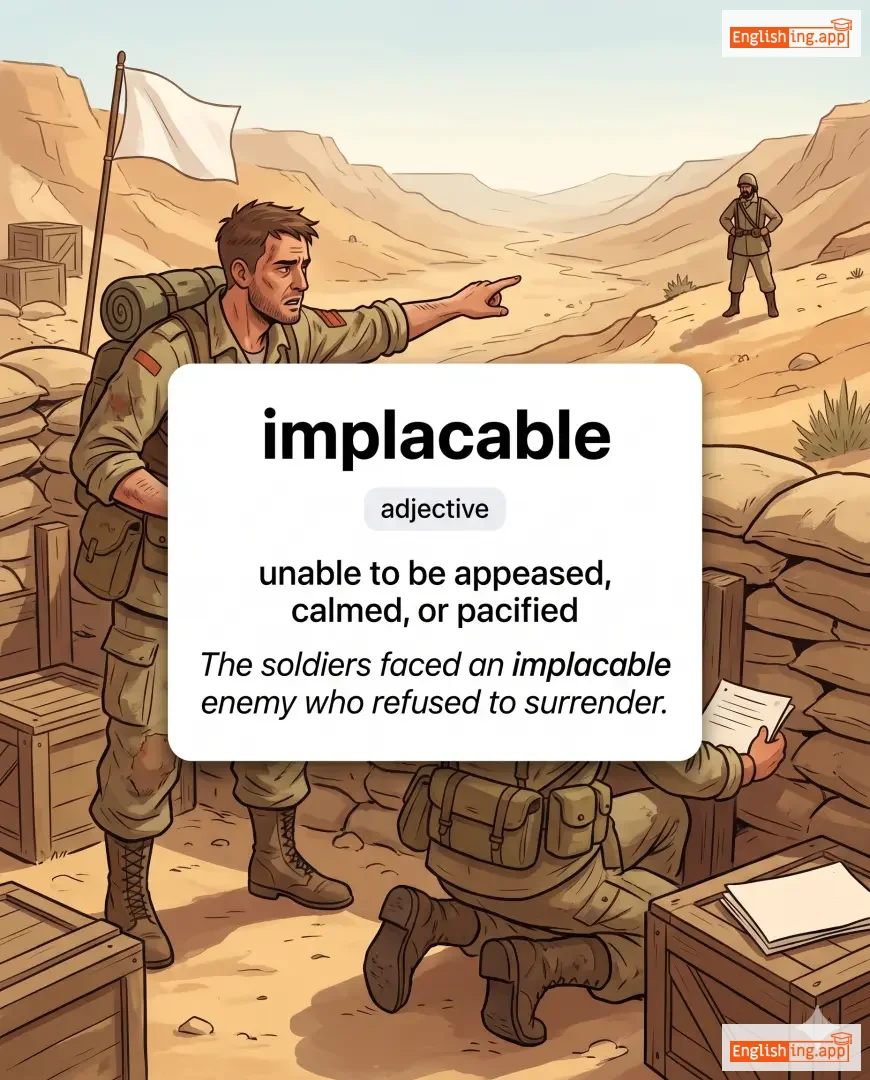
unable to be appeased, calmed, or pacified
••••••
|
The soldiers faced an implacable enemy who refused to surrender. |
兵士たちは降伏を拒否した容赦しない敵に直面した。
Heishitachi wa kyoufuku o kyohi shita yousha shinai teki ni chokumen shita.
••••••
|
- •••••• | - •••••• | - •••••• |
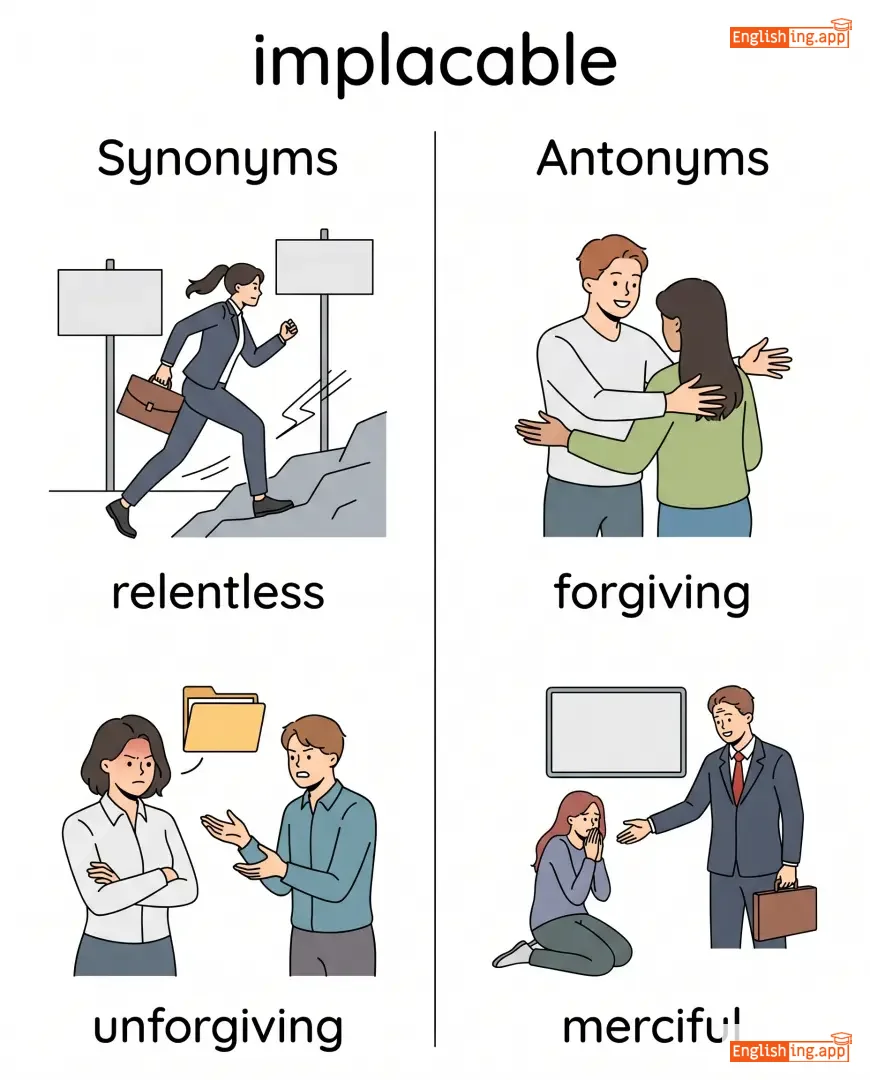
relentless, unforgiving, merciless, unyielding, stubborn
••••••
|
forgiving, merciful, kind
••••••
|
implacable enemy, implacable hatred, implacable opposition
••••••
|
IMPLACABLEは日本語で'容赦しない'、つまり平和にすることができない
••••••
|
|
#4357
😈
|
/ˈɪmpɪəs/
adjective
(インピアス)
••••••
|
- •••••• |
不敬な
fukei na
••••••
|
- •••••• | - •••••• | - •••••• | - •••••• |
showing a lack of respect for God or religion
••••••
|
It was considered impious to joke about sacred traditions. |
聖なる伝統を馬鹿にすることは不敬だと考えられていた。
Seinaru dentō o baka ni suru koto wa fukei da to kangaerarete ita.
••••••
|
- •••••• | - •••••• | - •••••• |
irreverent, ungodly, blasphemous, sacrilegious
••••••
|
pious, devout, reverent
••••••
|
impious act, impious remark, impious behavior
••••••
|
IMPious とは PIなければ、不敬な
••••••
|
|
#4358
🔨
|
/ɪmˈpɪndʒ/
verb
••••••
|
|
- •••••• |
impinged
••••••
|
impinged
••••••
|
impinges
••••••
|
impinging
••••••
|
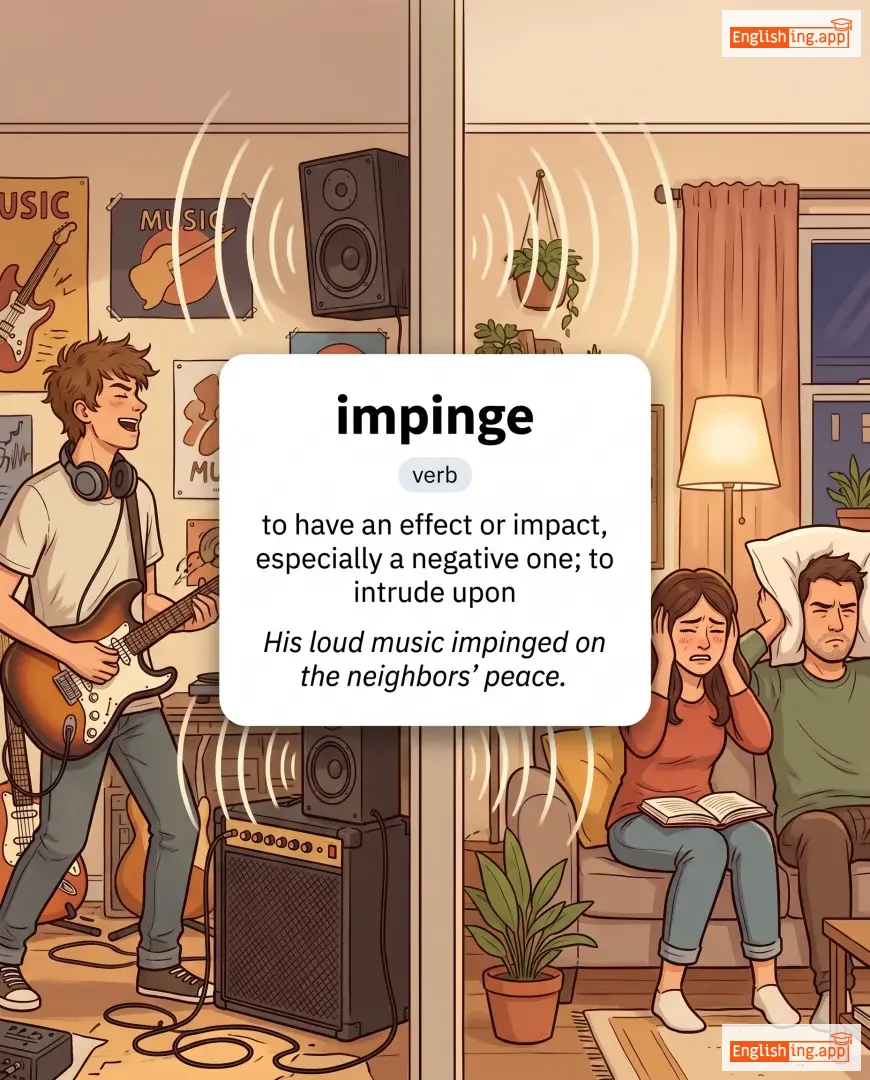
to have an effect or impact, especially a negative one; to intrude upon
••••••
|
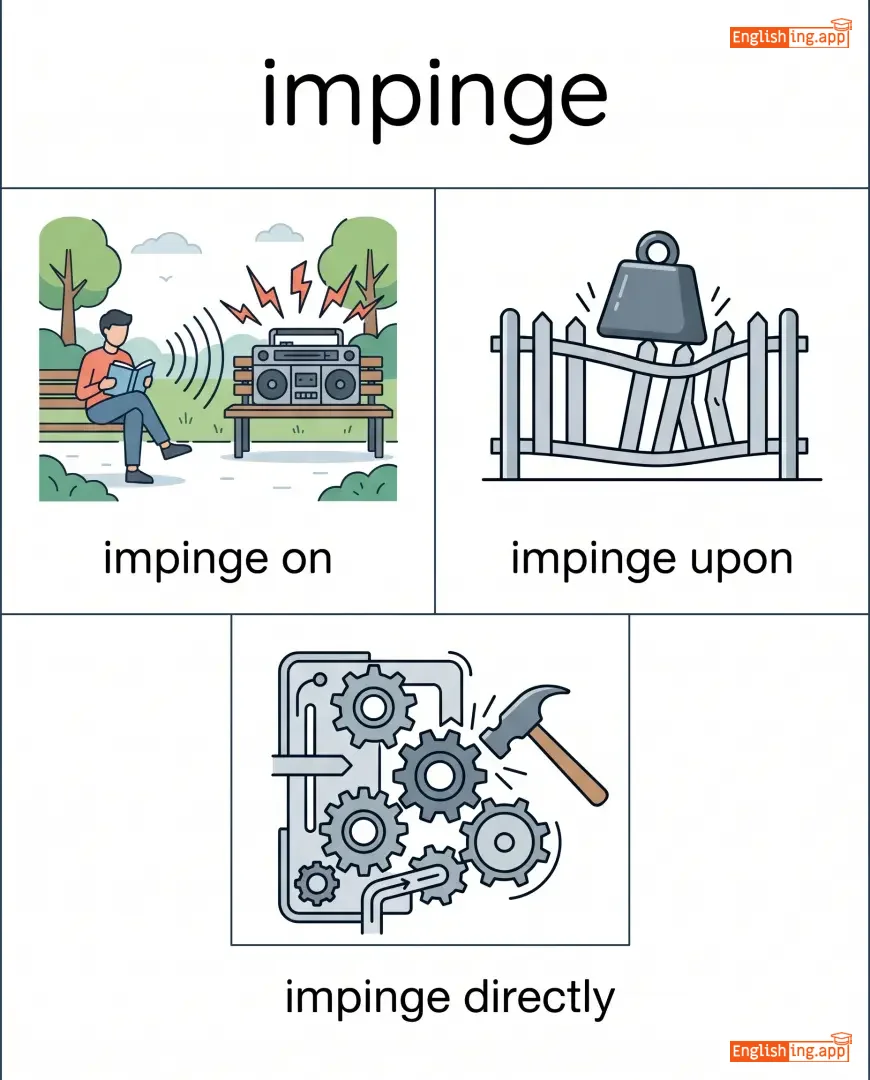
His loud music impinged on the neighbors’ peace. |
- •••••• |
impinge on rights |
to intrude or infringe upon someone’s rights
••••••
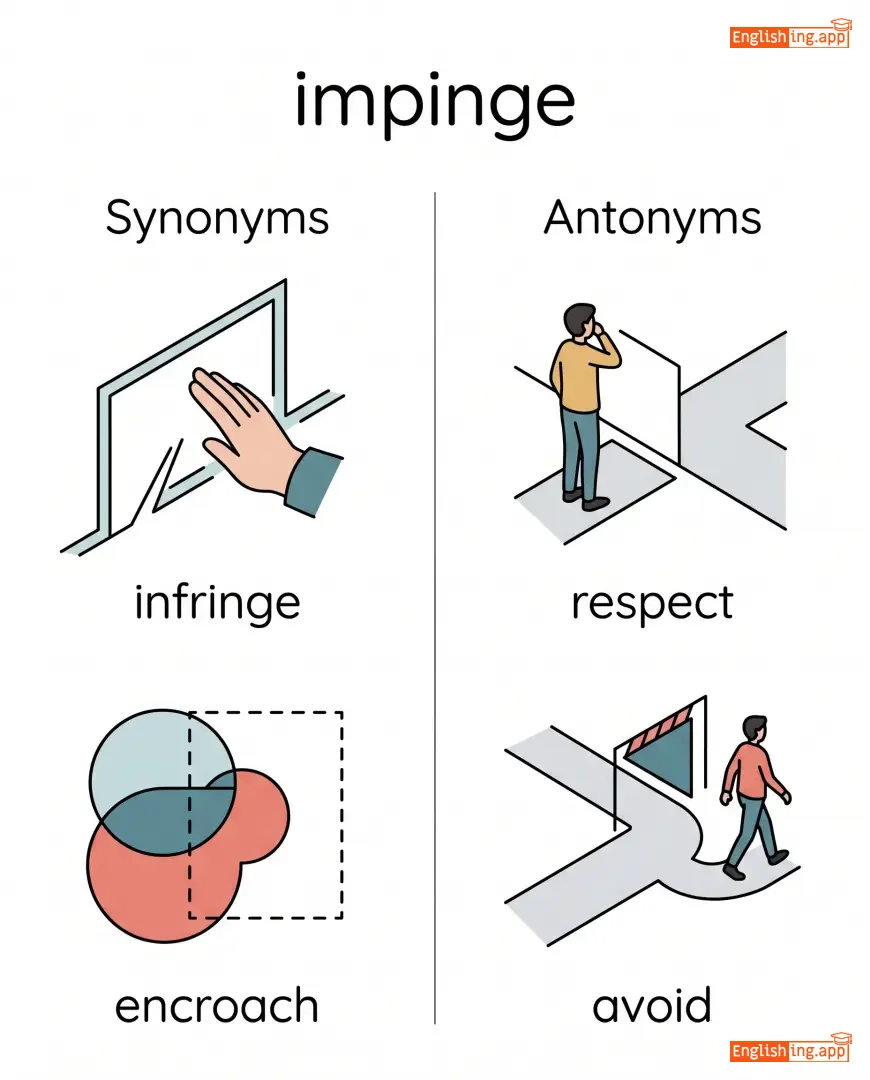
|
- •••••• |
infringe, encroach, affect, intrude, disturb
••••••
|
respect, avoid, preserve
••••••
|
impinge on, impinge upon, impinge directly
••••••
|
No •••••• |
|
#4359
🚫
|
/ɪmˈpaɪəti/
noun
(インパイエティ)
••••••
|
- •••••• |
不敬
fukei
••••••
|
- •••••• | - •••••• | - •••••• | - •••••• |
lack of respect for religion or sacred things
••••••
|
The priest condemned the impiety of neglecting the temple rituals. |
司祭は寺院の儀式を無視する不敬を非難した。
Shisai wa jiin no gishiki o mushi suru fukei o hinan shita.
••••••
|
- •••••• | - •••••• | - •••••• |
irreverence, blasphemy, sacrilege, disrespect
••••••
|
piety, reverence, devotion
••••••
|
show impiety, act of impiety, religious impiety
••••••
|
不敬 = iMProper piety - 意味は宗教に対する軽蔑
••••••
|
|
#4360
⚡
|
/ˈɪmpɪtəs/
noun
(インペタス)
••••••
|
|
推進力
suishinryoku
••••••
|
- •••••• | - •••••• | - •••••• | - •••••• |
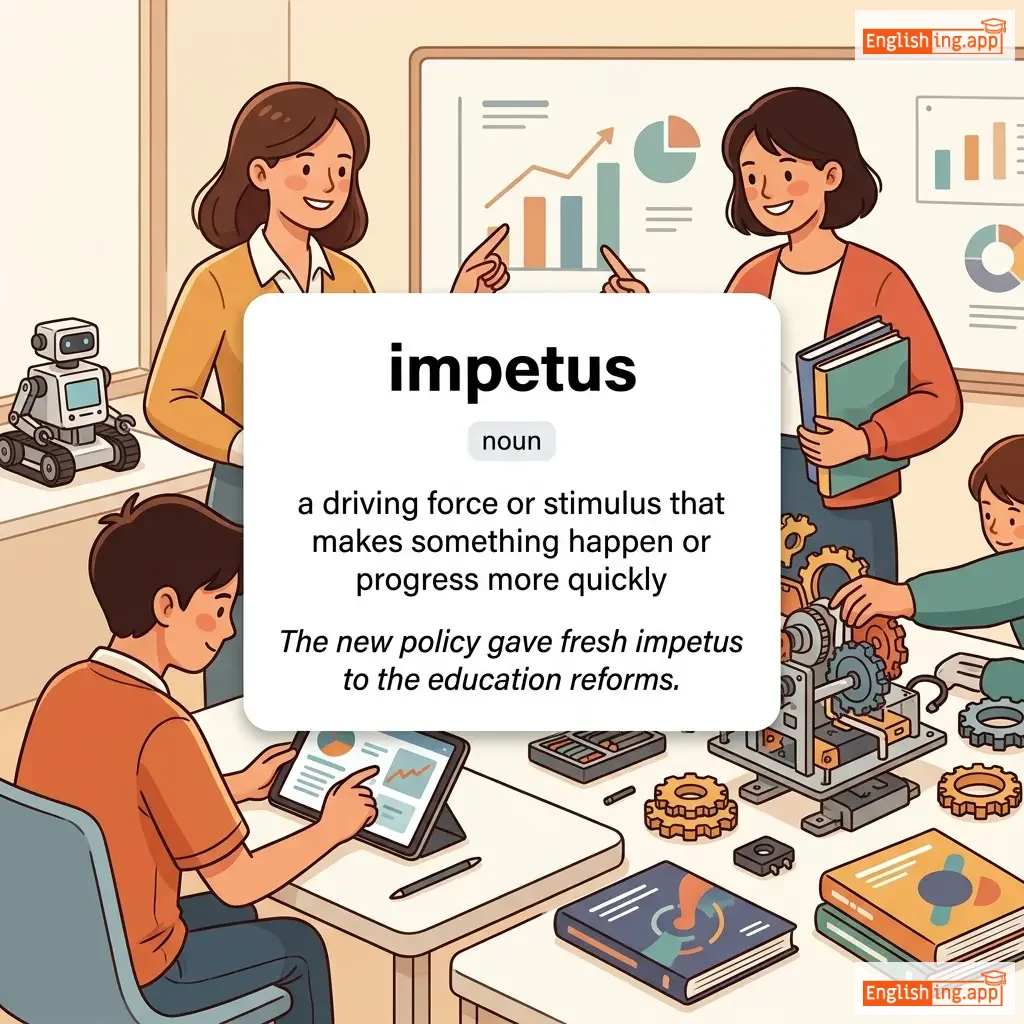
a driving force or stimulus that makes something happen or progress more quickly
••••••
|
The new policy gave fresh impetus to the education reforms. |
新しい政策は教育改革に新たな推進力を与えました。
Atarashī seisaku wa kyōiku kaizen ni aratana suishinryoku o ataemashita.
••••••
|
- •••••• | - •••••• | - •••••• |
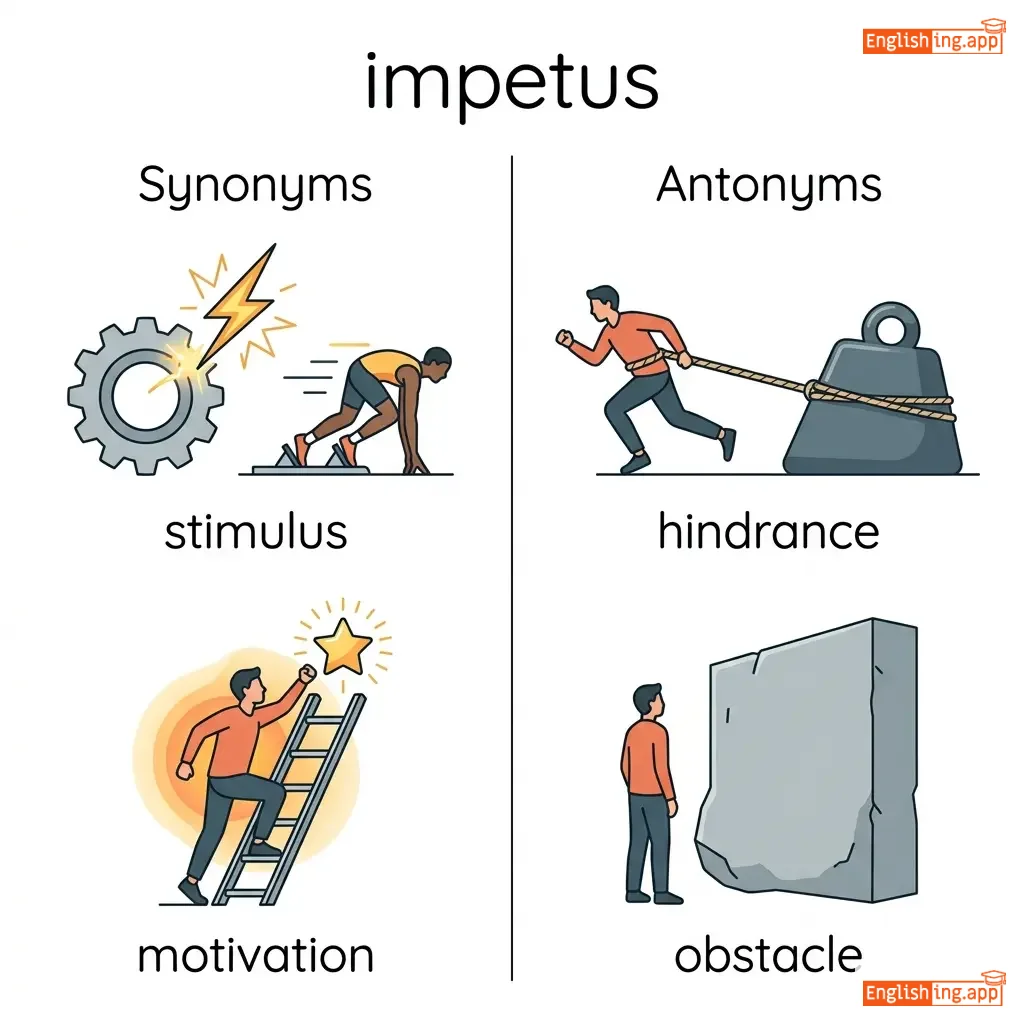
stimulus, motivation, drive, boost, momentum
••••••
|
hindrance, obstacle, deterrent
••••••
|
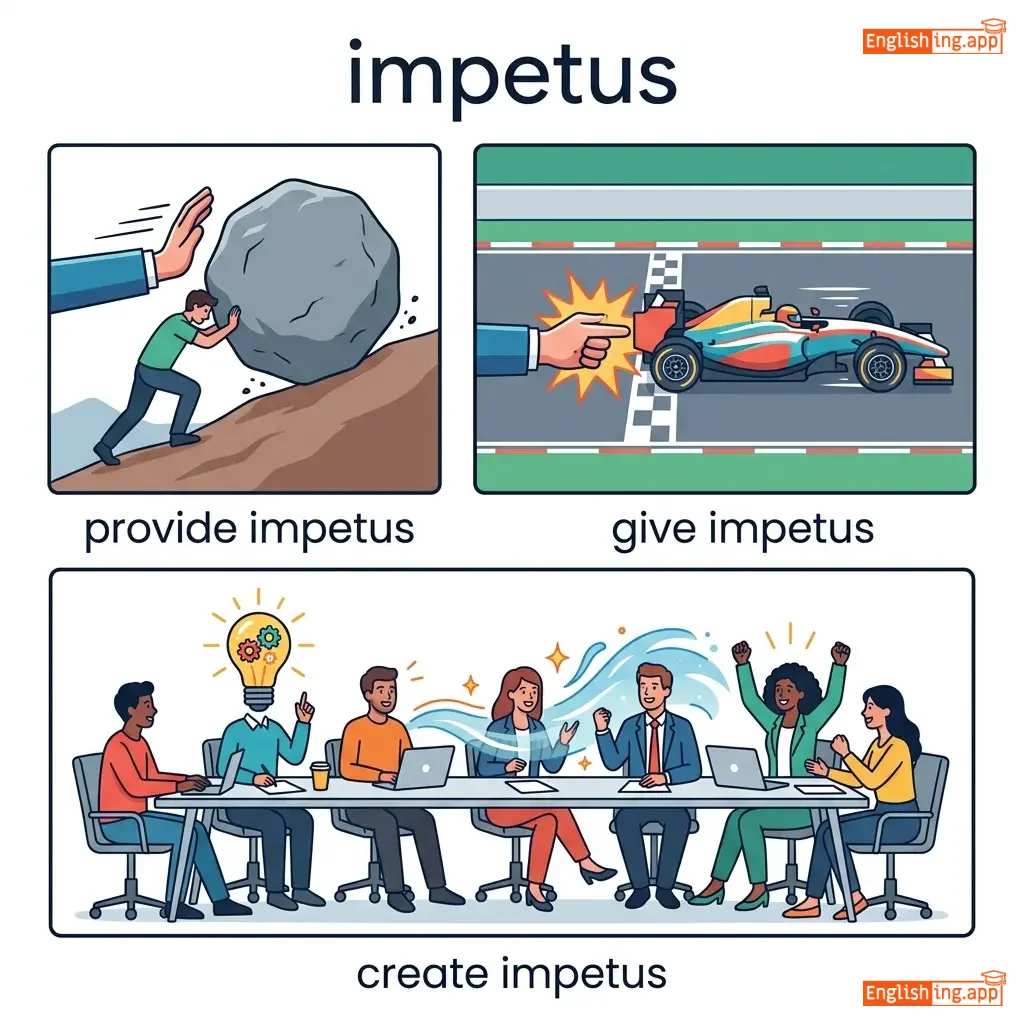
provide impetus, give impetus, create impetus, main impetus
••••••
|
IMPETUSは'推進力'のようなものです。物事を前進させる力。
••••••
|
|
#4361
🔥
|
/ɪmˈpetʃuəs/
adjective
(インペチュアス)
••••••
|
|
衝動的
shōdōteki
••••••
|
- •••••• | - •••••• | - •••••• | - •••••• |
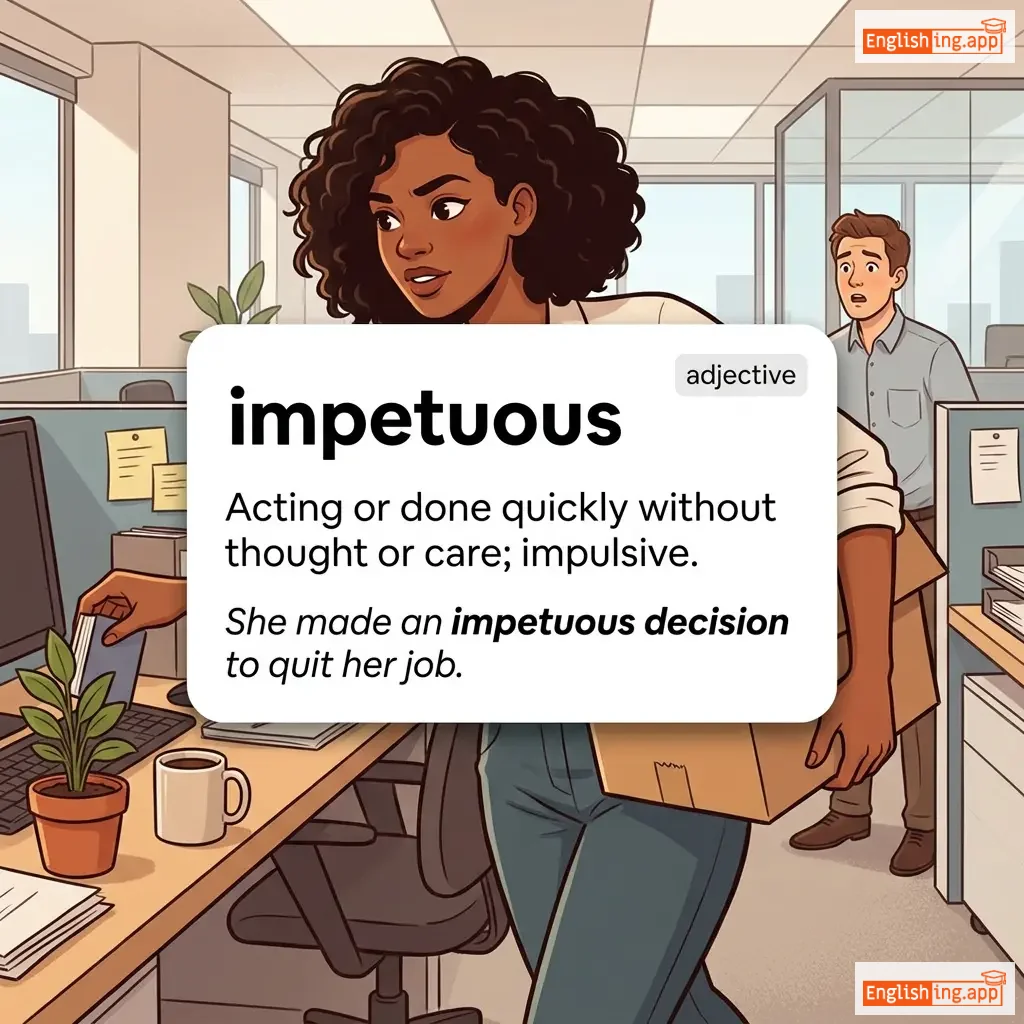
Acting or done quickly without thought or care; impulsive.
••••••
|
She made an impetuous decision to quit her job. |
彼女は衝動的に仕事を辞める決断をしました。
Kanojo wa shōdōteki ni shigoto o yameru ketsudan o shimashita.
••••••
|
- •••••• | - •••••• | - •••••• |
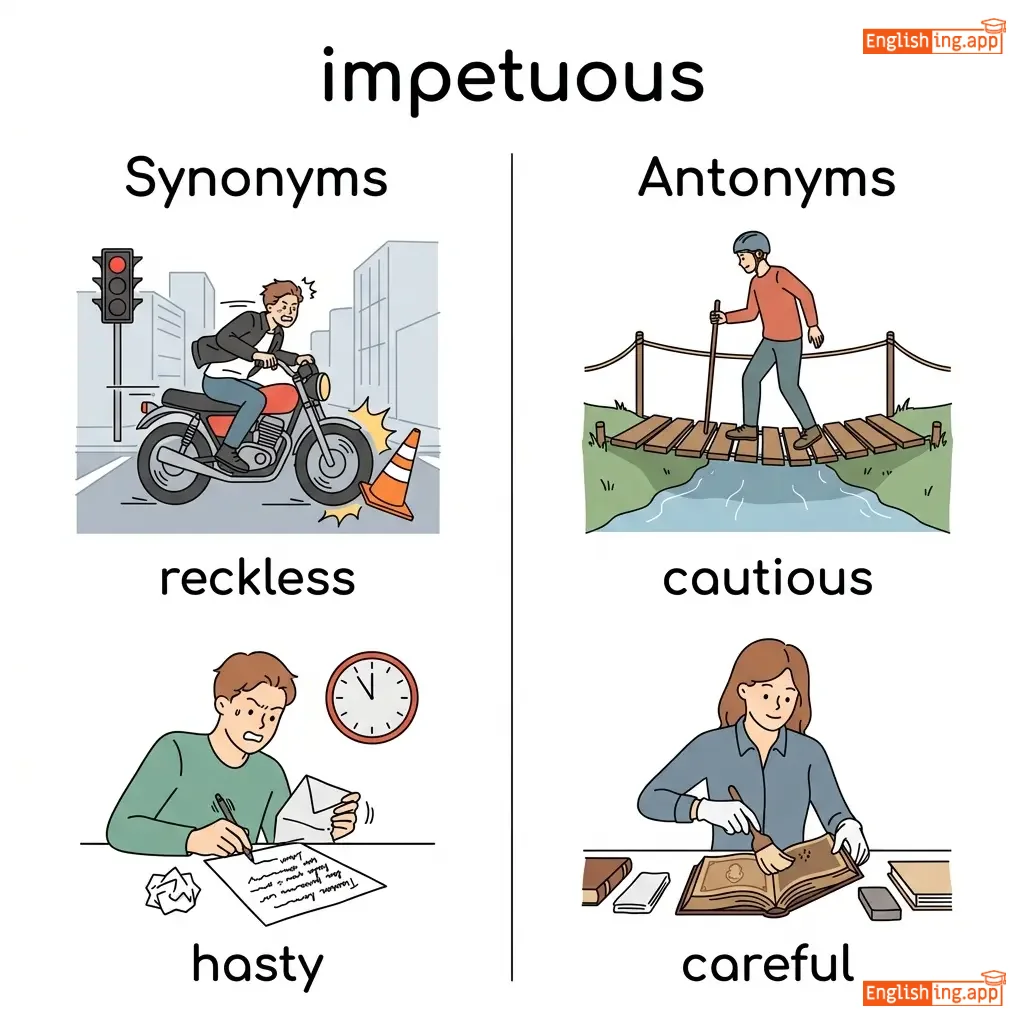
reckless, hasty, rash, impulsive
••••••
|
cautious, careful, deliberate
••••••
|
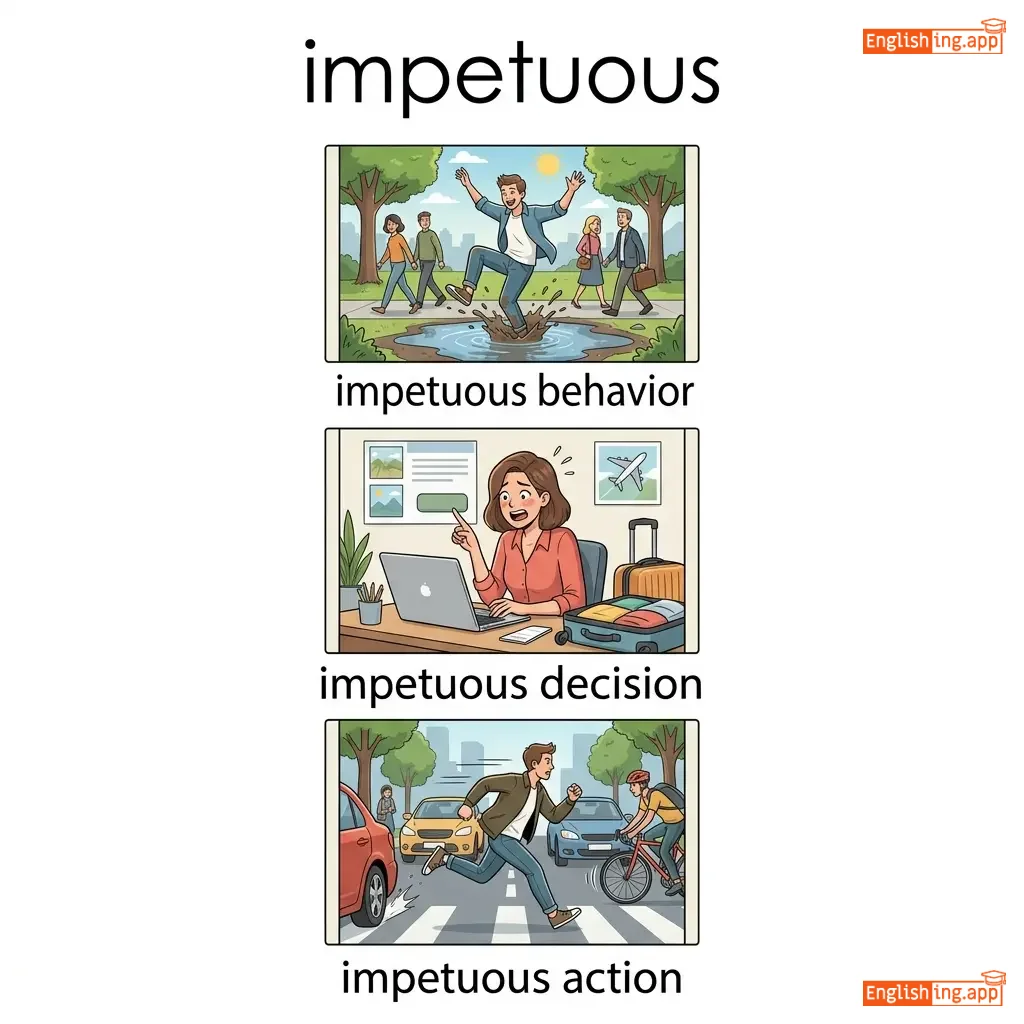
impetuous behavior, impetuous decision, impetuous action, impetuous youth
••••••
|
Impetuous とは「速すぎる + 思慮無し」– 衝動的に行動すること、つまり衝動的です。
••••••
|
|
#4362
⚡
|
/ˌɪmpəˈtjuːəsəti/
noun
(インペチュオシティ)
••••••
|
- •••••• |
衝動性
shoudousei
••••••
|
- •••••• | - •••••• | - •••••• | - •••••• |
The quality of being rash or impulsive.
••••••
|
His impetuosity often got him into trouble.
彼のインペチュオシティはしばしば彼を問題に巻き込んだ。
••••••
|
彼の衝動性はしばしば彼を問題に巻き込んだ。
Kare no shoudousei wa shibashiba kare o mondai ni makikonda.
••••••
|
- •••••• | - •••••• | - •••••• |
rashness, recklessness, impulsiveness, hastiness
••••••
|
caution, carefulness, prudence
••••••
|
youthful impetuosity, display impetuosity, act with impetuosity
••••••
|
Impetuosity は衝動的な行動を意味します – 衝動性。
••••••
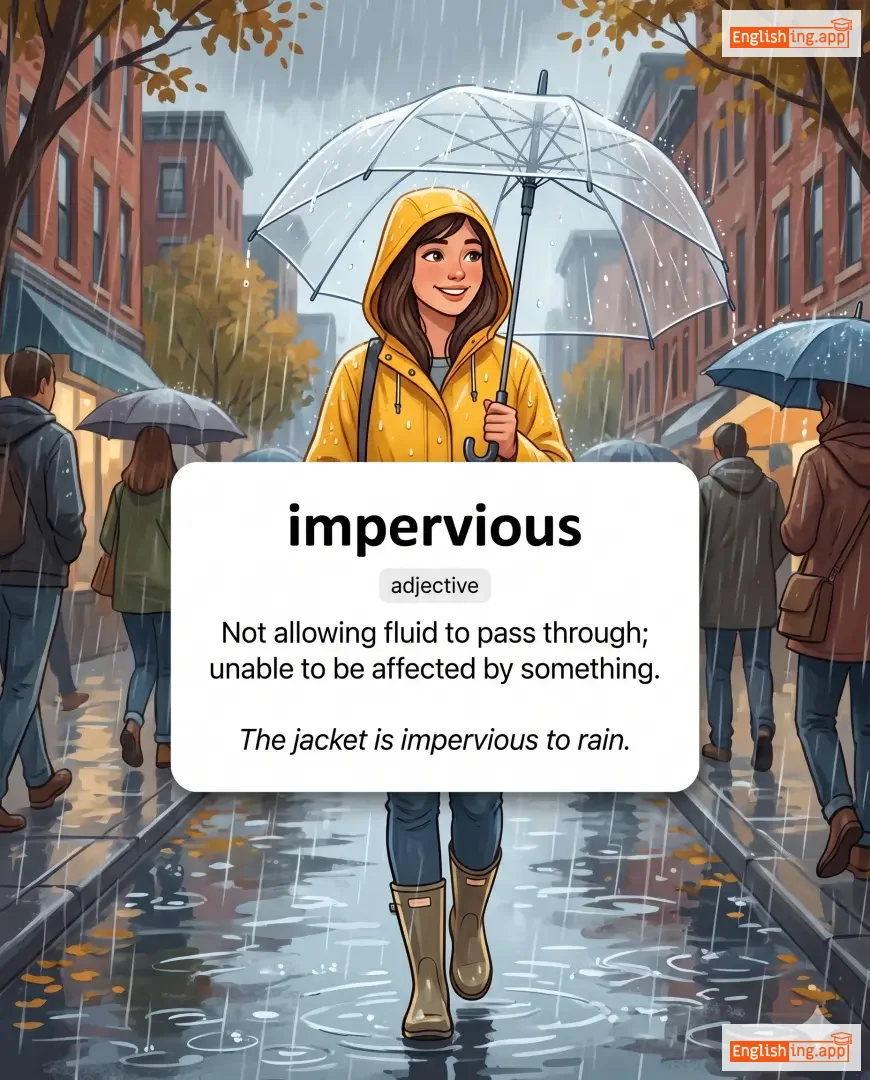
|
|
#4363
🛡️
|
/ɪmˈpɜːrviəs/
adjective
(インパーヴィアス)
••••••
|
|
透過しない
toukashinai
••••••
|
- •••••• | - •••••• | - •••••• | - •••••• |
Not allowing fluid to pass through; unable to be affected by something.
••••••
|
The jacket is impervious to rain. |
ジャケットは雨に透過しません。
Jaketto wa ame ni toukashinai desu.
••••••
|
- •••••• | - •••••• | - •••••• |
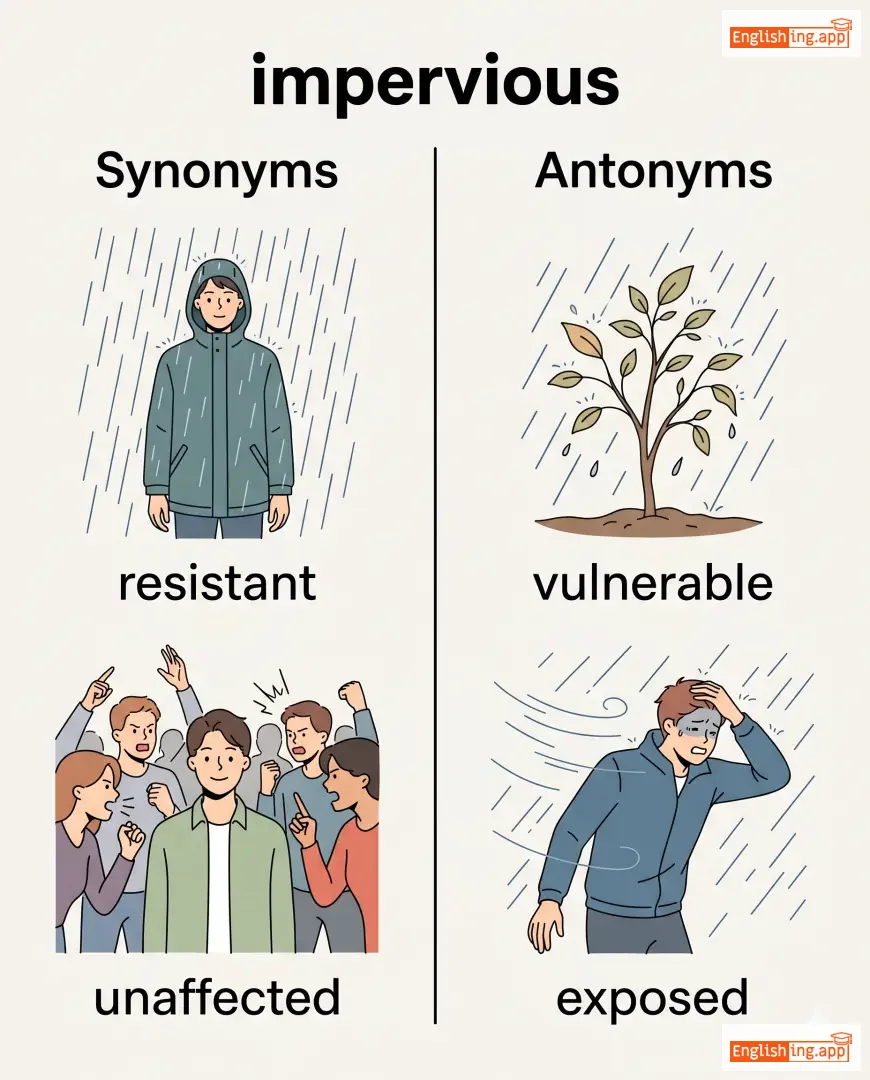
resistant, unaffected, immune, sealed, waterproof
••••••
|
vulnerable, exposed, penetrable
••••••
|
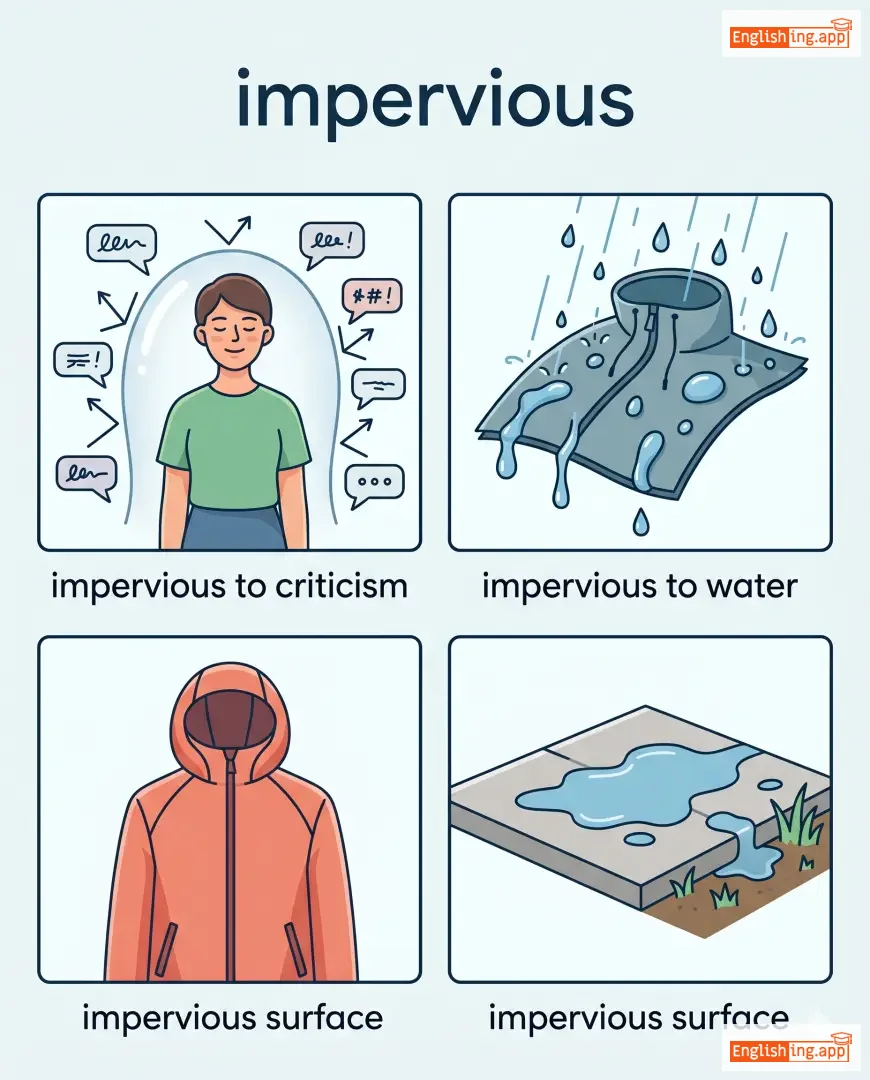
impervious to criticism, impervious to water, impervious surface, impervious layer
••••••
|
Imperviousは‘透過しない’ – 何も通さない、透過しない。
••••••
|
|
#4364
🧘
|
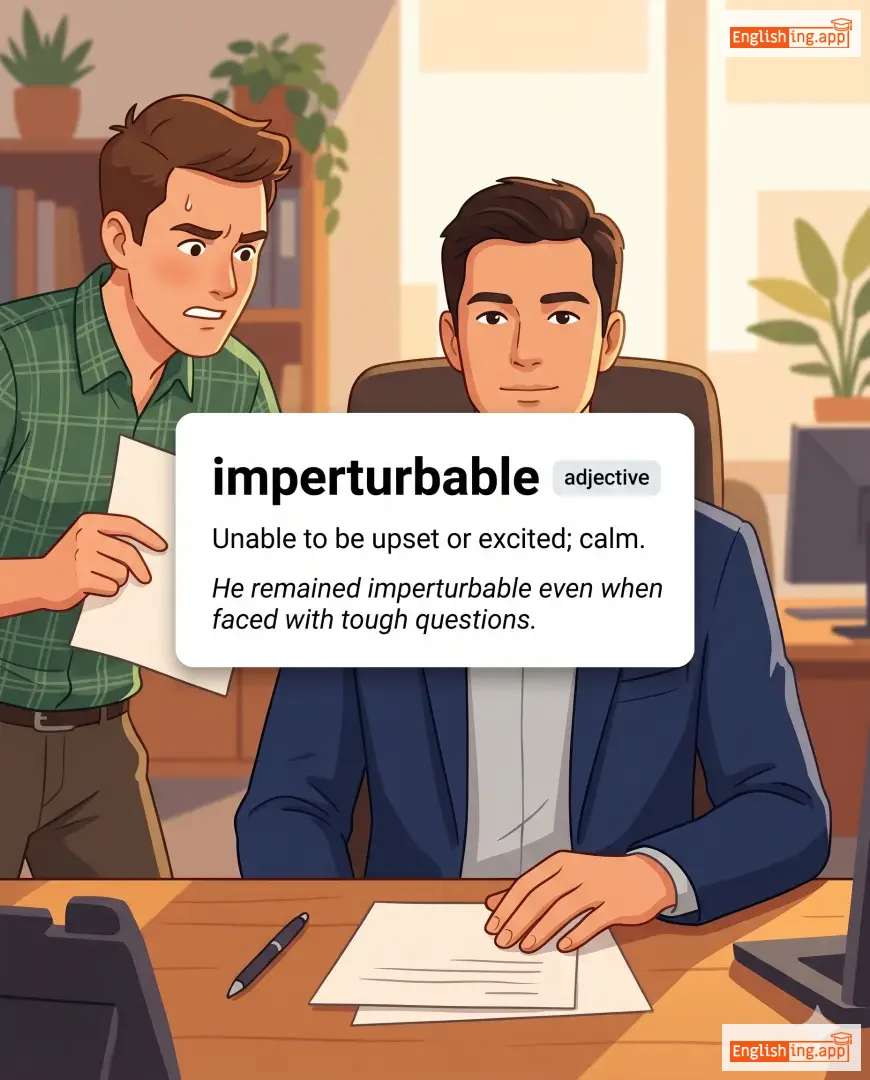
/ɪmˈpɜːrtərbəbəl/
adjective
(インパターバブル)
••••••
|
|
冷静
reisei
••••••
|
- •••••• | - •••••• | - •••••• | - •••••• |
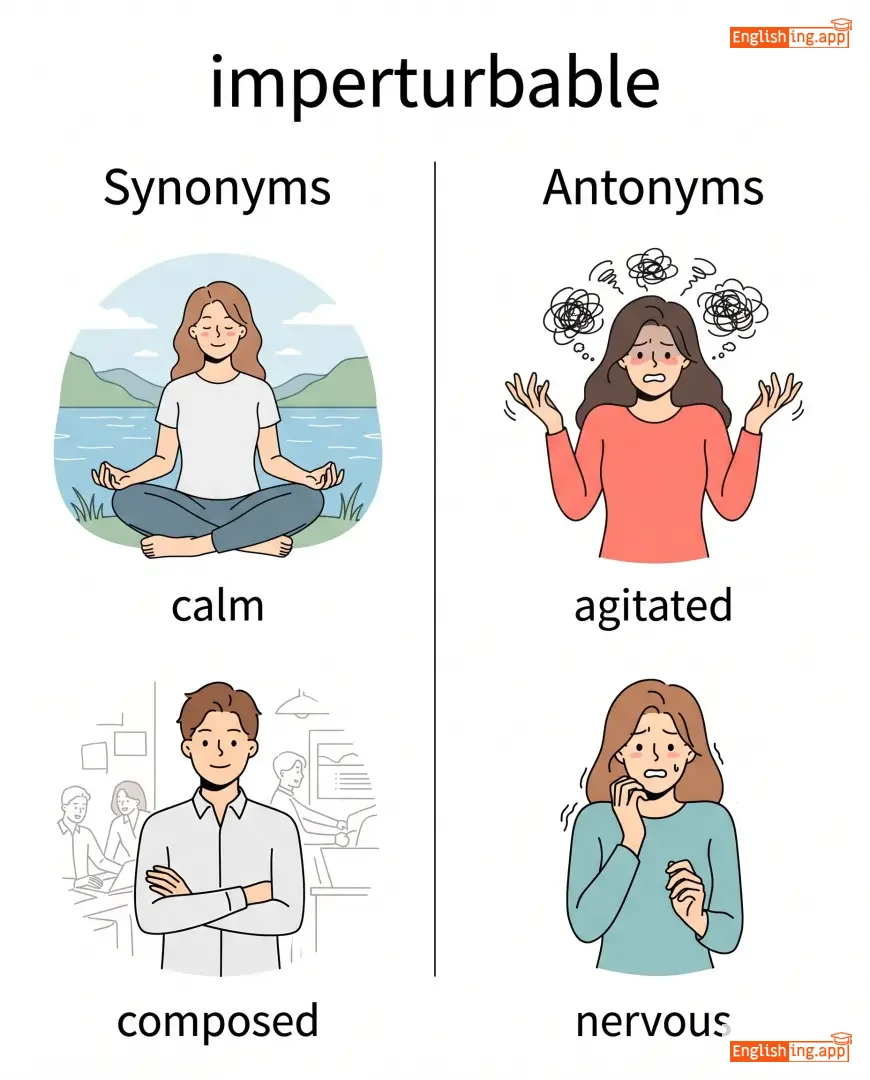
Unable to be upset or excited; calm.
••••••
|
He remained imperturbable even when faced with tough questions.
彼は難しい質問に直面しても冷静さを保ち続けました。
••••••
|
彼は難しい質問に直面しても冷静さを保ち続けました。
Kare wa muzukashī shitsumon ni chokumen shite mo reiseisa o tamotsu tsudzukemashita.
••••••
|
- •••••• | - •••••• | - •••••• |
calm, composed, serene, collected, unflappable
••••••
|
agitated, nervous, excitable
••••••
|
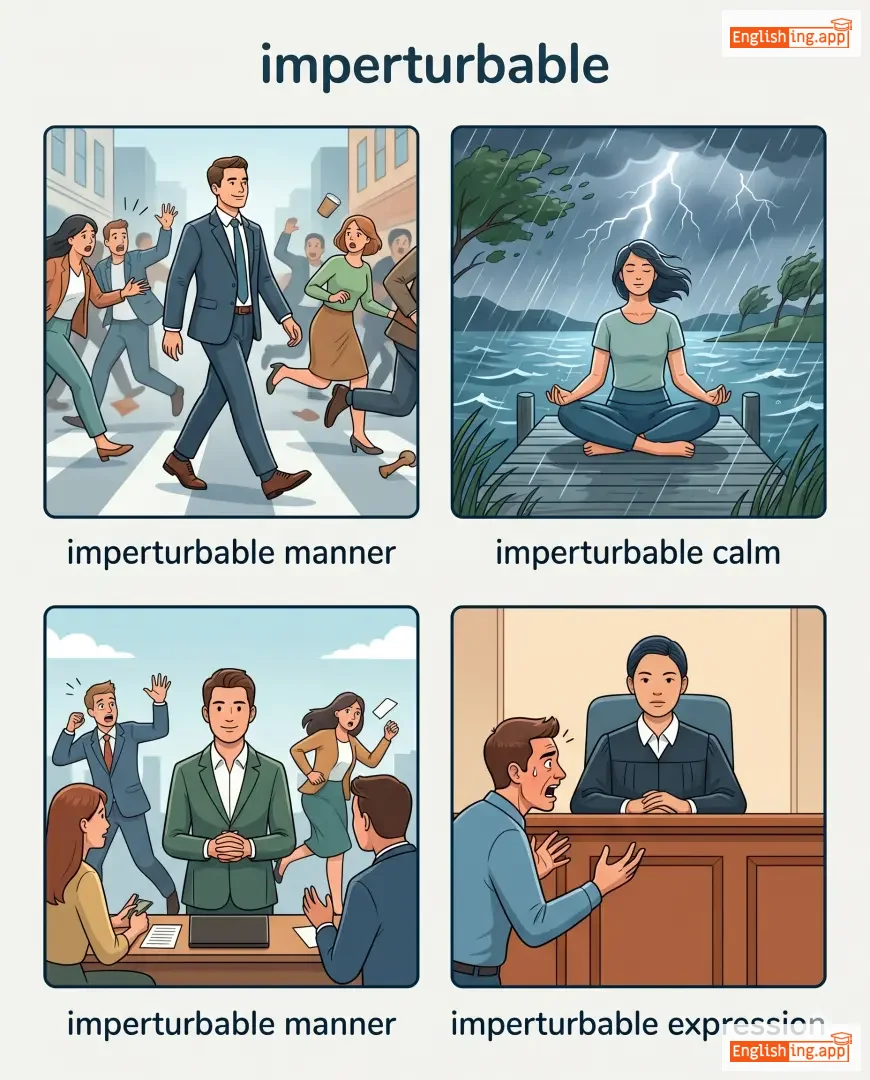
imperturbable manner, imperturbable calm, imperturbable expression, imperturbable face
••••••
|
Imperturbable とは '動揺しない' という意味です — つまり冷静。
••••••
|
|
#4365
😌
|
/ɪmˌpɜːrtərbəˈbɪləti/
noun
(インパーターバビリティ)
••••••
|
- •••••• |
不動心
fudoushin
••••••
|
- •••••• | - •••••• | - •••••• | - •••••• |
The quality of being calm and not easily disturbed or upset.
••••••
|
Her imperturbability during the crisis impressed everyone. |
危機の際に彼女の不動心は皆に印象を与えました。
Kiki no sai ni kanojo no fudoushin wa mina ni inshou o ataemashita.
••••••
|
- •••••• | - •••••• | - •••••• |
composure, calmness, equanimity, serenity, steadiness
••••••
|
agitation, nervousness, restlessness
••••••
|
remarkable imperturbability, display imperturbability, show imperturbability, maintain imperturbability
••••••
|
不動心は、どんな危機にも動じず冷静を保つ力です。
••••••
|
|
#4366
⚠️
|
/ɪmˈpɛndɪŋ/
adjective
(インペンディング)
••••••
|
- •••••• |
差し迫った
tashisometta
••••••
|
- •••••• | - •••••• | - •••••• | - •••••• |
about to happen soon, usually something unpleasant or threatening
••••••
|
The villagers were worried about the impending flood. |
村人たちは差し迫った洪水を心配していた。
Murabito-tachi wa tashisometta kōzui o shinpai shite ita.
••••••
|
impending doom |
the sense that a terrible event is about to occur
••••••
|
差し迫った死
tashisometta shi
••••••
|
approaching, forthcoming, imminent, looming, near
••••••
|
distant, remote, unlikely
••••••
|
impending doom, impending disaster, impending crisis, impending danger
••••••
|
impending は差し迫ったという意味 — 恐ろしい出来事がすぐに起こる。
••••••
|
|
#4367
😏
|
/ɪmˈpɜːrtɪnəns/
noun
(インパータネンス)
••••••
|
- •••••• |
無礼
burei
••••••
|
- •••••• | - •••••• | - •••••• | - •••••• |
lack of respect; rudeness
••••••
|
The teacher was shocked by the student's impertinence.
教師は生徒の無礼さに驚いた。
••••••
|
教師は生徒の無礼さに驚いた。
Kyoushi wa seito no burei sa ni odoroita.
••••••
|
- •••••• | - •••••• | - •••••• |
rudeness, disrespect, insolence, impudence
••••••
|
respect, politeness, courtesy
••••••
|
show impertinence, shocked by impertinence
••••••
|
impertinent 仕事 → 無礼とは無作法を意味します
••••••
|
|
#4368
🙅♀️
|
/ɪmˌpɜːrˈsweɪdəbl/
adjective
(im-pā-su-we-do-bu-ru)
••••••
|
- •••••• |
説得できない
settoku dekinai
••••••
|
- •••••• | - •••••• | - •••••• | - •••••• |
not able to be convinced or persuaded
••••••
|
She remained impersuadable despite all our arguments. |
彼女はすべての議論にもかかわらず説得できなかった。
Kanojo wa subete no giron ni mo kakawarazu settoku dekinakatta.
••••••
|
- •••••• | - •••••• | - •••••• |
stubborn, adamant, obstinate, unyielding
••••••
|
persuadable, flexible, open-minded
••••••
|
remain impersuadable, utterly impersuadable
••••••
|
im + persuadable → 説得できない
••••••
|
|
#4369
🎭
|
/ɪmˈpɜːrsəneɪt/
verb
(インパーソネイト)
••••••
|
- •••••• |
偽る
itsuwaru
••••••
|
impersonated
インパーソネイテッド
••••••
|
impersonated
インパーソネイテッド
••••••
|
impersonates
インパーソネイツ
••••••
|
impersonating
インパーソネイティング
••••••
|
to pretend to be another person in order to entertain or deceive
••••••
|
He was arrested for trying to impersonate a police officer.
彼は警察官を装おうとしたため逮捕されました。
••••••
|
彼は警察官を装おうとしたため逮捕されました。
Kare wa keisatsukan wo yosou to shita tame taiho saremashita.
••••••
|
impersonate someone
誰かを真似する
••••••
|
to copy someone's behavior, voice, or appearance
••••••
|
誰かを真似する
dareka wo manesuru
••••••
|
imitate, mimic, pose as, copy
••••••
|
differentiate, distinguish
••••••
|
impersonate a celebrity, impersonate an officer, impersonate someone
••••••
|
im + person + ate → 他の人のようにふるまう
••••••
|
|
#4370
😐
|
/ɪmˈpɜːrsənl/
adjective
(インパーソナル)
••••••
|
- •••••• |
無個性
mukosei
••••••
|
- •••••• | - •••••• | - •••••• | - •••••• |
not influenced by, showing, or involving personal feelings; lacking human warmth or emotion
••••••
|
The letter was written in a very impersonal style. |
その手紙は非常に無個性的なスタイルで書かれていました。
Sono tegami wa hijou ni mukosei-teki na sutairu de kakareteimashita.
••••••
|
- •••••• | - •••••• | - •••••• |
detached, objective, neutral, distant, cold
••••••
|
personal, emotional, warm
••••••
|
impersonal tone, impersonal manner, impersonal force, impersonal relationship
••••••
|
無個性 = 人間味なし → 無個性 (冷たい)
••••••
|
|
#4371
⛔
|
/ˌɪmpəˈmɪsəbl/
adjective
(インパーミッシブル)
••••••
|
- •••••• |
許可されていない
kyoka sareteinai
••••••
|
- •••••• | - •••••• | - •••••• | - •••••• |
Not permitted or allowed.
••••••
|
Such behavior is impermissible in the workplace. |
そのような行動は職場では許可されていません。
Sono you na koudou wa shokuba de wa kyoka sareteimasen.
••••••
|
- •••••• | - •••••• | - •••••• |
forbidden, prohibited, unacceptable, unlawful
••••••
|
permissible, allowed, acceptable
••••••
|
impermissible act, impermissible behavior, impermissible practice
••••••
|
Impermissibleは'in'(ない)+ permissible(許可された)= 許可されていない 🚫。
••••••
|
|
#4372
🧱
|
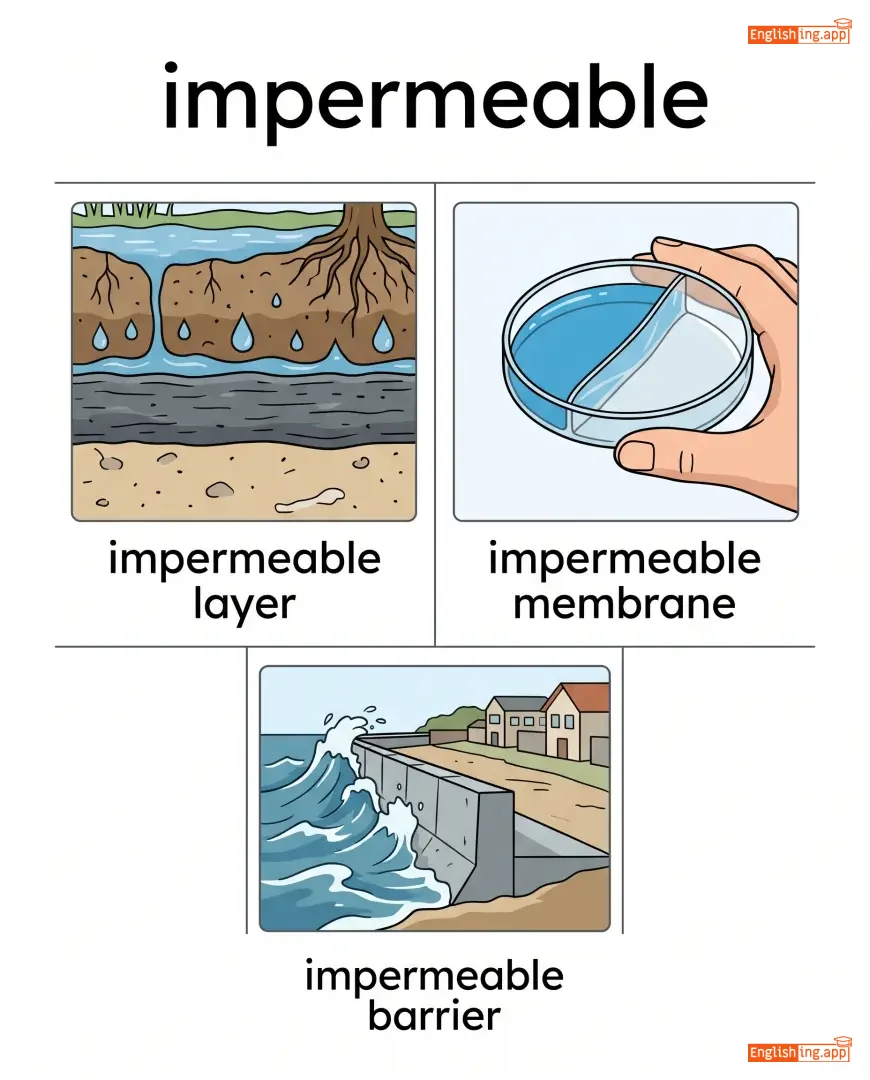
/ɪmˈpɜːmiəbl/
adjective
(インパーミアブル)
••••••
|
|
不透水の
futōsui no
••••••
|
- •••••• | - •••••• | - •••••• | - •••••• |
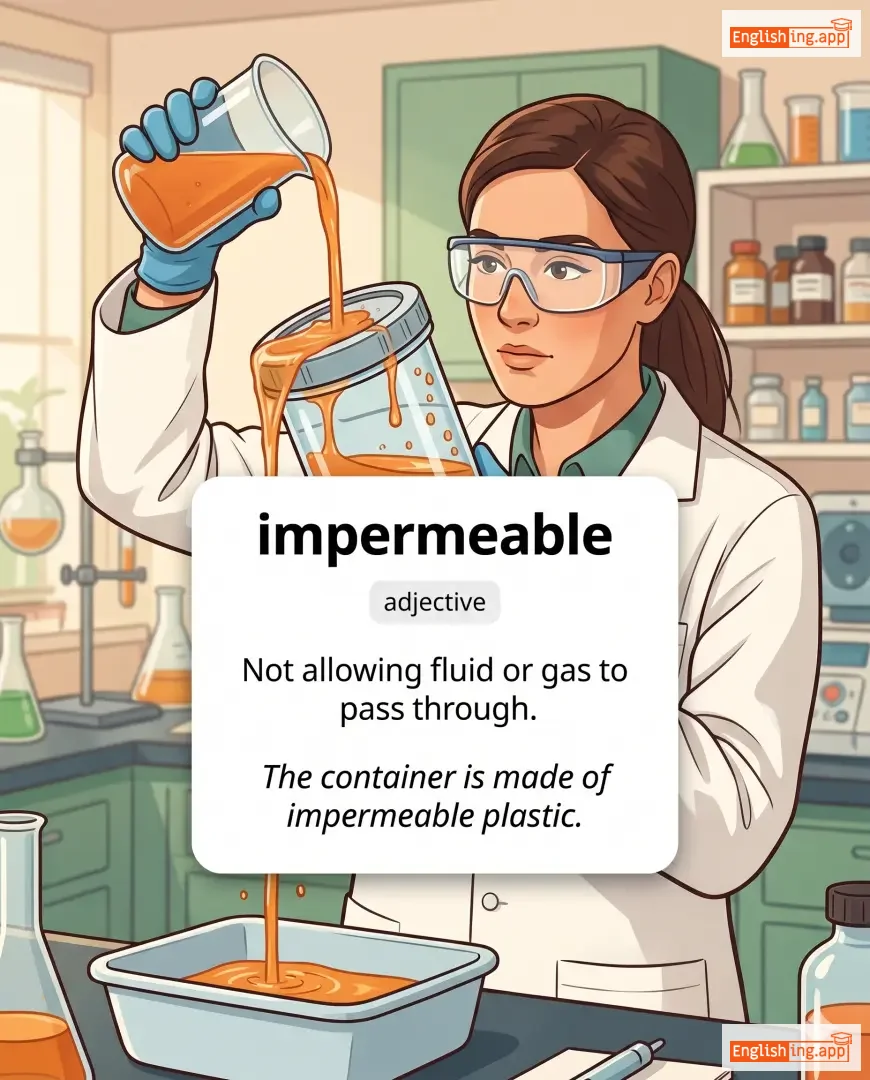
Not allowing fluid or gas to pass through.
••••••
|
The container is made of impermeable plastic. |
その容器は不透水のプラスチックでできています。
Sono youki wa futōsui no purasuchikku de dekiteimasu.
••••••
|
- •••••• | - •••••• | - •••••• |
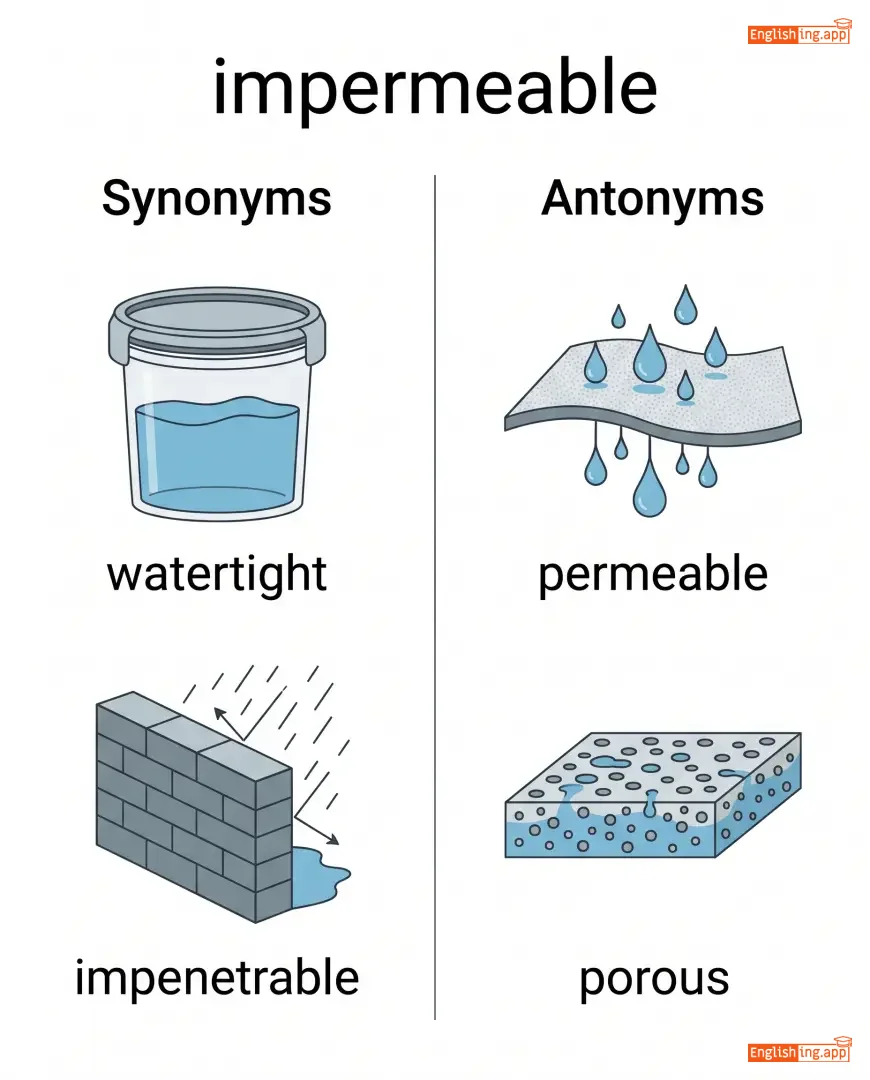
watertight, impenetrable, sealed, nonporous
••••••
|
permeable, porous, leaky
••••••
|
impermeable layer, impermeable membrane, impermeable barrier, impermeable wall
••••••
|
不透水のように、すべての水を通さないものです。
••••••
|
|
#4373
🗣️
|
/ɪmˈpɪəriəs/
adjective
(インペリアス)
••••••
|
- •••••• |
横柄な
ouhei na
••••••
|
- •••••• | - •••••• | - •••••• | - •••••• |
Arrogantly domineering or overbearing.
••••••
|
Her imperious tone made it hard for others to argue. |
彼女の横柄な口調は他の人々が議論するのを難しくしました。
Kanojo no ouhei na kuchou wa hoka no hitobito ga giron suru no wo muzukashiku shimashita.
••••••
|
imperious manner |
A commanding or arrogant way of behaving.
••••••
|
横柄な態度
ouhei na taido
••••••
|
arrogant, domineering, bossy, commanding, overbearing
••••••
|
humble, modest, submissive
••••••
|
imperious tone, imperious attitude, imperious command, imperious glance
••••••
|
横柄なように、帝王のように振る舞う。
••••••
|
|
#4374
⚠️
|
/ɪmˈpɛrɪl/
verb
(インペリル)
••••••
|
- •••••• |
危険にさらす
kiken ni sarasu
••••••
|
imperiled
インペリルド
••••••
|
imperiled
インペリルド
••••••
|
imperils
インペリルス
••••••
|
imperiling
インペリリング
••••••
|
To put in danger or at risk.
••••••
|
Reckless driving can imperil the lives of others.
無謀な運転は他人の命を危険にさらす可能性があります。
••••••
|
無謀な運転は他人の命を危険にさらす可能性があります。
Mubō na unten wa tanin no inochi o kiken ni sarasu kanōsei ga arimasu.
••••••
|
- •••••• | - •••••• | - •••••• |
endanger, jeopardize, threaten, risk, expose
••••••
|
protect, safeguard, secure
••••••
|
imperil safety, imperil future, imperil life, imperil progress
••••••
|
Imperil = in + peril (危険) - 誰かを危険にさらす。
••••••
|
|
#4375
👑
|
/ɪmˈpɪəriəl/
adjective
(インペリアル)
••••••
|
- •••••• |
帝国の
teikoku no
••••••
|
- •••••• | - •••••• | - •••••• | - •••••• |
Relating to an empire or emperor; having supreme authority.
••••••
|
The imperial palace was a symbol of the emperor's power.
インペリアル宮殿は皇帝の力の象徴でした。
••••••
|
インペリアル宮殿は皇帝の力の象徴でした。
Inperiaru kyūden wa kōtei no chikara no shōchō deshita.
••••••
|
imperial power
インペリアルパワー
••••••
|
The authority and influence held by an empire or emperor.
••••••
|
インペリアルパワー
inperiaru pawā
••••••
|
royal, majestic, sovereign, regal, kingly
••••••
|
common, ordinary, humble
••••••
|
imperial power, imperial rule, imperial dynasty, imperial palace
••••••
|
Imperial は皇帝 👑 のような力を意味します。
••••••
|
|
#4376
♻️
|
/ˌɪm.pəˈfɛk.tə.bəl/
adjective
(インパーフェクティブル)
••••••
|
- •••••• |
インパーフェクティブル
inpāfekutiburu
••••••
|
- •••••• | - •••••• | - •••••• | - •••••• |
Incapable of being made perfect or complete.
••••••
|
Some human qualities are considered imperfectible.
いくつかの人間の資質は、完璧にはならないと見なされます。
••••••
|
いくつかの人間の資質は、完璧にはならないと見なされます。
Ikutsuka no ningen no shishitsu wa, kanpeki ni wa naranai to minasaremasu.
••••••
|
- •••••• | - •••••• | - •••••• |
incomplete, flawed, unfinished, defective
••••••
|
perfectible, improvable, perfect
••••••
|
imperfectible nature, imperfectible system, imperfectible quality
••••••
|
インパーフェクティブルは、完璧にはできないことを意味します。
••••••
|
|
#4377
🌫️
|
/ˌɪm.pəˈsɛp.tə.bəl/
adjective
(インパーセプティブル)
••••••
|
|
知覚できない
chikaku dekinai
••••••
|
- •••••• | - •••••• | - •••••• | - •••••• |
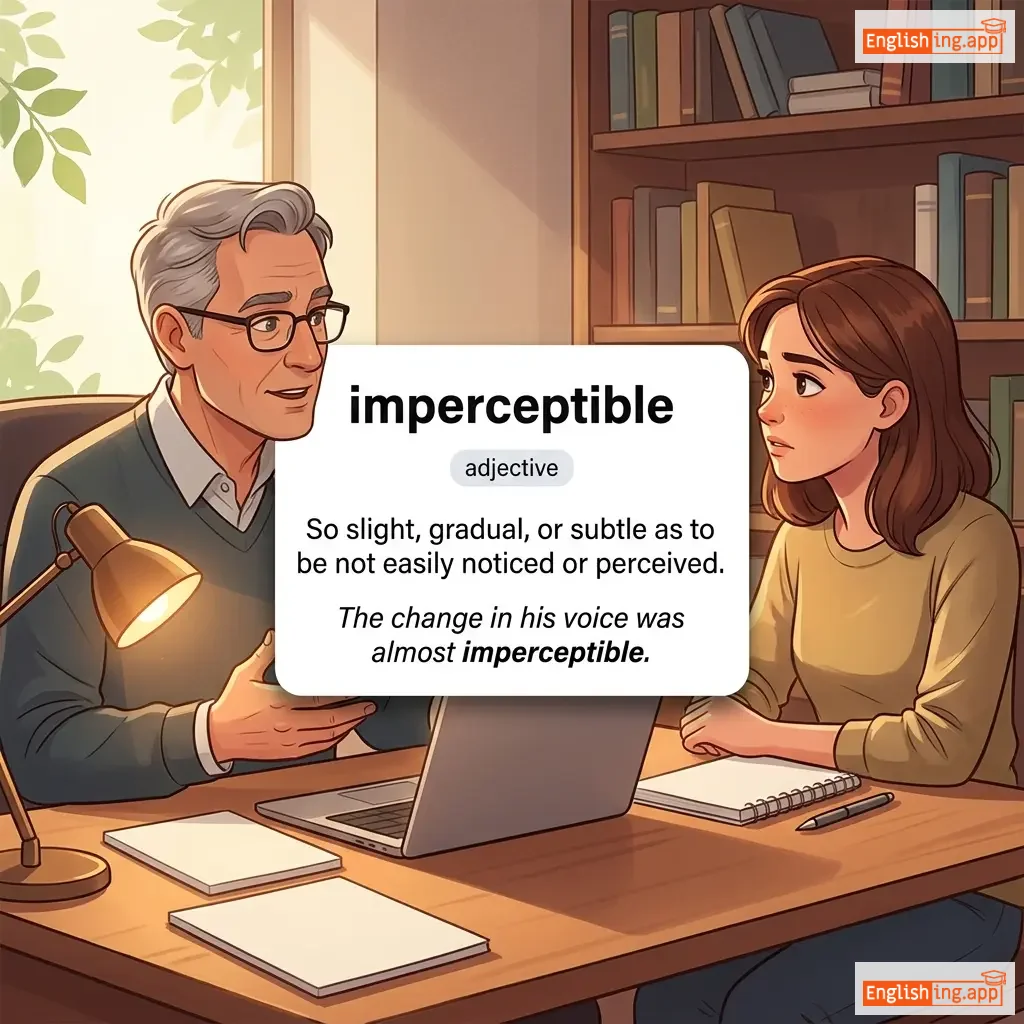
So slight, gradual, or subtle as to be not easily noticed or perceived.
••••••
|
The change in his voice was almost imperceptible.
彼の声の変化はほとんど知覚できませんでした。
••••••
|
彼の声の変化はほとんど知覚できませんでした。
Kare no koe no henka wa hotondo chikaku dekimasen deshita.
••••••
|
- •••••• | - •••••• | - •••••• |
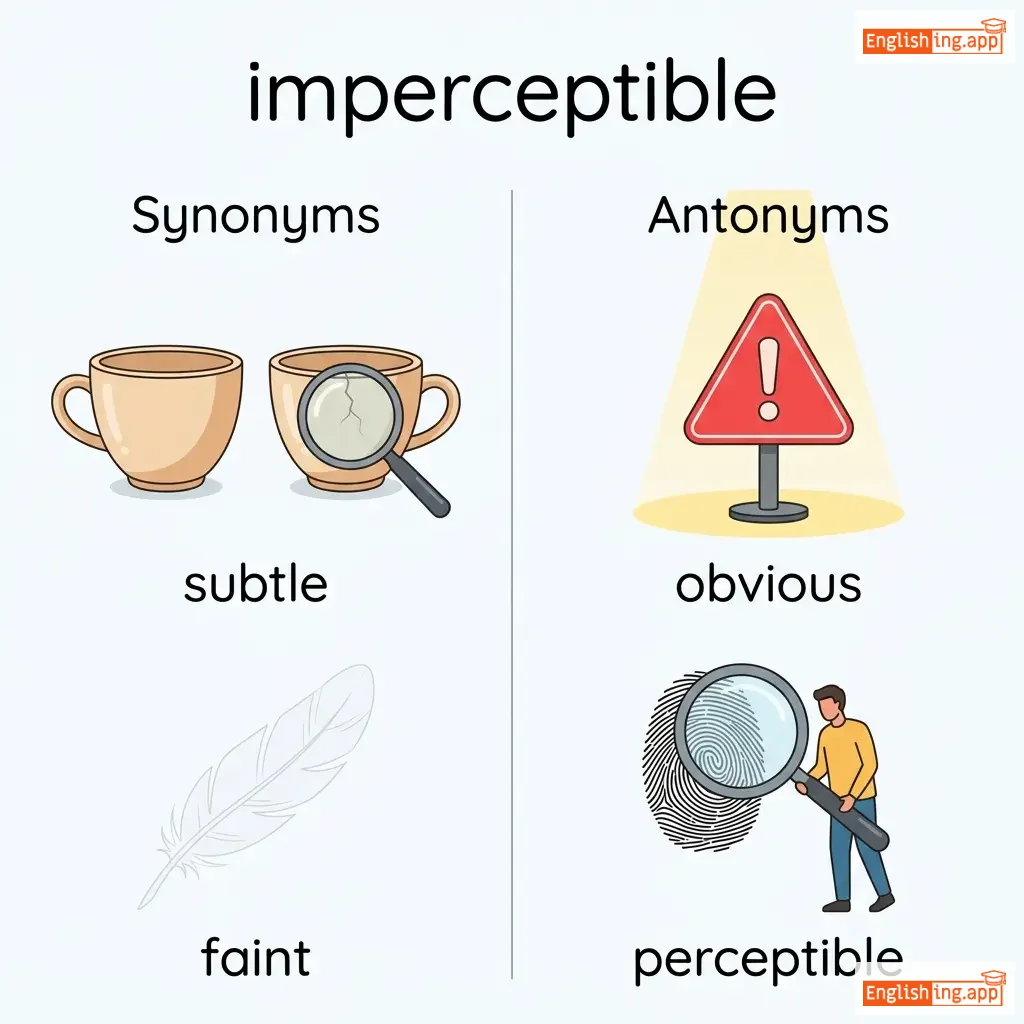
subtle, faint, invisible, indistinguishable, minute
••••••
|
obvious, perceptible, noticeable
••••••
|
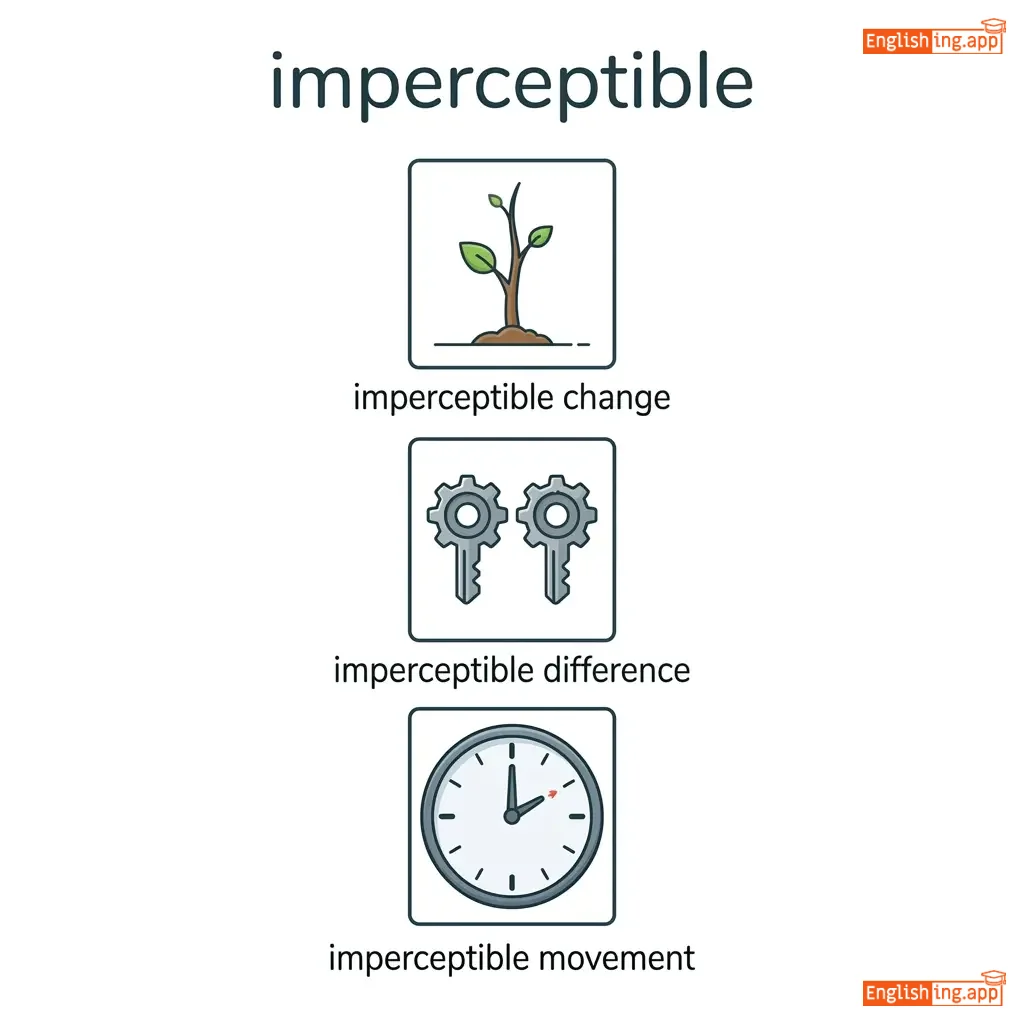
imperceptible change, imperceptible difference, imperceptible movement, almost imperceptible
••••••
|
知覚できないは非常に微細な変化を指します、まるで目に見えない変化のようです。
••••••
|
|
#4378
⚠️
|
/ɪmˈpɛr.ə.tɪv/
adjective, noun
(インペラティブ)
••••••
|
|
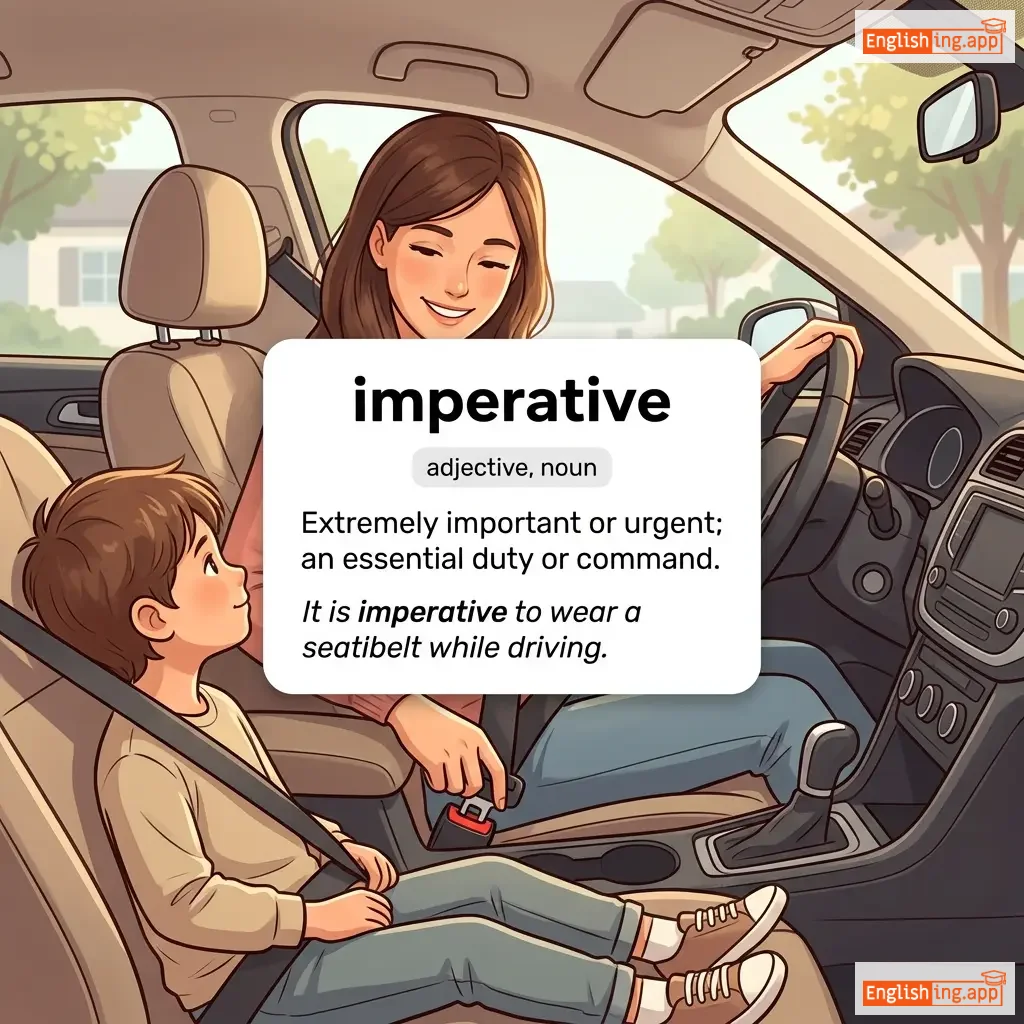
必須
hissu
••••••
|
- •••••• | - •••••• | - •••••• | - •••••• |
Extremely important or urgent; an essential duty or command.
••••••
|
It is imperative to wear a seatbelt while driving. |
運転中はシートベルトを着用することが必須です。
Untenchū wa shīto beruto o chakuyō suru koto ga hissu desu.
••••••
|
moral imperative |
A duty or obligation based on ethical principles
••••••
|
道徳的義務
Dōtokuteki gimu
••••••
|
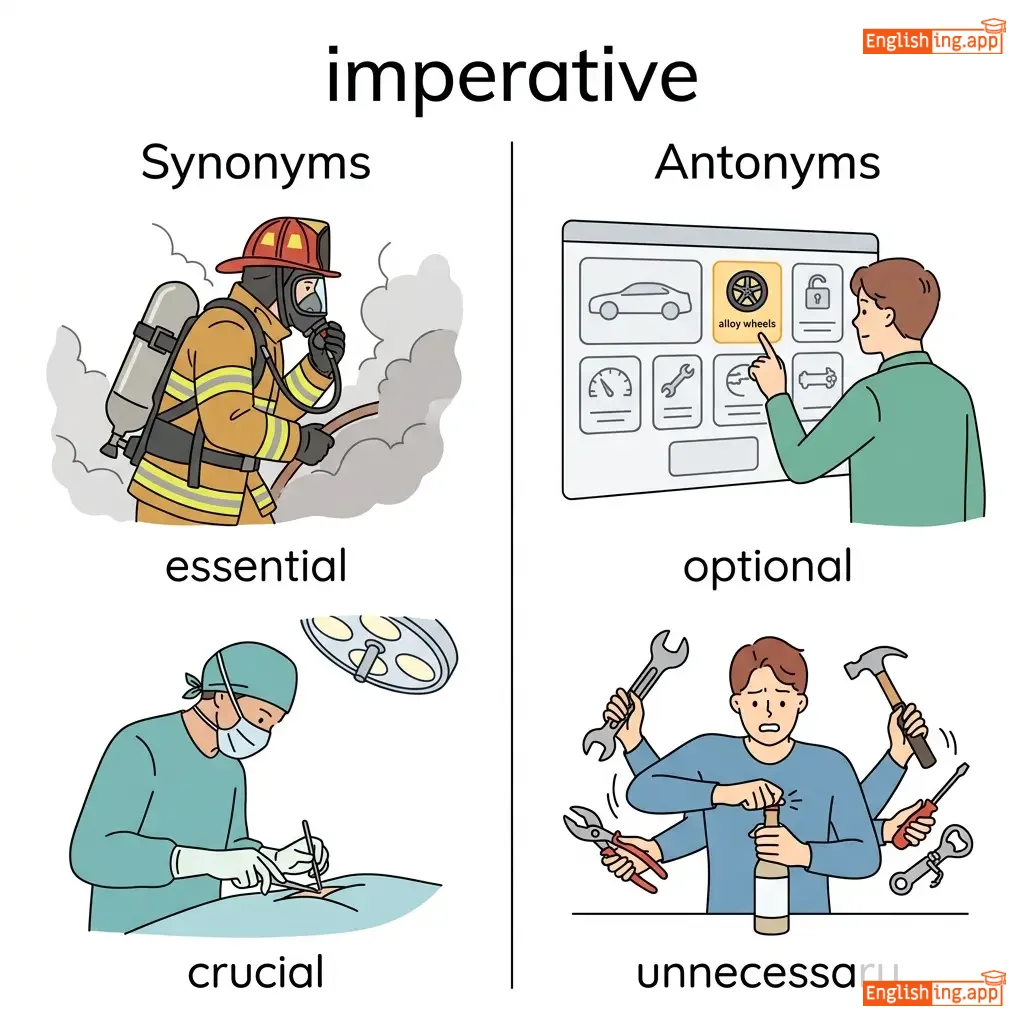
essential, crucial, urgent, vital, mandatory
••••••
|
optional, unnecessary, trivial
••••••
|
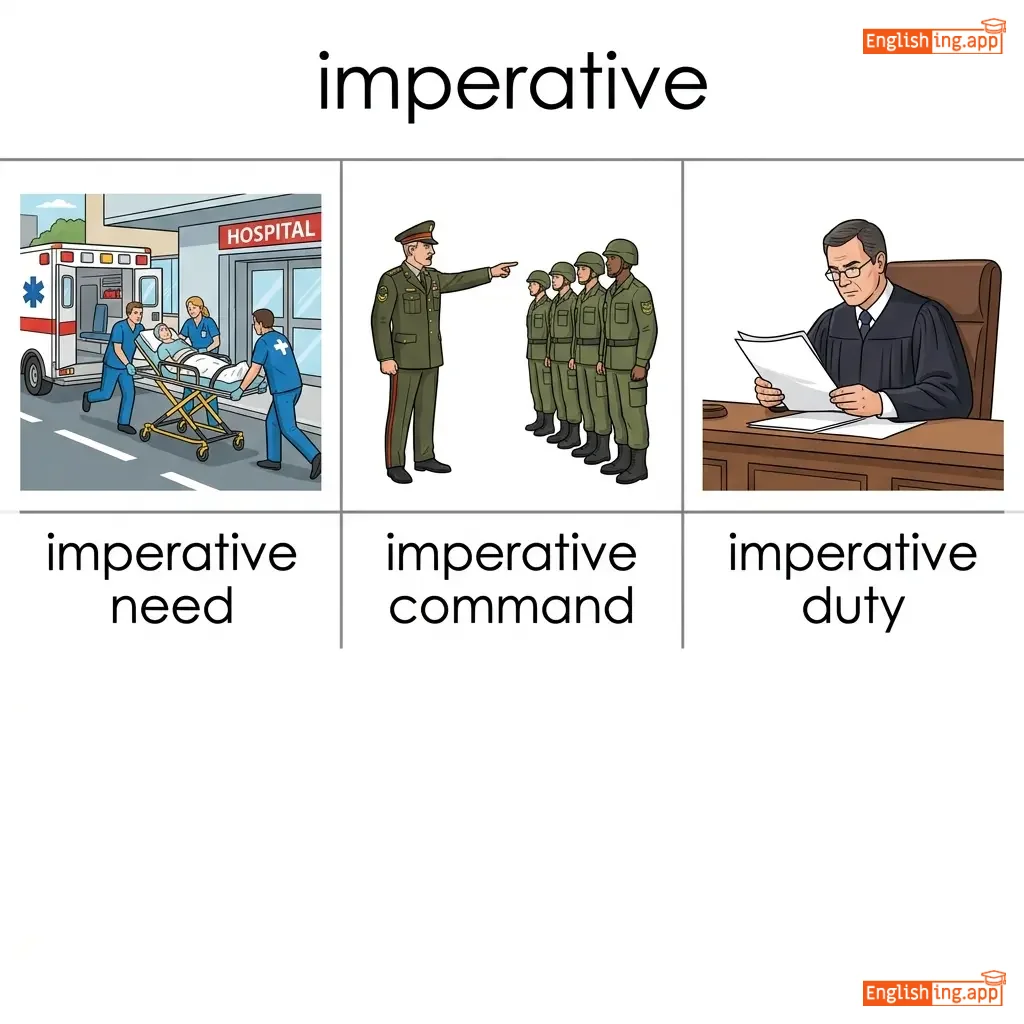
imperative need, imperative command, imperative duty, moral imperative
••••••
|
必須 = インペラティブ = 必要な命令
••••••
|
|
#4379
😐
|
/ɪmˈpɛn.ɪ.tənt/
adjective
(インペニテント)
••••••
|
- •••••• |
後悔しない
koukaishinai
••••••
|
- •••••• | - •••••• | - •••••• | - •••••• |
Not feeling regret or shame about one's actions.
••••••
|
The criminal remained impenitent after the trial. |
犯人は裁判後も後悔しないままでした。
Hannin wa saiban go mo koukaishinai mama deshita.
••••••
|
- •••••• | - •••••• | - •••••• |
unrepentant, remorseless, shameless, hardened
••••••
|
penitent, remorseful, repentant
••••••
|
impenitent sinner, impenitent attitude, impenitent smile
••••••
|
Impenitent = 後悔しない (koukaishinai), 犯人は後悔しない.
••••••
|
|
#4380
🛡️
|
/ɪmˈpɛn.ɪ.trə.bəl/
adjective
••••••
|
- •••••• | - •••••• | - •••••• | - •••••• | - •••••• | - •••••• |
Impossible to pass through or enter; impossible to understand.
••••••
|
The dense forest was nearly impenetrable. |
- •••••• |
impenetrable barrier |
Something impossible to get through or overcome
••••••
|
- •••••• |
inaccessible, unpassable, impervious, obscure, incomprehensible
••••••
|
penetrable, understandable, clear
••••••
|
impenetrable forest, impenetrable wall, impenetrable mystery, impenetrable defense
••••••
|
No •••••• |
Vocabulary Quiz
Test your vocabulary by matching words with their translations or meanings.
Login to take the quiz
Comments (0)
Share your thoughts and join the discussion.
Join the discussion by logging in
Login to CommentNo comments yet
Be the first to share your thoughts!