

翻訳
過去
過去分詞
三人称単数
動名詞
意味
例文
例文の翻訳
同義語
対義語
コロケーション
ニーモニック
Swipe left or right, or use the buttons. Tap image to zoom.
例文の翻訳
単語
Lesson 87Lesson 87 - マスクトグル
|
絵文字
|
単語 | Images | 翻訳 | 過去 | 過去分詞 | 三人称単数 | 動名詞 | 意味 | 例文 | 例文の翻訳 | 表現例 | 表現例の意味 | 表現例の翻訳 | 同義語 | 対義語 | コロケーション | ニーモニック |
|---|---|---|---|---|---|---|---|---|---|---|---|---|---|---|---|---|---|
|
#2581
😒
|
/dɪsˈrɛpjətəbl̩/
adjective
(ディスレピュタブル)
••••••
|
- •••••• |
不名誉な
fumēyona
••••••
|
- •••••• | - •••••• | - •••••• | - •••••• |
having a bad reputation; not considered respectable or trustworthy
••••••
|
The journalist avoided staying in the disreputable part of town. |
ジャーナリストは町の不名誉な地区に泊まるのを避けました。
Jānarisuto wa machi no fumēyona chiku ni tomaru no o sakemashita.
••••••
|
- •••••• | - •••••• | - •••••• |
notorious, infamous, dishonorable, shady, untrustworthy
••••••
|
respectable, reputable, honorable
••••••
|
disreputable inn, disreputable character, disreputable conduct
••••••
|
Dis + reputable = 不名誉な、‘dis’が悪い評判を示すような感じ。
••••••
|
|
#2582
📚
|
/ˌdɪsərˈteɪʃən/
noun
(ディサーテーション)
••••••
|
- •••••• |
論文
ronbun
••••••
|
- •••••• | - •••••• | - •••••• | - •••••• |
A long piece of writing on a particular subject, usually written for a university degree.
••••••
|
She spent two years writing her doctoral dissertation.
彼女は博士論文を書くのに2年を費やしました。
••••••
|
彼女は博士論文を書くのに2年を費やしました。
Kanojo wa hakase ronbun o kaku no ni 2-nen o tsuiyashimashita.
••••••
|
- •••••• | - •••••• | - •••••• |
thesis, paper, essay, treatise, study
••••••
|
summary, note
••••••
|
doctoral dissertation, master's dissertation, dissertation topic, dissertation defense
••••••
|
論文 – 大きな学術的な文章のように。
••••••
|
|
#2583
🔥
|
/dɪˈsɛnʃəs/
adjective
(ディセンシャス)
••••••
|
- •••••• |
対立を引き起こす
tairitsu o hikiokosu
••••••
|
- •••••• | - •••••• | - •••••• | - •••••• |
Causing or likely to cause disagreement and conflict.
••••••
|
His dissentious remarks divided the group further. |
彼の対立的な発言は、グループをさらに分裂させた。
Kare no tairitsuteki na hatsugen wa, gurūpu o sara ni bunretsu saseta.
••••••
|
- •••••• | - •••••• | - •••••• |
argumentative, quarrelsome, discordant, divisive
••••••
|
peaceful, cooperative, agreeable
••••••
|
dissentious remarks, dissentious nature, dissentious debate
••••••
|
DISSENTIOUSは「分裂」を意味する言葉から来ています。争いを生むもの。
••••••
|
|
#2584
🗣️
|
/dɪˈsɛnʃənt/
adjective
(ディセンシャント)
••••••
|
- •••••• |
反対意見を持つ人
hantaiiken o motsu hito
••••••
|
- •••••• | - •••••• | - •••••• | - •••••• |
Expressing or holding opinions that are opposed to the majority or official view.
••••••
|
Only a few dissentient voices were heard during the debate. |
討論中に反対意見を持つ少数の声だけが聞こえました。
Tōron-chū ni hantaiiken o motsu shōsū no koe dake ga kikoemashita.
••••••
|
- •••••• | - •••••• | - •••••• |
opposing, contrary, conflicting, resistant
••••••
|
supportive, compliant, agreeing
••••••
|
dissentient voices, dissentient opinion, dissentient view
••••••
|
DISSENTIENTはdissent + agent → 多数派に反対する人
••••••
|
|
#2585
🙅
|
/dɪˈsɛnt/
verb
••••••
|
- •••••• | - •••••• |
dissented
••••••
|
dissented
••••••
|
dissents
••••••
|
dissenting
••••••
|
To hold or express opinions that are different from those officially accepted.
••••••
|
Several members dissented from the majority decision. |
- •••••• |
voice dissent |
to openly express disagreement
••••••
|
- •••••• |
disagree, oppose, protest, object, differ
••••••
|
agree, consent, approve
••••••
|
dissent strongly, political dissent, voice dissent, dissenting opinion
••••••
|
No •••••• |
|
#2586
⚡
|
/dɪˈsɛnʃən/
noun
(ディッセンション)
••••••
|
- •••••• |
意見の相違
iken no soui
••••••
|
- •••••• | - •••••• | - •••••• | - •••••• |
Strong disagreement or difference of opinion, especially leading to discord within a group.
••••••
|
The meeting ended in dissension among the committee members. |
会議は委員会メンバー間の意見の相違で終了しました。
Kaigi wa iinkai menbaa kan no iken no soui de shuuryou shimashita.
••••••
|
- •••••• | - •••••• | - •••••• |
discord, conflict, dispute, strife, disagreement
••••••
|
harmony, agreement, unity
••••••
|
internal dissension, political dissension, cause dissension, growing dissension
••••••
|
DISSENSION = dis + tension, 緊張があると意見の相違が生まれる (意見の相違は dissension)
••••••
|
|
#2587
📢
|
/dɪˈsɛmɪˌneɪt/
verb
(ディセミネート)
••••••
|
|
普及する
fukyu suru
••••••
|
disseminated
ディセミネートされた
••••••
|
disseminated
ディセミネートされた
••••••
|
disseminates
ディセミネートする
••••••
|
disseminating
ディセミネートしている
••••••
|
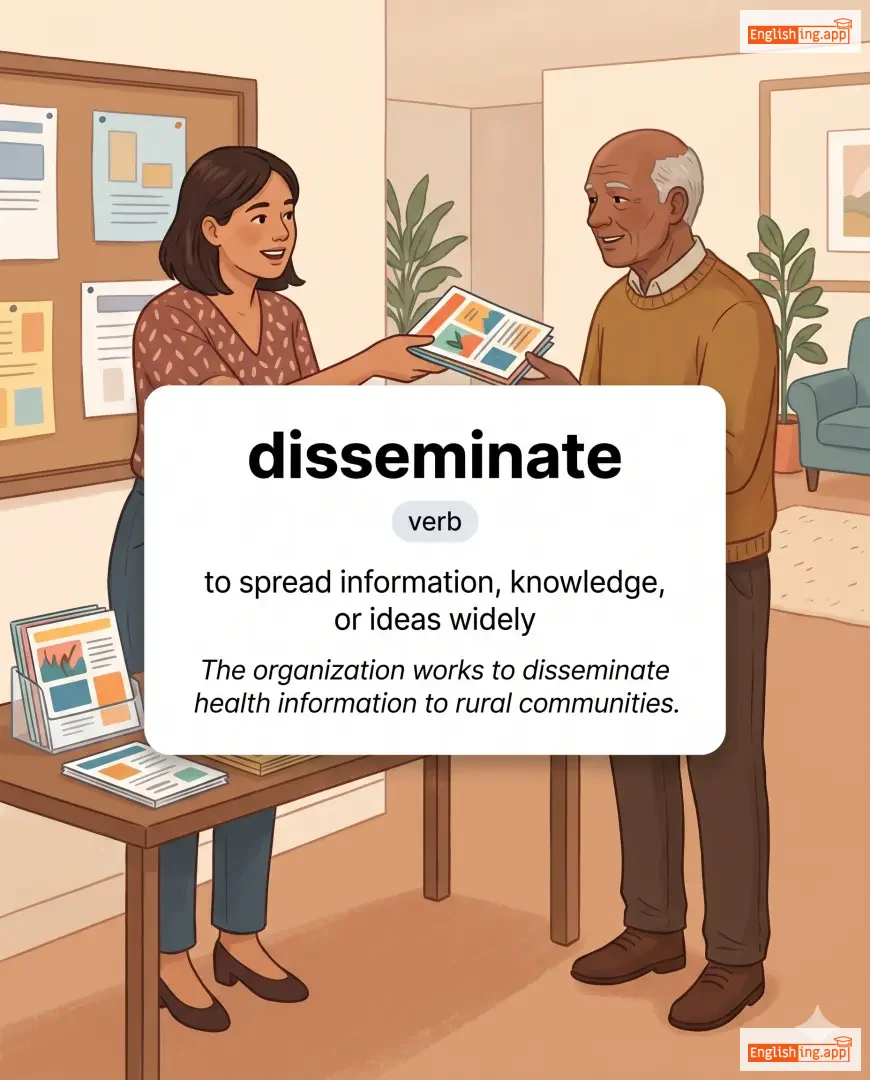
to spread information, knowledge, or ideas widely
••••••
|
The organization works to disseminate health information to rural communities.
その組織は農村地域に健康情報を普及させるために活動しています。
••••••
|
その組織は農村地域に健康情報を普及させるために活動しています。
Sono soshiki wa nouson chiiki ni kenko joho wo fukyu saseru tame ni katsudou shiteimasu.
••••••
|
disseminate knowledge
知識を広める
••••••
|
to distribute knowledge to many people
••••••
|
知識を広める
chishiki wo hiromeru
••••••
|
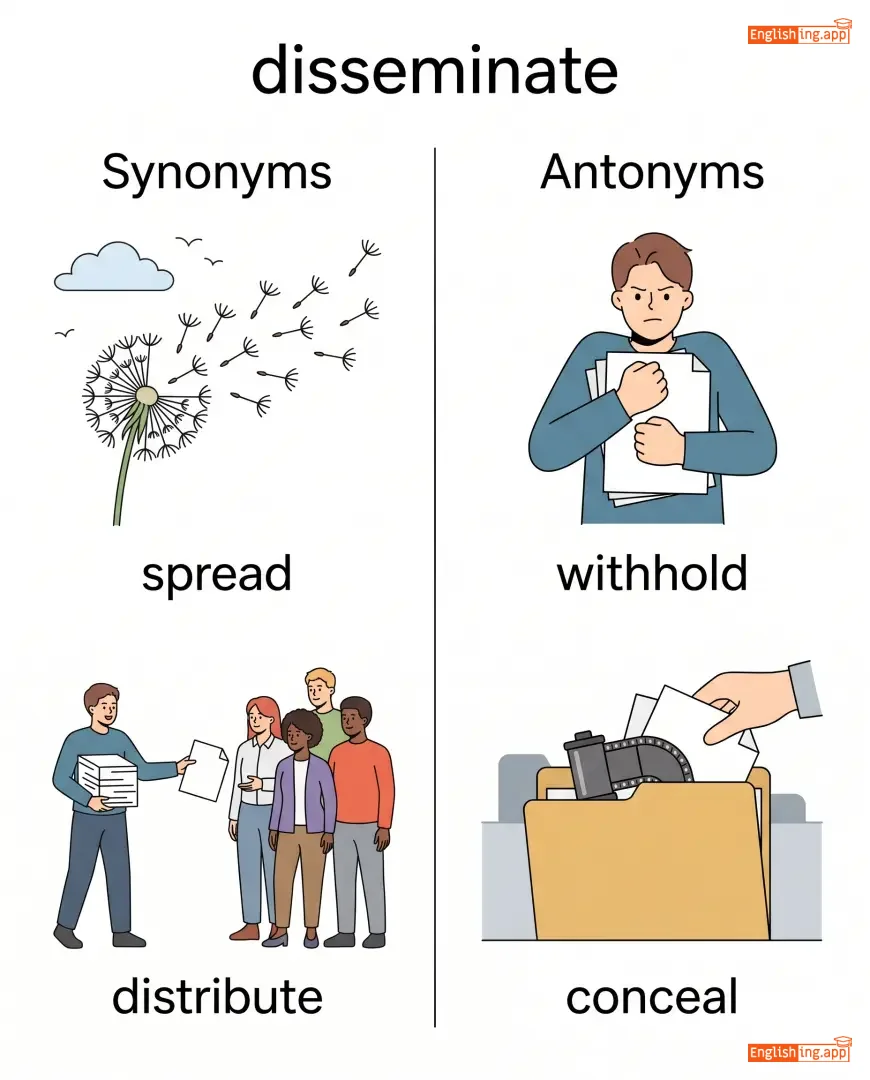
spread, distribute, circulate, broadcast, propagate
••••••
|
withhold, conceal, hide
••••••
|
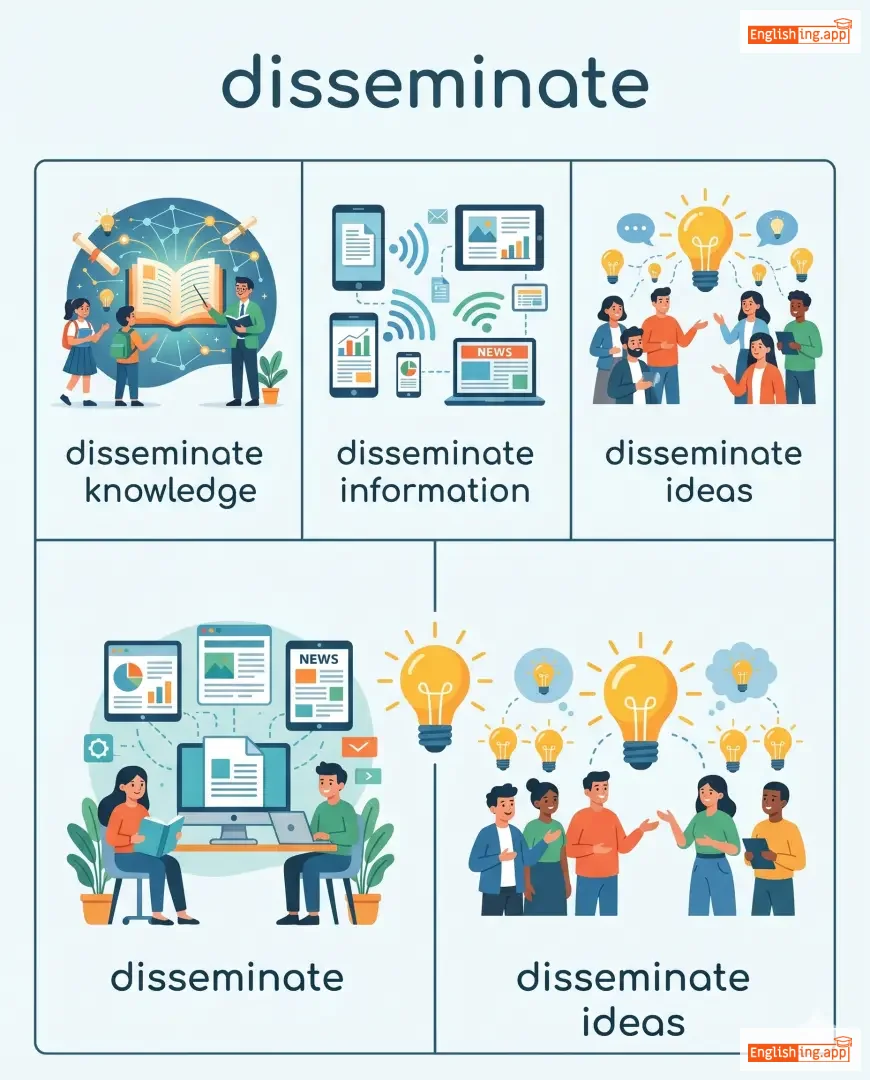
disseminate knowledge, disseminate information, disseminate ideas, widely disseminate
••••••
|
Disseminate はまるで情報や知識を広めるような感じです。
••••••
|
|
#2588
🤥
|
/dɪˈsɛmbələr/
noun
(ディセムブラー)
••••••
|
- •••••• |
偽善者
gizensha
••••••
|
- •••••• | - •••••• | - •••••• | - •••••• |
a person who conceals their real feelings or intentions; a hypocrite or pretender
••••••
|
The politician was accused of being a dissembler who never revealed his true plans.
その政治家は、自分の本当の計画を決して明かさなかった偽善者だと非難された。
••••••
|
その政治家は、自分の本当の計画を決して明かさなかった偽善者だと非難された。
Sono seijika wa, jibun no hontō no keikaku o kesshite akasasanakatta gizensha da to hinansareta.
••••••
|
- •••••• | - •••••• | - •••••• |
pretender, hypocrite, faker, deceiver
••••••
|
truthful person, honest person
••••••
|
political dissembler, clever dissembler, dissembler of feelings
••••••
|
Dissembler = 偽善者俳優、いつも異なる役を演じる。
••••••
|
|
#2589
🎭
|
/dɪˈsɛmbəl/
verb
(ディセンブル)
••••••
|
|
ふりをする
furi o suru
••••••
|
dissembled
ディセンボールド
••••••
|
dissembled
ディセンボールド
••••••
|
dissembles
ディセンブルズ
••••••
|
dissembling
ディセンブリング
••••••
|
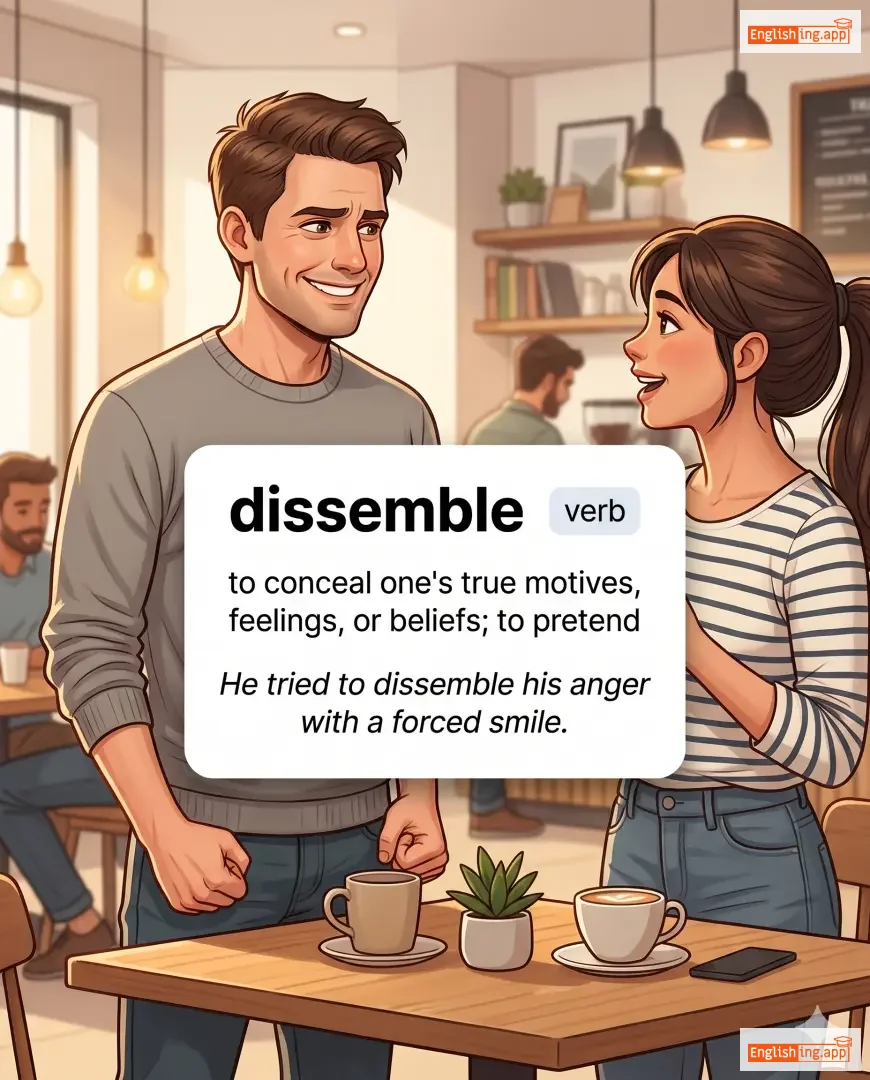
to conceal one's true motives, feelings, or beliefs; to pretend
••••••
|
He tried to dissemble his anger with a forced smile.
彼は強制的な笑顔で怒りを隠そうとした。
••••••
|
彼は強制的な笑顔で怒りを隠そうとした。
Kare wa kyouseiteki na egao de ikari o kakuso to shita.
••••••
|
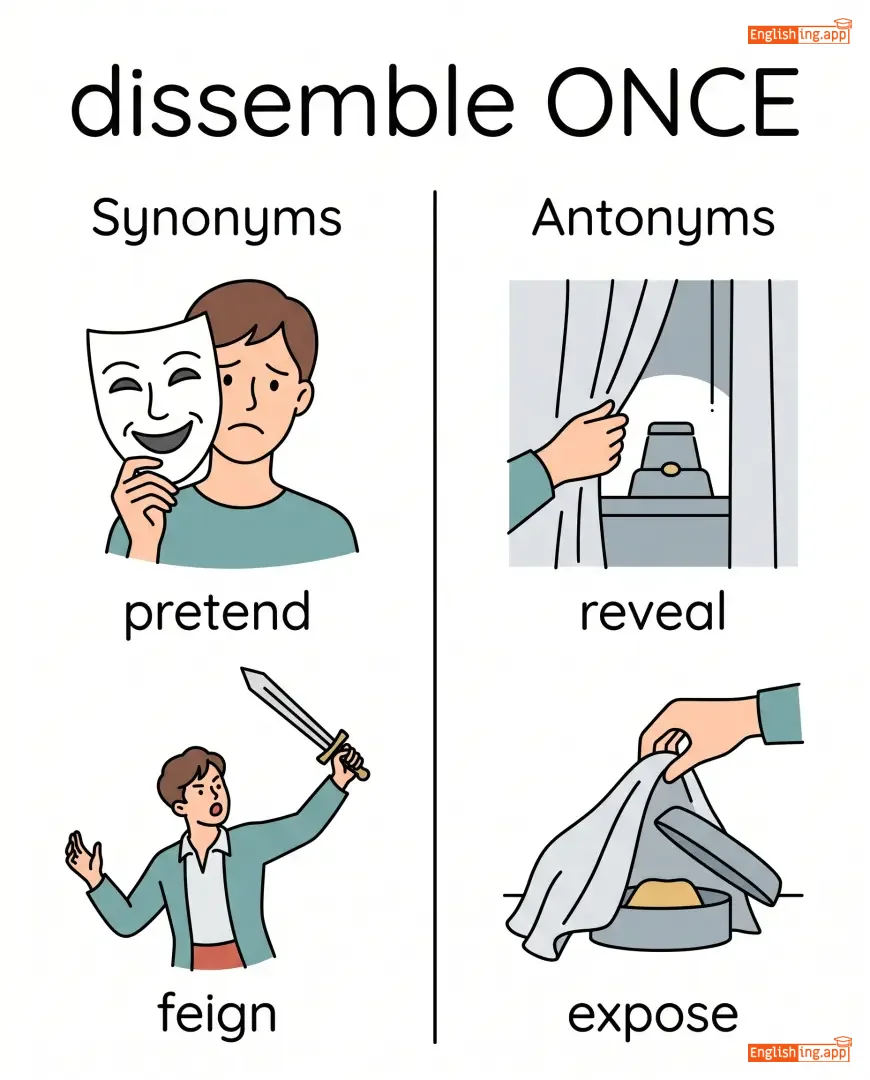
- •••••• | - •••••• | - •••••• |
pretend, feign, fake, conceal, disguise
••••••
|
reveal, expose, disclose
••••••
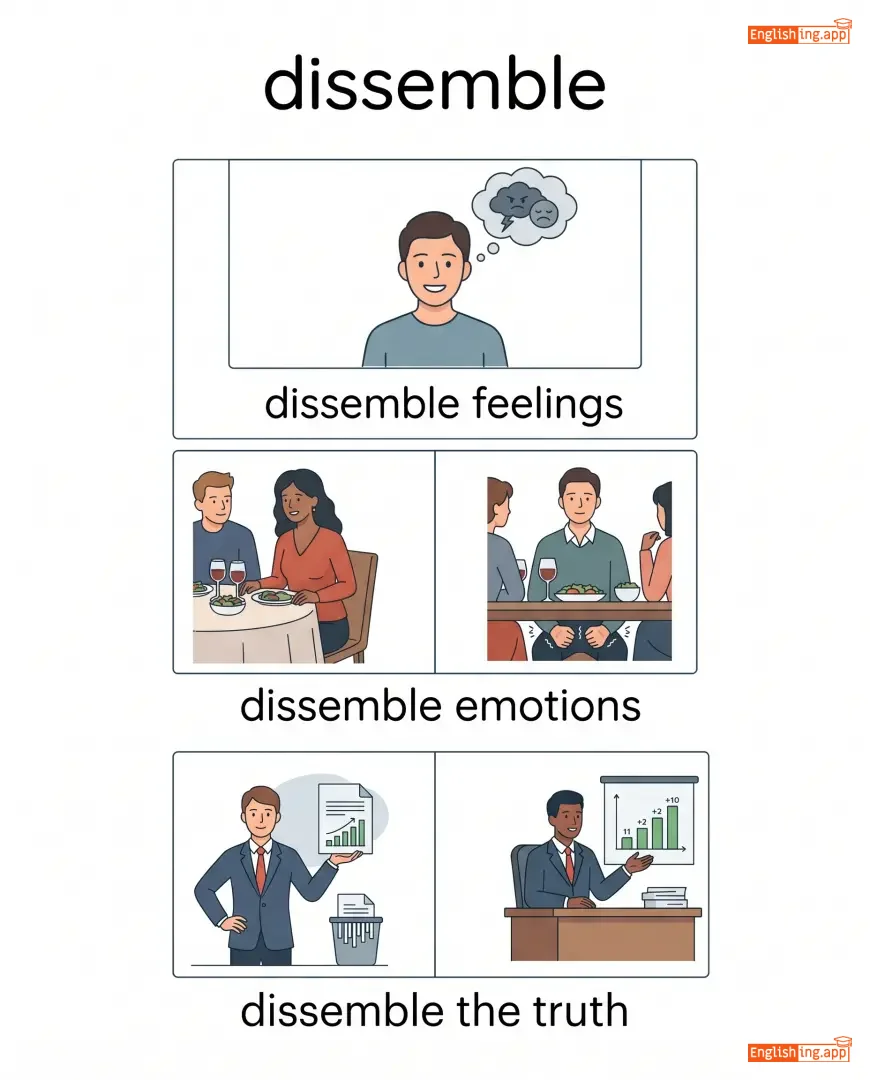
|
dissemble feelings, dissemble emotions, dissemble the truth
••••••
|
Dissemble = dis+assemble; 真実を組み立てず、偽る。
••••••
|
|
#2590
🩻
|
/daɪˈsɛkʃən/
noun
(ディセクション)
••••••
|
- •••••• |
解剖
kaibou
••••••
|
- •••••• | - •••••• | - •••••• | - •••••• |
the act of cutting apart or analyzing something in detail, especially a body or structure
••••••
|
The dissection of the specimen revealed important details about its structure. |
標本の解剖はその構造に関する重要な詳細を明らかにした。
Hyouhon no kaibou wa sono kouzou ni kansuru juuyou na shousai o akiraka ni shita.
••••••
|
political dissection |
a thorough analysis of political events or situations
••••••
|
政治的解剖
seijiteki kaibou
••••••
|
analysis, examination, cutting, study, scrutiny
••••••
|
assembly, construction, synthesis
••••••
|
scientific dissection, detailed dissection, dissection of a text, dissection in class
••••••
|
解剖 = '解' (開く) + '剖' (切る), 解剖実験、蛙の解剖を思い出す
••••••
|
|
#2591
🔪
|
/dɪˈsɛkt/
verb
••••••
|
- •••••• | - •••••• |
dissected
••••••
|
dissected
••••••
|
dissects
••••••
|
dissecting
••••••
|
to cut apart an animal, plant, or other organism to study its internal parts; to analyze something in detail
••••••
|
In biology class, students had to dissect a frog to learn about its anatomy. |
- •••••• |
dissect an argument |
to analyze an argument thoroughly, examining its components
••••••
|
- •••••• |
analyze, examine, cut, study, scrutinize
••••••
|
assemble, combine, integrate
••••••
|
dissect a frog, dissect the problem, dissect an argument, dissect a text
••••••
|
No •••••• |
|
#2592
😠
|
/dɪsˈsætɪsfaɪ/
verb
(ディサティスファイ)
••••••
|
- •••••• |
不満にさせる
fuman ni saseru
••••••
|
dissatisfied
ディサティスファイド
••••••
|
dissatisfied
ディサティスファイド
••••••
|
dissatisfies
ディサティスファイズ
••••••
|
dissatisfying
ディサティスファイング
••••••
|
to fail to please or meet expectations; to make someone unhappy
••••••
|
The poor service dissatisfies many customers.
悪いサービスは多くの顧客を不満にさせます。
••••••
|
悪いサービスは多くの顧客を不満にさせます。
Warui saabisu wa ooku no kokyaku o fuman ni sasemasu.
••••••
|
- •••••• | - •••••• | - •••••• |
displease, disappoint, annoy, upset
••••••
|
satisfy, please, content
••••••
|
dissatisfy customers, dissatisfy workers, dissatisfy needs
••••••
|
Dis + satisfy は期待に応えられず不満を生むことを意味します。
••••••
|
|
#2593
💥
|
/dɪsˈrʌpt/
verb
(ディスラプト)
••••••
|
|
混乱させる
konran saseru
••••••
|
disrupted
ディスラプテッド
••••••
|
disrupted
ディスラプテッド
••••••
|
disrupts
ディスラプトス
••••••
|
disrupting
ディスラプティング
••••••
|
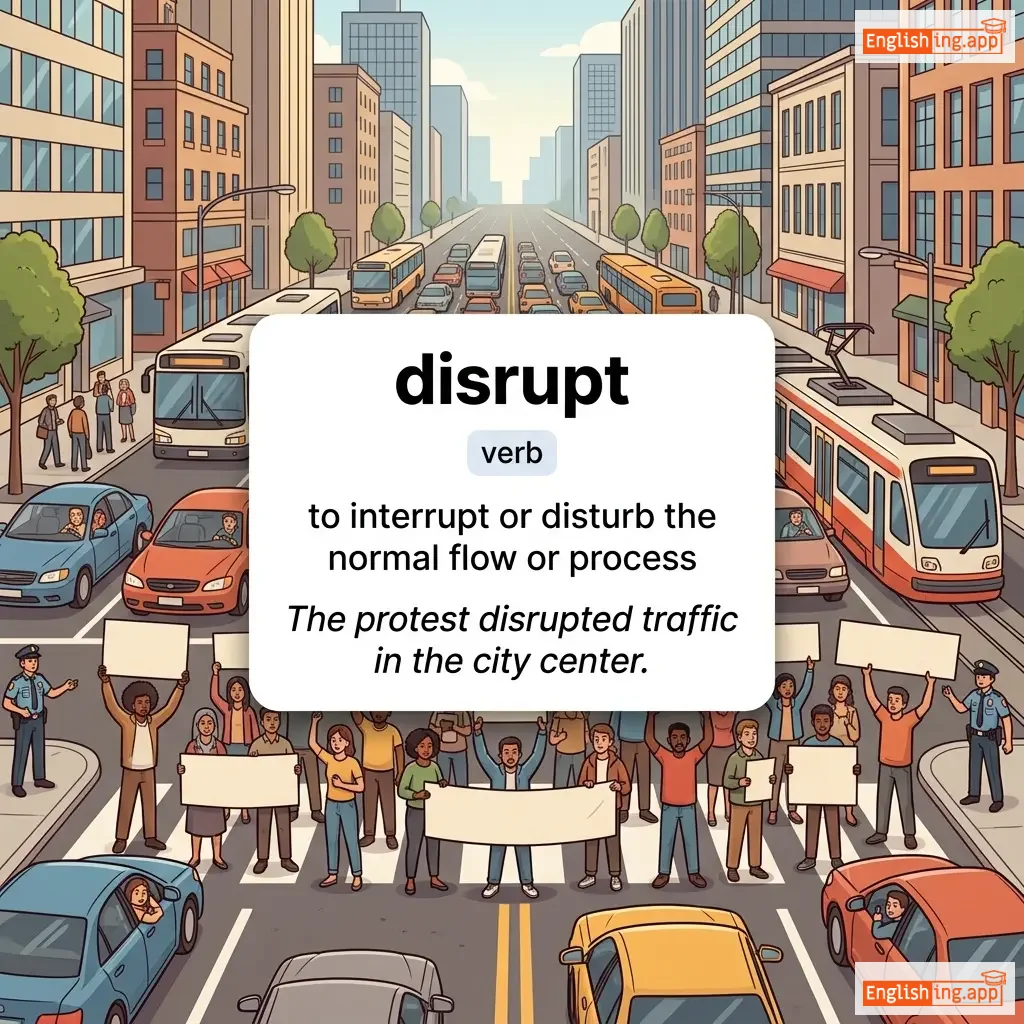
to interrupt or disturb the normal flow or process
••••••
|
The protest disrupted traffic in the city center.
抗議活動は市内中心部の交通を混乱させました。
••••••
|
抗議活動は市内中心部の交通を混乱させました。
Kōgi katsudō wa shinai chūshinbu no kōtsū o konran sasemashita.
••••••
|
disrupt the status quo
現状を打破する
••••••
|
to change the established way of doing things
••••••
|
現状を打破する
genjō o dasha suru
••••••
|
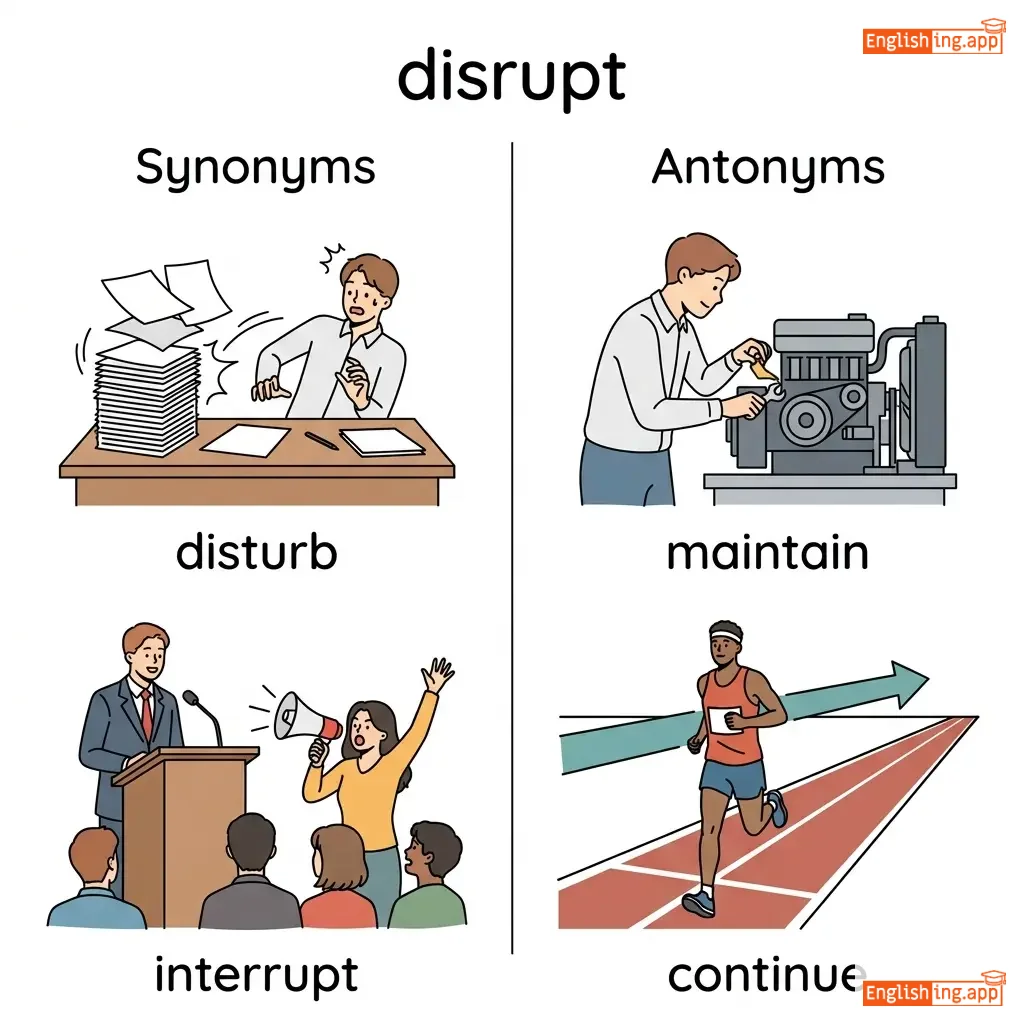
disturb, interrupt, interfere, derail, unsettle
••••••
|
maintain, continue, sustain
••••••
|
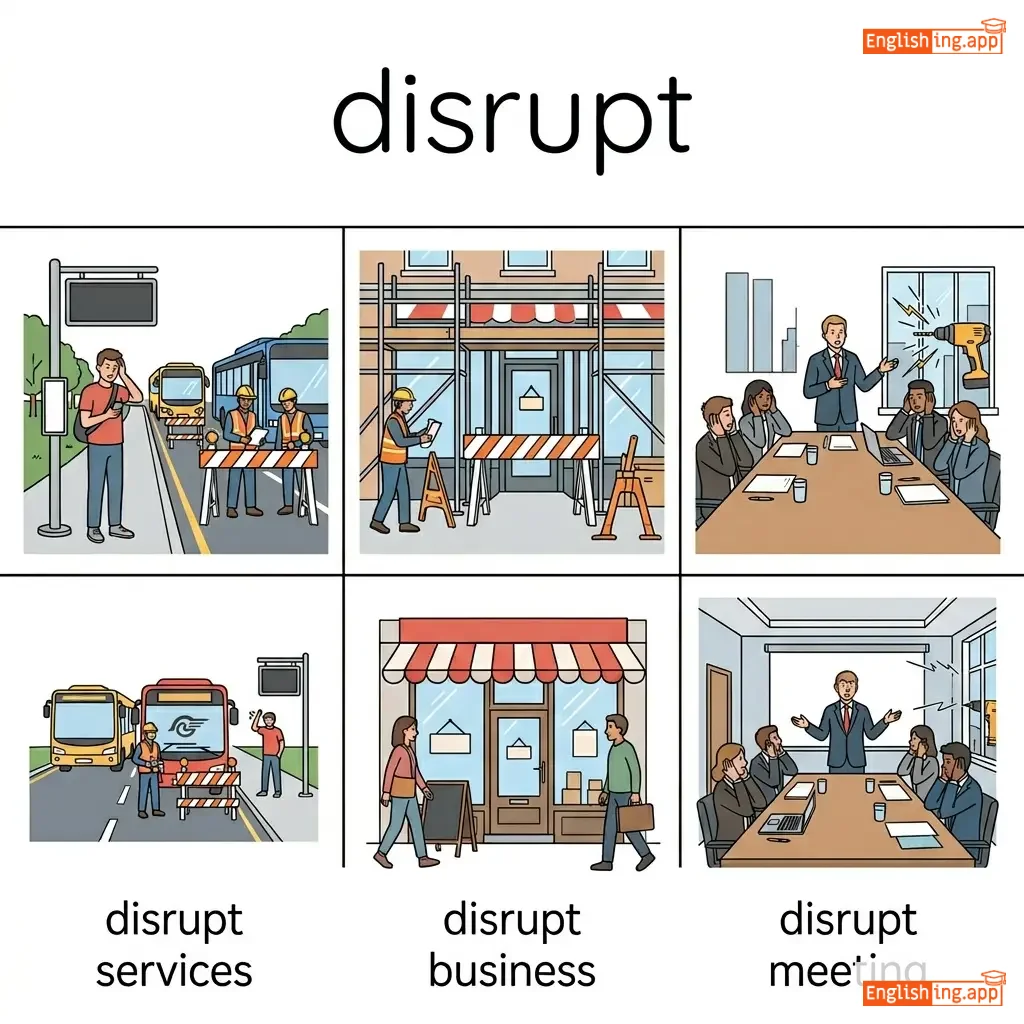
disrupt services, disrupt business, disrupt meeting
••••••
|
Disrupt = 混乱させる、抗議活動が交通を混乱させるように。
••••••
|
|
#2594
👘
|
/dɪsˈroʊb/
verb
(ディスローブ)
••••••
|
- •••••• |
服を脱ぐ
fuku wo nugu
••••••
|
disrobed
ディスローブド
••••••
|
disrobed
ディスローブド
••••••
|
disrobes
ディスローブス
••••••
|
disrobing
ディスロービング
••••••
|
to remove one's clothes
••••••
|
The monk disrobed before entering the river.
僧侶は川に入る前に衣服を脱いだ。
••••••
|
僧侶は川に入る前に衣服を脱いだ。
Sōryo wa kawa ni hairu mae ni ifuku wo nuida.
••••••
|
- •••••• | - •••••• | - •••••• |
undress, strip, unclothe, bare
••••••
|
dress, clothe, attire
••••••
|
disrobe completely, disrobe quickly, monk disrobe
••••••
|
Disrobe は ‘服を脱ぐ’ という意味 — 服を脱ぐ。
••••••
|
|
#2595
👎
|
/ˌdɪsrɪˈpjuːt/
noun
(disurepyuto)
••••••
|
- •••••• |
悪名
akumei
••••••
|
- •••••• | - •••••• | - •••••• | - •••••• |
the state of being held in low esteem or having a bad reputation
••••••
|
The scandal brought the politician into disrepute. |
そのスキャンダルは政治家を悪名に追いやった。
Sono sukyandaru wa seijika o akumei ni oiyatta.
••••••
|
fall into disrepute |
to lose respect or honor and gain a bad reputation
••••••
|
悪名に陥る
akumei ni ochiru
••••••
|
dishonor, disgrace, notoriety, shame
••••••
|
honor, respect, prestige
••••••
|
into disrepute, fall into disrepute, bring disrepute
••••••
|
Dis + repute = 悪名
••••••
|
|
#2596
😞
|
/dɪˈspɪrɪtɪd/
adjective
(ディスピリテッド)
••••••
|
- •••••• |
落胆した
rakutan shita
••••••
|
- •••••• | - •••••• | - •••••• | - •••••• |
Having lost enthusiasm, hope, or confidence; dejected.
••••••
|
After losing the match, the team looked dispirited. |
試合に負けた後、チームは落胆して見えた。
Shiai ni maketa ato, chiimu wa rakutan shite mieta.
••••••
|
- •••••• | - •••••• | - •••••• |
dejected, downcast, discouraged, gloomy, depressed
••••••
|
cheerful, hopeful, encouraged
••••••
|
look dispirited, feel dispirited, become dispirited, seem dispirited
••••••
|
落胆した時は心が沈んでいる — dispirited は落胆したという意味。
••••••
|
|
#2597
🙈
|
/ˌdɪsrɪˈɡɑːrd/
verb/noun
(ディスリガード)
••••••
|
- •••••• |
軽蔑
keibetsu
••••••
|
disregarded
ディスリガーデッド
••••••
|
disregarded
ディスリガーデッド
••••••
|
disregards
ディスリガーズ
••••••
|
disregarding
ディスリガーディング
••••••
|
To ignore something; lack of consideration or respect for something.
••••••
|
He disregarded the warning signs and kept driving.
彼は警告のサインを無視して運転し続けました。
••••••
|
彼は警告のサインを無視して運転し続けました。
Kare wa keikoku no sain o mushi shite unten shitsuzukemashita.
••••••
|
show disregard
軽蔑を示す
••••••
|
to behave without respect or concern
••••••
|
軽蔑を示す
keibetsu o shimesu
••••••
|
ignore, neglect, overlook, dismiss
••••••
|
respect, heed, regard
••••••
|
show disregard, total disregard, blatant disregard, disregard for rules
••••••
|
軽蔑は無視することに関連する行動です。
••••••
|
|
#2598
📜
|
/ˌdɪskwɪˈzɪʃən/
noun
(ディスキジション)
••••••
|
- •••••• |
論文
ronbun
••••••
|
- •••••• | - •••••• | - •••••• | - •••••• |
A long or elaborate discussion or written essay on a particular subject.
••••••
|
The professor gave a lengthy disquisition on ancient philosophy. |
教授は古代哲学についての長い論文を発表しました。
Kyōju wa kodai tetsugaku ni tsuite no nagai ronbun o happyō shimashita.
••••••
|
- •••••• | - •••••• | - •••••• |
treatise, essay, dissertation, discourse
••••••
|
summary, outline
••••••
|
long disquisition, detailed disquisition
••••••
|
Disquisitionは長い議論や論文を連想させる。
••••••
|
|
#2599
😓
|
/dɪsˈkwaɪɪtjuːd/
noun
••••••
|
- •••••• | - •••••• | - •••••• | - •••••• | - •••••• | - •••••• |
A state of uneasiness, anxiety, or restlessness.
••••••
|
His constant pacing showed his inner disquietude. |
- •••••• | - •••••• | - •••••• | - •••••• |
anxiety, agitation, unease, restlessness
••••••
|
serenity, tranquility, calmness
••••••
|
state of disquietude, inner disquietude
••••••
|
No •••••• |
|
#2600
😰
|
/dɪsˈkwaɪətɪŋ/
adjective
(ディスカイエイティング)
••••••
|
- •••••• |
不安を引き起こす
fuan wo hikiokosu
••••••
|
- •••••• | - •••••• | - •••••• | - •••••• |
Causing worry, unease, or anxiety.
••••••
|
The news report was deeply disquieting to the public. |
そのニュース報告は公衆にとって非常に不安を引き起こすものでした。
Sono nyuusu houkoku wa koushuu ni totte hijou ni fuan wo hikiokosu mono deshita.
••••••
|
- •••••• | - •••••• | - •••••• |
alarming, disturbing, unsettling, troubling
••••••
|
comforting, reassuring, calming
••••••
|
disquieting news, disquieting thought, disquieting trend
••••••
|
不安を引き起こすは、すぐに心配を感じさせるものです。
••••••
|
|
#2601
😟
|
/dɪsˈkwaɪət/
noun/verb
••••••
|
- •••••• | - •••••• |
disquieted
••••••
|
disquieted
••••••
|
disquiets
••••••
|
disquieting
••••••
|
A feeling of worry or unease; to make someone feel anxious or uneasy.
••••••
|
The strange silence filled the room with disquiet. |
- •••••• |
cause disquiet |
to create worry or unease in people
••••••
|
- •••••• |
unease, anxiety, restlessness, concern, apprehension
••••••
|
calm, peace, tranquility
••••••
|
cause disquiet, deep disquiet, growing disquiet, public disquiet
••••••
|
No •••••• |
|
#2602
🚫
|
/dɪsˈkwɑːlɪfaɪ/
verb
(ディスクアリファイ)
••••••
|
- •••••• |
失格する
shikkaku suru
••••••
|
disqualified
ディスカリファイド
••••••
|
disqualified
ディスカリファイド
••••••
|
disqualifies
ディスカリファイズ
••••••
|
disqualifying
ディスカリファイイング
••••••
|
to officially prevent someone from participating or being eligible
••••••
|
The referee decided to disqualify the player for cheating.
審判は不正行為のために選手を失格にすることを決定しました。
••••••
|
審判は不正行為のために選手を失格にすることを決定しました。
Shinpan wa fuseikōi no tame ni senshu o shikkaku ni suru koto o kettei shimashita.
••••••
|
- •••••• | - •••••• | - •••••• |
ban, exclude, prohibit, suspend, invalidate
••••••
|
qualify, permit, allow
••••••
|
disqualify a player, disqualify from competition, disqualify for cheating
••••••
|
Disqualify は qualify ではない - したがって失格する。
••••••
|
|
#2603
🤺
|
/ˌdɪspjuːˈteɪʃəs/
adjective
(ディスピュテイシャス)
••••••
|
- •••••• |
議論好きな
giron suki na
••••••
|
- •••••• | - •••••• | - •••••• | - •••••• |
fond of or given to argument and debate
••••••
|
His disputatious nature often led to heated conversations. |
彼の議論好きな性格は、しばしば熱い議論を引き起こす。
Kare no giron suki na seikaku wa, shibashiba atsui giron o hikiokosu.
••••••
|
- •••••• | - •••••• | - •••••• |
argumentative, contentious, quarrelsome, combative
••••••
|
peaceful, agreeable, harmonious
••••••
|
disputatious character, disputatious style, disputatious debate
••••••
|
Disputatiousは議論好きな人、いつも議論を好む。
••••••
|
|
#2604
🗣️
|
/ˌdɪspjuːˈteɪʃən/
noun
(ディスピュテーション)
••••••
|
- •••••• |
議論
giron
••••••
|
- •••••• | - •••••• | - •••••• | - •••••• |
a formal debate or argument
••••••
|
The disputation between the two scholars lasted for hours.
二人の学者の間での議論は数時間続いた。
••••••
|
二人の学者の間での議論は数時間続いた。
Futari no gakka no aida de no giron wa suū jikan tsuzuita.
••••••
|
- •••••• | - •••••• | - •••••• |
debate, argument, controversy, discussion
••••••
|
agreement, harmony, accord
••••••
|
philosophical disputation, theological disputation, legal disputation
••••••
|
Disputation = 争い, 正式な議論
••••••
|
|
#2605
⚖️
|
/ˌdɪsprəˈpɔːrʃən/
noun
(ディスプロポーション)
••••••
|
- •••••• |
不均衡
fukinkou
••••••
|
- •••••• | - •••••• | - •••••• | - •••••• |
a lack of balance or symmetry; an inequality
••••••
|
There is a clear disproportion between rich and poor in many societies.
多くの社会において、富裕層と貧困層の間に明確な不均衡があります。
••••••
|
多くの社会において、富裕層と貧困層の間に明確な不均衡があります。
Ooku no shakai ni oite, fuyuusou to hinkonsou no aida ni meikaku na fukinkou ga arimasu.
••••••
|
- •••••• | - •••••• | - •••••• |
imbalance, inequality, disparity, asymmetry
••••••
|
balance, proportion, equality
••••••
|
clear disproportion, economic disproportion, social disproportion
••••••
|
Disproportion は比例がない、バランスの欠如
••••••
|
|
#2606
🏚️
|
/ˌdɪspəˈzɛs/
verb
(ディスポゼス)
••••••
|
- •••••• |
没収する
boshuu suru
••••••
|
dispossessed
ディスポズド
••••••
|
dispossessed
ディスポズド
••••••
|
dispossesses
ディスポゼス
••••••
|
dispossessing
ディスポゼスイング
••••••
|
to deprive someone of land, property, or other possessions
••••••
|
The new law threatened to dispossess many farmers of their land.
新しい法律は多くの農民から土地を奪うと脅迫していました。
••••••
|
新しい法律は多くの農民から土地を奪うと脅迫していました。
Atarashii houritsu wa ooku no noumin kara tochi wo ubau to kyouhaku shite imashita.
••••••
|
- •••••• | - •••••• | - •••••• |
deprive, divest, strip, oust, evict
••••••
|
endow, enrich, grant
••••••
|
dispossess someone, dispossess farmers, dispossess of property, dispossess of rights
••••••
|
没収する (boshuu suru) = 物を取る
••••••
|
|
#2607
🙂
|
/ˌdɪspəˈzɪʃən/
noun
••••••
|
- •••••• | - •••••• | - •••••• | - •••••• | - •••••• | - •••••• |
A person's usual attitude or temperament; arrangement or tendency.
••••••
|
She has a cheerful disposition despite the difficulties. |
- •••••• |
at someone's disposition |
available for someone's use or service
••••••
|
- •••••• |
temperament, character, nature, tendency, inclination
••••••
|
disinclination, unwillingness, resistance
••••••
|
cheerful disposition, friendly disposition, natural disposition, disposition to help
••••••
|
No •••••• |
|
#2608
🗑️
|
/dɪˈspoʊz/
verb
(ディスポーズ)
••••••
|
- •••••• |
処分する
shobun suru
••••••
|
disposed
ディスポーズド
••••••
|
disposed
ディスポーズド
••••••
|
disposes
ディスポーズズ
••••••
|
disposing
ディスポーズイング
••••••
|
To get rid of something, or to arrange or incline towards something.
••••••
|
He disposed of the old furniture responsibly.
彼は古い家具を責任を持って処分しました。
••••••
|
彼は古い家具を責任を持って処分しました。
Kare wa furui kagu o sekinin o motte shobun shimashita.
••••••
|
dispose of
処分する
••••••
|
to throw away or get rid of something
••••••
|
処分する
shobun suru
••••••
|
discard, throw away, eliminate, arrange, incline
••••••
|
keep, retain, preserve
••••••
|
dispose of waste, properly dispose, dispose quickly, dispose carefully
••••••
|
Dispose = 何かを処分する、無駄なものを捨てるように。
••••••
|
|
#2609
🎉
|
/dɪsˈpɔːrt/
verb
(ディスポート)
••••••
|
- •••••• |
楽しむ
tanoshimu
••••••
|
disported
ディスポーテッド
••••••
|
disported
ディスポーテッド
••••••
|
disports
ディスポーツ
••••••
|
disporting
ディスポーティング
••••••
|
To amuse oneself in a lively or playful way.
••••••
|
The children disported themselves in the garden.
子供たちは庭で遊んでいました。
••••••
|
子供たちは庭で楽しんでいました。
Kodomotachi wa niwa de tanoshinde imashita.
••••••
|
- •••••• | - •••••• | - •••••• |
frolic, play, amuse, entertain, romp
••••••
|
work, labor, drudge
••••••
|
disport oneself, disport in the sun, disport happily
••••••
|
Disport = 楽しむ = 子供たちが遊んでいるときに使う言葉。
••••••
|
|
#2610
🏚️
|
/dɪsˈpleɪs/
verb
(ディスプレイス)
••••••
|
- •••••• |
追い出す
oidasu
••••••
|
displaced
ディスプレイスト
••••••
|
displaced
ディスプレイスト
••••••
|
displaces
ディスプレイセズ
••••••
|
displacing
ディスプレイシング
••••••
|
To force someone or something out of its usual place or position.
••••••
|
The flood displaced hundreds of families from their homes.
洪水は何百人もの家族を家から移動させました。
••••••
|
洪水は何百人もの家族を家から移動させました。
Kōzui wa nanbyakunin mo no kazoku o ie kara idō saserimashita.
••••••
|
displaced person
避難民
••••••
|
someone forced to leave their home, especially because of war or disaster
••••••
|
避難民
Hinannin
••••••
|
remove, replace, shift, expel, oust
••••••
|
retain, keep, maintain
••••••
|
displace workers, displace people, displace water, displace families
••••••
|
Displace は日本語で追い出す、家を追い出す意味です。
••••••
|
Vocabulary Quiz
Test your vocabulary by matching words with their translations or meanings.
Login to take the quiz
Comments (0)
Share your thoughts and join the discussion.
Join the discussion by logging in
Login to CommentNo comments yet
Be the first to share your thoughts!