

翻訳
過去
過去分詞
三人称単数
動名詞
意味
例文
例文の翻訳
同義語
対義語
コロケーション
ニーモニック
Swipe left or right, or use the buttons. Tap image to zoom.
例文の翻訳
単語
Lesson 267Lesson 267 - マスクトグル
|
絵文字
|
単語 | Images | 翻訳 | 過去 | 過去分詞 | 三人称単数 | 動名詞 | 意味 | 例文 | 例文の翻訳 | 表現例 | 表現例の意味 | 表現例の翻訳 | 同義語 | 対義語 | コロケーション | ニーモニック |
|---|---|---|---|---|---|---|---|---|---|---|---|---|---|---|---|---|---|
|
#7980
🎖️
|
/ˌsɑːrdʒənt ˈmeɪdʒər/
noun
(サージェント・メイジャー)
••••••
|
- •••••• |
サージェント・メイジャー
saajento-meijaa
••••••
|
- •••••• | - •••••• | - •••••• | - •••••• |
A senior non-commissioned officer in the army responsible for discipline and administration within a unit.
••••••
|
The sergeant-major inspected the troops before the parade.
サージェント・メイジャーはパレード前に部隊を点検しました。
••••••
|
サージェント・メイジャーはパレード前に部隊を点検しました。
Saajento-meijaa wa pareedo mae ni butai o tenken shimashita.
••••••
|
- •••••• | - •••••• | - •••••• |
senior officer, NCO, warrant officer, drillmaster, disciplinarian
••••••
|
recruit, private, subordinate
••••••
|
sergeant-major of the army, regimental sergeant-major, company sergeant-major, parade sergeant-major
••••••
|
サージェント・メイジャーは規律を守る上級下士官です。
••••••
|
|
#7981
📉
|
/sɪˈvɛrɪti/
noun
(セヴェリティ)
••••••
|
- •••••• |
深刻さ
shinkokusa
••••••
|
- •••••• | - •••••• | - •••••• | - •••••• |
the quality of being very serious or harsh
••••••
|
The doctor explained the severity of the disease. |
医者は病気の深刻さを説明しました。
Isha wa byouki no shinkokusa wo setsumei shimashita.
••••••
|
- •••••• | - •••••• | - •••••• |
seriousness, gravity, harshness, intensity
••••••
|
mildness, gentleness
••••••
|
severity of illness, severity of damage, severity of punishment
••••••
|
Severityは病気の深刻さを意味します📉
••••••
|
|
#7982
🚑
|
/sɪˈvɪərli/
adverb
(セヴィアリー)
••••••
|
- •••••• |
ひどく
hidoku
••••••
|
- •••••• | - •••••• | - •••••• | - •••••• |
to a great degree; very seriously or harshly
••••••
|
The patient was severely injured in the accident. |
患者は事故でひどく負傷しました。
Kanja wa jiko de hidoku fushou shimashita.
••••••
|
- •••••• | - •••••• | - •••••• |
seriously, harshly, gravely, intensely
••••••
|
mildly, lightly, gently
••••••
|
severely injured, severely punished, severely damaged, severely limited
••••••
|
Severely injured はひどく負傷したという意味です
••••••
|
|
#7983
⚠️
|
/sɪˈvɪər/
adjective
(セヴィア)
••••••
|
|
深刻な
shinkokuna
••••••
|
- •••••• | - •••••• | - •••••• | - •••••• |
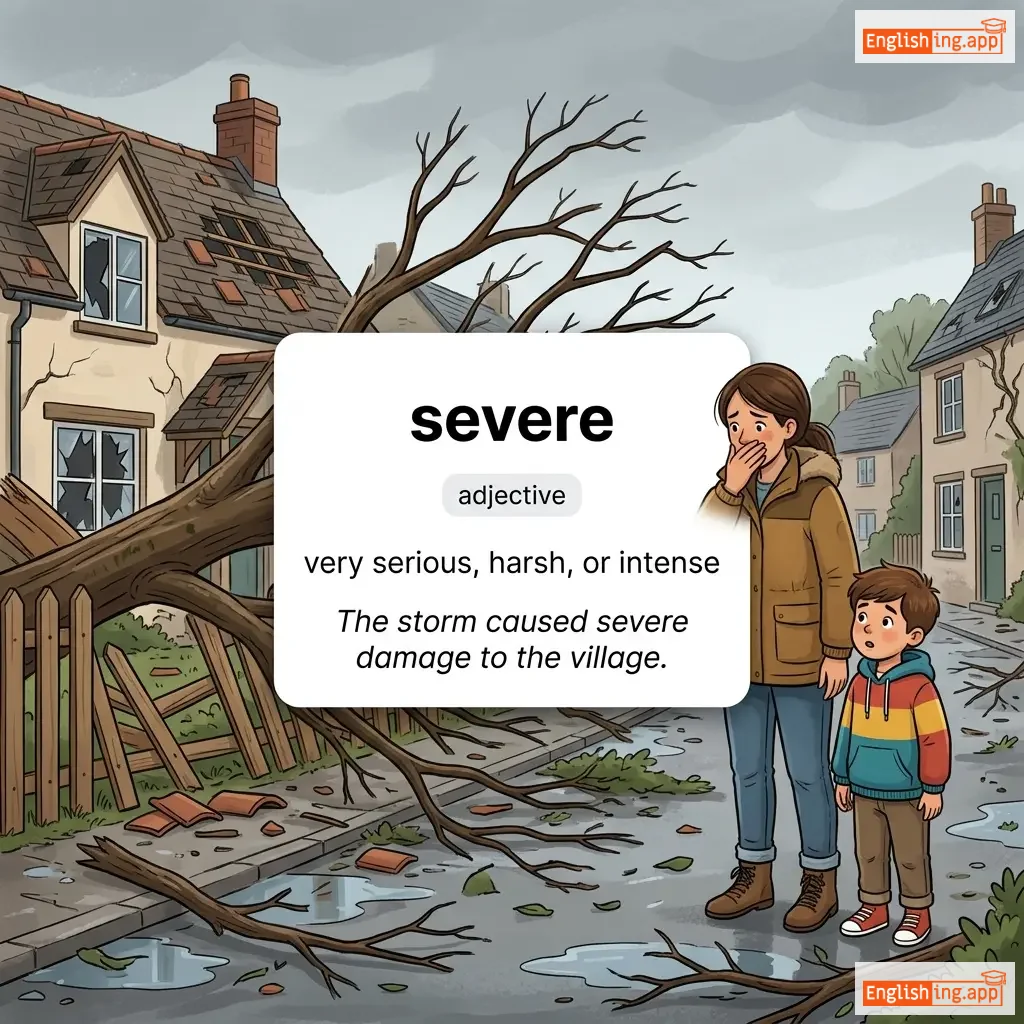
very serious, harsh, or intense
••••••
|
The storm caused severe damage to the village. |
嵐は村に深刻な被害を与えました。
Arashi wa mura ni shinkokuna higai o ataemashita.
••••••
|
severe weather |
harsh or extreme weather conditions
••••••
|
激しい天気
hageshī tenki
••••••
|
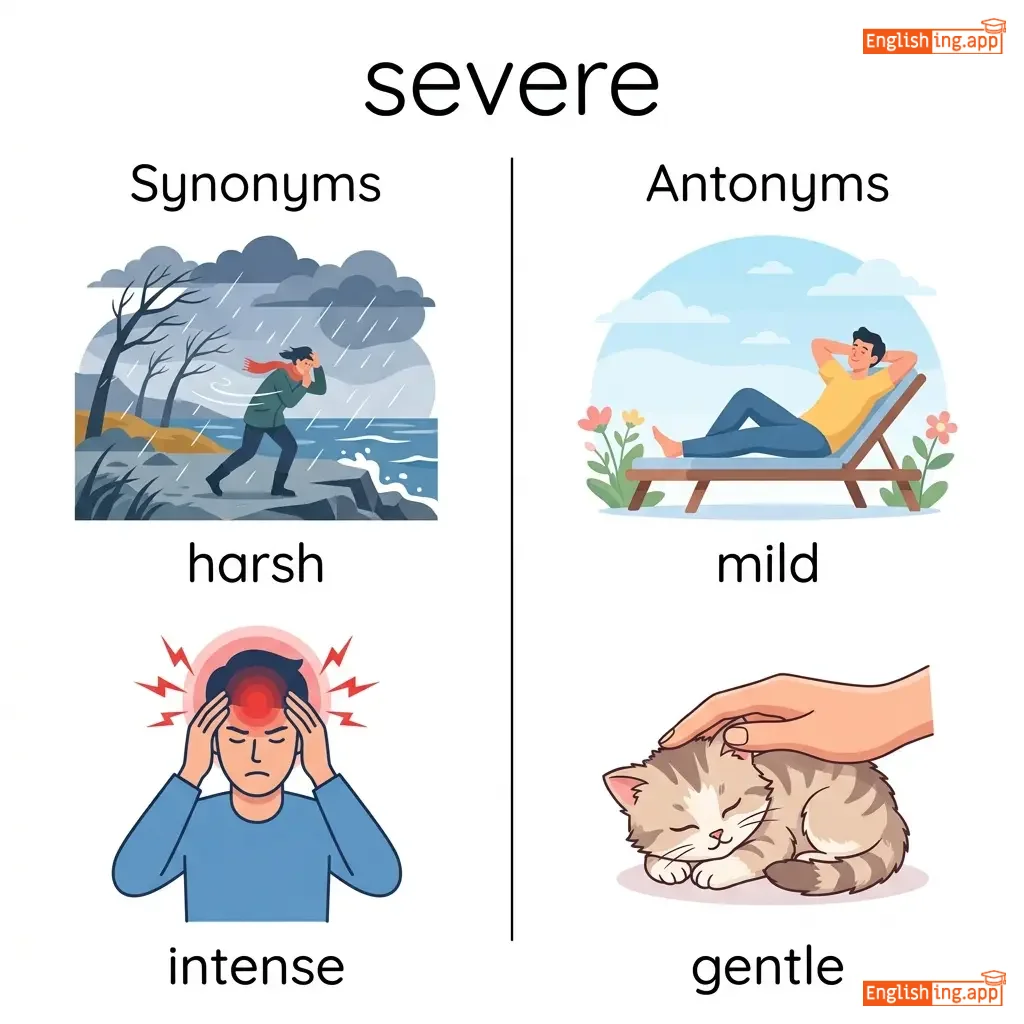
harsh, intense, serious, grave, extreme
••••••
|
mild, gentle, light
••••••
|
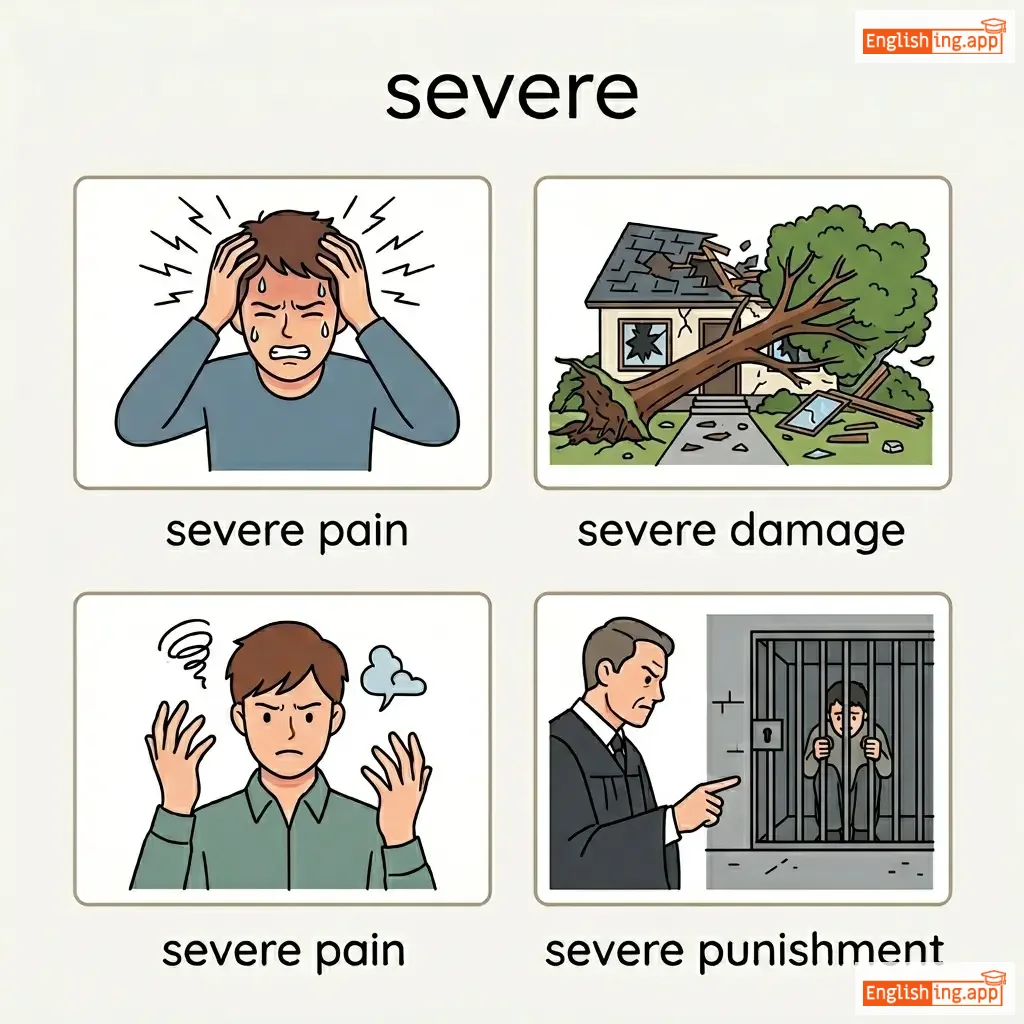
severe pain, severe damage, severe punishment, severe problem
••••••
|
Severeは深刻なを意味します ⚠️ - 嵐が深刻な被害を与える
••••••
|
|
#7984
💼
|
/ˈsɛvərəns/
noun
(セヴァランス)
••••••
|
- •••••• |
退職金
taishokukin
••••••
|
- •••••• | - •••••• | - •••••• | - •••••• |
the act of ending something, especially a relationship or employment; compensation paid upon termination
••••••
|
The company offered him severance pay after his job ended. |
会社は彼の仕事が終了した後、退職金を提供しました。
Kaisha wa kare no shigoto ga shūryō shita ato, taishokukin o teikyō shimashita.
••••••
|
severance pay |
money given to an employee when their job ends
••••••
|
退職金
taishokukin
••••••
|
termination, dismissal, compensation, discharge
••••••
|
employment, continuation
••••••
|
severance package, severance pay, severance agreement
••••••
|
退職金 = 仕事が終わった後の支払い
••••••
|
|
#7985
✂️
|
/ˈsɛvər/
verb
(セバー)
••••••
|
- •••••• |
切る、関係を断つ
kiru, kankei wo tatsu
••••••
|
severed
セバーード
••••••
|
severed
セバーード
••••••
|
severs
セバーズ
••••••
|
severing
セヴァリング
••••••
|
to cut off or separate, especially by cutting; to end a connection or relationship
••••••
|
He had to sever ties with the company after the dispute.
彼は争いの後、会社との関係を断たなければならなかった。
••••••
|
彼は争いの後、会社との関係を断たなければならなかった。
Kare wa arasoi no ato, kaisha to no kankei wo tatanakereba naranakatta.
••••••
|
sever ties
関係を断つ
••••••
|
to end a relationship or connection
••••••
|
関係を断つ
kankei wo tatsu
••••••
|
cut, detach, split, disconnect, break
••••••
|
join, connect, attach
••••••
|
sever ties, sever connection, sever artery, sever relationship
••••••
|
Severはロープを切ることを意味します ✂️ - ロープを切るように関係を断つ
••••••
|
|
#7986
⛓️
|
/ˈsɜːrvɪtuːd/
noun
(サーヴィチュード)
••••••
|
- •••••• |
隷属
reisoku
••••••
|
- •••••• | - •••••• | - •••••• | - •••••• |
the state of being a slave or completely subject to someone more powerful
••••••
|
The prisoners were forced into servitude.
囚人たちは強制的に隷属させられました。
••••••
|
囚人たちは強制的に隷属させられました。
Shūjin-tachi wa kyōseiteki ni reisoku saseraremashita.
••••••
|
- •••••• | - •••••• | - •••••• |
slavery, bondage, subjugation, oppression
••••••
|
freedom, liberty, independence
••••••
|
forced servitude, lifelong servitude, servitude contract
••••••
|
Servitudeは日本語で'隷属'という意味です。
••••••
|
|
#7987
🙇
|
/ˈsɜːrvaɪl/ or /ˈsɜːrvəl/
adjective
(サーヴァイル)
••••••
|
|
卑屈な
hikutsuna
••••••
|
- •••••• | - •••••• | - •••••• | - •••••• |
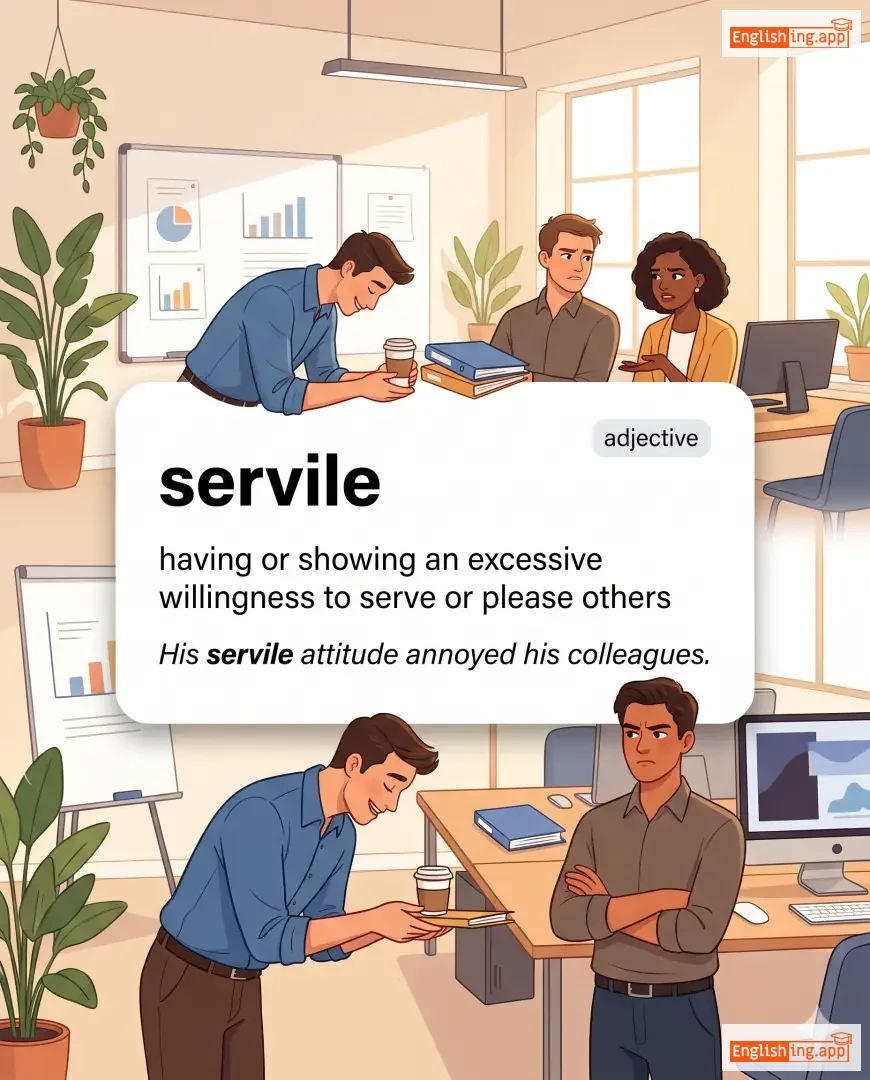
having or showing an excessive willingness to serve or please others
••••••
|
His servile attitude annoyed his colleagues. |
彼の卑屈な態度は同僚を困らせていました。
Kare no hikutsuna taido wa dōryō o komarasete imashita.
••••••
|
- •••••• | - •••••• | - •••••• |
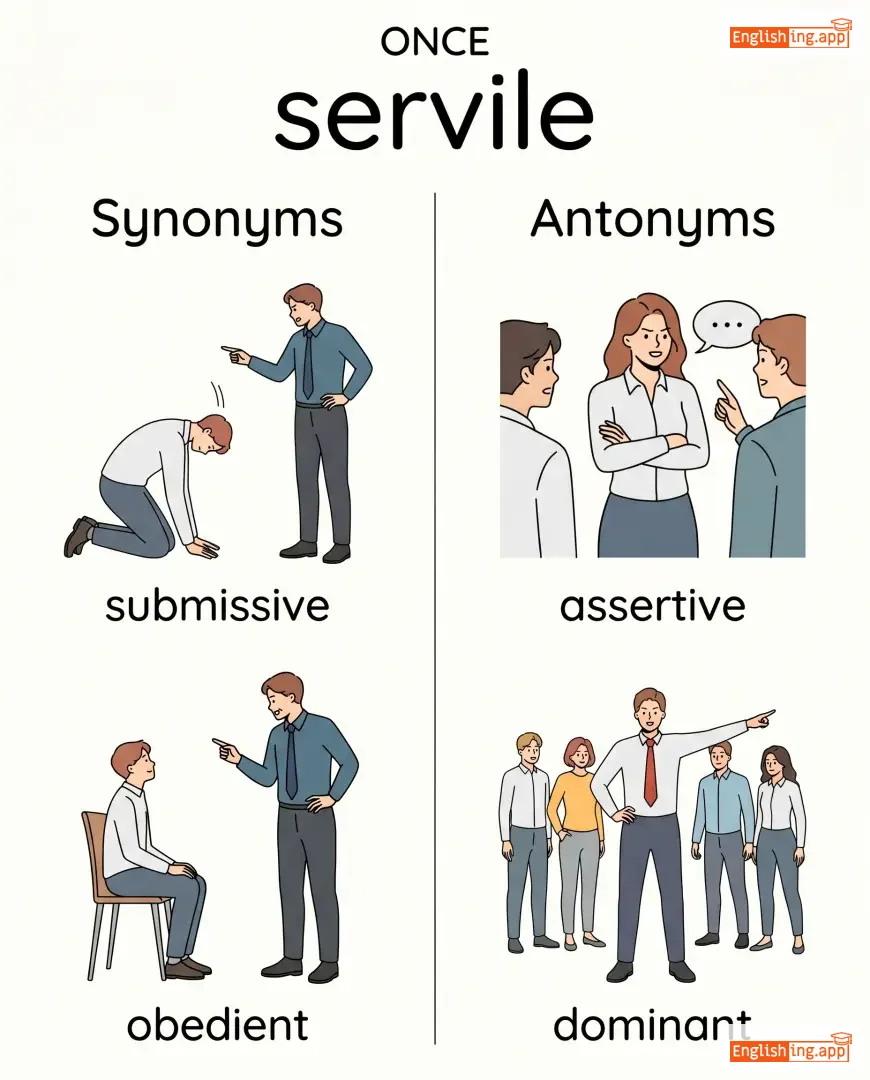
submissive, obedient, slavish, deferential
••••••
|
assertive, dominant, independent
••••••
|
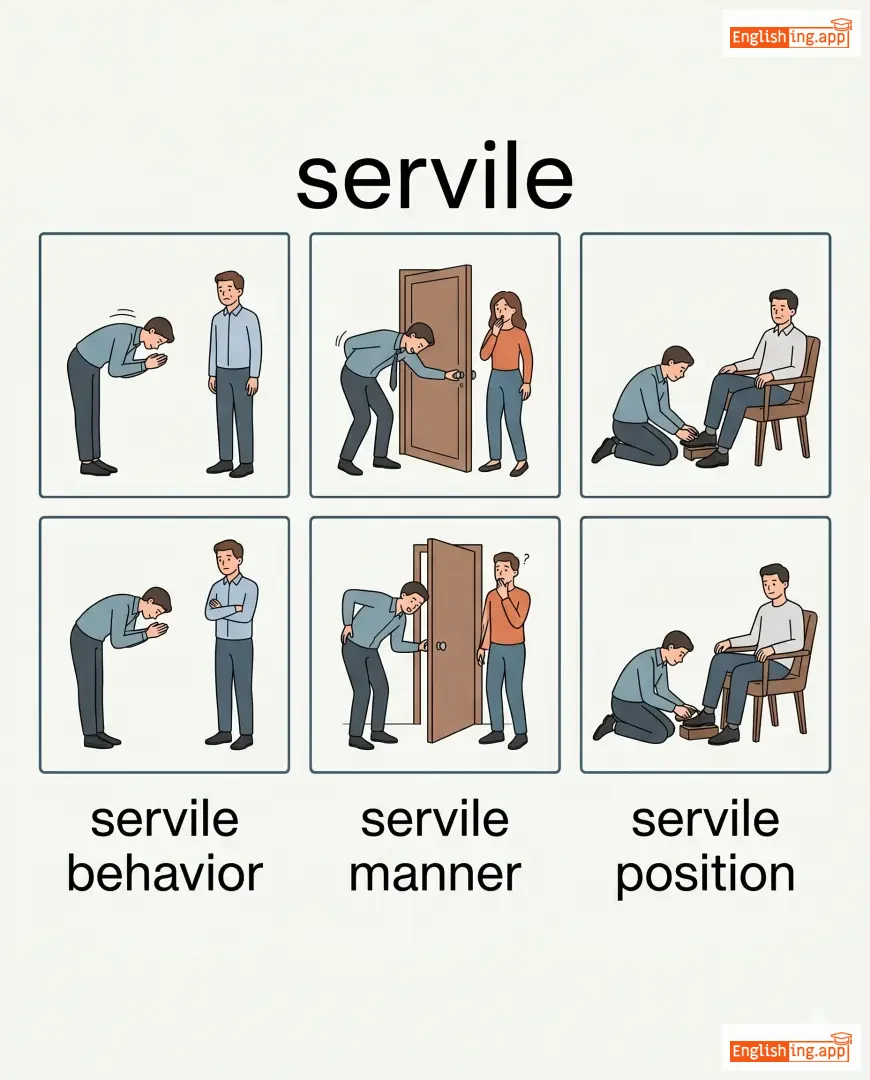
servile behavior, servile manner, servile position
••••••
|
卑屈なとは、常に他人を喜ばせようとするような姿勢です。
••••••
|
|
#7988
🔧
|
/ˈsɜːrvɪsəbl/
adjective
(サービスアブル)
••••••
|
- •••••• |
使用可能
shiyou kanou
••••••
|
- •••••• | - •••••• | - •••••• | - •••••• |
fit for use; usable; in working order
••••••
|
The old bicycle is still serviceable despite its age.
その古い自転車は年齢に関係なく、まだ使用可能です。
••••••
|
その古い自転車は年齢に関係なく、まだ使用可能です。
Sono furui jitensha wa nenrei ni kankeinaku, mada shiyou kanou desu.
••••••
|
- •••••• | - •••••• | - •••••• |
usable, functional, operable, practical
••••••
|
broken, useless, unfit
••••••
|
serviceable condition, serviceable tool, serviceable clothes
••••••
|
Serviceable は「使用可能」を意味します - まだ使える状態です。
••••••
|
|
#7989
🛎️
|
/ˈsɜːrvɪs/
noun
(サーヴィス)
••••••
|
|
サービス
sābisu
••••••
|
- •••••• | - •••••• | - •••••• | - •••••• |
the action of helping or doing work for someone; a system providing a public need
••••••
|
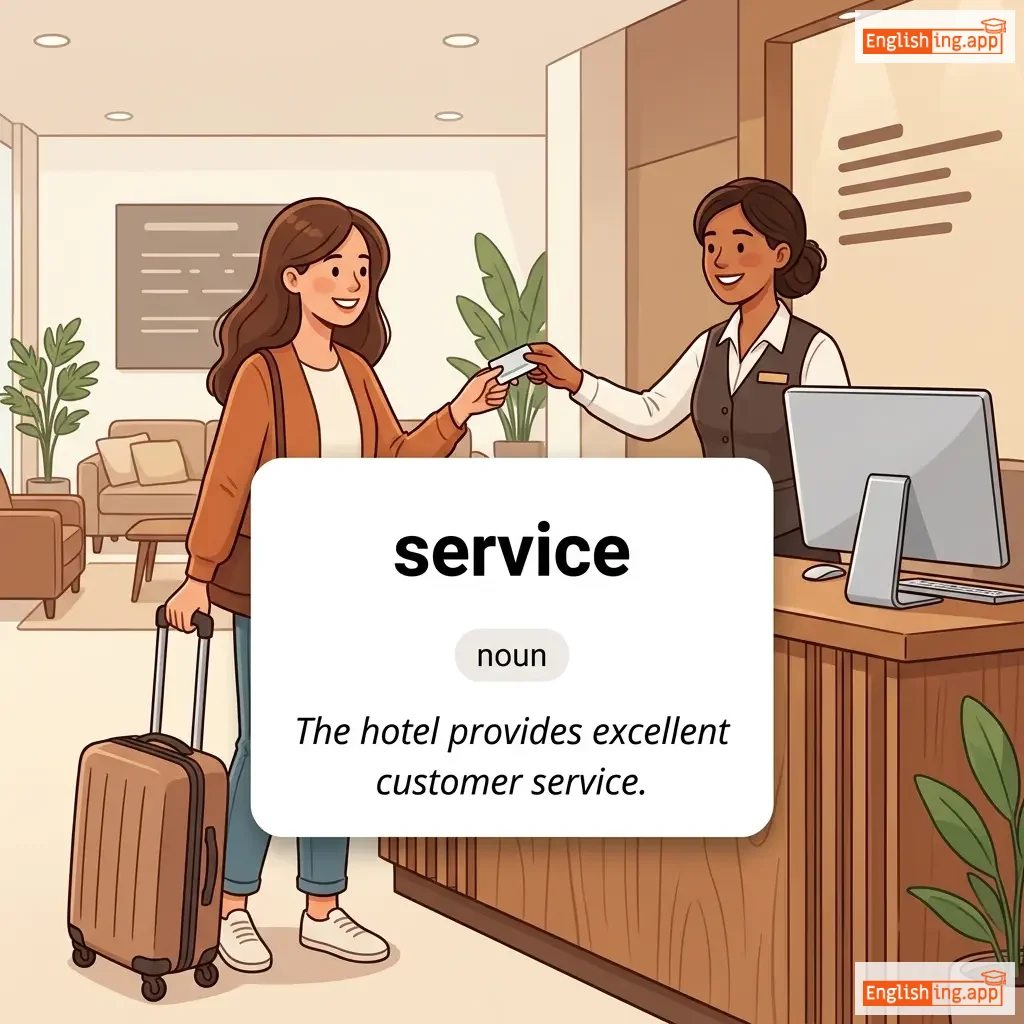
The hotel provides excellent customer service. |
ホテルは優れた顧客サービスを提供しています。
Hoteru wa sugureta kokyaku sābisu o teikyō shiteimasu.
••••••
|
in service |
currently working or functioning
••••••
|
サービス中
sābisu-chū
••••••
|
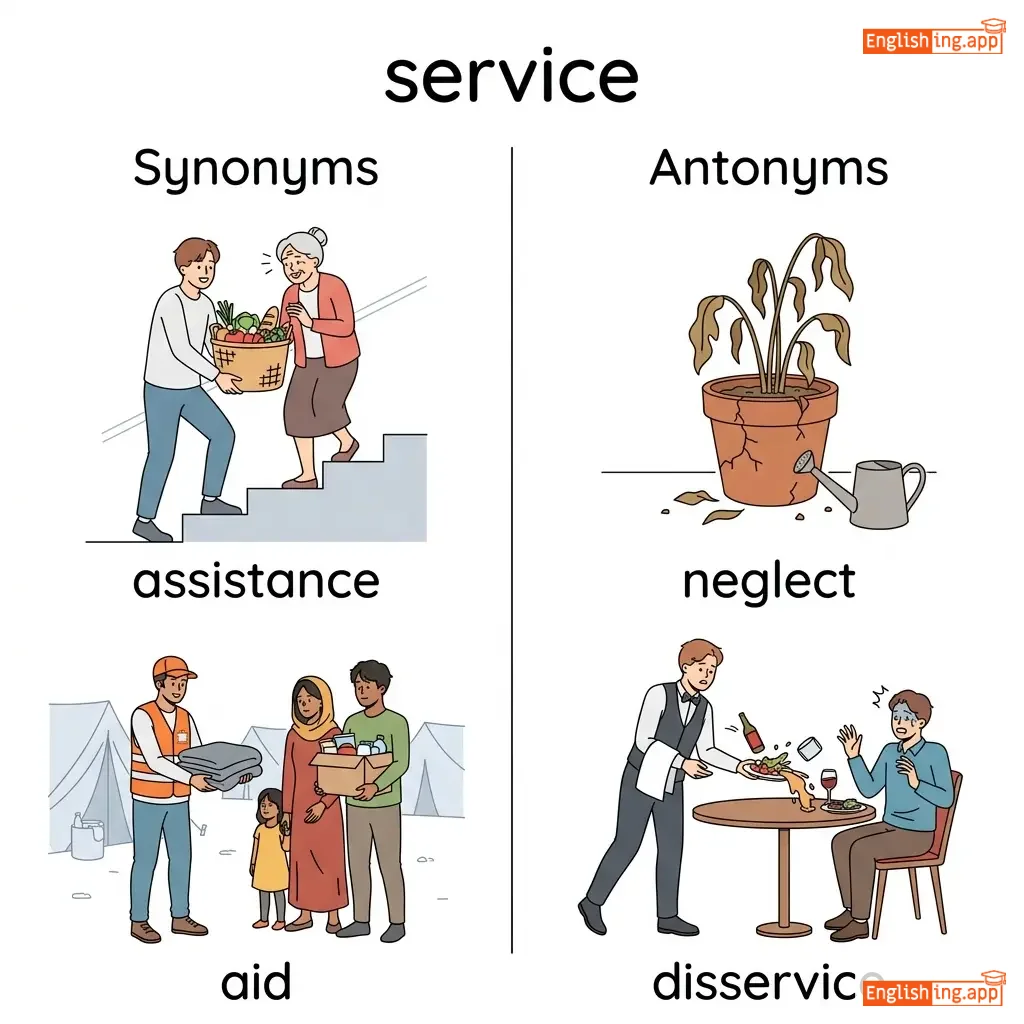
assistance, aid, duty, work
••••••
|
neglect, disservice
••••••
|
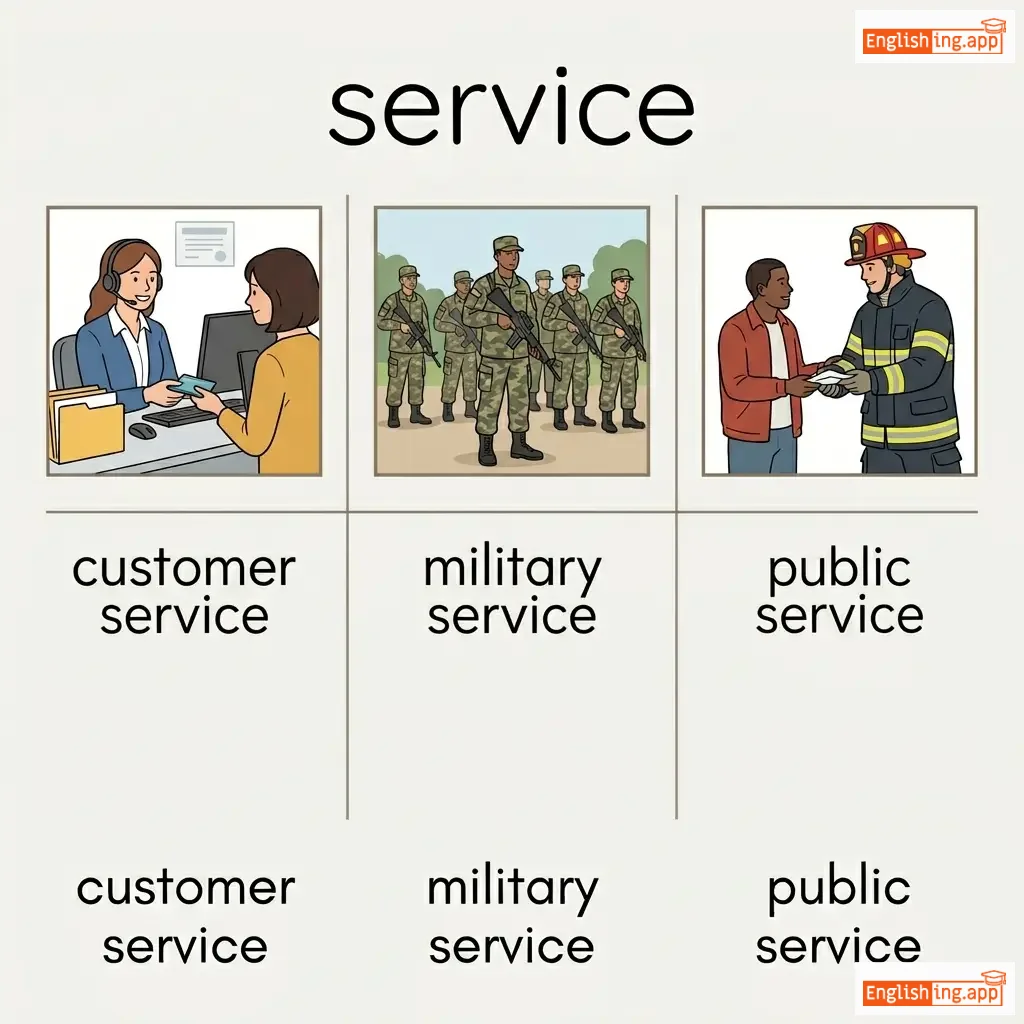
customer service, military service, public service, service industry
••••••
|
サービスは援助を意味し、レストランでのサービスは食事を提供することです。
••••••
|
|
#7990
📏
|
/ˈsɛrid/
adjective
(セリッド)
••••••
|
- •••••• |
整列した
seiretsu shita
••••••
|
- •••••• | - •••••• | - •••••• | - •••••• |
pressed or crowded together, often in rows or ranks
••••••
|
The soldiers stood in serried ranks, ready for inspection.
兵士たちは整列した行列で立って、点検の準備ができていました。
••••••
|
兵士たちは整列した行列で立って、点検の準備ができていました。
Heishi-tachi wa seiretsu shita gyōretsu de tatte, tenken no junbi ga dekiteimashita.
••••••
|
- •••••• | - •••••• | - •••••• |
dense, compact, crowded, packed
••••••
|
loose, scattered
••••••
|
serried ranks, serried rows, serried formations
••••••
|
Serried は整列したという意味、行進する兵士たちのように。
••••••
|
|
#7991
🔪
|
/ˈsɛreɪtɪd/
adjective
(serreitedo)
••••••
|
- •••••• |
鋸歯状の
nokogirashō no
••••••
|
- •••••• | - •••••• | - •••••• | - •••••• |
Having a notched or saw-toothed edge.
••••••
|
The bread knife had a serrated blade.
パンナイフは鋸歯状の刃を持っていた。
••••••
|
パンナイフは鋸歯状の刃を持っていた。
Pannaihu wa nokogirashō no ha o motte ita.
••••••
|
- •••••• | - •••••• | - •••••• |
toothed, jagged, notched, indented
••••••
|
smooth, even
••••••
|
serrated knife, serrated blade, serrated edge, serrated leaf
••••••
|
Serrated blade はノコギリのような刃、パンを切るのに最適。
••••••
|
|
#7992
🪚
|
/ˈsɛreɪt/
verb
(セレイト)
••••••
|
- •••••• |
ギザギザの縁を作る
gizagiza no fuchi o tsukuru
••••••
|
serrated
セレイテッド
••••••
|
serrated
セレイテッド
••••••
|
serrates
セレイツ
••••••
|
serrating
セレイティング
••••••
|
To make a saw-toothed edge or notched margin.
••••••
|
The craftsman serrated the knife blade for better cutting.
職人はより良い切断のためにナイフの刃をセレイトしました。
••••••
|
職人はより良い切断のためにナイフの刃をセレイトしました。
Shokunin wa yori yoi setsudan no tame ni naifu no ha o sereito shimashita.
••••••
|
- •••••• | - •••••• | - •••••• |
notch, indent, jag, cut
••••••
|
smooth, flatten
••••••
|
serrate blade, serrate edges, serrate teeth, serrate leaf
••••••
|
Serrate = ノコギリのようなギザギザの縁を作る。
••••••
|
|
#7993
🐍
|
/ˈsɜːrpənˌtiːn/
adjective
(サーペンタイ)
••••••
|
- •••••• |
蛇行の
daikou no
••••••
|
- •••••• | - •••••• | - •••••• | - •••••• |
Having the shape, movement, or qualities of a serpent; winding or twisting.
••••••
|
The road took a serpentine path through the mountains. |
その道は山を通り、蛇行する道を取った。
Sono michi wa yama o tōri, dakō suru michi o totta.
••••••
|
- •••••• | - •••••• | - •••••• |
winding, twisting, meandering, sinuous, coiling
••••••
|
straight, direct, linear
••••••
|
serpentine path, serpentine movement, serpentine line, serpentine road
••••••
|
Serpentine = 蛇のような道、蛇行する道
••••••
|
|
#7994
⛪
|
/ˈsɜːrmən/
noun
(サーモン)
••••••
|
- •••••• |
説教
sekkyou
••••••
|
- •••••• | - •••••• | - •••••• | - •••••• |
A religious discourse delivered by a preacher, often offering moral instruction or spiritual guidance.
••••••
|
The pastor gave a moving sermon about compassion and forgiveness. |
牧師は思いやりと許しについて感動的な説教をしました。
Bokushi wa omoiyari to yurushi ni tsuite kandō-tekina sekkyō o shimashita.
••••••
|
preach a sermon |
to deliver a religious or moral speech
••••••
|
説教する
sekkyou suru
••••••
|
homily, discourse, address, lecture, exhortation
••••••
|
silence, quiet
••••••
|
deliver a sermon, Sunday sermon, long sermon, powerful sermon
••••••
|
説教 - 心に響く神のメッセージ
••••••
|
|
#7995
🩺
|
/sɪˈkwiːlə/
noun
(シケウェラ)
••••••
|
- •••••• |
後遺症
kōishō
••••••
|
- •••••• | - •••••• | - •••••• | - •••••• |
A condition that is the consequence of a previous disease or injury.
••••••
|
Lung scarring can be a sequela of severe pneumonia.
肺の瘢痕は重度の肺炎の後遺症である可能性があります。
••••••
|
肺の瘢痕は重度の肺炎の後遺症である可能性があります。
Hai no hankon wa jūdona haien no kōishō de aru kanōsei ga arimasu.
••••••
|
- •••••• | - •••••• | - •••••• |
aftermath, result, consequence, outcome, effect
••••••
|
cause, origin
••••••
|
long-term sequela, neurological sequela, permanent sequela
••••••
|
後遺症は映画の続編のようなもので、後に続きます。
••••••
|
|
#7996
⚖️
|
/ˈsɑːrdʒənt ət ɑːrmz/
noun
(サージェント・アット・アームズ)
••••••
|
- •••••• |
会議警備員
kaigi keibiin
••••••
|
- •••••• | - •••••• | - •••••• | - •••••• |
An officer responsible for maintaining order during meetings or legislative sessions.
••••••
|
The sergeant-at-arms escorted the disruptive member out of the hall. |
会議警備員は、秩序を乱すメンバーを会場から退場させました。
Kaigi keibiin wa, chitsujo o midasu menbā o kaijō kara taijō saseshimashita.
••••••
|
- •••••• | - •••••• | - •••••• |
official, marshal, usher, officer
••••••
|
intruder, disruptor
••••••
|
sergeant-at-arms duties, role of sergeant-at-arms, appointed sergeant-at-arms
••••••
|
会議警備員: 会議で秩序を守る警備員。
••••••
|
|
#7997
🎖️
|
/ˈsɑːrdʒənt/
noun
(軍曹)
••••••
|
- •••••• |
軍曹
gunsou
••••••
|
- •••••• | - •••••• | - •••••• | - •••••• |
A rank of non-commissioned officer in the armed forces or police.
••••••
|
The sergeant gave orders to the soldiers before the mission. |
軍曹は任務の前に兵士たちに命令を出した。
Gunsou wa ninmu no mae ni heishitachi ni meirei wo dashita.
••••••
|
- •••••• | - •••••• | - •••••• |
officer, commander, leader, NCO
••••••
|
civilian, subordinate
••••••
|
police sergeant, army sergeant, staff sergeant, drill sergeant
••••••
|
軍曹は軍隊の中で命令を出す役割を持っています。
••••••
|
|
#7998
⛓️
|
/ˈsɜːfdəm/
noun
(サーフドム)
••••••
|
- •••••• |
農奴制
nōdosei
••••••
|
- •••••• | - •••••• | - •••••• | - •••••• |
The status or condition of being a serf, bound to work for a lord.
••••••
|
Many peasants in medieval Europe lived under serfdom. |
中世ヨーロッパの多くの農民は農奴制の下で生活していた。
Chūsei Yōroppa no ōku no nōmin wa nōdosei no moto de seikatsu shite ita.
••••••
|
- •••••• | - •••••• | - •••••• |
bondage, servitude, slavery, vassalage
••••••
|
freedom, liberty, independence
••••••
|
system of serfdom, abolish serfdom, under serfdom, life of serfdom
••••••
|
Serfdomは農奴制 – 自由がなくても働くこと。
••••••
|
|
#7999
🕊️
|
/səˈrɛnɪti/
noun
(セレニティ)
••••••
|
|
静けさ
shizukesa
••••••
|
- •••••• | - •••••• | - •••••• | - •••••• |
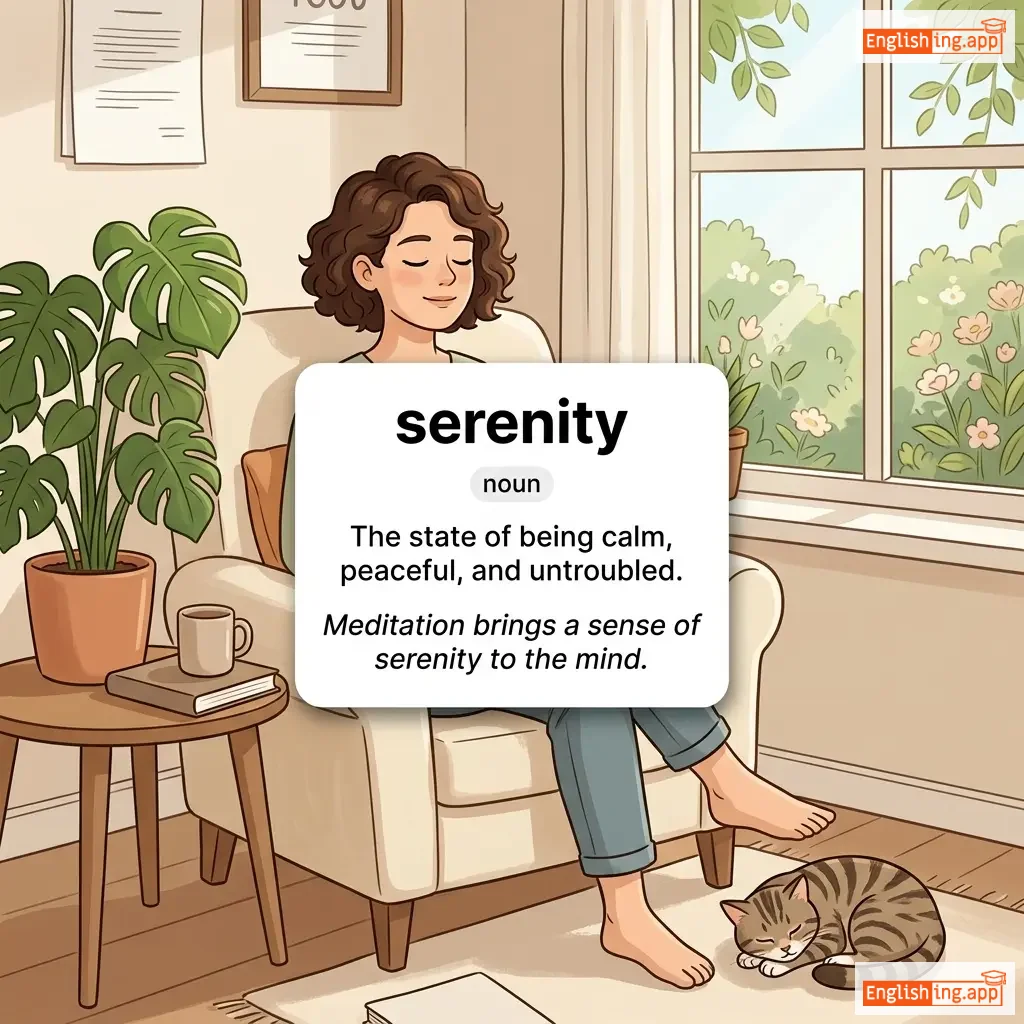
The state of being calm, peaceful, and untroubled.
••••••
|
Meditation brings a sense of serenity to the mind. |
瞑想は心に静けさをもたらします。
Meisou wa kokoro ni shizukesa wo motarashimasu.
••••••
|
seek serenity |
to search for peace and tranquility
••••••
|
静けさを求める
shizukesa wo motomeru
••••••
|
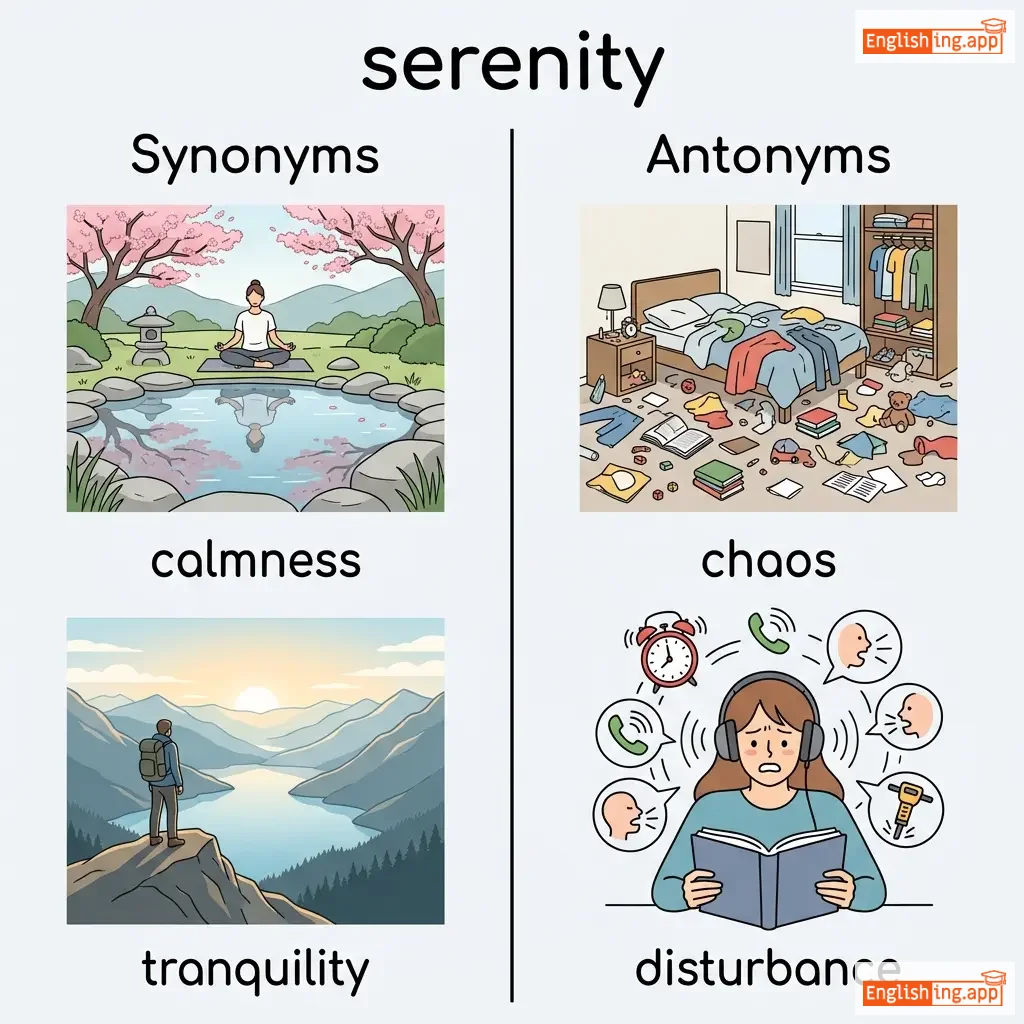
calmness, tranquility, peace, composure, stillness
••••••
|
chaos, disturbance, agitation
••••••
|
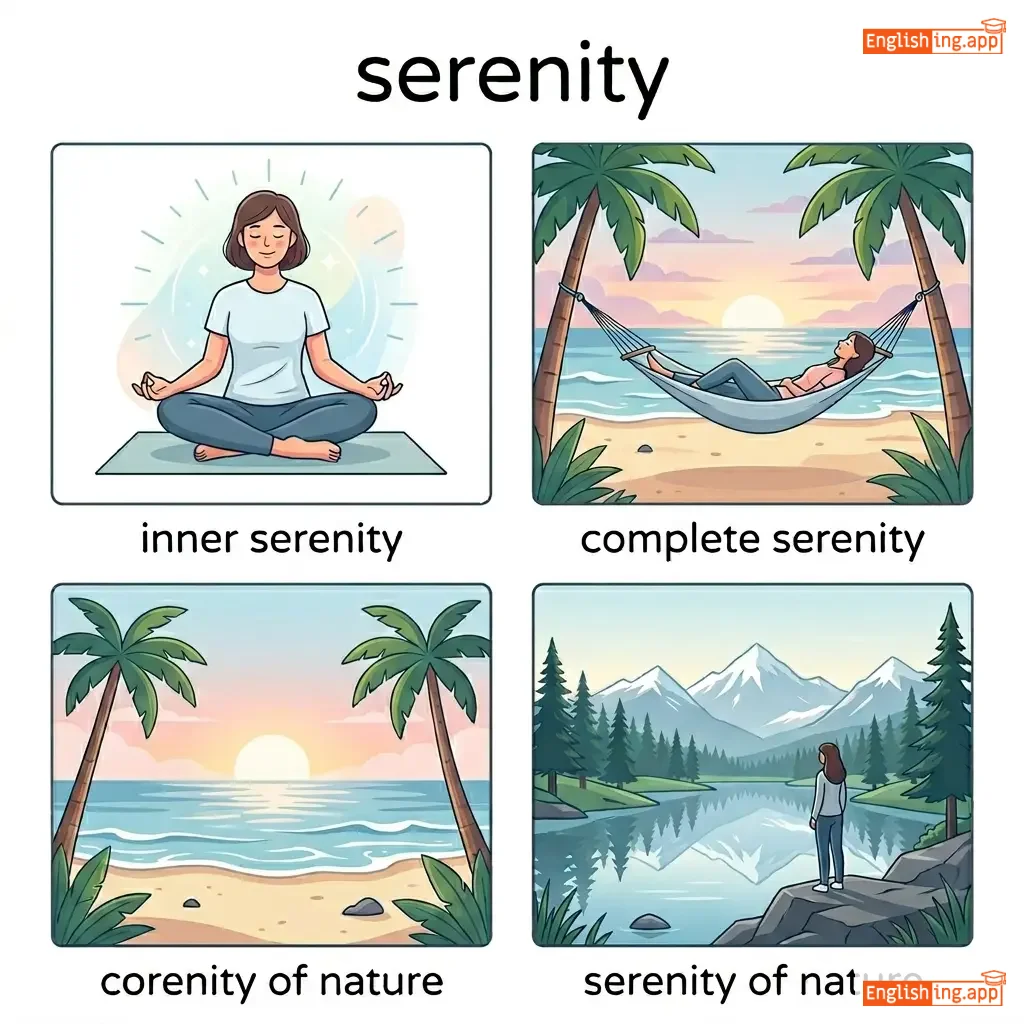
inner serenity, complete serenity, serenity of nature, seek serenity
••••••
|
Serenityは静けさを意味します - 静けさを求めることで心が落ち着きます。
••••••
|
|
#8000
🌅
|
/səˈriːn/
adjective
(セリーン)
••••••
|
|
静かな
shizukana
••••••
|
- •••••• | - •••••• | - •••••• | - •••••• |
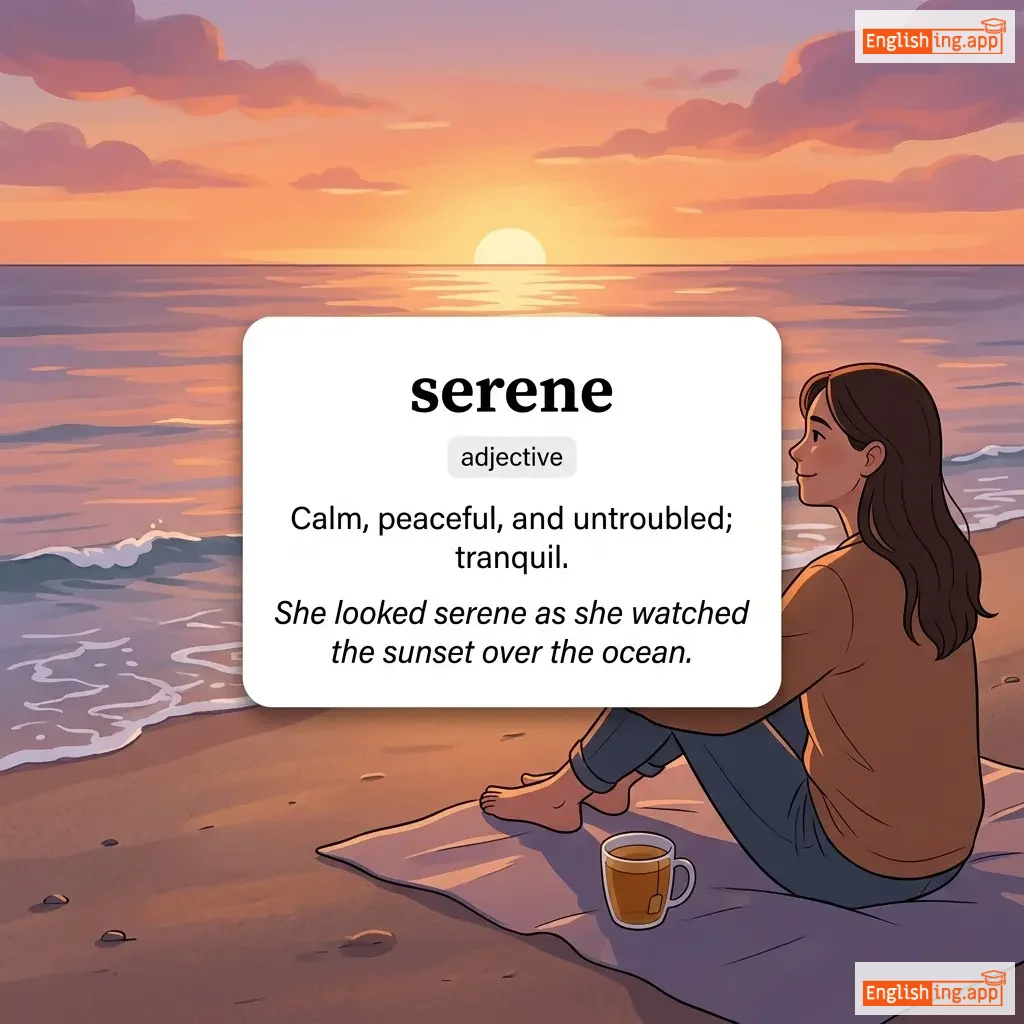
Calm, peaceful, and untroubled; tranquil.
••••••
|
She looked serene as she watched the sunset over the ocean. |
彼女は海の上の夕日を見ながら静かに見えた。
Kanojo wa umi no ue no yūhi o minagara shizuka ni mieta.
••••••
|
serene beauty |
a calm and tranquil form of beauty
••••••
|
静かな美しさ
shizukana utsukushisa
••••••
|
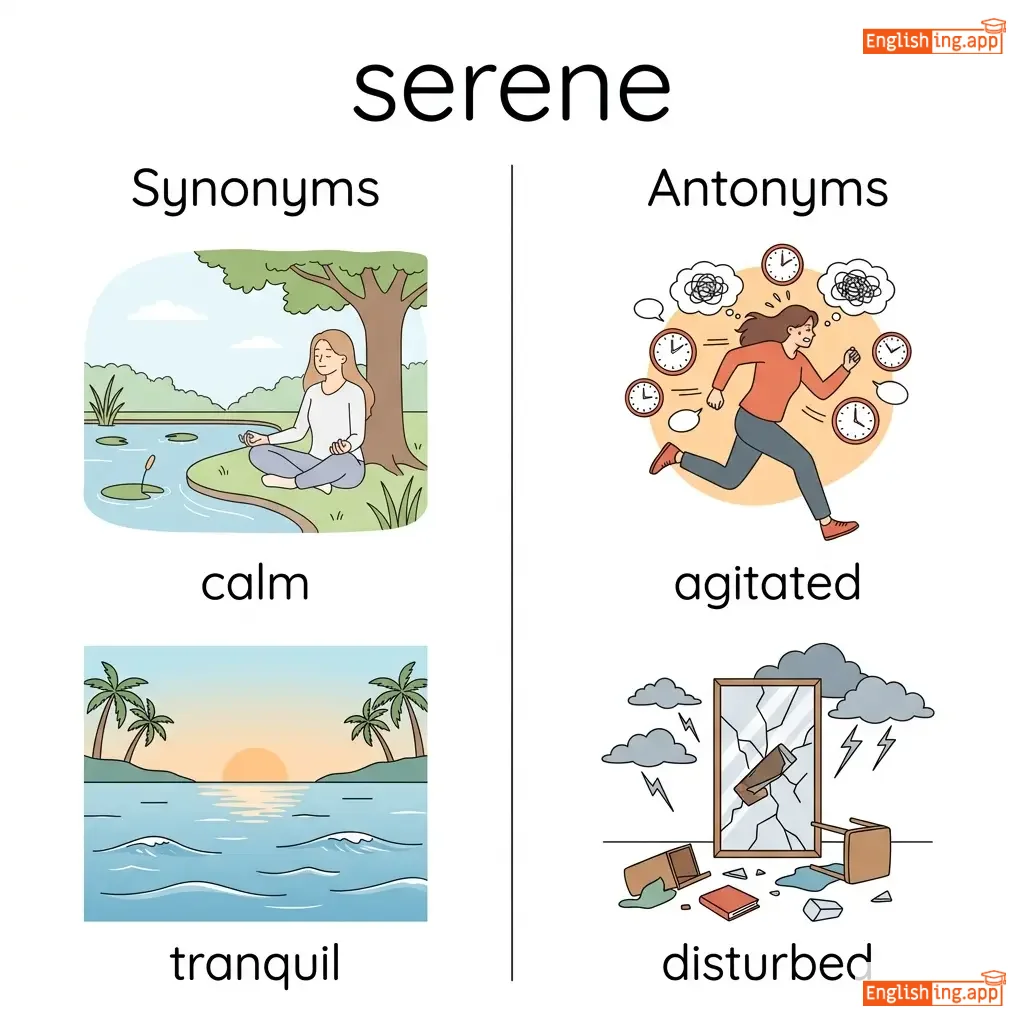
calm, tranquil, peaceful, composed, placid
••••••
|
agitated, disturbed, turbulent
••••••
|
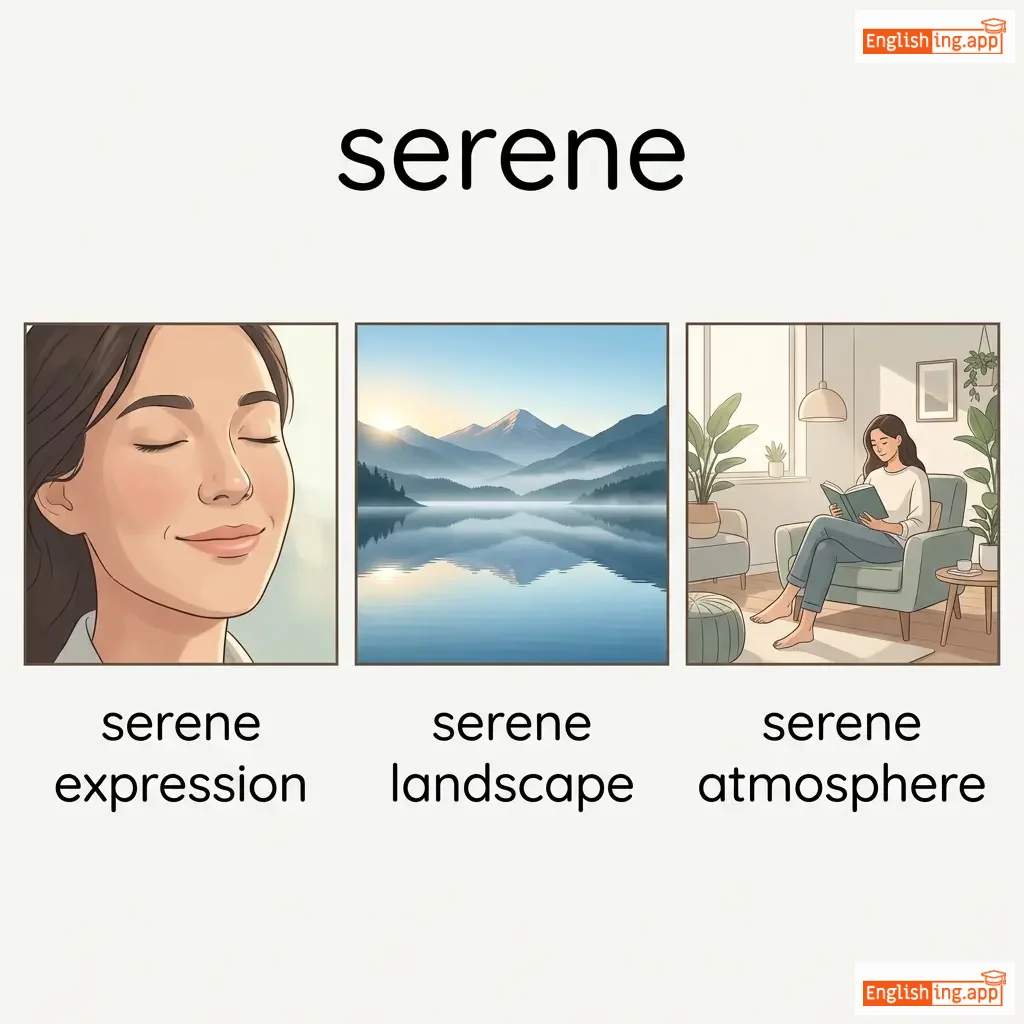
serene expression, serene landscape, serene atmosphere, serene smile
••••••
|
Serene は静かな意味です:海の上の夕日が静かで美しいです。
••••••
|
|
#8001
✨
|
/ˌsɛrənˈdɪpɪti/
noun
(セレンディピティ)
••••••
|
- •••••• |
幸運な偶然
kouun na guuzen
••••••
|
- •••••• | - •••••• | - •••••• | - •••••• |
The occurrence of events by chance in a happy or beneficial way.
••••••
|
Finding that old photo album was pure serendipity. |
その古い写真アルバムを見つけたのはまさに幸運な偶然だった。
Sono furui shashin arubamu o mitsuketa no wa masani kouun na guuzen datta.
••••••
|
- •••••• | - •••••• | - •••••• |
chance, fluke, luck, fortune, coincidence
••••••
|
misfortune, bad luck, disaster
••••••
|
pure serendipity, stroke of serendipity, serendipity moment
••••••
|
セレンディピティは予期せぬ幸運の出来事を指します。
••••••
|
|
#8002
🍀
|
/ˌsɛrənˈdɪpɪtəs/
adjective
(セレンディピタス)
••••••
|
- •••••• |
偶然の幸運
gūzen no kōun
••••••
|
- •••••• | - •••••• | - •••••• | - •••••• |
Occurring or discovered by chance in a happy or beneficial way.
••••••
|
Their meeting at the café was purely serendipitous. |
カフェでの彼らの出会いは完全に偶然の幸運でした。
Kafe de no karera no deai wa kanzen ni gūzen no kōun deshita.
••••••
|
- •••••• | - •••••• | - •••••• |
fortunate, lucky, accidental, unexpected, providential
••••••
|
planned, intentional, deliberate
••••••
|
serendipitous meeting, serendipitous discovery, serendipitous moment
••••••
|
Serendipitous は幸運な偶然、ラッキーな出会いのように覚えておこう。
••••••
|
|
#8003
🍂
|
/sɪər/
adjective
(セア)
••••••
|
- •••••• |
枯れた
kareta
••••••
|
- •••••• | - •••••• | - •••••• | - •••••• |
Dry or withered, especially vegetation.
••••••
|
The sere leaves crumbled under his feet. |
枯れた葉が彼の足元で崩れた。
Kareta ha ga kare no ashimoto de kuzureta.
••••••
|
- •••••• | - •••••• | - •••••• |
withered, dried, parched, shriveled
••••••
|
fresh, green, lush
••••••
|
sere leaves, sere landscape, sere grass
••••••
|
Sereは枯れたという意味です。枯れた葉っぱを思い出してください。
••••••
|
|
#8004
😇
|
/səˈræfɪk/
adjective
(セラフィック)
••••••
|
- •••••• |
天使のような
tenshi no you na
••••••
|
- •••••• | - •••••• | - •••••• | - •••••• |
Of or like a seraph; angelic, pure, and blissful.
••••••
|
She gave him a seraphic smile that calmed his fears. |
彼女は彼に天使のような微笑みをくれて、彼の恐れを和らげた。
Kanojo wa kare ni tenshi no you na bishou wo kurete, kare no osore wo yawarageteta.
••••••
|
- •••••• | - •••••• | - •••••• |
angelic, divine, heavenly, pure, blissful
••••••
|
devilish, wicked, impure
••••••
|
seraphic smile, seraphic look, seraphic expression
••••••
|
天使のような笑顔 = 純粋で幸せ。
••••••
|
|
#8005
👼
|
/ˈsɛrəf/
noun
(セラフ)
••••••
|
- •••••• |
セラフィム
serafimu
••••••
|
- •••••• | - •••••• | - •••••• | - •••••• |
An angelic being associated with light and purity, often depicted as a high-ranking angel in Christian theology.
••••••
|
The stained-glass window depicted a seraph with outstretched wings. |
ステンドグラスの窓には、翼を広げたセラフィムが描かれていました。
Sutendogurasu no mado ni wa, tsubasa o hirogeta serafimu ga egakarete imashita.
••••••
|
- •••••• | - •••••• | - •••••• |
angel, celestial, guardian, spirit, cherub
••••••
|
demon, devil, fiend
••••••
|
heavenly seraph, glowing seraph, seraph of light
••••••
|
セラフィムは天使的な存在です。‘セラフ’を思い出してください。
••••••
|
|
#8006
⚖️
|
/sɪˈkwɛstreɪt/
verb
(シクエストレイト)
••••••
|
- •••••• |
差し押さえる
sashiosaeru
••••••
|
sequestrated
シクエストレイテッド
••••••
|
sequestrated
シクエストレイテッド
••••••
|
sequestrates
シクエストレイツ
••••••
|
sequestrating
シクエストレイティング
••••••
|
To take legal possession of assets until a debt is paid or disputes are resolved.
••••••
|
The court decided to sequestrate the company's property.
裁判所は会社の財産をシクエストレイトすることを決定しました。
••••••
|
裁判所は会社の財産を差し押さえることを決定しました。
Saibansho wa kaisha no zaisan o sashiosaeru koto o kettei shimashita.
••••••
|
- •••••• | - •••••• | - •••••• |
confiscate, impound, seize, appropriate
••••••
|
restore, return
••••••
|
sequestrate property, sequestrate assets, sequestrate estate
••••••
|
Sequestrateは差し押さえる意味—裁判所が資産を分けて、問題が解決するまで保管します。
••••••
|
|
#8007
🔒
|
/sɪˈkwɛstər/
verb
(シークウェスター)
••••••
|
|
隔離する
kakuri suru
••••••
|
sequestered
シークウェスタード
••••••
|
sequestered
シークウェスタード
••••••
|
sequesters
シークウェスターズ
••••••
|
sequestering
シークウェスターリング
••••••
|
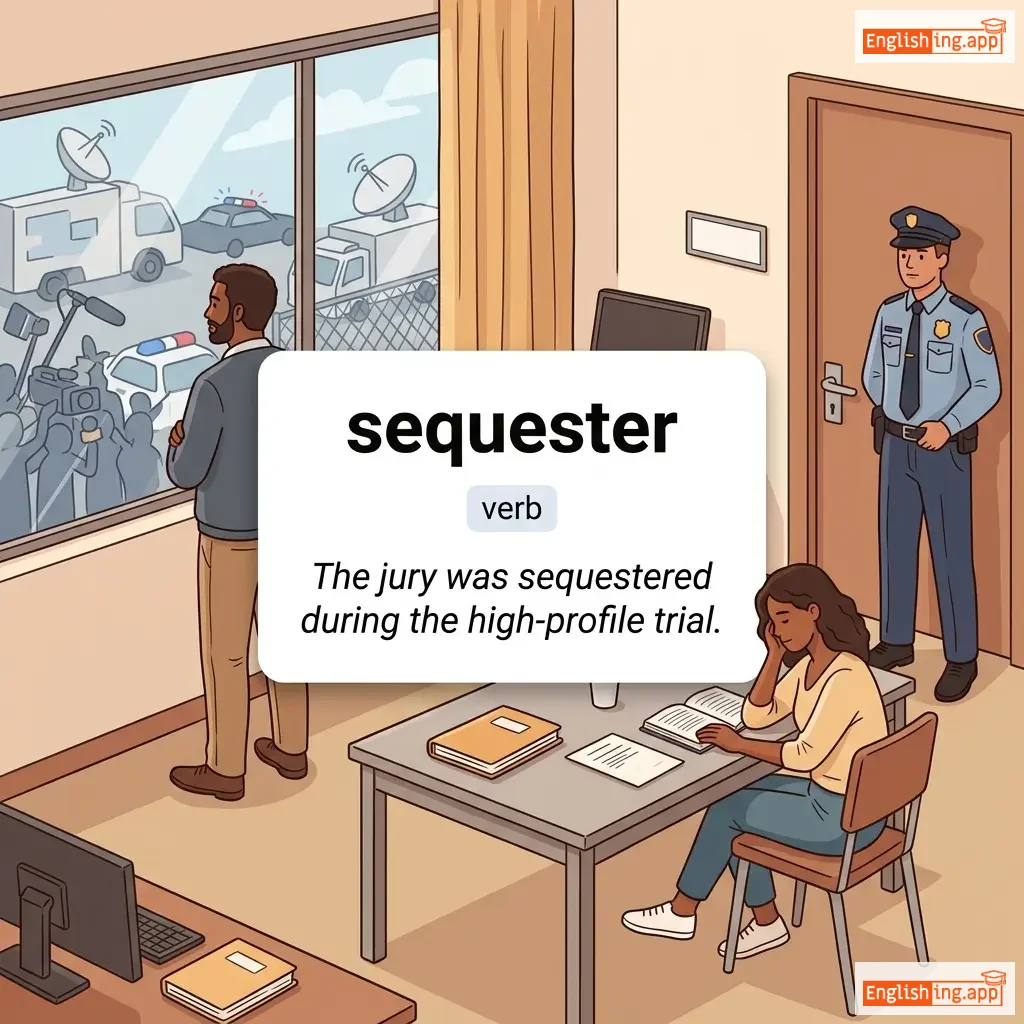
To isolate or hide away; to take possession of assets until a debt has been paid.
••••••
|
The jury was sequestered during the high-profile trial.
高名な裁判中に陪審員は隔離されました。
••••••
|
高名な裁判中に陪審員は隔離されました。
Kōmei na saiban-chū ni baishin'in wa kakuri saremashita.
••••••
|
- •••••• | - •••••• | - •••••• |
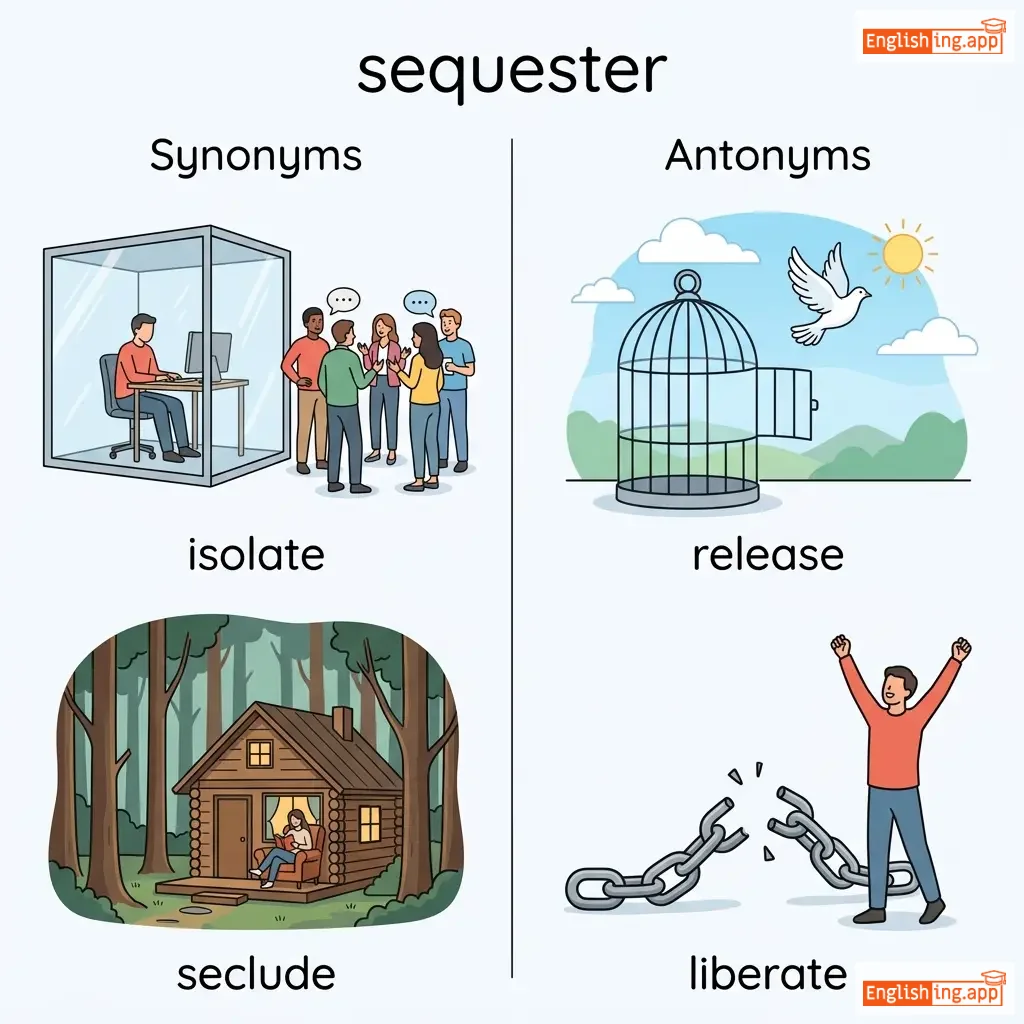
isolate, seclude, confiscate, separate, quarantine
••••••
|
release, liberate, free
••••••
|
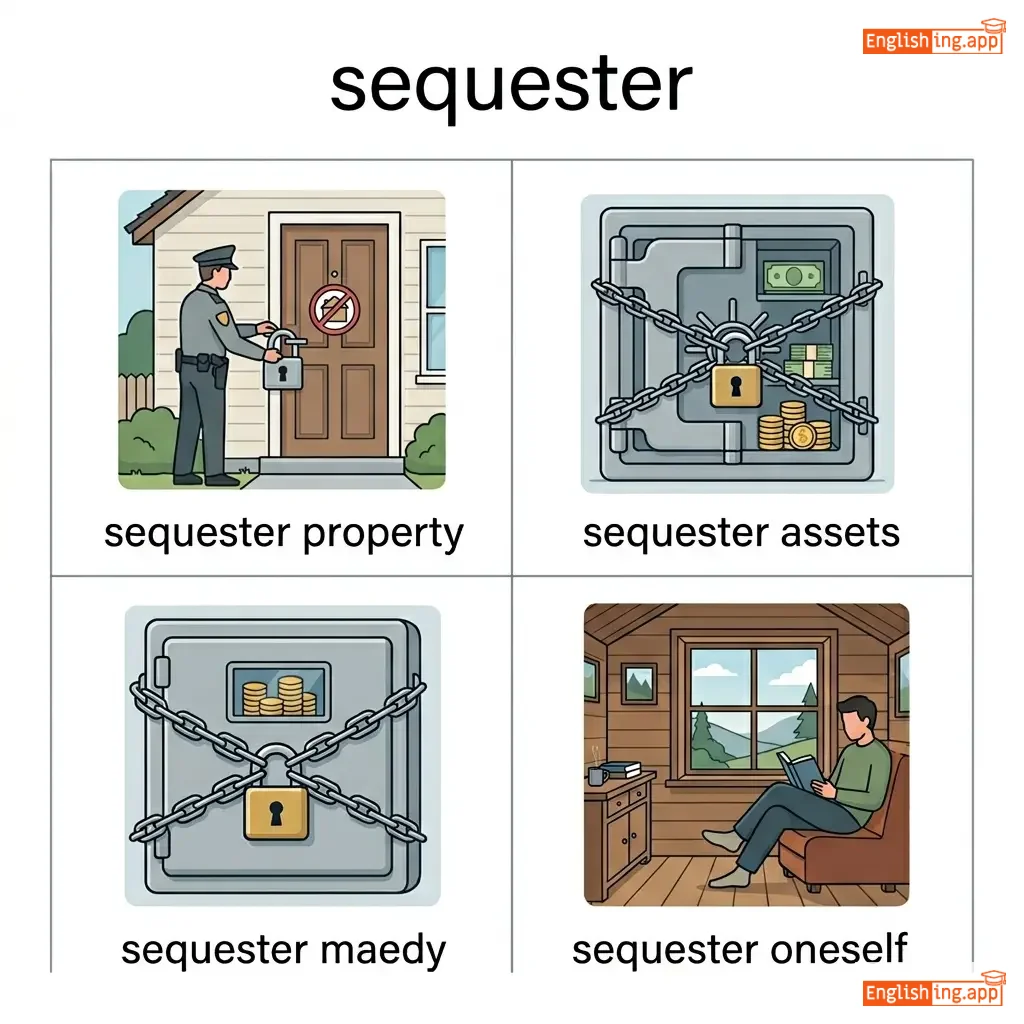
sequester property, sequester assets, sequester oneself
••••••
|
隔離するは、何かを外から見えないようにすることを意味します。
••••••
|
|
#8008
➡️
|
/ˈsiːkwənt/
adjective
(シークウェント)
••••••
|
- •••••• |
次の
tsugi no
••••••
|
- •••••• | - •••••• | - •••••• | - •••••• |
Following in order or as a result.
••••••
|
The sequent events changed the course of history. |
次の出来事は歴史の流れを変えました。
Tsugi no dekigoto wa rekishi no nagare o kaemashita.
••••••
|
- •••••• | - •••••• | - •••••• |
subsequent, successive, consequent, ensuing
••••••
|
preceding, prior, previous
••••••
|
sequent order, sequent steps, sequent events
••••••
|
Sequent は次の — シーケンスで次に来るものです。
••••••
|
|
#8009
🔢
|
/ˈsiːkwəns/
noun
(シークエンス)
••••••
|
- •••••• |
順番
junban
••••••
|
- •••••• | - •••••• | - •••••• | - •••••• |
A particular order in which related things follow each other.
••••••
|
The magician asked us to remember the sequence of cards.
魔法使いは私たちにカードのシークエンスを覚えておくように頼んだ。
••••••
|
魔法使いは私たちにカードの順番を覚えておくように頼んだ。
Mahōtsukai wa watashitachi ni kādo no junban o oboete oku yō ni tanonda.
••••••
|
in sequence
シークエンスで
••••••
|
in the correct or logical order
••••••
|
順番で
Junban de
••••••
|
order, arrangement, series, progression, succession
••••••
|
chaos, disorder, randomness
••••••
|
logical sequence, sequence of events, number sequence, genetic sequence
••••••
|
順番 = 映画のシーンのように、出来事が順番に起こる。
••••••
|
Vocabulary Quiz
Test your vocabulary by matching words with their translations or meanings.
Login to take the quiz
Comments (0)
Share your thoughts and join the discussion.
Join the discussion by logging in
Login to CommentNo comments yet
Be the first to share your thoughts!