

翻訳
過去
過去分詞
三人称単数
動名詞
意味
例文
例文の翻訳
同義語
対義語
コロケーション
ニーモニック

Swipe left or right, or use the buttons. Tap image to zoom.
例文の翻訳
単語
Lesson 82Lesson 82 - マスクトグル
|
絵文字
|
単語 | Images | 翻訳 | 過去 | 過去分詞 | 三人称単数 | 動名詞 | 意味 | 例文 | 例文の翻訳 | 表現例 | 表現例の意味 | 表現例の翻訳 | 同義語 | 対義語 | コロケーション | ニーモニック |
|---|---|---|---|---|---|---|---|---|---|---|---|---|---|---|---|---|---|
|
#2431
🏚️
|
/dɪˈlæpɪˌdeɪtɪd/
adjective
(ディラピデイテッド)
••••••
|
- •••••• |
老朽化した
rōkyūka shita
••••••
|
- •••••• | - •••••• | - •••••• | - •••••• |
Fallen into disrepair or ruin due to neglect or age.
••••••
|
The family lived in a dilapidated house at the edge of town. |
その家族は町の端にある老朽化した家に住んでいました。
Sono kazoku wa machi no hashi ni aru rōkyūka shita ie ni sunde imashita.
••••••
|
- •••••• | - •••••• | - •••••• |
ruined, decayed, shabby, broken-down, crumbling
••••••
|
new, strong, well-kept
••••••
|
dilapidated building, dilapidated house, dilapidated structure
••••••
|
Dilapidated = 'dil' + 'a' + 'pita', 破損した家のように壊れたピタのような状態。
••••••
|
|
#2432
🔊
|
/dɪn/
noun
(ディン)
••••••
|
- •••••• |
騒音
souon
••••••
|
- •••••• | - •••••• | - •••••• | - •••••• |
a loud, unpleasant, and prolonged noise
••••••
|
The din of traffic outside made it hard to concentrate. |
外の交通の騒音が集中するのを困難にしていた。
Soto no koutsuu no souon ga shuuchuu suru no wo konnan ni shite ita.
••••••
|
make a din |
to create a lot of loud and unpleasant noise
••••••
|
騒音を立てる
souon wo tateru
••••••
|
noise, racket, clamor, uproar, commotion
••••••
|
silence, quiet
••••••
|
din of traffic, constant din, loud din, make a din
••••••
|
DINは騒音を意味し、まるでドラムの音のようです。
••••••
|
|
#2433
🕯️
|
/ˈdɪmli/
adverb
(ディムリー)
••••••
|
- •••••• |
薄暗く
usuguraku
••••••
|
- •••••• | - •••••• | - •••••• | - •••••• |
in a faint or unclear way; with little light
••••••
|
The room was dimly lit by a single candle.
部屋は一本のろうそくで薄暗く照らされていた。
••••••
|
部屋は一本のろうそくで薄暗く照らされていた。
Heya wa ippon no rousoku de usuguraku terasarete ita.
••••••
|
- •••••• | - •••••• | - •••••• |
faintly, weakly, obscurely, vaguely
••••••
|
brightly, clearly
••••••
|
dimly lit, dimly remembered, dimly visible
••••••
|
Dimly litは薄暗い照明を意味します。dimly = 薄暗く。
••••••
|
|
#2434
🐭
|
/dɪˈmɪnjətɪv/
adjective
(ディミニティブ)
••••••
|
- •••••• |
非常に小さい
hijō ni chiisai
••••••
|
- •••••• | - •••••• | - •••••• | - •••••• |
extremely or unusually small
••••••
|
Despite his diminutive size, he was a powerful leader.
その小さな体格にもかかわらず、彼は強力なリーダーだった。
••••••
|
その非常に小さい体格にもかかわらず、彼は強力なリーダーだった。
Sono hijō ni chiisai taikaku ni mo kakawarazu, kare wa kyōryoku na rīdā datta.
••••••
|
- •••••• | - •••••• | - •••••• |
small, tiny, little, petite, miniature
••••••
|
large, big, huge
••••••
|
diminutive figure, diminutive size, diminutive form
••••••
|
Diminutiveは非常に小さいという意味です — 'mini' という言葉で覚えやすいです。
••••••
|
|
#2435
📉
|
/ˌdɪmɪˈnjuːʃən/
noun
••••••
|
|
- •••••• | - •••••• | - •••••• | - •••••• | - •••••• |
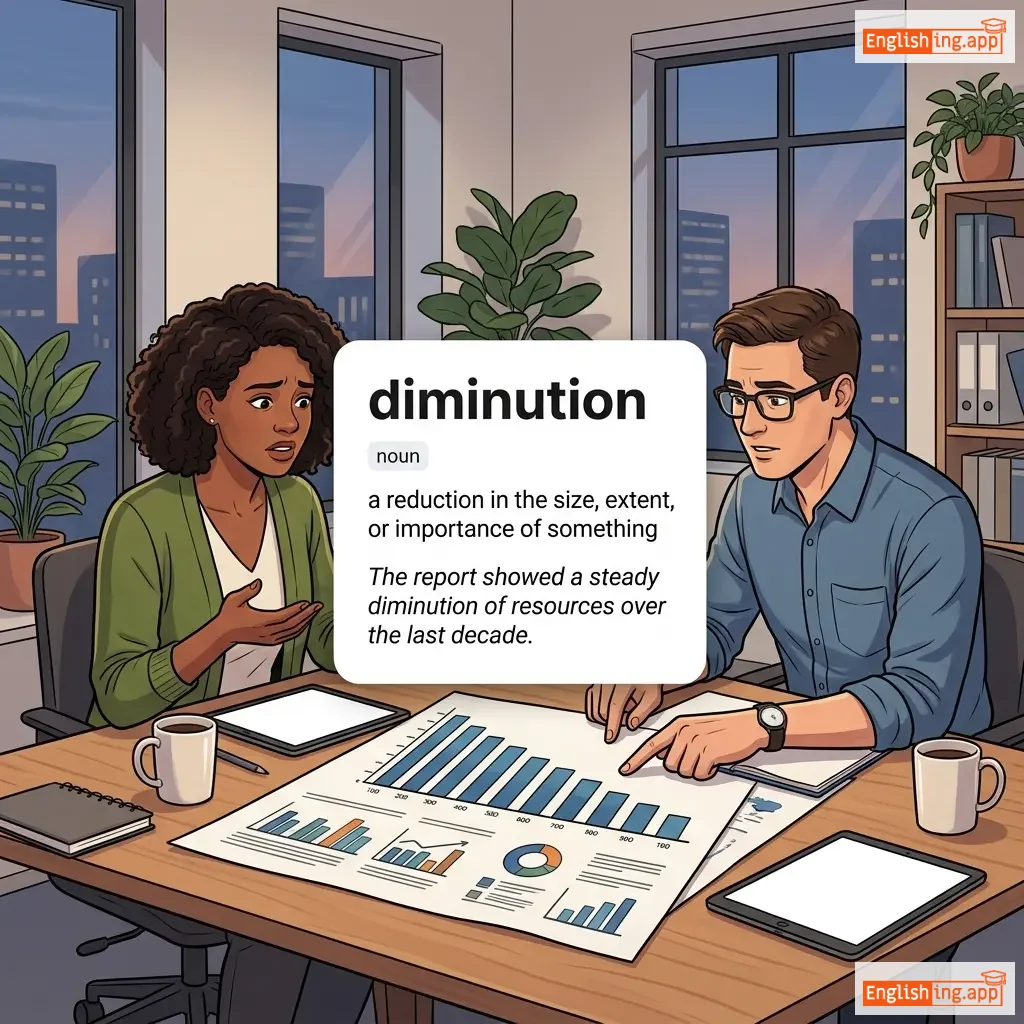
a reduction in the size, extent, or importance of something
••••••
|
The report showed a steady diminution of resources over the last decade. |
- •••••• | - •••••• | - •••••• | - •••••• |
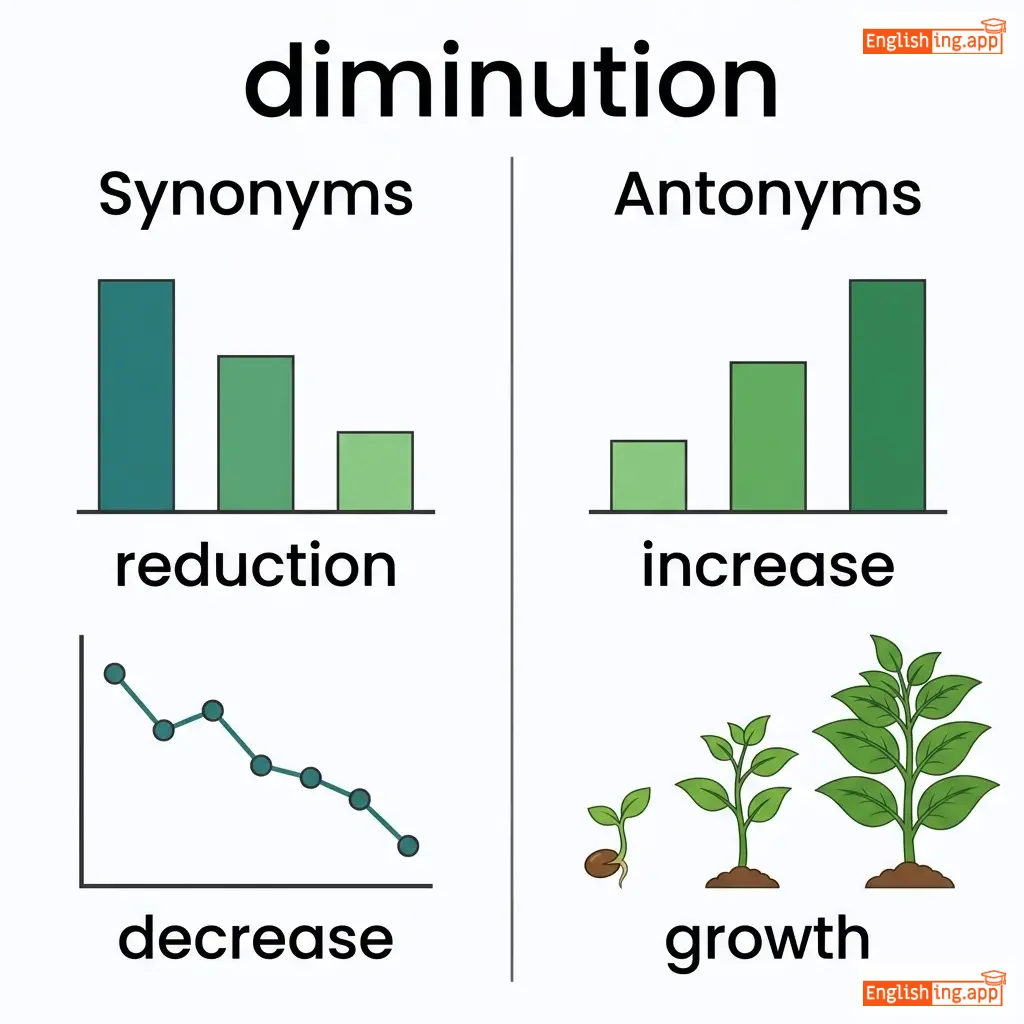
reduction, decrease, decline, lessening, weakening
••••••
|
increase, growth, expansion
••••••
|
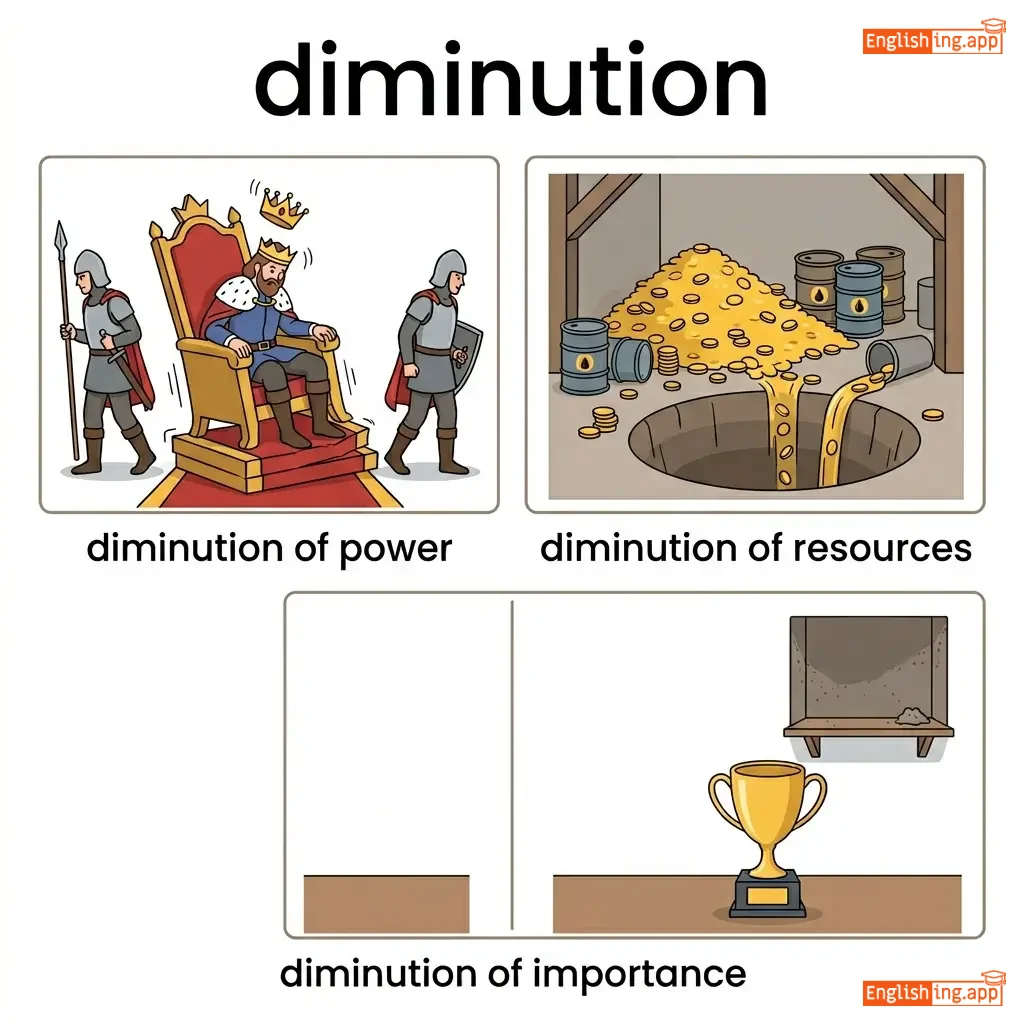
diminution of power, diminution of resources, diminution of importance
••••••
|
No •••••• |
|
#2436
⬇️
|
/dɪˈmɪnɪʃ/
verb
••••••
|
- •••••• | - •••••• |
diminished
••••••
|
diminished
••••••
|
diminishes
••••••
|
diminishing
••••••
|
to make or become less; to reduce in size, importance, or value
••••••
|
Over time, his influence in the company began to diminish. |
- •••••• |
diminish returns |
a situation where the benefit gained is less compared to the effort or investment put in
••••••
|
- •••••• |
reduce, decrease, lessen, weaken, dwindle
••••••
|
increase, enlarge, expand
••••••
|
diminish value, diminish importance, diminish role, diminish returns
••••••
|
No •••••• |
|
#2437
📐
|
/dɪˈmɛnʃən/
noun
(daimenshon)
••••••
|
|
次元
jigen
••••••
|
- •••••• | - •••••• | - •••••• | - •••••• |
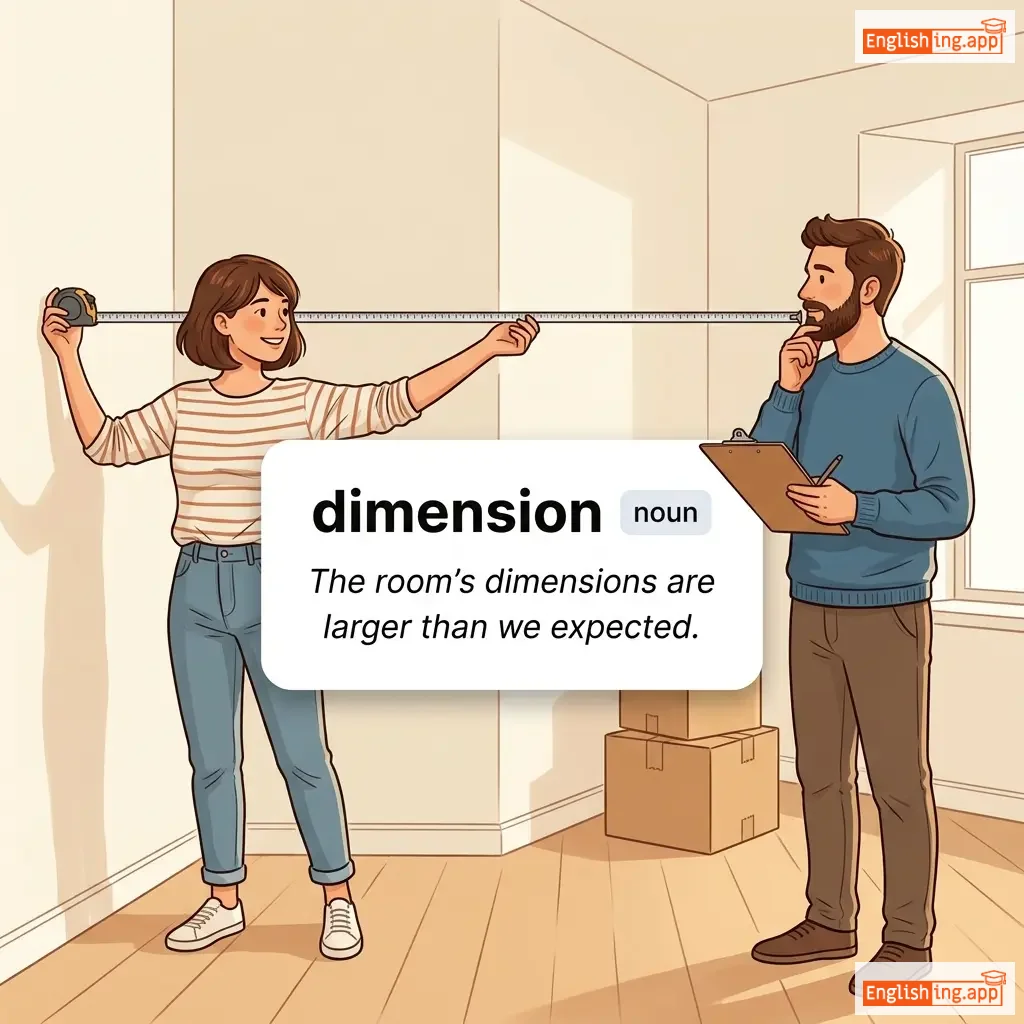
A measurable extent of a particular kind, such as length, breadth, depth, or height.
••••••
|
The room’s dimensions are larger than we expected. |
部屋の次元は私たちが予想していたよりも大きい。
Heya no jigen wa watashitachi ga yosō shite ita yori mo ōkī.
••••••
|
new dimension |
An additional aspect or perspective of a situation.
••••••
|
新たな次元
Aratana jigen
••••••
|
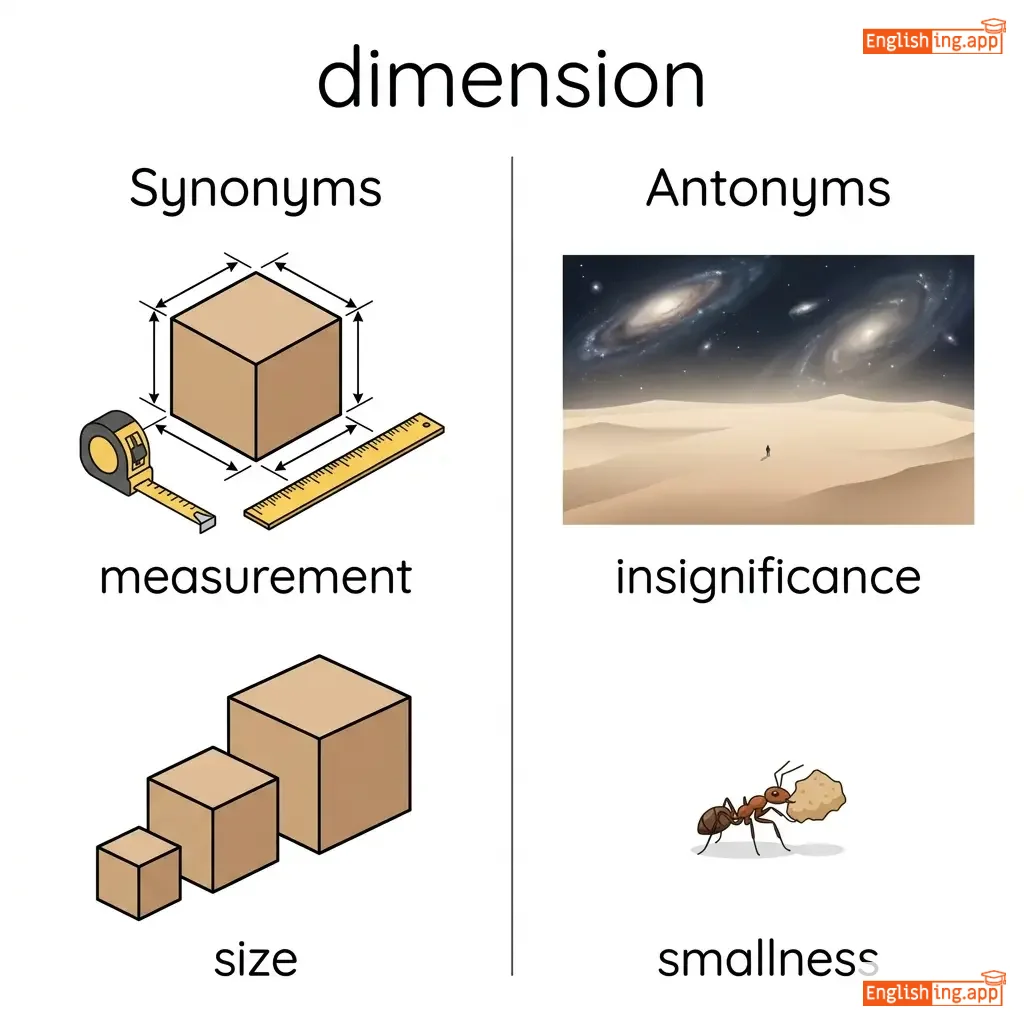
measurement, size, proportion, extent, aspect
••••••
|
insignificance, smallness
••••••
|
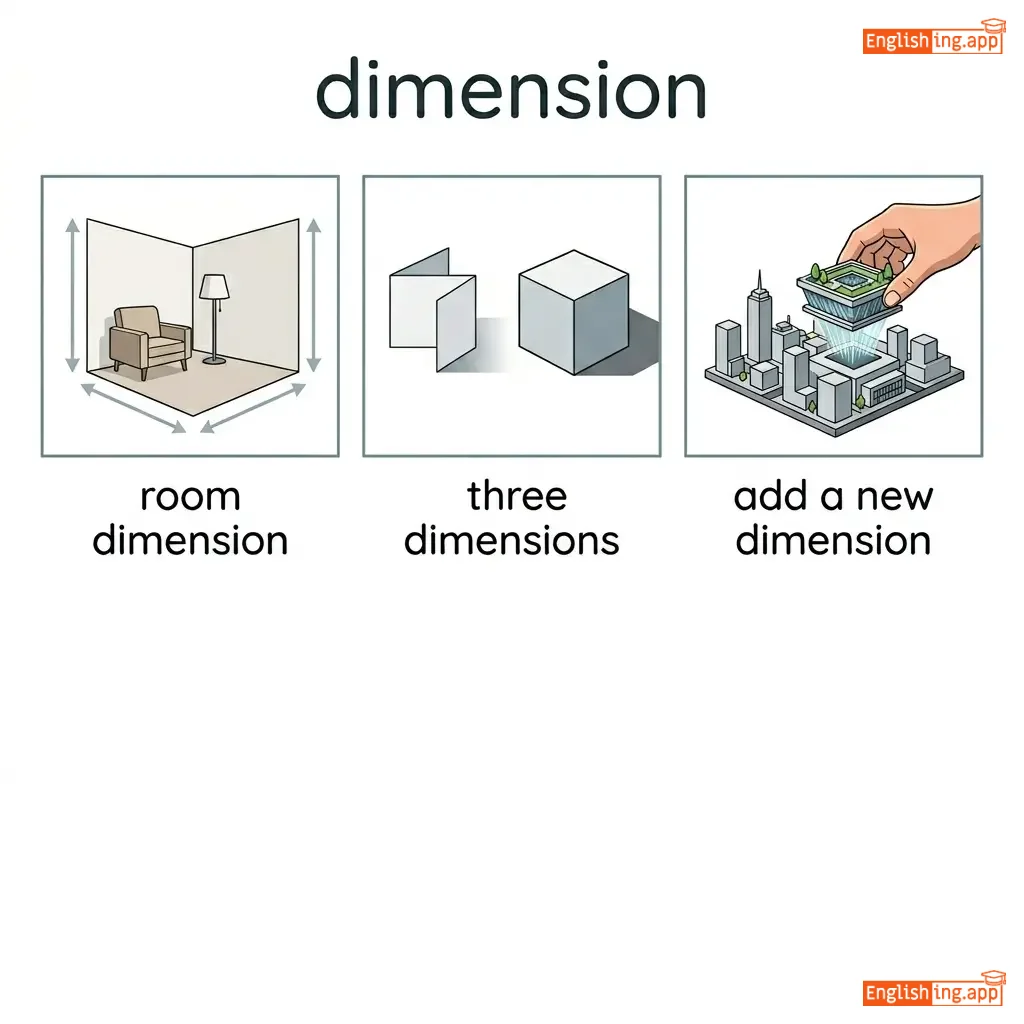
room dimension, three dimensions, add a new dimension
••••••
|
次元 = 次 (next) の次元へ進む感じ!
••••••
|
|
#2438
💧
|
/daɪˈluːt/
verb
(ダイリュート)
••••••
|
- •••••• |
薄める
usumeru
••••••
|
diluted
ダイリューテッド
••••••
|
diluted
ダイリューテッド
••••••
|
dilutes
ダイリューツ
••••••
|
diluting
ダイリューティング
••••••
|
To make a liquid thinner or weaker by adding water or another solvent.
••••••
|
You should dilute the juice with water before serving it to children.
子供たちに出す前にジュースを水で薄めるべきです。
••••••
|
子供たちに出す前にジュースを水で薄めるべきです。
Kodomotachi ni dasu mae ni jūsu o mizu de usumeru beki desu.
••••••
|
dilute the effect
効果を薄める
••••••
|
To make something less effective or powerful.
••••••
|
効果を薄める
kōka o usumeru
••••••
|
weaken, thin, reduce, lessen, diminish
••••••
|
strengthen, concentrate, intensify
••••••
|
dilute solution, dilute juice, dilute effect, dilute mixture
••••••
|
薄めるとは、水を加えることで物を弱めることです。
••••••
|
|
#2439
📚
|
/ˈdɪlɪdʒənt/
adjective
(ディリジェント)
••••••
|
- •••••• |
勤勉
kinben
••••••
|
- •••••• | - •••••• | - •••••• | - •••••• |
Showing care and conscientiousness in one's work or duties.
••••••
|
She is a diligent student who always finishes her assignments on time. |
彼女は時間通りに課題を終わらせる勤勉な学生です。
Kanojo wa jikan dori ni kadai o owaraseru kinben na gakusei desu.
••••••
|
- •••••• | - •••••• | - •••••• |
hardworking, industrious, careful, persistent, attentive
••••••
|
lazy, careless, negligent
••••••
|
diligent student, diligent worker, diligent effort
••••••
|
勤勉 = 毎日努力して、期限通りに終わらせる。
••••••
|
|
#2440
💪
|
/ˈdɪlɪdʒəns/
noun
(dɪlɪdʒəns)
••••••
|
|
勤勉
kinmen
••••••
|
- •••••• | - •••••• | - •••••• | - •••••• |
Careful and persistent work or effort.
••••••
|
Through diligence and determination, she completed her research on time. |
勤勉と決意をもって、彼女は研究を時間通りに終わらせた。
Kinmen to ketsui o motte, kanojo wa kenkyū o jikan dōri ni owaraseta.
••••••
|
due diligence |
The process of carefully investigating before making a decision, especially in business.
••••••
|
適切な勤勉
tekisetsu na kinmen
••••••
|
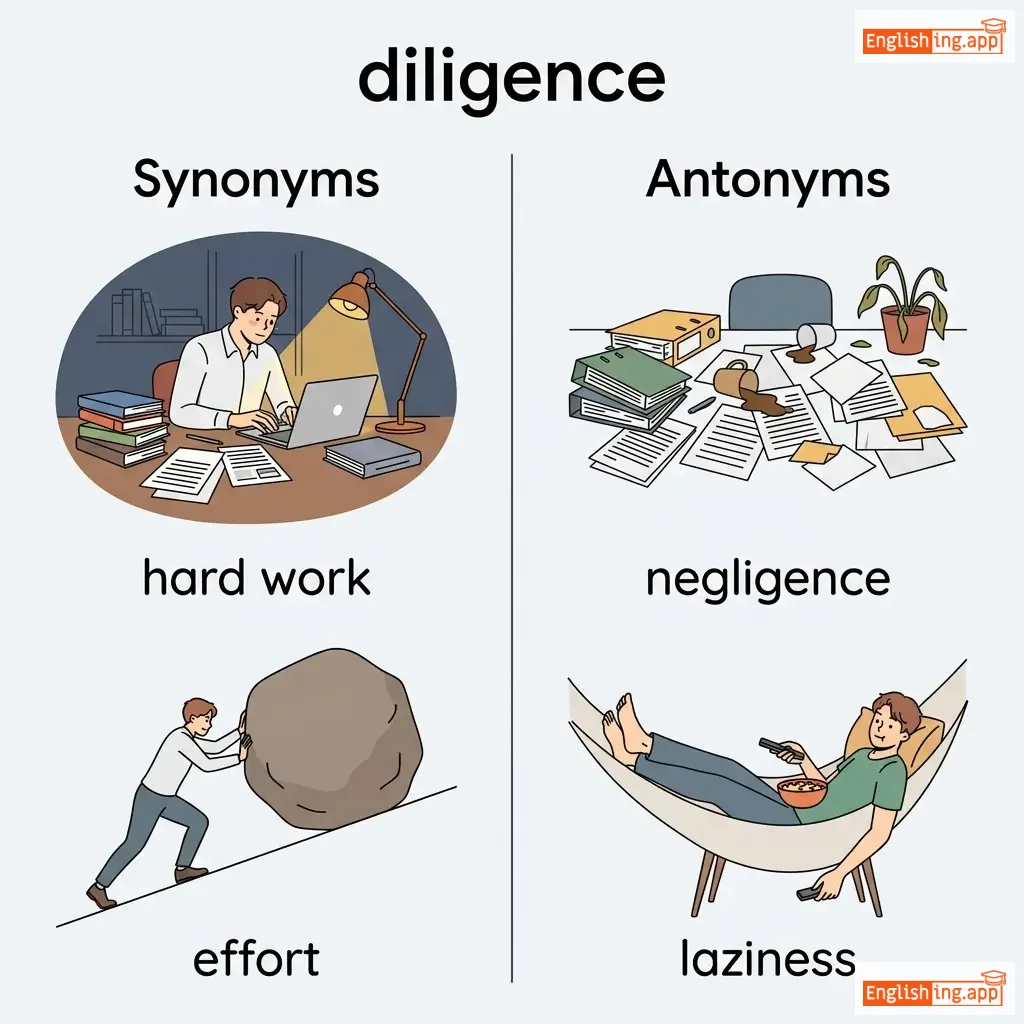
hard work, effort, persistence, perseverance, dedication
••••••
|
negligence, laziness, carelessness
••••••
|
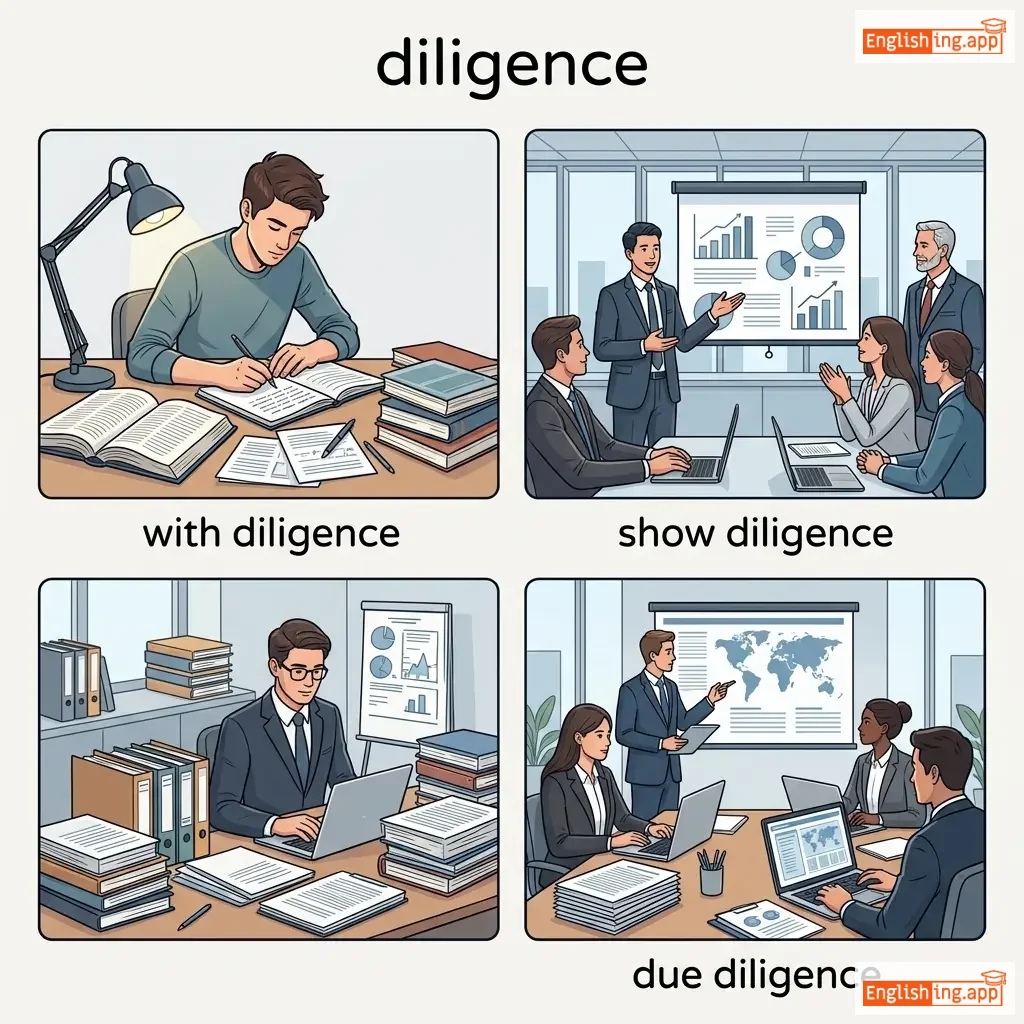
with diligence, show diligence, due diligence
••••••
|
勤勉 = 毎日コツコツ努力することで成功する。
••••••
|
|
#2441
🎨
|
/ˌdɪləˈtænt/
noun
(ディレタント)
••••••
|
- •••••• |
愛好家
aikouka
••••••
|
- •••••• | - •••••• | - •••••• | - •••••• |
A person who takes up an art, activity, or subject merely for amusement, especially in a superficial way.
••••••
|
He was dismissed as a dilettante in the art world because he lacked formal training. |
彼は芸術界で愛好家として退けられました、なぜなら正式な訓練が不足していたからです。
Kare wa geijutsu-kai de aikouka toshite shirizokeraremashita, nazenara seishiki na kunren ga fusokushiteita kara desu.
••••••
|
- •••••• | - •••••• | - •••••• |
amateur, novice, dabbler, nonprofessional, layman
••••••
|
expert, professional, specialist
••••••
|
artistic dilettante, cultural dilettante, intellectual dilettante
••••••
|
Dilettanteは、深い知識なしで楽しみのために物事を行う人を意味します。
••••••
|
|
#2442
🤔
|
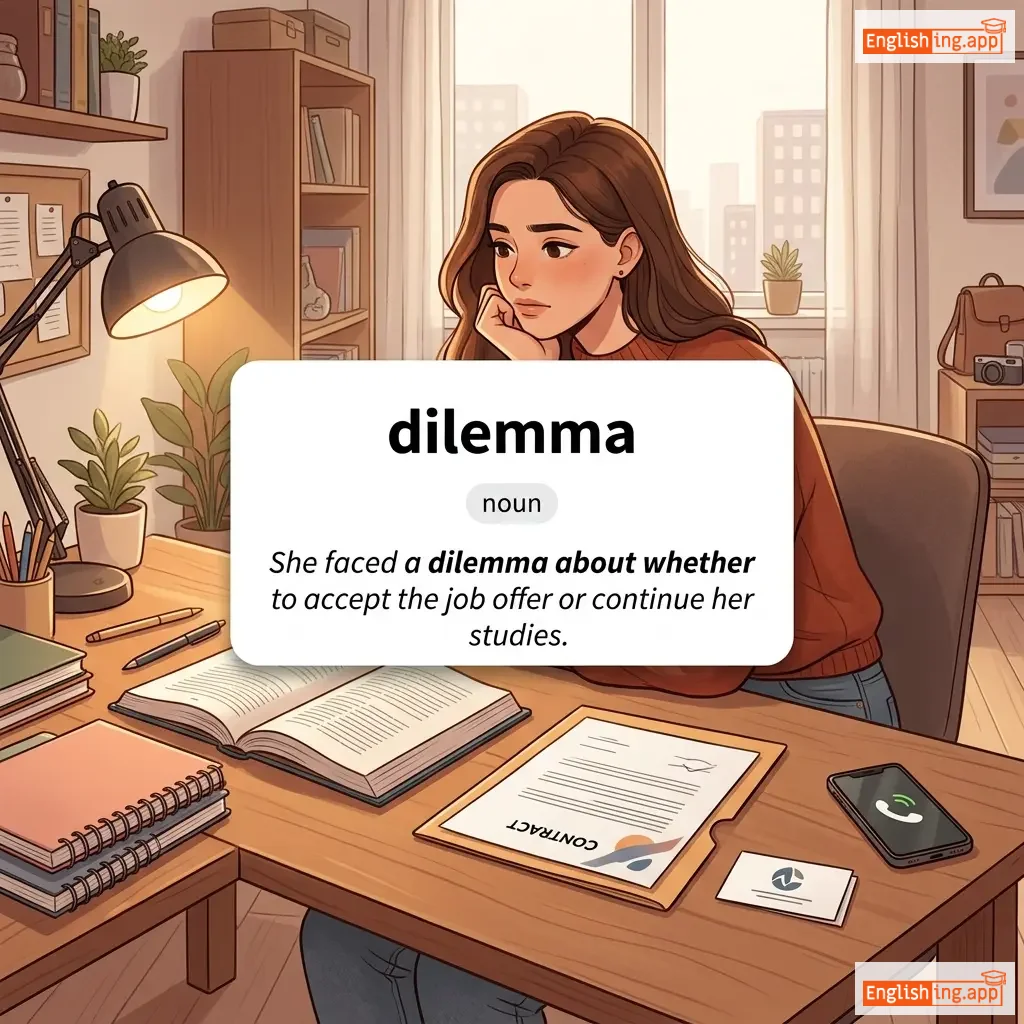
/daɪˈlɛmə/
noun
(ディレマ)
••••••
|
|
ジレンマ
jirenma
••••••
|
- •••••• | - •••••• | - •••••• | - •••••• |
A situation in which a difficult choice has to be made between two or more alternatives.
••••••
|
She faced a dilemma about whether to accept the job offer or continue her studies. |
彼女は仕事のオファーを受け入れるか、学業を続けるかというジレンマに直面していました。
Kanojo wa shigoto no ofā o ukeireru ka, gakugyō o tsuzukeru ka to iu jirenma ni chokumen shiteimashita.
••••••
|
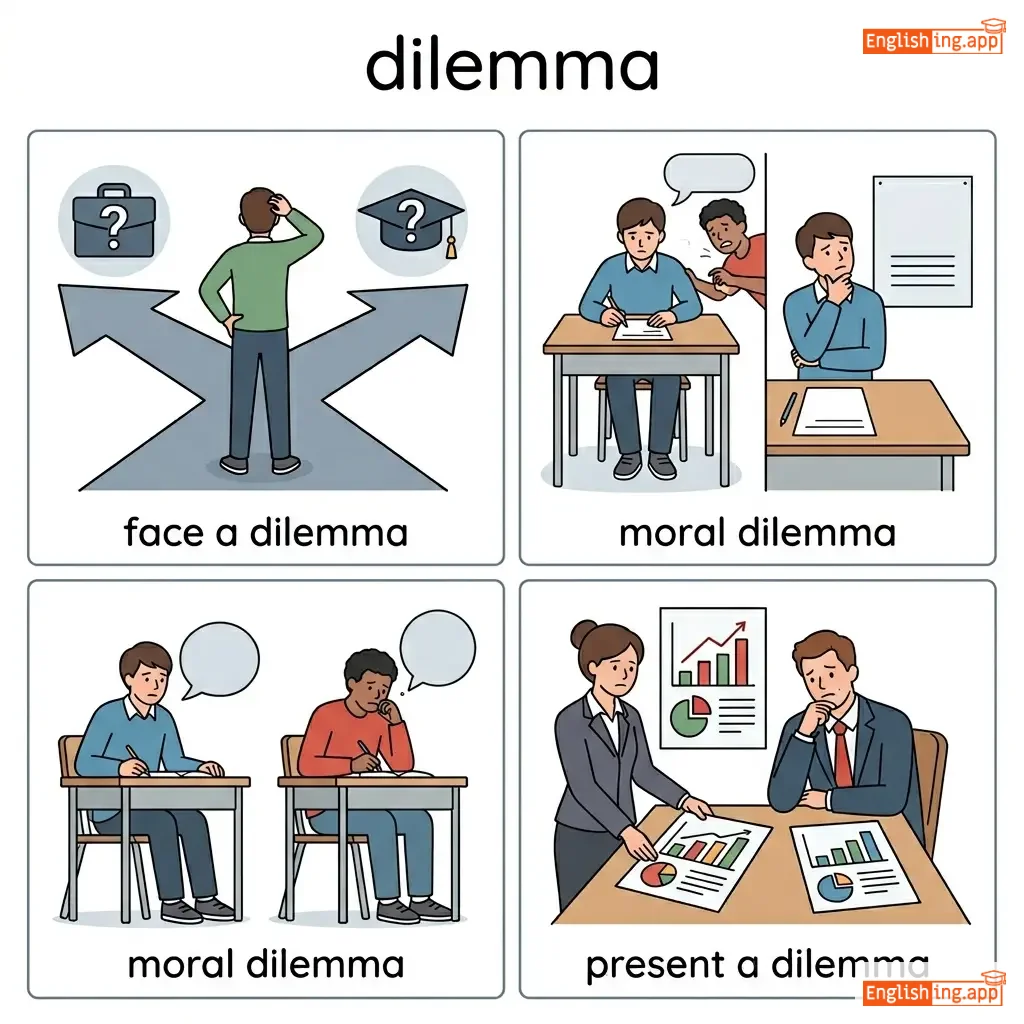
moral dilemma |
A difficult choice involving a conflict of moral principles.
••••••
|
道徳的ジレンマ
dōtoku-teki jirenma
••••••
|
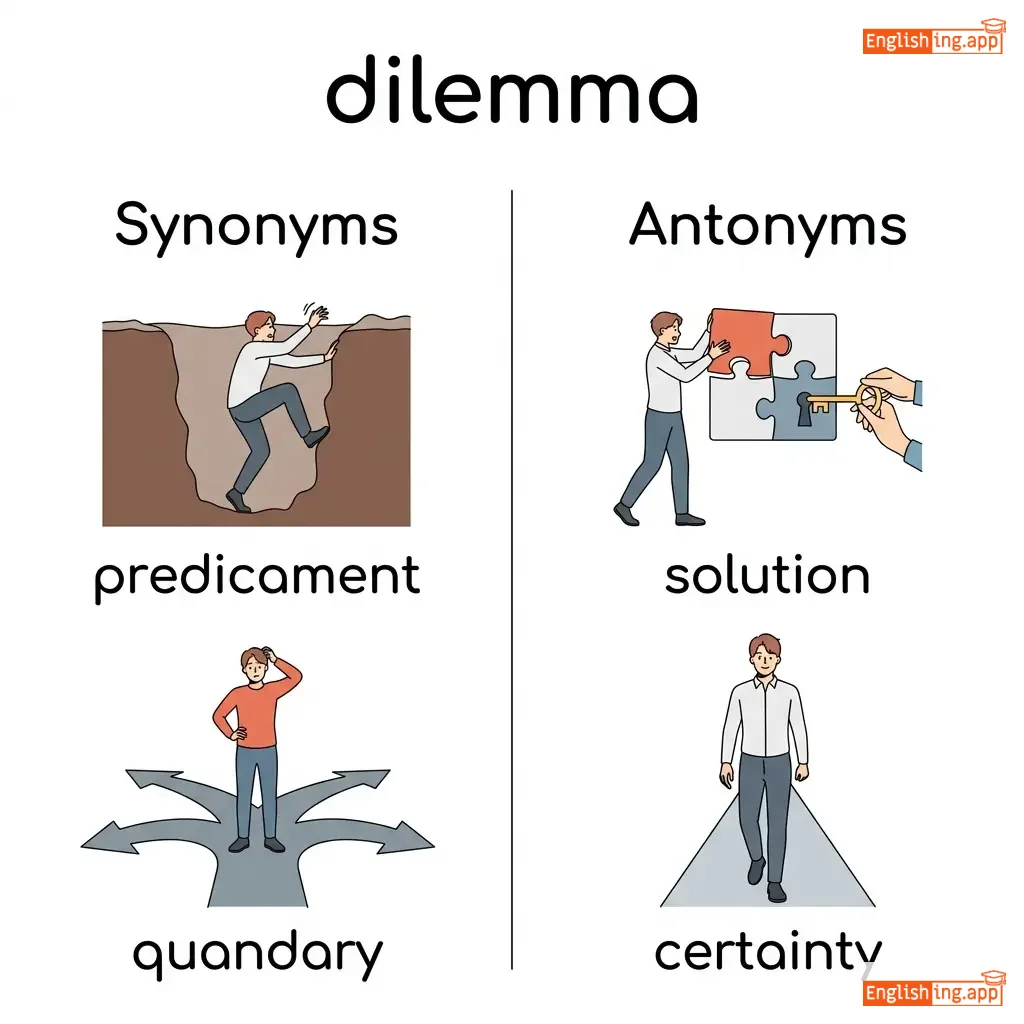
predicament, quandary, problem, difficulty
••••••
|
solution, certainty, clarity
••••••
|
face a dilemma, moral dilemma, present a dilemma
••••••
|
Dilemma は di (二) + lemma (選択) = 二つの難しい選択肢。
••••••
|
|
#2443
🐢
|
/ˈdɪlətɔːri/
adjective
(ディレトリー)
••••••
|
- •••••• |
遅延の
chien no
••••••
|
- •••••• | - •••••• | - •••••• | - •••••• |
Tending to cause delay; slow to act.
••••••
|
The committee was criticized for its dilatory response to the crisis.
委員会は危機に対するその遅延反応で批判されました。
••••••
|
委員会は危機に対するその遅延反応で批判されました。
Iinkai wa kiki ni taisuru sono chien hannō de hihan saremashita.
••••••
|
- •••••• | - •••••• | - •••••• |
slow, delaying, sluggish, tardy
••••••
|
prompt, quick, immediate
••••••
|
dilatory tactics, dilatory behavior, dilatory response
••••••
|
Dilatory は遅延 + 物語、遅れる物語をいつも話す。
••••••
|
|
#2444
🔍
|
/daɪˈleɪt/
verb
(ダイレート)
••••••
|
- •••••• |
拡大する
kakudai suru
••••••
|
dilated
ダイレーテッド
••••••
|
dilated
ダイレーテッド
••••••
|
dilates
ダイレーツ
••••••
|
dilating
ダイレーティング
••••••
|
To make wider, larger, or more open.
••••••
|
The doctor used drops to dilate the patient's pupils.
医者は患者の瞳孔を拡げるために点眼薬を使いました。
••••••
|
医者は患者の瞳孔を拡げるために点眼薬を使いました。
Isha wa kanja no tōkō o hirakeru tame ni tengenyaku o tsukaimashita.
••••••
|
dilate on
ダイレートオン
••••••
|
To speak or write at length on a subject.
••••••
|
詳細に議論する
shōsai ni giron suru
••••••
|
expand, enlarge, widen, open
••••••
|
contract, shrink, compress
••••••
|
dilate pupils, dilate blood vessels, dilate on a subject
••••••
|
拡大する、目を大きくするようなもの!
••••••
|
|
#2445
⚒️
|
/dɪˌlæpɪˈdeɪʃən/
noun
(ディラピデーション)
••••••
|
- •••••• |
荒廃
kouhai
••••••
|
- •••••• | - •••••• | - •••••• | - •••••• |
The state of disrepair or ruin as a result of neglect.
••••••
|
The old temple was in a state of dilapidation.
その古い寺院は廃墟の状態にありました。
••••••
|
その古い寺院は廃墟の状態にありました。
Sono furui jiin wa haikyo no joutai ni arimashita.
••••••
|
- •••••• | - •••••• | - •••••• |
decay, ruin, neglect, deterioration
••••••
|
repair, restoration, upkeep
••••••
|
in dilapidation, state of dilapidation
••••••
|
Dilapidationは、daily + pit + shon = 毎日崩れていく状態、荒廃です。
••••••
|
|
#2446
🔍
|
/ˌdɪfəˈrɛnʃə/
noun
(ディファレンシア)
••••••
|
- •••••• |
区別する特徴
kubetsu suru tokuchou
••••••
|
- •••••• | - •••••• | - •••••• | - •••••• |
A distinguishing characteristic that sets one thing apart from another.
••••••
|
The differentia of humans is their ability to reason abstractly. |
人間の区別する特徴は抽象的に考える能力です。
Ningen no kubetsu suru tokuchou wa choushouteki ni kangaeru nouryoku desu.
••••••
|
- •••••• | - •••••• | - •••••• |
distinction, characteristic, feature, trait, mark
••••••
|
similarity, sameness, uniformity
••••••
|
philosophical differentia, defining differentia, essential differentia
••••••
|
Differentiaは「異なる」という意味、英語の'different'と同じように。
••••••
|
|
#2447
🏚️
|
/dɪˈlæpɪdeɪt/
verb
(ディラピデイト)
••••••
|
- •••••• |
荒廃する
kōhai suru
••••••
|
dilapidated
ディラピデイテッド
••••••
|
dilapidated
ディラピデイテッド
••••••
|
dilapidates
ディラピデイツ
••••••
|
dilapidating
ディラピデイティング
••••••
|
To cause something, especially a building, to fall into ruin or disrepair.
••••••
|
The abandoned house began to dilapidate over the years.
廃墟になった家は年月を経て崩壊し始めました。
••••••
|
廃墟になった家は年月を経て崩壊し始めました。
Haikyo ni natta ie wa toshi o hete hōkai shi hajimemashita.
••••••
|
- •••••• | - •••••• | - •••••• |
decay, deteriorate, crumble, ruin, collapse
••••••
|
restore, renovate, repair
••••••
|
dilapidate quickly, dilapidated house, dilapidating structure
••••••
|
Dilapidateは建物を荒廃させる意味です。廃墟の家のように。
••••••
|
|
#2448
🌀
|
/daɪˈɡrɛsɪv/
adjective
(ダイグレッシブ)
••••••
|
- •••••• |
主題から外れる傾向
shudai kara hazureru keikou
••••••
|
- •••••• | - •••••• | - •••••• | - •••••• |
Tending to depart from the main subject in speech or writing.
••••••
|
The speaker's digressive style made the lecture difficult to follow. |
話者のダイグレッシブなスタイルは講義を追いかけるのを難しくした。
Wakushi no daigureshibu na sutairu wa kougi wo oikakeru no wo muzukashiku shita.
••••••
|
- •••••• | - •••••• | - •••••• |
rambling, wandering, meandering, deviating
••••••
|
focused, direct
••••••
|
digressive remarks, digressive style, digressive tendency
••••••
|
Digressive は日本語で話題からそれること
••••••
|
|
#2449
🛤️
|
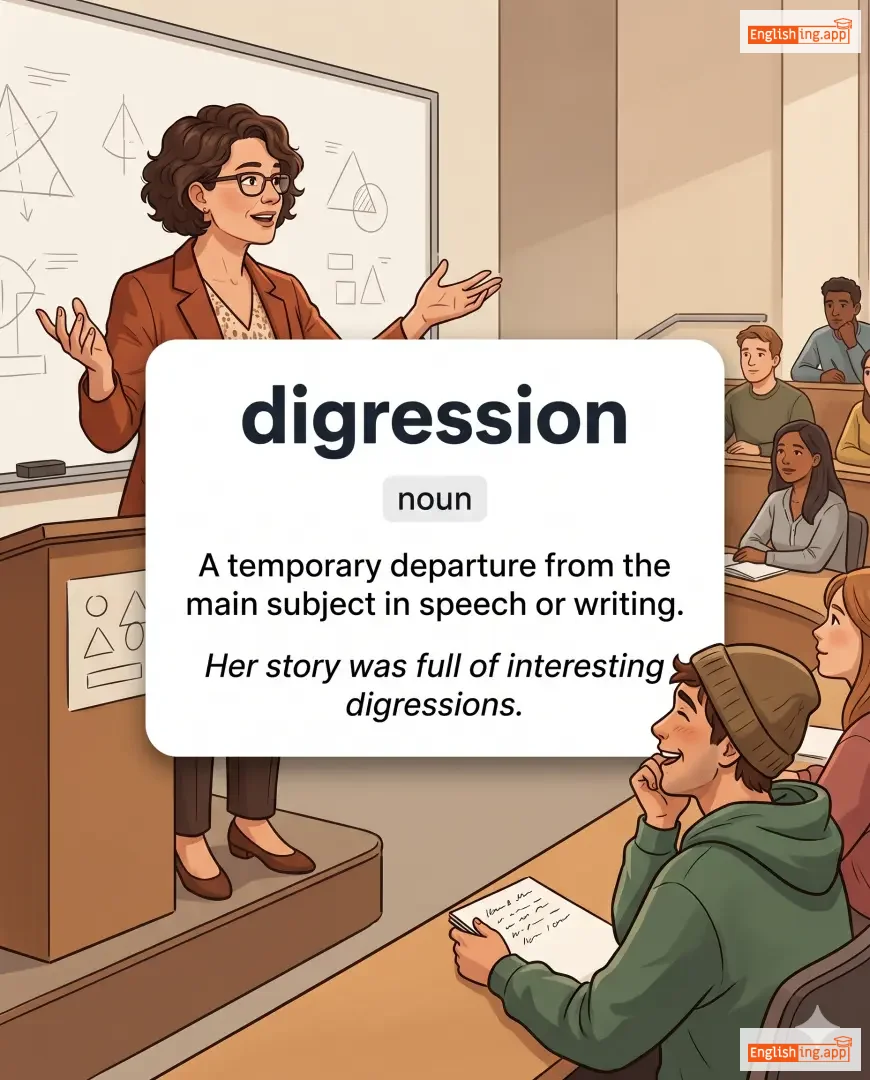
/daɪˈɡrɛʃən/
noun
(ダイグレッション)
••••••
|
|
逸脱
itsudatsu
••••••
|
- •••••• | - •••••• | - •••••• | - •••••• |
A temporary departure from the main subject in speech or writing.
••••••
|
Her story was full of interesting digressions. |
彼女の話は面白い逸脱で満ちていました。
Kanojo no hanashi wa omoshiroi itsudatsu de michite imashita.
••••••
|
- •••••• | - •••••• | - •••••• |
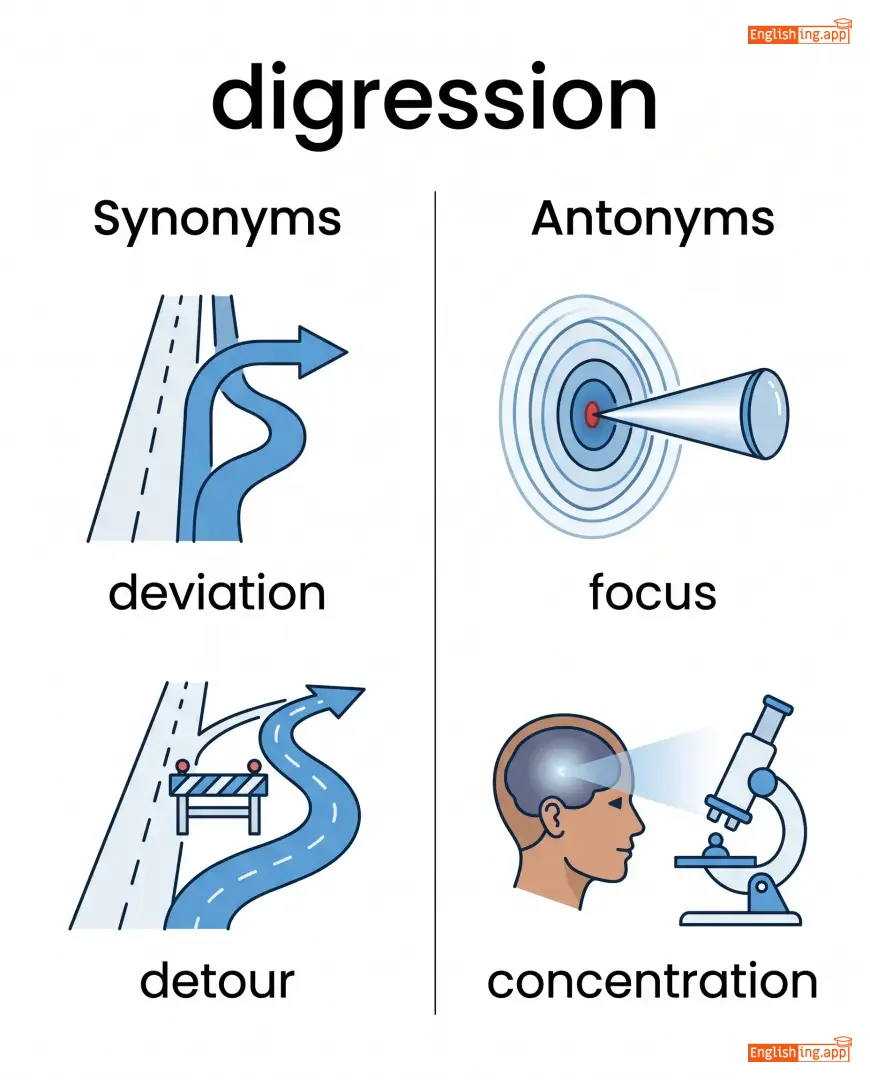
deviation, detour, aside, tangent
••••••
|
focus, concentration
••••••
|
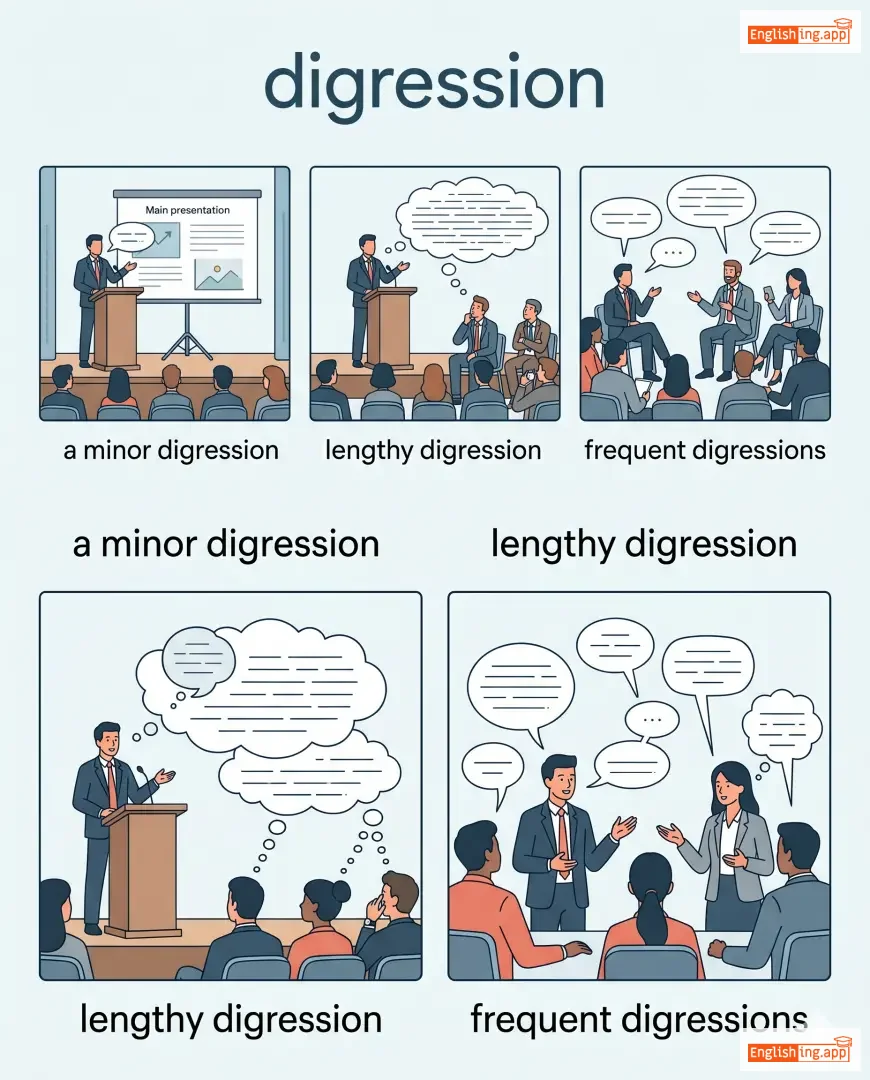
a minor digression, lengthy digression, frequent digressions
••••••
|
Digression は話のテーマから外れること。
••••••
|
|
#2450
↪️
|
/daɪˈɡrɛs/
verb
••••••
|
- •••••• | - •••••• |
digressed
••••••
|
digressed
••••••
|
digresses
••••••
|
digressing
••••••
|
To leave the main subject temporarily in speech or writing.
••••••
|
The professor began to digress from the main topic of the lecture. |
- •••••• |
if I may digress |
used to introduce a temporary departure from the main subject
••••••
|
- •••••• |
deviate, stray, wander, drift, ramble
••••••
|
focus, concentrate
••••••
|
tend to digress, digress into, digress slightly, digress from
••••••
|
No •••••• |
|
#2451
🔡
|
/ˈdaɪɡræf/
noun
(ダイグラフ)
••••••
|
- •••••• |
二重音字
nijuonji
••••••
|
- •••••• | - •••••• | - •••••• | - •••••• |
A pair of letters representing a single sound, such as 'sh' in 'ship'.
••••••
|
In the word 'phone', the letters 'ph' form a digraph. |
'電話'という言葉では、'ph'の文字が二重音字を形成します。
'denwa' to iu kotoba de wa, 'ph' no moji ga nijuonji o keisei shimasu.
••••••
|
- •••••• | - •••••• | - •••••• |
letter pair, combination, grapheme, phoneme unit
••••••
|
single letter, monograph
••••••
|
vowel digraph, consonant digraph, letter digraph, English digraph
••••••
|
Di + graph ということで、2つの文字が音を作る
••••••
|
|
#2452
🎖️
|
/ˈdɪɡnɪˌtɛri/
noun
(ディグニタリー)
••••••
|
- •••••• |
重要人物
jūyō jinbutsu
••••••
|
- •••••• | - •••••• | - •••••• | - •••••• |
a person considered to be important because of high rank or office
••••••
|
Several foreign dignitaries attended the state banquet. |
数人の外国の重要人物が国の晩餐会に出席しました。
Sūnin no gaikoku no jūyō jinbutsu ga kuni no bansankai ni shusseki shimashita.
••••••
|
- •••••• | - •••••• | - •••••• |
official, VIP, leader, notable, luminary
••••••
|
commoner, ordinary person
••••••
|
foreign dignitary, visiting dignitary, local dignitary, high dignitary
••••••
|
Dignitaryは'尊厳'を持つ高位の人物を指す言葉です。
••••••
|
|
#2453
🔢
|
/ˈdɪdʒɪt/
noun
••••••
|
- •••••• | - •••••• | - •••••• | - •••••• | - •••••• | - •••••• |
a numeral from 0 to 9; also a finger or toe
••••••
|
You must enter a four-digit code to unlock the phone. |
- •••••• |
count on your digits |
rely on your fingers for counting
••••••
|
- •••••• |
number, numeral, figure, character
••••••
|
letter, word
••••••
|
digit code, single digit, multi digit, digit system
••••••
|
No •••••• |
|
#2454
🌐
|
/dɪˈfjuːʒən/
noun
••••••
|
- •••••• | - •••••• | - •••••• | - •••••• | - •••••• | - •••••• |
the spreading of something more widely or the movement of particles from high to low concentration
••••••
|
The diffusion of information on social media is rapid. |
- •••••• |
cultural diffusion |
the spread of cultural beliefs and activities from one group to another
••••••
|
- •••••• |
spread, dissemination, circulation, dispersal
••••••
|
concentration, containment
••••••
|
diffusion process, diffusion theory, cultural diffusion, diffusion rate
••••••
|
No •••••• |
|
#2455
💨
|
/dɪˈfjuːzəbl/
adjective
(ディフューザブル)
••••••
|
- •••••• |
拡散可能な
kassan kanou na
••••••
|
- •••••• | - •••••• | - •••••• | - •••••• |
able to spread or be spread through a medium
••••••
|
Oxygen is diffusible through cell membranes. |
酸素は細胞膜を通じて拡散することができます。
Sanso wa saiboumaku wo toshite kassan suru koto ga dekimasu.
••••••
|
- •••••• | - •••••• | - •••••• |
spreadable, permeable, dispersible, distributable
••••••
|
non-permeable, concentrated
••••••
|
diffusible gas, diffusible substance, diffusible molecules
••••••
|
Diffusible は '拡散' - 媒体を通じて広がることができる。
••••••
|
|
#2456
🌫️
|
/dɪˈfjuːz/
verb
••••••
|
|
- •••••• |
diffused
••••••
|
diffused
••••••
|
diffuses
••••••
|
diffusing
••••••
|
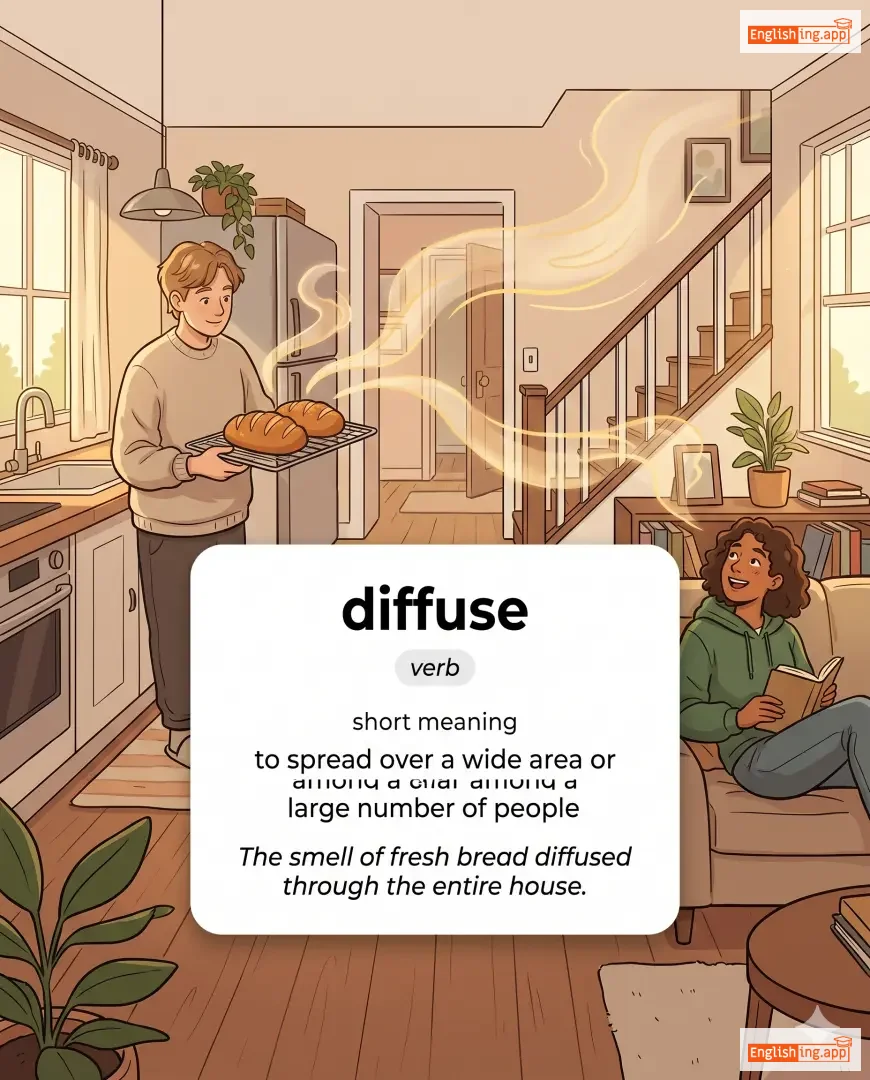
to spread over a wide area or among a large number of people
••••••
|
The smell of fresh bread diffused through the entire house. |
- •••••• |
diffuse tension |
to reduce or calm down stress or conflict
••••••
|
- •••••• |
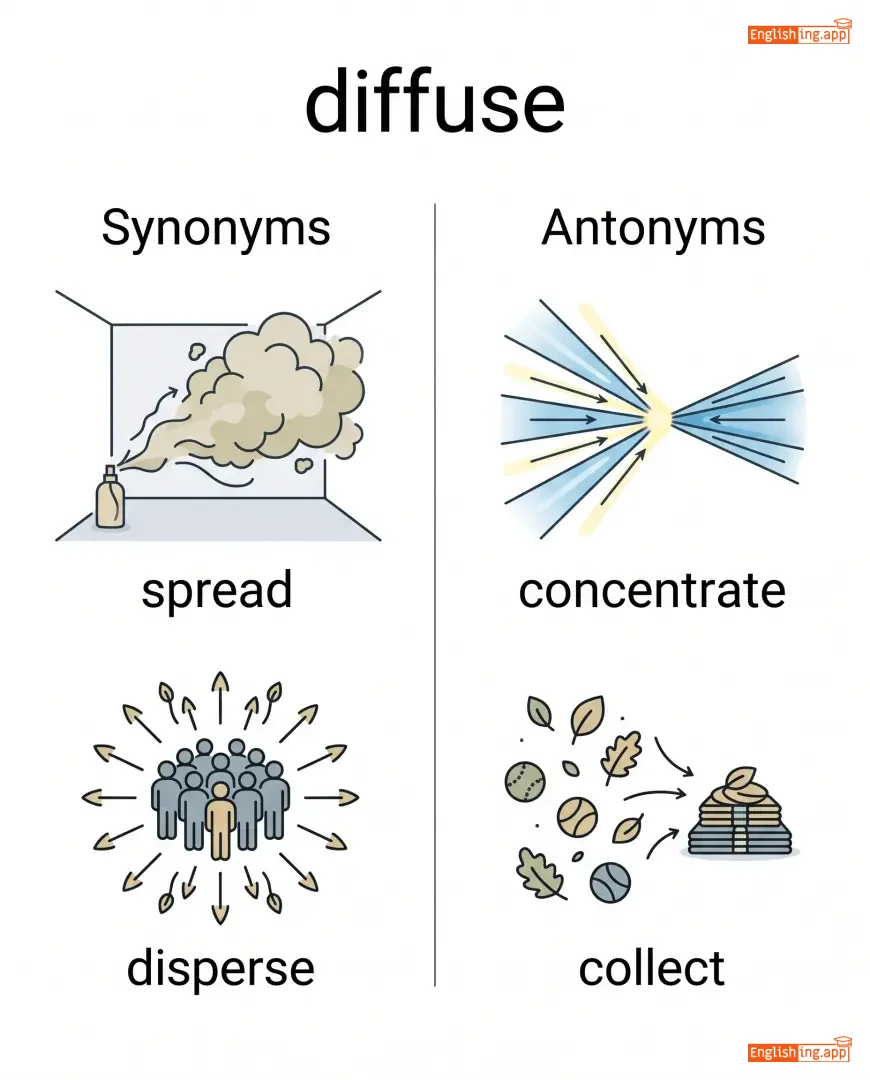
spread, disperse, scatter, distribute, dissipate
••••••
|
concentrate, collect, gather
••••••
|
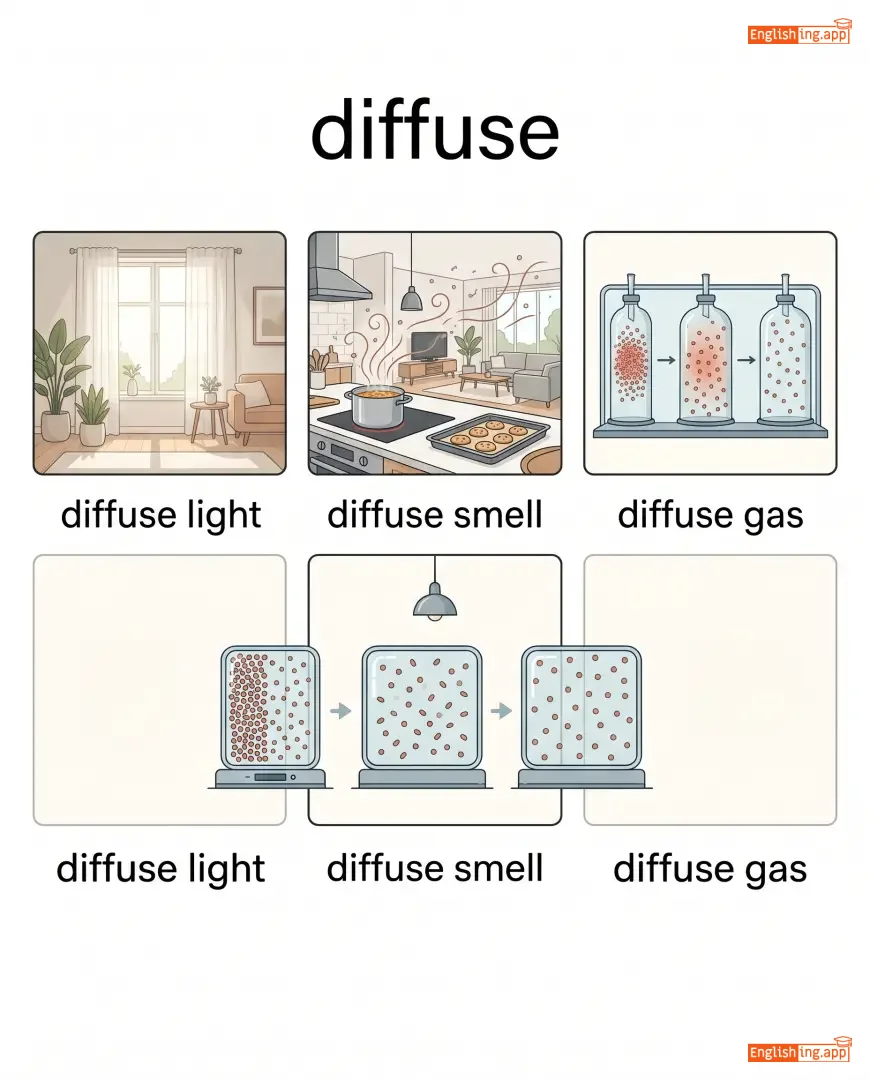
diffuse light, diffuse smell, diffuse gas, diffuse conflict
••••••
|
No •••••• |
|
#2457
🙇
|
/ˈdɪfɪdənt/
adjective
••••••
|
- •••••• | - •••••• | - •••••• | - •••••• | - •••••• | - •••••• |
Shy or lacking confidence in one's own abilities.
••••••
|
He was too diffident to ask a question in class. |
- •••••• | - •••••• | - •••••• | - •••••• |
shy, timid, self-effacing, modest, unconfident
••••••
|
confident, bold, assertive
••••••
|
seem diffident, appear diffident, act diffidently
••••••
|
No •••••• |
|
#2458
😶
|
/ˈdɪfɪdəns/
noun
(ディフィデンス)
••••••
|
|
自信の欠如
jishin no ketsujo
••••••
|
- •••••• | - •••••• | - •••••• | - •••••• |
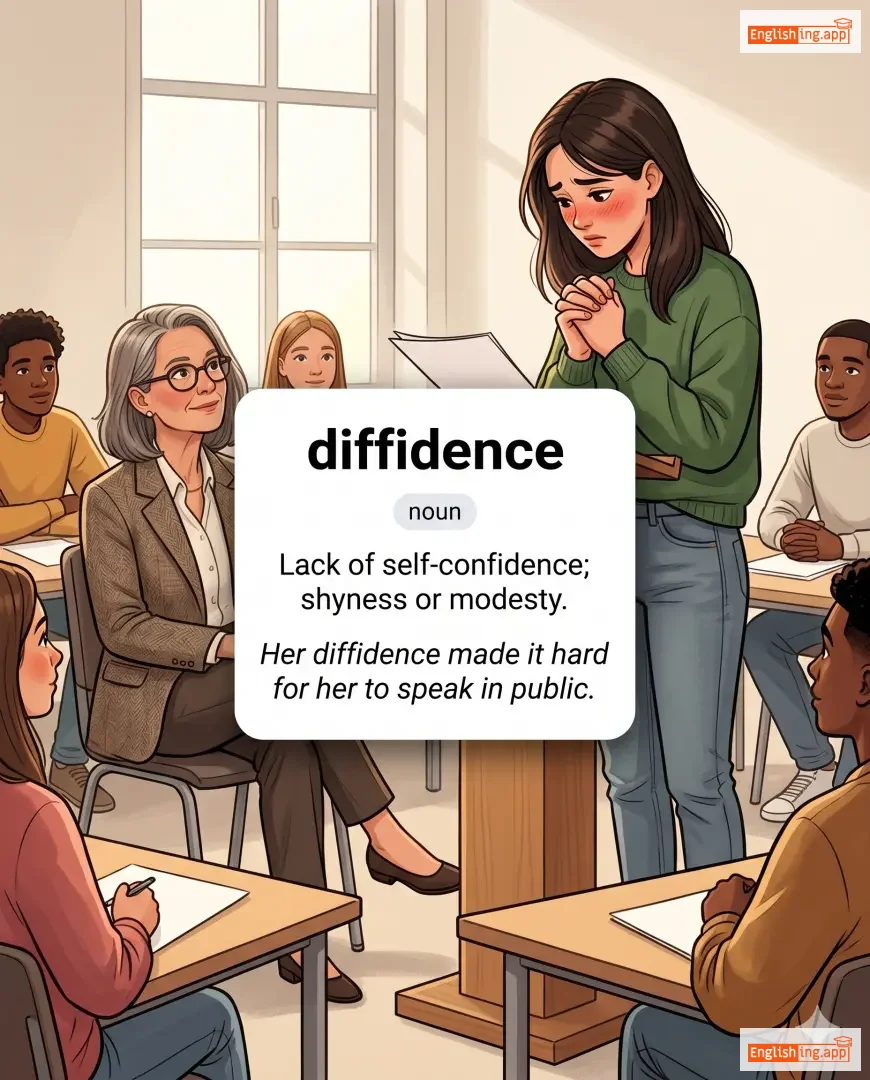
Lack of self-confidence; shyness or modesty.
••••••
|
Her diffidence made it hard for her to speak in public. |
彼女の自信の欠如は、公衆の前で話すのを難しくした。
Kanojo no jishin no ketsujo wa, koushuu no mae de hanasu no o muzukashiku shita.
••••••
|
- •••••• | - •••••• | - •••••• |
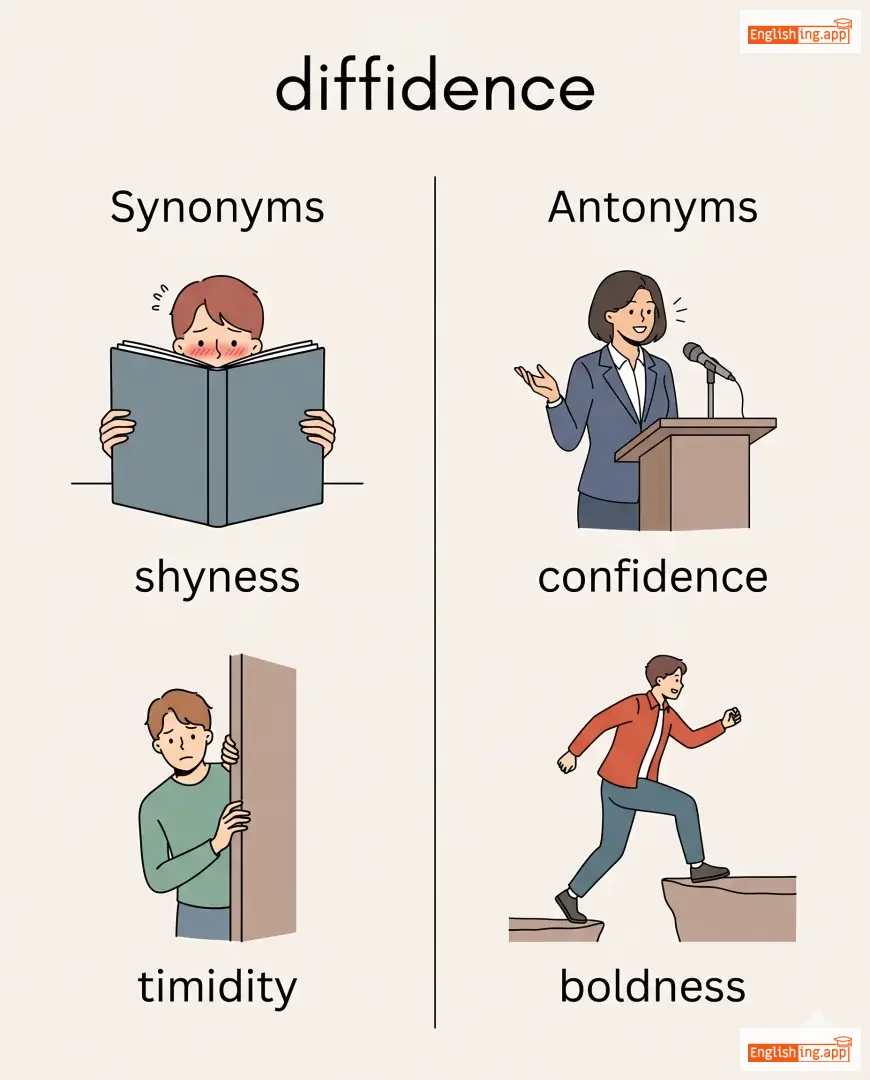
shyness, timidity, insecurity, reserve, modesty
••••••
|
confidence, boldness, assertiveness
••••••
|
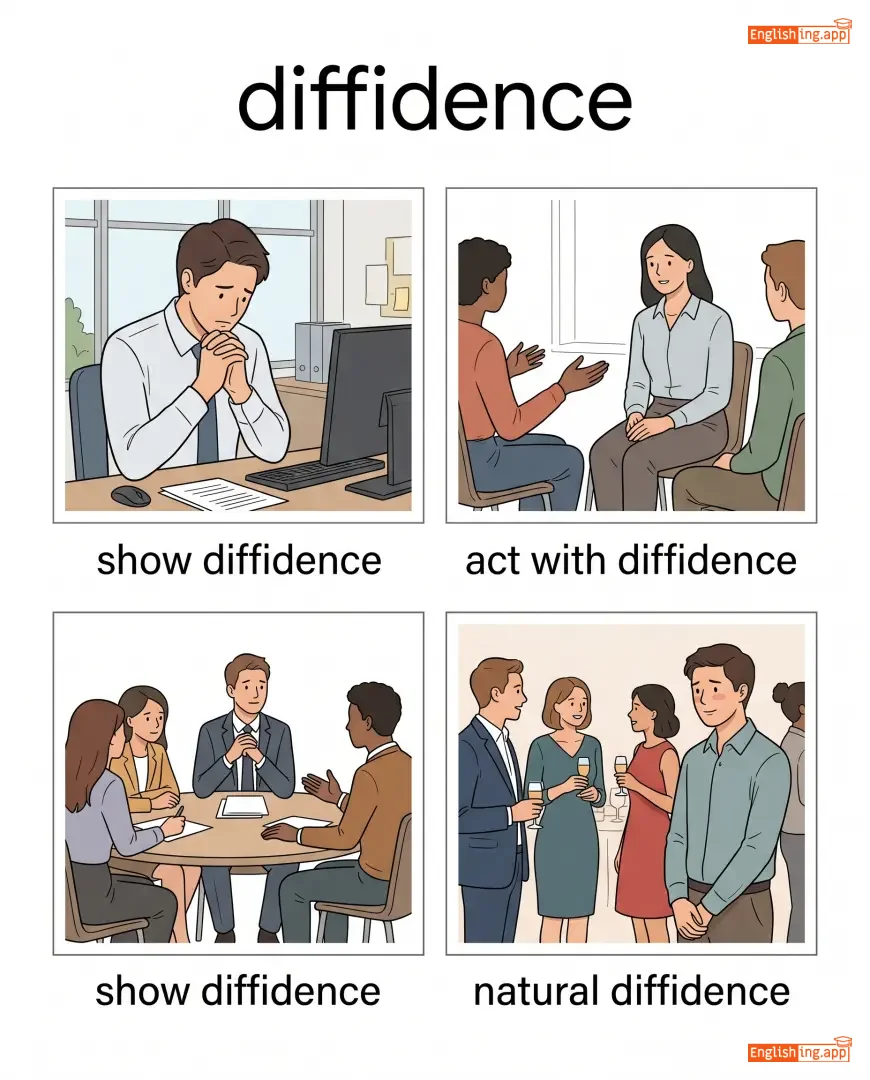
show diffidence, act with diffidence, natural diffidence
••••••
|
Diffidenceは自信の欠如 - D = Down 自信を覚えておこう。
••••••
|
|
#2459
🧩
|
/ˌdɪfəˈrɛnʃieɪt/
verb
(ディファレンシエイト)
••••••
|
- •••••• |
区別する
kubetsu suru
••••••
|
differentiated
ディファレンシエイテッド
••••••
|
differentiated
ディファレンシエイテッド
••••••
|
differentiates
ディファレンシエイツ
••••••
|
differentiating
ディファレンシエイティング
••••••
|
To recognize or make a distinction between things.
••••••
|
It is important to differentiate between fact and opinion.
事実と意見を区別することは重要です。
••••••
|
事実と意見を区別することは重要です。
Jijitsu to iken wo kubetsu suru koto wa juuyou desu.
••••••
|
differentiate yourself
自分を差別化する
••••••
|
To make oneself stand out as unique or distinct.
••••••
|
自分を差別化する
Jibun wo sabetsuka suru
••••••
|
distinguish, discern, separate, identify, contrast
••••••
|
confuse, equate, mix
••••••
|
differentiate clearly, differentiate products, differentiate features
••••••
|
ディファレンシエイトは区別すること - 事実と意見の違いを覚えておいてください。
••••••
|
|
#2460
⚖️
|
/ˌdɪfəˈrɛnʃəl/
adjective
(ディファレンシャル)
••••••
|
- •••••• |
差別的
sabetsuteki
••••••
|
- •••••• | - •••••• | - •••••• | - •••••• |
Relating to or showing a difference; involving a distinction.
••••••
|
There is a differential treatment between the two groups. |
2つのグループ間に差別的な扱いがあります。
Futatsu no gurūpu-kan ni sabetsuteki na atsukai ga arimasu.
••••••
|
- •••••• | - •••••• | - •••••• |
distinct, variable, contrasting, divergent, relative
••••••
|
uniform, identical, equal
••••••
|
differential equation, differential treatment, wage differential
••••••
|
Differentialは違い - 例えば差別的な扱い
••••••
|
Vocabulary Quiz
Test your vocabulary by matching words with their translations or meanings.
Login to take the quiz
Comments (0)
Share your thoughts and join the discussion.
Join the discussion by logging in
Login to CommentNo comments yet
Be the first to share your thoughts!