

翻訳
過去
過去分詞
三人称単数
動名詞
意味
例文
例文の翻訳
同義語
対義語
コロケーション
ニーモニック
Swipe left or right, or use the buttons. Tap image to zoom.
例文の翻訳
単語
Lesson 17Lesson 17 - マスクトグル
|
絵文字
|
単語 | Images | 翻訳 | 過去 | 過去分詞 | 三人称単数 | 動名詞 | 意味 | 例文 | 例文の翻訳 | 表現例 | 表現例の意味 | 表現例の翻訳 | 同義語 | 対義語 | コロケーション | ニーモニック |
|---|---|---|---|---|---|---|---|---|---|---|---|---|---|---|---|---|---|
|
#481
😟
|
/ˈæŋkʃəs/
adjective
(æŋkʃəs)
••••••
|
- •••••• |
不安な
fuan na
••••••
|
- •••••• | - •••••• | - •••••• | - •••••• |
feeling worried, nervous, or uneasy about something
••••••
|
She felt anxious before her job interview. |
彼女は面接前に不安を感じていた。
Kanojo wa mensetsu mae ni fuan o kanjite ita.
••••••
|
anxious about |
to feel worried or uneasy regarding something
••••••
|
〜について不安な
〜ni tsuite fuan na
••••••
|
worried, nervous, uneasy, restless, apprehensive
••••••
|
calm, relaxed, confident
••••••
|
feel anxious, anxious about, anxious to, anxious for
••••••
|
不安なは面接前に皆が感じるものです。
••••••
|
|
#482
📖
|
/əˈpɒ.krɪ.fəl/
adjective
(アポクリファル)
••••••
|
- •••••• |
疑わしい
utagawashii
••••••
|
- •••••• | - •••••• | - •••••• | - •••••• |
Of doubtful authenticity, though widely circulated as true.
••••••
|
The story about him saving the village is probably apocryphal. |
彼が村を救ったという話は、おそらく疑わしい。
Kare ga mura o sukutta to iu hanashi wa, osoraku utagawashii.
••••••
|
- •••••• | - •••••• | - •••••• |
doubtful, mythical, legendary, false, fictitious
••••••
|
authentic, genuine, true
••••••
|
apocryphal story, apocryphal tale, apocryphal legend
••••••
|
Apocryphalは疑わしいという意味 📚 - 偽の話はいつもアポクリファルです。
••••••
|
|
#483
💥
|
/əˌpɒk.əˈlɪp.tɪk/
adjective
(アポカリプティック)
••••••
|
- •••••• |
終末的
shūmatsuteki
••••••
|
- •••••• | - •••••• | - •••••• | - •••••• |
Describing the end of the world, or something catastrophic and disastrous.
••••••
|
The movie depicts an apocalyptic future after a nuclear war. |
映画は核戦争後の終末的な未来を描いています。
Eiga wa kaku sensō go no shūmatsuteki na mirai o egaiteimasu.
••••••
|
apocalyptic vision |
A grim or catastrophic outlook about the future.
••••••
|
終末的なビジョン
shūmatsuteki na bijon
••••••
|
catastrophic, disastrous, destructive, doomsday
••••••
|
hopeful, promising, optimistic
••••••
|
apocalyptic event, apocalyptic vision, apocalyptic story, apocalyptic disaster
••••••
|
アポカリプティックは終末的な 💥 - 終末的な未来、簡単に覚える
••••••
|
|
#484
😎
|
/əˈplɒm/
noun
••••••
|
- •••••• | - •••••• | - •••••• | - •••••• | - •••••• | - •••••• |
Complete and confident self-assurance or poise.
••••••
|
She handled the difficult questions with aplomb. |
- •••••• | - •••••• | - •••••• | - •••••• |
confidence, assurance, composure, poise, calmness
••••••
|
nervousness, insecurity, hesitation
••••••
|
with aplomb, show aplomb, handle with aplomb
••••••
|
No •••••• |
|
#485
🍯
|
/ˈæp.ɪˌkʌl.tʃər/
noun
(アピカルチャー)
••••••
|
- •••••• |
養蜂業
yōhōgyō
••••••
|
- •••••• | - •••••• | - •••••• | - •••••• |
The practice of keeping and raising bees for honey and other products.
••••••
|
Apiculture plays a vital role in agriculture by supporting pollination. |
養蜂業は農業において重要な役割を果たしており、受粉をサポートしています。
Yōhōgyō wa nōgyō ni oite jūyōna yakuwari o hatashite ori, jufun o sapōto shiteimasu.
••••••
|
- •••••• | - •••••• | - •••••• |
beekeeping, apiary management, honey farming, bee culture
••••••
|
hunting, neglect, destruction
••••••
|
practice apiculture, study apiculture, apiculture industry, apiculture training
••••••
|
Bee 🐝と業(業務)、蜂を育てる仕事 - 養蜂業。
••••••
|
|
#486
🐝
|
/ˈeɪ.pi.ˌɛr.i/
noun
(アピアリー)
••••••
|
- •••••• |
養蜂場
yōhōjō
••••••
|
- •••••• | - •••••• | - •••••• | - •••••• |
A place where beehives are kept, especially for commercial purposes.
••••••
|
The farmer built a new apiary to produce organic honey. |
農家は有機蜂蜜を生産するために新しい養蜂場を建てました。
Nōka wa yūkihachimitsu o seisan suru tame ni atarashī yōhōjō o tatemashita.
••••••
|
- •••••• | - •••••• | - •••••• |
beeyard, hive, beekeeping site, honey farm
••••••
|
wilderness, desert, barren land
••••••
|
manage an apiary, visit an apiary, apiary business, apiary project
••••••
|
Apiaryは養蜂場を意味します🐝 - Api (蜂) とy (庭)を組み合わせて覚えましょう。
••••••
|
|
#487
🐝
|
/ˈeɪ.pi.ə.rɪst/
noun
(アピアリスト)
••••••
|
- •••••• |
養蜂家
yōhōka
••••••
|
- •••••• | - •••••• | - •••••• | - •••••• |
a person who keeps and tends bees for honey production
••••••
|
The apiarist collected fresh honey from the hives. |
養蜂家は巣箱から新鮮な蜂蜜を集めました。
Yōhōka wa subako kara shinsen na hachimitsu o atsumemashita.
••••••
|
- •••••• | - •••••• | - •••••• |
beekeeper, honey farmer
••••••
|
non-beekeeper, consumer
••••••
|
skilled apiarist, professional apiarist, apiarist suit
••••••
|
Apiarist は養蜂家のように、蜂を育てて蜜を集めます。
••••••
|
|
#488
✍️
|
/ˌæf.əˈrɪs.tɪk/
adjective
(アフォリスティック)
••••••
|
- •••••• |
格言的スタイル
kakugen-teki sutairu
••••••
|
- •••••• | - •••••• | - •••••• | - •••••• |
expressed in the style of a short, witty saying
••••••
|
Her writing style is concise and aphoristic. |
彼女の執筆スタイルは簡潔で格言的です。
Kanojo no shippitsu sutairu wa kanketsu de kakugen-teki desu.
••••••
|
- •••••• | - •••••• | - •••••• |
pithy, concise, epigrammatic, succinct
••••••
|
wordy, verbose
••••••
|
aphoristic style, aphoristic remark, aphoristic wisdom
••••••
|
アフォリスティックは、格言のような — 短くて機知に富んだ書き方を意味します。
••••••
|
|
#489
💡
|
/ˈæf.ə.rɪ.zəm/
noun
••••••
|
- •••••• | - •••••• | - •••••• | - •••••• | - •••••• | - •••••• |
a short, witty saying that expresses a general truth or principle
••••••
|
He began his speech with an aphorism about life and success. |
- •••••• | - •••••• | - •••••• | - •••••• |
maxim, proverb, saying, adage, epigram
••••••
|
nonsense, rambling
••••••
|
famous aphorism, wise aphorism, literary aphorism
••••••
|
No •••••• |
|
#490
🧠
|
/əˈfeɪ.ʒə/
noun
••••••
|
- •••••• | - •••••• | - •••••• | - •••••• | - •••••• | - •••••• |
a medical condition that causes loss of ability to speak or understand language
••••••
|
After the stroke, she was diagnosed with aphasia. |
- •••••• | - •••••• | - •••••• | - •••••• |
speech disorder, language impairment, muteness, dysphasia
••••••
|
fluency, articulation
••••••
|
aphasia therapy, aphasia patient, speech aphasia
••••••
|
No •••••• |
|
#491
⛰️
|
/ˈeɪ.pɛks/
noun
(エイペックス)
••••••
|
|
頂点
chouten
••••••
|
- •••••• | - •••••• | - •••••• | - •••••• |
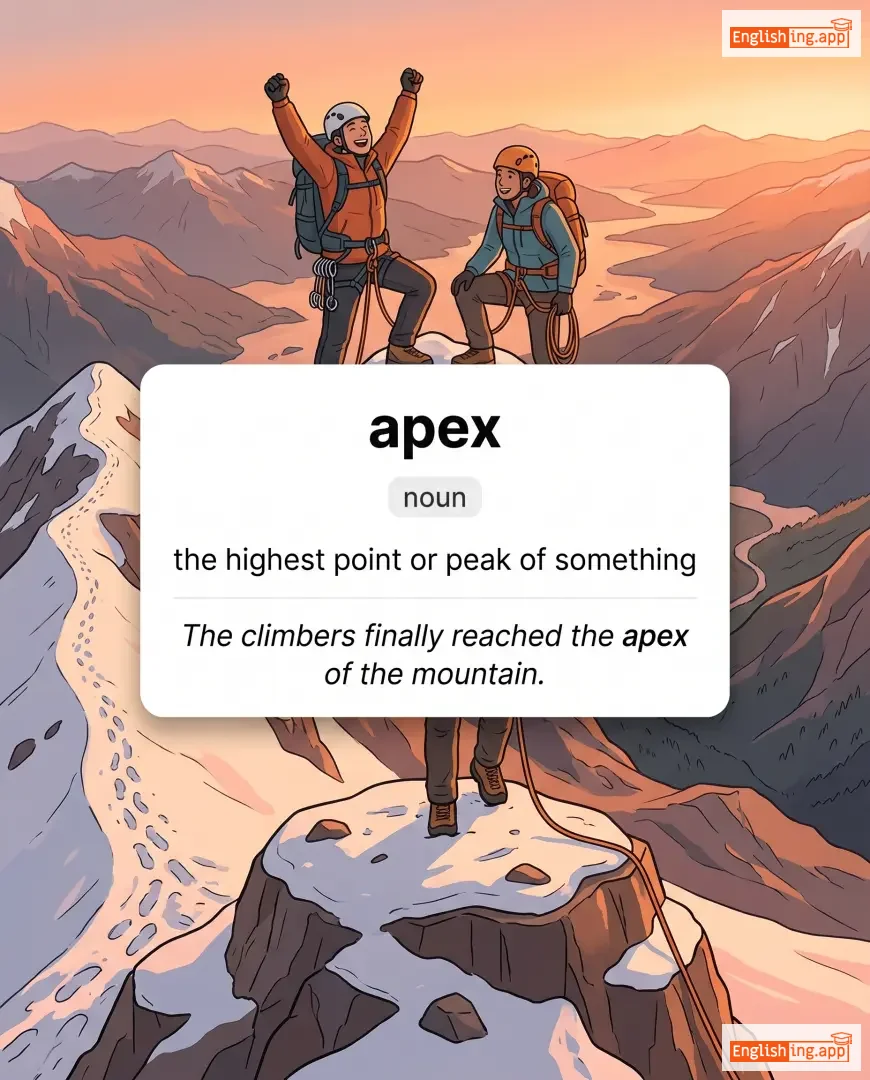
the highest point or peak of something
••••••
|
The climbers finally reached the apex of the mountain. |
登山者たちは最終的に山の頂点に達しました。
Tozanshatachi wa saishūteki ni yama no chōten ni tasshimashita.
••••••
|
at the apex of |
at the highest or most successful point
••••••
|
頂点で
chōten de
••••••
|
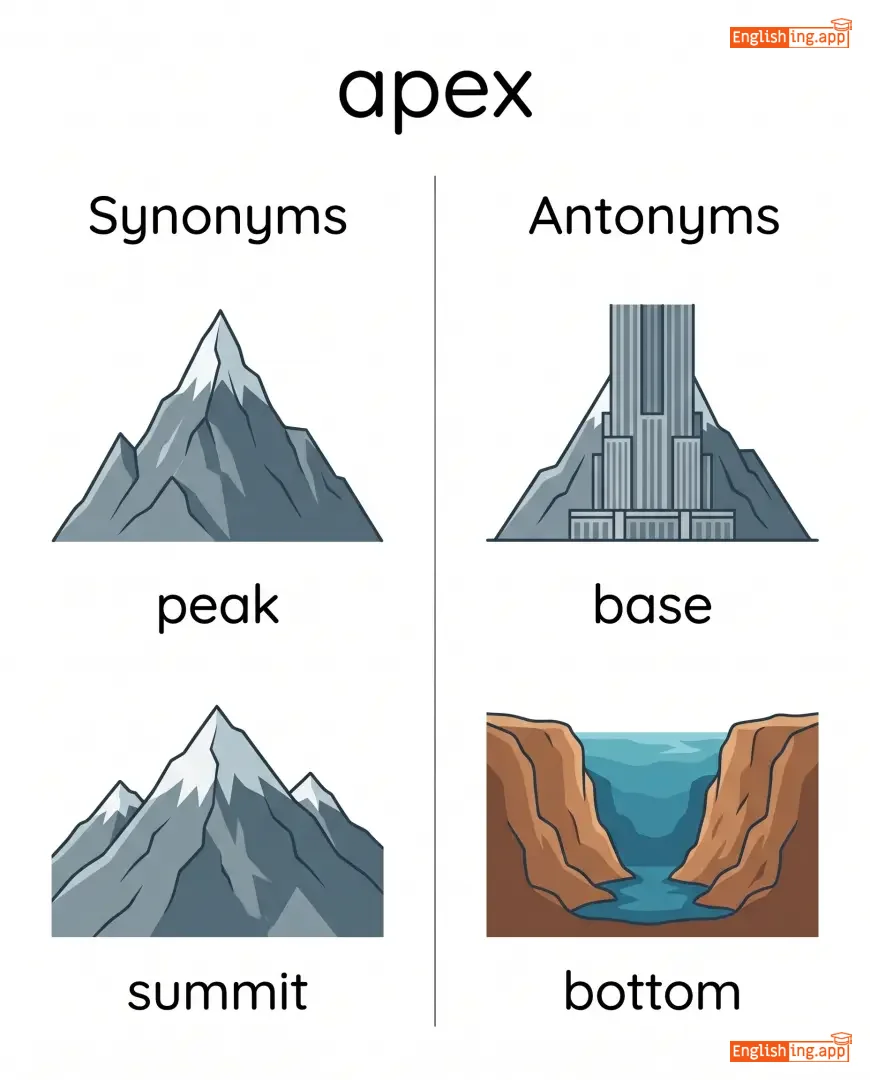
peak, summit, pinnacle, climax, acme
••••••
|
base, bottom, nadir
••••••
|
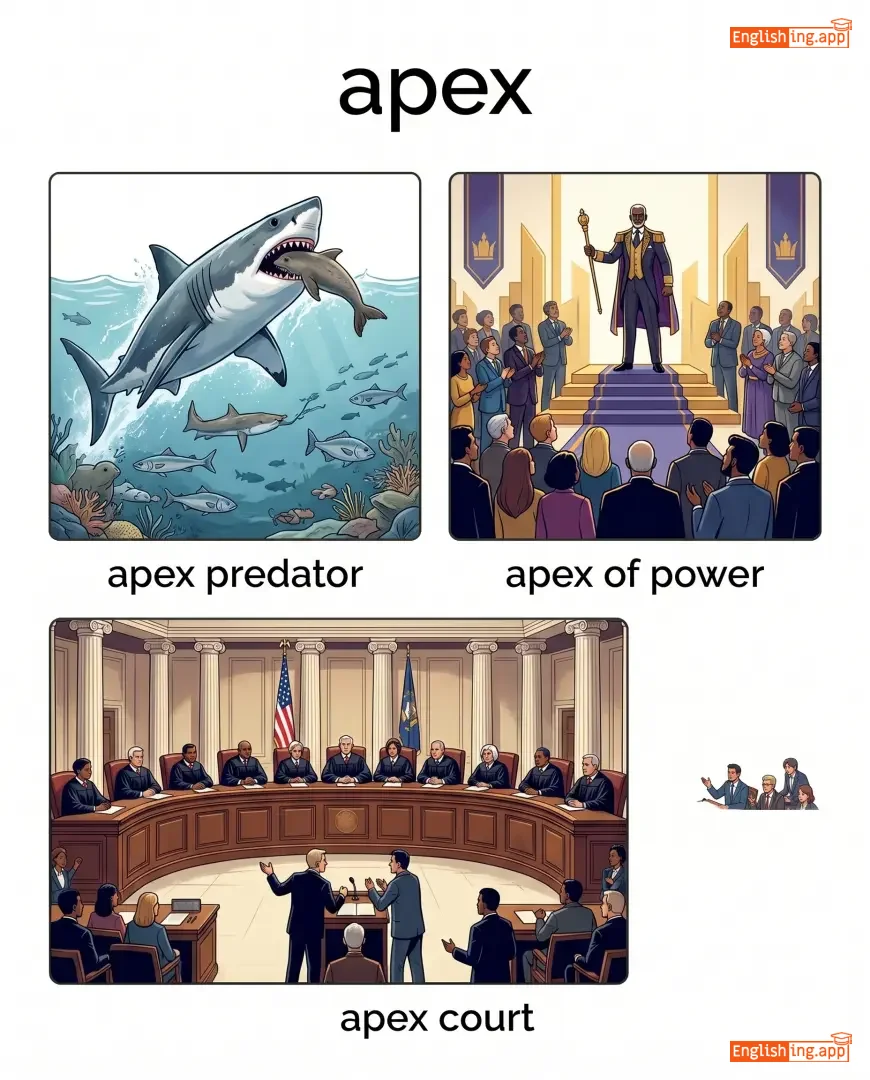
apex predator, apex of power, apex court, apex of success
••••••
|
Apexは最も高い点を意味します。ピラミッドの頂点のように。
••••••
|
|
#492
📸
|
/ˈæpərtʃər/
noun
(アパーチャ)
••••••
|
- •••••• |
開口部 / 穴
kaikōbu / ana
••••••
|
- •••••• | - •••••• | - •••••• | - •••••• |
an opening, hole, or gap, especially one that lets in light
••••••
|
Light entered through the small aperture in the wall.
光は壁の小さなアパーチャを通って入った。
••••••
|
光は壁の小さな開口部を通って入った。
Hikari wa kabe no chiisana kaikōbu wo tōtte haitta.
••••••
|
- •••••• | - •••••• | - •••••• |
opening, hole, gap, orifice, slit
••••••
|
closure, blockage, seal
••••••
|
camera aperture, wide aperture, aperture size, aperture control
••••••
|
Apertureは開口部を意味します — カメラのapertureを通して光が入ります。
••••••
|
|
#493
🦍
|
/eɪp/
noun/verb
(エイプ)
••••••
|
- •••••• |
尾のない猿に似た大型の霊長類 / まねする
o no nai saru ni nita ōgata no reichōrui / manesuru
••••••
|
aped
エイプド
••••••
|
aped
エイプド
••••••
|
apes
エイプス
••••••
|
aping
エイピング
••••••
|
a large primate similar to a monkey but without a tail; as a verb, to imitate or mimic
••••••
|
Children often ape the behavior of adults.
子供たちは大人の行動をよくまねします。
••••••
|
子供たちは大人の行動をよくまねします。
Kodomotachi wa otona no kōdō o yoku maneshimasu.
••••••
|
go ape
アペになる
••••••
|
to become very excited, angry, or enthusiastic
••••••
|
非常に興奮する
hijō ni kōfun suru
••••••
|
imitate, mimic, copy, simulate
••••••
|
originate, innovate
••••••
|
ape behavior, ape around, go ape, ape man
••••••
|
Apeは猿を意味し、apeをすることはまねすることです。
••••••
|
|
#494
😑
|
/ˈæpəθi/
noun
(アパシー)
••••••
|
|
無関心
mukanshin
••••••
|
- •••••• | - •••••• | - •••••• | - •••••• |
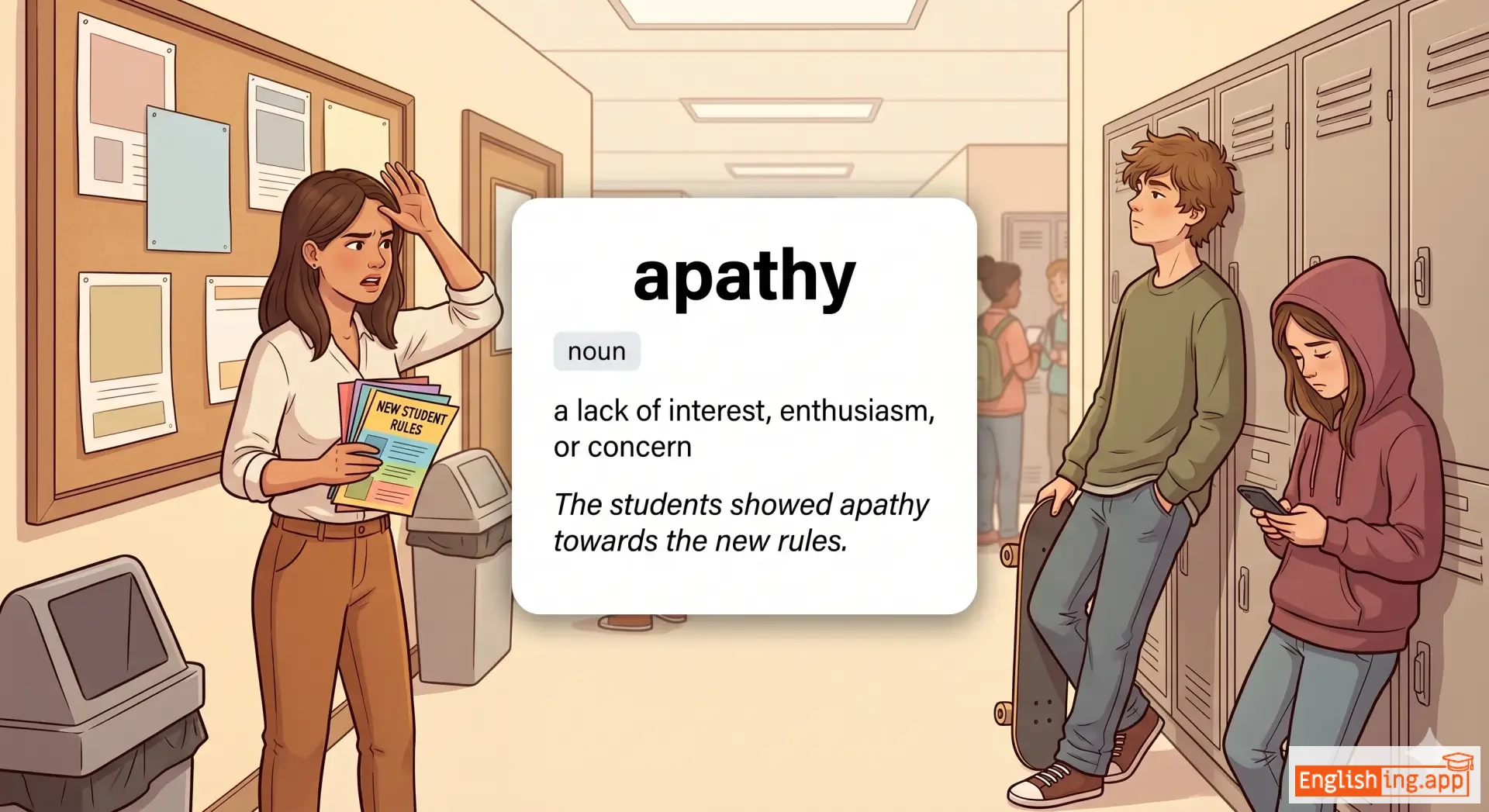
a lack of interest, enthusiasm, or concern
••••••
|
The students showed apathy towards the new rules. |
学生たちは新しいルールに無関心を示しました。
Gakusei-tachi wa atarashī rūru ni mukanshin o shimeshimashita.
••••••
|
- •••••• | - •••••• | - •••••• |
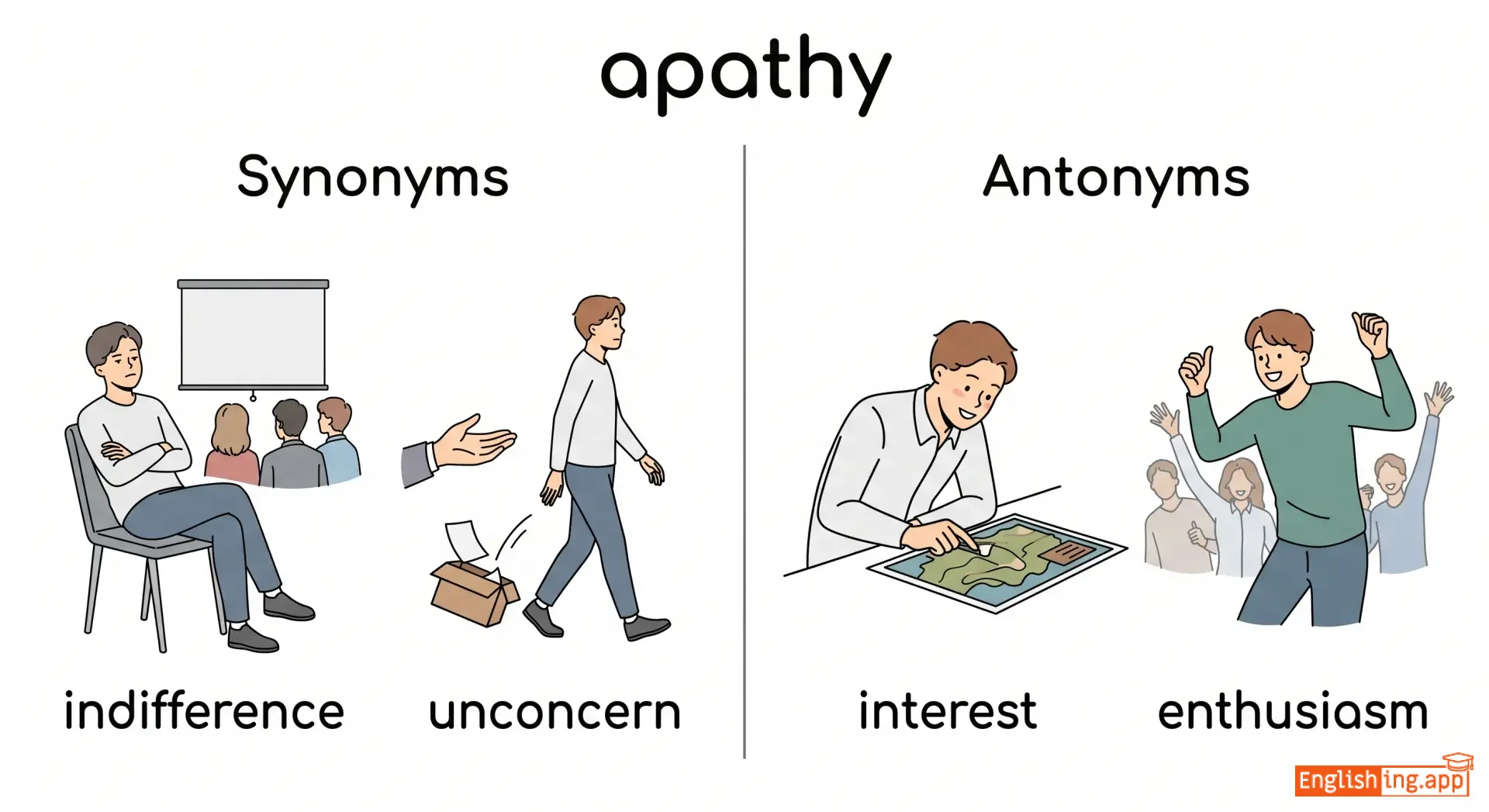
indifference, unconcern, detachment, passivity
••••••
|
interest, enthusiasm, passion
••••••
|
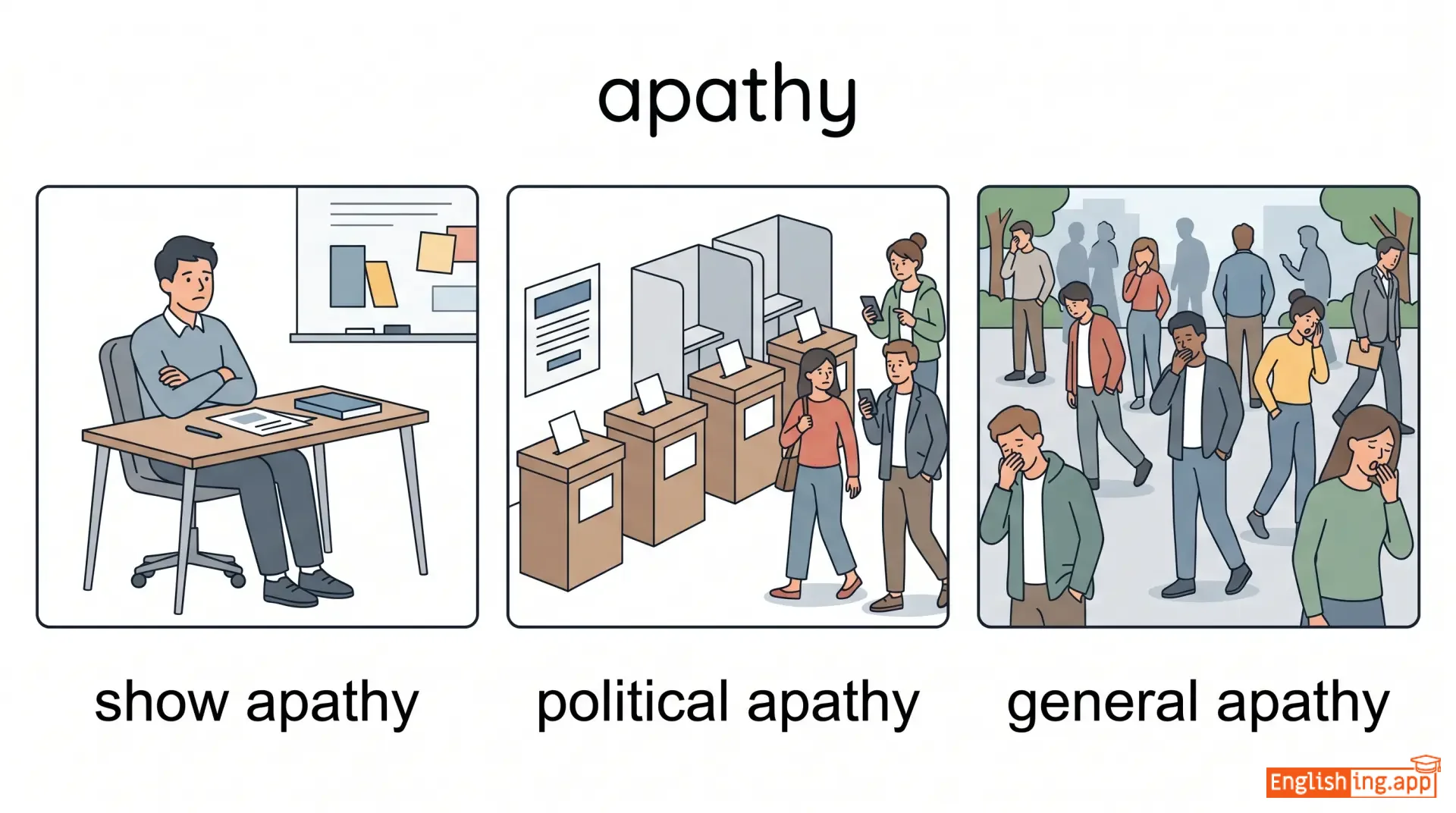
show apathy, political apathy, general apathy, apathy towards
••••••
|
Apathy は無関心を意味し、何も気にしないこと。
••••••
|
|
#495
😐
|
/ˌæpəˈθɛtɪk/
adjective
••••••
|
- •••••• | - •••••• | - •••••• | - •••••• | - •••••• | - •••••• |
showing or feeling little or no interest, enthusiasm, or concern
••••••
|
He was apathetic about the outcome of the match. |
- •••••• | - •••••• | - •••••• | - •••••• |
indifferent, unconcerned, passive, detached, uninterested
••••••
|
interested, enthusiastic, concerned
••••••
|
seem apathetic, feel apathetic, apathetic attitude, apathetic response
••••••
|
No •••••• |
|
#496
📜
|
/ˈæntɪkwɛri/
noun
(アンティクアリー)
••••••
|
- •••••• |
骨董品商
kottouhin shou
••••••
|
- •••••• | - •••••• | - •••••• | - •••••• |
A person who studies, collects, or deals in antiques or ancient objects.
••••••
|
The antiquary spent years collecting rare manuscripts from the medieval period.
アンティクアリーは中世の貴重な手稿を集めるのに何年も費やしました。
••••••
|
アンティクアリーは中世の貴重な手稿を集めるのに何年も費やしました。
Antiquary wa chūsei no kichōna shukō o atsumeru no ni nannen mo tsuiyashimashita.
••••••
|
- •••••• | - •••••• | - •••••• |
collector, historian, archaeologist, antiquarian, researcher
••••••
|
modernist, innovator
••••••
|
antiquary studies, renowned antiquary, antiquary collection
••••••
|
Antique + ary、骨董品の収集家
••••••
|
|
#497
⚒️
|
/ˈænvɪl/
noun
(アンヴィル)
••••••
|
- •••••• |
鉄製の金床
tessē no kinzoko
••••••
|
- •••••• | - •••••• | - •••••• | - •••••• |
A heavy iron block used by blacksmiths for hammering and shaping metal.
••••••
|
The blacksmith placed the hot iron on the anvil.
鍛冶屋は熱い鉄をアンヴィルに置きました。
••••••
|
鍛冶屋は熱い鉄をアンヴィルに置きました。
Kajiya wa atsui tetsu o anvīru ni okimashita.
••••••
|
between the hammer and the anvil
ハンマーとアンヴィルの間
••••••
|
Caught in a situation where one is under pressure from two opposing forces.
••••••
|
ハンマーとアンヴィルの間
Hanmā to anvīru no aida
••••••
|
block, forge, iron base
••••••
|
none
••••••
|
iron anvil, hammer on anvil, heavy anvil
••••••
|
Anvil = 金床、鍛冶屋が金属を鍛えるための道具。
••••••
|
|
#498
🔄
|
/ˈæntənɪm/
noun
(アントニム)
••••••
|
- •••••• |
反意語
han'igo
••••••
|
- •••••• | - •••••• | - •••••• | - •••••• |
A word opposite in meaning to another.
••••••
|
‘Hot’ is the antonym of ‘cold’.
‘Hot’ は ‘cold’ の反意語です。
••••••
|
‘Hot’ は ‘cold’ の反意語です。
'Hot' wa 'cold' no han'igo desu.
••••••
|
- •••••• | - •••••• | - •••••• |
opposite, reverse, converse
••••••
|
synonym, equivalent
••••••
|
antonym of, opposite antonym, common antonyms
••••••
|
反意語 = 反 + 意 (逆の意味の単語)
••••••
|
|
#499
🦌
|
/ˈæntlɚ/
noun
(アントラー)
••••••
|
- •••••• |
鹿の角
shika no tsuno
••••••
|
- •••••• | - •••••• | - •••••• | - •••••• |
The branched horns on the head of a deer or similar animal, usually shed and regrown annually.
••••••
|
The deer’s antlers grew larger each year. |
鹿の角は毎年大きくなります。
Shika no tsuno wa maitoshi ookiku narimasu.
••••••
|
- •••••• | - •••••• | - •••••• |
horn, tine, rack, prong
••••••
|
none, smooth head
••••••
|
deer antler, antler growth, shed antlers
••••••
|
Antlerは鹿の角のようです。
••••••
|
|
#500
💉
|
/ˌæntɪˈtɒksɪn/
noun
(アンチトキシン)
••••••
|
- •••••• |
抗毒素
kōdokusō
••••••
|
- •••••• | - •••••• | - •••••• | - •••••• |
A substance that neutralizes a specific toxin in the body.
••••••
|
The doctor administered an antitoxin to counter the snake venom. |
医師は蛇の毒を無効にするために抗毒素を投与しました。
Ishi wa hebi no doku o mukō ni suru tame ni kōdokusō o tōyo shimashita.
••••••
|
- •••••• | - •••••• | - •••••• |
antibody, antidote, serum, vaccine
••••••
|
toxin, poison
••••••
|
antitoxin therapy, administer antitoxin, diphtheria antitoxin
••••••
|
Anti + toxin = 毒素を無効化する薬。
••••••
|
|
#501
⚖️
|
/ˌæntɪˈθɛtɪkəl/
adjective
(アンチテーゼ)
••••••
|
- •••••• |
対照的な
taishō-teki na
••••••
|
- •••••• | - •••••• | - •••••• | - •••••• |
Directly opposed or contrasted; mutually incompatible.
••••••
|
His views were antithetical to the values of the organization.
彼の見解は組織の価値観と真逆でした。
••••••
|
彼の見解は組織の価値観と真逆でした。
Kare no kenkai wa soshiki no kachikan to shingyaku deshita.
••••••
|
- •••••• | - •••••• | - •••••• |
contradictory, opposite, conflicting, contrary, irreconcilable
••••••
|
similar, consistent, compatible
••••••
|
antithetical to, completely antithetical, seem antithetical
••••••
|
アンチテーゼ = 完全に反対の意見
••••••
|
|
#502
⚖️
|
/ænˈtɪθəsɪs/
noun
(アンチテーゼ)
••••••
|
- •••••• |
アンチテーゼ
anchitēze
••••••
|
- •••••• | - •••••• | - •••••• | - •••••• |
A person, thing, or idea that is the direct opposite of another; a rhetorical device contrasting opposing ideas in parallel structure.
••••••
|
Love is the antithesis of hate. |
愛は憎しみのアンチテーゼです。
Ai wa nikushimi no anchitēze desu.
••••••
|
the antithesis of |
Used to describe the exact opposite of something.
••••••
|
アンチテーゼ
anchitēze
••••••
|
opposite, contrast, contradiction, reverse, contrary
••••••
|
similarity, agreement, sameness
••••••
|
antithesis of truth, antithesis of love, direct antithesis, rhetorical antithesis
••••••
|
Thesisは主なアイデアを意味します → Anti-thesisはその反対のアイデアを意味します。
••••••
|
|
#503
📜
|
/ænˈtɪstrəfi/
noun
(アンチストロフィー)
••••••
|
- •••••• |
アンチストロフィー (修辞法の一つ)
antisutorofī
••••••
|
- •••••• | - •••••• | - •••••• | - •••••• |
A rhetorical device in which a word or phrase is repeated at the end of successive clauses; in Greek choral poetry, the part of the ode sung by the chorus in return movement.
••••••
|
The poet used antistrophe to emphasize the repeated phrase. |
詩人は繰り返されるフレーズを強調するためにアンチストロフィーを使用しました。
Shijin wa kurikaesareru fūrēzu o kyōchō suru tame ni antisutorofī o shiyō shimashita.
••••••
|
- •••••• | - •••••• | - •••••• |
epiphora, repetition, refrain, rhetorical device
••••••
|
anaphora
••••••
|
use antistrophe, poetic antistrophe, rhetorical antistrophe
••••••
|
Strophe は回転を意味し、Anti は反対を意味する → 文の最後に繰り返す言葉。
••••••
|
|
#504
💊
|
/ˌæntiˌspæzˈmɒdɪk/
noun, adjective
(アンチスパスモディック)
••••••
|
- •••••• |
抗痙攣薬
kō keiren-yaku
••••••
|
- •••••• | - •••••• | - •••••• | - •••••• |
A drug or agent that relieves or prevents muscle spasms.
••••••
|
The doctor prescribed an antispasmodic to ease the pain.
医者は痛みを和らげるために抗痙攣薬を処方しました。
••••••
|
医者は痛みを和らげるために抗痙攣薬を処方しました。
Isha wa itami o yawarageru tame ni kō keiren-yaku o shohō shimashita.
••••••
|
- •••••• | - •••••• | - •••••• |
muscle relaxant, sedative, pain reliever, spasm reducer
••••••
|
stimulant, convulsant
••••••
|
antispasmodic drug, antispasmodic effect, antispasmodic treatment, take antispasmodic
••••••
|
痙攣はけいれん → 抗痙攣薬はけいれんを止める薬。
••••••
|
|
#505
✊
|
/ˌæntiˈsleɪvəri/
adjective
(アンチ奴隷制)
••••••
|
- •••••• |
奴隷制度反対
dorei seido hantai
••••••
|
- •••••• | - •••••• | - •••••• | - •••••• |
Opposed to the practice or system of slavery.
••••••
|
The antislavery movement gained momentum in the 19th century. |
奴隷制度反対運動は19世紀に勢いを増した。
Dorei seido hantai undō wa 19 seiki ni ikioi o mashita.
••••••
|
- •••••• | - •••••• | - •••••• |
abolitionist, emancipationist, freedom-seeking
••••••
|
proslavery, supportive of slavery
••••••
|
antislavery campaign, antislavery law, antislavery movement, antislavery activists
••••••
|
Anti + 奴隷制 → 奴隷制度に反対する運動
••••••
|
|
#506
🧴
|
/ˌæntiˈsɛptɪk/
noun, adjective
••••••
|
- •••••• | - •••••• | - •••••• | - •••••• | - •••••• | - •••••• |
A substance that prevents the growth of disease-causing microorganisms; clean and free from germs.
••••••
|
The nurse applied an antiseptic to the wound. |
- •••••• |
antiseptic environment |
A place that is completely clean and free from germs.
••••••
|
- •••••• |
disinfectant, germicide, sanitizer, cleanser, sterilizer
••••••
|
infected, contaminated, dirty
••••••
|
antiseptic cream, antiseptic solution, apply antiseptic, antiseptic wipe
••••••
|
No •••••• |
|
#507
🏛️
|
/ænˈtɪkwɪti/
noun
(アンティキュイティ)
••••••
|
|
古代
kodai
••••••
|
- •••••• | - •••••• | - •••••• | - •••••• |
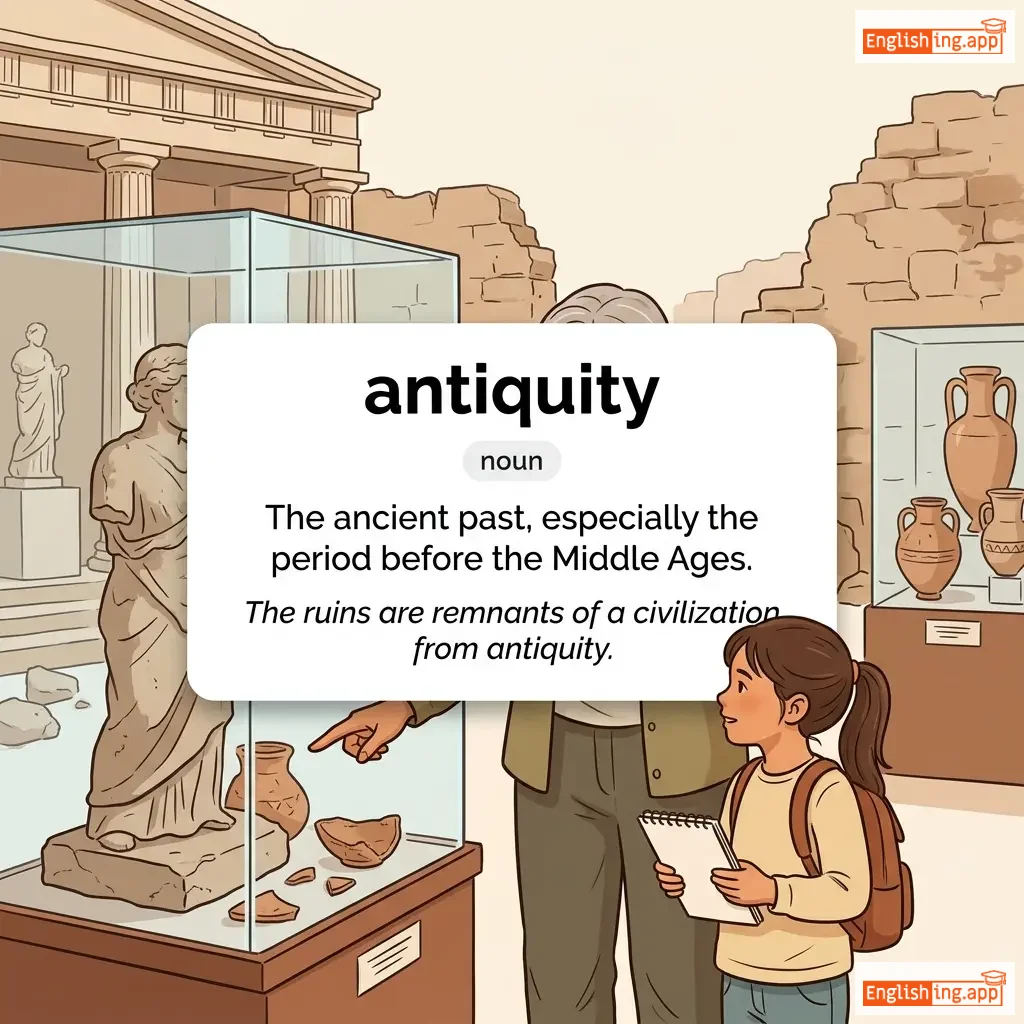
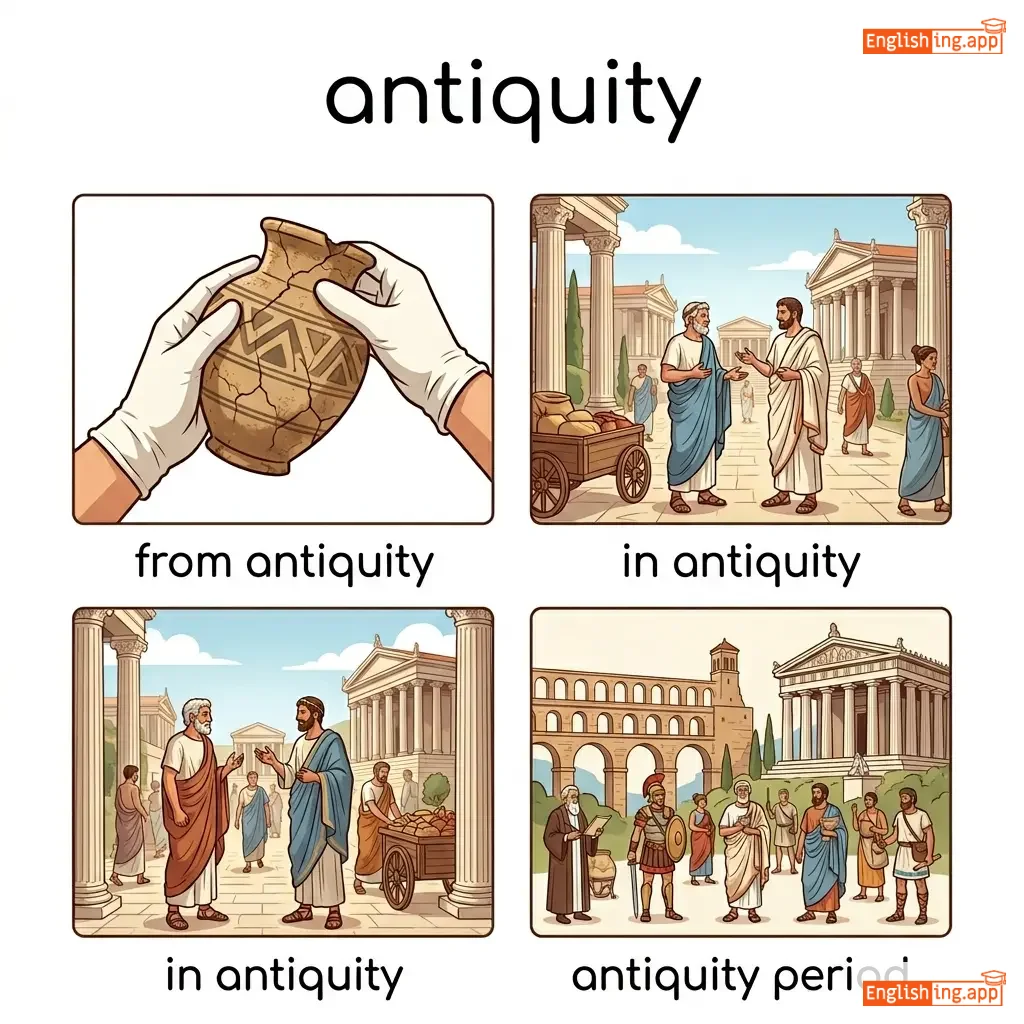
The ancient past, especially the period before the Middle Ages.
••••••
|
The ruins are remnants of a civilization from antiquity. |
遺跡は古代の文明の名残です。
Iseki wa kodai no bunmei no nagori desu.
••••••
|
- •••••• | - •••••• | - •••••• |
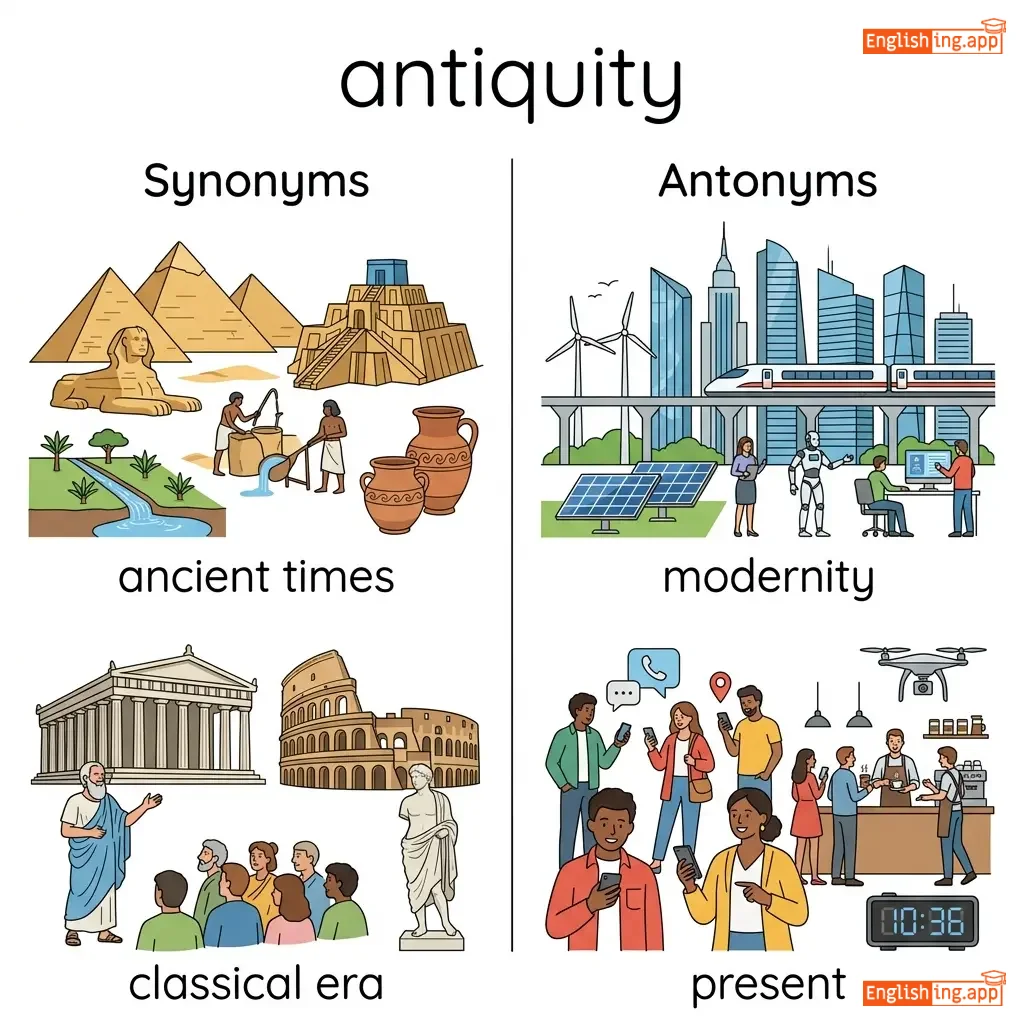
ancient times, classical era, past, olden days
••••••
|
modernity, present
••••••
|
from antiquity, in antiquity, antiquity period
••••••
|
Antiquityは古代という意味 - とても古い時代
••••••
|
|
#508
🏺
|
/ænˈtiːk/
noun
(アンティーク)
••••••
|
- •••••• |
アンティーク物
antīku butsu
••••••
|
- •••••• | - •••••• | - •••••• | - •••••• |
An old collectible item that has high value because of its age and rarity.
••••••
|
She bought an antique vase from the market.
彼女は市場でアンティークの花瓶を買いました。
••••••
|
彼女は市場でアンティークの花瓶を買いました。
Kanojo wa ichiba de antīku no kabin o kaimashita.
••••••
|
antique roadshow
アンティークロードショー
••••••
|
A popular show where antiques are appraised and valued.
••••••
|
アンティークロードショー
Antīku rōdo shō
••••••
|
artifact, relic, heirloom, collectible, vintage
••••••
|
modern, new
••••••
|
antique shop, antique furniture, antique vase
••••••
|
Antique 店で (mise de) antique 物を買う
••••••
|
|
#509
🕰️
|
/ˈæntɪkweɪtɪd/
adjective
(アンティクエイテッド)
••••••
|
- •••••• |
時代遅れ
jidaiokure
••••••
|
- •••••• | - •••••• | - •••••• | - •••••• |
Old-fashioned or outdated.
••••••
|
The office still uses an antiquated filing system.
オフィスはまだ古くなったファイリングシステムを使用しています。
••••••
|
オフィスはまだ古くなったファイリングシステムを使用しています。
Ofisu wa mada furukunatta fairingu shisutemu o shiyō shiteimasu.
••••••
|
- •••••• | - •••••• | - •••••• |
outdated, obsolete, old-fashioned, archaic, vintage
••••••
|
modern, new, contemporary
••••••
|
antiquated ideas, antiquated system, antiquated beliefs
••••••
|
Antiqueのように、antiquatedは古く、時代遅れのシステムを意味します。
••••••
|
|
#510
⌛
|
/ˈæntɪkweɪt/
verb
(アンティクエイト)
••••••
|
- •••••• |
時代遅れにする
jidaiokure ni suru
••••••
|
antiquated
アンティクエイテッド
••••••
|
antiquated
アンティクエイテッド
••••••
|
antiquates
アンティクエイツ
••••••
|
antiquating
アンティクエイティング
••••••
|
To make something old-fashioned or obsolete.
••••••
|
The rise of digital cameras antiquated traditional film photography.
デジタルカメラの台頭は、従来のフィルム写真を時代遅れにした。
••••••
|
デジタルカメラの台頭は、従来のフィルム写真を時代遅れにした。
Dejitaru kamera no taitou wa, juurai no firumu shashin o jidaiokure ni shita.
••••••
|
- •••••• | - •••••• | - •••••• |
outdate, obsolete, supersede, displace
••••••
|
modernize, update, innovate
••••••
|
antiquate practices, antiquate technology, antiquated by
••••••
|
Antiquateは古くさせる、antiquateの意味は物を時代遅れにすることです。
••••••
|
Vocabulary Quiz
Test your vocabulary by matching words with their translations or meanings.
Login to take the quiz
Comments (0)
Share your thoughts and join the discussion.
Join the discussion by logging in
Login to CommentNo comments yet
Be the first to share your thoughts!