

翻訳
過去
過去分詞
三人称単数
動名詞
意味
例文
例文の翻訳
同義語
対義語
コロケーション
ニーモニック



Swipe left or right, or use the buttons. Tap image to zoom.
例文の翻訳
単語
Lesson 369Lesson 369 - マスクトグル
|
絵文字
|
単語 | Images | 翻訳 | 過去 | 過去分詞 | 三人称単数 | 動名詞 | 意味 | 例文 | 例文の翻訳 | 表現例 | 表現例の意味 | 表現例の翻訳 | 同義語 | 対義語 | コロケーション | ニーモニック |
|---|---|---|---|---|---|---|---|---|---|---|---|---|---|---|---|---|---|
|
#11035
❄️
|
/friːz/
verb
(フリーズ)
••••••
|
- •••••• |
凍る
kooru
••••••
|
froze
フローズ
••••••
|
frozen
フローゼン
••••••
|
freezes
フリーズズ
••••••
|
freezing
フリージング
••••••
|
To turn into ice or cause to become hard due to extreme cold.
••••••
|
The water in the lake will freeze during winter.
湖の水は冬に凍ります。
••••••
|
湖の水は冬に凍ります。
Mizu wa fuyu ni koorimasu.
••••••
|
freeze up
凍る
••••••
|
to stop functioning or become immobile
••••••
|
機能停止する
kinou teishi suru
••••••
|
ice, chill, harden, solidify, stiffen
••••••
|
melt, thaw, heat
••••••
|
freeze water, freeze assets, freeze to death, freeze up
••••••
|
Freeze は水が氷に変わるように、凍ることを意味します!
••••••
|
|
#11036
🪑
|
/ˈfɜːrnɪtʃər/
noun
(fāničā)
••••••
|
- •••••• |
家具
kagu
••••••
|
- •••••• | - •••••• | - •••••• | - •••••• |
Objects such as chairs, tables, beds, or cupboards used to make a room suitable for living or working.
••••••
|
The living room was filled with beautiful wooden furniture. |
リビングルームは美しい木製の家具でいっぱいでした。
Ribingurūmu wa utsukushī mokusei no kagu de ippai deshita.
••••••
|
move the furniture |
to rearrange or shift the position of furniture in a room
••••••
|
家具を動かす
Kagu o ugokasu
••••••
|
fixtures, fittings, furnishings, decor, equipment
••••••
|
emptiness, vacancy
••••••
|
antique furniture, wooden furniture, office furniture, move furniture, buy furniture
••••••
|
家具は家具 🪑 — 日本語で'家具屋'を思い出すことで覚えやすくなります。
••••••
|
|
#11037
⚰️
|
/ˈfjuːnərəl/
noun
(fyūnɛrəl)
••••••
|
- •••••• |
葬式
sōshiki
••••••
|
- •••••• | - •••••• | - •••••• | - •••••• |
a ceremony held to honor and bury or cremate someone who has died
••••••
|
The family attended the funeral of their grandfather. |
家族は祖父の葬式に出席しました。
Kazoku wa sofu no sōshiki ni shusseki shimashita.
••••••
|
funeral service |
the ceremony connected with a funeral
••••••
|
葬式のサービス
sōshiki no sābisu
••••••
|
memorial, burial, cremation, obsequies
••••••
|
celebration, festival
••••••
|
funeral ceremony, funeral service, attend a funeral, funeral procession
••••••
|
葬式は最後の儀式、それが命の終わりを意味します。
••••••
|
|
#11038
🏦
|
/ˈfʌndɪŋ/
noun
(fanding)
••••••
|
- •••••• |
資金調達
shikin chōtatsu
••••••
|
- •••••• | - •••••• | - •••••• | - •••••• |
financial support for a project or organization
••••••
|
The startup is seeking funding from investors. |
スタートアップは投資家から資金調達を試みています。
Sutātopu wa tōshika kara shikin chōtatsu o kokoromotteimasu.
••••••
|
government funding |
financial support provided by the government
••••••
|
政府の資金調達
seifu no shikin chōtatsu
••••••
|
financing, capital, investment, sponsorship, backing
••••••
|
withdrawal, loss
••••••
|
seek funding, government funding, secure funding, lack of funding
••••••
|
Funding は資金調達 — スタートアップは 'Fun ding' と言い、つまりお金が必要だということです。
••••••
|
|
#11039
💰
|
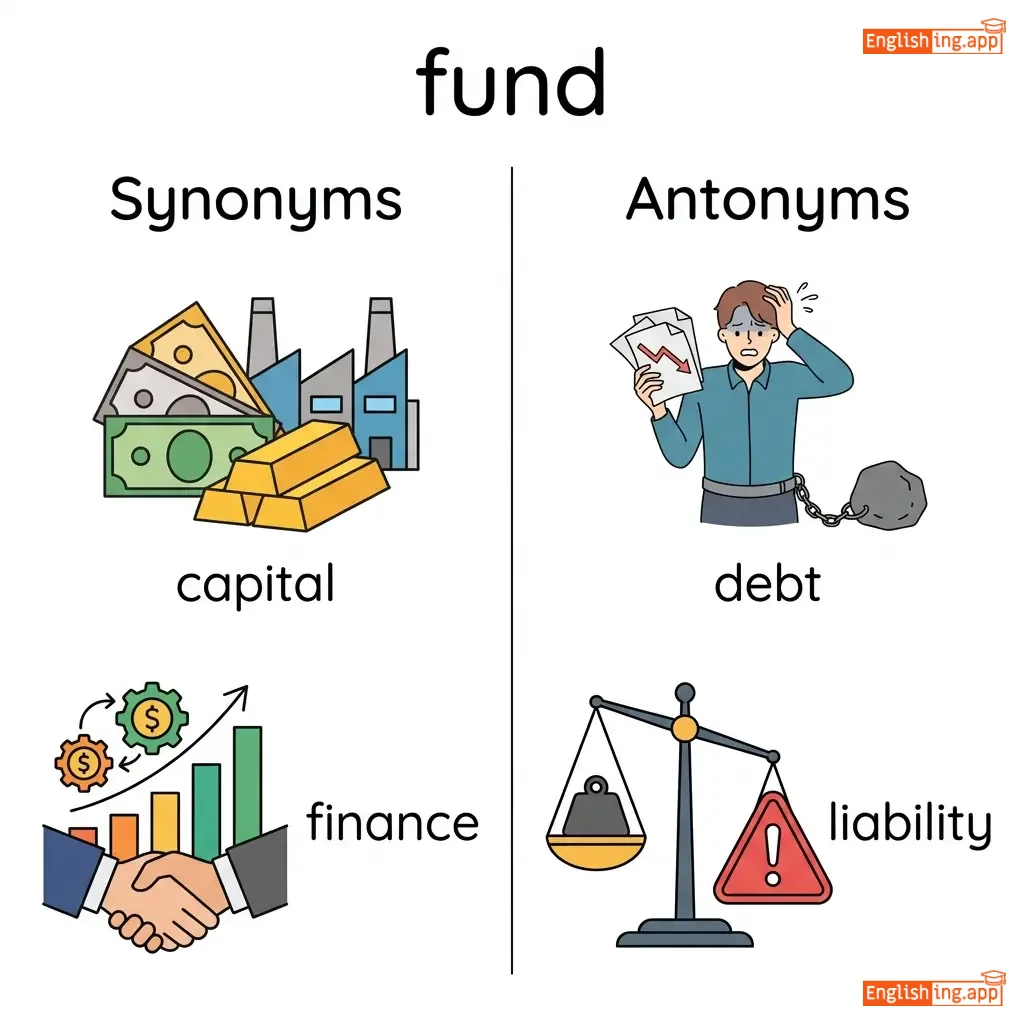
/fʌnd/
noun/verb
(ファンド)
••••••
|
|
基金
kikin
••••••
|
funded
ファンデッド
••••••
|
funded
ファンデッド
••••••
|
funds
ファンズ
••••••
|
funding
ファンディング
••••••
|
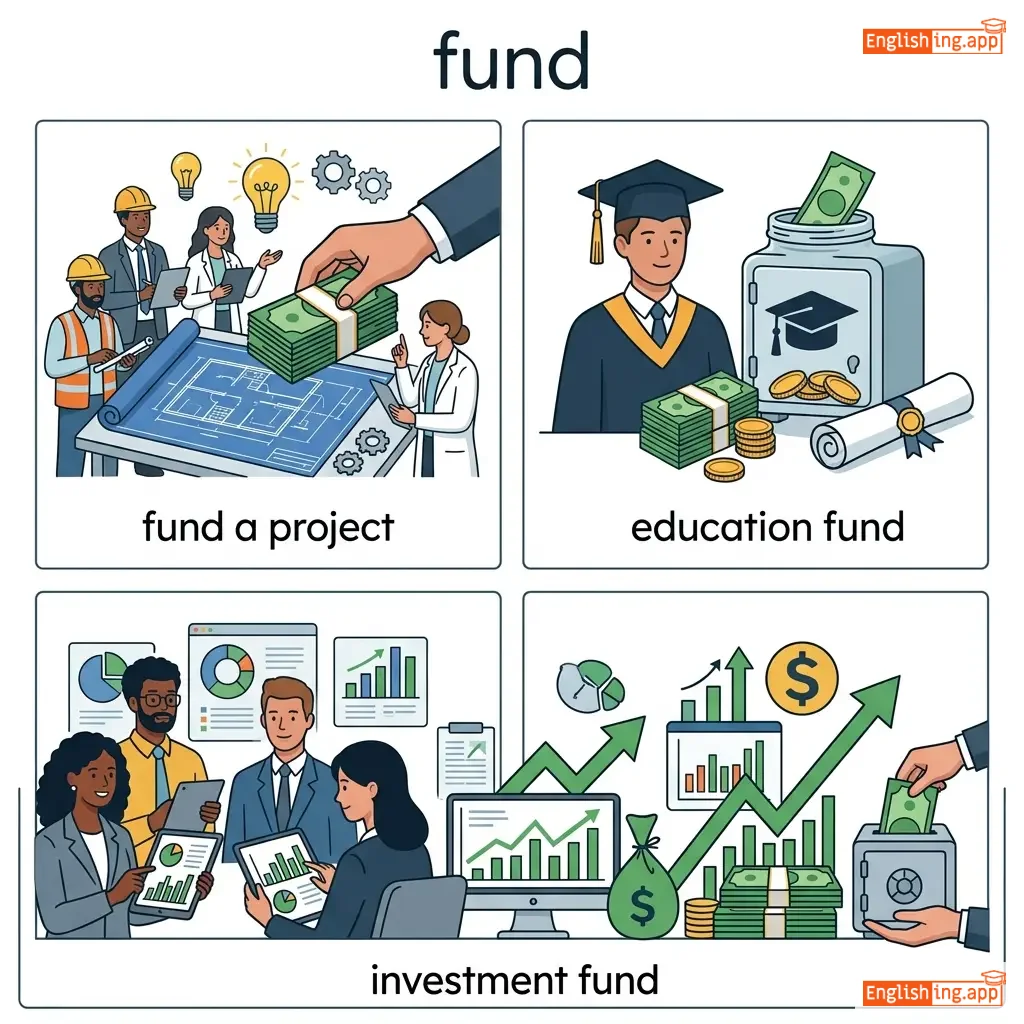
a sum of money saved or made available for a particular purpose; to provide money for
••••••
|
The government created a fund for education.
政府は教育のためのファンドを作成しました。
••••••
|
政府は教育のための基金を作成しました。
Seifu wa kyōiku no tame no kikin o sakusei shimashita.
••••••
|
mutual fund
投資信託
••••••
|
a professionally managed investment fund
••••••
|
投資信託
tōshi shintaku
••••••
|
capital, finance, money, resource, investment
••••••
|
debt, liability
••••••
|
fund a project, education fund, investment fund, fund allocation
••••••
|
基金は基金を意味します — 基金 = 'ファンド配達', 楽しむためにお金が必要です。
••••••
|
|
#11040
🎉
|
/fʌn/
noun
(fan)
••••••
|
- •••••• |
楽しみ
tanoshimi
••••••
|
- •••••• | - •••••• | - •••••• | - •••••• |
enjoyment, amusement, or light-hearted pleasure
••••••
|
We had a lot of fun at the party. |
パーティーでとても楽しみました。
Pātī de totemo tanoshimimashita.
••••••
|
make fun of |
to tease or mock someone
••••••
|
からかう
karakau
••••••
|
enjoyment, amusement, entertainment, pleasure
••••••
|
boredom, sadness
••••••
|
have fun, fun activity, fun time, fun party
••••••
|
Fun は楽しみ、パーティーでみんなが「楽しんで!」と言う!
••••••
|
|
#11041
✅
|
/ˈfʊli/
adverb
(フリー)
••••••
|
- •••••• |
完全に
kanzen ni
••••••
|
- •••••• | - •••••• | - •••••• | - •••••• |
completely or entirely; to the fullest extent
••••••
|
She is fully aware of the risks. |
彼女はリスクについて完全に認識しています。
Kanojo wa risuku ni tsuite kanzen ni ninshiki shiteimasu.
••••••
|
fully booked |
completely reserved with no space left
••••••
|
完全に予約済み
kanzen ni yoyaku zumi
••••••
|
completely, entirely, totally, wholly, absolutely
••••••
|
partially, incompletely
••••••
|
fully aware, fully understand, fully booked, fully equipped
••••••
|
Fullyは完全にという意味で、'フリー'(満ちている)ように完全に満たされた状態を想像してください。
••••••
|
|
#11042
⛽
|
/ˈfjuːəl/
noun/verb
••••••
|
- •••••• | - •••••• |
fueled
••••••
|
fueled
••••••
|
fuels
••••••
|
fueling
••••••
|
A material such as coal, gas, or oil that is burned to produce energy; also to supply with energy or power.
••••••
|
The car needs fuel to run efficiently. |
- •••••• |
fuel the fire |
To make a situation worse or more intense.
••••••
|
- •••••• |
power, energy, propellant, feed, sustain
••••••
|
drain, exhaust
••••••
|
burn fuel, fossil fuel, run on fuel, fuel supply
••••••
|
No •••••• |
|
#11043
😣
|
/frʌˈstreɪʃən/
noun
(furasutoreishon)
••••••
|
- •••••• |
フラストレーション
furasutoreeshon
••••••
|
- •••••• | - •••••• | - •••••• | - •••••• |
The feeling of being upset or annoyed due to inability to achieve something.
••••••
|
He felt deep frustration when his plans failed. |
彼は自分の計画が失敗したとき、深いフラストレーションを感じました。
Kare wa jibun no keikaku ga shippai shita toki, fukai furasutoreeshon o kanjimashita.
••••••
|
vent frustration |
To express anger or annoyance openly.
••••••
|
フラストレーションを表現する
furasutoreeshon o hyōgen suru
••••••
|
annoyance, irritation, disappointment, exasperation, discontent
••••••
|
satisfaction, contentment, delight
••••••
|
cause frustration, deep frustration, express frustration, frustration level
••••••
|
フラストレーション(furasutoreeshon)は、達成できないことに対する怒りです。
••••••
|
|
#11044
🍎
|
/fruːt/
noun
(フルーツ)
••••••
|
- •••••• |
果物
kudamono
••••••
|
- •••••• | - •••••• | - •••••• | - •••••• |
The sweet and fleshy product of a plant that contains seeds.
••••••
|
Mango is my favorite fruit.
マンゴーは私のお気に入りのフルーツです。
••••••
|
マンゴーは私のお気に入りのフルーツです。
Mangō wa watashi no okiniiri no furūtsu desu.
••••••
|
bear fruit
実を結ぶ
••••••
|
To produce good results or be successful.
••••••
|
実を結ぶ
Mi o musubu
••••••
|
produce, crop, harvest, berry, yield
••••••
|
vegetable, grain
••••••
|
fresh fruit, ripe fruit, tropical fruit, eat fruit
••••••
|
フルーツは新鮮で美味しいので、覚えやすいです。
••••••
|
|
#11045
➡️
|
/frəm/ or /frʌm/
preposition
(フロム)
••••••
|
- •••••• |
から
kara
••••••
|
- •••••• | - •••••• | - •••••• | - •••••• |
Used to indicate the starting point of a journey, action, or source.
••••••
|
She came from Dhaka to visit her family. |
彼女はダッカから家族を訪ねて来ました。
Kanojo wa Dakkā kara kazoku o tazunete kimashita.
••••••
|
far from |
Very different from or not at all like.
••••••
|
遠くから
tōku kara
••••••
|
out of, away from, off, since, starting at
••••••
|
to, towards
••••••
|
from start, from scratch, from now, far from
••••••
|
FROMは'から'を意味します—例えばダッカから(Dakkā kara)旅が始まります。
••••••
|
|
#11046
🤗
|
/ˈfrɛndʃɪp/
noun
(フレンドシップ)
••••••
|
- •••••• |
友情
yūjō
••••••
|
- •••••• | - •••••• | - •••••• | - •••••• |
A close and trusting relationship between two or more people.
••••••
|
Their friendship has lasted since childhood. |
彼らの友情は幼少期から続いています。
Karera no yūjō wa yōshōki kara tsuzuiteimasu.
••••••
|
true friendship |
A genuine and deep bond between friends.
••••••
|
真の友情
Shin no yūjō
••••••
|
companionship, fellowship, camaraderie, closeness, bond
••••••
|
enmity, hostility, animosity
••••••
|
strong friendship, close friendship, lasting friendship, build friendship
••••••
|
友情はみんなで一緒に乗る船のようなものです。
••••••
|
|
#11047
😊
|
/ˈfrɛndli/
adjective
(happiness)
••••••
|
- •••••• |
幸福
koufuku
••••••
|
- •••••• | - •••••• | - •••••• | - •••••• |
Kind and pleasant; showing goodwill and affection.
••••••
|
The shop owner is very friendly to new customers. |
彼女は賞を受け取ったとき、幸せを隠すことができませんでした。
Kanojo wa shou wo uketotta toki, shiawase wo kakusu koto ga dekimasen deshita.
••••••
|
friendly fire |
weapon fire coming from one's own side by mistake
••••••
|
幸福を追求する
Koufuku wo tsuikyuu suru
••••••
|
kind, warm, amiable, welcoming, sociable
••••••
|
hostile, unfriendly, cold
••••••
|
friendly smile, friendly attitude, friendly relationship, friendly environment
••••••
|
幸福 (koufuku) = 幸せ (shiawase) = みんなが追い求めるもの。
••••••
|
|
#11048
🔁
|
/ˈfriːkwəntli/
adverb
(フリークエントリー)
••••••
|
- •••••• |
頻繁に
hinpan ni
••••••
|
- •••••• | - •••••• | - •••••• | - •••••• |
Happening often or at short intervals.
••••••
|
He frequently visits his grandparents on weekends. |
彼は週末に頻繁に祖父母を訪ねます。
Kare wa shūmatsu ni hinpan ni sobo wo tazunemasu.
••••••
|
- •••••• | - •••••• | - •••••• |
often, regularly, repeatedly, commonly, usually
••••••
|
rarely, seldom, occasionally
••••••
|
frequently asked, frequently used, frequently visit, frequently occur
••••••
|
頻繁にというのは、何かがよく起こるという意味です。
••••••
|
|
#11049
🇫🇷
|
/frɛntʃ/
adjective
(french)
••••••
|
- •••••• |
フランスの
furansu no
••••••
|
- •••••• | - •••••• | - •••••• | - •••••• |
Relating to France, its people, or their language.
••••••
|
We enjoyed delicious French cuisine on our trip to Paris.
私たちはパリ旅行で美味しいフランス料理を楽しみました。
••••••
|
私たちはパリ旅行で美味しいフランス料理を楽しみました。
Watashitachi wa Pari ryokō de oishī Furansu ryōri o tanoshimimashita.
••••••
|
French kiss
フランス式キス
••••••
|
a kiss involving the tongue
••••••
|
フランス式キス
Furansu-shiki kisu
••••••
|
Gallic, Parisian, Francophone
••••••
|
non-French, foreign
••••••
|
French cuisine, French language, French culture, French wine
••••••
|
French = パリの美味しい料理とフランス式キス (舌を使う)
••••••
|
|
#11050
🏈
|
/ˈfʊtˌbɔːl/
noun
(フットボール)
••••••
|
- •••••• |
サッカー
sakka
••••••
|
- •••••• | - •••••• | - •••••• | - •••••• |
A team sport played with a ball that is kicked or carried to score points.
••••••
|
They watched a football match on TV. |
彼らはテレビでサッカーの試合を見ました。
Karera wa terebi de sakkaa no shiai wo mimashita.
••••••
|
- •••••• | - •••••• | - •••••• |
soccer, game, match, sport, gridiron
••••••
|
none, inactivity
••••••
|
football match, football player, football field, football team
••••••
|
サッカー (sakka) とは足 (foot) でボール (ball) を蹴るスポーツです!
••••••
|
|
#11051
🕊️
|
/ˈfriːdəm/
noun
(自由)
••••••
|
|
自由
jiyū
••••••
|
- •••••• | - •••••• | - •••••• | - •••••• |
The state of being free; the power or right to act, speak, or think without hindrance or restraint.
••••••
|
Freedom of speech is a fundamental right in many countries. |
言論の自由は多くの国で基本的な権利です。
Genron no jiyū wa ōku no kuni de kihonteki na kenri desu.
••••••
|
freedom of choice |
the right to make one’s own decisions without outside control
••••••
|
選択の自由
Sentaku no jiyū
••••••
|
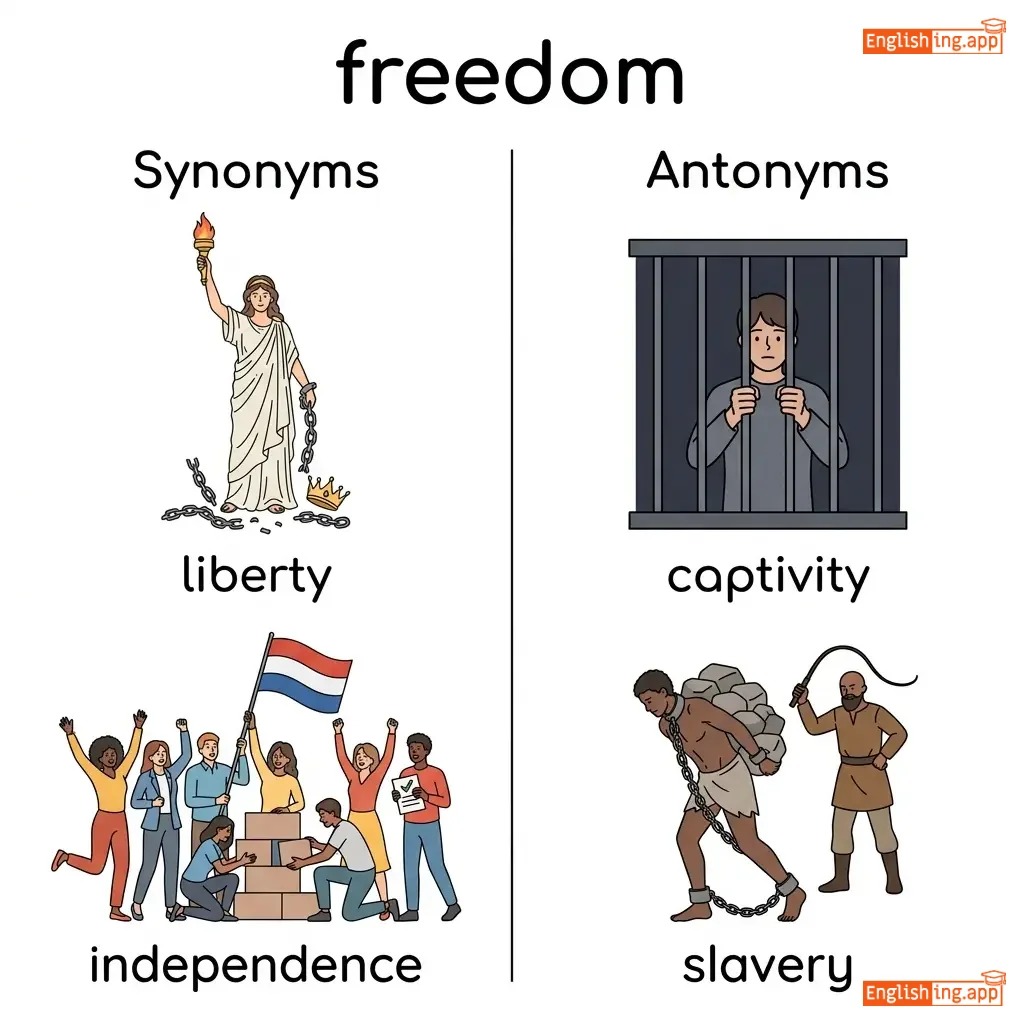
liberty, independence, autonomy, emancipation, self-determination
••••••
|
captivity, slavery, restriction
••••••
|
freedom of speech, freedom of movement, personal freedom, political freedom
••••••
|
Freedom = 空を飛んでいるような自由さ (jiyū)
••••••
|
|
#11052
🕊️
|
/friː/
adjective/verb/adverb
(フリー)
••••••
|
- •••••• |
自由
jiyū
••••••
|
freed
フリード
••••••
|
freed
フリード
••••••
|
frees
フリーズ
••••••
|
freeing
フリーイング
••••••
|
Not under the control or in the power of another; able to act or be done as one wishes.
••••••
|
The children are free to play outside.
子供たちは外で自由に遊べます。
••••••
|
子供たちは外で自由に遊べます。
Kodomotachi wa soto de jiyū ni asobemasu.
••••••
|
set free
自由にする
••••••
|
to release from captivity or constraints
••••••
|
自由にする
jiyū ni suru
••••••
|
unrestricted, independent, open, liberated, gratis
••••••
|
restricted, bound, captive
••••••
|
free time, free speech, free market, free trial
••••••
|
自由はfreeと同じ意味です。'自由に遊ぶ'のように覚えましょう。
••••••
|
|
#11053
🏗️
|
/ˈfreɪmˌwɜːrk/
noun
(フレームワーク)
••••••
|
|
枠組み
wakugumi
••••••
|
- •••••• | - •••••• | - •••••• | - •••••• |
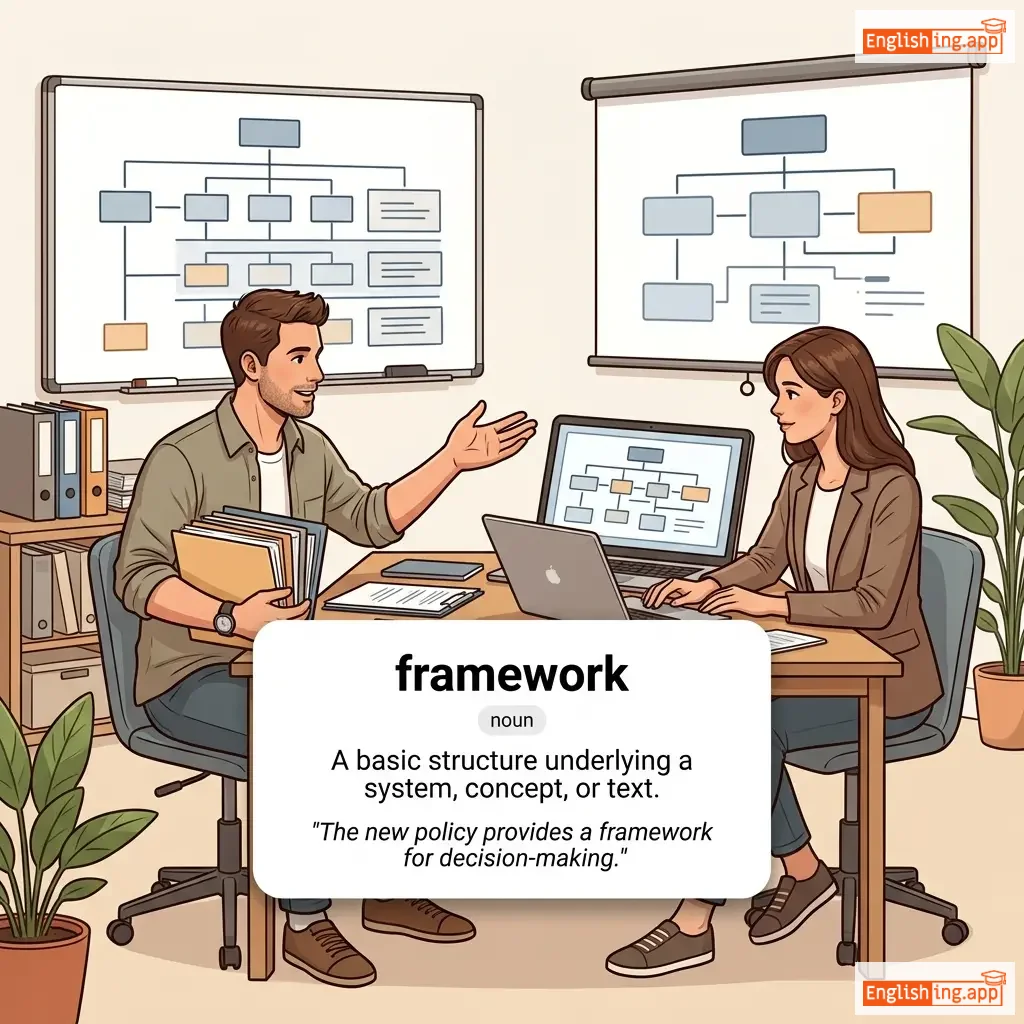
A basic structure underlying a system, concept, or text.
••••••
|
The new policy provides a framework for decision-making.
新しいポリシーは意思決定のためのフレームワークを提供します。
••••••
|
新しいポリシーは意思決定のための枠組みを提供します。
Atarashī porishī wa ishikettei no tame no wakugumi o teikyō shimasu.
••••••
|
- •••••• | - •••••• | - •••••• |
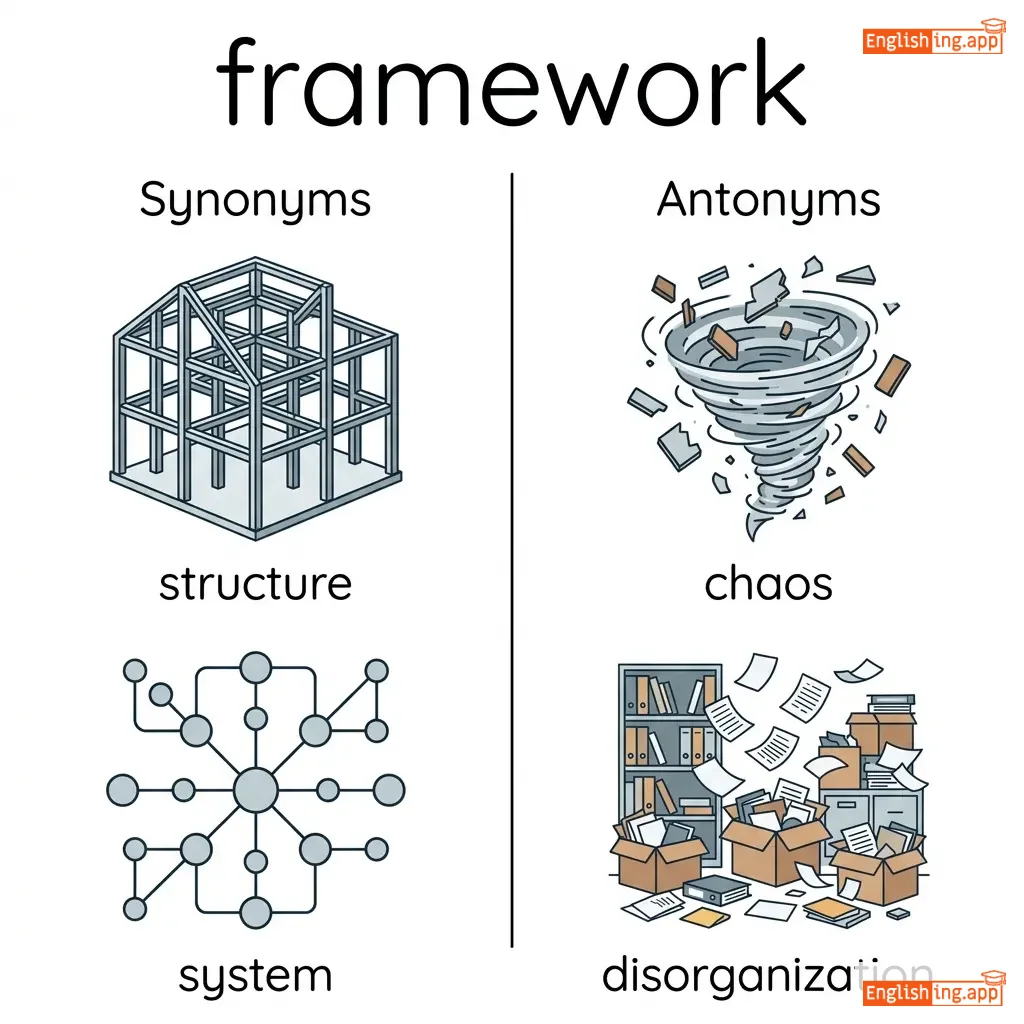
structure, system, skeleton, outline, basis
••••••
|
chaos, disorganization
••••••
|
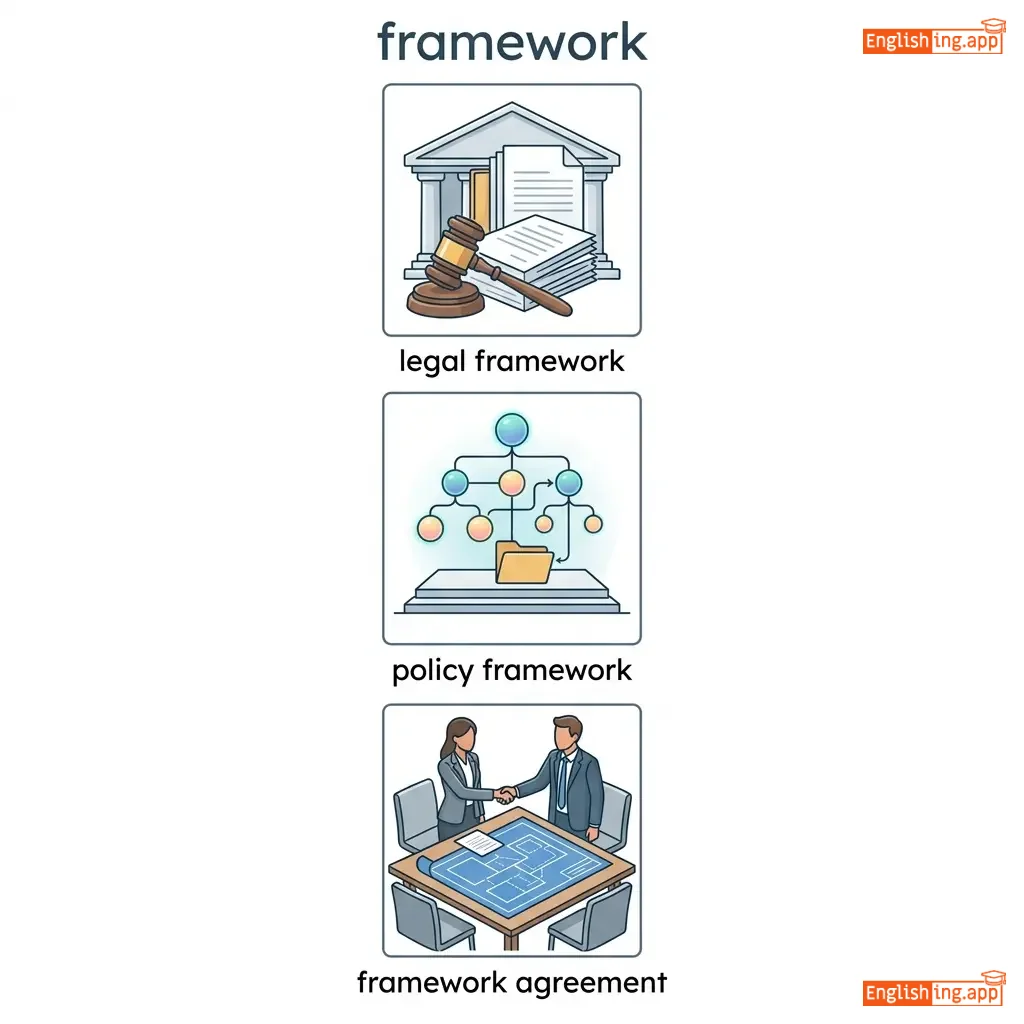
legal framework, policy framework, framework agreement, conceptual framework
••••••
|
Framework は枠組み、建物の枠組みのように。
••••••
|
|
#11054
🖼️
|
/freɪm/
noun/verb
••••••
|
|
- •••••• |
framed
••••••
|
framed
••••••
|
frames
••••••
|
framing
••••••
|
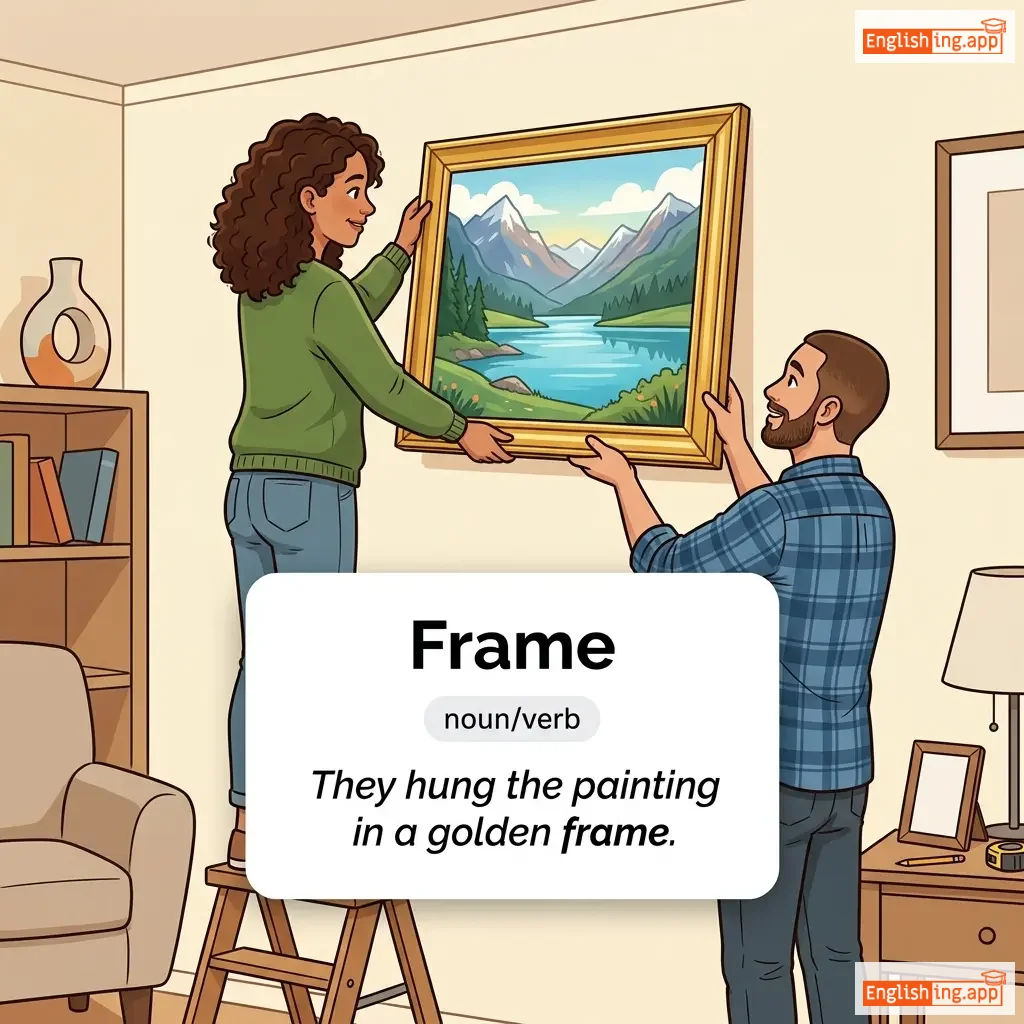
A rigid structure that surrounds or encloses something; to construct or formulate.
••••••
|
They hung the painting in a golden frame. |
- •••••• |
frame of mind |
a person's mood or mental state
••••••
|
- •••••• |
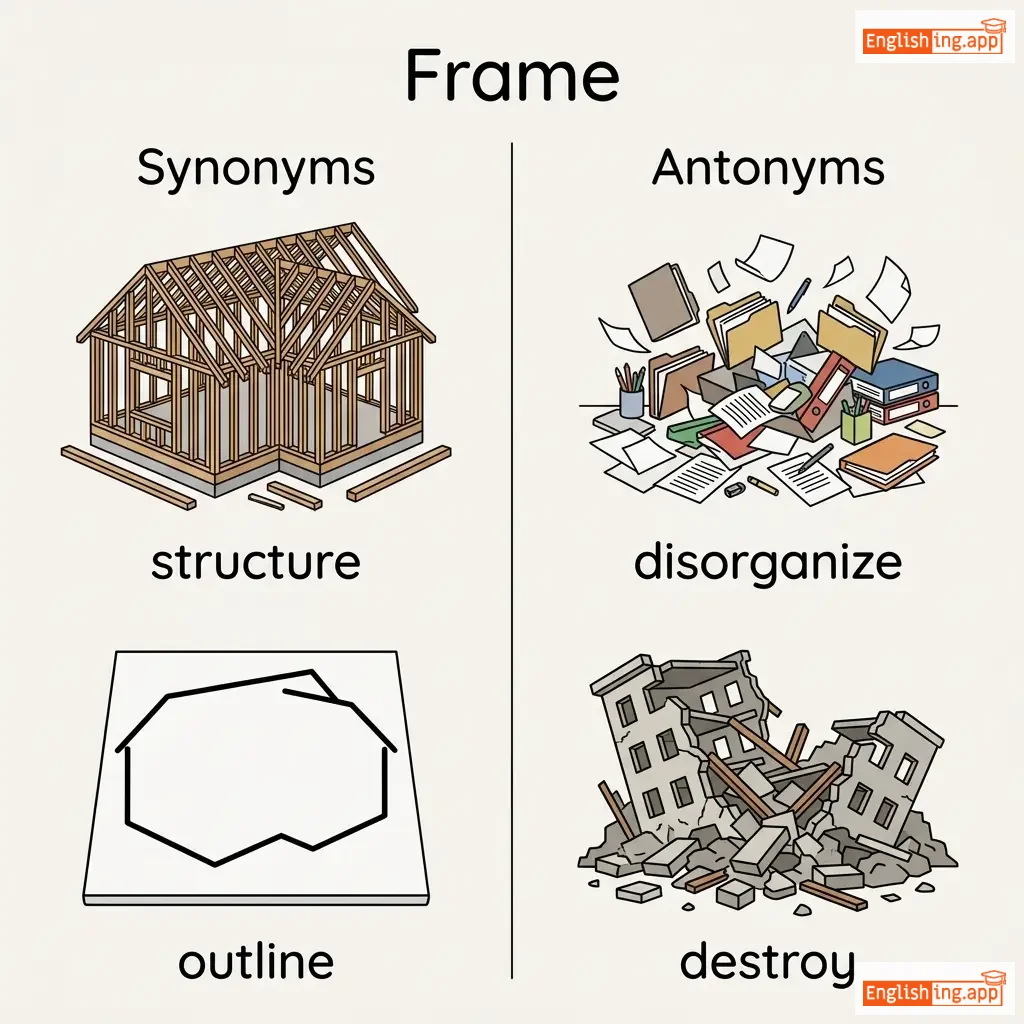
structure, outline, border, skeleton, formulate
••••••
|
disorganize, destroy
••••••
|
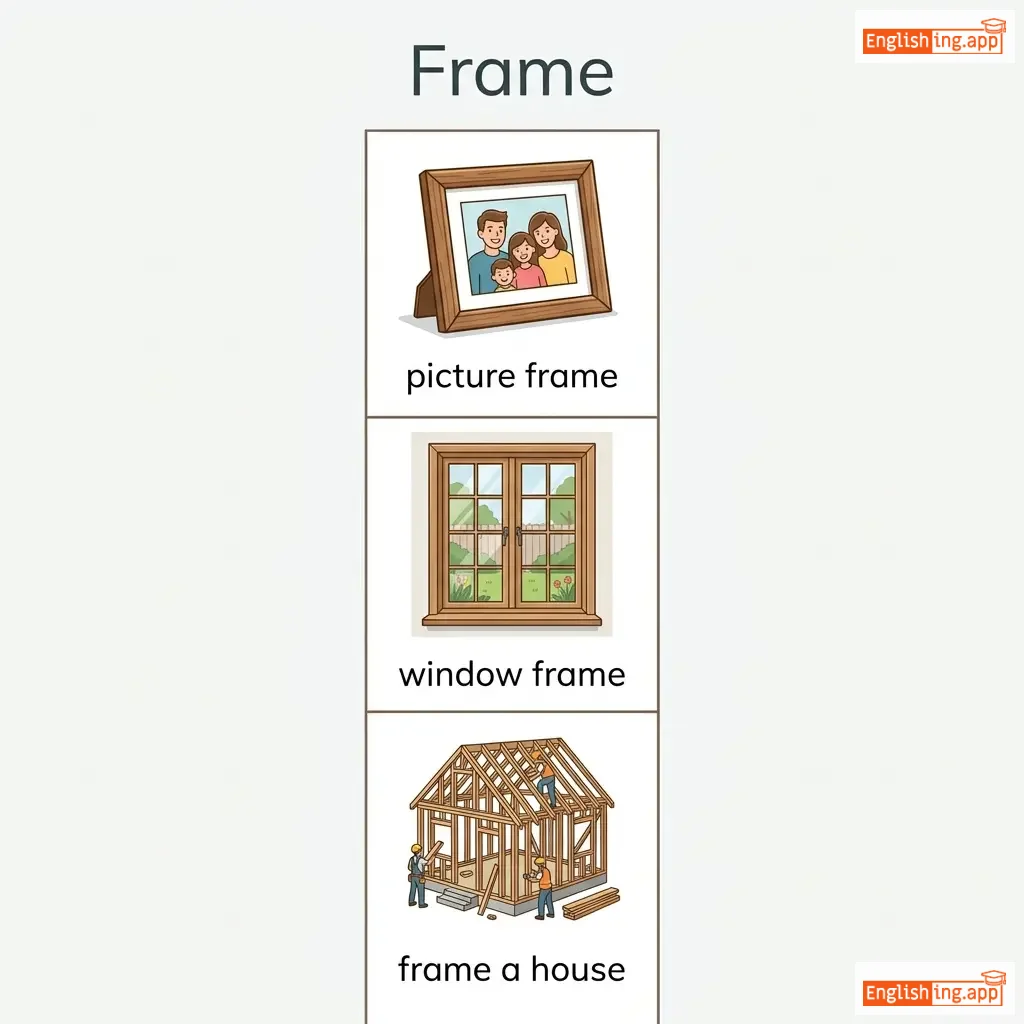
picture frame, window frame, frame a house, frame of reference
••••••
|
No •••••• |
|
#11055
4️⃣
|
/fɔːrθ/
adjective/noun
(フォース)
••••••
|
- •••••• |
第四
daiyon
••••••
|
- •••••• | - •••••• | - •••••• | - •••••• |
Constituting number four in a sequence; coming after the third in position.
••••••
|
He finished in fourth place in the race. |
彼はレースで第四位になった。
Kare wa reesu de dai-yon-i ni natta.
••••••
|
the fourth estate |
the press and news media
••••••
|
第四の権力
dai-yon no kenryoku
••••••
|
quartile, fourthly, quadrant, quaternary
••••••
|
first, last
••••••
|
fourth place, fourth time, fourth floor, fourth century
••••••
|
第四はちょうど三つの後、すぐに覚えられます。
••••••
|
|
#11056
4️⃣
|
/fɔːr/
numeral
(フォー)
••••••
|
- •••••• |
四
shi
••••••
|
- •••••• | - •••••• | - •••••• | - •••••• |
The number equivalent to the sum of two and two; one more than three.
••••••
|
She has four books on her desk. |
彼女の机には四冊の本があります。
Kanojo no tsukue ni wa shisatsu no hon ga arimasu.
••••••
|
four corners of the world |
everywhere in the world
••••••
|
世界の四隅
Sekai no yotsumi
••••••
|
quartet, quadruple, foursome, tetrad
••••••
|
three, five
••••••
|
four times, four years, four people, four seasons
••••••
|
四人の友達と一緒にいると、いつでも楽しい – Fourは四を意味することを忘れないで。
••••••
|
|
#11057
🏗️
|
/faʊnˈdeɪʃən/
noun
(faundéishon)
••••••
|
|
基礎
kiso
••••••
|
- •••••• | - •••••• | - •••••• | - •••••• |
the base or underlying support of something; an institution established for a purpose
••••••
|
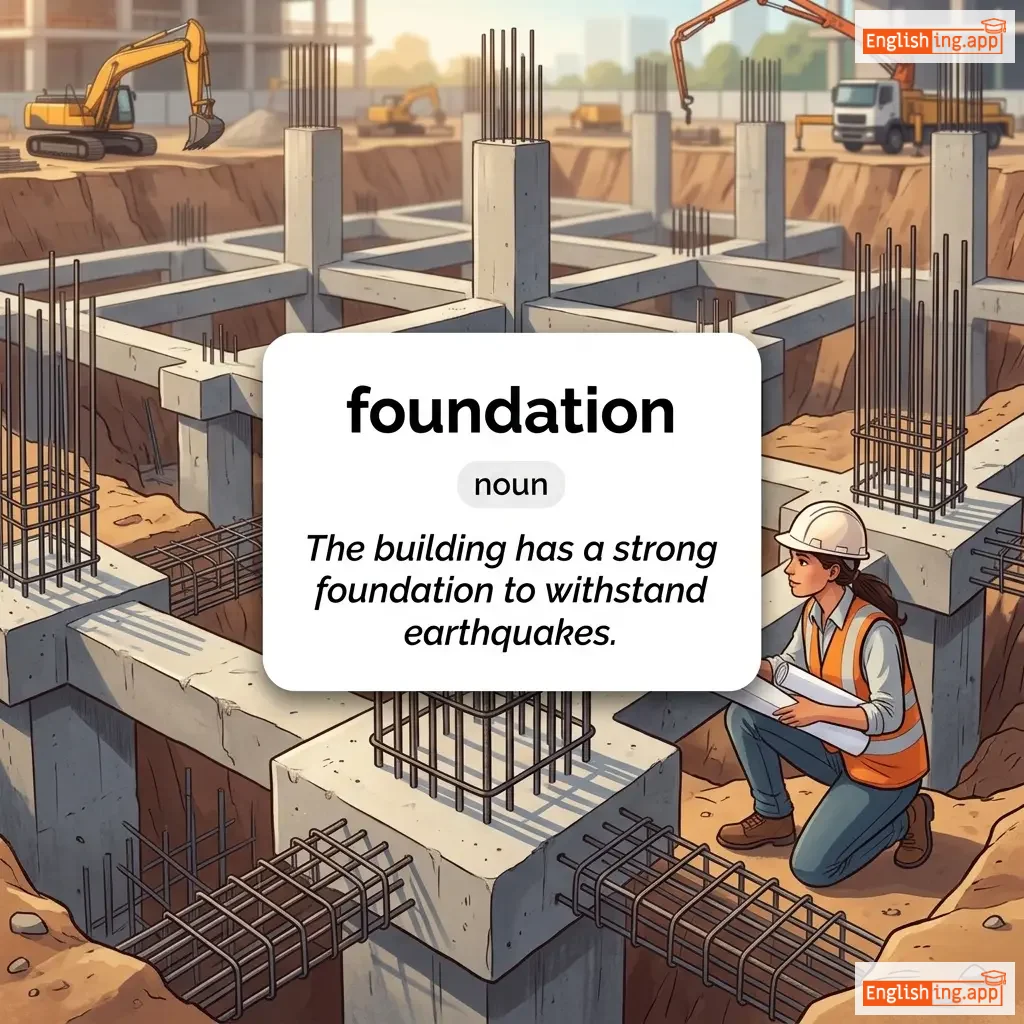
The building has a strong foundation to withstand earthquakes. |
その建物には地震に耐えるための強固な基礎があります。
Sono tatemono ni wa jishin ni taeru tame no kyōko na kiso ga arimasu.
••••••
|
lay the foundation |
to provide the basic ideas or structures on which something can develop
••••••
|
基礎を築く
kiso o kizuku
••••••
|
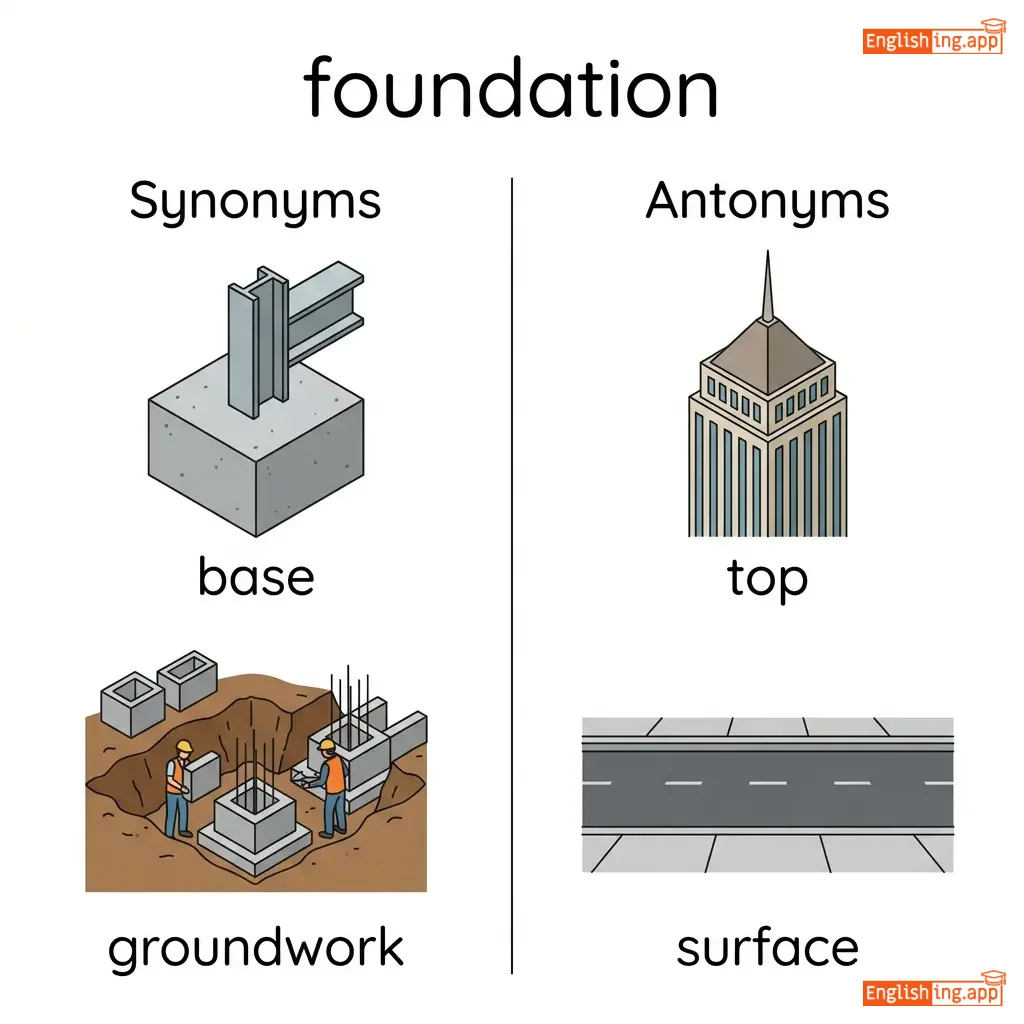
base, groundwork, support, basis, establishment
••••••
|
top, surface, collapse
••••••
|
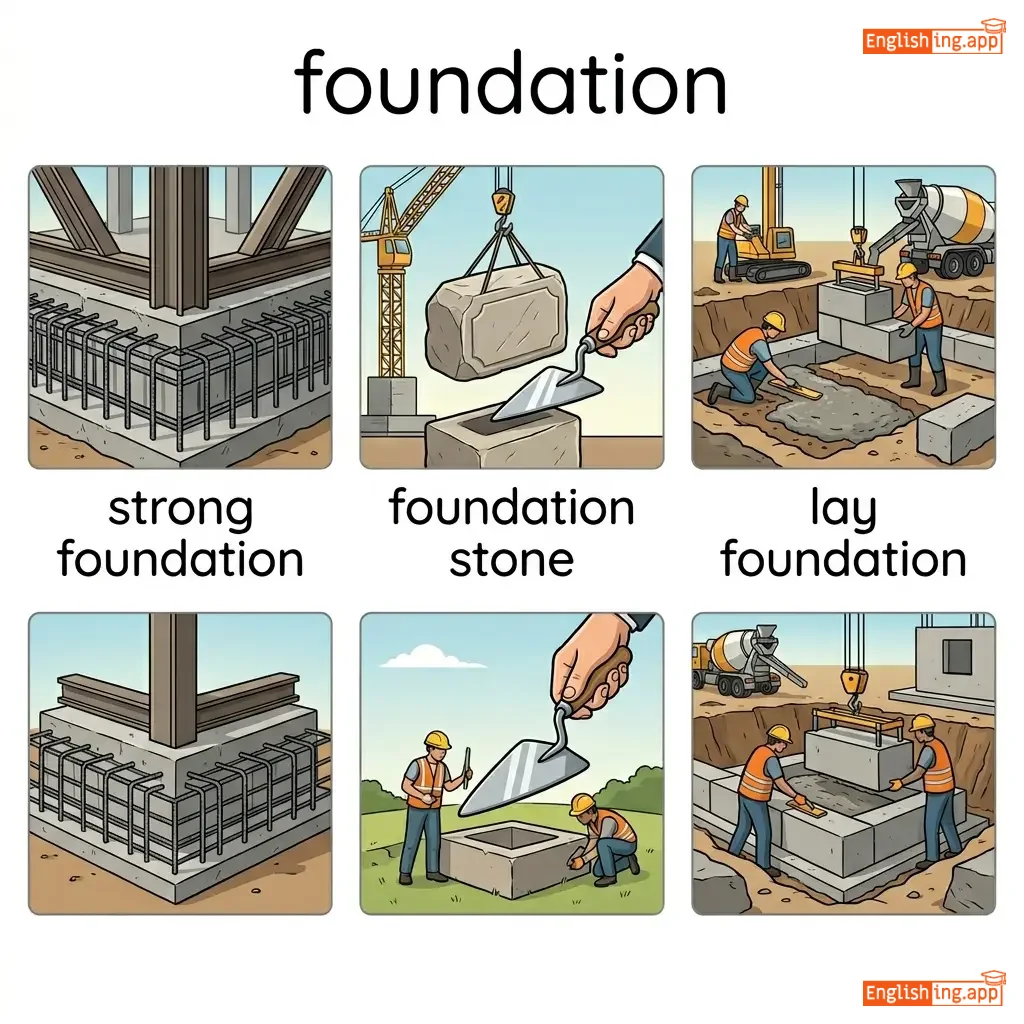
strong foundation, foundation stone, lay foundation, charitable foundation
••••••
|
Foundationは基礎を意味します — 基礎なしでは、建物は立たない。
••••••
|
|
#11058
🏢
|
/faʊnd/
verb
(ファウンド)
••••••
|
- •••••• |
創設する
sōsetsu suru
••••••
|
found
ファウンド
••••••
|
found
ファウンド
••••••
|
finds
ファインズ
••••••
|
founding
ファウンディング
••••••
|
to establish or set up an institution, company, or organization
••••••
|
They found a new startup focused on renewable energy.
彼らは再生可能エネルギーに焦点を当てた新しいスタートアップを立ち上げました。
••••••
|
彼らは再生可能エネルギーに焦点を当てた新しいスタートアップを立ち上げました。
Karera wa saisei kanō enerugī ni shōten o ateta atarashī sutātoppu o tachiagemashita.
••••••
|
well-founded
確かな基盤
••••••
|
based on good reasons or evidence
••••••
|
確かな基盤
tashikana kiban
••••••
|
establish, create, set up, launch, originate
••••••
|
close, abolish, dismantle
••••••
|
found a company, found an institution, newly founded, founder of
••••••
|
Foundは創設する意味 — Founderは企業を創設した人です。
••••••
|
|
#11059
🍀
|
/ˈfɔːrtʃən/
noun
(フォーチュン)
••••••
|
- •••••• |
運 / 富
un / tomi
••••••
|
- •••••• | - •••••• | - •••••• | - •••••• |
chance or luck, especially in success or wealth
••••••
|
She made a fortune by investing in real estate.
彼女は不動産に投資して大金を得た。
••••••
|
彼女は不動産に投資して大金を得た。
Kanojo wa fudousan ni toushi shite taikin o eta.
••••••
|
fortune favors the brave
運命は勇者に微笑む
••••••
|
those who take risks are more likely to succeed
••••••
|
運命は勇者に微笑む
Unmei wa yuusha ni hohoemu
••••••
|
wealth, luck, fate, destiny, riches
••••••
|
poverty, misfortune, loss
••••••
|
good fortune, bad fortune, make a fortune, bring fortune
••••••
|
Fortune は運命 — リスクを取って大きな富を得る!
••••••
|
|
#11060
📄
|
/fɔːrm/
noun, verb
(フォーム)
••••••
|
- •••••• |
形 / フォーム
katachi / fōmu
••••••
|
formed
フォームド
••••••
|
formed
フォームド
••••••
|
forms
フォームズ
••••••
|
forming
フォームイング
••••••
|
the shape or structure of something; to bring something into existence
••••••
|
Students filled out the registration form.
学生たちは登録フォームを記入しました。
••••••
|
学生たちは登録フォームを記入しました。
Gakusei-tachi wa tōroku fōmu o kinyū shimashita.
••••••
|
take form
形を取る
••••••
|
to start to develop a clear shape or structure
••••••
|
形を取る
katachi o toru
••••••
|
shape, structure, configuration, type, create
••••••
|
disorder, destroy, deform
••••••
|
application form, fill out form, form a team, form an opinion
••••••
|
Formはフォームを意味します。試験フォームを書くときのように。
••••••
|
|
#11061
🧠
|
/fəˈɡɛt/
verb
(フォーゲット)
••••••
|
|
忘れる
wasureru
••••••
|
forgot
フォーゴット
••••••
|
forgotten
フォーゴットン
••••••
|
forgets
フォーゲッツ
••••••
|
forgetting
フォーゲッティング
••••••
|
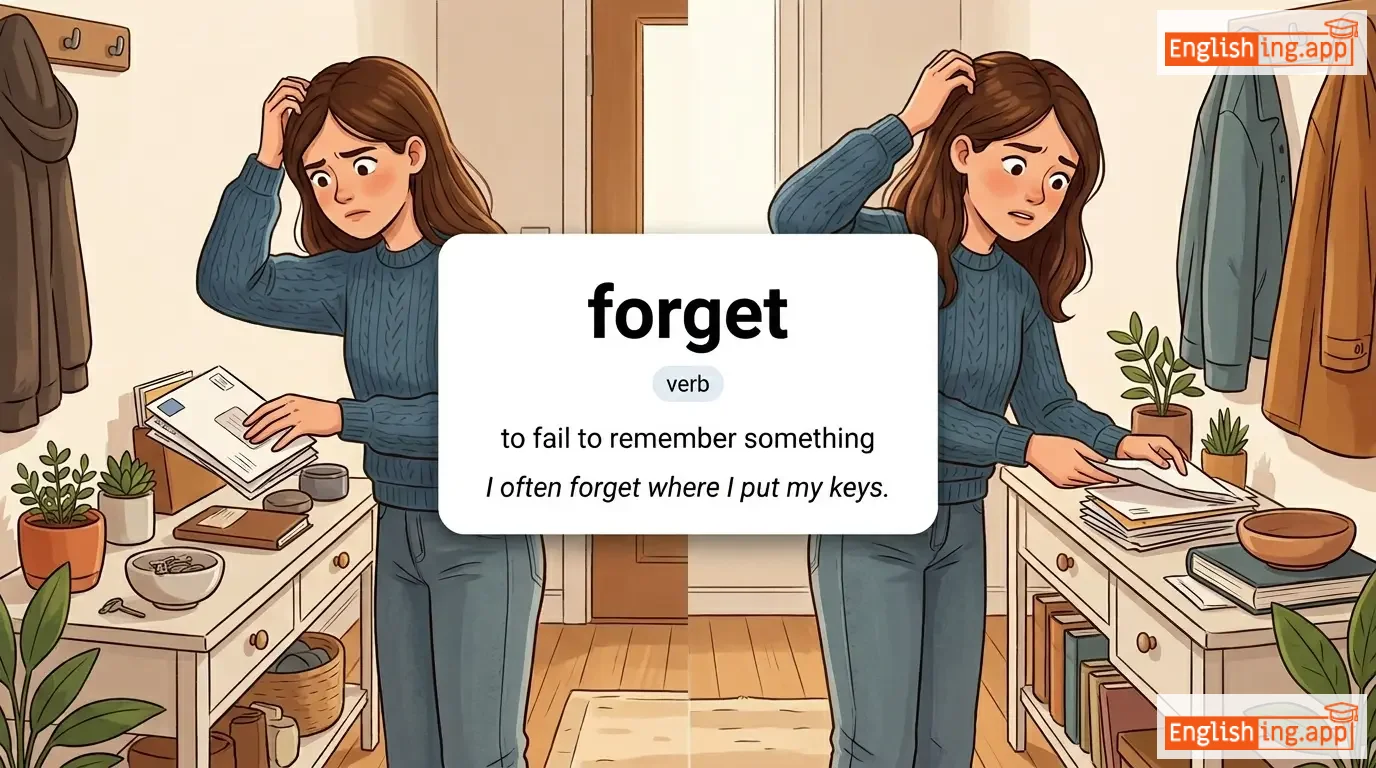
to fail to remember something
••••••
|
I often forget where I put my keys.
私はよく鍵をどこに置いたか忘れてしまいます。
••••••
|
私はよく鍵をどこに置いたか忘れてしまいます。
Watashi wa yoku kagi o doko ni oita ka wasurete shimaimasu.
••••••
|
forgive and forget
許して忘れる
••••••
|
to stop feeling angry and not hold a grudge
••••••
|
許して忘れる
Yurushite wasureru
••••••
|
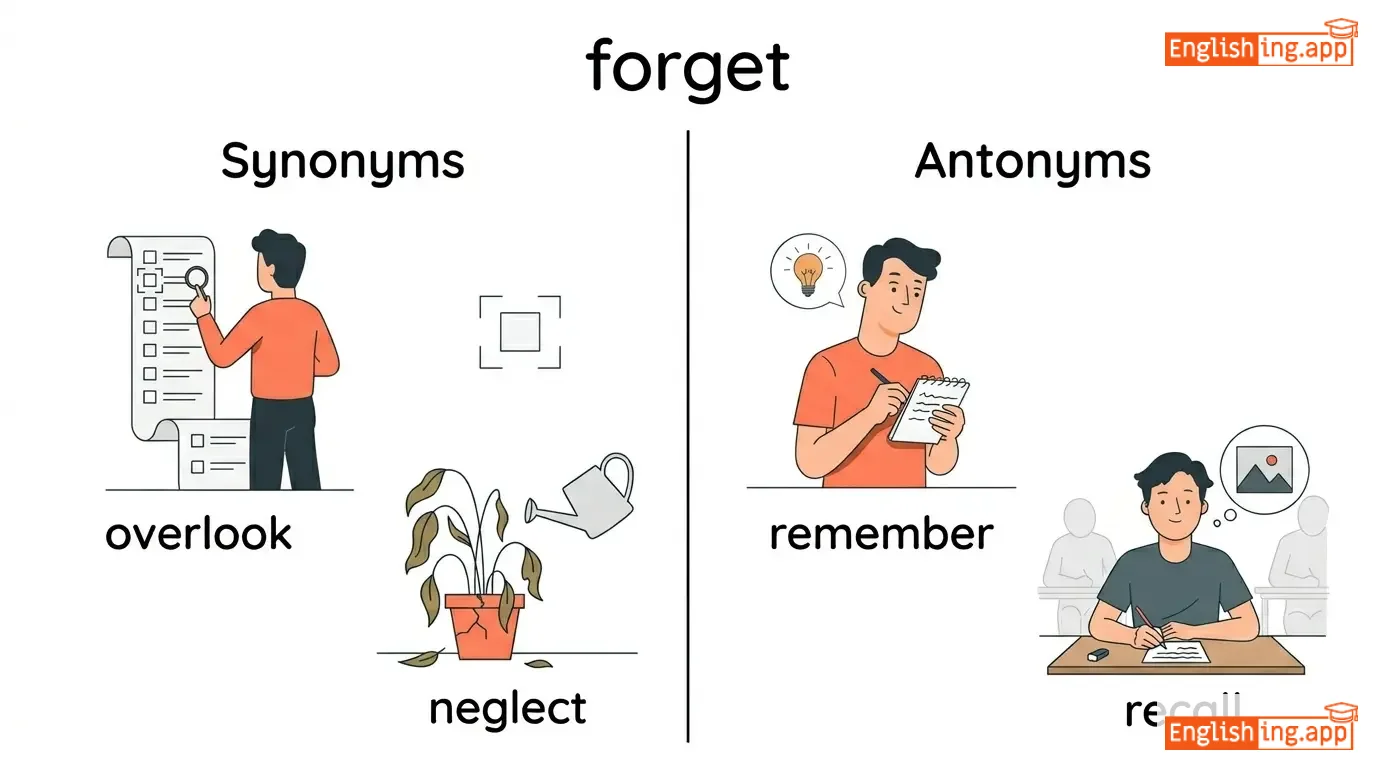
overlook, neglect, miss, disregard, ignore
••••••
|
remember, recall, retain
••••••
|
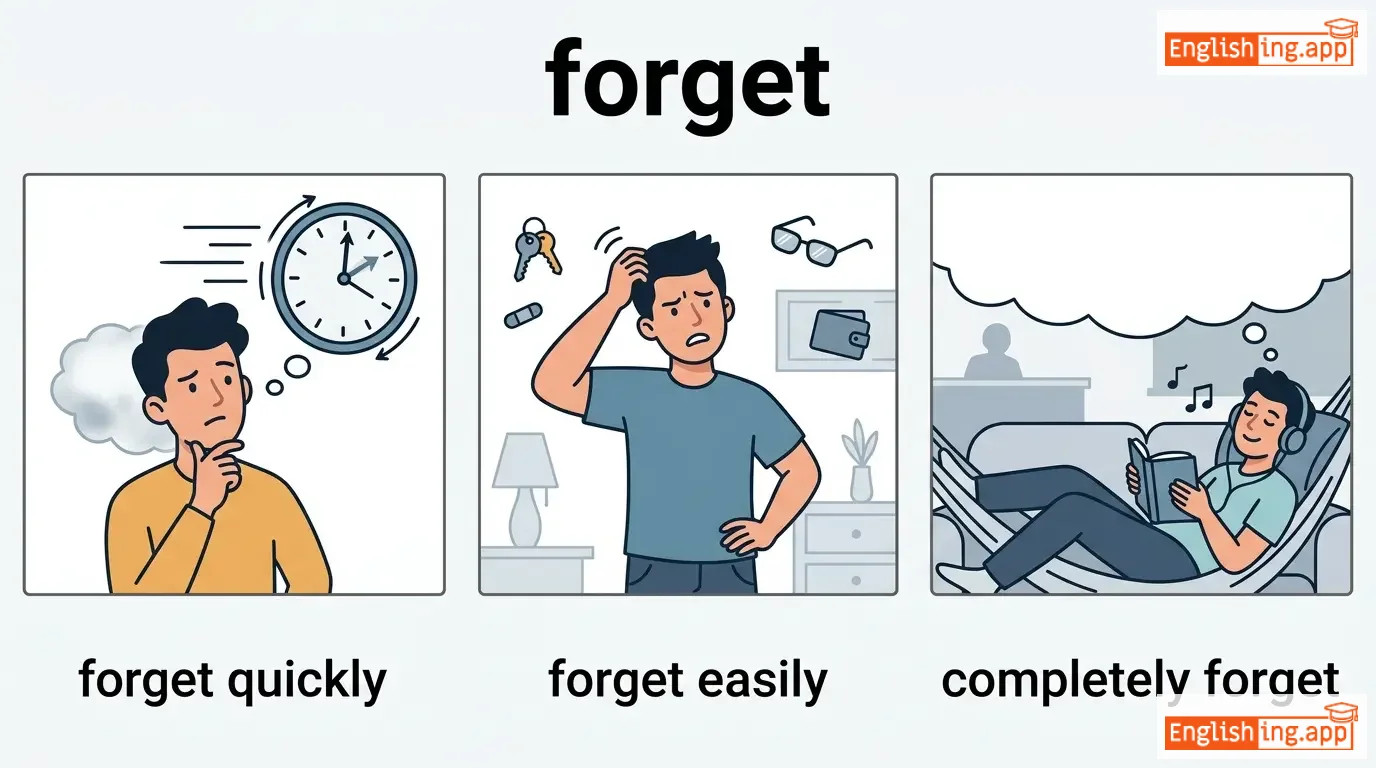
forget quickly, forget easily, completely forget, try to forget
••••••
|
Forgetは'忘れる'という意味 — 鍵を忘れたら: Don't forget!
••••••
|
|
#11062
♾️
|
/fɔːrˈɛvər/
adverb
(フォーエバー)
••••••
|
- •••••• |
永遠
eien
••••••
|
- •••••• | - •••••• | - •••••• | - •••••• |
For all future time; for always.
••••••
|
She promised to love him forever.
彼女は永遠に彼を愛すると約束した。
••••••
|
彼女は永遠に彼を愛すると約束した。
Kanojo wa eien ni kare o aisuru to yakusoku shita.
••••••
|
forever and a day
永遠と一日
••••••
|
an extremely long time
••••••
|
非常に長い時間
hijō ni nagai jikan
••••••
|
always, eternally, endlessly, perpetually, permanently
••••••
|
never, temporarily
••••••
|
love forever, last forever, forever young, forever grateful
••••••
|
永遠は永遠を意味します。愛も永遠です。
••••••
|
|
#11063
🌲
|
/ˈfɔːrɪst/
noun
(フォレスト)
••••••
|
- •••••• |
森
mori
••••••
|
- •••••• | - •••••• | - •••••• | - •••••• |
A large area covered chiefly with trees and undergrowth.
••••••
|
They went hiking in the forest. |
彼らは森でハイキングに行った。
Karera wa mori de haikingu ni itta.
••••••
|
can't see the forest for the trees |
focusing too much on details and missing the bigger picture
••••••
|
木を見て森を見ず
Ki o mite mori o mizu
••••••
|
woods, jungle, woodland, grove, rainforest
••••••
|
desert, plain
••••••
|
dense forest, tropical forest, forest fire, forest reserve
••••••
|
MORI = 森を歩くと、そこが森だと感じる。
••••••
|
|
#11064
💪
|
/fɔːrs/
noun/verb
(フォース)
••••••
|
|
力 / 力量
chikara / chikara
••••••
|
forced
フォースド
••••••
|
forced
フォースド
••••••
|
forces
フォースズ
••••••
|
forcing
フォーシング
••••••
|
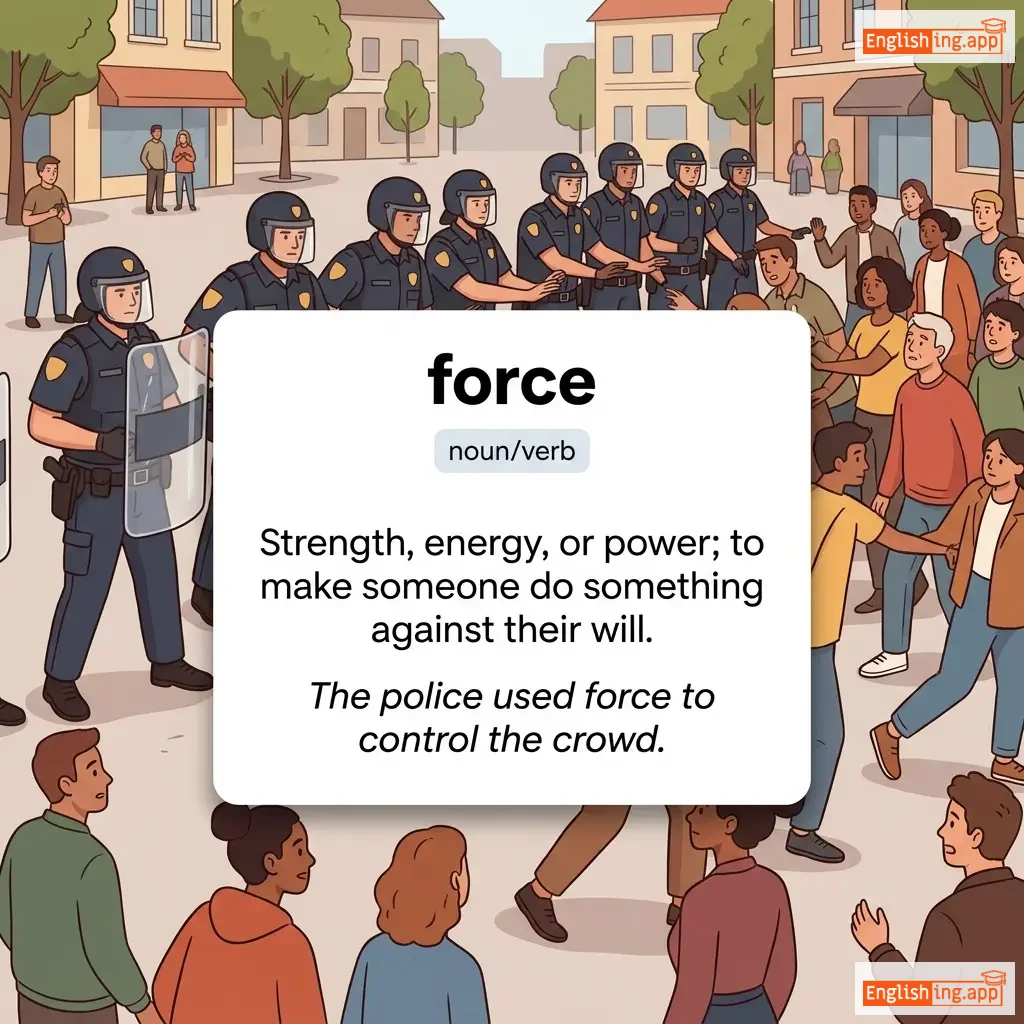
Strength, energy, or power; to make someone do something against their will.
••••••
|
The police used force to control the crowd.
警察は群衆を制御するために力を使いました。
••••••
|
警察は群衆を制御するために力を使いました。
Keisatsu wa gunshū o seigyo suru tame ni chikara o tsukaimashita.
••••••
|
brute force
ブルートフォース
••••••
|
using physical power rather than skill or intelligence
••••••
|
brute force
burūto fōsu
••••••
|
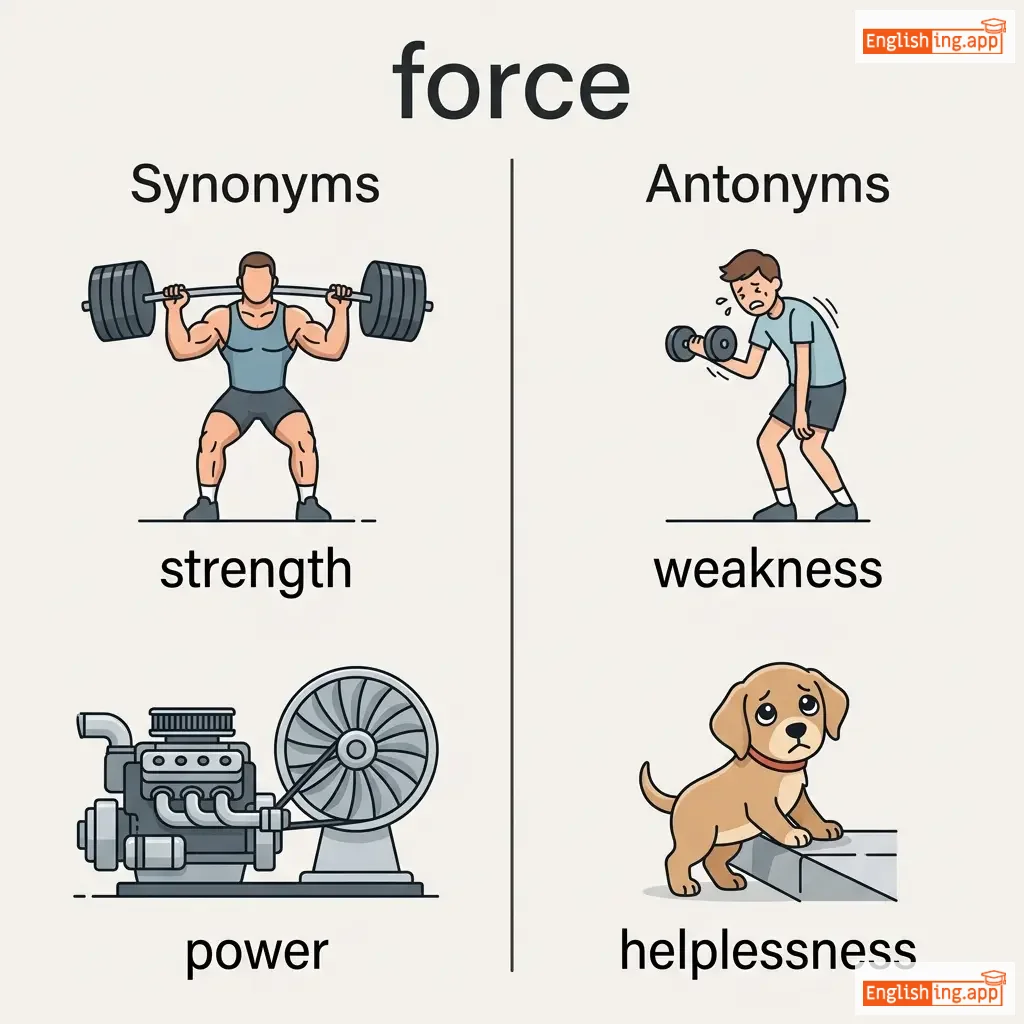
strength, power, energy, pressure, compulsion
••••••
|
weakness, helplessness, inaction
••••••
|
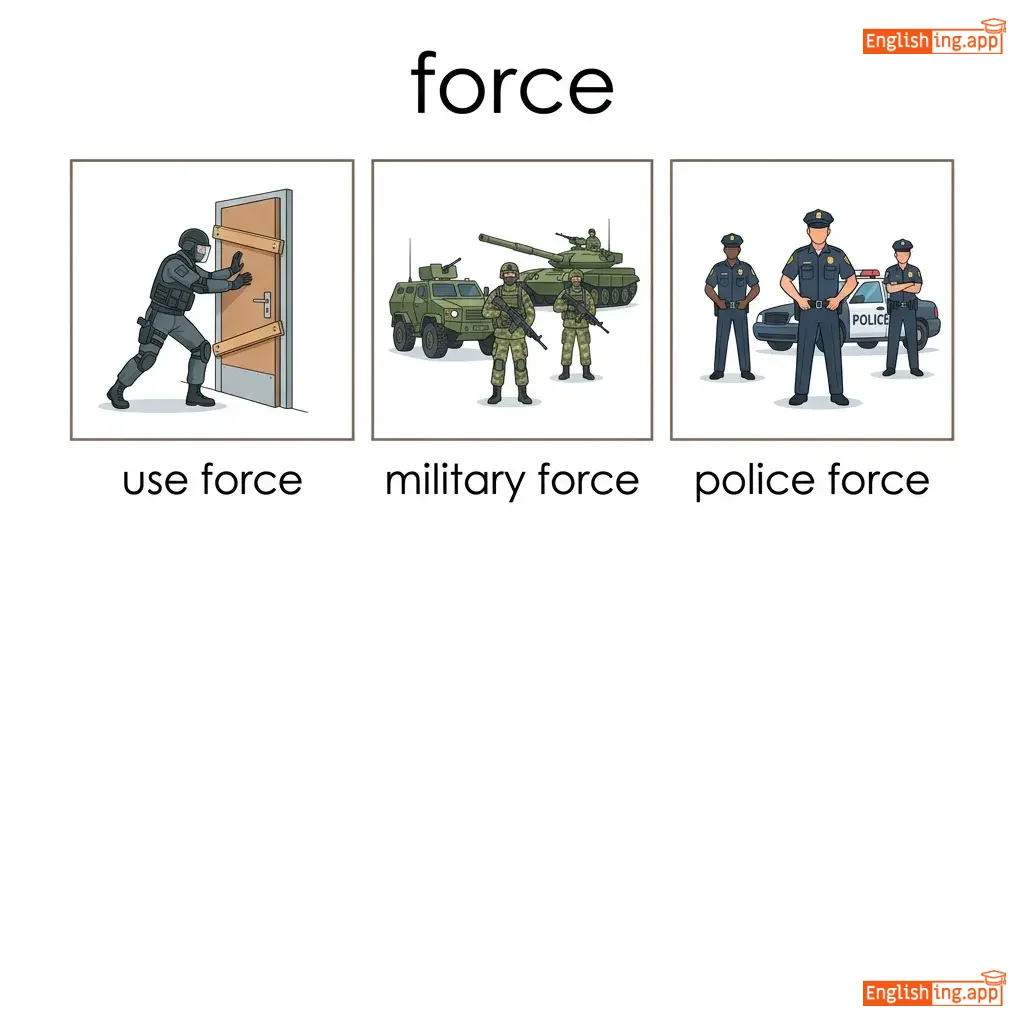
use force, military force, police force, force someone
••••••
|
FORCE は力で物事を解決するという意味です。
••••••
|
Vocabulary Quiz
Test your vocabulary by matching words with their translations or meanings.
Login to take the quiz
Comments (0)
Share your thoughts and join the discussion.
Join the discussion by logging in
Login to CommentNo comments yet
Be the first to share your thoughts!