

翻訳
過去
過去分詞
三人称単数
動名詞
意味
例文
例文の翻訳
同義語
対義語
コロケーション
ニーモニック

Swipe left or right, or use the buttons. Tap image to zoom.
例文の翻訳
単語
Lesson 88Lesson 88 - マスクトグル
|
絵文字
|
単語 | Images | 翻訳 | 過去 | 過去分詞 | 三人称単数 | 動名詞 | 意味 | 例文 | 例文の翻訳 | 表現例 | 表現例の意味 | 表現例の翻訳 | 同義語 | 対義語 | コロケーション | ニーモニック |
|---|---|---|---|---|---|---|---|---|---|---|---|---|---|---|---|---|---|
|
#2611
😒
|
/dɪsˈteɪn/
verb
(ディステイン)
••••••
|
- •••••• |
軽蔑する
keibetsu suru
••••••
|
distained
ディステインド
••••••
|
distained
ディステインド
••••••
|
distains
ディステインズ
••••••
|
distaining
ディステイニング
••••••
|
to treat with scorn or contempt (archaic form of disdain)
••••••
|
He would never distain those who had less fortune than him.
彼は決して自分より運の悪い者を軽蔑しなかった。
••••••
|
彼は決して自分より運の悪い者を軽蔑しなかった。
Kare wa kesshite jibun yori un no warui mono o keibetsu shinakatta.
••••••
|
- •••••• | - •••••• | - •••••• |
disdain, scorn, despise, spurn, reject
••••••
|
respect, admire, honor
••••••
|
distain wealth, distain authority, distain tradition
••••••
|
Distain は disdain と同じ意味—Dis はノー、Tain は引き寄せる—軽蔑する。
••••••
|
|
#2612
📡
|
/dɪˈstɔːrʃən/
noun
(ディストーション)
••••••
|
- •••••• |
歪曲、誤った提示
waikyoku, ayamatta teiji
••••••
|
- •••••• | - •••••• | - •••••• | - •••••• |
the action of twisting, changing, or misrepresenting the shape, sound, or truth of something
••••••
|
There was a distortion in the radio signal. |
ラジオ信号に歪曲がありました。
Rajio shingō ni waikyoku ga arimashita.
••••••
|
media distortion |
biased or inaccurate presentation of information by media
••••••
|
メディア歪曲
media waikyoku
••••••
|
misrepresentation, deformation, twist, alteration, falsification
••••••
|
accuracy, clarity, truth
••••••
|
distortion of facts, sound distortion, image distortion, media distortion
••••••
|
歪曲は、画像が歪んで本来の形を失うようなものです。
••••••
|
|
#2613
🔄
|
/dɪˈstɔːrt/
verb
••••••
|
- •••••• | - •••••• |
distorted
••••••
|
distorted
••••••
|
distorts
••••••
|
distorting
••••••
|
to twist or change the shape, appearance, or meaning of something so it is not true or accurate
••••••
|
The mirror distorted her reflection. |
- •••••• |
distort the truth |
to misrepresent or alter facts dishonestly
••••••
|
- •••••• |
twist, deform, misrepresent, warp, bend
••••••
|
straighten, clarify, preserve
••••••
|
distort reality, distort facts, distort image, distort sound
••••••
|
No •••••• |
|
#2614
🎨
|
/dɪˈstɪŋktɪv/
adjective
(ディスティンクティブ)
••••••
|
- •••••• |
特徴的
tokuchōteki
••••••
|
- •••••• | - •••••• | - •••••• | - •••••• |
having a quality or characteristic that makes something different and easily noticed
••••••
|
The restaurant is known for its distinctive flavors.
そのレストランは独特の風味で知られています。
••••••
|
そのレストランは独特の風味で知られています。
Sono resutoran wa dokutoku no fūmi de shirareteimasu.
••••••
|
- •••••• | - •••••• | - •••••• |
unique, characteristic, special, individual, memorable
••••••
|
common, ordinary, typical
••••••
|
distinctive feature, distinctive style, distinctive look, distinctive character
••••••
|
特徴的はユニークを意味します、忘れられない味のように。
••••••
|
|
#2615
🏅
|
/dɪˈstɪŋkʃən/
noun
••••••
|
- •••••• | - •••••• | - •••••• | - •••••• | - •••••• | - •••••• |
a difference or contrast between similar things or people; excellence that sets someone apart
••••••
|
She graduated with distinction from the university. |
- •••••• |
make a distinction |
to draw a clear difference between things
••••••
|
- •••••• |
difference, contrast, excellence, honor, separation
••••••
|
similarity, sameness, mediocrity
••••••
|
with distinction, fine distinction, make a distinction, subtle distinction
••••••
|
No •••••• |
|
#2616
✨
|
/dɪˈstɪŋkt/
adjective
(ディスティンクト)
••••••
|
- •••••• |
異なる
kotonaru
••••••
|
- •••••• | - •••••• | - •••••• | - •••••• |
clearly different or separate from others of its kind
••••••
|
The twins have distinct personalities. |
双子は異なる個性を持っています。
Futago wa kotonaru kosei o motteimasu.
••••••
|
distinct possibility |
something that is clearly a real chance of happening
••••••
|
明確な可能性
meikaku na kanousei
••••••
|
clear, separate, definite, unique, noticeable
••••••
|
indistinct, vague, unclear
••••••
|
distinct possibility, distinct feature, distinct voice, distinct style
••••••
|
Distinctは異なる意味、例えば異なる個性、個別性です。
••••••
|
|
#2617
🥃
|
/dɪˈstɪlər/
noun
(ディスティラー)
••••••
|
- •••••• |
蒸留業者
jōryū gyōsha
••••••
|
- •••••• | - •••••• | - •••••• | - •••••• |
A person or company that makes alcoholic drinks or purified liquids by distillation.
••••••
|
The distiller introduced a new brand of whiskey last year. |
蒸留業者は昨年、新しいウイスキーブランドを紹介しました。
Jōryū gyōsha wa sakunen, atarashī uisukī burando o shōkai shimashita.
••••••
|
- •••••• | - •••••• | - •••••• |
brewer, producer, refiner, maker
••••••
|
consumer, buyer
••••••
|
whiskey distiller, master distiller, local distiller
••••••
|
蒸留業者は液体を蒸留して純化する人、例えばウイスキーを作る人です。
••••••
|
|
#2618
⚗️
|
/ˌdɪstɪˈleɪʃən/
noun
(ディスティレーション)
••••••
|
- •••••• |
蒸留
jōryū
••••••
|
- •••••• | - •••••• | - •••••• | - •••••• |
The process of purifying a liquid by heating and cooling; the extraction of the essential meaning.
••••••
|
Distillation is commonly used to produce alcoholic beverages. |
蒸留はアルコール飲料の製造によく使用されます。
Jōryū wa arukōru inryō no seizō ni yoku shiyō saremasu.
••••••
|
- •••••• | - •••••• | - •••••• |
purification, refinement, extraction, condensation
••••••
|
contamination, impurity
••••••
|
distillation process, distillation of alcohol, fractional distillation
••••••
|
蒸留は物質を加熱して冷却し、純粋な成分を取り出すことです。
••••••
|
|
#2619
💧
|
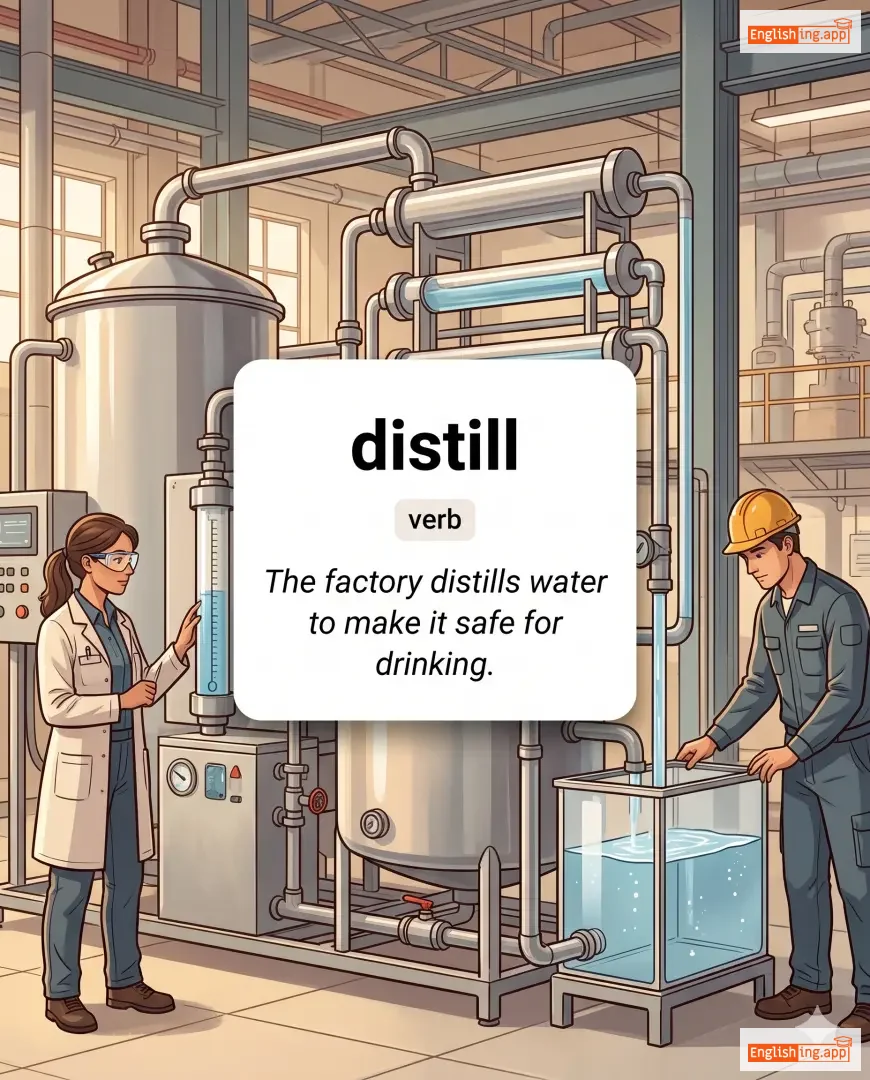
/dɪˈstɪl/
verb
••••••
|
|
- •••••• |
distilled
••••••
|
distilled
••••••
|
distills
••••••
|
distilling
••••••
|
To purify a liquid by heating and cooling; to extract the essential meaning or most important aspects.
••••••
|
The factory distills water to make it safe for drinking. |
- •••••• |
distill the essence |
To extract the most important meaning or quality.
••••••
|
- •••••• |
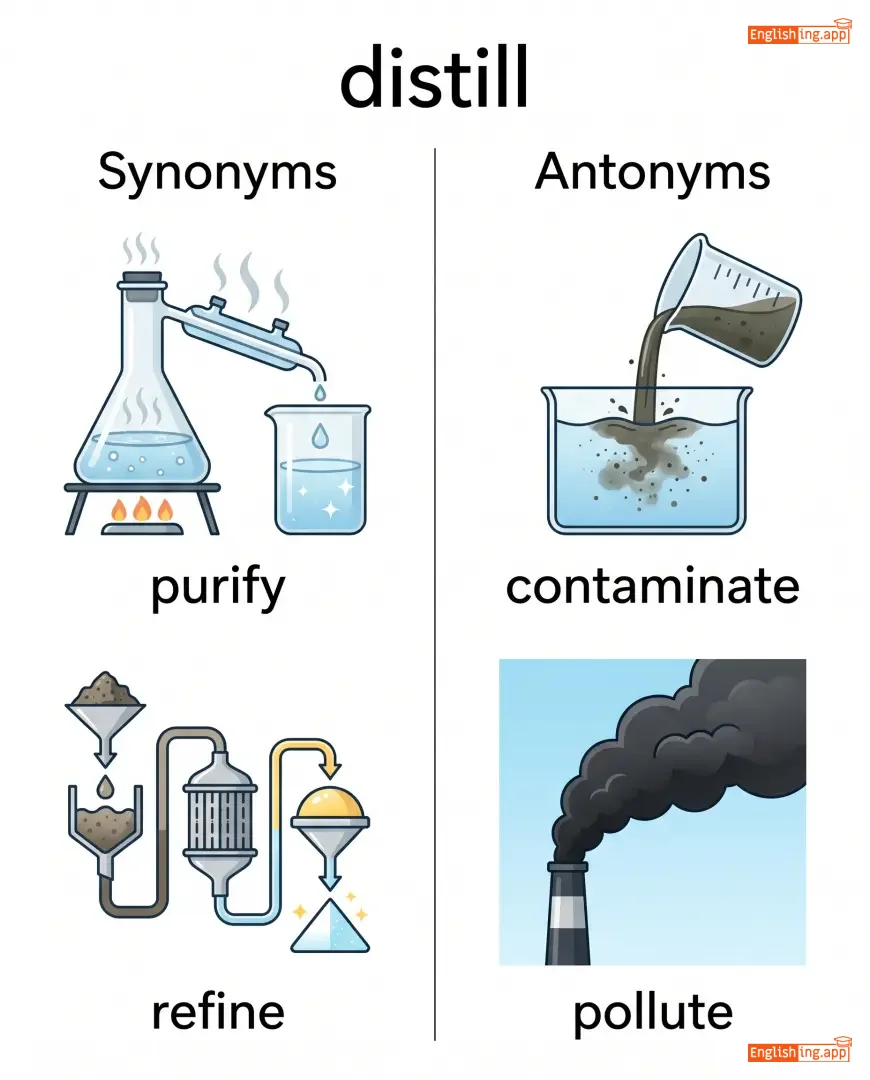
purify, refine, extract, filter, condense
••••••
|
contaminate, pollute
••••••
|
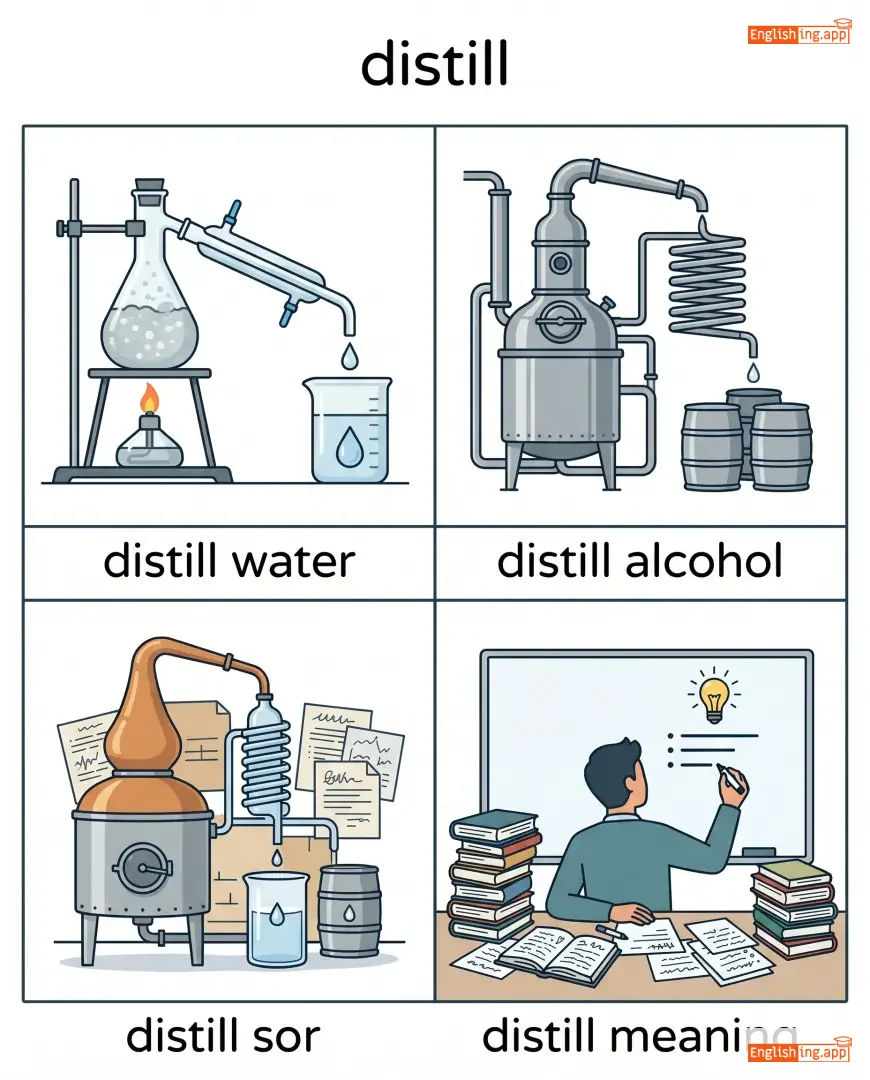
distill water, distill alcohol, distill meaning, distill information
••••••
|
No •••••• |
|
#2620
🎈
|
/dɪˈstɛnʃən/
noun
(ディステンション)
••••••
|
- •••••• |
膨張
bōchō
••••••
|
- •••••• | - •••••• | - •••••• | - •••••• |
The state of being swollen due to internal pressure.
••••••
|
The patient complained of abdominal pain and distention.
患者は腹痛と膨満感を訴えました。
••••••
|
患者は腹痛と膨張感を訴えました。
Kanja wa fukutsū to bōchōkan o uttae mashita.
••••••
|
- •••••• | - •••••• | - •••••• |
swelling, enlargement, bloating, inflation
••••••
|
contraction, shrinking
••••••
|
abdominal distention, gastric distention, distention of veins
••••••
|
Distentionはdistance + tension → 内部圧力で膨らむ。
••••••
|
|
#2621
🫃
|
/dɪˈstɛnsəbl̩/
adjective
(ディステンシブル)
••••••
|
- •••••• |
伸縮可能な
shīnshuku kanō na
••••••
|
- •••••• | - •••••• | - •••••• | - •••••• |
Capable of being stretched or expanded.
••••••
|
The stomach is a distensible organ that can expand after eating. |
胃は食後に膨らむことができる伸縮可能な器官です。
I wa shokugo ni fukuramu koto ga dekiru shīnshuku kanō na kikan desu.
••••••
|
- •••••• | - •••••• | - •••••• |
expandable, stretchable, elastic, flexible, dilatable
••••••
|
rigid, stiff, inelastic
••••••
|
distensible stomach, distensible walls, distensible organ, distensible structure
••••••
|
伸縮可能なは、日本語で'伸縮'といえば、伸ばしたり広げたりできることを意味します。
••••••
|
|
#2622
🎈
|
/dɪsˈtɛnd/
verb
(ディステンド)
••••••
|
|
膨張する
bōchō suru
••••••
|
distended
ディステンデッド
••••••
|
distended
ディステンデッド
••••••
|
distends
ディステンドス
••••••
|
distending
ディステンディング
••••••
|
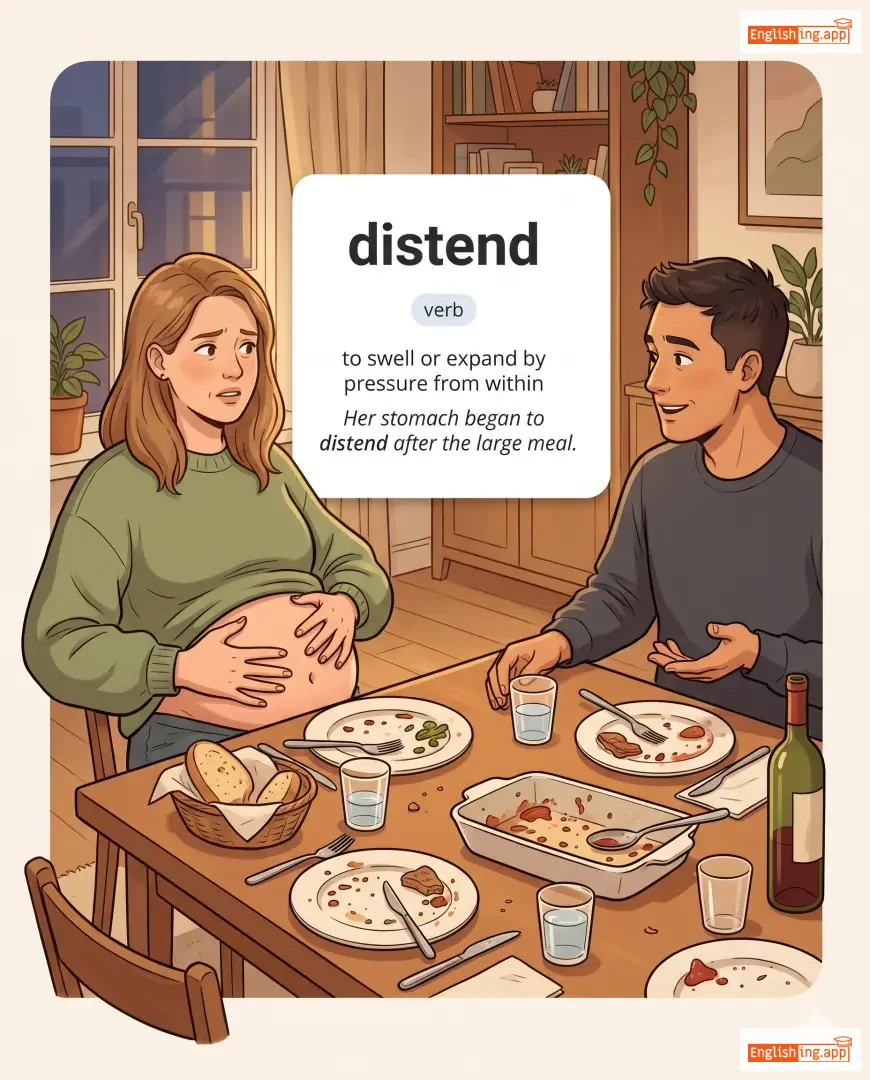
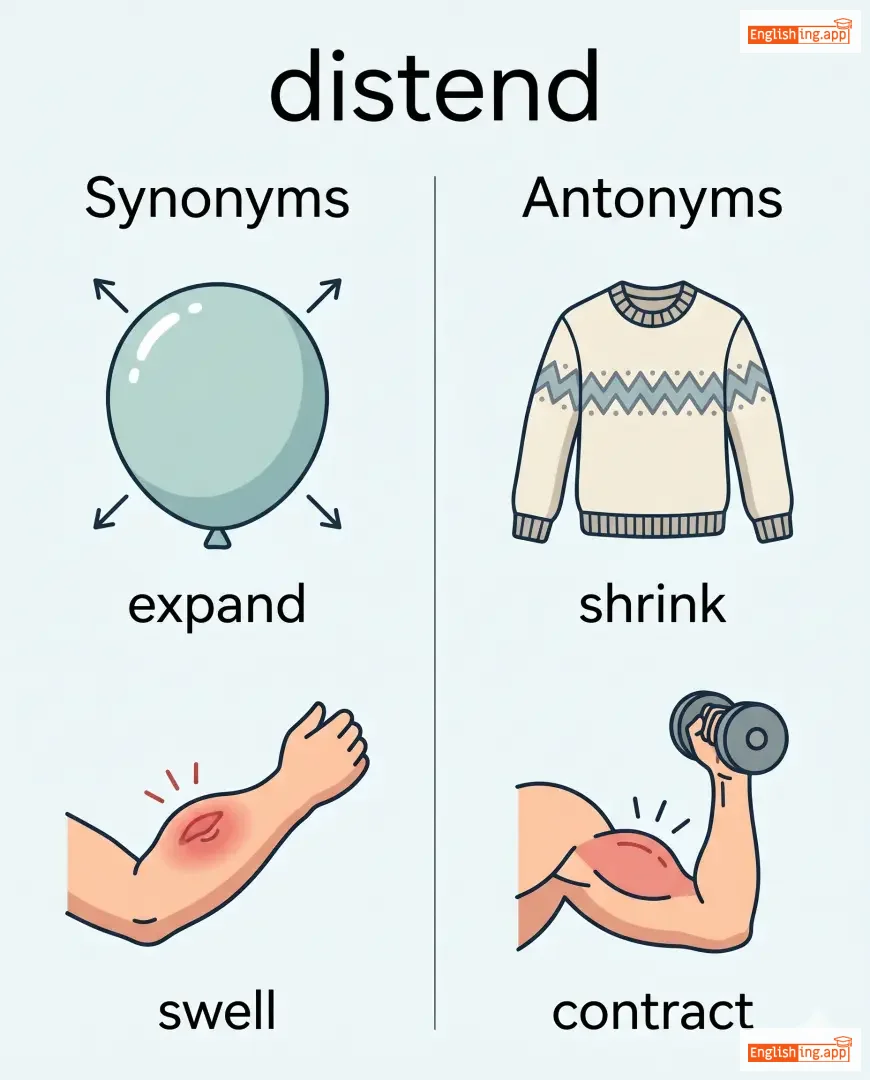
to swell or expand by pressure from within
••••••
|
Her stomach began to distend after the large meal.
大きな食事の後、彼女のお腹は膨らみ始めました。
••••••
|
大きな食事の後、彼女のお腹は膨らみ始めました。
Ōkina shokuji no ato, kanojo no onaka wa fukurami hajimemashita.
••••••
|
- •••••• | - •••••• | - •••••• |
expand, swell, inflate, enlarge, bloat
••••••
|
shrink, contract, deflate
••••••
|
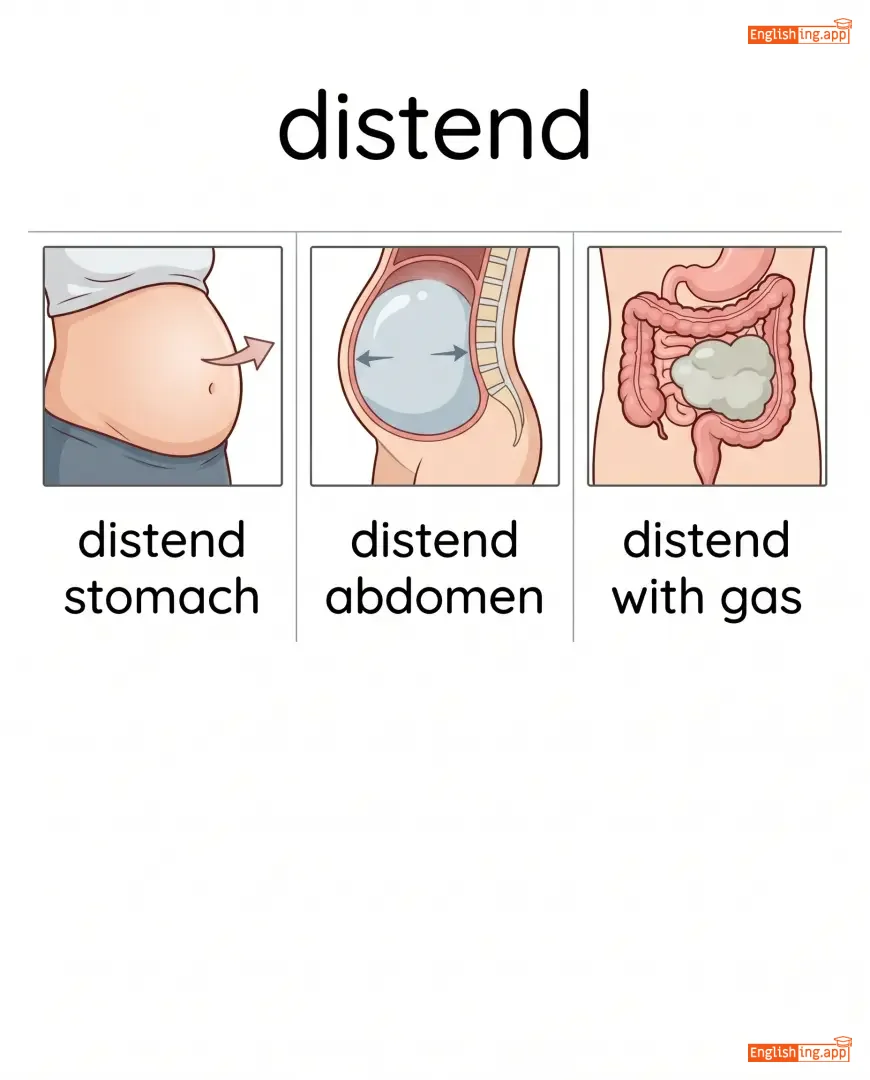
distend stomach, distend abdomen, distend with gas
••••••
|
Distendは膨張すること、内部から膨らむという意味です。
••••••
|
|
#2623
🐶
|
/dɪsˈtɛmpər/
noun
(ディステンパー)
••••••
|
- •••••• |
犬に感染するウイルス性疾患
Inu ni kansen suru uirusu-sei shikkan
••••••
|
- •••••• | - •••••• | - •••••• | - •••••• |
a viral disease affecting animals, especially dogs; also refers to a state of disorder
••••••
|
The dog was diagnosed with distemper and needed immediate care. |
その犬はディステンパーと診断され、即座の治療が必要でした。
Sono inu wa disutemupā to shindan sare, sokuzano chiryo ga hitsuyō deshita.
••••••
|
- •••••• | - •••••• | - •••••• |
disease, infection, illness, disorder
••••••
|
health, order
••••••
|
canine distemper, distemper virus, distemper outbreak
••••••
|
犬が悪いテンパーだと、ディステンパーにかかるかもしれません。
••••••
|
|
#2624
🌄
|
/ˈdɪstənt/
adjective
(ディスタント)
••••••
|
- •••••• |
遠い
tooi
••••••
|
- •••••• | - •••••• | - •••••• | - •••••• |
far away in space or time
••••••
|
They could see the distant mountains from their home. |
彼らは家から遠くの山々を見ることができた。
Karera wa ie kara tooku no yamayama o miru koto ga dekita.
••••••
|
distant relative |
a relative who is not closely related
••••••
|
遠い親戚
tooi shinseki
••••••
|
far, remote, faraway, detached, aloof
••••••
|
near, close, friendly
••••••
|
distant land, distant memory, distant future, distant relative
••••••
|
Distant は distance と似ている—距離があるところに、distant がある。
••••••
|
|
#2625
➡️
|
/ˈdɪstəl/
adjective
(ディスタル)
••••••
|
- •••••• |
遠位
en'i
••••••
|
- •••••• | - •••••• | - •••••• | - •••••• |
situated away from the center of the body or from the point of attachment
••••••
|
The doctor examined the distal end of the patient’s arm. |
医者は患者の腕の遠位端を調べました。
Isha wa kanja no ude no en'i-tan o shirabemashita.
••••••
|
- •••••• | - •••••• | - •••••• |
far, outer, remote, peripheral
••••••
|
proximal, near, close
••••••
|
distal end, distal part, distal segment
••••••
|
Distal は distance のように、体の遠くの部分を指します。
••••••
|
|
#2626
⚠️
|
/dɪsˈsɜːrvɪs/
noun
(ディスサービス)
••••••
|
- •••••• |
害
gai
••••••
|
- •••••• | - •••••• | - •••••• | - •••••• |
A harmful action; something that does damage rather than help.
••••••
|
Spreading false information is a disservice to the community. |
偽の情報を広めることは、コミュニティに害を与えることです。
Nise no joho o hiromeru koto wa, komyuniti ni gai o ataeru koto desu.
••••••
|
do someone a disservice |
to harm someone by providing poor or misleading help
••••••
|
誰かに害を与える
Dareka ni gai o ataeru
••••••
|
harm, injury, damage, injustice, detriment
••••••
|
service, benefit, favor
••••••
|
do a disservice, terrible disservice, real disservice
••••••
|
Disserviceはサービスではなく、害を与えることを意味します。
••••••
|
|
#2627
👩
|
/ˈdɪstæf/
noun/adjective
(ディスタフ)
••••••
|
- •••••• |
女性に関連、母系
josei ni kanren, bokei
••••••
|
- •••••• | - •••••• | - •••••• | - •••••• |
Relating to women or the maternal side of a family; also a tool for spinning thread.
••••••
|
She came from the distaff side of a noble family. |
彼女は名家の母系から来た。
Kanojo wa meika no bokei kara kita.
••••••
|
distaff side |
The female side of a family.
••••••
|
母系
bokei
••••••
|
maternal, feminine, female line, womanly
••••••
|
paternal, masculine
••••••
|
distaff side, distaff family, distaff work
••••••
|
Distaff side は女性の側 → 母親の側を思い出してみてください。
••••••
|
|
#2628
🚫
|
/dɪˈsweɪʒən/
noun
(ディスウェイジョン)
••••••
|
- •••••• |
説得しないこと
settoku shinai koto
••••••
|
- •••••• | - •••••• | - •••••• | - •••••• |
The act of persuading someone not to take a course of action.
••••••
|
Her dissuasion prevented him from making a bad investment. |
彼女の説得しないことは、彼が悪い投資をしないようにしました。
Kanojo no settoku shinai koto wa, kare ga warui tōshi o shinai yō ni shimashita.
••••••
|
- •••••• | - •••••• | - •••••• |
discouragement, deterrence, prevention, warning
••••••
|
encouragement, persuasion
••••••
|
effective dissuasion, strong dissuasion, act of dissuasion
••••••
|
Dissuasionはpersuasionの反対、何かをさせないように説得すること。
••••••
|
|
#2629
🛑
|
/dɪˈsweɪd/
verb
(ディスウェイド)
••••••
|
- •••••• |
思いとどまらせる
omoito domaraseru
••••••
|
dissuaded
ディスウェイデッド
••••••
|
dissuaded
ディスウェイデッド
••••••
|
dissuades
ディスウェイズ
••••••
|
dissuading
ディスウェイディング
••••••
|
To persuade someone not to do something.
••••••
|
She tried to dissuade him from quitting his job.
シー トライド トゥ ディスウェイド ヒム フロム クイッティング ヒズ ジョブ。
••••••
|
彼女は彼に仕事を辞めさせないように説得しようとした。
Kanojo wa kare ni shigoto o yamesasenai yō ni settoku shiyō to shita.
••••••
|
- •••••• | - •••••• | - •••••• |
discourage, deter, prevent, warn
••••••
|
encourage, persuade
••••••
|
dissuade someone, dissuade from, attempt to dissuade, try to dissuade
••••••
|
Dissuade = DIS + persuade → 誰かに何かをやめさせる。
••••••
|
|
#2630
🎻
|
/ˈdɪsənənt/
adjective
(ディソナント)
••••••
|
- •••••• |
不協和音
fukyouwaon
••••••
|
- •••••• | - •••••• | - •••••• | - •••••• |
Harsh and lacking harmony; conflicting.
••••••
|
The orchestra produced a dissonant sound during rehearsal. |
オーケストラはリハーサル中に不協和音を発生させました。
Ōkesutora wa rihāsaru-chū ni fukyouwaon o hassei sasemashita.
••••••
|
- •••••• | - •••••• | - •••••• |
discordant, jarring, conflicting, incongruous
••••••
|
harmonious, melodious
••••••
|
dissonant chord, dissonant voices, dissonant opinions, dissonant relationship
••••••
|
Dissonant = DIS harmony + sound → 日本語 '不協和音'.
••••••
|
|
#2631
🎶
|
/ˈdɪsənəns/
noun
(ディスオナンス)
••••••
|
|
不協和音
fukyouwaon
••••••
|
- •••••• | - •••••• | - •••••• | - •••••• |
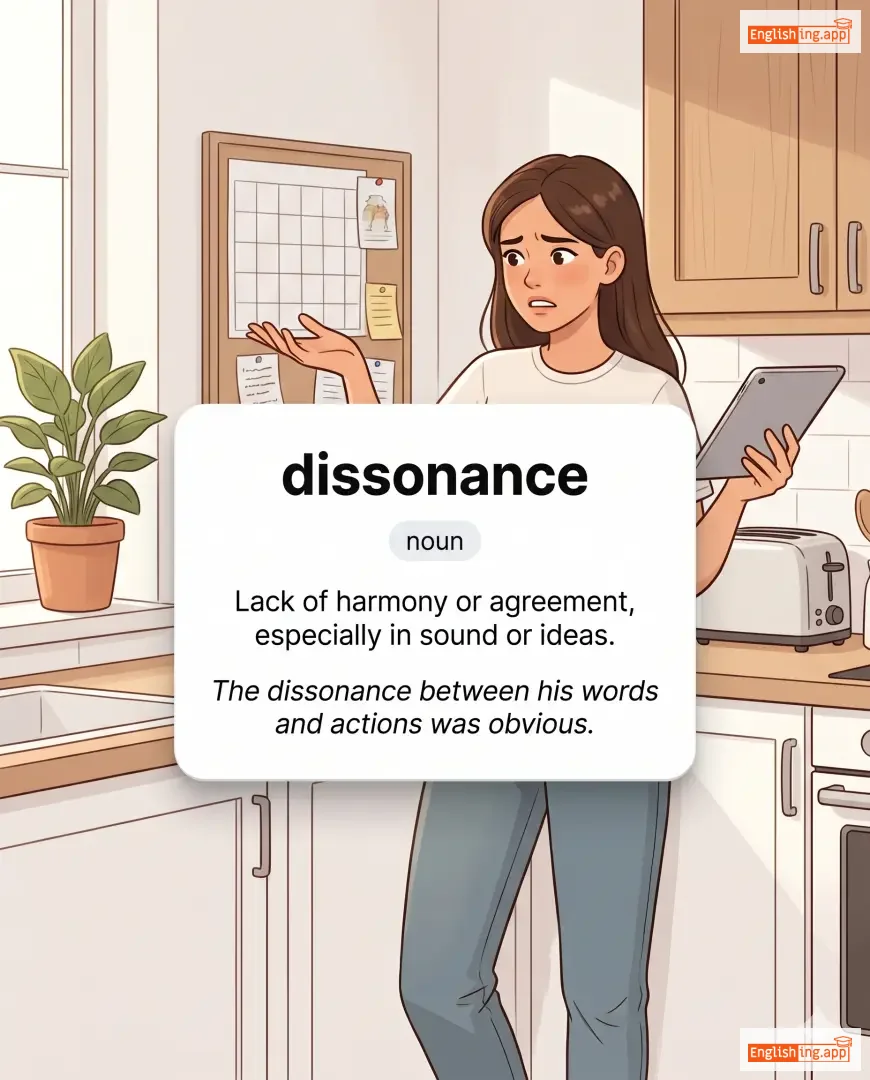
Lack of harmony or agreement, especially in sound or ideas.
••••••
|
The dissonance between his words and actions was obvious. |
彼の言葉と行動の間の不協和音は明らかだった。
Kare no kotoba to koudou no aida no fukyouwaon wa akiraka datta.
••••••
|
cognitive dissonance |
The mental discomfort experienced when holding contradictory beliefs or values.
••••••
|
認知的不協和音
ninchi-teki fukyouwaon
••••••
|
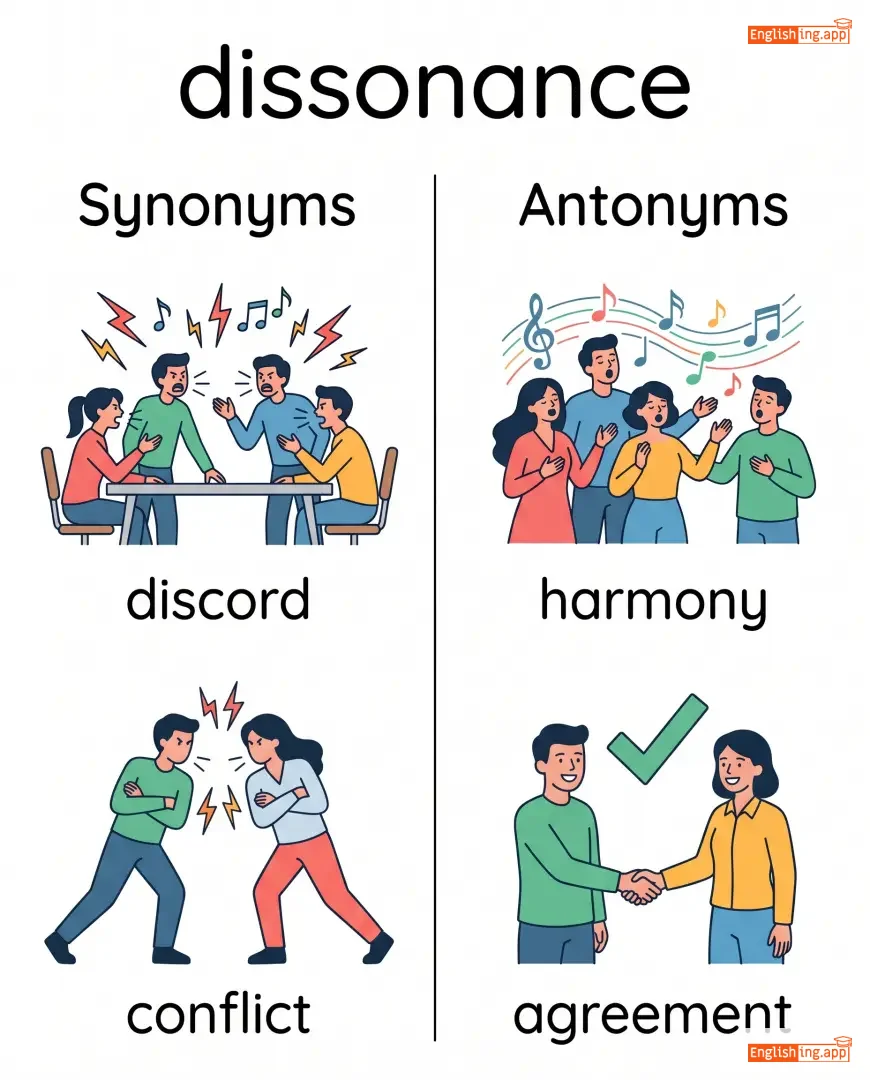
discord, conflict, discrepancy, disagreement, incongruity
••••••
|
harmony, agreement, concord
••••••
|
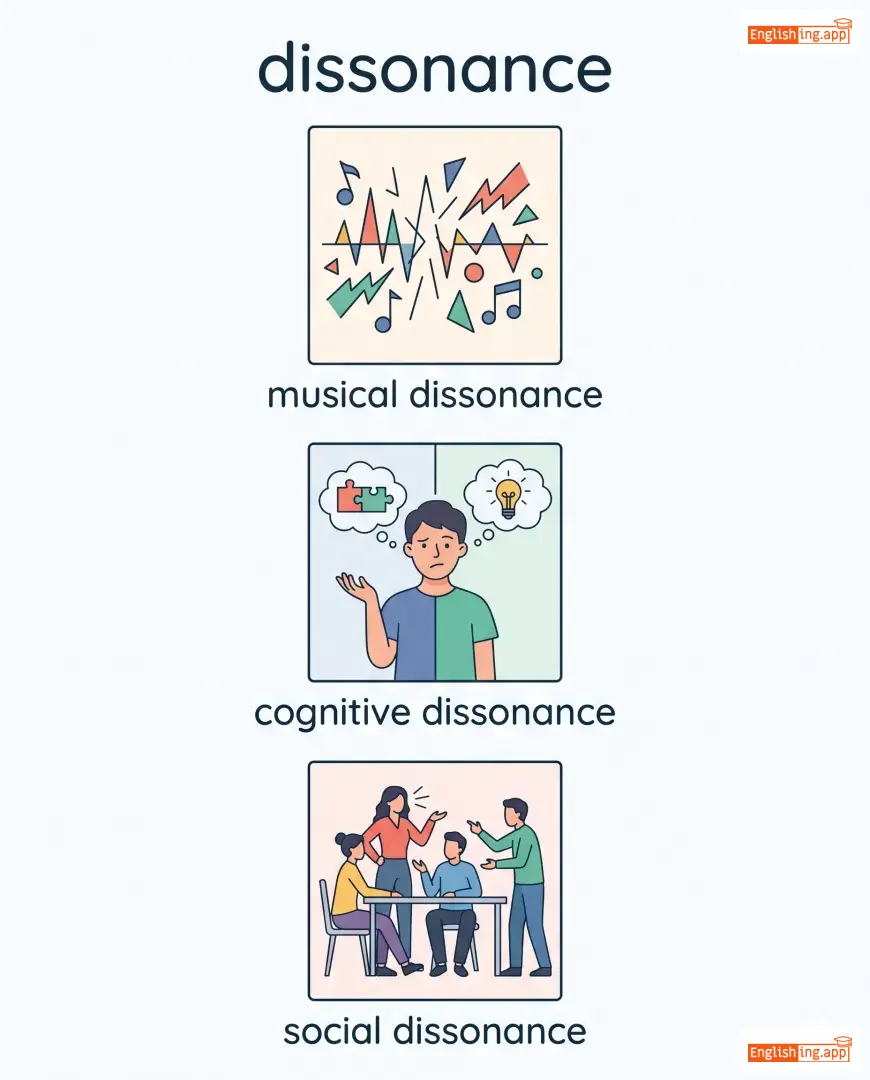
musical dissonance, cognitive dissonance, social dissonance, emotional dissonance
••••••
|
Dissonanceは不協和音を意味する - 日本語で'不協和音'のようなものです。
••••••
|
|
#2632
🫗
|
/dɪˈzɒlv/
verb
••••••
|
- •••••• | - •••••• |
dissolved
••••••
|
dissolved
••••••
|
dissolves
••••••
|
dissolving
••••••
|
to melt or become liquid; to officially end or break up an agreement or organization
••••••
|
The sugar will dissolve quickly in hot tea. |
- •••••• |
dissolve into tears |
to suddenly start crying uncontrollably
••••••
|
- •••••• |
melt, liquefy, disband, terminate, vanish
••••••
|
solidify, unite, establish
••••••
|
dissolve sugar, dissolve parliament, dissolve the marriage
••••••
|
No •••••• |
|
#2633
⚖️
|
/ˌdɪsəˈluːʃən/
noun
(ディスソリューション)
••••••
|
|
解散
kaisann
••••••
|
- •••••• | - •••••• | - •••••• | - •••••• |
the act of formally ending or breaking apart something, such as an organization or marriage
••••••
|
The dissolution of the company was announced yesterday. |
会社の解散は昨日発表されました。
Kaisha no kaisan wa kinou happyou saremashita.
••••••
|
- •••••• | - •••••• | - •••••• |
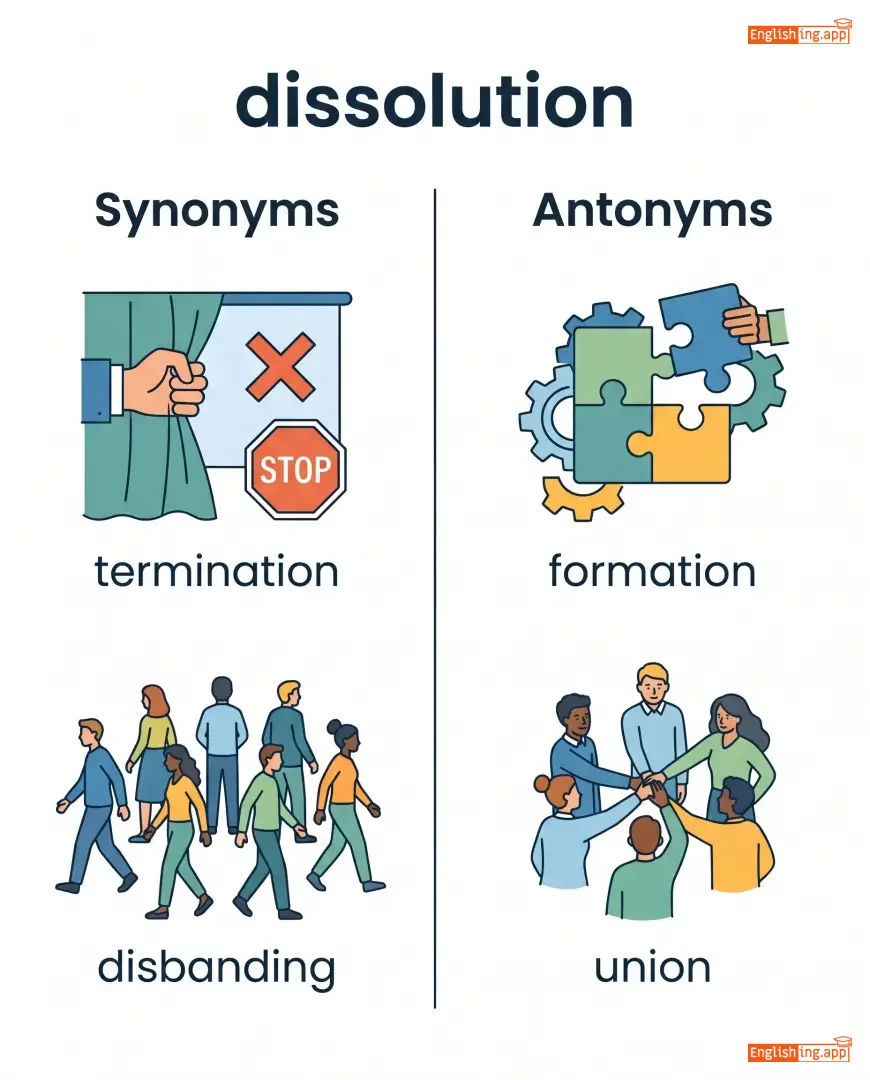
termination, disbanding, breakup, collapse
••••••
|
formation, union, establishment
••••••
|
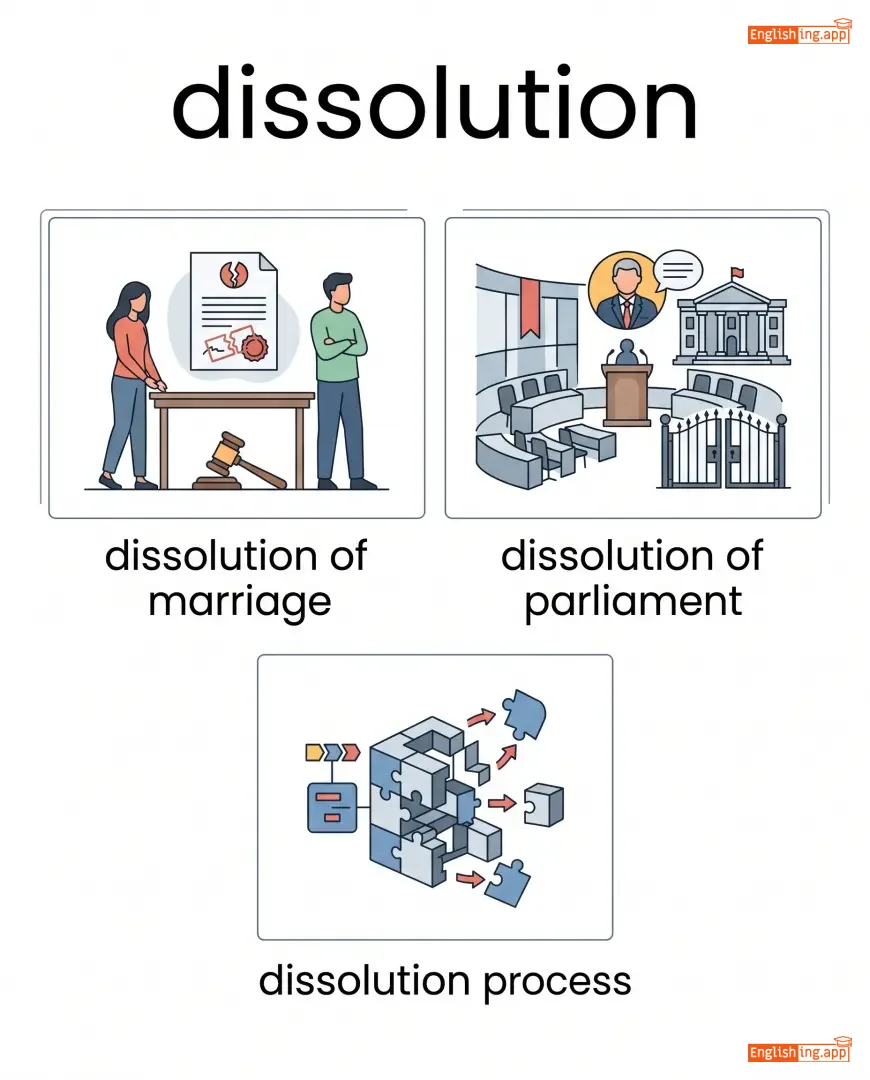
dissolution of marriage, dissolution of parliament, dissolution process
••••••
|
Dissolutionは解散、解決の終わり
••••••
|
|
#2634
🍻
|
/ˈdɪsəluːt/
adjective
(ディソリュート)
••••••
|
- •••••• |
放蕩
hōtō
••••••
|
- •••••• | - •••••• | - •••••• | - •••••• |
lacking moral restraint; indulging excessively in sensual pleasures
••••••
|
He led a dissolute life filled with parties and gambling. |
彼はパーティーとギャンブルで満ちた放蕩の生活を送った。
Kare wa pātii to gyanburu de mitchita hōtō no seikatsu o okutta.
••••••
|
- •••••• | - •••••• | - •••••• |
immoral, corrupt, decadent, licentious
••••••
|
virtuous, moral, disciplined
••••••
|
dissolute habits, dissolute life, dissolute character
••••••
|
Dissolute は規律なし - 放蕩
••••••
|
|
#2635
🍷
|
/ˌdɪsɪˈpeɪʃən/
noun
(ディスィペーション)
••••••
|
- •••••• |
浪費
rōhi
••••••
|
- •••••• | - •••••• | - •••••• | - •••••• |
the process of disappearing or wasting; excessive indulgence in pleasure
••••••
|
The dissipation of his fortune left him in poverty. |
彼の財産の浪費は彼を貧困に追いやった。
Kare no zaisan no rōhi wa kare o hinkon ni oiyatta.
••••••
|
- •••••• | - •••••• | - •••••• |
waste, squandering, indulgence, dispersal
••••••
|
conservation, accumulation
••••••
|
dissipation of energy, dissipation of wealth, life of dissipation
••••••
|
Dissipationは過度に浪費すること - 浪費
••••••
|
|
#2636
💨
|
/ˈdɪsɪpeɪt/
verb
(ディシペイト)
••••••
|
|
消散する
shousan suru
••••••
|
dissipated
ディシペイテッド
••••••
|
dissipated
ディシペイテッド
••••••
|
dissipates
ディシペイツ
••••••
|
dissipating
ディシペイティング
••••••
|
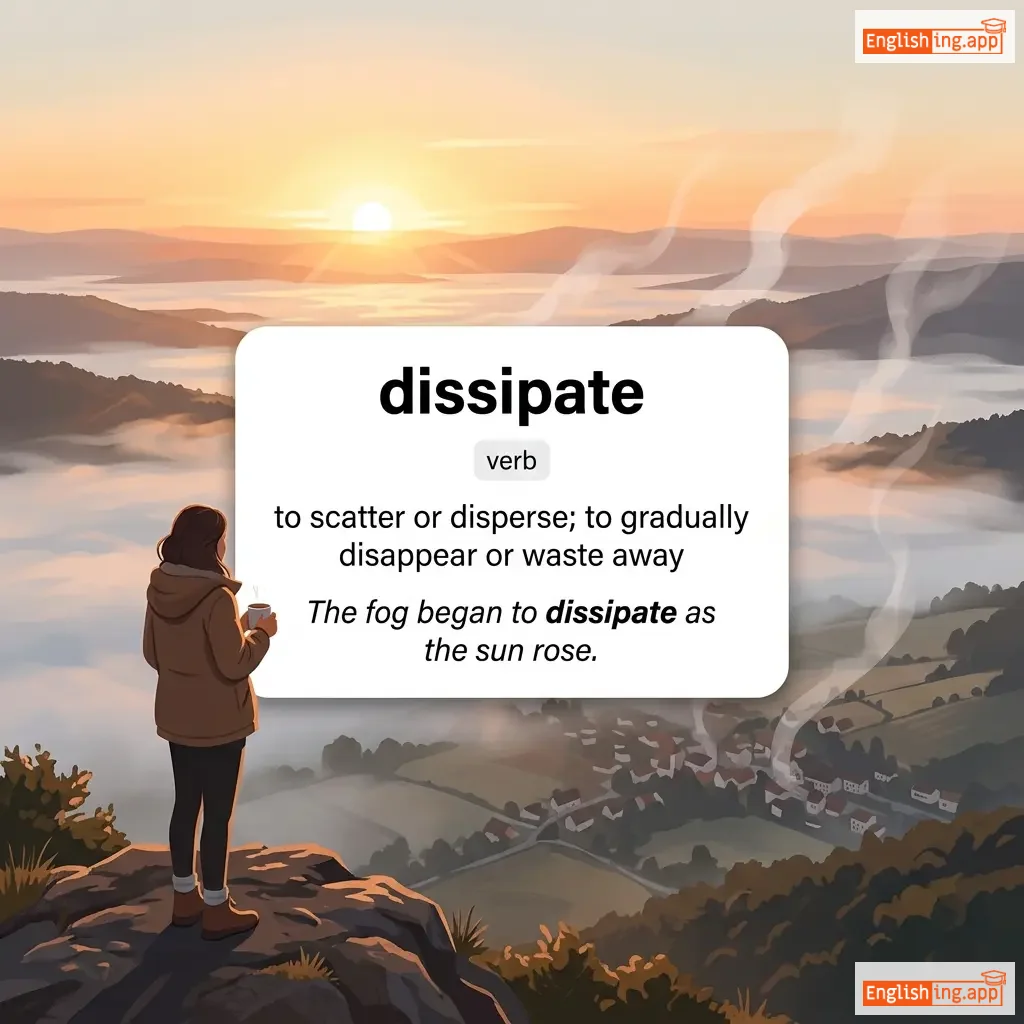
to scatter or disperse; to gradually disappear or waste away
••••••
|
The fog began to dissipate as the sun rose.
ザ フォグ ビギャン トゥ ディシペイト アズ ザ サン ローズ
••••••
|
霧は太陽が昇るとともに消散し始めた。
Kiri wa taiyō ga noboru to tomo ni shōsan shi hajimeta.
••••••
|
dissipate energy
ディシペイト エナジー
••••••
|
to waste or scatter energy in different directions
••••••
|
エネルギーを浪費する
enerugī o rūhi suru
••••••
|
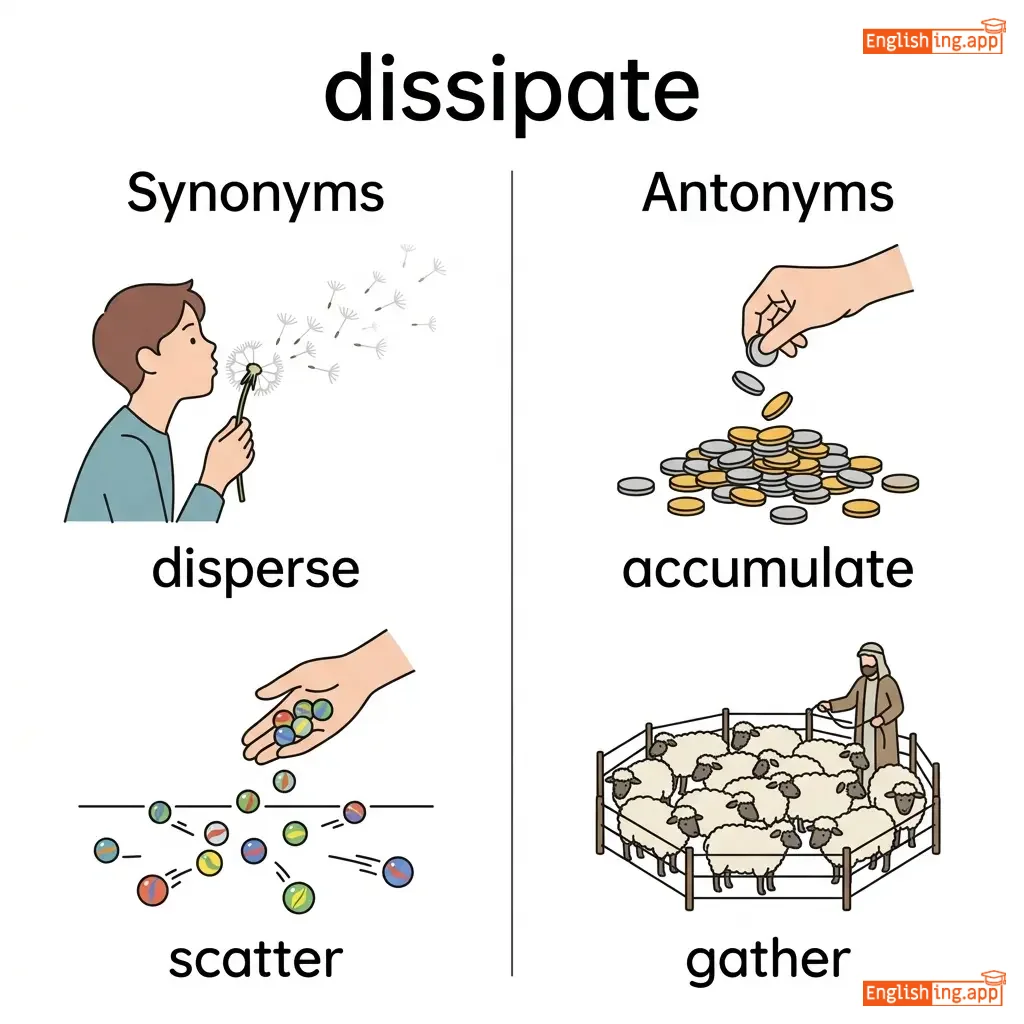
disperse, scatter, vanish, evaporate, squander
••••••
|
accumulate, gather, collect
••••••
|
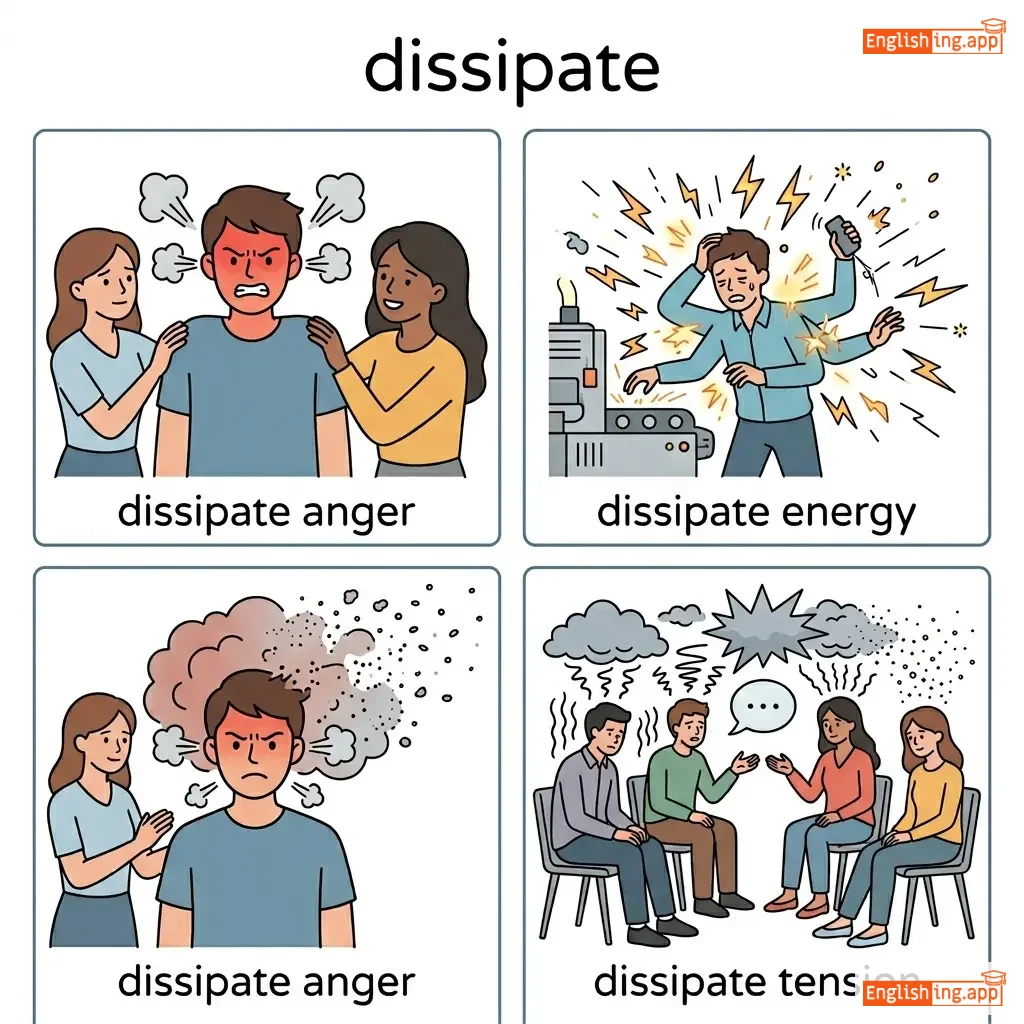
dissipate anger, dissipate energy, dissipate tension, dissipate heat
••••••
|
霧が消散する、dissipate は消えるという意味
••••••
|
|
#2637
🎭
|
/dɪˈsɪmjʊˌleɪt/
verb
(ディシミュレート)
••••••
|
- •••••• |
偽る
itsuwaru
••••••
|
dissimulated
ディシミュレーテッド
••••••
|
dissimulated
ディシミュレーテッド
••••••
|
dissimulates
ディシミュレーツ
••••••
|
dissimulating
ディシミュレーティング
••••••
|
To disguise or conceal one's true feelings or intentions.
••••••
|
He tried to dissimulate his fear with a smile.
彼は笑顔で恐怖を隠そうとした。
••••••
|
彼は笑顔で恐怖を隠そうとした。
Kare wa egao de kyōfu o kasusou to shita.
••••••
|
- •••••• | - •••••• | - •••••• |
conceal, disguise, feign, pretend, mask
••••••
|
reveal, expose, show
••••••
|
dissimulate emotions, dissimulate intentions, dissimulate feelings
••••••
|
Dissimulate は simulate(ふりをする)ようなものですが、dis(隠す)です。
••••••
|
|
#2638
🔀
|
/dɪsˈsɪmɪlər/
adjective
(ディシミラー)
••••••
|
- •••••• |
異なる
kotonaru
••••••
|
- •••••• | - •••••• | - •••••• | - •••••• |
Not alike; different.
••••••
|
Though they are twins, their personalities are dissimilar.
ゾウ デイ アー ツインズ、ゼア パーソナリティーズ アー ディシミラー。
••••••
|
彼らは双子だが、性格は異なる。
karera wa futago daga, seikaku wa kotonaru.
••••••
|
- •••••• | - •••••• | - •••••• |
different, unlike, distinct, diverse
••••••
|
similar, alike, identical
••••••
|
completely dissimilar, quite dissimilar, dissimilar traits
••••••
|
‘Dis’ は否定、『similar』は似ている → dissimilar は「似ていない」。
••••••
|
|
#2639
✊
|
/ˈdɪsɪdənt/
noun
(ディシデント)
••••••
|
|
反体制派
hantai-sei-ha
••••••
|
- •••••• | - •••••• | - •••••• | - •••••• |
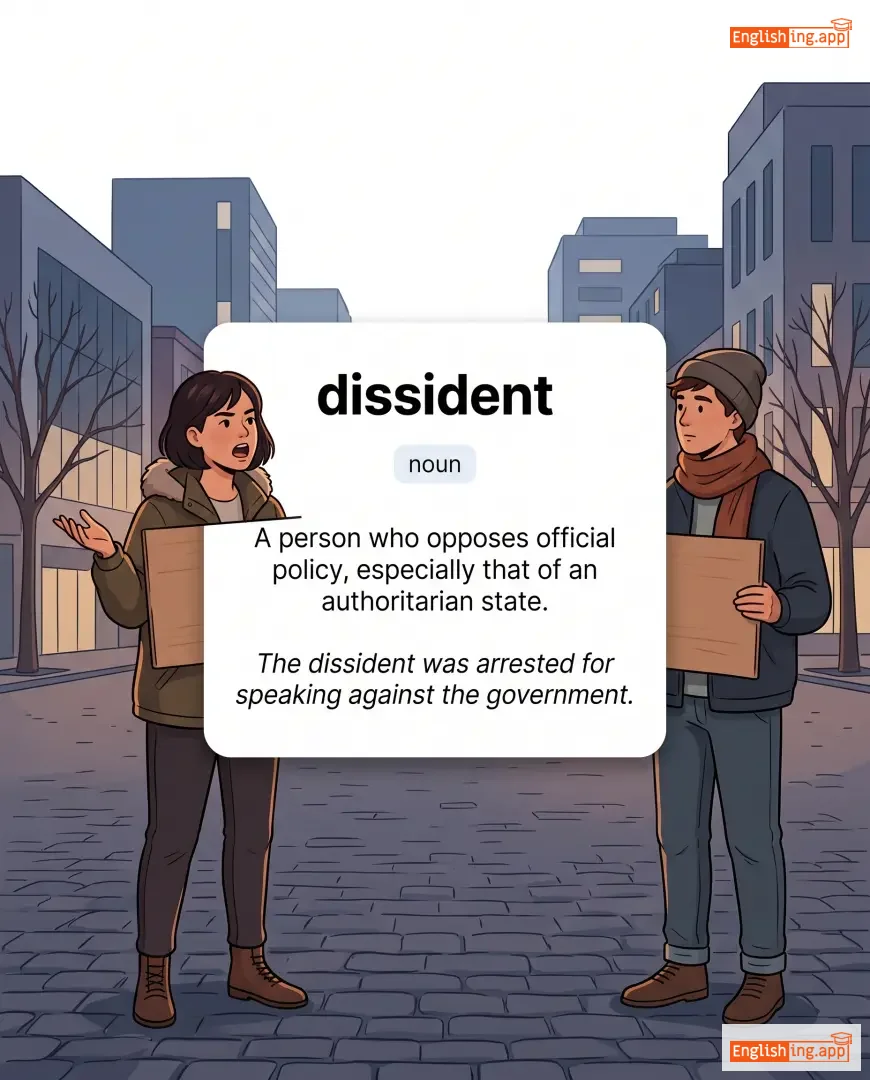
A person who opposes official policy, especially that of an authoritarian state.
••••••
|
The dissident was arrested for speaking against the government. |
反体制派は政府に対する発言で逮捕された。
Hantai-sei-ha wa seifu ni taisuru hatsugen de taiho sareta.
••••••
|
- •••••• | - •••••• | - •••••• |
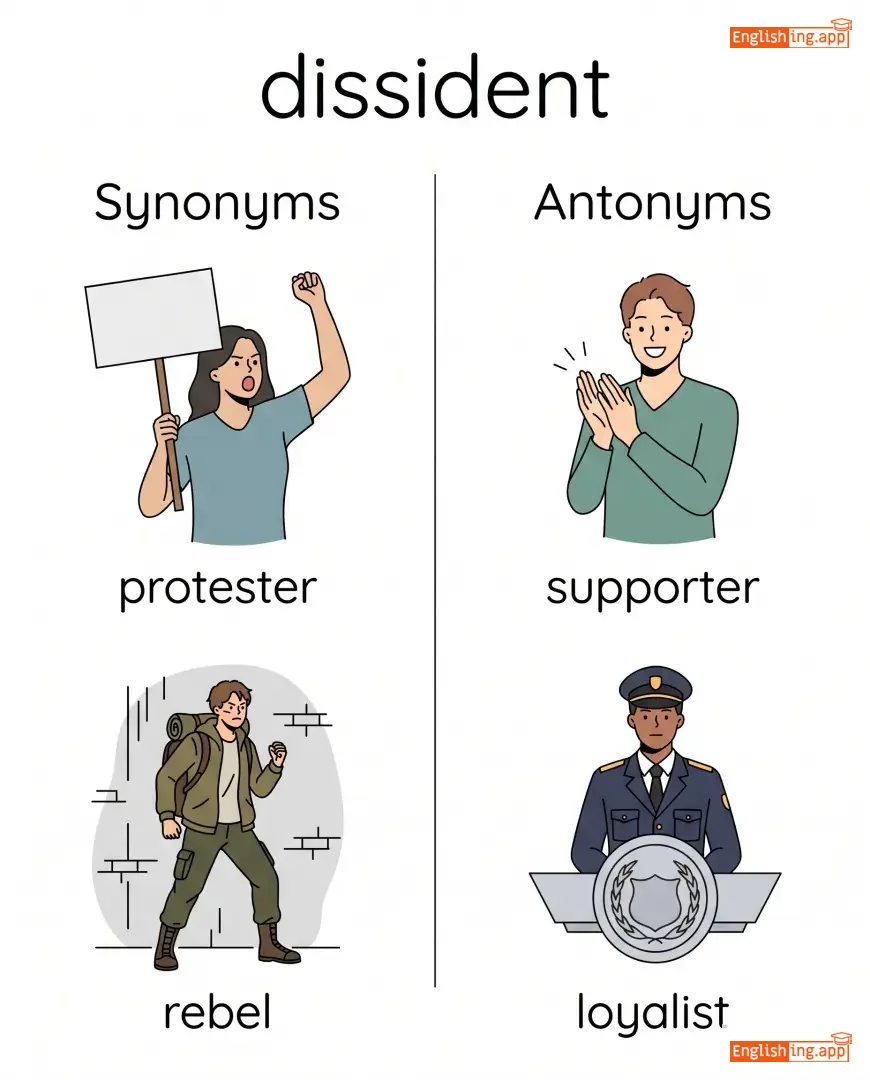
protester, rebel, opponent, nonconformist
••••••
|
supporter, loyalist
••••••
|
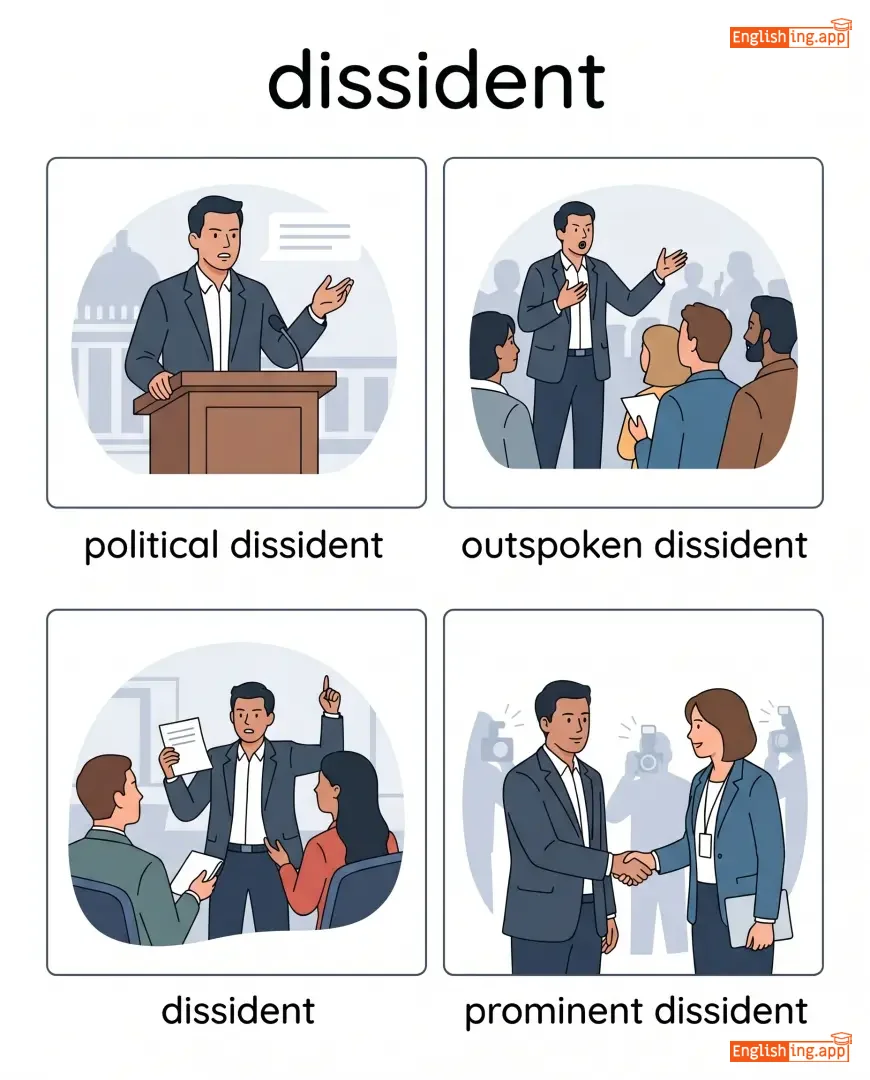
political dissident, outspoken dissident, prominent dissident
••••••
|
反体制派は、権威に立ち向かう人々、ディシデント(ディス)として有名です。
••••••
|
|
#2640
✂️
|
/dɪˈsɛvər/
verb
(ディセヴァー)
••••••
|
- •••••• |
分ける
wakeru
••••••
|
dissevered
ディセヴァード
••••••
|
dissevered
ディセヴァード
••••••
|
dissevers
ディセヴァーズ
••••••
|
dissevering
ディセヴァーリング
••••••
|
To separate or cut apart.
••••••
|
The treaty sought to dissever the two hostile regions.
条約は二つの敵対的な地域を分割しようとした。
••••••
|
条約は二つの敵対的な地域を分割しようとした。
Jōyaku wa futatsu no teki taiteki na chiiki o bunkatsu shiyou to shita.
••••••
|
- •••••• | - •••••• | - •••••• |
separate, divide, detach, sever, split
••••••
|
unite, join, connect
••••••
|
dissever ties, dissever completely, dissever forcefully
••••••
|
Disseverはsever(切る)と同じ意味なので、分ける。
••••••
|
Vocabulary Quiz
Test your vocabulary by matching words with their translations or meanings.
Login to take the quiz
Comments (0)
Share your thoughts and join the discussion.
Join the discussion by logging in
Login to CommentNo comments yet
Be the first to share your thoughts!