

翻訳
過去
過去分詞
三人称単数
動名詞
意味
例文
例文の翻訳
同義語
対義語
コロケーション
ニーモニック
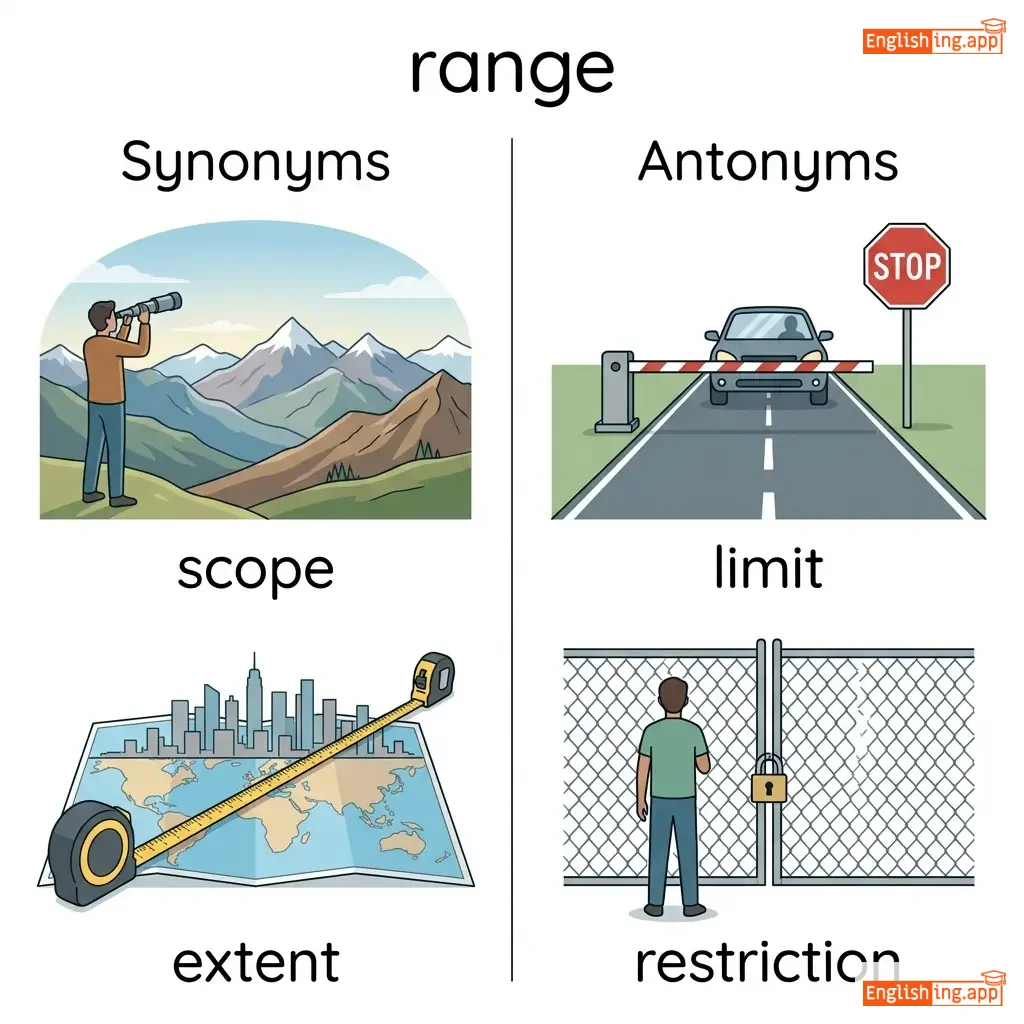

Swipe left or right, or use the buttons. Tap image to zoom.
例文の翻訳
単語
Lesson 243Lesson 243 - マスクトグル
|
絵文字
|
単語 | Images | 翻訳 | 過去 | 過去分詞 | 三人称単数 | 動名詞 | 意味 | 例文 | 例文の翻訳 | 表現例 | 表現例の意味 | 表現例の翻訳 | 同義語 | 対義語 | コロケーション | ニーモニック |
|---|---|---|---|---|---|---|---|---|---|---|---|---|---|---|---|---|---|
|
#7260
🌲
|
/ˈreɪn.dʒər/
noun
(レンジャー)
••••••
|
- •••••• |
レンジャー
renjā
••••••
|
- •••••• | - •••••• | - •••••• | - •••••• |
A person responsible for protecting and managing forests, parks, or natural areas.
••••••
|
The park ranger guided the tourists through the forest trail.
公園のレンジャーは観光客を森の小道を案内しました。
••••••
|
公園のレンジャーは観光客を森の小道を案内しました。
Kōen no renjā wa kankōkyaku o mori no komichi o annai shimashita.
••••••
|
forest ranger
森林レンジャー
••••••
|
An official responsible for supervising and protecting a forest area.
••••••
|
森林レンジャー
Shinrin renjā
••••••
|
warden, guard, protector, keeper, scout
••••••
|
poacher, intruder
••••••
|
park ranger, forest ranger, wildlife ranger, game ranger
••••••
|
Rangerはレンジャー、森を守り観光客を案内します。
••••••
|
|
#7261
🦅
|
/ræpˈtɔːriəl/
adjective
(ラプトリアル)
••••••
|
- •••••• |
肉食鳥
nikushoku tori
••••••
|
- •••••• | - •••••• | - •••••• | - •••••• |
Relating to birds of prey or predatory behavior.
••••••
|
The eagle is a raptorial bird with sharp talons. |
ワシは鋭い爪を持つ肉食鳥です。
Washi wa surudoi tsume o motsu nikushoku tori desu.
••••••
|
- •••••• | - •••••• | - •••••• |
predatory, carnivorous, hunting, fierce
••••••
|
harmless, gentle
••••••
|
raptorial bird, raptorial instinct, raptorial features
••••••
|
Raptorial = ラプトル (肉食鳥) – 捕食行動に関連
••••••
|
|
#7262
😲
|
/ræpt/
adjective
(ラプト)
••••••
|
- •••••• |
熱中した
necchū shita
••••••
|
- •••••• | - •••••• | - •••••• | - •••••• |
Completely absorbed or fascinated by something.
••••••
|
She listened with rapt attention to the speaker’s words. |
彼女はスピーカーの言葉を熱心に聞いていた。
kanojo wa supīkā no kotoba o nesshin ni kiite ita.
••••••
|
rapt attention |
complete and focused attention
••••••
|
熱心な注意
nesshin na chūi
••••••
|
absorbed, captivated, fascinated, spellbound
••••••
|
distracted, uninterested
••••••
|
rapt attention, rapt expression, rapt silence
••••••
|
Rapt = wrapped in attention – 注意に包まれた
••••••
|
|
#7263
😜
|
/ræpˈskæliən/
noun
(ラプスカリオン)
••••••
|
- •••••• |
いたずら好きな人
itazura sukina hito
••••••
|
- •••••• | - •••••• | - •••••• | - •••••• |
A mischievous or cheeky person; a rascal.
••••••
|
The little rapscallion hid his brother’s shoes as a prank.
小さなラプスカリオンは兄の靴をいたずらで隠した。
••••••
|
小さなラプスカリオンは兄の靴をいたずらで隠した。
Chiisana rapscallion wa ani no kutsu o itazura de kakushita.
••••••
|
- •••••• | - •••••• | - •••••• |
rascal, rogue, scamp, trickster
••••••
|
gentleman, nobleman
••••••
|
little rapscallion, mischievous rapscallion, cheeky rapscallion
••••••
|
Rapscallion = Rap + Scandalion – いたずら好きな人はいつもトラブルを引き起こす。
••••••
|
|
#7264
🌐
|
/ˌræproʊʃˈmɑːn/
noun
(ラプロシュモン)
••••••
|
- •••••• |
関係修復
kankei shūfuku
••••••
|
- •••••• | - •••••• | - •••••• | - •••••• |
The establishment or resumption of harmonious relations.
••••••
|
The two countries signed an agreement that marked a new rapprochement. |
二国は新しい関係修復を示す合意書に署名した。
Nikkoku wa atarashī kankei shūfuku o shimesu gōisho ni shomei shita.
••••••
|
- •••••• | - •••••• | - •••••• |
reconciliation, settlement, reunion, harmony
••••••
|
conflict, hostility, estrangement
••••••
|
political rapprochement, seek rapprochement, diplomatic rapprochement
••••••
|
Rapprochement = 関係修復 – re+アプローチ = 再び関係を修復する
••••••
|
|
#7265
🤝
|
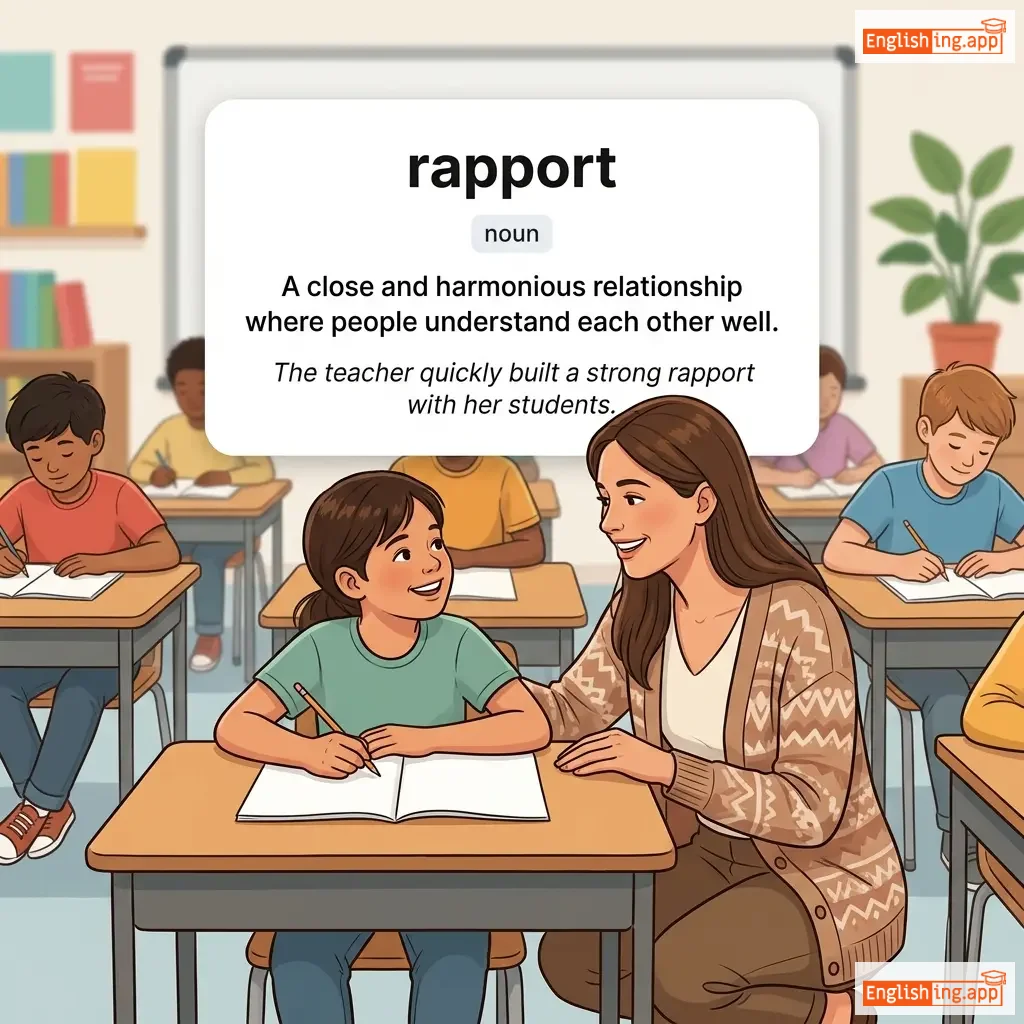
/ræˈpɔːr/
noun
(ラポール)
••••••
|
|
関係
kankei
••••••
|
- •••••• | - •••••• | - •••••• | - •••••• |
A close and harmonious relationship where people understand each other well.
••••••
|
The teacher quickly built a strong rapport with her students. |
教師は生徒たちと素早く強い関係を築いた。
Kyōshi wa seito-tachi to subayaku tsuyoi kankei o kizuita.
••••••
|
establish rapport |
to create a good relationship with mutual trust and understanding
••••••
|
関係を築く
Kankei o kizuku
••••••
|
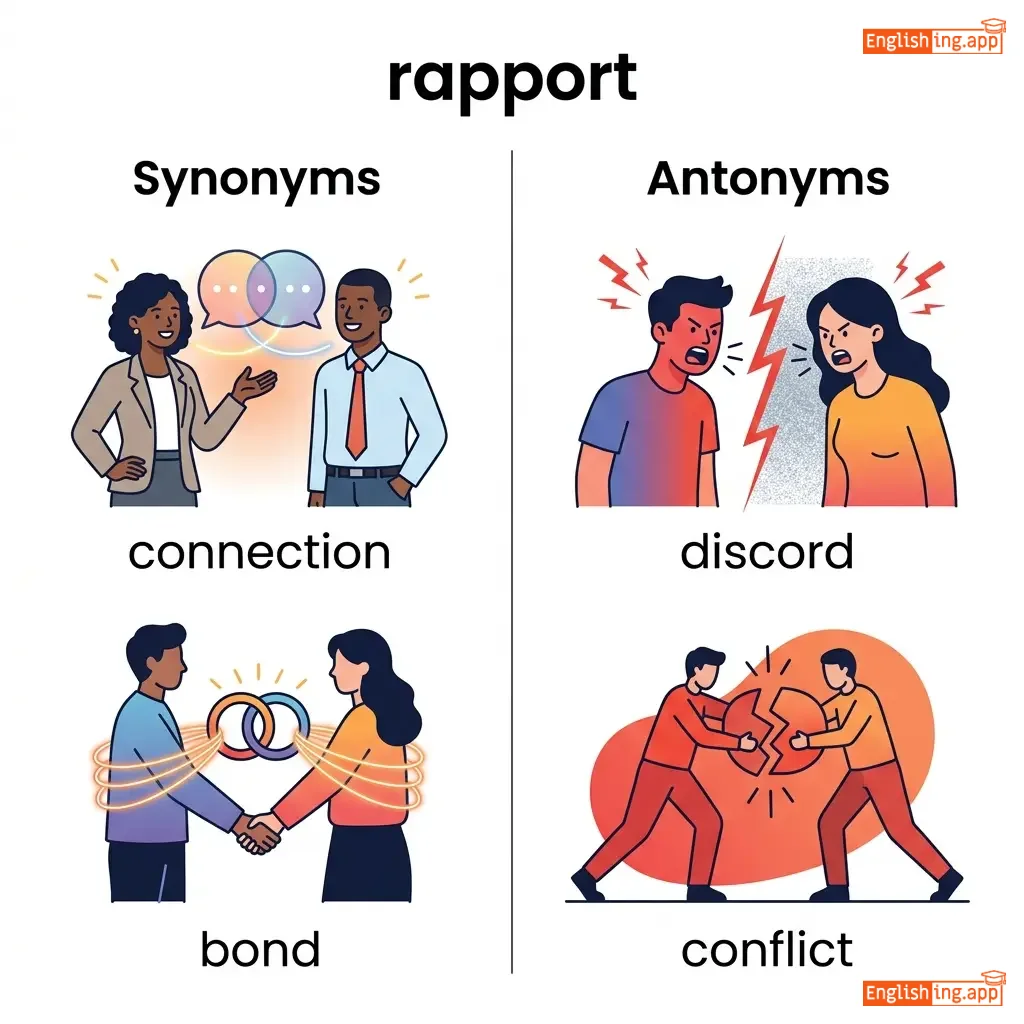
connection, bond, relationship, understanding, fellowship
••••••
|
discord, conflict, hostility
••••••
|
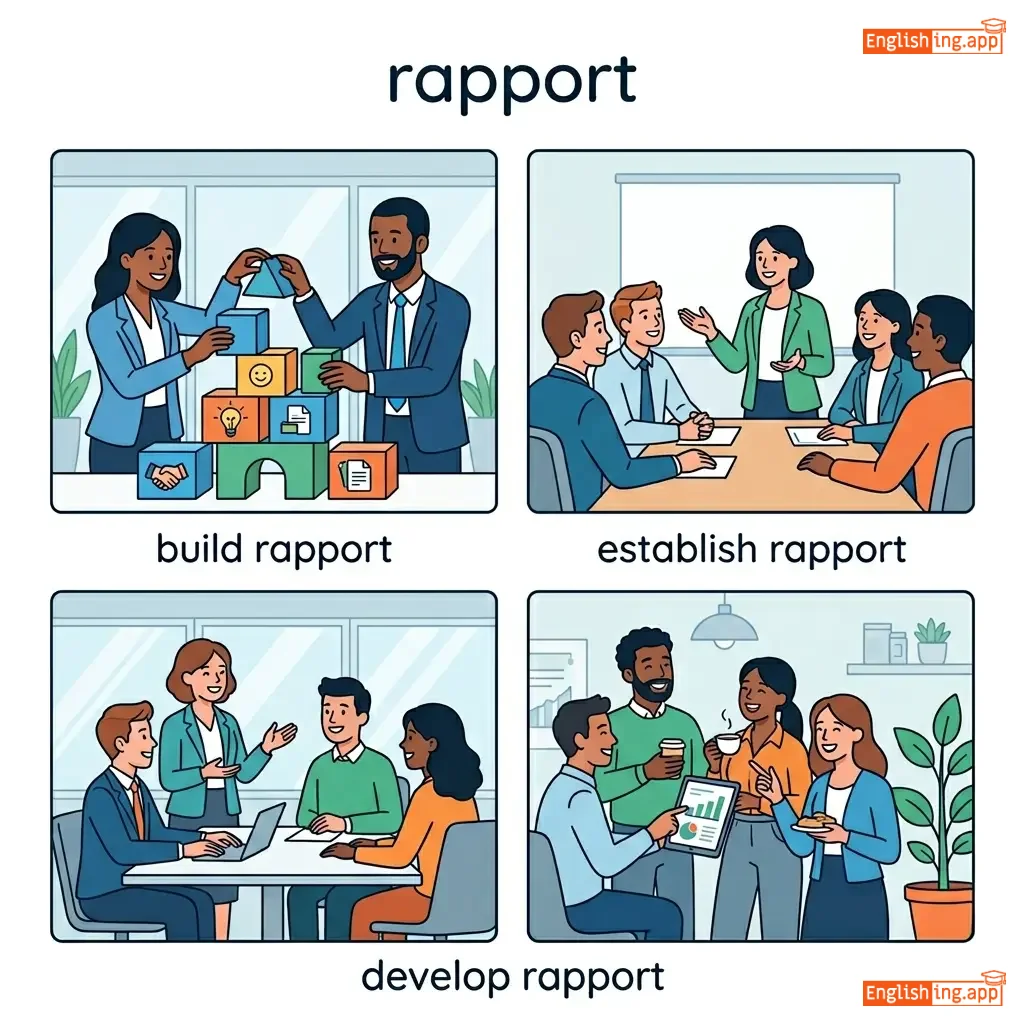
build rapport, establish rapport, develop rapport, rapport with clients
••••••
|
Rapport は関係 – Rap + 関係 = 強い関係
••••••
|
|
#7266
⚔️
|
/ˈræp.aɪn/
noun
(ラピン)
••••••
|
- •••••• |
略奪
ryakudatsu
••••••
|
- •••••• | - •••••• | - •••••• | - •••••• |
the violent seizure of someone's property
••••••
|
The war was marked by rapine and destruction. |
戦争は略奪と破壊で特徴づけられていた。
Sensō wa ryakudatsu to hakai de tokuchō dzukerarete ita.
••••••
|
- •••••• | - •••••• | - •••••• |
plunder, looting, pillage, depredation
••••••
|
protection, preservation
••••••
|
acts of rapine, rapine and violence, war and rapine
••••••
|
Rapineはrape + in property = 強制的な略奪
••••••
|
|
#7267
⚡
|
/ˈræp.ɪd/
adjective
(ラピッド)
••••••
|
- •••••• |
速い
hayai
••••••
|
- •••••• | - •••••• | - •••••• | - •••••• |
happening quickly or in a short time
••••••
|
The company experienced rapid growth last year. |
その会社は昨年急速な成長を経験しました。
Sono kaisha wa sakunen kyūsoku na seichō o keiken shimashita.
••••••
|
rapid-fire |
happening very quickly in succession
••••••
|
速射
sokusha
••••••
|
fast, quick, swift, speedy
••••••
|
slow, sluggish, delayed
••••••
|
rapid growth, rapid progress, rapid change, rapid development
••••••
|
速い、まるで電光石火のように。
••••••
|
|
#7268
🦅
|
/rəˈpeɪ.ʃəs/
adjective
(ラペイシャス)
••••••
|
- •••••• |
貪欲
don'yoku
••••••
|
- •••••• | - •••••• | - •••••• | - •••••• |
having an extreme desire to take things for oneself, greedy
••••••
|
The rapacious landlord raised the rent without reason. |
貪欲な家主は理由もなく家賃を上げた。
Don'yoku na iyashu wa riyuu mo naku yachin wo ageta.
••••••
|
- •••••• | - •••••• | - •••••• |
greedy, grasping, avaricious, voracious
••••••
|
generous, charitable, giving
••••••
|
rapacious greed, rapacious appetite, rapacious demand
••••••
|
Rapacious landlord は、家賃を上げる貪欲な家主です。
••••••
|
|
#7269
😡
|
/rænt/
verb
(ラント)
••••••
|
- •••••• |
怒鳴る
donaru
••••••
|
ranted
ランテッド
••••••
|
ranted
ランテッド
••••••
|
rants
ラントス
••••••
|
ranting
ランティング
••••••
|
to speak or shout in an angry, uncontrolled way
••••••
|
He ranted about the unfair treatment at work.
彼は仕事で不公平な扱いについて叫んでいました。
••••••
|
彼は仕事で不公平な扱いについて叫んでいました。
Kare wa shigoto de fukōhei na atsukai ni tsuite sakendemashita.
••••••
|
rant and rave
叫んで騒ぐ
••••••
|
to shout loudly and angrily
••••••
|
叫んで騒ぐ
sakende sawagu
••••••
|
shout, yell, complain, fume, rave
••••••
|
praise, compliment, whisper
••••••
|
rant about, rant against, rant and rave
••••••
|
Rantは怒鳴ることを意味します。Rant = Rage + Ant
••••••
|
|
#7270
🪓
|
/ˈræn.sæk/
verb
(ランサック)
••••••
|
- •••••• |
略奪する
ryakudatsu suru
••••••
|
ransacked
ランサクド
••••••
|
ransacked
ランサクド
••••••
|
ransacks
ランサックス
••••••
|
ransacking
ランサキング
••••••
|
to search a place roughly and steal or damage things
••••••
|
Burglars ransacked the house while the family was away.
泥棒たちは家族が留守の間に家を荒らした。
••••••
|
泥棒たちは家族が留守の間に家を荒らした。
Dorobōtachi wa kazoku ga rusu no aida ni ie o arashita.
••••••
|
- •••••• | - •••••• | - •••••• |
plunder, loot, pillage, ravage, rob
••••••
|
protect, guard, secure
••••••
|
ransack a house, ransack the office, ransack for valuables
••••••
|
Ransack = 略奪
••••••
|
|
#7271
🪖
|
/ræŋks/
noun, verb
(ランクス)
••••••
|
- •••••• |
ランク
ranku
••••••
|
ranked
ランクド
••••••
|
ranked
ランクド
••••••
|
ranks
ランクス
••••••
|
ranking
ランキング
••••••
|
Positions within a group, especially in a hierarchy or organization.
••••••
|
He quickly moved up the ranks of the army.
彼はすぐに軍隊のランクで上昇しました。
••••••
|
彼はすぐに軍隊のランクで上昇しました。
Kare wa sugu ni guntai no ranku de jōshō shimashita.
••••••
|
close ranks
ランクを閉じる
••••••
|
To unite and support each other against opposition.
••••••
|
ランクを閉じる
Ranku o toji ru
••••••
|
positions, levels, hierarchy, order
••••••
|
disorder, disarray
••••••
|
army ranks, social ranks, rise through the ranks, join the ranks
••••••
|
Ranks は軍隊の階級を意味します。ランクを上げることは、階層の中で進歩することを意味します。
••••••
|
|
#7272
😠
|
/ˈræŋ.kəl/
verb
(ランクル)
••••••
|
- •••••• |
イライラさせる
iraira saseru
••••••
|
rankled
ランクルド
••••••
|
rankled
ランクルド
••••••
|
rankles
ランクルズ
••••••
|
rankling
ランクリング
••••••
|
To cause continuing annoyance or resentment.
••••••
|
His unfair criticism continued to rankle her for days.
彼の不公平な批判は何日も彼女をイライラさせ続けた。
••••••
|
彼の不公平な批判は何日も彼女をイライラさせ続けた。
Kare no fukouhei na hihan wa nannichi mo kanojo o iraira sase tsudzuketa.
••••••
|
- •••••• | - •••••• | - •••••• |
irritate, annoy, bother, aggravate, upset
••••••
|
please, comfort, soothe
••••••
|
rankle with, rankle in mind, rankle deeply
••••••
|
Rankleはイライラさせるという意味、何かがあなたをランクるときのように。
••••••
|
|
#7273
🎖️
|
/ræŋk/
noun, verb, adjective
(ランク)
••••••
|
- •••••• |
ランク
ranku
••••••
|
ranked
ランクド
••••••
|
ranked
ランクド
••••••
|
ranks
ランクス
••••••
|
ranking
ランキング
••••••
|
A position in a hierarchy; to place in order according to importance or quality.
••••••
|
She quickly rose to a senior rank in the company.
彼女は会社で素早く上級ランクに昇進しました。
••••••
|
彼女は会社で素早く上級ランクに昇進しました。
Kanojo wa kaisha de subayaku joukyuu ranku ni shoushin shimashita.
••••••
|
rank and file
ランクと一般社員
••••••
|
The ordinary members of an organization as opposed to its leaders.
••••••
|
一般社員
Ippan shain
••••••
|
position, status, level, grade, standing
••••••
|
insignificance, unimportance
••••••
|
military rank, rank order, high rank, rank and file
••••••
|
ランクは職位の意味、軍隊の中でランクがとても重要です。
••••••
|
|
#7274
↔️
|
/ˈreɪn.dʒɪŋ/
verb
(レイジング)
••••••
|
- •••••• |
変動する
hendou suru
••••••
|
- •••••• | - •••••• | - •••••• |
ranging
レイジング
••••••
|
Extending or varying between limits.
••••••
|
The temperatures are ranging from 15 to 30 degrees this week.
今週の気温は15度から30度の間で変動しています。
••••••
|
今週の気温は15度から30度の間で変動しています。
Konshuu no kion wa 15-do kara 30-do no aida de hendou shiteimasu.
••••••
|
- •••••• | - •••••• | - •••••• |
varying, stretching, spreading, extending
••••••
|
fixed, limited
••••••
|
ranging from, ranging between, widely ranging, ranging over
••••••
|
変動するは範囲内で変化すること、たとえば気温が15度から30度の間で変動する。
••••••
|
|
#7275
🚶
|
/ˈræm.bəl/
verb
••••••
|
- •••••• | - •••••• |
rambled
••••••
|
rambled
••••••
|
rambles
••••••
|
rambling
••••••
|
to talk or write at length in a confused or inconsequential way; to walk for pleasure without a fixed route.
••••••
|
He rambled on about his childhood for hours. |
- •••••• |
ramble on |
to talk or write aimlessly and at length
••••••
|
- •••••• |
wander, meander, drift, roam, digress
••••••
|
focus, concentrate, direct
••••••
|
ramble on, ramble about, countryside ramble, rambling speech
••••••
|
No •••••• |
|
#7276
📏
|
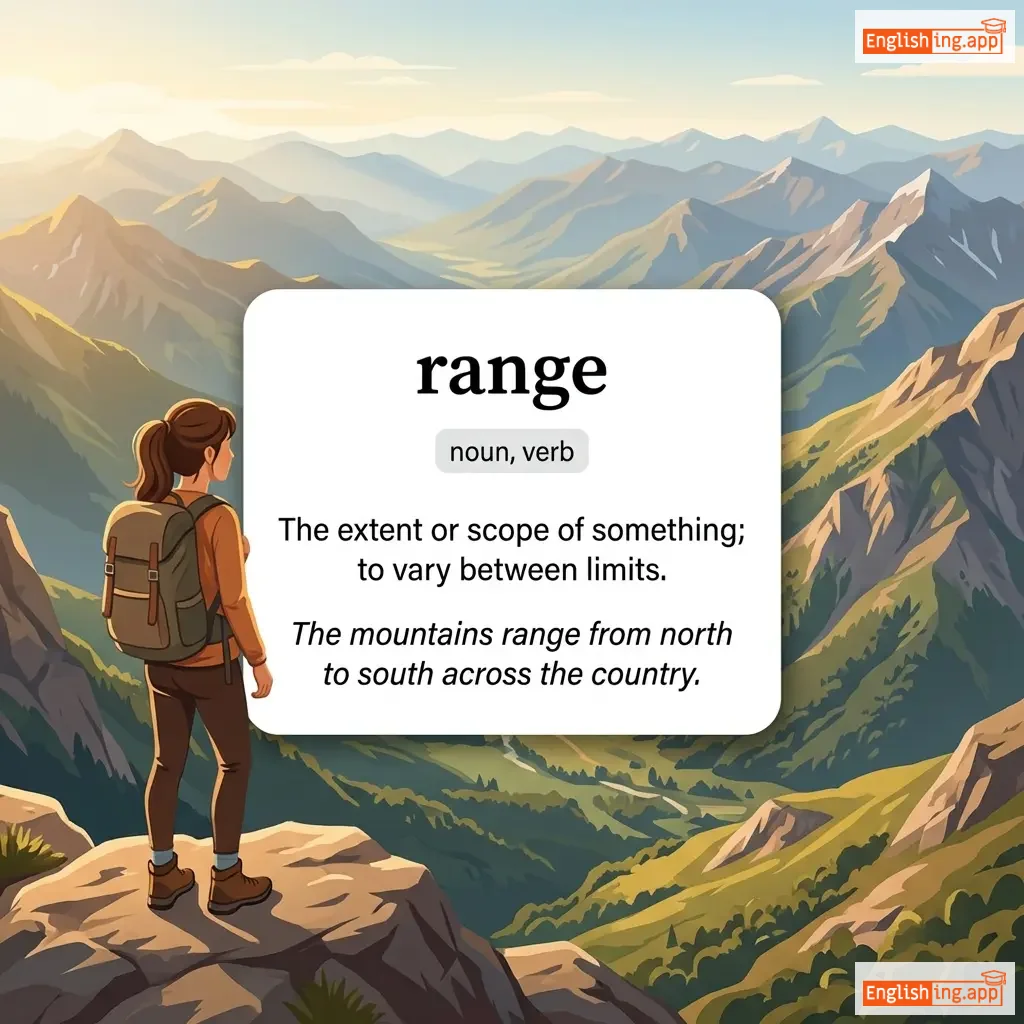
/reɪndʒ/
noun, verb
(レンジ)
••••••
|
|
範囲, 領域
han'i, ryouiki
••••••
|
ranged
レンジド
••••••
|
ranged
レンジド
••••••
|
ranges
レンジズ
••••••
|
ranging
レンジング
••••••
|
The extent or scope of something; to vary between limits.
••••••
|
The mountains range from north to south across the country.
山々は国全体で北から南へと広がっている。
••••••
|
山々は北から南まで国中に広がっている。
Yama yama wa kita kara minami made kuni naka ni hirogatte iru.
••••••
|
out of range
レンジ外
••••••
|
Beyond the limits of something, especially distance or capability.
••••••
|
範囲外
han'i gai
••••••
|
scope, extent, span, spectrum, vary
••••••
|
limit, restriction, narrow
••••••
|
wide range, price range, range of motion, mountain range
••••••
|
RANGEは範囲を意味する - Range Roverは範囲を超えて山を越える。
••••••
|
|
#7277
🔀
|
/ˈræn.də.maɪz/
verb
(ランダマイズ)
••••••
|
- •••••• |
ランダム化する
randamuka suru
••••••
|
randomized
ランダマイズド
••••••
|
randomized
ランダマイズド
••••••
|
randomizes
ランダマイズズ
••••••
|
randomizing
ランダマイジング
••••••
|
To make something happen in a random order or manner.
••••••
|
The software can randomize the order of questions.
ソフトウェアは質問の順番をランダマイズできます。
••••••
|
ソフトウェアは質問の順番をランダマイズできます。
Sofutowea wa shitsumon no junban o randamaizu dekimasu.
••••••
|
- •••••• | - •••••• | - •••••• |
shuffle, mix, disorder, rearrange
••••••
|
organize, arrange, order
••••••
|
randomize data, randomize list, randomize results, randomize process
••••••
|
Randomizeとランダム化は同じ意味です。
••••••
|
|
#7278
🎲
|
/ˈræn.dəm/
adjective
(ランダム)
••••••
|
- •••••• |
ランダム
random
••••••
|
- •••••• | - •••••• | - •••••• | - •••••• |
Made, done, or happening without method or conscious decision.
••••••
|
He made a random choice from the menu. |
彼はメニューからランダムに選択をしました。
Kare wa menyū kara randomu ni sentaku o shimashita.
••••••
|
at random |
Without method or conscious choice.
••••••
|
ランダムに
randomu ni
••••••
|
arbitrary, haphazard, aimless, unplanned
••••••
|
systematic, planned, deliberate
••••••
|
random selection, random sample, random event, purely random
••••••
|
ランダムな選択は計画なしで、偶然に行われる。
••••••
|
|
#7279
💢
|
/ˈræŋ.kər.əs/
adjective
(ランコラス)
••••••
|
- •••••• |
恨みを持った
urami wo motta
••••••
|
- •••••• | - •••••• | - •••••• | - •••••• |
Characterized by bitterness or resentment.
••••••
|
Their rancorous debate lasted for hours. |
彼らの恨みを持った議論は何時間も続いた。
Karera no urami wo motta giron wa nan jikan mo tsuzuita.
••••••
|
- •••••• | - •••••• | - •••••• |
hostile, bitter, resentful, spiteful
••••••
|
friendly, kind, pleasant
••••••
|
rancorous debate, rancorous relationship, rancorous tone, rancorous exchange
••••••
|
Rancorousは日本語で'恨みを持った'という意味、ランコラスに似ている。
••••••
|
|
#7280
😠
|
/ˈræŋ.kər/
noun
(ランカー)
••••••
|
- •••••• |
憎しみ
nikushimi
••••••
|
- •••••• | - •••••• | - •••••• | - •••••• |
A feeling of deep and bitter anger or resentment.
••••••
|
There was a rancor between the two rivals that never faded. |
二人のライバルの間には、決して消えることのない憎しみがあった。
Futari no raibaru no aida ni wa, kesshite kieru koto no nai nikushimi ga atta.
••••••
|
- •••••• | - •••••• | - •••••• |
bitterness, resentment, hostility, spite, animosity
••••••
|
friendship, goodwill, kindness
••••••
|
deep rancor, lingering rancor, filled with rancor, harbor rancor
••••••
|
Rancor は憎しみ - 争いがあれば、憎しみが残る。
••••••
|
|
#7281
🤢
|
/ˈrænsɪd/
adjective
(ランシッド)
••••••
|
- •••••• |
腐った
kusatta
••••••
|
- •••••• | - •••••• | - •••••• | - •••••• |
having a bad taste or smell due to being old or spoiled (especially fats or oils)
••••••
|
The butter had gone rancid after being left out too long. |
バターは外に長時間置かれて腐ってしまった。
Batā wa soto ni nagajikan okarete kusatte shimatta.
••••••
|
- •••••• | - •••••• | - •••••• |
spoiled, rotten, foul, putrid
••••••
|
fresh, pure, clean
••••••
|
rancid smell, rancid butter, rancid oil, rancid odor
••••••
|
腐ったバターは臭い!ランシッド=腐った
••••••
|
|
#7282
🏚️
|
/ˈræmʃækəl/
adjective
(ラムシャクル)
••••••
|
- •••••• |
ぼろぼろ
boroboro
••••••
|
- •••••• | - •••••• | - •••••• | - •••••• |
poorly built or maintained; in a state of disrepair
••••••
|
They lived in a ramshackle old house on the edge of town.
彼らは町の端にあるラムシャクルな古い家に住んでいました。
••••••
|
彼らは町の端にあるぼろぼろな古い家に住んでいました。
Karera wa machi no hashi ni aru boroboro na furui ie ni sunde imashita.
••••••
|
- •••••• | - •••••• | - •••••• |
dilapidated, shabby, broken-down, rickety
••••••
|
sturdy, well-built, strong
••••••
|
ramshackle house, ramshackle hut, ramshackle car, ramshackle structure
••••••
|
Ram shakle 壊れている - ramshackle ぼろぼろ
••••••
|
|
#7283
🏰
|
/ˈræmpɑːrt/
noun
(ランパート)
••••••
|
- •••••• |
城壁
jouheki
••••••
|
- •••••• | - •••••• | - •••••• | - •••••• |
a defensive wall of a castle or fort
••••••
|
The soldiers stood on the rampart, watching the enemy approach.
兵士たちはランパートに立ち、敵が近づくのを見守っていました。
••••••
|
兵士たちは城壁に立ち、敵が近づくのを見守っていました。
Heishi-tachi wa jouheki ni tachi, teki ga chikazuku no o mimamotte imashita.
••••••
|
- •••••• | - •••••• | - •••••• |
fortification, wall, barrier, bulwark
••••••
|
opening, gap, weakness
••••••
|
castle rampart, city rampart, stone rampart, high rampart
••••••
|
Rampartは城壁を意味し、防御の壁を表します。
••••••
|
|
#7284
🌪️
|
/ˈræmpənt/
adjective
(ランパント)
••••••
|
- •••••• |
蔓延する
man'ensuru
••••••
|
- •••••• | - •••••• | - •••••• | - •••••• |
existing or spreading unchecked, often in an undesirable way
••••••
|
Corruption was rampant in the city administration.
腐敗は市の行政で蔓延していた。
••••••
|
腐敗は市の行政で蔓延していた。
Fuhai wa shi no gyōsei de man'en shite ita.
••••••
|
- •••••• | - •••••• | - •••••• |
unchecked, widespread, uncontrolled, unrestrained
••••••
|
controlled, restrained, limited
••••••
|
rampant crime, rampant corruption, rampant growth, rampant inflation
••••••
|
蔓延する腐敗が止められないような状態。
••••••
|
|
#7285
🛞
|
/ræmp/
noun, verb
(ランプ)
••••••
|
- •••••• |
ランプ
ranpu
••••••
|
ramped
ランプド
••••••
|
ramped
ランプド
••••••
|
ramps
ランプス
••••••
|
ramping
ランピング
••••••
|
a sloping surface joining two different levels; as a verb, to increase or rise sharply
••••••
|
The car drove up the ramp into the parking garage.
車は駐車場のランプを上がった。
••••••
|
車は駐車場のランプを上がった。
Kuruma wa chūshajō no ranpu o agatta.
••••••
|
ramp up
ランプアップ
••••••
|
to increase or intensify something
••••••
|
増加する
zōka suru
••••••
|
slope, incline, rise, escalate, boost
••••••
|
decline, decrease, drop
••••••
|
wheelchair ramp, access ramp, ramp up production, ramp down
••••••
|
ランプは傾斜した道、そして'ランプアップ'は増加すること、ランプを上るように
••••••
|
|
#7286
🌲
|
/ˈreɪ.moʊs/
adjective
(レイモス)
••••••
|
- •••••• |
分岐した
bunkishita
••••••
|
- •••••• | - •••••• | - •••••• | - •••••• |
having many branches.
••••••
|
The ramose tree shaded the entire garden. |
その分岐した木は庭全体に日陰を提供しました。
Sono bunkishita ki wa niwa zentai ni hikage o teikyō shimashita.
••••••
|
- •••••• | - •••••• | - •••••• |
branched, branching, forked, divided
••••••
|
unbranched, simple
••••••
|
ramose structure, ramose tree, ramose pattern
••••••
|
Ramoseは多くの枝を持つ木を意味します。
••••••
|
|
#7287
🌿
|
/ˈræm.ɪ.faɪ/
verb
(レミファイ)
••••••
|
- •••••• |
分岐する
bunki suru
••••••
|
ramified
レミファイド
••••••
|
ramified
レミファイド
••••••
|
ramifies
レミファイズ
••••••
|
ramifying
レミファイング
••••••
|
to spread or branch out into divisions or subdivisions.
••••••
|
The river ramifies into several smaller streams.
川は複数の小さな小川に分岐します。
••••••
|
川は複数の小さな小川に分岐します。
Kawa wa fukusū no chīsana ogawa ni bunki shimasu.
••••••
|
- •••••• | - •••••• | - •••••• |
branch, divide, spread, extend
••••••
|
unite, merge, combine
••••••
|
ramify into, ramify through, ramified network
••••••
|
Ramify、RAMのように分岐して広がる。
••••••
|
|
#7288
🌳
|
/ˌræm.ɪ.fɪˈkeɪ.ʃən/
noun
(ラミフィケーション)
••••••
|
- •••••• |
結果
kekka
••••••
|
- •••••• | - •••••• | - •••••• | - •••••• |
a consequence of an action or event, often complex or unwelcome.
••••••
|
The new law has serious social ramifications. |
新しい法律には深刻な社会的影響があります。
Atarashii houritsu ni wa shinkoku na shakaiteki eikyou ga arimasu.
••••••
|
- •••••• | - •••••• | - •••••• |
consequence, result, outcome, effect, implication
••••••
|
cause, origin, source
••••••
|
legal ramifications, social ramifications, unintended ramifications
••••••
|
Ramification は結果 — 行動の影響です。
••••••
|
|
#7289
🙉
|
/ræmˈbʌŋk.ʃəs/
adjective
(ランバンクシャス)
••••••
|
- •••••• |
騒々しい
sōzōshī
••••••
|
- •••••• | - •••••• | - •••••• | - •••••• |
boisterous, energetic, and difficult to control.
••••••
|
The rambunctious children filled the house with noise. |
騒々しい子供たちが家を騒音で満たしました。
Sōzōshī kodomotachi ga ie o sōon de mitashimashita.
••••••
|
- •••••• | - •••••• | - •••••• |
boisterous, rowdy, lively, noisy, energetic
••••••
|
calm, quiet, peaceful
••••••
|
rambunctious child, rambunctious behavior, rambunctious crowd
••••••
|
Rambunctious はうるさい子供のよう — いつも騒がしい。
••••••
|
Vocabulary Quiz
Test your vocabulary by matching words with their translations or meanings.
Login to take the quiz
Comments (0)
Share your thoughts and join the discussion.
Join the discussion by logging in
Login to CommentNo comments yet
Be the first to share your thoughts!