

翻訳
過去
過去分詞
三人称単数
動名詞
意味
例文
例文の翻訳
同義語
対義語
コロケーション
ニーモニック

Swipe left or right, or use the buttons. Tap image to zoom.
例文の翻訳
単語
Lesson 290Lesson 290 - マスクトグル
|
絵文字
|
単語 | Images | 翻訳 | 過去 | 過去分詞 | 三人称単数 | 動名詞 | 意味 | 例文 | 例文の翻訳 | 表現例 | 表現例の意味 | 表現例の翻訳 | 同義語 | 対義語 | コロケーション | ニーモニック |
|---|---|---|---|---|---|---|---|---|---|---|---|---|---|---|---|---|---|
|
#8670
💰
|
/tækˈseɪʃən/
noun
(tak-sē-shon)
••••••
|
- •••••• |
課税
kazei
••••••
|
- •••••• | - •••••• | - •••••• | - •••••• |
The system of imposing and collecting taxes.
••••••
|
Taxation is necessary for funding public services.
課税は公共サービスの資金調達に必要です。
••••••
|
課税は公共サービスの資金調達に必要です。
Kazei wa kōkyō sābisu no shikin chōtatsu ni hitsuyō desu.
••••••
|
double taxation
二重課税
••••••
|
The taxing of the same income or financial transaction twice.
••••••
|
二重課税
nijū kazei
••••••
|
levy, duty, tariff, revenue, assessment
••••••
|
exemption, subsidy
••••••
|
income taxation, property taxation, heavy taxation, unfair taxation
••••••
|
課税は税金でサービスを支える仕組みです。
••••••
|
|
#8671
⚖️
|
/ˈtiːtər/
verb
(ティーター)
••••••
|
- •••••• |
揺れる
yureru
••••••
|
teetered
ティータード
••••••
|
teetered
ティータード
••••••
|
teeters
ティーターズ
••••••
|
teetering
ティーターリング
••••••
|
to move or balance unsteadily; to wobble
••••••
|
The glass began to teeter on the edge of the table.
グラスがテーブルの端で揺れ始めた。
••••••
|
グラスがテーブルの端で揺れ始めた。
Gurasu ga teeburu no hashi de yurehajimeta.
••••••
|
teeter on the brink
危機の瀬戸際に立つ
••••••
|
to be close to danger, failure, or disaster
••••••
|
危険の瀬戸際に立つ
kiken no setogawa ni tatsu
••••••
|
wobble, totter, sway, falter, stagger
••••••
|
stabilize, steady, balance
••••••
|
teeter on, teeter dangerously, teeter between, teeter precariously
••••••
|
グラスがテーブルで揺れるとき、'ティーター'は危険だ。
••••••
|
|
#8672
🌊
|
/tiːm/
verb
(tīm)
••••••
|
- •••••• |
溢れる
afureru
••••••
|
teemed
tīməd
••••••
|
teemed
tīməd
••••••
|
teems
tīms
••••••
|
teeming
tīming
••••••
|
to be full of or swarming with
••••••
|
The forest teems with wildlife.
森は動物で溢れている。
••••••
|
森は動物で溢れている。
Mori wa dōbutsu de afurete iru.
••••••
|
teeming with life
tīming uith laif
••••••
|
full of vitality, abundance, or activity
••••••
|
生命で溢れている
seimei de afurete iru
••••••
|
overflow, abound, swarm, bristle, throng
••••••
|
lack, empty, scarce
••••••
|
teem with, teeming crowd, teeming city, teeming life
••••••
|
チーム(team)がエネルギーで満ちているように、'teem'は溢れることを意味します。
••••••
|
|
#8673
😐
|
/ˈtiːdiəm/
noun
(ティディアム)
••••••
|
- •••••• |
退屈
taikutsu
••••••
|
- •••••• | - •••••• | - •••••• | - •••••• |
the state of being tedious; monotony or boredom
••••••
|
The tedium of long meetings often drains motivation. |
長時間の会議の退屈さはしばしばモチベーションを奪います。
Chou jikan no kaigi no taikutsu-sa wa shibashiba mochibēshon o ubai masu.
••••••
|
- •••••• | - •••••• | - •••••• |
boredom, monotony, dullness, weariness
••••••
|
excitement, variety, stimulation
••••••
|
the tedium of life, escape the tedium, daily tedium
••••••
|
TediumはTEDの講演のように退屈です
••••••
|
|
#8674
😩
|
/ˈtiːdiəs/
adjective
(テディアス)
••••••
|
- •••••• |
退屈な
taikutsuna
••••••
|
- •••••• | - •••••• | - •••••• | - •••••• |
too long, slow, or dull; tiresome or monotonous
••••••
|
Filling out endless forms can be a tedious task. |
終わりのないフォームに記入するのは退屈な作業です。
Owari no nai fōmu ni kinyū suru no wa taikutsuna sagyō desu.
••••••
|
tedious details |
boring or tiresome small information
••••••
|
退屈な詳細
taikutsuna shōsai
••••••
|
boring, dull, monotonous, tiresome, repetitive
••••••
|
exciting, interesting, enjoyable
••••••
|
tedious task, tedious process, tedious job, tedious routine
••••••
|
Ted の仕事はいつも退屈 (tedious) に感じる。
••••••
|
|
#8675
💻
|
/tɛkˈnɒlədʒi/
noun
(tekunorojī)
••••••
|
|
技術
gijutsu
••••••
|
- •••••• | - •••••• | - •••••• | - •••••• |
the application of scientific knowledge for practical purposes, especially in industry
••••••
|
Modern technology has revolutionized communication. |
現代技術は通信に革命をもたらしました。
Gendai gijutsu wa tsūshin ni kakumei o motarashimashita.
••••••
|
cutting-edge technology |
the most advanced and innovative technology available
••••••
|
最先端技術
saikentan gijutsu
••••••
|
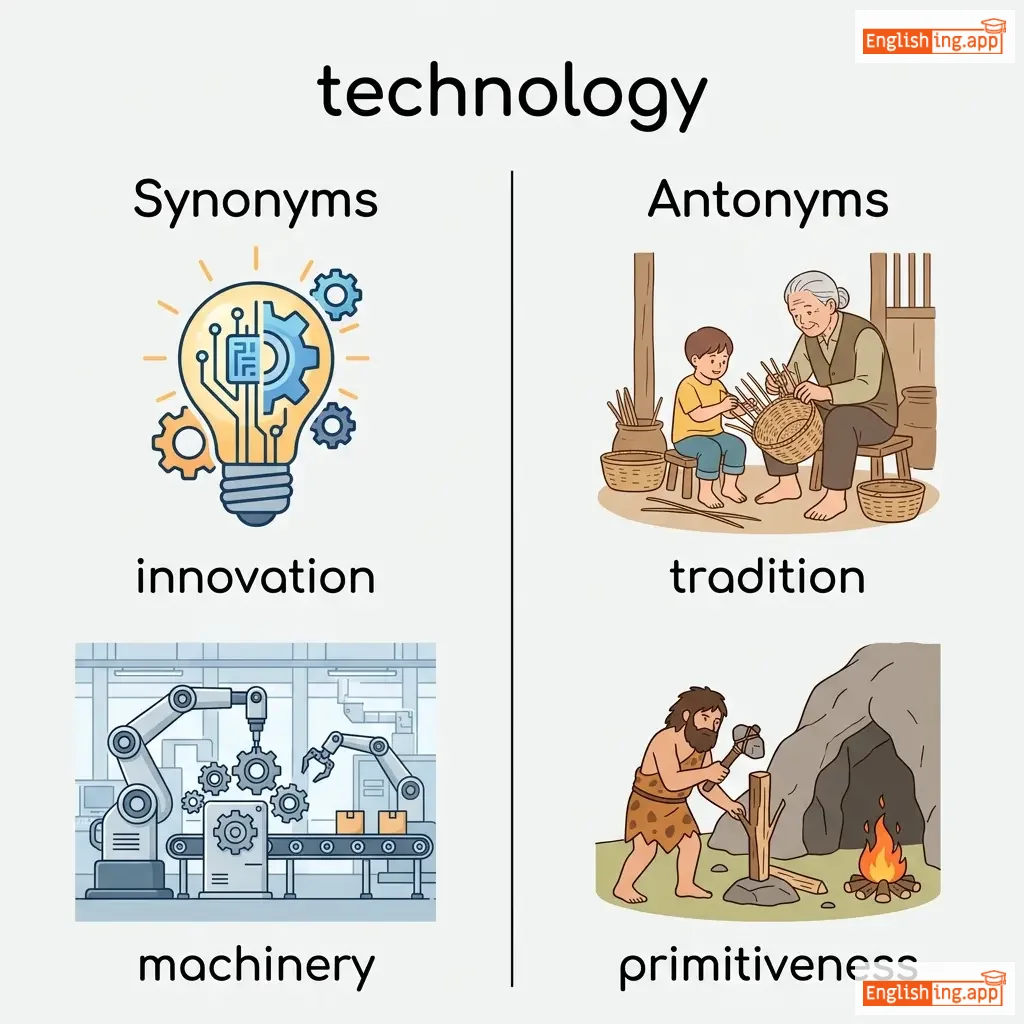
innovation, machinery, engineering, science, technique
••••••
|
tradition, primitiveness, simplicity
••••••
|
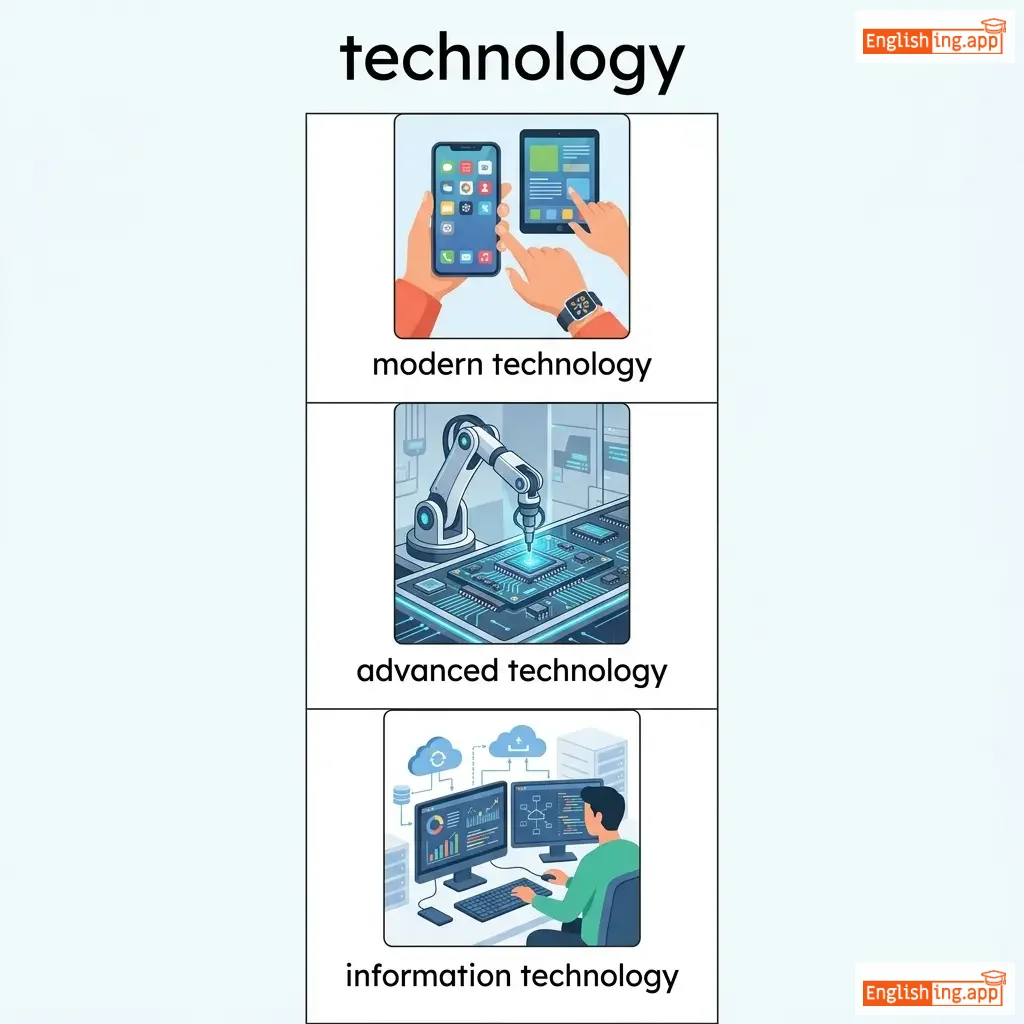
modern technology, advanced technology, information technology, use of technology
••••••
|
Tech (技術) + 知識 = 技術
••••••
|
|
#8676
📚
|
/tɛkˈnɒɡrəfi/
noun
(テクノグラフィー)
••••••
|
- •••••• |
テクノグラフィー
tekunogurafii
••••••
|
- •••••• | - •••••• | - •••••• | - •••••• |
the descriptive study or writing about the practical arts, technologies, or technical methods of a society
••••••
|
The anthropologist specialized in technography to understand indigenous tool-making traditions. |
人類学者は土着の道具作りの伝統を理解するためにテクノグラフィーを専門としました。
jinruigakusha wa dochaku no dougu tsukuri no dentou o rikai suru tame ni tekunogurafii o senmon to shimashita.
••••••
|
- •••••• | - •••••• | - •••••• |
technical description, technological study, ethnotechnology, cultural technology
••••••
|
ignorance, non-technical study
••••••
|
technography research, study of technography, applied technography
••••••
|
テクノロジー + グラフィー = 技術に関する書き物
••••••
|
|
#8677
🧘
|
/tɛkˈniːk/
noun
(テクニック)
••••••
|
- •••••• |
技術
gijutsu
••••••
|
- •••••• | - •••••• | - •••••• | - •••••• |
A particular way of carrying out a task, especially with skill.
••••••
|
She learned a new breathing technique in yoga class. |
彼女はヨガのクラスで新しい呼吸法を学びました。
Kanojo wa yoga no kurasu de atarashī kokyūhō o manabimashita.
••••••
|
by technique |
Done using a specific method or skill.
••••••
|
技術によって
Gijutsu ni yotte
••••••
|
method, procedure, style, craft, skill
••••••
|
incompetence, inability
••••••
|
teaching technique, special technique, breathing technique, painting technique
••••••
|
技術は方法を意味し、技術があれば作業が簡単に進む。
••••••
|
|
#8678
⚖️
|
/ˌtɛknɪˈkæləti/
noun
(tekunikariti)
••••••
|
- •••••• |
テクニカルリティ
tekunikariti
••••••
|
- •••••• | - •••••• | - •••••• | - •••••• |
A small detail of law, rule, or procedure; a minor point that affects an outcome.
••••••
|
The case was dismissed on a technicality.
その事件はテクニカルリティで却下された。
••••••
|
その事件はテクニカルリティで却下された。
Sono jiken wa tekunikariti de kyakka sareta.
••••••
|
- •••••• | - •••••• | - •••••• |
detail, formality, fine point, minor issue
••••••
|
essence, substance
••••••
|
legal technicality, dismissed on a technicality, minor technicality
••••••
|
Technicality = テクニカルリティ—小さな理由で大きな決定が変わる。
••••••
|
|
#8679
🎨
|
/ˈtɛknɪk/
noun
(テクニック)
••••••
|
- •••••• |
技術
gijutsu
••••••
|
- •••••• | - •••••• | - •••••• | - •••••• |
A method, skill, or art in a particular field, especially in the arts or sciences.
••••••
|
The artist’s technic in watercolor impressed the judges.
水彩画のアーティストのテクニックは審査員に感銘を与えた。
••••••
|
水彩画のアーティストのテクニックは審査員に感銘を与えた。
Suisaiga no ātisuto no tekunikku wa shinsain ni kanmei o ataeta.
••••••
|
- •••••• | - •••••• | - •••••• |
method, technique, skill, craft, style
••••••
|
incompetence, inability
••••••
|
artistic technic, musical technic, painting technic
••••••
|
Gijutsu = 技術、芸術や科学でのスキル
••••••
|
|
#8680
💧
|
/tɪər/ (noun: liquid) /tɛər/ (verb: rip)
verb, noun
••••••
|
|
- •••••• |
tore
••••••
|
torn
••••••
|
tears
••••••
|
tearing
••••••
|
As a verb: to pull apart or rip something. As a noun: a drop of clear salty liquid produced by glands in your eyes.
••••••
|
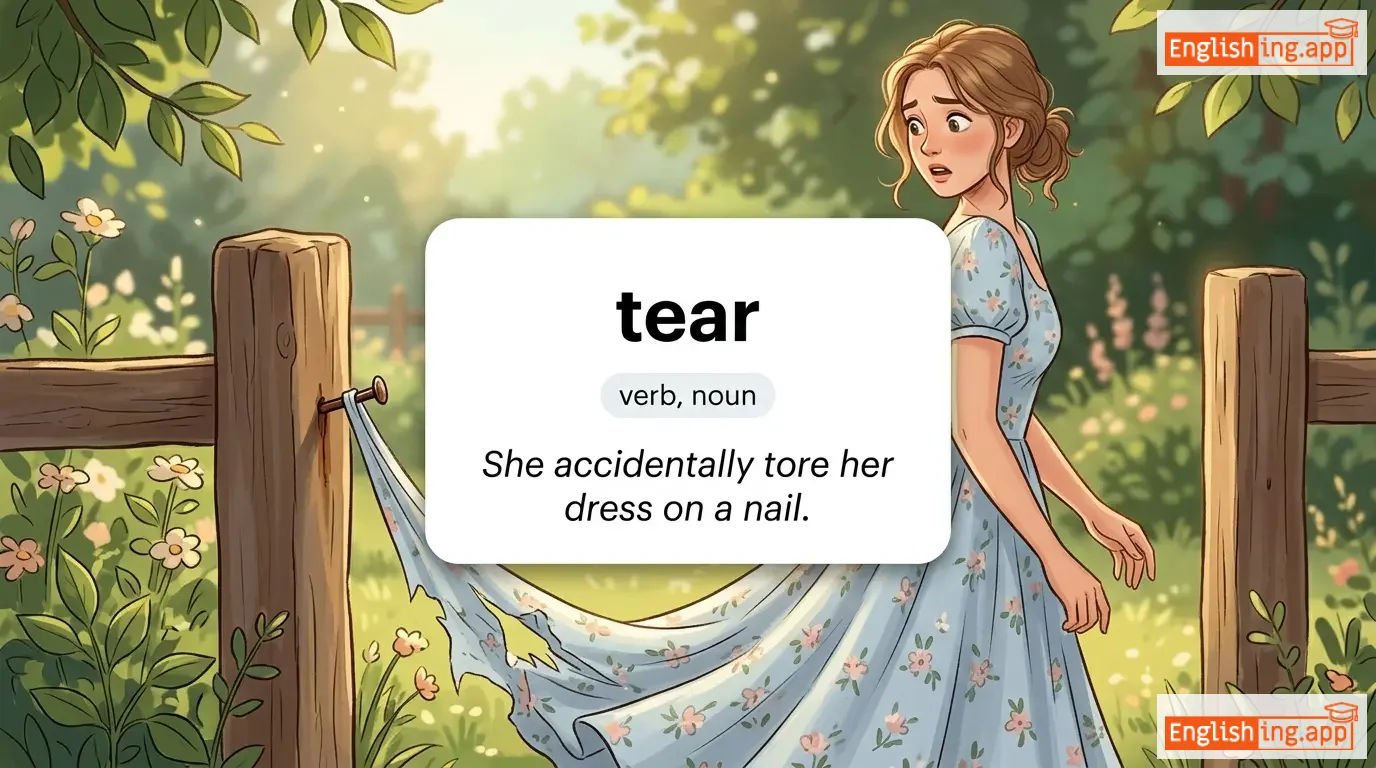
She accidentally tore her dress on a nail. |
- •••••• |
tear apart |
To destroy, separate, or damage severely.
••••••
|
- •••••• |
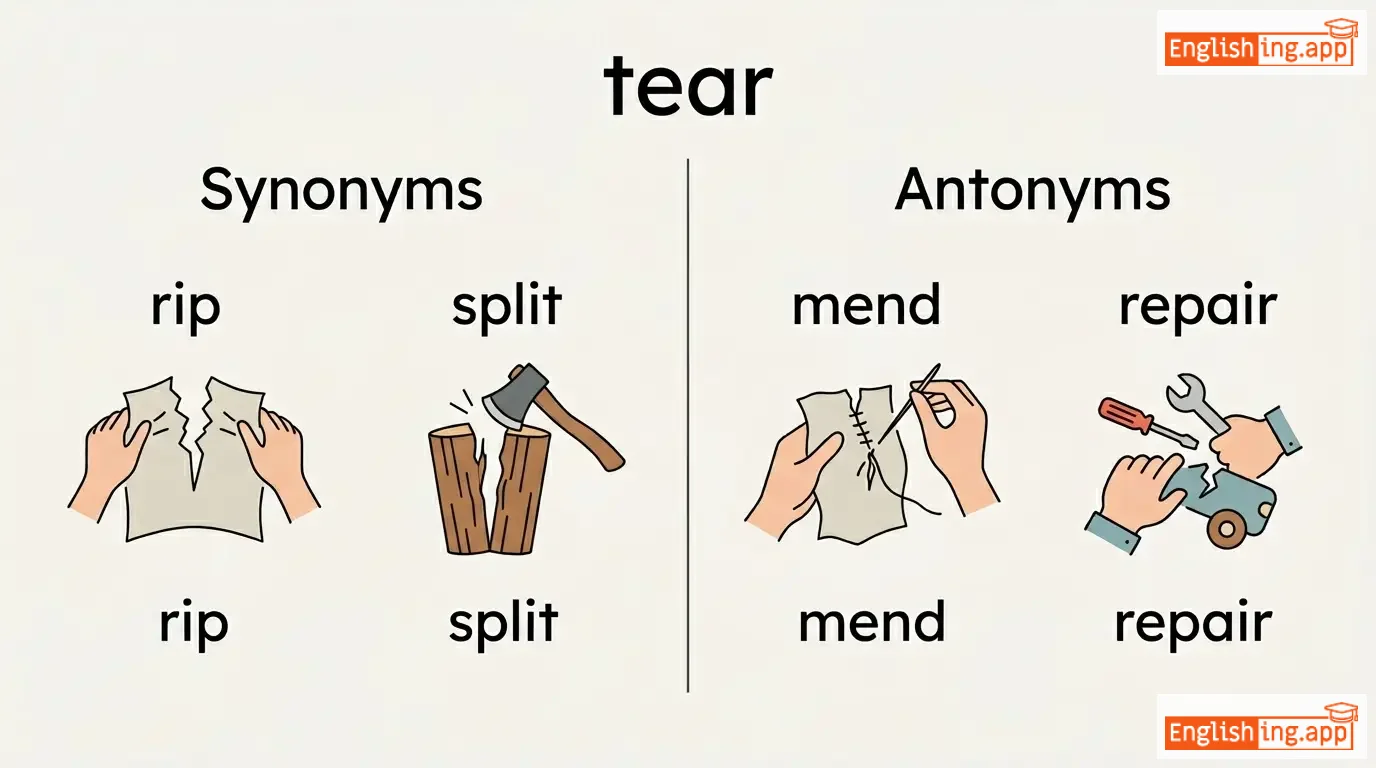
rip, split, shred, rend, pull
••••••
|
mend, repair
••••••
|
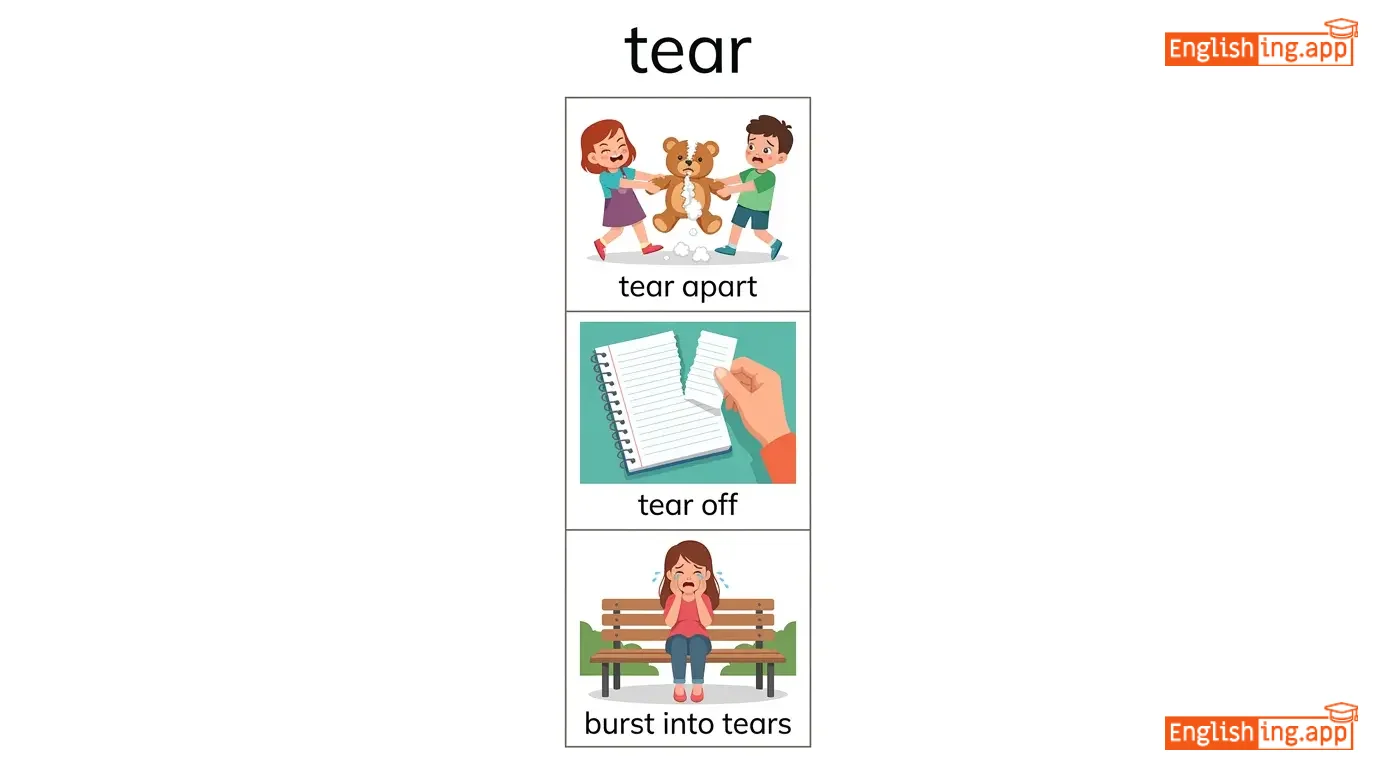
tear apart, tear off, burst into tears, tear down
••••••
|
No •••••• |
|
#8681
📚
|
/tækˈsɒnəmi/
noun
(タクソノミー)
••••••
|
|
分類学
bunruigaku
••••••
|
- •••••• | - •••••• | - •••••• | - •••••• |
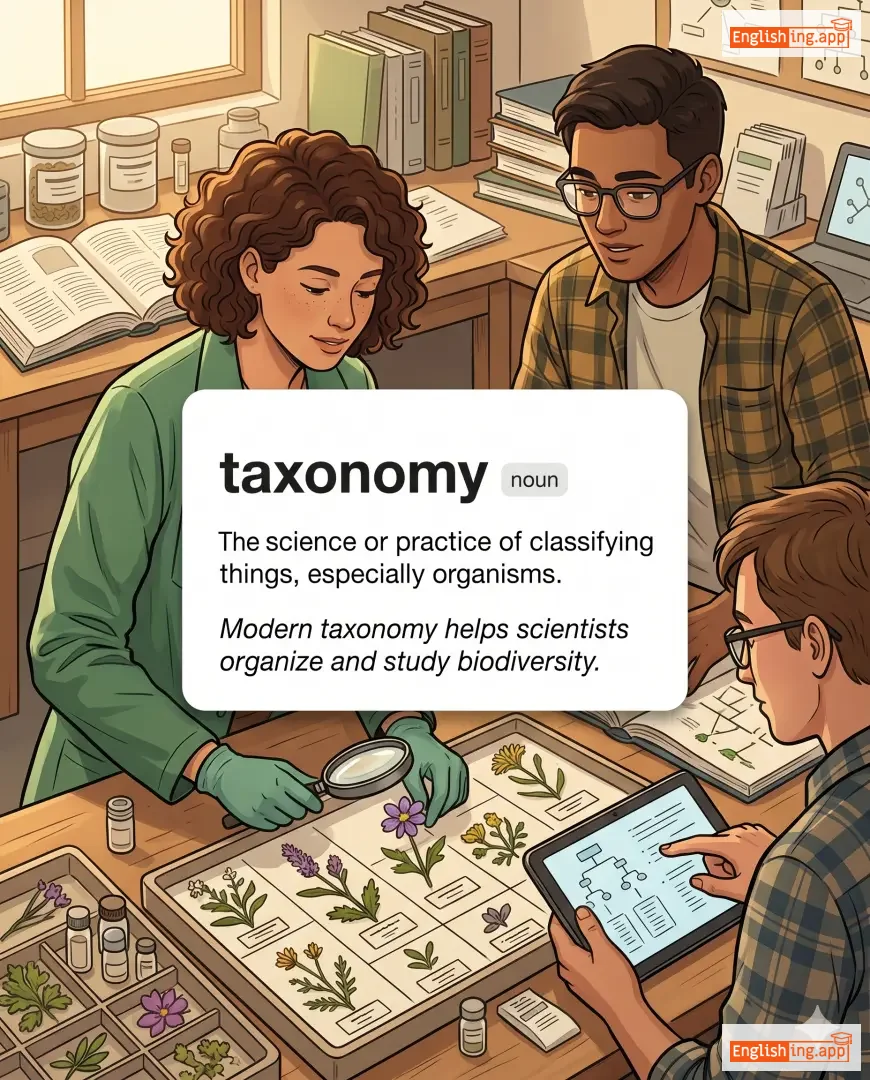
The science or practice of classifying things, especially organisms.
••••••
|
Modern taxonomy helps scientists organize and study biodiversity. |
現代の分類学は、科学者たちが生物多様性を整理し、研究するのを助けます。
gendai no bunruigaku wa, kagakusha-tachi ga seibutsu tayousei wo seiri shi, kenkyuu suru no wo tasukemasu.
••••••
|
- •••••• | - •••••• | - •••••• |
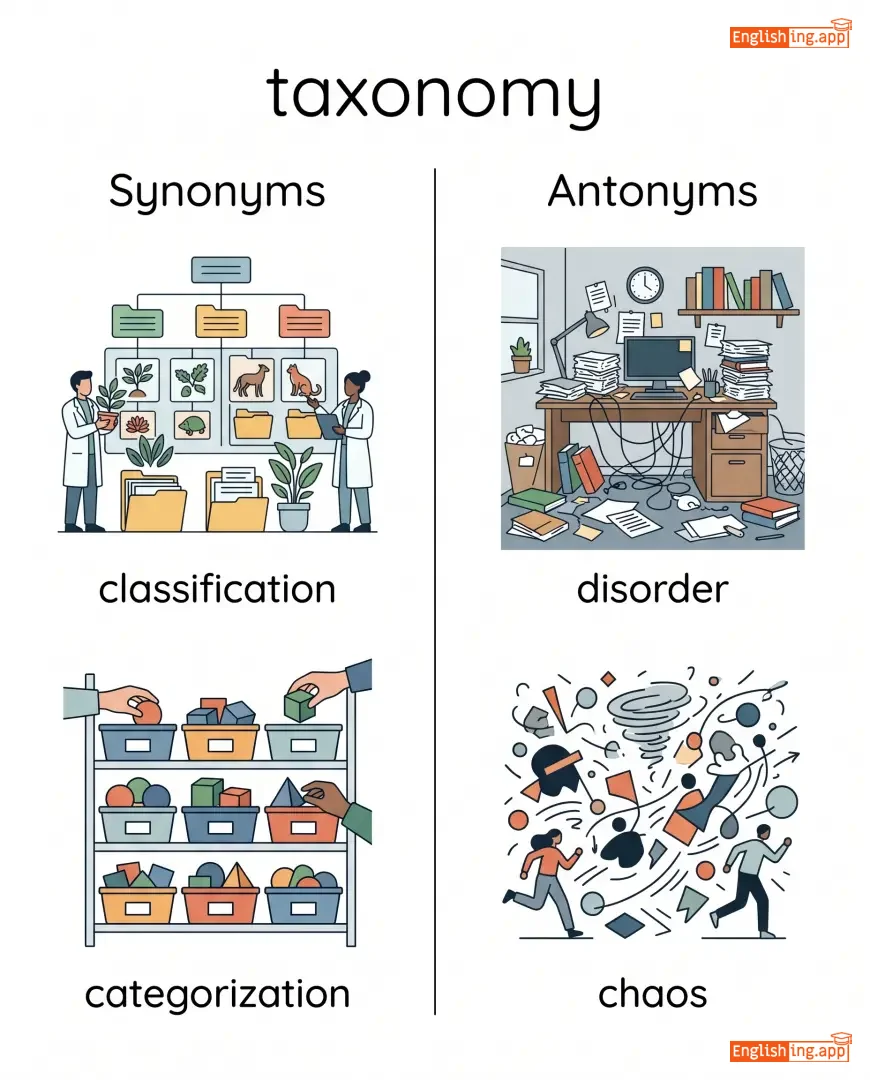
classification, categorization, systematics, grouping, nomenclature
••••••
|
disorder, chaos
••••••
|
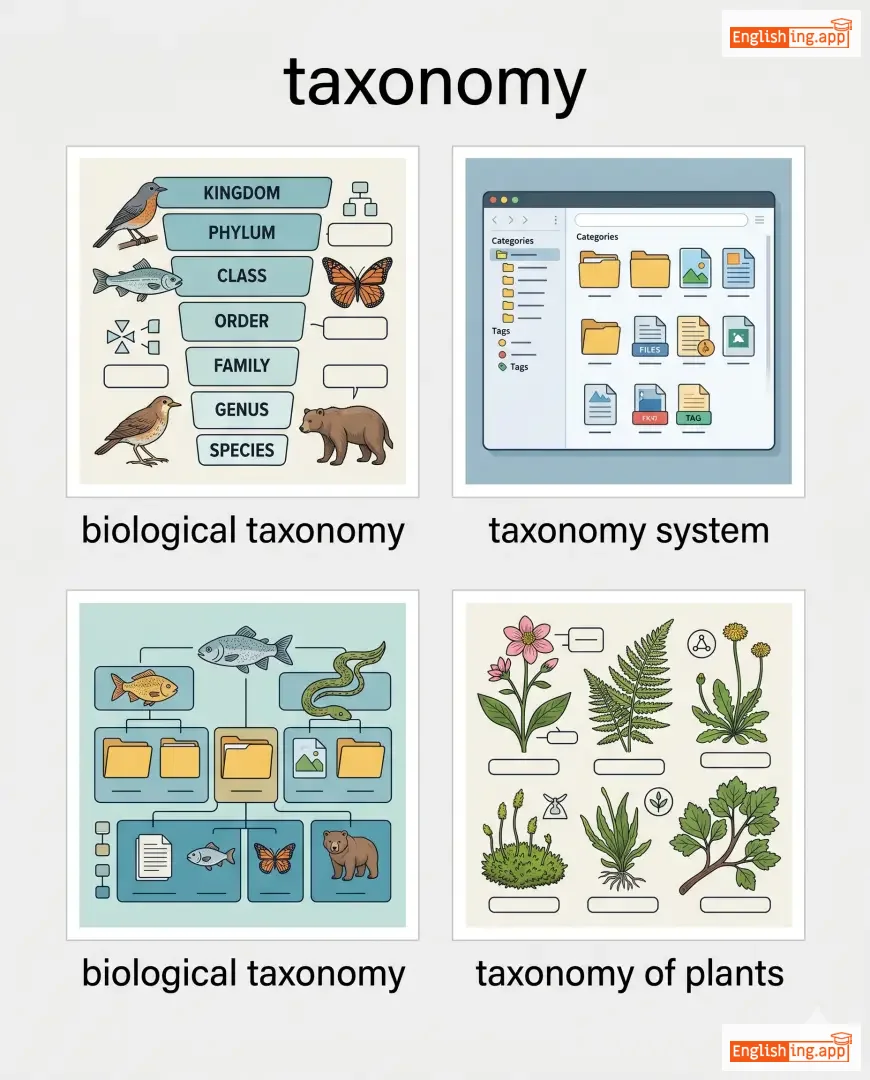
biological taxonomy, taxonomy system, taxonomy of plants, taxonomy classification
••••••
|
タクソ + ノミー = 科学的分類
••••••
|
|
#8682
🔬
|
/tækˈsɒnəmɪst/
noun
(タクソノミスト)
••••••
|
- •••••• |
分類学者
bunruigakusha
••••••
|
- •••••• | - •••••• | - •••••• | - •••••• |
A scientist who classifies organisms into groups based on their characteristics.
••••••
|
The taxonomist discovered a new species of insect. |
その分類学者は新しい昆虫の種を発見しました。
Sono bunruigakusha wa atarashī konchū no shū o hakken shimashita.
••••••
|
- •••••• | - •••••• | - •••••• |
classifier, biologist, systematist, zoologist
••••••
|
layman, amateur
••••••
|
expert taxonomist, taxonomist work, professional taxonomist
••••••
|
Taxonomy + 科学者 = 分類学者
••••••
|
|
#8683
😓
|
/ˈtæksɪŋ/
adjective
(テクシング)
••••••
|
- •••••• |
大変
taihen
••••••
|
- •••••• | - •••••• | - •••••• | - •••••• |
Requiring a lot of effort; physically or mentally demanding.
••••••
|
Preparing for the exam was a taxing experience.
試験の準備は大変な経験でした。
••••••
|
試験の準備は大変な経験でした。
Shiken no junbi wa taihen na keiken deshita.
••••••
|
- •••••• | - •••••• | - •••••• |
demanding, exhausting, challenging, burdensome
••••••
|
easy, effortless, simple
••••••
|
taxing job, taxing task, mentally taxing, physically taxing
••••••
|
Taxing is like 大変; means very difficult or burdensome.
••••••
|
|
#8684
🦌
|
/ˈtæksɪˌdɜːrmi/
noun
(タクシデルミー)
••••••
|
- •••••• |
剥製
hakkosei
••••••
|
- •••••• | - •••••• | - •••••• | - •••••• |
The art of preparing, stuffing, and mounting the skins of animals for display.
••••••
|
The museum had a large collection of taxidermy animals.
博物館には大量の剥製が展示されていた。
••••••
|
博物館には大量の剥製が展示されていた。
Hakubutsukan ni wa tairyo no hakkosei ga tenji sarete ita.
••••••
|
- •••••• | - •••••• | - •••••• |
stuffing, preservation, mounting, display
••••••
|
decay, decomposition
••••••
|
taxidermy shop, taxidermy display, taxidermy collection
••••••
|
タクシーで動物の皮を展示する→剥製。
••••••
|
|
#8685
🏞️
|
/tɑːrn/
noun
(ターン)
••••••
|
- •••••• |
山間の湖
sankan no mizuumi
••••••
|
- •••••• | - •••••• | - •••••• | - •••••• |
A small mountain lake or pool.
••••••
|
We camped near a tranquil tarn in the highlands. |
私たちは高原で静かな山間の湖の近くにキャンプをしました。
Watashitachi wa kougen de shizukana sankan no mizuumi no chikaku ni kyanpu o shimashita.
••••••
|
- •••••• | - •••••• | - •••••• |
lake, pool, pond, lagoon, reservoir
••••••
|
desert, dry land
••••••
|
mountain tarn, highland tarn, glacial tarn
••••••
|
ターンは山間の湖でターンしているようなイメージ。
••••••
|
|
#8686
🦉
|
/ˈtɔːni/
adjective
(トーニー)
••••••
|
- •••••• |
黄褐色
koukasseki
••••••
|
- •••••• | - •••••• | - •••••• | - •••••• |
A warm, sandy or golden-brown color.
••••••
|
The owl's tawny feathers blended with the tree bark. |
フクロウの黄褐色の羽毛は木の皮と混ざり合った。
Fukurou no koukasseki no umou wa ki no kawa to mazariatta.
••••••
|
- •••••• | - •••••• | - •••••• |
golden-brown, sandy, beige, russet, amber
••••••
|
black, white, gray
••••••
|
tawny owl, tawny skin, tawny hair, tawny eyes
••••••
|
トーニーのフクロウは黄褐色の羽毛を持っていた。
••••••
|
|
#8687
💍
|
/ˈtɔːdri/
adjective
(トードリー)
••••••
|
- •••••• |
安っぽくて派手だが、質が悪い
yasu pooku te hade da ga, shitsu ga warui
••••••
|
- •••••• | - •••••• | - •••••• | - •••••• |
cheap and showy but of poor quality
••••••
|
She wore a tawdry necklace that broke easily. |
彼女は安っぽくて派手なネックレスをしていて、簡単に壊れた。
Kanojo wa yasu pooku te hade na nekkuresu o shite ite, kantan ni kowareta.
••••••
|
- •••••• | - •••••• | - •••••• |
gaudy, flashy, vulgar, cheap, showy
••••••
|
elegant, tasteful, refined
••••••
|
tawdry display, tawdry jewelry, tawdry affair, tawdry decoration
••••••
|
Tawdryは、安っぽくて派手なものを指す、壊れやすいアクセサリーのように。
••••••
|
|
#8688
♾️
|
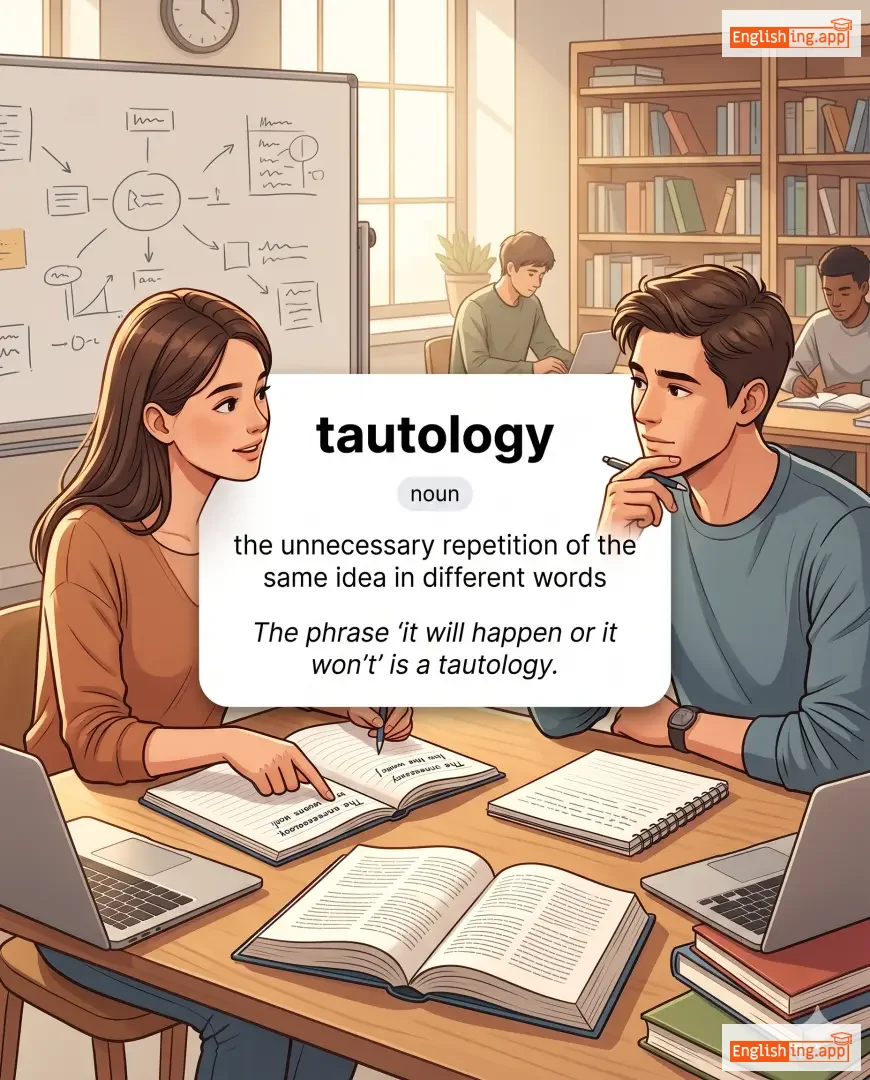
/tɔːˈtɒlədʒi/
noun
(トートロジー)
••••••
|
|
不必要な繰り返し
fuhitsuyou na kurikaeshi
••••••
|
- •••••• | - •••••• | - •••••• | - •••••• |
the unnecessary repetition of the same idea in different words
••••••
|
The phrase 'it will happen or it won’t' is a tautology. |
'それは起こるかもしれないし、起こらないかもしれない'というフレーズはトートロジーです。
'sore wa okoru kamoshirenai shi, okoranai kamoshirenai' to iu furezu wa tootoroji desu.
••••••
|
- •••••• | - •••••• | - •••••• |
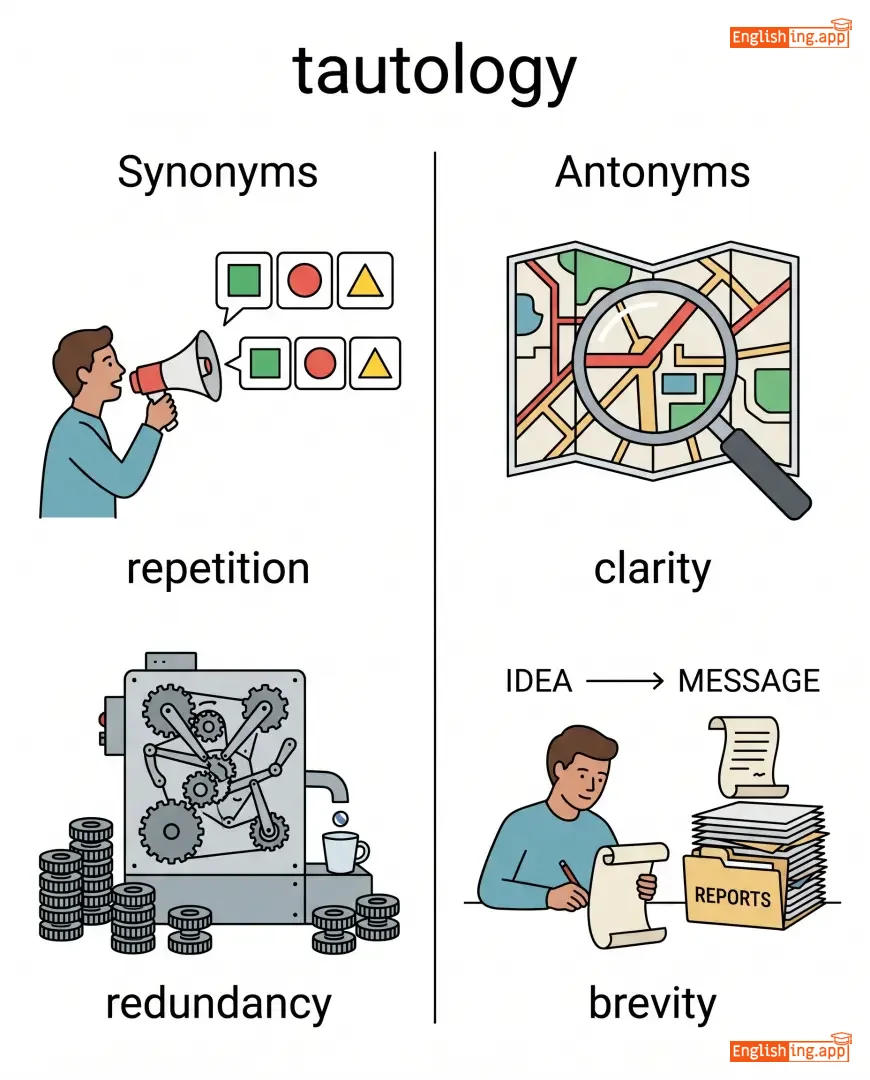
repetition, redundancy, reiteration, circularity
••••••
|
clarity, brevity, precision
••••••
|
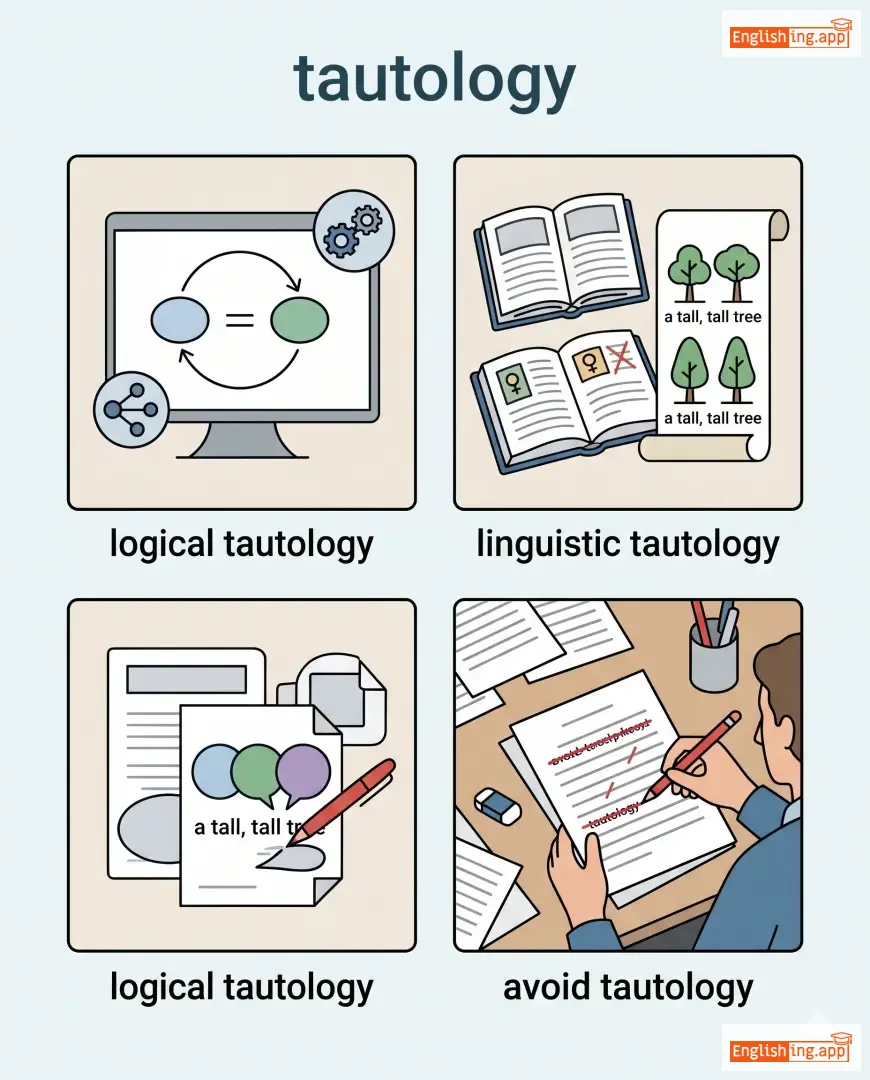
logical tautology, linguistic tautology, avoid tautology
••••••
|
トートロジーは、同じことを異なる言葉で繰り返すことです。
••••••
|
|
#8689
🔄
|
/ˌtɔːtəˈlɒdʒɪkəl/
adjective
(トートロジカル)
••••••
|
- •••••• |
冗長な
jōchō na
••••••
|
- •••••• | - •••••• | - •••••• | - •••••• |
expressing something by repeating the same idea in different words; redundant
••••••
|
Saying 'free gift' is considered tautological.
'無料ギフト'と言うことは冗長と見なされます。
••••••
|
'無料ギフト'と言うことは冗長と見なされます。
'Muryō gifuto' to iu koto wa jōchō to minasaremasu.
••••••
|
- •••••• | - •••••• | - •••••• |
redundant, repetitive, circular, verbose
••••••
|
concise, precise, succinct
••••••
|
tautological statement, tautological expression, tautological reasoning
••••••
|
冗長な言い方は、無駄に繰り返すことのようなものです。
••••••
|
|
#8690
🪢
|
/tɔːt/
adjective
(タウト)
••••••
|
- •••••• |
ぴんと張った
pinto hatta
••••••
|
- •••••• | - •••••• | - •••••• | - •••••• |
stretched or pulled tight; tense
••••••
|
The rope was pulled taut between the two poles. |
ロープは二つのポールの間でぴんと張られていました。
Roopu wa futatsu no pooru no aida de pinto hararete imashita.
••••••
|
- •••••• | - •••••• | - •••••• |
tight, stretched, strained, tense
••••••
|
loose, slack, relaxed
••••••
|
pulled taut, taut rope, taut muscles, held taut
••••••
|
Tautはぴんと張ったという意味です。
••••••
|
|
#8691
😏
|
/tɔːnt/
verb
(タウント)
••••••
|
- •••••• |
からかう
karakau
••••••
|
taunted
タウンテッド
••••••
|
taunted
タウンテッド
••••••
|
taunts
タウントス
••••••
|
taunting
タウンティング
••••••
|
to provoke or challenge someone with insulting remarks
••••••
|
The bully tried to taunt him with cruel words.
いじめっ子は残酷な言葉で彼をからかおうとした。
••••••
|
いじめっ子は残酷な言葉で彼をからかおうとした。
Ijimekko wa zankokuna kotoba de kare wo karakaou to shita.
••••••
|
taunt with
からかうこと
••••••
|
to provoke or mock someone using words or actions
••••••
|
からかうこと
karakau koto
••••••
|
mock, jeer, tease, provoke, ridicule
••••••
|
praise, encourage, compliment
••••••
|
taunt someone, cruel taunt, constant taunting, taunt with
••••••
|
Taunt はからかう (karakau)
••••••
|
|
#8692
🪑
|
/ˈtæti/
adjective
(tetti)
••••••
|
- •••••• |
使い古しの
tsukai furushi no
••••••
|
- •••••• | - •••••• | - •••••• | - •••••• |
Worn out, shabby, or in poor condition.
••••••
|
The sofa looked old and tatty after years of use. |
ソファは長年の使用で古くて使い古しのように見えた。
Sofa wa naganen no shiyou de furukute tsukai furushi no you ni mieta.
••••••
|
- •••••• | - •••••• | - •••••• |
shabby, worn, ragged, dilapidated, scruffy
••••••
|
new, fresh, neat
••••••
|
tatty clothes, tatty furniture, old and tatty
••••••
|
Tattyは使い古しの意味、何年も使われたソファのようなものです。
••••••
|
|
#8693
👕
|
/ˌtætərdɪˈmeɪliən/
noun, adjective
(タッターデマリオン)
••••••
|
- •••••• |
ぼろぼろの服を着た人
boroboro no fuku o kita hito
••••••
|
- •••••• | - •••••• | - •••••• | - •••••• |
A person dressed in ragged clothes; ragged or dilapidated in appearance.
••••••
|
A tatterdemalion wandered the streets in search of food.
タッターデマリオンは食べ物を探して通りを歩いていました。
••••••
|
タッターデマリオンは食べ物を探して通りを歩いていました。
Tatterdemalion wa tabemono o sagashite toori o aruite imashita.
••••••
|
- •••••• | - •••••• | - •••••• |
ragamuffin, beggar, vagrant, shabby
••••••
|
gentleman, well-dressed
••••••
|
tatterdemalion figure, tatterdemalion clothes
••••••
|
Tatter + ダメ = タッターデマリオン = ぼろぼろの服を着た人。
••••••
|
|
#8694
🧵
|
/ˈtætər/
noun, verb
••••••
|
- •••••• | - •••••• |
tattered
••••••
|
tattered
••••••
|
tatters
••••••
|
tattering
••••••
|
A torn piece of cloth or clothing; to become ragged or torn.
••••••
|
The old flag hung in tatters after the storm. |
- •••••• |
in tatters |
completely ruined or destroyed
••••••
|
- •••••• |
rag, shred, fragment, ruin, tear
••••••
|
whole, intact
••••••
|
in tatters, torn to tatters, clothes in tatters
••••••
|
No •••••• |
|
#8695
😋
|
/ˈteɪsti/
adjective
(テイスティ)
••••••
|
- •••••• |
美味しい
oishii
••••••
|
- •••••• | - •••••• | - •••••• | - •••••• |
Having a pleasant, distinct flavor; delicious.
••••••
|
The chef prepared a very tasty curry. |
シェフはとても美味しいカレーを作りました。
Shefu wa totemo oishī karē o tsukurimashita.
••••••
|
- •••••• | - •••••• | - •••••• |
delicious, flavorful, appetizing, savory, palatable
••••••
|
tasteless, bland
••••••
|
tasty meal, tasty snack, very tasty, tasty dish
••••••
|
Tasty は美味しいと似ている、すべての一口が楽しさ!
••••••
|
|
#8696
🥧
|
/tɑːrt/
noun, adjective
••••••
|
- •••••• | - •••••• | - •••••• | - •••••• | - •••••• | - •••••• |
A small pie with a sweet or savory filling; or having a sharp, sour taste.
••••••
|
She served a delicious apple tart for dessert. |
- •••••• |
tart reply |
a sharp or cutting response
••••••
|
- •••••• |
pie, pastry, sharp, sour, acidic
••••••
|
sweet, bland
••••••
|
apple tart, lemon tart, tart flavor, tart reply
••••••
|
No •••••• |
|
#8697
🚶
|
/ˈtæri/
verb
(テアリー)
••••••
|
- •••••• |
遅れる
okureru
••••••
|
tarried
テアリッド
••••••
|
tarried
テアリッド
••••••
|
tarries
テアリーズ
••••••
|
tarrying
テアリーイング
••••••
|
To delay or linger; to stay longer than intended.
••••••
|
Do not tarry, or you will miss the train.
遅れないで、さもないと電車に乗り遅れるよ。
••••••
|
遅れないで、さもないと電車に乗り遅れるよ。
Okurenaide, samonaito densha ni noriokureru yo.
••••••
|
tarry a while
ちょっと待って
••••••
|
To stay for a short time.
••••••
|
少し待つ
Sukoshi matsu
••••••
|
linger, delay, wait, loiter, dally
••••••
|
hasten, hurry, rush
••••••
|
tarry a while, tarry on the road, tarry too long
••••••
|
遅れると、次のチャンスを逃すことになるよ。
••••••
|
|
#8698
🛖
|
/tɑːrˈpɔːlɪn/
noun
••••••
|
- •••••• | - •••••• | - •••••• | - •••••• | - •••••• | - •••••• |
A large sheet of strong, flexible, water-resistant material used for covering or protecting things.
••••••
|
The workers used a tarpaulin to cover the construction materials from rain. |
- •••••• | - •••••• | - •••••• | - •••••• |
cover, sheet, canvas, tarp, awning
••••••
|
exposure, uncover
••••••
|
plastic tarpaulin, blue tarpaulin, cover with tarpaulin
••••••
|
No •••••• |
|
#8699
🪞
|
/ˈtɑːrnɪʃ/
verb
••••••
|
- •••••• | - •••••• |
tarnished
••••••
|
tarnished
••••••
|
tarnishes
••••••
|
tarnishing
••••••
|
To lose luster, especially as a result of exposure to air or moisture; to damage reputation.
••••••
|
The silver jewelry tarnished quickly when left in the open air. |
- •••••• |
tarnish one's reputation |
To damage or spoil someone's good name or image.
••••••
|
- •••••• |
stain, spoil, damage, dull, corrode
••••••
|
polish, shine, brighten
••••••
|
tarnish metal, tarnish reputation, tarnish image, tarnish silver
••••••
|
No •••••• |
Vocabulary Quiz
Test your vocabulary by matching words with their translations or meanings.
Login to take the quiz
Comments (0)
Share your thoughts and join the discussion.
Join the discussion by logging in
Login to CommentNo comments yet
Be the first to share your thoughts!