


Swipe left or right, or use the buttons. Tap image to zoom.
例句翻译
单词
Lesson 290Lesson 290 - 遮罩切换
|
表情符号
|
单词 | Images | 翻译 | 过去时 | 过去分词 | 第三人称单数 | 动名词 | 含义 | 例句 | 例句翻译 | 示例表达 | 示例表达含义 | 示例表达翻译 | 同义词 | 反义词 | 搭配词 | 助记符 |
|---|---|---|---|---|---|---|---|---|---|---|---|---|---|---|---|---|---|
|
#8670
💰
|
/tækˈseɪʃən/
noun
(ták-sè-shèn)
••••••
|
- •••••• |
税收
shuìshōu
••••••
|
- •••••• | - •••••• | - •••••• | - •••••• |
The system of imposing and collecting taxes.
••••••
|
Taxation is necessary for funding public services.
税收对于资助公共服务是必要的。
••••••
|
税收对于资助公共服务是必要的。
Shuìshōu duìyú zīzhù gōnggòng fúwù shì bìyào de.
••••••
|
double taxation
双重征税
••••••
|
The taxing of the same income or financial transaction twice.
••••••
|
双重征税
shuāngchóng zhēngshuì
••••••
|
levy, duty, tariff, revenue, assessment
••••••
|
exemption, subsidy
••••••
|
income taxation, property taxation, heavy taxation, unfair taxation
••••••
|
税收就像政府为公共服务所收的税。
••••••
|
|
#8671
⚖️
|
/ˈtiːtər/
verb
(提特)
••••••
|
- •••••• |
摇晃
yaohuang
••••••
|
teetered
提特德
••••••
|
teetered
提特德
••••••
|
teeters
提特斯
••••••
|
teetering
提特灵
••••••
|
to move or balance unsteadily; to wobble
••••••
|
The glass began to teeter on the edge of the table.
玻璃开始在桌子的边缘摇摇欲坠。
••••••
|
玻璃开始在桌子的边缘摇摇欲坠。
Boli kaishi zai zhuozi de bianyuan yaoyao yujui.
••••••
|
teeter on the brink
摇摇欲坠
••••••
|
to be close to danger, failure, or disaster
••••••
|
濒临危险
binlin weixian
••••••
|
wobble, totter, sway, falter, stagger
••••••
|
stabilize, steady, balance
••••••
|
teeter on, teeter dangerously, teeter between, teeter precariously
••••••
|
玻璃在桌面上摇晃时,'提特'可能会跌倒。
••••••
|
|
#8672
🌊
|
/tiːm/
verb
(tīm)
••••••
|
- •••••• |
充满
chōngmǎn
••••••
|
teemed
tīməd
••••••
|
teemed
tīməd
••••••
|
teems
tīms
••••••
|
teeming
tīming
••••••
|
to be full of or swarming with
••••••
|
The forest teems with wildlife.
línɡōng tīmz wīθ waildlaif.
••••••
|
森林里充满了野生动物。
Sēnlín lǐ chōngmǎn le yěshēng dòngwù.
••••••
|
teeming with life
tīming wīθ laif
••••••
|
full of vitality, abundance, or activity
••••••
|
充满生命
chōngmǎn shēngmìng
••••••
|
overflow, abound, swarm, bristle, throng
••••••
|
lack, empty, scarce
••••••
|
teem with, teeming crowd, teeming city, teeming life
••••••
|
想象一个团队(team)充满了能量,像'teem'意味着充满一样。
••••••
|
|
#8673
😐
|
/ˈtiːdiəm/
noun
(蒂迪姆)
••••••
|
- •••••• |
沉闷
chenmen
••••••
|
- •••••• | - •••••• | - •••••• | - •••••• |
the state of being tedious; monotony or boredom
••••••
|
The tedium of long meetings often drains motivation. |
长时间会议的沉闷常常消耗动力。
Chang shijian huiyi de chenmen changchang xiaohua dongli.
••••••
|
- •••••• | - •••••• | - •••••• |
boredom, monotony, dullness, weariness
••••••
|
excitement, variety, stimulation
••••••
|
the tedium of life, escape the tedium, daily tedium
••••••
|
Tedium就像TED讲座,只是无聊
••••••
|
|
#8674
😩
|
/ˈtiːdiəs/
adjective
(tidiəs)
••••••
|
- •••••• |
乏味
fáwèi
••••••
|
- •••••• | - •••••• | - •••••• | - •••••• |
too long, slow, or dull; tiresome or monotonous
••••••
|
Filling out endless forms can be a tedious task. |
填写无尽的表格可能是一个乏味的任务。
Tiánxiě wújìn de biǎogé kěnéng shì yīgè fáwèi de rènwù.
••••••
|
tedious details |
boring or tiresome small information
••••••
|
乏味的细节
fáwèi de xìjié
••••••
|
boring, dull, monotonous, tiresome, repetitive
••••••
|
exciting, interesting, enjoyable
••••••
|
tedious task, tedious process, tedious job, tedious routine
••••••
|
Ted 总觉得做的事很乏味 (tedious)。
••••••
|
|
#8675
💻
|
/tɛkˈnɒlədʒi/
noun
(tèknóulóujī)
••••••
|
|
技术
jishu
••••••
|
- •••••• | - •••••• | - •••••• | - •••••• |
the application of scientific knowledge for practical purposes, especially in industry
••••••
|
Modern technology has revolutionized communication. |
现代技术已经彻底改变了通讯。
Xiandai jishu yijing chedi gaibian le tongxun.
••••••
|
cutting-edge technology |
the most advanced and innovative technology available
••••••
|
尖端技术
jianduan jishu
••••••
|
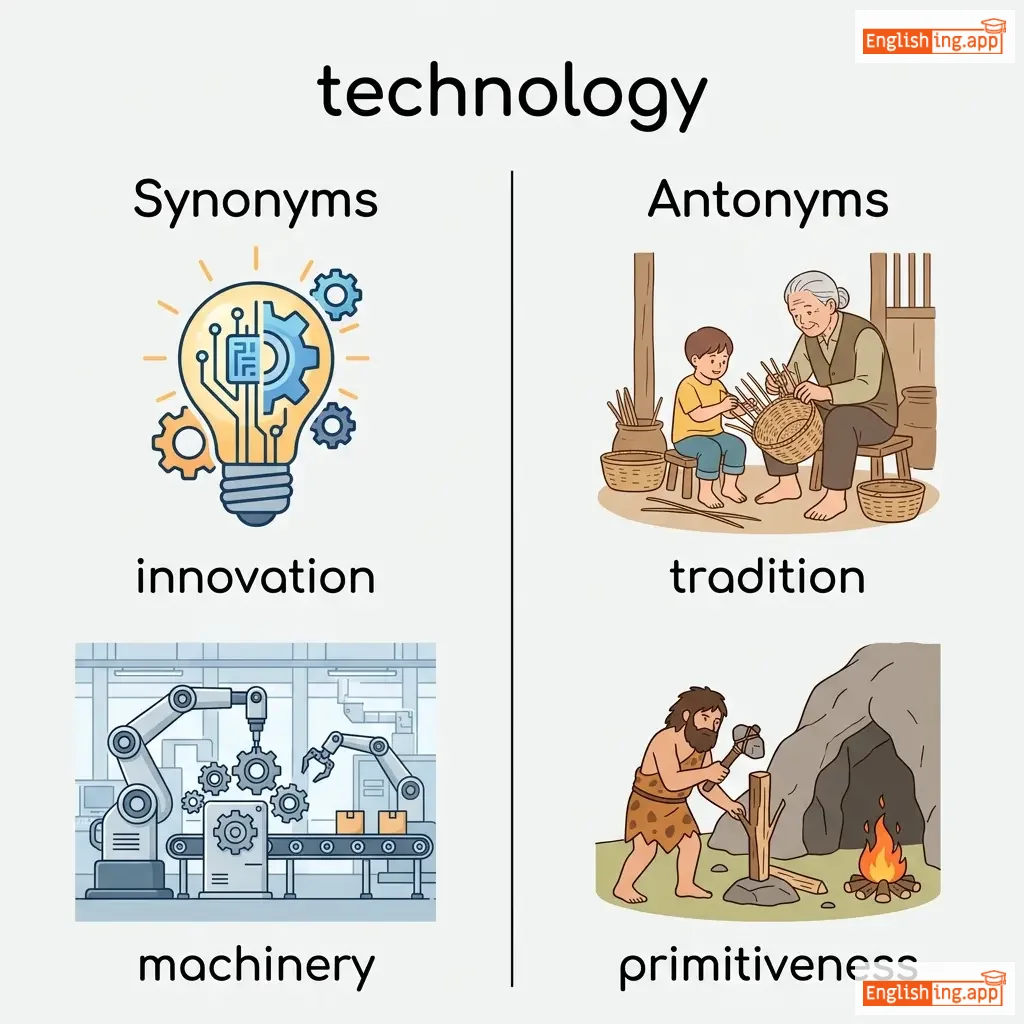
innovation, machinery, engineering, science, technique
••••••
|
tradition, primitiveness, simplicity
••••••
|
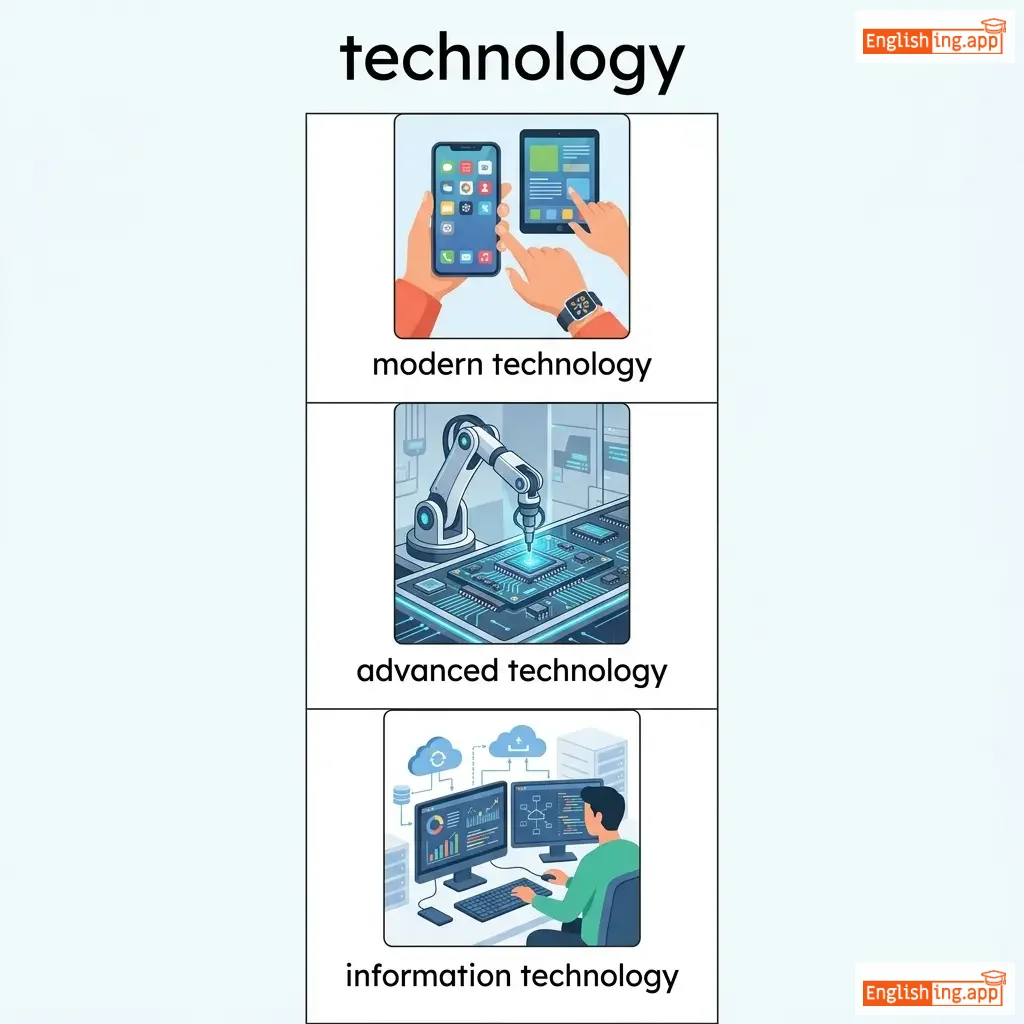
modern technology, advanced technology, information technology, use of technology
••••••
|
Tech (技术) + 知识 = 技术
••••••
|
|
#8676
📚
|
/tɛkˈnɒɡrəfi/
noun
(技术学)
••••••
|
- •••••• |
技术学
jishu xue
••••••
|
- •••••• | - •••••• | - •••••• | - •••••• |
the descriptive study or writing about the practical arts, technologies, or technical methods of a society
••••••
|
The anthropologist specialized in technography to understand indigenous tool-making traditions. |
人类学家专门研究技术学,以了解土著工具制作的传统。
Renleixuejia zhuanmen yanjiu jishuxue, yi liaojie tuzhu gongju zhizao de chuantong.
••••••
|
- •••••• | - •••••• | - •••••• |
technical description, technological study, ethnotechnology, cultural technology
••••••
|
ignorance, non-technical study
••••••
|
technography research, study of technography, applied technography
••••••
|
技术 + 学 = 学习和写作关于技术的内容
••••••
|
|
#8677
🧘
|
/tɛkˈniːk/
noun
(tɛkˈnik)
••••••
|
- •••••• |
技巧
jiqiao
••••••
|
- •••••• | - •••••• | - •••••• | - •••••• |
A particular way of carrying out a task, especially with skill.
••••••
|
She learned a new breathing technique in yoga class. |
她在瑜伽课上学会了一种新的呼吸技巧。
Tā zài yújiā kè shàng xuéhuìle yī zhǒng xīn de hūxī jìqiǎo.
••••••
|
by technique |
Done using a specific method or skill.
••••••
|
通过技巧
Tōngguò jìqiǎo
••••••
|
method, procedure, style, craft, skill
••••••
|
incompetence, inability
••••••
|
teaching technique, special technique, breathing technique, painting technique
••••••
|
技巧意味着方法,技巧让工作更轻松。
••••••
|
|
#8678
⚖️
|
/ˌtɛknɪˈkæləti/
noun
(tèknīkè lǐtì)
••••••
|
- •••••• |
技术性问题
jishu xing wenti
••••••
|
- •••••• | - •••••• | - •••••• | - •••••• |
A small detail of law, rule, or procedure; a minor point that affects an outcome.
••••••
|
The case was dismissed on a technicality.
案件因技术性问题被驳回。
••••••
|
案件因技术性问题被驳回。
Anjian yin jishu xing wenti bei bohui.
••••••
|
- •••••• | - •••••• | - •••••• |
detail, formality, fine point, minor issue
••••••
|
essence, substance
••••••
|
legal technicality, dismissed on a technicality, minor technicality
••••••
|
Technicality = 技术性问题—小细节改变大决策。
••••••
|
|
#8679
🎨
|
/ˈtɛknɪk/
noun
(tɛknɪk)
••••••
|
- •••••• |
技巧
jiqiao
••••••
|
- •••••• | - •••••• | - •••••• | - •••••• |
A method, skill, or art in a particular field, especially in the arts or sciences.
••••••
|
The artist’s technic in watercolor impressed the judges.
艺术家的水彩画技法给评委留下了深刻印象。
••••••
|
艺术家的水彩画技法给评委留下了深刻印象。
Yishujia de shuicaihua ji fa gei pingwei liuxia le shenke yinxiang.
••••••
|
- •••••• | - •••••• | - •••••• |
method, technique, skill, craft, style
••••••
|
incompetence, inability
••••••
|
artistic technic, musical technic, painting technic
••••••
|
Jiqiao = 技巧,艺术或科学中的技能
••••••
|
|
#8680
💧
|
/tɪər/ (noun: liquid) /tɛər/ (verb: rip)
verb, noun
••••••
|
|
- •••••• |
tore
••••••
|
torn
••••••
|
tears
••••••
|
tearing
••••••
|
As a verb: to pull apart or rip something. As a noun: a drop of clear salty liquid produced by glands in your eyes.
••••••
|
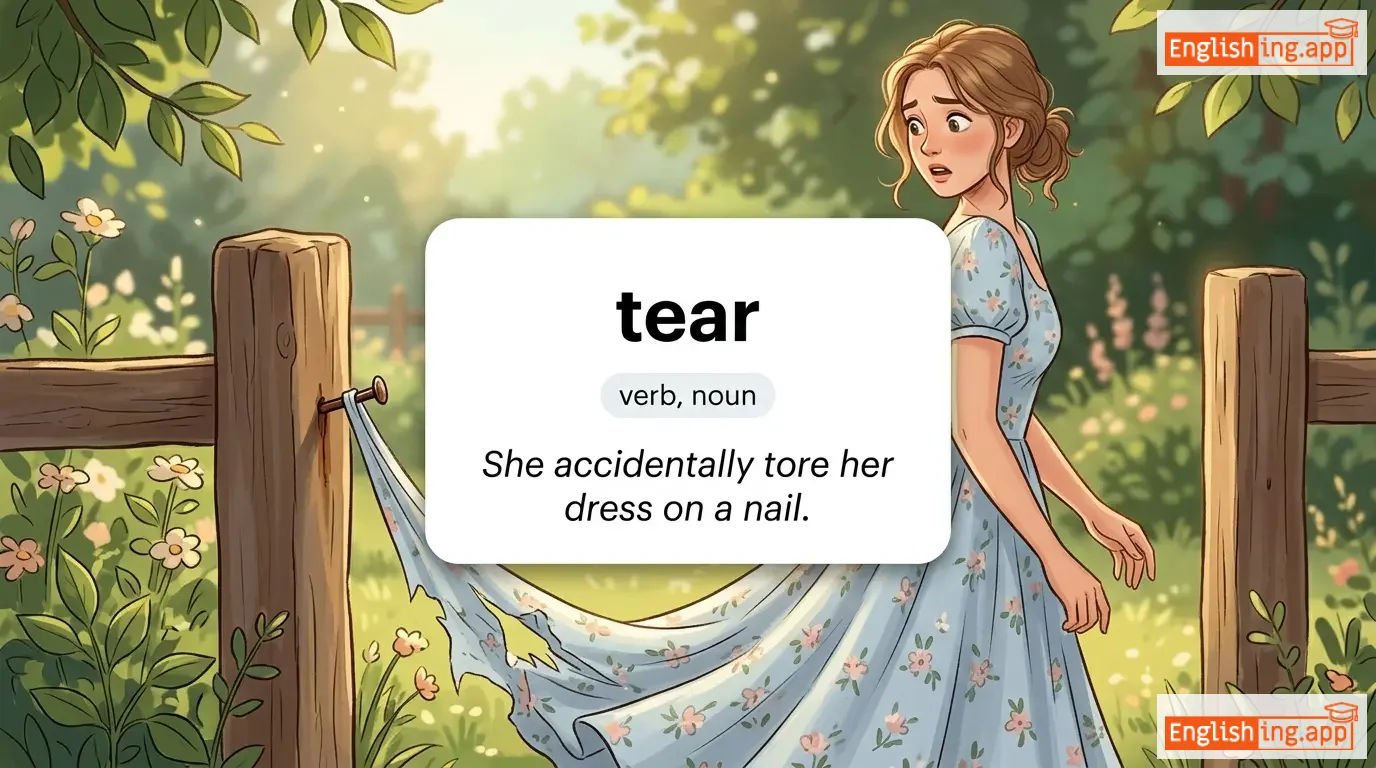
She accidentally tore her dress on a nail. |
- •••••• |
tear apart |
To destroy, separate, or damage severely.
••••••
|
- •••••• |
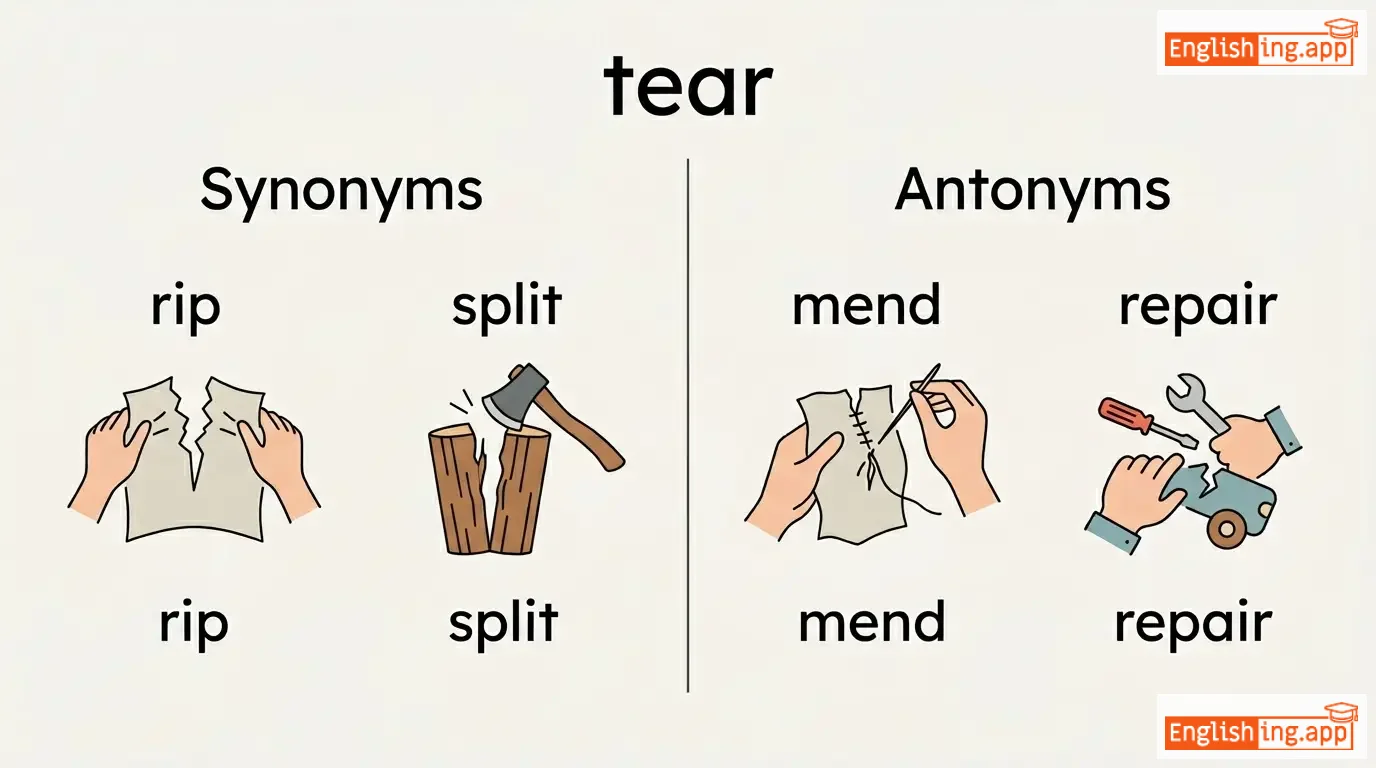
rip, split, shred, rend, pull
••••••
|
mend, repair
••••••
|
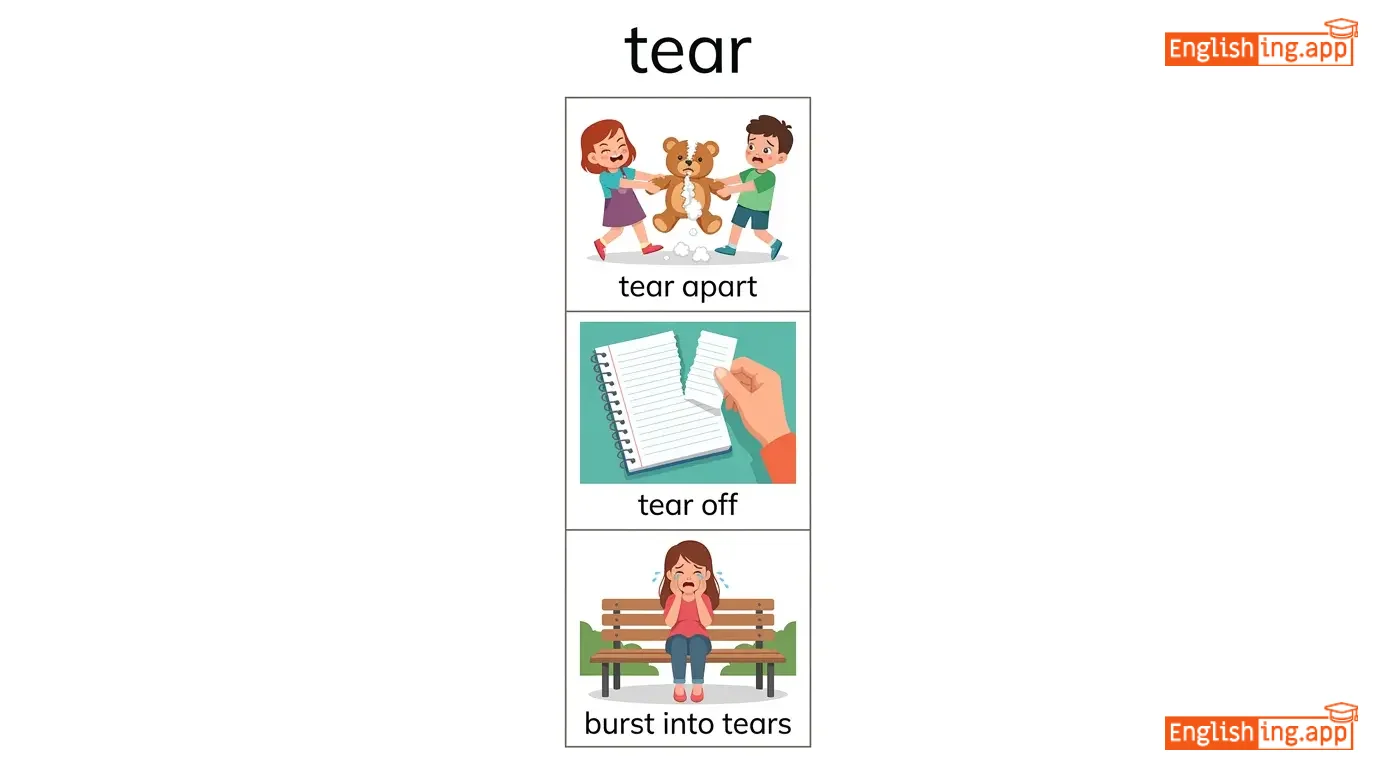
tear apart, tear off, burst into tears, tear down
••••••
|
No •••••• |
|
#8681
📚
|
/tækˈsɒnəmi/
noun
(分类学)
••••••
|
|
分类科学
fenlei kexue
••••••
|
- •••••• | - •••••• | - •••••• | - •••••• |
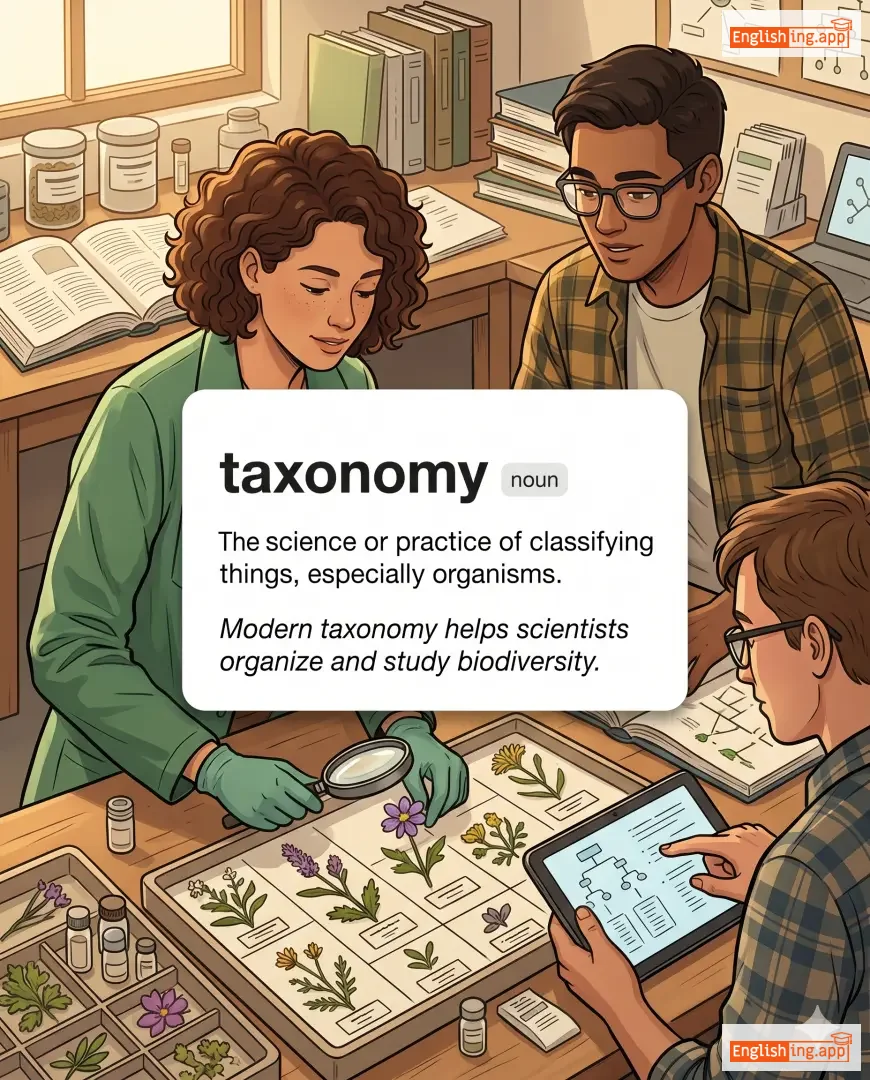
The science or practice of classifying things, especially organisms.
••••••
|
Modern taxonomy helps scientists organize and study biodiversity. |
现代分类学帮助科学家组织和研究生物多样性。
xiandai fenlei xue bangzhu kexuejia zuzhi he yanjiu shengwu duoyangxing.
••••••
|
- •••••• | - •••••• | - •••••• |
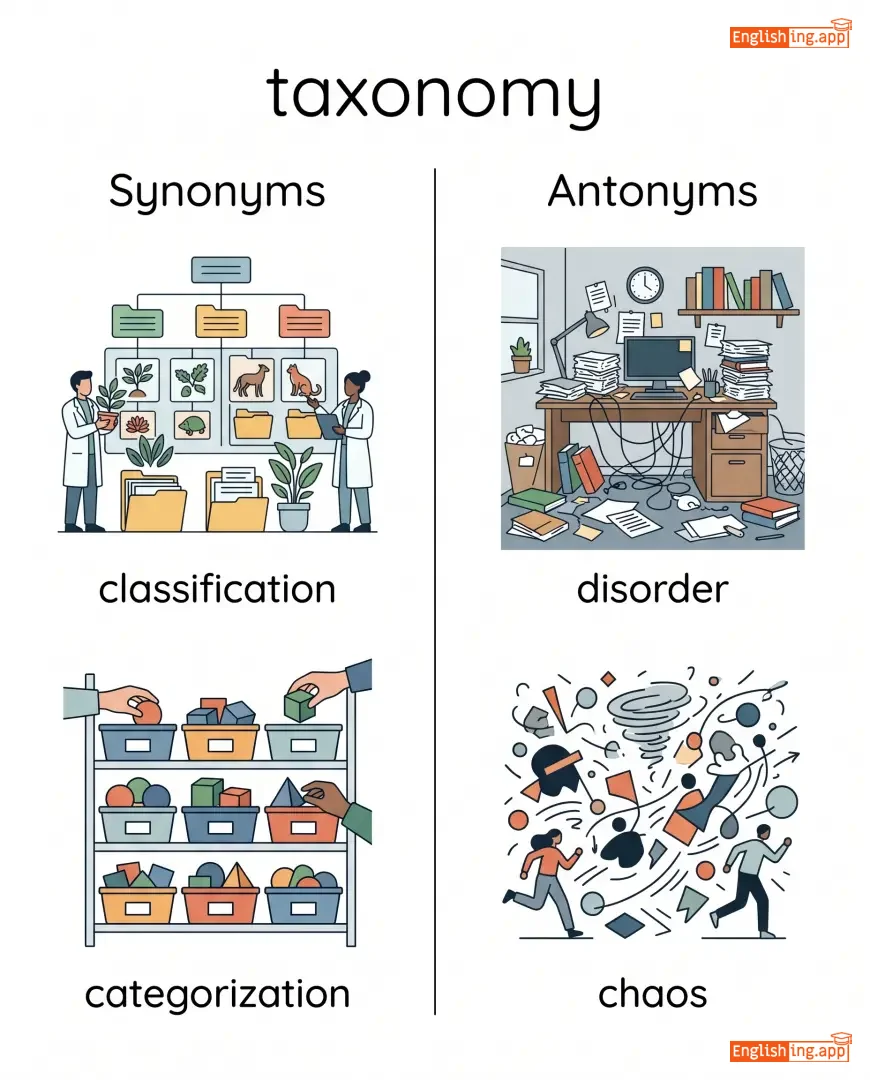
classification, categorization, systematics, grouping, nomenclature
••••••
|
disorder, chaos
••••••
|
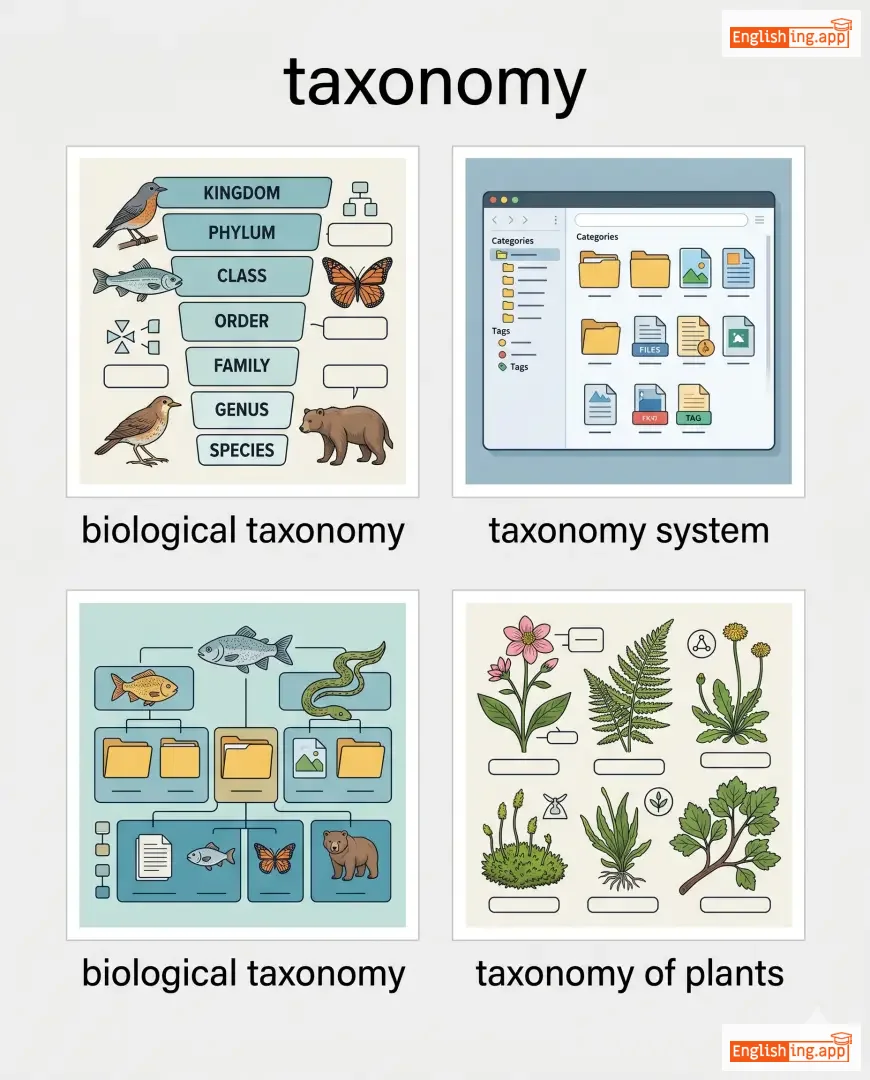
biological taxonomy, taxonomy system, taxonomy of plants, taxonomy classification
••••••
|
Taxo + nomia = 分类的科学
••••••
|
|
#8682
🔬
|
/tækˈsɒnəmɪst/
noun
(tàkè suǒnàomìsī)
••••••
|
- •••••• |
分类学家
fenleixuejia
••••••
|
- •••••• | - •••••• | - •••••• | - •••••• |
A scientist who classifies organisms into groups based on their characteristics.
••••••
|
The taxonomist discovered a new species of insect. |
这位分类学家发现了一种新昆虫物种。
Zhè wèi fēnlèixuéjiā fāxiànle yī zhǒng xīn kūnchóng wùzhǒng.
••••••
|
- •••••• | - •••••• | - •••••• |
classifier, biologist, systematist, zoologist
••••••
|
layman, amateur
••••••
|
expert taxonomist, taxonomist work, professional taxonomist
••••••
|
Taxonomy + 科学家 = 分类学家
••••••
|
|
#8683
😓
|
/ˈtæksɪŋ/
adjective
(tæksɪŋ)
••••••
|
- •••••• |
繁重
fánzhòng
••••••
|
- •••••• | - •••••• | - •••••• | - •••••• |
Requiring a lot of effort; physically or mentally demanding.
••••••
|
Preparing for the exam was a taxing experience.
准备考试是一次繁重的经历。
••••••
|
准备考试是一次繁重的经历。
Zhǔnbèi kǎoshì shì yīcì fánzhòng de jīnglì.
••••••
|
- •••••• | - •••••• | - •••••• |
demanding, exhausting, challenging, burdensome
••••••
|
easy, effortless, simple
••••••
|
taxing job, taxing task, mentally taxing, physically taxing
••••••
|
Taxing and 繁重的 – 繁重的 means burdensome.
••••••
|
|
#8684
🦌
|
/ˈtæksɪˌdɜːrmi/
noun
(tǎkèsīdé'ěrmí)
••••••
|
- •••••• |
标本制作
biāoběn zhìzuò
••••••
|
- •••••• | - •••••• | - •••••• | - •••••• |
The art of preparing, stuffing, and mounting the skins of animals for display.
••••••
|
The museum had a large collection of taxidermy animals.
博物馆里有一大批动物标本。
••••••
|
博物馆里有一大批动物标本。
Bówùguǎn lǐ yǒu yī dàpī dòngwù biāoběn.
••••••
|
- •••••• | - •••••• | - •••••• |
stuffing, preservation, mounting, display
••••••
|
decay, decomposition
••••••
|
taxidermy shop, taxidermy display, taxidermy collection
••••••
|
Taxi司机把动物标本带到博物馆 → 标本制作。
••••••
|
|
#8685
🏞️
|
/tɑːrn/
noun
(塔恩)
••••••
|
- •••••• |
山间湖泊
shanjian hupuo
••••••
|
- •••••• | - •••••• | - •••••• | - •••••• |
A small mountain lake or pool.
••••••
|
We camped near a tranquil tarn in the highlands. |
我们在高地附近的一个宁静的山间湖泊旁露营。
Women zai gaodi fujin de yi ge ningjing de shanjian hupuo pang luying.
••••••
|
- •••••• | - •••••• | - •••••• |
lake, pool, pond, lagoon, reservoir
••••••
|
desert, dry land
••••••
|
mountain tarn, highland tarn, glacial tarn
••••••
|
塔恩就是在山间湖泊旁露营。
••••••
|
|
#8686
🦉
|
/ˈtɔːni/
adjective
(陶尼)
••••••
|
- •••••• |
黄褐色
huanghese
••••••
|
- •••••• | - •••••• | - •••••• | - •••••• |
A warm, sandy or golden-brown color.
••••••
|
The owl's tawny feathers blended with the tree bark. |
猫头鹰的黄褐色羽毛与树皮融合在一起。
Maotouying de huanghese yumao yu shupi ronghe zai yiqi.
••••••
|
- •••••• | - •••••• | - •••••• |
golden-brown, sandy, beige, russet, amber
••••••
|
black, white, gray
••••••
|
tawny owl, tawny skin, tawny hair, tawny eyes
••••••
|
陶尼的猫头鹰有黄褐色的羽毛。
••••••
|
|
#8687
💍
|
/ˈtɔːdri/
adjective
(tāo-dù-lì)
••••••
|
- •••••• |
廉价而花哨但质量差
lianjia er huāshào dàn zhìliàng chà
••••••
|
- •••••• | - •••••• | - •••••• | - •••••• |
cheap and showy but of poor quality
••••••
|
She wore a tawdry necklace that broke easily. |
她戴了一条廉价而花哨的项链,很容易断裂。
Tā dài le yītiáo liánjià ér huāshào de xiàngliàn, hěn róngyì duànliè.
••••••
|
- •••••• | - •••••• | - •••••• |
gaudy, flashy, vulgar, cheap, showy
••••••
|
elegant, tasteful, refined
••••••
|
tawdry display, tawdry jewelry, tawdry affair, tawdry decoration
••••••
|
Tawdry像廉价的饰品,表面华丽但质量很差,很容易断。
••••••
|
|
#8688
♾️
|
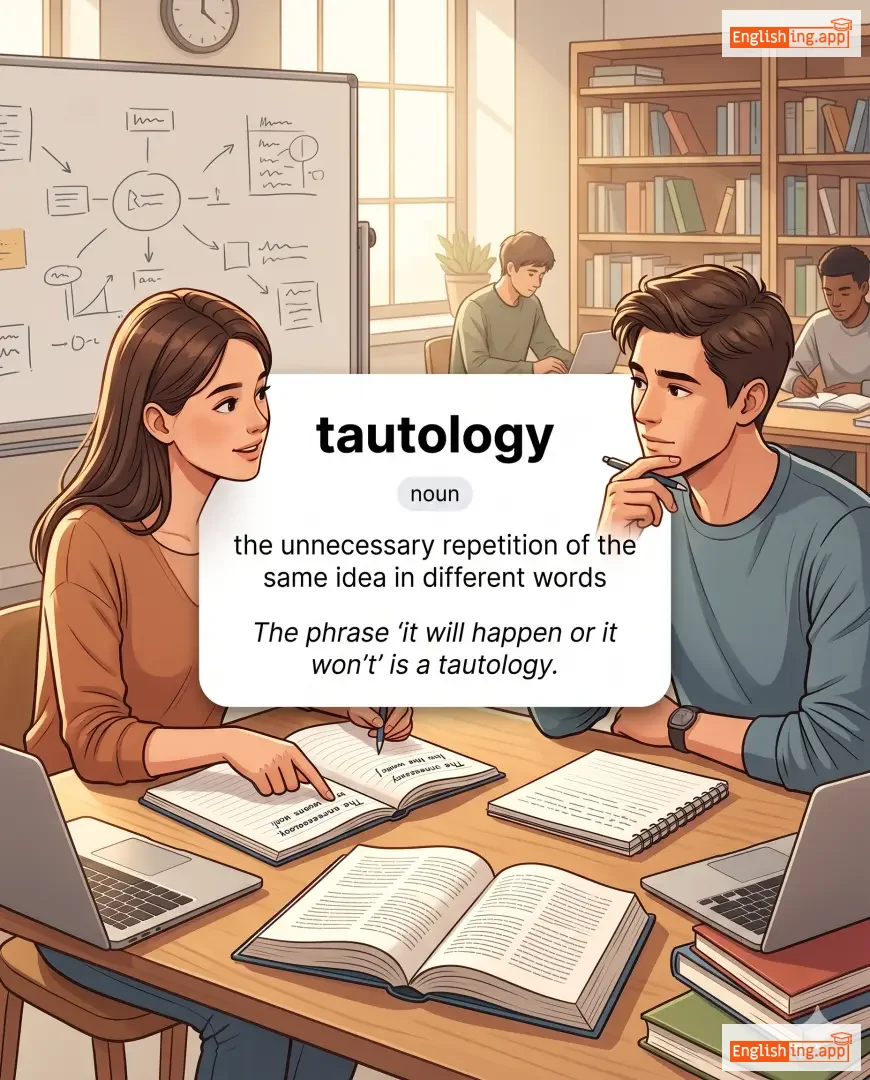
/tɔːˈtɒlədʒi/
noun
(套词论)
••••••
|
|
不必要的重复
bù bì yào de chóng fù
••••••
|
- •••••• | - •••••• | - •••••• | - •••••• |
the unnecessary repetition of the same idea in different words
••••••
|
The phrase 'it will happen or it won’t' is a tautology. |
'它会发生,或者不会发生' 这句话就是一个套词论。
'tā huì fā shēng, huò zhě bù huì fā shēng' zhè jù huà jiù shì yī gè tào cí lùn.
••••••
|
- •••••• | - •••••• | - •••••• |
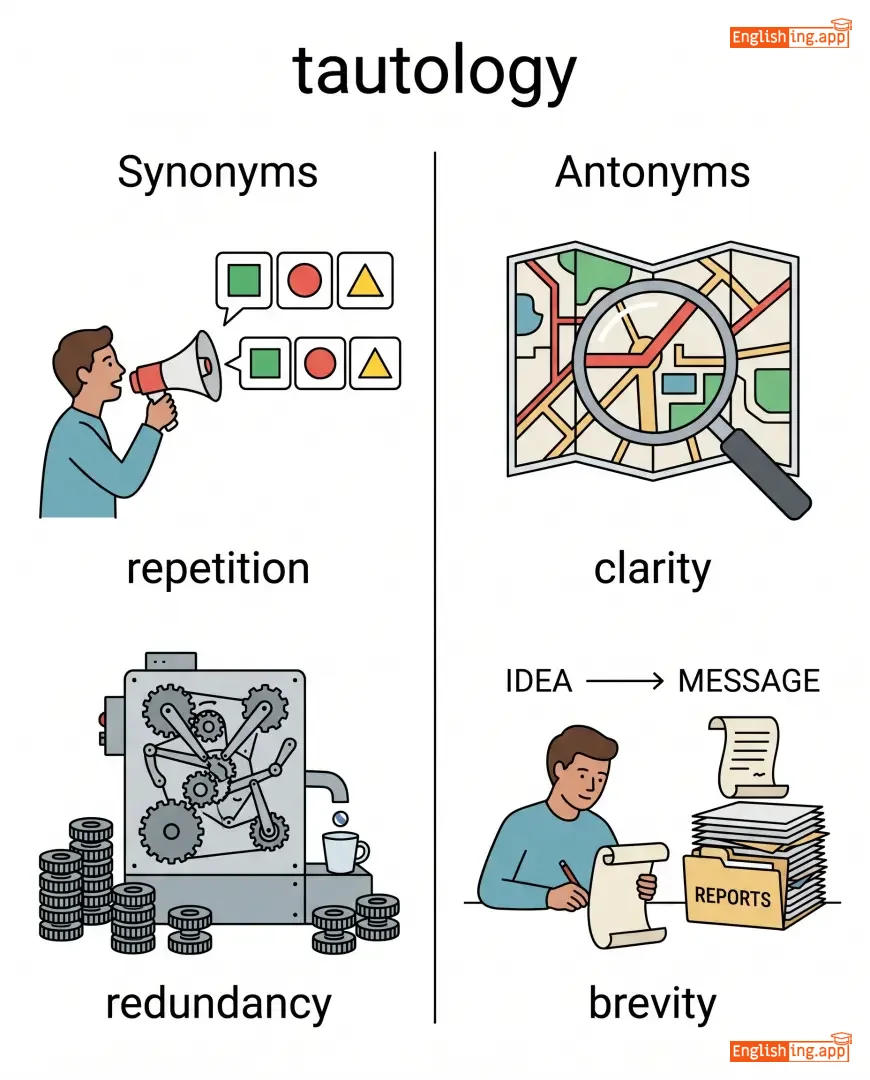
repetition, redundancy, reiteration, circularity
••••••
|
clarity, brevity, precision
••••••
|
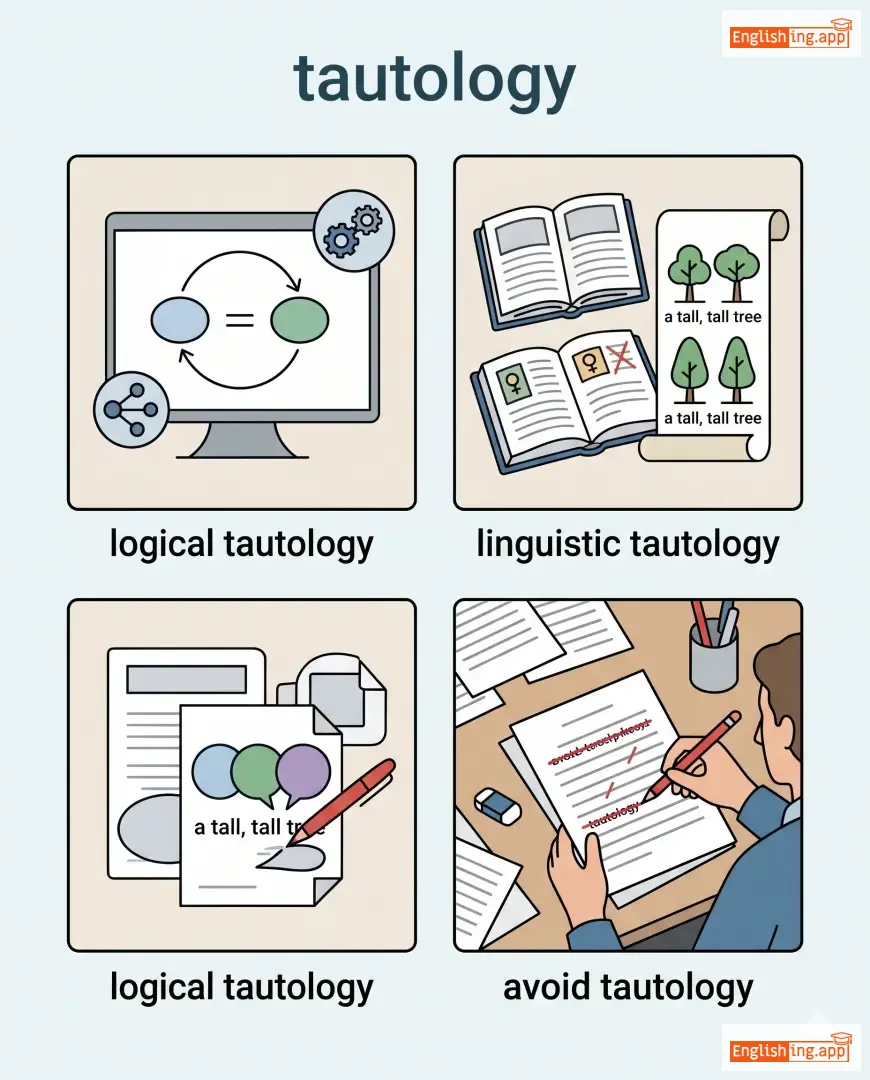
logical tautology, linguistic tautology, avoid tautology
••••••
|
套词论是指用不同的词重复相同的意思。
••••••
|
|
#8689
🔄
|
/ˌtɔːtəˈlɒdʒɪkəl/
adjective
(tuōtūolójí kǎo)
••••••
|
- •••••• |
冗余的
rǒngyú de
••••••
|
- •••••• | - •••••• | - •••••• | - •••••• |
expressing something by repeating the same idea in different words; redundant
••••••
|
Saying 'free gift' is considered tautological.
说'免费礼物'被认为是冗余的。
••••••
|
说'免费礼物'被认为是冗余的。
Shuo 'miǎnfèi lǐwù' bèi rènwéi shì rǒngyú de.
••••••
|
- •••••• | - •••••• | - •••••• |
redundant, repetitive, circular, verbose
••••••
|
concise, precise, succinct
••••••
|
tautological statement, tautological expression, tautological reasoning
••••••
|
冗余就像说‘免费礼物’,重复了没有必要的内容。
••••••
|
|
#8690
🪢
|
/tɔːt/
adjective
(陶特)
••••••
|
- •••••• |
紧绷
jinbeng
••••••
|
- •••••• | - •••••• | - •••••• | - •••••• |
stretched or pulled tight; tense
••••••
|
The rope was pulled taut between the two poles. |
绳子在两个杆子之间拉得紧绷。
Shengzi zai liang ge ganzi zhi jian la de jinbeng.
••••••
|
- •••••• | - •••••• | - •••••• |
tight, stretched, strained, tense
••••••
|
loose, slack, relaxed
••••••
|
pulled taut, taut rope, taut muscles, held taut
••••••
|
Taut 就是紧绷的意思,像一条紧绷的绳子。
••••••
|
|
#8691
😏
|
/tɔːnt/
verb
(taunt)
••••••
|
- •••••• |
嘲弄
chaonong
••••••
|
taunted
taunted
••••••
|
taunted
taunted
••••••
|
taunts
taunts
••••••
|
taunting
taunting
••••••
|
to provoke or challenge someone with insulting remarks
••••••
|
The bully tried to taunt him with cruel words.
那个霸凌者试图用残忍的话挑衅他。
••••••
|
那个霸凌者试图用残忍的话挑衅他。
Nàgè bàlíng zhě shìtú yòng cánrěn de huà tiǎoxìn tā.
••••••
|
taunt with
挑衅与
••••••
|
to provoke or mock someone using words or actions
••••••
|
挑衅与
tiǎoxìn yǔ
••••••
|
mock, jeer, tease, provoke, ridicule
••••••
|
praise, encourage, compliment
••••••
|
taunt someone, cruel taunt, constant taunting, taunt with
••••••
|
Taunt 就是嘲弄 (chaonong)
••••••
|
|
#8692
🪑
|
/ˈtæti/
adjective
(tèti)
••••••
|
- •••••• |
破旧
pojiu
••••••
|
- •••••• | - •••••• | - •••••• | - •••••• |
Worn out, shabby, or in poor condition.
••••••
|
The sofa looked old and tatty after years of use. |
沙发在多年的使用后看起来破旧不堪。
Shafa zai duonian de shiyong hou kanqilai pojiu bukān.
••••••
|
- •••••• | - •••••• | - •••••• |
shabby, worn, ragged, dilapidated, scruffy
••••••
|
new, fresh, neat
••••••
|
tatty clothes, tatty furniture, old and tatty
••••••
|
Tatty意味着破旧,就像一个用久了的沙发。
••••••
|
|
#8693
👕
|
/ˌtætərdɪˈmeɪliən/
noun, adjective
(塔特德马利昂)
••••••
|
- •••••• |
穿破衣服的人
chuan po yifu de ren
••••••
|
- •••••• | - •••••• | - •••••• | - •••••• |
A person dressed in ragged clothes; ragged or dilapidated in appearance.
••••••
|
A tatterdemalion wandered the streets in search of food.
一个塔特德马利昂在街上游荡,寻找食物。
••••••
|
一个塔特德马利昂在街上游荡,寻找食物。
Yi ge tatterdemalion zai jieshang youdang, xunzhao shiwu.
••••••
|
- •••••• | - •••••• | - •••••• |
ragamuffin, beggar, vagrant, shabby
••••••
|
gentleman, well-dressed
••••••
|
tatterdemalion figure, tatterdemalion clothes
••••••
|
Tatter + 破衣 = 塔特德马利昂 = 穿破衣服的人。
••••••
|
|
#8694
🧵
|
/ˈtætər/
noun, verb
••••••
|
- •••••• | - •••••• |
tattered
••••••
|
tattered
••••••
|
tatters
••••••
|
tattering
••••••
|
A torn piece of cloth or clothing; to become ragged or torn.
••••••
|
The old flag hung in tatters after the storm. |
- •••••• |
in tatters |
completely ruined or destroyed
••••••
|
- •••••• |
rag, shred, fragment, ruin, tear
••••••
|
whole, intact
••••••
|
in tatters, torn to tatters, clothes in tatters
••••••
|
No •••••• |
|
#8695
😋
|
/ˈteɪsti/
adjective
(téi sī tì)
••••••
|
- •••••• |
美味的
měiwèi de
••••••
|
- •••••• | - •••••• | - •••••• | - •••••• |
Having a pleasant, distinct flavor; delicious.
••••••
|
The chef prepared a very tasty curry. |
厨师做了一道非常美味的咖喱。
Chúshī zuòle yī dào fēicháng měiwèi de gālí.
••••••
|
- •••••• | - •••••• | - •••••• |
delicious, flavorful, appetizing, savory, palatable
••••••
|
tasteless, bland
••••••
|
tasty meal, tasty snack, very tasty, tasty dish
••••••
|
Tasty 就是美味的,让每一口都成为享受!
••••••
|
|
#8696
🥧
|
/tɑːrt/
noun, adjective
••••••
|
- •••••• | - •••••• | - •••••• | - •••••• | - •••••• | - •••••• |
A small pie with a sweet or savory filling; or having a sharp, sour taste.
••••••
|
She served a delicious apple tart for dessert. |
- •••••• |
tart reply |
a sharp or cutting response
••••••
|
- •••••• |
pie, pastry, sharp, sour, acidic
••••••
|
sweet, bland
••••••
|
apple tart, lemon tart, tart flavor, tart reply
••••••
|
No •••••• |
|
#8697
🚶
|
/ˈtæri/
verb
(tæɾi)
••••••
|
- •••••• |
耽搁
dāngē
••••••
|
tarried
tæɾid
••••••
|
tarried
tæɾid
••••••
|
tarries
tæɾies
••••••
|
tarrying
tæɾiɪŋ
••••••
|
To delay or linger; to stay longer than intended.
••••••
|
Do not tarry, or you will miss the train.
不要耽搁,否则你会错过火车。
••••••
|
不要耽搁,否则你会错过火车。
Bùyào dāngē, fǒuzé nǐ huì cuòguò huǒchē.
••••••
|
tarry a while
耽搁一会儿
••••••
|
To stay for a short time.
••••••
|
停留一会儿
Tíngliú yīhuǐ'er
••••••
|
linger, delay, wait, loiter, dally
••••••
|
hasten, hurry, rush
••••••
|
tarry a while, tarry on the road, tarry too long
••••••
|
耽搁就像你不停的拖延,错过了目标。
••••••
|
|
#8698
🛖
|
/tɑːrˈpɔːlɪn/
noun
••••••
|
- •••••• | - •••••• | - •••••• | - •••••• | - •••••• | - •••••• |
A large sheet of strong, flexible, water-resistant material used for covering or protecting things.
••••••
|
The workers used a tarpaulin to cover the construction materials from rain. |
- •••••• | - •••••• | - •••••• | - •••••• |
cover, sheet, canvas, tarp, awning
••••••
|
exposure, uncover
••••••
|
plastic tarpaulin, blue tarpaulin, cover with tarpaulin
••••••
|
No •••••• |
|
#8699
🪞
|
/ˈtɑːrnɪʃ/
verb
••••••
|
- •••••• | - •••••• |
tarnished
••••••
|
tarnished
••••••
|
tarnishes
••••••
|
tarnishing
••••••
|
To lose luster, especially as a result of exposure to air or moisture; to damage reputation.
••••••
|
The silver jewelry tarnished quickly when left in the open air. |
- •••••• |
tarnish one's reputation |
To damage or spoil someone's good name or image.
••••••
|
- •••••• |
stain, spoil, damage, dull, corrode
••••••
|
polish, shine, brighten
••••••
|
tarnish metal, tarnish reputation, tarnish image, tarnish silver
••••••
|
No •••••• |
Vocabulary Quiz
Test your vocabulary by matching words with their translations or meanings.
Login to take the quiz
Comments (0)
Share your thoughts and join the discussion.
Join the discussion by logging in
Login to CommentNo comments yet
Be the first to share your thoughts!