






Swipe left or right, or use the buttons. Tap image to zoom.
例句翻译
单词
Lesson 49Lesson 49 - 遮罩切换
|
表情符号
|
单词 | Images | 翻译 | 过去时 | 过去分词 | 第三人称单数 | 动名词 | 含义 | 例句 | 例句翻译 | 示例表达 | 示例表达含义 | 示例表达翻译 | 同义词 | 反义词 | 搭配词 | 助记符 |
|---|---|---|---|---|---|---|---|---|---|---|---|---|---|---|---|---|---|
|
#1441
✍️
|
/ˈsɜːrkəmskraɪb/
verb
(sɜːrkəmˈskraɪb)
••••••
|
- •••••• |
限制
xiànzhì
••••••
|
circumscribed
sɜːrkəmˈskraɪbd
••••••
|
circumscribed
sɜːrkəmˈskraɪbd
••••••
|
circumscribes
sɜːrkəmˈskraɪbz
••••••
|
circumscribing
sɜːrkəmˈskraɪbɪŋ
••••••
|
to limit or restrict something within boundaries
••••••
|
The rules circumscribe the powers of the committee.
规则限定了委员会的权力。
••••••
|
规则限定了委员会的权力。
Guīzé xiànzhìle wěiyuánhuì de quánlì.
••••••
|
- •••••• | - •••••• | - •••••• |
restrict, limit, confine, constrain, bound
••••••
|
free, liberate, expand
••••••
|
circumscribe rights, circumscribe powers, tightly circumscribed
••••••
|
画个圈来限定某物,叫做circumscribe。
••••••
|
|
#1442
🧙♀️
|
/klɛərˈvɔɪənt/
noun, adjective
••••••
|
|
- •••••• | - •••••• | - •••••• | - •••••• | - •••••• |
a person who claims to have clairvoyance; having the ability to see beyond normal senses
••••••
|
The clairvoyant predicted that she would travel abroad soon. |
- •••••• | - •••••• | - •••••• | - •••••• |
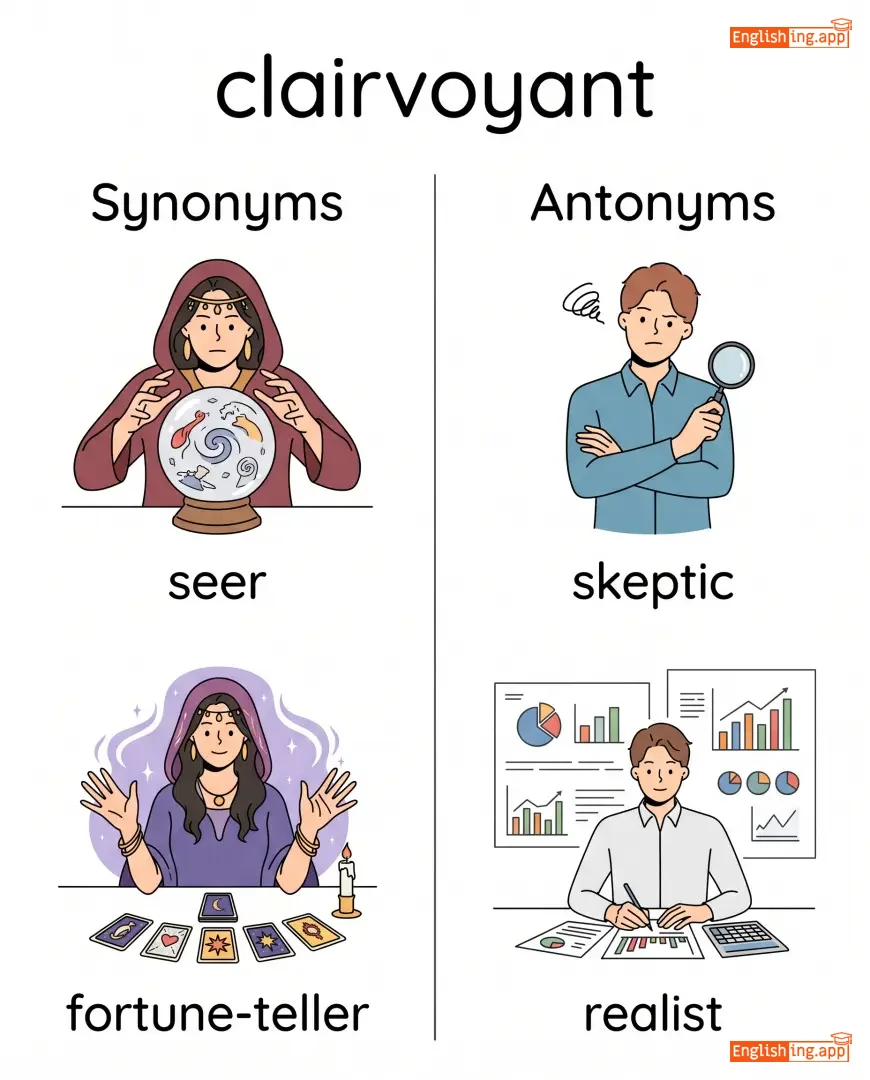
seer, fortune-teller, psychic, medium
••••••
|
skeptic, realist
••••••
|
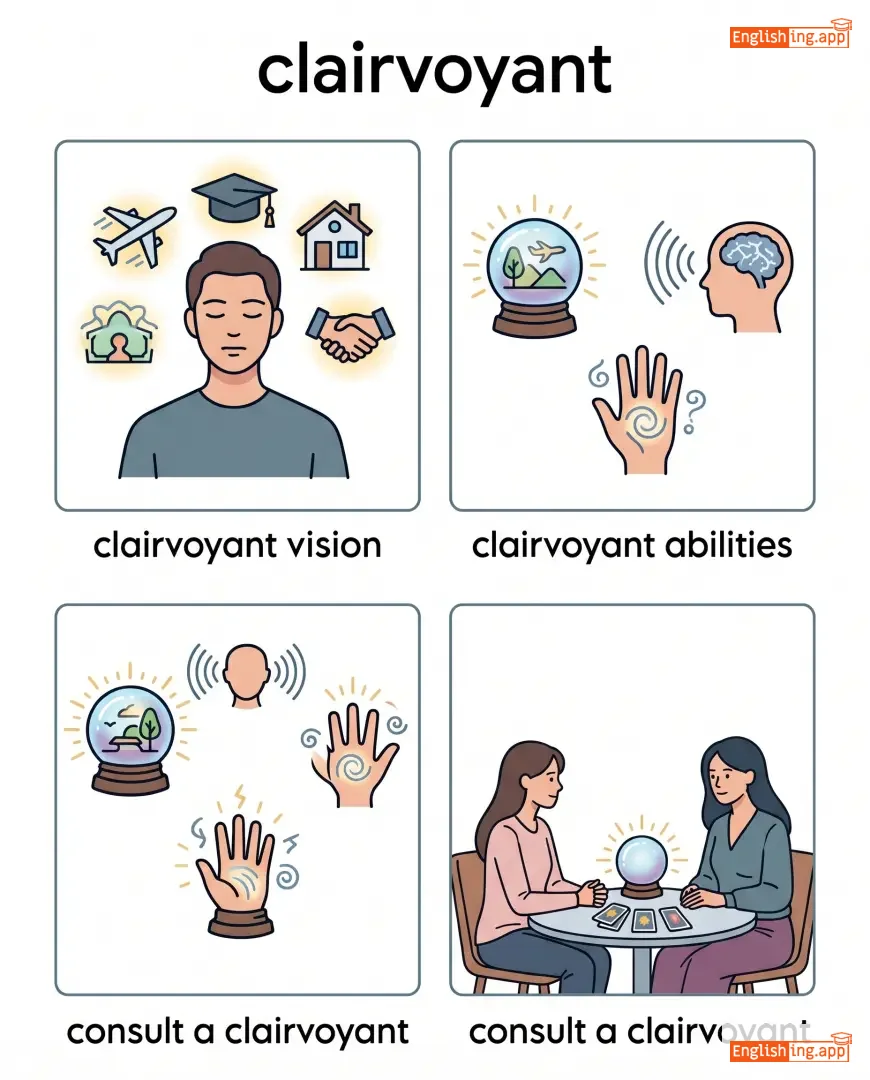
clairvoyant vision, clairvoyant abilities, consult a clairvoyant
••••••
|
No •••••• |
|
#1443
🔮
|
/klɛərˈvɔɪəns/
noun
(克莱尔沃延斯)
••••••
|
- •••••• |
通灵
tōng líng
••••••
|
- •••••• | - •••••• | - •••••• | - •••••• |
the supposed ability to perceive events beyond normal sensory contact; psychic insight
••••••
|
She claimed to have clairvoyance and predicted the future. |
她声称自己有通灵能力,并预言了未来。
Tā shēngchēng zìjǐ yǒu tōng líng nénglì, bìng yùyánle wèilái.
••••••
|
- •••••• | - •••••• | - •••••• |
foresight, extrasensory perception, intuition, prophecy
••••••
|
ignorance, blindness
••••••
|
gift of clairvoyance, powers of clairvoyance, claim clairvoyance
••••••
|
通灵就像是能够看到未来一样。
••••••
|
|
#1444
👤
|
/ˈkleɪmənt/
noun
(克莱曼特)
••••••
|
- •••••• |
索赔人
suǒpéi rén
••••••
|
- •••••• | - •••••• | - •••••• | - •••••• |
a person who makes a claim, especially in a legal or financial context
••••••
|
The claimant filed for compensation after the accident.
索赔人事故后申请赔偿。
••••••
|
索赔人事故后申请赔偿。
Suǒpéi rén shìgù hòu shēnqǐng péicháng.
••••••
|
- •••••• | - •••••• | - •••••• |
applicant, petitioner, suitor, litigant
••••••
|
defendant, respondent
••••••
|
claimant in a case, insurance claimant, claimant rights
••••••
|
Claimant = 索赔人, 发生事故后需要索赔的人
••••••
|
|
#1445
📢
|
/kleɪm/
verb
(克莱姆)
••••••
|
|
声称
shengcheng
••••••
|
claimed
克莱姆德
••••••
|
claimed
克莱姆德
••••••
|
claims
克莱姆斯
••••••
|
claiming
克莱明
••••••
|
to state something as true, often without proof; to demand ownership or right
••••••
|
He claimed the prize after winning the competition.
他在赢得比赛后声称获得了奖金。
••••••
|
他在赢得比赛后声称获得了奖金。
Ta zai yingde bisai hou shengcheng huode le jiangjin.
••••••
|
claim to fame
成名的主张
••••••
|
the thing that makes someone famous or notable
••••••
|
成名的主张
chengming de zhuzhang
••••••
|
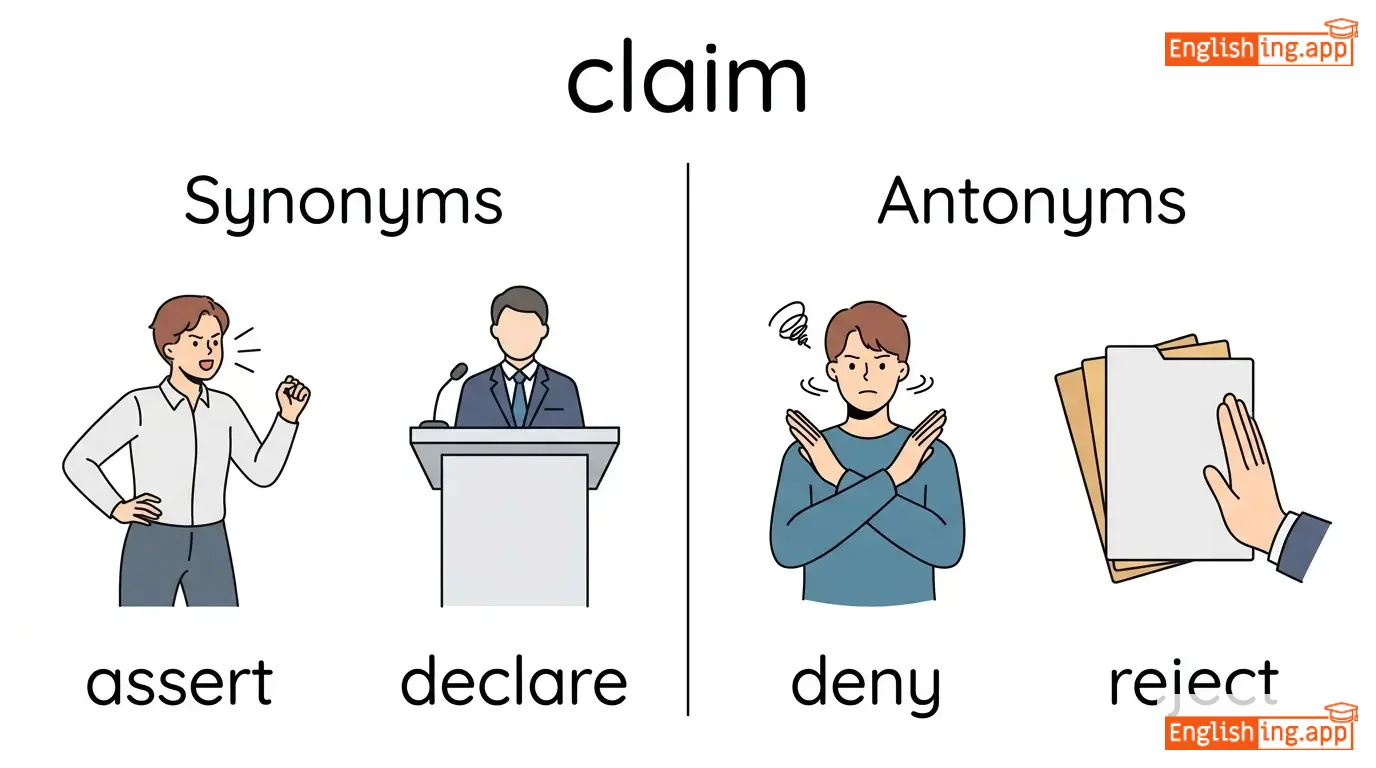
assert, declare, allege, demand, request
••••••
|
deny, reject, disclaim
••••••
|
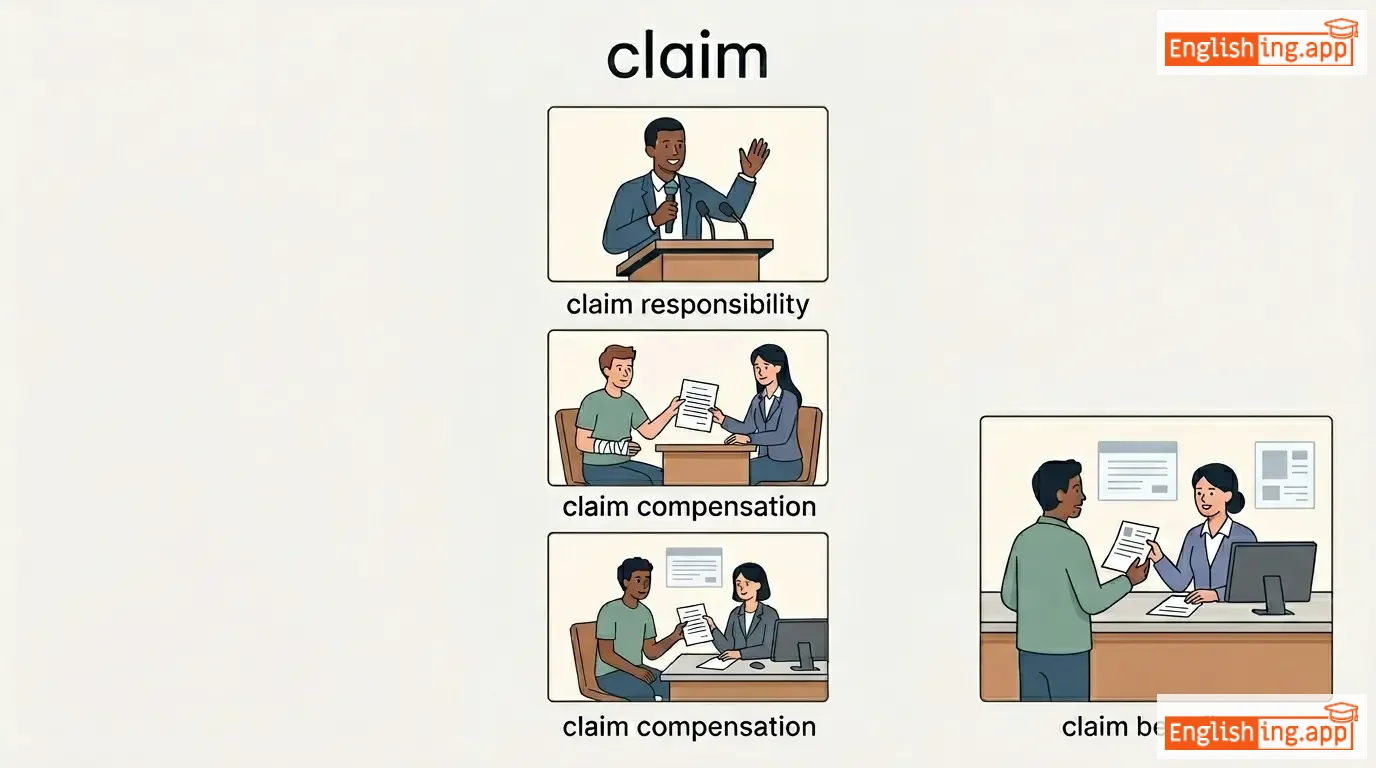
claim responsibility, claim compensation, claim benefits, claim ownership
••••••
|
Claim意味着声称:像保险索赔
••••••
|
|
#1446
🛡️
|
/klæd/
adjective
(克莱德)
••••••
|
- •••••• |
穿戴 / 覆盖
chuandai / fugai
••••••
|
- •••••• | - •••••• | - •••••• | - •••••• |
dressed or covered in a particular way
••••••
|
The knight was clad in shining armor. |
骑士穿戴着闪亮的盔甲。
Qishi chuandaizhe shanliang de kuijia.
••••••
|
- •••••• | - •••••• | - •••••• |
dressed, attired, clothed, garbed, robed
••••••
|
bare, naked, unclothed
••••••
|
clad in, iron-clad, thinly clad, scantily clad
••••••
|
Clad意味着穿戴或覆盖,就像骑士穿着盔甲。
••••••
|
|
#1447
🙂
|
/səˈvɪləti/
noun
(sīwēilìtì)
••••••
|
- •••••• |
文明
wenming
••••••
|
- •••••• | - •••••• | - •••••• | - •••••• |
Polite and courteous behavior.
••••••
|
He treated his opponent with civility despite their differences.
他以文明礼貌对待他的对手,尽管他们之间存在差异。
••••••
|
他以文明礼貌对待他的对手,尽管他们之间存在差异。
Tā yǐ wénmíng lǐmào duìdài tā de duìshǒu, jǐnguǎn tāmen zhījiān cúnzài chāyì.
••••••
|
common civility
常见的文明礼貌
••••••
|
basic politeness and good manners
••••••
|
常见的文明礼貌
chángjiàn de wénmíng lǐmào
••••••
|
politeness, courtesy, respect, gentleness, decorum
••••••
|
rudeness, impoliteness, incivility
••••••
|
act of civility, show civility, common civility, gesture of civility
••••••
|
Civility 表示 civil + ity → civil 的人具有的素质 = 文明
••••••
|
|
#1448
🤝
|
/ˈsɪvəl/
adjective
(sīwēi'ěr)
••••••
|
- •••••• |
公民的
gongmin de
••••••
|
- •••••• | - •••••• | - •••••• | - •••••• |
Relating to ordinary citizens and their concerns, or being polite and courteous.
••••••
|
They settled the matter through civil discussion. |
他们通过公民的讨论解决了这个问题。
Tāmen tōngguò gōngmín de tǎolùn jiějuéle zhège wèntí.
••••••
|
civil war |
a war between groups within the same country
••••••
|
内战
nèi zhàn
••••••
|
polite, courteous, civilian, domestic, respectful
••••••
|
rude, military, uncivil
••••••
|
civil rights, civil society, civil service, civil war
••••••
|
Civil意味着有礼,像公民 = 有礼的人
••••••
|
|
#1449
📖
|
/saɪt/
verb
(sàit)
••••••
|
|
引用
yǐn yòng
••••••
|
cited
sàited
••••••
|
cited
sàited
••••••
|
cites
sàits
••••••
|
citing
sàiting
••••••
|
To refer to or quote a source as evidence or justification.
••••••
|
She cited several studies to support her argument.
shī sàited sèverál stúdíes tú supòrt hèr àrgùmént
••••••
|
她引用了几项研究来支持她的论点。
Tā yǐn yòng le jǐ xiàng yán jiū lái zhīchí tā de lùn diǎn.
••••••
|
cite chapter and verse
sàit chàptèr ànd vèrs
••••••
|
to give exact details or precise references
••••••
|
引用章节和经文
yǐn yòng zhāng jié hé jīng wén
••••••
|
quote, reference, mention, allude, invoke
••••••
|
ignore, overlook, suppress
••••••
|
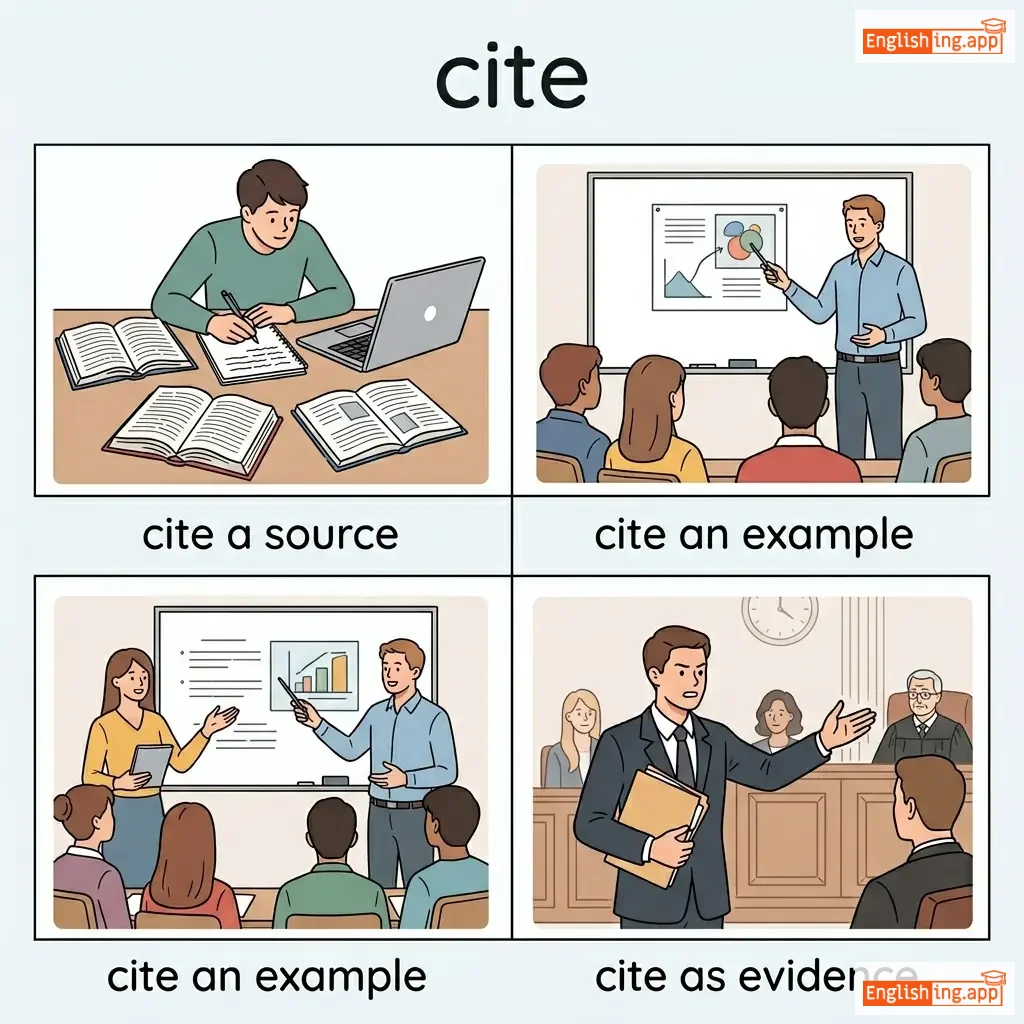
cite a source, cite an example, cite as evidence, cite authority
••••••
|
Cite就像引用网页
••••••
|
|
#1450
🏰
|
/ˈsɪtəˌdɛl/
noun
(希塔德尔)
••••••
|
- •••••• |
城堡
chéngbǎo
••••••
|
- •••••• | - •••••• | - •••••• | - •••••• |
A fortress protecting or dominating a city.
••••••
|
The ancient citadel stood guard over the town for centuries. |
古老的城堡为城市守卫了几个世纪。
Gǔlǎo de chéngbǎo wèi chéngshì shǒuwèi le jǐ gè shìjì.
••••••
|
- •••••• | - •••••• | - •••••• |
fortress, stronghold, bastion, fort, castle
••••••
|
village, open-land
••••••
|
ancient citadel, hilltop citadel, citadel city, citadel walls
••••••
|
Citadel类似 '城市' (chéngshì) + '堡' (bǎo) = 城市的堡垒
••••••
|
|
#1451
💧
|
/ˈsɪstərn/
noun
(西斯特恩)
••••••
|
- •••••• |
蓄水池
xushui chi
••••••
|
- •••••• | - •••••• | - •••••• | - •••••• |
A tank or container for storing water, usually for household use.
••••••
|
The old house still had a cistern to collect rainwater. |
这座老房子仍然有一个蓄水池来收集雨水。
Zhè zuò lǎo fángzi réngrán yǒu yīgè xùshuǐchí lái shōují yǔshuǐ.
••••••
|
- •••••• | - •••••• | - •••••• |
tank, reservoir, container, receptacle, water-tank
••••••
|
well, spring
••••••
|
rainwater cistern, underground cistern, water cistern, large cistern
••••••
|
Cistern + 蓄水池, 它是一个用于储存水的池子。
••••••
|
|
#1452
🔄
|
/ˌsɜːrkəmˈvent/
verb
(sɜːrkəmˈvɛnt)
••••••
|
|
绕过
raoguo
••••••
|
circumvented
sɜːrkəmˈvɛntɪd
••••••
|
circumvented
sɜːrkəmˈvɛntɪd
••••••
|
circumvents
sɜːrkəmˈvɛnts
••••••
|
circumventing
sɜːrkəmˈvɛntɪŋ
••••••
|
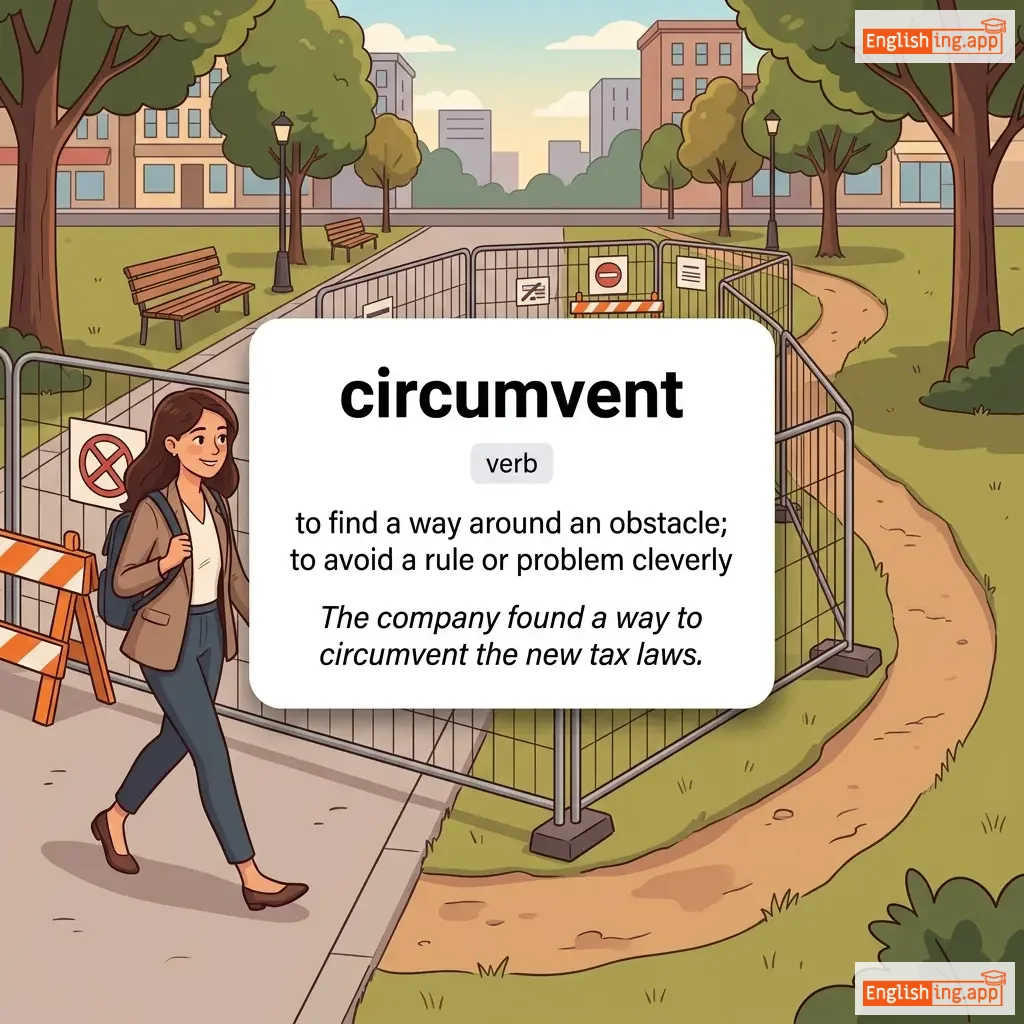
to find a way around an obstacle; to avoid a rule or problem cleverly
••••••
|
The company found a way to circumvent the new tax laws.
公司找到了绕过新税法的方法。
••••••
|
公司找到了绕过新税法的方法。
Gongsi zhao dao le rao guo xin shui fa de fang fa.
••••••
|
- •••••• | - •••••• | - •••••• |
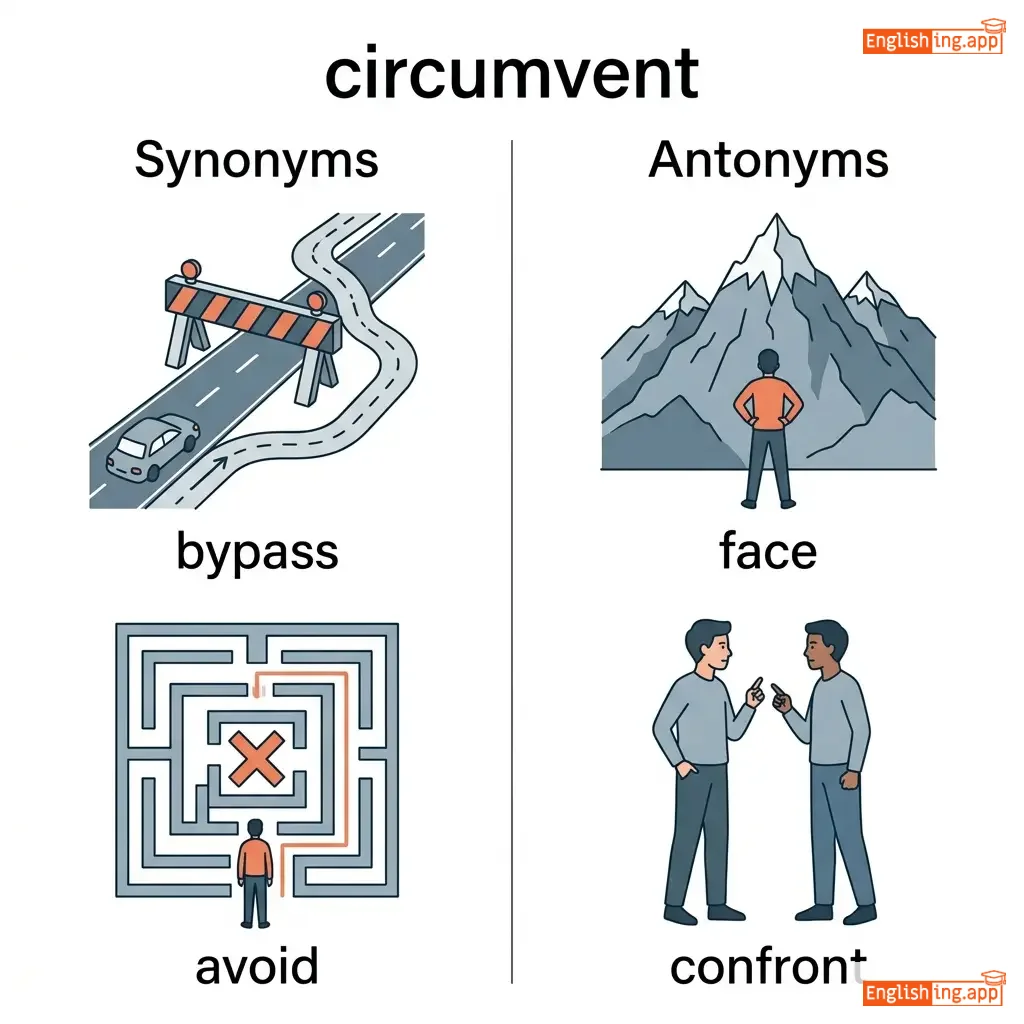
bypass, avoid, evade, sidestep, dodge
••••••
|
face, confront, comply
••••••
|
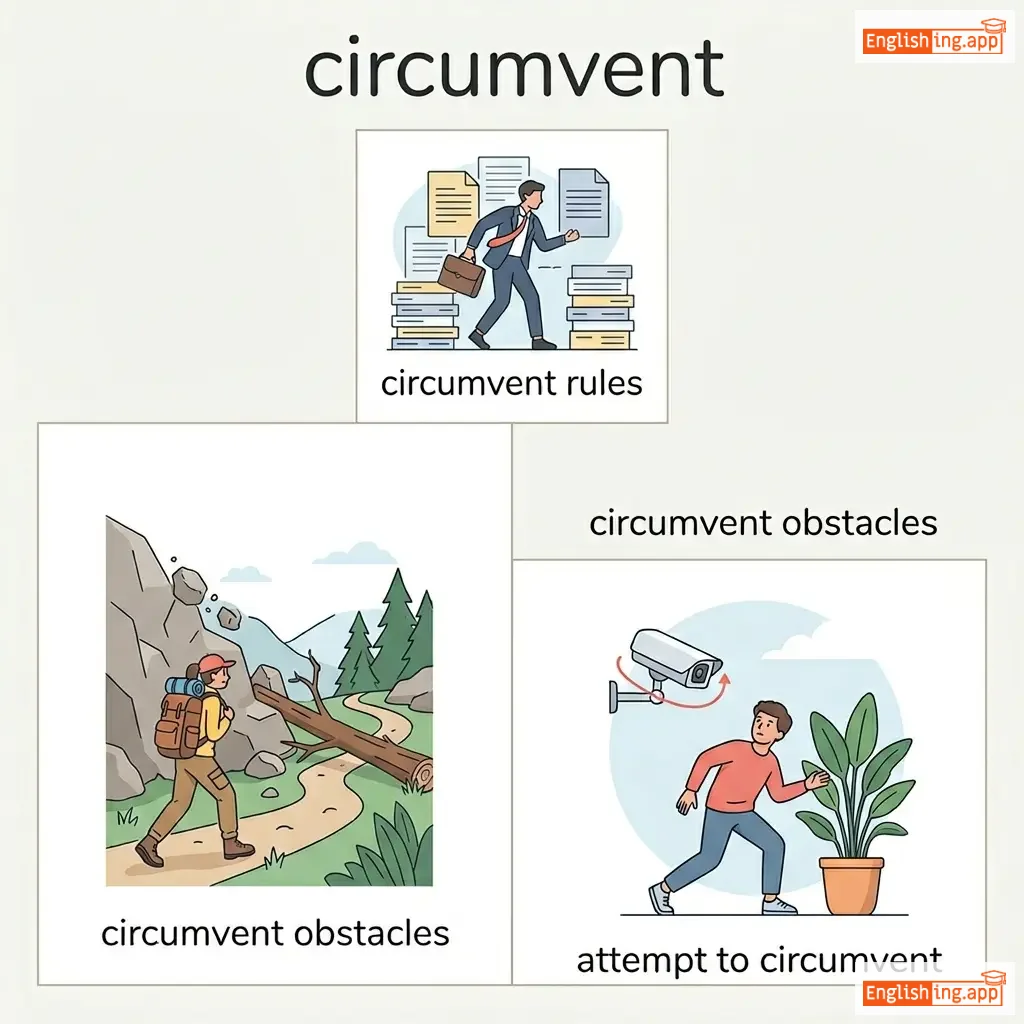
circumvent rules, circumvent obstacles, attempt to circumvent
••••••
|
Circumvent意味着巧妙地绕过障碍。
••••••
|
|
#1453
📌
|
/ˈsɜːrkəmstænsɪz/
noun
(sàkǎmùsītènsī)
••••••
|
- •••••• |
情况
qingkuang
••••••
|
- •••••• | - •••••• | - •••••• | - •••••• |
the conditions or facts that affect a situation
••••••
|
She was forced to leave due to financial circumstances. |
她因财务情况被迫离开。
Ta yin caiwu qingkuang beipo likai.
••••••
|
under the circumstances |
considering the situation
••••••
|
在这种情况下
zai zhezhong qingkuang xia
••••••
|
conditions, situation, context, state, factors
••••••
|
essence, core
••••••
|
difficult circumstances, under the circumstances, change in circumstances
••••••
|
情况是所有影响决定和行动的背景,改变我们的结果。
••••••
|
|
#1454
🤔
|
/ˈsɜːrkəmspekt/
adjective
(sā kā mǔ sī pèi kè tè)
••••••
|
|
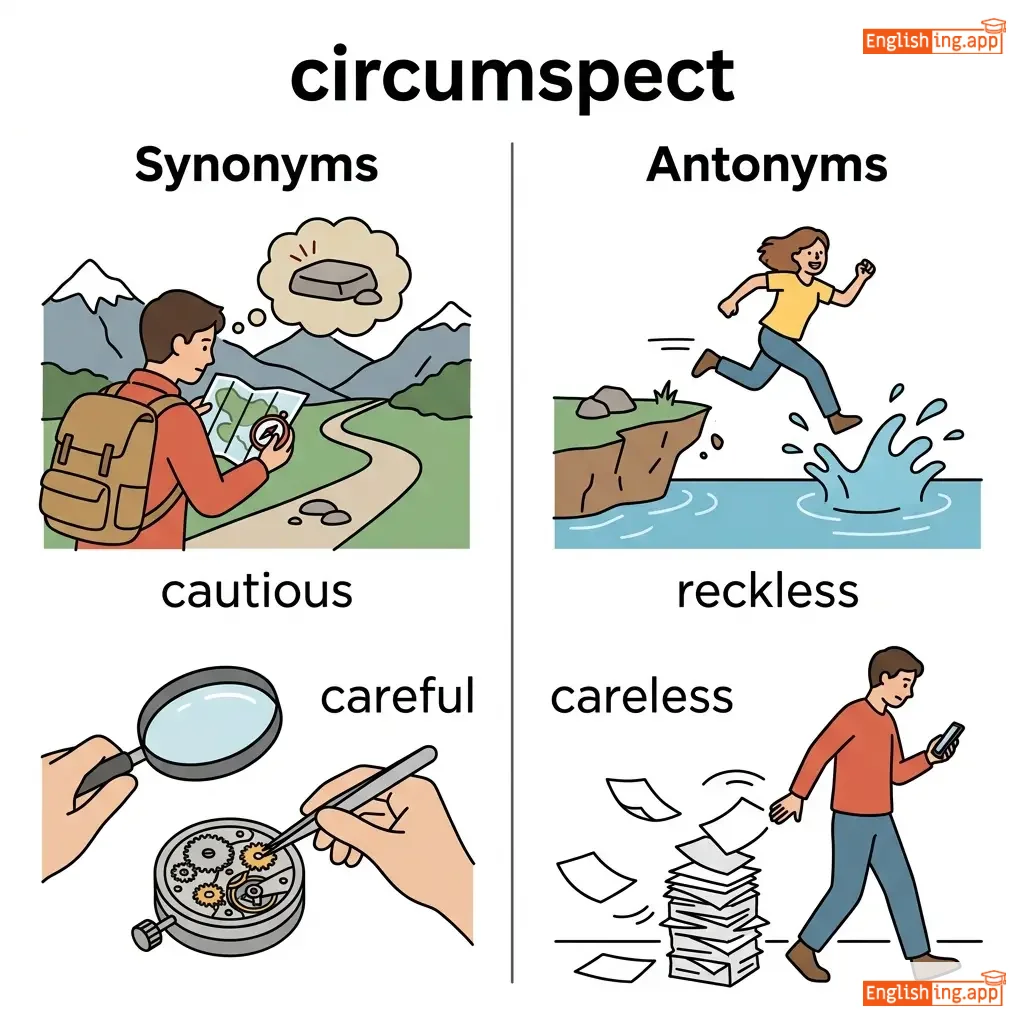
谨慎的
jinshen de
••••••
|
- •••••• | - •••••• | - •••••• | - •••••• |
careful and unwilling to take risks; cautious
••••••
|
He was circumspect in his business dealings. |
他在商业交易中非常谨慎。
Tā zài shāngyè jiāoyì zhōng fēicháng jǐnshèn.
••••••
|
- •••••• | - •••••• | - •••••• |
cautious, careful, prudent, wary, vigilant
••••••
|
reckless, careless, imprudent
••••••
|
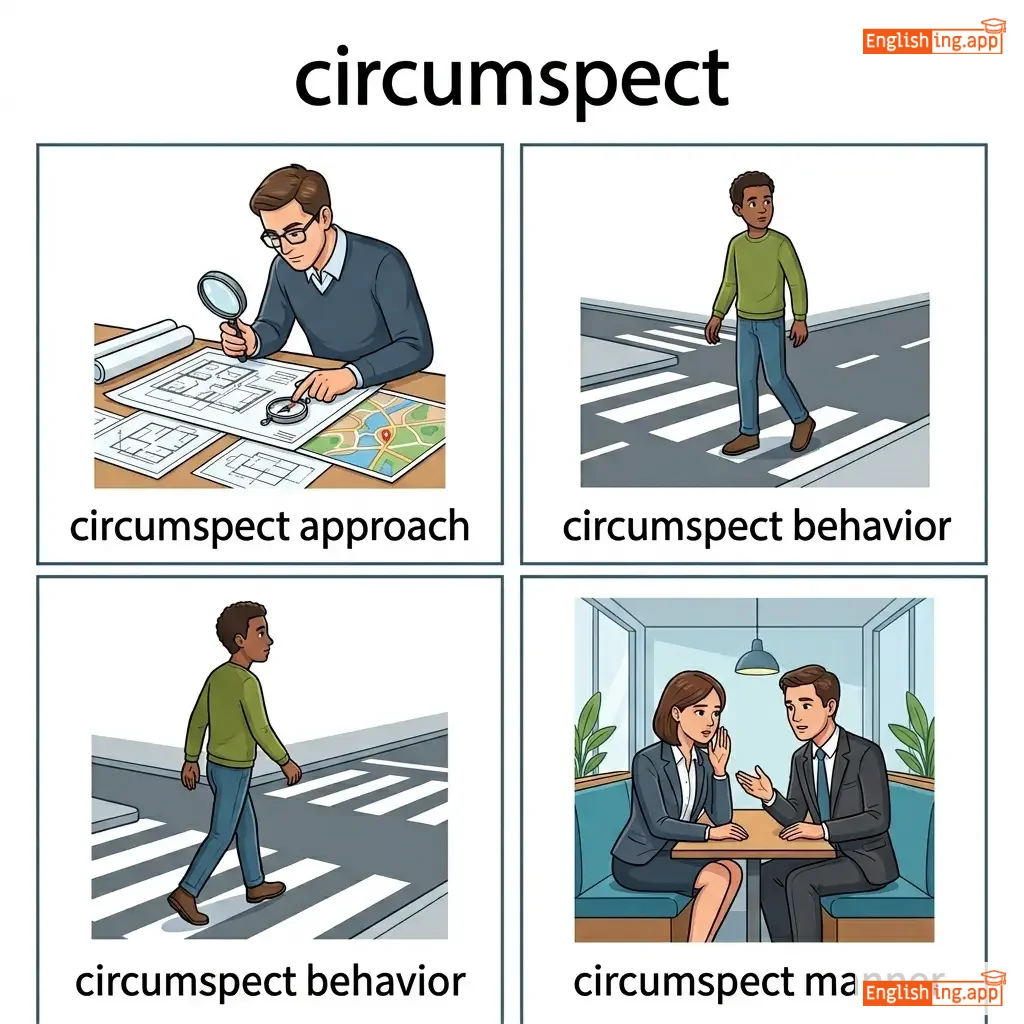
circumspect approach, circumspect behavior, circumspect manner
••••••
|
Circumspect 就像一个谨慎的商人,做每个决定前都会三思而后行。
••••••
|
|
#1455
🚫
|
/ˈsɜːrkəmskraɪbd/
adjective
(sìkèmsīkràibùd)
••••••
|
- •••••• |
受限的
shòuxiàn de
••••••
|
- •••••• | - •••••• | - •••••• | - •••••• |
restricted or limited in scope or freedom
••••••
|
Her freedom of choice was circumscribed by social rules. |
她的选择自由受社会规则的限制。
Tā de xuǎnzé zìyóu shòu shèhuì guīzé de xiànzhì.
••••••
|
- •••••• | - •••••• | - •••••• |
restricted, limited, confined, constrained
••••••
|
unlimited, unrestricted, free
••••••
|
circumscribed role, circumscribed area, circumscribed rights
••••••
|
Circumscribed 就是像画一个圈一样把东西限制住。
••••••
|
|
#1456
⏱️
|
/krəˈnɒmɪtər/
noun
(计时器)
••••••
|
- •••••• |
计时器
jishiqi
••••••
|
- •••••• | - •••••• | - •••••• | - •••••• |
An instrument for measuring time precisely, especially used in navigation.
••••••
|
The sailor relied on the chronometer to determine his position at sea. |
水手依靠计时器来确定他在海上的位置。
Shuǐshǒu yīkào jìshíqì lái quèdìng tā zài hǎishàng de wèizhì.
••••••
|
- •••••• | - •••••• | - •••••• |
timepiece, clock, watch, timer, instrument
••••••
|
sundial, hourglass
••••••
|
marine chronometer, precise chronometer, reliable chronometer, chronometer watch
••••••
|
计时器是一个测量时间的工具 ⏱️, 记住'计'是时间,'时'是测量。
••••••
|
|
#1457
🌍
|
/ˌsɜːrkəmˈnævɪɡeɪt/
verb
(sɜːrkəmˈnævɪɡeɪt)
••••••
|
- •••••• |
环绕地球
huánrào dìqiú
••••••
|
circumnavigated
circumnavigated
••••••
|
circumnavigated
circumnavigated
••••••
|
circumnavigates
circumnavigates
••••••
|
circumnavigating
circumnavigating
••••••
|
to travel all the way around something, especially the earth
••••••
|
Magellan was the first to circumnavigate the globe.
麦哲伦是第一个环绕地球航行的人。
••••••
|
麦哲伦是第一个环绕地球航行的人。
Màizhélún shì dì yī gè huánrào dìqiú hángxíng de rén.
••••••
|
- •••••• | - •••••• | - •••••• |
sail around, travel around, voyage around
••••••
|
remain, stay, settle
••••••
|
circumnavigate the globe, circumnavigate the world, attempt to circumnavigate
••••••
|
Circum 意思是围绕 + navigate 意思是航行 → 围绕地球航行。
••••••
|
|
#1458
🗣️
|
/ˌsɜːrkəmləˈkjuːʃn/
noun
(sā kè mù luò kè xùn)
••••••
|
- •••••• |
拐弯抹角
guǎi wān mò jiǎo
••••••
|
- •••••• | - •••••• | - •••••• | - •••••• |
the use of many words when fewer would do, especially to avoid stating something directly
••••••
|
The politician's speech was filled with circumlocution. |
政治家的演讲充满了拐弯抹角。
Zhèngzhìjiā de yǎnjiǎng chōngmǎnle guǎiwān mòjiǎo.
••••••
|
- •••••• | - •••••• | - •••••• |
wordiness, verbosity, periphrasis, redundancy
••••••
|
conciseness, brevity, directness
••••••
|
political circumlocution, filled with circumlocution, avoid circumlocution
••••••
|
Circum 意味着绕过 + locution 意味着说话 → 绕弯说话。
••••••
|
|
#1459
📏
|
/sərˈkʌmfərəns/
noun
(sɪrˈkʌmfərəns)
••••••
|
- •••••• |
周长
zhou chang
••••••
|
- •••••• | - •••••• | - •••••• | - •••••• |
the distance around the edge of a circle
••••••
|
The teacher asked us to calculate the circumference of the circle.
老师让我们计算圆的周长。
••••••
|
老师让我们计算圆的周长。
Lao shi rang wo men ji suan yuan de zhou chang.
••••••
|
- •••••• | - •••••• | - •••••• |
perimeter, boundary, edge, outline
••••••
|
center, diameter
••••••
|
circumference of a circle, measure circumference, large circumference
••••••
|
Circum 意味着周围 + ference 意味着边界 → 周长。
••••••
|
|
#1460
🔄
|
/ˈsɜːrkjəˌleɪt/
verb
(sā kē léi tè)
••••••
|
- •••••• |
循环, 流通
xúnhuán, liútōng
••••••
|
circulated
sā kē léi tè dé
••••••
|
circulated
sā kē léi tè dé
••••••
|
circulates
sā kē léi tè sī
••••••
|
circulating
sā kē léi tè yīng
••••••
|
to move continuously or freely through a closed system or area
••••••
|
Air circulated freely in the open hall.
空气在开放的大厅自由流通。
••••••
|
空气在开放的大厅自由流通。
Kōngqì zài kāifàng de dàtīng zìyóu liútōng.
••••••
|
circulate the news
传播新闻
••••••
|
to spread information among people
••••••
|
传播新闻
Chuánbò xīnwén
••••••
|
flow, move, spread, distribute, diffuse
••••••
|
stagnate, stop, block
••••••
|
circulate blood, circulate air, circulate information, circulate money
••••••
|
循环就像是空气或新闻在不断传播,绕圈子。
••••••
|
|
#1461
⭕
|
/ˈsɜːrkjələr/
adjective
(sàkèliǎ)
••••••
|
- •••••• |
圆形的
yuánxíng de
••••••
|
- •••••• | - •••••• | - •••••• | - •••••• |
shaped like a circle; round in form
••••••
|
The kids sat in a circular arrangement around the campfire. |
孩子们围坐在篝火旁,形成圆形的布局。
Háizimen wéizuò zài gōuhuǒ páng, xíngchéng yuánxíng de bùjú.
••••••
|
go around in circles |
to keep discussing or doing the same thing without making progress
••••••
|
绕圈子
rào quānzi
••••••
|
round, spherical, ring-shaped, curved, orbicular
••••••
|
square, rectangular, straight
••••••
|
circular path, circular motion, circular letter, circular economy
••••••
|
圆形的就像圆圈,都是圆的。
••••••
|
|
#1462
🌀
|
/sərˈkjuːɪtəs/
adjective
(sərˈkjuːɪtəs)
••••••
|
|
迂回路线
yúhuí lùxiàn
••••••
|
- •••••• | - •••••• | - •••••• | - •••••• |
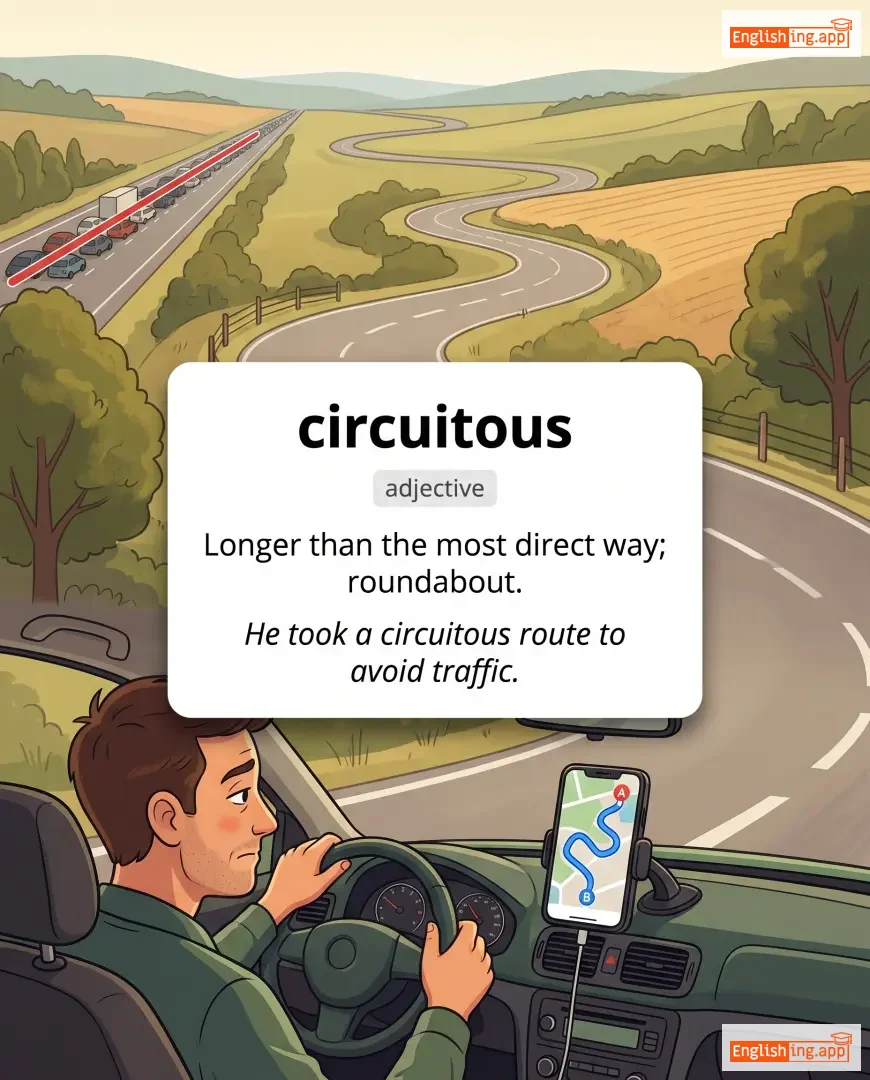
Longer than the most direct way; roundabout.
••••••
|
He took a circuitous route to avoid traffic. |
他走了一条迂回路线以避开交通。
Tā zǒu le yītiáo yúhuí lùxiàn yǐ bì kāi jiāotōng.
••••••
|
- •••••• | - •••••• | - •••••• |
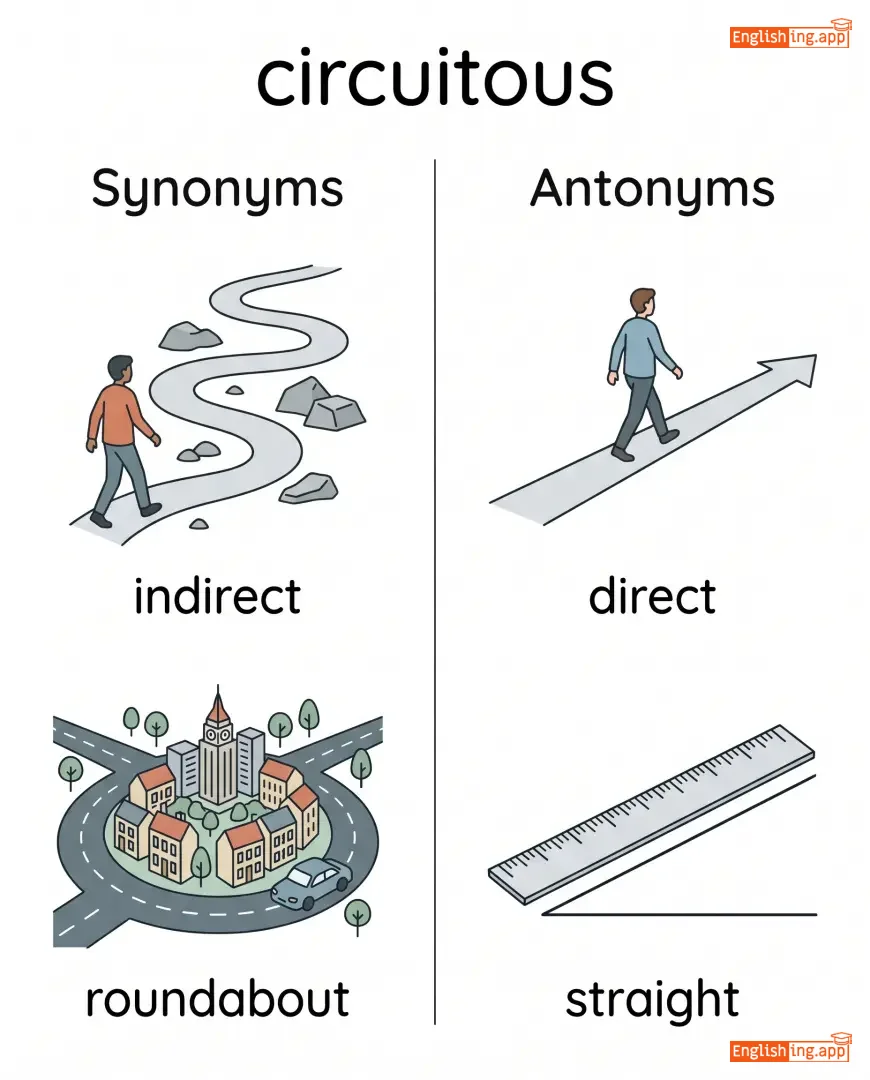
indirect, roundabout, winding, meandering, convoluted
••••••
|
direct, straight, straightforward
••••••
|
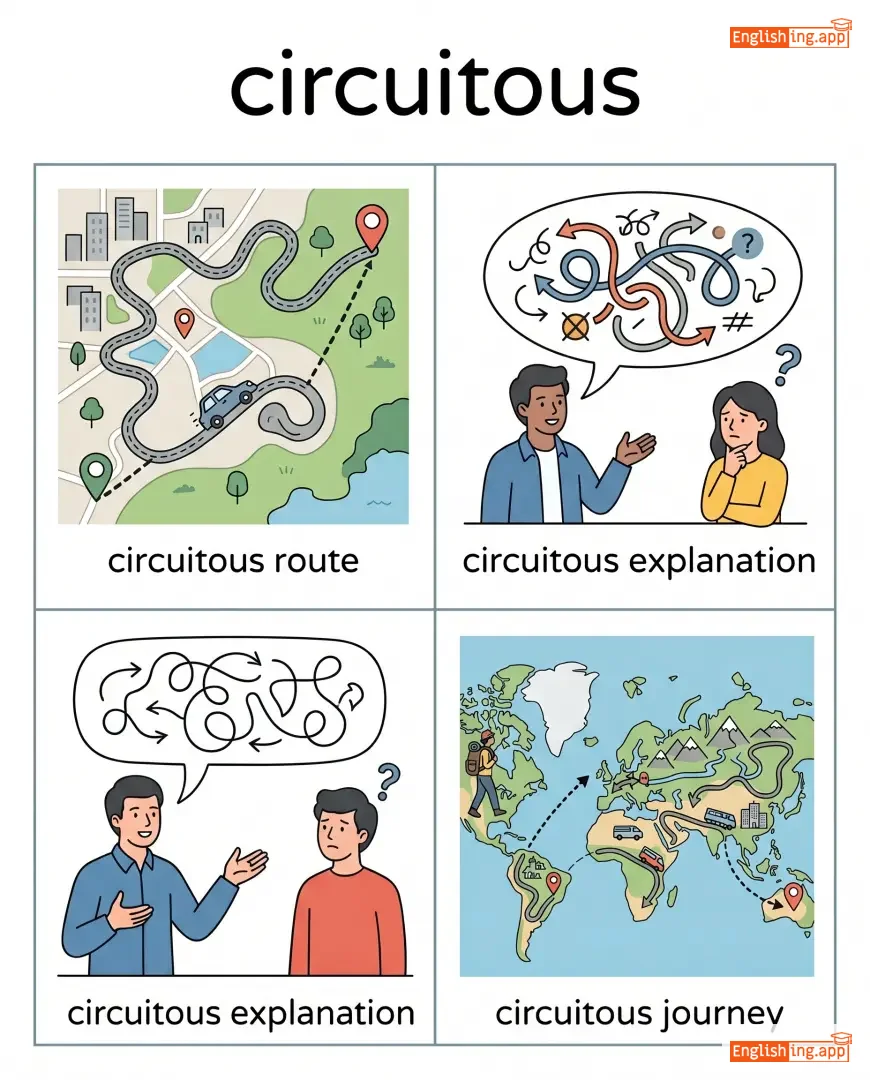
circuitous route, circuitous explanation, circuitous journey
••••••
|
Circuitous 意味着 '绕圈' → 迂回路线
••••••
|
|
#1463
🔄
|
/ˈsɜːrkɪt/
noun
(电路)
••••••
|
- •••••• |
电路 / 电气通路
dianlu / dianqi tonglu
••••••
|
- •••••• | - •••••• | - •••••• | - •••••• |
A roughly circular line, route, or movement that starts and ends at the same place; also an electrical pathway.
••••••
|
The runners completed the circuit around the park. |
跑步者完成了环绕公园的电路。
Paobu zhe wancheng le huanrao gongyuan de dianlu.
••••••
|
short-circuit |
an electrical failure caused by unintended contact or connection
••••••
|
短路
duanlu
••••••
|
route, loop, pathway, track, course
••••••
|
line, shortcut
••••••
|
electrical circuit, racing circuit, complete circuit
••••••
|
电路就像一个圆圈 → 电路意味着回到起点
••••••
|
|
#1464
👑
|
/ˈsɜːrklət/
noun
••••••
|
- •••••• | - •••••• | - •••••• | - •••••• | - •••••• | - •••••• |
A small circular band, typically worn as an ornament on the head.
••••••
|
The princess wore a golden circlet on her forehead. |
- •••••• | - •••••• | - •••••• | - •••••• |
band, crown, ring, tiara, diadem
••••••
|
chain, rope
••••••
|
golden circlet, jeweled circlet, royal circlet
••••••
|
No •••••• |
|
#1465
🔐
|
/ˈsaɪfər/
noun
••••••
|
|
- •••••• | - •••••• | - •••••• | - •••••• | - •••••• |
A secret or disguised way of writing; a code.
••••••
|
The spy sent a message written in cipher. |
- •••••• |
crack the cipher |
to solve or decode a secret code
••••••
|
- •••••• |
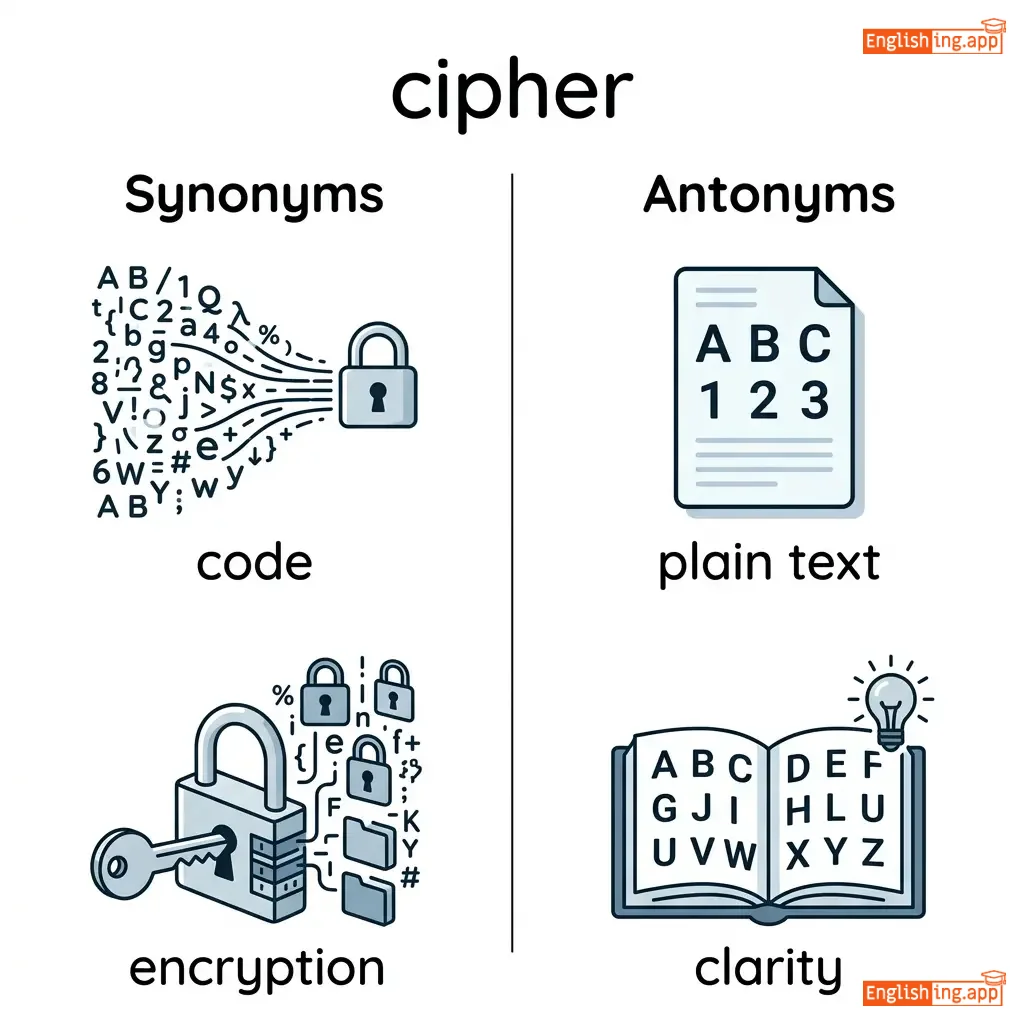
code, encryption, secret writing, cryptogram
••••••
|
plain text, clarity, openness
••••••
|
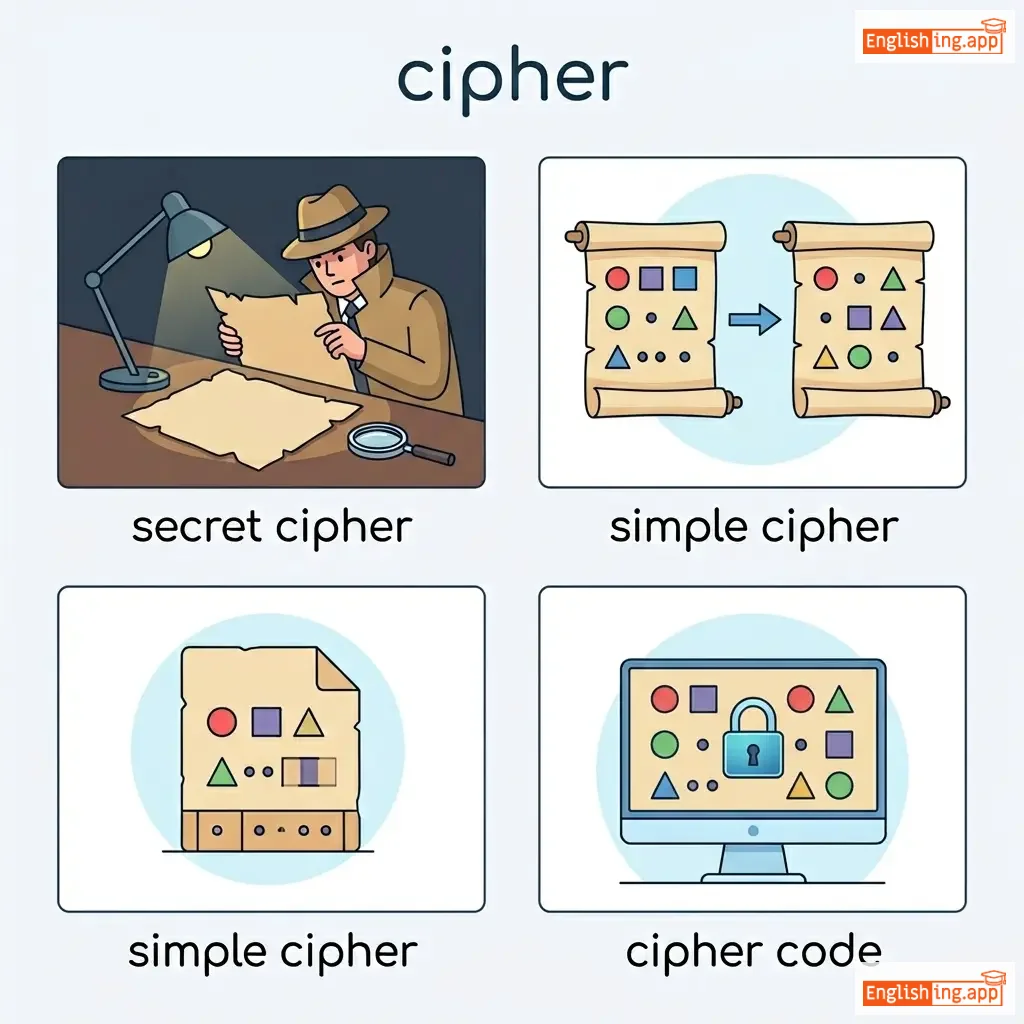
secret cipher, simple cipher, cipher code
••••••
|
No •••••• |
|
#1466
🎬
|
/ˈsɪniæst/
noun
(辛亚斯特)
••••••
|
- •••••• |
电影迷
diànyǐngmí
••••••
|
- •••••• | - •••••• | - •••••• | - •••••• |
A film enthusiast or filmmaker; a person deeply interested in cinema.
••••••
|
As a true cineast, she spends most weekends watching classic films.
作为一位真正的电影迷,她大多数周末都在看经典电影。
••••••
|
作为一位真正的电影迷,她大多数周末都在看经典电影。
Zuòwéi yī wèi zhēnzhèng de diànyǐngmí, tā dàduōshù zhōumò dōu zài kàn jīngdiǎn diànyǐng.
••••••
|
- •••••• | - •••••• | - •••••• |
film enthusiast, cinephile, movie lover, filmmaker, director
••••••
|
non-viewer, indifferent person
••••••
|
true cineast, passionate cineast, modern cineast
••••••
|
电影 (diànyǐng) + 迷 (mí) = 电影迷
••••••
|
|
#1467
🧬
|
/ˈsɪlieɪtɪd/
adjective
(西里艾特德)
••••••
|
- •••••• |
带有纤毛的
daiyou xianmao de
••••••
|
- •••••• | - •••••• | - •••••• | - •••••• |
Having minute hairlike projections (cilia) on the surface of cells or organisms.
••••••
|
The ciliated cells in the respiratory tract help move mucus out of the lungs.
呼吸道中的纤毛细胞帮助将粘液排出肺部。
••••••
|
呼吸道中的纤毛细胞帮助将粘液排出肺部。
Huxidau zhong de xianmao xibao bangzhu jiang nianye pai chu feibu.
••••••
|
- •••••• | - •••••• | - •••••• |
hairy, bristly, fringed, filamentous
••••••
|
smooth, bare
••••••
|
ciliated cells, ciliated epithelium, ciliated organisms, ciliated structure
••••••
|
带有纤毛的意味着具有纤毛🧬—记住,‘纤毛’意味着细小的毛发状突出物。
••••••
|
|
#1468
🙄
|
/ˈtʃɜːrlɪʃ/
adjective
(churlish)
••••••
|
|
粗鲁
culu
••••••
|
- •••••• | - •••••• | - •••••• | - •••••• |
Rude in a mean-spirited and surly way.
••••••
|
It would be churlish to refuse her kind invitation. |
拒绝她亲切的邀请将是粗鲁的。
Jùjué tā qīnqiè de yāoqǐng jiāng shì cūlǔ de.
••••••
|
- •••••• | - •••••• | - •••••• |
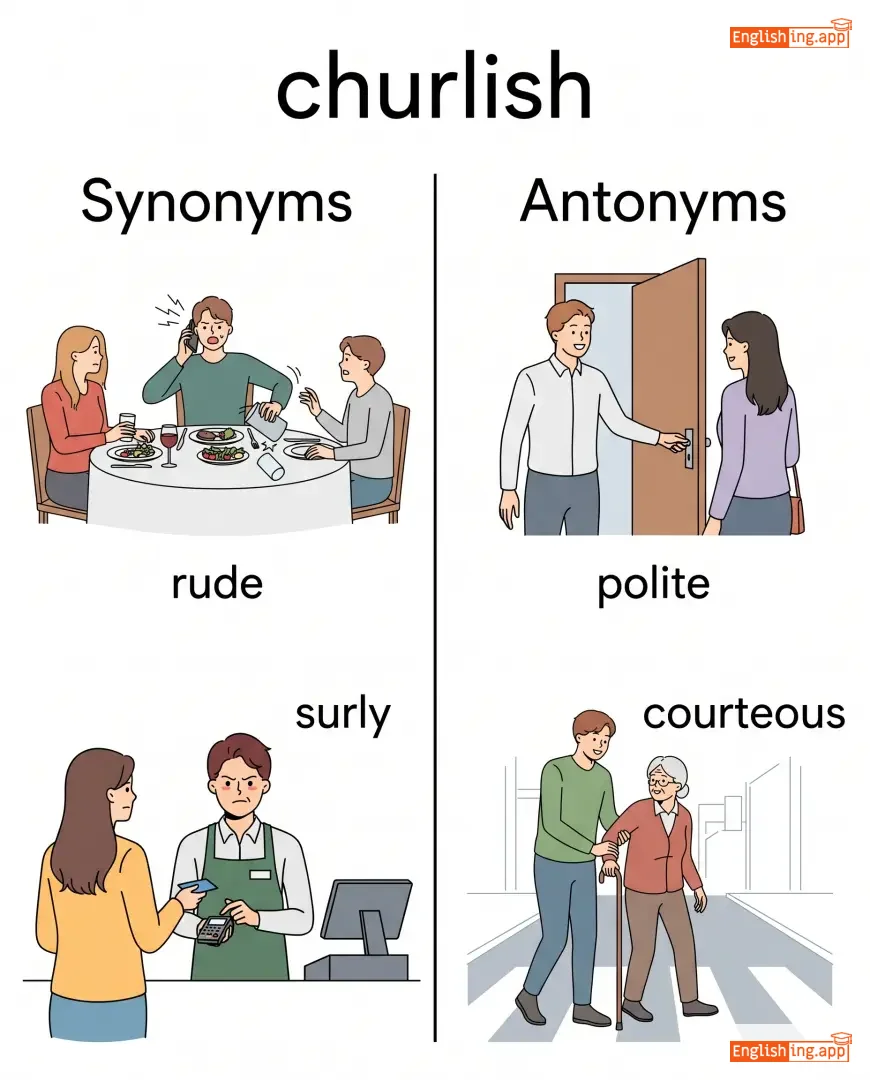
rude, surly, boorish, ill-mannered, impolite
••••••
|
polite, courteous, civil
••••••
|
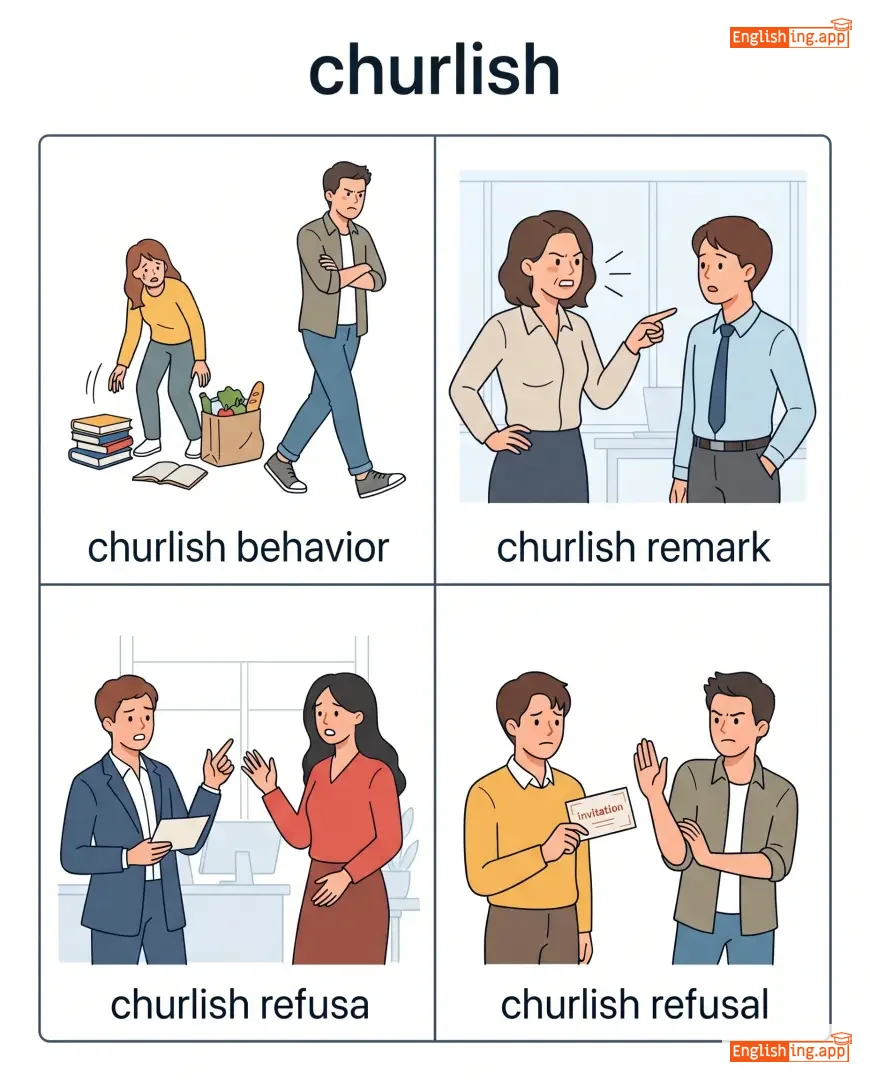
churlish behavior, churlish remark, churlish refusal, act churlish
••••••
|
Churlish 意味着粗鲁—记住,'churl' 总是粗鲁的。
••••••
|
|
#1469
😠
|
/tʃɜːrl/
noun
••••••
|
- •••••• | - •••••• | - •••••• | - •••••• | - •••••• | - •••••• |
A rude, boorish, or ill-mannered person.
••••••
|
The waiter was such a churl that customers left unhappy. |
- •••••• | - •••••• | - •••••• | - •••••• |
boor, lout, oaf, brute, yokel
••••••
|
gentleman, nobleman
••••••
|
rude churl, selfish churl, ill-mannered churl, unmannerly churl
••••••
|
No •••••• |
|
#1470
😄
|
/ˈtʃʌkəl/
verb
(查克尔)
••••••
|
- •••••• |
轻笑
qing xiao
••••••
|
chuckled
••••••
|
chuckled
••••••
|
chuckles
••••••
|
chuckling
••••••
|
To laugh quietly or to oneself.
••••••
|
She chuckled at the joke her friend told. |
她听了朋友讲的笑话,轻笑了。
Ta ting le pengyou jiang de xiaohua, qing xiao le.
••••••
|
chuckle to oneself |
To laugh quietly and privately at something amusing.
••••••
|
自顾自地轻笑
Zi gu zi de qing xiao
••••••
|
giggle, snicker, laugh, snigger, cackle
••••••
|
cry, weep
••••••
|
chuckle softly, chuckle quietly, chuckle to oneself, let out a chuckle
••••••
|
Chuckle 意味着 '轻笑' 😄—记住 '自顾自地轻笑' 是 chuckle。
••••••
|
Vocabulary Quiz
Test your vocabulary by matching words with their translations or meanings.
Login to take the quiz
Comments (0)
Share your thoughts and join the discussion.
Join the discussion by logging in
Login to CommentNo comments yet
Be the first to share your thoughts!