


Swipe left or right, or use the buttons. Tap image to zoom.
例句翻译
单词
Lesson 189Lesson 189 - 遮罩切换
|
表情符号
|
单词 | Images | 翻译 | 过去时 | 过去分词 | 第三人称单数 | 动名词 | 含义 | 例句 | 例句翻译 | 示例表达 | 示例表达含义 | 示例表达翻译 | 同义词 | 反义词 | 搭配词 | 助记符 |
|---|---|---|---|---|---|---|---|---|---|---|---|---|---|---|---|---|---|
|
#5641
🤔
|
/ˌmɪsˈtrʌst/
noun/verb
(米斯特拉斯特)
••••••
|
- •••••• |
不信任
buxinren
••••••
|
mistrusted
米斯特拉斯特德
••••••
|
mistrusted
米斯特拉斯特德
••••••
|
mistrusts
米斯特拉斯特斯
••••••
|
mistrusting
米斯特拉斯廷
••••••
|
lack of trust; suspicion or doubt about someone or something
••••••
|
The villagers showed deep mistrust of outsiders.
村民们对外来者表现出了深深的不信任。
••••••
|
村民们对外来者表现出了深深的不信任。
Cūnmín men duì wàilái zhě biǎoxiàn chūle shēn shēn de bùxìnrèn.
••••••
|
breed mistrust
培养不信任
••••••
|
to cause suspicion or doubt
••••••
|
培养不信任
péi yǎng bùxìnrèn
••••••
|
distrust, suspicion, doubt, skepticism, wariness
••••••
|
trust, confidence, faith
••••••
|
deep mistrust, mutual mistrust, breed mistrust, grow mistrust
••••••
|
Mistrust意味着不信任,即对某事或某人产生不信任 (bùxìnrèn)。
••••••
|
|
#5642
⚖️
|
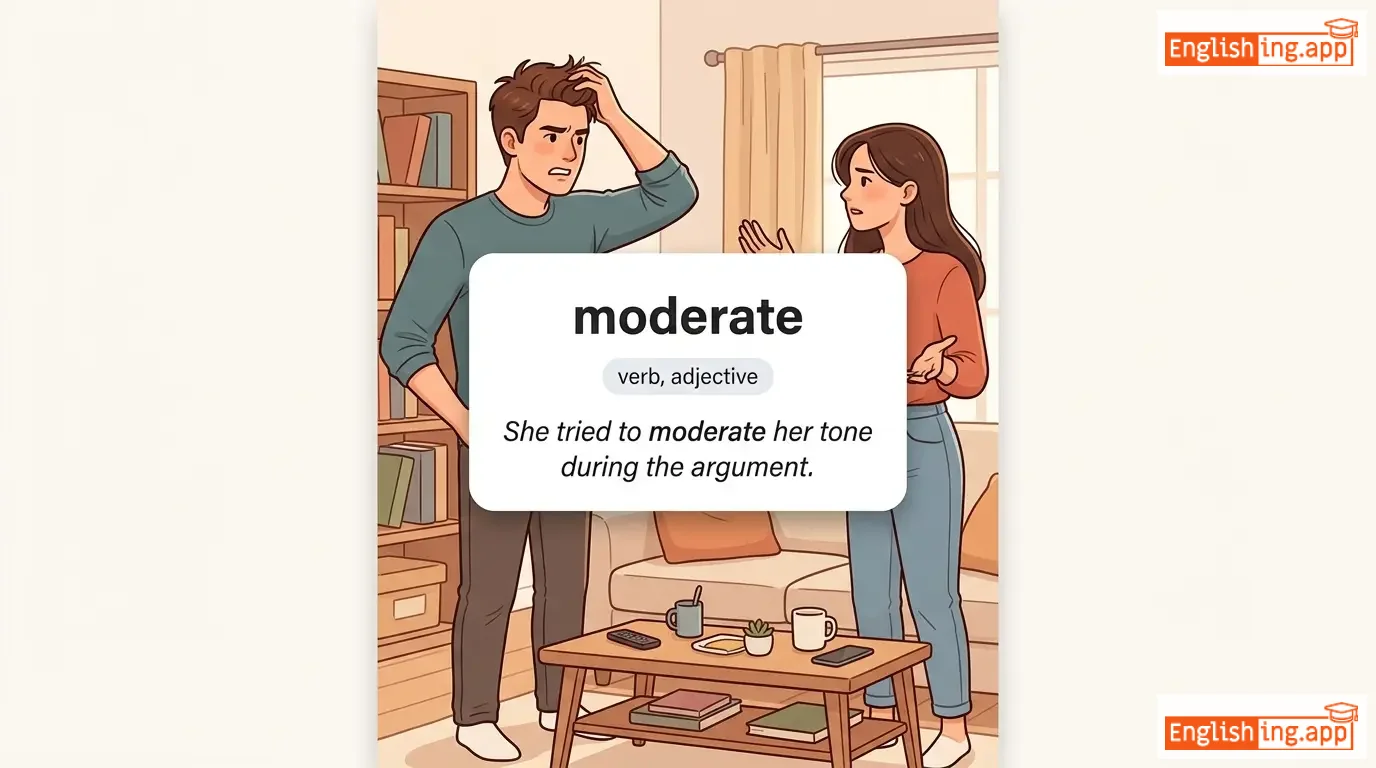
/ˈmɒdəreɪt/ (verb), /ˈmɒdərət/ (adj)
verb, adjective
(莫德雷特)
••••••
|
|
适度的, 控制
shidù de, kòngzhì
••••••
|
moderated
莫德雷特
••••••
|
moderated
莫德雷特
••••••
|
moderates
莫德雷特斯
••••••
|
moderating
莫德雷廷
••••••
|
To make something less extreme (verb); average in amount, intensity, quality, or degree (adjective).
••••••
|
She tried to moderate her tone during the argument.
她在争论中试图控制她的语气。
••••••
|
她在争论中试图控制她的语气。
Tā zài zhēnglùn zhōng shìtú kòngzhì tā de yǔqì.
••••••
|
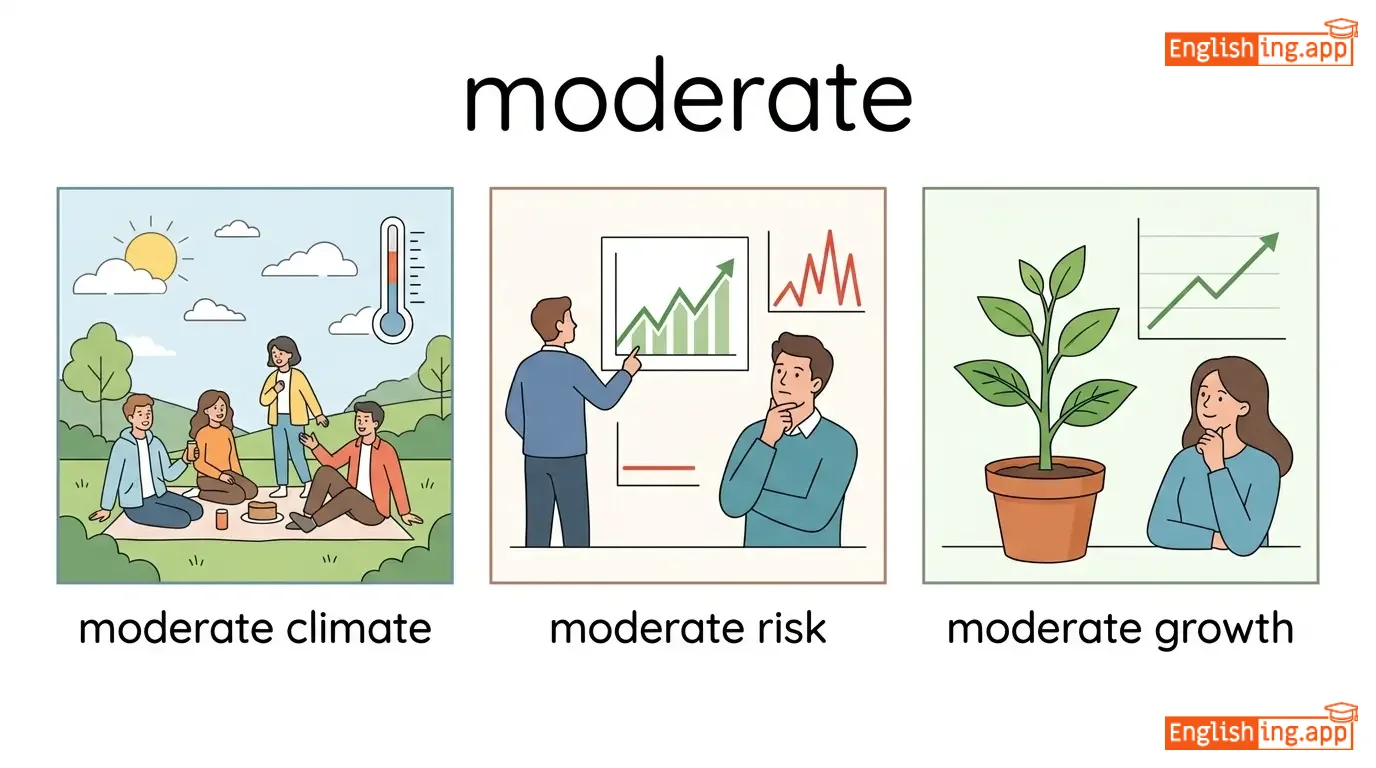
moderate growth
适度增长
••••••
|
Steady or average increase.
••••••
|
适度增长
shidù zēngzhǎng
••••••
|
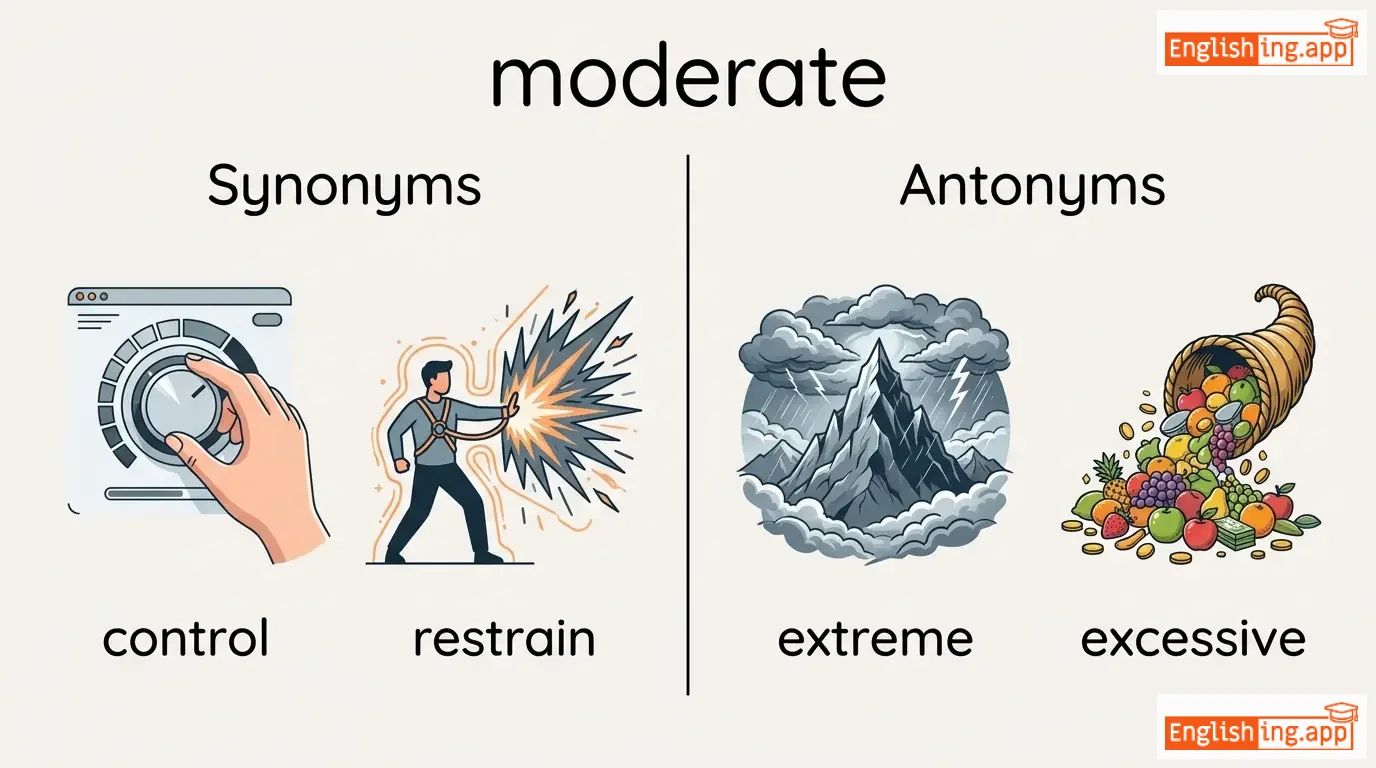
control, restrain, average, mild, temper
••••••
|
extreme, excessive
••••••
|
moderate climate, moderate risk, moderate growth, moderate opinion
••••••
|
Moderate意指使事情不那么极端,找到平衡。
••••••
|
|
#5643
📱
|
/moʊd/
noun
(模式)
••••••
|
- •••••• |
模式
moshi
••••••
|
- •••••• | - •••••• | - •••••• | - •••••• |
A particular way or style in which something is done, experienced, or expressed.
••••••
|
The phone has a silent mode for meetings. |
手机有一个用于会议的静音模式。
Shǒujī yǒu yīgè yòng yú huìyì de jìngyīn móshì.
••••••
|
in mode |
To be in a particular state or style of action.
••••••
|
- •••••• |
manner, style, method, form, fashion
••••••
|
disorder, chaos
••••••
|
silent mode, airplane mode, survival mode, operating mode
••••••
|
飞行模式下不能使用手机,所以模式意味着状态。
••••••
|
|
#5644
🙃
|
/ˈmɒkəri/
noun
(莫克里)
••••••
|
- •••••• |
嘲笑,讥讽
cháoxiào, jīfěng
••••••
|
- •••••• | - •••••• | - •••••• | - •••••• |
Teasing or contemptuous language or behavior directed at someone or something.
••••••
|
His attempt at cooking ended in mockery from his friends. |
他烹饪的尝试以朋友们的嘲笑告终。
Tā pēngrèn de chángshì yǐ péngyǒumen de cháoxiào gàozhōng.
••••••
|
make a mockery of |
To make something appear foolish or useless.
••••••
|
取笑
qǔxiào
••••••
|
ridicule, scorn, derision, contempt
••••••
|
respect, admiration
••••••
|
subject of mockery, laughable mockery, bitter mockery, make a mockery of
••••••
|
Mockery意味着mock - 嘲笑或讥讽。
••••••
|
|
#5645
😂
|
/mɒk/
verb
(mock)
••••••
|
- •••••• |
嘲笑
chaoxiao
••••••
|
mocked
mocked
••••••
|
mocked
mocked
••••••
|
mocks
mocks
••••••
|
mocking
mocking
••••••
|
To make fun of someone or something in a cruel or unkind way.
••••••
|
The students mocked his accent during class.
学生们在课堂上嘲笑他的口音。
••••••
|
学生们在课堂上嘲笑他的口音。
Xueshengmen zai ketang shang chaoxiao tade kouyin.
••••••
|
mock trial
模拟法庭
••••••
|
A simulated court trial for practice or training.
••••••
|
模拟法庭
Moni fating
••••••
|
ridicule, tease, taunt, mimic, imitate
••••••
|
praise, respect
••••••
|
mock exam, mock trial, mock someone, mock laughter
••••••
|
Mock exam就像模拟考试,嘲笑就是对某人的一种不友好行为。
••••••
|
|
#5646
👞
|
/ˈmɒkəsɪn/
noun
(莫卡辛)
••••••
|
- •••••• |
莫卡辛鞋
mokaxin xie
••••••
|
- •••••• | - •••••• | - •••••• | - •••••• |
A soft leather shoe, traditionally worn by Native Americans, often made from deerskin.
••••••
|
He slipped on a pair of comfortable moccasins before going outside.
他在外出前穿上了舒适的莫卡辛鞋。
••••••
|
他在外出前穿上了舒适的莫卡辛鞋。
Ta zai waichu qian chuan shang le shushi de mokaxin xie.
••••••
|
- •••••• | - •••••• | - •••••• |
slipper, shoe, loafer, sandal
••••••
|
boot, sneaker
••••••
|
pair of moccasins, leather moccasins, traditional moccasins, soft moccasins
••••••
|
莫卡 (Moka) 是咖啡,莫卡辛是舒适的鞋子。
••••••
|
|
#5647
👥
|
/məˈbɒkrəsi/
noun
(mobocracy)
••••••
|
- •••••• |
暴民政治
baomin zhengzhi
••••••
|
- •••••• | - •••••• | - •••••• | - •••••• |
Rule or control by a mob or mass of people, often disorderly.
••••••
|
The protest turned into mobocracy when the crowd started destroying property.
抗议活动在群众开始破坏财产时变成了暴民政治。
••••••
|
抗议活动在群众开始破坏财产时变成了暴民政治。
Kangyi huodong zai qunzhong kaishi pohuai caichan shi bian chengle baomin zhengzhi.
••••••
|
- •••••• | - •••••• | - •••••• |
mob rule, anarchy, chaos, crowd control
••••••
|
democracy, order, law
••••••
|
descend into mobocracy, mobocracy rules, fear of mobocracy
••••••
|
Mobocracy = mob + democracy = 暴民政治
••••••
|
|
#5648
🚶
|
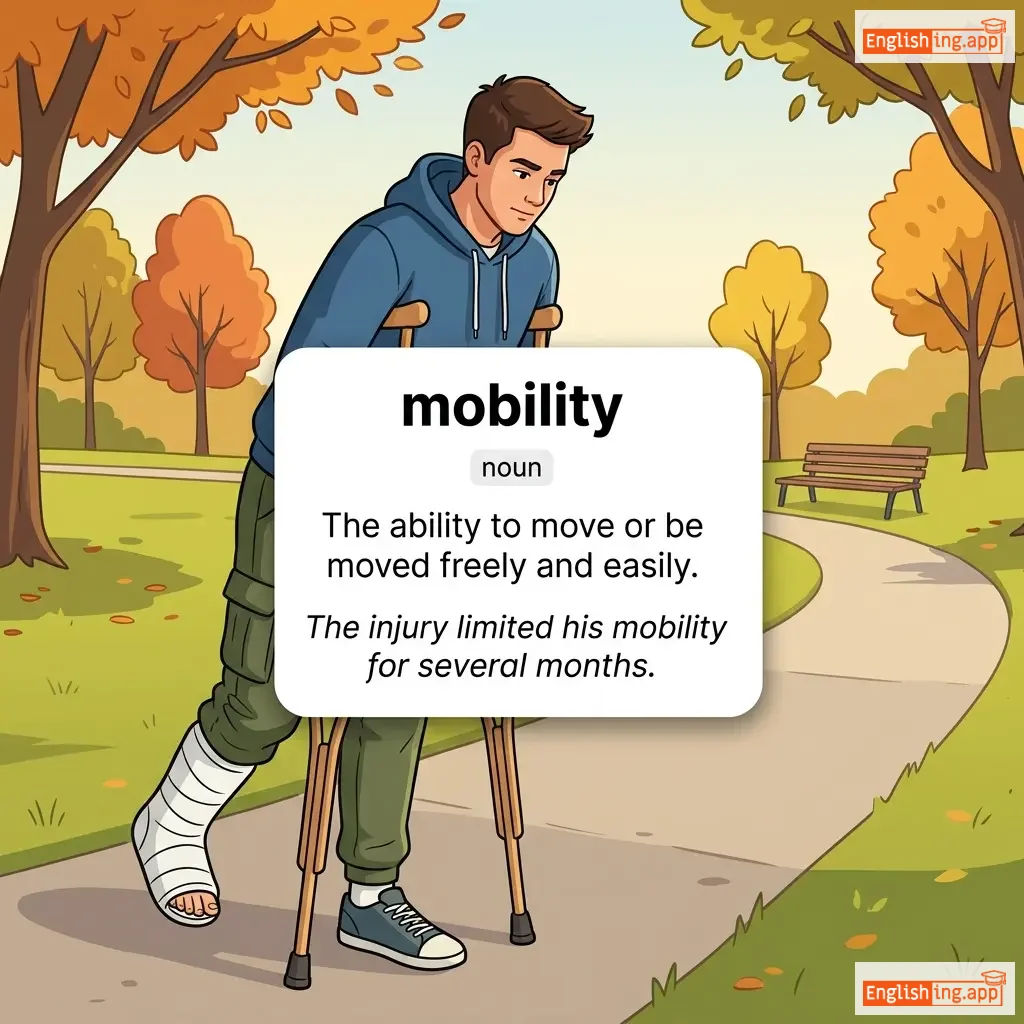
/moʊˈbɪləti/
noun
(莫比利提)
••••••
|
|
流动性
liudongxing
••••••
|
- •••••• | - •••••• | - •••••• | - •••••• |
The ability to move or be moved freely and easily.
••••••
|
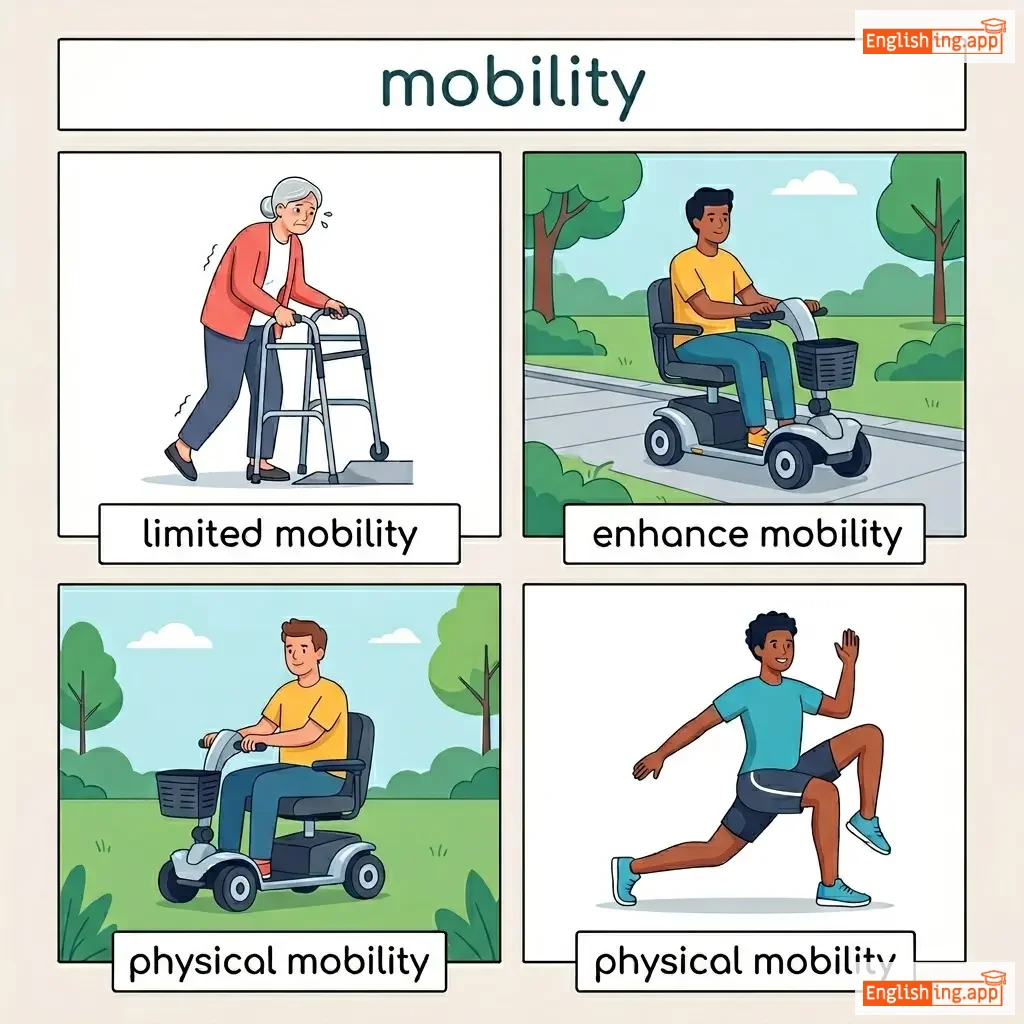
The injury limited his mobility for several months. |
受伤限制了他的流动性几个月。
Shoushang xianzhi le tade liudongxing jige yue.
••••••
|
social mobility |
The ability to change one's social or economic status.
••••••
|
社会流动性
shehui liudongxing
••••••
|
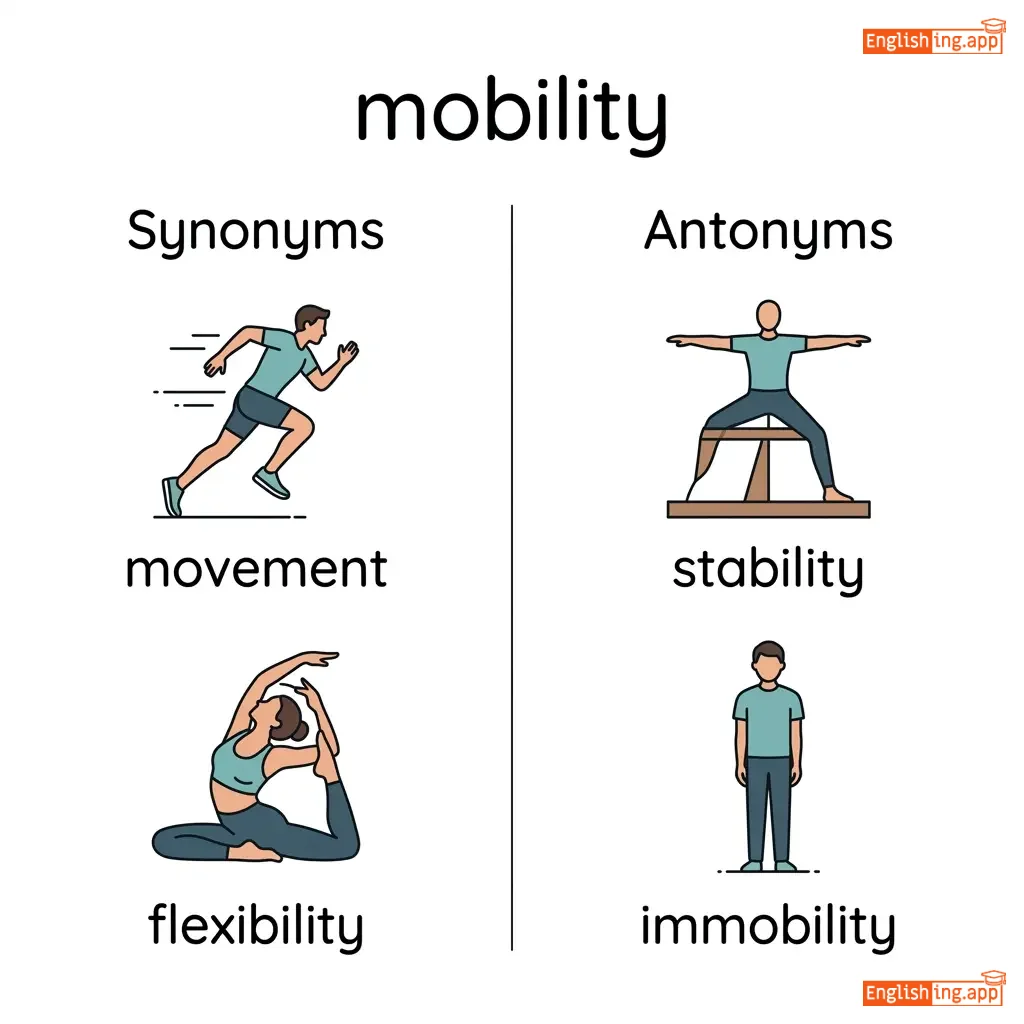
movement, flexibility, agility, locomotion, portability
••••••
|
stability, immobility, stiffness
••••••
|
limited mobility, enhance mobility, physical mobility, social mobility
••••••
|
Mobility是指可以自由地移动。
••••••
|
|
#5649
📱
|
/ˈmoʊbaɪl/
adjective
(mó-bái-ěr)
••••••
|
- •••••• |
移动
yidong
••••••
|
- •••••• | - •••••• | - •••••• | - •••••• |
Able to move or be moved easily; also refers to portable communication devices.
••••••
|
She prefers a mobile lifestyle that allows her to travel frequently.
她更喜欢一种移动的生活方式,这让她可以频繁旅行。
••••••
|
她更喜欢一种移动的生活方式,这让她可以频繁旅行。
Ta geng xihuan yizhong yidong de shenghuo fangshi, zhe rang ta keyi pinfan lüxing.
••••••
|
mobile phone
移动电话
••••••
|
A portable telephone that can be used anywhere.
••••••
|
移动电话
yidong dianhua
••••••
|
portable, movable, flexible, transportable
••••••
|
immobile, fixed, stationary
••••••
|
mobile device, mobile phone, mobile app, mobile lifestyle
••••••
|
移动就像移动电话一样,可以随时随地使用。
••••••
|
|
#5650
🏰
|
/moʊt/
noun
(莫特)
••••••
|
- •••••• |
护城河
hù chéng hé
••••••
|
- •••••• | - •••••• | - •••••• | - •••••• |
A deep, wide ditch surrounding a castle or town, often filled with water, for defense.
••••••
|
The castle was protected by a wide moat filled with water. |
城堡被一条充满水的宽护城河保护着。
Chéng bǎo bèi yī tiáo chōng mǎn shuǐ de kuān hù chéng hé bǎo hù zhe.
••••••
|
economic moat |
A business's ability to maintain competitive advantages over its rivals.
••••••
|
经济护城河
jīng jì hù chéng hé
••••••
|
ditch, trench, channel, defense barrier
••••••
|
bridge, opening
••••••
|
castle moat, deep moat, wide moat, economic moat
••••••
|
护城河 (hù chéng hé) 是城堡的防线。
••••••
|
|
#5651
🧠
|
/nɪˈmɒnɪks/
noun
(mnémoniks)
••••••
|
|
记忆法
jìyì fǎ
••••••
|
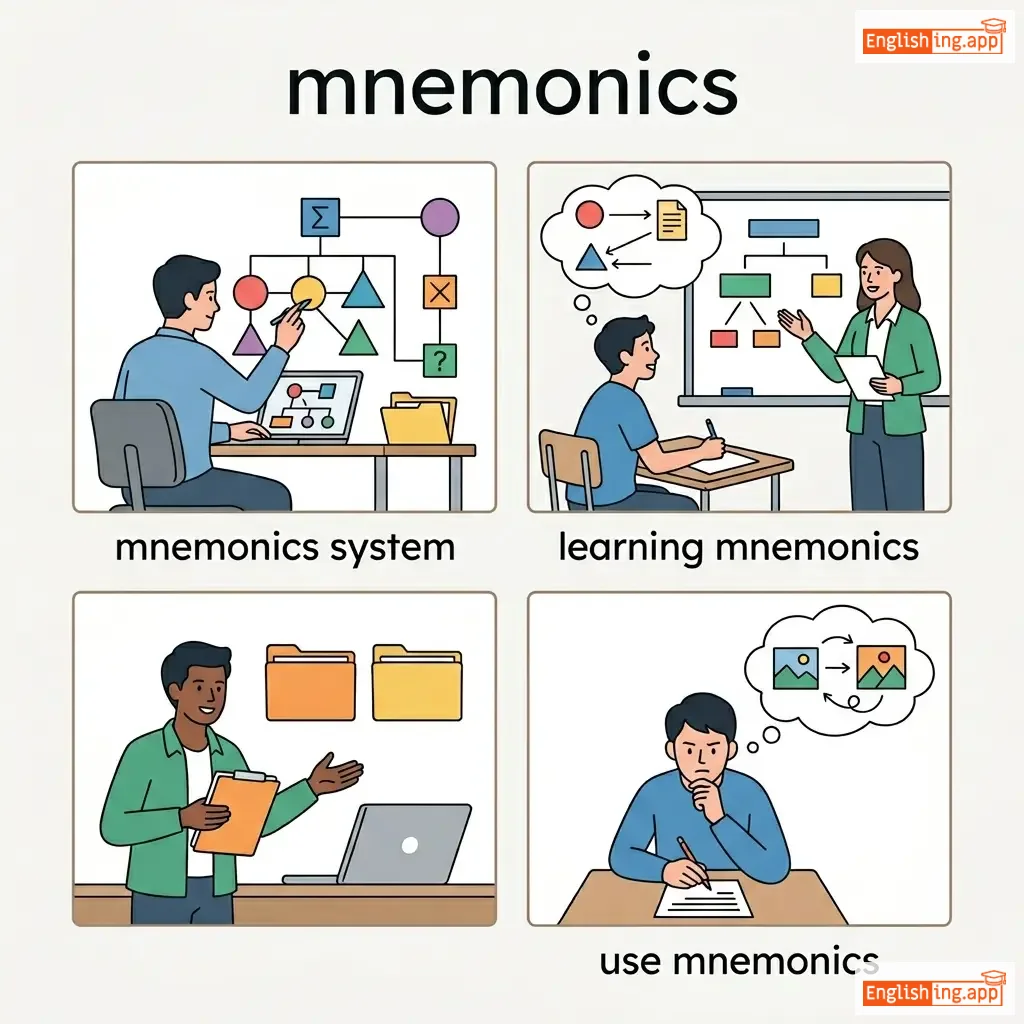
- •••••• | - •••••• | - •••••• | - •••••• |
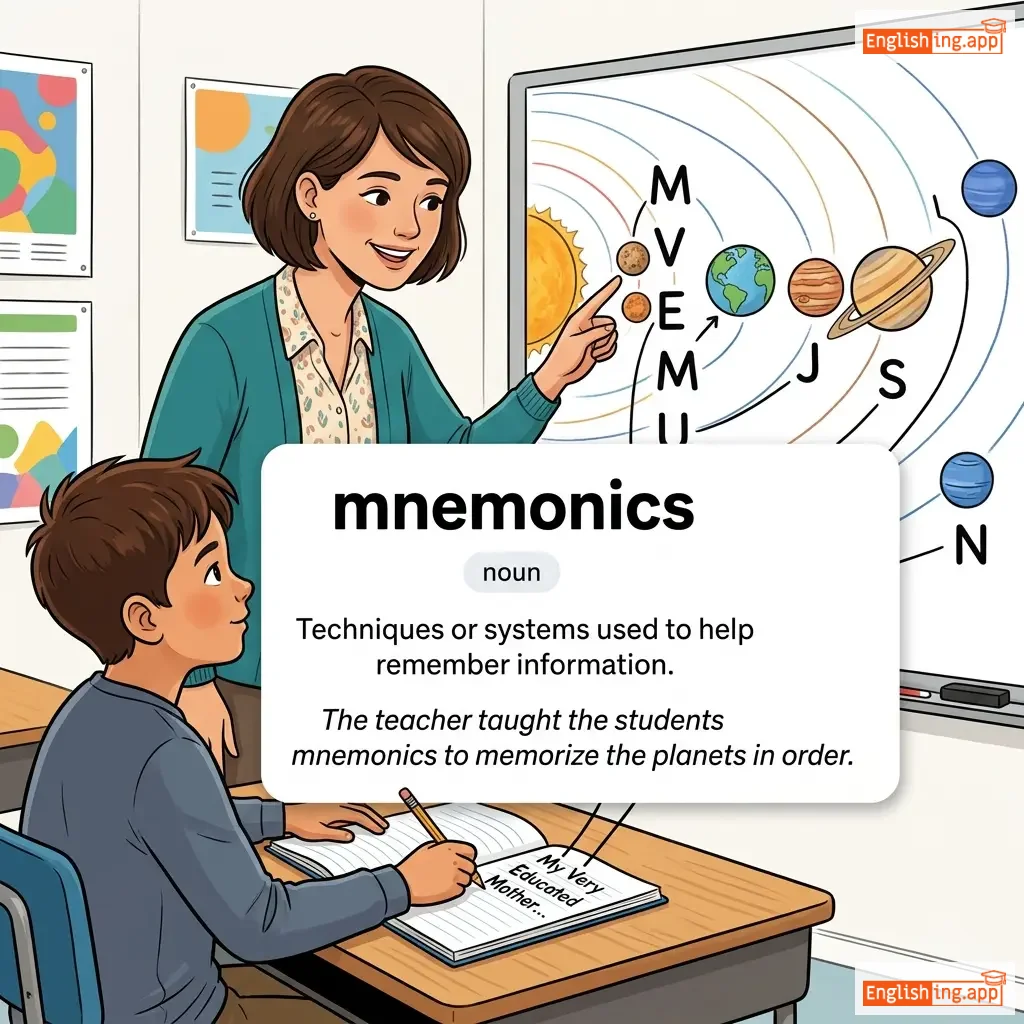
Techniques or systems used to help remember information.
••••••
|
The teacher taught the students mnemonics to memorize the planets in order.
老师教学生们使用记忆法按顺序记住行星。
••••••
|
老师教学生们使用记忆法按顺序记住行星。
Lǎoshī jiào xuéshēngmen shǐyòng jìyì fǎ àn shùnxù jì zhù xíngxīng.
••••••
|
- •••••• | - •••••• | - •••••• |
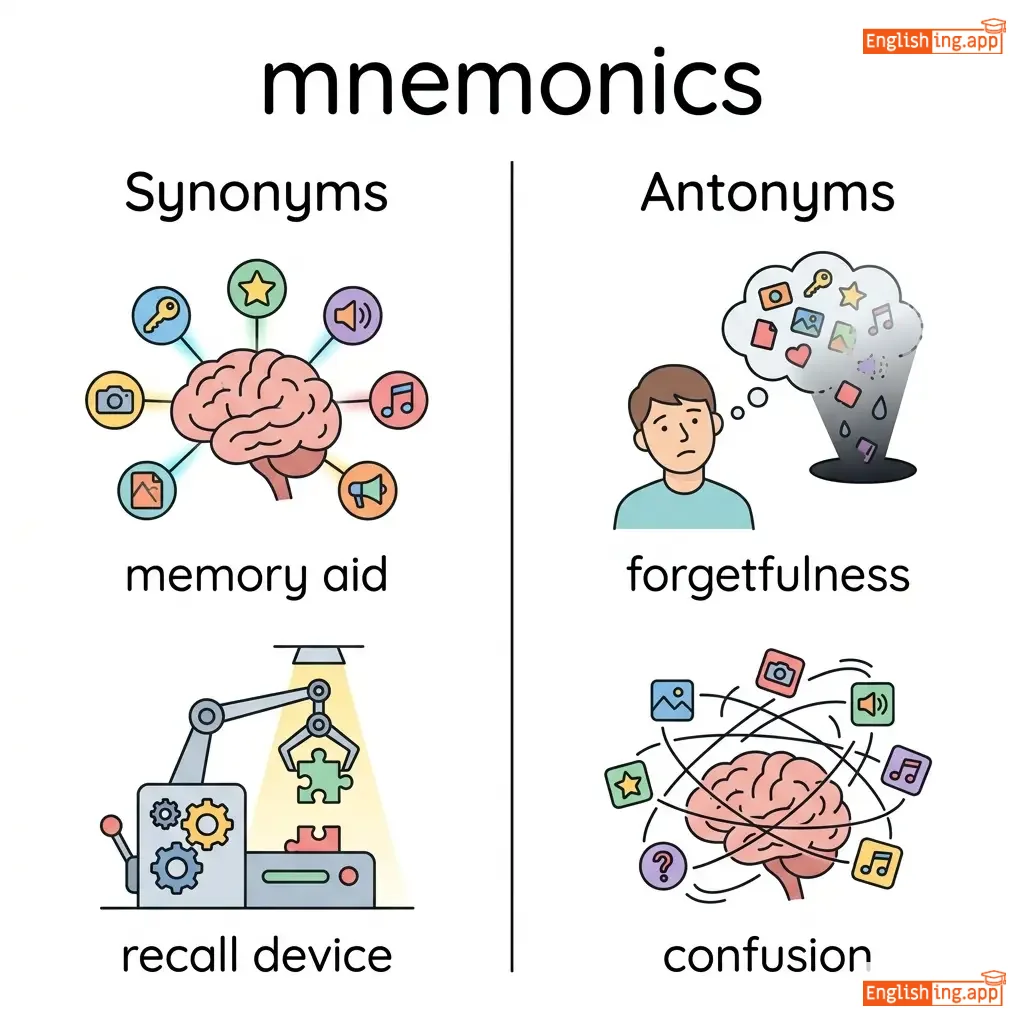
memory aid, recall device, association, trick, learning tool
••••••
|
forgetfulness, confusion
••••••
|
mnemonics system, learning mnemonics, use mnemonics, memory mnemonics
••••••
|
记忆法是帮助记住的技巧
••••••
|
|
#5652
🧠
|
/nɪˈmɒnɪk/
noun/adjective
••••••
|
|
- •••••• | - •••••• | - •••••• | - •••••• | - •••••• |
a device or technique used to aid memory
••••••
|
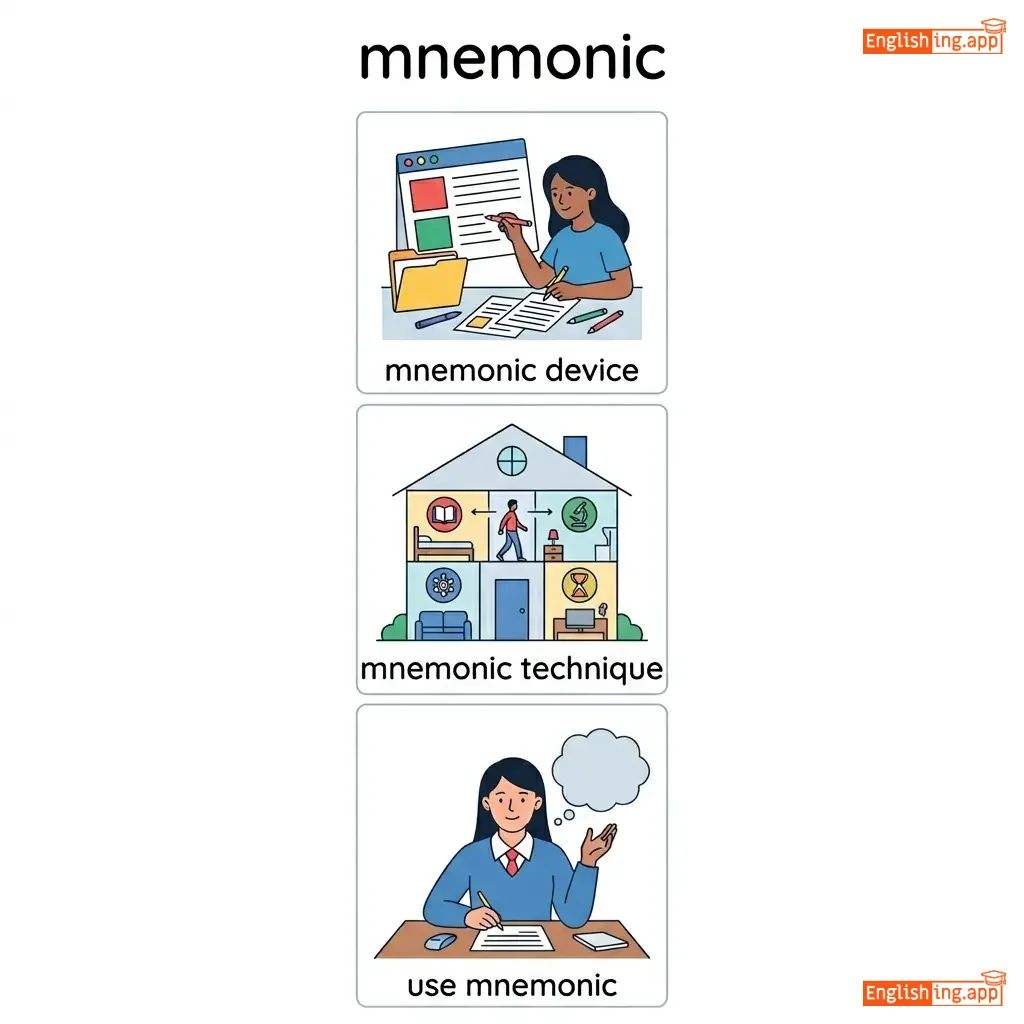
Students often use mnemonic devices to remember lists of words. |
- •••••• |
mnemonic device |
a tool to help remember information
••••••
|
- •••••• |
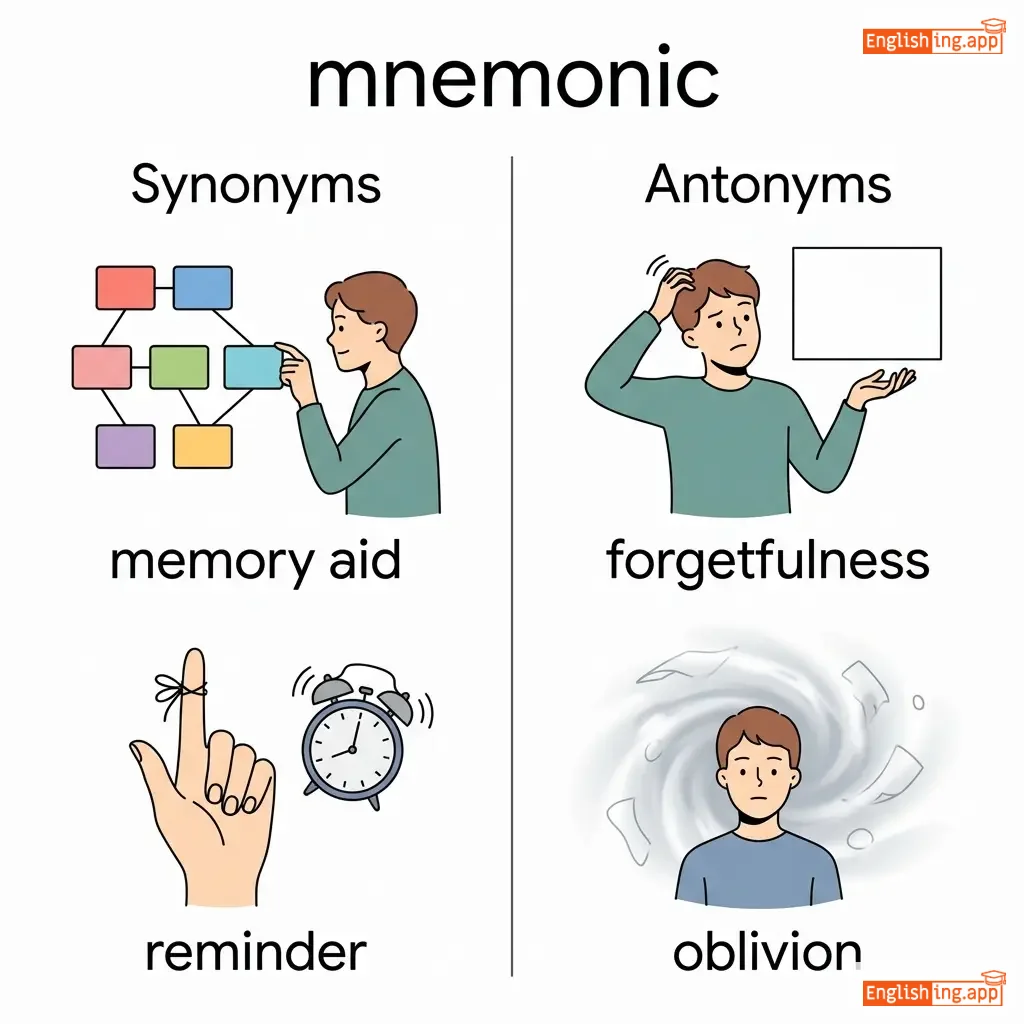
memory aid, reminder, clue, device, trick
••••••
|
forgetfulness, oblivion
••••••
|
mnemonic device, mnemonic technique, use mnemonic, create mnemonic
••••••
|
No •••••• |
|
#5653
⚖️
|
/ˈmɪtɪˌɡeɪt/
verb
(米提盖特)
••••••
|
|
减轻
jianqīng
••••••
|
mitigated
米提盖特德
••••••
|
mitigated
米提盖特德
••••••
|
mitigates
米提盖特斯
••••••
|
mitigating
米提盖廷
••••••
|
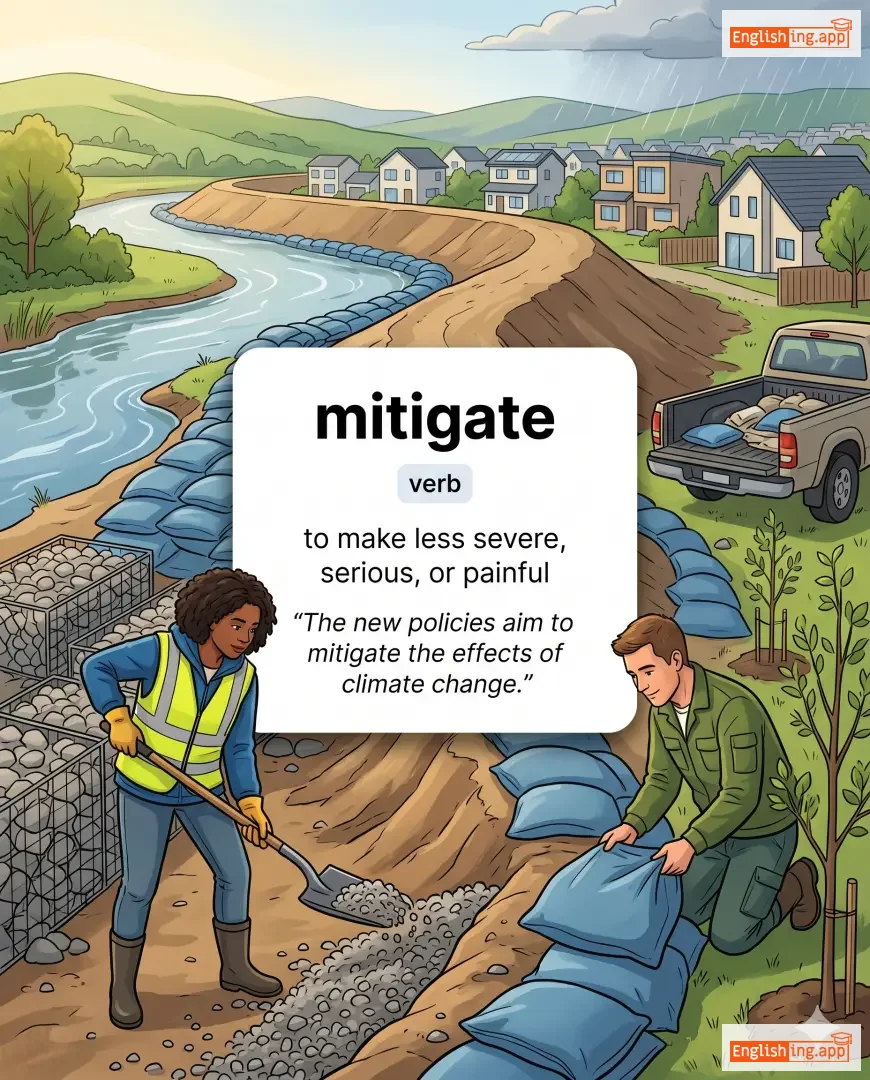
to make less severe, serious, or painful
••••••
|
The new policies aim to mitigate the effects of climate change.
新的政策旨在减缓气候变化的影响。
••••••
|
新政策旨在减缓气候变化的影响。
Xin zhengce zhi zai jianhuan qihou bianhua de yingxiang.
••••••
|
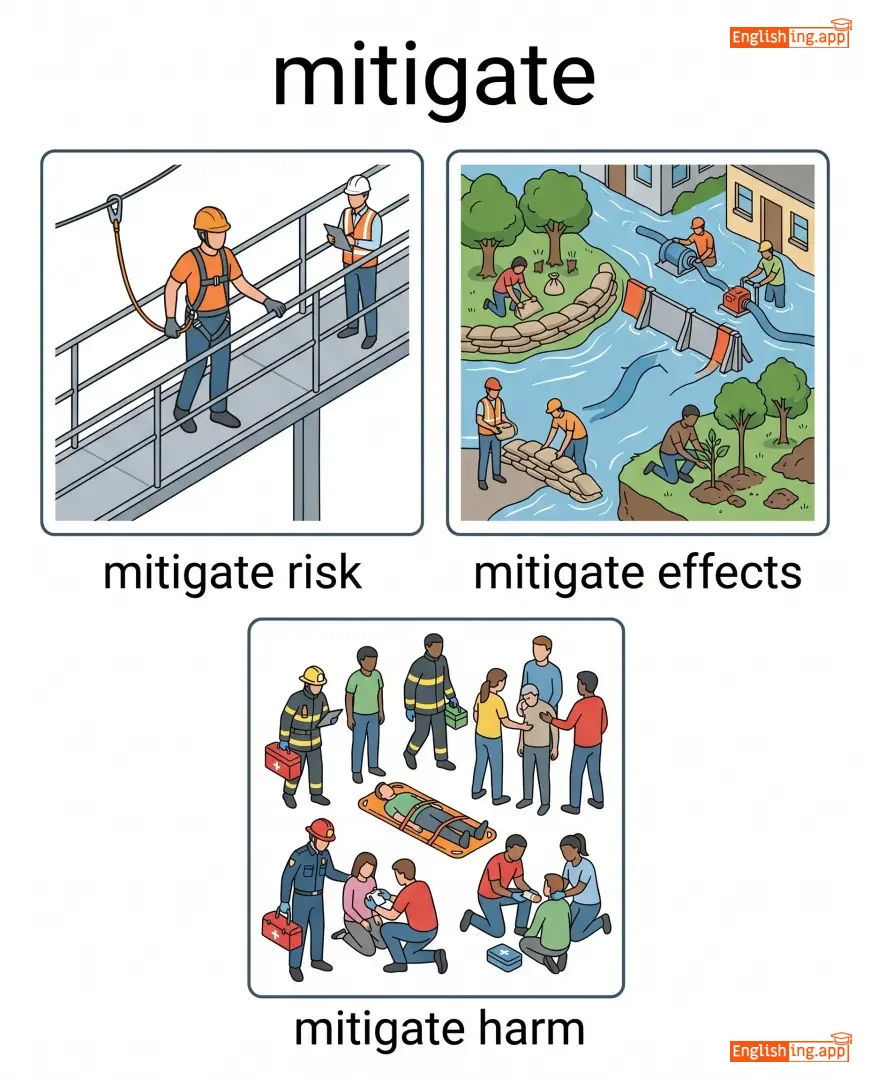
mitigate risk
减轻风险
••••••
|
to reduce the potential danger or harm
••••••
|
减轻风险
jianqīng fēngxiǎn
••••••
|
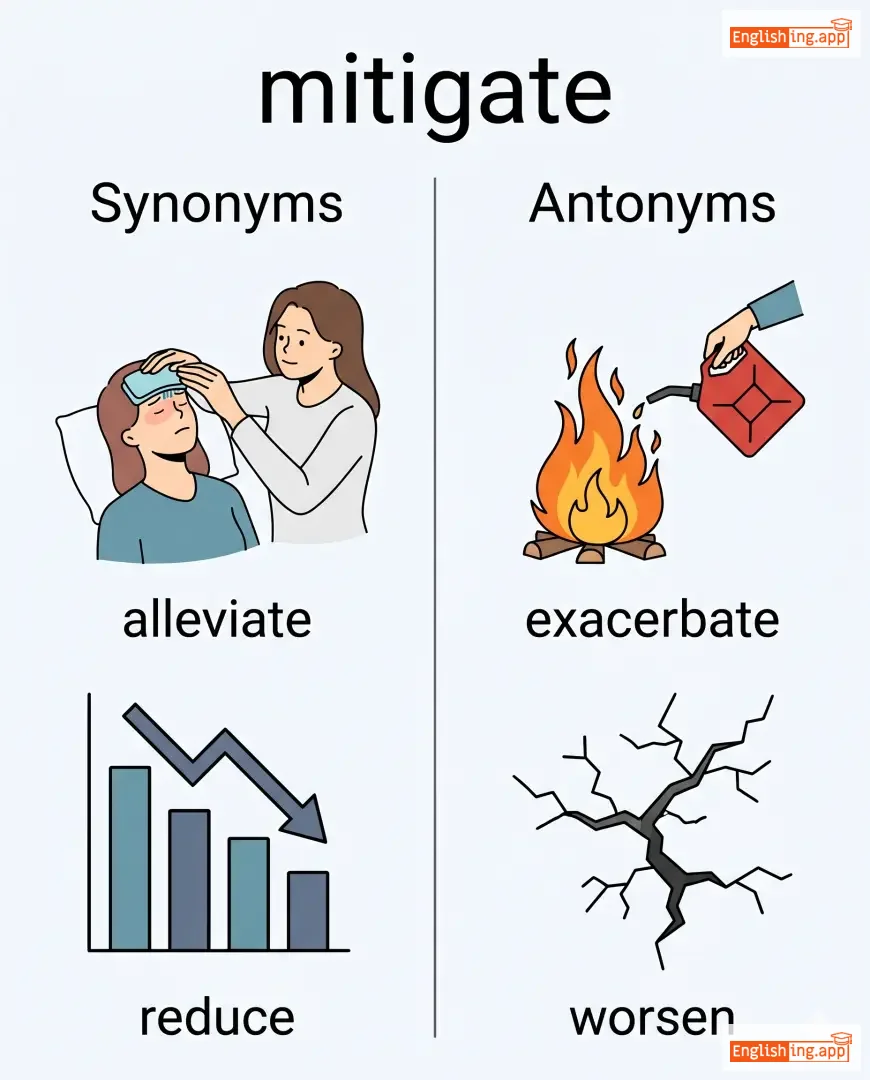
alleviate, reduce, ease, lessen, soften
••••••
|
exacerbate, worsen, intensify
••••••
|
mitigate risk, mitigate effects, mitigate harm, mitigate damage
••••••
|
减轻 = 简化(复杂的问题)。
••••••
|
|
#5654
⛪
|
/ˈmaɪtər/
noun
(麦特尔)
••••••
|
- •••••• |
主教帽
zhǔjiào mào
••••••
|
- •••••• | - •••••• | - •••••• | - •••••• |
a tall, pointed hat worn by bishops; also a type of joint made between two pieces of material
••••••
|
The bishop placed the miter on his head during the ceremony. |
主教在仪式中把主教帽戴在头上。
Zhǔjiào zài yíshì zhōng bǎ zhǔjiào mào dài zài tóu shàng.
••••••
|
- •••••• | - •••••• | - •••••• |
headdress, headgear, cap, joint, angle
••••••
|
none
••••••
|
bishop’s miter, golden miter, miter joint, wear a miter
••••••
|
Miter = 主教帽, 记住 Miter = 主教的帽子。
••••••
|
|
#5655
🕷️
|
/maɪt/
noun
(mài)
••••••
|
- •••••• |
螨虫
manchong
••••••
|
- •••••• | - •••••• | - •••••• | - •••••• |
a very small creature, often a tiny arachnid; also used to mean a very small amount
••••••
|
The mattress was infested with dust mites. |
床垫里有尘螨。
chuangdian li you chenman.
••••••
|
not a mite |
not at all
••••••
|
一点也不
yidian ye bu
••••••
|
speck, particle, crumb, insect, bug
••••••
|
whole, lot
••••••
|
dust mite, tiny mite, not a mite, mite infestation
••••••
|
MITE = 极小的生物(螨虫),就像微小的东西。
••••••
|
|
#5656
🤔
|
/mɪsˈɡɪvɪŋz/
noun
(米斯吉文斯)
••••••
|
- •••••• |
疑虑,担忧
yílǜ, dānyōu
••••••
|
- •••••• | - •••••• | - •••••• | - •••••• |
feelings of doubt or concern about the outcome or propriety of something
••••••
|
She had serious misgivings about signing the contract. |
她对签署合同有严重的疑虑。
Tā duì qiānshǔ hé tóng yǒu yánzhòng de yílǜ.
••••••
|
have misgivings about |
to feel doubt or worry about something
••••••
|
对...有疑虑
duì... yǒu yílǜ
••••••
|
doubts, concerns, apprehensions, reservations, qualms
••••••
|
confidence, assurance, certainty
••••••
|
serious misgivings, strong misgivings, have misgivings, express misgivings
••••••
|
Misgiving表示在决策中有'疑虑' (疑虑)。
••••••
|
|
#5657
✉️
|
/ˈmɪsɪv/
noun
(mìsīwèi)
••••••
|
- •••••• |
信件
xìnjiàn
••••••
|
- •••••• | - •••••• | - •••••• | - •••••• |
a written message, especially a formal or official letter
••••••
|
He sent a long missive to the governor. |
他给州长发送了一封长信。
Tā gěi zhōuzhǎng fāsòngle yī fēng cháng xìn.
••••••
|
- •••••• | - •••••• | - •••••• |
letter, note, dispatch, communication
••••••
|
silence, speech
••••••
|
send a missive, lengthy missive, political missive
••••••
|
Missive = Message 作为一封书面信件
••••••
|
|
#5658
🚀
|
/ˈmɪsaɪl/ or /ˈmɪsəl/
noun
(米萨伊尔)
••••••
|
- •••••• |
导弹
daodan
••••••
|
- •••••• | - •••••• | - •••••• | - •••••• |
a weapon that is self-propelled and directed toward a target
••••••
|
The army launched a missile towards the enemy base. |
军队向敌军基地发射了一枚导弹。
jūnduì xiàng díjūn jīdì fāshèle yī méi dǎodàn.
••••••
|
ballistic missile |
a missile with a predetermined trajectory
••••••
|
弹道导弹
dàndào dǎodàn
••••••
|
projectile, rocket, torpedo, weapon
••••••
|
shield, defense
••••••
|
launch a missile, guided missile, nuclear missile, ballistic missile
••••••
|
Missile 就像是 'miss',但是导弹一定击中目标
••••••
|
|
#5659
📖
|
/ˈmɪsəl/
noun
(米萨尔)
••••••
|
- •••••• |
弥撒书
misa shu
••••••
|
- •••••• | - •••••• | - •••••• | - •••••• |
a book containing the texts used in the Catholic Mass throughout the year
••••••
|
The priest read from the missal during the ceremony. |
神父在仪式期间从弥撒书中读出。
Shénfù zài yíshì qījiān cóng misa shū zhōng dú chū.
••••••
|
- •••••• | - •••••• | - •••••• |
service book, liturgy book, prayer book
••••••
|
secular book, non-religious text
••••••
|
read from the missal, church missal, Catholic missal
••••••
|
Missal = 天主教弥撒书
••••••
|
|
#5660
⚖️
|
/ˌmɪsˈruːl/
noun
(米斯鲁尔)
••••••
|
- •••••• |
恶政
è zhèng
••••••
|
- •••••• | - •••••• | - •••••• | - •••••• |
bad or poor governance
••••••
|
The kingdom suffered for decades under misrule. |
王国在几十年里饱受恶政之苦。
Wángguó zài jǐ shí nián lǐ bǎoshòu è zhèng zhī kǔ.
••••••
|
- •••••• | - •••••• | - •••••• |
oppression, tyranny, maladministration, corruption
••••••
|
good governance, order, justice
••••••
|
under misrule, suffer misrule, political misrule
••••••
|
Mis + rule = 错误的治理 - 恶政
••••••
|
|
#5661
🌀
|
/ˌmɪsˌrɛprɪˈzɛnt/
verb
••••••
|
- •••••• | - •••••• |
misrepresented
••••••
|
misrepresented
••••••
|
misrepresents
••••••
|
misrepresenting
••••••
|
to give a false or misleading account of something
••••••
|
The lawyer accused the witness of trying to misrepresent the facts. |
- •••••• |
misrepresent the truth |
to distort or falsify reality
••••••
|
- •••••• |
distort, falsify, exaggerate, pervert, twist
••••••
|
clarify, represent, portray
••••••
|
misrepresent facts, misrepresent information, misrepresent the truth, misrepresent data
••••••
|
No •••••• |
|
#5662
🔑
|
/ˌmɪsˈpleɪs/
verb
(米斯普莱斯)
••••••
|
- •••••• |
放错地方
fàng cuò dìfāng
••••••
|
misplaced
米斯普雷斯德
••••••
|
misplaced
米斯普雷斯德
••••••
|
misplaces
米斯普莱塞斯
••••••
|
misplacing
米斯普莱辛
••••••
|
To put something in the wrong location and temporarily lose it.
••••••
|
I often misplace my keys when I am in a hurry.
我经常在匆忙中把钥匙放错地方。
••••••
|
我经常在匆忙中把钥匙放错地方。
Wǒ jīngcháng zài cōngmáng zhōng bǎ yàoshi fàng cuò dìfāng.
••••••
|
misplace one's trust
把信任放错地方
••••••
|
To trust someone or something that proves unworthy
••••••
|
把信任放错地方
Bǎ xìnrèn fàng cuò dìfāng
••••••
|
lose, mislay, forget, drop
••••••
|
find, locate
••••••
|
misplace keys, misplace documents, misplace trust
••••••
|
Mis + Place → Misplace 在中文是放错地方 (钥匙丢失)
••••••
|
|
#5663
🙅♀️
|
/mɪˈsɑːdʒəni/
noun
(米索吉尼亚)
••••••
|
- •••••• |
厌恶女性
yànwù nǚxìng
••••••
|
- •••••• | - •••••• | - •••••• | - •••••• |
Hatred of, contempt for, or prejudice against women.
••••••
|
The novel has been criticized for promoting misogyny. |
这本小说因宣扬厌恶女性而遭到批评。
Zhè běn xiǎoshuō yīn xuānyáng yànwù nǚxìng ér zāodào pīpíng.
••••••
|
- •••••• | - •••••• | - •••••• |
woman-hating, sexism, chauvinism, prejudice
••••••
|
feminism, gender equality
••••••
|
deep misogyny, systemic misogyny, cultural misogyny
••••••
|
Mis + gyne (女性) → 米索吉尼亚意味着厌恶女性
••••••
|
|
#5664
🚫👩
|
/mɪˈsɑːdʒɪnɪst/
noun
(厌女症者)
••••••
|
- •••••• |
厌女症者
yàn nǚ zhèng zhě
••••••
|
- •••••• | - •••••• | - •••••• | - •••••• |
A person who dislikes, despises, or is strongly prejudiced against women.
••••••
|
Many condemned his speech as the words of a misogynist. |
许多人谴责他的演讲是厌女症者的言论。
Xǔduō rén qiǎn zé tā de yǎnjiǎng shì yàn nǚ zhèng zhě de yánlùn.
••••••
|
- •••••• | - •••••• | - •••••• |
woman-hater, sexist, chauvinist, anti-feminist
••••••
|
feminist, egalitarian
••••••
|
open misogynist, notorious misogynist, blatant misogynist
••••••
|
Mis + gyn (女性) → 厌女症者是指讨厌女性的人
••••••
|
|
#5665
💔
|
/mɪˈsɑːɡəmi/
noun
(厌婚症)
••••••
|
- •••••• |
厌婚症
yàn hūn zhèng
••••••
|
- •••••• | - •••••• | - •••••• | - •••••• |
Hatred or dislike of marriage.
••••••
|
His misogamy prevented him from ever settling down with a partner. |
他的厌婚症让他无法和伴侣定居下来。
Tā de yàn hūn zhèng ràng tā wúfǎ hé bànlǚ dìngjū xiàlái.
••••••
|
- •••••• | - •••••• | - •••••• |
marriage hatred, aversion to marriage, rejection of marriage
••••••
|
love of marriage, matrimony
••••••
|
strong misogamy, rooted misogamy, open misogamy
••••••
|
Mis + Gamy (婚 = 婚姻) → Misogamy 意味着对婚姻的憎恨
••••••
|
|
#5666
🏷️
|
/ˌmɪsˈnoʊmər/
noun
(米斯诺梅尔)
••••••
|
- •••••• |
错误的名字
cuo wu de ming zi
••••••
|
- •••••• | - •••••• | - •••••• | - •••••• |
A wrong or inaccurate name or designation.
••••••
|
Calling the tiny dog a 'giant' is a misnomer. |
称呼这只小狗为“巨人”是一个错误的名字。
Cheng hu zhe zhi xiao gou wei 'ju ren' shi yi ge cuo wu de ming zi.
••••••
|
- •••••• | - •••••• | - •••••• |
mislabel, mistake, error, inaccuracy, false name
••••••
|
accurate term, correct name
••••••
|
common misnomer, slight misnomer, historical misnomer
••••••
|
Mis + 名字 → Misnomer 意味着错误的名字
••••••
|
|
#5667
📉
|
/ˌmɪsˈmænɪdʒ/
verb
••••••
|
- •••••• | - •••••• |
mismanaged
••••••
|
mismanaged
••••••
|
mismanages
••••••
|
mismanaging
••••••
|
to handle or control something badly or inefficiently
••••••
|
The company went bankrupt because it was mismanaged for years. |
- •••••• |
grossly mismanage |
to handle something extremely badly
••••••
|
- •••••• |
mishandle, misdirect, misuse, blunder
••••••
|
manage, handle, organize
••••••
|
mismanage funds, mismanage a company, mismanage resources, mismanage badly
••••••
|
No •••••• |
|
#5668
🔑
|
/ˌmɪsˈleɪ/
verb
(mīsīlé)
••••••
|
- •••••• |
暂时丢失
zan shi diu shi
••••••
|
mislaid
mīsīlèid
••••••
|
mislaid
mīsīlèid
••••••
|
mislays
mīsīlèiz
••••••
|
mislaying
mīsīléing
••••••
|
to lose something temporarily by putting it in the wrong place
••••••
|
I must have mislaid my keys somewhere in the house.
Āi mǎsī hāv mīsīlèid mǎi kīz sāmwēr ān dé hāus.
••••••
|
我一定把我的钥匙暂时丢失在屋子里某个地方。
Wo yiding ba wode yaoshi zan shi diu shi zai wuzi li mou ge difang.
••••••
|
- •••••• | - •••••• | - •••••• |
lose, misplace, drop, forget
••••••
|
find, recover, retain
••••••
|
mislay keys, mislay documents, mislay papers, often mislaid
••••••
|
Mislay = 错误地放置然后丢失 (误放)
••••••
|
|
#5669
❓
|
/ˌmɪsɪnˈtɜːrprɪt/
verb
(米斯因特普雷特)
••••••
|
- •••••• |
误解
wùjiě
••••••
|
misinterpreted
米斯因特普雷特德
••••••
|
misinterpreted
米斯因特普雷特德
••••••
|
misinterprets
米斯因特普雷特斯
••••••
|
misinterpreting
米斯因特普雷廷
••••••
|
to understand or explain something wrongly
••••••
|
He misinterpreted her silence as agreement.
他错误地将她的沉默解读为同意。
••••••
|
他错误地将她的沉默解读为同意。
Tā cuòwù de jiāng tā de chénmò jiědú wéi tóngyì.
••••••
|
misinterpret the meaning
错误解读含义
••••••
|
to wrongly understand the sense or significance
••••••
|
误解意义
wùjiě yìyì
••••••
|
misunderstand, misconstrue, mistake, misread
••••••
|
understand, comprehend, grasp
••••••
|
misinterpret a statement, misinterpret words, misinterpret behavior, often misinterpreted
••••••
|
Misinterpret 就是错误地解读某事。
••••••
|
|
#5670
😬
|
/ˈmɪshæp/
noun
(míshāp)
••••••
|
- •••••• |
不幸, 小事故
bùxìng, xiǎo shìgù
••••••
|
- •••••• | - •••••• | - •••••• | - •••••• |
an unlucky accident or minor misfortune
••••••
|
A minor mishap delayed the train for half an hour. |
一个小事故让火车迟到了半小时。
Yīgè xiǎo shìgù ràng huǒchē chídào le bàn xiǎoshí.
••••••
|
by mishap |
by accident or by chance
••••••
|
偶然
ǒurán
••••••
|
accident, misadventure, setback, misfortune
••••••
|
success, fortune, blessing
••••••
|
minor mishap, unfortunate mishap, a mishap occurs, suffer a mishap
••••••
|
Mishap表示Miss的hap(意外事故)发生了。
••••••
|
Vocabulary Quiz
Test your vocabulary by matching words with their translations or meanings.
Login to take the quiz
Comments (0)
Share your thoughts and join the discussion.
Join the discussion by logging in
Login to CommentNo comments yet
Be the first to share your thoughts!