

Swipe left or right, or use the buttons. Tap image to zoom.
例句翻译
单词
Lesson 196Lesson 196 - 遮罩切换
|
表情符号
|
单词 | Images | 翻译 | 过去时 | 过去分词 | 第三人称单数 | 动名词 | 含义 | 例句 | 例句翻译 | 示例表达 | 示例表达含义 | 示例表达翻译 | 同义词 | 反义词 | 搭配词 | 助记符 |
|---|---|---|---|---|---|---|---|---|---|---|---|---|---|---|---|---|---|
|
#5851
⚠️
|
/ˈnɛɡ.lɪ.dʒənt/
adjective
(nèɡlɪdʒənt)
••••••
|
- •••••• |
疏忽的
shū hū de
••••••
|
- •••••• | - •••••• | - •••••• | - •••••• |
Failing to take proper care in doing something; careless.
••••••
|
The company was found negligent in providing workplace safety. |
该公司在提供工作场所安全方面被认为是疏忽的。
Gāi gōngsī zài tígōng gōngzuò chǎngsuǒ ānquán fāngmiàn bèi rènwéi shì shū hū de.
••••••
|
grossly negligent |
Extremely careless or reckless behavior.
••••••
|
极其疏忽的
jí qí shū hū de
••••••
|
careless, inattentive, reckless, heedless, lax
••••••
|
careful, attentive, responsible
••••••
|
negligent in duty, found negligent, grossly negligent, negligent behavior
••••••
|
疏忽的 = 忽视重要的任务。
••••••
|
|
#5852
🧠
|
/nɜːrv/
noun, verb
(神经)
••••••
|
- •••••• |
神经; 勇气
shenjing; yongqi
••••••
|
nerved
神经过
••••••
|
nerved
神经过
••••••
|
nerves
神经
••••••
|
nerving
神经化
••••••
|
A bundle of fibers in the body that transmits signals between the brain and other parts; also courage or audacity.
••••••
|
She gathered the nerve to speak in front of the large audience.
她鼓起勇气在大观众面前发言。
••••••
|
她鼓起勇气在大观众面前发言。
Ta gǔqǐ yǒngqì zài dà guānzhòng miànqián fāyán.
••••••
|
get on someone's nerves
让某人神经紧张
••••••
|
to irritate or annoy someone
••••••
|
让某人神经紧张
Ràng mǒu rén shénjīng jǐnzhāng
••••••
|
courage, boldness, audacity, fiber, bravery
••••••
|
fear, cowardice, timidity
••••••
|
have the nerve, lose nerve, get on nerves, damaged nerve
••••••
|
Nerve意味着神经,但也意味着勇气 → 有神经就有勇气
••••••
|
|
#5853
👪
|
/ˈnɛpətɪzəm/
noun
(nepotism)
••••••
|
- •••••• |
裙带关系
qundai guanxi
••••••
|
- •••••• | - •••••• | - •••••• | - •••••• |
The practice of giving unfair advantages to relatives, especially in jobs or positions of power.
••••••
|
The company was accused of nepotism after the manager hired his brother. |
公司因经理雇佣了他的兄弟而被指控裙带关系。
Gōngsī yīn jīnglǐ gùyōngle tā de xiōngdì ér bèi zhǐkòng qundai guanxi.
••••••
|
- •••••• | - •••••• | - •••••• |
favoritism, bias, partiality, cronyism, preference
••••••
|
meritocracy, fairness, impartiality
••••••
|
accused of nepotism, nepotism in politics, nepotism scandal
••••••
|
Nephew + tism → 家族关系,给亲戚职位就是裙带关系
••••••
|
|
#5854
🌱
|
/ˈniːəˌfaɪt/
noun
(新手)
••••••
|
|
新手
xin shou
••••••
|
- •••••• | - •••••• | - •••••• | - •••••• |
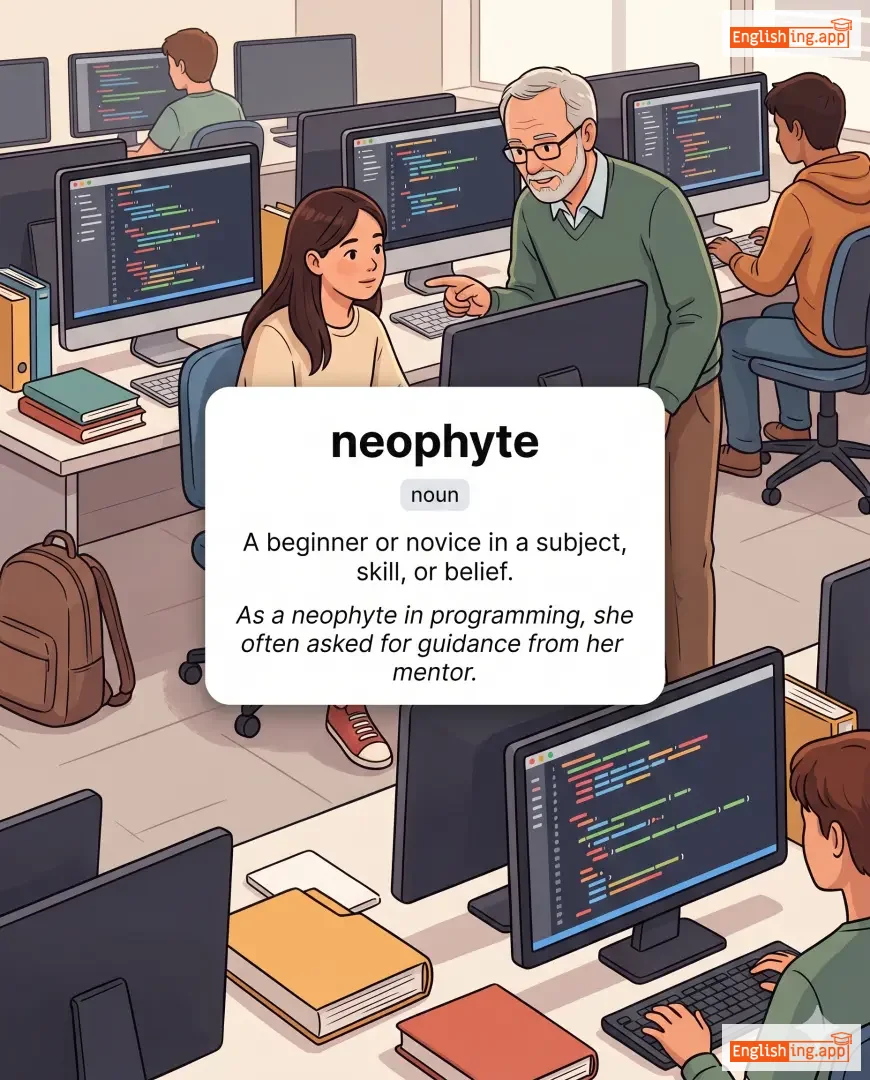
A beginner or novice in a subject, skill, or belief.
••••••
|
As a neophyte in programming, she often asked for guidance from her mentor. |
作为编程的新手,她经常向她的导师请教。
Zuo wei bian cheng de xin shou, ta jing chang xiang ta de dao shi qing jiao.
••••••
|
- •••••• | - •••••• | - •••••• |
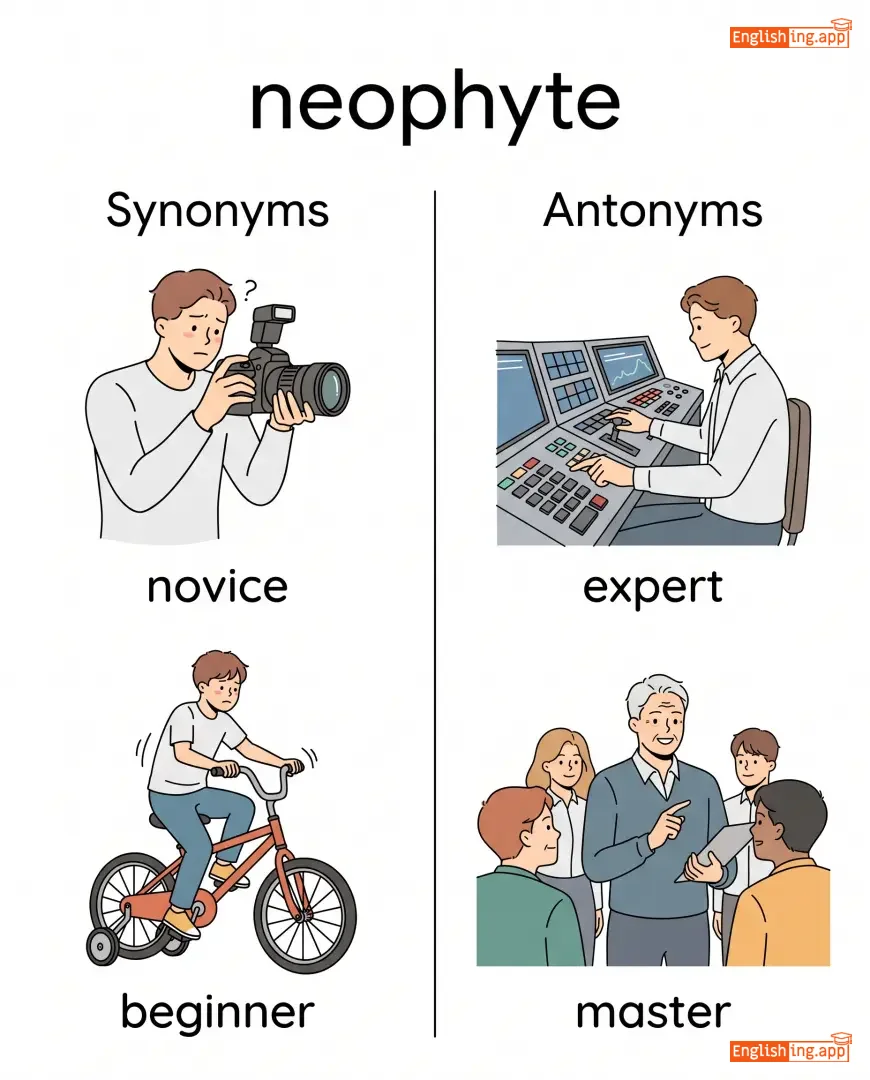
novice, beginner, newcomer, rookie, trainee
••••••
|
expert, master, veteran
••••••
|
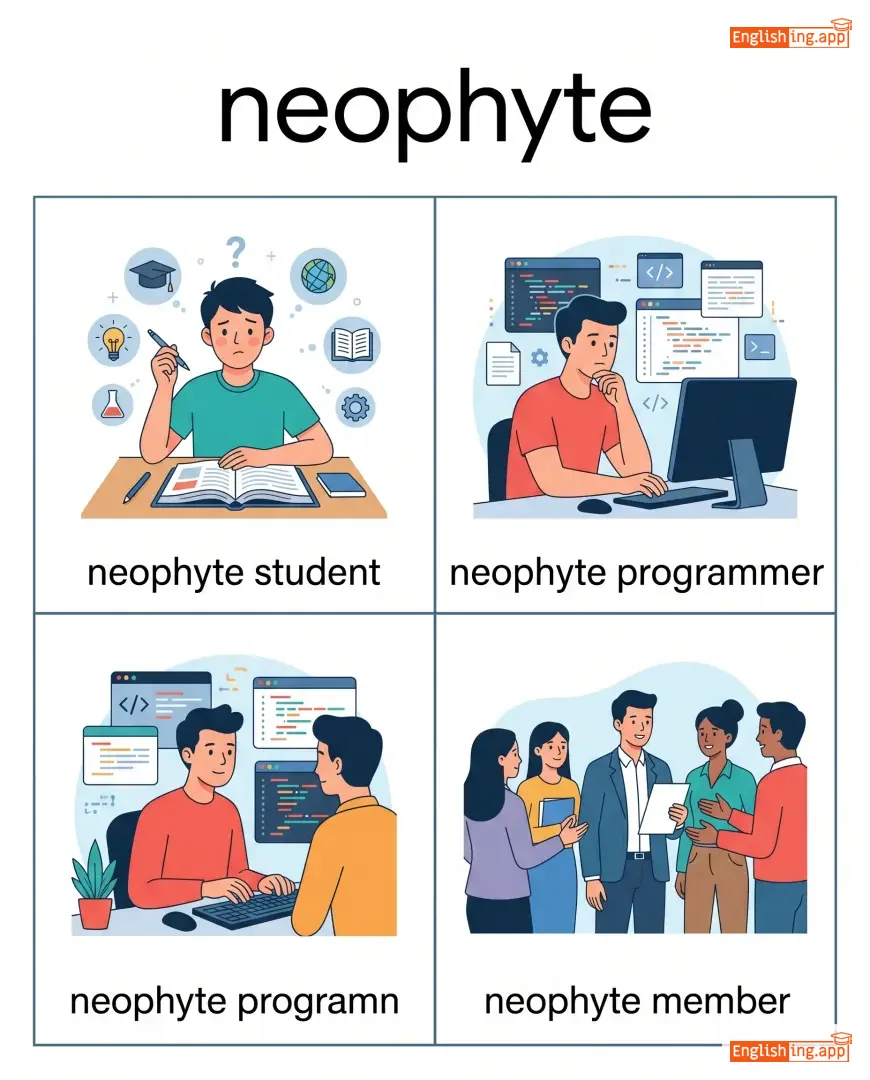
neophyte student, neophyte programmer, neophyte member
••••••
|
Neo 意味着新的 + phyte 意味着植物 → 新手就像一棵新生的植物开始成长。
••••••
|
|
#5855
🌿
|
/ˌniːoʊˈpeɪɡənɪzəm/
noun
(新异教主义)
••••••
|
- •••••• |
新异教主义
xīn yìjiào zhǔyì
••••••
|
- •••••• | - •••••• | - •••••• | - •••••• |
Modern religious movements influenced by or claiming to be derived from the various historical pagan beliefs of pre-modern Europe.
••••••
|
Neopaganism has gained popularity as people seek spiritual alternatives to mainstream religions. |
新异教主义已获得越来越多的关注,因为人们正在寻找主流宗教的精神替代品。
Xīn yìjiào zhǔyì yǐ huòdé yuè lái yuè duō de guānzhù, yīnwèi rénmen zhèngzài xúnzhǎo zhǔliú zōngjiào de jīngshén tìdàipǐn.
••••••
|
- •••••• | - •••••• | - •••••• |
neo-pagan belief, pagan revival, nature worship, earth religion
••••••
|
Christianity, Islam, mainstream religion
••••••
|
rise of neopaganism, neopaganism practices, neopaganism beliefs
••••••
|
Neo 意味着新 + paganism 意味着异教 → 新形式的异教信仰
••••••
|
|
#5856
📖
|
/niˈɒlədʒi/
noun
(niˈɔlədʒi)
••••••
|
- •••••• |
使用新词或研究其起源
shǐyòng xīn cí huò yánjiū qí qǐyuán
••••••
|
- •••••• | - •••••• | - •••••• | - •••••• |
The use of new words or the study of their origin.
••••••
|
The professor specialized in neology, studying the creation of modern slang.
教授专注于新词学,研究现代俚语的创造。
••••••
|
教授专注于新词学,研究现代俚语的创造。
Jiàoshòu zhuānzhù yú xīncí xué, yánjiū xiàndài lǐyǔ de chuàngzào.
••••••
|
- •••••• | - •••••• | - •••••• |
coinage, neologism, terminology, word-formation, linguistics
••••••
|
archaism, old usage, antiquated term
••••••
|
study of neology, field of neology, neology research
••••••
|
Neo意为新 + logy意为学习 → 新词研究 = 新词学
••••••
|
|
#5857
🆕
|
/niːˈɒlədʒɪzəm/
noun
(新词)
••••••
|
- •••••• |
新词
xīn cí
••••••
|
- •••••• | - •••••• | - •••••• | - •••••• |
A newly coined word or expression.
••••••
|
The internet has given rise to many neologisms like 'selfie' and 'hashtag'. |
互联网催生了许多新词,如“自拍”和“标签”。
hùliánwǎng cuīshēngle xǔduō xīncí, rú 'zìpāi' hé 'biāoqiān'.
••••••
|
- •••••• | - •••••• | - •••••• |
new word, coinage, term, expression
••••••
|
archaic word, old term
••••••
|
neologism usage, coin a neologism, popular neologism
••••••
|
Neo = 新的 + logism = 词 → 新词
••••••
|
|
#5858
🪨
|
/ˌniːoʊˈlɪθɪk/
adjective
(niːəʊˈlɪθɪk)
••••••
|
- •••••• |
新石器时代的
xīn shíqì shídài de
••••••
|
- •••••• | - •••••• | - •••••• | - •••••• |
Relating to the later part of the Stone Age, when ground or polished stone weapons and tools prevailed.
••••••
|
Neolithic communities began practicing agriculture and domesticating animals. |
新石器时代的社区开始从事农业和驯化动物。
Xīn shíqì shídài de shèqū kāishǐ cóngshì nóngyè hé xùnhuà dòngwù.
••••••
|
- •••••• | - •••••• | - •••••• |
Stone Age, prehistoric, ancient, primitive
••••••
|
modern, contemporary
••••••
|
Neolithic tools, Neolithic period, Neolithic settlement
••••••
|
Neo = 新的 + Lithic = 石器 → 新的石器时代
••••••
|
|
#5859
🏛️
|
/niːˈɒkrəsi/
noun
(新政府)
••••••
|
- •••••• |
由无经验或新官员领导的政府
you wu jingyan huo xin guan yuan lingdao de zhengfu
••••••
|
- •••••• | - •••••• | - •••••• | - •••••• |
A government or leadership run by inexperienced or new officials.
••••••
|
The sudden revolution led to a neocracy with inexperienced leaders.
突如其来的革命导致了一个新政府,由经验不足的领导人执政。
••••••
|
突如其来的革命导致了一个新政府,由经验不足的领导人执政。
Tū rù qí lái de gémìng dǎozhìle yīgè xīn zhèngfǔ, yóu jīngyàn bùzú de lǐngdǎo rén zhízhèng.
••••••
|
- •••••• | - •••••• | - •••••• |
new government, novice rule, inexperienced leadership, young administration
••••••
|
plutocracy, aristocracy
••••••
|
neocracy system, rise of neocracy, political neocracy
••••••
|
Neo = 新 + Cracy = 政府 → 新领导人的政府
••••••
|
|
#5860
📜
|
/ˌniːoʊˈlætɪn/
noun
(新拉丁语)
••••••
|
- •••••• |
新拉丁语
xin lādīng yǔ
••••••
|
- •••••• | - •••••• | - •••••• | - •••••• |
The use of Latin language for scholarly, scientific, and literary purposes after the medieval period.
••••••
|
Many scientific names are derived from Neo-Latin. |
许多科学名称来源于新拉丁语。
Xǔduō kēxué míngchēng láiyuán yú xīn lādīng yǔ.
••••••
|
- •••••• | - •••••• | - •••••• |
modern Latin, scholarly Latin, scientific Latin, post-medieval Latin
••••••
|
vernacular, non-Latin languages
••••••
|
Neo-Latin literature, Neo-Latin texts, Neo-Latin terminology
••••••
|
Neo = 新, Latin = 拉丁语 → 使用新的拉丁语
••••••
|
|
#5861
🧬
|
/ˌniːoʊˈdɑːrwɪnɪzəm/
noun
(新达尔文主义)
••••••
|
- •••••• |
新达尔文主义
xin daerwen zhuyi
••••••
|
- •••••• | - •••••• | - •••••• | - •••••• |
A modern interpretation of Darwin's theory of evolution, integrating genetics and natural selection.
••••••
|
Neo-Darwinism combines Darwin’s theory of natural selection with modern genetics.
新达尔文主义将达尔文的自然选择理论与现代遗传学相结合。
••••••
|
新达尔文主义将达尔文的自然选择理论与现代遗传学相结合。
Xin Daerwen zhuyi jiang Daerwen de ziran xuanze lilun yu xiandai yichuanxue xiang jiehe.
••••••
|
- •••••• | - •••••• | - •••••• |
modern evolutionary synthesis, evolutionary biology, genetic Darwinism, evolutionary theory
••••••
|
creationism, intelligent design
••••••
|
neo-Darwinism theory, neo-Darwinism synthesis, neo-Darwinism approach
••••••
|
Neo表示新的 + 达尔文主义 = 达尔文的新解释
••••••
|
|
#5862
⚔️
|
/ˈnɛm.ə.sɪs/
noun
(内梅西斯)
••••••
|
- •••••• |
敌人 / 对手
dí rén / duì shǒu
••••••
|
- •••••• | - •••••• | - •••••• | - •••••• |
A long-standing rival or an inescapable agent of downfall.
••••••
|
For years, he considered his colleague to be his nemesis. |
多年来,他把同事当作自己的敌人。
duō nián lái, tā bǎ tóngshì dàng zuò zìjǐ de dí rén.
••••••
|
meet one's nemesis |
To encounter a rival or force that defeats you.
••••••
|
遇到自己的敌人
yù dào zì jǐ de dí rén
••••••
|
rival, adversary, foe, opponent, enemy
••••••
|
ally, friend, supporter
••••••
|
arch nemesis, old nemesis, lifelong nemesis, nemesis character
••••••
|
Nemesis是敌人,一个你无法逃避的对手。
••••••
|
|
#5863
🤝
|
/nɪˈɡoʊ.ʃi.eɪt/
verb
(谈判)
••••••
|
- •••••• |
谈判
tanpan
••••••
|
negotiated
谈判了
••••••
|
negotiated
谈判了
••••••
|
negotiates
谈判
••••••
|
negotiating
谈判中
••••••
|
To discuss something formally in order to reach an agreement.
••••••
|
They negotiated a fair deal with the supplier.
他们与供应商谈判达成了公平的交易。
••••••
|
他们与供应商谈判达成了公平的交易。
Tāmen yǔ gōngyìng shāng tánpàn dáchéng le gōngpíng de jiāoyì.
••••••
|
negotiate a deal
谈判交易
••••••
|
To bargain and reach an agreement.
••••••
|
谈判交易
tanpan jiaoyi
••••••
|
bargain, discuss, mediate, arrange, settle
••••••
|
refuse, reject, decline
••••••
|
negotiate terms, negotiate peace, negotiate agreement, negotiate contract
••••••
|
谈判 = TAN + pan - 坐下来讨论达成交易
••••••
|
|
#5864
💬
|
/nɪˈɡoʊ.ʃi.ə.bəl/
adjective
(negotiable)
••••••
|
- •••••• |
可商议的
ke shangyi de
••••••
|
- •••••• | - •••••• | - •••••• | - •••••• |
Open to discussion or modification; capable of being bargained for.
••••••
|
The salary offered is negotiable. |
提供的薪水是可商议的。
Tigong de xinshui shi ke shangyi de.
••••••
|
terms are negotiable |
Conditions can be discussed and modified.
••••••
|
条件是可商议的
Tiaojian shi ke shangyi de
••••••
|
discussable, flexible, adjustable, bargainable
••••••
|
fixed, nonnegotiable, rigid
••••••
|
negotiable price, negotiable terms, negotiable salary, negotiable contract
••••••
|
可商议的意味着可以商量和修改的条件。
••••••
|
|
#5865
🪶
|
/ˈnɛɡ.lɪ.dʒə.bəl/
adjective
(neɡlɪdʒɪbəl)
••••••
|
- •••••• |
微不足道
wēi bù zú dào
••••••
|
- •••••• | - •••••• | - •••••• | - •••••• |
So small or unimportant as to be not worth considering; insignificant.
••••••
|
The cost of the error was negligible. |
错误的成本微不足道。
Cuòwù de chéngběn wēi bù zú dào.
••••••
|
- •••••• | - •••••• | - •••••• |
insignificant, trivial, minor, unimportant
••••••
|
significant, considerable, important
••••••
|
negligible amount, negligible impact, almost negligible, negligible risk
••••••
|
Negligible在中文中是微不足道,意味着太小或不重要而不被考虑。
••••••
|
|
#5866
🧙♂️
|
/ˈnɛkrəˌmænsər/
noun
••••••
|
- •••••• | - •••••• | - •••••• | - •••••• | - •••••• | - •••••• |
a person who practices necromancy; a wizard or magician who claims to communicate with the dead
••••••
|
The villagers feared the old necromancer who lived at the edge of the forest. |
- •••••• | - •••••• | - •••••• | - •••••• |
sorcerer, magician, wizard, conjurer, occultist
••••••
|
priest, believer, realist
••••••
|
dark necromancer, powerful necromancer, evil necromancer, ancient necromancer
••••••
|
No •••••• |
|
#5867
⚠️
|
/ˈnɛɡlɪdʒəns/
noun
(negliʒəns)
••••••
|
- •••••• |
疏忽
shuhu
••••••
|
- •••••• | - •••••• | - •••••• | - •••••• |
Failure to take proper care in doing something, often resulting in damage or harm.
••••••
|
The accident was caused by the driver's negligence. |
事故是由驾驶员的疏忽造成的。
Shigu shi you jiashiyuan de shuhu zaocheng de.
••••••
|
criminal negligence |
Serious neglect of duty or care that can be prosecuted as a crime.
••••••
|
刑事疏忽
xing shi shuhu
••••••
|
carelessness, oversight, neglect, irresponsibility
••••••
|
care, diligence, attention
••••••
|
gross negligence, criminal negligence, negligence claim
••••••
|
Negligence = 疏忽 = 不小心造成事故.
••••••
|
|
#5868
👗
|
/ˌnɛɡlɪˈʒeɪ/
noun
(内吉)
••••••
|
- •••••• |
轻薄丝绸睡衣
qīngbó sīchóu shuìyī
••••••
|
- •••••• | - •••••• | - •••••• | - •••••• |
A woman's light dressing gown, often made of thin or silky material.
••••••
|
She wore a silk negligee before going to bed. |
她在睡觉前穿上了丝绸睡衣。
Tā zài shuìjiào qián chuān shàngle sīchóu shuìyī.
••••••
|
- •••••• | - •••••• | - •••••• |
nightgown, nightdress, lingerie, robe
••••••
|
coat, jacket
••••••
|
silk negligee, lace negligee, satin negligee
••••••
|
Negligee = Neglect + 衣 → 轻薄丝绸睡衣,适合睡前穿戴。
••••••
|
|
#5869
😶🌫️
|
/nɪˈɡlɛktfʊl/
adjective
(nɪˈɡlɛktfʊl)
••••••
|
- •••••• |
疏忽的
shūhū de
••••••
|
- •••••• | - •••••• | - •••••• | - •••••• |
Failing to give proper care or attention.
••••••
|
The neglectful parent left the child alone for hours.
ðə nɪˈɡlɛktfʊl ˈpɛərənt lɛft ðə tʃaɪld əˈloʊn fɔr ˈaʊərz.
••••••
|
疏忽的父母把孩子独自留下几个小时。
Shūhū de fùmǔ bǎ háizi dúzì liú xià jǐ gè xiǎoshí.
••••••
|
- •••••• | - •••••• | - •••••• |
careless, inattentive, irresponsible, thoughtless
••••••
|
careful, attentive, responsible
••••••
|
neglectful attitude, neglectful parent, neglectful behavior
••••••
|
Neglectful parent 意味着疏忽的父母.
••••••
|
|
#5870
😔
|
/nɪˈɡlɛkt/
verb
(neglect)
••••••
|
|
忽视
hushi
••••••
|
neglected
neglected
••••••
|
neglected
neglected
••••••
|
neglects
neglects
••••••
|
neglecting
neglecting
••••••
|
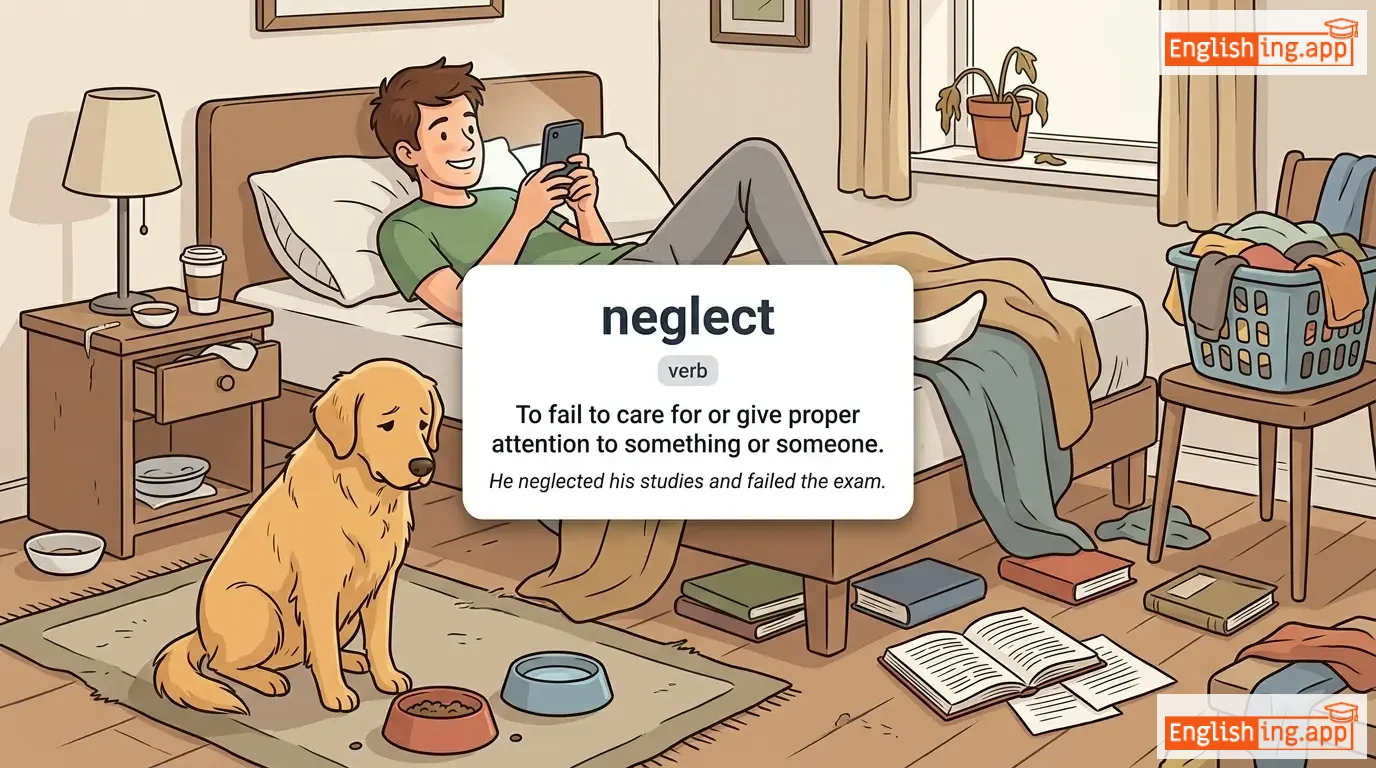
To fail to care for or give proper attention to something or someone.
••••••
|
He neglected his studies and failed the exam.
He neglected his studies and failed the exam.
••••••
|
他忽视了学业,考试不及格。
Ta hushi le xueye, kaoshi bu jige.
••••••
|
neglect of duty
neglect of duty
••••••
|
Failure to fulfill one's responsibilities.
••••••
|
忽视职责
Hushi zhize
••••••
|
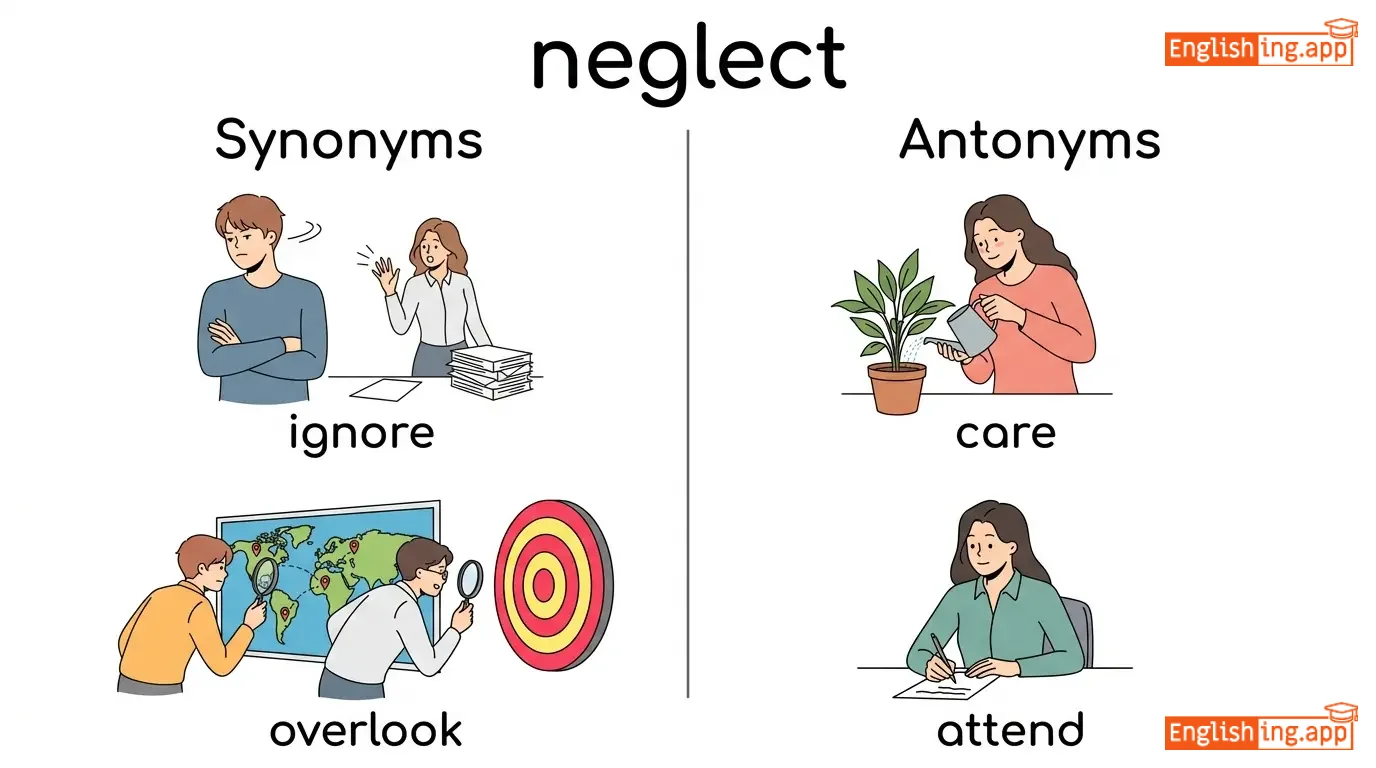
ignore, overlook, disregard, abandon, forget
••••••
|
care, attend, maintain
••••••
|
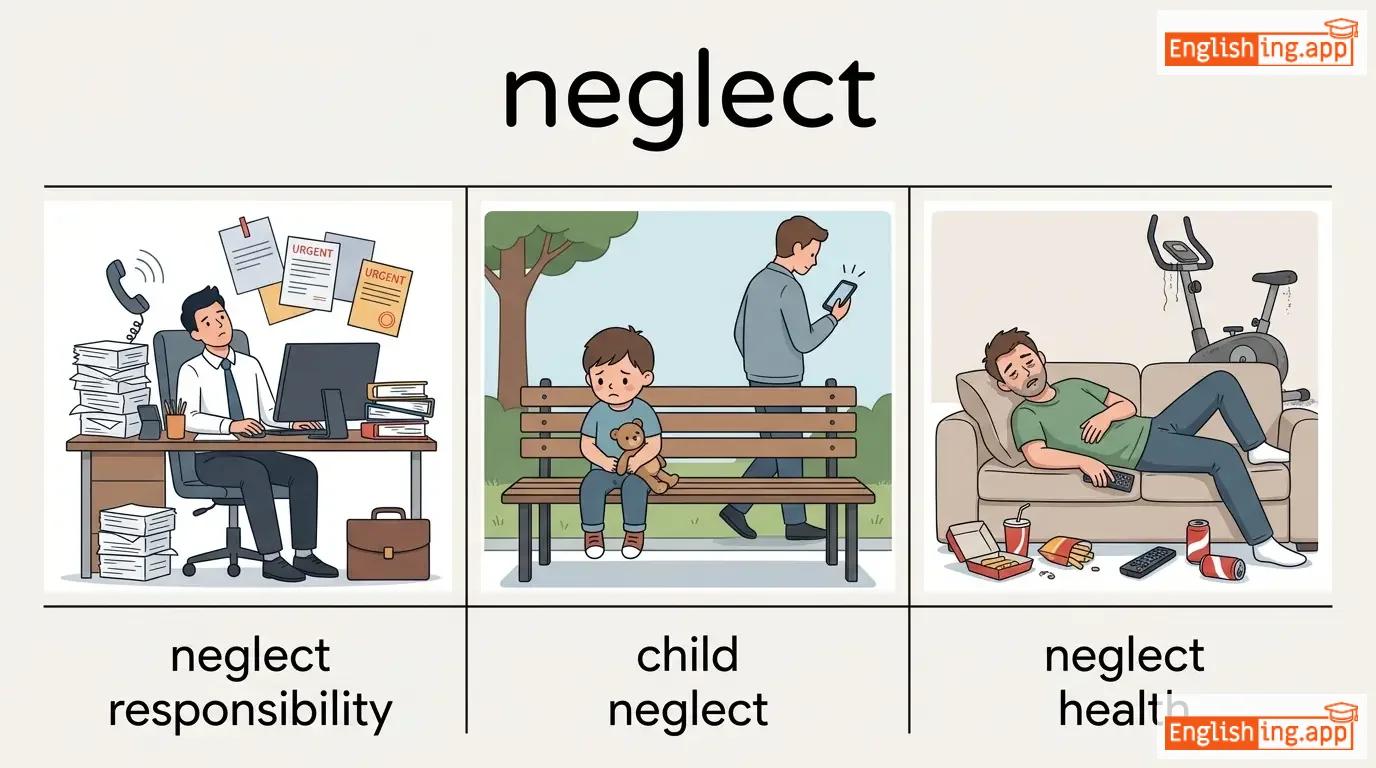
neglect responsibility, child neglect, neglect health, neglect work
••••••
|
Neglect 意味着 negative + collect → 不收集 = 忽视。
••••••
|
|
#5871
🚫
|
/nɪˈɡeɪʃən/
noun
(nɪˈɡeɪʃən)
••••••
|
- •••••• |
否定
fǒudìng
••••••
|
- •••••• | - •••••• | - •••••• | - •••••• |
The act of denying something; the contradiction or absence of something.
••••••
|
The theory is built on the negation of traditional beliefs. |
理论建立在对传统信仰的否定之上。
Lǐlùn jiànlì zài duì chuántǒng xìnyǎng de fǒudìng zhī shàng.
••••••
|
double negation |
A grammatical construction where two negatives are used, often to create a positive meaning.
••••••
|
双重否定
shuāngchóng fǒudìng
••••••
|
denial, contradiction, rejection, invalidation, refusal
••••••
|
affirmation, confirmation, acceptance
••••••
|
negation of truth, complete negation, logical negation, double negation
••••••
|
Negation = negative + action = 否定行为
••••••
|
|
#5872
🚫
|
/nɪˈɡeɪt/
verb
••••••
|
|
- •••••• |
negated
••••••
|
negated
••••••
|
negates
••••••
|
negating
••••••
|
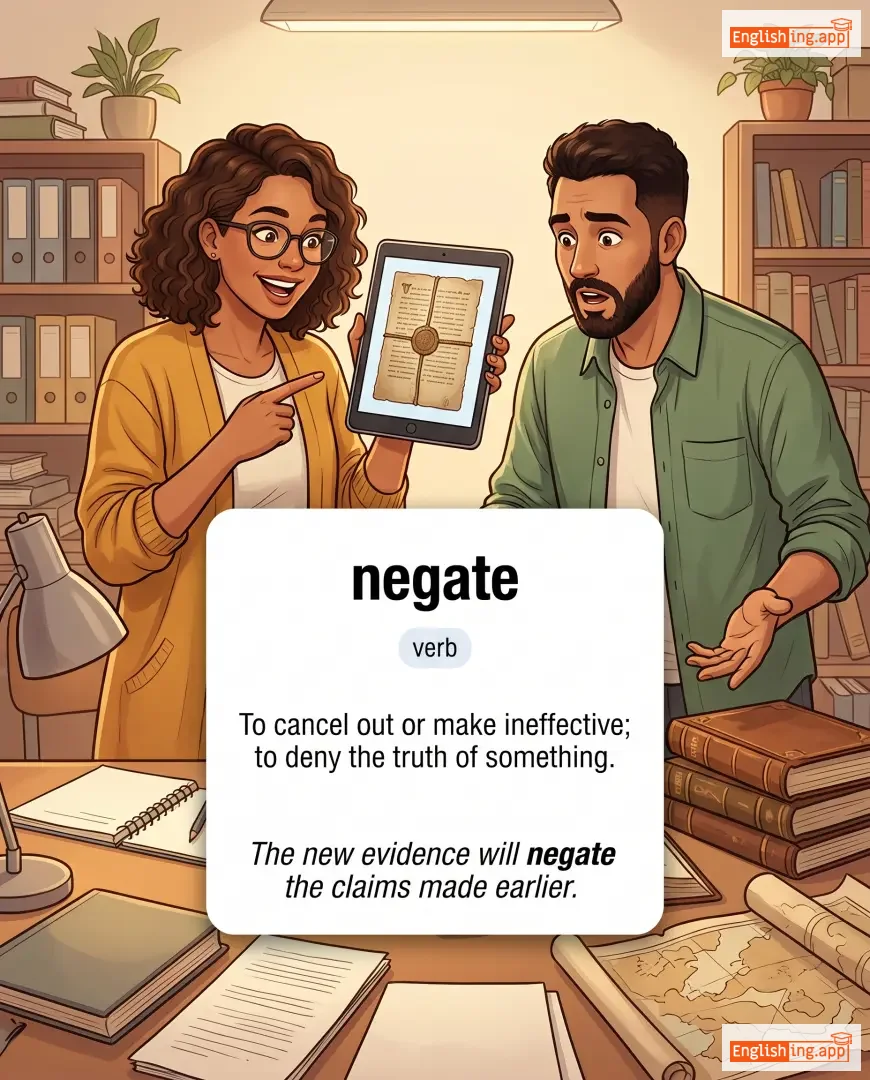
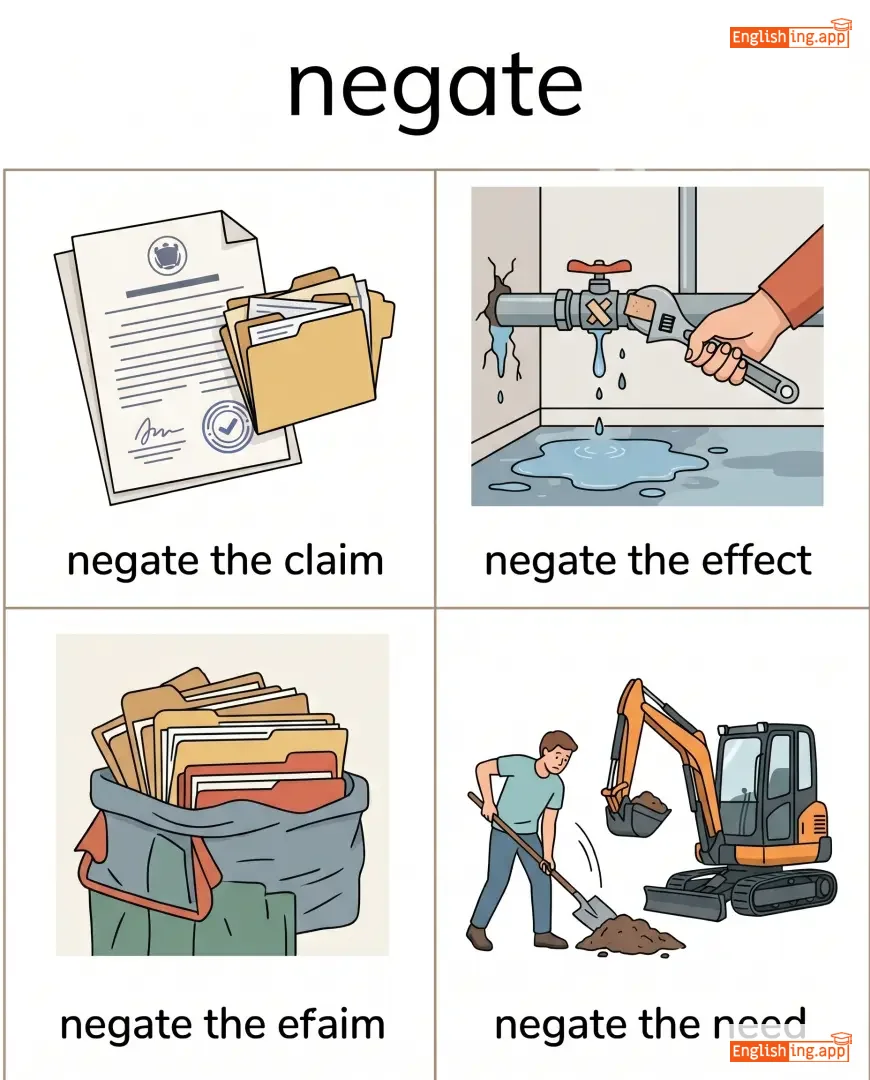
To cancel out or make ineffective; to deny the truth of something.
••••••
|
The new evidence will negate the claims made earlier. |
- •••••• |
negate the effect |
To cancel or reduce the impact of something.
••••••
|
- •••••• |
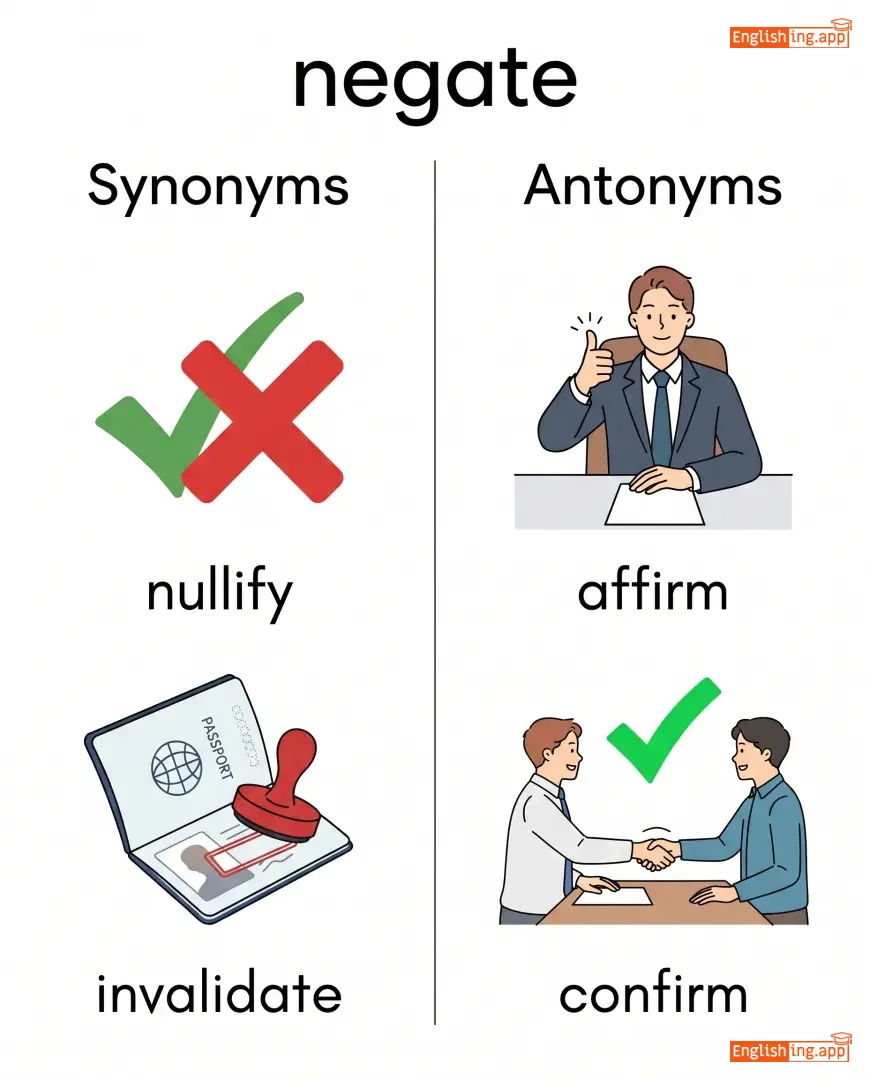
nullify, invalidate, deny, cancel, counteract
••••••
|
affirm, confirm, validate
••••••
|
negate the claim, negate the effect, negate the need, negate responsibility
••••••
|
No •••••• |
|
#5873
😈
|
/nɪˈfɛəriəs/
adjective
(内费里厄斯)
••••••
|
- •••••• |
邪恶的,犯罪的,或道德上糟糕的
xiee de, fanzui de, huo daode shang zaogao de
••••••
|
- •••••• | - •••••• | - •••••• | - •••••• |
Wicked, criminal, or morally bad.
••••••
|
The police uncovered a nefarious plot to cheat investors. |
警方揭露了一个邪恶的阴谋,试图欺骗投资者。
Jingfang jielu le yige xiee de yinmou, shitu qipian touzizhe.
••••••
|
- •••••• | - •••••• | - •••••• |
wicked, evil, villainous, immoral, corrupt
••••••
|
honorable, noble, virtuous
••••••
|
nefarious activities, nefarious scheme, nefarious plot, nefarious character
••••••
|
Nefarious 听起来像‘内费’ – 与做坏事有关。
••••••
|
|
#5874
🤲
|
/ˈniːdi/
adjective
(nídī)
••••••
|
- •••••• |
贫困的
pínkùn de
••••••
|
- •••••• | - •••••• | - •••••• | - •••••• |
Lacking the basic necessities of life; poor.
••••••
|
The charity provides food and shelter for needy families. |
慈善机构为贫困家庭提供食物和住所。
Císhàn jīgòu wèi pínkùn jiātíng tígōng shíwù hé zhùsuǒ.
••••••
|
- •••••• | - •••••• | - •••••• |
poor, impoverished, destitute, underprivileged
••••••
|
wealthy, rich, affluent
••••••
|
needy people, needy families, help the needy, support the needy
••••••
|
Needy 在中文里是 ‘贫困的’,指的是生活困难的人。
••••••
|
|
#5875
🧵
|
/ˈniːdəlwɜːrk/
noun
(nídəlwɜrk)
••••••
|
- •••••• |
针线活, 刺绣
zhēn xiàn huó, cìxiù
••••••
|
- •••••• | - •••••• | - •••••• | - •••••• |
The craft of sewing, embroidery, or knitting done with a needle.
••••••
|
Her grandmother taught her the art of needlework.
她的祖母教她针线活的艺术。
••••••
|
她的祖母教她针线活的艺术。
Tā de zǔmǔ jiāo tā zhēn xiàn huó de yìshù.
••••••
|
- •••••• | - •••••• | - •••••• |
embroidery, sewing, stitching, knitting, handiwork
••••••
|
machine work, mass production
••••••
|
fine needlework, traditional needlework, needlework skills, needlework pattern
••••••
|
Needlework 是指用针做的工作,刺绣或缝纫。
••••••
|
|
#5876
🍑
|
/ˈnɛktəriːn/
noun
(油桃)
••••••
|
- •••••• |
油桃 (一种光滑皮肤的桃子品种)
youtao
••••••
|
- •••••• | - •••••• | - •••••• | - •••••• |
A smooth-skinned variety of peach.
••••••
|
She bought a basket of fresh nectarines from the market. |
她从市场上买了一篮子新鲜的油桃。
Ta cong shichang shang mai le yi lanzi xinxian de youtao.
••••••
|
- •••••• | - •••••• | - •••••• |
peach, fruit, drupe, stone fruit
••••••
|
vegetable, meat
••••••
|
fresh nectarine, ripe nectarine, nectarine tree, nectarine juice
••••••
|
油桃和'Nectar'(花蜜)一起,提醒它是甜美多汁的水果。
••••••
|
|
#5877
🍯
|
/ˈnɛktər/
noun
(nectar)
••••••
|
|
甘露
ganlu
••••••
|
- •••••• | - •••••• | - •••••• | - •••••• |
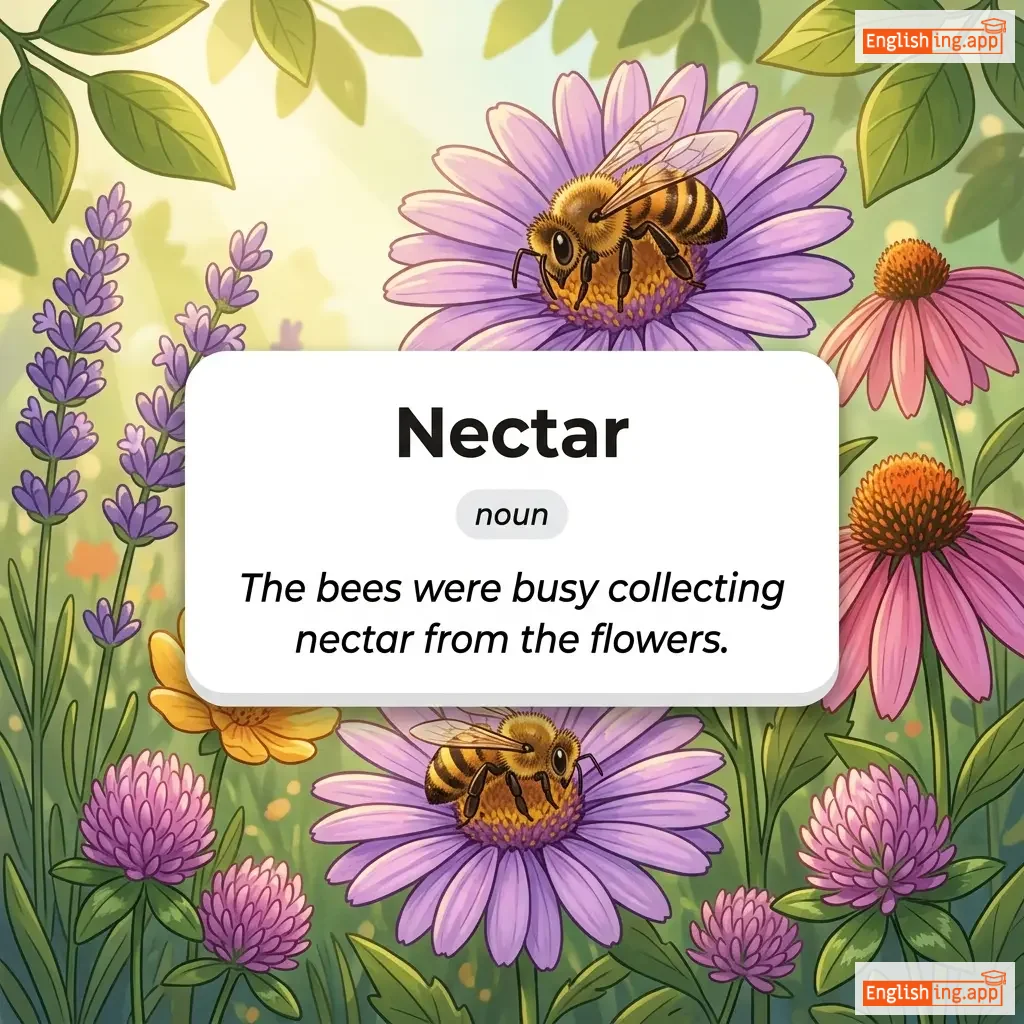
a sweet liquid produced by flowers and collected by bees; in mythology, the drink of the gods
••••••
|
The bees were busy collecting nectar from the flowers. |
蜜蜂忙于从花朵中采集甘露。
Mifeng mangyu cong huaduo zhong caiji ganlu.
••••••
|
nectar of the gods |
something considered extremely delicious or delightful
••••••
|
神的甘露
Shen de ganlu
••••••
|
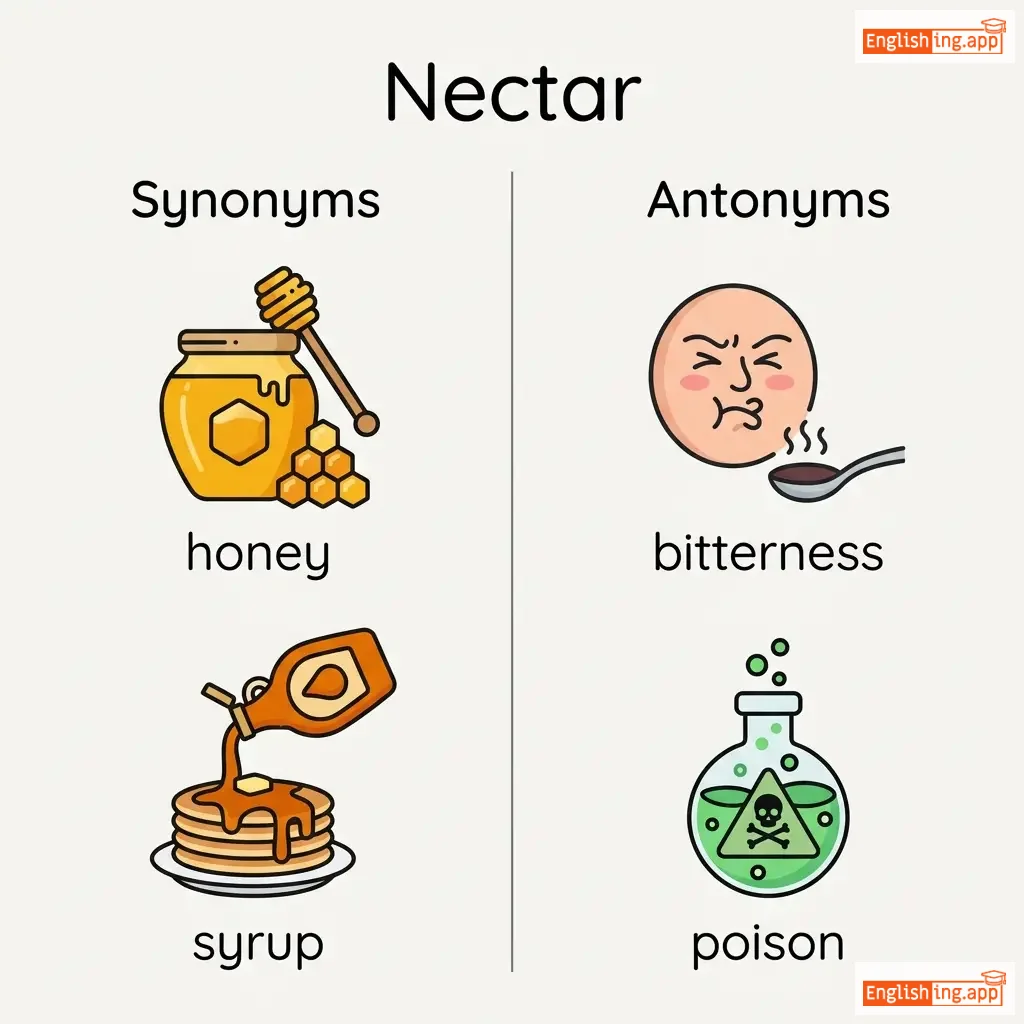
honey, syrup, ambrosia, sweetness, juice
••••••
|
bitterness, poison, toxin
••••••
|
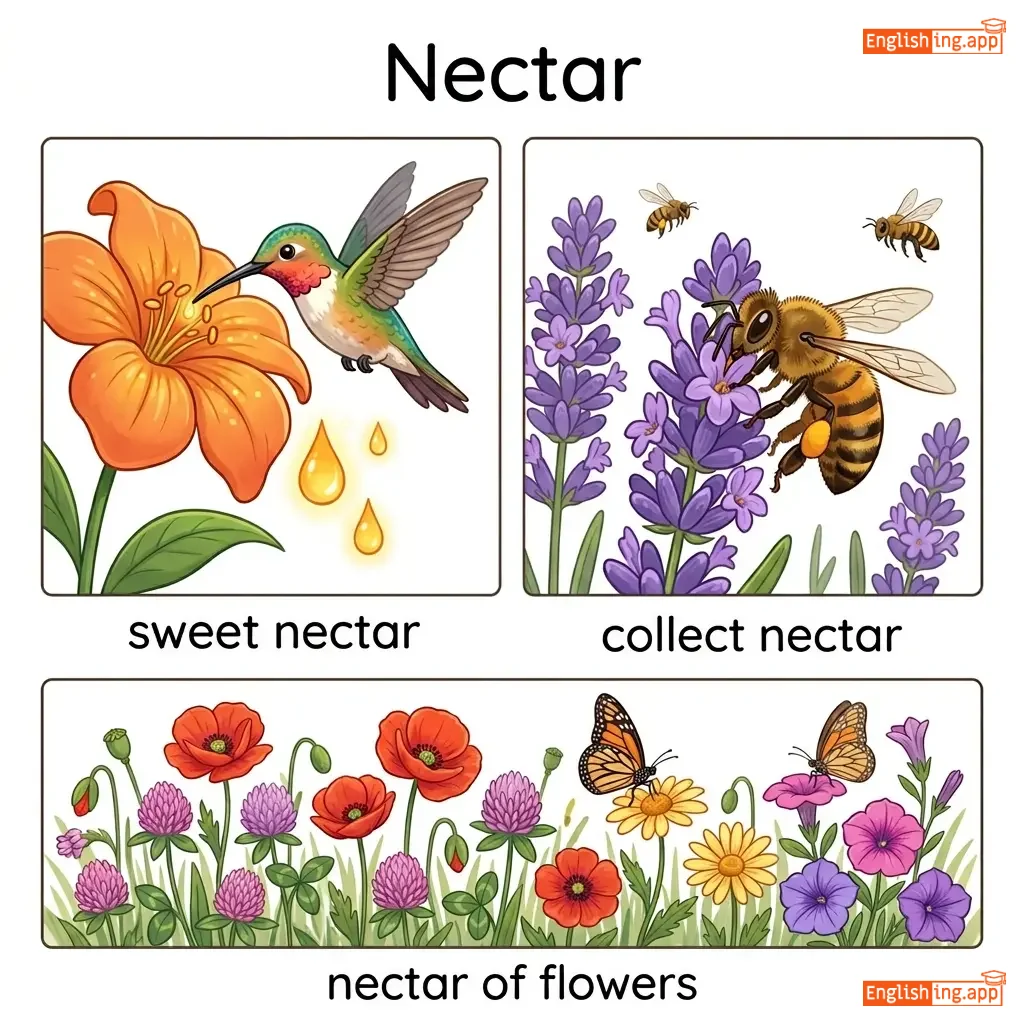
sweet nectar, collect nectar, nectar of flowers, nectar drink
••••••
|
甘露是从花朵中采集的甜美液体,也被认为是神的饮料。
••••••
|
|
#5878
🩸
|
/nɛˈkroʊsɪs/
noun
(内克罗西斯)
••••••
|
- •••••• |
坏死
huàisǐ
••••••
|
- •••••• | - •••••• | - •••••• | - •••••• |
the death of body tissue due to disease, injury, or lack of blood supply
••••••
|
The doctor explained that the patient’s wound showed signs of necrosis. |
医生解释说,病人的伤口显示出坏死的迹象。
Yīshēng jiěshì shuō, bìngrén de shāngkǒu xiǎnshì chū huàisǐ de jìxiàng.
••••••
|
- •••••• | - •••••• | - •••••• |
tissue death, gangrene, decay, degeneration
••••••
|
growth, regeneration, healing
••••••
|
tissue necrosis, necrosis of the skin, necrosis caused by infection, bone necrosis
••••••
|
坏死 = 坏 (坏的) + 死 (死亡) - 组织坏死的状态。
••••••
|
|
#5879
⚰️
|
/nəˈkrɒpəlɪs/
noun
(内克罗波利斯)
••••••
|
- •••••• |
古代墓地
gǔdài mùdì
••••••
|
- •••••• | - •••••• | - •••••• | - •••••• |
a large ancient cemetery with elaborate tombs
••••••
|
The archaeologists discovered artifacts in the necropolis of the ancient city. |
考古学家在古城的内克罗波利斯中发现了文物。
Kǎogǔxuéjiā zài gǔ chéng de nèikèluōbōlìsī zhōng fāxiànle wénwù.
••••••
|
- •••••• | - •••••• | - •••••• |
cemetery, graveyard, burial ground, catacomb
••••••
|
city, town, village
••••••
|
ancient necropolis, vast necropolis, Egyptian necropolis, Roman necropolis
••••••
|
Necro意味着死者+polis意味着城市,死者的城市就是内克罗波利斯。
••••••
|
|
#5880
🔮
|
/ˈnɛkrəˌmænsi/
noun
(死灵法)
••••••
|
- •••••• |
死灵法
sǐlíng fǎ
••••••
|
- •••••• | - •••••• | - •••••• | - •••••• |
the practice of communicating with the dead, often to predict the future
••••••
|
Ancient texts described rituals of necromancy performed by priests. |
古代的文献描述了由祭司执行的死灵法仪式。
Gǔdài de wénxiàn miáoshùle yóu jìsī zhíxíng de sǐlíng fǎ yíshì.
••••••
|
- •••••• | - •••••• | - •••••• |
sorcery, witchcraft, black magic, occultism, divination
••••••
|
science, rationalism, realism
••••••
|
ancient necromancy, dark necromancy, practice of necromancy, art of necromancy
••••••
|
死灵代表死者,法则代表魔法,所以死灵法就是死者的魔法。
••••••
|
Vocabulary Quiz
Test your vocabulary by matching words with their translations or meanings.
Login to take the quiz
Comments (0)
Share your thoughts and join the discussion.
Join the discussion by logging in
Login to CommentNo comments yet
Be the first to share your thoughts!